Category: Witnessing

  • Witnessing: A Job for All

    A big part of our ministry is witnessing to non-believers. This daily devotional reviews what witnessing is and isn’t and steps to witnessing.

    Devotions in the Self-Discipline Review series

    All year, we’ve been looking at self-discipline. We looked at self-discipline as the operational plan for self-control because it talked about improvement.

    We are reviewing everything and hopefully putting all of the building blocks together. What I am doing is going through all of the devotions for the year and pulling out the nuggets.

    I am formatting this as a glossary page. If I already have one, I will combine them later.

    Disciples want to witness to non-believers because they are currently going to suffer the consequences of sin, which are spiritual death and separation from God (The Ministry of Reconciliation).

    We should not only hope that people go from election to being one of the Elect. But we should also witness to others as God directs to help that become a reality. It is our mission to actively witness to a lost and dying world (Is Election Really Merciful?; Getting Along with Others).

    We have to watch for opportunities to witnessing. Sometimes, we have to really pay attention, or we will miss opportunities (Watching while Praying).

    God expects us to plan our ministry for Him. Yes, some opportunities for witnessing are going to drop into our laps. But we have to be ready for them (Putting Feet to the Plan of Salvation).

    When we witness, we need to be prepared to explain what we believe and why we believe it. We have to be secure enough to convince someone to accept our beliefs (Does God Help Those Who Help Themselves?; Who Is the Antichrist?).

    What Is Witnessing?

    Witnessing means we tell non-believers that Jesus can be their personal Savior, even though that may be considered our perspectives and opinions.

    • We need to witness so that others come to know Jesus as their personal Savior too. God’s priority will always be His kingdom and our spiritual condition. It will always be about restoring the relationship with us and growing us to where we need to be — righteous (How Are Disciples Merciful?).

    • We are all witnesses/teachers to those with whom we come in contact. We are witnesses without uttering a single word (Who Was Balaam?).

    • We are witnessing as people see us living our lives. Nonbelievers observe not only disciples’ actions but also their attitudes and motives to make sure we are real. Our lifestyles are also a witness (Getting Obedience to the Heart Level; Honoring the Lord through Worship).

    • We need to witness through words, too; but worldview people have to see how we are different. Words aren’t going to mean anything if our actions are consistent (What Is Chastity to a Disciple of Christ?).

    • Each of us have words we can use to witness — whether we speak or write. We have Scriptures, and we have our own experiences (The Gift of the Holy Spirit).

    • We are to witness, worship, show love, have mercy, and imitate. Oh, yeah. Those things don’t always come naturally to some of us (What Was Jesus’ Mission (Part 2)).

    • Disciples are expected to witness to non-believers to get them to change. Yep, we have to have contact with them in order to build the relationships needed to proclaim the gospel and make them disciples (Watch the Company We Keep).

    • God wants us to show those we witness to that He can alleviate their bitterness and grief (Spiritual Wisdom Leads Us to be Sensible People).

    • It is all about our individual relationships with God. As we navigate the Sanctification Road, we grow as we witness to others. It helps us solidify our beliefs (Why God Calls Us to Give Up Everything?).

    See Also

    What Witnessing Isn’t

    • Expecting — and trying to force others — to believe as we do is being censorious. Our witnessing to them is not forcing them to accept Jesus as their personal Savior (Are Disciples to be Docile?).

    • We are also witnesses to God’s saving grace. I hear you. You are asking, if we don’t have privy to God’s mind, how can we be witnesses? Well, the Holy Spirit does speak to us to convict us, doesn’t He? We do have before and after pictures, right? Remember, once we have been given salvation, we are given regeneration. We are witnesses to that (The Witness of the Spirits).

    • Oh, how many times have we kept our mouths shut when we have had an opportunity to witness for our Savior? Especially if we had to contradict someone! We are more afraid of getting rejected than believing we could possibly make a difference in someone’s life (A Sincere Acceptance of Salvation).

    • We don’t honor God in worship when we keep our worship to ourselves. We must use that worship to witness to others (Honoring the Lord through Worship).

    • Unfortunately, we may start to compromise our beliefs when we try to please people. Yes, we do want to build relationships with worldview people so that we can witness to them. No, we cannot change God’s laws and commandments to make them more palatable to worldview people (The Rewards of Faithfulness).

    • It is important that those we are witnessing to understand that, if we get caught in the sin trap, it will lead to torment — eternal torment. We’ve got to take the narrow gate instead (Watch the Company We Keep).

    • We are all doing the same work — witnessing — but in different ways. I may witness through my songs and these words. You may have someone over to your house. The message is still the same — ABCD. We can only accomplish the work that God has given us to do. He has equipped us only with the skills we need (Are Spiritual Gifts Different?).

    • Each disciple has been assigned a job to do — someone to whom they should witness. I am firmly convinced that God has at least one person that we must witness to in our lives. If we do not do our jobs, the body does not grow as it should (Are Spiritual Gifts Different?; Being Content in Our Work).

    • However, when we are witnessing to someone, they are seeing us as a church official (Expectations of a Steward).

    • Not every non-believer is open to the saving grace of our Father. They may not yet have accepted that they are spiritually dead (How Is Sobriety a Balanced Life?).

    • Once we become believers, that is when Satan starts tempting us. He didn’t have to before because he already had us. But now, we are a child of God. He has to do all he can to wreck our witness and turn us from God (What Is Sin?).

    See Also

    Steps to Witnessing

    • Goodness is a good virtue to have when we are witnessing. It not only might open some doors to facilitate the witnessing, but it also shows who God is (Goodness as a Virtue).

    • We have to show kindness and compassion as we witness to others (What Is Expected of Disciples?).

    • We have to love them enough to witness to them. We have to love them enough to withstand the rejection (What Would Non-Believers Do If They Knew Jesus Were Coming Tomorrow?).

    • We can work on our relationship with God. We can work on our obedience. We can work on our witness (Godliness as a Virtue).

    • We are supposed to judge. Let’s start with the outward appearances. Looks may be deceiving. What if outward appearances were more than just what we look like? What if it is how we live our lives? Have you ever known someone to put on an act when they were around certain people? What if this means we are not supposed to judge surface, but we are supposed to judge deep down? We are not to pass judgment on people, but we are supposed to determine if they are following God’s laws and commandments. No, no one is going to be 100% perfect. We have to determine if we need to witness to them (The Lenient Judgment of Others).

    • We need to follow and obey the Scriptures. We need to use them to witness to others (Fulling Scriptures).

    • We have to believe the witnesses’ testimonies in the Scriptures. In other words, they have to be credible (The Witness of the Spirits).

    • When we witness to others, we need to approach each individually. Everyone has different experiences, thoughts, and values. We need to take that into consideration as we choose how to talk with them. We have to show Jesus to them personally (Salvation from the Cross; Living in God’s Truth).

    • The great part of witnessing is we don’t have to do it on our own. The Holy Spirit will be there with us, providing His testimony and helping us with ours (The Witness of the Spirits).

    • There are three important aspects to securing spiritual freedom – aspects we as disciples are to use in witnessing to others. They are healing for the brokenhearted, liberty for the captives, and freedom for the prisoners (Spiritual Freedom).

    • Witnessing begins at home with our family. They see us studying God’s Word. Not just reading – studying. They see us praying. They see our faithful attendance. They see how we treat others – as Jesus would (Getting Obedience to the Heart Level).

    • We have to make sure those we are witnessing to know that we must be sincere when approaching God for salvation. They must acknowledge that they are spiritually dead and will remain that way without Christ’s sacrifice and God’s forgiveness (A Sincere Acceptance of Salvation).

    • When someone we are witnessing to is concerned about death, immediate access to Jesus upon death should be comforting (A Sincere Acceptance of Salvation).

    • Hopefully, now we will be more open to building real relationships with others. Our witness will benefit (Receiving the Kingdom).

    • God wants His church to be unified and at peace. He is the God of peace, isn’t He? If we aren’t at peace, what kind of witness are we giving? (Focus on Love, Not Evil).

    • We like to think of witnessing as a team effort. That can give us more confidence to do the witnessing. Generally, we think of the team as one who plants the seed, one who waters, and one who harvests. The planter would have the hardest part, especially if the person had no prior knowledge of God’s love for them (The Hardest Part of Witnessing).

    • Those we are witnessing to want to know what a God has done lately. What has He done in our lives on a certain topic? (The Council Has Spoken).

    • David being a warrior and his blatant sins testify God doesn’t give up on us. We have to have our priorities right, though. Those we are witnessing to may have trouble wrapping their heads around that. They may not know David and his circumstances but may substitute someone they know in that role (But the Man after God’s Own Heart Was a Warrior).

    • How do we witness to a person believing they have fire insurance? How do we convince them it isn’t about fire insurance — it is about life insurance? (Acting Free).

    • When we are witnessing, we need to listen carefully to everything that person is saying. We have to determine what s/he believes, so we can share that which will help promote understanding and acceptance (The Fruits of Discerning the Voice of God).

    • Our instructions have to be done in a gentle manner. We cannot alienate those to whom we are witnessing (Living in God’s Truth).

    • We aren’t supposed to keep our worship to ourselves. We are to witness to the lost (How Else Do We Worship God?).

    • Life isn’t always going to wait until we get our Easter bonnet on before it drops witnessing opportunities on our doorsteps. Jesus’ was right there at the bloody cross (Salvation from the Cross).

    See Also

    We witness – then the choice is theirs. We’ve done what God has called us to do — shared with them. The rest is up to Him (Salvation from the Cross).

    Those we are witnessing to have to accept that Jesus was God as well as Man; Jesus came down to earth solely to shed His blood to pay for our sins; by His blood being shed, our sins are forgiven when we ABCD; and this is the only way for us to gain access to God the Father (Jn. 14: 6). It is an all-or-nothing deal. We have to accept God His way.

    Those we are witnessing to have to flat out say the words. Believing in our hearts is important. But we have to tell others to show it is real (A Sincere Acceptance of Salvation).

    Father. We love You and want to share You with others. Provide us opportunities — and courage — to witness. Amen.


    What do you think?

    Leave me a comment below (about this or anything else) or head over to my Facebook group for some interactive discussion.

    If you don’t understand something and would like further clarification, please contact me.

    If you have not signed up for the email daily or weekly providing the link to the devotions and the newsletter, do so below.

    If God has used this devotion to speak with you, consider sharing it on social media.
  • How Are We to be Children of God?

    In answering the disciples’ question, Jesus told them that they needed to have an attitude of a child. This devotion looks at the characteristics of children so that we can emulate them when depending on our Heavenly Father.

    Nuggets

    • Places a dependence on God is complex.
    • Competence speaks to having the relationships that God wants us to have with Him.
    • We have to believe beyond a shadow of a doubt that what God is telling us is true.
    • Disciples need to not only be connected to God, but we also have to be connected with each other.
    • Building the character of God is what being a disciple is all about.
    • God has a job for each one of us to do.
    • God helps us cope in those times of trials.
    • We do have to control ourselves and our sinful nature, but it is more about God being in total control.

    Devotions in the What I Believe series

    Devotions in the Family category

    Flowers with title How Are We to be Children of God?

    Let’s Put It into Context #1

    Family is, according to the Holman Bible Dictionary, “the basic household unit which provides a person’s central relationships, nurture, and support.”

    Resource

    Let’s Put It into Context #2

    “At that time the disciples came to Jesus and asked, ‘So who is greatest in the kingdom of heaven?’” (Mt. 18: 1 CSB)

    I wonder what the disciples were really asking Jesus when they asked, “… ‘So who is greatest in the kingdom of heaven?’” (Mt. 18: 1 CSB). Asked in the correct way, we could make an argument that there was nothing wrong with the question. If we are asking it to grow closer to God, that is exactly what God wants.

    At least some of the disciples were looking for the military Messiah. If they were asking based on a military assumption, they were heading down the wrong path.

    We know the disciples really didn’t get what the kingdom of God was. They didn’t get that it is eternal or that it is within us in our hearts.

    I think Jesus was addressing ambition here. No, I don’t think He was telling us we shouldn’t try to improve ourselves. We know we are to grow in grace and knowledge (II Pet. 3: 18).

    Jesus was always focused on the spiritual. God wants us to focus more on the spiritual than the physical. The disciples were asking the question wrong.

    It is probably a pretty safe bet that the disciples did not expect Jesus’ answer. Jesus was good at saying the unexpected.

    The Answer

    “He called a small child and had him stand among them. ‘Truly I tell you,’ he said, ‘unless you turn and become like little children, you will never enter the kingdom of heaven. Therefore, whoever humbles himself like this child — this one is the greatest in the kingdom of heaven. And whoever welcomes one child like this in my name welcomes me’” (Mt. 18: 2-5 CSB)

    Sometimes we think we know the answer. It is a simple “be humble like a child” admonition. Humility is a character trait that diminishes pride and places dependence on God while holding a modest view of our importance with respect to others.

    But places a dependence on God is complex. How are we to place a child-like dependence on God?

    I looked up a list of characteristics of children. I found a couple of teach-your-children-this lists.

    I was looking for more of a children-are-this list. The closest thing that I found is a resilient-children-are-this list. It is Mead’s 7 Key Characteristics of Resilient Children. It works.

    Resource

    Competence

    Competence means we know how to do something or have the skills to do it. When we apply it to what Jesus was talking about, we know God.

    That speaks to having the relationships that God wants us to have with Him. It isn’t just about the head knowledge or the ritual of religion.

    It is about calling God our Father. He wants us to have the heart knowledge, not just the head knowledge.

    Parent hand and child hand

    Confidence

    Confidence is about having certainty in something. In churchy words, we say we believe in God. We have to have faith and trust.

    Faith is the belief that the doctrines stated in God’s Word are true, even if we do not understand all aspects of them. Trust is assurance that the promises of God are true.

    Assurance is another good word. It talks about certainty, too.

    Assurance leads to hope. Hope is where we desire for something that we believe is obtainable.

    We have to believe beyond a shadow of a doubt that what God is telling us is true. If He says we are spiritually dead if we haven’t ABCDed and that means we are going to be spending eternity in hell, that is what we have to believe. If He tells us that He wants us to put the devotions we’ve been writing online so others can read them, we have to have the confidence to do that — even if we are shaking in out boots the whole way.

    The ABCDs of Salvation

    If you have not become a believer in Christ, please read through the
    Plan of Salvation and prayerfully consider what God is asking you to do.

    A – admit our sins
    B – believe His Son Jesus is our Redeemer
    C – confess God as Sovereign Lord

    D – demonstrate that commitment by making any changes needed in our lives to
    live the way in which God has called us

    The Disciple’s Job Description

    Connected

    Disciples need to not only be connected to God, but we also have to be connected with each other. God has built a community of believers. We aren’t supposed to be insulated.

    Resource

    But it isn’t just a fellowship thing. We have a job to do.

    • “And he said to them, ‘Go into all the world and proclaim the gospel to the whole creation’” (Mk. 16: 15 ESV).
    • “Go therefore and make disciples of all nations, baptizing them in the name of the Father and of the Son and of the Holy Spirit, teaching them to observe all that I have commanded you. And behold, I am with you always, to the end of the age” (Mt. 28: 19-20 ESV).

    We are to support others. We just said in a recent devotion that disciples provide charity to widows when needed. Charity means showing others love flavored with acts of benevolence. 

    Character

    Building the character of God is what being a disciple is all about. That is why we are on the sanctification road.

    Sanctification is the transformation of mind, body, and soul beginning with regeneration and ending with perfected state of spiritual wholeness or completeness. Regeneration is the change in us that God brings about when we go from being spiritually dead to spiritually alive. The perfected state indicates spiritual wholeness or completeness.

    We are to have the disposition of a child. Our disposition is our temperamental makeup.

    Oh, yeah. That means change.

    Jesus was all about our need to change. That is what conversion is. Conversion is a change of mind, heart, and conduct. We have to have this change to enter the kingdom of God.

    Resource

    Sanctification is a process. Pool said it the best when he wrote “that even converted souls have need of a daily conversion.”

    Resource

    What Jesus was getting at was we need to be trusting and submissive rather than ambitious. That is what we need to turn toward in repentance.

    Glossary

    Contributors

    God didn’t call us to be back-seat Baptists. He wants us to contribute. He has a job for each one of us to do.

    That is why the Great Commission has all of those action words (Mt. 28: 19-20).

    • Go
    • Make
    • Baptize
    • Teach

    To read a related devotion, click the button below.

    God knows that the only way we are going to truly understand some of His ways are by doing them. We have to put them into practice.

    Cope

    Oh, yeah. Being a disciple is not going to be easy. Satan is going to throw all he has at us because he wants to derail us.

    But God helps us cope in those times of trials. We have to know that He is our protector in times of trouble.

    • “There is no one holy like the LORD. There is no one besides you! And there is no rock like our God” (I Sam. 2: 2 CSB).
    • “The Lord is my rock, my fortress, and my deliverer, my God, my rock where I seek refuge, my shield and the horn of my salvation, my stronghold” (Ps. 18: 2 CSB).
    • “He will cover you with his feathers; you will take refuge under his wings. His faithfulness will be a protective shield” (Ps. 91: 4 CSB).

    The thing is, God doesn’t want us to go it alone. He wants us to depend on Him for everything — the big stuff and the little stuff.

    Person sitting on dock

    Control

    That is a good segue to the next topic. We talked at the beginning of the year that I thought about making self-control my word for the year. It is a fruit of the spirit.

    We do have to control ourselves and our sinful nature. We do that through self-discipline.

    But we can’t just think we are in control. Remember, God told me, “Well, Chick, you can’t do self-discipline without Me.”

    It is more about God being in total control. We have to submit to Him.

    Oh, yeah. We think submitting is more of a child thing than an adult thing. But it isn’t. It is a disciple thing.

    Person kneeling

    Making the Connections

    We have said before that repentance was turning from sin. Now we know what we are to turn toward — a child-like disposition.

    Don’t worry. Nicodemus had trouble with this you-must-be-born-again/become-a-child directive.

    Paul really didn’t explain it much better to some peoples’ estimation. “Therefore, if anyone is in Christ, he is a new creation. The old has passed away; behold, the new has come” (II Cor. 5: 17 ESV). How can be brand new?

    Vaughan helped us understand. He wrote, “This image does not convey the idea of a perfectly new being, but of an old being begun again, that it may do better.”

    Resource

    With all of the C words up there, we need to add a D Word. We need to be docile. Docile means easily taught.

    Jay noted that we should “not [be] like them in ignorance, not in fickleness, not in waywardness.” We should be willing to be taught and changed.

    Resource

    Making the Connections to Self-Discipline

    Submission is a bad enough word to some worldview people. When we tell them child-like, they may turn around and walk away. How do we describe what God is wanting us to be?

    We’ve been looking at defending our beliefs when we are witnessing. That means we have to be secure enough to convince someone to accept our beliefs.

    Our questions should still serve us to determine on what we need to focus.

    • What does the Scriptures say?
    • What do I believe?
    • Why do I believe the same/differently than the Scriptures?
    • What are the talking points when witnessing to a non-believer?

    Related Links

    I have created a worksheet of the questions above. Click on the button below to access it.

    How Do We Apply This?

    We have to understand that the resistance is in us, not just the worldview people. Vaughan wrote, “We as men fancy ourselves independent and self-sufficient; we must get back to simplicities, self-renunciation, to a babyhood of trust.”

    Resource

    How do we know that we have become child-like? In Jay and Various’ Conversion, it was written, “The change is to be judged of by its effect.” Have we become more dependent on God?

    Resource

    Oh, yes. We have to discuss the elephant in the room. We have to be ready for the discipline for when we mess up. Isn’t that what children do? They push the boundaries or just plain get it wrong — and have to face the consequences.

    Now we know what we are turning to when we turn away from repentance. We just have to do it.

    Father. We come to You as our Father. We come to You as Your children. That means we come in humility and submission. Grow us to be who You want us to be. Refine us until our character matches Yours. Sustain us on this sanctification road and help us to reach our end destination — being perfected in Your sight. Amen.

    What do you think?

    Leave me a comment below (about this or anything else) or head over to my Facebook group for some interactive discussion.

    If you don’t understand something and would like further clarification, please contact me.

    If you have not signed up for the email daily or weekly providing the link to the devotions and the newsletter, do so below.

    If God has used this devotion to speak with you, consider sharing it on social media.
  • In Support of Widows

    Families have a multi-generational component to them. James and Paul discussed how children – and the church – are to support widows. This devotion looks at how God see supporting widows as an indication of faith.

    Nuggets

    • It is intended that disciples provide charity to widows when needed.
    • Paul qualified that families should be the first support for the widows.
    • If we can’t love and support our family, how can we love God?

    Devotions in the What I Believe series

    Devotions in the Family category

    In Support of Widows
    Instructing Our Children
    Who Is the Greatest in the Kingdom of Heaven?

    Flowers with title In Support of Widows

    Society used to be a patriarchal society. Women were restricted to roles within the home and family.

    Jesus, however, elevated women to be equals. No, He didn’t revamp societal structure. He did include them in His kingdom and in His ministry.

    Women still had problems when they became widows. Their financial support and protections were generally gone.

    Peloni explained their hardships. He wrote, “Among the Jews, as among most Oriental races of the ancient world, widows and orphans were of all classes the most liable to plunder and oppression. Their inheritance was often filched from them under forms of law, now that they bad (sic) no strong arm to protect them, by an unjust judge whom they were unable to bribe, or even forcibly wrested from them by some rapacious kinsman or neighbour.”

    This wasn’t what God intended. “You shall not mistreat any widow or fatherless child. If you do mistreat them, and they cry out to me, I will surely hear their cry, and my wrath will burn, and I will kill you with the sword, and your wives shall become widows and your children fatherless” (Ex. 22: 22-24 ESV).

    But how is that supposed to play out? There are some passages in the New Testament that help shed some light on what is intended.

    Let’s Put It into Context

    Family is, according to the Holman Bible Dictionary, “the basic household unit which provides a person’s central relationships, nurture, and support.”

    Resource

    Ordinances are an expression of the disciples’ obedience. Marriage is an ordinance.

    Visit the Widows

    “Religion that is pure and undefiled before God, the Father, is this: to visit orphans and widows in their affliction, and to keep oneself unstained from the world” (Jas. 1: 27 ESV)

    It is intended that disciples provide charity to widows when needed. Charity means showing others love flavored with acts of benevolence. Butler described that as “in any want or distress wherein they need and are capable of our assistance.” That shows others the loving character of God.

    James was well aware that there are destitute and afflicted of every class. His intended recipients, though, are those described as those who need the help the most. He was describing those who are ill or elderly who truly in a dire situation.

    Resource

    We want to make sure we use the right definition of want. James is not talking about what is desired. It is the needy and destitute definition that he is talking about here.

    We also have to look at what is meant by the word visit. It doesn’t mean go, play a game or two of pinochle, catch up on what is going on in everyone’s lives, and go back home.

    That isn’t how God visits us — and God does visit us. “You visit the earth and water it; you greatly enrich it; the river of God is full of water; you provide their grain, for so you have prepared it” (Ps. 65: 9 ESV).

    God isn’t just checking in for His duty call. He is really looking at how we are doing and figuring out what we need. Then, He goes about providing that and improve our circumstances.

    Field and church

    Family Provides First

    “Support widows who are genuinely in need. But if any widow has children or grandchildren, let them learn to practice godliness toward their own family first and to repay their parents, for this pleases God. The widow who is truly in need and left all alone has put her hope in God and continues night and day in her petitions and prayers” (I Tim. 5: 3-5 CSB)

    Paul qualified who should be the first support for the widows. He instructed the families to take care of the women within their family who have found themselves widowed.

    Rowland noted that “the idea is that we owe a debt of gratitude to those from whom we have derived existence, and to whom we owe the support, care, and education we have received. We are bound to see that to the utmost of our ability their wants in old age are met.” Mom and Dad took care of my sister and me when we were growing up. We took care of them when they were growing old.

    Resource

    What Paul was getting at here was each family member has rights. We must respect those rights, especially when their situations change. Mothers didn’t lose their rights when fathers died.

    Our character as disciples must first be evident in the home. Macgregor reminds us that “Our tenderest relations, our strongest affections, our highest joys, our deepest sorrows, all are touched by the thought of home.”

    Resource

    Of course, our character is most tested at home. That is generally where we let our guard down. Plus, our family members know us the best, so can sometimes hurt us the worst.

    We still have family responsibilities. That shows how our character is imitating God’s character. If we can’t exemplify God in our home life, how are we going to when we are out and about?

    Family

    No Support, No Faith

    “Command this also, so that they will be above reproach. But if anyone does not provide for his own family, especially for his own household, he has denied the faith and is worse than an unbeliever” (I Tim. 3: 7-8 CSB)

    Paul doesn’t pull any punches, does he? He just lays it out there in plain sight.

    But really, this is what James was saying. “Religion that is pure and undefiled before God, the Father, is this: to visit orphans and widows in their affliction, and to keep oneself unstained from the world” (Jas. 1: 27 ESV).

    If we can’t love and support our family, how can we love God? How can we be true disciples?

    How do we deny the faith? Faith is the belief that the doctrines stated in God’s Word are true, even if we do not understand all aspects of them.

    If we don’t love and support our family, we are saying that the God’s doctrines aren’t true. His love is not true. The Trinity is not true, because that is about family.

    Paul said it again. “But if anyone does not provide for his own family, especially for his own household, he has denied the faith and is worse than an unbeliever” (I Tim. 5: 8 CSB).

    We not only have to believe that God’s doctrines are true, but we also have to believe that He holds us accountable for implementing them. We have to believe that they are supposed to impact our character and influence our daily lives.

    We want to have a pure conscience — a conscience where we have not disobeyed God in any way. We want to work toward obeying Him completely.

    God and Lady Justice

    Don’t Burden the Church

    “If any believing woman has widows in her family, let her help them. Let the church not be burdened, so that it can help widows in genuine need” (I Tim. 5: 16 CSB)

    At first glance it may seem cold that Paul would say to not burden the church with widow care. I can think of a couple of reasons he may have said that — beyond it being the duty of the family.

    Paul may see it as a way of keeping the family unit in tact. The widows won’t have to give up that to which they have been accustomed. The younger women have the opportunity to thank the widows for all the love and care that they have provided them over the years.

    Church resources can be limited at times. If the family is able to meet the widow’s needs, that does leave those resources free for someone else who may need the help more — like those who have no remaining family.

    I can see Paul not wanting to take the focus off of the spiritual needs. We can’t take our eyes off God to focus on this world. We have to focus on Him.

    Making the Connections

    Tied with the charity is mercy. Disciples’ mercy is a characteristic of compassion for the needs of others, especially those who are in distress. In this way, we show God’s mercy. God’s mercy is the unexpected way God responds in love to our needs.

    If we as disciples say God’s ways are higher than the worldview ways (Isa. 55: 8-9), then we must interact within our families in a higher way than the world interacts with theirs. To do less would be an insult to Christ.

    Making the Connections to Self-Discipline

    We’ve been looking at defending our beliefs when we are witnessing. That means we have to be secure enough to convince someone to accept our beliefs.

    Our questions should still serve us to determine on what we need to focus.

    • What does the Scriptures say?
    • What do I believe?
    • Why do I believe the same/differently than the Scriptures?
    • What are the talking points when witnessing to a non-believer?

    Related Links

    I have created a worksheet of the questions above. Click on the button below to access it.

    How Do We Apply This?

    Somewhere in my reading, I read that we are expected to do the unexpected. We could take that a couple of ways.

    It could mean that what we do to support the widows is supposed to mean something. It is not just a duty.

    It is a service. Service is an act based on belief in God that comes from a response of worship by acknowledging His power through our submission.

    It could also mean that our service is supposed to be over and beyond what is expected. That ties in with the unexpected ways God responds in love.

    How do we deal with multi-generational issues? With patience.

    I got such a charge out of what Talmage said. He wrote, “Prayers in the household will not make up for everything.”

    Resource

    We can’t just pray for God to take care of our widows. We have to be God’s hands and feet and do it.

    We can’t just pray for a cohesive family. We have to work to make it so.

    God has given us families to love, support, and instruct us. We are families through the good times and bad, through the beginning of life and ending of life. We need to follow God’s way through it all.

    Father God. You have given us family. May we love them and support them in the way they need. May this especially be true when circumstances change and our family members find themselves widows. May we show them Your love and provision. Amen.

    What do you think?

    Leave me a comment below (about this or anything else) or head over to my Facebook group for some interactive discussion.

    If you don’t understand something and would like further clarification, please contact me.

    If you have not signed up for the email daily or weekly providing the link to the devotions and the newsletter, do so below.

    If God has used this devotion to speak with you, consider sharing it on social media.

  • The Hopeful Family

    Infertility is difficult for couples who are wanting to start or expand their family. There is a story in the Scriptures that show how Hannah approached her infertility. This devotion looks at how she placed her faith and trust in God to hold on to the hope that God would give her a child.

    Nuggets

    • Hannah’s deep hurt came out in tears and pleading with God.
    • God will always let us come to Him when we are hurting and upset.
    • It is sinful to want something that is not in God’s plan for us, but it is not sinful to long for His plan to be fulfilled in us.

    Devotions in the What I Believe series

    Devotions in the Family category

    In Support of Widows
    Instructing Our Children
    Who Is the Greatest in the Kingdom of Heaven?

    Flowers with title The Hopeful Family

    Let’s Put It into Context #1

    Family is, according to the Holman Bible Dictionary, “the basic household unit which provides a person’s central relationships, nurture, and support.”

    Resource

    Ordinances are an expression of the disciples’ obedience. Marriage is an ordinance.

    Let’s Put It into Context #2

    “There was a man from Ramathaim-zophim in the hill country of Ephraim. His name was Elkanah son of Jeroham, son of Elihu, son of Tohu, son of Zuph, an Ephraimite. He had two wives, the first named Hannah and the second Peninnah. Peninnah had children, but Hannah was childless” (I Sam. 1: 1-2 CSB)

    It was called polygamy. That is where a spouse has more than one spouse – at the same time. It could be that I would have two husbands, but usually in the Scriptures, it was the husband having a couple of wives.

    God did make provision for it. “If he takes another wife to himself, he shall not diminish her food, her clothing, or her marital rights” (Ex. 12: 10 ESV). That reads to me that God did not make it unlawful to take more than one wife – the husband couldn’t stop providing for her if he did.

    We know God wanted marriage to be honored. “Let marriage be held in honor among all, and let the marriage bed be undefiled, for God will judge the sexually immoral and adulterous” (Heb. 13: 4 ESV). He wanted a harmonious family.

    That didn’t seem like it happened in most of the cases in the Scriptures where there was more than one wife. Abraham didn’t have good luck with that, and neither did Jacob. David even had his issues.

    It didn’t seem that it worked out for Elkanah, either. Hannah may have been Wife #1, but when Peninneh started having kids, someone who shall be nameless, but her initials are Peninneh started being a bully.

    Let’s Put It into Context #3

    We’ve been equating the family to the church in this series. It works here, too.

    The family structure had its issues. So did the church.

    Guthrie explained what was happening. He wrote, “Outraged and disgraced by the crimes of its ministers, religion sank into public contempt, and, almost mortally “wounded in the house of its friends,” seemed ready to expire. At first indignant, and in the end demoralized (sic), the people deserted the house of God. and abandoned the profession of a religion which the crimes of its priests had made to stink in their nostrils.”

    It was bad.

    Resource

    Deals for What We Want

    “Deeply hurt, Hannah prayed to the Lord and wept with many tears. Making a vow, she pleaded, “Lord of Armies, if you will take notice of your servant’s affliction, remember and not forget me, and give your servant a son, I will give him to the Lord all the days of his life, and his hair will never be cut’” (I Sam. 1: 10-11 CSB)

    We talked about how God’s first blessing got a little hairier after the judgment.

    • “God blessed them, and God said to them, ‘Be fruitful, multiply, fill the earth, and subdue it. Rule the fish of the sea, the birds of the sky, and every creature that crawls on the earth’” (Gen. 1: 28 CSB).
    • “He said to the woman: I will intensify your labor pains; you will bear children with painful effort. Your desire will be for your husband, yet he will rule over you” (Gen. 3: 16 CSB).

    Instead of children being a blessing, childlessness was looked on as being blessed. Whyte wrote, “Till it came to be nothing short of a mark of a special election, and a high calling, and a great coming service of God in Israel to have no children.” Oh, yeah. That sounds worldview, doesn’t it?

    Resource

    Hankinson contradicted Whyte. He argued, “The desire of Jewish women to be the mothers of families was connected with religious feeling: children were regarded as a blessing from the Lord, and the withholding of them was considered a token of the Divine displeasure.” I lean more this way.

    Resource

    Brooke argued that motherhood completes a woman’s nature. At least for Hannah – maybe not for all – this seems to be the case. Hannah was “deeply hurt …” (I Sam. 1: 10 CSB).

    Resource

    Hannah’s deep hurt came out in tears and pleading with God. Still, Hannah approached God with hope. We learn a couple of things from Hannah’s short prayer.

    “Lord of Armies …” (I Sam. 1: 11 CSB)

    Hannah recognized that the final decision rested with God as to whether she was going to be a mother or not. No fertility pills or treatments were going to get her pregnant. Only God could do that.

    All of Hannah’s actions show she wanted to do God’s Will. She and her family came annually to worship. “This man would go up from his town every year to worship and to sacrifice to the Lord of Armies at Shiloh, where Eli’s two sons, Hophni and Phinehas, were the Lord’s priests” (I Sam. 1: 3 CSB). So, Hannah and Elkanah were both God-fearing people.

    To chase a rabbit a second, it was obvious what Elkanah’s feelings were toward Hannah. Even though he may have – probably – taken Peninneh as a wife because no kids were coming, he still was cognizant of Hannah’s feelings.

    “‘Hannah, why are you crying?’ her husband, Elkanah, would ask. ‘Why won’t you eat? Why are you troubled? Am I not better to you than ten sons?’” (I Sam. 1: 8 CSB).

    Guthrie described Elkanah’s words this way. He wrote, “In what esteem Elkanah held her, how fondly he cherished her, and how kind he was to her, appears in the very strong and tender terms with which he essays to soothe her grief …”

    Resource

    Elkanah’s actions also backed up his words of love. He would always give Hannah a double portion of the sacrificial meat (I Sam. 1: 5). Her being childless did not alter his feelings toward her.

    “… if you will take notice of your servant’s affliction, remember and not forget me, and give your servant a son …” (I Sam. 1: 11 CSB)

    Since God is Lord of Armies, Hannah approached Him as being His lowly servant with hope. She knew He was probably more concerned with whatever war was raging at the time – physical or spiritual. But she knew He was still concerned with her and her affliction.

    God will always let us come to Him when we are hurting and upset. He can stand the tears. He is big enough to be asked why. When we are bullied or feel like we have been dealt an unfair hand, God lets us question.

    As long as we question in faith. As long as we acknowledge He is Lord of Armies.

    Our attitude has to be right. We have to approach Him as Sovereign God.

    “… I will give him to the Lord all the days of his life, and his hair will never be cut” (I Sam. 1: 11 CSB)

    I don’t think we talk God into giving us a spouse or a child. I don’t think we make deals to get what we want.

    He has a plan already designed based on the decisions He knows we will make. Remember, He is omniscience.

    To read a related devotion, click the button below.

    I think we convince Him we are where He wants us to be to have a spouse or a child. It all has to be in His Will.

    Hannah didn’t just pour her sorrow out on God and expect Him to immediately answer it. She kept worshiping Him. She got up the next morning with praise on her lips.

    Person

    Honoring Her Vow

    “‘Please, my lord,’ she said, ‘as surely as you live, my lord, I am the woman who stood here beside you praying to the Lord. I prayed for this boy, and since the Lord gave me what I asked him for, I now give the boy to the Lord. For as long as he lives, he is given to the Lord.’ Then he worshiped the Lord there’” (I Sam. 1: 26-28 CSB)

    In time (and we don’t know how much time), Samuel was born. Hannah acknowledged that he was a gift from God.

    It is sinful to want something that is not in God’s plan for us. It is not sinful to long for His plan to be fulfilled in us.

    When I was growing up, I thought it was so sad that Hannah had to give up the baby for whom she had cried so passionately. God used her obedience.

    Oh, to be a fly on the wall when Hannah went back to Eli with Samuel in tow. “Hey, remember me? I was the lady you thought was drunk (I Sam. 1: 13). Nope, I got a kid instead of a hangover. He’s yours now.”

    Hannah’s prayer came full circle. She prayed asking for a son and promised specific action on her part. God provided the son. Hannah acted.

    Nowhere in these verses do we see where Hannah tried to get out of her vow. Yes, “… Hannah stayed there and nursed her son until she weaned him” (I Sam. 1: 23 CSB).

    Hannah knew that the first three years, Samuel needed to learn how to be a human. He needed to learn to walk, talk, eat, dress himself, etc.

    After he had learned the basics, Samuel could go to Eli and learn what God had in store for Him.

    We know the rest of the story. We know who Samuel grew up to be. Israel was much blessed because they had the Prophet Samuel leading them. Samuel is one of the Hall of Famers.

    God had plans to provide for His church – His family. He used Hannah’s request to work things out for both of their good.

    Church

    Making the Connections

    Why does God not give children to those who want and are well-suited for motherhood when He gives them to those who definitely aren’t and shouldn’t be? I don’t know. That is above my paygrade.

    What I do know is God knows why. It isn’t to hurt us. We know that “… God causes everything to work together for the good of those who love God and are called according to his purpose for them” (Rom. 8: 38 NLT).

    I know He has a reason – a good reason.

    Meyer made a good point. Yes, Hannah was approaching God in the right way, as we discussed. But she was also approaching Him with the attitude that a prayer for a kid was something easy for Him to fulfill.

    Resource

    Hannah didn’t doubt at all. She wasn’t wishy-washy about what she wanted and what she would do when God fulfilled the prayer. Oh, there was no doubt but that He was going to fulfill the prayer.

    This story is further proof that God wants to be the God of the big things as well as God of the little things. He wants us to feel comfortable to come to Him with anything that is making us sorrowful.

    Making the Connections to Self-Discipline

    This story could bring up several questions with which non-believers would struggle. We touched on the infertility issue. They also may question why God would accept Hannah’s vow of giving Samuel to God, especially if we are to go forth and multiply – and God wasn’t keeping up His end of that.

    We’ve been looking at defending our beliefs when we are witnessing. That means we have to be secure enough to convince someone to accept our beliefs.

    Our questions should still serve us to determine on what we need to focus.

    • What does the Scriptures say?
    • What do I believe?
    • Why do I believe the same/differently than the Scriptures?
    • What are the talking points when witnessing to a non-believer?

    Related Links

    I have created a worksheet of the questions above. Click on the button below to access it.

    How Do We Apply This?

    Oh, that we would have Hannah’s prayer life! We need her comfort in approaching Sovereign God. We need to have her faith that our prayers will be answered. May we be as devout disciple as she was.

    We barely touched on the fact that Hannah’s prayer was short. She didn’t need a long prayer, because her relationship with God was right. She could give the short prayer then.

    Obviously, Eli saw Hannah praying. However, he didn’t hear her prayer. That was just between her and God. We need to keep our prayers private also.

    God is going to provide for His people. That is the hope that we have. We have that hope in Him.

    Father, You love us and provide for us. You answer our prayers when we pray in Your Will. May we always look for Your Will rather than our own. Amen.

    What do you think?

    Leave me a comment below (about this or anything else) or head over to my Facebook group for some interactive discussion.

    If you don’t understand something and would like further clarification, please contact me.

    If you have not signed up for the email daily or weekly providing the link to the devotions and the newsletter, do so below.

    If God has used this devotion to speak with you, consider sharing it on social media.
  • The Ideal Family

    If Adam and Eve didn’t have the ideal family, how would we describe what that was? This devotion looks at the type of foundation God expects to prepare our children for their lives ahead.

    Nuggets

    • Above all else, we need to individually love God; then, we need to love and worship God as a family.
    • Part of the function of the family is to provide the foundation on which the children will build their lives.
    • God wants us to remember, not erase or cover up the past.

    Devotions in the What I Believe series

    Devotions in the Family category

    The Ideal Family
    The Hopeful Family

    In Support of Widows
    Instructing Our Children
    Who Is the Greatest in the Kingdom of Heaven?

    Flowers with title The Ideal Family

    In the last devotion, we talked about how the family unit we see today was not what God had set up in the Garden of Eden. The family changed after sin entered into the world.

    So, what would God consider as the ideal family unit? Let’s see what we can see.

    Let’s Put It into Context

    Family is, according to the Holman Bible Dictionary, “the basic household unit which provides a person’s central relationships, nurture, and support.”

    Resource

    Ordinances are an expression of the disciples’ obedience. Marriage is an ordinance.

    Family Unity

    “Listen, Israel: The Lord our God, the Lord is one. Love the Lord your God with all your heart, with all your soul, and with all your strength. These words that I am giving you today are to be in your heart” (Deut. 6: 4-6 CSB)

    I know. We’ve had this passage before. And we will keep talking about it.

    To read a related devotion, click the appropriate button below.

    Jesus said it was the greatest commandment. We have to love God first and foremost. Even before loving others.

    This is what the gospel is all about. If you aren’t interested in getting this important fact, you are reading the wrong blog.

    Above all else, we need to individually love God. We have to be totally submitted to God. We have to be following His directives.

    How? “… with all our heart, with all your soul, and with all your strength” (Deut. 6: 5 CSB). In one of the iterations, it adds mind.

    We have to be all in. Then, we need to love and worship God as a family.

    We said in the last devotion that the family must be built on love. Well, think about it. God is love (I Jn. 4: 8).

    We are to grow our character to imitate Him. That means we are to be love, also — His type of love. When we are God’s type of love, our family dynamics are totally different.

    Think about what a strong family unit achieves. Love promotes unity.

    We react better to trials and frustrations, so our family members don’t have to worry if it is going to be nice Elaine who shows up or mean Elaine.

    That means the family members are calmer and think more clearly. That may help situations to be avoided.

    It also means we are more forgiving when things do go south. We see the good in our family members and are able to curb our feelings of anger and resentment toward them.

    We can concentrate on growing the positive things rather than having to mending the broken. We don’t get envious and overly critical.

    Church steeple

    Handing the Gospel Down

    “Repeat them to your children. Talk about them when you sit in your house and when you walk along the road, when you lie down and when you get up” (Deut. 6: 7 CSB)

    Part of the function of the family is to provide the foundation on which the children will build their lives. We parents do that by providing instruction and boundaries, establishing curfews, and meting out the punishment as needed.

    Vaughan felt that Deuteronomy 6: 5 is the perfect tool to build that foundation. He stated that “this verse is the meeting point of the law and the Gospel.”

    Resource

    Yes, God gives us laws and commandments. He doesn’t let us believe whatever we want to believe. We are to be believing what He believes.

    Yes, we can compromise on things — but not beliefs. We can’t tolerate what God has called sin. No, we don’t have to harp on something once they know our feelings, but we don’t have to give up our beliefs and give them our blessing because they want to keep on sinning.

    No, I don’t have to let Adam believe something that is wrong and not say anything because I don’t want to appear old fashioned or unbending. I have to be the champion of the gospel.

    I wouldn’t let Adam doing something in which he is going to get hurt just because he can make his own decisions. If I see something isn’t right, this mama bear is going to have a talk with that boy.

    Having a strong family unit means that we don’t tolerate actions because our family members mistake that tolerance for love. We have to love with a real love, not a fake love.

    We hold each other accountable for our actions based on God’s laws and commandments. We encourage each other and support each other even during the ouchy growing pains.

    How are we supposed to talk about all of this? When Moses was saying this, the Wilderness Wanderers didn’t have their own personal copy of the Scriptures. They couldn’t even pull one off of the internet.

    Parents had to say the laws and commandments over and over again so the kids could memorize them. If they didn’t pass them on, the kids would not have known them.

    But it is more than just a memorization exercise. The laws aren’t a checklist of what to do and what not to do. They are to build our character.

    Checklist

    Don’t Forget

    “Bind them as a sign on your hand and let them be a symbol on your forehead. Write them on the doorposts of your house and on your city gates” (Deut. 6: 8-9 CSB)

    God wants us to remember. He doesn’t want us to erase or cover up the past. We have all done things we shouldn’t have done. We have all said things we shouldn’t have said.

    We ask forgiveness for that and learn from that. If we don’t have that to learn from, we don’t have the building blocks from which to learn.

    More importantly, God wants us to remember how He has brought us through all the trials. We need to remember how He provided for us.

    God wants us to see that it isn’t us doing life by ourselves. It is Him working His plan in us.

    Instead, we’ve taken God out of our governments and out of our schools. Some have even taken God out of their churches.

    Newsflash. This world isn’t getting better. It is getting worse.

    That is because, by taking God out, we have let Satan in. Satan is the agent of chaos. He is delusion and lies.

    We need to take our homes, our schools, our cities, our states, our nations, our world back for God. We need to not only put His laws and commandments on our hands, foreheads, doorposts, and gates, but we also have to put them in our hearts, minds, and lives.

    Making the Connections

    Vaughan described God’s character.

    • active
    • strong
    • supporting many burdens of care, and work, and thought, and responsibility
    • has a warm heart
    • tenderness
    • craves affection
    • is touched by the response of gratitude
    • loves love
    • has even a void place within till love fills it

    Resource

    Making the Connections to Self-Discipline

    We’ve been looking at defending our beliefs when we are witnessing. That means we have to be secure enough to convince someone to accept our beliefs.

    Our questions should still serve us to determine on what we need to focus.

    • What does the Scriptures say?
    • What do I believe?
    • Why do I believe the same/differently than the Scriptures?
    • What are the talking points when witnessing to a non-believer?

    Related Links

    I have created a worksheet of the questions above. Click on the button below to access it.

    How Do We Apply This?

    How do we build character? Well, first we have to decide where we need the building to take place. Then we have to be intentional about building it and be accountable for getting it done.

    What better place to do all of that than in the family unit. The people who love us and know us can help us the most.

    Yes, I really liked Vaughan’s sermon. He gave us a way to apply this.

    “And what is this love which God asks of us? It is not different in kind, it differs only in direction, from that which we give one to another. Think what love is, as you give it to your nearest and best beloved.”

    Resource

    Give our love to our nearest and best beloved. Who is that besides our family?

    Father God. You instituted families so that we would not have to be alone. You also wanted to show us the fellowship that we can have with You. Help us to live the way You want us to, growing to be more like You. Amen.

    What do you think?

    Leave me a comment below (about this or anything else) or head over to my Facebook group for some interactive discussion.

    If you don’t understand something and would like further clarification, please contact me.

    If you have not signed up for the email daily or weekly providing the link to the devotions and the newsletter, do so below.

    If God has used this devotion to speak with you, consider sharing it on social media.
  • The First Family

    God created the family unit. We start out this series by looking at the first family. This devotion examines how God instituted marriage and how sin changed the family dynamics.

    Nuggets

    • God, Jesus, and the Holy Spirit got together and talked about how they were going to create mankind.
    • If we look at God’s first blessing, Eve’s punishment makes it a little hairier.
    • Many times, it seems we take our sins out on our family members.
    Flowers with title The First Family

    This year, we are looking at self-discipline. We are using Vincent’s The Lesson of Ripeness sermon to look at the need to grow in our relationship with God. We morphed learning enough to be a teacher into determining some areas we need to grow so we can be mature disciples.

    Resource

    We have been looking at solidifying what we believe. When we witness, we need to be prepared to explain what we believe and why we believe it. We have looked at the Scriptures; the Trinity (God, Jesus, and the Holy Spirit); man; salvation; grace; the church; divine ordinances; worship; God’s kingdom; end times; evangelism and missions; stewardship; cooperation; social order; peace and war; and religious freedom. The last category we are going to look at is family.

    Devotions in the What I Believe series

    Devotions in the Family category

    The First Family
    The Ideal Family
    The Hopeful Family

    In Support of Widows
    Instructing Our Children
    Who Is the Greatest in the Kingdom of Heaven?

    Let’s Put It into Context

    Family is, according to the Holman Bible Dictionary, “the basic household unit which provides a person’s central relationships, nurture, and support.”

    Resource

    Ordinances are an expression of the disciples’ obedience. Marriage is an ordinance.

    God Made Mankind

    “So God created man in his own image; he created him in the image of God; he created them male and female” (Gen. 1: 27 CSB)

    “Then the Lord God formed the man out of the dust from the ground and breathed the breath of life into his nostrils, and the man became a living being” (Gen. 2: 7 CSB)

    “Then the Lord God made the rib he had taken from the man into a woman and brought her to the man” (Gen. 2: 22 CSB)

    God, Jesus, and the Holy Spirit got together and talked about how they were going to create mankind. Mankind was created originally in God’s image.

    They created men and women. Man was made first, and then woman was made.

    Exell detailed why women were created. He wrote,

    1. “To develop his intellectual thinkings.
    2. “To culture his moral sympathies.
    3. “To aid him in the daily needs of life.
    4. “To join him in his worship of God.”

    Resource

    More importantly to our current discussion, Eve was created so Adam would have someone to love and protect. God knew Adam would do better if he wasn’t alone.

    Tada. The family unit was born.

    Loneliness is not good for us. Marriage is, in part, for companionship. It provides us a support and intellectual stimulation.

    I thought it was really interesting how Thomas characterized Adam’s loneliness. He felt it “… was a mark of imperfectness of life.”

    Resource

    Richards kind of flipped Eve’s creation around. He cautioned that Eve was not just the first woman created in the same sense that Adam was not just the first man created. We have to look at this from the perspective of the family and marriage. When we look at it through the lens of marriage, the whole rib thing makes sense. It strengthens the belief that marriage should not be entered into lightly.

    Resource

    What God was creating here by the marriage was the family unit. Blaikie listed its needed components.

    • Attraction
    • Harmony

    Blaikie stressed the unity that must be attained to promote the welfare of both. The relationship will be damaged if that is not achieved.

    Some family units include children. Blaikie stated that nature generally provides two caring parents to provide for their offspring.

    Resource

    Smith reminded us that marriage is honored by God. It is through marriage that children are to be conceived, bringing honor to the mother (case in point — Elizabeth in Luke 1: 25).

    Resource

    The family must be built on love. First, we have to love God. Then, we have to love each other — exclusively at the marriage level.

    Family

    Punishment as It Applies to the Family

    “He said to the woman: I will intensify your labor pains; you will bear children with painful effort. Your desire will be for your husband, yet he will rule over you” (Gen. 3: 16 CSB)

    Eve was the first one to take the bite out of the forbidden fruit. Her punishment is just this one verse. (Note: Satan gets two verses; Adam gets three, but his were for mankind regardless of gender.)

    Glossary

    Brooke put this slant on that. Motherhood completes a woman’s nature. He wrote, “Motherhood permits woman to live her life in another life. It is the likest thing to God’s life.”

    Family life completes a mother’s nature more than a father’s nature because men are more selfish. (That is Brooke’s words when you put them in the order how it would be written today. It is not me men-bashing.)

    Resource

    But if we look at God’s first blessing, this makes it a little hairier. “God blessed them, and God said to them, ‘Be fruitful, multiply, fill the earth, and subdue it. Rule the fish of the sea, the birds of the sky, and every creature that crawls on the earth’” (Gen. 1: 28 CSB).

    Oh, Adam and Eve can still do that. It is just going to be a little more painful. There is going to be a reminder every time that sin had occurred in the way distant past.

    Sin Spread throughout the Family

    “Then the Lord said to Cain, ‘Why are you furious? And why do you look despondent? If you do what is right, won’t you be accepted? But if you do not do what is right, sin is crouching at the door. Its desire is for you, but you must rule over it.’ Cain said to his brother Abel, ‘Let’s go out to the field.’ And while they were in the field, Cain attacked his brother Abel and killed him” (Gen. 4: 6-8 CSB)

    Adam and Eve had two sins that they named Cain and Abel. They raised them to acknowledge and love God.

    How do we know that? Both boys offered a sacrifice to God. Cain offered produce, and Abel offered an animal.

    The problem was there was something wrong with Cain’s — we don’t know what. Abel’s was okay, but God did not accept Cain’s.

    Look at verse 7. “… But if you do not do what is right, sin is crouching at the door …” (Gen. 4: 7 CSB).

    This is another if/then situation. If Cain would have offered the correct offering with the right attitude, then God would have accepted it along with Abel’s.

    The if/then turned into a since/then.

    Since Cain’s offering was not acceptable, there was something wrong with it. I would say there was probably some sin attached to it.

    Cain reacted by committing a sin. Oh, a whopper of a sin.

    Isn’t that what happens? One sin leads to another — and they snowball.

    Many times, it seems we take our sins out on our family members. Before you know it, you are attacking your brother, and he is dead.

    By then, it doesn’t matter what you intended — unless you did exactly what you intended.

    Maclaren made a really interesting statement. He wrote, “Every human deed is immortal; the transitory evil thought, or word, or act, which seems to fleet by like a cloud, has a permanent being, and hereafter haunts the life of the doer as a real presence. This memory has in it everything you ever did.”

    Resource

    Think about it. Remember, not that long ago we talked about the books that are going to be opened on judgment day. There are going to be books of memory opened. No, God didn’t forget anything that has happened. We are also going to have our personal books.

    To read a related devotion, click the button below.

    Ooo, baby. How many times do we think whatever we’ve done is over and forgotten?

    But look what God said about it. “If you do what is right, won’t you be accepted? …” (Gen. 4: 7 CSB).

    I see God is saying, “Don’t put yourself in the situation where you are tempted to sin. It is your choice to sin or not.” God was warning Cain.

    Well, isn’t it our choice? Abel didn’t make Cain kill him. Abel didn’t even probably consider Cain when he was getting his sacrifice together. It was all on Cain.

    Making the Connections

    I bet Satan loves our minds. That is really fertile ground for him in which to work.

    Phelps reiterated what I said. He wrote, “Sin tends to develop sin.”

    Resource

    That is why God doesn’t want us to associate with sin. We slide quickly in our anger and sense of entitlement.

    Sin makes us think that the sin is the norm. We can’t get complacent.

    Making the Connections to Self-Discipline

    We may be thinking how can our family relationship please God. Oh, it’s a relationship. It is going to take work.

    The original sin and the fallout may be confusing to some non-believers. We have to be ready with our explanations.

    We’ve been looking at defending our beliefs when we are witnessing. That means we have to be secure enough to convince someone to accept our beliefs.

    Our questions should still serve us to determine on what we need to focus.

    • What does the Scriptures say?
    • What do I believe?
    • Why do I believe the same/differently than the Scriptures?
    • What are the talking points when witnessing to a non-believer?

    Related Links

    I have created a worksheet of the questions above. Click on the button below to access it.

    How Do We Apply This?

    Phelps also wrote that “A foreboding of judicial and eternal retribution is incident to sin.” We have to pay attention.

    We’ve got to listen to what God is telling us, not what worldview people are. We want to follow Him.

    We can’t be like Cain and blame our equivalent of Abel for something we did or did not do. The choice is ours.

    We make many choices throughout the day. We choose how we  act and react.

    Too often, we do believe that our actions and thoughts are forgotten immediately after they occur. What would happen if we lived our lives remembering our books of deeds will be read on judgment day?

    Books

    Some of us may be asking ourselves why God created families to be this way. That answer is easy.

    He didn’t.

    Anger, envy, murder — they all entered when Satan got Adam and Eve to sin. Satan brought them in, not God.

    God designed a way we can ask for forgiveness. He sent His Son to die to pay the penalty for our sins. He did that so we could become members in His family.

    Father. We want to be members of Your family. We want to live the way You want us to live. Help us to resist temptation. Amen.

    What do you think?

    Leave me a comment below (about this or anything else) or head over to my Facebook group for some interactive discussion.

    If you don’t understand something and would like further clarification, please contact me.

    If you have not signed up for the email daily or weekly providing the link to the devotions and the newsletter, do so below.

    If God has used this devotion to speak with you, consider sharing it on social media.
  • Jesus the Liberator

    The Jews that Jesus was talking to couldn’t figure out who He was. This devotion looks at why Jesus was the only One who could provide freedom by accomplishing the plan of salvation.

    Nuggets

    • It was obvious to them that Jesus couldn’t be from God because even Abraham had died.
    • The Jews couldn’t wrap their heads around Jesus saying that those obedient to Him wouldn’t know death.
    • Yes, physical death entered the world when Adam sinned; but more importantly, spiritual death entered the world.
    • We will be blessed when we are obedient.
    • The only way we gain salvation is through obedience to the Truth.

    Devotions in the What I Believe series

    Devotions in the Religious Freedom category

    Flowers with title Jesus the Liberator

    This has seemed like the series that kept on giving. Even so, all good things must come to an end. We are going to finish this one up today!

    In this series, we’ve been talking about the freedom we receive when we accept the gift of salvation. We started out by using a passage in John 8.

    We are again going to pick out verses from that passage — and put them with new ones — to continue to show how Jesus is the reason we receive spiritual freedom.

    For these last three devotions, we have been using Sunday School Times’ A Glorious Liberator as the foundation of the devotions.

    Resource

    Let’s Put It into Context

    Freedom is, according to the Holman Bible Dictionary, “the ability of a person or group to be and do what they want instead of being controlled by another.” It is also referred to as liberty.

    Resource

    We talked about liberty before. We said that it runs the gamut, hitting all the things the worldview stresses.

    • We do what we please with no authority over us.
    • We make our own choices.
    • We don’t have to follow rules or limits.

    To read a related devotion, click the button below.

    A Dying Race

    “Are you greater than our father Abraham who died? And the prophets died. Who do you claim to be?” (Jn. 8: 53 CSB) “Where are your ancestors now? They and the prophets are long dead” (Zech. 1: 5 NLT)

    The Jews were wondering who Jesus was. They tried to get Him to admit that He was a Samaritan and a demon (Jn. 8: 48). They settled on demon because Jesus said, “… if anyone keeps my word, he will never see death” (Jn. 8: 51 CSB).

    It was obvious to them that Jesus couldn’t be from God because even Abraham had died. And if someone wasn’t going to die, it should have been Abraham to their way of thinking.

    Whitelaw called Abraham “the father of the faithful. He believed in God’s promise (Genesis 15:6; Romans 4:20), and became the head of a spiritual progeny who will far outnumber the natural.”

    Resource

    To read a related devotion, click the button below.

    But the Jews took their pride in Abraham being called by God to the extreme. They thought that made Abraham, according to Thomas, the greatest person ever to have lived.

    Where things went south was when that created a whole bunch of pride in them. Abraham’s being the greatest man made them the greatest people.

    Resource

    In other words, they didn’t really see anything special about Jesus.

    “By the sweat of your face you shall eat bread, till you return to the ground, for out of it you were taken; for you are dust, and to dust you shall return” (Gen. 3: 19 ESV)

    The Jews couldn’t wrap their heads around Jesus saying that those obedient to Him wouldn’t know death. Death is just a part of human life.

    Well, at least it had been since the original sin. As punishment, mankind is to return to the dust from which he made (Gen. 2: 7).

    “No one can live forever; all will die. No one can escape the power of the grave. Interlude” (Ps. 89: 48 NLT)

    “And just as it is appointed for man to die once, and after that comes judgment” (Heb. 9: 27 ESV)

    Death will visit everyone. No one is going to live forever in this body.

    I hear you bringing up Enoch. “Enoch walked with God, and he was not, for God took him” (Gen. 5: 24 ESV). The New International Version qualified Enoch’s walk by terming it faithfully performed.

    We read that to mean that God took Enoch to Heaven with Him. What do we know about our heavenly bodies?

    • “Listen, I am telling you a mystery: We will not all fall asleep, but we will all be changed, in a moment, in the twinkling of an eye, at the last trumpet” (I Cor. 15: 51-52 CSB).
    • “Dear friends, we are God’s children now, and what we will be has not yet been revealed. We know that when he appears, we will be like him because we will see him as he is” (I Jn. 3: 2 CSB).

    Okay, so it doesn’t paint a Van Gogh, but it does tell us that there will be changes made. I could see where some would consider that change a type of death because it is considered as shedding this body.

    “When Adam sinned, sin entered the world. Adam’s sin brought death, so death spread to everyone, for everyone sinned” (Rom. 5: 12 NLT)

    What the Jews were concerned with was physical death. Yes, physical death entered the world when Adam sinned.

    More importantly, spiritual death entered the world. Spiritual death is the separation from God that occurred as a consequence of Adam and Eve’s original sin.

    Glossary

    The spiritual death has more lasting consequences. We need life.

    SpiritualDeath

    A Life-Giving Obedience

    “Truly I tell you, if anyone keeps my word, he will never see death” (Jn. 8: 51 CSB)

    The Jews just didn’t get what Jesus was getting at. Jesus was looking at addressing the death part — by focusing on the obedience part.

    Obedience means to hear and carry out the instructions that God gives us. He gives those instructions in a variety of ways:

    • Laws and commandments
    • Individual direction on our specific purposes.

    We want to be obedient. God will reward us greatly if we are.

    “You will be blessed if you obey the commands of the LORD your God that I am giving you today” (Deut. 11: 27 NLT)

    “This is what I told them: ‘Obey me, and I will be your God, and you will be my people. Do everything as I say, and all will be well!’” (Jer. 7: 23 NLT)

    We will be blessed when we are obedient. Blessedness means we have been perfected. The perfected state indicates spiritual wholeness or completeness. It means we have become as Jesus is. It means we have become holy, sanctified, and righteous.

    Let’s look at this way. How does God want us to be obedient?

    God wants us to admit that we have been separated from Him. To rectify that, we need to believe in Jesus as our Savior and Redeemer. Then, we are confessing that God is Sovereign Lord and submit to Him.

    Doing this gains us salvation and regeneration. Salvation is deliverance from evil and the consequences of sins to replace them with eternal life and good. Regeneration is the change in us that God brings about when we go from being spiritually dead to spiritually alive.

    Salvation puts us on the sanctification road. Sanctification is the transformation of mind, body, and soul beginning with regeneration and ending with perfected state of spiritual wholeness or completeness.

    Read that again. Sanctification ends in being perfected. Blessed means perfected. We are blessed when we are obedient.

    Because we are obedient and ABCD, God is our God. We talked before about the promises God gives us when we become His children.

    God’s Promises

    Answers prayer (Ps. 37: 4; Jn. 14: 13)
    Deliverance (Ps. 34: 17; Ps. 50: 15)
    Eternal life (Jn. 3: 16; Rev. 3: 5)
    Faithful (Jer. 29: 12; Rom. 4: 21)
    Fight for us (Ex. 14: 14)
    Knowledge and wisdom (Jas. 1: 5)
    Love (Ps. 145: 9)
    Peace (Isa. 54: 10; Phil. 4: 6-7)
    Presence (Deut. 31: 8; Mt. 28: 20)
    Prosperity (Mal. 3: 10; II Cor. 9: 8)
    Protection (Isa. 43: 2)
    Provision (Mt. 6: 31-33; Phil. 4: 19)
    Salvation (Ps. 27: 1; I Jn. 1: 9)
    Strength (Isa. 49: 29-31; Eph. 3: 16-19)
    Transformation (1 Jn. 3: 2; II Pet. 1: 3-4)

    To read a related devotion, click the button below.

    “But Peter and the apostles answered, “We must obey God rather than men” (Ac. 5: 29 ESV)

    We just have to make sure we are obeying God, not following the worldview. Remember, in Truth in Freedom, we said that we couldn’t serve two masters because it comes down to submission.

    If we are more concerned what our fellow men (read that as worldview people) think the rules should be, we won’t be following God. They follow Satan. If we follow them, we are following Satan.

    “And being made perfect, he became the source of eternal salvation to all who obey him” (Heb. 5: 9 ESV)

    There is only one reasoned we can be perfected. That is because Jesus was perfected first.

    Look at another verse in Hebrews. “God, for whom and through whom everything was made, chose to bring many children into glory. And it was only right that he should make Jesus, through his suffering, a perfect leader, fit to bring them into their salvation” (Heb. 2: 10 NLT).

    Jesus was perfected by His suffering. Cumming wrote, “He could not save but by suffering; He could not ransom us at a less price than His death; and rather than see a world perish, He would not save Himself from being perfected by suffering, that we might be saved from irretrievable perdition.”

    Resource

    I have to process a second. Jesus didn’t sin. He was obedient from day one doing the do’s and don’ts. That wasn’t the issue.

    The issue was the question of whether Jesus would go through with the plan of salvation or not. Well, He could have bowed out. It was His choice to make.

    Ten Thousand Angels
    Vocalist: Elaine Guthals
    Keyboard: Chris Vieth

    But Jesus knew He had to shed His blood to gain our salvation. He had to go through the suffering, pain, and humiliation of hanging on the cross.

    Jesus didn’t do it for Himself. He did it for God and for us. So, He was perfected.

    “You were cleansed from your sins when you obeyed the truth, so now you must show sincere love to each other as brothers and sisters. Love each other deeply with all your heart” (I Pet. 1: 22 NLT)

    The only way we gain salvation is through obedience to the Truth. We know Jesus is the Truth.

    An Ever-Living Savior

    “Jesus said to them, ‘Truly I tell you, before Abraham was, I am’” (Jn. 8: 58 CSB)

    “In the beginning was the Word, and the Word was with God, and the Word was God” (Jn. 1: 1 ESV)

    “And now, Father, glorify me in your own presence with the glory that I had with you before the world existed” (Jn. 17: 5 ESV)

    “He existed before anything else, and he holds all creation together” (Col. 1: 17 NLT)

    “And, ‘You, Lord, laid the foundation of the earth in the beginning, and the heavens are the work of your hands’” (Heb. 1: 10 ESV)

    Before the foundation of the world, God asked Jesus to be our Savior. “For he chose us in him, before the foundation of the world, to be holy and blameless in love before him” (Eph. 1: 4 CSB).

    Glossary

    Jesus made plans to accomplish the Plan long before the plan was put into motion. He was born for that purpose.

    “I am the Living One; I was dead, and now look, I am alive for ever and ever! And I hold the keys of death and Hades” (Rev. 1: 18 NIV)

    Jesus is the liberator because He conquered sin. His death was the sacrifice needed.

    But Jesus not only died, but He rose again to show us that He conquered death. There were eye-witness accounts proving this.

    Now, Jesus has returned to Heaven where He sits at the right hand of God. There He will be for eternity.

    One day, it will be judgment day. Death and Hades will be defeated.

    Making the Connections

    So, we have to decide. Are we going to ABCD — or are we going to choose to reside in hell for eternity?

    It is our choice.

    The ABCDs of Salvation

    If you have not become a believer in Christ, please read through the
    Plan of Salvation and prayerfully consider what God is asking you to do.

    A – admit our sins
    B – believe His Son Jesus is our Redeemer
    C – confess God as Sovereign Lord

    D – demonstrate that commitment by making any changes needed in our lives to
    live the way in which God has called us

    The Disciple’s Job Description

    Making the Connections to Self-Discipline

    We’ve been looking at defending our beliefs when we are witnessing. That means we have to be secure enough to convince someone to accept our beliefs.

    Our questions should still serve us to determine on what we need to focus.

    • What does the Scriptures say?
    • What do I believe?
    • Why do I believe the same/differently than the Scriptures?
    • What are the talking points when witnessing to a non-believer?

    Related Links

    I have created a worksheet of the questions above. Click on the button below to access it.

    How Do We Apply This?

    We have to search for God if we don’t currently know Him. We have to seek Him to strengthen our relationships with Him if we do.

    Searching for and Seeking God

    Hearing His Word (Rom. 10: 17).
    Reading His Word (Rev. 1: 3).
    Praying to Him (Heb. 4: 16).
    Studying His Word (Ac. 17: 11).
    Meditating on His Word (Ps. 1: 1-2).
    Memorizing His Word (Ps. 119: 11).

    Father. Thank you for sending Jesus to liberate us from the consequences of sin. We commit to obey You and submit to Your Will. Amen.

    What do you think?

    Leave me a comment below (about this or anything else) or head over to my Facebook group for some interactive discussion.

    If you don’t understand something and would like further clarification, please contact me.

    If you have not signed up for the email daily or weekly providing the link to the devotions and the newsletter, do so below.

    If God has used this devotion to speak with you, consider sharing it on social media.
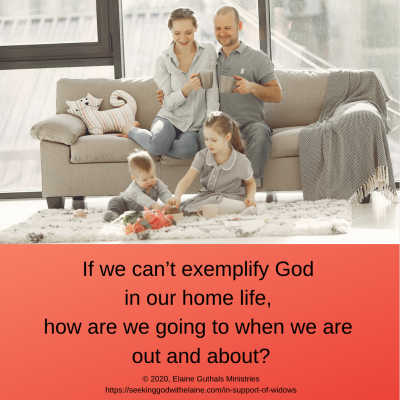
  • Freedom from Bondage

    Jesus gives us freedom from bondage. This devotion looks at how He releases us from the bondage of evil deeds, disbelief, and not hearing the truth.

    Nuggets

    • Jesus is the one who saves us from bondage.
    • One of the consequences of the original sin was man became separated from God.
    • Sin took over this world until the point God had had enough.
    • Bondage to sin does change us.
    • Jesus’ life, death, and resurrection has been fully documented.
    • We come to believe in Jesus by faith.
    • If we don’t hear the Truth, we are in bondage to Satan.

    Devotions in the What I Believe series

    Devotions in the Religious Freedom category

    Flowers with title Freedom from Bondage

    We’ve been using Sunday School Times’ sermon entitled Bondage and Freedom to serve as the foundation for the last two devotions. We do still have one point to pick up at the appropriate time.

    In the last devotion, we started also using Sunday School Times’ A Glorious Liberator. I don’t think we are going to be able to complete it in this devotion, either.

    Resource

    Let’s Put It into Context #1

    Freedom is, according to the Holman Bible Dictionary, “the ability of a person or group to be and do what they want instead of being controlled by another.” It is also referred to as liberty.

    Resource

    We talked about liberty before. We said that it runs the gamut, hitting all the things the worldview stresses.

    • We do what we please with no authority over us.
    • We make our own choices.
    • We don’t have to follow rules or limits.

    To read a related devotion, click the button below.

    Let’s Put It into Context #2

    “So if the Son sets you free, you really will be free” (Jn. 8: 36 CSB)

    This was the point from the Spiritual Freedom devotion that we deferred to this discussion.

    Jesus is the one who saves us from bondage. He did this by shedding His blood on the cross so that it was used to pay the penalty for our sins.

    That sacrifice allows us accept the gift of salvation when we believe that Jesus’ death was the only sacrifice that God would accept because Jesus is the only one who never sinned. We are set free by this acceptance.

    • “He drew me up from the pit of destruction, out of the miry bog, and set my feet upon a rock, making my steps secure” (Ps. 40: 2 ESV). While this verse is usually used in reference to trials, it does describe our salvation from hell when we set our feet in the Rock of our salvation.
    • “Out of my distress I called on the LORD; the LORD answered me and set me free” (Ps. 118: 5 ESV). God will always answer when we genuinely make a profession of faith.
    • “For the wages of sin is death, but the free gift of God is eternal life in Christ Jesus our Lord” (Rom. 6: 23 ESV). When we ABCD, we are set free from the punishment if death for our sins.
    • “For the one who was a slave when called to faith in the Lord is the Lord’s freed person; similarly, the one who was free when called is Christ’s slave” (I Cor. 7: 22 NIV). We talked in the last devotion that disciples don’t exchange one captivity for another.

    The bondage from which Jesus saves us has a couple of different aspects. Jesus saves us from the bondage of evil deeds, disbelief, and not hearing the truth.

    The ABCDs of Salvation

    If you have not become a believer in Christ, please read through the
    Plan of Salvation and prayerfully consider what God is asking you to do.

    A – admit our sins
    B – believe His Son Jesus is our Redeemer
    C – confess God as Sovereign Lord

    D – demonstrate that commitment by making any changes needed in our lives to live the way in which God has called us

    The Disciple’s Job Description

    Bondage Because of Evil Deeds

    “You are of your father the devil, and you want to carry out your father’s desires. He was a murderer from the beginning and does not stand in the truth, because there is no truth in him. When he tells a lie, he speaks from his own nature, because he is a liar and the father of lies” (Jn. 8: 44 CSB)

    One of the consequences of the original sin was man became separated from God. The result put us into bondage with Satan. It also unleashed the devastation of sin on mankind.

    That was what Satan was going for — but he used deceptive means to accomplish it. “Then the LORD God said to the woman, ‘What is this that you have done?’ The woman said, ‘The serpent deceived me, and I ate’” (Gen. 3: 13 ESV).

    Did you catch how selfish Adam’s and Eve’s answers were. “Somebody else made me do it.” It is called pass the blame.

    Do you think — in that moment — they realized all they had lost and were sorry for it? That meant sorrow had to have been almost instantaneous.

    What got them to the bite probably wasn’t. It probably took a while to fester.

    Maclaren gave a good explanation. He wrote, “Evil does not spring spontaneously in the unfallen heart. Sin is not, as some would have it, a necessary step in man’s development, nor does it spring from his own nature; it is an importation.”

    Resource

    It is an importation — it is not native to mankind. It is purposefully carried in from someplace else to take root in the new place.

    What is evil? Evil is equated with sin because it is that which goes against God and His purposes.

    Unfortunately, sin took root and multiplied.

    “The LORD saw that the wickedness of man was great in the earth, and that every intention of the thoughts of his heart was only evil continually” (Gen. 6: 5 ESV)

    Sin took over this world until the point God said, “No more.” He had had enough.

    Did you see how bad it was? “… every intention of the thoughts of his heart was only evil continually” (Gen. 6: 5 ESV). This wasn’t an occasional occurrence. I read it as every intention of every thought.

    I just noticed the only evil. The New Living Translation put it as “… consistently and totally evil” (Gen. 6: 5 NLT). Okay, less words than I had — same gist.

    We would say evil was in their hearts 24/7/365. Bondage was total.

    “All these evil things come from within, and they defile a person” (Mk. 7: 23 ESV)

    Usually when we think of bondage, we think of the outward chains. This is describing bondage from within.

    Bondage to sin does change us. It takes us farther and farther away from where God wants us to be.

    No one is free from sin. Everyone in a human body is going to sin.

    People

    “You are a child of the devil and an enemy of everything that is right! You are full of all kinds of deceit and trickery. Will you never stop perverting the right ways of the Lord?” (Ac. 13: 10 NIV).

    What is happening in this verse is Paul (still named Saul) is telling off a sorcerer. The sorcerer is opposing God’s ministry and attempting to turn the audience against Barnabas and Saul.

    The question is pertinent. “… Will you never stop perverting the right ways of the Lord?” (Ac. 13: 10 NIV).

    Satan’s answer is no. He will always try to pervert God’s ways. He will continue to fight until Revelation is fulfilled.

    “But when people keep on sinning, it shows that they belong to the devil, who has been sinning since the beginning. But the Son of God came to destroy the works of the devil” (I Jn. 3: 8 NLT).

    The bottom line is that those who continue to sin belong to Satan. Even if they don’t acknowledge, “I am following Satan” — they are.

    Fisk put it this way. He wrote, “He may be a free member of a free community, but his heart, his intellect, his body, all are bound in unresisting submissiveness to Satan.”

    Resource

    Remember, if we do not make a conscious decision to choose God’s gift of salvation and submit to Him, we have chosen Satan.

    Bondage by Disbelieving the Lord

    “Yet because I tell the truth, you do not believe me” (Jn. 8: 45 CSB)

    Disbelief. Satan tries to use this a lot to get us to not accept the gift of salvation.

    Woman

    “Who has believed our message? To whom has the LORD revealed his powerful arm?” (Isa. 53: 1 NLT).

    Jesus’ life, death, and resurrection has been fully documented. It is all spread out before us to believe. If we don’t believe, we are still in bondage.

    The powerful arm expression, in my way of thinking, is usually expressed as God’s mighty hand and outstretched arm. Meyer said this was referring to “… the active, saving energy of the Most High.”

    Resource

    God brought the Israelites out of Egypt with His outstretched arm (Ex. 6: 6). Part of Mary’s song goes, “He has performed mighty deeds with his arm; he has scattered those who are proud in their inmost thoughts” (Lk. 1: 51 NIV).

    “But you haven’t believed in me even though you have seen me” (Jn. 6: 36 NLT).

    The Jews Jesus was talking to saw Him standing right in front of them. We don’t get that.

    We come to believe in Jesus by faith. Faith is the belief that the doctrines stated in God’s Word are true, even if we do not understand all aspects of them.

    Why is faith important? Bushnell wrote, “The grand distinction of Christianity is that it makes its appeal to faith, and upon that rests the promise of salvation.”

    Resource

    The only way we get salvation is to have the faith to believe what God is telling us. We can’t be skeptical.

    Bible

    Bondage by Not Hearing the Truth

    “The one who is from God listens to God’s words. This is why you don’t listen, because you are not from God” (Jn. 8: 47 CSB)

    We have to listen. As children of God, that is our duty.

    If we don’t hear the Truth, we are in bondage to Satan.

    That means we have to pay attention. The focus has to be there.

    We have to be intentional — my word for last year. We have to be dedicated to seeking God.

    To read a related devotion, click the button below.

    We have to remember. I know. Memorization is hard, but we have to retain what we are hearing and reading.

    “For this people’s heart has become calloused; they hardly hear with their ears, and they have closed their eyes. Otherwise they might see with their eyes, hear with their ears, understand with their hearts and turn, and I would heal them” (Mt. 13: 15 NIV)

    Those in bondage have a calloused heart. The input may or may not come in through the eyes and ears where it may or may not lodge in the heart.

    We’ve said before that obedience has to come from the heart. His laws and commandments are supposed to affect our character or our core – our heart level. We are going for circumcision of the heart.

    Glossary

    Making the Connections

    The gospel is all laid out for us. It is up to us to make a choice.

    In order to make an informed choice, we have to review the evidence. It was written in the Essex Remembrancer that “It is right for every man to sift Christian evidence, but he must do so with humility — there must be a teachable.”

    Resource

    Being teachable means we are to be docile. We’ll looked at that toward the first of the year.

    Docile devotions

    To read a devotion the The Beatitudes Show Us How to be Docile series, click the button below.

    Making the Connections to Self-Discipline

    We’ve been looking at defending our beliefs when we are witnessing. That means we have to be secure enough to convince someone to accept our beliefs.

    Our questions should still serve us to determine on what we need to focus.

    • What does the Scriptures say?
    • What do I believe?
    • Why do I believe the same/differently than the Scriptures?
    • What are the talking points when witnessing to a non-believer?

    Related Links

    I have created a worksheet of the questions above. Click on the button below to access it.

    How Do We Apply This?

    So, if we are going to be docile, that means we are to be studying God’s Word. That means we are seeking God.

    Searching for and Seeking God

    Hearing His Word (Rom. 10: 17).
    Reading His Word (Rev. 1: 3).
    Praying to Him (Heb. 4: 16).
    Studying His Word (Ac. 17: 11).
    Meditating on His Word (Ps. 1: 1-2).
    Memorizing His Word (Ps. 119: 11).

    Remember, we just said we have to be intentional about it. We have to have a focus.

    If we intentionally seek God, we break free of the bondage of sin. We can only find God through Jesus.

    Father. We seek You. Help us find what You would have us know. Amen.

    If you have not admitted that your relationship is not right with God,

    have not asked Jesus to be your Lord and Savior,

    and have not confessed your sins,

    please read through the Plan of Salvation and prayerfully consider what God is asking you to do.

    Related Links

    Related Links

    Related Links

    Artist

    Related Links

    I have created a worksheet of the questions above. Click on the button below to access it.

    Don’t know what your spiritual gifts are?

    Take this Spiritual Gifts Inventory

    The Disciple’s Job Description

    Complete Job Description

    Individual Description

    The Disciple’s Job Description

    Complete Job Description

    Individual Description

    Job Duty #4
    Proclaim the Gospel (Mark 16: 15)

    Job Duty #6
    Make Disciples (Matthew 28: 19-20)

    It Was Enough
    Vocalist: Elaine Guthals
    Keyboard: Chris Vieth

    What do you think?

    Leave me a comment below (about this or anything else) or head over to my Facebook group for some interactive discussion.

    If you don’t understand something and would like further clarification, please contact me.

    If you have not signed up for the email daily or weekly providing the link to the devotions and the newsletter, do so below.

    If God has used this devotion to speak with you, consider sharing it on social media.
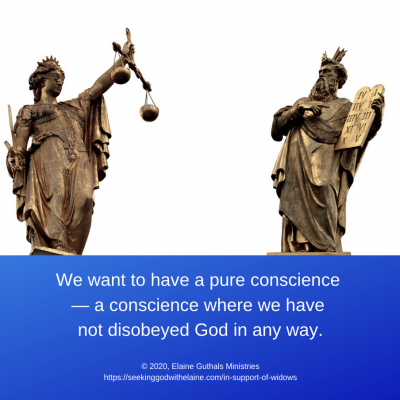
  • Truth in Freedom

    Jesus comes as Truth to save us from bondage. This devotion looks at one way that Truth provides us freedom.

    Nuggets

    • The inability to be obedient to the law was to show the Jews that we need a Savior.
    • We aren’t freed from our sins so we can just go on our merry way and keep on doing what we’ve been doing.
    • More than just keeping the do’s and don’ts of the law, it needs to build character.
    • We can’t just sit back and listen to the pastors preach and not do anything.
    • The freedom that the Truth brings does not give us license to continue to sin.

    Devotions in the What I Believe series

    Devotions in the Religious Freedom category

    Flowers with title Truth in Freedom

    In this series, we’ve been talking about the freedom we receive when we accept the gift of salvation. We started out by using a passage in John 8.

    We are going to pick out verses from that passage again to structure our discussion. We are going to put them with new ones to show how Jesus is the reason we receive spiritual freedom. Hopefully, this will tie up all of the previous devotions in a nice bow.

    We’ve been using Sunday School Times’ sermon entitled Bondage and Freedom to serve as the foundation for the last two devotions. We do still have one point to pick up at the appropriate time.

    We are going to use a different sermon for this devotion: Sunday School Times’ A Glorious Liberator. It is going to have to be split. I will put in nuggets from previous devotions, so we don’t have to backtrack too much.

    Resource

    Let’s Put It into Context #1

    Freedom is, according to the Holman Bible Dictionary, “the ability of a person or group to be and do what they want instead of being controlled by another.” It is also referred to as liberty.

    Resource

    We talked about liberty before. We said that it runs the gamut, hitting all the things the worldview stresses.

    • We do what we please with no authority over us.
    • We make our own choices.
    • We don’t have to follow rules or limits.

    To read a related devotion, click the button below.

    Let’s Put It into Context #2

    “Jesus responded, ‘Truly I tell you, everyone who commits sin is a slave of sin’” (Jn. 8: 34 CSB). 

    • Before mankind are children of God, they are sinners. The main issue was Adam and Eve’s disobedience. They did not submit their will and lives to God.
    • Satan was there to nudge them into disobedience. The choice was all theirs.
    • Satan may be sneaky in tempting us, but his objective is deadly. He wants us to remain spiritually dead.
    • It comes down to sin. We disobey God when we don’t follow His laws and commandments. We disobey when He tells us to move somewhere, do something, or don’t do something – and we don’t, don’t, or do.

    It comes down to sin because it does come down to submission. “No one can serve two masters, since either he will hate one and love the other, or he will be devoted to one and despise the other. You cannot serve both God and money” (Mt. 6: 24 CSB).

    At first glance, we may refute that statement. How many of us serve spouses and employers at the same time — even if we don’t call them masters?

    The thing is we don’t serve them equally all the time. We end up juggling. “Oh, yes, honey. I can take you to your doctor’s appointment tomorrow, but I have to work late tonight to finish up this important project first.”

    God doesn’t want to be juggled.

    It seems like, when we are trying to serve two masters, we truly serve one and give the other lip service. Instead, we need to serve as Cooper advised: “… with faithfulness and singleness of heart, with a mind wholly given to his service.” Anything less than wholeheartedly is lip service.

    Resource

    We can’t serve God and Satan because they are polar opposites. Think about it. What are their objectives?

    God is only asking us to give up sin. He is not requiring us to starve or go without shelter. He is going to provide for us. He will give us what we need.

    God wants to give us love and peace. Satan wants to fill us with hatred and chaos — even to the point of murder. There is no way we can serve both.

    But God is asking that we get the obedience to heart level. It has to change our character. That is going to take our full focus.

    Changing our character is the opposite of what Satan wants. Satan, on the other hand, gives us the illusion that he will give us what we want. This illusion creates the bondage.

    Satan wants us to continue in sin. His objective is mankind’s destruction. He wants us to worship him but not for our sakes — for his.

    God requires us to choose a master. We have to choose either to submit to Him or keep going on with Satan’s lies.

    We have to remember that God doesn’t really need us. He could do fine without us.

    We can’t live without Him.

    Truth Brings Freedom

    “You will know the truth, and the truth will set you free” (Jn. 8: 32 CSB).

    • Because this was totally different from what the Jews had grown up believing, Jesus was trying to correct was their reliance on tradition and rituals instead of a relationship with God.
    • Jesus told them that they would “… know the truth, and the truth will set you free” (Jn. 8: 32 CSB) if they would continue in His Word.
    • The Truth will set us free because Jesus is the Truth. He sets us free because He has redeemed us and paid the penalty for our sins.
    • Jesus is Truth, but we don’t gain freedom until we know him. But it is more than just head knowledge. It is heart knowledge.

    Ooo, baby. I have to process this. I pulled the verses the new sermon said to, and I couldn’t quite figure out how all of this went under truth. So, let’s try this. I found this next verse to try to corral the other ones.

    “For sin shall no longer be your master, because you are not under the law, but under grace” (Rom. 6: 14 NIV).

    We have to understand why the law was given. Burder reminded us that the law “… was introduced among the Jews, not that they might be justified by it, but that, by discovering how far they fell short of the obedience it required, they might be more deeply impressed with a sense of their abounding sins; and thus it became a schoolmaster to lead them to Christ (Galatians 3:24), and that so, where sin had abounded, grace might much more abound (Romans 5:20).”

    Did you get all of that?

    • There is no way the Jews — or us — can keep all the laws and the commandments.
    • That inability to be obedient to the law was to show them that we need a Savior.
    • When we search for our Savior, we will find Him.
    • Finding Him will get us access to His grace, which is more abundant than our sins.
    Gavel and law book

    Here we are turning from sin to Truth. That puts us under grace rather than the law.

    “You have been set free from sin and have become slaves to righteousness” (Rom. 6: 18 NIV).

    But we aren’t freed from our sins so we can just go on our merry way and keep on doing what we’ve been doing. We are called to change and worship.

    To read a related devotion, click the button below.

    It isn’t that disciples exchange one captivity for another. Liddon explained it as, “A Christian lives under a system of restrictions and obligations; and yet he is free.”

    Resource

    God is a God of love, not tyranny. He calls us for our good, not His. He is true to us and asks us to be true to Him.

    “But if you are led by the Spirit, you are not under the law” (Gal. 5: 18 ESV).

    Okay, we spent a whole series talking about being walking in the Spirit as He leads.

    • Walking is the term used to describe how we live our lives. It specifically means that we are to live following God’s laws and commands.
    • The flesh is our human nature. It is considered naturally corrupt because it pursues what is pleasing, not necessarily what God commands. It is the root of sin and evil.
    • We gain salvation by the Holy Spirit taking us to the Father using the Son as the way. He does this by interpreting the Scriptures for us.
    • But it is more than just not walking in the flesh anymore. It is not walking under the law, also.
    • More than just keeping the do’s and don’ts of the law, it needs to build character. Building character makes it about who we are and what we believe, not do’s and don’ts.
    • God through His Holy Spirit will have to bring about any changes in us that come from the victories we experience.
    • Our desires are still within us after conversion, which we deal with by working out our salvation.
    • God calls us to give our spiritual nature top billing at all times.

    To read a related devotion, click on the appropriate button below.

    “But the one who looks into the perfect law, the law of liberty, and perseveres, being no hearer who forgets but a doer who acts, he will be blessed in his doing” (Jas. 1: 25 ESV).

    I know. James couldn’t have been any more confusing if he tried.

    Elaine-speak. Being a disciple isn’t a spectator sport. We all have to suit up and be on the field.

    Baseball field

    We’ve got to ABCD and do what God wants us to do. We can’t just sit back and listen to the pastors preach and not do anything. Believing in Jesus as our Savior should make us want to do something.

    The ABCDs of Salvation

    If you have not become a believer in Christ, please read through the
    Plan of Salvation and prayerfully consider what God is asking you to do.

    A – admit our sins
    B – believe His Son Jesus is our Redeemer
    C – confess God as Sovereign Lord

    D – demonstrate that commitment by making any changes needed in our lives to
    live the way in which God has called us

    The Disciple’s Job Description

    “Live as free people, but do not use your freedom as a cover-up for evil; live as God’s slaves” (I Pet. 2: 16 NIV).

    God gives us freedom in a variety of areas. He does give us political and social freedom as well as intellectual freedom, as noted by Liddon.

    Most importantly, God has given us moral freedom. Liddon wrote, “He has broken the chains which fettered the human will, and has restored to it its buoyancy and its power. What had been lost was more than regained in Christ.”

    Resource

    I really like Carpenter’s definition of freedom. He wrote, “Freedom is the educated capacity to live according to the capacity of our being.”

    Resource

    You mean I have the freedom to be a ballerina? I’ve always thought it would be neat to be a ballerina. Twirling around, gracefully moving from one place to another.

    What? There are still limitations on freedom???? What do you mean I have to have the skill??????? Can’t I just point my toes and go???????????

    Well, yes. Carpenter did have to tack on that capacity-of-our-being part.

    The “… cover-up for evil …” (I Pet. 2: 16 NIV) part is interesting. God doesn’t intend salvation to be a bandaid on the boo boos of our sin. He is doing surgery here. He is removing the sin.

    That is why we say we need to change our character. God wants the old out, so it can be replaced by the new.

    The freedom that the Truth brings does not give us license to continue to sin. Oh, we may want to keep our pet sin, but we can’t.

    Making the Connections

    Is it obvious why we need to make a decision? There is only one decision: are we throwing in with Satan or are we submitting to God?

    If we go the Satan route, we will find misery. We will have to pay the consequences for sin.

    If we ABCD, the consequences have been paid for by Jesus. We are assured eternity in Heaven.

    This is why God can expect us to make this decision.

    • God created us.
    • He redeemed us.
    • He knows what is best for us.

    Making the Connections to Self-Discipline

    We’ve been looking at defending our beliefs when we are witnessing. That means we have to be secure enough to convince someone to accept our beliefs.

    Our questions should still serve us to determine on what we need to focus.

    • What does the Scriptures say?
    • What do I believe?
    • Why do I believe the same/differently than the Scriptures?
    • What are the talking points when witnessing to a non-believer?

    Related Links

    I have created a worksheet of the questions above. Click on the button below to access it.

    How Do We Apply This?

    • Make God our priority.
    • Frequently evaluate our relationships with God.
    • Conducting our lives with the right motives.
    • Exhibit a character pleasing to God.
    • Follow God’s laws and commandments as well as the laws our government enforce.
    • Use our resources to expand God’s kingdom.

    The Truth sets us free – when we accept. When we choose God, He chooses us because Jesus died so that we could.

    Father. We hear Your Truth. We accept Your Truth. Amen.

    What do you think?

    Leave me a comment below (about this or anything else) or head over to my Facebook group for some interactive discussion.

    If you don’t understand something and would like further clarification, please contact me.

    If you have not signed up for the email daily or weekly providing the link to the devotions and the newsletter, do so below.

    If God has used this devotion to speak with you, consider sharing it on social media.
  • What Else Is Spiritual Freedom?

    We have been talking about how all of us begin in spiritual bondage. Some find spiritual freedom. This devotion concludes our look at what that spiritual freedom entails.

    Nuggets

    • Jesus came to save everyone.
    • Jesus is Truth, but we don’t gain freedom until we know him, not just know of Him.
    • God adopted us.
    • The worldview is wrong when it argues that we are trading one bondage for another.

    Devotions in the What I Believe series

    Devotions in the Religious Freedom category

    Flowers with title What Else Is Spiritual Freedom?

    After looking at spiritual bondage, we’ve started in the last devotion to look at spiritual freedom. We didn’t get through the list. Let’s remind ourselves what we talked about in the Context #2, and then go on.

    The foundation of these devotions was taken from the Sunday School Times’ sermon entitled Bondage and Freedom.

    Resource

    I am going to take a little deviation, though, from the sermon. The next point is freedom through Christ. I am going to save that point for the Jesus the Liberator devotion. So, let’s go on.

    Let’s Put It into Context #1

    Freedom is, according to the Holman Bible Dictionary, “the ability of a person or group to be and do what they want instead of being controlled by another.” It is also referred to as liberty.

    Resource

    We talked about liberty before. We said that it runs the gamut, hitting all the things the worldview stresses.

    • We do what we please with no authority over us.
    • We make our own choices.
    • We don’t have to follow rules or limits.

    To read a related devotion, click the button below.

    Let’s Put It into Context #2

    • God is the one who sent Jesus to the earth to secure our spiritual freedom.
    • We don’t have to worry that God will give up on us as we continue to battle sin.
    • God calls us to spiritual freedom for a purpose – to further His kingdom.
    • God gives us His Spirit so that we can accomplish the work that He has for us to do.
    • Satan is going to try to capture us so that we don’t obey God.
    • Obeying God means Satan has less and less influence over people.

    God sent Jesus to the earth to secure our spiritual freedom. He has to hack the sin out of each of us – and keep hacking – even when we have ABCDed. We don’t have to worry that God will give up on us as we battle sin.

    God calls us to spiritual freedom for the purpose of furthering His kingdom. He gives us His Spirit to accomplish the work that He has for us to do.

    Satan is going to try to capture us so we disobey God. If we are disobeying God, Satan doesn’t have to go after us.

    Satan’s control over this world is obvious. The division and chaos all come from him. Non-believers don’t see it because they are blinded by Satan’s lies.

    But we don’t see it just by opening our eyes. We have to open the eyes of our hearts.

    Freedom Through the Gospel

    “The scroll of the prophet Isaiah was given to him, and unrolling the scroll, he found the place where it was written: The Spirit of the Lord is on me, because he has anointed me to preach good news to the poor. He has sent me to proclaim release to the captives
and recovery of sight to the blind, to set free the oppressed, to proclaim the year of the Lord’s favor. He then rolled up the scroll, gave it back to the attendant, and sat down. And the eyes of everyone in the synagogue were fixed on him. He began by saying to them, ‘Today as you listen, this Scripture has been fulfilled’ (Lk. 4: 17-21 CSB)

    We just talked about this passage. The passage shows Jesus’ mission and details how He is to interact with society. First, it gives Jesus’ qualification for His mission.

    Jesus’ message was He came to preach to the poor. However, it just isn’t the economically poor. Jesus came to save everyone. We were all poor in spirit because we were spiritually dead.

    Jesus’ purpose was to preach to the brokenhearted. It is reassuring to know that our Savior stands ready to comfort us.

    Jesus’ message is for all people. Regardless of socioeconomic status. Regardless of race. Regardless of ethnicity. Regardless of anything.

    To read a related devotion, click the button below.

    Brooks noted Jesus’ sermon held the following messages.

    • Atonement
    • Forgiveness
    • Emancipation
    • Inheritance

    Resource

    Jesus’ message is for all.

    • “For God so loved the world that he gave his one and only Son, that whoever believes in him shall not perish but have eternal life” (Jn. 3: 16 NIV).
    • “But God showed his great love for us by sending Christ to die for us while we were still sinners” (Rom. 5: 8 NLT).

    This message sets us free. No, most of us don’t have the the modern version of the Roman Empire keeping us in chains.

    We are enslaved by sin. Irving listed two biggies for this day and age: lust and anxiety.

    Resource

    Lust, more than just sexual lust, can be translated as desires. We want something, even though God has forbidden it. When we are anxious, we don’t put faith and trust in God.

    Faith is the belief that the doctrines stated in God’s Word are true, even if we do not understand all aspects of them. Trust is assurance that the promises of God are true.

    Freedom Because of the Truth

    “You will know the truth, and the truth will set you free” (Jn. 8: 32 CSB).

    We’ve established that Satan is a liar. “… He was a murderer from the beginning and does not stand in the truth, because there is no truth in him …” (Jn. 8: 44 CSB).

    We’ve also established that Jesus is Truth. “Jesus answered, ‘I am the way and the truth and the life. No one comes to the Father except through me’” (Jn. 14: 6 NIV).

    Jesus is Truth, but we don’t gain freedom until we know him, not just know of Him. It is more than just head knowledge. It is heart knowledge.

    We have to admit that we are sinners, believe Jesus is our Savior and Redeemer, and confess God as Sovereign Lord.

    The ABCDs of Salvation

    If you have not become a believer in Christ, please read through the
    Plan of Salvation and prayerfully consider what God is asking you to do.

    A – admit our sins
    B – believe His Son Jesus is our Redeemer
    C – confess God as Sovereign Lord

    D – demonstrate that commitment by making any changes needed in our lives to
    live the way in which God has called us

    The Disciple’s Job Description

    God is going to make sure we hear the truth. We’ve got to choose for or against it.

    Only thing, God is not going to force on us to accept the truth. We have to use our free will. Free will is the ability within us to make decisions, which determine actions that produce character.

    Zabriskie and Stowell gave us a list of from what truth frees us. This is just some of the list.

    • Ignorance
    • Error
    • Superstition
    • Death and judgement
    • Ritual
    • Prejudice

    Resource

    Isn’t it wonderful that we can learn the Truth!

    Freedom Through the Spirit

    “For you did not receive a spirit of slavery to fall back into fear. Instead, you received the Spirit of adoption, by whom we cry out, ‘Abba, Father!’” (Rom. 8: 15 CSB).

    Oh, man! This is a rich verse.

    God adopted us. Adoption is the act of grace where God accepts us into His family when Jesus redeems us and changes to be spiritually alive like God. Roberts acknowledged that we feel part of the family.

    Glossary

    Resource

    That means we are not only set free from bondage, but we are also included in the family.

    Spurgeon argued there is some sense of bondage through the a Holy Spirit. This incites fear.

    • Conviction
    • Punishment
    • Works of the law

    Resource

    I love how Beddome described the spirit of bondage. He said that is was “a distressing apprehension of danger, arising from the conviction of sin, which is one of the first effects of the law upon the conscience.”

    Resource

    Isn’t that description? It is an apprehension. We get a feeling. We feel the wrong of sin.

    But it can be a good feeling, too. We feel the conviction of the Holy Spirit.

    Oh, yeah. Conviction is probably going to hurt.

    But it proves God loves us. “For the LORD corrects those he loves, just as a father corrects a child in whom he delights” (Prov. 3: 12 NLT).

    This apprehension is to inspire us to do better. It is get bet us back to being obedient.

    By God adopting us, He gives us freedom — He breaks us out of the bondage. We gain freedom from the consequences of sin. Satan no longer has power over us.

    Loose handcuffs

    Freedom to be Enjoyed

    “But now, since you have been set free from sin and have become enslaved to God, you have your fruit, which results in sanctification — and the outcome is eternal life!” (Rom 6: 22 CSB)

    The worldview is wrong when it argues that we are trading one bondage for another. God’s spirit of bondage — which is really adoption — bears good fruit. Bradley spelled them out for us.

    • No more guilt over sin.
    • No more consequences of sin.
    • No more dominion of sin.
    • No more sin present.


    Resource

    Even better, we start navigating the sanctification road. Sanctification is the transformation of mind, body, and soul beginning with regeneration and ending with perfected state of spiritual wholeness or completeness.

    • Sanctification is the transformation of mind, body, and soul, which begins with regeneration, gradually changes our nature through the promptings of the Holy Spirit, and ends with perfected state of spiritual wholeness or completeness.
    • Regeneration is being changed from spiritually dead to spiritually alive and the internal requickening in us that God brings about through the work of the Holy Spirit to give us new character.
    • Spiritual death is the separation from God that occurred as a consequence of Adam and Eve’s original sin. The spiritually alive are those who have ABCDed, so they are no longer separated from God.
    • The perfected state indicates the combination of the spiritual graces which, when all are present, form spiritual wholeness or completeness.
    • Spiritual graces are worldly morals that have been submitted to God to further His kingdom instead of enhancing this world.

    The ABCDs of Salvation

    If you have not become a believer in Christ, please read through the
    Plan of Salvation and prayerfully consider what God is asking you to do.

    A – admit our sins
    B – believe His Son Jesus is our Redeemer
    C – confess God as Sovereign Lord

    D – demonstrate that commitment by making any changes needed in our lives to
    live the way in which God has called us

    The Disciple’s Job Description

    Glossary

    I really liked the “coherent whole” part. That is what salvation is. Salvation is a whole package from God. If we have genuinely submitted ourselves to His Sovereignty, we get the whole.

    But God works on us in minute degrees. We don’t go from sinful to perfected in a blink of the eye — yet. We have to work out our salvation.

    It is going to feel like we have fits and starts. It may even feel like we run out of gas.

    Eventually, we will get to the other end of the continuum. We will “… all be changed, In a moment, in the twinkling of an eye” (I Cor. 15: 51-52 KJV). Then, we will be perfect.

    The end goal is eternal life. We can start enjoying the thought of that now!

    Vaughn explained it this way. He wrote, “If I have received Christ into my heart, I am a pardoned man, I am a happy man, and I know and feel that I owe all my happiness to Him — therefore I love Him; I cannot choose but love Him; and my first desire is to please Him; to follow Him; to be like Him; to be with Him. My life is to become a life of love.”

    Resource

    We can bask in God’s love.

    WhatElseisSpiritualFreedom

    Making the Connections

    “For freedom, Christ set us free. Stand firm, then, and don’t submit again to a yoke of slavery” (Gal. 5: 1 CSB).

    This was last point in School Times’ sermon. But Perkins summed it up nicely by suggesting a couple of verses.

    Resource

    • “We have been rescued from our enemies so we can serve God without fear” (Lk. 1: 74 NLT).
    • “Everything is pure to those whose hearts are pure. But nothing is pure to those who are corrupt and unbelieving, because their minds and consciences are corrupted” (Ti. 1: 15 NLT).
    • “Through him we have also obtained access by faith into this grace in which we stand, and we rejoice in hope of the glory of God” (Rom. 5: 2 ESV).
    • “Then he said, “Look, I have come to do your will.” He cancels the first covenant in order to put the second into effect” (Heb. 10: 9 NLT).

    God has already rescued us. So, we need to try to remain pure. Praying will help us do that. We really want to do that, because Heaven is waiting for us.

    Making the Connections to Self-Discipline

    If we are thinking of us on the sanctification road, that takes a lot of self-discipline. We may think it is a mindless road, but it isn’t. We have to make conscious decisions to obey God and keep progressing forward.

    We’ve been looking at defending our beliefs when we are witnessing. That means we have to be secure enough to convince someone to accept our beliefs.

    Our questions should still serve us to determine on what we need to focus.

    • What does the Scriptures say?
    • What do I believe?
    • Why do I believe the same/differently than the Scriptures?
    • What are the talking points when witnessing to a non-believer?

    Related Links

    I have created a worksheet of the questions above. Click on the button below to access it.

    How Do We Apply This?

    The great thing is all we have to do is accept. Salvation is a gift through His grace. All we have to do to accept this gift is accept the plan of salvation.

    If you have not admitted that your relationship is not right with God,

    have not asked Jesus to be your Lord and Savior,

    and have not confessed your sins,

    please read through the Plan of Salvation and prayerfully consider what God is asking you to do.

    Then, we, too, will have spiritual freedom.

    Dad. You are Sovereign God — yet You are Dad to Your children. You love us so much that You give us the gift of salvation free of charge. You just ask that we become like You. Help us as we navigate the sanctification road so that we can just that. Amen.

    What do you think?

    Leave me a comment below (about this or anything else) or head over to my Facebook group for some interactive discussion.

    If you don’t understand something and would like further clarification, please contact me.

    If you have not signed up for the email daily or weekly providing the link to the devotions and the newsletter, do so below.

    If God has used this devotion to speak with you, consider sharing it on social media.