Category: Witnessing

  • Party at Matthew’s House

    Matthew was so happy to be called as a disciple that he began witnessing to his friends. This devotional reading looks at the dinner he served at his house and how it affected Jesus’ relationship with the Pharisees.

    Nuggets

    • Matthew invited his new friends to share a meal with his old friends.
    • We’ve established why tax collectors were considered sinners.
    • In some ways, Pharisees were very flexible in their beliefs, and in some ways, they were very rigid.
    • Yeshua explained that this was His mission.
    • Yeshua answered the Pharisees by quoting Scripture, a frequent habit of His.
    • Ever since before Cain killed Abel, humans were offering sacrifices to Jehovah.
    • Some Jews thought the Messiah would come when the nation was righteous – had repented of their sins.
    Matthew may have been considered an outcast by many first-century Jews, but that didn’t mean he didn’t have friends, associates, and acquaintances. We know he did because he invited them to meet Yeshua.

    Let’s Put It into Context

    To read devotions in The Battle for the Heart theme

    Devotions in the The Early Ministry of the Messiah series

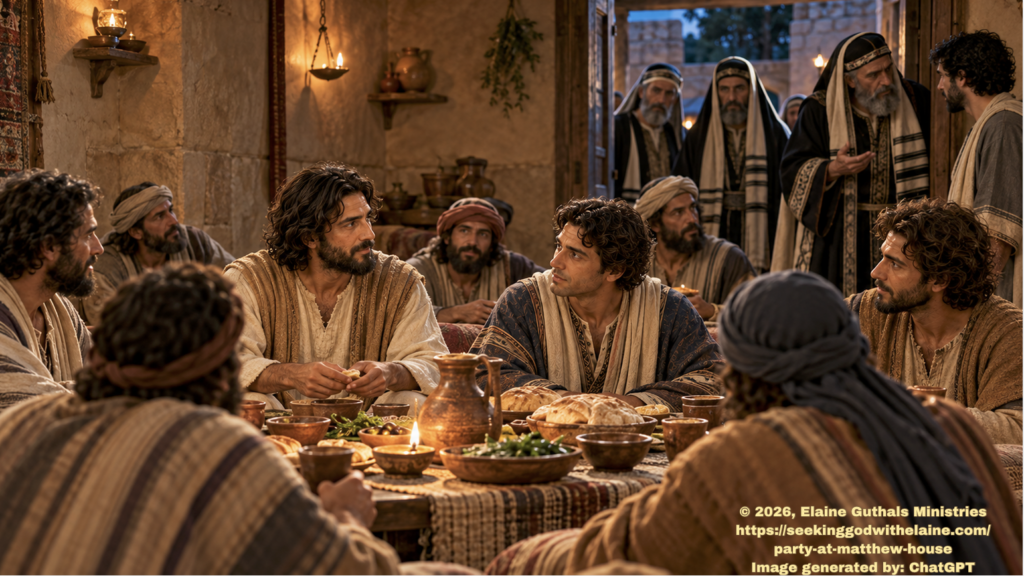
    Dinner at Matthew’s Home

    “Later, Matthew invited Jesus and his disciples to his home as dinner guests, along with many tax collectors and other disreputable sinners. But when the Pharisees saw this, they asked his disciples, ‘Why does your teacher eat with such scum?’” (Mt. 9: 10-11 NLT)

    “Later, Levi invited Jesus and his disciples to his home as dinner guests, along with many tax collectors and other disreputable sinners. (There were many people of this kind among Jesus’ followers.) But when the teachers of religious law who were Pharisees saw him eating with tax collectors and other sinners, they asked his disciples, ‘Why does he eat with such scum?’” (Mk. 2: 15-16 NLT)

    “Later, Levi held a banquet in his home with Jesus as the guest of honor. Many of Levi’s fellow tax collectors and other guests also ate with them. But the Pharisees and their teachers of religious law complained bitterly to Jesus’ disciples, “Why do you eat and drink with such scum?” (Lk. 5: 29-30 NLT)

    Invited Jesus and His Disciples

    Matthew invited his new friends to share a meal with his old friends.

    We should have no doubt about the sincerity of Matthew’s faith.

    We need to understand the importance of sharing a meal in first-century Israel. Meals could express welcome, friendship, acceptance, and fellowship. Having a meal together was also part of establishing a covenant.

    When Matthew decided to host a dinner party at his home, he didn’t only invite Yeshua and the other disciples. He invited others. He wanted to share the Savior with others.

    Think about it. We don’t know if it was the same day as Matthew was called, later that week, or later that year.

    One of the excuses we use to not witness about Yeshua is that we don’t know enough Scripture in order to tell about Him. That shouldn’t stop us.

    Others can read Scripture for themselves. Yes, it is merely an introduction to Yeshua and Jehovah. They may need someone to interpret it for them.

    But our relationship with Jehovah doesn’t end in the pages of the Bible. It permeates our lives.

    Scripture may be the foundation or the core of our relationship with Him. But our transformation has to come from our hearts and flow out into our lives.

    It is this change in us that opens some doors for witnessing. We know what Jehovah has done in our lives.

    Along with Many Tax Collectors and Other Disreputable Sinners

    We’ve established why tax collectors were considered sinners.

    It was generally felt that they had been disloyal to Israel and Jehovah by working for the foreign oppressors and those who aligned themselves with them.

    But who were the other disreputable sinners?

    Don’t you just love it when writers don’t come out and expressly tell you what they mean with the terms they use?

    No, Matthew doesn’t tell us point blank what is meant here. We can, however, piece it together by other things said in Scripture and by the wording used here.

    The Greek word used in this passage is hamartōloi (ἁμαρτωλοί), the plural of hamartōlos. It refers to people characterized as sinners—those who sin or are regarded as sinful.

    Nope, circular definitions are not helpful at all.

    So, we have to look at how it was used back in the day. In first-century Jewish society, the word could refer to people who actually practiced wickedness. Wickedness, in biblical terms, meant something that violated God’s commandments.

    Generally, when this term is used, it encompasses several overlapping groups. While there is overlap, they were not identical.

    • Tax collectors
    • People who openly violated the Torah
    • People who didn’t live according to the Pharisees’ understanding of faithful observance
    • People regarded as religious or social outsiders

    Those who openly violated Torah were liars, oppressors, and those who were sexually immoral, to name a few. That carried a serious moral meaning.

    But it was more than merely not following what was written in Torah. The Pharisees felt those who didn’t follow their interpretation of Scripture were religiously deficient. Later, these people were described as a’aretz (עַם הָאָרֶץ), literally people of the land.

    Being considered an outsider meant those people were placed outside the religious community because of their behavior or way of life. Shepherds were one group considered outsiders. Being a broad label meant this term could communicate disapproval and distance without specifying one particular offense.

    When the Pharisees Saw This

    In some ways, Pharisees were very flexible in their beliefs; and in some ways, they were very rigid.

    Pharisees were very lenient in their interpretation of Torah. They believed the oral tradition superseded the written law.

    But most refused to change their beliefs when confronted by the Messiah.

    When the Pharisees saw the other participants in the meal, they saw a Rabbi accepting the condition of known sinners. No faithful teacher – in their mind – would cross these boundaries.

    It was obvious that Pharisees were not interested in redeeming their Jewish brothers who had become tax collectors. Then there was no way, in my opinion, they would want to see Gentiles converted to Judaism.

    Why did they feel this way?

    We tend to see this as – in their eyes – being an issue of clean/unclean. We aren’t told that in this passage, but there are other passages where we do see this issue.

    We also may think that the Pharisees operated under a belief that someone must remain in a state of spiritual purity every moment. This doesn’t say that either.

    We would say, “Good thing.” They would have become unclean because they broke one of the laws or commandments – we would call that sin. We know that, even after conversion, we continue to sin.

    So, it is good to know that perfection wasn’t required.

    One way we can read this is that the Pharisees were more interested in their own relationship with Jehovah than someone else’s. The unspoken conclusion made by the Pharisees was, “Interaction with someone who is unclean makes us unclean.”

    By Yeshua’s response, that may be getting more toward His take.

    Healthy or Sick People

    “When Jesus heard this, he said, ‘Healthy people don’t need a doctor — sick people do’ Then he added, ‘Now go and learn the meaning of this Scripture: “I want you to show mercy, not offer sacrifices.” For I have come to call not those who think they are righteous, but those who know they are sinners’” (Mt. 9: 12-13 NLT)

    “When Jesus heard this, he told them, ‘Healthy people don’t need a doctor — sick people do …’” (Mk. 2: 17 NLT)

    “Jesus answered them, ‘Healthy people don’t need a doctor — sick people do’” (Lk. 5: 31 NLT)

    Healthy People Don’t Need a Doctor

    Yeshua explained that this was His mission.

    I can see Yeshua mentally shaking His head, wondering, “Do they really think a doctor is going to stay away from a sick person because s/he is sick?”

    No, precisely because they were sick, they needed a Physician. And Yeshua is the Great Physician.

    Learn the Meaning

    Yeshua answered the Pharisees by quoting Scripture, a frequent habit of His.

    When we read the Scripture used, we might be a little taken aback. That is especially true when it says something we didn’t expect it to say.

    “I want you to show love, not offer sacrifices. I want you to know me more than I want burnt offerings” (Hos. 6: 6 NLT).

    That is no more than we usually get. But remember, they memorized everything, so they had a shorthand when referring to a passage. They only said the beginning even though they were talking about the whole passage.

    But wait a second. Should it be translated as mercy or love? Let’s check out the Hebrew Scripture.

    The terms used there are hesed (or chesed depending on the transliteration) and zevach. Hesed (חֶסֶד) is related to grace conceptually, but it should not simply be treated as another Hebrew word for grace. It emphasizes steadfast kindness, covenant loyalty, faithful love, and lovingkindness.

    These weren’t just warm, fuzzy emotions. They affected how they treated others.

    Let’s look at loyalty, kindness, and faithfulness.

    • Loyalty: A person does not abandon a relationship simply because circumstances become inconvenient.
    • Kindness: Loyalty is demonstrated through actions that benefit the other person.
    • Faithfulness: The person acts consistently with the relationship and the obligations it entails.

    Loyalty talks about commitment to others even if the cost of that commitment is high. That overlaps with steadfast kindness.

    Kindness is more than being pleasant to someone or doing them a favor. It talks about wanting better for the other person. That overlaps with our choice to be faithful.

    Faithfulness involves the responsibilities needed to protect the relationship.
    Not Offer Sacrifices

    Ever since before Cain killed Abel, humans were offering sacrifices to Jehovah.

    Zevach (זֶבַח) means sacrifice or sacrificial offering. It refers to an offering made by slaughtering an animal, often as part of worship or covenant observance. Jehovah isn’t saying that sacrifice has no purpose. He’s emphasizing that sacrificial observance must not replace the covenant loyalty and faithful love He desires from His people.

    Once humans sinned, we lost God’s presence. The blood of the sacrifices covers the sin so we can come into Jehovah’s presence again.

    We can pray, repent, and try to get ourselves back into Jehovah’s good graces. But if we don’t do it through the blood of Yeshua, we can’t come before His throne.

    We might think it strange that this passage downplayed the Old Testament provision for sacrifices. When we think of sacrifices, we may think first of burnt offerings.

    Those sacrifices were offered for a variety of important reasons. Some were for the purpose of atoning for sin. Others expressed gratitude and worship. They solidified and reinforced the covenant between Jehovah and His people. They signified obedience and commitment.

    We know now that Yeshua was saying that a relationship with Jehovah is more important than killing animals. That relationship can only happen because of Yeshua’s blood.

    Before, those sacrifices were the only way humans could interact with Sovereign God. Once sin entered into humans, we couldn’t approach Him.

    But that still didn’t diminish Jehovah’s desire to have a covenant relationship with us. He provided a way to make that relationship possible – He sent His Son to die for us.

    We know now what the Pharisees didn’t know then. In AD 70, the Temple would be destroyed. The practice of sacrifices would cease.

    Calling Sinners

    “For I have come to call not those who think they are righteous, but those who know they are sinners” (Mt. 9: 13 NLT

    “… I have come to call not those who think they are righteous, but those who know they are sinners” (Mk. 2: 17 NLT)

    “I have come to call not those who think they are righteous, but those who know they are sinners and need to repent” (Lk. 5: 32 NLT)

    Some Jews thought the Messiah would come when the nation was righteous – had repented of their sins.

    Some first-century Jews thought that the Messiah would come when the nation was obedient to Jehovah. The Qumran community particularly emphasized that strict observance of the law was essential to the Messiah’s coming and expected two messianic figures — one royal and one priestly.

    Some find being righteous a difficult concept to understand. They want to whittle it down to being right.

    The Hebrew word that we translate as righteous is tzaddik (צַדִּיק). It is another word with a circular definition, meaning righteous or a righteous person.

    The meaning that helps us is one who conforms to God’s standards. This is more than merely doing the do’s and not doing the don’ts.

    Only Jehovah can declare someone righteous. One is only righteous when the outer character matches the inner person.

    Making the Connections #1

    I can see why the Pharisees considered were religiously deficient were later called people of the land. It harkens back to the past.

    Ever since they were waiting on the bank of Jordan River to cross into the Promised Land, the Israelites were told to not associate with the citizens of the countries they were to overthrow. They were told to be separate.

    “When the Lord your God hands these nations over to you and you conquer them, you must completely destroy them. Make no treaties with them and show them no mercy. You must not intermarry with them. Do not let your daughters and sons marry their sons and daughters, for they will lead your children away from me to worship other gods. Then the anger of the Lord will burn against you, and he will quickly destroy you” (Deut. 7: 2-4 NLT).

    I can see that they would begin to see the Canaanites as the people of the land – the land that they were promised.

    This may be a connection that only I see. To me, however, I see them transferring Jehovah’s condemnation of those not His own – the people who owned the land – to those in Yeshua’s time who were not Jehovah’s people.

    Making the Connections #2

    One of Jesus’ responses to the Pharisees and Torah-teachers was that healthy people don’t need a doctor — sick people do. He was confirming that sin is a disease.

    However, we can take that too far sometimes. We tend to want to believe that we have no choice in getting sick.

    Well, technically, that is the case. “When Adam sinned, sin entered the world. Adam’s sin brought death, so death spread to everyone, for everyone sinned” (Rom. 5: 12 NLT).

    That is why Yeshua said, “There is no judgment against anyone who believes in him. But anyone who does not believe in him has already been judged for not believing in God’s one and only Son” (Jn. 3: 18 NLT).

    Believing is a choice. “But to all who believed him and accepted him, he gave the right to become children of God.  They are reborn — not with a physical birth resulting from human passion or plan, but a birth that comes from God” (Jn. 1: 12-13 NLT).

    Making the Connections #3

    Look what Yeshua didn’t say.

    • He did not say, “There is no such thing as sin.”
    • He did not say, “It does not matter how people live.”
    • And He did not say, “The Torah no longer matters.”

    In the Sermon on the Mount, Yeshua told us exactly what He came to do.

    “Don’t misunderstand why I have come. I did not come to abolish the law of Moses or the writings of the prophets. No, I came to accomplish their purpose. I tell you the truth, until heaven and earth disappear, not even the smallest detail of God’s law will disappear until its purpose is achieved. So if you ignore the least commandment and teach others to do the same, you will be called the least in the Kingdom of Heaven. But anyone who obeys God’s laws and teaches them will be called great in the Kingdom of Heaven” (Mt. 5: 17-19 NLT).

    Salvation in Yeshua doesn’t take away our need to understand and follow the Old Testament.

    Heart Check

    Think about the battle Yeshua is engaged in for your heart. Ask yourself the following questions.

    • Do I show mercy to sinners, or do I avoid them?
    • Do I help others understand Scripture, or do I judge them for not understanding?
    • Do I examine my heart, or am I satisfied with outward obedience?
    • Do I share what Yeshua has done for me, or do I hold back because I don’t know enough Scripture?

    How Do We Apply This?

    • Look beyond a person’s reputation and see someone who needs Yeshua.
    • Show hesed through kindness, loyalty, and faithfulness.
    • Examine our hearts, not just our outward behavior.
    • Share what Yeshua has done in our lives, even when we don’t have all the answers.
    • Practice mercy without dismissing sin or abandoning Jehovah’s standards.

    Father God. We see the Pharisees’ reaction to Yeshua associating with sinners. Sometimes, we see Your children associating with those we consider sinners and react the same way. Help us to look at others through Your eyes and recognize their need to have a relationship with You. Amen.

    If you don’t understand something and would like further clarification, please contact me.

    If you have not signed up for the email providing the link to the devotions, do so below.

    If God has used this devotion to speak with you, consider sharing it on social media.
  • Philip Brought Nathanael to Jesus

    Andrew wasn’t the only disciple who brought someone to Jesus. This devotional reading looks at how Philip brought Nathanael to Jesus.

    Nuggets

    • Who was Nathanael?
    • Both men were steeped in Scripture.
    • Nathanael wasn’t buying what Philip was selling Him.
    • We have the responsibility to offer the invitation, but it is up to the other to accept it.

    Recently, we talked about John the Immerser pointing Yeshua out to two of his disciples. One was identified as Andrew. Most tradition identifies the other as John.

    Some, however, believe that disciple was Philip. I know, most tradition says it was John – and Scripture itself doesn’t tell us, so we don’t really know.

    It seems more likely that the other disciple was John rather than Philip. But think about it.

    If the other disciple was Philip, they were two for two. Both went to someone else and brought them to Yeshua.

    Let’s Put It into Context

    To read devotions in The Battle for the Heart theme

    Devotions in the The Early Ministry of the Messiah series

    Witnessing to a Friend

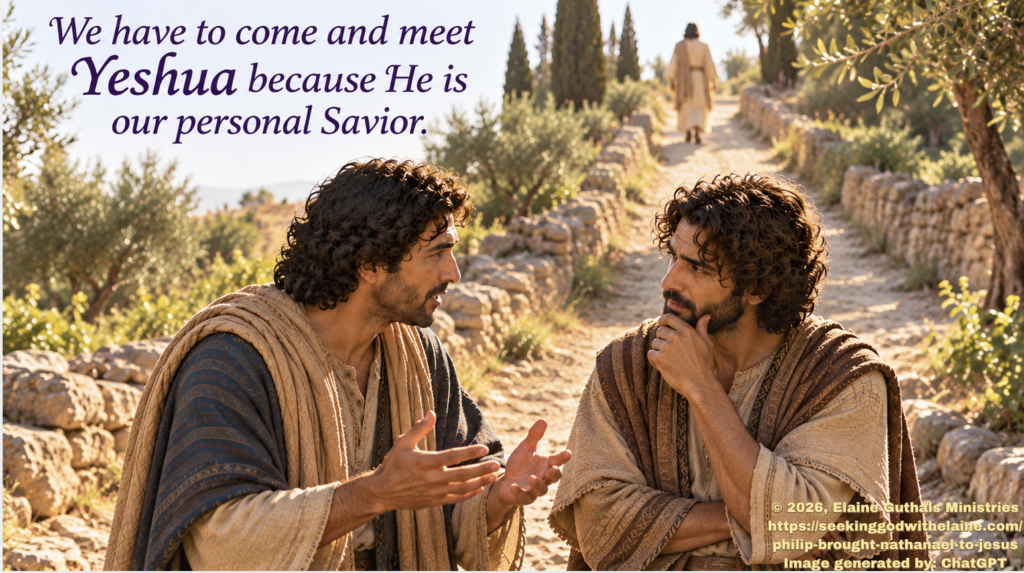
    “Philip went to look for Nathanael and told him, ‘We have found the very person Moses and the prophets wrote about! His name is Jesus, the son of Joseph from Nazareth.’ ‘Nazareth!’ exclaimed Nathanael. ‘Can anything good come from Nazareth?’ ‘Come and see for yourself,’ Philip replied” (Jn. 1: 45-46 NLT)

    Looked for Nathanael

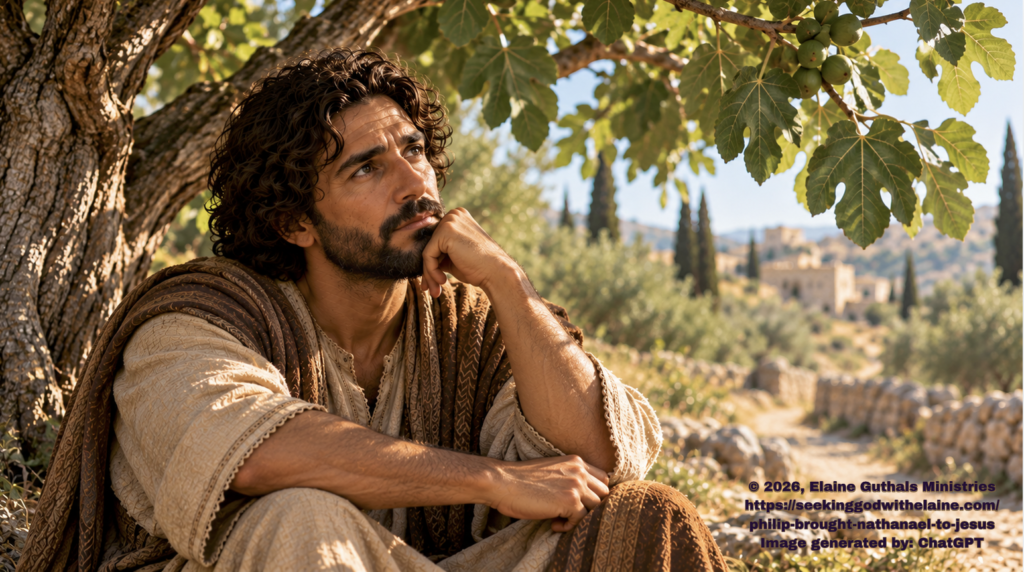
    Who was Nathanael?

    We know surprisingly little about Nathanael from Scripture. What we do know gives us a glimpse of the man Philip went looking for.

    Nathanael appears by name in John’s Gospel, but not in the other three Gospels. He is sometimes identified as Bartholomew, one of the Twelve Apostles listed in Matthew 10:3, Mark 3:18, and Luke 6:14.

    Scripture never explicitly tells us that Nathanael and Bartholomew were the same person. This identification comes from comparing the Gospel accounts, particularly because Philip is associated with Bartholomew in the lists of the Twelve and with Nathanael in John’s account. It is a longstanding Christian tradition, but we cannot establish it with certainty they were the same person.

    John tells us that Nathanael was from Cana in Galilee (Jn. 21: 2). Yeshua describes him as a man of complete integrity (Jn. 1: 47).

    What happened to Nathanael after Yeshua’s resurrection? Scripture gives us no detailed account of his later ministry. Christian tradition, however, identifies him with Bartholomew and associates Bartholomew with missionary work in several regions, including Asia Minor, the area of present-day Turkey, as well as Armenia and India. The accounts differ, and we cannot establish a reliable itinerary for his missionary work.

    Tradition also remembers Bartholomew as a martyr in Armenia, where he was reportedly flayed alive — his skin removed. Other accounts describe his death differently, including crucifixion or beheading. The details of his death cannot be verified from Scripture, and the later traditions disagree about what happened.

    That is what we can piece together about Nathanael. We know his hometown, we have Yeshua’s testimony about his character, and we see his initial response when he encounters the Messiah. Beyond that, we must distinguish what Scripture records from what later generations have passed down.

    Moses and the Prophets

    Both men were steeped in Scripture.

    Think about what Philip was saying when he talked about Moses and the prophets. He wasn’t simply telling Nathanael that he had met an interesting man. He was connecting Yeshua with the Scriptures they had been learning since childhood.

    Moses wrote the Torah — the first five books of Scripture. These books established the foundation for understanding Jehovah’s covenant with Israel, His instructions for His people, and His promises concerning their future. The prophets continued to call Israel back to faithfulness while revealing more about Jehovah’s purposes and the One who would come.

    Philip’s statement shows that he understood Yeshua in light of those Scriptures. He wasn’t separating this new discovery from what Jehovah had already revealed. He was recognizing a connection between the promises they knew and the Man he had encountered.

    Notice, too, that Philip expected Nathanael to understand what he meant. He didn’t stop to explain who Moses was or why the prophets mattered. They shared a scriptural background that gave meaning to his words.

    This doesn’t mean we know exactly which passages Philip had in mind. John didn’t identify specific prophecies in this verse. We should not assume that Philip was referring to one particular prediction when the text doesn’t tell us which passages he meant.

    What we can see is that Philip understood the importance of reading what was happening in the present in light of what Jehovah had already revealed through Scripture.

    That is an important lesson for us, too. We shouldn’t separate our understanding of Yeshua from the Scriptures that tell us who He is. We need to read the whole story, allowing what Jehovah revealed earlier to help us understand what He reveals later.

    Can Anything Good?

    Nathanael wasn’t buying what Philip was selling Him.

    Ooo, baby! Nathanael wasn’t impressed by Philip’s announcement. Philip had just told him that they had found the One Moses and the prophets wrote about. Then he identified Yeshua as Jesus of Nazareth.

    Why would Nathanael respond that way?

    Nazareth was a small settlement in Galilee. It wasn’t Jerusalem, the center of Jewish worship, or a royal city associated with the house of David. It wasn’t a place that Scripture specifically identified as the hometown of the Messiah.

    We need to be careful here. John doesn’t tell us exactly why Nathanael asked his question. We can’t say with certainty that he was prejudiced against Nazareth or that he believed the Messiah couldn’t come from Galilee. His words may reflect a dismissive view of an insignificant village, surprise at Philip’s claim, or questions about how Yeshua could fulfill what they understood from Scripture.

    Nathanael was possibly responding to the opinion of others. When we don’t have enough information, we sometimes do let others’ opinions influence us.

    When witnessing, we do sometimes need to respond to actual or perceived issues. How we do that can help our cause – or shut it down entirely.

    Whatever prompted his response, Nathanael wasn’t ready to accept Philip’s announcement simply because Philip believed it.

    Come and See

    We have the responsibility to offer the invitation, but it is up to the other to accept it.

    Ooo, baby. Nathanael’s response could have burned Philip.

    Here Philip was, sharing his excitement with Nathanael. Both were strong in the Jewish faith. Both were longing for the Messiah.

    Philip went to Nathanael and said, “He’s here!” Nathanael’s response? “You gotta be kidding me.”

    Philip could have handled this a number of ways. He could have gotten mad that Nathanael questioned his belief. He could have argued to get his point across. He could have walked away in disgust.

    None of that happened. Instead, Philip’s response was “Come and see for yourself.”

    There is something important here for us. When someone questions what we believe, our first response doesn’t always have to be an argument. We can explain what we believe, point to Scripture, and invite that person to examine the evidence.

    Faith isn’t strengthened by pretending questions don’t exist. We can bring our questions to Scripture and seek to understand what Jehovah has revealed.

    Nathanael had a question about Nazareth. Philip invited him to meet the Man he believed was the Messiah.

    Sometimes the most helpful thing we can do is invite someone to take the next step toward discovering the truth.

    Philip invited Nathanael to encounter Yeshua rather than settle the question through an argument. He didn’t try to answer every possible objection. He encouraged Nathanael to investigate for himself.

    Isn’t that how we reach some people? Our words might have some effect.

    But they have to see for themselves. They have to work it out and figure it out.

    More importantly, we each have to personally respond to the Holy Spirit’s prompting. Philip couldn’t make the decision for Nathanael to believe in Yeshua. Our parents can’t make it for us – our spouse can’t.

    We have to come and meet Yeshua because He is our personal Savior.

    Making the Connection

    We encounter Yeshua in different ways. Let’s look at a few.

    All Scripture tells us about Philip’s call is that Yeshua went to Galilee and found him. That sounds calm – but it is very personal, too.

    Nathanael was invited to learn about Yeshua through a friend. His initial reluctance didn’t hold any animosity, but Nathanael struggled with what Philip was telling him.

    Then there was Paul. Ooo, baby. Did he have a conversion story or what?!?

    Paul actively worked against the spreading of Christianity. His actions went all the way from imprisonment to murder.

    We know Paul made murderous threats (Ac. 9:1). We know that part of the persecution he inflicted on early Christians included their punishment (Ac. 22: 4-5). He felt responsible for the deaths, calling himself the chief among sinners (I Tim. 1: 15).

    Then, one day, Yeshua – even though He was dead, resurrected, and ascended – again personally appeared to Paul. He gave him a ministry from the start.

    That ministry came to the Philippian jailer where he worked. Because Paul would be obedient even when it got personally hard and painful for him, a man and his entire household was saved because:

    • a man went to work.
    • he listened to what someone he may have looked down upon had to say.
    • he didn’t discount the impossible when it happened before his eyes.
    • he opened his heart in compassion.
    • he wanted to share this wonderful gift with those he loved most.

    We all may not have a conversion experience that had the Hollywood splash that Paul did. But our call is just as personal and just as real.

    Yeshua knows our hearts and minds. He knows what our experiences have been.

    Our call is going to be designed around us.

    Heart Check

    Think about the battle Yeshua is engaged in for your heart. Ask yourself the following questions.

    • Do I invite others to discover Yeshua, or do I expect them to accept what I say?
    • When someone questions my faith, do I respond with patience or defensiveness?
    • Do I distinguish what Scripture says from what I assume?
    • Am I willing to examine the evidence when something challenges my understanding?
    • Do I recognize that Yeshua can reach people in ways different from how He reached me?

    How Do We Apply This?

    • Invite someone to encounter Yeshua rather than trying to win an argument.
    • Listen carefully to the questions people ask about faith.
    • Use Scripture to explain what we believe.
    • Respect that each person must make a personal response to Yeshua.
    • Recognize and encourage the different ways Jehovah works in people’s lives.

    Father God. Thank You for preparing a way that our relationships with You can be restored. Help us to seek Yeshua — through Scripture and through spending time with Him and You. Amen.

    If you don’t understand something and would like further clarification, please contact me.

    If you have not signed up for the email providing the link to the devotions and the newsletter, do so below.

    If God has used this devotion to speak with you, consider sharing it on social media.
  • Andrew Brought Simon to Jesus

    It is wonderful to get to know our Savior. This devotional reading looks at what our response should be as we get to know Him more.

    Nuggets

    • Andrew wasted no time in bringing his brother to the Messiah.
    • Andrew was so sure that Yeshua was the Messiah, he wanted his brother to know that, too.
    • Simon was an interesting man.
    • His birth name was Simon, but Yeshua changed his name to Peter.

    In the last devotion, we talked about John pointing Yeshua out to two of his disciples. One was identified as Andrew. Most tradition identifies the other as John.

    Andrew had an almost immediate response to his meeting with Yeshua. Let’s dig in.

    Let’s Put It into Context

    To read devotions in The Battle for the Heart theme

    Devotions in the The Early Ministry of the Messiah series

    Andrew Witnessed

    “Andrew, Simon Peter’s brother, was one of these men who heard what John said and then followed Jesus. Andrew went to find his brother, Simon, and told him, ‘We have found the Messiah’ (which means ‘Christ’)” (Jn. 1: 40-41 NLT)

    Brought

    Andrew wasted no time in bringing his brother to the Messiah.

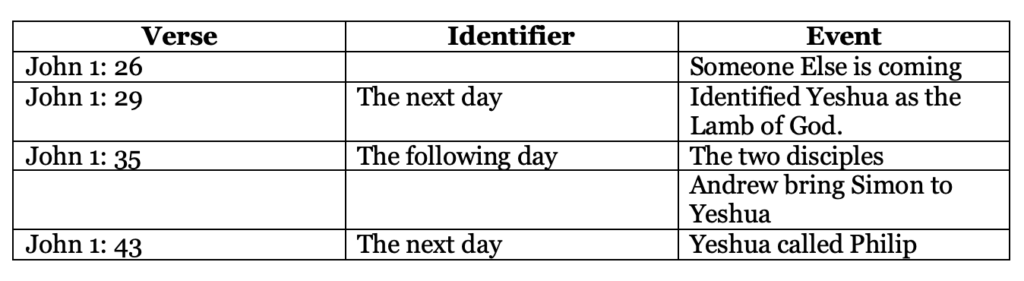
    John had been very precise in the chronology of the previous events. He specifically noted when events took place the following day.

    In this passage, John didn’t identify when the next day occurred until the following verse. If we are taking him at his word regarding when events occurred in the individual days, we must believe that Andrew’s bringing his brother Simon to Yeshua occurred on the same day that Andrew and the unidentified disciple spent time with Yeshua.

    This is important. Remember what verse 39 said. “… It was about four o’clock in the afternoon when they went with him to the place where he was staying, and they remained with him the rest of the day” (Jn. 1: 39 NLT).

    The Greek text says it was approximately the tenth hour. This also reflects the Jewish practice of counting daylight hours from sunrise. Therefore, when modern versions translate this as 4:00 p.m., they are correct.

    How long would the rest of the day have conceivably been? The Greek is emeinan (ἔμειναν), from menō (μένω), meaning to remain, stay, abide, continue, dwell.

    It is conceivable to think they spent the daylight hours with Yeshua.

    So, when did Andrew go get Simon? After they asked, “Where are you staying,” did Andrew go pick up Simon and meet them there? Did Yeshua, the other disciple, and Andrew talk a while, and then Andrew go get Simon?

    We can reasonably conclude that Andrew spent up to a couple of hours with Yeshua, and then he went to get his brother.

    We don’t really know for sure when it happened; but since John doesn’t switch days until after Simon gets there, we know it was on the same day that Andrew met Yeshua.

    We Have Found the Messiah

    Andrew was so sure that Yeshua was the Messiah, he wanted his brother to know that, too.

    Think about it. Many people were actively and eagerly watching for the Messiah to show up. Regardless of which Messianic expectations they believed in after He did come, they were looking for it to be soon.

    Andrew seems to be one of those who were actively watching. He was a disciple of the one who prepared the way for the Messiah.

    Once he verified that this was the Messiah, Andrew couldn’t keep the news to himself. He had to share it with Simon.

    It is part of our marching orders that we are to share our faith with others. Our love for Jehovah and Yeshua should bubble out of us and spill onto others.

    • “And then he told them, ‘Go into all the world and preach the Good News to everyone’” (Mk. 16: 15 NLT).
    • “Therefore, go and make disciples of all the nations, baptizing them in the name of the Father and the Son and the Holy Spirit. Teach these new disciples to obey all the commands I have given you. And be sure of this: I am with you always, even to the end of the age” (Mt. 28: 19-20 NLT).

    Simon Peter

    “Then Andrew brought Simon to meet Jesus. Looking intently at Simon, Jesus said, ‘Your name is Simon, son of John — but you will be called Cephas’ (which means ‘Peter’)” (Jn. 1: 42 NLT)

    “Now I say to you that you are Peter (which means ‘rock’), and upon this rock I will build my church, and all the powers of hell will not conquer it” (Mt. 16: 18 NLT)

    “Simon (whom he named Peter) … (Lk. 6: 14 NLT)

    “… Simon (whom he named Peter)” (Mk. 3: 16 NLT)

    Simon Peter [Shim’on/Kefa]

    Simon was an interesting man.

    We know many things about Peter. Part of that is because he seems to be the spokesperson of the group.

    At times, it seems like Peter had a larger-than-life personality. We get right away that Peter was loyal and sincere in his faith. He was the one who called Yeshua the Messiah when asked who they thought He was (Mt. 16: 16).

    Peter could also be impulsive and narrow minded. At times, he was inconsistent and thoughtless.

    We might have called Peter a wild card.

    Peter wasn’t afraid to ask questions when he needed clarification or wanted to gain knowledge. But that is a good thing, because he asked many of the questions that we would have.

    Peter’s faith was so strong that Jesus called him a rock (Mt. 16:18). Yet, we see in Peter a pendulum of faith. He not only was the only one to walk on the water with Yeshua (Mt. 14: 22-33), but he also denied Him three times the night of His trial (Mt. 26: 69- 75; Mk. 14: 66-72; Lk. 22: 54-62; Jn. 18: 15-18, 25-27).

    John told us that Peter and Andrew’s hometown was Bethsaida (Jn. 1: 44). However, Mark 1: 29-31 states that the healing of Peter’s mother-in-law took place in Peter and Andrew’s home in Capernaum.

    Either town was a fishing community.

    Circumstantial evidence from an archeological dig indicates that a house excavated in Capernaum belonged to Peter. BAS Staff indicated that the function of the house changed from a residential place to a communal gathering place.

    Resource

    Peter and Andrew may have grown up in Bethsaida. They may have moved to Capernaum when they were older.

    You Will Be Called

    His birth name was Simon, but Yeshua changed his name to Peter.

    All four Gospels say that Yeshua changed Simon’s name to Peter. Only John tells us when and how. It was the first time Simon met Yeshua.

    Matthew and Luke acknowledge that Simon was already Peter when Yeshua called him by the seashore.

    • “When Simon Peter realized what had happened, he fell to his knees before Jesus and said, ‘Oh, Lord, please leave me — I’m such a sinful man’” (Lk. 5: 8 NLT).
    • “One day as Jesus was walking along the shore of the Sea of Galilee, he saw two brothers — Simon, also called Peter, and Andrew — throwing a net into the water, for they fished for a living” (Mt. 4: 18 NLT).

    The interesting thing is the Gospel of Mark didn’t. “One day as Jesus was walking along the shore of the Sea of Galilee, he saw Simon and his brother Andrew throwing a net into the water, for they fished for a living” (Mk. 1: 16 NLT).

    Why is that interesting? To me it is because Mark was said to have compiled Peter’s sermons – either before or after he had died. That means – in my mind – that Peter called himself Simon there.

    Does that mean Yeshua hadn’t renamed Simon yet? Not necessarily. All the other Gospel writers pulled a Moses and used the name early church members would have been most familiar.

    Making the Connections #1

    Okay, I have to process something. It was fairly easy to keep track of the changing of the day. I am having a little trouble as to figuring out where they were.

    Where in the world are these guys?

    If we look at the passage with Andrew and Simon, it doesn’t tell us where they were at. But we get a clue in the next verse – John 1: 43. “The next day Jesus decided to go to Galilee …” (Jn. 1: 43 NLT).

    Now, let’s go backwards to the last time we had a location stamp. “This encounter took place in Bethany, an area east of the Jordan River, where John was baptizing” (Jn. 1: 28 NLT).

    The encounter being discussed was the discussion with the priests and temple assistant that John had at Bethany beyond the Jordan.

    Bethany beyond the Jordan is believed by many to be the location where John baptized Yeshua. But we have to be very careful here in John 1.

    John 1: 32-34 is a discussion of an event that happened earlier: Yeshua’s baptism. Matthew, Mark, and Luke all give us actual narrative accounts. Here, John the Immerser is only recounting what transpired when he baptized the Messiah.

    This is relevant when we add the temptation into the picture. Look at the chain of events.

    • “And a voice from heaven said, ‘This is my dearly loved Son, who brings me great joy’” (Mt. 3: 17 NLT).
    • “Then Jesus was led by the Spirit into the wilderness to be tempted there by the devil” (Mt. 4: 1 NLT).

    Tradition tells us that the wilderness Yeshua went into to be tempted was the Judean Wilderness. We don’t know for sure.

    Then after the forty days of testing, Yeshua went back to where John was.

    This is the only timeline that makes sense to me. The next day after the encounter with the priests and assistants, John makes his famous “… Look! The Lamb of God who takes away the sin of the world!” (Jn. 1: 29 NLT).

    The next day after His baptism, Yeshua would be in the wilderness, not walking by John. He especially wouldn’t be spending time with John’s two disciples the day after that.

    Another piece of evidence that this is the correct timeline is that John didn’t know who the Messiah was until He baptized Him.

    Remember John’s testimony. “‘I did not recognize him as the Messiah, but I have been baptizing with water so that he might be revealed to Israel.’” Then John testified, ‘I saw the Holy Spirit descending like a dove from heaven and resting upon him. I didn’t know he was the one, but when God sent me to baptize with water, he told me, ‘The one on whom you see the Spirit descend and rest is the one who will baptize with the Holy Spirit.’ I saw this happen to Jesus, so I testify that he is the Chosen One of God” (Jn. 1: 31-34 NLT).

    John couldn’t say, “Look!” before the baptism – which is discussed in the verses after his famous identification of the Messiah.

    Making the Connections #2

    Andrew brought Simon to Yeshua. He didn’t have to explain everything about the Messiah to his brother. He simply brought him to the One he had found.

    We know much more about Peter’s life than we know about Andrew’s. Peter’s words and actions fill the Gospel accounts.

    But we shouldn’t overlook the brother who brought him to Yeshua in the first place. Where would we be if he hadn’t?

    Andrew’s witness made a difference in Simon’s life. We may never know the full impact of our own witness, either. We aren’t responsible for making someone believe. We are responsible for pointing people toward Yeshua.

    We, too, are called to bring others to Yeshua. We should start with our family members. They mean the most to us, and we should want to share Him with them.

    Then, just as Andrew was, we may be called to bring total strangers to Yeshua. We have to be ready to do whatever He calls us to do.

    Heart Check

    Think about the battle Yeshua is engaged in for your heart. Ask yourself the following questions.

    • Am I bringing others to Yeshua or keeping Him to myself?
    • Am I willing to share what I know about Him, even when I don’t have all the answers?
    • Do I look for opportunities to share my faith, or do I wait for someone else to do it?
    • Am I more concerned about what I cannot explain or about introducing others to the One I know?

    How Do We Apply This?

    • Share what Yeshua has done in your life with those who currently don’t know Him as their Savior.
    • Look for opportunities to introduce others to Him.
      Invite others to come and see for themselves.
    • Trust Jehovah with the results of your witness.
    • Remember that your responsibility is to point people to Yeshua, not to make them believe.

    Father God. You call us to You. You call us to lead others to You. Help us boldly speak Your name to family, friends, coworkers — even strangers. Amen.

    If you don’t understand something and would like further clarification, please contact me.

    If you have not signed up for the email providing the link to the devotions and the newsletter, do so below.

    If God has used this devotion to speak with you, consider sharing it on social media.

  • Motivation and Posture in Spiritual Worship

    Worship has to have the right motivation and response to make it spiritual worship. This devotional reading looks at that from which our worship grows and how it affects our reactions.

    Nuggets

    • We must have faith to engage in spiritual worship for spiritual ends.
    • Our worship needs to affect us so much that we have a physical reaction.
    • When our motivations are wrong, we need to correct them to focus on God.

    Spiritual worship must be conducted with the right motivation and posture. We’ve talked about having the right motivation already in this study.

    Let’s see what else Charnock has to say.

    Let’s Put It into Context

    To read devotions in the Habitual Holiness of Heart and Life theme, click the button below.

    Here is a running list of nuggets for the theme.

    Devotions in the Finding Jesus through Spiritual Worship study

    Here is a running list of nuggets for the study.

    The foundation of this series is Menander and Charnock’s Spiritual Worship.

    Resource

    Performed with Spiritual Ends

    “And it is impossible to please God without faith. Anyone who wants to come to him must believe that God exists and that he rewards those who sincerely seek him” (Heb. 11: 6 NLT)

    We must have faith to engage in spiritual worship for spiritual ends.

    Spiritual worship is nothing without faith. Faith is a gift from God and a work of the Spirit that enhances the conviction that the doctrines revealed in God’s Word are true, even if we do not understand all aspects of them, a belief which impacts our lives and distinguishes us from others.

    Glossary

    Our worship has to have an object on which to focus that worship. That focus has to be God to make it spiritual worship. That means God is our motivation.

    Our faith is only as strong as our understanding of the object in which we are putting our faith. In this case, our faith is hindered by our lack of understanding of Who God is.

    Noel said that this way. He wrote, “Our comprehension of the object will always be the limit of our faith; and this faith will diminish or augment in the very degree in which our perception is clear or confused.”

    Resource

    I know. I keep saying that we are never completely going to understand God.

    But we do have to understand what is revealed to us. Things are revealed to us by revelation of the Holy Spirit, God’s Word, and others.

    Why can’t we understand God? That is easy – sin. Sin is not believing that Jesus is our Savior to save us from our actions that disobey God and break one of His reasonable, holy, and righteous laws and commandments, goes against a purpose He has for us, or follows Satan’s promptings.

    • Holy means to be set apart — because of our devotion to God — to become perfect, and morally pure while possessing all virtues and to serve and worship God.
      • Perfection means we reach a state of maturity because the combination of the spiritual graces form, when all are present, spiritual wholeness or completeness — holy, sanctified, and righteous.
        • Spiritual graces are worldly morals that have been submitted to God to further His kingdom instead of enhancing this world.
        • Sanctified means to be set free from sin.
      • Pure means not being sinful or having the stain of sin. 
      • Virtues are standards of moral excellence.
    • Righteous means we are free from sin because we are following God’s moral laws.

    Glossary

    Sin has skewed our judgment. It has taken our motivation off God and put it on the world.

    That negatively affects our worship.

    Instead, we want to have confidence in God. We should want to habitually please Him and show our faith by worshiping Him.

    Think about it this way. Worship has to come out of our faith. Faith has to be about God, or it isn’t faith.

    If God isn’t the center of our faith, God isn’t the center of our worship.

    If God isn’t the center of our faith, God isn’t the center of our worship.

    Our faith will start out the size of a mustard seed, but God doesn’t want it to camp out there. He wants it to grow.

    That is the whole point of sanctification.

    God takes us from where to are to where He wants us to be – like Him.

    Raised Arms at God’s Glory

    “You are worthy, O Lord our God, to receive glory and honor and power. For you created all things, and they exist because you created what you pleased” (Rev. 4: 11 NLT)

    Our worship needs to affect us so much that we have a physical reaction.

    I get it. Not all of us are raise-our-arms-clap-or-even-shout-Amen people.

    I was at Praise Team practice one night and was told we were going to practice our clapping. I had a problem with that. I don’t like to sing and clap when I am up front.

    The microphone and/or stand get in my way. When the mic is in my hand, it is hard to clap. I almost knocked over the stand once trying to clap around it.

    It doesn’t work for me.

    The biggest problem I had was my reaction to the music was being forced on me. I was told that this one way was the only acceptable reaction I could have.

    That really didn’t work for me because that isn’t God’s way. He let us choose our response to His Word. We can accept it or reject it.

    True, there are consequences for rejecting God. The point is that we have to respond somehow.

    What was my response to the worship leader when he said, “Elaine, clap.” I said, “No.”

    We immediately went to the next song.

    God doesn’t force us to accept Him any more than He forces us to clap when we sing.

    Our motivations and posture, though, have to be focused on God. We have to be all in when we worship Him.

    It is a little more than that. We have to have some reaction.

    Let’s hook this to the last section. Tillotson said that faith comes out of our apprehensions of God.

    Resource

    We would term apprehensions as fear of the Lord. We just talked a devotion or two ago that that means we hold God in awe.

    God is expecting that we get something out of our worship. This something has to draw us closer to Him.

    Worship to Gain, not Honor

    “You have said, ‘What’s the use of serving God? What have we gained by obeying his commands or by trying to show the LORD of Heaven’s Armies that we are sorry for our sins?” (Mal. 3: 14 NLT)

    When our motivations are wrong, we need to correct them to focus on God.

    Too many times, the motivation of our worship is to receive what we think we should gain.

    This isn’t a prosperity gospel where disciples all become rich and have happy, peaceful lives. It isn’t a humanitarian gospel where we are correcting all the social ills of the world.

    It is a gospel where we accept Jesus as our Savior and Redeemer. We worship God because He is Sovereign God, Creator and Sustainer of this universe.

    By doing that, we gain eternal life.

    Croxton had some pretty strong words to those who look to gain something other than a relationship with God. He said that those who had something other than God as their motivation “… had departed from the service of God.”

    Resource

    To me, departed means they made the initial confession of faith, but something went wrong. They turned away from God.

    No, I don’t know how all this fits in with once-saved-always-saved. Figuring that out is above my pay grade.

    It does fit in, I think, with the Parable of the Sower. “Other seed fell among rocks. It began to grow, but the plant soon wilted and died for lack of moisture. Other seed fell among thorns that grew up with it and choked out the tender plants” (Lk. 8: 6-7 NLT).

    Jesus said that there can be an initial acceptance – both seeds grew – but an eventual turning away – both seeds died.

    What I can figure out in all of that is our worship has to be sincere because our faith is sincere. We have to diligently seek God and worship Him and only Him.

    motivation-and-posture-in-spiritual-worshipFB

    Making the Connections

    When we worship God as a response to our faith in Him we do gain. Croxton gave us a good list, all of which we have talked about over the last four years.

    We gain honor when we give God honor. We are elevated to be like Him, not to be like the world.

    Worshiping God brings us contentment and joy. It takes away our fears, especially those of death.

    That is because we gain eternal life with God.

    Resource

    The end goal of worship is to walk with God. Walking with God means we are humble, reverent, teachable servants of God. 

    How Do We Apply This?

    • Seek God.
    • Worship only Sovereign God.
    • Don’t retire from faith.
    • Don’t return to our sinful ways.

    Searching for and Seeking God

    Hearing His Word (Rom. 10: 17)
    Reading His Word (Rev. 1: 3)
    Praying to Him (Heb. 4: 16)
    Studying His Word (Ac. 17: 11)
    Meditating on His Word (Ps. 1: 1-2)
    Memorizing His Word (Ps. 119: 11)

    Resource

    Father God. We worship You because You are worthy, and we are not. We come to You in gratitude and praise. We humbly come with hands raised high.

    The ABCDs of Salvation

    If you have not become a believer in Christ, please read through the
    Plan of Salvation and prayerfully consider what God is asking you to do.

    A – admit our sins
    B – believe His Son Jesus is our Redeemer
    C – confess God as Sovereign Lord

    D – demonstrate that commitment by making any changes needed in our lives to live the way in which God has called us

    The Disciple’s Job Description

    What do you think?

    Leave me a comment below (about this or anything else) or head over to my Facebook group for some interactive discussion.

    If you don’t understand something and would like further clarification, please contact me.

    If you have not signed up for the email providing the link to the devotions and the newsletter, do so below.

    If God has used this devotion to speak with you, consider sharing it on social media.
  • What Is the Purpose of the Church?

    There can be many conflicting ideas of what the purpose of the Church is. This devotional looks at what God deems is the purpose of the Church.

    To read devotions in the Habitual Holiness of Heart and Life theme, click the button below.

    On New Year’s Day, Pastor Steve preached a sermon on the purpose of the church. It reminded me about what we had been talking about in Silence in Worshiping God.

    I am going to do this one a little different than how I usually post of Pastor Steve’s sermons. I am going to give you what he said, and then I am going to tell you how it spoke to me.

    Devotions in the Pastor Steve Sermon Series 

    Conflicting Purposes

    Win Arn, a church consultant, surveyed members of a nearly thousand churches as the question: “Why does the church exist?”

    Of the members surveyed, 89 percent said, “The church’s purpose is to take care of my family’s and my needs.” For many, the role of the pastor is simply to keep the sheep that are already in the “pen” happy and not to lose too many of them. Only 11 percent said, “The purpose of the church is to win the world for Jesus Christ.”

    Then, the pastors of the same churches were asked why the church exists.  Amazingly the results were exactly the opposite. Of the pastors surveyed, 90 percent said the purpose of the church was to win the world and 10 percent said it was to care for the needs of the members.

    Is it any wonder we have conflict, confusion, and stagnation in many churches today?

    Nothing precedes purpose. The starting point for every church should be the question, “Why do we exist?” Until we know what our church exists for, we will have no foundation, no motivation, no direction, and no unity.

    The early church knew why they existed. And they were unified about that purpose. “Now the multitude of those who believed were of one heart and soul … And with great power the apostles were giving testimony to the resurrection of the Lord Jesus, and great grace was on all of them” (Acts 4:32, 33).

    Jesus had enlisted these followers not to a life of leisure, but to a life of service. While each had a different task, they all had the same calling: to fulfill the Great Commission in their generation. They had one leader – Jesus, one purpose – to communicate the gospel to all people.  These early disciples did more for the spread of Christianity than any generation of followers since.  What was their secret?

    OneJesusOnePurpose

    They Had Unity in the Church of God

    “Now the multitude of those who believed were of one heart and one soul; neither did anyone say that any of the things he possessed was his own, but they had all things in common” (Ac. 4: 32 NKJV)

    All the believers shared in this unity.  Not just the apostles.  Not just the leaders.  All the believers were unified.  There was fundamental solidarity of love and purpose. To be one in heart and mind is to be unified in every fiber of their being.

    They were family in relationship.

    They shared the same spiritual father – God Almighty.  They shared a spiritual birth – they were born again into the family of God. 

    A song Bill and Gloria Gaither wrote describes this family relationship: “I’m so glad I’m a part of the family of God – I’ve been washed in the fountain, cleansed by his blood! Joint heirs with Jesus as we travel this so; for I’m a part of the family, the family of God.”

    They were friends in fellowship.

    They shared their lives and their possessions with one another. It went beyond a kind word and a pat on the back. They gave priority to meeting the physical and practical needs that were evident in the community.  Chuck Swindoll wrote, “Churches need to be less like national shrines and more like bars … less like untouchable cathedrals and more like well-used hospitals, places where you can take your mask off and let your hair down… places where you can have your wounds dressed.” The early disciples found that in their community of faith.

    They were followers of Christ in partnership.

    These men and women shared an enterprise together.  They did not assemble merely for family gatherings or for making sure their physical needs were met. 

    They came together to attain an objective.  These men and women were partners in reaching the world for Christ.  They linked arms not just for their convenience and their comfort and their support but to reach out to those not yet linked up with them.

    Once. there was a three-year-old girl that became lost in an open field with grass and weeds waist high.  Once her family realized her predicament, they frantically began searching for her. 

    They called their family and friends to help in the search for her.  But to no avail. 

    Finally, just before dusk one of the children in the group offered a suggestion, “Let’s join hands and walk together up and down the field to see if that helps.” Because of their linking arms, the girl was found.

    The members of a church are a group of people from various backgrounds with different interests and different perspectives who have been called together for a purpose. That purpose is to cooperate together in reaching out beyond our walls so others can know the love of Jesus Christ.

    We are in the life-saving business. That endeavor is accomplished best when we understand that we are a family of friends in partnership with each other. 

    They Experienced the Power of God

    “And with great power the apostles gave witness to the resurrection of the Lord Jesus. And great grace was upon them all” (Ac. 4: 33 NKJV)

    Purpose is the power in the engine of life. Purpose assures us that the steering wheel is connected to the engine.

    Without purpose there is a motion without emotion. There is activity without accomplishment. There is efficiency without effectiveness.

    Think of light for a moment. Diffused light has not power at all.  But by focusing the power of the sun through a magnifying glass, we can set a leaf on fire. And when light is concentrated at an even higher level, like a laser beam, it can even cut through a block of steel.

    The early disciples had a laser-like focus to their purpose, and they correspond result was power – the dynamite of God.

    The power was evidenced by the growth of the church.

    In a matter of weeks, the church went from the Upper Room to every living room in Jerusalem.  It is estimated by scholars that during the first twenty-five years of the Jerusalem church, it grew from 120 to over 100,000 people. 

    That’s power manifested.  For comparison, a 2014 Barna Group study revealed 3,500 people leave the church every day.  That’s 1.4 million people a year.

    The power was evidenced by the growth of the church.

    As soon as the Spirit came upon the church, Satan launched a ferocious counterattack. Pentecost was followed by persecution.

    First, there was physical violence as church leaders were thrown into prison. Second, there was moral corruption, evidenced through Ananias and Sapphira to insinuate evil into the interior life of the church, and thus ruin the fellowship. Third, there was the subtle ploy of professional distraction to deflect the apostles from their priority of prayer and preaching by preoccupying them with social administration, which was not their calling.

    In each case the church withstood the attack and stayed true to its purpose of reaching people for Christ.

    The power was evidenced by their strength in diversity.

    The early Christians quickly realized that their diversity could either be a source of division or a source of power. They chose the latter.

    They were not all alike. There was a plethora of opinion, a wide assortment of gifts, but they found ways to integrate their differences into a symphonic whole – to create a singleness of spirit, of identity, and of purpose whose unifying center was Christ.

    In short, they resembled a symphony. They may have played different notes from the person sitting next to them.

    But their variety and diversity created a more magnificent sound than if they were all on the same instrument, playing the same note.

    Unity exists amid diversity because we all follow the same musical score.

    They Discovered the Favor of God

    “And with great power the apostles gave witness to the resurrection of the Lord Jesus. And great grace was upon them all” (Ac. 4: 33 NKJV)

    Because the early disciples were unified in purpose, and because they were committed to the task of reaching the world with the gospel of Jesus Christ, God smiled down on them with favor. “… and great grace was on all of them” (Acts 4:33).

    Grace, as you know, means unmerited love or favor. Because they were generous God was generous.

    Because their heart broke over the same things that broke the heart of God, God smiled upon them. Because they held in high esteem the purpose of Jesus, God held them in high esteem.

    It seems to me that there exists – both as individuals and a church – a direct correlation between our faithfulness to God’s plan and God’s favor in our lives. If we want to experience God’s blessings, we need to first be obedient to his purpose.

    Let me see if I can illustrate this idea.  In the movie Chariots of Fire, Eric Liddell tried to explain to his sister why he chose to prepare for the Olympic games rather than immediately return to China as a missionary: “When I run, I feel his pleasure.” Eric Liddell found his purpose and ran to Olympic stardom.  Following his Olympic feat he returned to the mission field in China, there, too, fulfilling his purpose, and there, too, feeling God’s pleasure.

    Or, as novelist Robin Jones Gunn said, “If  you agree to say yes to God’s purpose for your life, you’ll never be bored again with Jesus Christ.”

    They Were the Answer to the Prayer of God

    “I do not pray for these alone, but also for those who will believe in Me through their word; that they all may be one, as You, Father, are in Me, and I in You; that they also may be one in Us, that the world may believe that You sent Me … I in them, and You in Me; that they may be made perfect in one, and that the world may know that You have sent Me, and have loved them as You have loved Me” (Jn. 17: 20-21, 23 NKJV)

    And finally, on the last night of his life, Jesus prayed a prayer that stands as a citadel for all Christians, “I pray not only for these, but also for those who believe in Me through their message” (John 17:20).

    These words are precious.  Knowing the end was near, Jesus prayed one final time for his followers. 

    Striking, isn’t it? With death breathing down his neck, Jesus prayed not for their success, their safety, or their happiness.  He prayed for their unity, as they would fulfill his purpose.  He prayed that they would love each other, as they went forward to love the world to him.

    He prayed for His disciples and for all those who would come to faith in Jesus Christ, becoming His followers. That means you and me. In his last prayer, Jesus prayed that you and I be one.

    Of all the lessons we can draw from these verses, don’t miss the most important: Unity matters to God.

    The Father does not want his kids to squabble. Disunity disturbs him.

    Why? “By this all people will know that you are My disciples, if you have love for one another” (John 13: 35 NKJV).

    Unity creates belief. How will the world believe that God sent Jesus? Not if we agree with each other. Not if we solve every controversy. Not if we are unanimous on each vote. Not if we never make a doctrinal error.

    But if we love each other.

    If unity creates belief, then disunity fosters disbelief. How can the world come to believe the gospel if those who already believe it are battling among themselves? When the world sees Catholics and Protestants dueling for power and territory in Northern Ireland, or young and old members of the same congregation dueling over worship styles, or a church splitting of the color of the new carpet, it says, “Thanks, but no thanks.”

    Disunity is not merely a scandal for unbelievers; it is also a stumbling block for them coming to faith. Paul Billheimer may very well be right when he says: “The continuous and widespread fragmentation of the Church has been the scandal of the ages. It has been Satan’s master strategy. The sin of disunity probably has caused more souls to be lost than all other sins combined.”

    Could it be that unity is the key to reaching the world for Christ?

    If unity is the key to fulfilling the God-ordained purpose of spreading the message of Jesus Christ, shouldn’t it have precedence in our prayers? If unity matters to God, then shouldn’t unity matter to us? If unity is a priority in heaven, then shouldn’t it be a priority on earth?

    Unity matters to God.

    Conclusion

    Nowhere, by the way, are we told to build unity. We are instructed simply to keep unity. From God’s perspective there is but “… one flock and one shepherd” (John 10:16). Unity does not need to be created; it simply needs to be protected.

    How do we do that? How do we make every effort to keep unity?

    • Does that mean we compromise our convictions? No.
    • Does that mean we abandon the truths we cherish? No.

    But it does mean we look long and hard at the attitudes we carry. Unity doesn’t begin in examining others but in examining self. Unity begins, not in demanding that others change.

    Unity grows as we learn to accept other’s differences and to forgive when wronged. Unity continues as we humbly serve those who are different. Unity is fulfilled as focus on who we believe in rather than what we believe in. Unity is favored as we lovingly take the message of Jesus Christ to a divided world.

    That’s our purpose! Let’s be unified in it.

    what-is-the-purpose-of-the-churchFB

    Making the Connections

    Go back to the statistics. Here’s what the congregation thinks the purpose of the church is.

    • 89% think the church should take care of theirs and their families’ needs.
    • 11% think the purpose of the church is to win others to Christ

    Here’s what the pastors thinks the purpose of the church is.

    • 90% think the purpose of the church is to win others to Christ
    • 10% think the church should take care of members’ needs.

    Think about it. What that means is congregation members think then purpose of the church is to keep them happy.

    Where in the Bible does it say that the purpose of the church is to make disciples happy? Where does it say we are supposed to focus on ourselves?

    All the verbs in the Great Commission are action verbs directed at God and others, not us.

    What are the verbs in these verses? Go, make, baptize, teach.

    Yes, go means as we are living our lives. To me, this says we do witness by example.

    But that isn’t everything.

    Make disciples, baptize disciples, and teach disciples. It is all about winning others to Christ. We can only do this by being unified in this purpose.

    What we gave you here were the notes from which Pastor Steve preached. God gave him — and us — a couple of more nuggets during the sermon.

    • All believers must be unified, not just leaders.
    • Our purpose assures us the steering wheel is connected to engine.
    • God has found ways to integrate our differences into a symphony.
    • Unity doesn’t begin in examining others. It begins in examining ourselves.
    • Unity is fulfilled by looking at Who we believe in, not what we believe.

    Witnessing is not something just for the Pastor Steve-types. That is our purpose.

    That is the only purpose. We cannot compromise with the worldview.

    The world believes that love trumps right and wrong. It doesn’t.

    Our purpose must be to complete the Great Commission.

    How Do We Apply This?

    • We seek God.
    • We not only set an example for Christ, but we are also His ambassadors.

    Searching for and Seeking God

    Hearing His Word (Rom. 10: 17)
    Reading His Word (Rev. 1: 3)
    Praying to Him (Heb. 4: 16)
    Studying His Word (Ac. 17: 11)
    Meditating on His Word (Ps. 1: 1-2)
    Memorizing His Word (Ps. 119: 11)

    Father God. Thank You for giving us a purpose — a unified purpose. Best of all, this purpose is Your purpose — calling others to accept Jesus as Savior and Redeemer. Amen.

    What do you think?

    Leave me a comment below (about this or anything else) or head over to my Facebook group for some interactive discussion.

    If you don’t understand something and would like further clarification, please contact me.

    If you have not signed up for the email daily or weekly providing the link to the devotions and the newsletter, do so below.

    If God has used this devotion to speak with you, consider sharing it on social media.
  • Reforming Our Hearts

    The most important thing in our walk with God is to reform our heart. This daily devotional looks at how we need a pure, clean heart so that we can witness to others.

    Nuggets

    • A reformed heart is made pure after sin is removed.
    • A reformed heart is needed to influence others to search for Jesus.

    To read devotions in the At the Heart Level theme, click the button below.

    God is in the business of reforming our hearts. Horton contended that reformation was the main thing that we needed.

    Let’s see what we can get from what Horton had to say.

    Resource

    A Clean Heart

    “Create in me a clean heart, O God …” (Ps. 51: 10 ESV)

    A reformed heart is made pure after sin is removed.

    After Adam and Eve sinned, we were born with unclean, impure hearts. Sin does that.

    Cleanness has to do with the Israelites remaining holy.

    • Holy means to be set apart, perfect, and morally pure while possessing all virtues.
      • Perfection means we reach a state of maturity because the combination of the spiritual graces form, when all are present, spiritual wholeness or completeness — holy, sanctified, and righteous.
        • Spiritual graces are worldly morals that have been submitted to God to further His kingdom instead of enhancing this world.
        • Sanctified means to be set free from sin.
        • Righteous means we are free from sin because we are following God’s moral laws.
      • Virtues are standards of moral excellence.

    Pure means not being sinful or having the stain of sin. 

    • Sins are actions by humans that disobey God and break one of His reasonable, holy, and righteous laws and commandments, goes against a purpose He has for us, or follows Satan’s promptings.

    Glossary

    Horton told us removing sin from our hearts was the most important thing for us to do. We must all seek to cut out sin in our lives.

    I am going to take those backwards. How can we do that? It is only through

    • admitting that mankind was separated from God after the original sin, making us sinners;
    • believing Jesus paid the penalty for those sins to become our Savior and Redeemer;
    • confessing God as Sovereign God; and
    • demonstrating that commitment by submitting to living our lives following His laws and commandments confessing God as Sovereign Lord.

    Why is it important? If we do not ask God to cleanse our hearts from our sins, we remain separated from Him.

    One day there will be a judgment day. If we are separated from God on that day, we will remain separated from Him for eternity.

    But separation has its consequences. If we are not a child of God on judgment day, we will spend eternity in torment in Hell.

    Glossary

    To read a devotion in the Hell Does Have Fury series, click on the appropriate button below.

    Hell is real, people. “Then Death and Hades were thrown into the lake of fire. This is the second death, the lake of fire. And if anyone’s name was not found written in the book of life, he was thrown into the lake of fire” (Rev. 20: 14-15 ESV).

    What does all of that tell us?

    • Sin is bad news. It destroys our hearts.
    • There is hope for our hearts to become pure again, but it is only through the Plan of Salvation that it can be accomplished.
    • Only we can make the choice to ABCD — God will not force us to submit to Him.

    A Right Spirit

    “… and renew a right spirit within me” (Ps. 51: 10 ESV)

    A reformed heart is needed to influence others to search for Jesus.

    When our spirit is renewed within us – taking us back to our before-the-fall heart status – then we are in a position to influence others for Christ.

    I know. There are many good people out there who don’t believe God.

    But their hearts are unclean and impure.  They can’t have pure, clean hearts unless they have been forgiven by God.

    A right spirit is all about repentance. Repentance is acknowledging our separation from God and expressing sorrow for breaking God’s laws and commandments by making the commitment to change our sinful ways to ways of righteousness through obedience.

    We ask God to forgive us of our sins. We submit to His Will that we follow His laws and commandments.

    One of God’s laws is that we “… Go into all the world and proclaim the gospel to the whole creation” (Mk. 16: 15 ESV). We share the joy that we have found in God.

    I know many of us aren’t comfortable with witnessing. We need to get over it.

    God requires that we tell other about Him. There is no exceptions to that.

    Mark 16: 15 doesn’t say the “go” is only talking to the Pastor Steve-types. It doesn’t limit it to those in leadership positions.

    Jesus was talking to the apostles. These are the 11 common men – fishermen, tax collectors and others.

    They were just like us. If they would have been part of the higher ups, they would have kept going with their education and become priests.

    They weren’t priests.

    Look what else Jesus told them. “Go therefore and make disciples of all nations, baptizing them in the name of the Father and of the Son and of the Holy Spirit, teaching them to observe all that I have commanded you. And behold, I am with you always, to the end of the age” (Mt. 28: 19-20 ESV).

    There is that word go again. What is meant is that we make disciples as we do our daily walk.

    It doesn’t mean that we got on a mission trip to some far off country. It doesn’t mean that we give up anything where we are at.

    It means we make witnessing and teaching others about God part of our daily lives.

    reforming-our-heartsFB

    Making the Connections

    I love something else Horton had to say. He wrote, “They that desire to reform their lives, they must endeavour to reform their hearts; they must labour to have right spirits in them, or else all will be in vain unto them, whatsoever they apply themselves to as concerning this matter.”

    Resource

    Our heart status matters greatly. Remaking ourselves to be a good person isn’t going to cut it.

    Our focus has to be on fixing our relationships with God.

    How Do We Apply This?

    The ABCDs of Salvation

    If you have not become a believer in Christ, please read through the
    Plan of Salvation and prayerfully consider what God is asking you to do.

    A – admit our sins
    B – believe His Son Jesus is our Redeemer
    C – confess God as Sovereign Lord

    D – demonstrate that commitment by making any changes needed in our lives to
    live the way in which God has called us

    The Disciple’s Job Description

    Searching for and Seeking God

    Hearing His Word (Rom. 10: 17).
    Reading His Word (Rev. 1: 3).
    Praying to Him (Heb. 4: 16).
    Studying His Word (Ac. 17: 11).
    Meditating on His Word (Ps. 1: 1-2).
    Memorizing His Word (Ps. 119: 11).

    Father God. You call us to repentance. You want us to follow Your Will. Cleanse and purify our hearts, Lord, so that they are a reflection of You. Help us to grow in Your grace and knowledge. Amen.

    What do you think?

    Leave me a comment below (about this or anything else) or head over to my Facebook group for some interactive discussion.

    If you don’t understand something and would like further clarification, please contact me.

    If you have not signed up for the email daily or weekly providing the link to the devotions and the newsletter, do so below.

    If God has used this devotion to speak with you, consider sharing it on social media.
  • Commissioned to Witness

    Many times, it is hard for us to witness. We are called, however, to do just that. This daily devotional looks at how Ezekiel was commissioned to witness.

    Nuggets

    • God strengthens the people He calls for ministry.
    • God calls each of us to do His work.
    • We have a great responsibility in order to be the watchman for the nation.

    I don’t know what it is about witnessing that makes us run, screaming, the other way. But we sure do.

    Maybe it is our fear of rejection. Maybe it is our belief of our unqualified state.

    It probably has a lot of components.

    In our Sunday Morning Bible Study, we are starting to look at Ezekiel. He and Daniel, whom we will study next, prophesied in their own way during the Babylonian captivity.

    Let’s see how Ezekiel was commissioned to witness.

    God Gives Us Strength

    “Look, I have made your face as hard as their faces and your forehead as hard as their foreheads. I have made your forehead like a diamond, harder than flint. Don’t be afraid of them or discouraged by the look on their faces, though they are a rebellious house” (Ezek. 3: 8-9 CSB)

    God strengthens the people He calls for ministry.

    Verse 8 is an interesting place at which to start the conversation. We have to remember who the Israelites were in Ezekiel’s time.

    Don’t get me wrong. They were basically who they always were — hard-hearted, rebellious people.

    The way Mackray described them was that they were worse than normal. They were mired in evil.

    The only difference now was that they were captives to the Babylonians. They hadn’t learned anything,

    Elaine-speak for verse 8. You think those Israelites are bullheads? They are. But I have made you just as bullheaded.

    Better yet, verse 9 says God made Ezekiel’s head as a diamond. What God was saying here was that Ezekiel was invincible.

    If you look at the King James Version, it says, “As an adamant harder than flint have I made thy forehead …” (Ezek. 3: 9 KJV). Mackray had this to say. He wrote, “It was given long before by God Himself to His captive prophet in Babylon, whose forehead, as he faced the people, whose hearts were cold and hard as stones, might well be firm as adamant, since, in his very name, Ezekiel, he carried the great power of God.”

    Resource

    What I get out of all of this is Ezekiel was no slacker. He was enough of a strong-willed person to put up with the wayward, willful people.

    I like the analogy of Ezekiel being a diamond. When a diamond catches the light just right, it reflects it.

    Ezekiel was reflecting God.

    Diamonds are made through temperature and pressure. Isn’t that how we are transformed into godly people?

    Ezekiel was forged to stand up to the wayward people and present God’s message.

    But look how Mackray, in a roundabout way, said Ezekiel was formed. He wrote, “But ‘the broken heart,’ though it may seem strange to say so, is the stoutest and bravest of hearts.”

    Resource

    God forges us by breaking us. “The sacrifice pleasing to God is a broken spirit. You will not despise a broken and humbled heart, God” (Ps. 51: 17 CSB).

    We are broken in order to fully submit to God. We truly have the fear of the Lord — reverence — when we are broken.

    Glossary

    The problem is that we equate being broken with weakness. In this case, that is not the case. The weakness makes us strong.

    “But he said to me, ‘My grace is sufficient for you, for my power is made perfect in weakness.’ Therefore I will boast all the more gladly about my weaknesses, so that Christ’s power may rest on me” (II Cor. 12: 9-10 NIV).

    God gives us grace — He hardens us — so that we can withstand the temptations Satan throws our way. We can weather the taunts of the worldview people.

    When God calls us to ministry — and He calls all of us — He will strengthen us so that we can perform the tasks He has given us.

    The Actual Commissioning

    “Next he said to me, ‘Son of man, listen carefully to all my words that I speak to you and take them to heart.  Go to your people, the exiles, and speak to them. Tell them, “This is what the Lord God says,” whether they listen or refuse to listen.’ The Spirit then lifted me up, and I heard a loud rumbling sound behind me — bless the glory of the Lord in his place! — with the sound of the living creatures’ wings brushing against each other and the sound of the wheels beside them, a loud rumbling sound. The Spirit lifted me up and took me away. I left in bitterness and in an angry spirit, and the Lord’s hand was on me powerfully.  I came to the exiles at Tel-abib, who were living by the Chebar Canal, and I sat there among them stunned for seven days” (Ezek. 3: 10-15 CSB)

    God calls each of us to do His work.

    God told Ezekiel that, while he needed to listen to all that was said, Ezekiel’s responsibility didn’t end there. Ezekiel had to take it to heart.

    Greenhill explains what God was getting at. He wrote, “What is in the head may soon be lost, but what is in the heart abides.”

    Resource

    We have to get it down to the heart level. “I have treasured your word in my heart so that I may not sin against you” (Ps. 119: 11 CSB).

    Greenhill reminded us that we have to start getting all of the sin out of our hearts before we can get God’s Word into it. He equated our hearts with soil.

    Apparently, Ezekiel did listen to God and got it down to his heart level. When he was sufficiently strengthened, God transported him to where he could work for Him.

    Ezekiel needed the strength. He was not being called to preach to a sympathetic audience. He was going to have a tough row to hoe.

    Welch reminded us of something important. He wrote, “To expect defeat is one of the surest ways of incurring it.”

    Resource

    Isn’t that how it goes a lot of times? If we expect to lose, we will. If we expect to win, we will. It is a self-fulfilling prophecy.

    The way I read this is that Ezekiel had to get out of the way and let God work. The Spirit did lift Him up. God did work through Him.

    I also read it that Ezekiel didn’t especially want to get out of the way. He was bitter and angry.

    Welch assured us that Ezekiel was not bitter and angry at God. He was bitter and angry at the people because God was.

    We can’t doubt God. We can’t try to compromise with the worldview.

    We have to serve God. It requires the strength that he gives us.

    Welch wrote that it also requires sympathy. It sounds like Ezekiel was stunned at the conditions he found.

    What God Sees Us Doing

    “Now at the end of seven days the word of the Lord came to me: ‘Son of man, I have made you a watchman over the house of Israel.When you hear a word from my mouth, give them a warning from me. If I say to the wicked person, “You will surely die,” but you do not warn him — you don’t speak out to warn him about his wicked way in order to save his life — that wicked person will die for his iniquity. Yet I will hold you responsible for his blood. But if you warn a wicked person and he does not turn from his wickedness or his wicked way, he will die for his iniquity, but you will have rescued yourself. Now if a righteous person turns from his righteousness and acts unjustly, and I put a stumbling block in front of him, he will die. If you did not warn him, he will die because of his sin, and the righteous acts he did will not be remembered. Yet I will hold you responsible for his blood. But if you warn the righteous person that he should not sin, and he does not sin, he will indeed live because he listened to your warning, and you will have rescued yourself’” (Ezek. 3: 16-21 CSB)

    We have a great responsibility in order to be the watchman for the nation.

    The watchman was the sentinel that kept an eye out for enemies attempting to storm the city and lay siege to it. It was very important that the watchman stay alert and be concerned about the welfare of the others. Spurgeon reminded us that the watchman had to receive orders to begin watch and end the watch.

    Resource

    Disciples must be the watchman, too. Disciples’ orders must come from God.

    We are told in our job description to preach the gospel to all and then make disciples of them. We are to warn others of their spiritual condition.

    The Disciple’s Job Description

    Complete Job Description

    Individual Description

    Job Duty #4
    Proclaim the Gospel (Mark 16: 15)

    Job Duty #6
    Make Disciples (Matthew 28: 19-20)

    Wow! I wonder when Patterson wrote his sermon. He was talking about how people in his time wanted a watered down version of the gospel so that it wouldn’t hurt and be frightening.

    Sound familiar?

    Patterson countered with he must because it is a matter of life and death — spiritual life and death. Spiritual death is the separation from God that occurred as a consequence of Adam and Eve’s original sin.

    • Sins are actions by humans that disobey God and break one of His reasonable, holy, and righteous laws and commandments, goes against a purpose He has for us, or follows Satan’s promptings.
    • The consequences of sin are spiritual death and separation from God.
    • The spiritually alive are those who have ABCDed, so they are no longer separated from God.

    Resource

    Glossary

    We have to realize that we have to know that there is sin in our lives — and it is wrong — before we can ABCD. In churchy terms, we have to be convicted before we are converted.

    That means we have to be trained to hear God. We have to believe in His Word and what it tells us. We have to seek God.

    Searching for and Seeking God

    Spurgeon gave great advice to those who want to witness — which should be all of us. He wrote, “The great thing, I believe, with a successful winner of souls is to hear God’s truth from God’s own mouth.”

    Resource

    Spurgeon gave us the order in which things need to occur.

    • Jesus calls us.
    • We are in fellowship with Jesus to receive training.
    • We are sent forth in His power.

    Why is the training so important? It is because the message is so important. It is a message of life and death.

    Oh, yeah. Some people are going to reject the message. It is easy to say that they are rejecting God, not us. Sometimes, it doesn’t feel like that, but it is the truth.

    We can’t say this enough. All disciples — of which we are one — are called to witness. Spurgeon put it this way. He wrote, “You may not all be called to the work of prophesying as ministers are, but you are all called by some means to warn men of the wrath to come and lead them to Christ, and I want you to feel that God is at the back of you when you warn sinners. God will own His truth, therefore never be ashamed of it.”

    Resource

    We are all to preach God’s Word and make disciples. It is really important to them that we do witness.

    No, not all of those we witness to are going to ABCD. Their response isn’t on us.

    Our nonresponse to God’s commission for us to witness is going to have great consequences for us. We need to follow God’s plan for our lives.

    The ABCDs of Salvation

    If you have not become a believer in Christ, please read through the
    Plan of Salvation and prayerfully consider what God is asking you to do.

    A – admit our sins
    B – believe His Son Jesus is our Redeemer
    C – confess God as Sovereign Lord

    D – demonstrate that commitment by making any changes needed in our lives to
    live the way in which God has called us

    The Disciple’s Job Description

    comissioned-to-witnessPin

    Making the Connections

    Why is it so important for us to preach God’s message? Welch wrote, “In the light of God[,] the presence of moral disorder can be reconciled with His superintending goodness and mercy. And as we are lifted up in spirit into that light we see that there is an explanation of these terrible perplexities, a solution of these baffling problems, an unfolding of an occult and inscrutable plan.”

    Resource

    God has a plan for everything. He sees the good that will happen to us — and the bad.

    Through it all, God is in control.

    How Do We Apply This?

    • Follow God’s laws and commandments because that is His Will for our lives.
    • Be prepared to tell the unpopular and unpleasant message.
    • Don’t sugarcoat the message just to be accepted by man. That is compromising with the worldview.
    • Be passionate about God’s message and what He has done for us.
    • Speak from our heart.

    Resource

    What is all of this lesson about? Go out and witness where God calls us.

    Father God. Thank You, Lord, that, when You call us to witness for You, You equip us to do just that. You call us and train us. You strengthen us to withstand the rejection. May we witness to all to whom You have chosen us to speak. Amen.

    Searching for and Seeking God

    Hearing His Word (Rom. 10: 17).
    Reading His Word (Rev. 1: 3).
    Praying to Him (Heb. 4: 16).
    Studying His Word (Ac. 17: 11).
    Meditating on His Word (Ps. 1: 1-2).
    Memorizing His Word (Ps. 119: 11).

    What do you think?

    Leave me a comment below (about this or anything else) or head over to my Facebook group for some interactive discussion.

    If you don’t understand something and would like further clarification, please contact me.

    If you have not signed up for the email daily or weekly providing the link to the devotions and the newsletter, do so below.

    If God has used this devotion to speak with you, consider sharing it on social media.
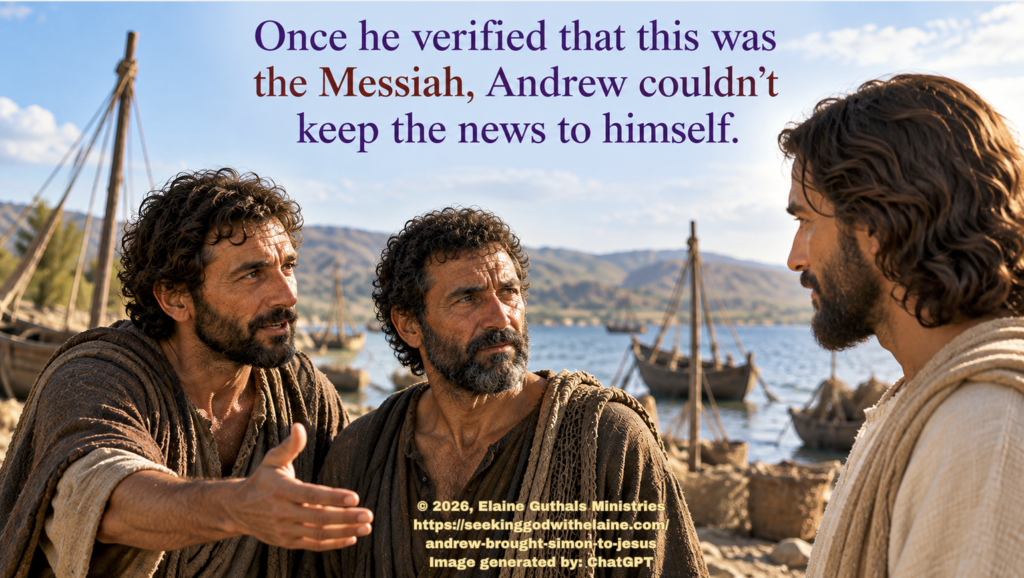
  • The Expected Message

    Jesus may have unexpectedly visited His disciples, but the message He was telling was the same one He had always told. This daily devotional looks at the message and Jesus’ plan to have it broadcast.

    Nuggets

    • Jesus’ mission centered on the condition of souls.

    • The starting place for spreading the message was Jerusalem, and it was up to the disciples to do it.

    • God will equip us to do His work.

    In the last devotion, we talked about how Jesus unexpected showed up while the disciples were hiding in a room somewhere. They did not expect to see the Risen Savior.

    The message Jesus told them was the message He had been telling them all along. “Now after John was arrested, Jesus came into Galilee, proclaiming the gospel of God, and saying, ‘The time is fulfilled, and the kingdom of God is at hand; repent and believe in the gospel’” (Mk. 1: 14-15 ESV).

    Let’s take a look at the message Jesus told the disciples that night.

    Let’s Put It into Context

    “He also said to them, ‘This is what is written: The Messiah will suffer and rise from the dead the third day’” (Lk. 24: 46 CSB)

    Here are the nuggets from the last devotion.

    • Jesus unexpectedly appeared to the disciples and both encouraged and chided them while proving He was real.
    • Prophecy always indicated that the Messiah would suffer and die, though the disciples didn’t expect and understand the words.

    The Expected Message of Repentance

    “and repentance for forgiveness of sins will be proclaimed in his name to all the nations …” (Lk. 24: 47 CSB)

    Jesus’ mission centered on the condition of souls.

    Jesus was all about repentance, forgiveness, and sin. Let’s look at the last first before moving on to the other two.

    Sins are actions by humans that disobey God and break one of His reasonable, holy, and righteous laws and commandments, goes against a purpose He has for us, or follows Satan’s promptings.

    Glossary

    God always knew that mankind was going to disobey Him and let sin into the world. With sin, death, crucifixion, and resurrection all in place, He created us anyway.

    The world God created was permanent. It was a paradise that had no illness and death, no anger and hate.

    God gave man just one restriction. “… You may freely eat of every tree of the garden; but of the tree of the knowledge of good and evil you shall not eat, for in the day that you eat of it you shall die” (Gen. 2: 16-17).

    Satan convinced Eve to not believe and to disobey what God said. Satan said bite; Eve bit; and Adam bit, committing the original sin.

    To read a related devotion, click the button below.

    Adam and Eve’s sin unleashed consequences for that act. The consequences of sin are spiritual death and separation from God. The results of sin are poverty, crime, disease, and death — just to name a few.

    Our relationship with Him was broken, however, because we were no longer upright. “For the LORD is righteous, he loves justice; the upright will see his face” (Ps. 11: 7 NIV). God does not tolerate sin.

    When the relationship broke, that meant we no longer had access to the Sovereign God. So, God had to come up with a way to fix our relationships. He designed the Plan of Salvation with Jesus as the Sacrifice.

    Redemption is where something is used in exchange for something else to gain or regain something. Jesus is our Redeemer because He

    • was born of a virgin, making Him 100% God and 100% man;
    • gave His life on the cross for us so that His blood could pay the price for our sins; and
    • because of God’s great might and power, rose from the grave, conquering death and paying the price for our sins. 

    Jesus paid the price for our sins but that doesn’t mean we don’t have to do our parts. We have to repent and believe.

    Repentance is acknowledging our separation from God and expressing sorrow for breaking God’s laws and commandments by making the commitment to changing ourselves through obedience so that we no longer do the wrong things. Lynch wrote, “Repentance is a change of mind leading to a change of conduct.”

    Resource

    The Plan of Salvation was accomplished through His grace. Grace is a free and unmerited gift from the Heavenly Father given through His Son, Jesus Christ, that enables salvation for and spiritual healing of believers by the work of the Holy Spirit.

    We access this grace through faith. Faith is the conviction that the doctrines revealed in God’s Word are true, even if we do not understand all aspects of them, a belief which impacts our lives.

    Because we have faith and believe, we gain the forgiveness of our sins. Forgiveness is, when we ask, God pardons us because we have broken His laws and commandments.

    We accept the pardon by committing to changing ourselves so that we no longer do the wrong things. We let go of the guilt and remorse that we feel because we have done something wrong. It is a conscious decision to accept His forgiveness.

    But that means we have to believe that God will forgive us when we ask. If we think we have committed too big of a sin or too many sins, we may think God’s forgiveness will never apply to us.

    That is so far from the truth. God does not limit His forgiveness.

    There is only one sin that God will not forgive — the unpardonable sin. I believe that sin is not ABCDing.

    Glossary

    That was the message. It is to be preached in Jesus’ name.

    What does that mean? Spurgeon felt that this was our marching orders. He wrote, “Silence is sin when salvation is the theme.” It is by His authority that we preach.

    Resource

    The ABCDs of Salvation

    If you have not become a believer in Christ, please read through the
    Plan of Salvation and prayerfully consider what God is asking you to do.

    A – admit our sins
    B – believe His Son Jesus is our Redeemer
    C – confess God as Sovereign Lord

    D – demonstrate that commitment by making any changes needed in our lives to
    live the way in which God has called us

    The Disciple’s Job Description

    We are called to convey the message, but Jesus alone brings the salvation. Salvation is the gift of life through the deliverance from evil and the consequences of sins to replace them with good and eternal life. Spiritual death is the spiritual separation from God that occurred as a consequence of Adam and Eve’s original sin. The spiritually alive are those who have ABCDed, so they are no longer separated from God.

    We are called to convey the message, but Jesus alone brings the salvation.

    The Unexpected Witnesses

    “… beginning at Jerusalem. You are witnesses of these things” (Lk. 24: 47-48 CSB)

    The starting place for spreading the message was Jerusalem, and it was up to the disciples to do it.

    Why was the gospel message supposed to be first proclaimed in Jerusalem? Jesus was instructing them to fulfill the Scriptures.

    • “Many peoples will come and say, ‘Come, let us go up to the mountain of the LORD, to the temple of the God of Jacob. He will teach us his ways, so that we may walk in his paths.’ The law will go out from Zion, the word of the LORD from Jerusalem” (Isa. 2: 3 NIV).
    • “Then everyone who calls on the name of the LORD will be saved, for there will be an escape for those on Mount Zion and in Jerusalem, as the LORD promised, among the survivors the LORD calls” (Joel 2: 32 CSB).

    Maybe it was because of where the events occurred they started at Jerusalem. Maybe it was because, being God’s people — as they so proudly reminded everyone — they should have known what the Scriptures said and could make the connections to believe. Maybe it was the “Jews first” rule.

    Probably also, Jesus wanted the disciples to start in Jerusalem because that was where they were. Jesus always comes to us where we are. He doesn’t make us clean up our acts or change what we are doing to earn salvation.

    Salvation is not about the do’s and don’ts. Submission is. By following God’s laws and commandments — and asking for forgiveness when we break them — we are growing holiness.

    Salvation is a free gift. We just have to repent and believe.

    Jerusalem should have been the easy place to start. The Jews were waiting for the Messiah — the disciples were preaching about the Messiah. A match made in Heaven, right?

    We want our first witnessing gig to be easy, don’t we? Let’s look at it from a couple of different angles.

    The Jews thought they knew all there was to know. Jesus was constantly telling them, “No, you don’t.”

    If they didn’t believe the Son of God, were they really going to believe fishermen?

    Let’s look at it from the angle that the disciples went to the Gentiles first. What would have been their first question?

    “How successful were you at getting the Jews to believe this?” The disciples would have first been seen as one of them. If they didn’t have success with their own, why should the Gentiles believe?

    So, really. The disciples wouldn’t have an easy road whichever way they went.

    But Spurgeon suggested we start where we would find opposition.

    What? Is he out of his mind?

    Spurgeon thought Jesus suggested Jerusalem because of the opposition. He wrote, “If they began at Jerusalem, they would arouse a ferocious opposition. But nothing is much better for the gospel than opposition.”

    Resource

    In my opinion — Spurgeon meant that the two opposing sides would showcase the benefits of a relationship with God.

    That means, disciples have to be forewarned. We aren’t going to have easy.

    Oh, yeah. We would like it if the altar was filled every altar call. There are times we would settle for one conversion every time we witnessed.

    That isn’t the way it works.

    Witnessing is about building relationships. That takes time.

    Witnessing is about building relationships. That takes time.

    Making the decision to accept the gift of salvation means we have to choose to be obedient. That is a major choice for some.

    It keeps flipping through my mind that this opposition strengthens our relationship with God. We solidify what we believe and why when we are opposed.

    Landels made some good points. He said.

    • The gospel is in the business of challenging worldview beliefs.
    • It showed that Jesus came to save all — even the ones who had Him crucified.
    • God’s mercy is for all, especially the most sinful.

    Resource

    The Promised Power

    “And look, I am sending you what my Father promised. As for you, stay in the city until you are empowered from on high” (Lk. 24: 49 CSB)

    God will equip us to do His work.

    The disciples were to stay in Jerusalem until they received a gift from the Heavenly Father. That gift was the Holy Spirit.

    Glossary

    We don’t witness under our own power. It is through the promptings of the Holy Spirit that we spread God’s message.

    Jesus has given each of a gift. “And he gave the apostles, the prophets, the evangelists, the shepherds and teachers, to equip the saints for the work of ministry, for building up the body of Christ” (Eph. 4: 11-12 ESV).

    This gift was “… grace [that was] was given to each one of us according to the measure of Christ’s gift” (Eph. 4: 7 ESV).

    Muir recognized the need to prepare for our role in God’s mission. He wrote, “By their enforced tarrying the disciples were taught that no man must thrust himself into the ministry of Christ.”

    Resource

    We can’t go ahead of God. We can’t go where He is not leading.

    Vaughan reminded us that the wait was only ten days. Oh, yeah. There are times when a ten-day wait feels like a lifetime. But it is relatively short.

    Resource

    I can see why Vaughan described the waiting period as the calm before the storm.

    But isn’t this what we are supposed to do — wait on the Lord? “Wait for the LORD; be strong, and let your heart take courage; wait for the LORD!” (Ps. 27: 14 ESV).

    I know. We want to be in charge of the who, what, when, where aspect of everything.

    God wants us to depend on Him in  everything.

    I loved Rogers’ definition of power. He wrote, power “… is intensity in every part of the Christian life.” Rogers brought up faith, loyalty, courage, sympathy, grandeur, and love as examples.

    Resource

    We only get this power from God.

    Watson was right. This is amazing power. It took a ragtag group of fishermen and made them evangelists.

    Resource

    TheExpectedMessagePin

    Making the Connections

    Think of it this way. Jesus had died and had risen from the grave. The Plan of Salvation was complete.

    Jesus’ didn’t see His work as over. He had a group of men that needed to be restored, encouraged, and equipped.

    The Plan of Salvation wouldn’t mean a thing if these men did not tell others it existed. We have to know we are sinners. We have to make a conscious choice to believe in a Risen Savior.

    Jesus’ priority is always the condition of our souls.

    But Jesus was also concerned about the condition of the disciples’ souls. Had the disciples made a profession of faith before the crucifixion or after Jesus’ appearance to them that night?

    Somewhere along the line, the disciples chose to make Jesus their personal Savior. And the world was changed.

    How Do We Apply This?

    • Read Scriptures asking God to provide understanding.
    • Diligently read the Scripture.
    • Read the Scriptures with docility — being willing to be taught.
    • Start witnessing at home.
    • Join in an already-established missions project.

    Resource

    Rogers didn’t see our situation as much different than that of the disciples. We still meet with opposition when witnessing. Luckily, Rogers said, “… the promise to us is unchanged.”

    Resource

    Jesus comes to us with a very specific purpose in mind. He wants us to believe in Him. Do you?

    Father God. It amazes us that You want our relationships with You restored even after we have disobeyed You. It amazes us — and scares us — that You want us to spread the gospel. Give us courage. Help us to go only where You call us. Amen.

    What do you think?

    Leave me a comment below (about this or anything else) or head over to my Facebook group for some interactive discussion.

    If you don’t understand something and would like further clarification, please contact me.

    If you have not signed up for the email daily or weekly providing the link to the devotions and the newsletter, do so below.

    If God has used this devotion to speak with you, consider sharing it on social media.
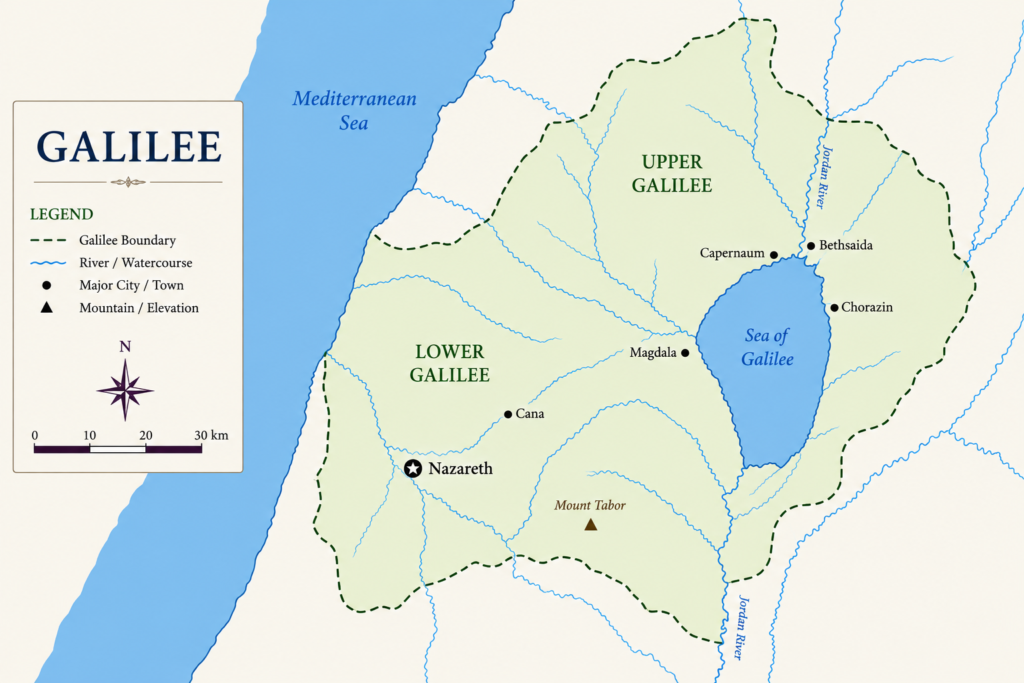
  • Honoring God with Our Lives

    Disciples are to honor God with our lives. This daily devotional looks at how our morality honors the doctrine of God.

    Nuggets

    • God will reward our good faith when we accept the teaching of Jesus and imitate Him.
    • We are to be ambassadors for the gospel by showing others to see their needs for it.

    To read devotions in the Redo for Godliness series, click the appropriate button below.

    Devotions in the Moralities Lead to Godliness series

    Manton concluded his sermon entitled The Moralities of Christianity by telling us that religion should have honor. In the last devotion, we looked at aspects of dishonoring God. Here, we will look into honoring Him.

    Resources

    Let’s Put It into Context

    “Finally brothers and sisters, whatever is true, whatever is honorable, whatever is just, whatever is pure, whatever is lovely, whatever is commendable — if there is any moral excellence and if there is anything praiseworthy — dwell on these things” (Phil. 4: 8 CSB)

    The definition of moral, according to the Merriam-Webster Dictionary, is “of or relating to principles of right and wrong in behavior.” Morality, then, is “a doctrine or system of moral conduct.” When it is the plural form — moralities — it is a “particular moral principles or rules of conduct.”

    Resources

    Our morals determine our character. Character, according to the Merriam-Webster Dictionary, is “the complex of mental and ethical traits marking and often individualizing a person, group, or nation.”

    Resource

    Honor means to esteem and respect another because of a good reputation.

    What Is the Doctrine of God Our Savior?

    “not pilfering, but showing all good faith, …” (Ti. 2: 10 CSB)

    God will reward our good faith when we accept the teaching of Jesus and imitate Him.

    “Do not steal” is one of the Ten Commandments (Ex. 20: 15 NLT). Pilfering paints more of a picture that the pilferer is casually taking whatever catches the eye.

    Instead, we are to exhibit a faith that holds to “… the doctrine of God our Savior” (Ti. 2: 10 CSB). This is a fancy title for the institution of faith and manners that we call the gospel.

    Think of it this way. Watkinson noted that we are to imitate Jesus, Who is imitating God. Ultimately, it is God’s character that we should display.

    Resource

    We are to imitate Jesus, Who is imitating God.

    Lambe reminded us that our faith has to be whole. Everything we believe and do — from the largest thing to the smallest — must be governed by our faith.

    We talked once about the prayer bone has to be connected with the meditation/thought/mind bone, which is connected to the thankful/worship/heart bone. This connectedness honors God and strengthens our witness, especially if we are consistent in our faith.

    Resource

    To read a related devotion, click the button below.

    When we walk through life holding on to the teachings of Jesus, God will bless us. But it is more than just that.

    When we walk through life holding on to the teachings of Jesus, God will bless us.

    How Do We Adorn the Doctrine?

    “… so that in everything they may adorn the doctrine of God our Savior” (Ti. 2: 10 CSB)

    We are to be ambassadors for the gospel by showing others to see their needs for it.

    Lambe stated that we are “to govern and demean ourselves that we may reconcile its enemies to a good opinion of it; that we may procure and even force regard and veneration towards it.” We are to be its witnesses.

    Resource

    Really, what that is talking about is our obedience. Others need to be able to see our obedient life and be introduced to God’s love. They see this through our worldly morals being kicked up to spiritual graces.

    We can’t be begrudgingly obedient to God and think we are honoring Him. We have to be completely submitted to Him to cheerfully do His Will.

    Oh, hold the phones. Maclaren took it another way. He talked about what we add to the gospel. He said we need to look into a telescope (the Scriptures) to capture sight of the heavenly bodies and add our reflection.

    Resource

    We feel so inadequate at times. We are not pure like God. We don’t have a 100%-fruit-of-the-Spirit performance record.

    But we do have much to add to the narrative of the gospel. (No, we aren’t adding to the gospel itself. We are adding to the report of it.)

    Think about it. How did Paul add to the narrative? He showed us that we can start out totally against God and be forgiven and changed. He showed us that we can go through mega hardships to be able to use them for His glory.

    How did Peter add to the narrative? He was uneducated and impulsive — and God was still able to use him. He was strong in his faith, but that doesn’t mean he didn’t have his moments.

    Persons of Interest

    We add to the narrative when we lose our jobs and keep our faith firmly in Him. We add to it when we follow Him into a totally different occupation or location and show our obedience to Him.

    No, we are not changing the gospel. We are adding to the reports of how that plays out in our lives today.

    If we think about this, this is huge. Watkinson said this is what takes it out of the philosophy into the practical. That also takes it to a third P: proof. We know the gospel is true because it is evident in our lives — adorned for all to see.

    Resource

    It is practical because it isn’t just at the mind level. It has to get down to the heart level.

    In our own minds, we see ourselves not capable of doing the big things for God. We aren’t godly enough; we aren’t qualified; we aren’t in the right place at the right time.

    We can come up with a lot of excuses.

    We can serve God. Maclaren argued that this is done through the small things. No, we may not be able to be a missionary to some foreign land. But we can tell our family, our next door neighbor, and our coworkers.

    It doesn’t have to be a Paul’s letter to the Romans. It can be a simple statement of faith.

    That is a big way to honor God. Maclaren summed it up this way: “The best Illustrated Bible is the conduct of the people that profess to take it for their guide and law.”

    Resource

    I’ve told you before that I can be a fake-it-till-you-make-it girl. Birch reminded us that it has to be more than just wishful thinking. “To be pure and truthful in all we say or do cannot be accomplished by merely wishing; it will probably take an entire life for a man to become genuine as Jesus Christ was.”

    Resource

    That means it takes work. Some may be hardships. We will have lots of peaks and valleys. It will take our lifetime to work it out.

    It will be worth it because we adorn the gospel by fulfilling our purpose in God’s kingdom. He has a plan for each of us. When we allow ourselves to be used by Him, Birch said we get to start Heaven early.

    We adorn the gospel by fulfilling our purpose in God’s kingdom.

    Beecher put things into perspective. He wrote that “… it is on account of the intrinsic beauty of moral quality that piety and religious life, in their higher forms, are spoken of in the word of God as beautiful; and the consummation of piety in the social estate, in the Church, whether in the present or in the future, is celebrated all the way through the Bible as beautiful.”

    Resource

    Ooo, baby. I need Elaine-speak on that one. Inner beauty is tied up with our spiritual graces/enhanced morals. Those are leading us to be godly — holy and righteous.

    This inner beauty is much more important to God than outward beauty. God said so Himself. “… For the LORD sees not as man sees: man looks on the outward appearance, but the LORD looks on the heart” (I Sam. 16: 7 ESV).

    Making the Connections

    Spurgeon reminded us of all of the greats associated with the gospel.

    • Adam and Eve experienced a great fall because sin is great in so many negative ways.
    • Their ruin was great because they were forced out of paradise.
    • Their punishment was great because they had to give up face-to-face access with the Sovereign God.
    • Salvation is great because it offers complete restoration.
    • Redemption is great because it takes us from ruin back to paradise.
    • Our hope is great because it is made up of both current and future aspects: faith and hope.
      • Faith is the conviction that the doctrines revealed in God’s Word are true, even if we do not understand all aspects of them, a belief which impacts our lives.
      • Hope is a future expectation, called a living hope, based on the confidence that our names will be found in the book of life.

    Resource

    The main theme is that it is all about honoring God. Yes, there is some great lows in that list. But because of God — only because of God — can we get to the great highs.

    HonoringGodWithOurLivesPin

    How Do We Apply This?

    We need to imitate Jesus. Yes, we will fail sometimes — sometimes spectacularly. The only effect that should have on our faith is to make it grow, not diminish.

    That means evaluating and planning. Where are we falling down? What do we have to do to get right with God?

    I think a lot of times, we just coast and react to what comes our way. Birch challenged us to seek out opportunities to do good.

    Resource

    We need to be the embodiment of the gospel. Others see it through our expressions of faith. They just see our transformations (so, sometimes that means showing them the things we really rather would have kept hidden, regardless of the ouch factor).

    Resource

    We honor God by searching for Him and seeking Him. We honor Him by serving Him in the ways in which we are called.

    Father God. We give You praise and honor in all we do. Help us to be witnesses for You. Amen.

    Searching for and Seeking God

    Hearing His Word (Rom. 10: 17).
    Reading His Word (Rev. 1: 3).
    Praying to Him (Heb. 4: 16).
    Studying His Word (Ac. 17: 11).
    Meditating on His Word (Ps. 1: 1-2).
    Memorizing His Word (Ps. 119: 11).

    What do you think?

    Leave me a comment below (about this or anything else) or head over to my Facebook group for some interactive discussion.

    If you don’t understand something and would like further clarification, please contact me.

    If you have not signed up for the email daily or weekly providing the link to the devotions and the newsletter, do so below.

    If God has used this devotion to speak with you, consider sharing it on social media.
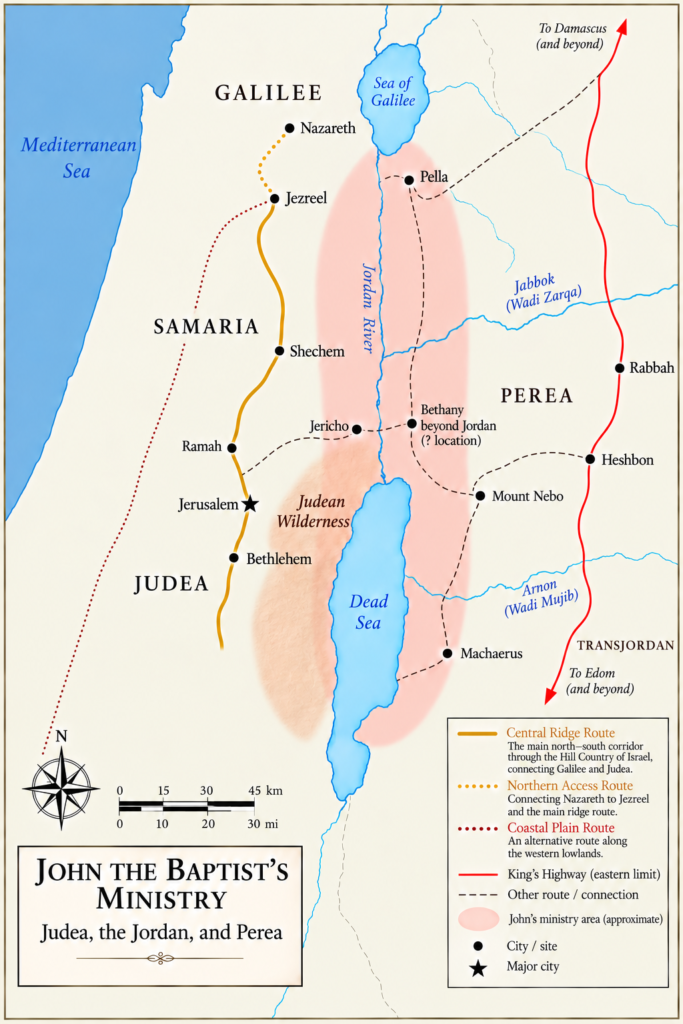
  • How Does God’s Expectations for Us Lead to Godliness?

    God has given us what His expectations for us are. We’ve look at that several times. This daily devotional reviews and synthesizes those to give us a foundation for future devotions.

    Devotions in the Review 101: Godliness series

    We’ve talked several times about what God expects from us. We’ve called it our job description. We’ve called it characteristics and expectations.

    The foundation of all of them is they tell us how we are to be godly.

    So, I thought that the last review would be what we’ve said before. This time, we are going to shuffle it through our three sides of godliness.

    • Our Relationship with God
    • Obeying God’s Laws and Commandments
    • Reflecting Him to Others

    It will give us a foundation on which to build this year.

    Our Relationship with God

    • The defining aspect of being God’s elect is we are all to be holy (What Is Expected of Disciples?).
    • It is only through faith that disciples attempt to imitate Jesus and exhibit true compassion, pity, and love (What Is Expected of Disciples?).
    • God loves those who love and submit to Him (What Is Expected of Disciples?).
    • We follow God’s opinions, not our own (What Else Is Expected of Disciples?).
    • We have to work on every characteristic as a package deal. So, on the Sanctification Road, we should run everything we do through the greatest commandments. Is what we are going to say going to keep those commandments or break them? Does our attitudes foster patience, forbearance, gentleness, etc.? If we don’t love, we don’t have the right attitudes (What Else Is Expected of Disciples?).
    • What I think the “… don’t sound a trumpet before you, …” (Mt. 6: 2 CSB) means is religion isn’t to be show (Disciples and Charitableness).
    • Religion and its rituals are not what God wants. God didn’t want the circumcision without the holiness. He doesn’t want baptism without the holiness. There is no purity in the artificial or that which is designed to impress the worldview people (The Nominal Disciple).
    • God doesn’t want this to just be an outward religion. He wants it to be an inward transformation (The Nominal Disciple).
    • What Jesus was about was true religion — how it should be. We were created to worship the Father. We were made to be like Him (Disciples and Charitableness).
    • What Paul was trying to get across was that circumcision is surface. God is looking for obedience, submission, and service. God is looking for a change in heart (The Nominal Disciple).
    • Jesus warned us about motivation. His would have been a radical viewpoint in that day and age. The norm those days was to show you were religious by advertising how you were giving alms, praying, and fasting. Prayer and fasting are personal. Jesus told us that almsgiving should be, too (Disciples and Charitableness).
    • God wants to see evidence that we have chosen Him. That evidence is our obedience. We have to live like we were converted. We have to do the progression. We have to undergo the sanctification. We have to submit (The Nominal Disciple).
    • Humility means we have a real perspective about ourselves. But we have to realize that we should focus on our character, not our intelligence. We have to change our character to imitate God (What Is Expected of Disciples?).
    • While we are in the process of being sanctified, we use charity to become more like God. We are to conduct our charitable activities for His honor and glory (Disciples and Charitableness).
    • We have to be consistent. If we say we are disciples of God, we have to live obediently and not have double standards (The Nominal Disciple).
    • We have to be genuine when we ABCD. We have to truly submit to God. We have to obey His laws and commandments (The Nominal Disciple).

    The ABCDs of Salvation

    If you have not become a believer in Christ, please read through the
    Plan of Salvation and prayerfully consider what God is asking you to do.

    A – admit our sins
    B – believe His Son Jesus is our Redeemer
    C – confess God as Sovereign Lord

    D – demonstrate that commitment by making any changes needed in our lives to
    live the way in which God has called us

    The Disciple’s Job Description

    • We need to build our relationship with God by working out our salvation (How Do We Work Out Our Salvation?).
    • We have to determine what we believe so that we can answer questions when asked what we believe (How Do We Work Out Our Salvation?).
    • Being a living sacrifice means that we offer God our everyday lives, which He can use as a witness to non-believers (How Do Non-Preachers Proclaim the Gospel?).

    Obeying Laws and Commandments

    • If we are righteous, we are imitating God. That would mean we are judging the situation as He would judge it (Disciples’ Duty to the Poor).
    • Bag the pride (A To Do List for Life).
    • Pick friends that are humble (A To Do List for Life).
    • Don’t be a smart alack (A To Do List for Life).
    • Think about what you are doing, and do what is right (A To Do List for Life).
    • No matter how loving we are, we have to change to imitate God’s loving. That means we have to get to heart level (What Else Is Expected of Disciples).
    • Some think disciples have to be doormats. That isn’t true. God knows we will encounter spiritual warfare — especially as we do more for Him. He is looking for boldness with humility (What Else Is Expected of Disciples?).
    • We are to do the charitable acts through mercy (Disciples and Charitableness).
    • We like to think that we are successful because of our knowledge and skills. Paul told us that the only thing we should boast about is God (The Lenient Judgment of Others).
    • John 7: 24 tells us we are to judge based on righteous judgment. What if it is how we live our lives? What if this means we are not supposed to judge surface, but we are supposed to judge deep down? We are not to pass judgment on people, but we are supposed to determine if they are following God’s laws and commandments. No, no one is going to be 100% perfect. We have to determine if we need to witness to them (The Lenient Judgment of Others).
    JudgeOnRighteousJudgment
    • We are not to let other lead us astray (The Lenient Judgment of Others).
    • Most importantly, our job is to preach the gospel and make disciples. How can we do that if we don’t determine if they have admitted their sins, believed on Jesus, and confessed God as Sovereign Lord? (The Lenient Judgment of Others).
    • We have to judge situations. We have to judge intent of people’s actions. If we don’t, we may be headed off the straight and narrow (The Lenient Judgment of Others).
    • Our actions do not depend on what other’s actions are (A To Do List for Life).

    Reflecting Him to Others

    • Help the needy saints (A To Do List for Life).
    • Be hospitable (A To Do List for Life).
    • Don’t be enemies with your enemies (A To Do List for Life).
    • Whatever emotions someone is experiencing, experience those, too (A To Do List for Life).
    • Get along with one another (A To Do List for Life).
    • Don’t hold back on love. Don’t pick and choose who you are going to love. Just do it (A To Do List for Life).
    • God expects us to have a heartfelt sympathy for others (What Is Expected of Disciples?).
    • To be a true disciple, pity and love must follow repentance (What Is Expected of Disciples?).
    • Love is expressed through kindness. Kindness is the action (What Is Expected of Disciples?).
    • We don’t argue — if we answer at all (What Else Is Expected of Disciples).
We don’t pay back evil with evil (What Else Is Expected of Disciples?).
    • Not only do we have a modest demeanor, but we also elevate others (What Is Expected of Disciples?).
    • We’ve got to stand firm patiently (What Else Is Expected of Disciples).
    • We shouldn’t participate in the quarrel in the first place (What Else Is Expected of Disciples?).
    • Forbearance is not only forgiving another, but it is also going the extra distance to meet them halfway (What Else Is Expected of Disciples?).
    • We not only give up the right to retaliate, but we also initiate the forgiveness. Plus, we give up the hurt feelings (What Else Is Expected of Disciples?).
    • We need to forgive for our sake, not necessarily theirs (What Else Is Expected of Disciples?).
    • Why can’t everyone just love everyone else? Sin bashed that (What Else Is Expected of Disciples?).
    • But worldview people don’t want disciples to love them enough to warn them about their future (What Else Is Expected of Disciples?).
    • We have to be concerned enough about the poor for action (Disciples’ Duty to the Poor).
    • Family was to take care of family. God has a plan for our help for others. First, we are to help our biological family (Disciples’ Duty to the Poor).
    • Instead of a brother being reduced to an alien, we have an alien elevated to the status of brother (Disciples’ Duty to the Poor).
    • God calls His children to support each other. No, not everyone is a child of God (Disciples’ Duty to the Poor).
    • Jesus called charity work the way we practice our righteousness (Disciples and Charitableness).
    • Jesus told His disciple to not be judgmental of private individuals. It is not talking about public individuals (The Lenient Judgment of Others).
    • Jesus knew we so often jump to conclusions. We see things as we are, not necessarily as the situation is. We can’t just make snap judgments (The Lenient Judgment of Others).
    • We’ve got to lead with love and compassion, not judgment (The Lenient Judgment of Others).
    • People believing the worldview equate disciples saying “sin no more” as judging. Isn’t it more that we are concerned for the spiritual condition of your hearts and lives? Telling someone to “sin no more” is not judging them. It is the ultimate expression of love (The Lenient Judgment of Others).
    • We are to use our experiences when we witness. If I say this is something that happened to me or helped me in my walk as a disciple (it’s proved itself), you would be more open to trying it for yourself (The Nominal Disciple).
    • Jesus explicitly tells His disciples – of which we are one – they are to witness to non-believers (How Do Non-Preachers Proclaim the Gospel?).
    • We have to be prepared to defend what we believe and why we believe it (How Do Non-Preachers Proclaim the Gospel?).
    HowDoesGodsExpectationsForUsLeadToGodlinessPin

    Making the Connections

    That is a lot of bullet points. If you are like me, you need it synthesized. So, let’s try this.

    1. Submit to God and follow God’s opinions, not our own, by exhibiting obedience, submission, and service (What Is Expected of Disciples?; What Else Is Expected of Disciples; The Nominal Disciple).
    2. Be holy because of a sincere, inward transformation (What Is Expected of Disciples?; The Nominal Disciple).
    3. Imitate Jesus through faith and righteousness by exhibiting true compassion, pity, and love (What Is Expected of Disciples?; What Else Is Expected of Disciples; Disciples and Charitableness; Disciples’ Duty to the Poor).
    4. Build our relationship with God by genuinely ABCDing and working out our salvation by navigating the Sanctification Road (What Else Is Expected of Disciples; How Do We Work Out Our Salvation?).
    5. Expand God’s kingdom by witnessing to by preaching His gospel and making disciples (The Lenient Judgment of Others)
    6. Follow God’s laws and commandments and use them to judge situations (A To Do List for Life; The Lenient Judgment of Others).
    7. Perform charitable acts to fellow disciples and non-believers alike with love, forgiveness, and forbearance (Disciples and Charitableness; What Else Is Expected of Disciples?).

    Okay, that is a start. We’ll be adding to it and modifying it as we go this year.

    Father God. We want to be holy and righteous like You. We want to be godly. Help us with our redo so that we can become what You want us to be – like You. Amen.

    What do you think?

    Leave me a comment below (about this or anything else) or head over to my Facebook group for some interactive discussion.

    If you don’t understand something and would like further clarification, please contact me.

    If you have not signed up for the email daily or weekly providing the link to the devotions and the newsletter, do so below.

    If God has used this devotion to speak with you, consider sharing it on social media.