Blog

  • Joy in Standing Firm Together

    It is easier to stand firm in trials when your family encourages you. In this daily devotional how Paul encouraged the Philippians to stand firm in times of anxiety and peace.

    Nuggets

    • God built His community to be a family.
    • God knew the family would have disagreements.
    • We find joy in God.
    • We can find joy in God regardless of the circumstances.

    Devotions in the Joy in the Gospel series
    Paul had a special relationship with the Philippians. He knew how strong their faith was.

    However, Paul also knew that they needed encouragement. Let’s take a look.

    Let’s Put It into Context #1

    Here is a running list of what we’ve discussed previously.

    Joy in being a Family

    “So then, my dearly loved and longed for brothers and sisters, my joy and crown, in this manner stand firm in the Lord, dear friends” (Phil. 4: 1 CSB)

    God built His community to be a family.

    At times, it is easy to see where Paul got caught up in his writing and just gushed. Those times often came out as a prayer.

    This time the gush came out as a lot of words describing the Philippians.

    Brothers and Sisters

    The first description described the Philippians as much loved brothers and sisters. He could call them brothers and sisters because they were children of God.

    Glossary

    This classification as family stresses that they should be unified. This isn’t a case of the siblings could bicker among themselves but stand firm against an outside attack. Disciples have to stay strong all the way around.

    It does show our sincerity. God does call us, as Lyth said to “… delight in each other’s company, … rejoice in each other’s happiness, [and] … promote each other’s welfare.”

    Don’t think we can do this? Remember, we are new creations. “Therefore, if anyone is in Christ, he is a new creation. The old has passed away; behold, the new has come” (II Cor. 5: 17 ESV).

    Glossary

    Our old selfish, contrary nature should be gone. Our new compassionate, unified nature should be at the forefront.

    It all has to be based on love. If we are unified, but don’t really love, our motivations become suspect. If it isn’t based on love, our commitment may not be there.

    My Joy and Crown

    Paul was the consummate preacher and took very seriously leading people to Christ and helping them change their lives so that they could follow God in their walk.

    Paul took pride in the Philippians — but the right way. He was proud of their growth on the Sanctification Road. Quick wrote that Paul considered the Philippians the “… ‘joy’ of his soul travail and the ‘crow’ of his labour.”

    Resource

    I don’t think Paul was necessarily saying we should be proud of the work that we do. I think what he is saying is we should be proud that God uses that work to expand His kingdom.

    Stand Firm in the Lord

    I loved what Quick said about steadfastness. He wrote, “To do the right thing is good, but to stand fast in it is better.” Stand firm means no wavering.

    Resource

    We can say we aren’t going to do that sin and are going to do the opposite. We may accomplish standing firm on the good days.

    But what about the bad days? The days when Satan is throwing everything he has at us to try to get us to take the exit off the Sanctification Road?

    That is when we stand firm. Buddicom said we stand firm in faith, hope, holiness, and blessedness.

    The flip side is despairing. When we don’t stand firm, then we slide back toward Satan.

    We can only stand firm in God’s grace.

    What happens when we stand fast? “For now we live, if you are standing fast in the Lord” (I Thess. 3: 8 ESV).

    Our foundation is God’s truth. Our salvation has to be based on Jesus’ Sacrifice so that we can be forgiven of our sins.

    A strong foundation must also have a component of our knowledge of His laws and commandments. We can’t be strong unless we know what is expected of us.

    But knowing isn’t always doing. That is especially true when we are under attack by Satan.

    Our strength has to be exhibited by our daily choices to follow God’s Will. We have to be totally in Christ or in the Lord.

    Glossary

    We know this one faith is important. This one faith is only obtained through Jesus.

    To read a related devotion, click the button below.

    The church as a unit has to stand firm. We’ve already talked about the fact that persecution is coming. We must not compromise God’s laws and commandments.

    Joy in Settling Disputes

    “I urge Euodia and I urge Syntyche to agree in the Lord. Yes, I also ask you, true partner, to help these women who have contended for the gospel at my side, along with Clement and the rest of my coworkers whose names are in the book of life” (Phil. 4: 2-3 CSB)

    God knew the family would have disagreements.

    Apparently, Euodia and Syntyche weren’t agreeing on something — we don’t know what because a compassionate Paul didn’t tell us. Whatever it was got so bad that news reached Paul all the way in Rome.

    Paul urged both of them toward agreement separately. He didn’t tell Euodia to give up her opinion. But neither did he tell Syntyche to give up her’s. He didn’t call them out together.

    We said before that Paul didn’t expect everyone to have the same opinion. He knew that wasn’t going to happen. Here, he didn’t take sides.

    What Paul was probably saying was love each other through the disagreement. Disagree the right way — respectfully. Quick said Paul was talking more disposition here — more about character.

    Why is it so important? Quick wrote, “The world waits to believe until the disciples of Jesus are one. How long shall we keep them waiting?”

    Resource

    Ooo, baby. Overlay that with our society today. It is all about letting everyone believe what they want to believe. Do what they want to do.

    No wonder people aren’t filling up the pews in churches!

    But that also stresses a very important point. Disciples have to work together — regardless of our opinions.

    Don’t let the fact that they disagreed in verse 2 make you miss their commendation in verse 3. “Yes, I also ask you, true partner, to help these women who have contended for the gospel at my side …” (Phil. 4: 3 CSB).

    Paul said they worked at his side. He didn’t push them away because they were women. He commended their service.

    Quick thought Paul was calling Clement out, too. I don’t know. It is kind of a poorly constructed sentence if it is.

    In my book, the “… Clement and the rest of my coworkers whose names are in the book of life” (Phil. 4: 3 CSB) modifies “… contended for the gospel at my side …” (Phil. 4: 3 CSB).

    The important part is that the Philippians were serving the Lord. They were working to expand God’s kingdom.

    We aren’t told what their work entailed. It was, however, accepted as God’s work.

    Vaughan told us what some acceptable work is. He wrote, “There is nothing too small to be reckoned, too secular to be consecrated when it has to do with Christ’s Church, whether instruction of the young in Sunday or night school, visiting the sick, joining the choir, or placing the worshippers in order and quietness, or bringing the Church by decorations into unison with the joys of Christmas, Easter, etc. All are not bidden to rush into one kind of service, but each is asked to do what is most suitable to his gifts heartily as unto Christ.”

    Resource

    We are expected to work — each of us. God wants us to do the job for which He has equipped us.
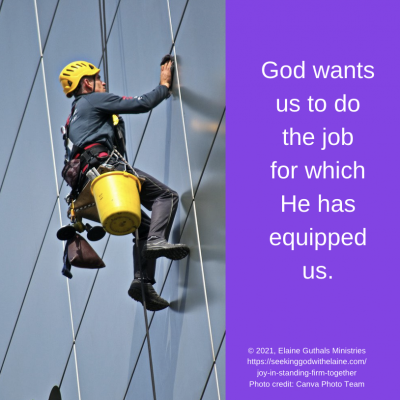
    God wants us to do the job for which He has equipped us.


    Anyway, it doesn’t appear that Paul was concerned with their spiritual condition. What I see this saying is that the grace of love is important.

    The work did not put their names in the book of life. Neither did their character. Their names got written in the book of life because they ABCDed.

    The ABCDs of Salvation

    If you have not become a believer in Christ, please read through the
    Plan of Salvation and prayerfully consider what God is asking you to do.

    A – admit our sins
    B – believe His Son Jesus is our Redeemer
    C – confess God as Sovereign Lord

    D – demonstrate that commitment by making any changes needed in our lives to
    live the way in which God has called us

    The Disciple’s Job Description

    Joy in the Lord

    “Rejoice in the Lord always. I will say it again: Rejoice! Let your graciousness be known to everyone. The Lord is near” (Phil. 4: 4-5 CSB)

    We find joy in God.

    Rejoice in the Lord

    Paul couldn’t get by saying rejoice once. He had to say it a second time for good measure.

    Cheerfulness is that important of a duty.

    But do you know any disciples that think being sober means being a sourpuss? Do you know any worldview people who think we should be?

    Glossary

    We are to be joyful. It shows us how happy we are that God saved us and is providing for us.

    How do we get this joy? Goadby wrote, “Christ has brought the materials out of which gladness is made — new and happier thoughts, power, purposes, hopes.” We can find everything we want in Jesus.

    Resource

    We should make a habit out of being cheerful. We need to keep our hearts and minds focused on God.

    Verse Commentary

    The Lord is Near

    This verse sometimes gets lost between the more familiar “Rejoice …” (Phil. 4: 4 CSB) and the “Don’t worry about anything …” (Phil. 4: 6 CSB) verses.

    That is sad because it has a very important nugget. “… The Lord is near” (Phil. 4: 5 CSB).

    Not we are near to Him. God is near to us.

    We know God is in us. “Jesus answered him, ‘If anyone loves me, he will keep my word, and my Father will love him, and we will come to him and make our home with him’” (Jn. 14: 23 ESV).

    We will come. Make our home with him. Jesus and God will both live within us — as well as the Holy Spirit.

    Man, you would think there wouldn’t be enough room for Satan to get a toehold in.

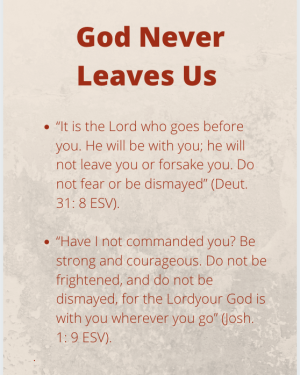
    We know that God will never leave us.
    GodNeverLeave1
    GodNeverLeave2

    Joy in Worry and Peace

    “Don’t worry about anything, but in everything, through prayer and petition with thanksgiving, present your requests to God. And the peace of God, which surpasses all understanding, will guard your hearts and minds in Christ Jesus” (Phil. 4: 6-7 CSB)

    Hmmm. I don’t know how moderation in the King James Bible can be translated as graciousness in the Christian Standard Bible. Or gentleness, for that matter, in most of the other translations. English Standard Version translates it as reasonableness.

    That really takes it a lot of different ways. The moderation, to me, is tied to the sober and even-keeled way that God wants us to operate. It is the not-going-to-extreme manner.

    The moderation is the standard. The graciousness, gentleness, and reasonableness limits what we are to moderate.

    I could see someone read that the new way and think they could take God out of it entirely.

    Well, isn’t that the reason for the change? Worldview people want to take our submissiveness to God out of the equation.

    Can’t happen.

    We need to keep our eyes on God and off the world.
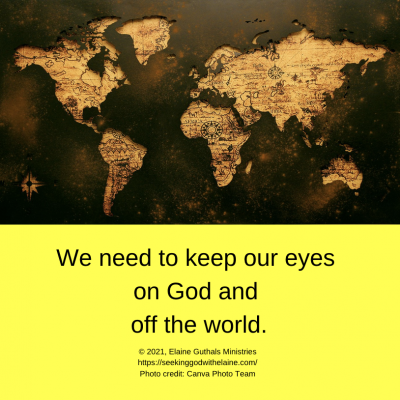
    We need to keep our eyes on God and off the world.

    We can find joy in God regardless of the circumstances.

    Why do we worry so much? The Bible says, “don’t worry about anything …” (Phil. 4: 6 CSB). Nothing. Zippo. Zilch.

    It doesn’t say worry about this little thing but not that. It says N-O-T-H-I-N-G.

    So, what are we supposed to do? It says, “… but in everything, through prayer and petition with thanksgiving, present your requests to God” (Phil. 4: 6 CSB). We have God on which to lean.

    It means we don’t have to worry.

    Goadby wrote, “Let prayer be your antidote to worry.” That means show gratitude. Our prayers won’t be successful without it.

    Resource

    Did you catch that? Paul said antidote. It is a cure.

    It isn’t a prevention.

    Paul wasn’t being delusional. He knew we are going to be anxious.

    Paul was telling us to put it in the right priority. We are supposed to put God first. That means even before our worries.

    We’ve got to trust in the Sovereign God. He created everything. He has a plan for everything. He is working it out for good (Rom. 8: 28).

    When we submit to God, all our anxiety can be turned to peace — God’s peace. It is a peace we can’t even begin to fathom.

    God wants to be our God of the little things as well as God of the big things. He wants to be our God of the past, present, and future.

    There is nothing that we can’t take to God. We can pour out our hearts to Him.

    We have to remember. Just because the words come out of our mouths or hearts, God isn’t going to say, “Oh, yes, dear. Anything you want.”

    God is Sovereign God. He is in control. It is His call, not ours.

    We become less anxious through prayer, petition, and thanksgiving.

    • Prayer — communicate with God.
    • Petition — ask Him. Don’t think He is just going to give it to You.
    • Thanksgiving — praise Him regardless of the outcome.

    Ooo, baby. Look what Rainsford said. He wrote, “THE PRECIOUS PROMISE, which is conditional on the keeping of the commands.”

    You mean God won’t hear our prayers if we aren’t following Him?

    • “If my people, which are called by my name, shall humble themselves, and pray, and seek my face, and turn from their wicked ways; then will I hear from heaven, and will forgive their sin, and will heal their land” (II Chron. 7: 14 KJV).
    • “Beloved, if our hearts do not condemn us, we have confidence before God, and whatever we ask we receive from him, because we keep his commandments and do what pleases him” (I Jn. 3: 21-22 ESV).

    Get the idea? There are a lot of ifs in there. Also, some flat-out, plain speaking.

    There is a big condition on the peace. Rainsford wrote, “It can only be enjoyed by faith, and it must be maintained by a consistent walk.”

    Resource

    We must walk in the Spirit.

    Verse Commentary

    To read a related devotion, click the button below.

    JoyInStandingFirmTogetherPin

    Making the Connections

    Because we are citizens of Heaven, we must stand firm. Spurgeon wrote, “Jesus is coming not as judge or destroyer, but as Saviour. Now if we look for Him we must stand fast. There must be no going into sin, no forsaking the fellowship of the Church, leaving the truth, playing fast and loose with godliness, running with the hare and hunting with the hounds.”

    Resource

    Ooo, baby. We give up meeting with our brothers and sisters.

    We just had a discussion at Prayer Breakfast that streaming our services is wonderful — until we realize we give up the fellowship that way.

    Notice, Spurgeon didn’t say don’t give up hearing the Word of God preached. He didn’t say don’t give up the discipleship training.

    Paul said don’t give up the connection with other people in the church.
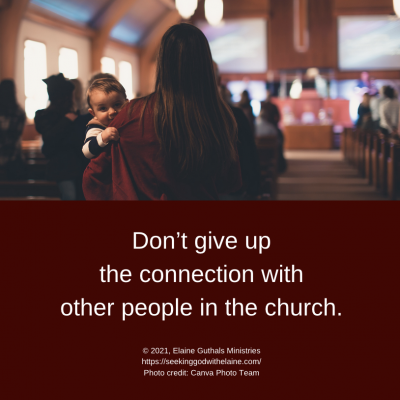
    Don’t give up the connection with other people in the church.

    How Do We Apply This?

    • Stand firm.
    • Build a good foundation by seeking God.

    Searching for and Seeking God

    Hearing His Word (Rom. 10: 17).
    Reading His Word (Rev. 1: 3).
    Praying to Him (Heb. 4: 16).
    Studying His Word (Ac. 17: 11).
    Meditating on His Word (Ps. 1: 1-2).
    Memorizing His Word (Ps. 119: 11).

    Father God. We rejoice in You. We place our lives in Your hand. Amen.

    What do you think?

    Leave me a comment below (about this or anything else) or head over to my Facebook group for some interactive discussion.

    If you don’t understand something and would like further clarification, please contact me.

    If you have not signed up for the email daily or weekly providing the link to the devotions and the newsletter, do so below.

    If God has used this devotion to speak with you, consider sharing it on social media.

  • October 2021 Newsletter

    The September devotions were a learning experience for me. I hope they were for you.

    As an update, the building I live in was sold. Thanks for the prayers.

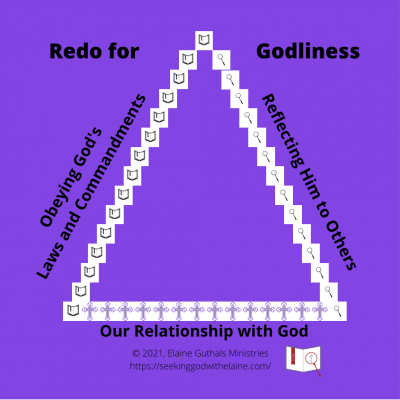
    RedoForGodliness

    Main Nuggetx

    • Purpose #1 is to grow in godliness so we can expand His kingdom (Joy through Humility).
    • What we may consider as nothing special is something special to God (Joy of Good Works).
    • What the church has to realize is that we are not only disciples of Christ, but we are also ministers of Christ, regardless of our occupation. That is what God is all about — growing us so that we will tell others about the Plan of Salvation (Joy of Adversity; Joy through Humility).
    • Knowing the power of the resurrection makes it a heart-level knowledge. We know this power in our justification, sanctification, edification, and glorification (Joy in Having Goals).
    • Sin is not the opposite of being perfect. Rather, it is in disagreement with perfection. What I am getting here is that, though we are mature, adults, or strong in our faith, the stain of the sin is still there. It will still be there while we are imperfect disciples (Joy in being Mature in the Faith).
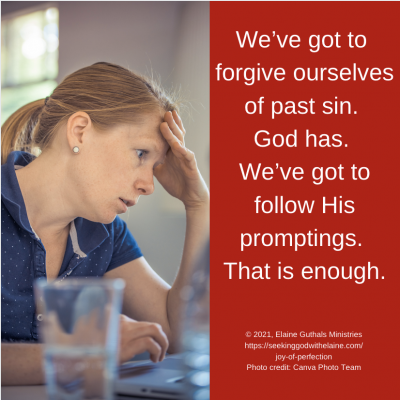
    We’ve got to forgive ourselves of past sin. God has. We’ve got to follow His promptings. That is enough.
    God doesn’t want us looking out for #1. He wants us looking to #One.

    Our Relationship with God

    • Joy comes to us through prayer. Communion with God brings joy as does being concerned about others (Joy in Prayer).
    • We can’t sanctify ourselves. Only the Holy Spirit can. It is Him working in us that changes us to be more like God (Joy of Good Works).
    • Disciples are to imitate Jesus in being humble and disinterested (Joy in Submitting).
    • We forget that God is right there to help us be successful in what He asks. He is not asking us to do this alone (Joy through Humility).
    • God never leaves us. We leave Him. However, at times, we may think He is silent when He is just working out the conditions so we can take the next leap in our faith (Joy in Sanctification).
    • God is fighting beside us. God is fighting for us when we can’t (Joy in Sanctification).
    • The bottom line is we have to submit to God through trust, obedience, and goodness. It is all about our spiritual condition (Joy of Good Works).
    • It should give us comfort that Jesus will be exalted. He was faithful and obedient. That means we will be rewarded because of our faithfulness and obedience, too (Joy in Submitting).
    • Does “so that at the name of Jesus every knee will bow …” (Phil. 2: 10 CSB) mean the literal bend the knee? I have always thought so. It might mean submission. He equated name with power. That would read something like “because of the power of Jesus every knee will bow” (Joy in Submitting).
    • What is important to me is that the ones doing the bowing will be “… in heaven and on earth and under the earth” (Phil. 2: 10 CSB). That means everyone — dead and alive, believers or not. Every person who ever lived without any exceptions will bow to Jesus (Joy in Submitting).
    • Jesus wasn’t exalted in His humility. He was exalted because of His humility (Joy in Submitting).
    • Why did Jesus have to humble Himself? If He hadn’t, God would never have accepted His Sacrifice. If God didn’t accept Jesus’ Sacrifice, there would have been no acceptable Sacrifice (Joy in Submitting).
    • It is important that we do the work God’s way. Our work will be tried by fire in the day of the Lord. The day of the Lord is when we will be called home to Heaven (Joy of Good Works).
    • God’s word does not return void. His work will be done (Joy of Adversity).
    • The motive for serving God may not affect the complexion of the service, but it will affect the accomplishment of it (Joy of Adversity).
    • We must work for salvation, and that isn’t easy. God cutting sin out of our lives hurts. God changing our character hurts (Joy in Sanctification).
    • God’s working in us is not going to be so we can only do acts of kindness. Yes, that is the second greatest commandment. More importantly, God is working in us so that He can do His good Will. We must do the first greatest commandment before we can even think about accomplishing the second greatest commandment (Joy in Sanctification).
    • It isn’t just about doing good. It is about doing God’s good (Joy through Humility).
    • The gospel is about Jesus, not us. It is about His message, not that we are proclaiming it (Joy of Adversity).
    • Being in Christ means being united with Him through faith, walking in the Spirit with Him, and living for Him (Joy in Knowing Jesus).
    • If the other religions are preaching the essential doctrines, we should be good with it. We don’t have to agree on all of the interpretations (Joy of Adversity).
    • It is through God’s grace that we live and not die. It is through God’s grace that we leave this life and begin our eternal lives with Him (Joy of Living and Dying).
    • Every person is going to be a witness to God rewarding Jesus. His dignity will be restored (Joy in Submitting).
    • The growth only comes by God’s power. There is no checklist we can mark off to make sure we are progressing as required. There is nothing we can do (Joy of Perfection).
    • God sees everything, even our thoughts (Our Conscience and God’s Omniscience and Judgment).
    • When we choose the evil, God will judge us (Our Conscience and God’s Omniscience and Judgment).
    • God will give us time to repent. But the time God allots for that repentance is limited (Our Conscience and God’s Omniscience and Judgment).
    • God wants us to wait on His provision. He will give us what is best for us (Buckling Down Our Hearts and Lips).
    • God doesn’t want us to have even the stain of sin. He wants us to be pure (Buckling Down Our Hearts and Lips).
    • We think we don’t need God when God wants us to depend on Him. God doesn’t want us to be self-sufficient. He wants us to put our trust in Him that He will provide our needs (Recognizing Evil Thoughts).
    • God shows us how to mourn our repeated commission of the sins. We should be sad that we were not obedient as God expects — that we keep sinning (Recognizing Evil Thoughts by Hating Sin and Resisting Satan).
    • God teaches us this aversion and mourning through the sanctification process. It is only through this process where we show that we hate sin does our spiritual life truly begin (Recognizing Evil Thoughts by Hating Sin and Resisting Satan).
    • We can resist the devil only through God’s power. That means reading and hearing God’s Word and listening to the promptings of the Holy Spirit (Recognizing Evil Thoughts by Hating Sin and Resisting Satan).

    Glossary

    We have to do more than just understand God’s ways. We have to treat sin the same way that God does.
    Even in the sorrow we must give God control.

    Obeying God’s Laws and Commandments

    • Where we spend eternity is going to be based on our spiritual condition. There is a question with only two answers: have we ABCDed or not (Joy through Humility).
    • Jesus won’t be separating the sheep and goats because of what they did or didn’t do (Joy of Good Works).
    • Whether we are a success or not is not the point. The point is that we are doing what God asks. We are obedient to Him (Joy of Good Works).
    • Paul was talking about being worthy of the gospel. It wasn’t just about finding the unity. It was about standing firm in the gospel. That is how we prove our salvation to God. Yes, He knows our hearts, but we must show that it is heart knowledge, and not just head knowledge (Joy through Humility).
    • The strong and the faithful are who Satan targets. He doesn’t need to target the weak and faithless (Joy of Good Works).
    • We have to be genuine or sincere about our relationship with God. That means we have to be spotless, pure, and clear. Spotless and pure mean that we are sin-free. I would say that clear means the same thing (Joy in Relationships).
    • God doesn’t promise that we will have a stress-free, trial-free life. This is equally true if we are ministers of the gospel. Because we are disciples of Christ, we will be persecuted. There is no way around it (Joy of Adversity).
    • We are all ministers for Christ (Joy of Adversity).
    • We magnify Jesus in death when we don’t fear it. We don’t cling inordinately to this life but completely trust that God knows what is best for us — even taking us out of this world (Joy of Salvation).
    • God wants our attitude to be that we are devoted to the Christ of the gospel regardless of the circumstances. Put Him squarely in control and praise Him no matter the circumstances (Joy of Living and Dying).
    • I think, for many, it all boils down to how we react when we are going to be transitioning from this life to the next. Which, then, has the greatest pull? (Joy of Living and Dying).
    • Our motives are supposed to come out of love. We our supposed to show Christ’s love for others through our actions (Joy through Humility).
    • This inward feeling of unity must show itself in the outward actions (Joy through Humility).
    • When we become a new creation, part of it is learning to balance the tugs from both sides. Both are needed because we should be content — even excited — about the work God is asking us to do in this life. But we are to long for a life with Jesus in eternity (Joy of Living and Dying).
    • All disciples must have some degree of love in our hearts we have to love God, or we have not made a true confession. We must love others, or we are not progressing on the Sanctification Road (Joy through Humility).
    • We can’t think this love is just about people. We must love the doctrines the same way. We must be committed to following God’s laws and commandments the same way (Joy through Humility).
    • We must stand up for God’s laws and commandments. If we don’t, there is no way they will find salvation (Joy through Humility).
    • We can’t substitute science for God’s moral power. Our intellect won’t cut it either. Politicians can’t regulate it into existence — or regulate evil out of the world (Joy through Humility).
    • We are made in the image of God, so His glory is within us. Jesus didn’t have to give that up to become human (Joy in Submitting).
    • But we would never have been able to meet the needs for being a sacrifice. Mankind was not pure after Adam and Eve bit (Joy in Submitting).
    • Working out our salvation is all about obedience. We are obeying God and becoming more like Him. We are obtaining His character (Joy in Sanctification).
    • Working out our salvation is done within us. God influences our will and actions to change our character to imitate His (Joy in Sanctification).
    • Paul said that we need to work out our salvation with fear and trembling. When we talk fear of the Lord, we say this means reverence. I think it does here, too. With the trembling added, I think it does mean more than just reverence. No, it doesn’t kick it to bone-chilling terror. We have to be on constant watch. We have to be on guard for temptations.
    • We have to change to get God’s mindset. We have to change to serve Him (Joy in Sanctification).
    • We can’t say grace gives us a pass on having a personal relationship with God. We can’t say Jesus’ blood covered everything, so there is nothing left for us to do. We can’t approach this as it is fire insurance (Joy in Sanctification).
    • We have to align our character with God’s. That will take diligent, committed work (Joy in Sanctification).
    • We can’t say that Jesus isn’t coming in our lifetime, so we don’t have to make a decision on whether to follow God or not. Our lifetime will still be over one day. The decision to follow God has to be made before then. Any non-decision is a decision to not follow God (Joy in Sanctification).
    • Unfortunately, we not only don’t see God fighting our battles, but we also don’t see Him working in us (Joy in Sanctification).
    • God doesn’t want us to complain about doing His work. We need to see it as necessary – for ourselves and for others. If we do it while complaining at the top of our lungs, it can be construed that we are just doing it to get the blessings (Joy in Sanctification).
    • When we complain against God, we show our doubts regarding His wisdom, goodness, and power. Instead, we need to live as true children of God (Joy in Sanctification).
    • We have to consistently be working on changing ourselves to be like God. While we are doing that, we need to be witnessing to others (Joy in Sanctification).
    • It comes back to obedience and submission. We must do things His way, not ours. This is just another way we are different from the worldview people (Joy in Sanctification).
    • Doing so, produces joy. When we are obedient and submissive to God, we receive blessings, which brings with them His joy (Joy in Sanctification).
    • If we put our trust in the temporary things of this world, we will lose everything. If we put our trust in Christ, we will gain our soul — and everything (Joy in Knowing Jesus).
    • What is our decision is whether we are going to submit our lives to God. God doesn’t force us to worship Him. But once we choose Him as our Father, once we ask Jesus to be our Lord and Savior, we have to be all in. We can’t pick and choose what we are going to believe and what we aren’t. It is God’s way or the highway. That is why Jesus told us to count the cost before choosing to become His disciple (Joy in Knowing Jesus).
    • Those of us who truly prize Jesus as our Savior and Lord have nothing to worry about. That means we need to keep doubts out of our minds. Doubts eat at our faith (Joy in Knowing Jesus).
    • When we are a disciple of Christ, we bury ourselves in the gospel, which is the biography of Jesus. It tells about Who He is, what He has done, and what He will do (Joy in Knowing Jesus).
    • Living in Christ means abiding in Him. That means we persist and endure through all this life has to offer (Joy in Knowing Jesus).
    • We will be glorified when we are resurrected from the dead (Joy in Having Goals).
    • We can be certain that we all will be resurrected — where we will spend eternity depends on whether we have ABCDed or not (Joy in Having Goals).
    • Our resurrection, along with everything else, is a gift from God (Joy in Having Goals).
    • God does not require that we be successful by our own definitions. That would probably smack of a lot of worldview definitions (Joy of Perfection).
    • We grow as we go along. What satisfied us when we were milk babies does not satisfy us now that we are steak adults (Joy of Perfection).
    • I think God wants us to be at least a little depressed that we have broken His laws and commandments. He doesn’t want us to feel cavalier about it (Joy of Perfection).
    • We should determine what we think God is looking at as the ideal character and work toward it (Joy of Perfection).
    • We must remember that our future relationship with God isn’t dependent on where we’ve been. We’ve said that God is sanctifying us so that we become as He is (Joy of Perfection).
    • We must remember God comes to us as we are. We could be a murderer or a liar. He still loves us. God doesn’t want us to stay there. He wants us to become as He is (Joy of Perfection).
    • God only wants us to remember so that we can see from where He has brought us. He wants us to see success as becoming more like Him. I would say God wants us to watch and pray more than He wants us to remember (Joy of Perfection).
    • We generally think God is wanting us to forget about those attractive sins and those friends who encouraged us to commit them. We usually don’t think about that it is our having to give up past good works (Joy of Perfection).
    • Paul wanted us to get one thing if nothing else — we have to pursue God even after conversion (Joy of Perfection).
    • God and His sanctification of us has to be our priority (Joy of Perfection).
    • We will still be learning of God as we spend eternity with Him. I can see that (Joy of Perfection).
    • Our goal is to live up to that doctrine God has revealed to us. This can’t be hit and miss. We have to persevere (Joy in being Mature in the Faith).
    • God calls us to walk in the Spirit daily. We aren’t to turn left or right (Isa. 30: 21) (Joy in being Mature in the Faith).
    • God doesn’t want us to be extremists. He wants us to follow His path (Joy in being Mature in the Faith).
    • We build our character with the building blocks of thoughts, actions, and feelings. But it is easy to forget about what made us us. When we add this to we don’t always see sin as sin, it really makes it a scary thought. How are we ever going to be perfect and forego judgment? The answer is that God looks at our hearts. God is looking to make sure we are sincere and genuine. He knows we aren’t going to be perfect until we get out of these sinful bodies. But how hard are we trying? Are we even wanting to be moving in the right direction? (Our Conscience and God’s Omniscience and Judgment)
    • Our hearts are the root, so we must guard them, also (Buckling Down Our Hearts and Lips).
    • Our character is really at our heart level. If that is wrong, the lips are probably going to shoot out something that is wrong (Buckling Down Our Hearts and Lips).
    • Wrong actions cannot be applied or done in a situation. We have to guard against choosing to do what God doesn’t want us to do. But we also can’t make them our custom. They can’t become standard operating procedure (Buckling Down Our Hearts and Lips).
    • God wants us to have a realistic viewpoint. He knows we have to truthfully evaluate our lives so that we can determine where we are at on the Sanctification Road and where He is calling us to make the necessary changes in our characters (Buckling Down Our Hearts and Lips).
    • God wants us to wait silently on Him, not compare ourselves to worldview people who are considered successful. But that doesn’t mean we aren’t doing anything. We are trusting God. Resting and waiting are actions because they are conscious decisions (Buckling Down Our Hearts and Lips).
    • God wants us to make a fair and true assessment of ourselves. If we don’t, we may not get all of the sin cut out of our lives (Buckling Down Our Hearts and Lips).
    • God tells us several times in His Word to evaluate ourselves based on His standards (Evaluating Our Evil Thoughts).
    • First, we need to make sure we know the goal we are trying to reach. Be holy, because I am holy (I Pet. 1: 16 CSB) (Evaluating Our Evil Thoughts).
    • We have to figure out where we are at and what we need to to do to get to where God wants us to be (Evaluating Our Evil Thoughts).
    • It is important that we do not lose the initial joy of our conversion. We don’t want to go backwards. We don’t want to lose our first love. It is the spiritual love we shouldn’t lose (Evaluating Our Evil Thoughts).
    • Meditating is when we evaluate our lives by thinking things through (Evaluating Our Evil Thoughts).
    • Really, when we are meditating, we are seeking God. But it is also more than that. It is applying what we are hearing and reading (Evaluating Our Evil Thoughts).
    • We will only grow when we think it through. If our faith is described as beliefs, a.k.a the assent of the mind, it will only grow through exercises of the mind (Evaluating Our Evil Thoughts).
    • We should evaluate every part of ourselves. Our guide should be the Scriptures. It shouldn’t be what I say or what someone else says. It should be what God says (Evaluating Our Evil Thoughts).
    • We use our evaluation to educate our thoughts to increase our worship and use our worship to educate our thoughts (Evaluating Our Evil Thoughts).
    • I think God’s end goal is to have us worship Him. We have to have His character so we can enter Heaven, but once we are there, we will worship Him for eternity (Evaluating Our Evil Thoughts).
    • Worshiping God puts us in communion with Him. When we are talking with Him and listening to Him, that focuses our thoughts on the promptings of the Holy Spirit (Evaluating Our Evil Thoughts).
    • Talking to God and listening to Him is a form of worship (Evaluating Our Evil Thoughts).
    • Meditation is the preparation for prayer. How many times do we just start praying with no forethought? (Evaluating Our Evil Thoughts)
    • If we look at it as meditation is where we evaluate our lives, meditation informs our prayer, and prayer informs our life. We see God’s hand controlling our lives. This is what He wants. I don’t think it is just because God wants to control us. It is more that we are putting God as our priority. We are giving Him the controls.
    • When we evaluate ourselves, we focus our thoughts on God. It will help us corral the evil thoughts with which Satan tries to trip us up (Evaluating Our Evil Thoughts).
    • We need to make sure we reverence the Lord (Recognizing Evil Thoughts).
    • The problem with fearing the Lord is we many do not hate the evil behind the sin. We just hate getting caught and punished. We only start to hate evil when we are forgiven (Recognizing Evil Thoughts).
    • We have to do more than just understand God’s ways. We have to treat sin the same way that God does (Recognizing Evil Thoughts).
    • That means we have to embrace God’s ways and abhor sin — even if it is our pet sin. Even if it is something we feel is small — like our thoughts (Recognizing Evil Thoughts).
    • So, fear of the Lord can’t be just a mind thing. It has to be an action thing because it is a character thing. Fear of the Lord is what draws us to Him for salvation (Recognizing Evil Thoughts).
    • We have to be so like God that we wonder who is doing the talking — God or us. We have to be the character of God. Outside of God, we never will be able to understand things (Recognizing Evil Thoughts).
    • We need to make sure our image of ourselves is correct (Recognizing Evil Thoughts).
    • When we think about being good enough by ourselves, that is not fearing God. That is arrogant pride. Pride is on the checklist we looked at in Living in Faith and Love to determine what is evil. Jesus told us that pride of life was one of the three things to avoid in this world (Recognizing Evil Thoughts).
    • Pride is a sin because it takes our focus off God. In fact, the root of the unwillingness to seek God is pride (Recognizing Evil Thoughts).
    • We can’t want to understand everything so that we can say we don’t need God since we have figured it out. That isn’t what God wants (Recognizing Evil Thoughts).
    • We not only are faulty in how we see ourselves, but we also do not see the standard of character correctly. God tells us several times in His Word to evaluate ourselves based on His standards (Recognizing Evil Thoughts).
    • We need to keep our speech honoring God (Recognizing Evil Thoughts).
    • Profanity focuses on our being irreverent to God (Recognizing Evil Thoughts).
    • We should make our conversations count. God wants us to use our conversation to tell others about Him, promote unity, and knit the family together. He wants us to tell others of the good He is doing in our lives (Recognizing Evil Thoughts).
    • When we fear God and give honor to Him, we want to serve Him. The fear is all about the reverence and love. That leads us to doing the good works for which we were made (Recognizing Evil Thoughts).
    • We show God that we love Him by hating evil (Recognizing Evil Thoughts by Hating Sin and Resisting Satan).
    • We have to show God that we hate sin. We hate what He hates (Recognizing Evil Thoughts by Hating Sin and Resisting Satan).
    • No, we don’t do a good enough job at hating sin. We especially can’t compromise with the worldview attitude that we have to show love by tolerating sin (Recognizing Evil Thoughts by Hating Sin and Resisting Satan).
    • It is really important that we hate sin. Sin is what keeps us separated from God. We don’t want to be separated from Him (Recognizing Evil Thoughts by Hating Sin and Resisting Satan).
    • Why doesn’t God just take away our ability to sin? If He would, He would take away our free will (Recognizing Evil Thoughts by Hating Sin and Resisting Satan).
    • God wants us to decide that something is a sin based on His laws and commandments. He will teach us how to conquer sin (Recognizing Evil Thoughts by Hating Sin and Resisting Satan).
    • The focus of our hatred is all sin, not just the ones we or the world deem are sins. We hate all that God says are sins in His laws and commandments (Recognizing Evil Thoughts by Hating Sin and Resisting Satan).
    • The way God teaches us to hate sin is by using our past sins to fuel our aversion to them. We get disgusted with ourselves for slipping back into our sinful habits (Recognizing Evil Thoughts by Hating Sin and Resisting Satan).
    • We are to hate the sin in ourselves and hate the sin in others. In a way, we kind of walk a fine line. So, the focus of our hatred is sin, not the person sinning (Recognizing Evil Thoughts by Hating Sin and Resisting Satan).
    • We resist the devil by submitting to God (Recognizing Evil Thoughts by Hating Sin and Resisting Satan).
    • Satan is going to do everything in his power to get us to break God’s laws and commandments. We have to resist him (Recognizing Evil Thoughts by Hating Sin and Resisting Satan).
    • It is our choice and ours alone to sin. Satan didn’t force us to do anything. He doesn’t have that much power (Recognizing Evil Thoughts by Hating Sin and Resisting Satan).
    • We have to resist Satan in our inward and outward walk. It isn’t just what we do. It is what we think (Recognizing Evil Thoughts by Hating Sin and Resisting Satan).
    • We can’t be passive in our salvation. We have to fight to stay in God’s Will (Recognizing Evil Thoughts by Hating Sin and Resisting Satan).
    • Since we are made in the image of God, a part of us yearns to be reunited with Him. The problem is our sinful nature. It is so strong in us that it counteracts that yearning (Recognizing Evil Thoughts by Hating Sin and Resisting Satan).
    • Worldview people don’t want our salvation to hinge on hating evil. They want it to be on the condition that we are a good person. That doesn’t work. We can be a good person without loving God. That isn’t what God is after (Recognizing Evil Thoughts by Hating Sin and Resisting Satan).
    • We watch for God to work in our inward and outward lives (Recognizing Evil Thoughts by Watching).
    • It isn’t all just watching for the bad stuff. It is watching for God. Sometimes, we have to really pay attention, or we will miss opportunities — to serve and for God’s blessings (Recognizing Evil Thoughts by Watching).
    • We can only be watching when we open the eyes of our hearts. Really, the opposite of having evil thoughts is opening the eyes of our hearts. When we open ourselves to God, we look above our understanding to God. He may be doing the impossible thing in our lives, but He can (Recognizing Evil Thoughts by Watching).
    • To me, opening the eyes of our hearts means that we put our full faith in God. We acknowledge that God is living within us and we are obedient in responding to Him. We are submitting to Him (Recognizing Evil Thoughts by Watching).
    • Most of all, we need to actively watch for Jesus’ return (Recognizing Evil Thoughts by Watching).
    • Watching and waiting does not mean doing nothing (Recognizing Evil Thoughts by Watching).
    • We aren’t doing nothing. We are putting our trust in Him that He will work in the fullness of His time (Recognizing Evil Thoughts by Watching).
    • We have to watch that we don’t get discouraged when Jesus doesn’t come when we think He should. Our charge was to watch until He came (Recognizing Evil Thoughts by Watching).
    • We can talk a blue steak and tell God how wonderful we are. God knows better. He knows our hearts (Recognizing Evil Thoughts by Praying).
    • God isn’t looking for a marketing campaign where we feel like we have to sell ourselves to Him. He is looking for us to recognize His eminence over us (Recognizing Evil Thoughts by Praying).
    • We have to be contrite about our sins. Our proud, entitled attitude has to be changed into a humble, repentant one (Recognizing Evil Thoughts by Praying).
    • Instead of searching for God and loving him, we are deceiving ourselves when we think we can be self-righteous. That is not the way to salvation and eternal life. How are we self-righteous? We are when we think being a good person is good enough to get us eternal life (Recognizing Evil Thoughts by Praying).
    • Paul knew our character needed strengthened, and that we couldn’t strengthen it on our own. We can’t do our redo on our own (Recognizing Evil Thoughts by Praying). 
    • We can train our good thoughts to focus on God (How Do We Focus on Good Thoughts?).
    • We can train our minds to change from focusing on sinful thoughts to focusing on God. He called this renewing our minds (How Do We Focus on Good Thoughts?).
    • If we don’t corral our thoughts, we not only can slip further and further away from God, but that also brings a helplessness with it (How Do We Focus on Good Thoughts?).
    • God doesn’t want us to be ignorance. He not only wants us to have knowledge, but also to have wisdom (How Do We Focus on Good Thoughts?).
    • Our thoughts shouldn’t be random thoughts. They should be organized to help us grow our relationship with God (How Do We Focus on Good Thoughts?).
    • When we obey the law, we gain the fruits of righteousness (How Do We Focus on Good Thoughts?).
    • Rejoicing brings the spiritual graces of faith, hope, love, and patience. The results of our continual rejoicing, praying, and thanksgiving are singing, communion, and working for God (Focusing on Privileges and Commandments).
    • We should rejoice in every aspect of the gospel. All the doctrines and promises lead us to God, the most important thing in our lives (Focusing on Privileges and Commandments).But that doesn’t mean we wait until the trial is over and we see how it is good for us. We gives thanks in the middle of the trial because we know — however hard or painful it is — God is using it for good (Focusing on Privileges and Commandments).
    • Distractions are just are frequent and are as difficult to corral as our thoughts. They are not considered sins while we strive to lessen their hold over us (Focusing Completely on God).
    • We can choose what our thoughts focus on, or that on which we refuse to dwell. It is up to us. God will help us (Focusing Completely on God).
    • Speech is important but can be impacted by what we see or hear. What we see is important, but maybe we’ve heard or seen something that is contradicted that. It is easy to go down a wrong path. When we think about it, we must use all these parts together to function. We can use our eyes to see, but we need our minds to interpret what we are seeing and what that means to us. We aren’t going anywhere without our feet taking us. God calls us to submit our whole lives to Him. Not just our mouths and speech. Not just our minds and thoughts, (Focusing Completely on God)
    • Our focus has to be solely on God. We need to have the faith of a child. Focusing our thoughts is an important component in focusing ourselves on God. We have to focus our eyes and ears on God along with our hearts and minds in order to direct where our feet go. Focusing our hearts, eyes, ears, feet – all of us – on God is important in our sanctification process (Focusing Completely on God).
    We have to look down in prayer because God because He is higher than us.
    God doesn’t want us to be extremists. He wants us to follow His path.

    Reflecting Him to Others

    • God wants us to remember is each other. It strengthens our unity when we pray for each other (Joy in Prayer).
    • It is the mission of the church to expand God’s kingdom. We have to do that through fellowship and peace.
    • God wants us to build relationships with other disciples. He wants us to have unity and work together to further His kingdom (Joy in Relationships).
    • We are to celebrate the growth of others in their relationships with God (Joy in Relationships).
    • Yes, we need to grow in our love for each other. But that won’t mean a thing is we don’t grow our love for God and Jesus (Joy in Relationships).
    • We are to use our experiences to witness to and encourage others (Joy of Adversity).
    • How we handle the adversity can be our witness. (Joy of Adversity).
    • We are to accept other ministers if they are preaching about the true gospel, regardless of the difference they have to us (Joy of Adversity).
    • We have to be unified with those who truly believe that Jesus is their Savior and Lord (Joy of Adversity).
    • What tolerance is, is a generous belief in the strength of the gospel and its ultimate victory over evil (Joy of Adversity).
    • We can be a part of someone else’s ministry because we pray for them. It doesn’t mean we shouldn’t do ministry ourselves. But we can add our prayers to theirs (Joy of Salvation).
    • Disciples know that death can be used by God to teach others (Joy of Salvation).
    • This unity is based on Christ and can only be found through Christ. It encompasses disciples agreeing on doctrines and purpose — and doing that while loving each other (Joy through Humility).
    • Paul identified part of the cause of disunity as selfish ambition and conceit (Joy through Humility).
    • We act out of compassion and sympathy. We strive help others grow in grace (Joy through Humility).
    • A way to remedy selfish ambition and conceit is to put the needs of others first (Joy through Humility).
    • When we put someone else’s needs before our own, we glorify God (Joy through Humility).
    • If we don’t put the needs of others first, we are breaking God’s laws and commandments. That not only hurts us, but it also hurts others (Joy through Humility).
    • God doesn’t want us to shirk our responsibilities. He wants our helping others to be an equal responsibility (Joy through Humility).
    • God wants us to pray for and encourage others. He wants everyone to do that (Joy through Humility).
    • We have responsibilities to others whether we are rich or poor or an introvert or an extrovert. We are called to love one another (Joy through Humility).
    • Helping others does not qualify us for a relationship with God. Only ABCDing does that (Joy through Humility).
    • Our salvation is our first obligation. The second is the salvation of others. No, the second obligation isn’t just to love others. It is to introduce them to Christ (Joy through Humility).
    • We don’t grow if we don’t have others challenging what we believe. We don’t want to not grow (Joy through Humility).
    • We all navigate the Sanctification Road, but it means different things to each of us. Each of us has different issues we must work on. We’re still working the sanctification process. We just work it out differently. True, there are some things I bet we all work on. More than likely, we all work on love for God and love for others (Joy in Sanctification).
    • What Paul was saying is the Philippians should imitate him because he was imitating Christ (I Cor. 11: 1). He also acknowledges there are others that they could imitate (Joy in being Mature in the Faith).
    • God does give us godly men and women from whom we can learn much. Through them we see God’s laws and commandments in practice. That goes back to the community that God wants us to build. He wants family, fellowship, and unity. It would be logical that it would include role models. It is all predicated on love (Joy in being Mature in the Faith).
    • It isn’t natural growth. Worldview people are wrong if they think they can get there without God. We get there through sanctification. We have to cultivate the seed. That means we have to seek God (Our Conscience and God’s Omniscience and Judgment).
    • What is bad is when our own pride affects how we view others (Buckling Down Our Hearts and Lips).
    God and His sanctification of us has to be our priority.
    WatchAndPrayNotRemember

    To read devotions in the Redo for Godliness series, click the appropriate button below.

    Oct2021NewsletterPin
  • Praise You in This Storm

    Today is a music day. To read and hear the song, click here.

    This is another song that was part of my ice-breaker when I went on my retreat during my spiritual tornado. It was to help me focus on God. It seemed very appropriate.

    God doesn’t want to be just the God of the good days. He wants to be God of the bad days, too. He wants us to look to Him during our most tumultuous trials.

    He is right there. God will never leave us.

    It is up to us to praise. Yes, even when we don’t feel like it. We need to praise Him for the trials because they are going to help us grow closer to Him.

    Praise You in This Storm
    Vocalist: Elaine Guthals
    Keyboard: Louise Guthals Weiss

    PraiseYouInThisStormPin

    What do you think?

    Leave me a comment below (about this or anything else) or head over to my Facebook group for some interactive discussion.

    If you don’t understand something and would like further clarification, please contact me.

    If you have not signed up for the email daily or weekly providing the link to the devotions and the newsletter, do so below.

    If God has used this devotion to speak with you, consider sharing it on social media.
  • Joy in being Mature in the Faith

    Disciples are striving to have mature thinking in this life. This daily devotional looks at God’s way of thinking and the results of following it — or not.

    Nuggets

    • All believers are to possess God’s way of thinking.
    • Those who do not possess God’s way of thinking — even believers — face destruction.
    • Those who do possess God’s way of thinking are citizens of Heaven.

    Devotions in the Joy in the Gospel series

    If our goal is to gain perfection in the next life, we must grow to possess mature thinking in this life. To do that, we have to follow God’s way of thinking.

    However, not all — even believers — follow God’s way of thinking. Paul wanted to warn the Philippians so they would not be tempted to follow their lead.

    Let’s Put It into Context

    Here is a running list of what we’ve discussed previously.

    Possessing Mature Thinking

    “Therefore, let all of us who are mature think this way. And if you think differently about anything, God will reveal this also to you. In any case, we should live up to whatever truth we have attained. Join in imitating me, brothers and sisters, and pay careful attention to those who live according to the example you have in us” (Phil. 3: 15-17 CSB)

    All believers are to possess God’s way of thinking.

    We’ve been talking about moral perfection for months. However, Maclaren said that is not what we are talking about here. He contended it was a physical growth.

    Maybe. I doubt I could find which devotion, but we just talked about it was better to be saved when we are young. That isn’t to say we can’t be saved later, but there are advantages to being saved when we are young.

    Sill, Paul was all about growing in the grace and knowledge of God. Not only his own growth, but he was also concerned with the growth of others. “Therefore, let all of us who are mature think this way …” (Phil. 3: 15 CSB).

    Pope interpreted the mature as to mean all those who have nearly completed their lives. He wrote, “Those are perfect who have already finished their course as far as it leads through carnal ordinances, and from them to Christ the end of the law. They have this preparatory or first perfection, in that they have put away childish things (1 Corinthians 13:11), became spiritual (1 Corinthians 2:6), and are so far made perfect in grace.”


    Resource

    Paul used other words to describe maturity: adult and strong. However, Pope went on to say that it “… has no more reference to moral perfection than ‘saints’ has to sanctity.

    Does that sound like Pope is talking out of both sides of his mouth?

    I hooked that to what we talked about in the Making the Connections section of the last devotion. Watkinson told us that sin is not the opposite of being perfect. Rather, it is in disagreement with perfection.

    Resource

    What I am getting here is that, though we are mature, adults, or strong in our faith, the stain of the sin is still there. It will still be there while we are imperfect disciples.

    Maclaren said it this way. He wrote, “‘Not as though I were already perfect,’ [Phil. 3: 12] etc., shows us that true Christian perfection has in it a constant consciousness of imperfection.”

    Resource

    We know we won’t be perfect in this lifetime. God will make us perfect when He calls us home.

    If we could be perfected in this lifetimes, you would think we wouldn’t need the “… And if you think differently about anything, God will reveal this also to you” (Phil. 3: 15 CSB). This is, basically, what Jesus said. “If anyone’s will is to do God’s will, he will know whether the teaching is from God or whether I am speaking on my own authority” (Jn. 7: 17 ESV).

    We have God’s Word. If we are buried in His Word as we should be, we will know God’s doctrine. The Holy Spirit prompts us to understand what we read and to reveal even more of what we need to know.

    We will know when false teachers try to sell us a bill of goods. We will know when our way of thinking is off.

    Our goal is to live up to that doctrine God has revealed to us. This can’t be hit and miss. We have to persevere.

    God calls us to walk in the Spirit daily. We aren’t to turn left or right (Isa. 30: 21). Let’s apply left and right as we think of them today.

    To read a related devotion, click the button below.

    In today’s world, the left wants to be seen as inclusionists. They interpret the second greatest commandment as allowing people to have their own beliefs.

    Glossary

    Unfortunately, in the process, they want to rewrite Scriptures. They want to be able to say what is a sin and what isn’t.

    Whichcote reminded us that won’t fly. God is definite about His laws and commandments.

    Resource

    The right, though, suffers from the Eve Syndrome. They see a law and commandment and take it to the extreme. God told Adam and Eve not to eat of the fruit. Eve interpreted that as don’t touch.

    God doesn’t want us to be extremists. He wants us to follow His path.

    God doesn’t want us to be extremists. He wants us to follow His path.

    What Paul is saying is the Philippians should imitate him because he is imitating Christ (I Cor. 11: 1). He also acknowledges there are others that they could imitate.

    God does give us godly men and women from whom we can learn much. Through them we see God’s laws and commandments in practice.

    That goes back to the community that God wants us to build. He wants family, fellowship, and unity. It would be logical that it would include role models.

    It is all predicated on love. Lyth reminded us that Paul even loved those who differed from him. He wanted them to know the truth.

    Resource

    Paul knew it was hard to not sin. We are changing who we’ve come to be through training and experience into what God expects us to be. Add to that our sinful nature as a foundation, and it may seem downright impossible.

    It may be a slow growth on the Sanctification Road, but it will be a complete change eventually.

    It may be a slow growth on the Sanctification Road, but it will be a complete change eventually.

    What Happens When We Don’t?

    “For I have often told you, and now say again with tears, that many live as enemies of the cross of Christ. Their end is destruction; their god is their stomach; their glory is in their shame; and they are focused on earthly things” (Phil. 3: 18-19 CSB)

    Those who do not possess God’s way of thinking — even believers — face destruction.

    Paul was well aware if the fact that not all make a sincere profession to accept Jesus as their Savior and submit to God as Sovereign Lord. He knew what awaited them.

    • “Claiming to be wise, they became fools, and exchanged the glory of the immortal God for images resembling mortal man and birds and animals and creeping things” (Rom. 1: 22-23 ESV).
    • “For it is written, ‘I will destroy the wisdom of the wise, and the discernment of the discerning I will thwart’” (I Cor. 1: 19 ESV).

    When we compare this with what Paul had just been talking about — what we have to gain in Christ — it is a stark contrast. Lyth reminded us that their character and spirit were wrong.

    Resource

    Paul, as the consummate minister, did not want any under his charge to get deceived by these people. So, he didn’t sugarcoat it. He called it like he saw it.

    Still, Paul was a compassionate man. The knowledge that those who haven’t ABCDed set their own destruction moved him to tears. Spurgeon said he cried for their guilt, their actions, and their doom.

    The ABCDs of Salvation

    If you have not become a believer in Christ, please read through the
    Plan of Salvation and prayerfully consider what God is asking you to do.

    A – admit our sins
    B – believe His Son Jesus is our Redeemer
    C – confess God as Sovereign Lord

    D – demonstrate that commitment by making any changes needed in our lives to
    live the way in which God has called us

    The Disciple’s Job Description

    Paul saw people who had made a profession of faith but did not repent of their sinful ways. Repentance is acknowledging our separation from God and expressing sorrow for breaking God’s laws and commandments by making the commitment to changing ourselves through obedience so that we no longer do the wrong things.

    Since they didn’t set their affections on things above, they were still coveting earthly things. We’ve talked before about how we are to set our affections on things above. We are not supposed to focus on earthly things.

    To read a related devotion, click the button below.

    These people were still mired in their sins. Paul didn’t want the Philippians to be deceived. Spurgeon wrote, “It is honourable to be defeated by enemies, but disgraceful to be betrayed by friends.”

    Resource

    “… their god is their stomach …” (Phil. 3: 18-19 CSB) is an interesting phrase. Pope noted, “Many of the Gentile moralists had used these very words to condemn Epicureanism. ‘The worship of the belly’ had become a current phrase (1 Romans 16:18; 1 Corinthians 15:22).

    Resource

    Paul knew how easy it was to fall back into and be tempted by worldview ways.

    Citizens of Heaven

    “Our citizenship is in heaven, and we eagerly wait for a Savior from there, the Lord Jesus Christ. He will transform the body of our humble condition into the likeness of his glorious body, by the power that enables him to subject everything to himself” (Phil. 3: 20-21 CSB)

    Those who do possess God’s way of thinking are citizens of Heaven.

    Paul had ended Chapter 1 by calling us citizens of Heaven. Mackennal noted that “citizenship” is a good interpretation of the common definition of political standing and privilege given by a government to its inhabitants.

    Resource

    Those who do possess God’s way of thinking are citizens of Heaven

    The head of the Country of Heaven is Jesus. We are to be loyal to our country.

    However, with the Country of Heaven, we will be transformed into the likeness of Jesus.

    Can’t we see now why Paul was moved to tears because some who proclaimed they were believers were not loyal or reverent to God? When people proclaim to be believers and do not live that way, their witness dissuades non-believers from believing.

    Because we are citizens of God’s kingdom, that gives us hope.

    Glossary

    Remember, Paul is in prison in Rome. The only reason he made it to Rome was because he told his captors in Caesarea that he was a Roman citizen. Being a citizen of Rome meant protection and special treatment.

    That would have been fresh on the minds of the Philippians. Now, Paul is saying that he is a citizen of Heaven. How much more that means than being a citizen of Rome.

    JoyInBeingMatureInFaithPin

    Making the Connections

    Maclaren gave us a really good nugget. He wrote, “The main thing about a character is not the degree to which it has attained completeness in its ideal, but what that ideal is. The distance a man has walked is of less consequence than the direction in which his face is turned. Men are to be ranged according to their aims rather than their achievements. The visionary who attempts something high and accomplishes little is often a nobler man than he who aims at marks on the low levels and hits them.”

    Resource

    We’ve talked before that it is direction, not distance, that God is goal for us. He wants us to shooting for being like Him. He knows we aren’t going to totally succeed in these bodies.

    We can be a good person. We can be a murder. Both are equally welcome to ABCD.

    What is important is that we ask Jesus to be our Savior and Lord and that we submit our lives to God. We can’t do one without the other.

    What is important is that we ask Jesus to be our Savior and Lord and that we submit our lives to God. We can’t do one without the other.

    How Do We Apply This?

    • Possess God’s truth.
    • Be humble and sober.
    • Submit to God.
    • Love the truth.
    • Bag our willfulness.
    • Acknowledge that we still have this sinful nature within us.
    • Don’t condone sin, but don’t act as if sins can’t be forgiven (Gal. 6: 1).
    • Seek God so that we may know right from wrong, good from evil.
    • Use our loyalty to God to help us resist temptation.

    Resource

    God is Sovereign God. He is in control. His way of thinking is best.

    If we choose not to think His way, that is our choice. We should not, then, influence disciples to share our way of thinking. We also need to be prepared to suffer the consequences.

    God will be glorified in the end.

    Father God. Your way of thinking is higher than ours. We want to grow in it until we are mature thinkers. We want that to lead to Your perfection. Lord, we want to glorify You now and for eternity. Amen.

    What do you think?

    Leave me a comment below (about this or anything else) or head over to my Facebook group for some interactive discussion.

    If you don’t understand something and would like further clarification, please contact me.

    If you have not signed up for the email daily or weekly providing the link to the devotions and the newsletter, do so below.

    If God has used this devotion to speak with you, consider sharing it on social media.
  • Joy in Perfection

    Our goal is to navigate the Sanctification Road so that we can become perfected. This daily devotional looks at how Paul admitted to the Philippians that he wasn’t perfect.

    Nuggets

    • Paul may not have been perfect, but he was working toward it.
    • We should only go forward on the Sanctification Road.
    • Paul wanted us to get one thing if nothing else — we have to pursue God even after conversion.

    Devotions in the Joy in the Gospel series

    Paul admitted to the Philippians that he wasn’t perfect. If he wasn’t, how can we be?

    Let’s Put It into Context

    Here is a running list of what we’ve discussed previously.

    Admission

    “Not that I have already reached the goal or am already perfect, but I make every effort to take hold of it because I also have been taken hold of by Christ Jesus” (Phil. 3: 12 CSB)

    Paul may not have been perfect, but he was working toward it.

    I forget when it was that we figured out perfection was about being and not doing. That is logical because doing would be earning our way into Heaven.

    God says salvation can’t be earned by anything we do. “For by grace you have been saved through faith. And this is not your own doing; it is the gift of God, not a result of works, so that no one may boast” (Eph. 2: 8-9 ESV).

    I keep thinking, though, how do we know we’re good enough? That we’ve changed our character enough?

    I know we aren’t going to reach perfection here on earth. So, Paul was correct in saying, “Not that I have already reached the goal or am already perfect …” (Phil. 3: 12 CSB).

    But how close are we to get in this life?

    Watkinson didn’t help. He said that we can’t stick a definition on moral perfection. (Yes, Dictionary Chick is stressing on that.)

    Resource

    I also know that God does not require that we be successful by our own definitions. That would probably smack of a lot of worldview definitions.

    Beecher helped. He noted that this is not a standard that can be measured.

    Resource

    What God wants is for us to keep going higher and higher on the Sanctification Road. God is looking for our attitude. Are we submissive to Him? Are we even trying to follow Him?

    Maybe Woolsey was on to something. He wrote, “The Christian’s feeling is even more painful, when he measures what he has done with what he might or ought to have done.”

    Resource

    Maybe Paul was evaluating his life because he was thinking that was the end. He saw all his should of, would of, could ofs.

    But are those our plans or God’s plans? Yeah, sin makes us do some stupid things. Sins are actions by humans that disobey God and break one of His reasonable, holy, and righteous laws and commandments, goes against a purpose He has for us, or follows Satan’s promptings.

    My take on what Woolsey said is we grow as we go along. What satisfied us when we were milk babies does not satisfy us now that we are steak adults.

    In other words, we are seeing it through a different lens than we did. We may not see the purpose God had. Remember, His ways are higher and may not be understood (Isa. 55: 8-9).

    In plain English, we can’t define moral perfection because His way is higher, but we shouldn’t stress on that.

    We’ve got to forgive ourselves of past sin. God has. We’ve got to follow His promptings. That is enough.

    We’ve got to forgive ourselves of past sin. God has. We’ve got to follow His promptings. That is enough.

    Maybe Paul was just in one of his bouts of depression. We think depression is a sin.

    I think God wants us to be at least a little depressed that we have broken His laws and commandments. He doesn’t want us to feel cavalier about it.

    But we do have to get over it. Woolsey wrote, “There is such a thing as disturbing the balance between the two parts of repentance, sorrow for sin and active obedience.”

    Resource

    Forgiven sins can’t wreck today’s ministry. Depression over them eats at our foundation. Our foundation has to be peace, love, and mercy.

    That depression may begin affecting our character. We can’t let that happen.

    Woolsey said that there was a progression we go through.

    • Sorrow
    • Pass
    • Obedience

    My first thought was that was a short list of the five levels of grief. But there is an interesting difference.

    Pass, to me, is acceptance. So, two of the three levels are us giving God control.

    But that isn’t entirely correct, is it? Even in the sorrow we must give God control.

    Even in the sorrow we must give God control.

    Instead, Beecher said that we should determine what we think God is looking at as the ideal character and work toward it.

    Now, my ideal character may be different from your ideal character. Beecher warned us there are many kinds.

    At first, I read that and thought, “But there is just one God. We are supposed to imitate all of Him.”

    But then, I see that, too. We are called to be different because God gives us different gifts. He gives us different experiences.

    Some of us may be strong in faith while others are weak. We just discussed this when we were going through Romans Part II.

    To read a related devotion, click the button below.

    We must remember that our future relationship with God isn’t dependent on where we’ve been. We’ve said that God is sanctifying us so that we become as He is.

    We have to remember that God is working with what we are, but that He is trying to get us all to the same place — pure like Him.

    But we must remember God comes to us as we are. We could be a murderer or a liar. He still loves us.

    God doesn’t want us to stay there. He wants us to become as He is

    Make Be holy, because I am holy (I Pet. 1: 16 CSB) our standard.

    How We Head toward Perfection

    “Brothers and sisters, I do not consider myself to have taken hold of it. But one thing I do: Forgetting what is behind and reaching forward to what is ahead” (Phil. 3: 13 CSB)

    We should only go forward on the Sanctification Road.

    God only wants us to remember so that we can see from where He has brought us. He wants us to see success as becoming more like Him.

    I would say God wants us to watch and pray more than He wants us to remember.

    WatchAndPrayNotRemember

    The past is over and done with. There is nothing — except repent — that we can do about that. Repentance is acknowledging our separation from God and expressing sorrow for breaking God’s laws and commandments by making the commitment to changing ourselves through obedience so that we no longer do the wrong things.

    We need to be focused on Jesus’ second coming and eternity. He is coming soon. We need to be ready.

    Look what Paul said that he did. “… But one thing I do: Forgetting what is behind and reaching forward to what is ahead” (Phil. 3: 13 CSB).

    Watkinson posited that Paul meant he gave up old habits. He let go of what he thought were his failures. He looked to God to be a success.

    Resource

    When we think about this, we generally think God is wanting us to forget about those attractive sins and those friends who encouraged us to commit them.

    We usually don’t think about that it is our having to give up past good works. Insley included that in the list of things to forget.

    Resource

    We need to do what God calls us to do in His name. That does not always include what the worldview puts great stake in.

    Sanctification is based on our growth in our relationship with God. Alexander argued that it, also, is not measurable.

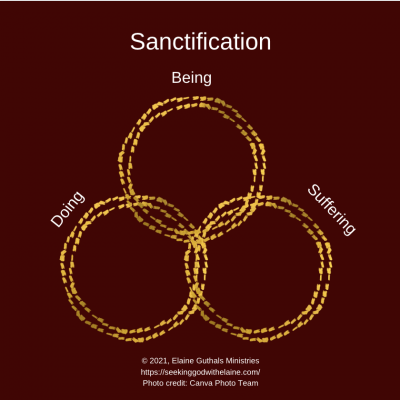
    I know we’ve talked about sanctification being a continuum. We would think that could be measurable.

    We also wondered if the rings are more a daily exercise. We need to concentrate on doing the daily. That will dictate where it falls on the continuum.

    Sanctification

    The most important aspect is the growth. If we are not growing, we are telling God that we are not interested in becoming like Him.

    The growth only comes by God’s power. There is no checklist we can mark off to make sure we are progressing as required. There is nothing we can do.

    It is all God. He does it all for His glory.

    Alexander said God is creating new desires, dispositions, and affections in us. We have to aim for perfection.

    Pursuing God

    “I pursue as my goal the prize promised by God’s heavenly call in Christ Jesus” (Phil. 3: 14 CSB)

    Paul wanted us to get one thing if nothing else — we have to pursue God even after conversion.

    We have to laser into that. We can’t have divided goals.

    Wadsworth put it this way. He wrote, “So is it ever: singleness of aim, oneness of effort — the gathering of thought, feeling, heart, soul, life into one intense absorbing passion — is the secret of all greatness.”

    Resource

    God and His sanctification of us has to be our priority.

    God and His sanctification of us has to be our priority.

    Reading all of this, I keep thinking about how many times we think we are in a rut. We think nothing changes.

    Hood argued that is because we keep coming back to where we started. “The sun rises and the sun sets, then hurries around to rise again” (Ecc. 1: 5 NLT).

    Resource

    This world is going to bog us down. We have to keep the forward progress happening in our souls.

    It isn’t physical onward movement. It is changing our character to be like God’s.

    Maclaren argued we will still be learning of God as we spend eternity with Him. I can see that.

    Resource

    Only then will be be like God. We will be spiritual beings instead of sinful beings.

    We will be able to understand more. We will see firsthand what God means and wants.

    JoyInPerfectionPin

    Making the Connections

    My Ladies and I call Paul the Energizer Bunny for God. We see him doing all this ministry for God.

    It is easy to think Paul was perfect. He wasn’t.

    But Paul definitely couldn’t show his insecurities to the Corinthians and probably not to the Galatians.

    Paul could get really real to the Philippians. They had a special relationship. He could be himself.

    That is good for us. What would we think if we were feeling all these feelings, but we didn’t think Paul had?

    We would be biting on ourselves up one side and down the other. We would consider ourselves worthless to God.

    But even the consummate preacher of the New Testament felt what we were feeling. God used him and blessed him.

    He can do the same for us.

    You can probably tell that I liked Woolsey’s sermon. He said something that is really appropriate to our Redo for Godliness series. He wrote, “Forget the past and believe that it is possible for you to grow faster in goodness in one year than you have grown in ten; and that there are resources inconceivably great within your reach.”

    Resource

    God is the One Who is redoing us. We aren’t.

    We think that means God has the resources to do this that we don’t have. I think it is something else.

    God has the power to sanctify us.

    God has the power to sanctify us.

    I have to try to figure out what Watkinson said. He wrote, “That which is not perfect is imperfect; but sin is not imperfection; it is contradiction. The contradictory element was destroyed, but imperfection remained, the normal elements of his nature had not attained their fulness and strength and beauty.”

    • We like to think things are opposites.
    • Sin is not the opposite of being perfect.
    • It is in disagreement with perfection.
    • When we come into agreement with God, the stain of the sin is still there.
    • It will be there until we are changed at the resurrection of the church.

    Resource

    How Do We Apply This?

    Sanctification isn’t something we can do on our own. We have to let God in His power sanctify us.

    That doesn’t mean we don’t have a part. We have to pray that God change us so that we are more like Him.

    Lyth said it is our duty to grow our faith. Part of that is denying our current desires, dispositions, and affections.

    Resource

    We need to put God totally in control.

    Father God. Our joy comes from the fact that You are sanctifying us. You are changing us to be like You. May we always follow Your promptings. Amen.

    What do you think?

    Leave me a comment below (about this or anything else) or head over to my Facebook group for some interactive discussion.

    If you don’t understand something and would like further clarification, please contact me.

    If you have not signed up for the email daily or weekly providing the link to the devotions and the newsletter, do so below.

    If God has used this devotion to speak with you, consider sharing it on social media.

  • Joy in Having Goals

    We will suffer in this lifetime, and it will still end in death. This daily devotional looks at the resurrection that will occur and the outcome for those who know Jesus as our personal Savior and those who don’t.

    Nuggets

    • Paul found joy in the fact that suffering in this life was rewarded when we are resurrected into the next life for those who know Jesus.
    • We can be certain that we all will be resurrected — where we will spend eternity depends on whether we have ABCDed or not.

    Devotions in the Joy in the Gospel series

    Even though Paul suffered greatly in this lifetime, he knew we would be resurrected after death. He knew because He put his faith and trust in Jesus as his personal Savior, he would be rewarded for his obedience.

    Let’s Put It into Context

    Here is a running list of what we’ve discussed previously.

    Joy in Goals

    “My goal is to know him and the power of his resurrection and the fellowship of his sufferings, being conformed to his death” (Phil. 3: 10 CSB)

    Paul found joy in the fact that suffering in this life was rewarded when we are resurrected into the next life for those who know Jesus.

    Paul’s goal is to know Jesus??? Doesn’t he know Him already?????

    Well, we are never going to fully understand Jesus or God. “‘My thoughts are nothing like your thoughts,’ says the Lord. ‘And my ways are far beyond anything you could imagine. For just as the heavens are higher than the earth, so my ways are higher than your ways and my thoughts higher than your thoughts’” (Isa. 55: 8-9 NLT).

    We’re not divine. So, there is always something to learn about Those Who are.

    Herbert put it this way. He wrote, “See, then, His chief disciple, after years of contemplation, imitation, and adoration, confessing that the great object of God, manifest in the flesh, seems greater than ever, so that at the last he offers the prayer suitable to a novice.”

    Resource

    Sherman lists four of the seven wishes Paul details here in the Book of Philippians.

    Knowledge of Christ

    Paul wanted to grow in his knowledge of Christ. He knew that God reveals more about Himself and His plan for us as we navigate the Sanctification Road.

    • Sanctification is the transformation of mind, body, and soul, which begins with regeneration, gradually changes our nature and morals through the promptings of the Holy Spirit, and ends with perfected state of spiritual wholeness or completeness.
    • Regeneration is being changed from spiritually dead to spiritually alive and the internal requickening in us that God brings about through the work of the Holy Spirit to give us new character.
    • Spiritual death is the separation from God that occurred as a consequence of Adam and Eve’s original sin. The spiritually alive are those who have ABCDed, so they are no longer separated from God.
      • The perfected state indicates the combination of the spiritual graces which, when all are present, form spiritual wholeness or completeness.
      • Spiritual graces are worldly morals that have been submitted to God to further His kingdom instead of enhancing this world.

    The ABCDs of Salvation

    If you have not become a believer in Christ, please read through the
    Plan of Salvation and prayerfully consider what God is asking you to do.

    A – admit our sins
    B – believe His Son Jesus is our Redeemer
    C – confess God as Sovereign Lord

    D – demonstrate that commitment by making any changes needed in our lives to
    live the way in which God has called us

    The Disciple’s Job Description

    Glossary

    Sherman also detailed this as to know Christ experimentally. I saw that listed in a couple of sermons in the last devotion.

    Redford explained it was experimental because it “… is unintelligible to carnal men.” Sin has given mankind a different nature and heart from Christ. We have to be sanctified to obtain His.

    Resource

    Well, but different verses say we can experiment with salvation. Manton wrote, “Sight is the knowledge of faith, taste that of experience (1 Peter 2:3; Psalm 34:8).”

    Resource

    • “if indeed you have tasted that the Lord is good” (I Pet. 2: 3 ESV).
    • Taste and see that the LORD is good. Oh, the joys of those who take refuge in him!” (Ps. 34: 8 NLT).

    
Knowledge of Christ is superlative because it brings far more and a clearer understanding of things than anything else. That makes it the supreme knowledge.

    Knowledge of being Conformed to Christ’s Death

    Sherman argued that knowing the power of the resurrection makes it a heart-level knowledge. He wrote, “It is one thing to have knowledge, and another to have it vitally and brought into action. Christ’s resurrection has a vast power.”

    Resource

    We know this power in our justification, sanctification, edification, and glorification.

    • Justification is the act through the merits of Christ that makes us free from sin because we are following God’s moral laws.
    • Edification is the instruction we receive from the Holy Spirit to change our morals to spiritual graces.
    • Glorification is to change us to possess the attributes of God.

    To read devotions in related series, click on the appropriate button below.

    We receive justification when we profess our faith in Jesus. Faith is the conviction that the doctrines revealed in God’s Word are true, even if we do not understand all aspects of them, a belief which impacts our lives.

    What faith isn’t is an entitlement. Faith is a privilege.

    We will be glorified when we are resurrected from the dead. We have been changed from being spiritually dead to spiritually alive with salvation.

    • Salvation is the gift of life through the deliverance from condemnation and sin to acceptance and holiness and changes us from being spiritually dead to spiritually alive.
    • Sins are actions by humans that disobey God and break one of His reasonable, holy, and righteous laws and commandments, goes against a purpose He has for us, or follows Satan’s promptings.
    • Holiness is the transcendent excellence of His nature that includes elements of purity, dedication, and commitment that lead to being set apart. Purity means possessing God’s moral character, having eliminated the stain of sin.

    Glossary

    That will be complete when we are changed from these physical bodies to spiritual bodies.

    While our salvation needed the blood of Jesus spilled (therefore, fulfilled by the cross), Jesus’ sacrifice would have meant nothing without the resurrection. That truly showed that He had obtained God’s approval.

    Paul was a huge proponent of the fact we need to grow in knowledge. “Now these are the gifts Christ gave to the church: the apostles, the prophets, the evangelists, and the pastors and teachers. Their responsibility is to equip God’s people to do his work and build up the church, the body of Christ. This will continue until we all come to such unity in our faith and knowledge of God’s Son that we will be mature in the Lord, measuring up to the full and complete standard of Christ” (Eph. 4: 11-13 NLT). He knew we wouldn’t go from milk babies to steak adults if we didn’t grow in knowledge.

    Herbert made a great point. Remember, Paul was in prison and potentially facing death. He had been through the wringer and back, which caused him frequent bouts of depression. Paul was resigned to — even longing for — his death.

    All Paul had to do was look up and see the resurrection of His Savior to be comforted about death. He was saying, “I want that, too. I want changed.”

    Knowledge of Christ’s Sufferings

    When we read “… fellowship of his sufferings …” (Phil. 3: 10 CSB), we think that we have to withstand suffering, also. Well, we do have to endure suffering in His name, but that isn’t all this means.

    We get to reap the benefits of Jesus’ suffering.

    Because He hung on the cross, we get to build a relationship with Jesus.

    Herbert reminded us that suffering is just a stage we go through, as is death. The final stage is glorification by Christ.

    Knowledge of Christ’s Glorification

    Sherman argued that, at Christ’s death, we see His most defining moment. Through it, we see

    • His patience during suffering
    • His faith
    • His compassion
    • His tenderness

    Attaining Resurrection

    “assuming that I will somehow reach the resurrection from among the dead” (Phil. 3: 11 CSB)

    We can be certain that we all will be resurrected — where we will spend eternity depends on whether we have ABCDed or not.

    Whoa! What?

    Paul had doubts about being resurrected by God after death????

    Well, remember a couple of devotions ago, Paul was speaking of privileges and commandments. Resurrection is a privilege.

    Paul did not feel entitled to be resurrected after death. There was nothing he did — and he did a lot — to earn him resurrection.

    Our resurrection, along with everything else, is a gift from God.

    Our resurrection, along with everything else, is a gift from God.

    Manton argued, though, that Paul was not wishy-washy about death. “For we know that if our earthly tent we live in is destroyed, we have a building from God, an eternal dwelling in the heavens, not made with hands” (II Cor. 5: 1 CSB).

    Resource

    Can’t get much more definitive than that.

    It is going to take full submission through a variety of means (Phil. 3: 10) to become glorified. But we know the Sanctification Road isn’t going to be easy. It is going to be hilly, bumpy, and curvy.

    Sanctification is a major component of our redo for godliness. However, it is not consistent. It has its hills and valleys.

    I know, I know. Everyone is going to get resurrected in the end to face judgment. Hamilton reminded us that judgment immediately follows the resurrection. This will be the separation of the sheep from the goats.

    Resource

    To read a related devotion, click the appropriate button below.

    Glossary

    But children of God — of which Paul was one — are going to be raised to be glorified, not condemned. The condemned are going down — literally — into a lake of fire.

    “Then death and the grave were thrown into the lake of fire. This lake of fire is the second death. And anyone whose name was not found recorded in the Book of Life was thrown into the lake of fire” (Rev. 20: 14-15 NLT).

    Glossary

    To read a devotion in the Hell Does Have Fury series, click on the appropriate button below.

    Jesus talked about this. He began by answering a question about marriage, but ended up explaining resurrection.

    “Jesus replied, ‘Marriage is for people here on earth. But in the age to come, those worthy of being raised from the dead will neither marry nor be given in marriage. And they will never die again. In this respect they will be like angels. They are children of God and children of the resurrection’” (Lk. 20: 34-36 NLT).

    What Paul was saying is that all of the suffering is going to be worth it in the end. We will be perfected and glorified, which is going to be beyond any expectation. So, we should be content in navigating the Sanctification Road.

    Devotions in the Contentment Leads to Tranquility series

    Another bonus is that sin is going to end. That will mean the consequences of sin will also end — no more poverty, disease, and death.

    JoyInHavingGoalsPin

    Making the Connections

    If the Sanctification Road is going to be hilly, bumpy, and curvy, then we have to be diligent.

    To read a related devotion, click the button below.

    To read a devotion in the Consistency Needed for Spiritual Growth series, click the appropriate button below.

    We have to be sure we are following God’s laws and commandments when He comes.

    How Do We Apply This?

    • Submit to God regardless of the trials we are called to endure.
    • Focus on the resurrection, not this life.
    • Strengthen our spiritual graces, especially faith, hope, and love.

    Resource

    Our resurrection to a glorified state depends upon our knowing Jesus as our Savior and Lord in this lifetime. We need to submit to Him.

    Father God. You designed the Plan of Salvation so that we may be reunited with You. When we are, You will reward us throughout eternity for submitting to You. Lord, help us as we encounter the suffering in this lifetime, so that we can faithfully complete it to grow in Your grace and knowledge. We look forward to spending eternity with You. Amen.

    What do you think?

    Leave me a comment below (about this or anything else) or head over to my Facebook group for some interactive discussion.

    If you don’t understand something and would like further clarification, please contact me.

    If you have not signed up for the email daily or weekly providing the link to the devotions and the newsletter, do so below.

    If God has used this devotion to speak with you, consider sharing it on social media.
  • Joy in Knowing Jesus

    Knowing Jesus at the heart level brings us many gains. This daily devotional looks at how we gain living for Christ in this life and the next.

    Nuggets

    • Knowing Jesus as our Savior and Lord means we can put our trust in Him.
    • Living for Jesus through faith brings righteousness.

    Devotions in the Joy in the Gospel series

    A favorite topic of Paul’s is how we gain in Christ. I guess he knew we would have to hear it several different times in several different ways before it would start sinking in.

    Let’s see what track Paul took this time with the Philippians.

    Let’s Put It into Context #1

    Here is a running list of what we’ve discussed previously.

    Let’s Put It into Context #2

    “But everything that was a gain to me, I have considered to be a loss because of Christ” (Phil. 3: 7 CSB)

    We’ve talked before about Paul’s belief that to “…  to live is Christ and to die is gain” (Phil. 1: 21 CSB). We interpreted that as, regardless of the circumstances, Paul was devoted to the Christ of the gospel which he preached.

    Paul was following what Jesus taught. “For whoever wants to save his life will lose it, but whoever loses his life because of me will save it” (Lk. 9: 24 CSB). He knew Jesus was Lord of the living and the dead. “… that he might be Lord over both the dead and the living” (Rom. 14: 9 CSB).

    Paul was giving up or surrendering control of his life. That meant whenever God chose to end Paul’s physical life, he was good with that. In all aspects of his life, Christ was the priority.

    Paul did not hold anything back to keep control of it himself. Plus, what he did give God control over, He gave him complete control.

    Let’s do some substitutions to see if we can make it a little more understandable what Jesus was getting at. For whoever wants to save his/her worldview life will lose his/her eternal life, but whoever loses his/her worldview life because of me will save his/her eternal life.

    We have to remember that God is in for the long haul. He is preparing us for eternity.

    But what are we losing? We are losing the love of this world. We are giving up the things of this world — the possessions, the priorities, and the principles that the worldview prizes.

    We benefit because we become new creations. When we choose to lose our worldview life, we gain spiritual life. We are no longer spiritually dead.

    God wants this to be our attitude. Put Him squarely in control and praise Him no matter the circumstances.

    Disciples are called to give up thinking about ourselves. We are to think about others.

    God and Jesus’ priority has always been and will always be our spiritual condition. So, when we think about Paul saying, “For to me to live is Christ, and to die is gain” (Phil. 1: 21 KJV), he is talking about giving up our worldview life and gaining godliness in this life and eternal life when we die.

    Let’s Put It into Context #3

    Knowledge is more than cognitive understanding. It is the comprehension of what has been communicated by the Holy Spirit regarding the qualities associated with the object bringing faith, love, and obedience. We comprehend who Jesus really is and the meaning of His role in our salvation.

    Hodge noted we should look at our intelligence through the elements of thought, feelings, and free will. These as separate elements, but they are not independent.

    Resource

    Watson reminded us that knowledge brings with it a certainty about truth. We know Christ through prophecy, miracles, and experience.

    Resource

    To me, this means knowledge leads us to believe without any doubt.

    The Value of Knowing Jesus

    “More than that, I also consider everything to be a loss in view of the surpassing value of knowing Christ Jesus my Lord. Because of him I have suffered the loss of all things and consider them as dung, so that I may gain Christ ” (Phil. 3: 8 CSB)

    Knowing Jesus as our Savior and Lord means we can put our trust in Him.

    If we ask others what they would consider gains and losses, they would say that money and prestige is a gain. Losses would be illness, sorrow, and disappointments.

    We have to remember that Paul was a full-fledged Jew. He had just told the Philippians “If anyone else thinks he has grounds for confidence in the flesh, I have more: circumcised the eighth day; of the nation of Israel, of the tribe of Benjamin, a Hebrew born of Hebrews; regarding the law, a Pharisee; regarding zeal, persecuting the church; regarding the righteousness that is in the law, blameless” (Phil. 3: 4-6 CSB).

    All of that, Paul counts as loss. He freely put less priority on that to gain what Christ would give him. He gave up the religion for the relationship.

    Vaughan saw it an issue of that in which we put our trust. Trust is assurance that the promises of God are true.

    Glossary

    If we put our trust in the temporary things of this world, we will lose everything. If we put our trust in Christ, we will gain our soul — and everything.

    I think too many think coming to Christ means all gain and no loss. That won’t fly.

    Disciples see what we gain another way. We look at what we are gaining eternally. Vaughan characterized that as being “… better to have a good conscience than a bad one, to be moral than immoral.”

    Resource

    But then, we do gain here in this lifetime. We gain knowledge and wisdom.

    It isn’t just any knowledge, though. It is knowledge about the Son of God.

    Without this knowledge, we will not find salvation. Without knowledge, our hearts aren’t engaged. We know we have to get our knowledge from the head level to the heart level.

    Vaughan asked some good questions. He wrote, “What of your own are you discarding in order to rest in Christ alone? Where are your transfers from one side of your reckoning to the other because of Christ?”

    Resource

    God asks us to discard the sin in our lives.

    No, don’t read that as we can keep the sin if we decide not to discard it. That is a non-negotiable.

    What is our decision is whether we are going to submit our lives to God. God doesn’t force us to worship Him.

    WhatWeChoose

    But once we choose God as our Father, once we ask Jesus to be our Lord and Savior, we have to be all in. We can’t pick and choose what we are going to believe and what we aren’t. It is God’s way or the highway.

    That is why Jesus told us to count the cost before choosing to become His disciple. “For which of you, desiring to build a tower, does not first sit down and count the cost, whether he has enough to complete it?” (Lk. 14: 28 ESV).

    God has written it all down for us what He expects. He wants us to make a conscious, informed decision.

    Too many just count the cost of this world. They see what sins they have to give up, and don’t like the cost.

    Too many don’t take into account what happens after this life. They either don’t think hell is real, or they don’t think God will send them there.

    It is, and He will.

    Those of us who truly prize Jesus as our Savior and Lord have nothing to worry about. That means we need to keep doubts out of our minds. Doubts eat at our faith.

    Boston said that we have to know Christ, not just have an opinion about Him. Opinions may contain doubts.

    Resource

    What Paul was saying here is that everything pales when compared to the knowledge of Jesus as our Lord and Savior.

    What does it really mean to gain Christ?

    • We gain Him as our Savior.
    • We gain Him as our Friend.
    • We get to enjoy the benefits of knowing Him.

    Boston warned us that we will have a battle on our hands. That is why God has provided us armor.

    Resource

    To read devotions in the Armor of God series, click the appropriate button below.

    But Boston took that one step farther. He said that we have to be content on the battle.

    Devotions in the Contentment Leads to Tranquility series

    I know. We say that is against our nature.

    The Value of being in Christ

    “and be found in him, not having a righteousness of my own from the law, but one that is through faith in Christ — the righteousness from God based on faith” (Phil. 3: 9 CSB)

    Living for Jesus through faith brings righteousness.

    We’ve talked several times about what it means to be in Christ. In Christ means those who have admitted our sins, believed in Jesus as our Savior and Redeemer, and confessed God as Sovereign God.

    Glossary

    Boston expanded that definition. He said that being in Christ means being united with Him through faith, walking in the Spirit with Him, and living for Him.

    To read a related devotion, click the appropriate button below.

    When we are a disciple of Christ, we bury ourselves in the gospel, which is the biography of Jesus. It tells about Who He is, what He has done, and what He will do.

    Boston reminded us that, when we are searching for and seeking God, Satan will be working overtime to tempt us.

    We find protection in Christ. We get to hide in the palm of God’s hand. Boston wrote, “Over trouble He will lift up our head; and when death comes it shall be without its sting.”

    Resource

    Living in Christ means abiding in Him. That means we persist and endure through all this life has to offer. Yes, it means we are abiding in Him for our lifetime.

    Why are we in Christ? We are there because God has a purpose for us.

    This stresses that we are justified through Jesus. Justification is the act through the merits of Christ that makes us free from sin because we are following God’s moral laws.

    We have to be careful that we don’t tell Jesus what those sins are and what they aren’t. We need to go to Him as we are and accept all God says are our sins.

    Too many times we think we are righteous in our own right. Righteous means we are free from sin because we are following God’s moral laws. Manton said that when we have self righteousness, we try to compete with Christ.

    Oh, yes, we think we are righteous because we don’t consider some things sin. We also see our works as giving us righteousness. They don’t.

    Manton had an interesting definition of God’s righteousness. He wrote, “The righteousness of God is His gracious method of pardoning penitent believers in the gospel, and accepting them to life in Christ.”

    Resource

    God gives us the gift of righteousness only when we show our faith in Him through accepting His gift of salvation.

    God gives us the gift of righteousness only when we show our faith in Him through accepting His gift of salvation.

    Let’s say it a different way. We are in Christ only when we have accepted God’s gift of salvation. We receive righteousness only when we are in Christ.

    JoyInKnowingJesusPin

    Making the Connections

    The bottom line with Paul — and with God — is that we gain Christ. Our spiritual condition is always the #1 priority with God.

    God priority is our spiritual condition, not our physical condition.

    God will always grant us salvation when we truly repent of our sins. “God is faithful, who has called you into fellowship with his Son, Jesus Christ our Lord” (I Cor. 1: 9 NIV).

    We aren’t going to get to rewrite Scriptures. We don’t get to call what is or isn’t a sin.

    We get to obey. We have to have faith.

    How Do We Apply This?

    • Lose our expectations of what we should give up to establish and gain from a relationship with God.
    • Live a life in which we are set apart for Christ.
    • Vaughan said that we should “Renew that act of self-dedication at not very long intervals.”
    • Show that we gain with Christ by living a life of ministry.
    • Show to others that we gain with Christ by living a life of ministry.
    • Know Christ.
    • Grow in Grace and knowledge (I Pet. 3: 18) by seeking Him.
    • Humble ourselves because of knowledge.
    • Comport ourselves with dignity because we are found in Christ.
    • Don’t discount sin — or God’s forgiveness
    • Don’t compare anything to Jesus

    Searching for and Seeking God

    Hearing His Word (Rom. 10: 17).
    Reading His Word (Rev. 1: 3).
    Praying to Him (Heb. 4: 16).
    Studying His Word (Ac. 17: 11).
    Meditating on His Word (Ps. 1: 1-2).
    Memorizing His Word (Ps. 119: 11).

    Resource

    Doing things God’s way brings us great gains — much more than we lose. That is true not only in this life, but also in the next.

    Father God. We are so focused on this life and what we want to get out of us. Forgive us. Help us to keep our focus on You. May we always walk in the Spirit so that we may be in Christ. Amen.

    What do you think?

    Leave me a comment below (about this or anything else) or head over to my Facebook group for some interactive discussion.

    If you don’t understand something and would like further clarification, please contact me.

    If you have not signed up for the email daily or weekly providing the link to the devotions and the newsletter, do so below.

    If God has used this devotion to speak with you, consider sharing it on social media.
  • Focusing Completely on God

    We’ve been looking at focusing our thoughts. This daily devotional looks at how focusing thoughts is just one type of focus we need.

    Nuggets

    • We have to follow God by focusing on His Word when He calls us to salvation.
    • Sin is considered a disease, so ABCDing heals our hearts from that disease.
    • We have to focus our eyes and ears on God along with our hearts and minds in order to direct where our feet go.

    To read devotions in the Redo for Godliness series, click the appropriate button below.

    Devotions in the How Do We Live Godly Lives? series

    Our last devotion in the How Do We Live Godly Lives? series, to me, ties everything we’ve been talking about together. We’ve been talking about our thoughts.

    But don’t use our minds alone. We use our hearts — in fact, all of us.

    Let’s take a look.

    “A fourth sort of directions is concerning good motions; whether they spring naturally from a gracious principle, or are peculiarly breathed in by the Spirit. There are ordinary bubblings of grace in a renewed mind, as there are of sins in an unregenerate heart; for grace is as active a principle as any, because it is a participation of the Divine nature. But there are other thoughts darted in beyond the ordinary strain of thinking, which, like the beams of the sun, evidence both themselves and their original. And as concerning these motions joined together, take these directions in short” (Charnock, The Sinfulness and Cure of Thoughts)

    Let’s Put It into Context

    We’ve been looking at Charnock’s sermon entitled The Sinfulness and Cure of Thoughts to show us how to cleanse, a.k.a. sanctify, our thought processes. Charnock has taught us

    • that we cleanse our thoughts when we return to having a strong relationship with God. We can do that by studying the Scriptures, meditating on God, contemplating on His creation, and praising Him.
    • that we focus our thoughts by being humble instead of prideful, following God instead of the worldview, working instead of being idle, and laboring for Him.
    • that we overcome our evil thoughts by burying ourselves in Scripture, relying on His omniscience and judgment, guarding our hearts and lips, evaluating ourselves, and recognizing evil thoughts, especially hating sin and resisting Satan. We do this by watching and praying.
    • that we focus our thoughts on good morals and keeping God’s laws and commandments; and we rejoice, pray, and be thankful.

    Resource

    Glossary

    Here is a running list of what we’ve discussed previously.

    Focusing on God

    “My son, pay attention to my words; listen closely to my sayings. Don’t lose sight of them; keep them within your heart” (Prov. 4: 20-21 CSB)

    “Refer them, if possible, to assist your morning meditation; that, like little brooks arising from several springs, they may meet in one channel, and compose a more useful stream” (Charnock, The Sinfulness and Cure of Thoughts)

    We have to follow God by focusing on His Word when He calls us to salvation.

    Scriptures provide us with God’s Word. We can imagine that they are God talking directly to us.

    Because He is. “All Scripture is breathed out by God and profitable for teaching, for reproof, for correction, and for training in righteousness” (II Tim. 3: 16 ESV).

    Yes, it may have been Paul, Moses, and all the others who hefted the pens. They only wrote what God directed them to write.

    That is one reason we need to pay attention to them. Sovereign God has decreed them.

    We also need to pay attention to them because, one day, we will be judged by those words. God has told us point blank how we will be judged.

    Being judged by the do’s and don’ts is secondary. The only question that has bearing on how we spend eternity will be have we ABCDed or not.

    The ABCDs of Salvation

    If you have not become a believer in Christ, please read through the
    Plan of Salvation and prayerfully consider what God is asking you to do.

    A – admit our sins
    B – believe His Son Jesus is our Redeemer
    C – confess God as Sovereign Lord

    D – demonstrate that commitment by making any changes needed in our lives to
    live the way in which God has called us

    The Disciple’s Job Description

    Solomon said that we need to pay attention. That means, first, they have to get our attention.

    Lawson noted that “the motives that call for our attention are exceedingly powerful.” Why wouldn’t they be powerful? The Heavenly Father is speaking to us.

    Resource

    What God is calling us to is salvation. He is calling us to change our characters to be like Him.

    To read a related devotion, click the button below.

    Focusing Our Hearts on God

    “For they are life to those who find them, and health to one’s whole body. Guard your heart above all else, for it is the source of life” (Prov. 4: 22-23 CSB).

    Sin is considered a disease, so ABCDing heals our hearts from that disease.

    God can and will heal us from our sins. But that is only the start.

    Once we are converted, we begin to navigate the Sanctification Road. That is how we change our character to imitate God’s.

    One thing we have to do while we are being sanctified is to guard our hearts. That is going to take patience and diligence.

    We’ve established the connection between our hearts and our thoughts/minds. The Christian Age expanded on that. They wrote, “The intellect is controlled by the heart more than the heart by the intellect. Men do not follow their thinkings, but their feelings, yet there are teachers proclaiming a religion of pure intellect, excluding the passions or feelings of the soul.”

    Resource

    God isn’t intending that we lose ourselves. Submitting to His Will does not make us less us.

    Our character comes from our hearts. But that creates a dilemma.

    “The heart is more deceitful than anything else, and incurable — who can understand it?” (Jer. 17: 9 CSB).

    If our nature is God’s nature, then we must diligently watch that we do not slip back into our old nature.

    But that also means that we also have to keep watch over our thoughts. Seed wrote, “The soul is ever busy and at work. There is no pause, no suspension of thought, at least while we are awake.”

    Resource

    Evil thoughts are going to pop up in our minds. Satan is going to try to get us to take an exit off the Sanctification Road.

    God doesn’t hold the temptations against us. He does if we cave into the temptation and commit the sin.

    God doesn’t hold the temptations against us. He does if we cave into the temptation and commit the sin.

    Distractions are just are frequent and are as difficult to corral as our thoughts. They are not considered sins while we strive to lessen their hold over us.

    Scriptures have several things to say about fixing — or setting — our minds on things above.

    • “Therefore, holy brothers and sisters, who share in the heavenly calling, fix your thoughts on Jesus, whom we acknowledge as our apostle and high priest” (Heb. 3: 1 NIV).
    • “Set your minds on things above, not on earthly things” (Col. 3: 2 CSB).

    To read a related devotion, click the button below.

    We can control our minds. Sharp wrote, “We have liberty of thinking, and may choose our own thoughts. It is in our power to determine what suggestions we will fix our minds upon.”

    Resource

    We can choose what our thoughts focus on, or that on which we refuse to dwell. It is up to us.

    God will help us.

    Sharp said it comes down to our morality.

    Focusing Everything on God

    “Don’t let your mouth speak dishonestly, and don’t let your lips talk deviously. Let your eyes look forward; fix your gaze straight ahead. Carefully consider the path for your feet, and all your ways will be established. Don’t turn to the right or to the left; keep your feet away from evil” (Prov. 4: 24-27 CSB)

    We have to focus our eyes and ears on God along with our hearts and minds in order to direct where our feet go.

    Well, we’ve talked about hearts and minds. Now, let’s talk about our mouths, eyes, and feet. Thomas even added ears into the mix.

    I liked the adjectives that Thomas put with ears and eyes. What he said we needed was an attentive ear and a steadfast eye/look.

    Resource

    To me, it combines all of these together. Speech is important but can be impacted by what we see or hear. What we see is important, but maybe we’ve heard or seen something that is contradicted that. It is easy to go down a wrong path.

    When we think about it, we must use all these parts together to function. We can use our eyes to see, but we need our minds to interpret what we are seeing and what that means to us. We aren’t going anywhere without our feet taking us.

    God calls us to submit our whole lives to Him. Not just our mouths and speech. Not just our minds and thoughts.

    God calls us to submit our whole lives to Him.

    God wants all of us to be changed to be like Him.

    Thomas also pointed out that we have a straightforward purpose. This “… grand purpose on which the eye of the soul shall be always fixed” is all about God.

    Resource

    We have to approach that purpose with persistent thoughtfulness. Thomas said we are to cut out impulse, prejudice, and tradition.

    Thomas’ point was we need to keep on a straight path to God. That means getting our character right.

    I think sometimes we make it harder than it is. Wardlaw wrote, “What is in these terms specially indicated is simplicity of principle and aim; singleness of motive; an upright, unswerving regard to duty. The path of duty is one. It is narrow and straight.”

    Resource

    Our focus has to be solely on God. Roberts reminded us that we need to have the faith of a child. Faith is the conviction that the doctrines revealed in God’s Word are true, even if we do not understand all aspects of them, a belief which impacts our lives.

    Resource

    focusing-completely-on-godPin

    Making the Connections

    Sharp reiterated that “no man is drawn to commit sin by any state or condition that God hath put him into, nor by any temptation, either outward or inward, that is presented to him. Our sin begins when we yield to the temptation. The sin becomes great as it grows into action.”

    Resource

    How Do We Apply This?

    • Use our thinking to meditate on God’s word and apply it to our own lives so we can choose Him in all we do.
    • Follow all God’s laws and commandments completely.
    • Diligently pursue holiness.
    • Watch our thoughts after trials and in the passion of anger.
    • Avoid situations, books, and music that tempt us.
    • Choose God’s way.
    • Avoid idleness and watch the company we keep.
    • Cut evil thoughts off early.
    • Meditate and pray.
    • Be discreet.
    • Seek God

    Resource

    Focusing our thoughts is an important component in focusing ourselves on God. Focusing our hearts, eyes, ears, feet – all of us – on God is important in our sanctification process.

    Father God. We want to focus on You. We want to learn to imitate You through the sanctification process. Amen.

    What do you think?

    Leave me a comment below (about this or anything else) or head over to my Facebook group for some interactive discussion.

    If you don’t understand something and would like further clarification, please contact me.

    If you have not signed up for the email daily or weekly providing the link to the devotions and the newsletter, do so below.

    If God has used this devotion to speak with you, consider sharing it on social media.
  • Focusing on Privileges and Commandments

    Paul told us about three privileges and commandments on which to focus. This daily devotional looks at rejoicing, praying, and being thankful.

    Nuggets

    • We have reason to rejoice when we ABCD — and every day after that.
    • Constant communication with God through prayer is essential for our lives as disciples.
    • We are to be thankful to God regardless of the circumstances.

    To read devotions in the Redo for Godliness series, click the appropriate button below.

    Devotions in the How Do We Live Godly Lives? series

    We are looking at the last section of Charnock’s sermon. We’ve continued the discussion on focusing on the good thoughts.

    When I thought about what verses I wanted to use on the topic of improving our thoughts, I Thessalonians 5: 16-18 seemed like it was a good summary of what we should do. It is a privilege to do them — but it is also a commandment.

    “A fourth sort of directions is concerning good motions; whether they spring naturally from a gracious principle, or are peculiarly breathed in by the Spirit. There are ordinary bubblings of grace in a renewed mind, as there are of sins in an unregenerate heart; for grace is as active a principle as any, because it is a participation of the Divine nature. But there are other thoughts darted in beyond the ordinary strain of thinking, which, like the beams of the sun, evidence both themselves and their original. And as concerning these motions joined together, take these directions in short” (Charnock, The Sinfulness and Cure of Thoughts)

    Let’s Put It into Context

    We’ve been looking at Charnock’s sermon entitled The Sinfulness and Cure of Thoughts to show us how to cleanse, a.k.a. sanctify, our thought processes. Charnock has taught us 

    • that we cleanse our thoughts when we return to having a strong relationship with God. We can do that by studying the Scriptures, meditating on God, contemplating on His creation, and praising Him.
    • that we focus our thoughts by being humble instead of prideful, following God instead of the worldview, working instead of being idle, and laboring for Him.
    • that we overcome our evil thoughts by burying ourselves in Scripture, relying on His omniscience and judgment, guarding our hearts and lips, evaluating ourselves, and recognizing evil thoughts, especially hating sin and resisting Satan. We do this by watching and praying.
    • that we focus our thoughts on good morals and keeping God’s laws and commandments.

    Resource

    Glossary

    Here is a running list of what we’ve discussed previously.

    “Improve them for those ends to which they naturally tend. It is not enough to give them a bare reception, and forbear the smothering of them; but we must consider what affections are proper to be raised by them, either in the search of some truth, or performance of some duty” (Charnock, The Sinfulness and Cure of Thoughts)

    A Privilege and Commandment to Rejoice

    “Rejoice always” (I Thess. 5: 16 CSB)

    We have reason to rejoice when we ABCD — and every day after that.

    Horton told us what privileges we gain when we ABCD. Our sins are forgiven when we ask Jesus to be our Lord and Savior. This makes us children of God.

    Glossary

    What we haven’t begun to fathom then is Jesus’ love for us and the hope that we have. Hope is the expectation, also called a living hope, based on the confidence that, because of our relationship with God, our names will be found in the book of life.

    Resource

    As much of a privilege to be able to rejoice, it is also a commandment. We are told to not be sticks in the mud.

    This tells me that it is our choice to rejoice. Even in the deepest trials, we have reason to rejoice. We are not alone. God never leaves us.

    Even in the deepest of trials, we have reason to rejoice. We are not alone.

    Worldview people like to focus on the repent side of things. Repentance is acknowledging our separation from God and expressing sorrow for breaking God’s laws and commandments by making the commitment to changing ourselves through obedience so that we no longer do the wrong things. Satan wants us to focus on what we are giving up.

    If we focus on the rejoicing side of things, we focus on what we gain after conversion. That is so much more than what we have chosen to give up.

    Barrett reminded us that there are worldview people who have a cheerful disposition. But I think rejoicing is more deep-rooted than that.

    Resource

    To me, cheerful is the outward expression of being happy. That is dependent on circumstances.

    Rejoicing ties in to being thankful. We can rejoice regardless of circumstances.

    I think we have trouble in rejoicing in the trials because we, too, see rejoicing tied with our happiness. It has no ties with the worldview ways of showing our happiness.

    It isn’t. We should rejoice because Sovereign God Who is all-knowing, all-seeing, and ever present is in control of what is happening to us. Our rejoicing has to come from God.

    Spurgeon addressed that. He wrote, “If our rejoicing does not come out of a clear understanding of the things of God, and has no truth at the bottom of it, what can it profit us? Those who rejoice without knowing why are driven to despair without knowing why, and are likely to be found in a lunatic asylum ere long. Christ’s religion is sanctified common sense.”

    Resource

    God doesn’t want us to go to extremes. He wants us to be sober and even-keeled because we put our trust in Him.

    • Sober is a character trait distinguished by self-control, genuineness, and sound moral judgment.
    • Trust is assurance that the promises of God are true.

    Glossary

    Spurgeon listed the benefits of rejoicing. It brings the spiritual graces of faith, hope, love, and patience. The results of our continual rejoicing, praying, and thanksgiving are singing, communion, and working for God.

    Resource

    We should rejoice in every aspect of the gospel. All the doctrines and promises lead us to God, the most important thing in our lives.

    A Privilege and Commandment to Pray

    “pray constantly” (I Thess. 5: 17 CSB)

    Constant communication with God through prayer is essential for our lives as disciples.

    It is very important that disciples have a consistent prayer life. More important, though, Griffith wrote, “Prayer consists not in those acts, but in the spirit and temper of devoutness, generated, exercised, kept up under difficulty by those acts.”

    Resource

    We initiate the prayers, but it isn’t just that we pray. We have to mean the prayers and be submissive to God when we pray.

    Smith and Spurgeon tied rejoicing with praying. The best time to communicate with God is when we are rejoicing. That contact brings the joy.

    Resource

    Smith also tied our prayers with incense. Our prayers should be a sweet aroma to God.

    • “Let my prayer be counted as incense before you, and the lifting up of my hands as the evening sacrifice!” (Ps. 141: 2 ESV)
    • “And walk in love, as Christ loved us and gave himself up for us, a fragrant offering and sacrifice to God” (Eph. 5: 2 ESV).
    • “For we are the aroma of Christ to God among those who are being saved and among those who are perishing” (II Cor. 2: 15 ESV).

    In the Old Testament, God relied on visuals to show his connection with us and His provision of strength to us. Smith used Samson as an example of giving us His strength. Circumcision is also an outward expression of Israel’s agreement with God’s covenant.

    In the New Testament, God relies on prayer. Smith wrote, “Many have learned more by praying than they could by reading, and done that by prayer they could not do by Counsel; therefore one saith that he who can pray continually can do all things and always, because, like Jacob, he can overcome God, who helpeth him; and he who can overcome God can overcome Satan too, who trieth his uttermost to hinder all things.”

    Resource

    We get hung up sometimes on the pray without ceasing part. This is a broad term that makes it seem an unfulfillable commandment. We are practical people, so we ask how we can pray while we sleep.

    Horton interpreted this to mean we are to make a habit of praying. We are always thinking and feeling. They should be a result of our prayers.

    Resource

    But Horton made an important distinction. What we think is prayer, Norton described as occasional and “… is merely the outburst.”

    Dwight listed the times Scriptures list as when we should pray. They include the Sabbath, on holy days, in the morning and evening, when we eat, and general times. That doesn’t say 24/7/365.

    What it does tell me is the attitude of prayer is just as important as saying the words. Dwight called prayer an act of worship. We can worship anytime.

    Resource

    The attitude of prayer is just as important as saying the words.

    Prayer keeps our focus on God. It builds the habit, instead of waiting until we are in the midst of a trial.

    The thing is, we face trials, get discouraged, and cease praying. God doesn’t want us to cease praying when our faith is weak. Even when we have faith of a mustard seed, we need to keep putting everything under His control.

    But then again, we cease praying when things are going well. We don’t think we need Him when we can handle everything.

    God says no. He is the God of the little things and the big things. He wants the communion in all aspects of our lives. Us handling things by ourselves is not submitting to Him.

    Shedd explained about when God does and does not hear us pray. He wrote, “God does not hear His people today and turn a deaf ear tomorrow. He promised to hear in His temple continually (2 Chronicles 8:12-16); nor does its destruction disprove the Divine faithfulness. If the worshipper ceases to go into the temple, God, of course, goes out of it.”

    Resource

    The way I read that is

    • God is going to hear our consistent prayers.
    • He will hear the prayers of those who have ABCDed. He will always hear the prayers when people ABCD. That leaves the question of whether He hears the prayers of those who haven’t ABCDed who aren’t ABCDing.
    • Our bodies are now His temple.
    • If we stop praying, we’ve left Him, so He leaves us. “Then the glory of the Lord departed from over the threshold of the temple and stopped above the cherubim” (Ezek. 10: 18 NIV).

    Shedd reminded us that we have to develop our prayer life. We do that as we navigate the Sanctification Road.

    A Privilege and Commandment to be Thankful

    “give thanks in everything; for this is God’s will for you in Christ Jesus” (I Thess. 5: 18 CSB)

    We are to be thankful to God regardless of the circumstances.

    It is really hard to give thanks to God when we are knee-deep in a trial. It is hard to take our eyes off the pain and chaos to raise them to God. Then to be thankful for it!

    Horton reminded us that God’s mercy is shown in our trials. God’s mercy is an act of sovereign will that produces an unexpected and undeserved response from God as He responds in love to our needs.

    Resource

    God will shower us with His mercies. “And we know that in all things God works for the good of those who love him, who have been called according to his purpose” (Rom. 8: 28 NIV). That means we should be thankful for it happening.

    But that doesn’t mean we wait until the trial is over and we see how it is good for us. We gives thanks in the middle of the trial because we know — however hard or painful it is — God is using it for good.

    Pierson equated thanksgiving with praise. They are both elements of worship. Pierson said we can’t worship without being thankful. Out of this thankfulness comes our praise.

    Resource

    To read a related devotion, click the button below.

    We gives thanks in the middle of the trial because we know — however hard or painful it is — God is using it for good.

    Thankfulness is a product of our faith. Faith is the conviction that the doctrines revealed in God’s Word are true, even if we do not understand all aspects of them, a belief which impacts our lives.

    Why is it so hard to be thankful to God? We aren’t focused on Him. We focus on ourselves.

    • God didn’t answer our prayers the way we wanted.
    • We don’t want to give Him control of our lives.
    • We see all the things wrong with what God is calling to do.
    • We aren’t content with what God does give us.
    FocusingOnPrivilegesAndCommandmentsPin

    Making the Connections

    All three privileges/commandments can be tied together. Joy leads to prayer. Prayer leads to thankfulness.

    Smith wrote that, because these are something we have trouble doing, we need work on the continually part.

    Resource

    It is interesting how Smith believed that the doing of them is how we perfect our virtues. I see that. God supplies our joy when we will accept it. We cannot become like Him without the communication with Him. Being thankful shows our submission to Him.

    That I can see, too. Hull reminded us these really aren’t acts. They are a state of heart.

    Resource

    That is what we’ve been saying. It is all about being, instead of doing.

    Perfection is about being. It is about obtaining the character of God.

    How Do We Apply This?

    • Search for and seek God
    • Approach God with humility
    • Thank Him for all He is and does
    • Thank Him for all He had given us and has done for us
    • Live for Him
    • Make rejoicing, praying, and thanking a habit

    Resource

    Searching for and Seeking God

    Hearing His Word (Rom. 10: 17).
    Reading His Word (Rev. 1: 3).
    Praying to Him (Heb. 4: 16).
    Studying His Word (Ac. 17: 11).
    Meditating on His Word (Ps. 1: 1-2).
    Memorizing His Word (Ps. 119: 11).

    Many things in Scriptures are tied together. Rejoicing, prayer, and thanksgiving are, also.

    That makes things complex. God, however, is right there with us to help us along the Sanctification Road.

    Father God. You have given us laws and commandments to show us Your character. It is our privilege — as well as Your command — to follow those. Help us to become more like You. Amen.

    What do you think?

    Leave me a comment below (about this or anything else) or head over to my Facebook group for some interactive discussion.

    If you don’t understand something and would like further clarification, please contact me.

    If you have not signed up for the email daily or weekly providing the link to the devotions and the newsletter, do so below.

    If God has used this devotion to speak with you, consider sharing it on social media.
  • How Do We Focus on Good Thoughts?

    We’ve spent considerable time talking about evil thoughts and preventing them. This daily devotion looks at good thoughts.

    Nuggets

    • We can train our good thoughts to focus on God.
    • We must remember the most important good and bad thoughts so we can correctly evaluate our Sanctification Road.

    To read devotions in the Redo for Godliness series, click the appropriate button below.

    Devotions in the How Do We Live Godly Lives? series

    With this devotion, we enter the last section of Charnock’s sermon. We’ve talked about preventing bad thoughts, but how do we focus on the good ones?

    I’ve had to rearrange some of the points to get the devotions to not be humongous. 

    “A fourth sort of directions is concerning good motions; whether they spring naturally from a gracious principle, or are peculiarly breathed in by the Spirit. There are ordinary bubblings of grace in a renewed mind, as there are of sins in an unregenerate heart; for grace is as active a principle as any, because it is a participation of the Divine nature. But there are other thoughts darted in beyond the ordinary strain of thinking, which, like the beams of the sun, evidence both themselves and their original. And as concerning these motions joined together, take these directions in short” (Charnock, The Sinfulness and Cure of Thoughts)

    Let’s Put It into Context #1

    We’ve been looking at Charnock’s sermon entitled The Sinfulness and Cure of Thoughts to show us how to cleanse, a.k.a. sanctify, our thought processes. Charnock has taught us
    • that we cleanse our thoughts when we return to having a strong relationship with God. We can do that by studying the Scriptures, meditating on God, contemplating on His creation, and praising Him.
    • that we focus our thoughts by being humble instead of prideful, following God instead of the worldview, working instead of being idle, and laboring for Him.
    • that we overcome our evil thoughts by burying ourselves in Scripture, relying on His omniscience and judgment, guarding our hearts and lips, evaluating ourselves, and recognizing evil thoughts, especially hating sin and resisting Satan. We do this by watching and praying.

    Resource

    Glossary

    Here is a running list of what we’ve discussed previously.

    Welcome Good Thoughts

    “Finally brothers and sisters, whatever is true, whatever is honorable, whatever is just, whatever is pure, whatever is lovely, whatever is commendable — if there is any moral excellence and if there is anything praiseworthy — dwell on these things” (Phil. 4: 8 CSB)

    We can train our good thoughts to focus on God.

    “Welcome and entertain them. As it is our happiness, as well as our duty, to stifle evil motions, so it is our misery, as well as our sin, to extinguish heavenly” (Charnock, The Sinfulness and Cure of Thoughts)

    We’ve looked at Philippians 4: 8 before as it pertains to morality. Let’s look at it through the lens of dwelling on them through our thoughts.

    Our thoughts happen in our mind. The mind is a component of the soul that controls our will. It is in our minds that we process and make judgments and decisions.

    Paul believed whole heartedly that we can train our minds to change from focusing on sinful thoughts to focusing on God. He called this renewing our minds.

    We can’t gain perfection unless we think about gaining it. Thinking about it is meditating on it. It isn’t going to just happen to us.

    We must pursue sanctification. That makes it a conscious choice that we have to think about and make a decision.

    If we don’t corral our thoughts, we not only can slip further and further away from God, but that also brings a helplessness with it. Without God, everything is futile.

    Our thoughts show us where we are at on our Sanctification Road. Sanctification is accomplished through our thoughts.

    To do that, Pope said that we have to put perfection in its right place. When we consciously meditate on what our thoughts are, we can form new habits through our redo for godliness.

    Resource

    No, we can’t do that by ourselves. God has to direct that process.

    A major way we meditate is in reading God’s Word to guide us. We read it and then apply it to our lives.

    Through this meditation, we evaluate what our thoughts are and show what our heart intends to do with them.

    Renewing our minds brings with it a variety of obligations. It doesn’t end when the Spirit of God show us what God teaches. We have to apply that teaching to our lives.

    I don’t know if I am going to say this right. We can’t just think perfection is a goal with a single action plan. It is too complex to just say we are working on being perfect.

    We have to have God sanctify our thoughts, our speech, our feelings, our priorities … all the different elements that keep us from being perfect. Isn’t that a comforting thought? We’ll do it right when we make the right choices.

    Our sins will be forgiven. Our character will be changed. We’ll be ready for Heaven.

    • Forgiveness is, when we ask, the act of God pardoning us because we have shown repentance for breaking His laws and commandments, which allows us to become holy as He is.
    • Our character is our thoughts, feelings, and actions all added together.

    Bray connected thoughtlessness with ignorance. God doesn’t want us to be ignorant. He not only wants us to have knowledge but also to have wisdom.

    Resource

    • Wisdom is an enlightened acceptance of God’s principles that leads to knowledge, discernment, and good sense that is put into practice through salvation, increasing our goodness and virtue.
      • Discernment means we can evaluate the situation and recognize right from wrong. 
      • Salvation is the gift of life through the deliverance from condemnation and sin to acceptance and holiness and changes us from being spiritually dead to spiritually alive.
      • God’s goodness is His holy, pure, and righteous behavior.
      • Virtues are standards of moral excellence.

    Our thoughts shouldn’t be random thoughts. They should be organized to help us grow our relationship with God.

    Horton contended that we need to corral our thoughts to achieve a perfect character. He wrote, “Thoughts are either indicative of character, or formative of it. Our thoughts partly result from our disposition, and partly create it.”

    Resource

    What we think about will grow to have more priority in our lives. Ogle wrote, “A man’s power to help does not so much depend on his intentions as on his character and disposition.” Our character is to be like God’s — pure and holy. We should use this growth to love others more.

    Resource

    Does that mean all of this will be easy? No. Satan will throw all of these thoughts into our mind when we are trying to meditate on God and His Word or try to pray to Him.

    This helps us to believe that God is asking the impossible of us. He isn’t.

    We have to keep our hearts and mind focused on God. He can do what we consider impossible.

    Remember, Don’t Forget

    “My son, don’t forget my teaching, but let your heart keep my commands; for they will bring you many days, a full life, and well-being. Never let loyalty and faithfulness leave you. Tie them around your neck; write them on the tablet of your heart. Then you will find favor and high regard
with God and people” (Prov. 3: 1-4 CSB).

    We must remember the most important good and bad thoughts so we can correctly evaluate our Sanctification Road.

    “Record the choicer of them. We may have occasion to look back upon them another time, either as grounds of comfort in some hour of temptation, or directions in some sudden emergency; but constantly as persuasive engagements to our necessary duty. Thus they may lie by us for further use, as money in our purse” (Charnock, The Sinfulness and Cure of Thoughts)

    Okay, these verses talk about hearts, but we’ve already established that hearts and minds are connected. So, we can generalize this to our thoughts.

    If we are to remember and keep our hearts, then we do that by remembering and keeping our thoughts. Lawson connected that to keeping God’s laws and commandments.

    Solomon said that we have to remember loyalty and truth. Lawson reminded us that this loyalty and mercy extends to all.

    Resource

    Solomon suggested props to help us remember. The around-our-neck one is somewhat understandable.

    The tablet-of-our-hearts is a little more confusing. The Homilist wrote “The soul registers every impression made on it.” This was equated to the books of Revelation that will be read on judgment day.

    Resource

    Glossary

    Thorne tied the law to godliness. No, we don’t need to be following the law to gain salvation. We do get to godliness by following the law because we are following God’s Will.

    Think about it. The laws tell us about the character of God. We are wanting to imitate His character, so we need to follow the laws and commandments.

    Proverbs 3: 3 translates to several words. It talks about love, kindness, faithfulness, loyalty, devotion, mercy, and truth. To me, all show aspects of godliness to which we are to strive. I agree with Thorne that these all deal with the well-being of men.

    That, also, puts another slant on why we should remember. If we forget — i.e., not remember — we aren’t navigating the Sanctification Road to becoming like God.

    Instead of forgetting, we delight in the law of the Lord. Thorne wrote, “Obedience to it is not the ground of justification, but this is attained in the work of sanctification.”

    Resource

    We show our respect for the law. It has to be at the heart level. That does lengthen our days because we gain salvation and eternity.

    To read a related devotion, click the button below.

    We will sometimes obey the laws. Sometimes, we will break the laws.

    We have to remember both. It does us no good to forget the bad times.

    That being said, I think we should mainly focus on the obedience. We want to imitate the good.

    Horton brought up the fruit of righteousness. The fruits of righteousness are the rewards given at perfection for doing God’s will and growing closer to Him. The rewards are eternal life, peace, access to Him, and hope.

    Glossary

    When we obey the law, we gain the fruits of righteousness. Horton wrote, “We are accustomed to dwell on the promised joys of the future world as if godliness had no promise of the life which now is, and in so doing we take all life and colour from those expected blessings.” We want to be godly now.

    Resource

    HowDoWeFocusOnGoodThoughts?PIN

    Making the Connections

    Pope wrote, “Christianity alone has the golden link between thought and practice.” Worldview acts of kindness have a broken link.

    Resource

    How Do We Apply This?

    • Use our thinking to meditate on God’s word and apply it to our own lives so we can choose Him in all we do.
    • Follow all God’s laws and commandments completely.
    • Choose to stop thinking about that which does not promote perfection.
    • Act on God’s truth in thought, word, and deed.
    • Consciously avoid evil thoughts.
    • Pray to focus our thoughts on perfecting our character.
    • Diligently working to train our thoughts.
    • Search for and seek God

    Resource

    Focusing on good thoughts is not going to be easy. Satan is going to try to knock us off the Sanctification Road.

    We can train our minds to focus on God. But it will take time.

    Father God. We look to You to redo us to have Your godliness. In the process, help us to focus our thoughts on You. Amen.

    The ABCDs of Salvation

    If you have not become a believer in Christ, please read through the
    Plan of Salvation and prayerfully consider what God is asking you to do.

    A – admit our sins
    B – believe His Son Jesus is our Redeemer
    C – confess God as Sovereign Lord

    D – demonstrate that commitment by making any changes needed in our lives to
    live the way in which God has called us

    The Disciple’s Job Description

    Searching for and Seeking God

    Hearing His Word (Rom. 10: 17).
    Reading His Word (Rev. 1: 3).
    Praying to Him (Heb. 4: 16).
    Studying His Word (Ac. 17: 11).
    Meditating on His Word (Ps. 1: 1-2).
    Memorizing His Word (Ps. 119: 11).

    If you have not admitted that your relationship is not right with God,

    have not asked Jesus to be your Lord and Savior,

    and have not confessed your sins,

    please read through the Plan of Salvation and prayerfully consider what God is asking you to do.

    Related Links

    Related Links

    Related Links

    Artist

    Related Links

    I have created a worksheet of the questions above. Click on the button below to access it.

    Don’t know what your spiritual gifts are?

    Take this Spiritual Gifts Inventory

    The Disciple’s Job Description

    Complete Job Description

    Individual Description

    The Disciple’s Job Description

    Complete Job Description

    Individual Description

    Job Duty #4
    Proclaim the Gospel (Mark 16: 15)

    Job Duty #6
    Make Disciples (Matthew 28: 19-20)

    It Was Enough
    Vocalist: Elaine Guthals
    Keyboard: Chris Vieth

    What do you think?

    Leave me a comment below (about this or anything else) or head over to my Facebook group for some interactive discussion.

    If you don’t understand something and would like further clarification, please contact me.

    If you have not signed up for the email daily or weekly providing the link to the devotions and the newsletter, do so below.

    If God has used this devotion to speak with you, consider sharing it on social media.