Blog

  • Joy in Sanctification

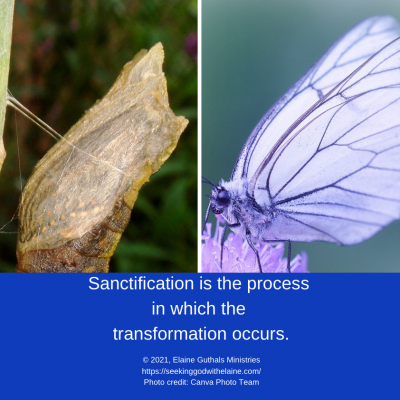
    After salvation, God wants us to change to be like Him. This daily devotional shows us how that can bring us joy, even though it is work.

    Nuggets

    • Salvation brings responsibilities with it that will take work to carry out.
    • Even though we are required to work at sanctification, we do not do it alone.
    • Our inner sanctification manifests itself in our actions.

    Devotions in the Joy in the Gospel series

    Salvation brings responsibilities with it that will take work to carry out.

    We’ve talked about working out our salvation many times. It is part of our job description.

    The Disciple’s Job Description

    Complete Job Description

    Individual Description

    Job Duty #2
    Work Out Our Salvation (Philippians 2: 12)

    What we’ve said is working out our salvation is going from milk babies to steak adults by navigating the Sanctification Road. But I don’t think we’ve ever looked at the sermons associated with the verse.

    Let’s look.

    Let’s Put It into Context #1

    Here is a running list of what we’ve discussed previously.

    Working It Out

    “Therefore, my dear friends, just as you have always obeyed, so now, not only in my presence but even more in my absence, work out your own salvation with fear and trembling” (Phil. 2: 12 CSB)

    Salvation brings responsibilities with it that will take work to carry out.

    Working out our salvation is all about obedience. We are obeying God and becoming more like Him. We are obtaining His character.

    Pope wrote, “The absolute power of God’s will, which is the law to every creature and the accepted law to the Christian, is regarded as expressing itself within the heart of man.”

    Resource

    Working out our salvation is done within us. God influences our will and actions to change our character to imitate His.

    We all navigate the Sanctification Road, but it means different things to each of us. “And there are different activities, but the same God works all of them in each person” (I Cor. 12: 6 CSB).

    Each of us has different issues we must work on. We’re still working the sanctification process. We just work it out differently.

    True, there are some things I bet we all work on. More than likely, we all work on love for God and love for others.

    Why do I say that? Because those are the two greatest commandments that lead to perfection.

    Glossary
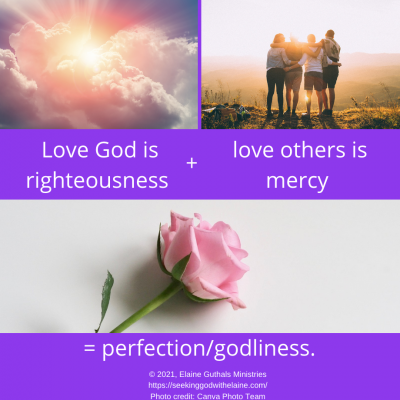
    Love God is righteousness + Love people is mercy = perfection/godliness

    One of the verses Pope used to tell us about the internal energy God uses to transform us is Ephesians 1: 11. “In him we have obtained an inheritance, having been predestined according to the purpose of him who works all things according to the counsel of his will” (Eph. 1: 11 ESV).

    Some question how free will works with predestination. There is pre-determined election. Election is God’s plan to bring that salvation to His creation, a gift of His grace because of His mercy.

    Glossary

    God has elected mankind to receive the Plan of Salvation. He didn’t decide to give it to the angels.

    What God didn’t do was specifically elect Tom, Sally, or Elaine to accept His gift of salvation. He is not a dictator. He loves all. “For God so loved the world that he gave his one and only Son, that whoever believes in him shall not perish but have eternal life” (Jn. 3: 16 NIV).

    That being said, God knows who will accept salvation and who won’t. His knowing doesn’t make them predestined. It means He is omnipotent.

    If God were a dictator, He would be inflexible. That would just put everything on autopilot. He wouldn’t need to be involved in our lives.

    That is so far from the truth! God is loving and involved.

    But it does come down to us accepting God’s gift of salvation. Pope wrote, “The obedience of the Christian to the law within Him is perfect freedom.”

    Resource

    God comes to each of us individually to offer salvation. It isn’t an automatic because our parents were saved or because we say we have a Christian nation.

    But then that means each of us individually have to respond in obedience. Each of us need to imitate Christ. I can’t just let Tom or Sally do it for me.

    McNeill brought up the fact that Scriptures rarely discuss things as being just our own. It is more in a corporate level.

    I can see that. Scriptures should be applied to everyone without exception.

    However, our salvation is definitely our own. No one else can make the decision for us. Our Sanctification Road is uniquely our own.

    Pope raised the question whether working out our salvation is a condition of salvation. Can we be saved if we do not work out our salvation?

    Personally, I think it has to be a condition of true salvation. If we don’t navigate the Sanctification Road, we don’t change our character to be like God’s.

    True, we may have been a good person, but before we weren’t doing acts of kindness in God’s name. We were doing them in ours, or doing them because it was the right thing to do.

    We have to change to get God’s mindset. We have to change to serve Him.

    We can’t continue to diligently seek out our own goals. We can’t say grace gives us a pass on having a personal relationship with God. We can’t say Jesus’ blood covered everything, so there is nothing left for us to do.

    We can’t approach this as being fire insurance.

    Goadby reminded us that we can’t approach sanctification half-heartedly. Neither can we give it a low priority.

    Resource

    We have to align our character with God’s. That will take diligent, committed work.

    We can’t say that Jesus isn’t coming in our lifetime, so we don’t have to make a decision on whether to follow God or not. Our lifetime will still be over one day. The decision to follow God has to be made before then. Any non-decision is a decision to not follow God.

    Any non-decision is a decision to not follow God.

    Paul said that we need to work out our salvation with fear and trembling. When we talk fear of the Lord, we say this means reverence. I think it does here, too.

    Glossary

    With the trembling added, I think it does mean more than just reverence. No, it doesn’t kick it to bone-chilling terror.

    I, like Goady, think this it means that we have to be on constant watch. We have to be on guard for temptations.

    To read a related devotion, click on the appropriate button below.

    We can’t just think, “Oh, I’ve got this” and not pay attention. If we put that much trust in ourselves, we are inviting Satan to take his best shots.

    We have to be looking for Satan’s volleys. Not only that, we have to be prepared for them.

    God never leaves us. We leave Him. However, at times, we may think He is silent when He is just working out the conditions so we can take the next leap in our faith.

    McNeill thought that maybe the Philippians were hanging on to Paul when he was talking about they had to work in his absence. We, as the Philippians, have to “… [obey], so now, not only in my presence but even more in my absence …” (Phil. 2: 12 CSB).

    Resource

    We can’t base our salvation on what the Pastor Joey-types say. We have to follow God.

    We can’t stop our sanctification process. I read this to say that we don’t get a day off. This is a 24/7/365 deal.

    God Is Doing the Work

    “For it is God who is working in you both to will and to work according to his good purpose” (Phil. 2: 13 CSB)

    Even though we are required to work at sanctification, we do not do it alone.

    Pope reminded us that we not only have to get it to our heart level, but we also have to get it to the soul level. He said that we do that by ensuring we adhere to God’s covenant with us.

    Glossary

    Resource

    Paul told us how to work out our salvation in the succeeding verses. This isn’t something we are going to be able to do on our own. We can only have our redo for godliness when God is redoing us.

    We can only have our redo for godliness when God is redoing us.

    But Who better to have fighting on our side? He’s got His own army of angels that will surround us.

    Unfortunately, we not only don’t see God fighting our battles, but we also don’t see Him working in us. I like the title of Cecil’s sermon. It is God Is a Silent Worker. We’ve talked before how He doesn’t try to outshout the storm.

    Resource

    To read a related devotion, click the button below.

    Lord, I Have Shut the Door
    Vocalist: Elaine Guthals
    Keyboard: Chris Vieth

    But sometimes we take that the wrong way. Oh, we get the “And Moses said to the people, ‘Fear not, stand firm, and see the salvation of the Lord … The Lord will fight for you, and you have only to be silent’” (Ex. 14: 13-14 ESV).

    We forget the “The Lord said to Moses, ‘Why do you cry to me? Tell the people of Israel to go forward’” (Ex. 14: 15 ESV) part.

    That is a comforting thought. God is fighting beside us. God is fighting for us when we can’t.

    God is fighting beside us. God is fighting for us when we can’t.

    But God expects movement on our Sanctification Road.

    That means we have to focus on God. We must do His bidding.

    What? Did you think that just because we have received His grace, there is nothing for us to do? Melvill wrote, “God does not reduce man into a machine; He rather puts a machine at man’s disposal …”

    Resource

    It means more to us when we are working at it. We are encouraged when we know the accomplishments we’ve achieved.

    It is just like us to want the easy way out and have salvation just given to us. It doesn’t work that way. We aren’t entitled to salvation.

    We must work for it, and that isn’t easy. God cutting sin out of our lives hurts. God changing our character hurts.

    God’s working in us is not going to be so we can only do acts of kindness. Yes, that is the second greatest commandment.

    More importantly, God is working in us so that He can do His good Will. We must do the first greatest commandment before we can even think about accomplishing the second greatest commandment.

    We must do the first greatest commandment before we can even think about accomplishing the second greatest commandment.

    Can we lose our salvation if we don’t navigate the Sanctification Road? McNeill said it is a gift that cannot be taken back. So, how critical is it that we change to be like God? How critical is it that we live for Him?

    I would say it is very critical.

    It comes down to when that decision is made. Is it made when we choose no longer to do what God calls us to do. (God makes it clear in His Word that this is an expectation.)

    Or do we never really make a confession in the first place?

    What would have happened if I had grown up living my life for God. But then when Mom and Dad died six weeks apart, I had totally renounced God.

    Was I initially saved or not?

    I would say no. We can change our minds, but God can’t. He can’t give us salvation and then take it away.

    To read a related devotion, click the button below.

    To me, thinking my salvation is dependent on God answering my prayers my way is entitlement. I can’t put my quarter prayer in the gum ball machine and expect the gum ball of my dreams.

    I have to remember that Romans 8: 28 doesn’t just mean I am believing in a prosperity gospel. It says, “And we know that for those who love God all things work together for good, for those who are called according to his purpose” (Rom. 8: 28 ESV).

    Work together for good, not all good things. The trials are bad things, but work to grow us, which is good.

    It isn’t just so we get good. Good, in the biblical sense, is the workings of God within His people. He works in us to work out our salvation — to get us perfected. He works in us to expand His kingdom.

    It is about God, not us.

    We Have to Do Our Work Right

    “Do everything without grumbling and arguing, so that you may be blameless and pure, children of God who are faultless in a crooked and perverted generation, among whom you shine like stars in the world, by holding firm to the word of life. Then I can boast in the day of Christ that I didn’t run or labor for nothing” (Phil. 2: 14-16 CSB)

    Our inner sanctification manifests itself in our actions.

    Ouch. Don’t argue and grumble.

    Well, we should expect the don’t argue bit. Paul was all about unity, wasn’t he? Unity is an inward, spiritual feeling of harmony found through Christ that manifests itself in outward actions that foster the spread of the gospel.

    But it is more than being in agreement with others. Goadby reminded us of the blessing we get when we wholeheartedly do God’s work.

    Resource

    God doesn’t want us to complain about doing His work. We need to see it as necessary – for ourselves and for others. If we do it while complaining at the top of our lungs, it can be construed that we are just doing it to get the blessings.

    God doesn’t want salvation to be just what we can get out of it. He wants us to love Him enough that we want to be like Him.

    Goadby made a good point. When we complain against God, we show our doubts regarding His wisdom, goodness, and power. Instead, we need to live as true children of God.

    Glossary

    Yeah, that brings up some responsibilities for us. We have to consistently be working on changing ourselves to be like God. While we are doing that, we need to be witnessing to others.

    Parsons reminded us of how big a change it is when we accept salvation. It isn’t just about doing. It is about being. Changing our being takes time – our lifetimes.

    Resource

    Part of it is remembering “… my yoke is easy and my burden is light” (Mt. 11: 28 CSB).

    It also comes back to obedience and submission. We must do things His way, not ours. This is just another way we are different from the worldview people.

    Doing so produces joy. When we are obedient and submissive to God, we receive blessings, which brings with them His joy.

    JoyInSanctificationPin

    Making the Connections

    No, I didn’t get through all the sermons. I only scratched the surface.

    Still, I think we realized some things.

    • Sanctification is necessary.
    • Only God can change us.
    • Our sanctification impacts others, too.

    How Do We Apply This?

    • Don’t doubt God – He is there, and He is working.
    • Don’t wait to share our faith with others until we think we are far enough along on the Sanctification Road.
    • Be consistent in doing our responsibilities.

    God is right there with us on our Sanctification Road. He doesn’t want us to fail. He wants us to be like Him.

    Father God. We love You. We want to be like You. We want Your goodness and mercy. We know that won’t be an easy transformation. Help us to complete it so that we are ready for eternity, Amen.

    What do you think?

    Leave me a comment below (about this or anything else) or head over to my Facebook group for some interactive discussion.

    If you don’t understand something and would like further clarification, please contact me.

    If you have not signed up for the email daily or weekly providing the link to the devotions and the newsletter, do so below.

    If God has used this devotion to speak with you, consider sharing it on social media.

    Cemetary with Colossians 3: 1
    Cemetary with Colossians 3: 1
  • Joy in Submitting

    Jesus submitted His life and Will to God in total obedience. This daily devotional looks at Jesus’ humility, God’s response, and mankind’s ultimate response.

    Nuggets

    • Disciples are to imitate Jesus in being humble and disinterested.
    • Jesus gave up a lot to be our Savior.
    • God will reward Jesus for His total obedience.

    Devotions in the Joy in the Gospel series

    The worldview tells us that, in order to be successful, we need to be independent. If that means we are arrogant and prideful, so what?

    That is not the way God wants us to operate. He wants us to imitate Jesus, Who submitted Himself to God’s Will.

    Let’s Put It into Context

    Here is a running list of what we’ve discussed previously.

    Jesus Our Lord

    “Adopt the same attitude as that of Christ Jesus, who, existing in the form of God, did not consider equality with God as something to be exploited.” (Phil. 2: 5-6 CSB)

    Disciples are to imitate Jesus in being humble and disinterested.

    Whoa! What?

    I saw the disinterested when I was researching the last devotion, but the sermons really didn’t explain that. Does that really mean what I think it means? Let’s see.

    But we have to get there first.

    Jesus is the Son of God. If he hadn’t been divine, none of this would have mattered.

    We are getting a little ahead of ourselves here. Paul’s description of “who, existing in the form of God …” (Phil. 2: 6 CSB) didn’t mean it was something temporary.

    Jesus is the Son of God, yet He became a servant of God. “This is my servant; I strengthen him, this is my chosen one; I delight in him. I have put my Spirit on him; he will bring justice to the nations” (Isa. 42: 1 CSB). We call that His humiliation.

    Lessey told us of several different aspects of this humiliation.

    • Subordination.
    • Human subordination.
    • Obedient subordination.
    • Self-sacrificing subordination.

    Resource

    Jesus, a Deity in and of His own right, gave all that up to accomplish the Plan of Salvation. He became a servant to Almighty God. “For even the Son of Man came not to be served but to serve others and to give his life as a ransom for many” (Mt. 20: 28 NLT).

    God came to Jesus before He even created us to set up this Plan. He knew we were going to need a Savior. He knew only Jesus could be that Savior.

    Glossary

    Jesus didn’t hesitate. He said, “That sounds like a great Plan. When do we start?”

    The Plan included Him taking on human form. We probably don’t feel like that should be considered a humiliation, but considering Jesus was God, it was.

    Raleigh reminded us that, because Jesus was a Deity before He ever got to earth, He did not become a Deity while on earth. There was nothing special about being human to make Him a Deity.

    That means we can’t be made to be a Deity. We mere humans cannot become God.

    Jesus was, therefore, both the Son of God and the Son of Man. He wasn’t just part of each. He was wholly God and wholly man.

    That was the only way this was going to work. Jesus sacrificed himself because that was God’s Plan.

    We should look a little closer at what “… in the form of God …” (Phil. 2: 6 CSB) really means. It means that Jesus had the nature of God.

    Jesus is part of the Trinity. The Trinity is God the Father, God the Son, and God the Holy Spirit, three distinct Persons within one indivisible Divine nature.

    That means Jesus has all the attributes of God. We just had a series that looked at what those attributes are.

    To read a devotion in the Finding Our Center series, click on the button below.

    In plain English, that means Jesus is the image of God. “In their case the god of this world has blinded the minds of the unbelievers, to keep them from seeing the light of the gospel of the glory of Christ, who is the image of God” (II Cor. 4: 4 ESV).

    Pope stressed that, just because Jesus is second fiddle to God, He is not lower in status. I heard it described a long time ago as God couldn’t come down to be the Sacrifice. So, He took Jesus, as a part of Himself, and sent Him. Same with the Holy Spirit — He needed Someone Who could be the Guide living in us always.

    But Pope brought up a good point. God isn’t the Father of Jesus who was around before the foundation of the world. Pope said, “The Father is literally the Father of the Eternal Son made flesh, and not the Deity in general.”

    Resource

    Okay. The disinterested means Jesus was willing to give up the trappings of His Deity. Raleigh wrote, “Being thus Divine, He did not deem His equality with God a thing to grasp at and eagerly retain.”

    Resource

    For right now, we are just going to say that didn’t make Jesus less divine. He was still in the image of God.

    Jesus is God, so His glory was still in Him. Raleigh reminded us of the times it popped out: in the temple, the transfiguration, and in the Garden of Gethsemane.

    We are made in the image of God, so His glory is within us. Jesus didn’t have to give that up to become human.

    Glossary

    This will come up again in verse 7. We’ll tie it up in a bow in the next section.

    Submitting as Lord

    “Instead he emptied himself by assuming the form of a servant, taking on the likeness of humanity. And when he had come as a man, he humbled himself by becoming obedient to the point of death — even to death on a cross” (Phil. 2: 7-8 CSB).

    Jesus gave up a lot to be our Savior.

    Okay, back to Jesus being disinterested.

    This doesn’t mean Jesus was disinterested in saving us. Quite to the contrary.

    It means Jesus gave up a lot of stuff to save us. Raleigh wrote, “He emptied Himself of His heavenly glory, and having humbled Himself as a common man He humbled himself yet more, becoming obedient to the death which only the lowest malefactors could die.”

    Resource

    I think the New Living Translation explains it the best. “Instead, he gave up his divine privileges; he took the humble position of a slave and was born as a human being …” (Phil. 2: 7 NLT).

    Remember in the last devotion, we were talking about “Everyone should look not to his own interests, but rather to the interests of others” (Phil. 2: 4 CSB). This is giving us a practical example of that.

    Jesus gave up His dignity. He went from being Prince Jesus to a little boy Who had to be put in a manger at birth because He was born to poor parents. That isn’t even scratching the surface of the loss of dignity on the cross.

    Manton said that Jesus’ divinity was concealed by the flesh. He didn’t give up what He was. Rather, He became what He wasn’t.

    Resource

    We must remember that, though Jesus was still divine like God, He became lesser than the angels. “Thou madest him a little lower than the angels; thou crownedst him with glory and honour, and didst set him over the works of thy hands” (Heb. 2: 7 KJV).

    Okay. A little less Shakespeare. (The other versions left off the last part.)

    The hierarchy is the Trinity, angels, and mankind. Yes, we are last.

    Still, because of Jesus’ obedience, God honored Him.

    One way of God honoring Jesus was giving Him authority over God’s creation. “Jesus came near and said to them, ‘All authority has been given to me in heaven and on earth’” (Mt. 28: 18 CSB).

    But this was Jesus’ choice. Even though God sent Him, He agreed to be sent.

    God wasn’t going to force Jesus to be the Sacrifice and then give us free will. “I have been crucified with Christ. It is no longer I who live, but Christ who lives in me. And the life I now live in the flesh I live by faith in the Son of God, who loved me and gave himself for me” (Gal. 2: 20 ESV).

    Jesus did it all for us. “For you were called to this, because Christ also suffered for you, leaving you an example, that you should follow in his steps” (I Pet. 2: 21 CSB).

    Jesus became a servant. A servant, sometimes translated as a slave, meant something different back then.

    Pastor Joey said this doesn’t mean someone who was kidnapped and sold into servitude. Instead, it means someone who made the choice to become someone else’s servant or slave in order to live. I see it more as an indentured servant.

    Resource

    We should have been the servants. Mankind is low man in the hierarchy. We are the ones who broke God’s laws and commandments.

    But we would never have been able to meet the needs for being a sacrifice. Mankind was not pure after Adam and Eve bit. Pure means not being sinful or having the stain of sin.

    God had a covenant with Adam. He was to work in the Garden and obey God’s law to not eat fruit from one of the trees.

    Nope. That didn’t end well.

    Glossary

    Because Adam and Eve had sinned and couldn’t rectify the situation, Jesus was called in to be our Savior. It was a hard road to walk, but He did it willingly.

    Boston gave us a couple of great verses to remember.

    • “Now you are no longer a slave but God’s own child. And since you are his child, God has made you his heir” (Gal. 4: 7 NLT).
    • “For God is not unjust so as to overlook your work and the love that you have shown for his name in serving the saints, as you still do” (Heb, 6: 10 ESV).

    Resource

    Vaughan explained that “Fallen man is the most servile thing in God’s universe — a bond slave of Satan, ‘Sold under sin’ — the servant of uncleanness.” Cleanness has to do with the Israelites remaining holy. Holy means to be set apart, perfect, and morally pure while possessing all virtues.

    Resource

    Our Submitting to the Lord

    “For this reason God highly exalted him and gave him the name that is above every name, so that at the name of Jesus every knee will bow — in heaven and on earth and under the earth — and every tongue will confess that Jesus Christ is Lord, to the glory of God the Father” (Phil. 2: 9-11 CSB)

    God will reward Jesus for His total obedience.

    The exaltation wasn’t because He was skillful and successful. It was because He followed directions.

    Pope said that Jesus wasn’t exalted in His humility. He was exalted because of His humility.

    Resource

    It should give us comfort that Jesus will be exalted. He was faithful and obedient. That means we will be rewarded because of our faithfulness and obedience, too.

    Jesus wasn’t exalted because He was climbing the ladder. He was exalted because he wasn’t — He was just doing the job.

    Taylor said that there is a progression of Jesus’ exaltation. He wrote, “Jesus Christ in His resurrection was exalted; in His ascension “highly exalted;” in His sitting at the right hand of God “very highly exalted above all exaltation.” In His resurrection, He was exalted above the grave; in His ascension, above the earth; in His session, above the highest heavens.”

    Resource

    Lessey reminded us that every person is going to be a witness to God rewarding Jesus. His dignity will be restored.

    Resource

    Does “so that at the name of Jesus every knee will bow …” (Phil. 2: 10 CSB) mean the literal bend the knee? I have always thought so.

    Taylor thought it might mean submission. He equated name with power. That would read something like “because of the power of Jesus every knee will bow.”

    I don’t know. That is above my pay grade.

    What is important to me is that the ones doing the bowing will be “… in heaven and on earth and under the earth” (Phil. 2: 10 CSB). That means everyone — dead and alive, believers or not.

    Every person who ever lived without any exceptions will bow to Jesus.

    JoyInSubmittingPin

    Making the Connections

    Why did Jesus have to humble Himself? If He hadn’t, God would never have accepted His Sacrifice. If God didn’t accept Jesus’ Sacrifice, there would have been no acceptable Sacrifice.

    We would have been destined to live eternity in hell.

    To read a devotion in the Hell Does Have Fury series, click on the appropriate button below.

    How Do We Apply This?

    • Look to Jesus for salvation.
    • Navigate the Sanctification Road to rise to God’s level — in Elaine-speak, going from milk babies to steak adults by working out our salvation on the Sanctification Road.
    • Imitate Jesus by self-denial, humility, and reverence.
    • Be prepared to suffer as Jesus did.
    • Start bowing and confessing now.

    Resource

    Because of His obedience, Jesus will be exalted. His obedience called for Him to be humble. We are called to imitate Jesus.

    Father God. We kneel to You now. We humble ourselves in obedience and submission to You. We long for the day that everyone kneels before You. Amen.

    What do you think?

    Leave me a comment below (about this or anything else) or head over to my Facebook group for some interactive discussion.

    If you don’t understand something and would like further clarification, please contact me.

    If you have not signed up for the email daily or weekly providing the link to the devotions and the newsletter, do so below.

    If God has used this devotion to speak with you, consider sharing it on social media.

  • Joy through Humility

    Unity in the church is connected to humility. This daily devotional looks at how to love others by eliminating selfish ambition and conceit.

    Nuggets

    • If we have encouragement, love, fellowship, affection, and mercy, then we will have love, unity, and purpose.
    • Paul identified part of the cause of disunity as selfish ambition and conceit.
    • A way to remedy selfish ambition and conceit is to put the needs of others first.

    Devotions in the Joy in the Gospel series

    Paul continued to talk about unity with the Philippians. He cautioned them to interact with others in humility.

    Let’s Put It into Context #1

    Here is a running list of what we’ve discussed previously.

    Let’s Put It into Context #2

    Humility is a character trait that diminishes pride and places dependence on God while holding a modest view of our importance with respect to others.

    Glossary

    Encouragement in Christ

    “If, then, there is any encouragement in Christ, if any consolation of love, if any fellowship with the Spirit, if any affection and mercy, make my joy complete by thinking the same way, having the same love, united in spirit, intent on one purpose” (Phil. 2: 1-2 CSB)

    If we have encouragement, love, fellowship, affection, and mercy, then we will have love, unity, and purpose.

    The then right after the if kind of threw me at first. That is, threw me until I read the King James Version. “If there be therefore any consolation in Christ …” (Phil. 2: 1 KJV). We know that any therefore that Paul uses ties it back to what he has just been saying.

    It refers back to verses that we didn’t cover in our Sunday Morning Bible Study. “Just one thing: As citizens of heaven, live your life worthy of the gospel of Christ. Then, whether I come and see you or am absent, I will hear about you that you are standing firm in one spirit, in one accord, contending together for the faith of the gospel, not being frightened in any way by your opponents. This is a sign of destruction for them, but of your salvation — and this is from God. For it has been granted to you on Christ’s behalf not only to believe in him, but also to suffer for him, since you are engaged in the same struggle that you saw I had and now hear that I have.” (Phil. 1: 27-30 CSB).

    Paul was talking about being worthy of the gospel. It wasn’t just about finding the unity. It was about standing firm in the gospel.

    That is how we prove our salvation to God. Yes, He knows our hearts, but we must show that it is heart knowledge, and not just head knowledge.

    Paul did give us a list of if…then statements. There was nothing wishy-washy in this list. In fact, the therefore does help to show the certainty of outcome. If we do this, then that will happen.

    With all this talk about unity over the past two and a half years, we’ve never come up with a definition of what we are really talking about. Meade gave us a start. He wrote, “This unity is inward and consists of harmonious spiritual feeling.”

    Resource

    But it doesn’t stop there. This inward feeling must show itself in the outward actions.

    This unity is based on Christ and can only be found through Christ. It encompasses disciples agreeing on doctrines and purpose — and doing that while loving each other.

    Think of this nugget — “… if any consolation of love …” (Phil. 2: 1 CSB). We aren’t supposed to lead with making sure everyone follows our positions. We aren’t even supposed to run from a fight because we don’t like fights.

    Our motives are supposed to come out of love. We our supposed to show Christ’s love for others through our actions.

    One of the perks of being a disciple is that we have the Holy Spirit living within us. We know that this is one Spirit in all disciples. “There is one body and one Spirit—just as you were called to the one hope that belongs to your call” (Eph. 4: 4 ESV).

    Disciples are to be known for our love. What is the song? They Will Know We Are Christians by Our Love.

    Related Links

    Jars of Clay

    All disciples must have some degree of love in our hearts. We have to love God, or we have not made a true confession. We must love others, or we are not progressing on the Sanctification Road.

    Glossary

    Love God is righteousness + Love people is mercy = perfection/godliness

    Part of the problem is we take the worldview definition and think that means doing for others’ betterment here in this world. While we should help ease the pain of others here, I don’t think that is what Paul is talking about.

    God is always more concerned about our spiritual condition than He is our physical condition. This world is fleeting and temporary.

    God priority is our spiritual condition, not our physical condition.

    Where we spend eternity is going to be based on our spiritual condition. That is a question with only two answers: have we ABCDed or not.

    We can’t think this love is just about people. We must love the doctrines the same way. We must be committed to following God’s laws and commandments the same way.

    Disciples must be unified in our purpose — expanding God’s kingdom.

    Glossary

    I love how Johnstone described our one purpose. He wrote, “The ‘one thing’ is — (1) The advancement of the kingdom of God in ourselves through advance in the beauty and strength of godliness. (2) In the Church, through the increase of wisdom, purity, and zeal. (3) In the world, through the universal and successful proclamation of the gospel.”

    Resource

    Did you catch that? Purpose #1 is to grow in godliness so we can expand His kingdom. Godliness, equated with the Old Testament term fear of the Lord, is reverence in thought, feeling, and conduct that is promoted by walking in His Spirit and obeying God’s laws and commandments and produces a moral likeness of God. 

    That is what God is all about — growing us so that we will tell others about the Plan of Salvation.

    Too many times, though, we fail miserably in this directive. Instead of working in humility, we work in pride and self-interest.

    That is the exact opposite of what God wants. He doesn’t want us looking out for #1. He wants us looking to #One.

    God doesn’t want us looking out for #1. He wants us looking to #One.

    We need unity. Unity is an inward, spiritual feeling of harmony found through Christ that manifests itself in outward actions that foster the spread of the gospel.

    Operate Out of Humility

    “Do nothing out of selfish ambition or conceit, but in humility consider others as more important than yourselves (Phil. 2: 3 CSB)

    Paul identified part of the cause of disunity as selfish ambition and conceit.

    Johnstone told us how to remove the misplaced ambition and conceit. He wrote, “These evils are only to be removed by the cultivation of the opposite virtues of humility, which is an exclusively Christian grace.

    Resource

    Paul told us not to let our pride make us think we are above others.

    • “Love one another with brotherly affection. Outdo one another in showing honor” (Rom. 12: 10 ESV)
      “Be completely humble and gentle; be patient, bearing with one another in love” (Eph. 4: 2 NIV).

    Johnstone said that the reason we act in this manner isn’t because we are ignoring our strengths or the weaknesses of others. It is to help others become their best them.

    We are trying to help them grow. We are following the great commission and our job description and making disciples of them.

    The Disciple’s Job Description

    Complete Job Description

    Individual Description

    Job Duty #6
    Make Disciples (Matthew 28: 19-20)

    We are navigating the Sanctification Road to get God’s character. God isn’t selfish or conceited.

    Paul is further stressing that disciples shouldn’t be the one who likes to stir up trouble. “A quarrelsome person starts fights as easily as hot embers light charcoal or fire lights wood” (Prov. 26: 21 NLT). We can’t be the one fanning the flames.

    Don’t take that to the extreme. We must stand up for the gospel. “But in your hearts honor Christ the Lord as holy, always being prepared to make a defense to anyone who asks you for a reason for the hope that is in you; yet do it with gentleness and respect” (I Pet. 3: 15 ESV).

    Worldview people would just love for us to keep quiet against their mistaken beliefs. They throw in our faces that we have to be unified, i.e. can’t stand up for our opinions against someone else.

    They are wrong. We must stand up for God’s laws and commandments. If we don’t, there is no way they will find salvation.

    The flip side of selfish ambition and conceit is humility. It fosters unity as it is more willing to listen and work through the discontent.

    We act out of compassion and sympathy. We strive help others grow in grace. That ties into the spiritual graces, or morals — what some would call virtues.

    If our morals don't come through submission to God, they are just worldly morals, not spiritual graces. But then we have to grow the spiritual graces to holiness.

    Paul was really getting at Christ’s heart now. It had nothing to do with His sacrifice. It had everything to do with His character — the character we are to imitate.

    Whose Interests Are Top Dog?

    “Everyone should look not to his own interests, but rather to the interests of others” (Phil. 2: 4 CSB).

    A way to remedy selfish ambition and conceit is to put the needs of others first.

    When we put someone else’s needs before our own, we glorify God. If we don’t — as Airay wrote — “… we look on our own graces, wit, learning, goods, and neglect or contemn those of other men, what else will follow but vain glory and contention (Luke 18:11).”

    Resource

    Martin contended that we can’t take this to an extreme. We can’t be uselessly interested in the affairs of others.

    Resource

    I read that as we can’t be engaged with others just to gossip about them. Our interest in them can’t be to tear them down as we build ourselves up.

    Martin explained this as we are not to close our eyes and our hearts to the needs of others. When we can assist others, we should.

    If we don’t put the needs of others first, we are breaking God’s laws and commandments. That not only hurts us, but it also hurts others.

    No, this isn’t telling us to disregard our own lives, responsibilities, and possessions. Jay gave us a good list of what this verse is not talking about. We should not disregard

    • Our relationship with God
    • Our health
    • Our reputation
    • Our family
    • Our life’s work

    Resource

    This translation left out a very important word. “Look not every man on his own things, but every man also on the things of others” (Phil. 2: 4 KJV emphasis added).

    God doesn’t want us to shirk our responsibilities. He wants our helping others to be an equal responsibility.

    God wants us to rock the second greatest commandment. “… You shall love your neighbor as yourself …” (Mk. 12: 30 ESV).

    No, this isn’t just talking about monetary assistance. “Rejoice with those who rejoice, weep with those who weep” (Rom. 12: 15 ESV).

    To read a related devotion, click the button below.

    My Ladies and I frequently talk that encouraging others is a gift, too. No, it isn’t as flashy as being a preacher or a teacher — or the gold standard, being a missionary. We don’t rank it as high as singing.

    But God wants us to pray for and encourage others. He wants everyone to do that.

    Worldview people may believe that God’s laws and commandments set too high of requirement. Martin disagreed, saying, “Religion is a sham if it be not practical.”

    Resource

    For some, it may seem like an impossible request. But then we look around and see others doing what we say is impossible.

    We forget, too, that God is right there to help us be successful in what He asks. He is not asking us to do this alone.

    We have responsibilities to others whether we are rich or poor or an introvert or an extrovert. We are called to love one another.

    King reminded us that helping others does not qualify us for a relationship with God. Only ABCDing does that.

    The ABCDs of Salvation

    If you have not become a believer in Christ, please read through the
    Plan of Salvation and prayerfully consider what God is asking you to do.

    A – admit our sins
    B – believe His Son Jesus is our Redeemer
    C – confess God as Sovereign Lord

    D – demonstrate that commitment by making any changes needed in our lives to
    live the way in which God has called us

    The Disciple’s Job Description

    Resource

    Dixon reminded us that our salvation is our first obligation. The second is the salvation of others.

    No, the second obligation isn’t just to love others. It is to introduce them to Christ.

    We can’t substitute science for God’s moral power. Our intellect won’t cut it either. Politicians can’t regulate it into existence — or regulate evil out of the world.

    It isn’t just about doing good. It is about doing God’s good.

    JoyThroughHumilityPin

    Making the Connections

    Statham reminded us that Paul was not saying that we must have the same opinions all the time. If we all felt the same way, living in harmony wouldn’t be an issue.

    Resource

    But then we don’t grow if we don’t have others challenging what we believe. We don’t want that.

    Statham argued that harmony will only be found in Heaven. When we are changed to be like Christ is, then we will find harmony.

    Meade had a really interesting observation. He called the individual man’s soul it’s own little kingdom. He wrote, “In it there dwell a variety of faculties; there are fears, hopes, likes, dislikes; appetites to urge and principles to check; self-will to prompt, self-interest to restrain; passions to hurry away, conscience to control, etc. When these are in discord what a ‘troubled sea’ there is.”

    Resource

    Oh, yeah. That is what makes us human — and unique.

    But layering over all this the Holy Spirit. When receive Him, He gives us peace.

    That “… peace of God, which surpasses all understanding …” (Phil. 4: 7 CSB) then seeps out into our family through love. Then it goes into our workplace, our city, our state, our nation, the world.

    It starts with humility and faith.

    How Do We Apply This?

    • Imitate Christ so that unity can be achieved.
    • Show love through peaceful, humble, unselfish actions.
    • Grow our like-mindedness.
    • React with the social graces God wants us to have.

    Resource

    We are to imitate Jesus, Who was humble. We do this by loving others and not being selfish or conceited.

    Father God. We praise You. We want to have Your character. To do that, we will imitate Jesus. Help us to love others and keep our opinion of ourselves in proper balance. Amen.

    What do you think?

    Leave me a comment below (about this or anything else) or head over to my Facebook group for some interactive discussion.

    If you don’t understand something and would like further clarification, please contact me.

    If you have not signed up for the email daily or weekly providing the link to the devotions and the newsletter, do so below.

    If God has used this devotion to speak with you, consider sharing it on social media.

  • Recognizing Evil Thoughts by Watching and Praying


    Nuggets

    • Watching alone doesn’t cut it, and neither does praying alone — we have to watch and pray.

    • We think we are fighting Satan, but we aren’t.

    • In order to chose right from wrong, we need to watch in and pray for discernment.

    To read devotions in the Redo for Godliness series, click the appropriate button below.

    Devotions in the How Do We Live Godly Lives? series

    Watchfulness is a continual conscious examination of ourselves and all events so that we may follow God in all things. Prayer is a two-way communication with God in which we pour out our soul to Him.

    Some might feel that the two are not connected, but they are. Let’s take a look.

    “The third sort of directions are for the ordering of evil thoughts, when they do intrude; and” (Charnock, The Sinfulness and Cure of Thoughts)

    Let’s Put It into Context #1

    We’ve been looking at Charnock’s sermon entitled The Sinfulness and Cure of Thoughts to show us how to cleanse, a.k.a. sanctify, our thought processes. Charnock has taught us

    • that we cleanse our thoughts when we return to having a strong relationship with God. We can do that by studying the Scriptures, meditating on God, contemplating on His creation, and praising Him.
    • that we focus our thoughts by being humble instead of prideful, following God instead of the worldview, working instead of being idle, and laboring for Him.
    • that we overcome our evil thoughts by burying ourselves in Scripture, relying on His omniscience and judgment, guarding our hearts and lips, evaluating ourselves, and recognizing evil thoughts, especially hating sin and resisting Satan. We do this by watching and praying.

    Resource

    Glossary

    Here is a running list of what we’ve discussed previously.

    How Are Watching and Praying Connected?

    “Keep watch and pray, so that you will not give in to temptation. For the spirit is willing, but the body is weak” (Mt. 26: 41 NLT)

    Watching alone doesn’t cut it, and neither does praying alone — we have to watch and pray.

    “Join supplication with your opposition. “Watch and pray” are sometimes linked together (Matthew 26:41). The diligence and multitude of our enemies should urge us to watch, that we be not surprised; and our own weakness and proneness to presumption should make us pray that we may be powerfully assisted” (Charnock, The Sinfulness and Cure of Thoughts)

    South was right when he identified the connection between the two. He wrote, “For watchfulness without prayer is presumption, and prayer without watchfulness is a mockery.”

    Resource

    If we aren’t watching for God to answer our prayers or impact the situations, we are just praying in entitlement.

    How Watching and Praying Fights Our Battles

    We think we are fighting Satan, but we aren’t.

    God fights Satan for us. There is no way we are going to defeat Satan on our own.

    We need God to defeat him for us. Besides, we can’t see Satan as this is spiritual warfare.

    Spiritual warfare is the fight between the spiritual forces of good and evil. We just had a devotion where we talked about how formidable a foe Satan is. God doesn’t deny that.

    To read a related devotion, click the button below.

    Our responsibility is to pray to call on God to fight the battle. We have to choose to stand with Him and for Him.

    We have to use our minds to pay attention to what is happening to us. When Satan tries something, we need to call on God to protect us.

    The need to keep watching arises from the constant threat of sin. Even little sins are threats, as they can lead to bigger sins.

    Pilkington said that our free will resides in our spirit. He wrote, “The text suggests to us that though the spirit of man be illumined by the Spirit of God, the weakness of the flesh may bear him down.”

    Resource

    Elaine-speak. Yes, we are now children of God. However, we are still in these physical bodies. As we are still citizens of this world, we will have to hold strong against its lure. The flesh is still weak and is going to have to battle to withstand Satan’s onslaught.

    Glossary

    But did you see that? “… For the spirit is willing, but the body is weak” (Mt. 26: 41 NLT).

    Jesus didn’t say the spirit was weak. I think Satan attacks us by trying to convince us that our faith is suspect. It may not be.

    Doesn’t Jesus say “‘If you have faith the size of a mustard seed,’ the Lord said, ‘you can say to this mulberry tree, “Be uprooted and planted in the sea,” and it will obey you’” (Lk. 17: 6 CSB).

    To me, that means faith is faith whether it be mustard-seed size or palm-tree size. What is important is that the faith is rooted in our Lord and Savior Jesus Christ.

    How many times do we kick ourselves for not praying or reading our Bible? The most important thing is we have faith.

    But don’t get me wrong. The second most important thing is that we are navigating the Sanctification Road to fix that.

    God is interested in the motivation. Are we trying to gain His character? Or are we doing the doggie paddle?

    No, we don’t need to be in a speed boat on the Road. That would be an extreme.

    I think God is fine with us being in the row boat. We have to be sober-minded and even-keeled. Plus, we have to work for it.

    (No, I didn’t switch metaphors there. Doing the doggie paddle means we are out of the boat entirely. God surely doesn’t want that.)

    Watching in and Praying for Discernment

    In order to chose right from wrong, we need to watch in and pray for discernment.

    Jackson said that we can discriminate because we are watchful. If we keep that in our terminology, we would say we can discern God’s Will. Discernment means we can evaluate the situation and recognize right from wrong.

    Even though we have the sentry guarding, the sentry has to make decisions. Is it a sin or not? Do we want to do this or not?

    Jackson wrote, “A sentinel will scrutinize and test the character.” That is what God wants it to be all about — our thoughts, feelings, and actions.

    Resource

    Our guard will evaluate the terror threat and determine if an alarm needs to be triggered. A sentry is no good if the terror threat is identified but no alarm is given.

    But just sounding the alarm isn’t enough. There has to be troops to defend the camp. If it is just us, we are sure to feel defeat.

    Yes, we have to have the armor of God on. But with the armor comes God.

    To read devotions in the Armor of God series, click the appropriate button below.

    That means God and His troop of angels have to be in the camp. That means we have to be watching and praying.

    What all of this tells me is we have our part. We can’t do it all on our own, but our part is to watch and pray. That allows Hod to do His part.

    Beecher talked about something that really hit me. He wrote about “… the need which our God has of our affection, and our sympathy, and our presence with Him.”

    Resource

    Think about it. We are always talking about how much we miss God’s mark. Low faith, low ability to withstand temptation, low ability to give up a sin usually heads the list of our character defaults.

    We don’t fathom the need God has to be in a relationship with us. He needs our love, our shared opinions, and our companionship.

    We don’t fathom the need God has to be in a relationship with us

    Sovereign God needs us that much.

    No, that doesn’t mean He is going to give us a pass on unforgiven sin. He isn’t like us.

    We all probably know someone — or have been that someone — who has stayed in a relationship way longer than we should have. The person really didn’t love us, abused the concept of a relationship, or was downright abusive in many ways.

    But we stayed in it. We gave excuses. We tried to honor our commitment — even if they didn’t.

    God cannot allow us to continue sinning. He has attributes of purity and perfection. He can’t tolerate our sin. “Your eyes are too pure to look on evil; you cannot tolerate wrongdoing. Why then do you tolerate the treacherous? …” (Hab. 1: 13 NIV).

    All this tells me is to keep trying to imitate God. Don’t give up. Don’t expect Him to accept us without our trying.

    Navigate the Sanctification Road His way.

    Navigate the Sanctification Road His way.

    We have to be diligent in our watching and praying. South said that we have to evaluate our strengths and weaknesses and compare those to Satan’s.

    Resource

    I know. That isn’t an easy task. Satan can come at us a variety of ways just on one issue alone. South suggests that we evaluate past sins to determine how he did so we can prepare for future temptations.

    Well, that is the purpose of evaluating ourselves. We have to know ourselves — both our strengths and weaknesses.

    • What are our strengths in defeating sin?
    • What are our weaknesses in giving into sin?
    • Where did we go wrong when we fell into sin?
    • How was the sin accomplished?
    • What was the outcome of the sin?
    • What can we do to ensure that we don’t fall into that sin again?

    I have developed a worksheet based on the questions.  

    Related Links

    I have created a worksheet of the questions above. Click on the button below to access it.

    Stillingfleet gave us a good visual of temptation. Picture it as a trial.

    Resource

    Temptation is in the testimony stage. God has long ago given His argument for the defense. Satan is giving his all to prosecute us.

    Temptation is in the testimony stage. God has long ago given His argument for the defense. Satan is giving his all to prosecute us.

    So where to prayers come into play?

    • Pray to keep us out of the court system.
    • Pray for a not-guilty verdict when we do get in the system.

    How does prayer keep us out of the court system? Stillingfleet said it not only keeps us safe when our Sanctification Road has cliffs on both sides, but it also keeps our supply chain intact for divine support.

    Resource

    Prayer not only keeps us safe when our Sanctification Road has cliffs on both sides, but it also keeps our supply chain intact for divine support.

    We think the temptations are going to hit us when we are weak. I don’t know if I totally agree with that.

    Oh, yes. Satan is going to grab the low-hanging fruit. He is g to make sure we disobey God.

    But I think Satan is going to double down when we think we are strong. What better coup than showing God — and us — that these mere humans are not as strong and obedient as we think.

    That just reinforces that we must be consistent in our watchfulness and prayers. Satan will strike at any time.

    RecognizingEvilThoughtsByWatchingAndPrayingPin

    Making the Connections

    Christ’s response to the disciples in the Gethsemane is interesting. He didn’t scream and shout at them. He didn’t lower the boom.

    Instead, Jesus looked at their hearts. He saw that they were willing.

    Maybe their bodies just couldn’t stay up any longer. Maybe they ate too much and needed a nap.

    That didn’t matter as much as their hearts were willing.

    Oh, yes. They still had to confess their sin. They still needed to ABCD in the first place.

    But Herron gave us that for which Jesus was looking. He wrote “Are we willing, in the sense of being resolved, and bent upon doing God’s will, following after holiness, and showing sympathy with Christ by bearing the cross for His sake?”

    Resource

    To me, that just showcases the power of God’s love and forgiveness. He takes into consideration that we have a sinful nature.

    But God doesn’t let us use that as an excuse. We still have to watch and pray for forgiveness and provision.

    How Do We Apply This?

    • Learn from the sin of others.
    • Be sincere in our prayers.
    • Keep our minds focused on God through prayers.
    • Don’t put ourselves in tempting situations.
    • Watch the cycle of sin — the beginning of temptation, the beginning of our considering it, our actual commission of the sin.
    • Stay dependent on God.

    Resource

    We need to focus on God, not circumstances. Focus means we watch and pray to the One Who controls all, even our thoughts.

    Father God. We will remain dependent on You. Help us to stay focused on Your Word and Your Presence. Amen.

    What do you think?

    Leave me a comment below (about this or anything else) or head over to my Facebook group for some interactive discussion.

    If you don’t understand something and would like further clarification, please contact me.

    If you have not signed up for the email daily or weekly providing the link to the devotions and the newsletter, do so below.

    If God has used this devotion to speak with you, consider sharing it on social media.

  • Recognizing Evil Thoughts by Praying

    Some may tend to think of prayer after the sin has been committed. This daily devotional looks at using prayer to help us resist sin.

    Nuggets

    • Prayer is our connection with the spirit world.
    • Prayer done the right way pays God the reverence He is due.
    • Prayer helps us to change our lives so we can resist sin.

    To read devotions in the Redo for Godliness series, click the appropriate button below.

    Devotions in the How Do We Live Godly Lives? series

    In the last devotion, we talked about watching. In this devotion, we are looking at prayer. In the next, we will look at  then together.

    “The third sort of directions are for the ordering of evil thoughts, when they do intrude; and” (Charnock, The Sinfulness and Cure of Thoughts)

    Let’s Put It into Context

    We’ve been looking at Charnock’s sermon entitled The Sinfulness and Cure of Thoughts to show us how to cleanse, a.k.a. sanctify, our thought processes. Charnock has taught us

    • that we cleanse our thoughts when we return to having a strong relationship with God. We can do that by studying the Scriptures, meditating on God, contemplating on His creation, and praising Him.
    • that we focus our thoughts by being humble instead of prideful, following God instead of the worldview, working instead of being idle, and laboring for Him.
    • that we overcome our evil thoughts by burying ourselves in Scripture, relying on His omniscience and judgment, guarding our hearts and lips, evaluating ourselves, and recognizing evil thoughts, especially hating sin and resisting Satan. We do this by watching and praying.

    Resource

    Glossary

    Here is a running list of what we’ve discussed previously.

    What Is Prayer?

    “Take ye heed, watch and pray: for ye know not when the time is” (Mk. 13: 33 KJV)

    Prayer is our connection with the spirit world.

    South described what prayer is. He wrote, “… prayer is that blessed messenger between heaven and earth, holding a correspondence with both worlds, and by a happy intercourse and sure conveyance carrying up the necessities of the one, and bringing down the bounties of the other.”

    Resource

    Prayer isn’t just words that come out of our mouths. It has to come from our hearts. Leechman told us what this entails.

    Resource

    How to Pray

    Prayer done the right way pays God the reverence He is due.

    Paul said that we need to pray constantly (I Thess. 5: 17). We also need to pray with a passion. We have to really mean what we say.

    We have to sincerely want the outcome for which we are praying. If we are asking God to take away a sin, we have to want to give it up.

    When we are praying, God wants us to pray with a reverent attitude. He wants a humble heart. He wants a mind focused on Him.

    Leechman said that we have to firmly believe that God can answer our prayers. That means He is in control of us and our circumstances.

    We reflect what is in our hearts when we pray. Hopefully, it will be a heart that is after God’s own heart.

    Prayer isn’t about appearances. It isn’t about ceremony and religion. Jesus reiterated in the Parable of the Pharisee and the Tax Collector that God wants our relationship and submission.

    We can talk a blue steak and tell God how wonderful we are. God knows better. He knows our hearts.

    God isn’t looking for a marketing campaign where we feel like we have to sell ourselves to Him. He is looking for us to recognize His eminence over us.

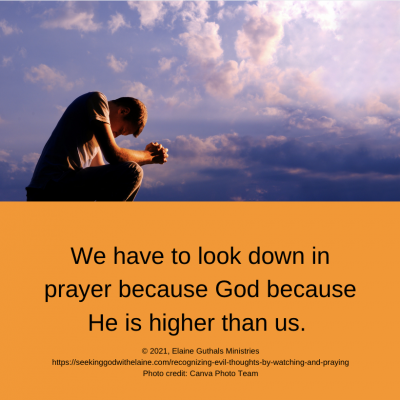
    We have to look down in prayer because God because He is higher than us.

    We have to look down in prayer because God because He is higher than us.

    Resisting Sin by Praying

    Prayer helps us to change our lives so we can resist sin.

    When we approach God humbly, it means we acknowledge His majesty and our failings. We have to determine what God is and what we are not. God is virtuous, perfect, and holy. We are not.

    It amazes me sometimes how we think God is going to welcome our arrogance. Well, maybe welcome isn’t the right word. He is at least going to allow it.

    Our arrogance is pitifully small when compared to His attributes. Yet that is what we lead with time and time again.

    We can’t lead with arrogance. We have to lead with helplessness and faith.

    We don’t have to feel reluctant when approaching God. He wants us to pray to Him.

    Because the tax collector humbly asked for mercy, God granted his prayer. We have to humbly approach God. We have to be contrite about our sins. Our proud, entitled attitude has to be changed into a humble, repentant one.

    Salvation is not a merit-based product. We don’t buy it with going through the motions.

    The Pharisee had the ceremonial goodness, but not the moral goodness. The thanksgiving, though skewed, was there, but not the gratitude.

    Instead of searching for God and loving him, we are deceiving ourselves when we think we can be self-righteous. That is not the way to salvation and eternal life.

    How are we self-righteous? We are when we think being a good person is good enough to get us eternal life. The Pharisee was banking on what he did to gain God’s favor. Yes, they were things God approved of – fasting and tithing.

    However, salvation isn’t a works-based deal. Instead, God offers us salvation through grace. It is about accepting what God did — provide the Savior.

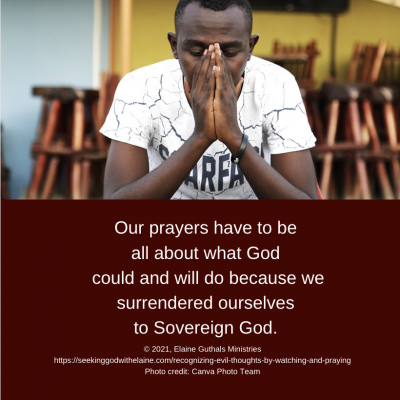
    Our prayers have to be all about what God could and will do because we surrendered ourselves to Sovereign God. God only looks favorably on those who acknowledge they have broken His laws and commandments. He saves only those who are sorry for their sins and genuinely want to have His character.

    Our prayers have to be all about what God could and will do because we surrendered ourselves to Sovereign God.

    Paul prayed that the Colossians would be strengthened in their ethical principles. Ethical principles — our social behavior. 

    Our social behavior is how we interact with others. What is that governed by? Our character.

    We are to be growing our character — our thoughts, feelings, and actions all added together — to be more like God’s character. That is our redo for godliness. 

    Paul knew our character needed strengthened, and that we couldn’t strengthen it on our own. We can’t do our redo on our own. 

    The tax collector was a moral person, but his cry told us that he thought the exact opposite. We have to watch that. We can’t being so contrite that we think we are justified in God’s sight, but we aren’t in our own. In other words, we have to forgive ourselves.

    But what is God really looking for when He looks inwardly? He is looking for motivation. Have we really submitted our lives to Him? Are we using the Sanctification Road to change our characters to be like His?

    God doesn’t want lip service. He wants changed lives.

    Prayer helps us gain stability in our walk. It helps us to not become complacent when we have that mountain-top experience. It will help us with our insecurities.

    We think any communication is good communication, right? No. We have to pray submissively. We have to pray constantly. We have to pray in His Will.

    Sometimes, we have difficulties with the fact that God knows what we are going to ask before we ask it. He is omniscient, after all. Omniscience means God is all-knowing.

    To read a related devotion, click the button below.

    Prayer is a way of submitting to God. We show our dependence on Him. It puts Him firmly in control.

    It also proves where we are at in our relationship with God. If we don’t want what He wants, we aren’t going to pray that way.

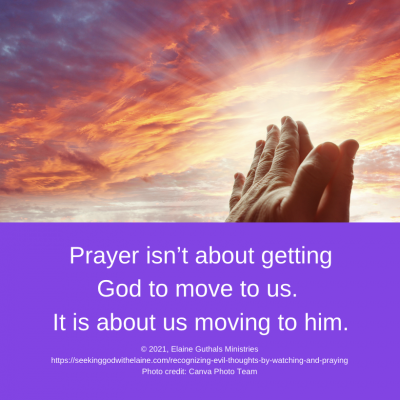
    That is just it. Prayer isn’t about getting Him to move to us. It is about us moving to him.

    Prayer isn’t about getting Him to move to us. It is about us moving to him.

    We move to God by changing our character to imitate His.

    Leechman debunked another myth about prayers. Some say God has already written our plans, so it doesn’t matter if we pray or not.

    Leechman wrote, “None ever maintained that God hath determined events to happen without any means, and prayers are the proper means of obtaining spiritual blessings.”

    Resource

    God isn’t a dictator. He gives us free will. We use that free will when we pray.

    God has designed our plans around what He knows will be our choices. How does He know that? One way is He knows what we will pray.

    To read a related devotion, click on the appropriate button below./

    RecognizingEvilThoughtsByPrayingPi:n

    Making the Connections

    How can we tell the difference between conscious sins and sins because we are sinful creatures?

    • The obvious reason for willful sins is they come form our moral actions. In other words, we make a conscious choice to act a certain way at a specific time.
    • Our weakness-of-the-flesh sins are because they go against what Scriptures say doesn’t fall in line with our salvation, such as former sinful habits, the seven deadly sins common to all mankind, low self-discipline, temptations, lack of knowledge of how to withstand the temptation, wrong beliefs, and lack of sincerity in our confession.

    Resource

    By the way, Newman included governing thoughts, speech, and feelings in the low self-discipline category.

    How Do We Apply This?

    We didn’t do the application in the last devotion, so this included those.

    • Give God the glory and honor due Him
    • Have a realistic image of ourselves
    • Honor God through our speech
    • Be sober-minded (I Pet. 5: 8; II Tim. 4: 5)
    • Watch for Satan’s temptations
    • Reading and hearing God’s Word and listening to the promptings of the Holy Spirit
    • Be alert in every situation that God puts us in and use it to further His kingdom.

    Glossary

    Only God can help us resist sin. The only way we can access His help is by asking Him through prayer.

    Father God. We hate the sin in our lives. We know that – without You – we cannot even attempt to master it. It is through You alone that we can resist sin. Amen.

    What do you think?

    Leave me a comment below (about this or anything else) or head over to my Facebook group for some interactive discussion.

    If you don’t understand something and would like further clarification, please contact me.

    If you have not signed up for the email daily or weekly providing the link to the devotions and the newsletter, do so below.

    If God has used this devotion to speak with you, consider sharing it on social media.

  • Recognizing Evil Thoughts by Watching

    God is clear in His Word that He wants us to keep our eyes upon Him. This daily devotional begins to look at how watching Him helps us to order our thoughts.

    Nuggets

    • We resist sin by evaluating ourselves with a watchful eye.
    • We watch for God to work in our inward and outward lives.
    • Most of all, we need to actively watch for Jesus’ return.
    • Watching and waiting does not mean doing nothing.

    To read devotions in the Redo for Godliness series, click the appropriate button below.

    Devotions in the How Do We Live Godly Lives? series

    Sin can sneak up in us. Satan is a master at hey-it’s-harmless — when it really isn’t.

    If we aren’t looking for Satan and his shenanigans, we are easier prey for him. If the eye of our heart is closed, then our souls are open for Satan’s destructive temptations.

    The best way to keep watching is through prayer. We’ve talked about both topics many times before.

    Let’s look at what we’ve said before we use Charnock’s verse to apply it specifically to thoughts. This is going to take a couple of devotions.

    “The third sort of directions are for the ordering of evil thoughts, when they do intrude; and” (Charnock, The Sinfulness and Cure of Thoughts)

    Let’s Put It into Context

    We’ve been looking at Charnock’s sermon entitled The Sinfulness and Cure of Thoughts to show us how to cleanse, a.k.a. sanctify, our thought processes. Charnock has taught us

    • that we cleanse our thoughts when we return to having a strong relationship with God. We can do that by studying the Scriptures, meditating on God, contemplating on His creation, and praising Him.
    • that we focus our thoughts by being humble instead of prideful, following God instead of the worldview, working instead of being idle, and laboring for Him.
    • that we overcome our evil thoughts by burying ourselves in Scripture, relying on His omniscience and judgment, guarding our hearts and lips, evaluating ourselves, and recognizing evil thoughts, especially hating sin and resisting Satan.

    Resource

    Glossary

    Here is a running list of what we’ve discussed previously.

    Resisting Sin by Watching

    “Devote yourselves to prayer with an alert mind and a thankful heart” (Col. 4: 2 NLT)

    We resist sin by evaluating ourselves with a watchful eye.

    Watchfulness is a continual conscious examination of ourselves and all events so that we may follow God in all things. We’ve used several words to portray the actions of being watchful:

    • Watch
    • Be alert
    • Be on guard
    • Focus

    All of these mean that we are not only looking outside of ourselves, but we are also looking up to God to help us in whatever we are facing.

    Being on alert is a military term. You know, post the guard to keep watch so the rest will be safe while they are sleeping. Someone is on watch all the time.

    The point Colossians 4: 2 is making is we have to watch for temptations to come. We have to watch against Satan trying to get us to sin.

    Satan is the master manipulator. If we aren’t careful, we’ve sinned.
    What we have to watch is, because of our sinful nature, our hearts want to rebel against God. If we aren’t alert, we are more readily able to slip into sin when Satan is tempting us. If we aren’t careful, we can slide away from the path on which God wants us.

    Disciples are called to watch the culture of the world in which we live. Culture is made up of a lot of things. Religion and values are a part of it. Language and marriage are included. Then add in food, clothing, music, and such. Then … there are a lot of other things thrown in. That is a lot of things to watch, more than we can do on our own.

    Disciples are called to watch the culture of the world in which we live.

    We have to watch the kind of company we are keeping. We also have to watch the words we use. God calls us to be different from the world, not using the same coarse language. I know. It is easy to let it slip in. We need to imitate God, instead.

    Resisting Sin by Watching for God

    We watch for God to work in our inward and outward lives.

    It isn’t all just watching for the bad stuff. It is watching for God. Sometimes, we have to really pay attention, or we will miss opportunities — to serve and for God’s blessings.

    But did you see what the definition said? Watching is a continual examination of ourselves.

    Watching is a continual examination of ourselves.

    It isn’t just watching the outside. We have to watch the inside. We’ve been calling it evaluating — but same thing.
    We can use the times when we evaluate our faith to refocus on God and what He is calling us to do.

    • We need to make sure we are following the do’s and don’ts to the best of our ability.
    • We need to make sure we are on the path on which He wants us to be.
    • We have to make sure our relationships with God are growing.

    We can only be watching when we open the eyes of our hearts. “I pray that the eyes of your heart may be enlightened in order that you may know the hope to which he has called you, the riches of his glorious inheritance in his holy people” (Eph. 1: 18 NIV). It is a metaphorical way of saying we need to open ourselves to God’s power and love.

    Really, the opposite of having evil thoughts is opening the eyes of our hearts. When we open ourselves to God, we look above our understanding to God. He may be doing the impossible thing in our lives, but He can.

    To me, opening the eyes of our hearts means that we put our full faith in God. We acknowledge that God is living within us and we are obedient in responding to Him. We are submitting to Him.

    We don’t rely on our own understanding or push our own agenda. We are looking to Him to reveal things to us a little at a time.

    That kicks out the doubt. It brings in the trust.

    Glossary

    We need to focus inward to tap into God’s foundation of peace, mercy, and love. When we open the eyes of our hearts, we see Him within us.

    The watchfulness has to be motivated by the love of the Lord. We have to want to be like Him.

    Resisting Sin by Watching for Jesus

    Most of all, we need to actively watch for Jesus’ return.

    “Watch therefore — for you do not know when the master of the house will come, in the evening, or at midnight, or at cockcrow, or in the morning — lest he come suddenly and find you asleep. And what I say to you I say to all: Watch” (Mk. 13: 35-37 RSV). He is coming back.

    Whether mankind’s time is up or our time is up individually, we have to be prepared to meet our Maker.

    Jesus wants us to actively be alert. He wants us to be continuously on guard.

    Whether mankind’s time is up or our time is up individually, we have to be prepared to meet our Maker.

    Resisting Sin by Watching and Waiting Diligently

    Watching and waiting does not mean doing nothing.

    I think that it is very easy, sometimes, to equate watching with waiting. We think we aren’t doing anything.

    We learned in The Silence of Waiting on God that resting and waiting are actions. They are conscious decisions.

    To read a related devotion, click the button below.

    We aren’t doing nothing. We are putting our trust in Him that He will work in the fullness of His time.

    Watching means we are diligent. Diligence is a consistent, persistent effort through repentance to obey God’s laws and commandments.

    Our diligence is fueled by soul-craving. We must be soul-craving, hungering for God with our souls.

    We know that to be soul-craving, we must yearn to know God. That is, we must want it badly.

    That leads us to be diligently seeking God. This diligence should be exercised in every part of our walk.
    God wants us to look to Him for … everything.

    • The rules that guide our lives.

    • The character that forms us.

    • How we interact with others.

    When we commit our lives to God, He wants it to be a total commitment. He wants our intensity and passion to complete the service to which He calls us. We show that commitment when we watch for Him.

    We have to watch that we don’t get discouraged when Jesus doesn’t come when we think He should. Our charge was to watch until He came.

    Patience is a steadfast endurance in opposition without losing a positive attitude. If we don’t have patience, we won’t be waiting or watching.

    To read a related devotion, click the appropriate button below.

    RecognizingEvilThoughtsByWatchingPin

    Making the Connections

    We can only accomplish our redo through Christ. “I can do all things through Christ which strengtheneth me” (Phil. 4: 13 KJV).  It is only when we receive God’s power do we realize how weak we are.

    Father God. We look to You. It is Your character we wish to have. It is Your laws and commandments we wish to follow. Help us to discern Your Will. Amen.

    What do you think?

    Leave me a comment below (about this or anything else) or head over to my Facebook group for some interactive discussion.

    If you don’t understand something and would like further clarification, please contact me.

    If you have not signed up for the email daily or weekly providing the link to the devotions and the newsletter, do so below.

    If God has used this devotion to speak with you, consider sharing it on social media.

  • Recognizing Evil Thoughts by Hating Sin and Resisting Satan

    We won’t recognize evil thoughts if we do not consider them as sin. This daily devotional looks at how hating sin helps us to control our thoughts and resist Satan.

    Nuggets

    • We show God that we love Him by hating evil.
    • We resist the devil by submitting to God.

    To read devotions in the Redo for Godliness series, click the appropriate button below.

    Devotions in the How Do We Live Godly Lives? series

    Our thoughts are poisoned by sin. Unfortunately, instead of hating sin, we at times try to justify it. We question how far we can go without crossing the line into sin.

    To recognize our evil thoughts, we have to recognize what sin is. That is the only way we can resist Satan.

    Let’s take a look.

    Remember, we are leaving the application until the end.

    “The third sort of directions are for the ordering of evil thoughts, when they do intrude; and” (Charnock, The Sinfulness and Cure of Thoughts)

    Let’s Put It into Context #1

    We’ve been looking at Charnock’s sermon entitled The Sinfulness and Cure of Thoughts to show us how to cleanse, a.k.a. sanctify, our thought processes. Charnock has taught us

    • that we cleanse our thoughts when we return to having a strong relationship with God. We can do that by studying the Scriptures, meditating on God, contemplating on His creation, and praising Him.
    • that we focus our thoughts by being humble instead of prideful, following God instead of the worldview, working instead of being idle, and laboring for Him.
    • that we overcome our evil thoughts by burying ourselves in Scripture, relying on His omniscience and judgment, guarding our hearts and lips, evaluating ourselves, and recognizing evil thoughts.

    Resource

    Glossary

    Here is a running list of what we’ve discussed previously.

    Hating Sin

    “Let love be genuine. Abhor what is evil; hold fast to what is good” (Rom. 12: 9 ESV)

    We show God that we love Him by hating evil.

    “Improve them. Poisons may be made medicinable. Let the thoughts of old sins stir up a commotion of anger and hatred” (Charnock, The Sinfulness and Cure of Thoughts)

    We have to show God that we hate sin. We hate what He hates.

    • Evil is equated with sin because it is that which goes against God and His purposes.
    • Sins are actions by humans that disobey God and break one of His reasonable, holy, and righteous laws and commandments, goes against a purpose He has for us, or follows Satan’s promptings.

    But it isn’t just this weak, indifferent hate. We are to be disgusted with and revolted by sin. This includes what we would consider trivial acts of sin, such as our thoughts.

    No, we don’t do a good enough job at hating sin. We especially can’t compromise with the worldview attitude that we have to show love by tolerating sin.

    It is really important that we hate sin. Sin is what keeps us separated from God. We don’t want to be separated from Him.

    This separation includes cutting off our prayer life. Prayer is a two-way communication with God in which we pour out our soul to Him.

    Why doesn’t God just take away our ability to sin? If He would, He would take away our free will. Free will is the ability within us to make decisions, which determine actions that produce character.

    God wants us to decide that something is a sin based on His laws and commandments. He will teach us how to conquer sin.

    The focus of our hatred is all sin, not just the ones we or the world deem are sins. We hate all that God says are sins in His laws and commandments.

    The way God teaches us to hate sin is by using our past sins to fuel our aversion to them. We get disgusted with ourselves for slipping back into our sinful habits.

    God shows us how to mourn our repeated commission of the sins. We should be sad that we were not obedient as God expects — that we keep sinning.

    God teaches us this aversion and mourning through the sanctification process. It is only through this process where we show that we hate sin does our spiritual life truly begin.

    • Sanctification is the transformation of mind, body, and soul, which begins with regeneration, gradually changes our nature through the promptings of the Holy Spirit, and ends with perfected state of spiritual wholeness or completeness.
    • Regeneration is being changed from spiritually dead to spiritually alive and the internal requickening in us that God brings about through the work of the Holy Spirit to give us new character.
    • Spiritual death is the separation from God that occurred as a consequence of Adam and Eve’s original sin. The spiritually alive are those who have ABCDed, so they are no longer separated from God.
    • The perfected state indicates the combination of the spiritual graces which, when all are present, form spiritual wholeness or completeness.
    • Spiritual graces are worldly morals that have been submitted to God to further His kingdom instead of enhancing this world.

    The ABCDs of Salvation

    If you have not become a believer in Christ, please read through the
    Plan of Salvation and prayerfully consider what God is asking you to do.

    A – admit our sins
    B – believe His Son Jesus is our Redeemer
    C – confess God as Sovereign Lord

    D – demonstrate that commitment by making any changes needed in our lives to
    live the way in which God has called us

    The Disciple’s Job Description

    Glossary

    Sanctification is the process in which the transformation occurs.

    Sanctification builds our acceptance of God’s truths. God is both the One, true Sovereign God and one Who only speaks truth itself.

    We can’t just look at salvation as saving us from the bad things in this life and the next.

    • Salvation is the gift of life through the deliverance from condemnation and sin to acceptance and holiness and changes us from being spiritually dead to spiritually alive.
    • Holiness is the transcendent excellence of His nature that includes elements of purity, dedication, and commitment that lead to being set apart. Purity means possessing God’s moral character, having eliminated the stain of sin.

    Glossary

    We are to hate the sin in ourselves and hate the sin in others. In a way, we kind of walk a fine line. Spurgeon wrote, “The Christian man is not allowed to hate any one. But we may and must hate a man’s sins.”

    So, the focus of our hatred is sin, not the person sinning. Spurgeon said that, after we hate sin in others, we should “… never countenance it, not even by a look. Often condemn it openly. Of course prudently. And do not get into it yourself.”

    Resource

    No, resisting sin is hard. Satan is right there to tempt us to sin. Our sinful nature is programmed to love sin, not hate it.

    We need to resist Satan.

    To read a related devotion, click the button below.

    Loving God

    “Submit yourselves therefore to God. Resist the devil, and he will flee from you” (Jas. 4: 7 ESV)

    We resist the devil by submitting to God.

    “Continue your resistance if they still importune thee, and lay not down thy weapons till they wholly shrink from thee” (Charnock, The Sinfulness and Cure of Thoughts)

    Satan is going to do everything in his power to get us to break God’s laws and commandments. We have to resist him.

    Let’s get this out right away. You know the sayings “The devil made me do it”? No, he didn’t.

    It is our choice and ours alone to sin. Satan didn’t force us to do anything. He doesn’t have that much power.

    We have to resist Satan in our inward and outward walk. It isn’t just what we do. It is what we think.

    It isn’t just what we do. It is what we think.

    That means inside and outside are under attack.

    We can’t be passive in our salvation. We have to fight to stay in God’s Will.

    We can resist the devil only through God’s power. That means reading and hearing God’s Word and listening to the promptings of the Holy Spirit.

    Well, really, it means seeking God.

    Searching for and Seeking God

    Hearing His Word (Rom. 10: 17).
    Reading His Word (Rev. 1: 3).
    Praying to Him (Heb. 4: 16).
    Studying His Word (Ac. 17: 11).
    Meditating on His Word (Ps. 1: 1-2).
    Memorizing His Word (Ps. 119: 11).

    What we have to watch is, because of our sinful nature, our hearts want to rebel against God. We don’t want His justification. Justification is the act through the merits of Christ that makes us free from sin because we are following God’s moral laws. Jesus justifies us when we put our lives in His hand.

    But we need to resist Satan and accept God’s gift of salvation.

    Since we are made in the image of God, a part of us yearns to be reunited with Him. The problem is our sinful nature. It is so strong in us that it counteract that yearning.

    Hunter wrote, “There is no truth clearer to the thoughtful mind than this, that nothing can be beyond the notice or the power of God; and yet there is no truth less practically received by a large part of mankind.”

    Resource

    To read a related devotion, click the appropriate button below.

    RecognizingEvilThoughtsByHatingSinAndResistingSatanPin

    Making the Connections

    Worldview people don’t want our salvation to hinge on hating evil. They want it to be on the condition that we are a good person.

    That doesn’t work. We can be a good person without loving God. That isn’t what God is after.

    God doesn’t base our salvation on something we do or don’t do. He bases it on our love for Him. “The fear of the Lord is hatred of evil. Pride and arrogance and the way of evil and perverted speech I hate” (Prov. 8: 13 ESV).

    Verse Commentary

    Glossary

    To read a related devotion, click the button below.

    To gain salvation, we have to admit that we can’t save ourselves. We are only saved through the sacrifice of Jesus on the cross.

    God wants us to repent and change. Repenting and not changing is not a genuine commitment. We have to grow and produce fruit to show evidence of our salvation.

    Father God. We praise Your holy name. Lord, we want to resist the devil. We can only do that through Your help. We can’t do it on our own. We want to love You and follow Your laws and commandments. May we be sober minded and buried in Your Word. Amen.

    What do you think?

    Leave me a comment below (about this or anything else) or head over to my Facebook group for some interactive discussion.

    If you don’t understand something and would like further clarification, please contact me.

    If you have not signed up for the email daily or weekly providing the link to the devotions and the newsletter, do so below.

    If God has used this devotion to speak with you, consider sharing it on social media.
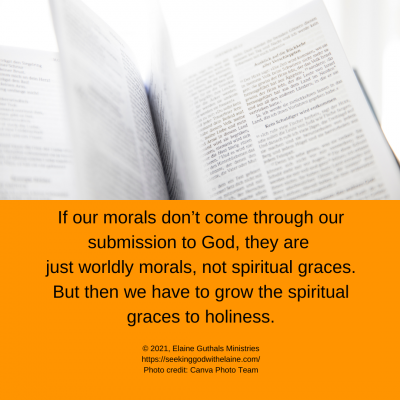
  • Recognizing Evil Thoughts

    What happens when we evaluate ourselves? This daily devotion looks at identifying what the evil thoughts for which we should be looking to improve.

    Nuggets

    • We need to make sure we reverence the Lord
    • We need to make sure our image of ourselves is correct.
    • We need to keep our speech honoring God.

    To read devotions in the Redo for Godliness series, click the appropriate button below.

    Devotions in the How Do We Live Godly Lives? series

    This is another post that has topics that we’ve talked about frequently. So, I’m going to look what we’ve said before.

    Don’t worry. The last time wasn’t a regurgitation of what we said before. It ended up being something totally new.

    That is what learning is about – putting the building blocks together and making something out of it. Let’s see if we can do it again.

    By the way, the dizziness has come and gone this week. It’s not as bad as it was the first of the week, but still worse than last week. I haven’t seen farmers in the fields around here, but I keep hoping that is what it is about, not the medicine.

    “The third sort of directions are for the ordering of evil thoughts, when they do intrude; and” (Charnock, The Sinfulness and Cure of Thoughts)

    “Check them at the first appearance. If they bear upon them a palpable mark of sin, bestow not upon them the honour of an examination” (Charnock, The Sinfulness and Cure of Thoughts)

    It is great to say that we need to evaluate ourselves. But what really are we evaluating?

    This is going to take more devotions than this one. We’re going to keep the application for the end.

    Let’s Put It into Context #1

    We’ve been looking at Charnock’s sermon entitled The Sinfulness and Cure of Thoughts to show us how to cleanse, a.k.a. sanctify, our thought processes. Charnock has taught us 

    • that we cleanse our thoughts when we return to having a strong relationship with God. We can do that by studying the Scriptures, meditating on God, contemplating on His creation, and praising Him.
    • that we focus our thoughts by being humble instead of prideful, following God instead of the worldview, working instead of being idle, and laboring for Him.
    • that we overcome our evil thoughts by burying ourselves in Scripture, relying on His omniscience and judgment, guarding our hearts and lips, and evaluating ourselves.

    Resource

    Glossary

    Here is a running list of what we’ve discussed previously.

    Make Sure We Fear the Lord

    “The fear of the Lord is hatred of evil …” (Prov. 8: 13 ESV)

    We need to make sure we reverence the Lord

    Some may think that fear of the Lord means dreading the punishment of sin. It isn’t. The fear of the Lord means awe, reverence and love, not terror.

    The problem with that is we many do not hate the evil behind the sin. We just hate getting caught and punished. We only start to hate evil when we are forgiven.

    We have to do more than just understand God’s ways. We have to treat sin the same way that God does.

    We have to do more than just understand God’s ways. We have to treat sin the same way that God does.

    That means we have to embrace God’s ways and abhor sin — even if it is our pet sin. Even if it is something we feel is small — like our thoughts.

    What that takes is getting obedience down to the heart level — making it our character.

    So, fear of the Lord can’t be just a mind thing. It has to be an action thing because it is a character thing. Fear of the Lord is what draws us to Him for salvation.

    Remember, our character is our thoughts, feelings, and actions all added together. That is why our thoughts are so important and why we have to check them at first appearance.

    We have to be so like God that we wonder who is doing the talking — God or us. We have to be the character of God. Outside of God, we never will be able to understand things.

    To read a related devotion, click the appropriate button below.

    Verse Commentary

    Make Sure We Keep Our Pride in Check

    “… Pride and arrogance and the way of evil and perverted speech I hate” (Prov. 8: 13 ESV)

    We need to make sure our image of ourselves is correct.

    When we think that being good enough by ourselves, that is not fearing God. That is arrogant pride. Pride is on the checklist we looked at in Living in Faith and Love to determine what is evil. Jesus told us that pride of life was one of the three things to avoid in this world.

    No, pride doesn’t always have to be sinful. Unfortunately, too often we take it to the self-focused and self-elevating level. This high opinion of ourselves presents itself in our opinions, judgment, and plans.

    Pride is a sin because it takes our focus off God. In fact, the root of the unwillingness to seek God is pride.

    We can’t want to understand everything so that we can say we don’t need God since we have figured it out. That isn’t what God wants.

    We shouldn’t love ourselves more than we love God. Oh, we can have some self-love. The self-love should not escalate into pride. That is another name for self-flattery. The self-love can be so strong within us that we start boasting about all of our good points. Then we start boasting of our possessions. But this self-love and self-flattery turns into self-interest. We forget about God and come to depend on ourselves. The self-interest can turn into covetousness.

    The problem with pride is it lies to us.

    You would think that, after the original sin and mankind’s fall from grace, we would see ourselves as we are. We not only don’t see the need for humility, but we also go the other way and bump up the pride.

    Pride means that the picture that we have of ourselves is faulty. There are many things that can elevate our pride. But really, we can do nothing except that God has given us the knowledge and skills.

    Pride comes when we forget God and worship ourselves instead. God wants us to be humble and submissive to Him. The submissive part means that we don’t sin and we do give Him the glory He deserves.

    One thing Paul is saying here is we can’t think more highly of ourselves than we are. We have to acknowledge that, without a relationship with God, we are nothing.

    It also usually means that the picture we have of others is also faulty. It does seem somewhat amazing that we do, in some instances, tie our pride to our comparison with others.

    Pride, self-righteousness, assumed morality, ostentation, carnal wisdom, and deep-rooted prejudice are obstacles to a genuine confession. We can be proud of our worldly wisdom, which at times, makes us show off. It can also make us think we are better than others, causing us to judge them.

    We think we understand things, increasing our pride. This causes us to deny God’s power and His control over us. The effect comes into play when our pride increases. We may not see that as what we would normally term evil, but it definitely is sin. If the disciples — who interacted with Jesus every day for three years – had trouble understanding who he was, how can we by reading a book?

    This stops us from fulfilling the second greatest commandment: love others.

    We not only are faulty in how we see ourselves, but we also do not see the standard of character correctly. God tells us several times in His Word to evaluate ourselves based on His standards.

    We can get in trouble there because we take pride in what we see as our accomplishments. Instead of it coming out as satisfaction and tranquility, it comes out as pride.

    This evaluation process, unfortunately, can butt heads with our pride.

    Pride is an extreme on one side of the continuum. God calls us to be sober and even keeled – the other end of the continuum.

    Pride is the exact opposite of what God wants. We think we don’t need God when God wants us to depend on Him. God doesn’t want us to be self-sufficient. He wants us to put our trust in Him that He will provide our needs.

    We can’t let the evaluation process lead to pride or conceit. Instead, the process needs to humble us.

    But pride isn’t the only extreme to which we go. Prideful people would probably be dissatisfied with the work God calls them to do because they feel it is beneath them Those with low self-esteem would be terrified with the work because they feel they are inadequate.

    We see pride as the end result. This end result is dangerous to us and to others.

    Worldview standards feed the chaos of the world because they are divisive. It is real easy to become arrogant and prideful when we buy into the worldview.

    One way we submit to the worldview is when we try to keep up with our neighbors. They get a new car – we get a new car. They remodel their house — we remodel our house. It feeds our pride.

    The bottom line is humility helps keep prideful thoughts at bay. God’s grace helps us transform from pride to humility.

    Glossary

    To read a related devotion, click the appropriate button below.

    Make Sure We Keep Our Speech in Check

    “… Pride and arrogance and the way of evil and perverted speech I hate” (Prov. 8: 13 ESV)

    We need to keep our speech honoring God.

    God wants us to show His grace to others. “… that it may give grace to those who hear” (Eph. 4: 29 ESV). This replaces our corrupt language, which is

    • Profane, irreligious, or immodest discourses
    • Lying and prideful
    • Slanderous and defamatory language.
    • “… compliance with the faults of others” (Jortin)

    Resource

    Gisborne told us exactly what was included in the term profanity. He wrote, “This sin comprehends every irreverent expression concerning the Deity, His titles, His attributes, His providence, His revelation, His judgments.”

    Resource

    We should use our words to build people up — not just give prideful, selfish discourses of ourselves.

    Profanity focuses on our being irreverent to God.
    We should make our conversations count. God wants us to use our conversation to tell others about Him, promote unity, and knit the family together. He wants us to tell others of the good He is doing in our lives.

    We should use our words to build people up — not just give prideful, selfish discourses of ourselves. Instead, too many times our words tear down our witness.

    To read a related devotion, click the appropriate button below.

    RecognizingEvilThoughtsPin

    Making the Connections

    When we fear God and give honor to Him, we want to serve Him. The fear is all about the reverence and love. That leads us to doing the good works for which we were made.

    But don’t take it too far. It is not a question of being good enough or being too bad. The question we will have to answer is have you admitted your sins, believed that Jesus is your Savior and Redeemer, confessed that God is your Sovereign God, and demonstrated that commitment by the way you lived your life?

    God wants us to repent and change. Repenting and not changing is not a genuine commitment. We have to grow and produce to show evidence of our salvation.

    One of the problems with not changing is we keep doing the evil conduct. Some may argue that the act itself isn’t evil. But if someone hasn’t made a true confession to God, they are still children of the devil.

    Father God. We want to become more like You. We want to know where You want us to improve. Amen.

    What do you think?

    Leave me a comment below (about this or anything else) or head over to my Facebook group for some interactive discussion.

    If you don’t understand something and would like further clarification, please contact me.

    If you have not signed up for the email daily or weekly providing the link to the devotions and the newsletter, do so below.

    If God has used this devotion to speak with you, consider sharing it on social media.

  • Joy of Living And Dying

    Disciples have a tug of war going on inside of them. This daily devotion looks at how disciples should do God’s work and long for eternity.

    Nuggets

    • Regardless of the circumstances, Paul was devoted to the Christ of the gospel which he preached.
    • Paul struggled with wanting to end this life and start eternal life.
    • Paul assured the Philippians that they shouldn’t worry about the outcome of his imprisonment.

    Devotions in the Joy in the Gospel series

    Paul was imprisoned in Rome when he wrote the Philippians. It may have been because of this that his thoughts drifted to his death.

    It didn’t matter to Paul. Living or dying, he was going to serve His King.

    Let’s Put It into Context #1

    Here is a running list of what we’ve discussed previously.

    Let’s Put It into Context #2

    “My eager expectation and hope is that I will not be ashamed about anything, but that now as always, with all courage, Christ will be highly honored in my body, whether by life or by death” (Phil. 1: 20 CSB)

    Paul had expectations that he wanted fulfilled. Paul would not deviate from God’s laws and commandments.

    Those created expectations. Paul expected Jesus to use him to magnify Himself.

    When was Paul expected Jesus to be magnified? All the time, regardless of the circumstances. Even if the circumstances included death.

    Most of all, Paul expected all of us to magnify Jesus by accepting the salvation He offers. We magnify Him as we navigate the Sanctification Road and become perfect.

    We also magnify Jesus as we work in our ministry. Even our sufferings magnify Him.

    As partners (Phil. 1: 5), Paul expected the prayers of the Philippians, so he did not ask for them. He knew they were praying for him.

    Paul hooked his expectations to hope. Hope is the expectation, also called a living hope, based on the confidence that, because of our relationship with God, our names will be found in the book of life.

    We magnify Jesus in death when we don’t fear it. We don’t cling inordinately to this life but completely trust that God knows what is best for us — even taking us out of this world.

    Living or Dying for Christ

    “For me, to live is Christ and to die is gain” (Phil. 1: 21 CSB)

    Regardless of the circumstances, Paul was devoted to the Christ of the gospel which he preached.

    Is Paul dedicated to Christ or what?! Whatever happened, Paul wanted it be for the glory of God.

    It all came down to Paul’s attitude. He gave God control of his life. That meant whenever God chose to end Paul’s physical life, he was good with that.

    Why? Maclaren said it best. He wrote that Paul’ theory of live was, “In all senses in which you can use the words, Christ is this man’s life.”

    Did you see that? Maclaren meant, in all aspects of Paul’s life, Christ was the priority.

    Paul did not hold anything back to keep control of it himself. Plus, what he did give God control over, He gave him complete control.

    Maclaren called life Paul’s field of work. I like that.

    It shows that Paul did have a responsibility in his life. He had work to do.

    It also shows that, truly, Paul’s life was not his own.

    God wants this to be our attitude. Put Him squarely in control and praise Him no matter the circumstances.

    The Struggle between Living and Dying for Christ

    “Now if I live on in the flesh, this means fruitful work for me; and I don’t know which one I should choose. I am torn between the two. I long to depart and be with Christ — which is far better — but to remain in the flesh is more necessary for your sake” (Phil. 1: 22-24 CSB)

    Paul struggled with wanting to end this life and start eternal life.

    Don’t think it was easy for the Energizer Bunny for God. Even he was pulled by ties to the physical world.

    We have to remember that Paul was in prison in Rome. This was like the appellate court. There was no appeal after this.

    If they chose to execute him, Paul’s physical life was over. That was definitely a possibility for the sentence.

    Remember, too, what all has been through. Second Corinthians 11: 24-27 gives a good rundown of everything Paul faced.

    “Five times I received from the Jews the forty lashes minus one. Three times I was beaten with rods, once I was pelted with stones, three times I was shipwrecked, I spent a night and a day in the open sea, I have been constantly on the move. I have been in danger from rivers, in danger from bandits, in danger from my fellow Jews, in danger from Gentiles; in danger in the city, in danger in the country, in danger at sea; and in danger from false believers. I have labored and toiled and have often gone without sleep; I have known hunger and thirst and have often gone without food; I have been cold and naked” (II Cor. 11: 24-27 NIV).

    It would have been understandable if even the Energizer Bunny for God gave up.

    Paul didn’t give up, but he struggled. He knew he had more to offer the Philippians and others — and us — even though he didn’t know about us.

    But Paul was also pulled by the ties of Jesus. Maclaren wrote, “To be with Christ that is the attraction. He draws us, and we run after Him. This is no morbid, sentimental desire for death arising out of hatred with life.”

    Resource

    Think about it. Paul would finally see Jesus face to face. He would get to see His glory. All the promises found all throughout Scriptures would come to fruition.

    What were these promises?

    • Eternity in Heaven
    • Complete access to God and Jesus
    • No more disease, pain, or death

    Contrast that with this life.

    I bet Paul was tired. He had been converted in 34 AD. It was now 62 AD. That is 28 years that he had been working to promote the gospel.

    Paul had to have been ready for a break.

    Geden contended that it is a very human thing to shrink from the pain and uncertainty of death. He said that was okay. He wrote, “Such a sense of future blessedness as should spoil earth for us is nowhere encouraged in Scripture; it would be incompatible with our duty to God and man, and in many cases it is desirable for others that we should stay.”

    Resource

    Unfortunately, it can include a lack of faith. Some cling to this life and refuse to acknowledge God’s sovereignty over them.

    Arnot argued that Paul wasn’t expecting to go to purgatory. He believed he was heading straight to see Jesus.

    Resource

    One thing we have to realize is Paul’s desire to stay was still based on the spiritual. He wanted to stay so he could win more people to Christ.

    Disciples should say as Paul did, “For me, to live is Christ and to die is gain” (Phil. 1: 21 CSB).

    We need men strong in their faith, as Paul was.

    Paul had to weight the good of the brethren against his desire to see Jesus in His glory. Basically, the decision Paul came up with was to serve God here on earth until he was called home, whenever that would be.

    Arnot made an interesting point. He thought that, when we become a new creation, part of it is learning to balance the tugs from both sides.

    Both are needed because we should be content — even excited — about the work God is asking us to do in this life. But we are to long for a life with Jesus in eternity.

    I think, for many, it all boils down to how we react when we are going to be transitioning from this life to the next. Which, then, has the greatest pull?

    Living for Others

    “Since I am persuaded of this, I know that I will remain and continue with all of you for your progress and joy in the faith, so that, because of my coming to you again, your boasting in Christ Jesus may abound” (Phil. 1: 25-26 CSB)

    Paul assured the Philippians that they shouldn’t worry about the outcome of his imprisonment.

    This first chapter of Philippians seems to be written to comfort in the Philippians. They knew Paul was in prison. They didn’t know what the outcome would be.

    Paul reassured them. I am going to keep on keeping on. Maclaren wrote that Paul’s attitude was, “Stick to your tasks, and in God’s time you will have rest and reward.”

    Resource

    It is through God’s grace that we live and not die. It is through God’s grace that we leave this life and begin our eternal lives with Him.

    JoyOflivingAndDyingPin

    Making the Connections

    What throws some non-believers is the fact that God is a spirit. So, we have the seen and the unseen worlds.

    It may be better to focus on the temporary and the permanent. This world, though it is seen, is going to end. It won’t be because of global warming.

    This world will end because God has said it will. “Then I saw a great white throne and one seated on it. Earth and heaven fled from his presence, and no place was found for them” (Rev. 20: 11 CSB).

    That will usher in the start of eternity. That is permanent. We have go either one of two places.

    • Those who have ABCDed will live with God in Heaven.
    • Those who haven’t will live in hell.

    To read a devotion in the Hell Does Have Fury series, click on the appropriate button below.

    How Do We Apply This?

    • Die to self and live for God’s purposes.
    • Put Him squarely in control and praise Him no matter the circumstances.
    • Set our affections on heavenly things.
    • Cleanse ourselves from a guilty conscience (Heb. 10 22).
    • Strive to keep our relationships with God solid.
    • Look at death as a passage to life.
    • Arnot wrote, “Let the love of life remain, only get it so sanctified that at the appointed time it may cease.”
    • Realize being a new creation includes balancing the longing for the physical life to complete the work God has for us and the spiritual life of longing to see our Savior.

    To read a devotion in the On Things Above series, click on the button below.

    Resource

    Paul put his complete trust and faith in God and in His plan for his life. Because of that Paul did not fear dying. While he wanted to continue his work for God, Paul also wanted to see his Savior.

    Father God. We praise You in that You have plans for our lives. Those plans include our work to expand Your kingdom. Lord, we place our lives in Your hand. Whether we live or die, whatever we do, we want to glorify Your name. Amen.

    What do you think?

    Leave me a comment below (about this or anything else) or head over to my Facebook group for some interactive discussion.

    If you don’t understand something and would like further clarification, please contact me.

    If you have not signed up for the email daily or weekly providing the link to the devotions and the newsletter, do so below.

    If God has used this devotion to speak with you, consider sharing it on social media.

  • Joy of Salvation

    Paul’s focus was salvation — his and others’. This daily devotional looked at how Paul expected the Philippians to be a part of his salvation.

    Nuggets

    • Paul was confident in the gospel that lives would be saved, his own included.
    • The Holy Spirit is instrumental in our salvation.
    • Paul had expectations that he wanted fulfilled.

    Devotions in the Joy in the Gospel series

    Paul knew the Philippians, so he knew their spiritual condition. He knew what he could expect from them. Let’s take a look.

    Let’s Put It into Context #1

    Here is a running list of what we’ve discussed previously.

    Let’s Put It into Context #2

    “What does it matter? Only that in every way, whether from false motives or true, Christ is proclaimed, and in this I rejoice. Yes, and I will continue to rejoice” (Phil. 1: 18 CSB)

    My bad. I cut the sentence in half.

    Paul was talking about his attitude toward his successors. You know how we say things rush to fill the void?

    Apparently, there were some trying to fill the void for wrong motives. We don’t really know why.

    • They think they can do a better job than someone else.
    • They preach out of love — for Jesus and for their audience.
    • They think about what they will get out of it.

    Two of those three reasons are for the wrong reason. In our book.

    And his replacements are substandard. Paul said rejoice in their work. Realize their motive, but rejoice in their work.

    Salvation through the Prayers of Others

    “because I know this will lead to my salvation through your prayers and help from the Spirit of Jesus Christ” (Phil. 1: 19 CSB)

    Paul was confident in the gospel that lives would be saved, his own included.

    Paul was joyful that the gospel was being preached. Parker wrote “His joy does not arise from the fact that certain persons preached, but from the higher fact that Christ was preached; not that bad men were working, but that a good work was being done.”

    Resource

    To Paul, it wasn’t about him getting the joy. It was about people hearing that they are lost and needing Jesus.

    It was about the expansion of God’s kingdom.

    Glossary

    But look what the verse says. “because I know this will lead to my salvation through your prayers and help from the Spirit of Jesus Christ” (Phil. 1: 19 CSB emphasis added).

    Paul had been saved on the Damascus Road 30+ years before. What did he mean the Philippians’ prayers would save him?

    • Salvation is the gift of life through the deliverance from condemnation and sin to acceptance and holiness and changes us from being spiritually dead to spiritually alive.
    • Sins are actions by humans that disobey God and break one of His reasonable, holy, and righteous laws and commandments, goes against a purpose He has for us, or follows Satan’s promptings.
    • Holiness is the transcendent excellence of His nature that includes elements of purity, dedication, and commitment that lead to being set apart. Purity means possessing God’s moral character, having eliminated the stain of sin.
    • Spiritual death is the spiritual separation from God that occurred as a consequence of Adam and Eve’s original sin. The spiritually alive are those who have ABCDed, so they are no longer separated from God.

    The ABCDs of Salvation

    If you have not become a believer in Christ, please read through the
    Plan of Salvation and prayerfully consider what God is asking you to do.

    A – admit our sins
    B – believe His Son Jesus is our Redeemer
    C – confess God as Sovereign Lord

    D – demonstrate that commitment by making any changes needed in our lives to
    live the way in which God has called us

    The Disciple’s Job Description

    Glossary

    I think Paul is looking at salvation as a three-pronged process. It has elements of past, present, and future.

    We are saved at conversion because we believe Jesus is our Savior and that God is Sovereign. That starts regeneration. God flips a switch — however He does it — to change us from being spiritual dead to spiritually alive.

    Unfortunately, it doesn’t change everything. We are still in these physical bodies that can still sin. That is where sanctification comes in.

    The goal is perfection. That will take work and time. That takes sanctification.

    • Sanctification is the transformation of mind, body, and soul, which begins with regeneration, gradually changes our nature through the promptings of the Holy Spirit, and ends with perfected state of spiritual wholeness or completeness.
    • Regeneration is being changed from spiritually dead to spiritually alive and the internal requickening in us that God brings about through the work of the Holy Spirit to give us new character.
    • The perfected state indicates the combination of the spiritual graces which, when all are present, form spiritual wholeness or completeness.
    • Spiritual graces are worldly morals that have been submitted to God to further His kingdom instead of enhancing this world.

    Glossary

    Sanctification is important because it works on every part of us. It isn’t just our thoughts. It is our feeling, our opinions, our goals — it works on our soul. Our soul is our spiritual part that is immortal.

    If working out our salvation is something that takes time, we need the prayers of others to help us navigate the Sanctification Road. Even Paul wasn’t above needing the prayers of others to help him in this.

    We are in the process of being changed to be like God. That is only completed in the day of the Lord — when we get our new bodies.

    But let’s look at Paul’s needing their prayers another way. Paul was the one hoofing it around to other places and hefting the pen to write instructions that we are reading still today.

    I think Paul was encouraging the Philippians to keep praying because, without their prayers, he couldn’t do what he was doing. They were as much a part of his ministry as he was.

    Remember what Paul had said back in Philippians 1: 5? “because of your partnership in the gospel from the first day until now” (Phil. 1: 5 CSB)​.

    The Philippians was Paul’s partner in his ministry. We generally have partners because we think we need them. If we think we can do it solo, we do.

    We can be a part of someone else’s ministry because we pray for them. It doesn’t mean we should do ministry ourselves. But we can add our prayers to theirs.

    Pope took it an even different way. He saw the prayers of the Philippians as the answer to Paul’s prayers.

    Resource

    Yes, there are times we pray for others when they don’t pray for us. But isn’t it nice to know when someone is praying for us?

    Salvation through the Spirit of Christ

    The Holy Spirit is instrumental in our salvation.

    We obtain salvation because we believe Jesus is our Savior and Redeemer. We get there through the promoting of the Holy Spirit.

    We won’t get to salvation without the Holy Spirit. Pope wrote, “The Holy Spirit is the sole agent of the Saviour’s will in the inward work of grace; nor is the indwelling and operation of Christ ever mentioned without the accompaniment of this truth.”

    Resource

    Expectation and Hope

    “My eager expectation and hope is that I will not be ashamed about anything, but that now as always, with all courage, Christ will be highly honored in my body, whether by life or by death” (Phil. 1: 20 CSB)

    Paul had expectations that he wanted fulfilled.

    Bamford was right. Paul was more of a leader than a follower.

    What Paul wasn’t — as many think — an elitist. Bamford described Paul as “… a warm-hearted man, an intellectual man, a man, moreover, whose natural gifts had not been cramped but had a healthy development, and who had healthy cravings. While he did not think more highly of himself than he ought, neither did he think more meanly.”

    Resource

    But Paul did have opinions. Well, they really weren’t his. They were God’s laws and commandments.

    On those, Paul would not deviate. He wouldn’t compromise in any way, shape, or form.

    That created expectations. I loved Hutchinson’s explanation of expectations. He wrote, “It means the waiting with the head raised, and the eye fixed on that point of the horizon from which the expected object is to come.”

    Resource

    Paul expected Jesus to use him to magnify Himself. Once Paul got off the Damascus Road, he knew he had a new Master — one Who Had given him a mission to perform. Paul wanted all of the glory and honor to go to God and Jesus.

    When was Paul expected Jesus to be magnified? All the time, regardless of the circumstances. Even if the circumstances included death.

    Most of all, Paul expected all of us to magnify Jesus by accepting the salvation He offers. We magnify Him as we navigate the Sanctification Road and become perfect.

    That is the best way to magnify Him.

    Burns noted that we also magnify Jesus as we work in our ministry. Even our sufferings magnify Him. “But even if you should suffer for righteousness, you are blessed. Do not fear them or be intimidated, but in your hearts regard Christ the Lord as holy, ready at any time to give a defense to anyone who asks you for a reason for the hope that is in you” (I Pet. 3: 14-15 CSB).

    Resource

    As partners (Phil. 1: 5), Paul expected the prayers of the Philippians, so he did not ask, as Spurgeon said, for them. He knew they were praying for him.

    Resource

    Paul hooked his expectations to hope. Hope is the expectation, also called a living hope, based on the confidence that, because of our relationship with God, our names will be found in the book of life.

    Yes, hope is its own form of an expectation. But it is a future expectation. It ties Paul to what he is really working toward — having all of us meet Jesus.

    To worldview people, it might seem strange that we magnify Jesus with our deaths. It really isn’t strange.

    We magnify Jesus in death when we don’t fear it. We don’t cling inordinately to this life but completely trust that God knows what is best for us — even taking us out of this world.

    Disciples know that death can be used by God to teach others. I know I learned a lot when Mom and Dad died six weeks apart.

    JoyOfSalvationPin

    Making the Connections #1

    Paul knew the spiritual condition of the Philippians — as much as we can know that of someone else. He knew where their loyalties were. He knew what he could expect.

    Making the Connections #2

    I’ve often wondered how God knows that mankind will be able to get through eternity without repeating Adam and Eve’s original sin. I guess God has more faith in us than I do. But why?

    Johnstone helped clear that up for me. He wrote, “All who reach heaven will be perfectly happy up to the full measure of their capacities, because being ‘pure in heart,’ they will ‘see God’ as fully as their natures can see Him.”

    Resource

    I guess I should have known that. We won’t just get new bodies. We will get new hearts, too, so that we are pure in heart. Pure means not being sinful or having the stain of sin.

    How Do We Apply This?

    • Live godly lives.
    • Be consistent in our prayer lives.
    • Keep working the Sanctification Road.
    • Listen to the Holy Spirit.
    • Cut out prejudice.
    • Open the eyes of our hearts.
    • Find a praying church to join.
    • Trust God at the end of our lives.

    Resource

    Paul didn’t expect too much of the Philippians. He expected what God expects of us — joy in our salvation and wanting others to experience the same thing.

    Father God. We thank You that You have offered us salvation. Help us to tell the world so that we can magnify Jesus just as Paul did. Amen.

    What do you think?

    Leave me a comment below (about this or anything else) or head over to my Facebook group for some interactive discussion.

    If you don’t understand something and would like further clarification, please contact me.

    If you have not signed up for the email daily or weekly providing the link to the devotions and the newsletter, do so below.

    If God has used this devotion to speak with you, consider sharing it on social media.