Category: Worship

  • How Do We Worship God in Our Souls?

    Disciples of Christ are called to worship God. But how do we do that all the way down to our souls? This daily devotional looks at how Clarkson’s list of choosing to put God first in every way increases our worship of God.

    Nuggets

    • We can esteem God — hold Him in high value — because of the value He has placed on us.
    • To worship God, we need to shift our focus from the world to Him.
    • Worshiping God is a choice, of which we must be intentional.
    • We must choose to totally submit to Him and worship Him in spirit and truth.
    • We follow God’s law when we love God and others.
    • We worship God because we trust Him with all our hearts.
    • Since we worship the Creator of the universe, we can be confident in God.

    Devotions in the Soul Worship series

    I had thrown this sermon in the drafts folder when we were stepping through Ephesians. It grabbed me this morning.

    The sentence that did it was this one. Clarkson wrote, “There are thirteen acts of soul worship; and to give any one of them to anything besides the God of heaven is plain idolatry, and those idolaters that so give it.”

    Resource

    Worship is an important duty on a disciple’s job description. Let’s see what we can learn from this to help us up our worship.

    It is going to take us two devotions to get through all of Clarkson’s points. We are going to wait until the end to do the connections and application.

    Let’s Put It into Context

    “For know and recognize this: Every sexually immoral or impure or greedy person, who is an idolater, does not have an inheritance in the kingdom of Christ and of God” (Eph. 5: 5 CSB)

    When we were going through Ephesians, we looked at this through the lens of inheriting the kingdom. That is important as the end goal.

    To read a related devotion, click the button below.

    But this verse comes just after the “Therefore, be imitators of God, as dearly loved children” verse (Eph. 5: 1 CSB). What can we learn that we can implement now by looking through the lens of worship?

    How Do We Esteem God?

    “Knowing that you were ransomed from the futile ways inherited from your forefathers, not with perishable things such as silver or gold, but with the precious blood of Christ, like that of a lamb without blemish or spot” (I Pet. 1: 18-19 ESV)

    We can esteem God — hold Him in high value — because of the value He has placed on us. He has redeemed us from our sinful state to restore our relationships with Him.

    To do this, God had to find a way to pardon our sins and break its hold on us. This was necessary after Adam and Eve committed the original sin.

    Glossary

    God designed the Plan of Salvation before He even created us. Jesus was born, died, and rose again to be the sacrifice for our sins. Only He had never sinned, so only He could be an acceptable sacrifice.

    If you have not admitted that your relationship is not right with God,

    have not asked Jesus to be your Lord and Savior,

    and have not confessed your sins,

    please read through the Plan of Salvation and prayerfully consider what God is asking you to do.

    Glossary

    No, we can’t be saved on our own. Nothing we could do or not do would bridge the separation we had with God.

    Until we value what God and Jesus have done for us, we can’t truly worship Them. Martin summed it up by saying, “Christ, according to the Scriptures, is the Word made flesh. The blood of Christ is the blood of the flesh in which God was manifest.” Jesus shed His blood so that we might be restored to God.

    Resource

    Glossary

    That puts the value of Jesus’ blood very high. We should worship Him for His selfless sacrifice.

    How Are We Mindful of God?

    “Set your minds on things that are above, not on things that are on earth” (Col. 3: 2 ESV)

    To worship God, we need to shift our focus from the world to Him. This is a conscious choice.

    Some may question how we can worship the unseen. Cumming explained, “We may love the unseen, not the unknown. We know them through the Scriptures.”

    Resource

    If we are setting our minds on things above, we are not focusing on what is ours in this world. We aren’t looking at family, friends, job, possessions, etc. as our #1 priority,

    What we are looking at is Jesus’ wonderful face. We are focusing on God’s promises and provision over the lies and chaos of this world.

    God offers us so much more than the world. “For the world offers only a craving for physical pleasure, a craving for everything we see, and pride in our achievements and possessions. These are not from the Father, but are from this world” (I Jn. 2: 16 NLT).

    In order to truly worship God, we need to set Him as a priority in our lives. We need to focus on Him.

    Related Links

    Lauren Daigle

    How Intentional Are We in Worshiping God?

    “I call heaven and earth to witness against you today, that I have set before you life and death, blessing and curse. Therefore choose life, that you and your offspring may live” (Deut. 30: 19 ESV)

    Worshiping God is a choice, of which we must be intentional. We have to choose God over everything. This is a life or death matter.

    The choices are diametrically opposite. We can choose life and blessings (good) or death and curses (evil).

    • Good, in the biblical sense, is the workings of God within His people.
    • Evil is equated with sin because it is that which goes against God and His purposes.

    We’ve talked before how being intention is applied to James 1: 25. “But whoever looks intently into the perfect law that gives freedom, and continues in it — not forgetting what they have heard, but doing it — they will be blessed in what they do” (Jas. 1: 25 NIV). Looks intently was translated several wa

    • “… must never stop …” (Jas. 1: 25 CEV)
    • “… looks intently …” (Jas. 1: 25 NIV)
    • “… look carefully …” (Jas. 1: 25 NLT)
    • “… peers …” (Jas. 1: 25 NET)
    • “… gazes …” (Jas. 1: 25 ABPE)
    • “… fixes his view …” (Jas. 1: 25 DBT)
    • “… looks closely …” (Jas. 1: 25 WNT)
    • “… catches a glimpse …” (Jas. 1: 25 MSG).

    To read a related devotion, click the button below.

    God wants us to make an informed decision on whether we are going to submit to Him or not. Since the choices are so different, one would think we would have an easier time choosing.

    That may not be the case. Satan masks the evil with shiny pleasure. He makes it very tempting for us.

    We must choose to worship God because He is the giver of life and good. Each of us must choose today.

    How Resolved Are We to Worship God?

    “And if it is evil in your eyes to serve the Lord, choose this day whom you will serve, whether the gods your fathers served in the region beyond the River, or the gods of the Amorites in whose land you dwell. But as for me and my house, we will serve the Lord” (Josh. 24: 5 ESV)

    Worshiping God is a choice we must make daily. We must choose to totally submit to Him and worship Him in spirit and truth.

    It is our choice whether we have a relationship with God or not. But it is an all or nothing choice.

    We have to choose to totally submit to God. That means we have to agree to follow all of His laws and commandments.

    Bible

    Yes, all of them. We can’t be picking and choosing what we will believe from God’s Word.

    How Much Do We Really Love God?

    “And he said to him, ‘You shall love the Lord your God with all your heart and with all your soul and with all your mind’” (Mt. 22: 37 ESV)

    We follow God’s law when we love God and others. We cannot change God’s laws and expect Him to think we love Him.

    God is wanting us to completely follow His laws and commandments. No, we won’t be perfect in this human form. When we aren’t, we ask forgiveness and repent.

    Glossary

    What God is asking is that we do not pick and choose which laws and commandments we are going to follow. We can’t change His laws to fit our purposes.

    To read a related devotion, click the button below.

    All of those laws and commandments are summed up in love. That should be easy, right?

    Beecher pointed out one way we go wrong. He wrote, “Christian people spend much time watching their motives and actions that they have little or no time to attend to anything else. There is but one thing required of man, and that is, that he shall have love. If you take care of that, everything else will take care of itself.”

    Resource

    We have to love the way God loves. We can’t follow the worldview definition of love.

    How Much Do We Trust God?

    “Have I not commanded you? Be strong and courageous. Do not be frightened, and do not be dismayed, for the Lord your God is with you wherever you go” (Josh. 1: 9 ESV)

    We worship God because we trust Him with all our hearts. We gain strength and courage when we do.

    When we trust God, we have the assurance that events will play out according to His plan, regardless of the outcome. We know we can approach life with courage and strength because we have assurance of victory.

    We worship the Creator of the universe. How could we lose?

    Also, we know that living under God’s laws and commandments provides that strength and courage. Raleigh wrote, “A man shows himself more brave in an inflexible adherence to the law of God as the the rule of his life in all things than in any feats of arms or deeds of daring.”

    Resource

    Worship helps us grow in grace and knowledge. That, in turn, helps us grow in strength and courage. Grace is a free and unmerited gift from Heavenly Father given through His Son, Jesus Christ that enables salvation and spiritual healing to believers by the work of the Holy Spirit.

    Glossary

    Do We Let Our Fear of Others Steal Our Worship?

    “The LORD is my light and my salvation; whom shall I fear? The LORD is the stronghold of my life; of whom shall I be afraid?” (Ps. 27: 1 ESV)

    Since we worship the Creator of the universe, we can be confident in God. Since God is Sovereign, we have no reason to be afraid.

    This is a song David wrote. Witherspoon thought David was in exile at the time of writing.

    Resource

    Hmmm. That can really rock our confidence in God — but it shouldn’t.

    We should worship God in the good times and the bad. God is still God regardless of our circumstances.

    Because of that, we have nothing to fear. The Omnipotent God has us. That is cause for worship!

    We just have to look outside of our selves and look up to God. He is our light and salvation.

    Father. We worship You. We totally submit our lives to You and choose daily to put You first in our lives. Amen.

    HowDoWeWorshipGodInOurSoulsPin

    What do you think?

    Leave me a comment below (about this or anything else) or head over to my Facebook group for some interactive discussion.

    If you don’t understand something and would like further clarification, please contact me.

    If you have not signed up for the email daily or weekly providing the link to the devotions and the newsletter, do so below.

    If God has used this devotion to speak with you, consider sharing it on social media.
  • Worshiping God the Correct Way

    When Isaiah prophesied to the Israelites, they were worshiping God. But God was not accepting their worship because they weren’t worshiping in the right way. This daily devotional looks at why God rejected their worship and what their punishment from God was.

    Nuggets

    • Even though the Israelites were God’s chosen people, they did not have perfect characters.
    • Still, the Israelites held tightly to the ceremony of the temple.
    • The Israelites didn’t change and had brought God’s judgment upon themselves.
    • Sacrifices have to be offered to God in the right way for the right reasons.

    Isaiah’s Message from Sovereign God Series

    Flowers with title Worshiping God the Correct Way

    Yeah! My Ladies and I are getting to meet again. We combined with my Springfield Mom’s class and are meeting in a larger room so we can spread apart.

    This quarter for Sunday Morning Bible Study, we are looking at Isaiah. It is the most quoted book in the New Testament (Lifeway).

    Resource

    Lifeway’s Explore the Bible Series Fall 2020

    I can’t wait to see where this quarter takes us. Let’s set it up with Chapter 1.

    The Writer

    “The vision concerning Judah and Jerusalem that Isaiah son of Amoz saw during the reigns of Kings Uzziah, Jotham, Ahaz, and Hezekiah of Judah” (Isa. 1: 1 CSB)

    Are you like me? You think the disciples and the prophets were common, uneducated men? We know the Scriptures tell us that about the disciples.

    Isaiah purportedly had ties to the royal family, it is believed that his father Amoz was the brother of King Amaziah (Geikie).

    Resource

    The Book of Isaiah covers a really large time span. Some want to discount Isaiah as being the sole writer of the book because he describes things that happen after his death.

    Duh. That is what being a prophet is all about! Prophets were called “seers” since their perceptions were called “seeing.” The entire message was called a “vision” (Skinner). Isaiah was seeing the future because God gave him that ability.

    Resource

    There was a reason for listing all of the kings. Isaiah wanted to identify the time period in which he prophesied in order to help us identify the circumstances being addressed (Horton).

    Resource

    God’s People Are Punished for Sins

    “Listen, heavens, and pay attention, earth, for the Lord has spoken: ‘I have raised children and brought them up, but they have rebelled against me. The ox knows its owner, and the donkey its master’s feeding trough, but Israel does not know; my people do not understand’” (Isa. 1: 2-3 CSB)

    Even though the Israelites were God’s chosen people, they did not have perfect characters. The Israelites may have been going through the ritual motions, but they were not worshiping from the heart level.

    Still, a remnant of believers remained faithful. God had long kept a group of righteous people, faithful to Himself, after a judgment. “… Therefore pray for the remnant that still survives” (Isa. 37: 4 NIV).

    The main point is they were God’s people, but that didn’t save them from messing up. There was a great nugget in The Sinful Nation in the Sermons by the Monday Clubs. It said, “Our privileges cannot save us, and even our blessings may become a curse. God cannot give to us personally what we will not receive.”

    Glossary

    Resource

    We may have ABCDed and are no longer spiritually dead. That does not give license to keep on sinning. Sin is actions by humans that disobey God and break one of His reasonable, holy, and righteous laws and commandments, goes against a purpose He has for us, or follows Satan’s promptings.

    The ABCDs of Salvation

    If you have not become a believer in Christ, please read through the
    Plan of Salvation and prayerfully consider what God is asking you to do.

    A – admit our sins
    B – believe His Son Jesus is our Redeemer
    C – confess God as Sovereign Lord

    D – demonstrate that commitment by making any changes needed in our lives to
    live the way in which God has called us

    The Disciple’s Job Description

    When God calls us to salvation, He calls us to change. Salvation is deliverance from evil and the consequences of sins to replace them with eternal life and good.

    It is that replace part that on which He is focusing. We are still punished for our sins.

    What Were Israel’s Sins in Isaiah’s Day?

    “Oh sinful nation, people weighed down with iniquity, brood of evildoers, depraved children! They have abandoned the Lord; they have despised the Holy One of Israel; they have turned their backs on him. Why do you want more beatings? Why do you keep on rebelling? The whole head is hurt, and the whole heart is sick. From the sole of the foot even to the head, no spot is uninjured — wounds, welts, and festering sores not cleansed, bandaged, or soothed with oil” (Isa. 1: 4-6 CSB)

    No, the Israelites in Isaiah’s day weren’t perfect. They hadn’t stopped sinning.

    Gold and silver idols were worshiped along with the sun and moon. Altars had been built on the streets. Children were sacrificed to Moloch.

    That was some pretty big sins.

    Still, the Israelites held tightly to the ceremony of the temple. It was like they wanted their cake and eat it, too.

    The Israelites believed in God. They thought that was enough.

    They were going through the motions. They thought that was enough.

    Okay. I am going to have to process this. “There was neither perfection nor spirituality in such a ritual; yet in such a system God tried to elevate the nation to spiritual truths they could not yet apprehend. The ritual could not make morality” (Sermons by the Monday Clubs’ The Sinful Nation).

    Resource

    “There was neither perfection nor spirituality in such a ritual …”

    We know that the perfected state indicates spiritual wholeness or completeness. But what is spirituality?

    Glossary

    The definition for spirituality in the Merriam-Webster Dictionary that I liked was “sensitivity or attachment to religious values.” This talks about a perception of religious principles.

    Resource

    But perception alone doesn’t cut it. That smacks of head knowledge only.

    God wants us to get it down to the heart level. He wants His principles to be our principles.

    We have to be changed. Our human nature is sinful. We have to work on embracing God’s nature. That is what the Sanctification Road is all about.

    Glossary

    “… yet in such a system God tried to elevate the nation to spiritual truths they could not yet apprehend.”

    God wants to pull us up to His level. We constantly keep trying to yank Him down to ours.

    Oh, the sacrifices were necessary. They created the shedding of blood, which is needed to forgive sins. Without this visual, we would not get a clear picture of the remission of sins.

    The Israelites — and us — don’t totally understand why the sacrifices should appease God. At times, it can just seem a bloody waste.

    But the sacrifices alone didn’t cut it for God, either. We needed the ultimate Sacrifice. The purpose of sacrifices was to prepare us for Jesus’ sacrifice.

    “The ritual could not make morality.”

    Going and sitting in church on Sunday morning isn’t going to do much for us if all we do is listen. Pastor Chad, Pastor Tim, and Pastor John can preach bang up sermons.

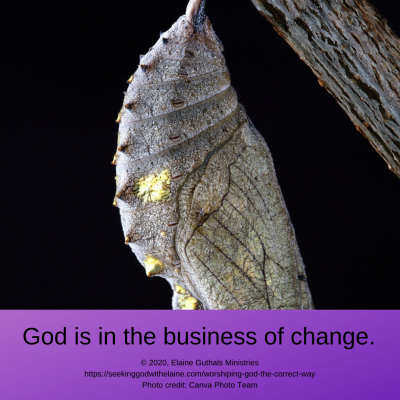
    If we don’t compare what they are saying to how we live our lives, it is just words. If we don’t change where we see we are falling short, it is just words. God is in the business of change.

    Chrysalis

    What Did Isaiah Say the Punishment for Sins Was?

    “Your land is desolate, your cities burned down; foreigners devour your fields right in front of you — a desolation, like a place demolished by foreigners. Daughter Zion is abandoned
like a shelter in a vineyard, like a shack in a cucumber field, like a besieged city. If the Lord of Armies had not left us a few survivors,
we would be like Sodom, we would resemble Gomorrah” (Isa. 1: 7-9 CSB)

    Ooo, baby. The Israelites didn’t change. They had brought God’s judgment upon themselves.

    I bet they were incensed when Isaiah compared them to Sodom and Gomorrah. God destroyed those two towns in Genesis because of their wickedness. There weren’t ten people making up the remnant (Gen. 18: 32).

    There was a big difference between the Israelites and Sodom and Gomorrah. The cities were totally destroyed. Though almost completely destroyed, the Israelites still had a remnant.

    But look at the punishment they endured.

    • The land was desolate (Isa. 1: 7).
    • The cities were destroyed (Isa. 1: 7).
    • Food was scarce (Isa. 1: 7).
    • They were abandoned (Isa. 1: 8).

    No, being God’s people did not keep them from the punishment for their sins.

    There are some people that think God will never sentence them to hell because God is a loving God. He wouldn’t have the heart to sentence them to eternal torment.

    Yes, God is love (I Jn. 4: 8). Oh, yes, He will sentence those who have not ABCDed to hell (Rev. 20: 15).

    Why Did God Reject the Israelites’ Religion?

    “Hear the word of the Lord, you rulers of Sodom! Listen to the instruction of our God, you people of Gomorrah! ‘What are all your sacrifices to me?’ asks the Lord. ‘I have had enough of burnt offerings and rams and the fat of well-fed cattle; I have no desire for the blood of bulls, lambs, or male goats. When you come to appear before me, who requires this from you — this trampling of my courts? Stop bringing useless offerings. Your incense is detestable to me. New Moons and Sabbaths, and the calling of solemn assemblies — I cannot stand iniquity with a festival. I hate your New Moons and prescribed festivals. They have become a burden to me; I am tired of putting up with them. When you spread out your hands in prayer, I will refuse to look at you; even if you offer countless prayers, I will not listen. Your hands are covered with blood” (Isa. 1: 10-15 CSB)

    Isaiah 1: 10-15, at first glance, can be a hard passage to understand. If God is the One who instituted sacrifices, why isn’t He accepting them?

    We have to remember that God rejected Cain’s sacrifice, too (Gen. 4: 5). Sacrifices have to be offered to God in the right way for the right reasons.

    Scriptures make it clear that sin is offensive to God. Sacrifices were to be offered to God to atone for our sins, not create new ones.

    We need to obey God’s Word when He gives us instructions about worship. God is not interested in religion that is for show. He wants very much to have a relationship with us.

    Reading explained this. He wrote, “It is true, St. Paul in his Epistle to the Hebrews affirms, that it was impossible that the blood of bulls and goats should purify the conscience, so as to wash away the guilt of sin, which only can be atoned for by the Lamb of God, slain from the foundation of the world. But yet they availed to the purifying of the flesh, and were accepted of God in lieu of temporal punishments.”

    Resource

    Think about it a second. God was the one who started the whole sacrifice deal. But He knew it wasn’t enough.

    God does not want our sacrifices if they are not done in the right way. It has to affect our conscience.

    God wants service, not religion. Service is an act based on belief in God that comes from a response of worship by acknowledging His power through our submission.

    Monod also brought up a point at we have discussed before. He wrote, “Your vocation is the main part of your service for Him, provided you are in the place where He would have you be.”

    Resource

    We need to be conscientious and humble in serving God. We have to put the focus on God and worship Him.

    Resource

    Making the Connections

    Monod made another good point. “The work of God is mostly hidden work, fully known to Him, known partly to those who are the immediate objects of it, scarcely known to ourselves.”

    Resource

    We get irritated when we don’t see God working in our lives. But God works inside of us, in our heart.

    We see the changes God makes in us as they transform our actions. We may or may not catch that He is changing our attitudes.

    How Do We Apply This?

    Kingsley told us what acceptable worship is. He wrote that “to adore God for His goodness, and to pray to Him to make us good, is the sum and substance of all wholesome worship.”

    We need to focus on God and truly worship Him.

    God. We humbly come before You, acknowledging You are Sovereign Lord. We want a relationship with You. We want to be like You. Amen.

    WorshipingGodTheCorrectWayPin1

    What do you think?

    Leave me a comment below (about this or anything else) or head over to my Facebook group for some interactive discussion.

    If you don’t understand something and would like further clarification, please contact me.

    If you have not signed up for the email daily or weekly providing the link to the devotions and the newsletter, do so below.

    If God has used this devotion to speak with you, consider sharing it on social media.
  • Sometimes, War Can be Avoided

    Sometimes, wars can be avoided. But what if the war is over how we worship God? This devotion looks at how the break of the Wilderness Wanders into the Promised Land dwellers and the Transjordan dwellers almost led to war.

    Nuggets

    • The Promised Land dwellers thought the Transjordan dwellers had already defected from God, and they were ready to go to war.
    • So, the Promised Land dwellers call the Transjordan dwellers on it – which is what we are supposed to do as disciples.
    • But they only had part of the truth.
    • The Transjordan dwellers did it for the kids.

    Devotions in the What I Believe series

    Devotions in the Peace and War category

    Sometimes War Is Judgment
    
Wars as a Sign of the End Times

    Flowers with title Sometimes, War Can be Avoided

    Sometimes, we think we know everything, don’t we? We know why someone does something – without asking them why they did what they did.

    That can even happen on a national level. However, that can have more disastrous effects. Let’s look at a time when that happened to the Wilderness Wanderers.

    Let’s Put It into Context #1

    I am entitling this category Peace and War – but we are only going to touch on the peace as being the opposite of war.

    I am doing this because we have had many discussions about peace. We’ve said peace is an inward tranquility resulting from a balanced life with spiritual order, equity, and truth.

    Glossary

    War, according to the Merriam-Webster Dictionary, is “a state of usually open and declared armed hostile conflict between states or nations.”

    Resource

    Let’s Put It into Context #2

    “The Reubenites, Gadites, and half the tribe of Manasseh left the Israelites at Shiloh in the land of Canaan to return to their own land of Gilead, which they took possession of according to the Lord’s command through Moses. When they came to the region of the Jordan in the land of Canaan, the Reubenites, Gadites, and half the tribe of Manasseh built a large, impressive altar there by the Jordan” (Josh. 22: 9-10 CSB)

    The Wilderness Wanderers were heading toward the Promised Land. They were right on the brink of entering it, when the Reubenites, Gadites, and half the tribe of Manasseh threw a curve ball.

    They didn’t want to live in the Promised Land. Moses questioned if it was right that the rest of the tribes went to war and they didn’t.

    It ended up that, if they let them build cities and sheep pens, the Reubenites, Gadites, and half the tribe of Manasseh would go fight with the other tribes.

    To read a related devotion, click the button below.

    This passage occurs after all the fighting has stopped, and the Promised Land has been won.

    The two tribes and a half came home and built an altar. It isn’t just any altar. It is a “… large, impressive altar …” (Josh. 22: 10 CSB).

    When I was researching altars, this was the only directions from God that I found as to how to build one. “Make an earthen altar for me, and sacrifice on it your burnt offerings and fellowship offerings, your flocks and herds. I will come to you and bless you in every place where I cause my name to be remembered. If you make a stone altar for me, do not build it out of cut stones. If you use your chisel on it, you will defile it. Do not go up to my altar on steps, so that your nakedness is not exposed on it” (Ex. 20: 24-26 CSB). It doesn’t give any directions as to where, just how.

    Assumptions

    “Then the Israelites heard it said, “Look, the Reubenites, Gadites, and half the tribe of Manasseh have built an altar on the frontier of the land of Canaan at the region of the Jordan, on the Israelite side.” When the Israelites heard this, the entire Israelite community assembled at Shiloh to go to war against them” (Josh. 22: 11-12 CSB)

    At first glance, it may seem strange that the Promised Land dwellers questioned the memorial. They had made a stone memorial at the Jordan River. “So Joshua called together the twelve men he had appointed from the Israelites, one from each tribe, and said to them, “Go over before the ark of the Lord your God into the middle of the Jordan. Each of you is to take up a stone on his shoulder, according to the number of the tribes of the Israelites, to serve as a sign among you. In the future, when your children ask you, ‘What do these stones mean?’ tell them that the flow of the Jordan was cut off before the ark of the covenant of the Lord. When it crossed the Jordan, the waters of the Jordan were cut off. These stones are to be a memorial to the people of Israel forever’” (Josh. 4: 4-7 NIV).

    That wasn’t the first – and others had built altars. Noah built an altar after they got off the ark (Gen. 8: 20-22). Abraham built altars (Gen. 12: 7; 12: 8; 13: 18; 22: 9). Isaac built an altar (Gen. 26: 25). Jacob build altars (Gen. 33: 20; 35: 1). Moses built altars (Ex. 17: 25; Ex. 24: 4). There may be more, but that makes the point.

    But the Promised Land dwellers thought the Transjordan dwellers had already defected from God. They were ready to go to war.

    Whoa! Is this the same Wilderness Wanderers who time after time disobeyed God? And now they are up in arms because the Transjordan dwellers seem to have gone to the dark side?

    The Promised Land dwellers got it into their heads that those in the east had turned away from God. So, they marched, prepared to do battle with their brothers.

    Accusations

    “This is what the Lord’s entire community says: ‘What is this treachery you have committed today against the God of Israel by turning away from the Lord and building an altar for yourselves, so that you are in rebellion against the Lord today? … and now would you turn away from the Lord? If you rebel against the Lord today, tomorrow he will be angry with the entire community of Israel. But if the land you possess is defiled, cross over to the land the Lord possesses where the Lord’s tabernacle stands, and take possession of it among us. But don’t rebel against the Lord or against us by building for yourselves an altar other than the altar of the Lord our God’” (Josh. 22: 16, 18-19 CSB)

    So, the Promised Land dwellers called the Transjordan dwellers on it – which is what we are supposed to do as disciples. “Brothers and sisters, if someone is overtaken in any wrongdoing, you who are spiritual, restore such a person with a gentle spirit, watching out for yourselves so that you also won’t be tempted” (Gal. 6: 1 CSB

    Stephenson noticed a problem, though. He wrote, “Their jealousy was hasty, it was ignorant and uncharitable, but it was not unnatural.”

    Resource

    Ouch. The first three were bad enough – hasty, ignorant, and uncharitable. But we hate it when we told that those are our natural states.

    I get that we have to talk first to tell someone else that we have a problem with what they’ve done. This is a great example of how presentation can escalate or defuse a situation.

    But remember, this isn’t just you and me talking. This is Promised Land dwellers (nine and a half tribes) and Transjordan dwellers (two and a half tribes).

    If 2.4 million people left Egypt – and it seems like families were more than the 2.5 kids in those days – there would have been more than that. We are talking about a lot of people.

    To read a related devotion, click the appropriate button below.

    That would be a lot of military-age people who were riled up.

    The Promised Land Dwellers misunderstood the situation. They assumed when they shouldn’t have.

    But they only had part of the truth. Look what Lund said.

    “A fact is not necessarily the truth, because it may be but part of the truth. Part of the truth is often the most dangerous, subtle, and wicked lie. A fact is after all but the expression of a motive; so that to grasp the bearing of a fact the motive must be first of all understood. … Notice how a religious symbol, employed with the most innocent design and for a praiseworthy end, was interpreted as a signal of idolatry and rebellion.”

    Rebuttal

    “The Mighty One, God, the Lord! The Mighty One, God, the Lord! He knows, and may Israel also know. Do not spare us today, if it was in rebellion or treachery against the Lord that we have built for ourselves an altar to turn away from him. May the Lord himself hold us accountable if we intended to offer burnt offerings and grain offerings on it, or to sacrifice fellowship offerings on it. We actually did this from a specific concern that in the future your descendants might say to our descendants, ‘What relationship do you have with the Lord, the God of Israel? For the Lord has made the Jordan a border between us and you descendants of Reuben and Gad. You have no share in the Lord!’ So your descendants may cause our descendants to stop fearing the Lord” (Josh. 22: 22-25 CSB)

    The Transjordan dwellers did it for the kids. One day, they were going to be gone. There was no internet. There weren’t even books that individuals read.

    If they didn’t make a memorial, the kids would forget their history.

    God Himself has given us memorials and symbols to remember. They are called ordinances. Ordinances are an expression of the disciples’ obedience.

    Isn’t baptism a symbol of the cross? Isn’t the Lord’s Supper a symbol of Jesus’ sacrifice for us?

    To read a related devotion, click on the appropriate button below.

    The Transjordan dwellers reacted the correct way. They were the injured party. What if they would have said, “Oh. You don’t want to ask us why we built the altar? You just want to accuse us? Well, we’ll meet your march, and raise it by a full-out war.”

    The passage doesn’t say the Transjordan dwellers called the Promised Land dwellers names. It doesn’t say they erupted in anger. They defused the situation.

    Making the Connections

    We have to look at this another way. These were family. Oh, yeah. Sometimes, we argue the most with our family members!

    But this was taking the argument to the next level. “We are going to kill you because you don’t believe as we do.”

    Times haven’t changed much, have they?

    Look what else Stephenson said. He wrote, “They were very anxious to have a symbol of unity. They themselves, who had borne a part in every conflict, could never forget the battle or the victory; but to their children those memories might become dim, and might even become to be thought mere myths, and so they desired a symbol, the existence of which could only be accounted for by the fact symbolised, and the sight of which, exciting curiosity and comment, should keep the glorious facts alive amongst them.” That was why they built the altar.

    Resource

    Unity is what God wants. But He also wants compassion kindness, and love.

    To read a related devotion, click on the appropriate button below.

    We each have different beliefs because our relationships with God is different. That doesn’t make my beliefs right and yours wrong – as long as we all believe we need to ABCD.

    The D can look very differently. We just have to be sure that D means we are obedient to God and following His laws and commandments without rewriting them.

    The ABCDs of Salvation

    If you have not become a believer in Christ, please read through the
    Plan of Salvation and prayerfully consider what God is asking you to do.

    A – admit our sins
    B – believe His Son Jesus is our Redeemer
    C – confess God as Sovereign Lord

    D – demonstrate that commitment by making any changes needed in our lives to
    live the way in which God has called us

    The Disciple’s Job Description

    To read a related devotion, click the button below.

    But more importantly, God knows our hearts. He knows our motivations. He knows why we are worshiping Him.

    Making the Connections to Self-Discipline

    Ooo, baby. Self-discipline in interpersonal communications. Dealing with (who we think) are difficult people (when we are the difficult people). Foisting our beliefs on others.

    Oh, yeah. Those topics may come up in witnessing.

    People

    We’ve been looking at defending our beliefs when we are witnessing. That means we have to be secure enough to convince someone to accept our beliefs.

    Our questions should still serve us to determine on what we need to focus.

    • What does the Scriptures say?
    • What do I believe?
    • Why do I believe the same/differently than the Scriptures?
    • What are the talking points when witnessing to a non-believer?

    Related Links

    I have created a worksheet of the questions above. Click on the button below to access it.

    How Do We Apply This?

    • We’ve got to keep close to God. He will always be close to us – even when we don’t feel like He is. It is us that moves away from Him.
    • We need to have our memorials to remind us what God has done for us. Mine is my Warrior Princess bracelet.
    • Most importantly, we need to pass our beliefs on to our children. A friend and I were just talking about building foundations for our kids. We want that foundation built so they have somewhere to come back to after they try expanding boundaries as they grow. If we don’t tell them about God and establish a foundation for Him in their lives, they won’t have that foundation.
    • “Innocent until proven guilty” is a good thing. I know. I wonder how much that is followed these days.
    • We should ask before we jump to conclusions. We should look at all sides of the situation.

    At times, we think it is others starting the war. Sometimes, it is us. Don’t be like the Promised Land Dwellers. Let’s avoid the war.

    Father. We want to live in unity with others. We want Your love to be our love. Help us to not overreact in situations – but always lovingly bring our brothers and sisters back into obedience with You. Amen.

    What do you think?

    Leave me a comment below (about this or anything else) or head over to my Facebook group for some interactive discussion.

    If you don’t understand something and would like further clarification, please contact me.

    If you have not signed up for the email daily or weekly providing the link to the devotions and the newsletter, do so below.

    If God has used this devotion to speak with you, consider sharing it on social media.

  • Master, the Tempest Is Raging

    I am numb right now. I have been since Monday night.

    Pastor Chad went home to be with the Lord. This was very unexpected — for us. I’ve heard several “Is this for real?” responses to the email that went out.

    I’ve introduced you to Pastor Chad through things he’s said in his sermons and providing links to them. One of my favorite quotes was the following.


    “Each and every one of us, through the power of the gospel message, have the ability to bring change in this world because, by just simply speaking the gospel, introducing people to God through His Word, people will come to know Him, and peoples’ lives will be transformed. Once you’ve had an encounter with Christ, your life will be transformed. We understand that, if we can introduce people to Christ and they can come to be saved, then the problems of this world will seem like bygone issues.”


    To me, that was Chad’s motto and mission. That was also his charge to us.

    When I texted Chad and told him I was using the quote, I also told him I was modifying it a little from how it came across on the video. I took out a “because” and an “and” and broke it into three sentences. I just have a thing about 89-word sentences. He got a laugh.

    What Does Satan Have to Do with This?

    We had our first post-COVID prayer breakfast Tuesday morning. We were discussing how far our church has come in the two years Chad has been our pastor.

    The comment was made that Satan is trying to tear the church apart.

    I got to thinking. Satan can’t do anything that God does not allow him to do. He cannot disrupt God’s plans.

    This has always been God’s Plan A for Chad’s life and for our church’s life. God doesn’t do Plan Bs.

    We don’t understand why this had to happen. We don’t know why a wife and four young kids are now without their husband and father. We don’t understand why our church is without our leader.

    God lets us come to Him and ask why — when we do so in faith. We have to say His way is always best.

    We may not be told all of the reasons why. God will tell us what we need to know — and that will be good enough.

    Day Off

    I always get things scheduled to broadcast late in the evening. Wednesday night, we are going to have a prayer vigil. It is going to be a rough one.

    I haven’t done this since I have started putting these devotions out here. I am going to take a day off and concentrate on me, Adam, and my church family.

    So, instead of doing a devotion, I am going to leave you with this song. It was one of my favorite hymns growing up.

    It has the message I need to hear right now. (I’ve said before that these devotions start with God talking to me first.)

    Master the Tempest is Raging
    Vocalist: Elaine Guthals
    Keyboard: Louise Guthals Weiss

    Please Pray

    In your prayers, say a prayer for the Williams family and for the church family. Pray that we will move on with a cooperative spirit. Pray that we let God lead us to where He is taking us.

    I’ll be back tomorrow.

  • Using Worship to Educate Our Thoughts

    How can we control our thoughts? This devotion looks at using worship to help us learn to focus our thoughts where they should be.

    Nuggets

    • Self-discipline leads to self-control.
    • Always, prayer should be us pouring out our worship to our loving Heavenly Father.
    • When we keep our thoughts focused on God, He provides us peace.
    • We must praise Him with all our nature.
    • One of these days, we will continually be worshiping our Father.

    Devotions in the What I Believe series

    Devotions in the Religious Education category

    Flowers with title Using Worship to Educate Our Thoughts

    I look at a lot of different sermons when I am researching for a post. When we were doing the Worship category, I ran across this sermon where one sentence caught my eye.

    It was Statham’s Spiritual Worship. He wrote, “Whatever other ends are secured by sanctuary service, — the education of thought, the quickening of sensibility, and the deepening of religious trust, — this is one main end, the worship of God.”

    That “education of thought” bit caught my eye. Corralling our thoughts can be difficult at times. Is there some way we can learn how to control them?

    Using Statham’s sermon as the foundation, let’s see if we can get some pointers.

    Let’s Put It into Context

    What is the purpose of education? The Holman Bible Dictionary wrote, “The primary purpose of education among the Jews was the learning of and obedience to the law of God, the Torah.”

    Resource

    To me, religious education is instruction to teach us about the plan of salvation and the character of God, in order to build relationships so that we can imitate Him.

    Worship is our personal or corporate response (confession, thanksgiving, praise, etc.)
    based on our attitude to God’s presence. Praise is also our response to God, but it usually involves music.

    Regulate Our Service

    “For the Spirit God gave us does not make us timid, but gives us power, love and self-discipline” (II Tim. 1: 7 NIV)

    Well. Isn’t that what we’ve been talking about all year? Self-discipline leads to self-control.

    Let’s take a look at Paul’s purpose of writing the letter. He is corresponding with his “son” Timothy in order to mentor the young preacher in his faith. Yep, Paul is trying to teach Timothy.

    Now, Timothy had been given a pretty good education to begin with. His grandmother Lois and mother Eunice had instructed him in the Jewish ways. “Paul went first to Derbe and then to Lystra, where there was a young disciple named Timothy. His mother was a Jewish believer, but his father was a Greek” (Ac. 16: 1 NLT).

    Paul knew that we never give up learning things. Thankfully, we have the Holy Spirit to help us.

    One of the things the Spirit gives us is self-discipline. The Speaker’s Commentary called it a sound mind. Venn stated that it implies “… recollection, calmness, and discretion, the guidance and control of reason.” Irons said can only come from God.

    Reynolds called it self-mastery. Venn also called it sobriety.

    We are trying to win the battle over sin. Sin is when we disobey God and break one of His laws and commandments. That battle is waged through temptations. Temptation is that period of time between conception and execution of doing what is sinful.

    Where is that temptation occurring? In our thoughts. We are wresting around deciding whether or not we are going to give into the temptation or hold firm.

    Now, you may say “Chick, this next quote doesn’t really apply.” I think we can work it so we can apply it, so follow along.

    Statham wrote, “The instincts of a fervent Christian man will resent all that is showy and formal, and will rejoice in all that lifts his heart and his thoughts into communion with the living God.” It’s that last part that hooked me.

    Rejoicing is being thankful and praising God — worshipping Him. “Rejoice in the Lord always; again I will say, Rejoice” (Phil. 4: 4 ESV).

    Worshiping God puts us in communion with Him. When we are talking with Him and listening to Him, that focuses our thoughts on the promptings of the Holy Spirit.

    What is the Holy Spirit’s job? To teach us.

    So, we can regulate our thoughts by focusing on our worship on God. We educate ourselves in the ways in which God calls us to worship.

    We can regulate our thoughts by focusing on our worship on God.

    Prayerful Thoughts

    “Devote yourselves to prayer with an alert mind and a thankful heart” (Col. 4: 2 NLT)

    I had never thought of it this way. Statham wrote, “Meditation is prayer in preparation, and prayer is preparation spoken.”

    Meditation, as defined by the Holman Bible Dictionary, is “the act of calling to mind some supposition, pondering upon it, and correlating it to one’s own life. Statham was saying, in Elaine-speak, that we have to do the thinking before the praying.

    Psalms 119: 15 says, “I will meditate on your precepts and think about your ways” (CSB). If we are thinking about God’s rules and how He wants us to live, that should flow into prayer.

    Oh, yeah. Sometimes, prayer will be pouring out our troubles at the foot of the cross. We are good at that. Always, prayer should be us pouring out our worship to our loving Heavenly Father.

    If we think about how God wants us to live, that informs our prayers. We need to evaluate our lives so that we can pray accordingly.

    So, isn’t it saying that they all have to be wrapped up together? The prayer bone has to be connected with the meditation/thought/mind bone, which is connected to the thankful/worship/heart bone.

    But it isn’t just Ezekiel putting Dem Bones together, as the song says. It is the Holy Spirit wrapping it up so it focuses on worship.

    Resource

    To read a related devotion, click the button below.

    Harmony

    “You will keep the mind that is dependent on you in perfect peace, for it is trusting in you” (Isa. 26: 3 CSB)

    When we keep our thoughts focused on God, He provides us peace. Statham wrote, “… worship must be in harmony with our life, and not a brilliant exception to it. True prayer is connected with the continuous life of God in the soul.”

    Think about it. When we are meditating on God’s Will and praying and worshiping Him, that beings us peace. And not just any peace — perfect peace.

    But what is perfect peace? What is the “… peace of God, which transcends all understanding …” (Phil. 4: 7 NIV).


    We can look at the perfect peace as either being a blessing or a promise. Knight note that, “whether you understand by the word, reconciliation with God, amity with men, composure in the conscience, resignation to the appointments of providence, rest from the turbulency of sinful passions and appetites, or finally, that everlasting state of rest and felicity which remains for the people of God; rain all these senses peace is the happy lot of those whose minds are stayed on God.”

    Peace has to be an inward tranquility. Yes, it can be lack of outward chaos, but the inward has to be filled with something.

    It does all come down to trust. Remember, trust is assurance that the promises of God are true. We have the assurance that we know how things are going to end. We have been promised that God defeats Satan — it gives us peace knowing that.

    Watkinson had a pretty good run down of what takes away our peace.

    • We get bogged down in our history. We are focusing on the mistakes. We have to bury those at the foot of the cross.
    • We focus on the current sins and temptations. It is Satan’s goal to take away our peace. He does this by falsely identifying things that he wants us to think will give us greater peace. We have to remember what a liar he is.
    • There is a conflict between feeling and reason (or instinct and logic). Unfortunately, we lead with feelings too many times. Feelings can often be colored by what we are experiencing at the time.
    • Peace can be stripped away when we are put into situations that test our character. We like that with which we are comfortable. New situations — especially difficult situations — steal our peace.

    The bottom line — again — is, if we focus on God, we have peace. Worshiping Him must be a component of that focus.

    Worship Through Praise

    “Praise the Lord, my soul; all my inmost being, praise his holy name” (Ps. 103: 1 NIV)

    We’ve talked before about worship and praise. There are three types of worship: personal, family, and corporate. Everyone is supposed to shout joyfully and triumphantly praising God. We worship God because we praise Him as Sovereign God.

    To read a related devotion, click the button below.

    Statham felt praise had an appropriate place in worship. He wrote, “… we do want the united service of all voices and hearts, as they are touched with the Spirit of the living God.”

    The psalmist said that we should praise God with our “… inmost being …” (Ps. 103: 1 NIV). That talks about our nature. Pearce wrote, “Our nature is a many-stringed instrument, and every string is to contribute its quota to the symphony. If the soul is to be the leading singer, then every faculty of our mental, moral, and spiritual being, like a united choir, are to render the chorus.” We must praise Him with all our nature.

    If the lead singer is going to be our thoughts, we might have a rougher go of it. Our thoughts can be influenced by a variety of things.

    We need to make sure God is influencing our thoughts. Continuous praise can help that.

    Future Worship

    “Day and night they never stop, saying, ‘Holy, holy, holy, Lord God, the Almighty, who was, who is, and who is to come’” (Rev. 4: 8b CSB)

    Just wait. One of these days, we will continually be worshiping our Father. It will never stop. Our education will be completed. We will have passed the test and will be welcomed as sheep on the right.

    That is why it is important to corral our thoughts now. We need to worship now. Yep, sing our praises now.

    The day is coming soon when our faith will become sight.

    Making the Connections

    We’ve got to focus on God. We must believe that His promises are true. We must out our faith and trust in Him.

    Not into Bible reading? Not into singing? One day you will be. This life is to be used as an training session. Make the most of it.

    We have to trust God. We have to have confidence that His promises are true.

    Making the Connections to Self-Discipline

    If it is going to take focus, that means we will have to be disciplined. It will have to take more than a decision to be focused. We must be committed to being focused.

    We’ve been looking at defending our beliefs when we are witnessing. That means we have to be secure enough to convince someone to accept our beliefs.

    Our questions should still serve us to determine on what we need to focus.

    • What does the Scriptures say?
    • What do I believe?
    • Why do I believe the same/differently than the Scriptures?
    • What are the talking points when witnessing to a non-believer?

    Related Links

    I have created a worksheet of the questions above. Click on the button below to access it.

    How Do We Apply This?

    We focused on only one element of worship: praise. But that is a major element. It is something we are to constantly do.

    • “From the rising of the sun to its setting, the name of the LORD is to be praised!” (Ps. 113: 3 ESV). Every waking moment, we need to be in an attitude of praise.
    • “I will sing to the LORD as long as I live. I will praise my God to my last breath!” (Ps. 104: 33 NLT). It isn’t just on Christmas and Easter. It isn’t just while we are gainfully employed. It is every day of our lives.

    Father. Our thoughts are one of the hardest things for us to control. Help us to focus on You to keep them in check. Amen.

    What do you think?

    Leave me a comment below (about this or anything else) or head over to my Facebook group for some interactive discussion.

    If you don’t understand something and would like further clarification, please contact me.

    If you have not signed up for the email daily or weekly providing the link to the devotions and the newsletter, do so below.

    If God has used this devotion to speak with you, consider sharing it on social media.
  • Forever Worshiping Our Lord

    Disciples will be worshiping out Lord through eternity. This devotion look at how Jesus will be the judge of the living and dead.

    Nuggets

    • Jesus been designated Judge as a reward for His obedience in becoming the Sacrifice for our sins.
    • Everyone will stand before the judgment seat — the living and the dead.
    • Even though it says every knee will bow, it does not mean every person will be saved.
    • We won’t get to the worshiping in heaven part if we don’t worship in this life.

    Devotions in the What I Believe series

    Devotions in the Worship category

    Flowers with title Forever Worshiping Our Lord

    The problem with Paul’s letters is each verse is so jam packed with wonderful nuggets that it fills up a devotion quickly. That is what happened with the previous devotion. It filled up before I had all the verses done. So, I broke what I had been planning on into two devotions.

    Another problem is I woke up with a migraine this morning. I was able to sleep several more hours, but I woke up again with it still there.

    So, this devotion is going to be shorter than normal. That is okay. I have been planning on doing the Final Judgment two series from now. I am going to do a very narrow focus here and hit it harder then.

    Let’s finish out the Sunday Morning Bible Story lessons.

    Let’s Put It into Context

    Worship, according to the Holman Bible Dictionary, is “Human response to the perceived presence of the divine, a presence which transcends normal human activity and is holy.”

    Resource

    According to the Holman Bible Dictionary, the Sabbath is “the day of rest, considered holy to God by His rest on the seventh day after creation and viewed as a sign of the covenant relation between God and His people and of the eternal rest He has promised them.”

    Resource

    Jesus as Judge

    “But you, why do you judge your brother or sister? Or you, why do you despise your brother or sister? For we will all stand before the judgment seat of God” (Rom. 14: 10 CSB)

    We are back talking about being judgmental and censorious. Again, Paul told us not to be critical of others.

    But this time, Jesus is the Judge. He has been designated Judge as a reward for His obedience in becoming the Sacrifice for our sins. When judgment day comes, He will judge the living and the dead. “For he has set a day for judging the world with justice by the man he has appointed, and he proved to everyone who this is by raising him from the dead” (Ac. 17: 31 NLT).

    We finished up the last devotion talking about how Jesus is Lord of the living and dead. That is very important. Paul said that everyone will stand before the judgment seat — the living and the dead. He also does not distinguish between sheep and goats. We all just give an account of ourselves.

    But did we see what Paul did here? He called Jesus God. “I and the Father are one” (Jn, 10: 30 ESV). Paul called them One because Jesus said They are.

    Fulfilling Prophecy

    “For it is written, As I live, says the Lord, every knee will bow to me, and every tongue will give praise to God. So then, each of us will give an account of himself to God” (Rom. 14: 11-12 CSB)

    It was important that Paul establish Jesus’ divinity and His role as judge. Paul was fixing to quote Isaiah 45: 23: “By myself I have sworn; truth has gone from my mouth, a word that will not be revoked: Every knee will bow to me, every tongue will swear allegiance” (CSB). Paul had to identify the Me he was talking about.

    Even though it says every knee will bow, it does not mean every person will be saved (Thomas). Some worldview people may think that because God is love and they are made in His image, that is enough to gain them salvation in the end.

    It isn’t. “Jesus answered, ‘I am the way and the truth and the life. No one comes to the Father except through me’” (Jn. 14: 6 NLT). Salvation only comes through Jesus.

    If we don’t gain freedom from Jesus (Jn. 8: 36), we will be subjected to torment in hell.

    To read a devotion in the Hell Does Have Fury series, click on the appropriate button below.

    Making the Connections

    We won’t get to the worshiping in heaven part if we don’t worship in this life. Once Jesus comes, it is going to be too late to change our minds.

    So, let’s recap what we learned in this series.

    • The fourth commandment instructs us to keep the Sabbath day holy.
    • If Day Seven of creation is the Sabbath — the day we are to worship — and it hasn’t ended because there was no evening listed in Genesis 2, we are to continuously worship the One true God.
    • We worship God because we praise Him as Sovereign God.
    • We are to worship the One true God on the Sabbath and at all times by proclaiming His worth to show that we are in a covenant relation with Him.
    • Everyone is supposed to praise God by shouting joyfully and triumphantly.
    • We are to focus on all things spiritual on the Sabbath.
    • There are three types of worship: personal, family, and corporate.
    • Worship is voluntary. It must be sincere, but it also has to be consistent.
    • The Sabbath was made for man, not the other way around.
    • Sabbath was made for all mankind — Jews and Gentiles. If mankind would have been made for the Sabbath, it would have just been made for the Jews because the Jews were His chosen people.
    • We shouldn’t argue about what we believe.
    • We get to make our choices – even if we choose not to follow Him – but we need to be convinced when we do.
    • No one is excluded – unless they chose to be excluded.
    • We are to worship daily so that the consistency helps us change our character to imitate God.
    • Disciples have to choose to worship God and live accordingly.
    • Worship is a life and death matter.
    • It is all about our frame of mind when we think about death.
    • Described as the cornerstone (Eph. 2: 19) and the head (Col. 1: 18), Jesus is greater than the temple.
    • Jesus came to earth to live and die for us, making Him the master of the living and dead.
    • Jesus has been designated Judge as a reward for His obedience in becoming the Sacrifice for our sins.
    • When judgment day comes, He will judge the living and the dead.
    • Even though it says every knee will bow, it does not mean every person will be saved.

    Making the Connections to Self-Discipline

    We’ve been asking these questions all along so we can prepare for when we are asked. Here is the worksheet again. If someone asked you about worshiping for eternity, what would you tell them?

    • What does the Scriptures say?
    • What do I believe?
    • Why do I believe the same/differently than the Scriptures?
    • What are the talking points when witnessing to a non-believer?

    Related Links

    I have created a worksheet of the questions above. Click on the button below to access it.

    How Do We Apply This?

    To up our worship game, we have to be sincere and consistent. We have to put in the time to do it.

    That doesn’t mean just go to church every time the doors are open. That means we have to faithfully seek God. We have to worship God privately as well as publicly.

    Searching for and Seeking God

    Hearing His Word (Rom. 10: 17).
    Reading His Word (Rev. 1: 3).
    Praying to Him (Heb. 4: 16).
    Studying His Word (Ac. 17: 11).
    Meditating on His Word (Ps. 1: 1-2).
    Memorizing His Word (Ps. 119: 11).

    Heaven right now is filled with praises to God. Think of what it will be like when we all get there. And heaven will ring with Hs praises for all of eternity.

    Don’t miss it.

    The ABCDs of Salvation

    If you have not become a believer in Christ, please read through the
    Plan of Salvation and prayerfully consider what God is asking you to do.

    A – admit our sins
    B – believe His Son Jesus is our Redeemer
    C – confess God as Sovereign Lord

    D – demonstrate that commitment by making any changes needed in our lives to
    live the way in which God has called us

    The Disciple’s Job Description

    Father. We praise You in this life. We can’t wait to praise You face to face for eternity. Amen.

    What do you think?

    Leave me a comment below (about this or anything else) or head over to my Facebook group for some interactive discussion.

    If you don’t understand something and would like further clarification, please contact me.

    If you have not signed up for the email daily or weekly providing the link to the devotions and the newsletter, do so below.

    If God has used this devotion to speak with you, consider sharing it on social media.
  • The Life and Death Matter of Worship

    How can worship be a life and death matter? This devotion looks at how and why we worship.

    Nuggets

    • Disciples have to choose to worship God and live accordingly.
    • It is all about our frame of mind when we think about death.
    • Jesus came to earth to live and die for us, making Him the master of the living and dead.
    • Jesus came to be a servant – to pay the penalty for our sins.

    Devotions in the What I Believe series

    Devotions in the Worship category

    Flowers with title The Life and Death Matter of Worship

    Sometimes, we can convince ourselves that worship isn’t important. Or we try to justify our absence in corporate worship by detailing all of the ways we feel it does not fit what God had in mind.

    Worship is really important to God. In fact, it is a life and death matter.

    Let’s Put It into Context

    Worship, according to the Holman Bible Dictionary, is “Human response to the perceived presence of the divine, a presence which transcends normal human activity and is holy.”

    Resource

    According to the Holman Bible Dictionary, the Sabbath is “the day of rest, considered holy to God by His rest on the seventh day after creation and viewed as a sign of the covenant relation between God and His people and of the eternal rest He has promised them.”

    Resource

    A Consecrated Life

    “If we live, we live for the Lord; and if we die, we die for the Lord. Therefore, whether we live or die, we belong to the Lord” (Rom. 14: 8 CSB)

    Consecration, according to the Holman Bible Dictionary, “refers to persons or things being separated to or belonging to God.” The Merriam-Webster Dictionary agreed with the being part but focused more on the “made or declared sacred” aspect. It was more of a ceremony.

    I can see the why it talks about the process rather than just being a segregated group. We are made separate because we make a conscious decision.

    Don’t get me wrong. We make a lot of involuntary decisions.

    However, disciples have to choose to worship God and live accordingly. Hull wrote that, “In the Christian idea the whole of those marvellous activities that rise from our will are to be one scene of dedication to God.” When temptation comes, we have to choose to follow God’s laws and commandments.

    Those choices show our submission to God no matter what life throws at us. We choose to worship and praise Him.

    Burn told us four area that we have to dedicate to God in order to live a consecrated for the Lord.

    • Intellectual
    • Emotional
    • Practical
    • Spiritual

    Our conscious decisions have to be made after we have looked at what God has done for us and what He will do for us in the future. We have to do that through hearing His Word, reading it, studying it, meditating on it, and memorizing it. All through that, we need to be in prayer, asking God to provide the meaning.

    When we make the decision to worship God, we give Him our love make him and receive love, joy, and hope. We live for Him to make the decision to love, to be joyful, and to have hope.

    Then we have to tell others. We worship God and live for Him by wanting to sharing that love, joy, and hope.

    Bottom line, though, is it is all about the spiritual. Salvation is the deliverance from the consequences of sin. This brings regeneration.

    Regeneration is the change in us that God brings about when we go from being spiritually dead to spiritually alive. That regeneration makes us saints.

    Saint means holy ones. Holy means to be set apart, perfect, and pure. We are consecrated to be holy.

    But what about the dying part? Smith wrote that dying to God means “to have a view to the glory of God in all that pertains to our death.”

    It is all about our frame of mind when we think about death. Are we terrified by it? Do we love this life so much that we aren’t looking forward to it?

    Or do we trust God that, even in our illness and death, He will be praised? Are we looking forward to spending eternity with Him?

    It is all about denying ourselves. “Then Jesus told his disciples, ‘If anyone would come after me, let him deny himself and take up his cross and follow me’” (Mt. 16: 24 ESV).

    Jesus the Conqueror

    “Christ died and returned to life for this: that he might be Lord over both the dead and the living” (Rom. 14: 9 CSB)

    Jesus came to earth to live and die for us. He did this to save us from our sins.

    This makes Jesus the master of the living and dead. Isn’t it comforting that we not only will live with Him forever but also will be reunited with our loved ones?

    Huntington explained it this way. He wrote, “He who rose is the Lord of the living and the dead. They are not two families, but one, because they are all in Him, in spite of the transient curtain that hangs between the departed and ourselves — a curtain that probably has its only substance in the eyes of our flesh.”

    The living and the dead who believe in Jesus are His church. “The church is Christ’s body, the completion of him who himself completes all things everywhere” (Eph. 1: 23 GNT).

    Sibbes explained how Jesus is our Lord. He wrote, Jesus “… is a Lord of the whole man, body and soul. He sits in the throne of conscience. There He prescribes laws to it, pacifies, stablishes, and settles it against all fears. He bows the neck of the inward man, and brings it wholly to be subject to Him.”

    But aren’t we normally just concerned about the living? The dead are that — dead and gone.

    We think the living are the only ones with a future. Oh, yes. We know the whole heaven thing. But don’t we get narrowly focused on this life and forget there is more?

    Nope. Jesus is Lord of the living and the dead. But remember all the different names He had. Mediator, advocate, intercessor, physician, elder brother, forerunner, king, master, head, high priest, captain, and bridegroom.

    Yes, there are some royal aspects in there. But Candlish reminded us that Jesus did not live and die to become Lord. “But He died and rose not that He might be different as Lord from what He was as dying and rising. He is the same yesterday, to-day, and for ever.”

    Jesus came to be a servant. He came to pay the penalty for our sins.

    Making the Connections

    Isn’t God so good at doing that? We think things are going to happen one way.

    But no. God takes it and flips it on its ear.

    And you know what? It is so much better His way.

    It is really comforting that Jesus is Lord of the living and the dead. That really validates our work for Him in this life. It has real meaning.

    Making the Connections to Self-Discipline

    Non-believers may have difficulty believing the whole resurrection/Lord of the living and dead aspect. Part of the reason is because it is beyond our building blocks of knowledge. Another reason is the focus non-believers have on this world.

    We’ve been asking these questions all along so we can prepare for when we are asked. Here is the worksheet again. What would you say about our interactions with others, especially those believe freedom means they do not have to follow God’ laws and commandments?

    • What does the Scriptures say?
    • What do I believe?
    • Why do I believe the same/differently than the Scriptures?
    • What are the talking points when witnessing to a non-believer?

    Related Links

    I have created a worksheet of the questions above. Click on the button below to access it.

    How Do We Apply This?

    We need to

    • Follow God’s laws and commandments.
    • Seek Him.

    Searching for and Seeking God

    Hearing His Word (Rom. 10: 17).
    Reading His Word (Rev. 1: 3).
    Praying to Him (Heb. 4: 16).
    Studying His Word (Ac. 17: 11).
    Meditating on His Word (Ps. 1: 1-2).
    Memorizing His Word (Ps. 119: 11).

    • Learn all that we can about God’s character and how He wants us to live.
    • Commit to following His plans for our lives.
    • Submit totally to Him.
    • Honor God in all we do.
    • Live a consecrated life for Him.
    • Take our focus off this world and focus on our eternal life.
    • Mortify our sins.
    • Put an appropriate emphasis on death — not too much, not too little.
    • Foster a child-like faith in God.

    Mortify means to place a death penalty on our sins.

    Walker asked four questions that I thought, though dated and maybe a little off topic, were excellent questions. So, I updated them, and added some to them, and made a worksheet.

    • How much authority do we give God in our hearts and lives?
    • Other than God’s, whose approval do we seek and why?
    • How do we honor God?
    • What do we value most?
    • What is the quality of our worship to God?
    • How consistent are we in our worship?
    • What is missing in our worship?
    • What will we do to improve our worship?

    Resource

    Related Links

    I have created a worksheet of the questions above. Click on the button below to access it.

    How — and how often — we worship God is a good indication of our spiritual condition. What condition we are in is important.

    Worship is a life and death matter. When Jesus comes to take us home, we want Him to find us worshiping while we are waiting.

    Gracious Heavenly Father. We lift our praises to You. You deserve our praise because You are Sovereign God. Jesus deserves our praises because He willingly became the sacrifice to pay the penalty for our sins. Help us to not only worship You more, but also to worship You more sincerely and correctly. May Jesus find us worshiping You when He comes. Amen.

    What do you think?

    Leave me a comment below (about this or anything else) or head over to my Facebook group for some interactive discussion.

    If you don’t understand something and would like further clarification, please contact me.

    If you have not signed up for the email daily or weekly providing the link to the devotions and the newsletter, do so below.

    If God has used this devotion to speak with you, consider sharing it on social media.
  • Honoring the Lord through Worship

    Nuggets

    • We get to make our choices – even if we choose not to follow Him – but we need to be convinced when we do.
    • God wants us to decide that we want to make decisions pleasing to Him, which trigger actions that change our character to be more like His.
    • Know what we believe without a shadow of a doubt and act on that – consistently.
    • Worship is a life and death matter.

    Devotions in the What I Believe series

    Devotions in the Worship category

    Flowers with title Honoring the Lord Through Worship

    Being inclusive, not judgment, is a way we honor God in our worship. But we have worship sincerely and consistently. This devotion looks at how that is our choice to do so.

    Let’s Put It into Context

    Worship, according to the Holman Bible Dictionary, is “Human response to the perceived presence of the divine, a presence which transcends normal human activity and is holy.”

    Resource

    According to the Holman Bible Dictionary, the Sabbath is “the day of rest, considered holy to God by His rest on the seventh day after creation and viewed as a sign of the covenant relation between God and His people and of the eternal rest He has promised them.”

    Resource

    All In

    “One person judges one day to be more important than another day. Someone else judges every day to be the same. Let each one be fully convinced in his own mind” (Rom. 14; 5 CSB)

    I know I think differently than other people. I connect things differently. Because of that, I may put a different amount of importance on something than someone else does.

    Paul said we are going to do that. We are all different. We have had different experiences. It is part of what makes us, us.

    That is okay. Paul just cautioned that we have to be convinced.

    But is Paul really talking about the Sabbath here? Remember, God created the Sabbath for man, not the other way around.

    When Wardlaw muddled through these verses, he thought there had to be a qualification. If we didn’t qualify this, we might think Paul was telling us we wouldn’t need a day set apart for worship.

    What Wardlaw ended up with was the belief that we are free to observe the Sabbath or not. Which is true.

    God created us with free will. We get to make our choices – even if we choose not to follow Him.

    Wardlaw said something that threw me – and I’m having trouble processing it. He wrote that “… the sabbath was not a peculiarly Jewish institution …” Paul was, he contended, dealing with the last day/first day of the week issue.

    Robertson thought it was a more of an “opening up” of the Sabbath. If Sabbath was a Jewish institution, Gentiles would be excluded in Christianity. That is not what Jesus taught.

    Remember, Romans 14: 1-4 were talking about inclusiveness. No one was excluded – unless they chose to be excluded.

    This also touches on our having differences of opinions. Paul doesn’t bite on us for having those different opinions.

    Instead, Paul said – in my words – “Know what you believe.” And not just knowledge. “… Let each one be fully convinced in his own mind” (Rom. 14; 5 CSB). Know without a shadow of a doubt.

    (And isn’t that what we have been doing in the What I Believe Series!)

    You see, God doesn’t want us ABCing just to have fire insurance. He wants the D. We have to demonstrate that commitment. That commitment has to include changing our character to imitate Him.

    The ABCDs of Salvation

    If you have not become a believer in Christ, please read through the
    Plan of Salvation and prayerfully consider what God is asking you to do.

    A – admit our sins
    B – believe His Son Jesus is our Redeemer
    C – confess God as Sovereign Lord

    D – demonstrate that commitment by making any changes needed in our lives to
    live the way in which God has called us

    The Disciple’s Job Description

    Glossary

    Go back to free will. Free will is the ability within us to make decisions that determine actions that produce character.

    Actions produce character. Decisions produce actions. Free will allow us to make the decisions.

    But God wants us to decide that we want to make decisions pleasing to Him. Those decisions trigger actions that change our character to be more like His.

    That is what sanctification is all about. Sanctification is the transformation of mind, body, and soul beginning with regeneration and ending with perfected state of spiritual wholeness or completeness.

    In order to choose the sanctification road, we have to be all in. We have to be deeply committed.

    Highway

    Act on Convictions

    “Whoever observes the day, observes it for the honor of the Lord. Whoever eats, eats for the Lord, since he gives thanks to God; and whoever does not eat, it is for the Lord that he does not eat it, and he gives thanks to God” (Rom. 14: 6 CSB)

    Know what we believe without a shadow of a doubt and act on that. Consistently.

    Robertson addressed the consistency part. He wrote, “The spiritual intent of Christianity is to worship God every day in the spirit. But had this law been given to the unspiritual Jews, instead of turning every week-day into a Sabbath, they would have transformed every Sabbath into a week-day.”

    God doesn’t want part-time believers. That is why I keep harping on we have to do all the steps in seeking God. (Yes, I am harping on myself, too, here.)

    Searching for and Seeking God

    Hearing His Word (Rom. 10: 17).
    Reading His Word (Rev. 1: 3).
    Praying to Him (Heb. 4: 16).
    Studying His Word (Ac. 17: 11).
    Meditating on His Word (Ps. 1: 1-2).
    Memorizing His Word (Ps. 119: 11).

    Remember what we said in What Is the Sabbath? If Day Seven is the Sabbath — the day we are to worship — and it hasn’t ended, we are to continuously worship the One true God.

    We are to worship daily so that the consistency helps us change our character to imitate God. Being consistent is easier when we are more consistent.

    Lyth reminded us the benefits of being consistent in our worship. It is easier for us to act on fixed principles. That way we don’t waffle. Boy, doesn’t that promote peace.

    Life and Death

    “For none of us lives for himself, and no one dies for himself” (Rom. 14: 7 CSB)

    Oh, doesn’t that contradict what worldview people think? Some don’t think their actions affect anyone but themselves. Some think that there should be no consequences.

    They think wrong.

    Why is worship important? Why is consistency in worship important?

    It is a life and death matter.

    We no doubt have heard the saying that no man is an island. Priestley wrote, “Man himself is but a link, though the highest link, of this great chain, all the parts of which are closely connected by the hand of our Divine Author.”

    It is our job to proclaim the gospel to non-believers and make them disciples. We do this because we love God and love them.

    We do not want to see them remain spiritually dead. If they remain spiritually dead in this life, they will remain spiritually dead throughout eternity.

    “But how can they call on him to save them unless they believe in him? And how can they believe in him if they have never heard about him? And how can they hear about him unless someone tells them?” (Rom. 10: 14 NLT).

    We are witnesses without uttering a single word. My ladies and I discussed before that not only are nonbelievers observing disciples’ actions but also their attitudes and motives to make sure we are real. Elliot said it this way: “Every life is a little Bible — a revelation of God.”

    What I kept thinking about in all of this is that Jesus said some sheep are really going to be goats. “Not everyone who calls out to me, ‘Lord! Lord!’ will enter the Kingdom of Heaven. Only those who actually do the will of my Father in heaven will enter” (Mt. 7: 21 NLT).

    The will of God is that we worship Him. It is that we submit to him.

    Raised hands

    Making the Connections

    The Merriam-Webster Dictionary defines freedom as “the absence of necessity, coercion, or constraint in choice or action.” Unfortunately, some see freedom as the ability to do anything we want.

    Free will gives us freedom, but it is based on a foundation of God’s law and commandments. It isn’t that we can just do anything we want.

    But then again, we must follow the laws of the land. So, while we are free here in America, there is some standards we must follow.

    So, it isn’t that some are against following laws. They just don’t want to follow God’s laws and commandments. There are two things they don’t realize.

    Freedom does not mean there is no consequences. They will still be judged in the end times.

    “So if the Son sets you free, you are truly free” (Jn. 8: 36 NLT). It isn’t just about the consequences of this life. It is about eternal life.

    We have to make sure that we allow differing opinions. Talmage wrote, “While our conscience will not allow us to choose some of these beliefs, we must allow to others the liberty of conscience which we demand for ourselves.”

    We are free to choose to not worship God in the Sabbath — or any other day. We cannot expect God to change His mind and say not worshiping Him is not a sin.

    We cannot let the “we’re not going to worship God in this way” mask the unpardonable sin. If we do that, we will be a goat on the left.

    Making the Connections to Self-Discipline

    We’ve been asking these questions all along so we can prepare for when we are asked. Here is the worksheet again. What would you say about our interactions with others, especially those believe freedom means they do not have to follow God’ laws and commandments?

    • What does the Scriptures say?
    • What do I believe?
    • Why do I believe the same/differently than the Scriptures?
    • What are the talking points when witnessing to a non-believer?

    Related Links

    I have created a worksheet of the questions above. Click on the button below to access it.

    How Do We Apply This?

    We have to

    • Educate ourselves on God’s character, His laws and commandments, and what He is calling us to do.
    • Stop being know-it-all’s and thinking our way is the only way.
    • Be sincere in seeking Him.
    • Grow in grace and knowledge.
    • Be real in our evaluation of ourselves.
    • Concentrate on our points of unity, not our points of division.

    We don’t honor God in worship when we keep our worship to ourselves. We must use that worship to witness to others.

    Loving Heavenly Father. We praise Your name. We give You all honor and glory. Help us to show others Your love through our interactions with them. Amen.

    If you have not admitted that your relationship is not right with God,

    have not asked Jesus to be your Lord and Savior,

    and have not confessed your sins,

    please read through the Plan of Salvation and prayerfully consider what God is asking you to do.

    Related Links

    Related Links

    Related Links

    Song

    Related Links

    I have created a worksheet of the questions above. Click on the button below to access it.

    Don’t know what your spiritual gifts are?

    Take this Spiritual Gifts Inventory

    The Disciple’s Job Description

    Complete Job Description

    Individual Description

    It Was Enough
    Vocalist: Elaine Guthals
    Keyboard: Chris Vieth

    What do you think?

    Leave me a comment below (about this or anything else) or head over to my Facebook group for some interactive discussion.

    If you don’t understand something and would like further clarification, please contact me.

    If you have not signed up for the email daily or weekly providing the link to the devotions and the newsletter, do so below.

    If God has used this devotion to speak with you, consider sharing it on social media.
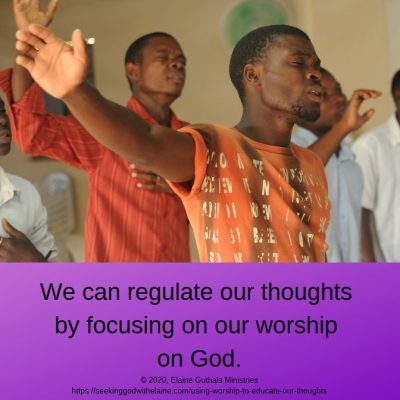
  • How Are We to Be Inclusive in Our Worship?

    On first read, Roman 14: 1-4 may be somewhat confusing. Bottom line, it is talking about who we should include in worship – especially when things get contentious. This devotion looks at how we shouldn’t be judgmental, but inclusive.

    Nuggets

    • We shouldn’t judge those we perceive as weaker than us.
    • If we think abuse of something is a sin, we do a 180-degree and go for abstinence, but that shows a weak faith.
    • Don’t look down on someone who is serving you.

    Devotions in the What I Believe series

    Devotions in the Worship category

    Flowers with title How Are We to Be Inclusive Our Worship?

    I don’t plan it, but sometimes these devotions fall in line with my Sunday Morning Bible Study lessons. When that happens, I am awed by how God connects things.

    No, my Ladies and I still aren’t meeting yet (oh, how I miss them!), but we were supposed to be studying Romans. How can I pass up looking at Romans?

    Then to have this week’s lesson passage show up on a topic search for the Worship category. Best of both worlds!

    What I saw when I read this passage was who we should include in worship – and who we shouldn’t exclude. Paul supported his position. Let’s take a look.

    Let’s Put It into Context

    Worship, according to the Holman Bible Dictionary, is “Human response to the perceived presence of the divine, a presence which transcends normal human activity and is holy.”

    Resource

    According to the Holman Bible Dictionary, the Sabbath is “the day of rest, considered holy to God by His rest on the seventh day after creation and viewed as a sign of the covenant relation between God and His people and of the eternal rest He has promised them.”

    Resource

    Inclusive, according to the Merriam-Webster Dictionary, means “including everyone, especially: allowing and accommodating people who have historically been excluded (as because of their race, gender, sexuality, or ability).”

    Include Those Who Are Weak

    “Welcome anyone who is weak in faith, but don’t argue about disputed matters” (Rom. 14: 1 CSB)

    Once we admit our sins, believe Jesus as Savior and Redeemer, and confess God as Sovereign God, we start on the sanctification road. Sanctification is the transformation of mind, body, and soul beginning with regeneration and ending with perfected state of spiritual wholeness or completeness.

    The ABCDs of Salvation

    If you have not become a believer in Christ, please read through the
    Plan of Salvation and prayerfully consider what God is asking you to do.

    A – admit our sins
    B – believe His Son Jesus is our Redeemer
    C – confess God as Sovereign Lord

    D – demonstrate that commitment by making any changes needed in our lives to
    live the way in which God has called us

    The Disciple’s Job Description

    Perfection means we have become holy, sanctified, and righteous. Christian perfection is achieving the two greatest commandments: loving God and loving others.

    Glossary

    The road to sanctification is hilly and curvy. It won’t be smooth sailing.

    Because it isn’t smooth sailing, sometimes our faith may be strong. Faith is the belief that the doctrines stated in God’s Word are true, even if we do not understand all aspects of them. But sometimes, our faith may be weak because we are having a really hard time dealing with the trial.

    That doesn’t even get into going from milk babies to steak adults. When the Scriptures use the term milk, they are equating our spiritual life with that of a baby. Disciples are unskilled babes when we have given up reading God’s Word. The Bible tells us what our character should be like to grow us into steak adults.

    To read a related devotion, click the button below.

    But isn’t that what the road to sanctification is? We’ve given it several “names”:

    • Grow from milk babies to steak adults
    • Work out our salvation
    • Become sanctified so we grow to become holy and righteous

    Really, aren’t they all the same thing? We want to grow to be like God.

    Some of us are going to do a better job at it — or we will think someone else is doing a better job than we are. We’ve got to keep some things in mind.

    • We shouldn’t judge those we perceive as weaker than us.
    • We shouldn’t compare ourselves with someone else.
    • We shouldn’t argue about what we believe. Lyth wrote than when we are rigid about trivial matters, we “do not understand the spirituality and liberty of the gospel.”
    • No one — me included — is going to get everything right all the time because we will never understand all of God’s ways (Isa. 55: 8-9).

    If someone is committing a sin, yes. We need to counsel them. “Brothers, if anyone is caught in any transgression, you who are spiritual should restore him in a spirit of gentleness. Keep watch on yourself, lest you too be tempted” (Gal. 6: 1 ESV). We will need to follow God’s directions as to how and when to do that.

    Lyth had some good advice. He reminded us “to give each other credit for sincerity.” We talked about the Beatitude saying we should crave righteousness, not that we had to be 100% fruit of the Spirit perfect.

    Resource

    To read a related devotion, click the button below.

    Remember, the sanctification road is hilly and curvy. Encouragement will work better than contention.

    Highway

    Bottom line, we are commanded to love others. We do that by, as Henry said, denying ourselves. We are patient with them.

    Include Those Who Don’t Do as We Do

    “One person believes he may eat anything, while one who is weak eats only vegetables. One who eats must not look down on one who does not eat, and one who does not eat must not judge one who does, because God has accepted him” (Rom. 14: 2-3 CSB)

    Hmmm. So, this is confusing. “… one who is weak eats only vegetables” (Rom. 14: 2 CSB).

    Okay, I didn’t really become a vegetable eater until I was in my 30s. So, I am kind of scratching my head at this one. There has to be some backstory that I don’t know about.

    Tyson cleared up some confusion. He wrote, “The question was, did Christianity or did it not require abstinence from certain meats, and observance of certain fasts and festivals?”

    I see. This is like Eve and the apple.

    In his conversation with Eve, Satan enlarged the restriction God had given from one tree to every tree in the garden. She countered by telling him they couldn’t touch the tree.

    God didn’t say anything about touching. He just put the restriction on eating.

    To read a related devotion, click the button below.

    But don’t we do that? If we think abuse of something is a sin, we do a 180-degree and go for abstinence.

    Tyson interpreted Paul as saying the person who pushes for abstinence is really just weak in faith. He argued that we don’t understand Jesus’ work in us. If we have a strong faith, we should be able to withstand the testing.

    That takes us back to the milk babies and steak adults. We have to be actively seeking God so that we can have that strong faith.

    Searching for and Seeking God

    Hearing His Word (Rom. 10: 17).
    Reading His Word (Rev. 1: 3).
    Praying to Him (Heb. 4: 16).
    Studying His Word (Ac. 17: 11).
    Meditating on His Word (Ps. 1: 1-2).
    Memorizing His Word (Ps. 119: 11).

    Paul wrote elsewhere, “Therefore, don’t let anyone judge you in regard to food and drink or in the matter of a festival or a new moon or a Sabbath day. These are a shadow of what was to come; the substance is Christ” (Col. 2: 16-17 CSB).

    I’m reading this and am thinking this is getting back to works. We aren’t saved by works. “For it is by grace you have been saved, through faith — and this is not from yourselves, it is the gift of God” (Eph. 2: 8 NIV).

    What I see this saying is that differences of opinions should not undermine unity. Yes, that is a favorite topic of Paul’s. Hmmm. Can we say it is needed?

    Look at verse 3. “… God has accepted him” (Rom. 14: 3 CSB). Yes, we may have differences of opinions, but God has adopted all of us into His family.

    To read a related devotion, click the button below.

    When we sincerely admit our sins, believe in Jesus, and confess God as Sovereign Lord, He accepts us. Other believers cannot reject us.

    We’ve talked about censoriousness before. It is about being critical of others. We are not to pass judgment on people — especially when we use our standards.

    To read a related devotion, click on the appropriate button below.

    Include Those Lower than Us

    “Who are you to judge another’s household servant? Before his own Lord he stands or falls. And he will stand, because the Lord is able to make him stand” (Rom. 14: 4 CSB)

    Okay, this says “… another’s household servant …” (Rom. 14: 4 CSB). What this is saying is, don’t look down on someone who is serving you. We would apply that as meaning a restaurant server, retail clerk, or a bank teller.

    But we could also see this as talking about someone who is in a lower socioeconomic class than we are. It is also talking about a debt collector and a teacher, isn’t it? To me, it is talking about anyone who is performing their job.

    We can look down on people who we feel are beneath us for other reasons. We may think we are so much smarter than they are. Or we look down on them because we disagree with their political opinions. (If you don’t think that is a problem, you haven’t been on Twitter and Facebook lately.)

    One thing we need to remember is we are all servants. We are servants of God.

    Where I used to work, there were four employee classifications and then pay grades within each classifications. God only has one classification: servant.

    Still, there may be different pay grades. God doesn’t reveal things to us the same. Nell described it as, “The clearer light of the strong is due to God’s special mercy and their superior advantages.”

    It is kind of like when we were in school. Tom and I are in an economics class together. I had two semesters of economics. Trust me, I didn’t totally understand everything.

    But Tom did. God knew he was going to be an economist and I wasn’t. So, God gave him the knowledge because that was going to expand His kingdom.

    Maybe Tom’s dad was a economist, so he had heard terminology his whole life. Mine was a farmer. He knew economics as it applied to crops and animals.

    Burn reminded us that is why we were created — to serve God. God has commanded us to love each other, to support each other, to teach each other.

    We all have our job to accomplish in God’s kingdom. Paul gave the classifications. “And his gifts were that some should be apostles, some prophets, some evangelists, some pastors and teachers” (Eph. 4: 11 RSV).

    To read a related devotion, click the button below.

    Making the Connections

    There is a very big connection that we have to make here. Paul is writing to believers. Swing reminded us that man “… is imperfect, and therefore should also be tolerant.”

    Paul was not arguing that we have to be tolerant of sin. A sin was a sin back in Noah’s day. It still was in Jesus’ day. It still is now. It will be until Jesus comes back.

    Making the Connections to Self-Discipline

    Oh, yeah. We are talking relationships here – we’re talking conflict. Yep, that is a definite topic for self-discipline.

    We’ve been asking these questions all along so we can prepare for when we are asked. Here is the worksheet again. What would you say about inclusiveness and unity in our worship?

    • What does the Scriptures say?
    • What do I believe?
    • Why do I believe the same/differently than the Scriptures?
    • What are the talking points when witnessing to a non-believer?

    Related Links

    I have created a worksheet of the questions above. Click on the button below to access it.

    How Do We Apply This?

    • We can’t let differences divide us. That means we can’t make someone else believe the way we do.
    • That will take patience and humility.
    • We have to follow God’s standards, not ours.

    Father God. We want to love like You do. We want to extend that love to all of Your children. Help us to be unified as Your church. In this way we can show those made in Your image that You, indeed, are Love. Amen.

    What do you think?

    Leave me a comment below (about this or anything else) or head over to my Facebook group for some interactive discussion.

    If you don’t understand something and would like further clarification, please contact me.

    If you have not signed up for the email daily or weekly providing the link to the devotions and the newsletter, do so below.

    If God has used this devotion to speak with you, consider sharing it on social media.

  • How Do We Worship Through Praise?

    One element of worship is praise. This devotion looks at different ways we praise God.

    Nuggets

    • Everyone is supposed to shout joyfully and triumphantly praising God.
    • We worship God because we praise Him as Sovereign God.
    • There are three types of worship: personal, family, and corporate.

    Devotions in the What I Believe series

    Devotions in the Worship category

    Flowers with title How Do We Worship Through Praise?

    One element of worship is praise. We can do a variety of things to express praise.

    Let’s Put It into Context #1

    Worship, according to the Holman Bible Dictionary, is “Human response to the perceived presence of the divine, a presence which transcends normal human activity and is holy.”

    Resource

    According to the Holman Bible Dictionary, the Sabbath is “the day of rest, considered holy to God by His rest on the seventh day after creation and viewed as a sign of the covenant relation between God and His people and of the eternal rest He has promised them.”

    Resource

    Praise, according to the Holman Bible Dictionary, is our response to God “to proclaim His merit or worth.”

    Let’s Put It into Context #2

    This psalm was written as a call to worship. The people had been exiled and the temple destroyed. Now, they were back, and the temple had been restored.

    It was time to praise God again.

    All Praise, All the Time

    “Come, let’s shout joyfully to the Lord, shout triumphantly to the rock of our salvation! Let’s enter his presence with thanksgiving; let’s shout triumphantly to him in song” (Ps. 95: 1-2 CSB)

    I am having a real hard time focusing my mind this morning, but the first thing that popped into my mind when I read this verse is that we are still in day seven of creation. We are still in the Sabbath.

    We should still be praising God.

    So, who is verse 1 talking about? That would be everyone. Everyone is supposed to shout joyfully and triumphantly praising God. Everyone is supposed to enter into His presence.

    I hear you. Not everyone wants to enter into God’s presence.

    But that is what He wants. “This is good, and it pleases God our Savior, who wants everyone to be saved and to come to the knowledge of the truth” (I Tim. 2: 3-4 CSB).

    What do we not see in these verses? Along with not seeing this limited to specific people groups such as disciples, we don’t see it limited to a specific time.

    We don’t see God saying this is a Sunday-morning-go-to-meeting response. It isn’t limited to when the church doors are open.

    It is 24/7/365.

    It is to be joyful and triumphant. That will bring us happiness and peace.

    Tuck brought up an interesting idea. If there are limits as to who praises and gives thanks, we think it is limited to disciples. We think the non-believers can’t because God doesn’t accept it. Tuck argues that that notion is not scriptural.

    I guess I can see that. It could be something as simple as an acknowledgement of a beautiful day. It could be a thankfulness that someone was healed or we were protected in an accident.

    No, non-believers aren’t actively engaging in worship when they are doing that. They are, however, giving praise to the Creator.

    Look at the first word of verse 1. Come. We are saying this to each other. It isn’t an edict from God.

    Worship is voluntary. It must be sincere. But it also has to be consistent.

    I know. That is where we get tripped up. We let this world worm its way in and steel our focus off of God.

    Raised hands

    Sovereign God

    “For the Lord is a great God, a great King above all gods. The depths of the earth are in his hand, and the mountain peaks are his. The sea is his; he made it. His hands formed the dry land” (Ps. 95: 3-5 CSB)

    We worship God because we praise Him as Sovereign God. We are to put Him above all other gods — even the gods of money and prestige.

    Why is God a great God? Go back to verse 1 a second. “… the rock of our salvation!” (Ps. 95: 1 CSB). He is steady, and He is strong.

    God doesn’t change. “God is not a man, so he does not lie. He is not human, so he does not change his mind. Has he ever spoken and failed to act? Has he ever promised and not carried it through?” (Num. 23: 19 NLT).

    The greatness of God is also shown through His creation. He made the mountains (Amos 4: 13; Ps. 104: 8), the sea (Ps. 104: 6, Ps. 146: 6), and the dry land — and everything else (Ps. 90: 2; Ps. 104: 5). He continues to sustain and maintain it.

    God is great because He alone is immortal. “He alone can never die, and he lives in light so brilliant that no human can approach him. No human eye has ever seen him, nor ever will. All honor and power to him forever! Amen” (I Tim. 6: 16 NLT).

    We recently talked about the three omnis: omnipotent, omniscience, and omnipresent. God is all-powerful, all-knowing, and all-present.

    To read a related devotion, click on the appropriate button below.

    All Together Now

    “Come, let’s worship and bow down; let’s kneel before the Lord our Maker. For he is our God, and we are the people of his pasture, the sheep under his care. Today, if you hear his voice: Do not harden your hearts as at Meribah, as on that day at Massah in the wilderness” (Ps. 95 6-8 CSB)

    Look how verse 6 starts — verse 1 started the same way. “Come, let’s …” (Ps. 95: 6 CSB). Not you. Not I.

    Us. This is worshiping together. Praising God together.

    Spurt told us that there are three types of worship: personal, family, and corporate. We have to actively pay homage to our Sovereign God through all of these avenues of worship.

    If we only worship in public but not privately — or vice verse (except when we physically cannot get out) — our worship isn’t truly genuine. When we do not share our worship with our family, we are not sharing the gospel in the way God has called us to.

    Yes, we are called to corporate worship. “And let us not neglect our meeting together, as some people do, but encourage one another, especially now that the day of his return is drawing near” (Heb. 10: 25 NLT).

    No, Jesus didn’t condone the religion of the Pharisees. He did not, however, shut down going to the synagogue.

    Where verse 1 focused on the inward worship, verse 6 looked at the outward. shout joyfully and triumphantly. Bow down and kneel.

    What does that tell us?

    • Worship submissively.
    • Worship reverently.
    • Worship positively.

    God can ask for and expect our praise because He is our Creator.

    Maybe we all can’t literally bow down before God because of physical ailments. Every one of us can and must bow our hearts and our minds. We have to submit to His authority.

    That is easy to do when we realize that God is worthy of our worship.

    One day, we will all bow down.

    • “By myself I have sworn; from my mouth has gone out in righteousness a word that shall not return: ‘To me every knee shall bow, every tongue shall swear allegiance’” (Isa. 45: 23 ESV)
    • “For it is written, ‘As I live, says the Lord, every knee shall bow to me, and every tongue shall confess to God’” (Rom. 14: 11 ESV)
    • “So that at the name of Jesus every knee should bow, in heaven and on earth and under the earth” (Phil. 2: 10 ESV).

    I thought the “… Today, if you hear his voice: Do not harden your hearts …” (Ps. 95: 7-8 CSB) was interesting.

    Today. We have the opportunity now. Don’t put worshiping off until tomorrow because tomorrow might be too late.

    Bible and praying hands

    But every day is going to be today. We have to choose daily to worship Him. We have to choose minute by minute if we are going to follow His laws and commandments — which is a form of worship.

    If we hear His voice says a lot. How many times are we so caught up in our physical life that we shut God out? We get on our hamster wheel and don’t let Him into our lives.

    It is worse, though, when we harden our hearts. According to the Holman Bible Dictionary, hardness of the heart means “a stubborn attitude that leads a person to reject God’s will.”

    Yep. Hardness of the heart is an attitude. It is a choice.

    We choose not to hear God’s voice. We ignore the promptings of the Holy Spirit.

    Making the Connections

    Foster listed the elements of true worship.

    • “Profound reverence”
    • “Humility”
    • “Submissive trust and love”
    • “Humble hope.”

    We show God’s merit when we give Him reverence. When we respond in humility, we show that we agree that He is higher than us. Our trust, love, and hope show how much we believe in His love and provision.

    We are to worship the One true God on the Sabbath and at all times by proclaiming His worth to show that we are in a covenant relation with Him.

    Making the Connections to Self-Discipline

    Hardness of the heart is an attitude. It is a choice.

    Don’t choose it.

    But a circumcised heart needs to grow closer to God. That takes self-discipline.

    We’ve been asking these questions all along so we can prepare for when we are asked. Here is the worksheet again. What would you say about praising God in our worship?

    • What does the Scriptures say?
    • What do I believe?
    • Why do I believe the same/differently than the Scriptures?
    • What are the talking points when witnessing to a non-believer?

    Related Links

    I have created a worksheet of the questions above. Click on the button below to access it.

    How Do We Apply This?

    Spurt made an excellent observation. He wrote, “Worship only begins when faith acknowledges the Almighty Creator: it dies away as faith in Him decays; it dies away as He gives place in thought to some purely human imagination respecting how the universe came to be what it actually is.”

    Liddon expanded that. He reminded us that worship ours us in the presence of God. He wrote, “The very first effort of worship implies that God is resuming, has resumed, His true place in our thoughts, that He is no longer jostled out of our mental life by a hundred puny worthless rivals belonging to the world of sense.”

    Foster had a good reminder. “As the face is the index of the emotions, so outward acts are the index of the spiritual feelings within.” Our demeanor must show our reverence to God when we worship Him in praise.

    Sincere worship through praise will help solidify our relationships with God. This will help as we fight the spiritual warfare in our lives.

    Father. We praise Your holy name. We thank You for creating us, loving us, and protecting us. Help us to be more like You. Amen.

    What do you think?

    Leave me a comment below (about this or anything else) or head over to my Facebook group for some interactive discussion.

    If you don’t understand something and would like further clarification, please contact me.

    If you have not signed up for the email daily or weekly providing the link to the devotions and the newsletter, do so below.

    If God has used this devotion to speak with you, consider sharing it on social media.