Category: Change

  • Transformed to Love

    God is love, and we are to be, also. This daily devotion looks at how Paul tells us to do that.

    Nuggets

    • Love is to be genuine.
    • Love is expressed by hating evil.
    • Love is expressed by doing that which is good
    • Love is expressed by considering others family.
    • Love is expressed by holding others in high esteem.

    To read devotions in the Redo for Godliness series, click the appropriate button below.

    Devotions in the Transformed to Perfection series

    Paul had been talking about unity in the last couple of verses. He goes on to tell us how that unity is formed – through love.

    Let’s Put It into Context #1

    Here is a running list of what we’ve discussed previously.

    Let’s Put It into Context #2

    • Good, in the biblical sense, is the workings of God within His people.
    • Evil is equated with sin because it is that which goes against God and His purposes.

    Loving the Right Way

    “Let love be without hypocrisy …” (Rom. 12: 9 CSB)

    Love is to be genuine.

    What Paul is saying here is his readers should stop play acting at being loving. Instead, Lyth said our interactions with other should be full of honesty, purity, and kindness.

    Resource

    Love has to be displayed in our actions. If our words of love differ from our actions, then our words are only manipulation.

    Disciples, on the other hand, are to be known for their love. “By this all people will know that you are my disciples, if you have love for one another” (Jn. 13: 35 ESV).

    I don’t think this is just talking actions, though. I think this gets down to motive. Why are we loving?

    Do we have ulterior motives? Are we trying to manipulate the situation through the pretense of love?

    The duality of personalities is not that for what God is looking. He is not looking for us to portray ourselves as someone we are not.

    It is no fun to realize a relationship was based on a delusion. It is bad enough when that happens with an acquaintance. When the person plays at being loving — and then we find out they really don’t — it is devastating.

    I keep thinking it is bad enough when someone portrays that a relationship that is — at a minimum — a good relationship, and it isn’t. But when the deception actually masks hatred for the other, it is really sad.

    But there is a continuum between the love and hate. Beecher gave examples of spouses placating the other by actions where they really didn’t feel the emotion they were portraying. For example, one spouse could perform acts of affection while still feeling anger.

    Resource

    We are commanded to love one another. “Owe no one anything, except to love each other, for the one who loves another has fulfilled the law. For the commandments, ‘You shall not commit adultery, You shall not murder, You shall not steal, You shall not covet,” and any other commandment, are summed up in this word: “You shall love your neighbor as yourself’” (Rom. 13: 8-9 ESV).

    Yes, that summary is the second greatest commandment.

    Glossary

    This is particularly true in our relationship with God. He doesn’t want us playing at godliness. He wants us to be godly.

    Those disciples who do not have a genuine relationship with God will find themselves outside Heaven. “Not everyone who says to me, ‘Lord, Lord,’ will enter the kingdom of heaven, but only the one who does the will of my Father in heaven” (Mt. 7: 21 CSB).

    Girdlestone listed some ways in which we show our love to God. He wrote, “By prayers, praises, honouring God’s Word and day and ordinances.”

    Resource

    These have to get to the heart level. God will not accept just an outward conversion. He is expecting our character to be changed.

    Love as Opposed to Evil

    “… Detest evil …” (Rom. 12: 9 CSB)

    Love is expressed by hating evil.

    I think we’ve done ourselves a disservice by translating the word as hate. To me, that could be considered a surface dislike.

    It is our human nature to want to take the “badness” out of sin. We want to, instead, see what sins we can get away with. We want to see how close we can get without sinning.

    Doesn’t. Work. That. Way.

    Gairdlestone said it this way. He wrote, “Questions often arise as to whether it is fitting for a Christian to partake of this amusement, to engage in that employment, or to enter into the other company. In such discussions many argue as if it were desirable to take all the liberty they can. And frequently they act on the presumption that what is easy to argue is safe also to do. But how different would be their conclusion if they would but bear this text in mind!”

    Resource

    God wants us to do a complete 180 degree turn from hate. Love is the direct opposite.

    If we abhor evil, we are disgusted with it. We not only feel a distaste toward the evil, but we are also revolted by it.

    Being revolted by sin does not mesh with the worldview’s definition of tolerance in love. We need to follow God’s definition.

    Family Churchman gave us a good list of sins also on a continuum.

    • “Trivial sins as well as great.
    • “Secret as well as public.
    • “Personal as well as social.
    • “In thought as well as in act.”

    Resource

    Bell made a great observation. He wrote, “It is the peculiarity of Christianity that while it aims to exclude all sin from the heart, it does not dismember the soul by excluding from it any faculty that is natural to it. Of these hatred is one — one terribly liable to abuse, but rightly used a potent instrument in the suppression of evil.”

    Resource

    I know, right? If God doesn’t want us to sin, why didn’t He take out our ability to sin?

    Well, God didn’t remove our ability to sin so we would continue to exercise our free will. Free will is the ability within us to make decisions, which determine actions that produce character.

    God isn’t a dictator. He will allow us to continue choosing Him.

    We have to remember that God has already conquered sin. “Whoever makes a practice of sinning is of the devil, for the devil has been sinning from the beginning. The reason the Son of God appeared was to destroy the works of the devil.” (I Jn. 3: 8 ESV).

    God has conquered sin and is teaching how to do the same. Bell said that is what sanctification is — separation from evil — in all areas.

    Sanctification is separation from evil.

    Trench reminded us that sin has a burden associated with it. Back when we were talking about the Beatitudes, we said that, when we sin, we should mourn that we have broken God’s laws and commandments. We should be sad that we were not obedient as God expects — that we keep sinning.

    Resource

    To read a related devotion, click the button below.

    The burden is so great that we cry out in pain because we were disobedient to God. That is, to me, what abhorring evil means.

    We are also to be burdened with the sins of others. We are given our marching orders to help them see the need to confess their sins.

    OurCommission

    The Disciple’s Job Description

    Complete Job Description

    We have to make sure we are doing the hate right. It says hate sin. It does not say hate the sinner.

    It is imperative that we hate sin. We won’t be pure until we do.

    Good as Opposed to Evil

    “… cling to what is good” (Rom. 12: 9 CSB)

    Love is expressed by doing that which is good.

    When we cut something out of our lives, it is important to have something ready to fill that space. We should replace the evil with good.

    It is important to remember that, just as evil means sin, good means purity.

    Girdlestone told exactly what good is. He wrote, “Whatsoever our Lord has revealed to be believed, commanded to be done, given to be obtained on earth, or promised to be enjoyed in heaven, this is that which is good; this is that which we should so love as to cleave to it with the most fond and persevering affection.”

    Resource

    What we have to always consider is that it is easy to do good for a while. God is calling us to good for eternity.

    A big part of goodness is sincerity. Yep, no duplicity here.

    We need to bag the love with pretense. How should we love God, then?

    “And one of them, a lawyer, asked him a question to test him. ‘Teacher, which is the great commandment in the Law?’ And he said to him, ‘You shall love the Lord your God with all your heart and with all your soul and with all your mind. This is the great and first commandment. And a second is like it: You shall love your neighbor as yourself’” (Mt. 22: 35-39 ESV).

    We have to love God with every fiber of our being. Brady wrote that we are to love ourselves and our neighbors in the same way.

    Resource

    Paul told us to cling to the good. That means, according to Beveridge, we need to approve of and desire good.

    Resource

    We are told to always be good. But that is logical. If good means doing God’s Will, then that means we are to live our lives following His laws and commandments.

    The Intensity of the Love

    “… Love one another deeply as brothers and sisters …” (Rom. 12: 10 CSB)

    Love is expressed by considering others family.

    What Paul is talking about here is a mutual love. It comes from our piety. Piety is defined as the persistent application of moral virtues to our lives because of our
    supreme love for God.

    Yes, our love stems from God. It doesn’t come from us. It definitely doesn’t come from this world.

    Love comes from God. Hargreaves put it this way. He wrote, “All men ought to love each other as men because brethren by Adam. The world is one common family, split up by sin, but to be united again by Christian love.” There are two big takeaways in that.

    Resource

    The first take away is we are all the same. Regardless of our race and ethnicity, we are all children of Adam. We are one big family.

    But that is part of the problem. Adam and Eve brought sin into the world. That split the family in two.

    Sin split the family into two. We are now sinners and former sinners.

    There is hope. We can all be reunited when the sinners ABCD.

    The ABCDs of Salvation

    If you have not become a believer in Christ, please read through the
    Plan of Salvation and prayerfully consider what God is asking you to do.

    A – admit our sins
    B – believe His Son Jesus is our Redeemer
    C – confess God as Sovereign Lord

    D – demonstrate that commitment by making any changes needed in our lives to
    live the way in which God has called us

    The Disciple’s Job Description

    Yes, God wants us to love all. That is because we are showing all that He loves them.

    LoveOneAnother

    How Love Is Shown

    “… Take the lead in honoring one another” (Rom. 12: 10 CSB)

    Love is expressed by holding others in high esteem.

    Hargreaves noted we should try to outdo each other in giving honor. If we honor another before us, it cuts down on our unkind speech.

    Unfortunately, too many times we are too caught up in getting the honor. Instead, we need to cultivate our humility.

    Resource

    Instead of finding fault with others, we should find what is right and acknowledge that.

    TransformedToLovePin

    Making the Connections

    This is important, guys. Don’t miss this.

    “If we love our brothers and sisters who are believers, it proves that we have passed from death to life. But a person who has no love is still dead” (I Jn. 3: 14 NLT).

    An exhibit of our conversion is our love.

    But look who it says are the objects of our love — fellow disciples. Not sinners. Believers.

    How Do We Apply This?

    • Desist if we have even the slightest suspicion that some conduct could be a sin.
    • Don’t try to compromise with sin. We can’t control it.
    • Bag resentment to others.
    • Work on our humility.
    • Be kind and courteous to others.
    • By being patient with and forgiving to others.
    • Pray for others.

    Resource

    God calls us too imitate Him. If He is love, that means we need to love, too.

    Father God. You have shown us love in so many ways. Help us to show that love to others. Amen.

    If you don’t understand something and would like further clarification, please contact me.

    If you have not signed up for the email daily or weekly providing the link to the devotions and the newsletter, do so below.

    If God has used this devotion to speak with you, consider sharing it on social media.

  • Transformed to being Servants of God

    God gives each of us gifts to use to expand His kingdom. This daily devotional will look at the gifts that Paul discussed.

    Nuggets

    • God gives His children a variety of gifts so that His kingdom can be expanded.

    To read devotions in the Redo for Godliness series, click the appropriate button below.

    Devotions in the Transformed to Perfection series

    In the last devotion, we looked at the first part of Romans 12: 6. We started talking about gifts.

    In this one, we are going to dig farther into the gifts that God gives us. Let’s go.

    Let’s Put It into Context

    Here is a running list of what we’ve discussed previously.

    A List of Gifts

    “According to the grace given to us, we have different gifts: If prophecy, use it according to the proportion of one’s faith; if service, use it in service; if teaching, in teaching; if exhorting, in exhortation; giving, with generosity; leading, with diligence; showing mercy, with cheerfulness” (Rom. 12: 6-8 CSB)

    God gives His children a variety of gifts so that His kingdom can be expanded.

    What is the different gifts Paul described here?

    • Prophecy
    • Service
    • Teaching
    • Exhorting
    • Giving
    • Leading
    • Merciful

    Those are some really diverse terms, too, aren’t they? Plus, they are broad terms. That way we can each find ourselves within them.

    Prophecy

    Tyson noted that we would use the term preacher today instead of prophet. Storrs defined prophet as “… one who is the interpreter of another’s thought.”

    Resource

    Vaughan brought things into perspective for me. He wrote, “If we are to understand the trust of the heart towards God, then the passage will mean, that ‘if any man prophesy,’ or preach, he must do it ‘according to the spiritual experience which God has given him.’”

    Resource

    • What is the mission of all of us? To preach.
    • What do we preach? The gospel.
    • How do we preach it? Using the experiences God has put us through to grow us to be like Him.

    We all have a story. It shows how God loves us and provides for us. We are to use them to witness to others.

    Hey! We have some similarities again.

    • “… If prophecy, use it according to the proportion of one’s faith” (Rom. 12: 6 CSB)
    • “… think soberly, according as God hath dealt to every man the measure of faith” (Rom. 12: 3 KJV).

    In a previous devotion, we said that the measure of our faith is the level of confidence in which we have both in Christ and in our ability to serve Him.

    Proportion means everything is in its appropriate place and congruent with everything else. Haven’t we just been talking about this in the On Things Above series?

    Devotions in the On Things Above series

    God’s right place is our #1 priority. We get out of whack when we put this world before God.

    But what does the congruent mean as a disciple?

    Stanley answered that. He wrote, “It is not enough to ask what is right in itself, but what is right under the circumstances.”

    Resource

    We have to watch here, though. Right doesn’t mean what the world thinks right mean. Right means righteous. Righteous means we are free from sin because we are following God’s moral laws.

    Doing something right is never going to lead to a sin. If the worldview people try to tell us that we have to tolerate sin in order to love them, that is not right.

    • “Timothy, guard what has been entrusted to you, avoiding irreverent and empty speech and contradictions from what is falsely called knowledge” (I Tim. 6: 20 CSB)
    • “The mindset of the flesh is hostile to God because it does not submit to God’s law. Indeed, it is unable to do so” (Rom. 8: 7 CSB).

    We have to do things God’s way the right way. I read about things happening in society and think of the old saying: two wrongs don’t make a right. I also think about the ends do not justify the means.

    We have to have faith in order to be a child of God’s. We can’t perform these gifts if we aren’t a member of God’s Church.

    But Vaughan reminded us that there is a lot of room on the continuum from our justification to our perfection after sanctification. Justification is the easy part because it comes once upon ABCDing. Sanctification is the bumpy road.

    Sanctification is a major component of our redo for godliness. However, it is not consistent. It has its hills and valleys.

    The way I read verse 6 is God is going to give us hints about the future in accordance to what our faith and understanding is. He is not going to try to teach us something we do not have the faith and foundation to understand.

    Service

    These gifts come from God to be used in His service. Service is an act based on belief in God that comes from a response of worship by acknowledging His power through our submission.

    I loved the title of Spurgeon’s sermon. It is Waiting on Our Ministering Needs Extra Grace.

    Resource

    We try to run ahead of God and get started in our ministry — while God is still preparing us for it. We want to do the right thing — but we are trying to do it the wrong way.

    If we want to serve God — which we should — we should want to serve Him the way He wants us to serve. Oh, yeah. He is going to stretch our comfort zones. He is going to ask us to do some things that have us scratching our heads in wonder.

    But God knows past, present, and future. He knows the perfected us. He knows our knowledge and abilities even better than we know ourselves.

    God knows past, present, and future.

    Teaching and Exhorting

    We know what teaching is. The Holman Bible Dictionary defined exhortation as giving advice and encouragement.

    Resource

    In a way, I was surprised that Chalmers combined teaching and encouraging. But then again, I am not.

    There is a connection. I like it when Chalmers said, “The one expounds truth; the other applies it, and presses it home on the case and conscience of every individual.”


    Resource

    In my opinion, every disciple should be an encourager. A kind word, a listening ear, a you-can-do-it goes a long way to uplift a struggling disciple.

    We can all do that. It shows God in us.

    But then, teachers have to uplift and encourage their struggling students. We aren’t going to get everything on first read. Sometimes, we need Scriptures explained to us. Our teachers have to encourage us to keep working it out until God flips the understanding switch.

    We talked before that, really, every one of us is a teacher. We teach without even realizing we are teaching. The whole What I Believe series was morphed from learning enough to be a teacher into determining some areas we need to grow so we can be mature disciples. We were solidifying what we believe in order to be able to witness.

    To read a related devotion, click the appropriate button below.

    When we witness, we are really teaching. This is especially true when we are witnessing to someone who has not grown up around believers. We may be talking a whole foreign language to them. (That is why I include so many definitions in my devotions.)

    To read a related devotion, click the button below.

    Giving

    I think, a lot of times, we feel God is asking for this elaborate objective. I don’t think He is. He just wants us to put Him first.

    Look at verse 8. I think the King James Version says it best. “… he that giveth, let him do it with simplicity …” (Rom. 12: 8 KJV).

    Don’t try to blow it up to this hard task. Don’t overthink it.

    Just do it.

    God wants disciples to be givers. Yes, it may be money. He also wants our time. He wants our talents. He wants our passions and concerns.

    He wants all of us. He wants us to do whatever He calls us to do.

    Leading

    We shouldn’t have ulterior motives or a hidden agenda when we are leaders. We shouldn’t be expecting a specific payoff.

    In fact, we shouldn’t be expecting anything. “But love your enemies, and do good, and lend, expecting nothing in return, and your reward will be great, and you will be sons of the Most High, for he is kind to the ungrateful and the evil” (Lk. 6: 35 ESV).

    Mould talked to those who are in a position of authority. He cautioned them to never let things just work out for themselves. Leadership takes planning and action.

    Resource

    Take Loki, for example, in Thor: Ragnarok. He disguised himself as Odin and took over ruling Asgard. But he let a lot of things slide. So, when Thor shows up, he says that the Nine Realms are in chaos.

    Things don’t just work out for themselves. Satan is the master of chaos.

    We have to be diligent in caring for our relationships with God.

    Merciful

    The last admonition Paul has for us is to be merciful but cheerfully. Disciples’ mercy is a characteristic of compassion for the needs of others, especially those who are in distress.

    What just popped into my head was that worldview people think they are merciful — sometimes even more so than disciples. They can have compassion for others.

    The problem is they are not performing the acts to glorify God or to expand His kingdom. That is why disciples are to be merciful. We are to show others that God loves us.

    TransformedToBeingServantsOfGodPin

    Making the Connections

    We have to be really careful when we run into a distortion of God’s truth. We have to know our do’s and don’ts to make sure we keep on the narrow path.

    Glossary

    Satan wants us to think one of God’s laws and commandments cancels out another. That isn’t what God says. Look what God told Joshua — and is telling us.

    “Only be strong and very courageous, being careful to do according to all the law that Moses my servant commanded you. Do not turn from it to the right hand or to the left, that you may have good success wherever you go. This Book of the Law shall not depart from your mouth, but you shall meditate on it day and night, so that you may be careful to do according to all that is written in it. For then you will make your way prosperous, and then you will have good success” (Josh. 1: 7-8 ESV emphasis added).

    God said do all. Not pick and choose. Not place one law above the other.

    God said to obey all the laws.

    How Do We Apply This?

    • Don’t be the one who’s only contribution is criticism. Serve God.
    • Align our words and actions to God’s Word.
    • Value the gifts that God gives us.
    • If we are put in any position of responsibility, we need to diligently perform our responsibilities.
    • Show mercy to all with whom we come into contact.
    • Study all of Scripture, not just our favorite passages — or just the easy ones.
    • Make it a habit to be merciful.
    • Make it a habit to be cheerful, especially around those in need of cheer.

    Resource

    No one possesses all of the gifts. For that reason, we have to work together to accomplish God’s mission.

    We have to always keep true to the tenets of our faith. Mankind disobeyed God and brought sin into the world. God sent His perfect Son to die to pay the penalty for those sins so that we could be restored to a relationship with God. We are to obey God’s laws and commandments to show our commitment to Him.

    Father God. Thank You for the gifts that You have given us. May we confidently use them to expand Your kingdom. Amen.

    The ABCDs of Salvation

    If you have not become a believer in Christ, please read through the
    Plan of Salvation and prayerfully consider what God is asking you to do.

    A – admit our sins
    B – believe His Son Jesus is our Redeemer
    C – confess God as Sovereign Lord

    D – demonstrate that commitment by making any changes needed in our lives to
    live the way in which God has called us

    The Disciple’s Job Description

    What do you think?

    Leave me a comment below (about this or anything else) or head over to my Facebook group for some interactive discussion.

    If you don’t understand something and would like further clarification, please contact me.

    If you have not signed up for the email daily or weekly providing the link to the devotions and the newsletter, do so below.

    If God has used this devotion to speak with you, consider sharing it on social media.

  • Transformed to Unity

    Even though God gives us different gifts, He wants us to be unified in serving Him. This daily devotional looks at how disciples of Christ should work together to further God’s kingdom.

    Nuggets

    • God calls us all to have a part in His ministry.
    • God has a variety of gifts that He gives to His children.

    To read devotions in the Redo for Godliness series, click the appropriate button below.

    Devotions in the Transformed to Perfection series

    The human body is an intricate, diverse organism. It is diverse because it is made up of organs, tissues, bone — and a lot, lot more.

    But it is also intricate because they all have their own functions — and they work together.

    Paul used the body to describe what the church is to be like. It was a great way to show the diversity and unity.

    Let’s Put It into Context

    Here is a running list of what we’ve discussed previously.

    One Body

    “Now as we have many parts in one body, and all the parts do not have the same function, in the same way we who are many are one body in Christ and individually members of one another” (Rom. 12: 4-5 CSB) 

    God calls us all to have a part in His ministry.

    We all have the same commission.

    • “And he said unto them, Go ye into all the world, and preach the gospel to every creature” (Mk. 16: 15 KJV).
    • “Go ye therefore, and teach all nations, baptizing them in the name of the Father, and of the Son, and of the Holy Ghost: Teaching them to observe all things whatsoever I have commanded you: and, lo, I am with you always, even unto the end of the world. Amen” (Mt. 28: 19-20 KJV).

    The Homilist reminded us that, even though the body is made of all these different parts, those parts aren’t necessarily a distinct unit. Yes, we only see through the eyes; but if they aren’t connected to the brain, it really wouldn’t be able to see.

    Aren’t we trying to do that in our churches today? We parcel ourselves out by age and gender, sometimes race and ethnicity.

    Seniors, adults, youth, and children — we can’t focus on the groups as it they were the whole. Substitute all the other groups — we can’t do that either.

    Instead, we have to look at the Church as a whole. The Homilist wrote, “… not the individuality of the member, but the oneness of the whole community, is to demonstrate the truth of Christ’s mission.”

    I am not saying do away with my Ladies’ class. I am saying that we have to always remember that it isn’t the whole.

    We can take it further than that. Baptists, Catholics, Methodist … need I go on?

    The name of the demonination or religion isn’t important. What is important is they believe in the Christ of the cross.

    To read a related devotion, click the button below.

    God never intended the divisions. His gospel is for all.

    • “For God so loved the world that he gave his one and only Son, that whoever believes in him shall not perish but have eternal life” (Jn. 3: 16 NIV).
    • “The Lord is not slow to fulfill his promise as some count slowness, but is patient toward you, not wishing that any should perish, but that all should reach repentance” (II Pet. 3: 9 ESV).

    I see this as a way of reminding us that we have to focus on God and not ourselves. We sometimes like to think it is about us — who we are and what we want.

    It isn’t. God’s Church is all about God and what He has done to restore our relationships with Him.

    God’s Church is all about God and what He has done to restore our relationships with Him.

    Many Gifts

    “According to the grace given to us, we have different gifts …” (Rom. 12: 6 CSB)

    God has a variety of gifts that He gives to His children.

    There is that phrase again — sorta. “For by the grace given to me …” (Rom. 12: 3 CSB) 

    Last time, Paul said that the grace was given to him. This time, he said the grace has been given to all of us.

    Paul is right on both counts. When we ABCD, we do get a portion of God’s grace.

    Paul is also right that ministers are given grace by God to use in His kingdom for others.

    What the church at Rome was dealing with was that God has given each of us different gifts to use to accomplish that mission. Melvill said the problem Paul was discussing here was envy. It was a case of I-want-what-you-have.

    Resource

    No, we are not all given the same gift — and not all at the same level. We don’t all use our gifts the same way.

    Harrison said that there was a form of unity here. He wrote, “There will be differences of gifts because there are differences of functions, but there must also be fitness for association, and to form a secure union all the members must be renewed by the Holy Spirit, be joined to Christ by a living faith, and exhibit the beauties of a consistent character.”

    Resource

    Elaine-speak

    • It takes a lot of people with a variety of abilities to complete God’s mission.
    • I take fitness of association to mean a couple of things.
      • We must all be children of God who have ABCDed.
      • We must have honed our skills so that they can be used to their fullest potential.
    • We take our direction from the Holy Spirit — “he saved us, not because of works done by us in righteousness, but according to his own mercy, by the washing of regeneration and renewal of the Holy Spirit” (Ti. 3: 5 ESV).
    • Doing God’s work is another way we gain His character and allows us a chance to exhibit that character to others.

    Did you see that? Once again, it says that we have to begin by ABCDing and end by having His character.

    Doing all that brings God glory and honor. That is our purpose in life.

    I love how Tyson described it. He wrote, “But every individual believer has his own proper sphere of influence and activity for the general good (Ephesians 4:15, 16).”

    Resource

    Think about it. We usually think of this as we have a job in the church. We do.

    We have an influence, however, in so many different places. Yes, I influence my Ladies when I teach my class. It could be said that I have an influence when I sing on Praise Team and do an offertory on my flute.

    But I have influence in my own home and job. I can be an influence when I am out shopping.

    We can be an influence anywhere there is people. It may be in His house, on a mission field — or on our field.

    We can be an influence anywhere there is people. It may be in His house, on a mission field — or on our field.

    I liked how Harrison said that there had to be harmony of character. We are all to have the same character — God’s.

    Resource

    Regardless of whatever qualifier we try to put on, all of Christ’s disciples must have the same character — Jesus’. We are called to imitate Him because He is imitating God.

    TransformedToUnityPin

    Making the Connections

    Harrison noted the importance of having a division of labor. We can assign tasks to those to which they are most suited. But it is more than that.

    We aren’t supposed to show up Sunday at 10:30 and expect Pastor Joey to just fill us right up. Each of us is expected to give back.

    We are expected to do something. Harrison had some really strong words. He wrote, “The member who is doing nothing is worse than useless.”

    Resource

    Each of us is needed to do God’s work. We’ve got to grow a loving relationship among all of the fellow believers.

    Stanley stressed that we have to be genuine. We can’t witness to things we really don’t believe or value. What we use in our witness has to come from our knowledge and experiences.

    This has to come from God’s truth. But Stanley warned us that “Christian truth is not of one kind only. It has lights and shades, foregrounds and distances, lessons of infinitely various significance.”

    Resource

    Sometimes, we want the do’s and don’ts of the laws and commandments to be a checklist. Have we gotten it right, or did we go off the rails somewhere?

    But God isn’t about checklists. He is about character. Checklists might not serve us in every situation. Character does.

    The prevailing determinant must be: are we sinning against God? We have to choose the option where the answer is no.

    We can’t choose to sin because the worldview people think that is what “love your neighbor” means. Goulburn wrote, “God loves me deeply, but He hates my sin, and will never consent to save me from its guilt without saving me from its power.” We won’t be saved if we allow sin to still control our lives.

    Resource

    How Do We Apply This?

    Look what Vaughan said. He wrote, “The measure of the faith is the measure of the life; and if we wish to raise the standard of our life, we must begin by elevating our faith. But we are to take ‘faith’ here rather as signifying not the belief, but the things believed — our creed — ‘the faith once delivered to the saints.’

    Resource

    That means the measure of our faith is the level of confidence in which we have both in Christ and in our ability to serve Him which can be raised through increased faith.

    Okay. So, how do we apply all of that?

    • Don’t be envious of gifts we don’t have and someone else does.
    • We need to promote unity. We all have the potential to be children of God. This causes us to try to help one another.
    • We need to try to not cause division.
    • Instead of envying someone else’s gift, we should perfect our own.
    • We should be ourselves.

    Resource

    Regardless of what gift we possess and at what level, it is a gift from God. He expects us to use it in His service.

    Father. You are the God of peace and unity. Satan is the father of chaos. That causes disunity. Help us, Lord, to be unified with our brothers and sisters in Christ. May we not be envious of the gifts of others. Help us to grow our gifts so that they may be used in Your service. Amen.

    What do you think?

    Leave me a comment below (about this or anything else) or head over to my Facebook group for some interactive discussion.

    If you don’t understand something and would like further clarification, please contact me.

    If you have not signed up for the email daily or weekly providing the link to the devotions and the newsletter, do so below.

    If God has used this devotion to speak with you, consider sharing it on social media.

  • Transformed to Humility through Grace

    After talking about transformation, Paul told his readers one way in which we are to be transformed. This daily devotional looks at how grace transforms disciples from pride to humility.

    Nuggets

    • Because grace and faith are gifts from God, we should be humble.
    • It was God’s choice to extend grace to us.
    • God’s grace helps us transform from pride to humility.

    To read devotions in the Redo for Godliness series, click the appropriate button below.

    Devotions in the Transformed to Perfection series

    Well, this devotion didn’t go at all as I had planned for it to go. I changed the title a couple of times because it wasn’t following my outline.

    It was following God’s. Let me show you what He gave me.

    Let’s Put It into Context

    Here is a running list of what we’ve discussed previously.

    Grace Keeps Us Humble

    “For by the grace given to me, I tell everyone among you not to think of himself more highly than he should think. Instead, think sensibly, as God has distributed a measure of faith to each one” (Rom. 12: 3 CSB) 

    Because grace and faith are gifts from God, we should be humble.

    Okay. Let’s start out by getting Dictionary Chick out of the way first in case someone isn’t aware of what we are talking about.

    • Grace is a free and unmerited gift from Heavenly Father given through His Son, Jesus Christ that enables salvation and spiritual healing to believers by the work of the Holy Spirit.
    • Faith is the conviction that the doctrines revealed in God’s Word are true, even if we do not understand all aspects of them, a belief which impacts our lives.
    • Humility is a character trait that diminishes pride and places dependence on God while holding a modest view of our importance with respect to others.

    God Gives Us Grace

    It was God’s choice to extend grace to us.

    Mankind rebelled against God. He could have chased out Adam and Eve, locked the Garden gate, and made them go the rest of their lives alone. He didn’t do that.

    In fact, God did one better. He elected that mankind would receive the free and unmerited gift of grace. This enabled Him to offer the Plan of Salvation to us.

    If you have not admitted that your relationship is not right with God,

    have not asked Jesus to be your Lord and Savior,

    and have not confessed your sins,

    please read through the Plan of Salvation and prayerfully consider what God is asking you to do.

    We are not entitled to God’s love and forgiveness. He did not have to design the Plan of Salvation or even offer it to us.

    God wanted to because He wants to get back to having the hands-on relationship with all of His creation. But we have to accept it.

    By following God and keeping His laws and commandments, we gain salvation, eternal life, grace and mercy. That is why Paul could tell the Romans “for by the grace given to me …” (Rom. 12: 3 CSB).

    Yes, we can give grace to others. “Let no corrupting talk come out of your mouths, but only such as is good for building up, as fits the occasion, that it may give grace to those who hear” (Eph. 4: 29 ESV).

    To me, the building up means we are to assist people on their Sanctification Roads. We are to “… make disciples of all nations …” (Mt. 28: 19 CSB).

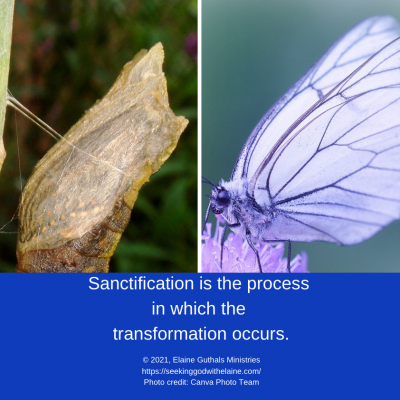
    Sanctification is the process in which the transformation occurs. It is the process of transforming our nature to be more like God’s. We complete that process when we seek God.

    Sanctification is the process in which the transformation occurs.

    Transformed to Humility

    God’s grace helps us transform from pride to humility.

    We all struggle with pride. For some, it is an off and on deal. Others, it is more of a daily struggle.

    Seed gave a good lesson on pride.

    • Our happiness comes from pleasing sensations and agreeable thoughts.
    • Humility comes when we consider our knowledge and skills are given to us by God for guardianship.
    • Pride comes when we forget God and worship ourselves instead.

    Resource

    There are many things that can elevate our pride. But really, we can do nothing except that God has given us the knowledge and skills.

    But Paul is admonishing everyone of his readers — including us — “… I tell everyone among you not to think of himself more highly than he should think …” (Rom. 12: 3 CSB) 

    Pride is an extreme on one side of the continuum. God calls us to be sober and even keeled – the other end of the continuum.

    Glossary

    But pride isn’t the only extreme to which we go. Tyson hit the nail on the head. He said gave the spectrum of responses of people not exercising sobriety.

    • Prideful people would probably be dissatisfied with the work God calls them to do because they feel it is beneath them
    • Those with low self-esteem would be terrified with the work because they feel they are inadequate.

    Resource

    We have to control our thoughts and allow God’s call to come through. “… Instead, think sensibly, as God has distributed a measure of faith to each one” (Rom. 12: 3 CSB).

    You would think that we would have a pretty good idea of who we are and what we can do. But, no. It doesn’t always work that way.

    Beecher said that we either have “… an idea shaped according to good rules and through right influences, or [one] casually left to chance feeling.”

    Resource

    Part of the think sensibly is the ability for us to evaluate ourselves and our relationship with God. We’ve talked about evaluating ourselves before.

    To read a related devotion, click the button below.

    Beecher reminded us that this evaluation can’t be based on what pleases us. Neither can we only evaluate some elements and neglect the other elements. We can’t evaluate only the good and positive aspects and ignore the negative aspects.

    Instead, Beecher wrote, “It is where the spiritual elements dwell in man, at that point where he understands and touches the divine, that you must measure him.”

    Resource

    Seed said that we have to make sure we are comparing apples with oranges. When we look only at the best of ourselves and the worst of our condition, we aren’t getting a true picture. Jortin contended that we make up qualities, magnify qualities, and misrepresent qualities.

    Resource

    We have to particularly watch when we evaluate ourselves by comparing ourselves to others. We can also make up, magnify, and misrepresent their qualities as well.

    Vaughan reminded us how difficult this evaluation is because we are so close to ourselves. We argued that we cannot see ourselves clearly.

    We have to watch when we compare ourselves to others.

    While we have to evaluate how far we have come, it is also detrimental to compare ourselves with the old us. If we are growing as we should, the evaluation will highlight areas in which we need to continue our work.

    We have to watch comparing ourselves to what others think of us. There are times, if I compared myself to what my BFF thinks I am, the real me would be the low self-esteem one.

    I told you that I am a fake-it-until-you-make-it girl. What I intend to be may not be what I should be, though. We have to follow God’s Will.

    We have to realize we have to evaluate the good and the bad. We can’t just work on the good and ignore the bad. We will always have issues that might become big issues one day.

    A faulty evaluation of ourselves may jeopardize the work God has for us to do. It can stop us in our tracks at times.

    Resource

    We can keep our pride in check when we evaluate ourselves against God’s standards. We not only don’t meet all of the standards, but we also don’t meet any of the standards.

    Oh, there are some we do okay on, but not all of them. And we are just okay.

    Jortin’s discussion also included ambition. He called ambition “… a desire to obtain the rewards, which we think to be due to us.” I think it is interesting that he tied a bit of entitlement to the concept of ambition.

    Resource

    When we think of ambition, we think of developing goals so that we can elevate our reputation and esteem. We are trying to raise our socioeconomic status while — sometimes — we are looking to gain power.

    We need to be ambitious in transforming ourselves to where God wants us to be. We need to give up worldly ambition.

    We need to be ambitious in transforming ourselves to where God wants us to be.

    Given a Measure of Faith

    Tyson defined the measure of faith as “… the confidence which a man has in Christ, and in himself by the grace of Christ, that he has competent ability for service.”

    Resource

    We are given grace and faith. That gives us the credence that we can rely on God to transform us from a prideful person to an humble one.

    TransformedToHumilityThroughGracePin

    Making the Connections

    The two major themes of this devotion were evaluation and character.

    • We need to evaluate whether we are in God’s Will or not.
    • We need to be humble.

    Lyth told us the benefits of self-knowledge.

    • Eliminates pride
    • Replaces it with humility
    • Focuses on God
    • Obtained through grace alone

    Resource

    How Do We Apply This?

    Many times, disciples wait for God to call them to work for Him. We forget that He is also calling us to “… prompt, earnest, humble service in that which is close at hand.”

    Resource

    The work is already there. We need to start at Jerusalem — wherever our Jerusalem is.

    We just talked about all the different all the different worksheets I’ve created over the last two years. Here is a link if you want to check one out.

    Worksheets

    We need to keep in mind that we are changing to imitate God’s character. We are transforming to perfection.

    Father God. We want to transform to be like You. We know that You are Sovereign God, and we are broken and sinful. We humbly come to You for salvation, regeneration, and transformation. Amen.

    What do you think?

    Leave me a comment below (about this or anything else) or head over to my Facebook group for some interactive discussion.

    If you don’t understand something and would like further clarification, please contact me.

    If you have not signed up for the email daily or weekly providing the link to the devotions and the newsletter, do so below.

    If God has used this devotion to speak with you, consider sharing it on social media.

  • Transformed to a New Mind and Person

    Paul’s phrase of renewing our minds is a well-known phrase to disciples of Christ. This daily devotional looks at what that means and to what the transformation leads.

    Nuggets

    • Renewing our minds – in fact, all of us – means changing ourselves to be more like God.
    • The transformation brought on by renewing our minds should lead to perfection.

    To read devotions in the Redo for Godliness series, click the appropriate button below.

    Devotions in the Transformed to Perfection series

    We’ve talked before how the mind plays a big part of our relationship with God. We have to make a conscious decision to submit to God.

    What comes into play is that the mind can be malleable. Irwin called it “… impressionable, pliable, [and] susceptible.”

    Resource

    One of the first things Paul said after he got off the doctrine chapters was that we need to renew our minds. Let’s dig into what that means.

    Let’s Put It into Context #1

    Here is a running list of what we’ve discussed previously.

    Let’s Put It into Context #2

    We’ve looked at Romans 12: 1-2 before — pretty extensively. We broke apart the phrases in the verses when we developed the first job duty for our Disciples’ Job Description.

    The Disciple’s Job Description

    We looked then at what we were supposed to do. Let’s look now more at the end result — perfection means being.

    Transforming Our Minds

    “Do not be conformed to this age, but be transformed by the renewing of your mind, so that you may discern what is the good, pleasing, and perfect will of God” (Rom. 12: 2 CSB)

    Renewing our minds – in fact, all of us – means changing ourselves to be more like God.

    What does renewing your mind mean? It is easy to think that is limited to our thought faculty. Maclaren felt it meant all of our inner selves. In another sermon, he clarified that to include affections and will — “… a new set of views; or … a new set of convictions.”

    Resource

    Irwin thought Paul told us how. “Therefore, if anyone is in Christ, he is a new creation; the old has passed away, and see, the new has come!” (II Cor. 5: 17 CSB).

    Candlish notes whose mind we will have. He wrote, “The renewing of your mind is your being brought to have the same mind which Christ had.”

    There were some excellent points that Candlish brought up.

    • We receive Christ’s nature but do not become mini gods.
    • Jesus became a servant so that we could become sons and daughters.
    • We become transformed by believing in His transformation.
    • We must voluntarily humble ourselves as Jesus did to do His Will.

    Resource

    Irwin put that to practical application. He wrote, “there is a new way of looking at things. Things which we once took pleasure in have no attraction for us now; duties which we once thought irksome now become our delight. This is the result of the Holy Spirit working in us, producing in us likeness to God, transforming us into his image, bringing every thought into captivity to the obedience of Jesus Christ.”

    Resource

    There is no way we are going to be able to renew our own minds on our own. “Jesus replied, ‘Truly I tell you, unless someone is born again, he cannot see the kingdom of God’” (Jn. 3: 3 CSB). This can only be done through salvation.

    • Salvation is the gift of life through the deliverance from evil and the consequences of sins to replace them with good and eternal life.
    • The consequences of sin are spiritual death and physical separation from God.
    • Spiritual death is the spiritual separation from God that occurred as a consequence of Adam and Eve’s original sin. The spiritually alive are those who have ABCDed, so they are no longer separated from God.
    • Eternal life is the promise of living eternally – even if we have died in this life – because we have admitted our sins, believed Jesus as Savior and Redeemer, and confessed God as Sovereign Lord.

    The ABCDs of Salvation

    If you have not become a believer in Christ, please read through the
    Plan of Salvation and prayerfully consider what God is asking you to do.

    A – admit our sins
    B – believe His Son Jesus is our Redeemer
    C – confess God as Sovereign Lord

    D – demonstrate that commitment by making any changes needed in our lives to
    live the way in which God has called us

    The Disciple’s Job Description

    Glossary

    Salvation starts the process. Sanctification takes over then.

    • Sanctification is the transformation of mind, body, and soul, which begins with regeneration, gradually changes our nature through the promptings of the Holy Spirit, and ends with perfected state of spiritual wholeness or completeness.
    • The perfected state indicates the combination of the spiritual graces which, when all are present, form spiritual wholeness or completeness.
    • Spiritual graces are worldly morals that have been submitted to God to further His kingdom instead of enhancing this world.

    Glossary

    Maurice made an interesting observation. He said that “the substance is not altered, but it is quickened.”

    Resource

    Well, yes. Our characters aren’t scrapped because we are already made in God’s image. But the problem is we are also made in Adam’s image. So, we need all the sinfulness cut out so all that is left is God’s character in us.

    Glossary

    To read a related devotion, click the button below.

    Since we are renewing our minds, what does that look like? Short said it means a redo of our thoughts. After conversion, disciples are to concentrate on being a new creation. We concentrate on thinking right.

    Glossary

    Maclaren stated that the renewed mind must lead to a transformed life. It is still us and our personality. We transform to be like the Perfect God.

    Resource

    To me, that means the transformation is imperative. But to what do we transform?

    Transforming to What?

    “… so that you may discern what is the good, pleasing, and perfect will of God” (Rom. 12: 2 CSB)

    The transformation brought on by renewing our minds should lead to perfection.

    I loved what Maclaren said. He wrote, “The present salvation points onwards to its own completion, and in that way becomes further a source of joy.”

    Resource

    The completion of salvation is “… the good, pleasing, and perfect will of God” (Rom. 12: 2 CSB). Well, do the math.

    Salvation + Regeneration + Sanctification = Perfection

    Perfection is what God wills for us, and it pleases Him when we achieve it. We achieve it by doing good as opposed to evil.

    GodWillsPerfection
    • Good, in the biblical sense, is the workings of God within His people.
    • Evil is equated with sin because it is that which goes against God and His purposes.

    We have an idea of what this might be like. Let’s look at Jesus on the Mount of Transfiguration.

    “And after six days Jesus took with him Peter and James, and John his brother, and led them up a high mountain by themselves. And he was transfigured before them, and his face shone like the sun, and his clothes became white as light. And behold, there appeared to them Moses and Elijah, talking with him. And Peter said to Jesus, “Lord, it is good that we are here. If you wish, I will make three tents here, one for you and one for Moses and one for Elijah.’ He was still speaking when, behold, a bright cloud overshadowed them, and a voice from the cloud said, ‘This is my beloved Son, with whom I am well pleased; listen to him.’ When the disciples heard this, they fell on their faces and were terrified. But Jesus came and touched them, saying, “Rise, and have no fear.” And when they lifted up their eyes, they saw no one but Jesus only” (Lk. 17: 1-8 ESV).”… so that you may discern what is the good, pleasing, and perfect will of God” (Rom. 12: 2 CSB)

    Candlish noted that this is Jesus’ Second Coming body. “He will transform the body of our humble condition into the likeness of his glorious body, by the power that enables him to subject everything to himself” (Phil 3: 21 CSB).

    Resource

    But what does all of that look like?

    • “Therefore, if anyone is in Christ, he is a new creation. The old has passed away; behold, the new has come” (II Cor. 5: 17 ESV).
    • “Instead, his delight is in the LORD’s instruction, and he meditates on it day and night” (Ps. 1: 2 CSB).
    • “So I always take pains to have a clear conscience toward both God and man” (Ac. 24: 16 ESV).
    • “I say, ‘The LORD is my portion, therefore I will put my hope in him’ (Lam. 3: 24 CSB).
    • “Set your minds on things that are above, not on things that are on earth” (Coll 3: 2 ESV).
    • “And he said to him, “You shall love the Lord your God with all your heart and with all your soul and with all your mind” (Mt. 22: 37 ESV)
    • “As the deer longs for streams of water, so I long for you, O God. I thirst for God, the living God. When can I go and stand before him?” (Ps. 42: 1-2 NLT).
    • “The LORD is my light and my salvation; whom shall I fear? The LORD is the stronghold of my life; of whom shall I be afraid?” (Ps. 27: 1 ESV).
    • “Take my yoke upon you, and learn from me, for I am gentle and lowly in heart, and you will find rest for your souls” (Mt. 11: 29 ESV).
    • “I tell you that on the day of judgment people will have to account for every careless word they speak” (Mt. 12: 36 CSB).
    • “But as the one who called you is holy, you also are to be holy in all your conduct; for it is written, Be holy, because I am holy” (I Pet. 1: 15-16 CSB).

    We are transformed into obedient children of God. We humbly want to serve Him.

    Resource

    TransformedToANewMindAndPersonPin

    Making the Connections

    Binney said the whole reason we do the transformation is so that we experience the Will of God. We find out what Romans 8: 28 really means.

    Resource

    Candlish noted that “the will of God needs to be proved.” We have to experience His forgiveness and provision. We have to know beyond a shadow of a doubt that He will never leave us.

    Resource

    This is where, in the midst of a trial, God shows us His nature. He wants us to understand — as much as we can — Who He is.

    We respond with obedience.

    How Do We Apply This?

    • Seek God, specifically read and hear God’s Word.
    • Meditate on His Word to apply it to our lives.
    • Be in constant communication with God.

    Resource

    Searching for and Seeking God

    Hearing His Word (Rom. 10: 17).
    Reading His Word (Rev. 1: 3).
    Praying to Him (Heb. 4: 16).
    Studying His Word (Ac. 17: 11).
    Meditating on His Word (Ps. 1: 1-2).
    Memorizing His Word (Ps. 119: 11).

    What? You say I am sounding like a broken record? Well, the answer is never going to change. We find God in His Word and by communicating with Him.

    I think a lot of times we are looking for these self-help props to organize us and encourage us. They are good, don’t get me wrong.

    But we have to be buried in Him. In His Word. In His house. There is no substitute for that.

    We just have to choose to do it.

    Father God. We can only transform to be like You when You transform us. You only transform us when we prove that we are sincere in seeking You. Change us, Lord, to be like You. Amen.

    What do you think?

    Leave me a comment below (about this or anything else) or head over to my Facebook group for some interactive discussion.

    If you don’t understand something and would like further clarification, please contact me.

    If you have not signed up for the email daily or weekly providing the link to the devotions and the newsletter, do so below.

    If God has used this devotion to speak with you, consider sharing it on social media.

  • Transformed to Unconformity

    God calls us to not conform to this world. Instead, we are to be transformed to posses His character. This daily devotional looks at what that means to disciples of Christ.

    Nuggets

    • God calls us to be different from worldview people.

    • Transformation is an opening of the mind so that we develop of it to change us to possess the character of God.

    To read devotions in the Redo for Godliness series, click the appropriate button below.

    Devotions in the Transformed to Perfection series

    When we accept God’s gift of salvation, there are some changes that needs to take place. Disciples need to stop following the world and become more like God.

    Paul talked about how to do this in Romans 12: 2. Let’s dig in.

    Let’s Put It into Context #1

    Here is a running list of what we’ve discussed previously.

    Let’s Put It into Context #2

    We’ve looked at Romans 12: 1-2 before — pretty extensively. We broke apart the phrases in the verses when we developed the first job duty for our Disciples’ Job Description.

    The Disciple’s Job Description

    We looked then at what we were supposed to do. Let’s look now more at the end result — perfection means being.

    Don’t Conform to This World

    “Do not be conformed to this age, but be transformed …” (Rom. 12: 2 CSB)

    God calls us to be different from worldview people.

    What does conformity mean? It means that, for mankind, we are imitating the world instead of God. We follow the worldview principles and practices.

    To read a related devotion, click on the appropriate button below.

    What is the world? Chaplin had an interesting take. Where we may think of the physical world, he felt that it described the spirit world. It is “… everywhere around us and within …” Rutherford said that it was anything opposite of God.

    But it is more than that. Hodge said that it is made up of people who have not been through regeneration. Regeneration is being changed from spiritually dead to spiritually alive and the internal requickening in us that God brings about through the work of the Holy Spirit to give us new character.

    Resource

    The worldview tries to insinuate that something they believe is right is because many people believe that. That is not true. God gives us laws and commandments to show us what is right and what is wrong. They stress that, instead of following God, we should not do anything that would offend someone else.

    Resource

    Disciples are called to not look like worldview people because they are following Satan. Jesus told us we were to be in the world but not of the world (Jn. 17: 16).

    Unfortunately, some disciples try to look like the world. They may think they will have more influence on the world when they have more in common with non-believers. They won’t.

    Binney argued that there was a greater separation between church and world in Paul’s day than there is in this. He acknowledged that there are things that the church and world must do together as well as the difficulty determining underlying feelings that motivate our actions.

    Instead of being regenerated, those who are conformed to the world are described by the Homilist as being selfish and following carnal policy.

    Resource

    God had instructed the Israelites to limit contact with the surrounding heathen nations when they took over the Promised Land. He knew they would be tempted to disobey Him with extended contact with non-believers.

    Now, things are a little different. We cannot witness to the world if we don’t interact with it.

    So, we have to be in the world but not of it.

    If we lower God’s standards to be more like the world, we are doing a disservice to non-believers. God will judge them on His standards, not the world’s or some combination thereof.

    Look at what Irwin said. He wrote, “The world’s idea of religion is that it is a thing of gloom, an irksome restraint, a weary bondage, something that it would be desirable to have when death is approaching, but which it would be well to live without as long as possible. Too often Christians give encouragement to this idea, Their religion has too little relation to their daily life, or a relation of routine form rather than of living and pleasant association.”

    Resource

    Ouch! But isn’t that a good representation? Worldview people focus on the negative — the submission, the don’ts.

    The sad part is where non-believers feel like a relationship with God has no application for everyday life. It does because it is talking character. It is talking who we are.

    Maurice made an interesting comment. He felt that a worldview person does not understand the world best. Because worldview people focus on the physical world, they cannot adjust to circumstances. They are too entrenched in the worldview because they have been molded by it. That makes them unwilling to oppose its customs rather than determine if something is right or wrong.

    Resource

    Living as a worldview person quenches the Holy Spirit. Therefore, it is breaking the command to “… quench not the Spirit” (I Thess. 5: 19 KJV).

    Living as a worldview person quenches the Holy Spirit.

    Conform to God’s World

    “… but be transformed …” (Rom. 12: 2 CSB)

    Transformation is an opening of the mind so that we develop it to change us to possess the character of God.

    Being transformed is more than just not sinning. When we are tempted by a sinful situation while interacting with the world, we are called to not commit the sin. But transformation is more than that.

    Binney reminded us that we are not called to abstinence alone. He wrote, “… there is to be a positive opening and development of the mind and affections towards that brighter world of Divine truth and goodness, to which it becomes us to be conformed.” The Homilist said that we are supposed to like it.

    Resource

    Wow! That would be a great definition for transformed.

    Well, think about it. What good — really — is it going to do us to abstain from something but still thinking about it constantly. That really isn’t abstaining.

    The inward has to be in step with the outward when we are transforming into what God wants us. It isn’t that we don’t do something. It is that we don’t want to do it because we now hate it.

    The inward has to be in step with the outward when we are transforming into what God wants us.

    In fact, we are going to get to this in a couple of devotions. “Let love be genuine. Abhor what is evil; hold fast to what is good” (Rom. 12: 9 ESV).

    Abhor = hate.

    What did Irwin say are we supposed to do/not do?

    UnconformityDo

    Chapin reminded us that a major component of our salvation is the Holy Spirit prompting us – persuading us – to believe. This solidifies that it is an inward process.

    Resource

    Remember we said that Maurice felt that a worldview person does not understand the world best. Transformation, according to him, allows mankind to fully appreciate the world that God has made.

    We are to transform into God’s image. “And we all, with unveiled face, beholding the glory of the Lord, are being transformed into the same image from one degree of glory to another. For this comes from the Lord who is the Spirit” (II Cor. 3: 18 ESV).

    Glossary

    Stanley argued that the transformation in this verse referred to the transformation from worldly morals to spiritual graces. I can see that.

    Resource

    If our morals don't come through submission to God, they are just worldly morals, not spiritual graces. But then we have to grow the spiritual graces to holiness.

    Making the Connections

    Binney made an interesting statement. He wrote, “THE RESULT OF THIS [TRANSFORMATION] IS THAT YOU MAY KNOW BY A POSITIVE, SUBJECTIVE EXPERIENCE THE WILL OF GOD, how beautiful, how perfect, how good it is; how it is just the thing for which man was evidently made.”

    Resource

    Binney stressed that the transformation must be genuine. Head knowledge is not enough. It must transform our hearts. When we present ourselves daily as a living sacrifice, God will reveal Himself to us as we grow and can understand more.

    TransformedToUnconformityPin

    How Do We Apply This?

    • Focus on eternal things, not temporary things.
    • Pray and study God’s Word — I would say do all the things to seek God.
    • Avoid anything that would cause us to sin.
    • Evaluate our spiritual condition instead of judging others.

    Resource

    Searching for and Seeking God

    Hearing His Word (Rom. 10: 17).
    Reading His Word (Rev. 1: 3).
    Praying to Him (Heb. 4: 16).
    Studying His Word (Ac. 17: 11).
    Meditating on His Word (Ps. 1: 1-2).
    Memorizing His Word (Ps. 119: 11).

    We’ve talked previously about salvation not being a one-and-done event. We have to be transformed into disciples who have God’s character. That transformation occurs on the Sanctification Road and will take our lifetimes.

    Father God. We want to be like You. We choose to imitate You, not worldview people. Help us to renew our minds so that it is submitted to You. Amen.

    The ABCDs of Salvation

    If you have not become a believer in Christ, please read through the
    Plan of Salvation and prayerfully consider what God is asking you to do.

    A – admit our sins
    B – believe His Son Jesus is our Redeemer
    C – confess God as Sovereign Lord

    D – demonstrate that commitment by making any changes needed in our lives to
    live the way in which God has called us

    The Disciple’s Job Description

    What do you think?

    Leave me a comment below (about this or anything else) or head over to my Facebook group for some interactive discussion.

    If you don’t understand something and would like further clarification, please contact me.

    If you have not signed up for the email daily or weekly providing the link to the devotions and the newsletter, do so below.

    If God has used this devotion to speak with you, consider sharing it on social media.

  • Transformed to Service and Worship

    God calls us to be transformed to worship and serve Him. This daily devotional looks at why we serve Him and how worship is different from service.


    Nuggets

    • God calls us to serve Him by loving and encouraging others.
    • God calls us to worship Him in faith.

    To read devotions in the Redo for Godliness series, click the appropriate button below.

    Devotions in the Transformed to Perfection series

    One thing that we have to remember is, this transformation we are going through isn’t for ourselves. We are being transformed to glorify God.

    The first verse of Romans 12 talks about two ways we glorify God. Which way depends on the version we look at. Let’s dig in.

    Let’s Put It into Context #1

    Here is a running list of what we’ve discussed previously.

    Let’s Put It into Context #2

    We’ve looked at Romans 12: 1-2 before — pretty extensively. We broke apart the phrases in the verses when we developed the first job duty for our Disciples’ Job Description.

    The Disciple’s Job Description

    We looked then at what we were supposed to do. Let’s look now more at the end result — perfection means being.

    Transformed to Reasonable Service

    “I beseech you therefore, brethren, by the mercies of God, that ye present your bodies a living sacrifice, holy, acceptable unto God, which is your reasonable service” (Rom. 12: 1 KJV).

    God calls us to serve Him by loving and encouraging others.

    The King James Version translates the last part of the verse a little differently than the Christian Standard Bible does. What was Paul talking about when he said reasonable service? Maclaren defined reasonable service as “… a service or worship rendered by the inner man, transacted by the mind or reason, and thus, as indicating the part of our nature which performs it, is reasonable.”

    Resource

    Hmmm. Clear as mud, right?

    Elaine-speak. Service is an act based on belief in God that comes from a response of worship by acknowledging His power through our submission. When we serve God, it should be at heart level. It can be by being or doing. Whichever, it shows what our character is.

    Our service is motivated by God’s mercies. Fiddes said this was “… from the consideration of those great things our good and merciful God has done for.”

    Resource

    What has God done for us?

    • He created us — even though He knew we would be disobedient.
    • He designed the Plan of Salvation to restore our relationships with Him.
    • He allows us to choose to follow Him, rather than making us worship Him.
    • He is patient when we are disobedience and forgives us when we ask.
    • He provides for us.

    Do we need to go on?

    Because He has done so much for us, Guinness said that “God always must be served, and that by all. Angels refused to serve Him in heaven and were cast down to hell. Man refused to serve Him and was driven out of Paradise.”

    Whatever way God chooses for us to serve Him must be holy. Guinness said that we can learn from the priests what is meant here.

    Sacrifices were killed then cleaned. (Yes, this meant cutting.) After it was washed, it was consumed by the fire on the altar.

    We are cleaned by the precious blood of Jesus and regenerated. As we navigate the Sanctification Road, God cuts out the sin in our lives.

    Resource

    Glossary

    Birch talked about God expecting a reasonable service from us, but that it would not be something impossible. He was right when he said that, at times, we think our relationship with God is just between God and us. We don’t think about — or don’t want to think about — showing our love to others.

    We can do little things for others that can mean lots to them. An encouraging word, showing sympathy, celebrating victories, sharing in times of sorrow — those are all reasonable services that we can do.

    Resource

    I know. My Ladies didn’t look on these as gifts from God either. But they are. They are ways we can all — regardless of age or abilities — use to engage others to show them God’s love.

    Stanley thought that reasonable should be equated with intentional. We need to choose to follow God with every fiber of our being.

    In order to be of service to God, we have to acknowledge that He is Truth. That means we can put our faith and trust in His Word as being true. Therefore, we can follow His directions.

    Resource

    To read a related devotion, click the button below.

    Bottom line, we are to serve God whatever way He calls us to serve Him. It will be best for us, and He will equip us so that we can accomplish all He has in store for us.

    transformed-to-service-and-worship

    Transformed to Worship

    “… this is your true worship” (Rom. 12: 1 CSB)

    God calls us to worship Him in faith.

    The Christian Standard Bible translated the word as worship. Well, service is a form of worship.

    But worship has a different focus. Worship is our personal or corporate response of admiration (confession, thanksgiving, praise, etc.) based on our attitude to God’s presence and our imitation of His character.

    To read a related devotion, click the button below.

    Worship is directed toward God. Service is directed toward God and others.

    Our worship has to be a product of our faith. Faith is the conviction that the doctrines revealed in God’s Word are true, even if we do not understand all aspects of them, a belief which impacts our lives.

    Howels said faith is both a duty and a privilege. It is a duty because we are all expected to worship God. It is a privilege because we are not worthy to approach God on our own. We need the precious blood of Jesus to cover our sins in order to approach God.

    We are not entitled to worship God, but we aren’t disqualified because we have committed sins for which we have asked forgiveness. Howels wrote, “In His mercy, however, He accepts the weakest offering, proceeding from a contrite heart; while, at the same time, the blessing of perfection is reserved for His family, and He will assuredly make them what He Himself would have them to be for ever and ever.”

    Resource

    See what Howels said? God will forgive us — but He also expects us to turn from our sins. That is true repentance. Repentance is acknowledging our separation from God and expressing sorrow for breaking God’s laws and commandments by making the commitment to changing ourselves through obedience so that we no longer do the wrong things.

    Back on track. Worship.

    Edwards reminded us that “… the words imply that no feeling towards God is adequate worship.” We must humbly approach God the Father and submit to Him. We know we are only justified through faith.

    Resource

    Glossary

    To read a related devotion, click the appropriate button below.

    Worship or service, the focus is on God.

    Worship or service, the focus is on God.

    Making the Connections

    Howels made a great observation. There are so many times that we feel unworthy of approaching Jesus to be our Savior. Don’t sweat it. Jesus will come to us.

    Resource

    Jesus wants us to know forgiveness of our sins so we can serve and worship God. It is about God getting the glory.

    Really, it isn’t just about our getting changed from spiritually dead to spiritually alive. Neither is it about us gaining Heaven and missing hell.

    It is about us giving glory and honor to our Creator.

    TransformedToServiceAndWorshipPin

    How Do We Apply This?

    • In order to serve God, we must have a renewed mind — we must be living in His Will and obedient to Him.
    • The spirit of devotion must be at the heart level. We can’t be performing the service because the worldview sees it as loving others.
    • God’s children need to have spiritual graces instead of worldly morals.

    Resource

    Glossary

    If our morals don't come through submission to God, they are just worldly morals, not spiritual graces. But then we have to grow the spiritual graces to holiness.

    We transform from being focused on ourselves to worshiping our Creator. Instead of serving the world, we begin to serve our Heavenly Father.

    Father God. We want to be like You. We want to be transformed from sinners into having Your character. We want to worship and serve You. Amen.

    The ABCDs of Salvation

    If you have not become a believer in Christ, please read through the
    Plan of Salvation and prayerfully consider what God is asking you to do.

    A – admit our sins
    B – believe His Son Jesus is our Redeemer
    C – confess God as Sovereign Lord

    D – demonstrate that commitment by making any changes needed in our lives to
    live the way in which God has called us

    The Disciple’s Job Description

    What do you think?

    Leave me a comment below (about this or anything else) or head over to my Facebook group for some interactive discussion.

    If you don’t understand something and would like further clarification, please contact me.

    If you have not signed up for the email daily or weekly providing the link to the devotions and the newsletter, do so below.

    If God has used this devotion to speak with you, consider sharing it on social media.

  • Transformed to Perfection

    When we think of our redo for godliness, we think of the changes – the transformation – that needs to take place. This daily devotion will begin a look at the last five chapters of the Book of Romans.

    Nuggets

    • God calls us to submit to Him.
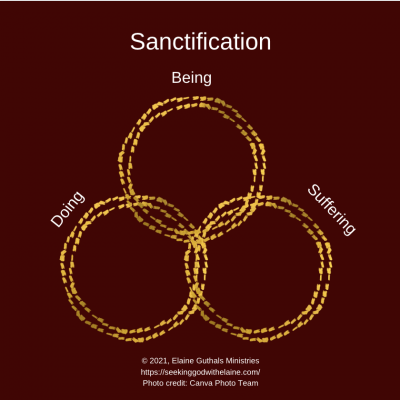
    • God calls us to be, do, and suffer in order to achieve the perfection of being.
    • We can only be transformed through the power of the Sovereign God.
    • Transformation must include our bodies, minds, and souls.

    To read devotions in the Redo for Godliness series, click the appropriate button below.

    Devotions in the Transformed to Perfection series

    We are going to do something we haven’t done for a while. In the past, we walked through almost the whole book of Ephesians.

    For our Redo for Godliness series, we are going to look at the ending chapters of Romans. I was always told that the first 11 chapters are how you become a Christian (Romans Part I), and the last five chapters are what you do then (Romans Part II). The book ends by telling us what it means to have a personal relationship with God.

    We would have looked at this last year because my Ladies and I were supposed to look at the book of Romans for Sunday Morning Bible Study. But Covid hit, and we didn’t get to do that – which was a big bummer. I was really looking forward to our discussions.

    We are going to do the walk through the second part of Romans a little differently than we did when we did the walk through Ephesians. I am going to break it into a couple of series. We’ll handle it more like we did the Attributes of God and Silence of the Soul series. We’ll work on one series a while and then pull in some other stuff to give ourselves a break.

    So, let’s get going and see where it leads.

    Let’s Put It into Context

    We’ve looked at Romans 12: 1-2 before — pretty extensively. We broke apart the phrases in the verses when we developed the first job duty for our Disciples’ Job Description.

    The Disciple’s Job Description

    Complete Job Description

    We looked then at what we were supposed to do. Let’s look now more at the end result — perfection means being.

    Transformed into a Sacrifice

    “Therefore, brothers and sisters, in view of the mercies of God, I urge you to present your bodies as a living sacrifice, holy and pleasing to God …” (Rom. 12: 1 CSB)

    God calls us to submit to Him.

    Sacrifice has long been a part of service. With the Jewish sacrifices, they were categorized as sacrifices for reconciliation and sacrifices for celebration and worship.

    Resource

    Where Jesus was the sacrifice for sin in Romans Part I, we are the sacrifice in Romans Part II. Maclaren said that “sacrifice means giving up everything to God. That is the true sacrifice, when I think as in His sight, and will, and love, and act as in obedience to Him. Godet gave us what being a sacrifice looks like. He wrote, “… the symbol of consecration after pardon had been received … and of the communion established between Jehovah and the believer …”

    Resource

    Elaine-speak. A living sacrifice is the embodiment of becoming sanctified and giving everything to God after being forgiven of our sins.

    Hmmm. That kind of turns it on its ear, doesn’t it? Well, usually when we think of sacrifice, don’t we think of the things we are giving up or not doing because we are now a disciple? Sometimes, we consider it a sacrifice because God is asking us to do something when we would rather do something else.

    So, being a sacrifice isn’t about giving up. It is about being changed.

    Kelly’s point kind of stopped me in my tracks. When the Jews sacrificed the animals — to have any value as a sacrifice — the animals had to be dead.

    Resource

    But we know how that translates, don’t we? We have to be dead to ourselves.

    • “I have been crucified with Christ. It is no longer I who live, but Christ who lives in me. And the life I now live in the flesh I live by faith in the Son of God, who loved me and gave himself for me” (Gal. 2: 20 ESV).
    • “And he said to all, ‘If anyone would come after me, let him deny himself and take up his cross daily and follow me’” (Lk. 9: 23 ESV).

    Then Miller added to that by reminding us that the sacrifice had to be without blemish. I still have it in my folder for this year to take another peak at being perfect in this world.

    Resource

    For us, that is what without blemish means. It means no sin. It means we are to be holy. Holy means to be set apart, perfect, and morally pure while possessing all virtues.

    We can’t accomplish that while we are in these bodies. The only way we can is to be covered by the blood of Jesus. Then God sees His blood, not our blemishes.

    Wardlaw reminded us that the choice to be a living sacrifice to God is ours. We can choose to let Him have control. Or we can choose to be independent and not believe in Sovereign God.

    But when we do choose to be a living sacrifice, Wardlaw confirmed that it has to be a daily submission.

    Resource

    Transformed into the Sanctification

    God calls us to be, do, and suffer in order to achieve the perfection of being.

    Okay, we’ve been saying that perfection isn’t about doing. It is about being.

    Perfection is about being. It is about obtaining the character of God.

    Nell said, to be sanctified, it encompasses being, doing, and suffering. We deliberately have to choose to be, to do, and to suffer all that God has in store for us.

    Resource

    Sanctification

    I can see that. The three-pronged act of sanctification combines into the perfection of being.

    Let’s look at it this way. I decided what I wanted to be when I was in third grade — well, two things. I wanted to be a secretary and a singer.

    I can just hear God saying, “Elaine, it really isn’t about what you do. Either way you choose, you need to do it for Me and be like Me.”

    Think about it. If our transformation to perfection was all about what we do, what we might be doing might not necessarily be for God. We might be part of a Save the Kids, Save the Animals, Save the Planet organization that — though they do good work — aren’t working to glorify God, but the worldview.

    Instead, we are to change our character to be like that of God’s. We are to kick the world’s moralities up to spiritual graces heading toward holiness.

    If our morals don't come through submission to God, they are just worldly morals, not spiritual graces. But then we have to grow the spiritual graces to holiness.

    But we can’t just be and not do. Because God is in us, the love and joy has to bubble out of us. We can’t keep it to ourselves.

    The suffering is going to be a component, also. Once Satan knows we have thrown in with God, he is going to unleash temptations on us.

    So, we’ve got to be, do, and suffer to change into being like God.

    Transformed by the Power

    We can only be transformed through the power of the Sovereign God.

    Arnot talked about a link between doctrine and duty. Both have to be united in order to have a living relationship with God. Arnot said that the link “… unites the product to the power.”

    Resource

    How do we unite the product to power? Communication. Remember the last part of Godet’s definition? He wrote, “… the symbol of consecration after pardon had been received … and of the communion established between Jehovah and the believer …”

    Resource

    The product Arnot was talking about is the life of being a living sacrifice. By being in constant communication with Him, we are devoted to God and serve Him and others. That is the greatest commandments, right?

    Glossary

    Love God is righteousness + Love people is mercy = perfection/godliness

    Transformed Completely

    Transformation must include our bodies, minds, and souls.

    A quick word of caution. Don’t think bodies means just our physical bodies. However, Leach brought up something interesting. He wrote, “Christ had but little to say about souls, but much about bodies.”

    Resource

    Paul is telling us to present our nature and souls — in fact, all of us — to God. Taylor wrote that we can’t “… give the body apart from the soul, which would be formalism and hypocrisy.” A formalist is a person who gives the appearance of being a disciple, but in reality, isn’t.

    Resource

    Making the Connections

    Fiddes made a great point. He wrote, “When we consider that the generality of men are more governed by example than precept, or the intrinsic reason of things, we must acknowledge it adds a very great force to instructions we hear from any person when they come recommended by his own practice, and that upon two accounts.”

    Resource

    How is that evident in today’s society? We used to be a Christian nation. But now, we hear that we are supposed to be doing and believing like worldview people. We are to follow their examples instead of God’s laws and commandments.

    TransformedToPerfectionPin

    How Do We Apply This?

    Barnes said that we should exhibit the attributes of God. He wrote, “Ministers of the gospel should be gentle, tender, and affectionate. They should be kind in feeling, and courteous in manner — like a father or mother.”

    Resource

    When life turns chaotic, we have to look to the One who is steering us. That means we have to have Him in our boat instead of just being the stars that guide us. The stars do us no good if we don’t have the ability to steer the boat.

    Resource

    We are a living sacrifice by

    • Cheerfully being obedient.
    • Consistently following God.
    • Walking in the Spirit instead of allowing worldly passions rule us.
    • Prepare ourselves for service to God.
    • Be grateful to God in all things.
    • Controlling our physical desires.
    • Doing all that is “… holy and pleasing to God …” (Rom. 12: 1 CSB)
    • Making being a living sacrifice a habit.

    Resource

    After we ABCD, we have to be transformed to be like God. It is a process called sanctification. It will take our lifetimes to complete – but it is worth it.

    Father God. We thank You so much that You take us as we are for salvation. Help us to be transformed to like You are as we navigate the Sanctification Road. Amen.

    The ABCDs of Salvation

    If you have not become a believer in Christ, please read through the
    Plan of Salvation and prayerfully consider what God is asking you to do.

    A – admit our sins
    B – believe His Son Jesus is our Redeemer
    C – confess God as Sovereign Lord

    D – demonstrate that commitment by making any changes needed in our lives to
    live the way in which God has called us

    The Disciple’s Job Description

    What do you think?

    Leave me a comment below (about this or anything else) or head over to my Facebook group for some interactive discussion.

    If you don’t understand something and would like further clarification, please contact me.

    If you have not signed up for the email daily or weekly providing the link to the devotions and the newsletter, do so below.

    If God has used this devotion to speak with you, consider sharing it on social media.

  • How Do We Go from Milk Baby to Steak Adult?

    Once we make a profession of faith, we need to grow to be more like God. This daily devotion looks at how we grow through remembering and proving our commitment to God.

    Nuggets

    • In order to grow, we need to remember the past experiences God has taken us through to know what is in our hearts.
    • In order to grow, we have to prove we are making a genuine profession of faith.

    To read devotions in the Redo for Godliness series, click the appropriate button below.

    Devotions in the Growing Our Soul series

    Sanctification
    Working out our salvation
    Growing from milk babies to steak adults

    Three different ways to discuss the same thing. Officially, it is sanctification.

    Oh, yeah. We’ve talked sanctification lots. But usually when we talk about it, we look at it being how it is The Change.

    Let’s look at it through the renewing our mind lens. I don’t remember looking at this verse for this topic, but let’s see where they take us.

    Let’s Put It into Context #1

    Here is a running list of what we’ve discussed previously.

    Let’s Put It into Context #2

    • Sanctification is the transformation of mind, body, and soul, which begins with regeneration, gradually changes our nature through the promptings of the Holy Spirit, and ends with perfected state of spiritual wholeness or completeness.
    • Regeneration is being changed from spiritually dead to spiritually alive and the internal requickening in us that God brings about through the work of the Holy Spirit to give us new character.
    • Spiritual death is the separation from God that occurred as a consequence of Adam and Eve’s original sin. The spiritually alive are those who have ABCDed, so they are no longer separated from God.
    • The perfected state indicates the combination of the spiritual graces which, when all are present, form spiritual wholeness or completeness.
    • Spiritual graces are worldly morals that have been submitted to God to further His kingdom instead of enhancing this world.

    The ABCDs of Salvation

    If you have not become a believer in Christ, please read through the
    Plan of Salvation and prayerfully consider what God is asking you to do.

    A – admit our sins
    B – believe His Son Jesus is our Redeemer
    C – confess God as Sovereign Lord

    D – demonstrate that commitment by making any changes needed in our lives to
    live the way in which God has called us

    The Disciple’s Job Description

    Glossary

    Wow! Do you see how important it is?

    When the Scriptures use the term milk, they are equating our spiritual life with that of a baby. We can hook this verse to I Corinthians 13: 11. “When I was a child, I spoke like a child, I thought like a child, I reasoned like a child. When I became a man, I gave up childish ways” (I Cor. 13: 11 ESV). The goal is to grow up.

    To read a related devotion, click on the appropriate button below.

    Grow through Remembering

    “Remember how the Lord your God led you all the way in the wilderness these forty years …” (Deut. 8: 2 NIV) 

    In order to grow, we need to remember the past experiences God has taken us through to know what is in our hearts.

    We’ve talked in the past about remembering. In fact, there was a time when it seemed like everything tied to remembering.

    Glossary

    But God is talking about more than something that is lodged in our mind files that we can pull up when we want to feel nostalgic or need a laugh. He is talking about the hard stuff.

    Do you remember the time God wanted you to do this mission project and you didn’t? Why did you balk? What needs to be changed so the next time you will do it?

    Do you remember the time God wanted you to witness to that person? Same questions apply.

    Do you remember the time you committed a major sin? What made it so attractive that you disobeyed God? What changes need to be made?

    We have to do more than remember, though. Jay said we have to apply it. He wrote, “If knowledge is important, memory is important in precisely the same degree; for knowledge is nothing unless it be applied, and it cannot be applied unless it be remembered.”

    Resource

    We’ve talked before how important it is to evaluate where we are on the Sanctification Road. Over the last two years, I’ve come up with a bunch of worksheets to try to help us do that evaluation.

    Worksheets

    God wants us to make conscious decisions to follow Him. In order to do that, we need to know all we can about our relationships with Him.

    God wants us to make conscious decisions to follow Him. In order to do that, we need to know all we can about our relationships with Him.

    Grow through Proving

    “… to humble and test you in order to know what was in your heart, whether or not you would keep his commands” (Deut. 8: 2 NIV) 

    In order to grow, we have to prove we are making a genuine profession of faith.

    See, it isn’t about what is in our minds. It is “… in order to know what was in your heart …” (Deut. 8: 2 NIV).

    The memories may be in our mind, but God is working on our hearts. Watkinson said that He fills our hearts with good things. “And we know that for those who love God all things work together for good, for those who are called according to his purpose” (Rom. 8: 28 ESV).

    This version translates it as test. The New Living Testament says to prove your character.

    That means prove our salvation. We have to prove that we genuinely believe in God as our Heavenly Father and Jesus as our Savior.

    We believe it enough to change our character to reflect Them.

    We show we believe it by making our repentance genuine. Repentance is acknowledging our separation from God and expressing sorrow for breaking God’s laws and commandments by making the commitment to changing ourselves through obedience so that we no longer do the wrong things.

    One of the sermons I read was entitled The Blessing of Temptation. At first, I was going, “No, no, no, no, no.” How could that be a blessing?

    Resource

    Well, it is — if we are successful in withstanding the temptation, isn’t it? It is a way to show we aren’t the milk baby who can’t say no to the shiny sin.

    We want to show God that we are growing. We want to know that we are progressing on the Sanctification Road.

    Howe said that part two is then to forget it. He wrote, “The made soil on which we sow is an inheritance from the past, but we are to add a new layer of soil on which others are to sow.” Use it to grow, but don’t let it cut you off at the knees.

    Resource

    We’ve heard it say that, sometimes, our lives pass before our eyes when we are near death. I know that one day, the books of our lives will be opened, and our lives will then be reviewed.

    That won’t be a movie before our eyes, though. That will be judgment.

    I see this as being a review of all the good things and all of the bad things. Judgment will be based on it all.

    Don’t think this is the judgment as to whether we will get into Heaven or not. That is only based on one thing — have we ABCDed or not.

    We can’t do all the do’s and not do any of the don’ts and get into Heaven if we haven’t asked Jesus to be our Savior.

    Webster called them “… the providential dispensations of Almighty God …” Stark said that shows us His glory.

    God’s grace will be evident. God’s mercy will be on display. Remembering these memories and how God provided will showcase what areas on which we need to work.


    Resource

    • God’s providence is His care of us because of His loving nature to provide.
    • God’s glory is, in part, the product of the adoration created when we praise God and give Him honor.
    • God’s grace is the product of the joy of a life with God and His purity.
    • God’s mercy is an act of sovereign will that produces an unexpected and undeserved response from God as He responds in love to our needs.

    Should we be surprised that God is placing the emphasis on how we are progressing from the milk baby to steak adult? No. His concern is always our spiritual condition. Our comfort in this life is secondary to that.

    Should we be surprised that God is placing the emphasis on how we are progressing from the milk baby to steak adult? No. His concern is always our spiritual condition

    Making the Connections

    The whole purpose of remembering — and of going through the trials, in the first place — is “… to humble and test you in order to know what was in your heart …” (Deut. 8: 2 NIV). God wants to know if we are spiritually dead or spiritually alive.

    Those are the only two options. Are we following God or not? Do we have sin in our lives, or are we forgiven?

    Watkinson wrote, “The moral idea is the grand end to which God governs the race, the nation, and governs us. God seeks to bring men to the knowledge of Himself, to purify them from false love and lusts, to teach them obedience, to make them fit for their great and holy inheritance.”

    Resource

    God is training us for His kingdom. Wadsworth called it a process of discipline. That fits in with our saying the Sanctification Road is a process.

    Glossary

    Resource

    HowDoWeGoFromMilkBabyToSteakAdultPin

    How Do We Apply This?

    • Remember and be thankful for what God has done in the past and for what God will do in the future.
    • Remember and pick out where you have made strides on the Sanctification Road. Celebrate those achievements.
    • Remember and pick out where you still need God to fix you. Pray.
    • Learn from our past mistakes.
    • Obey in all matters.

    Resource

    When we are unbelievers, we can get so caught up with the expectation that we will have to give up every thing we like. That isn’t true.

    It also doesn’t take into account what we will gain. Howe wrote, “And so one way of forgetting the past and leaving the things that are behind is to go and do better things.”

    Resource

    We gain so much when we submit to Sovereign God. We gain growing to be like Him.

    Father God. We look at what you asked us to do, and we become concerned that we will not be able to do what you ask. We forget, unfortunately, that you are there guiding us as we go. You are there, providing us with things that are immensely better as well as within Your well. Help us to imitate you. Amen.

    What do you think?

    Leave me a comment below (about this or anything else) or head over to my Facebook group for some interactive discussion.

    If you don’t understand something and would like further clarification, please contact me.

    If you have not signed up for the email daily or weekly providing the link to the devotions and the newsletter, do so below.

    If God has used this devotion to speak with you, consider sharing it on social media.
  • Renewing Our Inner Person by Being Sober

    A main characteristic of the sinful world is its chaos. Disciples, on the other hand, are called to be sober and even-keeled. This daily devotional looks at how disciples of Christ can use being sober and even-keeled to renew our inner us.

    Nuggets

    • We prepare ourselves for the trials that try to steal our confidence and our relationships with God.

    • Disciples are to be exercising self-discipline to foster sobriety.

    • The foundation of hope is grace that comes when belief is present.

    To read devotions in the Redo for Godliness series, click the appropriate button below.

    Devotions in the Growing Our Soul series

    Have you ever wished salvation was a once-and-done event? God, in all of His magnificence, would proclaim we are now perfect and holy.

    • Holy means to be set apart, perfect, and morally pure while possessing all virtues.
    • The perfected state indicates the combination of the spiritual graces which, when all are present, form spiritual wholeness or completeness.
    • Spiritual graces are worldly morals that have been submitted to God to further His kingdom instead of enhancing this world.

    Glossary

    Everything in us would be magically fixed. Only good things would happen from there on out.

    Doesn’t. Happen. That. Way.

    Instead, we become travelers on the Sanctification Road. It is a bumpy, hilly, curvy road. There is no consistency to it.

    Sanctification is a major component of our redo for godliness. However, it is not consistent. It has its hills and valleys.

    The trials and the testings that come on that road cause us to determine just where we are on our relationship with God. Through them all, we are called to be sober or even-keeled.

    Let’s Put It into Context

    Here is a running list of what we’ve discussed previously.

    Sober is a character trait distinguished by self-control, genuineness, and sound moral judgment.

    Preparing Our Minds for Action

    “Therefore, preparing your minds for action …” (I Pet. 1: 13 ESV)

    We prepare ourselves for the trials that try to steal our confidence and our relationships with God.

    Because we are to be sober and even-keeled, Peter said we should prepare our minds. The King James Version says “… gird up the loins of your mind …” (I Pet. 1: 13 KJV). The sermons I read usually took a tighten-your-belt approach to that.

    I liked the Christian Standard Bible translation. It said “Therefore, with your minds ready for action …” (I Pet. 1: 13 CSB).

    We renew our inner person by training ourselves for what comes our way. We know Satan is going to try to throw things at us. We know God is even going to test us.

    To read a related devotion, click the button below.

    We have to be ready. We are not only to maintain our salvation, but we are also to grow it. We have to be prepared.

    Read this sentence through the lens of renewing our minds as God is teaching us to grow. Parker wrote, “Remember, however little the word of revealed truth is to you, it is God’s greatest and best thought: that it is the divine record concerning yourself and His dear Son ought to make it of infinite importance to you. Therefore, ‘gird up the loins of your mind.’ Tighten the belt. You can do better work, run a better race, or be better ready for fight. Then shall you be fitted for the best service the King demands.”

    Resource

    What did Parker say?

    • There are a lot of things about God that we don’t understand. He has revealed only some to us in His Word.
    • It doesn’t matter if we think something is a biggy or something minuscule. It tells us about God. That makes what He reveals through His Holy Spirit infinitely more than we realize.
    • We need to use what God reveals to us to better our relationships with Him.
    • Because we are His, we will have to be ready to fight whatever Satan throws our way.

    Spurgeon wrote that tightening our belts helps make us consistent. That helps make us determined.

    This is needed because, as Spurgeon wrote, “A true believer should be ready for suffering or service — ready, indeed, for anything.”

    Resource

    I love what Bird had to say. He wrote, “The Christian life is not an outward thing. The mind is the battlefield. Here the battles are lost or won. How much does the mind require bracing up!”

    Resource

    We’ve long said that faith is in the mind. This year, we learned that it isn’t just about doing the do’s and not doing the don’ts. It is about being.

    Perfection is about being. It is about obtaining the character of God.

    Bird reminded us that Christian morality has a nobility about it. We are to have a quiet dignity that breeds patience and diligence.

    • Diligence is a consistent, persistent effort.
    • Patience is a steadfast endurance in opposition without losing a positive attitude.

    To me, that makes a stronger tie with our sobriety. When we think even-keeled, we think patient. When we think sober, we think diligent.

    Vaughan argued that, in order to gird our minds, we need to replace vanity with humility. Humility is a character trait that diminishes pride and places dependence on God while holding a modest view of our importance with respect to others.

    Resource

    Parker said that tightening our belts would help us with our sobriety. It increases our self-control.

    Being Sober-Minded

    “… and being sober-minded …” (I Pet. 1: 13 ESV)

    Disciples are to be exercising self-discipline to foster sobriety.

    Another definition Spurgeon presented for sober besides being moderate was to be watchful. I think that goes hand in hand with being even-keeled.

    Glossary

    We are not to be going to extremes, but we should be grounded in reality. We can focus on God more when we are consistently looking at truth.

    Thomas talked about moral judiciousness. He said that judicious deals with “… our opinions, our affections, our expectations, and speech.”

    Resource

    How does that mesh with soberness? Those are exactly the areas that we should be even keeled as disciples of Christ.

    We need to be self-controlled in each area. If we aren’t controlled by God in our opinions, affections, and speech, we damage our witness. If we aren’t self controlled in our expectations, then we could come across as arrogant and uncaring.

    Rogers made a great point. Sobriety helps us to keep the laws and commandments. He also said it helps us moderate those laws and commandments which we are keeping.

    Resource

    We’ve talked before about how someone may interpret one thing as a sin, but someone else doesn’t. Paul told us not to be stumbling blocks for others (Rom. 14: 13).

    We said it is better to give up some thing that really isn’t a send them to have you or someone else commit the same because of it. There are things that border sinfulness or could lead to sinfulness.

    Resource

    To read a related devotion, click the button below.

    God wants us to be thoughtful about what pleases Him. He wants us to make a conscious decision to follow Him.

    The Foundation of Hope

    “… set your hope fully on the grace that will be brought to you at the revelation of Jesus Christ” (I Pet. 1: 13 ESV)  

    The foundation of hope is grace that comes when belief is present.

    It was interesting that Vaughan equated grace with patience. Grace is a free and unmerited gift from Heavenly Father given through His Son, Jesus Christ that enables salvation and spiritual healing to believers by the work of the Holy Spirit.

    Resource

    The Holman Bible Dictionary also said grace was the “undeserved acceptance and love received from another …” Maclaren called it “… the sum of the felicities of a future life.”

    Resource

    I can see grace being the product of the joy of a life with God.

    I guess God has to have a lot of patience with us when He is giving us the free gift of grace — this undeserved acceptance and love.

    The hope comes because we have the grace. Hope is a future expectation, called a living hope, based on the confidence that our names will be found in the book of life.

    The consistency of sobriety should foster the hope. It brings a harmony to our lives that strengthens us. It calms all the clashing factions in our minds.

    But notice where we get this hope — “… the grace that will be brought to you at the revelation of Jesus Christ” (I Pet. 1: 13 ESV). Hope comes belief in our Savior.

    Maclaren also reminded us that this hope is only maintained by self-discipline. Self-discipline is where we manage ourselves so that we can improve. The self-discipline brings us the self-control, the ability to withstand temptations by managing ourselves — our emotions, thoughts, and behaviors.

    Bright extended that and said we can train this hope. We do that through self-discipline, too.

    Resource

    Whoa! Wait a minute. “… the grace that will be brought to you …” (I Pet. 1: 13 ESV). God does the bringing.

    God is the one who calls us to salvation.

    • Salvation is the gift of life through the deliverance from evil and the consequences of sins to replace them with good and eternal life.
    • The consequences of sin are spiritual death and physical separation from God.
    • Spiritual death is the spiritual separation from God that occurred as a consequence of Adam and Eve’s original sin. The spiritually alive are those who have ABCDed, so they are no longer separated from God.
    • Eternal life is the promise of living eternally – even if we have died in this life – because we have admitted our sins, believed Jesus as Savior and Redeemer, and confessed God as Sovereign Lord.

    The ABCDs of Salvation

    If you have not become a believer in Christ, please read through the
    Plan of Salvation and prayerfully consider what God is asking you to do.

    A – admit our sins
    B – believe His Son Jesus is our Redeemer
    C – confess God as Sovereign Lord

    D – demonstrate that commitment by making any changes needed in our lives to
    live the way in which God has called us

    The Disciple’s Job Description

    Glossary

    God calls everyone to salvation. He doesn’t want one person to perish (I Tim. 2: 4).

    This shows that God wants to bestow His peace on us. He wants to provide an environment in which we can be even-keeled.

    RenewingOurMindByBeingSoberPin

    Making the Connections

    Bird reminded us what the end goal is — holiness. We are sober and even-keeled to be able to navigate the Sanctification Road to achieve holiness and righteousness.

    Resource

    What that entails is obedience. Obedience means to hear, conform to, and carry out the instructions that God gives us.

    To read a related devotion, click on the appropriate button below.

    Disobedience allows the chaos to run unchecked. We need to remain true to Him.

    How Do We Apply This?

    • We are obedient to God’s laws and commandments.
    • We listen to the promptings of the Holy Spirit.
    • We need to choose God’s way.

    Father God. We love You. We choose You and Your ways. Give us grace. Give us strength. Amen.

    What do you think?

    Leave me a comment below (about this or anything else) or head over to my Facebook group for some interactive discussion.

    If you don’t understand something and would like further clarification, please contact me.

    If you have not signed up for the email daily or weekly providing the link to the devotions and the newsletter, do so below.

    If God has used this devotion to speak with you, consider sharing it on social media.