Category: Change

  • Changes Needed to be in God’s Word

    Sanctification is about change. This daily devotional looks at an overview of what we need to change.

    SteppingIntoGod'sWill

    We’ve established that navigating the Sanctification Road is all about change. But what are we to change?

    There are three major areas that we need to change. We need to turn our focus off the world and onto God, put our faith and trust in Him, and accept His Will.

    Focus on God

    “Therefore, since we are surrounded by so great a cloud of witnesses, let us also lay aside every weight, and sin which clings so closely, and let us run with endurance the race that is set before us, looking to Jesus, the founder and perfecter of our faith, who for the joy that was set before him endured the cross, despising the shame, and is seated at the right hand of the throne of God” (Heb. 12: 1-2 ESV)

    Our focus needs to be on doing what God calls us to do, not the world.

    Regardless of whether we are on the regeneration side of the continuum or the perfection side, we need to be focusing on God.

    God has a plan for each of our lives. We need to be striving to complete what He has called us to do.

    When we are focusing on Him, Jesus said the weight would be set aside. “For my yoke is easy, and my burden is light” (Mt. 11: 30 ESV).

    I know. It doesn’t always feel that way, does it? Right now, the yolk is feeling hard in my life because the burden isn’t light at the moment.

    But I know a lot of that is Satan trying to shift my focus, derail my train, and steal my joy. When I put my focus on Satan, that is exactly how it feels.

    When I patiently wait for God to work things out – for only He can – my burden is lightened. It is lightened even in the trial.

    We are also to lay aside the burden of sin. “My transgressions were bound into a yolk; by his hand they were fastened together; they were set up on my neck; he caused my strength to fail; the Lord gave me into the hands of those whom I cannot withstand” (Lam. 1: 14 ESV). They are very heavy.

    How do we lay aside our sins? We look to Jesus, Who is our High Priest. His blood continues to pay the penalty for our sins.

    There is also the weight of our old habits. At first, we may see nothing wrong with our old habits. They may, however, take our focus off God.

    We are under the weight of our old habits. Let’s take procrastination.

    What if we procrastinate in reading Scriptures? What if we say we’re going to pray at a certain time every evening, but keep putting it off?

    It isn’t a sin if we don’t pray, but we don’t reap the benefits of having done so. We are out of right relationship with God when we don’t communicate with Him.

    So, we feel the weight of not talking with God and growing our relationship.

    Put Our Faith and Trust in Him

    “The Lord is my strength and my shield; in him my heart trusts, and I am helped; my heart exults, and with my song I give thanks to him” (Ps. 28: 7 ESV)

    Trust is the assurance that God’s promises are true.

    What has God promised? He assures us that we can depend upon the atonement of Christ.

    What is atonement? Atonement is about repayment for a wrong by the shedding of Jesus’ blood.

    We have to trust that God has saved us when we admit our sins, believe Jesus is our Savior and Redeemer, confess God as Sovereign Lord, and demonstrate our willingness to submit to Hm.

    This is a big change for us. We are so used to trusting in ourselves or someone else.

    How many times do we rely on our own strength? I know I tell myself frequently that I shouldn’t be afraid of something because I am stronger than whatever I am facing.

    But my strength pales when compared to God’s strength. In circumstances where I can’t protect myself, He can.

    We can’t put our trust in mankind. If we aren’t careful, others can lead us further into sin.

    It can be hard, though, for some to trust in an unseen God.

    But that is where faith comes in. Faith is a gift from God that enhances the conviction that the doctrines revealed in God’s Word are true, even if we do not understand all aspects of them, a belief which impacts our lives and distinguishes us from others.

    Accept His Will

    “For you have need of endurance, so that when you have done the will of God you may receive what is promised” (Heb. 10: 36 ESV)

    We need to have patience when we are seeking to do God’s Will.

    Patience is built on a foundation of confidence, hope, and belief. We need to know that we can depend on God.

    God’s word tells us over and over that we can depend on Him.

    • “Trust in the Lord with all your heart, and do not lean on your own understanding” (Prov. 3: 5: ESV).
    • “Casting all your anxieties on him, because he cares for you” (I Pet. 5: 7 ESV).
    • “And my God will supply every need of yours according to his riches in glory in Christ Jesus” (Phil. 4: 19 ESV).
    • “The Lord will fight for you, and you have only to be silent” (Ex. 14: 14 ESV).

    That gives us confidence to know that we can rely on Him.

    Hope is the expectation, also called a living hope, based on the confidence that, because of our relationship with God, our names will be found in the book of life.

    Yes, that is all wrapped up in our having a genuine relationship with God.

    Why wouldn’t it be? God’s priority is the condition of our souls.

    It is not the condition of our physical lives that garners the bulk of God’s attention.

    God’s Will is that we become His children. When we do, we know that our names are written in the book of life.

    Major consequences occur when our names are not in that book. “And anyone whose name was not found written in the book of life was thrown into the lake of fire” (Rev. 20: 15 ESV).

    It just takes belief. The foundation of salvation is belief. That has components of faith, access, and reward.

    There are two aspects to faith. The first aspect is our comprehension of the subject. It starts with knowledge. We have to know the evidence presented and believe it to be true.

    But our faith is restricted by our understanding.

    And let’s be realistic here. There is much that is beyond our understanding.

    God knows that. “‘For my thoughts are not your thoughts, and your ways are not my ways.’ This is the Lord’s declaration. ‘For as heaven is higher than earth, so my ways are higher than your ways, and my thoughts than your thoughts’” (Isa. 55: 8-9 CSB)

    That is why the second aspect is we have to trust God in what we don’t understand. “Trust in the Lord with all your heart, and do not rely on your own understanding; in all your ways know him, and he will make your paths straight” (Prov. 3: 5-6 CSB).

    Because we have faith, we seek God.

    If we don’t believe that God exists, we won’t be talking to Him. If we don’t believe what He says in His Word, we won’t be reading it and talking to Him.

    God is right there with us — and we know it. Yes, we have to approach God through Jesus. He gave us free will. He doesn’t force us to believe in Him.

    The good thing about belief is we choose what we are going to believe. Then we take that a step farther.

    We choose to be like God.

    Father God. We give everything to You. We give You our lives by placing our faith and trust in You. We accept Your Will for our lives. Amen.

    changes-needed-to-be-in-gods-will

    What do you think?

    Leave me a comment below (about this or anything else) or head over to my Facebook group for some interactive discussion.

    If you don’t understand something and would like further clarification, please contact me.

    If you have not signed up for the email daily or weekly providing the link to the devotions and the newsletter, do so below.

    If God has used this devotion to speak with you, consider sharing it on social media.

  • Changed through Sanctification

    If we start out with regeneration and end up at perfection, how we get there is sanctification. This daily devotional looks at how we become new creations.

    SteppingIntoGod'sWill

    Sanctification and Justification

    “… But you were washed, you were sanctified, you were justified in the name of the Lord Jesus Christ and by the Spirit of our God” (I Cor. 6: 11 ESV)

    Sanctification is the evidence of justification. 

    Think about it. It has to be.

    Sanctification is the transformation of mind, body, and soul, which begins with regeneration; gradually changes our nature and morals through the promptings of the Holy Spirit; and ends with perfected state of spiritual wholeness or completeness. 

    • Regeneration is being changed from spiritually dead to spiritually alive and the internal new birth and requickening that God brings about through the work of the Holy Spirit to give us new character. 
      • Spiritual death is the separation from God that occurred as a consequence of Adam and Eve’s original sin. The spiritually alive are those who have ABCDed, so they are no longer separated from God. 
    • Perfection means we reach a state of maturity because the combination of the spiritual graces form, when all are present, spiritual wholeness or completeness — holy, sanctified, and righteous. 
      • Spiritual graces are worldly morals that have been submitted to God to further His kingdom instead of enhancing this world.
      • Sanctified means to be set free from sin.
      • Righteous means we are free from sin because we are following God’s moral laws.

    Justification is the act through the merits of Christ that makes us free from sin because we are following God’s moral laws. Jesus justifies us when we put our lives in His hand. 

    The ABCDs of Salvation

    If you have not become a believer in Christ, please read through the
    Plan of Salvation and prayerfully consider what God is asking you to do.

    A – admit our sins
    B – believe His Son Jesus is our Redeemer
    C – confess God as Sovereign Lord

    D – demonstrate that commitment by making any changes needed in our lives to
    live the way in which God has called us

    The Disciple’s Job Description

    Glossary

    In conversion, Jesus makes us free. Conversion is the product of repentance, when we turn away from our sins and return to God, that secures salvation. We get regeneration. 

    But that is only the start. We become new creations. 

    Oh, yeah. We have to change. “Therefore, if anyone is in Christ, he is a new creation. The old is passed away; behold, the new has come” (II Cor. 5: 17 ESV).

    Glossary

    That is what sanctification is all about. We are changing from what we were before conversion to mature disciples — what is needed to gain perfection.

    It isn’t about just loving one another and being a good person. 

    It is about changing our motives, frame of mind, and habits. It works on all of us — our thoughts, feelings, opinions, and goals. 

    It works on our souls. Our soul is our spiritual part that is immortal.

    Sanctification is about changing our focus and putting it on God.

    This is why we say God takes us where we are. Salvation does start there.

    Salvation is the gift of life through the deliverance from condemnation and sin to acceptance and holiness and changes us from being spiritually dead to spiritually alive. 

    • Holiness is the transcendent excellence of His nature that includes elements of purity, dedication, and commitment that lead to being set apart.
      • Purity means possessing God’s moral character, having eliminated the stain of sin.

    Glossary

    But we don’t get to stay there. We have to become more like God. We have to gain His character.

    But it is more than just going through a change. It is putting feet to our faith. Faith is a gift from God that enhances the conviction that the doctrines revealed in God’s Word are true, even if we do not understand all aspects of them, a belief which impacts our lives and distinguishes us from others.

    We have to be active participants in changing our lives to reflect God. Becoming a disciple — and being a disciple — isn’t a spectator sport.

    We have to work at it. We do this by seeking You.

    The Work of Sanctification

    “Therefore, my beloved, as you have always obeyed, so now, not only as in my presence but much more in my absence, work out your own salvation with fear and trembling” (Phil. 2: 12 ESV)

    The change associated with sanctification is going to take work.

    Paul recognized that. He called it working out our salvation.

    God doesn’t just flip a switch, and we are that new creation. It is going to take a lot of work to change our motives, frame of mind, and habits.

    That is how we build God’s character in us.

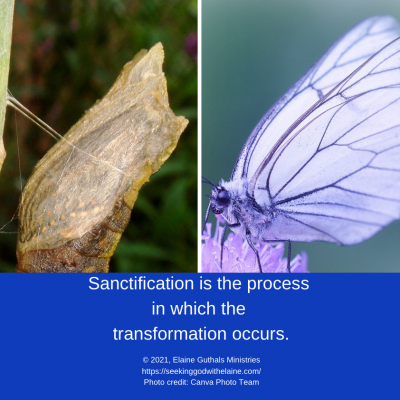
    This is why we call sanctification a process. It is going to take time and effort to resist our sinful nature and embrace God’s holy nature.

    It is also going to hurt. We are allowing God to cut the sin out.

    That is the whole purpose of sanctification. We can’t get God’s character if we still have sin reigning in our lives.

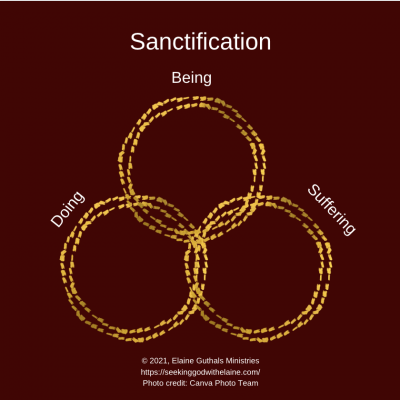
    Sanctification has three different prongs that are used to cut out sin. We have to be, do, and suffer in order to be sanctified.

    Each part has its own challenges.

    It seems kind of funny to list that we have to be like God when that is the goal in which we are striving in the process.

    But we can’t wait until the end of the process to have God’s character — or be getting it. If we do that, we are not sincere in our conversion. Salvation really isn’t ours.

    We have to show evidence that we are becoming like God. We show that by being like Him now.

    It does take work to succeed in being like God. It isn’t just in our doing and being a good person.

    The doing part has to be focused on doing for God in the way He wants us to do. We serve Him in the ministries into which He calls us.

    We can’t love others because it is the right thing to do. We have to love others in order to show them how God loves them.

    It goes back to our motives. Our motives have to focus on God, growing us to be more like Him, and expanding His kingdom.

    Ouch! Yeah, suffering is part of it.

    God points out the remaining sin in our lives as we go through trials. It is when we are dealing with the hard times, we want change the most.

    We are more open to removing the sin when we go through trials.

    Paul told us the benefits of sanctification. “Therefore, if anyone cleanses himself from what is dishonorable, he will be a vessel for honorable use, set apart as holy, useful to the master of the house, ready for every good work” (II Tim. 2: 21 ESV).

    Growing through Sanctification

    “For though by this time you ought to be teachers, you need someone to teach you again the basic principles of the oracles of God. You need milk, not solid food, for everyone who lives on milk is unskilled in the word of righteousness, since he is a child. But solid food is for the mature, for those who have their powers of discernment trained by constant practice to distinguish good from evil” (Heb. 5: 12-14 ESV)

    The whole purpose of sanctification is to get us to grow in grace and knowledge of God.

    We don’t want to remain where we are at when we were converted. We need to grow from there.

    We need to solidify what we believe. We do that by seeking God.

    We have to obey God’s laws and commandments. That is how we learn about His character.

    Reaching Perfection

    “Beloved, we are God’s children now, and what we will be has not yet appeared; but we know that when he appears we shall be like him, because we shall see him as he is” (I Jn. 3: 2 ESV)

    One day, the process will be over. We will truly be new creations because we will be changed to be as Jesus is.

    The process is only completed in the day of the Lord. The day of the Lord is when we will be called home to Heaven.

    That is the day for which we work.

    Father God. We want to grow closer to You every day of our lives. It is our desire to become more like You. Help us to navigate the Sanctification Road so that we may do that. Amen.

    changed-through-sanctification

    What do you think?

    Leave me a comment below (about this or anything else) or head over to my Facebook group for some interactive discussion.

    If you don’t understand something and would like further clarification, please contact me.

    If you have not signed up for the email daily or weekly providing the link to the devotions and the newsletter, do so below.

    If God has used this devotion to speak with you, consider sharing it on social media.

  • Changed to Perfection

    Regeneration is at the start of the journey when we become disciples of Christ. This daily devotional looks at what is at the end of the journey – perfection – and why we can’t be perfected until we arrive at Heaven.

    SteppingIntoGod'sWill

    As disciples, our goal is to gain perfection. But what is that, and when do we obtain it?

    What Is Perfection?

    “And let steadfastness have its full effect, that you may be perfect and complete, lacking in nothing” (Jas. 1: 4 ESV)

    Perfection means we reach a state of maturity because the combination of the spiritual graces form, when all are present, spiritual wholeness or completeness — holy, sanctified, and righteous. 

    • Spiritual graces are worldly morals that have been submitted to God to further His kingdom instead of enhancing this world.
    • Holy means to be set apart — because of our devotion to God — to become perfect, and morally pure while possessing all virtues. 
      • Pure means not being sinful or having the stain of sin.  
    • Sanctified means to be set free from sin.
    • Righteous means we are free from sin because we are following God’s moral laws.
    • Virtues are standards of moral excellence.

    The focal points of the definition are that perfection is complete and holy.

    Perfection is complete because it means we are totally like God. Every one of the spiritual graces is present at the appropriate level.

    Perfection is holy, sanctified, and righteous because it focuses on imitating God.

    Perfection in Heaven

    “You therefore must be perfect, as you Heavenly Father is perfect” (Mt. 5: 48 ESV)

    God calls us to be perfect like Him in Heaven.

    Macdonald gave us a good list of Who God is and ways in which we can and cannot imitate Him.

    Why We Can’t be Like God

    • We have a beginning and end, where God doesn’t.
    • Our beginning did not include being immortal, where God always has been.
    • Our presence is limited to a defined space on this earth. God is all-present.
    • God has the power to create and destroy, which we do not have.
    • We are not holy as God is.

    Resource

    God wants us to use His knowledge and submit our will to His. That means we accept His principles that lead to knowledge, discernment, and good sense. We put that into practice through salvation, increasing our goodness and virtue. 

    We won’t be spiritually whole until we are residents in Heaven.

    Still, when we imitate Jesus, we should do more than try to imitate His goodness, mercy, and love for others.

    We are called to imitate Jesus’ knowledge, wisdom, and understanding of God.

    Perfection on Earth

    “Not that I have already obtained this or am perfect already, but I press on to make it my own, because Christ Jesus has made me his own. Brothers, I do not consider that I have made it on my own. But one thing I do: forgetting what lies behind and straining forward to what lies ahead, I press on toward the goal for the prize of the upward call of God in Christ Jesus. Let those of us who are mature think this way, and if in anything you think otherwise, God will reveal that also to you” (Phil. 3: 12-15 ESV)

    God calls us to maturity here on earth.

    While we are here on earth, we aren’t called to be perfect as God is. Each and every one of us would fail miserably.

    There is no way we can be perfect like God here on earth. If we could have been, Jesus would not have had to die for us.

    We can’t, so He did.

    Gouge wrote, “The righteousness which is here meant [when describing the breastplate of righteousness]. A powerful work of God’s Spirit in the regenerate, whereby they endeavour to approve themselves unto God and man, by performing what God’s law requires.”

    Resource

    Let’s look at the end of that: “… whereby they endeavour to approve themselves unto God and man, by performing what God’s law requires.”

    Endeavor to prove: We are working hard to establish the truth to God and man. 

    Performing the laws: We are to follow God’s laws and commandments.

    “Jesus said to him, ‘I am the way, and the truth, and the life. No one comes to the Father except through me’” (Jn. 14: 6 ESV). When we establish truth, we accept the Plan of Salvation and ask Jesus to come into our hearts.

    When we follow God’s laws and commandments, we learn of God’s character. We also imitate God’s character when we imitate Jesus.

    We know we are not going to be perfect in this life because we are still in our sinful bodies. That means we are going to have to have a lot of repentance.

    So, Paul wasn’t talking about being perfect/sinless here.

    Let’s walk through this. God wants us to change our character to be more like His. He wants us to have His morals.

    But God knows that we aren’t going to be 100% fruit-of-the-Spirit perfect. If that was the requirement, no one would make it to Heaven. 

    How in the world do we show perfection?

    • We are sincere in seeking Him.
    • We conform our hearts to His commands.
    • We are consistent in seeking Him.
    • We are 100% consistent in asking His forgiveness when we do disobey Him.

    How do we do that?

    “And you shall love the Lord your God with all your heart and with all your soul and with all your mind and with all your strength” (Mk. 12: 30 ESV).

    Macdonald had an interesting concept. What if being perfect was being relative?

    • Do we realize we are fearfully and wonderfully made in His image (Ps. 119: 34; Gen. 1: 26).
    • Do we totally focus ourselves and our service on Him?
    • Do we see Him in His Word and in our lives?
    • Have we ABCDed?

    Resource

    The problem lies in when we profess God as our Father and Master but do not live to prove that. Our hearts and lives, in fact, negate that assertion.

    Being called to perfection means we have a higher standard. Instead of being perfect in keeping the laws and commands, we are called to be holy as God is holy.

    Father God. We long to be like You. We want to be holy, sanctified, and righteous so that we are spiritually complete. Grow us to accomplish that. Amen.

    changed-to-perfection

    What do you think?

    Leave me a comment below (about this or anything else) or head over to my Facebook group for some interactive discussion.

    If you don’t understand something and would like further clarification, please contact me.

    If you have not signed up for the email daily or weekly providing the link to the devotions and the newsletter, do so below.

    If God has used this devotion to speak with you, consider sharing it on social media.

  • Changed by Regeneration

    We place much emphasis on the need for salvation, but sometimes, the change that brings can be confusing to some. This daily devotional looks at what regeneration means.

    SteppingIntoGod'sWill

    We can obtain salvation without knowing everything about the change that is made in our hearts. However, it helps us make sense of the whys and hows of the process of salvation to know about regeneration.

    What Happens at Conversion?

    “Enter by the narrow gate. For the gate is wide and the way is easy that leads to destruction, and those who enter by it are many. For the gate is narrow and the way is hard that leads to life, and those who find it are few” (Mt. 7: 13-14 ESV)

    Salvation — the narrow gate — leads to other things after we choose to enter.

    When we choose to accept the Plan of Salvation, we

    • admit that mankind was separated from God after the original sin, making us sinners;
    • believe Jesus paid the penalty for those sins to become our Savior and Redeemer;
    • confess God as Sovereign God; and
    • demonstrate that commitment by submitting to living our lives following His laws and commandments, confessing God as Sovereign Lord.

    That means we have entered through the narrow gate through faith. The narrow gate is both Jesus and salvation.

    Salvation is what we get crossing the threshold of the gate. Jesus is the how we are getting it.

    Really, what happens at conversion is the act of passing through the narrow gate. On the other side, is regeneration.

    Salvation is the gift of life through the deliverance from condemnation and sin to acceptance and holiness and changes us from being spiritually dead to spiritually alive.

    • Holiness is the transcendent excellence of His nature that includes elements of purity, dedication, and commitment that lead to being set apart.
      • Purity means possessing God’s moral character, having eliminated the stain of sin.
    • Spiritual death is the spiritual separation from God that occurred as a consequence of Adam and Eve’s original sin.
      • The spiritually alive are those who have ABCDed, so they are no longer separated from God.

    Conversion is the product of repentance, when we turn away from our sins and return to God, that secures salvation.
    Faith is a gift from God that enhances the conviction that the doctrines revealed in God’s Word are true, even if we do not understand all aspects of them, a belief which impacts our lives you and distinguishes us from others.
    Regeneration is being changed from spiritually dead to spiritually alive and the internal new birth and requickening that God brings about through the work of the Holy Spirit.

    The Change that Regeneration Brings

    “He saved us, not because of works done by us in righteousness, but according to his own mercy, by the washing of regeneration and renewal of the Holy Spirit” (Ti. 3: 5 ESV)

    Let’s put those two concepts of righteousness and regeneration together.

    We only become righteous when we become holy.

    • Being righteous means we are free from sin because we are following God’s moral laws.
    • Holy means to be set apart — because of our devotion to God — to become perfect, and morally pure while possessing all virtues.
    • Perfection means we reach a state of maturity because the combination of the spiritual graces form, when all are present, spiritual wholeness or completeness — holy, sanctified, and righteous.
      • Spiritual graces are worldly morals that have been submitted to God to further His kingdom instead of enhancing this world.
      • Sanctified means to be set free from sin.
    • Pure means not being sinful or having the stain of sin.
    • Virtues are standards of moral excellence.

    We are only free from sin when we are set apart. We are only set apart when we have been given the internal new birth obtained through salvation.

    That is why we cannot work our way into salvation. We ourselves cannot make those changes.

    What we have to remember is regeneration begins instantaneously at conversion. It ushers in God’s grace when we put or faith and trust in Him and allows grace to reside in our hearts.

    Regeneration is where we get our spiritual nature back. We are changed from spiritually dead to spiritually alive.

    You see, it isn’t just about reconciliation. Oh, yes. We need forgiveness for our sins. We are separated from God and are disobeying His laws and commandments.

    But regeneration is about restoration. Restoration is bringing our relationship with God back to what it was.

    What God wants to bring us back to is what Adam and Eve had before the original sin. That can only be accomplished through grace. Grace leads to faith, which leads to salvation, which leads to regeneration.

    How being born again is different than regeneration? Being born again is a principle of grace, something that is infused instead of acquired, due to the power of God, an inward change, and the birth of all of our graces.
    Is maybe being born again the what and regeneration the how? Or is it like sanctification: navigating the Sanctification Road, working out our salvation, and growing from milk babies to steak adults?

    Only God Can Regenerate Us

    God alone regenerates us.

    We can’t earn our way to salvation. There is only one way: through Jesus.

    “Jesus said to him, ‘I am the way, and the truth, and the life. No one comes to the Father except through me’” (Jn. 14: 6 ESV).

    No, our works do not save us. We cannot do random acts of kindness and get into Heaven.

    Only God can change us. When we show we have faith and accept God’s Plan of Salvation, we are changed to be holy, as the Sovereign Lord is.

    Our initial confession renews our relationship with God. God restores our relationship and makes us spiritually alive.

    Can We Lose Our Salvation?

    “My Father, who has given them to me, is greater than all, and no one is able to snatch them out of the Father’s hand” (Jn. 10: 29 ESV)

    I don’t think we can lose our salvation.

    If we could, that would mean we would have to be regenerated over and over again. That doesn’t happen.

    A while back, I thought regeneration was one of those three-part words. The first part is the past-tense aspect. God changed us from spiritually dead to spiritually alive.

    The present-tense regeneration is where I get bogged down. I don’t see anywhere in Scripture where it says we waffle back and for between being spiritually dead to spiritually alive.

    I do think we will have a future regeneration. “Behold! I tell you a mystery. We shall not all sleep, but we shall all be changed, in a moment, in the twinkling of an eye, at the last trumpet. For the trumpet will sound, and the dead will be raised imperishable, and we shall be changed” (1 Cor. 12: 51-52 ESV).

    When we get to the eternal life part, we will be like Christ. “Beloved, we are God’s children now, and what we will be has not yet appeared; but we know that when he appears[a] we shall be like him, because we shall see him as he is” (I Jn. 3: 2 ESV).

    We don’t have a present-tense regeneration because it is sanctification. That is where the big change takes place. It is where God wants us to change our character to be like Him, not just our mindset to follow His rules.

    We get to choose to change our character and lifestyles. We can’t be a regenerated new creation when we are hanging on to old sin.
    We choose to not follow the deceitful desires. So much in this world is deceitful. We chase after things we think will bring us happiness and security but end up being disappointed.

    Regeneration gives us a new character, but that doesn’t mean we are finished with the needed changes. During our lifetimes, we work on fusing that character with our physical character so that we imitate God.

    We have to make a conscious effort to grow to be like God. This means that it has to work on our hearts, minds, and free will.

    That work is called the process of sanctification.

    But God also knows we need renewal daily because we have to change our mindset. That takes time — our whole lives, in fact. It is a progression.

    What does Lamentations 3: 22-23 say? “The faithful love of the LORD never ends! His mercies never cease. Great is his faithfulness; his mercies begin afresh each morning” (Lam. 3: 22-23 NLT).

    Every day, God gives us His love in new, inventive ways to help us renew our minds. He wants us to succeed in making the change. He wants our regeneration complete.

    Father God. You make us new when we invite You into our hearts. No, Lord, we don’t understand how, but we are so thankful You do. You are reconciling us to You in order to restore us to our former selves. We want to be changed to be like You. That happens through regeneration. Thank You that regeneration changes us from being spiritually dead to spiritually alive. Help us to navigate the Sanctification Road, so that we can be regenerated to Your character. May we always keep our eyes on You and live as You have called us. Amen.

    changed-by-regeneration

    What do you think?

    Leave me a comment below (about this or anything else) or head over to my Facebook group for some interactive discussion.

    If you don’t understand something and would like further clarification, please contact me.

    If you have not signed up for the email daily or weekly providing the link to the devotions and the newsletter, do so below.

    If God has used this devotion to speak with you, consider sharing it on social media.

  • The Change in Salvation

    There are a lot of churchy words when we consider how salvation changes us. This daily devotional looks at what they are and what they mean.

    SteppingIntoGod'sWill

    We tend to think we are the reason for the gospel. We think we are the purpose or the motivation behind the Plan of Salvation. 

    God designed the Plan of Salvation because He wants back what Satan took away from Him. He wants us back so we can worship Him again in spirit and in truth. 

    God is the focus. He always was and is the focus.

    TheChangeInSalvation

    What Is Sin?

    “For all have sinned and fall short of the glory of God” (Rom. 3: 23 CSB)

    As far as the Scriptures tell us, Adam and Eve had one thing they were supposed to do. They couldn’t eat the fruit of a certain tree in the Garden.

    Man, did they blow it. They sinned.

    Sins are actions by humans that disobey God and break one of His reasonable, holy, and righteous laws and commandments, goes against a purpose He has for us, or follows Satan’s promptings. 

    • Holy means to be set apart — because of our devotion to God — to become perfect, and morally pure while possessing all virtues. 
      • Perfection means we reach a state of maturity because the combination of the spiritual graces form, when all are present, spiritual wholeness or completeness — holy, sanctified, and righteous. 
        • Spiritual graces are worldly morals that have been submitted to God to further His kingdom instead of enhancing this world.
        • Sanctified means to be set free from sin.
      • Pure means not being sinful or having the stain of sin.
      • Virtues are standards of moral excellence.
    • Righteous means we are free from sin because we are following God’s moral laws.

    I grew up thinking that God’s original intent was to have us live for eternity in His fellowship and image, but the consequences of Adam and Eve’s sin messed that up. That is where the poverty, disease, death, yada, yada, yada came into the world – i.e., Satan, not God. It looks like God just accepted Adam and Eve’s decision to disobey Him and gave up.

    What never clicked before was that God put the Plan of Salvation in place long before Adam and Eve sinned. It wasn’t an afterthought.

    God loves us even after we disobeyed Him. He didn’t leave it so we would have to live forever in our sinful state.

    What Is Salvation?

    “For by grace you have been saved through faith. And this is not your own doing; it is the gift of God, not a result of works, so that no one may boast” (Eph. 2: 8-9 ESV)

    Because we have been separated from God, we need to have our relationships restored. God designed the Plan of Salvation to do that.

    Salvation is the gift of life through the deliverance from condemnation and sin to acceptance and holiness and changes us from being spiritually dead to spiritually alive. 

    • Holiness is the transcendent excellence of His nature that includes elements of purity, dedication, and commitment that lead to being set apart. 
      • Purity means possessing God’s moral character, having eliminated the stain of sin.
    • Spiritual death is the spiritual separation from God that occurred as a consequence of Adam and Eve’s original sin. 
      • The spiritually alive are those who have ABCDed, so they are no longer separated from God.

    God has a purpose of saving us. That purpose is so that we are no longer spiritually dead. 

    Age, race, gender, social status — nothing limits to whom God’s salvation is offered. Nothing limits to whom the consequences are given. 

    All are offered the gift of salvation, but it is only given to those who accept it.

    God chose us to bring His Plan of Salvation into fruition to fix His people and His world. God had to choose to redeem us. Salvation is all about redemption.

    God calls us to salvation. What salvation entails was determined by God. He figured out what we would have to do to gain it. 

    Salvation is the same for all who ABCD. 

    • We all are changed from being spiritually dead to spiritually alive. 
    • We all are given access to Sovereign God. 
    • We all are given eternal life.

    We have to believe that Jesus died for our sins. Then, God calls us to salvation. We can’t wake up one day, knock on God’s door, and say, “Save us.” Only He can call us to salvation through the promptings of the Holy Spirit. 

    Can we earn salvation by being self-disciplined? No. Being a good person does not make us closer to God — unless we have made the decision to accept Jesus as our Savior and God as our Sovereign God. 

    It isn’t about obedience. It is about a relationship. Just following the rules isn’t it. It isn’t about us and what we can do. 

    It is about God and what He has done through Jesus’ sacrifice.

    Yet, God wants us to take the initiative and seek Him after salvation. He does not force us to grow in grace and knowledge (II Pet. 3: 18). He calls each and every one of us to do that.

    Salvation is based on forgiveness. God will forgive all but one sin — even multiple times. That is how much He loves us.

    God will call us to salvation when we are searching for Him and more willing to accept His gift of salvation. God’s salvation is offered to all regardless of what we have done.

    The Plan of Salvation was designed because God knew we wouldn’t do the do’s and we would do the don’ts.

    Haven’t you heard of some worldview people argue that they live a more Christian life than disciples do? 

    But it isn’t about just living right. Yes, we do have to follow all of God’s laws and commandments after salvation. If we could do live a life doing all the do’s and not doing any of the don’ts, than Jesus would not have had to die for us. But we can’t do that. We need a Savior 

    We are offered salvation only through grace. Grace is a free and unmerited gift of love from the Heavenly Father, given through His Son, Jesus Christ, that enables salvation and spiritual healing to believers by the work of the Holy Spirit. 

    There is only one way for our relationships with God to be restored. “Jesus answered, ‘I am the way and the truth and the life. No one comes to the Father except through me’” (Jn. 14: 6 NIV).

    God calls us through the promptings of the Holy Spirit. Some of us wholeheartedly accept His gift. Some wrestle with the gift and what is expected of us. Others just flat out reject it.

    It is our choice.

    Choosing to accept God’s gift of salvation means we commit to Him without delay. We give God control of our lives.

    We’ve got to come to God with a true confession of faith. Faith is what secures our salvation. Faith is a gift from God that enhances the conviction that the doctrines revealed in God’s Word are true, even if we do not understand all aspects of them, a belief which impacts our lives and distinguishes us from others. 

    Jesus always comes to us where we are. He doesn’t make us clean up our acts or change what we are doing to earn salvation.

    Our salvation is personal. We can’t hook onto our parents’ salvation. We have to make the decision to admit our sins, believe on Jesus as our Savior and confess God as our Sovereign Lord on our own.

    Making the decision to accept the gift of salvation means we have to choose to be obedient. That is a major choice for some.

    Salvation is free, but it is not a freebie. We don’t have to earn salvation. We don’t have to clean up our acts and then receive salvation.

    But neither is there no expectations. We are expected to seek God, so that our character may be changed to be like His. We are expected to follow His laws and commandments.

    We are not entitled to God’s love and forgiveness. He did not have to design the Plan of Salvation or even offer it to us. God wanted to because He wants to get back to having the hands-on relationship with all of His creation. But we have to accept it.

    If we ABCD but are not sincere about it, we won’t gain Heaven. If we say we are setting our affections on things above but can’t give up the things below, we won’t make it.

    The Plan of Salvation is not based on our knowledge. It is based on our hope.

    What Is Repentance?

    “Repent therefore, and turn again, that your sins may be blotted out” (Ac. 3: 19 ESV)

    The Plan of Salvation is about turning away from sin — our sinful, physical nature — and turning toward God and our new spiritual nature.

    Jesus paid the price for our sins, but that doesn’t mean we don’t have to do our parts. We have to repent and believe. The only way God can deal with our sins is to repent. 

    Repentance is acknowledging our separation from God and expressing sorrow for breaking God’s laws and commandments by making the commitment to change our sinful ways to ways of righteousness through obedience. 

    • Obedience means submitting ourselves to the will of God as it is presented to us and living our lives accordingly.

    When we repent of our sins, God will forgive us and restore our relationships to Him.

    If we say the doctrines revealed in God’s Word are true, we have to say all sin is wrong, and we want nothing to do with it. Just as we can’t pick and choose what is and isn’t a sin, once we decide to accept the gift of salvation, we can’t pick and choose when we are going to repent.

    We’ve got to come to God with a true confession of faith. If we say the doctrines revealed in God’s Word are true, we have to say all sin is wrong, and we want nothing to do with it. Just as we can’t pick and choose what is and isn’t a sin, once we decide to accept the gift of salvation, we can’t pick and choose when we are going to repent.

    Repentance can’t be a single act. There is so much sin in us — and the continued opportunity to sin — that it is going to take a while for us to cut it out of our lives.

    When we repent, we have to change — our allegiance, our thoughts, our mindset, our actions. If we don’t turn away from the desire to sin, we aren’t saved.

    The thing about the Plan of Salvation is that we not only have to grasp it, but we also have to include it in our lives. We’ve talked before about having to take it from head knowledge to heart knowledge.

    I think we need to add feet knowledge, too. We have to act on it.

    We are saved at conversion because we believe Jesus is our Savior and that God is Sovereign. That starts regeneration. God flips a switch — however He does it — to change us from being spiritual dead to spiritually alive.

    Unfortunately, it doesn’t change everything. We are still in these physical bodies that can still sin. That is where sanctification comes in.

    What some don’t think about is that salvation is a process. Yes, there is the initial you-are-now-saved-so-you-are-spiritually-alive point. 

    Sometimes, we don’t focus as much on the work-out-your-salvation command. Well, that does make it harder. Because it makes it …….. work. 

    We do have to build our characters in the ways God wants. That is a decision we need to make at conversion and grow into along the walk. Salvation has to make a difference in our lives.

    We aren’t going to be totally perfect until heaven. That is the goal. That will take work and time. That takes sanctification.

    Father God. Thank you for offering us salvation. We disobeyed You, yet You still loved us. You sent Your Son to die to pay the penalty for our sins. We choose to submit to You. Amen.

    TheChangeInSalvation

    What do you think?

    Leave me a comment below (about this or anything else) or head over to my Facebook group for some interactive discussion.

    If you don’t understand something and would like further clarification, please contact me.

    If you have not signed up for the email daily or weekly providing the link to the devotions and the newsletter, do so below.

    If God has used this devotion to speak with you, consider sharing it on social media.

  • Is Change Important?

    God calls us to change. This daily devotional looks at our old selves and our new selves in Christ.

    SteppingIntoGod'sWill

    We don’t like change. We are very content to remain in our comfort zones for the rest of our born days. 

    But God doesn’t want that.

    I was in a church business meeting once when the lady who ran the church stated they didn’t like change. My comment was, “Christianity is all about change.”

    Yes, God comes to us and calls us where we are. “But God proves his own love for us in that while we were still sinners, Christ died for us” (Rom. 5: 8 CSB).

    The thing is, God doesn’t leave us that way. God wants to remove the sin that is within us.

    God wants us to become new creations. That will make us more like Him. We will have His character.

    IsChangeImportant

    The Old, Flawed Us

    “Then God said, “Let us make man in our image, after our likeness …” (Gen. 1: 26 ESV)

    “When Adam had lived 130 years, he fathered a son in his own likeness, after his image, and named him Seth” (Gen. 5: 3 ESV).

    God always knew that mankind was going to disobey Him and let sin into the world. He had the Plan of Salvation ready to go before He created the universe.

    In other words, God created us anyway. With crucifixion, death, and resurrection all in place to counteract the consequences of sin, He created us anyway.

    Why would God create a world that was flawed? That is not permanent? 

    We could argue that the world God created was perfect and permanent until Adam and Eve committed the original sin. He created us as we were to be — and will be again.

    God had given mankind just one restriction. “… You may freely eat of every tree of the garden; but of the tree of the knowledge of good and evil you shall not eat, for in the day that you eat of it you shall die” (Gen. 2: 16-17).

    Satan convinced Eve to not believe that there was anything deadly about the tree. On the other hand, he pointed out what was appealing to it. We would be like God.

    What Satan was really trying to do was to get Eve to disobey God. He succeeded.

    Satan said bite. Eve bit, and Adam bit.

    Because Adam and Eve chose to sin, mankind has a sinful nature. We are all made in Adam’s image (Gen. 5: 3). 

    That isn’t the only way we have sinned. We have disobeyed God. “For all have sinned and fall short of the glory of God” (Rom. 3: 23 CSB).

    But God created it so that sin would be temporary. His new Heaven and earth — and a new Jerusalem — will be permanent. It will be eternal.

    As soon as Adam and Eve committed the original sin, God said Jesus was coming to be our Savior. “I will put hostility between you and the woman, and between your offspring and her offspring. He will strike your head, and you will strike his heel” (Gen. 3: 15 CSB). 

    God was going to use His power to fix what was destroyed by the original sin.

    Being in Christ

    “Therefore, if anyone is in Christ, he is a new creation; the old has passed away, and see, the new has come!” (II Cor. 5: 17 CSB)

    Being a creature of God isn’t enough to make us children of God (Jn. 1: 12). Being made in His image isn’t enough, either.

    A key to understanding what being a new creation is has to do with understanding what it means to be “in Christ.” It may look daunting at first.

    It really isn’t.

    No, Jesus is no longer a physical person. But that doesn’t mean we can’t be in Him and He in us.

    Pastor Steve is in my heart, and I am in his. We are physical beings, but our love for each other is in us.

    The same is with Jesus, except He is now a spiritual being. We know that He is in our hearts.

    “In the beginning was the Word, and the Word was with God, and the Word was God” (Jn. 1: 1 ESV).

    “I have stored up your word in my heart, that I might not sin against you” (Ps. 119: 11 ESV).

    Jesus is the Word. The gospel — in fact all of Scriptures — is about Him. We hide it in our hearts. Jesus is in our hearts.

    We have to let Jesus into our hearts so that salvation can occur.

    Being made children of God occurs through salvation, regeneration, and adoption. In order to become children of God, we have to believe in Jesus – be in Christ.

    To me, being in Christ is synonymous with abiding in Christ. I guess, though, it just depends on from whose perspective we are looking at it. 

    In Christ has the slant that He is within us. 

    Abiding in Christ has more of a connotation that we are in Him.

    Either way, the focus should be in Christ. We are only saved because Jesus provided salvation from our sins. We are only made new when we accept the gift of salvation.

    It is all about being unified with Christ. That begins to happens the moment we choose to have faith.

    Remember, sin is when we disobey God and break one of His laws and commandments. Salvation has to encompass bringing us into being obedient.

    The New Us

    “… he is a new creation …” (II Cor. 5: 17 CSB)

    Once we are in Christ, we are made a new creation. Yep, only after we are aligned with Christ.

    Yes, we are still in our earthly bodies. We still have our sinful nature.

    But as new creations, we receive a new disposition. Our disposition is our temperamental makeup. We develop new habits and goals.

    I think it will help us to compare and contrast the old, flawed us with the new us.

    Worldview Made in His Image People Compared to Children of God Disciples

    • All mankind have a spirit that we get when we are given breath. Disciples also have the Holy Spirit that lives within us.
    • We all have an intelligence – we are curious and have abilities to reason. Our godliness accelerates those abilities.
    • We all have the free will to make choices for ourselves.
    • We all have moral character, but disciples are working on gaining God’s character now and will one day be perfected.
    • We all have consciences, but disciples have the Holy Spirit to guide us and remind us what is holy and righteous.
    • God has given us authority over animals but not over the earth.
    • All of mankind is going to live for eternity. However, worldview people who are spiritually dead will live in hell; disciples who are spiritually alive will live in heaven.
    • Mankind is creative, even though some may discount or diminish their talent.
    • Mankind are creatures who feel, especially love. However, the worldview definition of love is not as pure as God’s definition of love.

    Why Change Our Minds?

    Really, our faith is in the mind. We can’t see God or call Him on the telephone to talk to Him. 

    We have to reason it out in our minds. Our sinful bodies have to be controlled by our changed minds. 

    We have to “… be transformed by the renewing of your mind …” (Romans 12: 2 NIV). This transformation will take time.

    God saves us instantaneously, but this transformed mind does not happen instantaneously. We have to “… work out your own salvation with fear and trembling, for it is God who works in you, both to will and to work for his good pleasure” (Phil. 2: 12–13 ESV). God allows us to understand what we need to so that we can get to the point where we step out in faith and believe.

    Our changed minds have to be controlled by God. If our human nature control us, we disobey God’s law and displease Him. We keep God out of our lives and chose a life led by our human nature.

    But It Is More than Just Our Minds

    This change has to be a complete change — body, mind, and soul. We have new views and new affections. We have to have new boundaries.

    We have to be totally committed to Jesus as our Savior and God as Sovereign Lord.

    Knowledge isn’t enough. Jesus has to change us. We need to divest ourselves of what used to be. 

    God will show us what needs to be changed. No, God won’t bop us over the head — unless we need it. He will correct us through love.

    The Bottom Line

    Change is very important. We have to be children of God in order to be able to come into His presence.

    If we are going to be in Christ, we have to be like Christ — we have to imitate Him. It is more than just believing in Him.

    It is being submitted to Him.

    Ooo, baby. Does that involve change!

    It doesn’t happen at a flip of the switch at conversion. It is a lifetime process. We have to be working on it.

    We can’t be in Christ without imitating Him. Remember what Jesus said? “Not everyone who says to me, ‘Lord, Lord,’ will enter the kingdom of heaven, but only the one who does the will of my Father in heaven” (Mt. 7: 21 CSB).

    Our heart has to be that of Jesus’. Our mind has to be His mind.

    Becoming a new creation comes naturally when we are genuine about ABCDing.

    Father God. We want to be changed. We no longer want to follow Satan down the paths of sin. We want Jesus to be our Savior and accept the gift of salvation. We commit to following the promptings of the Holy Spirit so that we can change from our old, flawed selves to be new creations in You. Amen.

    What do you think?

    Leave me a comment below (about this or anything else) or head over to my Facebook group for some interactive discussion.

    If you don’t understand something and would like further clarification, please contact me.

    If you have not signed up for the email daily or weekly providing the link to the devotions and the newsletter, do so below.

    If God has used this devotion to speak with you, consider sharing it on social media.

  • The Law of the Future/

    God has told us what we can expect in the future. This daily devotional looks at the coming judgment day and what we can expect.

    Nuggets

    • God is our Judge.
    • Every person — living and dead — will bow before God and proclaim Him Sovereign God.

    To read devotions in the Redo for Godliness series, click the appropriate button below.

    Devotions in the Transformed to Perfection series

    Hot. Humid. Not much sleep. Good day at church. Holiday.

    My mind says it should have a holiday, too. So, I am going to pull nuggets out of the resources.

    With it, we finish up The Law of Liberty series. It is really appropriate that I am writing this on the day the U.S. earned its freedom. You will be reading it on the day most will be celebrating it.

    We really want to focus, though, on the liberty we have with God. Any liberty we do or don’t have in this life means nothing if we don’t have God’s liberty.

    We are all God’s creation and are subject to Him. Let’s take a look.

    Let’s Put It into Context #1

    Here is a running list of what we’ve discussed previously.

    Here is a running list of what we’ve discussed previously.

    Let’s Put It into Context #2

    “Welcome anyone who is weak in faith, but don’t argue about disputed matters” (Rom. 14: 1 CSB)

    “Who are you to pass judgment on the servant of another? It is before his own master that he stands or falls. And he will be upheld, for the Lord is able to make him stand” (Rom. 14: 4 CSB)

    Paul started this chapter out talking about the conflict between disciples who are strong in their faith and those who are weak in their faith. He cautioned we were to strive for unity. That means we are not to judge — regardless of which camp into which we fall.

    Judgment Day Is Coming

    “Why do you pass judgment on your brother? Or you, why do you despise your brother? For we will all stand before the judgment seat of God” (Rom. 14: 10 CSB)

    God is our Judge.

    Resource

    • Robertson wrote, “Nothing is to supersede personal conviction.” Nothing is to replace what we believe in God.
    • Christian rights don’t begin where human passions end. Pastor John talked about us being enslaved to our feelings these days.
    • We are to obey Jesus, not mess with someone else’s relationship with Him.
    • We shouldn’t look to the church to make a pronouncement on what should be. It is God’s call, not man’s.
    • Robertson wrote, “Judging is persecuting; it was the procedure of the dark ages.”
    • We all judge because we are all human.
    • It is arrogance to think someone has to worship our way and shows our narrow mindedness.

    Resource

    • Censoriousness means being critical of others.
    • We forget we are all going to be judged using the same criteria at the same place — the judgment seat of Christ. We will have to give an account of ourselves here.
    • We can’t think we are above God.

    Resource

    • We have better things that we could be doing than judging. We are called to witness, not judge.
    • Having a strong faith does not exclude us from judgment any more than a weak faith act as an excuse.
    • We’ve talked before about the Books of Revelation. Verse 12 takes it one step further and says we will each have to give an accounting.
    • Trial phase will be past. It will be sentencing time then.

    Glossary

    Having a strong faith does not exclude us from judgment any more than a weak faith act as an excuse.

    Resource

    • Parker wrote, “This is often spoken of as the most terrible event in human history. And so it will be, and the happiest too.” Ooo, baby. It is going to be bad for some when they realize just how wrong they were. But for the disciples of Christ, it is going to be wonderful.
    • We shouldn’t sweat it when people judge us unfairly.
    • We should strive to live righteously.
    • We should be more worried about our character than our clothing.
    • Parker wrote, “Right is right eternally; wrong is wrong for ever. Have we repented, etc.?”
    • Jesus will judge us. “For we must all appear before the judgment seat of Christ, so that each one may receive what is due for what he has done in the body, whether good or evil” (II Cor. 5: 10 ESV).
    • God judges us every day — He isn’t just waiting for the end.
    • Did you ever really think about why Adam and Eve hid after they sinned? They knew God was going to come looking for them to judge them. Not to have their evening chat. Not to share an evening meal. To judge them — they expected to be called on the carpet.

    To read a related devotion, click the button below.

    Resource

    • Each life is precious to God.
    • Our little acts are important, too, because they shape character.
    • Storrs wrote, “Every deed, however small or secret, comes under the cognisance of God. To neglect to adjust our inward life to this truth and cultivate the merely outward exhibitions of character is as irrational as it would be to burnish the ornaments of an engine and build the boiler of defective metal, or decorate the outside of an edifice while its foundations and walls are insecure.”
    • We’ve talked before about the role our conscience plays in our walk. Some say the Holy Spirit is our conscience. Storrs contended that the conscience, through the Holy Spirit, “… is the echo of God’s voice.”

    To read a related devotion, click the button below.

    Finally — Universal Worship

    “for it is written, ‘As I live, says the Lord, every knee shall bow to me, and every tongue shall confess to God.’ 12 So then each of us will give an account of himself to God” (Rom. 14: 11-12 CSB)

    Every person — living and dead — will bow before God and proclaim Him Sovereign God.

    Resource

    • Everyone will one day acknowledge God as Sovereign God — not just those who have ABCDed — everyone.
    • Everyone who says they won’t submit to Him now will then.
    Everyone will one day acknowledge God as Sovereign God — not just those who have ABCDed — everyone.

    Resource

    • This passage quotes Isaiah 45:23.
    • Thomas wrote, “This does not mean universal salvation …” Just because everyone is going to bow in end doesn’t mean God is going to go ahead and forgive everyone.

    Resource

    • God has said this. It is going to happen.
    • The Essex Congregational Remembrancer wrote, “Though the reference is to the day of judgment, death will summon us to an immediate interview with our Judge.” God doesn’t limit the judging to the very end.
    • They reminded us Who we are dealing with: omnipotent, omniscient, just God.

    Resource

    • We are responsible for our future.
    • We are only responsible for the plan God has for us. I am not responsible for Adam’s plan, but I was called to witness to him. If I didn’t witness to him, that was on me. If he didn’t ABCD, that was on him.

    Resource

    • Paul, the Energizer Bunny for God, said he was “one of us.” He, too, Will be judged.
    • Tyng wrote, “This accountability before God is an ever-present fact. Do not postpone it until death comes.” If we wait until death to make it right with God, it will be too late. We can’t  change anything then.
    • Tyng wrote, “We are not our brother’s keeper in this world except for his good.” We are to witness to others so that they become our brothers and sisters in Christ and disciple them so that they grow.

    Making the Connections

    God is Lord of all. He created all of us.

    When He created the universe, God determined what was right and what was wrong. He did it based on His character.

    When we do what He determined is wrong, God expects us to ask forgiveness. He doesn’t expect us to clean up our acts before salvation — but He does after.

    God asks us to be consistent with His character. When we ABCD, we agree to change to grow into it. We do that by navigating the Sanctification Road.

    Sanctification has three components. They are being, doing, and suffering. We can’t be sanctified if we skip one component.

    Sanctification

    How Do We Apply This?

    • ABCD if we haven’t already
    • Submit to Him in this life
    • Live thinking of the accounting we will give on judgment day.
    • Keep a handle on where we are in our walk.

    Resource

    It is really important that we find liberty in God. If we do not, we will spend eternity in hell.

    Hell is real. It will not be a fun place.

    To read a devotion in the Hell Does Have Fury series, click on the appropriate button below.

    What changes do you need to make?

    Father God. Lord, we want You to be our Sovereign God. We come to You now — we aren’t waiting. Change us to be like You.

    What do you think?

    Leave me a comment below (about this or anything else) or head over to my Facebook group for some interactive discussion.

    If you don’t understand something and would like further clarification, please contact me.

    If you have not signed up for the email daily or weekly providing the link to the devotions and the newsletter, do so below.

    If God has used this devotion to speak with you, consider sharing it on social media.

  • The Law of Submission

    Jesus was always going to be our Savior, but He only is if we ask Him to be. This daily devotional looks at our submitting to Jesus for him to be our Savior.

    Nuggets

    • We have to willingly submit to God because Jesus died for our sins.
    • Jesus is Lord of the dead and the living.

    To read devotions in the Redo for Godliness series, click the appropriate button below.

    Devotions in the Transformed to Perfection series

    Jesus knew before the foundation of the world that He would be our Savior. It was always in His plan that He would give His life to pay the price for our sins.

    Glossary

    Christ is Lord over our lives only when we voluntarily ask Him to be. He isn’t going to force His way in and make Himself King over our hearts.

    Let’s Put It into Context

    Here is a running list of what we’ve discussed previously.

    The Price Was Paid

    “Christ died and returned to life for this …” (Rom. 14: 9 CSB)

    We have to willingly submit to God because Jesus died for our sins. Submitting to God is actions by humans that obey God and keep His reasonable, holy, and righteous laws and commandments, follow His purpose for us, and do not follow Satan’s promptings. It is trying not to sin.

    Hull reminded us that this is going to be a daily submission. He wrote, “Christ must possess us, and we must yield up our hearts daily as living sacrifices to God through Him.”

    Resource

    We know that being a daily sacrifice is the first job duty of our disciple’s job description. If we tie this to the strong and weak discussion from a couple of verses back, it is our responsibility, then, to try to strengthen our faith.

    The Disciple’s Job Description

    Complete Job Description

    Individual Description

    Job Duty #1
    Be a Living Sacrifice (Romans 12: 1-2)

    Well, regardless of the strength of our faith, I bet there is always room to strengthen it while we are in this life.

    Thomas gave us a hint about how we can improve because he told us the way in which strong and weak faiths differ. He wrote, “The causes of this diversity are difference in mental capacity, methods of education, in the period of adopting Christianity, in the means of improvement and the manner of employing them, etc.”

    Resource

    Okay. Look at that list a second. Mental capacity is being able to make our own decisions. There is a continuum of ability. We are not all great at making decisions.

    The rest we may or may not be able to exert some influence on to a certain extent. At times, we can choose the manner in which we learn, how much time we will commit to that learning process, the manner in which it will occur, and how it will play out.

    Other times, we are just along for the ride. Thomas said those are usually just there for the ritualism.

    Whatever our whatever, we need to be devoted to the Lord. If we can’t make decisions, this has to be one decision we make. Whatever the manner, however long, and however it turns out, we have to choose Jesus.

    Jesus has to be sovereign of our inward and outward lives. What popped into my mind was what we said a couple of devotions back (and I actually found it!). I like Macmillan’s definition of character. Macmillan wrote our character is “the sum of our thoughts, feelings, and actions.”

    Resource

    Inward and outward. It is all tied up to make who we are.

    Pope explained the living over the dead part. He wrote, “(a) Sin had dominion over man in virtue of the penalty of violated law. The Redeemer died to atone for sin, to absorb its sentence in Himself, and thus to reign in the bestowment of pardon and peace.(b) Sin had dominion over man through the law of evil ruling in his nature. By His atoning death the Redeemer obtained for man the Spirit of a new life making him free from the law of sin and death.”

    Resource

    So, sin not only had a grip on us because of the stain it put on us, but it also had a grip on us because we were then held accountable because we were guilty. Jesus’ death atoned for both.

    Don’t limit yourself to thinking this is only talking about those of us walking around here on earth and those snoozing in the cemeteries. This is also talking about the spiritually dead and spiritually alive.

    Spiritual death is the separation from God that occurred as a consequence of Adam and Eve’s original sin. Sins are actions by humans that disobey God and break one of His reasonable, holy, and righteous laws and commandments, goes against a purpose He has for us, or follows Satan’s promptings. The consequences of sin are spiritual death and separation from God. The spiritually alive are those who have ABCDed, so they are no longer separated from God.

    The ABCDs of Salvation

    If you have not become a believer in Christ, please read through the
    Plan of Salvation and prayerfully consider what God is asking you to do.

    A – admit our sins
    B – believe His Son Jesus is our Redeemer
    C – confess God as Sovereign Lord

    D – demonstrate that commitment by making any changes needed in our lives to
    live the way in which God has called us

    The Disciple’s Job Description

    Glossary

    Bonar made a statement that made things click for me. Really, it was a duh statement, but it is one of those we really just don’t think through sometimes.

    Bonar wrote, “Christ’s claim over us as Jehovah is eternal, and nothing can be added to it. But His claim over us as the Christ is a superadded claim. This claim He has made good by His death and resurrection.”

    Resource

    Jesus has always been God. So, He has always had a claim over us. His claim as Christ is more.

    I think a lot of times we forget just how much Jesus gave up just to come down here to be our Savior. “Have this mind among yourselves, which is yours in Christ Jesus, who, though he was in the form of God, did not count equality with God a thing to be grasped, but emptied himself, by taking the form of a servant, being born in the likeness of men” (Phil. 2: 5-7 ESV).

    Hmmm. In my book, “… though he was in the form of God …” (Phil. 2: 5-7 ESV) really doesn’t say it all.

    John 10: 30 says, “I and the Father are one” (ESV). Then, we have the whole Trinity thing. The Trinity is God the Father, God the Son, and God the Holy Spirit, three distinct Persons within one indivisible Divine nature.

    Yep, that is one of those things that falls into the “… lean not unto thine own understanding” (Prov. 3: 5 KJV).

    Benson listed a whole bunch of roles in which Jesus serves for us.

    • Deliverer
    • Protector
    • Ruler
    • Master
    • Head
    • Husband
    • Judge
    • Owner
    • Governor

    Resource

    Because Jesus plays all those roles, it makes it easy to submit to Him.

    Lord of the Dead and the Living

    “… that he might be Lord over both the dead and the living” (Rom. 14: 9 CSB)

    Jesus is Lord of the dead and the living.

    Hmmm. Lord of the dead, eh?

    What happened to when they are dead, they are dead?

    Well, that really isn’t the case, is it?

    We know what will happen when Jesus returns. “For the Lord himself will descend from heaven with a cry of command, with the voice of an archangel, and with the sound of the trumpet of God. And the dead in Christ will rise first. Then we who are alive, who are left, will be caught up together with them in the clouds to meet the Lord in the air, and so we will always be with the Lord” (I Thess. 4: 16-17 ESV).

    Yes, that does give a very important caveat: in Christ. That means those who have ABCDed.

    That, however, is not the only verses that talk about what happens to the dead.

    “Then I saw a great white throne and him who was seated on it. From his presence earth and sky fled away, and no place was found for them. And I saw the dead, great and small, standing before the throne, and books were opened. Then another book was opened, which is the book of life. And the dead were judged by what was written in the books, according to what they had done. And the sea gave up the dead who were in it, Death and Hades gave up the dead who were in them, and they were judged, each one of them, according to what they had done” (Rev. 20: 11-13 ESV).

    No one is going to miss out in the final judgment if they are spiritually dead.

    Huntington reminded us of what assurance that gives us. He says it talks of a reunion with recognition. Jesus will see us and know us.

    Going on about the recognition part, Huntington assures us that we will still have the same identify in Heaven. He wrote, “The resurrection of the body of Jesus signifies the literal reality of all that is promised the Christian in his future home — the actual identity of the person here and the person there, and the actual renewal of affections and their interchange; for what is the identity, or the blessing of it, if the heart has got to begin its whole history afresh? It signifies the actual restoration, too, of the society, only in more exalted forms, of those who have believed and worshipped the same Saviour here. There will be no confusion of persons, no obliteration of the lines that mark off one soul from another. We shall be just, as distinct persons: with all personal faculties, affections, sympathies, substances, yes, and appearances, as we are now. In those celestial congregations there will, no doubt, be something to be recognised by, in feature or form, inbred on earth and indestructible by dissolution. Hence the need of a glorified resurrection body, to be set free at the last change — following the analogy still of His body who died and rose the same.”

    Resource

    We will be changed “… in the twinkling of an eye …” (I Cor. 15. 52 KJV) but still be recognizable.

    What we shouldn’t do is shortchange this. Jesus is Lord of all — living and dead. He is Lord of all who have been alive and who will feel born.

    Paul always struggle with wanting to stay and minister to everyone and go home to be with Jesus. “I am hard pressed between the two. My desire is to depart and be with Christ, for that is far better. But to remain in the flesh is more necessary on your account” (Phil. 1: 23-24 ESV).

    TheLawOfSubmissionPin

    Making the Connections

    What has Paul been saying about Jesus in all of this? Candlish gave us a good list.

    • Jesus mediates for us.
    • Jesus is patient with us.
    • We belong to Christ.
    • His Lordship came through His death and His resurrection.
    • Candlish said that Jesus’ Lordships rests and flows from His service of sacrifice.
    • That brings Him glory.

    Resource

    How Do We Apply This?

    • We should not judge each other.
    • Accept Jesus’ Lordship while you are alive, because you will have to live with that decision when you are dead.
    • Let our faith touch every part of our lives.
    • Serving God brings us much happiness.

    Resource

    Jesus was born to be our Lord and Savior. He asks us to follow Him.

    Father God. Even though we have willfully disobeyed You, You have made a way for our relationships to be restored. Lord, we submit to You and ask Jesus to be our Lord and Savior. Amen.

    What do you think?

    Leave me a comment below (about this or anything else) or head over to my Facebook group for some interactive discussion.

    If you don’t understand something and would like further clarification, please contact me.

    If you have not signed up for the email daily or weekly providing the link to the devotions and the newsletter, do so below.

    If God has used this devotion to speak with you, consider sharing it on social media.

  • The Law of Belonging

    If we don’t belong in this world, where do we belong? What does that have to do with living and dying? This daily devotional looks at – living or dying – giving God top billing in our lives.

    Nuggets

    • If we live or die, it doesn’t matter — we do it for the Lord.
    • We need to consider ourselves dead to the world.

    To read devotions in the Redo for Godliness series, click the appropriate button below.

    Devotions in the Transformed to Perfection series

    We’ve been looking at Romans Part II. It seems like we’ve slowed down to a verse-by-verse review.

    I guess I should have anticipated that. This is Paul’s writings we are looking at.

    So, let’s jump back in.

    Let’s Put It into Context #1

    Here is a running list of what we’ve discussed previously.

    Let’s Put It into Context #2

    “For none of us lives for himself and no one dies for himself” (Rom. 14: 7 CSB)

    Paul started on the live and die theme in verse 7. He was trying to get us to think outside of ourselves.

    Living for the Lord

    “If we live, we live for the Lord; and if we die, we die for the Lord. Therefore, whether we live or die, we belong to the Lord” (Rom. 14: 8 CSB)

    If we live or die, it doesn’t matter — we do it for the Lord.

    God is in control of our lives regardless of what is going on in them. When things are rolling along smoothly, we are to live the way He expects us to.

    When life is falling apart — and it looks like we will lose our lives — God expects us to live our lives for Him. Why?

    “For none of us lives for himself and no one dies for himself” (Rom. 14: 7 CSB). We are witnessing to someone even when we are on our deathbeds.

    Hull had an interesting take on this. Our service to God must be voluntarily. He wrote, “Our voluntary actions are most powerfully influenced by silent currents of emotion which only now and then flash into sight.”

    Resource

    Now, you may think that strange, but I don’t. I think the silent current of emotions are those that are just so much a part of us that we may or may not be conscious of them. They are the thoughts and feelings that govern our lives.

    Those thoughts and feelings must be governed by God.

    Lyth said what we were talking about here was a consecrated life. Consecration, according to the Holman Bible Dictionary, “refers to persons or things being separated to or belonging to God.”

    Resource

    Isn’t that what our redo for godliness is all about this year? Setting ourselves apart more so that our relationship with God is better?

    I know Lyth was talking the hard stuff.

    • Complete submission
    • Complete devotion
    • Subserviency

    If we don’t do complete submission, we won’t achieve complete set apart.
    If we don’t get complete set apart, we don’t get complete perfection.
    If we don’t get complete perfection, we don’t get final salvation.

    Ooo, baby. We don’t want that.

    Burn also talked about the consecrated life. He listed some of the aspects of seeking God: reading and studying His Word. Thinking on Him is meditating on Him.

    Resource

    Searching for and Seeking God

    Hearing His Word (Rom. 10: 17).
    Reading His Word (Rev. 1: 3).
    Praying to Him (Heb. 4: 16).
    Studying His Word (Ac. 17: 11).
    Meditating on His Word (Ps. 1: 1-2).
    Memorizing His Word (Ps. 119: 11).

    Where Hull talked about these being voluntary actions, Walker talked about them being conscious actions. This is our conduct — our way of life.

    Resource

    Our way of life has to be by God’s rule. Our goal should be to bring Him glory.

    Walker cautioned this bringing God glory isn’t a one-and-done deal. It isn’t a when-we-think-about-it option.

    God wants it to be a 24/7/365 commitment.

    Dying for the Lord

    “… and if we die, we die for the Lord. …” (Rom. 14: 8 CSB)

    We need to consider ourselves dead to the world.

    We have to remember that we are to be in the world but not of the world. “If you were of the world, the world would love you as its own; but because you are not of the world, but I chose you out of the world, therefore the world hates you” (Jn. 15: 19 ESV).

    Jesus told us that there were three things to avoid in this world. They were lust of the flesh, lust of the eye, and pride of life.

    To read a related devotion, click the button below.

    We need to focus on God instead of this earth. This world is temporary. God’s world isn’t.

    Smith brought up a good point. He wrote, “Fretfulness and impatience, excessive concern about personal indulgences, and discomposure at apparent neglect sit ill on a dying Christian.”

    Resource

    After we’ve asked God to forgive us of our sins, we can’t hang on to them. We have to forgive ourselves.

    I know I sometimes sound like a broken record, but I am going to say it again in case someone hasn’t heard it. We can’t use this as a license to go on sinning. Repentance is turning away from our sin — stopping doing it and turning to God.

    Yes, it is hard. No, we don’t always succeed. Yes, we ask forgiveness again and try again. Yes, God forgives us again and helps us do better the next time. We can’t do better the next time without Him.

    Emmons reminded us of all the churchy words that makes us the Lord’s: election, redemption, sanctification, and adoption.

    Resource

    Election is God’s plan to bring salvation to His creation, a gift of His grace because of His mercy. When we choose to accept the gift of salvation, we become the elect.

    • Salvation is the gift of life through the deliverance from condemnation and sin to acceptance and holiness and changes us from being spiritually dead to spiritually alive.
    • Sins are actions by humans that disobey God and break one of His reasonable, holy, and righteous laws and commandments, goes against a purpose He has for us, or follows Satan’s promptings.
    • Holiness is the transcendent excellence of His nature that includes elements of purity, dedication, and commitment that lead to being set apart. Purity means possessing God’s moral character, having eliminated the stain of sin.
    • Spiritual death is the spiritual separation from God that occurred as a consequence of Adam and Eve’s original sin. The spiritually alive are those who have ABCDed, so they are no longer separated from God.
    • Grace is a free and unmerited gift from Heavenly Father given through His Son, Jesus Christ that enables salvation and spiritual healing to believers by the work of the Holy Spirit.
    • God’s mercy is an act of sovereign will that produces an unexpected and undeserved response from God as He responds in love to our needs.

    The ABCDs of Salvation

    If you have not become a believer in Christ, please read through the
    Plan of Salvation and prayerfully consider what God is asking you to do.

    A – admit our sins
    B – believe His Son Jesus is our Redeemer
    C – confess God as Sovereign Lord

    D – demonstrate that commitment by making any changes needed in our lives to
    live the way in which God has called us

    The Disciple’s Job Description

    Glossary

    Redemption is where something is used in exchange for something else to gain or regain something. Jesus is our Redeemer because He was born of a virgin, making Him 100% God and 100% man; gave His life on the cross for us so that His blood could pay the price for our sins; and because of God’s great might and power, rose from the grave, conquering death and paying the price for our sins. Redemption allows us to receive forgiveness for our sins.

    Glossary

    Sanctification is the transformation of mind, body, and soul, which begins with regeneration, gradually changes our nature through the promptings of the Holy Spirit, and ends with perfected state of spiritual wholeness or completeness.

    • Regeneration is being changed from spiritually dead to spiritually alive and the internal requickening in us that God brings about through the work of the Holy Spirit to give us new character.
    • The perfected state indicates the combination of the spiritual graces which, when all are present, form spiritual wholeness or completeness.
    • Spiritual graces are worldly morals that have been submitted to God to further His kingdom instead of enhancing this world.

    Glossary

    Adoption is the gift of acceptance into God’s family when Jesus redeems us and changed to be spiritually alive like God.

    God adopts us into His family. We belong to Him.

    TheLawOfBelongingPin

    Making the Connections

    Why is living for God so important? I loved what Walker said. He wrote, “Unless we live unto the Lord we shall counteract the very design of that marvellous love He hath manifested towards us in giving Himself for us an offering and sacrifice to God for a sweet-smelling savour.”

    Resource

    We counteract the very design. We go against His plan.

    God wants the very best for us, but we want our way. And we mess it up. Big time.

    Did you read that last part? God gave the sacrifice. He gave the offering. It cost us nothing. N-o-t-h-i-n-g.

    “Oh, but I had to give up my free will to accept salvation.” Oh, no, you didn’t. You still get to choose. God is not a dictator.

    How Do We Apply This?

    Burn said that we need “to make Him the object of our love, joy, hope.” This means that we have to make the conscious choice to make God the object of these major components of our lives.

    Resource

    The ABCDs of Salvation

    If you have not become a believer in Christ, please read through the
    Plan of Salvation and prayerfully consider what God is asking you to do.

    A – admit our sins
    B – believe His Son Jesus is our Redeemer
    C – confess God as Sovereign Lord

    D – demonstrate that commitment by making any changes needed in our lives to
    live the way in which God has called us

    The Disciple’s Job Description

    What bigger things in our lives do we have than our love, joy, and hope?

    Smith told us to keep it simple. We tend to think we have to do this, and this, and this, and this.

    Resource

    God summed all of the commandments up into two.

    Love God is righteousness + Love people is mercy = perfection/godliness

    Walker had some really great questions, but I needed a thesaurus to understand them. I rewrote them and made a worksheet.

    • Did God have authority in my life today?
    • Did I seek to please God or someone else today?
    • What consideration did I give to living for God today?
    • What got top billing in my life today?

    Resource

    Related Links

    I have created a worksheet of the questions above. Click on the button below to access it.

    Okay. Let’s regroup a second. I know, I need to.

    Paul started this chapter talking about supporting those weak in the faith. Then, he basically told us to not sweat the small stuff, but live in unity.

    Now, Paul is telling us, in essence, to make sure our lives are right. Top billing has to go to God. Live or die, we have to focus on God.

    Father God. We want to live every day where You are our focus. Help us to look to You instead of the world. May we be a witness to all we come into contact with to show Your love and mercy. Amen.

    What do you think?

    Leave me a comment below (about this or anything else) or head over to my Facebook group for some interactive discussion.

    If you don’t understand something and would like further clarification, please contact me.

    If you have not signed up for the email daily or weekly providing the link to the devotions and the newsletter, do so below.

    If God has used this devotion to speak with you, consider sharing it on social media.

  • The Law of Getting Along

    We are all individuals, but we must interact with others. This daily devotional looks at living for ourselves, for God, and for others.

    Nuggets

    • There is no debate that we are God’s.
    • We were created to put God first.
    • We were created to interact with each other.

    To read devotions in the Redo for Godliness series, click the appropriate button below.

    Devotions in the Transformed to Perfection series

    God doesn’t create us and close us up in a cubby hole of our own. We interact with other beings.

    Our relationships with others mean something. Simpson believed that this was “because there are common bonds which unite us all, and because we are not made to live to ourselves.”

    Resource

    We were made to exert an influence over one another. We were made to witness to those who have not ABCDed.

    We’ve been looking at the first part of Romans 14. Let’s see what Paul has to say next.

    Let’s Put It into Context

    Here is a running list of what we’ve discussed previously.

    A Point-Blank Statement

    “For none of us lives for himself and no one dies for himself” (Rom. 14: 7 CSB)

    There is no debate that we are God’s.

    I would have loved to have known Paul. He didn’t pull any punches. He didn’t sugar coat anything. The man called it like he saw it.

    No, the man called it like he was given it. If God called Paul to say something, that is exactly what Paul said.

    Paul didn’t leave room for debate. Candlish noted that this was quickly taken into the spiritual region to shut down any conflict.

    Resource

    For the Right Priorities

    “For none of us lives for himself …” (Rom. 14: 7 CSB)

    We were created to put God first.

    God created us to worship Him. He wants us to have a relationship with Him.

    Bonar noted that God did not give us a personality just to ask us to squash it in submission to Him. God asks us to make Him our top priority.

    I liked Bonar’s description of someone who is not putting God first. That someone is looking at every situation to see how s/he is being impacted.

    God didn’t create us to be selfish. He wants us to look outside ourselves.

    Self has nothing to do with salvation. Bonar wrote, “The Holy Spirit, however, shows that self can contribute nothing towards man’s acceptance with God. What is conviction of sin but just the setting aside of self? From that point it proceeds onwards throughout a man’s whole life.”

    Resource

    But isn’t that wonderful? Let’s face it, folks. We aren’t consistent, meaning none of us are totally good.

    Focusing on God takes the focus off of this life and puts it on the next one — where we will be perfect.

    For the Good of the Order

    “… and no one dies for himself” (Rom. 14: 7 CSB)

    We were created to interact with each other.

    God created us for the connection. “Then the Lord God said, ‘It is not good that the man should be alone; I will make him a helper fit for him’” (Gen. 2: 18 ESV).

    Thomas talked about how our lives are a continuation of another’s. To me, that speaks to the influence we have on each other.

    Resource

    We’ve talked many times that my Ladies and I have discussed how we are witnesses without uttering a single word. Not only are nonbelievers observing believers’ actions, but they are also watching our attitudes and motives to make sure believers are real. Elliot said it this way: “Every life is a little Bible — a revelation of God.”

    Resource

    We may influence someone to follow God. They may influence us to turn away from Him. That is why we are told to watch the company we keep.

    To read a related devotion, click the button below.

    Hopefully, we will be a good influence on others. God’s love and mercy should flow through us and manifest itself as joy, kindness, sympathy, and unselfishness.

    When we find someone who influences us, we sometimes want to imitate them. We do a very good job at imitation. That is how, as children, we learn.

    Well, truth be told, we probably never fully stop, do we? Isn’t that a component of peer pressure only from the flip side? Someone else wants us to imitate them.

    We are each given our tasks to complete in our lives. Those tasks, when combined, fulfill God’s plan. Simpson wrote, “Thus by these labour exchanges the experience of all is made to benefit each.”

    Resource

    If we don’t do those tasks, they may not get done. Think if one of those tasks someone is to do is witnessing to someone you love — and they don’t do it! Puts a big spin on us not completing what we should do, doesn’t it?

    Yes, that has grave implications for our lifetime. It also have grave implications for generations. It definitely has grave implications for eternity.

    LoveOneAnother

    We are interconnected. Boyd called it mutual dependence. Paul frequently calls for unity within the family of God. Jesus and Peter called for us to love one another.

    Resource

    It all boils down to the second greatest commandment. We add the two greatest commandments together and we get perfection.

    Love God is righteousness + Love people is mercy = perfection/godliness

    Watson said that is what our reward is going to be based on. If we haven’t loved our fellow man, we won’t be rewarded.

    Resource

    It means that much to God. It is supposed to mean that much to us.

    TheLawOfGettingAlongPin

    Making the Connections

    Oh, we like the thought of living for others these days. That seems to be the current fad.

    But is that really more than an illusion?

    Vaughan brought up a good point. All of the prayers in Scriptures focus on God’s people. Most of our prayers focus on one person — us.

    Resource

    Oh, yeah. They may focus somewhat on our friends or our church. But those prayers have that word in there — our.

    Mainly, though, we pray for us. Me, myself, and I.

    • Thank You for saving me.
    • Thank You for providing for me.
    • Watch over all that is mine.
    • Heal me.
    • Heal my friends.
    • Give me the good stuff.
    • Bring me home to You.
    • Bring my family home to You.

    We’ve got to broaden our focus to God’s ministry to others. And I am not just talking about healing all of their physical condition.

    We need to be getting a lot more concerned about healing their spiritual condition. The Book of Revelation is playing out before our eyes. We need to take note.

    Living for others brings up two words: responsibility and accountability. Macmillan wrote that we are responsible for more than we know.

    I like Macmillan’s definition of character. He wrote our character is “the sum of our thoughts, feelings, and actions.”

    Resource

    We will be accountable to God in building good character — His character. That good character should influence others in a positive way.

    Let’s look at it this way. On the Sanctification Road, we are to get a new character — God’s character. So, we are to get new thoughts, feelings, and actions.

    • Sanctification is the transformation of mind, body, and soul, which begins with regeneration, gradually changes our nature through the promptings of the Holy Spirit, and ends with perfected state of spiritual wholeness or completeness.
    • Regeneration is being changed from spiritually dead to spiritually alive and the internal requickening in us that God brings about through the work of the Holy Spirit to give us new character.
    • The perfected state indicates the combination of the spiritual graces which, when all are present, form spiritual wholeness or completeness.
    • Spiritual graces are worldly morals that have been submitted to God to further His kingdom instead of enhancing this world.

    Glossary

    Sanctification is the process in which the transformation occurs.

    Priestley contended that our passions come out of our actions, not the other way around. (You would think we are passionate about something so we do it. This says we do it, so we become passionate about it.) That means we have to keep our priorities straight and focus outside of ourselves.

    Resource

    How Do We Apply This?

    • We have to live the way God calls us to live.
    • We live for others.
    • We witness to others.
    • Boyd wrote, “And thus the great truth taught is that the Christian does not live to himself in the sense of thinking mainly of self. His will is subordinated to God’s; his great end is not to get on in life, but rather ‘to glorify God and enjoy Him for ever.’”
    • Regardless of our circumstances — whether we live or die — we are God’s if we have ABCDed.

    The ABCDs of Salvation

    If you have not become a believer in Christ, please read through the
    Plan of Salvation and prayerfully consider what God is asking you to do.

    A – admit our sins
    B – believe His Son Jesus is our Redeemer
    C – confess God as Sovereign Lord

    D – demonstrate that commitment by making any changes needed in our lives to
    live the way in which God has called us

    The Disciple’s Job Description

    Resource

    When we become disciples of Christ, we no longer live for ourselves. We live for God and others.

    Father God. We no longer live for ourselves. We live to worship and praise You. We live to witness to others and minister to them. Amen.

    What do you think?

    Leave me a comment below (about this or anything else) or head over to my Facebook group for some interactive discussion.

    If you don’t understand something and would like further clarification, please contact me.

    If you have not signed up for the email daily or weekly providing the link to the devotions and the newsletter, do so below.

    If God has used this devotion to speak with you, consider sharing it on social media.