Category: Provision

  • Hagar and Ishmael Were Sent Away

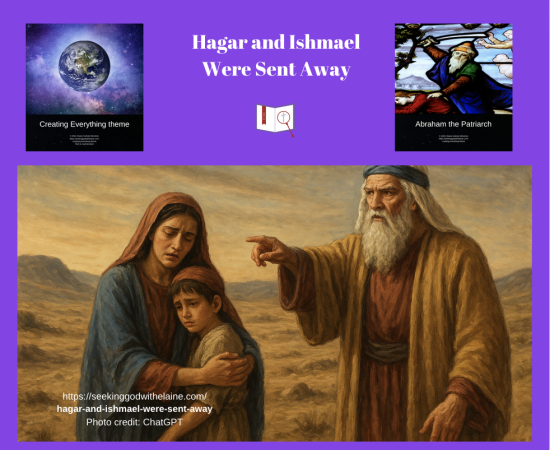
    Once the covenant child was born, issues arose between him, Isaac, and Abraham’s firstborn son, Ishmual. This devotional reading looks at how Abraham sent Ishmael away, a common practice for the time.

    Nuggets

    • The weaning of a child was a time for celebration.
    • Ishmael and his mother Hagar made fun of Isaac.
    • It was Sarah’s idea that Ishmael be born in the first place, but now she just wanted him to go away.
    • It was Jehovah’s direct command to Abraham that got Hagar and Ishmael cast out.
    hagar-and-ishmael-were-sent-away

    Sarah got impatient for Jehovah’s promise of a son to be fulfilled. She was probably feeling inadequate and despondent because of her barrenness. To help the promise along, she offered her slave-girl Hagar to her husband to have a child through her.

    While that was perfectly legal in Abraham’s culture, that wasn’t what Jehovah had intended. He planned a true son and heir be born to Abraham and Sarah.

    But the relationship between Ishmael, Hagar’s son, and Isaac, Sarah’s son, was not the best. Let’s take a look.

    Let’s Put It into Context

    To read devotions in the Creating Everything theme, click the button below.

    Devotions in the Abraham the Patriarch series

    About to be Weaned

    “When Isaac grew up and was about to be weaned, Abraham prepared a huge feast to celebrate the occasion” (Gen. 21: 8 NLT)

    The weaning of a child was a time for celebration.

    We have to look at Abraham’s culture to see what their practice was in weaning a child. It is totally different from today.

    Early childhood was not without its peril. It was a vulnerable stage with a high infant mortality rate.

    According to Got Questions, we do have some idea about weaning practices. They wrote, “According to Jewish rabbinical traditions, weaning could take place anywhere between 18 months and 5 years of age.” Bible Hub thought Isaac would have likely been a two- or three-years-old child.

    Resources

    Because the child survived this vulnerable stage, a celebration — a mishteh gadol — was thrown. It was to thank Jehovah for His provision and protection.

    The term mishteh means feast, banquet, or drinking party. It was the type of feasts given in the book of Esther.

    The term gadol is attributed to spiritual greatness. It encompasses both of the greatest commandments: love of Jehovah and love of others.

    Abraham would have had another reason for celebration. Isaac was the sign of the covenant between Jehovah and Abraham.

    Frand talked about the importance of a toddler’s development. The time of weaning would be around the time when a toddler becomes aware of other people in the world.

    Resource

    I see that. Paul wrote that we want to be weaned off milk and stop being milk babies. We are to grow to be steak adults.

    “You have been believers so long now that you ought to be teaching others. Instead, you need someone to teach you again the basic things about God’s word. You are like babies who need milk and cannot eat solid food. For someone who lives on milk is still an infant and doesn’t know how to do what is right. Solid food is for those who are mature, who through training have the skill to recognize the difference between right and wrong” (Heb. 5: 12-14 NLT).

    Trouble in the Household

    “But Sarah saw Ishmael — the son of Abraham and her Egyptian servant Hagar — making fun of her son, Isaac. So she turned to Abraham and demanded, ‘Get rid of that slave woman and her son. He is not going to share the inheritance with my son, Isaac. I won’t have it!’” (Gen. 21: 9-10 NLT)

    Hagar and Ishmael Making Fun of Isaac

    Ishmael and his mother Hagar made fun of Isaac.

    Let’s look at this from Ishmael’s perspective. To do that, we need to look at the timeline.

    1874 BC — Ishmael born (Gen. 16: 15)
    1861 BC — God reestablished His covenant with Abram; and Abraham, Ishmael, and males are circumcised (Gen. 17)
    1860 BC — Isaac born (Gen. 21: 2)
    c. 1858 BC — Isaac weaned (Gen. 21: 8)

    Resource

    If Ismael was 14 when Isaac was born, this would put him at around 16 when Isaac was weaned. For 16 years — even if he knew about the covenant — he probably thought there was a chance that he would be Abraham’s heir.

    Yes, if Isaac hadn’t been born, Ishmael would have qualified as Abraham’s heir. But look what Bradford said. He taught, “Abraham would have a son……not a kind-of-son…..not a good-enough heir….but a true son and a true heir regardless of what the earthly human circumstances might seem to dictate.”

    Resource

    We know Ishmael was much loved by Abraham. We’ll find that out in the next couple of verses.

    But come on. “And Sarah saw the ben of Hagar the Egyptian, which she had borne unto Avraham, metzachek (mocking, scoffing)” (Gen. 2: 9 OJB).

    A 16-year-old was mocking and scoffing a 2- or 3-year-old? Bradford said he was probably constantly taunting him.

    But think about it. Worldview is always going to hate spiritual. They will never really be able to live together.

    Sarah Demanded

    It was Sarah’s idea that Ishmael be born in the first place, but now she just wanted him to go away.

    We get the idea that things didn’t go as Sarah planned. We know Hagar held Sarah in contempt after she became pregnant. Well, Sarah and Abraham — and even Jehovah — still considered Hagar a shifchah, a female slave of the lowest rank.

    Plus, after the covenant son was born, any standing Hagar gained in that plan  would have gone down. A good-enough heir was no longer needed.

    That attitude impacted how Ishmael saw Isaac.

    Both Hagar and Ishmael have been disrespectful to Sarah and Isaac. They have been impolite at best, rude at worst.

    Don’t forget this fact. Hagar was Sarah’s slave, not Abraham’s. “But Avram said unto Sarai, Hinei, thy shifchah [female slave of the lowest rank] is in thy hand; do to her as it pleaseth thee…” (Gen. 16: 6 OJB).

    Sarah was operating legally with regard to Hagar. But Abraham, as Ishmael’s father, had the final determination whether he would be allowed to go with Hagar.

    In other words, Abraham could have kept Ishmael and sent Hagar away.

    When Abraham agreed to send Ishmael away, his inheritance flew out the door.

    God Told Abraham

    “This upset Abraham very much because Ishmael was his son. But God told Abraham, ‘Do not be upset over the boy and your servant. Do whatever Sarah tells you, for Isaac is the son through whom your descendants will be counted. But I will also make a nation of the descendants of Hagar’s son because he is your son, too’” (Gen. 21: 11-13 NLT)

    It was Jehovah’s direct command to Abraham that got Hagar and Ishmael cast out.

    In the end, Sarah was following God’s plan to banish Ishmael and Hagar from the clam because Jehovah told him to do it.

    Jehovah does want us in the world, but there are times He wants us separated. When Jesus was born, all the babies under two were killed so that only the Messiah lived. Jehovah didn’t want another boy child from Bethlehem born during that time to claim to be the Messiah.

    Here, Jehovah did not want any confusion about who the covenant child was. This is especially true since, for 13 years, Ishmael would have been considered the firstborn.

    Isaac was a Hebrew. Ishmael wasn’t.

    It wasn’t about ancestry. Jacob was a Hebrew. Esau wasn’t.

    Bottom line, Isaac was the covenant son. Ishmael wasn’t. Jehovah’s choice had nothing to do with birth order and everything to do with the heart.

    Still, Jehovah told Abraham that He would take care of Ishmael. Did Jehovah do this to calm Abraham’s spirit regarding the decision? Maybe.

    Look at why Bradford said why God would take care of Ishmael. He taught,

    “… there was very good reason that God promised Abraham that Ishmael would be divinely blessed, and divinely prospered. Law codes of this era and this area have been discovered; and the exact case we have here is discussed. Known as the law of Lipit-Ishtar, here’s how it works: Abraham had the right to accept or deny Ishmael as an heir to his estate, BECAUSE Ishmael was born to a slave woman. It is obvious by all accounts that Ishmael had been accepted by Abraham as the heir-apparent of the clan. Therefore, Ishmael was to have been given the firstborn’s share of Abraham’s very substantial wealth; and by this, Hagar, Ishmael’s mother, would also have benefited.”

    Resource

    Yes, Abraham knew Ishmael wasn’t the covenant son. Jehovah made that clear. But He also made it clear that He would bless Ishmael.

    “So Abraham said to God, ‘May Ishmael live under your special blessing!’ But God replied, ‘No — Sarah, your wife, will give birth to a son for you. You will name him Isaac,  and I will confirm my covenant with him and his descendants as an everlasting covenant. As for Ishmael, I will bless him also, just as you have asked …” (Gen. 17: 16-18 NLT).

    Dykes made an interesting comment. Wasn’t it in Ishmael’s best interest to be removed from under Abraham’s care at that age? If he had stayed, wouldn’t he have dreamt of inheriting Abraham’s wealth and prestige? Wouldn’t have Ishmael become even more envious?

    Resource

    As Isaac grew up, how would he have responded to Ishmael? Would he have stood up to him, or would he have caved? We’ll find out that about Isaac’s introspective nature — so you draw your own conclusion.

    For all parties involved, it  was better to cut Ishmael’s dream of an inheritance off right then.

    In fact, Candlish noted this separation of heir from siblings was common in that culture. It was done to safeguard the main inheritance and prevent sibling rivalry. This was seen as a way to manage the inheritance.

    Resource

    In a way, it sounds like the father was trying to designate a single heir. Yes, this heir would get the bulk of the wealth.

    But this son would also become the head of the family at the father’s death.

    We will see how Abraham dealt with this at the time of his death.

    • “Abraham gave everything he owned to his son Isaac. But before he died, he gave gifts to the sons of his concubines and sent them off to a land in the east, away from Isaac” (Gen. 25: 5-6 NLT).
    • “His sons Isaac and Ishmael buried him in the cave of Machpelah, near Mamre, in the field of Ephron son of Zohar the Hittite” (Gen. 25: 9 NLT).

    If Ishmael was there for the burial, he would have gotten his share of gifts.

    Making the Connections #1

    Candlish had an interesting thought. He wrote, “Now, it is not necessary to acquit Sarah of all personal vindictiveness, or to consider her as acting from the best and [highest] motives, merely because God commanded Abraham to hearken unto her voice.”

    Using Paul’s words — the way I read it — Candlish was saying that Sarah had legitimate reasons for her actions. “And you, dear brothers and sisters, are children of the promise, just like Isaac. But you are now being persecuted by those who want you to keep the law, just as Ishmael, the child born by human effort, persecuted Isaac, the child born by the power of the Spirit” (Gal. 4: 28-29 NLT).

    Sarah may have believed she was defending — either herself or her son. She may have been, as Candlish thought, grasping at the chance to secure Isaac’s position as the covenant child.

    But let’s think about it. What good would have come if Ishmael had stayed? Would Abraham have started compromising, allowing Ishmael to become more covenant-sonish?

    Candlish noted Abraham did what others in his culture did. Other siblings were separated from the heir. In a way, that is what happened when Seth, Ham, and Japheth were separated.
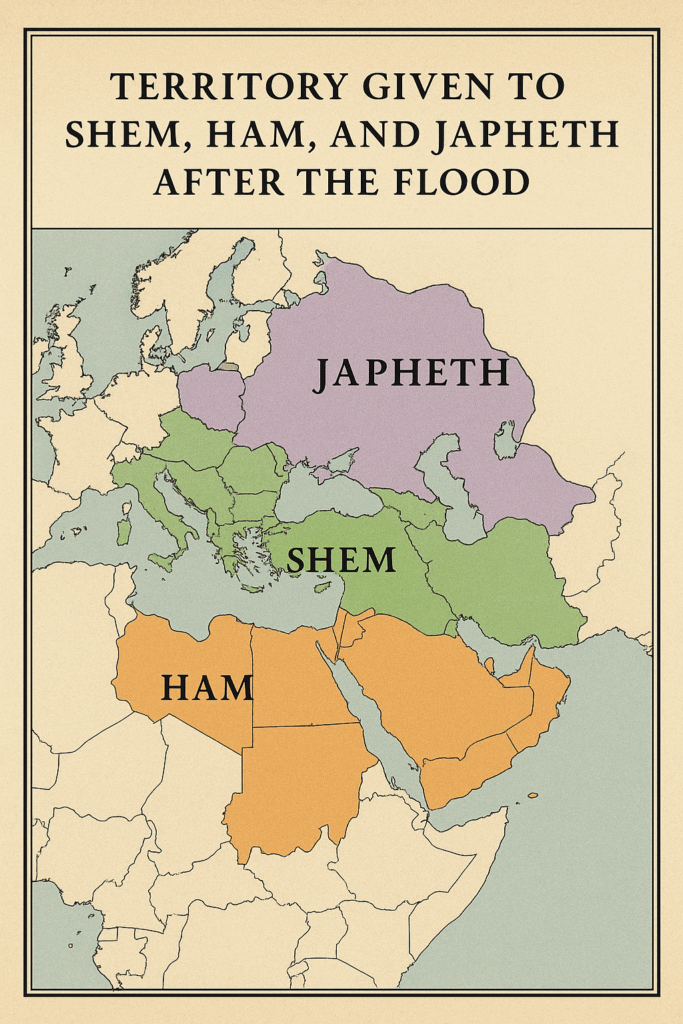
    The difference from Noah’s children — when their mission was to repopulate the earth — to Abraham’s day was that the siblings were not sent far away. Candlish said that Ishmael would have been sent to the borders of where Abraham made his home. That would have set the boarder place to be the wilderness of Beer-sheba — not far away at all.

    The interesting part was Hagar and Ishmael would have waited in the wilderness of Beer-sheba for directions from Abraham as to their next move.

    If that was what was supposed to have happened, we aren’t told why it didn’t.

    Making the Connections #2

    “So she turned to Abraham and demanded, ‘Get rid of that slave woman and her son. He is not going to share the inheritance with my son, Isaac. I won’t have it!’” (Gen. 21: 9-10 NLT)

    Ooo, baby. What must Abraham have thought.

    Sarah had once tried to put Abraham between her and Hagar. “Then Sarai said to Abram, ‘This is all your fault! I put my servant into your arms, but now that she’s pregnant she treats me with contempt. The Lord will show who’s wrong — you or me!’” (Gen. 16: 5 NLT).

    But this was his first-born.

    Robinson gave another reason why it would have been important to separate Ishmael from the covenant son. He wrote,

    “The hot blood of the Egyptian mother which coursed through his veins could not have been kept in check in the domestic circle among vassals and [dependents]; he was sent to measure himself with men, to cat out his own way in the world, to learn independence, resolution, energy; and it is for this reason that to this very day his [dependents] are so sharply stamped with all the individuality of their founder. In them are exhibited the characteristics of Abraham and Hagar, the [marvelous] devoutness of the one with the fierce passions of the other, and together with these the iron will, the dignified calmness of self dependence wrought out by circumstances in the character of Ishmael.”

    Resource

    I keep thinking about the different personalities of the boys.

    • This son [Ishmael] of yours will be a wild man, as untamed as a wild donkey! He will raise his fist against everyone, and everyone will be against him. Yes, he will live in open hostility against all his relatives” (Gen. 16: 12 NLT).
    • “One evening as he [Isaac] was walking and meditating in the fields, he looked up and saw the camels coming” (Gen. 24: 63 NLT).

    I would say that Isaac was more like Abraham. Jehovah would choose the son with the similar disposition.

    How Do We Apply This?

    • Make sure your heart is right with God.
    • Don’t put family above God.

    Father God. Family conflicts – especially sibling rivalry – are difficult to handle. We know that we must put You before them. Amen.

    If you don’t understand something and would like further clarification, please contact me.

    If you have not signed up for the email providing the link to the devotions and the newsletter, do so below.

    If God has used this devotion to speak with you, consider sharing it on social media.
  • The Sign of the Covenant

    The last part of the covenant between God and Noah was the sign. This devotional reading looks at the rainbow and its significance.

    Nuggets

    • The visual sign tells all that God’s care is everlasting.
    • For the first time ever, the rainbow graced the sky.
    • God says He will see the rainbow from Heaven.
    the-sign-of-the-covenant

    Almost everyone – even non-believers – can tell you that the rainbow is a sign that God will not destroy the earth again by flooding it.

    But what did God mean by it? How would that have been comforting to Noah?

    Let’s Put It into Context

    To read devotions in the Creating Everything theme, click the button below.

    Devotions in the Creation’s Do-Over series

    The Sign of the Everlasting Covenant

    “Then God said, ‘I am giving you a sign of my covenant with you and with all living creatures, for all generations to come” (Gen. 9: 12 NLT)

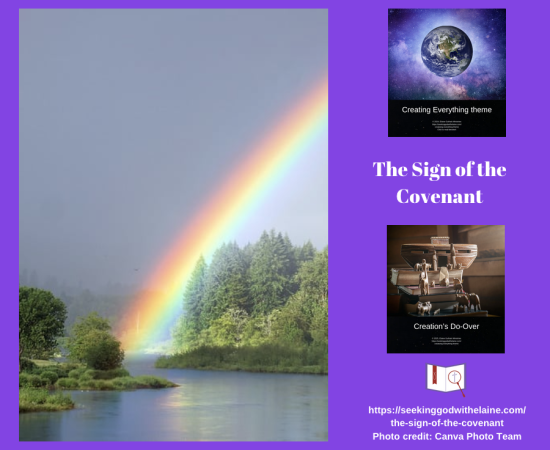
    The visual sign of the covenant tells us that God’s care is everlasting.

    In the last devotion, we talked about how Noah and his descendants probably had their stomachs flip every time a huge rain occurred. Was it starting again?

    God not only chose to tell them about His promise not to flood the earth again, but He also gave a visual sign. No, God didn’t need the sign. We did.

    The sign for this covenant has God continuing to use nature to teach us His spiritual truths through His power and wisdom. It is fitting that the rainbow is created by the sunlight returning after the rain.  In other words, the rainbow is the product of the sunshine and rain.

    Both the punishment for our disobedience and God’s grace and mercy are needed.

    Ooo, baby. It is sometimes hard for us to wait for the sunshine when the thunder is booming, and the lightening is flashing.

    Rainbows are an outward pledge and token that God will remember and hold dear the completion of the covenant. They prove that God is faithful through the storms and sunshine of life.

    Look what Fairbairn said. He wrote,

    “But in a matter like the present, when the specific object contemplated was to allay men’s fears of permanence of her existing order and constitution, one cannot perceive how a natural phenomenon, common alike to the antediluvian and the postdiluvian world, could have fitly served the purpose.”

    Resource

    An unseen God wanted to have something visible to sooth people’s fears about a reoccurring flood. But it wasn’t really about the sign.

    It was about the covenant. The promise was guaranteed by the covenant, not by the sign.

    God will never break His covenant because it was His decision to enter into it. He will not besmirch the honor of His government by breaking it. He has the power to keep it.

    The rainbow may come and go, but God pledged this covenant as an everlasting covenant.

    I have to process what Candlish said in Elaine-speak.

    • The covenant shows forbearance to humans while in this life.
    • But the covenant does not negate the need for salvation through Jesus.
    • God’s patience is of less importance — subordinate and subservient — than salvation.
    • Eternity is more important than this life.
    • This is a covenant of grace and redemption from sin, leading to eternity.
    • The rainbow is a visual of the spiritual and eternal blessings.

    Resource

    God sees our disobedience to Him, and He does not accept it. He will punish us for it.

    No, God doesn’t delight in punishing us. He delights in our being obedient. “Oh, the joys of those who do not follow the advice of the wicked, or stand around with sinners, or join in with mockers. But they delight in the law of the LORD, meditating on it day and night” (Ps. 1: 1-2 NLT).

    Quite the opposite. God wants our relationships with Him restored. He is looking forward to the Day of the Lord when sin is forever vanquished.

    God will never forget that He entered into this covenant with humans.

    The Bow

    “I have placed my rainbow in the clouds. It is the sign of my covenant with you and with all the earth. When I send clouds over the earth, the rainbow will appear in the clouds, and I will remember my covenant with you and with all living creatures. Never again will the floodwaters destroy all life” (Gen. 9: 13-15 NLT)

    For the first time ever, the rainbow graced the sky.

    Just as God sent the flood, God sent the rainbow as a sign of the covenant He was making with humankind. Make no mistake — God takes ownership of the bow. “I have set my bow in the cloud …” (Gen. 9: 13 NLT emphasis added).

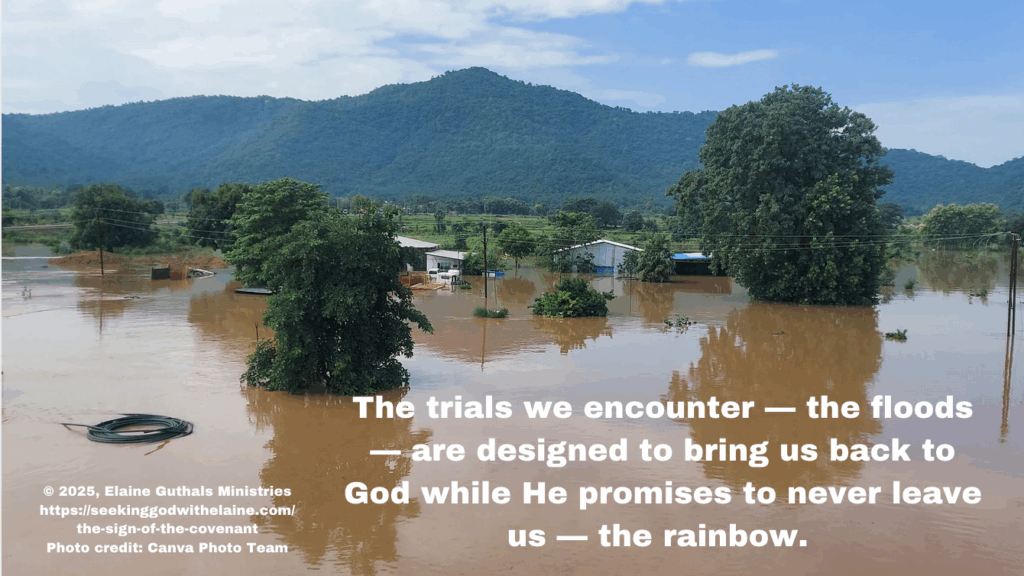
    The trials we encounter — the floods — are designed to bring us back to God while He promises to never leave us — the rainbow. Even in our darkest trials, God will be right there with us.

    That’s good because these clouds are going to be frequent. “He has led me into darkness, shutting out all light” (Lam. 3: 32 NLT).

    That means we should expect the clouds in our lives as they are in God’s plan for us. We need to follow His directions.

    God placed the rainbow in the sky to strengthen our faith and to show His love for us. The variety of colors remind us of the beauty of the glory of the Lord.

    God can and will forgive every sin except our sin of disobedience due to our refusal to accept His as Sovereign Lord.

    Hughes reminded us that, while both ends of the rainbow point to the earth, the apex flows through the sky. Marchant expanded on that to show us that, no matter how overwhelming the flood is, God stays true to us. In fact, Brown and Rainsford added that the rainbow embellishes and showcases the clouds while encompassing them, making the bow its crown.

    Resources

    Think about it. The rainbow signifies the wisdom and mercy that comes with the punishment.

    But when do we grow? It isn’t when the sun is out. It is through the floods.

    Most of the time, unfortunately, we can’t see that until the sun has come out again. Hence the rainbow.

    Think about how many floods and rainbows we need to perfect our faith. Those are the bricks on the Sanctification Road.

    Put this all together. We walk with God. Where? On the Sanctification Road that is paved with the bricks of trials.

    God never told us to come to Jesus and stay put so moss could grow all over us. He tells us to march. We are to follow Him daily (Lk. 9: 23).

    God uses the trials — the material — to perfect us. “And we know that God causes everything to work together for the good of those who love God and are called according to his purpose for them” (Rom. 8: 28 NLT).

    God is going to use our experiences to sanctify us.

    That makes the flood, in reality, more important than the rainbow, doesn’t it? The clouds more important than the sun?

    Kingsley put it this way. He wrote,

    “The flood and the rainbow were sent for a moral purpose: to punish sinners; to preserve the righteous; to teach Noah and his children after him a moral lesson concerning righteousness and sin concerning the wrath of God against sin — concerning God, that He governs the world and all in it, and does not leave the world or mankind to go on of themselves and by themselves.”

    Resource

    Ooo, baby. That is a fact that too many people have either forgotten or refuse to believe. God still governs this world.

    Authority over this world has been given to no one except Jesus. “Jesus came and told his disciples, ‘I have been given all authority in heaven and on earth’” (Mt. 28: 18 NLT).

    If we refuse to accept God’s authority, we will reject his moral lessons on righteousness and sin.

    God didn’t put His bow in the sky to show He would tolerate people’s sin.  It is to show His love and blessings to those who obey His Will.

    God Sees the Rainbow

    “‘When I see the rainbow in the clouds, I will remember the eternal covenant between God and every living creature on earth.’ Then God said to Noah, ‘Yes, this rainbow is the sign of the covenant I am confirming with all the creatures on earth’” (Gen. 9: 16-17 NLT)

    God says He will see the rainbow from Heaven.

    Of course, God is going to see the rainbow from Heaven. He is all-seeing.

    Gilfillan made a great point. He wrote, “While we are looking at the objects of nature, as well as at the events of Providence and the mysteries of grace, from below, God is looking at them from above.”

    Resource

    We may see the thunderstorms that we must weather to create the rainbow, but that storm doesn’t reach to Heaven. Still, God is faithful in sending His bow — regardless the size of the storm.

    Making the Connections #1

    Gilfillan had a sad take on today’s society. He wrote,

    “The common order of men see no beauty in the rainbow; the man of science thinks little of it except as a complete analysis of light; the poet sings its [splendor]; the Christian, even while admiring, seldom thinks of it as a God built bulwark against the return of the waters of Noah; but the Almighty never rears again its arch, or looks upon it when reared, without remembering His promise; it is to Him His original oath, cast in aerial architecture, transcribed in letters of gold. And so, too, with things of a moral kind.”

    Resource

    • The rainbow is right up there in they sky, and people can’t or won’t see it.
    • If they do see it, many feel its sole purpose is based on some worldview notion.
    • Even disciples do not remember its significance, but God does.
    • Rather than just be a physical sign, it is to be a reminder that our character must be that of God’s.

    Making the Connections #2

    Kingsley talked about God’s anger in sending the flood and the rainbow. He wrote,

    “They tell us that His anger is not a capricious, revengeful, proud, selfish anger, such as that of the heathen gods; but that it is an orderly anger, and therefore an anger which in its wrath can remember mercy. Out of God’s wrath shines love, as the rainbow out of the storm.

    Resource

    God is not a God of chaos. He did not snap and send punishment upon humans. This was all part of His plan for us.

    God couldn’t just “feel” love toward humans. When humans sinned, if God had done nothing — not showed His wrath — it would have diminished and corrupted His love.

    That is why we shouldn’t think God tolerates our sins. He may defer punishment, but it is coming — and coming for all eternity.

    Making the Connections #3

    We talked about needing both the rain and the sunshine to make the rainbow. Newton applied that to what it means spiritually — and noted there are three requirements. (Well, I count four.) He wrote,

    “And in the spiritual world, to which we are applying the subject, there must be that which answers to these three requirements. There must be cloud, a ground work of human guilt and sorrow, on which the bow can be projected. There must be a Sun of Righteousness — a Divine [Savior] causing the beams of His [favor] to shine forth; and there must be the descending showers of Divine grace to refract those glorious rays, and illumine with their brightness the dark horizon of man’s prospects.”

    Resource

    Cloud, sun, and showers with the person looking on. Guilt, redemption, and grace with the guilty heart as the recipient. That is how we are forgiven of our sins.

    If we don’t have guilt, it is not a genuine request for salvation. Salvation only comes through Jesus, our Savior and Redeemer. It is only through the gift of God’s grace that forgiveness can even happen.

    Brown called it the cloud of guilt meeting the bow of pardon. He reminded we can only see it when we look up.

    Resource

    Yes, we have to acknowledge that we are sinners. We have to admit what we are doing is wrong and against God’s laws and commandments. We have to turn from our sinful ways. We have to make the choice to focus on God.

    No, we can’t write it off as human nature. We can’t insist it isn’t a sin. We can’t hang on to it.

    We have to ask for forgiveness and submit to God.

    Making the Connections #4

    Ooo, baby. How did I miss this?

    There is not one spiritual promise contained in this covenant.

    Bradley had to point that out to me. He wrote,

    “It is remarkable that, though detailed in this chapter with much minuteness, it relates only to temporal blessings. Not one spiritual promise does it contain. All it stipulates is, that there shall never again be a general flood or famine on the earth.”

    Resource

    No mention is made of salvation. God doesn’t allude to the Messiah. He doesn’t promise to eliminate sin.

    Maybe I missed it because, as Bradley pointed out, it has so many elements resembling Jesus’ covenant.

    • It comes solely from God.
    • It shows us the heart and mind of God.
    • It involved a sacrifice.

    Here God gave us a visual sign for remembrance in the rainbow. There we are to remember through observation of the Lord’s Supper.

    Making the Connections #5

    Brown had some really, really good points in his sermon. He wrote, “… God accepts human worship when associated with Divinely appointed sacrifice.”

    Resource

    The Divinely appointed sacrifice is detailed in our disciples’ job description. “And so, dear brothers and sisters, I plead with you to give your bodies to God because of all he has done for you. Let them be a living and holy sacrifice — the kind he will find acceptable. This is truly the way to worship him” (Rom. 12: 1 NLT).

    The Disciple’s Job Description

    Complete Job Description

    Making the Connections #6

    I love this. Rainsford called the rainbow the gateway to Heaven — without the gates.

    Resource

    Revelation talks about New Jerusalem having gates. “The city wall was broad and high, with twelve gates guarded by twelve angels …” (Rev. 21: 12 NLT).

    We also know about the narrow gate. “You can enter God’s Kingdom only through the narrow gate. The highway to hell is broad, and its gate is wide for the many who choose that way. But the gateway to life is very narrow and the road is difficult, and only a few ever find it” (Mt. 7: 13-14 NLT).

    The New Jerusalem gates are after we have gotten to eternity. The narrow gate is how we get there.

    The rainbow non-gate is that all are offered the opportunity to repent of their sins, be cleansed, and enter through the narrow gate to get to the gated city.

    Making the Connections #7

    Of course, there is the question as to where the rainbow was before the flood. Well, it depends on what you believe.

    Was there rain before the flood but just wasn’t mentioned? Maybe. Moses couldn’t but everything on his scrolls.

    If there wasn’t rain, it wasn’t possible to have rainbows. There was the sunshine but not the rain needed to produce the rainbows.

    If we believe, unlike Parker, that the rain came the first time for the flood, we would say that the rainbow was made for the purpose of the covenant.

    Resource

    What I do agree with Parker is that old things can be used for new purposes. Isn’t that what salvation is all about? “Therefore, if anyone is in Christ, he is a new creation.bThe old has passed away; behold, the new has come” (II Cor. 5: 17 NLT).

    That was the whole focus of Jesus’ ministry. Repent of our sins, deny ourselves, and imitate Him. When we do that, we will be made holy and righteous.

    Elliott explained it this way. He wrote,

    “It is the Gospel of Christ Jesus alone which converts sorrow and suffering into instruments for the attainment of higher and more enduring blessings. In all God’s dealings with His people, when He brings a cloud upon the earth, He sets His bow in that cloud, insomuch that they cease to fear when they enter into it by reason of the presence of Him whose glory inhabits it (Isaiah 54:9, 10).”

    Resource

     “God has united you with Christ Jesus. For our benefit God made him to be wisdom itself. Christ made us right with God; he made us pure and holy, and he freed us from sin” (I Cor. 1: 30 NLT).

    How Do We Apply This?

    • Obey God.
    • Love each other in order to correct those practicing sin.
    • Learn from Jesus’ sacrifice.
    • Remember what the rainbow really symbolizes.

    Resource

    Father God. You have given us the rainbow as a promise to never destroy the earth by a flood again. It also shows You are with us in our trials. Thank You for loving us so much. Amen.

    What do you think?

    Leave me a comment below (about this or anything else) or head over to my Facebook group for some interactive discussion.

    If you don’t understand something and would like further clarification, please contact me.

    If you have not signed up for the email providing the link to the devotions and the newsletter, do so below.

    If God has used this devotion to speak with you, consider sharing it on social media.

  • Relationships in the Covenant

    The flood occurred because most preflood people chose not to have a relationship with God. This devotional reading looks how God’s covenant with Noah changed – or didn’t change – the relationships among God, humans, and animals.

    Nuggets

    • Humankind’s purpose had not changed, so the blessing had not changed.
    • The relationships between humans and animals was going to change.
    • Humans could now eat animals.
    relationships-in-the-covenant

    In the last devotion, we talked about how God established a covenant with Noah – and how it was a process with several parts. We left Noah completing the required sacrifice and God accepting that sacrifice.

    We turn now to the blessings and responsibilities section of the covenant.

    Let’s Put It into Context

    To read devotions in the Creating Everything theme, click the button below.

    Devotions in the Creation’s Do-Over series

    Humankind’s Purpose Restated

    “Then God blessed Noah and his sons and told them, ‘Be fruitful and multiply. Fill the earth” (Gen. 9: 1 NLT)

    Humankind’s purpose had not changed, so the blessing had not changed.

    We remember in Genesis 1 that God had pressed the humans after he had created them.  “Then God blessed them and said, ‘Be fruitful and multiply. Fill the earth and govern it. Reign over the fish in the sea, the birds in the sky, and all the animals that scurry along the ground” (Gen. 1: 28 NLT).

    God wanted a whole race of humans, and He wanted us for a purpose.

    We have to think that God wanted to create humankind. Before He even created us, He knew we would disobey Him. He had just gotten finished with destroying those who had disobeyed Him.

    God created us for a purpose. He has a plan for our lives.

    • “For God saved us and called us to live a holy life. He did this, not because we deserved it, but because that was his plan from before the beginning of time—to show us his grace through Christ Jesus” (II Tim. 1: 9 NLT emphasis added).
    • “And we know that God causes everything to work together for the good of those who love God and are called according to his purpose for them” (Rom. 8: 28 NLT emphasis added).

    God’s purpose for creating humankind was so that we could worship Him. Arnold agreed. He wrote,

    “We were made for our Maker’s glory, after His own image, that we should make His will the rule of our lives, and His love and anger the great objects of our hope and fear; that we should live in Him, and for Him, and to Him, as our constant Guide and Master and Father.”

    Resource

    We have already seen confirmation that some pre flood did just that.

    • “When it was time for the harvest, Cain presented some of his crops as a gift to the Lord. Abel also brought a gift — the best portions of the firstborn lambs from his flock …” (Gen. 4: 3-4 NLT).
    • “When Seth grew up, he had a son and named him Enosh. At that time people first began to worship the Lord by name” (Gen. 4: 26 NLT).
    • “Enoch lived 365 years, walking in close fellowship with God …” (Gen. 5. 23-24 NLT).

    The whole purpose of the ark was to save lives. That is the business God is in — salvation. He sent His Son to die on a cross so that we could accept the gift of salvation.

    Even though God knew man was going to sin, He wanted us to multiply. Even though He did a major reset, He still wanted us to multiply.

    Many may look at the story of the flood and say God failed miserably in His plan for humankind. We can say that, but we’d be wrong.

    God showed us that He isn’t afraid of going big to get us back to worshiping Him. He showed us that, even as flawed as we are with a sinful nature, when we ABCD, He will protect us and provide for us.

    Even after the great destruction of the flood, God’s purpose for us is the same: worship Him and multiply so more will know His love for them.

    Renner had an interesting observation. He wrote, “Interestingly, He likely gave that commission in the place where life first began — in the region of the Garden of Eden, where it is believed the Ark came to rest.”

    Resource

    It doesn’t really surprise me. God doesn’t change. His purpose didn’t change. He is committed to that region. Jesus is coming back from where He left.

    All the Food

    “All the animals of the earth, all the birds of the sky, all the small animals that scurry along the ground, and all the fish in the sea will look on you with fear and terror. I have placed them in your power. I have given them to you for food, just as I have given you grain and vegetables” (Gen. 9: 2-3 NLT)

    Fear of upon Every Animal

    The relationships between humans and animals was going to change.

    The only difference between the Genesis 1 blessing and the Genesis 2 blessing was — now — we were not told to “… govern it. Reign over the fish in the sea, the birds in the sky, and all the animals that scurry along the ground” (Gen. 1: 28 NLT).

    We don’t want to put too much emphasis on our domination over the animals, but we do need to keep it in perspective. “You gave them charge of everything you made, putting all things under their authority — the flocks and the herds and all the wild animals, the birds in the sky, the fish in the sea, and everything that swims the ocean currents.” (Ps. 8: 6-8 NLT).

    For a year, I think it would be safe to say that there were no squabbles between natural predators and prey. On top of that, I doubt they gave Noah and his family much trouble.

    Oh, sure. There might have been a few squabbles. But I don’t see God locking them in there and making it a torment on the waves.

    Post flood, the animals were going to fear humans. Probably a good thing.

    Food for You

    Humans could now eat animals.

    That brings up the question as to whether the humans ate meat before the flood. Some verses seem contradictory.

    But there is Genesis 7: 8. “With them were all the various kinds of animals — those approved for eating and for sacrifice and those that were not — along with all the birds and the small animals that scurry along the ground” (Gen. 7: 8 NLT emphasis added).

    Wouldn’t Noah have scratched his head when God told him this if they hadn’t been eating meat?

    Let’s back up a second. Many think that, from Adam and Eve on down to then, were commanded to a specific diet. “Then God said, ‘Look! I have given you every seed-bearing plant throughout the earth and all the fruit trees for your food’” (Gen. 1: 29 NLT).

    That makes sense to me. If Adam and Eve had eaten the animals, that would mean death was already present when they committed the original sin.

    True, they knew what death was, Adam and Eve would have been more knowledgeable about what was at stake. “But the Lord God warned him, ‘You may freely eat the fruit of every tree in the garden — except the tree of the knowledge of good and evil. If you eat its fruit, you are sure to die’” (Gen. 2: 16-17 NLT).

    That would have made the consequence of breaking the law more understandable.

    Yes, if they had killed for food, that would make the killing of the animal for clothes less of a blood-covering-sin issue.

    I have a feeling Adam, Eve and their line were vegetarians. But what kind of food?

    Let’s looks at this in the Complete Jewish Bible.

    • “Every moving thing that lives will be food for you; just as I gave you green plants before, so now I give you everything” (Gen. 9: 3 CJB emphasis added).
    • Then God said, ‘Here! Throughout the whole earth I am giving you as food every seed-bearing plant and every tree with seed-bearing fruit. And to every wild animal, bird in the air and creature crawling on the earth, in which there is a living soul, I am giving as food every kind of green plant.’ And that is how it was” (Gen. 1: 29-30 emphasis added).

    God had previously given animals the green plants to eat, not humans.

    Did God come back later and say they could eat the green plants, and Moses didn’t record it? We know he didn’t record the directions on how to offer sacrifices – and Cain and Abel were doing that.

    We also know that when God gave Moses the law, He did put more restrictions on what kind of animal could be eaten or not.

    Plus, had God defined for Moses what clean and unclean meant? He may have. He may not have.

    That will have to go in the UNR book – understanding not required.

    God doesn’t spell out everything every time. Sometimes, He requires flat out obedience without any direction or rebuttal time.

    Whatever food restrictions God had in place in Noah’s time, Noah was following it. Otherwise, he wouldn’t have been considered righteous.

    Maybe one of the ways that the world was wicked was they ignored God’s command to be vegetarians, but Noah didn’t. This was now giving him permission – without restriction – to eat meat.

    Back to God giving the animals to Noah and his family to eat. He was providing for humankind’s continued presence on earth. He knew that, in order to fulfill the go-forth-and-multiply blessing, they would need the fuel that animals could provide.

    Making the Connections #1

    Adamson made a good point. He wrote,

    “At the successive periods of the unfolding of God’s great promise, we find one individual representing the history of the race, and foreshadowing in brief the essential character of large phases and long periods of human development. Hence it is that here Noah becomes the representative of the patriarchal families in covenant with God. He is the individual with whom God enters into covenant, in relation to the successive generations of the human race.”

    Resource

    It is easy to think of Adam that way. He is compared to Jesus. “Wherefore, as by one man sin entered into the world, and death by sin; and so death passed upon all men, for that all have sinned: (For until the law sin was in the world: but sin is not imputed when there is no law. Nevertheless death reigned from Adam to Moses, even over them that had not sinned after the similitude of Adam’s transgression, who is the figure of him that was to come” (Rom. 5: 12-14 NLT).

    Noah represented humans that have been redeemed. Yes, Moses represented God, so he is another one. Joseph, we’ll find out, was a type of Christ.

    Making the Connections #2

    We forget what Venables said. He wrote,

    “All nature, every physical law, and every revealed law of God on earth, is but a material image of the spiritual; ‘as we have borne the image of the earthly, we shall also bear the image of the heavenly.’ The heavenly laws are presented to us in our earthly state in an earthly form, and are images to us of the spiritual truths which we shall recognize in our heavenly condition.”

    Resource

    Earth mirrors Heaven in many ways. We mirror God in many ways, but we will become more like Him in Heaven.

    That is one reason we can view this life as preparation and practice for the next.

    How Do We Apply This?

    • Not only increase the population but also grow closer to God.
    • Witness to others so that they can see how much God loves them.
    • Follow God’s dietary restrictions.

    Father God. You have always wanted to have a relationship with humans. Forgive us because we let sin into the world that ended the relationship as you intended it. Help us to walk with You so that our relationships lead to a restoration of that original one. Amen.

    What do you think?

    Leave me a comment below (about this or anything else) or head over to my Facebook group for some interactive discussion.

    If you don’t understand something and would like further clarification, please contact me.

    If you have not signed up for the email providing the link to the devotions and the newsletter, do so below.

    If God has used this devotion to speak with you, consider sharing it on social media.
  • Even If

    Today is a music day.

    Have you ever had a day where you it the wall? That was my day.

    My head the barometer was acting up, making me dizzy. I went as far as I could go until I just had to sleep.

    So, we are having a music day. The song is Mercy Me’s Even If.

    It doesn’t matter what we are going through, God is always there with us. He can still move mountains for us.

    But if He doesn’t, that is okay, too. It is well with my soul.

    Even If

    Vocalist: Elaine Guthals

    Keyboard: Louise Guthals Weiss

    EvenIfFB2

    What do you think?

    Leave me a comment below (about this or anything else) or head over to my Facebook group for some interactive discussion.

    If you don’t understand something and would like further clarification, please contact me.

    If you have not signed up for the email daily or weekly providing the link to the devotions and the newsletter, do so below.

    If God has used this devotion to speak with you, consider sharing it on social media.
  • Even If

    Today is a music day. To read and hear the song, click here.

    I did something today that I haven’t done in a long time. I took a day off.I wrote maybe two paragraphs and stopped.

    Instead, I spent time with my guys. We took a nice drive and enjoyed God’s creation. We got ready for Trunk or Treat tomorrow.

    What I have been thinking this week is about Mercy Me’s song Even If.

    It is all about God saving us when we are going through the trials. Even if we only have a little faith, God will keep us in the palm of His hand.

    What about during the good times? There are times that we have lost trust in others.

    God told me this week that I don’t have to trust others. I just need to trust Him.

    Even if things are going well. Even if things are going horribly.

    We can trust God.

    Even If
    Vocalist: Elaine Guthals
    Keyboard: Louise Guthals Weiss

    EvenIfPin

    What do you think?

    Leave me a comment below (about this or anything else) or head over to my Facebook group for some interactive discussion.

    If you don’t understand something and would like further clarification, please contact me.

    If you have not signed up for the email daily or weekly providing the link to the devotions and the newsletter, do so below.

    If God has used this devotion to speak with you, consider sharing it on social media.
  • Saying Goodbye

    Saying goodbye to a loved one is hard. Even when you know it is coming, even when you know they no longer have pain, even when you know they are with the Lord, it is hard to give them up.

    I had to give up my Springfield Dad today. Forty years ago, he “adopted” me. He has loved me and Adam, and we have loved him back.

    I’ve been trying to finish up my devotion, but I just can’t focus. So, I am going to leave you with a song.

    Master the Tempest is Raging
    Vocalist: Elaine Guthals
    Keyboard: Louise Guthals Weiss

    SayingGoodbyePin

    What do you think?

    Leave me a comment below (about this or anything else) or head over to my Facebook group for some interactive discussion.

    If you don’t understand something and would like further clarification, please contact me.

    If you have not signed up for the email daily or weekly providing the link to the devotions and the newsletter, do so below.

    If God has used this devotion to speak with you, consider sharing it on social media.
  • What Is the Power That Can Make Us Godly?

    Wouldn’t it be great if there was a power available to us to help in our pursuit of being godly? We need all the help we can get, right? This daily devotional looks at how disciples of Christ do have a power available to help us change our character to be more like God.

    Nuggets

    • The reliance on religion alone to appease God is not how He wants us to focus our energies to be godly.
    • The pursuit of godliness has to get down to the heart level.
    • The power has to be substantial because it is making us godly.

    A couple of devotions ago, we talked about the form of godliness. Second Timothy 3: 5 was one of the verses we reviewed because it talks about godliness.

    I was intrigued by the phrase the power that can make them godly. So, into the draft folder it went.

    My initial thought was it is great to have a power to help us in our quest to be more like God. What does that entail, and how do we tap into it? Let’s see if my questions get answered, or God takes us another way.

    Let’s Put It into Context

    Godliness, equated with the Old Testament term fear of the Lord, is an attitude of reverence that is promoted by walking in His Spirit and obeying God’s laws and commandments and produces a moral likeness of God.

    Godliness has a dual form as it should be both an inward and outward expression.

    The inward expression of godliness is communion with God. Prayer is a two-way communication with God. Even if we are praying with our mouths, we are praying with our hearts. Our inward expression of godliness also manifests itself in confession, praise, and worship. We have to pursue godliness because of an internal stimulus.

    The outward expression is our acts of service for God. Service is an act based on belief in God that comes from a response of worship by acknowledging His power through our submission. This is how the inward expression manifests itself in our lives.

    To read a related devotion, click the button below.

    What Is the Power That Can Make Us Godly?

    “They will act religious, but they will reject the power that could make them godly. Stay away from people like that” (II Tim. 3: 5 NLT)

    The reliance on religion alone to appease God is not how He wants us to focus our energies to be godly. True godliness can only come from an inward relationship with Him bubbling out to an external expression.

    Tillotson gave us a good description of what reliance on religion looks like. There is a public profession of faith that includes an enthusiastic response.

    But it is just a show — a pretense. Tillotson described it as being a “… means of religion, without regard to the end and effect of it.”

    Resource

    We want others to think we are mortifying the sin in our lives — but we really aren’t. Mortify means to place a death penalty on our sins.

    Glossary

    What Tillotson is getting at here is the repentance is not genuine. We really aren’t working out our salvation on the Sanctification Road. True submission to God leads to regeneration.

    • Repentance is acknowledging our separation from God and expressing sorrow for breaking God’s laws and commandments by making the commitment to changing ourselves through obedience so that we no longer do the wrong things.
    • Regeneration is the change in us that God brings about when we go from being spiritually dead to spiritually alive.
    • Spiritual death is the separation from God that occurred as a consequence of Adam and Eve’s original sin. The spiritually alive are those who have ABCDed, so they are no longer separated from God.
    • Sanctification is the transformation of mind, body, and soul, which begins with regeneration, gradually changes our nature through the promptings of the Holy Spirit, and ends with perfected state of spiritual wholeness or completeness.

    Glossary

    The ABCDs of Salvation

    If you have not become a believer in Christ, please read through the
    Plan of Salvation and prayerfully consider what God is asking you to do.

    A – admit our sins
    B – believe His Son Jesus is our Redeemer
    C – confess God as Sovereign Lord

    D – demonstrate that commitment by making any changes needed in our lives to
    live the way in which God has called us

    The Disciple’s Job Description

    When the repentance isn’t genuine and the regeneration and sanctification isn’t happening, we don’t tap into the power of godliness.

    Salvation isn’t achieved because this show does not please God. Salvation is deliverance from evil and the consequences of sins to replace them with good and eternal life.

    Glossary

    Tillotson gave us a list of how we tap into the power of godliness.

    • We have to have a genuine relationship with Him.
    • We have to be diligently seeking Him.
    • We have to be committed to doing what God calls us to do, beginning with repentance that impacts how we live our lives.

    How do we practice a good life? Tillotson told us that, too.

    • We are to strive to be pure. Purity means we are without the stain of sin. We do this by modifying our worldly desires, covetousness, and ambition. God calls us to be moderate in everything.
    • We don’t let our passions run away with us. We keep our anger, hatred and malice in check. We don’t envy others. We don’t seek revenge.
    • We watch our words.
    • We strive to have our character defined by virtues, not vices.

    To read a related devotion, click the button below.

    Glossary

    God isn’t looking at a fake conversion. He isn’t in the fire insurance business. He wants us to truly love Him and want to serve Him in the ways He calls.


    God isn’t looking at a fake conversion. He isn’t in the fire insurance business. He wants us to truly love Him and want to serve Him in the ways He calls.


    Getting Godliness to the Heart Level

    The pursuit of godliness has to get down to the heart level. It can’t be mere words.

    Spurgeon’s take on religion alone for godliness is slightly different. He warned us about relying on the ordinances of religion.

    Ordinances are an expression of the disciples’ obedience. Baptism and the Lord’s Supper are ordinances.

    Performing religious ceremonies – even attending religious services — is not the end all and be all. We have to be performing and attending for the right reason — to grow closer to God.

    I love what Spurgeon said. He wrote, “Tongue-godliness is an abomination if the heart be destitute of grace.”

    Resource

    God isn’t looking for tongue–godliness. He is looking for heart–godliness.

    The last thing God wants us to do is to go through the motions of putting on church. He wants us there to worship Him.

    Don’t get me wrong. We shouldn’t misread this to think that we don’t have to attend services at our local churches. Don’t look at this as validation that we can worship on our own.

    While we can and are supposed to worship individually, God calls us to worship corporately. He wants disciples united in fellowship.

    Taylor said something else that was very interesting. Elaine-speak, we can appear to be godly (going though the motions of religion) without being godly. We cannot be godly if we do not have the appearance of being godly.

    Resource

    Let’s simplify that. We can worship God and appear to be godly but not be. We cannot be godly if we do not worship God.

    We can’t expect attendance alone to ensure godliness. We have to let God’s Word into our hearts and change our characters and our lives.

    We can’t expect our Mom and Dad’s religion to cover us. We have to choose God for ourselves.

    We can’t be forced into religion. We have our own free will to guide us in making the choice to serve the One true God.

    But on the flip side, we can’t do without the power. Denying it will get us eternal torment.

    How Do Godliness and Righteousness Fit Together?

    The power has to be substantial because it is making us godly.

    Remember the phrase that started this all was the power that can make them godly. For most of us, that is no easy task.

    Birch said that this is important because “… it is a new birth to righteousness, truth, and love.”

    Resource

    Doesn’t that follow? Righteousness is the result of a solid relationship with God built by a sincere life of conscientious obedience to God’s laws and commandments. If godliness is the attitude of reverence that produces a moral likeness of God, that likeness is righteousness.

    Birch made an excellent observation. Godliness is all about growth. It is about changing our characters so that we are more like God.

    Oh, but here comes Maclaren expanding that. He wrote, “‘Godliness,’ in the New Testament, means not only the disposition which we call piety, but the conduct which flows from it, and which we may call practical religion.” Piety is defined as the persistent application of moral virtues to our lives.

    Resource

    Hmmm. Godliness means not only the temperamental makeup that reflect the moral virtues to our lives. But it also is the persistent application where we move godliness from the internal to the external.

    It is not only thinking like God but also acting like God. It has to be every aspect of our lives and beings.

    We have to turn it all over to God.

    Maclaren argued that words alone do not deny the power. It is our actions that deny the power.

    I heard it once said that our words are who we want to be. Our actions are who we are. If our words do not match our actions, then our words are just manipulative.

    How Do Godliness and Love Fit Together?

    Godliness encompasses love of God and our neighbor.

    Taylor goes a whole different route. He wrote, “The power of godliness is contained in the love of God and our neighbour.”

    Resource

    That is understandable. That reflects the two greatest commandments. “Jesus answered, ‘The most important is, “Hear, O Israel: The Lord our God, the Lord is one. And you shall love the Lord your God with all your heart and with all your soul and with all your mind and with all your strength.” The second is this: “You shall love your neighbor as yourself.” There is no other commandment greater than these’” (Mk. 12: 29-31 ESV).

    Think about it this way.

    • The laws and commandments are to show us God’s character.
    • God character is love (I Jn. 4: 8),
    • Godliness is to produce a moral likeness to God.
    • To be like God, we have to have the character of love, which is shown through loving our neighbors.
    WhatIsThePowerThatCanMakeUsGodlyPin

    Making the Connections

    So, what is this power we are talking about? Spurgeon said it best when he wrote, “God Himself is the power of godliness. The Holy Spirit is the life and force of it.”

    Resource

    If we are just going through the motions of religion, God’s power is nowhere to be seen. We can only be godly if God is front and center.

    Birch took it a step further. As we grow in godliness, we become the personification of God. Others can see God because we are reflecting His character.

    How Do We Apply This?

    Fake words and a fake lifestyle won’t make us godly. Only God can make us godly and righteous. To do that, we have to seek God.

    Searching for and Seeking God

    Hearing His Word (Rom. 10: 17).
    Reading His Word (Rev. 1: 3).
    Praying to Him (Heb. 4: 16).
    Studying His Word (Ac. 17: 11).
    Meditating on His Word (Ps. 1: 1-2).
    Memorizing His Word (Ps. 119: 11).

    We have to be genuine and diligent in wanting to become as He is.

    Father God. Our main goal in life is to become more like You. Our priority is seeking You. Thank You that we have a Power available to us to guide us and help us on the Sanctification Road. That Power is You. Amen.

    What do you think?

    Leave me a comment below (about this or anything else) or head over to my Facebook group for some interactive discussion.

    If you don’t understand something and would like further clarification, please contact me.

    If you have not signed up for the email daily or weekly providing the link to the devotions and the newsletter, do so below.

    If God has used this devotion to speak with you, consider sharing it on social media.

  • The Prophecy of the Christ Child for All

    We say that the four names that Isaiah gave the Christ Child in Isaiah 9: 6 shows that there is something in Him for everyone. Those names may be familiar, but what do they mean? This daily devotional looks at the characteristics identified in the names of the Christ Child.

    Nuggets

    • We need the Christ Child’s counsel.
    • The most important thing — in my opinion — about Isaiah including this in the list of names for the Christ Child is it connection to God.
    • The Christ Child is the Father of the coming age.
    • When disciples are experiencing peace — even in struggles — it is easier to focus on the Will of God.
    • Jesus is wonderful because of Who He is the Son of God.

    Devotions in the Prophecy of the Christ Child series

    A person’s name is really important. In the Jewish culture, that name gave insight to the character of the person with that name.

    Pastor John pointed out that Jesus didn’t have a name — didn’t need a name — until He came to earth. Isaiah gave Jesus four names in the sixth verse of Isaiah 9 that He would have already had but really became prominent when He started His mission as Redeemer.

    Resource

    Each of the four names have two components to it to further show us Jesus’ character. Gregory wrote, “They are not mere empty names, assumed for the purposes of pomp and impression, but appropriate descriptions of living realities.”

    Resource

    Parker cautioned that the compound names should be taken together. Well, I didn’t listen. We are going to look at each component and then the name as a whole.

    Resource

    Let’s Put It into Context

    The Holman Bible Dictionary defines prophecy as “reception and declaration of a word from the Lord through a direct prompting of the Holy Spirit and the human instrument thereof.”

    Resource

    Prophecy is a divine revelation to mankind through the Holy Spirit of a future event. This was God telling us that we would be delivered.

    What Did Wonderful Counselor Mean to Isaiah?

    “For a child will be born for us, a son will be given to us, and the government will be on his shoulders. He will be named Wonderful Counselor, Mighty God, Eternal Father, Prince of Peace” (Isa. 9: 6 CSB)

    You know me. I have to start out as Dictionary Chick.

    Wonderful is something totally amazing. It is so miraculous, we are astonished. To me, many times we can add an incomprehensibility to that list.

    It is something too amazingly good for us to understand.

    Oh, yeah. It can be mind boggling. But Parker said it needs to fill our imagination.

    Resource

    The Christ Child was called wonderful. Ross and Grenoble contended that the Christ Child earned the distinction of wonderful because of the following:

    • He possessed the character or nature of God in human form.
    • His birth was not an everyday, run-of-the-mill conception and delivery but was prophesied.
    • He led an obedient life in which He completed His mission.
    • He expanded the kingdom of God through His teaching.
    • He was totally committed to His mission, even to the point of death.
    • He rose victorious from the grave.

    Resource

    These distinctions elevated the Christ Child above the angels. They even elevated Him above the laws of nature.

    Kelly took it a different way. He declared that the Christ Child received the distinction before He ever got to earth. He said He was wonderful because of this history, relationship, and work.

    Resource

    A counselor gives us advice on various aspects of our lives. At times, it is what actions we should perform. Other times, it is being there to help us work through something. The counselor has to know us and the situation — as well as viable options for us to take.

    The Christ Child is a wonderful counselor. He has been present with God from the before the beginning of creation and knows all of the plans, especially the Plan of Salvation.

    If you have not admitted that your relationship is not right with God,

    have not asked Jesus to be your Lord and Savior,

    and have not confessed your sins,

    please read through the Plan of Salvation and prayerfully consider what God is asking you to do.

    Glossary

    We need the Christ Child’s counsel. Gregory wrote, “As ‘the Counsellor,’ He directs and instructs His people in all their temporal, spiritual, and eternal concerns; if He did not do so, they would soon be involved in disorder and ruin.” Who better to go to than Someone Who has a wealth of information that He will let us tap into?

    Resource

    Taken together, wonderful counselor is comforting. We have Someone Who will give us advice because He has been there, done that, and bought the t-shirt. He knows what needs to be done — both in our actions and through our sanctification. He knows happenings — past, present, and future.

    The Christ Child is there for us.

    The Christ Child is there for us.

    What Did Mighty God Mean to Isaiah?

    “… Mighty God …” (Isa. 9: 6 CSB)

    Well, this one set of words we are going to keep together. Isaiah was talking about an all-powerful God. We know the churchy word for that is omnipotent.

    To read a related devotion, click the button below.

    I love how Smith translated mighty God. He called it God-Hero.

    Resource

    Isn’t that so descriptive? No, it isn’t the first picture word that usually comes to mind when we think of God.

    But think about it. What are some words or phrases we use to describe a hero?

    • Strong
    • Capable
    • Has good character
    • Fights for what is right
    • Courageous
    • A leader

    Oh, yeah. The Christ Child is all of those things.

    The most important thing — in my opinion — about Isaiah including this in the list of names for the Christ Child is it connection to God. This is also a name used for God the Father.

    Ross pointed out that, because of this, “… worship, which only belongs to the Mighty God, is given to Christ.” We know from the Ten Commandments that God does not share that worship with just anyone!

    Resource

    God has no problem sharing the worship with His beloved Son.

    What Did Everlasting Father Mean to Isaiah?

    “… Eternal Father…” (Isa. 9: 6 CSB)

    Yeah, I used everlasting in the heading and eternal in the verse. I see everlasting as continuing a really long time. I see eternal as a lasting relationship with God.

    I know. It is a sublet difference. I was wanting to point out the same-yesterday-today-and-tomorrow aspect.

    But I can see an argument for both. Spurgeon wrote, “Consider His eternal existence, ‘begotten of His Father from before all worlds,’ being of the same substance with His Father; begotten, not made, co-equal, co-eternal, in every attribute, ‘very God of very God.’

    That hooks everlasting and Father together, too, doesn’t it? Okay, Parker knew what he was talking about.

    In my defense, Gregory didn’t think father was the important word here. It seems like the Jews had a propensity to call people father who were not their father. (Hmmm. Am I related?)

    Resource

    I guess I always wondered why the father part was included here. If God was God the Father, why did Isaiah say Jesus is the father?

    Parker gave us a big why. The Christ Child is the Father of the coming age. Ross described Him as “… the Father of the world to come, or final dispensation of mercy and grace, as the Gospel is often called.”

    Resource

    Ross felt that Jesus was the Father as come to faith through Him. All believers will be given His image.

    What Did Prince of Peace God Mean to Isaiah?

    “… Prince of Peace” (Isa. 9: 6 CSB)

    It is more understandable to me to have the Christ Child designated as the Prince of Peace. With Dad as King, that makes the Christ Child a Prince.

    But that opens up the possibility to have more princes and princesses. That is why the Christ Child is called the Elder Brother.

    To read a related devotion, click the button below.

    It is appropriate that the Christ Child is known as Prince of Peace. Ross noted that “And peace is the disposition for which the Saviour was renowned; the blessing which He died to purchase, and lives to bestow.”

    Resource

    Isn’t that a novel concept? Peace instead of war.

    Why is the peace so important (in addition to it being part of Jesus’ character?) When disciples are experiencing peace — even in struggles — it is easier to focus on the Will of God.

    How Did Jesus Fulfill This Prophecy?

    “For God so loved the world that he gave his one and only Son, that whoever believes in him shall not perish but have eternal life” (Jn. 3: 16 NIV)

    Boston reminded us that Jesus isn’t wonderful because of all the miracles He performed. He is wonderful because of Who He is. He is the Son of God.

    Resource

    I know. The Jews had problems with that. They really liked the miracles.

    To read a related devotion, click the button below.

    We can, too. Really, we do this when we try to relegate Jesus to being a social Messiah.

    Jesus wants us to look at His message, not His works. He wants us to see our need because we are spiritually dead. He wants us to see our need because we have to navigate the Sanctification Road.

    Our salvation was the only reason Jesus came to this earth.

    Making the Connections

    I like what Parker said. He wrote, “This is no evidence that Isaiah saw the birth of Christ as we understand that term, but what he did see was that the only deliverer who could accomplish the necessary work must fill out the whole measure of these terms; if he failed to fill out that outline, he was not the predicted Messiah.”

    Resource

    Okay, not everyone is going to be a writer. But we have to communicate to others in no uncertain terms the prophecy of the Christ Child and Jesus’ fulfillment of that prophecy. We have to show them His character.

    If we don’t show others Who Jesus is, we have failed, too.

    This of it this way. Counselor, God, Father, and Brother. Jesus is Whoever we need to be.

    How Do We Apply This?

    Remember, we said Kelly thought the Christ Child as wonderful because of His history, relationship, and work. We can have that, too.

    Resource

    Oh, yeah. It takes work. It is called the Sanctification Road. We build a history with God as we navigate the Sanctification Road. That helps us build our relationship with God. We do the works to honor God, but we can’t have the works mean anything without the relationship.

    If the Christ Child is the Everlasting Father, He is the Father of the age to come. That means we have to be ready. We have to have deep-rooted believes — God’s way. We have to be living in obedience to Him.

    Parker made a great observation. In Elaine-speak, he said quit looking in the review-view mirror. We don’t have to understand it. We need to look to Jesus’ second coming and be ready.

    Resource

    Leckie said, as wonderful as Jesus is, we shouldn’t be astonished by Him. If we are, we might miss His mission and purpose.

    Resource

    Yes, Jesus is all of these things. Most of all, He is our Redeemer, our Savior, and our Deliverer.

    We can’t think that Jesus won’t allow us to come to Him. He will.

    Gracious Heavenly Father. You are a loving Father. You sent the Christ Child to be the substitute to take the penalty of sin for us. We thank You and believe in Jesus as our Savior. Amen.

    What do you think?

    Leave me a comment below (about this or anything else) or head over to my Facebook group for some interactive discussion.

    If you don’t understand something and would like further clarification, please contact me.

    If you have not signed up for the email daily or weekly providing the link to the devotions and the newsletter, do so below.

    If God has used this devotion to speak with you, consider sharing it on social media.

  • The Prophecy of the Christ Child Given

    Why in world did God prophecy that Jesus would come to the earth as a baby? We can usually figure out Son. This daily devotional looks at the benefits of God’s Son being born as a baby.

    Nuggets

    • It seems strange that, when His people needed a Deliverer, God sent a baby.
    • Jesus not only showed us God’s character, but He also showed us what was the heavenly ideal — what perfection looks like.
    • Sons have the same nature as their father.
    • God sent His best — His Son — to all of us.

    Devotions in the Prophecy of the Christ Child series

    Growing up, I had trouble understanding why God would send a baby to be the Savior of the world. I could figure out why He sent a Son, but why didn’t He just ship Him down here when He was 30? Let’s check it out.

    Let’s Put It into Context

    The Holman Bible Dictionary defines prophecy as “reception and declaration of a word from the Lord through a direct prompting of the Holy Spirit and the human instrument thereof.”

    Resource

    Prophecy is a divine revelation to mankind through the Holy Spirit of a future event. This was God telling us that we would be delivered.

    Why Did We Need a Child?

    “For unto us a child is born, unto us a son is given: and the government shall be upon his shoulder: and his name shall be called Wonderful, Counseller, The mighty God, The everlasting Father, The Prince of Peace” (Isa. 9: 6 KJV)

    It seems strange that, when His people needed a Deliverer, God sent a baby. Don’t we generally want our prayers to be answered right now? What would we gain by waiting for a baby to grow up?

    But God wasn’t just answering His people’s prayer for their physical deliverance. He was sending a spiritual Savior.

    That Baby had to be one of us to pay the penalty for our sins. Sins are actions by humans that disobey God and break one of His reasonable, holy, and righteous laws and commandments, goes against a purpose He has for us, or follows Satan’s promptings.

    Because Jesus was born to a human, He obtained human nature. Ross wrote, “With regard to the reality of His human nature, the Scripture assures us, that it was of the same kind with ours, consisting of a human body and a human soul.”

    Resource

    The Baby had to be one of us to experience what we do. Jesus had to experience growing pains. He had to experience temptation. He had to experience the death of His earthly father.

    Jesus couldn’t be the Savior who experienced all of the challenges we do unless He had experienced all the challenges that we do. He couldn’t do that in a day.

    Bannerman put it this way. He wrote, “(1) It was necessary that the Son of God should be made man, because otherwise He could not have stood in man’s place and dealt with God on man’s behalf, nor suffered and died, as it was needful to suffer and die, in order to offer a true atonement for human guilt. (2) It was necessary that the Son of God should become man in order that He might be qualified to enter into our human feelings and fears, and to furnish us with a pledge of His sympathy in all our infirmities and temptations.”

    Resource

    Maclennan reminded us that Jesus not only showed us God’s character, but He also showed us what was the heavenly ideal — what perfection looks like. How can we work on being perfect in this life if we don’t know what that looks like?

    Resource

    Glossary

    We have to remember, though, that Isaiah said this Baby was going to be born to a virgin (Isa. 7: 14). His birth is going to defy the laws of nature.

    We don’t want to get so caught up in the Child part that we miss the us part. Jesus is the Deliverer of every Tom, Sally, and Elaine. Boston wrote, “It is ‘to us,’ the sons and daughters of Adam; we are His poor relations; and to us as His poor relations on earth, sons of Adam’s family, whereof He is the top branch, this Child is presented born, for our comfort in our low state.”

    Oh, yeah. We may be low man on the totem pole. But we are on the totem pole. We have value to Jesus. He gave His life to redeem us.

    Let’s go at this another way. We find out several months in advance that a baby is going to be born. We get to prepare for the arrival. We get to anticipate and look forward to the baby joining our family.

    Mary and Joseph anticipated the birth of Jesus. Israel anticipated the birth of the Messiah.

    Why Did We Need a Son?

    “Anyone who believes in him is not condemned, but anyone who does not believe is already condemned, because he has not believed in the name of the one and only Son of God” (Jn. 3: 18 CSB)

    Let’s start off this part of our discussion about God sending a Son by remembering the importance of sons, specifically first-born sons. They were not only the head of the family, but they also received a double portion of the inheritance. It was their function to ensure the family continued.

    Ross explained the various iterations of identifying Jesus as the Son of God. He wrote, “He is often called in Scripture the Son of God, His own Son, His only-begotten and well-beloved Son, and as such is said to be given to us.”

    Resource

    The thing we have to remember is that sons have the same nature as their father. Jesus is no different. He said, “… Whoever has seen me has seen the Father …” (Jn. 14: 9 ESV).

    We can’t just focus on Jesus’ human side. Yes, He was 100% human.

    Jesus was also 100% God. It is because of this we have the hope that He will save us from penalty of our sins when we ask. Hope is a future expectation, called a living hope, based on the confidence that our names will be found in the book of life.

    We don’t want to gloss over was given. Jesus was the gift given by God to mankind.

    • Jesus was a gift so, when we go to accept the gift, there are no strings attached. There are responsibilities attached, but the gift is offered to everyone.
    • God was the Giver, so we know it is a good and perfect gift. God’s nature would allow no less.
    • The gift was given to mankind. Not to angels. Not to a select group of people. It is given to everyone.
    esus was the gift given by God to mankind.

    The Christ Child Was the Prophesied Child and Son

    “For unto you is born this day in the city of David a Saviour, which is Christ the Lord” (Lk. 2: 11 KJV)

    Did you see it? Did you? “For unto you …” (Lk. 2: 11 KJV). “For unto us …” (Isa. 9: 6 KJV).

    Oh, the shepherds may not have really thought a Savior would be coming for them. They, too, probably had a laundry list of things that they thought disqualified them from who received the Messiah.

    God didn’t see it that way. God sent His best — His Son — to them.

    God sent His best — His Son — to all of us.

    Hutton pointed out that God designated Jesus as the Savior. Nothing we did or don’t do changes that.

    Resource

    Nothing we do or can acquire will give us salvation. Salvation is deliverance from evil and the consequences of sins to replace them with good and eternal life.

    Did you also see when the shepherds got the birth announcement? “For unto you is born this day …” (Lk. 2: 11 KJV).

    God didn’t wait a couple of days for Mary to get over childbirth. They didn’t have time to move out of the stable if a room had opened up.

    God didn’t want to waste a minute. Salvation was finally available to mankind. He didn’t want anyone to die in their sin without hearing of the salvation.

    TheProphecyOfTheChristChildGivenPin

    Making the Connections

    I know. I know. It is so hard to understand this because we want to keep it in the physical realm. We are talking spiritual realm here.

    We aren’t talking salvation from disease or poverty. We aren’t talking about righting social injustices.

    We are talking righting the separation from our Creator — Sovereign God.

    The Christ Child — God’s own Son — was given to us to right the most important wrong. This is the wrong that has eternal consequences.

    Jesus came to deliver us from those consequences. All of us. The whole of mankind.

    All who will accept Him.

    How Do We Apply This?

    We said that Jesus was a gift from God to mankind. We know the gift is offered to everyone.

    But we have to receive that gift. We have to accept Jesus as our Savior.

    Yeah. I know I am repeating myself. Sometimes, we have to hear it a couple of times before we start accepting it.

    We start accepting through faith. Faith is the conviction that the doctrines revealed in God’s Word are true, even if we do not understand all aspects of them, a belief which impacts our lives.

    We have to believe and receive. Believing that there is a God isn’t enough. Believing that Jesus is the Son of God isn’t enough.

    We have to receive the gift by confessing God as Sovereign God and submitting to His Will.

    This isn’t about living forever. This isn’t about bettering ourselves.

    This is about admitting a sin was committed by others that affected our status with our Creator. This is about righting that.

    Father God. You sent Your Son to be born in this world for us. You sent Him unto us. We are humbled and grateful. We can do nothing to right the wrong that plunged man into sin. The only thing we can do is accept Your gift of salvation. We pray that all who read this, all who hear of You this season, all who are searching for You come to accept that gift. Amen.

    The ABCDs of Salvation

    If you have not become a believer in Christ, please read through the
    Plan of Salvation and prayerfully consider what God is asking you to do.

    A – admit our sins
    B – believe His Son Jesus is our Redeemer
    C – confess God as Sovereign Lord

    D – demonstrate that commitment by making any changes needed in our lives to
    live the way in which God has called us

    The Disciple’s Job Description

    What do you think?

    Leave me a comment below (about this or anything else) or head over to my Facebook group for some interactive discussion.

    If you don’t understand something and would like further clarification, please contact me.

    If you have not signed up for the email daily or weekly providing the link to the devotions and the newsletter, do so below.

    If God has used this devotion to speak with you, consider sharing it on social media.

  • Hope: A Promise for the Future

    Faith is an important aspect to move us from unbelief to salvation in Him into eternal life. Part of the reason it can accomplish that is because we now have hope. This daily devotional reviews what hope is and how we can put our hope in God.

    Devotions in the Self-Discipline Review series

    All year, we’ve been looking at self-discipline. We looked at self-discipline as the operational plan for self-control because it talked about improvement.

    We are reviewing everything and hopefully putting all of the building blocks together. What I am doing is going through all of the devotions for the year and pulling out the nuggets.

    I am formatting this as a glossary page. If I already have one, I will combine them later.

    When we put our faith in God, we are place it in the unseen. But it is more than just believing what we cannot see.

    Hope is a commitment for the future. God has promised us a wonderful future when we put our faith and trust in Him.

    What Is Hope?

    Hope is a future expectation, called a living hope, based on the confidence that our names will be found in the Book of Life.

    • Hope isn’t just a now thing. It is a transference. God helped me in my spiritual tornado, so He is going to help me the next time Satan asks for me (The Scriptures Last Forever).

    • The security of the believer is what faith, confidence, hope, and trust is all about. More, this is what the Scriptures are all about (The Scriptures Last Forever).

    • Our foundation is built on the blessings of faith, hope, peace, joy, comfort, and glory (The Foundation of the Church).

    • When we make the decision to worship God, we give Him our love and receive love, joy, and hope. We make the decision to live for Him, love, be joyful, and have hope. Then we have to tell others. We worship God and live for Him by wanting to sharing that love, joy, and hope (The Life and Death Matter of Worship).

    See Also

    When God Teaches Us Hope

    • If we think about being easily taught, God will teach us humility and patience through trials. The results of the trials should be contentment, submission, gratitude, trust, and hope (Are Disciples to be Docile?).

    • Fear of our condition can lead us to start searching for God. This could stem from fear of death and punishment. This is coupled with the feeling of inadequacy to fix it ourselves. Believers could still be subject to this fear but to a lesser degree. It is alleviated by the hope and promises found in God (How Does God Adopt Us?).

    • Solomon said that we need to place our faith and trust in the hope of God’s promise. That promise is rest after we have lived our lives for Him (How Are Disciples to be Rested?).

    • Hope comes from effort. We have to believe in God. We have to put our faith and trust that His Word is true (How Do We Know We Have Eternal Hope?).

    • Paul just got done writing that we glory in justification, faith, grace, and peace. Now he is telling us we also glory in suffering. We build faith through building endurance, character, and hope during trials (Staying Strong in God during Hard Times to Build Hope).

    • If we have the hope — and the faith — we need to be acting on them. We need to be navigating the Sanctification Road. We should be heading toward being steak adults (How Do We Gain Salvation through Hope?).

    • Hope helps grow disciples of Christ in faith. The product is a life lived in worship (How Else Do We Worship God?).

    • This living hope fuels our worship. Our thanksgiving bubbles out of us as praise (How Else Do We Worship God?).

    See Also

    Hope in God Alone

    • We can see God now. We can see how He satisfies our desires, gives us hope, sustains us through our trials, is correcting us when we sin, is transforming us through sanctification, is fulfilling the promises in His Word, and the peace and the joy that He brings (How Are Disciples Pure in Heart?).

    • Joy comes because the peace we find in God gives us hope. God also gives us strength to overcome the trials we face (What Are the Fruits of Righteousness?).

    • Joy comes because the peace we find in God gives us hope. Most of all, we have joy because we have salvation (The Rewards of Faithfulness).

    • Bottom line, every good comes from God. He gives us life, forgiveness, salvation, guidance through the Holy Spirit, moral excellence, strength, hope, and eternal life (Goodness as a Virtue).

    • It should be our hope that our trials do not make us thirsty. If we take our focus off God, we will get thirsty (Thirst from the Cross).

    • How are we to put on Christ? We are to imitate Him. We are to have His character. He is to be our hope (When Is It Time for Salvation after Conversion?).

    • God said that if we had faith the size of a mustard seed, we could move mountains (Mt. 17: 20). Along with that faith comes hope. Because we have the hope, we believe in the ultimate triumph of Truth. That will be Jesus’ second coming. In this instance, our hope is in eternal life (Are Disciples to be Proactive or Reactive?).

    • We only have that hope when we have Jesus as our Savior and Redeemer. We have to be a child of God, not just a creation made in His image (Are Disciples to be Proactive or Reactive?).

    • That hope should strengthen our confidence in God. Our hope is in His grace (Are Disciples to be Proactive or Reactive?).

    • Luckily, for us, there is hope. God can and will forgive us when we ask Him (Getting Along with Others).

    • God is going to provide for His people. That is the hope that we have. We have that hope in Him (The Hopeful Family).

    • It is only through Jesus’ love that we have hope. If Jesus is not Lord of our lives, we do not have hope. If Jesus didn’t justify us, we wouldn’t have hope (Comprehending the Effects of Salvation).

    • God is going to help us understand, so we will gain peace as He reveals Himself to us. We have all the great words, such as assurance, hope, grace, and provision, to expect God to provide us (Peace Gained through Prayer).

    • What is evident here is that Jesus is the Hope. Because of Him and what He has done for us, we have hope for not only this life, but the next (How Do We Know We Have Eternal Hope?).

    • If we put our hope in this world, it is a dying hope. This world will be destroyed. Those who put their hope in this world will remain spiritually dead. Their story doesn’t end well (How Do We Know We Have Eternal Hope?).

    • We get to the point where we have confidence in our hope. We know our hope is valid because of in Whom we place our trust (God’s Love as a Foundation of Hope).

    • We are putting our hope in Sovereign God, the Creator of the universe (How Do We Gain Salvation through Hope?).

    • We are putting our faith and hope in the Sovereign Lord’s promises that Jesus’ death paid the penalty for our sins. We are expecting His rewards in the end (How Do We Gain Salvation through Hope?).

    • A major element of hope is waiting. It is about earnestly expecting what has been promised will come to be exactly as promised regardless how long it takes (How Do We Gain Salvation through Hope?).

    • Waiting for hope does not put limits on it. God’s love and power knows no limits. Neither does the Hope we have in Him (How Do We Gain Salvation through Hope?).

    See Also

    Hope in Salvation

    • Our foundation is built on the blessings of faith, hope, peace, joy, comfort, and glory. It is only through Jesus’ love that we have hope (How Do We Know We Have Eternal Hope?).

    • Our trust, love, and hope show how much we believe in His love and provision (How Do We Know We Have Eternal Hope?).

    • Because we have the hope, we believe in the ultimate triumph of Truth. That will be Jesus’ second coming (How Do We Know We Have Eternal Hope?).

    • Paul may have had the Pharisee’ belief in resurrection before. Now he had belief because of hope (How Do We Know We Have Eternal Hope?).

    • Jesus’ resurrection was just a portion of the hope. This hope had been present throughout the Old Testament and included salvation and the establishment of God’s kingdom (How Do We Know We Have Eternal Hope?).

    • Our living hope is the inheritance. He argued it is all wrapped up in salvation and sanctification (How Do We Know We Have Eternal Hope?).

    • No, we are not called to sit here and twiddle our thumbs. We can’t just ride along on the hope train, thinking we’ll be good. We have to work the sanctification progression from conversion to righteousness. We have to grow from milk babies to steak adults (How Do We Know We Have Eternal Hope?).

    • Even if we don’t understand everything (which we won’t), we have to believe it is true. We have to earnestly expect God’s Word to be true. That is where the hope comes into the equation. In order to have hope, we need to be justified. In order to be justified, we have to have faith. We get faith through grace (How Do We Gain Salvation through Hope?).

    Hope in Relation to Other Churchy Words

    • We gain assurance, which comes from God as we grow closer to God. It leads to hope (The Promise of God’s Forgiveness).

    • As our faith grows, hope grows in tandem. They are holding hands in the process (How Do We Gain Salvation through Hope?).

    • Faith gives us peace and hope because it takes away the censure that we have for our sins. When we ask God to forgive us, He does (What Is Hope in God to a Disciple of Christ?).

    • Things hoped for” means it doesn’t have substance now. But faith is “… the substance of things hoped for …” (Heb. 11: 1 KJV). Faith makes the things we hope for in the future tangible now. It switches them from hope to reality (Faith in the Unseen).

    • Grace gave us access to salvation. Salvation purified us. It not only gave us unlimited opportunity to be in God’s presence, it also gives us hope in this life (How Do We Benefit from Being God’s People?).

    • Because grace has given us faith and justification, it has also given us hope and peace (Comprehending the Effects of Salvation).

    • Grace gives us eternal hope (How Do We Know We Have Eternal Hope?).

    • In order to have hope, we need to be justified. In order to be justified, we have to have faith. We get faith through grace. Let’s look at all of those elements (What Is Hope in God to a Disciple of Christ?).

    • There is hope for us because God is rich in mercy (Eph. 2: 4). Mercy comes out of God’s love, which is His character (I Jn. 4: 8) (How Are Disciples Merciful?).

    • Patience has the tenacity because it also has an element of hope (Patience as a Virtue).

    • Poor in spirit has aspects of humility, contentment, submission, gratitude, patience, and trust and hope in God (Fulfilling Scriptures).

    • Confidence is about having certainty in something. In churchy words, we say we believe in God. We have to have faith and trust. Faith is the belief that the doctrines stated in God’s Word are true, even if we do not understand all aspects of them. Trust is assurance that the promises of God are true. Assurance is another good word. It talks about certainty, too. Assurance leads to hope (How Are We to be Children of God?).

    • There is a progression of hope that come from navigating the Sanctification Road. It goes from new birth to a living hope to inheritance (How Do We Know We Have Eternal Hope?).

    HopeAPromiseForTheFuturePin1

    Hope has to be an integral part of faith. Our faith puts our hope in the future.

    Father. You have given us faith and grace as gifts. With them have come hope — hope for now and hope for the future. We look forward to eternity with You. Amen.

    What do you think?

    Leave me a comment below (about this or anything else) or head over to my Facebook group for some interactive discussion.

    If you don’t understand something and would like further clarification, please contact me.

    If you have not signed up for the email daily or weekly providing the link to the devotions and the newsletter, do so below.

    If God has used this devotion to speak with you, consider sharing it on social media.