Category: Provision

  • When Rome Fulfilled Prophecy

    All the preparation had been completed – now was the time for Messiah to come. This devotional reading looks at how quietly the Messiah came to earth.

    Nuggets

    • Jesus, in His humanity, shared the human nature of those made in the image of God.
    • Luke focused on Augustus to begin Luke 2 because the story wasn’t just about Judea.
    • Augustus may have thought the census (apographē in Greek) would be used to control the empire but was used by Jehovah to further His plan.
    • Publius Sulpicius Quirinius was a Roman official and a military commander who later became a governor.
    It had taken centuries. Jehovah had worked everything out to His specifications.

    Mary was pregnant and ready to give birth to the Messiah. The problem was she was in Nazareth. Prophecy said that Messiah would be born in Bethlehem.

    How was a pregnant woman going to get to King David’s city?

    Let’s Put It into Context

    To read devotions in The Battle for the Heart theme

    Devotions in the The Birth and Early Childhood of Christ series

    Yeshua as Human and Divine

    “So the Word became human and made his home among us. He was full of unfailing love and faithfulness. And we have seen his glory, the glory of the Father’s one and only Son” (Jn. 1: 14 NLT)

    Jesus, in His humanity, shared the human nature of those made in the image of God.

    Think about Yeshua being fully God and fully human. Yes, that is a little mind boggling.

    Goulburn explained this. He wrote, “He assumed into union with His Godhead a human soul, a human body, and an animal nature. He hungered, thirsted, was fatigued, and had as real a need of meat, drink, and sleep as other men.”

    Resource

    But does that make Yeshua made in God’s image as we are while still being divine?

    • “Christ is the visible image of the invisible God. He existed before anything was created and is supreme over all creation” (Col. 1: 15 NLT).
    • “For in Christ lives all the fullness of God in a human body” (Col. 2: 9 NLT).

    How we would be the losers if Yeshua were not human! He came not merely to appear among us but to become one of us, entering our human condition so that He could accomplish our salvation.

    But how like us was Yeshua? The concept of made in God’s image includes both physical and spiritual dimensions.

    We know Yeshua reflects Jehovah’s character and attributes. But then, so do we.

    Yes, as a human – and as divine – Yeshua had all that.

    When Yeshua emptied Himself as Paul described (Phil. 2: 6-8), He didn’t empty Himself of His divinity.

    Timestamp

    “At that time the Roman emperor, Augustus, decreed that a census should be taken throughout the Roman Empire. (This was the first census taken when Quirinius was governor of Syria.) All returned to their own ancestral towns to register for this census. And because Joseph was a descendant of King David, he had to go to Bethlehem in Judea, David’s ancient home …” (Lk. 2: 1-4 NLT)

    Augustus

    Luke focused on Augustus to begin Luke 2 because the story wasn’t just about Judea.

    Luke starts Chapter 2 using Caesar Augustus to begin discussion of Yeshua’s birth. Yeshua was the Savior of the world, not just Israel.

    Augustus was  the adopted son of Julius Caesar. He was the first Roman emperor, called Princeps or first citizen, ruling from 27 BC to 14 AD. He is known for bringing peace – Pax Romana – to the Roman empire. He accomplished this by establishing political stability, economic order, and military control.

    Some of the titles Augustus used were Savior (sōtēr), Lord (kyrios), and Son of God (because Julius Caesar was declared divine). Do you see why Augustus’ claims could create a serious problem for first-century Jews who believed Israel belonged ultimately to Jehovah and was awaiting Messiah – especially when many felt Israel had to return to righteousness in order for Messiah to come?

    Luke showed the tension between Rome and first-century Jewish expectations.

    Augustus wasn’t the true king. Yeshua is King of kings. That makes Micah’s prophecy about Israel’s lost kingship especially significant.

    “But why are you now screaming in terror? Have you no king to lead you? Have your wise people all died? Pain has gripped you like a woman in childbirth. Writhe and groan like a woman in labor, you people of Jerusalem, for now you must leave this city to live in the open country. You will soon be sent in exile to distant Babylon. But the Lord will rescue you there; he will redeem you from the grip of your enemies” (Mic, 4: 9-10 NLT).
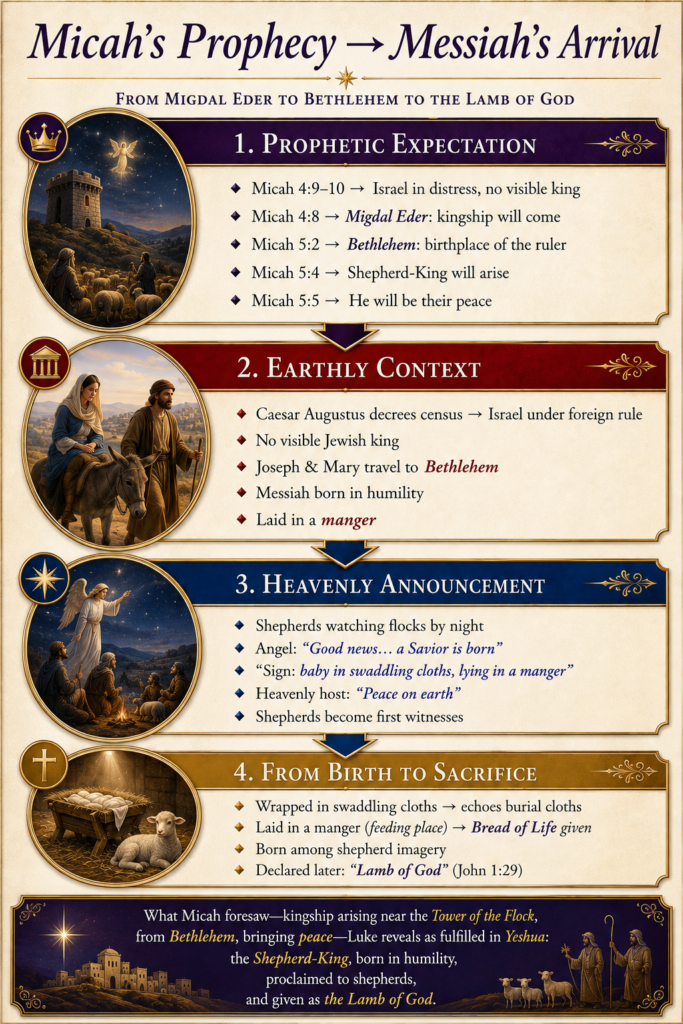
    One of the worst consequences of the Babylonian exile — to Israel’s mind — was the loss of the Davidic monarchy. The question, ‘Have you no king?’ was serious because Israel’s king had a covenantal role. Jehovah had established the Davidic line, and the king was supposed to lead the people under God’s rule.

    But they wouldn’t have taken the image of childbirth literally. Micah was describing their anguish. They weren’t expecting a Baby.

    Think of it this way. There was no Davidic king ruling over the Jews — no king to lead them under the covenant and protect them as their earthly ruler.

    We, like they, have to decide which “lord” we will follow: the worldly lord or the divine Lord.

    Census

    Augustus may have thought the census (apographē in Greek) would be used to control the empire, but it was used by Jehovah to further His plan.

    Some translations say that Augustus said “…  that all the world should be registered” (Lk. 2: 1 ESV). What they really meant was all the Roman Empire.

    A Roman census could be deeply offensive to Jews. They would have remembered the census that David took (II Sam. 24). David’s census was a sin, in which 70,000 men were killed as punishment.

    So, what does it have to do with the census in question? There are a number of possibilities.

    Quirinius

    Publius Sulpicius Quirinius was a Roman official and a military commander who later became a governor.

    Specifically, Quirinius became legate (governor) of Syria around AD 6-12. He conducted a census in Judaea after Rome took direct control.

    So, how does this apply to the census in question?

    • Luke could have been saying that the census at the time Yeshua was born was before (the Greek word prōtē) the famous census in AD 6. That would place this registration before Quirinius’s well-known census as governor of Syria. This is the most likely way to understand Luke’s wording. Matthew places Yeshua’s birth during the reign of Herod the Great, who died in 4 BC. The well-known census conducted under Quirinius occurred in AD 6 — roughly a decade later. Luke therefore cannot be referring to that later census. If prōtē is understood in the sense of before, Luke is distinguishing this registration from the later census.
    • Quirinius may have had military authority in Syria before AD 6. He may have overseen an earlier regional census.
    • The registration for the taxation could have occurred in Herod’s time. The actual taxation census may have occurred in Quirinius’ time.
    • Most of Luke’s readers would have known about the famous census in AD 6. He could either be using that one as a timestamp to this census was done earlier, or he may be including that to ensure that his readers didn’t confuse the two.

    As a major Roman province, Syria’s governor may have had the authority over the whole region, including the small client kingdom of Judea, even if it was under Herod. Any census likely required oversight from Syria.

    Bottom line, this wasn’t a random village story.  There were links and connections across the regions. It was embedded in the history of the region.

    Could Luke have presented his Gospel without Quirinius being listed? Of course.

    But it shows how Jehovah was using Rome to bring His plan into fruition. Rome may have thought they were organizing their world. Jehovah was ordering history.

    So, when the New Living Translation says the census occurred when Quirinius was governor, it reflects one way to read the Greek. But in light of Matthew’s chronology and the known date of the later census, I believe ‘before’ better explains Luke’s wording.

    That doesn’t diminish the fact that Luke was anchoring the story of Yeshua’s birth in real political history. He was reminding his readers what happened in their world.

    Returned to Their Own Ancestral Towns

    The requirement to return to their ancestral home is not explained in Scripture but we learn of it in Jewish custom.

    When Augustus ordered the census be conducted, it was not usual for them to require those being counted to return to the home of their fathers. Usually, people were counted in a census where they lived, owned property, or paid taxes.

    The Hebrew concept of the father’s house – Beit Av (בֵּית אָב) – helps us understand the family and clan identity behind Luke’s wording. One possibility is that Roman authorities accommodated Jewish family and clan structures when conducting the registration. We cannot know that for certain, but tribal identity and family lineage remained important to the Jewish people.

    It seems more logical that it was a Jewish requirement – but we don’t know that for sure. Even in the occupation, tribal identity and family lineage mattered. Genealogies were preserved because land inheritance still mattered.

    To them, this was a covenant matter.

    Bethlehem

    But this census was not used as punishment.

    Augustus unwittingly created the reason for Joseph to travel to Bethlehem – Bêṯ Leḥem (בֵּית לֶחֶם).

    There were several reasons that this was to be the birthplace of the Messiah.

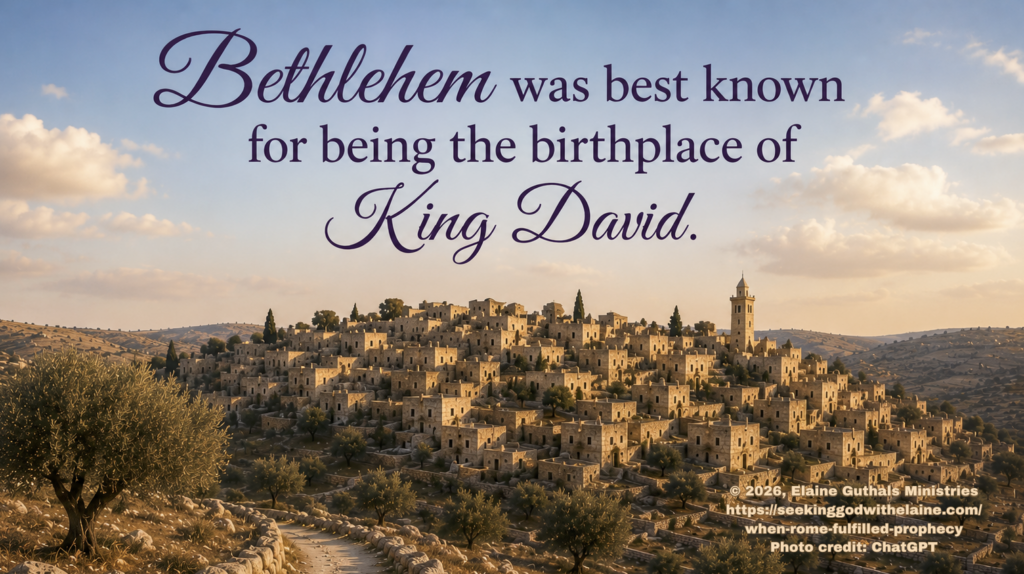
    Bethlehem was best known for being the birthplace of King David. Messiah was to be of his lineage.

    • “The Lord said, ‘I have made a covenant with David, my chosen servant. I have sworn this oath to him: “I will establish your descendants as kings forever; they will sit on your throne from now until eternity”’” (Ps. 89: 3-4 NLT).
    • “‘For the time is coming,’ says the Lord, ‘when I will raise up a righteous descendant from King David’s line. He will be a King who rules with wisdom. He will do what is just and right throughout the land. And this will be his name: “The Lord Is Our Righteousness.” In that day Judah will be saved, and Israel will live in safety’” (Jer. 23: 5-6 NLT).
    Bethlehem means house of bread. This is significant because, while the name may reflect the agricultural character of the region (see the Book of Ruth), Yeshua said He was the bread of life. “Jesus said to them, “I am the bread of life; whoever comes to me shall not hunger, and whoever believes in me shall never thirst” (Jn. 6: 35 NLT).

    This fulfilled the prophecy of Micah 5: 2. “But you, O Bethlehem Ephrathah, who are too little to be among the clans of Judah, from you shall come forth for me one who is to be ruler in Israel, whose coming forth is from of old, from ancient days” (Mic. 5: 2 ESV).

    It was important that the prophecy state Bethlehem Ephrathah. It distinguishes that village from Bethlehem of Zebulun. Located seven miles northwest of Nazareth, it is only mentioned once in Scripture (Josh. 19: 15 NLT).

    Grey described Bethlehem Ephrathah in this way. He wrote,

    “These sloping hills also contained terraced orchards of olive trees, exposed patches of limestone bedrock pocked with natural caves, and large stretches of natural brush, all of which made the countryside around Bethlehem ideal for local shepherds to graze flocks of sheep and goats.”

    Resource

    Bethlehem was an important city in the history of Israel. This was King David’s birthplace and Rachel’s burial place.

    Descendant of King David

    Joseph returned to Bethlehem because he was a descendant of David.

    In Matthew 1: 6, we learn that Joseph was the great…great-grandson of David’s son, Solomon. That is why he had to return to Bethlehem.

    But we can’t forget that Joseph may have still had family there. Bethlehem may have been where clan records were kept.

    That kind of makes more sense. Why would they go back hundreds of years to gather families? If they said they were going back to Judah’s city, that would have been one thing,

    We can gloss over this. David would have been a significant ancestor through whom the family line could be identified.

    But which important ancestor identified each of the other tribes? It doesn’t really make sense if only the tribe of Judah was called out.

    It was important for Luke’s narrative to emphasize that Joseph was a descendant of David. This fulfilled a Messianic expectation.

    “When your days are fulfilled and you lie down with your fathers, I will raise up your offspring after you, who shall come from your body, and I will establish his kingdom. He shall build a house for my name, and I will establish the throne of his kingdom forever” (II Sam. 7: 12-13 ESV).

    Making the Connections #1

    When Luke began his Gospel, he set the timestamp by marking Herod the Great as being king of Judea. Herod was a part of the system.

    But starting Chapter 2, Luke moves to using Caesar Augustus – who was the system.

    Why didn’t Luke even mention Herod? Bethlehem was under Herod’s rule. This is especially strange since Herod was responsible for what became known as the Massacre of the Innocents.

    Luke focused on the whole world. Yeshua came to be Savior of the world.

    But many in the world today, like first-century Jews, don’t recognize Yeshua as the King.

    Some of that has to do with the manner of Yeshua’s birth. He was born in obscurity even while being declared – and celebrated by some – Savior and Lord.

    The story takes place in territory ruled by Herod under the authority of Caesar.

    By doing this, Luke was setting up two kingdoms.

    Why is that important? Look at what Yeshua did once His ministry began. He healed and forgave people. He confronted those in power. He redefined kingship.

    Yeshua did this against the backdrop of Herod’s politics – and violence – and Rome’s control. It is a strategic setup.

    So, even if Herod wasn’t mentioned in Luke 2, his presence was felt.

    • Political pressure.
    • Social structure
    • Lack of recognition
    • Tension around kingship

    And here came a new King – One Who didn’t look like any king Herod had previously seen. Therefore, he didn’t recognize Him.

    But wasn’t that the point?

    Making the Connections #2

    In the Ancient Near East, the firstborn son of the family held an important position in the family. He was the heir apparent of the birthright and the blessing.

    We see in Genesis that, while society may value the firstborn son over others, Jehovah looks at their hearts and sees their obedience to Him.

    • Abel was chosen over Cain.
    • Abraham was chosen over his brothers.
    • Isaac was chosen over Ishmael
    • Jacob was chosen over Esau.
    • Judah was chosen over Reuben, Simeon, and Levi.

    Yeshua, however, was the supreme Firstborn. He was

    • Firstborn of Mary (Lk. 2: 7)
    • Firstborn over all creation (Col. 1: 15)
    • Firstborn from the dead (Col. 1: 18)

    Yeshua was the true Firstborn, but He did not come demanding the privileges of a firstborn. He came in humility.

    The King was born in Bethlehem, not in a palace. He was laid in a manger, not placed on a throne. He came as the One who would give His life rather than demand the lives of others.

    The world expected power to look like Rome. Jehovah showed us that true kingship looks like Yeshua.

    Heart Check

    Do I recognize that Jehovah’s  plans are bigger than any earthly power?
    Do I trust that Jehovah is working behind the scenes in my life?
    Am I giving my allegiance to the true King?

    How Do We Apply This?

    • Remember that God is sovereign even in world events.
    • Rest in His plan, even when you don’t see the full picture.
    • Worship the King Who came in humility to serve.

    Father God. We know that You are in control of everything. You plan — and work Your plan for our good. Amen.

    If you don’t understand something and would like further clarification, please contact me.

    If you have not signed up for the email providing the link to the devotions and the newsletter, do so below.

    If God has used this devotion to speak with you, consider sharing it on social media.

  • The Birth of John the Baptist

    Zechariah and Elizabeth were promised a son who would have a special mission. This devotional reading looks at the birth of the one who would prepare the way for the Messiah.

    Nuggets

    • Elizabeth had carried the baby that she never thought she would have for nine months.
    • The circumcision ceremony was where the newborn son entered into the covenant community.
    • John almost got another name.
    • Jehovah was with John from conception.
    • Zechariah blessed his son and acknowledged the mission Jehovah had for him.
    • Second Temple Judaism saw the imagery of the light.
    • John grew physically and spiritually.

    We discussed in several devotions that two sons were prophesied to be born under unusual circumstances to two women who were relatives. The first couple had been praying for years for a baby – until age made that an impossibility.

    Now, they were going to get their son. Jehovah Himself had sent word that it would happen.

    We are going to take the verses in a little order. We are going to pull out Zechariah’s Benedtictus for the next devotion. That will leave the last couple of verses to be discussed here.

    Let’s Put It into Context

    To read devotions in The Battle for the Heart theme

    Devotions in the Preparing for the Christ Child series

    John Is Born

    “When it was time for Elizabeth’s baby to be born, she gave birth to a son. And when her neighbors and relatives heard that the Lord had been very merciful to her, everyone rejoiced with her. When the baby was eight days old, they all came for the circumcision ceremony. They wanted to name him Zechariah, after his father. But Elizabeth said, ‘No! His name is John!’ ‘What?’ they exclaimed. ‘There is no one in all your family by that name.’ So they used gestures to ask the baby’s father what he wanted to name him. He motioned for a writing tablet, and to everyone’s surprise he wrote, ‘His name is John.’ Instantly Zechariah could speak again, and he began praising God. Awe fell upon the whole neighborhood, and the news of what had happened spread throughout the Judean hills. Everyone who heard about it reflected on these events and asked, ‘What will this child turn out to be?’ For the hand of the Lord was surely upon him in a special way” (Luke 1: 57-66 NLT)

    When It Was Time

    Elizabeth had carried the baby that she never thought she would have for nine months.

    Now, it was time for the baby to be born. I wonder what was going through her head.

    Logic would say that nothing would go wrong in the birth of the forerunner of the Messiah. He had a specific, special plan for His life. It was time for him to start his life.

    But we aren’t guaranteed an easy road – even when we are doing Jehovah’s Will. We still feel pain and heartache. Plans fall through – especially if we are doing His Will our way.

    At her age, Elizabeth must have had some trepidation for the birthing process. There was no hospital with many machines to address any problem that went wrong.

    Jehovah knows we will feel anxious and experience fear and uncertainty. Those feelings are not automatically unbelief.

    Some would say that anxiety is really doubt. If done the right way, doubt is really just questions so that we may know more of Jehovah and His will. We just have to question in belief – as Mary did (Lk. 1: 34).

    Circumcision

    The circumcision ceremony was where the newborn son entered into the covenant community.

    The important circumcision ceremony is called B’rit Milah (בְּרִית מִילָה). It probably took place in the modest village in which Zechariah and Elizabeth lived in the Hill Country.

    It was a religious ceremony – not just a medical procedure – that was performed on a son’s eighth day after birth. It was a covenant ceremony, a family celebration, a public declaration of identity, and the official welcoming of a son into God’s covenant people all rolled into one celebration.

    Covenant celebrations such as this were celebrated by the community. That included family and friends. Many would have wanted to celebrate with the elderly couple because of their covenant blessing.

    Circumcision is part of God’s covenant with Abraham. It is the Jew’s responsibility to show agreement with the covenant. It was the physical sign of the covenant that showed the child belonged to Jehovah.

    “Then God said to Abraham, ‘Your responsibility is to obey the terms of the covenant. You and all your descendants have this continual responsibility. This is the covenant that you and your descendants must keep: Each male among you must be circumcised. You must cut off the flesh of your foreskin as a sign of the covenant between me and you. From generation to generation, every male child must be circumcised on the eighth day after his birth. This applies not only to members of your family but also to the servants born in your household and the foreign-born servants whom you have purchased. All must be circumcised. Your bodies will bear the mark of my everlasting covenant. Any male who fails to be circumcised will be cut off from the covenant family for breaking the covenant’” (Gen. 17: 9-14 NLT).

    Since the number seven represents completion, the number eight represents a new beginning. The child is entering into covenant life and God’s promises.

    Jehovah created the male body to anticipate this procedure. It produces Vitamin K and clotting factors that peak around the eighth day.

    This was a celebration that included family and friends. Covenant life was seen as communal.

    John’s circumcision might have been different in one aspect. Zechariah was unable to speak, but that did not prevent him from directing the ceremony. Whether he performed the circumcision himself or another person did so, Zechariah remained John’s legal father.

    His Name Is John!

    John almost got another name.

    We don’t know if Elizabeth and Zechariah had shared the baby’s name with friends and family prior to his birth. We know they didn’t have gender reveal parties, but people may have questioned them about possible baby names.

    Either way, when it got to the part where the baby was named, it reads like the crowd thought they knew what it should be. “… They wanted to name him Zechariah, after his father” (Lk. 1: 59 NLT).

    Then, as now, it was common to name a child after an ancestor. It was both a way to preserve and honor the name.

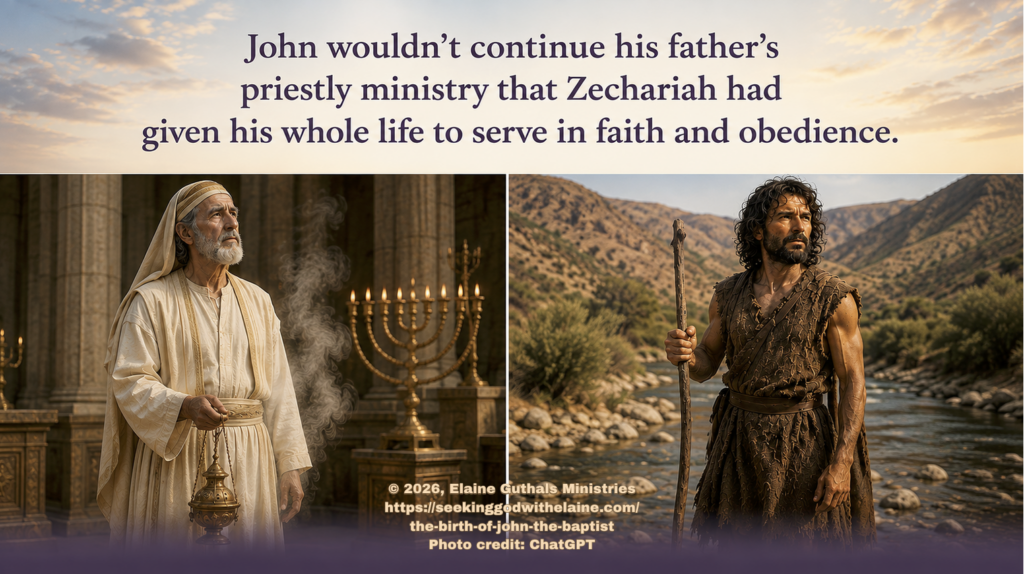
    I bet it was easy to imagine John growing up and being like Zechariah in many ways. We already know, from our study of Gabriel’s visit to Zechariah, that John wouldn’t continue his father’s priestly ministry that Zechariah had given his whole life to serve in faith and obedience.

    Instead of serving as a priest, John would become a prophet calling the people back to God. He would be preparing them for something new.

    Parker had a great comment on what the crowd was doing. He wrote, “They would have dragged down the miraculous to the ordinary, and surrounded this speciality of Divine [favor] with all that was ancient and traditional in the family.”

    Resource

    We get the obedience behind calling the son John. ‘That was the name the angel Gabriel told Zechariah he was to have.

    Elizabeth didn’t equivocate. She flat out said, “His name is John.”

    I thought it was funny that the crowd gestured to Zechariah to see his answer. The man couldn’t speak – he wasn’t deaf.

    Doubting Zechariah didn’t doubt anymore. He wrote, “His name is John.” He was publicly submitting to Jehovah’s Will.

    Zechariah’s obedience was rewarded. His ability to speak returned to him right when Jehovah’s promise, John’s identity, and Zechariah’s obedience merged.

    We need to do what Jehovah tells us to do what He has decided.

    But there is another aspect to that. “But now, O Jacob, listen to the Lord who created you. O Israel, the one who formed you says, ‘Do not be afraid, for I have ransomed you. I have called you by name; you are mine’” (Isa. 43: 1 NLT).

    Part of the reason for the name is the meaning of the names. Zechariah means Yahweh remembers. John (Yôḥānān – יוֹחָנָן) means Yahweh has shown favor.

    Let’s stop right there a second to make sure this sinks in.

    John was a gift from Jehovah because he was sent for a specific mission. The whole mission was Jehovah’s gift to us. It was all about Jehovah remembering His covenant promise.

    Think divine providence. Jehovah provides for His children, whom He knows by name.

    But if Zechariah and Elizabeth would have let the worldview hijack Jehovah’s plan before John even said a word and took a step, would His plan have been able to go ahead.

    It feels like we sometimes operate on the assumption that Jehovah will forgive us when we go off plan, but He will continue to use us if we just repent. And all-knowing Jehovah may have worked that into some of our plans.

    But what if He doesn’t? What if He needs total obedience and surrender for that plan?

    The Hand of the Lord Was upon Him

    Jehovah was with John from conception.

    We know that John was filled with the Holy Spirit from conception (Lk. 1: 15). That would mean Jehovah would be protecting him throughout his life.

    Fox reminded us that growth includes not only physical growth but also spiritual growth and growth of the soul.

    Resource

    John did grow as Jehovah required.

    Zechariah’s Prophesy to His Son

     “And you, my little son, will be called the prophet of the Most High, because you will prepare the way for the Lord. You will tell his people how to find salvation through forgiveness of their sins. Because of God’s tender mercy, the morning light from heaven is about to break upon us, to give light to those who sit in darkness and in the shadow of death, and to guide us to the path of peace” (Lk. 1: 76-79 NLT)

    Prophet of the Most High

    Zechariah blessed his son and acknowledged the mission Jehovah had for him.

    Oh, what a difference nine months make!

    Zechariah understood when John was born what he couldn’t understand when Gabriel gave him the message. He was going to be the forerunner of the Messiah.

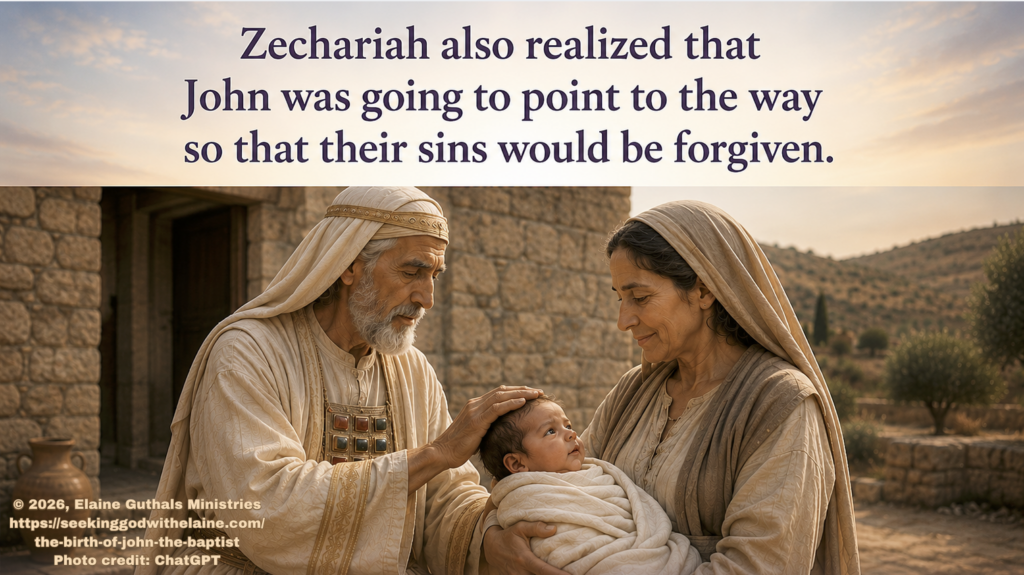
    Zechariah also realized that John was going to point to the way that their sins would be forgiven. He said one of John’s duties would be to “… tell his people how to find salvation through forgiveness of their sins” (Lk. 1: 77 NLT).

    With sacrifices still being offered in the Temple, the first-century Jews either have seen Yeshua’s way as a renewal or a replacement. I am sure there were some in both camps.

    The New Living Translation expresses John’s ministry as showing people how to find salvation. He was to impart the knowledge of salvation that points the people to salvation – to Yeshua.

    They have to choose to be obedient to Jehovah.

    That is all any Pastor Steve-type or even Elaine-type teacher can do. Those searching for Jehovah must make up their own minds to accept the gift of salvation – and all the responsibilities that goes with Yeshua’s covenant.

    But then first-century Jews probably equated this with the sin that occurred that triggered the Babylonian exile. They didn’t see it as the sin that occurred in the Garden of Eden.

    Morning Light from Heaven

    Second Temple Judaism saw the imagery of the light.

    The Greek expression translated “morning light” carries the idea of the sunrise after a long night. For generations Israel had waited through what often felt like spiritual darkness.

    Prophets had spoken. The people had hoped. Yet centuries had passed without another prophetic voice.

    Now Zechariah announces that the dawn is finally breaking — not because Rome is about to be defeated, but because Jehovah Himself is acting to rescue His people from their greatest enemy: sin.

    This light reaches all the way back to Creation. The first recorded words of Jehovah in Scripture were, “Let there be light” (Gen. 1: 3). Before the sun, moon, and stars were created, Jehovah’s Light – Yeshua – pushed back the darkness.

    Now, in Yeshua in human form, Jehovah again shines light into a world darkened by sin. John’s ministry would not be the light itself; he would point people to the Light.

    That is why John later wrote, “God sent a man, John the Baptist, to tell about the light so that everyone might believe because of his testimony. John himself was not the light; he was simply a witness to tell about the light. The one who is the true light, who gives light to everyone, was coming into the world” (Jn. 1: 6-9 NLT).

    John’s mission was to prepare people’s hearts so they would recognize the true Light when He appeared. John was never the destination. He was the signpost pointing everyone to Yeshua.

    The prophets had also looked forward to this day. Isaiah spoke of a people walking in darkness who would see a great light (Isa. 9: 2), and Malachi described the coming Messiah as the Sun of Righteousness who would rise with healing in His wings (Mal. 4: 2). Zechariah now realized those promises were no longer distant hopes.

    The dawn had begun. The Light was coming.

    John in the Wilderness

    “John grew up and became strong in spirit. And he lived in the wilderness until he began his public ministry to Israel” (Lk. 1: 80 NLT)

    John grew physically and spiritually.

    When I think of wilderness, I think of a place with lots of trees. It is a wild and natural place.

    Really, a wilderness is an uncultivated and uninhabited region. Its main characteristic is being inhospitable.

    Where John would have gone when it says he went to the wilderness was a harsh rocky region east of Jerusalem. It stretched from there toward the Jordan River and the Dead Sea.

    Geographically, this region was defined by jagged limestone hills, steep ravines known as wadis, and dry, chalky soil. Vegetation was sparse, limited to thorn bushes and scattered scrub growth. It was not a soft desert, but a severe, broken landscape that stripped away comfort and exposed the heart.

    The climate in the wilderness went from one extreme to another. The daytime heat contrasted with the cold nights.

    Yet there was hope in this arid land. The wilderness, called the midbar (מִדְבָּר) in Hebrew, was a place where God spoke and revealed Himself.

    Although we are not told why, we can guess at the reasons John the Immerser chose to minister the wilderness. Instead of going to the Temple, he went to a solitary place that was unfamiliar and called people to repentance and preparation.  He took people away from the distractions of their lives so that they could focus on Yeshua.

    Making the Connections #1

    I agree with one thing Parker said. He wrote, “We shall be better prophets as we become better students. In the silent time we are gathering elements, consolidating character, and undergoing discipline, all of which will be wanted when the trumpet calls us to the battle.”

    Resource

    We do need to be students of God’s Word. (That is what disciple means.)

    Jehovah doesn’t do a data dump into us when we trust Yeshua as our Savior. Instead, He reveals Himself to us over time – over the rest of our lives, in fact.

    If we don’t study what God’s Word really says, we may not be getting it right.

    More importantly, we aren’t allow Jehovah to transform our hearts if we don’t dig into His way.

    Making the Connections #2

    John entered into the covenant community through circumcision. But as he grew, he would learn that more than just a physical sign was needed for salvation.

    “Prove by the way you live that you have repented of your sins and turned to God. Don’t just say to each other, ‘We’re safe, for we are descendants of Abraham.’ That means nothing, for I tell you, God can create children of Abraham from these very stones” (Lk. 3: 8 NLT).

    This followed what both Moses and Jeremiah said.

    • “Therefore, change your hearts and stop being stubborn” (Duet. 10: 16 NLT).
    • “O people of Judah and Jerusalem, surrender your pride and power. Change your hearts before the Lord, or my anger will burn like an unquenchable fire because of all your sins” (Jer. 4: 4 NLT).

    Heart Check

    Think about the battle Yeshua is engaged in for your heart. Ask yourself the following questions.

    • Am I preparing my heart daily to hear and obey Jehovah, or have I become spiritually complacent?
    • Is there an area of my life where I know Jehovah’s will but am resisting it?
    • Am I more concerned with following family traditions, culture, or people’s expectations than following Jehovah’s direction?
    • Am I walking in the Light Yeshua has given me, or am I holding on to areas of darkness?
    • If someone looked at my life, would it point them to me—or to Yeshua?

    How Do We Apply This?

    • Ask Jehovah to prepare your heart to recognize His work, even when it doesn’t happen the way you expect.
    • Spend time in God’s Word each day so your heart stays sensitive to His voice.
    • Thank Yeshua for bringing His light into the darkness of your life and revealing the areas that still need His transforming work.
    • Surrender any area of resistance where you have been holding on to your own plans instead of trusting Jehovah’s.
    • Ask the Holy Spirit to make your life a faithful witness that points others to Yeshua rather than to yourself.

    Father God. Thank You for the fact that You call each of us to expand Your Kingdom. You don’t rely on only a few to do the work for You. Each and every one of us has tasks to do for You. These are to grow our faith and grow us closer to You. Amen.

    If you don’t understand something and would like further clarification, please contact me.

    If you have not signed up for the email providing the link to the devotions and the newsletter, do so below.

    If God has used this devotion to speak with you, consider sharing it on social media.
  • Started Life in Egypt

    In the last devotion, Jacob and his family had just arrived in Egypt. This devotional reading looks at Joseph’s efforts to get them settled in the land and how the famine progressed after their arrival.

    Nuggets

    • Joseph wasn’t merely saving the family from famine; he may have been protecting them from assimilation.
    • We may think it strange that Jacob blessed Pharaoh, but there was an important reason he did.
    • Jacob’s description of his life was interesting.
    • Joseph got his wish and settled his family into the land of Goshen.
    • While the covenant people and the covenant line were protected, for others the situation during the famine became dire.
    • And remember, just because Moses only lists Egypt and Canaan here, that doesn’t mean other countries were not experiencing the famine.
    • We may look at Joseph’s actions during the famine through twenty-first century lenses and question the policies that he instituted.
    • The only exemption was the land held by the priests.
    • Even the Egyptians themselves saw their survival as merciful.
    • Jehovah’s covenant was still intact.
    • Jacob made plans for his burial.
    started-life-in-egypt

    Now that Joseph’s family had relocated to Egypt, he had to get them settled. He had a plan, but he had to make sure it worked out the way he wanted it to work.

    Let’s Put It into Context

    To read devotions in the Creating Everything theme, click the button below.

    Devotions in the Joseph the Savior of Israel  series

    Joseph Presented His Family to Pharaoh

    “Then Joseph went to see Pharaoh and told him, ‘My father and my brothers have arrived from the land of Canaan. They have come with all their flocks and herds and possessions, and they are now in the region of Goshen.’ Joseph took five of his brothers with him and presented them to Pharaoh. And Pharaoh asked the brothers, ‘What is your occupation?’ They replied, ‘We, your servants, are shepherds, just like our ancestors. We have come to live here in Egypt for a while, for there is no pasture for our flocks in Canaan. The famine is very severe there. So please, we request permission to live in the region of Goshen.’ Then Pharaoh said to Joseph, ‘Now that your father and brothers have joined you here, choose any place in the entire land of Egypt for them to live. Give them the best land of Egypt. Let them live in the region of Goshen. And if any of them have special skills, put them in charge of my livestock, too’” (Gen. 47: 1-6 NLT)

    Joseph wasn’t merely saving the family from famine; he may have been protecting them from assimilation.

    Once Jacob and his family arrive in Egypt, some of the brothers were presented to Pharaoh. That was appropriate as he had invited them to move down to Egypt.

    Five of Jacob’s sons were questioned about their occupation. We aren’t told which five brothers were given the audience with Pharaoh.

    It is important we look at it beyond the surface. Usually, we say, when we don’t get a definitive answer, that shouldn’t be the focus. And that could be the case here.

    But it could also be the case that Joseph would have chosen the five brothers who were least likely to impress Pharaoh. We know Joseph has managed other encounters that his brothers were involved in.

    We may not think that, if say, Judah had impressed Pharaoh, Pharaoh would have integrated him into Egyptian administration because of his leadership qualities. Let’s say big, strapping Reuben would have been a sure candidate for military service. Then look at Benjamin, just as smart if not smarter than Joseph. If Joseph saved the nation, what could Benjamin do for them?

    Did you catch it? The brothers specifically asked for Goshen. Pharaoh said anywhere. Was he saying, “Come be a part of our society and contribute”?

    That’s why the ending comment may seem innocuous at first but have hidden meaning. “… And if any of them have special skills, put them in charge of my livestock, too” (Gen. 47: 6 NLT).

    If they weren’t interested in anything Egypt had to offer, maybe Pharaoh could hook them with what they know best. He was specificially interested in their special skills.

    If we look a little deeper, we see Joseph – probably but can’t be proved – was trying to make sure his family wasn’t assimilated into Egyptian society by ensuring control over the picture that Pharaoh saw of his family.

    They were shepherds. Shepherds were socially inferior in the Egyptians minds. “Then he said, ‘When Pharaoh calls for you and asks you about your occupation, you must tell him, “We, your servants, have raised livestock all our lives, as our ancestors have always done.” When you tell him this, he will let you live here in the region of Goshen, for the Egyptians despise shepherds’” (Gen. 36: 33-34 NLT).

    This separation is needed to maintain covenant identity.

    Jacob Blessed Pharaoh

    “Then Joseph brought in his father, Jacob, and presented him to Pharaoh. And Jacob blessed Pharaoh. ‘How old are you?’ Pharaoh asked him. Jacob replied, ‘I have traveled this earth for 130 hard years. But my life has been short compared to the lives of my ancestors.’ Then Jacob blessed Pharaoh again before leaving his court” (Gen. 47: 7-10 NLT)

    Jacob Blessed Pharaoh

    We may think it strange that Jacob blessed Pharaoh, but there was an important reason he did.

    Hmmmm. Pharaoh is the ruler of the strongest empire at that time. He was a political sovereign with much wealth.

    And here this shepherd is blessing him?

    Of course, Jacob blessed Pharaoh. Pharaoh himself had invited Jacob and his family down so that they would be provided for during the famine.

    Jacob gave Pharaoh a covenant blessing. “I will bless those who bless you and curse those who treat you with contempt …” (Gen. 12: 3 NLT).

    True, Pharaoh had the greater earthly power. Jacob had covenant standing – which will trump earthly power any day.

    Traveled This Earth for 130 Hard Years

    Jacob’s description of his life was interesting.

    Some versions translate traveled this earth as sojourned. That evaluates life through the lens of a pilgrimage.

    The patriarchs lived with the covenant in view, seeing beyond any earthly homeland.

    Wait! What????

    We thought that Old Testament people didn’t have a clue about Heaven.

    The author of Hebrews would have taken issue with that statement. “Abraham was confidently looking forward to a city with eternal foundations, a city designed and built by God” (Heb. 11: 10 NLT).

    Jacob acknowledged his hard life.

    • He had manipulated his brother into selling the birthright.
    • He had deceived his father to obtain the blessing.
    • He had family division not only when he was living in Isaac’s tents but also when he stayed with his father-in-law- and when he had his own tents for his family.
    • He had debilitating grief because his wife died and his son went away and never came back for 22 years.
    • He feared his brother, both before he left for Haran and when he was coming home and Esau was coming out to meet him.
    • Now, he was dealing with a devastating famine in a land that wasn’t the Promised Land.

    Yes, Jacob had those life experiences. He didn’t, however, experience separation from Jehovah. Hard years don’t equal absent sovereignty.

    Jacob did note that he was not going to live as long as his ancestors did. Abraham lived to be 175 years old. Isaac was 180 when he died.

    Israel Settled in Goshen

    “So Joseph assigned the best land of Egypt — the region of Rameses — to his father and his brothers, and he settled them there, just as Pharaoh had commanded. And Joseph provided food for his father and his brothers in amounts appropriate to the number of their dependents, including the smallest children” (Gen. 47: 11-12 NLT)

    Joseph got his wish and settled his family into the land of Goshen.

    This was the best land of Egypt. But it depended on your perspective if you thought that way.

    The Egyptians saw the land as undesirable because they saw shepherds as undesirable.

    Jacob and his family found it was the best land. They were allowed to continue in their occupation. It allowed them to remain distinct from Egypt. It was a place of protection which allowed them to multiply.

    Later in the story of the covenant people in a foreign land, we would see that the land of Goshen was spared some of the plagues that Jehovah subjected the Egyptians to in order for them to release His people.

    The Famine Intensified

    “Meanwhile, the famine became so severe that all the food was used up, and people were starving throughout the lands of Egypt and Canaan” (Gen. 47: 13 NLT)

    All the Food Was Used Up

    While the covenant people and the covenant line were protected, for others the situation during the famine became dire.

    Remember, when Jacob and his family arrived in Egypt, the famine had been going two years. There was five more years of it.

    As those five years progressed, the famine became more severe. Throughout Egypt and Canaan, people were starving.

    No, Joseph still had the food in his storehouses. This means something different.

    The point is that there was no food available through normal means.

    The harvests had failed. Fields weren’t producing. Private reserves had been exhausted. Livestock feed was disappearing. The population could no longer sustain itself by its own resources.

    Throughout the Lands of Egypt and Canaan

    And remember, just because Moses only lists Egypt and Canaan here, that doesn’t mean other countries were not experiencing the famine.

    We know they were.

    “Then the seven years of famine began, just as Joseph had predicted. The famine also struck all the surrounding countries, but throughout Egypt there was plenty of food. Eventually, however, the famine spread throughout the land of Egypt as well. And when the people cried out to Pharaoh for food, he told them, ‘Go to Joseph, and do whatever he tells you’” (Gen. 41: 54-55 NLT).

    The other countries were not applicable to the covenant story. So, Moses didn’t list them again.

    The People Sold Their Land and Themselves

    “By selling grain to the people, Joseph eventually collected all the money in Egypt and Canaan, and he put the money in Pharaoh’s treasury. When the people of Egypt and Canaan ran out of money, all the Egyptians came to Joseph. ‘Our money is gone!’ they cried. ‘But please give us food, or we will die before your very eyes!’ Joseph replied, ‘Since your money is gone, bring me your livestock. I will give you food in exchange for your livestock.’ So they brought their livestock to Joseph in exchange for food. In exchange for their horses, flocks of sheep and goats, herds of cattle, and donkeys, Joseph provided them with food for another year. But that year ended, and the next year they came again and said, ‘We cannot hide the truth from you, my lord. Our money is gone, and all our livestock and cattle are yours. We have nothing left to give but our bodies and our land. Why should we die before your very eyes? Buy us and our land in exchange for food; we offer our land and ourselves as slaves for Pharaoh. Just give us grain so we may live and not die, and so the land does not become empty and desolate.” So Joseph bought all the land of Egypt for Pharaoh. All the Egyptians sold him their fields because the famine was so severe, and soon all the land belonged to Pharaoh. As for the people, he made them all slaves from one end of Egypt to the other” (Gen. 47: 14-21 NLT)

    We may look at Joseph’s actions during the famine through twenty-first century lenses and question the policies that he instituted.

    That would be a wrong take.

    Would they fly in today’s society? Maybe. Maybe not.

    What we should read in this passage is the severity of the famine. Nothing was growing. If Jehovah hadn’t have given Pharaoh the dream and if Joseph wouldn’t have instituted grain management, some really nasty things would have happened:

    • Egypt would have collapsed
    • mass starvation would have occurred
    • social order would have disintegrated
    • money would have failed
    • livestock would have died
    • land would have failed
    • personal autonomy would have failed

    But then, couldn’t we make the argument that society collapsed?

    • People ran out of money buying food.
    • People exchanged their livestock for food.
    • People surrendered their land for food.
    • People became Pharaoh’s slaves for food.

    This did not make Joseph a tyrant.

    The problem was the severity of the famine. The problem was not Joseph or the fact that he sold food to starving people.

    Joseph was managing the resources that Jehovah provided so that many could be saved.

    Priestly Allotment

    “The only land he did not buy was the land belonging to the priests. They received an allotment of food directly from Pharaoh, so they didn’t need to sell their land” (Gen. 47: 22 NLT)

    The only exemption was the land held by the priests.

    In Egypt at that time, religion and politics were integrated. This created a centralized economic structure in Egypt.

    Israel weren’t sustained by Pharaoh’s priesthood. They were sustained by Jehovah according to the covenant faithfulness.

    Joseph Established a National Policy

    “Then Joseph said to the people, ‘Look, today I have bought you and your land for Pharaoh. I will provide you with seed so you can plant the fields. Then when you harvest it, one-fifth of your crop will belong to Pharaoh. You may keep the remaining four-fifths as seed for your fields and as food for you, your households, and your little ones.’ ‘You have saved our lives!’ they exclaimed. ‘May it please you, my lord, to let us be Pharaoh’s servants.’ Joseph then issued a decree still in effect in the land of Egypt, that Pharaoh should receive one-fifth of all the crops grown on his land. Only the land belonging to the priests was not given to Pharaoh” (Gen. 47: 23-26 NLT)

    Even the Egyptians themselves saw their survival as merciful.

    As Pharaoh now owned the land and the people, Joseph established a law that one-fifth of the produce grown would belong to Pharaoh. This, while it was substantial, was not what other Ancient Near Eastern taxation required.

    All saw this as preservation, reorganization, and restoration. Yes, Egypt was reorganized, and Israel was preserved.

    In fact, everyone looked at Joseph as their savior.

    Israel Multiplied in Egypt

    “Then Joseph said to the people, ‘Look, today I have bought you and your land for Pharaoh. I will provide you with seed so you can plant the fields. Then when you harvest it, one-fifth of your crop will belong to Pharaoh. You may keep the remaining four-fifths as seed for your fields and as food for you, your households, and your little ones.’ ‘You have saved our lives!’ they exclaimed. ‘May it please you, my lord, to let us be Pharaoh’s servants.’ Joseph then issued a decree still in effect in the land of Egypt, that Pharaoh should receive one-fifth of all the crops grown on his land. Only the land belonging to the priests was not given to Pharaoh” (Gen. 47: 23-26 NLT)

    “Meanwhile, the people of Israel settled in the region of Goshen in Egypt. There they acquired property, and they were fruitful, and their population grew rapidly” (Gen. 47: 27 NLT)

    Jehovah’s covenant was still intact.

    Egypt didn’t stop the covenant. Neither did famine or exile.

    Jehovah’s promises kept moving forward.

    Jacob’s Final Request

    “Jacob lived for seventeen years after his arrival in Egypt, so he lived 147 years in all. As the time of his death drew near, Jacob called for his son Joseph and said to him, ‘Please do me this favor. Put your hand under my thigh and swear that you will treat me with unfailing love by honoring this last request: Do not bury me in Egypt. When I die, please take my body out of Egypt and bury me with my ancestors.’ So Joseph promised, ‘I will do as you ask.’ ‘Swear that you will do it,’ Jacob insisted. So Joseph gave his oath, and Jacob bowed humbly at the head of his bed” (Gen. 47: 28-31 NLT)

    Jacob made plans for his burial.

    Jacob knew his death was approaching. He had Joseph promise to bury him at Hebron, in the cave already occupied by Abraham, Sara, Isaac, Rebbkah, and Leah.

    Joseph was asked to swear an oath in a way that we have seen before. Remember when Abraham was sending Eliezer off to Haran to find a wife for Isaac? He had Eliezar swear by putting his hand under Abraham’s thigh (Gen. 24: 2).

    We said that by Eliezer/Joseph putting a hand under Abraham’s/Jacob’s thigh, they would have been putting it close to the circumcised part. It is like our putting our hand over our heart to show our sincerity of our promise.

    By placing his hand as close to the covenant sign as he could, Joseph made a covenant promise to keep Jacob’s request made in covenant faith.

    Jacob would see that his bones being returned to the Promised Land would be an act of covenant faith.

    Making the Connections

    Joseph may have been rejected by his siblings, but he was not rejected by Jehovah. He used him to save the covenant people and the covenant line.

    The rejected brother became the sustaining shepherd of Israel, foreshadowing a greater Shepherd.

    Genesis 47 repeatedly portrays Joseph as the sole channel through which. Life is preserved – much the same way as there is only one channel through which eternal life is gained.

    How Do We Apply This?

    • Remember that hard years do not mean Jehovah has abandoned you.
    • Guard your covenant identity instead of being assimilated by the world around you.
    • Trust Jehovah’s long-term purposes even when you cannot see what He is doing.

    Father God. Thank You for the way that You provide for us. Lord, keep us separated from the world and its sinful pleasures. Help us to be focused totally on You. Amen.

    If you don’t understand something and would like further clarification, please contact me.

    If you have not signed up for the email providing the link to the devotions and the newsletter, do so below.

    If God has used this devotion to speak with you, consider sharing it on social media.
  • Jacob’s Journey to Egypt

    Joseph had asked Jacob to move with the family down to Egypt. This devotional reading looks at Jacob’s reunion with Jehovah and his reunion with Joseph.

    Nuggets

    • At the request of Joseph and by invitation of Pharaoh, Jacob began the trip to relocate to Egypt.
    • Beersheba was an important city.
    • Jehovah promised to be with Jacob in Egypt.
    • Jacob was free to leave Canaan.
    • Through this family, the nation of Israel was born.
    • Once the Hebrews got to Egypt, Jacob sent Judah ahead to work things out with Joseph.
    • Settling the family in the land of Goshen was a priority for Joseph.
    • This would have been a bittersweet reunion for Jacob.
    • Joseph felt honesty was the best policy when meeting Pharaoh.
    jacobs-journey-to-egypt

    Have you ever waited so long for an answered prayer that you stopped believing it could happen?

    Jacob had.

    For over twenty years, he believed Joseph was dead. The son he loved. The son whose coat was brought back stained with blood. The son he had mourned year after year.

    Then everything changed.

    Joseph was alive and wanting him to come to him in Egypt. Jacob was ready and willing to make the trip.

    But what would Jehovah say?

    Let’s Put It into Context

    To read devotions in the Creating Everything theme, click the button below.

    Devotions in the Joseph the Savior of Israel  series

    Jehovah’s Promise

    “So Jacob set out for Egypt with all his possessions. And when he came to Beersheba, he offered sacrifices to the God of his father, Isaac. During the night God spoke to him in a vision. ‘Jacob! Jacob!’ he called. ‘Here I am,’ Jacob replied. ‘I am God, the God of your father,’ the voice said. ‘Do not be afraid to go down to Egypt, for there I will make your family into a great nation.  I will go with you down to Egypt, and I will bring you back again. You will die in Egypt, but Joseph will be with you to close your eyes’” (Gen. 46: 1-4 NLT)

    Jacob set out for Egypt

    At the request of Joseph and by invitation of Pharaoh, Jacob began the trip to relocate to Egypt.

    If we go back to the Hebrew, we see that the name Jacob isn’t used. Israel is.

    We’ve said before that Israel is used when covenant identity is emphasized.

    This is covenant protection, not just a family relocating to Egypt.

    At this point, we’ve got to wonder if Jacob knew about God’s prophecy to Abraham. “Then the Lord said to Abram, ‘You can be sure that your descendants will be strangers in a foreign land, where they will be oppressed as slaves for 400 years. But I will punish the nation that enslaves them, and in the end they will come away with great wealth. (As for you, you will die in peace and be buried at a ripe old age.) After four generations your descendants will return here to this land, for the sins of the Amorites do not yet warrant their destruction’” (Gen. 15: 13-16 NLT).

    On one hand, we have to believe that Jacob did. If Moses wrote Genesis, he may have used oral tradition to record all that happened before him.

    Jacob probably did know. God’s covenant isn’t something Abraham would have kept secret.

    On the other hand, maybe this part Abraham did keep secret. Don’t we tend to shy away from the bad stuff?

    Even if Jacob was thinking, “Oh, this isn’t going to turn out well,” He was all in. He loaded up all his possessions.

    Israel was being obedient..

    He Came to Beersheba

    Beersheba was an important city.

    Abraham lived in Beersheba for a while. “Then they returned to the servants and traveled back to Beersheba, where Abraham continued to live” (Gen. 22: 19 NLT).

    Isaac also lived in Beersheba. “From there Isaac moved to Beersheba” (Gen. 26: 23 NLT).

    This was where Jacob left from to go to Haran when he was fleeing Esau. “From there Isaac moved to Beersheba” (Gen. 28: 10 NLT).

    Beersheba was the last city on Canaanite land. Before he took one step outside what would be the Promised Land, Jacob sacrificed to God. Through his worship, he put his faith and trust in God that He had this.

    Jacob came as far as he dared without direction from Jehovah.

    I think it is interesting that Moses put it as “… he offered sacrifices to the God of his father, Isaac” (Gen. 46: 1 NLT). We’ve been told that Jacob had encountered God himself twice. Why didn’t he say your God?

    Sometimes, it is easier to think that Abraham had the stronger faith than Isaac. Plus, the original covenant was with him.

    But then, Abraham went to Egypt during a famine – and that fell apart when Pharaoh took Sarah (Gen. 12: 10). Isaac was also going to go down to Egypt due to a famine – but Jehovah told him not to go (Gen. 26: 2).

    Regardless of his knowledge of the prophecy, Jacob had to have been having some qualms. True, this wasn’t his first move to a different place, but he’s old now.

    Was this within Jehovah’s Will?

    But the joy and excitement had to have been there. Jacob was going to be with Joseph again!

    God Spoke to Him in a Vision

    Jehovah promised to be with Jacob in Egypt.

    During the night, Jehovah came to Jacob. The call Jacob heard was, “Jacob, Jacob.” It indicates intimacy and urgency.

    Jehovah came to Jacob in a vision. He calmed his fears by telling him that He was sanctioning this relocation. (In fact, He had orchestrated it.)

    Think about it. Jacob had sent his sons down to Egypt twice to buy grain. Never once did it say that he was planning to move down there.

    Then the brothers come back with wagons. Yeah, it probably felt mind-boggling that Pharaoh himself had invited Jacob and his family there to live.

    But all throughout Scripture, Egypt is represented as being a compromise and a danger to covenant identity. They portrayed the worldview.

    Jehovah said, “Go.”

    How many times do we leave the Promised Land on our own free will? We choose to head off on our own road that Jehovah does not want us going down.

    But off we go. We need to do a better job at walking with Jehovah, not away from Him.

    Instead of, “Stay home,” Jacob got, “I will go with you down to Egypt, and I will bring you back again. You will die in Egypt, but Joseph will be with you to close your eyes’” (Gen. 46: 4 NLT).

    Jehovah told Jacob that He would walk with him.

    Also, Jehovah told Jacob the purpose for going to Egypt. “… for there I will make your family into a great nation” (Gen. 46: 3 NLT).

    Did you catch all of those promises?

    • I’ll make you into a great nation.
    • I’ll go with you.
    • I’ll bring you back again – not you, but your family.
    • When you die, the last thing you are going to feel is Joseph closing your eyes.

    What does Jacob have to fear now?

    Jacob Leaves Canaan

    “So Jacob left Beersheba, and his sons took him to Egypt. They carried him and their little ones and their wives in the wagons Pharaoh had provided for them. They also took all their livestock and all the personal belongings they had acquired in the land of Canaan. So Jacob and his entire family went to Egypt — sons and grandsons, daughters and granddaughters — all his descendants” (Gen. 46: 5-7 NLT)

    Jacob was free to leave Canaan.

    Now that Jehovah had given Jacob permission to move to Egypt, he could continue the trip.

    This must have been a big caravan. We don’t know how many wagon Pharaoh provided, but it would at least be 12 if not 13. That would be one per family (Jacob, 11 sons, and 1 daughter).

    That isn’t counting any servants or slaves that they had. Surely, they had some to help them.

    Genealogy List

    “These are the names of the descendants of Israel — the sons of Jacob — who went to Egypt: Reuben was Jacob’s oldest son.  The sons of Reuben were Hanoch, Pallu, Hezron, and Carmi. The sons of Simeon were Jemuel, Jamin, Ohad, Jakin, Zohar, and Shaul. (Shaul’s mother was a Canaanite woman.) The sons of Levi were Gershon, Kohath, and Merari. The sons of Judah were Er, Onan, Shelah, Perez, and Zerah (though Er and Onan had died in the land of Canaan). The sons of Perez were Hezron and Hamul. The sons of Issachar were Tola, Puah Jashub and Shimron. The sons of Zebulun were Sered, Elon, and Jahleel. These were the sons of Leah and Jacob who were born in Paddan-aram, in addition to their daughter, Dinah. The number of Jacob’s descendants (male and female) through Leah was thirty-three. The sons of Gad were Zephon Haggi, Shuni, Ezbon, Eri, Arodi, and Areli. The sons of Asher were Imnah, Ishvah, Ishvi, and Beriah. Their sister was Serah. Beriah’s sons were Heber and Malkiel. These were the sons of Zilpah, the servant given to Leah by her father, Laban. The number of Jacob’s descendants through Zilpah was sixteen. The sons of Jacob’s wife Rachel were Joseph and Benjamin. Joseph’s sons, born in the land of Egypt, were Manasseh and Ephraim. Their mother was Asenath, daughter of Potiphera, the priest of On. Benjamin’s sons were Bela, Beker, Ashbel, Gera, Naaman, Ehi, Rosh, Muppim, Huppim, and Ard. These were the sons of Rachel and Jacob. The number of Jacob’s descendants through Rachel was fourteen. The son of Dan was Hushim. The sons of Naphtali were Jahzeel, Guni, Jezer, and Shillem. These were the sons of Bilhah, the servant given to Rachel by her father, Laban. The number of Jacob’s descendants through Bilhah was seven. The total number of Jacob’s direct descendants who went with him to Egypt, not counting his sons’ wives, was sixty-six. In addition, Joseph had two sons who were born in Egypt. So altogether, there were seventy members of Jacob’s family in the land of Egypt” (Gen. 46: 8-27 NLT)

    Through this family, the nation of Israel was born.

    I know. Long genealogy lists make us want to skip right over them.

    Those lists were very important back when they were constructed. This wasn’t just a family list. It was covenant documentation.

    Depending on who you count, there were 66 (Gen. 46: 27), 70 (Deut. 10:22; Ex. 1:5; Gen. 46: 27), or 75 (Ac. 7: 14) Hebrews who moved to Egypt.

    There is significance in the number 70. Seven shows completeness and holiness. The entire covenant household migrated to Egypt.

    It is also significant that the family be counted now. That was the beginning of the nation of Israel.

    That 70 — if we go with the number in this passage — turned into 2.4 million. We are talking about a lot of people.

    If 2.4 million people left Egypt – and it seems like families were more than the 2.5 kids in those days – there would have been more than that. That number probably only counted the men.

    Is this list correct? Was Benjamin old enough to have kids? Or did Moses add information?

    I say that even though Dinah was included in the 66 and 70 here. That indicates that, more than likely, she remained single.

    Leale noted that Dinah was listed here as being among the founders of the house of Israel. This did much to elevate the status of women and leads to female inheritance.

    Resource

    But then, the covenant promised that Abraham’s descendants would be as numerous as the stars.

    • “… I will multiply your descendants beyond number, like the stars in the sky and the sand on the seashore …” (Gen. 22: 17 NLT).
    • “I will cause your descendants to become as numerous as the stars of the sky, and I will give them all these lands …” (Gen. 26: 4 NLT).
    • “Your descendants will be as numerous as the dust of the earth. They will spread out in all directions – to the west and the east, to the north and the south …” (Gen. 28: 14 NLT).

    It is significant that Joseph was included in this list. It does differentiate that Joseph and his family were already in Egypt.

    Why is this significant? Joseph’s inclusion in the covenant list matters. Though separated geographically, he was never separated covenantally.

    Jehovah preserved Joseph ahead of the family so that he may preserve the family and the covenant.

    Almost There

    “As they neared their destination, Jacob sent Judah ahead to meet Joseph and get directions to the region of Goshen …” (Gen. 46: 28 NLT)

    Jacob sent Judah

    Once the Hebrews got to Egypt, Jacob sent Judah ahead to work things out with Joseph.

    It was appropriate that Judah was sent. He had essentially taken over as firstborn. Reuben instituted a coup by sleeping with one of his father’s wives. Simeon and Levi had embarrassed and humiliated Jacob by killing all the men of Shechem for raping their sister Dinah.

    Gray made an interesting observation. He wrote that Judah

    “… had taken a chief part in the separating of father and son, and we now see him most active in bringing about the meeting. Those who have done wrong may not be able to undo the wrong they have done, but should, if possible, make reparation.”

    Resource

    We also remember that Judah was willing to be the substitute for Benjamin. “So please, my lord, let me stay here as a slave instead of the boy, and let the boy return with his brothers” (Gen. 44: 33 NLT).

    Judah would take over the ruling of Jacob’s family upon his death. He started now by working with Joseph to get the family settled where they were going.

    The Region of Goshen

    Settling the family in the land of Goshen was a priority for Joseph.

    Why was that so important? There probably were a couple of reasons.

    Joseph, in his tenure in Egypt, recognized the Egyptians’ dislike of foreigners. Remember— to them — a foreigner sat on their throne.

    Their Pharaoh was Hyksos. That means he was of Semitic descent — also a descendant of Shem — just as the Hebrews were.

    That connection — and certainly any favoritism —  may cause true Egyptians to look poorly on the Hebrews.

    Egyptians also looked down on shepherds.

    But then there was a chance that the Hebrews, too,  may think Pharaoh was showing too much favoritism to Joseph and Jacob.

    Joseph also probably was concerned about the Hebrews being corrupted by Egypt’s heathenism. The country was filled with idolatry, animal worship, and magicians.

    Joseph, himself, was able to keep grounded in his faith in Jehovah. He didn’t want to submit his family to the opportunity to sin, so he wanted a place that they could be separate from the Egyptians.

    Jacob and His Family Arrived in Goshen

    “… And when they finally arrived there, Joseph prepared his chariot and traveled to Goshen to meet his father, Jacob. When Joseph arrived, he embraced his father and wept, holding him for a long time. Finally, Jacob said to Joseph, ‘Now I am ready to die, since I have seen your face again and know you are still alive’” (Gen. 46: 28-30 NLT)

    This would have been a bittersweet reunion for Jacob.

    Jacob thought for years that day wasn’t possible. His hope was as dead as he thought Joseph was.

    Then, Jacob had heard Joseph was alive. But you know, seeing is believing.

    Ooo, baby. Jacob was now seeing!

    It says Joseph wept for a long time. Jacob was probably matching him tear for tear.

    Remember, covenant men do cry.

    Jacob’s joy probably knew no bounds. But the reunion may have still been bittersweet. Jacob may have thought of the 22 years of Joseph’s life that he missed.

    Still, Jacob was content. His deepest sorrow had been healed. God had given him a gift he never thought possible. He wouldn’t ask for more.

    Preparing to Meet the Pharaoh

    “And Joseph said to his brothers and to his father’s entire family, “I will go to Pharaoh and tell him, ‘My brothers and my father’s entire family have come to me from the land of Canaan. These men are shepherds, and they raise livestock. They have brought with them their flocks and herds and everything they own.’” Then he said, ‘When Pharaoh calls for you and asks you about your occupation, you must tell him, “We, your servants, have raised livestock all our lives, as our ancestors have always done.” When you tell him this, he will let you live here in the region of Goshen, for the Egyptians despise shepherds’” (Gen. 46: 31-34 NLT)

    Joseph felt honesty was the best policy when meeting Pharaoh.

    Joseph had a plan for his family. He knew where they needed to live in a place conducive to their occupation.

    Yes, being truthful about their occupation would help secure the land of Goshen for their dwelling place. More importantly, Joseph didn’t want to start their sojourn in Egypt on a lie.

    Making the Connections #1

    Are we surprised that Jehovah appeared to Jacob at Beersheba? We shouldn’t be.

    Jehovah will show up when we are in a crisis. He will especially show up when we are seeking Him.

    Making the Connections #2

    If we take a look at the genealogy lists again, we see that Leah’s line of descendants is the most extensive list.

    There may be another reason besides Leah had the most sons.

    That reason is Judah. Judah was Leah’s son. The kingship — as well as the Messiah — came through Judah and Leah.

    The rejected wife becomes central to redemptive history.

    How Do We Apply This?

    • Always pray for guidance when transitioning through stages of life.
    • Be honest in dealings with others so that God’s blessings can be given to us because of our obedience.
    • Repair what past sins have broken.
    • Live by Jehovah’s principles.

    Resource

    Father God. Thank You for ensuring that we know about Jacob and Joseph’s story. Thank you for showing us that we can depend on Your provision — even if it doesn’t happen on our timetable. You will provide for us as You have promised. Amen.

    If you don’t understand something and would like further clarification, please contact me.

    If you have not signed up for the email providing the link to the devotions and the newsletter, do so below.

    If God has used this devotion to speak with you, consider sharing it on social media.
  • Deciding to Go to Egypt Again

    It was time to go to Egypt again to buy more grain. This devotional reading looks at whether the brothers will do as Jacob wants and let Benjamin stay at home or take him to Egypt as Joseph has ordered.

    Nuggets

    • We don’t know how long it took Jacob’s family to eat the grain, but Jehovah was still using the famine to further the covenant line.
    • Jacob delayed buying more food from Egypt as long as possible.
    • Judah stepped up instead of Reuben.
    • Jacob got emotional when he was forced to choose.
    • Jacob finally agreed to let Benjamin go to Egypt.
    • Jacob wanted to remove every suspicion Joseph may have had about them stealing the money.
    • Jacob finally surrendered.
    • Eleven men immediately left for Egypt. 
    deciding-to-go-to-egypt-again

    Jacob had sent ten of his sons to Egypt to buy food during the famine. The grain they bought there was now almost gone — and the famine was showing no signs of abating.

    The brothers know they have to go back to Egypt sometime because Simeon had remained there to ensure they did come back.

    Let’s see how the story unfolds.

    Let’s Put It into Context

    To read devotions in the Creating Everything theme, click the button below.

    Devotions in the Joseph the Savior of Israel  series

    The Grain Is Almost Gone

    “But the famine continued to ravage the land of Canaan. When the grain they had brought from Egypt was almost gone, Jacob said to his sons, ‘Go back and buy us a little more food.’ But Judah said, ‘The man was serious when he warned us, “You won’t see my face again unless your brother is with you.” If you send Benjamin with us, we will go down and buy more food. But if you don’t let Benjamin go, we won’t go either. Remember, the man said, ‘You won’t see my face again unless your brother is with you.’ ‘Why were you so cruel to me?’ Jacob moaned. ‘Why did you tell him you had another brother?’ ‘The man kept asking us questions about our family,’ they replied. ‘He asked, “Is your father still alive? Do you have another brother?” So we answered his questions. How could we know he would say, “Bring your brother down here”?’ Judah said to his father, ‘Send the boy with me, and we will be on our way. Otherwise we will all die of starvation — and not only we, but you and our little ones. I personally guarantee his safety. You may hold me responsible if I don’t bring him back to you. Then let me bear the blame forever. If we hadn’t wasted all this time, we could have gone and returned twice by now” (Gen. 43: 1-10 NLT)

    The Grain Was Almost Gone

    We don’t know how long it took Jacob’s family to eat the grain, but Jehovah was still using the famine to further the covenant line.

    An undisclosed amount of time had passed. The famine was still continuing. In fact, wording used in Genesis 43: 1 is almost identical to that in Genesis 42: 5.

    This is important. The brothers didn’t suddenly find their courage or righteousness. It still was either go to Egypt or starve.

    If we look at the Hebrew, we can see the severity of the famine. It says, wəhārāʿāḇ kāḇēḏ bāʾāreṣ (וְהָרָעָב כָּבֵד בָּאָרֶץ) — and the famine was heavy in the land.

    That gives the impression of being burdensome and oppressive — even grievous. In the Old Testament, it can mean oppressive conditions and severe suffering, but it can also mean hardened hearts.

    We don’t want to harden our hearts against Jehovah. We want to be submissive to His Will.

    What is interesting is the word for glory — kāḇôḏ (כָּבוֹד). It shares the same root word as severity.

    Think about it. We say trials are severely difficult. This makes them heavy for us to bear. They can cause such high anxiety and depression that we feel buried under it.

    But what is the purpose of those trials? To restore our relationship with Jehovah — to bring Him glory.

    Jehovah often moves His people through pressure before restoration arrives. Unfortunately, we resist change until the weight becomes too heavy to ignore.

    Jacob Said to His Sons

    Jacob delayed buying more food from Egypt as long as possible.

    As we said, we don’t know how long it had been since the first trip to Egypt — but all the while, Simeon had been sitting in the Egyptian prison. I doubt Joseph gave him preferential treatment, but I also doubt Simeon had been abused.

    Still, Jacob hadn’t hurried the sons on a second trip to rescue Simeon until absolutely necessary.

    Again, we can see that Joseph hasn’t lost his favoritism. He wanted to send the brothers to Egypt to buy “… a little more food” (Gen. 43: 2 NLT).

    I don’t know. Did Jacob think they could get in and out of Egypt without Joseph seeing them so he didn’t have to send Benjamin? They wouldn’t get Simeon back that way.

    Jacob was resisting sending Benjamin to Egypt.

    But — like the first trip — it was Jacob telling his sons to go to Egypt to purchase grain for them.

    Life in Canaan was at a standstill because of terms established in Egypt. Providence has cornered them.

    Doesn’t this happen frequently when we delay obedience? We just seem to get mired down. But then delayed obedience collides with reality, and we are forced to face the situation.

    The brothers blamed God for their money back — which, ultimately, was correct if we consider He worked events so that Joseph would be in that position at that time. Jacob blamed the brothers for putting him in this situation — which, really, wasn’t correct.

    But Judah Said

    Judah stepped up instead of Reuben.

    Reuben had stepped up before. The problem was his offer was to sacrifice his two sons if Benjamin didn’t return with them (Gen. 42: 37). Jacob didn’t even respond to that.

    So, Judah stepped up to be the substitute. He would pay restitution. (Do you know which brother was the great … great grandfather of Yeshua? Yep, Judah.)

    Judah doesn’t offer his children as guarantee of Benjamin’s safe return. But he does talk more responsibly, more realistically, and more sacrificially.

    One of the ways Judah talks responsibly is by reminding Jacob of Joseph’s words. But that is where some interpreting took place.

    Joseph didn’t say “…’You won’t see my face again unless your brother is with you’” (Gen. 43: 3 NLT) in so many words. He did get his point across.

    • “This is how I will test your story. I swear by the life of Pharaoh that you will never leave Egypt unless your youngest brother comes here!” (Gen. 42: 15 NLT emphasis added).
    • “But you must bring your youngest brother back to me. This will prove that you are telling the truth, and you will not die.’ To this they agreed” (Gen. 42: 18-20 NLT emphasis added).

    In essence – to me – it sounds like Joseph was threatening the brothers with what they subjected him to — forced abandonment of Canaan and possible death.

    Did Joseph ask the questions Judah said he did, and Moses just not record them. Probably. He would want to know about Jacob and Benjamin. Remember, Benjamin wasn’t even a year old when Joseph was sold.

    Let’s talk through what Judah did say. In the Ancient Near East, seeing the face of a ruler meant a person had gained access to him or secured an audience with him — in other words, was accepted by him.

    Judah was laying it our straight for Jacob. No Benjamin, no audience. No audience, no grain.

    If by chance they would get in to see Joseph, no Benjamin, no mercy.

    So, in Judah’s mind, Jacob had a choice. Keep Benjamin home with him and they would all die together or let Benjamin go so they all could live.

    That was the situation with no sugarcoating involved.

    Why Did You Tell Him

    Jacob got emotional when he was forced to choose.

    In some peoples’ minds, this would have been an easy choice. The larger number would justify the choice of allowing Benjamin to go to Egypt.

    But this is just another example of how deeply rooted Jacobs favoritism was. We will be told in another chapter or so that Jacobs family included 70 people.

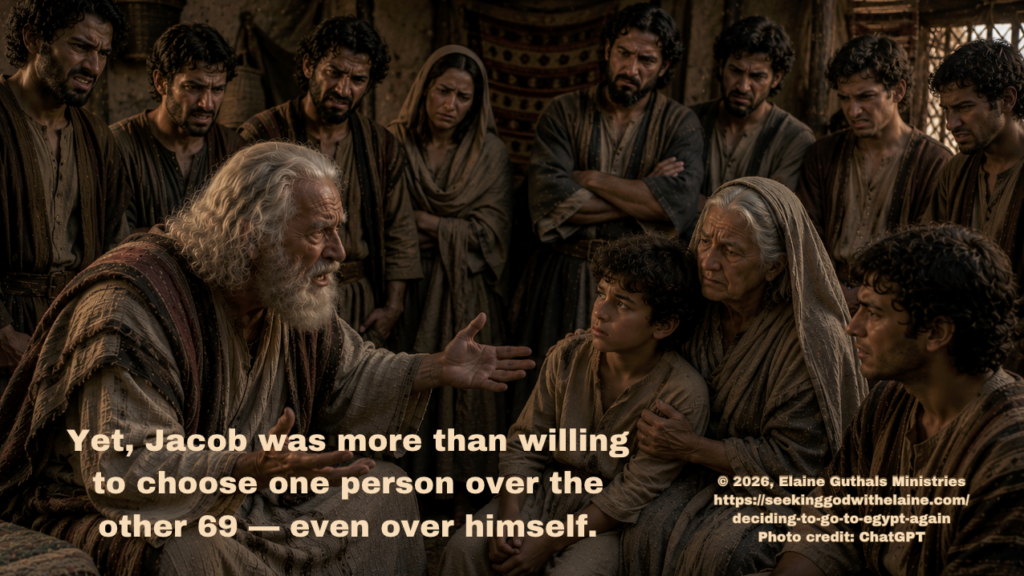
    Yet, Jacob was more than willing to choose one person over the other 69 — even over himself.

    The interesting thing is that, if we look at the Hebrew, in verse 8 Moses identified Judah’s father as Israel, not Jacob. He usually only calls Jacob Israel in covenant movement and redemptive framing.

    Resource

    But isn’t that the case here? Jehovah had orchestrated this in order to save the nation of Israel.

    That does not discount Jacob’s fear. Our fears can be real and visceral.

    Jehovah allowed Jacob to make his decision.

    The sad part is Jacob believed the brothers created this problem unnecessarily by not anticipating the “Egyptian’s” questions.

    I can see it both ways. On one hand there is no way they would know that they were going to be accused of being spies.

    On the other hand, shouldn’t they have expected some questioning? They were unknown foreigners seeking to purchase something. We know there was cases of others doing the same thing who could have really been spies.

    Wouldn’t they have been asked routine questions like, “How many are you buying for?”

    Still, if the brothers were asked about who they were or anything about their family, Moses didn’t record it. The only thing Joseph asked was where they were from.

    To me, it seems logical that they used their family situation as evidence for not being spies. They were just a typical Hebrew family, not spies.

    The irony is that Jacob believed this situation was created by the “Egyptian’s” questions. The real issue began decades earlier with Jacob’s favoritism, the brothers’ deception, and unresolved sin. None of this was Joseph’s doing.

    A Feast at Joseph’s Palace

    “So their father, Jacob, finally said to them, ‘If it can’t be avoided, then at least do this. Pack your bags with the best products of this land. Take them down to the man as gifts — balm, honey, gum, aromatic resin, pistachio nuts, and almonds. Also take double the money that was put back in your sacks, as it was probably someone’s mistake. Then take your brother, and go back to the man. May God Almighty give you mercy as you go before the man, so that he will release Simeon and let Benjamin return. But if I must lose my children, so be it.’ So the men packed Jacob’s gifts and double the money and headed off with Benjamin. They finally arrived in Egypt and presented themselves to Joseph” (Gen. 43: 11-15 NLT)

    Pack Your Bags with the Best Products of This Land

    Jacob finally agreed to let Benjamin go to Egypt.

    Sometimes, you just have to step out on faith. Yes, you have to prepare and do your part. You can’t just say you are entitled to good stuff and do nothing.

    It may mean giving up something. It may mean doing something you really rather wouldn’t do.

    Bottom line — if God is asking you to do something, you just have to swallow and do it.

    The interesting things is that Jacob was allowed to send luxury or specialty products from Canaan to the “Egyptian” ruler. They followed the Ancient Near East custom of approaching powerful rulers with gifts.

    What I find interesting is they had luxury items but not standard food items. They would have starved on a diet of honey, nuts, and almonds.

    Take Double the Money

    Jacob wanted to remove every suspicion Joseph may have had about them stealing the money.

    Jacob and the brothers did the right thing. They not only took money for the grain they would buy on this trip, but they also took the money that they found in their sacks.

    This should convince the “Egyptian” that they were upright men (Gen. 42: 11). The returned money from Genesis 42 terrified the brothers because they feared being accused of theft.

    Take Your Brother

    Jacob finally surrendered.

    Jacob finally turned the situation over to Jehovah. He called on El Shaddai (אֵל שַׁדַּי). This is the covenant name used with Abraham and Isaac.

    Jacob was finally putting everything in Jehovah’s hands.

    But then Jacob said, “… But if I must lose my children, so be it” (Gen. 42: 14 NLT). Does this sound like surrender or despair?

    Maybe it was a bit of both. To me, this sounds like resignation with faith.

    So the Men Packed

    Eleven men immediately left for Egypt.

    It sounds like preparation for the second trip to Egypt didn’t take long. Emphasis, though, was on Benjamin — they left with Benjamin.

    When we are doing God’s Will, we need to prepare, get started, and follow through to the end.

    Making the Connections #1

    We rarely understand what Jehovah is doing while events are unfolding. We can be looking at events and see His hand in them, but we may not be seeing all He is doing in our lives. In fact, we may get the answers for many years.

    Sometimes, we may never get the answers.

    We just have to continue to trust Jehovah.

    Making the Connections #2

    Judah had had his own Sanctification Road event back in Genesis 38. This is the first time that we get to see who he was transforming into. Here, we see that he was transforming into the leader of the brothers, and we see foreshadows of why the royal line would eventually come through him.

    Judah wasn’t shifting blame anymore. He was carrying responsibility.

    More importantly, Judah was looking at the situation without any blinders on. “If we hadn’t wasted all this time, we could have gone and returned twice by now” (Gen. 43: 10 NLT).

    Judah knew who all had to make the trip to Egypt. He accepted Jehovah’s decree.

    Making the Connections #3

    After all this time, Jacob was still mourning for Joseph. Yes, he had seen the bloodied coat. He accepted Joseph was gone.

    Jacob just didn’t accept that Joseph wouldn’t come back. “… may he send back your other brother and Benjamin. …” (Gen. 43:14 ESV).

    We don’t know Jacob’s thought process. Maybe he just trusted in God to believe that was how it would turn out.

    There was no way Jacob would know that Joseph was in Egypt — where they were wanting to take Benjamin. Unless the brothers had talked about it over the years, and Jacob overheard them. Who knows.

    What can we learn? We have to believe all things are possible for God (Mt. 19: 26). But we can’t lop off the in-Your-Will part.

    How Do We Apply This?

    • Stop resisting the direction Jehovah is clearly pushing you toward – even if it is uncertain – and let pressure drive you toward Jehovah instead of away from Him.
    • Refuse to let fear keep your life spiritually stalled by trusting Jehovah even when obedience feels costly.
    • Stop delaying the obedience you already know Jehovah requires by surrendering the situation you keep trying to control.
    • Choose responsibility and sacrifice over self-preservation and stop shifting blame.
    • Trust that Jehovah is working even when you cannot see the full picture and stop interpreting every hardship as abandonment from God.
    • Bring your anxieties to Jehovah instead of trying to carry them alone.
    • Prepare carefully — then step out in faith.
    • Accept that sanctification often happens through uncomfortable situations.
    • Remember that Jehovah can redeem even deeply dysfunctional situations.
    • Submit to Jehovah’s providence to deepen your faith instead of fighting it by letting trials produce surrender instead of bitterness.
    • Trust Jehovah with the people and situations you cannot protect yourself.

    Father God. We know there are times when You are working in our lives, and all we do is kick and scream. Forgive us when we fight sanctification. Help us to become the disciples You want us to be. Amen.

    If you don’t understand something and would like further clarification, please contact me.

    If you have not signed up for the email providing the link to the devotions and the newsletter, do so below.

    If God has used this devotion to speak with you, consider sharing it on social media.

  • Arriving Back in Canaan

    Joseph’s brothers – minus one – who had left Canaan for Egypt were returning. This devotional reading looks at their trip and their return home.

    Nuggets

    • Joseph showed mercy to his brothers in giving back to them what was tied to their sin against him.
    • The brothers found the money Joseph had asked his servants to put into one of the sacks of grain.
    • The brothers came home and told Jacob the truth.
    • After the brothers returned home, they found the money used to pay for the grain in all the other sacks.
    • Jacob reacted with an emotional response.
    • Reuben made a foolish offer that would not have accomplished anything.
    • Jacob refused to allow Benjamin to journey to Egypt.
    arriving-back-in-canaan

    Jacob was concerned that the family would starve to death in the famine. He sent ten of his sons to Egypt to buy grain.

    Now they were coming home. But there was only nine of them returning.

    What was the welcome home going to look like?

    Let’s Put It into Context

    To read devotions in the Creating Everything theme, click the button below.

    Devotions in the Joseph the Savior of Israel  series

    Joseph Gave Back

    “Joseph then ordered his servants to fill the men’s sacks with grain, but he also gave secret instructions to return each brother’s payment at the top of his sack. He also gave them supplies for their journey home” (Gen. 42: 25 NLT)

    Joseph showed mercy to his brothers in giving back to them what was tied to their sin against him.

    The brothers had come to buy grain. Joseph made sure they got that grain, but he also made sure they got their money back.

    Think about it. They had sold him for 20 pieces of silver – the price of a young slave. Joseph returned their money – keseph (כֶּסֶף) – silver.

    We’ve talked several times about Jehovah mirroring things in the restoration to what occurred during the sin. This is just another example of Him doing that.

    But Joseph went beyond that. He provided provisions for their journey home.

    A Startling Discovery

    “So the brothers loaded their donkeys with the grain and headed for home. But when they stopped for the night and one of them opened his sack to get grain for his donkey, he found his money in the top of his sack. ‘Look!’ he exclaimed to his brothers. ‘My money has been returned; it’s here in my sack!’ Then their hearts sank. Trembling, they said to each other, ‘What has God done to us?’” (Gen. 42: 25-28 NLT)

    The brothers found the money Joseph had asked his servants to put into one of the sacks of grain.

    I always thought it was interesting that the brothers thought God was doing something to them. We’ve been talking about the brothers since Genesis 30, and this is the first time any of them – other than Joseph – said anything about Jehovah.

    But that meant they were now interpreting things spiritually. Why all of the sudden?

    Think about it. We aren’t told that they had any guilty feelings over the years between the sale and reunion. They could have buried their sin for 13 years – and probably did.

    But all of a sudden, during their audience with Joseph, their conscience began to trouble them. They began to feel guilty about their actions.

    They were able to leave Egypt – when for a while they didn’t know if that was ever going to happen or not. They got one day’s ride out, and they find this — money in a sack.

    The Hebrew words used are wayyetse libbam (וַיֵּצֵא לִבָּם) – their heart went out. Their courage flew out the door or their inner strength drained away. We would probably say their hearts sank.

    Joseph hadn’t exactly been nice to them. These bold, hard men were probably terrified of him.

    Bourdillon made an interesting point. He said their fear was probably of their own thoughts and their secret sin. He wrote, “Nothing makes men so fearful as an evil conscience.”

    Resource

    And now the money was back In a sack?  Ooo, baby, I bet they trembled and shook with fear – wayyeḥerdû (וַיֶּחֶרְדוּ).

    The brothers were spiritually unraveling.

    They were only one day out of Egypt, so why didn’t they go back? If they truly were upright men, wouldn’t they immediately try to make it right?

    What we don’t see here is anyone giving words of comfort. They all know that would have just made the situation worse rather than better.

    Confession

    “When the brothers came to their father, Jacob, in the land of Canaan, they told him everything that had happened to them. ‘The man who is governor of the land spoke very harshly to us,’ they told him. ‘He accused us of being spies scouting the land. But we said, ‘We are honest men, not spies. We are twelve brothers, sons of one father. One brother is no longer with us, and the youngest is at home with our father in the land of Canaan.’ ‘Then the man who is governor of the land told us, ‘This is how I will find out if you are honest men. Leave one of your brothers here with me, and take grain for your starving families and go on home. But you must bring your youngest brother back to me. Then I will know you are honest men and not spies. Then I will give you back your brother, and you may trade freely in the land’” (Gen. 42: 29-34 NLT)

    The brothers came home and told Jacob the truth.

    Knowing who the brothers had been, we may have expected them to lie to Joseph when they arrived home. They may have made up a story about why Simeon wasn’t with them. They may have not even mentioned the silver. Jacob didn’t need to know about the man who interrogated them when they bought the grain.

    But they came home and told Jacob the truth. The governor spoke harshly to them, detained Simeon, and demanded Benjamin when they returned.

    Right now, the brothers were fearful and suspicious. They feel the loss.

    If they had thought they had buried the past, it has come back — because it is Jehovah’s appointed time to deal with the sin.

    Another Starting Discovery

    “As they emptied out their sacks, there in each man’s sack was the bag of money he had paid for the grain! The brothers and their father were terrified when they saw the bags of money” (Gen. 42: 35 NLT)

    After the brothers returned home, they found the money used to pay for the grain in all the other sacks.

    Apparently the brothers hadn’t emptied all the sacks. Each had money in them.

    After how Joseph had treated them, I bet they were afraid. Whatever they had felt in Egypt and when they found the first sack of money just mushroomed.

    They had been accused of being spies, and now it looked like they were thieves.

    The same men who deceived Jacob with Joseph’s tunic now feared accusations themselves.

    But doesn’t that happen often throughout Scripture? Unrepented sin produces inner instability.

    Then they get home and there is the money. If they were perplexed when they found the money in one sack, they are probably really afraid now.

    Surely, they were wondering what all this meant. Jehovah would have been okay with that. He wants us to see Him working in our lives.

    The Hurt Talking

    “Jacob exclaimed, ‘You are robbing me of my children! Joseph is gone! Simeon is gone! And now you want to take Benjamin, too. Everything is going against me!’” (Gen. 42: 36 NLT)

    Jacob reacted with an emotional response.

    Jacob had sent the brothers to Egypt to buy grain – a quick trip to buy food. This trip was anything but that.

    The trip that was to be the salvation of the family brought more sorrow upon Jacob.  Joseph was gone. Simeon was gone. The brothers said they had to take Benjamin next time.

    Jacob’s fear exploded. Let’s look at the Hebrew first to get an exact idea of what Jacob was feeling.

    You have bereaved me (ʾōṯî shikkaltem — אֹתִי שִׁכַּלְתֶּם) of my children! Joseph is absent (ʾênennû — אֵינֶנּוּ)! Simeon is absent (ʾênennû — אֵינֶנּוּ)! And now you want to take Benjamin, too. All of them (kullānâ – כֻלָּנָה) have come (hāyû – הָיוּ) against me (ʿālai – עָלַי)!’

    Jacob was feeling stripped and deprived of his sons. He believes his accumulated loses are more than he can emotionally survive.

    I am sure Jacob went into father mode and wondered if the Egyptian leader would require Benjamin to remain with him when he found out about the “theft.”

    Now, don’t think this is way out in left field. This happened to the Egyptians by the end of the famine. “So Joseph bought all the land of Egypt for Pharaoh. All the Egyptians sold him their fields because the famine was so severe, and soon all the land belonged to Pharaoh. As for the people, he made them all slaves, from one end of Egypt to the other” (Gen. 47: 20-21 NLT).

    This sounds dire for the Egyptian people The New Living Translation does have a footnote on that. It says that the Hebrew reads “he moved them all into the towns.

    The important thing to notice here is Jacob’s despondency. He is focusing on the fear, not faith.

    Let’s do a little history lesson on Jacob.

    Remember when Jacob was at Bethel the first time. He was running from Esau, heading to Haran to find a wife. When Jehovah appeared to Jacob through the image of a ladder and angels ascending and descending, Jacob said that he would follow Jehovah.

    But Jacob made it conditional. “Then Jacob made this vow: ‘If God will indeed be with me and protect me on this journey, and if he will provide me with food and clothing, and if I return safely to my father’s home, then the Lord will certainly be my God’” (Gen. 28: 20-21 NLT).

    Basically, Jacob said that “If Jehovah will take care of me, I’ll make Him my God.” How selfish!

    • That was pre-Laban and Leah’s deception.
    • That was pre-employment issues with Laban.
    • That was pre-stolen household idols.
    • That was pre-running away from Laban.
    • That was pre-defilement of Dinah.
    • That was pre-massacre of the men of Shechem.
    • That was pre-Rachel’s death.
    • That was pre-disappearance of Joseph.

    Jacob had based his worship of Jehovah on the condition that He provide a wonderful life for him. Instead, Jehovah broke him.

    Here, Jacob doesn’t even mention Jehovah. It is like he doesn’t remember all that He has done for him since Bethel.

    Robertson cautioned us not to follow Jacob’s example in this. He wrote, “He who lives in this world for his own personal enjoyment, without God and His Christ, will by degrees find, like Jacob, that he has no rock to rest his soul upon, but that he must go down in sorrow to the grave.”

    Resource

    We should live our lives for Jehovah’s glory and honor, not our own personal gain.

    But we are seeing this knowing the outcome. We know that Jehovah is working behind the scenes — as He has been all along.

    “… Everything is going against me!’” (Gen. 42: 36 NLT) is really “Jehovah is making everything right.”

    The problem is that Jacob is focusing on the pain and can’t see the redemption. Have we ever done that?

    Jacob can’t see that Jehovah is working on him while he is walking his Sanctification Road.

    I wonder, though, if Jacob distrusted his sons enough to wonder if they had stolen the money. That would have been a sad state of affairs.

    The Foolish Offer

    “Then Reuben said to his father, ‘You may kill my two sons if I don’t bring Benjamin back to you. I’ll be responsible for him, and I promise to bring him back’” (Gen. 42: 37 NLT)

    Reuben made a foolish offer that would not have accomplished anything.

    At this point, we have to ask, “What in the world was that man thinking?” Reuben really offered his kids to Jacob for him to kill them???? Really???????

    The only thing that makes sense to me is that Reuben was trying — again — to win back his firstborn status. He thought if he offered his two sons, it would make him worthy.

    All this offer shows is that Reuben still lacks wisdom and leadership stability. He is spiritually empty.

    The Refusal

    “But Jacob replied, ‘My son will not go down with you. His brother Joseph is dead, and he is all I have left. If anything should happen to him on your journey, you would send this grieving, white-haired man to his grave” (Gen. 42: 38 NLT)

    Jacob refused to allow Benjamin to journey to Egypt.

    Jacob digs in his heels. He wasn’t going to lose Benjamin after he lost Joseph.

    No, Jacob has ten other sons standing right there in front of him. Didn’t he see them? Maybe. Maybe not.

    But Jacob’s favoritism is still blatantly obvious.

    Making the Connections #1

    How has this chapter moved the story along?

    There has been a mini reunion even if they didn’t know it yet. But things are still unresolved.

    • Simeon remained imprisoned.
    • The famine continued.
    • The brothers remained fearful.
    • Jacob remained broken.
    • Benjamin remained protected.

    From the human perspective, things have gone downhill. But we need to look at things from Jehovah’s perspective — He is working for restoration.

    Jehovah works in our lives and doesn’t always tell us the game plan. We don’t know the end result any more than we know how we are going to get there.

    Sometimes, our road to reconciliation with Jehovah is as long as it was for Joseph’s brothers. But He works for the same outcome — to turn concealed sin into a transformed heart.

    Making the Connections #2

    Newman reminded us that we shouldn’t be surprised when trials come our way. Affliction, hardship, and distress are all part of our walk with Jehovah. That is verified in Romans 8:28.

    Resource

    “And we know that God causes everything to work together for the good of those who love God and are called according to his purpose for them” (Rom. 8: 28 NLT).

    Making the Connections #3

    Rudder talked about our passing judgment on Jehovah when He sends times of trials to convict us. Isn’t that the truth?

    Resource

    Especially true when we don’t see Him convicting of us sin, we see no purpose in the trials Jehovah sends our way. We expect, as Jacob did, that our walk with Him should be a smooth easy journey.

    Our Sanctification Roads are anything but smooth. It is those trials that root out the sin in our lives that put the bricks in our Road. It is that Road that leads us to Jehovah.

    We shouldn’t judge Jehovah for the trials. We should thank Him.

    Jehovah is building our faith and transforming us to have His character.

    How Do We Apply This?

    • Submit to God’s Will, specially when He is convicting us to identify unconfessed sin.
    • Utilize prayer to sustain us on the difficult sections of our Sanctification Road.
    • Trust Jehovah’s providence even when circumstances seem to be against you.

    Father God. So many times, we think situations are going to occur one way, and they happen a totally different way. Help us to trust You in those circumstances. May our prayer life keep us connected to You as we navigate our Sanctification Road. Amen.

    If you don’t understand something and would like further clarification, please contact me.

    If you have not signed up for the email providing the link to the devotions and the newsletter, do so below.

    If God has used this devotion to speak with you, consider sharing it on social media.
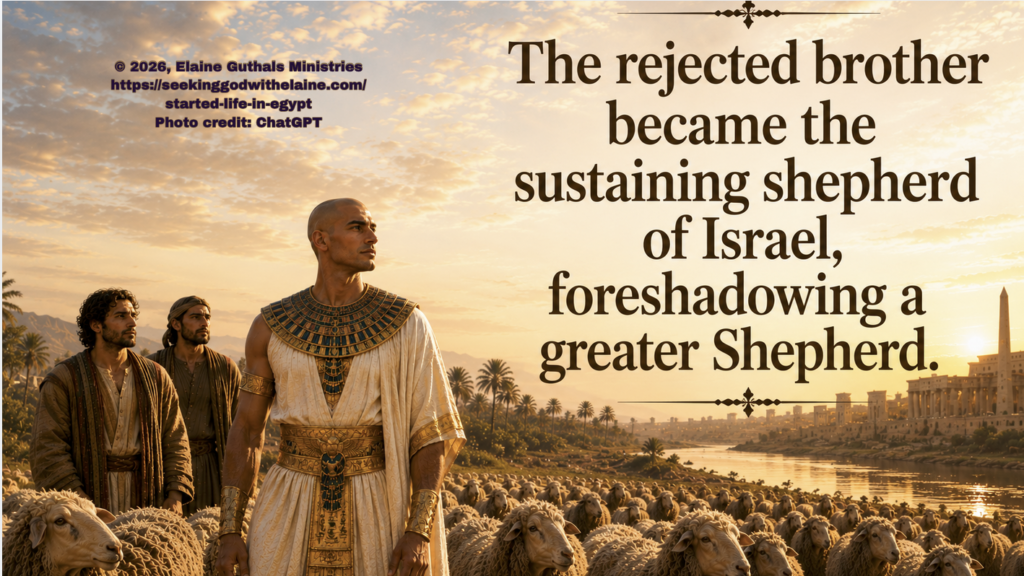
  • The Brothers Arrived in Egypt

    Jacob had sent ten of his sons to Egypt to buy grain because of the famine. This devotional reading looks at their arrival and meeting with their brother Joseph.

    Nuggets

    • The brothers came to Joseph because he was distributing grain.
    • Joseph’s dream came true.
      Joseph recognized his brothers immediately, but they didn’t recognize him.
    • True, he was speaking to his brothers through an interpreter, but Joseph had to tell the interpreter what to say.
    • The brothers had to be honest.
    • Joseph devised a way that he could test whether his brothers had changed or not.
    the-brothers-arrived-in-egypt

    Jacob was concerned that the family would starve to death in the famine. He sent ten of his sons to Egypt to buy grain.

    Little did the brothers know they were on a collision course with their past and their future.

    All hinged on the reception of one man.

    Let’s Put It into Context

    To read devotions in the Creating Everything theme, click the button below.

    Devotions in the Joseph the Savior of Israel  series

    Joseph’s Brothers Arrive

    “Since Joseph was governor of all Egypt and in charge of selling grain to all the people, it was to him that his brothers came. When they arrived, they bowed before him with their faces to the ground. Joseph recognized his brothers instantly, but he pretended to be a stranger and spoke harshly to them. ‘Where are you from?’ he demanded. ‘From the land of Canaan,’ they replied. ‘We have come to buy food.’ Although Joseph recognized his brothers, they didn’t recognize him. And he remembered the dreams he’d had about them many years before …” (Gen. 42: 6-9 NLT)

    It Was to Him that His Brothers Came

    The brothers came to Joseph because he was distributing grain.

    It has always amazed me that Joseph would have had any part in the actual sale of grain to people. Wouldn’t his time have been best served in fulfilling his administrative duties?

    Remember, we said that his position description would have been varied.

    • Advisor
    • Administrator
    • Economic planner
    • Judge
    • Distributor
    • Overseer of labor
    • Overseer of storage
    • Pharaoh’s executive authority.

    It would be hard for Joseph to judge disputes if he was actually distributing grain himself. Maybe it was just in this day that Joseph had such a hands-on stake in the process.

    This was the day Joseph needed to be exactly where he was.

    But isn’t Jehovah like that? When He is orchestrating the situation, doesn’t everything just seem to fall into place?

    Since Jehovah knew the back story as well as the end of the story, He knew there was some healing that needed to take place.

    As Joseph had named Ephraim saying, ‘God has made me fruitful in this land of my grief’” (Gen. 41: 52 NLT), we know he found contentment in his life. But I wonder what he felt in that first second when he spotted his brothers — the men who had betrayed him.

    Yes, Joseph was content — he was also human. His heart had to have thumped at least once — from the surprise if nothing else.

    Think about it. Joseph had probably closed that book in his life. His contentment now had to include letting go of his past.

    But there they were — and not just standing in front of him.

    They Bowed Before Him

    Joseph’s dream came true.

    The second thump of Joseph’s heart had to be the realization that his dream was coming true. His brothers were bowing before him.

    And this wasn’t a bend-at-the-waist-bob-your-head sort of bow. The Hebrew word used — shāḥâ (שָׁחָה) meant prostrate oneself in submission or reverence.

    That must have been a moment for Joseph. It may have been the a-ha moment when he realized Jehovah’s plan.

    Even if he had been expecting them eventually, surely the poignancy of the moment didn’t escape him.

    I debated using the word poignancy. If Joseph was content, did he feel great sorrow?

    Joseph had lost 13 years of being with his father. Maybe he had a girl he was eyeing back then. He would have had friends that he was ripped away from.

    Did Joseph have to take a minute? Joseph probably knew by then that he was exactly where Jehovah had designed for him to be.

    But that doesn’t mean giving up everything to do God’s ministry is all rainbows and unicorns. It doesn’t have to be a sharp sense of loss.

    I know I have wondered several times over the last three years what it would have been like if we would have stayed in the same town as my Springfield mom. I had thought we would always be there when she called, “Hey, can Adam come fix my computer” or whatever little chore she had for us. I thought I would be closer to my sister if and when she needed me.

    That doesn’t mean I want to have things go back to where they were. I don’t want to give up the ministry that Jehovah has called us to do.

    I don’t think Jehovah is upset when we are reminded what we gave up for Him — not when it is done in a way that reaffirms our choice in doing His Will.

    Now if Joseph — or we — would start railing against Jehovah’s Will, that would be a different story. We wouldn’t be serving Him in obedience.

    But Joseph had to have had some memories dancing through his head when he saw his brothers. That would be human nature.

    Moses doesn’t give us a hint as to how the brothers were reacting. We’re they still the proud men that Joseph knew? Were they fearful being in a foreign court? They didn’t have Jacob there to smooth things over.

    “His brothers responded, ‘So you think you will be our king, do you? Do you actually think you will reign over us?’ …” (Gen. 37: 8 ESV).

    Pretended to be a Stranger

    Joseph recognized his brothers immediately, but they didn’t recognize him.

    We all change some as we age. If Joseph was 32 when the brothers showed up to buy grain, the brothers would be 32 to 37 or so. They would have changed some.

    Joseph had changed dramatically. Oh, he may have looked somewhat the same — if he had hair and wasn’t dressed up as an Egyptian.

     The brothers had no reason to believe the man in front of him was anything but what he was supposed to be — the Vizier of Egypt. Joseph did not speak to them directly, so they didn’t know he spoke Hebrew.

    Besides, probably in their minds, their brother was dead or lost.

    Joseph did not disabuse them of that thought.

    So, when they were bowing down to the man in front of them, they had no clue that they were fulfilling the dream they scoffed at 13 years earlier. Jehovah had bided His time before making its fulfillment come to pass.

    Was it Jehovah’s irony that these sheaves of grain that bowed down in Joseph’s dream were bowed before him to buy grain?

    Recognition

    Joseph recognized his brothers instantly, but he pretended to be a stranger and spoke harshly to them. ‘Where are you from?’ he demanded. ‘From the land of Canaan,’ they replied. ‘We have come to buy food.’ Although Joseph recognized his brothers, they didn’t recognize him. And he remembered the dreams he’d had about them many years before …  He said to them, “You are spies! You have come to see how vulnerable our land has become.’ ‘No, my lord!’ they exclaimed. ‘Your servants have simply come to buy food. We are all brothers — members of the same family. We are honest men, sir! We are not spies!’” Yes, you are!’ Joseph insisted. ‘You have come to see how vulnerable our land has become.’ ‘Sir,’ they said, ‘there are actually twelve of us. We, your servants, are all brothers, sons of a man living in the land of Canaan. Our youngest brother is back there with our father right now, and one of our brothers is no longer with us.’ But Joseph insisted, “As I said, you are spies! ” (Gen. 42: 6-9 NLT)

    Spoke Harshly to Them

    True, he was speaking to his brothers through an interpreter, but Joseph had to tell the interpreter what to say.

    Joseph spoke roughly — qāšeh (קָשֶׁה) — hard, severe, or difficult. If he was content, if he recognized Jehovah was orchestrating everything, why would he be harsh with his brothers?

    No, I don’t think Joseph was trying to pay back for the pit, the years of slavery, and the years of prison. He knew none of that was random.

    Joseph accused them of being spies. Specifically, he said they were checking out ʿervat hāʾāreṣ (עֶרְוַת הָאָרֶץ) — the nakedness of the land.

    Knohl noted evidence that invaders tried to take Egypt by force to capture grain depots during a famine.

    Resource

    That makes Joseph’s accusation more than empty words.

    But Joseph never believed the brothers to be spies. He tested them to see what kind of men they had become.

    The brothers were being accused of trying to find the following in Egypt’s security:

    • exposed areas
    • weak points
    • undefended regions
    • vulnerable borders
    • places open to attack or exploitation

    Wouldn’t the famine do that economically, politically, socially, and spiritually?

    But where my mind flipped was to Joseph in the pit. He was stripped — not totally naked — but his identity, status, and righteousness. Instead, he was treated deceptively and made vulnerable.

    Wasn’t — in a way — Joseph accusing the brothers of treating Egypt as they did him?

    Joseph had to determine who his brothers were now. The best way to figure out their hearts was to put pressure on them.

    There Are Actually Twelve of Us

    The brothers had to be honest.

    It was interesting how some versions described Joseph. “… and one is no longer living”” (Gen. 42: 13 CSB). Some say, “… one is no more” (Gen. 42: 13 ESV). The CJB says, “… another one is gone” (Gen. 42: 13 CJB).

    Well, gone and is no more are accurate statements because they did not know what happened to Joseph. Since they sold Joseph into slavery, they may have thought – to them – he was dead. Not knowing how or where he ended up, they may have believed it was possible that he died.

    It was interesting that they didn’t give the party line that he was killed by a wild animal, the line they fed Jacob at the time of the sale.

    The Hebrew is kind of ambiguous. The phrase used is wĕhāʾeḥād ʾênennû (וְהָאֶחָד אֵינֶנּוּ). In Genesis, it is used to denote mysterious disappearances or loss.

    Mysterious disappearance didn’t really fit in this case — except in the narrative the brothers created. Had they gotten to the point where they felt Joseph’s loss?

    The brothers didn’t know at this point that the lost had been found.

    The Test

    “This is how I will test your story. I swear by the life of Pharaoh that you will never leave Egypt unless your youngest brother comes here! One of you must go and get your brother. I’ll keep the rest of you here in prison. Then we’ll find out whether or not your story is true. By the life of Pharaoh, if it turns out that you don’t have a younger brother, then I’ll know you are spies.’ So Joseph put them all in prison for three days” (Gen. 42: 15-17 NLT)

    Joseph devised a way that he could test whether his brothers had changed or not.

    Why did Joseph demand Benjamin? Think back.

    The year was 1692 BC. Rachel was pregnant. She died in childbirth.

    Who was Rachel’s child that was born? Benjamin.

    Joseph was 17 years old. He went from being the youngest to having a baby brother.

    But in — probably — a short amount of time, Joseph received a tunic from Jacob. This showed not only that Joseph was Jacob’s favorite, but — more than likely — Jacob was giving Joseph firstborn status. Then, he has his dreams.

    Then, he is on a caravan bound and on his way to Egypt.

    All in a year.

    So, Joseph really didn’t know Benjamin. At the most, Benjamin may have been walking and cooing when Joseph was sold.

    Joseph’s asking about Benjamin wasn’t necessarily about Benjamin — it was about his brothers’ repentance.

    Joseph probably surmised — correctly — that Jacob transferred favorite son status to Benjamin. He was the only other son born to him by Rachel.

    Will they sacrifice Benjamin as they did Joseph?

    Making the Connections #1

    Where did the arrogant brothers go? It is almost as if someone had kidnapped them and switched them with these fearful, doubting counterparts.

    Did their consciences pull up the memory weekly? Or was it easy to forget they had another brother?

    Watkinson’s description of the brothers seems fitting. He wrote,

    “They were guilty of malice, falsehood, treachery, murder. Their conduct was unmanly, unbrotherly, unfilial. They were not spies, but they were liars, impostors, kidnappers, fratricides, monsters.”

    Resource

    It didn’t seem that they wanted to come to Egypt. It sure wasn’t their plan on how to beat starvation.

    They get to Egypt, and their fears are justified. They are treated rudely, accused of a crime they weren’t even thinking about committing, and thrown in prison.

    And Joseph was treated rudely by the brothers as they threw him into the pit and sold him, accused of attempting to rape a Mrs. Potiphar, and thrown in prison.

    They may not have known Jehovah was tying off elements of the original sin. But He was.

    Making the Connections #2

    Look what Robertson said. He wrote, “Where sin is voluntary wrong-doing, the language of the human heart inevitably connects the penalty with the wrong-doing.”

    Resource

    Jehovah orchestrates testings that allow us to break free of the stain of sin. We don’t have to continue to carry the guilt. We can be restored with those we have wronged.

    Making the Connections #3

    We don’t know how long the brothers had an audience with the Vizier of Egypt. 15 minutes? Half an hour?

    What we do know is that, throughout the whole time, Joseph loved his brothers.

    That didn’t mean Joseph didn’t do his duty as Vizier. He did.

    How Do We Apply This?

    • Confess the surface sin as well as the buried sin.
    • Do not mistake delayed consequences for erased sin.
    • Allow God to expose what needs healing instead of resisting conviction.
    • Continue loving people even while dealing truthfully with them.
    • Recognize that God may revisit painful places in order to bring healing.
    • Wait on Jehovah instead of forcing situations into place yourself.
    • Accept that sanctification may involve uncomfortable exposure before restoration.

    Father God. You orchestrate everything. At the right time, things fall into place. Help us to wait on You. Help us when we are blindsided when You work. Amen.

    If you don’t understand something and would like further clarification, please contact me.

    If you have not signed up for the email providing the link to the devotions and the newsletter, do so below.

    If God has used this devotion to speak with you, consider sharing it on social media.
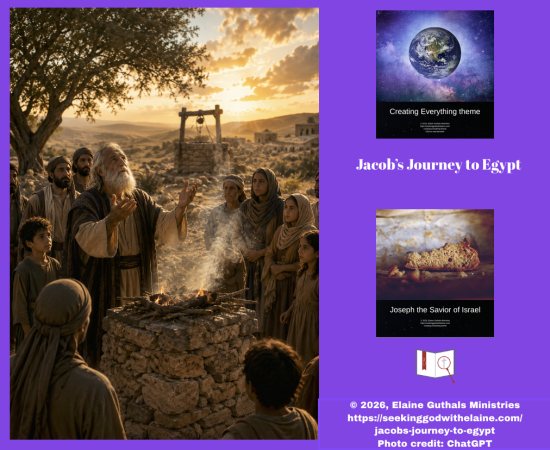
  • The Famine in Canaan

    While the famine was occurring in Egypt, it was also occurring in Canaan. This devotional reading looks at how it impacted Jacob and his family.

    Nuggets

    • Jacob realized that the family could not survive the famine by waiting it out because of its severity.
    • Salvation was available elsewhere.
    • The brothers’ reaction to the famine is interesting.
    • The brothers went to Egypt so, as Jacob said, “… that we may live and not die” (Gen. 42: 2 ESV).
    • Jacob’s favoritism never diminished.
    the-famine-in-canaan

    We have been focusing on the abundance and famine in Egypt. We don’t know if there was abundance for those seven years — 1679 – 1673 BC — in Canaan.

    If there was, it sounds like they didn’t catch it.

    We do know is the seven years of famine started in Canaan at the same time it did in Egypt — 1672 BC. How do we know? Genesis 42 tells us.

    Let’s Put It into Context

    To read devotions in the Creating Everything theme, click the button below.

    Devotions in the Joseph the Savior of Israel  series

    Let’s Put It into Context #2

    Egypt became Ground Zero as the survival center for the world during the famine. There was only one reason for that.

    Jehovah had used Joseph to warn them.

    First, we have to look at the extent of the famine.

    The world-wide famine began in 1672 BC. Do we actually know what constitutes the world in 1672 BC?

    Well, not exactly. (And we have to remember that it looks nothing like the map of the world today).

    Think all the way back in Genesis 10. We had a map that listed where Noah’s sons — Shem, Ham, and Japheth — settled.

    That is a good starting place. But let’s add trade routes to it.

    If we look at the Hebrew phrase used, it is kol-hāʾāreṣ (כָּל־הָאָרֶץ). The end part, also seen as ereṣ (אֶרֶץ), can mean the following: earth, land, territory, region, or country.

    If world-wide is the correct terminology to use, it would have meant the known world at that time.

    But the Table of Nations wasn’t just a genealogy list. It was a theological geography of humanity after the flood.

    So, when Genesis 41: 57 says “all countries came to Egypt to Joseph to buy grain” (Gen. 41: 57 NLT), it could be making a theological point instead of a technical census point.

    Jehovah caused humankind to scatter after the Tower of Babel (Gen. 11: 8). Now they are coming back to Joseph, who points to Yeshua.

    The emphasis should be on overwhelming scope, international dependence, and Jehovah’s providential elevation of Joseph. It was not necessarily a technical census of every inhabited location on earth.

    Joseph becomes a preservation instrument for the post-flood world.

    Starving in Canaan

    “When Jacob heard that grain was available in Egypt, he said to his sons, ‘Why are you standing around looking at one another? ” (Gen. 42: 1 NLT)

    When Jacob Heard

    Jacob realized that the family could not survive the famine by waiting it out because of its severity.

    This was probably 1671 BC — if not the end of 1672 BC.  The famine started in 1672, and Jacob and his family moved down to Egypt in 1670.

    There had to be some time for them to realize this famine wasn’t going to go away anytime soon. Then they had to get down to Egypt and back (Gen. 42: 3-29). Next, they had to eat all that food they bought. Then, they had to get down to Egypt and back again (Gen. 43: 15 – 45: 25). It also probably took some time to prepare the household and all its possessions for the move (Gen. 46: 1).

    The Hebrew word for famine is rāʿāb (רָעָב). It describes a consuming deprivation.

    Let’s stop a second and take a look at the last time we saw Jacob. He had just recognized Joseph’s bloody tunic.

    “Then Jacob tore his clothes and dressed himself in burlap. He mourned deeply for his son for a long time. His family all tried to comfort him, but he refused to be comforted. ‘I will go to my grave mourning for my son,’ he would say, and then he would weep” (Gen. 37: 34-35 NLT).

    Jacob assumed Joseph was dead and was paralyzed with grief. He wasn’t putting his trust in Jehovah.

    Was Jacob able to continue as patriarch because of his grief? It doesn’t sound like it.

    At least not for a while. Here, Jacob did step up and take control of the situation.

    These weren’t exactly words of love and encouragement. But given the situation, they were probably the words needed.

    Grain Was Available in Egypt

    Salvation was available elsewhere.

    Some people may say it was luck that had Egypt collecting all that grain in the good years. Some would say it was coincidence that the brothers went where Joseph was.

    It was neither. It was God’s divine plan.

    Was Jehovah interested in Jacob? In Joseph? In Judah? Yes.

    Sovereign God was more interested in His people. It wasn’t just about the individual person (as much as He loves us individually). It was about furthering His kingdom.

    Why Are You Standing

    The brothers’ reaction to the famine is interesting.

    When Jacob talked to his sons, they were frozen in fear. There was a real possibility the family would starve — and none of the sons wanted to take responsibility for saving the family. They didn’t want to act.

    Yeah, this sounds a lot different from the ten decisive men who violently captured their brother and sold him into slavery. And no, it does not seem they have changed for the better.

    Had they already heard there was food in Egypt? Did they not want to go to where they had banished Joseph? Surely, it didn’t cross their minds that they would run into him.

    Was their consciences still bothering them after 13 years? Were they sorry for their actions? Or were they sorry that Jacob’s favoritism had just switched to Benjamin?

    Joseph’s Ten Older Brothers Went Down to Egypt

    “I have heard there is grain in Egypt. Go down there, and buy enough grain to keep us alive. Otherwise we’ll die.’ So Joseph’s ten older brothers went down to Egypt to buy grain” (Gen. 42: 2-3 NLT)

    The brothers went to Egypt so, as Jacob said, “… that we may live and not die” (Gen. 42: 2 ESV).

    Why did all ten of them go down to Egypt? Did they have to walk and carry the sacks? Did each buy for his own family and then get extra for Jacob and Benjamin?

    I think — whatever the “excuse” to get them all there — they were all in this together. They were all in on the sale of Joseph, even if Reuben wasn’t in it wholeheartedly.

    When we were looking at Judah and Tamar’s story, we said several times that Jehovah was using something to tie it back to when the sin occurred. For example, when Tamar sent the signet, cord, and staff asking, “Please identify” (Gen. 38: 25) echoed when the boys sent the bloody tunic asking, “Do you recognize this?” (Gen. 37: 32).

    The brothers had sold Joseph to traders that were heading down to Egypt. They had to go down to Egypt to tie off that part of the sin.

    They all had a hand in accomplishing getting Joseph to where he needed to be. They should all see first-hand what had become of him. They all needed restoration.

    This drives home the point that, though we may feel our actions are right, and the situation may turn out alright in the end — our actions can still be wrong.

    It was wrong to sell Joseph as a slave. It would have been wrong to kill him.

    Yes, we learn more from our sins and mistakes. That doesn’t give us license to commit them.

    They are still wrong.

    Jacob Wouldn’t Let Benjamin Go

    “But Jacob wouldn’t let Joseph’s younger brother, Benjamin, go with them, for fear some harm might come to him. So Jacob’s sons arrived in Egypt along with others to buy food, for the famine was in Canaan as well” (Gen. 42: 1-5 NLT)

    Jacob’s favoritism never diminished.

    Benjamin did not have to go on this trip because, while he had already been born when Joseph had been sold, he was still in diapers. He had no part in the sale.

    I wonder what kind of life Benjamin had. It doesn’t really seem like Jacob learned his lesson. The “favorite son” title just passed from Joseph to Benjamin. It sounds like Jacob coddled and protected Benjamin.

    The Hebrew word for harm is ʾāsôn (אָסוֹן) meaning disaster, calamity, or fatal tragedy. Since Jacob probably never forgave himself for sending Joseph to check in his brothers, he wasn’t about to send Benjamin on this perilous journey.

    If we look at the Interlinear Bible for verse 5, we see that the brothers are called the sons of Israel. This name is used when the covenant identity is stressed.

    Resource

    Jacob is frozen by his grief, in the same manner that the brothers are frozen in their fear; but the covenant plan is moving along as Jehovah intended.

    Making the Connections

    Trials come packaged in a variety of ways. In our minds, we may be going through a situation that has the same consequences that Jacob and his sons were facing.

    We may have to do something just as distasteful to us in order “… that we may live and not die” (Gen. 42: 2 ESV).

    When those trials do come — and they will — we need to follow Smith’s advice. He wrote, “When distresses and trials come, we should be ready to trust that God means to do good by them in some way, though we may not know how.”

    Resource

    We may be more familiar with it being expressed another way. “And we know that for those who love God all things work together for good, for those who are called according to his purpose” (Rom. 8: 28 ESV).

    How Do We Apply This?

    • Trust Jehovah even when you do not understand what He is doing.
    • Move forward in obedience even when the path is uncomfortable or frightening.
    • Refuse to let fear paralyze you spiritually.
    • Examine whether unresolved sin is affecting your relationship with God or others.
    • Stop interpreting difficult providences as evidence that
    • Jehovah has abandoned you.
    • Recognize that God may use hardship to expose, correct, and restore.
    • Submit to Jehovah’s covenant purposes instead of focusing only on personal comfort.
    • Remember that divine providence does not excuse sinful choices.
    • Seek restoration where sin has damaged relationships.
    • Be willing to revisit painful places if Jehovah uses them for healing and growth.
    • Trust that Jehovah is working for your sanctification even during seasons of deprivation.
    • Act in faith instead of waiting passively for circumstances to improve.
       
      Father God. Thank You that You are with us during the good times and the bad times. Help us to see You providing hand in our lives. Bring us to the point where we must confess our sins to You. Amen.

    If you don’t understand something and would like further clarification, please contact me.

    If you have not signed up for the email providing the link to the devotions and the newsletter, do so below.

    If God has used this devotion to speak with you, consider sharing it on social media.
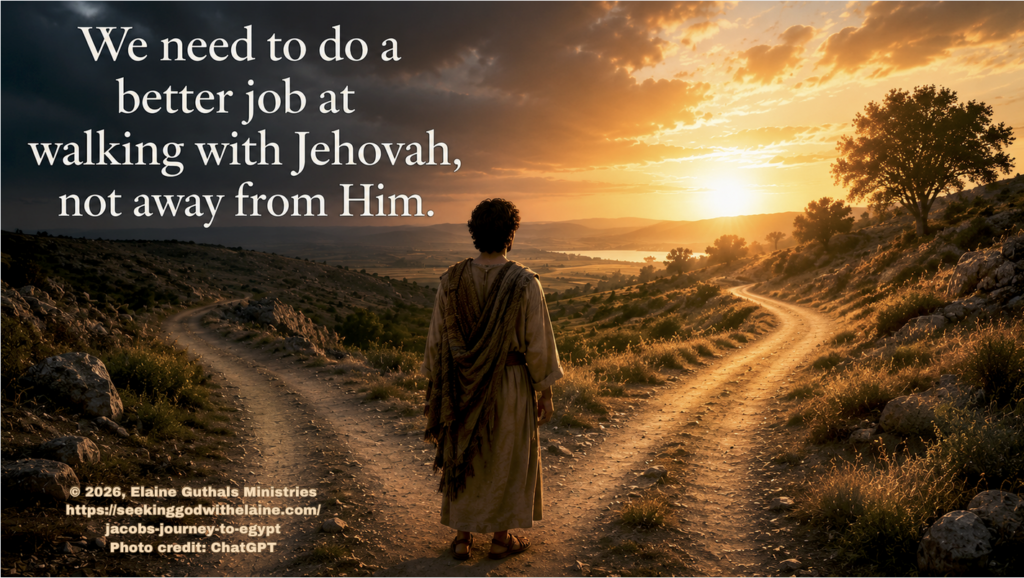
  • Hagar and Ishmael Saved by God

    Jehovah provided water for Hagar and Ishmael in the wilderness. This devotional reading takes an initial look at what happened to Ishmael.

    Nuggets

    • Jehovah in His mercy opened Hagar’s eyes to what she needed.
    • Even though Ishmael was an outcast, Jehovah was with him.
    • Ishmael grew under Jehovah’s provision.
    hagar-and-ishmael-saved-by-god

    Things had come to a head in Abraham’s house. Hagar and Ishmael, the firstborn, we’re mocking Sarah and Isaac, the covenant son. Sarah was done with it and had demanded  Hagar and Ishmael be driven from the household.

    The day had come for Hagar and Ishmael to leave. Let’s see what happened.

    Let’s Put It into Context

    To read devotions in the Creating Everything theme, click the button below.

    Devotions in the Abraham the Patriarch series

    The Means of Salvation

    “Then God opened Hagar’s eyes, and she saw a well full of water. She quickly filled her water container and gave the boy a drink” (Gen. 21: 19 NLT)

    Jehovah in His mercy opened Hagar’s eyes to what she needed.

    Did the well just miraculously appear? Or did Hagar not see it because she had sand and tears in her eyes?

    That has to go in our UNR book — understanding not required. It could go either way.

    Sometimes, isn’t God’s provision there all along? Haven’t we just needed to be blinded to see it?

    But let’s think about the well for a second. Conder said it was dug in order to water flocks, not to provide water for travelers.

    Resource

    In other words, the well was being used for something that was different than its purpose.

    However, Jehovah always knew Hagar and Ishmael would need that well on that day. He made sure the well wasn’t dry.

    What we need will always be within arm’s reach. Spurgeon explained it this way. He wrote, “The mercy of God is not a thing to be sought for up yonder among the stars, nor to be discovered in the depths; it is nigh thee, it is even in thy mouth and in thy heart.”

    Resource

    The big question for us is how many times do we not see Jehovah’s well right beside us? He offers us living water from that well.

    It is a well for more than just salvation. Living water includes the gift of the Holy Spirit. “Anyone who believes in me may come and drink! For the Scriptures declare, ‘Rivers of living water will flow from his heart.’ (When he said ‘living water,’ he was speaking of the Spirit, who would be given to everyone believing in him …)” (Jn. 7: 38-39 NLT).

    The Results of Salvation

    “And God was with the boy as he grew up in the wilderness. He became a skillful archer, and he settled in the wilderness of Paran. His mother arranged for him to marry a woman from the land of Egypt” (Gen. 21: 20-21 NLT)

    God Was with the Boy

    Even though Ishmael was an outcast, Jehovah was with him.

    Abraham — by Jehovah’s command — cast Ishmael out of his home. Still, Jehovah was with Ishmael. He promised Hagar that a nation would come through his line as well as through Isaac’s line.

    If we read through those verses, we think that Ishmael got the exact same inheritance that Isaac did. Everything except being the covenant son.

    Bradford gave a really important reminder. He wrote, “A promise is made from God that Ishmael will father a great nation. This is really a reminder of a previous commitment to Ishmael, undoubtedly for Hagar’s sake. But, notice that there is NO promise of land; just a nation. And, just to be clear, in Bible terms nations are not about land or territory, they are about people groups.”

    Resource

    True, while Jehovah told Abraham go to the land He showed Him (Gen. 12: 1-3), the promise of land didn’t come until Genesis 12: 7. Abraham had already arrived in Canaan (Gen. 12: 5), so the land was a blessing for his obedience.

    Nowhere in God’s Word was Ishmael ever promised land. He was promised nations — people groups.

    Isaac, the covenant child, was promised land.

    Remember, the only land Abraham owned when he died was the cave in Mamre where he buried Sarah.

    Jehovah blessed Ishmael because Abraham asked Him to do so. “As for Ishmael, I will bless him also, just as you have asked …” (Gen. 17: 20 NLT).

    Doesn’t this go along with Jehovah’s pattern? He cast Adam and Eve out of the Garden of Eden after they sinned, and Cain was cast out when he sinned.

    Ishmael was not the covenant child, even though he was firstborn. He was cast out.

    Jehovah is in the business of separating and dividing. When He divides, He casts out.

    “Therefore, the LORD, the God of Israel, says:…. But I will honor those who honor me, and I will despise those who think lightly of me” (I Sam. 2: 30 NLT).

    But Jehovah doesn’t cast us out very far. “His purpose was for the nations to seek after God and perhaps feel their way toward him and find him — though he is not far from any one of us” (Ac. 17: 27 NLT).

    He Became

    Ishmael grew under Jehovah’s provision.

    As Ishmael grew, he learned how to defend himself. Eventually, Ishmael became a husband and a father himself.

    Wilderness of Paran

    Again, you may be asking if it is the Paran Wilderness or the Paran Desert. The answer would be yes.

    I found an article that explained this. It said, “The Wilderness of Paran emerges as a pivotal location in biblical narratives, particularly through the story of Hagar and Ishmael. This harsh desert landscape became the backdrop for significant events that shaped the course of biblical history.”

    Resource

    Like, I said. The answer is yes.

    This area is a significant area.

    • It would be some known as Midian, more commonly known as the Arabian Peninsula.
    • It was where the Wilderness Wanderers would wander for 40 years.
    • It was where David hid from King Saul (I Sam. 25: 1).

    Making the Connections #1

    Talmage talked about how Hagar and Ishmael got into this predicament. He wrote,

    “I learn from this Oriental scene, in the first place, what a sad thing it is when people do not know their place, and get too proud for their business. Hagar was an assistant in that household, but she wanted to rule there. She ridiculed and jeered until her son, Ishmael, got the same tricks.”

    Resource

    It sounds like Hagar didn’t choose to be a slave in Abraham’s country. She still wanted to be a princess.

    Did that mean Hagar and Ishmael should have been cast out?

    Well, yes. That is what Jehovah commanded. We cannot second-guess Him or tell Him that He made the wrong decision.

    Just because Jehovah uses people who have not agreed to His covenant with us doesn’t give them a special pass.

    Making the Connections #2

    Wilberforce reminded us that good can come out of bad. He wrote, “His casting out, dark as it seemed, was preparing the way for this; and so it is with you. Everything around you is ordered by God for an end. That end is truly your best spiritual happiness.”

    Resource

    “And we know that God causes everything to work together for the good of those who love God and are called according to his purpose for them” (Rom. 8: 28 NLT).

    In fact, God can use the trials to grow us more than when there is sooth sailing.

    The Hagar that came out of the wilderness was a totally different Hagar than the one who went into it. She was humbled. She wasn’t laughing at anyone now.

    Hagar could no longer provide for herself and her son. She had to depend on Jehovah.

    Brown also said her indifference was gone. Ishmael’s survival was more important than her own.

    Resource

    Jehovah wants that humility and dependence on Him. He requires our surrender to Him.

    Was Hagar praying, also? Maybe. Maybe it was just the Holy Spirit praying for her.

    Jehovah heard.

    Making the Connections #3

    Spurgeon made a great observation. He wrote,

    “Hagar had a pair of bright beaming eyes, I will be bound to say, and yet she could not see the water; and men may have first-rate understandings, but not understand that simple thing — faith in the Lord Jesus Christ. Simple trust in Jesus has this difficulty in it, that it is not difficult, and therefore the human mind refuses to believe that God can intend to save us by so simple a plan.

    Resource

    We don’t think faith is enough to save us. Instead, we think we have to have works, too.

    No, the cross is sufficient for salvation.

    Making the Connections #4

    Spurgeon also gave us an example of what blinds our eyes. He wrote,

    “For instance, a large proportion of spiritual distresses are occasioned by a forgetfulness or an ignorance of the doctrines of the Bible. Sometimes, holy Scripture has its well near to the troubled heart, not so much in the form of doctrine, as in the form of promise. There was never a trouble yet in human experience among God’s people, but what there was a promise to meet it. At other times the well appears in the form neither of a doctrine nor of a promise, but in the shape of an experience of some one else. Perhaps nothing more effectually comforts, under the blessing of God, than the discovery that some undoubtedly good man has passed through the same state of heart in which we are found. And, beloved, sometimes it pleases the Holy Spirit to open a well of living waters for us in the person, and work, and life, and sympathy, and love, of our Well-beloved, the Lord Jesus Christ. Jesus suffers with thee, O thou child of God, — suffers in thee. Thou art a member of His body, and therefore He endures in thee. Thou art making up that which is behind of the sufferings of Christ for His body’s sake, which is the Church. Besides, once more, our sorrows often arise from our not observing the Holy Spirit.”

    Resource

    Almost three years ago, Jehovah told Steve that the Church was missing Yeshua. Almost two years ago, He said it was because the Church was ignorant and apathetic.

    Forgetfulness. When we don’t think of something for a while, we tend to forget. Worse yet, we start to paraphrase and get the paraphrase wrong.

    Ignorance of doctrines. The Jewishness has been taken out of our translation — yes, even the King James Version. In all the translations, things have been misunderstood and translated wrong. We may not know exactly what the true doctrine is.

    Remember when we were talking in Genesis 15 about Jehovah coming to Abraham. The translation I am using reads, “Some time later, the LORD spoke to Abram in a vision and said to him, ‘Do not be afraid, Abram, for I will protect you, and your reward will be great’ (Gen. 15: 1 NLT).

    In the Orthodox Jewish Bible, it reads, “After these things the Devar Hashem came unto Avram in a vision, saying, Fear not, Avram; I am thy mogen, [shield, buckler, protector, defense] and thy exceeding great sachar (reward)” (Gen. 15: 1 OJB).

    God said, “I am they shield and reward.” Not that “… your reward will be great” (Gen. 15: 1 NLT).

    Yes, that is very troubling to me. How can we know what we have gotten right and what we have gotten wrong?

    But God has a promise for my troubled heart. “Don’t let your hearts be troubled. Trust in God, and trust also in me. There is more than enough room in my Father’s home. If this were not so, would I have told you that I am going to prepare a place for you? When everything is ready, I will come and get you, so that you will always be with me where I am” (Jn. 14: 1-3 NLT).

    I don’t have to understand everything. I don’t have to even get it all right. I have to believe Jehovah is Sovereign God, and Yeshua was the sacrifice so that our relationships with Them may be restored.

    You may be wandering why all the sudden I have switched from using God to using Jehovah and from Jesus to Yeshua.

    We are to call on the name of the Lord. But His name isn’t God. That is His title.

    “God said further to Moshe, “Say this to the people of Isra’el: ‘Yud-Heh-Vav-Heh [Adonai], the God of your fathers, the God of Avraham, the God of Yitz’chak and the God of Ya‘akov, has sent me to you.’ This is my name forever; this is how I am to be remembered generation after generation” (Ex. 3: 15 CJB).

    His name is Yahweh, what we call Jehovah.

    Jehovah’s Son’s name is Yeshua. The problem with that is it is Joshua, not Jesus.

    Are names important? Shakespeare didn’t seem to think so. But what if God does?

    Whatever our situation, we can depend on Jehovah’s provision. He has promised us to never leave us. Yeshua is the living water — the Holy Spirit — dwelling within us.

    Making the Connections #5

    In today’s world, it is important to remember that Ishmael was not the covenant child. Isaac was. Yeshua came through the line of Isaac.

    “… Blessed is everyone who blesses you, O Israel, and cursed is everyone who curses you” (Num. 24: 9 NLT).

    If we stand with Ishmael instead of Isaac, are we really standing with Yeshua?

    Don’t be a goat masquerading in sheep’s clothing. Remember Matthew 7: 21-23.

    How Do We Apply This?

    • Don’t forget that it is darkest before dawn.
    • Remember that Jehovah grants us mercies in miseries.
    • Understand Jehovah provides it only water but also  living water.
    • Experience Jehovah’s comfort in our sorrows.
    • Restrain from sin because God is near us.
    • Let God be the God of the little things — because there are a whole lot more little things than big.

    Resources

    Father God. You provide for Your creation. You proved that with Hagar and Ishmael. Amen.

    If you don’t understand something and would like further clarification, please contact me.

    If you have not signed up for the email providing the link to the devotions and the newsletter, do so below.

    If God has used this devotion to speak with you, consider sharing it on social media.
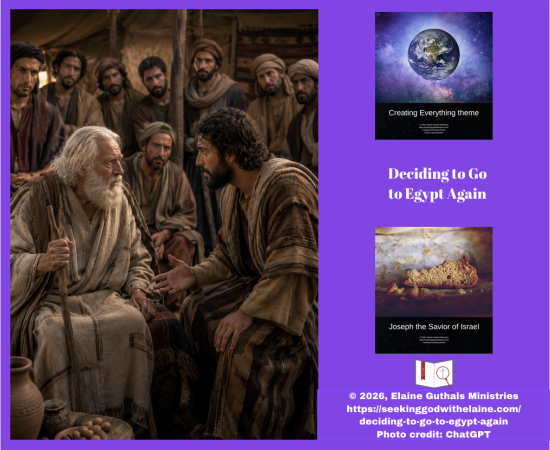
  • God Protected Hagar and Ishmael

    When Abraham cast Hagar and Ishmael out of his house, they wandered around the Wilderness of Beersheba. This devotional reading looks at the challenges they faced at that time.

    Nuggets

    • Abraham agreed with Sarah’s request and was obedient to Jehovah’s direction and sent Hagar and Ishmael away.
    • We don’t know how long Hagar and Ishmael wandered in the Wilderness of Beersheba.
    • Since the water had run out, Hagar and Ishmael were about to die of thirst.
    • The last thing Hagar wanted to do was to see Ishmael die.
    • Ishmael, so named because Jehovah heard Hagar during the first flight from Sarah, was heard by Jehovah.
    • The angel of Jehovah came to Hagar.
    • Jehovah is concerned about us.
    god-protected-hagar-and-ishmael

    Things had come to a head in Abraham’s house. Hagar and Ishmael, the firstborn, we’re mocking Sarah and Isaac, the covenant son. Sarah was done with it and had demanded Hagar and Ishmael be driven from the household.

    The day had come for Hagar and Ishmael to leave. Let’s see what happened.

    Program note: This ran long, so I cut it into two devotions. It wasn’t the best place to cut it, but a girl has to do what a girl has to do.

    Let’s Put It into Context

    To read devotions in the Creating Everything theme, click the button below.

    Devotions in the Abraham the Patriarch series

    Sent Away

    “So Abraham got up early the next morning, prepared food and a container of water, and strapped them on Hagar’s shoulders. Then he sent her away with their son, and she wandered aimlessly in the wilderness of Beersheba” (Gen. 21: 14 NLT)

    Sent Her Away with Their Son

    Abraham agreed with Sarah’s request and was obedient to Jehovah’s direction and sent Hagar and Ishmael away.

    Abraham had to know that Jehovah would not look kindly on Isaac being mocked and Sarah’s authority as mistress challenged. He knew — as hard as it would be on him — he had to act.

    We have to understand that, in this one second, Ishmael — and Hagar by extension — went from being wealthy and affluential to poor and homeless.

    But Hagar had experienced this before. Her name meant flight and forsaken.

    We know Hagar took flight from Sarah’s cruelty. “… Then Sarai treated Hagar so harshly that she finally ran away” (Gen. 16: 6 NLT).

    Jewish tradition — Midrash — believes that Hagar was Pharaoh’s daughter. Instead of allowing her to be a princess in her own country, her father gave her to Abraham in the great payoff (Gen. 12: 16), thinking she would be better off there — even if it was as a slave.

    I bet Hagar, by the day in question, did feel forsaken.

    Gray helped us remember why they were sent away. He wrote, “Servants of the law shall not, as such, divide with the free children the promises and blessings of the gospel; they are for the heirs of Christ, the Son who has made us free.”

    Resource

    As children of Jehovah, we are to be separated from children of the law. Remember, we are to be in the world but not of the world.

    Wilderness of Beersheba

    We don’t know how long Hagar and Ishmael wandered in the Wilderness of Beersheba.

    You may be asking if it is the Wilderness of Beersheba or part of the Negev Desert. The answer would be yes.

    The Wilderness of Beersheba is part of the Negev Desert, about 45 miles south of Jerusalem. It was considered the southern border of Israel.

    It included wells dug by Abraham and Isaac. One of these wells was called the well of the oath.

    It was to this harsh, arid place Hagar fled.

    Gray thought Hagar was heading back to Egypt. It doesn’t sound like they made a straight line to Egypt. They wandered around — and in doing so exhausted their supplies.

    Resource

    We look at a possible cause in the next section.

    When the Water Was Gone

    “When the water was gone, she put the boy in the shade of a bush. Then she went and sat down by herself about a hundred yards away. ‘I don’t want to watch the boy die,’ she said, as she burst into tears” (Gen. 21: 15-16 NLT)

    When the Water Was Gone

    Since the water had run out, Hagar and Ishmael were about to die of thirst.

    Hagar had wandered around the wilderness until their water ran out. She was ready to give up.

    What? Do we think Jehovah will never let us walk around until there is no hope? Where is that written in His Word?!?!?

    It isn’t.

    Babington had a great response to this. He wrote, “… we are not privileged, we have no immunity.”

    Resource

    We have to remember that Jehovah will test us to see if we will endure. We need to ace that testing.

    Let’s connect some dots as to why the water ran, which possibly led to their wandering. We said that the Wilderness of Beersheba included wells dug by Abraham. Wouldn’t Hagar and Ishmael have known where those were at — especially Ishmael if he helped with the flocks?

    But we are going to find in a couple of verses that there were some problems with at least one of the wells.

    • “Then Abraham complained to Abimelech about a well that Abimelech’s servants had taken by force from Abraham’s servants” (Gen. 21: 25 NLT).
    • “Then he named the place Beersheba (which means ‘well of the oath’), because that was where they had sworn the oath” (Gen. 21: 31 NLT).

    Maybe this was why the water wasn’t available to Hagar and Ishmael.

    We are going to assume that, if the water was gone, the bread was gone, too. “And Avraham rose up early in the boker, and took lechem [bread], and a skin of mayim [water], and gave it unto Hagar …” (Gen. 21: 14 OJB).

    Don’t Want to Watch Him Die

    The last thing Hagar wanted to do was to see Ishmael die.

    Remember, Ishmael was probably around 16 years old. He wasn’t a toddler.

    I see you jumping up and down over there. Didn’t Hagar remember the prophecy concerning Ishmael?Hagar may have thought the Genesis 16 prophecy had already come true. She may not have known about the Genesis 17 prophecy.

    Abraham may not have said anything. That may have set Sarah off even more.

    But beyond that, Hagar was probably frantic and scared. There was a lot at stake here — their lives.

    Don’t we want to hang on to our loved ones — especially our children? Even when we know they have asked Yeshua to be their Savior and have received eternal life, we sometimes hang on.

    Plus, not everyone is good in a crisis. What had been a decent life had gone downhill quickly.

    But God Heard the Boy

    “But God heard the boy crying, and the angel of God called to Hagar from heaven, ‘Hagar, what’s wrong? Do not be afraid! God has heard the boy crying as he lies there. Go to him and comfort him, for I will make a great nation from his descendants’” (Gen. 21: 17-18 NLT)

    God Heard the Boy Crying

    Ishmael, so named because Jehovah heard Hagar during the first flight from Sarah, was heard by Jehovah.

    So, the last time, Jehovah heard Hagar. This time, He heard Ishmael crying.

    Does it surprise us that Jehovah heard Ishmael even though he was uncontrollable? It shouldn’t.

    “You keep track of all my sorrows. You have collected all my tears in your bottle. You have recorded each one in your book” (Ps. 56: 8 NLT)

    Jehovah holds all human life in high regard. Yeshua will judge all to determine if we have made Him Lord and Savior of our lives.

    Vaughan didn’t come out and say it, but I think he thought Ishmael was praying. I don’t know.

    Resource

    Maybe the crying was a prayer. The Hebrew does implies more than that. “And Elohim [Jehovah] heard the voice of the na’ar [boy, servant, retainer] …” (Gen. 21: 17 OJB).

    I wouldn’t characterize crying as a voice. A sound, yes. Voice, no.

    Was Ishmael asking for forgives for the way he had treated Isaac? Or was he just pleading for his life?

    Angel of God

    The angel of Jehovah came to Hagar.

    Remember Hagar’s first flight away from Sarah’s cruelty? Jehovah Himself came to Hagar. “And the Malach Hashem [the Lord is, was, and always will be King] found her by a spring of mayim [water] in the midbar [wilderness], near the spring on the road to Shur” (Gen. 16: 7 OJB).

    This has different wording. “And Elohim [Jehovah] heard the voice of the na’ar [boy, servant, retainer]; and the Malach Elohim [messenger of Jehovah] called to Hagar out of Shomayim [heavens, sky], and said unto her, Mah lach [What is happening to you], Hagar? fear not; for Elohim hath heard the voice of the na’ar where he is” (Gen. 21: 17 OJB).

    However when I google both — Malach Hashem and Malach Elohim — this time it says both are messengers — angels — of Jehovah.

    But if it is just an angel, why does it read, “Go to him and comfort him, for I will make a great nation from his descendants” (Gen. 21: 18 NLT emphasis added). Why wouldn’t it say I in verse 17? “… God has heard the boy crying as he lies there” (Gen. 21: 17 NLT emphasis added).

    I can see the messenger giving the message word for word and not changing the pronoun.

    What’s Wrong?

    Jehovah is concerned about us.

    How many times is it so easy for us to stay focused on our troubles? We close our eyes to the obvious workings of Jehovah going on around us.

    Hagar had herself all worked up. She thought Ishmael was going to die. She was so focused on her troubles instead of God’s promise.

    That fear may have pushed out any anger Hagar had at being forced to leave her home. It would have taken her focus off getting home to Egypt.

    Brown told how that was understandable. He wrote, “If she had had another boy, it would have been bad enough, but poor Ishmael — if he was gone, her all was gone. No other hope. Lose him, and she had lost everything.”

    Resource

    But think about it. This was the second time that Hagar was in the wilderness. And the first time she talked to “… the God who sees me …” (Gen. 16: 13 NLT).

    Hagar should have drawn from the faith she established then.

    As moms, don’t we feel like we have to have all the plates spinning and juggling all the balls? Whatever needs fixing, we should be able to fix it.

    Hagar couldn’t fix this.

    But Hagar wasn’t running around like a chicken with her head cut off. She had given up. Quiet reigned — except for Ishmael’s crying.

    We would say that Hagar was crushed with her grief. Brown said she was so crushed that she couldn’t even pray.

    Thank You, sweet Yeshua, for sending the Holy Spirit to us! When we are so crushed with grief, guilt, or whatever, the Holy Spirit can translate our pain into a prayer for us. He speaks for us in groans, providing comfort as He aligns prayers with the Father’s Will.

    “And the Holy Spirit helps us in our weakness. For example, we don’t know what God wants us to pray for. But the Holy Spirit prays for us with groanings that cannot be expressed in words. And the Father who knows all hearts knows what the Spirit is saying, for the Spirit pleads for us believer in harmony with God’s own will” (Rom. 8: 26-27 NLT).

    We focus on our problems until Jehovah opens our eyes. It was there all along — right there. We just have to have faith to really see it.

    Yes, sometimes, Jehovah has to open the eyes of our hearts. Sometimes, He has to open our physical eyes.

    But this wasn’t just about Ishmael. Look at the direction Jehovah gave Hagar. “Go to him and comfort him …” (Gen. 21: 18 NLT).

    Instead of feeling despondent, Jehovah gave her a specific task to do.

    Father God. We know why we must be separated from worldview people, but at times it hurts. They can be our family and friends. Help us to be a witness to them of Your great love for us. Amen.

    If you don’t understand something and would like further clarification, please contact me.

    If you have not signed up for the email providing the link to the devotions and the newsletter, do so below.

    If God has used this devotion to speak with you, consider sharing it on social media.