Category: Ministry

  • Zeal for My Father’s House

    Early in His ministry, Yeshua attended the Passover celebration. This devotional reading looks at Him clearing the Temple of merchants.

    Nuggets

    • The Temple area was huge.
    • Commercial activity was being conducted on Temple grounds.
    • Jewish pilgrims came from all over the known world.
    • Yeshua wanted to return His Father’s house to its original purpose – worship.
    • Yeshua’s disciples were good Jewish men and women who remembered Scripture.
    • The Jewish leaders questioned who would allow Yeshua to do this.
    • When asked, Yeshua offered the sign of Jonah.
    • The Temple expansion Herod had begun had been going on for 46 years – and it wasn’t complete yet.
    • Yeshua knows His followers.

    In the last devotion, we looked at when Yeshua went to Jerusalem to attend the Passover celebration. We talked about what that may have meant for someone in first-century Jerusalem.

    We don’t know when the next chain of events took place. Some think it is so out of character for Yeshua to do this. But is it?

    Let’s Put It into Context

    To read devotions in The Battle for the Heart theme

    Devotions in the The Early Ministry of the Messiah series

    My Father’s House

    “In the Temple area he saw merchants selling cattle, sheep, and doves for sacrifices; he also saw dealers at tables exchanging foreign money” (Jn. 2: 14 NLT)

    In the Temple Area

    The Temple area was huge.

    In order to accommodate the millions of worshipers, the Temple complex had to have been massive. And it was!

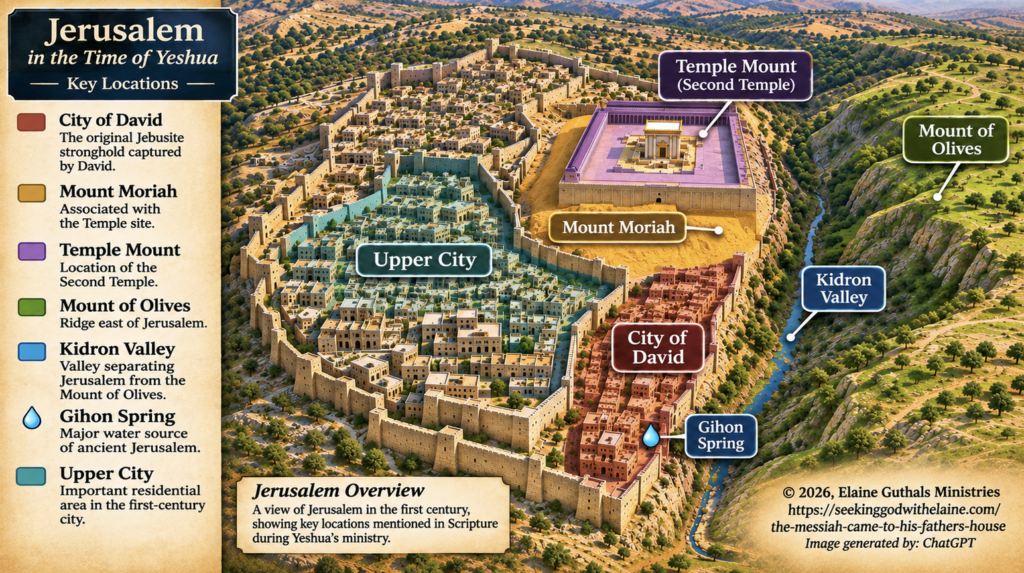
    Herod’s Temple, as the Second Temple came to be known after Herod the Great’s renovation project, sat on approximately 36 acres of land. While the Temple stood at the heart of Jerusalem’s religious and national life, its geographical location occupied a prominent elevated position on the east-central portion of the ancient city.
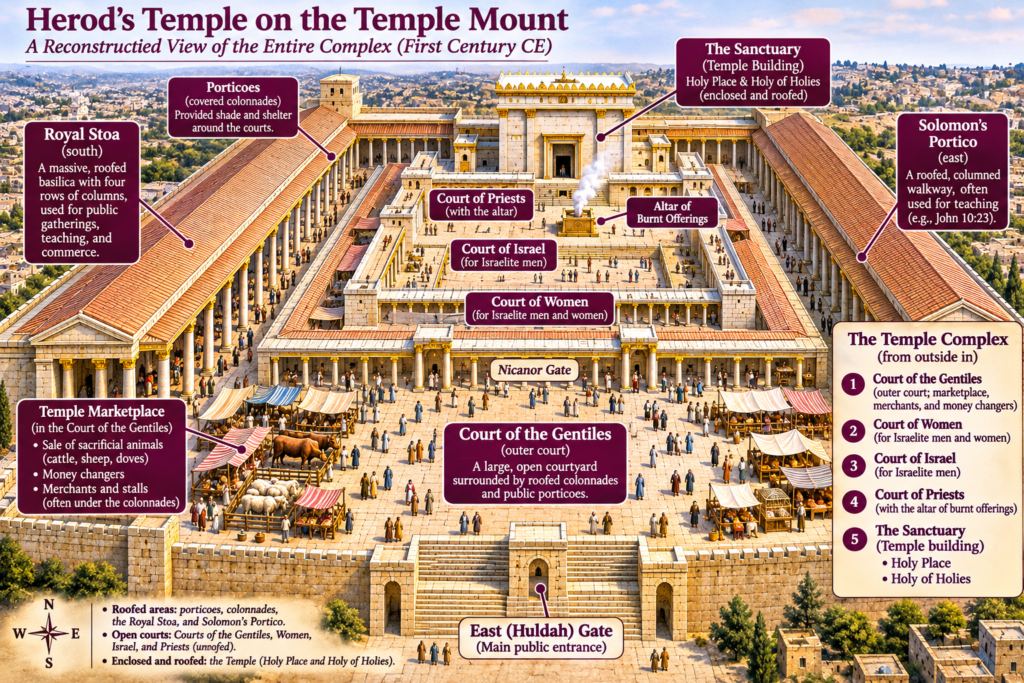
    To put it into our perspective, we’re talking 27 football fields – including the end zones. However, it wasn’t a perfect rectangle as a football field is.

    It was more of an irregular, trapezoidal platform.

    Merchants

    Commercial activity was being conducted on Temple grounds.

    John listed three groups: sellers of oxen, sellers of sheep, and sellers of doves. That means to me that there were multiple merchants of each category.

    The three types of animals were indicative of  the types of sacrifices to be given. The Paschal Lamb was the foundation of the Passover observance. However, sheep as well as the oxen were used for burnt offerings and peace offerings. (Those offerings wouldn’t have stopped for Passover.) The doves – and pigeons – were for those who couldn’t afford the other animals.

    We aren’t talking a few sellers and a few animals here. If Josephus’ numbers during a time shortly before the Jewish revolt of AD 66 are to be believed – and many don’t – we are talking of a couple of hundred thousand sacrifices being offered. Most of the celebrants were from out of town and probably didn’t bring their sacrifices with them in order to ensure the purity of the animal offered.

    Resource

    Hence, the need for merchants. The reasons we discussed may be the defining factors – or there may have been reasons we don’t know about.

    Moneychangers

    Jewish pilgrims came from all over the known world.

    Jewish people didn’t only live in Israel in the first century. By then, Jews were spread out – some in well-documented areas, others not so much.

    That is a lot of different currency to exchange!
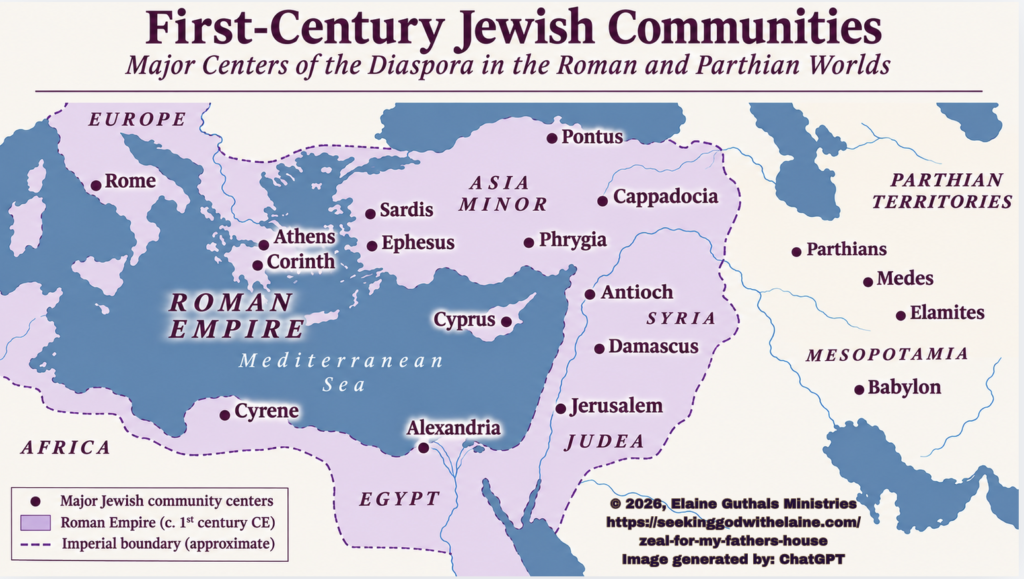
    Those pilgrims would have had Roman coins, Greek coins, and other regional currencies. Those coins, however, did the pilgrims no good – only the Tyrian silver shekel could be used to pay the Temple tax.

    The Temple tax was established in Exodus 30: 11-16. It was a way to take a census of the men of Israel who were over 20 years old. It was also considered “… a ransom for himself to the Lord. Then no plague will strike the people as you count them” (Ex. 30: 12 NLT).

    The amount paid was standardized for all. “… (This payment is half a shekel, based on the sanctuary shekel, which equals twenty gerahs.)” (Ex. 30: 13 NLT).

    Eventually, this morphed into an annual Temple contribution.

    Back to first-century Jerusalem. All of this converged onto the Temple area:

    • Worshipers from large distances.
    • Worshipers from diverse territories, each with their own currency.
    • Worshipers in need of pure sacrifices.
    • Worshipers from multiple socioeconomic statuses

    What is the common denominator? They needed what they needed when they needed it to worship Jehovah in the way He required.

    No, we aren’t blaming this mess on Jehovah. People made their own decisions – as well intentioned as some of them might have been.

    But that also made the Temple something it was never intended to be. Instead of being a place for people to pray and worship, it became the center of Israel’s sacrificial economy and a major financial institution.

    While Jehovah intended the sacrifices to be made, He didn’t set up a merchant system so those sacrifices could be obtained.

    Think about it. They couldn’t just assign a priest to take care of this. It wasn’t even what was intended for the Levites.

    Selling cattle, sheep, and doves and exchanging foreign currency, while occurring on Temple grounds, was not part of the prescribed Temple responsibility.

    The commercial environment wasn’t factored into the picture.

    Moving out the Merchants and Merchandise

    “Jesus made a whip from some ropes and chased them all out of the Temple. He drove out the sheep and cattle, scattered the money changers’ coins over the floor, and turned over their tables. Then, going over to the people who sold doves, he told them, ‘Get these things out of here. Stop turning my Father’s house into a marketplace!’” (Jn. 2: 15-16 NLT)

    Yeshua wanted to return His Father’s house to its original purpose – worship.

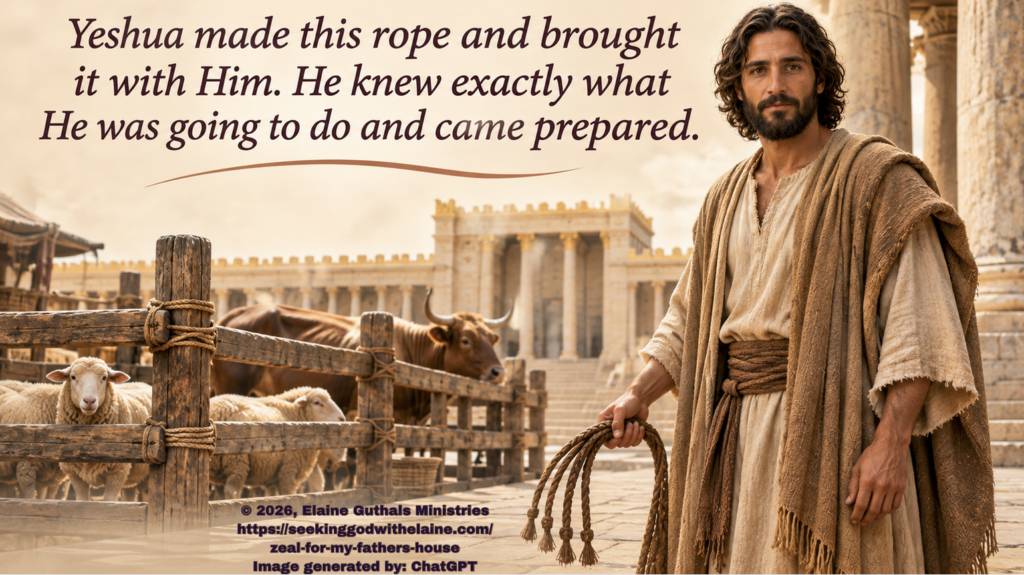
    The rope Yeshua used to clear the Temple wasn’t special in any way. It was an ordinary rope made out of other rope or cords.

    What we need to take from this verse is that it was a deliberate act. It wasn’t one Yeshua picked up from next to a stall.

    Yeshua made this rope and brought it with Him. He knew exactly what He was going to do and came prepared.
    Yeshua was going to help people to think in ways more aligned with Jehovah.

    • “Don’t be fooled into thinking that you will never suffer because the Temple is here. It’s a lie!” (Jer. 7: 8 NLT).
    • “‘Look! I am sending my messenger, and he will prepare the way before me. Then the Lord you are seeking will suddenly come to his Temple. The messenger of the covenant, whom you look for so eagerly, is surely coming,’ says the Lord of Heaven’s Armies. ‘But who will be able to endure it when he comes? Who will be able to stand and face him when he appears? For he will be like a blazing fire that refines metal, or like a strong soap that bleaches clothes’” (Mal. 3: 1-2 NLT).

    My Father’s house. The Jewish leaders would have seen that as a bold claim. They would also see it as a non-factual claim.

    Fulfilling Prophecy

    “Then his disciples remembered this prophecy from the Scriptures: ‘Passion for God’s house will consume me’” (Jn. 2: 17 NLT)

    Yeshua’s disciples were good Jewish men and women who remembered Scripture.

    In this case, they remembered a specific Scripture from the Psalms. “Passion for your house has consumed me …” (Ps. 69: 9 NLT).

    Let’s break that down.
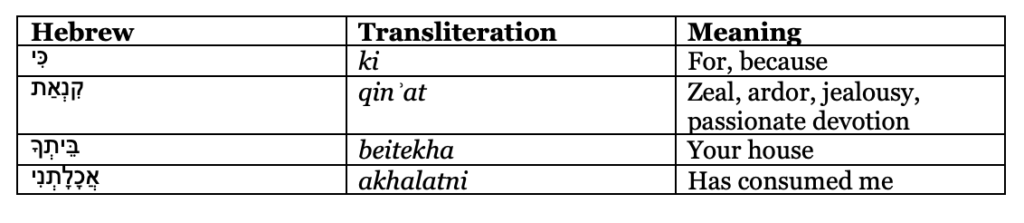
    The focal point of the sentence is the word we know as passion. It can mean different things in different contexts.

    It can describe Jehovah’s own jealousy for His covenant relationship with Israel, as well as human jealousy or passionate devotion.

    Think about it. Jealousy is an attribute of Jehovah. It describes a refusal to accept unfaithfulness.

    That describes Jehovah to a T.

    Jehovah will not accept sin. True, He hasn’t punished that sin yet, and sin remains until this day.

    But Jehovah is pure where sin is not.

    We often equate a passionate response with emotions running high. While that can be the case, it can also identify a person who is totally committed to the action.

    John didn’t record all of Psalm 69: 9 here. Remember, only part of it was said to trigger those listening to remember the rest of it.

    So, what was the rest? “… and the insults of those who insult you have fallen on me” (Ps. 69: 9 NLT).
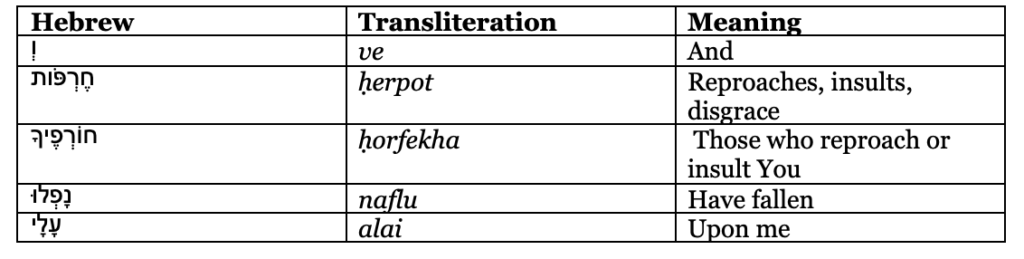
    When David  spoke those words, he was identifying as a person under rebuke because of identifying with Jehovah’s honor.

    I see an even greater connection between Yeshua and Jehovah. Yeshua was more than David in every way. He was more involved in the mission itself. He had a greater tie to the planning, execution, and outcome of the mission.

    Because Yeshua agreed to carry out the Plan of Salvation, He was rebuked, ridiculed, and put to death for its accomplishment.

    Who Gave You Authority?

    “But the Jewish leaders demanded, ‘What are you doing? If God gave you authority to do this, show us a miraculous sign to prove it’” (Jn. 2: 18 NLT)

    The Jewish leaders questioned who would allow Yeshua to do this.

    I bet the Jewish leaders were upset that Yeshua had cleared the marketplace. The bigger picture would be that they probably didn’t like things happening that upset the normal operation.

    More than likely, they didn’t think someone not associated with the Temple complex should have more of a say with what occurred than they did. But that wasn’t the only focus of this question.

    When the leaders asked under whose authority Yeshua was operating, they were asking who His teacher was. In first-century Israel, there were several schools of thought. Priests and Pharisees were taught to interpret Torah the way their teacher believed.

    So, what they were really asking about was Yeshua’s rabbinic standing or authorization.

    Ooo, baby. They didn’t know of ANY teacher that would teach this.

    And sure enough. Here came this upstart – in their eyes – who was teaching and commanding without invoking another teacher’s name or relying on that person’s authority.

    Proof of Authority

    “‘All right,’ Jesus replied. ‘Destroy this temple, and in three days I will raise it up’” (Jn. 2: 19 NLT)

    When asked, Yeshua offered the sign of Jonah.

    If Jehovah gave Yeshua this authority, they believed that He would have given Him the ability to do signs and wonders. In fact, they expected that of Messiah. This wasn’t something new.

    In Israelite history, promised deliverers, anointed ones, and prophets were given the ability by Jehovah to perform extraordinary works to demonstrate His authority. In fact,  signs and wonders became a part of Israel’s scriptural vocabulary for recognizing His intervention.

    • “But I will make Pharaoh’s heart stubborn so I can multiply my miraculous signs and wonders in the land of Egypt” (Ex. 7: 3 NLT).
    • “I will raise up a prophet like you from among their fellow Israelites. I will put my words in his mouth, and he will tell the people everything I command him. I will personally deal with anyone who will not listen to the messages the prophet proclaims on my behalf” (Deut. 18: 18-19 NLT).
    • “And when he comes, he will open the eyes of the blind and unplug the ears of the deaf. The lame will leap like a deer, and those who cannot speak will sing for joy! Springs will gush forth in the wilderness, and streams will water the wasteland” (Isa. 35: 5-6 NLT).

    The Hebrew word for sign was ʾot (אוֹת). The Hebrew word for wonder was mofet (מוֹפֵת).

    Isn’t it interesting that the Pharisees didn’t ask why – as in the purpose – Yeshua did this. They didn’t give Him a sob story about the needs of the worshipers. They didn’t bring up the lost review the merchants depended on to fed their families.

    The Pharisees wanted to know who sanctioned this destruction of the marketplace on the Temple grounds. Who besides Jehovah had a say over His house?

    They wanted a sign from God when God was standing there right in front of them.
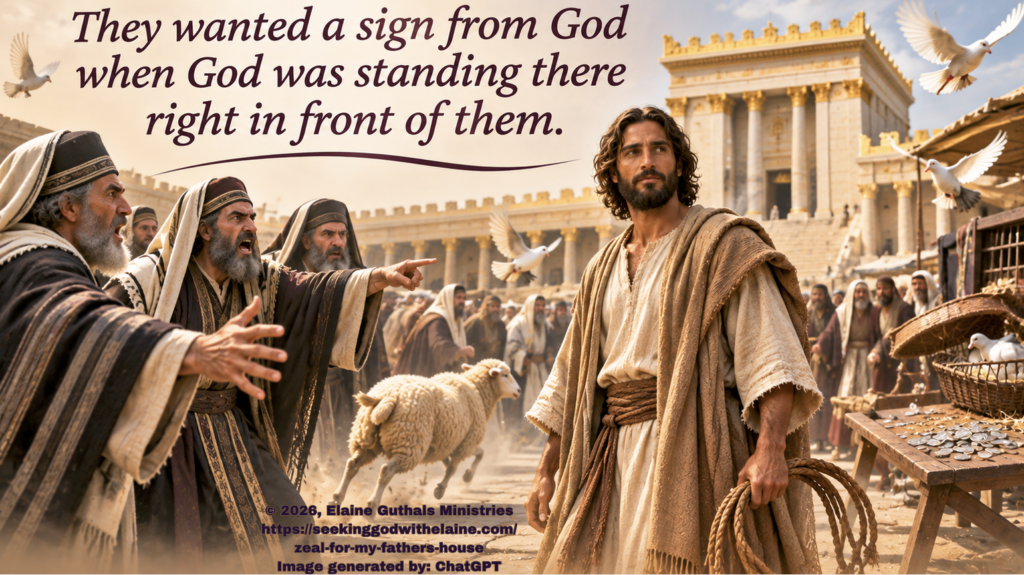
    I am sure the sign Yeshua gave confused them. It was the sign of Jonah. “Now the Lord had arranged for a great fish to swallow Jonah. And Jonah was inside the fish for three days and three nights” (Jnh. 1: 17 NLT).

    I’m pretty sure the Pharisees didn’t expect Jonah to end up as fish food. They didn’t even recognize it as a prophecy of His death. They definitely wouldn’t have seen it as a foreshadowing of His resurrection.

    They didn’t equate Yeshua’s body with the Temple. They were focused on the physical Temple – the one which they, no doubt, had just thought He violated.

    The Second Temple

    “‘What!’ they exclaimed. ‘It has taken forty-six years to build this Temple, and you can rebuild it in three days?’ But when Jesus said ‘this temple,’ he meant his own body. After he was raised from the dead, his disciples remembered he had said this, and they believed both the Scriptures and what Jesus had said” (Jn. 2: 20-22 NLT)

    The Temple expansion Herod had begun had been going on for 46 years – and it wasn’t complete yet.

    Solomon’s Temple – Israel’s pride and joy – was destroyed in 586 BC when Babylon conquered Judah and Jerusalem. Seventy years later, when the exiles returned home, they built the Second Temple under Zerubbabel, the governor, and Joshua, the High Priest. It was completed in 516/515 BC (Ezra 6: 15).

    Around 20/19 BC, Herod the Great began a renovation and expansion project.

    • Expanded and reshaped the Temple Mount platform.
    • Constructed the massive retaining walls and surrounding colonnades.
    • Rebuilt the sanctuary.
    • Created the magnificent architectural complex familiar from the Gospel accounts.

    While the renovations for the Temple itself had been completed, renovations for the courts, surrounding walls, and porticoes went on for many years. There is question, though, whether the number of 46 refers to the age of the Temple sanctuary or the duration of the construction.

    As much as the first-century Jews had against Herod the Great, this was still their Temple. They could appreciate it.

    But think of it. Right there. Jehovah’s presence was right there in front of them.

    Did they trust Him? No. Did they trust a building? Yes.

    Yeshua’s Following

    “Because of the miraculous signs Jesus did in Jerusalem at the Passover celebration, many began to trust in him. But Jesus didn’t trust them, because he knew all about people. No one needed to tell him about human nature, for he knew what was in each person’s heart” (Jn. 2: 23-25 NLT)

    Yeshua knows His followers.

    It was wonderful that people believed in Yeshua because of what they had seen. But that wasn’t the only thing.

    Yeshua wasn’t there just to do great signs and wonders. He didn’t call them to His side periodically to show them something new and different.

    Yeshua wanted them to hear and believe His message. He wanted them to know why He was there. They needed to believe that He was Who He said He was.

    If they believed only because of the signs and wonders, they had a superficial belief. They believed in His abilities, not His identity.

    It says that the people believed (πιστεύω) in Him, but He didn’t believe in them. What does that sound like?

    “Not everyone who calls out to me, ‘Lord! Lord!’ will enter the Kingdom of Heaven. Only those who actually do the will of my Father in heaven will enter. On judgment day many will say to me, ‘Lord! Lord! We prophesied in your name and cast out demons in your name and performed many miracles in your name.’ But I will reply, ‘I never knew you. Get away from me, you who break God’s laws’” (Mt. 7: 21-23 NLT).

    Making the Connections #1

    There is a more familiar occurrence of Yeshua clearing the Temple than this account in John 2. It also occurred during Holy Week – only that Holy Week led up to the crucifixion of the Messiah.

    Why cover this now?

    This account is different than the other accounts in Matthew, Mark and Luke – and we will cover it again when we get to their accounts of the Holy Week. Can there be two accounts?

    I don’t see Yeshua ignoring it. But does that mean He did it at Passover Year 2? Or did He clear the Temple another time, and it just wasn’t recorded?

    Bottom line is we just don’t know. We aren’t given enough information to figure it out. So, it is just one more thing for the UNR book – understanding not required.

    Making the Connections #2

    This is a great example of us thinking we are doing God’s Will in following the call for our ministries – and the world gets in the way.

    True, coordination is important. Ensuring worshipers have the needed sacrifices is essential.

    But it shouldn’t take our focus off Jehovah.

    Heart Check

    Think about the battle Yeshua is engaged in for your heart. Ask yourself the following questions.

    • When I serve Jehovah, am I focused on worshiping Him or managing the activity surrounding worship?
    • Do I recognize when good intentions and practical arrangements begin to distract me from Jehovah, or do I allow them to become the priority?
    • Am I more concerned with who has given someone authority or with whether that person is acting according to Jehovah’s will?
    • Do I look for signs that Jehovah is working, or do I recognize His presence and work even when they are standing right in front of me?
    • Is my faith grounded in what Yeshua can do, or in who He is and why He came?
    • Do I trust the things associated with my faith—my church, traditions, and religious activities—or do I trust Jehovah Himself?

    How Do We Apply This?

    • Keep worshiping Jehovah at the center of everything we do in His name.
    • Examine whether our good intentions and practical arrangements are distracting us from our purpose.
    • Be willing to recognize Jehovah’s authority even when it doesn’t come through familiar channels.
    • Look beyond the signs and wonders to understand the identity and mission of Yeshua.
    • Build our faith on who Yeshua is, not merely on what we hope He will do for us.
    • Remember that religious activity is not a substitute for a genuine relationship with Jehovah.

    Father God. Forgive us when we focus more on the program and ritual of the service than we do focusing on You. Help us to turn our backs on the worldly pulls and turn back to You. Most of all, help us to always see You standing in front of us when You are there. Amen.

    If you don’t understand something and would like further clarification, please contact me.

    If you have not signed up for the email providing the link to the devotions and the newsletter, do so below.

    If God has used this devotion to speak with you, consider sharing it on social media.
  • The Messiah Came to His Father’s House

    Yeshua traveled to Capernaum and then Jerusalem. This devotional reading looks at why He took this trip and who His travel companions were.

    Nuggets

    • We can’t be sure of the timeline.
    • Even if Yeshua’s brothers did not believe in Him, they were still faithful Jewish men.
    • We still don’t know how many disciples were traveling with Yeshua at this point.
    • Observance of the Passover celebration was an important event.
    • Jerusalem was an important city to the nation of Israel.

    John is the only one to record Yeshua’s trip to Jerusalem for Passover at the beginning of His ministry. To me, this is an important trip.

    At the beginning of His ministry, Yeshua went to His Father’s house.

    Let’s Put It into Context

    To read devotions in The Battle for the Heart theme

    Devotions in the The Early Ministry of the Messiah series

    Leaving Where He Was

    ”After the wedding he went to Capernaum for a few days with his mother, his brothers, and his disciples” (Jn. 2: 12 NLT)

    After the Wedding

    We can’t be sure of the timeline.

    John did help us with the chronology on this one – well, he tried. If we look at the wedding at Cana where Yeshua turned the water into wine – His first miracle – we see that the wedding happened the day after He talked with Nethanael.

    The uncertainty comes in two places. We don’t know if Philip found Nathanael on the day Yeshua called Him. Nor do we know how long after the wedding was.

    But then, we also don’t know what John actually wrote. Most other versions translate this differently.

    • “On the third day there was a wedding at Cana in Galilee, and the mother of Jesus was there” (Jn. 2: 1 ESV).
    • “Three days later Mary, the mother of Jesus, was at a wedding feast in the village of Cana in Galilee” (Jn. 2: 1 CEV).
    • “Two days later there was a wedding in the town of Cana in Galilee. Jesus’ mother was there” (Jn. 2: 1 GNT).
    • “The third day, there was a wedding in Cana of Galilee. Jesus’ mother was there” (Jn. 2: 1 WEB).
    • “And [on] the third day a wedding happened in Cana of Galilee, and the mother of Jesus was there” (Jn. 2: 1 LSV).

    We have no clue as to what the third day is referring. Is it the third day of the wedding festival? Is it three days after Yeshua’s talk with Nathanael? Or is it the third day of the week (since Shabbat is the only day name – the rest are identified as first day, second day, third day, etc.).

    I know. That was verse 1. We are talking verse 12 now. But how can we make an informed decision on verse 12 if we can’t make an informed decision on verse 1?

    With His Mother and Brothers

    Even if Yeshua’s brothers did not believe in Him, they were still faithful Jewish men.

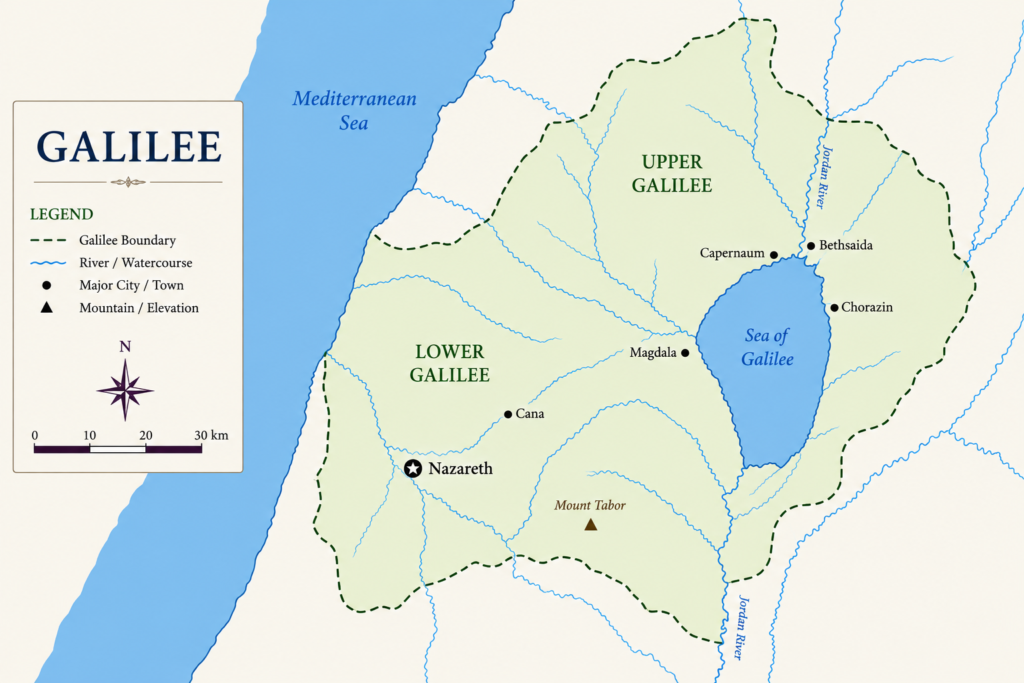
    What we do know is that it signals Yeshua’s travel with Mary and his brothers and disciples to Capernaum. Remember, He was living there now. “He went first to Nazareth, then left there and moved to Capernaum, beside the Sea of Galilee, in the region of Zebulun and Naphtali” (Mt. 4: 13 NLT).

    The other uncertainty is that we don’t know exactly who was included in His brothers and His disciples. Oh, we know names.

    We got an idea of Joseph and Mary’s family when Yeshua preached in the Nazareth synagogue. “Then they scoffed, ‘He’s just the carpenter’s son, and we know Mary, his mother, and his brothers — James, Joseph, Simon, and Judas. All his sisters live right here among us. Where did he learn all these things?’” (Mt. 13: 55-56 NLT).

    For this trip to Capernaum, it doesn’t say the sisters were in the group. It doesn’t say how many of the brothers came – but at least two did.

    We are told elsewhere that Yeshua’s brothers didn’t believe He was the Messiah. “For even his brothers didn’t believe in him” (Jn. 7: 5 NLT). We know that changed for at least two.

    Paul recorded that Yeshua appeared to James (Ya‘aqov – יַעֲקֹב) after the resurrection. “Then he was seen by James and later by all the apostles” (I Cor. 15: 7 NLT).

    It is important that Yeshua had this time with James. James was going to become a prominent leader in the Jerusalem assembly. “In fact, James, Peter, and John, who were known as pillars of the church, recognized the gift God had given me, and they accepted Barnabas and me as their co-workers” (Gal. 2: 9 NLT).

    We have a glimpse into James’ transformation. He went from unbelief to prominent leader to traditionally be identified as the author of the Book of James.

    James wasn’t the only one to write one of the books that has become our Bible. Jude (Yehudah– יְהוּדָה) also acknowledged his relationship with Yeshua in the opening verse of his book – albeit in a roundabout way. “This letter is from Jude, a slave of Jesus Christ and a brother of James” (Jude 1: 1).

    His Disciples

    We still don’t know how many disciples were traveling with Yeshua at this point.

    We discussed in the last devotion that the uncertainty in timing leads to uncertainty in which disciples were included in this verse. We tend to read the disciples as either being limited to the Twelve or, at a minimum, including all of them.

    However, the unnamed disciples here couldn’t have included Peter, Andrew, James, and John. Remember, Andrew brought Simon to meet Yeshua, but that isn’t where their call to follow Him took place.

    We left it in the UNR book – understanding not required – because we can’t be sure of whether Yeshua’s calling the four fishermen were before He met with Nathanael. If the seashore stroll was after Nathanael, the four fishermen probably weren’t included here.

    But maybe not.

    Remember, Yeshua was walking along the seashore when He called Peter, Andrew, James, and John to be His disciples (Mt. 4: 18-22; Mk. 1: 16-20). What if He was on His way to Jerusalem?

    Immediately following the passages of the calling, Matthew listed Yeshua spreading His Gospel throughout the region. It reads more like a summary statement than a travel itinerary.

    The next verse after Mark’s recording of the call says that Yeshua entered Capernaum (Mk. 1: 21). He may have. He may not have.

    The Gospels aren’t always written chronologically. It isn’t a step-by-step account. John himself gives the disclaimer that a record like that is impossible (Jn. 20: 30; Jn. 21: 25).

    I, personally, like that idea. I want the four to have joined Yeshua as quickly as possible. To me – and I may be wrong – this is plausible.

    The Jewish Passover Celebration

    “It was nearly time for the Jewish Passover celebration, so Jesus went to Jerusalem” (Jn. 2: 13 NLT)

    Passover

    Observance of the Passover celebration was an important event.

    If we were questioning why Yeshua’s brothers traveled to Capernaum with Him, this verse may provide the answer. While it doesn’t say Mary and His brothers made the trip to Jerusalem, Passover included the whole family in the celebration.

    Passover was a pilgrimage festival. This meant all Israelite/Jewish males – even those who were victims of the Diaspora, when possible – should appear (Ex. 23: 17; Ex.34: 23; Deut. 16: 16). This didn’t mean that wife and children couldn’t – and didn’t – come.

    The festivals were to occur at the place that Jehovah chose. That meant the Temple once Jerusalem became the established place of worship.

    They were called to celebrate before Jehovah – and not be empty-handed (Deut. 16: 17).

    One purpose of the Passover celebration is to instruct the children in their history. This is shown in Exodus 12: 26-27, Exodus 13: 8, and Exodus 13: 14. It became – but we’re not sure if it was in the first century – part of the celebration itself when the youngest person asks four questions.

    The first Passover was celebrated in Egypt. It occurred the night before Pharaoh agreed to release the Israelites from slavery. The annual celebrations were a reenactment of the defining act that gave Israel her identity – Jehovah’s deliverance of His people.

    Everything about the Passover celebration served to remind the first-century Jews of this deliverance. They kept appointed days, removed leaven, ate unleavened bread, participated in the sacrifice, and – most importantly – gathered in the Temple in the Promised Land.

    Yes, Jehovah delivered them from a bad situation. Ultimately, He gave them an identity, obligations, and hope.

    The focus of Passover wasn’t on the meal. It was on the Temple where the lamb was sacrificed. The Hallel – the Psalms of praise associated with the festival – was being sung. Trumpets were sounding.

    The daily offering was sacrificed earlier in order for the Paschal Lamb (or goat) to be sacrificed. After that, the first group – the assembly – brought their sacrifice in the afternoon. The remaining two groups – the congregation and Israel – made their sacrifices after that.

    Each group entered the Temple courtyard until all in that group was inside. When the court was filled, the doors were closed, and the sacrifice began.

    Each group would remain until all members concluded their sacrifices. All of the priests would be on duty that day, forming an assembly line to pass the blood of the sacrifice from the place of sacrifice to the altar.

    The lamb would be flayed until the sacrificial parts could be removed. These would be placed in a basin (magis– מַגִּיס) and burned on the altar.

    At nightfall, they would return to wherever they were staying and roast their Paschal Lamb. The people who had been registered for that particular sacrifice would eat it together with the unleavened bread and bitter herbs.

    Went to Jerusalem

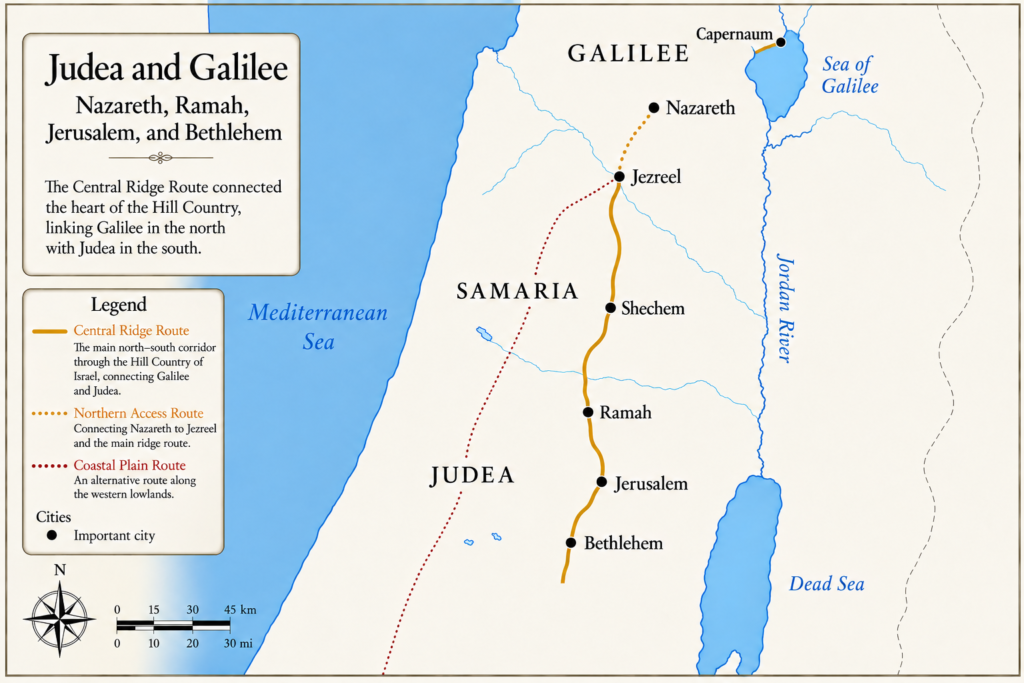
    It was approximately a 100-mile trip from Capernaum to Jerusalem.

    The normal trip would take four to six days when traveling on foot. Of course, that would depend on the route, pace, and whether the travelers stopped overnight along the way.

    They could have cut the trip down to three days if they were willing to go through Samaria. Many Jews, though, opted for the longer trip.

    Jerusalem

    Jerusalem was an important city to the nation of Israel.

    Before the city was called Jerusalem (Yerushalayim– יְרוּשָׁלַיִם), it was named Salem (Shalem – שָׁלֵם). We’ve encountered it in Genesis. “And Melchizedek, the king of Salem and a priest of God Most High, brought Abram some bread and wine” (Gen. 14: 18 NLT).

    Some think that Melchizedek was really Adam’s son Seth. He could have been and taken a new name when he became king.

    Maybe. Maybe not. That goes in the UNR book – understanding not required.

    What we do know is Melchizedek was described as both the king of Salem and a priest of God Most High (El Elyon – אֵל עֶלְיוֹן).

    But was Salem really Jerusalem? Asaph, in his psalm, told us it was – sorta. “God is honored in Judah; his name is great in Israel. Jerusalem is where he lives; Mount Zion is his home” (Ps. 76: 2 NLT).

    There are several clues in this passage, but we have to put them together with other knowledge and information.

    • Jerusalem is within the nation of Israel.
    • Jerusalem is located in the territory allotted to the tribe of Judah.
    • Jehovah lives in Jerusalem
    • Jerusalem is associated with Mount Zion.

    Let’s do a quick rundown on Zion. Zion was a stronghold that David conquered. It later became another name for Jerusalem. So, while Zion could mean Jerusalem itself, it could also represent the covenant community and the center of Israel’s national and religious identity.

    The earliest urban settlement to be developed on the eastern ridge, Jerusalem sat near the Gihon Spring. It does appear in Egyptian records dating back to the fourteenth century BC.

    The city had several natural advantages:

    • It was situated in the central hill country.
    • The surrounding valleys provided natural defensive protection.
    • The Gihon Spring provided a dependable water source.
    • Its location offered access to routes connecting the hill country with other parts of Canaan.

    The long-established city was ruled by the Jebusites when the Israelites entered the Promised Land. “But the tribe of Judah could not drive out the Jebusites, who lived in the city of Jerusalem, so the Jebusites live there among the people of Judah to this day” (Josh. 15: 63 NLT).

    David captured the stronghold of Zion in II Samuel 5: 6-9. The Jebusites were so convinced that the city of Jerusalem was uncapturable that they taunted David.

    But capture it David did. He made it the capital city after the tribes united under him. This was an excellent choice as it was not the already-established capital of either Judah or the northern tribes.

    By the first century, Jerusalem was:

    • The religious center of Jewish life.
    • The location of the Second Temple.
    • The seat of the high priestly establishment.
    • The destination of Jewish pilgrims coming for the three pilgrimage festivals.
    • A city under Roman political domination, with considerable local authority exercised through the high priesthood and other Jewish governing institutions.

    Jerusalem – when Yeshua arrived – had a lot of things swirling around at that time. The sacrificial service, purity concerns, crowds, priestly labor, Roman political oversight, and heightened national memory converged in the same place.

    But think about it. This is the first time since Yeshua began His ministry that the Messiah came to His Father’s house.

    Making the Connections #1

    After Passover was over, the Festival of Unleavened Bread began on the fifteenth day of the first month and lasted for seven days.

    In time, the two became known as Passover.

    Making the Connections #2

    Think about it. The Paschal Lamb was sacrificed at the Temple and then was eaten by the people.

    “And as they were eating, Jesus took bread, blessed and broke it, and gave it to the disciples and said, ‘Take, eat; this is My body’” (Mt. 26: 26 NLT).

    Just as the Jews at the Paschal Lamb at Passover, we eat the Paschal Lamb every time we take the Lord’s Supper. We are remembering and worshiping the same way.

    Heart Check

    Think about the battle Yeshua is engaged in for your heart. Ask yourself the following questions.

    • Am I open to the possibility that Jehovah can transform someone who once rejected or misunderstood Yeshua, as He did with James?
    • Am I willing to follow Yeshua without knowing every detail of where He is going, or do I need to understand the whole plan before I move?
    • When I gather to worship, am I mindful that I am coming before Jehovah, or has worship become more about the activity than the One being worshiped?
    • Do I recognize that Yeshua’s identity and mission are rooted in Israel’s story of redemption, or do I separate His ministry from the history and promises that came before Him?

    How Do We Apply This?

    • Follow Yeshua even when the whole journey isn’t clear.
    • Give Yeshua the opportunity to transform your understanding and your heart.
    • Don’t assume that someone’s present unbelief determines their future.
    • Continue praying for family members who have not yet recognized Yeshua as Messiah.
    • Remember the deliverance and redemption Jehovah has provided.
    • Let your identity be shaped by Jehovah’s faithfulness rather than your circumstances.
    • Approach worship with an awareness of whose presence we are entering.
    • Learn to see Yeshua’s ministry within the larger story of Jehovah’s covenant faithfulness.

    Father God. Thank You for letting us walk beside You each day. Thank You for the days that mark our spiritual journey with You – the days where growth has occurred. May we remember and celebrate what You have done for us. Amen.

    If you don’t understand something and would like further clarification, please contact me.

    If you have not signed up for the email providing the link to the devotions and the newsletter, do so below.

    If God has used this devotion to speak with you, consider sharing it on social media.
  • Jesus Preached throughout the Regions

    Yeshua didn’t stay at one place and preach. This devotional reading looks at how He took His message to Judea, Samaria, Galilee, and beyond.

    Nuggets

    • Yeshua’s discussion with Nathanael was the day before the wedding at Cana; and after the wedding, He went to Jerusalem for Passover.
    • According to where this event is placed, it occurred the day after calling Peter, Andrew, James, and John.
    • Yeshua kept His eye on His purpose.
    • These two passages are not the same occurrence; however, they bookend the same event.
    • Once Yeshua finished preaching to the Samaritans, He returned to Galilee.

    Let’s just stop a second. We need to take another look at the timeline. In this series, at least, we are trying to do things chronologically.

    The last time we looked at the timetable, it was around the time Yeshua was making some of His disciples His Apostles.

    Up to this point, we’ve been working on the assumption that events occurred in this order:

    When I was putting together my devotion chart, I wasn’t sure how I was going to handle passages of one, two, or three verses that described Yeshua-traveled-around-healing-people events. When I could, I left them with the event.

    But some didn’t seem like they fit with any specific event. Those are the ones we are going to look at in this devotion.

    There are some things we need to remember when reviewing these.

    • The Gospels are a snapshot of Yeshua’s time here on earth. It is said to be a record of one year of Yeshuah’s three-year ministry. That isn’t much.
    • It is no more a diary than it is a travel itinerary. I am sure there are holes galore all over the place.
    • The Gospel books don’t necessarily give events in chronological order. Only Matthew and John – if they were written by the Apostles – would be eyewitness accounts. Mark is supposed to be the memories and sermons of Peter, but that would still be a second-hand account.
    • It may seem like passage in different Gospels are talking about the same event, regardless of where the passage is placed in the different books. Each individual Gospel book doesn’t necessarily present the material in a chronological order.
    • Some travel passages may be leading us to the next event recorded. Or they may be independent passages.

    Is it totally important that we know the chronology? Obviously, because we weren’t given it, the answer would be no.

    But we can gain insight when we pull up a chair and think about where things go and what they mean when taken together. Would we look at Nicodemus and the woman at the well differently if we thought that the woman at the well came before Nicodemus?

    So, let’s walk through this.

    Let’s Put It into Context

    To read devotions in The Battle for the Heart theme

    Devotions in the The Early Ministry of the Messiah series

    Travel to Passover

    “After the wedding he went to Capernaum for a few days with his mother, his brothers, and his disciples. It was nearly time for the Jewish Passover celebration, so Jesus went to Jerusalem” (Jn. 2: 12-13 NLT)

    Yeshua’s discussion with Nathanael was the day before the wedding at Cana; and after the wedding, He went to Jerusalem for Passover.

    I never realized exactly where the miracle in Cana took place. John put a timestamp on the travel to Passover saying that it occurred after the wedding in Cana where Yeshua turned water into wine. True, we don’t know how long after the wedding the travel took place.

    That is important because it is Yeshua’s first miracle. It sounds like Yeshua has been preaching but not performing miracles.

    That is logical to me. The miracles weren’t the emphasis. They only showed the power of Jehovah and Yeshua.

    The message was what Yeshua was trying to get across.

    Another important issue is Yeshua’s traveling companions. He went with His family and his disciples. What stands out to me is that Mary knew exactly Who He was.

    We believe Mary and Joseph told Yeshua’s siblings He was the Son of God. At the very least, they found out during His ministry. We are told they didn’t believe in Him (Jn. 7: 5).

    But Yeshua’s disciples went with Him. The problem is that we don’t know who they are. We know Philip had been called (Jn. 1: 43).

    We know Nathanael had already met Yeshua. Philip brought him to see Him in John 1: 47-51. John 2 starts, “The next day there was a wedding celebration in the village of Cana in Galilee. Jesus’ mother was there, and Jesus and his disciples were also invited to the celebration” (Jn. 2: 1-2 NLT).

    We tend to read the disciples as either being limited to the Twelve or, at a minimum, including all of them. We know that the Apostles were called out of a larger group of disciples (Mt. 10: 2-4; Mk. 3: 13-19; Lk. 6: 12-16).

    However, the unnamed disciples here couldn’t have included Peter, Andrew, James, and John. Remember, Andrew brought Simon to meet Yeshua, but that isn’t where their call to follow Him took place.

    The day after Yeshua met Andrew and Simon, He went to Galilee to call Philip.  “The next day Jesus decided to go to Galilee. He found Philip and said to him, ‘Come, follow me’” (Jn. 1: 43 NLT).

    The only question about timing is how long it took Philip to bring Nathanael to Yeshua. Did he go immediately to find his friend as Andrew did to find his brother? Or are we talking a day or two? All we are told is that Philip went to look for Nathanael and was successful in finding him (Jn. 1: 45).

    Did Yeshua meet Peter, Andrew, James, and John by the seashore before Philip introduced Yeshua to Nathanael? We can’t make an informed decision from the information given. It will have to remain in the UNR book – understanding not required.

    Throughout the Region and Beyond

    “Jesus traveled throughout the region of Galilee, teaching in the synagogues and announcing the Good News about the Kingdom. And he healed every kind of disease and illness. News about him spread as far as Syria, and people soon began bringing to him all who were sick. And whatever their sickness or disease, or if they were demon possessed or epileptic or paralyzed — he healed them all.  Large crowds followed him wherever he went — people from Galilee, the Ten Towns, Jerusalem, from all over Judea, and from east of the Jordan River” (Mt. 4: 23-25 NLT)

    According to where this event is placed, it occurred the day after calling Peter, Andrew, James, and John.

    Matthew 4: 22 talks about James and John leaving Zebedee on the boat. Peter and Andrew had already followed Him in verse 20.

    I would take this as the next step in the timeline. We know that Peter, Andrew, James, John, Philip, and probably Nathanael have already been called. It is during this walkabout that Matthew probably received his call.

    What we get from this passage is Yeshua is actively working to expand His mission field. He is getting His message out to the people. He was performing miracles – but the passage does limit them to healing.

    The Ten Towns refers to the Decapolis. These cities were mostly on the east side of the Jordan River in Transjordan and were heavily influenced by the Greek culture. 

    Resource

    Demon-possessed people, according to the Complete Jewish Study Bible, showed this possession by physical illnesses, mental abnormalities, emotional illness, and moral temptation. 

    Resource

    The physical and mental illnesses included many which we count as Yeshua’s miracles, including healing blindness, muteness, and aggression. We read about the erratic behavior, such as living in tombs. Also included in this list that we don’t read about are superhuman strength, seizures, and self-harm. 

    The moral and spiritual temptations included temptations to lie, betray, doubt, embrace selfishness, or spread false teachings. 

    Those sound a lot like run-of-the-mill temptations, don’t they? The difference is that a demonic spirit actually indwells within someone so that it has control over us. 

    One thing we don’t want to lose sight of is people came from all over to hear Yeshua. Many followed Him wherever He went. It wasn’t merely thirteen men walking around the countryside.

    The multitudes following Yeshua wherever He went puts walking daily with the Messiah in a whole different perspective.

    This is talking about physical walking. Does this mean we are to give up our homes and day jobs and become itinerant preachers? Not necessarily.

    It means we leave Illinois and move to Missouri when we are called to do so. It means – on days I don’t even leave the house – He is leading me.

    The Purpose of the Travel

    “Before daybreak the next morning, Jesus got up and went out to an isolated place to pray.  Later Simon and the others went out to find him. When they found him, they said, ‘Everyone is looking for you.’ But Jesus replied, ‘We must go on to other towns as well, and I will preach to them, too. That is why I came.’ So he traveled throughout the region of Galilee, preaching in the synagogues and casting out demons” (Mk. 1: 35-39)

    “Early the next morning Jesus went out to an isolated place. The crowds searched everywhere for him, and when they finally found him, they begged him not to leave them. But he replied, ‘I must preach the Good News of the Kingdom of God in other towns, too, because that is why I was sent.’ So he continued to travel around, preaching in synagogues throughout Judea” (Lk. 4: 42-44 NLT)

    Yeshua kept His eye on His purpose.

    These two passages aren’t describing the same event. Still, there are a lot of similarities between the two.

    Let’s set the scene in Mark. Yeshua needed a little Me-time with His Father. The disciples were growing concerned because the crowd was looking for Him. It implies the crowd wanted Him to stay. But Yeshua said, “This message isn’t just for you. It is for everyone.”

    Now, look at what Luke said. Yeshua needed a little Me-time with His Father. The crowd wanted Him to stay. But Yeshua said, “This message isn’t just for you. It is for everyone.”

    • Both describe Yeshua going out early to an isolated place.
    • Both describe people searching for Him.
    • Both show that the crowds wanted Him to stay.
    • Both record His response that He needed to preach in other towns.
    • Both emphasize that proclaiming the Good News was His purpose.

    I bet this happened more times than we think. The crowd wanted Yeshua to supply their immediate needs – food, healing, confirmation that they were living for Jehovah.

    No, it doesn’t help us in our search for the timeline. It does emphasize Yeshua’s purpose – proclaim the Gospel. 

    Preaching in Judea

    “Then Jesus and his disciples left Jerusalem and went into the Judean countryside. Jesus spent some time with them there, baptizing people” (Jn. 3: 22 NLT)

    “Jesus knew the Pharisees had heard that he was baptizing and making more disciples than John (though Jesus himself didn’t baptize them — his disciples did). So he left Judea and returned to Galilee. He had to go through Samaria on the way” (Jn. 4: 1-4 NLT)

    These two passages are not the same occurrence; however, they bookend the same event.

    After leaving the Passover and Nicodemus, Yeshua continued to preach in Judea. He just moved from Jerusalem to the countryside.

    We aren’t told how long was allotted to that preaching.

    I am not really sure how to read John 4: 3. In verse 1, John talked about the Pharisees becoming more aware of Yeshua’s ministry. Verse 3 talks about Him leaving the area.

    Did Yeshua leave to not antagonize the Pharisees yet, or did He leave because it was time to leave?

    It could be a little bit of both. Yeshua was on a mission to Samaria.

    Once again, we aren’t told the timeline on that teaching.

    We are told that Yeshua was heading back to Galilee.

    Preached throughout Samaria and Galilee

    “At the end of the two days, Jesus went on to Galilee. He himself had said that a prophet is not honored in his own hometown. Yet the Galileans welcomed him, for they had been in Jerusalem at the Passover celebration and had seen everything he did there. As he traveled through Galilee, he came to Cana, where he had turned the water into wine. There was a government official in nearby Capernaum whose son was very sick” (Jn. 4: 43-46 NLT)

    Once Yeshua finished preaching to the Samaritans, He returned to Galilee.

    We do get a little timeline help in this passage. Yeshua spent two days preaching in Samaria.

    We aren’t told exactly where Yeshua went in the beginning of His travels, but we are given a hint. “He himself had said that a prophet is not honored in his own hometown” (Jn. 4: 44 NLT).

    That could be John’s way of saying the teaching at the Nazareth synagogue occurred after Samaria. No, John doesn’t explicitly say that.

    But why would he even mention it if it didn’t occur then? What benefit would there be in mentioning something that had happened even earlier in His ministry?

    Yes, it was a rejection – and from those who knew Yeshua the longest.

    We have to think about John’s Gospel. It is entirely different from the other three Gospels. While it does have some of the same teaching, miracles, and parables, it is totally different.

    I read somewhere that John’s Gospel was written last. It could be structured as it is to address faulty beliefs in what happened and what it meant. He goes into theology much more than the other three.

    Making the Connections

    Let’s take a look at how the timeline works out.

    Yeah, that puts the four fishermen’s call back a lot farther than we normally think.

    Heart Check

    Think about the battle Yeshua is engaged in for your heart. Ask yourself the following questions.

    • ·Am I more interested in what Yeshua can do for me, or in what He wants me to learn from Him?
    • Do I want Yeshua to stay where I am comfortable, or am I willing to follow when He leads me somewhere new?
    • Am I looking for a dramatic way to serve Him, or am I recognizing the ways He leads me in my everyday life?
    • Am I listening for His message, or am I distracted by the things I want Him to do for me?

    How Do We Apply This?

    • Keep Yeshua’s message at the center of your walk with Him.
    • Make time to be alone with the Father.
    • Be willing to follow when He leads you beyond familiar surroundings.
    • Recognize that following Yeshua isn’t limited to traveling or preaching.
    • Look for opportunities to share the Good News wherever He has placed you.
    • Remember that His leading matters even on the days you never leave home.

    Father God.  Thank You for the reminder that You come to us. Help us to remember that, at times, it means You come through us. Help us to look for opportunities to spread the Gospel to those in need. May we be willing to do whatever You ask to get Your Word out. Amen.

    If you don’t understand something and would like further clarification, please contact me.

    If you have not signed up for the email providing the link to the devotions and the newsletter, do so below.

    If God has used this devotion to speak with you, consider sharing it on social media.
  • Rejected in His Hometown

    Jesus’ status when He preached at the Nazareth synagogue went from acceptance to attempted murder. This devotional reading looks at how the hometown congregation reacted violently.

    Nuggets

    • Yeshua addressed their concern before they vocalized it.
    • Why did Yeshua bring up Elijah and Elisha?
    • Jehovah provides for those who are His people and those who aren’t.
    • Jehovah will reward obedience to Him – even if the obedience doesn’t come from one of His people.
    • The congregation reacted poorly when Yeshua challenged their expectations.
    • The congregation’s anger put Yeshua in danger.
    • We don’t know why Matthew and Mark described the miracles Yeshua did at Nazareth differently.

    Yeshua read the passage from Isaiah to His hometown audience. Then He began teaching.

    At first, they reacted favorably to His interpretation of the passage. However, by the end of the service, things had turned deadly.

    Let’s Put It into Context

    To read devotions in The Battle for the Heart theme

    Devotions in the The Early Ministry of the Messiah series

    Hometown Miracles

    “Then he said, ‘You will undoubtedly quote me this proverb: “Physician, heal yourself” — meaning, “Do miracles here in your hometown like those you did in Capernaum.” But I tell you the truth, no prophet is accepted in his own hometown’” (Lk. 4: 23-24 NLT)

    Yeshua addressed their concern before they vocalized it.

    When we hear Yeshua talking about a proverb, many of our minds jump to Solomon’s Book of Proverbs. That isn’t what He is talking about.

    It is a proverbial expression. “Physician, heal yourself” was a way of saying that someone should demonstrate his ability or provide for his own before doing so for others.

    Yep, it does kind of sound like something Solomon could have said.

    Yeshua said this because He was probably reading their minds. He knew pretty soon someone was going to pop up and say, “Show us a miracle here like You did there.”

    Well, Nazareth was Yeshua’s hometown. Capernaum had become the Messiah’s headquarters. Might there have been a little bit of rivalry?

    Examples

    “Certainly there were many needy widows in Israel in Elijah’s time, when the heavens were closed for three and a half years, and a severe famine devastated the land. Yet Elijah was not sent to any of them. He was sent instead to a foreigner — a widow of Zarephath in the land of Sidon. And many in Israel had leprosy in the time of the prophet Elisha, but the only one healed was Naaman, a Syrian’” (Lk. 4: 25-27 NLT)

    Why did Yeshua bring up Elijah and Elisha?

    Yeshua was reminding the people that Jehovah’s work had never been limited to meeting the expectations of Israel. In fact, there were times when His prophets were sent to Gentiles while people in Israel were suffering.

    Widow of Zarephath

    Jehovah provides for those who are His people and those who aren’t.

    Ahab was king of Israel, and he had led the nation further into the worship of Baal. Jezebel, his wife, was a Phoenician princess who actively promoted Baal worship. Jehovah announced through Elijah that there would be no rain or dew until He gave the word (I Kgs. 17: 1).

    The drought lasted three and a half years (Lk. 4: 25; Jas. 5: 17). There were many widows in Israel who were struggling through the famine. Yet Jehovah sent him to Zarephath, a town in the region of Sidon, outside Israel.

    The woman Elijah encountered was a Gentile widow with almost nothing left. She was gathering sticks to prepare what she believed would be the last meal for herself and her son. When Elijah asked her for bread, she explained her situation.

    Elijah told her not to be afraid and gave her Jehovah’s promise: her flour and oil wouldn’t run out until the drought ended. She trusted his word, did as he instructed, and Jehovah provided for her household (I Kgs. 17: 8-16).

    Think about that. There were needy widows in Israel, but Jehovah sent His prophet to a Gentile woman in Sidon. She received the provision of Jehovah while the people of Israel endured the consequences of their rebellion.

    Naaman the Syrian

    Jehovah will reward obedience to Him – even if the obedience doesn’t come from one of His people.

    Naaman was a commander of the army of Aram (Syria). He was an important man, highly regarded by the king of Aram, but he suffered from leprosy (II Kgs. 5: 1). A young Israelite girl who had been taken captive and was serving Naaman’s wife told them about the prophet in Samaria who could heal him.

    Naaman traveled to Israel expecting to receive a healing. Instead, Elisha sent a messenger with instructions for him to wash seven times in the Jordan River.

    Naaman was offended. He expected the prophet to come out, call upon Jehovah, and perform some dramatic act of healing. He even questioned why the rivers of Damascus weren’t good enough.

    His servants persuaded him to follow the instructions. Naaman finally washed in the Jordan, and his skin was restored (II Kgs. 5: 9-14).

    Once again, Jehovah extended His mercy to someone outside Israel. There were many people in Israel suffering from leprosy, but the one specifically identified in this example as receiving healing was a Syrian.

    The People React

    “When they heard this, the people in the synagogue were furious. Jumping up, they mobbed him and forced him to the edge of the hill on which the town was built. They intended to push him over the cliff, but he passed right through the crowd and went on his way” (Lk. 4: 28-30 NLT)

    The People Were Furious

    The congregation reacted poorly when Yeshua challenged their expectations.

    They wanted Him to demonstrate His power in His hometown. They had heard about the miracles performed in Capernaum and wanted to see those same works in Nazareth.

    But Jehovah’s prophets had never been obligated to perform miracles simply because people demanded them. Elijah and Elisha had carried out Jehovah’s instructions, and those instructions sometimes took them beyond the boundaries of Israel.

    There was another uncomfortable truth in these examples. Being an Israelite didn’t mean that someone automatically received the blessings of Jehovah while everyone outside Israel was excluded. Jehovah was free to show mercy beyond Israel’s borders.

    Yeshua was preparing the congregation to understand something they didn’t want to hear: His miracles weren’t going to be performed simply to satisfy their hometown expectations. His ministry was governed by the purposes of Jehovah, not by the demands of the people.

    By bringing up these two examples, Yeshua was warning them that familiarity with Him, or even belonging to Israel, didn’t guarantee that they would receive what they wanted. Their response to the One Jehovah had sent mattered.,

    The Attempt on His Life

    The congregation’s anger put Yeshua in danger.

    These were people who had just listened to Him teach. Now their anger had turned into an attempt to kill Him.

    But they weren’t successful. Luke tells us that Yeshua passed right through the crowd and went on His way.

    We aren’t told exactly how He got away. Luke simply records that they couldn’t stop Him.

    His ministry wasn’t over. He had more work to do, and He would continue proclaiming the Kingdom of Jehovah.

    Because of Their Unbelief

    “And so he did only a few miracles there because of their unbelief.” (Mt. 13: 58 NLT)

    “And because of their unbelief, he couldn’t do any miracles among them except to place his hands on a few sick people and heal them. And he was amazed at their unbelief. Then Jesus went from village to village, teaching the people” (Mk. 6: 5-6 NLT)

    We don’t know why Matthew and Mark described the miracles Yeshua did at Nazareth differently.

    Matthew said that Yeshua didn’t do many miracles in Nazareth. Mark told us He healed only a few sick people.

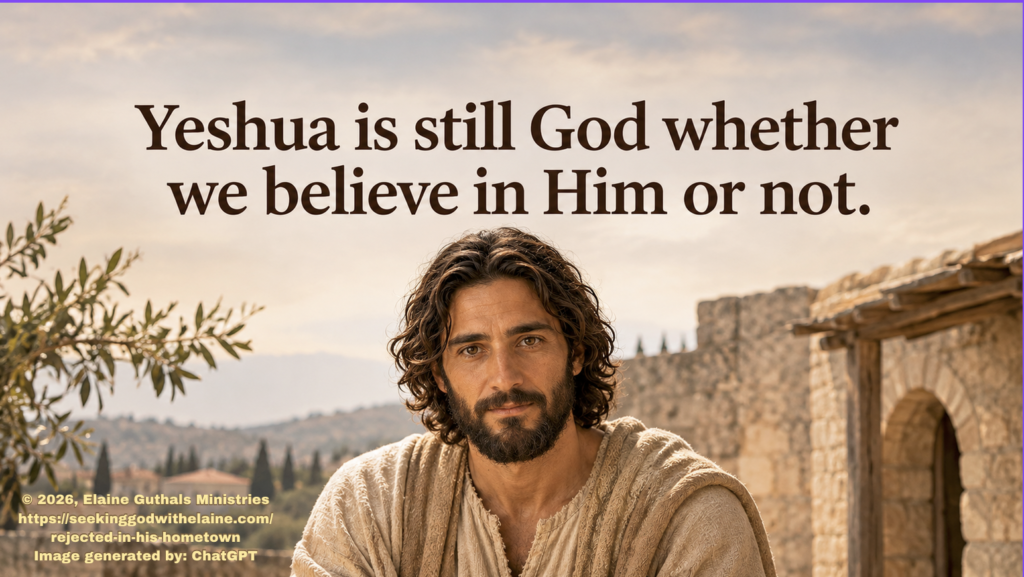
    We shouldn’t read this to mean that Yeshua couldn’t do the miracles there because His power was taken away by their unbelief. He is still God whether we believe in Him or not.

    In my opinion, He didn’t do the miracles because they would have been accepted wrong. We can hear their entitlement in these verses. Because of that, would they have honored Jehovah and Yeshua for their power and provision?

    What was the purpose of Yeshua doing miracles? It wasn’t just so sick people got healed.

    Miracles could lead people toward faith and repentance, but they didn’t guarantee either. The people of Nazareth are an example of that very problem.

    Yeshua performed miracles so people would see His power. They would know He came from Jehovah because He could do things only Jehovah could do.

    Yeshua performed miracles to lead them to repentance. He was guiding them to walk with Him daily (Lk. 9: 23).

    Making the Connections #1

    When we read the Scriptures in hindsight, we know that Yeshua was not coming to restore the nation of Israel from out of their foreign domination. In fact, it was going to get worse before it got better.

    But Yeshua’s ministry was not merely to restore what the nation had lost. It was to restore humans to their place of worship in Jehovah.

    Yeshua’s main emphasis was not the physical. It wasn’t even the social. It was the spiritual.

    Making the Connections #2

    Some Bible scholars see the visit described in Matthew and Mark as a different visit than Luke’s account.

    Oh, come on. Yeshua is going to go back home after they try to throw Him off a cliff? And the rejection doesn’t happen until the second visit??????

    Wanting to throw someone off a cliff is a big flag saying they rejected Him.

    So, how do I reconcile Luke with Matthew/Mark? Matthew and Mark gave a condensed version with in the two Gospels where Luke gave us more details.

    The bottom line is we don’t know if it was one or two visits. There are good arguments both ways.

    The important thing is Yeshua announced that He fulfilled prophecy – and those who knew Him best rejected Him.

    Heart Check

    Think about the battle Yeshua is engaged in for your heart. Ask yourself the following questions.

    • When I approach Jehovah, am I seeking His will or expecting Him to meet my expectations?
    • Do I recognize Jehovah’s provision as an expression of His mercy, or do I sometimes treat His blessings as something I am entitled to receive?
    • When Jehovah’s instructions challenge me, do I respond in obedience or resist because I think I know a better way?
    • Am I more concerned with what Jehovah can do for my physical circumstances or with how He wants to restore my spiritual relationship with Him?
    • When I encounter something in Scripture I cannot fully reconcile, do I let that question overshadow the message, or do I remain focused on what Jehovah has clearly revealed?

    How Do We Apply This?

    • Examine the expectations I bring when approaching Jehovah.
    • Recognize Jehovah as the source of provision and healing.
    • Accept Jehovah’s mercy without assuming I am entitled to it.
    • Obey Jehovah even when His instructions challenge my expectations.
    • Look beyond physical needs to the spiritual work Jehovah wants to accomplish.
    • Keep the central message of Scripture in view when some details remain unresolved.

    Father God. You allow us to choose how we react to Yeshua. We can ask Him to be our Savior and Redeemer, or we can choose to reject Him. May we always choose Him because of our love for You and Him, and not because of some entitlement we feel. Amen.

    If you don’t understand something and would like further clarification, please contact me.

    If you have not signed up for the email providing the link to the devotions and the newsletter, do so below.

    If God has used this devotion to speak with you, consider sharing it on social media.
  • Jesus’ Fulfillment of Prophecy as the Anointed One

    Jesus had just read the Isaiah 61 passage at the Nazareth synagogue. This devotional reading looks at His teaching that followed the reading.

    Nuggets

    • After reading Isaiah 61: 1-2, Yeshua taught the people of its fulfillment.
    • Yeshua was just starting the teaching portion of the synagogue service, taking what He had read and applying it.
    • Yeshua’s posture wasn’t as important as the message itself.
    • At first, it seemed Yeshua’s message was accepted.
    • The congregation marveled at Yeshua’s wisdom.
    • The congregation thought they knew Who Yeshua was.

    In the last devotion, we left Yeshua ready to teach in the Nazareth synagogue. We aren’t told if He was asked to read the Scripture or if He just volunteered.

    But it was an important passage. Yeshua was fixing to show those He grew up with Who He really is.

    Let’s Put It into Context

    To read devotions in The Battle for the Heart theme

    Devotions in the The Early Ministry of the Messiah series

    Yeshua Began Teaching

    “He rolled up the scroll, handed it back to the attendant, and sat down. All eyes in the synagogue looked at him intently. Then he began to speak to them. ‘The Scripture you’ve just heard has been fulfilled this very day!’ Everyone spoke well of him and was amazed by the gracious words that came from his lips. ‘How can this be?’ they asked. ‘Isn’t this Joseph’s son?’” (Lk. 4: 20-22 NLT)

    After reading Isaiah 61: 1-2, Yeshua taught the people of its fulfillment.

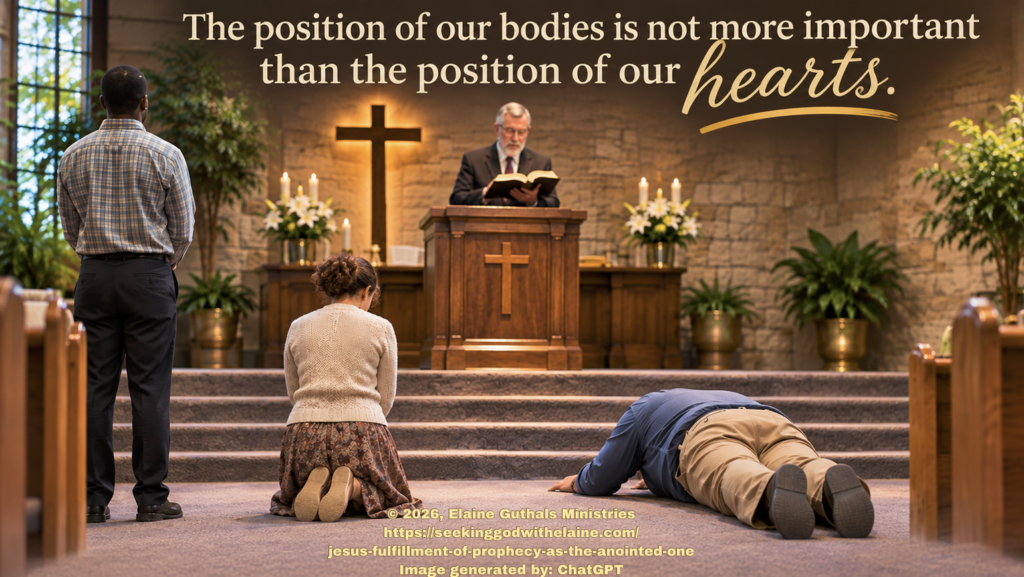
    We didn’t discuss in the last devotion Yeshua’s standing up to read the scroll. It was more than merely honoring the reading of God’s Word.

    It wasn’t a practice that started in Yeshua’s day. The reader – as well as the people – stood. We see an earlier example in Nehemiah 8: 5. “Ezra stood on the platform in full view of all the people. When they saw him open the book, they all rose to their feet” (Neh. 8: 5 NLT).

    Think about what is happening in Nehemiah 8. They had returned from the Babylonian exile and were rebuilding their lives in the land. The wall around Jerusalem had just been completed, and the people were beginning to reestablish their community.

    They may not have felt that their Babylonian exile was over, but at least they physically  and geographically were home. In their minds, how could the exile be over when they were still under foreign occupation? Governor Nehemiah had called for an account of who had returned before they dispersed to their homes throughout Israel.

    Everyone came back (Neh. 8: 1) for a very important purpose. “… They asked Ezra the scribe to bring out the Book of the Law of Moses, which the Lord had given for Israel to obey” (Neh. 8: 1 NLT).

    The priest Ezra was up on a platform — specifically made for this occasion. But ……

    It really doesn’t give us their position when the scroll was actually read. “… When they saw him open the book, they all rose to their feet. Then Ezra praised the Lord, the great God, and all the people chanted, “Amen! Amen!” as they lifted their hands. Then they bowed down and worshiped the Lord with their faces to the ground” (Neh. 8: 5-6 NLT).

    To me, the most important position was in verse 9. “Then Nehemiah the governor, Ezra the priest and scribe, and the Levites who were interpreting for the people said to them, ‘Don’t mourn or weep on such a day as this! For today is a sacred day before the Lord your God.’ For the people had all been weeping as they listened to the words of the Law” (Neh. 8: 9 NLT).

    The position of our bodies is not more important than the position of our hearts. Our hearts must be surrendered to Jehovah and His Word. Our hearts must acknowledge His authority.

    What was the sitting part? It established a posture of instruction. He was now interpreting what the Scripture meant.

    But then the worshipers in the Nazareth synagogue would have seen sitting as a position of authority, too. “The scribes and the Pharisees sit on Moses’ seat, so do and observe whatever they tell you, but not the works they do …” (Mt. 23: 2-3 ESV).

    The scribes and Pharisees claimed authority as interpreters of Moses’ Law, but Yeshua declared that the Scripture He had just read was being fulfilled in Him.

    He wasn’t merely interpreting someone else’s message. He was announcing the arrival of the One about whom Isaiah had written.

    Long story short, we should respect the messenger but honor the Message itself.

    The Scripture You’ve Just Heard

    Yeshua was just starting the teaching portion of the synagogue service, taking what He had read and applying it.

    Since we believe Luke wrote in Greek, the final words were en tois ōsin hymōn (ἐν τοῖς ὠσὶν ὑμῶν) – literally, in your ears.

    Of course, I would say, “You heard it for yourselves.”

    But think about it. They heard the words read by the One about Whom the passage prophesied.

    They didn’t hear this second hand. They were right there as the fulfillment unfolded.

    Yeshua would later tell Thomas, “… Blessed are those who have not seen and yet have believed” (Jn. 20: 29 NLT). Yes, we have the opportunity to listen to His words and accept Him as our Savior and Lord.

    They had the same opportunity because they were right there.

    Scripture Has Been Fulfilled

    Yeshua’s posture wasn’t as important as the message itself.

    Notice Yeshua didn’t say, “Scripture will be fulfilled.” He said, “It has been fulfilled this day.”

    The Greek read, Σήμερον πεπλήρωται ἡ γραφὴ αὕτη ἐν τοῖς ὠσὶν ὑμῶν – Today this Scripture has been fulfilled in your hearing. The has been fulfilled part is translated from the verb peplērōtai (πεπλήρωται). That comes from plēroō — to fill, make full, complete, or bring to fulfillment.

    This is important. Scripture had been fulfilled with Yeshua’s birth, but it was still being fulfilled because the Plan of Salvation hadn’t been completed yet.

    That puts a lot of work on the word today – sēmeron (Σήμερον). Luke repeatedly uses that word. Some of us may ask why there can be so many important todays.

    • “The Savior — yes, the Messiah, the Lord — has been born today in Bethlehem, the city of David!” (Lk. 2: 11 NLT).
    • “Jesus responded, ‘Salvation has come to this home today, for this man has shown himself to be a true son of Abraham’” (Lk. 19: 9 NLT).
    • “And Jesus replied, ‘I assure you, today you will be with me in paradise’” (Lk. 23: 43 NLT).

    Think about it. In every one of those passages the arrival of Jehovah’s promised salvation occurred in the events taking place. The common denominator was Yeshua.

    Put that into context. We believe this occurred early on in Yeshua’s ministry. He wasn’t saying some distant occurrence.

    Yeshua said that Jehovah’s promised work was occurring right then. They were in the midst of it.

    Nope, much to the first-century Jew’s disappointment, it wasn’t a total fulfillment in the blink of an eye. As we said, Yeshua’s ministry was just starting.

    We talked in the last devotion what was being fulfilled. Isaiah told us.

    • Bring good news to the poor.
    • Proclaim release to captives.
    • Proclaim recovery of sight to the blind.
    • Set the oppressed free.
    • Proclaim the year of the Lord’s favor.

    Yeshua plainly stated that He was the fulfillment of that promise.

    • The Spirit of the Lord is upon Me (Lk. 4: 18; Isa. 61:1)
    • He has anointed Me (Lk. 4: 18; Isa. 61:1)
    • He has sent Me (Lk. 4: 18; Isa. 61:1)
    • I am to proclaim and accomplish the work described (Lk. 4: 19; Isa. 61:2)

    Why is this so important? This is talking about Jehovah’s promised restoration of Israel.

    Think about it. The One Who came for the purpose of restoration came with good news – healing, release, comfort, and restoration.

    That is what the people were expecting – but it was coming in a way they didn’t expect. Yeshua challenged what that restoration would be.

    Yeshua was announcing a Kingdom whose restoration began with the work of Jehovah in the lives of people.

    It didn’t mean that the physical and national promises of Scripture had become meaningless. It meant that the Messiah’s mission was considerably larger than many anticipated.

    Message Met with Astonishment

    “When Jesus had finished telling these stories and illustrations, he left that part of the country. He returned to Nazareth, his hometown. When he taught there in the synagogue, everyone was amazed and said, ‘Where does he get this wisdom and the power to do miracles?’ Then they scoffed, ‘He’s just the carpenter’s son, and we know Mary, his mother, and his brothers — James, Joseph, Simon, and Judas. All his sisters live right here among us. Where did he learn all these things?’ And they were deeply offended and refused to believe in him. Then Jesus told them, ‘A prophet is honored everywhere except in his own hometown and among his own family’” (Mt. 13: 53-57 NLT)

    “Jesus left that part of the country and returned with his disciples to Nazareth, his hometown. The next Sabbath he began teaching in the synagogue, and many who heard him were amazed. They asked, ‘Where did he get all this wisdom and the power to perform such miracles?’ Then they scoffed, ‘He’s just a carpenter, the son of Mary and the brother of James, Joseph, Judas, and Simon. And his sisters live right here among us.’ They were deeply offended and refused to believe in him. Then Jesus told them, ‘A prophet is honored everywhere except in his own hometown and among his relatives and his own family’” (Mk. 6: 1-4 NLT)

    Everyone Spoke Well of Him and Was Amazed

    At first, it seemed Yeshua’s message was accepted.

    That’s the trouble when you are speaking in front of the hometown audience. Memories are long – especially on things that you want them to forget because it embarrasses you.

    At first, the audience was amazed. They had probably never heard anyone talk with this much authority.

    But also, they were probably amazed because many first-century Jews were really looking forward to the Messiah coming. They may have been looking around, saying, “Okay. So, where is he?”

    Where Did He Get This Wisdom and These Works

    The congregation marveled at Yeshua’s wisdom.

    So, the congregation had a somewhat legitimate question – one that Yeshua was frequently asked. How did He know what He knew?

    John 7: 15-17 helps us understand. “The people were surprised when they heard him. ‘How does he know so much when he hasn’t been trained?’ they asked. So Jesus told them, ‘My message is not my own; it comes from God who sent me. Anyone who wants to do the will of God will know whether my teaching is from God or is merely my own” (Jn. 7: 15-17 NLT).

    Is not This?

    The congregation thought they knew Who Yeshua was.

    Was Yeshua Joseph’s son? Well, yes and no.

    Yeshua was Joseph’s son in everything but blood. Joseph knew what he was taking on from the get-go. He raised Him as his own knowing He was Someone else’s.

    Isn’t it sad sometimes that familiarity breeds unbelief?

    This is one of the few places in Scripture that we hear that Yeshua had siblings. His brothers’ names are listed, but his sisters’ names – plural – are not.

    Making the Connections

    Let’s think about all that has already occurred in this series of devotions.

    • Yeshua was baptized (Lk. 3: 21)
    • The Holy Spirit descended upon Him (Lk. 3: 22)
    • He entered public ministry in the power of the Spirit (Lk. 4: 14).

    We’ve called this Yeshua’s job description before. This was what His ministry was all about.

    We may not know who the anointed person was in Isaiah’s day – but we know there was one. We know about Whom the passages ultimately identified – Yeshua.

    No, Isaiah didn’t call Yeshua by name. By Yeshua’s time, however, the Isaiah passage was being understood in connection with Messianic expectations.

    Heart Check

    Think about the battle Yeshua is engaged in for your heart. Ask yourself the following questions.

    • Am I honoring the Message, or am I placing too much emphasis on the messenger?
    • Am I listening to what Yeshua says, or am I relying on what I think I already know?
    • Am I recognizing Jehovah’s work, or am I expecting Him to work according to my understanding?
    • Am I seeking the source of Yeshua’s wisdom, or am I questioning His authority because He doesn’t fit my expectations?
    • Am I accepting Yeshua as the fulfillment of Jehovah’s promises, or am I limiting His mission to what I expect Him to accomplish?
    • Am I allowing familiarity with Scripture to deepen my faith, or has it made me less receptive to what Jehovah is teaching me?
    • Am I willing to believe what Yeshua says, or do I require the kind of evidence I want before I will believe?

    How Do We Apply This?

    • Honor the Message above the messenger.
    • Examine our hearts for assumptions that interfere with our understanding of Scripture.
    • Recognize Jehovah’s work even when it doesn’t fit our expectations.
    • Seek to understand the source and authority of Yeshua’s teaching.
    • Allow Scripture to shape our expectations rather than allowing our expectations to shape Scripture.
    • Guard against allowing familiarity with God’s Word to become complacency.
    • Accept Yeshua for Who He is, not merely for what we expect Him to do.

    Father God. Thank You for those who can help us know what Your Word really means. Thank You for showing us when a prophecy has been fulfilled. Help us to look to You and away from our expectations. Amen.

    If you don’t understand something and would like further clarification, please contact me.

    If you have not signed up for the email providing the link to the devotions and the newsletter, do so below.

    If God has used this devotion to speak with you, consider sharing it on social media.
  • The Prophecy of the Anointed One

    When in Nazareth, Jesus read a passage from the Old Testament. This devotional reading looks at that passage, comparing it with what He read.

    Nuggets

    • Regardless of whether Yeshua had been handed the Scroll of Isaiah because it was the prescribed reading or if He requested it, the passage contained covenant promises.
    • The Spirit of the Lord is on the speaker for a particular reason.
      Jehovah anoints those He is separating out for a specific mission.
    • We’ve spent a lot of ink talking about who the speaker was, but of whom did He speak?
    • The first people group to whom the anointed one was sent was the poor and afflicted.
    • The second people group to which the anointed one was sent was the brokenhearted.
    • The third people group described by Isaiah were the captives.
    • The fourth people group Isaiah talked about was the prisoners.
    • Isaiah included people who mourned over the devastation of Zion.
    • We patiently wait for Jehovah to work on His timetable.
    • Jehovah is a God of Love and a God of Vengeance.

    In the last devotion, we left Yeshua ready to teach in the Nazareth synagogue. We aren’t told if He was asked to read the Scripture or if He just volunteered.

    But it was an important passage. Yeshua was fixing to show those He grew up with Who He really is.

    Let’s Put It into Context

    To read devotions in The Battle for the Heart theme

    Devotions in the The Early Ministry of the Messiah series

    Isaiah

    “The scroll of Isaiah the prophet was handed to him …’” (Lk. 4: 17 NLT)

    Regardless of whether Yeshua had been handed the Scroll of Isaiah because it was the prescribed reading or if He requested it, the passage contained covenant promises.

    Isaiah was a prophet back in the eighth century BC. His ministry spanned the reigns of several kings of Judah. They were Uzziah, Jotham, Ahaz, and Hezekiah.

    The 66-chapter Book of Isaiah is divided into three sections. The passage that Yeshua read falls into the third section (Isaiah 56-66). This describes the era of the return from Babylonian exile and their struggles as a restored community.

    Many felt still in exile even in their homeland. This was because, though they were back and the Temple rebuilt, the Davidic monarchy had ended and many who had been exiled remained in Babylon.

    The Jewish people faced economic hardship, political subordination, social injustice, spiritual disillusionment, and the absence of their Davidic king.

    Where was the restoration that Isaiah had promised in Isaiah 40-55? That restoration looked like comfort, redemption, and the return of the exiles.

    The fulfillment of those promises, they found, was not an instantaneous event. Yes, the Temple was rebuilt, but it wasn’t Solomon’s Temple. Most importantly, Jehovah’s presence hadn’t returned to it upon completion.

    Jerusalem wasn’t the same. They were still under foreign imperial authority so there was no Davidic king.

    Both the eighth-century Jews and the first-century Jews would have heard the covenant promises throughout. What were those covenant promises?

    That is why this passage was so important at that time from this Man.

    Isaiah Talked about Yeshua

    “… He unrolled the scroll and found the place where this was written: ‘The Spirit of the Lord is upon me, for he has anointed me to bring Good News to the poor. He has sent me to proclaim that captives will be released, that the blind will see, that the oppressed will be set free, and that the time of the Lord’s favor has come’” (Lk. 4: 17-19 NLT)

    “The Spirit of the Sovereign Lord is upon me, for the Lord has anointed me …” (Isa. 61: 1-2 NLT)

    The Spirit of the Sovereign Lord

    The Spirit of the Lord is on the speaker for a particular reason.

    The passage begins with authority, In Hebrew, it is Rûaḥ Adonai YHWH ʿālây (רוּחַ אֲדֹנָי יְהוִה עָלָי).

    Rûaḥ (רוּחַ) means spirit, breath, or wind. It is how the Holy Spirit is described. He empowered and equipped the speaker for his assignment.

    This empowerment is identified as coming from Adonai YHWH. Adonai is His title LORD. YHWH is His name – Jehovah.

    When it says that the Spirit of the Lord is on the speaker, it doesn’t mean that Jehovah transferred His authority to the speaker. It means that Jehovah had given Isaiah the authority to speak for Him.

    Who was the speaker? We aren’t told in Isaiah 61: 1. The last time we had anyone other than Jehovah saying something in Isaiah, it was Isaiah 56: 1. “This is what the Lord says: …” (Isa. 56: 1 NLT). We assume that is Isaiah talking.

    We would be wrong. It is still Jehovah Himself. At least, that is what it says in verse 8. “For I, the LORD, love justice …” (Isa. 61: 8 NLT).

    That is an important distinction. Isaiah wasn’t saying his own words. He had been given them by Sovereign God. Jehovah Himself knew the importance of these words, so He gave them to Isaiah through the Holy Spirit.

    The Lord Has Anointed Me

    Jehovah anoints those He is separating out for a specific mission.

    Being anointed is an important concept.  Anointing (māshaḥ — מָשַׁח) talked about setting someone apart for a particular responsibility. But here is the important part.

    Having the responsibility and completing is under Jehovah’s authority.

    Kings and priests were anointed. The language appears here in connection with Jehovah’s appointed servant.

    So, where are we at? Isaiah was:

    • Anointed by Jehovah.
    • Empowered by His Spirit.
    • Sent to accomplish a particular mission.

    Isaiah Talked about the Mission

    “… to bring good news to the poor. He has sent me to comfort the brokenhearted and to proclaim that captives will be released and prisoners will be freed. He has sent me to tell those who mourn that the time of the Lord’s favor has come, and with it, the day of God’s anger against their enemies” (Isa. 61: 1-2 NLT)

    We’ve spent a lot of ink talking about who the speaker was, but of whom did He speak?

    Isaiah identified several groups of people

    Bring Good News to the Poor 

    The first people group to whom the anointed one was sent was the poor and afflicted.

    The Hebrew says that the anointed one was sent Lebaśśēr ʿanāwîm (לְבַשֵּׂר עֲנָוִים). That means to bring good news to the afflicted.

    The Hebrew concept is related to being humbled, afflicted, oppressed, or brought low. It can mean economically disadvantaged, but it is not limited to money.

    Remember who Isaiah’s audience was. They were Jews who had just returned from exile. We know the Temple was destroyed, so homes would also have been destroyed.

    It may have taken a while to get the economy restarted. People were out of jobs. In fact, some were returning to a place they had never lived before.

    They had become humbled people.

    It was this verse that Yeshua may have used as the foundation for His first Beatitude. “God blesses those who are poor and realize their need for him, for the Kingdom of Heaven is theirs” (Mt. 5: 3 NLT).

    Isaiah’s audience were both humbled by material suffering and spiritual suffering.

    Comfort the Brokenhearted 

    The second people group to which the anointed one was sent was the brokenhearted.

    The Hebrew word Isaiah used was nishberê-lēb (נִשְׁבְּרֵי־לֵב). The nishberê part means broken, shattered, or crushed. The lēb (לֵב) part is the center of a person’s inner life – what we call the heart. It is associated with thought, understanding, will, intention, and emotion.

    So, to the eighth-century Jew, they wouldn’t have heard an emotion, such as feeling sad. To them, it would mean that a person had his/her inner life crushed.

    How would you feel if you were forced to leave your home – your city – in flames. Their security and national identity was gone. More importantly, they couldn’t turn to receive comfort from their worship because the Temple was gone.

    They could still turn to their Father God. His presence might not have been there, but He still was.

    That same Father was promising to bind their wounds. The Hebrew word used here was ḥābaš (חָבַשׁ), meaning to bind up or bandage.

    Jehovah didn’t say, “Get well soon.” He said, “Here, let me bind that.”

    Proclaim that Captives Will be Released

    The third people group described by Isaiah were the captives.

    This message would have hit home with eighth-century Jews. They had been captives — shevuyim (שְׁבוּיִם) — of the Babylonians.

    They were pulled from their homes and march hundreds of miles away. They were forced to serve masters.

    Then Isaiah talked derôr (דְּרוֹר) – freedom, liberty, or release. They would have tied this with Jubilee. “Then on the Day of Atonement in the fiftieth year, blow the ram’s horn loud and long throughout the land. Set this year apart as holy, a time to proclaim freedom throughout the land for all who live there. It will be a jubilee year for you, when each of you may return to the land that belonged to your ancestors and return to your own clan” (Lev. 25: 9-10 NLT).

    But it was more than release of the land. “If one of your fellow Israelites falls into poverty and is forced to sell himself to you, do not treat him as a slave. Treat him instead as a hired worker or as a temporary resident who lives with you, and he will serve you only until the Year of Jubilee. At that time he and his children will no longer be obligated to you, and they will return to their clans and go back to the land originally allotted to their ancestors” (Lev. 25: 39-41 NLT).

    One of the purposes of Jubilee was to recover that which was lost. It is this terminology that Isaiah used.

    Prisoners Will be Freed

    The fourth people group Isaiah talked about was the prisoners.

    Some of us might be scratching our heads about the difference between prisoners and captives. The Hebrew words used are different.

    Here, Isaiah used welaʾasûrîm peqaḥ-qôaḥ (וְלַאֲסוּרִים פְּקַח־קוֹחַ). This refers to those who are bound or imprisoned and the opening or release associated with their deliverance.

    Tell Those Who Mourn 

    Isaiah included people who mourned over the devastation of Zion.

    This is logical, especially those exiles who were returning to Jerusalem. They would not only have mourned what had been, but they would also be mourning what was lost.

    The Hebrew word used was ʾAbēlîm (אֲבֵלִים). It means mourning or grieving.

    We should get tripped up over the sudden appearance of the term Zion. Instead of a geographic location, it represents the covenant community and the center of Israel’s national and religious identity.

    The Time of the Lord’s Favor Has Come

    We patiently wait for Jehovah to work on His timetable.

    We’ve talked before about the fullness of God’s time. Things happen in His time according to His plan.

    It may be centuries before Jehovah’s plan comes to fruition. But it never occurs early, and it never happens late.

    That was what happened with Yesha coming to earth. The time had arrived.

    But it was more than just the launch of Jehovah’s plan. It was a proclamation of His favor. The Hebrew said Liqrōʾ shenat-rāṣôn laYHWH (לִקְרֹא שְׁנַת־רָצוֹן לַיהוָה) — to proclaim the year of Jehovah’s favor.

    We can’t look at Jubilee, the time of great restoration, as merely the year of relief. It was to be the year of restoration.

    The Day of God’s Anger against Their Enemies

    Jehovah is a God of Love and a God of Vengeance.

    When we look at Isaiah 61, we see something very interesting. Luke doesn’t record Yeshua reading the whole two verses. (Take a look at the connections in a minute to see all the differences – and issues).

    We don’t know what exactly Yeshua read. The first problem is that Luke wrote, “… He unrolled the scroll and found the place where this was written” (Lk. 4: 17 NLT).  What comes next isn’t exactly Isaiah 61: 1-2.

    Luke left out the “… and with it, the day of God’s anger against their enemies” (Isa. 61: 2 NLT). The Hebrew says weyôm nāqām lēʾlōhênû (וְיוֹם נָקָם לֵאלֹהֵינוּ) — and the day of vengeance of our God.

    It is talking about vengeance or retribution.

    What is Jehovah’s vengeance? It isn’t uncontrolled anger. It isn’t vindictiveness.

    Jehovah’s response is a righteous response. He will always act out of righteousness. He responds righteously to evil and oppression.

    Most of all, this is an act of divine justice.

    But look at the contrast. It is a year of Jehovah’s favor opposed to a day of vengeance. His day of vengeance isn’t going to last long.

    Why didn’t Yeshua read – if He didn’t read about – the day of vengeance.

    That was one of the Messianic expectations. Messiah would come and smite all of Israel’s enemies. The enemies would be put in their place and Jehovah’s vengeance would reign.

    In my opinion, Yeshua was trying to get everyone to focus on His real mission. It wasn’t merely about covenant restoration. It was about sin restoration.

    Yeshua wasn’t saying that the day of vengeance wouldn’t come. He was allowing people to respond to the call of repentance.

    Making the Connections #1

    Wait! What????

    Did Luke skip part of it, or was it Yeshua that left it out?

    The answer may be neither.

    The Hebrew Isaiah 61:1 does NOT say recovery of sight to the blind. The Masoretic Hebrew text speaks of release or opening for those who are bound.

    The Septuagint, the ancient Greek translation of the Hebrew Scriptures, renders this expression differently, using language about recovery of sight to the blind. Luke’s wording reflects that Greek textual tradition.

    Heart Check

    Think about the battle Yeshua is engaged in for your heart. Ask yourself the following questions.

    • When I face hardship, do I look for Jehovah’s faithfulness or become discouraged by what I cannot see?
    • When my heart is broken, do I turn to Jehovah for comfort or try to carry the hurt alone?
    • Do I understand the freedom Jehovah offers as more than relief from difficult circumstances, or do I focus only on what I have lost?
    • Am I willing to wait for Jehovah’s timing, or do I become impatient when His promises aren’t fulfilled as quickly as I expect?
    • Do I recognize both Jehovah’s favor and His justice, or do I tend to emphasize one while overlooking the other?

    How Do We Apply This?

    • Remember that Jehovah sees our afflictions, even when others do not.
    • Turn to Jehovah when our hearts are broken rather than carrying our burdens alone.
    • Look beyond our immediate circumstances to the restoration Jehovah promises.
    • Trust Jehovah’s timing instead of measuring His faithfulness by our schedules.
    • Remember that Jehovah’s favor and His justice are both expressions of His character.
    • Look for opportunities to bring comfort and encouragement to those who are hurting.

    Father God. You told us centuries ago what would happen. It took centuries for the Plan to come to fruition. But it is still relevant in this century. And centuries after Yeshua fulfilled this prophecy, He will come again to take us home to You. Amen.

    If you don’t understand something and would like further clarification, please contact me.

    If you have not signed up for the email providing the link to the devotions and the newsletter, do so below.

    If God has used this devotion to speak with you, consider sharing it on social media.
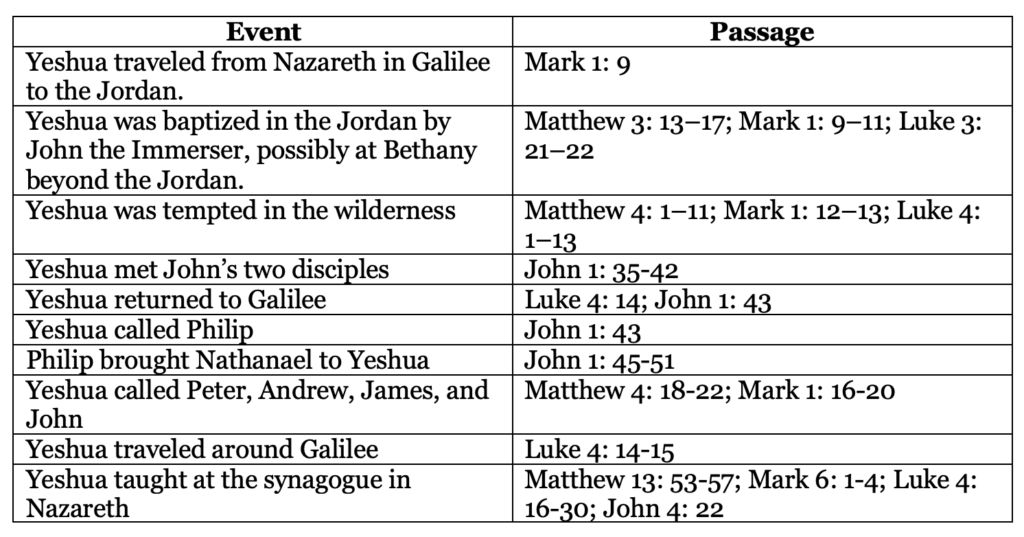
  • The Synagogue at Nazareth

    While traveling through Galilee, Jesus came to His hometown of Nazareth. This devotional reading looks at His travels and the synagogue at Nazareth.

    Nuggets

    • We again don’t have much of a timestamp to figure out how the Gospel passages mesh together.
    • The Holy Spirit was with Yeshua as He is with us.
    • In His travels, Yeshua returned to His hometown to share His message with those who knew Him best.
    • Synagogues could be found throughout Jewish communities in Judea, Galilee, and the Diaspora in the first century.

    The synagogue was important in Jewish life. It was, among other things, where they came to learn Torah.

    It was to the synagogues Yeshua went to teach the people. To me, this is a way He used the religious system without relying on the Temple system. He went to the Temple and taught in the courts, but we are never told that He taught within the Temple itself.

    Eventually, Yeshua made His way to His hometown.

    Let’s Put It into Context

    To read devotions in The Battle for the Heart theme

    Devotions in the The Early Ministry of the Messiah series

    In Galilee

    “Then Jesus returned to Galilee, filled with the Holy Spirit’s power. Reports about him spread quickly through the whole region. He taught regularly in their synagogues and was praised by everyone” (Lk. 4: 14-15 NLT)

    Returned to Galilee

    We again don’t have much of a timestamp to figure out how the Gospel passages mesh together.

    The last thing Luke was talking about in the beginning of Chapter 4 was the temptation of Yeshua by Satan. Tradition says it occurred in the Judean Wilderness.

    It is logical – in my opinion – to believe that John 1: 29-42 happened immediately after that. Yeshua was in the area that John the Immerser was before He went to the wilderness. He might have popped in to say goodbye to John – but He most assuredly made Himself available so two of John’s disciples could meet with Him – and one to go get his brother.

    I can see Luke 4: 14 and John 1: 43 identifying the same trip. As Yeshua traveled through the region, I can see this as where He called Philip, Peter, Andrew, James, John, Nathanael, and Matthew. He may have called the other Apostles during this time, too.

    The important aspect of these verses is that Yeshua was regularly teaching in the whole region’s synagogues and was accepted by the populace.

    It is also important to remember that Yeshua moved to Capernaum. “He went first to Nazareth, then left there and moved to Capernaum, beside the Sea of Galilee, in the region of Zebulun and Naphtali” (Mt. 4: 13 NLT).

    Filled with the Holy Spirit’s Power

    The Holy Spirit was with Yeshua as He is with us.

    We’ve read about the Holy Spirit in the same sentence as Yeshua at the beginning of Luke 4 and Matthew 4.

    • “Then Jesus was led by the Spirit …” (Mt. 4: 1 NLT).
    • “The Spirit then compelled Jesus …” (Mk. 1: 12-13 NLT).
    • “Then Jesus, full of the Holy Spirit, returned from the Jordan River. He was led by the Spirit in the wilderness…” (Lk. 4: 1-2 NLT).

    Each of the three Gospels noted that the Holy Spirit guided Yeshua. Luke, there as here, said that Yeshua was filled by the Holy Spirit. In this verse, though, Luke said He was filled with the Holy Spirit’s power.

    How can that be?

    God the Father, God the Son, and God the Holy Spirit make up the Trinity. They are three distinct identities, but They have the same nature.

    That means that the Holy Spirit isn’t an external spiritual power that Yeshua needed to acquire to become divine or to accomplish divine tasks.

    But Yeshua now had a humanity that was genuine. Because of that, the Holy Spirit was active in His life just as He had been active in the lives of Jehovah’s people all through the Old Testament.

    The Holy Spirit was there to guide, empower, instruct, and enable Yeshua. In that way, Yeshua’s ministry was carried out through the power and guidance of the Holy Spirit.

    Think about it. Bear with me as I process this.

    We say that Yeshua has experienced all the things we do (Heb. 4: 15). The exact circumstances may be different, but He went through things where He had to choose to remain obedient to Jehovah.

    Wouldn’t one of the most important things for Yeshua to experience in the human way is how to rely on a Holy Spirit we don’t see? So, it isn’t, “Oh, but Yeshua was divine. He can’t sin.”

    It was, “Yeshua was not in direct ‘physical’ contact with Jehovah, but He was filled with the Holy Spirit just as we are. He could rely on the guidance and encouragement the Holy Spirit offers us.”

    Yeshua experienced the leading and empowerment of the same Holy Spirit Who now dwells in us. His relationship with the Spirit was unique because of His divine identity, but His human dependence upon the Spirit was real.

    In Nazareth

    “When he came to the village of Nazareth, his boyhood home, he went as usual to the synagogue on the Sabbath and stood up to read the Scriptures” (Lk. 4: 16 NLT)

    Nazareth

    In His travels, Yeshua returned to His hometown to share His message with those who knew Him best.

    .Nazareth might have been an obscure, isolated village. Its people, however, were faithful followers of Jehovah.

    Archaeology, verified by excavations, indicates a modest village that was Torah-observant but poor. Archaeologists have found simple stone homes, many which are at least partly cave based.

    The Synagogue

    Synagogues could be found throughout Jewish communities in Judea, Galilee, and the Diaspora in the first century.

    The synagogue, as noted by the use of the Greek word synagōgē (συναγωγή), was a gathering place or an assembly. While it could refer to the assembled community, it increasingly began to describe the building in which the community met.

    The building itself could have been used as a community institution in the first century. Usage included a place where the community conducted business, addressed disputes, organized charitable activities, and maintained its collective identity. It was a place where people encountered one another regularly, learned the Torah, discussed community matters, and maintained their shared identity.

    The synagogue provided the social, political, and religious context essential to understanding the early development of Judaism and Christianity. Runesson expressed that scholars have reexamined known sources, paired with finds from archaeological discoveries, to give up the belief that synagogues started during the Babylonian exile as a replacement for the Temple.

    Resource

    First-century Jews did not see the synagogue as a replacement for the Jerusalem Temple. They acknowledged the different functions of each.

    We aren’t really sure why synagogues were formed. An inscription on one, called the Theodotos inscription, had given the reasons as a place to read the Law, teach the commandments, and provide accommodations for visitors from abroad.

    Synagogue attendance was part of the regular religious life of Jewish communities. It provided the social, political, and religious context essential to understanding the early development of Judaism and Christianity.

    Synagogues didn’t have a set architectural plan. Still, they had similar characteristics:

    • Rectangular assembly halls
    • Stone benches along interior walls
    • Columns supporting the roof
    • An open central gathering area
    • Entrances and windows providing natural light
    • Space for communal meetings and instruction

    Public Scripture reading was followed by explanation or teaching. It hasn’t been established that there was a fixed Torah reading cycle as there is now.

    The rabbinical institutional authority wasn’t as fully established as in later times. Synagogue leadership included (with various titles):

    • a synagogue ruler who served as its administrator
    • elders
    • an attendant from whom the reader received the scrolls
    • a scribe
    • a teacher who had recognized knowledge of Scripture

    The sequence here is important. Yeshua went – as usual – to the synagogue on Sabbath. He stood to read. We aren’t told if He was asked to read the Scripture or if He just volunteered.

    Making the Connections

    Let’s go back to the discussion of Yeshua being filled with the Holy Spirit and what that means through the lens of Philippians 2: 6-8.

    “Though he was God, he did not think of equality with God as something to cling to. Instead, he gave up his divine privileges; he took the humble position of a slave and was born as a human being. When he appeared in human form, he humbled himself in obedience to God and died a criminal’s death on a cross” (Phil. 2: 6-8 NLT).

    We said that Yeshua has experienced all the things we do (Heb. 4: 15). We tend to discount that at times by throwing in His divine nature. Yes, He knew things we don’t and did things we can’t.

    But Yeshua “… gave up his divine privileges …” (Phil. 2: 7 NLT). What does that mean?

    We don’t know for sure. It is something for the UNR book – understanding not required.

    However we attempt to assign specific privileges to that passage, we can’t say that Yeshua exercised unrestricted access to all knowledge during His earthly ministry. We know that He doesn’t know the timing of Judgment Day (Mk. 13: 32).

    Yeshua was fully divine, but He had taken on a genuinely human nature. He was:

    • led by the Spirit (Luke 4:1).
    • returned in the power of the Spirit (Luke 4:14).
    • declared that the Spirit had anointed Him for His ministry (Luke 4:18).

    What I read into that is Yeshua didn’t have a script to follow. Jehovah always knew what was going to happen and the choices that Yeshua would make.

    That was one of those things that the Father knew but the Son didn’t. So, Yeshua had to pray, seek the Father, follow the Spirit’s leading, and submit to the Father’s Will.

    Yeshua’s obedience was genuine. The Spirit who guided Him is the same Holy Spirit who guides us.

    Heart Check

    Think about the battle Yeshua is engaged in for your heart. Ask yourself the following questions.

    • When I face a decision, do I rely on the Holy Spirit’s guidance or depend primarily on my own understanding?
    • When I don’t know what lies ahead, do I pray, seek the Father’s direction, and follow the Spirit’s leading, or do I try to work everything out on my own?
    • Do I recognize the Holy Spirit as actively involved in my daily life, or do I think of Him mainly when I need something extraordinary?

    How Do We Apply This?

    • Recognize our dependence upon the Holy Spirit.
    • Seek the Father’s direction through prayer.
    • Follow the Spirit’s leading rather than relying solely on our own understanding.
    • Make obedience an active choice.
    • Trust the Holy Spirit to guide, empower, instruct, and enable us.
    • Remember that the same Holy Spirit who guided Yeshua guides us.

    Father God. You come to us with salvation You bring us to our local church so that we can learn of You. Help us, Lord, to hear the Holy Spirit and rely on Him.

    If you don’t understand something and would like further clarification, please contact me.

    If you have not signed up for the email providing the link to the devotions and the newsletter, do so below.

    If God has used this devotion to speak with you, consider sharing it on social media.
  • The Lesser-Known Apostles

    We’ve been looking at the list of the Twelve Apostles. This devotion concludes our study of the Twelve and looks at some women who accompanied Him.

    Nuggets

    • Nothing is known of James the Less before his call by Yeshua – except who his father was.
    • Nothing is known about Thaddeus before his call by the Messiah, and little is known after – not even his true name.
    • As a Zealot, Simon would have been a disciple of the Messiah’s before He called him.
    • Judas was more than merely the disciple who betrayed Yeshua.
    • While they weren’t included in the list of Jesus’ Twelve Apostles, we know there were some women who faithfully followed Him.
    • No accounting of who followed Yeshua should fail to mention Mary Magdalene.
    • Joanna was another person who was healed from an unknown condition, traveled with Him, and financially supported His mission.
    • We know nothing about Susanna except she traveled with Yeshua and supported the ministry by her own resources.

    Some Apostles we know a lot about. Peter is an example.

    Others, we know little to nothing about. We are only introduced to them in Scripture by their name being on a list.

    Regardless of how much is known about them, we have to remember they were chosen for a very important task. That was to spread the message of Yeshua’s sacrifice for our sins.

    Our lack of knowledge about the men don’t mean they were unsuccessful in the task Yeshua gave them.

    Let’s Put It into Context

    To read devotions in The Battle for the Heart theme

    Devotions in the The Early Ministry of the Messiah series

    James the Less (Ya’akov Bar-Halfai)

    “… Here are the names of the twelve apostles: first, Simon (also called Peter) [Shim’on  Kefa], then Andrew (Peter’s brother), James [Ya’akov] (son of Zebedee [Zavdai]), John [Yachanan] (James’s brother), Philip [Philippos], Bartholomew, [Bar-Talmai] Thomas [T’oma], Matthew [Mattityahu] (the tax collector), James (son of Alphaeus) [Ya’akov Bar-Halfai], Thaddaeus [Taddai], Simon (the zealot) [Shim’on], Judas Iscariot (who later betrayed him) [Y’Hudah from K’riot]” (Mt. 10: 2-4 NLT)

    “These are the twelve he chose: Simon (whom he named Peter), James and John (the sons of Zebedee, but Jesus nicknamed them ‘Sons of Thunder’), Andrew, Philip, Bartholomew, Matthew, Thomas, James (son of Alphaeus), Thaddaeus, Simon (the zealot), Judas Iscariot (who later betrayed him)” (Mk. 3: 16-19 NLT)

    “… Here are their names: Simon (whom he named Peter), Andrew (Peter’s brother), James, John, Philip, Bartholomew, Matthew, Thomas, James (son of Alphaeus), Simon (who was called the zealot), Judas (son of James), Judas Iscariot (who later betrayed him)” (Lk. 6: 13-16 NLT)

    Nothing is known of James the Less before his call by Yeshua – except who his father was.

    All three lists of the Twelve indicate that the father of the second James listed was Alphaeus. That would make two of Yeshua’s Apostles sons of a man named Alphaeus.

    • “Philip, Bartholomew, Thomas, Matthew (the tax collector), James (son of Alphaeus), Thaddaeus” (Mt. 10: 3 NLT)
    • “As he walked along, he saw Levi son of Alphaeus sitting at his tax collector’s booth …” (Mk. 3: 14 NLT).

    Well, that is if we accept that Matthew and Levi are the same person. Since Yeshua’s call is given almost word for word in each of the accounts and only Matthew and not Levi is listed in all three of the lists, it is easy to make that assumption.

    Just as there were two Apostles named James – the Hebrew name Ya’akov (Jacob) and two named Simon, I am sure in the city of Capernaum alone, there were two people named Alphaeus. But James the Less could have come from anywhere in Israel. I just said Capernaum because that is where Yeshua’s headquarters was.

    That would have made Matthew and James the Less brothers. But Robbins noted that association wasn’t considered until 1,000 years after Yeshua lived.

    Resource

    As much as we are told about the two sets of brothers that we know about, I believe that if they really were brothers – we would have known about it.

    But then some believe James was related to Yeshua. (If Matthew was the brother of Jesus as some believe and James was his brother, than James would have been Yeshua’s brother, too.)

    I don’t believe this James is Yeshua’s brother James. We know Yeshua’s brothers didn’t believe in Him before His death and resurrection. “For even his brothers didn’t believe in him” (Jn. 7: 5 NLT).

    Although tradition tells us that James the Less’ mission field was Jerusalem, we know what happened to Yeshua’s brother James. Before Yeshua appeared to him along with their other brothers following the resurrection, he had become a believer (Ac. 1: 14). He also became leader of the Jerusalem Church (Gal. 2: 9).

    Tradition also tells us that James the Less’ mission field may have been Syria and Egypt. It says that James was either stoned or clubbed to death. He was buried either in Egypt or Jerusalem.

    We don’t know why James is designated as the Less. It could be that he was younger than James the son of Zebedee. He might have been smaller in stature. As James the son of Zebedee was in Yeshua’s inner circle, the designation might be because of this James’ status among the Apostles.

    Unfortunately, James the Less is only known to us as a member of the list. He is not mentioned elsewhere in Scripture.

    Thaddeus (Taddai)

    Nothing is known about Thaddeus before his call by the Messiah, and little is known after – not even his true name.

    This disciple is called Thaddeus in the Book of Matthew and the Book of Mark. He is identified as Judas, the son of James, in Luke and Acts. John called him Judas, not Iscariot, in John 14: 22. But then, he is also called Jude (Greek name Ioudas – Ἰούδας), another English rendering of Judas.

    The verse in John gives us an idea of Thaddeus’ character. “Judas (not Judas Iscariot, but the other disciple with that name) said to him, ‘Lord, why are you going to reveal yourself only to us and not to the world at large?” (Jn. 14: 22 NLT).

    This question tells us that Thaddeus was struggling to reconcile first-century Messianic expectations with the reality of Yeshua’s ministry. He wasn’t afraid to ask questions for clarification.

    We know several other disciples struggled with the perceived mission of the Messiah – liberation from Roman occupation – and Yeshua’s ministry of liberation from sin.

    According to tradition, Thaddeus spread the Gospel to Syria, Mesopotamia, and Armenia. He has been said to have been a gentle, faithful, and courageous messenger.

    Tradition says that Thaddeus was killed in Persia along with Simon the Zealot, but that is not validated by Scripture or history. He was venerated as Saint Jude, the patron of lost causes and desperate situations.

    Simon the Zealot (Shim’on)

    As a Zealot, Simon would have been a disciple of the Messiah’s before He called him.

    More is known about the Zealots than Simon himself. It was a first-century Jewish political movement that was looking for the Messiah’s arrival to overthrow Rome. It was known as the Fourth Order, to be included with Pharisees, Sadducees, and Essenes.

    It was their belief that their active resistance would bring the Messiah’s arrival. This was aided in part by their strict adherence to the Law of Moses. Some believed that the Messiah would come when the Jews were righteous.

    This fanaticism brought on the First Jewish-Roman war (sometimes called the Great Revolt), which occurred from 66 to 70 A.D. During this conflict, the second Temple was destroyed.

    Tradition gives us conflicting information on Simon Z’s mission field. Some say it was Judea while other say Persia alongside Thaddeus.

    It is believed, however, that the one whose mission field was Judea was Simeon, son of Clopas. A relative of Yeshua’s, he became the second bishop of the Jerusalem Church after James’ death.

    All we may know of his death was that he was martyred (possibly with Thaddeus). We don’t know where he was buried.

    Judas (Y’Hudah)

    Judas was more than merely the disciple who betrayed Yeshua.

    The last Apostle listed on every list of the ‘Twelve is Judas. His Hebrew name was Yehudah (יְהוּדָה) – Judah.

    We usually hear his name given as Judas Iscariot. Iscariot isn’t his last name. This is seen to connect with the Hebrew Ish Qeriyyot (אִישׁ קְרִיּוֹת), meaning man of Kerioth.

    Although we aren’t certain of that place’s location, it is believed to be in Judea. This made him different from the other Apostles because all they came from Galilee. This may be the Kerioth-hezron, mentioned in Joshua 15:25.

    Nothing is known about Judas’ life before Yeshua’s call except that he was the son of Simon Iscariot (Jn. 6: 71, Jn. 13: 2, Jn. 13: 26).

    We shouldn’t gloss over the fact that Yeshua picked Judas as an Apostle. His name is on all three of the lists. True, each one identified him as the betrayer – even when their intent was to document the initial call.

    But Judas was chosen. And he was chosen to serve in an important position – treasurer for the group.   

    Does that mean Judas was given in Matthew 10: 1-4 the ability to drive out demons and heal the sick along with the other Apostles? I would read that to be a big YES!!!

    I believe that Judas was given every opportunity to renounce Satan’s hold on him and truly accept Yeshua as the Messiah.

    Was there prophecy that Yeshua would be betrayed by a friend? “Even my best friend, the one I trusted completely, the one who shared my food, has turned against me” (Ps. 41: 9 NLT).

    Did that make Judas predestined to betray Yeshua. I don’t think so. He still made his own choice.

    There is another interesting nugget. A Gospel of Judas has survived. Part of the Coptic manuscript known as Codex Tchacos, Judas is portrayed very differently than he is in the four Gospel books we are studying. In it, Judas understands certain things about Yeshua that the other Apostles don’t.

    If we were to read this, we would have to remember that the Gospel of Judas, connected with a second-century Gnostic Christian movement, was not a work composed by Judas himself. It is a much later theological work reflecting a different religious movement.

    Scripture tells us how Judas died. He hanged himself.

    Women Who Followed Jesus

    “Soon afterward Jesus began a tour of the nearby towns and villages, preaching and announcing the Good News about the Kingdom of God. He took his twelve disciples with him, along with some women who had been cured of evil spirits and diseases. Among them were Mary Magdalene, from whom he had cast out seven demons; Joanna, the wife of Chuza, Herod’s business manager; Susanna; and many others who were contributing from their own resources to support Jesus and his disciples.” (Lk. 8: 1-3 NLT)

    While they weren’t included in the list of Jesus’ Twelve Apostles, we know there were some women who faithfully followed Him.

    Mary Magdalene

    No accounting of who followed Yeshua should fail to mention Mary Magdalene.

    Yeshua had many followers – women as well as men. Though Mary was not listed among the Twelve, she was a devoted disciple of Him.

    Magdalene was not Mary’s last name. Magdala was a town on the Sea of Galilee.

    From the passage in Luke, we know that Yeshua drove out seven demons from Mary (Mk. 16: 9). Scripture never tells us that she was a prostitute.

    What we do know is supported Yeshua’s ministry from her own resources. We also know that she was the first to encounter the risen Savior (Jn. 20: 11-18).

    We aren’t told in Scripture what happened to Mary after the resurrection. Tradition   says that she ended up either in Ephesus or France, possibly in a cave.

    There have been fragments of writing found, including a Gospel of Mary, attributed to Mary Magdalene. In them, Mary’s role as a disciple was enhanced because it offers revelations of Jesus. That was challenged by Peter, according to The Theologist.

    Resource

    I agree and disagree with Peter. Mary wasn’t an Apostle. She was, however, a disciple. Yeshua accepts all – men and women – who believe in Him to be His disciples.

    It did get right that salvation is an inward process rather than adherence to tradition and law. Yet, too, was seen as following the gnostic beliefs.

    Joanna

    Joanna was another person who was healed from an unknown condition, traveled with Him, and financially supported His mission.

    The interesting thing is who she was. Joanna was the wife of Herod’s household manager, Chuza.

    The Greek word used to describe the position was epitropos (ἐπίτροπος). It meant steward, administrator, or manager.

    That would have been an important position in Herod Antipas’s household.

    We read about Joanna later in the Gospels. Joanna is one of the women who go to the tomb on resurrection morning.

    Susanna

    We know nothing about Susanna except she traveled with Yeshua and supported the ministry by her own resources.

    We know no reason why Susanna was singled about by name. She could just have easily been one of the “… many others …” Luke talked in Luke 8: 3.

    But then our service should be for Jehovah’s glory, not ours.

    Making the Connections

    What do the Twelve have in common? Each of them – at least initially – made their hearts available to Yeshua. When He called, they listened.

    For whatever time in the three years they followed Him, they experienced the same thing. They sat at Messiah’s feet and learned. He received the authority to preach, cast out demons, and heal the sick.

    In the end, one still rejected Him. Maybe he did believe that Yeshua was the Messiah, but He wanted more of the expected Messiah. Yeshua didn’t change His mission to line up with human thinking.

    In the end, one didn’t allow Yeshua into his heart. The battle still raged for him, but he chose not to put his faith in the Messiah.

    The battle for his heart was lost.

    Heart Check

    Think about the battle Yeshua is engaged in for your heart. Ask yourself the following questions.

    • Do I serve Yeshua faithfully whether or not anyone notices, or do I need recognition for my service?
    • Do I make myself available when Yeshua calls, or do I expect Him to fit into my plans?
    • Do I use the resources Jehovah has entrusted to me for His Kingdom, or do I hold on to them for my own purposes?
    • Do I allow Yeshua to reshape my expectations, or do I expect Him to conform to what I think the Messiah should be?
    • Do I guard my heart against the things that could draw me away from Yeshua, or do I allow those things to take root?

    How Do We Apply This?

    • Serve faithfully, whether or not anyone notices.
    • Make yourself available when Yeshua calls.
    • Use what Jehovah has entrusted to you to further His Kingdom.
    • Allow Yeshua to reshape your expectations rather than expecting Him to conform to yours.
    • Guard your heart against the attitudes and desires that can lead you away from the Messiah.
    • Remember that being chosen for service does not remove the responsibility to remain faithful.

    Father God. You call some to take prominent positions in Your kingdom. Most of us, You call us to follow You through tasks that doesn’t get us recognition. Help us to be faithful whatever one You have for us. Amen.

    If you don’t understand something and would like further clarification, please contact me.

    If you have not signed up for the email providing the link to the devotions and the newsletter, do so below.

    If God has used this devotion to speak with you, consider sharing it on social media.
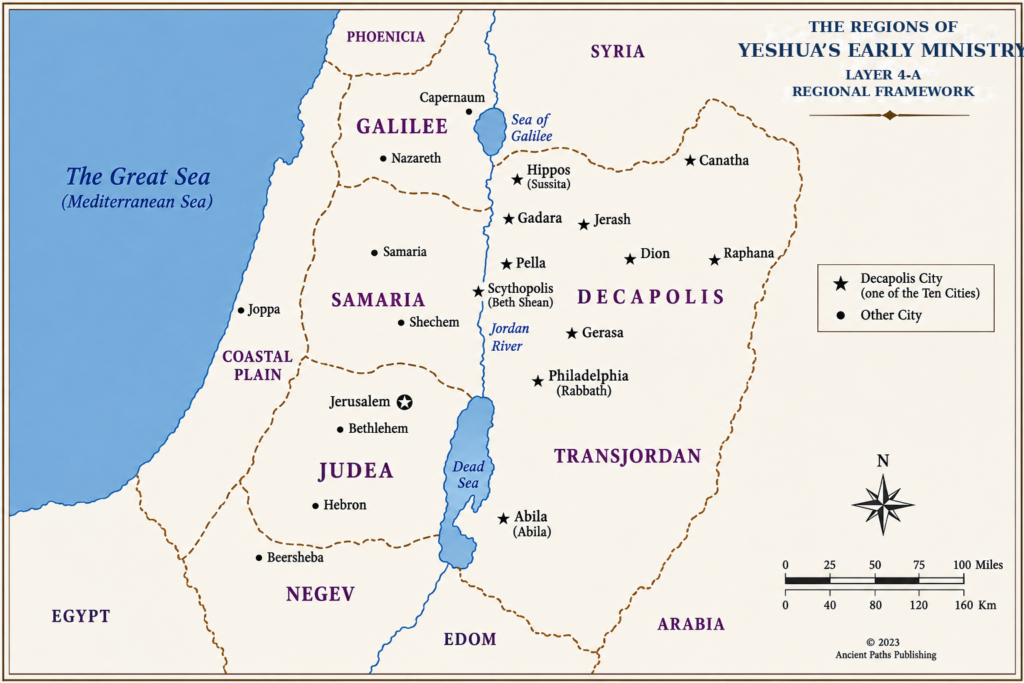
  • Jesus Selected the Twelve Apostles

    Yeshua chose twelve men from his group of disciples to become His Apostles. This devotion reading looks at the three lists and continue our introduction to each one individually.

    Nuggets

    • The event that occurred immediately prior to the calling of the disciples was the healing of a man’s deformed hand in the synagogue on the Sabbath.
    • Yeshua frequently withdrew to pray.
    • Yeshua had specific tasks for the Apostles.
    • The list of the disciple’s names are similar, but not the same.
    • It is believed that Thomas was a Galilean Jew, but we aren’t told that in Scripture.

    Not much is known about the twelve men Yeshua called as disciples who became apostles. Some we only know them as a name on a list.

    That is to be expected that we don’t know much. They weren’t the main character.

    However, they are very important characters. The Gospels – in fact, Christianity as a whole – wouldn’t be what it is if they hadn’t been the ones entrusted with spreading His Gospel.

    Individually, none would have been considered a powerhouse in their day. Many were fishermen. One was a dreaded tax collector. Many we aren’t even told of their previous occupation.

    Together, eleven of these twelve spearheaded taking Yeshua’s salvation to the known world at that time.

    It didn’t stop there. Because of their faithfulness, we today know the mission of Yeshua. More importantly, we know Him as our Savior and Redeemer.

    We’ve been looking at Yeshua calling those disciples whose call was recorded. As we’ve met them, we’ve been digging a little deeper to look at them individually.
     
    In this devotion, we are going to look at the list of apostles. Then we’ll go back to individually try to figure out what is known about them and what tradition says about them.

    Let’s Put It into Context

    To read devotions in The Battle for the Heart theme

    Devotions in the The Early Ministry of the Messiah series

    Bathed in Prayer

    “Afterward Jesus went up on a mountain and called out the ones he wanted to go with him. And they came to him” (Mk. 3: 13 NLT)

    “One day soon afterward Jesus went up on a mountain to pray, and he prayed to God all night” (Lk. 6: 12 NLT)

    Afterward

    The event that occurred immediately prior to the calling of the disciples was the healing of a man’s deformed hand in the synagogue on the Sabbath.

    The Torah-teachers and the Pharisees were hoping to accuse Yeshua of working on the Sabbath. When He did, they began to discuss how they could stop Him.

    Prayed to God All Night

    Yeshua frequently withdrew to pray.

    We see in Scripture that Yeshua had a frequent habit of prayer. Especially for important decisions He withdrew to communicate with His Father.

    • “Before daybreak the next morning, Jesus got up and went out to an isolated place to pray (Mk. 1: 35 NLT).
    • “But Jesus often withdrew to the wilderness for prayer” (Lk. 5: 16 NLT).
    • “He went on a little farther and bowed with his face to the ground, praying, ‘My Father! If it is possible, let this cup of suffering be taken away from me. Yet I want your will to be done, not mine’” (Mt. 26: 39 NLT).

    Yeshua kept frequent, significant contact with Jehovah. This is one of His examples that we should follow.

    It was a given in Yeshua’s mind that His mission would fail if it was not rooted in Jehovah and His plan every step of the way. Especially important was the men who would carry on the mission long after He had ascended to Heaven.

    Appointing the Apostles

    “Jesus called his twelve disciples together and gave them authority to cast out evil spirits and to heal every kind of disease and illness  …” (Mt. 10: 2 NLT)

    “Then he appointed twelve of them and called them his apostles. They were to accompany him, and he would send them out to preach, giving them authority to cast out demons” (Mk. 3: 14-15 NLT)

     “At daybreak he called together all of his disciples and chose twelve of them to be apostles …” (Lk. 6: 13 NLT)

    Yeshua had specific tasks for the Apostles.

    Either I didn’t know or I had totally forgotten, but I got things backwards. I thought the Twelve was chosen first, then the other disciples joined.

    Luke 6: 13 makes it very clear. The Twelve were culled out of the larger group.

    Yes, I know however they were chosen, Yeshua would choose the ones who best fit His needs. Yet the order in which it happened is intriguing.

    Yeshua knew who He was going to choose. He knew their abilities.

    Most of all, Yeshua knew the availability of their hearts.

    Yeshua chose twelve men. They would have the following responsibilities:

    • Follow Him.
    • Preach the Gospel that they would hear.
    • Heal illnesses.
    • Perform exorcisms.

    That may surprise some of us. We may think the only time they actually had the authority to cast out demons is when they are sent out.

    • Sending out the Twelve: Matthew 10: 1, 7-8; Mark 6: 7-8; and Luke 9: 1-2
    • Sending out the Seventy (or Seventy-Two): Luke 10: 1, 17-20

    We aren’t told how many times that they attempted this. However, we are told of a time when the disciples failed to cast out a demon (Mt. 17: 14-20, Mk. 9: 14-29, and Lk. 9: 37-43).

    I think it is mentioned here because those exorcisms were also evidence of the greater spiritual authority Yeshua possessed over Satan’s kingdom. From the beginning of His ministry, Yeshua would show His authority over Satan.

    The Lists

    “… Here are the names of the twelve apostles: first, Simon (also called Peter) [Shim’on  Kefa], then Andrew (Peter’s brother), James [Ya’akov] (son of Zebedee [Zavdai]), John [Yachanan] (James’s brother), Philip [Philippos], Bartholomew, [Bar-Talmai] Thomas [T’oma], Matthew [Mattityahu] (the tax collector), James (son of Alphaeus) [Ya’akov Bar-Halfai], Thaddaeus [Taddai], Simon (the zealot) [Shim’on], Judas Iscariot (who later betrayed him) [Y’Hudah from K’riot]” (Mt. 10: 2-4 NLT)

    “These are the twelve he chose: Simon (whom he named Peter), James and John (the sons of Zebedee, but Jesus nicknamed them ‘Sons of Thunder’), Andrew, Philip, Bartholomew, Matthew, Thomas, James (son of Alphaeus), Thaddaeus, Simon (the zealot), Judas Iscariot (who later betrayed him)” (Mk. 3: 16-19 NLT)

    “… Here are their names: Simon (whom he named Peter), Andrew (Peter’s brother), James, John, Philip, Bartholomew, Matthew, Thomas, James (son of Alphaeus), Simon (who was called the zealot), Judas (son of James), Judas Iscariot (who later betrayed him)” (Lk. 6: 13-16 NLT)

    The list of the disciple’s names are similar, but not the same.

    Simon is always listed by both Simon and Peter. Bartholomew is always named instead of Nathanael. Matthew is always named instead of Levi.

    There is only one disciple that is listed by different names in the list of Twelve. Thaddaeus is also listed as Judas, the son of James.

    Judas is always listed as the betrayer.

    Thomas

    It is believed that Thomas was a Galilean Jew, but we aren’t told that in Scripture.

    We are told very little about Thomas, but we can gain a lot by the questions that he asked and the times he was mentioned in the Gospels.

    Thomas was loyal to Yeshua and courageous. “Thomas, nicknamed the Twin, said to his fellow disciples, ‘Let’s go, too — and die with Jesus’” (Jn. 11: 16 NLT). He saw the danger of returning to Judea but agreed to follow Him regardless of the outcome.

    Thomas was bluntly honest. He was not too proud to let his confusion be known. He needed clarification – and wasn’t shy in asking for it.

    The question Thomas asked at the Last Supper allowed one of the most beloved verses in the Gospels. “And you know the way to where I am going. ‘No, we don’t know, Lord,’ Thomas said. ‘We have no idea where you are going, so how can we know the way?’ Jesus told him, ‘I am the way, the truth, and the life. No one can come to the Father except through me’” (Jn. 14: 4-6 NLT).

    One event that really showcased Thomas’ character occurred because of Yeshua’s first appearance to the Apostles after the resurrection. Thomas wasn’t there at the moment when Yeshua appeared.

    We see Thomas as being cautious when told about it but totally convinced when he does see Him later. But we should also see him as not relying on second-hand testimony. Each of us has to know a risen Messiah for ourselves.

    The most important words Thomas spoke was his response to seeing his risen Savior. “‘My Lord and my God!’ Thomas exclaimed” (Jn. 20: 28 NLT).

    Thomas’ original doubts gave way to a deeper personal faith.

    All this shows us that Thomas was a thinker. He processed what he did and didn’t know and wasn’t timid in finding the answers to make informed decisions.

    We also see Thomas as one of the disciples listed who went fishing in John 21: 2. No, that doesn’t necessarily make him a fisherman. (I’ve been fishing before, but that has never been my profession.)

    One of the books that may have been written by the Apostles didn’t make it into our version of God’s Word was written by Thomas. It dates from the second century; but just because that is the oldest translation that survived, that doesn’t mean it was the original manuscript.

    A possible reason for this is because it is different than the four gospels. Rather than be a collection of miracles and parables and account of Jesus’ life, death, and resurrection, it gives a list of 114 sayings of Jesus.

    The problem is some of these are way out there. The Theologist called them strange and cryptic.

    Resource

    It did get it right that the kingdom of God is within us and salvation is needed to enter it. It just doesn’t say how that salvation is achieved.

    This book was rejected from our version of God’s Word because it seemed to follow the gnostic beliefs. Gnostics believe salvation didn’t come through belief in Jesus’ death and resurrection. It came through possessing some secret knowledge.

    While it does contain some similarities to Gnostic thought, scholars disagree with how it should be classified. That was, however, the reason given its exclusion in the resource I found.

    Not much is known about Thomas at the early start of the early Church. According to tradition, his mission field was Parthia and India, the furthest of any of the Apostles. It was in India that tradition says he was killed around 72 AD by a spear and buried in Mylapore, India.

    Making the Connections

    How do we apply Thomas’ desire to see the evidence of Yeshua’s resurrection for himself when that isn’t possible for us? Yeshua Himself told us.

    “Then Jesus told him, ‘You believe because you have seen me. Blessed are those who believe without seeing me’” (Jn. 20: 29 NLT).

    If John only gave us the short version of Yeshua’s answer, I could imagine what the long version would be. In my mind, I hear Him saying, “I’m glad that you search for Me for yourself. You learn about Me and then make your decision on what you know of Me. That is the only way people can find me.

    “But people down through the centuries aren’t going to have that opportunity. I am going to have returned to Heaven long before then.

    “Think about it. They will have no opportunity to see me standing in the same room as you do. Yet they will believe in Me anyway! That is what true faith is also about.”

    Paul echoed that. “Faith shows the reality of what we hope for; it is the evidence of things we cannot see” (Heb. 11: 1 NLT).

    Heart Check

    Think about the battle Yeshua is engaged in for your heart. Ask yourself the following questions.

    • Do I follow Yeshua’s example of seeking Jehovah’s will through prayer, or do I tend to make important decisions on my own?
    • Am I making my heart available for Yeshua to use, or am I holding back when He asks something of me?
    • Am I faithful in carrying out the responsibilities Jehovah has given me, or am I waiting for something more significant to do?
    • Am I developing a personal faith based on knowing the risen Messiah through Scripture, or am I relying primarily on what others tell me about Him?

    How Do We Apply This?

    • Make prayer an essential part of your daily relationship with Jehovah.
    • Keep your heart available for Yeshua’s purposes.
    • Be faithful in the responsibilities Yeshua has entrusted to you.
    • Build your faith by knowing the risen Messiah through Scripture.


    Father God. Because of the men Yeshua chose to surround Himself with, we know of Your Plan of Salvation and our need for it. Help us to boldly carry Your Gospel to the mission field You have for us. Amen.

    If you don’t understand something and would like further clarification, please contact me.

    If you have not signed up for the email providing the link to the devotions and the newsletter, do so below.

    If God has used this devotion to speak with you, consider sharing it on social media.
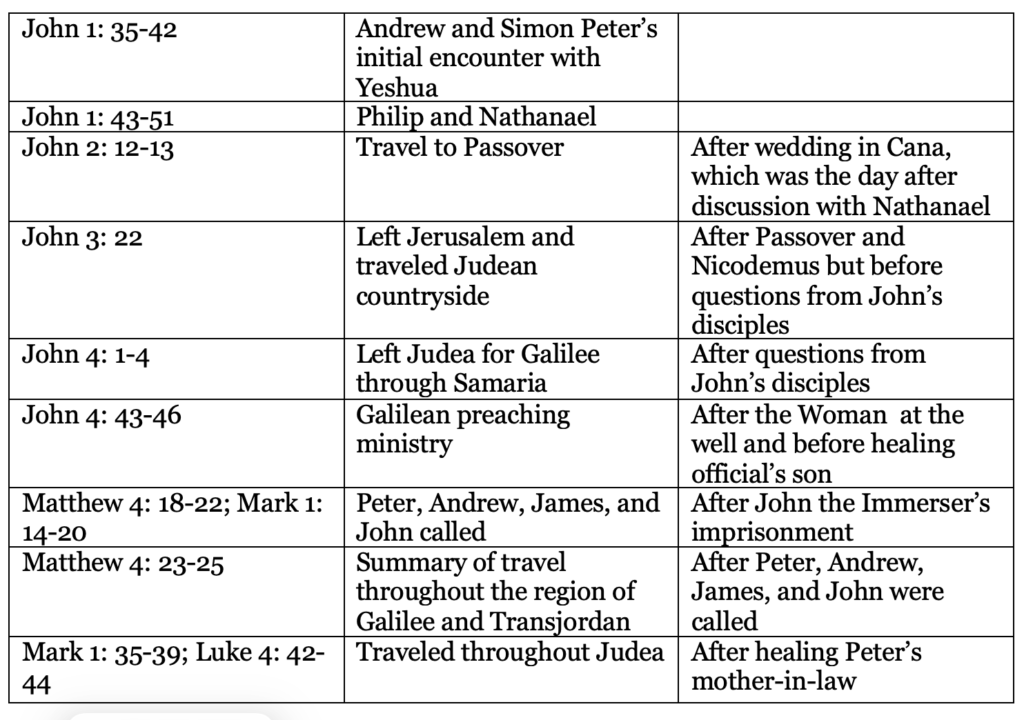
  • Matthew the Publican

    If first-century Jews thought fishermen were strange disciples for the Messiah, they really wondered about His calling a tax collector to follow Him. This devotional reading looks at who Matthew was.

    Nuggets

    • Yeshua was at the Sea of Galilee outside of Capernaum.
    • The man Yeshua called to be a disciple was known by two names.
    • Tax collectors as a profession were seen as traitors and unclean.
    • Yeshua calls us to follow Him away from who we are.
    • Matthew, Mark, and Luke don’t spell out how much time transpired between the “follow Me” and the get-up-and-go.

    We are going through and looking at how Yeshua called His Apostles to be His disciples. We aren’t given this information for many of them.

    One we do know how he was called is Matthew. That may be because he was a tax collector on the job when he was called.

    Three of the four Gospels carry the description. They are mainly similar — but where there is a difference, it is a fairy big one3.

    Let’s Put It into Context

    To read devotions in The Battle for the Heart theme

    Devotions in the The Early Ministry of the Messiah series

    Finding and Calling Matthew

    “As Jesus was walking along, he saw a man named Matthew sitting at his tax collector’s booth. ‘Follow me and be my disciple,’ Jesus said to him. So Matthew got up and followed him” (Mt. 9: 9 NLT)

    “Then Jesus went out to the lakeshore again and taught the crowds that were coming to him. As he walked along, he saw Levi son of Alphaeus sitting at his tax collector’s booth. ‘Follow me and be my disciple,’ Jesus said to him. So Levi got up and followed him” (Mk. 2: 13-14 NLT)

    “Later, as Jesus left the town, he saw a tax collector named Levi sitting at his tax collector’s booth. ‘Follow me and be my disciple,’ Jesus said to him. So Levi got up, left everything, and followed him” (Lk. 5: 27-28 NLT)

    As Jesus Was Walking Along

    Yeshua was at the Sea of Galilee outside of Capernaum.

    If we go back in Luke a couple of verses, the last reference of location was in an unnamed surrounding village of an unnamed village. “In one of the villages …” (Lk. 5: 12 NLT).

    However, all three of the Gospel accounts place this encounter after the man being lowered through the room to be healed (Mt. 9: 1-8; Mk. 2: 1-12; Lk. 5: 17-26). Matthew said that miracle occurred soon after Yeshua had returned to “… his own town” (Mt. 9: 1 NLT).  Mark specifically said they had returned to Capernaum (Mk. 2: 1).

    We aren’t told the how or why Yeshua went from “Soon the house where he was staying …” (Mk. 2: 2 NLT) to “Later, as Jesus left the town …” (Lk. 5: 27 NLT).

    It gets a little more interesting with what Mark said. “Then Jesus went out to the lakeshore again and taught the crowds that were coming to him” (Mk. 2: 13 NLT).

    Matthew (Mattityahu)/Levi

    The man Yeshua called to be a disciple was known by two names.

    As with most of the Apostles, we really don’t know much about Matthew – even what his name really was. The Book of Matthew called him Matthew, but Mark and Luke called him Levi.

    Why the difference?

    Well, to be honest, we just don’t know because Scripture doesn’t tell us. Biblical scholars have taken a shot at addressing it.

    Maybe he was known by both the name Matthew and the name Levi. Jewish people could use more than one name in different settings.

    Maybe Levi was given the new name of Matthew. We aren’t told that Yeshua renamed Levi as He did Simon.

    But look at this. Luke and Mark call him Levi when he is at his tax collector’s booth (Lk. 5: 27; Mk. 2: 14). However, in the list of the twelve Apostles, both call him Matthew (Lk. 6: 15; Mk. 2: 18).

    Could Matthew the tax collector and Matthew the Apostle be two different men? Yes, since Mark calls the tax collector the son of Alphaeus (Levi Ben Chalfai). Neither Mark nor Luke list his father in the list of Apostles.

    They do list James in the list as the son of Alphaeus. (Does that make Matthew and James brothers? Who knows!)

    In the Orthodox Jewish Bible, both do say Levi (Mattityahu) in Mark 2: 15 and Luke 5: 27.

    Does this prove Matthew and Levi were the same men? Maybe. Maybe not.

    Sitting at His Tax Collector’s Booth

    Tax collectors as a profession were seen as traitors and unclean.

    To first-century Jews, any Jew who purchased a job as a hated the tax collector was working for the opposition. Roman citizens themselves usually didn’t serve as tax collectors. This job was outsourced to contractors who paid the empire in advance for the right to collect taxes in a given region.

    The region, however, was ruled by Herod Antipas. H could have also been collecting revenue through his own tax system. Matthew may have worked for him.

    That wouldn’t have gone over any better with Capernaum’s citizens.

    By purchasing their post, tax collectors would have been seen as collaborating with foreign domination. Don’t miss what that means.

    Matthew would have paid everyone’s taxes for them and was getting paid back as he collected the taxes from the people.

    True, that left tax collectors to charge whatever amount they wanted. I am sure some did charge an exorbitant amount.

    Their handling of the Roman coinage would have had religious implications if that made them unclean.

    All that taken together would have been seen as covenant betrayal. That was why tax collectors were often groups with sinners, prostitutes, robbers, and other morally suspect individuals. They were often excluded from participation in the synagogue life.

    In truth, we can’t say that all of them were traitors. Some may have been ethical and charged only a little over what was required by Rome.

    We might call that extra amount earning their wage for the job performed. We might call it interest on the loan.

    But it also meant that the system was structurally incentivized overcollection and abuse, contributing to widespread resentment.

    But let’s put it into context. There were land taxes, poll taxes, customs duties, fishing tariffs, and transit tolls. Remember, Capernaum was located along trade routes.

    Capernaum was located near a territorial boundary. That would accounted for the transit tolls.

    The fisherman encountered taxation different jurisdictions governing around the lake. Each jurisdiction would want to tax anything that came through.

    Follow me

    Yeshua calls us to follow Him away from who we are.

    We talked about what Yeshua is calling us to. Let’s look at what He is calling us from.

    Yeshua is calling us from our comfort zone. I know. Many of us don’t like change. But He is calling us to more than a new location. He is transforming is from the inside out.

    That means Yeshua is calling us away from our sinful lifestyle. More than just our actions has to change. Our mindset – our attitude – has to be like that of Christ’s.

    Would Matthew have chosen to follow Yeshua if he hadn’t been called? Maybe. Maybe not. He might have been very comfortable in his lifestyle before Yeshua walked by.

    But when Jehovah wants us to make changes, He does raise our level of discontentment with our lives. He makes us want something different by wanting Someone different.

    True, we probably don’t have what Matthew had to give up.

    Left Everything

    Matthew, Mark, and Luke don’t spell out how much time transpired between the “follow Me” and the get-up-and-go.

    We usually read it to be immediate. It doesn’t look like it was long. Let’s piece it together.

    All three Gospel writers told us that Matthew got up and followed Yeshua. Luke added something important: he left everything.
    None of them wrote that Matthew got up immediately. Yes, immediate obedience is important. Is that the only obedience Jehovah will accept?

    Of course not. If that were the only way Jehovah would accept our service to Him, I would think there would probably be few people serving Him.

    Think about it. Especially on the big decisions like leaving everyone we know and everything we have – wouldn’t Jehovah give us five minutes to think it through?

    Jehovah isn’t a dictator. He gives us free will to make our own decisions. Wouldn’t He give us time to make that decision?

    To me, that means timing isn’t the focus. The main focus should be on what Luke did tell us – Matthew left everything.

    Matthew’s decision – once he made it – was complete. He didn’t put limitations or restrictions on it. He left everything and went.

    What did Matthew leave when he came out of his booth when Yeshua called?

    Let’s look at the booth as a symbol of his former life. It provided a lucrative job offering financial security. As with any job, it offered an established routine.

    But Matthew gave up this material wealth for following his Savior. That meant no established routine and no creature comforts that wealth provided.

    In a split second, the transformation was made. One moment we are sinful. We genuinely call to Him to save us, and the next moment we are justified and regenerated.

    I like what Gasquoine said. He wrote, “The true servant of Christ will be willing to give up, not only of the fruits of daily work, but daily work itself for Christ.”

    Resource

    Yes, we were told that Peter, Andrew, James, and John did the same thing. “And when they had brought their boats to land, they left everything and followed him” (Lk. 5: 11 ESV emphasis added).

    Would a job fishing be on the same level as a tax collector’s job? Probably not, especially if the tax collectors did charge much over what was required by Rome.

    Making the Connections #1

    I can see why Matthew, after becoming a disciple, no longer wanted to be labeled as a publican.

    I can also see why so many would still see Matthew that way.

    Think about how the other Apostles interacted with Matthew. He had been an outcast. Probably in the beginning of his following Yeshua, that is how the other disciples still saw him.

    But Yeshua didn’t. He loved Matthew as He did the others.

    It is hard to shake labels from our past lives, isn’t it? It is also hard to give up grudges that we hold against those with shameful past lives.

    But think about how that occupation prepared Matthew to be a scribe – if the Apostle was the one to pen the Book of Matthew. He was literate. He may have had to know Greek, Latin, Hebrew, and Aramaic.

    Matthew was trained in record-keeping. He had to keep track of who paid what and how much they still owed.

    I bet there are a lot of details that Matthew would have to wade through.

    Jehovah will call the unwanted, unclean, and untrusted people to serve Him.

    Making the Connections #2

    Yeshua called Matthew while he was in his booth. He said, “Follow Me” — and nothing changed.

    Then they heard the scrape of the stool. Matthew stood up.

    There it was. Obedience.

    No miracle. No promise.

    Just trust.

    No, it wasn’t just faith — straight belief. It was the obedience that bumps it up to trust.

    Heart Check

    Think about the battle Yeshua is engaged in for your heart. Ask yourself the following questions.

    • Are we allowing the labels from our past to define us, or are we accepting the new life Yeshua offers us?
    • Are we holding on to our security and familiar routines, or are we willing to leave them behind when Yeshua calls?
    • Are we satisfied with believing Yeshua’s words, or are we demonstrating our trust through obedience?
    • Are we judging others by their past failures, or are we seeing them as people Yeshua loves and calls?
    • Are we waiting for a miracle or a promise before we obey, or are we willing to follow Yeshua simply because He has called us?

    How Do We Apply This?

    • Refuse to let the labels from our past define us
    • Trust Yeshua with our security and familiar routines
    • Demonstrate our faith through obedience
    • Release our grudges against people with shameful pasts
    • Recognize Jehovah’s call to the unwanted, unclean, and untrusted
    • Follow Yeshua without demanding a miracle or a promise first

    Father God. Thank You for calling us from a marginalized life into being accepted as Jehovah’s child. Help us to always be obedient to You. Amen.

    If you don’t understand something and would like further clarification, please contact me.

    If you have not signed up for the email providing the link to the devotions and the newsletter, do so below.

    If God has used this devotion to speak with you, consider sharing it on social media.