We’ve been looking at the list of the Twelve Apostles. This devotion concludes our study of the Twelve and looks at some women who accompanied Him.
Nuggets
- Nothing is known of James the Less before his call by Yeshua – except who his father was.
- Nothing is known about Thaddeus before his call by the Messiah, and little is known after – not even his true name.
- As a Zealot, Simon would have been a disciple of the Messiah’s before He called him.
- Judas was more than merely the disciple who betrayed Yeshua.
- While they weren’t included in the list of Jesus’ Twelve Apostles, we know there were some women who faithfully followed Him.
- No accounting of who followed Yeshua should fail to mention Mary Magdalene.
- Joanna was another person who was healed from an unknown condition, traveled with Him, and financially supported His mission.
- We know nothing about Susanna except she traveled with Yeshua and supported the ministry by her own resources.
Some Apostles we know a lot about. Peter is an example.
Others, we know little to nothing about. We are only introduced to them in Scripture by their name being on a list.
Regardless of how much is known about them, we have to remember they were chosen for a very important task. That was to spread the message of Yeshua’s sacrifice for our sins.
Our lack of knowledge about the men don’t mean they were unsuccessful in the task Yeshua gave them.
Let's Put It into Context
To read devotions in The Battle for the Heart theme
Devotions in the The Early Ministry of the Messiah series
James the Less (Ya’akov Bar-Halfai)
“… Here are the names of the twelve apostles: first, Simon (also called Peter) [Shim’on Kefa], then Andrew (Peter’s brother), James [Ya’akov] (son of Zebedee [Zavdai]), John [Yachanan] (James’s brother), Philip [Philippos], Bartholomew, [Bar-Talmai] Thomas [T’oma], Matthew [Mattityahu] (the tax collector), James (son of Alphaeus) [Ya’akov Bar-Halfai], Thaddaeus [Taddai], Simon (the zealot) [Shim’on], Judas Iscariot (who later betrayed him) [Y’Hudah from K’riot]” (Mt. 10: 2-4 NLT)
“These are the twelve he chose: Simon (whom he named Peter), James and John (the sons of Zebedee, but Jesus nicknamed them ‘Sons of Thunder’), Andrew, Philip, Bartholomew, Matthew, Thomas, James (son of Alphaeus), Thaddaeus, Simon (the zealot), Judas Iscariot (who later betrayed him)” (Mk. 3: 16-19 NLT)
“… Here are their names: Simon (whom he named Peter), Andrew (Peter’s brother), James, John, Philip, Bartholomew, Matthew, Thomas, James (son of Alphaeus), Simon (who was called the zealot), Judas (son of James), Judas Iscariot (who later betrayed him)” (Lk. 6: 13-16 NLT)
Nothing is known of James the Less before his call by Yeshua – except who his father was.
All three lists of the Twelve indicate that the father of the second James listed was Alphaeus. That would make two of Yeshua’s Apostles sons of a man named Alphaeus.
- “Philip, Bartholomew, Thomas, Matthew (the tax collector), James (son of Alphaeus), Thaddaeus” (Mt. 10: 3 NLT)
- “As he walked along, he saw Levi son of Alphaeus sitting at his tax collector’s booth …” (Mk. 3: 14 NLT).
Well, that is if we accept that Matthew and Levi are the same person. Since Yeshua’s call is given almost word for word in each of the accounts and only Matthew and not Levi is listed in all three of the lists, it is easy to make that assumption.
Just as there were two Apostles named James – the Hebrew name Ya’akov (Jacob) and two named Simon, I am sure in the city of Capernaum alone, there were two people named Alphaeus. But James the Less could have come from anywhere in Israel. I just said Capernaum because that is where Yeshua’s headquarters was.
That would have made Matthew and James the Less brothers. But Robbins noted that association wasn’t considered until 1,000 years after Yeshua lived.
Resource
As much as we are told about the two sets of brothers that we know about, I believe that if they really were brothers – we would have known about it.
But then some believe James was related to Yeshua. (If Matthew was the brother of Jesus as some believe and James was his brother, than James would have been Yeshua’s brother, too.)
I don’t believe this James is Yeshua’s brother James. We know Yeshua’s brothers didn’t believe in Him before His death and resurrection. “For even his brothers didn’t believe in him” (Jn. 7: 5 NLT).
Although tradition tells us that James the Less’ mission field was Jerusalem, we know what happened to Yeshua’s brother James. Before Yeshua appeared to him along with their other brothers following the resurrection, he had become a believer (Ac. 1: 14). He also became leader of the Jerusalem Church (Gal. 2: 9).
Tradition also tells us that James the Less’ mission field may have been Syria and Egypt. It says that James was either stoned or clubbed to death. He was buried either in Egypt or Jerusalem.
We don’t know why James is designated as the Less. It could be that he was younger than James the son of Zebedee. He might have been smaller in stature. As James the son of Zebedee was in Yeshua’s inner circle, the designation might be because of this James’ status among the Apostles.
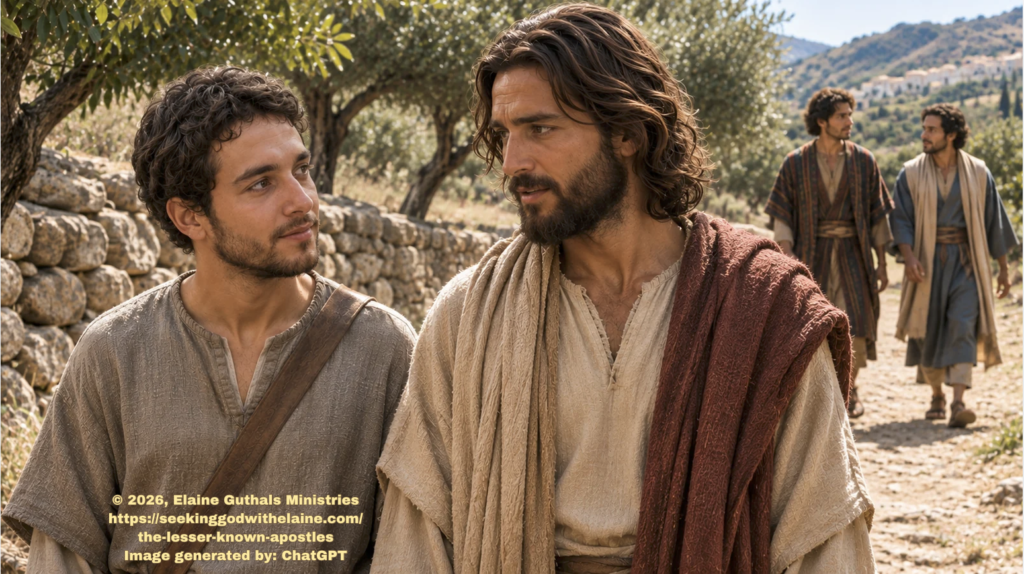
Unfortunately, James the Less is only known to us as a member of the list. He is not mentioned elsewhere in Scripture.
Thaddeus (Taddai)
Nothing is known about Thaddeus before his call by the Messiah, and little is known after – not even his true name.
This disciple is called Thaddeus in the Book of Matthew and the Book of Mark. He is identified as Judas, the son of James, in Luke and Acts. John called him Judas, not Iscariot, in John 14: 22. But then, he is also called Jude (Greek name Ioudas – Ἰούδας), another English rendering of Judas.
The verse in John gives us an idea of Thaddeus’ character. “Judas (not Judas Iscariot, but the other disciple with that name) said to him, ‘Lord, why are you going to reveal yourself only to us and not to the world at large?” (Jn. 14: 22 NLT).
This question tells us that Thaddeus was struggling to reconcile first-century Messianic expectations with the reality of Yeshua’s ministry. He wasn’t afraid to ask questions for clarification.
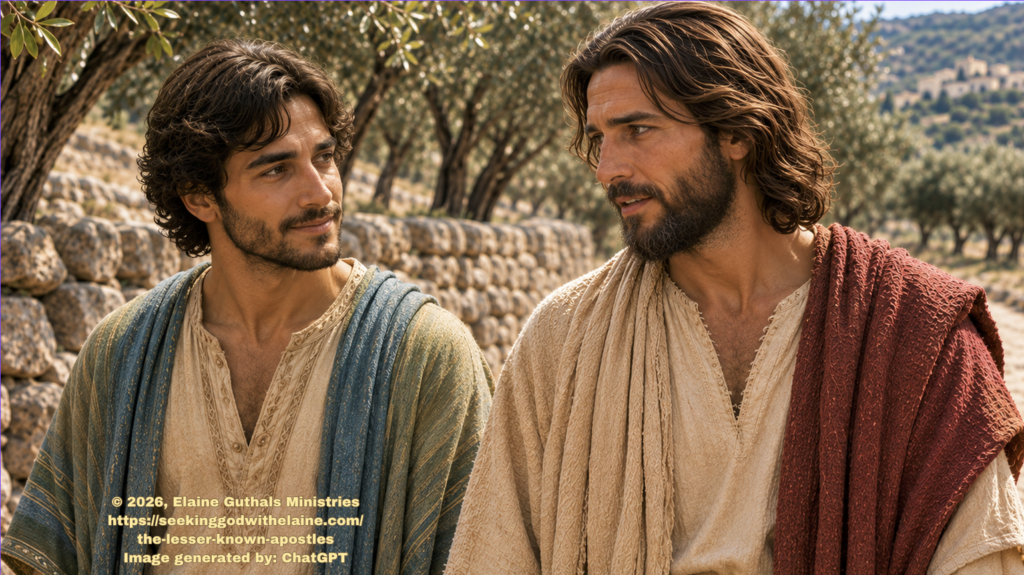
We know several other disciples struggled with the perceived mission of the Messiah – liberation from Roman occupation – and Yeshua’s ministry of liberation from sin.
According to tradition, Thaddeus spread the Gospel to Syria, Mesopotamia, and Armenia. He has been said to have been a gentle, faithful, and courageous messenger.
Tradition says that Thaddeus was killed in Persia along with Simon the Zealot, but that is not validated by Scripture or history. He was venerated as Saint Jude, the patron of lost causes and desperate situations.
Simon the Zealot (Shim’on)
As a Zealot, Simon would have been a disciple of the Messiah’s before He called him.
More is known about the Zealots than Simon himself. It was a first-century Jewish political movement that was looking for the Messiah’s arrival to overthrow Rome. It was known as the Fourth Order, to be included with Pharisees, Sadducees, and Essenes.
It was their belief that their active resistance would bring the Messiah’s arrival. This was aided in part by their strict adherence to the Law of Moses. Some believed that the Messiah would come when the Jews were righteous.
This fanaticism brought on the First Jewish-Roman war (sometimes called the Great Revolt), which occurred from 66 to 70 A.D. During this conflict, the second Temple was destroyed.
Tradition gives us conflicting information on Simon Z’s mission field. Some say it was Judea while other say Persia alongside Thaddeus.
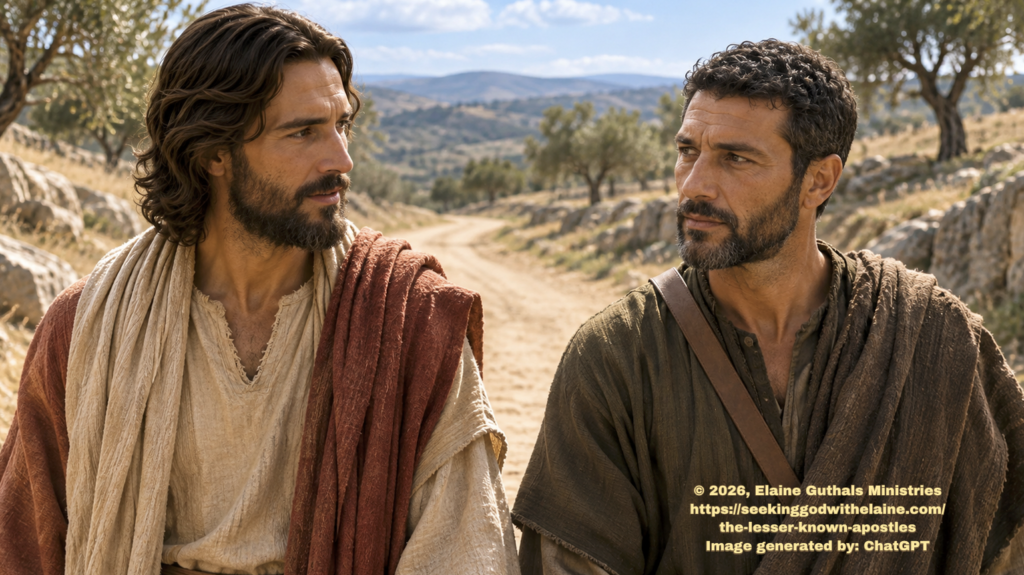
It is believed, however, that the one whose mission field was Judea was Simeon, son of Clopas. A relative of Yeshua’s, he became the second bishop of the Jerusalem Church after James’ death.
All we may know of his death was that he was martyred (possibly with Thaddeus). We don’t know where he was buried.
Judas (Y’Hudah)
Judas was more than merely the disciple who betrayed Yeshua.
The last Apostle listed on every list of the ‘Twelve is Judas. His Hebrew name was Yehudah (יְהוּדָה) – Judah.
We usually hear his name given as Judas Iscariot. Iscariot isn’t his last name. This is seen to connect with the Hebrew Ish Qeriyyot (אִישׁ קְרִיּוֹת), meaning man of Kerioth.
Although we aren’t certain of that place’s location, it is believed to be in Judea. This made him different from the other Apostles because all they came from Galilee. This may be the Kerioth-hezron, mentioned in Joshua 15:25.
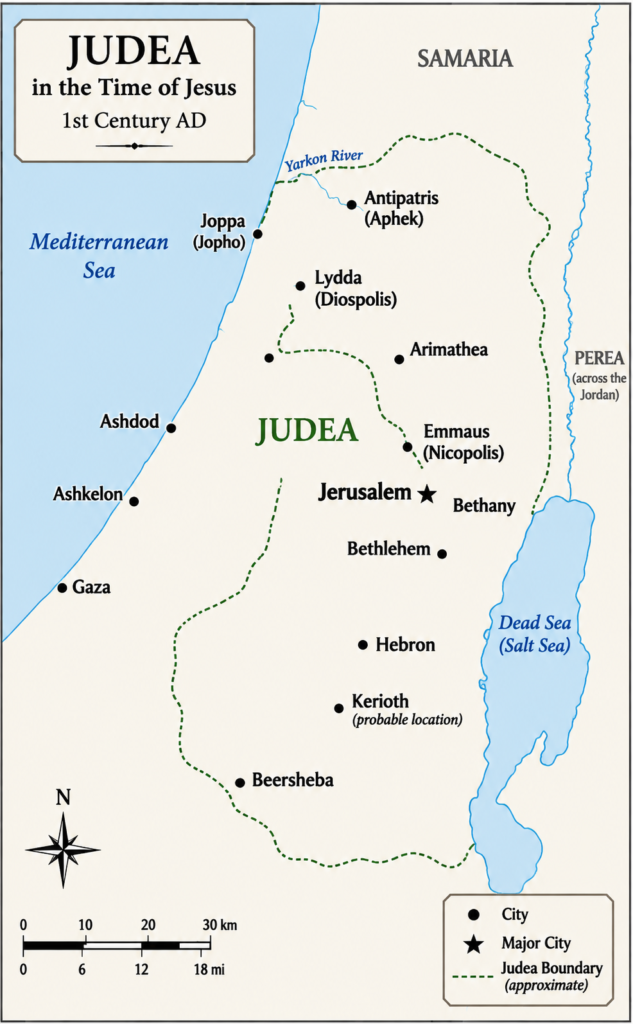
Nothing is known about Judas’ life before Yeshua’s call except that he was the son of Simon Iscariot (Jn. 6: 71, Jn. 13: 2, Jn. 13: 26).
We shouldn’t gloss over the fact that Yeshua picked Judas as an Apostle. His name is on all three of the lists. True, each one identified him as the betrayer – even when their intent was to document the initial call.
But Judas was chosen. And he was chosen to serve in an important position – treasurer for the group.
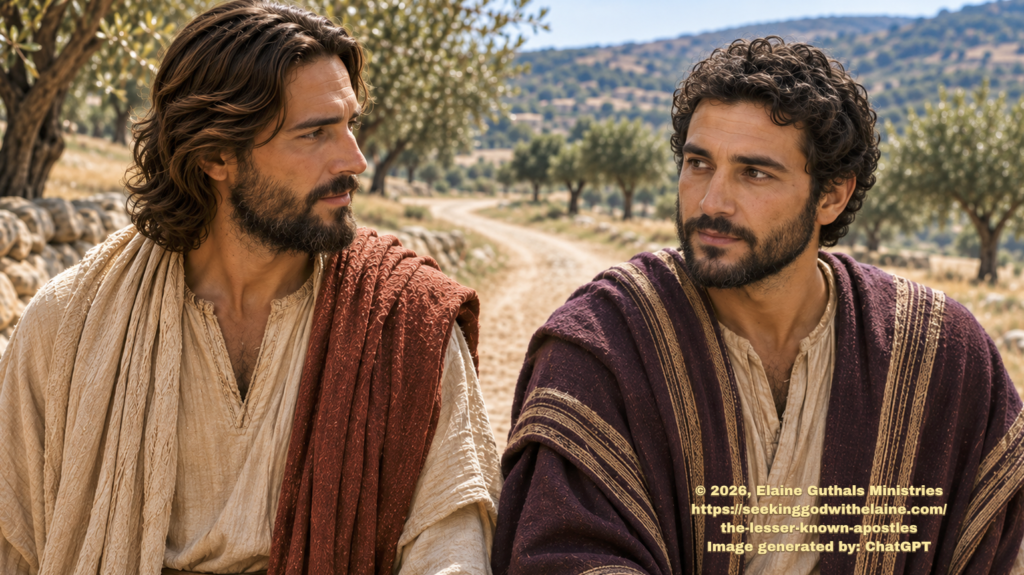
Does that mean Judas was given in Matthew 10: 1-4 the ability to drive out demons and heal the sick along with the other Apostles? I would read that to be a big YES!!!
I believe that Judas was given every opportunity to renounce Satan’s hold on him and truly accept Yeshua as the Messiah.
Was there prophecy that Yeshua would be betrayed by a friend? “Even my best friend, the one I trusted completely, the one who shared my food, has turned against me” (Ps. 41: 9 NLT).
Did that make Judas predestined to betray Yeshua. I don’t think so. He still made his own choice.
There is another interesting nugget. A Gospel of Judas has survived. Part of the Coptic manuscript known as Codex Tchacos, Judas is portrayed very differently than he is in the four Gospel books we are studying. In it, Judas understands certain things about Yeshua that the other Apostles don’t.
If we were to read this, we would have to remember that the Gospel of Judas, connected with a second-century Gnostic Christian movement, was not a work composed by Judas himself. It is a much later theological work reflecting a different religious movement.
Scripture tells us how Judas died. He hanged himself.
Women Who Followed Jesus
“Soon afterward Jesus began a tour of the nearby towns and villages, preaching and announcing the Good News about the Kingdom of God. He took his twelve disciples with him, along with some women who had been cured of evil spirits and diseases. Among them were Mary Magdalene, from whom he had cast out seven demons; Joanna, the wife of Chuza, Herod’s business manager; Susanna; and many others who were contributing from their own resources to support Jesus and his disciples.” (Lk. 8: 1-3 NLT)
While they weren’t included in the list of Jesus’ Twelve Apostles, we know there were some women who faithfully followed Him.
Mary Magdalene
No accounting of who followed Yeshua should fail to mention Mary Magdalene.
Yeshua had many followers – women as well as men. Though Mary was not listed among the Twelve, she was a devoted disciple of Him.
Magdalene was not Mary’s last name. Magdala was a town on the Sea of Galilee.
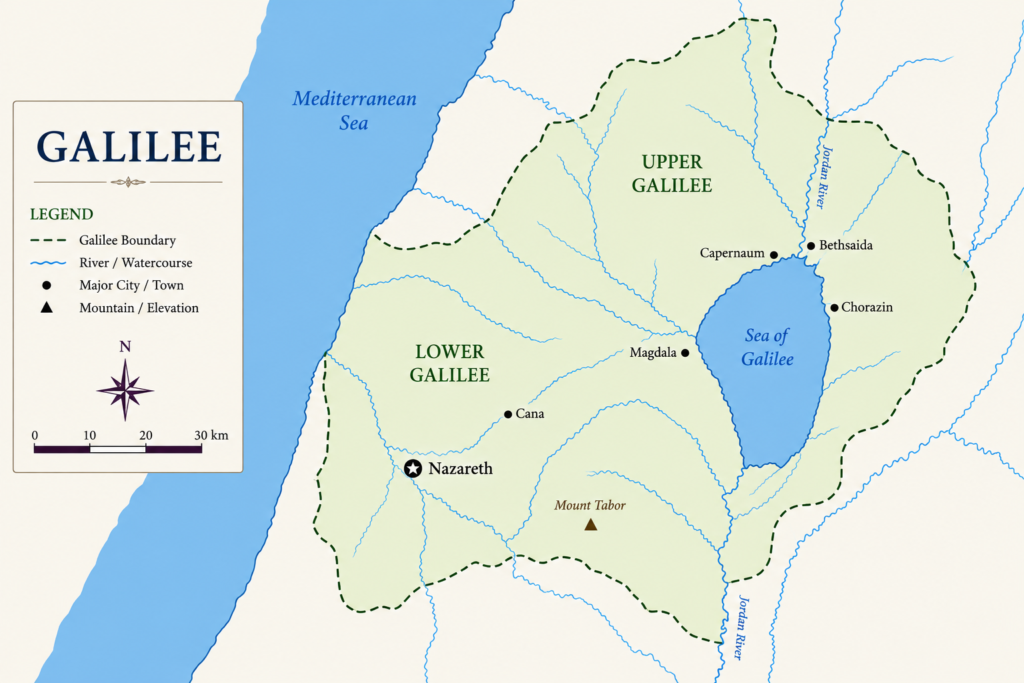
From the passage in Luke, we know that Yeshua drove out seven demons from Mary (Mk. 16: 9). Scripture never tells us that she was a prostitute.
What we do know is supported Yeshua’s ministry from her own resources. We also know that she was the first to encounter the risen Savior (Jn. 20: 11-18).
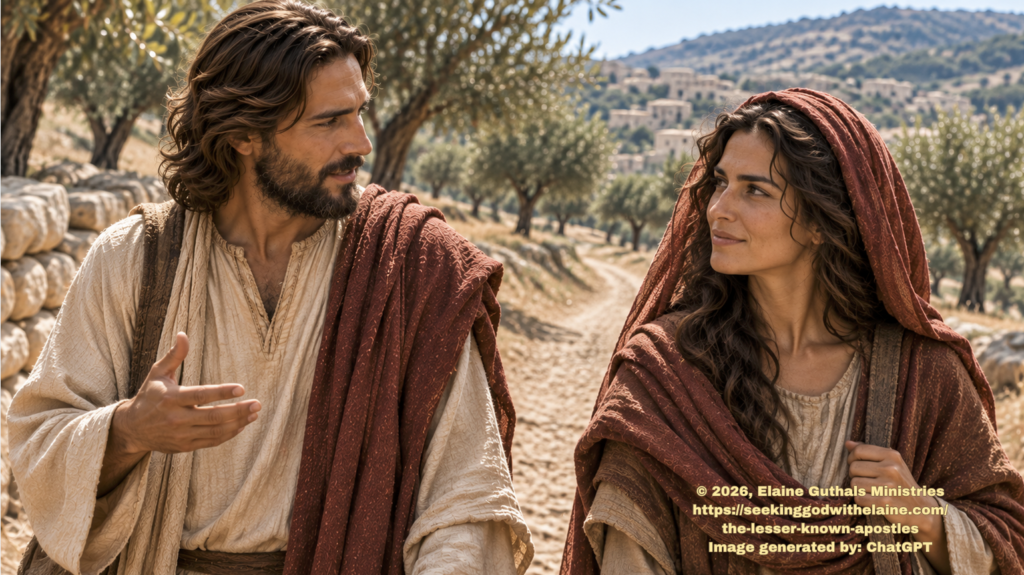
We aren’t told in Scripture what happened to Mary after the resurrection. Tradition says that she ended up either in Ephesus or France, possibly in a cave.
There have been fragments of writing found, including a Gospel of Mary, attributed to Mary Magdalene. In them, Mary’s role as a disciple was enhanced because it offers revelations of Jesus. That was challenged by Peter, according to The Theologist.
Resource
I agree and disagree with Peter. Mary wasn’t an Apostle. She was, however, a disciple. Yeshua accepts all – men and women – who believe in Him to be His disciples.
It did get right that salvation is an inward process rather than adherence to tradition and law. Yet, too, was seen as following the gnostic beliefs.
Joanna
Joanna was another person who was healed from an unknown condition, traveled with Him, and financially supported His mission.
The interesting thing is who she was. Joanna was the wife of Herod’s household manager, Chuza.

The Greek word used to describe the position was epitropos (ἐπίτροπος). It meant steward, administrator, or manager.
That would have been an important position in Herod Antipas’s household.
We read about Joanna later in the Gospels. Joanna is one of the women who go to the tomb on resurrection morning.
Susanna
We know nothing about Susanna except she traveled with Yeshua and supported the ministry by her own resources.
We know no reason why Susanna was singled about by name. She could just have easily been one of the “… many others …” Luke talked in Luke 8: 3.
But then our service should be for Jehovah’s glory, not ours.

Making the Connections
What do the Twelve have in common? Each of them – at least initially – made their hearts available to Yeshua. When He called, they listened.
For whatever time in the three years they followed Him, they experienced the same thing. They sat at Messiah’s feet and learned. He received the authority to preach, cast out demons, and heal the sick.
In the end, one still rejected Him. Maybe he did believe that Yeshua was the Messiah, but He wanted more of the expected Messiah. Yeshua didn’t change His mission to line up with human thinking.
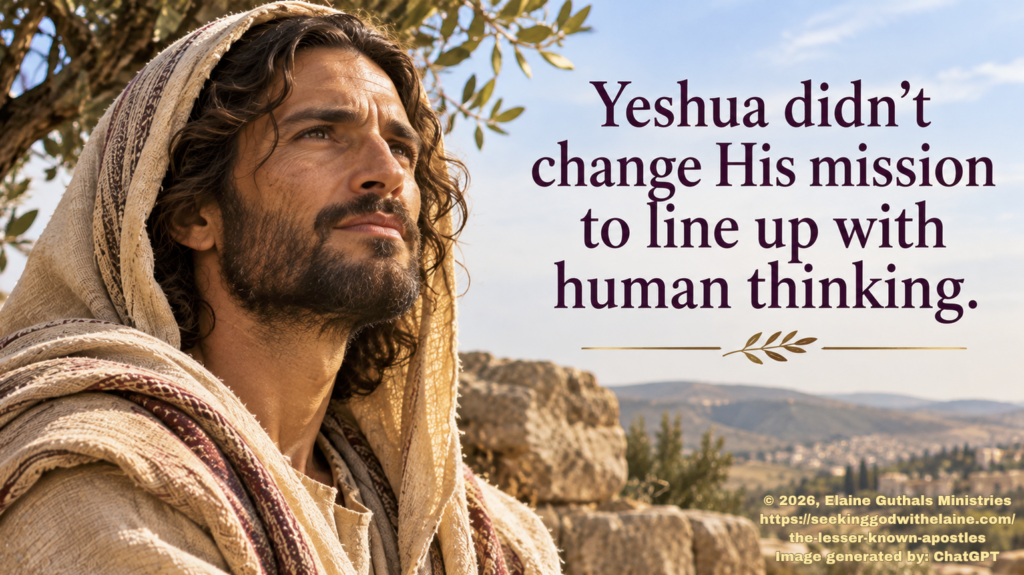
In the end, one didn’t allow Yeshua into his heart. The battle still raged for him, but he chose not to put his faith in the Messiah.
The battle for his heart was lost.
Heart Check
Think about the battle Yeshua is engaged in for your heart. Ask yourself the following questions.
- Do I serve Yeshua faithfully whether or not anyone notices, or do I need recognition for my service?
- Do I make myself available when Yeshua calls, or do I expect Him to fit into my plans?
- Do I use the resources Jehovah has entrusted to me for His Kingdom, or do I hold on to them for my own purposes?
- Do I allow Yeshua to reshape my expectations, or do I expect Him to conform to what I think the Messiah should be?
- Do I guard my heart against the things that could draw me away from Yeshua, or do I allow those things to take root?
How Do We Apply This?
- Serve faithfully, whether or not anyone notices.
- Make yourself available when Yeshua calls.
- Use what Jehovah has entrusted to you to further His Kingdom.
- Allow Yeshua to reshape your expectations rather than expecting Him to conform to yours.
- Guard your heart against the attitudes and desires that can lead you away from the Messiah.
- Remember that being chosen for service does not remove the responsibility to remain faithful.
Father God. You call some to take prominent positions in Your kingdom. Most of us, You call us to follow You through tasks that doesn’t get us recognition. Help us to be faithful whatever one You have for us. Amen.
If you don’t understand something and would like further clarification, please contact me.
If you have not signed up for the email providing the link to the devotions and the newsletter, do so below.
If God has used this devotion to speak with you, consider sharing it on social media.