Author: admin

  • Integrity under Authority

    Once again, Joseph found himself wrongly accused. This devotional reading looks at how Joseph stood in faith and integrity while he faced a temptation from an authority figure.

    Nuggets

    • It is not Scripturally accurate to say no one else was around.
    • We don’t know exactly what chore Joseph was attempting to perform or exactly where he went in to do it.
    • It would be logical to think that Joseph went into what was part of Mrs. Potiphar’s private rooms.
    • In her skewed recitation of what happened, Mrs. Potiphar accused Joseph of trying to make fools of them.

    integrity-under-authority

    Joseph must have thought he hit rock bottom when he was sold in slavery to Egypt. He would have been wrong.

    During the early years of his captivity (and we don’t know how long), Joseph was well provided for in Potiphar’s house. He was put into a position of authority.

    But that safe lifestyle was about to change.

    Let’s Put It into Context

    To read devotions in the Creating Everything theme, click the button below.

    Devotions in the Joseph the Savior of Israel  series

    Joseph and Mrs. Potiphar

    “One day, however, no one else was around when he went in to do his work” (Gen. 39: 12 NLT)

    No One Else Was Around

    It is not Scripturally accurate to say no one else was around.

    As a top official, Potiphar would, regardless of his wealth, have essentially had an estate. There would have been layers of servants that would have been around.

    If we go back to the Hebrew it says something different than what the New Living Translation says. Where this says no one else is around, the Hebrew says no man of the men of the house were around.

    • ’îš (אִישׁ) means a man
    • mēʾanšê (מֵאַנְשֵׁי) means from the men of

    Resource

    Who would the males have been?

    There would have been other overseers around. (Remember, Joseph was Overseer of the House.) There would have been accounts and scribes along with stewards.

    As Captain of Pharaoh’s Guard, Potiphar would have had a security detail. There would have been personal guards as well as estate security. There may even have been sentries that rotated shifts.

    That would include those men that may have been moving in and out of the house. If the estate was associated with land, there may have been field workers, transport workers, and storage and supply handlers.

    No, the lowest workers probably wouldn’t have had access to the house. Their overseers probably would have been summoned from time to time to give reports.

    Oh, yes. There would have been female servants around.

    There would have been Mrs. Potiphar’s personal attendants, domestic workers, and textile workers. There could have been assistants, runners, and even lower-level help.

    Why did Moses not mention them? Surely, Mrs. Potiphar did not want to be seen by anyone.

    What it is really saying here is there were no male witnesses around. Mrs. Potiphar picked a time that offered a moment of isolation. She didn’t want witnesses to hold her immediately accountable.

    If there were female servants around, Mrs. Potiphar either felt like they wouldn’t intervene or they would answer to her.

    As mistress of the house, wife of a high-ranking official, and a member of Egypt’s elite class, she would outrank every servant. But her authority would be real, not ultimate.

    Mrs. Potiphar would have the ability to give the male servants orders; and in practice, most would have obeyed her. But she would have taken a risk — especially in this instance.

    The order Mrs. Potiphar would have given to cover this up wouldn’t have been with regard to day-to-day household operations.

    Plus, Mrs. Potiphar would have given it to men who ultimately belonged in Potiphar’s chain of command, not hers. They were not just domestic extensions of her will.

    More than likely, Mrs. Potiphar was thinking exposure and witnesses. She was controlling the situation — because this was intentionally staged.

    Went in to Do His Work

    We don’t know exactly what chore Joseph was attempting to perform or exactly where he went in to do it.

    We were told in Genesis 39: 4 that Joseph had been made overseer of the house. This is a title that is recorded in Egyptian records that has survived.

    We’ll get into that in a little bit. Right now, we are going to say that – once again – Joseph was just going about his duties as assigned, and someone else made a bad decision. He didn’t let someone else’s actions dictate his response.

    Joseph responded the way God wanted him to respond.

    She Demanded

    “She came and grabbed him by his cloak, demanding, ‘Come on, sleep with me!’ Joseph tore himself away, but he left his cloak in her hand as he ran from the house. When she saw that she was holding his cloak and he had fled, she called out to her servants. Soon all the men came running. ‘Look!’ she said. ‘My husband has brought this Hebrew slave here to make fools of us! He came into my room to rape me, but I screamed. When he heard me scream, he ran outside and got away, but he left his cloak behind with me.’ (Gen. 39: 12-15 NLT)

    It would be logical to think that Joseph went into what was part of Mrs. Potiphar’s private rooms.

    We know that this wasn’t the first incident in which Mrs. Potiphar tried to start something with Joseph. The last time, he had appealed to Mrs. Potiphar to recognize her marriage vows as binding.

    She didn’t.

    Mrs. Potiphar commanded that Joseph lie with her. That wasn’t seduction — that was assertion.

    “I am the mistress of the house. You are a slave. You will do what I say.”

    That may or may not have been true as Joseph was most assuredly under Potiphar’s chain of command. But Joseph didn’t consider that to be under his authority.

    When his reasoning for not doing what she demanded had started with the things that affected her, Joseph ended with remaining true to Jehovah. He didn’t need her to accept that reason.

    But Joseph knew that he needed to remain true. He tore himself away.

    Well, that is a little more dramatic than what the Hebrew actually says. The Hebrew word used was vayyānas (וַיָּנָס).  It comes from the root word nûs (נוּס), which means to flee, escape, or run away.

    Tore himself away may have been more of a functional definition.

    But it takes the passage in a different direction than intended. The text does not emphasize the struggle. It emphasizes the decision — Joseph fled.

    Why did Joseph run? He knew no one would stop him – and no one would believe him or defend him.

    Remember, there were no credible witnesses around. All the men were out of the house.

    But the reason was more important. Joseph didn’t just leave her — he left the house, because sometimes obedience requires complete separation, not partial distance.

    Joseph refused to cross the same boundary Judah didn’t. Judah gave into the temptation to sleep with a prostitute. Joseph refused to fall into the temptation of the advances given his way.

    The problem was, in fleeing, Joseph left his garment behind. Mrs. Potiphar had proof that he had been there and something had come off that shouldn’t have.

    In her skewed recitation to the servants of what happened, Mrs. Potiphar accused Joseph of trying to make fools of them. She probably assumed that strengthened her case against Joseph. In reality it was another form of betrayal.

    To Fool Around with Me

    She kept the cloak with her until her husband came home. Then she told him her story. ‘That Hebrew slave you’ve brought into our house tried to come in and fool around with me,’ she said. ‘But when I screamed, he ran outside, leaving his cloak with me!’” (Gen. 39: 16-18 NLT)

    In her skewed recitation to her husband of what happened, Mrs. Potiphar changed her story from what she told the servants.

    But go back to Judah and Tamar. A garment had been used by Judah to deceive Jacob to believe Joseph was dead. A veil was used by Tamar to deceive Judah into thinking she was a prostitute.

    Now, a garment was used by Mrs. Potiphar to deceive Potiphar that Joseph had wrong intentions. She used it as physical evidence to become the victim.

    Mrs. Potiphar knew the accusation of Joseph making fools of them wouldn’t hold with Potiphar. So, she just gave him the facts.


    Making the Connections #1

    Why did we go into Joseph’s duties as steward and overseer? Yes, it was to explain Potiphar’s reaction.

    Yes, it was to show how Joseph was gaining needed knowledge and skills to be used in overseeing seven years of plenty and seven years of famine.

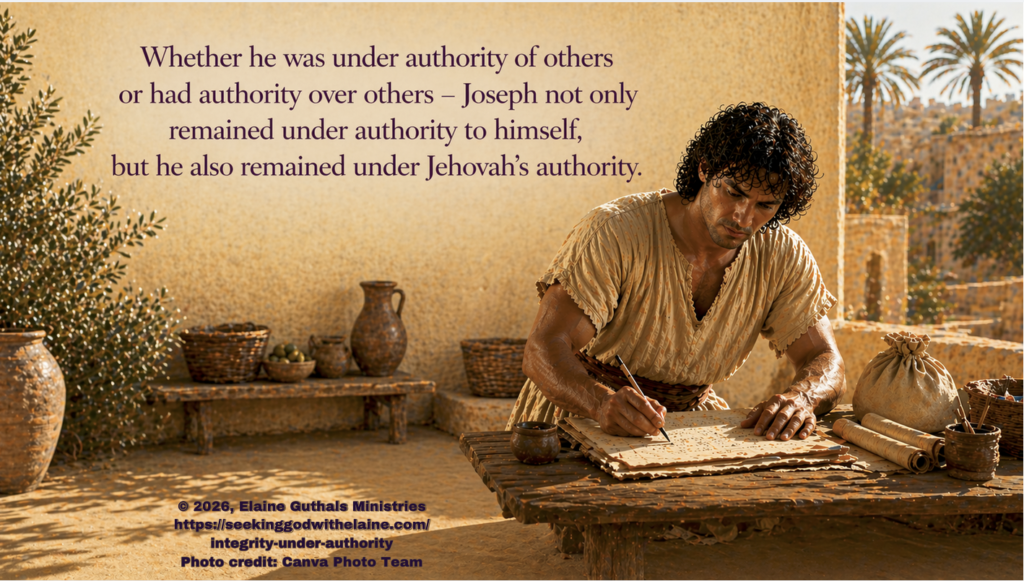
    More importantly – whether he was under authority of others and had authority over others – Joseph not only remained under authority to himself, but he also remained under Jehovah’s authority.
    What does all that mean? Joseph was faithful in tasks, with things, and with people. In short, he was faithful in everything that he was given. He faithfully managed what wasn’t his.

    Joseph’s obedience was not tied to his position, but to his perspective. He did not see himself as a victim of his circumstances, but as a steward within them – regardless of his position.

    Making the Connections #2

    Joseph lost his garment again — but this time, he lost it doing what is right. Let’s compare the two.

    Remember Jacob gave Joseph a tunic, not a coat of many colors. The Hebrew word is kĕtōnet (כְּתֹנֶת), a long garment associated with status, favor, and identity.

    What Joseph had on in Potiphar’s house was a beged (בֶּגֶד), a generic word for clothing, which could have been a tunic, outer garment, or cloak.

    Symbolic garment v. working garment.

    They aren’t the same – but the function is almost identical. Joseph loses each time.

    When his brothers stripped him of the kĕtōnet, Joseph lost identity and status. When he lost the beged, he lost position. The first time, his only crime might have been arrogance. This time, he was falsely accused.

    Both times, the garment is removed, used as false evidence, and Joseph suffered.

    Joseph lost the first garment in betrayal. He lost the second one in obedience.

    How Do We Apply This?

    • Remain faithful and obedient in all situations.
    • See His guiding hand in all our trials.

    Father God. We know trials are part of our Sanctification Road.  Help us to keep our mind set firmly on You through all that we experience in life. Amen.

    If you don’t understand something and would like further clarification, please contact me.

    If you have not signed up for the email providing the link to the devotions and the newsletter, do so below.

    If God has used this devotion to speak with you, consider sharing it on social media.
  • Joseph Arrived in Egypt

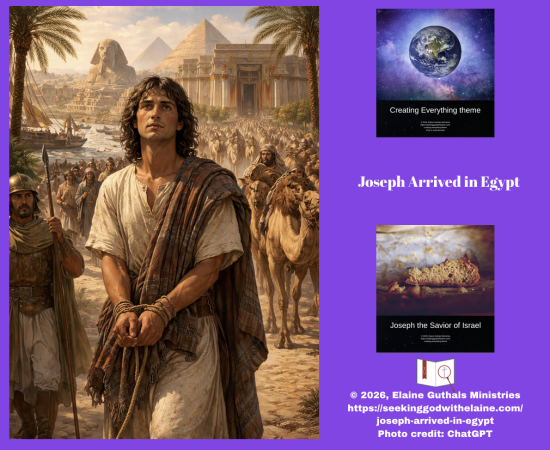
    After traveling on the caravan, Joseph arrived in Egypt. This devotional reading looks at how he fared after he was sold to an Egyptian.

    Nuggets

    • Meanwhile – while all we talked about in Genesis 38 was happening in Canaan – down in Egypt, Jehovah’s plan was going forward.
    • Joseph was sold to an Egyptian officer named Potiphar.
    • We don’t know how long Joseph had been in Egypt before Potiphar saw him, but there was a reason he did.
    • Joseph was made the Overseer of the House.
    • Mrs. Potiphar tempted Joseph to sin.
    joseph-arrived-at-egypt

    It was all part of Jehovah’s plan that Joseph go to Egypt. We might think it should have been a little easier on Joseph, but this was his Sanctification Road.

    Let’s take a look.

    Let’s Put It into Context

    To read devotions in the Creating Everything theme, click the button below.

    Devotions in the Joseph the Savior of Israel  series

    Arrival in Egypt

    “Meanwhile, the Midianite traders arrived in Egypt, where they sold Joseph to Potiphar, an officer of Pharaoh, the king of Egypt. Potiphar was captain of the palace guard” (Gen. 37: 36 NLT)

    Meanwhile – while all talked about in Genesis 38 was happening in Canaan – down in Egypt, Jehovah’s plan was going forward.

    In the past few devotions, we have been following the fall and rise of Judah. His story of sin, repentance, forgiveness, and restoration is vital to the story of the nation of Israel. The Messiah would come from his line.

    Jehovah was multitasking. He was restoring Judah as He was watching over Joseph.

    Aren’t we so glad Jehovah can do that? He can lead Tom through his trials while Sally is going through totally different ones. That doesn’t even get into the chaos Elaine is getting herself into — and yes — He is right there with her, too.

    When we left our hero back in Genesis 37, Joseph was in a pickle. Ten of his brothers — all the ones who could walk and talk — all older (even if only up to seven years) — sold him. That was better than they were talking about – killing him.

    Joseph had been sold to distant cousins, who had taken him to Egypt. The year would have been 1692 BC. What did Joseph see when he got off the caravan?

    The Egypt Joseph first saw was at a moment when its systems were still strong. The year 1692 BC would have put it at the end of Egypt’s Middle Kingdom or just about ready to transition to the Second Intermediate Period.

    That would mean that its foundations were strong. It was structured, bureaucratic, and confident.

    But it was probably showing signs of starting to crack. Outside of the capital, the central authority was losing its power to the regional governors.

    Still, it was well oiled enough to recognize Joseph’s abilities — and open enough to make use of those abilities. He wouldn’t have been the only foreigner in the country.

    Joseph would probably have been brought to the Nile Delta in Lower Egypt. Called Lower Egypt – even though it was north of Upper Egypt – it referred primarily to the Nile Delta, the broad, fertile region where the river spread into many branches before reaching the Mediterranean Sea.

    But think back to your history classes. The Nile River – specifically its annual flooding – brought life to the region. It would have had a large agricultural component. Storage systems would have already been in place.

    But this area would have also been more cosmopolitan. It was an administrative center for the Egyptian government of the time. It would have boasted trade-heavy zones.

    There were many layers to Egyptian society.

    • Pharaoh (divine king)
    • Royal officials (like Potiphar)
    • Scribes (very important)
    • Skilled workers
    • Administrators
    • Laborers
    • Slaves (including foreigners)

    That would have put Joseph at the bottom of society’s class structure.

    Joseph in Potiphar’s House

    “When Joseph was taken to Egypt by the Ishmaelite traders, he was purchased by Potiphar, an Egyptian officer. Potiphar was captain of the guard for Pharaoh, the king of Egypt. The Lord was with Joseph, so he succeeded in everything he did as he served in the home of his Egyptian master.  Potiphar noticed this and realized that the Lord was with Joseph, giving him success in everything he did. This pleased Potiphar, so he soon made Joseph his personal attendant. He put him in charge of his entire household and everything he owned.  From the day Joseph was put in charge of his master’s household and property, the Lord began to bless Potiphar’s household for Joseph’s sake. All his household affairs ran smoothly, and his crops and livestock flourished. So Potiphar gave Joseph complete administrative responsibility over everything he owned. With Joseph there, he didn’t worry about a thing — except what kind of food to eat! …” (Gen. 39: 1-6 NLT)

    Purchased by Potiphar

    Joseph was sold to an Egyptian officer named Potiphar.

    Joseph’s brothers sold him to the Ishmaelite/Midianite traders for 20 shekels of silver. This was the price of a young slave at the time.

    The imagery of being brought down is equivalent of that to Judah’s went down. This is talking about the spiritual descent imagery.

    We’ll have to see if the outcome is the same.

    Jehovah provided that Joseph would be placed in Potiphar’s house. Through his experiences in Potiphar house, Joseph was in a position to go on to the third phase of Jehovah’s plan.

    We aren’t told how much Potiphar paid for him. Good business practice would be that the traders got paid more than that to recoup business expenses.

    But that isn’t the issue.

    The most important information in this passage is that Joseph was bought by Potiphar (Hebrew: Pôṭîfar). We aren’t given much information on who he was, but we are given enough to ground the story.

    We can tell Potiphar was fully Egyptian because of his name. Potiphar is Pa-di-pa-Ra, which means Given by Ra. Remember, Ra was the Egyptian sun god.

    Potiphar was not only an Egyptian officer, but he was also Captain of the Guard. He commanded an elite position in Pharaoh’s officers.

    It really becomes interesting when we look at Potiphar’s job title in the Hebrew. The Hebrew phrase is śar haṭṭabbāḥîm (שַׂר הַטַּבָּחִים). That literally means chief of the slaughterers.

    Ouch! But that isn’t the way that Egyptians looked at that. Potiphar was probably the head of royal security with execution authority. His job description probably included overseeing the royal prison, state executions, and protection of the Pharaoh.

    While there is no historical evidence confirming his identification, records do indicate the framework in which he lived. High-ranking officials had estate and servants. They even managed prisons.

    But this would have made Potiphar’s prison a royal prison. It would have been on the high-end scale as prisons of the day were categorized.

    Some of the literal translations label Potiphar as a eunuch. I don’t see that as there is a Mrs. Potiphar. The Hebrew word used – śārîs – can also mean high-ranking official. I go with court official.

    Whoever Potiphar was, he was an official in the elite ruling class powerful enough to buy, promote, and imprison Joseph. He couldn’t derail Jehovah’s plans for him.

    The Lord Was with Joseph

    We don’t know how long Joseph had been in Egypt before Potiphar saw him, but there was a reason he did.

    There are two very important statements in this passage.

    • “The Lord was with Joseph, so he succeeded in everything he did as he served in the home of his Egyptian master” (Gen. 39: 2 NLT).
    • “Potiphar noticed this and realized that the Lord was with Joseph, giving him success in everything he did” (Gen 39: 3 NLT).

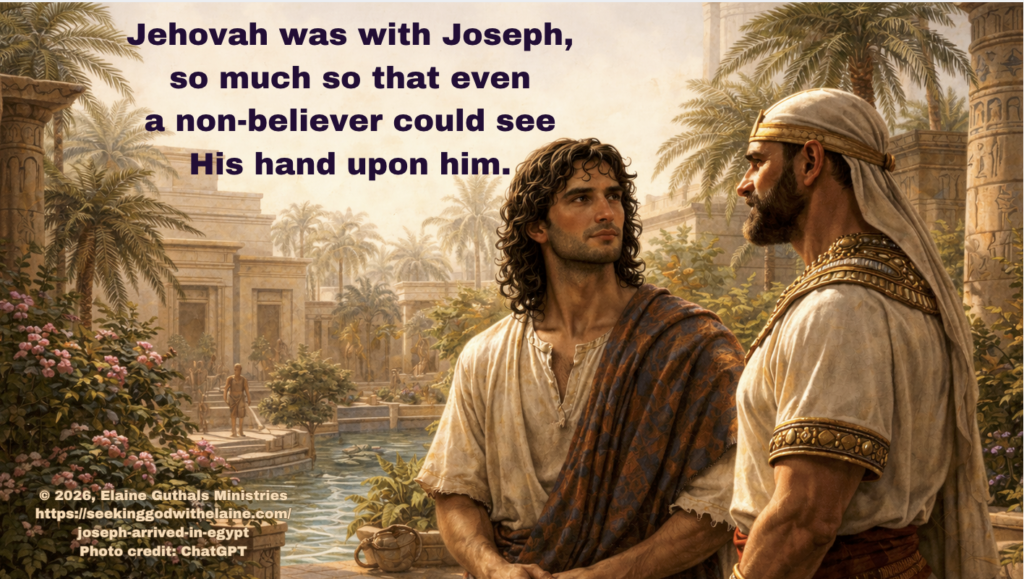
    Jehovah was with Joseph, so much so that even a non-believer could see His hand upon him.

    The Hebrew describes why. “The Lord was with Joseph …” (Gen. 39: 2 NLT) utilizes the immô (עִמּוֹ יְהוָה֙) – with Yahweh. This signifies a covenant closeness.

    This description of closeness was also strengthened by the use of favor – ḥēn (חֵן). That can be translated as grace that produces visible acceptance.

    Made Joseph His Personal Attendant

    Joseph was made the Overseer of the House.

    Joseph had experience shepherding sheep. Okay, maybe it was good training for what was coming, but the sheep didn’t talk back and interact. Joseph needed more training.

    So, Jehovah dropped Joseph into a large household. He had to deal with money as well as people. He had to learn everyday Egyptian life.

    Part of Abraham’s covenant was those who blessed Abraham and his descendants would be blessed. We have already seen this with Laban (Gen. 30: 27).

    Disaster Set Up

    “… Joseph was a very handsome and well-built young man, and Potiphar’s wife soon began to look at him lustfully. ‘Come and sleep with me,’ she demanded. But Joseph refused. ‘Look,’ he told her, ‘my master trusts me with everything in his entire household. No one here has more authority than I do. He has held back nothing from me except you, because you are his wife. How could I do such a wicked thing? It would be a great sin against God.’ She kept putting pressure on Joseph day after day, but he refused to sleep with her, and he kept out of her way as much as possible” (Gen. 39: 6-10 NLT)

    Mrs. Potiphar tempted Joseph to sin.

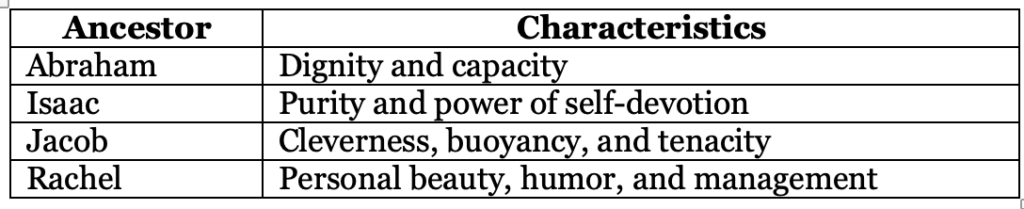
    Joseph was described with same description used for his mother, Rachel. In Hebrew, it is yĕpēh tō’ar wĕyĕpēh mar’eh. Remember, Rachel was described as “… but Rachel had a beautiful figure and a lovely face” (Gen. 29: 17 NLT). That information is used to set up the temptation.

    The problem came when Mrs. Potiphar began to notice Joseph.

    There was one slight problem. The boss’s wife demanded a piece of Joseph.

    Make no mistake. Mrs. Potiphar wasn’t looking for romance. She was asserting her power.

    Mrs. Potiphar didn’t see that anyone else would be hurt by the act. Joseph begged to differ. So, she kept demanding Joseph obey her.

    Joseph did the right thing. He said no thanks. He wasn’t going to disrespect Potiphar and God that way.

    The responses that Joseph gave were interesting.

    In his three reasons to Mrs. Potiphar, Joseph started with the two that affected her directly. “Your husband trusts me, and you are the only thing he hasn’t allowed me access. You have a covenant with him.”

    Then, and only then, did Joseph give his most important reason, but one she may or may not have accepted. “It is a sin against God.”

    Think about Joseph’s responses. They dealt with trust, integrity, and purity.

    Satan tries to tell us what we should do would be a victimless crime. He would be wrong.

    Joseph’s response wasn’t ultimately based on Mr. or Mrs. Potiphar. It was based on him – Joseph – being the man Jehovah required him to be.

    All sin is a crime against Jehovah. We are disobeying His command to be pure and obedient.

    Joseph didn’t need Mrs. Potiphar to accept his third reason. Our relationship with Sovereign God is our alone.

    Making the Connections #1

    Joseph didn’t rise because of Egypt, nor in spite of it. He rose to prominence as Israel’s savior because Jehovah had already determined his place within it.

    Making the Connections#2

    We are never told that Joseph went kicking and screaming to Egypt. There are no stories about him fighting back against his master.

    What we are told is that Joseph did his job. He lived his life.

    We can read into it that Joseph was what Paul called content. Yes, we’ll see the “payment” he requested of the baker and cup bearer showed he wanted to get out, but he continued to do his job.

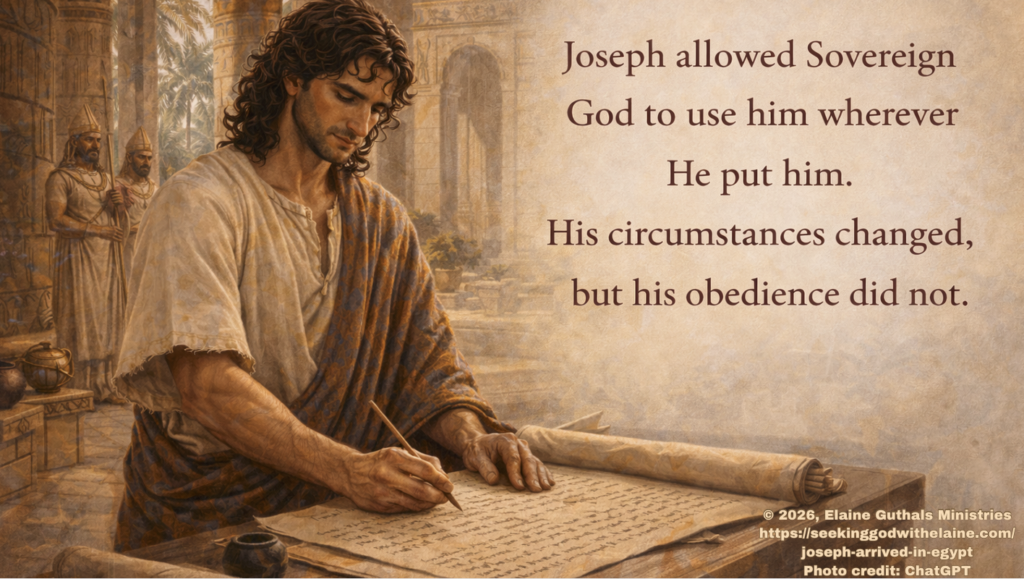
    Joseph allowed Sovereign God to use him wherever He put him. His circumstances changed, but his obedience did not.

    How Do We Apply This?

    • Keep Jehovah’s laws and commandments.
    • Remain obedient to Him.

    Father God. Once our lives take a turn for the worse, we start kicking and screaming. Help us to be content where You put us and see You hand in all the events of our lives. Amen.

    If you don’t understand something and would like further clarification, please contact me.

    If you have not signed up for the email providing the link to the devotions and the newsletter, do so below.

    If God has used this devotion to speak with you, consider sharing it on social media.
  • Judah, Tamar, and the Covenant Line

    After Judah’s visit to a prostitute, he returns to his everyday life. This devotional reading looks at the restitution part of Judah’s repentance, forgiveness, and restitution process.

    Nuggets

    • Sin is never hidden from Jehovah.
      Judah was concerned with reputation — not righteousness.
    • People find out the widow was pregnant.
    • The very things Judah used to live and act as who he was become the evidence that forces him to face who he was.
    • Judah repented and was forgiven and restored.
    • Jehovah was ensuring the continuation of the covenant line.
    judah-tamar-and-the-covenant-line

    We’ve been following along on the story of Jacob’s son Judah. He and his brothers had sold their brother Joseph into slavery.

    Now, Judah was continuing a descent into sin.

    But time passes, and hidden things do not always stay hidden.

    Let’s Put It into Context

    To read devotions in the Creating Everything theme, click the button below.

    Devotions in the Joseph the Savior of Israel  series

    Aftermath

    “Afterward she went back home, took off her veil, and put on her widow’s clothing as usual” (Gen. 38: 19 NLT)

    Sin is never hidden from Jehovah.

    I went back and forth about connecting this with the last section on the last devotion or letting it stand on its own. I think this is very important. We can’t bury it.

    Judah went home convinced that the secret of his procuring the services of a prostitute was safe with him. He had every intention of making the payment.

    Case closed.

    But Tamar had a much bigger case against Judah than he realized. And she had the forensic-level proof to prove it.

    How does this work into Jehovah’s opportunity for repentance, forgiveness, and renewal?

    Judah thought – like we think – our sins are hidden. What is done in private is supposed to stay in private.

    We only wish that.

    Instead, Judah left – again, like we leave – undeniable evidence. People were changed. Situations were changed.

    More importantly, Sovereign God – the all-knowing, all-seeing Supreme Being – knows our sin.

    Nothing is hidden from Jehovah. We may think that. We may convince ourselves that He doesn’t care.

    He does.

    Payment Attempted

    “Later Judah asked his friend Hirah the Adullamite to take the young goat to the woman and to pick up the things he had given her as his guarantee. But Hirah couldn’t find her. So he asked the men who lived there, ‘Where can I find the shrine prostitute who was sitting beside the road at the entrance to Enaim?’ ‘We’ve never had a shrine prostitute here,’ they replied. So Hirah returned to Judah and told him, ‘I couldn’t find her anywhere, and the men of the village claim they’ve never had a shrine prostitute there. Then let her keep the things I gave her,’ Judah said. ‘I sent the young goat as we agreed, but you couldn’t find her. We’d be the laughingstock of the village if we went back again to look for her’” (Gen. 38: 20-23 NLT)

    Judah was concerned with reputation — not righteousness.

    Yay, Judah! He did exactly what he said he would do.

    Judah sent Hirah – the only other person who knew of Judah’s transgression – to make the payment. He kept his end of the bargain.

    But that is where things began to fell apart.

    We get another snippet of information. Hirah thought Tamar was a temple prostitute. At least that is how most versions translate it.

    We have to dig in a bit here to look at a discrepancy.

    When Judah first saw Tamar, he called her a זֹנָה (zonah) – a common prostitute. “Judah noticed her and thought she was a prostitute, since she had covered her face” (Gen. 38: 15 NLT).

    Hirah, when he was delivering the payment, asked about the קְדֵשָׁה (qedeshah) – translated as either temple prostitute or cult prostitute.

    There may or may not have been a pagan temple in the area. Qedeshah was connected to pagan religious practices, such as fertility cults and Canaanite worship systems. It could have been a localized shrine or sacred site. In fact, it may have just been a recognized category of women.

    Fertility worship was common. We know how important family, especially sons, were in the Ancient Near Eastern society. So, qedeshah likely referred to women associated with these fertility practices.

    Stop a second. It is an entirely different matter if Judah was procuring the services of a temple prostitute rather than a common prostitute. It deepens his compromise if he was engaging someone associating within the Canaanite moral-religious framework.

    Judah left the covenant family. He went to live among those Jehovah did not want to associate with the covenant family. This shows that Judah was fully embedded in the Canaanite system.

    To me, that meant Judah – the future patriarch of the family – turned his back on the covenant with Jehovah. (But remember, this is the story of repentance, forgiveness, and renewal. Stay tuned.)

    Yes, living in the world is difficult. We may think it was harder then, but it is just as hard as now.

    Still, Jehovah calls us now — as He called then — to be in the world but not of it (Jn. 15: 19). We can’t just say, “Oh, the circumstances I am in left me no other choice but to sin.”

    We are called to be faithful to Jehovah regardless of our circumstances.

    Of course, Tamar wasn’t around because she wasn’t a temple prostitute or any other kind.

    This is what I don’t get. Judah had given her his identity to secure the payment. And he was just going to give it up so he doesn’t become the laughingstock of the village???? If what he gave Tamar was his identity, why did Judah give them up without a fight?

    What did laughingstock mean?

    Laughingstock, in the Ancient Near East, meant public ridicule, loss of honor, and damage to social standing. But it didn’t stop there.

    Think about what people would ask if and when they learned of Judah looking for a woman. “Why is Judah looking for this woman? What kind of transaction did they make? What did he give her as security?”

    It would come out that Judah gave his seal, cord, and staff. It would become public knowledge that he gave up his identity.

    So, Judah had a couple of options. He could have kept searching and chance drawing attention to his search.

    Or Judah could walk away. Keep the matter quiet. Make it go away.

    Judah chose to keep quiet, protect the secret, and lose his identity. He chose to protect his reputation.

    Yeah, it would come back and bite him.

    The Secret Was Out

    “About three months later, Judah was told, ‘Tamar, your daughter-in-law, has acted like a prostitute. And now, because of this, she’s pregnant.’ ‘Bring her out, and let her be burned!’ Judah demanded. But as they were taking her out to kill her, she sent this message to her father-in-law: ‘The man who owns these things made me pregnant. Look closely. Whose seal and cord and walking stick are these?’ Judah recognized them immediately and said, ‘She is more righteous than I am, because I didn’t arrange for her to marry my son Shelah.’ And Judah never slept with Tamar again” (Gen. 38: 24-26 NLT)

    Acted Like a Prostitute

    People find out the widow was pregnant.

    I always laugh when I read that whoever told Judah accused Tamar of being a prostitute. Remember, Judah’s transgression was supposed to be a secret. I wonder if his face went pale when the man said that.

    Ooo, baby. Judah still was sure quick to judge Tamar.

    Even though he didn’t know he was the father of the baby at that time, Judah did know that he had frequented a prostitute. True, that may have been the only time he had.

    Judah may have forgotten — probably did — about the episode by then.

    Judah was quick to accuse – that is, until he was faced with irrefutable evidence. He couldn’t deflect, deny, or shift blame.

    But why was there an uproar because of the pregnancy?

    We can’t forget Tamar’s situation. She was a party to a levirate marriage even if she did not have a husband at that moment. That meant she was bound to Judah’s family.

    Even though he had no plans on going through with the marriage, Judah did not release Tamar from that agreement. Tamar was not “free” – or divorced, as we would say.

    That was all the community needed to know. Tamar’s sexuality was controlled by the family structure.

    Probably the bigger questions in everyone’s mind – that wasn’t recorded here – was, “Who was the father?” That uncertainty could have threatened the family line. It may have impacted inheritance.

    Any lineage confusion brought about social instability. (Did you ever wonder why there are so many genealogy lists in God’s Word?)

    This was about Judah’s reputation. (Remember, that was the reputation he was trying to preserve.)

    If Tamar was acting outside of social norms, Judah’s household was dishonored. He was seen as being weak.

    That is why Judah’s verdict immediately went to execute her. He wanted to publicly purge this dishonor, restore his control, and protect the family name.

    Judah got what he wanted. This made him appear righteous. It didn’t matter that Tamar appeared to be guilty when she wasn’t.

    Let’s stop a second and think this through.

    On the wedding night, Tamar’s guardianship would have passed from her father to Er, her new husband. It probably passed to Onan when he became her levirate husband.

    What would have happened to it when Onan died?

    It wouldn’t have passed to Shelah. He wasn’t her husband yet because he wasn’t of age.

    Did it go back to Tamar’s father? She wouldn’t be tied to Judah’s family if it did.

    Did it pass to Judah? If it did, he still had it.

    Wherever the guardianship went, Judah was controlling the narrative. But then, no one was asking, “Why isn’t Tamar married to Shelah now that he is of age?”

    Sent This Message

    The very things Judah used to live and act as who he was become the evidence that forces him to face who he was.

    Yep, up to this point, everything was stacked against Tamar. The evidence was irrefutable. Public opinion was against her, and Judah was firmly in control.

    But remember, Tamar was a smart girl. She had irrefutable forensic-level evidence.

    She didn’t come out accusing Judah, not our Tamar. She asked basically the same question Judah and brothers asked Jacob when they sent him Joseph’s tunic. “Do you recognize this?”

    That is another big step in Jehovah’s practice of repentance, forgiveness, and restoration. We can’t repent of something that we don’t recognize as wrong.

    So, in the end, the system that had failed Tamar was the one that exposed Judah’s sin.

    She Is More Righteous than I

    Judah repented and was forgiven and restored.

    Was Tamar being righteous when she sinned by having sex — not just with any man but with her father-in-law? Yes, in this instance.

    Tamar was following the levirate marriage law where Judah hadn’t. She held up the spirit of the law better than he did.

    We have to watch when we think we are in an ends-justify-the-means situation. That isn’t our call. That call solely rests in Jehovah’s hands. Only He can identify what a sin is or isn’t.

    But Genesis 38 is about Judah and his restoration to Jehovah.

    This is where Judah’s transformation began. It wasn’t where his restoration began and was awarded to him elsewhere.

    It was where Judah’s restoration took place.

    When we sincerely repent and tell Jehovah we will obediently follow His Will, He will give us salvation. In the same way, He will restore our relationship with Him upon our sincere immediate repentance.

    • “Come close to God, and God will come close to you. Wash your hands, you sinners; purify your hearts, for your loyalty is divided between God and the world” (Jas. 4: 8 NLT).
    • “Create in me a clean heart, O God. Renew a loyal spirit within me. Do not banish me from your presence, and don’t take your Holy Spirit from me. Restore to me the joy of your salvation, and make me willing to obey you” (Ps. 51: 10-12 NLT).
    • “But if we confess our sins to him, he is faithful and just to forgive us our sins and to cleanse us from all wickedness” (I Jn. 1: 9 NLT).

    If you want a visual of this, look to the Parable of the Prodigal Son in Luke 15: 11-32. The Father came running to the son – running, which was considered undignified.

    Does this passage say anything about Judah’s restoration? Well, yes and no.

    Moses didn’t really get into Judah’s spiritual condition. But then, he was a man of few words.

    There is one word that is a good clue of were Judah was at. Moses used the word righteous. That was not a word he would have used lightly.

    Did Judah say he had become righteous? No. He said Tamar was better at it than he was.

    But go back to what we said the reason this chapter was placed in this place. This chapter is in exactly the position it needs to be because we need to follow Judah on his transformation.

    Genesis 38 shows Judah’s moral collapse and turning point. Jehovah recognizes and rewards our sincere turning point. Forgiveness and restoration is given; transformation begins.

    The Covenant Line

    “When the time came for Tamar to give birth, it was discovered that she was carrying twins. While she was in labor, one of the babies reached out his hand. The midwife grabbed it and tied a scarlet string around the child’s wrist, announcing, ‘This one came out first.’ But then he pulled back his hand, and out came his brother! ‘What!’ the midwife exclaimed. ‘How did you break out first?’ So he was named Perez. Then the baby with the scarlet string on his wrist was born, and he was named Zerah” (Gen. 38: 27-30 NLT)

    Jehovah was ensuring the continuation of the covenant line.

    At this point, it looks like Jacob had problems with who was going to be his firstborn son. Reuben staged a coup (Gen. 35: 22). Simeon and Levi committed murder (Gen. 34: 25).

    Jehovah chose Judah to be the covenant son. Yeshua would be the great … grandson of Perez.

    I thought it was interesting that the twins struggled within Tamar’s womb, just as Jacob and Esau did. However, Perez was the firstborn.

    Making the Connections #1

    Joseph was down in Egypt. Since we don’t know what year this was, we don’t know if he had just arrived or if he was getting ready to interpret Pharaoh’s dreams.

    We get one chapter to see Judah hit rock bottom and turn back to Jehovah. If he didn’t turn back to Jehovah here, the chapter didn’t need to be placed here.

    Making the Connections #2

    We’ve been talking about the repentance, forgiveness, and restoration process. What is that process? When we genuinely repent:

    • “He has removed our sins as far from us as the east is from the west.” (Ps. 103: 12 NLT).
    • “It’s your sins that have cut you off from God. Because of your sins, he has turned away and will not listen anymore” (Isa. 59: 2 NLT).
    • “But if we confess our sins to him, he is faithful and just to forgive us our sins and to cleanse us from all wickedness” (I Jn. 1: 9 NLT).
    • “So now there is no condemnation for those who belong to Christ Jesus” (Rom. 8: 1 NLT).
    • “This means that anyone who belongs to Christ has become a new person. The old life is gone; a new life has begun!” (II Cor. 5: 17 NLT).
    • “Finally, I confessed all my sins to you and stopped trying to hide my guilt. I said to myself, ‘I will confess my rebellion to the Lord.’ And you forgave me! All my guilt is gone” (Ps. 32: 5 NLT).
    • “He canceled the record of the charges against us and took it away by nailing it to the cross” (Col. 2: 14 NLT).
    • “For the grace of God has been revealed, bringing salvation to all people. And we are instructed to turn from godless living and sinful pleasures. We should live in this evil world with wisdom, righteousness, and devotion to God” (Ti. 2: 11-12 NLT).
    • “Restore to me the joy of your salvation, and make me willing to obey you” (Ps. 51: 12 NLT).
    • “Come close to God, and God will come close to you. Wash your hands, you sinners; purify your hearts, for your loyalty is divided between God and the world.” (Jas. 4: 8 NLT).
    • “So let us come boldly to the throne of our gracious God. There we will receive his mercy, and we will find grace to help us when we need it most” (Heb. 4: 16 NLT).
    • “And I will forgive their wickedness, and I will never again remember their sins.” (Heb. 8: 12 NLT).

    This reminds us that we cannot pick and choose what we read in God’s Word. We need to read it all to make all the connections.

    We need to sincerely complete all these steps. We wouldn’t want to miss a step because we hadn’t read it.

    How Do We Apply This?

    • Walk in the paths Jehovah calls us to walk.
    • Repent when we sin.

    Father God. We are humbled that You come to bring our sins to the forefront so that we may repent of them. Lord, we sincerely repent. Forgive us. Restore us to full fellowship with You. Amen.

    If you don’t understand something and would like further clarification, please contact me.

    If you have not signed up for the email providing the link to the devotions and the newsletter, do so below.

    If God has used this devotion to speak with you, consider sharing it on social media.
  • Judah and Tamar

    Judah had moved away from his family – the covenant family. This devotional reading looks at how he continued to move farther away from the covenant.

    Nuggets

    • While some is relative, years is plural – meaning it took time for the story to continue.
    • Judah reentered public life with an old friend.
    • Tamar reentered the story by learning about Judah’s plans.
    • Judah propositioned Tamar, who was disguised as a prostitute.
    judah-and-tamar

    We’ve been walking through Genesis 38. It is a snapshot in Judah’s life.

    More importantly, it is a story about repentance, forgiveness, and restoration.

    But we aren’t there yet. We’re still setting up what went wrong.

    Programming note: I am going to wait to do the connections and application at the end of the chapter.

    Let’s Put It into Context

    To read devotions in the Creating Everything theme, click the button below.

    Devotions in the Joseph the Savior of Israel  series

    Picking Up the Story

    “Some years later Judah’s wife died. After the time of mourning was over, Judah and his friend Hirah the Adullamite went up to Timnah to supervise the shearing of his sheep. Someone told Tamar, ‘Look, your father-in-law is going up to Timnah to shear his sheep.’ Tamar was aware that Shelah had grown up, but no arrangements had been made for her to come and marry him. So she changed out of her widow’s clothing and covered herself with a veil to disguise herself. Then she sat beside the road at the entrance to the village of Enaim, which is on the road to Timnah” (Gen. 38: 12-14 NLT)

    Judah’s Wife Died

    While some is relative, years is plural – meaning it took time for the story to continue.

    The story continued by anchoring it around the death of Judah’s wife. We were first introduced to Mrs. Judah in Genesis 38: 2.

    Maybe Moses didn’t feel the need to give us her name because she was a Canaanite woman. He knew that Jehovah would not be pleased with that marriage.

    Still, Jehovah had blessed that union with three sons. Er and Onan had been killed by Jehovah because of their wickedness. Shelah was the youngest son.

    We may think it strange that Moses securing the rest of the story around Mrs. Judah’s death. But let’s dig in a little bit — and try not to read too much into it, but enough.

    Moses specifically stated, “… After the time of mourning was over …” (Gen, 38: 12 NLT). There was no fixed “mourning period,” but Judah obviously mourned his wife’s passing and re-enters public life.

    The time of grief and loss can be a very tumultuous time emotionally for some. People can feel emotionally exposed and less guarded. We don’t always make the best decisions when we are mourning what was and what no longer is.

    That is especially true when we are trying to “get back to normal” when we are making a new normal. Add to that a time of celebration.

    Judah and Hirah Supervised the Shearing of Sheep

    Judah reentered public life with an old friend.

    When Judah first moved to Adullam in the Shephelah (lowland hills), he stayed with Hirah. Remember, Adullam was about 10 to 15 miles south of Hebron.

    In Genesis 38: 12, Judah and Hirah were going to Timnah in the Sorek Valley region. That was a five-to-ten-mile jaunt to the northwest. It was about a half-day walk uphill.

    It wouldn’t have been a big deal to head over to Timnah. It sounds like it is in a different region, but both Adullam and Timnah sound like they are on their respective borders.

    Bottom line is this isn’t a huge move away from home, it sounds like it is a usual sheep trip.

    We may not think of sheep shearing as a time of celebration, but then most of us haven’t sheared any sheep lately.

    Sheep weren’t raised just as a food source — or as just a sacrificial animal. Their wool was a major source of wealth. It could be sold as trade good or clothing.

    To get the wool off the sheep, they had to be sheared. This was a celebration because it meant the flock survived another year and the production could be collected.

    In essence, it was a harvest festival for livestock. This “festival” occurred pretty much the same time each year in spring to early summer.

    But it consisted of a lot of work. It required multiple workers and coordination. What happens when people gather together? It becomes a social event.

    We see one such event described in I Samuel 25. Nabal lived like a king, drinking heavily, during his sheep-shearing feast. That shows us that food, drink, and excess were normal.

    This was especially true when the work was done. Not only would there be a harvest festival atmosphere, but there would also be the harvest wrap party and payday all wrapped into one.

    This was an event. People traveled to attend, including business partners and wanna-be business partners. In other words, it wasn’t a private party — it was public and communal with all the hospitality laws in force.

    Superimpose the party atmosphere over the grief atmosphere. Was Judah having conflicting emotions? Or was he more than ready to live it up some?

    Someone Told Tamar

    Tamar reentered the story by learning about Judah’s plans.

    When Er died (Gen. 38: 7), he left a wife named Tamar without an heir to keep his line going. Onan, Er’s younger, married may or may not have brother Tamar through the levirate marriage provision (Gen. 38: 8). However, Onan didn’t fulfill his duty, and Jehovah took his life as well (Gen. 38: 9-10).

    Judah sent Tamar back to her parents’ home. What he didn’t tell her was that he had no intention of allowing Tamar to marry Shelah (Gen. 38: 11).

    Tamar had figured this out when the time had come without any marriage ceremony taking place. So, she took matters into her own hand.

    Is there any significance that Tamar was still in widows’ clothing? Maybe, but maybe not.

    While there was no fixed “mourning period,” Tamar may have remained in a widow’s garb more because of her status than because of emotion. Her legal status was widow, but she was also childless and promised to Shelah. That last piece is the kicker.

    Besides, Judah’s instructions in Genesis 38: 11 were to live as a widow, not remarry, and wait under family authority.

    But Shelah had become of marrying age and crickets. No marriage ceremony, not even a save-the-date card.

    We may look at Tamar’s actions and think they are just as suspect as Judah’s. How can her having sex with her father-in-law be permissible?

    We have to look at it through Ancient Near Eastern norms. Tamar was seeking her legal right to offspring. She was still a member of that family, and she was preserving her place within it.

    One thing that would resonate with many of us is that Tamar was forcing justice when the system had failed her. Well, we could say when Judah failed to follow the system as he should have.

    There was nothing radical about Tamar’s actions.

    The Act Occurred

    “Judah noticed her and thought she was a prostitute, since she had covered her face. So he stopped and propositioned her. ‘Let me have sex with you,’ he said, not realizing that she was his own daughter-in-law. ‘How much will you pay to have sex with me?’ Tamar asked. ‘I’ll send you a young goat from my flock,’ Judah promised. ‘But what will you give me to guarantee that you will send the goat?” she asked. ‘What kind of guarantee do you want?” he replied. She answered, ‘Leave me your identification seal and its cord and the walking stick you are carrying.’ So Judah gave them to her. Then he had intercourse with her, and she became pregnant (Gen. 38: 15-18 NLT)

    Judah propositioned Tamar, who was disguised as a prostitute.

    Yeah. Judah just lost his wife, but he was hooking up with a prostitute.

    No, that isn’t something that was unlawful. But it is morally revealing.

    But isn’t that one reason Genesis 38 is following Genesis 37? We started the last devotion with the question about the significance of its placement.

    Judah was already on a downward spiral spiritually after the wanting-to-kill-but-ended-up-selling-Joseph episode. He was spiritually corrupt.

    This is an indication that Judah continued to drift. He and his brothers weren’t caught in their deception to Jacob. Their secret was safe for the time being. Who besides Hirah would know of his indiscretion now?

    So, to tie all this up, the death of Mrs. Judah set the stage by creating the conditions in which Judah’s character was revealed. Our character must be revealed before repentance and forgiveness can occur.

    To pick up the story, Judah noticed who he thought was a prostitute. How did he make that determination?

    Go back to Genesis 38: 14. “… So she changed out of her widow’s clothing and covered herself with a veil to disguise herself. Then she sat beside the road at the entrance to the village of Enaim, which is on the road to Timnah” (Gen. 38: 14 NLT).

    The veil wasn’t assigned ritual or covenantal symbolism, but it was more than just an element of disguise. In the Ancient Near East culture, it would signify sexual availability in certain contexts.

    Judah read the signal exactly as Tamar intended. But let’s tie it back to something even further.

    “Then the brothers killed a young goat and dipped Joseph’s robe in its blood. They sent the beautiful robe to their father with this message: “Look at what we found. Doesn’t this robe belong to your son?’” (Gen. 37: 31-32 NLT).

    Where Judah used a garment to conceal his actions, Tamar used a garment to reveal the truth.

    When Jehovah orchestrates an opportunity of repentance, forgiveness, and renewal, He snips all the lose threads. He restore everything, sometimes what look as if it is in reverse order.

    The veil also functions as a mechanism of justice. Tamar has been denied her rightful place within Judah’s family and is left without security or future. By veiling herself, she operates outside the constraints that have been imposed upon her. This allows her to create a situation in which Judah’s failure is brought to light. The concealment is temporary, but the revelation it produces is permanent.

    We are going to see in a couple more verses where Judah acknowledges the role reversal. The wronged widow, even in the appearance of a prostitute, highlights the moral failure of a patriarch.

    Judah and Tamar make arrangements for the financial aspects of the transaction. Would a goat have been a standard, reasonable payment.

    Well, yes. Goats were common, portable, and valuable but not excessive. Young goats were often used as food, gifts, and transactions. In other words, if Tamar didn’t want to/couldn’t keep it for personal use, it would be good currency for a future transaction.

    But then, this could be another loose end that Jehovah was snipping. Look a couple of paragraphs back to where we looked at Genesis 37: 31. The animal used to supply the blood that stained Joseph’s coat was a goat.

    Why wouldn’t Judah have offered a sheep? Well, a sheep was not only an animal, but it was also a money maker. The wool provided more of a revenue than a goat – even selling its milk – would have provided.

    The way it reads to me is that Tamar accepted payment but was saying, “What is your collateral that I can hold until I get the payment?” Who says you are going to keep up your end of the bargain and send me payment?

    But being the smart girl that Tamar was, she also wanted something more tangible. She also wanted something more recognizable as Judah’s.

    Tamar asked for three things: Judah’s seal or signet, the cord, and his walking stick. What was the significance of each?

    Let’s look at the walking stick first. It probably wasn’t some limb just pulled off a tree. More than likely it was uniquely shaped and identifiable. It could have even functioned as a tribal marker of authority.

    Why would that have been important to Tamar. Judah had used his tribal authority to send her back to her parents and to tell her to wait for the next levirate marriage.

    The seal or signet was essentially Judah’s signature. He used it to seal documents and authorize transactions. It was his legal identity marker.

    When attached to the cord, it was Judah’s wearable identity. It was something he would have and probably would have taken with him, much as we do with a driver’s license or state ID.

    This is the one that always got me. Why would Judah give up something so important?

    Not only was it important, but the seal was also irreplaceable. Yes, Judah was giving up his signature and authorization. He was giving up his identity, authority, and legal power.

    All for a roll in the hay with someone he thought he didn’t know.

    Ooo, baby. Did Judah underestimate Tamar and the situation! It was an anonymous transaction. It was never meant to be temporary. It was very high-risk for Tamar.

    Object. Recognition. Truth revealed. Wasn’t that what Judah wanted when he and his brothers sent the tunic to Jacob? Only they didn’t want truth revealed. They wanted the deception to hold.

    Father God. There are so many times that we are thrown into situations that we never thought we would find ourselves. We are glad that You are in control. Help us to keep our focus on You and to always be obedient to Your Will. Amen.

    If you don’t understand something and would like further clarification, please contact me.

    If you have not signed up for the email providing the link to the devotions and the newsletter, do so below.

    If God has used this devotion to speak with you, consider sharing it on social media.

  • Judah Started His Family

    With Joseph on his way to Egypt, the story in Genesis switched to Judah. This devotional reading looks his separation from his family.

    Nuggets

    • Judah was doing more than leaving home.
    • Judah was doing more than moving away.
      Judah was moving away from the covenant community.
    • When Judah’s oldest son grew up, Judah found a wife for him, who also became the wife of the second son..
    judah-started-his-family

    There have been a couple of times over the past seven years that I have been posting these devotions on my website that I have had to do a we-interrupt-this-program post. Life got in the way, and I was unable to complete a post.

    At first glance, it seems like Moses interrupted Joseph’s story to give us this little snapshot into Judah’s family life. But it serves a much bigger purpose.

    Let’s dig in.  

    Let’s Put It into Context

    To read devotions in the Creating Everything theme, click the button below.

    Devotions in the Joseph the Savior of Israel  series

    Let’s Put It into Context #2

    In order to know why this chapter is not out of place, we have to remember what happened in Genesis 37. That was the start of the story that will be told over the remaining chapters in Genesis.

    Joseph was betrayed and sold by his brothers. It was the beginning of his descent into suffering.

    Why this chapter here now? Judah presents a stark contrast to Joseph. In this chapter, we will see Judah’s sexual choices. In the next, we will see Joseph’s.

    This chapter is in exactly the position it needs to be because we need to follow Judah on his transformation. Yes, He was the one to suggest selling Joseph instead of killing him.

    But Judah suggested selling Joseph. We see in this chapter how his downward spiral continues.

    Judah Went Out on His Own

    “About this time, Judah left home and moved to Adullam, where he stayed with a man named Hirah. There he saw a Canaanite woman, the daughter of Shua, and he married her. When he slept with her, she became pregnant and gave birth to a son, and he named the boy Er. Then she became pregnant again and gave birth to another son, and she named him Onan. And when she gave birth to a third son, she named him Shelah. At the time of Shelah’s birth, they were living at Kezib” (Gen. 38: 1-5 NLT)

    Judah Left Home

    Judah was doing more than leaving home.

    We have been estimating that Judah was born around 1712 BC to Jacob and Leah. While we don’t know when this story occurred, we do know that it is after 1692 BC. That was when Joseph was sold.

    We may look at the words “… Judah left home …” (Gen 38: 1 NLT) and scratch our heads. Isn’t that what parents are supposed to do – raise our children to move out on their own?

    Well, there are two things we have to take into consideration. The family society in Jacob’s time was built around the clan. It was an extended family household centered on the authority of the patriarch.

    But it went deeper than this. Jehovah’s covenant with Abraham, Isaac, and Jacob was carried through the family line. Judah was part of that covenant family. Remember, the term בְּרִית (berit) refers to a binding agreement or covenant.

    Judah had already participated in resisting Jehovah’s revealed will. When Joseph shared the dreams given to him, his brothers simply did not question them – they rejected them and acted against them. In doing so, they opposed what He had revealed while still remaining with the covenant family.

    Moved to Adullam

    Judah was doing more than moving away.

    Adullam wasn’t that far away from Hebron – only about 10 to 15 miles. But we have to look at the Hebrew to catch what is meant.

    Look at this verse in The Schocken Bible. “Now it was at about that time that Yehuda went down, away from his brothers and turned aside to an Adullamite man — his name was Hira” (Gen. 38: 1 TSB).

    Resource

    What verb used in Hebrew is יָרַד (yarad) can means went down. The same pattern was used when Lot went down to Sodom. It shows movement away from a place of blessing or stability.

    It is narrative theology. It is a step out of the covenant center.

    He Married

    Judah was moving away from the covenant community.

    First, Judah met a man named Hirah. When he moved to the area, he stayed with this man.

    Then, Judah found a wife. But there was a problem.

    When Isaac reached marriageable age, Abraham went back to his family in Haran to find a wife for his son. When Jacob was way past marriageable age, Isaac sent him back to Rebekah’s family also.

    Judah didn’t do that. He took a Canaanite woman as a wife. (We don’t know her name. We only know she was Shua’s daughter.)

    In other words, Judah embedded himself among the Canaanites.

    The term כְּנַעֲנִי (kena‘ani) – the word we translate to Canaan — carries both ethnic and moral connotations in Genesis. It represents not just a people group, but a cultural system opposed to covenant values. Judah’s union with a Canaanite woman signals assimilation into that system.

    We know that, when the Israelites came back from their slavery in Egypt, they were directed by Jehovah to not intermarry with the Canaanites. Judah was not under this law, but that was the expectation.

    “When the Lord your God brings you into the land you are about to enter and occupy, he will clear away many nations ahead of you: the Hittites, Girgashites, Amorites, Canaanites, Perizzites, Hivites, and Jebusites. … When the Lord your God hands these nations over to you and you conquer them, you must completely destroy them. Make no treaties with them and show them no mercy. You must not intermarry with them. Do not let your daughters and sons marry their sons and daughters, for they will lead your children away from me to worship other gods …” (Deut. 7: 1-4 NLT).

    Judah Had a Family

    “In the course of time, Judah arranged for his firstborn son, Er, to marry a young woman named Tamar. But Er was a wicked man in the Lord’s sight, so the Lord took his life. Then Judah said to Er’s brother Onan, ‘Go and marry Tamar, as our law requires of the brother of a man who has died. You must produce an heir for your brother.’ But Onan was not willing to have a child who would not be his own heir. So whenever he had intercourse with his brother’s wife, he spilled the semen on the ground. This prevented her from having a child who would belong to his brother. But the Lord considered it evil for Onan to deny a child to his dead brother. So the Lord took Onan’s life, too. Then Judah said to Tamar, his daughter-in-law, ‘Go back to your parents’ home and remain a widow until my son Shelah is old enough to marry you.’ (But Judah didn’t really intend to do this because he was afraid Shelah would also die, like his two brothers.) So Tamar went back to live in her father’s home” (Gen. 38: 6-11 NLT)

    When Judah’s oldest son grew up, Judah found a wife for him, who also became the wife of the second son.

    Er, Judah’s firstborn son, married Tamar. We are given little information on who she was. We assume that she was probably Canaanite.

    That is logical. If Judah found a Canaanite wife for himself, why would he find a covenant wife for his son?

    Still, if she was Canaanite, Tamar was not criticized for that. Only Judah’s failure is noted.

    Once Tamar married Er, she became tied to Judah’s family. Ancient Near Eastern marriage agreements included the transfer of guardianship rights from the father to the husband on the wedding night.

    This is a very important piece of information, especially since Er did not follow Jehovah.

    We aren’t given any specifics. We are just told that Er was רַע (ra‘) – evil or wicked – so that Jehovah took his life.

    Look at the last part – (vaymitehu YHWH). It means He caused him to die. Jehovah took out Er for not following Him.

    That put Tamar in a precarious position. She was widowed and childless. Because of that, provisions were made for a levirate marriage.

    A levirate marriage was required to protect widows and inheritance rights. This was not only a covenant requirement but also an Ancient Near Eastern practice. It is documented in the Code of Hammurabi and on the Nuzi Tablets.

    Because Tamar was childless, Er died without a son to carry on the family line. By providing an heir, land could stay within the clan.

    The practice also provided protection for Tamar. She remained within the family and was provided for and had status. She could also fulfill her Ancient Near Eastern duty of bearing children.

    Judah’s second son, Onan, looked as if he were going to perform his duty and provide Er with an heir. It doesn’t specify, but he would have had to marry Tamar to have relations with her.

    The problem looks to be on the surface that Onan wanted all of the sons he fathered to be his children. So, he did his duty and married Tamar, but he ensured she didn’t get pregnant.

    The root sin may have been that Onan wanted the pleasure without the responsibility. If he didn’t want to father the child, did he marry Tamar?

    Even deeper than that was Onan’s child with Tamar would be considered Er’s heir (therefore receiving the firstborn son inheritance from Judah — not him). With no son attributed to Er, Onan would become the firstborn and inherit.

    We probably don’t realize what a big deal this refusal was. Deuteronomy 25: 7-10 outline the actions the widow was to take if this happens.

    • The widow publicly confronts him
    • She removes his sandal
    • Spits in his face
    • He is shamed as he failed his family, brother, and covenant duty.

    Tamar didn’t have to worry about doing accusing Onan. Jehovah took Onan’s life also.

    Judah’s third son, Shelah, was not at an age where he could marry. Tamar was sent back to her parents’ house.

    But Moses added a little tidbit of information. Judah had no intention of allowing the marriage of Shelah and Tamar. He was afraid that he would suffer the same fate as his two older brothers.

    To me, that reads like Judah thought his sons died because of Tamar’s actions, not their own. His refusal to see the sons’ actions as wrong showed that Judah was not following Jehovah.

    There were several other things Judah of which guilty. He refused the levirate marriage for Shelah and Tamar.

    I almost wrote that Judah broke his promise of the levirate marriage. But he didn’t promise, did he? He deceived Tamar into thinking the marriage would take place.

    In acting that way, Judah put Tamar’s future on hold. She couldn’t remarry. That meant she had no husband to provide for her and give her children.

    That was a legal and moral failure.

    Making the Connections #1

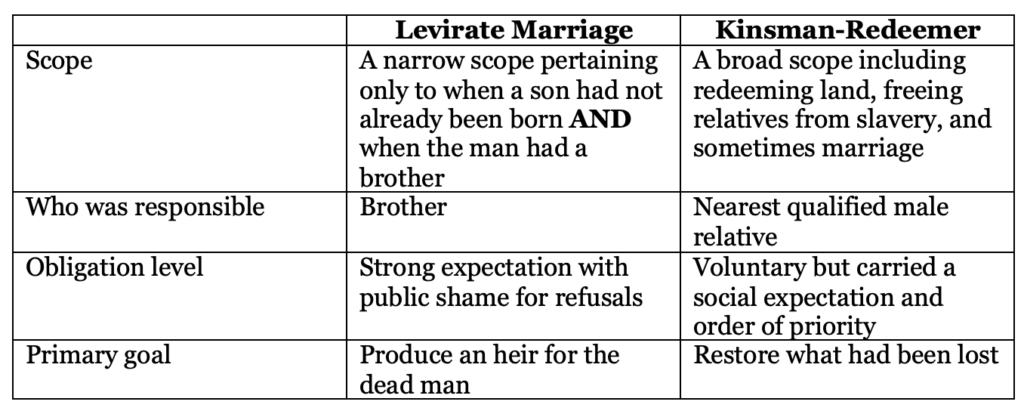
    Inquiring minds may want to know how the levirate marriage compares to the practice of the kinsman-redeemer that we see in the Book of Ruth.

    The levirate marriage applies only to a brother, who is expected to marry the widow of his deceased brother in order to produce an heir in the dead brother’s name. The kinsman-redeemer is a close relative. He acts to restore land, lineage, and family security.

    How are the practices similar?

    • Both function within the clan system.
    • That obligation is required of a close male relative.
    • The purpose for both is to preserve the dead man’s name and maintain inheritance continuity.
    • By protecting the widow, family survival is ensured.
    • Both function within the covenant structure.

    But they were different practices.

    We can’t miss the fact that both systems provided redemption through substitution. Regardless of the reasons or responsibilities, one man stepped in for a relative. Life is raised and preserved. The name, inheritance, and future is secured.

    Making the Connections #2

    Back to Joseph and Judah. Why was this story told now?

    Joseph’s story is about his actions to preserve the physical life of Jehovah’s people.  Judah’s story is about how Jehovah preserved the covenant seed. We’ll look at that more in the next devotion.

    How Do We Apply This?

    • Faithfully walk the path that leads to Jehovah.

    Father God.Your grace and mercy humble us. Forgive us when we turn away from You. Lead us back into Your fold. Amen.

    If you don’t understand something and would like further clarification, please contact me.

    If you have not signed up for the email providing the link to the devotions and the newsletter, do so below.

    If God has used this devotion to speak with you, consider sharing it on social media.

  • Joseph Was Sold into Slavery

    The tension is building in Jacob’s household and is fixing to blow a gasket. This devotional reading looks at what can happen when brothers do nothing to check their anger and jealousy.

    Nuggets

    • Joseph arrived to complete his father’s mission but was betrayed by his brothers.
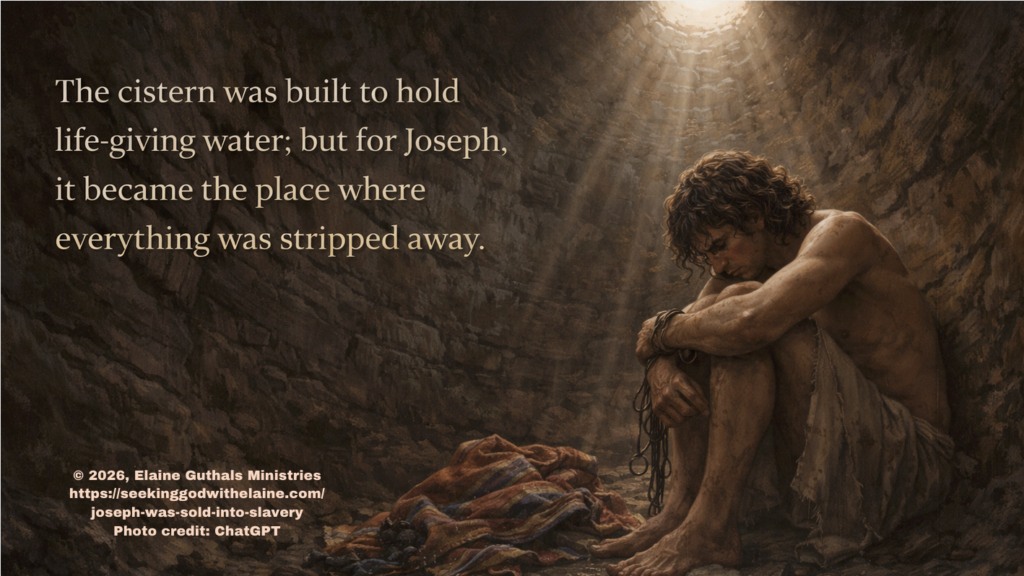
    • The cistern was built to hold life-giving water; but for Joseph, it became the place where everything was stripped away.
    • The brothers took care of Joseph and sat down to eat. 
    • Trade caravans were a familiar sight along established trade routes.
    • A suggestion was made that saved Joseph’s life.
    • The amount the brothers sold Joseph for is significant.
    • Well, Reuben’s intent was to rescue Joseph, but he didn’t.
    • Once the brothers had betrayed their brother, they had to deceive their father.
    joseph-was-sold-into-slavery

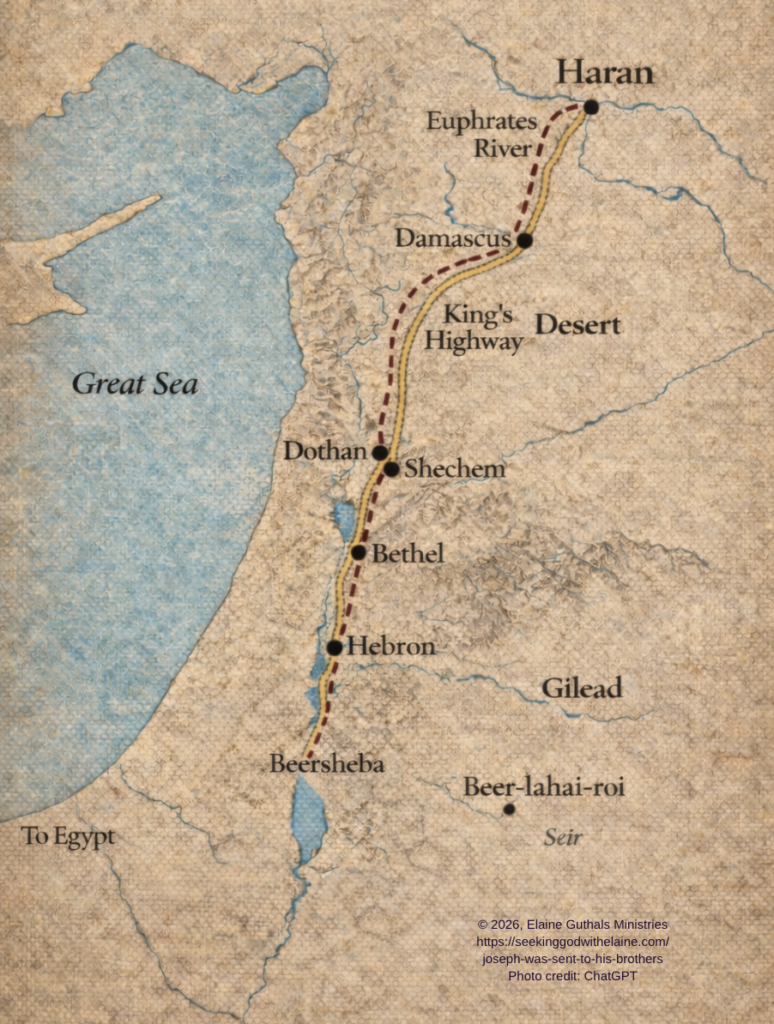
    Joseph arrived at Dothan to accomplish the mission Jacob had given him. “Go to your brothers and see how they and the flocks are doing.” It was supposed to be just a jaunt to Shechem.

    But the brothers weren’t there. They had moved on to Dothan.

    Jacob was obedient to his mission and followed them there. He had no clue what was facing him.

    Let’s Put It into Context

    To read devotions in the Creating Everything theme, click the button below.

    Devotions in the Joseph the Savior of Israel  series

    The Brothers’ Plan Implemented

    “So when Joseph arrived, his brothers ripped off the beautiful robe he was wearing. Then they grabbed him and threw him into the cistern. Now the cistern was empty; there was no water in it. Then, just as they were sitting down to eat, they looked up and saw a caravan of camels in the distance coming toward them. It was a group of Ishmaelite traders taking a load of gum, balm, and aromatic resin from Gilead down to Egypt” (Gen. 37: 23-25 NLT)

    Joseph Arrived

    Joseph arrived to complete his father’s mission but was betrayed by his brothers.

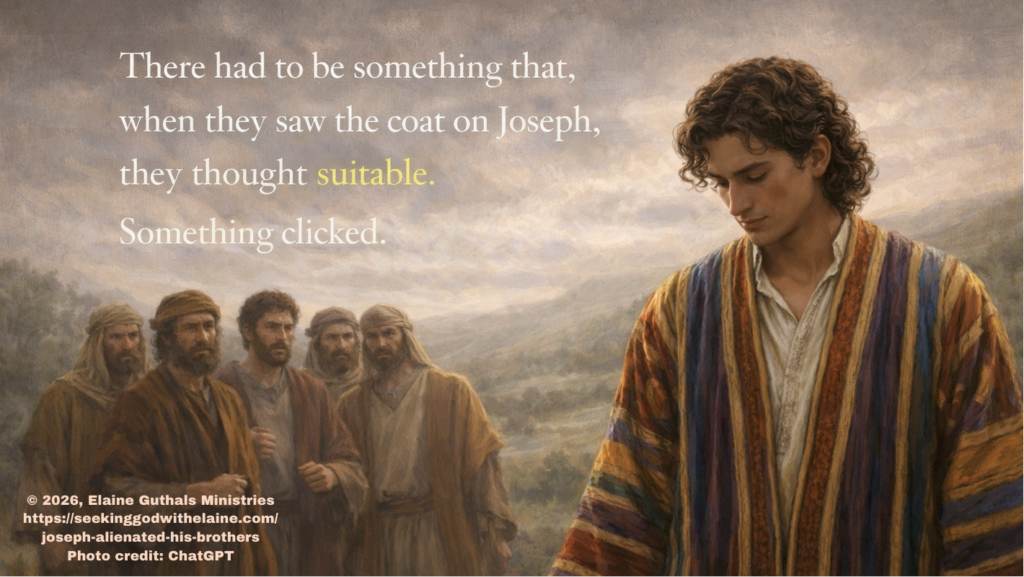
    I would believe that the first thing the brothers did after Joseph arrived and was captured was to take Joseph’s tunic. That would be a symbolic stripping him of his status. Remember, this may have been Jacob’s symbol of making Joseph his firstborn.

    Removing the tunic would have been very important to the brothers. It highlighted their jealousy of him. It helped them bond together in their hatred of Joseph.

    By divesting Joseph of the gift given by their father, they humiliated him. It was also a dig at their father, when they sent it to him to identify Joseph.

    What would it mean to Joseph? Beyond highlighting his brothers’ jealousy and betrayal, it stripped Joseph of his status as favored son. But it also stripped him of his identity.

    Beyond that, it sets the stage for future events. It sets in motion the next phase of Jehovah’s plan. It foreshadows the hardships he will endure in Egypt.

    Threw Him into the Cistern

    The cistern was built to hold life-giving water; but for Joseph, it became the place where everything was stripped away.

    If we look at the Hebrew, we see the word bôr – pit. If we use the functional definition, we see that it is a man-made water reservoir – or what we call a cistern.

    Growing up on the farm and at the house in the country subdivision we lived in when Adam was born, we had a cistern. My sister has a cistern at her house.

    In fact, the day my sister hosted the baby shower for Adam, the well ran out of water. If wells can, cisterns can. Just because the tank is buried in the yard doesn’t mean that it has water that can be used.

    We had talked about the brothers moving from Shechem to Dothan probably in search of water and grass. If the cistern was empty, that probably meant it was the dry season.

    In order to catch precious rainwater, people would carve deep chambers into rock and plaster the inside. The bottom of the chamber was probably somewhat roomy, but the top was a narrow opening.

    It was deep enough that Joseph couldn’t climb out of it, but then, it didn’t have a ladder for Joseph to climb down into it. That meant he was thrown into this dark, enclosed space.

    It was in one of those water reservoirs that Joseph was placed. The only way out was for Reuben – or someone else – to lift him out.

    Just as They Were Sitting Down to Eat

    The brothers took care of Joseph and sat down to eat.

    Talk about Jehovah working things in a hurry! It didn’t sound like much time passed at all before Jehovah started the next phase of His plan.

    But kick that around in your mind a second. One minute, the brothers throw Joseph into the pit. The next minute they say, “Let’s eat. I’m starved.”

    Are they laughing? Slapping each other on the back?

    Once again, Joseph is at a totally different place than his brothers.

    Saw a Caravan

    Trade caravans were a familiar sight along established trade routes.

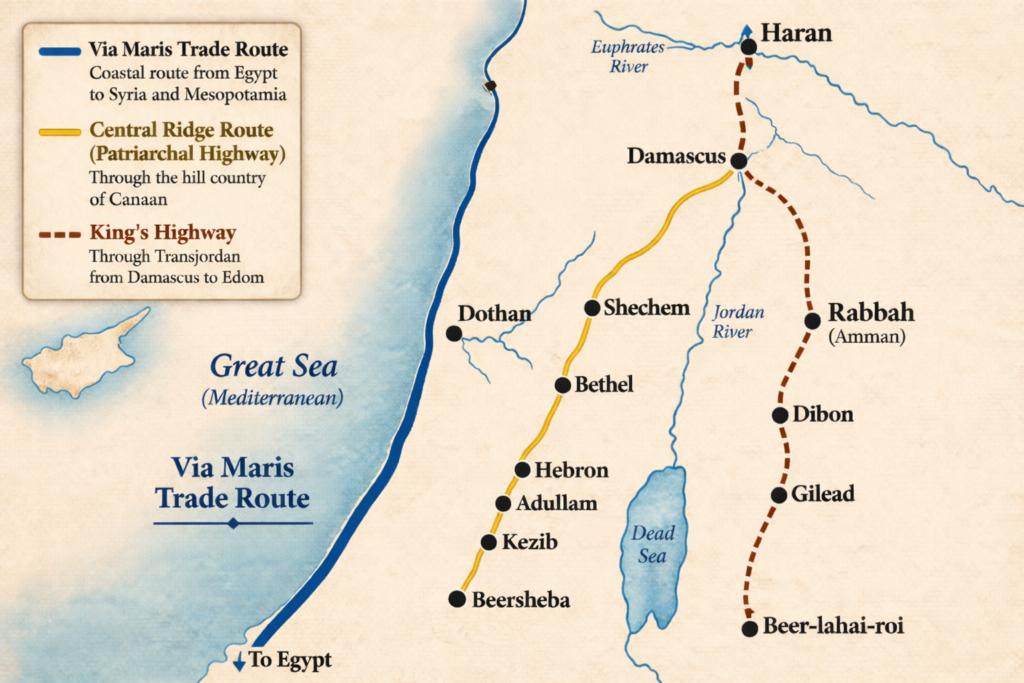
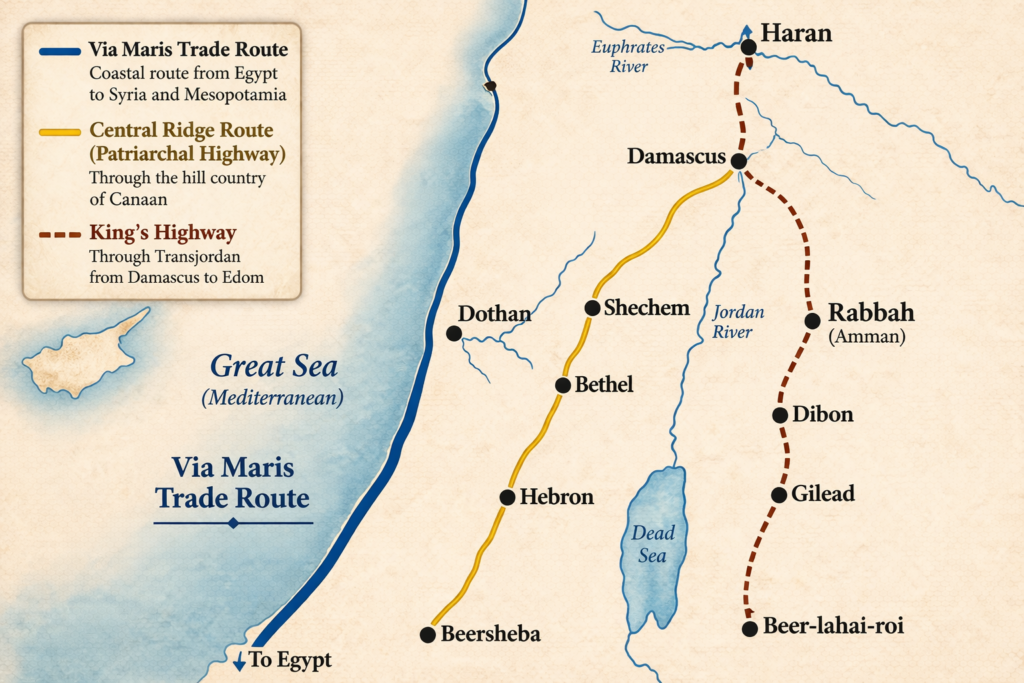
    Trade had been occurring in caravans such as this for a long time. Caravans were specialized traders moving luxury goods across regions. The routes connected Canaan to both Egypt to the south and Mesopotamia to the north.

    We are talking fixed routes established because of water access, safety, and terrain. There were known stops along the way.

    One of the major north-south routes was called the Via Maris. Dothan connected to routes feeding into the Via Maris. To me, that was why it was important to Jehovah’s plan that the brothers and the flocks travel to Dothan for Joseph to follow them.

    So, these traders were moving along an established route. These caravans had regular and predictable movements.

    These traders carried balm, resin, and myrrh. These were used in medicine, perfume, and embalming. Traders also transported slaves, moved labor, and facilitated human exchange.

    The New Living Translation noted the traders were Ishmaelites who were Midianites.

    Wait! What????

    Ishmael was Abraham’s son by Hagar. Midian was Abraham’s son by Keturah.

    The Ishmaelites were major traders at that time. Somewhere along the line, the Ishmaelites began operating together with the Midianites as an interrelated trading people.

    Yep, the brothers sold Joseph to their grandfather’s brothers’ relatives. No, there was no love lost in the family, but come on. Yes, it was a fractured family line.

    Did the Ishmaelites know who the brothers were? Did they know they were buying their kin?

    It probably wouldn’t have mattered if they did or didn’t. They were known as the slave-traders of the period.

    The Midianites were also important to Israel’s history. Those were who Moses would run to after killing the Egyptian.

    Judah Suggested Selling Joseph

    “Judah said to his brothers, ‘What will we gain by killing our brother? We’d have to cover up the crime.  Instead of hurting him, let’s sell him to those Ishmaelite traders. After all, he is our brother — our own flesh and blood!’ And his brothers agreed. So when the Ishmaelites, who were Midianite traders, came by, Joseph’s brothers pulled him out of the cistern and sold him to them for twenty pieces of silver. And the traders took him to Egypt” (Gen. 37: 26-28 NLT)

    A suggestion was made that saved Joseph’s life.

    When Judah saw the traders, he got a brilliant idea. Let’s sell Joseph.

    What made Judah steer away from murder? The first reason was profit. They would gain nothing tangible by Joseph’s death.

    There was still good in Judah. He was, at least, preserving life.

    But then, Joseph was going to Egypt to be the savior of the family. Jesus was from the tribe of Judah.

    It surprises us when we see Jehovah’s plan being carried forward through human betrayal. He will use believers as well as non-believers, good as well as evil to serve His own ends.

    That tells us that Jehovah is in control of every situation. He knows exactly how situations are going to end. He knows the circumstances that will have to be navigated to reach the end.

    But it also tells us that we are not immune from the consequences of our choices when He uses our sin to advance His plan. Joseph’s brothers and their descendants paid dearly for their betrayal.

    Sold Him for Twenty Pieces of Silver

    The amount the brothers sold Joseph for is significant.

    Joseph was sold for 20 shekels of silver. It was the standard price of a young slave in Joseph’s time.

    That was what Joseph would be considered at 17. Also, it was what he would become.

    In fact, Moses wrote in the Law that this was the value of a boy. “A boy between the ages of five and twenty is valued at twenty shekels of silver; a girl of that age is valued at ten shekels of silver” (Lev. 27: 5 NLT).

    We can’t help but think about another Man that was sold for silver. Yeshua was sold for 30 shekels — the price of a slave (Ex. 21: 32).

    Reuben’s Plan Foiled

    “Some time later, Reuben returned to get Joseph out of the cistern. When he discovered that Joseph was missing, he tore his clothes in grief.  Then he went back to his brothers and lamented, ‘The boy is gone! What will I do now?’” (Gen. 37: 29-30 NLT)

    Well, Reuben’s intent was to rescue Joseph, but he didn’t.

    These two verses bring up a question. Where was Reuben when the traders were there?

    In the last devotion, I made the comment that Reuben was going to have to watch Joseph. Just because Joseph was in a cistern, it didn’t mean he was safe. He was in the wilderness.

    But Reuben relied on the cistern construction to contain Joseph. There would be no need to guard him constantly because he could not get out on his own.

    Apparently, Reuben didn’t think his best-laid plans were going to go wrong. They did, and he panicked.

    I wonder what was the focus of Reuben’s question – what was he going to do now? Was he concerned that he couldn’t return Joseph to Jacob? Or was he concerned that he no longer had a peace offering to try to get back in Jacob’s good graces?

    Sent a Message

    “Then the brothers killed a young goat and dipped Joseph’s robe in its blood. They sent the beautiful robe to their father with this message: ‘Look at what we found. Doesn’t this robe belong to your son?’ Their father recognized it immediately. ‘Yes,’ he said, ‘it is my son’s robe. A wild animal must have eaten him. Joseph has clearly been torn to pieces!’ Then Jacob tore his clothes and dressed himself in burlap. He mourned deeply for his son for a long time. His family all tried to comfort him, but he refused to be comforted. ‘I will go to my grave mourning for my son,’ he would say, and then he would weep” (Gen. 37: 31-35 NLT)

    Once the brothers had betrayed their brother, they had to deceive their father.

    One sin usually leads to another. In this case, the brothers had to figure out what they were going to tell their father.

    Way back in Genesis 37: 19, they had decided they would tell their father that Joseph had been killed by a wild animal. They probably took much glee to tear up the tunic and cover it with blood.

    I am this many years old before I realized that the brothers didn’t have the courage to face their father. They sent a message, probably with a servant.

    Did they think that it didn’t make it a lie because they never said, “Joseph was killed by a wild animal”? They let Jacob come up with that deduction himself.

    The brothers should have expected Jacob’s inconsolable sorrow.

    Think about it. If we are right and Rachel died in 1692 BC giving birth to Benjamin, and in 1692, Jacob was led to believe that Joseph was killed by a wild animal, then Jacob had good reason to be inconsolable. No wonder he kept a tighter grip on Benjamin.

    But was Jacob right in not allowing himself to be comforted? Jehovah tells us that the mourners will be comforted (Isa. 61: 2-3).

    Jacob is so consumed by grief that he is not receiving what Jehovah provides. Was Jacob railing against Jehovah for taking Rachel and Joseph from him? Did he lose trust in Him?

    Making the Connections #1

    Okay, let’s taken inventory of the brothers.

    Reuben had slept with one of his father’s concubines. Simeon and Levi had killed the men of Shechem.

    Judah, on the other hand, found the way to save Joseph’s life and put him on the path to Egypt.

    Making the Connections #2

    Something flitted through my mind. We talked about Jacob giving Joseph the tunic around the time of Rachel’s death. It might have been a show of favoritism to his favorite wife’s firstborn son.

    It may have been Jacob’s notice that he was replacing Reuben as the firstborn son. Reuben had mounted a coup to replace Jacob.

    I wonder if Joseph’s age factored into timing. I know sons were given more responsibilities at younger ages than they are now.

    But Joseph may have thought his death was many years down the road. That is, until Rachel died. He may have been planning to make the switch for years. He only had to wait until Joseph was old enough to step up.

    Making the Connections #3

    In all these verses, Benjamin’s name is not spoken. That is because — if Rachel just died — he was an infant.

    Benjamin was never involved in the conflict against Joseph. The issues the boys had with Joseph were not transferred to him.

    Making the Connections #4

    It is interesting to know that Isaac was still alive when Joseph was sold by his brothers. Joseph was sold in 1692 BC. Isaac died in 1680 BC. He lived 12 years after Joseph was gone.

    In fact, Isaac’s death occurred shortly before the transition to Joseph’s story really kicks into gear in Egypt with dream translations.

    How Do We Apply This?

    • Realize how uncertain tomorrow is.
    • Watch how feelings escalate in families.
    • Don’t try to defeat Jehovah.
    • Don’t return too late to do Jehovah’s Will.

    Father God. Our hearts are heavy at what family members can do to each other. But Lord, we are humbled that this was all in Your plan. You worked this to Your good – and our good (Rom. 8: 28). Thank You that You are in control of all our lives. Amen.

    If you don’t understand something and would like further clarification, please contact me.

    If you have not signed up for the email providing the link to the devotions and the newsletter, do so below.

    If God has used this devotion to speak with you, consider sharing it on social media.

  • Joseph Was Sent to His Brothers

    Joseph continued his life after receiving two revelations from God. This devotional reading looks at how Joseph’s life took a turn for the worst – at the hands of his brothers.

    Nuggets

    • The brothers were doing their job.
    • Joseph obediently followed Jacob’s instructions.
    • Jehovah was positioning Joseph for the future He had for him.
    • The anger that Joseph’s brothers had for him reached a boiling point – without Joseph even saying anything.
    • Only one brother cautioned restraint – but not stopping the plan.
    joseph-was-sent-to-his-brothers

     In the last devotion, we talked about how Jehovah gave Joseph two dreams to tell him of his future. He knew how the story was going to end. People — including his brothers — were going to bow down to him.

    Joseph was fixing to have to hold on tightly to that good ending. He was going to have a long, rocky road to get there.

    Let’s Put It into Context

    To read devotions in the Creating Everything theme, click the button below.

    Devotions in the Joseph the Savior of Israel  series

    Herding the Flock

    “Soon after this, Joseph’s brothers went to pasture their father’s flocks at Shechem” (Gen. 37: 12 NLT)

    The brothers were doing their job.

    Ooo, baby. The brothers were going back to Shechem. The last time that we know they were there, it didn’t begin or end well.

    Jacob had moved his family to Shechem upon return from Paddan-aram. Shechem, the local prince, had raped Jacob and Leah’s daughter Dinah.

    The brothers were furious. After deceiving the men of Shechem to get circumcised after promising future marriages, Simeon and Levi killed all the men of the city.

    How long had men from the neighboring area to forget that horrific event?
    ~1694 BC — Dinah was defiled
    1692 — Joseph received his coat of many colors from his father Jacob.
    1692 — At the age of 17, he was sold into slavery by his brothers (Gen. 37).

    Based on Timeline from

    Something that huge and bloody would live long in people’s minds.

    We don’t know if Jacob still had the land he had bought there. “Jacob bought the plot of land where he camped from the family of Hamor, the father of Shechem, for 100 pieces of silver” (Gen. 33: 19 NLT).

    Jacob may have kept the land for his sheep, but it wasn’t like farms today that have fences for boundaries. Since the soil was thin, shepherds had to move around to find the seasonal grass. That didn’t lend itself to a permanent pastureland.

    The brothers would have shepherded the sheep in guided foraging. They would have gone where the grass was available. If this was the dry season, they may have had to go farther.

    Still, Jacob was always known as being a sojourner in a foreign land. He called Hebron home but was not fully home. He owned land in Shechem but did not have true possession as Canaanites still possessed the land.

    Status Report

    “When they had been gone for some time, Jacob said to Joseph, ‘Your brothers are pasturing the sheep at Shechem. Get ready, and I will send you to them.’  ‘I’m ready to go,’ Joseph replied. ‘Go and see how your brothers and the flocks are getting along,” Jacob said. “Then come back and bring me a report.’  So Jacob sent him on his way, and Joseph traveled to Shechem from their home in the valley of Hebron” (Gen. 37: 13-14 NLT)

    Joseph obediently followed Jacob’s instructions.

    We don’t know how long the brothers had been gone. All we know is that it was long enough for Jacob to want a status report.

    I just have two questions. Why wasn’t Joseph with them? We’ve already said that he worked with the sons of the concubines.

    “… When Joseph was seventeen years old, he tended his father’s flocks. He worked for his half brothers, the sons of his father’s wives Bilhah and Zilpah …” (Gen. 37: 2 NLT).

    If we look closely at that verse, it said Joseph often worked with them. While that word is relative, it wasn’t an everyday occurrence. This is the first time I saw that word.

    There was one reason for the brothers’ anger at the coat Jacob gave Joseph that I didn’t in the last devotion. It was believed that the coat may have been one like those given to people who did no manual labor.

    Shepherds did manual labor. Did that mean Jacob was making him firstborn when he gave him the coat?

    Maybe it was a combination of several things. We do know the overall reason. Jehovah had set up circumstances to happen in the way He wanted.

    What do we know? Jacob wanted an update on his sons and his flocks. Joseph was ready and willing to go get that report for him. Joseph was obedient.

    They Weren’t There

    “When he arrived there, a man from the area noticed him wandering around the countryside. ‘What are you looking for?’ he asked. ‘I’m looking for my brothers,’ Joseph replied. ‘Do you know where they are pasturing their sheep?’ ‘Yes,’ the man told him. ‘They have moved on from here, but I heard them say, “Let’s go on to Dothan.’” So Joseph followed his brothers to Dothan and found them there” (Gen. 37: 15-17 NLT)

    Jehovah was positioning Joseph for the future He had for him.

    Joseph followed the brothers to Shechem. Up to this point, he had done everything Jacob had asked.

    That is where plans went awry. The brothers weren’t at Shechem.

    Like we said, we don’t know the time of the year. It may have been the dry season, forcing them to move on to find water and grass.

    The man who directed Joseph to Dothan was unnamed. That’s okay. The message was much more important than his name.

    So, plans changed. Joseph needed a course correction to Dothan. Jehovah provided that.

    The Brothers’ Saw Joseph Coming

    “When Joseph’s brothers saw him coming, they recognized him in the distance. As he approached, they made plans to kill him. ‘Here comes the dreamer!’ they said. ‘Come on, let’s kill him and throw him into one of these cisterns. We can tell our father, “A wild animal has eaten him.” Then we’ll see what becomes of his dreams!’” (Gen. 37: 18-20 NLT)

    The anger that Joseph’s brothers had for him reached a boiling point – without Joseph even saying anything.

    Up to this point, the brothers probably had just grumbled and done normal sibling rivalry things. If they did something worse, it didn’t make the narrative because it wasn’t important to the story.

    In the last devotion, we talked about that their anger and jealousy had gone to the next level after the divine revelation of the dream. They hated Joseph even more (Gen. 37: 8).

    That is why they identify Joseph as the dreamer. But that is important.

    The brothers were attacking Jehovah and his revelation along with Joseph. They were saying, in essence, “We do not accept whatever form Joseph’s rule would be over us. We would rather kill him than submit to him”

    Keep this in mind. Joseph hadn’t even make it to them yet. He was still off in the distance when they saw him coming (Gen. 37: 18).

    Then their anger and jealousy escalated into attempted murder.

    It is interesting that none of the boys were singled out by name. It doesn’t tell us if Dan got the idea first or Simon.

    It says they made plans. That signifies unity.

    The way it reads is there didn’t have to be any suggestion or discussion. All immediately knew what they were going to do.

    One Dissenter

    “But when Reuben heard of their scheme, he came to Joseph’s rescue. ‘Let’s not kill him,’ he said. ‘Why should we shed any blood? Let’s just throw him into this empty cistern here in the wilderness. Then he’ll die without our laying a hand on him.’ Reuben was secretly planning to rescue Joseph and return him to his father” (Gen. 37: 21-22 NLT)

    Only one brother cautioned restraint – but not stopping the plan.

    Well, maybe Reuben didn’t immediately know what to do with Joseph. Luckily, his cool head squashed the kill plan. Or did he have a cool head?

    I wonder in whose dreamworld throwing Joseph into an empty pit to starve to death makes it better than killing him outright. The pit symbolized death without burial.

    Yes, it says that Reuben was intending to get Joseph out of the pit. How was he going to accomplish that? The other nine brothers wouldn’t have liked it one bit and would have fought him if they found out about it. I am not sure Reuben could have taken on all of them at once.

    On the other hand, alive is usually better than dead in Joseph’s way of thinking.

    Let’s look for a minute at 22-year-old Reuben’s leadership success. We know that Reuben had already slept with his father’s concubine (Gen. 35: 22). His coup had failed.

    Was he going to rescue Joseph and return him to Jacob to get back into Jacob’s good graces? I can see where that may have been a good plan for restoring Jacob’s faith in Reuben.

    It was very risky, though. Reuben would have to keep watch over Joseph in the pit, and I’m not sure he could do that without the others finding out his scheme.

    Wouldn’t it have been easier to confront the brothers with the fact that they were going to murder their brother? Reuben didn’t have that courage. Maybe he secretly wanted that outcome.

    I know. It is hard to be in the minority – especially when there are so many in the majority.

    It just seems to me that Reuben was out of his depth here. He was trying to stop a runaway freight train with his bare hands. His plan didn’t succeed because he wasn’t looking for what was right and true to do.

    Reuben was looking at what could benefit him.

    Jehovah expects us to be obedient regardless the circumstances in this world. We are to set our sights above (Col. 3: 1).

    In reality, what Reuben didn’t have was the righteousness.

    But it also shows why Reuben’s leadership was already fragile, making it feel uncertain or ineffective at times. He was trying to carry the responsibility of the firstborn – knowing he had fallen out of favor – in a very complicated household.

    The intent switches from murder to starvation. The end would probably have been the same with different means.

    Making the Connections #1

    And all Joseph did was follow his father’s directions — go find your brothers and see how it is going.

    Joseph went beyond what he originally thought the job to be. He thought he was just going to Shechem to talk with them. He had to go all the way to Dothan, instead.

    Did Joseph dig in his heels and say he wasn’t going? No, he trotted off to Dothan.

    It was well within Jacob’s rights to because he was their father. More than that, he was the owner of the sheep. Our employers have every right to expect some things from us — even if we don’t like them.

    Making the Connections #2

    Were Joseph’s brothers murderers or not?  No, they didn’t take Joseph’s life – but they planned to do so. Doesn’t that make them murderers?

    What did Yeshua say? “You have heard the commandment that says, ‘You must not commit adultery.’ But I say, anyone who even looks at a woman with lust has already committed adultery with her in his heart” (Mt. 5: 27-28 NLT).

    Robertson explained why this is the case. He wrote,

    “The thought is as bad as the act, because the act would be committed if it could. But if these brethren of Joseph had mourned over and repented of their sin, would we dare to say that the thought would have been as bad as the act? But we do say that the thought in this case was as bad as the act, because it was not restrained or prevented by any regret or repentant feeling; it was merely prevented by the coming in of another passion, it was the triumph of avarice over malice.”

    Resource

    I know. Robertson takes the scenic route in getting to his idea. What it boils down to, to me, is that we are guilty of doing the act by just thinking it – unless we repent and ask forgiveness from Jehovah.

    Making the Connections #3

    Lawson believed that the brothers disrespected Jehovah in their treatment of Joseph.  Yes and no.

    Resource

    Yes, the brothers were wrong to want to kill Joseph. Yes, they were wrong to sell him into slavery.

    But that is what Jehovah wanted to happen. If He could have gotten Joseph there in a smoother manner, I am sure He would have accomplished that.

    How Do We Apply This?

    • Expect persecution for Jehovah’s revelations from those who do not believe.

    Resource

    Father God. Navigating in this world is difficult. We have our own desires. Our family may have other desires for us. Help us to have Your righteousness – walking in the path You have for us Your way. Amen.

    If you don’t understand something and would like further clarification, please contact me.

    If you have not signed up for the email providing the link to the devotions and the newsletter, do so below.

    If God has used this devotion to speak with you, consider sharing it on social media.

  • Joseph Had Two Dreams

    Something that may feel uncomfortable can become undeniable when God brings clarity. This devotional reading looks at how Joseph’s two dreams didn’t repeat the same message — but intensified it, revealing a future his brothers refused to accept.

    Nuggets

    • Dreams are a communication tool used by Jehovah.
    • Joseph shared his dream with his brothers, and it made the situation worse.
    • It sounds like Joseph immediately told his brothers the content of his dream.
    • The brothers weren’t going to listen to God’s soft promptings if their anger is aroused.
    • I wonder if Joseph had ever been rebuked by Jacob before.
    • Regardless of how angry Jacob was at the dream, he was more tuned in to following Jehovah’s lead.
    joseph-had-two-dreams

    There are moments when something shifts from being a feeling to being a reality we can no longer ignore. What was once sensed becomes defined, and what could be brushed aside becomes impossible to dismiss.

    Joseph’s dreams mark that kind of moment. They do not introduce something new — they bring clarity to what has already begun, and in doing so, they force a response from everyone involved.

    Let’s Put It into Context

    To read devotions in the Creating Everything theme, click the button below.

    Devotions in the Joseph the Savior of Israel  series

    The Story is Set Up

    “One night Joseph had a dream, and when he told his brothers about it, they hated him more than ever” (Gen. 37: 5 NLT) 

    A Dream

    Dreams are a communication tool used by Jehovah.

    Joseph’s dreams introduce a new layer to the narrative. The Hebrew word for dream, ḥalom (חֲלוֹם), doesn’t merely describe the run-of-the-mill sleep time fantasies.

    God used them at times to speak to people. Joseph was one person to whom God talked.

    We’ve already talked about Jehovah’s dream to Abimelech. Jacob himself had two dreams where Jehovah spoke to him.

    What made Joseph’s dreams different was they were revelations about future authority, not warning or instructions.

    Told His Brothers

    Joseph shared his dream with his brothers, and it made the situation worse.

    Why in the world would Joseph tell this dream to his brothers? What was the boy thinking?!?!?! He had to have known of their hostility from when Jacob gave him the coat.

    Well, don’t we run to share good news with friends and family?  When we get a job promotion, buy a new house, have a baby, etc., they sometimes get tired of hearing about our joy.

    But doesn’t this also verify, in a way, the immaturity that we talked about in the last devotion? He carried ḥalom — revelation — but not yet the wisdom to understand what to do with it.

    Joseph had the intimation to know of his future greatness. He just wasn’t in a position communicate that to his brothers.

    We have to remember something else from the last devotion. We talked about the brothers weren’t upset only because the coat represented Jacob’s favoritism.

    The brothers didn’t ridicule Joseph because of his appearance. It doesn’t even say they envied him.

    It said they hated him even more because of the underlying message that we miss, which will be even more obvious in the coming sections.

    Joseph’s Announcement

    “‘Listen to this dream,’ he said. ‘We were out in the field, tying up bundles of grain. Suddenly my bundle stood up, and your bundles all gathered around and bowed low before mine!’” (Gen. 37: 6-7 NLT)

    It sounds like Joseph immediately told his brothers the content of his dream.

    Jacob’s family, being shepherds, would have known about agricultural practices. Even if they didn’t grow the grain themselves, they would know how it was grown and harvested.

    What Sovereign God told Joseph was people would bow down to him. That had to have been heady information for a 17-year-old boy who was an outcast in his own family.

    This is the first dream we are told that Joseph had. It probably was.

    We discussed in the last devotion the characteristics that Joseph inherited from his ancestors. To the list of characteristics Joseph possessed, Davies added an active mind. He felt having this dream and his ability to interpret his and those of others gave even more insight to his character. He wrote, “From his aptitude in creating and divining dreams, we may infer his fondness for quiet contemplation.”

    Resource

    Davies agreed with me about Joseph seemed to be arrogant. He added self-importance.

    The Brothers’ Response

    “His brothers responded, ‘So you think you will be our king, do you? Do you actually think you will reign over us?’ And they hated him all the more because of his dreams and the way he talked about them’” (Gen. 37: 8 NLT)

    The brothers weren’t going to listen to God’s soft promptings if their anger is aroused.

    Remember ages. Joseph was born in 1709 BC. Reuben probably wasn’t born much before 1715 BC. So, if Joseph was 17, Reuben wasn’t much more than 22. The rest – except for Benjamin, who would have still been in their version of diapers – were in between those two.

    Reuben, as so young a firstborn, would probably not have been very confident. Added to that, he would have still been smarting over the failed overthrow attempt to replace Jacob as patriarch.

    The rest of the brothers felt they had justified grievances against Joseph.

    Remember what I was saying two sections back? They would think of reign over them.

    The boys, like all of us, would think in terms of what-does-this-mean-to-me. But I don’t think they would have thought he was going to be crowned king.

    They would see him being identified as firstborn. Remember, that meant family leadership as well as inheritance. That meant jumping over all of them to grab the prize.

    This dream would have strengthened their belief that this was exactly what Jacob was doing.

    The dream was clear enough to be dangerous.

    The boys, though we don’t see them with Jehovah’s character at this point, would have known enough from Isaac and Jacob to know it was Him talking. They couldn’t live in the covenant family and not know even a limited knowledge of Jehovah.

    This was obviously a divine revelation. The boys could no longer deny the meaning.

    Is that how Jehovah wants us to respond to His voice, directions, and revelation — with anger and refusal? Big emphatic NO!!!

    So, regardless of how Joseph told them about the dream, the content of the dream would have sparked their immediate anger. They weren’t going to sit quietly as they tried to figure out Jehovah’s reasoning. They would have exploded immediately.

    A revelation from Jehovah should be accepted and acted upon as told.

    If we thought the brothers were angry before, they were livid now. If the situation was filled with tension, it now exploded.

    Another Dream

    “Soon Joseph had another dream, and again he told his brothers about it. ‘Listen, I have had another dream,’ he said. ‘The sun, moon, and eleven stars bowed low before me!’” (Gen. 37: 9 NLT)

    The second dream was like the first

    Before we get into the dream itself, we need to talk about the importance of having a second dream. That meant that what is described is fixed and ordered.

    The first dream suggested elevation. The second established it.

    Jehovah had plans for Joseph – and those plans were going to come to pass.

    Many times, when we read about Joseph’s dreams, we think they are two verions of the same idea. They aren’t. The second is intensified.

    We know that shepherds, of which a Joseph was, had — at times — to protect the flock over the midnight hours. He would have done this just as the shepherds in Luke 2 were performing this duty.

    That doesn’t seem too intensified.

    The second dream shakes up the structure. It includes a cosmic shift.

    The first dream showed Joseph rising among his brothers. The second showed that his position was not temporary or situational — it was part of a larger order.

    Recognized authority is heading for a change.

    Jacob’s Response

    “This time he told the dream to his father as well as to his brothers, but his father scolded him. ‘What kind of dream is that?’ he asked. ‘Will your mother and I and your brothers actually come and bow to the ground before you?’” (Gen. 37: 10 NLT)

    I wonder if Joseph had ever been rebuked by Jacob before.

    Jacob reacted negatively to Joseph’s description of his dream. Instead of just talking about agricultural practices, it told of the family hierarchy.

    If Joseph would have humbly told Jacob — the father who loved him above all others — about his dream, maybe he wouldn’t have been rebuked.

    But let’s look at it this way. If the brothers knew about the first dream, Jacob had to have known about it also. But as he did when he first found out about Dinah’s defilement, he remained silent.

    That is, he remained silent until the second dream made it unavoidable.

    We would hope that Jacob didn’t remain silent when he agreed with Joseph being designated as firstborn but then balked when it became clear that Joseph would take Jacob’s power also. Then, Jacob screamed.

    Jacob Wondered

    “But while his brothers were jealous of Joseph, his father wondered what the dreams meant” (Gen. 37: 11 NLT)

    Regardless of how angry Jacob was at the dream, he was more tuned in to following Jehovah’s lead.

    At some point, Jacob was able to step back and start thinking about what the dream truly meant. He himself had been the recipient of dreams from Jehovah. He knew He was invested in the covenant family. He was going to take care of them.

    True Jehovah hadn’t really given them that much insight yet. But they were ready for whatever changes He brought about.

    I thought it was interesting that Jacob kept things in his mind. Mary kept things in her heart.

    Making the Connections #1

    I don’t think Joseph handled it right. The way it reads to me is he informed his family through his arrogance as well as his immaturity. Even Jacob called him on it.

    We have to watch in our interactions with others. Our goal should not be to alienate them. We should strive for unity, especially when we are witnessing to others.

    But we also have to realize that Jehovah reveals who we will become before we are – and before we think we are – ready for that revelation.

    Making the Connections #2

    Dreams from Jehovah occur when there are transition points and major shifts. We may see these as the same. In this story, we see:

    • The death of Rachel, necessitating the transition of the family power.
    • Transitioning the main character in the story from Jacob to Joseph.
    • Shifting the covenant story from the family (identified as Jacob) to the nation of Israel.

    But there is one other reason why Jehovah comes to people in dreams. It is to reveal something that is currently hidden – but it won’t remain that way much longer.

    What would be revealed we know to be a couple of road trip.

    How Do We Apply This?

    • Guard against showing favoritism in our families.
    • Remember that God is not a respecter of persons.

    Resource

    Father God, help us to hear Your voice without resistance and to respond with humility instead of pride or fear. Shape our hearts so that when You reveal truth, we are willing to receive it and walk in it. Teach us to trust that You are at work, even when we do not yet understand what You are revealing.  Amen.

    If you don’t understand something and would like further clarification, please contact me.

    If you have not signed up for the email providing the link to the devotions and the newsletter, do so below.

    If God has used this devotion to speak with you, consider sharing it on social media.
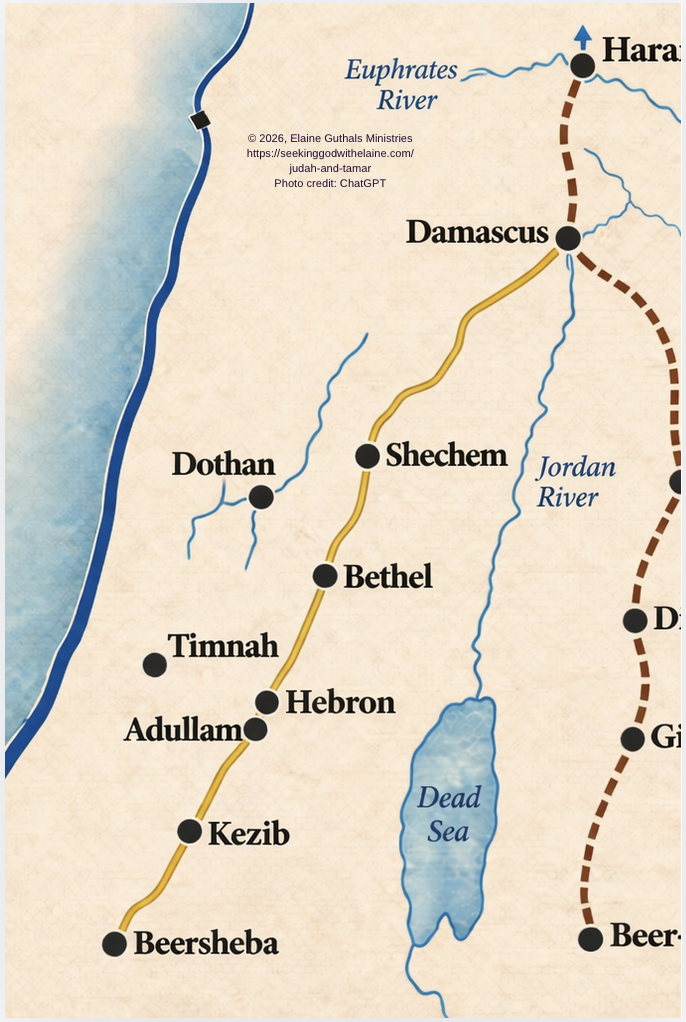
  • Joseph Alienated His Brothers

    The covenant story has moved away from Jacob. This devotional reading introduces Joseph and sets up his story.

    Nuggets

    • Jacob settled in Canaan, probably at Hebron.
    • The covenant story now transfers to Joseph.
    • Joseph was still a teenager.
    • Joseph was the employee to his half-brothers’ employers.
    • Joseph worked as a shepherd.
    • Jacob showed favoritism to Joseph.
    • Jacob gave Joseph a long-sleeved tunic that may have represented a couple of things.
    • The brothers did not react well to the coat.
    joseph-alienated-his-brothers

    We would’ve thought Jacob would have learned. He should have known from his own childhood rivalry with Esau that playing favorites with children didn’t work well.

    But Jacob must have been a slow learner. His favorite son was the eldest son of his favorite wife. And the sons of his other wives were not happy.

    Let’s Put It into Context

    To read devotions in the Creating Everything theme, click the button below.

    Devotions in the Joseph the Savior of Israel series

    Jacob Settled

    “So Jacob settled again in the land of Canaan, where his father had lived as a foreigner” (Gen. 37: 1 NLT)

    Jacob settled in Canaan, probably at Hebron.

    When we left Jacob back in Genesis 35, we had finally declared him officially home. That was because after many, many years of traveling in Canaan, Jacob went home to his father. “So Jacob returned to his father, Isaac, in Mamre, which is near Kiriath-arba (now called Hebron), where Abraham and Isaac had both lived as foreigners” (Gen. 35: 27 NLT).

    We aren’t explicitly told that Jacob settled in Hebron or when. Whenever it references where he lives, Moses always list his residence as the land of Canaan.

    But it is a pretty safe assumption that this became Jacob’s headquarters. We get two nods to this. The first is Jacob “… settled … where his father had lived …” (Gen. 37: 1 NLT emphasis added). But the statement had lived makes it sound like he didn’t settle there until after Isaac had died.

    The other one is, when Jacob sent Joseph to check on his brothers, “… Joseph traveled to Shechem from their home in the valley of Hebron” (Gen. 37: 14 NLT emphasis added). This makes it sound like they were in Hebron before Isaac died.

    Why aren’t we told specifically? That could be to emphasize that Jacob, too, lived as a foreigner – i.e., lived as a nomad without owning land. We don’t know if he still owned the land he purchased in Shechem, but he didn’t live there.

    Jacob may have taken over Isaacs tents. Isaac’s estate would have gone to Jacob, so there would have been many servants and animals that would now be under his care.

    Jacob was used to the life as a shepherd. He would have moved with the flock for which he was caring. I bet this was especially true after Rachel died.

    This, too, showed Jacob’s dependence on Jehovah. He had finally come to trust completely in his God.

    I think the second reason why Jacob wasn’t given a permanent home is because the story is no longer his. At the end of Genesis 35, the story transitioned to the 12 tribes of Israel and the fledgling nation.

    Therefore, it wasn’t important where Jacob specifically was. It was only important that the family was back in Canaan.

    Joseph

    “This is the account of Jacob and his family. When Joseph was seventeen years old, he often tended his father’s flocks. He worked for his half brothers, the sons of his father’s wives Bilhah and Zilpah. But Joseph reported to his father some of the bad things his brothers were doing.  Jacob loved Joseph more than any of his other children because Joseph had been born to him in his old age. So one day Jacob had a special gift made for Joseph — a beautiful robe. But his brothers hated Joseph because their father loved him more than the rest of them. They couldn’t say a kind word to him” (Gen. 37: 2-4 NLT)

    The covenant story now transfers to Joseph.

    Abraham’s story took 13 chapters where Jacob’s took 10. Isaac’s story was basically snippets mixed in his father’s and son’s stories.

    Joseph’s story also takes 13 chapters. We can tell from the get-go that it isn’t going to be an easy road for him.

    Seventeen Years Old

    Joseph was still a teenager.

    Okay. We need to look at some of the timeline.

    ~1715 BC — Reuben born (Leah)
    ~1712 BC — Dan born (Bilhah)
    ~1711 BC — Naphtali born (Bilhah)
    ~1711 BC — Gad born (Zilpah)
    ~1710 BC — Asher born (Zilpah)
    ~1710 BC — Issachar born (Leah)
    ~1709 BC — Zebulun born (Leah)
    1709 BC – Joseph was born (Rachel)
    c. 1692 BC – Rachel died giving birth to Benjamin (Gen. 35: 16-20)
    1692 BC — Benjamin born (Rachel)
    1692 — Joseph receives his coat of many colors from his father Jacob

    Based on Timeline from

    If Joseph were born in 1709 that means he would have been 17 in 1692. That means Jacob gave Joseph his coat of many colors the year his mother died.

    I wonder if it was before or after Rachel’s death. If it was before, I could see where our beliefs that it was just a gift of favoritism is logical.

    But, what if Jacob gave Joseph that coat because he was in mourning? That is a whole different ball of wax.

    Yes, Moses told us that the reason behind the code was favoritism. But what if the timing behind the gift was sympathy? He was helping his grieving son acclimate to a life without his mother.

    What’s wrong with that? That makes his brothers even more insensitive — in my book.

    Worked for His Half Brothers

    Joseph was the employee to his half-brothers’ employers.

    Look again at the list of brothers born to the concubines.

    ~1712 BC — Dan born (Bilhah)
    ~1711 BC — Naphtali born (Bilhah)
    ~1711 BC — Gad born (Zilpah)
    ~1710 BC — Asher born (Zilpah)

    Those in charge are only one to three years older than Joseph. That had the opportunity to end well or end badly.

    We also must recognize that the household power was shifting with Rachel’s death. Before, there were essentially two maternal camps. Now the majority of the brothers belong to Leah’s camp. He was about to anger the brothers for whom he worked. Benjamin was a baby.

    Joseph was isolated in the family structure.

    Reported to His Father

    Joseph worked as a shepherd.

    We have no clue as to what the half-brothers did wrong. It doesn’t sound like that it was a false report.

    Wells and Leale agreed that the report came out of Joseph’s love of obedience, truth, and right. That showed his righteousness. In other words, Taylor argued, Joseph was nothing like his brothers.

    Resources

    Gray had a completely different take. He thought that Joseph has been made an overseer of the brothers. That type of report would have been usual in that case. That isn’t what the Hebrew said.

    Resources

    But I’ve always thought Joseph was a little immature. He also lacked wisdom. He didn’t know how to handle his brothers.

    Because he was open, Josep shared his thoughts and feelings – so it was natural he would share his dreams. In fact, Joseph probably just blurts out whatever he wants to say because he had no guile. 

    Joseph might be right on content but wrong in delivery.

    That does nothing to make him one of them.

    Joseph’s difference, favoritism, immaturity, and calling created distance, imbalance, provocation, and threat.

    Whatever it was, it wrecked their relationships.

    Jacob Loved Joseph More

    Jacob showed favoritism to Joseph.

    Jacob hadn’t learned from having a favorite wife that that practice doesn’t work well. But then, he didn’t learn that from his own experience either. He should have remembered the division and hate that Isaac and Rebekah ushered into their family with their favoritism.

    I can see why Joseph held a special place in Jacob’s heart. He probably thought for a very long time that Joseph would be his youngest child.

    Jacob was 91 years old when Joseph was born. Since Abraham was considered old when he had Isaac at 100, Benjamin was a miracle child at Jacob’s age (108).

    Then Rachel suddenly died. I know childbirth was risky in those days, but the hope would always be there for everything to turn out fine.

    Joseph would have been Jacob’s primary tie to Rachel.

    A Beautiful Robe

    Jacob gave Joseph a long-sleeved tunic that may have represented a couple of things.

    In the Ancient Near East, clothing signified status and position. Yes, it showed favoritism, but it could have shown more. Smith said that a valuable garment was a typical gift from parents to children (and gave an elaborate description).

    Resource

    Did Jacob believe that he was designating Joseph as the future leader of the family when he gave him a coat? Rachel should have been his first wife — and probably only wife. That would have made Joseph the firstborn. In Jacob’s mind, maybe he truly was.

    I hadn’t thought before that Jacob giving Joseph the coat would have humiliated the older boys, especially Reuben.

    But have you ever thought that there had to have been something deeper than jealousy going on. Yeah, not being Mom or Dad’s favorite can hurt, but there had to be something else.

    Let’s think this through.

    Relationships are strained. There is jealousy present.

    But the “outsider” gets a coat, and boys aren’t going to ridicule him? Come on, if nothing else, young adult men are going to rag on each other.

    There had to be something that, when they saw it on Joseph, they thought suitable. Something clicked.

    Because the emotion the picture elicited wasn’t radical. It was anger with a side of envy.

    All ten of the boys would not have had the same response – legitimacy – if it hadn’t of created a reality that they couldn’t – wouldn’t – accept.

    Do any of them have a clue as to what the future holds? No.

    True calling can be visible before it is fully formed. Sometimes, we just need something to start the reveal.

    His Brothers Hated Joseph

    The brothers did not react well to the coat.

    We aren’t told what the brothers’ relationship was before Joseph was given the coat. Did they have a calm nearly two decades?

    Probably not. I doubt if the mothers had the rivalry going, the sons could have helped but have been dragged in it.

    We know that Reuben was — or at least his mandrakes were (Gen. 30: 14-15). We also discussed whether his sleeping with Jacob’s concubine was an attempt to ensure that his mother’s arch-rival’s servant wasn’t elevated to legal wife.

    We aren’t really told how the other ten brothers have a good relationship with each other. All being within seven years of each other — with the youngest ones, bunched up together – it probably had to have created problems. That is especially true for Reuben, as his normal authority as firstborn would have been weaker since he didn’t have the usual 10- to 15-year age gap with his siblings that most firstborn men enjoyed.

    Just as Taylor argued that Joseph was nothing like his brothers, he also argued that they hated him for that reason.

    Resource

    I can see that. Joseph was totally different than the rest.

    Joseph is described in words such as integrity, restraint, and consistent awareness of God. None of the other boys even come close – not even Benjamin.

    Making the Connections #1

     committed There are some who think that Joseph was sinless.

    I — and Paul — disagree. “For everyone has sinned; we all fall short of God’s glorious standard” (Rom. 3: 23 NLT).

    Yeshua was the only one that did not sin. No, Moses didn’t document a sin committed by Joseph — unless he sinned during the looting of Shechem.

    Yes, Joseph was a forerunner of the Messiah. He was not a messiah.

    Joseph does demonstrate moral clarity, as we will find out in a couple of chapters.

    One day, it boiled over.

    Making the Connections #2

    Dods had a good description of Joseph. He listed the characteristics he inherited from his ancestors.

    Resource

    Since we know the rest of the story, we know that Joseph is going to need these characteristics!

    Making the Connections #3

    What was Jacob thinking? Didn’t he know his sons? Did he have even a slight inkling that giving Joseph a special coat wasn’t going to end well.

    Jacob had to have known that the splintered relationships were present before he gave the coat.  Did it even flit through his mind that this may not have been a good idea?

    How Do We Apply This?

    • Teach our children to word.
    • Keep pure when surrounded by evil.

    Resource

    Father God. Family dynamics can be difficult. Help us to navigate thee relationships, imitating You each day to others. Amen.

    If you don’t understand something and would like further clarification, please contact me.

    If you have not signed up for the email providing the link to the devotions and the newsletter, do so below.

    If God has used this devotion to speak with you, consider sharing it on social media.

  • Jacob the Patriarch Newsletter

    jacob-the-patriarch-newsletter

    Jacob: How God Broke Him to Bless Him

    Have you ever sat down and taken a look at how complex Jacob was – and yet still feel an affinity for him?

    We may be thinking Jacob started out with something we don’t have — he was known from the womb (Gen. 25: 23). But then again, so are we (Jer. 1: 5).

    Why should we study Jacob’s life? Mercer gave us a good reason. He wrote, “His character was unlike that of the other patriarchs in this: Abraham and Isaac, such as we see them at first, are very much such as we see them at last. But Jacob only becomes his real, that is, his higher self at the last.”

    Resource

    If we take a close look at Jacob’s story, we see that Jehovah broke Jacob to bless him. That may sound strange, but Jehovah often works that way.

    In today’s terms, we might say Jacob was moving from sinner to saint. More accurately, he was navigating his Sanctification Road.

    What Jacob Did Right

    Throughout his life, Jacob deeply wanted Jehovah’s promise. He accepted that it required effort, and he was willing to patiently work for it.

    Jacob was described as quiet and settled (Gen. 25: 27). It makes you wonder if he spent time in contemplation, much like Isaac did (Gen. 24: 63). This may have happened more frequently when Jacob became a shepherd for Laban (Gen. 30: 29), surrounded by Jehovah’s beautiful world.

    When Jacob finally returned to Canaan after twenty years, he came with the intention of reconciling with Esau. He knew Jehovah wanted him to make things right.

    But when Jacob finally turned to Jehovah in prayer, it wasn’t in gratitude for being brought home. It was from fear because Esau was showing up with 400 soldiers.

    And that is where Jacob was broken.

    Jehovah met Jacob personally to wrestle with him. He removed Jacob’s advantages of strategy or strength.

    What did Jacob do?

    He clung.

    He held on to Jehovah because he had nothing else left. In that moment, Jacob learned what it meant to depend fully on Him.

    Jacob accepted that he was helpless and Jehovah was always in control. 

    What Jacob Did Wrong

    From before he was born, Jacob’s parents knew he was going to be the covenant son. But there are times when he didn’t act like it.

    From birth, Jacob was associated with grasping. He grasped at Esau’s heel — in fact, that is where he got his name.

    That pattern played out in Jacob’s life by his reaching out for what he wanted, often before the right time. To secure what he wanted, Jacob used scheming and manipulation. Jacob acted as though Jehovah’s promise depended on his effort.

    But grasping came at a cost.

    Yes, Jacob obtained the blessing – but immediately, he lost his home. What looked like success became exile, and he was running for his life.

    Oh, yes. Jacob was exiled to settle his future by obtaining a wife. What may have looked like a setback was a step forward.

    Even years later, he was still trying to manipulate outcomes, still relying on strategy instead of surrender.

    So, Jehovah stepped in – not to destroy him, but to transform him.

    Jacob’s Covenant with Jehovah

    When Jehovah confirmed His covenant with Jacob at Bethel, it was grace at its finest.

    Jacob did not deserve it.

    The first time at Bethel, Jacob bargained with Jehovah (Gen. 28: 20-21). The second time, he returned changed. He had seen Jehovah’s provision. He had learned what walking with Jehovah actually meant. 

    Jacob as a Model of Faith in Scripture

    We see the turning point at the wrestling match.

    Jacob did not leave the encounter the same. He still had flaws – he continued showing favoritism – but the direction of his life had changed.

    He honored Esau.
    He truly worshiped Jehovah.
    He blessed others.

    Jehovah taught Jacob that blessing does not come through grasping hands, but through dependent faith.  

    What Jacob Teaches Us

    We see what sanctification means through Jacob’s story. Jehovah is more than happy meeting us where we are — with the intention of taking us where He wants us to be.

    The sanctification process is not meant to be some self-help exercise. It is surrender.

    Sometimes that sanctification process means discipline. Sometimes it means breaking.

    Jehovah does not mean to destroy us. He means to reshape our hearts.

    God often breaks the self-reliance of His servants before He entrusts them with lasting blessing.

    We, too, are brought into struggles. We are shaped through wrestling. We are given the opportunity to prevail.

    We can’t overpower Jehovah. Like Jacob, we are brought to a place of acceptance where we must we stop relying on ourselves and start depending.

    And in the end, we learn what Jacob learned: it was never his story. It was Jehovah’s story of grace. 

    Leah: The Unloved Wife Seen by God

    We usually don’t think of Leah first when we think of Jacob’s wives. We think of his love for Rachel. We think of beauty, romance, and loss.

    Leah, on the other hand, was accustomed to being overlooked.

    But she was never overlooked by Jehovah.

    As Laban’s oldest daughter, she should have been married first. If the Midrash is correct in that Leah was supposed to marry Esau, her story was even sadder.

    Whatever the cause of her weak eyes, she likely lived with a sense of not measuring up.

    What Leah Did Right

    Leah entered a marriage that began with her and her father’s deception and lacked love. Yet she did not withdraw. 

    Leah made the best of her marriage with Jacob. Rather than retreating in bitterness or despair, Leah continued to live, bear children, and seek meaning in her life.

    Most importantly, she turned to Jehovah.

    We see her spiritual growth in the naming of her sons. The meaning of the names showed that she had moved from seeking Jacob’s approval (Gen. 29: 32) to praising Jehovah (Gen. 29: 35).

    That was the turning point.

    What Leah Did Wrong

    Leah was not without fault. She remained silent in the deception that began her marriage. She struggled with wanting Jacob’s affection. She entered into the rivalry when Rachel gave her servant to Jacob.

    This revealed Leah’s desire for human approval over Jehovah’s.

    At times, Leah’s bitterness did get the best of her. Her bitter comment about Rachel stealing her husband (Gen. 30: 15) was not accurate. If anyone stole Jacob, it was Leah.

    Leah, too, had to walk her Sanctification Road.

    Jehovah’s Promise with Leah

    Jehovah showed Leah much compassion. He saw her pain and provided for her.

    Through Leah came Judah – the line of the Messiah (Gen. 49: 10). Jehovah advanced His covenant promise through the unloved woman.

    Leah as a Model of Faith in Scripture

    Leah’s faith appeared to develop earlier than Jacob’s.

    By the time they leave Paddan-aram, there were signs the sisters had reached some level of peace. Leah had learned to place her identity not in Jacob’s love, but in Jehovah’s care.

    What Leah Teaches Us

    Leah shows us that Jehovah sees what this world overlooks. He wants us when the world does not. He sees us in our deepest pain.

    We are seen because Jehovah is involved in each of our lives. He sees the unloved, overlooked, and quiet suffering.

    And He works there.

    Leah’s story reminds us that sanctification is a process. Growth happens in places of pain, not comfort.

    Rachel: A Woman Deeply Loved, Deeply Longing

    Rachel’s story carries a different kind of weight.

    Rachel seems to be one of those women who are more of everything. She is more beautiful, more passionate — and at times it seems more self-centered.

    Rachel’s story has it all — love, jealousy, barrenness, faith, and covenant purpose.

    She was deeply loved – and yet deeply burdened. Her life was marked by longing.

    What Rachel Did Right

    Rachel was the love of Jacob’s life. He loved her with an intensity that said something about her. She was someone whom he was willing to wait for, work for, and be sanctified for.

    Rachel wanted children — not just for herself, but to take part in Jehovah’s covenant family.

    She followed Jacob when Jehovah called him back to Canaan (Gen. 31:13). She stayed within the covenant line and desired to belong to what God was doing.

    In time, she recognized that children came from Jehovah.

    What Rachel Did Wrong

    Rachel’s longing turned into desperation. Her bitter demand for children (Gen. 30: 1) revealed how deeply this struggle affected her. Instead of waiting, she tried to take control – giving her servant to Jacob and intensifying the family conflict.

    We don’t know the real reason behind why Rachel stole Laban’s teraphim. Whether it was about control, inheritance, or belief, it showed a lack of full trust in Jehovah.

    Rachel’s faith was real – but it was often mixed with urgency and struggle.

    Jehovah Promise with Rachel

    Genesis is brutally honest regarding the toll Rachel’s barrenness took on her. She may have reacted with anger, jealousy, and despair, but Jehovah did hear her cry.

    The child Jehovah gave her was one of the most significant figures in Israel’s history. Joseph is not only considered the Old Testament savior of Israel, but he is also compared to the New Testament Savior as a forerunner.

    Rachel as a Model of Faith in Scripture

    Rachel does not resolve as cleanly as Jacob or Leah. Her story remains marked by tension.

    But that is what makes it relatable.

    She believed yet struggled. She hoped yet wrestled with envy and fear.

    And still — Jehovah heard her.

    What Rachel Teaches Us

    Rachel shows us that longing and faith can grow side by side. Both can be messy.

    Rachel’s life reminds is that painful circumstances can distort relationships – but they do not stop Sovereign God’s purposes.

    Jehovah works through real people — people who love, envy, hope, fail, and are still graciously used by God.

    Final Thought

    These three lives together show us what sanctification really looks like:

    • Jacob — broken from self-reliance
    • Leah — transformed through quiet suffering
    • Rachel — shaped through longing

    None of them were perfect.

    All of them were changed.

    And all of it points to the same truth:

    It is not our story.

    It is Jehovah’s.

    creating-everything-theme

    To read devotions in the Creating Everything theme, click the button below.

    Devotions in the Jacob the Patriarch series