Blog

  • The Gospel’s Doctrine

    God has told us what we should believe. This daily devotional looks at how false teachers try to lead us to believe something else.

    Nuggets

    • False teachers try to get us to believe in false doctrine.
    • Holding onto Jesus keeps us from growing away from God.

    Devotions in the Joy in the Gospel series

    What the false teachers are trying to sell us is wrong. We need to keep our eyes on Jesus.

    Let’s Put It into Context

    Here is a running list of what we’ve discussed previously.

    Following the Wrong Doctrine Condemns Us

    “Let no one condemn you by delighting in ascetic practices and the worship of angels, claiming access to a visionary realm. Such people are inflated by empty notions of their unspiritual mind” (Col. 2: 18 CSB)

    False teachers try to get us to believe in false doctrine.

    Verse 18 just totally confused me in this version. So, let’s break it apart and try other versions.

    “Let no one cheat you of your reward …” (Col. 2: 18 NKJV).

    Okay. That is much better.

    Maclaren reminded us of how many times Paul used a sports metaphor to help us understand some biblical concept. Jesus is the judge who awards us our crown.

    Resource

    False teachers want to cheat us out of that crown. Oh, some may not be consciously doing that.

    But that is what happens when we fall prey to their teaching.

    Barlow gave us a very good reminder. He said that, though the opinion may be wrong, it doesn’t always negate our salvation.

    Resource

    I can see that. We may think we know what God is meaning or how He did something.

    We would be wrong.

    “For my thoughts are not your thoughts, neither are your ways my ways, declares the Lord. For as the heavens are higher than the earth, so are my ways higher than your ways and my thoughts than your thoughts” (Isa. 55: 8-9 ESV).

    What condemns us is when we degrade what Christ has done for us. When we don’t make Him Lord and Savior of our lives, we are not genuinely saved.

    Here is another confusing phrase. So, let’s try another version.

    “Do not let anyone who delights in false humility and the worship of angels disqualify you. Such a person also goes into great detail about what they have seen; they are puffed up with idle notions by their unspiritual mind” (Col. 2: 18 NIV).

    Let’s take the humility first. Have you ever known someone who played at being humble? Humility is a character trait that diminishes pride and places dependence on God while holding a modest view of our importance with respect to others.

    Maclaren talked about a self-conscious humility. When we want recognition for our humility, it really isn’t humility.

    But we don’t want to go to the other extreme Maclaren talked about. We don’t want to be so humble that we think we are worthless.

    Okay. That is much better. At first, it read to me in the Christian Standard Bible that Paul was condoning angel worship.

    Oh, no. That isn’t what Paul is saying. Remember, we just talked about degrading what Christ has done for us.

    Worshiping angels does just that. Davenant wrote, “In worshipping angels the seducers diminished the dignity of Christ, for they took away from Him the prerogative of the Head, and incorrectly judged of His virtue and sufficiency.”

    Resource

    But somewhere along the way, it changed from have not seen to have seen.

    • “Let no man beguile you of your reward in a voluntary humility and worshipping of angels, intruding into those things which he hath not seen, vainly puffed up by his fleshly mind” (Col. 2: 18 KJV emphasis added).
    • “Do not let anyone who delights in false humility and the worship of angels disqualify you. Such a person also goes into great detail about what they have seen; they are puffed up with idle notions by their unspiritual mind” (Col. 2: 18 NIV emphasis added).

    Vaughan had some questions, too. He wrote, “But this is a strange argument for one whose whole walk was by faith and not by sight, and who would hardly count it an answer to a professed revelation to say ‘you are intruding into that which you have not seen, and therefore you cannot know’ with modern materialists. But this difficulty is removed in the Revised Version, which, on high authority, omits the ‘not,’ and inverts the argument. Again, the Greek word ‘intruding into’ means ‘dwelling in’ or ‘taking his stand upon,’ and the charge now becomes that of self-complacent self-conceit.”

    Resource

    Yay! I am not the only one confused.

    What Vaughan went on to say — in my interpretation — is that these people have opinions on what they saw. In other words, they just think they saw it.

    We can think we know how things are — and be very vocal about it. We can take a stand and appear to be locked into that interpretation.

    And we can be totally wrong.

    We can see what we saw — and not understand it.

    Maclaren had a slightly different spin on the visionary realm. We know that there were a lot of visions in the Old Testament.

    Resource

    We talked before that visions was one way God talks to us. “And it shall come to pass afterward, that I will pour out my Spirit on all flesh; your sons and your daughters shall prophesy, your old men shall dream dreams, and your young men shall see visions” (Joel 2: 28 ESV).

    To read a related devotion, click the button below.

    Maclaren said it was about having the visions. He said it was more unreal imaginations.

    The issue is that the false teachers are not living in reality. The foundation of their beliefs and arguments is faulty.

    Part of the false teachers’ problem was they were arrogant. They thought they had this intellectual ability.

    But what they had was only a reflection of their sinful nature.

    Resource

    Holding onto What Is Right

    “He doesn’t hold on to the head, from whom the whole body, nourished and held together by its ligaments and tendons, grows with growth from God” (Col. 2: 19 CSB)

    Holding onto Jesus keeps us from growing away from God.

    Maclaren didn’t hold back. He told it like it is. He wrote, “The special forms of these errors are gone; but the tendencies which underlay them are as rampant as ever.”

    There was also a list of things Maclaren thought was still relevant in our day.

    • Our self-conscious humility
    • Our reliance on our own opinions

    We base our salvation through Him in Him. He is our source of life.

    TheGospelsDoctrinePin

    Making the Connections

    This just solidifies, to me, that we cannot worship God in any other way than He has deemed right.

    • We can’t pick and choose how or what we are going to worship.
    • We don’t get to choose the style or duration of the worship.

    God is in charge.

    How Do We Apply This?

    • Do not fall under the sway of false teachers.
    • Worship God as He has chosen.

    Father God. We love You. We believe in Your gospel. We will not be pulled from Your doctrine. We will worship You in the ways that You have chosen. Amen.

    What do you think?

    Leave me a comment below (about this or anything else) or head over to my Facebook group for some interactive discussion.

    If you don’t understand something and would like further clarification, please contact me.

    If you have not signed up for the email daily or weekly providing the link to the devotions and the newsletter, do so below.

    If God has used this devotion to speak with you, consider sharing it on social media.

  • The Gospel’s Freedom

    Becoming disciples of Christ gives us freedom from enhanced laws false teachers attempt to put on us. This daily devotional looks at how areas that these are targeted for increased restrictions.

    Nuggets

    • Freedom from judgment can be found in several areas.
    • Jesus’ Light will come, and He will cast out the shadows.

    Devotions in the Joy in the Gospel series

    This was a hard devotion to write. I felt the sermons really didn’t flow about what Paul was trying to tell us.

    Let’s see what we can find out.

    Let’s Put It into Context #1

    Here is a running list of what we’ve discussed previously.

    Let’s Put It into Context #2

    “And when you were dead in trespasses and in the uncircumcision of your flesh, he made you alive with him and forgave us all our trespasses. He erased the certificate of debt, with its obligations, that was against us and opposed to us, and has taken it away by nailing it to the cross” (Col. 2: 13-14 CSB)

    Jesus sacrificed His life on the cross so that His blood could be used to pay the penalty for our sins. The Gentiles were spiritually dead because they were not circumcised. The Jews were spiritually dead even though they had been circumcised.

    Once Jesus was born, died, and rose again, the religious ceremonies were not enough. What may have been fine in the past, no longer was.

    Owen put it this way. He wrote, “The great error of Judaism as the rabbis made it was to mistake religious ordinances for religion; equally fatal is the same error in its pseudo-Christian shape.”

    Resource

    Most of the time when we are spiritually dead, we don’t know just how bad we have it. It is bad.

    If we aren’t focused on God, we just keep getting more and more insensitive to His love. We get worse instead of better.

    We fulfill the obligations of morality through love, not because it is the law.

    The Areas Free from Judgment

    “Therefore, don’t let anyone judge you in regard to food and drink or in the matter of a festival or a new moon or a Sabbath day” (Col. 2: 16 CSB)

    Freedom from judgment can be found in several areas.

    We’ve talked about these verses before. When I read them then, I was thinking this is getting back to works.

    We aren’t saved by works. “For it is by grace you have been saved, through faith — and this is not from yourselves, it is the gift of God” (Eph. 2: 8 NIV).

    To read a related devotion, click the button below.

    But if you put it in the context of the rest of the verses in Colossians, it is talking even more than that.

    We have to put it fully in context of the times, though. Jones helped with that. He wrote, “Many are still Jewish in their feelings.”

    Resource

    I was just talking with someone today, saying that the Pharisees liked their tradition. They probably liked their ceremony, too.

    Person of Interest

    I think it would be safe to assume there were common Jews who felt the same way.

    Jesus wasn’t having any of that. He kept trying to get them to understand that the relationship with God is more important than the religion.

    Freedom in Food and Drink

    These verses also remind us of what we talked about in Romans Part II. “Welcome anyone who is weak in faith, but don’t argue about disputed matters. One person believes he may eat anything, while one who is weak eats only vegetables” (Rom. 14: 1-2 CSB).

    Romans 14 was also telling the disciples not to be making new laws and commandments on topics on which God has shown his indifference. It was saying we are not to give rise to contentious feelings among disciples.

    We can’t force someone to believe the same way that we do. We shouldn’t judge someone because of their opinions. We shouldn’t make our opinion of the law.

    But the Colossians verses are the flip side.

    Here, Paul was saying we have to follow God’s lead as to how we should worship Him. The false teachers don’t get to decide what is the right way.

    Maclaren interpreted the meat and drink to refer to that which was used for idol sacrifice. To the Jews, that meat and drink would be unclean.

    Resource

    As cleanness refers to the Israelites remaining holy — set apart, perfect, and morally pure — uncleanness would refer to that which made them impure.

    Spence said that, because the Old Testament had strict dietary instructions in some instances, the Jews would have thought them crucial to salvation, thus making it necessary for the Gentile to follow them to become Christians.

    Resource

    Jesus was adamant that salvation is not awarded based on what we eat. “It’s not what goes into the mouth that defiles a person, but what comes out of the mouth — this defiles a person” (Mt. 15: 11 CSB).

    Freedom for Festivals and the Sabbath

    Maclaren listed a couple of a sacred seasons on which the Colossians were not to be judged. He noted that this verse was talking about annual festivals as well as the monthly feasts of the new moon.

    Does it seem odd that Paul would say not to judge on seemingly pagan festivals? It does to me.

    Maclaren addressed that. He wrote, “The yearly feasts set forth various aspects of Christ’s work …” No, he does expand on that, except to say “He does not quarrel with the rites, but with men insisting on them.

    Resource

    But then again, doesn’t it seem strange that the weekly Sabbath day was also included to the list?

    Spence said that we are no longer to observe the Sabbath. To Paul, it had no more significance than did the pagan festivals.

    Barlow identified why we should not be judged for observing the Lord’s Day. Our relationship with God must be an inward faith.

    Jones focused on the Sabbath issues in his sermon. The first one he addressed was the Lord’s Day as compared to the Jewish Sabbath.

    Worship was changed from the end of the week to the beginning of the week. Worship is our personal or corporate response of admiration (confession, thanksgiving, praise, etc.) based on our attitude to God’s presence and our imitation of His character.

    What Paul was talking about here were two totally different days. The Jewish Sabbath is different than the Lord’s Day.

    The Jews would have been used to participating in the Sabbath every week. The Sabbath would not have been foreign to them in that regard.

    Baptism was the second point Jones brought up. He was addressing the belief that disciples need to be baptized in order to gain salvation.

    Baptism is the symbol of our conversion experience, providing the physical evidence that we have died and been buried to sin and have risen in a new spiritual life with Jesus.
    Salvation is the gift of life through the deliverance from condemnation and sin to acceptance and holiness and changes us from being spiritually dead to spiritually alive.

    • Sins are actions by humans that disobey God and break one of His reasonable, holy, and righteous laws and commandments, goes against a purpose He has for us, or follows Satan’s promptings.
    • Holiness is the transcendent excellence of His nature that includes elements of purity, dedication, and commitment that lead to being set apart.  means possessing God’s moral character, having eliminated the stain of sin.
    • Spiritual death is the spiritual separation from God that occurred as a consequence of Adam and Eve’s original sin. The spiritually alive are those who have ABCDed, so they are no longer separated from God.

    The ABCDs of Salvation

    If you have not become a believer in Christ, please read through the
    Plan of Salvation and prayerfully consider what God is asking you to do.

    A – admit our sins
    B – believe His Son Jesus is our Redeemer
    C – confess God as Sovereign Lord

    D – demonstrate that commitment by making any changes needed in our lives to
    live the way in which God has called us

    The Disciple’s Job Description

    Glossary

    Jones was adamant that baptism did not gain salvation for us. He wrote, “But when it [baptism] is regarded as regenerative, and as creating a relation which it only recognizes, the sign is mistaken for the thing signified, and a simple ordinance converted into a fruitful error.

    • Regeneration is being changed from spiritually dead to spiritually alive and the internal requickening in us that God brings about through the work of the Holy Spirit to give us new character.

    The last point Jones brought up was the Lord’s Supper. The Lord’s Supper is a memorial instituted at the Passover right before Jesus’ death that uses common elements — bread and wine — to commemorate His death.

    Jones cautioned us that we have to remember what the Lord Supper expresses — Jesus’ suffering and love. He wrote, “But when the idea of spiritual magic is introduced, instead of being helpful to piety, it becomes a stumbling-block and an offence (sic).

    Resource

    Freedom Because of a Shadow

    “These are a shadow of what was to come; the substance is Christ” (Col. 2: 17 CSB)

    Jesus’ Light will come, and He will cast out the shadows.

    Ooo, baby. Verse 17 is about as clear as mud.

    Maclaren said this referred to the debate that Paul always addressed — how do the Gentiles fit into this new religion? Is Christianity an offshoot of the Jewish religion, or is it something different?

    I am having trouble interpreting what Maclaren said. Bottom line is he said that Jesus’ Light shines out and casts shadows. He wrote “The light from the Throne is behind Him as He advances across the centuries, and the shadow is thrown far in front.”

    Resource

    Spence thought Paul was somehow talking about how Jesus came to be our Savior and Redeemer. His birth and death were foretold throughout the Old Testament.

    TheGospelsFreedomPin

    Making the Connections

    How do we connect all of this? It seems like we went here, there, and yonder.

    Let’s just say that God has specific ideas about how we should live our lives. Augmenting God’s laws and commandments are not a smart practice. Ignoring them isn’t any better either.

    How Do We Apply This?

    • Address our desire to throw out all things old.
    • We don’t want to add to or subtract from God’s laws and commandments. God will judge us on his interpretation of these, not ours.
    • Only Jesus can satisfying the longing in our souls.

    Resource

    Father God. You instructed Paul to write detailed interpretations of Your laws and commandments. Thank You. Help us when we have trouble comprehending His words. Give us not only the knowledge to know what we are to do, but the heart to act on them the way You require of us. Amen.

    Searching for and Seeking God

    Hearing His Word (Rom. 10: 17).
    Reading His Word (Rev. 1: 3).
    Praying to Him (Heb. 4: 16).
    Studying His Word (Ac. 17: 11).
    Meditating on His Word (Ps. 1: 1-2).
    Memorizing His Word (Ps. 119: 11).

    If you have not admitted that your relationship is not right with God,

    have not asked Jesus to be your Lord and Savior,

    and have not confessed your sins,

    please read through the Plan of Salvation and prayerfully consider what God is asking you to do.

    Related Links

    Related Links

    Related Links

    Artist

    Related Links

    I have created a worksheet of the questions above. Click on the button below to access it.

    Don’t know what your spiritual gifts are?

    Take this Spiritual Gifts Inventory

    The Disciple’s Job Description

    Complete Job Description

    Individual Description

    The Disciple’s Job Description

    Complete Job Description

    Individual Description

    Job Duty #4
    Proclaim the Gospel (Mark 16: 15)

    Job Duty #6
    Make Disciples (Matthew 28: 19-20)

    It Was Enough
    Vocalist: Elaine Guthals
    Keyboard: Chris Vieth

    What do you think?

    Leave me a comment below (about this or anything else) or head over to my Facebook group for some interactive discussion.

    If you don’t understand something and would like further clarification, please contact me.

    If you have not signed up for the email daily or weekly providing the link to the devotions and the newsletter, do so below.

    If God has used this devotion to speak with you, consider sharing it on social media.

  • Reckless Love

    Today is a music day. To read and hear the song, click here.

    It is hard to think about God having a reckless love. He does, if we consider reckless as a type of all-consuming.

    We can’t fathom how much God does love us. Even though He knew before He made us that we would sin, He made us anyway.

    God loves us completely. No, He dooesn’t love — or tolerate — our sin. We have to get rid of it to be like us to Him.

    God can see us without the pretense. Look to Him.

    Reckless Love
    Vocalist: Elaine Guthals
    Keyboard: Chris Vieth

    RecklessLove2Pin

    What do you think?

    Leave me a comment below (about this or anything else) or head over to my Facebook group for some interactive discussion.

    If you don’t understand something and would like further clarification, please contact me.

    If you have not signed up for the email daily or weekly providing the link to the devotions and the newsletter, do so below.

    If God has used this devotion to speak with you, consider sharing it on social media.

  • Temperance as a Fruit of the Spirit

    The last fruit of the Spirit is temperance. This daily devotional looks at the self-control and providence of temperance.

    Nuggets

    • Controlling our passions through moderation produces the order God requires.
    • We must put the appropriate response on God’s provisions.
    • Disciples can expect advantages for being temperate.
    • While temperance shows spiritual maturity, regulation will be needed even for perfected disciples.

    To read devotions in the Redo for Godliness series, click the appropriate button below.

    Devotions in the Fruit of the Spirit from the Inside Out series

    Here is that word again. We have had it before. Temperance is habitual moderation or self-control.

    To read a related devotion, click the button below.

    Let’s look at it this time as a fruit of the Spirit.

    Let’s Put It into Context #1

    “But the fruit of the Spirit is love, joy, peace, patience, kindness, goodness, faithfulness, gentleness, and self-control. The law is not against such things” (Gal. 5: 22-23 CSB)

    Here is a running list of what we’ve discussed previously.

    Let’s Put It into Context #2

    Manning grouped the last two fruits of the spirit together. He wrote, “Temperance or continence means most especially the repressing of passions — the passion of anger, the inclination to pleasure, to honour, to wealth; it is the transparent purity of the soul, and the custody Of the senses, because they are the avenues to the soul by which sin enters. Such, then, are the fruits of the Holy Spirit. Every soul that is in the grace of God has in it this fertility. It may not bear them all in equal measure, but it bears them all in some proportion.”

    Resource

    The Self-Control Part of Temperance

    “It teaches us to say “No” to ungodliness and worldly passions, and to live self-controlled, upright and godly lives in this present age” (Ti. 1: 12 NIV)

    Controlling our passions through moderation produces the order God requires.

    There is a big difference between the world and God. The world thrives on chaos. It even promotes it, especially through splintering people into different divisions.

    God, on the other hand, likes order. Murray explained that. He wrote, “Order has been called the first law of God. And order implies perfect control on the part of intelligence over all things within its domain.”

    Resource

    We’ve talked about self-controlled before. Self-control is the ability to withstand temptations by managing ourselves — our emotions, thoughts, and behaviors.

    To read a related devotion, click the button below.

    Murray argued that the integrity of self-control is recognized when we acquire knowledge about it at the direction of God. We also see it when we dig deep into the interactions of nature and man.

    Another term we use frequently is being sober. Sober is a character trait distinguished by self-control, genuineness, and sound moral judgment.

    Glossary

    To read a related devotion, click the appropriate button below.

    What do we have to have self-control over? Well, ourselves. If we don’t act with restraint and direction, we are out of control. Our behavior isn’t consistent, and we are ruled by our appetites and passions.

    Sometimes, we think these appetites are purely sinful. Murray reminded us that they are natural — physical and mental.

    Besides, we have to make the decision to sin. The saying, “the devil made me do it” really isn’t accurate.

    It is our choice because we have free will. Free will is the ability within us to make decisions, which determine actions that produce character.

    We may think the free will applies only to whether we are going to accept Hod or not. It also applies to whether we are going to commit that sin or not.

    I like something else Murray said. He wrote, “Laws control the actions; but actions are only the results of emotional causes. And while the actions can be dictated to by law, can be checked — yet the emotional causes strike their roots deeper into the nature than the hand of law can reach.”

    Resource

    Murray’s statement has a lot of components to it. Let’s unpack it.

    • We say we are governed by laws, but they aren’t always the deciding factor. If they were, there would be no murder — or speeding for that matter. Or lying.
    • If emotions cause actions — and we know they do — anger and grief especially — laws do not always control actions.
    • That means we need something higher than laws and emotions to help us with self-control.
    • That is where God steps in.

    Self-control is equated with self-mastery. I really liked the synonyms for mastery.

    • Proficiency
    • Capability
    • Knowledge
    • Comprehension
    • Familiarity
    • Grasp

    It is not only the ability and the understanding needed for self-control. We have to have the command to do it. Command only comes through working on it.

    You know, practice makes perfect.

    Apply that to character. Many think that laws limit their happiness because they limit their freedom.

    The opposite is the case. Lawlessness threatens their happiness.

    The Providence Part of Temperance

    We must put the appropriate response on God’s provisions.

    Whoa! I hadn’t thought of it this way before.

    Thornton wrote, “To be temperate we must use with moderation the common comforts that Providence bestows for the support of nature. The Christian must neither insult the God of providence by despising His gifts, nor provoke Him by wasting and abusing them.”

    Resource

    Providence is God’s acts of meeting the needs of His creation. We know that providence is one of His attributes. God’s Providence is His care of us because of His loving nature to provide.

    To read a related devotion, click the button below.

    But don’t we say so many times, “God, don’t give me that job to do for Your kingdom.” We don’t feel qualified to do it. We don’t think we would like it.

    We can have a whole laundry list of excuses why we can’t do what God wants us to do.

    Hamilton said it boiled down to love. He wrote, “Temperance is love taking exercise, love enduring hardness, love seeking to become healthful and athletic, love striving for the mastery in all things, and bringing the body under.”

    Resource

    Hmmm. Wasn’t love the first fruit of the Spirit? Did it just come full circle on us?

    Well, isn’t “… the greatest of these is love”? (I Cor. 13: 13 CSB). Isn’t the two greatest commandments based on love?

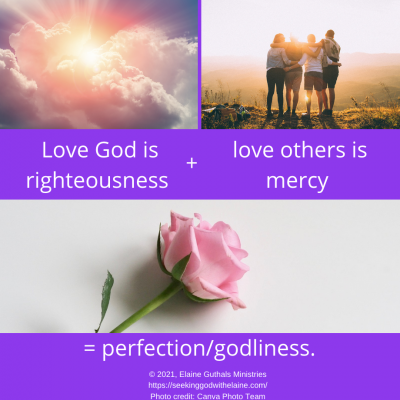
    Love God is righteousness + Love people is mercy = perfection/godliness

    Advantages of Temperance

    Disciples can expect advantages for being temperate.

    There are many advantages of having temperance.

    • We no longer are ruled by the curse and power of sin.
    • We gain control of our sinful nature.
    • We benefit others by focusing more on benevolence than supplying our our wants.
    • We learn to fulfill our duties to God.

    Resource

    What Makes Temperance the Last Fruit?

    While temperance shows spiritual maturity, regulation will be needed even for perfected disciples.

    There was a reason Paul put temperance last in the list of fruits of the Spirit. Newbolt gave us a good reason. He wrote that, if we look at is as even a perfect person needs regulating and discriminating power, it would be “… as if each sense, each feeling, each power, when it has aroused its dormant energies, were moving amidst fresh possibilities of wealth and satisfaction, which needed regulating.”

    That throws an interesting twist to perfection doesn’t it?

    • The perfected state indicates maturity has been reached because the combination of the spiritual graces, when all are present, form spiritual wholeness or completeness.
      • Spiritual graces are worldly morals that have been submitted to God to further His kingdom instead of enhancing this world.
    • Perfection means we have become holy, sanctified, and righteous.

    Glossary

    Do we sometimes think that we won’t need this regulation once we hit the pearly gates? We think the “… we will all be changed, in a moment, in the twinkling of an eye …” (I Cor. 15: 51-52 CSB) is going to take away the need for regulation.

    Well, we are not only getting a new body, but a new heart. I thought that was going to take care of the imperfections and rebellion known in these bodies.

    Maybe Newbolt is just talking about navigating the Sanctification Road. We are immediately perfect after conversion. We have to grow into it.

    Sanctification is the transformation of mind, body, and soul, which begins with regeneration, gradually changes our nature and morals through the promptings of the Holy Spirit, and ends with perfected state of spiritual wholeness or completeness.

      • Regeneration is being changed from spiritually dead to spiritually alive and the internal requickening in us that God brings about through the work of the Holy Spirit to give us new character.
      • Spiritual death is the separation from God that occurred as a consequence of Adam and Eve’s original sin. The spiritually alive are those who have ABCDed, so they are no longer separated from God.

    The ABCDs of Salvation

    If you have not become a believer in Christ, please read through the
    Plan of Salvation and prayerfully consider what God is asking you to do.

    A – admit our sins
    B – believe His Son Jesus is our Redeemer
    C – confess God as Sovereign Lord

    D – demonstrate that commitment by making any changes needed in our lives to
    live the way in which God has called us

    The Disciple’s Job Description

    Glossary

    TemperanceAsAFruitOfTheSpiritPin

    Making the Connections

    Shipley said that temperance was all about self-mastery. He said it wasn’t about when things were hitting the mountaintop experience. He said in all circumstances.

    Resource

    That is logical for the last fruit. If we are looking at the fruits in terms of progression, the last one will be right before the perfection kicks in. It is when we are the closest to imitating God.

    All of the self’s are included.

    • Self-control
    • Self-mastery
    • Self-regulation
    • Self-restraint
    • Self-denial

    How Do We Apply This?

    • Maintain a pure heart.
    • Focus on God, not the chaos of the world.
    • Watch the company we keep.
    • Use and improve our talents.
    • Focus on realizing spiritual and divine blessings.
    • Follow the Holy Spirit even more.

    Resource

    To read a related devotion, click the button below.

    What do you think?

    Leave me a comment below (about this or anything else) or head over to my Facebook group for some interactive discussion.

    If you don’t understand something and would like further clarification, please contact me.

    If you have not signed up for the email daily or weekly providing the link to the devotions and the newsletter, do so below.

    If God has used this devotion to speak with you, consider sharing it on social media.

  • Meekness as a Fruit of the Spirit

    The next fruit of the Spirit we will look at is meekness. This daily devotional looks at meekness from a spiritual perspective, misconceptions about it, and benefits we receive.


    Nuggets

    • Meekness shows our relationship to God.
    • A misconception about meekness is that meek people are weak.
    • We are not only rewarded because of our weakness, but it also helps us in our interactions with others.

    To read devotions in the Redo for Godliness series, click the appropriate button below.

    Devotions in the Fruit of the Spirit from the Inside Out series

    Okay, so I didn’t look ahead far enough when I started this series. We took kindness and gentleness together when we did gentleness.

    Guess what popped up today?

    So, we are going to go with the King James Version translation. Meekness is the next one up there.

    Besides, that is the track all the sermons went.

    Let’s Put It into Context #1

    “But the fruit of the Spirit is love, joy, peace, patience, kindness, goodness, faithfulness, gentleness, and self-control. The law is not against such things” (Gal. 5: 22-23 CSB)

    Here is a running list of what we’ve discussed previously.

    Let’s Put It into Context #2

    Manning grouped the last two fruits of the spirit together. He wrote, “And then, lastly, there are certain fruits which have relation to ourselves. They are, first, modesty, ( = meekness?) which is both within and without — modesty of bearing, modesty of conduct, of dress, of demeanour, a chastened and sensitive regard for others, in all that is due from us to them, which keeps us from obtrusiveness, and from transgressing the delicate consideration which is their right.”

    Resource

    Putting Meekness into Perspective

    Meekness shows our relationship to God.

    Murray reminded us that we need to consider meekness from a scriptural perspective.

    This means we are meek in relation to God, not the world. Murray said that it is the “… state of mind or mood of soul which a man has toward his God.”

    Resource

    I think we are more familiar with state of mind. The mood of the soul might be a little more fuzzy for us.

    Murray said it is all about attitude. Attitude is manner in which we feel and think, that which influences our behavior.

    Resource

    We aren’t trying to work things out our way. Thornton wrote, “Pride blocks up the passage through which truth enters the heart.” We aren’t trying to understand everything in our own.

    Resource

    We make Jesus Lord of our lives and confess that God is Sovereign God.

    We’ve got to be able to give up our self-conceit and be receptive to what God wants to give us.

    A Misconception about Meekness

    A misconception about meekness is that meek people are weak.

    That is not the case.

    God’s people just be strong to withstand the persecution. Some disciples are already experiencing it. Others will as the end times draw near.

    Thornton hooked the strength of meekness to growth. He wrote, “Meekness is the growth of pure religion, cherished in the heart, and displaying its fruits in the life.”

    Resource

    Ooo, baby. That is a new concept that I don’t think we’ve discussed before when we’ve looked at meekness.

    Glossary

    Benefits of Meekness

    We are not only rewarded because of our weakness, but it also helps us in our interactions with others.

    Murray reminded us that meekness is a Beatitude. “Blessed are the meek, for they shall inherit the earth” (Mt. 5: 5 ESV).

    To read a related devotion, click the button below.

    Most newer versions translate it as humble. Humility is a character trait that diminishes pride and places dependence on God while holding a modest view of our importance with respect to others.

    Another benefit of meekness is it does not contain censoriousness. Censoriousness means being critical of others. Elliott said that this helps us respond the way God wants us to when we are provoked.

    Resource

    MeeknessAsaFruitOfTheSpiritPin

    Making the Connections #1

    I really like what Murray said. He wrote, “In thinking of this trait being fostered in your disposition, do not think of it as you stand related to men; but think of it as if you were not connected with men at all — as if there were no men living, if that will help your imagination, and you stood connected with God only. This brings out the blessed ministry of meekness. It connects us with God. And this makes it priceless to the soul; for what is so priceless as that which binds us so closely and happily to Him?”

    Resource

    Making the Connections #2

    I read through all of this and questioned why these sermons were put under the fruit of the Spirit list. The sermons really isn’t talking about being rewarded.

    I think the reward part comes from the inside out part. We begin being meek after conversion. We start that on the inside because that is a conscious decision to submit to God.

    As we grow, our meekness grows as we truly submit every aspect of our lives to God. That is rewarded by our being even more meek.

    How Do We Apply This?

    • Use meekness to eliminate the desire to anger others.
    • Utilize the calming effect associated with meekness to extinguish resentment.
    • Forgive others.
    • Watch our buttons to ensure someone is not pushing them.
    • Watch our temper.
    • Avoid situations that foster pride.

    Resource

    Father God. We submit our lives to You. Help us to turn from our prideful ways to focus only on You. Amen.

    What do you think?

    Leave me a comment below (about this or anything else) or head over to my Facebook group for some interactive discussion.

    If you don’t understand something and would like further clarification, please contact me.

    If you have not signed up for the email daily or weekly providing the link to the devotions and the newsletter, do so below.

    If God has used this devotion to speak with you, consider sharing it on social media.

  • The Gospel of Change

    The false teachers tried to tell the Colossians that they needed to do more than accept the gift of salvation. This daily devotional looks at how salvation is based  on the relationship of change.

    Nuggets

    • God is interested in an inward conversion, not just an outward show.
    • Jesus sacrificed His life on the cross so that His blood could be used to pay the penalty for our sins.
    • Jesus’ sacrifice was a triumph.

    Devotions in the Joy in the Gospel series

    The false teachers wanted to augment the gospel with Old Testament laws and commandments. Paul told them that Jesus’ way was sufficient and triumphant.

    Let’s Put It into Context #1

    Here is a running list of what we’ve discussed previously.

    Circumcision v. Baptism

    “You were also circumcised in him with a circumcision not done with hands, by putting off the body of flesh, in the circumcision of Christ, when you were buried with him in baptism, in which you were also raised with him through faith in the working of God, who raised him from the dead” (Col. 2: 11-12 CSB)

    God is interested in an inward conversion, not just an outward show.

    Some who were Jew tried to get the Gentiles to submit to circumcision to receive salvation. Covenant circumcision was the physical sign the Israelites agreed with the covenant. The cutting off of the flesh of the foreskin was to be a visual representation of cutting off and casting away the sins of the flesh.

    They would be false teachers.

    Barlow explained what God really had in mind. He wrote, “Manual circumcision was the cutting away of only a small part of the flesh. But the spiritual circumcision consists in putting off the whole body of our corrupt nature — the entire fleshly principle.”

    Resource

    We’ve called it circumcision of the heart. Circumcision of the heart is where God changes our hearts. “But a Jew is one inwardly, and circumcision is a matter of the heart, by the Spirit, not by the letter. His praise is not from man but from God” (Rom 2: 29 ESV).

    This circumcision can only be done by the Holy Spirit. It only happens when we profess our faith in Christ. Faith is a gift from God that enhances the conviction that the doctrines revealed in God’s Word are true, even if we do not understand all aspects of them, a belief which impacts our lives and distinguishes us from others.

    Glossary

    So, if the circumcision of the heart happened at conversion, why was Paul needing to write to the Colossians and tell them they have already had it?

    It wasn’t like it was a new concept. “Circumcise therefore the foreskin of your heart, and be no longer stubborn” (Deut. 10: 16 ESV).

    But it is a confusing concept. Many people today struggle with the concept of being a new creation.

    • “Therefore, if anyone is in Christ, he is a new creation. The old has passed away; behold, the new has come” (II Cor. 5: 17 ESV)
    • “I have been crucified with Christ. It is no longer I who live, but Christ who lives in me. And the life I now live in the flesh I live by faith in the Son of God, who loved me and gave himself for me” (Gal. 2: 20 ESV).

    Glossary

    Spence reminded us that the purpose of the circumcision was to change the whole person. Maclaren said it was “… not a rite, but a reality …”

    Resources

    To me, the circumcision of the heart is a picture of cutting sin out of our lives. It is about transforming us to be the children of God.

    Glossary

    We don’t get there by age-old ceremonies.

    Circumcision is the inward change; baptism is the outward manifestation of that change.

    Baptism is the symbol of our conversion experience, providing the physical evidence that we have died and been buried to sin and have risen in a new spiritual life with Jesus.

    Baptism is a more in-depth picture of the change represented by circumcision. It not only signifies the change but also the burial and resurrection.

    Alexander pieced together some verses that give us a beautiful picture of being buried with Christ.

    • “My children, I am again suffering labor pains for you until Christ is formed in you” (Gal. 4: 19 CSB).
    • “I have been crucified with Christ. It is no longer I who live, but Christ who lives in me. And the life I now live in the flesh I live by faith in the Son of God, who loved me and gave himself for me” (Gal. 2: 20 ESV).
    • “Therefore, my brothers and sisters, you also were put to death in relation to the law through the body of Christ so that you may belong to another. You belong to him who was raised from the dead in order that we may bear fruit for God” (Rom. 7: 4 CSB).
    • “Therefore we were buried with him by baptism into death, in order that, just as Christ was raised from the dead by the glory of the Father, so we too may walk in newness of life” (Rom. 6: 4 CSB).
    • “For if we have been united with him in the likeness of his death, we will certainly also be in the likeness of his resurrection.” (Rom. 6: 5 CSB).
    • “But because of his great love for us, God, who is rich in mercy, made us alive with Christ even when we were dead in transgressions—it is by grace you have been saved. And God raised us up with Christ and seated us with him in the heavenly realms in Christ Jesus” (Eph. 2: 4-6 NIV).

    Resource

    The Sacrifice of Christ

    “And when you were dead in trespasses and in the uncircumcision of your flesh, he made you alive with him and forgave us all our trespasses. He erased the certificate of debt, with its obligations, that was against us and opposed to us, and has taken it away by nailing it to the cross” (Col. 2: 13-14 CSB)

    Jesus sacrificed His life on the cross so that His blood could be used to pay the penalty for our sins.

    Owen reminded us that Paul was talking to both the Jews and the Gentiles here. The Gentiles were spiritually dead because they were not circumcised. The Jews were spiritually dead even though they had been circumcised.

    Once Jesus was born, died, and rose again, the religious ceremonies were not enough. What may have been fine in the past, no longer was.

    Owen put it this way. He wrote, “The great error of Judaism as the rabbis made it was to mistake religious ordinances for religion; equally fatal is the same error in its pseudo-Christian shape.”

    Resource

    Paul didn’t tell the entire story in these two sentences. Instead, he gave a condensed version.

    What Paul left out was the fact that Adam had been made in the image of God, so he had been alive. But then Adam and Eve committed the original sin. They became spiritually dead.

    That is where Paul picked up the story and told it like it is. Even in our sinful state, Jesus paved the way for salvation to occur. That included making the way for God to forgive us of our sins.

    • Salvation is the gift of life through the deliverance from condemnation and sin to acceptance and holiness and changes us from being spiritually dead to spiritually alive.
      • Sins are actions by humans that disobey God and break one of His reasonable, holy, and righteous laws and commandments, goes against a purpose He has for us, or follows Satan’s promptings.
      • Holiness is the transcendent excellence of His nature that includes elements of purity, dedication, and commitment that lead to being set apart. Purity means possessing God’s moral character, having eliminated the stain of sin.
      • Spiritual death is the spiritual separation from God that occurred as a consequence of Adam and Eve’s original sin. The spiritually alive are those who have ABCDed, so they are no longer separated from God.
    • Forgiveness is, when we ask, the act of God pardoning us because we have shown repentance for breaking His laws and commandments, which allows us to become holy as He is
      • Repentance is acknowledging our separation from God and expressing sorrow for breaking God’s laws and commandments by making the commitment to changing ourselves through obedience so that we no longer do the wrong things.

    The ABCDs of Salvation

    If you have not become a believer in Christ, please read through the
    Plan of Salvation and prayerfully consider what God is asking you to do.

    A – admit our sins
    B – believe His Son Jesus is our Redeemer
    C – confess God as Sovereign Lord

    D – demonstrate that commitment by making any changes needed in our lives to
    live the way in which God has called us

    The Disciple’s Job Description

    Glossary

    The “And when you were dead in trespasses and in the uncircumcision of your flesh …” (Col. 2: 13 CSB) amazes me sometimes. Most of the time when we are spiritually dead, we don’t know just how bad we have it.

    It is bad. Spence wrote, “Alienation from God ever produces spiritual callousness.”

    Resource

    If we aren’t focused on God, we just keep getting more and more insensitive to His love.

    We get worse instead of better.

    When we turn to God, accept Jesus as our Savior and Redeemer, we find spiritual life and forgiveness of our sins. We are free from all of our sins.

    We get that forgiveness only when we genuinely submit our lives to God.

    That is something only God can do. He has chosen to do it only because Jesus was the Sacrifice to pay the penalty for our sins.

    Jesus died a horrible death on the cross so that we could be free from our sins.

    Devotions in the Love Led to the Cross series

    Let’s read verse 14 in another translation. The English Standard Version says, “by canceling the record of debt that stood against us with its legal demands. This he set aside, nailing it to the cross” (Col. 2: 14 ESV).

    Maclaren explained that Jesus took the ceremonial laws and fulfilled them. We no longer have to perform them. The false teachers were telling the Colossians they still did.

    That also means that the law cannot punish us anymore. I guess I hadn’t thought of it that way before. Maclaren wrote, “Paul believed that the burden and penalty of sin had been laid on Christ, and trusting ourselves to the power of that great sacrifice, the dread of punishment will fade from our hearts, and the law will have to draw the bolts of the prison and let the captive go free.

    Resource

    I had always heard that disciples are still under the moral law. Maclaren begged to differ. He said that, while we still have the obligations of morality, it is because we are now pursuing the character of Christ.

    We fulfill the obligations of morality through love, not because it is the law.

    The Triumphant Christ

    “He disarmed the rulers and authorities and disgraced them publicly; he triumphed over them in him” (Col. 2: 15 CSB)

    Jesus’ sacrifice was a triumph.

    Spurgeon was right. We look at the cross as something of sorrow. It was an instrument of shame.

    Resource

    But it was Jesus’ triumph. Yes, He died on it, but He arose victorious.

    TheGospelOfChangePin

    Making the Connections

    Spence told us the characteristics of this new life. It has

    • Spontaneity
    • Assimilation
    • Growth
    • Aspiration
    • Individuality

    Resource

    How Do We Apply This?

    • Since we are all spiritually dead at birth, we must make the decision to admit our sin, believe Jesus paid the price to save us, confess God as Sovereign Lord, and daily live in submission to Him.
    • Give up on the idea that we can find salvation through our own actions or thoughts.

    Resource

    Only faith in Jesus can deliver us from our sins. We each have to choose whether we are going to accept the gift of salvation or not.

    Father God. We are humbled that You designed the Plan of Salvation so that we could have our relationships with You restored. We believe that Jesus is our Savior Please forgive us of our sins. Amen.

    What do you think?

    Leave me a comment below (about this or anything else) or head over to my Facebook group for some interactive discussion.

    If you don’t understand something and would like further clarification, please contact me.

    If you have not signed up for the email daily or weekly providing the link to the devotions and the newsletter, do so below.

    If God has used this devotion to speak with you, consider sharing it on social media.

  • The Gospel of Completeness

    Because the gospel is the story of Jesus, it is a story of completeness. This daily devotional looks at how that completeness is found.

    Nuggets

    • When we choose the gospel over the worldview philosophies, we are complete in Christ.
    • We are made complete only through faith in Jesus.
    • Jesus offers completeness so that we can spend eternity with Him.

    Devotions in the Joy in the Gospel series

    We’ve been talking about perfection for months. Perfection is about completeness. Let’s look at the concept.

    Let’s Put It into Context #1

    Here is a running list of what we’ve discussed previously.

    Let’s Put It into Context #2

    “Be careful that no one takes you captive through philosophy and empty deceit based on human tradition, based on the elements of the world, rather than Christ. For the entire fullness of God’s nature dwells bodily in Christ” (Col. 2: 8-9 CSB)Bible Verse

    We cannot become captives of a worldview philosophy that takes us away from Christ. Instead of a worldview philosophy, the gospel is built on Jesus’ birth, death, and resurrection.

    God doesn’t want us to base our thinking on a temporary system of knowledge that focuses on things of this world. He wants us to base it on Him.

    Being Complete in Him

    “and you have been filled by him, who is the head over every ruler and authority” (Coll 2: 10 CSB)

    When we choose the gospel over the worldview philosophies, we are complete in Christ.

    Vaughan told us that we are made complete at the moment of salvation. He wrote, “The Holy Spirit enters a man’s mind and unites his thoughts, feelings, desires, etc., with those of Christ, and that Spirit in both is union. If there be union the completeness will follow, just as a vessel must fill itself from the fountain with which it is connected.”

    • Salvation is the gift of life through the deliverance from condemnation and sin to acceptance and holiness and changes us from being spiritually dead to spiritually alive.
      • Sins are actions by humans that disobey God and break one of His reasonable, holy, and righteous laws and commandments, goes against a purpose He has for us, or follows Satan’s promptings.
      • Holiness is the transcendent excellence of His nature that includes elements of purity, dedication, and commitment that lead to being set apart. Purity means possessing God’s moral character, having eliminated the stain of sin.
      • Spiritual death is the spiritual separation from God that occurred as a consequence of Adam and Eve’s original sin. The spiritually alive are those who have ABCDed, so they are no longer separated from God.

    Resource

    The ABCDs of Salvation

    If you have not become a believer in Christ, please read through the
    Plan of Salvation and prayerfully consider what God is asking you to do.

    A – admit our sins
    B – believe His Son Jesus is our Redeemer
    C – confess God as Sovereign Lord

    D – demonstrate that commitment by making any changes needed in our lives to
    live the way in which God has called us

    The Disciple’s Job Description

    Glossary

    Our thoughts and opinions become like those of Christ’s. Jones wrote, “His [Christ’s] teaching alone places you on the rock.” Jesus is called the rock or stone in several verses.

    • “For no one can lay a foundation other than that which is laid, which is Jesus Christ” (I Cor. 3: 11 ESV).
    • “Everyone then who hears these words of mine and does them will be like a wise man who built his house on the rock” (Mt. 7: 24 ESV).
    • “For it stands in Scripture: ‘Behold, I am laying in Zion a stone, a cornerstone chosen and precious, and whoever believes in him will not be put to shame’” (I Pet. 2: 6 ESV).
      • “Built on the foundation of the apostles and prophets, Christ Jesus himself being the cornerstone” (Eph. 2: 20 ESV).

    Jesus has earned the honor of being our spiritual leader. He gave His life to pay the penalty for our sins. Jones wrote, “Divine knowledge, wisdom, power, dwell in Him, united to tenderest human sympathies.”

    Resource

    Even more than that, Jesus is God. Jones wrote, “Divine knowledge, wisdom, power, dwell in Him, united to tenderest human sympathies.”

    That makes Jesus the Head of the church.

    • “And he is the head of the body, the church. He is the beginning, the firstborn from the dead, that in everything he might be preeminent” (Col. 1: 18 ESV).
    • “And he put all things under his feet and gave him as head over all things to the church” (Eph. 1: 22 ESV).

    Have you been thinking like I have that the Sanctification Road is growing into God? Jones said wrong Person in the Trinity. We are growing into Christ.

    This is what we jeopardize when we don’t reject the worldview philosophies. Like we said in the last devotion, Paul did not reject this philosophy. He doesn’t have a thing against knowledge.

    Paul’s point was we have to choose God. We have to watch so that false teachers don’t lead us away from God’s Word.

    We said in the last devotion that we need to choose a relationship with God over religious ceremony and traditions. Jones defined traditions as “… doctrine, precept, [and] custom not named in the Word of God.”

    Completeness comes from nothing except faith in Jesus.

    Completeness comes from nothing except faith in Jesus.

    Struggling to be Complete

    We are made complete only through faith in Jesus.

    Vaughan made a really interesting observation. He wrote, “None of those sources of gratification with which God has furnished us ever gave entire satisfaction.”

    Resource

    That means relationships won’t totally satisfy us. Jobs won’t either. [Insert whatever earthly thing in which you are trying to find satisfaction.]

    But that also means our worship won’t be complete, either. Vaughan put it this way, “There is not a man who has not his weak points; but above all men the Christian feels his incompleteness. The better he prays the more he feels his prayer deficient. The higher his attainments the farther off he seems from what he wants. And no Christian friend, no Church, no ordinance, no grace, is all he once expected they would be.”

    Resource

    While we have the Adam Chromosome of sin, we won’t be able to feel complete. That is because we won’t be complete.

    We can only be complete when we are like Jesus. “Dear friends, we are already God’s children, but he has not yet shown us what we will be like when Christ appears. But we do know that we will be like him, for we will see him as he really is” (I Jn. 3: 2 NLT).

    The flip side of that is, as Tehran said, the moral standing isn’t there. Oh, the worldly morals are. The spiritual graces aren’t. Spiritual graces are worldly morals that have been submitted to God to further His kingdom instead of enhancing this world.

    Resource

    We can’t think that the worldly morals are enough to satisfy God. They do not. They may focus on doing good deed, but not in God’s name or to expand His kingdom.

    Glossary

    Some think worldly morals make them complete. They don’t.

    Think of it this way. If we could feel the completeness here in this life, we would ] say we didn’t need Jesus’s saving grace. We would be able to do it ourselves.

    We can’t. We need Jesus to be the propitiation for us. Propitiation means that a substitute is offered to avoid God’s wrath.

    We can’t think we will be satisfied on our own.

    Eternal Completeness

    Jesus offers completeness so that we can spend eternity with Him.

    This is one of those devotions where I love everything these guys say. I don’t think I can say it better, so I just let them say it.

    Terhune wrote that our being complete in Christ is “Christ interpenetrating Christianity at every point.” Think about that.


    Resource

    Jesus doesn’t let us slide for a month — or even a week or a day. He is mixing our physical with His spiritual. He is working to cut out the Adam Chromosome.

    Every minute of our lives with Him from conversion to perfection.

    Jesus loves us that much. It is that important to Him.

    Why? There is a lot at stake. Our eternity hangs in the balance.

    Did we make a sincere profession of faith? Are we going to reject God’s ways?

    TheGospelOfCompletenessPin

    Making the Connections

    As you can tell, I really liked Jones’ sermon. He reminded us why it is so important to make Jesus our Head. He wrote, “Reject Him, and you are cast forth as a severed branch and burned; but united to Him a Divine virtue shall pass into your soul, and you shall be made ‘perfect and entire, wanting nothing.’”

    Resource

    We will be made perfect through Him. The perfected state indicates maturity has been reached because the combination of the spiritual graces, when all are present, form spiritual wholeness or completeness. Spiritual graces are worldly morals that have been submitted to God to further His kingdom instead of enhancing this world.

    Glossary

    How Do We Apply This?

    Since mankind was made to have a religion, we will. We won’t be satisfied in one unless it is in God. We need to choose Him. Only then will we be complete.

    Resource

    The worldview tries to cut God out. God won’t be cut out for much longer. Only through Him will we be complete.

    Father God. It is only through Your love that we can be complete. Because of Your love, You designed the Plan of Salvation. That plan is only accomplished through the sacrifice Jesus made. We can only become complete through faith in Jesus. Amen.

    Searching for and Seeking God

    Hearing His Word (Rom. 10: 17).
    Reading His Word (Rev. 1: 3).
    Praying to Him (Heb. 4: 16).
    Studying His Word (Ac. 17: 11).
    Meditating on His Word (Ps. 1: 1-2).
    Memorizing His Word (Ps. 119: 11).

    If you have not admitted that your relationship is not right with God,

    have not asked Jesus to be your Lord and Savior,

    and have not confessed your sins,

    please read through the Plan of Salvation and prayerfully consider what God is asking you to do.

    Related Links

    Related Links

    Related Links

    Artist

    Related Links

    I have created a worksheet of the questions above. Click on the button below to access it.

    Don’t know what your spiritual gifts are?

    Take this Spiritual Gifts Inventory

    The Disciple’s Job Description

    Complete Job Description

    Individual Description

    The Disciple’s Job Description

    Complete Job Description

    Individual Description

    Job Duty #4
    Proclaim the Gospel (Mark 16: 15)

    Job Duty #6
    Make Disciples (Matthew 28: 19-20)

    It Was Enough
    Vocalist: Elaine Guthals
    Keyboard: Chris Vieth

    What do you think?

    Leave me a comment below (about this or anything else) or head over to my Facebook group for some interactive discussion.

    If you don’t understand something and would like further clarification, please contact me.

    If you have not signed up for the email daily or weekly providing the link to the devotions and the newsletter, do so below.

    If God has used this devotion to speak with you, consider sharing it on social media.
  • The Gospel, not Philosophies

    Paul was concerned that the Colossians would fall under the spell of the false teachers. This daily devotional looks at what Paul warned them against and what Paul wanted them to accept.

    Nuggets

    • We need to take care so that we do no become captives of a worldview philosophy that takes us away from Christ.
    • Instead of a worldview philosophy, the gospel is built on Jesus’ birth, death, and resurrection.

    Devotions in the Joy in the Gospel series

    Paul gave the Colossians two options from which to choose. They could choose to follow the false teachers, or they could follow the Christ of the cross.

    Let’s Put It into Context

    Here is a running list of what we’ve discussed previously.

    What We Aren’t Supposed to Follow

    “Be careful that no one takes you captive through philosophy and empty deceit based on human tradition, based on the elements of the world, rather than Christ” (Col. 2: 8 CSB)

    We need to take care so that we do not become captives of a worldview philosophy that takes us away from Christ.

    Paul was getting real with the Colossians. He didn’t say the false teachers were going to sway their opinions.

    What Paul said was that the false teachers were going to take them captive. He liked that theme that started with something Jesus said.

    • “Jesus answered them, ‘Truly, truly, I say to you, everyone who commits sin is a slave to sin’” (Jn. 8: 34 ESV)
    • “For freedom Christ has set us free; stand firm therefore, and do not submit again to a yoke of slavery” (Gal. 5: 1: ESV)
    • “We know that our old self was crucified with him in order that the body of sin might be brought to nothing, so that we would no longer be enslaved to sin” (Rom. 6: 6 ESV)

    Because of that, the Colossians had to be on guard. They had to watch and pray to discern whether what they were hearing was from God or not.

    To read a related devotion, click on the appropriate button below.

    What Paul was telling the Colossians was that the threat was real. It wasn’t something he was making up to scare them into obedience.

    This was a real, dangerous threat.

    Paul said the false teachers’ argument was based on philosophy. I like Vinet’s and Thomas’ descriptions of what philosophy is. He wrote,

    • “Philosophy, taken in its simplest acceptation, is only a higher degree of good sense, which, not pretending to know all things, desires to have a thorough knowledge of those objects, the knowledge of which has been placed within our reach.”
    • “When applied to any particular department of knowledge, it stands for the collection of general laws or principles under which all the subordinate phenomena of facts relating to that subject are comprehended.”

    Resources

    Thomas called it a system of knowledge. It is mankind’s attempt to figure things out. That isn’t going to happen.

    • “For my thoughts are not your thoughts, neither are your ways my ways, declares the LORD. For as the heavens are higher than the earth, so are my ways higher than your ways and my thoughts than your thoughts” (Isa. 55: 8-9 ESV).
    • “Trust in the LORD with all your heart, and do not lean on your own understanding” (Prov. 3: 5 ESV).

    Vinet pointed out that Paul did not reject this philosophy. Instead, he was cautioning the Colossians as he did Timothy. “O Timothy, guard the deposit entrusted to you. Avoid the irreverent babble and contradictions of what is falsely called “knowledge,’” (I Tim. 6: 20 ESV).

    I read this to say we have to evaluate what we are hearing and reading and see where it came from and to what it is taking us. If it is taking us away from God, we need to leave it alone.

    We talk a lot about the worldview philosophy. Alexander gave us a list of five different deficiencies in it. Davenant saw it is vane and deceitful.

    • Traditional
    • Human
    • Elementary
    • Material
    • Secular

    Resource

    Glossary

    God doesn’t want us to base our thinking on the temporary things of this world. He wants us to base it on Him.

    Maclaren reminded us another way false teachers deceive us. They try to tell us they have an add-on to what God is asking us to do.

    Resource

    Some of the Jewish false teachers tried this. One example is when they tried to get the Gentiles to submit to circumcision to receive salvation.

    • Salvation is the gift of life through the deliverance from condemnation and sin to acceptance and holiness and changes us from being spiritually dead to spiritually alive.
    • Sins are actions by humans that disobey God and break one of His reasonable, holy, and righteous laws and commandments, goes against a purpose He has for us, or follows Satan’s promptings.
    • Holiness is the transcendent excellence of His nature that includes elements of purity, dedication, and commitment that lead to being set apart. Purity means possessing God’s moral character, having eliminated the stain of sin.
    • Spiritual death is the spiritual separation from God that occurred as a consequence of Adam and Eve’s original sin. The spiritually alive are those who have ABCDed, so they are no longer separated from God.

    The ABCDs of Salvation

    If you have not become a believer in Christ, please read through the
    Plan of Salvation and prayerfully consider what God is asking you to do.

    A – admit our sins
    B – believe His Son Jesus is our Redeemer
    C – confess God as Sovereign Lord

    D – demonstrate that commitment by making any changes needed in our lives to
    live the way in which God has called us

    The Disciple’s Job Description

    Glossary

    Davenant told us about philosophy’s place. He wrote, “Philosophy is to be listened to when it pronounces about things subject to itself, but when it would determine concerning the worship of God and salvation, etc., which are beyond the grasp of reason and depend wholly on revelation, it brings nothing solid or true.”

    Resource

    I thought it was interesting that Paul broke out the traditions from the philosophy. I think there was an important distinction.

    It is easy to say that the false teachers only have a worldview perspective. It is harder to swallow that religious tradition and ceremony may be just as wrong.

    Jesus battled the Pharisees because they were more interested in getting a pat on the back for their playing at loving God. Jesus wanted them to have, instead, a great relationship and totally serve God.

    Person of Interest

    Thomas noted that philosophy flows it from tradition. In other words, it is man’s system of knowledge, not God’s.

    What We Aren’t Supposed to Follow

    “For the entire fullness of God’s nature dwells bodily in Christ” (Col. 2: 9 CSB)

    Instead of a worldview philosophy, the gospel is built on Jesus’ birth, death, and resurrection.

    Palmer told us that, since we are made in God’s image, we have the desire to worship Him implanted without us.

    Glossary

    Let’s start at the back end of the verse. Maclaren reinforced that salvation only comes through Jesus. We can only gain this salvation through faith.

    To read a related devotion, click the button below.

    Glossary

    “For the entire fullness of God’s nature …” (Col. 2: 9 CSB) is talking about the attributes of God. We spent a whole series discussing what those were.

    To read a devotion in the Finding Our Center series, click on the button below

    What happens to those attributes? “For the entire fullness of God’s nature dwells bodily in Christ” (Col. 2: 9 CSB).

    The attributes of God are present in Jesus’s nature. That is because Jesus and God are One.

    To read a related devotion, click the button below.

    Then Jesus dwells within us. Palmer called it a “… sharing of our common life, with its sorrows and joys.”

    Resource

    Jesus dwells within us from day one of salvation. We are to receive the attributes as we navigate the Sanctification Road. That will be a life-time process to change our character to be like His.

    • Sanctification is the transformation of mind, body, and soul, which begins with regeneration, gradually changes our nature and morals through the promptings of the Holy Spirit, and ends with perfected state of spiritual wholeness or completeness.
    • Regeneration is being changed from spiritually dead to spiritually alive and the internal requickening in us that God brings about through the work of the Holy Spirit to give us new character.
    • Spiritual death is the separation from God that occurred as a consequence of Adam and Eve’s original sin. The spiritually alive are those who have ABCDed, so they are no longer separated from God.
    • The perfected state indicates the combination of the spiritual graces which, when all are present, form spiritual wholeness or completeness.
    • Spiritual graces are worldly morals that have been submitted to God to further His kingdom instead of enhancing this world.

    Glossary

    Payson took the fullness of God’s nature another way. He equated it to perfection. That is completeness or maturity. Payson wrote,

    “So the text means all the natural and moral attributes, everything which renders the Divine nature complete. It cannot mean anything less, for if one perfection were taken away there would be something wanting to, and therefore destructive of the fulness of the Godhead.”

    Resource

    I read that as Jesus’ possession of the attributes of God made Him the perfect Sacrifice.

    All of this was summed up by Maclaren. He wrote, “So we are pointed to the glorified humanity of Christ as the abode now and for ever of all the fulness of the Divine nature which is thereby brought very near to us.”

    Resource

    TheGospelNotPhilosophiesPin

    Making the Connections

    Okay. I need to think through Maclaren’s sentence. He wrote, “We can but be approximating to the possession of the infinite treasure, and since the treasure is infinite, and we can indefnitely grow in capacity of receiving God, there must be an eternal continuance of the filling, and an eternal increase of the measure of what fills us.”

    Resource

    • We are to imitate the character of Jesus, because then we would be imitating God.
    • But since we have the Adam Chromosome that makes us sinners, we run into difficulty pulling that off.
    • What saves our bacon is that this won’t only happen while we are on earth.
    • It will occur throughout eternity.

    God has such a complex character that He will need all of eternity for us to fully learn Who He is.

    How Do We Apply This?

    • We must go to the One Who can provide salvation.
    • We must navigate the Sanctification Road to gain His character.

    Resource

    Father God. You love us so much. You keep us safe from false teachers so that we can gain Your character as we navigate the Sanctification Road. Help us to grow even more like You. Amen.

    What do you think?

    Leave me a comment below (about this or anything else) or head over to my Facebook group for some interactive discussion.

    If you don’t understand something and would like further clarification, please contact me.

    If you have not signed up for the email daily or weekly providing the link to the devotions and the newsletter, do so below.

    If God has used this devotion to speak with you, consider sharing it on social media.

  • The Gospel of Knowing Jesus 

    Scriptures have a lot of neat stories. This daily devotional looks at how the gospel is more than just a story — it is to change our lives.

    Nuggets

    • Paul gave the Colossians a foundation on which to grow to withstand the false teachers.

    • The foundation Paul gave them was for them to be rooted and grounded in faith of a Christ.

    Devotions in the Joy in the Gospel series

    Paul told the Colossians that the wisdom and knowledge is hidden to others — but not them. That is more than just a story they are to enjoy reading. It is to change their lives as they daily walk in Christ.

    Because they are rooted and grounded in Christ, the Colossians could withstand the false teachers. Let’s take a look.

    Let’s Put It into Context #1

    Here is a running list of what we’ve discussed previously.

    Let’s Put It into Context #2

    “In him are hidden all the treasures of wisdom and knowledge” (Col. 2: 3 CSB)

    Wisdom can only been found in Christ.

    • Wisdomis an enlightened acceptance of God’s principles, gained through knowledge, discernment, and good sense, that is put into practice through salvation, increasing our goodness and virtue.
      • Discernment means we can evaluate the situation and recognize right from wrong. 
      • Salvation is the gift of life through the deliverance from condemnation and sin to acceptance and holiness and changes us from being spiritually dead to spiritually alive.
        • Sins are actions by humans that disobey God and break one of His reasonable, holy, and righteous laws and commandments, goes against a purpose He has for us, or follows Satan’s promptings.
        • Holiness is the transcendent excellence of His nature that includes elements of purity, dedication, and commitment that lead to being set apart. Purity means possessing God’s moral character, having eliminated the stain of sin.
      • Holy means to be set apart, perfect, and morally pure while possessing all virtues.
        • Pure means not being sinful or having the stain of sin.
        • Righteous means we are free from sin because we are following God’s moral laws.
      • Virtues are standards of moral excellence.

    The ABCDs of Salvation

    If you have not become a believer in Christ, please read through the
    Plan of Salvation and prayerfully consider what God is asking you to do.

    A – admit our sins
    B – believe His Son Jesus is our Redeemer
    C – confess God as Sovereign Lord

    D – demonstrate that commitment by making any changes needed in our lives to
    live the way in which God has called us

    The Disciple’s Job Description

    When comparing wisdom to knowledge, in our terminology, we would say that knowledge equates to head knowledge. Wisdom equates to heart knowledge.

    Colossians 2: 3 says wisdom is only found in Jesus. That was in direct opposition of what the false teachers were saying in Paul’s day.

    The treasure found through Jesus is eternal life. We find it only through Jesus.

    To read a related devotion, click the button below.

    If Christ’s wisdom is so wonderful, why is it concealed? “None of the rulers of this age understood this, for if they had, they would not have crucified the Lord of glory” (I Cor. 2: 8 ESV).

    Strength in Paul’s Absence

    “I am saying this so that no one will deceive you with arguments that sound reasonable. For I may be absent in body, but I am with you in spirit, rejoicing to see how well ordered you are and the strength of your faith in Christ” (Col. 2: 4-5 CSB)

    Paul gave the Colossians a foundation on which to grow to withstand the false teachers.

    Paul was a great motivator. He began his letters — in most cases — commending the church for what she was doing right.

    Then Paul got to the real purpose of the letter. He talked about what the church was doing wrong or where she needed to stand firm in the face of opposition.

    Paul was warning the Colossians about false teachers.

    What Paul was telling them in Verse 5 was they were not alone. Okay, he wasn’t there physically, but he was there spiritually.

    The church is expected to band together. God created us to be a community, not lone rangers.

    My church is an autonomous entity. It is part of an association, which is part of the state association. The state association is part of the national convention. Our church is part of the global Church that recognizes Jesus as our Lord and Savior.

    We can’t be everywhere at once — but we can pray for them. We can support them.

    Birch reminded us the importance of understanding this concept. He wrote, “God would teach us by this law —(1) The temporary nature of existing relations in the flesh, so that we are warned not to regard such as our highest ties.”

    Resource

    Our relationships on this earth are temporary, but our relationship with fellow believers will be expanded when we reach God’s eternal worship service.

    Birch contended that should grow our kindness and patience for our fellow disciples. If we look at this life as preparation for the next, we see the need to solidify relationships here.

    What did Paul mean when he told the Colossians that they were well ordered?

    Barlow said that we’ll ordered is mentioned first because “… it first meets the eye, though all external discipline must spring from faith.” Alexander thought Paul used the example of the Praetorian guard to show the many parts which, when working together, created stability.

    Resources

    For most of the year in our Redo for Godliness, we have been saying that we have to be instead of do.

    Perfection is about being. It is about obtaining the character of God.

    Maclaren gave us some insight on why that is so important. He wrote, “Perfection of discipline is not enough. That may stiffen into routine if there be not something deeper. We want life even more than order.”

    Resource

    When we think of discipline, a lot of times we think of doing over being. That isn’t what God wants. We can’t earn salvation.

    We can grow our faith and change ourselves to imitate God. Maclaren noted that the concept of faith gives the impression of a rock solid faith. Anything less, we could see as fake faith.

    Maclaren cautioned us there. He said a shaky faith could still be real. We just need to grow it from there until it is rock solid.

    Strength in Jesus’ Presence

    “So then, just as you have received Christ Jesus as Lord, continue to walk in him, 7 being rooted and built up in him and established in the faith, just as you were taught, and overflowing with gratitude” (Col. 2: 6-7 CSB)

    The foundation Paul gave them was for them to be rooted and grounded in faith of a Christ.

    Magee pointed out the seemingly polar opposite feelings Paul had when penning this letter. He wrote, “This letter was written under opposite feelings — feelings that never seem absent from the apostle — the most intense faith in the gospel and the most intense fear for it. No shadow of doubt crossed his mind that it was God’s gospel, and that the whole power of God went with it; and yet he was filled with fear for it and its success in the world.”

    Resource

    We may think that, because God is divine and He has already won the war, we don’t have to fear for the gospel. That isn’t true.

    Think of it this way. How is the gospel under attack these days? What Satan himself isn’t instigating, mankind is. If they can’t get us to eliminate the laws and commandments all together, they want us to rewrite them for their benefit.

    That isn’t going to happen, but it does cause us anxiety when we are mixed up in the battle.

    Paul said that we are to continue to walk with Jesus. Walking is the term used to describe how we live our lives.

    We can walk on treadmills — and not get anywhere. Oh, we get our exercise in, but we are at the same part as when we started.

    Paul was talking about a progression. It is a process taking us from Point A (regeneration) to Point B (perfection).

    Sanctification is the process in which the transformation occurs.

    Gill gave us a great list of pointers.

    • We have to pass go.
    • We can’t lallygag around
    • We can’t spin in circles.
    • We can’t just keep to the familiar— we have to broaden our horizons.

    Resource

    It is all about being in Him. It means being totally dependent on our Lord and Savior.

    • In Christ means those who have admitted our sins, believed in Jesus as our Savior and Redeemer, and confessed God as Sovereign God.
    • Rooted and grounded means our faith has a foundation built on the gospel of Christ.

    What it doesn’t mean in just a nice, snuggly knowledge of Jesus. It means having faith in Him. Faith is a gift from God that enhances the conviction that the doctrines revealed in God’s Word are true, even if we do not understand all aspects of them, a belief which impacts our lives and distinguishes us from others.

    Glossary

    When we read these two verses, we get the strength of Paul’s conviction. You have made a profession of faith. Then live like it.

    TheGospelOfKnowingChristPin

    Making the Connections

    When Paul was talking about an ordered church, he was talking about a unified church. This goes back to his example of the many parts of a body making up the human.

    Church need many members to do their assigned tasks to complete the mission of the church. No one person can do it alone.

    However, Maclaren noted that isn’t always the case in churches. He wrote, “The proportion of idlers in all Churches is a scandal and a weakness. However officered a Church may be, no joy would fill an apostle’s heart in beholding it, if the mass of its members had no share in its activities. Every society of professed Christians should be like a man-of-war’s crew, each of whom knows the exact inch where he has to stand when the whistle sounds, and the precise thing he has to do in gun drill.”

    Resource

    Ooo, baby. Do we know people who are Sunday morning only believers? They may have their times of devotion during the week, but we don’t see them on the property any other time.

    They have no share in their church’s activities. Oh, they could have a variety of reasons. But most of them are excuses.

    We have to get out of the excuse me mindset into the use me mindset and do the work God has for us to do.

    How Do We Apply This?

    • Possess both discipline and wholehearted enthusiasm.
    • Use it so that we don’t lose it.
    • Live out our profession of faith.

    Resources

    Knowing the gospel — knowing Jesus — is supposed to change our lives. It will, as we become rooted and grounded in Him.

    Father God. The gospel doesn’t just tell us a story. It changes us for the better. We are better because it changes us to be like You. Amen.

    What do you think?

    Leave me a comment below (about this or anything else) or head over to my Facebook group for some interactive discussion.

    If you don’t understand something and would like further clarification, please contact me.

    If you have not signed up for the email daily or weekly providing the link to the devotions and the newsletter, do so below.

    If God has used this devotion to speak with you, consider sharing it on social media.

  • The Gospel of Wisdom

    Paul was concerned about disciples he hadn’t even met. This daily devotional looks at how Paul wanted the Colossians and Laeodiceans to be encouraged by Christ’s wisdom.

    Nuggets

    • We have to show concern for other disciples, even when we haven’t yet met them.
    • Understanding of God’s mystery is what unites us in love.
    • Wisdom can only be found in Christ.

    Devotions in the Joy in the Gospel series

    Paul was writing to the Colossians because there were false teachers sneaking around in the hen house. He wanted to encourage them and the Laediceans. Let’s look how he did that.

    Let’s Put It into Context #1

    Here is a running list of what we’ve discussed previously.

    Let’s Put It into Context #2

    “I labor for this, striving with his strength that works powerfully in me” (Col. 1: 28-29 CSB)

    God calls us to diligently work to expand His kingdom both in our hearts and in other’s. Paul worked hard to do this, but it was a struggle.

    Struggles for Strangers

    “For I want you to know how greatly I am struggling for you, for those in Laodicea, and for all who have not seen me in person” (Col. 2: 1 CSB) 

    We have to show concern for other disciples, even when we haven’t yet met them.

    Paul got real with the Colossians. He flat out told them that he was concerned for them.

    In Colossians 1: 29, Paul said he struggled as a minister for his “congregation.” Here, he is saying that congregation is you.

    Barlow said that what the Colossians were doing were subtle sins. He wrote, “Error cannot come into collision with truth without creating confusion of ideas, mental distraction, and moral restlessness.” In other words, sin — regardless of size — really messes up things.

    Resource

    sin — regardless of size — really messes up things.

    Think of how comforted the Colossians would have been reading this. Yes, there is problems, but Paul was right there with them.

    Isn’t it good to know we aren’t alone when our lives are a mess? God doesn’t leave when His disciples make the subtle errors.

    Later in Barlow’s sermon, he kind of changed sides. He thought the subtle error wasn’t so subtle because Paul wouldn’t have greatly struggled with a little one.

    God doesn’t even leave when we make the big ones.

    The way I read it is that the false teachers were starting to make it presence known in the churches. The Colossians and Laeodicans were either just exposed to the lies or they were starting to believe them.

    Believing them would have been a serious problem.

    Barlow and Maclaren both felt this was an internal struggle rather than an external one. The struggle in our hearts can be so strong that it begins to feel like a prison.

    Yet, Paul didn’t let the struggle stop him from thinking of the Colossians and Laodiceans. Maclaren wrote, “Wheresoever our prison may be, we are bound to take an eager share in the conflict by interest, such help as we can render, and that intercession which may sway the fortunes of the field though the uplifted hands grasp no weapons.”

    Resource

    I guess I thought that Romans was the only letter written to a church Paul did not establish. Wrong. He wasn’t responsible for the establishment of the churches at Colossae or Laodicea.

    That doesn’t mean Paul thought any less about the Colossians or Laeodiceans. He was the consummate pastor of all of the early churches — even when he was the official pastor.

    Barlow made a great observation. We don’t know what all our pastors are going through. He has his own stuff he is dealing with and, on top of that, is counseling all of us.

    Thomas said that Paul didn’t focus on himself. Paul showered the early churches with prayers, knowledge, and advice.

    Resource

    Paul took his responsibilities as pastor very seriously — and he saw his congregation as anyone who was breathing. He wanted to do anything in his power to help them to be obedient to God.

    Hearts Joined Together in Love

    “I want their hearts to be encouraged and joined together in love, so that they may have all the riches of complete understanding and have the knowledge of God’s mystery — Christ” (Col. 2: 2 CSB)

    Understanding of God’s mystery is what unites us in love.

    Maclaren reminded us of something. He wrote, “Heart, in Scripture, means thought as well as emotion.” Paul wanted their whole beings to be encouraged.

    Resource

    This version translates the word encouraged. The King James Version translates it comforted. I guess.

    • Encouraged is “to make (someone) more determined, hopeful, or confident.”
    • Comforted is “to cause (someone) to feel less worried, upset, frightened, etc.”

    Resource

    I can see both going on in this situation. They could have been upset and frightened about being in the crosshairs of the false teachers.

    We should be frightened when Satan comes after us. But then again, we shouldn’t.

    We have a loving God Who is right there to strengthen us. With Him fighting for us, we should be more confident, hopeful, and determined.

    Paul was all about unity. Unity is an inward, spiritual feeling of harmony found through Christ that manifests itself in outward actions that foster the spread of the gospel.

    We know that love is the tie that binds. That binding gives strength. They would be more able to fight off the false teachers when they were unified.

    Maclaren noted that this love will bring us to knowledge about the mystery of God. We just talked about the mystery of God. “the mystery hidden for ages and generations but now revealed to his saints” (Col. 1: 26 CSB).

    Resource

    What may start out as a mystery of the gospel is revealed to us as we grow in the faith. God reveals it to us when we are mature enough to know. If what was hidden has been revealed, then Christ has now revealed godliness.

    Here is another translation. The Bible doesn’t tell us everything there to know about God. He doesn’t download everything there is to know about Him at conversion.

    God reveals Himself to us as we navigate the Sanctification Road. He takes a lifetime to tell us. He will tell us more throughout eternity.

    • Sanctification is the transformation of mind, body, and soul, which begins with regeneration, gradually changes our nature and morals through the promptings of the Holy Spirit, and ends with perfected state of spiritual wholeness or completeness.
    • Regeneration is being changed from spiritually dead to spiritually alive and the internal requickening in us that God brings about through the work of the Holy Spirit to give us new character.
    • Spiritual death is the separation from God that occurred as a consequence of Adam and Eve’s original sin. The spiritually alive are those who have ABCDed, so they are no longer separated from God.
    • The perfected state indicates the combination of the spiritual graces which, when all are present, form spiritual wholeness or completeness.
    • Spiritual graces are worldly morals that have been submitted to God to further His kingdom instead of enhancing this world.

    The ABCDs of Salvation

    If you have not become a believer in Christ, please read through the
    Plan of Salvation and prayerfully consider what God is asking you to do.

    A – admit our sins
    B – believe His Son Jesus is our Redeemer
    C – confess God as Sovereign Lord

    D – demonstrate that commitment by making any changes needed in our lives to
    live the way in which God has called us

    The Disciple’s Job Description

    Glossary

    Maclaren made an interesting comment. He said that we may never get over the anxiety caused by the gospel.

    I can see that. Even when we have accepted Jesus as our Savior and Redeemer, Scriptures still convict us. That conviction causes us to grow closer to God.

    The Treasure of Wisdom

    “In him are hidden all the treasures of wisdom and knowledge” (Col. 2: 3 CSB)

    Wisdom can only been found in Christ.

    We have talked a lot about wisdom.

    • Wisdom is an enlightened acceptance of God’s principles that leads to knowledge, discernment, and good sense that is put into practice through salvation, increasing our goodness and virtue.
      • Discernment means we can evaluate the situation and recognize right from wrong. 
      • Salvation is the gift of life through the deliverance from condemnation and sin to acceptance and holiness and changes us from being spiritually dead to spiritually alive.
        • Sins are actions by humans that disobey God and break one of His reasonable, holy, and righteous laws and commandments, goes against a purpose He has for us, or follows Satan’s promptings.
        • Holiness is the transcendent excellence of His nature that includes elements of purity, dedication, and commitment that lead to being set apart. Purity means possessing God’s moral character, having eliminated the stain of sin.
      • Holy means to be set apart, perfect, and morally pure while possessing all virtues.
        • Pure means not being sinful or having the stain of sin.
        • Righteous means we are free from sin because we are following God’s moral laws.
      • Virtues are standards of moral excellence.

    Barlow compared wisdom to knowledge. He wrote, “Wisdom is the practical application of knowledge, the attainment of the highest moral results by the best means.”

    Resource

    In our terminology, we could say that knowledge equates to head knowledge. Wisdom equates to heart knowledge.

    Butler added a new concept to the definition of wisdom. He pointed out the connecting our knowledge with God and His plan for our lives.

    Resource

    Colossians 2: 3 says wisdom is only found in Jesus. That was in direct opposition of what the false teachers were saying in Paul’s day.

    The answers that Jesus give are called treasures. We just had Trunk or Treat this past weekend. Our trunk had the pirate chest as the main decoration.

    When we think of a treasure chest, we think of gold coins and jewels. These are things of value in this world.

    Those aren’t what are important. Eternal life is. We find that only through Jesus.

    To read a related devotion, click the button below.

    I love what Spence said. He wrote, “As all things were made and consist by Christ, so all branches of knowledge for the human soul have a relation to Him and find their truest meaning in Him.”

    Spence also said that wisdom is hidden “… from the thoughtless and unbelieving world, from the vain and unassisted intellect …”

    Resource

    If Christ’s wisdom is so wonderful, why is it concealed? “None of the rulers of this age understood this, for if they had, they would not have crucified the Lord of glory” (I Cor. 2: 8 ESV).pool

    Okay, wouldn’t Jesus not being crucified be a good thing? Well, no. If He hadn’t, there would be no way for our sins to be forgiven.

    Making the Connections

    Hmmm. We still have false teachers today. Science does not give us total knowledge and wisdom. Only Jesus does.

    We may think we know. Sometimes, we may be right. But not always.

    The answers science gives us usually does not, as Barlow said, lead back to Christ and salvation. Jesus gives all the answers that we need.

    TheGospelOfWisdomPin

    How Do We Apply This?

    • Pray for others that they will remain true to God.
    • Put feet to prayers when appropriate.
    • Don’t let the circumstances scare us — hold firm for others.
    • Daille wrote, “Let ministers learn what they owe to their flocks.”
    • Seek God in order to find the treasure of His wisdom.

    Resource

    God wants us to find His wisdom. They may be hidden from non-believers, but they are revealed to disciples.

    Father God. Only in Your Son can wisdom be found. Lord, we seek Him and You to gain access to that wisdom. Amen.

    What do you think?

    Leave me a comment below (about this or anything else) or head over to my Facebook group for some interactive discussion.

    If you don’t understand something and would like further clarification, please contact me.

    If you have not signed up for the email daily or weekly providing the link to the devotions and the newsletter, do so below.

    If God has used this devotion to speak with you, consider sharing it on social media.