Category: Salvation

  • How Did John the Baptist Fulfill Prophecy?

    John the Baptist has a very important job to perform. This daily devotion looks at how he fulfilled prophecy to complete that job.

    Nuggets

    • John the Baptist fulfilled prophecy by being the forerunner of the Messiah.
    • John the Baptist fulfilled the prophecy of imitating the prophet Elijah.
    • John the Baptist’s purpose was to announce the coming of Jesus.

    Devotions in the Luke’s Diagnosis and Prescription series

    Devotions in the John the Baptist series

    John the Baptist’s purpose in life was not to be an interesting character. He had a very specific mission to which God called him.

    John was to prepare the way for the Messiah.

    In carrying out this purpose, John the Baptist fulfilled prophecy.

    Let’s Put It into Context

    Here is a running list of what we’ve discussed previously.

    The Familiar Fulfillment of Prophecy

    “He went into all the vicinity of the Jordan, proclaiming a baptism of repentance for the forgiveness of sins, as it is written in the book of the words of the prophet Isaiah: A voice of one crying out in the wilderness: Prepare the way for the Lord; make his paths straight! Every valley will be filled, and every mountain and hill will be made low; the crooked will become straight, the rough ways smooth, and everyone will see the salvation of God” (Lk. 3: 3-6 CSB)

    John the Baptist fulfilled prophecy by being the forerunner of the Messiah.

    The way it reads, Scriptures kind of imply that John just showed up to work one day in the wilderness. That isn’t the case.

    John’s ministry was prophesied in the Old Testament. In Isaiah 40: 3-5, it says

    “A voice of one crying out: Prepare the way of the Lord in the wilderness; make a straight highway for our God in the desert. Every valley will be lifted up, and every mountain and hill will be leveled; the uneven ground will become smooth and the rough places, a plain. And the glory of the Lord will appear, and all humanity together will see it, for the mouth of the Lord has spoken” (Isa. 40: 3-5 CSB).

    But isn’t that how God works?

    God hears our prayers, but it doesn’t seem like He is answering. Then suddenly, we do get our answers. No, they may not be the exact answer we’re looking for, but they are God’s best answer.

    I always thought it was fitting that John’s church building was the wilderness. The wilderness, a lot of times, is portrayed as something wild and untamed — dangerous.

    Sin is that way. It produces chaos and is rampant if unchecked. It is dangerous as it leads to judgment and, ultimately, eternal torment.


    To read a devotion in the Hell Does Have Fury series, click on the appropriate button below.

    The Not-So-Familiar Fulfillment of Prophecy

    John the Baptist fulfilled the prophecy of imitating the prophet Elijah.

    Robertson said there is another prophecy that John fulfilled that we generally don’t discuss. “Look, I am going to send you the prophet Elijah before the great and terrible day of the Lord comes” (Mal. 4: 5 CSB).

    I think this is one of those prophecies that has multiple applications. In a recent devotion, we talked about day of the Lord meaning when we will be called home.

    Obviously, this heaven and earth didn’t ended in John’s day. But if John patterned his lifestyle after Elijah’s, I could see how he was considered to be another Elijah.

    Robertson argued that John fulfilled this prophecy because if was “… an announcement of principles …” He contended that “… the announcement of every principle connected with a fact is a prediction of all future events that shall occur under similar circumstances.”

    Resource

    The Prophesied Message

    John’s purpose was to announce the coming of Jesus.

    We are used to calling someone on the phone or sending a text or email. In those days, important travelers had to send another person to make the announcement. Sometimes, they had to build the roads to get where they were going or clear the paths that were already there.

    That is why John was there. What did John have to tell them?

    • The Messiah was coming.
    • They needed the Messiah to save them from their sins.
    • They did that by repentance.
    • They needed to listen, believe, and obey.

    Resource

    But what about verse 4? “Every valley will be lifted up, and every mountain and hill will be leveled; the uneven ground will become smooth and the rough places, a plain” (Isa. 40: 4 CSB). There are still hills and valleys in the world.

    Macdonald implied that we shouldn’t take this literally. He suggested this means inattention, apathy, and despondency are some things with which must be dealt. Pride and presumptions must be eliminated as must prejudice, jealousy, censoriousness, and covetousness.

    Macdonald didn’t want much, did he?

    I think I need to be Dictionary Chick on two terms. Censoriousness means being critical of others. Covetousness is a greed for wealth and possessions.

    To read a related devotion, click on the appropriate button below.

    Macdonald didn’t stop there, though. Our not keeping the Sabbath day holy needs fixed. Our drunkenness and immorality needs fixed.

    Resource

    The Christian Standard Bible translates the last part of the verse as evening the rough ground. The King James Version takes a different slant. “… the crooked shall be made straight, and the rough places plain” (Isa. 40: 4 KJV).

    Well, that connects with the gates. “Because strait is the gate, and narrow is the way, which leadeth unto life, and few there be that find it” (Mt. 7: 14 KJV).

    If the gate is narrow — even though we don’t have to take a hilly, curved path to it — we need someone preparing the way.

    Because, face it. We have a lot of crooked opinions. We think our ways of living and schools of thought are right.

    We can miss the gate if we aren’t careful. We can refuse to see the Messiah if we don’t take the focus off of ourselves.

    Glossary

    Verse 5 is interesting. “And the glory of the Lord will appear, and all humanity together will see it, for the mouth of the Lord has spoken” (Isa. 40: 3-5 CSB). I see it as a John’s time prophecy and a day of the Lord prophecy.

    Our salvation is coming. Salvation is deliverance from evil and the consequences of sins to replace them with good and eternal life.

    When we ABCD, we gain salvation because we are changed from being spiritually dead to being spiritually alive. Spiritual death is the separation from God that occurred as a consequence of Adam and Eve’s original sin. The spiritually alive are those who have ABCDed, so they are no longer separated from God.

    But we have to work out our salvation. We do this on the Sanctification Road. Sanctification is the transformation of mind, body, and soul, which begins with regeneration, gradually changes our nature through the promptings of the Holy Spirit, and ends with perfected state of spiritual wholeness or completeness. Regeneration is the change in us that God brings about when we go from being spiritually dead to spiritually alive.

    When we reach the perfected state — when we reach Heaven — we truly have salvation.
    When we reach the perfected state — when we reach Heaven — we truly have salvation.

    Making the Connections

    That is what John’s message was all about. The Messiah was coming to save us from our sins.

    I love what Beecher said. He wrote, “We are to be saved, not by what we are worth ourselves; not by that which we have attained. Looking at ourselves in some sense as a piece of art, a picture, a statue, or an exquisite piece of machinery, we are not worth saving. In and of ourselves, there is nothing worth preservation. And all the work that we have ever done on our own character and nature does not amount to any considerable value. If we are saved, it will not be because of that which we have succeeded in doing; it will be because of that which has been done upon us and in us by another and higher artist-hand.”

    Resource
    HowDidJohnTheBaptistFulfillProphecyPin

    How Do We Apply This?

    Prophecy is a divine revelation to mankind through the Holy Spirit of a future event. That means we find out something is going to happen years and years and years before it does.

    Scriptures are filled with prophecy, only one being that concerning John the Baptist. God does tell us a lot beforehand.

    Since it comes true, we need to believe it. Then we have to act like we believe it.

    John the Baptist said that Jesus was coming to “… [take] away the sin of the world!” (Jn. 1: 29 ESV).

    Scriptures say that Jesus is coming back. He is coming back to judge us.

    • “And if I go and prepare a place for you, I will come again and will take you to myself, that where I am you may be also” (Jn. 14: 3 ESV).
    • “And while they were gazing into heaven as he went, behold, two men stood by them in white robes, and said, ‘Men of Galilee, why do you stand looking into heaven? This Jesus, who was taken up from you into heaven, will come in the same way as you saw him go into heaven’” (Ac. 1: 10-11 ESV).
    • “Then I saw heaven opened, and behold, a white horse! The one sitting on it is called Faithful and True, and in righteousness he judges and makes war” (Rev. 19: 11 ESV).

    We have to be ready.

    Father God. You are a mysterious God. You do not tell us everything. You do tell us what we need to know. We need Jesus as our Savior and Redeemer. We need You as our Sovereign Lord. Convict us until we believe. Sanctify us until we have Your character. Bring us home to You. Amen.

    What do you think?

    Leave me a comment below (about this or anything else) or head over to my Facebook group for some interactive discussion.

    If you don’t understand something and would like further clarification, please contact me.

    If you have not signed up for the email daily or weekly providing the link to the devotions and the newsletter, do so below.

    If God has used this devotion to speak with you, consider sharing it on social media.

  • What Was John the Baptist’s Message?

    John was consistent in his message. This daily devotional looks how he preached about repentance and forgiveness for our sins.

    Nuggets

    • John the Baptist’s message was needed because sin was in the world.
    • In order to be restored to a relationship with God, we have to repent.
    • When we repent of our sins, God will forgive us and restore our relationships to Him.
    • Baptism is a visual statement that we have asked Jesus to be our Savior and God to be our Sovereign Lord.

    Devotions in the Luke’s Diagnosis and Prescription series

    Devotions in the John the Baptist series

    In the last devotion, we started looking at who John the Baptist was and what was his message. We just had time to give a quick overview of what the message was.

    In this devotion, we are going to flesh out what that message was. Getting the message across was the most important job John had to do.

    Let’s Put It into Context

    Here is a running list of what we’ve discussed previously.

    The Reason for John’s Message

    “He went into all the vicinity of the Jordan, proclaiming a baptism of repentance for the forgiveness of sins” (Lk. 3: 3 CSB)

    John the Baptist’s message was needed because sin was in the world.

    God always knew that mankind was going to disobey Him and let sin into the world. Sins are actions by humans that disobey God and break one of His reasonable, holy, and righteous laws and commandments, goes against a purpose He has for us, or follows Satan’s promptings.

    Glossary

    God created us anyway. With sin, death, crucifixion, and resurrection all in place, He created us anyway.

    The world God created was permanent. It was a paradise that had no illness and death, no anger and hate.

    Then, Adam and Eve committed the original sin.

    Glossary

    God gave man just one restriction. “… You may freely eat of every tree of the garden; but of the tree of the knowledge of good and evil you shall not eat, for in the day that you eat of it you shall die” (Gen. 2: 16-17).

    Satan convinced Eve to not believe and to disobey what God said. Satan said bite; Eve bit; and Adam bit.

    To read a related devotion, click the button below.

    Adam and Eve’s sin unleashed consequences for that act. The consequences of sin are spiritual death and separation from God. The results of sin are poverty, crime, disease, and death — just to name a few.

    How Does That Affect Us?

    Because of Adam and Eve’s original sin, we all begin as sinners. “For all have sinned and fall short of the glory of God” (Rom. 3: 23 CSB).

    We are born not only in the image of God but also in the image of Adam. We have a sinful nature.

    To read a related devotion, click the button below.

    Even if we were able to do all of the do’s and not do any of the don’ts, we would still be sinful because we are separated from God.

    But God created it so that sin would be temporary. His new Heaven and earth — and a new Jerusalem — will be permanent. It will be eternal.

    God had the Plan of Salvation ready to go before He created the universe. He needed a way to restore us to perfect and eliminate the sin.

    PlanReatyToGo

    As soon as Adam and Eve committed the original sin, God said Jesus was coming to be our Savior. “I will put hostility between you and the woman, and between your offspring and her offspring. He will strike your head, and you will strike his heel” (Gen. 3: 15 CSB). God was going to use His power to fix what was destroyed by the original sin.

    To read a related devotion, click on the appropriate button below.

    Our Part of the Plan

    In order to be restored to a relationship with God, we have to repent.

    God was going to use His power to fix things, but we need to do our part. We need to repent.

    Repentance is acknowledging our separation from God and expressing sorrow for breaking God’s laws and commandments by making the commitment to changing ourselves through obedience so that we no longer do the wrong things.

    Glossary

    The Jews thought that, since they were God’s people, they could just sit back and let God do for them. It doesn’t work that way.

    We need to show remorse for disobeying God. We need to want and try to follow His laws and commandments.

    Repentance is our conscious decision to try to do all of that.

    God is not a dictator Who forces His Will upon us. Adam and Eve made the decision to disobey; we need to make the decision to obey.

    Some get hung up on the submission part of repentance. Meharry helped straighten out that line of thinking. He wrote, “Repentance means atonement; atonement demands love; and the harsh, brassy sound of the call to repentance may bring a man face to face with the more mellow, happier music of the spheres of glory — ‘God is love.’”

    Resource

    Atonement is about repayment for a wrong. Only Jesus can make the repayment for us because it requires the shedding of His blood.

    Glossary

    So, let’s do a quick run down.

    • Mankind sinned.
    • God established consequences.
    • God established a repayment plan that cost Him dearly and costs us obedience.
    • We have to accept that repayment plan as be obedient.

    If God did so much for us, shouldn’t we submit to His requirements? I think submitting to God means that we obey God and keep His reasonable, holy, and righteous laws and commandments, follow His purpose for us, and do not follow Satan’s promptings.

    Yep, that is the exact opposite of sin.

    Submitting to God is letting Him call the shots. It is obeying — doing the one thing that Adam and Eve couldn’t do.

    To read a related devotion, click on the appropriate button below.

    God’s Part of the Plan

    When we repent of our sins, God will forgive us and restore our relationships to Him.

    It is right that we do the exact opposite of what Adam and Eve did to restore our relationships with God. In this way we earn His forgiveness.

    Forgiveness is, when we ask, God pardons us because we have shown repentance for breaking His laws and commandments. We accept the pardon by letting go of the guilt and remorse that we feel because we have done something wrong. It is a conscious decision to accept His forgiveness.

    To read a related devotion, click the appropriate button below.

    We just talked about God is adamant that we have to come to salvation His way.

    • “Salvation is found in no one else, for there is no other name under heaven given to mankind by which we must be saved” (Ac. 4: 12 NIV).
    • “You shall have no other gods before me. You shall not make for yourself an image in the form of anything in heaven above or on the earth beneath or in the waters below” (Ex. 20: 3-4 NIV).
    • “Jesus answered, ‘I am the way and the truth and the life. No one comes to the Father except through me’” (Jn. 14: 6 NIV).

    To read a related devotion, click the button below.

    God is Sovereign God and has the power and authority to decide how He will forgive us. He has decreed how that will be.

    It is up to us to follow the plan.

    To read a related devotion, click on the appropriate button below.

    Confirmation of Acceptance of the Plan

    Baptism is a visual statement that we have asked Jesus to be our Savior and God to be our Sovereign Lord.

    We are told in Romans 10: 9-10 that “… if you confess with your mouth that Jesus is Lord and believe in your heart that God raised him from the dead, you will be saved” (Rom. 10: 9-10 ESV). We have to do more than just say in our minds that we are accepting God’s Plan of Salvation.

    We have to make an outward confession that we believe. Still, there is more than that.

    “And Peter said to them, ‘Repent and be baptized every one of you in the name of Jesus Christ for the forgiveness of your sins, and you will receive the gift of the Holy Spirit’” (Ac. 2: 38 ESV).

    Baptism is the symbol of our conversion experience, providing the physical evidence that we have died and been buried to sin and have risen in a new spiritual life with Jesus.

    Hubbard said that John’s baptism was a baptism of repentance. Repentance wasn’t a new concept that John brought with him.

    “if my people who are called by my name humble themselves, and pray and seek my face and turn from their wicked ways, then I will hear from heaven and will forgive their sin and heal their land” (II Chron. 7: 14 ESV).

    What Hubbard said was different about John’s message of repentance was “his language, its directness, and the form with which he clothed his ideas, all showed how radical was the thing he aimed at.”

    Resource

    WhatWasJohnTheBaptistsMessagePin

    Making the Connections

    John’s baptism was not a ceremonial baptism. It was to represent a true form of repentance.

    We have to recognize our sins. That means we have to have been exposed to God’s laws and commandments. Those tell us God’s expectations.

    We have to take the initiative to obtain forgiveness. We have to shout it loud and clear through our voices and our actions.

    How Do We Apply This?

    The ABCDs of Salvation

    If you have not become a believer in Christ, please read through the
    Plan of Salvation and prayerfully consider what God is asking you to do.

    A – admit our sins
    B – believe His Son Jesus is our Redeemer
    C – confess God as Sovereign Lord

    D – demonstrate that commitment by making any changes needed in our lives to
    live the way in which God has called us

    The Disciple’s Job Description

    Father God. We admit that mankind has been separated from You. We believe Jesus is our Savior and Redeemer. We confess You as Sovereign God. We obey You and follow Jesus’ example into baptism. We will live our lives in obedience to You. Amen.

    What do you think?

    Leave me a comment below (about this or anything else) or head over to my Facebook group for some interactive discussion.

    If you don’t understand something and would like further clarification, please contact me.

    If you have not signed up for the email daily or weekly providing the link to the devotions and the newsletter, do so below.

    If God has used this devotion to speak with you, consider sharing it on social media.

  • Who Was John the Baptist?

    John the Baptist played an important part in Jesus’ ministry. This daily devotional looks at his call and an outline of his message.

    Nuggets

    • John’s uniqueness did not disqualify him from being called and used by God.
    • John’s message centered on salvation for his listeners – and for us.

    Devotions in the Luke’s Diagnosis and Prescription series

    Devotions in the John the Baptist series

    This was supposed to be a devotion we did right after the first of the year in the Luke’s Diagnosis and Prescription series. I don’t remember exactly why I didn’t get it pulled off then. I think it was because we had a lot going to get the topic of the year started.

    I do remember that it was really easy to write, because I had a lot of it written. If memory serves me correctly, that was the problem. It was going to be a series, and I needed a one-and-done.

    I am pulling it out now. I need a couple of it-is-mostly-written devotions for the next couple of days. In a few days, my Springfield dad’s celebration of life service is going to occur. I need to have a little more time freed up than usual.

    So, let’s dig into the life and message of John the Baptist. He was an unusual character who had a very important message.

    John’s Call

    “In the fifteenth year of the reign of Tiberius Caesar, while Pontius Pilate was governor of Judea, Herod was tetrarch of Galilee, his brother Philip tetrarch of the region of Iturea and Trachonitis, and Lysanias tetrarch of Abilene, during the high priesthood of Annas and Caiaphas, God’s word came to John the son of Zechariah in the wilderness” (Lk. 3: 1-2 CSB)

    John’s uniqueness did not disqualify him from being called and used by God.

    Luke dated the events by identifying rulers of the time. This is not without its controversy, though.

    Tiberius, a tyrant in his early seventies at that point, began ruling in A.D.14 at the death of Augustus Caesar. Add 15 years to that, it would have been A.D. 29-30.

    It is believed that Jesus began his ministry in A.D. 27. To reconcile the conflicting dates, scholars suppose that Tiberius had been a joint emperor with Augustus Caesar for two years.

    Resource

    There is some question about the inclusion of Lysanias. Some believe him to be dead at this point.

    Resource

    Did anyone else question how Annas and Caiaphas could be around both at the start of John’s ministry and at the end of Jesus’ ministry? Let’s work this out.

    Annas was the father-in-law to Caiaphas and was high priest starting in A.D. 7. His tenure ran for seven years.

    • Matthew records that Jesus only was brought before Caiaphas (Mt. 26: 57).
    • Mark states that the Sanhedrin consisted of “… the high priest, and all the chief priests, the elders, and the scribes …” (Mk. 14: 53 CSB).
    • Luke, himself, described them as “… the elders of the people, both the chief priests and the scribes… ” (Lk. 22: 66 CSB). 
    • John is the one whose account differs.
      • “First they led him to Annas, since he was the father-in-law of Caiaphas, who was high priest that year” (Jn. 18: 13 CSB).
      • “Then Annas sent him bound to Caiaphas the high priest” (Jn. 18: 24 CSB).
      • “Then they led Jesus from Caiaphas to the governor’s headquarters” (Jn. 18: 28 CSB).

    How do we reconcile all of this? Lumby wrote, “It is clear, however, that from the earliest times down to a date after the composition of the Acts of the Apostles, there were often circumstances under which two men were called high priests at the same time. That one who had once been high priest, but had ceased to be in office, would still be called high priest, is evident from that principle which is laid down in several places in the Talmud, that ‘you may elevate in the matter of a sacred thing, or office, but you cannot bring down.’”

    Resource

    Well, we still do that today. Clinton, Bush, Obama, and Trump are still addressed as Mr. President, even though they no longer hold the office. But then again, we don’t always use their titles when talking about them.

    Just because Caiaphas wasn’t always identified as the high priest doesn’t mean he wasn’t. Just because John didn’t say Jesus went before the Sanhedrin doesn’t mean He didn’t.

    It just amazes me how we, these thousands of years later, are convinced we are right and Luke, an eyewitness, is wrong. Come on, people. We are giving our best guess. That doesn’t make it accurate.

    One, Luke does not strike me as someone who would “… ignorantly [make] him alive …” Luke is a professional man of science.

    Two — and most importantly — Scriptures are God-inspired through the Holy Spirit. God is not going to get it wrong.

    Scriptures are God-inspired through the Holy Spirit. God is not going to get it wrong.

    I love the imagery Lynch created. He contrasted Sodom, with its low elevation, with Jerusalem, with its high elevation. Sodom is known for its destruction because of wickedness. Jerusalem is known as a place of worship.

    Resource

    Much is said about John’s lifestyle. Sloan believed that John lived a life of solitude in the wilderness. This harsh existence called him to self denial and humility.

    Resource

    But maybe John wasn’t all that unique of a character. I had never read before that John’s attire resembled that of Elijah. Stanley told us this.

    Resource

    We like to think John was unique in his dietary choices. Geikie begs to differ. The honey isn’t a bad choice, and as Geikie says it was prevalent in the area, we could imagine many people ate it.

    But the same is true for the locust. Geikie reported it was still a dietary staple in his day because, when cooked in butter, it tasted like shrimp.

    Resource

    What is right — and the most important part of all this who, what, where — is the why. The Word of God came to John. This was what John was born to do.

    Unique or not does not change the fact that God called John. He was to prepare the way for the Messiah.

    Resource

    Did you catch that? John was already in the wilderness when God called him. God didn’t call him out to the wilderness.

    God called John out of the wilderness and used him in a mighty way.

    What Was John the Baptist’s Message?

    “He went into all the vicinity of the Jordan, proclaiming a baptism of repentance for the forgiveness of sins” (Lk. 3: 3 CSB)

    John’s message centered on salvation for his listeners – and for us.

    The setting of this passage was by the Jordon River, which is north of Jerusalem. Lynch described the area and noted that the Jordon empties into the Sea of Galilee on its way to the Dead Sea.

    The Jordon River is an important River to the Israelites. Geikie described it as a long, winding river, one that always flows. But more importantly, it signified the border into the Promised Land.

    Resource

    Think about it a second. Stanley said that the area where John was baptizing was the same where Moses viewed the Promised Land before he died. To me, that really solidifies the fact that this is the work of God.

    Resource

    Also, the Jordon River was described by Lynch as the “… river of judgment.” John said that “God sent his Son into the world not to judge the world, but to save the world through him” (Jn. 3: 17 NLT). That is true.

    The Plan of Salvation is all about restoration. But it is about restoration because the judging will come later.

    The Plan of Salvation is all about restoration. But it is about restoration because the judging will come later.

    In disseminating this Word, John was totally obedient. He was committed to his calling, regardless of the risks, regardless of how his message was received.

    John didn’t toot His own horn. He wasn’t arrogant about the fact that he was the herald of the Messiah.

    Hutton said that, instead, John showed his sincerity. That is important. John was modeling how we need to be sincere in our relationships with God. We have to have made a genuine profession of submissive faith.

    Resource

    John’s focus was on the message. It began with God and was about God. There is no more important thing than that.

    Even thought the message came from the all-powerful, all-knowing, all-seeing Sovereign God, it is a simple message. It is about “… a baptism of repentance for the forgiveness of sins” (Lk. 3: 3 CSB).

    To read a related devotion, click the appropriate button below.

    If God has used this devotion to speak with you, consider sharing it on social media.

    • Mankind has sinned. Sins are actions by humans that disobey God and break one of His reasonable, holy, and righteous laws and commandments, goes against a purpose He has for us, or follows Satan’s promptings.
      • We need to repent. Repentance is acknowledging our separation from God and expressing sorrow for breaking God’s laws and commandments by making the commitment to changing ourselves through obedience so that we no longer do the wrong things.
      • When we repent, God will forgive us. Forgiveness is, when we ask, God pardons us because we have broken His laws and commandments and restores our relationship with Him.
      • We have to demonstrate our commitment to God by being baptized. Baptism is the symbol of our conversion experience, providing the physical evidence that we have died and been buried to sin and have risen in a new spiritual life with Jesus.

    Glossary

    It is about right and wrong — good and evil. All the elements is in John’s message. We are going to take a closer look at those elements in the next devotion.

    WhoWasJohnTheBaptistPin

    Making the Connections

    When we think about John’s uniqueness, it does bring up a good point. We would probably look at him today and say, “There is no way God’s going to be able to use him.”

    But God did. God used him in a mighty way.

    God can use us. We may not be as unique as John, but we all have at least one aspect that we think knocks us out of being used by God.

    That is wrong. God uses us for the purpose for which He made us. We can come to Him just as we are.

    How Do We Apply This?

    • We need to come to God as we are for salvation.
    • We need to allow God to change us through sanctification.
    • We need to allow God to use us as we are to expand His kingdom.

    John is an interesting character, from whom we can learn much. May we be as obedient as he was.

    Father God. You have given Jesus as an example to show us how to live our lives for You. You have given John the Baptist to us as an example of how to serve You. May we be faithful in our service to You. Amen.

    What do you think?

    Leave me a comment below (about this or anything else) or head over to my Facebook group for some interactive discussion.

    If you don’t understand something and would like further clarification, please contact me.

    If you have not signed up for the email daily or weekly providing the link to the devotions and the newsletter, do so below.

    If God has used this devotion to speak with you, consider sharing it on social media.

  • Why Salvation Came to a Man in a Tree

    In the last devotion, we started looking at when Zacchaeus found salvation in a sycamore tree. This daily devotional looks at evidence that salvation has come and why that was Jesus’ mission.

    Nuggets

    • Salvation elicits a positive change in us.
    • Jesus, as the Author of salvation, bestows it on us when we make a profession of faith.
    • Jesus had one overall purpose in His mission — bring salvation to the lost.

    Devotions in the Luke’s Diagnosis and Prescription series

    Devotions in the Salvation Comes to Zacchaeus series

    Jesus came to Jericho and found Zacchaeus in a tree. Instead of ignoring him, Jesus wanted to go to Zacchaeus’ home.

    We pick up the story when Zacchaeus hit the ground. Let’s dig in.

    Let’s Put It into Context

    Nuggets from the previous devotion:

    • We should be excited about seeking Jesus.
    • Christ will always meet us when we come to Him for salvation.

    Evidence of Salvation

    “But Zacchaeus stood there and said to the Lord, ‘Look, I’ll give half of my possessions to the poor, Lord. And if I have extorted anything from anyone, I’ll pay back four times as much.’” (Lk. 19: 8 CSB)

    Salvation elicits a positive change in us.

    It is easy to consider Luke 19: 8 as verification that Zacchaeus was a greedy thief. Well, he was a tax collector. Isn’t that how they are typically stereotyped?

    Person of Interest

    Boyd wanted us to expand our thinking. He questioned whether this could be a sign of Zacchaeus’ innate generosity.

    True, Zacchaeus could have made a 180° turn upon conversion. Or he may have been struggling to break out of the stereotype prior to conversion.

    Many think that the promise to rectify any instance of extortion as further proof there was extortion. I’m not sure I buy that.

    If Zacchaeus had extorted in the past, would he have said, “… And if I have extorted anything from anyone …” (Lk. 19: 8 CSB)? Wouldn’t he have known?

    Evidence that Zacchaeus had been an extortionist would have been “Since I have extorted from people.” It wouldn’t have been wishy-washy.

    Proof of Zacchaeus’ generosity is that he doubled the amount of restitution. Restitution in the repayment for injuries or wrong done.

    Zacchaeus was only required to give restitution of a fifth of the value. “The Lord said to Moses, ‘Say to the Israelites: “Any man or woman who wrongs another in any way and so is unfaithful to the Lord is guilty and must confess the sin they have committed. They must make full restitution for the wrong they have done, add a fifth of the value to it and give it all to the person they have wronged”’” (Num. 5: 5-7 NIV).

    It just seems a little odd that someone not following the law would suddenly go so far the other way.

    This says two things to me. We don’t want to be stereotypical. We want to see each person for who they are.

    We don’t want to be judgmental. It is in God’s pay grade to judge. It is in our pay grade to love.

    I think we are best served to just see Zacchaeus’ response as a sincere confession of faith. He felt the Jesus’ love and wanted to show it to others.

    God expects to see a change in us upon conversion. No, it isn’t a flip of the switch, and we magically become a totally new person who does things we never did before and don’t do things we shouldn’t now.

    The bulk of the change comes as we navigate the Sanctification Road.

    • Sanctification is the transformation of mind, body, and soul, which begins with regeneration, gradually changes our nature through the promptings of the Holy Spirit, and ends with perfected state of spiritual wholeness or completeness.
    • Regeneration is being changed from spiritually dead to spiritually alive and the internal requickening in us that God brings about through the work of the Holy Spirit to give us new character.
    • Spiritual death is the separation from God that occurred as a consequence of Adam and Eve’s original sin. The spiritually alive are those who have ABCDed, so they are no longer separated from God.
    • The perfected state indicates the combination of the spiritual graces which, when all are present, form spiritual wholeness or completeness.
    • Spiritual graces are worldly morals that have been submitted to God to further His kingdom instead of enhancing this world.

    Glossary

    The ABCDs of Salvation

    If you have not become a believer in Christ, please read through the
    Plan of Salvation and prayerfully consider what God is asking you to do.

    A – admit our sins
    B – believe His Son Jesus is our Redeemer
    C – confess God as Sovereign Lord

    D – demonstrate that commitment by making any changes needed in our lives to
    live the way in which God has called us

    The Disciple’s Job Description

    But God does expect to see some change immediately.

    • If we are stealing from others, God does expect us to stop.
    • If we are greedy, God does expect us to stop.
    • If we are judging others, God does expect us to stop.
    • If we are stereotyping others, God expects us to stop.

    We are expected to begin serving God. Service is an act based on belief in God that comes from a response of worship by acknowledging His power through our submission.

    The translations of this verse is interesting. Some translate it as will give (NLT, CSB, and HCSB), am giving (NASB), and I give (NIV, ESV, KJV, NKJV).

    Smith noted that will give shows a delay in serving God. I give, according to Smith, indicates “…that his will is his deed …”

    Resource

    Zacchaeus would have to determine the motivations behind the I am giving. If he had been giving in the past, is he now giving to further God’s kingdom. Has he kicked his worldly morals up to spiritual graces?

    Why is restitution so important? Kolloch wrote, “Restitution is a duty so indispensable, that without it there is no salvation.”

    Resource

    Restitution is important to salvation, according to Kolloch, because it shows that we are loving God and loving our neighbors. That is how we achieve perfection.

    Love God is righteousness + Love people is mercy = perfection/godliness

    Salvation Has Come

    “‘Today salvation has come to this house,’ Jesus told him, ‘because he too is a son of Abraham” (Lk. 19: 9 CSB)

    Jesus, as the Author of salvation, bestows it on us when we make a profession of faith.

    Let’s look at the last part of the verse first.

    Remember, the Pharisees thought they were good to go because they were sons of Abraham. “They answered him, ‘Abraham is our father’” (Jn. 8: 39 ESV).

    Zacchaeus had been excommunicated from the church because he was a tax collector. The Pharisees would have not considered Zacchaeus a son of Abraham anymore.

    In Jesus’ mind, Zacchaeus’ occupation did not excommunicate him from being a son of Abraham. Jesus cared about that Zacchaeus made a profession of faith.

    Jesus will give salvation to anyone who makes a genuine profession of faith. He does not marginalize us. He accepts all who are truly seeking Him.

    That brings us to the beginning of the verse.

    We need to answer the call of salvation. We need to do it today. We aren’t promised tomorrow.

    When salvation comes, today is the new beginning. We now have peace and hope.

    Glossary

    There was only one sermon that I found discussing this verse. The Congressional Pulpit contended that, sometimes, the person who has committed the most offensive sins is the first to be saved.

    There was one nugget in the sermon — that may or may not be on topic. The Congressional Pulpit wrote, “Beware of pride, self-righteousness, assumed morality, ostentation, carnal wisdom, and deep-rooted prejudice. These are the offensive things that make him pass by your door.”

    Resource

    I read these as obstacles to a genuine confession. We can be proud of our worldly wisdom, which at times, makes us show off. It can also make us think we are better than others, causing us to judge them.

    Then there is assumed morality. This doesn’t mean that we are not good enough or virtuous enough for God.

    In my opinion, this means we think that morality is the foundation of salvation. It isn’t.

    In my opinion, this means we think that morality is the foundation of salvation. It isn’t.

    Grace is the foundation of salvation. “For by grace you have been saved through faith. And this is not your own doing; it is the gift of God not a result of works, so that no one may boast” (Eph. 2: 8-9 ESV).

    It is not a result of anything we do — works. It is the result of believing in the grace of God.

    I almost changed that to believing in God, but it isn’t just that. We can believe there is a God, and not be His child because we haven’t made a profession of faith. We haven’t submitted to Him.

    Salvation is all about what God has done for us and our acceptance of His sovereignty.

    Jesus’ Mission Was All about Salvation

    “For the Son of Man has come to seek and to save the lost” (Lk. 19: 10 CSB)

    Jesus had one overall purpose in His mission — bring salvation to the lost.

    Jesus didn’t come to be a social savior. He didn’t come to tap into everyone’s feelings, so they could be comfortable with who they were.

    Jesus came to find those who were spiritually dead and save them.

    Let’s break this verse down.

    Jesus came. He had been in Heaven with God. God asked Him to be the Sacrifice, so that the penalty for our sins would be paid.

    We are told that Jesus, “who, existing in the form of God, did not consider equality with God as something to be exploited. Instead he emptied himself by assuming the form of a servant, taking on the likeness of humanity. And when he had come as a man, he humbled himself by becoming obedient to the point of death — even to death on a cross” (Phil. 2: 6-8 CSB).

    Did you catch that? “Instead he emptied himself …” (Phil. 2: 7 CSB). He voluntarily came and suffered.

    The reason Jesus came was to seek for us. He didn’t stay home and make people come to Him.

    For three years, Jesus went all around the countryside, looking for people. He found them and taught them the gospel message. “For God so loved the world, that he gave his only Son, that whoever believes in him should not perish but have eternal life (Jn. 3: 16 ESV).

    We were lost and needed to be found. Jesus had the cure for our lostness. He needed to find us.

    Morris reminded us of the lost sheep. Jesus went looking there. Also mentioned by Morris was the prodigal son.

    Resource

    To read a related devotion, click the button below.

    To read a devotion in the Parable of the Prodigal Son series, click the appropriate button below.

    Jesus seeks us to bring us back home — into the fold. He does this because we are lost.

    Worldview people may not feel that they are lost, but they are lost. Talmage gave us a list of what mankind lost after the original sin.

    According to Talmage, we lost holiness. Holiness is more than a character trait; it is purity, dedication, and commitment that lead to being set apart. Purity means possessing God’s moral character, having eliminated the stain of sin. That made us lose our happiness.

    Because we lost our holiness, we lost Heaven. No unpure thing will be allowed into Heaven. As long as we are lost, we are unpure.

    Resource

    Glossary

    Cross with words Our salvation depends on one thing -- faith in Jesus

    Making the Connections

    Restitution is important in salvation. Norton wrote, “Shame is not enough; remorse is not enough; confession is not enough; there must also be restitution.”

    Resource

    How Do We Apply This?

    • We need salvation if we haven’t ABCDed already.
      • We need to climb our trees to know Him better.
    • We need to determine if we need to make restitution to a neighbor.
      • If we do need to make restitution — whether in kind or in value — we should do it voluntarily, kindly, promptly, and completely.
      • If we cannot make restitution in kind or in value, we need to make restitution to their satisfaction.
      • We need to make restitution for sustained losses.
    • Our actions should show our love for God.

    Resource

    We all need salvation. We all need to find our tree so Jesus can meet us there.

    Father God. We need our relationship with You restored. Lord, we will find where You are calling us to in order to meet You there. We admit that we are sinners, believe Jesus is our Lord and Savior, and confess You as Sovereign God. Help us to live for You. Amen.

    What do you think?

    Leave me a comment below (about this or anything else) or head over to my Facebook group for some interactive discussion.

    If you don’t understand something and would like further clarification, please contact me.

    If you have not signed up for the email daily or weekly providing the link to the devotions and the newsletter, do so below.

    If God has used this devotion to speak with you, consider sharing it on social media.

  • Behold the Man

    Happy Easter! He is risen!!!!!

    We’ve been talking about the love that the Father had for us. Because of this love, He sent His only Son to die a horrible, humiliating death — for us.

    All because of love.

    We’ve talked a little about how Jesus, because of love, agreed to endure that death — for us.

    This is a song that I grew up singing. I could even play it back in the day. To me, it was always one of the most descriptive songs about Jesus’ death.

    It pulls in Isaiah 53 to paint how much Jesus suffered.

    It touches on our cluelessness and our downright rejection of Him.

    But it has some really great lines.

    • That in love He bore our sorrow and pain And in love He willingly suffered.
    • We did not know that this was God the Father’s plan, born of love to bring redemption down to Man
    • That in love He gave His only Son so that we might be forgiven.

    Yeah, it is all about love.

    May His love wash over you today and heal you. If God isn’t your Father, make Him so today. If He is your Father but you are struggling in your life, picture yourself in the palm of His hand.

    He loves you that much.

    YouTube

    Elaine Guthals

    BeholdTheManPin

    The ABCDs of Salvation

    If you have not become a believer in Christ, please read through the
    Plan of Salvation and prayerfully consider what God is asking you to do.

    A – admit our sins
    B – believe His Son Jesus is our Redeemer
    C – confess God as Sovereign Lord

    D – demonstrate that commitment by making any changes needed in our lives to
    live the way in which God has called us

    The Disciple’s Job Description

    Searching for and Seeking God

    Hearing His Word (Rom. 10: 17).
    Reading His Word (Rev. 1: 3).
    Praying to Him (Heb. 4: 16).
    Studying His Word (Ac. 17: 11).
    Meditating on His Word (Ps. 1: 1-2).
    Memorizing His Word (Ps. 119: 11).

    What do you think?

    Leave me a comment below (about this or anything else) or head over to my Facebook group for some interactive discussion.

    If you don’t understand something and would like further clarification, please contact me.

    If you have not signed up for the email daily or weekly providing the link to the devotions and the newsletter, do so below.

    If God has used this devotion to speak with you, consider sharing it on social media.
  • Belief in the Christ of the Cross is Essential

    Believing the cross was needed to ensure the payment for our sins occurred through a blood sacrifice is important. Believing that blood had to happen by Jesus being the Sacrifice is essential. This daily devotional looks at how knowing that needs to be heart knowledge, not just head knowledge.

    Nuggets

    • God is adamant that we have to come to salvation His way.
    • Believing in Jesus means we are confident in our hearts that Jesus offered His life on the cross so that His blood would pay the penalty for our sins.
    • Knowing of Christ isn’t enough — we have to believe and be committed to Him.

    Devotions in the Love Led to the Cross series

    We don’t become a regenerated person until we believe. There are specific things we must believe, not just anything we want.

    Let’s Put It into Context

    “For God so loved the world, that he gave his only Son, that whoever believes in him should not perish but have eternal life” (Jn. 3: 16 ESV)

    • God’s character is love.
    • God does not discriminate on who He loves.
    • Because of His love for us, God gave the best gift He could — part of Himself.
    • Because God wanted our relationships restored, He gave Jesus freely and willingly to die to be our Sacrifice.
    • We can only gain salvation through God’s gift, secured by Jesus.
    • We cannot be in a position to accept Christ of the cross until we recognize we need Him.
    • We need to follow the steps of salvation in order for Jesus’s shedding His blood on the cross to cover our sins.
    • Only God can regenerate us, which He does through the Holy Spirit.

    Why Is There Only One Way to Salvation?

    God is adamant that we have to come to salvation His way.

    • “Salvation is found in no one else, for there is no other name under heaven given to mankind by which we must be saved” (Ac. 4: 12 NIV).
    • “You shall have no other gods before me. You shall not make for yourself an image in the form of anything in heaven above or on the earth beneath or in the waters below” (Ex. 20: 3-4 NIV).
    • “Jesus answered, ‘I am the way and the truth and the life. No one comes to the Father except through me’” (Jn. 14: 6 NIV).

    Worldview people call disciples intolerant when we mention the fact that we can only receive salvation through believing in Jesus. Spurgeon wrote, “We are not really intolerant, for we are but echoing the words of Him that speaketh from heaven, that there is no salvation out of Him.”

    Resource

    Whether worldview people think God’s salvation cannot save us or that it is not the only way, really matters not. Either way, they are rejecting God’s salvation.

    The result will be the same. God will be victorious in the end.

    Wardlaw argued that the exclusiveness of the Plan of Salvation is the result of God’s divine nature. God alone decided that man would be eligible for salvation and, as the one to Whom the original offense was directed, what the restitution would be.

    Resource

    Liddon reminded us that other religions can have some elements of truth in them. Still, those religions fall short because they do not acknowledge the sole saving power of Jesus. Unless they preach Christ crucified and risen to save us from our sins, they will not lead to justification and regeneration.

    We cannot rely on mankind’s systems to save us. Education helps prepare us for this life. Science develops many things that make this life better. Liddon reminds us that neither will secure salvation for us.

    Resource

    To me, that also means religion on its own can’t save us. Church attendance — the ceremony and pageantry of it — means nothing without the personal relationship with God.

    Church attendance — the ceremony and pageantry of it — means nothing without the personal relationship with God.

    Believing Has to be Heart-Level

    “… that whoever believes in him …” (Jn. 3: 16 ESV)

    Believing in Jesus means we are confident in our hearts that Jesus offered His life on the cross so that His blood would pay the penalty for our sins.

    Sin entered into the world because of Adam and Eve’s original sin. “Therefore, just as sin came into the world through one man, and death through sin, and so death spread to all men because all sinned” (Rom. 5: 12 ESV).

    Glossary

    God does not want the separation caused by that sin to last throughout eternity. He designed the Plan of Salvation hinging on Jesus’ blood sacrifice to break the power of sin and restore us to being His children.

    Wardlaw reminded us of the completeness of God’s Plan of Salvation. He wrote, “It is a salvation worthy in all respects of God, and fully meeting the wants of man.”

    Resource

    When we accept the Plan of Salvation, we are saying that we hold it to be true that Jesus died so that we would no longer be separated from God.

    Smith gave us a jumble of words, but it hit some very important high points. Included were the faith and repentance we talked about in the last devotion along with adoption and renewal (or regeneration as we called it). What comes out of our acceptance of salvation is joy, knowledge, love, and happiness — that lasts forever.

    Resource

    Don’t get caught up when it says we are saved by the name of Jesus. Begg explained that means by His Person.

    Resource

    Then we get another churchy word — propitiation. Propitiation means that a substitute is offered to avoid God’s wrath.

    Jesus was the substitute for us on the cross. It should have been us up there. Jesus had never sinned — we did.

    But no one could substitute for Jesus. He was the only perfect sacrifice. God would not accept anything less.

    No one could substitute for Jesus.

    More than Head Knowledge

    Knowing of Christ isn’t enough — we have to believe and be committed to Him.

    Unbelief is a sin. I think it is the unpardonable sin. If God wants us to stop sinning, then we have to stop not believing.

    Glossary

    Some might see that as limiting those who might reap the benefits of being a child of God. It isn’t.

    Glover argued that “All our training in this world is a training for faith. All the joys of life are joys of trust. It is not a question whether faith shall be the condition of salvation. It is a necessity in the nature of things.” Smith reminded us that we are given the tools needed to find our way to salvation.

    Resource

    Each of us must decide for ourselves whether we are going to believe in the Christ of the cross. Our salvation cannot come through someone else. Mom and Dad couldn’t decide that I was saved. I have to make up my own mind after God has used the Holy Spirit to call me to salvation.

    EachDecide

    Making the Connections

    Now after John was arrested, Jesus came into Galilee, proclaiming the gospel of God, and saying, ‘The time is fulfilled, and the kingdom of God is at hand; repent and believe in the gospel’” (Mk. 1: 14-15 ESV)

    How do we know we really have been born again? I mean, it is all just a mind thing.

    Masden helped us with that. He wrote that we will get conformation from the Holy Spirit. The Holy Spirit will meet up with our spirit and verify our status in our consciousness.

    Resource

    We will be able to see God’s grace at work within our lives and see the change regeneration has brought. Old desires will no longer have a strong hold on us because we will want a relationship with God.

    A regenerated soul brings us joy and comfort. We get peace from being adopted into God’s family.

    Glossary

    Noel reminded us that regeneration occurs at conversion. It doesn’t happen later on on the sanctification process — where we have cleaned up our act and become more like God. It is at the very beginning when we are still sinful.

    Resource

    Spurgeon argued that salvation is more than restoring us to pre-fall settings. He wrote, “It first heals our wounds, removes our diseases, takes away our curse, puts our feet upon the rock Christ Jesus, and baying (sic) thus done, at last it lifts our heads to be crowned with the King of heaven.” Salvation is more than just the belief that we gain Heaven and miss hell.

    Resource

    Martin said something interesting. He said that our inability to save ourselves shows our weakness.

    Resource

    Ooo, baby. Aren’t we independent? We don’t like having to rely on someone else.

    That just shows, however, that we try to rely on our strength and not God’s.

    “My flesh and my heart may fail, but God is the strength of my heart and my portion forever” (Ps. 73: 26 ESV).

    BeliefInTheChristOfTheCrossIsEssentialPin

    How Do We Apply This?

    We need to

    • Strengthen our faith in Jesus
    • Repent of our disregarding our salvation
    • Embrace the future.

    Resource

    We can’t think that we can dictate how we gain salvation or what the punishment will be if we do not ABCD.

    The ABCDs of Salvation

    If you have not become a believer in Christ, please read through the
    Plan of Salvation and prayerfully consider what God is asking you to do.

    A – admit our sins
    B – believe His Son Jesus is our Redeemer
    C – confess God as Sovereign Lord

    D – demonstrate that commitment by making any changes needed in our lives to
    live the way in which God has called us

    The Disciple’s Job Description

    Let’s look at it this way. There have been a couple of instances of gunshots in the neighborhood in the last couple of weeks. Let’s say Adam and [your loved ones’ name] are caught in the crossfire and are killed. The shooter is captured.

    Are we going to be comfortable with the shooter saying, “As for punishment, I will be sentenced to …”?

    No, we are going to say, “You broke the law. You don’t get to determine your punishment.”

    We broke God’s laws. Why do we think we get to determine the punishments and how we are restored?

    It isn’t up for debate how or why God has decreed Jesus’ death on the cross to be the only way to salvation. The only answer we have to determine is are we going to accept that and submit to God or not.

    Father God. We believe in Jesus. We know in our hearts that He is the Christ of the cross. Help us to show others what He has done for us so they, too, can place their faith and trust in Him. Amen.

    What do you think?

    Leave me a comment below (about this or anything else) or head over to my Facebook group for some interactive discussion.

    If you don’t understand something and would like further clarification, please contact me.

    If you have not signed up for the email daily or weekly providing the link to the devotions and the newsletter, do so below.

    If God has used this devotion to speak with you, consider sharing it on social media.
  • Crowned or Crucified

    Sorry, guys. I need to do another music day today. I am about two-thirds of the way done with my post, but Praise Team practice tonight just wiped me tonight. That was after a day of not feeling the best.

    Crowned or Crucified
    Vocalist: Elaine Guthals
    Keyboard: Chris Vieth

    CrownedOrCrucifiedPin

    What do you think?

    Leave me a comment below (about this or anything else) or head over to my Facebook group for some interactive discussion.

    If you don’t understand something and would like further clarification, please contact me.

    If you have not signed up for the email daily or weekly providing the link to the devotions and the newsletter, do so below.

    If God has used this devotion to speak with you, consider sharing it on social media.

  • The Cross Accomplished the Plan of Salvation

    The shedding of Jesus’ blood completed the Plan of Salvation. His blood cannot be applied to cover our sins until we accept Him as our Lord and Savior. This daily devotional looks at the plan, our need for a Savior, and how that regenerates us.

    Nuggets

    • We cannot be in a position to accept Christ of the cross until we recognize we need Him.
    • We need to follow the steps of salvation in order for Jesus’s shedding His blood on the cross to cover our sins.
    • Only God can regenerate us, which He does through the Holy Spirit.

    Devotions in the Love Led to the Cross series

    The whole reason Jesus went to the cross was to accomplish the Plan of Salvation. Without the shedding of His blood as the Sacrifice, we would not be able to approach God to ask for forgiveness of our sins.

    What does salvation accomplish?

    Let’s Put It into Context

    “For God so loved the world, that he gave his only Son, that whoever believes in him should not perish but have eternal life” (Jn. 3: 16 ESV)

    • God’s character is love.
    • God does not discriminate on who He loves.
    • Because of His love for us, God gave the best gift He could — part of Himself.
    • Because God wanted our relationships restored, He gave Jesus freely and willingly to die to be our Sacrifice.
    • We can only gain salvation through God’s gift, secured by Jesus.

    What Is the Plan of Salvation?

    “Jesus answered him, ‘Truly, truly, I say to you, unless one is born again he cannot see the kingdom of God’” (Jn. 3: 3 ESV)

    We cannot be in a position to accept Christ of the cross until we recognize we need Him.

    Because Adam and Eve disobeyed God, they let sin into the world. We have to acknowledge that there is evil in the world, and mankind’s actions allowed it.

    These actions separated us from God, known as spiritual death. “Once you were dead because of your disobedience and your many sins” (Eph. 2: 1 NLT).

    To become spiritually alive we must accept God’s free gift of salvation.

    • Salvation is the gift of life through the deliverance from evil and the consequences of sins to replace them with good and eternal life.
    • The consequences of sin are spiritual death and physical separation from God.
    • Eternal life is the promise of living eternally – even if we have died in this life – because we have admitted our sins, believed Jesus as Savior and Redeemer, and confessed God as Sovereign Lord.

    Glossary

    Salvation could only be offered if a perfect sacrifice was found so that the shedding of its blood could be used as a substitute to pay the penalty for our sins. Jesus was the only perfect sacrifice.

    In human form, Jesus was one of us. However, He did not sin.

    We also have to believe that we sin. Sins are actions by humans that disobey God and break one of His reasonable, holy, and righteous laws and commandments; goes against a purpose He has for us; or follows Satan’s promptings.

    We are called to believe that Jesus is God, left Heaven to be born on earth, lived a sinless life, was killed on a cross because He was the Son of God, and rose again on the third day. We are called to believe that He lives in heaven, as He will for eternity.

    This requires faith and repentance. Faith is the conviction that the doctrines revealed in God’s Word are true, even if we do not understand all aspects of them, a belief which impacts our lives. Repentance is acknowledging our separation from God and expressing sorrow for breaking God’s laws and commandments by making the commitment to changing ourselves through obedience so that we no longer do the wrong things.

    When we accept God’s gift of salvation, we enter into God’s kingdom. The kingdom of God is a spiritual kingdom that describes His sovereign reign. Our entrance into God’s kingdom means we agree to become subject to Him.

    The evidence of salvation is that we become a new creation. The churchy word for this is regeneration. Regeneration is the internal requickening in us that God brings about through the work of the Holy Spirit to give us new character. This work not only changes us from being spiritually dead to spiritually alive, but it also continues to replace our sinful nature with godly character until we are perfected in Heaven.

    Glossary

    Jukes gave a good explanation of why regeneration is needed. He wrote, “… to live in heaven we must have the life of heaven. Man can enter no world but by a birth, and to enter heaven, therefore, he must be born into it.”

    Resource

    Tipple expanded on why new birth is needed. He wrote, “To enter that kingdom there must be a new birth; not a mere modification of original ground, but a fresh foundation — not an alteration of form, but a change of spirit.”

    Resource

    We have to remember who Jesus was talking to in John 3: 3. He was having a nighttime meeting with Nicodemus. He was a Pharisee. He would have understood how Gentiles would have to be baptized and cleansed in order to become Jews.

    Nic just didn’t understand that Jews needed to be cleansed of their sins, also.

    We Need a Savior

    We need to follow the steps of salvation in order for Jesus’s shedding His blood on the cross to cover our sins.

    God wants us to do a whole 180 degrees in terms of what is the object of our allegiance. He doesn’t want us following Satan anymore. He doesn’t even want us to just be a good person because that is the right thing to do.

    God wants us to follow Him because He is our Creator. We are to want to have His character and do good things to praise Him.

    By using His Word, God reveals His grace to us. “For it is by grace you have been saved, through faith — and this is not from yourselves, it is the gift of God — not by works, so that no one can boast” (Eph. 2: 8-9 NIV).

    God begins the the conversion process by convicting us of our sin. He speaks to us through the Holy Spirit and shows us the sin in our lives.

    The Holy Spirit shows us that we don’t believe in Jesus — and that we need to do so. We are shown the benefits of belief. That creates our desire to ask Jesus to be our Lord and Savior.

    No, it isn’t an easy decision. Noel wrote that the Holy Spirit helps us “… to wrestle with God for it.”

    Resource

    We have to realize that we are in a pitched battle with Satan when we are wrestling. He does not want us to submit to God. He wants us to stick with him.

    Beecher said that the repentance has to come before any deep study of the Word. We can’t try to figure it all out so that we understand perfectly.

    We aren’t going to understand perfectly. That is where the faith comes in.

    Resource

    We Need Regeneration

    Only God can regenerate us, which He does through the Holy Spirit.

    In order to be admitted into Heaven, we must be regenerated. Noel wrote, “The character of God would be degraded by the admission of the unregenerate into heaven.”

    Resource

    God is not going to go up to Jesus and tell Him that He changed His mind. He would never let everyone into Heaven whether they ABCDed or not.

    • God would not invalidate Jesus’ sacrifice in that way.
    • God would not negate the work of the Holy Spirit.
    • God can’t change His mind.
    • God would not cheapen the conversions of all of the Saints.
    • God would not degrade Heaven so that it would become as earth.

    To read a related devotion, click the button below.

    There is some debate as to whether or not we know the regeneration process is happening. Kemp thought it wasn’t detectible. Anderson pointed out that it is a conscious occurrence because we can tell that our mind, passions, and affections are undergoing a change.

    Resource

    Bushnell had a good discussion on how regeneration is instantaneous and not necessarily conscious. He acknowledged that growth does come, but it must have a start that constitutes a change. Kemp warned us not to confuse regeneration with sanctification.

    Resource

    Dyke noted that it is through regeneration that the spiritual graces are planted within us. Spiritual graces are worldly morals that have been submitted to God to further His kingdom instead of enhance this world.

    Resource

    Masden reminded us that regeneration isn’t about just becoming a better person. He wrote, “Good citizenship, honesty, integrity, natural affection, may elevate and bless this human life; but more is necessary to qualify for saintly and Divine fellowship in the upper world.”

    Resource

    Regeneration isn’t about making a better us. It isn’t about doing a self-help program to make us more acceptable in some way. It is about restoring our spiritual heart and then making us like God.

    That is why I disagree with Noel. He wrote that regeneration was “a vast moral change.” Yes, I believe a moral change must come — at a minimum kicking them up to spiritual graces.

    Resource

    I just don’t think that is a product of regeneration. I think that is the outcome of sanctification. I don’t see us instantaneously becoming obedient. That comes with growth.

    Glossary

    Regeneration is a new life — all the way around.

    Once we admit that we need a Savior, we need to believe the Jesus Who died on the cross is that Savior. But that is for the next devotion.

    TheCrossAccomplishedThePlanOfSalvationPin

    Making the Connections

    Bushnell reminded us that sin does not focus solely on words and acts. Sin also includes the motivation behind the words and acts.

    Resource

    Tipple said something I knew but needed clarified. He wrote, “… all must be subject to it [the kingdom of God] … and within which we may or may not be found …”

    Resource

    We have the free will to reject the Plan of Salvation. However, come judgment day, we will all be subjects of God.

    Some of us will be sheep on the right. We will spend eternity in Heaven.

    Some will be goats on the left. We will spend eternity in Hell. But we will do that because we are subject to God and His judgment.

    Glossary

    How Do We Apply This?

    • We must be consciously searching for and seeking God.
    • We need to change our views to align with God’s views.

    Resource

    I do agree with Noel that we become regenerated by the Holy Spirit, “not by baptism, thought, reading, the following of good examples, fear, the intrinsic efficacy of prayer, or the merit of any reforms and confessions.” All but baptism are things we can do on our own.

    Resource

    Regeneration is solely the work of God. Salvation is only the work of God. All we need do is genuinely accept.

    Father God. Thank You that You offer salvation to us. We accept and submit ourselves to You. Regenerate us so that we are more like You. Amen.

    What do you think?

    Leave me a comment below (about this or anything else) or head over to my Facebook group for some interactive discussion.

    If you don’t understand something and would like further clarification, please contact me.

    If you have not signed up for the email daily or weekly providing the link to the devotions and the newsletter, do so below.

    If God has used this devotion to speak with you, consider sharing it on social media.

  • The Silence of Humble Confession

    We need to silence ourselves so that we can focus on God as He is calling us to salvation. This daily devotional looks at what a humble confession is and how and why we confess.

    Nuggets

    • Silence is the foundation of a humble confession.
    • Salvation comes only through believing God sent Jesus to die to pay the penalty for our sins and, because of that belief, submitting to Him as Sovereign Lord.
    • There is an important reason why we are silent and confess to God.

    To read devotions in the Redo for Godliness series, click the appropriate button below.

    Devotions in the Silence of the Soul series

    The intersection of faith and repentance is confession. But how does that provide us silence in our soul?

    Let’s Put It into Context

    Our soul is our spiritual part that is immortal. The mind is a component of the soul that controls our will. It is in our minds that we process and make judgments and decisions.

    Confession is a declaration that we have sin in our lives and are a repentant sinner, a conscious request to God for forgiveness of that sin, and the commitment of faith that God, as Sovereign Lord, can and will forgive those sins.

    Here is a running list of what we’ve discussed previously.

    What Is a Humble Confession?

    “For thus said the Lord God, the Holy One of Israel, ‘In returning and rest you shall be saved; in quietness and in trust shall be your strength.’ …” (Isa. 30: 15 ESV)

    Silence is the foundation of a humble confession.

    We were separated from God as a consequence of the original sin. That necessitates the return.

    Glossary

    God sends His Holy Spirit to convict us of our sins. Sins are actions by humans that disobey God and break one of His reasonable, holy, and righteous laws and commandments, goes against a purpose He has for us, or follows Satan’s promptings. The Spirit teaches us how to return to Him.

    We won’t know true silence until we return to God. We start to experience the silence so that we can focus on the Holy Spirit’s promptings.

    The silence, however, is also a product of our turning to God, Look where it comes in: returning, rest, quietness, and trust.

    Robins brought up a dichotomy within God’s church. While God teaches us collectively, He also teaches us individually.

    God is teaching us all, however, the same thing. Robins wrote that it was “… that upon Him they are to depend, and not upon human help.” We are to look to God alone for our protection and provision of our needs.

    Resource

    When we figure that our dependence is on Him, we fully return to Him. We humbly confess to Him by ABCDing.

    The ABCDs of Salvation

    If you have not become a believer in Christ, please read through the
    Plan of Salvation and prayerfully consider what God is asking you to do.

    A – admit our sins
    B – believe His Son Jesus is our Redeemer
    C – confess God as Sovereign Lord

    D – demonstrate that commitment by making any changes needed in our lives to
    live the way in which God has called us

    The Disciple’s Job Description

    We sometimes talk of returning to God broken. Don’t think of that in worldview terms. We aren’t talking about a physical brokenness.

    This is more of a concept of our knowing just how much we need God in our lives. We are broken in terms of struggling against and resisting Him.

    The cessation of our struggles against God brings us rest. This is tied up in our dependence of Him. We don’t have to be the Lone Ranger, struggling against Satan ourselves.

    Norwood reminded us that quietness and confidence are states of the mind. Merry defined those concepts for us. He wrote, “‘Quietness’ is just collectedness, repose, equanimity, freedom from excitement and boisterousness. ‘Confidence’ is trust, reliance, upon God, producing, if not implying, a calm and steadfast courage.” He called them strength of character.

    Resource

    I love how Norwood corrected our thinking on quietness. It is easy to buy into the worldview opinion that being quiet shows weakness. Instead, Norwood said that “it means strength of purpose, combined with calm collectedness of thought as well as of word and act.”

    Resource

    There is nothing weak about resting in God.

    Confidence is a skill that we can grow. I love that Norwood called it “… faith in exercise” and our link to God.

    We exercise that faith by searching for and seeking God. Faith is the conviction that the doctrines revealed in God’s Word are true, even if we do not understand all aspects of them, a belief which impacts our lives. We grow our endurance as we grow our faith.

    Searching for and Seeking God

    Hearing His Word (Rom. 10: 17).
    Reading His Word (Rev. 1: 3).
    Praying to Him (Heb. 4: 16).
    Studying His Word (Ac. 17: 11).
    Meditating on His Word (Ps. 1: 1-2).
    Memorizing His Word (Ps. 119: 11).

    It is a progression, isn’t it? Once we return to God, we find rest in Him. As we quiet our souls to listen to His promptings, our trust in Him grows.

    We exercise that faith by searching for and seeking God.

    How Do We Confess to God?

    “To the choirmaster: according to Jeduthun. A Psalm of David. For God alone my soul waits in silence; from him comes my salvation. He alone is my rock and my salvation, my fortress; I shall not be greatly shaken” (Ps. 62: 1-2 ESV)

    Salvation comes only through believing God sent Jesus to die to pay the penalty for our sins and, because of that belief, submitting to Him as Sovereign Lord.

    David showed us in the first couple of verses of Psalm 62 what confidence looked like. His soul waited in silence because God was his fortress.

    Spurgeon wrote that these verses extend our discussion on knowing and learning about God. That is important because He is the only avenue to salvation. “There is salvation in no one else, for there is no other name under heaven given to people by which we must be saved” (Ac. 4: 12 CSB).

    Resource

    Salvation is deliverance from evil and the consequences of sins to replace them with good and eternal life. The consequences of sin are spiritual death and physical separation from God. Spiritual death is the spiritual separation from God that occurred as a consequence of Adam and Eve’s original sin. The spiritually alive are those who have ABCDed, so they are no longer separated from God. Eternal life is the promise of living eternally – even if we have died in this life – because we have admitted our sins, believed Jesus as Savior and Redeemer, and confessed God as Sovereign Lord.

    We just need to put our faith in Him. Maclaren described the silent faith as perfect submission.

    The description Maclaren gave reminded me of what we think of being balanced. He wrote, “His whole being is one of great stillness, broken by no clamorous passions; by no loud-voiced desires; by no remonstrating reluctance.”

    Resource

    Glossary

    Maclaren said that we first must use our free will to determine our being silent. We decide how we are going to respond to God’s call of salvation.

    Why Do We Confess to God?

    “Be silent before the Lord God! For the day of the Lord is near; the Lord has prepared a sacrifice and consecrated his guests” (Zech. 1: 7 ESV)

    There is an important reason why we are silent and confess to God.

    One day, we will stand silently before the Lord. This will be called day of the Lord because it is when we will be called home.

    It will be judgment day. Judgment day is a day in the future when this heaven and earth end and God uses Jesus to judge whether sinners have ABCDed and punish them accordingly.

    This is where Jesus will separate the sheep from the goats. How we spend eternity will depend on which cut we make.

    Glossary

    Which cut we make depends solely upon whether we have ABCDed.

    Which cut we make depends solely upon whether we have ABCDed. Have we asked Jesus to be our Savior and lived like we made that decision?

    Making the Connections

    Krause pointed out that Israel’s problem was that they believed something different from what God said. That got them in trouble.

    Resource

    It can get us in trouble, too. The worldview wants us to believe that what God calls sins really isn’t.

    They are going to find out differently because their leader — Satan — is going to lose the war. God alone gets to say what sins are — not Satan and not us.

    Coe warned us that we need to make sure we can identify the worldview. In fact, he felt we need to be able to discriminate between the subtle differences of positions even when we are in agreement.

    Resource

    Robins had another great nugget. He wrote, “Faith has indeed oftentimes its best exercise in the time of the heaviest trial[.] It is made to bring forth its richest and rarest fruits.”

    Resource

    God does put a testing in front of us or allows Satan to throw out a trial in our path. He let’s us figure out for ourselves that we have to depend on Him.

    Then God is right there to hear our confession when we come back to Him. The rewards God brings for successfully navigating those trials are phenomenal.

    TheSilenceOfHumbleConfessionPin

    How Do We Apply This?

    • The strength promised in Isaiah 30: 15 is conditional on our confessing and returning to God. That means we need to confess.
    • We need to trust in God always, regardless of the circumstances.
    • Maclaren reminds us to follow God’s Will in our lives.
    • We should keep worldview thoughts at bay by focusing on God.

    Resource

    Quietness and confidence are strength of character. That means we need to cultivate them during our redo for godliness. Merry gave us a list of components associated with them.

    • Thought
    • Reflection
    • Judgment
    • Self-control

    Merry also gave us this reminder to accomplish our redo. He wrote, “All religious progress depends, primarily and efficiently, upon the grace of God.”

    Resource

    I can see the connection between the quietness and confidence. One is like a giving up and one is like a receiving. We give us the chaos and turmoil to gain the trust.

    It is very important for us to use our free will and make a decision whether or not we are going to accept God’s offer of the Plan of Salvation. Our eternal life is depending on our decision.

    Father God. We know we are separated from You. We admit that we are sinners. We believe that through Jesus is the only way that our relationships with You can be restored. We confess You as our Sovereign God. We dedicate our lives to becoming sanctified so that we will have Your character. Amen.

    What do you think?

    Leave me a comment below (about this or anything else) or head over to my Facebook group for some interactive discussion.

    If you don’t understand something and would like further clarification, please contact me.

    If you have not signed up for the email daily or weekly providing the link to the devotions and the newsletter, do so below.

    If God has used this devotion to speak with you, consider sharing it on social media.
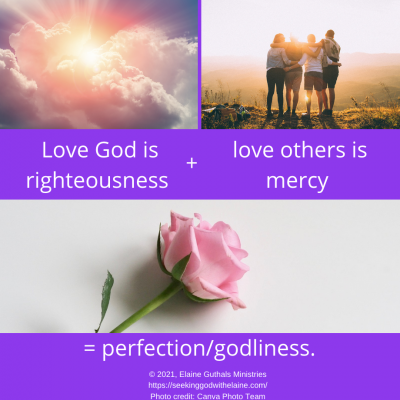
  • Promoting Silence in Our Soul

    With the chaos and uncertainty happening, we want our redo for godliness to bring peace to our souls. To do that, we need to silence our souls. This devotion begins our look on what that means.

    Nuggets

    • When we have silence in our soul, we allow the peace of God to counteract Satan’s chaos of this world.
    • We need to sit in silence and listen to God when He is calling us to salvation and regeneration.
    • God’s priority is our salvation.

    To read devotions in the Redo for Godliness series, click the appropriate button below.

    I came across Edwards’ sermon Of Taking Up the Cross when we were doing the What Should We Do about Who Jesus Is? devotion. Edwards talked about the hindrances and impediments of Christianity. While he also talked about the outward hindrance, I want to focus on the inward hindrance.

    Edwards talked about patience and submission. I really liked one of the phrases he used when talking about being patient. He wrote, “There is not only a silence of the soul, but of the tongue, which is another ingredient of this duty.”

    On the flip side, Edwards wrote, “Consider, that impatience and fretting are no ease at all to us in our calamities, but, on the contrary, they render our grievances heavier and more intolerable.” Oh, yeah! Impatience and trials don’t mix well.?

    Resource

    To read a related devotion, click the button below.

    I really loved the phrase silence of the soul. We need that, but I don’t know if we get there very often. I read all of his other components that made up patience, and I really thought they hinged on silence of our soul.

    So, how do we get from impatience to patient? How do we switch the other chaos of our souls to silence?

    Let’s start off with what silence of the soul is.

    Devotions in the Silence of the Soul series

    Promoting Silence in Our Souls
    Improving Silence in our Minds
    Mastering the Silence of Our Tongues

    The Silence of Humble Confession
    The Silence of Waiting on God
    The Silence of Cheerfulness and Rejoicing

    Let’s Put It into Context

    Our soul is our spiritual part that is immortal. The mind is a component of the soul that controls our will. It is in our minds that we process and make judgments and decisions.

    What Is Silence of the Soul?

    “Be still, and know that I am God. I will be exalted among the nations, I will be exalted in the earth!” (Ps. 46: 10 ESV)

    When we have silence in our soul, we allow the peace of God to counteract Satan’s chaos of this world.

    Yeah, we’ve just had a year where sheltering at home made many who were going full speed ahead to slow down, if not stop all together. Even so, the chaos was still felt.

    But I think being still with God is more than that. Maurice said this: “Only the belief of a Presence near us, with us, can inspire habitual awe, can keep us steady when all things are rocking around us, can take away the eagerness to move, or the cowardice which paralyzes movement.”

    Resource

    Silence of our soul starts out with being in the Presence of God. The Holman Bible Dictionary defines the Presence of God as “God’s initiative in encountering people.”

    Resource

    Yes, it is God knocking on the door of our hearts, so that we will accept Him. He comes to us, offering His peace.

    But that is something that we have to accept. We can only accept when we know. We can only know by being still.

    Moffat made a good point. Most of us think “Be still, and know that I am God …” (Ps. 46: 10 ESV) is an invitation.

    Resource

    We also sometimes think we will only hear “be still” in times of trials. The way we read this is to not fear anything.

    Instead, we should look at “be still” as a command that we have to obey every day.

    Thomas made an interesting comment. He wrote, “Self-knowledge, God-knowledge — these can never be had until we have learned to be still.”

    Resource

    Look at it this way. God has an individual relationship with each of us. No two relationships are alike.

    The only way we are going to build and strengthen that relationship is to listen to what the Holy Spirit has to tell us. We only hear when we settle down and are still.

    We should be willing to listen because He is God. Thomas wrote , “… there is a knowledge which is to be had only in the stillness of devout meditation — the soul’s personal knowledge of God.”

    Resource

    Oh, that is so against our nature. We are doers. We want to be able to depend on ourselves, do it ourselves, earn our salvation because of our works.

    It doesn’t work that way.

    We need to sit still. We need to keep the focus on God. O’Meara called it “… silence from all other voices …” Jowett argued that we can only gain knowledge about God through silence.

    Resources

    The only work we do is to work out our salvation. We are to work in a specific way. Macleane wrote, “When we are called upon to work out our own salvation it is with fear and trembling indeed, but with the calm assurance nevertheless that it is God which worketh in us to will and to do of His good pleasure.”

    Resource

    There are different ways that we need to know God. First, we need to know He exists. “… know that I am God …” (Ps. 46: 10 ESV).

    Second, we have to know God really does possess all the attributes. We have to acknowledge His greatness.

    To read a devotions in the Finding Our Center series, click on the button below.

    Third, we need to personally know God. That is the only way we will be able to take the focus off the chaos of this world.

    That is where the work comes in. We have work to settle ourselves so that we can be taught by the Holy Spirit.

    We have work to settle ourselves so that we can be taught by the Holy Spirit.

    Waiting in Silence for God

    “Let him sit alone in silence when it is laid on him” (Lam. 3: 28 ESV)

    We need to sit in silence and listen to God when He is calling us to salvation and regeneration.

    Lamentations 3 is an interesting chapter. It talks about a person who has been punished by God. The first 20 verses are all gloom and doom.

    Then comes verses 21-23. “But this I call to mind, and therefore I have hope: The steadfast love of the Lord never ceases; his mercies never come to an end; they are new every morning; great is your faithfulness” (Lam. 3: 21-23 ESV).

    Jeremiah wrote that God wants us to wait quietly. What we are waiting for is His salvation (Lam. 3: 26).

    Once we are alone with God, we can truly search for and seek Him. He will spend the time with us to convict us and to answer our questions.

    Searching for and Seeking God

    Hearing His Word (Rom. 10: 17).
    Reading His Word (Rev. 1: 3).
    Praying to Him (Heb. 4: 16).
    Studying His Word (Ac. 17: 11).
    Meditating on His Word (Ps. 1: 1-2).
    Memorizing His Word (Ps. 119: 11).

    To me, this just fleshes out how we are to “be still, and know that I am God …” (Ps. 46: 10 ESV). We are to

    • Sit alone (Lam. 3: 28).
    • Keep hope (Lam. 3: 29).
    • Give up our sense of entitlement and arrogance by turning the other cheek (Lam. 3: 30).
    • Self-evaluate (Lam. 3: 40).
    • Praise God (Lam. 3: 41).
    • Call upon the name of the Lord (Lam. 3: 55).

    I love what Spurgeon called it. He called it submissive silence. I think that is what silence of the soul is all about.

    Resource

    Silence of the Flesh

    “Be silent, all flesh, before the Lord, for he has roused himself from his holy dwelling” (Zech. 2: 13 ESV)

    God’s priority is our salvation.

    This verse takes silence a different way — but does it?

    Watson took being silent before God as accepting either His mercy or His judgment. He wrote, “When wickedness prevails, when error spreads, when the Church is wasted, then the Almighty is represented as shutting His eyes, turning away His face, withholding His hand, and resting in His holy place. But when He makes Himself manifest in judgment or mercy, when He has nations to punish or to bless, when His Church calls for protection and help, then He is ‘raised up out of His holy habitation,’ and ‘all flesh’ is commanded to ‘keep silence’ before Him.”

    Resource

    I can see that. When we are corrected, we generally do not feel like talking. When we are shown mercy, sometimes we are overwhelmed and can’t talk, either.

    But if we look at the rest of Zechariah 2, we see Zechariah is sent to witness to someone. This is about calling the Israelites back from the Babylonian captivity.

    That speaks to me. If we think about it, the flesh is our human nature. When we do the substitutions, it makes sense to me.

    Be silent, human nature. Stop sinning before the Lord, for he has judged you and sentenced you to the Babylonian captivity. But now He has mercy on you and is calling you to salvation.

    That is what happened. Adam and Eve were God’s children. Then, they caved to Satan’s temptation. God passed judgment on their sin and they were cast out of the Garden of Eden.

    But God showed mercy on them. He designed the Plan of Salvation. He sent His Son Jesus to die to pay the penalty for our sins.

    Glossary

    God is always going to put our salvation experience as a priority. Our spiritual translation is more important than anything in His eyes.

    PromotingSilenceInOurSoulPin

    Making the Connections

    It is really important that we chill and let God work His salvation and regeneration in us. “This is what the Sovereign LORD, the Holy One of Israel, says: ‘Only in returning to me and resting in me will you be saved. In quietness and confidence is your strength …’ (Isa. 30: 15 NLT).

    Only in resting in the Sovereign God will we be saved. We can do nothing on our own to save us — only God can. Remember, after conversion, we are working out our salvation through regeneration.

    Yet, we try to work it out ourselves. “We sometimes leave too small a part for God in our work. We think that our carefully prepared sermon or lesson will do its own work, and forget to pray that the Holy Spirit may carry it home. We can teach truth. God alone can make that truth life-giving.”

    Resource

    How Do We Apply This?

    • Look for God working in our lives, not making sure God is working our plan out.
    • Take a step back when we want to get judgmental.
    • Practice submissive silence.
    • Humbly confess our sins.
    • Don’t run ahead of God.
    • Don’t sit back and wait for God to give us everything. We serve Him.
    • Don’t practice idle talk.
    • Don’t make excuses for our sin.
    • Don’t judge God and complain about Him.
    • Bag our arrogance and holier-than-thou attitudes.
    • Don’t try to elevate ourselves to be equal to or above God.

    Resources

    Really, what it all boils down to is when we are still and focused on God, we are submitting to Him. Whatever God calls us to do, whoever He calls us to be — we need to say, “Yes, Lord.”

    Resources

    Silence of the soul is a fancy way of saying focus on God. There are several other things we need to silence to have the best focus. In the next devotion, we will be talking about silencing our minds.

    Father God. We want to silence our souls. We want to take our focus off the chaos of this world and put it firmly on You, the giver of peace. Help us tune out everything except Your still small voice. Amen.

    What do you think?

    Leave me a comment below (about this or anything else) or head over to my Facebook group for some interactive discussion.

    If you don’t understand something and would like further clarification, please contact me.

    If you have not signed up for the email daily or weekly providing the link to the devotions and the newsletter, do so below.

    If God has used this devotion to speak with you, consider sharing it on social media.