Category: Salvation

  • Jesus Interacted with Nathanael

    Philip brought Nathanael to Jesus, but Nathanael was a little skeptical that He was the Messiah. This devotional reading looks at how Yeshua addressed that skepticism.

    Nuggets

    • Yeshua knows us, but we have to know Him before He knows us.
    • We probably would have reacted the same way Nathanael did.
      Nathanael used two titles that some may think don’t fit together.
    • Nathanael had been taken aback when Yeshua said he could see him under a fig tree.
    • Yeshua told Nathanael what would happen in his future.
    Yeshua had gone to Galilee specifically to call Philip as a disciple. It seems immediately that Philip went to find Nathanael.

    Nathanael, however, wasn’t certain if he came to the same conclusion as Philip that Yeshua was the Messiah. However, he went with him anyway.

    How was Yeshua going to react to that skepticism?

    Let’s Put It into Context

    To read devotions in The Battle for the Heart theme

    Devotions in the The Early Ministry of the Messiah series

    Before They Even Got to Yeshua

    “As they approached, Jesus said, ‘Now here is a genuine son of Israel — a man of complete integrity.’ ‘How do you know about me?’ Nathanael asked. Jesus replied, ‘I could see you under the fig tree before Philip found you.’ Then Nathanael exclaimed, ‘Rabbi, you are the Son of God — the King of Israel!’” (Jn. 1: 47-49 NLT)

    Son of Israel

    Yeshua knows us, but we have to know Him before He knows us.

    Wait! What?? Yeshua had never met Nathanael before. Yeshua knows us as a creation of Jehovah before we come to Him for salvation.

    Because of this, Yeshua described Nathanael as a man of complete integrity. What did He mean by calling Nathanael a genuine son of Israel?

    We need to remember that Israel was more than a name for a nation. Israel was the name Jehovah gave Jacob after their encounter at Peniel (Gen. 32: 28). Jacob’s descendants became the people of Israel, the people with whom Jehovah established His covenant.

    But being descended from Israel didn’t automatically mean a person lived faithfully before Jehovah. Throughout Israel’s history, the prophets called the people to return to their covenant responsibilities. They could identify themselves as Israelites while their hearts and actions were far from what Jehovah required.

    Yeshua’s description of Nathanael goes beyond his ancestry. The New Living Translation translates the expression as a genuine son of Israel and explains it with the words a man of complete integrity. Nathanael was not merely an Israelite by birth. Yeshua recognized something about his character.

    The Greek word translated integrity in this passage is dolos (δόλος), which ordinarily means deceit, guile, or deception. John uses it here in the negative construction: there is no deceit in Nathanael. Yeshua was describing a man who was not characterized by duplicity or dishonesty.

    That doesn’t mean Nathanael was sinless. Scripture doesn’t present him as a man who had never done anything wrong. Rather, Yeshua’s words describe the kind of man he was — someone without the deceit that would make his outward profession different from his inward character.

    Think about that for a minute. We can identify ourselves as Jehovah’s children, know the Scriptures, attend worship, and speak the right words.

    But Jehovah is concerned with more than the identity we claim. He cares about the truthfulness of our hearts and the integrity of our lives.

    Nathanael had just questioned whether anything good could come from Nazareth. Now Yeshua was describing him as a man without deceit. Nathanael’s question hadn’t prevented Yeshua from recognizing his character.

    There is another thing we need to think about. “On judgment day many will say to me, ‘Lord! Lord! We prophesied in your name and cast out demons in your name and performed many miracles in your name.’ But I will reply, ‘I never knew you. Get away from me, you who break God’s laws’” (Mt. 7: 22-23 NLT).

    Us coming to Yeshua isn’t what He is looking for. We would call that having head knowledge of Him.

    Neither is Yeshua wanting us to do good deeds in His name – especially not just on our own. We can’t earn salvation.

    Salvation comes only when we spend time with Yeshua and get to know Him as our Savior and Redeemer. We have to know Him as our Savior before He knows us as His brothers and sisters.

    Do You Know Me?

    We probably would have reacted the same way Nathanael did.

    Nathanael was taken aback by Yeshua seeming to know him before they had ever met. We may have been in the same situation in our past. It gives us a start for a moment.

    Nathanael asked a reasonable question. Philip had brought Nathanael to meet Yeshua, but Nathanael had no reason to expect Yeshua to know anything about him. Yet Yeshua had already described his character before he asked Him anything.

    Yeshua answered by giving Nathanael’s fig tree location.

    Wait! What?? Yeshua didn’t tell Nathanael how He got that information. He simply told Nathanael that He had seen him under the fig tree before Philip called him – with no explanation as to how that was possible.

    We aren’t told what Nathanael was doing under that tree. He may have been resting, studying, praying, or doing something else entirely. What matters in this conversation is that Yeshua knew where Nathanael had been before Philip brought them together.

    That knowledge changed the conversation. Nathanael had previously questioned whether anything good could come from Nazareth. Now he was face-to-face with Someone Who showed Someone could come from an inconsequential background.

    Sometimes, an unexpected moment can make us stop and reconsider what we thought we understood. Nathanael came to meet the man Philip had described. He wasn’t prepared for the Man to reveal that He already knew something about him.

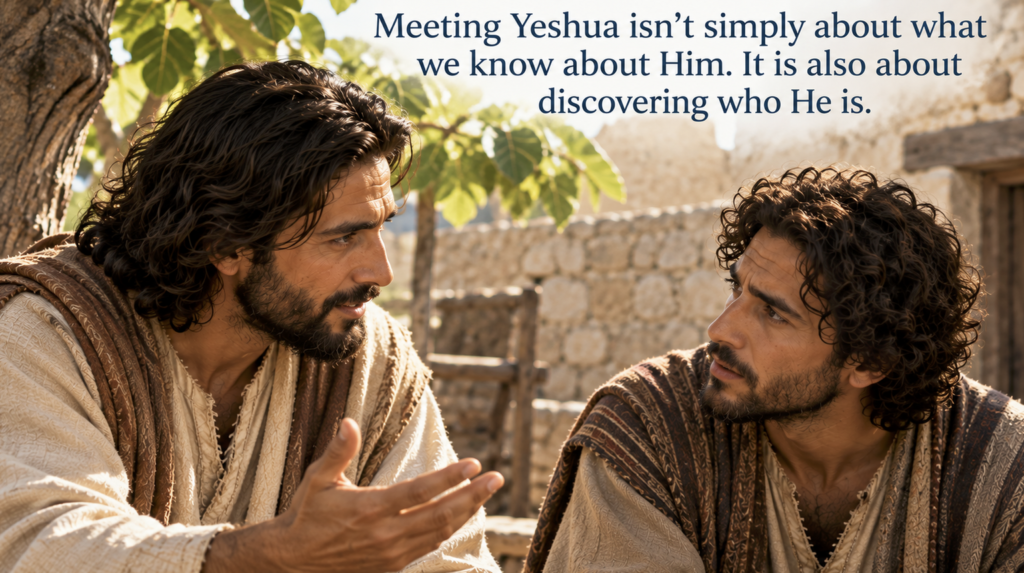
    If we have experienced a moment when someone knew something about us that we hadn’t told them, it can make us stop and wonder, too. Nathanael’s encounter reminds us that meeting Yeshua isn’t simply about what we know about Him. It is also about discovering who He is.
    Son of God and King of Israel

    Nathanael used two titles that some may think don’t fit together.

    Notice that Nathanael used the two titles the Son of God and the King of Israel together. These titles weren’t unrelated declarations. They connected Yeshua to Israel’s expectation of the King Jehovah had promised.

    Modern readers often hear the phrase Son of God exclusively through later theological categories. However, the Hebrew Scriptures had already established sonship language in Israel’s relationship with Jehovah and in the Davidic kingship. Israel itself could be called God’s son (Ex. 4: 22-23). David’s royal descendant was also described through this language.

    Psalm 2 is particularly important for understanding Nathanael’s confession. Jehovah addressed His anointed King: “… ‘The Lord said to me, “You are my son. Today I have become your Father”’” (Ps. 2 :7 NLT). This is royal enthronement language.

    This was not simply a statement about physical descent. The king is called Jehovah’s son because of his special covenant relationship with Jehovah and his appointment to rule under His authority.  It identified the king’s God-given position, authority, and responsibility.

    The psalm goes on to speak of the nations as the King’s inheritance and the ends of the earth as His possession (Ps. 2: 8). The promised King’s rule, therefore, reaches beyond Israel’s borders. He is Jehovah’s appointed ruler, whose authority ultimately extends to the nations.

    When Nathanael called Yeshua the Son of God and the King of Israel, he connected these ideas. Son of God pointed to Yeshua’s relationship with Jehovah and His place as Jehovah’s appointed King. King of Israel identified the royal and Messianic significance of that relationship. Nathanael was recognizing Yeshua as the King Israel had been promised.

    But we must be careful not to assume Nathanael understood everything his words would ultimately mean. We must distinguish between recognizing the promised King and understanding the full significance of His identity.

    Nathanael had just met Yeshua. He hadn’t yet witnessed the full course of His ministry, His death and resurrection, or His exaltation.

    Nathanael recognized something true about Yeshua’s identity, but he didn’t yet have the full revelation that would come through Yeshua’s life and the events that followed. He could recognize Yeshua as the promised Messiah without yet understanding everything Scripture would reveal about Him.

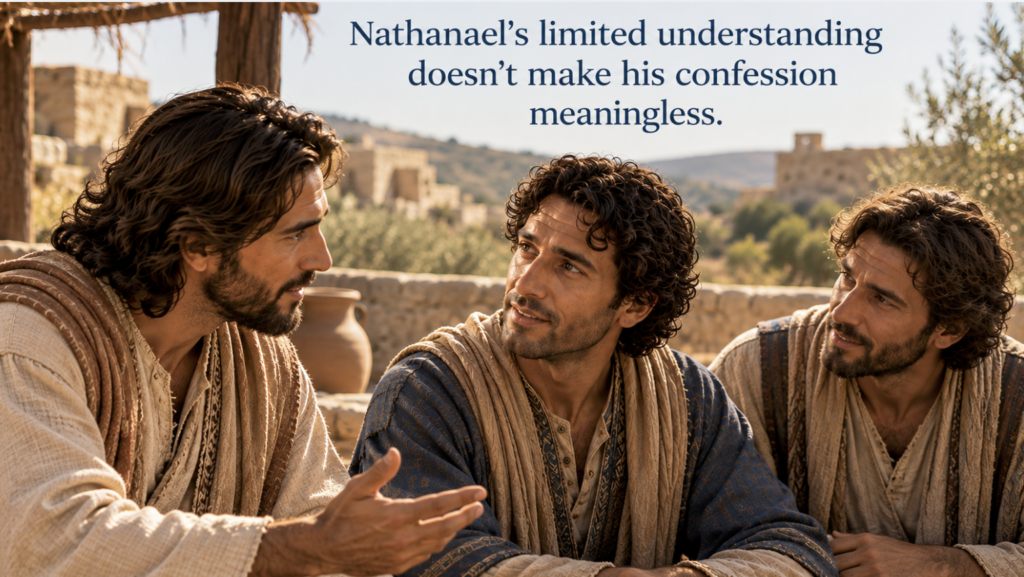
    This distinction matters. Nathanael’s limited understanding doesn’t make his confession meaningless. He correctly recognized Yeshua as God’s promised King, even though he had more to learn about the One he had just confessed.
    The New Testament will reveal that Yeshua is more than another king in David’s line. His identity as the Son of God involves divine authority and a unique relationship with the Father that cannot be reduced to royal adoption or appointment. The Gospel of John progressively reveals this greater reality.

    Nathanael’s confession is, therefore, an important beginning. He recognized the King of Israel standing before him. He had yet to discover the full significance of the Son of God.

    Questioning Understanding

    “Jesus asked him, ‘Do you believe this just because I told you I had seen you under the fig tree? You will see greater things than this.’ Then he said, ‘I tell you the truth, you will all see heaven open and the angels of God going up and down on the Son of Man, the one who is the stairway between heaven and earth’” (Jn. 1: 50-51 NLT)

    Under the Fig Tree

    Nathanael had been taken aback when Yeshua said he could see him under a fig tree.

    What matters is that Yeshua knew where Nathanael had been before the two of them met. When Yeshua told him this, Nathanael recognized that he was encountering someone who knew more about him than he could explain.


    Scripture tells us of times when Yeshua knew people’s thoughts and actions. He knew them before He came to earth, while He was here, and continues to know them after ascension.

    • Yeshua knew the Pharisee’s thoughts when He said the paralytic’s sins had been forgiven (Mt. 9: 2-4; Mk 2: 5-8; and Lk 5: 20-22).
    • He knew the religious leader’s thoughts and the purpose behind these thoughts when He healed the man with a withered hand on the Sabbath (Lk. 6: 6-8).
      ·      Yeshua knew the accusations of the crowd when He healed the demon-possessed man (Mt. 12: 25; Lk. 11: 17).
    • He knew the crowd beyond the surface when they believed He was a great miracle worker but didn’t believe in Him as the Son of God, the Messiah (Jn. 2: 23-25).
    • Yeshua knew about the woman at the well’s past (Jn. 4: 16-19, 28-29).
    • He knew when Lazarus had died (Jn. 11: 1-16).
    • Yeshua knew Judas would betray Him (Jn. 6: 64; Jn. 13: 10-11, 18—27).
    • He knew Peter would deny Him (Lk. 22: 31-34; Jn. 13: 36-38).

    Yeshua knew people’s thoughts and actions while He was on earth. That hasn’t changed since He has ascended to Heaven.

    Did you catch the significance of that? Yeshua knew Nathanael before salvation occurred. He knew what he was doing. He knew what he was thinking.

    But it doesn’t stop there.
    
We sometimes forget that Yeshua doesn’t have to be physically present with us to know what is happening in our lives. He knows our thoughts before we put them into words. He knows what we say when no one else is listening. He knows what is in our hearts, even when we have not found a way to explain it to anyone else.

    Think about that for a moment. We can be sitting alone in our homes, driving down the road, or lying awake in the middle of the night, and Yeshua is not limited by His physical absence from us. We can’t hide our thoughts from Him, and we don’t have to find the right words to make Him understand what we are experiencing. He already knows.

    That knowledge should make us pause. It reminds us that our private thoughts matter as much as our spoken words, even when we believe no one else knows about them.

    But it can also bring comfort. When we can’t explain what hurts, what worries us, or what we are struggling to understand, Yeshua knows. We are never required to make Him aware of our circumstances before He can understand them.

    Nathanael was surprised that Yeshua knew where he had been before Philip called him. We have the benefit of knowing more of Yeshua’s story than Nathanael did at that moment. We can remember that His knowledge is not confined to what He can see with human eyes or what someone tells Him. He knows us wherever we are, and He knows us as we truly are.

    Will See Heaven Open

    Yeshua told Nathanael what would happen in his future.

    Yeshua wasn’t finished revealing Himself to Nathanael. After Nathanael declared Him to be the Son of God and the King of Israel, Yeshua told him he would see greater things than these.

    John 1: 50–51 records Yeshua’s response. He promised Nathanael that he would see Heaven open and the angels of God ascending and descending on the Son of Man.

    That wording takes us back to Genesis 28: 10–17, when Jacob dreamed of a stairway connecting earth and heaven, with the angels of God ascending and descending on it. When Jacob awoke, he recognized that Jehovah was present in that place. He called it Bethel, meaning house of God.

    Now, Yeshua was telling Nathanael that he would see something greater. In Jacob’s dream, the angels ascended and descended on the stairway. In Yeshua’s words, they would ascend and descend on the Son of Man. Yeshua placed Himself at the center of this heavenly picture.

    The title Son of Man is important here. Yeshua used it repeatedly throughout His ministry. It can point to His identification with humanity, but it also recalls Daniel 7: 13–14, where one like a son of man comes with the clouds of heaven and receives authority, glory, and a kingdom that will never pass away. The title carries a significance much greater than simply calling attention to His humanity.

    Again, we shouldn’t assume Nathanael understood every layer of meaning in Yeshua’s words at that moment. He had just begun to recognize who Yeshua was.

    But the promise pointed beyond the first signs that had impressed him. Nathanael would see greater evidence of Yeshua’s identity and authority as he continued following Him.

    Yeshua had already shown Nathanael that He knew something about him before they met. Now, He promised that he would see more. His understanding of the Messiah was only beginning, and the things he would witness would continue to deepen it.

    Nathanael’s opportunity to see greater things didn’t end with Yeshua’s earthly ministry. After His resurrection, Yeshua appeared to His apostles over a period of forty days, teaching them about the Kingdom of God (Ac. 1: 3). Then, as they watched, He was taken up into Heaven (Ac. 1: 9–11).

    Think about how far Nathanael had come. Philip had brought him to meet Yeshua, and Nathanael had recognized Him as the Son of God and the King of Israel. Now he had witnessed the risen Messiah return to Heaven. The One Nathanael had only begun to understand had revealed Himself through His ministry, His death, His resurrection, and His ascension.

    Yeshua had promised Nathanael that he would see greater things. The Gospel accounts show us that following Yeshua meant witnessing events far beyond that first encounter under the fig tree. Nathanael’s understanding of the Messiah had begun with a personal meeting, but what he witnessed afterward revealed more and more of who Yeshua was.

    Our own understanding can grow in the same way. We may recognize something true about Yeshua when we first encounter Him, but we should never assume we have exhausted the depths of Who He is. As we continue learning from Scripture and watching how Jehovah’s purposes unfold through His Son, we discover more of the significance of the One we have come to follow.

    Making the Connections

    Yeshua recognized Nathanael’s doubts. He didn’t shut them down. He didn’t say “You shouldn’t be having these. How dare you doubt Me.”

    On the contrary. Even before Nathanael could express them – so we don’t really know if he was going to do so or not – Yeshua took them head on. He took the shortest path to ridding Nathanael of those doubts.

    This tells us that doubts are okay – as long as they don’t shut us down from searching for Yeshua. We can question things, but we have to do so in faith.

    Heart Check

    Think about the battle Yeshua is engaged in for your heart. Ask yourself the following questions.

    • When I have doubts about Yeshua, do I seek Him for answers, or do I allow my doubts to keep me from seeking Him?
    • Do I focus on what I already know about Yeshua, or am I willing to keep learning who He is?
    • Do I recognize that Yeshua knows me completely, or do I live as though I can keep parts of my life hidden from Him?
    • Do I depend on knowing about Yeshua, or have I come to know Him as my Savior and Redeemer?
    • When Yeshua challenges my assumptions, do I let Him change my understanding, or do I cling to what I thought I knew?

    Resource

    How Do We Apply This?

    • Bring our doubts to Yeshua.
    • Examine our hearts honestly.
    • Look beyond outward appearances.
    • Grow in our knowledge of Yeshua.
    • Welcome opportunities to learn.
    • Remember that knowing about
    • Yeshua is not the same as knowing Him as Savior and Redeemer.
       
      Father God. You know us – everything about us – what we think, feel, believe. You call us to believe in You. Help us to come to Yeshua. Strengthen our faith. Relieve our doubts. May our faith that You are Sovereign God and He is our Savior never waver. Amen.

    If you don’t understand something and would like further clarification, please contact me.

    If you have not signed up for the email providing the link to the devotions and the newsletter, do so below.

    If God has used this devotion to speak with you, consider sharing it on social media.
  • Jesus Was Born in Bethlehem

    The time humans had been waiting for had finally arrived – quietly. This devotional reading looks at how the Savior of the world arrived quietly.

    Nuggets

    • Joseph, as Mary, lived in Nazareth.
    • Part of me wonders why Mary had to have to travel while she was pregnant and perhaps close to term.
    • Mary and Joseph’s marital status was important.
    • The normal earthly celebration around the birth of a king didn’t occur.
    • We may sometimes think the strips of cloth were more like diapers – they weren’t.
    • We may think it odd to put a baby in a manger, but there was a specific reason this Baby was placed in a manger.
    • Luke didn’t tell us that Mary and Joseph stayed in an inn.

    Sometimes when we have been waiting a long time for the answer to a prayer, we say, “It will happen in the fullness of Jehovah’s time.”

    That is true. Jehovah sometimes makes us wait for things — even good things. He isn’t being mean about not answering our prayers. He is lovingly working out things.

    Then one night, a Baby was born. He was going to change the world — starting in our hearts.

    Let’s Put It into Context

    To read devotions in The Battle for the Heart theme

    Devotions in the The Birth and Early Childhood of Christ series

    Getting to Bethlehem

    “… He traveled there from the village of Nazareth in Galilee. He took with him Mary, to whom he was engaged, who was now expecting a child” (Lk. 2: 4-5 NLT)

    Nazareth

    Joseph, as Mary, lived in Nazareth.

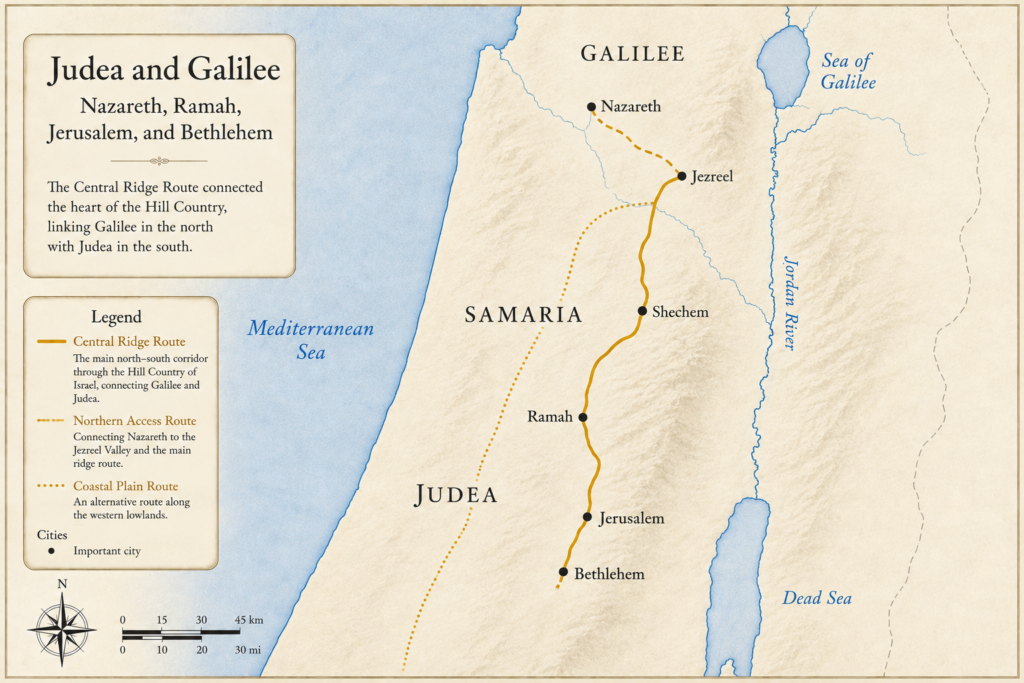
    The two villages of Bethlehem and Nazareth couldn’t be more different. Bethlehem, which was 5 to 6 miles south of Jerusalem, was mentioned several times in the Old Testament. Still in the hill country, it was associated with kinship and covenant promise.

    The surrounding fields were important for Bethlehem – and for Jerusalem. They were well-suited for grazing sheep and goats. Some flocks in the region may have been associated with sacrificial purposes, but we cannot know that for the particular flocks around Bethlehem.

    So, like Nazareth, it wasn’t large. However, it had history, identity, and prophetic weight.

    Nazareth, tucked in the hills of Galilee, was a rural and quiet  area – and often overlooked. It wasn’t mentioned in the Old Testament at all. Archaeology indicates a modest village that was Torah-observant but poor.

    Excavations verify this. Archeologists have found simple stone homes, many which are  at least partly cave based.

    We get a hint of Nazareth’s reputation in John 1: 46. “‘Nazareth!’ exclaimed Nathanael. ‘Can anything good come from Nazareth?’ ‘Come and see for yourself,’ Philip replied” (Jn. 1: 46 NLT).

    Messiah was born to fulfill prophecy. But He was raised in a way that defied expectation.

    Doesn’t that mirror Yeshua Himself? He was rejected not only by common Jews but also be the religious leaders. Yet He stayed true to Jehovah. We know He went to synagogue and celebrated the festivals.

    But doesn’t that also reflect Jehovah? He stays hidden to us until He reveals Himself to us. He works in ways we don’t expect – outside of prestigious systems – even outside of religious systems.

    More than anything, this shows a humility in Jehovah. We may not think of that first, but He isn’t prideful and make us choose and worship Him. He asks us to choose Him.

    This is one way that the kingship was redefined. Royalty was linked with humility. Bethlehem tells us who He is while Nazareth tell us how He came.

    Took with Him Mary

    Part of me wonders why Mary had to have to travel while she was pregnant and perhaps close to term.

    I know. Mary had to get to Bethlehem to fulfill the prophecy.

    But that was a 70- to 90-mile trip. Remember, Mary had just taken that route to visit Elizabeth and Zechariah.

    We know Mary was two to three months pregnant when she returned from visiting Elizabeth. “Mary stayed with Elizabeth about three months and then went back to her own home” (Lk. 1: 56 NLT).

    We don’t know which route Mary and Joseph took. They may have avoided Samaria, but Scripture does not tell us.

    Contrary to popular belief, we don’t know if Mary rode a donkey. She may have walked.

    Mary and Joseph would probably have traveled with a caravan – even a family caravan. Surely, they had some family living with them in Nazareth – like Mary’s parents. Since both Mary and Joseph were descendants of David, both families would have been heading to Bethlehem. She may have gotten to ride in a family member’s cart.

    To Whom He Was Engaged

    Mary and Joseph’s marital status was important.

    This always stops me. In the last devotion, we learned about Joseph’s initial struggle when he found that Mary was pregnant – and he wasn’t the father.

    After the visit by the angel, Joseph was said to have acted immediately. “When Joseph woke up, he did as the angel of the Lord commanded and took Mary as his wife” (Mt. 1: 24 NLT).

    If Joseph woke up and took Mary as his wife, why does Luke say they were still engaged? That would mean they still weren’t living together.

    Well, this doesn’t contradict itself. Mary could be both.

    Remember, betrothal didn’t work the same way as our engagement does. When they became betrothed Mary and Joseph were legally married. If Joseph had broken the betrothal when Mary became pregnant, he would have had to obtain a get (גֵּט) – a Jewish divorce document.

    We also have to remember that Matthew made the comment that, though Joseph took Mary home as his wife, they didn’t consummate the marriage until after Yeshua was born (Mt. 1: 25).

    So, the Gospel accounts are emphasizing different things. Matthew emphasized that Joseph accepted Mary as his wife. Luke emphasized that their marriage hadn’t been consummated.

    The Birth of the Messiah

    “And while they were there, the time came for her baby to be born. She gave birth to her firstborn son. She wrapped him snugly in strips of cloth and laid him in a manger …” (Lk. 2: 6-7 NLT)

    The Time Came for Her Baby to be Born

    The normal earthly celebration around the birth of a king didn’t occur.

    How could it? Messiah was supposed to be a king, but Yeshua wasn’t born in a palace.

    The King came without a crown. The Messiah came without a royal welcome. The Savior came without a crowd waiting outside His birthplace.

    Messiah was born in Bethlehem and laid in a manger.

    The One Whose coming was so greatly anticipated and frequently prayed for wasn’t recognized. What went wrong?

    Well, nothing. This was the plan all along.

    God had prepared the people who would play a part in His plan. He had prepared Zechariah and Elizabeth for John. He had prepared Mary to bear the Messiah. He had prepared Joseph to take Mary as his wife and protect the Child.

    But God hadn’t prepared the world to recognize what He was doing. Or perhaps more accurately, the world wasn’t prepared.

    People expected Messiah. They had expectations about what Messiah would look like.

    They were wrong.

    Yeshua came quietly — not because His arrival was insignificant, but because Jehovah’s plan was never dependent upon earthly recognition.

    Jehovah’s plan to fulfill His promises didn’t bring the rejoicing Israel thought would happen. It started without them.

    Why? Because Israel wasn’t needed to make the plan happen. There was nothing they could add to or subtract from the plan. They had to wait until it came to its fruition.

    Mary couldn’t, Joseph couldn’t, Zechariah and Elizabeth couldn’t make the Messiah come. Even Israel couldn’t make the Messiah come.

    They could only receive what Jehovah was doing.

    So, when Jesus was born in Bethlehem, Israel had to wait.

    The promises embedded in Jehovah’s plan which He had set in motion were beginning to come to fruition, but the nation had no part in bringing them about. Jehovah had already done what needed to be done.

    Jehovah’s promises would be fulfilled according to His purpose.

    And perhaps that is one of the most important things about the way Jesus entered the world: Jehovah didn’t ask humanity to accomplish His plan. He asked humanity to respond to it.

    The Messiah had come – the Savior had entered the world. The promise was being fulfilled.

    Israel would eventually have to decide what it would do with Him.

    But for now, the plan belonged entirely to Jehovah. Nothing had gone wrong.

    It had begun exactly as Jehovah intended. He fulfilled His promise in a way that looked nothing like earthly greatness.

    But God was doing something deeper. He wasn’t merely sending Israel a king.

    Jehovah was sending a Savior. And that Savior entered the world as an utterly dependent infant.

    The Messiah had finally come — and almost no one knew it.

    Snugly in Strips of Cloth

    We may sometimes think the strips of cloth were more like diapers – they weren’t.

    When we go back to the Greek, we see the Baby was wrapped in swaddling clothes. This was normal care for a newborn.

    In other words, Mary didn’t wrap Yeshua in swaddling clothes because she was poor. Scripture verifies this. “On the day you were born, no one cared about you. Your umbilical cord was not cut, and you were never washed, rubbed with salt, and wrapped in cloth” (Ezek. 16: 4 NLT).

    The purpose of the swaddling clothes was to protect the infant’s arms and legs.

    We are sometimes told that the swaddling clothes are also used as burial cloth. That isn’t quite right.

    The Greek word Luke uses in Luke 2: 7 is sparganoō – the verb for swaddling. However, the wording in Luke 23: 53 uses sindōn, referring to a linen cloth that could be used for burial.

    The similarity comes when Luke 2’s description of Yeshua being “… wrapped … in strips of cloth and laid … in a manger …” is placed beside Luke 23’s description of his body being “… wrapped … in a long sheet of linen cloth and laid … in a new tomb …”

    Being laid in the manger was part of a sign to the shepherds so they would know they had found the Christ Child. However, when He was laid in the tomb, He wasn’t there when the women came to the tomb.

    This marked not only the beginning of Jesus’ earthly life but also pointed toward the mission that would lead Him to the cross and the empty tomb.

    Laid Him in a Manger

    We may think it odd to put a baby in a manger, but there was a specific reason this Baby was placed in a manger.

    One thing we get wrong is that we see a wooden crib in the Christmas nativity scene. 

    The Greek word is phatnē (φάτνη) – a feeding trough. The manger was a feeding trough located in the animal-keeping area associated with the lodging space where Mary and Joseph were staying. That animal area could have been an adjoining lower-level space, a courtyard, a stall, or potentially a cave used for animals.

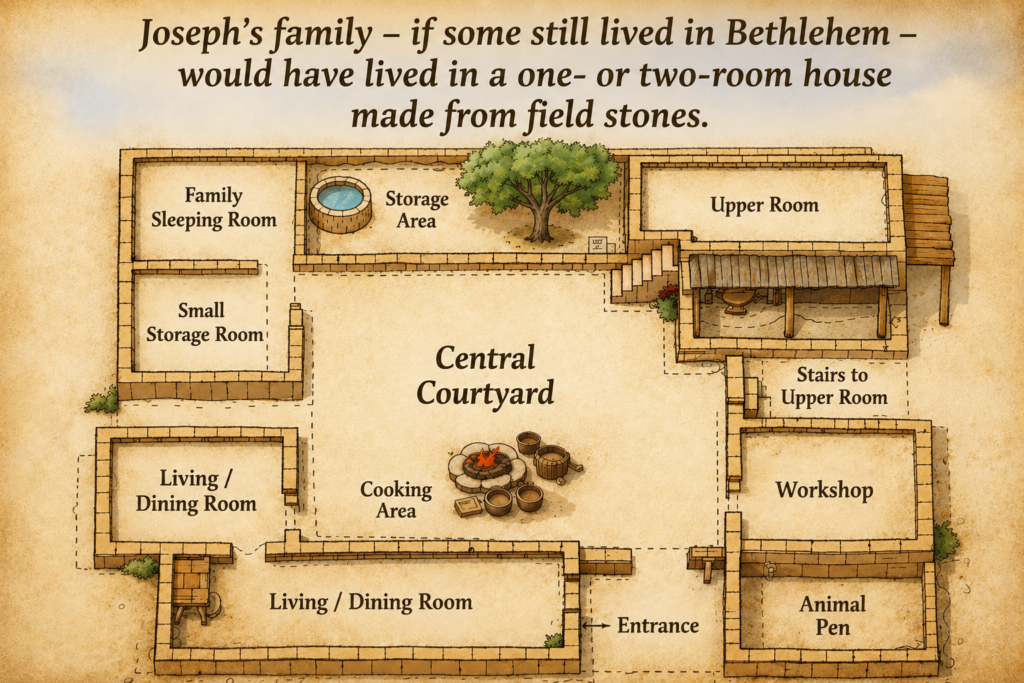
    Joseph’s family – if some still lived in Bethlehem – would have lived in a one- or two-room house made from field stones. It would have a flat plastered roof and packed dirt or bedrock floors. Food would have been prepared in a small courtyard.

    Some ancient Judaen homes had a section of the structure where the animals were housed. Keeping valuable domestic animals close offered protection, especially at night.

    What kind of animals are we talking about? It seems logical to me that a family would have goats for milk and dairy products, as well as skins and hair.

    Some may also have had sheep. They provided wool and milk – which represented a form of household wealth.

    No, we don’t know what animals were here. We just know that animals did come to eat at the trough.

    Later Christian tradition identified the place as a cave used for sheltering animals. Caves were indeed used for livestock in the Judaen countryside, but Luke doesn’t tell us exactly what kind of structure contained the manger.

    In some first-century Judaen settings, mangers were a stone trough. They could be cut into or attached to rock. Think of what a cold, hard place that would have been.

    That sure wasn’t where first-century Jews expected Messiah to appear!

    Think about it. The Bread of Life was placed in the trough where animals ate.

    Remember the Lord’s Supper. “And he took bread, and when he had given thanks, he broke it and gave it to them, saying, ‘This is my body, which is given for you. Do this in remembrance of me’” (Lk. 22: 19 ESV).

    Lodging

    “… because there was no lodging available for them” (Lk 2: 7 NLT)

    Luke didn’t tell us that Mary and Joseph stayed in an inn.

    The word Luke used was kataluma (κατάλυμα). That means a lodging place or guest room.

    This could be a guest room in a family home. Think about it.

    Jewish society in first-century Israel placed great value on hospitality. To them, hospitality was an important cultural and religious obligation. This is true for travelers and strangers as well as the family member.

    Yes, inns did exist in the first-century Jewish world. Luke did talk about an inn in the Parable of the Good Samaritan (Lk. 10: 34). The word he used for inn was pandocheion.

    However, inns didn’t have a good reputation in Jewish sources. An inn wouldn’t necessarily have been Joseph and Mary’s first or most natural lodging arrangement, particularly in Joseph’s ancestral town.

    We aren’t sure what the reason was for Joseph’s family not making room for them in their house. It could simply mean that this was a crowded family home because so many people had arrived in Bethlehem for the registration that the available lodging was already occupied.

    Or was there a different reason? Some first-century Jews felt they had to become righteous before Messiah came.

    You have to understand the situation Mary was in. She was betrothed so she was considered Joseph’s wife, but she was betrothed not married so she wasn’t living with him.

    Taking an unwed pregnant woman into their home – even one betrothed to their kinsman – would have gone against their beliefs.

    We also have to realize that we don’t know what Joseph and Mary had told family members. More importantly, we don’t know if those family members believed what they were told. Yeshua’s brothers didn’t believe He was Messiah while He was alive.

    Yes, we are called to love those who have sinned. No, we are not called to condone their sin.

    But this wasn’t a sin. They just may not have known that.

    Inn or family home – the outcome was still the same: the available lodging was occupied. They were using what space they had to accommodate those in need.

    The world wasn’t prepared to recognize Him. But that doesn’t mean the people of Bethlehem were inhospitable to a pregnant Jewish woman.

    Jehovah could have waited for the registration to end so that lodging was available. He didn’t. He sent His Son to be born anyway.

    Making the Connections

    From the beginning, Luke quietly places the beginning and the end of Jesus’ earthly life before us. He was wrapped and laid down as an infant; He would one day be wrapped and laid in a tomb as a dead man.

    The story wouldn’t end there.

    But we’re getting way ahead of ourselves.

    Heart Check

    Think about the battle Yeshua is engaged in for your heart. Ask yourself the following questions.

    • Am I trying to make God’s plan happen, or am I willing to trust Him to fulfill His purposes in His way and His timing?
    • Do I sometimes fail to recognize what Jehovah is doing because it doesn’t look the way I expected?
    • Have my expectations of how God should work ever kept me from recognizing what He was actually doing?
    • Am I more concerned with how God’s work looks to the world than with whether I am responding faithfully to Him?
    • When Jehovah fulfills a promise differently than I expected, do I trust Him — or question whether something has gone wrong?

    How Do We Apply This?

    •  Trust Jehovah’s plan even when His way doesn’t look like what you expected.
    • Stop trying to accomplish what only Jehovah can accomplish.
    • Pay attention to what Jehovah is doing rather than demanding that He work according to your expectations.
    • Respond faithfully when Jehovah reveals His work instead of waiting until everything makes sense.
    • Remember that circumstances do not determine God’s faithfulness.
    • Don’t overlook what Jehovah is doing because it comes through ordinary people or ordinary circumstances.

     
    Father God. We are humbled that a Baby – Your Son – was born thousands of years ago. Yet He is still alive and in us. May we always open our hearts to Him. Amen.

    If you don’t understand something and would like further clarification, please contact me.

    If you have not signed up for the email providing the link to the devotions and the newsletter, do so below.

    If God has used this devotion to speak with you, consider sharing it on social media.

  • The Great Reversal of God’s Kingdom

    When Mary began to praise Jehovah, she knew this situation called for more than just praise. This devotional reading looks at the completion of the Magnificat.

    Nuggets

    • The mighty arm of the Lord is an Old Testament image for Jehovah’s saving power.
    • Jehovah values humility over pride.
    • Social station does not enter into Jehovah’s evaluation of whom is a prince.
    • Yeshua’s ministry flipped the idea of greatness.
    • We are to look to Jehovah and expect our lives will be satisfying.
      Social status does not mean loss isn’t going to happen.
    • Jehovah will provide for His children.
    • We were created to serve Jehovah.
    • There are many times in Scripture that Jehovah has called us to remember.
    • Mary’s praise came full circle as she again highlights Jehovah’s mercy.
    • Jehovah was acting because He made this promise to Abraham.

    After being warmly greeted by Elizabeth and her prophecy, Mary launched into her acknowledgement of Jehovah. Known as then Magnificat, it is more than merely a song of praise.

    We are looking at it to determine covenant language.

    Let’s Put It into Context

    To read devotions in The Battle for the Heart theme

    Devotions in the Preparing for the Christ Child series

    Strength and Power

    Mighty Arm

     The mighty arm of the Lord is an Old Testament image for Jehovah’s saving power.

    Mary, as a righteous person, knew her Old Testament history. She knew this term was a shorthand term used for His mighty intervention in history.

    His arm was the image that represents Jehovah’s active power. To first-century Jewish listeners to Luke’s Gospel, they wouldn’t hear strong – they would have heard covenant faithfulness.

    • “Therefore, say to the people of Israel: ‘I am the Lord. I will free you from your oppression and will rescue you from your slavery in Egypt. I will redeem you with a powerful arm and great acts of judgment’” (Ex. 6: 6 NLT).
    • “Has any other god dared to take a nation for himself out of another nation by means of trials, miraculous signs, wonders, war, a strong hand, a powerful arm, and terrifying acts? Yet that is what the Lord your God did for you in Egypt, right before your eyes” (Deut. 4: 34 NLT).
    • “Remember that you were once slaves in Egypt, but the Lord your God brought you out with his strong hand and powerful arm. That is why the Lord your God has commanded you to rest on the Sabbath day” (Deut. 5: 15 NLT).

    We may question why the imagery is Jehovah’s arm, and not His hand. Well, think about it.

    I can throw a baseball with my hand. It isn’t going to go very far. It needs the power supplied by my arm to get it to go farther than two feet in front of my toes.

    Isaiah expanded what the Torah described. He especially developed the imagery.

    • “The Lord has demonstrated his holy power before the eyes of all the nations. All the ends of the earth will see the victory of our God” (Isa. 52: 10 NLT).
    • “Wake up, wake up, O Lord! Clothe yourself with strength! Flex your mighty right arm! Rouse yourself as in the days of old when you slew Egypt, the dragon of the Nile” (Isa. 51: 9 NLT).

    Then Isaiah takes a 180o. “He was despised and rejected — a man of sorrows, acquainted with deepest grief. We turned our backs on him and looked the other way. He was despised, and we did not care” (Isa. 53: 3 NLT).

    Wait! What??

    There we were talking about strength and power. Now, we are talking about suffering.

    In Isaiah 53, the Arm of the Lord is revealed in the person of Yeshua. Jehovah’s saving power is not displayed through an army but through the suffering Servant.

    The Baby that Mary was carrying in her womb is the Arm of the Lord.

    Did you catch that? The Baby hadn’t even been born yet, and He was being called the Arm of the Lord.

    What if we read these verses that I have noted through the lens of Isaiah 53? Suddenly the Lord’s mighty arm points us to the One through whom His saving power is ultimately revealed – Yeshua.

    Proud and Haughty Ones

    Jehovah values humility over pride.

    Pride makes us think we can do things on our own. We rely on some skill we possess or idea that we have.

    Then we tell ourselves that we don’t need Jehovah. But we would be wrong.

    Unfortunately, pride is the exact opposite of what Jehovah desires. The proud person trusts in their own righteousness, while He wants us to know they have nothing on our own.

    Our relationship with Jehovah has to be genuine. We cannot simply perform righteous acts; we must live in humble dependence on Him.

    The humble know that we are nothing without Jehovah. We need Him for salvation.

    Overthrowing This World

    “He has brought down princes from their thrones and exalted the humble” (Lk. 1: 52 NLT)

    Princes

    Social station does not enter into Jehovah’s evaluation of whom is a prince.

    When we think of a prince, we think of a son of a king. The Greek word means more than that.

    In first-century Israel, a prince was a powerful ruler or someone in authority. Names that we might recognize that would be princes were Herod, Caesar, and Pilate.

    Those we might not consider as princes but they would were the religious elite. A prince was anyone who believed that their position made them secure.

    Look at the extent of the princes’ defeat. They were brought down from their thrones.  Mary said that they weren’t just removed. They were removed from their thrones – their source of confidence.

    What does that tell us? Jehovah can dismantle that in which we put our confidence – when we don’t put it in Him.

    • Pharaoh fell.
    • Nebuchadnezzar was humbled.
    • Belshazzar lost his kingdom.
    • Saul lost his throne.
    • Herod Agrippa died while accepting worship as a god.

    What this world offers us is temporary.  Jehovah offers the eternal.

    Exalted the Humble

    Yeshua’s ministry flipped the idea of greatness.

    We usually see greatness as belonging to the successful. The person who has accumulated wealth and – therefore – social status is seen as the greatest. Greatness is also seen in those who have political influence which may or may not mean they have control of the military.

    • “For those who exalt themselves will be humbled, and those who humble themselves will be exalted” (Lk. 14: 11 NLT).
    • “The greatest among you must be a servant” (Mt. 23: 11 NLT).

    Instead, Jehovah uses those who feel like they have nothing to offer Him. Think Moses. Think Jeremiah. Think shepherds and tax collectors.

    Hungering for Jehovah

    “He has filled the hungry with good things and sent the rich away with empty hands” (Lk. 1: 53 NLT).

    Filled the Hungry with Good Things

    We are to look to Jehovah and expect our lives will be satisfying.

    When we read this verse, our minds may immediately go to the miracles of feeding the 5,000 and feeding the 4,000. Yes, Yeshua did perform those miracles that physically fed the crowds.

    That was never where Jehovah’s focus was. True, He is concerned about our situations. He does provide for our physical wellbeing.

    I wonder what Jehovah’s version of pumping His fist would look like. He surely would have been doing it when Yeshua gave the Sermon on the Mount.

    “Blessed are those who hunger and thirst for righteousness, for they shall be satisfied” (Mt. 5: 6 ESV).

    Mary wasn’t talking about a physical hunger any more than Yeshua was in His sermon. It was all about hungering for righteousness.

    This is talking about those who know that they can only come to Jehovah with empty hands. They can only come when they are spiritually needy and know Yeshua is the only way that they can gain salvation.

    Sent the Rich Away with Empty Hands

    Social status does not mean loss isn’t going to happen.

    Mary had an interesting choice of words. She didn’t say the rich were condemned. She said they were sent away empty-handed.

    Let’s look at what is said without being said. How would the rich have arrived? They would have thought they were the greatest. They would have believed that their hands were already full.

    Luke would go on to talk about the rich throughout his book. He would paint them as trusting in their possessions, status, and self-sufficiency. Think the rich fool in Luke 12, the rich young ruler in Luke 18, and the rich man and Lazarus in Luke 16.

    Yes, those men were had a lot of money. But more importantly, they had a problem with misplaced trust.

    Luke has been building his portrait of the rich and proud. They were going to be scattered (verse 51), brought down (verse 52), and left empty (verse 53).

    No, this wasn’t talking social position. It was talking the attitude of the heart.

    God refuses salvation to all those who refuse to be obedient to Him. Only those who know they need a Savior will receive Him.

    We can draw these conclusions because we have the rest of the story. We see the completed Plan of Salvation.

    Mary didn’t have that here, so that isn’t really what she was ultimately talking about. She was focusing on the coming Messiah and the Kingdom He will establish.

    Being MercifulTitle

    “He has helped his servant Israel  and remembered to be merciful” (Lk. 1: 54 NLT)

    He Has Helped

    Jehovah will provide for His children.

    To us, Mary’s Magnificat may seem like pieces of several different puzzles trying to be put together. It does fit.

    Verse 54 stands as the theological climax of the Magnificat. All those different puzzle pieces get summed up in this verse.

    The Greek verb used is antelabeto (ἀντελάβετο) literally mean to take hold of, to come to someone’s aid, or to grasp in order to help.

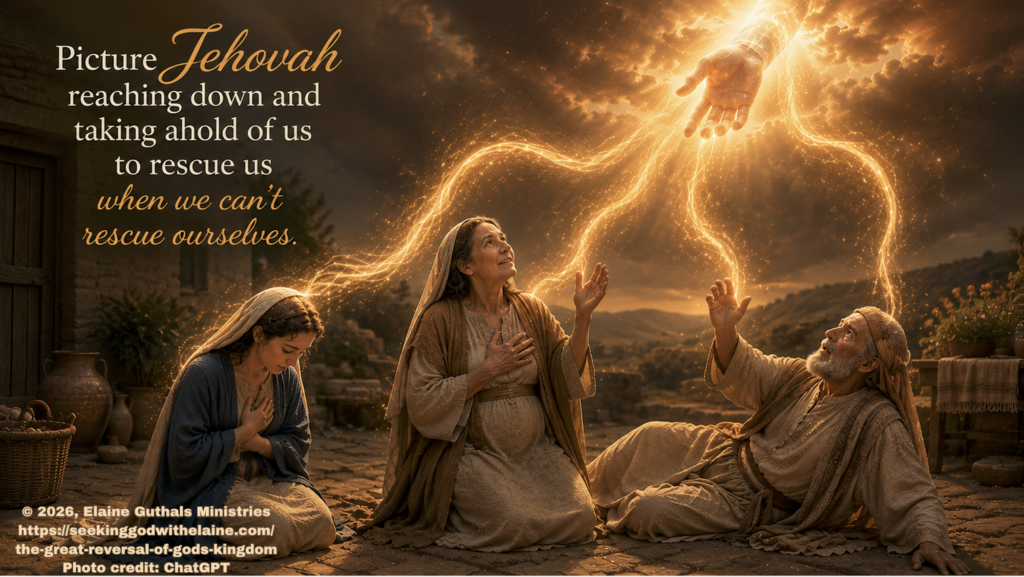
    Picture Jehovah reaching down and taking ahold of us to rescue us when we can’t rescue ourselves.

    Mary said that Jehovah has come to their aid in the past. He came in their weakness to give them aid.

    What Mary is saying is that Jehovah Himself stepped in and more than rendered assistance.

    Apply this to the Baby in Mary’s womb. That is Jehovah Himself stepping into the world and transforming it. 

    His Servant Israel

    We were created to serve Jehovah.

    Some today may bristle at being called Jehovah’s servant. First-century Jews didn’t. That language was repeatedly used in the Old Testament.

    • “But you, Israel, my servant, Jacob, whom I have chosen, the offspring of Abraham, my friend” (Isa. 41: 8 NLT).
    • “But now hear, O Jacob my servant, Israel whom I have chosen! Thus says the Lord who made you, who formed you from the womb and will help you: Fear not, O Jacob my servant, Jeshurun whom I have chosen” (Isa. 44: 1-2 NLT).
    • “And now the Lord says, he who formed me from the womb to be his servant, to bring Jacob back to him; and that Israel might be gathered to him — for I am honored in the eyes of the Lord, and my God has become my strength” (Isa. 49: 5 NLT).

    Mary saw herself as part of Israel’s story. Jehovah’s covenant plan was being carried out through her personal blessing.

    Back in verse 50 Mary declared that Jehovah’s mercy extends from generation to generation. She remembered what was leading up to her present situation.

    Remembered

    There are many times in Scripture that Jehovah has called us to remember.

    The Greek word used here is mnēsthēnai (μνησθῆναι). It means to remember.

    No, this doesn’t mean that Jehovah forgets anything. We know He doesn’t. 

    • “But God remembered Noah and all the wild animals and livestock with him in the boat. He sent a wind to blow across the earth, and the floodwaters began to recede” (Gen. 8: 1 NLT).
    • “Then God remembered Rachel’s plight and answered her prayers by enabling her to have children” (Gen. 30: 22 NLT).
    • “The entire family got up early the next morning and went to worship the Lord once more. Then they returned home to Ramah. When Elkanah slept with Hannah, the Lord remembered her plea, and in due time she gave birth to a son. She named him Samuel, for she said, ‘I asked the Lord for him’” (I Sam. 1: 19-20 NLT). 

    Every time Jehovah is said to have remembered something, He immediately acts according to His covenant promises. It is a signal for Israel to watch and see Jehovah move.

    Jehovah is moving mightily in Mary’s life as He fulfills the promise made back in Genesis 3: 15. A Messiah has come.

    To be Merciful

    Mary’s praise came full circle as she again highlights Jehovah’s mercy.

    Mary showed the reality of Jehovah’s mercy. It started out in verse 50 as extending from generation to generation. We talked about that meaning it doesn’t quit.

    Here, Mary said that His mercy was arriving in history. The promise was being fulfilled.

    Compare this progression to Jehovah’s calling Israel out of Egypt. “God heard their groaning, and he remembered his covenant promise to Abraham, Isaac, and Jacob” (Ex. 2: 24 NLT). ”

    Jehovah heard, remembered, and acted.

    Humans had been in exile from Jehovah since they were driven from the Garden of Eden (Gen. 3: 23). Sin broke our relationship with Him. It must be restored so He can welcome us back into His presence in the New Jerusalem.

    Now, Jehovah remembered their plight and was acting to restore the relationship humans could have with Him.

    Unfortunately, first-century Jews wouldn’t have connected Mary’s praise to the first exile. They would have connected it to being called out of Egypt.

    They weren’t expecting a Messiah to restore them from their sinful nature. They saw restoration after the Babylonian exile. To them, that equated to freedom from political dominance.

    So, many first-century Jews missed the Messiah

    Kept His Promise

    “For he made this promise to our ancestors,  to Abraham and his children forever” (Lk. 1: 55 NLT)

    Jehovah was acting because He made this promise to Abraham.

    The first-century Jews failing to recognize the Messiah didn’t stop Jehovah from acting and keeping His promise. He told Abraham He was going to do this, so He did.

    Fortunately, Jehovah’s keeping His promise wasn’t dependent on human obedience.  He acted because of His mercy.

    Remember, we said Jehovah’s mercy is really more than us getting something we didn’t deserve. It means that love is conveyed through covenant faithfulness.

    Now put this into context. There had been no prophet for 500 years. This doesn’t mean that there just wasn’t anyone for the job.

    This means Jehovah had been silent for 500 years. Some may have jumped to the conclusion many today would have – Jehovah had turned His back on them.

    They would be wrong.

    After centuries of waiting, Jehovah remembered them, His mercy, and His promises. He was waiting for the fullness of time.

    It was time to act.

    Making the Connections #1

    If first-century Israel may have seen the arm of the Lord as army of the Lord, they would probably have been scratching their heads.

    No armies appeared. Rome was still there. David’s throne wasn’t resurrected.

    But Mary was making it sound like it was a done deal. Well, it was.

    No, nothing had happened yet, but what Jehovah says will happen will come to pass.

    Look what Isaiah said would happen in Isaiah 51-53:

    • The proud would be scattered.
    • Rulers would be brought down.
    • The humble would be exalted.
    • The hungry would be filled.
    • The rich would be sent away empty.

    That doesn’t need a military campaign to be a success. It needs an overturning of human values.

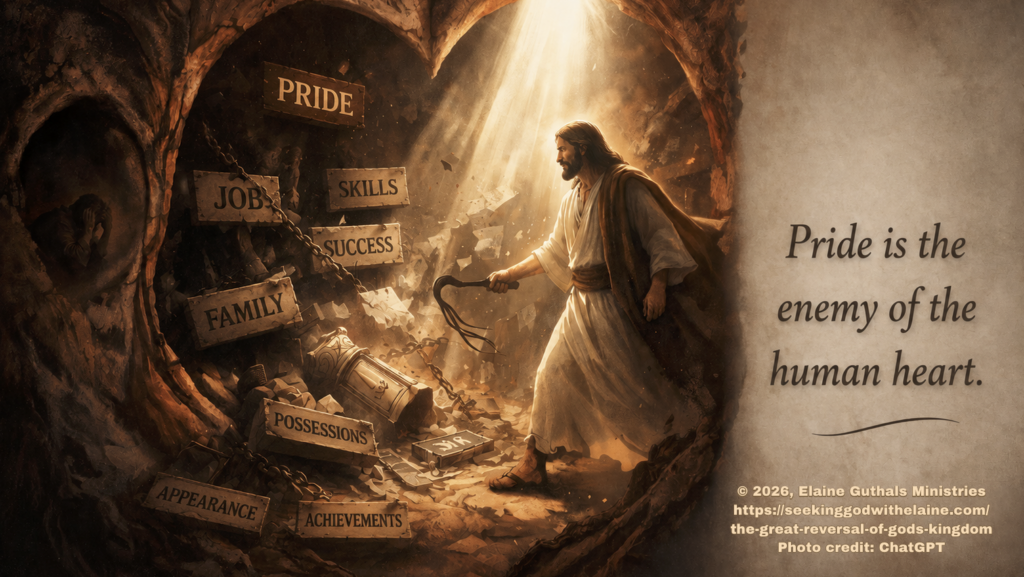
    That takes the focus off Rome. It gears it toward the heart. Pride is the enemy of the human heart.

    Rome wasn’t the greatest problem. Pride was.

    Our greatest enemy isn’t political power. It is the proud heart that refuses Jehovah’s rule.

    Making the Connections #2

    When some look at Luke 1: 52, some see a social revolution. Is it that, or a spiritual revolution?

    Could Luke really have meant both?

    Well, Jehovah does removed earthly rulers at times. History bears that out.

    Instead, Jehovah’s kingdom focuses more on overturning every human hierarchy built on pride. The proud will lose what they thought made them great.

    The humble are elevated.

    Mary herself is a good example to illustrate that. She didn’t come from a prestigious family. She was an unknown teenager from an obscure village.

    Yet the Messiah called her the Aramaic word Ima (אִמָּא) – mom.

    Making the Connections #3

    As Mary continued to worship Jehovah through the Magnificat, her view expanded. In verse 50 and 51. Mary started talking about her soul and her spirit. She was acknowledging what He had done for her.

    Mary’s focus then expanded to others. She talked about those who fear him: the humble and hungry. She also talked about those who didn’t fear Him: the proud, the mighty, and the rich.

    Finally, Mary broadened it to encompass all. She not only talked about Israel, but she also talked about the Abrahamic covenant. That is where all nationals were to be blessed – all humanity.

    Making the Connections #4

    Jehovah never forgets His promises. He will always do what He says.

    Divine silence doesn’t mean separation. It means preparation.

    Why did Jehovah wait so long? He had His reasons. He was preparing for the right moment in history – even preparing Mary herself. He may have been waiting for the expectation to reach the point where the Jews knew that He was the One saving them.

    Jehovah’s reason is only known to Him. We’ll have to put that in the UNR book – understanding not required.

    What we do know is we are required to keep praying for what we are requesting. It isn’t to change His mind.

    It brings us into alignment with Him.

    Heart Check

    Think about the battle Yeshua is engaged in for your heart. Ask yourself the following questions.

    • Do I truly recognize my need for Jehovah, or do I depend on my own strength, abilities, resources, or accomplishments?
    • Am I willing to come to Jehovah with empty hands, admitting that I cannot save myself?
    • Where do I place my confidence — in the things of this world or in Jehovah’s covenant faithfulness?
    • Do I praise Jehovah for His mercy, remembering that every spiritual blessing I have is a gift of His grace?
    • Am I patiently trusting Jehovah’s timing, even when He seems silent?

    How Do We Apply This?

    • Thank Jehovah for His covenant faithfulness and the promises He has already fulfilled.
    • When you face a difficult situation this week, pause before trying to solve it yourself and ask Jehovah for His help.
    • Spend time praising Jehovah for who He is, not just for what He has done for you.
    • Encourage someone who is struggling by reminding them that Jehovah has not forgotten them.

    Father God. Let the praise fall off our lips. May it get down to the heart level. Amen.

    If you don’t understand something and would like further clarification, please contact me.

    If you have not signed up for the email providing the link to the devotions and the newsletter, do so below.

    If God has used this devotion to speak with you, consider sharing it on social media.
  • God Became a Human Being

    Since the Garden of Eden, Jehovah had not dwelt with humans. This devotional reading sets the stage for His return through Yeshua.

    Nuggets

    • When God said, “Let there be light,” He was revealing Yeshua as the Light who would enter the darkness and begin the battle for our hearts.
    • This Light is available to everyone.
    • The Architect of the universe entered that world.
    • Even though Yeshua’s coming was prophesied, first-century Jews did not recognize Him as Messiah.

    We’ve seen how Yeshua was present at the creation of the universe. In fact, He had an integral part in creation.

    Yeshua knew His part in the Plan of Salvation before anything was even created. Before the first sin had been committed – before humans had even been created – the plan for redemption was set in place.

    That plan required Yeshua to come to earth as a human being. Let’s see what that entailed.

    Let’s Put It into Context

    To read devotions in The Battle for the Heart theme

    Devotions in the Preparing for the Christ Child series

    Why Jesus Came

    “The one who is the true light, who gives light to everyone, was coming into the world. He came into the very world he created, but the world didn’t recognize him” (Jn. 1: 9-13 NLT)

    The True Light

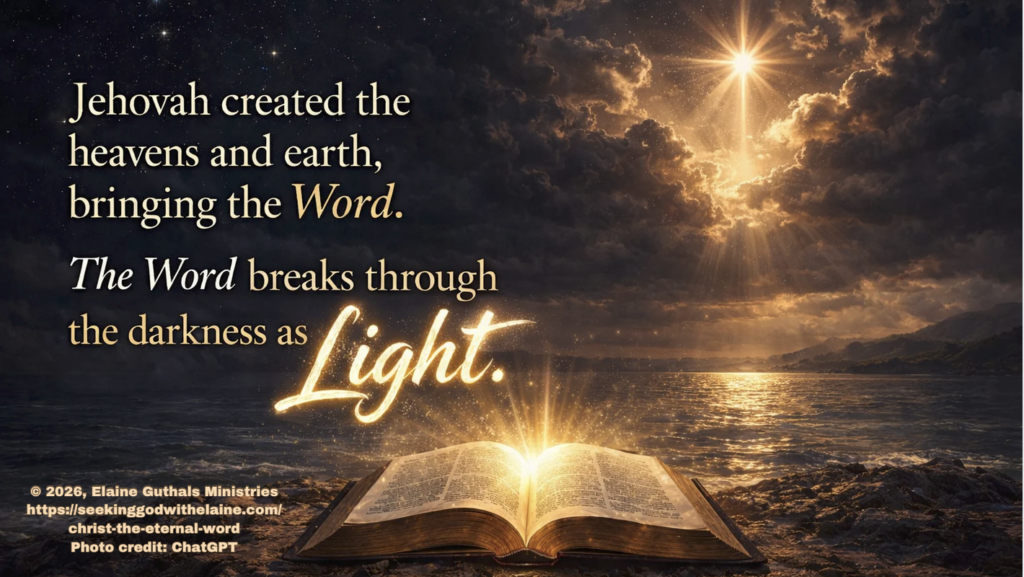
    When God said, “Let there be light,” He was revealing Yeshua as the Light. He would enter the darkness and begin the battle for our hearts.

    John has talked a lot about light so far in his first chapter. The true Light is Yeshua, who is also the Word.

    The true Light was present in this world from creation. When Jehovah said, “Let there be light,” this wasn’t merely physical illumination but the first revelation of Yeshua in spiritual form entering creation as the true Light. Light, therefore, becomes tied to salvation from the very beginning.

    The Light Yeshua brings is not merely knowledge but spiritual life itself. Without the Word giving life, humanity remains spiritually dead. The Light enters darkness to illuminate hearts and lead people toward salvation.

    Who Gives Light to Everyone

    This Light is available to everyone.

    Throughout God’s Word, it tells how the Messiah’s mission was to be a mission of inclusion. He was first to go to Israel, the chosen people, and then go to the Gentiles — everyone who wasn’t Jewish.

    By giving all the opportunity to believe in Yeshua, the covenant promise made to Abraham would be fulfilled. “All the families on earth will be blessed through you” (Gen. 12: 3 NLT).

    While Yeshua’s mission was to go to the cross to become our Savior, He acknowledged His Gentile sheep. “I have other sheep, too, that are not in this sheepfold. I must bring them also” (Jn. 10: 16 NLT).

    Going to the Gentiles is part of our marching orders. “Therefore, go and make disciples of all the nations” (Mt. 28: 19 NLT).

    Yeshua fulfilled all of God’s promises. He came as Messiah to Israel and then all the world.

    Coming into the World

    The Architect of the universe entered that world.

    What John wrote about in the past tense, we are preparing for it to happen in this series. We are looking forward to the birth of Yeshua in the flesh.

    Yeshua’s coming was prophesied many times in the Old Testament.

    • “Abraham said, ‘God will provide for himself the lamb for a burnt offering, my son’…” (Gen. 22: 8 ESV).
    • “The scepter shall not depart from Judah, nor the ruler’s staff from between his feet, until tribute comes to him; and to him shall be the obedience of the peoples” (Gen. 49: 10 ESV).
    • “So Moses made a bronze serpent and set it on a pole. And if a serpent bit anyone, he would look at the bronze serpent and live” (Num. 21: 9 ESV).
    • “I will raise up for them a prophet like you from among their brothers. And I will put my words in his mouth, and he shall speak to them all that I command him” (Deut. 18: 18 ESV).
    • “When your days are fulfilled and you lie down with your fathers, I will raise up your offspring after you, who shall come from your body, and I will establish his kingdom. He shall build a house for my name, and I will establish the throne of his kingdom forever. I will be to him a father, and he shall be to me a son. When he commits iniquity, I will discipline him with the rod of men, with the stripes of the sons of men, but my steadfast love will not depart from him, as I took it from Saul, whom I put away from before you. And your house and your kingdom shall be made sure forever before me. Your throne shall be established forever” (II Sam. 7: 12-16 NLT).
    • “For to us a child is born, to us a son is given; and the government shall be upon his shoulder, and his name shall be called Wonderful Counselor, Mighty God, Everlasting Father, Prince of Peace. Of the increase of his government and of peace there will be no end, on the throne of David and over his kingdom, to establish it and to uphold it with justice and with righteousness from this time forth and forevermore. The zeal of the Lord of hosts will do this” (Isa. 9: 6-7 ESV).
    • “Behold, God is my salvation; I will trust, and will not be afraid; for the Lord God is my strength and my song, and he has become my salvation” (Isa. 12: 2 ESV).

    We have to watch when we want to bite on the first-century Jews for not recognizing the Messiah. We see Him through hindsight – the cross, the resurrection, justification by faith, and the theological development of the Church.

    First-century Jews didn’t possess that framework because it hadn’t been completed yet.

    Oh, first-century Jews knew the prophesy about a Messiah – in Hebrew, māšaḥ (מָשַׁח) — to anoint and, in Greek, Christos (Χριστός). But they were looking at those Scriptures through a lens of exile, covenant longing, Roman oppression, Temple expectation, and prophetic hope.  They may have been back in Israel and Jerusalem, but they were still under oppression.

    They saw Rome and thought they were no better off than when they were in Babylon. The Temple stood, but Jehovah’s Shekina (שְׁכִינָה) – His visible glory – hadn’t returned as of yet.

    However, many first-century Jews were expecting the Messiah to come. But, when Yeshua arrived, they didn’t recognize Him.

    Why? They were expecting a different type of Messiah. They saw that He was David’s son, so they saw Him as a warrior king. They believed that is what Scriptures told them. The Messiah would be Someone Who

    •       Defeated Israel’s enemies
    •       Restored righteous rule
    •       Judged the nations
    •       Purified worship
    •       Gathered the dispersed tribes
    •       Reigned from Jerusalem

    Look at these passages and see if you see that yourself.

    • “I will tell of the decree: The Lord said to me, ‘You are my Son; today I have begotten you. Ask of me, and I will make the nations your heritage, and the ends of the earth your possession. You shall break them with a rod of iron and dash them in pieces like a potter’s vessel’” (Ps. 2: 7-9 ESV).
    • “There shall come forth a shoot from the stump of Jesse, and a branch from his roots shall bear fruit. And his delight shall be in the fear of the Lord. He shall not judge by what his eyes see, or decide disputes by what his ears hear, but with righteousness he shall judge the poor, and decide with equity for the meek of the earth; and he shall strike the earth with the rod of his mouth, and with the breath of his lips he shall kill the wicked” (Isa. 11: 1, 3-4 ESV).
    • “I saw in the night visions, and behold, with the clouds of heaven there came one like a son of man, and he came to the Ancient of Days and was presented before him. And to him was given dominion and glory and a kingdom, that all peoples, nations, and languages should serve him; his dominion is an everlasting dominion, which shall not pass away, and his kingdom one that shall not be destroyed” (Dan. 7: 13-14 ESV).

    Do those passages indicate that there would be an immediate defeat of Israel’s oppressors? Well, no, but this was an agent of Sovereign God’s that was being described. Who would think that the Messiah would come under someone else’s – especially an earthly – authority?

    Beyond that, first-century Jews didn’t think they as a nation were where they were supposed to be before the Messiah was to come. They thought they had to repent and become righteous before His arrival.

    They got that out of Scriptures, also.

    • “And when all these things come upon you, the blessing and the curse, which I have set before you, and you call them to mind among all the nations where the Lord your God has driven you, and return to the Lord your God, you and your children, and obey his voice in all that I command you today, with all your heart and with all your soul, then the Lord your God will restore your fortunes and have mercy on you, and he will gather you again from all the peoples where the Lord your God has scattered you” (Deut. 30: 1-4 ESV).
    • “And a Redeemer will come to Zion, to those in Jacob who turn from transgression,” declares the Lord” (Isa. 59: 20 ESV).
    • “Seventy weeks are decreed about your people and your holy city, to finish the transgression, to put an end to sin, and to atone for iniquity, to bring in everlasting righteousness, to seal both vision and prophet, and to anoint a most holy place” (Dan. 9: 24 ESV).

    This was why John the Immerser’s message landed so hard for them. They saw that he was calling them to this repentance and coming judgment. He was calling them to covenant preparation.

    Then Yeshua came and, in their eyes, things weren’t anything like that.

    • Rome was still there.
    • He didn’t follow God’s laws because He associated with sinners.
    • He publicly forgave sins.
    • He allowed forgiveness before visible moral reform.

    In other words, Yeshua didn’t uphold covenant purity.

    What Yeshua was doing was redefining the source of that righteousness. He came to heal Israel because they couldn’t heal themselves.

    Came to His Own People

    “He came to his own people, and even they rejected him. But to all who believed him and accepted him, he gave the right to become children of God. They are reborn — not with a physical birth resulting from human passion or plan, but a birth that comes from God” (Jn. 1: 10-11 NLT)

    Even though Yeshua’s coming was prophesied, first-century Jews did not recognize Him as Messiah.

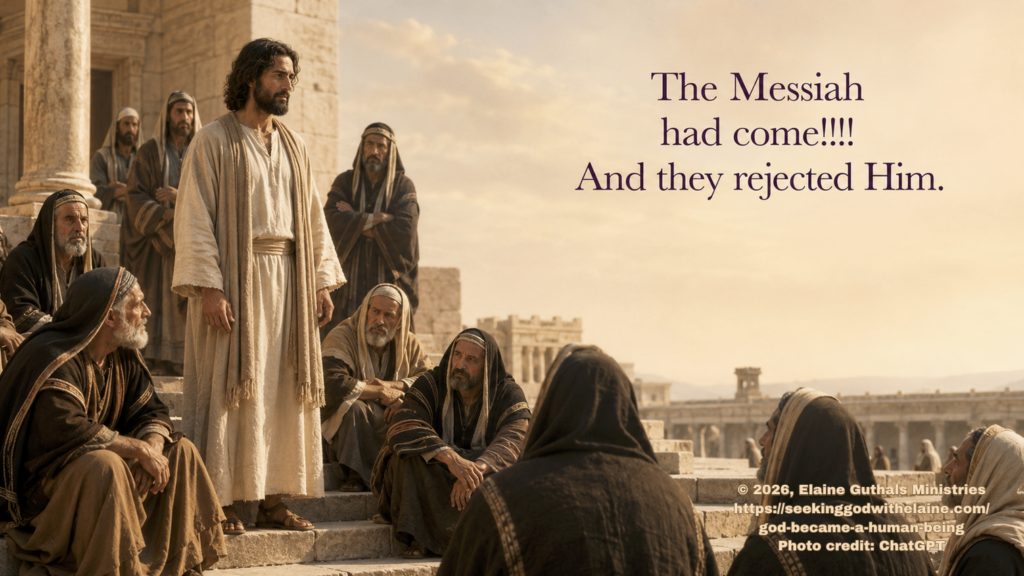
    How did all those expectations about the coming of the Messiah relate to Yeshua? They relate because the first-century Jews couldn’t look past expectations to see reality. The Messiah had come!!!!!

    And they rejected Him.

    The religious leaders said He wasn’t the Messiah because He challenged religious norms of his time. His miracles and claims of divinity provoked skepticism and disbelief, and His focus on people’s spiritual condition wasn’t welcome.

    Ultimately, his rejection fulfilled prophecies about the Messiah’s suffering.

    Doesn’t it feel like John is setting us up for something much more positive? Creator of the world. Giver of life and light. The Word.

    Expected. Longed for.

    Rejected.

    No, not totally rejected. Yeshua wasn’t rejected by the Twelve Apostles. There were also women who were traveling with them that didn’t reject Him. Surely, there were some believers in the towns and villages that He went to – like Sychar.

    It wasn’t total rejection.

    But it was enough to kill Him.

    Who was His own? This was covenant language. Remember, Yeshua’s coming was promised to David as his descendant. That tied Him to a rich history – and a covenant line dating back to Abraham.

    How did Yeshua come to His own? “Though he was God, he did not think of equality with God as something to cling to. Instead, he gave up his divine privileges; he took the humble position of a slave and was born as a human being. When he appeared in human form, he humbled himself in obedience to God and died a criminal’s death on a cross” (Phil. 2: 6-8 NLT).

    Think of it this way, though. Yeshua was instrumental in creation. Without Hi, nothing would have been created. He received authority then.

    Now, Yeshua was entering His creation – in a physical form, not a spiritual one. He was coming to His own.

    Why did the Pharisees, Sadducees, and Torah-teachers reject Yeshua as the Messiah. He was shaking their rabbinical traditions. As we would say today, “We’ve never done it that way!”

    The name Jesus derives from the Hebrew Yēshûaʿ (יֵשׁוּעַ), meaning Jehovah saves. Yet the angel specifically defines the salvation mission in terms of sin.

    That makes Matthew 1: 21 land a little differently. “You shall call His name Jesus, for He will save His people from their sins.” (Matt. 1: 21 ESV).

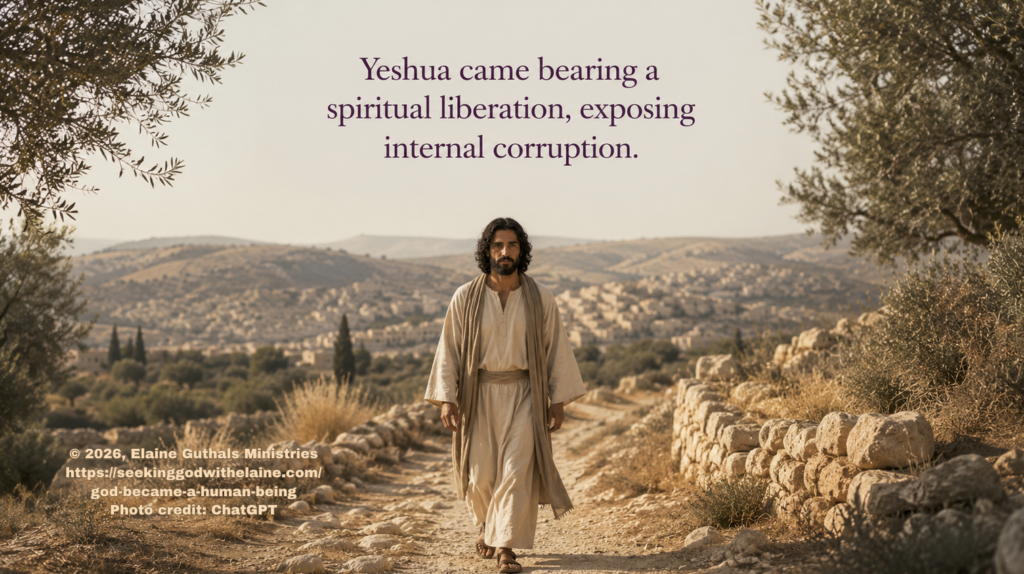
    Yeshua came bearing a spiritual liberation, exposing internal corruption.

    Yeshua came first to battle for our hearts.

    And His own rejected Him.

    Making the Connections #1

    While first-century Jews had the Scriptures detailing the victories the Messiah would enjoy, they also had the Scriptures spelling out the suffering, rejection, piercing, and being “cut off” that He would experience.

    We see this most graphically in Isaiah’s Suffering Servant passage in Isaiah 53.

    Under Roman domination, it was so much easier to look for the victorious Messiah than the suffering Messiah.

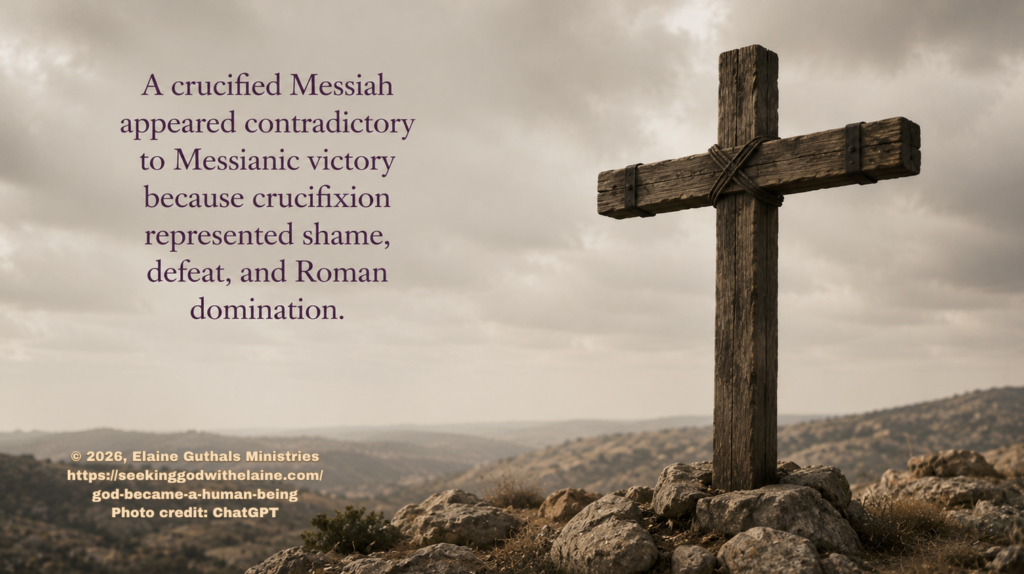
    That is why the cross became a stumbling block for them. A crucified Messiah appeared contradictory to Messianic victory because crucifixion represented shame, defeat, and Roman domination.

    Don’t we do that? We focus so much on the circumstances of our trials that we take our eyes off Jehovah.

    We want things the way we want them, not the way that is in Jehovah’s plan for us.

    Making the Connections #2

    We bite on the Pharisees and make them into villains, but they weren’t. They were just like us – trying to understand the words that were written.

    They had it harder than we do – at least in Scriptures. They weren’t working on the completed plan. They were seeing it unfold before their eyes.

    Only after the resurrection could the Pharisees – even the disciples – finally understand how the suffering servant and conquering King prophecies belonged to the same Messiah.

    We don’t know how many Pharisees worked through all the events in their hearts and minds and chose to accept Yeshua as their Savior. We would hope all but know that wasn’t the case. So, we can hope the majority.

    Doesn’t it take time for us to understand the trials in our own lives and how Jehovah is using those for our sanctification? It has taken years for me to understand what He was trying to teach me with Mom and Dad dying six weeks apart. Even now – over thirty years later – He can nudge my heart and say, “See why now?”

    Making the Connections #3

    What track do we want Yeshua as Messiah to take today? Do we just want Him to be a social savior? Some may want a political savior.

    Otherwise, we may place Yeshua anywhere on a continuum. Do we want a life/coach/therapist who is on speed dial when we need Him? Or do we want Him just on Sunday?

    Or do we surrender our hearts and lives to Him in submissive obedience knowing He is the only one Who can save us?

    Heart Check

    Think about the battle Yeshua is engaged in for your heart. Ask yourself the following questions.

    • Am I following the real Yeshua revealed in Scripture, or a version shaped by my own expectations?
    • If Yeshua walked into my life today in a way I wasn’t expecting, would I recognize Him — or would my expectations keep me from seeing what He is doing?

    How Do We Apply This?

    • Compare and align your expectations with Scripture.
    • Welcome Yeshua’s work in your heart.
    • Let Him expose areas needing repentance.
    • Trust Jehovah’s plan over your own.
    • Follow the Messiah He is — not the one you wish He were.

    Father God. Thank You that You sent Yeshua to become a human to pay the penalty for our sins. We are humbled that He would agree to go through what He did for us. Help us to open our hearts to Him and allow Him in. Amen.

    If you don’t understand something and would like further clarification, please contact me.

    If you have not signed up for the email providing the link to the devotions and the newsletter, do so below.

    If God has used this devotion to speak with you, consider sharing it on social media.
  • Light and Darkness

    John began his gospel with imagery to show how creation tied to salvation. This devotional reading looks at the the connections between the Word, Light, darkness, and life.

    Nuggets

    • Yeshua was present and working at creation.
    • The Word and Light are connected.
    • If the Word did not give life, nothing would live — and without His life, we remain spiritually dead.
    • The opposite of Light is darkness.
    • Jehovah is Sovereign God, meaning He is sovereign over Satan as well.

    In the last devotion, we saw that Yeshua was present at creation alongside Jehovah. Now John shows us what that means — that everything was created through Him, and that His life brings Light into the darkness.

    The Word has two purposes with regard to creation. The first is that it serves as a record of what occurred.

    The second purpose is to interpret creation and life. John used light and darkness to give that interpretation in the next three verses.

    John showed how the Word, through Light defeating darkness, brings life.

    Let’s Put It into Context

    To read devotions in The Battle for the Heart theme

    Devotions in the Preparing for the Christ Child series

    Created Everything Through Yeshua

    “God created everything through him, and nothing was created except through him” (Jn. 1: 3 NLT)

    Yeshua was present and working at creation.

    However it was created, Jehovah created the universe. Jehovah purposed creation, Yeshua carried it out, and the Holy Spirit was actively present in the work.

    This is highlighted more in the Hebrew than the Greek. The Greek translates to through him – just as used in the New Living Translation.

    However, the Hebrew word, al-yado (עַל־יָדוֹ), means by and through. Jehovah worked by Yeshua as Yeshua carried out Jehovah’s plan.. We would think of that more as by His hand.

    It was like my supervisor once on her performance evaluation. She included a couple of projects I had completed by myself. She put them on her evaluation to her supervisor because I had completed them at her direction.

    We just looked at several verses in Proverbs 8. Let’s look at a couple of more.

    “I was there when he established the heavens, when he drew the horizon on the oceans. I was there when he set the clouds above, when he established springs deep in the earth. I was there when he set the limits of the seas, so they would not spread beyond their boundaries. And when he marked off the earth’s foundations, I was the architect at his side. I was his constant delight, rejoicing always in his presence. And how happy I was with the world he created; how I rejoiced with the human family!” (Prov 8: 27-31 NLT emphasis added).

    In everything that Jehovah created, Yeshua was right here by His side. Yeshua not only existed, but Jehovah worked through Him to organize and actively make everything.

    Let’s take a second and look at what an architect really does.

    An architect does more than just draw the pictures of what is to be built. Before he ever puts pencil to paper, he has to understand how it will be lived in. He has to see the whole picture first:

    • What is the building for?
    • Who is going to use it?
    • How many people will move through it – and how?

    In other words, it is his job to figure out the life of the building. How are people going to experience it?

    Then, when he begins to design, he ensures it holds together and makes sense. Function has to take precedence over appearance.

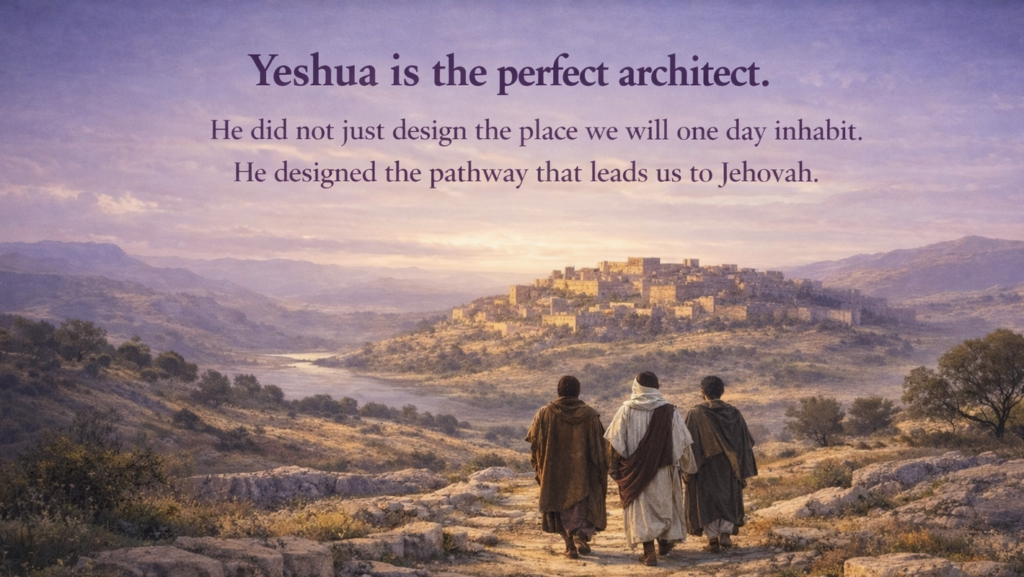
    Yeshua is the perfect architect. He did not just design the place we will one day inhabit. He designed the pathway that leads us to Jehovah.

    The structure that Yeshua was building in creation was Sovereign God’s truth. We each come to it through different explanations, but the structure itself does not change. That is where the personalized aspect of salvation meets the unchanging truth of Jehovah.

    Erskine articulated the doctrine that supports that. He wrote, “That as Christ is the everlasting God, so, from all eternity, He was foreordained and set up for the great service of man’s redemption.”

    Resource

    Yeshua is the message and Messenger of the Gospel. He is the entire meaning itself, and the Gospel is how He communicates that meaning to us.

    In Elaine-speak, if Christ created everything, then nothing that He made can harm His kingdom.

    Yeshua, as Creator, is in control of creation. He is the architect and the plan.

    Yeshua as Light and Life-Giver

    “The Word gave life to everything that was created, and his life brought light to everyone” (Jn. 1: 4 NLT)

    The Word as Light

    The Word and Light are connected.

    In Yeshua’s time, Jews saw themselves as sons of the Light. They believed they were faithful and obedient to the Torah, walking a path that aligned with Jehovah’s purposes.

    First-century Jews recognized the connection of the Word, Light, and darkness. Jehovah used the Word as a form of self-disclosure.

    The Word – dvar in Hebrew and memra (מֵימְרָא) in Aramaic – describes how Jehovah creates, reveals, judges, and saves. Light – אוֹר (אוֹר) – and darkness – choshekh (חֹשֶׁךְ) – were seen as deeply theological categories.

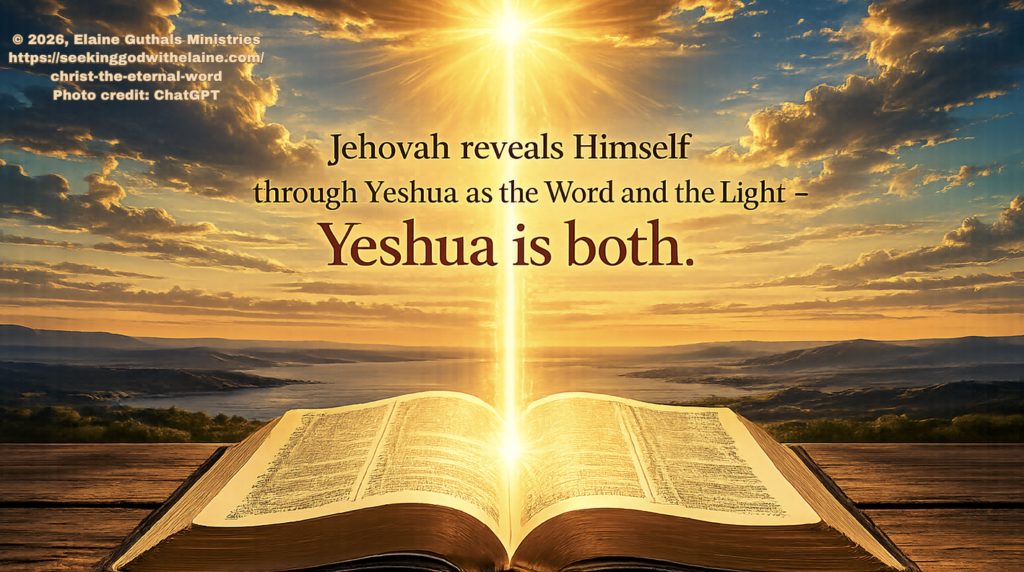
    In other words, Jehovah reveals Himself through Yeshua as the Word and the Light – Yeshua is both.

    A Second Temple Jewish understanding was that Sovereign God spoke, appeared, or acted through the memra. Therefore, when referring to Jehovah taking some form of action, they would say, “The Memra of the Lord did such and such.”

    We know the prophets used this phrase – the word of the Lord – to identify revelations from Jehovah.

    • “Now the word of the Lord came to me, saying,” (Jer. 1: 4 ESV)
    • “The word of the Lord came to me:” (Ezek. 36: 16 ESV).

    Jehovah reveals Himself to us through the Word.

    Gave Life to Everything

    If the Word did not give life, nothing would live – and without His life, we remain spiritually dead.

    The Word is the source of life and gave life to everything.

    Everything that exists received its life from Him.

    The life the Word gives is not just physical – it is life that leads to salvation. It goes beyond mere existence to spiritual life.

    The Word shines light on humans to give them life. It enters the darkness and illuminates all who will look on it.

    The life that the Word gives is salvation.

    Life Brought Light

    As we saw before, the light Jehovah calls forth in Genesis is not merely physical – it was Yeshua, the true Light, Who entered the world.

    The first thing Jehovah introduced after He created the heavens and earth was light. His exact words were, “Then God said, ‘Let there be light,’ and there was light” (Gen. 1: 3 NLT).

    As we saw before, it was spiritual light – it was Yeshua.

    • “Again Jesus spoke to them, saying, ‘I am the light of the world …” (Jn. 8: 12 ESV).
    • “The light shines in the darkness …” (Jn. 1: 5 ESV).
    • “Your word is a lamp to my feet and a light to my path” (Ps. 119: 105 ESV).
    • “As long as I am in the world, I am the light of the world” (Jn. 9: 5 ESV).
    • “The Lord is my light and my salvation …” (Ps. 27: 1 ESV).
    • “The people who walked in darkness have seen a great light ….” (Isa. 9: 2 ESV).

    This is also seen at the end of God’s Word. “… They will need no light of lamp or sun, for the Lord God will be their light …” (Rev. 22: 5 ESV).

    Light and dark are contrasts. Light represents life, order, truth, and the presence of God. Darkness represents chaos, death, ignorance, and judgment.

    But it goes a step beyond that. Jehovah reveals Himself through the light. In this way, the hidden things will become visible.

    The Battle for the Heart

    When we think about the ongoing battle for our hearts, light and darkness describe the condition of our hearts – both morally and spiritually.

    Allen described the contrast this way. He wrote, “When Christianity is not, there are darkness and death; where Christianity is, there are light and life.”

    Resource

    Each of us is born with a part that recognizes our Creator. When sin entered the world – and our lives – it goes to the darkest spot within us – our hearts. “The human heart is the most deceitful of all things, and desperately wicked. Who really knows how bad it is?” (Jer. 17: 9 NLT)

    Jehovah created the heavens and earth, bringing the Word. The Word breaks through the darkness as Light.

    Without Light, there is darkness and death. With Light, there is light and life.

    Darkness

    “The light shines in the darkness …” (Jn. 1: 5 NLT)

    The opposite of Light is darkness.

    The Hebrew word used here for darkness is choshekh (חֹשֶׁךְ), which leads to death and destruction. It is more than just the absence of light.

    Darkness is equated to sin. It is the absence of the life that comes from being apart from the Word.

    If Satan is darkness – choshekh (חֹשֶׁךְ) – then Jesus is Light – or (אוֹר).

    Darkness takes away our ability to see. Satan does that by trying to blind us to the truth of the Gospel. He takes away the sharpness with which we hear and understand God is telling us.

    “Satan, who is the god of this world, has blinded the minds of those who don’t believe …” (II Cor. 4: 4 NLT).

    In other words, Satan tries to make us ignorant of God’s Word.

    Darkness, as we said, is more than just an absence of light. It is also a spiritual absence – an absence of goodness and virtue.

    Think about when light meets darkness. Sometimes, the light dispels the darkness. But other times, shadows are created.

    Shadows are dangerous because they don’t remove the light – they distort it.

    Depending on their strength, they can corrupt our perception of the light. They remove texture and color – the nuances. We begin to see something that looks true but is not.

    Shadows in our hearts are where we keep a place for Satan to get a toehold in our lives and sin to take root. It is where we either have compromised with the world, or we have kept our hearts closed instead of surrendering our will to Jehovah.

    We cannot make God’s Word fit our preconceived notions without distorting it.

    This is where the struggle takes place. We may not always recognize it, but there is a battle between light and darkness within us.

    We see hints of this even in everyday life. During the winter months, the absence of sunlight affects how people feel. As children, we are afraid of what we can’t see in the dark.

    Spiritually, the same is true.

    Darkness clouds, distorts, and pulls away from the truth.

    But thanks be to God – He leads us out of the darkness through the light of redemption and forgiveness.

    Never Extinguish It

    “… and the darkness can never extinguish it” (J. 1: 5 NLT)

    Jehovah is Sovereign God, meaning He is sovereign over Satan as well.

    Jehovah has plans and works His plans. “… It will all happen as I have planned. It will be as I have decided” (Isa. 14: 24 NLT).

    Satan’s defeat has already been declared. “Then the devil … was thrown into the fiery lake …” (Rev. 20: 10 NLT).

    Satan’s defeat is part of the plan.

    True. Satan currently isn’t fully defeated. He is still allowed his victories. “And I will cause hostility between you and the woman, and between your offspring and her offspring. He will strike your head, and you will strike his heel” (Gen. 3: 15 emphasis added).

    But that was never going to be the final outcome.

    The Light shines in the darkness – and the darkness can’t overcome it.

    Making the Connections #1

    Ryle was correct. These verses slammed the door shut on three heretical arguments.

    •  John showed Yeshua was not inferior to Jehovah.
    • He showed Yeshua was distinct from Jehovah.
    • He showed Yeshua was God and man.

    Resource

    These arguments are crucial to be found and won if we are going to believe in Yeshua as our Savior. If we can’t believe these, the doctrines following will be harder to believe.

    Making the Connections #2

    Remember, Jews saw themselves as sons of the light. John challenged that.

    Yeshua is Creator (v. 3), life-giver (v. 4), and Light (v. 5). We can’t be sons and daughters of light if we don’t have the Light within us.

    Light v. darkness isn’t abstract – it defines who we are.

    Yeshua has authority over us, regardless of whether we are believers or non-believers.

    Melvill called for us to be cautious. He wrote,

    “The theology of conscience, creation, tradition, type, fade away from the revelation of these last days. The true light now [shines]. How? Men are insensible to it. By placing men under a variety of dispensations God would prove that no amount of light will suffice to illuminate fallen creatures unless the Holy Spirit purge the sight.”

    Resource

    Only Yeshua through the workings of the Holy Spirit can reach those darkest places within our darkest places because He is the true Light.

    Making the Connections #3

    “The light shines in the darkness and the darkness can never extinguish it” (Jn. 1: 5 NLT)

    Satan may be the prince of this world (Jn. 12: 31), but people have not been given over to him. He must fight for us.

    Satan doesn’t want to give up those dark places in our hearts. Yeshua as the Good Shepherd (Jn. 10: 11) wants to wrestle us back into His fold.

    That makes our hearts the battlefields. This is what we call spiritual warfare. We may  know some of these battles are raging within us.

    We don’t know about all of them.

    It comes down to this question – what is the condition of our hearts? Are we sons and daughters of light, or are we sons and daughters of darkness?

    Don’t miss what verse 5 is telling us. This is a strong declaration of victory in the war against  Satan.

    Satan can’t win – unless we let him win the battle. Satan can’t win the war, but he can gain ground in the battles if we refuse to surrender to Yeshua.

    If we do not allow Yeshua to fight the battle for us, we will lose the spiritual war – but Yeshua won’t.

    What helps us allow Yeshua to battle Satan for us?

    • We can’t make God’s Word fit our preconceived notions without distorting it.
    • Before we surrender our lives to Yeshua, we are filled with darkness. When we allow Him into our hearts and lives, we are filled with Light.
    • Light and dark are contrasts. Light represents life, order, truth, and the presence of God. Darkness represents chaos, death, ignorance, and judgment.

    The choice is up to us. Choose wisely.

    Making the Connections #4

    It is true that Yeshua’s light shines on our lives, covering the good and the bad. We can try to rely on our own morality and abilities.

    Only through Yeshua can we find the way, truth, and life. Jehovah reveals Him to us through the Holy Spirit.

    I like what Allen said. In Elaine-speak, he said

    • Each word spoken and every emotion Jehovah reveals to us conveys life flawless goodness.
    • Complete holiness merges with compassion, resulting in perfection.

    Resource

    Jehovah will reveal to us Who He is.

    Even after we surrender our lives to Yeshua, disciples still sin. That doesn’t take away our moral character. It may tarnish our moral character until we repent and turn everything over to Jehovah.

    But if our hearts are aligned with Jehovah, we are still His. It isn’t because we do the do’s and don’t do the don’ts.

    We remain Jehovah’s after we commit another sin because our hearts are in the right condition.

    How Do We Apply This?

    • Trust in the Being Who is Creator of all things.
    • Step into the Light.
    • Stop reshaping Truth.
    • Stop allowing distortions to pull us away from Jehovah.

    Resource

    Father God. Thank You for being concerned about the condition of our hearts. More importantly, thank You for sending Yeshua as Light in this world to  save us from our sins — the darkness. Amen.

    If you don’t understand something and would like further clarification, please contact me.

    If you have not signed up for the email providing the link to the devotions and the newsletter, do so below.

    If God has used this devotion to speak with you, consider sharing it on social media.
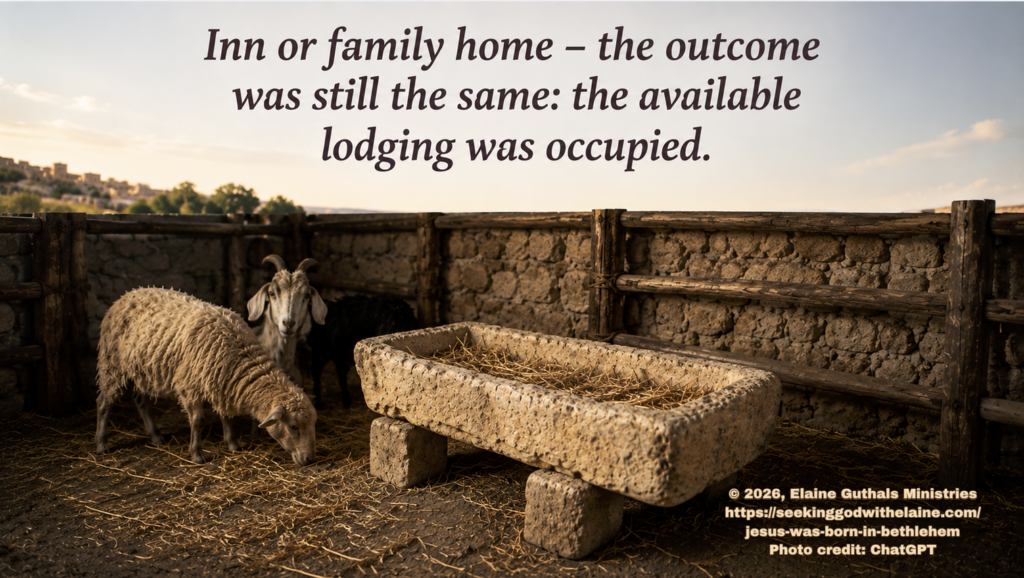
  • The Plan of Salvation Revealed

    When God passed judgment on Satan for the original sin, He started revealing the Plan of Salvation. This devotional reading looks at how the serpent’s and woman’s offspring would interact.

    Nuggets

    • The Messiah was promised to restore humankind’s relationship with God.
    the-plan-of-salvation-revealed

    Not long after Satan succeeded in unleashing sin on the world, he got a sentence of losing to the Son of God. I don’t think he knew about the lake of fire yet (Rev. 20: 10).

    But Satan knew from the get-go that, though he may win some battles, he was going to lose the war with God.

    The loss would be a crushing defeat. His head was going to get smashed. “The time for judging this world has come, when Satan, the ruler of this world, will be cast out” (Jn. 12: 31 NLT).

    Let’s Put It into Context

    To read devotions in the Creating Everything theme, click the button below.

    Devotions in the Celebrating Creation’s Story series

    The Promised Messiah

    “… He will strike your head, and you will strike his heel” (Gen. 3: 15 NLT)

    The Messiah was promised to restore humankind’s relationship with God.

    Satan learned this of is defeat by being informed there would be a Messiah to save us. He would arrive through a human birth.

    Ooo, baby. I bet that was a blow to Satan. He thought humans were worse than second-class citizens – and One of them was going to defeat him!

    Before we were even created, God knew our relationship with Him would break, and He set a path to lead us back. It looks like two seconds after God confronted the couple about their sin, the Plan of Salvation was unveiled.

    God, when He had to have been upset and hurt because the couple had sinned, immediately became the first Preacher.

    “I have heard all about you, LORD. I am filled with awe by your amazing works. In this time of our deep need, help us again as you did in years gone by. And in your anger, remember your mercy” (Hab. 3: 2 NLT).

    No, God did not come up with the Plan of Salvation on the fly. It was designed long before it was needed.

    • “God chose him [Jesus] as your ransom long before the world began, but now in these last days he has been revealed for your sake” (I Pet. 1: 20 NLT)
    • “Even before he made the world, God loved us and chose us in Christ to be holy and without fault in his eyes” (Eph. 1: 4 NLT).
    • “And all the people who belong to this world worshiped the beast. They are the ones whose names were not written in the Book of Life that belongs to the Lamb who was slaughtered before the world was made” (Rev. 13: 8 NLT).
    • “Father, I want these whom you have given me to be with me where I am. Then they can see all the glory you gave me because you loved me even before the world began!” (Jn. 17: 24 NLT).
    • “The beast you saw was once alive but isn’t now. And yet he will soon come up out of the bottomless pit and go to eternal destruction. And the people who belong to this world, whose names were not written in the Book of Life before the world was made, will be amazed at the reappearance of this beast who had died.” (Rev. 17: 8 NLT).
    • “For God saved us and called us to live a holy life. He did this, not because we deserved it, but because that was his plan from before the beginning of time—to show us his grace through Christ Jesus” (II Tim. 1: 9 NLT).
    • “Then the King will say to those on his right, ‘Come, you who are blessed by my Father, inherit the Kingdom prepared for you from the creation of the world’” (Mt. 25: 34 NLT).
    • “If that had been necessary, Christ would have had to die again and again, ever since the world began. But now, once for all time, he has appeared at the end of the age to remove sin by his own death as a sacrifice” (Heb. 9: 26 ESV).

    Belief in the Messiah was the way to the path of restoration. “Jesus told him, ‘I am the way, the truth, and the life. No one can come to the Father except through me’” (Jn. 14: 6 NLT).

    We can’t say that Jesus wasn’t in the Old Testament. We can’t say that Old Testament believers knew nothing about a Messiah.

    Don’t miss this. When the Messiah was promised here, there is no mention of Him being a military Messiah. It is clearly – and only – about spiritual freedom from sin.

    Make no mistake. Salvation came through a curse. God cursed Satan by telling him that he would lose through our turning back toward good.

    The third thing not to gloss over is that Satan can only reach the heel. Manton put it this way. Manton wrote, “The devil cannot reach to the head, but the heel only, which is far from any vital part.”

    Resource

    Ooo, baby. That would bite. Satan was trying for a complete overthrow of God, and all he was going to accomplish was a swat at the heel.

    Gibson made a great point. The Gospel had to come through a curse because, even today, there are those who feel a good works salvation is enough.

    It isn’t. We can’t earn our way back into Heaven.

    Being a good person isn’t good enough. It does address our disobedience to God.

    We have to commit to being obedient to God and His laws and Will.

    Resource

    Paul explained how the Gospel, instead of the law, leads to salvation. “The old way, with laws etched in stone, led to death, though it began with such glory that the people of Israel could not bear to look at Moses’ face. For his face shone with the glory of God, even though the brightness was already fading away. Shouldn’t we expect far greater glory under the new way, now that the Holy Spirit is giving life? If the old way, which brings condemnation, was glorious, how much more glorious is the new way, which makes us right with God! In fact, that first glory was not glorious at all compared with the overwhelming glory of the new way. So if the old way, which has been replaced, was glorious, how much more glorious is the new, which remains forever!” (II Cor. 3: 7-11 NLT).

    Jesus came as our substitute. He stands between God and us to take God’s wrath for our sin.

    Buddicom had an interesting reminder. “… Jesus should not get the victory unwounded.” Jesus had to suffer as Messiah to fulfill this prophecy.

    Resource

    Not only did Jesus have to suffer the pain and humiliation of the cross — not just spill His blood — but He also had to experience normal human trials. He had to be one of us.

    I don’t think this means only the way the battles between good and evil will occur. I believe it means the battles will be continuous.

    The outcome, however, was always secure. “… He will strike your head, and you will strike his heel” (Gen. 3: 15 NLT). The Prince of Life would defeat the devil of death.

    • “But ye denied the Holy One and the Just, and desired a murderer to be granted unto you; And killed the Prince of life, whom God hath raised from the dead; whereof we are witnesses” (Ac. 3: 14-15 KJV).
    • “Because God’s children are human beings — made of flesh and blood — the Son also became flesh and blood. For only as a human being could he die, and only by dying could he break the power of the devil, who had the power of death” (Heb. 2: 14 NLT).

    Satan sticking out at a human’s heel isn’t too life threatening to the human on its own. Jesus striking Satan’s he’d is fatal.

    But think of it this way. Not only would Jesus be victorious over Satan, but also all humans who accept Him as our Savior and Redeemer also kick him in the head.

    Not bad for mere humans!

    Spurgeon took it a different way. He took the Messiah’s heel to be His lower part – His human nature.

    Resource

    How many times did Jesus agonize over His dense followers?

    • “But they didn’t understand any of this. The significance of his words was hidden from them, and they failed to grasp what he was talking” (Lk. 18: 34 NLT).
    • “They didn’t understand what he was saying, however, and they were afraid to ask him what he meant” (Mk. 9: 32 NLT).
    • “There is so much more I want to tell you, but you can’t bear it now. When the Spirit of truth comes, he will guide you into all truth. He will not speak on his own but will tell you what he has heard. He will tell you about the future” (Lk. 16: 12-13 NLT).

    Wasn’t He in anguish in the Garden of Gethsemane?  “He prayed more fervently, and he was in such agony of spirit that his sweat fell to the ground like great drops of blood” (Lk. 22: 44 NLT).

    Didn’t He weep over Jerusalem? “But as he came closer to Jerusalem and saw the city ahead, he began to weep. ‘How I wish today that you of all people would understand the way to peace. But now it is too late, and peace is hidden from your eyes’” (Lk. 19: 41-42 NLT).

    Jesus was the Suffering Servant. “He was despised and rejected — a man of sorrows, acquainted with deepest grief …” (Isa. 53: 3 NLT).

    Suffering, bruised, in anguish – true. “… Here on earth you will have many trials and sorrows. But take heart, because I have overcome the world” (Jn. 16: 33 NLT).

    It’s going to hurt, but He will be victorious in the end.

    Manton reminded us that this suffering was in God’s plan. This makes salvation mean all that much more to us.

    I see you over there asking how Satan could only bruise the Messiah’s heel when He ended up dying. But did He stay dead?

    No. The Messiah was resurrected. “But the angel said, ‘Don’t be alarmed. You are looking for Jesus of Nazareth, who was crucified. He isn’t here! He is risen from the dead! Look, this is where they laid his body’” (Mk. 16: 6 NLT).

    We can expect the same. “That is why we never give up. Though our bodies are dying, our spirits are being renewed every day” (II Cor. 4: 16 NLT).

    So, the very first promise God ever gave to us was that He had a way to restore our relationship with Him. Even though we had rebelled and been disobedient, He had a way to love us back into His fold.

    This verse gives a wonderful picture of the gospel. Jesus is going to stand in the gap between mankind and Satan. He will protect us from Satan.

    But Jesus is also in the gap between mankind and God. He has provided the way in which we can once again have access to our Heavenly Father.

    Jesus will be the One to free us. “So if the Son sets you free, you are truly free” (Jn. 8: 36 NLT).

    Making the Connections

     Yep, the original sin blew it for every human born after that time — for all time.

    Since we aren’t told until later that there were children involved, we have to believe that the children didn’t show up until after the original sin. True, as we will learn in the next chapter, Cain had the free will to make his own wrong choice.

    But after the original sin, humankind had a sinful nature as well as free will. That is why disciples continue to sin even after conversion.

    Bradford make an interesting observation. He said, “… while our evil inclination is centered in our minds, our sinful nature is pretty much centered in our spirits or our souls, depending on how one defines spirit and soul. That is, we either have a corrupt spirit in us, OR we have a Holy spirit in us. We don’t have a little of each, or none at all…..it’s fully one or fully the other.”

    Resource

    We get the Holy Spirit in our souls by asking Jesus to be our Savior and Redeemer. “This means that anyone who belongs to Christ has become a new person. The old life is gone; a new life has begun!” (II Cor. 5: 17 NLT).

    Bradford argued that is why the burnt offering (Olah) and grain offering (Minchah) were instituted. They were to address humankind’s sinful nature, not sinful behavior.

    That is why we say the animal sacrifices aren’t needed after Jesus’ death, burial, and resurrection. Yes, we keep on sinning; but when we are children of God, our nature has been restored.

    Yes, we have to ask forgiveness when our sinful behavior occurs. But we now have access to God to ask for that forgiveness.

    That is a really important point. God still does not accept disobedience from His children. He still demands obedience.?

    How Do We Apply This?

    Understand the Messiah’s victory is for this world but is mainly for eternity.
    Accept we are not exempt from trials and temptation in this world.
    Realize we will still sin in this world after conversion.
    Encourage fellow disciples to withstand Satan’s temptations.

    Resource

    Father God. We are awed at how much You love us. We disobeyed You, and You immediately told us there would be a way to restore our relationships with You. Thank You. We could never have earned our way back into Your presence. By sending Your Son to die for us, all we have to do is believe He paid the debt for our sins. Amen.

    What do you think?

    Leave me a comment below (about this or anything else) or head over to my Facebook group for some interactive discussion.

    If you don’t understand something and would like further clarification, please contact me.

    If you have not signed up for the email providing the link to the devotions and the newsletter, do so below.

    If God has used this devotion to speak with you, consider sharing it on social media.
  • The Voice of Heaven

    God did more than open the door to Heaven. This devotional reading looks at how God Himself called John to walk through the door.

    Nuggets

    • John was invited to God’s throne room.
    • What the voice like a trumpet was saying was for John to walk through Heaven’s door.
    • John didn’t know what to expect when he walked through the open door into Heaven.
    • John had already been in spirit to talk to Vision Man, but this in spirit could be construed as something different.
    the-voice-of-heaven

    We talked a lot in the last devotion about John’s second vision being an invitation to Heaven. He was invited through an open door to come into God’s presence.

    God Himself was the One Who called John to enter. Let’s look at how the invitation was given.

    Let’s Put It into Context

    To read devotions in the On the Day of the Lord theme, click the button below.

    Devotions in the Opening the Door of Heaven series

    Accessing Heaven

    “… And the first voice, which I had heard speaking to me like a trumpet, said, ‘Come up here …” (Rev. 4: 1-2 ESV)

    John was invited to God’s throne room.

    Voice like a Trumpet

    I almost missed this. I got the voice-like-a-trumpet part, but I almost missed the first-voice part.

    This is referring back to Revelation 1: 10. “I was in the Spirit on the Lord’s day, and I heard behind me a loud voice like a trumpet” (Rev. 1: 10 ESV).

    Guild made the following observation. He wrote, “The first voice that talked with John was as a trumpet; and so is the trumpet of the law the first voice that talks with a sinner for his conversion (Isaiah 58:1).”

    Resource

    Look closely at the verse in Isaiah. “Cry aloud; do not hold back; lift up your voice like a trumpet; declare to my people their transgression, to the house of Jacob their sins” (Isa. 58: 1 ESV).

    One way the trumpet was used was to signify the reading of the law. We talked in Revelation 1 how a trumpet will play a large part in the Second Coming.

    Well, the verse in Isaiah identified the trumpet as a voice. To me, that gives it a strong, clear quality.

    I like the combination of those two things. The voice with a strong, clear quality is presenting, as the trumpet of the law, the Plan of Salvation.

    The voice of the trumpet is calling one and all through the open door to Heaven.

    Bevis had a good question. What if we didn’t have voices from Heaven? What if we just had the laws and commandments?

    Resource

    That would be so impersonal. It would be a cut and dry to-do list. Do the do’s. Don’t do the don’ts.

    Instead, we have God Who sings to us (Zeph. 3: 17). We have Jesus Who comes to us. We have the Holy Spirit Who does everything for us – teaches us, encourages us, comforts us.

    We would miss all that if we didn’t hear Their voices.

    Instead, we have a Sovereign God Who deals with us personally. We have a divine God Who gave His life for us. We have a Spirit Who never leaves us.

    Sometimes, trumpets can get really loud. It has to be to be a war cry. Everyone must be able to hear it.

    Come Up Here

    What the voice like a trumpet was saying was for John to walk through Heaven’s door.

    Now, since I think God is Vision Man and not Jesus, I think this is God’s voice and God’s throne.

    God is the One to call us to salvation. “No one can come to me unless the Father who sent me draws him. And I will raise him up on the last day” (Jn. 6: 44 ESV).

    If this is an open-door invitation to eternal life, it must be from God.

    That is logical to me. God created us. We were the ones who disobeyed Him, causing our banishment from His presence.

    God wants us back.

    Hughes identified the purpose of the invitation. He wrote,

    “(1) These ‘things’ contain the substance of the Divine purposes concerning the destiny both of the people and the enemies of God. (2) These purposes had never been disclosed till now.”

    Resource

    The hadn’t-seen-until-previously part interested me. I need to process that.

    Old Testament people knew that there was a Heaven.

    • “In the beginning, God created the heavens and the earth. The earth was without form and void, and darkness was over the face of the deep” (Gen. 1: 1 ESV).
    • “Who builds his upper chambers in the heavens and founds his vault upon the earth; who calls for the waters of the sea and pours them out upon the surface of the earth— the Lord is his name” (Amos 9: 6 ESV).

    They just didn’t know that it was a place for them to go. When Jesus came, that was the first that had heard of that concept. “In my Father’s house are many rooms. If it were not so, would I have told you that I go to prepare a place for you? And if I go and prepare a place for you, I will come again and will take you to myself, that where I am you may be also” (Jn. 14: 2-3 ESV).

    Now, Heaven wasn’t a place John would go some day. It was a place he was going today.

    I Will Show You

    “… ‘and I will show you what must take place after this’” (Rev. 4: 1 ESV)

    John didn’t know what to expect when he walked through the open door into Heaven.

    One of the reasons Revelation is so hard to understand is that it is written about future events. What was shown to him was so far out of his experience – and probably comfort zone – that he probably had trouble grasping all of it.

    Another reason is that John was being shown events from a heavenly perspective. God sees things a different way than we do. “For my thoughts are not your thoughts, neither are your ways my ways, declares the Lord. For as the heavens are higher than the earth, so are my ways higher than your ways and my thoughts than your thoughts” (Isa. 55: 8-9 ESV).

    To me, Heaven is going to be about worshiping God 24/7/365/eternity. But I think we are going to be in for a surprise.

    We may never sing Amazing Grace again. We may never sing Wayfarer. Or In the Garden. Or King of My Heart.

    We may never listen to a sermon again – no more three points and a poem. We may never hear mass again.

    Think about it. Will we be needing to hear the laws and commandments? We will have our new, pure bodies that can’t sin.

    I don’t know what it is going to be like. I just think it will be something we’ve never seen before.

    What we are going to need – and John needed then – was to see Heaven through a holy mind. We have to be elevated to God’s level – as much as we can in these earthly bodies.

    If we take our usual I-hate-change attitude, it won’t work.

    Doesn’t God want our focus to be on spiritual things? We, like God, shouldn’t put priority on the physical. We, like God, need to focus on the spiritual and our condition thereof.

    In Spirit

    “At once I was in the Spirit …” (Rev. 4: 2 ESV)

    John had already been in spirit to talk to Vision Man, but this in spirit could be construed as something different.

    Before, John was talking with Vision Man, but he was still on Patmos. Did he physically go to Heaven here?

    Personally, I think that is NFNR – nice fact, not relevant.

    Oh, sure. We would love to know all the nitty, gritty details. But it doesn’t change the outcome. We have to focus on the vision, not the how it all shook out.

    Exell took a stab at why God allowed John the vision of Heaven. He wrote,

    “God allows man to gaze into the mysteries of the life above. … Here we see the love of God, in that: He reveals the unseen to the race; His wisdom in that He casts a little light upon the problems of futurity.”

    Resource

    I think this ties into Colossians 3: 1. “If then you have been raised with Christ, seek the things that are above, where Christ is, seated at the right hand of God” (Col. 3: 1 ESV). It is part of, like the Ephesians, keeping our first love. We have to keep God as our priority.

    Bevis said something that got me thinking. In order to hear God, we have to be in the Spirit.

    Do we envision that as being in a trance? Do we think of it as an out-of-mind, out-of-body experience?

    What if it just mean being in Christ? Our hearts have to be open to Him to see Him.

    Yes, that would make it more than a special occasion occurrence. We would be in the Spirit daily.

    But isn’t that what we are supposed to do? Aren’t we supposed to walk with the Spirit?

    Is this one of the ways that we are missing God?

    Making the Connections

    We have to approach the open door to Heaven realizing Who God is. He is Sovereign God. His majesty and glory are indescribable by our mere words.

    We have to realize we have never been in a worship service like we will encounter in Heaven.

    Don’t worry. True disciples will love it. Goats masquerading as sheep won’t be there.

    How Do We Apply This?

    • Determine what God wants us to do and do it.
    • Let God show us what Heaven is like.
    • Seek things that are above.
    • Study prophecy in order to read history and current events.

    Resources

    Father God. We are humbled. You call us into Your presence. You allow us a glimpse of Your glorious home. You do this so that – one day – we will be called to make that our home for eternity. We can’t wait for that day. Amen.

    What do you think?

    Leave me a comment below (about this or anything else) or head over to my Facebook group for some interactive discussion.

    If you don’t understand something and would like further clarification, please contact me.

    If you have not signed up for the email providing the link to the devotions and the newsletter, do so below.

    If God has used this devotion to speak with you, consider sharing it on social media.
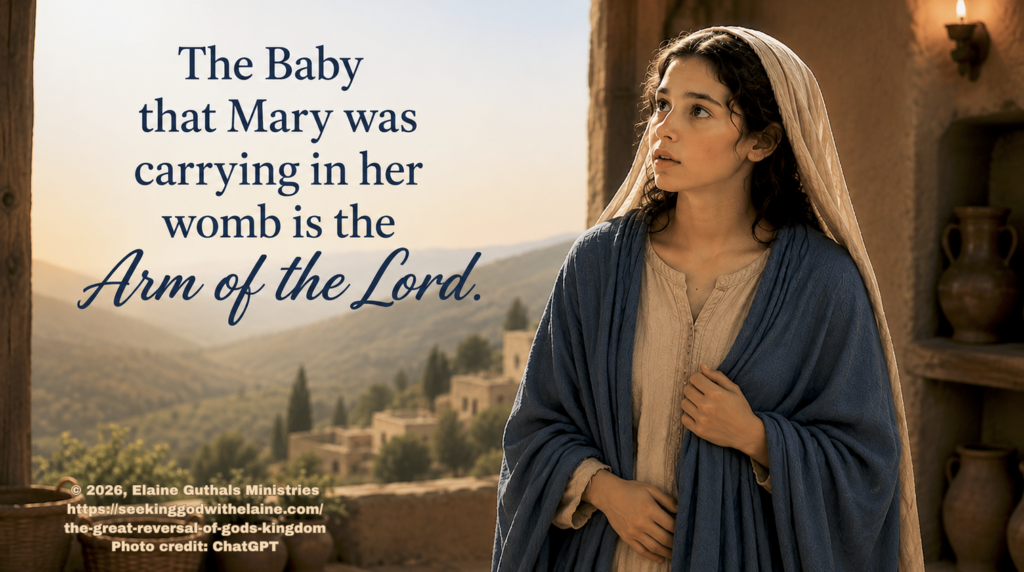
  • Inviting John to Heaven

    The setting of the Book of Revelation changes starting in Chapter 4. This devotional reading looks at John’s second vision — his vision of Heaven.

    Nuggets

    • Chapters 4 and 5 contain John’s second vision — he saw Heaven itself.
    • The open door is a welcoming visual because it is practical, but it can be difficult to assimilate when we try to put everything together.
    inviting-john-to-heaven

    
Vision Man – which could have been God or could have been Jesus or Both – came down to present a vision to John. He did a little ice breaker first.

    The message of God about Jesus through his angel to John all took place on Patmos where John was at the time. He started talking to seven Messianic congregations with whom John was very familiar.

    Then it was time to get to the meat of the revelation. That meant a scenery change for the second vision.

    Let’s Put It into Context

    To read devotions in the On the Day of the Lord theme, click the button below.

    Devotions in the Opening the Door of Heaven series

    An Open Door to Heaven

    “After this I looked, and behold, a door standing open in heaven! …” (Rev. 4: 1 ESV)

    Chapters 4 and 5 contain John’s second vision. He saw Heaven itself.

    After This

    I like how Revelation 4: 1 started out with “After this …” (Rev. 4: 1 ESV). Maybe you don’t have the same problem I do, but I often question whether John wrote this in a linear timeline or if God showed Him bits and pieces but not in chronological order.

    But then, that is why there are preterists, historicists, futurists, and redemptive-historical-idealists. There is no consensus about the timeline.

    I grew up thinking Revelation was chronological. I thought John recorded it in the order it was presented to him and in the order it is going to happen.

    I don’t think anymore that this is going to be the order everything happens. I think the Book of Revelation circles around what will happen. I am not totally convinced John was told every last little thing and what he was told is in strict order.

    I know Jesus said that only God knows the date and time things will happen. “But concerning that day and hour no one knows, not even the angels of heaven, nor the Son, but the Father only” (Mt. 24: 36 ESV).

    My humble opinion is that we aren’t supposed to know the exact how, either. We’re supposed to know enough to question but not figure it all out.

    Isn’t the how just as important as the when?

    But then Hughes brought up another good point. We saw John describe some things in the first three chapters.

    • The churches are the lampstands.
    • The stars are the angels of the churches – possibly what we term pastors.

    Are those just earthly designations? Are they recognized as such in Heaven?

    Resource

    It is possible that John was using language he knew to describe something he could not describe. He was not trying to make it symbolic. He was trying to make it practical.

    A Door Standing Open

    The open door is a welcoming visual because it is practical, but it is difficult to assimilate when we try to put everything together.

    Let’s look at some ways that Heaven has been described.

    • “In the beginning, God created the heavens and the earth. The earth was without form and void, and darkness was over the face of the deep. And the Spirit of God was hovering over the face of the waters” (Gen. 1: 1-2 ESV).
    • “And God made the expanse and separated the waters that were under the expanse from the waters that were above the expanse. And it was so. And God called the expanse Heaven. And there was evening and there was morning, the second day” (Gen. 1: 7-8 ESV).
    • “And besides all this, between us and you a great chasm has been fixed, in order that those who would pass from here to you may not be able, and none may cross from there to us” (Lk. 16: 26 ESV).

    Heaven, earth, and hell have been separated. The Hebrews believed in the Firmament, the space between the Heaven and earth. The visual of a great chasm leads us to believe there is a really, really long distance between them.

    Jacob saw the access point as a ladder (Gen. 28: 12). John saw it as a door.

    Different? Maybe not.

    Jacob just saw the steps leading up to a semi-open door. Angels were ascending and descending.

    Jacob didn’t see into Heaven as John did. All he saw was the path to get there.

    John got an open door — and step through it.

    We can’t think that John just glanced over and saw the door to Heaven. Just as Jesus had to open the minds of the men on the road to Emmaus to the meaning of the Scriptures (Lk. 24: 45), God had to open John’s eyes to see the door to Heaven.

    I think we should be humbled by the fact that God was throwing the door open wide.

    In a way, it is an open invitation. All who believe will be allowed to one day walk through that open door.

    Yes, it might be days or years down the road for some. But all who ask Jesus to be their Savior and Redeemer will be allowed to walk through that open door to Heaven.

    Hughes thought John used symbols to explain what he saw. Whether he was talking in code so the Romans wouldn’t understand or just doing his best to describe with his vocabulary the indescribable, we can’t miss this.

    What John described was real. Heaven is real.

    If we were wanting to use symbols, wouldn’t a door be a good symbol for salvation?

    We can only enter Heaven by accepting the gift of salvation. It becomes our only door to forgiveness and purity. It becomes our only door to God.

    Spurgeon had an interesting reminder. He wrote, “A door is opened in heaven whenever we are elevated by the help of God’s Spirit to high thoughts of the glory of God.”

    Resource

    We open the doors to Heaven through our prayers in the Holy Spirit. When we sense His presence, grace, and mercy, we are brought to the threshold of Heaven.

    We throw the door open wide when we actually study what God’s Word says, not just read it. Doors open and light bulbs come on when we finally understand with clarity who Jesus is.

    True worship opens doors for us. When we are performing what we were made to do – praise Sovereign God – we are closer to where God wants us to be.

    Herbert made a connection for us. Where is Satan’s throne in comparison to God’s throne?

    Resource

    We just talked about that. The Messianic congregation at Pergamum was told, “I know where you dwell, where Satan’s throne is …” (Rev. 2: 13 ESV). Philadelphia was home to a synagogue of Satan (Rev. 3: 9).

    Satan is ruler of this world. God is inviting us to enter through the door to His paradise.

    The contrast is great. The Messianic congregations were riddled with poverty, persecution, natural disasters and a whole slew of other earthly trials.

    Heaven is filled with splendor and majesty. It is pure.

    That pure life is occurring now in Heaven while we are experiencing the trials of this life. It isn’t some fairy tale out of a musty old book. It is a living, breathing place where eternity has already started for some.

    But look at it this way. The time on earth is in the now. The time in Heaven is in the now and in the future.

    It wasn’t that God was going to show John a typical day in the neighborhood. John was going to get to see what would happen 2000+ years down the road.

    God knows what is going to happen in the future. This is true for every Tom, Sally, and Elaine. It is true for every country. It is true for every church.

    God knows all and opens the door for us to rest in His knowledge.

    Making the Connections

    Do you ever wish God and Heaven were visible instead of invisible? Ooo, baby. I am sure we all have.

    Herbert made an excellent point. He wrote,

    “If heaven were not invisible, if God sometimes appeared, the chief trial of our [present] life would be removed, and we should have perfect assurance instead of wavering faith. Our life, in fact, would cease to be the discipline which it is at present. His wisdom appoints that we walk by faith, not by sight; no wonder, then, that all the arrangements of our life are in keeping with this purpose.”

    Resource

    We gain by not having sight. We don’t need discipline when what we have put our trust in is right there.

    Discipline makes us stronger.

    How Do We Apply This?

    • Remain godly to earn more of God’s favor.
    • Look to God for grace and knowledge, and we won’t be disappointed.

    Resource

    Father God. We are humbled that You have opened the door to Heaven so that we may step through in faith. You want us to have access to You. The only way we can do that is through believing that Jesus is our Savior and Redeemer. Help us to walk through that door – now and at the time You call us home. Amen.

    What do you think?

    Leave me a comment below (about this or anything else) or head over to my Facebook group for some interactive discussion.

    If you don’t understand something and would like further clarification, please contact me.

    If you have not signed up for the email providing the link to the devotions and the newsletter, do so below.

    If God has used this devotion to speak with you, consider sharing it on social media.
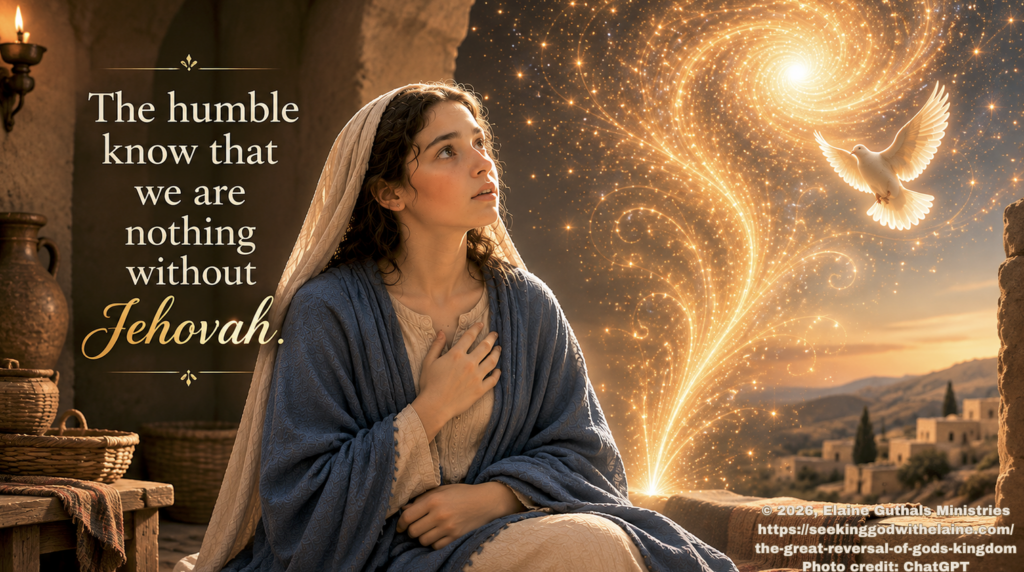
  • Christ’s Great Preaching under the New Testament Dispensation

    Jesus was not only the Message of the gospel, but He was also the Messenger. This devotional reading looks at how and through whom He taught.

    Nuggets

    • Jesus approached the Jews according to what they would know and built from there.
    • Jesus expects greater works out of disciples than He accomplished.
    • Jesus expects ministry to be organized.
    hrists-great-preaching-under-the-new-testament-dispensation

    In the last devotion, we pulled out some Old Testament verses that spoke about Jesus. We are going to do the same thing for this devotion — only use the New Testament verses that Boston cited.

    Let’s Put It into Context

    To read devotions in the On the Day of the Lord theme, click the button below.

    Devotions in the Gospsel Tidings about Easter series

    The foundation of this series is Boston’s sermon, Jesus and the Meek.

    Resource

    The headings are Boston’s words.

    Preaching to the Jews as the Minister of Circumcision

    “For I tell you that Christ became a servant to the circumcised to show God’s truthfulness, in order to confirm the promises given to the patriarchs” (Rom. 15: 8 ESV)

    Jesus approached the Jews according to what they would know and built from there.

    The gospel message began with Jesus’ teaching of it. He told the story in which He was the main character.

    Jesus’ audience was primarily other Jewish people. “He answered, ‘I was sent only to the lost sheep of the house of Israel’” (Mt. 15: 24 ESV).

    Tough audience – I know!

    Jesus was talking to the people who thought they had it all figured out. They knew exactly what God was expecting of them – and only them.

    Because of that, Jesus had to come as “one of them.” He had to be a Jew – one of God’s chosen people. The vernacular in that day said it “… became a servant to the circumcised … (Rom. 15: 8 ESV).

    Since Jesus was coming to fulfill the law, He had to come under the auspices of the law. He couldn’t fulfill it if He wasn’t in it.

    It was more than our just looking like them in order to witness to them. God’s primary concern is not that we have representation so we “see ourselves” in the person(s) witnessing to us.

    In fact, God wants us to break down barriers. What are our marching orders?

    • “And he said to them, ‘Go into all the world and proclaim the gospel to the whole creation’” (Mk. 16: 15 ESV emphasis added).
    • “Go therefore and make disciples of all nations, baptizing them in the name of the Father and of the Son and of the Holy Spirit, teaching them to observe all that I have commanded you. And behold, I am with you always, to the end of the age” (Mt. 28: 19-20 ESV emphasis added).

    The world is so busy dividing itself into the are’s and are nots or the have and have nots. Satan is all about division.

    That allows covetousness to rear its sinful head. The world says, “We’re so busy about wanting what others have – until they have Christ. We don’t want that.”

    Jesus’ gospel is all about unity. “For as many of you as were baptized into Christ have put on Christ. There is neither Jew nor Greek, there is neither slave nor free, there is no male and female, for you are all one in Christ Jesus. And if you are Christ’s, then you are Abraham’s offspring, heirs according to promise” (Gal. 3: 27-29 ESV).

    Jesus witnessed under the conformity of the law. That was the only way to learn God’s character.

    We are to conform to God’s character, not Him to our culture.

    Inspiring His Apostles to Preach and Write the Doctrines of Salvation

    “Truly, truly, I say to you, whoever believes in me will also do the works that I do; and greater works than these will he do, because I am going to the Father” (Jn. 14: 12 ESV)

    Jesus expects greater works out of disciples than He accomplished.

    It always amazed me growing up that Jesus said that the Apostles were to surpass the works that Jesus did.

    No, I didn’t think like I am sure the Apostles did. They initially thought that everything would have stopped with His death. Obviously, hindsight has told us that didn’t happen.

    Also — obviously — there is a part of Jesus’ work that we can’t do. I didn’t think there was any expectation that we would be saviors of the world.

    Rather, I thought, how could flawed, earthly men do more than the sinless Perfect Son of God? And applying that to today — how can us continue to use flawed, earthly us?

    Then I realized that it wasn’t the doing that was going to surpass Jesus’ ministry. I was looking at it wrong.

    What was one reason that the Apostles had so much trouble understanding what Jesus was trying to tell them? Jesus didn’t say things in plain Hebrew.

    “I have said these things to you in figures of speech. The hour is coming when I will no longer speak to you in figures of speech but will tell you plainly about the Father” (Jn. 16: 25 ESV emphasis added).

    That leads to the second reason. Jesus didn’t speak so that everyone understood first pass. They — and we — have to open the eyes of our hearts so that we can see the meaning behind the words.

    God doesn’t want to spill His soul to anyone but His children. Because of that, much of our discipleship training is through revelation. The Holy Spirit teaches us what we need to know.

    I think the third reason is the main one as to why the Apostles were struggling with everything they were experiencing. It also shows us how they accomplished greater works than Jesus.

    While Jesus was here on the earth, the Plan of Salvation was still being accomplished. He needed to return to the Father and send the Holy Spirit.

    “Nevertheless, I tell you the truth: it is to your advantage that I go away, for if I do not go away, the Helper will not come to you. But if I go, I will send him to you. And when he comes, he will convict the world concerning sin and righteousness and judgment:  concerning sin, because they do not believe in me; concerning righteousness, because I go to the Father, and you will see me no longer; concerning judgment, because the ruler of this world is judged” (Jn. 16: 7-11 ESV).

    Conviction of sin didn’t come until after the Plan of Salvation was completed.

    Whitelaw cautioned us to not read John 14: 12 to mean that Jesus won’t use non-believers to get His message across. He uses anything that He has created — which is everything — to introduce us to Sovereign God.

    Also brought up by Whitelaw is the fact that the Apostles did not necessarily perform greater miracles than Jesus.

    What was greater is the reach that they had. Jesus stayed around the same areas during His life. He went to the house of Israel (Mt. 15: 24).

    The Apostles went everywhere. Paul specifically went to the Gentiles.

    Even today we feel the reach of the Apostles as we read the words written by Peter, Matthew, John, Paul, and the others. We wouldn’t be disciples today if not for their reach.

    Whitelaw summed it up this way. He wrote, “If Christ is the prime worker and the believer the instrument, connection must be established between them.

    Resource

    The apostles — and us when we witness — cannot work if we aren’t working the work assigned to us for Jesus. We are just the instruments.

    What is the foundation of these works? We have to believe in Jesus.

    We work for the exalted Lord to exalt Him even more.

    Our work is only great because The Lord is within us. He guides us in the work and accomplishes it through us.

    All this is saying is that there will always be work for Christ’s disciples to do. Maclaren put it this way. He wrote, “One form of His work was ‘finished’ on Calvary, but there is another work, which will not be ended until the angel voices shall chant ‘It is done, the kingdoms of the world are the kingdoms of our God and of His Christ.’”

    Resource

    We are going to work for Christ all the way from Calvary to the seventh trumpet. “Then the seventh angel blew his trumpet, and there were loud voices in heaven, saying, ‘The kingdom of the world has become the kingdom of our Lord and of his Christ, and he shall reign forever and ever’” (Rev. 11: 15 ESV).

    Think of it this way. Jesus said at the beginning of His ministry that “… ‘The time is fulfilled, and the kingdom of God is at hand …’” (Mk. 1: 15 ESV). His kingdom has been at hand all this time.

    On the Day of the Lord, it will arrive!

    Rising Up a Gospel Ministry

    “And he gave the apostles, the prophets, the evangelists, the shepherds and teachers, to equip the saints for the work of ministry, for building up the body of Christ, until we all attain to the unity of the faith and of the knowledge of the Son of God, to mature manhood, to the measure of the stature of the fullness of Christ” (Eph. 4: 11-13 ESV)

    Jesus expects ministry to be organized.

    Jesus is the Prince of Peace, and God works in an orderly fashion. Therefore, the ministry done is their Name is done in an organized manner.

    Cunningham told us what ministry is about. He wrote,

    “The object which the Christian ministry is designed to effect is the conviction and conversion of sinners, and the edification and consolation of saints; but these are effects which no human, and, indeed, no created, power is able to produce. The office of the Christian ministry — that is, the institution of a separate order of men to attend, more peculiarly, to the religious instruction of others — is admirably adapted in its own nature as a means to effect the object intended …”

    Resource

    Jesus knows if His work is to be accomplished, we need structure. We need a plan and a designation of who is going to do what.

    We shouldn’t necessarily think of the list Paul gives us in Ephesians 4: 11 as a hierarchy. I know. We would probably put the apostles first.

    But who is “more important” — the once who came before or the ones who came after? Yes, the prophets told how things would be, but the evangelists truly leave others to Christ.

    Both are important.

    That leaves the shepherds and teachers. Both are important, too.

    Shepherds are pastors that lead the flock, as Jesus did. “My sheep hear my voice, and I know them, and they follow me” (Jn. 10: 27 ESV). The churches are to follow their pastor.

    Teachers assist the pastor in growing the congregation to be closer to God. It is part of the Great Commission: “teaching them to observe all that I have commanded you …” (Mt. 28: 20 ESV).

    The goal of our Christian walk should be to grow closer to Him as we mature in our faith. Pastors and teachers are “to equip the saints for the work of ministry, for building up the body of Christ” (Eph. 4: 12 ESV). The body of Christ is the Church.

    The work is not only are we to strive to mature in our faith and holiness, but we are also to help others grow.

    By Continuing a Gospel Ministry in the Church

    “Go therefore and make disciples of all nations, baptizing them in the name of the Father and of the Son and of the Holy Spirit, teaching them to observe all that I have commanded you. And behold, I am with you always, to the end of the age” (Mt 28: 19-20 ESV)

    Jesus expects the ministry to continue until the Day of the Lord.

    We just talked about the teaching part of the Great Commission. Let’s look at the end of it.

    Jesus said He would be with us in performing this commission until the end of the age. He meant that He would be spiritually with us until the Day of the Lord.

    Bersier reminded us that God’s Word is a living Word. Jesus reveals Himself to us through those words, not just the written words.

    Resource

    The words Jesus gives us are those of love.

    Remember, Jesus was saying these words to the Apostles after the resurrection. He had been through death with its separation.

    Jesus was giving His final words of peace.

    Making the Connections #1

    Maclaren gave us a list of conditions on which Jesus works within us: faith and prayer.

    Remember, Jesus is standing at the door of our hearts, knocking. “Behold, I stand at the door and knock. If anyone hears my voice and opens the door, I will come in to him and eat with him, and he with me” (Rev. 3: 20 ESV).

    When we trust Him enough to open the door of our hearts to Him, He strengthens our abilities to do His work and He increases our success. Remember, our success is defined by our obedience to Him, not by the outcome.

    Prayer has to permeate our work. Said that wrong, didn’t I?

    It is not our work. It is Jesus’ work through us.

    Prayer is the only way in which we are connected to Him.

    Look what Maclaren had to say about that. He wrote, “Our power depends upon our prayer, Not God’s and Christ’s fulness and willingness to communicate, but our capacity to receive of that fulness, and so the possibility of its communication to us, depend upon our prayer.”

    Resource

    How many things do we start without bathing it in prayer? Oh, we may feel God calling us to that work, but that doesn’t mean we are to skip the prayer stage at any point in the exercise.

    Instead, prayer brings us a necessarily element in doing Christ’s work — unity with Christ.

    Making the Connections #2

    Bersier said something that backs up what I have been saying. He wrote, “This presence of Christ consists in something more than there is in His word. … Behind the written word there is the living word, the invisible [Savior] who manifests Himself to the heart.”

    Resource

    What is in God’s Word is an introduction to Who He is. We must become His children before He reveals Himself to our hearts.

    We are to focus on our inward relationships with God.

    Making the Connections #3

    Bersier said something else. He wrote, “But what makes men doubt the presence of Christ in the Church is the sight of the inward state of the Church itself. But what Christ announces to the Church He announces to the individual soul.”

    Resource

    We spent a long series on dealing with our doubts. Ooo, baby. This is an interesting take.

    Most of our individual doubts stem from the condition of the Church. Tie that to what God has been telling Pastor Steve. The Church is missing God because of its ignorance and apathy.

    The Church is getting it wrong, causing doubt in its members.

    But Jesus will reveal to us individually what is truth. Remember, He is the truth, the way, and the life (Jn. 14: 6 ESV).

    How Do We Apply This?

    • Realize Christ meets us where we are and then brings us to where He is.
    • Don’t conform to the worldview – be transformed by God.
    • Find a good Bible teacher because it is hard to understand God’s Word.
    • Never stop working to grow ourselves or others.
    • Do our part in God’s ministry.
    • Watch for Jesus’ return.

    Father God, as we celebrate the death and resurrection of Your Son, let us do so by growing closer to Him. When we do that, we grow closer to You. Let us be found on the Day of the Lord being about Your work. Amen.

    What do you think?

    Leave me a comment below (about this or anything else) or head over to my Facebook group for some interactive discussion.

    If you don’t understand something and would like further clarification, please contact me.

    If you have not signed up for the email providing the link to the devotions and the newsletter, do so below.

    If God has used this devotion to speak with you, consider sharing it on social media.
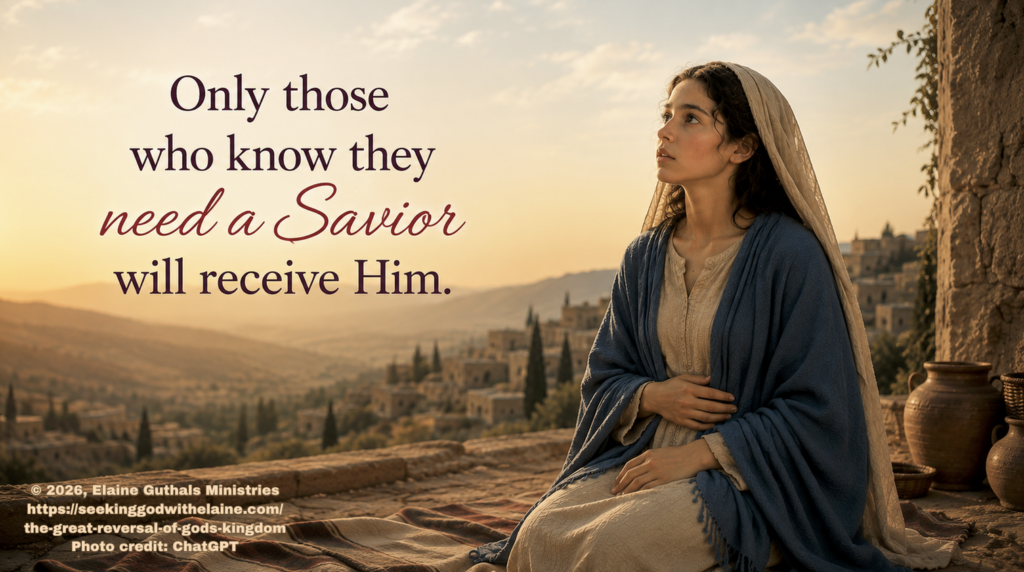
  • Christ’s Great Preaching under the Old Testament Dispensation

    Jesus was a master teacher Who used the Old Testament as the foundation of His teachings. This devotional reading looks at how Jesus taught of the need for salvation

    Nuggets

    • Jesus taught from the Old Testament of the need for the Plan of Salvation
    • Jesus taught from the Old Testament through others.
    • Jesus taught using the Scripture of the Old Testament.
    christs-great-preaching-under-the-old-testament-dispensation

    No, the Old Testament doesn’t once call Jesus by name. Yes, Jesus is all over the Old Testament.

    What we can’t forget is that, when Jesus preached, He used the Old Testament as the foundation for His expanded teachings. He told them what God had said, showed them where they went wrong, and told them what God really meant.

    Let’s look at some Old Testament passages that prophesied Jesus’ ministry.

    Let’s Put It into Context

    To read devotions in the On the Day of the Lord theme, click the button below.

    Devotions in the Gospsel Tidings about Easter series

    The foundation of this series is Boston’s sermon, Jesus and the Meek.

    Resource

    Personally, by Himself in Paradise

    “I will put animosity between you and the woman, and between your descendant and her descendant; he will bruise your head, and you will bruise his heel” (Gen. 3: 15 ESV)

    Jesus taught from the Old Testament of the need for the Plan of Salvation

    Jesus was present in Genesis 1. “Then God said, ‘Let us make humankind in our image, in the likeness of ourselves; and let them rule over the fish in the sea, the birds in the air, the animals, and over all the earth, and over every crawling creature that crawls on the earth’” (Gen. 1: 26 ESV).

    The story of mankind’s original sin is told in Genesis 3: 1-7. It is in God’s judgment for that sin that we are told Jesus’ mission in Genesis 3: 15.

    God told the serpent that He would instigate a hatred “… between your descendant and her descendant …” (Gen. 3: 15 ESV).

    Jesus was a descendant of Adam and Eve’s because He was born of a virgin.

    • “I will bless those who bless you, and him who dishonors you I will curse, and in you all the families of the earth shall be blessed” (Gen. 12: 3 ESV).
    • “Blessed be the Lord, the God of Shem; and let Canaan be his servant. May God enlarge Japheth, and let him dwell in the tents of Shem, and let Canaan be his servant” (Gen. 9: 26-27 ESV).
    • “How long will you waver, O faithless daughter? For the Lord has created a new thing on the earth: a woman encircles a man” (Jer. 31: 22 ESV).

    These verses were verified in the New Testament.

    • “And the Scripture, foreseeing that God would justify the Gentiles by faith, preached the gospel beforehand to Abraham, saying, ‘In you shall all the nations be blessed’ (Gal. 3: 8 ESV).
    • “You are the sons of the prophets and of the covenant that God made with your fathers, saying to Abraham, ‘And in your offspring shall all the families of the earth be blessed.’ God, having raised up his servant, sent him to you first, to bless you by turning every one of you from your wickedness” (Ac. 3: 25-26 ESV).
    • “Now the birth of Jesus Christ took place in this way. When his mother Mary had been betrothed to Joseph, before they came together she was found to be with child from the Holy Spirit. And her husband Joseph, being a just man and unwilling to put her to shame, resolved to divorce her quietly. But as he considered these things, behold, an angel of the Lord appeared to him in a dream, saying, ‘Joseph, son of David, do not fear to take Mary as your wife, for that which is conceived in her is from the Holy Spirit’” (Mt. 1: 18-20 ESV).
    • “the son of Cainan, the son of Arphaxad, the son of Shem, the son of Noah, the son of Lamech” (Lk. 3: 36 ESV).
    • “But when the fullness of time had come, God sent forth his Son, born of woman, born under the law, to redeem those who were under the law, so that we might receive adoption as sons” (Gal. 4: 4-5 ESV).

    Even from Genesis, Jesus was going to be victorious over Satan. “… he will bruise your head, and you will bruise his heel” (Gen. 3: 15 ESV).

    There was never a version where Satan was going to win. He may think he is winning the battles now, but he won’t win the war.

    David knew that. “Deliver my soul from the sword, my precious life from the power of the dog! Save me from the mouth of the lion! You have rescued me from the horns of the wild oxen!” (Ps. 22: 20-21 ESV). That is the Psalm that Jesus quoted part if not all of on the cross.

    That is what the cross was all about — defeating Satan and sin.

    • “Rejoice greatly, O daughter of Zion! Shout aloud, O daughter of Jerusalem! Behold, your king is coming to you; righteous and having salvation is he” (Zech. 9: 9 ESV).
    • “Seventy weeks are decreed about your people and your holy city, to finish the transgression, to put an end to sin, and to atone for iniquity, to bring in everlasting righteousness, to seal both vision and prophet, and to anoint a most holy place” (Dan. 9: 24 ESV).
    • “Since therefore the children share in flesh and blood, he himself likewise partook of the same things, that through death he might destroy the one who has the power of death, that is, the devil, and deliver all those who through fear of death were subject to lifelong slavery” (Heb. 2: 14-15 ESV).

    By His Ambassador, in HIS Name, the Prophets, and Ordinary Teachers

    “I have told the glad news of deliverance in the great congregation; behold, I have not restrained my lips, as you know, O LORD” (Ps. 40: 9 ESV)

    Jesus taught from the Old Testament through others.

    What the Jews had — and thought they knew — were teachings from the Old Testament. They called it the Torah. It consisted of what are the first five books of what we call the Old Testament.

    Some believed in the books written by the prophets and others. Some didn’t.

    Jesus affirmed the law given in the Old Testament. “Do not think that I have come to abolish the Law or the Prophets; I have not come to abolish them but to fulfill them. For truly, I say to you, until heaven and earth pass away, not an iota, not a dot, will pass from the Law until all is accomplished” (Mt. 5: 17-18 ESV).

    Did you catch that? Jesus acknowledged the law given by the prophets, not just Moses.

    Jesus taught about God’s grace and righteousness so all who were searching for Him could understand.

    • “You are the most handsome of the sons of men; grace is poured upon your lips; therefore God has blessed you forever” (Ps. 45: 2 ESV).
    • “Give ear, O my people, to my teaching; incline your ears to the words of my mouth! I will open my mouth in a parable; I will utter dark sayings from of old, things that we have heard and known, that our fathers have told us” (Ps. 78: 1-3 ESV).
    • “It shall come to pass in the latter days that the mountain of the house of the LORD shall be established as the highest of the mountains, and shall be lifted up above the hills; and all the nations shall flow to it, and many peoples shall come, and say: ‘Come, let us go up to the mountain of the LORD, to the house of the God of Jacob, that he may teach us his ways and that we may walk in his paths.’ For out of Zion shall go forth the law, and the word of the LORD from Jerusalem” (Isa. 2: 2-3 ESV).

    We know Jesus did just this.

    • “From that time Jesus began to preach, saying, ‘Repent, for the kingdom of heaven is at hand’” (Mt. 4: 17 ESV).
    • “For the law was given through Moses; grace and truth came through Jesus Christ” (Jn. 1: 17 ESV).
    • “And all spoke well of him and marveled at the gracious words that were coming from his mouth. And they said, ‘Is not this Joseph’s son?’” (Lk. 4: 22 ESV).
    • “But to all who did receive him, who believed in his name, he gave the right to become children of God, who were born, not of blood nor of the will of the flesh nor of the will of man, but of God” (Jn. 1: 12-13 ESV).
    • “From that time Jesus began to preach, saying, ‘Repent, for the kingdom of heaven is at hand’” (Mt. 13: 34-35 ESV).
    • “And when Jesus finished these sayings, the crowds were astonished at his teaching, for he was teaching them as one who had authority, and not as their scribes” (Mt. 7: 28-29 ESV).

    All the teaching is done in His and through His name. “May his name endure forever, his fame continue as long as the sun! May people be blessed in him, all nations call him blessed!” (Ps. 72: 17 ESV).

    Before Jesus came and after He came, His teachings were provided by prophets and ordinary teachers. True, some of the prophets were society people.

    • saiah had close relationships with the kings of his period.
    • Jeremiah was the son of a priest.
    • Ezekiel was a priest.
    • Daniel was nobility.
    • Zephaniah was probably the great-great grandson of King Hezekiah.
    • Haggai was the son of the governor.

    Hosea and Amos, like the Apostles, that were ordinary men. Nothing much is said about the origins of the rest of them.

    By His Written Word

    “As for me, I shall behold your face in righteousness; when I awake, I shall be satisfied with your likeness” (Ps. 17: 15 ESV)

    Jesus taught using the Scripture of the Old Testament.

    At the current time, we can’t see Jesus’ face. When David wrote those words, he couldn’t either.

    But that is what it is all about — faith without sight. “Now faith is the assurance of things hoped for, the conviction of things not seen” (Heb. 11: 1 ESV).

    David wrote a lot of things down which give us insight into Who Jesus is.

    • “I will tell of the decree: ‘The LORD said to me, “You are my Son; today I have begotten you. Ask of me, and I will make the nations your heritage, and the ends of the earth your possession”’” (Ps. 2: 7-8 ESV).
    • “Kiss the Son, lest he be angry, and you perish in the way, for his wrath is quickly kindled. Blessed are all who take refuge in him” (Ps. 2: 12 ESV).
    • “Yet you have made him a little lower than the heavenly beings and crowned him with glory and honor. You have given him dominion over the works of your hands; you have put all things under his feet” (Ps. 8: 5-6 ESV).
    • “Therefore my heart is glad, and my whole being rejoices; my flesh also dwells secure. For you will not abandon my soul to Sheol, or let your holy one see corruption. You make known to me the path of life; in your presence there is fullness of joy; at your right hand are pleasures forevermore” (Ps. 16: 9-11 ESV).

    Job also wrote about Jesus. “For I know that my Redeemer lives, and at the last he will stand upon the earth” (Job 19: 25 ESV).

    These were fulfilled in the New Testament.

    • “And though they found in him no guilt worthy of death, they asked Pilate to have him executed. And when they had carried out all that was written of him, they took him down from the tree and laid him in a tomb. But God raised him from the dead, and for many days he appeared to those who had come up with him from Galilee to Jerusalem, who are now his witnesses to the people. And we bring you the good news that what God promised to the fathers” (Ac. 13: 28-32 ESV)
    • “Jesus said to him, ‘Have you believed because you have seen me? Blessed are those who have not seen and yet have believed’” (Jn. 20: 31 ESV)
    • “But we see him who for a little while was made lower than the angels, namely Jesus, crowned with glory and honor because of the suffering of death, so that by the grace of God he might taste death for everyone” (Heb. 2: 9 ESV).
    • “Then the other disciple, who had reached the tomb first, also went in, and he saw and believed; for as yet they did not understand the Scripture, that he must rise from the dead” (Jn. 20: 9 ESV)
    • “He is not here, but has risen. Remember how he told you, while he was still in Galilee, that the Son of Man must be delivered into the hands of sinful men and be crucified and on the third day rise” (Lk. 24: 6-7 ESV).

    Making the Connections

    All of God’s Word is about the need for Christ to come; waiting for His arrival; His birth, death, and resurrection; His return to Heaven, and His second coming during the Day if the Lord.

    We have everything we need to believe Jesus is the Messiah.

    We just have to decide to do that.

    How Do We Apply This?

    The ABCDs of Salvation

    If you have not become a believer in Christ, please read through the
    Plan of Salvation and prayerfully consider what God is asking you to do.

    A – admit our sins
    B – believe His Son Jesus is our Redeemer
    C – confess God as Sovereign Lord

    D – demonstrate that commitment by making any changes needed in our lives to live the way in which God has called us

    The Disciple’s Job Description

    Searching for and Seeking God

    Hearing His Word (Rom. 10: 17)
    Reading His Word (Rev. 1: 3)
    Praying to Him (Heb. 4: 16)
    Studying His Word (Ac. 17: 11)
    Meditating on His Word (Ps. 1: 1-2)
    Memorizing His Word (Ps. 119: 11)

    Father God. You have spelled out for us what we need to do and why we need to do it. We have to believe Jesus is our Savior and Redeemer. Help us to decide to believe that and live our lives daily expressing that belief. Amen.

    What do you think?

    Leave me a comment below (about this or anything else) or head over to my Facebook group for some interactive discussion.

    If you don’t understand something and would like further clarification, please contact me.

    If you have not signed up for the email providing the link to the devotions and the newsletter, do so below.

    If God has used this devotion to speak with you, consider sharing it on social media.