Category: Prayer

  • Access to God Depends on the Status of Our Hearts

    Our access to God is determined by the status of our hearts. This daily devotional looks at how we get a clean heart through devotedness and loyalty.

    Nuggets

    • Our prayer life needs to show that we are devoted to God.
    • Our hearts are purified at conversion and through sanctification.

    To read devotions in the At the Heart Level theme, click the button below.

    This year, we are looking at the status of our hearts. That status determines how we gain access to God.

    Access to God

    “Draw near to God, and he will draw near to you. Cleanse your hands, you sinners, and purify your hearts, you double-minded” (Jas. 4: 8 ESV)

    Our prayer life needs to show that we are devoted to God.

    We normally think of drawing near to God as the healthiness of our prayer life. Prayer is a two-way communication with God in which we pour out our soul to Him.

    Are we approaching God on His throne? Are we doing it the right way?

    Wait! What?

    There is a right way? Can’t we just start praying and have Him hear us?

    Grose said that more than just a prayer life is needed. We need a devotedness to God.

    Look what Grose said. He wrote, “THE DUTY here required of us by the apostle principally implies a life of prayer and devotedness to God, as contrasted with the careless indifference or the dull formality of nominal or pretended Christians.”

    Resource

    We’ve just talked about nominal disciples. Nominal disciples are those boasting they loved God without even trying to imitate Him — those who dig on religion and its rituals without having a change in heart.

    To read a related devotion, click the button below.

    I like the term devotedness. We can probably understand it better than piety — though it means the same thing, just not as churchy.

    Piety is defined as the persistent application of moral virtues to our lives because of our supreme love for God.

    That is exactly what devotedness is.

    Hislop reminded us we have to be conscious in our prayers. I know. Unless we are talking in our sleep, aren’t we conscious about our talking?

    Resource

    Well, we are to “pray without ceasing” (I Thess. 5: 17). It is continuous, but it is more than that.

    It is a firm loyalty.

    The way I read that is we have to be sincere. We can’t be just going through the motions — even if it is daily and at all times.

    Most of us probably have that friend that, regardless of how often we see them, it feels like we pick up where we left off when we do.

    God doesn’t want that kind of relationship.

    God wants us to value the relationship. That gives us the opportunity to grow in Him.

    Yes, we are unworthy, so how can we approach God? The only way we become worthy is asking Jesus to make us so.

    Approaching God has to have several prerequisites. Jeary gives us a list.

    • We have to know God.
    • We have to know we need God.
    • We have to know that Jesus is the only way we will be reconciled to God.

    Resource

    We have to give God the reverence due Him. We have to acknowledge our need for Him in our lives because of our sinful nature.

    Let’s Put It into Context

    I know. This heading is out of place. But I wanted to have the reminder here where we need it.

    Remember when we had the From a Wrong Heart to a Right Heart series, we talked in Making the Heart Right that, after conversion, God gives us a new heart.

    Hale addressed that. He wrote, “If the heart must be created anew before it can be a clean heart, certainly, before it is thus new-formed, it is AN IMPURE AND UNCLEAN HEART.”

    Resource

    We know that the heart must be renewed because it is unclean. “The heart is deceitful above all things, and desperately sick; who can understand it?” (Jer. 19: 9 ESV).

    This translation says that the heart is sick. Some translate it as wicked. Wicked refers to sinful things.

    That means we have to strive to become clean. Nothing is more important in our lives than pursuing our Father.

    Access Because of Our Hearts and Hands

    “… Cleanse your hands, you sinners, and purify your hearts…” (Jas. 4: 8 ESV)

    Our hearts are purified at conversion and through sanctification.

    We need to cleanse our hands and purify our heart because we are, as Synder said, “… dying and accountable creatures.”

    Resource

    Hogart had a good definition of a clean heart. He wrote, “A clean heart is one purified by the Holy Spirit from everything that is contrary to holiness.”

    Resource

    A clean heart is the result of having our hearts purified. Purity means possessing God’s moral character, having eliminated the stain of sin.

    Our hearts and hands become cleansed only because of God’s unmerited grace. Grace is a free and unmerited gift of love from the Heavenly Father, given through His Son, Jesus Christ, that enables salvation and spiritual healing to believers by the work of the Holy Spirit.

    We can’t do it ourselves. Only God can. He does it through the Holy Spirit.

    Hogart contended that there are two different clean hearts. One is given to us at conversion, and the other is gained through sanctification.

    Conversion is the product of repentance, when we turn away from our sins and return to God, that secures salvation.

    • Sins are actions by humans that disobey God and break one of His reasonable, holy, and righteous laws and commandments, goes against a purpose He has for us, or follows Satan’s promptings.
      • Holy means to be set apart — because of our devotion to God — to become perfect, and morally pure while possessing all virtues.
        • Perfection means we reach a state of maturity because the combination of the spiritual graces form, when all are present, spiritual wholeness or completeness — holy, sanctified, and righteous.
          • Spiritual graces are worldly morals that have been submitted to God to further His kingdom instead of enhancing this world.
          • Sanctified means to be set free from sin.
        • Pure means not being sinful or having the stain of sin.
      • Righteous means we are free from sin because we are following God’s moral laws.

    Salvation is the gift of life through the deliverance from condemnation and sin to acceptance and holiness and changes us from being spiritually dead to spiritually alive.
    Sanctification is the transformation of mind, body, and soul, which begins with regeneration, gradually changes our nature and morals through the promptings of the Holy Spirit, and ends with perfected state of spiritual wholeness or completeness.

    • Regeneration is being changed from spiritually dead to spiritually alive and the internal new birth and requickening that God brings about through the work of the Holy Spirit to give us new character.
      • Spiritual death is the separation from God that occurred as a consequence of Adam and Eve’s original sin.
        • The spiritually alive are those who have ABCDed, so they are no longer separated from God.

    The ABCDs of Salvation

    If you have not become a believer in Christ, please read through the
    Plan of Salvation and prayerfully consider what God is asking you to do.

    A – admit our sins
    B – believe His Son Jesus is our Redeemer
    C – confess God as Sovereign Lord

    D – demonstrate that commitment by making any changes needed in our lives to
    live the way in which God has called us

    The Disciple’s Job Description

    Glossary

    Well, yes. We are converted, but we aren’t perfect yet. We won’t get perfected until we reach Heaven.

    In this life, we are changing from milk babies to steak adults. Paul also called it working out our minds. That is what sanctification is.

    Here we are back to constant and steadfast again. “God, create a clean heart for me and renew a steadfast spirit within me” (Ps. 51: 10 CSB).

    We are established in the relationship. We are established in having a clean heart.

    But the emphasis should be on establishing. We aren’t going to not sin.

    The musical directions at the beginning of the psalm say it was written “when the prophet Nathan came to him after David had committed adultery with Bathsheba” (Ps. 51: 1 ESV). David had established his relationship with God by then (Ps. 51: 11).

    It is about changing to be like God is. It is getting it down to the heart level.

    We get God’s character into the center of our being. We become a man after God’s own heart.

    It is more than just that, though. It is hating sin.

    In Romans 12: 9, the word for what we do with evil is translated several different ways.

    • Hate (NIV, NLT, CEV, GNT)
    • Abhor (ESV, KJV, HCSB)
    • Detest (NKJV, NASB, CSB)

    We get it whichever way. It is an intense emotion of dislike.

    To read a related devotion, click the button below.

    The consistency discussion has to be applied here, too. We have to consistently abhor evil. We have to hate evil all the way down to its roots.

    access-to-god-depends-on-the-status-of-our-heartsFB

    Making the Connections

    We have to remember that we also access God through worship. Our prayers are to be worshipful.

    How many times do we just ask for our list of wants to be heard and answered? We have so many friends and family that are sick and hurting. We focus solely on that in our prayer time.

    Instead, we need to start focusing on God and truly worshiping Him.

    God has always required an inward, heart worship. We focus on the ceremony that the Israelites did, but they were required to worship from the heart, too.

    They forgot sometimes, too. “And the Lord said: ‘Because this people draw near with their mouth and honor me with their lips, while their hearts are far from me, and their fear of me is a commandment taught by men, therefore, behold, I will again do wonderful things with this people, with wonder upon wonder; and the wisdom of their wise men shall perish, and the discernment of their discerning men shall be hidden’” (Isa. 29: 13-14 ESV).

    Instead, we should honor God. Snyder wrote, “The duty of worshipping God is no less the dictate of reason and of common sense, than of Scripture. It has been the sentiment of mankind, universally, that children ought to cherish peculiar respect [for] their parents. So men have always deemed it proper to specially regard and honour those high in authority.”

    Resource

    We have to give God the honor due Him.

    How Do We Apply This?

    • Have a prayer life that has both quantity (continuous) and quality (firm loyalty).
    • Evaluate both our prayer lives and our lives in general to make sure we are following His laws and commandments.
    • Choose to serve Him in every opportunity that He presents.
    • Have a genuine, sincere faith.
    • Obey God in everything He asks of us.

    Resources

    Father God. We want our hearts to be clean and pure so that we may come to You. We want our prayers to be filled with praise for You. May You accept the praise and honor we give You. Amen.

    What do you think?

    Leave me a comment below (about this or anything else) or head over to my Facebook group for some interactive discussion.

    If you don’t understand something and would like further clarification, please contact me.

    If you have not signed up for the email daily or weekly providing the link to the devotions and the newsletter, do so below.

    If God has used this devotion to speak with you, consider sharing it on social media.

  • Confidence in Prayer

    A clear conscience comes from a good heart, which gives us confidence before God. This daily devotional looks at how that facilitates God’s answer of our prayers.

    Nuggets

    • God fills our prayer requests when we abide in Him.
    • God answers our prayers when we keep His commandments.
    • God can answer our prayers when we do His Will.

    To read devotions in the At the Heart Level theme, click the button below.

    Devotions in the Reassuring Our Hearts before God series

    I don’t know if I said all of this right. I see the progression here, but it seems like it takes the scenic route to get where it is going.

    Here is what I am trying to say in a nutshell.

    God answers our prayers and gives us what we ask when we have our relationship with Him at the heart level. He wants to answer our prayers, but only can when we are obedient and asking in His Will.

    We will ask in His Will when we have our relationship at the heart level because we have faith in Jesus, love for God and His disciples, and are obedient to Him.

    See, it is a circular route.

    Now, let’s see how I got there.

    Let’s Put It into Context #1

    Here is a running list of what we’ve discussed previously.

    Let’s Put It into Context #2

    The heart houses our inner moral character and our conscience.

    Our conscience is the part of our nature that pronounces by God’s authority everything in His name and impacts our moral decisions as it points us to what is right and gives us pain or pleasure depending on the choice.

    Receiving What We Ask

    “and whatever we ask we receive from him, because we keep his commandments and do what pleases him” (I Jn. 3: 22 ESV)

    God fills our prayer requests when we abide in Him.

    First off, we have to remember what we are talking about here. “Beloved, if our heart does not condemn us, we have confidence before God; and whatever we ask we receive from him, because we keep his commandments and do what pleases him” (I Jn. 3: 21-22 ESV).

    God’s Will is that we get down to the heart level in following His laws and commandments and changing to have His character. The evidence we show to not be condemned is our belief that Jesus is our Savior, that we genuinely love God and other disciples, and our obedience to His laws and commandments.

    I say that to reiterate that we have to be sincere in our relationship in order to receive what we ask of God. This has nothing to do with winning the lottery, getting a Lamborghini, or finding our soul mate.

    It has everything to do with praying in God’s Will. John expands on this elsewhere.

    • “If you abide in me, and my words abide in you, ask whatever you wish, and it will be done for you” (Jn. 15: 7 ESV).
    • “And this is the confidence that we have toward him, that if we ask anything according to his will he hears us” (I Jn. 5: 14 ESV).

    Keeping His Commandments

    God answers our prayers when we keep His commandments.

    Think about it. We said in the last devotion that getting the confidence need to the heart level is based solely on the status of our relationship with God. It is dependent on our obeying Him.

    Getting the confidence needed to the heart level is based solely on the status of our relationship with God.

    This is what God wants. He is not going to ignore our prayers if we are obeying His laws and commandments.

    When our relationships are where they are supposed to be, we will be focusing on furthering God’s kingdom. We won’t be looking at the flash and splash of this world.

    It isn’t just faith that will get our prayers answered. Faith is a gift from God that enhances the conviction that the doctrines revealed in God’s Word are true, even if we do not understand all aspects of them, a belief which impacts our lives and distinguishes us from others.

    Do What Pleases Him

    God can answer our prayers when we do His Will.

    We have to “… keep his commandments and do what pleases him” (I Jn. 3: 22 ESV). We have to be obedient to present the opportunities to receive God’s goodness. God’s goodness is His holy, pure, and righteous behavior.

    • God’s holiness is the transcendent excellence of His nature that includes elements of purity, dedication, and commitment that lead to being set apart.
    • God’s purity stems from the fact that He cannot sin.
    • God’s righteousness is the result of His being pure.

    Let’s unpack that a second. Our prayers aren’t answered because we are obedient. Because we are obedient, our prayers can be answered.

    Our prayers aren’t answered because we have faith. Our prayers are answered because our faith brings us to be like God.

    Spurgeon nailed it. He wrote, “If you want power in prayer you must have purity in life.”

    Resource

    God is pure. He cannot sin. There are a lot of other attributes that we talked about last year.

    To read a related devotion, click the button below.

    Look what Finney said. He talked about approaching God with disinterest.

    If we aren’t interested in what God is interested in, our relationship isn’t right. If we are disinterested, we don’t have the confidence that God even hears us.

    When we know without a doubt that our relationships are right with God, we know He will hear and answer our prayers. Finney wrote, “The soul, being in sympathy with God, feels as God feels; so that for God to deny its prayers is to deny His own feelings, and refuse to do the very thing He Himself desires. Since God cannot do this, He cannot fail of hearing the prayer that is in sympathy with His own heart.”

    Resource

    We are to pray with what interests God in mind. “Your kingdom come,
your will be done, on earth as it is in heaven” (Mt. 6: 10 ESV).

    It is all about praying in the Spirit. Finney described that as a deep praying of the heart. It is the state of the soul knowing it is in submission to God.

    The Spirit is working within us if we are praying in the Spirit. We are imitating Jesus.

    Glossary

    Why do our prayers get answered? Vaughan said, “It is because God is a Father, and therefore of Himself loves to listen to His children’s petitions, and to give them everything they ask. It is because every believer praying, prays in Christ — he presents Christ — he is in Christ. Hence the almost omnipotence of prayer. It is because whatever true prayer goes up to the throne of God, it is the Holy Ghost who prays it. Thus the whole Trinity meets to make the prayer of the weakest Christian, and this is the cause why prayer gets answered.”

    Resource

    Faith, obedience, devotion, submission. That is how we get answers to prayers.

    confidence-in-prayerPin

    Making the Connections

    Finney made a great point. We think God will answer our prayers exactly in the way we pray them.

    Not so. Finney wrote, “Yet let it be noted here that God may not answer every prayer according to its letter; but He surely will according to its spirit.”

    Resource

    When we are asking God to take care of our needs, He will. It just may not be the lottery, Lamborghini, and soul mate we are asking for.

    God answering a prayer His way is still God answering our prayers. He doesn’t have to answer it our way for it to be considered answered.

    Unfortunately, worldview people limit God to what they think and want. They use that excuse to not believe in Him.

    God cannot answer our prayers until we have confidence in Him. That confidence is only brought through a right relationship with Him.

    But we think we can come to God without this confidence. We come with our doubts and arrogance in the forefront, asking God — demanding God — to answer our prayers word for word. We ignore our consciences telling us we are in the wrong while we are petitioning the pure Sovereign God to do everything we demand.

    It is only through His love that God doesn’t smack us in place.

    How Do We Apply This?

    • Be obedient to God so that He can answer our prayers.
    • Repent and ask forgiveness of sin in our lives so that our relationships will be write with Him.

    Resource

    I’ll say it again. Faith, obedience, devotion, submission. That is how we get answers to prayers.

    Father God. You are Sovereign God. You are pure and without sin. Lord, we want to be like You. We want to be interested in the things You are: expanding Your kingdom by bringing others to know Jesus as their personal Savior. Help us to grow in faith and obedience. We can only do this by submitting to You and deepening our devotion to You. Amen.

    What do you think?

    Leave me a comment below (about this or anything else) or head over to my Facebook group for some interactive discussion.

    If you don’t understand something and would like further clarification, please contact me.

    If you have not signed up for the email daily or weekly providing the link to the devotions and the newsletter, do so below.

    If God has used this devotion to speak with you, consider sharing it on social media.

  • If My People Will Pray

    Today is a music day.

    I ended up with a real bad sinus headache today. I am just going to do a music day and get back to where we are at with the requirements in the next devotion.

    If My People Will Pray
    Vocalist: Elaine Guthals
    Keyboard: Louise Guthals Weiss

    if-my-people-will-pray-3Pin

    What do you think?

    Leave me a comment below (about this or anything else) or head over to my Facebook group for some interactive discussion.

    If you don’t understand something and would like further clarification, please contact me.

    If you have not signed up for the email daily or weekly providing the link to the devotions and the newsletter, do so below.

    If God has used this devotion to speak with you, consider sharing it on social media.

  • If My People Will Pray

    Today is a music day. To read and hear the song, click here.

    One thing I am very thankful for is that Adam and I belong to a praying church. We have prayer breakfast every Tuesday morning.

    For years, we had prayer meeting every Wednesday night. Starting last night, we switched prayer meeting to Sunday night.

    I am sure the decision could have been made to end it. There was no talk of doing that here.

    Sunday Night Bible Study was switched to Wednesday night, and prayer meeting was switched to Sunday night.

    Second Chronicles 7: 14 says, “If My people, which are called by My name …” God’s people. Those who have accepted Jesus as their Savior.

    Not the ones who are needing salvation. Those who already have it.

    We need to pray. We need to commune with God.

    Whether we finish out the verse or not, we need to spend time with our God. We shouldn’t have to want the good stuff as reward. We should want to spend time with God.

    If My People Will Pray
    Vocalist: Elaine Guthals
    Keyboard: Louise Guthals Weiss

    IfMyPeopleWillPray2Pin

    What do you think?

    Leave me a comment below (about this or anything else) or head over to my Facebook group for some interactive discussion.

    If you don’t understand something and would like further clarification, please contact me.

    If you have not signed up for the email daily or weekly providing the link to the devotions and the newsletter, do so below.

    If God has used this devotion to speak with you, consider sharing it on social media.

  • A Prayer of Hope

    Paul continued his theme of hope by breaking into prayer. This daily devotional looks at the connection among faith, joy, peace, and hope.

    Nuggets

    • True joy and peace are blessings of believing in Sovereign God.
    • God is the author of abundant hope.
    • Joy, peace, and hope can only come from God.

    To read devotions in the Redo for Godliness series, click the appropriate button below.

    Devotions in the Transformed to Perfection series

    Paul was all about glorifying and worshiping God. He could break into a prayer at a moment’s notice.

    That is what Paul did here. It had a lot of the elements that he had been talking about it the previous verses.

    “May the God of endurance and encouragement grant you to live in such harmony with one another, in accord with Christ Jesus, that together you may with one voice glorify the God and Father of our Lord Jesus Christ” (Rom. 15: 5-6 ESV).

    Let’s see what Paul had to add here about hope.

    Let’s Put It into Context

    Here is a running list of what we’ve discussed previously.

    The God of Hope

    “Now may the God of hope fill you with all joy and peace as you believe so that you may overflow with hope by the power of the Holy Spirit” (Rom. 15: 13 CSB)

    True joy and peace are blessings of believing in Sovereign God.

    Paul has been telling us for several verses now about joy, peace, and hope. Lyth called this the privileges of believing. That puts a little different spin on them.

    Resource

    Blessings are, according to the Merriam-Webster Dictionary, “a thing conducive to happiness or welfare.” Privileges, on the other hand, are “a right or immunity granted as a peculiar benefit, advantage, or favor.”

    Resources

    Because we have the hope, joy, and peace, we have freedom from the stain of sin.

    The good news, as Spurgeon points out, is that hope, joy, and peace can be attained. There is one way to do that — prayer.

    Resource

    Spurgeon said that means we can bag the doubt. We can throttle straight through the comfort to the joy.

    That We May Abound

    “Now may the God of hope fill you with all joy and peace as you believe so that you may overflow …” (Rom. 15: 13 CSB)

    God is the author of abundant hope.

    Paul isn’t praying for just a little bit of joy and peace for a little bit of time. He is wanting a flood of every kind of peace and joy all the time.

    I just absolutely loved how Spurgeon equated peace and joy. He wrote, “Peace is joy resting, and joy is peace dancing.

    Resource

    Isn’t that a wonderful visual!

    Spurgeon went on to say the hope comes out of the joy. Now, we just talked a couple of devotions back where joy came before peace. So, the progression is joy, peace, and hope.

    To read a related devotion, click the button below.

    I had put hope before peace based on what Spurgeon said. Pope, however, said that peace releases hope.

    Resource

    Jowett had a good sermon on how these blessings are communicated. It is through faith. Faith is the conviction that the doctrines revealed in God’s Word are true, even if we do not understand all aspects of them, a belief which impacts our lives. Only faith brings us to salvation.

    • Salvation is the gift of life through the deliverance from condemnation and sin to acceptance and holiness and changes us from being spiritually dead to spiritually alive.
    • Sins are actions by humans that disobey God and break one of His reasonable, holy, and righteous laws and commandments, goes against a purpose He has for us, or follows Satan’s promptings.
    • Holiness is the transcendent excellence of His nature that includes elements of purity, dedication, and commitment that lead to being set apart. Purity means possessing God’s moral character, having eliminated the stain of sin.

    Resource

    Glossary

    The Power of the Holy Spirit

    “… so that you may overflow with hope by the power of the Holy Spirit” (Rom. 15: 13 CSB)

    Joy, peace, and hope can only come from God.

    From where is the joy, peace, and hope coming? It is all God. It is done by His power through His Hope.

    Go all the way back to verse 4. “For whatever was written in former days was written for our instruction, that through endurance and through the encouragement of the Scriptures we might have hope” (Rom. 15: 4 ESV).

    God gives us hope when we read His Word. Yeah, sometimes it comes through the patience and endurance — not an immediate gift — but He gives it to us.

    Think of it this way. Reading God’s Word is one of the ways we seek Him. Seeking Him is one of the things we do on the Sanctification Road. That is a progress — we are in it for the long hall — the bumpy long hall.

    Searching for and Seeking God

    Hearing His Word (Rom. 10: 17).
    Reading His Word (Rev. 1: 3).
    Praying to Him (Heb. 4: 16).
    Studying His Word (Ac. 17: 11).
    Meditating on His Word (Ps. 1: 1-2).
    Memorizing His Word (Ps. 119: 11).

    • Sanctification is the transformation of mind, body, and soul, which begins with regeneration, gradually changes our nature through the promptings of the Holy Spirit, and ends with perfected state of spiritual wholeness or completeness.
    • Regeneration is being changed from spiritually dead to spiritually alive and the internal requickening in us that God brings about through the work of the Holy Spirit to give us new character.
    • Spiritual death is the separation from God that occurred as a consequence of Adam and Eve’s original sin. The spiritually alive are those who have ABCDed, so they are no longer separated from God.
    • The perfected state indicates the combination of the spiritual graces which, when all are present, form spiritual wholeness or completeness.
    • Spiritual graces are worldly morals that have been submitted to God to further His kingdom instead of enhancing this world.

    The ABCDs of Salvation

    If you have not become a believer in Christ, please read through the
    Plan of Salvation and prayerfully consider what God is asking you to do.

    A – admit our sins
    B – believe His Son Jesus is our Redeemer
    C – confess God as Sovereign Lord

    D – demonstrate that commitment by making any changes needed in our lives to
    live the way in which God has called us

    The Disciple’s Job Description

    Glossary

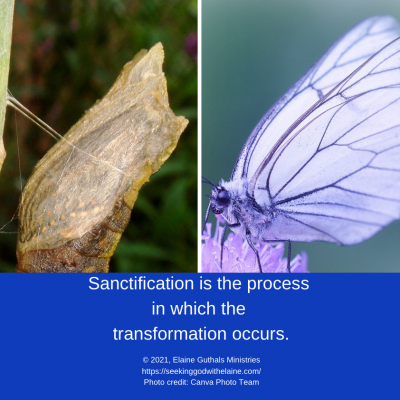
    Sanctification is the process in which the transformation occurs.
    Sanctification is a major component of our redo for godliness. However, it is not consistent. It has its hills and valleys.

    It is part of the Holy Spirit trying to transform the inward us. He is working on our hearts.

    Pope also told us about the part we play. He wrote, “Faith is the root of hope; the peace and joy which are the fruits of faith are the nourishment of hope; and the abundance of hope is made the perfection of the Christian life as a state of probation.”

    Resource

    Worldview people think they can get hope, joy, and peace on their own. They can’t.

    Spurgeon explained what they actually get. He wrote, “Peace without God is stupefaction, joy madness, and hope presumption.”

    Resource

    I thought stupefaction was an interesting word to describe peace. I used the define function on Word and got a synonym of numbness.

    I can relate to that. This medicine I am on is causing a lot of numbness, especially in the bottom of my foot.

    The best way I can describe it is — remember stirrup pants? They are the kind that have that strip of fabric that go under the foot — like you are putting your foot in a stirrup of a saddle for a horse.

    Well, you are an 11- or 12- year old kid who has outgrown your very favorite pair of stirrup pants. You can’t stand it, so you wear them anyway.

    The pants are just too short, so it cuts off circulation to your foot. Your heel goes numb.

    That’s what I am feeling — without the stirrup pants — and I am way past being 12.

    Anyway. Sometimes, it is just a (sing songy) “Na-na-na-na this isn’t right” feeling. Sometimes, it is tingly.

    It hasn’t really hurt, but I wonder if it might in the future. It hasn’t messed up walking, but this is my foot we are talking about, and I don’t know how long I will be on this medicine.

    But it isn’t fun. I wouldn’t characterize it as a nice feeling.

    I definitely wouldn’t say it is peaceful.

    Perfection is about being. It is about obtaining the character of God.

    We can’t have the hope, joy, and peace without God because we can’t be that without God. Those are part of perfection, and perfection is about being. Being is about God.

    Thomas prompted us to remember that Paul previously characterized God as the God of patience and the God of peace. Here, He is the God of Hope.

    We’ve said that hope is a future expectation, called a living hope, based on the confidence that our names will be found in the book of life. But it is more than that.

    Thomas equated hope to a relationship with God. He wrote, “Hope is the expectation of the desirable — God — His favour, society, friendship.”

    Resource

    It really isn’t just future. It is present, too. So, let’s try this again.

    Hope is the expectation, also called a living hope, based on the confidence that, because of our relationship with God, our names will be found in the book of life.

    Making the Connections

    Hanson said that Paul was reminding the Romans not to forget about God’s grace. This is all possible because of God’s grace. Grace is a free and unmerited gift from Heavenly Father given through His Son, Jesus Christ that enables salvation and spiritual healing to believers by the work of the Holy Spirit.

    Resource

    APrayerOfHopePin

    How Do We Apply This?

    McChesney brought up an interesting point. Some worldview people might think that disciples’ hope is a selfish emotion. He said no.

    We are reflecting Jesus with this hope. He had a large heart. We cannot be selfish when we truly imitate Him.

    Resource

    Maybe some of problem is worldview people just don’t understand because they don’t know God. If they knew God, they would know about His joy, peace, and hope. To do that, they need to ABCD.

    Father God. We all need to ABCD. We need Your joy, peace, and hope. We need You as our Father. Amen.

    What do you think?

    Leave me a comment below (about this or anything else) or head over to my Facebook group for some interactive discussion.

    If you don’t understand something and would like further clarification, please contact me.

    If you have not signed up for the email daily or weekly providing the link to the devotions and the newsletter, do so below.

    If God has used this devotion to speak with you, consider sharing it on social media.

  • If My People Will Pray

    Today is a music day. To read and hear the song, click here.

    I have been waiting for this day for a long, long time. My lovely sister and I got together and recorded some accompaniments for some new songs.

    Yeah!!!!

    Now I can go in and make two recordings. I can do a straight vocal recording, and I can do a video.

    Things did align. The neighbor didn’t complain this time. My Garage Band did work this time. Our computers did talk to each other this time.

    Hopefully, soon, I will have new music available when I need to take a music day.

    So, I am going to pull out one that I haven’t used much but it one she and I grew up singing. Maybe someday, I will convince her to add the harmony part to this. (Hint, hint ….)

    If My People Will Pray
    Vocalist: Elaine Guthals
    Keyboard: Louise Guthals Weiss

    IfMyPeopleWillPrayPin

    What do you think?

    Leave me a comment below (about this or anything else) or head over to my Facebook group for some interactive discussion.

    If you don’t understand something and would like further clarification, please contact me.

    If you have not signed up for the email daily or weekly providing the link to the devotions and the newsletter, do so below.

    If God has used this devotion to speak with you, consider sharing it on social media.

  • Growing Our Relationship Through Prayer

    When we consider what a process for a redo for godliness would look like, we should look at Colossians 1: 11 to get an idea of what that would look like. This daily devotional looks at the role that prayer plays in strengthening our relationship with God and producing patience and joy.

    Nuggets

    • God wants us to talk to Him to take the focus off this world and put it on Him. 
    • God will strengthen us through His power. 
    • Getting the strength produces endurance and patience. 
    • When we become like God, we will be filled with joy. 

    To read devotions in the Redo for Godliness series, click the appropriate button below.

    I wrote the bulk of this devotion, and then came back to write the intro. It hit me that this verse sums up what God wants us to do in our redo for godliness: pray, grow, produce. 

    Let’s dig in. 

    Talking to God 

    “We also pray …” (Col. 1: 11 NLT) 

    God wants us to talk to Him take the focus off this world and put it on Him. 

    One way we do that is through prayer. Prayer is a two-way communication with God in which we pour out our soul to Him. 

    What is the saying, be careful what you pray for?  Don’t we think that saying is kind of suspect at times? 

    I mean, sometimes I get the impression that we think all prayers are good. Just think about it.  

    We think any communication is good communication, right? 

    No. 

    We have to pray submissively. We have to pray constantly. We have to pray in His Will.  

    Instead, we pray for intellectual smarts. We pray for health. We pray for all this world can give us. 

    Morison wrote that Paul was talking about everything spiritual here. The power was spiritual. 

    Resource

    We have to keep our focus on God and His Will.  

    Why Do We Need Strength? 

    “… that you will be strengthened with all his glorious power …” (Col. 1: 11 NLT) 

    God will strengthen us through His power. 

    Naw, Paul wasn’t talking squats, deadlifts, and push-ups. (Thank You, sweet Jesus, for small things.) That meant the strength was spiritual. 

    Morison wrote, “Paul prayed that they might be strengthened in their ethical principles, so that they might be stronger in their faith, hope, and love.” He knew that this is what they — and us — needed. 

    Resource

    Instead of ethical principles, we’ve been looking more at morals and spiritual graces. Spiritual graces are worldly morals that have been submitted to God to further His kingdom instead of enhancing this world. 

    If our morals don't come through submission to God, they are just worldly morals, not spiritual graces. But then we have to grow the spiritual graces to holiness.

    Think of it. Strengthened in our ethical principles. Ethical principles — our social behavior. 

    Our social behavior is how we interact with others. What is that governed by? Our character. 

    We are to be growing our character — our thoughts, feelings, and actions all added together — to be more like God’s character. That is our redo for godliness. 

    That is what Paul is praying to be strengthened. He knew our character needed strengthened, and that we couldn’t strengthen it on our own. We can’t do our redo on our own. 

    We can only accomplish our redo through Christ. “I can do all things through Christ which strengtheneth me” (Phil. 4: 13 KJV). 

    Right now, the all things is jumping out at me. I need strength for the  uncertainty of getting my medicine up to cruising speed to deal with the seizures. The independent me that says what-if-I-don’t-get-to-drive-again? needs a lot of strength. 

    Both those are little things. Big things are am I living in God’s Will? Am I doing what He wants? Do I have His heart? 

    Davenant pointed out Paul said that we are strengthened with all of God’s power. It is needed. 

    Resource

    We are in a fight that is much bigger than us. This was detailed in a different letter. “For our struggle is not against flesh and blood, but against the rulers, against the authorities, against the cosmic powers of this darkness, against evil, spiritual forces in the heavens” (Eph. 6: 12 CSB). 

    Spence called it. Mankind is weak. We aren’t born strong. If we don’t eat right and train our bodies, we don’t get physical strength. 

    Resource

    How many of us truly admit we are weak? Especially intellectually weak? 

    Don’t we pull out our equivalents of the Warrior Princess bracelet and fake it until we make it? 

    God can’t help us until we admit we need His help. 

    God can’t help us until we admit we need His help. 

    Spence said that it is only when we receive God’s power do we realize how weak we are. That explains many of the challenges we face when witnessing. 

    If those we witness to think they are as strong as if not stronger than God, they are not going to see their need for God. It is only in seeing our weakness can we see our need for God. 

    That insight is what unleashes the power of God. It comes from God on His signal. 

    The Product of Strength 

    “… so you will have all the endurance and patience you need. …” (Col. 1: 11 NLT) 

    Getting the strength produces endurance and patience. 

    Ooo, baby. Do we need patience! We’ve linked patience and endurance in the past. 

    Patience is a steadfast endurance in opposition without losing a positive attitude. Tertullian wrote, “Patience is the superintendent of all the affairs of God, and without it it is not possible to execute His commands or to wait for His promises.” Trench explained that long-suffering applies to people and patience applies to things. 

    Resource

    There is an argument for the position that it really isn’t patience if it isn’t hooked with endurance. 

    We’ve talked all of this before. 

    To read a related devotion, click the button below.

    Oh, hold the phones! 

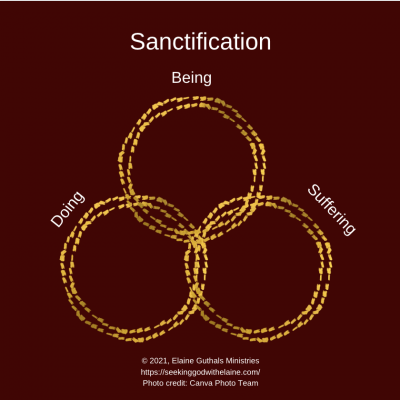
    Spence said we need the strength because we will suffer. Remember, suffering is the third prong of sanctification. 

    Resource

    Sanctification

    What this is all about is about. We are to become like God. 

    The Ultimate Benefit 

    “… May you be filled with joy” (Col. 1: 11 NLT) 

    When we become like God, we will be filled with joy. 

    Disciples are called to rejoice. “Rejoice in the Lord always: and again I say, Rejoice” (Phil. 4: 4 KJV). 

    God wants us to be happy in all circumstances. We can because we know that “… we know that all things work together for good to them that love God, to them who are the called according to his purpose” (Rom. 8: 28 KJV). 

    GrowingOurRelationshipsThroughPrayerPin

    Making the Connections

    Spencer brought up a good point. We have a tendency to lump power and glory together.  

    Power and glory really aren’t the same. Spencer wrote, “Power is an essential attribute of the Divine glory.” I can see that since power is a significant ability, a greatness. 

    Resource

    We’ve said glory expresses the splendor representing the attributes of God resulting from the authority of God. To me, this is more of an aura, a feeling. 

    Well, okay. Feeling of greatness. 

    How Do We Apply This?

    • Pray. Pray again. Pray some more. 
    • Pray submissively. 
    • Pray to find a God’s Will, not to try to get God to do our will. 
    • Don’t be easily provoked. 

    Resource

    Father God. Thank You that You have given us directions in Your Word on how to become more like You. More than that, You will be with us every step of the way, guiding us over the Sanctification Road. Help us to keep our eyes fixed solely on You. Amen. 

    What do you think?

    Leave me a comment below (about this or anything else) or head over to my Facebook group for some interactive discussion.

    If you don’t understand something and would like further clarification, please contact me.

    If you have not signed up for the email daily or weekly providing the link to the devotions and the newsletter, do so below.

    If God has used this devotion to speak with you, consider sharing it on social media.

  • Praying the Right Way

    Jesus told the Parable of the Pharisee and the Tax Collector to teach us how to pray. This daily devotional shows us how the tax collector prayed the right way.

    Nuggets

    • The tax collector’s prayer reflected what was in his heart; fortunately, it was after God’s heart.
    • The tax collector knew salvation was received only by grace and justification through the blood of Jesus.

    Devotions in the Luke’s Diagnosis and Prescription series

    Devotions in the How Should We Pray? series

    Let’s Put It into Context #1

    In the last devotion, we came up with the following nuggets:

    • It is right for us to go to God’s house to pray.
    • The Pharisee’s prayer reflected what was in his heart; unfortunately it was not after God’s heart.
    • The Pharisee mistakenly prescribed to a works-based salvation instead of salvation by grace.

    Let’s Put It into Context #2

    Publicans were seen as second-class citizens — if that. Because their employer was the Roman government, they were excommunicated. They couldn’t testify in court. Stapfer contended they had little more rights than the heathens. No fundamental Jew would talk to, let alone eat with, a publican.

    Resource

    Let’s see what we come up with through a deeper look.

    The Humble Tax Collector Prayed

    “But the tax collector, standing far off, would not even raise his eyes to heaven but kept striking his chest and saying, ‘God, have mercy on me, a sinner!’” (Lk. 18: 13 CSB)Bible Verse

    The tax collector’s prayer reflected what was in his heart; fortunately, it was after God’s heart.

    God only looks favorably on those who acknowledge they have broken His laws and commandments. He saves only those who are sorry for their sins and genuinely want to have His character.

    In the last devotion, we said that we need to approach God humbly. But what does that mean?

    Schmitt helped us out there. He wrote humility “… is when we acknowledge the infinite majesty of God and our own misery.”

    Resource

    That goes along with what we said in the last devotion. We have to determine what God is and what we are not. God is virtuous, perfect, and holy. We are not.

    Part of me is going, how can people be so arrogant when they approach the Sovereign God. The other part of me is going, silly willy, I bet everyone does it at one time or another — at the very minimum — me included.

    It amazes me sometimes how we think God is going to welcome our arrogance. Well, maybe welcome isn’t the right word. He is at least going to allow it.

    We just finished the first batch of devotions on the attributes of God. We started with the list of what He is and we aren’t.

    • Eternal and Infinite
    • Unchangeable and Immutable
    • Self-Sufficient/Self-Existent
    • Mysterious and Incomprehensible 
    • Unified and One
    • Sovereign
    • Omnipotent and Powerful
    • Omniscient and All-Knowing
    • Omnipresent
    • A Spirit
    • Transcendent
    • Pure
    • Three in One

    Our arrogance is pitifully small when compared to His attributes. Yet that is what we lead with time and time again.

    Vaughan stated it succinctly. He wrote, “In these few words of the contrite soul there is AN ARGUMENT WHICH GOD WILL NEVER REJECT. It is the plea God loves.”

    Resource

    We know God’s mercy is the unexpected way God responds in love to our needs. Yep, God treats us in ways that we do not deserve. He doesn’t treat us in the ways we deserve. You would think that would cut down our arrogance.

    Vaughan argued that we have to have the right view of what mercy is. Just saying the words isn’t enough. God has to accept our prayers.

    Vaughan wrote, “If God, simply by an act of sovereignty, forgave a sin and remitted the punishment, it would not be mercy. Before God can show Himself merciful to a sinner He must receive a satisfaction and an equivalent. That satisfaction is Christ.”

    Resource

    Yes, God could just forgive everyone and not make us repent. He isn’t going to do that.

    We’ve got to do our part. We have to know what we did wrong and be sorry for our wrong actions. We have to know God can fix it, and we can’t. We have to humble ourselves and come to Him.

    Remember what we said in The Prodigal Son Returns Home. For every step we take towards God, He runs ten steps toward us. He isn’t going to make it impossible for us — but we have to be sincere.

    To read a related devotion, click the button below.

    Look at how the tax collector approached God. He didn’t feel that God would reject his request. He wasn’t reluctant.

    I thought it was interesting how Talmage described the tax collector. He wrote, “He proved himself honourable, and there were a great many admirable things about him, and yet he utters this cry of self-abnegation.”

    Resource

    The tax collector proved to have moral character. What have we been talking about recently?

    We are working on a redo for godliness. We are looking to redo our character to be that of God’s.

    One way to do that is to be a moral person. We cannot, however, think that means to have worldly morals. We have to kick that up to spiritual graces.

    NotWorldlyMoralsSpiritualGraces

    What I hear Jesus saying about the tax collector was that he was being a moral person to honor God. He was using his moral actions to expand God’s kingdom.

    Back to what Talmage said. The tax collector was a moral person, but his cry told us that he thought the exact opposite. Keep this in mind as we wind around to explain this.

    Talmage made an interesting statement. “The Pharisee looked up; the publican looked down.”

    When I read that, part of me said, “But we have to look up to God because He is higher than us.”

    What Talmage was stressing here, I think, was that we have to humbly approach God. We have to be contrite about our sins. Our proud, entitled attitude has to be changed into a humble, repentant one.

    But we have to watch the flip side of that. Bruce talked about being so contrite that we think we are justified in God’s sight, but we aren’t in our own.

    Bruce wrote, “But a man who beats his breast, and dares not look up, and stands afar off in an attitude which seems an apology for existence, has some difficulty in trusting this instinct. To fear and despond suits his mood rather than to hope.”

    Resource

    We have to believe that God can and will save us when we ask. Even though we don’t deserve Him sending His only Son to die to pay for our sins, He did. He will not turn us away when we accept His gift of salvation.

    We just have to accept it and grow from there.

    What we are to get out of this is the tax collector’s total surrender to God. Talmage said he was earnest and humble.

    The tax collector’s prayer was all about what God could and would do because he surrendered himself to Sovereign God.

    Because the tax collector humbly asked for mercy, God granted his prayer. Gibson wrote that he showed his humility through his misery and sense of unworthiness.

    Resource

    We have to truly repent when coming to God for salvation.

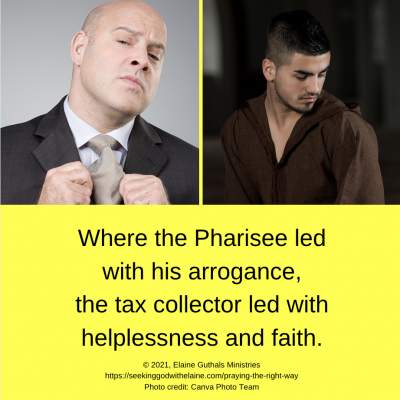
    Where the Pharisee led with his arrogance, the tax collector led with helplessness and faith. Let’s see what Jesus had to say about this.

    Where the Pharisee led with his arrogance, the tax collector led with helplessness and faith.

    On Being Justified

    “I tell you, this one went down to his house justified rather than the other, because everyone who exalts himself will be humbled, but the one who humbles himself will be exalted” (Lk. 18: 14 CSB)

    The tax collector knew salvation was received only by grace and justification through the blood of Jesus. Justification is the act through the merits of Christ that makes us free from sin because we are following God’s moral laws.

    Winterbotham brought up an excellent point. It was not the tax collector’s humility and the words he spoke that justified him.

    What Jesus said was, “… this one [was] justified rather than the other …” (Lk. 18: 14 CSB). Winterbotham felt, “Far as he [the tax collector] yet was from the kingdom of heaven, he was not nearly so far as the Pharisee, for he was in the right way.”

    Resource

    I had to laugh when Winterbotham implied that the tax collector was knocking on the door, but the Pharisee was missed the gate entirely and was heading the wrong way.

    Glossary

    But then I stopped short with Winterbotham’s next words. He wrote, “But never let us think that our Saviour meant this for an example of sufficient repentance. If the publican went back, as so many do after the same outbreak of self-reproach, to his exactions and extortions, to his tricks of trade, his petty deceits, and his unrighteous gains — if he went home from the temple to cook his accounts with the government, or to sell up some poor wretch who could not meet his demands; do you think that his beating upon his breast and calling himself a miserable sinner would avail him aught? Nay, it would but increase his condemnation, because it would show that his conscience was alive to his sin.”

    Resource

    But isn’t that what I am always saying? (Yes, I know I sound like a broken record sometimes.)

    We have to be sincere in our repentance. Repentance has to be coupled with a change of heart and behavior. It can’t just be lip service.

    Heintzeler said we become justified by our temperamental makeup. He noted that it needed to be a pious, believing disposition.

    Resource

    Being justified means we have been forgiven of our sins. We are now children of God.

    PrayingTheRightWayPin

    Making the Connections

    Only God can save us, and it is only through His pity and pardon. Nothing the Pharisee thought would save him could.

    Our self-righteousness will not save us. Neither will our pride. In fact, it will keep us bypassing the gate and heading away from it.

    Only ABCDing can save us. In order to become children of God, we have to admit that mankind was separated from God after the original sin, making us sinners; believe Jesus paid the penalty for those sins to become our Savior and Redeemer; confess God as Sovereign God; and demonstrate that commitment by submitting our lives to living our lives following His laws and commandments.

    The ABCDs of Salvation

    If you have not become a believer in Christ, please read through the
    Plan of Salvation and prayerfully consider what God is asking you to do.

    A – admit our sins
    B – believe His Son Jesus is our Redeemer
    C – confess God as Sovereign Lord

    D – demonstrate that commitment by making any changes needed in our lives to
    live the way in which God has called us

    The Disciple’s Job Description

    How Do We Apply This?

    So, how do we get to heart level? Schmitt helped us out with that.

    • Only God can give us humility as it is one of the spiritual graces.
    • We have to have the correct perspective. Being made in God’s image will mean nothing if we aren’t one of His children. While our souls are infinite, these bodies are not. While God does have plans for us, He really doesn’t need us. That said, He wants our relationships restored.
    • God has splendor and majesty. He is Lord and Master. We don’t and aren’t.

    Resource

    What do we have to accept?

    • We cannot justify ourselves — not even our actions performing religious ceremonies.
    • We cannot change only our outside actions. It must be an inward change of heart and character.
    • We cannot come to God with a prideful, entitled attitude. We have to come humbly.
    • We must accept the mercy of God.

    Resource

    We have to come to God for salvation His way.

    Father God. “Where is another God like you, who pardons the guilt of the remnant, overlooking the sins of his special people? You will not stay angry with your people forever, because you delight in showing unfailing love” (Mic. 7: 18 NLT). “For the honor of your name, O LORD, forgive [our] many, many sins” (Ps. 25: 11 NLT). “Have mercy on [us], O God, because of your unfailing love. Because of your great compassion, blot out the stain of [our] sins. Wash [us] clean from [our] guilt. Purify [us] from [our] sin” (Ps. 51: 1-2 NLT). “LORD, don’t hold back your tender mercies from me. Let your unfailing love and faithfulness always protect [us]” (Ps. 40: 11 NLT). Amen.

    What do you think?

    Leave me a comment below (about this or anything else) or head over to my Facebook group for some interactive discussion.

    If you don’t understand something and would like further clarification, please contact me.

    If you have not signed up for the email daily or weekly providing the link to the devotions and the newsletter, do so below.

    If God has used this devotion to speak with you, consider sharing it on social media.

  • Praying the Wrong Way

    Jesus told the Parable of the Pharisee and the Tax Collector to teach us how to pray. This daily devotional shows us how the Pharisee prayed the wrong way.

    Nuggets

    • It is right for us to go to God’s house to pray.
    • The Pharisee’s prayer reflected what was in his heart; unfortunately it was not after God’s heart.
    • The Pharisee mistakenly prescribed to a works-based salvation instead of salvation by grace.

    Devotions in the Luke’s Diagnosis and Prescription series

    Devotions in the How Should We Pray? series

    The parable that Jesus told about the Pharisee and the tax collector teaches us how to pray. He also teaches us that prayer isn’t about appearances. The Israelites — and we — should have known God doesn’t look at the outside.

    What did God tell Samuel when He picked David to be the next king? “But the LORD said to Samuel, ‘Do not look on his appearance or on the height of his stature, because I have rejected him. For the LORD sees not as man sees: man looks on the outward appearance, but the LORD looks on the heart” (I Sam. 16: 7 ESV).

    By Jesus’ day, the Pharisees seemed to have forgotten that. They were content with their ceremony and religion.

    Jesus reiterated that God wants our relationship and submission. In this parable, He warned the Pharisees — and us — to not judge outward appearances and circumstances.

    Let’s Put It into Context

    Previously, we took a quick surface look at these verses. The nuggets we came up with were

    • We discipline ourselves by devoting ourselves to prayer.
    • God isn’t focusing on the minutes – He is focusing on the attitude.
    • But the Pharisee wasn’t devoted to prayer because he made the prayer all about himself. 
    • The tax collector knew he was still a sinner after conversion — he was just a forgiven sinner.

    To read a related devotion, click the button below.

    Let’s see what we come up with through a deeper look.

    Setting Up the Parable of the Pharisee and Tax Collector

    “He also told this parable to some who trusted in themselves that they were righteous and looked down on everyone else: ‘Two men went up to the temple to pray, one a Pharisee and the other a tax collector” (Lk. 18: 9-10 CSB)

    It is right for us to go to God’s house to pray.

    Jesus told this parable to Pharisees that were in the crowd listening to Him. He patterned the first character after them.

    Person of Interest

    The Pharisees in the crowd would have looked down on the tax collector. All of the newer versions translate publican as tax collector. The King James Version keeps the publican.

    Liddon reminded us what the Pharisee and the tax collector had in common. They both saw the value of prayer. They took their time to pray to God in His house.

    Resource

    The Pharisee’s True Colors Showed in His Prayer

    “The Pharisee was standing and praying like this about himself: ‘God, I thank you that I’m not like other people — greedy, unrighteous, adulterers, or even like this tax collector’” (Lk. 18: 11 CSB)

    The Pharisee’s prayer reflected what was in his heart; unfortunately it was not after God’s heart.

    The first character in the parable that we meet is the Pharisee. The Pharisee should have gotten it correctly, right? Well, apparently he didn’t. Let’s break it down.

    One problem is the Pharisee didn’t get it down to the heart level. We just looked at the Greatest Commandments.

    • “And you shall love the Lord your God with all your heart and with all your soul and with all your mind and with all your strength” (Mk. 12: 30 ESV).
    • “… You shall love your neighbor as yourself …” (Mk. 12: 31 ESV).

    To read a related devotion, click the button below.

    Other than the salutation, the Pharisee doesn’t mention God at all. He said nothing about having ABCDed. Cook was right. He really didn’t know God at all.

    Resource

    The prayer is only about him. (I think he forgot that prayer is a two-way communication with God.)

    In his prayer, the Pharisee just compared himself to other people — and of course, he found himself superior to them. (Why would he compare himself to someone he thought was better than him?)

    Seiss pointed out the same thing — he just said it better. He wrote, “The mistake of this Pharisee was, that he compared his outward life with the lives of disreputable people, and so took to himself the credit of exalted superiority.”

    Resource

    It is easy to see that there were a lot of people the Pharisee did not love. His heart was full of arrogance — and that was clearly on full display.

    Hughes made a very good observation. He felt that what Jesus was saying here was that we can become self-righteous.

    Resource

    The Pharisee’s self-righteousness could have been the result of two things. The first could have been self love. It manifests itself in that arrogant behavior.

    The second way we feel self-righteous is because we compare ourselves to others with whom we feel contempt. Censoriousness is about being critical of others. Jortin pointed out that, sometimes, this judgment can be groundless.

    Resource

    The Pharisee here was, at a minimum, being critical. Where is the second greatest commandment in that? Nowhere. In fact, it sounds like the exact opposite — hate instead of love.

    The Pharisee is making a very big assumption that God sees him as better than the tax collector. Liddon felt this assumption was because “he supposes that sin is measured solely by its quantity and weight, and not by the opportunities or absence of opportunities in the sinner.”

    Resource

    Instead of talking relationship, the Pharisee talked works. That is the things he controlled.

    A Wrong Conception of Works

    “I fast twice a week; I give a tenth of everything I get” (Lk. 18: 12 CSB)

    The Pharisee mistakenly prescribed to a works-based salvation instead of salvation by grace.

    What the Pharisee didn’t get was it isn’t about us. It isn’t about what we do or not do — how good we are.

    It is about accepting — in the Pharisee’s case — what God was going to do for him. God provided the Savior.

    Currier said it beautifully. He wrote, “It is not the spoken service that is regarded, but the hidden words of the heart.”

    Resource

    If God based salvation on a works-based system, none of us would ever step one toe into Heaven. We will never be able to consistently — constantly — keep God’s laws and commandments.

    We will never be 100% fruit-of-the-spirit perfect until we get our new bodies.

    Thank You, God, for looking at our hearts.

    But what is God really looking for when He looks inwardly? He is looking for motivation. Have we really submitted our lives to Him? Are we using the Sanctification Road to change our characters to be like His?

    Glossary

    God doesn’t want lip service. He wants changed lives.

    I keep remembering what I heard or read a couple of years ago. If our actions don’t match our words, our words are manipulative.

    How do we try to manipulate God? We do when we think we deserve His blessings without a full commitment to Him. We do when we think the ceremony of religion is enough without the submission to Him.

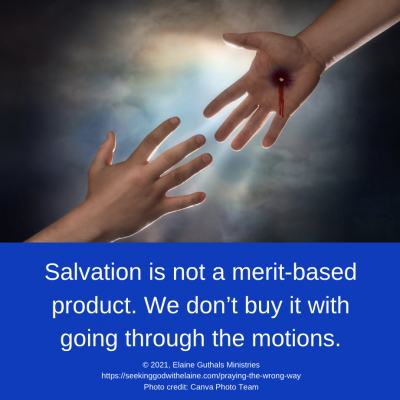
    Salvation is not a merit-based product. We don’t buy it with going through the motions.

    Salvation is not a merit-based product. We don’t buy it with going through the motions.

    As Robertson said, the Pharisee had the ceremonial goodness, but not the moral goodness. Hughes pointed out that the thanksgiving was there, but not the gratitude. I would contend, though, that the thanksgiving was skewed.

    Resource

    Instead of searching for God and loving him, we are deceiving ourselves when we think we can be self-righteous. That is not the way to salvation and eternal life.

    How are we self-righteous? We are when we think being a good person is good enough to get us eternal life. Ooo, baby. That really brings it home, doesn’t it?

    To read a related devotion, click the button below.

    Well, look at it. The Pharisee was banking on what he did to gain God‘s favor. Yes, they were things God approved of – fasting and tithing.

    But isn’t that basically what the Pharisee was saying? He felt he could be good enough and be accepted by God. Yes, he was using religious ceremony to justify himself, but some worldview people use only following the second greatest commandment as justification of being good enough.

    Taylor said something that stopped me in my tracks. He wrote, “How vain must be the hope of those who expect heaven because they are not so wicked as others.”

    Resource

    Ooo, baby. I never thought of it that way. We generally don’t think that Heaven will be filled with the holier-than-thou types. But when we add that some worldview people who think being good enough is enough, we realize how far some people are from having a right relationship with God.

    What Jesus was saying that the Pharisee needed — and the worldview people need — and all of us — was a personal relationship with God.

    The relationship is based on our humility. Humility is a character trait that diminishes pride and places dependence on God while holding a modest view of our importance with respect to others.

    PrayingTheWrongWayPin

    Making the Connections

    Wow! Liddon was brutal. He wrote, “Not to pray is not merely godless: it is, in the larger sense of the term, inhuman.”

    Resource

    What does all of this tell us? We need to pray, but we have to make sure we pray in the right way.

    Why do we pray to God? Liddon told us that, too.

    We have to determine what God is and what we are not. God is virtuous, perfect, and holy. We are not.

    Winterbotham argued that the Pharisee probably did have much to give God. He felt that the Pharisee did have a better character than the tax collector. Either way, the Pharisee had much for which to be thankful.

    Resource

    However, the Pharisee in the parable was like so many of the Pharisees of Jesus’ day. They were hypocrites.

    How Do We Apply This?

    • We can’t think we are equal to or above God. We have to humble ourselves before Him.
    • We can’t rely solely on religious ceremony. We have to have a personal relationship with the Father through the Son.
    • We need to replace our pride with humility.
    • Seiss suggested that we compare ourselves with someone we would want to emulate — how about Jesus?
    • Our works aren’t going to get us anywhere — only belief in Jesus’ atoning blood will.
    • Thank God for His grace and watchcare over us.

    Resource

    Liddon warned us to take care in our interactions with others. He wrote, “If any one point is clear in our Lord’s teaching it is this — that to whom much is given of him shall much be required, and, as a consequence, that in the case of the man to whom much is given a slight offence may be much more serious than a graver crime in another, at least in the eyes of the Eternal Justice. This consideration should prevent a readiness to compare ourselves with any others.” This advice takes on more weight when we consider that only God truly knows the heart of a person.

    Resource

    We don’t want God to be a symbol to us. We don’t want Him to be a character in a book we keep on the shelf.

    We want God to be our Father. We want to have His character. We want to be humble and thankful.

    Father God. You don’t look at our actions. You look at our hearts. You see how we really feel about You. Help us to have Your heart. We humbly submit to You. Amen.

    What do you think?

    Leave me a comment below (about this or anything else) or head over to my Facebook group for some interactive discussion.

    If you don’t understand something and would like further clarification, please contact me.

    If you have not signed up for the email daily or weekly providing the link to the devotions and the newsletter, do so below.

    If God has used this devotion to speak with you, consider sharing it on social media.
  • God Answers Our Prayers

    Sometimes, we give up with our prayers when God doesn’t answer them on our timetables. This daily devotional looks at Zechariah’s response to prayers on which he had probably given up.

    Nuggets

    • Heaven knew what Zechariah had prayed, and he was getting for which he had prayed.
    • Gabriel tells Zechariah that John would be an honor to them and showed how John was supposed to live.
    • Zechariah didn’t understand and had to understand before he could believe.
    • When Zechariah headed to home to Elizabeth, I bet he couldn’t wait to see her with the good news.

    Devotions in the Life of Jesus series

    God Answers Prayers

    We are told to bring our petitions to God. We expect Him to answer our prayers. But sometimes God doesn’t answer them when or how we asked.

    Zechariah found himself in a pickle when Gabriel showed up one day to tell him that God was answering his old prayer. Let’s see what happened.

    Let’s Put It into Context

    “An angel of the Lord appeared to him, standing to the right of the altar of incense. When Zechariah saw him, he was terrified and overcome with fear” (Lk. 1: 11-12 CSB)

    We’ve looked at Zechariah and Elizabeth before. First off, we have to deal with the dude’s name.

    The different translations have two different spellings for this dude’s name. One spelling is Zacharias (NASB, NKJV, KJV). The other spelling is Zechariah (NIV, NLT, ESV, CSB, CEV, GNT, HCSB).

    • Both Zechariah and Elizabeth were considered blameless.
    • Zechariah had to consecrate himself in order to perform his duties.
    • Zechariah doubted Gabriel.

    To read a related devotion, click the button below.

    Have you ever realized that most angelic encounters scare the wadding out of us? I don’t know if it is the suddenness of the encounter, the unexpectedness of it, or the frightening “physical” appearance of the angels.

    The outcome is still the same. The humans are described as frightened.

    God Is in the Business of Answering Prayers

    “But the angel said to him, ‘Do not be afraid, Zechariah, because your prayer has been heard. Your wife Elizabeth will bear you a son, and you will name him John. There will be joy and delight for you, and many will rejoice at his birth’” (Lk. 1: 13-14 CSB)

    The first words out of Gabriel’s mouth — after addressing Zechariah’s fear — was that Zechariah’s prayers were being answered. Heaven knew what he had prayed, and he was getting for which he had prayed.

    Why did Heaven know? Parker wrote that “human life is intended to be the realization of a heavenly plan.”

    Resource

    We don’t just stumble through life from one decision to the next. There is a plan for our lives. This plan is based on what God has seen regarding the decisions we are going to make.

    But don’t we start to question that plan when we don’t feel God is working in our lives? The Jews had – in their minds – real reason to question what God was doing in their lives.

    The reason was God hadn’t been doing for 400 years. He had been silent.

    God’s silence is not a sign that He is not working. He is silent because He is working things out.

    I wonder, though, if Zechariah had grown silent, too. Well, think about it. If he had prayed for a baby that morning, he wouldn’t be scoffing at the angel’s message. He would be jumping for joy.

    Elizabeth was past the childbearing years. No, we don’t know how long it had been since that sunset. We do know that “… both of them were well along in years” (Lk. 1: 7 CSB).

    Ooo, baby. How many times do we feel like we have to badger God with our petition to make sure He hears it and knows we are sincere? Then when we are past the sunset for our circumstances, we bite on ourselves when we think about how we dropped that petition.

    We have to remember to whom Gabriel was talking – Zechariah and, by extension, Elizabeth. Both were blameless. Zechariah’s name meant the Lord remembers, and Elizabeth’s meant God of the oath or covenant.

    God is in the business of answering prayers. That is how He rewards the blameless.

    Gabriel knew that. Maybe that is one of the reasons he starts out trying to put Zechariah at ease and reassure him that God has good things in store for his family.

    God Answers Prayers about Our Character

    “For he will be great in the sight of the Lord and will never drink wine or beer. He will be filled with the Holy Spirit while still in his mother’s womb. He will turn many of the children of Israel to the Lord their God.  And he will go before him in the spirit and power of Elijah, to turn the hearts of fathers to their children, and the disobedient to the understanding of the righteous, to make ready for the Lord a prepared people” (Lk. 1: 15-17 CSB)

    In Luke 1: 14, Gabriel tells Zechariah that John would be an honor to them. The next couple of verses showed how John was supposed to live. Foote detailed why he was going to be a joy to then. [Note: the headings are Foote’s words.]

    Resource

    His Eminence in Wisdom and Piety

    John was going to be filled with the Holy Spirit from the start. Even while he was in Elizabeth’s womb, God’s Spirit would be with him.

    But that wasn’t the only reason John was going to be “… great in the sight of the Lord …” (Lk. 1: 15 CSB). John was going to live the life God had called him to live. He was going to be obedient. He was going to serve God in the way in which he was called.

    His Unworldliness

    John was to be a Nazarite. Numbers 6 details what that means.

    To read Bible Hub’s Numbers 6, click the button below.

    Are we all to be Nazarites? I don’t think so. Jesus wasn’t (Luke 7: 33-35).

    However, we all are to focus on God rather than this world. We are to focus on eternity rather than this temporary home.

    During the Lord’s Supper, Jesus told us we were to be in the world but not of the world. We have to choose to imitate Jesus.

    Glossary

    To read a related devotion, click the button below.

    His Spiritual-Mindedness

    I am sure John the Baptist wasn’t perfect. He was, however, spiritually minded. Spiritually minded means to have our thoughts and affections, our hearts and minds, changed by the Holy Spirit of God.

    Our whole being is to be focused on God. John wasn’t a part-time itinerate preacher.

    John was totally committed to God. He made his decision to follow God – and he followed through.

    His Usefulness

    John was useful to God because he was willing to be used by God – whatever that meant. If it meant funky clothes and different nutritional choices, he was in. If it meant he traveled from place to place, he had his staff ready to move to the next place.

    How could John do this? He chose to follow God’s call and the Holy Spirit’s promptings. Because John followed God’s lead, his ministry was a success.

    No, John’s success was not based on numbers. His mission statement didn’t say anything about his penetration into the country of Israel.

    John’s success was based on his willingness and obedience in following God’s will. He knew what that will was through prayer and spending time with God.

    When We Question Answers to Prayers

    “‘How can I know this?’ Zechariah asked the angel. ‘For I am an old man, and my wife is well along in years.’ The angel answered him, ‘I am Gabriel, who stands in the presence of God, and I was sent to speak to you and tell you this good news. Now listen. You will become silent and unable to speak until the day these things take place, because you did not believe my words, which will be fulfilled in their proper time’” (Lk. 1: 18-20 CSB)

    Oh, Zech. Don’t you want your prayer answered? You must not have, since you talked back.

    Okay, since Zechariah was a priest, we are going to assume he knew his Scriptures. He would have read Daniel. He would have seen Gabriel identified by name in Daniel.

    But no. Zechariah didn’t understand. He had to understand before he could believe.

    Well, we know how that ended for Zechariah. He couldn’t talk for around forty weeks.

    Sometimes, we question the punishment of Zechariah losing his ability to speak. We shouldn’t.

    Just as it isn’t up to us to say what is a sin and what isn’t, it isn’t up to us to say what the punishment should be. That is above our pay grades.

    Goodwin reminded us that the punishment was also a sign. Just think if Zechariah would have come out of the Holy of Holies and said “Hey, I just saw an angel.”

    After 400 years of silence? His fellow worshipers would have wondered if Zechariah had a screw loose.

    God will use our sin and its punishment to witness to others. Goodwin wrote, “So it may often be, in the merciful providence of God, that the bitter draughts of His displeasure are tonics for the soul’s health.”

    Resource

    News for Elizabeth

    “Meanwhile, the people were waiting for Zechariah, amazed that he stayed so long in the sanctuary. When he did come out, he could not speak to them. Then they realized that he had seen a vision in the sanctuary. He was making signs to them and remained speechless. When the days of his ministry were completed, he went back home. After these days his wife Elizabeth conceived and kept herself in seclusion for five months. She said, ‘The Lord has done this for me. He has looked with favor in these days to take away my disgrace among the people’” (Lk. 1: 21-25 CSB)

    We don’t know how many days it took for Zechariah to finish his rotation. Finish he does and heads home to Elizabeth.

    I bet God had been working on Zechariah while he was finishing his rotation. So, when he headed to home to Elizabeth, I bet he couldn’t wait to see her with the good news.

    Grosart painted this picture for us. He wrote, “I can conceive the rapid gladness with which Zacharias, when his office for the week was fulfilled, sped up Olivet and across the rolling plain towards Bethlehem, and up to the hill-country of Judaea, with the strange and wondrous message that a twenty or thirty years’ old prayer was about to be answered in God’s gift of a son to them.”

    Resource

    If Elizabeth questioned the news, we don’t know. If she jumped for joy, we don’t know. What we do know is that she went into seclusion as was custom.

    Making the Connections

    John wasn’t the first – or the last – baby to be foretold. Stier reminds us that the births of Isaac, Samson, and Samuel had already been foretold. In a couple of months, Gabriel would be back to deliver the message to Mary.

    Resource

    I guess the age was the sticking point with Zechariah. But he may have been asking – really – “Why did You wait so long?”

    When God had a message for His people, many times He sent Gabriel as delivery angel. Godet made a good point. He wrote, “When we speak to any one, it is naturally with a view to be understood. When heaven communicates with earth, it is obliged to borrow the language of earth. According to the name given him, Gabriel is the mighty servant of God, employed to promote His work here below.”

    Resource

    Parker reminded us of something else we probably didn’t realize we already knew. John was supposed to stand out. He wasn’t supposed to hide.

    Resource

    How Do We Apply This?

    At the beginning of the devotion, we said that there is a heavenly plan for us. Parker said we should “inquire what it is, accept it with all thankfulness or submission, as the case may be, and live in God.”

    Resource

    We have to accept that plan. We can’t pray and only expect our answers on our timetable.

    God will answer our prayers on His timetable – if they are in His Will – and especially if they expand His kingdom. He will hear and answer every true prayer.

    That should impact how we pray.

    • We should pray knowing nothing is impossible for God – even if it transcends the laws of nature.
    • We should pray that whatever we are praying for should be in His Will and for His glory.
    • We should be content with whatever answer He gives us.

    Praying to God the right way should bring contentment and wisdom. Thanking Him and rejoicing when He answers our prayers should be our response every time.

    God. You are Sovereign God, but we think we can order You around with our prayers. Help us to gratefully accept Your answers – whenever You give them to us. Amen.

    What do you think?

    Leave me a comment below (about this or anything else) or head over to my Facebook group for some interactive discussion.

    If you don’t understand something and would like further clarification, please contact me.

    If you have not signed up for the email daily or weekly providing the link to the devotions and the newsletter, do so below.

    If God has used this devotion to speak with you, consider sharing it on social media.