Category: Obedience

  • Stewards Who Are Ready

    Another time Jesus called us stewards was when He was giving a parable about watching for the second coming. This devotion looks at how we are to be prepared for Jesus to come as a thief in the night.

    Nuggets

    • If we are focusing on what is coming tomorrow instead of the chaos today, then we can prepare for His coming.
    • We also have to prepare by living for Christ.
    • We can only enter heaven when we are like God.

    Devotions in the What I Believe series

    Devotions in the Stewardship category

    Faithful and Unfaithful Stewards
    A Steward Gone Bad

    Flowers with title Stewards Who Are Ready

    As stewards, we are to be managing God’s activities here on earth. We know that there will be a completion date for those activities.

    That will occur with Jesus’ second coming. Stewards have been instructed to be ready for His return.

    In this devotion, we will start looking at being prepared for Jesus to come as a thief in the night. Since it got too long, the next devotion will be looking at how we remain faithful or unfaithful as we wait.

    Let’s Put It into Context #1

    According to the Holman Bible Dictionary, stewardship is “utilizing and managing all resources God provides for the glory of God and the betterment of His creation.”

    Resource

    A steward is a person in a subordinate position to God who has been given the responsibility to manage resources for the purpose of expanding His kingdom.

    Let’s Put It into Context #2

    “For where your treasure is, there your heart will be also” (Lk. 12: 34 NASB)

    Jesus had just been talking to the disciples about anxiety. It is really easy to get worried about something of which we don’t know the outcome.

    Instead of worry, we should remember God’s provision. “Consider how the wildflowers grow: They don’t labor or spin thread. Yet I tell you, not even Solomon in all his splendor was adorned like one of these” (Lk. 12: 27 CSB).

    Many would say that Jesus had a radical approach to eliminating worry. “Sell your possessions and give to the poor. Make money-bags for yourselves that won’t grow old, an inexhaustible treasure in heaven, where no thief comes near and no moth destroys” (Lk. 12: 33 CSB).

    Jesus was telling us to put it into perspective. We shouldn’t focus on this world, which is temporary. We need to focus on eternity.

    To read a related devotion, click the appropriate button below.

    Let’s Put It into Context #3

    “Therefore be alert, since you don’t know what day your Lord is coming. But know this: If the homeowner had known what time the thief was coming, he would have stayed alert and not let his house be broken into. This is why you are also to be ready, because the Son of Man is coming at an hour you do not expect” (Mt. 12: 42-44 CSB)

    Luke doesn’t really tell us the parable. Matthew did in Matthew 24: 42-44. This is all wrapped up in Jesus’ explaining to the disciples what the end times would be like.

    Matthew gave us the parable. Luke gave us the application.

    We’ve talked about a lot in the rest of Matthew 24. But we didn’t address these verses.

    To read devotions in the How Do We Know If We Don’t Know series, click the appropriate button below.

    Be Prepared

    “Be dressed in readiness, and keep your lamps lit. Be like men who are waiting for their master when he returns from the wedding feast, so that they may immediately open the door to him when he comes and knocks. Blessed are those slaves whom the master will find on the alert when he comes; truly I say to you, that he will gird himself to serve, and have them recline at the table, and will come up and wait on them. Whether he comes in the second watch, or even in the third, and finds them so, blessed are those slaves” (Lk. 12: 35-38 NASB)

    First off, we have to talk about the wedding. It wasn’t like the weddings to which I am used to attending. Those, we go for a couple of hours, and we’re done.

    That isn’t what Jesus is talking about here. Cox explained it when he wrote, “The festivities connected with an Eastern marriage were spread over many days, a week at least, sometimes a month. All the friends of the family were expected to put in an appearance, but only a select few remained to the end. The rest might come and go at any hour, on any day, that suited their convenience or pleasure.”

    If we are focusing on what is coming tomorrow instead of the chaos today, then we can prepare. We don’t have to be caught off guard.

    This all ties in with being watchful. Watchfulness is a continual conscious examination of ourselves and events so that we may follow God in all things.

    We’ve talked about being watchful a number of times. We have to watch not only for when Satan tries to tempt us, but also for our opportunities to serve and the blessings God gives us. We have to watch the kind of company we are keeping.

    Most importantly, disciples must remain alert to watch for Jesus’ return, not knowing when that will be. That is what Jesus was talking about in this passage, too.

    To read a related devotion, click the appropriate button below.

    Jesus knew He was going to go away, but He knew He was coming back again. He was trying to prepare His disciples — and us — for His return.

    When we know something is coming, it is easier to prepare. When Mom was going through her cancer treatments, the chemo was harder on her because she had the radiation first. Long story short, she ended up asphyxiating and going into a comma.

    Mom came out of it fine, but we thought we were going to lose her then. As bad as it was then, that helped us prepare for when she actually passed.

    Dad, on the other hand, got up one morning thinking he had the flu. It ended up being a mild heart attack. The thing was, six hours after Mom called me to tell me he was okay but in the hospital, he had a big one and died. Nope, I wasn’t prepared for that.

    Jesus told us the future so that we can be prepared. We have to prepare in a couple of different ways.

    We need to fix our status of being spiritually dead. Spiritual death is the separation from God that occurred as a consequence of Adam and Eve’s original sin.

    The only way we can do that is if we want spiritual life. The spiritually alive are those who have ABCDed.

    The ABCDs of Salvation

    If you have not become a believer in Christ, please read through the
    Plan of Salvation and prayerfully consider what God is asking you to do.

    A – admit our sins
    B – believe His Son Jesus is our Redeemer
    C – confess God as Sovereign Lord

    D – demonstrate that commitment by making any changes needed in our lives to
    live the way in which God has called us

    The Disciple’s Job Description

    We also have to prepare by living for Christ. Even though we are changed to being spiritually alive at conversion, we still have the capacity to sin.

    Spurgeon addressed it this way. He wrote, “… even if a man’s sins are pardoned, he would not be prepared to die if his nature were not renewed.”

    That is why we go through sanctification. Sanctification is the transformation of mind, body, and soul beginning with regeneration and ending with perfected state of spiritual wholeness or completeness.

    If we aren’t on the sanctification road, we aren’t trying to change our character to be more like God — holy and righteous. Holy means to be set apart, perfect, and pure. Righteousness is the result of a solid relationship with God built by a sincere life of conscientious obedience to God’s laws and commandments.

    We can only enter heaven when we are like God. “But nothing unclean will ever enter it, nor anyone who does what is detestable or false, but only those who are written in the Lamb’s book of life” (Rev. 21: 27 ESV).

    No, we are not currently like God and won’t be on this earth. That is why Paul wrote, “Listen, I am telling you a mystery: We will not all fall asleep, but we will all be changed, in a moment, in the twinkling of an eye, at the last trumpet. For the trumpet will sound, and the dead will be raised incorruptible, and we will be changed” (I Cor. 15: 51-52 CSB). We have to be prepared for Heaven.

    We have to give evidence that we are putting our trust in God that He will change us to how we need to be. Trust is assurance that the promises of God are true.

    The watchfulness has to be motivated by the love of the Lord. We have to want to be like Him.

    We also have to feel the expectation along with the watchfulness. We have to have a certainly that Jesus is coming.

    Jesus

    As a Thief

    “But be sure of this, that if the head of the house had known at what hour the thief was coming, he would not have allowed his house to be broken into. You too, be ready; for the Son of Man is coming at an hour that you do not expect” (Lk. 12: 39-40 NASB)

    We think we would be more prepared if we knew the actual date and time of Jesus’ return. But would we really?

    Can we spell p-r-o-c-r-a-s-t-i-n-a-t-i-o-n?

    Jesus compared His coming to that of a thief in the night. But we lock our doors at night, don’t we, in order to deter said thief from gaining entrance?

    But we also lock our door during the day to deter said thief’s brother from the same thing.

    Carr made an interesting point. He reminded us that we live in the dark of the night until we are introduced to Jesus as the Light.

    The promptings of the Holy Spirit call us out of the dark into the light. Once we ABCD and are in Christ, we are in the light.

    Glossary

    How Jesus finds us watching will determine whether we are happy about His return or not. But that is consequences based on the decision we make on our own.

    We will either be faithful or unfaithful stewards when Jesus returns. That will be the topic of discussion in the next devotion.

    Father. You are a loving Father. You devised a plan of salvation so that we could be restored to You. That plan called for the death and resurrection of Your Son to pay for our sins. Soon, He will return to call us home. We long for that day. Lord, may He find us watching for Him, faithfully performing the duties You have given us. Amen.

    What do you think?

    Leave me a comment below (about this or anything else) or head over to my Facebook group for some interactive discussion.

    If you don’t understand something and would like further clarification, please contact me.

    If you have not signed up for the email daily or weekly providing the link to the devotions and the newsletter, do so below.

    If God has used this devotion to speak with you, consider sharing it on social media.

  • Expectations of a Steward

    God has made us stewards for His kingdom. But what does He expect from us? This devotion looks at how we are to be trustworthy in God’s sight in carrying out our ministries for Him.

    Nuggets

    • Paul advised us to consider ourselves ministers and stewards.
    • We shouldn’t build on a foundation of human wisdom and possessions.
    • We have to make choices based on the character of God.
    • Our goal for speaking should be that God is glorified.

    Devotions in the What I Believe series

    Devotions in the Stewardship category

    Expectations of a Steward

    Stewards Who Are Ready
    A Steward Gone Bad

    Flowers with title Epectations of a Steward

    God has given us much in order for us to be stewards. We are to be stewards of ourselves, including our health. We are stewards of our reputations, as that leads to the influence we have on those to whom we are witnessing. He has also made us stewards of material possessions.

    Most importantly, God has made us stewards of His kingdom here on earth. We have important jobs to complete for the expansion of His kingdom.

    Because of that role, God has expectations of us. Let’s discuss what those are.

    Let’s Put It into Context

    According to the Holman Bible Dictionary, stewardship is “utilizing and managing all resources God provides for the glory of God and the betterment of His creation.”

    Resource

    A steward is a person in a subordinate position to God who has been given the responsibility to manage a skill or possession for the purpose of expanding His kingdom.

    Stewards of the Mysteries of God

    “Let a man regard us in this manner, as servants of Christ and stewards of the mysteries of God. In this case, moreover, it is required of stewards that one be found trustworthy” (I Cor. 4: 1-2 NASB)

    Paul had been talking to the Corinthians about building a solid foundation. He knew this was important, so he told them, “But each one is to be careful how he builds on it” (I Cor. 3: 10 CSB). We have to have Jesus as the foundation.

    We shouldn’t build on a foundation of human wisdom and possessions. Things of this world are fleeting.

    Instead, Paul advised us to consider ourselves ministers and stewards.

    Oh, yes. We all have a ministry. We all have a purpose in God’s kingdom. We have been given gifts to use to expand that kingdom.

    Does verse 2 say we have to be perfect? Does it even say we have to be doing a bang up job?

    No. It says we have to be trustworthy. According to the Merriam-Webster Dictionary, the synonyms of trustworthy are

    • calculable
    • dependable
    • reliable
    • responsible
    • steady
    • sure

    That really encouraged me. It is okay if not every one of my devotions are a great literary work. I won’t publish one that I think is just horrible, but I may think they just miss in some ways. I may think I wish I could have said something better.

    But I am called to be obedient in posting. I am called to be faithful. I am called to be trustworthy.

    God may use what I have written specifically for one person. He takes it from my keyboard to your heart. God makes the words speak to you, not me.

    Robertson made an interesting comment. He wrote, “Men seem to look on the ministry as an institution intended for their comfort, for their gratification, nay, even for their pastime. In this way the preaching of the gospel seems to be something like a lecture, professional or popular; a free arena for light discussion and flippant criticism.”

    Ooo, baby. Ouch.

    How many times do we seek God just for ourselves? (Hence the “oh, I don’t have a ministry!”)

    We make it about us. I have to have these many followers. I want this many sessions and page views. I need this many likes or comments.

    No. It is about God taking these words He has given me and speaking to Your heart while the Holy Spirit tells you, “Listen. Remember when … You can apply it ….”

    Oh, yes. We have to grow. We don’t want to remain milk babies the rest of our lives.

    To read a related devotion, click the button below.

    But our job description says we have to proclaim God’s gospel and make disciples. We have to do what He has assigned to us to expand His kingdom. It isn’t just about what God does for us.

    The Disciple’s Job Description

    Complete Job Description

    Individual Description

    Job Duty #4
    Proclaim the Gospel (Mark 16: 15)

    Job Duty #6
    Make Disciples (Matthew 28: 19-20)

    Another thing this passage is telling me is that our character matters. We are servants of Christ. We need to be imitating Him.

    Glossary

    If I am thinking I am just a minister of my church or my company, I missed the boat. I am a minister of God.

    I have to act like it. You do, too. Thomas wrote, “The true servant of Christ will feel and act as the moral leader and commander of the people.”

    We also must be faithful. We need to be committed to whatever God calls us to do. We can’t hold out until a better — or easier — mission is given to us. We have to complete the tasks He assigns.

    I hear you. The “… stewards of the mysteries of God” (I Cor. 4: 1 CSB) part holds us back. How are we ever going to understand that?

    Thomas has an interesting take on that. He wrote, “The gospel is a mystery not in the sense of incomprehensibility, but in the sense of progressive unfoldment.”

    Ooo, baby. How does that impact our “but I don’t understand” whine?

    It isn’t because we can’t understand it. It is about we aren’t to that level yet. It is going to take the Holy Spirit to explain them to us.

    We are expected to do the job God has called us to do and be all the things in the synonym list. Thomas would have added the word independent to it. We have to follow God’s call, even when we are judged by worldview people.

    People

    Do’s and Don’ts

    “For an overseer, as God’s steward, must be above reproach. He must not be arrogant or quick-tempered or a drunkard or violent or greedy for gain” (Ti. 1: 7 ESV)

    Now, Paul’s directions for Titus were for church leaders. However, when we are witnessing to someone, they are seeing us as a church official. So, it would do us well to consider these as expectations for us.

    Paul advised us to be beyond reproach. Why should we strive to meet that level of expectations? Well, we are trying to imitate God. We should be wanting to do the best we can.

    It is kind of like the Peter Parker Principle. With great power comes great responsibility.

    What? You don’t think we have power????

    “I will give you the keys of the kingdom of heaven, and whatever you bind on earth shall be bound in heaven, and whatever you loose on earth shall be loosed in heaven” (Mt. 16: 19 ESV).

    But what does that mean? Cox saw binding as prohibiting and loosing as permitting. It gives us the ability to determine right and wrong.

    No, it does not give us the ability to rewrite Scriptures or God’s laws and commandments. We can’t make homosexuality not a sin.

    I read this to mean that we are going to be able to discharge the responsibilities of our position. Remember, we are a steward, so we are subordinate to God.

    But we have choices to make within that. We have to make those choices based on the character of God.

    We don’t want to be labeled as a difficult person. Oh, yes. Worldview people will probably label us difficult when we refuse to compromise on God’s laws and commandments.

    We can stick to our guns without rolling over people. We don’t want the self-conceit that goes with arrogance.

    Paul gave us a couple of areas to make sure we watch. We shouldn’t be arrogance, quick-tempered, drunk, violent, and greedy.

    The obvious reason Paul highlighted those were they are so not God’s character. They can quickly turn the person to whom we are witnessing away from God.

    All also have the capacity to make us lose control. God wants that control firmly in His hands.

    Hand

    Remember Our Purpose

    “As each has received a gift, use it to serve one another, as good stewards of God’s varied grace: whoever speaks, as one who speaks oracles of God; whoever serves, as one who serves by the strength that God supplies — in order that in everything God may be glorified through Jesus Christ. To him belong glory and dominion forever and ever. Amen” (I Pet. 4: 10-11 ESV)

    See. See. We each have received a gift. That means we will be held accountable for using it for God’s glory.

    That gift is to be used for God’s gain, not ours. It is to be used so other can gain.

    But what is “whoever speaks, as one who speaks oracles of God …” (I Pet. 4: 10-11 ESV)?

    Leighton states that means we have to learn it before we teach it. I am not supposed to tell you the Gospel According to Elaine. I am supposed to tell you the Gospel According to God.

    We have to speak in a manner with which God would be pleased. Our goal for speaking should be that God is glorified.

    Making the Connections to Self-Discipline

    We’ve been looking at defending our beliefs when we are witnessing. That means we have to be secure enough to convince someone to accept our beliefs.

    Our questions should still serve us to determine on what we need to focus.

    • What does the Scriptures say?
    • What do I believe?
    • Why do I believe the same/differently than the Scriptures?
    • What are the talking points when witnessing to a non-believer?

    Related Links

    I have created a worksheet of the questions above. Click on the button below to access it.

    How Do We Apply This?

    • We must be faithful.
    • We need to be working as God wants us to be working.
    • We need to watch for what is God calling us to do.
    • We will be accountable for what we do.
    • We need to meditate on how God calls us.

    Father. You have called us to be responsible for leading others to You. Help us to show them Your love for them. Amen.

    What do you think?

    Leave me a comment below (about this or anything else) or head over to my Facebook group for some interactive discussion.

    If you don’t understand something and would like further clarification, please contact me.

    If you have not signed up for the email daily or weekly providing the link to the devotions and the newsletter, do so below.

    If God has used this devotion to speak with you, consider sharing it on social media.

  • All the Earth is God’s

    We live in a beautiful world that doesn’t belong to us. We think it does, but it is God’s. This devotion looks at how we are stewards of the earth.

    Nuggets

    • We have to take it on faith how the heavens and earth were created by God.
    • Since God made the earth, it is His.
    • God allows us to live on His earth.
    • The land was a reward for obeying the covenant.
    Flowers with title All the Earth Is God's

    This year, we are looking at self-discipline. We are using Vincent’s The Lesson of Ripeness sermon to look at the need to grow in our relationship with God. We morphed learning enough to be a teacher into determining some areas we need to grow so we can be mature disciples.

    Resource

    We have been looking at solidifying what we believe. When we witness, we need to be prepared to explain what we believe and why we believe it. We have looked at the Scriptures; the Trinity (God, Jesus, and the Holy Spirit); man; salvation; grace; the church; divine ordinances; worship; God’s kingdom; end times; and evangelism and missions. Now, we are going to look at stewardship.

    Devotions in the What I Believe series

    Devotions in the Stewardship category

    All the Earth is God’s
    Expectations of a Steward

    Stewards Who Are Ready
    A Steward Gone Bad

    Let’s Put It into Context #1

    According to the Holman Bible Dictionary, stewardship is “utilizing and managing all resources God provides for the glory of God and the betterment of His creation.”

    Resource

    Stewardship entails more than just managing finances. We are also stewards of the earth.

    Let’s Put It into Context #2

    “In the beginning God created the heavens and the earth” (Gen. 1: 1 CSB)

    A simple sentence. It says so much without saying much at all.

    No, it doesn’t tell us the scientific process. Instead, it gives us an overview. It doesn’t tell us dates and what the definition of a “day and an evening” is before night and day are created.

    Most of all, the account of creation focuses, as Parker says, on religion. We have to take it on faith how the heavens and earth were created by God. Faith is the belief that the doctrines stated in God’s Word are true, even if we do not understand all aspects of them.

    God wanted — from the beginning — for us to put our trust in Him. We aren’t supposed to try to figure things out ourselves.

    Still, we are given enough to see the majesty of the creation. We are told God spoke and lifted His hand and gave the orders. We have no idea how those orders were carried out.

    Maybe everything suddenly appeared before God. Maybe it was a reverse-Avengers snap, where things drifted together over an undetermined period of time. Shore explained that this way: “Are there not clear indications that the creation of the world was not the result of the omnipotent act of a moment, but of the Divine creative energy working (as we ever still see it working) through gradual processes, through successive gradations?”

    What does all this tell us? We don’t need to know the how. We have to focus on the Who.

    It is obvious that God created the heavens and earth.

    Creation is when the heavens and earth were brought into existence for His glory by the will of the Omnipotent and Omniscient God from materials that did not exist.

    He Made It — It’s His

    “The earth is the LORD’s, and everything in it. The world and all its people belong to him” (Ps. 24: 1 NLT)

    God is Sovereign God. The Holman Bible Dictionary defined sovereignty “… means that God is in all and over all.”

    Since God made the earth, it is His. He didn’t create the heavens and earth, pack His bags, and leave. He sustains it.

    God has control over the earth. As Watkinson wrote, “… the earth never comes to ruin.” As we seek God, we see his wisdom and power in His rule of His creation.

    I hear you. How can I say God is in control when there are so many disasters occurring? We have hurricanes, tornadoes, earthquakes, fires, and plagues. Then there is poverty, crime, disease, death just to name a few.

    That list is the results of sin. If Adam and Eve would not have sinned, we wouldn’t have those.

    Notice the psalmist said that everything in the earth belongs to the Lord. All of the land and animals — and us — belong to the Lord.

    We are just stewards.

    Earth Is Ours?

    “The highest heavens belong to the LORD, but the earth he has given to mankind” (Ps. 115: 16 NIV)

    If God has given earth to mankind, doesn’t that mean we have control over it? No.

    My landlady has given me one of the units in the fourplex to live in, but she still owns it. My rent money does not go towards purchasing it.

    Remember, we said God didn’t create the heavens and earth, pack His bags, and leave. He is a very hands-on God.

    God allows us to live on His earth. We are to take care of it. He has made us stewards of the earth.

    Have Dominion

    “And God blessed them. And God said to them, ‘Be fruitful and multiply and fill the earth and subdue it and have dominion over the fish of the sea and over the birds of the heavens and over every living thing that moves on the earth’” (Gen. 1: 28 ESV)

    One of the orders we received was to subdue the earth. That goes along with the curse put on the earth as consequences for the original sin. “… The ground is cursed because of you. You will eat from it by means of painful labor all the days of your life. It will produce thorns and thistles for you, and you will eat the plants of the field” (Gen. 3: 17-18 CSB).

    If we don’t work the land, it becomes overgrown and reverts to its natural state. Think about what the pioneers found as they moved out west in the 1800s. Here they would have found tall prairie grass and trees.

    God gave us dominion over fish, birds, and animals. He allows us to rule them.

    McGill cautioned that we don’t want to take this ruling too far. “A right to rule is not a right to tyrannize; and a right to service extends only to such duties as are consistent with the powers of the servants, and with the place which is assigned to them.”

    God gave us dominion over some of the animals, but we still have to exercise that rule according to His plan.

    Listen

    “Now if you will carefully listen to me and keep my covenant, you will be my own possession out of all the peoples, although the whole earth is mine, and you will be my kingdom of priests and my holy nation.’ These are the words that you are to say to the Israelites” (Ex. 19: 5-6)

    Since all the earth is God’s, He can gift it to us as He chooses. We’ve talked before how land was a component of the covenant with Israel.

    Glossary

    The land was a reward for obeying the covenant. We know there were many times that the Israelites broke their end of the covenant through disobedience. They had their land taken away from them.

    Making the Connections

    Exell made an interesting point. He said that, while the earth doesn’t belong to man, neither is it Satan’s.

    Satan has been called the ruler of this world. “Now is the judgment of this world; now will the ruler of this world be cast out” (Jn. 12: 31 ESV). But this world isn’t his.

    Isn’t that encouraging these days when we see Satan causing so much chaos?

    We are stewards of the world, not owners. That means nothing we do or do not do will totally destroy this world.

    Oh, yes. This heaven and this earth will go away. “… Earth and heaven fled from his presence, and no place was found for them” (Rev. 20: 11 CSB). Only God can destroy this planet.

    Making the Connections to Self-Discipline

    We’ve been looking at defending our beliefs when we are witnessing. That means we have to be secure enough to convince someone to accept our beliefs.

    Believing we own the world rather than being stewards might be a challenging discussion we have with those to whom witnessing if we haven’t thought about our response.

    Our questions should still serve us to determine on what we need to focus.

    • What does the Scriptures say?
    • What do I believe?
    • Why do I believe the same/differently than the Scriptures?
    • What are the talking points when witnessing to a non-believer?

    Related Links

    I have created a worksheet of the questions above. Click on the button below to access it.

    How Do We Apply This?

    When we think we own the earth rather than are just stewards, we are inflating our importance. We are not gods. We need to submit to the One true God.

    In order to submit, we need to seek God.

    Searching for and Seeking God

    Hearing His Word (Rom. 10: 17).
    Reading His Word (Rev. 1: 3).
    Praying to Him (Heb. 4: 16).
    Studying His Word (Ac. 17: 11).
    Meditating on His Word (Ps. 1: 1-2).
    Memorizing His Word (Ps. 119: 11).

    God has entrusted us to look after His creation. We need to do His Will.

    Father God. Thank You for creating this beautiful world in which we live. Lord, we take our job as stewards seriously. We pledge to look after Your creation in the way You want. Amen.

    What do you think?

    Leave me a comment below (about this or anything else) or head over to my Facebook group for some interactive discussion.

    If you don’t understand something and would like further clarification, please contact me.

    If you have not signed up for the email daily or weekly providing the link to the devotions and the newsletter, do so below.

    If God has used this devotion to speak with you, consider sharing it on social media.

  • The Way of Wisdom

    Solomon gave his son a foundation on which to live his life. It was now up to the son to decide if he was going to follow Solomon’s advice or not. This devotion looks at the choices the son – and we – have in following “… the way of wisdom …” (Prov. 4: 11 ESV).

    Nuggets

    • We need to give our kids a foundation “… in the paths of uprightness” (Prov. 4: 11 ESV) because life is hard.
    • Don’t follow a lifestyle of evil; instead, follow the Light of righteousness.
    • Solomon had imparted words of wisdom – it was up to the son to follow them.
    Flowers with title The Way of Wisdom

    Parents have an important responsibility in raising their children. Bartlett wrote, “The true aim of parents should be the culture of a God-fearing, God-obeying, God-loving character.”

    That was Solomon’s goal as he was working with his son in Proverbs. Using his advice, we can teach our kids – and ourselves.

    Even if we aren’t parents, we have others whom we can teach. We have other family members, such as nieces and nephews. We may be in a mentor relationship at work. We are witnesses for Jesus as we live out our lives.

    The Right Way

    “I have taught you the way of wisdom; I have led you in the paths of uprightness. When you walk, your step will not be hampered, and if you run, you will not stumble. Keep hold of instruction; do not let go; guard her, for she is your life” (Prov. 4: 11-13 ESV)

    Parents want what is best for their children. That is why we teach them. At some point, though, we have to let them out what we have taught into practice.

    Hopefully, we have led them “… in the paths of uprightness” (Prov. 4: 11 ESV). We should be teaching them views of life and habits that lead them to Jesus.

    We need to give our kids this foundation because — let’s face it — life is hard. They are going to run into a lot of struggles.

    We want to make sure that they can run and not be hampered (Prov. 4: 12). We want them to be able to hurdle over the obstacles.

    That is so true now that so much has changed and is continuing to change. We have to make sure our kids have sure feet.

    Still, we also have to make sure our kids have a firm foundation for when they are in the ho-hums of everyday life. When things are b-o-r-i-n-g, it is easy to slip off the narrow way.

    Solomon reminded us that this foundation is predicated on one thing: “… the way of wisdom …” (Prov. 4: 11 ESV). That way is Jesus.

    • “Jesus answered, “I am the way and the truth and the life. No one comes to the Father except through me” (Jn. 14: 6 NIV).
    • “It is from him that you are in Christ Jesus, who became wisdom from God for us — our righteousness, sanctification, and redemption” (I Cor. 1: 30 CSB).

    After Jesus redeems us and we follow Him, we are on the sanctification road, which leads to righteousness. Redemption is where something is used in exchange for something else to gain or regain something. Righteousness is the result of a solid relationship with God built by a sincere life of conscientious obedience to God’s laws and commandments. Sanctification is the transformation of mind, body, and soul beginning with regeneration and ending with perfected state of spiritual wholeness or completeness.

    It is up to our kids to hold on to the teachings. They have to have faith. Faith is the belief that the doctrines stated in God’s Word are true, even if we do not understand all aspects of them.

    We can do a lot for our kids. We cannot accept Christ for them.

    I think it is interesting here that Solomon told his son — and us — to hold on tight. Eve said she was told not to touch (Gen. 3: 3). Now, God told them they couldn’t eat from the tree (Gen. 2: 17). He didn’t say anything about touching.

    Eve should have followed the no-touch, though.

    So, of what do we take hold? We need to take a firm grasp on seeking God.

    Searching for and Seeking God

    Hearing His Word (Rom. 10: 17).
    Reading His Word (Rev. 1: 3).
    Praying to Him (Heb. 4: 16).
    Studying His Word (Ac. 17: 11).
    Meditating on His Word (Ps. 1: 1-2).
    Memorizing His Word (Ps. 119: 11).

    Holding fast isn’t just so we can get smarter. It is going to help us when we come upon the obstacles. We won’t as easily get knocked off track.

    We are told to hold fast in several different ways.

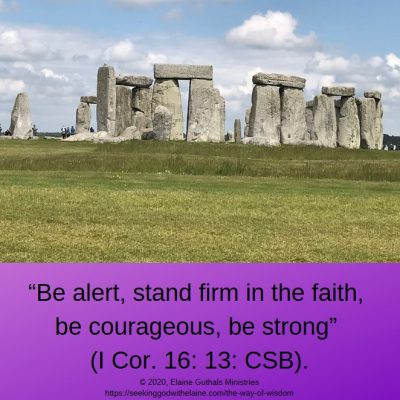
    • “Be alert, stand firm in the faith, be courageous, be strong” (I Cor. 16: 13: CSB).
    • “Be strong and courageous. Do not fear or be in dread of them, for it is the LORD your God who goes with you. He will not leave you or forsake you” (Deut. 31: 6 ESV).
    • “Wait patiently for the LORD. Be brave and courageous. Yes, wait patiently for the LORD” (Ps. 27: 14 NLT).

    I think something that isn’t taken into account there is how hard it is to withstand Satan’s temptation. We are going to sin. I would hope that Adam could learn something from my mistakes.

    We can’t just focus on teaching our children how to live in this world. Yes, that is important.

    It is more important that we prepare them for eternal life. Doing that impacts what we do in this life. This life is the preparation for the next.

    Stonehenge

    The Wrong Way

    “Do not enter the path of the wicked, and do not walk in the way of the evil. Avoid it; do not go on it; turn away from it and pass on. For they cannot sleep unless they have done wrong; they are robbed of sleep unless they have made someone stumble. For they eat the bread of wickedness and drink the wine of violence. But the path of the righteous is like the light of dawn, which shines brighter and brighter until full day. The way of the wicked is like deep darkness; they do not know over what they stumble” (Prov 4: 14-19 ESV)

    Solomon went on to tell us what not to touch — in pretty adamant terms. Don’t follow a lifestyle of evil. Instead, follow the Light of righteousness.

    Solomon is calling them paths. Jesus called it a road. “Enter through the narrow gate. For wide is the gate and broad is the road that leads to destruction, and many enter through it. But small is the gate and narrow the road that leads to life, and only a few find it” (Mt. 7: 13-14 NIV).

    A couple of chapters back, Solomon had already given advice about connecting with others. He was hitting that concept again, but I think he was expanding it.

    To read a related devotion, click the button below.

    It isn’t just people who will lead us astray. It is also the “… bread of wickedness and the drink of violence” (Prov. 4: 17 CSB).

    Do you see what that is saying? “Dudes, you can get into trouble all by yourselves. You don’t need a tour guide.”

    That is especially true when we perceive something to be as ordinary as food and drink. Hey, Sally and I are just talking about Tom. We aren’t gossiping. My pen ran out of ink on the way to work, and I have to write a check on the way home. So, I’ll just permanently borrow this pen from work.

    But how far do we have to go in avoiding the path of the wicked? If we avoid sinners, we can’t witness to them. Sinners are all people who have not made a genuine profession of faith — who have not sincerely ABCDed.

    The ABCDs of Salvation

    If you have not become a believer in Christ, please read through the
    Plan of Salvation and prayerfully consider what God is asking you to do.

    A – admit our sins
    B – believe His Son Jesus is our Redeemer
    C – confess God as Sovereign Lord

    D – demonstrate that commitment by making any changes needed in our lives to
    live the way in which God has called us

    The Disciple’s Job Description

    Jesus was concerned about this in His prayer at the Last Supper. “I am not praying that you take them out of the world but that you protect them from the evil one” (Jn. 17: 15 CSB).

    But that makes it difficult, doesn’t it? We don’t always see the line drawn in the sand. The right side is okay; the left side is really sin. When does abstinence come in, and when does moderation come in?

    We don’t want abstinence to be the opposite of works. Ephesians 2:8 tells us salvation is not by works. It does not say it is by abstinence.

    What Ephesians 2: 8 says is salvation is by grace. “For you are saved by grace through faith, and this is not from yourselves; it is God’s gift” (Eph. 2: 8 CSB).

    The Christian Observer gave us a good indication of what we should avoid. “What we are then to avoid is unnecessary familiarity with sinners and a disposition to comply with their sins.” Our disposition is our temperamental makeup.

    Hamilton explained why disciples are described as the light. He wrote, “… now he has attained to wisdom, holiness, and happiness. Light, as symbolical of the good, speaks to us of the enlightenment of the understanding, the purity of holiness, and true happiness.”

    We are not called to be complacent with where we are at the time of conversion. We have to grow in grace and knowledge (II Pet. 3: 18).

    At conversion, we start out as milk babies. Over the course of our lives, as we navigate the sanctification road, we are to grow into steak adults.

    To read a related devotion, click the button below.

    Thomas made a good point. We can compare the dark path to the light path based on this world. If we make the comparison based on what we know, it would be easy to choose dark over light.

    We have to make the comparison through the lens of eternity. This world and its life is temporary. We must make the decision based on what is lasting.

    We also have to realize that we are on the path for the long haul. That means the rest of our lives. We don’t “arrive” until we arrive in God’s presence.

    Choices

    “My son, be attentive to my words; incline your ear to my sayings. Let them not escape from your sight; keep them within your heart. For they are life to those who find them, and healing to all their flesh. Keep your heart with all vigilance, for from it flow the springs of life. Put away from you crooked speech, and put devious talk far from you. Let your eyes look directly forward, and your gaze be straight before you. Ponder the path of your feet; then all your ways will be sure. Do not swerve to the right or to the left; turn your foot away from evil” (Prov 4: 20-27 ESV)

    Solomon had imparted words of wisdom. Now, it was up to the son — and us — to follow them.

    • Choose to follow them — we find life.
    • Choose not to follow them — we find death.

    Yes, the son had to hear the words first. (Just because Solomon had been talking, didn’t mean son had been listening.) The son had to do the following:

    • Listen closely (Prov. 4: 20)
    • See them (Prov. 4: 21)
    • Take them to heart (Prov. 4: 23)

    We’ve talked before that obedience has to come from the heart. God’s Word is supposed to be a part of us. His laws and commandments are supposed to affect our character or our core – our heart level. If we are to engrave God’s laws and commandments on our hearts, we internalize them, and they change us.

    To read a related devotion, click the appropriate button below.

    Glossary

    But taking it down to the heart level isn’t the end. We have to be diligent about keeping the heart pure. We are to keep out all the inappropriate pulls that tempt us.

    Why is keeping our hearts pure so important? Waterland asserted that religious matters come from the heart. He wrote, “All things relating to religious conduct are reducible either to some matter of belief or practice.” Both are driven by the heart.

    Then we get to the body parts section. That little tongue is an important part of our bodies. We have to make sure we use it for God.

    Solomon urged his son to keep His eyes on God. He will direct our paths when we allow Him to lead.

    We just have to make sure that our feet follow God’s direction. Verse 26 says we have to “ponder the path …” (CSB). We must make a conscious decision to follow God.

    Woman

    Making the Connections

    We are to walk the path of the righteous. Maclaren called it the path of wisdom.

    Instead of accessing this wisdom, worldview people walk the path of darkness. Emmons thought it was so dark, they can’t see that they are being led to ruin.

    The problem is that it is a moral darkness. Oh, I bet worldview people would hotly contest that. They would list all the save the kids, save the animals, save the planet groups with which they are associated.

    We can’t work our way into salvation. It isn’t about what we can do. It is about what Jesus has already done for us — which we couldn’t do ourselves.

    How Do We Apply This?

    Melvill gave it to us straight. He wrote, “A man is accountable for his creed as well as for his practice — accountable inasmuch as it must be through his own fault that he believes what is false just as much as it is through his own fault that he does what is wrong.”

    If you have not admitted that your relationship is not right with God,

    have not asked Jesus to be your Lord and Savior,

    and have not confessed your sins,

    please read through the Plan of Salvation and prayerfully consider what God is asking you to do.

    Judgment day is coming. We will be held accountable if we have not ABCDed.

    There are two paths. One is a wide path that leads to the dark. In the dark is the torment of hell.

    The other is a narrow path that leads to the light. In the light is the presence of a God. “Night will be no more; people will not need the light of a lamp or the light of the sun, because the Lord God will give them light, and they will reign forever and ever” (Rev. 22: 5 CSB).

    How do we keep out those things which would tempt us out of our hearts? Burns gave us a list.

    • Watch
    • Seek God
    • Exhibit joy and confidence
    • Be productive in God’s work
    • Be ready for what lies ahead, even death

    Father God. We want to walk on the paths that lead to You. Shine Your light to show us the way. Help us to know when to witness and when to abstain. We want always to do Your will. Amen.

    What do you think?

    Leave me a comment below (about this or anything else) or head over to my Facebook group for some interactive discussion.

    If you don’t understand something and would like further clarification, please contact me.

    If you have not signed up for the email daily or weekly providing the link to the devotions and the newsletter, do so below.

    If God has used this devotion to speak with you, consider sharing it on social media.

  • What Do You Mean All Disciples Won’t Get into Heaven?

    Wait! What do you mean that all people professing to be disciples will get into heaven? This devotion looks at how we can ensure what God is really looking for from us.

    Nuggets

    • God isn’t looking for a fake disciple.
    • God is looking for sincere disciples.
    • No one who hasn’t made a sincere profession of faith can enter heaven.

    Devotions in the What I Believe series

    Devotions in the End Times category
    Judgment Day Focus

    Flowers with title What Do You Mean All Disciples Won't Get into Heaven?

    I had planned on looking at several passages in this devotion, but when I sat down to write it, I felt I needed to stick with one passage.

    We’ve touched on this passage before, but I had been planning to dig into it more. I guess today is the day. Quick note – I have been having technical problems all day, so I hope this makes sense.

    We mentioned in the last devotion that those thinking they are sheep but end up in the goat’s line will be in for a rude awakening. Let’s look at what submitting to God really means.

    Let’s Put This in Context #1

    The Holman Bible Dictionary defines judgment day as “time of God’s punishment and refining of the evil in the world, especially of the final, history-ending time of eternal judgment.”

    Resource

    Let’s Put It into Context #2

    We talked before about Jesus separating the sheep and the goats. Matthew 25: 31-46 does say that those who fed Him, clothed Him, and visited Him when He is sick and in prison gain entrance to heaven. Those who didn’t, don’t.

    Jesus defined “me” as “… as you did it to one of the least of these my brothers, you did it to me” (Mt. 25: 40 ESV).

    To read a related devotion, click the button below.

    Glossary

    We also talked about lip service. Jesus explained to the Pharisee that it isn’t what you put into the body that makes a person unclean. It is what comes out of the body (Mt. 15: 11). God said basically the same thing to Peter: “… Do not call something unclean if God has made it clean” (Ac. 11: 9 NLT).

    To read a related devotion, click the button below.

    The Disowned

    “Not everyone who says to me, ‘Lord, Lord,’ will enter the kingdom of heaven, but only the one who does the will of my Father in heaven” (Mt. 7: 21 CSB)

    Have you ever wondered about the type of “believer” to whom Jesus was talking? We probably most often think it is one of the back-row onlookers.

    You know the type. They may be there faithfully, but they really don’t participate in the service. They sorta listen to the sermon. They don’t join the small groups. Once they are out of the door, their obligation to God is done until the next Sunday service.

    Yep. That is probably who Jesus is talking about.

    What if it isn’t?

    Buxton wrote that “it is easy enough to assume the character and manner of a Christian, but to live the Christian life is not so easy.” Being a disciple has to be more than us playing a role in a movie of our life. It has to be real.

    God isn’t looking for a fake disciple.

    Mannequins

    But We Were Your Disciples!

    “On that day many will say to me, ‘Lord, Lord, didn’t we prophesy in your name, drive out demons in your name, and do many miracles in your name?’” (Mt. 7: 22 CSB)

    What if it is a church leader? They may be trying to influence the congregation to compromise with the worldview — all the while thinking they are doing God’s Will.

    The polar opposite of that is the Crusader Disciple. You know. Like Danny Gokey’s song says, “So much has been said Even doubted my name.” We generally think we can spot the fanatics, but can we?

    What if it they appear to be sincere disciples? But in reality, their relationships with God isn’t what it really should be????

    God is looking for sincere disciples.

    People

    Away!

    “Then I will announce to them, ‘I never knew you. Depart from me, you lawbreakers!’” (Mt. 7: 23 CSB)

    Judgment day comes — and ooo, baby, were they wrong! Fatally wrong!

    “… I never knew you …” (Mt. 7: 23 CSB). This isn’t a case of backsliding. This is a case of never was.

    No one who hasn’t made a sincere profession of faith can enter heaven. “But nothing that is impure will enter the city, nor anyone who does shameful things or tells lies. Only those whose names are written in the Lamb’s book of the living will enter the city” (Rev. 21: 27 GNT).

    I know. We all lie at some point. I take that to mean that we are a pathological liar – an unforgiven pathological liar. God will forgive those whose sincerely ask His forgiveness.

    But it is also more than just confessing with our mouths. “If you declare with your mouth, “Jesus is Lord,” and believe in your heart that God raised him from the dead, you will be saved” (Rom. 10: 9 NIV). I think it is a number of things we have to do.

    We have to change our hearts. They are very important. The greatest commandment tells us to love the Lord with all your heart, soul, strength, and mind.

    Glossary

    We are also supposed to change our lives. We are to give up old priorities to make God our new priority.

    “… Depart from me, you lawbreakers!’” (Mt. 7: 23 CSB). We talked recently in Will There Be a Judgment Day? about Hebrews 10: 26. “For if we go on sinning deliberately after receiving the knowledge of the truth, there no longer remains a sacrifice for sins” (Heb. 10: 26 ESV). This is about a deliberate sin.

    Making the Connections

    Okay. Let’s take a different path.

    Kelly wrote, “It is evident that a person may have much which bears the semblance of piety, while he is far from feeling its genuine influence.”

    Piety is defined as reverence and blameless. Today, the word is translated as righteousness. Righteousness is the result of a solid relationship with God built by a sincere life of conscientious obedience to God’s laws and commandments.

    To read a related devotion, click the appropriate button below.

    We talked before about being a nominal disciple. Nominal disciples are those boasting they loved God without even trying to imitate Him — those who dig on religion and its rituals without having a change in heart.

    To read a related devotion, click the button below.

    We have to hook that onto obedience. Obedience means to hear and carry out the instructions that God gives us.

    To read a related devotion, click the button below.

    When we confess God as Sovereign Lord, we have to submit to His Will. We have to obey what He tells us to do and not to do.

    Completely. If we aren’t completely obeying God, we aren’t completely submitting to God.

    We can’t just say we are a Christian. We can’t be lukewarm.

    Wait a second. We talked about that, too. Remember, the letter to the church at Ephesus in Revelations?

    To read a devotion in the First Love series, click on the button below.

    Remember. On the surface, everything looked like Ephesus was a good, solid church. The problem was with church at Ephesus is that they had fallen out of love with Jesus.

    We have to be genuine. We have to make our profession of faith change our lives. We have to practice what we preach.

    Thomas wrote that “… the teachings of Jesus are only understood as they are put into practice.” I can explain to you how to do a crochet stitch. Until you get your hook and your yarn and actually do it, you are going to say, “I don’t see it.”

    If we don’t put into practice God’s laws and commandments, we are going to show that we don’t think they are important enough to follow. We don’t think we have to submit to God and do them.

    What does our disobedience and false profession tell others about the kingdom of God? It sends the message that what God requires is not important.

    Wrong picture.

    We’ve got to come to the Father submitting to Him – doing His Will. We have to sincerely put our faith and trust in Him.

    Cuyler described God’s kingdom as a kingdom of fruit. But a fruit doesn’t stay the same – it grows. We are expected to grow as disciples. He said that “the proof of sincerity is doing.”

    But it isn’t just being tolerant like worldview people think. It is sincerity in doing things God’s way. We must be keeping His laws and His commandments His way.

    God will plainly tell us how He wants us to live our lives. He wants our character to imitate His character.

    It isn’t just doing works. If we work and work and work – even though we are working the way God calls – without working for Him, we aren’t working for Him. We have to do things God’s way.

    Making the Connections to Self-Discipline

    We’ve been asking these questions all along so we can prepare for when we are asked to defend our beliefs. Here is the worksheet again. How would you sincere disciple, and how would you explain disciples who are not sincere?

    • What does the Scriptures say?
    • What do I believe?
    • Why do I believe the same/differently than the Scriptures?
    • What are the talking points when witnessing to a non-believer?

    Related Links

    I have created a worksheet of the questions above. Click on the button below to access it.

    How Do We Apply This?

    Bottom line is we have to bear fruit for God. We have to be totally committed to living our lives for Him.

    We can look at the First Love Evaluation again. We don’t want to be lukewarm. We want to be on fire for God.

    Related Links

    I have created a worksheet of the questions above. Click on the button below to access it.

    We must sincerely desire to submit our lives to God. Probably a lot of people get hung up on the word submit. Yes, God is calling us to do just that. No, we are not most important. God is.

    We can’t have just a lip service profession. We have to have a submitted, obedient life.

    We have to obey God. Period.

    Father God. Satan has such a hold on us. He keeps filling us with the lie that we do not have to obey You. He tells us that Your laws are unjust, and that we can ignore them. They are not unjust. Satan is a liar. Help us to see the value in following You. Help us to change our character – not to be nominal disciples. We look forward to hearing “well done, good and faithful servant” (Mt. 25: 21 ESV) – not “… I never knew you …” (Mt. 7: 23 CSB). Amen.

    The ABCDs of Salvation

    If you have not become a believer in Christ, please read through the
    Plan of Salvation and prayerfully consider what God is asking you to do.

    A – admit our sins
    B – believe His Son Jesus is our Redeemer
    C – confess God as Sovereign Lord

    D – demonstrate that commitment by making any changes needed in our lives to
    live the way in which God has called us

    The Disciple’s Job Description

    What do you think?

    Leave me a comment below (about this or anything else) or head over to my Facebook group for some interactive discussion.

    If you don’t understand something and would like further clarification, please contact me.

    If you have not signed up for the email daily or weekly providing the link to the devotions and the newsletter, do so below.

    If God has used this devotion to speak with you, consider sharing it on social media.

  • Will Disciples Have a Judgment Day?

    Since disciples have repented and Jesus paid the penalty for all of our sins, we won’t have a judgment day, right? This devotion looks at several verses to answer that question.

    Nuggets

    • When we look at Revelation 20: 12 through the lens of Hebrews 9: 27, we see it is talking about all mankind.
    • At the judgment, books will be opened to determine everyone’s individual verdict.
    • The verdict will either be rewarded or repaid.

    Devotions in the What I Believe series

    Devotions in the End Times category
    Judgment Day Focus

    Flowers with title Will Disciples Have a Judgment Day?

    In the last devotion, we looked at instances where the Israelites received judgment for their angering God. We did touch on the final judgment.

    For the most part, New Testament references center on that final judgment. Yes, Jesus does prophecy the destruction of the temple, but that is also a prophecy about the final judgment.

    What we are going to look at in this devotion is that final judgment and how that will affect disciples.

    Let’s Put It into Context

    The Holman Bible Dictionary defines judgment day as “time of God’s punishment and refining of the evil in the world, especially of the final, history-ending time of eternal judgment.”

    Resource

    Are Disciples Invited to the Judgment?

    There is some debate as to whether or not disciples are going to have a judgment day. It is argued that, since our sins have been forgiven, we get to skip judgment, pass go, and collect eternity.

    John 5: 21 and 29 are used as evidence for that thought. “And just as the Father raises the dead and gives them life, so the Son also gives life to whom he wants” (Jn. 5: 21 CSB).

    Well, to me, it reads everyone will be raised from the dead by God to exist through eternity. It doesn’t qualify who “… raises the dead and gives them life …” (Jn. 5: 21 CSB) are.

    We know there is a subset that “… the Son also gives life to whom he wants” (Jn. 5: 21 CSB). Those who have chosen Jesus to be their Savior will be given eternal life in heaven rather than eternal death in hell.

    Jesus will give life to those who have ABCDed. That is the only criteria He uses. He doesn’t give eternal life on a whim.

    However, that verse doesn’t address how or when that will occur.

    “Do not be amazed at this, because a time is coming when all who are in the graves will hear his voice and come out — those who have done good things, to the resurrection of life, but those who have done wicked things, to the resurrection of condemnation” (Jn. 5: 28-29 CSB).

    I am sorry. I am just not seeing it. If this speaks to no judgment for disciples, to me, it also speaks to no judgment for the condemned. All it is talking about here is the dead will be raised and separated.

    Don’t get hung up on the terminology wicked. Non-believers are identified in Scriptures by the terms wicked, dead, cursed, and evil. That is because they are following Satan, the evil one.

    Alexander argues that there will be three resurrections.

    Judgment #1: Awakening of the dead
    Judgment #2: “… a department of the same spiritual resurrection”
    Judgment #3: A general resurrection and judgment.

    How I read that is Judgment #1 and Judgment #2 will be the rapture (so some may consider that just one resurrection). Judgment #3 will be the grand finale. That goes along the lines of First Thessalonians 4: 16-17. “For the Lord himself will descend from heaven with a shout, with the archangel’s voice, and with the trumpet of God, and the dead in Christ will rise first. Then we who are still alive, who are left, will be caught up together with them in the clouds to meet the Lord in the air, and so we will always be with the Lord” (I Thess. 4: 16-17 CSB).

    To me, there has to be a point where the sheep are separated from the goats. That is a judgment. I say that especially in light of Matthew 7: 21. “Not everyone who says to me, ‘Lord, Lord,’ will enter the kingdom of heaven, but the one who does the will of my Father who is in heaven” (Mt. 7: 22 ESV).

    Those thinking they are sheep but end up in the goat’s line will think of it as a judgment.

    For the sheep, this judgment isn’t going to be a biggy. I see it as us stepping up, Jesus calling “Mine,” and we head right.

    But let’s look at some other Scriptures to see what we can see.

    All Must Appear

    “For we must all appear before the judgment seat of Christ, so that each one may receive what is due for what he has done in the body, whether good or evil” (II Cor. 5: 10 ESV)

    Revelation 20: 12 says, “I also saw the dead, the great and the small, standing before the throne …” (CSB). Everything in this verse hinges on who the dead are.

    Remember, death has three prongs:

    • Physical death
    • Separation from God
    • Spiritual death

    The original sin “killed” us all because it separated us from God. We are going to be separated until the judgment — even though we are made spiritually alive at conversion.

    I know. I made that clear as mud. We were spiritually dead. We ABCDed, so now we are spiritually alive. But we are still separated from God because He is in heaven and we aren’t. That will be fixed one of these days.

    When we look at Revelation 20: 12 through the lens of Hebrews 9: 27, we see it is talking about all mankind. “And just as it is appointed for people to die once ​— ​and after this, judgment” (Heb. 9: 27 CSB).

    That makes Romans 14: 12 crystal clear. “So then, each of us will give an account of himself to God” (Rom. 14: 12 CSB).

    I see this as Judgment #3. It is going to include everyone.

    Check the Books

    “I also saw the dead, the great and the small, standing before the throne, and books were opened. Another book was opened, which is the book of life, and the dead were judged according to their works by what was written in the books” (Rev. 20: 12 CSB)

    At the judgment, books will be opened to determine everyone’s individual verdict. Not all of the books are given names and their content identified. Because of that, there has been a lot of speculation as to what the content is.

    • Morrell identified the books that are opened as the books of memory. No, God didn’t forget anything that has happened. I see this more as an official record of what happened.
    • Morrell also felt we each will have our own individual books of what happened in our lives.
      • Talmage broke those down into several different books. One was a book of tears. Otherwise, how would “they that sow in tears shall reap in joy” (Ps. 126: 5 KJV) be fulfilled?
      • Others were books of good deeds and unforgiven sins.
        • If there is no book of good deeds, there would be no documentation for the “For I was hungry and you gave me something to eat …” (Mt. 25: 35 CSB), etc. list.
      • We sin daily. We would have to be constantly praying asking for forgiveness to get to heaven all forgiven.
    • Talmage wrote that the book of privileges will contain “… so many strivings of the spirit, so many sicknesses when we vowed return, so many sacraments, so many death-beds, so many accidents, so many escapes, so many warnings, so many glorious invitations of a crucified Jesus.”
    • We really want our names to be written in the book of life. Wells wrote, “And if our names be written in this book of life, then the law of life is written vitally in our souls.”

    The Basis of the Verdict

    “I tell you that on the day of judgment people will have to account for every careless word they speak. For by your words you will be acquitted, and by your words you will be condemned” (Mt. 12: 36-37 CSB)

    The verdict will be based on whether or not we’ve ABCDed. The sheep’s list of accomplishments will be used as evidence of the D part of disciple’s lives.

    Goats will not get into heaven only on the D part. They must have completed the ABC part. But then they would be sheep, not goats.

    The ABCDs of Salvation

    If you have not become a believer in Christ, please read through the
    Plan of Salvation and prayerfully consider what God is asking you to do.

    A – admit our sins
    B – believe His Son Jesus is our Redeemer
    C – confess God as Sovereign Lord

    D – demonstrate that commitment by making any changes needed in our lives to
    live the way in which God has called us

    The Disciple’s Job Description

    The verdict will either be rewarded or repaid, which we’ve already talked about. We said that depended on what creature we are. If we are a sheep, it will be fine. If we are a goat, it won’t be pretty.

    To read a related devotion, click the appropriate button below.

    Either way, it will be determined by what we have done in our lives. “Behold, I am coming soon, bringing my recompense with me, to repay everyone for what he has done” (Rev. 22: 12 ESV).

    But we sometimes we think little things — like idle words — will be glossed over. Not so.

    Melvill explained why nothing is really insignificant. He wrote, “It cannot be a small thing to disobey God, though it may be a small thing in which I disobey Him.”

    We talked about that a long time ago. We like to think there are good sins and bad sins. That way we can think we aren’t totally bad or we are not as bad as Tom, Sally, or Elaine.

    To read a related devotion, click the button below.

    Whatever the sin, the root is our sinful nature against our spiritual nature. We are disobeying God’s laws and commandments regardless if we are lying, stealing, or murdering someone.

    But this verse focuses on idle words. Beecher gave us a list of what idle words entail. They are the following:

    • Tattling.
    • Tale-bearing.
    • “Slang” conversation.
    • Boasting.
    • Swearing.

    Making the Connections

    What all this tells me is there is going to be a judgment day, even for disciples. No, God is not expecting us to be perfect. He is expecting us to be forgiven and sincere.

    We must wholly trust in Jesus as our Savior and Redeemer. We must be seeking His Will and doing our best to follow it.

    Making the Connections to Self-Discipline

    We’ve been asking these questions all along so we can prepare for when we are asked to defend our beliefs. Here is the worksheet again. How would you describe who gets invited to the judgment and the basis of the verdict?

    • What does the Scriptures say?
    • What do I believe?
    • Why do I believe the same/differently than the Scriptures?
    • What are the talking points when witnessing to a non-believer?

    Related Links

    I have created a worksheet of the questions above. Click on the button below to access it.

    How Do We Apply This?

    I know. This is my stock answer — because it is.

    We have to be seeking God. We have to been buried in the Word, totally focused on God so that we can withstand all of the temptations Satan sends our way.

    Searching for and Seeking God

    Hearing His Word (Rom. 10: 17).
    Reading His Word (Rev. 1: 3).
    Praying to Him (Heb. 4: 16).
    Studying His Word (Ac. 17: 11).
    Meditating on His Word (Ps. 1: 1-2).
    Memorizing His Word (Ps. 119: 11).

    If we aren’t, it will be easy to get tripped up with the idle words. If we don’t love others God’s way, it will easy to gossip about them and point out to others where they have messed up. Throw in jacking up our pride in comparison, and we are way off course from where God wants us to be.

    We also have to watch the words we use. God calls us to be different from the world, not using the same coarse language. I know. It is easy to let it slip in. We need to imitate God, instead.

    Glossary

    Bottom line is we need to continue to ask for forgiveness of our sins. We need to be prepared for Jesus’ return.

    Father. Lord, we are watching for Jesus’ return. Help us to seek You daily. Forgive us of our sins. We patiently wait for the day we can see You face to face. Amen.

    What do you think?

    Leave me a comment below (about this or anything else) or head over to my Facebook group for some interactive discussion.

    If you don’t understand something and would like further clarification, please contact me.

    If you have not signed up for the email daily or weekly providing the link to the devotions and the newsletter, do so below.

    If God has used this devotion to speak with you, consider sharing it on social media.
  • Old Testament Reasons for Judgment

    Since we learn from the past, what can we learn from the Old Testament about reasons for God’s wrath that brought His judgment? This devotion looks at five different instances – that have a common trigger.

    Nuggets

    • The Antichrist will be a leader – but the wrong leader.
    • Judah started worshiping the false gods of the region, which was the wrong worship.
    • We can be doing what God wants but still be doing the wrong actions.
    • God didn’t want the Israelites to compromise the do’s and don’ts – that would be the wrong influence.
    • We need to make sure we possess the assurance that Jesus is our Savior and Redeemer, not the wrong possessions that money can buy.

    Devotions in the What I Believe series

    Devotions in the End Times category
    Judgment Day Focus

    Flowers with title Old Testament Reasons for Judgment

    Is it just me, or have you associated the wrath of God mainly with the Old Testament? It just seems to me that the “crime and punishment” episodes happened a lot more frequently in the Old Testament.

    Maybe it all boils down to the Wilderness Wanderer era. They got off on the wrong foot with God, and it went downhill from there.

    I think we can learn a lot about being obedient to God if we look at some of the episodes where His wrath was kindled. That should help us prepare for the final judgment. Let’s take a look.

    Let’s Put It into Context

    The Holman Bible Dictionary defines judgment day as “time of God’s punishment and refining of the evil in the world, especially of the final, history-ending time of eternal judgment.”

    Resource

    Wrong Leader

    “As I was watching, this horn waged war against the holy ones and was prevailing over them until the Ancient of Days arrived and a judgment was given in favor of the holy ones of the Most High, for the time had come, and the holy ones took possession of the kingdom” (Dan. 7: 21-22 CSB)

    Pastor Chad preached on this passage Sunday. The passage is the recount of Daniel’s dream. It gave a preview of future events.

    The horn represents the Antichrist. The Holman Bible Dictionary defines Antichrist as “… a particular individual or a group of people who oppose God and His purpose.” The Antichrist will be a leader – but the wrong leader.

    What Daniel was describing was the fall of the Antichrist. Yes, that is a good thing, but before that happens many people will be led away from God. That is bad.

    Leaders are very important. They provide an organization to life that is essential.

    Unfortunately, not all leaders are godly leaders. When we are choosing our leaders, we need to pick men and women who love the Lord with all their hearts. They need to try to follow God’s laws and commandments.

    It they, like the Antichrist, give their allegiance to Satan, God’s wrath will be kindled. Exodus 20: 3 says, “You shall have no other gods before me” (ESV). These gods were personifications of a symbol.

    It doesn’t say, “I would rather you didn’t give your faithfulness to other gods.” “It really isn’t a good idea.”

    The commandment flat out says don’t. God wants us to follow only Him.

    Pastor Chad pointed something out Sunday. “I watched, then, because of the sound of the arrogant words the horn was speaking. As I continued watching, the beast was killed and its body destroyed and given over to the burning fire” (Dan. 7: 11 CSB). All the way up to the time he and Satan are thrown into the fire, the Antichrist is going to keep jawing, spewing out lies.

    Some people think they can talk their way out of anything. It isn’t going to work with God. Right is right, and wrong is wrong with God. If it does not glorify Him, it is wrong.

    Talking into tin can

    Wrong Worship

    “However, after Jehoiada died, the rulers of Judah came and paid homage to the king. Then the king listened to them, and they abandoned the temple of the Lord, the God of their ancestors, and served the Asherah poles and the idols. So there was wrath against Judah and Jerusalem for this guilt of theirs” (II Chron. 24: 17-18 CSB)

    Jehoiada was the high priest, and Joash was the king. Things went well for a while. “Throughout the time of the priest Jehoiada, Joash did what was right in the Lord’s sight” (II Chron. 24: 2 CSB).

    Things went downhill quickly when Jehoiada died, though. Judah started worshiping the false gods of the region, which was the wrong worship.

    Our relationship with God is an individual thing. Joash’s relationship was on Joash alone. Jehoiada may have been an upright, righteous man.

    That didn’t make Joash upright and righteous. Joash had to be rooted and grounded for himself.

    What happened before that? Was Joash just going through the motions? Did he think he would reap the benefits but not really buy into a relationship with the Sovereign Lord? Was he just lost without Jehoiada to advise him?

    Whatever the reason, the result was catastrophic. According to the Holman Bible Dictionary, Asherah was “a fertility goddess, the mother of Baal, whose worship was concentrated in Syria and Canaan and the wooden object that represented her.”

    It doesn’t say how much talking the rulers had to do to talk Joash into worshiping something other than God. It doesn’t really matter. They abandoned God.

    What may have seemed harmless wasn’t. “You shall have no other gods before me” (Ex. 20: 3 ESV). Not Satan. Not a Satan substitute.

    We’ve talked about idols before. An idol is a “physical or material image or form representing a reality or being considered divine and thus an object of worship.” By worshiping it, we are saying it is holy presence, in control of us, and worthy of our reverence.

    God specifically forbids us to worship idols. “Do not make an idol for yourself, whether in the shape of anything in the heavens above or on the earth below or in the waters under the earth” (Ex. 20: 4 CSB).

    To read a related devotion, click the button below.

    Wrong Actions

    “Once again the anger of the LORD burned against Israel, and he caused David to harm them by taking a census. “Go and count the people of Israel and Judah,” the LORD told him” (II Sam. 24: 1 NLT)

    This is kind of a chicken-and-egg situation. God was angry, so He had David conduct a census — but the way that David did it angered God. (This is the same census described in First Chronicles 27: 1-34.)

    According to Dale, David wanted to know the strength of his military. Whitfield thought it was so he could leave a strong army for when Solomon took over. The problem was he not only didn’t consult God on how to conduct the census, the price of a sin offering per person was not collected.

    Oh, man. Doesn’t that bite? We can be doing what God wants but still be doing the wrong actions.

    No, God isn’t trying to purposefully trip us up. He wants to make sure we are focusing on Him. He doesn’t want divided attention. He doesn’t want us doing it ourselves.

    As a mom, I can see trying to get all of our water fowl in a linear position for kiddos. Most days, my little fluff balls aren’t in the same pond, let alone ducks in a row. So, I can see trying to get organized so Adam has an easier time if something happened to me.

    We have to put God on the throne of our lives — and leave Him there. We can’t keep trying to knock Him off and climb on ourselves.

    Crown

    Wrong Influence

    “Let our leaders represent the entire assembly. Then let all those in our towns who have married foreign women come at appointed times, together with the elders and judges of each town, in order to avert the fierce anger of our God concerning this matter” (Ezra 10: 14 CSB)

    The Israelites were commanded to not intermarry with those in the Promised Land. “When the Lord your God brings you into the land you are entering to possess, and he drives out many nations before you … and when the Lord your God delivers them over to you and you defeat them, you must completely destroy them. Make no treaty with them and show them no mercy. You must not intermarry with them, and you must not give your daughters to their sons or take their daughters for your sons, because they will turn your sons away from me to worship other gods. Then the Lord’s anger will burn against you, and he will swiftly destroy you. Instead, this is what you are to do to them: tear down their altars, smash their sacred pillars, cut down their Asherah poles, and burn their carved images. For you are a holy people belonging to the Lord your God. The Lord your God has chosen you to be his own possession out of all the peoples on the face of the earth” (Deut. 7: 1-6 CSB).

    Relationships demand compromise. God didn’t want the Israelites to compromise the do’s and don’ts – that would be the wrong influence.

    Wrong Possessions

    “Their silver and their gold will be unable to rescue them on the day of the Lord’s wrath. The whole earth will be consumed by the fire of his jealousy, for he will make a complete, yes, a horrifying end of all the inhabitants of the earth” (Zeph. 1: 18 CSB)

    We put a lot of emphasis on how much is in our bank accounts. Part of it is the status of having the money. Part of it is what we buy with the money.

    Yep, that all translates into status.

    True, a part of it is provision. Many people live paycheck to paycheck. If the battery dies in the car or the refrigerator dies, many would be sunk.

    I remember when I left my husband, I thought I would be okay because I had a good-paying job. Then I didn’t have that job. I had to remember — learn — to rely on God.

    We need to make sure we possess the assurance that Jesus is our Savior and Redeemer, not the wrong possessions that money can buy.

    Making the Connections

    Do you see a pattern forming? We start relying on ourselves — we take God of the throne of our hearts — and God gets angry and brings judgment.

    God is a hands-on God. He doesn’t want us to make a profession of faith and never contact Him again. He wants us to be firmly on the sanctification road. He wants us to let Him provide for us.

    We need to be molding our character to be more like His. In order to do that, we have to have consistent contact with Him.

    Making the Connections to Self-Discipline

    We’ve been asking these questions all along so we can prepare for when we are asked. Here is the worksheet again. How would you describe what triggers God’s wrath?

    • What does the Scriptures say?
    • What do I believe?
    • Why do I believe the same/differently than the Scriptures?
    • What are the talking points when witnessing to a non-believer?

    Related Links

    I have created a worksheet of the questions above. Click on the button below to access it.

    How Do We Apply This?

    We will not incite God’s wrath when we are obeying Him. That means we need to know what His laws and commandments are. To find out what those are, we need to seek God.

    Searching for and Seeking God

    Hearing His Word (Rom. 10: 17).
    Reading His Word (Rev. 1: 3).
    Praying to Him (Heb. 4: 16).
    Studying His Word (Ac. 17: 11).
    Meditating on His Word (Ps. 1: 1-2).
    Memorizing His Word (Ps. 119: 11).

    We need to listen to the promptings of the Holy Spirit. But we can’t stop there. Whatever the Holy Spirit tells us to do, we need to do. We can’t go out on our own like David did.

    Most of all, we need to be sincere in our desire to serve God and follow His Will. He doesn’t expect us to be perfect — He expects us to be working toward being perfect.

    Glossary

    Father God. We do not want to disobey You. We know we will because we are still in these sinful bodies. We do not want to incite Your wrath. We want to grow in grace and knowledge of You. We want to imitate You. Help us to listen to the promptings of the Holy Spirit so that we can live in Your Will. Amen.

    What do you think?

    Leave me a comment below (about this or anything else) or head over to my Facebook group for some interactive discussion.

    If you don’t understand something and would like further clarification, please contact me.

    If you have not signed up for the email daily or weekly providing the link to the devotions and the newsletter, do so below.

    If God has used this devotion to speak with you, consider sharing it on social media.
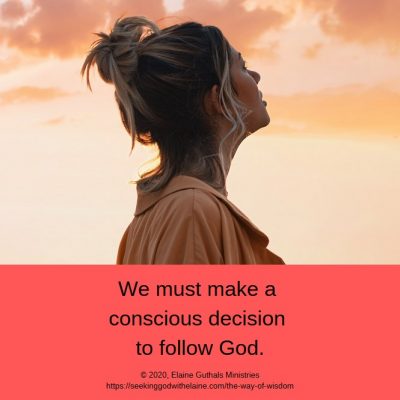
  • What Is the Lord’s Supper?

    The Lord’s Supper is a divine ordinance, but what does that mean? This devotion looks at the elements of the Lord’s Supper and why it is important to be obedience to Jesus’ instruction to continue the observance.

    Nuggets

    • The bread symbolizes Jesus’ body.
    • Jesus’ blood, represented in the cup, had to be spilled.
    • The Lord’s Supper – and baptism – were symbols of God’s new covenant with His people.

    Devotions in the What I Believe series

    Devotions in the Divine Ordinance category

    Flowers with title What Is the Lord's Supper

    I’ve always liked the story around the Lord’s Supper. “On the night He was betrayed …” “Do this in remembrance of Me.”

    Jesus wanted to leave a lasting observance of what He did for us. We can reflect on the meaning.

    Why is it important that we observe the Lord’s Supper? It is an ordinance.

    Let’s Put It into Context

    We are looking at divine ordinances. Ordinances are an expression of the disciples’ obedience.

    The second ordinance we will consider is the Lord’s Supper. The Holman Bible Dictionary defines the Lord’s Supper “a memorial celebrated by the early church to signify Jesus’ sacrificial death for humankind’s sin.”

    The first Lord’s Supper was part of the Passover meal. God instituted the Passover festival. It was the oldest festival observed by the Jewish people. Jesus and His disciples, being good Jewish men, also observed it.

    Passover preceded the Feast of Unleavened Bread, which commemorated Israel’s escape from their bondage in Egypt.

    The Passover, with the Seder meal, was instituted in Exodus 12. They celebrated it the night before their exodus from Egypt. The Israelites are also commanded to observe the meal in Numbers 9 and Deuteronomy 16.

    The Passover meal ends with a “same bat-time” but a different “bat-channel.” It was always their hope that they would be celebrating Passover next year in Jerusalem. This is significant because that would mean the Messiah had come.

    To read a related devotion, click the button below.

    The Symbol of the Bread

    “As they were eating, Jesus took bread, blessed and broke it, gave it to the disciples, and said, ‘Take and eat it; this is my body’” (Mt. 26: 26 CSB)

    We talked about the symbolism of baptism. The Lord’s Supper also has symbolism.

    The first symbol is the bread. We’ve already talked about that a Jesus was the Bread of Life. “‘I am the bread of life,’ Jesus told them. ‘No one who comes to me will ever be hungry, and no one who believes in me will ever be thirsty again’” (Jn. 6: 35 CSB).

    To read a related devotion, click the button below.

    The bread symbolizes Jesus’ body. The brokenness is important as it was for us that He was broken.

    Irons noted that the focus was to be on Jesus “… the glorious, perfect, complete God-Man.” What is symbolized here is His being the way to salvation.

    Remember, this was after they ate the Passover meal. Lamb, known as the Pascal Lamb, was part of the meal. The lamb was considered a sacrifice for the meal. It was to symbolize the coming Messiah.

    Jesus was also known as the Lamb because He is the Messiah. He was the Sacrifice for our sins.

    When we think of eating, we think of the food nourishing our bodies. It sustains our lives. It not only keeps us healthy but also restores our health. (Can we say chicken soup?)

    Jesus gives us eternal life when we believe in Him. He has restored our health — our relationship with God. Then we remain healthy as we abide in Him.

    For the Passover meal, the Israelites were to eat the whole lamb. That explains what our attitude as a disciple should be — all committed to Jesus. We shouldn’t be a nominal disciple.

    To read a related devotion, click the button below.

    We have to be totally committed to imitating Jesus. That means we try to do the do’s and not do the don’ts.

    Jesus

    The Symbol of the Cup

    “Then he took a cup, and after giving thanks, he gave it to them and said, ‘Drink from it, all of you’” (Mt. 26: 27 CSB)

    When we eat the food, we generally have a drink to go along with it.

    The second symbol in the Lord’s Supper is the cup. It symbolizes the blood shed by Jesus.

    Foster brought up how the juice is extracted from the grapes. The first thing that popped into my mind was a big tub with people jumping in to stomp the grapes. Even if a machine is used, force is utilized.

    Jesus’ blood had to be spilt. It is through His blood that we gained atonement.

    That blood was spilt when the soldiers forcibly drove the nails into Jesus’ hands and feet. They forcibly placed a crown of thorns on His head. Much force was used when the soldiers whipped Jesus.

    Glossary

    The New Covenant

    “For this is my blood of the covenant, which is poured out for many for the forgiveness of sins” (Mt. 26: 28 CSB)

    The Lord’s Supper – and baptism – were symbols of God’s new covenant with His people. It was no longer just for the Jews. Gentiles could be covenant people, also.

    It was no longer based on what God’s people did or didn’t do. It was based on what Jesus did for us.

    The only thing we were required to do is ABCD.

    Glossary

    The ABCDs of Salvation

    If you have not become a believer in Christ, please read through the
    Plan of Salvation and prayerfully consider what God is asking you to do.

    A – admit our sins
    B – believe His Son Jesus is our Redeemer
    C – confess God as Sovereign Lord

    D – demonstrate that commitment by making any changes needed in our lives to
    live the way in which God has called us

    The Disciple’s Job Description

    Making the Connections

    Foster pointed out the simplicity of Jesus’ instructions. “… Take and eat … Drink …” (Mt. 26: 26-27 CSB). Jesus isn’t going to give us instructions without making sure we understand them. Yeah, it may take us a little bit to figure it out.

    But what are we doing when we are trying to figure it out? We are growing closer to Him. We are learning to be the disciples Jesus wants us to be.

    Foster goes on to further identify the purpose of the Lord’s Supper. He wrote, “We are taught that our eating the bread and drinking the cup is a confession of Christ, a pledge to serve our Lord, and an act of fellowship as Christians. But it is, above all, a reception of Christ by faith. Our very act of taking the bread symbolizes the way in which we are to be benefited by Christ. We can not have Christ except as we open our hearts to Him.”

    Making the Connections to Self-Discipline

    We’ve been asking these questions all along so we can prepare for when we are asked. Here is the worksheet again. What would you say about observing the Lord’s Supper?

    • What does the Scriptures say?
    • What do I believe?
    • Why do I believe the same/differently than the Scriptures?
    • What are the talking points when witnessing to a non-believer?

    Related Links

    I have created a worksheet of the questions above. Click on the button below to access it.

    How Do We Apply This?

    Jesus gave us no timeline as to when to observe the Lord’s Supper. He didn’t say daily, weekly, quarterly, or yearly. He just said “… do this in remembrance of me
    (Lk. 22: 19 NIV).

    Well, we could sit there and look at the elements. Maybe we could paint a picture of them.

    If we don’t partake do the Lord’s Supper, it does us no good.

    But we aren’t talking a nice evening meal with the significant other or BFFs. We are talking a revenant ceremony to remember a Savior.

    Jesus said do it. We need to be obedient and do it.

    I like when Foster said that we have to open our hearts to Jesus. Yes, partake of the Lord’s Supper as a remembrance of Him. It should also be as a confirmation of who we are in Him and a commitment to follow Him wherever He calls us. It should be a plea to fix what is wrong in us.

    We have to prepare our hearts and minds to let Jesus in. We can’t close Him out and expect it to be more than just a ceremony.

    We should use this time to evaluate where we are in our journey. The Holy Spirit will nudge us as to what we need to work on. Then, we need the self-discipline to follow His lead.

    Father. We are visual people. You gave us a way to see and experience Jesus’ death. Lord, it takes our concentration to focus on You. Help us to prepare ourselves for the Supper. Help us to use the time to evaluate our lives to determine areas that need our work through Your guidance. Use this time to help us grow closer to You. Amen.

    What do you think?

    Leave me a comment below (about this or anything else) or head over to my Facebook group for some interactive discussion.

    If you don’t understand something and would like further clarification, please contact me.

    If you have not signed up for the email daily or weekly providing the link to the devotions and the newsletter, do so below.

    If God has used this devotion to speak with you, consider sharing it on social media.

  • Is Baptism a Part of Salvation?

    Some believe that baptism is a part of salvation while some don’t. What would you say when you are witnessing? This devotion looks at the role the ordinance of baptism plays in salvation.

    Nuggets

    • First, we have to repent.
    • Confession with our mouth is one thing; baptism is confession with the rest of us.
    • Jesus cleanses us from our sin, and baptism cleanses us from our guilt of our sin.
    • Belief, repentance, and obedience to the gospel cannot be separated – baptism is obedience.

    Devotions in the What I Believe series

    Devotions in the Divine Ordinance category

    Is Baptism a Part of Salvation?
    The Lord’s Supper

    Flowers with title Is Baptism a Part of Salvation?

    Some believe that baptism is a part of salvation. I have always been taught that it isn’t. The question boils down to whether baptism is a part of salvation or act of obedience.

    The goal of this series is to dig in to find the backup for what we believe. When we witness, “this is what I’ve always been taught” doesn’t go over as well as “here are the scripture references that I used to make an informed decision.”

    And face it. Bible verses can seem like they are contradictory. So what are we to believe?

    Let’s Put It into Context #1

    We are looking at divine ordinances. Ordinances are an expression of the disciples’ obedience.

    One of those ordinances is baptism. Baptism, according to the Holman Bible Dictionary, means “the immersion or dipping of a believer in water symbolizing the complete renewal and change in the believer’s life and testifying to the death, burial, and resurrection of Jesus Christ as the way of salvation.”

    Let’s Put It into Context #2

    Baptism is the sign of the acceptance of the New Testament covenant just as circumcision was sign of the acceptance the Old Testament covenant. Covenant circumcision was the physical sign the Israelites agreed with the covenant. Circumcision of the heart is where God changes our hearts.

    To read a related devotion, click the appropriate button below.

    Just as circumcision was a representation of cutting away sins, baptism is a representation of washing away the guilt of sins. Additionally, it is a representation of dying with Christ, being buried, and rising again.

    Buchanan pointed out that both actions occurred at the beginning of the covenant. He felt it was a form of a pledge of faithfulness to the covenant.

    However, some believe that regeneration doesn’t occur until baptism occurs. Regeneration is the change in us that God brings about when we go from being spiritually dead to spiritually alive. This makes baptism an element of salvation.

    Repent and Be Baptized

    “Peter replied, ‘Repent and be baptized, each of you, in the name of Jesus Christ for the forgiveness of your sins, and you will receive the gift of the Holy Spirit’” (Ac. 2: 38 CSB)

    When Peter gave his instructions on what his audience must do to be saved (Ac. 2: 37), his first instruction was to repent. We’ve said that we need to not only repentant because we have broken God’s laws and commandments, but we must also vow to change ourselves.

    Changing ourselves isn’t just keeping the laws and commandments in the future. We must change our character.

    We must change our belief system. We must now accept that Jesus is God’s Son. We must accept that He died to pay the penalty for our sins.

    I know. That is a lot of we musts in a row. But that isn’t optional. It is mandatory for salvation.

    Grammatically, the argument could be made that the conjunction and makes baptism mandatory along with repentance. It indicates it must be taken jointly. Mathematics and logic says all factors must be true.

    Is that the case with baptism and salvation? Is baptism a part of salvation?

    WeMust

    Part of Salvation

    Brownrigg argued that baptism is necessary for salvation. He felt that the cleansing of the baptism was a necessary part of salvation. Repentance doesn’t cleanse us, in his estimation; baptism does. Baptism allowed regeneration because of our contact with living water.

    Not Part of Salvation

    Abbott argued that baptism isn’t forced. He wrote, “Baptism is not a regenerating ordinance, but a sign and symbol of repentance, and a public confession of Christ.”

    We know that Romans 10: 9 says, “If you confess with your mouth, ‘Jesus is Lord,’ and believe in your heart that God raised him from the dead, you will be saved” (CSB). We can’t keep our conversion to ourselves.

    Confession with our mouth is one thing. Baptism is confession with the rest of us. This is how we articulate our faith for others to see. Confession isn’t salvation.

    Baptism Saves Us

    “Baptism, which corresponds to this, now saves you (not as the removal of dirt from the body, but the pledge of a good conscience toward God) through the resurrection of Jesus Christ” (I Pet. 3: 21 CSB)

    Part of Salvation

    If you read the verse as is, it does sorta read that baptism saves us. “Baptism, … now saves you … through the resurrection of Jesus Christ” (I Pet. 3: 21 CSB)

    However, we can’t be selective about what we read, and we can’t take it out of context.

    Not Part of Salvation

    Okay. The this in “… which corresponds to this …” (I Pet. 3: 21 CSB) refers back to First Peter 3: 18-20.

    “For Christ also suffered for sins once for all, the righteous for the unrighteous, that he might bring you to God. He was put to death in the flesh but made alive by the Spirit, in which he also went and made proclamation to the spirits in prison who in the past were disobedient, when God patiently waited in the days of Noah while the ark was being prepared. In it a few — that is, eight people — were saved through water.

    Arnot pointed out that Noah and his family were saved from physical death, not spiritual death. But that doesn’t take in the purpose of the flood. God could have taken an easier road to save them than floating them in a boat.

    But God wasn’t just saving Noah’s family. He was saving His world from sin.

    Arnot said that baptism is “… the cleansing of the conscience from its guilt, so that when God makes inquisition for blood, He finds no spot or wrinkle there; so that the conscience, when put to the question, answers peace to the challenge of the Judge.”

    Ooo, wow. Think of it this way. Jesus cleanses us from our sin, and baptism cleanses us from our guilt of our sin.

    We can’t ignore the “now saves you (not as the removal of dirt from the body, but the pledge of a good conscience toward God) …” (I Pet. 3: 21 CSB) part. The removal of dirt is removal of sin. Baptism doesn’t remove sin.

    The pledge of a good conscience toward God was, using Preece’s analogy, like a couple reciting their wedding vows. They have to say I do. The rings they exchange are the visual confirmation of those vows.

    We have to accept the gift of salvation. Baptism is the visual conformation of that acceptance. Preece wrote, “The act of baptism is an open public renunciation of sin, of sinful pleasures, of the follies of the world.”

    Saved and Condemned

    “Whoever believes and is baptized will be saved, but whoever does not believe will be condemned” (Mk. 16: 16 CSB)

    Clarke made a good point. He argued that belief, repentance, and obedience to the gospel cannot be separated. Baptism is obedience.

    Part of Salvation

    Clarke also argued that “He who believes the doctrine of the gospel when preached to him, and by baptism enters into an obligation to live suitably to that belief, and verifies that obligation by his practice, in a life of virtue, righteousness, and charity — shall be saved ….”

    That brings up another issue. Can we lose our salvation if we done live suitably to that belief? That is for another devotion.

    Not Part of Salvation

    Read the verse again. It does say “Whoever believes and is baptized will be saved …” (Mk. 16: 16 CSB emphasis added).

    But then it says “… but whoever does not believe will be condemned” (Mk. 16: 16 CSB emphasis added). It doesn’t say we will be condemned if we aren’t baptized.

    Condemned means, as it applies here, that non-believers in the final judgment will be found guilty because they have not admitted their sins, have not believed Jesus is their Savior and Redeemer, and have not confessed God as Sovereign Lord.

    Making the Connections

    So, let’s do a recap.

    Part of Salvation

    • Baptism conveys spiritual grace
    • The cleansing of the baptism is a necessary part of salvation.
    • If we selectively read First Peter 3: 21 and take it out of context, it does sorta read that baptism saves us.
    • Belief, repentance, and obedience to the gospel cannot be separated. Baptism is obedience.
    • Through baptism we agree to live a redeemed life.

    Not Part of Salvation

    • Baptism isn’t mandatory.
    • It is a symbol.
    • Baptism doesn’t remove sin.
    • Jesus cleanses us from our sin, and baptism cleanses us from our guilt of sin.
    • Baptism is the visual conformation of salvation.
    • We will not be condemned if we aren’t baptized.

    I don’t see baptism as a part of salvation. It can’t be. Repentant dude didn’t get a pass to get off the cross, be baptized, and get put back on it. Yet, Jesus told him, “… Truly I tell you, today you will be with me in paradise.” (Lk. 23: 43 NLT).

    If repentant dude wasn’t baptized and he was going with Jesus to wherever paradise is, it isn’t a requirement for salvation.

    Making the Connections to Self-Discipline

    I see it more as an act of obedience. If it is obedience, we can exercise self-discipline.

    We’ve been asking these questions all along so we can prepare for when we are asked. Here is the worksheet again. What would you say about baptism being a part of salvation?

    • What does the Scriptures say?
    • What do I believe?
    • Why do I believe the same/differently than the Scriptures?
    • What are the talking points when witnessing to a non-believer?

    Related Links

    I have created a worksheet of the questions above. Click on the button below to access it.

    How Do We Apply This?

    If we haven’t ABCDed, we need to follow God’s promptings.

    The ABCDs of Salvation

    If you have not become a believer in Christ, please read through the
    Plan of Salvation and prayerfully consider what God is asking you to do.

    A – admit our sins
    B – believe His Son Jesus is our Redeemer
    C – confess God as Sovereign Lord

    D – demonstrate that commitment by making any changes needed in our lives to
    live the way in which God has called us

    The Disciple’s Job Description

    If we have ABCDed but not been baptized, we need to find a church of like-minded believers so we can. We want to be obedient.

    Is something about baptism scaring you? Oh, it did me. Buchanan made a valid point that neither covenant circumcision or circumcision of the heart are of value without grace.

    God will give us His grace so that we can be obedient to Him. He’s got us.

    Father. We thank You for salvation. Baptism is one of the ordinances so that we can show our faith in You. Help us to faithfully follow You. Amen.

    What do you think?

    Leave me a comment below (about this or anything else) or head over to my Facebook group for some interactive discussion.

    If you don’t understand something and would like further clarification, please contact me.

    If you have not signed up for the email daily or weekly providing the link to the devotions and the newsletter, do so below.

    If God has used this devotion to speak with you, consider sharing it on social media.

  • What Is Baptism?

    Baptism is a divine ordinance, but what does that mean? What can we learn from different stories in the Scriptures about baptism?

    Nuggets

    • Jesus was baptized so He wouldn’t be disobedient.
    • The story of the eunuch tells us that repentance can cover any sin.
    • The jailor believed immediately — before the sermon — and was baptized immediately, along with his family when they believed.
    • Paul believed and responded, but the focus of his conversion story was on the reality that Jesus died, rose again, and comes to us individually through the Holy Spirit.
    • John’s baptism was good because it was based on repentance, but Jesus’ baptism was better as it is based on salvation.
    Flowers with title What Is Baptism?

    This year, we are looking at self-discipline. We are using Vincent’s The Lesson of Ripeness sermon to look at the need to grow in our relationship with God. We morphed learning enough to be a teacher into determining some areas we need to grow so we can be mature disciples.

    Resource

    We have been looking at solidifying what we believe. When we witness, we need to be prepared to explain what we believe and why we believe it. We looked at the Scriptures, the Trinity (God, Jesus, and the Holy Spirit), man, salvation, grace and the church. Now, we are going to look at divine ordinances.

    Devotions in the What I Believe series

    What Is Baptism?
    Is Baptism a Part of Salvation?
    The Lord’s Supper

    Baptism and the Lord’s Supper (or communion) were constituted so that we can show our faith. They are called divine ordinances or sacraments.

    Let’s Put It into Context

    The Holman Bible Dictionary noted that neither of the terms ordinances or sacraments can be found in the Scriptures. These are the terms we use to describe what baptism and the Lord’s Supper/communion are.

    There is a difference between ordinances and sacraments. Sacraments express the belief that God’s grace is imparted through the observance. Ordinances, on the other hand, are an expression of the disciples’ obedience.

    Baptism, according to the Holman Bible Dictionary, means “the immersion or dipping of a believer in water symbolizing the complete renewal and change in the believer’s life and testifying to the death, burial, and resurrection of Jesus Christ as the way of salvation.”

    Scriptures tell us the stories of several people being baptized. Let’s take a look.

    Jesus

    “And when Jesus was baptized, immediately he went up from the water, and behold, the heavens were opened to him, and he saw the Spirit of God descending like a dove and coming to rest on him” (Mt. 3: 16 ESV)

    I have read a couple places where it says that Jesus instituted baptism. I scratch my head on that one.

    John was baptizing people before Jesus showed up at his river step. “Then people from Jerusalem, all Judea, and all the vicinity of the Jordan were going out to him, and they were baptized by him in the Jordan River, confessing their sins” (Mt. 3: 5-6 CSB).

    Maybe it is believed Jesus instituted it because John was the forerunner of Jesus. If there would have been no Jesus, there would have been no John??? No John means no baptism.

    We’ve already talked about how Jesus honored John the Baptist and his ministry by coming to him for baptism. The 100% God part of Him did not need baptism; the 100% man part of Him did because, as a human, His relationship with God was broken.

    To read a related devotion, click the button below.

    John taught repentance. He taught that baptism showed that repentance and submission to God.

    Jesus didn’t have anything to repent, but being disobedient would have given Him something of which to repent. So, He went to John for baptism.

    The Eunuch

    “And as they were going along the road they came to some water, and the eunuch said, ‘See, here is water! What prevents me from being baptized?’” (Ac. 8: 36 ESV)

    I’ve always liked the story of Philip and the eunuch. They both were dialed into what the Holy Spirit was telling them.

    Look at the eunuch. “… There was an Ethiopian man, a eunuch and high official of Candace, queen of the Ethiopians, who was in charge of her entire treasury. He had come to worship in Jerusalem and was sitting in his chariot on his way home, reading the prophet Isaiah aloud” (Ac. 8: 27-28 CSB).

    This man was a high official in the government. Still, he was searching for God. Jones mentioned that he might have been a descendant of Ham (Noah’s boy).

    The eunuch was searching enough that he went on a road trip to find God. He came to Jerusalem to worship.

    We don’t know how much was found by the eunuch at the temple in Jerusalem. We know he found a scroll with the writings of Isaiah on it.

    Just reading the Scriptures wasn’t enough. It didn’t bring understanding.

    Philip brought understanding when he explained and applied what Isaiah said. The eunuch must have gotten it.

    I think it is interesting that it went straight from the sermon to the baptism. It does not mention the repentance part at all.

    Oh, it has to have been there. “And Peter said to them, ‘Repent and be baptized every one of you in the name of Jesus Christ for the forgiveness of your sins, and you will receive the gift of the Holy Spirit’” (Ac. 2: 38 ESV). Otherwise, Philip wouldn’t have baptized him immediately.

    Philippian Jailor

    “And he took them the same hour of the night and washed their wounds; and he was baptized at once, he and all his family” (Ac. 16: 33 ESV)

    Paul and Silas were in prison — again. They were up at midnight singing. God answered with an earthquake so powerful that it opened the prison doors and loosened the chains.

    Everyone could have escaped.

    The jailor thought they had. If they had, that would cost him his life according to Roman law.

    Paul stopped him. The jailor asked him one simple question: “… ‘Sirs, what must I do to be saved?’” (Ac. 16: 30 CSB).

    I know. Had the jailor been convicted by the singing and prayers? Was it Paul and Silas’ demeanor in adversity? Was God’s display of power enough to convert the jailor? It appears to be.

    The sermon came later. “And they spoke the word of the Lord to him along with everyone in his house” (Ac. 16: 32 CSB).

    The jailor believed immediately — before the sermon. He was baptized immediately, along with his family.

    It is interesting that just a couple verses back, it said the same thing. “A God-fearing woman named Lydia, a dealer in purple cloth from the city of Thyatira, was listening. The Lord opened her heart to respond to what Paul was saying. After she and her household were baptized …” (Ac. 16: 14-15 CSB).

    Spurgeon addressed the statement that the whole household was converted. He wrote, “If we are to have household conversion there must be a household hearing of the Word.”

    Parents can’t make the decision for children to be saved. We each must make that decision on our own.

    Spurgeon said something else that interested me that tied in with a conversion my Springfield mom and I had the other day. “No minister has any right to refuse to baptize any person who professes faith in Jesus Christ, unless there be some glaring fact to cast doubt upon the candidate’s sincerity.”

    Paul

    “And immediately something like scales fell from his eyes, and he regained his sight. Then he rose and was baptized” (Ac. 9: 18 ESV)

    Are you like me? You’ve read the story of Paul’s conversion many times. Yet, we focus on the Hollywood splash of the road meeting and miss the “… then he rose and was baptized” (Ac. 9: 18 ESV) part.

    No, Paul didn’t write this. Luke did. But I think Paul would have been pleased.

    That Paul believed and responded is important. That Jesus died, rose again, and comes to us individually through the Holy Spirit would have been most important to Paul.

    I think Paul would have been pleased with the focus.

    Twelve of John’s Disciples

    “On hearing this, they were baptized in the name of the Lord Jesus” (Ac. 19: 5 ESV)

    When Paul went to Ephesus, he found some disciples that had not received the Holy Spirit. That was because they has been baptized into John’s baptism (Ac. 19: 3).

    Now John’s baptism was good because it was based on repentance. Jesus’ baptism was better. It is based on salvation.

    Just saying we repent of our sins isn’t all we need to do. We need to be obedient and show the world we have made a profession of faith.

    But Jesus’ baptism also provided us with the Holy Spirit. New speculated why they had not yet received the Holy Spirit.

    • Lack of knowledge.
    • Failure in prayer.
    • Lack of consecration to Christ.

    We have to pray to receive the Holy Spirit. New explained it this way. “Christ Himself received it thus — when being baptized He was praying. And He said, ‘Your Heavenly Father will give the Holy Spirit to them that ask Him.’”

    Don’t worry. I had to look up consecration. The Holman Bible Dictionary defines consecration as it “refers to persons or things being separated to or belonging to God. They are holy or sacred. They are set apart for the service of God.”

    Making the Connections

    • Jesus was baptized so He wouldn’t be disobedient.
    • Even though mutilation of the body to make them eunuchs were forbidden in Israel, the eunuch himself was still able to repent of his sins and be baptized. That tells us that repentance can cover any sin.
    • The jailor believed immediately — before the sermon — and was baptized immediately, along with his family when they believed.
    • Paul believed and responded, but the focus of his conversion story was on the reality that Jesus died, rose again, and comes to us individually through the Holy Spirit.
    • John’s baptism was good because it was based on repentance, but Jesus’ baptism was better as it is based on salvation.

    Baptism is the outward expression of our hearts being changed. But it is also a ceremony to show a transformation.

    heart

    Let’s look at it this way. It is finals week here. The graduation ceremony is Friday night.

    Before the ceremony, they are students. After the ceremony — and after successfully finding employment — they are workers.

    The graduation ceremony is an acknowledgement of that change.

    Baptism is an acknowledgment that we are no longer a slave to sin. Instead, we have become holy and regenerated because we have admitted our sins, believed in Jesus as our Savior and Redeemer, and confessed God as Sovereign Lord.

    Making the Connections to Self-Discipline

    We’ve been asking these questions all along so we can prepare for when we are asked. Here is the worksheet again. What would you say about being perfect?

    • What does the Scriptures say?
    • What do I believe?
    • Why do I believe the same/differently than the Scriptures?
    • What are the talking points when witnessing to a non-believer?

    Related Links

    I have created a worksheet of the questions above. Click on the button below to access it.

    How Do We Apply This?

    Martin wrote that three things are needed.

    • Assent of mind
    • Consent of the heart
    • Response of the will

    Baptism has to come after salvation. We work things out in our minds until we get to the point our hearts say God is Sovereign Lord.

    Then we have to respond. We have to make a public profession. Baptism is one way we do that.

    Baptism is a important way to show that we are obedient. It is a promise that we will follow our God.

    Father. You ask that we submit to baptism as a public profession of our faith. We pray that we are obedient in all that You ask us to do. Amen.

    What do you think?

    Leave me a comment below (about this or anything else) or head over to my Facebook group for some interactive discussion.

    If you don’t understand something and would like further clarification, please contact me.

    If you have not signed up for the email daily or weekly providing the link to the devotions and the newsletter, do so below.

    If God has used this devotion to speak with you, consider sharing it on social media.