Category: Obedience

  • Hardening of the Hearts

    When we think of going from a wrong heart to a right heart, we start out with a wrong heart. This daily devotional looks at what a hard heart means and how it gets that way.

    Nuggets

    • A heart of stone is a soul without faith on God.
    • As we make our choices to rebel against God, our hearts gradually grow harder.
    • What some don’t recognize is that God has power and dominion over our hearts.

    To read devotions in the At the Heart Level theme, click the button below.

    Devotions in the From a Wrong Heart to a Right Heart series

    We have been saying that character change has to get down to the heart level. That is the original source of our relationships with God.

    But what does that really mean?

    “And I will give you a new heart, and a new spirit I will put within you. And I will remove the heart of stone from your flesh and give you a heart of flesh” (Ezek. 36: 26 ESV)

    This verse is going to be the foundation of this series. We are just going to take it in a different order.

    I know. I like going off the established path every once in a while.

    Ezekiel gave us in a nutshell what getting it to heart level is all about. Yes, this happens at salvation. However, it also happens daily.

    Let’s start with the heart of stone. We have to get character down to the heart level because the heart is the original source of sin. With sin in our hearts, they became hardened.

    Let’s Put It into Context #1

    Here is a running list of what we’ve discussed previously.

    What Is a Hard Heart?

    “… And I will remove the heart of stone from your flesh …” (Ezek. 36: 26 ESV)

    A heart of stone is a soul without faith on God.

    Our soul is our spiritual part that is immortal. Because the soul is eternal, it continues to think and feel.

    Because the heart of stone does not believe in God, it is not a regenerated heart. Regeneration is being changed from spiritually dead to spiritually alive and the internal requickening in us that God brings about through the work of the Holy Spirit.

    • Spiritual death is the separation from God that occurred as a consequence of Adam and Eve’s original sin.
    • The spiritually alive are those who have ABCDed, so they are no longer separated from God.

    The ABCDs of Salvation

    If you have not become a believer in Christ, please read through the
    Plan of Salvation and prayerfully consider what God is asking you to do.

    A – admit our sins
    B – believe His Son Jesus is our Redeemer
    C – confess God as Sovereign Lord

    D – demonstrate that commitment by making any changes needed in our lives to
    live the way in which God has called us

    The Disciple’s Job Description

    Glossary

    Lewis reminded us that, just as stones are of differing weights, people have a different level of hardness toward God. But the hardness is an element in all of them. That is important for us to take into consideration when witnessing to others.

    Resource

    Another element that differs is people’s feelings and moral capacity. A hardened heart does not mean that they are horrible people to others. It only means that their hearts are hardened toward God.

    How Do We Get a Hard Heart?

    “And Jesus, aware of this, said to them, ‘Why are you discussing the fact that you have no bread? Do you not yet perceive or understand? Are your hearts hardened? Having eyes do you not see, and having ears do you not hear? And do you not remember?” (Mk. 8:17-18 ESV)

    As we make our choices to rebel against God, our hearts gradually grow harder.

    Our hearts are hardened by our inability to focus on Jesus and His provision for us. These choices may not seem like a rebellion to us because, we feel, they are not conscious decisions to rebel.

    However, they are, many times, based on our not understanding what God is trying to tell us. Here, it was the disciples. Even they were having trouble.

    Usually when we read the eyes see, ears hear bit, it is saying we do have the sensory organs, but we don’t use them. That is when unbelief is clouding our perceptions of what Jesus was saying. It is hardening our hearts.

    I see two issues. They were having trouble remembering Jesus’ past provision. They had forgotten all about the loaves and the fishes, the thousands fed, and the bunches left over.

    The real issue was that was happening because they weren’t focusing on Jesus. They were focusing on this world.

    Yes, it is easy to do that. Satan makes it as easy as he can.

    No, we shouldn’t do it. We need to focus on God.

    When we are focusing on this world, we are hardening our hearts toward God. It is usually a gradual hardening, but it can also, at times, seem almost instantaneous.

    When we are focusing on this world, we are hardening our hearts toward God.

    The writer of Hebrews likened it to a rebellion. “Do not harden your hearts as in the rebellion, on the day of testing in the wilderness” (Heb. 3: 8 ESV).

    Rebellion happens when we harden our hearts toward God. We definitely aren’t listening to His words.

    God’s Power over Our Hearts

    “Create in me a clean heart, O God, and renew a right spirit within me” (Ps. 51: 10 ESV)

    What some don’t recognize is that God has power and dominion over our hearts.

    M’Culloch detailed how God has power over our hearts. Some he noted are

    • God equips our hearts to perform the tasks to which He calls us.
    • He is in control of our passions.
    • He is our Judge.
    • He can change our hearts through regeneration and sanctification.
    • He calls us to obey His laws and commandments, which is pleasing to Him.

    Resource

    Sanctification is the transformation of mind, body, and soul, which begins with regeneration, gradually changes our nature and morals through the promptings of the Holy Spirit, and ends with perfected state of spiritual wholeness or completeness.

    • Perfection means we reach a state of maturity because the combination of the spiritual graces form, when all are present, spiritual wholeness or completeness — holy, sanctified, and righteous.
      • Spiritual graces are worldly morals that have been submitted to God to further His kingdom instead of enhancing this world.
      • Holy means to be set apart — because of our devotion to God — to become perfect, and morally pure while possessing all virtues.
        • Pure means not being sinful or having the stain of sin.
        • Virtues are standards of moral excellence.
      • Sanctified means to be set free from sin.
      • Righteous means we are free from sin because we are following God’s moral laws.

    Glossary

    God has the power to regenerate a hard heart. Just think of it. He changes their rebelliousness to worship. He cuts out the sinful habits. He persists until our resistance is worn down.

    hardening-of-the-heartsPin1

    Making the Connections

    We have to keep in mind that mankind’s souls were not always hardened toward God. Adam and Eve’s souls were not originally hardened. They were originally made in God’s image.

    Glossary

    That changed when sin entered into the world. It was Adam and Eve’s choice to sin. No one forced them to do that.

    How Do We Apply This?

    A stone, once hardened, can be softened again. This, however, is only done when it comes into contact with other appropriate elements.

    Only the love of Jesus can soften even the hardest of hearts. We have to put our faith and trust in Jesus as our Savior and Redeemer.

    Only the love of Jesus can soften even the hardest of hearts.

    Father God. Forgive us when we focus on this world instead of You. We want to always acknowledge the power You have over our hearts. We look to You for provision in whatever we need. We remember Your loving kindness in the past and wait to be shown that again. Amen.

    What do you think?

    Leave me a comment below (about this or anything else) or head over to my Facebook group for some interactive discussion.

    If you don’t understand something and would like further clarification, please contact me.

    If you have not signed up for the email daily or weekly providing the link to the devotions and the newsletter, do so below.

    If God has used this devotion to speak with you, consider sharing it on social media.

  • The One Who Fears God Does Have Heavenly Characteristics

    Disciples are called to have God’s character. We have been looking at what that doesn’t mean. This daily devotional looks at what that does mean.

    Nuggets

    • Wisdom only comes from God and mirrors His characteristics.
    • A disciple of Christ should have God’s compassion.
    • God’s love is for all – and so should ours be.

    To read devotions in the Redo for Godliness series, click the appropriate button below.

    Devotions in The Character of One Who Fears God series

    Our goal in our Redo for Godliness is to navigate the Sanctification Road so that we possess the characteristics of God. Having God’s character is how we achieve perfection.

    We’re looking at Hannam’s The Happiness of Possessing a Conscience Void of Offence (sic). I liked this sermon because I think this is going to be a different way of looking at character.

    Resource

    Let’s Put It into Context #1

    Here is a running list of what we’ve discussed previously.

    Let’s Put It into Context #2

    We’ve talked about the fear of the Lord many times. In the Old Testament, the fear of the Lord means awe, reverence and love, not terror.

    Glossary

    It changed in the New Testament. Godliness, equated with the Old Testament term fear of the Lord, is reverence in thought, feeling, and conduct that is promoted by walking in His Spirit and obeying God’s laws and commandments to produce a moral likeness of God. 

    The moral likeness is our character. Our character is our thoughts, feelings, and actions all added together.

    In other words, all of us is to be like God.

    Heavenly Characteristics

    “But the wisdom from above is first pure, then peaceable, gentle, open to reason, full of mercy and good fruits, impartial and sincere” (Jas. 3: 17 ESV)

    Wisdom only comes from God and mirrors His characteristics.

    Hannam wrote, “He hath respect to every part of his duty, toward God and man (James 3:17), and this, not at certain seasons only, but always.”

    Resource

    We have recently talked a lot about wisdom. James took a slightly different track than we have in the past.

    Wisdom is an enlightened acceptance of God’s principles, gained through knowledge, discernment, and good sense, that is put into practice through salvation, increasing our goodness and virtue.

    • Discernment means we can evaluate the situation and recognize right from wrong. 
    • Salvation is the gift of life through the deliverance from condemnation and sin to acceptance and holiness and changes us from being spiritually dead to spiritually alive.
      • Sins are actions by humans that disobey God and break one of His reasonable, holy, and righteous laws and commandments, goes against a purpose He has for us, or follows Satan’s promptings.
      • Holiness is the transcendent excellence of His nature that includes elements of purity, dedication, and commitment that lead to being set apart. Purity means possessing God’s moral character, having eliminated the stain of sin.
      • Spiritual death is the spiritual separation from God that occurred as a consequence of Adam and Eve’s original sin. The spiritually alive are those who have ABCDed, so they are no longer separated from God.
    • God’s goodness is His holy, pure, and righteous behavior.
      • Holy means to be set apart, perfect, and morally pure while possessing all virtues.
      • Pure means not being sinful or having the stain of sin.
      • Righteous means we are free from sin because we are following God’s moral laws.
    • Virtues are standards of moral excellence.

    Lupton said that wisdom is made up of judgment, circumspection, and comprehension that is put into practice in order to accomplish our goals.

    Resource

    Pure

    James said that the wisdom is pure. Pure means not being sinful or having the stain of sin.

    What we are striving for is purity. Purity means possessing God’s moral character, having eliminated the stain of sin.

    This element of purity differentiates God’s wisdom from worldly wisdom. This higher wisdom is only higher because it is focused on God.

    Obtaining God’s wisdom is what building a relationship with Him is all about. We seek the purity so that we are forgiven of our sins.

    ObtainingGodsWisdom

    Peaceable

    The product of the pure wisdom is that it is peaceable. Deems expanded on that by saying, “Men that have no false and wicked purposes cannot break the peace.”

    Resource

    If we are pure, there is no dissension to destroy the peace. If we are sinful, that breeds chaos.

    One of Paul’s favorite themes is peace. He knows that the church family should be unified. Unity is an inward, spiritual feeling of harmony found through Christ that manifests itself in outward actions that foster the spread of the gospel.

    Open to Reason

    We are going to look at reasonableness before we look at gentleness.

    I really like how Deems explained how we are reasonable. He wrote, “It is not violent in its maintenance of its own convictions; it is not stubborn, unwilling to hear what may be said on the other side. There are men who deem themselves wise, who storm out what they believe to be the truth. Real wisdom does not so. Where there is a sober conviction of the right, and a firm faith in the final triumph of the right, all that a man has to do is to speak the truth in love.”

    There are so many times I just want to get off social media. People storm out with the conviction that they are right. They feel they are compassionate and tolerant.

    Until they come across a disciple. Then they turn a shade of mean.

    They think their worldly wisdom justifies this behavior.

    Deems said not so. Real wisdom doesn’t do that. Saying something in a loud voice — even so the majority of people believe what you say — does not make it right or true wisdom.

    Instead, wisdom follows a sober countenance based on faith. Sober is a character trait distinguished by self-control, genuineness, and sound moral judgment.

    Glossary

    Gentle

    Too many people today believe that gentleness is a weakness. Deems disagreed. He felt gentleness was a product of being reasonable.

    I can see that. If we are weak, we are going to fighting and scraping to get stronger. Sometimes, we take the climbing the ladder mentality where the ends justify the means.

    We would be wrong, but that does not equate gentleness with weakness. The softness of being weak does not lead to gentleness.
    It is interesting to see that Deems argued against seeing gentleness as an weakness, while Lupton is arguing that gentleness is not authoritative. Gentleness is not overbearing.

    Resource

    Deems argues that it is the strong that are reasonable and gentle. It is built on their compassion and attitude of giving.

    Full of Mercy and of Good Fruits

    “… full of mercy and good fruits …” (Jas. 3: 17 ESV)

    A disciple of Christ should have God’s compassion.

    Deems wrote, “In a man of true celestial wisdom there is so much sympathy and compassion that it is perpetually bursting out into fruits of goodness, which are so profitable that all men acknowledge them.”

    Resource

    The mercy is important here. Disciples’ mercy is a characteristic of compassion for the needs of others, especially those who are in distress.

    Our mercy is patterned after God’s mercy. God’s mercy is an act of sovereign will that produces an unexpected and undeserved response from God as He responds in love to our needs.

    I like how Deems put it. He wrote, “It regards a man for what he is, not for what he has or has not been.”

    Resource

    God priority is our spiritual condition, not our physical condition.

    Instead, the mercy is a deep feeling of compassion because of the miseries encountered by people. We don’t give them lip service. We truly want to do what we can to improve their situation.

    That means we don’t look down on anyone for being in the situations in which they find themselves.

    But it is more than the worldview socialism. It isn’t about our physical lot in life.

    We have all sinned. Some of us ask forgiveness from Sovereign God for our sins. Some don’t.

    That is what is important. God’s priority is always our spiritual condition.

    Wisdom with a dash of mercy is not unpacifiable or miserly. It is giving and giving.

    Resource

    Without Partiality

    “… impartial and sincere” (Jas. 3: 17 ESV)

    God’s love is for all – and so should ours be.

    Thorold’s comments about being impartial and sincere are very applicable to today’s society. He wrote, “The person who is endowed, with this heavenly wisdom is above that narrow and selfish spirit which men who act upon worldly motives are always of, who are inclined to think well of, and to wish and do well to such only as are of the same opinion or party, sect, or persuasion with themselves. No, the truly wise and the good man is a man of more enlarged, a more generous, a more Christian spirit and disposition.”

    Resource

    Lupton cautioned those who are not impartial and sincere are easily swayed by bright, shiny things. Satan is going to be working overtime to make sure those are thrust into the disciple’s way.

    the-one-who-fears-god-does-have-heavenly-characteristicsPin

    Making the Connections

    I can’t say it enough. There is a big difference between earthly wisdom and heavenly wisdom.

    Earthly wisdom wants to rely on science to explain how things work. That will also tell us how they were created.

    One man relying on the wisdom of another man will not be enough to become friends with God and influence Him.

    We are to focus on God and look to His ways. Anything less will call into question where we are spending eternity.

    How Do We Apply This?

    Lupton acknowledged how difficult it is for even disciples to distinguish between these characteristics of wisdom and what is practiced by disciples today. We need to figure out God’s way and do it.

    Resource

    Father God. We choose to be like You. We know we have a long way to go to accomplish that goal and that it will take our lifetimes to achieve. We also know that You finish everything You start, so You will complete our transformation. Help us to always look to You. Amen.

    What do you think?

    Leave me a comment below (about this or anything else) or head over to my Facebook group for some interactive discussion.

    If you don’t understand something and would like further clarification, please contact me.

    If you have not signed up for the email daily or weekly providing the link to the devotions and the newsletter, do so below.

    If God has used this devotion to speak with you, consider sharing it on social media.

  • The One Who Fears God Doesn’t Hide

    Sometimes, we get the inaccurate idea that we can hide from God. This daily devotional looks at how a godly person realizes how God is sovereign.

    Nuggets

    • We may think God does not see our sins, but we cannot hide from Him.
    • God is our provider.
    • God is our Sovereign God.
    • God has given us laws and commandments under which to live. He doesn’t do this to limit us.
    • While we are to honor our hometown, we are to bring the gospel to it so mankind can be saved.

    To read devotions in the Redo for Godliness series, click the appropriate button below.

    Devotions in The Character of One Who Fears God series

    Sometimes, we forget God is omnipresent. Then we blow through the omnipotent and omniscience parts.

    • Omnipotent means God is all-powerful.
    • Omnipresent means God is everywhere.
    • Omniscience means God is all-knowing.

    To read a related devotion, click the button below.

    We’re looking at Hannam’s The Happiness of Possessing a Conscience Void of Offence (sic). I liked this sermon because it is Christian different way of looking at character.

    Resource

    In this section, Hannam is telling us how we can’t hide. Let’s take a look

    Let’s Put It into Context #1

    Here is a running list of what we’ve discussed previously.

    Let’s Put It into Context #2

    We’ve talked about the fear of the Lord many times. In the Old Testament, the fear of the Lord means awe, reverence and love, not terror.

    Glossary

    It changed in the New Testament. Godliness, equated with the Old Testament term fear of the Lord, is reverence in thought, feeling, and conduct that is promoted by walking in His Spirit and obeying God’s laws and commandments to produce a moral likeness of God. 

    The moral likeness is our character. Our character is our thoughts, feelings, and actions all added together.

    In other words, all of us is to be like God.

    We Can’t Hide from God

    “And no creature is hidden from his sight, but all are naked and exposed to the eyes of him to whom we must give account” (Heb. 4: 13 ESV)

    We may think God does not see our sins, but we cannot hide from Him.

    Hannam wrote, “He knoweth that the eye of God is upon his heart (Hebrews 4:13), he therefore studies to approve himself to God.”

    It would be useless for us to try to hide from God. He is our Creator. That means He knows us intimately.

    Stowell picked up on that thought. He wrote, “Now, if God made us, and not we ourselves, if the faculties of our mind, if the energies of our heart, if the wondrous proportions of our body, are all from Him, then can we ever be separate from God? can we ever cease to have that relationship to Him that the creature has to the Creator, the relationship that a child has to a parent? A parent has a claim upon a child as long as it lives. We have to do, then, with a God of love as our Creator.”

    Resource

    Worldview people think they can separate themselves from God. They think they can have authority over their own lives.

    They would be wrong.

    God is the foundation of life. “Before I formed you in the womb I knew you, and before you were born I consecrated you; I appointed you a prophet to the nations” (Jer. 1: 5 ESV).

    We cannot live outside of God. He made us and keeps us.

    We cannot live outside of God. He made us and keeps us.

    What I keep coming back to is Adam and Eve hiding in the garden. They had never done it before, but when sin came into the picture, they immediately wanted to take cover.

    It didn’t work. God knew.

    We Can’t Hide from God’s Provision

    God is our provider.

    Providence is God’s acts of meeting the needs of His creation. We know that providence is one of His attributes. God’s Providence is His care of us because of His loving nature to provide.

    God’s promises are scattered in Scripture. He has promised to provide for our needs. “And my God will supply every need of yours according to his riches in glory in Christ Jesus” (Phil. 4: 19 ESV).

    God wants us to rely totally on Him. He doesn’t want us looking to others to supply our needs. But we do have to use what He gives us with moderation.

    Our focus should be on spiritual things, not things this world has to offer. The greatest priority is on our spiritual condition, not our physical condition.

    To read a related devotion, click the button below.

    We Can’t Hide from Our Ruler

    God is our Sovereign God.

    We’ve talked about God being sovereign. God’s sovereignty means He has supreme power, giving Him control over all things without accountability to a higher power.

    To read a related devotion, click the button below.

    Patterson explained the practical meaning to us. He wrote, “He is our Creator, Proprietor, Governor, Benefactor, and Judge, and therefore has claims upon us manifold and mighty.”

    Resource

    God isn’t selective in who He calls for salvation. “… but all are naked and exposed to the eyes of him to whom we must give account” (Heb. 4: 13 ESV). He calls all of mankind.

    We know that we are watched by God. “The eyes of the Lord are in every place, keeping watch on the evil and the good” (Prov. 15: 3 ESV),

    We Can’t Hide from God’s Laws

    God has given us laws and commandments under which to live. He doesn’t do this to limit us.

    The laws and commandments show us Who God is. They show us His character.

    When we disobey them, God will correct us. “All Scripture is breathed out by God and profitable for teaching, for reproof, for correction, and for training in righteousness” (II Tim. 3: 16 ESV).

    The correction is done out of love. God wants us to be the best that we can be — like Him.

    Hiding in Our Hometown

    “Paul replied, ‘I am a Jew, from Tarsus in Cilicia, a citizen of no obscure city. I beg you, permit me to speak to the people’” (Ac. 21: 39 ESV)

    While we are to honor our hometown, we are to bring the gospel to it so mankind can be saved.

    Hannam wrote, “Nor will he be deterred by any regard to ease, or interest, or fear; inquiring only, “What is duty?” (Acts 21:39).”

    Hmmm. At the onset, I couldn’t see the connection between what Hannam said and the verse.

    It sounds like Tarsus was a little more well known than my hometown. Burn noted that, “Paul might well be proud of his birthplace, for historically, geographically, intellectually, and commercially it was ‘no mean city.’”

    Resource

    Burn questioned what we owe our hometown. It not only has provided us with a means to make a living, but it has also provided a society in which we can practice our trade in the company of others.

    We need to know our birthplace for what it really is. Its history is important.

    I remember when I was young and a group of people cleaned up this overgrown area in the cemetery. They found Mother Jones’ grave.

    Related Links

    Before, we didn’t know the history. After, a life characterized by service was celebrated.

    Burn felt we should immerse ourselves in the activities of the city. These include its government and economic endeavors. It also includes intellectual and humanitarian institutions.

    Most of all, Burn felt we should promote the religion of the city. Our church must support the needs of our cities.

    One way to do that is to support our children. By raising them in the church, we will increase their chances of becoming strong disciples.

    Making the Connections

    The most important thing we shouldn’t hide from is Jesus as our Savior and Redeemer. Stowell made a great observation. He wrote,

    “He did not become simply the Son of man, but the Son of men — the Son of mankind. He did not take the nature of one race, or of one people, or of one colour, or of one clime; but He took upon Him the seed of Abraham: He took upon Him our nature and became the Son of man, so that none can claim Him exclusively, and say, ‘He did not die for you’; nor can any one say, ‘He died for me alone.’ He is the Saviour of all men, and especially of them that belong ‘to the household of faith.’ If any of you perish, you perish, not as heathen, [but] as professed and baptized Christians; and how this will turn into a source of remorse and ‘the worm that never dies,’ if you perish with the name of Christian, with the Cross of Christ, upon your brow! See to it, ‘for to whom much is given, of him shall be much required.’”

    the-one-who-fears-god-doesnt-hidePin

    Resource

    I know. That “If any of you perish, you perish, not as heathen, [but] as professed and baptized Christians; and how this will turn into a source of remorse and ‘the worm that never dies,’ if you perish with the name of Christian, with the Cross of Christ, upon your brow!” is scary.

    That ties in with Matthew 7: 21. “Not everyone who says to me, ‘Lord, Lord,’ will enter the kingdom of heaven, but the one who does the will of my Father who is in heaven” (Mt. 7: 22 ESV).

    We can’t hide from God. We can’t rewrite His laws.

    We have to follow God. Period.

    How Do We Apply This?

    We have to reconcile with God, our sanctifier. We have to come forward and give our lives to God — and then we have to live like it.

    Father God. We confess You as our Sovereign God. We believe in Jesus as our Lord and Savior. We commit to v In Your sight, working out our salvation. Amen.

    What do you think?

    Leave me a comment below (about this or anything else) or head over to my Facebook group for some interactive discussion.

    If you don’t understand something and would like further clarification, please contact me.

    If you have not signed up for the email daily or weekly providing the link to the devotions and the newsletter, do so below.

    If God has used this devotion to speak with you, consider sharing it on social media.

  • The One Who Fears God Doesn’t Judge

    Paul thought it was inconsequential that worldview people judged him. This daily devotional looks at how concerned we should be when being judged by others and how that affects our character.

    Nuggets

    • Disciples are not to judge others because that judgment does not promote a good character.

    To read devotions in the Redo for Godliness series, click the appropriate button below.

    Devotions in The Character of One Who Fears God series

    I haven’t done this in a long time. I am taking something from the drafts folder. I had all these things pulled in there, and I have used very few few of them.

    This particular one is a sermon by Hannam’s The Happiness of Possessing a Conscience Void of Offence (sic). I liked this sermon because I think this is going to be a different way of looking at character.

    Resource

    Two things. It is ending up a series, and I am going to have to cut it abruptly. We’ll keep the connections and application for the next devotion.

    Let’s Put It into Context

    We’ve talked about the fear of the Lord many times. In the Old Testament, the fear of the Lord means awe, reverence and love, not terror.

    Glossary

    It changed in the New Testament. Godliness, equated with the Old Testament term fear of the Lord, is reverence in thought, feeling, and conduct that is promoted by walking in His Spirit and obeying God’s laws and commandments to produce a moral likeness of God. 

    The moral likeness is our character. Our character is our thoughts, feelings, and actions all added together.

    In other words, all of us is to be like God.

    Earthly Judgment

    “But with me it is a very small thing that I should be judged by you or by any human court. In fact, I do not even judge myself” (I Cor. 4: 3 ESV)

    Disciples are not to judge others because that judgment does not promote a good character.

    Hannam wrote, “The Christian maketh but little account of man’s judgment (1 Corinthians 4:3).

    Resource

    I can read I Corinthians 4: 3 to go two different ways.

    • Mankind cannot judge us because their standards are not God’s standards.
    • Having the character of God should mean that we are meeting God’s laws and commandments and do not require judgment.

    Both are true. The Family Churchman wrote in their sermon, Judgment, that “it [judgment] belongs not to men.”

    Resource

    Think about it this way. God hasn’t revealed everything to us. That means there are a lot of things we don’t know.

    We can’t truly judge a situation because we don’t have all the relevant facts.

    We can’t truly judge a situation because we don’t have all the relevant facts.

    Another interesting thing the Family Churchman wrote in their sermon, Judgment, that “there is no universal and absolute standard.” Isn’t God’s laws and commandments universal and absolute?

    I read the Family Churchman’s comment to mean what Lyth was explaining. There is a transient nature to earthly judgment.

    Resources

    Judging the Ministers

    But Arnold took it a whole different way. I am going to have to process this one.

    “Many are in the habit of reversing the apostle’s words; and what is most surprising is that great numbers who would be shocked at the thought are nevertheless really more governed by the opinions of men than by the Word of God. The truth is, the fear of man grows up with us from our infancy, is often encouraged by education, and is disguised under fair names, or mixed up with something allowable, so that we become enslaved to it without suspicion. Combined with this passages of Scripture are passed lightly over, which pronounce it to be a bad sign when all men speak well of us.”

    Resources

    To read a related devotion, click the appropriate button below.

    Character v. Reputation

    We like being the most popular in school, the go-to person at work. We want to have a good reputation.

    Reputation and character are two different things, but both are important. Reputation is who others think we are; character is who we really are.

    God’s goodness keeps talking about moral character. It doesn’t say a word about reputation.

    • God’s goodness is His holy, pure, and righteous behavior.
      • Holy means to be set apart, perfect, and morally pure while possessing all virtues. 
      • Purity means possessing God’s moral character, having eliminated the stain of sin. 
      • Righteous means we are free from sin because we are following God’s moral laws.

    To read a related devotion, click the button below.

    Still, reputation is important. We must have credibility with those to whom we are witnessing.

    To read a related devotion, click the button below.

    If we are not to judge others (Mt. 7: 1), we think worldview people are not to judge us. But face it, we know they do.

    Worldview people especially judge ministers of Christ.

    Smart thought this judgment should be expected — and was needed. He wrote, “Nor can there be any doubt about the right of men to judge the ministers of Christ. Ministers come to them professing to be commissioned from God, to deal with them about the concerns of their souls, and have they not a right to examine the truth of their statement, their qualifications for their work, and the manner in which they discharge the duties of their high office? That the right of judging ministers is often grossly abused cannot be denied. But this can never be assigned as a reason why they should be deprived of it altogether.”

    Resource

    the-one-who-fears-god-doesn't-judgePin

    Father God. It is so easy to judge others. Yet, we hate it when others judge us. Help us to keep focused on You so that our character imitates Yours. Amen.

    What do you think?

    Leave me a comment below (about this or anything else) or head over to my Facebook group for some interactive discussion.

    If you don’t understand something and would like further clarification, please contact me.

    If you have not signed up for the email daily or weekly providing the link to the devotions and the newsletter, do so below.

    If God has used this devotion to speak with you, consider sharing it on social media.

  • Temperance as a Fruit of the Spirit

    The last fruit of the Spirit is temperance. This daily devotional looks at the self-control and providence of temperance.

    Nuggets

    • Controlling our passions through moderation produces the order God requires.
    • We must put the appropriate response on God’s provisions.
    • Disciples can expect advantages for being temperate.
    • While temperance shows spiritual maturity, regulation will be needed even for perfected disciples.

    To read devotions in the Redo for Godliness series, click the appropriate button below.

    Devotions in the Fruit of the Spirit from the Inside Out series

    Here is that word again. We have had it before. Temperance is habitual moderation or self-control.

    To read a related devotion, click the button below.

    Let’s look at it this time as a fruit of the Spirit.

    Let’s Put It into Context #1

    “But the fruit of the Spirit is love, joy, peace, patience, kindness, goodness, faithfulness, gentleness, and self-control. The law is not against such things” (Gal. 5: 22-23 CSB)

    Here is a running list of what we’ve discussed previously.

    Let’s Put It into Context #2

    Manning grouped the last two fruits of the spirit together. He wrote, “Temperance or continence means most especially the repressing of passions — the passion of anger, the inclination to pleasure, to honour, to wealth; it is the transparent purity of the soul, and the custody Of the senses, because they are the avenues to the soul by which sin enters. Such, then, are the fruits of the Holy Spirit. Every soul that is in the grace of God has in it this fertility. It may not bear them all in equal measure, but it bears them all in some proportion.”

    Resource

    The Self-Control Part of Temperance

    “It teaches us to say “No” to ungodliness and worldly passions, and to live self-controlled, upright and godly lives in this present age” (Ti. 1: 12 NIV)

    Controlling our passions through moderation produces the order God requires.

    There is a big difference between the world and God. The world thrives on chaos. It even promotes it, especially through splintering people into different divisions.

    God, on the other hand, likes order. Murray explained that. He wrote, “Order has been called the first law of God. And order implies perfect control on the part of intelligence over all things within its domain.”

    Resource

    We’ve talked about self-controlled before. Self-control is the ability to withstand temptations by managing ourselves — our emotions, thoughts, and behaviors.

    To read a related devotion, click the button below.

    Murray argued that the integrity of self-control is recognized when we acquire knowledge about it at the direction of God. We also see it when we dig deep into the interactions of nature and man.

    Another term we use frequently is being sober. Sober is a character trait distinguished by self-control, genuineness, and sound moral judgment.

    Glossary

    To read a related devotion, click the appropriate button below.

    What do we have to have self-control over? Well, ourselves. If we don’t act with restraint and direction, we are out of control. Our behavior isn’t consistent, and we are ruled by our appetites and passions.

    Sometimes, we think these appetites are purely sinful. Murray reminded us that they are natural — physical and mental.

    Besides, we have to make the decision to sin. The saying, “the devil made me do it” really isn’t accurate.

    It is our choice because we have free will. Free will is the ability within us to make decisions, which determine actions that produce character.

    We may think the free will applies only to whether we are going to accept Hod or not. It also applies to whether we are going to commit that sin or not.

    I like something else Murray said. He wrote, “Laws control the actions; but actions are only the results of emotional causes. And while the actions can be dictated to by law, can be checked — yet the emotional causes strike their roots deeper into the nature than the hand of law can reach.”

    Resource

    Murray’s statement has a lot of components to it. Let’s unpack it.

    • We say we are governed by laws, but they aren’t always the deciding factor. If they were, there would be no murder — or speeding for that matter. Or lying.
    • If emotions cause actions — and we know they do — anger and grief especially — laws do not always control actions.
    • That means we need something higher than laws and emotions to help us with self-control.
    • That is where God steps in.

    Self-control is equated with self-mastery. I really liked the synonyms for mastery.

    • Proficiency
    • Capability
    • Knowledge
    • Comprehension
    • Familiarity
    • Grasp

    It is not only the ability and the understanding needed for self-control. We have to have the command to do it. Command only comes through working on it.

    You know, practice makes perfect.

    Apply that to character. Many think that laws limit their happiness because they limit their freedom.

    The opposite is the case. Lawlessness threatens their happiness.

    The Providence Part of Temperance

    We must put the appropriate response on God’s provisions.

    Whoa! I hadn’t thought of it this way before.

    Thornton wrote, “To be temperate we must use with moderation the common comforts that Providence bestows for the support of nature. The Christian must neither insult the God of providence by despising His gifts, nor provoke Him by wasting and abusing them.”

    Resource

    Providence is God’s acts of meeting the needs of His creation. We know that providence is one of His attributes. God’s Providence is His care of us because of His loving nature to provide.

    To read a related devotion, click the button below.

    But don’t we say so many times, “God, don’t give me that job to do for Your kingdom.” We don’t feel qualified to do it. We don’t think we would like it.

    We can have a whole laundry list of excuses why we can’t do what God wants us to do.

    Hamilton said it boiled down to love. He wrote, “Temperance is love taking exercise, love enduring hardness, love seeking to become healthful and athletic, love striving for the mastery in all things, and bringing the body under.”

    Resource

    Hmmm. Wasn’t love the first fruit of the Spirit? Did it just come full circle on us?

    Well, isn’t “… the greatest of these is love”? (I Cor. 13: 13 CSB). Isn’t the two greatest commandments based on love?

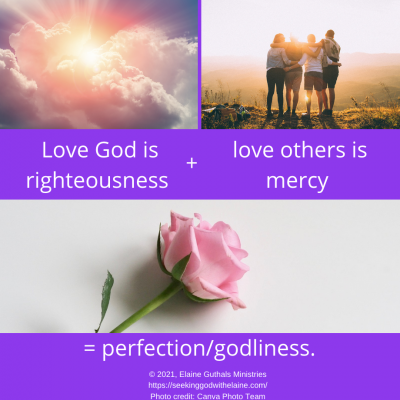
    Love God is righteousness + Love people is mercy = perfection/godliness

    Advantages of Temperance

    Disciples can expect advantages for being temperate.

    There are many advantages of having temperance.

    • We no longer are ruled by the curse and power of sin.
    • We gain control of our sinful nature.
    • We benefit others by focusing more on benevolence than supplying our our wants.
    • We learn to fulfill our duties to God.

    Resource

    What Makes Temperance the Last Fruit?

    While temperance shows spiritual maturity, regulation will be needed even for perfected disciples.

    There was a reason Paul put temperance last in the list of fruits of the Spirit. Newbolt gave us a good reason. He wrote that, if we look at is as even a perfect person needs regulating and discriminating power, it would be “… as if each sense, each feeling, each power, when it has aroused its dormant energies, were moving amidst fresh possibilities of wealth and satisfaction, which needed regulating.”

    That throws an interesting twist to perfection doesn’t it?

    • The perfected state indicates maturity has been reached because the combination of the spiritual graces, when all are present, form spiritual wholeness or completeness.
      • Spiritual graces are worldly morals that have been submitted to God to further His kingdom instead of enhancing this world.
    • Perfection means we have become holy, sanctified, and righteous.

    Glossary

    Do we sometimes think that we won’t need this regulation once we hit the pearly gates? We think the “… we will all be changed, in a moment, in the twinkling of an eye …” (I Cor. 15: 51-52 CSB) is going to take away the need for regulation.

    Well, we are not only getting a new body, but a new heart. I thought that was going to take care of the imperfections and rebellion known in these bodies.

    Maybe Newbolt is just talking about navigating the Sanctification Road. We are immediately perfect after conversion. We have to grow into it.

    Sanctification is the transformation of mind, body, and soul, which begins with regeneration, gradually changes our nature and morals through the promptings of the Holy Spirit, and ends with perfected state of spiritual wholeness or completeness.

      • Regeneration is being changed from spiritually dead to spiritually alive and the internal requickening in us that God brings about through the work of the Holy Spirit to give us new character.
      • Spiritual death is the separation from God that occurred as a consequence of Adam and Eve’s original sin. The spiritually alive are those who have ABCDed, so they are no longer separated from God.

    The ABCDs of Salvation

    If you have not become a believer in Christ, please read through the
    Plan of Salvation and prayerfully consider what God is asking you to do.

    A – admit our sins
    B – believe His Son Jesus is our Redeemer
    C – confess God as Sovereign Lord

    D – demonstrate that commitment by making any changes needed in our lives to
    live the way in which God has called us

    The Disciple’s Job Description

    Glossary

    TemperanceAsAFruitOfTheSpiritPin

    Making the Connections

    Shipley said that temperance was all about self-mastery. He said it wasn’t about when things were hitting the mountaintop experience. He said in all circumstances.

    Resource

    That is logical for the last fruit. If we are looking at the fruits in terms of progression, the last one will be right before the perfection kicks in. It is when we are the closest to imitating God.

    All of the self’s are included.

    • Self-control
    • Self-mastery
    • Self-regulation
    • Self-restraint
    • Self-denial

    How Do We Apply This?

    • Maintain a pure heart.
    • Focus on God, not the chaos of the world.
    • Watch the company we keep.
    • Use and improve our talents.
    • Focus on realizing spiritual and divine blessings.
    • Follow the Holy Spirit even more.

    Resource

    To read a related devotion, click the button below.

    What do you think?

    Leave me a comment below (about this or anything else) or head over to my Facebook group for some interactive discussion.

    If you don’t understand something and would like further clarification, please contact me.

    If you have not signed up for the email daily or weekly providing the link to the devotions and the newsletter, do so below.

    If God has used this devotion to speak with you, consider sharing it on social media.

  • Meekness as a Fruit of the Spirit

    The next fruit of the Spirit we will look at is meekness. This daily devotional looks at meekness from a spiritual perspective, misconceptions about it, and benefits we receive.


    Nuggets

    • Meekness shows our relationship to God.
    • A misconception about meekness is that meek people are weak.
    • We are not only rewarded because of our weakness, but it also helps us in our interactions with others.

    To read devotions in the Redo for Godliness series, click the appropriate button below.

    Devotions in the Fruit of the Spirit from the Inside Out series

    Okay, so I didn’t look ahead far enough when I started this series. We took kindness and gentleness together when we did gentleness.

    Guess what popped up today?

    So, we are going to go with the King James Version translation. Meekness is the next one up there.

    Besides, that is the track all the sermons went.

    Let’s Put It into Context #1

    “But the fruit of the Spirit is love, joy, peace, patience, kindness, goodness, faithfulness, gentleness, and self-control. The law is not against such things” (Gal. 5: 22-23 CSB)

    Here is a running list of what we’ve discussed previously.

    Let’s Put It into Context #2

    Manning grouped the last two fruits of the spirit together. He wrote, “And then, lastly, there are certain fruits which have relation to ourselves. They are, first, modesty, ( = meekness?) which is both within and without — modesty of bearing, modesty of conduct, of dress, of demeanour, a chastened and sensitive regard for others, in all that is due from us to them, which keeps us from obtrusiveness, and from transgressing the delicate consideration which is their right.”

    Resource

    Putting Meekness into Perspective

    Meekness shows our relationship to God.

    Murray reminded us that we need to consider meekness from a scriptural perspective.

    This means we are meek in relation to God, not the world. Murray said that it is the “… state of mind or mood of soul which a man has toward his God.”

    Resource

    I think we are more familiar with state of mind. The mood of the soul might be a little more fuzzy for us.

    Murray said it is all about attitude. Attitude is manner in which we feel and think, that which influences our behavior.

    Resource

    We aren’t trying to work things out our way. Thornton wrote, “Pride blocks up the passage through which truth enters the heart.” We aren’t trying to understand everything in our own.

    Resource

    We make Jesus Lord of our lives and confess that God is Sovereign God.

    We’ve got to be able to give up our self-conceit and be receptive to what God wants to give us.

    A Misconception about Meekness

    A misconception about meekness is that meek people are weak.

    That is not the case.

    God’s people just be strong to withstand the persecution. Some disciples are already experiencing it. Others will as the end times draw near.

    Thornton hooked the strength of meekness to growth. He wrote, “Meekness is the growth of pure religion, cherished in the heart, and displaying its fruits in the life.”

    Resource

    Ooo, baby. That is a new concept that I don’t think we’ve discussed before when we’ve looked at meekness.

    Glossary

    Benefits of Meekness

    We are not only rewarded because of our weakness, but it also helps us in our interactions with others.

    Murray reminded us that meekness is a Beatitude. “Blessed are the meek, for they shall inherit the earth” (Mt. 5: 5 ESV).

    To read a related devotion, click the button below.

    Most newer versions translate it as humble. Humility is a character trait that diminishes pride and places dependence on God while holding a modest view of our importance with respect to others.

    Another benefit of meekness is it does not contain censoriousness. Censoriousness means being critical of others. Elliott said that this helps us respond the way God wants us to when we are provoked.

    Resource

    MeeknessAsaFruitOfTheSpiritPin

    Making the Connections #1

    I really like what Murray said. He wrote, “In thinking of this trait being fostered in your disposition, do not think of it as you stand related to men; but think of it as if you were not connected with men at all — as if there were no men living, if that will help your imagination, and you stood connected with God only. This brings out the blessed ministry of meekness. It connects us with God. And this makes it priceless to the soul; for what is so priceless as that which binds us so closely and happily to Him?”

    Resource

    Making the Connections #2

    I read through all of this and questioned why these sermons were put under the fruit of the Spirit list. The sermons really isn’t talking about being rewarded.

    I think the reward part comes from the inside out part. We begin being meek after conversion. We start that on the inside because that is a conscious decision to submit to God.

    As we grow, our meekness grows as we truly submit every aspect of our lives to God. That is rewarded by our being even more meek.

    How Do We Apply This?

    • Use meekness to eliminate the desire to anger others.
    • Utilize the calming effect associated with meekness to extinguish resentment.
    • Forgive others.
    • Watch our buttons to ensure someone is not pushing them.
    • Watch our temper.
    • Avoid situations that foster pride.

    Resource

    Father God. We submit our lives to You. Help us to turn from our prideful ways to focus only on You. Amen.

    What do you think?

    Leave me a comment below (about this or anything else) or head over to my Facebook group for some interactive discussion.

    If you don’t understand something and would like further clarification, please contact me.

    If you have not signed up for the email daily or weekly providing the link to the devotions and the newsletter, do so below.

    If God has used this devotion to speak with you, consider sharing it on social media.

  • Goodness as a Fruit of the Spirit

    Goodness is a trait that worldview people think is not dependent on loving God. This daily devotional looks at how it is a fruit of the Spirit and how it is dependent on our relationships with God.

    Nuggets

    • Goodness is a complex fruit.
    • This goodness only comes after we have ABCDed.
    • When we have God’s goodness within us, we gain much.

    To read devotions in the Redo for Godliness series, click the appropriate button below.

    Devotions in the Fruit of the Spirit from the Inside Out series

    We all want more goodness in the world. The problem is that it can’t be a worldview goodness. It has to be a fruit of the Spirit that comes from inside us out to the world.

    Let’s Put It into Context #1

    “But the fruit of the Spirit is love, joy, peace, patience, kindness, goodness, faithfulness, gentleness, and self-control. The law is not against such things” (Gal. 5: 22-23 CSB)

    Here is a running list of what we’ve discussed previously.

    Let’s Put It into Context #2

    Manning told us about goodness. He wrote, “Next comes goodness; as a fountain pours out pure water, so the good heart is perpetually pouring out goodness and diffusing goodness on all around.”

    Resource

    How Goodness Interacts with Other Fruits of the Spirit

    Goodness is a complex fruit.

    In a way, it is hard to understand what all is encompassed in the term goodness. Murray tried to do that by comparing it to the previous fruits of the Spirit. He wrote,

    “Love, for instance, refers to one class of emotions, and is therefore definable. Joy is one phase of the emotions. Peace is a particular state of being. Long-suffering is an element of character. Gentleness is a habit of the disposition. These characteristics are, you see, definable. Their significance has its limitations, and the boundaries of our treatment were therefore clearly marked. But goodness is not one emotion, nor a single element of character, nor a particular state of being, nor any one habit of disposition.”

    So, what is it? Murray went on to write, “In short, can we say less than this, that goodness implies perfection of moral being, perfection of spiritual state, perfection of manhood, in all things which adorn the same, and move it upward in that amplifying growth which the ordering of a good God has provided as the destiny for good beings. The fruit of the Spirit, therefore — its object and aim — is to produce a good man — a perfect man by that standard of measurement which God Himself, in His infinite wisdom and Fatherly ambition, applies to the character of His children.”

    Resource

    Wow! I love that. Goodness is tied to the perfection we are gaining on the Sanctification Road.

    • Sanctification is the transformation of mind, body, and soul, which begins with regeneration, gradually changes our nature and morals through the promptings of the Holy Spirit, and ends with perfected state of spiritual wholeness or completeness.
    • Regeneration is being changed from spiritually dead to spiritually alive and the internal requickening in us that God brings about through the work of the Holy Spirit to give us new character.
    • Spiritual death is the separation from God that occurred as a consequence of Adam and Eve’s original sin. The spiritually alive are those who have ABCDed, so they are no longer separated from God.
    • The perfected state indicates the combination of the spiritual graces which, when all are present, form spiritual wholeness or completeness.
    • Spiritual graces are worldly morals that have been submitted to God to further His kingdom instead of enhancing this world

    The ABCDs of Salvation

    If you have not become a believer in Christ, please read through the
    Plan of Salvation and prayerfully consider what God is asking you to do.

    A – admit our sins
    B – believe His Son Jesus is our Redeemer
    C – confess God as Sovereign Lord

    D – demonstrate that commitment by making any changes needed in our lives to
    live the way in which God has called us

    The Disciple’s Job Description

    Glossary

    Hamilton called goodness love in action. That reminds me what we said in the second devotion in the series.

    Think about all the fruits for a second. Manning noted the first two — love and joy — defined our relationship to God. The rest — peace, patience, kindness, goodness, faithfulness, gentleness, and self-control — defined our relationship with others. I think I would put peace on the God list as it is an inside job from Him.

    Resource

    Washburn said the faith, gentleness, and self-control are more our conduct. I see that. The list reflects the two greatest commandments and what we are going to do about them.

    Resource

    Glossary

    Goodness defines our relationship with others. It is pulling out the changes that God made in us when we ABCDed and showing them to the world.

    What Goodness Really Means

    This goodness only comes after we have ABCDed.

    Murray noted that to obtain this fruit of the Spirit we have to be linked with the Holy Spirit by prayer. Most of us would say, “duh!” to that one.

    But there are so many worldview people who think that goodness can be exhibited without ABCDing and being connected with the Holy Spirit. It can only come through God

    Why? We’ve talked before that goodness is an attribute of God.

    To read a related devotion, click the button below.

    How does the fruit of the Spirit goodness differ from that? Thornton told us. He wrote, “It is genuine, disinterested, cheerful, and unostentatious benevolence.”

    Resource

    We just talked about being disinterested. The disinterested means Jesus was willing to give up the trappings of His Deity. Raleigh wrote, “Being thus Divine, He did not deem His equality with God a thing to grasp at and eagerly retain.”

    Resource

    To read a related devotion, click the button below.

    In Elaine-speak, Jesus put us as a priority over everything in Heaven. He came to earth to love us and die for us.

    Gaining from Goodness

    When we have God’s goodness within us, we gain much.

    Norton gave us a list of what we gain from goodness.

    • The ability to forgive.
    • The desire to be considerate and generous.
    • The motivation to be conscientious and enduring.
    • The nature to be heroic.

    Resource

    Beecher said something interesting. He said that goodness is “THE PRINCIPAL TEST OF PIETY.” Piety is defined as the persistent application of moral virtues to our lives because of our supreme love for God.

    Resource

    Let’s put that together. Goodness is the principle test of the persistent application of moral virtues to our lives because of our supreme love for God.

    Wait! I am processing here, so bear with me.

    Goodness is the principle test of the persistent application of the spiritual graces. Thornton said they play out in a number of ways.

    1. “By using every proper means to suppress folly, vice, and immorality in the world.
    2. “By relieving the sick, and assisting the poor.
    3. “By instructing the ignorant, or contributing to promote their instruction.”

    Resource

    We can’t think that we only need do good in the world. Our benevolence has to start in the church.

    GoodnessAsAFruitOfTheSpiritPin

    Making the Connections

    We talked about the other fruits of the Spirit being a progression to goodness. That is important because, as Newbolt said, they bring us the freedom to do good. We do good in order to expand God’s kingdom.

    Resource

    But we know that our redo for godliness isn’t looking for us to do better. Our goal is to be better.

    Perfection is about being. It is about obtaining the character of God.

    Here is one last thing from Murray. He wrote, “The highest expression of manhood is Goodness; before its expression men bow in acknowledgment, and lifting their heads pronounce their applause. It is a law of our nature to abhor villainy; to despise the sneak and avoid a scamp. This is Nature’s tribute to honesty, and frankness, and uprightness. There is no weakness in Goodness, for it symbolises (sic) the strength of Heaven.”

    Resource

    How Do We Apply This?

    • Do God’s good works.
    • Study the benevolent acts of other God-fearing people.
    • Think about the joy of doing benevolent acts.
    • Share Jesus’ love with others.
    • Seize opportunities to do benevolent works while we can, because life is short.

    Resource

    It is our goal to be like God. Goodness is an attribute of God. When we become more like Him, He gives us the ability to be even more like Him.

    Father God. We just praise Your name. Thank You for growing us to be more like You. Help us to put away the worldview agenda and focus on You. When we do that, we can take the fruits of the Spirit and show others Your love. Amen.

    What do you think?

    Leave me a comment below (about this or anything else) or head over to my Facebook group for some interactive discussion.

    If you don’t understand something and would like further clarification, please contact me.

    If you have not signed up for the email daily or weekly providing the link to the devotions and the newsletter, do so below.

    If God has used this devotion to speak with you, consider sharing it on social media.

  • Patience as a Fruit of the Spirit

    Patience is the first fruit of the Spirit that impacts our relationships with others. This daily devotional looks at different identifiers of that and its elements.

    Nuggets

    • Patience presents itself as a fruit of the Spirit by being applied to our character.
    • We choose to have patience in trials.
    • Patience has components of meekness and humility in it.
    • We have to have patience when we wait and watch.

    To read devotions in the Redo for Godliness series, click the appropriate button below.

    Devotions in the Fruit of the Spirit from the Inside Out series

    The problem with this fruit of the Spirit is it goes by a lot of different names. We know it mostly by patience. Long-suffering is another name, which implies endurance. Forbearance is a more obscure name, but it is out there. Then, patience is tied to other words.

    Let’s see what we can dig out here.

    Let’s Put It into Context #1

    Here is a running list of what we’ve discussed previously.

    Let’s Put It into Context #2

    Manning did a long introduction to patience. He wrote, “Then there are the fruits which have relation to our neighbour; and the first is patience. Do we bear with our neighbours? Are we irritable, revengeful, resentful, malicious? If so, the fruits of the Holy Ghost are not in us, because the benignity of God is not in us. Long-suffering is another name for patience. Just as equity is the most delicate form of justice, long-suffering is the most perfect form of charity, the perpetual radiance of a loving heart, which, in its dealings with all around, looks kindly upon them and judges kindly of their faults. It means also perseverance, the not being wearied in well-doing, not throwing up and saying, “I have tried to do good for such a one, I have tried to correct his faults. I have tried to win him; but he is ungrateful, incorrigible, and I will have no more to do with him.” Our Lord does not so deal with us. Long-suffering means an unwearied perseverance in doing good.”

    Resource

    Patience as a Fruit of the Spirit

    “Be still before the Lord and wait patiently for him; fret not yourself over the one who prospers in his way, over the man who carries out evil devices! Refrain from anger, and forsake wrath! Fret not yourself; it tends only to evil. For the evildoers shall be cut off, but those who wait for the Lord shall inherit the land” (Ps. 37: 7-9 ESV)

    Patience presents itself as a fruit of the Spirit by being applied to our character.

    Thornton talked about patience being a self-possession. Without it, we can be adrift during times of trial. In fact, Thornton stressed its importance by stating that it must be present to help us govern our own minds.

    What is this patience that Thornton was talking about? He wrote, “That patience which is the fruit of the Spirit stands opposed to irritability of temper, undue eagerness of expectation, fretfulness under sufferings, and weariness in well-doing. Christian patience must he distinguished from constitutional fortitude and stoical apathy.”

    Resource

    I kind of see patience as a product of peace. If we don’t have the calmness of peace, we will have the temper and fretfulness. That means we don’t have the patience.

    When we think about this as a fruit of the Spirit in regards to our relationships with others, Thornton is correct that we have to possess feelings for others. If we don’t care for their spiritual condition, we aren’t going to build the relationships with them.

    To take that to the next level, if we don’t want the relationship, we aren’t going to have the patience when we interact with others. When we don’t have patience for others, that shows we do not have God’s character within us.

    That is what we are going for in our redo for godliness. We want to be like God.

    Thornton called it the grace of patience. Grace is a free and unmerited gift of love from the Heavenly Father, given through His Son, Jesus Christ, that enables salvation and spiritual healing to believers by the work of the Holy Spirit.

    How do we translate that to patience? “And let us not grow weary of doing good, for in due season we will reap, if we do not give up” (Gal. 6: 9 ESV).

    To read a related devotion, click the button below.

    Patience as Long-Suffering

    “Rejoice in hope, be patient in tribulation, be constant in prayer” (Rom. 12: 12 ESV)

    We choose to have patience in trials.

    I equate long-suffering with endurance. Well, long is self-explanatory, as is suffering. If we handle something a long time, we are enduring it.

    Murray used all of that in his definition of long-suffering. He wrote, “It means the power to bear up under a burden — a power to endure — a power to resist pressure — the capacity to stand a tremendous strain. The idea of endurance is that which gives emphasis to the word.”

    Resource

    Reeve added the concept that it is a frame of mind. Frame of mind is an emotional state that effects our attitude or behavior.

    We said in the last devotion that means it is a choice. We choose to endure with patience.

    Reeve noted that, sometimes, we will have to be firm, in our enduring. Sometimes, we will just have to swallow our protests.

    Resource

    Newbolt added the benefits that come from long-suffering. He wrote, “And long-suffering is perhaps that power which enables us to suffer on, which will not let us become ruffled, or put back, or paralyzed, or overwhelmed by difficulties as they come upon us.”

    Resource

    Unfortunately, we don’t want to endure things. Thornton wrote, “We are naturally impetuous and self-willed. We wish to wear the crown without bearing the cross; and to find some shorter and smoother road to the heavenly kingdom than that which leads us through the perilous and tedious wilderness.”

    Resource

    Thornton didn’t really talk about our impatience — our desire for instant gratification — as the reason for our impetuousness. We are programmed these days to not want to wait for things.

    But how does that impact our spiritual lives?

    We don’t always understand that this is the way we get our submissive spirit. We just see it as a way to build strength.

    Don’t get me wrong. We do get the strength from enduring the trials. There are so many disappointments and so much loss that we go through.

    Murray said we need to be taught the value of things. That is a job for the Holy Spirit.

    Newbolt said that we need to remember that God is growing us through the Sanctification Road. We don’t become strong overnight. We grow as we get to know Him better.

    Sometimes, Newbolt said, God has something special in store for us. However, something within us may need to heal first.

    I hate to say it, but there is another advantage to us having trials. Have you ever noticed how we band together when someone is having a rough go, especially an illness? The trials grow our patience as it grows our cohesiveness.

    This is because the sympathy and encouragement pop out.

    Components of Patience

    “With all humility and gentleness, with patience, bearing with one another in love” (Eph. 4: 2 ESV)

    Patience has components of meekness and humility in it.

    Reeve noted that long-suffering has a component of meekness in it. Meekness is a personality trait exhibiting a mild or moderate disposition that places dependence on God.

    Meekness is often used synonymously with humility. Humility is a character trait that diminishes pride and places dependence on God while holding a modest view of our importance with respect to others.
    They both are traits that put our dependence on God. When we diminish our pride, we exhibit a mild or moderate disposition. When we do that, we enhance our view of others.

    Reeve reminded us of some very good verses that support this.

    • “And he said, ‘Naked I came from my mother’s womb, and naked shall I return. The LORD gave, and the LORD has taken away; blessed be the name of the LORD’” (Job 1: 21 ESV).
    • “And Abraham’s faith did not weaken, even though, at about 100 years of age, he figured his body was as good as dead—and so was Sarah’s womb” (Rom. 4: 19 NLT).
    • “We who are strong have an obligation to bear with the failings of the weak, and not to please ourselves” (Rom. 15: 1 ESV).

    What are these verses saying?

    • We have to depend on the Lord because He has given us everything that we have.
    • God has made many promises to us and will fulfill those promises, even if they seem impossible.
    • God wants us to be a community where the strong in faith help the weak in faith.

    To read a related devotion, click the button below.

    This is how we show that we have God’s patience.

    Making the Connections

    “But if we hope for what we do not see, we wait for it with patience” (Rom. 8: 25 ESV)

    We have to have patience when we wait and watch.

    Watchfulness is a continual conscious examination of ourselves and all events so that we may follow God in all things. We’ve used several words to portray the actions of being watchful:

    • Watch
    • Be alert
    • Be on guard
    • Focus

    All of these mean that we are not only looking outside of ourselves, but we are also looking up to God to help us in whatever we are facing.

    It isn’t all just watching for the bad stuff. It is watching for God. Sometimes, we have to really pay attention, or we will miss opportunities — to serve and for God’s blessings.

    It isn’t just watching the outside. We have to watch the inside. We’ve been calling it evaluating — but same thing.

    PatienceAsAFruitOfTheSpiritPin

    To read a related devotion, click the button below.

    We like to think resting and waiting means doing nothing — there are no actions required of us. Resting and waiting are actions. They are conscious decisions.

    To read a related devotion, click the button below.

    Watching and waiting have to have an element of patience. Waiting has to have the patience to not rush. Watching has to have patience when what we are watching for doesn’t seem to be coming any time soon.

    How Do We Apply This?

    • Listen more closely to the Holy Spirit’s promptings to grow our patience.
    • Evaluate the trials we are in to put them into a correct perspective in regard to God’s hand guiding us through them.
    • Cultivate patience before the trials start, so we are ready when they do.
    • Find examples of God’s grace and meditate on that.
    • Find God within our souls and spirits.
    • Always remember that we have a Mediator interceding for us.
    • Honor God through the suffering by following God’s Will because He is Sovereign God.

    Resource

    Patience is the reward for enduring the trials and standing form without sinning. It is also a major component needed in our relationships with others.

    Father God. We praise You as Sovereign God. We thank You for guiding us through the trials. Please give us more patience as we are successful in enduring all we face. Amen.

    The ABCDs of Salvation

    If you have not become a believer in Christ, please read through the
    Plan of Salvation and prayerfully consider what God is asking you to do.

    A – admit our sins
    B – believe His Son Jesus is our Redeemer
    C – confess God as Sovereign Lord

    D – demonstrate that commitment by making any changes needed in our lives to
    live the way in which God has called us

    The Disciple’s Job Description

    What do you think?

    Leave me a comment below (about this or anything else) or head over to my Facebook group for some interactive discussion.

    If you don’t understand something and would like further clarification, please contact me.

    If you have not signed up for the email daily or weekly providing the link to the devotions and the newsletter, do so below.

    If God has used this devotion to speak with you, consider sharing it on social media.

  • Peace as a Fruit of the Spirit

    Peace, as a fruit of the Spirit, shows us that our relationship with God is where He wants it to be. This daily devotional looks at how the treasure of God’s peace give us tranquility with God, ourselves, and others.

    Nuggets

    • Peace is a treasure that we must choose to embrace.
    • Peace with God shows us our relationship with God is in the right place.
    • Peace as a fruit of the Spirit should be tied with joy and contentment.
    • How we interact with others shows the peace we feel in our hearts.
    • Peace is part of the armor of God, so that it can secure our faith in God.

    To read devotions in the Redo for Godliness series, click the appropriate button below.

    Devotions in the Fruit of the Spirit from the Inside Out series

    We’ve talked about peace before, but not as a fruit of the Spirit.

    Glossary

    Peace, as a fruit of the Spirit, is a validation of our salvation. Let’s take a look.

    Let’s Put It into Context #1

    Here is a running list of what we’ve discussed previously.

    Let’s Put It into Context #2

    Peace is a fruit of righteousness, manifested in an inward tranquility resulting from a balanced life with spiritual order, equity, and truth that implies cooperation, humility, integrity, communication, and cohesiveness.

    Manning described it this way as a fruit of the Spirit. He wrote, “… peace, whereby we are at rest with God, and in ourselves, and with all mankind.”

    Resource

    Newbolt called it a “… tranquility of order …” It blankets us as we work out our salvation steadily and harmoniously.

    Resource

    Peace is a fruit of the Spirit that translates as a rest of the soul when we are working out our salvation to find tranquility with God, ourselves, and others.

    Peace, Our Greatest Treasure

    “The mind governed by the flesh is death, but the mind governed by the Spirit is life and peace” (Rom. 8: 6 NIV)

    Peace is a treasure that we must choose to embrace.

    Krummacher called peace our greatest treasure. It is, when it means we are at harmony with God, ourselves, and others.

    Resource

    Thornton told us that peace is a balm to our conscience. Our conscience is the part of our nature that impacts our moral decisions as it points us to what is right and gives us pain or pleasure depending on the choice. It grows out of our genuine salvation.

    • Salvation is the gift of life through the deliverance from condemnation and sin to acceptance and holiness and changes us from being spiritually dead to spiritually alive.
    • Sins are actions by humans that disobey God and break one of His reasonable, holy, and righteous laws and commandments, goes against a purpose He has for us, or follows Satan’s promptings.
    • Holiness is the transcendent excellence of His nature that includes elements of purity, dedication, and commitment that lead to being set apart. Purity means possessing God’s moral character, having eliminated the stain of sin.
    • Spiritual death is the spiritual separation from God that occurred as a consequence of Adam and Eve’s original sin. The spiritually alive are those who have ABCDed, so they are no longer separated from God.

    The ABCDs of Salvation

    If you have not become a believer in Christ, please read through the
    Plan of Salvation and prayerfully consider what God is asking you to do.

    A – admit our sins
    B – believe His Son Jesus is our Redeemer
    C – confess God as Sovereign Lord

    D – demonstrate that commitment by making any changes needed in our lives to
    live the way in which God has called us

    The Disciple’s Job Description

    Glossary

    Thornton went on to say that peace is incorporated in a frame of mind. Frame of mind is an emotional state that effects our attitude or behavior.

    Hmmm. Does that mean it is our choice to be peaceful? We know we choose our attitude. We also choose our behavior.

    I would say yes. We choose to be peaceful by focusing on God and His omnipotence. Omnipotent means God is all-powerful.

    To read a related devotion, click the button below.

    Tranquility with God

    “And the peace of God, which surpasses all understanding, will guard your hearts and minds in Christ Jesus” (Phil. 4: 7 CSB)

    Peace with God shows us our relationship with God is in the right place.

    Thornton reminded us that the peace comes from knowing God’s Will and trusting Him for our lives. That brings peace to our conscience.

    But it goes beyond that. We can know Him and trust what He wants to do in our lives — and still not obey. We’ve got to get the obedience to the heart level. Obedience means to hear, conform to, and carry out the instructions that God gives us.

    Tranquility with Ourselves

    “And a harvest of righteousness is sown in peace by those who make peace” (Jas. 3: 18 ESV)

    Peace as a fruit of the Spirit should be tied with joy and contentment.

    We talked around peace a couple of devotions ago when we talked about joy and contentment.

    • Joy, a fruit of the Spirit given to us by the Holy Spirit, is an outward expression of an inward feeling of thanksgiving and the consciousness of God’s infinite goodness that enlivens and comforts us.
    • Contentment is being satisfied regardless of the circumstances of our lives.

    If a part of peace is living in harmony with ourselves, that means we are content with that life and it brings us joy. That goes back to our discussion of being content regardless of the circumstances.

    To read a related devotion, click the button below.

    The peace in our hearts is an indication that godliness is there, also. Newbolt reminded us how godlessness is a plague to our peace.

    Tranquility with Others

    “And let the peace of Christ rule in your hearts, to which indeed you were called in one body. And be thankful” (Col. 3: 15 ESV)

    How we interact with others shows the peace we feel in our hearts.

    Thornton wrote that peace “… is called the fruit of the Spirit, in opposition to hatred, variance, emulations, wraths, strifes, etc., which are reckoned among the works of the flesh.” What Thornton was saying was we should not sin against others.

    Resource

    Peace is also tied with unity. Unity is an inward, spiritual feeling of harmony found through Christ that manifests itself in outward actions that foster the spread of the gospel.

    What does peace foster among others? Thornton wrote, “To promote peace among Christian brethren, cultivate a charitable and forbearing temper.”

    Resource

    We know charity is an old-fashioned word for loving. Forbearance is a word we know as patience.

    To read a related devotion, click the button below.

    Devotions in the What Is Charity? series

    It is all about the family of God living and working together in harmony. Yes, there are going to be squabbles.

    But we have to work them out to glorify God. We should never let it impede the mission of the church.

    Let’s refocus the lens. Why doesn’t God want to give this peace to non-believers?

    Murray wrote, “There is in the universe a Spirit of right, a Spirit of goodness, a Spirit of love, and this we call God. This Spirit is an energetic Spirit. Its object is to have everybody to do right — to have everybody good, and to establish the reign of universal love — love towards Himself as the beautiful embodiment of these sweet and sublime principles, and love to all lesser ones whose nature and condition make them the object of benevolent designs and the recipient of benevolent efforts. … It is the Father’s Spirit lovingly contending with the child’s spirit, striving to bring it into sympathetic alliance with that which is good.”

    Resource

    God does want everyone to be recipients of His peace. He does, however, make a condition on who receives His peace that passes all understanding (Phil. 4: 7 CSB). He saves that peace for those who will submit to Him.

    Tranquility Because of Armor

    “and having shod your feet with the equipment of the gospel of peace” (Eph. 6: 15 RSV)

    Peace is part of the armor of God, so that it can secure our faith in God.

    Newbolt called the peace of God our armed escort. That makes sense when we know that it is part of the armor of God. We’ve talked about this before.

    Resource

    To read a related devotion, click the button below.

    We can only find peace through faith in Jesus. Disciples get this contentment through the assurance that our sins have been forgiven. We no longer have to pay the price for our sins.

    Yes, we will still be subjected to the consequences of sins while we are on this earth. But we are no longer spiritually dead once we admit our sins, believe on Jesus as Savior and Redeemer, confess God as Sovereign Lord, and demonstrate that commitment by following our job description.

    The Disciple’s Job Description

    Complete Job Description

    Once we become disciples, we have the peace of God because we know we are no longer alone in facing the trials and temptations of this life. We know we can “cast [our] burden on the Lord, and He will support [us]; He will never allow the righteous to be shaken” (Ps. 55: 22 CSB).

    Peace comes when we know what we believe and why we believe it. When we live that out consistently, it is accompanied by peace. That will make us ready when the trials and temptations come.

    We are more confident that we can withstand the darts. We are ready for anything. We know that, with God fighting, the darts will be extinguished.

    How does God give us peace? We know we can depend on God because He knows the past, present, and future (I Jn. 3: 20). This calms our fears and should shape our desires.

    PeaceAsAFruitOfTheSpiritPin

    Making the Connections

    I loved this. Thornton wrote, “None but the paths of wisdom are the paths of peace; and the blind cannot pursue, because they cannot discern them.”

    Resource

    • Wisdom is an enlightened acceptance of God’s principles that leads to knowledge, discernment, and good sense that is put into practice through salvation, increasing our goodness and virtue.
    • Discernment means we can evaluate the situation and recognize right from wrong. 
    • God’s goodness is His holy, pure, and righteous behavior.
      • Holy means to be set apart, perfect, and morally pure while possessing all virtues.
      • Pure means not being sinful or having the stain of sin.
      • Righteous means we are free from sin because we are following God’s moral laws.
    • Virtues are standards of moral excellence.

    Can you tell that I liked Thornton’s sermon? He said something else. He wrote, “Never conclude that all must be fatally wrong, who do not think just as you think. We cannot find two faces exactly alike; why then should we expect to meet many minds that in every respect correspond with our own? If you really love and pursue peace, you must judge favourably and speak candidly of others. When a breach is made, you must try to close, rather than widen it.”

    Resource

    We would be wrong if we thought everyone has to think the way we do — even about interpretations of Scriptures. We look at things based on what God is telling us individually and corporately. We hook this to past experiences and our values.

    No one else shares these. My sister and I may have been raised the same way, but once we stepped foot off the farm — even to get on the bus to go to school — we had different experiences.

    We put different importance on moral things. We are who God made us to be.

    We are “… fearfully and wonderfully made” (Ps. 139: 14 ESV). But we are made differently.

    That means it is going to take some work to live in peace.

    How Do We Apply This?

    Thornton wrote that, to achieve peace, we should “keep in the sphere where Providence has placed us.” I read that to mean we should stay in God’s Will.

    Resource

    • Strive to do good for others.
    • Pray for those who threaten our peace.

    Resource

    We said that love and joy define our relationship with the Father. I see peace being so, too.

    True, it does make a good segue to the fruits that define our relationships with others. But that is a discussion for the next devotion.

    Father God. You give us the fruits of love, joy, and peace to define our relationship with You. Those make the relationship so sweet. We pray that these fruits are evident in us because that means we are exactly where we should be in You. Amen.

    What do you think?

    Leave me a comment below (about this or anything else) or head over to my Facebook group for some interactive discussion.

    If you don’t understand something and would like further clarification, please contact me.

    If you have not signed up for the email daily or weekly providing the link to the devotions and the newsletter, do so below.

    If God has used this devotion to speak with you, consider sharing it on social media.

  • Joy as a Fruit of the Spirit

    We all search for joy. This daily devotional looks at how true joy only comes from Jesus.

    Nuggets

    • A joy of faith is based on Christ.
    • Much of our joy comes from our salvation.
    • When our joy mirrors the quality of God’s,
    • He provides us many benefits.

    To read devotions in the Redo for Godliness series, click the appropriate button below.

    Devotions in the Fruit of the Spirit from the Inside Out series

    Many people today are searching for joy. They may call it happiness, but they are looking for the some pleasant feeling.

    We can only truly find it from God through Jesus and the Holy Spirit. Let’s look at what Paul tells us in Galatians about it being a fruit of the Spirit.

    Let’s Put It into Context

    “But the fruit of the Spirit is love, joy, peace, patience, kindness, goodness, faithfulness, gentleness, and self-control. The law is not against such things” (Gal. 5: 22-23 CSB)

    Here is a running list of what we’ve discussed previously.

    What Is Joy?

    “Though you have not seen him, you love him; and even though you do not see him now, you believe in him and are filled with an inexpressible and glorious joy” (I Pet. 1: 8 NIV).

    A joy of faith is based on Christ.

    Joy is about as hard to define as love. Manning wrote, “… joy, which means the thanksgiving and the consciousness of God’s infinite goodness, in which we live and mote …” He noted that it is given to us by the Holy Spirit.

    Resource

    When we put together people’s attempts at defining it, we get that joy, given to us by the Holy Spirit, is an outward expression of an inward feeling of thanksgiving and the consciousness of God’s infinite goodness that enlivens and comforts us.

    Murray thought some people might not identify joy as being a fruit of the Spirit. He explained that, too many times, we can simply focus on His job in salvation and sanctification.

    • Salvation is the gift of life through the deliverance from condemnation and sin to acceptance and holiness and changes us from being spiritually dead to spiritually alive.
    • Sins are actions by humans that disobey God and break one of His reasonable, holy, and righteous laws and commandments, goes against a purpose He has for us, or follows Satan’s promptings.
    • Holiness is the transcendent excellence of His nature that includes elements of purity, dedication, and commitment that lead to being set apart. Purity means possessing God’s moral character, having eliminated the stain of sin.
    • Spiritual death is the spiritual separation from God that occurred as a consequence of Adam and Eve’s original sin. The spiritually alive are those who have ABCDed, so they are no longer separated from God.
    • Sanctification is the transformation of mind, body, and soul, which begins with regeneration, gradually changes our nature and morals through the promptings of the Holy Spirit, and ends with perfected state of spiritual wholeness or completeness.
    • Regeneration is being changed from spiritually dead to spiritually alive and the internal requickening in us that God brings about through the work of the Holy Spirit to give us new character.
    • The perfected state indicates the combination of the spiritual graces which, when all are present, form spiritual wholeness or completeness.
    • Spiritual graces are worldly morals that have been submitted to God to further His kingdom instead of enhancing this world.

    The ABCDs of Salvation

    If you have not become a believer in Christ, please read through the
    Plan of Salvation and prayerfully consider what God is asking you to do.

    A – admit our sins
    B – believe His Son Jesus is our Redeemer
    C – confess God as Sovereign Lord

    D – demonstrate that commitment by making any changes needed in our lives to
    live the way in which God has called us

    The Disciple’s Job Description

    Glossary

    Murray also believed that we could see the Holy Spirit as a nomad, coming and going as necessary. It is believed that He usually comes when we need punishment or brought back into obedience.

    Wrong. Joy is listed as a fruit of the Spirit. Murray wrote that means “that the work of the Spirit is to make a person happy — actually and positively light-hearted: — that His aim is to add to the laughter of the world, to its pleasures and its enjoyments, has never occurred to these people as among the possibilities.”

    Resource

    Oh, yeah. God is expecting us to keep His laws and commandments and not compromise with the worldview.

    But God does not see that to be a chore. He wants that to be who we are.

    The laws and commandments show us God’s character. If we are to imitate Him — and we are — that means we are to have His character by keeping His laws and commandments.

    We are to obey joyfully. We aren’t to have the attitude that God is forcing us into obedience. God isn’t a dictator.

    Instead, God allows us our free will so that we can decide ourselves to submit and obey Him. Free will is the ability within us to make decisions, which determine actions that produce character.

    It is our choice, a choice we should joyfully make.

    We know that joy comes from God. “I have told you these things so that my joy may be in you and your joy may be complete” (Jn. 15: 11 CSB).

    Inside Out Joy

    “But I have trusted in your steadfast love; my heart shall rejoice in your salvation” (Ps. 13: 5 ESV)

    Much of our joy comes from our salvation.

    Let’s go back to salvation for a second. Well, yes, we are forgiven of our sins. We enter the Sanctification Road, which ends in perfection and Heaven.

    Those are just some of the blessings we receive. Psalm 16: 11 says, “You make known to me the path of life; you will fill me with joy in your presence, with eternal pleasures at your right hand” (NIV).

    It isn’t just about our eternal life — even though that is pretty important. That is about our spiritual condition.

    It is also about this life. God is with us every step of the way. That is really important as we navigate this life!

    Thornton talked about claiming God. It is only through the Holy Spirit that we can claim Him.

    Resource

    We become sons and daughters of Sovereign God. “But to all who did receive him, he gave them the right to be children of God, to those who believe in his name” (Jn. 1: 12 CSB).

    Glossary

    Did you catch that? Being a child of God is only a title given to those who have ABCDed. Not everyone is a child of God.

    That gives God the title of Father. “And because you are sons, God has sent the Spirit of his Son into our hearts, crying, ‘Abba! Father!’” (Gal. 4: 6 ESV).

    This all takes place within our hearts and minds. It starts inside.

    But it has to be shown through our actions. “You will go out in joy and be led forth in peace; the mountains and hills will burst into song before you, and all the trees of the field will clap their hands” (Isa. 55: 12 NIV).

    Qualities and Benefits of Joy

    “Nehemiah said, ‘Go and enjoy choice food and sweet drinks, and send some to those who have nothing prepared. This day is holy to our Lord. Do not grieve, for the joy of the LORD is your strength’ (Neh. 8: 10 NIV)

    When our joy mirrors the quality of God’s, He provides us many benefits.

    Thornton gave us the qualities that joy possesses.

    •  “… sincere and refined.”
    • “… refreshing and invigorating.”
    • “… solid and lasting.”

    Resource

    Newbolt added the quality of hopefulness to the list. Hope is the expectation, also called a living hope, based on the confidence that, because of our relationship with God, our names will be found in the book of life.

    Resource

    The joy has to shine through us. Newbolt called it brightness. Either way, God has to be evident in our lives.

    To read a related devotion, click the button below.

    Newbolt also tied the joy to being sober. The even-keeled environment that we live in fosters joy.

    When we compare God’s joy with worldly joy, we see the worldly joy is temporary. Thornton called it illusive.

    Watson said something interesting. He said, “Spiritual joys help to make us better, worldly joys do often make us worse …”

    Resource

    Hmmm. I bet worldview people would take exception to that.

    But I can see it. Worldly joy can be based on circumstances. Circumstances do not always happen as we think they should.

    The joy that the Holy Spirit gives us brings us comfort, even in the trials. We know how the story ends — maybe not our individual story, but the overall story.

    God’s joy does refresh and invigorate us. “Truly I tell you, you will weep and mourn, but the world will rejoice. You will become sorrowful, but your sorrow will turn to joy” (Jn. 16: 20 CSB).

    We know the joy will be lasting. It is God’s character, and God is eternal. That isn’t going to change.

    This takes it back to, if we are children of a joyful God, why do we think we need to be sourpusses?

    God gives us strength through His joy. He gives us support through all our trials.

    Related Links

    Rend Collective

    JoyAsAFruitOfTheSpiritPin

    Making the Connections

    Have you ever wondered why God created us, knowing that we would sin? He created us for His joy.

    Murray wrote, “that the aim and object of all God’s creation is for His own happiness, through the happiness of the creatures He has made. And this makes His own happiness self-receiving indeed, but most royally unselfish. For he who labours for self only in labours for others, treads that broad mosaic of right-doing, or righteousness, whose pavement is finer than if inlaid with stars; and which stretches in beauty through the eternity of things as to their extent, and the eternity of time as to its duration.”

    Resource

    Watson said joy, like God, is self-existent. We know that is an attribute of God.

    To read a related devotion, click the button below.

    How Do We Apply This?

    • Daily, have a mindset of joy, Thornton said to both God and mankind.
    • Joyfully perform the tasks that God calls us to do.
    • Frequently renew our resolve to follow Him.
    • Shine, so that non-believers will want what we have.
    • Find our joy within, not out in the world.
    • Look at our relationship with God through the lens of joy, not obligation.
    • Diligently guard our hearts to remain completely in God’s grace.
    • Don’t let sin steal our joy.
    • Don’t grieve the Holy Spirit.

    Resource

    Father God. You are an awesome God that gives us Your joy. Help us to have that joy flow through us so others can see You. Amen.

    What do you think?

    Leave me a comment below (about this or anything else) or head over to my Facebook group for some interactive discussion.

    If you don’t understand something and would like further clarification, please contact me.

    If you have not signed up for the email daily or weekly providing the link to the devotions and the newsletter, do so below.

    If God has used this devotion to speak with you, consider sharing it on social media.