

Today is a music day. To read and hear the song, click here.
I did something today that I haven’t done in a long time. I took a day off.I wrote maybe two paragraphs and stopped.
Instead, I spent time with my guys. We took a nice drive and enjoyed God’s creation. We got ready for Trunk or Treat tomorrow.
What I have been thinking this week is about Mercy Me’s song Even If.
It is all about God saving us when we are going through the trials. Even if we only have a little faith, God will keep us in the palm of His hand.
What about during the good times? There are times that we have lost trust in others.
God told me this week that I don’t have to trust others. I just need to trust Him.
Even if things are going well. Even if things are going horribly.
We can trust God.
Even If
Vocalist: Elaine Guthals
Keyboard: Louise Guthals Weiss
What do you think?
Leave me a comment below (about this or anything else) or head over to my Facebook group for some interactive discussion.
If you don’t understand something and would like further clarification, please contact me.
If you have not signed up for the email daily or weekly providing the link to the devotions and the newsletter, do so below.
If God has used this devotion to speak with you, consider sharing it on social media.
God has one goal for the gospel — to save us from our sins so that we can live for Him. This daily devotional looks at our role in proclaiming God’s gospel.
Devotions in the Joy in the Gospel series

God has one priority — our salvation. Everything else is incidental to our acceptance of His gospel.
Here is a running list of what we’ve discussed previously.
We proclaim the gospel to all because God does not want anyone to perish in their sins.
In the previous verses, Paul had been talking about being a minister for Christ. He said that God calls us so that the mysteries of the Gospel can be made known.
The gospel is all about Jesus. It is His birth, death, and resurrection that is told.
Collyer said that is why personal opinions, “… mortality, human systems, [and] philosophy” can’t be taught. They don’t have a place in Jesus’ story.
If something else is preached, we give the wrong impression. There is only one way to gain access to God. “Jesus told him, ‘I am the way, the truth, and the life. No one comes to the Father except through me’” (Jn. 14: 6 CSB).
To read a related devotion, click the button below.
Isn’t that wonderful? Maclaren reminded us that we have a person to worship, not some theory or philosophy.
It all comes back to Christ being is us. Or more importantly, we need to be in Christ.
When we ask, Jesus comes to us. But we have to be genuine in our conversion and submit to Him by imitating Him. If we don’t, we really aren’t in Christ.
I see the proclaiming and the teaching together. Proclaiming the good news, to me, is more than just preaching. It isn’t standing in the pulpit like the Pastor John-types do.
It is seeing someone in the street and witnessing. We like to think the Matthew 25: 35-36 hungry-gave-me-food, thirsty-gave-me-drink, etc. is all we need to do.
No, we have to say, “I know things look bad for you right now, but Jesus loves you and died for you to save you.” We have to be more than actions to make sure others know it is Jesus working through us.

Collyer talked about making sure we have the ability to communicate with others. That means having a relationship with the person works best.
I just started a new relationship. It is wonderful, and it is scary. At the beginning, it seemed like we had to explain things two different ways to make sure the other got what we were saying.
Now, a little further in, we know a little more about how the other communicates. We can just talk.
But that came from building the relationship — getting to know each other. Dare I say listening to each other.
When we witness, we can’t start out thinking that what we are teaching is so essential and our words are so wonderful, they will get it right off. We have to learn them. That takes diligence.
To read a related devotion, click the button below.
But did you see what Paul said? “… warning and teaching everyone with all wisdom …” (Col. 1: 28 CSB).
We have to sound the warning. We must tell the lost about their Savor.
Not just our family. Not just our friends and co-workers where we do get to build the relationship.
It may be people we don’t know. Unfortunately, we may not get the opportunity to build a relationship.
It may be just one shot. That is why Collyer wrote, “Here much care, prudence, and promptitude is required. … Let men see how intent we are on their salvation.”
That is where we have to go with it. The goal of the gospel is salvation.
If you have not become a believer in Christ, please read through the
Plan of Salvation and prayerfully consider what God is asking you to do.
A – admit our sins
B – believe His Son Jesus is our Redeemer
C – confess God as Sovereign Lord
D – demonstrate that commitment by making any changes needed in our lives to
live the way in which God has called us
It is imperative that we are concerned about the salvation of others.“For we must all appear before the judgment seat of Christ, so that each one may receive what is due for what he has done in the body, whether good or evil” (II Cor. 5: 10 ESV).
What are we teaching? Maclaren said morality. He wrote, “The teaching of morality is an essential part of preaching Christ. But the moral teaching which is confined to general principles is woefully like repeating platitudes and firing blank cartridges; yet if the preacher goes beyond these toothless generalities, he is met with the cry of ‘personalities.’ But there is no preaching Christ completely which does not include plain speaking about plain duties.”
The morality gets us to where we can imitate Jesus. But it is even more than that? We are also teaching that we have to repent of our sins.
God calls us to diligently work to expand His kingdom both in our hearts and in other’s.
Spurgeon reminded us that no one is going to get a pass from proclaiming His Word and making disciples. God has work for us to do and expects us to do it. We can’t just depend on the Holy Spirit it all without us.
However, Spurgeon also reminded us is that we really aren’t doing the work. We are the vessel through which the work is done.
It is the Holy Spirit Who is actually doing the work.
Does that seem contradictory? Maybe it is at first glance.
I look at it more as a partnership. Yeah, God could have instructed the Holy Spirit to just go out and save everyone.
But that would have taken away our free will. Free will is the ability within us to make decisions, which determine actions that produce character.
Instead, we have to make our decision to accept the Plan of Salvation, and we have to work to get others to do the same.
It is work. Look what Paul said it was. “I labor for this, striving with his strength that works powerfully in me” (Col. 1: 28-29 CSB).
This is no easy task. Striving means elbow grease and lifting with your knees. At times, it means bench pressing that Buick.
Spurgeon described the Christian life “… as a thing of energy: as a journey, a race, a boxing match. … Faith is the gift of God, but the Holy Ghost never believed for anybody. Repentance is His work, but the sinner must repent. He helps our infirmities in prayer, but we have to pray.”
Salvation isn’t handed to us on a silver platter. Jesus suffered too much for it to be denigrated to materialism.

We have to take the salvation we are given and make it our own. We have to let it change us, and we have to grab on with both hands and say it is what we believe.
Spurgeon said something that got me thinking. He wrote, “If your heart never breaks for another, you will never be the means of breaking his heart.”
Let’s think about this for a second. Our heart breaks when we see others in their sinful condition. That has to be the impetus to start our witnesses to someone else.
If we don’t tell them about their lost condition and Jesus’ sacrifice for them, their hearts will never break. And our hearts have to break in order for Jesus to save us.
If our hearts don’t break, we don’t acknowledge our sins. We don’t regret breaking God’s laws and commandments.
So, yes, in this instance, we do want to cause someone heartache. That is the only way Jesus can come in and heal it.
Father God. You have given us the Plan of Salvation because You do not want to spend eternity without us. Thank You for saving us and sanctifying us. Amen.
What do you think?
Leave me a comment below (about this or anything else) or head over to my Facebook group for some interactive discussion.
If you don’t understand something and would like further clarification, please contact me.
If you have not signed up for the email daily or weekly providing the link to the devotions and the newsletter, do so below.
If God has used this devotion to speak with you, consider sharing it on social media.
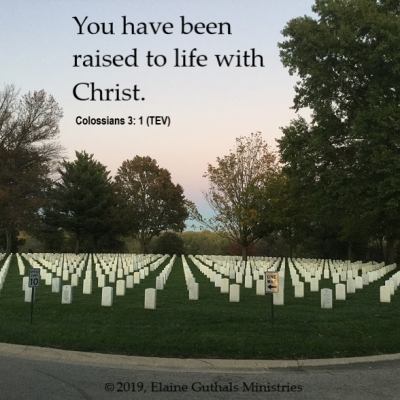
Paul was able to rejoice in his suffering because he knew it had a purpose. This daily devotional looks at Paul’s commission to be a minister to help others understand the mystery of the gospel.
Devotions in the Joy in the Gospel series

Paul was the consummate preacher. He rejoiced in his suffering because he knew God would use it to proclaim the gospel to those who needed to hear it.
Here is a running list of what we’ve discussed previously.
Paul knew Jesus voluntarily suffered, so he would too for Christ’s cause.
Paul had just acknowledged the change the Colossians had experienced after ABCDing. They were changed because of the gospel of which Paul was a minister.
Now, Paul acknowledges the suffering to which ministers are sometimes subjected. We know from II Corinthians 11: 24-28 all that Paul has suffered.
But wait a second. Paul not only acknowledged the sufferings, but he also rejoiced in them. Why?
Does Paul have a screw loose?
Simon wrote, “The vast region of human sorrow is to most a dark and dreary desert. But if we saw truly we should find many streams of refreshment, many sunny spots, and on all sides evidences of the Divine tenderness. … We infer, then, that the purest joy of heaven is sacrifice, and since Christ is the firstborn among many brethren, that He should furnish the ideal of all true living; which throws light upon the text.”
Paul’s attitude was, “Hey. We haven’t seen suffering until we look at what Jesus had to endure. This is pittance compared to that.”
Crucifixion had to have hurt. Bearing all our sins had to have been difficult when Jesus knew He didn’t deserve to die for things He didn’t do.
But that is what happened. Jesus voluntarily died for us because of His love for us.
It wasn’t just that. “For consider him who endured such hostility from sinners against himself, so that you won’t grow weary and give up” (Heb. 12: 3 CSB). Holier than thou people tried to build themselves up by tearing Jesus down.
They weren’t. He was.
Jesus did all that he did to show His love for us. Paul did, too,
Simon reminded us that we need not run out and sign up for the suffering van to come pick us up. I think he is talking more about our attitude when the sufferings come — and they will.

I don’t remember reading anything by Simon before, but I am sure liking what he is saying. He wrote, “Sympathy is the secret of true blessedness and usefulness.”
Right now, my church is going through a huge trial. It blindsided us. Satan is working overtime.
I am so proud of my church. Sunday, we showed sympathy and empathy to the family that had their lives torn apart. Hopefully, God used us to bless the family and give a smidgeon of healing.
We have to make sure our relationships are right with God. But we can’t stop there. We have to show God’s love to others while they are in their sufferings.
We can’t think that we are done at conversion. We have a lot of growing to do as we navigate the Sanctification Road.
Paul took his ministry very seriously.
Sometimes, servant is translated as slave. That wasn’t a derogatory term in biblical times.
We talked about this not long ago, and of course, I can’t find the devotion. Pastor Joey said the servants/slaves usually voluntarily entered servanthood. The main reason was they wanted to find a way to live.
True, some were captured in war. However, most made a conscious decision to better their circumstances by working for someone else.
The difference here was God was the one doing the commissioning. He calls people to their ministry.
Barlow connected commissioning to stewardship. A steward is a person in a subordinate position to God who has been given the responsibility to manage a skill or possession for the purpose of expanding His kingdom.
Think about that a second. We get so hung up about God wanting to use us when it is outside of our comfort zone.
God has given us everything we need to do — everything He wants us to do.

As inadequate as I feel, sometimes, about writing these devotions, God has given me everything I need to do it.
The same goes with you.
The purpose of every disciple — every believer — is “… to make the word of God fully known” (Col. 1: 25 CSB). We can’t pass this off to the Pastor John-types.
To read a related devotion, click the button below.
What may start out as a mystery of the gospel is revealed to us as we grow in the faith.
I see you jumping up and down over there. How can we be ministers when we don’t understand the Scriptures? Yes, Scriptures, at times, are a mystery.
Thomas defined mystery for us. He wrote, “The term ‘mystery,’ as here used twice, and often in this epistle, does not describe what is essentially incomprehensible, but rather what was hidden and is now revealed.”
God reveals it to us. Okay, maybe it might be years down the road. But God reveals it to us when we are mature enough to know.
Barlow said that we have to be morally fit. He wrote, “Like all the Divine procedures, the development was gradual, increasing in clearness and completeness as the fulness of time approached. It is an axiom in optics that the eye only sees what it brings with it the power to see: and in spiritual things the soul comprehends the revelation of God only as it is fitted by [the] Spirit.
Paul kept talking about the gospel being a mystery in Verse 27. Spurgeon expanded on what Thomas was saying about it being a revelation.
Spurgeon wrote, “The gospel is the grand secret. To the mass of mankind it was utterly unknown, and the chosen people only perceived dimly through the smoke of sacrifices anal the veil of types. It must ever have been a mystery out for revelation, and must be so still unless Christ comes to dwell within. Then all is clear.”
The mass of mankind is talking about the Gentiles. The Gentiles were anyone who weren’t Jews – us.
Okay, I have to try to process this. Spurgeon wrote, “If it be mystery, then Christ is ‘the mystery of godliness’; if glory, Christ is the brightness of His Father’s glory; if riches, there are ‘the unsearchable riches of Christ.’
I don’t know about you, but – even after almost the full year of study – I feel like there is some mystery still in godliness.
But let’s combine.
Okay, we have talked about the unsearchable riches of Christ before. It was back in Ephesians.
“To me, though I am the very least of all the saints, this grace was given, to preach to the Gentiles the unsearchable riches of Christ, and to bring to light for everyone what is the plan of the mystery hidden for ages in God, who created all things” (Eph. 3: 8-9 ESV).
To read a related devotion, click the button below.

Simon wrote, “Christ meets us where Love’s grandest revelations are possible.” Doesn’t that make us feel so happy inside?

Jesus is going to meet us. He is going to come running when we call to Him.
Jesus isn’t going to let us stay in the condition we are in. Yes, Jesus ate with sinners.
But they were changed after encountering Jesus. He told them to “… ‘Go, and from now on do not sin anymore’” (Jn. 8: 11 CSB).
Brother Delbert was talking about this last night at Bible Study. Jesus didn’t tell us that so we would go and never, ever commit another sin. He knows there is no way we could do that.
Jesus was saying go and mature in our faith. We are to go from the milk baby to the steak adult. We are to switch from doing to being.

Job Duty #4
Proclaim the Gospel (Mark 16: 15)
Father God. There are mysteries associated with the gospel. Your children do suffer in Your name. Yet, we can rejoice in the suffering and have revelations that will eliminate those mysteries. We have these as we are seeking You to grow in Your grace and knowledge. Help us to do just that. Amen.
If you have not become a believer in Christ, please read through the
Plan of Salvation and prayerfully consider what God is asking you to do.
A – admit our sins
B – believe His Son Jesus is our Redeemer
C – confess God as Sovereign Lord
D – demonstrate that commitment by making any changes needed in our lives to
live the way in which God has called us
What do you think?
Leave me a comment below (about this or anything else) or head over to my Facebook group for some interactive discussion.
If you don’t understand something and would like further clarification, please contact me.
If you have not signed up for the email daily or weekly providing the link to the devotions and the newsletter, do so below.
If God has used this devotion to speak with you, consider sharing it on social media.
Faith is a gift and a virtue, but faithfulness is a fruit of the Spirit. This daily devotional looks at how it is a reward for our faith in God.
To read devotions in the Redo for Godliness series, click the appropriate button below.
Devotions in the Fruit of the Spirit from the Inside Out series

I am going to say right up front. I don’t think any of the few sermons I found did a good job of explaining why faithfulness was a fruit of the Spirit. They did okay at saying what it was, but really didn’t take it much deeper than that.
Let’s see what we can piece together.
Here is a running list of what we’ve discussed previously.
Manning told us about goodness. He wrote, “Faith means veracity, so that a man’s word is as good as an oath.”
While the world is temporary, what we put our faith in is eternal.
We often think about faith as “… the assurance of things hoped for, the conviction of things not seen” (Heb. 11: 1 ESV). Assurance is also translated as confidence and reality. Conviction is translated as evidence and proof.
We think about the hope as applying to what is coming in the future.
How often do we think about faith in regards to what is happening in the present? Murray noted, “But while the substance of things may remain, yet the fashion of things is continually passing away.”
This world is only temporary. “… Earth and heaven fled from his presence, and no place was found for them” (Rev. 20: 11 CSB).
That doesn’t mean everything will stay the same until that day comes. Kids still grow up and move on to have lives of their own. Loved ones die. We get a different job — willingly or not so willingly.
Change is inevitable.
Ooo, baby. We are not good at change!
We don’t have to be good at change. We just have to focus on God.

I think what Murray was trying to say is we have to grow our faith until it is indestructible. It has to encompass our whole life down to our very souls.
Murray made a great observation. He wrote, “By nature we are His children.”
While I have trouble with Murray calling everyone children of God, I see what he is getting at.
It is something we talked about before. The worldview people are also made in God’s image. Disciples are children of God because of faith.
What I think Murray’s point was, we all have the capacity to have faith. In another devotion somewhere, someone said we all have the desire to have a relationship with God.
It is just — what are we going to do about it? We have to make a decision to have faith in God.
Once we do that, we start on the Sanctification Road where we grow our faith.
If you have not become a believer in Christ, please read through the
Plan of Salvation and prayerfully consider what God is asking you to do.
A – admit our sins
B – believe His Son Jesus is our Redeemer
C – confess God as Sovereign Lord
D – demonstrate that commitment by making any changes needed in our lives to
live the way in which God has called us
Yes, we grow our faith. Faith will begat more faith. So, in other words, our faith is rewarded with more faith.
We are to be faithful to God and mankind.
Thornton went into what all being faithful means. Obviously, it means we are faithful to God. But what does that mean?
Next, Thornton said that we should be faithful to our fellow mankind.
It is important that we make a conscious decision to choose God, even if we do not understand everything.
Beecher gave a good definition of what faith is. He wrote it “is sanctified imagination; it is having the horizon above the world; it is believing that there are things that have no mortal forms, in a future, in a whole assembly of intelligence above your head; it is having a life hereafter, a greater life than this.”
Lynch called it the most complex and comprehensive task of reason.
To me, that means that, though it may be the hardest, it is the most important exercise we will ever take. We’ve got to make a conscious decision on whether we are going to submit to God or not.
We will not always understand God’s ways because they are higher than we are. “For my thoughts are not your thoughts, neither are your ways my ways, declares the Lord. For as the heavens are higher than the earth, so are my ways higher than your ways and my thoughts than your thoughts” (Isa. 55: 8-9 ESV).
But we aren’t supposed to understand everything. “Trust in the Lord with all your heart, and do not lean on your own understanding” (Prov. 3: 5 ESV).
We have to depend on God.
We are to be faithful to God by following His Will.
Newbolt told us to who and what we are faithful. He wrote, “The spiritual man is faithful — faithful to his God, to his work, to himself. The life of faithfulness is a life of truth.”
We do this by keeping on the narrow path which leads to the narrow gate.
Newbolt told us how to do this.
Faith is a gift. “For by grace you have been saved through faith. And this is not your own doing; it is the gift of God” (Eph. 2: 8 ESV emphasis added).
Thornton told us the importance of having faithfulness that is a necessary.

We remember that faith is the only way through which we will gain salvation.
Father God. We praise Your name. We thank You for the gift of faith, and we thank You for the reward of faith when we exhibit our faith in You. Lord, it all comes from You. Amen.
What do you think?
Leave me a comment below (about this or anything else) or head over to my Facebook group for some interactive discussion.
If you don’t understand something and would like further clarification, please contact me.
If you have not signed up for the email daily or weekly providing the link to the devotions and the newsletter, do so below.
If God has used this devotion to speak with you, consider sharing it on social media.
Goodness is a trait that worldview people think is not dependent on loving God. This daily devotional looks at how it is a fruit of the Spirit and how it is dependent on our relationships with God.
To read devotions in the Redo for Godliness series, click the appropriate button below.
Devotions in the Fruit of the Spirit from the Inside Out series

We all want more goodness in the world. The problem is that it can’t be a worldview goodness. It has to be a fruit of the Spirit that comes from inside us out to the world.
Here is a running list of what we’ve discussed previously.
Manning told us about goodness. He wrote, “Next comes goodness; as a fountain pours out pure water, so the good heart is perpetually pouring out goodness and diffusing goodness on all around.”
Goodness is a complex fruit.
In a way, it is hard to understand what all is encompassed in the term goodness. Murray tried to do that by comparing it to the previous fruits of the Spirit. He wrote,
“Love, for instance, refers to one class of emotions, and is therefore definable. Joy is one phase of the emotions. Peace is a particular state of being. Long-suffering is an element of character. Gentleness is a habit of the disposition. These characteristics are, you see, definable. Their significance has its limitations, and the boundaries of our treatment were therefore clearly marked. But goodness is not one emotion, nor a single element of character, nor a particular state of being, nor any one habit of disposition.”
So, what is it? Murray went on to write, “In short, can we say less than this, that goodness implies perfection of moral being, perfection of spiritual state, perfection of manhood, in all things which adorn the same, and move it upward in that amplifying growth which the ordering of a good God has provided as the destiny for good beings. The fruit of the Spirit, therefore — its object and aim — is to produce a good man — a perfect man by that standard of measurement which God Himself, in His infinite wisdom and Fatherly ambition, applies to the character of His children.”
Wow! I love that. Goodness is tied to the perfection we are gaining on the Sanctification Road.
If you have not become a believer in Christ, please read through the
Plan of Salvation and prayerfully consider what God is asking you to do.
A – admit our sins
B – believe His Son Jesus is our Redeemer
C – confess God as Sovereign Lord
D – demonstrate that commitment by making any changes needed in our lives to
live the way in which God has called us
Hamilton called goodness love in action. That reminds me what we said in the second devotion in the series.
Think about all the fruits for a second. Manning noted the first two — love and joy — defined our relationship to God. The rest — peace, patience, kindness, goodness, faithfulness, gentleness, and self-control — defined our relationship with others. I think I would put peace on the God list as it is an inside job from Him.
Washburn said the faith, gentleness, and self-control are more our conduct. I see that. The list reflects the two greatest commandments and what we are going to do about them.
Goodness defines our relationship with others. It is pulling out the changes that God made in us when we ABCDed and showing them to the world.
This goodness only comes after we have ABCDed.
Murray noted that to obtain this fruit of the Spirit we have to be linked with the Holy Spirit by prayer. Most of us would say, “duh!” to that one.
But there are so many worldview people who think that goodness can be exhibited without ABCDing and being connected with the Holy Spirit. It can only come through God
Why? We’ve talked before that goodness is an attribute of God.
To read a related devotion, click the button below.
How does the fruit of the Spirit goodness differ from that? Thornton told us. He wrote, “It is genuine, disinterested, cheerful, and unostentatious benevolence.”
We just talked about being disinterested. The disinterested means Jesus was willing to give up the trappings of His Deity. Raleigh wrote, “Being thus Divine, He did not deem His equality with God a thing to grasp at and eagerly retain.”
To read a related devotion, click the button below.
In Elaine-speak, Jesus put us as a priority over everything in Heaven. He came to earth to love us and die for us.
When we have God’s goodness within us, we gain much.
Norton gave us a list of what we gain from goodness.
• The ability to forgive.
• The desire to be considerate and generous.
• The motivation to be conscientious and enduring.
• The nature to be heroic.
Beecher said something interesting. He said that goodness is “THE PRINCIPAL TEST OF PIETY.” Piety is defined as the persistent application of moral virtues to our lives because of our supreme love for God.
Let’s put that together. Goodness is the principle test of the persistent application of moral virtues to our lives because of our supreme love for God.
Wait! I am processing here, so bear with me.
Goodness is the principle test of the persistent application of the spiritual graces. Thornton said they play out in a number of ways.
We can’t think that we only need do good in the world. Our benevolence has to start in the church.

We talked about the other fruits of the Spirit being a progression to goodness. That is important because, as Newbolt said, they bring us the freedom to do good. We do good in order to expand God’s kingdom.
But we know that our redo for godliness isn’t looking for us to do better. Our goal is to be better.
Here is one last thing from Murray. He wrote, “The highest expression of manhood is Goodness; before its expression men bow in acknowledgment, and lifting their heads pronounce their applause. It is a law of our nature to abhor villainy; to despise the sneak and avoid a scamp. This is Nature’s tribute to honesty, and frankness, and uprightness. There is no weakness in Goodness, for it symbolises (sic) the strength of Heaven.”
It is our goal to be like God. Goodness is an attribute of God. When we become more like Him, He gives us the ability to be even more like Him.
Father God. We just praise Your name. Thank You for growing us to be more like You. Help us to put away the worldview agenda and focus on You. When we do that, we can take the fruits of the Spirit and show others Your love. Amen.
What do you think?
Leave me a comment below (about this or anything else) or head over to my Facebook group for some interactive discussion.
If you don’t understand something and would like further clarification, please contact me.
If you have not signed up for the email daily or weekly providing the link to the devotions and the newsletter, do so below.
If God has used this devotion to speak with you, consider sharing it on social media.
Gentleness has been translated several ways. This daily devotional looks at several of the components it encompasses.
To read devotions in the Redo for Godliness series, click the appropriate button below.
Devotions in the Fruit of the Spirit from the Inside Out series

The next fruit of the Spirit is usually either translated as gentleness or kindness. I can see how they are similar, but I am not totally convinced they are synonymous.
Let’s see what Manning had to say and go from there.
Here is a running list of what we’ve discussed previously.
Manning gave a pretty inclusive definition of gentleness. He wrote, “Gentleness means kindness and forbearance, the dissembling of wrong, the absence of the fire of resentment and of the smouldering of ill-will.”
Gentleness is the character trait, while kindness is the actions we use to show it.
Murray identified why I am struggling with having gentleness and kindness as synonyms. He wrote, “In the first place, we find that gentle does not primarily refer to manners.”
That was one thing I tripped in. Kindness is one of our manners. Gentleness isn’t.
Gentleness is part of our character. Kindness is the act through which it can be shown.
Vaughan said that we submit to God through being gentle.
The flip side is someone being rude. I know a person who, when I first met her, seemed rude most of the time. Her comment was always, “This is the way God made me.”
I always wanted to say back, “No, He didn’t. He wants us to have His character.”
Vaughan said that we submit to God through being gentle. He noted that gentle means coming from a good family.
We are from a good family. We are part of the family of God.
Gentleness ties with several different words at which we have already looked.
I like what Reeve said. Basically, he said that we have to want to be gentle to others.
To me, that means gentleness/kindness can be part of our redo for godliness. We can grow into gentleness.
Reeve also said it gentleness does not foster with doubtfulness and uncertainty. We aren’t supposed to waffle between gentleness and rudeness.
When we hook gentleness to forbearance — or patience — we get what Norton called quiet influences. I don’t see how we could have gentleness without patience.
Norton also hooked gentleness with being sober. Sober is a character trait distinguished by self-control, genuineness, and sound moral judgment. It is a calm and temperate disposition.
Well, that makes sense. If we said gentleness is a character trait, it is tied to soberness and being even keeled.
Hamilton hooked gentleness to love. He described it as quiet influence, like Norton did. Hamilton wrote, “It is love in all its depths, and all its delicacy. It is everything included in that matchless grace, the gentleness of Christ.”
See how interconnected they are? We define them by using another term.
Gentleness helps fix difficult situations while strengthening connections between people.
I really liked Thornton’s take on gentleness. He wrote, “It has its seat in the heart, and pervades all the faculties and powers of the man. It consists in humility, candour, sweetness of temper, and tenderness of feeling.”
Humility. We’ve talked a bit about humility lately. Humility is a character trait that diminishes pride and places dependence on God while holding a modest view of our importance with respect to others.
Thornton noted that gentleness is necessary in diminishing friction. Not only that, but it also helps to strengthen friendships.
Both of those speak to Manning’s dissembling of wrong. In order to right the wrong, we first have to get to the root of why it is there in the first place. Then we have to replace it with a solid friendship.
Yes, it is all about relationships.
Gentleness looks toward God instead of the world.
At first, I was scratching my head about what I put as the title. Gentleness means we don’t passionately resent ill-will????
Thornton tried to put it into perspective for me. He wrote, “Nothing more directly tends to impair gentleness than eagerly grasping at the things of the world. Though Christians are in the world they ought not to be of the world.”
To read a related devotion, click the appropriate button below.
When we try to latch onto things of this world, we tend to buy into the worldview agenda that says we can do whatever to get them. The ends justify the means.

I love what Murray said. He wrote, “And so, friends, we will say in the language of the text: ‘The fruit of the Spirit is love, joy, peace, long-suffering, gentleness.’ By-and-by, perhaps, we shall all become gentle. By-and-by we shall have done with economic industries and the friction they put upon our tempers, and enter into eternal entertainment. By-and-by we shall talk without harshness and live in neighbourhoods of peacefulness, unvexed by jealousy and unflushed with the inflammation of hate. Nor will we, even now, forget the example of the incarnated Gentleness that took human shape for our instruction.”
I am of the opinion that we will become gentle, not just perhaps. We have to. We will be like Jesus. “Dear friends, we are God’s children now, and what we will be has not yet been revealed. We know that when he appears, we will be like him because we will see him as he is” (I Jn. 3: 2 CSB).
Norton agreed with me. He reminded us about the duties of the Holy Spirit. “But the Advocate, the Holy Spirit, whom the Father will send in my name, will teach you all things and will remind you of everything I have said to you” (Jn. 14: 26 NIV).
Vaughan gave us a good progression for cultivating gentleness.
Gentleness is an important element of the character of God. We should cultivate it to be more like God.
Father God. Thank You for giving us gentleness as a fruit of the Spirit. We want to use it to eliminate tension and foster unity. We want to grow our character to include gentleness until we are like You. Amen.
What do you think?
Leave me a comment below (about this or anything else) or head over to my Facebook group for some interactive discussion.
If you don’t understand something and would like further clarification, please contact me.
If you have not signed up for the email daily or weekly providing the link to the devotions and the newsletter, do so below.
If God has used this devotion to speak with you, consider sharing it on social media.
There was one reason why Jesus began His mission. This daily devotional looks at how the gospel is all about reconciling us to God through Christ.
Devotions in the Joy in the Gospel series

The gospel is the story about Who Jesus is and why He came to earth. His purpose was to reconcile us to God. Let’s take a look.
Here is a running list of what we’ve discussed previously.
Christ’s mission was to reconcile us to the Father to restore our relationships with Him.
God’s #1 priority is our spiritual condition. Yes, He accepts us as we are — but He doesn’t let us stay that way.
Our alienated and hostile thoughts and evil actions must be changed. To be as God is, we must become holy, faultless, and blameless.
That is three ways of saying we must be sinless. Maclaren interpreted it this way. He wrote, “In the light of that revealing day His purpose is that we shall stand ‘holy,’ i.e., devoted to God, and therefore pure, ‘without blemish,’ as the offerings had to be, and ‘unreproveable,’ against whom no charge can be brought. They must be spotless indeed who are ‘without fault before the throne.’”
The first duty on our job description is that we have to be a living sacrifice. A living sacrifice is the embodiment of becoming sanctified and giving everything to God after being forgiven of our sins.
Job Duty #1
Be a Living Sacrifice (Romans 12: 1-2)
We may look at that, look at us, and say, “Never going to happen.”
But look at how Maclaren defined holy. He says that means devoted to God.
We have defined holy as to be set apart, perfect, and morally pure while possessing all virtues.
We are set apart because of our devotion to God. We can’t be perfect and pure without being devoted to God.
So, it is more like holy means to be set apart — because of our devotion to God — to become perfect and morally pure while possessing all virtues.
We have to chase a rabbit a second. How does that affect holiness?
In a way, I think the devoted to God has to be in that, too. I guess I am waffling about whether we are talking about how we get there or what is that for which we are reaching.
No, wait. I think what I have here is more of the definition of God’s holiness. In fact, it is the definition we used when we were looking at His attributes.
To read a related devotion, click the button below.
So, what do we use for us?
Well, we said in How Do We Overcome the Original Corruption of Bad Thoughts? that holiness is obedience to the truth.
That is kind of a shorthand to how Spurgeon defined it. He wrote, “Holiness is the entirety of our manhood fully consecrated to the Lord and moulded to His will.”
To read a related devotion, click the button below.
Spurgeon latched on to the devoted to God, too.
How about this? Holiness is obedience to the truth because of our devotion to God. God’s holiness is the transcendent excellence of His nature that includes elements of purity, dedication, and commitment that lead to being set apart.
I keep saying these devotions talk to me first. Thank you for letting me process that.
But isn’t this what Paul was leading up to in the previous verses. If we are going to follow the Christ of the gospel, we have to be holy and pure as He is.
We have to make the change by navigating the Sanctification Road.
If you have not become a believer in Christ, please read through the
Plan of Salvation and prayerfully consider what God is asking you to do.
A – admit our sins
B – believe His Son Jesus is our Redeemer
C – confess God as Sovereign Lord
D – demonstrate that commitment by making any changes needed in our lives to
live the way in which God has called us
Restoring our relationships to God mean more than conversion – sanctification.
Maclaren reminded us that there is a big if in these verses. If we don’t ABCD, the then won’t happen.
Yes, it is conditional on us submitting to God. Maclaren wrote, “However great the powers of Christ, and deep the desire, and fixed the purpose of God, no fulfilment (sic) of these is possible except on the condition of our habitual exercise of faith. The gospel does not act on men by magic.”
Submitting to God means we are looking outside of ourselves. We are looking to Him to sustain us in the rough patches.
But it is more than that? We have to continue in faith. Faith is a gift from God that enhances the conviction that the doctrines revealed in God’s Word are true, even if we do not understand all aspects of them, a belief which impacts our lives and distinguishes us from others.
Barlow said that we have to continue to believe God’s doctrines by professing then and practicing them. We say that means taking them from the head level to the heart level.
Why is it so important to get it to the heart level? It shows we really believe then. Barlow wrote, “Unbelief lures the soul from its confidence, sets it adrift amidst the cross currents of doubt, and exposes it to moral shipwreck. The soul’s safety is ensured not by an [infatuated] devotion to mere opinions, but by an intelligent and constant faith in Divine verities.”
Don’t get me wrong. We have to start our faith in the head level.
Where is our faith? We’ve described it before as beliefs, a.k.a., the assent of the mind. It has to start in our minds because it has to be a conscious decision.
To read a related devotion, click the button below.
I want to say that making the decision gets it to the heart level. But I don’t think that is entirely correct.
Maybe conversion does. But we just have a rudimentary belief.
I think that it truly becomes heart level as we grow by navigating the Sanctification Road.
If we get God’s doctrines down to the heart level, that helps us stave off unbelief. Instead, it makes us witnesses to God’s truth because we are rooted and grounded. Rooted and grounded means our faith has a foundation built on the gospel of Christ.
What flitted through my mind was a tight grip. A tree’s roots have to have a tight grip in the soil, or the tree goes splat in a high wind.
Yes, we have to intellectually understand what those doctrines are. We won’t understand everything, but we have to embrace them anyway. That means courageously living them daily.
We can’t think that faith is a one-time decision for God. It is a decision we must make every day of our lives. Black asked, “Is it the faith that continues and overcomes the world?”
When we do live them out, we have hope. Hope is the expectation, also called a living hope, based on the confidence that, because of our relationship with God, our names will be found in the book of life.
Spurgeon gave us a list of that for which we are hoping.
That is another thing that has to be continual. Black said it was tied with with Him and like Him. Elsewhere, Paul always calls it in Him.
To me, it shows how easy it is to backslide. Backsliding is when those who have made a profession of faith return to their sinful lives.
We have to counteract this with diligently navigating the Sanctification Road. Our seeking God gives us the foundation and the growth needed to keep our eyes on Him.
Hearing His Word (Rom. 10: 17).
Reading His Word (Rev. 1: 3).
Praying to Him (Heb. 4: 16).
Studying His Word (Ac. 17: 11).
Meditating on His Word (Ps. 1: 1-2).
Memorizing His Word (Ps. 119: 11).
Paul was adamant that the gospel was for all people. Age, race, gender, socioeconomic situation — any discriminator — did not apply. All could have the hope of a bright future.
But Barlow gave a real big caution. We don’t want “the multiplicity and fulness (sic) of our blessings …” to trip us up. We don’t want them to make us become complacent.
Also, Paul was humbled by the fact that God called him to be a minister for Him.
Black had an interesting observation. He connected this ministry for God with working out our salvation (Phil. 2: 12). He called us “… fellow-workers with God …”
That works. We learn by doing. We do by preaching and making disciples — also in our job description.
Job Duty #4
Proclaim the Gospel (Mark 16: 15)
Job Duty #6
Make Disciples (Matthew 28: 19-20)
I liked Black’s description of this. He wrote, “Like an artist student copying the work of a great master under his superintendence, we must ‘work out’ the beauty of Christ in our lives, though the great Master Himself must give the finishing touch and make it perfect.”
It require a response from us. We have to make a decision to follow God. If we don’t, we’ve made the decision not to follow Him.
We’ve gotten this far and haven’t discussed what the gospel really is. Black gave us a good explanation.
Father God. You designed the Plan of Salvation for us. You sent Your Son to reconcile us to You. Thank You for loving us so much. Amen.
What do you think?
Leave me a comment below (about this or anything else) or head over to my Facebook group for some interactive discussion.
If you don’t understand something and would like further clarification, please contact me.
If you have not signed up for the email daily or weekly providing the link to the devotions and the newsletter, do so below.
If God has used this devotion to speak with you, consider sharing it on social media.
Accepting the gospel of Christ brings us joy. This daily devotional looks at how the gospel centers around Christ and His Sacrifice.
Devotions in the Joy in the Gospel series

We cannot miss the fact that the gospel is about one thing – Jesus, the Son of God, is the Sacrifice to save us from our sins.
Here is a running list of what we’ve discussed previously.
The gospel is built around Christ and our acceptance of it.
We say a lot of times that we were created in the image of God. But what does that mean, especially since He is invisible and none of us have that superpower to see Him?
Watson got deep real fast. He wrote, “But there is a great difference between man made ‘in,’ ‘after,’ or ‘according to’ God’s image, and Christ ‘the image’ itself.”
Behrends expanded that to say that likeness means a facsimile. An image is an exact duplicate.
We were talking about Christ being the light in the last devotion. But that doesn’t make us shadows of Him.
That may have been true in the Old Testament, but it isn’t any more. “Since the law has only a shadow of the good things to come, and not the reality itself of those things, it can never perfect the worshipers by the same sacrifices they continually offer year after year” (Heb. 10: 1 CSB).
Watson stressed that we are similar to Christ but not the same. He is divine; we aren’t. He is perfect; we are far from it.
Christ is the representative of who God wants us to be. He has God’s nature, while we are still working on it.
Okay. I have to process this. I have always heard Christ is the firstborn. But Behrends threw a wrench into the thinking.
Behrends wrote, “The emphasis must be put upon both adjectives, ‘firstborn.’ The primacy of Jesus Christ in the creation is the primacy of birth. He alone is born, not made; all other things are made, not born; and there is a very marked distinction between these two.”
I get the Jesus wasn’t made part. It is the He was born part that gets me. I always have heard that Jesus is God, so He has always been, just as God is eternal.
Let me see if I can summarize how Behrends explained that and hook it to my thoughts. As firstborn, Jesus is an extension of God.
Jesus is also inseparable because their natures are one and the same. Behrends said that is where He gets the name Eternal Word of God (Jn. 1: 1). He wrote, “Even so is Christ the first born of creation as holding in His living thought all the realms and ages. Thus far the essential majesty of the Divine Christ.”
Thomas told us that firstborn is meant to tell us Jesus’ age, the continuance of the legacy of God, and His jurisdiction.
God said from the very beginning that Jesus was present at creation. “Then God said, ‘Let us make man in our image, after our likeness. …’” (Gen. 1: 26 ESV).
Jesus was more than just a sounding board. He played an actual part in creation. “All things were made through him, and without him was not any thing made that was made” (Jn. 1: 3 ESV).
We aren’t talking about Jesus having His assignments and God doing the rest. We are talking all things — seen and unseen — all the way up to the big things like governments and principles.
Maclaren reminded us that we have likenesses of royalty and prominent people on our coins. God, on the other hand, is not visible to us. In a way, that makes Him unapproachable.
We can see God through Jesus. He shows us Who God is because He is the same.
The through Him is very important. Maclaren said it makes a clear distinction between the Creator and the creation. Being firstborn removes Jesus from the chance of being confused as one of us.
Paul’s point was Jesus was around before anything else was created. He wasn’t an adolescent growing up. He was completely God.
Watson argued that this defeats Atheism, Deism, and Unitarianism. It shows there is a God, He does take part in His creation, and He is a Trinity.
God created us for the purpose of worshiping Him. We can only do this by accepting the gospel of the Christ.
Christ is pivotal to the gospel because He is holding it together.
I’ve heard Jesus described as the glue that held all things together. He includes us in that linkage.
We are reconciled to Christ in all things when we ABCD. That was why He became the Sacrifice — to shed His blood so that we might be saved.
Jesus is the head of the church.
Yeah, I put the same verse from two different translations for a reason.
Jesus is “… head over everything for the church” (Eph. 1: 22 NIV). He is the one Who is calling the shots, not us.
But that is okay. It is “… for the benefit of the church” (Eph. 1: 22 NLT). It isn’t to pull us down to a bad place. It is to raise us up.
Where is our faith? We’ve described it before as beliefs, a.k.a., the assent of the mind.
To read a related devotion, click the button below.
Our mind is in our heads. Watson wrote, “The head is where most of the vital functions are which impart energy through the system, and diffuse pleasure or pain, joy or sorrow. So Christ transmits whatever supplies are required for the Church’s welfare; through Him the whole body increases with the increase of God.”
Jesus is Head over that.
Christ is the beginning. He not only was around for the beginning, but He also is the beginning of the church. If He wouldn’t have agreed to be the Sacrifice, there would be no church.
God put the gospel into place at the appropriate time.
When we have a kid, do we want the kid to be exactly like us? Or are we hoping for anything but?
Jesus was just like God. “For God was pleased to have all his fullness dwell in him” (Col. 1: 19 CSB) meant that Jesus possessed all of God’s attributes.
To read a devotion in the Finding Our Center series, click on the button below.
Maclaren said it wasn’t only that Jesus just possessed these attributes. He had them in abundance. He would always have them because they dwell within Him.
Donne took it another way. He felt that the fullness meant that our sin was full up. That also meant that God’s anger was full up.
I can see that, too. We don’t really know what God’s thought process was for picking that time — except to say it was the right time.
It could have been the right time for a multitude of reasons. We just know that God knew best.
Donne made a great point. God couldn’t just forgive us of our sins. He needed Jesus’ blood to be spilled before He could. Donne called that the “… incomprehensibleness of man’s sin …”
It was Jesus’ mission to reconcile man from this unfashionable amount and degree of sin back to God.
But wait a second. What is this “… whether things on earth or things in heaven …” (Col. 1: 20 CSB) part?
Barlow thought that, not only was Jesus reconciling sinful people on earth back to God, but He was also reconciling sinless and unfallen creatures back to him.
I, for one, didn’t think there were any sinful and unfallen creatures besides the angels. So, what does that mean?
Donne felt it did mean “Angels, who were confirmed in perfect holiness and blessedness.”
But Donne go further than that. He wrote, “But the most proper and literal meaning is that all things in heaven and earth be reconciled to God; i.e., His glory, to a fitter disposition to glorify Him, by being reconciled to one another in Christ; that in Him, as Head of the Church, they in heaven and we on earth be united together as one body in the communion of saints (Ephesians 1:10).
Let’s check out Eohesians 1: 10. “And this is the plan: At the right time he will bring everything together under the authority of Christ — everything in heaven and on earth” (Eph. 1: 10 NLT).
All we do know for sure is that Jesus is the only pure One who can make the sacrifice. We definitely can’t. One day, we will all be united.
God was pleased with the Sacrifice.

I love what Behrends said. He wrote, “Between us and God there are no hierarchies of principalities and powers, no army of saints and martyrs. The way is clear through Christ. There is but one Mediator. Just as the head interprets, gathers up, and responds to the multitudinous demands of the body that are telegraphed along the nervous filaments of sensation, so also does Christ, as the Head of His Church, interpret her needs and respond to her prayers.”
We don’t have to go to the Pastor Joey-types first. We can pray straight to God.
We have to remember we have an almighty, sympathizing, everlasting Savior.
Jesus is the center of the gospel. We have to accept Him as God’s Son.
Father God. We accept Jesus as our Savior and Lord. We thank You for loving us enough to send Him to be a sacrifice for our sins. Amen.
What do you think?
Leave me a comment below (about this or anything else) or head over to my Facebook group for some interactive discussion.
If you don’t understand something and would like further clarification, please contact me.
If you have not signed up for the email daily or weekly providing the link to the devotions and the newsletter, do so below.
If God has used this devotion to speak with you, consider sharing it on social media.
God is all-powerful, making His Word powerful, too. This daily devotional looks at how God wants our relationships grown.
Devotions in the Joy in the Gospel series

When we read Scriptures, we are introduced to the power of God. He has one purpose: our salvation.
Here is a running list of what we’ve discussed previously.
God strengthens us through His power to deepen our faith.
Have you ever really thought about what this strength God is giving us really is?
There was a saying that I haven’t heard in a while. “They say what doesn’t kill you makes you stronger. At this point, I should be able to bench press a Buick.” What is the Buick God is giving us the strength to lift?
Morison cautioned that this is not referring to an intellectual strength. He said that does have its place, as he wrote, “It is important as a shield to protect from imposition, for guidance in times of sifting or wild speculation, and its possession widens the distance between man and the lower creation, and assimilates to Him whose understanding is infinite.”
We know God is not talking about a physical condition here. He is always more interested in our spiritual condition.

Morison called it strengthening the ethical principles. We have been calling those spiritual graces.
Specifically, Morison said Paul’s prayers probably centered on strengthening their faith, hope, and love. “So now faith, hope, and love abide, these three; but the greatest of these is love” (I Cor. 13: 13 ESV).
Those are the big three.
If we don’t have faith, we don’t have salvation. If we don’t have salvation, we don’t have hope for a future. All of this is built on God’s love for us and us returning that love to Him.
Paul talked about “being strengthened with all power …” (Col. 1: 11 CSB). His point was what we just talked about. “And my God will supply all your needs according to his riches in glory in Christ Jesus” (Phil. 4: 19 CSB).
To read a related devotion, click the button below.
God can supply all our needs because He is omnipotent. Omnipotent means God is all-powerful. “Now to him who is able to do above and beyond all that we ask or think according to the power that works in us” (Eph. 3: 20 CSB).
To read a related devotion, click on the appropriate button below.
God is all powerful in everything. Nothing is impossible for Him (Mt. 19: 26).
God gives us that strength. “I am able to do all things through him who strengthens me” (Phil. 4: 13 CSB).
To read a related devotion, click the button below.
This power is because of “… his glorious might …” (Col. 1: 11 CSB) because God’s power is ingrained in His glory. God’s glory is, in part, the product of the adoration created when we praise God and give Him honor.
To read a related devotion, click the button below.
We took the scenic route to get to glory.
To read a related devotion, click the button below.
Have you ever thought about why God surrounds us? Davenant got me thinking about us being surrounded.
God knows we will be surrounded on all sides by enemies. Yes, He knows we also have to stand. But He is going to fight for us.
It is very comforting to know that we have the power of God fighting for us. Satan is going to surround us, too, and he isn’t going to come alone.
We will need God fighting for us.
God will using this glorious power that can and will conquer Satan.
Disciples inherit the light because Jesus is the Light.
Paul was given to break out in prayer at any given moment. This was because he was so thankful at what God had done, was doing, and would do.
Yes, Paul was thankful about all the physical stuff. He was more thankful for salvation.
If you have not become a believer in Christ, please read through the
Plan of Salvation and prayerfully consider what God is asking you to do.
A – admit our sins
B – believe His Son Jesus is our Redeemer
C – confess God as Sovereign Lord
D – demonstrate that commitment by making any changes needed in our lives to
live the way in which God has called us
Sometimes, we keep the feeling that we are not worthy enough for God to even approach God. In a way, this is good.
We, by ourselves, are not and can do nothing to make us worthy to get us in the same room as God. We don’t want us to get an inflated ego and think we are entitled to be His children. There is nothing we can do to earn our way into Heaven.
We’ve got to get the we part out of it. We have to focus on the God part.
We are worthy because God deemed us worthy when we ABCDed.
Maclaren wrote, “The inheritance is, ‘in the light,’ a realm where purity and knowledge and gladness dwell.”
Jesus had always been identified as being the light of the world.
To read a related devotion, click on the appropriate button below
The key here is that being in the light is an inheritance. We inherit the light because we are children of God. “But to all who did receive him, who believed in his name, he gave the right to become children of God” (Jn. 1: 12 ESV).
So, we have done full circle back to those who will be strengthened by the power. Maclaren wrote, “If it be a kingdom of light, then only souls who love the light can go thither, and until owls and bats rejoice in the sunshine there will be no way of being fit but by ourselves being ‘light in the Lord.’”
Maclaren made another great point. We may not be a perfect fit yet for Heaven, but God is making us fit.

Sin lives in the darkness because that is where Satan is.
Barlow described what all the darkness entails.
One of Paul’s favorite themes is that we were slaves to sin. He was following Jesus’ lead. “Jesus answered them, ‘Truly, truly, I say to you, everyone who practices sin is a slave to sin’” (Jn. 8: 34 ESV).
This is that from which Jesus has rescued us. We are no longer in the darkness of sin after we ABCD. We have been delivered to the light.
Paul said that when he said we are “… transferred us into the kingdom of the Son he loves” (Col. 1: 13 CSB). Barlow said that gives us moral freedom and privilege.
Noticed that does not mean we have the license to sin. That means we are freed to be the moral person that imitates God.
God will shovel out all of the bad stuff we’ve been holding onto and replace it with His love. We just have to let Him.
We have to remember that Jesus is King Jesus. He is the King of kings and Lord of lords (I Tim. 6: 15). Love rules His kingdom.
The kingdom of the Son might be a different term than we are generally use. Davenant told us why this term is appropriate.
Redemption brings us forgiveness of our sins, therefore, a relationship with God.
I see this as Paul’s summary statement. This is what it is all about.
This takes it full circle, too. God is more concerned about our spiritual condition.
Let’s break it down a bit.
This is the only thing that is going to right our relationship with God. We have to ask for salvation.
Davenant reminded us that, a lot of times, we are not looking for God’s deliverance. God comes looking for us.
Not only that, when we take a step in God’s direction in faith and repentance, He comes running to us.
It is important that we search for God. Since Adam and Eve sinned, we are all born into Satan’s sinful nature. We have to make the conscious decision to ask for God’s saving grace.

Pope said we have to endure the trials and resist the temptation in order to strengthen our relationships with God.
God wants us to grow our patience, long-suffering, endurance, and joy.
Father God. You are all-powerful. We need that power to call us from the darkness to the light. We consciously choose to follow Your Light. Amen
What do you think?
Leave me a comment below (about this or anything else) or head over to my Facebook group for some interactive discussion.
If you don’t understand something and would like further clarification, please contact me.
If you have not signed up for the email daily or weekly providing the link to the devotions and the newsletter, do so below.
If God has used this devotion to speak with you, consider sharing it on social media.
Paul’s letter to the Colossians began with Paul acknowledging their salvation. This daily devotional looks at how salvation and regeneration leads to growth and wisdom.
Devotions in the Joy in the Gospel series

Paul was pleased with the growth the Colossians experienced after salvation. He used this opportunity to show them how to live their lives with God at the forefront.
Here is a running list of what we’ve discussed previously.
Daille indicated that Epaphras was the Colossians’ pastor. He felt Paul was trying to reassure them that Epaphras was teaching the same doctrine Paul taught.
We all are fellow servants with Paul. He indicated his love for another minister. This minister remained faithful and did his job.
Epaphras passed on to Paul the progress the Colossians were making on the Sanctification Road. He could tell this because of their love of the Holy Spirit.
Another indication of their progress was their regeneration.
If you have not become a believer in Christ, please read through the
Plan of Salvation and prayerfully consider what God is asking you to do.
A – admit our sins
B – believe His Son Jesus is our Redeemer
C – confess God as Sovereign Lord
D – demonstrate that commitment by making any changes needed in our lives to
live the way in which God has called us
Davenant indicated that the product of this was Christian love. He wrote, “But Christian love arises from the Holy Spirit, and is altogether full of holiness and purity.”
We have to profess a genuine salvation to God. Then we have to grow closer to have His character.
Our Sanctification Road must be filled with knowledge that leads to wisdom and spiritual understanding.
Paul always celebrated the salvation of others. Here, he indicated that celebration included praying for them.
Paul told the Colossians that, when he prays for them, he asks that they grow in knowledge. This is a specific knowledge, though. It can only be obtained through spiritual understanding and wisdom.
Pope said Paul has already heard about their faith and love. He asks for their sanctification.
Pope expanded onto what Paul was really asking. He wrote, “As a matter of request it is the Holy Spirit’s operation on our faculties making the knowledge experimental, rewriting the moral law on the heart, and making it there supreme.”
The knowledge without the understanding is useless. The understanding without making a change to our character is just as useless.
Pope said that the combination of both knowledge, understanding, and action is what kicks it up to wisdom.
We have to remember we aren’t studying just moral laws here. We have to kick it up to spiritual graces.
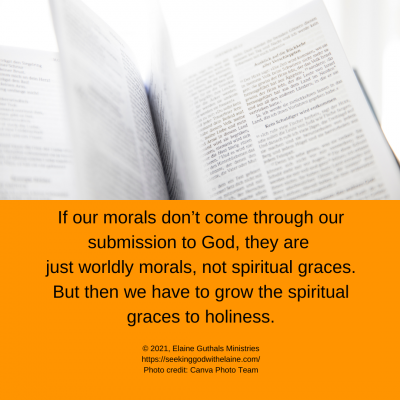
Pope explained what that means, too. He wrote, “The unregenerate understanding may make the moral law an object of study, and arrange the whole into a system of rules for the wisdom of human ethics. But in the regenerate the precepts are studied in the light of the new nature, and the whole wisdom of holiness is the result of a teaching that is “from above” (James 1:17).”
Paul prayed for others that they would grow spiritually. This would mean they gain wisdom.
Growth on the Sanctification Road produces the results of a life pleasing to God.
Walking is the term used to describe how we live our lives. This walk has to be “… worthy of the Lord …”
That makes it pleasing to God. We are walking in his will to honor Him.
Ooo, baby. I have to process this one. Pope wrote,” Such an aim to secure His approval as should win His complacency always and in all things. There is a daring completeness in this sentence. There is no reservation for human infirmity, no undertone of deprecation of the Divine severity, no hint of a tolerant construction of our conduct.”
If we are trying to win God’s approval, we are not to be self-satisfied – aware or unaware of it. We are to depend on God alone.
We demonstrate our godliness by producing spiritual fruit through the performance of good works. This doesn’t equate to secular charity. It is about our thoughts, words, and deeds.
Our motive behind doing the good works has to be for the purpose of expanding God’s kingdom. This means winning people to Christ.
Our thoughts, words, and deeds lead to holiness because they come from God. They are just being played out in our physical world.
I don’t know about you, but I always equate the “… growing in the knowledge of God” (Col. 1: 9-10 CSB) with growing our relationship. Pope out a different spin on it.
When we hook the “… growing in the knowledge of God” (Col. 1: 10 CSB) with the “… bearing fruit in every good work …” (Col. 1: 10 CSB), it blows open the concept of fruit. Pope said it makes fruitfulness unlimited.
Pope said that the foundation here is obedience. Obedience means to hear, conform to, and carry out the instructions that God gives us.
So, we’ve gone full circle back to knowledge, understanding, and action. As this grows, we become more in tune with God’s Will.
That opens up unlimited possibilities in serving God. Pope said that this brings us further along the Sanctification Road to perfection.
Pope expanded on what we were talking in the last devotion. Endurance is a passive form of patience, while long-suffering is an active form.
To read a related devotion, click the button below.
I have to get this down to its elemental form. So, bear with me.
Pope wrote, “While the Divine knowledge is the instrument or energy of the holy life, it is the Divine power which is connected with the patience of that holiness.
Knowledge = power + patience.

I get that. We are only going to truly learn about Who God is as He reveals Himself to us after salvation. Therefore, we will only learn it through His power.
Scriptures are only an introduction to Who God is. We cannot go to His Word and do it ourselves. God isn’t into self-help.
The Holy Spirit teaches us. “But the Counselor, the Holy Spirit, whom the Father will send in my name, will teach you all things and remind you of everything I have told you” (Jn. 14: 26 CSB).
But we don’t get a download of that knowledge. It is a continual learning process on the Sanctification Road. We need patience to keep at it.

Pope said we have to endure the trials and resist the temptation. When we do that, we gain wisdom.
We should be willing to do our duties to the best of our abilities.
Salvation is important. It is equally important that we navigate the Sanctification Road to become more like God.
Father God. We pray that, if Paul were here today, that he would be as excited about our progress on the Sanctification Road as he was with the Colossians. Help us to grow in Your wisdom and understanding. Amen.
What do you think?
Leave me a comment below (about this or anything else) or head over to my Facebook group for some interactive discussion.
If you don’t understand something and would like further clarification, please contact me.
If you have not signed up for the email daily or weekly providing the link to the devotions and the newsletter, do so below.
If God has used this devotion to speak with you, consider sharing it on social media.
