Author: admin

  • John the Baptist’s Audience

    Many people from all around came to hear John the Baptist’s message. This devotional reading looked at who they were and some of their responses to his message.
     

    Nuggets

    • John’s audience consisted of Jewish people, not pagan Gentiles.
    • John’s message wasn’t just for his audience.
    • All who came to John were looking for Jehovah to do something.
    • Baptism wasn’t simply John’s version of a modern altar call.
    • The Jordan River was an important river in the history of Israel.
    • The Pharisees struggled with John’s message.
    • It was the Sadducees’ responsibility, though not always priests, to maintain the elements of Temple worship.
    • John loved to call the Pharisees and Sadducees names.
    • We don’t know for sure what John’s question was about.
    • Jehovah will judge us according to the condition of our hearts.
    • Their belief was their reliance on Abraham’s ancestry.
    • We prove that we are living the way Jehovah wants us to when we produce the fruit He wants.

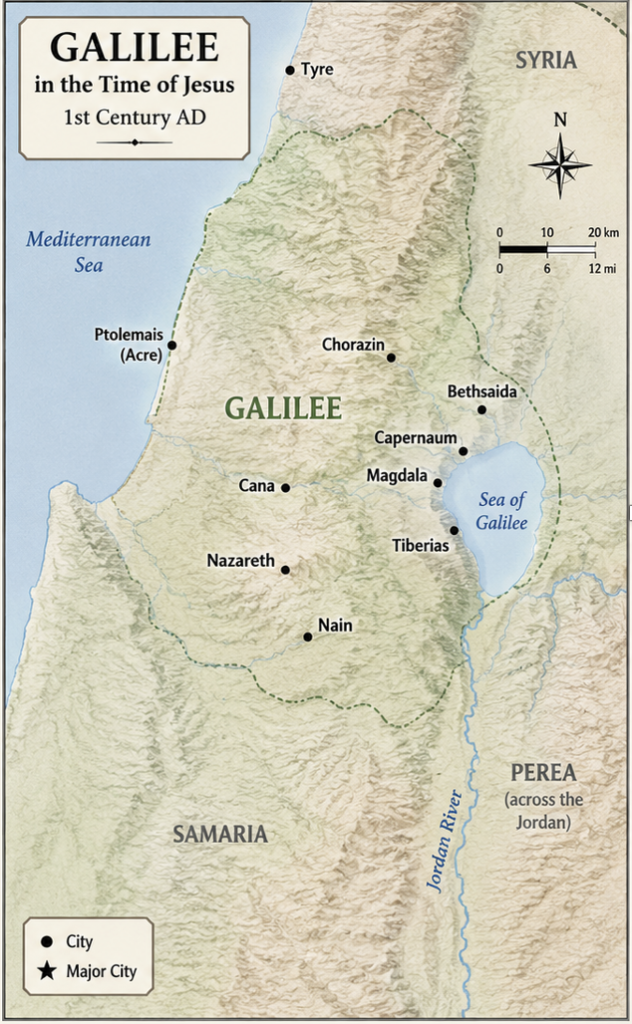
    John the Immerser didn’t set up court in the Temple. His mission field was the wilderness.

    Still, John drew large crowds to hear him preach. Some came from miles away to hear the message.

    Not all liked what they heard, though.

    Let’s Put It into Context

    To read devotions in The Battle for the Heart theme

    Devotions in the The Ministry of John the Baptist series

    John’s Audience

    “People from Jerusalem and from all of Judea and all over the Jordan Valley went out to see and hear John. And when they confessed their sins, he baptized them in the Jordan River” (Mt. 3: 5-6 NLT)

    “All of Judea, including all the people of Jerusalem, went out to see and hear John. And when they confessed their sins, he baptized them in the Jordan River” (Mk. 1: 5 NLT)

    People from Jerusalem

    John’s audience consisted of Jewish people, not pagan Gentiles.

    More than just the priests resided in Jerusalem. Residents were also ordinary first-century Jews.

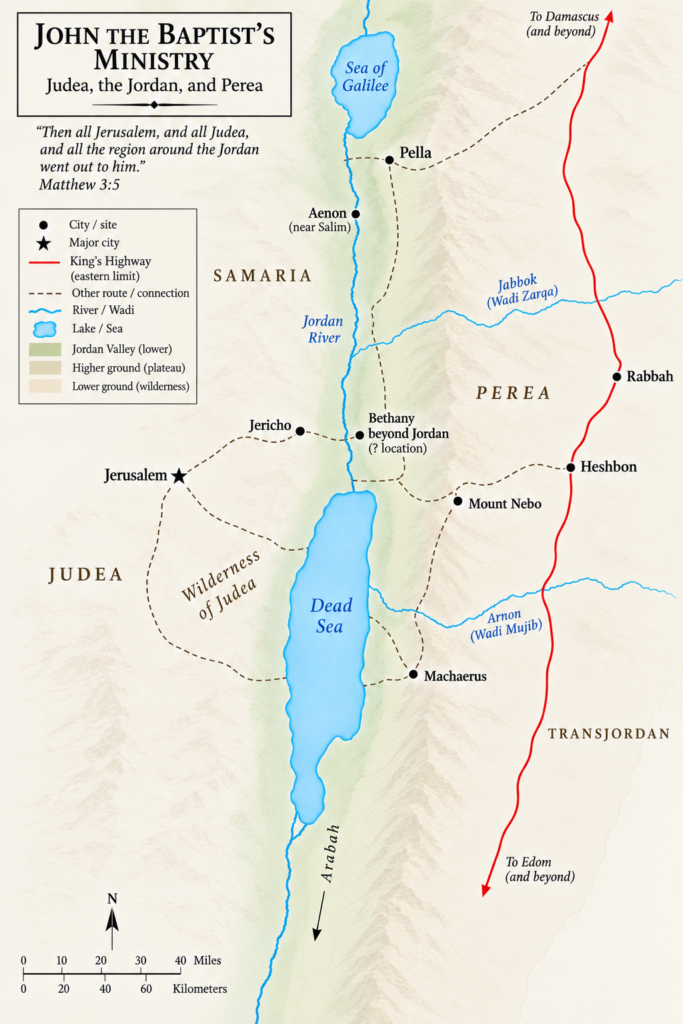
    It was those common people who also flocked to the Jordan River to see the prophet. More importantly, they were going to renew their relationships with Jehovah.

    Many probably would have questioned John’s message to them. Why was he calling covenant people to repentance?

    But then Jehovah repeatedly called Israel to repentance.   The prophets had warned Israel that merely possessing the covenant, the temple, circumcision, sacrifices, or ancestry did not make them faithful to Jehovah.

    John’s first-century audience would have seen this as a call to return to covenant faithfulness.

    All of Judea

    John’s message wasn’t just for his audience.

    When Matthew and Mark said all of Judea, they weren’t talking about just the people who came to the Jordan and heard his message. He was talking about every Jewish person everywhere.

    Jehovah was sending His salvation for all who would believe and obey.

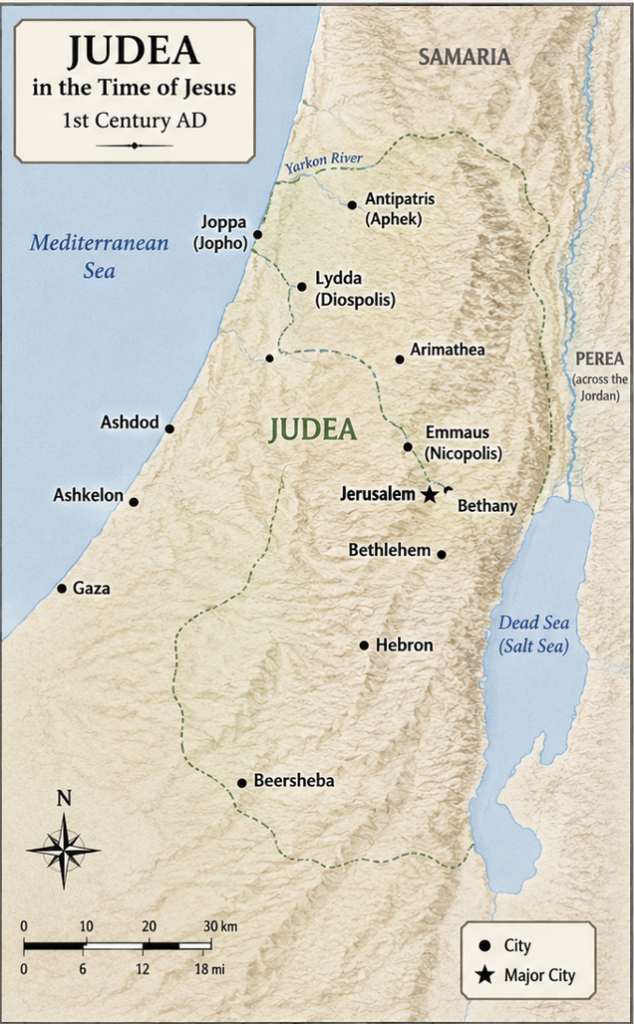
    Judea is the mountainous southern region of Israel. Named after Jacob’s son Judah, it includes the key cities of Jerusalem, Bethlehem and Hebron.

    It was formed around 930 BC when the kingdom split into the Northern Kingdom of Israel and the Southern Kingdom of Judah.

    All Over the Jordan Valley

    All who came to John were looking for Jehovah to do something.

    Many people who came from all over believed that John’s message would be the beginning of Jehovah restoring Israel’s freedom from foreign oppression. They were ready for that.

    This belief would have been strengthened by the language John used. He talked through kingdom language.

    But they would have believed that John’s message was telling them that foreign domination and Gentile influence was going to be ending.

    Baptized

    Baptism wasn’t simply John’s version of a modern altar call.

    John was calling Israelites to undergo a baptism associated with repentance as they prepared for God’s coming intervention. That would have been a huge slap to many of the Jews in his audience.

    Don’t assume that being Jewish means you are automatically ready for what God is about to do.

    John was telling them to not put too much stake in family lineage. He was also telling them that going through the motions of religion wasn’t what Jehovah expected.

    Jehovah was interested in the condition of their hearts. Nothing has changed – He is still interested in the condition of our hearts.

    Jordan River

    The Jordan River was an important river in the history of Israel.

    We tend to think that the Jordan River is the boundary of Israel. That is because it is described as crossing the Jordan River into the Promised Land.

    “The eastern boundary will start at Hazar-enan and run south to Shepham, then down to Riblah on the east side of Ain. From there the boundary will run down along the eastern edge of the Sea of Galilee, and then along the Jordan River to the Dead Sea. These are the boundaries of your land” (Num. 34: 10-12 NLT).

    That doesn’t mean the area east of the river – the Transjordan – wasn’t important. It was in that area that the tribes of Reuben, Gad, and the half tribe of Manasseh settled.

    The two and a half tribes were seen as refusing to enter the Promised Land. It was seen as the dividing line between faith in divine faithfulness and unbelief.

    I always thought it was fitting that Israelites’ wandering after their exodus was bookended between two miraculous events that showed the power of Jehovah. Just as He parted the Red Sea that ensured their departure, He parted the Jordan for their entrance.
    Questioned by the Religious Leaders

    “But when he saw many Pharisees and Sadducees coming to watch him baptize, he denounced them. ‘You brood of snakes!’ he exclaimed. ‘Who warned you to flee the coming wrath? Prove by the way you live that you have repented of your sins and turned to God. Don’t just say to each other, “We’re safe, for we are descendants of Abraham.” That means nothing, for I tell you, God can create children of Abraham from these very stones. Even now the ax of God’s judgment is poised, ready to sever the roots of the trees. Yes, every tree that does not produce good fruit will be chopped down and thrown into the fire” (Mt. 3: 7-10 NLT)

    “When the crowds came to John for baptism, he said, ‘You brood of snakes! Who warned you to flee the coming wrath? Prove by the way you live that you have repented of your sins and turned to God. Don’t just say to each other, “We’re safe, for we are descendants of Abraham.” That means nothing, for I tell you, God can create children of Abraham from these very stones. Even now the ax of God’s judgment is poised, ready to sever the roots of the trees. Yes, every tree that does not produce good fruit will be chopped down and thrown into the fire’” (Lk. 3: 7-10 NLT)

    Pharisees

    The Pharisees struggled with John’s message.

    We tend to make the Pharisees into one of the villains, but we shouldn’t. They were doing what they thought Jehovah had called them to do.

    Pharisees weren’t priests. They didn’t have any role in the Temple system.

    What Pharisees were was a lay movement devoted to the careful study, preservation, instruction, and practice of the Law of Moses. That made them guardians of the law. They were the bridge between the Law of Moses and the people.

    Unfortunately, many Pharisees were keeping the Law in a way that had become detached from repentance, mercy, and inward change. They added to the Law that resulted in a distortion of the Law. Also, they elevated tradition over the Law.

    Sadducees

    It was the Sadducees’ responsibility, though not always priests, to maintain the elements of Temple worship.

    Known for their acceptance of the Torah as their primary authority, this powerful group read Scripture in a conservative way. Their desire was to preserve existing structures.

    Many collaborated with the Roman authorities to maintain their status. This made them appear to be more concerned with politics than religion. Many served in the Sanhedrin, gaining a majority in the highest court in Israel.

    Because of this accommodation with the Romans, common Jews didn’t relate to the Sadducees as they did the Pharisees. It didn’t help, either, that the Sadducees were upper class and wealthy – therefore, out of touch with the common Jewish people.

    You Snakes

    John loved to call the Pharisees and Sadducees names.

    Here, it was snakes. Yep, John did not cut them any slack. He called them on their sincerity.

    Sometimes translated as brood of vipers, John was calling them sons of serpents. He was referring to their legalism, hypocritical attitudes, and corruption.

    Shaan Sharma, who played Schmuel in The Chosen, had a really good observation. He said, “When we think of all of them [the Pharisees] all as a block and try to ascribe a quality  to them all like all Pharisees are bad or whatever, that just doesn’t make sense. Even the apostles did not fully understand what Jesus was trying to tell them.”

    Resource

    No, you and I can’t pass judgment on the genuineness of another’s salvation. That is only up to Jehovah.

    Pastors are to counsel their congregation when they see someone sinning. It is for the strength of the congregation.

    Who Warned You

    We don’t know for sure what John’s question was about.

    More than likely, John was asking a rhetorical question. He wasn’t looking for a name.

    If we look ahead, we may get a clue. Connect “Prove by the way you live …” (Mt. 3: 8 NLT) and “… we are descendants of Abraham …” (Mt. 3: 10 NLT).

    The who warned you isn’t as important as what makes you think you can escape it.

    Think about it. The Pharisees have shown up for baptism. And John was saying, “Wait a second. So, you know judgment is coming, too?”

    They know Jehovah’s judgment is coming. Their belief in Jehovah and Scripture wasn’t being questioned.

    But to answer the question, we can figure several possibilities. They were at the Jordan, so they heard John’s preaching. That means they recognized the prophetic significance of him.

    Their presence may have been sincere. We know some of the Pharisees did believe in Yeshua.

    We also know that not all did. John may have been exposing their insincerity.

    John could have been telling them that outward actions alone aren’t what Jehovah is after. He was saying reality has to be shown in our hearts.

    Jehovah looks for repentance, not self-righteousness.
    We must truly repent for salvation.

    Who Warned You

    We don’t know for sure what John’s question was about.

    More than likely, John was asking a rhetorical question. He wasn’t looking for a name.

    If we look ahead, we may get a clue. Connect “Prove by the way you live …” (Mt. 3: 8 NLT) and “… we are descendants of Abraham …” (Mt. 3: 10 NLT).

    The who warned you isn’t as important as what makes you think you can escape it.

    Think about it. The Pharisees have shown up for baptism. And John was saying, “Wait a second. So, you know judgment is coming, too?”

    They know Jehovah’s judgment is coming. Their belief in Jehovah and Scripture wasn’t being questioned.

    But to answer the question, we can figure several possibilities. They were at the Jordan, so they heard John’s preaching. That means they recognized the prophetic significance of him.

    Their presence may have been sincere. We know some of the Pharisees did believe in Yeshua.

    We also know that not all did. John may have been exposing their insincerity.

    John could have been telling them that outward actions alone aren’t what Jehovah is after. He was saying reality has to be shown in our hearts.

    Ax of God’s Judgment

    Jehovah will judge us according to the condition of our hearts.

    We may think the ax is the punishment for bad behavior. It isn’t.

    John is making use of prophetic imagery. We may not recognize it, but his audience did.

    The audience would have heard already laid at the root of the trees. They would have understood imminence.

    The woodcutter has already arrived, cutting off the opportunity for the Pharisees and Sadducees having even one more season to prove themselves. The ax is placed at the root. This isn’t a pruning. It is a fundamental failure of character.

    Tree imagery was often used in the Old Testament to represent people, rulers, nations – especially when Jehovah’s judgment was involved.

    They wouldn’t have seen this as a call to be a better person. They would have heard the language of the prophets – judgment is coming.

    Abraham Is Our Father

    Their belief was their reliance on Abraham’s ancestry.

    John said that being Abraham’s descendants alone wasn’t going to save them.

    I am sure the Pharisees were tripping over this. What I think it is saying is that Jehovah can make anyone a descendant of Abraham — Jews and Pharisees.

    Jehovah chooses how we are saved. He said it is only through belief and imitation of Yeshua. “There is salvation in no one else! God has given no other name under heaven by which we must be saved” (Ac. 4: 12 NLT).

    It is also Jehovah’s choice as to who is saved. He had long said that all people would be offered salvation (Gen. 12: 3).

    Prove by the Way You Live – Produce Good Fruit

     We prove that we are living the way Jehovah wants us to when we produce the fruit He wants.

    Okay, John was talking to the Pharisees, but he was telling them to produce fruit. I bet that went over like a led balloon.

    Remember, the Pharisees thought they were so righteous. But Yeshua was battling for their hearts.

    And Yeshua doesn’t pull punches.

    We see the word fruit, and we think of fruit of the spirit (Gal. 5: 22-23). That isn’t what is being discussed here.

    Producing fruit is the byproduct when we live a life that builds our relationship with Jehovah. Seeking Him, trusting Him, and abiding in Him result in righteousness.

    We have to prove our sincerity by walking with Jehovah.
    Making the Connections #1

    Conder gave us a physical description of the Jordan River. He wrote,

    “The Jordan rises as a full-grown river, issuing from the cave at Banihs, about 1,000 feet above the level of the Mediterranean …. In twenty-six and half miles, there is a fall of 1,682 feet, or more than sixty feet to the mile ….”

    Resource

    Making the Connections #2

    I have been puzzling over something since Yeshua was presented at the Temple. But we need to set some background first.

    It had been 400 years since Israel had a prophet. The last one had been Malachi.

    That is widely accepted.

    But when Yeshua was presented at the Temple, Anna was called a prophet. “Anna, a prophet, was also there in the Temple …” (Lk. 2: 36 NLT).

    How can they say they had no prophets if they recognized Anna as a prophet?

    Well, Anna’s role was different than John’s. She only appears in the Temple, waiting for and recognizing Yeshua. That was a single event that didn’t speak to the nation of Israel.

    John had a whole ministry in the wilderness. He was saying that Jehovah’s promised intervention was arriving.

    We also have to remember that Yeshua called John more than a prophet (Mt. 11: 11; Lk. 7: 28).

    The prophets of the Old Testament just proclaimed the arrival of the Messiah. John was saying, “He’s here.”

    Does that mean there could have been more prophets between Malachi and John? Possibly.

    It just means that prophetic forecasting was being accomplished through John’s message.

    John was the first great prophetic voice to arise in Israel’s wilderness since the days of the Old Testament prophets, and his ministry marked the long-awaited transition from prophetic anticipation to the arrival of the Messiah.

    Making the Connections #3

    John – and Yeshua – had to combat the Pharisees’ and Sadducees’ belief that being Abraham’s descendants was enough. Part of the reason was because the Messiah was fulfilling a covenant promise.

    They had trouble seeing that the promise was made long before the covenant was struck between Jehovah and Abraham. The promise wasn’t made to Abraham. He was just the vehicle through which the promise was fulfilled.

    Heart Check

    Think about the battle Yeshua is engaged in for your heart. Ask yourself the following questions.

    • Am I trusting Jehovah, or am I trusting my religious identity?
    • Am I genuinely repenting, or am I only going through religious motions?
    • Am I producing the fruit Jehovah wants, or am I producing the fruit I want?
    • Am I following Jehovah’s way, or am I relying on my own way?

    How Do We Apply This?

    • Ask Jehovah to reveal where we have become self-righteous.
    • Don’t use our heritage, church attendance, or religious service as evidence of salvation.
    • Take repentance seriously.
    • Let our actions demonstrate what we believe.
    • Prepare our hearts to follow Yeshua wherever He leads.

    Father God. Thank You for those who bring Your message to us. Help them to boldly tell us Your words that we need to hear. Help us to open our hearts so that Your message transforms us into who You want us to be. Amen.

    If you don’t understand something and would like further clarification, please contact me.

    If you have not signed up for the email providing the link to the devotions and the newsletter, do so below.

    If God has used this devotion to speak with you, consider sharing it on social media.
  • John the Baptist’s Mission

    John was given a specific job by Jehovah. This devotional reading looks at the ministry and message given to John.

    Nuggets

    • John’s mission was long and firmly established.
    • Voice is an interesting word that has many definitions.
    • It really wasn’t John’s mission.
      Luke is the only Gospel to repeat the complete passage from Isaiah.
    • If Luke was trying to quote Isaiah 40: 5, it seems like he missed the mark.
    • The wilderness was a place where Jehovah spoke and revealed Himself.
    • John’s task was to restore the nation’s relationship with Jehovah, awaken a community lost in indifference and unwillingness to repent, encourage repentance, announce that the Kingdom of Heaven was near, and introduce a new era.
    • We tend to see salvation as the acknowledgment of our personal sins.
    • More than just turning away from sin, we have to turn to Jehovah.
    • The concept of immersion was not a new idea.
    • The Kingdom of Heaven really wasn’t a place – it was a reign.

    It was known before John was born what he would do with his life. Jehovah had called him to prepare the way for Messiah.

    Let’s Put It into Context

    To read devotions in The Battle for the Heart theme

    Devotions in the The Ministry of John the Baptist series

    John’s Ministry Prophesied

    “The prophet Isaiah was speaking about John when he said, ‘He is a voice shouting in the wilderness, “Prepare the way for the Lord’s coming! Clear the road for him!”’ (Mt. 3: 3 NLT)

    “This is the Good News about Jesus the Messiah, the Son of God. It began just as the prophet Isaiah had written: ‘Look, I am sending my messenger ahead of you, and he will prepare your way. He is a voice shouting in the wilderness, “Prepare the way for the LORD’s coming! Clear the road for him!”’” (Mk. 1: 1-3 NLT)

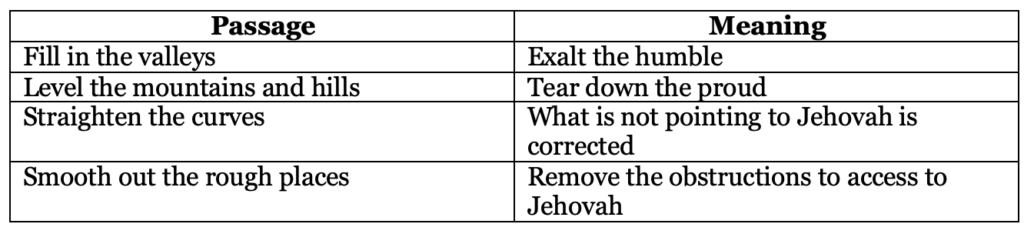
    “Isaiah had spoken of John when he said, ‘He is a voice shouting in the wilderness, “Prepare the way for the LORD’s coming! Clear the road for him! The valleys will be filled, and the mountains and hills made level. The curves will be straightened, and the rough places made smooth. And then all people will see the salvation sent from God.”’ (Lk. 3: 4-6 NLT)

    “‘Then who are you? We need an answer for those who sent us. What do you have to say about yourself?’ John replied in the words of the prophet Isaiah: ‘I am a voice shouting in the wilderness, “Clear the way for the LORD’s coming!”’ (Jn. 1: 22-23 NLT)

    John’s mission was long and firmly established.

    John’s mission was known from before he was born. Gabriel told Zechariah what John was to do.

    “He will be a man with the spirit and power of Elijah. He will prepare the people for the coming of the Lord. He will turn the hearts of the fathers to their children, and he will cause those who are rebellious to accept the wisdom of the godly” (Lk. 1: 17 NLT).

    Zechariah would have seen this as covenant language. Gabriel’s words hearkened back to the prophecy in Isaiah 40: 3 – sorta.  “Listen! It’s the voice of someone shouting, ‘Clear the way through the wilderness for the Lord! Make a straight highway through the wasteland for our God!

    This is echoed in similar passages in Malachi.

    • “Look! I am sending my messenger, and he will prepare the way before me. Then the Lord you are seeking will suddenly come to his Temple. The messenger of the covenant, whom you look for so eagerly, is surely coming,” says the Lord of Heaven’s Armies” (Mal. 3: 1 NLT).
    • “Look, I am sending you the prophet Elijah before the great and dreadful day of the Lord arrives. His preaching will turn the hearts of fathers to their children, and the hearts of children to their fathers. Otherwise I will come and strike the land with a curse” (Mal. 4: 5-6 NLT).

    Let’s break it down.

    Voice Shouting in the Wilderness

    Voice is an interesting word that has many definitions.

    Many times, when we just hear the word voice, we immediately focus on the definition that describes the sound produced that comes through our mouths. But it also refers to producing that sound through the resonance of the vocal cords.

    Our voice also means the opinion or attitude we are expressing. If it is used as a verb, it refers to the act of presenting that opinion or attitude.

    Other definitions refer to the use of the voice. We express those opinions and attitudes in words. We use that voice in concert with others.

    When I put all that together and apply it to this Scripture, it takes the focus off John. It shows the most important thing is the message John was giving.

    This is important – and for more reasons than its physical attributes.

    Prepare the Way

    It really wasn’t John’s mission.

    We’ll get to John’s message in a bit. But he knew what the purpose of his ministry was.

    John was preparing the way for Yeshua. He wasn’t trying to set up a new religious movement. He wasn’t really explaining everything they needed to know.

    What John was saying was that the King of the world was coming.

    Be ready.

    The Valleys Will Be Filled

    Luke is the only Gospel to repeat the complete passage from Isaiah.

    Luke quotes Isaiah 40: 4 almost verbatim. “Fill in the valleys, and level the mountains and hills. Straighten the curves, and smooth out the rough places” (Isa. 40: 4 NLT).

    Isaiah used the process of building a road to describe what Jehovah was going to do.

    In order to make a road level, dirt must be moved from one place to another. The spots that are at a higher elevation must be cut down. That dirt must be used to fill in that area with a lower elevation.

    I grew up saying the country roads were placed to go around the 40s. The land was plotted out in 40-acre portions. Those who built the road didn’t want it to go through the middle of the field – and take out a lot of farmland from production.

    Instead, the new road followed the plots. It went between them. So, there were a lot of curves.

    Here, Jehovah said, “Nope. I am not going to worry about physical, worldview notions. I am going to cut straight to the matter – your heart.”

    We can read this another way.

    John wasn’t preparing the path to Jehovah through the wilderness; he was preparing the people’s hearts to receive Him.
     
    Jehovah hasn’t moved away from us. He is right there calling us back to Him.
     
    Neither will Jehovah lower His standards to bring us to Him. He expects us to follow Him.

    Salvation Sent from God

    If Luke was trying to quote Isaiah 40: 5, it seems like he missed the mark.

    Take a look at the last verse of Isaiah’s prophecy. “Then the glory of the Lord will be revealed, and all people will see it together. The Lord has spoken” (Isa. 40: 5 NLT).

    That is much different from what the Hebrew says. And the glory of YHWH shall be revealed, and all flesh shall see [it] together, for the mouth of YHWH has spoken.

    That seems much different from “And then all people will see the salvation sent from God.” (Lk. 3: 4-6 NLT), doesn’t it?

    But is it?

    Think about it. The glory of the Lord is Jehovah’s presence.

    More importantly, Yeshua is the glory of the Lord. Put these verses together. 

    • “So the Word became human and made his home among us. He was full of unfailing love and faithfulness. And we have seen his glory, the glory of the Father’s one and only Son” (Jn. 1: 14 NLT).
    • “I have seen your salvation, which you have prepared for all people. He is a light to reveal God to the nations, and he is the glory of your people Israel!” (Lk. 2: 30-32 NLT).
    • “The Son radiates God’s own glory and expresses the very character of God, and he sustains everything by the mighty power of his command. When he had cleansed us from our sins, he sat down in the place of honor at the right hand of the majestic God in heaven” (Heb. 1: 3 NLT).

    Remember, Yeshua means God saves. Immanuel means God is with us.

    Yeshua is our salvation and the glory of the Lord.  He brings both.

    So, when the Hebrew wording says, all flesh shall see [it] together, it is correct. It refers to Jehovah’s glory – which Yeshua is.

    When the modern wording says see the salvation, that is correct also.

    John’s Mission Field

    “In those days John the Baptist came to the Judean wilderness and began preaching …” (Mt. 3: 1 NLT)

    “This messenger was John the Baptist. He was in the wilderness …” (Mk. 1: 4 NLT)

    “Then John went from place to place on both sides of the Jordan River …..” (Lk. 3: 3 NLT)

    “At this time John the Baptist was baptizing at Aenon, near Salim, because there was plenty of water there; and people kept coming to him for baptism. (This was before John was thrown into prison.)” (Jn. 3: 23-24 NLT)

    The wilderness was a place where Jehovah spoke and revealed Himself.

    Jehovah took the Israelites/Jews away from their comfort zones and placed them in a broken landscape where they had to depend on Him.

    In the wilderness, Jehovah exposed their hearts.

    From before Yeshua stepping onto the stage to discuss redemption, Jehovah was saying, “Look at your hearts. That is what I want – not actions.”

    John was firmly committed to Jehovah. He separated himself from the world, preferring solitude to reflect and connect with God and remain detached from its influences.

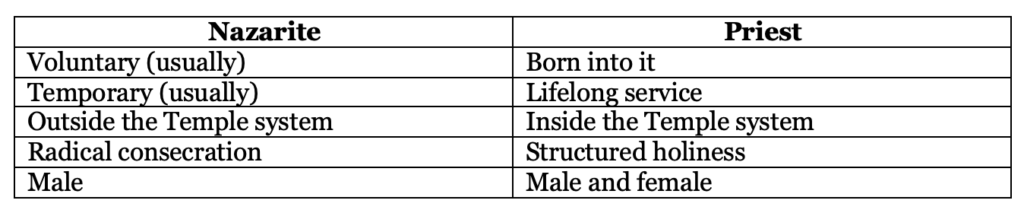
    John wasn’t commissioned to be a priest, even though he was of the lineage of Aaron. Instead, he took the Nazarite vow.

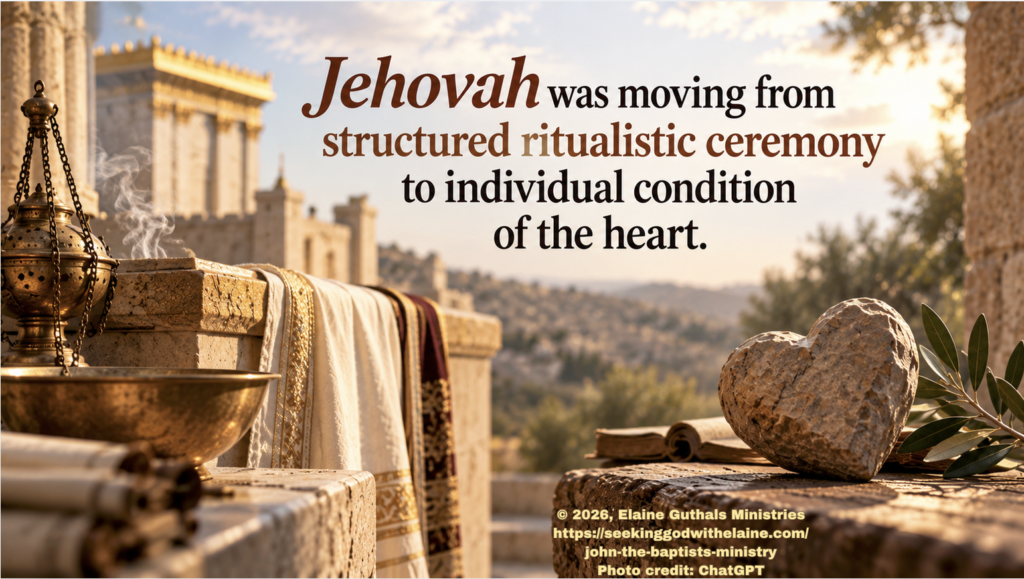
    This is a huge shift. Jehovah was taking religion out of the Temple and putting it into the wilderness.

    Jehovah was moving from structured ritualistic ceremony to individual condition of the heart.

    John’s Message

    “… His [John the Immerser’s] message was, ‘Repent of your sins and turn to God, for the Kingdom of Heaven is near’” (Mt. 3: 1-2 NLT)

    “This messenger was John the Baptist. He was in the wilderness and preached that people should be baptized to show that they had repented of their sins and turned to God to be forgiven” (Mk. 1: 4 NLT)

    “… preaching that people should be baptized to show that they had repented of their sins and turned to God to be forgiven” (Lk. 3: 3 NLT)

    John’s task was to restore the nation’s relationship with Jehovah, awaken a community lost in indifference and unwillingness to repent, encourage repentance, announce that the Kingdom of Heaven was near, and introduce a new era.

    Repent of your sins

    We tend to see salvation as the acknowledgment of our personal sins.

    Isn’t that what repent and be baptized is all about? Well, yes and no.

    In the Old Testament, the primary Hebrew concept is expressed through shuv (שׁוּב), meaning to turn, return or go back, and nacham (נָחַם), which can express regret, relenting, or a change of mind/intent.

    This carried into the New Testament as to change one’s mind or way of thinking.

    John’s message, while it did invite personal repentance, was more for the nation of Israel. Look back at what Gabriel told Zechariah.

    “And he will turn many Israelites to the Lord their God” (Lk. 1: 16 NLT).

    Remember, Israel had a covenant relationship with Jehovah. The problem Israel’s leaders encountered was they forgot that was a relationship, rather than just ritual ceremony.

    Turn to God

    More than just turning away from sin, we have to turn to Jehovah.

    You are moving away in sin. Do a u-turn. Take a roundabout. Pull into a driveway, back out, and come back the way from which you came.

    In other words, do a 180 degree and come back to Jehovah.

    • “… He [John the Immerser] … proclaiming an immersion involving turning to God from sin in order to be forgiven” (Mk. 1: 4 CBS).
    • “Turn from your sins to God, for the Kingdom of Heaven is near!” (Mt. 3: 2 CJB).

    The goal is not to eliminate sin in our lives. It is to restore our relationships with Him.

    Baptized

    The concept of immersion was not a new idea.

    First-century Jews were familiar with immersion in the mikvah. The mikvah (מִקְוֶה) refers to a collection of water and came to be associated with the ritual bath used for purification.

    In the Torah, immersion in water could mark a person moving from a condition of ritual uncleanness to ritual cleanness. John’s audience would have understood the action.

    They would have seen a big difference. John was not having them immerse in the mikvah but in the Jordan River.

    This would have carried national significance, too. It was this river that the fledgling Israelite nation crossed after 40 years of wandering in the wilderness.

    John was taking Israel back to the Jordan River so that they could be immersed. They would enter unclean and emerge prepared for what Jehovah was about to do.

    No, that doesn’t say they emerged ritually clean.

    John’s immersion was a public act of purification and preparation — a person went down into the water and came back out symbolically prepared for the imminent arrival of the Lord. John physically stood in the wilderness, at the Jordan, immersing Israelites as he prepared a people for Jehovah.

    The Kingdom of Heaven

     The Kingdom of Heaven really wasn’t a place – it was a reign.

    When Matthew said that John’s message was that the Kingdom of Heaven was at hand, it wasn’t talking about a kingdom that exists in the sky.

    It was talking about the rule of God becoming manifest. Jehovah’s reign was about to start.

    Here is how Strugnell explained it. He wrote,

    “John’s baptism probably symbolized not so much anticipated entrance into the kingdom of God as an anticipatory submission to the coming world judgment, which was represented as a coming second ‘baptism’ by the Holy Spirit in a river of fire.”

    Resource

    So, it had nothing to do with where the kingdom would be – rather it told Who was going to rule the kingdom.

    John wasn’t merely calling individual Jews to become better people. He was calling Israel to prepare itself as a people for the arrival of its King. Their immersion in the Jordan became a visible declaration: “We are turning back to Jehovah, and we are preparing ourselves for what He is about to do.”

    Making the Connections #1

    Let’s put the progression together.

    • Jehovah is coming.
    • His glory will be revealed.
    • His reign is drawing near.

    John was immersing people to prepare them for the arrival of Jehovah’s reign.

    What would first-century Jews have heard? They would hear John say, “Jehovah is about to take His rightful place as King!”

    They weren’t looking for a different place to live. They were looking for Jehovah to take the action He had promised.

    Making the Connections #2

    We can’t hide behind some persona of being a good person. We have to deal with the root cause of spiritual death — humans are sinful — each and every one of us.

    We like to say, “Repent. Say you’re sorry, and everything will be okay.”

    The term for repent in Hebrew is shuv (שׁוּב). It means to turn, return, go back, and restore.

    Redemption starts with confessing our sins (Mk. 1: 5). We can only confess what we acknowledge.

    But we can’t do it on our own. Oh, yes, we make the decision that we want to repent and turn.

    We can only accomplish that through Jehovah’s grace. When we return to Jehovah, we are restored.

    “Restore us, O Lord, and bring us back to you again! Give us back the joys we once had!” (Lam. 5: 21 NLT).

    What do we return to? We are restored to righteousness.

    From the moment of birth to the moment of our conversion, there had never been a moment when we were righteous. To be righteous, we faithfully walk according to Jehovah’s covenant.

    We may think we were good people. That is not a substitute for righteousness.

    Making the Connections #3

    To concept of repentance carried into the New Testament as to change one’s mind or way of thinking.

    Think about it. We are not called just to change our actions. We are called to change our attitudes and priorities.

    When we do that, we change our way of thinking. We change our thinking to align with Jehovah’s ways.

    Heart Check

    Think about the battle Yeshua is engaged in for your heart. Ask yourself the following questions.

    • Am I merely trying to become a better person, or am I actually turning back to Jehovah?
    • Have I allowed sin, pride, tradition, or self-reliance to become an obstruction between me and Jehovah?
    • What needs to change in my heart so that my life is pointing toward Jehovah rather than away from Him?

    How Do We Apply This?

    • Examine where our hearts are pointing.
    • Identify the obstructions of pride, sin, self-reliance, misplaced priorities, and even religious traditions that can become barriers that keep us from fully surrendering to Jehovah.
    • Turn around and return to Jehovah.
    • Prepare our hearts for the King.
    • Let Jehovah restore what has been broken.

    Father God. Thank You for the message You gave to John. Lord, help us turn back to You so that we are walking Your paths. Amen.

    If you don’t understand something and would like further clarification, please contact me.

    If you have not signed up for the email providing the link to the devotions and the newsletter, do so below.

    If God has used this devotion to speak with you, consider sharing it on social media.
  • What the Jews Expected in a Messiah

    In the last devotion, we discussed  the atmosphere of first-century Israel. This devotional reading looks at the expectations they had for a Messiah.

    Nuggets

    • Many first-century Jews were looking for Mashiach (מָשִׁיחַ) – the Anointed One.
    • Jehovah promised One Who would defeat the oppressors and deliver His people.
    • Restoration theology dominated Jewish Messianic expectation.
    • Overall, first-century Jews were looking for the establishment of Jehovah’s reign by the Messiah, including His dwelling among His people again.

    We tend to look at the Gospels from the end view. We know the stories – some have heard them many times – and we know how it ends.

    First-century Jews didn’t. They were waiting for the Messiah.

    They didn’t know Messiah’s name, face, or even how Jehovah would fulfill His promises – they just knew that He would.

    In the last devotion, we talked about the oppressors that had occupied Irael from around 198 BC until they won their independence in 142 BC. Rome captured Jerusalem in 63 BC.

    Many first-century Jews considered themselves still in exile because, though they worshiped in a rebuilt Temple and lived in their ancestral land, they remained subject to Gentile authority.

    So, what did Israel expect in a Messiah?

    Let’s Put It into Context

    To read devotions in The Battle for the Heart theme

    Devotions in the The Ministry of John the Baptist series

    Israel Expected a King

    “Rejoice, O people of Zion! Shout in triumph, O people of Jerusalem! Look, your king is coming to you. He is righteous and victorious, yet he is humble, riding on a donkey — riding on a donkey’s colt. I will remove the battle chariots from Israel and the warhorses from Jerusalem. I will destroy all the weapons used in battle, and your king will bring peace to the nations. His realm will stretch from sea to sea and from the Euphrates River to the ends of the earth” (Zech. 9: 9-10 NLT).

    Many first-century Jews were looking for Mashiach (מָשִׁיחַ) – the Anointed One.

    While some spiritual teachers could be anointed first-century Israel was looking for David’s descendant to take over the physical throne. He was to become their earthly leader.

    They wanted their national identity back. They were so done with foreign occupation and foreign domination. Many of those oppressors tried to get them to give up that which made them Jewish.

    That is why they were looking for the Son of David. We’ve talked a little about this.

    • ·Gabriel told Mary that her Son would inherit David’s throne. “… The Lord God will give him the throne of his ancestor David. And he will reign over Israel forever; his Kingdom will never end!” (Lk. 1: 32-33 NLT).
    • The angel in Joseph’s dream call him, “… Joseph, son of David …” (Mt. 1: 20 NLT).

    This wasn’t something the Jews had come up with. These were expectations based on Scripture known to many. The Davidic covenant transformed David’s royal line into a Messianic hope.

    • “All kings will bow before him, and all nations will serve him” (Ps. 72: 11 NLT).
    • “… And my servant David will be their prince forever. And I will make a covenant of peace with them, an everlasting covenant. I will give them their land and increase their numbers, and I will put my Temple among them forever” (Ezek. 37: 25-26 NLT).
    • “Jesus was in the center of the procession, and the people all around him were shouting, ‘Praise God for the Son of David! Blessings on the one who comes in the name of the Lord! Praise God in highest heaven!’” (Mt. 21: 9 NLT).

    Jehovah made an everlasting covenant with David that his dynasty would reign forever.

    Israel Expected a Deliver

    “For to us a child is born, to us a son is given; and the government shall be upon his shoulder, and his name shall be called Wonderful Counselor, Mighty God, Everlasting Father, Prince of Peace” (Isa. 9: 6 NLT)

    Jehovah promised One Who would defeat the oppressors and deliver His people.

    Go back to Israel being under foreign domination. They wanted the Messiah to deliver them from their oppressors.

    Think about it. If we had been under 100 years of foreign domination, we would want the same thing. We would want our freedom to worship as Jehovah had commanded.

    Remember, the Seleucids especially promoted Hellenization, pressuring Israel to abandon its traditional Jewish practices. This would have gone against the Jewish expectation many had that they had to return to Jehovah before the Messiah would come.

    Israel had long been rescued from their oppressors by a strong leader. Moses delivered the Hebrews from  Egyptian oppression. Joshua led them on the conquest of the Promised Land.

    David was a strong protector of the nation. It was the son of this mighty warrior that they were looking to deliver them from Roman occupation.

    Of course, many thought this deliverance will be accompanied by the judgment of their oppressors. They would have loved to see Jehovah show them His superiority – especially if there were payback included for their treatment of the Jews.

    Israel Expected a Restorer

    “‘The day is coming,’ says the Lord, ‘when I will make a new covenant with the people of Israel and Judah. This covenant will not be like the one I made with their ancestors when I took them by the hand and brought them out of the land of Egypt. They broke that covenant, though I loved them as a husband loves his wife,’ says the Lord. ‘But this is the new covenant I will make with the people of Israel after those days,’ says the Lord. ‘I will put my instructions deep within them, and I will write them on their hearts. I will be their God, and they will be my people. And they will not need to teach their neighbors, nor will they need to teach their relatives, saying, “You should know the Lord.” For everyone, from the least to the greatest, will know me already,’ says the Lord. ‘And I will forgive their wickedness, and I will never again remember their sins’” (Jer. 31: 31-34 NLT)

    Restoration theology dominated Jewish Messianic expectation.

    The people are restored to the covenant relationship and blessings Jehovah promised. When first-century Jews thought of redemption, they thought Ga’al (גָּאַל). This meant to redeem, to reclaim, or to act as a kinsmen-redeemer.

    It was more than restoration of the land. They were looking for purification of the people and renewed covenant faithfulness to Jehovah.

    First-century Jews were looking for the covenant to be restored. Jehovah had made covenant promises to Israel, and they were waiting for Messiah to bring those promises to their promised fulfillment….

     They were looking for the rebuilding of Jerusalem, which first necessitated the defeat of hostile nations. Again, they were looking for the restoration of the Davidic kingship.

    Included in restoring the Davidic kingship was bringing home the Lost Tribes – the ones that had either stayed in Babylon or had scattered elsewhere. They wanted a complete rebuilding of the Northern and Southern Kingdom.

    Again, the first-century Jews were looking for the restoration of their Davidic king and national identity. Upon defeating the foreign powers, they looked for worldwide acknowledgment of Jehovah.

    This theology was tied to the belief that exile never ended. They were back in their land, but they were still under foreign – Gentile – rule.

    To many, something was still missing. The restoration promised by the prophets had not yet arrived in its fullness.

    First-century Jews were looking for the complete restoration promised.

    Israel Expected God’s Kingdom

    “And I will make a covenant of peace with them, an everlasting covenant. I will give them their land and increase their numbers, and I will put my Temple among them forever. I will make my home among them. I will be their God, and they will be my people. And when my Temple is among them forever, the nations will know that I am the Lord, who makes Israel holy” (Ezek. 37: 27-28 NLT)

    Overall, first-century Jews were looking for the establishment of Jehovah’s reign by the Messiah, including His dwelling among His people again.

    They didn’t think of this as, “Hey, we’re going to go to Heaven.” It was definitely more than a warm, fuzzy feeling.

    To them, they wanted Jehovah’s presence to be as His glory was in the Temple.

    “When Solomon had finished praying, fire came down from heaven and consumed the burnt offering and the sacrifices; and the glory of the Lord filled the temple. And the priests could not enter the house of the Lord, because the glory of the Lord had filled the Lord’s house” (II Chron. 7: 1-2 NLT).

    Jehovah had been living among His people from the beginning. He met face to face with Adam and Eve. His presence filled the Tabernacle. Later it field the Temple.

    Before the Babylonian exile, that presence left the Temple. While they had the Second Temple, Jehovah’s presence hadn’t returned.

    The first-century Jews were eagerly awaiting the return of Jehovah’s presence to live among them.

    The Jews thought of Jehovah’s kingdom in very concrete concepts.  They expected restoration of Israel, vindication of covenant promises, defeat of oppressors, and visible rule under Jehovah’s appointed king.

    First-century Jews had increased hopes of the Messiah coming.

    Making the Connections #1

    The first-century Jews were waiting for Jehovah to deal with someone who has wronged us can contain both faith in His justice and very human desires about what that justice ought to look like.

    This is what they were expecting. And honestly, given what they had experienced, you can understand why.

    One thing we can’t expect, though, is for Jehovah to right every wrong that has been done to us. I don’t think that is in His plan.

    Jehovah will judge the person who has wronged us by how that wronged Him – not us.

    Making the Connections #2

    If we look back at the four sections, they are related. There is some overlap between sections.

    • Jehovah would send His anointed King.
    • His King would deliver His people.
    • His King would restore what had been broken.
    • Through His King, Jehovah’s righteous reign would be established.

    No, things didn’t happen exactly the way the first-century Jews expected it to happen. But that is okay.

    It isn’t going to happen the way we expect it to, either. No one is going to get everything right.

    Even people who sincerely believe God’s promises and understand much of Scripture correctly can still misunderstand how Jehovah will fulfill those promises.

    Heart Check

    Think about the battle Yeshua is engaged in for your heart. Ask yourself the following questions.

    • Have I decided what Jehovah must do before I am willing to recognize what He is doing?
    • When someone has wronged me, am I trusting Jehovah with justice — or am I telling Him what I think justice should look like?
    • Do I trust Jehovah enough to believe that His fulfillment of a promise may look different from what I expected?
    • Am I willing to let Jehovah fulfill His promises His way and in His timing?

    How Do We Apply This?

    • Trust Jehovah with what you cannot see yet.
    • Don’t confuse your expectation with Jehovah’s promise.
    • Give your hurts to Jehovah.
    • Stay open to Jehovah’s way.
    • Remember that understanding can grow.

    Father God. You told us that You would send a Messiah to redeem us. You did – even when their expectations didn’t turn out as they thought. Lord, Yeshua is coming again. Help us to expect Him and show us how and when we are to watch. Amen.

    If you don’t understand something and would like further clarification, please contact me.

    If you have not signed up for the email providing the link to the devotions and the newsletter, do so below.

    If God has used this devotion to speak with you, consider sharing it on social media.
  • The Ministry of John the Baptist

    In anticipation of Yeshua’s ministry, John was called to prepare the way for Him. This devotional reading looks at the world in which John began his ministry.

    Nuggets

    • Luke used the timestamp of the ministry of John the Immerser beginning during the fifteenth year of Tiberius as Roman emperor, around AD 28-29.
    • Tiberius was the second Roman Emperor, who was born in 42 BC.
    • Pontius Pilate was the prefect of Judea under Rome from approximately AD 26 to AD 36.
      Herod Antipas was the son of Herod the Great.
    • Philip the Tetrarch was the son of Herod the Great and the brother of Herod Antipas.
    • Annas was the Jewish High Priest from around AD 6 to AD 15.
    • Caiaphas served as High Priest from around AD 18 to AD 36.
      John’s diet was based on what he found in the wilderness.
    • We don’t know how the message came to John – we just know it did.

    Yeshua was now among Jehovah’s people, but it wasn’t time for Him to start His ministry. Someone else had to come first.

    That someone was John the Immerser.

    John the Immerser was born six months before Yeshua in the hill country (har Yehudah – הַר יְהוּדָה), possibly in Ein Kerem for Juttah, near Jerusalem. His birth was foretold to his father by an angel (Lk. 1: 11). It was a miracle because Zechariah, a Levitical priest of the order of Abijah, and Elizabeth were both elderly, and Elizabeth was barren.

    Elizabeth was a relative of Mary, the mother of Yeshua. While we aren’t sure how they were related, many think they were sisters. This made Yeshua and John cousins.

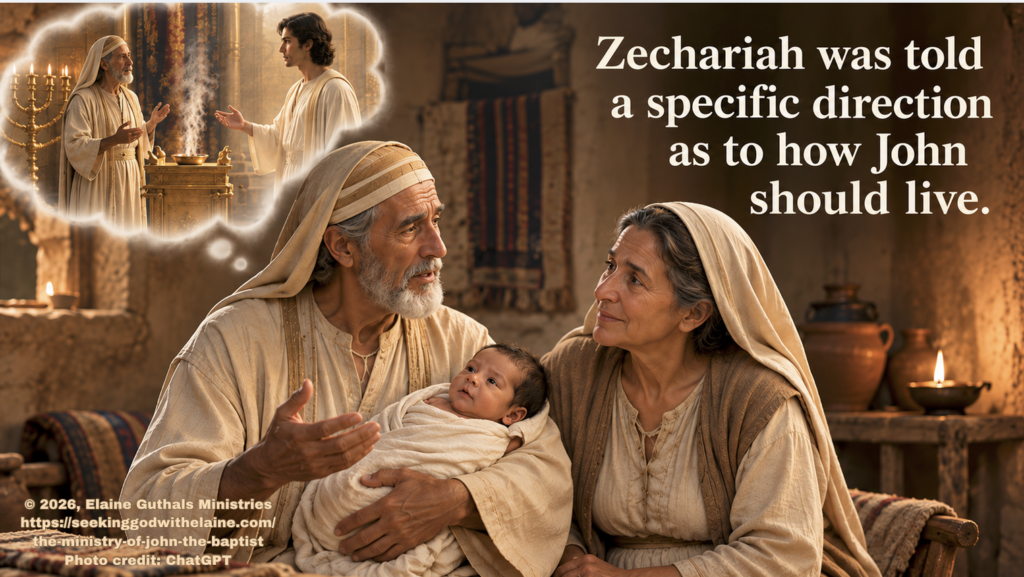
    Zechariah was told a specific direction as to how John should live. He was not to drink alcohol (Lk. 1: 15). This is in line with the Nazarite vows.

    John the Immerser ministered in the lower valley around the Jordan River.

    In a way – to me – it is sad that John has been labeled as the Baptizer. He is so much more than just dunking people in the Jordan.

    That leads us away from John the Immerser’s devoutness and submission to Yeshua as Messiah and God as Sovereign Lord.

    Jehovah had a very important plan for John’s life. He was to be the forerunner of the Messiah (Lk. 1: 16-17 NLT). This preparation of the way for the Messiah fulfills the prophesy we find in Isaiah.

    John knew his place as forerunner. “He must become greater and greater, and I must become less and less” (Jn. 3: 30 NLT).

    Let’s Put It into Context

    To read devotions in The Battle for the Heart theme

    Devotions in the The Ministry of John the Baptist series

    Let’s Put It into Context #2

    What is a Nazarite vow (found in Numbers 6)?

    • It is a vow that can be taken by a man or a woman.
    • It is voluntary.
    • It signifies a complete dedication to God in certain areas of life.
    • It is a temporary vow.
    • It has specific requirements and restrictions.
    • A sacrifice is offered at the conclusion of the vow, including burning the person’s hair.

    Although not specifically identified as a Nazarite vow, three prominent figures are often associated with the vow. They are Sampson (Jdg. 13: 5 NLT), Samuel (1 Sam 1: 11 NLT), and John the Immerser (Lk. 1: 15 NLT).

    The difference was John’s and Samson’s vows was that vow was to be lifelong. Jehovah Himself had commanded it of John.

    The Nazarite vows consecrate the person to Jehovah or separate that person for Him.

    Setting the Stage

    “It was now the fifteenth year of the reign of Tiberius, the Roman emperor. Pontius Pilate was governor over Judea; Herod Antipas was ruler over Galilee; his brother Philip was ruler over Iturea and Traconitis; Lysanias was ruler over Abilene. Annas and Caiaphas were the high priests …” (Lk. 3: 1-2 NLT)

    Fifteenth Year

    Luke used the timestamp of the ministry of John the Immerser beginning during the fifteenth year of Tiberius as Roman emperor, around AD 28-29.

    What was the nation of Israel like in the first century? It had had a long line of occupation.

    The Seleucids ruled Judea from around 198 to 167 BC. They aggressively promoted Hellenization, pressuring Israel to abandon its traditional Jewish practices.

    These actions transformed political domination into a direct attack on covenant identity. Because of this, many Jews still considered themselves to be under exile.

    The Seleucid rule led to the Maccabean Revolt that occurred began in 167 BC. The successful revolt resulted in the rededication of the Temple and was a powerful symbol of covenant faithfulness and resistance to foreign oppression. It also demonstrated that zealous loyalty to Jehovah could bring national deliverance.

    This independence lasted from 142 to 63 BC. Though it was close to national restoration, it still fell short because there was no descendant of David on the throne. Still, internal corruption developed, and many promises of the prophets remained unfulfilled.

    Roman occupation began when Pompey captured Jerusalem in 63 BC during a Roman civil conflict in the region. By the first century, Rome controlled Judea through governors, client kings, taxation, and military force.

    Many first-century Jews considered themselves still in exile because, though they worshiped in a rebuilt Temple and lived in their ancestral land, they remained subject to Gentile authority.

    This environment fueled widespread expectation that Jehovah would send His Messiah to restore Israel, defeat her oppressors, and establish His kingdom.

    Tiberius, the Roman Emperor

    Tiberius was the second Roman Emperor, who was born in 42 BC.

    The adopted son and stepson of Augustus, Tiberius ruled from AD 14 until AD 37. He was said to be reserved, suspicious, and increasingly withdrawn. Even though he was described to be relatively competent and financially conservative, he was also paranoid.

    Tiberius’ reign as emperor encompassed the whole time of John’s and Yeshua’s ministry. He died in AD 37, not too many years after Yeshua was crucified.

    Pontius Pilate

    Pontius Pilate was the prefect of Judea under Rome from approximately AD 26 to AD 36.

    As prefect, Pilate was responsible for maintaining Roman order and collecting revenue. His administrative center was in Caesarea Maritima, but he would have been in Jerusalem as required. One time that presence was required was during Jewish festivals.

    Pilate, as Rome’s representative, had the Roman authority to impose the Roman death penalty. This was the authority needed to order Yeshua’s crucifixion.

    The relationship between Pilate and the Jewish population was strained at best. There were several instances in which Pilate’s actions provoked serious Jewish opposition. One such instance is documented in Luke 13: 1.

    Ultimately, Pilate was a Roman official, using deeply offensive symbols and authority, who was governing a nation with a strong religious identity. 

    Pilate was relieved of his position around AD 36. Though he was taken to Rome to answer accusations of how he handled a confrontation with the Samaritans, he arrived after Tiberius’ death. His fate is uncertain.

    Herod Antipas

    Herod Antipas was the son of Herod the Great.

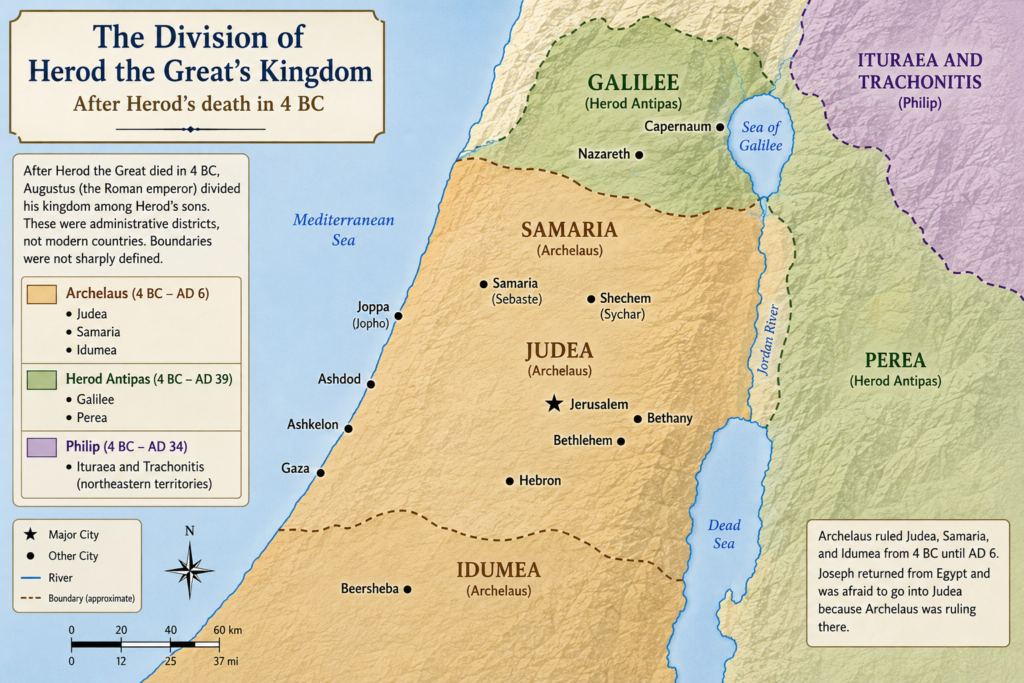
    Upon Herod the Great’s death, Herod Antipas was one of his sons who received part of his divided kingdom. Antipas became tetrarch of Galilee and Perea, including where John conducted his ministry. His reign lasted from 4 BC to AD 39.

    Philip

    Philip the Tetrarch was the son of Herod the Great and the brother of Herod Antipas.

    It is important to note that he was not the husband of Herodias. Herodias was married to another of Herod the Great’s sons, also named Herod Philip. Philip the Tetrarch was married to Herodias’ daughter, Salome.

    Philip ruled the territories northeast and east of Galilee. He ruled there from approximately 4 BC until AD 34.

    Philip was known as a relatively capable and peaceful ruler. He was the founder of Caesarea Philippi.

    Annas

    Annas was the Jewish High Priest from around AD 6 to AD 15.

    Annas was appointed to be the Jewish High Priest by Roman Governor Quirinius. Even though the Roman authorities removed him from office, he retained influence as several family members served as High Priest, including Caiaphas.

    Caiaphas

    Caiaphas served as High Priest from around AD 18 to AD 36.

    This was an unusually long tenure as High Priest. He was removed from the office around the same time Pontius Pilate, in AD 36.

    Caiaphas was also the son-in-law of Annas.

    John Was Unique

    “John’s clothes were woven from coarse camel hair, and he wore a leather belt around his waist. For food he ate locusts and wild honey.” (Mt. 3: 4 NLT)

    “His clothes were woven from coarse camel hair, and he wore a leather belt around his waist. For food he ate locusts and wild honey” (Mk. 1: 6 NLT)

    John’s diet was based on what he found in the wilderness.

    We think John was an interesting dude who made interesting choices in his wardrobe and diet. He wore a camel’s hair garment and ate wild honey and locusts.

    This was understandable when we consider the region in which John the Immerser lived. Strugnell explained what that meant. He wrote,

    “His formative years were spent in the Judaean desert, where monastic communities, such as the Essenes (a strict Jewish sect  that existed from about the 2nd century BCE to the end of the 1st century CE), and individual hermits often educated the young in their own ideals.”

    Resource

    Because of this, he was often compared to Elijah. The two men wore similar attire (II Kgs. 1: 8; Mt. 3: 4). They both carried out their mission in the wilderness (Mt. 3: 1).

    We may cringe when we read John ate locust. People in John’s day knew the nutritional value of this reliable wilderness food source — and it was kosher (Lev. 11: 22).

    John’s Call

    “… At this time a message from God came to John son of Zechariah, who was living in the wilderness” (Lk. 3: 2 NLT)

    We don’t know how the message came to John – we just know it did.

    In Jewish thought, John was called an ish haElohim (אִישׁ הָאֱלֹהִים), a man of God.

    Think about it. “God sent a man, John the Baptist” (Jn. 1: 6 NLT). That doesn’t really sound like much.

    In the Hebrew, it says Jehovah shalach (שָׁלַח) ish (אִישׁ). John wasn’t the only man sent. This was the way Jehovah introduced Moses, Samuel, Elijah, and Isaiah. Great company!

    John was sent to be a witness. His call was to prepare the way for the Messiah.

    Think about Zechariah. When Gabriel came to tell him that he and Elizabeth would have a son, he probably thought John would become a priest, as he was.

    In the end, Zechariah may have thought of John as a radical. He probably saw John as being outside the religious system.

    John wasn’t a priest. He wasn’t even in the temple.

    John was in the wilderness.

    The wilderness was important in John’s day. He was in the Judean Wilderness, a harsh and rocky region east of Jerusalem. It stretched toward the Jordan River and the Dead Sea.

    The Hebrew term for it is midbar (מִדְבָּר). It wasn’t considered just an empty land. It was where God spoke and revealed Himself to people. It taught dependence on Jehovah.

    When we think wilderness, we think trees – lots and lots of trees. This wilderness boasted jagged limestone hills, steep ravines known as wadis, and dry, chalky soil. The vegetation was limited to thorn bushes and scattered scrub growth.

    The extreme climate ran from intense daytime heat to cold nights. Rain was limited, which limited food sources. Those living in the wilderness had to gather what the wilderness provided – locusts and wild honey.

    We may scratch our heads. Into this dry, arid place, John brought baptism.

    John didn’t bring it into the Temple, where first-century Jews would go to worship. He brought it to the wilderness, where people had to make an effort to go hear Jehovah.

    It put feet to John’s message.

    • We have to deliberately seek Jehovah.
    • We have to enter into testing in our wilderness.
    • We have to leave the comfort behind and migrate toward change.

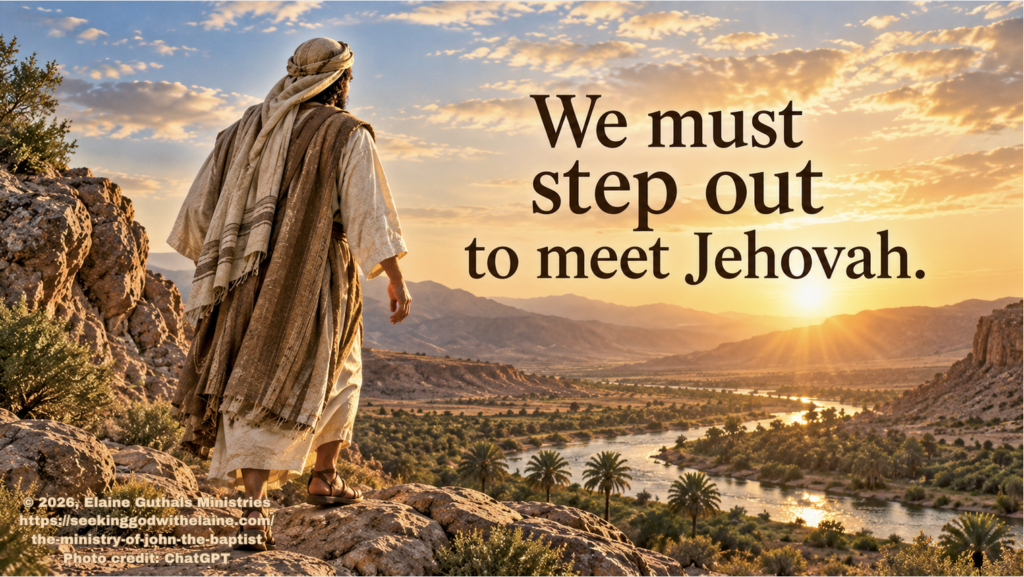
    We must step out to meet Jehovah.

    Making the Connections #1

    Why would we want to start this series reading about all these dead guys? Simple.

    Luke proved to us that this was a true account of what happened in a specific period of time. Historical accounts back up the fact that these people existed during this period.

    Not only that, but it is giving us the background of where the nation of Israel was during that time. This political oppression has to be understood to order to understand the Messianic expectations. Jewish leadership has to be understood for the same reason.

    Making the Connections #2

    Pastor Steve made a good connection in his A Voice Crying in the Wilderness blog. He reminded us that there are so many voices in the wilderness right now.

    We have to watch who we listen to. Pastor Steve said that “We MUST seek the Lord at all times for the truth.”

    Resource

    We have to listen to men and women sent by Jehovah to hear the truth. We must do our own due diligence and determine that what was said really is the truth.

    Heart Check

    Think about the battle Yeshua is engaged in for your heart. Ask yourself the following questions.

    • Am I listening to the voices around me, or am I seeking Jehovah for His truth?
    • Have I allowed the circumstances around me to shape what I believe Jehovah is doing?
    • Am I willing to leave my comfort behind when Jehovah calls me toward change?
    • Am I deliberately seeking Jehovah, even when doing so requires me to step into my wilderness?
    • Am I willing to listen when Jehovah speaks truth that challenges me?

    How Do We Apply This?

    • Seek Jehovah deliberately.
    • Seek Him and determine whether what you hear is truly His truth.
    • Don’t run from the place where He is calling you to grow.
    • Leave comfort behind.
    • Listen to the people Jehovah sends.
    • Prepare your heart for what Jehovah wants to do.

    Father God. Since before the creation of the universe, you knew Yeshua would be our Savior and Redeemer. You called John to prepare His way. Lord, help us to step out to seek You. Amen.

    If you don’t understand something and would like further clarification, please contact me.

    If you have not signed up for the email providing the link to the devotions and the newsletter, do so below.

    If God has used this devotion to speak with you, consider sharing it on social media.
  • Jesus Spoke to the Teachers

    Mary and Joseph raised Yeshua in the Jewish faith. This devotional reading looks at the events during Passover when He was twelve.

    Nuggets

    • Yeshua grew up in obscurity in Nazareth.
    • Joseph had been called a righteous man (Mt. 1: 19), and Mary was obedient.
    • It was significant that this event took place when Yeshua was 12 years old.
    • The return home from Passover didn’t go as planned.
    • Yeshua was in the Temple.
    • Yeshua spent His time with the rabbis productively.
    • Yeshua was mission-driven from early on.
    • Luke summarized Yeshua’s life after age 12.

    Luke utilized a writing technique called compressed narrative. He did this to jump from the time Yeshua was an infant to when He was 12 years old.

    Although Joseph chose — under Jehovah’s guidance — not to live in Jerusalem or Bethlehem, that didn’t mean Yeshua didn’t grow up around the Jewish faith, This included trips to Jerusalem.

    Let’s Put It into Context

    To read devotions in The Battle for the Heart theme

    Devotions in the The Birth and Early Childhood of Christ series

    Yeshua Grew

    “There the child grew up healthy and strong. He was filled with wisdom, and God’s favor was on him” (Lk. 2: 40 NLT)

    Yeshua grew up in obscurity in Nazareth.

    Once the family returned to Nazareth, we hear little about Yeshua and His childhood. All we are told is that He grew both in wisdom and in God’s favor.

    While it might seem strange to us that Yeshua didn’t grow up in Jerusalem around the Temple, this allowed Him to have a normal childhood.

    Think about it. There had already been one assassination attempt on Yeshua’s life. And that was before He was a year old.

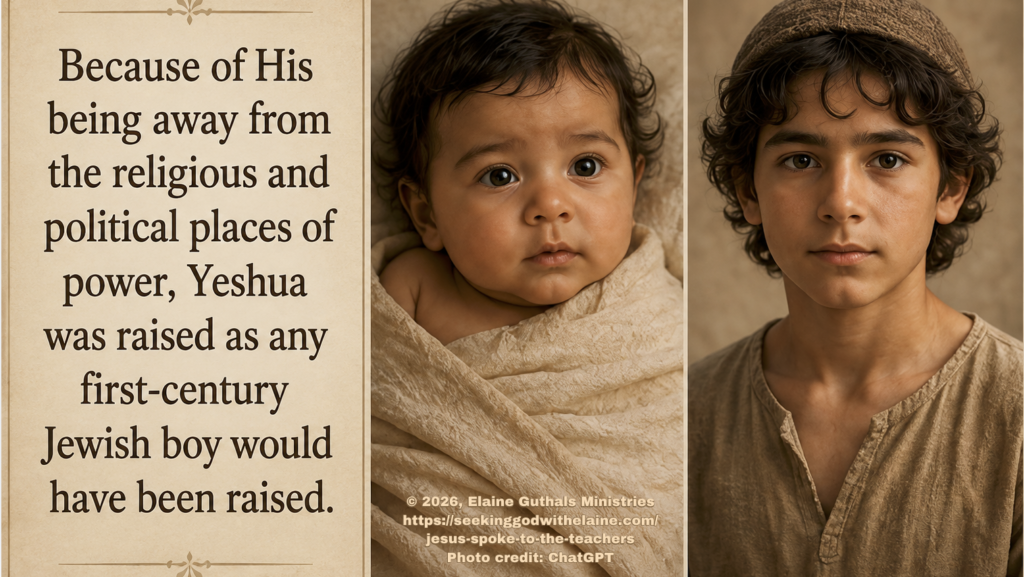
    Because of His being away from the religious and political places of power, Yeshua was raised as any first-century Jewish boy would have been raised. I think this was to His advantage.

    Yeshua came to earth to be one of us. This upbringing gave Him a good foundation of what it meant to be human. He saw the everyday struggles of good Jewish people trying to retain covenant faithfulness.

    On Their Way to Passover

    “Every year Jesus’ parents went to Jerusalem for the Passover festival. When Jesus was twelve years old, they attended the festival as usual” (Lk. 2: 41-42 NLT)

    Passover

    Joseph had been called a righteous man (Mt. 1: 19), and Mary was obedient.

    Because of that, they went every year to the Passover festival.

    Passover (Pesach – פֶּסַח) is a festival celebrating Israel’s redemption from Egypt.

    Many of us know about Passover. But few of us probably know what that entails.

    In Genesis, Joseph was sold by his brothers because of their jealousy and anger. However, that is the means by which Jehovah got Joseph to Egypt so that he could lead the country in preparing for a famine.

    After the famine was over and Joseph and the Pharaoh at the time had died, the Hebrews became slaves to the Egyptians.

    Jehovah sent Moses to lead the people out of Egypt and to the Promised Land. They spent the last night of captivity celebrating the Passover meal.

    When the Israelites and later the Jews celebrated this festival, they were to remember the time when Jehovah freed them from slavery. More importantly, they were to remember how He redeemed and delivered them.

    The festival centered around the lamb that was sacrificed – the Paschal Lamb. This lamb was essential to the story of redemption.

    Passover was one of the pilgrimage festivals. That means all males were to appear before Jehovah. True,  women and children could accompany them – and we can read from the text that every year Mary and Yeshua did accompany Joseph.

    It is in this remembrance that Yeshua grew. He participated in one of the most significant acts of Jewish worship of the entire year.

    Did you see what it said in verse 42? Jesus attended the festival when he was 12 as usual. This wasn’t His first Passover – and it wouldn’t be His last.

    It means it was what the family did to participate in the worship life of Israel.

    Connect some dots here. Every year, Yeshua went to the festival to view the Paschal Lamb – the lamb who – like Him – focused on the imagery of sacrifice. He saw the blood, deliverance, covenant, slavery, redemption and peace all transpiring within the Temple grounds.

    Later, Yeshua would become the Paschal Lamb. “… Christ, our Passover Lamb, has been sacrificed for us” (I Cor. 5:  7 NLT).

    Twelve Years Old

    It was significant that this event took place when Yeshua was 12 years old.

    We think of young Jewish boys participating in their bar mitzvah ceremony at age 13. That wasn’t the practice in first-century Israel. That ceremony didn’t exist then.

    Still, the age traditionally associated with a Jewish boy coming of age was thirteen.

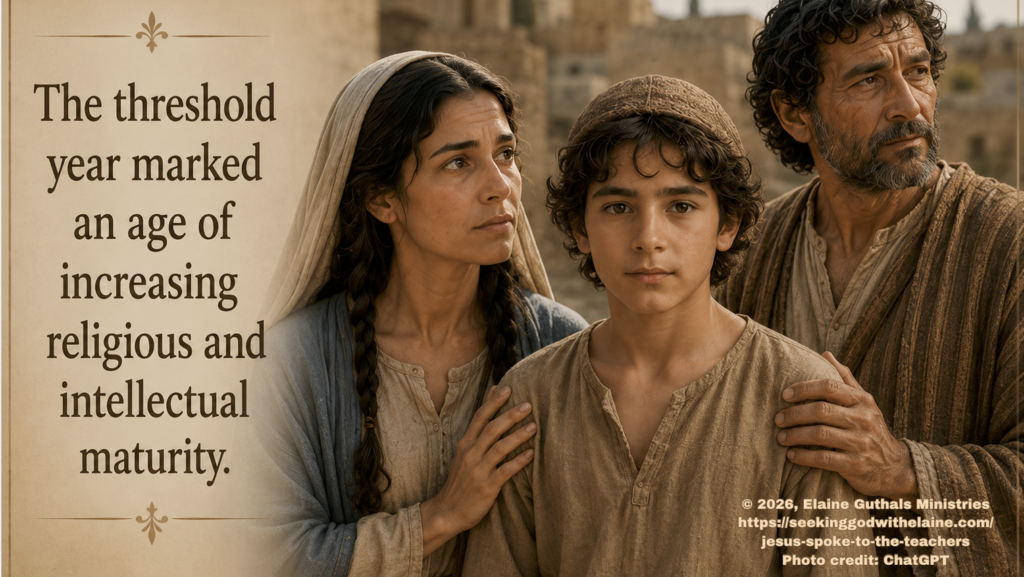
    That would make this a threshold year for Yeshua. It marked an age of increasing religious and intellectual maturity.

    Returning Home

    “After the celebration was over, they started home to Nazareth, but Jesus stayed behind in Jerusalem. His parents didn’t miss him at first, because they assumed he was among the other travelers. But when he didn’t show up that evening, they started looking for him among their relatives and friends” (Lk. 2: 43-44 NLT)

    The return home from Passover didn’t go as planned.

    We may question how Mary and Joseph started home without Yeshua. That probably isn’t that difficult to see when we really look at it.

    It wasn’t like they were going to jump on their donkeys and start home by themselves. We are talking a multi-day trip here. More than likely, they went on foot.

    Probably for pilgrimage festivals, it felt like the village was clearing out. They would have been in a caravan.

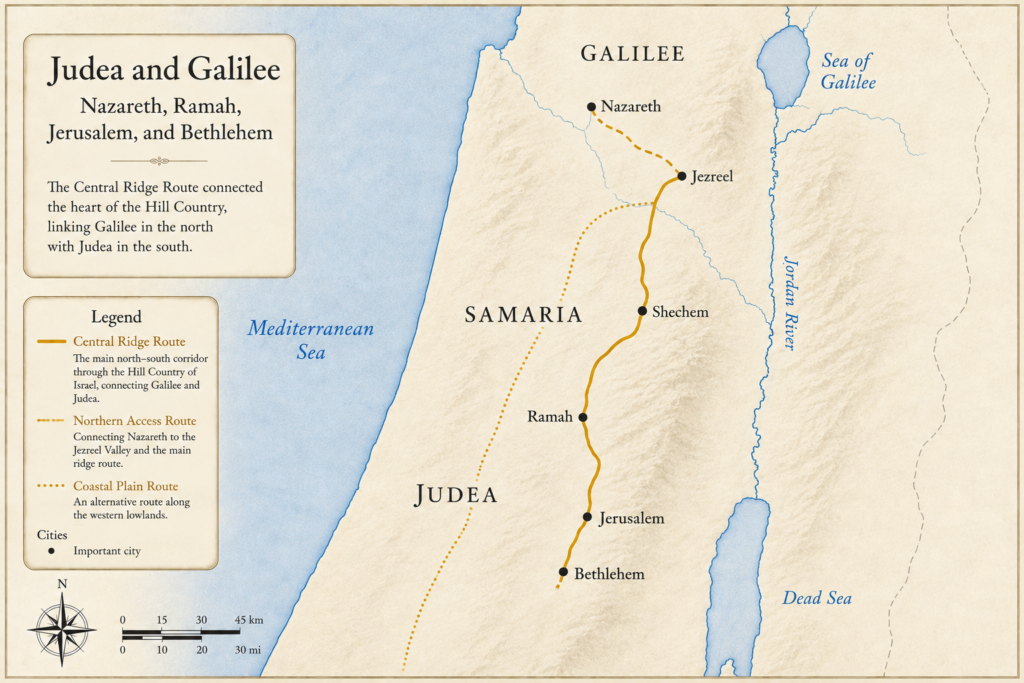
    Caravans from other villages may have been passing through or close by. That would have been especially true when they got on the Central Ridge Route. Their caravan may have joined with other caravans.

    When they were leaving Jerusalem, that would mean the large caravan they left with would probably have been made up of strangers and other people from Nazareth – including family.

    However it happened, Mary and Joseph didn’t miss Yeshua until the caravan stopped for the night.

    Even if they didn’t know anyone else in the caravan, they would have believed that Yeshua found someone else His age to travel with. Kids do tend to group together, even if they just met.

    Finding Yeshua

    “When they couldn’t find him, they went back to Jerusalem to search for him there. Three days later they finally discovered him in the Temple, sitting among the religious teachers, listening to them and asking questions. All who heard him were amazed at his understanding and his answers” (Lk. 2: 45-47 NLT).

    Three Days Later

    Yeshua was in the Temple.

    Luke said that Mary and Joseph didn’t realize that Yeshua was missing until evening. They wouldn’t have started back in the dark to return to Jerusalem.

    They might have gotten to move faster once they left the caravan and started back. However, they had travel time up to the amount of time they had traveled the day before. More than likely, it was still substantial.

    By the time they found Him in the Temple, they had been separated from Him for all or parts of three days. That means Mary and Joseph could have spent as much as roughly two days searching Jerusalem.

    We have to realize that there were probably still a lot of people in Jerusalem. As a pilgrimage festival, Jews came from all over Judea and Galilee to worship. They even came from Jewish communities outside the land as well. Josephus called it an innumerable multitude.

    Resource

    In another place, Josephus described one Passover in the first century. There had been 256,500 Passover sacrifices, associated with more than 2.7 million participants.

    Resource

    So, it was crowded. Probably not everyone left the day after Passover concluded. Some may have stayed to visit family before returning to their homes.

    Listening, Asking, and Answering

    Yeshua spent His time with the rabbis productively.

    Rabbis taught a little differently than what happens in classrooms today. It was much more interactive than what we are accustomed to.

    The rabbi would sit with his students gathered around him. They would read or recite Scripture. The rabbi would explain its meaning. Students were allowed to ask questions, and he would question them to ensure their understanding.

    The questions the rabbi asked were also geared to determine what their interpretation was. They could also have applied it to particular situations and debated that application and the results.

    Look at how Yeshua interacted with the rabbis. He listened to what they had to say. He asked questions. He apparently answered questions that they had.

    Luke says that Yeshua sat with teachers – plural. It doesn’t sound like a regular teaching session. Still, we don’t know whether they were conducting a formal lesson, discussing Torah, answering questions from pilgrims, or engaged in some other Temple teaching setting.

    All we know is that it appears that Yeshua was making an impression on them.

    That also raises the question as to how much Yeshua remembered. Philippians 2: 7 says “Instead, he gave up his divine privileges; he took the humble position of a slave and was born as a human being” (Phil. 2: 7 NLT).

    We know Yeshua divested Himself of those divine privileges and became human. He did not divest Himself of His divinity.

    What Yeshua was showing was wisdom beyond His years. Luke had already said that Yeshua was growing in wisdom (Lk. 2: 40).

    That is understandable considering He was wisdom.

    • “In him lie hidden all the treasures of wisdom and knowledge” (Col. 2: 3 NLT).
    • “God has united you with Christ Jesus. For our benefit God made him to be wisdom itself. Christ made us right with God; he made us pure and holy, and he freed us from sin” (I Cor. 1: 30 NLT).

    Yeshua’s wisdom was part of His nature – a part of His divine identity. He becomes our wisdom.

    Yeshua’s Mission

    “His parents didn’t know what to think. ‘Son,’ his mother said to him, ‘why have you done this to us? Your father and I have been frantic, searching for you everywhere.’ ‘But why did you need to search?’ he asked. ‘Didn’t you know that I must be in my Father’s house?’ But they didn’t understand what he meant” (Lk 2: 48-50 NLT)

    Yeshua was mission-driven from early on.

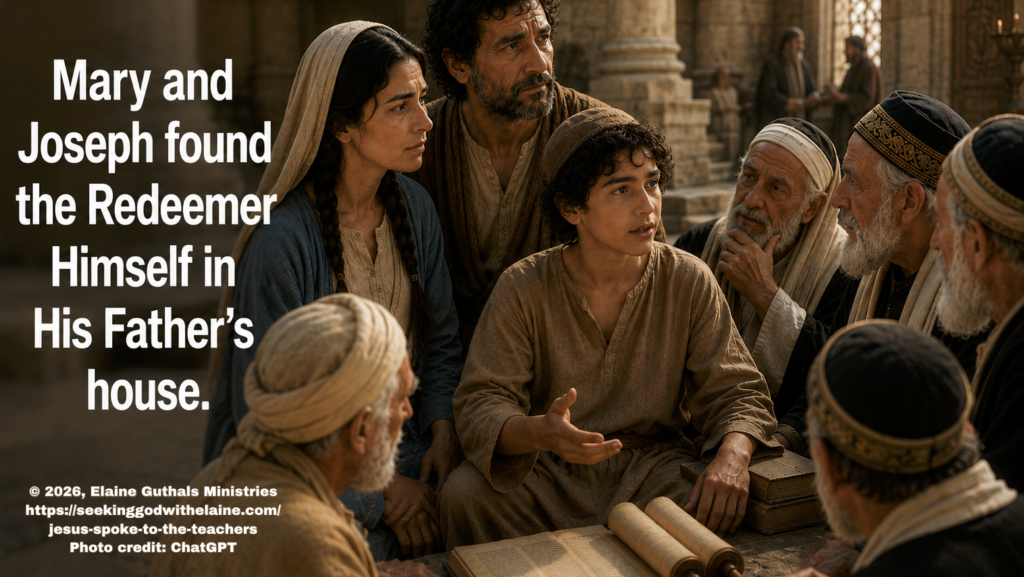
    Think about it. Mary, Joseph, and Yeshua came to Jerusalem to remember Jehovah’s redemption of Israel. They found the Redeemer Himself in His Father’s house.

    But right now, they were probably in Momma Bear and Poppa Bear mode. They more than likely couldn’t see past the pain and anxiety.

    It was no accident that Yeshua was in the Temple – even at 12 years old. He was growing up inside the story of redemption that ultimately pointed to Him.

    Take a look at how Yeshua got to that point. Passover → Temple → sacrifice → Father’s house → Yeshua.

    And the first words that we hear that Yeshua spoke were, “… ‘Didn’t you know that I must be in my Father’s house?’” (Lk. 2: 49 NLT).

    Does that mean Yeshua understood at 12 that HE would one day be the Paschal Lamb? Maybe. Maybe not.

    We have hindsight, however. We can see what Yeshua may not have been able to at that time.

    What we do see is that Yeshua was mission-driven from early on. He was always building to the point of Him being the sacrifice (I Cor. 5: 7 NT).

    Yeshua Grew

    “Then he returned to Nazareth with them and was obedient to them. And his mother stored all these things in her heart. Jesus grew in wisdom and in stature and in favor with God and all the people.” (Lk. 2: 51-52 NLT)

    Luke summarized Yeshua’s life after age 12.

    In the end, Yeshua went back to Nazareth. He lived there until He started His ministry.

    We were told one other time that Mary pondered things in her heart. She meditated on what happened here. She probably remembered what Gabriel told her. She remembered prophecy.

    Mary was growing in her faith just as Yeshua grew physically and mentally.

    Why didn’t we get any more insight into Yeshua’s life as He was growing up? That wasn’t the focus.

    The focus should always remain on Yeshua as Savior and Redeemer.

    Making the Connections

    We may think of Passover as just a meal. That meal was always important to the Jews.

    The sacrifices were more important. They were the heart of Passover.

    Passover was part of a seven-day celebration, the Feast of the Unleavened Bread (Deut. 16: 1-8).

    Think about it. Remember, Josephus had recorded 2.7 million participants. True, the lamb covered the family, so the number of lambs was a somewhat lower number.

    Still, it was thousands upon thousands of families. That means thousands upon thousands of lambs.

    All were moving toward the Temple, because that was where the lamb was sacrificed. The Hallel – the Psalms of praise associated with the festival – was being sung. The lambs were joining in, but it was probably a baa of fear. Trumpets were sounding.

    The sacrifice wasn’t a day-long event. Timing was reported in the Mishnah. “On the eves of Passover, when the Paschal lamb must be offered after the daily offering, the daily offering is sacrificed earlier … “

    Resource

    However, later it says that those bringing sacrifices were split into groups: the assembly, congregation, and Israel. The assembly was able to bring their sacrifices in the afternoon.

    Each group entered the Temple courtyard until all in that group were inside. When the court was filled, the doors were closed, and the sacrifice began.

    Rows of priests were described in what appears to be an assembly line. Their job was to pass the blood of the sacrifice from the place of sacrifice to the altar.

    The lamb would be flayed until the sacrificial parts could be removed. These would be placed in a basin (mageis– מַגִּיס) and burned on the altar.

    Each group would remain until all groups concluded their sacrifices. “Then the whole assembly of the community of Israel must slaughter their lamb or young goat at twilight” (Ex. 12: 6 NLT).

    At nightfall, they would return to wherever they were staying and roast their Paschal lamb. The people who had been registered for that particular sacrifice would eat it together with the unleavened bread and bitter herbs.

    I know. Think about getting that many people organized.

    They accomplished it. Year after year after year.

    This was just part of being Israel. It was a celebration of being redeemed.

    Heart Check

    Think about the battle Yeshua is engaged in for your heart. Ask yourself the following questions.

    • Am I growing in wisdom and understanding, or have I become satisfied with what I already know?
    • When circumstances become frightening or overwhelming, do I lose sight of Jehovah’s purposes?
    • Am I willing to put Jehovah’s purposes ahead of my own plans, expectations, and comfort?

    How Do We Apply This?

    • Remember that our lives have a purpose beyond what we can see right now.
    • Stay rooted in Scripture so we recognize truth when we encounter it.
    • Make time to listen, ask questions, and grow in wisdom rather than assuming we already know enough.
    • When life becomes stressful, stop and ask whether we are focused on Jehovah’s purposes or only on our immediate circumstances.

    Father God. Help us to seek You in Your Word. Show us where we have things wrong. Grow us so that we become more and more like You. Amen.

    If you don’t understand something and would like further clarification, please contact me.

    If you have not signed up for the email providing the link to the devotions and the newsletter, do so below.

    If God has used this devotion to speak with you, consider sharing it on social media.
  • The Escape to and Return from Egypt

    The time that Yeshua spent in Egypt is a mystery to us, but it raises many questions. This devotional reading looks at Joseph’s dreams instructing him to go to Egypt and to return.

    Nuggets

    • From a cursory glance, it appears that the timeline in Matthew 2 is different than Luke 2.
    • If we just read Luke 2: 39, grammar alone doesn’t necessarily mean Nazareth was the next stop after the Temple.
    • Matthew was more specific in his timeline telling us about events that Luke didn’t.
    • Does Matthew 2 contradict Luke 2?
    • To me, a more logical explanation is that the Magi arrived at Joseph’s family’s house within a few days of Yeshua’s birth.
    • Joseph immediately acted when told of a threat.
    • Hosea prophesied the escape to Egypt.
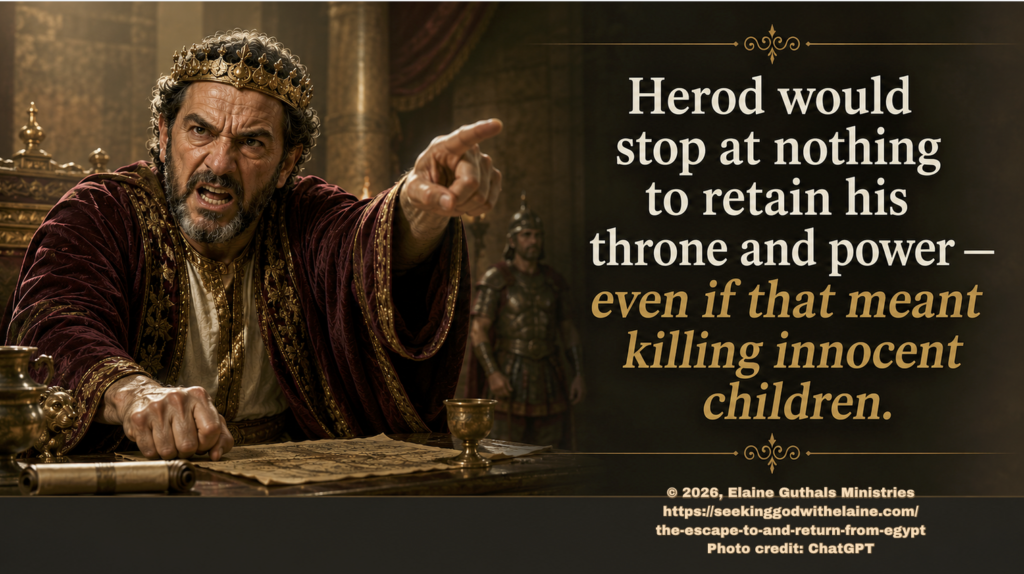
    • Because Herod was egotistical and self-centered, he ordered the execution of all boys two years old and younger in Bethlehem when the Magi didn’t return.
    • Prophecy was once again fulfilled with the Massacre of the Innocents.
    • Joseph had another dream.
    • It appears that Joseph wasn’t going back to Nazareth at first.
    • Matthew said the family returned to Nazareth to fulfill prophecy.

    When we last left Mary, Joseph, and Baby Yeshua, they were at the Temple. Mary was completing her purification. Baby Yeshua was presented and redeemed as the firstborn.
     
    There seems to be a conflict between Matthew 2 and Luke 2. When and how did Mary, Joseph, and Baby Yeshua leave Jerusalem/Bethlehem?
     
    We have already covered the Magi. Since we believe that the birth occurred in the animal section of Joseph’s family’s home, the house that the Magi came to could have been theirs.
     
    But Luke was very specific in where the family went after it left Jerusalem.
     
    Stop. Let’s look at what it says.

    Let’s Put It into Context

    To read devotions in The Battle for the Heart theme

    Devotions in the The Birth and Early Childhood of Christ series

    Let’s Put It into Context #2

    Herod the Great was religious but ruthless, powerful but fearful, and magnificent yet miserable.

    Born around 73 BC, Herod was not of Israelite descent but of Edomite descent. In other words, he ruled the Jews but was not of the Davidic line. To make matters worse, he was chosen to be King of the Jews by Octavian Augustus and the Roman Senate around 40 BC.

    Herod’s reign lasted from 37 to 4 BC. While he did maintain stability in the region, his fear of losing power made him a brutal ruler.

    The Temple that stood in Yeshua’s day had undergone a massive expansion under Herod’s rule. He tried to curry the favor of his subjects by rebuilding the Temple and funding public works.

    Yes, Herod built the stage on which Yeshua’s ministry would unfold.

    Leaving

    “When Jesus’ parents had fulfilled all the requirements of the law of the Lord, they returned home to Nazareth in Galilee. There the child grew up healthy and strong. He was filled with wisdom, and God’s favor was on him” (Lk. 2: 39-40 NLT)

    “After the wise men were gone, an angel of the Lord appeared to Joseph in a dream. ‘Get up! Flee to Egypt with the child and his mother,’ the angel said …” (Mt. 2: 13 NLT)

    From a cursory glance, it appears that the timeline in Matthew 2 is different than Luke 2.

    Matthew had Mary, Joseph, and Baby Yeshua leaving Bethlehem to go to Egypt. Luke had them going to the Temple then leaving for Nazareth.

    Review of Luke’s Passage

    If we just read Luke 2: 39, grammar alone doesn’t necessarily mean Nazareth was the next stop after the Temple.

    The Greek says this: Καὶ ὡς ἐτέλεσαν πάντα τὰ κατὰ τὸν νόμον Κυρίου, ἐπέστρεψαν εἰς τὴν Γαλιλαίαν εἰς πόλιν ἑαυτῶν Ναζαρέθ.

    The word we need to focus on is hōs (ὡς). This means when, after, or as.

    Luke’s statement can serve as a summary statement. It links the completion of the required observances to the family’s return to Galilee.

    The one word missing here is immediately. It doesn’t say they went straight back to Nazareth. In fact, it doesn’t give us a clue about any timing.

    What it is saying is, when everything they were required to do was done, they returned.

    To look at Matthew 2 in that light, Mary, Joseph, and Baby Yeshua were required to go to Egypt. They were called back and allowed to return to Nazareth, their own city – their hometown.

    The next verse in Luke’s passage is that Baby Yeshua grew strong. He did that in Egypt as well as in Nazareth. This included wisdom and grace.

    Luke’s account is not strictly chronological, as shown by his transition to the next story in the passage. Yeshua is no longer a baby – He is 12 years old. In fact, Luke uses this compressed narrative in more places than just here (Lk. 3: 19–21; Ac. 5: 42).

    This idea could be strengthened by the use of the word returned. The Greek word used is ἐπέστρεψαν.

    Luke’s goal may have been to show the return of the family to Nazareth – the place they started from before Yeshua’s birth.

    Review of Matthew’s Passage

    Matthew was more specific in his timeline telling us about events that Luke didn’t.

    However, Matthew didn’t give us any time references. It has long been assumed that Mary and Joseph stayed in Bethlehem for up to two years after Yeshua’s birth.

    The age of Yeshua at the Magi’s visit is estimated by the age of the male children killed by Herod. There would have been no need to kill Jewish sons that had reached that age if it was believed Yeshua had just been born.

    However, Herod didn’t ask about the age of the child. He asked when the Magi had seen the star appear (Mt. 2: 7).

    We aren’t given that information, either. We aren’t told that the Magi first saw the star on the night of Yeshua’s birth. They could have seen the star long enough before His birth to allow for travel time so they would arrive right around His birth.

    Some think that Matthew’s use of the Greek word paidion (παιδίον) indicates Yeshua’s age. This word means child. It does not differentiate between infant and toddler.

    It is possible they thought the Messiah should be raised in Bethlehem. Returning to Nazareth before the Magi’s arrival would have entailed a move back to Bethlehem.

    Reconciling the Two Passages

    Does Matthew 2 contradict Luke 2?

    Not necessarily. Luke doesn’t identify the return to Nazareth from Jerusalem as a permanent residence.

    Matthew was more explicit in his language. He noted the family settled in Nazareth permanently after their return from Egypt.

    There is one little hole in Matthew’s passage that could make it sync with Luke. We are not told the location of the house in which the Magi find Baby Yeshua. We assume it was in Bethlehem because that is where the Magi were sent and where the Massacre of the Innocents happened.

    I don’t see Mary and Joseph staying in Bethlehem 40 days, let alone two years. The Magi could have visited Baby Yeshua before they left Bethlehem.

    The house referred to in Matthew could have been Joseph’s family’s house. The word Luke used was kataluma (κατάλυμα). That can mean guest room.

    If we go with Mary and Joseph staying in the animal housing of Joseph’s family’s home because there was no room in the guest room at Yeshua’s birth, they could have still been at the house a couple of days after His birth. Mary and Joseph may have been able to move into the main house after a couple of days.

    The family could have returned to Nazareth. It may have taken Mary a day or two before she felt up to traveling. There was no restriction on her traveling either during her seven days of being unclean or her days of purification.

    Conclusion

    To me, a more logical explanation is that the Magi arrived at Joseph’s family’s house within a few days of Yeshua’s birth.

    The family possibly returned to Nazareth, probably after the circumcision ceremony, but came back to Jerusalem for Mary’s purification offering – the only place that could be performed. Then on the way back to Nazareth, Joseph received the dream to flee to Egypt. Upon returning from there, they again settled in Nazareth.

    We cannot prove that. But we also cannot dismiss it from Scripture. It allows Matthew and Luke to be read in their natural sequence without requiring either writer to have omitted or rearranged something they explicitly said.

    Though it seems like Matthew and Luke are telling different stories, we can believe that all the information given by both is accurate. We don’t have to know exactly what happened. We just have to believe it did.

    Directions to Joseph

    “After the wise men were gone, an angel of the Lord appeared to Joseph in a dream. ‘Get up! Flee to Egypt with the child and his mother,’ the angel said. Stay there until I tell you to return, because Herod is going to search for the child to kill him.’ That night Joseph left for Egypt with the child and Mary, his mother, and they stayed there until Herod’s death. This fulfilled what the Lord had spoken through the prophet: ‘I called my Son out of Egypt’” (Mt. 2: 13-15 NLT)

    Get up!

    Joseph immediately acted when told of a threat.

    Once again, Joseph had a dream from Jehovah. Once again, he was told the actions he should take.

    Once again, Joseph immediately obeyed. Verse 14 says, “That night Joseph left for Egypt with the child and Mary, his mother” (Mt. 2: 14 NLT).

    This shows Joseph’s commitment to raising the Son of God. He wasn’t taking any chances with the Baby’s life.

    Out of Egypt

    Hosea prophesied the escape to Egypt.

    We find a place in God’s Word that prophesied this trip to Egypt. “When Israel was a child, I loved him, and I called my son out of Egypt” (Hos. 11: 1 NLT).

    Yeah, I know. The Jews interpreted this to mean Jehovah calling the nation out of their Egyptian captivity. Matthew, however, applied it to Yeshua.

    Was Matthew wrong to do that? No, many Old Testament prophecies had current application and future application.

    Let’s back up a second — all the way to when Israel was in captivity in Egypt. They thought the nation was Jehovah’s child. “Then you will tell him, ‘This is what the Lord says: Israel is my firstborn son” (Ex. 4: 22 NLT).

    Now come back to Yeshua’s time. “But to all who believed him and accepted him, he gave the right to become children of God. They are reborn — not with a physical birth resulting from human passion or plan, but a birth that comes from God” (Jn. 1: 12-13 NLT).

    The idea that Jehovah sets apart His children runs through all of God’s Word. That is the defining part to being a saint because that is a defining part of being holy.

    Yeshua is the True Israel, the faithful Son, and the One Who succeeded where Israel failed.

    Massacre of the Innocents

    “Herod was furious when he realized that the wise men had outwitted him. He sent soldiers to kill all the boys in and around Bethlehem who were two years old and under, based on the wise men’s report of the star’s first appearance.” (Mt. 2: 16 NLT)

    Because Herod was egotistical and self-centered, he ordered the execution of all boys two years old and younger in Bethlehem when the Magi didn’t return.

    Now we come to a passage that is highly debated — the Massacre of the Innocents.

    Why is the story questioned? There is no other independent evidence that it occurred. Josephus and other historians of that era are silent on this matter.

    If something this big and this atrocious happened, they argue, wouldn’t there be more than one record of it? Or is it folklore based on some other similar incident?

    Some believe the massacre occurred in 5 BC. One reason that timeframe doesn’t work is that Herod died in 4 BC.

    Herod was incensed when the Magi didn’t report back to him Yeshua’s location. Did that stop his murderous plan?

    No. It got worse.

    Herod ordered the execution of all males two years old and under living in the city of Bethlehem and its vicinity. He set the time by when the Magi said the star appeared.

    How could Herod do something so awful? Moore helped explain. He wrote,

    “Herod never thought of our Lord as a human opponent, but as the Messiah. He did not disbelieve the star or the prophecies interpreted by the priests and scribes. He was fighting against God; He thought the prophecies might fail at the last.”

    Resource

    Herod would stop at nothing to retain his throne and power — even if that meant killing innocent children.

    We think about the horror of the babies being slaughtered. But have we ever thought how many fathers and mothers were killed along with the little ones?

    Think about it. They loved their little ones. Their first instinct would be to protect them. Momma Bear and Poppa Bear mode would kick in big time – with no thought to their own safety.

    They would fight tooth and nail to protect their young one. People with no guilt in killing babies would have no guilt in killing moms and dads.

    Atrocity Foretold

    “Herod’s brutal action fulfilled what God had spoken through the prophet Jeremiah. ‘A cry was heard in Ramah — weeping and great mourning. Rachel weeps for her children, refusing to be comforted, for they are dead’” (Mt. 2: 17-18 NLT)

    Prophecy was once again fulfilled.

    Matthew 2: 18 basically says what Jeremiah 31: 15 says. “This is what the Lord says: ‘A cry is heard in Ramah — deep anguish and bitter weeping. Rachel weeps for her children, refusing to be comforted — for her children are gone’” (Jer. 31: 15 NLT).

    Mourning does cause anguish. The anguish manifests itself as weeping. But mourning called it for what it was: dead instead of gone.

    This is another two-for-one prophecy. Jeremiah was talking about Assyrians and nothing about the Messiah.

    I hear you. We thought this was Bethlehem, not Ramah.

    Well, this goes back to the Babylonian exile. Biblestudy.org tells us the city of Ramah was used as the gathering place for all the exiles who would be taken to Babylon (Jer. 40: 1). It was five miles north of Jerusalem.

    Resource

    But what does this have to do with Rachel? For one thing, Rachel died in childbirth. Another, she was buried in Bethlehem.

    “So Rachel died and was buried on the way to Ephrath (that is, Bethlehem). Jacob set up a stone monument over Rachel’s grave, and it can be seen there to this day” (Gen. 35: 19-20 NLT).

    Another reason is Rachel is seen as the primary mother of Israel. Her grandsons, Ephraim and Manasseh, were the leaders of Israel’s leading tribes.

    Matthew used this to remind his readers something we don’t catch. He was equating the present sorrow to a past sorrow. This showed first-century Jews that the exile wasn’t truly over. The Messiah was entering into that suffering.

    Being Called Back

    “When Herod died, an angel of the Lord appeared in a dream to Joseph in Egypt. ‘Get up!’ the angel said. ‘Take the child and his mother back to the land of Israel, because those who were trying to kill the child are dead’ So Joseph got up and returned to the land of Israel with Jesus and his mother. But when he learned that the new ruler of Judea was Herod’s son Archelaus, he was afraid to go there. Then, after being warned in a dream, he left for the region of Galilee. So the family went and lived in a town called Nazareth. This fulfilled what the prophets had said: “He will be called a Nazarene” (Mt. 2: 19-23 NLT)

    Called through a Dream

    Joseph had another dream.

    Once again, Joseph had a dream. Once again, he obeyed immediately. Joseph was given the all-clear to return home.

    The problem was Archelaus was now ruler. Joseph would have known him as one of Herod the Great’s sons.

    Upon the death of Herod the Great, his kingdom was divided among his sons. Archelaus’ portion included Judea, Samaria, and Idumea. His rule lasted from 4 BC to AD 6.

    Unlike his father, Archelaus was not a king. However, he was cruel and ruthless – as Herod was.

    It was probably because of this, Joseph’s fear in Matthew 2: 22 is understandable.

    Look at that. When told to go, Joseph went. But when he found out who was ruling, he changed plans.

    Nazareth

    It appears that Joseph wasn’t going back to Nazareth at first.

    Let’s put it together. Joseph was going back there, but he was afraid because Archelaus ruled there. Where did Archelaus rule? Judea, Samaria, and Idumea.

    Idumea wasn’t part of Israel, so they weren’t headed there. They wouldn’t have gone to Samaria, either.

    That means they were headed to Judea.

    That meant – to me – that Joseph was taking his family to Bethlehem or Jerusalem.

    Think about it. Mary and Joseph knew they were parents to the Messiah. They probably thought they needed to be in Bethlehem or Jerusalem.

    How does that change our thoughts about the perceived Matthew and Luke discrepancy? Maybe they didn’t go back to Nazareth after Yeshua’s birth. Maybe it was always their intent to stay in Bethlehem or Jerusalem.

    Jehovah, however, makes sure that thing go according to His plan.

    He Will be Called a Nazarene

    Matthew said the family returned to Nazareth to fulfill prophecy.

    We may think Joseph chose to take his family to Nazareth because that was their hometown, as Luke said. However, Joseph had another dream, telling him to go to Galilee.

    The way “… He will be called a Nazarene” (Mt. 2: 23 NLT) is written, it looks like it should be a quote.  It isn’t a direct quote.

    But Matthew did use prophets — plural — describing who said it. That means we have to make the connections.

    What Matthew may have been getting at was that Yeshua fulfilled the Branch prophecy.

    • “Out of the stump of David’s family will grow a shoot — yes, a new Branch bearing fruit from the old root” (Isa. 11: 1 NLT).
    • “‘For the time is coming,’ says the Lord, ‘when I will raise up a righteous descendant from King David’s line. He will be a King who rules with wisdom. He will do what is just and right throughout the land” (Jer. 23: 5 NLT)
    • “Tell him, ‘This is what the Lord of Heaven’s Armies says: Here is the man called the Branch. He will branch out from where he is and build the Temple of the Lord’” (Zech. 6: 12 NLT).

    Melville made an interesting comment. He wrote, “This murder would enable Jesus to live in obscurity until thirty years of age. Brought up at Nazareth, He was regarded as a Nazarite. The slaughter of the innocents would prove His birth at Bethlehem.”

    Resource

    Hmmmm. Did Melvill believe that Mary and Joseph would have chosen to live in Jerusalem – maybe even Bethlehem? If they didn’t have to go through the abject terror of fleeing for Yeshua’s life, they might have chosen to live somewhere else than this obscure village.

    However, it was Nazareth where Jehovah wanted His Son to live. Well, after He got home from Egypt.

    Heart Check

    Think about the battle Yeshua is engaged in for your heart. Ask yourself the following questions.

    • When Jehovah changes my plans, am I willing to trust Him and obey, or do I struggle when I don’t understand what He is doing?
    • When I don’t have all the answers, do I trust what Jehovah has revealed, or do unanswered questions make me doubt His Word?
    • Am I looking for Jehovah to show me the whole path, or am I willing to obey the next step He gives me?

    How Do We Apply This?

    • Obey promptly when Jehovah makes the next step clear, even when I don’t know what comes next.
    • Trust Jehovah with what I cannot understand.
    • Remember that Jehovah is working even when circumstances look chaotic.
    • Don’t let unanswered questions about Scripture shake my confidence in Scripture.
    • Look for the next step, not the whole map.

    Father God. You control everything. You protect us so that Your Will can be accomplished. Thank You that You protected Yeshua so that He could become our Savior. Amen.

    If you don’t understand something and would like further clarification, please contact me.

    If you have not signed up for the email providing the link to the devotions and the newsletter, do so below.

    If God has used this devotion to speak with you, consider sharing it on social media.
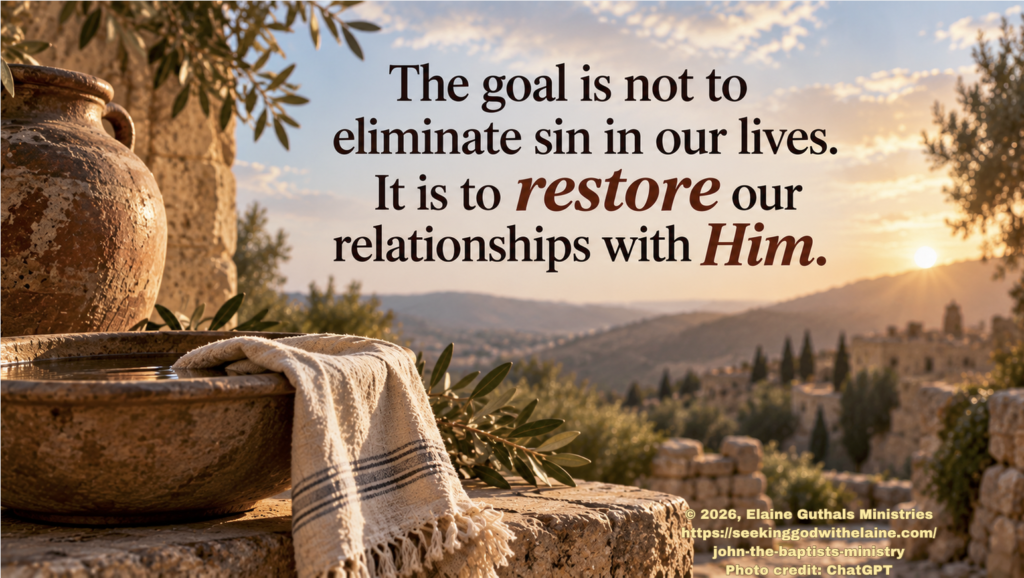
  • Waiting for the Messiah

    While Mary and Joseph were fulfilling Jehovah’s laws in the Temple, two people recognized Baby Yeshua for Who He was. This devotional reading looks at Simeon and Anna’s interaction with the Messiah.

    Nuggets

    • Mary and Joseph met Simeon in the Temple.
    • Simeon entered the story because he walked with Jehovah.
    • Like so many in Israel, Simeon was waiting for the coming of the Messiah.
    • Simeon was led by the Holy Spirit to go to the Temple that day.
    • Jehovah pressed upon Simeon’s heart that he would not die before he had seen the Messiah.
    • Simeon not only got to see the Messiah, but he also got to hold him.
    • Simeon was highlighting more than just his promise.
    • Yeshua is the Savior of Jews and Gentiles.
    • Simeon was pointing us back to Jehovah’s glory.
    • Simeon had some prophetic words for Mary, but they weren’t necessarily a comfort.
    • Covenants usually require signs.
    • The deepest thoughts of hearts are whether they choose Yeshua or not.
    • Simeon prophesied how Mary would be affected by Yeshua’s rejection.
    • A woman who was also in the Temple that day recognized the Messiah.

    We are told to watch and wait for the return of the Messiah. In first-century Israel, they were waiting for Him to make His first appearance.

    Two such people were Simeon and Anna. Mary and Joseph encountered them when they presented Yeshua in the Temple.

    More importantly, they encountered Him.

    Let’s Put It into Context

    To read devotions in The Battle for the Heart theme

    Devotions in the The Birth and Early Childhood of Christ series

    The Prophecy of Simeon (Shim‘on)

    “At that time there was a man in Jerusalem named Simeon. He was righteous and devout and was eagerly waiting for the Messiah to come and rescue Israel. The Holy Spirit was upon him and had revealed to him that he would not die until he had seen the Lord’s Messiah. That day the Spirit led him to the Temple. So when Mary and Joseph came to present the baby Jesus to the Lord as the law required, Simeon was there. He took the child in his arms and praised God, saying, ‘Sovereign Lord, now let your servant die in peace, as you have promised. I have seen your salvation, which you have prepared for all people. He is a light to reveal God to the nations, and he is the glory of your people Israel!’” (Lk. 2: 25-32 NLT)

    Simeon

    Mary and Joseph met Simeon in the Temple.

    We aren’t told anything about who Simeon was. We don’t know if he lived in Jerusalem or was visiting. We don’t know his age – other than assuming he was old. We don’t know his family status: never married, married, widower.

    What we do know is what Simeon was in Jehovah’s eyes.

    Righteous and Devout

    Simeon entered the story because he walked with Jehovah.

    Simeon was described as righteous and devout. To be a tzaddik (צַדִּיק) – or a righteous person – is to faithfully walk according to Jehovah’s covenant. That is the Abrahamic covenant.

    In other words, Simeon’s condition and character were right.

    It isn’t talking about sinless perfection here. Instead, it shows someone whose life is spent in covenant faithfulness. This standing is based on Jehovah’s gracious acceptance.

    Devout — chasid (חָסִיד) – is the attitude of holding Jehovah in reverence and treating Him, His holiness, His worship, and His revealed Will with careful respect and faithful obedience.

    Devoutness is, therefore, an attitude toward Jehovah that affects conduct. Simeon felt His presence and performed all his acts and thoughts for Him.

    Holy Spirit Was upon Him

    Simeon was led by the Holy Spirit to go to the Temple that day.

    In the Old Testament, the Holy Spirit didn’t dwell in people as He did after Pentecost. The Holy Spirit is the One Who brought Simeon to the Temple that day.

    Could Simeon have been a priest? He may have been – it just wasn’t his rotation that day.

    But nothing leads us to believe that. All we are told is that Simeon lived in Jerusalem.

    What we are told is that this was a prophetic moment. Simeon was there because of divine timing.

    He Would not Die

    Jehovah pressed upon Simeon’s heart that he would not die before he had seen the Messiah.

    There are times Jehovah lets us know what He has in store for us. This was one of them.

    You have to think that the promise was given because Simeon was so righteous and devout. Probably.

    But Jehovah can give promises to the righteous and devout – who don’t feel they are so righteous and devout. He can give promises to people to grow their faith, not just reward their faith.

    Took the Child in His Arms

    Simeon not only got to see the Messiah, but he also got to hold Him.

    We aren’t told anything about the moment of recognition. Yeah, it would have been great to know the joy and wonderment Simeon was feeling.

    It seems like Simeon immediately knows. The Holy Spirit didn’t make him wait.

    There was no waiting on Simeon’s part. No hesitation. No sign needed.

    Simeon’s waiting formed his seeing.

    That is where Simeon’s faith is displayed most strongly. Waiting is one thing, but what if we refuse to believe when the promise is fulfilled? We have to exercise faith then, too.

    Seen your Salvation

    Simeon was highlighting more than just his promise.

    Yes, Simeon used I-type statements. Your servant (Lk. 2: 29). I have seen (Lk. 2: 30).

    But Simeon quickly transitions to Your salvation (Lk. 2: 30) and prepared for all people (Lk. 2: 31).

    Simeon wasn’t only celebrating that he had seen the Messiah. He was also celebrating that the Messiah had come – and brought the promised salvation.

    • “He says, ‘You will do more than restore the people of Israel to me. I will make you a light to the Gentiles, and you will bring my salvation to the ends of the earth” (Isa. 49: 6 NLT).
    • “‘The Redeemer will come to Jerusalem to buy back those in Israel who have turned from their sins,’  says the Lord” (Isa. 59: 20 NLT).

    That is for which Simeon was waiting. That makes him saying “I’ve been waiting for the consolation” and I’ve seen your salvation” so powerful.

    Consolation – nechamah (נֶחָמָה) – talks about restoration. Salvation – Yeshuah (יְשׁוּעָה) – means deliverance and rescue.

    What Simeon was saying was, “I have seen your Yeshuah (יְשׁוּעָה).

    We say that salvation is a process. It is more than that. It is a Person.

    Prepared for All People

    Yeshua is the Savior of Jews and Gentiles.

    Was Simeon like so many other first-century Jews looking for a military messiah? I don’t think so.

    Simeon’s expectation clearly transcended a merely political salvation.

    All people would have included the Gentiles. Many first-century Jews wouldn’t have seen Messiah coming for Gentiles.

    Simeon connected the light — or (אוֹר) – for the nations phrase from prophecy. Go back and reread Isaiah 49: 6 in the last section.

    • “The people who walk in darkness will see a great light. For those who live in a land of deep darkness, a light will shine” (Isa. 9: 2 NLT).
    • “I, the Lord, have called you to demonstrate my righteousness. I will take you by the hand and guard you, and I will give you to my people, Israel, as a symbol of my covenant with them. And you will be a light to guide the nations” (Isa. 42: 6 NLT).
    • “Arise, Jerusalem! Let your light shine for all to see. For the glory of the Lord rises to shine on you. Darkness as black as night covers all the nations of the earth, but the glory of the Lord rises and appears over you. All nations will come to your light; mighty kings will come to see your radiance” (Isa. 60: 1-3 NLT).

    Remember, this is the same light as used in Genesis 1: 3. “Then God said, ‘Let there be light,’ and there was light” (Gen. 1: 3 NLT).

    This is Jehovah’s shekinah – His presence.

    Think about it, Yeshua was born and raised in obscurity. His death was anything but hidden. His coming is going to be not only world-wide but for everyone past and present at that time.

    The Glory of Your People Israel!

    Simeon was pointing us back to Jehovah’s glory.

    So, what does the glory (kavod – כָּבוֹד) of Jehovah’s people mean? Does it mean He is bringing them status?

    No.

    • “For I am ready to set things right, not in the distant future, but right now! I am ready to save Jerusalem and show my glory to Israel” (Isa. 46: 13 NLT).
    • “Arise, Jerusalem! Let your light shine for all to see. For the glory of the Lord rises to shine on you” (Isa. 60: 1 NLT).

    Jehovah’s glory is associated specifically with Jerusalem/Israel and God’s saving action toward His covenant people. Israel has its role in His redemptive plan.

    Notice, Simeon says the Child is the glory of Israel. That ties back into Messianic prophecy and expectations.

    Blessing Mary and Joseph

    Jesus’ parents were amazed at what was being said about him. Then Simeon blessed them, and he said to Mary, the baby’s mother, ‘This child is destined to cause many in Israel to fall, and many others to rise. He has been sent as a sign from God, but many will oppose him. As a result, the deepest thoughts of many hearts will be revealed. And a sword will pierce your very soul’” (Lk. 2: 33-35 NLT)

    Destined to Cause Many in Israel to Fall and Rise

    Simeon had some prophetic words for Mary, but they weren’t necessarily a comfort.

    First, Simeon reminded Mary that the Messiah would be rejected. Walk through this with me.

    From the Suffering Servant passage in Isaiah, “He was despised and rejected —  a man of sorrows, acquainted with deepest grief. We turned our backs on him and looked the other way.  He was despised, and we did not care” (Isa. 53: 3 NLT).

    No, most first-century Messianic expectations didn’t connect the Messiah with suffering. We really don’t read that they felt the Messiah would be rejected.

    But from the very first prophecy, Jehovah clearly stated that the Messiah would suffer. “And I will cause hostility between you and the woman,  and between your offspring and her offspring. He will strike your head, and you will strike his heel” (Gen. 3: 15 NLT).

    We may read this to mean all humans are going to become victims of Satan. If this is a messianic prophecy – and it is – wouldn’t that also mean attacks on the Messiah?

    The wording just guarantees attacks. To me, it doesn’t guarantee Satan is successful.

    But attacks can be painful. Satan thought he was attacking Yeshua by sending Him to the cross.

    That was painful.

    Satan found out too late that it was Yeshua’s plan all along that He end up there. He found out it was Jehovah controlling the plan.

    Let’s go back to something we just bowled over. Messiah could be rejected.

    The salvation Yeshua secured with His death and resurrection is offered to us as a gift. It is up to us to accept or reject it.

    Rejecting Yeshua means the falling (naphal – נָפַל). Accepting Him means the rising (qum – קוּם)

    Oh, yeah. Accepting salvation is much more beneficial than rejecting it. Still, we are offered a choice.

    This brings division. “Do you think I have come to bring peace to the earth? No, I have come to divide people against each other! From now on families will be split apart, three in favor of me, and two against—or two in favor and three against. ‘Father will be divided against son and son against father; mother against daughter and daughter against mother; and mother-in-law against daughter-in-law and daughter-in-law against mother-in-law’” (Lk. 12: 51-53 NLT).

    That definitely didn’t jibe with first-century Messianic expectation.

    Sent as a Sign from God

    Covenants usually require signs.

    Don’t misread this. It isn’t saying that Yeshua would perform signs – miracles – so people would know who He was. Yes, He did do that.

    This said that Yeshua WAS the sign – ot (אוֹת).

    Wait! How does a sign fit into light and division?

    Yeshua is Jehovah’s sign that His promised salvation has arrived.

    Let’s look at it this way. A covenant almost always included a sign.

    Yeshua’s coming was as fulfillment of the promises of the Abrahamic covenant. More importantly, He was bringing a new covenant.

    Yeshua was the sign of the new covenant. This new covenant focused on the battle of the heart.

    We have to choose if we are going to submit our lives to Yeshua and Jehovah or not. The choice is ours.

    That choice follows a pattern that Jehovah established way back in Genesis. Going back to Cain and Abel, Jehovah separated those who followed Him from those who didn’t.

    Division?  That can happen on our end.

    The Deepest Thoughts of Many Hearts Revealed

    The deepest thoughts of hearts are whether they choose Yeshua or not.

    At the end of the age, Yeshua will separate believers from unbelievers. “He will place the sheep at his right hand and the goats at his left” (Mt. 25: 33 NLT).

    The separation into believer and nonbelievers is based on the condition of the heart – where the thoughts rest.

    Wait! How would Yeshua know what we think? Well, He does.

    • “Jesus knew what they were thinking, so he asked them, ‘Why do you have such evil thoughts in your hearts?’” (Mt. 9: 4 NLT; Lk. 5: 22 NLT).
    • “But Jesus didn’t trust them, because he knew all about people. No one needed to tell him about human nature, for he knew what was in each person’s heart” (Jn. 2: 24-25 NLT).
    • “‘But some of you do not believe me.’ (For Jesus knew from the beginning which ones didn’t believe, and he knew who would betray him.)” (Jn. 6: 64 NLT).

    Yeshua knows our thoughts, especially when they apply to our relationship with Him.

    A Sword Will Pierce Your Soul

    Simeon prophesied how Mary would be affected by Yeshua’s rejection.

    When Gabriel told Mary that she would be a mother, he didn’t tell her about the hard part of the job. But then a mother always feels for their child.

    The sword (cherev – חֶרֶב) was figurative. Simeon warned Mary about the rejection and suffering. He didn’t say that it was ultimately fulfilled in the cross.

    Still, Mary knew from Yeshua being a month old that it would be hard for her.

    The Prophecy of Anna (Chanah)

    “Anna, a prophet, was also there in the Temple. She was the daughter of Phanuel from the tribe of Asher, and she was very old. Her husband died when they had been married only seven years. Then she lived as a widow to the age of eighty-four. She never left the Temple but stayed there day and night, worshiping God with fasting and prayer. She came along just as Simeon was talking with Mary and Joseph, and she began praising God. She talked about the child to everyone who had been waiting expectantly for God to rescue Jerusalem” (Lk. 2: 36-38 NLT)

    A woman who was also in the Temple that day recognized the Messiah.

    Luke gave us more information regarding Anna. She was a widow for around 60 years, making her elderly.

    Being of the tribe of Asher, Anna was Galilean.

    Like Simeon, she was devout. We are told that she never left the Temple.

    Also, like Simeon, Anna recognized the Messiah.

    Luke said that Anna witnessed to anyone who would listen. “… and spoke of Him to all those who looked for redemption in Jerusalem” (Lk. 2: 38 ESV).

    Isn’t that a little strange? First-century Jewish women weren’t considered reliable witnesses.

    Where Simeon prayed, Anna praised. She worshiped.

    Making the Connections #1

    Why was it important for us to meet Simeon and Anna? They were bridge figures between the Old Testament and the New Testament.

    Simeon was a prophet who followed the lead of the Holy Spirit. He spoke the divine truth.

    Anna was a prophet who worshiped and speaks about Him to those who were already waiting for redemption in Jerusalem.

    Making the Connections #2

    We don’t want to miss the theology flow.

    Simeon recognizes in Yeshua the long-awaited נֶחָמָה (consolation) of Israel and declares Him to be יְשׁוּעָה (salvation), אוֹר (light) to the nations, and כָּבוֹד (glory) to Israel — while foretelling that He will become an אוֹת (sign) that brings both נָפַל (fall) and קוּם (rising), and a חֶרֶב (sword) of suffering.

    Making the Connections #3

    Jehovah was making the rounds. Already He had brought a childless elderly couple into the plan. His plan hinged on the obedience of a faithful teenager and a righteous man.

    The birth announcement was given to lowly shepherds and foreign astronomers (who may also have been priests).

    Now, within the walls of His Temple, Jehovah fulfilled His promises to faithful servants.

    While He was doing this, Yeshua was fulfilling everything required of Him as a human. Everything a common first-century Jewish boy experienced, He experienced.

    Yeshua was fulfilling the law and prophecy. All that transpired fulfilled the prophecy in Micah. “‘In that coming day,’ says the Lord, ‘I will gather together those who are lame, those who have been exiles, and those whom I have filled with grief. Those who are weak will survive as a remnant; those who were exiles will become a strong nation. Then I, the Lord, will rule from Jerusalem as their king forever.” (Mic. 4: 6-7 NLT).

    Micah’s prophecy had followed a progression.

    • Distress under foreign rule
    • No visible king in Israel
    • Promise of restoration begins
    • Migdal Elder: watching the flock
    • Kingship will return
    • Bethlehem named
    • Ruler will be born
    • Shepherd-King
    • He will bring peace

    Heart Check

    Think about the battle Yeshua is engaged in for your heart. Ask yourself the following questions.

    • Am I willing to wait on Jehovah, even when I cannot yet see how He will fulfill His promise?
    • When Jehovah fulfills a promise differently than I expected, will I recognize what He is doing?
    • Does my heart truly belong to Yeshua, or am I still trying to decide whether I will submit to Him?
    • What do my thoughts, choices, and responses reveal about the condition of my heart?
    • Am I willing to let Yeshua reveal what is really in my heart, or will I resist what He shows me?

    How Do We Apply This?

    • Wait faithfully when Jehovah gives you a promise but not the timetable.
    • Let His Word shape what you expect from Him rather than allowing your expectations to shape His Word.
    • When Jehovah fulfills a promise, look for His hand—even when the fulfillment does not look the way you imagined.
    • Choose Yeshua every day, knowing that following Him may bring division or rejection.
    • Let Yeshua examine your heart and bring anything that needs to change into His light.


    Father God. Help us to wait as Simeon and Anna did for Yeshua’s first coming. Let us be watching for His second coming. Not only let us recognize Him, but let Him also recognize us. Amen.

    If you don’t understand something and would like further clarification, please contact me.

    If you have not signed up for the email providing the link to the devotions and the newsletter, do so below.

    If God has used this devotion to speak with you, consider sharing it on social media.
  • Jesus Was Presented in the Temple

    There were some important requirements that needed to be fulfilled according to Jehovah’s laws. This devotional reading looks at Yeshua’s circumcision, Mary’s purification offering, and the redemption of the firstborn.

    Nuggets

    • It was important that Yeshua enter the covenant community.
    • Mary and Joseph were both told what the Baby’s name was going to be.
    • Purification is important to Jehovah.
    • Specific instructions were given regarding the purification offering.

    Jehovah had given specific instructions as to what should happen when a baby boy was born. This didn’t change just because His Son was born.

    Let’s Put It into Context

    To read devotions in The Battle for the Heart theme

    Devotions in the The Birth and Early Childhood of Christ series

    Circumcision of Jesus

    “Eight days later, when the baby was circumcised, he was named Jesus, the name given him by the angel even before he was conceived” (Lk. 2: 21 NLT)

    Circumcision

    It was important that Yeshua enter the covenant community.

    When John the Immerser was born, we talked about the circumcision ceremony being where the newborn son entered into the covenant community. The circumcision ceremony is called B’rit Milah (בְּרִית מִילָה).

    The religious ceremony was performed on a son’s eighth day after birth. It was a covenant ceremony, a family celebration, a public declaration of identity, and the official welcoming of a son into God’s covenant people all rolled into one celebration.

    Normally, covenant celebrations were celebrated in the home by the community. But we have to wonder how much not being in Nazareth changed this ceremony.

    True, any family that lived in or may have come to Bethlehem as Joseph did may have come to the ceremony. But we really aren’t sure the reason was Joseph’s family didn’t make room for them in their house. If it was because Mary was a betrothed but unwed pregnant woman, they wouldn’t have gone to the circumcision ceremony either.

    It was important that Yeshua complete the circumcision. It was part of God’s covenant with Abraham. It is the part of the Jew’s responsibility to show agreement with the covenant. It was the physical sign of the covenant that showed the child belonged to Jehovah.

    Yeshua was to be a member of the community and fully entered into it.

    Think about it. Abraham and Ishmael were the first to be circumcised (Gen. 17: 23 NLT). The first son that we are told was circumcised was Isaac (Gen. 21: 4).

    Isaac, too, was to be sacrificed by his father, just as Yeshua was. Through that testing, we saw the love that Jehovah has for us.

    Remember, the number eight represents a new beginning. Yeshua was ushering in a new covenant.

    Was Named Jesus

    Mary and Joseph were both told what the Baby’s name was going to be.

    • “You will conceive and give birth to a son, and you will name him Jesus” (Lk. 1: 30-33 NLT).
    • “And she will have a son, and you are to name him Jesus, for he will save his people from their sins” (Mt. 1: 21 NLT).

    Yeshua’s name – His Hebrew name – is important. Modern versions translate it as Jesus.

    Not really. Yeshua means Joshua.

    It is my opinion that Jehovah wanted His Son to be known by only one name. “There is salvation in no one else! God has given no other name under heaven by which we must be saved” (Ac. 4: 12 NLT).

    Yeshua means God saves – which is Yeshua’s mission.

    It was Jehovah that designed the Plan of Salvation. He determined what He needed to pay the price for our sins. He chose Yeshua to carry out His plan. He put the plan into motion.

    Everything about Yeshua was concentrated on completion His mission of salvation.

    Jesus Presented in the Temple

    “Then it was time for their purification offering, as required by the law of Moses after the birth of a child; his parents took him to Jerusalem to present him to the Lord. The law of the Lord says, ‘If a woman’s first child is a boy, he must be dedicated to the Lord.’ So they offered the sacrifice required in the law of the Lord — ‘either a pair of turtledoves or two young pigeons’” (Lk. 2: 22-24 NLT)

    Purification

    Purification is important to Jehovah.

    Leviticus 12 records the law for purification after childbirth. “The Lord said to Moses, ‘Give the following instructions to the people of Israel. If a woman becomes pregnant and gives birth to a son, she will be ceremonially unclean for seven days, just as she is unclean during her menstrual period. On the eighth day the boy’s foreskin must be circumcised. After waiting thirty-three days, she will be purified from the bleeding of childbirth …’” (Lev. 12: 1-4 NLT).

    There are some don’t-touch instructions and separate instruction is the child is a girl. But these are important for our discussion.

    Doing the math, the purification offering took place 40 days after birth. Hmmm. Forty days seems to pop up occasionally. This was the amount of time

    • it rained during the Flood (Gen. 7: 4, 12, 17).
    • Yeshua was tempted in the wilderness (Mt. 4: 2; Mk. 1: 13; Lk. 4: 2).
    • the mountaintops were visible before Noah opened the ark’s window (Gen. 8: 6).
    • Moses remained on Sinai receiving the law (Ex. 24: 18).
    • Moses spent interceding after the golden calf (Deut. 9: 18, 25; 10: 10).
    • spies explored Canaan (Num.. 13: 25).
    • Goliath challenged Israel (I Sam. 17: 16).
    • it too Elijah to travel to Horeb (I Kgs. 19: 8).
    • Jonah warned Nineveh (Jon. 3: 4).
    • Yeshua remained on earth after His resurrection (Ac. 1: 3).

    There are other occasions where the number 40 is used, but these are the ones that specifically apply to 40 days. The number 40 is used in patterns.

    Although the number 40 is not given a formal definition as a symbolic number, in many cases it signifies something is being tested, purified, judged, prepared, or brought to a transition point.

    Offering

    Specific instructions were given regarding the purification offering.

    “When the time of purification is completed for either a son or a daughter, the woman must bring a one-year-old lamb for a burnt offering and a young pigeon or turtledove for a purification offering. She must bring her offerings to the priest at the entrance of the Tabernacle. The priest will then present them to the Lord to purify her. Then she will be ceremonially clean again after her bleeding at childbirth. These are the instructions for a woman after the birth of a son or a daughter. If a woman cannot afford to bring a lamb, she must bring two turtledoves or two young pigeons. One will be for the burnt offering and the other for the purification offering. The priest will sacrifice them to purify her, and she will be ceremonially clean” (Lev. 12: 6-8 NLT).

    Wait! What???

    I thought Mary presented the offering of a pigeon or turtledove because she was poor. This doesn’t say anything like that.

    Read what it says again. The mother was to bring 1) a one-year-old lamb and 2) a young pigeon or turtledove.

    That wasn’t an either/or type of deal. The lamb was to be a burnt offering. The bird was to be the purification offering.

    Both were needed.

    Stop. Hold the phone. Look at Leviticus 12: 8. “If a woman cannot afford to bring a lamb, she must bring two turtledoves or two young pigeons. One will be for the burnt offering and the other for the purification offering …” (Lev. 12: 8 NLT).

    Go back to what Luke said. “So they offered the sacrifice required in the law of the Lord — ‘either a pair of turtledoves or two young pigeons’” (Lk. 2: 24 NLT).

    Firstborn

    But then Yeshua was also a firstborn. That also required Him being offered to Jehovah and bought back.

    “This is what you must do when the Lord fulfills the promise he swore to you and to your ancestors. When he gives you the land where the Canaanites now live, you must present all firstborn sons and firstborn male animals to the Lord, for they belong to him. … However, you must buy back every firstborn son” (Ex. 13: 11-13 NLT).

    We have to go to Numbers 18: 16 for that. “When they are a month old, you must redeem them at the redemption price set at five shekels of silver, according to the sanctuary shekel, which weighs twenty gerahs” (Num. 18: 16 NLT).

    More math. Five shekels were 20 gerahs per shekel. Later, Jewish sources identify the required five-shekel redemption payment with five sela, or 14.335 grams of pure silver each. That is roughly 72 grams or 2.3 troy ounces of silver.

    The Hebrew phrase mibben-chodesh, however, means from the age of one month, establishing that the redemption requirement began at one month of age rather than requiring the payment on one exact day. That means, by approximately 40 days, Yeshua was already eligible for the redemption payment.

    Therefore, Mary could do the purification offering and they could pay the firstborn price at the same time. But we aren’t specifically told whether Joseph paid the five shekels during the Temple visit.

    Making the Connections

    We may tend to think the Old Testament focused on outside purity. Laws regarding purification and instances of the offerings being presented cement those in our minds.

    That is a wrong assumption. Old Testament purity laws didn’t always assume the Israelites/Jews had sinned.

    While the Old Testament did establish that external/ritual purity was important, it did introduce inner purity and restoration.

    • “But this is the new covenant I will make with the people of Israel after those days,” says the Lord. “I will put my instructions deep within them, and I will write them on their hearts. I will be their God, and they will be my people” (Jer. 31: 33 NLT).
    • “And I will give you a new heart, and I will put a new spirit in you. I will take out your stony, stubborn heart and give you a tender, responsive heart” (Ezek. 36: 26 NLT).

    Yeshua brought the relationship between the two into sharp focus, insisting that outward purity cannot substitute for a purified heart. The New Testament increasingly focused on cleansing the inside.

    Does this mean that outward cleansing is no longer necessary? On the contrary!

    Yeshua focused on our inward appearance matching our outward appearance. This is very close to the biblical concept of integrity.

    Part of the inward – and outward – corruption comes from being tainted with worldly corruption.

    We may have the tendency to combine purity and holiness. While they overlap, they aren’t identical. To simplify it,

    • Purity means freedom from contamination.
    • Holiness means set apart for Jehovah.

    Do you see it? Salvation is given to those who are set apart for Jehovah – those He has made holy. But we are not totally pure even after salvation. We continue to sin.

    And we will continue to sin until the point where purity and holiness combine.

    The progression throughout Scripture is the following.

    • External cleanness
    • Ceremonial cleanness
    • Moral cleanness
    • Clean heart
    • Undivided devotion to Jehovah

    Purity is freedom from contamination – outwardly, morally, and ultimately inwardly – so that a person is undivided, genuine, and fit for relationship with Jehovah.

    Heart Check

    Think about the battle Yeshua is engaged in for your heart. Ask yourself the following questions.

    • Am I more concerned with appearing pure before others than with allowing Yeshua to purify my heart?
    • Do I sometimes mistake outward religious observance for genuine purity of heart?
    • Am I willing to let Yeshua expose the contamination in my heart, or do I prefer to deal only with what others can see?
    • Does what people see on the outside truly reflect what is happening inside my heart?
    • Am I completely devoted to Jehovah, or are there areas of my heart I am still holding back?

    How Do We Apply This?

    • Examine our hearts to determine whether they are pure by Jehovah’s standards.
    • Pursue purity  in order to be obedient to Him.
    • Live with integrity – where our outward appearance matches our inward condition.
    • Guard our hearts to ensure purity.
    • Give Jehovah our whole heart.

    Father God. You never change. What You expected of Abraham, You expected of Mary, Joseph, and Yeshua — and us. Help us be obedient as they were. Amen.

    If you don’t understand something and would like further clarification, please contact me.

    If you have not signed up for the email providing the link to the devotions and the newsletter, do so below.

    If God has used this devotion to speak with you, consider sharing it on social media.
  • Visitors from the East

    Yeshua had some important visitors. This devotional reading looks at who the Magi may have been and how they got where they needed to be.

    Nuggets

    • Herod the Great was egotistical and self-centered.
    • Men from a far-off country were led to worship Yeshua.
    • The wise men – who had given up a lot to get there – arrived in Jerusalem because that was where the palace was.
    • The Magi asked the king about the birth of the King of the Jews.
    • The Magi were guided by a star.
    • We tend to think that Herod was disturbed about the question the Magi were asking.
    • King Herod went to those that would be in the know to find the answer to the Magi’s question.
    • The religious leaders Herod contacted found the prophecy in Micah.
    • Herod set up a chance to talk with the men privately.
    • The Magi not only saw the star but also followed it to Jerusalem.
    • We don’t know when the Magi made their journey.
    • The Magi obeyed Jehovah.

    The birth of Yeshua was not hidden from everyone. From the east came men who had seen His star and traveled a great distance to find the newborn King. But when they arrived in Jerusalem, they discovered that knowing where to look would require more than following a star.

    Let’s Put It into Context

    To read devotions in The Battle for the Heart theme

    Devotions in the The Birth and Early Childhood of Christ series

    Jesus Was Born in Bethlehem

    “Jesus was born in Bethlehem in Judea, during the reign of King Herod. About that time some wise men from eastern lands arrived in Jerusalem, asking, ‘Where is the newborn king of the Jews? We saw his star as it rose, and we have come to worship him’” (Mt. 2: 1-2  NLT)

    Reign of King Herod

    Herod the Great was egotistical and self-centered.

    Herod ruled the Jews but was not of the Davidic line. To make matters worse, he was chosen to be King of the Jews by Octavian Augustus and the Roman Senate around 40 BC.

    Herod tried to curry the favor of his subjects by rebuilding the Temple and funding public works. However, he alienated many by his close ties with Rome and his violent and unpredictable behavior.

    In 4 BC, Herod died. It is believed John the Immerser and Yeshia were both born in the last year of his life.

    A good summary of Herod’s reign would be that he was a false king. He reigned through power, fear, and death. Yet he set the stage for the Messiah, who reigned in humility and divine authority.

    Wise Men from Eastern Lands

    Men from a far-off country were led to worship Yeshua.

    Some versions translate it as wise men. Other use the word Magi.

    So, who were these people? We don’t know for sure. Some of that uncertainty can be attributed to how words are translated.

    Wise men were astronomers. They interpreted celestial signs.

    While Magi were also astronomers, they were likely priests from Persia/Babylonia. They also interpreted dreams.

    The problem is that the Greek word can mean magician or sorcerer. That would be someone who dealt in occult knowledge.

    Nowhere does it say the Magi were kings. Instead, they were highly educated scholars or priests.

    Nowhere does it say there was just three. We assume that because there was three gifts.

    I am sure there was a whole contingent from the far east, as that would have been an 800-900 mile treacherous and dangerous trip. Got Questions said that there would have been servants and soldiers along.

    Resource

    Most people have come to see them as non-Jews. But why would Jehovah summon Gentiles before summoning the Jews?

    I can see that they were Gentiles. The star was shown to those from the far east. Jews were expected to be living only in Israel at that time.

    But were they Gentiles? The Complete Jewish Study Bible offered archeological evidence that the Magi were neither Gentile nor astronomers. Benner agreed with this.

    Resource

    What if they were, in fact, Jews linked to Daniel’s time during the exile to Babylon? No, I’d never thought of it this way, so let’s dig in a second.

    Jerusalem was captured by the Babylonians in 597 BC. The Jews were defeated by them in 586 BC. They were in exile 70 years.

    But when they were allowed to go back to Israel, all of them didn’t just pick up and go back. They came in three waves.

    • 538 BC under Zerubbabel
    • About 458 BC under Ezra
    • 445/444 BC under Nehemiah

    Some second- or third-generation Jewish Babylonians didn’t want to leave. Gutknecht estimated that, of the 15,000 men that were exiled (II Kgs. 24: 14-16; Jer. 52: 28-30). It  is estimated that 42,360 returned — meaning 80% of the Jewish population living in Babylon after 70 years remained there.

    Resource

    All they knew was their lives in Babylon, lives in which they had become productive members of society.

    It makes sense that they would have been descendants from exiled Jews who chose to stay. They would have had access to Daniel’s prophesy.

    “Now listen and understand! Seven sets of seven plus sixty-two sets of seven will pass from the time the command is given to rebuild Jerusalem until a ruler—the Anointed One — comes. Jerusalem will be rebuilt with streets and strong defenses, despite the perilous times” (Dan. 9: 25 NLT).

    Remember, Daniel was chief of the court seers in Persia in his time (Dan. 2: 48). Seers was another name for prophets.

    Daniel may also have turned them on to Numbers 24: 17 as it was prophecy. We’ll talk about that one in a minute.

    Arrived in Jerusalem

    The wise men – who had given up a lot to get there – arrived in Jerusalem because that was where the palace was.

    Bethlehem was David’s hometown and the place where he was anointed, but Jerusalem became his capital. Only six miles north of Bethlehem, Jerusalem became his capital after upon his capture of it from the Jebusites, traditionally dated around 1003 BC.

    There was reasons for making Jerusalem the capital. Jerusalem was strategically located between the northern and southern tribal territories and wasn’t identified as the possession of one Israelite tribe. That made the capital politically neutral.

    King of the Jews

    The Magi asked the king about the birth of the King of the Jews.

    The Greek phrase is basileus tōn Ioudaiōn (βασιλεὺς τῶν Ἰουδαίων) — King of the Jews. In Hebrew, this is Melech HaYehudim. Melech means king, while Yehudim is the Hebrew word for Jews.

    Yehudim comes from Yehudah – Judah – but by the first century it had become the normal designation for the Jewish people. Remember, when the kingdom divided, the Southern Kingdom comprised of Judah and Benjamin. They became known as the Jews.

    His Star

    The Magi were guided by a star.

    When I was younger, I questioned how the Magi would know there would be a star to mark the Messiah’s birth. Answer, it was prophesied.

    “I see him [Jehovah], but not here and now. I perceive him, but far in the distant future. A star will rise from Jacob; a scepter will emerge from Israel. It will crush the heads of Moab’s people, cracking the skulls of the people of Sheth” (Num. 24: 17 NLT emphasis added).

    In God’s Word, stars symbolize glory and triumph. Both were on full display that night for the magi and shepherds.

    Herod Questioned the Priests and Teachers

    “King Herod was deeply disturbed when he heard this, as was everyone in Jerusalem. He called a meeting of the leading priests and teachers of religious law and asked, ‘Where is the Messiah supposed to be born?’ ‘In Bethlehem in Judea,’ they said, ‘for this is what the prophet wrote: “And you, O Bethlehem in the land of Judah, are not least among the ruling cities of Judah, for a ruler will come from you who will be the shepherd for my people Israel.” Then Herod called for a private meeting with the wise men, and he learned from them the time when the star first appeared. Then he told them, ‘Go to Bethlehem and search carefully for the child. And when you find him, come back and tell me so that I can go and worship him, too!’” (Mt. 2: 3-8 NLT)

    Deeply Disturbed

    We tend to think that Herod was disturbed about the question the Magi were asking.

    As paranoid as Herod was, I am sure that he didn’t want to hear that a new king had been born. He would have known of their distrust of a king who was not a Jew.

    Yeah, Herod would have been upset by the question. We know he saw this baby as a threat to his rule.

    I wonder if Herod was also disturbed because a large contingent of foreigners showed up unannounced. That also seems logical to me.

    But would that have upset everyone in Jerusalem? Herod was not especially liked as a king. They probably wouldn’t have been upset about a threat to him.

    They would, however, been upset if they thought the Magi were there to make war on the city of Jerusalem. That would have put them in danger.

    I can see that response to anywhere from a couple of dozen to a couple of hundred people showing up.

    Leading Priests and Teachers of Religious Law

    King Herod went to those that would be in the know to find the answer to the Magi’s question.

    Of course, Herod went to the priests and scribes. The priests were representatives of Jehovah.

    Don’t think of the word scribe as just a glorified robot copying word for word what the scrolls said. When there was a question, they were the ones to research God’s Word to determine the answer. Then they were to teach the Torah.

    We might think that the religious leaders, upon knowing the prophecy had been fulfilled, would be asking the Magi if they would mind them tagging along. Why didn’t they speed to Bethlehem and find the Christ Child?

    It sounds like they just gave Herod the answer he wanted – and dropped it.

    This is just another example of what happens when you have knowledge but no response. Nothing happened. They didn’t meet their Savior.

    Was it because they considered the Magi Gentiles – even if they were part of the Lost Tribes of Israel? Did they think Jehovah wouldn’t announce the birth of the Messiah to anyone but them?

    Bethlehem

    The religious leaders Herod contacted found the prophecy in Micah.

    “But you, O Bethlehem Ephrathah, are only a small village among all the people of Judah. Yet a ruler of Israel, whose origins are in the distant past, will come from you on my behalf” (Mic. 5: 2 NLT).

    What is the significance of this? This allowed Matthew to tie Matthew to Messianic prophecy.

    But it is also important that the religious leaders identified Messiah. The religious leaders had to learn that Messiah was in the world.

    Why does Micah emphasize that Bethlehem is “too little” or insignificant among Judah’s clans? We talked about how Nazareth and Bethlehem were both smaller villages.

    Bethlehem, unlike Nazzareth, had history, identity, and prophetic weight.

    Private Meeting

    Herod set up a chance to talk with the men privately.

    Does that seem strange to you?

    If his real purpose was to worship the King of the Jews, why would Herod want to keep that from his court? Wouldn’t he think they would be wanting to do the same thing?

    But no. Herod goes into stealth mode. He spoke with the Magi privately.

    Because we have hindsight, we know that worship of the King was not Herod’s intent. Worship was not the objective.

    Headed to Bethlehem

    “After this interview the wise men went their way. And the star they had seen in the east guided them to Bethlehem. It went ahead of them and stopped over the place where the child was. When they saw the star, they were filled with joy! They entered the house and saw the child with his mother, Mary, and they bowed down and worshiped him. Then they opened their treasure chests and gave him gifts of gold, frankincense, and myrrh” (Mt. 2: 9-11 NLT)

    When They Saw the Star

    The Magi not only saw the star but also followed it to Jerusalem.

    When I was younger, I wondered how the Magi would know that a star would mark the Messiah’s birth. The answer may be found in prophecy.

    “‘I see him, but not here and now. I perceive him, but far in the distant future. A star will rise from Jacob; a scepter will emerge from Israel. It will crush the heads of Moab’s people, cracking the skulls of the people of Sheth’” (Num. 24: 17 NLT).

    Balaam wasn’t speaking about a star in the sky in isolation. He was prophesying about a ruler who would arise from Israel. The star and the scepter appear together — a sign of kingship.

    That makes the Magi’s statement interesting. They didn’t simply say they had seen a star. They said, “We saw his star as it rose.” They understood the celestial sign as connected to a particular King.

    And where did that star lead them? To Jerusalem.

    That makes sense. They were looking for a king, and Jerusalem was the capital. They had come a tremendous distance because they believed the sign meant that a King had been born.

    But the star didn’t give them everything they needed to know.

    They still had to ask.

    They came to Jerusalem asking, “Where is the newborn King of the Jews?” Their observation of the heavens had gotten them to the right country and the right city, but they needed God’s written Word to tell them where the King would be found.

    That matters.

    Creation can point us toward Jehovah. Signs can awaken our attention. But we need His Word to understand what we are seeing.

    The Magi followed the light they had been given. Then, when they needed more direction, they asked.

    And Jehovah gave them the answer through Scripture.

    Entered the House

    We don’t know when the Magi made their journey.

    What we do know is they didn’t show up at the stable. Where, then, did they go?

    But remember our discussion on Luke 2: 7? While there were inns in first-century Israel, it is more likely that there was no room in the guest room at Joseph’s family’s house. They were given shelter where his family kept their animals – which was probably an addition to the house.

    Look at the Greek here. It is oikia (οἰκία) – house. Luke 2: 7 uses the Greek katalyma (κατάλυμα) – which can mean guest room.

    Bottom line, though. We don’t know whose house it was. It may have been a family home or another dwelling where Joseph’s family could stay. Matthew didn’t tell us any more than Luke did. Matthew simply told us that the Magi entered “the house” and found the child with Mary.

    Here is another wrinkle. Luke told us about the place where Yeshua was laid after His birth. Matthew told us where the Magi found Him later. We don’t know if that is the same location or a different one.

    We don’t know how long it was between those two events. If I were to guess, I would say the Magi got to Bethlehem before Yeshua was presented in the Temple. Luke told us the Holy Family went back to Nazareth after that.

    True, we tend to think Yeshua was older when the Magi got there. This is due to all the sons two years and younger being killed by Herod.

    But we don’t know for sure. Why would Mary and Joseph remain in Bethlehem when their home was in Nazareth?

    The Return Home

    “When it was time to leave, they returned to their own country by another route, for God had warned them in a dream not to return to Herod” (Mt. 2: 12 NLT)

    The Magi obeyed Jehovah.

    The Magi had gone to Jerusalem because they were looking for a King. Herod told them to return and tell him where the child was. Herod claimed that he wanted to go worship Him, too.

    But Jehovah knew Herod’s heart. So, He warned the Magi in a dream not to go back to him.

    And they obeyed.

    Think about that for a minute. They had traveled hundreds of miles following a sign they believed came from Jehovah. They had asked questions when they needed answers. They had listened to Scripture. They had found the child. They had bowed down and worshiped Him. And now they were given one more instruction.

    Don’t go back to Herod.

    Matthew doesn’t tell us that they argued with the warning, questioned why they couldn’t simply take the familiar route, or worried about what Herod might think. They simply returned to their own country by another route.

    Their journey had changed them.

    They had come looking for a King. They found Him. And once they had encountered Him, they obeyed Jehovah rather than the earthly king who had commanded them to return.

    That is part of being wise.

    Wisdom isn’t simply knowing things. It is knowing Whom to obey.

    The Magi came from far away to worship the King. Then they left by another route because Jehovah told them to.

    Sometimes following Jehovah means taking a different route than the one we originally intended.

    The question is whether we will recognize His direction — and obey.

    Making the Connections

    Coming after the chapter of genealogy and an angelic visitation to the legal father, first-century Jews wouldn’t just see this as some Baby being born. They would have heard a number of things.

    • “This child is restarting Israel’s story.”
    • “This is the true Son God called out of Egypt.”
    • “A new Moses has arrived”
    • “The exile may finally be ending”

    Some may have been concerned when they heard this. They would have seen their religious leaders missed this. They would also have thought the end of the age was coming before they were righteous.

    Matthew was laying out his Gospel to remind them of the prophecy, history, and identity. But he was also showing them the patterns used throughout Scripture.

    Heart Check

    Think about the battle Yeshua is engaged in for your heart. Ask yourself the following questions.

    • Am I genuinely seeking Yeshua, or am I satisfied with knowing about Him?
    • When Scripture reveals something I didn’t understand before, am I willing to follow where it leads?
    • Do I worship Yeshua for who He is, or only for what I hope He will do for me?
    • When Jehovah redirects me, am I willing to take a different route?
    • Am I more concerned about obeying Jehovah than about pleasing people?
    • Do I allow knowing Scripture to substitute for obeying Scripture?

    How Do We Apply This?

    • Intentionally seek Yeshua.
    • Let Scripture direct your search.
    • Respond when Jehovah reveals truth.
    • Worship Yeshua for who He is.
    • Obey when Jehovah changes your route.
    • Don’t let people outrank Jehovah.

    Father God. You always deserve praise. Yeshua always deserves praise. Thank You for the Magi who came to worship Him. Let us worship Him, too. Amen.

    If you don’t understand something and would like further clarification, please contact me.

    If you have not signed up for the email providing the link to the devotions and the newsletter, do so below.

    If God has used this devotion to speak with you, consider sharing it on social media.
  • The Shepherds Went and Found the Christ Child

    The shepherds had been given a wonderful message. This devotional reading looks at how they respond – after the angel praise time.
     

    Nuggets

    • The one angel was then joined by a multitude of angels.
    • The host of angels were acknowledging Jehovah’s act of love.
    • The angels praised Jehovah in Heaven.
    • Jehovah was providing a way to have peace with Him as well as have peace with others.
    • Peace must come from Jehovah’s good will.
    • The outcasts who were not allowed in the temple knew the message was from Adonai.
    • They said, “Let’s go,” and off they went in a hurry.
    • Regardless of the acceptability of the shepherds in society, the first visitors to see the Baby were Jewish shepherds.
    • First to Mary and Joseph, then to anyone they met, the shepherds told their story to all who would listen.
    • Mary was a person who thought things through.
    • After we meet Messiah, we return to our lives – transformed.

    The shepherds had a choice to make. Were they going to do what the angel charged them to do, or were they going to stay put?

    But first, the shepherds witnessed an angel worship service.

    Let’s Put It into Context

    To read devotions in The Battle for the Heart theme

    Devotions in the The Birth and Early Childhood of Christ series

    The Host of Angels

    “Suddenly, the angel was joined by a vast host of others — the armies of heaven — praising God and saying, ‘Glory to God in highest heaven, and peace on earth to those with whom God is pleased’” (Lk. 2: 13-14 NLT)

    Joined by a Vast Host of Other Angels

    The one angel was then joined by a multitude of angels.

    We know the shepherds were the first human evangelist, but the angel was really the first.

    The shepherd couldn’t tell others about the Christ Child until they were told themselves. Their messenger was an angel.

    If that wasn’t amazing enough, the one angel was soon joined by a host – an innumerable company – of other angels. The night sky was filled with them.

    It is through that lens that we must view the multitude of angels.

    Wouldn’t this have been considered a humiliation – a god come down to earth and lived among the people in human form? How many of the false gods have done that? None.

    Instead, the heavenly host brought the celebration to the shepherds. They did what they do best — sang praises to Jehovah.

    Sibbes described singing as a form of praise and a fitting expression of joy. The angels’ joy was because the Christ Child was born.

    Resource

    Songs conveyed that any goodwill from heaven or peace on earth must align with the glory of God to be imparted to humanity. They encourage devotion and awaken deeper love within the soul.

    We read of much music in Heaven. Music reflects the enduring nature of heavenly existence, embodying both freedom and pleasure. This flows from the joy received from Jehovah when doing His Will.

    Why did the heavenly host show up after the first angel had already given the pertinent message? Hacker said it was because Jehovah likes to be worshiped by multitudes.

    Resource

    Jehovah deserves or praise and worship.

    Think about it. Before His birth, the angels would have been giving constant praise to Yeshua.

    The divine Yeshua lowered Himself – but the angels still praised Him anyway.

    The angels were praising Yeshua because they knew He would secure our salvation.

    Glory to God

    The host of angels were acknowledging Jehovah’s act of love.

    We should give glory to Jehovah every Christmas Day – and every other day. The reasons are

    • God is with us.
    • He conquered Satan and sin.
    • Our salvation has arrived.

    Spurgeon noted that this salvation was what gave Jehovah His highest glory. This showed Jehovah’s wisdom and power. It also celebrated His justice. He was sending His Son to suffer for us who had rebelled and broken His law.

    Resource

    Gumming agreed. To him, glory had three foundations: the substance of the Gospel, how it was disseminated, and the outcomes it had on transforming the hearts and habits of men.

    Resource

    I get that. Redemption had begun! But that redemption was offered to us, not forced upon us. Redemption didn’t take hold until we are transformed.

    Yes, sanctification is a life-long process. We have to be committed to it to start it.

    The angels knew to what we could be elevated because – now – Messiah had come as promised.

    Because of that, Jehovah’s name should be praised. Only He could provide the Sacrifice worthy enough for the mission.

    What is the best way for us to show glory to God? Accept the gift of salvation.

    In Highest Heaven

    The angels praised Jehovah in Heaven.

    Jehovah, through this act of sending His Son to be our Savior, showed the angels who knew no sin what redemption from our sins.

    The host of angels were focusing humans’ attention on a fair and just Sovereign God.

    Peace on Earth

    Jehovah was providing a way to have peace with Him as well as have peace with others.

    Hmmm. I thought, under Rome, they were supposed to have Pax Romana – peace – in the Roman empire. Maybe, but this earthly peace isn’t the only kind of peace being offered.

    Jehovah is offering to make peace with humans after we rebelled against Him, our Creator. He is offering peace within our hearts.

    It is not some type of generic peace that can be imposed or enforced.  This is shalom (שָׁלוֹם). It is for those who have found favor with Jehovah.

    Peace is the product of righteousness. “… Be joyful. Grow to maturity. Encourage each other. Live in harmony and peace. Then the God of love and peace will be with you” (II Cor. 13: 11 NLT).

    Think about it. Ask Jehovah to give us this: May your peace be on earth, as it is in heaven.

    It is only when we ask Sovereign God for that true peace and believe only He can offer and provide it that we can receive it.

    The host of angels were declaring what Micah 5: 5 had prophesied. “And he will stand to lead his flock with the Lord’s strength, in the majesty of the name of the Lord his God. Then his people will live there undisturbed, for he will be highly honored around the world. And he will be the source of peace …” (Mic. 5: 4-5 NLT).

    Those with Whom God Is Pleased

    Peace must come from Jehovah’s good will.

    We’ve also taken the emphasis off who gets the peace. It isn’t peace for mankind. It is peace for those who have ABCDed.

    With whom God is pleased? Good will to men, to me doesn’t translate to God is pleased with us. That takes the focus off Jehovah and puts it onto us.

    God wasn’t pleased that sin is in the world, so He sent His beloved Son to fix that. Only He could do that, and it pleased Him to do so.

    Why would a Sovereign God Who despises sin go to so much trouble to redeem those who rebelled against Him? He loves us that much. His love and mercy shines through this act.

    This goodwill is toward humans. Jehovah didn’t offer salvation to Satan and the demons who sinned.

    The Complete Jewish Bible has a different take on this along the lines of my take. “Suddenly, along with the angel was a vast army from heaven praising God: ‘In the highest heaven, glory to God! And on earth, peace among people of good will!’” (Lk. 2: 13-14 CBJ).

    If we go back to the Greek, it literally says, “Glory in the highest to God, and on earth peace, among people of [God’s] good pleasure/favor.”

    The phrase I am questioning is eudokias (εὐδοκίας). That comes from εὐδοκία (eudokia) — pleasure, good will, favor, or good pleasure.

    That ς – s – makes a big difference. It makes the phrase mean people of God’s good pleasure or people who have God’s favor.

    So, New Living Translation and Complete Jewish Bible aren’t really saying the same thing. True, they are related – and sound similar.

    They aren’t.

    We have to understand it as God’s good pleasure/favor, not just that were are nice, peaceful, well intentioned people.

    This focuses the peace onto Jehovah’s people, not His creation. Believers – not everyone.

    Let’s put all this together. Human discord – even those that lead to wars – was not going to stop. The announcement was that Jehovah’s peace was arriving through his Messiah and resting upon those who are recipients of His favor.

    Obeying the Angel’s Command

    “When the angels had returned to heaven, the shepherds said to each other, ‘Let’s go to Bethlehem! Let’s see this thing that has happened, which the Lord has told us about.’ They hurried to the village and found Mary and Joseph. And there was the baby, lying in the manger. After seeing him, the shepherds told everyone what had happened and what the angel had said to them about this child. All who heard the shepherds’ story were astonished, but Mary kept all these things in her heart and thought about them often. The shepherds went back to their flocks, glorifying and praising God for all they had heard and seen. It was just as the angel had told them” (Lk. 2: 15-20 NLT)

    Let’s Go to Bethlehem!

    The outcasts who were not allowed in the temple knew the message was from Adonai.

    Even the poorest, simplest, most insignificant person can come to Yeshua for salvation. Though shepherds were seen as ignorant men, they knew enough to listen to the angels and obey Jehovah.

    It is hard, when animals are involved, to drop everything and go somewhere. I remember when Grandma died, and we had to drive 350 milts the next day to attend the funeral the day after that.

    There weren’t many people around that could milk the cows – and they sure didn’t milk themselves. Dad was only able to go to the funeral because my uncle was on vacation and could do the milking.

    The point of the story – animal husbandry includes responsibility for the animal’s production and wellbeing.

    We said in the last devotion that the shepherds were keeping watch through the different segments of the dark hours. They were protecting the sheep from wild animals.

    Yet, Luke doesn’t tell of any cautionary remarks. No, “Hey, who is going to take care of the flock?” No, “Ooo, baby. We are going to lose our job if the owner finds out about this.”

    They turned to each other and said, “Let’s go!”

    Look what it says. They were going to search for the manger because they were convinced that the birth had already happened.

    Hurried to the Village

    They said, “Let’s go,” and off they went in a hurry.

    The way I would read it is the shepherds left immediately and ran all the way to the manger. They didn’t wait.

    Think about it. In the last devotion, we didn’t say the shepherds were waiting. We said they were watching.

    Isn’t watching an active task of waiting? We can wait without watching, but we can’t watch without waiting.

    The shepherds – as all of Israel was – were waiting for Messiah to come. They were actively watching for Him to appear.

    At least this group of men took the proclamation and acted on it.

    Remember, these shepherds had started out afraid of the angel. Now, they are not afraid. It doesn’t even sound like they are confused.

    They are confident that the message is from Jehovah.

    There Was the Baby, Lying in the Manger

    Regardless of the acceptability of the shepherds in society, the first visitors to see the Baby were Jewish shepherds.

    This is another good example of hearing not being enough. We have to act on the knowledge that we receive about Messiah. We have to come to Him.

    The shepherd found the Baby exactly as the angel said they would. Here was this baby in ordinary swaddling clothes. He was in the extraordinary position of laying in the manger.

    Told Everyone

    First to Mary and Joseph, then to anyone they met, the shepherds told their story to all who would listen.

    Think about it. The men whose testimony was not accepted were given the assignment of being the first to spread the news of Messiah’s birth.

    Why? Jehovah chooses the willing. He chooses those who will step up when opportunities present themselves for sharing the Gospel. He chooses those who look for that opportunity. He even chooses those who are willing to post teaching on the internet.

    No, nothing we have  done makes us worthy of serving Jehovah. We are made worthy because He has chosen us.

    The shepherds proved themselves as willing. They told all who would listen.

    We have to make our decisions – after the angels have left, after we’ve been to the manger. True, there are many times within the process that we have to make choices.

    We have to be committed to the end.

    Mary Kept All These Things in Her Heart

    Mary was a person who thought things through.

    What does that mean? Mary connected the dots. She knew about prophecy. She thought through what Gabriel had told her, what Elizabeth had told her, and what transpired. She saw what meshed.

    Everything meshed.

    Of course, it did. If Jehovah promises something is going to happen it is going to happen.

    If it is important, Jehovah is going to tell us about.

    Oh, we aren’t necessarily talking about something specific to us. We are talking about what is promised for a significant number of people.

    Went Back to their Flocks, Glorifying and Praising God

    After we meet Messiah, we return to our lives – transformed.

    What happens after we meet the Christ Child? The shepherds went back to work.

    Did we think that they were going to keep evangelizing? If that is what Jehovah would have wanted, that is what would have happened.

    Instead, it was not in their plan for them to become a disciple or even an apostle of Messiah.

    Wonnacott explained it this way. He wrote,

    “And if for you the world has been transfigured, and common things have received the impress of heaven by the vision of God’s salvation, then in the place where your daily lot is cast, in the sphere of your common duties and [labors], stand forth a witness for righteousness and for God, preach the gospel of peace and salvation to the sin-stricken, sorrow-laden men and women all around you.”

    Resource

    They went home to become preachers. Jehovah wanted them to spread the good news to those with whom they came into contact.

    They also went home to keep watching and protecting the sheep. This may have been a lowly employment but watching sheep that may – or may not – have been later sacrificed to the Lord God, King of the Universe, was humbling.

    Making the Connections #1

    There is some discussion on the status of shepherds.

    However they were accepted, it was not disputed that they were Jews. The first guests to see the Baby were from the House of Israel – to whom Messiah had come. “Then Jesus said to the woman, ‘I was sent only to help God’s lost sheep — the people of Israel’” (Mt. 15: 24 NLT).

    Making the Connections #2

    Cox had a wonderful way to state what our daily walk should be like. He wrote,

    “The sages [wise men] and the shepherds were men who looked before as well as after, men who knew little and were aware of it, or men who knew much and yet accounted that much but little compared with what God had to teach. Let us be followers of them, ever looking for more truth while we walk by the truth we know. And, walking in the light we have, it will grow larger and purer; using the gifts we possess, more will be added unto us.”

    Resource

    • Regardless of how much or how little we know, we know less than Jehovah.
    • Jehovah is willing to teach us if we are willing to learn.
    • We have to seek for Jehovah’s truth.
    • Continued growth leads to purity of character.

    Making the Connections #3

    Think about David a second. He was born in the same area that Messiah was. He went out from there to do the work that Jehovah had for him.

    Really, that is what Yeshua would do. He was born here and went out to do Jehovah’s Will.

    Making the Connections #4

    Think about what Spurgeon said. He wrote,

    “From henceforth, when God looks upon man, He will remember that His own Son is a man. As in the case of war, the feud is ended when the opposing parties intermarry, so there is no more war between God and man, because God has taken man into intimate union with Himself. Herein, then, there was cause for joy.”

    Resource

    Jehovah no longer sees our sin. He sees His Son’s blood covering them.

    Making the Connections #5

    Think about the way Yeshua came to earth. He was here to right what we did wrong. What King ever did that?

    Yeshua was here to take our sin upon Himself. That would mean He would lose access to Jehovah.

    The form of execution was a shame and humiliation in itself. But Yeshua suffered all of this.

    Why? Because He loves us. He wanted our relationship restored with Jehovah.

    Making the Connections #6

    The shepherds did everything right. They sought out the Baby in the manger. They told everyone they came into contact with that Messiah was born. They praised Jehovah.

    Heart Check

    Think about the battle Yeshua is engaged in for your heart. Ask yourself the following questions.

    • Have I acted on what Jehovah has shown me, or am I still standing where I was when I heard it?

    How Do We Apply This?

    • Act on what Jehovah has shown you.
    • Seek Messiah rather than merely knowing about Him.
    • Don’t keep the news about Messiah to themselves.
    • Return to our daily responsibilities transformed.
    • Keep watching for what Jehovah wants to teach us.  


    Father God. We may feel like the shepherd – lowly people who society rejects. Thank You that You don’t reject us when we genuinely follow Messiah. Transform us from the inside out to become more like You. Amen.

    If you don’t understand something and would like further clarification, please contact me.

    If you have not signed up for the email providing the link to the devotions and the newsletter, do so below.

    If God has used this devotion to speak with you, consider sharing it on social media.