Blog

  • May 2023 Newsletter

    Main Nugget

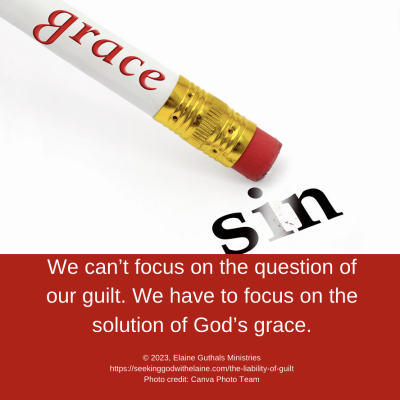
    We can’t focus on the question of our guilt. We have to focus on the solution of God’s grace.
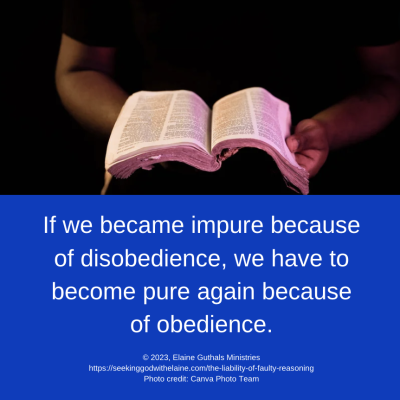
    If we became impure because of disobedience, we have to become pure again because of obedience.
    habitual-holiness-of-heart-and-life-theme

    Forming Our Habits to Grow Our Relationship with God

    • All souls of mankind belong to God because He is our Creator and He cares for us. He did not show favoritism and claim only some of the souls. God claims all of them (Committing to Engage Our Soul).
    • God cares for each and every one of us. He maintains a personal interest in all our dealings — both big and small (Committing to Engage Our Soul).
    • Each soul is valued independently. Sin may have entered the world because of Adam’s sin, but our suffering is present for more than that. We endure suffering because of our own sins (Committing to Engage Our Soul).
    • The original sin was disobeying God. He told them not to do something, and they went ahead and did it. Instead of never associating with Adam and Eve again after the original sin, God devised a plan so that our relationships with Him could be restored. That shows how loving and kind God is (Engaging Our Strength after We Choose the Gospel).
    • God doesn’t want us to feel guilt over repented sins. He knew before He created us that we were going to disobey Him. He knew sin would be a part of our lives. That is because evil has always been here (The Liability of Guilt).
    • There is no way we could have loved God first. We can’t love God with an unregenerated heart (Engaging Our Strength after We Choose the Gospel).
    • God loves us so much that He sent His Son to pay the price of our sins. He offers us salvation to repair the damage done by sin. Only through accepting Jesus as our Savior and Redeemer can the penalty for our sins be paid (Committing to Engage Our Soul; Engaging Our Strength after We Choose the Gospel).
    • Jesus knew before this world was created that we would disobey God and let sin into it. Even though Jesus hates sin so much, He felt that we should be restored when we believe in Him. He also knew that He was going to be the Sacrifice to pay the penalty for our sins (Engaging Our Minds to Have Christ’s Mind against Sin).
    • Jesus hated sin so much that He came to die to pay the penalty for our sins. He willingly gave up His Deity to become like mankind to save us from the penalty of our sins. Jesus submitted His Will to God, always being obedient to Him (Engaging Our Minds to Have Christ’s Mind against Sin; Engaging Our Minds to Have Christ’s Mind in Our Actions).
    • The Person Who has the authority to call us to the message has the authority to complete the work of salvation within us. Jesus doesn’t say, “You know, God wants to offer you salvation, but I really have nothing to do it.” Instead, Jesus says that is only through Him are we saved (Engaging in Christ to be Responsible).
    • Jesus was set apart from the world. His attitude was that we aren’t of this world. Our separation from the world has to be because we have a different moral character than non-believers. They believe self should be the main focus. Jesus taught us that our focus has to be on God (Engaging Our Minds to Have the Mind of Christ).
    • Jesus knew His mission was to provide salvation for the world. We are called to continue His mission of calling the lost to repentance. No, we don’t save people. Only Jesus can do that. But it is our mission to tell the world they need Him and He will provide salvation (Engaging the Mind of Christ to Serve Him).
    • Our message isn’t about us, it is about Jesus. What we are preaching is how too apply Jesus’ message in our lives. We don’t get to adapt Jesus’ message to the worldview. We have to take Jesus’ message and apply it to circumstances in our lives so that we can follow Him, not the worldview. We aren’t doing this on our own. We are being sent by the Rabbi (Committing to Our Responsibility of the Great Commission; Engaging in Christ to be Responsible).
    • Jesus committed to preparing the way for us to fulfill the Great Commission. We can do no less than carrying out our responsibilities (Committing to Our Responsibility of the Great Commission).
    • If we are going to have the mind of Christ — the same attitude — we have to be humble as Jesus was. We also need to be righteous, content, meek, merciful, and sincere (Engaging Our Minds to Have Christ’s Mind against Sin).
    • Purity is shown by having a renewed mind. That means we are confirming to the image of God. Relying on being made in His image isn’t going to cut it. Our attitudes and actions have to show we are reflecting Him. Knowing of Jesus isn’t enough. He has to change us. We need to divest ourselves of what used to be. (Engaging Our Minds to Have Christ’s Mind against Sin; Engaging Our Strength to Love God).
    • We have to be more than made in His image. We have to be His image (The Liability of Faulty Reasoning).
    • Jesus’ attitude did not change based on the situation He found Himself to be in at the moment. His attitude was the same regardless of the offense He might have felt at that time. It takes more power to keep Jesus’ attitude in everyday trials than it does to perform a perform a miracle over nature (Engaging Our Minds to Have Christ’s Mind in Our Actions).
    • Jesus wasn’t a Save the Animals, Defeat Poverty, Defeat Global Warming kind of guy. He wasn’t out to make a big spectacle showing He was going to save the physical world. Instead, Jesus is interested in a personal, intimate relationship (Engaging Our Strength after We Choose the Gospel).
    • Jesus knows our human weaknesses. Even though He is perfect and pure, He understands the challenges that we have. Jesus is touched by our weakness (sorrow, pain, and anguish) and loves us anyway whether we give into the temptation to sin or not. Oh, yes. He would much rather we didn’t commit the sin. But Jesus is still our High Priest when we do. It pains Him when we do not choose Him (Engaging the Mind of Christ to Serve Him).
    • Jesus didn’t concern Himself with death, persecution, and what opinion others had of Him. He was focused on completing God’s Will (Engaging Our Minds to Have Christ’s Mind in Our Actions).
    • Jesus can sympathize with us because He was tempted just as we are. He knows how difficult it can be to choose to follow God. The only difference between Jesus and us is that He always chose to be obedient to God. Many times, we choose not to (Engaging the Mind of Christ to Serve Him).
    • When Jesus got back to Heaven, He did not forget all His earthly experiences and feelings. He can now use those to advocate for us to God (Engaging the Mind of Christ to Serve Him).
    • We don’t serve a crucified Savior. We serve a risen Savior (Committing to Our Responsibility of the Great Commission).
    • Our walk should always be about listening to the Holy Spirit in order to be obedient to God (Engaging Our Strength to Love God).
    • Everything we do for God is considered preaching. Every song we sing, every child we teach, every benevolent gift we give should be preaching Jesus’s Gospel. Yes, there are times when we need to speak informally with people one on one. Other times, trained Pastor-Steve types must be telling a multitude in a church service. Both can be termed as preaching (Engaging in Christ to be Responsible).
    • God is going to give everyone an opportunity to be gathered into the fold. When no one else is going to choose to submit to Him, He will send Jesus back to pick us up (Committing to Our Responsibility of the Great Commission).
    • What is important here is that we have a choice to make. God didn’t create us to be synthetic beings who are just fancy robots. We choose between good and evil, light and dark, and pure and impure. In other words, we choose to obey or disobey God (The Liability of Guilt).
    • Since we were created in God’s image, we are drawn toward good. When we choose evil, we feel the guilt created by our disobedience. This isn’t telling us we shouldn’t feel remorse for our disobedience. Feeling remorse is one of the ways we can know we did wrong. It will help us to repent and do things right. We can’t let the guilt take our hope. Our hope is in Jesus, Who has brought us salvation. The guilt helps us get to the repentance needed for salvation (The Liability of Guilt).
    • God forgives us time and time again — when we sincerely ask (The Liability of Guilt).
    • Our getting it right and getting it wrong is all a part of sanctification. We learn from our past mistakes. We grow through figuring out how to follow God’s Will (The Liability of Guilt).
    • We have to put the guilt in the right place and use it to grow. We can be determined because God helps us to conquer sin. The great thing is we aren’t battling sin alone. God is with us. We can’t overcome Satan. God already has (The Liability of Guilt).
    • We can boldly do whatever tasks God has assigned to us without feeling guilty. We have to be bold about doing God’s Will, not our own (The Liability of Guilt).
    • God didn’t condemn us. We did that to ourselves when we disobeyed God. Worldview people like to tell just that God is only love and won’t judge us. If He does judge us, He won’t condemn us. When it says, God didn’t condemn the world, it means that God chose to design a way so that the world could be restored to Him. In other words, He didn’t wash His hands of us. God chose to save us (The Liability of Faulty Reasoning).
    • We shouldn’t think God should have to be made to accept our actions and attitudes just because they are ours. We are nothing in His sight. He is Sovereign God. He is our Creator. He is just and righteous and holy. God is everything we are not (The Liability of Faulty Reasoning).
    • It is an all-or-nothing deal with God. We can’t submit only part of ourselves to Him and call it enough. We have to be fully obedient (The Liability of Faulty Reasoning).
    • Salvation can only be given to us by God only after we have fully submitted ourselves to Him. We have to acknowledge that He is Sovereign God (The Liability of Faulty Reasoning).
    • When we follow the worldview’s faulty reasoning, we aren’t following God’s reasoning. Come Judgment Day, if our names are not written in His book of life – meaning we have submitted our lives to Him – we will be judged accordingly (The Liability of Faulty Reasoning).
    • We are to submit to God’s Will and live our lives to glorify Him. That means we obey His laws and commandments. We don’t try to rewrite them because we think they should have evolved by now. We can’t think we can pick and choose which we will or won’t follow. We must fully submit to God (Engaging Our Strength to Love God).
    • God will show us what needs to be changed (Engaging Our Strength to Love God).

    Glossary
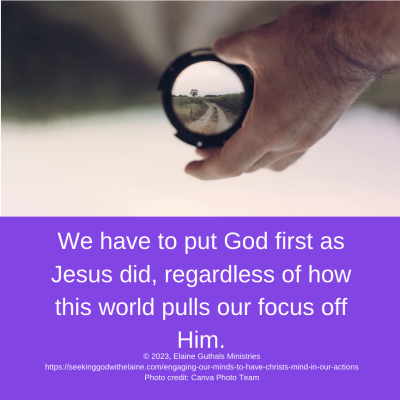
    PutGodFirst
    We can’t have the goodness without God’s redeeming love.

    Forming Our Habits to Grow Our Maturity

    • Our souls are eternal. They are the only part of us that will live forever. Our souls belong to God for all time. They are not His only while we are here on earth. They are His for eternity. Yes, all souls will make it to eternity. The difference is where they are going to spend eternity. Those who have ABCDed will spend it with God. Those who haven’t, won’t (Committing to Engage Our Soul).
    • We have to have the mind of Christ in this world to have the mind of Christ eternally. That is why it is important to begin imitating Christ now. Walking as Jesus walked doesn’t mean an occasional stroll. Instead, our lives are to mirror the life Jesus lived. We have to be holy and righteous as He was (Engaging Our Minds to Have the Mind of Christ; Engaging Our Strength to Love God).
    • Engaging our soul to show love to God is imperative. We cannot hold ourselves from God in any form and expect that we are showing Him love. We are God’s in all things. We cannot compartmentalize when we are His and when we aren’t (Committing to Engage Our Soul).
    • We are to imitate Jesus. When we are falsely accused for His Name — or accused because we are a child of God — we are to remain silent (Engaging Our Minds to Have Christ’s Mind in Our Actions).
    • We have to imitate Jesus while we walk. That is the way we worship Him. We show we love Him. The walking would mean nothing if it didn’t include abiding in Him. Abiding in Christ means more than the outward walk means nothing without the inward transformation. This tells us what the inward becomes. The inward is calm. It is trusting in God to provide and protect (Engaging Our Strength to Love God).
    • We have to make sure we imitate Jesus when we turn the boldness to the on position. We aren’t doing this on our own. We can only be bold because we are depending on Jesus, Who is depending on God (The Liability of Guilt).
    • Reading the Scriptures alone isn’t going to cut it. We have to study it and meditate on it. Jesus believed not only in reading Scriptures, but also in putting it into practice in our lives. To use God’s Word for protection and direction, we have to know what it says and understand it. We have to discern how to apply it to situations in our lives. That means we have to seek God (Engaging Our Minds to Have the Mind of Christ).
    • When we love God with our minds, we have to tie our hearts into it and vice versa. We have to love God with all of our being (Engaging Our Minds to Have the Mind of Christ).
    • We can’t be hasty, tardy, or have a divided heart. We are to come when God calls (Engaging Our Minds to Have Christ’s Mind in Our Actions).
    • Self-denial for us looks like giving up something that would benefit us in order to do something that would benefit others, popularity to stick with our principles, and what would bring us wealth and pleasure to serve God (Engaging Our Minds to Have Christ’s Mind in Our Actions).
    • Self-denial has nothing to do with redemption. We don’t get salvation by living a life of self-denial (Engaging Our Minds to Have Christ’s Mind in Our Actions).
    • Self-denial means nothing without the rest of the verse. “… take up his cross daily and follow me” (Lk. 9: 23 ESV). This isn’t about putting others before us — i.e., being a good person. We have to put God before us. Our self-denial must have God as the focus (Engaging Our Minds to Have Christ’s Mind in Our Actions).
    • Jesus taught us not to grumble and complain about our circumstances. We are not only supposed to not complain about what God calls us to do, but we are also not supposed to complain when we think someone else is better off than we are (Engaging Our Minds to Have Christ’s Mind in Our Actions).
    • We know we can put our faith and trust in Jesus because He has already overcome these. He will guide us through (Engaging Our Minds to Have Christ’s Mind in Our Actions).
    • Each of us has a way in which we are to serve Him. Our service is to be for others. We are to grow our relationships with God (and that takes work, too!), but we must share His good news with others (Engaging the Mind of Christ to Serve Him).
    • What this boils down to is we are to have the mercy of Christ. We do this through grace (Engaging the Mind of Christ to Serve Him).
    • All throughout the Gospels, we are shown Jesus’s compassion. We are to imitate that. We need to feel deeply in order to sympathize with others (Engaging the Mind of Christ to Serve Him).
    • When we think we are so bad a sinner we can’t fellowship with other disciples, we are really saying that we don’t believe Jesus can or will forgive us. We think our sin was too big for His saving grace. There is only one unpardonable sin, and in my opinion, that is unbelief. But isn’t that the point? We are committing the unpardonable sin when we don’t think God has the power to save us from a sin and keep us committing it again (Engaging the Mind of Christ to Serve Him).
    • We utilize and gain strength in our new life in Christ as we walk more closely with the Spirit (Engaging Our Strength to Love God).
    • We receive a new character upon conversion. This change has to be a complete change — body, mind, and soul. We have new views and new affections. We have to have new boundaries (Engaging Our Strength to Love God).
    • Regeneration can be seen as renewing our minds. But God doesn’t just flip a switch, and we are that new creation. It takes work on our part. That work is done as we learn Who God is and what He wants us to be (Engaging Our Strength to Love God).
    • Submitting to God also means we are content in our lives. Being content in the rough patches shows our true faith in God (Engaging Our Strength to Love God).
    • We have no doubts about our relationship with God when we are imitating Jesus (Engaging Our Strength to Love God).
    • We know we are “… in him …” (I Jn. 2: 5 ESV) when we are focused mind, spirit, and heart on Him. We see God in everything — all the way from finding a parking space to finding a new home or job. It is shown by the depth of our faith, love, and reverence for Him. In other words, we are in God — humble, reverent, teachable servants of God — when we are walking with Him (Engaging Our Strength to Love God).
    • We are to deny ourselves, take up our crosses, and follow Him (Lk. 9: 23). That makes it seem like an obligation. Not really. It begins with a choice. Are we going to ask Jesus to be our Savior and Redeemer or not? The choice is totally up to us. True, when we choose Jesus, we do have to become like Him. But it is still a choice, one we must choose daily (Engaging Our Strength to Love God).
    • The whole purpose of the strength is to grow faith. We use the strength to walk in the Spirit and resist temptation. Yes, we gain strength as we are sanctified, but the strength always comes from God. Human strength alone is not strong. In fact, it is weak. Strength only comes from and through God (Engaging Our Strength to Love God).
    • Kind of buried in this verse is an important reminder: “… so that we might live through him” (I Jn. 4: 9 ESV). Yes, we are told we are going to live, but it is only through Jesus (Engaging Our Strength after We Choose the Gospel).
    • We can only be truly happy when we are a child of God’s. This happiness is based on God’s love for us. God pours out His love on us (Engaging Our Strength after We Choose the Gospel).
    • We do not have to fix ourselves — which we can’t do — in order to gain salvation. We have to make sure we understand God’s love for us. God’s love toward us depends on Him, not us. It has nothing to do with our awareness of that love. It isn’t based on our feeling it. God flat out loves us (Engaging Our Strength after We Choose the Gospel).
    • So many times, we say God doesn’t love us because we only see it tied to events, circumstances, and time. Our perception is faulty, not His love. God showers His love upon us to give us life — including eternal life (Engaging Our Strength after We Choose the Gospel).
    • We need to choose to accept God’s love in order to have our names written in the book of life to avoid judgment (Engaging Our Strength after We Choose the Gospel).
    • Jesus calls all to preach the Gospel (Engaging in Christ to be Responsible).
    • When we ABCD, that means we become disciples. That means the them in Mark 16: 15 includes us. Yes, that means the Elaine-types are to preach the gospel as well as the Pastor Steve-types. That means every Tom, Sally, and Elaine. Yes, that means you! (Engaging in Christ to be Responsible)
    • Jesus calls us to be committed to proclaiming His message (Engaging in Christ to be Responsible).
    • Teaching the laws and commandments without Jesus does no good. Jesus came to fulfill the laws, not abolish them (Mt. 5: 17) (Engaging in Christ to be Responsible).
    • Jesus began the work. The New Testament is filled with His teachings. We need to be committed to telling the Gospel message (Engaging in Christ to be Responsible).
    • When God calls us to ministry, we come up with many excuses why we can’t preach the Gospel. It does us good to remember that the Apostles were uneducated, most of them fishermen (Ac. 4: 13). And look what they did. God can use the ordinary because that takes the focus off us and puts it onto Him (Engaging in Christ to be Responsible).
    • Just like we are all told to preach the Gospel, we are all told to tell it to everyone. That means no one is exempt from hearing the good news. Regardless of nationally, regardless of ethnicity, all need to hear the good news. Bottom line is there is no limit to Jesus’ gospel. We preach all of it — and only it — to all everywhere (Engaging in Christ to be Responsible).
    • Those not believing in Christ as their Savior are drowning in sin. God comes to them while they are still sinners to invite them to accept redemption. Jesus always does this. He doesn’t make us clean up our acts, then redeems us. He knows we can’t (Engaging in Christ to be Responsible).
    • The soul that sins must die because they are separated from God. Through sin, we have turned our backs on God. We are held accountable for our sins. We are accountable for Adam’s sin because all mankind feels it’s effect. We are also responsible for the sins that we ourselves commit. It is our fault we sin – we pay the consequences. We choose whether we remain separated from God or not (Committing to Engage Our Soul).
    • We can’t read the gospel as a history book. It really isn’t even autobiographical. Yes, it is about Jesus and what He has done for us. More importantly, it is about why Jesus did what He did. This message is how we gain salvation (Engaging in Christ to be Responsible).
    • We can’t let our commitment slide because we have doubts about ourselves. The One Who is sending us has the authority (Committing to Our Responsibility of the Great Commission).
    • We have nothing to fear when Jesus sends us to go and preach. God is in control (Committing to Our Responsibility of the Great Commission).
    • It is not only our responsibility to tell others the message of Christ, but it is also our responsibility to learn it through sanctification (Committing to Our Responsibility of the Great Commission).
    • We have to be taught Jesus’s message and what it means to us before we can be converted and be baptized. We have to know what we are accepting. But the teaching doesn’t end at conversion. God continues to reveal Himself to us. We will be learning until God calls us home. The Holy Spirit guided us to what it means in specific situations to be a child of God. That is what the Sanctification Road is all about (Committing to Our Responsibility of the Great Commission).
    • We are commanded to keep going until the end of the age. None of us know if we will be in the generation where the age ends. That just means there is no retirement for us. (Committing to Our Responsibility of the Great Commission).
    • We stress about our not being able to be 100% obedient. There are times when we just give up trying to be who God calls us to be. We forget about the forgiveness (The Liability of Faulty Reasoning).
    • That doesn’t mean we are given license to sin. Sinful acts are still wrong (The Liability of Faulty Reasoning).
    • God knows that we will be sinful creatures until He changes us when He calls us home. We can do what He is asking us to do in this life. He won’t set us up for failure (The Liability of Faulty Reasoning).
    • God lets us reason things out — to get around to accepting doing things His way. Only His way is the approved way (The Liability of Faulty Reasoning).

    Glossary
    engaging-our-strength-to-love-god
    Forgiveness stands in the gap of our knowing and wanting to obey God and our actual actions.

    Forming Our Habits to Grow Our Relationship with Others

    • We can keep the heart of the law. The law is applicable to everyone, regardless of class, nationality, and gender. The law shows us the character of God. We can’t do away with the law because we can’t do away with God’s character (Engaging Our Minds to Have the Mind of Christ).
    • Jesus taught us to want more for others than for ourselves (Engaging Our Minds to Have Christ’s Mind in Our Actions).
    • Jesus was sympathetic to both those who followed Him and those who didn’t (Engaging the Mind of Christ to Serve Him).
    • We are not to change our attitudes to allow sins to be okay. We have to make sure that we do not give sympathetic a worldview meaning. This does not mean that we are so sympathetic to that we condone the sin of others. We are not to judge others, but neither are we to believe it is okay to sin. Jesus is sympathetic to sinners, but He still calls them to repentance. He calls them to give up their sins (Engaging the Mind of Christ to Serve Him).
    • True, non-believers are made in the image of God. However, when we become children of God, our attributes become more like His. The problem is that we are still in the world. We are becoming sanctified, but we are still sinful (Engaging Our Strength after We Choose the Gospel).
    • Non-believers choose not to seek Jesus’ salvation. They choose not to submit to God. Ultimately, that choice will lead to judgment (Engaging Our Strength after We Choose the Gospel).
    • When Jesus knew His time on earth was limited, He called His disciples to continue His mission. That mission is to lead others to salvation (Engaging in Christ to be Responsible).
    • Our mission is to explain doctrines to other to ensure they understand, encourage others to follow God’s laws and commandments, exclaim from the housetops what God’s promises are, and resist and denounce sin (Engaging in Christ to be Responsible).
    • We are called to go elsewhere — wherever elsewhere may mean — to serve Christ (Committing to Our Responsibility of the Great Commission).
    • Jesus set up a really interesting expectation. He tells us to go to others. Jesus wasn’t content to just sit tight and let everyone come find Him. He takes the initiative — with us in tow (Committing to Our Responsibility of the Great Commission).
    • The elsewhere does not have any mileage tied to it. We may elsewhere across the room to witness to someone. It may be across the building, across town, across the country, or across the globe. Do you think that maybe the go has more to do with getting out of our comfort zones than it does with a geographic location? (Committing to Our Responsibility of the Great Commission)
    • The word which translates into go is really more about while you are going. Witnessing is supposed to be an integral part of our lives (Committing to Our Responsibility of the Great Commission).
    • Just like Jesus was the example for His students, His students were to be the example for others. We, in turn, are to be the example for our others (Committing to Our Responsibility of the Great Commission).
    • We know that, when we do witness, we will have results. Oh, yeah.  Sometimes, we may be watering someone’s ground rather than reaping the harvest. We are still accomplishing Jesus’ mission (Committing to Our Responsibility of the Great Commission).
    • We are only called to tell — to preach and teach. It is their responsibility to accept. Salvation is an individual exercise, not a group exercise. We have to make our own decisions (Committing to Our Responsibility of the Great Commission).
    • Jesus doesn’t see our mission as being over anytime soon. Jesus knew the mission was going to happen over thousands of years. That is why He said that He would be with us — “… to the end of the age” (Mt. 28: 20 ESV) (Committing to Our Responsibility of the Great Commission).
    • We can have no excuses. We can’t say that we can’t do oversees missions when we neglect neighborhood missions. We can’t say Jesus’ love is for all to come to repentance when we refuse to talk to someone else for whatever reason (Committing to Our Responsibility of the Great Commission).
    • Jesus wants us to take His sympathy and show others — every day of our lives (Committing to Our Responsibility of the Great Commission).
    Jesus has defeated Satan — Satan just doesn’t know it yet.

    Making the Connections

    • Think about the rag tag group of men — and some women — Jesus had. Uneducated, virtually unknown outside of their circles. Think of all they had been through the last week of Jesus’ life. Their emotions were probably even more chaotic than a roller coaster. And every one of them just fell into place? Well, yes and no. “And when they saw him they worshiped him, but some doubted” (Mt. 28: 17 ESV). It took them a second. But every one of them answered the call to go. Those 11 men (and Mrs. Peter and probably others) took the Gospel to others. We are called to the same purpose (Committing to Our Responsibility of the Great Commission).
    • When we put Mark 16: 15 and Matthew 28: 19-20 together, we know what our responsibilities are. We are not supposed to stand still, rather move and tell others about Jesus. However that moving may be, wherever it takes us, with whomever we come in contact with, we have our marching orders. It is our responsibility to tell others about Jesus (Committing to Our Responsibility of the Great Commission).
    • Think about where the Great Commission falls in the lineup of verses. Yes, it is the very end of the Book of Matthew. This was right before Jesus’ ascension into Heaven. So, He has already lived, already died, and already risen. This is the One sending us out. How powerful is the God Who raised Jesus from the dead? Enough to overpower anything we have to face! (Committing to Our Responsibility of the Great Commission).

    To read devotions in the Habitual Holiness of Heart and Life theme, click the button below.

  • The Liability of Faulty Reasoning

    The worldview tries to assert that what is in reality faulty reasoning isn’t. This devotional reading looks at what happens when that reasoning is followed.

    Nuggets

    • God allows us to reason things out to make decisions, but we have to lean on His understanding, not our own.
    • We are wrong when we say God doesn’t condemn us.

    This devotion is going to take sort of a different track than the last devotion on liability took. That one talked about how we sometimes feel guilty for sin.

    In this devotion, we are going to look at some faulty reasoning that is really a sin — a liability.

    Let’s Put It into Context

    To read devotions in the Habitual Holiness of Heart and Life theme, click the button below.
    Here is a running list of nuggets for the theme.

    Devotions in the Commit to Grow Our Habits study

    Here is a running list of nuggets for the study.

    Using Our Reasoning

    “Come now, let us reason together, says the Lord: though your sins are like scarlet, they shall be as white as snow; though they are red like crimson, they shall become like wool” (Isa. 1: 18 ESV)

    God allows us to reason things out to make decisions, but we have to lean on His understanding, not our own.

    All of the self-help books prevalent these days makes it look like we can change ourselves. We can’t, not our true character.

    We can’t find salvation in ourselves. Nothing we can do will wash away the stain of sin.

    Salvation is the gift of life through the deliverance from condemnation and sin to acceptance and holiness and changes us from being spiritually dead to spiritually alive.

    • Sin is not believing that Jesus is our Savior to save us from our actions by humans that disobey God and break one of His reasonable, holy, and righteous laws and commandments, goes against a purpose He has for us, or follows Satan’s promptings.
      • Holy means to be set apart — because of our devotion to God — to become perfect, and morally pure while possessing all virtues and to serve and worship God.
        • Perfection means we reach a state of maturity because the combination of the spiritual graces form, when all are present, spiritual wholeness or completeness — holy, sanctified, and righteous.
          • Spiritual graces are worldly morals that have been submitted to God to further His kingdom instead of enhancing this world.
          • Sanctified means to be set free from sin.
          • Righteous means we are free from sin because we are following God’s moral laws.
        • Pure means not being sinful or having the stain of sin. 
        • Virtues are standards of moral excellence.
    • Holiness is the transcendent excellence of His nature that includes elements of purity, dedication, and commitment that lead to being set apart.
      • Purity means possessing God’s moral character, having eliminated the stain of sin.
    • Spiritual death is the spiritual separation from God that occurred as a consequence of Adam and Eve’s original sin.
      • The spiritually alive are those who have ABCDed, so they are no longer separated from God.

    The ABCDs of Salvation

    If you have not become a believer in Christ, please read through the
    Plan of Salvation and prayerfully consider what God is asking you to do.

    A – admit our sins
    B – believe His Son Jesus is our Redeemer
    C – confess God as Sovereign Lord

    D – demonstrate that commitment by making any changes needed in our lives to live the way in which God has called us

    The Disciple’s Job Description

    Glossary

    Oh, but we try, don’t we? We read all about it, trying to get the book learning necessary to diagnose the problem.

    We organize that information into a checklist. We try to figure out what a good person — one God would approve of — would look like. That way we can keep track of how close we are to the mark.

    We try saying the right words — even if they are just words. In other words, we give lip service to God.

    We don’t give Him our hearts, souls, minds, and strength. We don’t commit to Him.

    We go at it all wrong. We can’t look at salvation for our souls from our perspective. Our perspective would be one in which we call the shots and do all the work to fix what we think is wrong.

    Go back to the beginning. Sin entered this world because of one decision — mankind chose to disobey God. God said don’t do it — they went and did it anyway.

    If we became impure because of disobedience, we have to become pure again because of obedience. Nothing else is going to fix it.

    If we became impure because of disobedience, we have to become pure again because of obedience.

    God alone gets to choose what that obedience looks like. He has chosen salvation through the death of His Son.

    God is adamant that we have to come to salvation His way.

    • “Salvation is found in no one else, for there is no other name under heaven given to mankind by which we must be saved” (Ac. 4: 12 NIV).
    • You shall have no other gods before me. You shall not make for yourself an image in the form of anything in heaven above or on the earth beneath or in the waters below” (Ex. 20: 3-4 NIV).
    • Jesus answered, ‘I am the way and the truth and the life. No one comes to the Father except through me’” (Jn. 14: 6 NIV).

    There is no checklist. Actions alone won’t cut it. God wants a change of character — to be more like His character.

    Morris gave evidence of this, stressing the importance of grace. He wrote, “As early as the time of Isaiah we find the doctrine of the reformation of character dependent on forgiveness of sin distinctly taught. God’s remedy for sin is the same in all ages. More prominence perhaps was given to the observance of the law in the olden times, but not to the exclusion of grace; while in the New Testament grace appears the more prominent, but surely not to the exclusion of law.”

    Grace is a free and unmerited gift of love from the Heavenly Father, given through His Son, Jesus Christ, that enables salvation and spiritual healing to believers by the work of the Holy Spirit.

    Resource

    Glossary

    This changing of our character is described in God’s Word as a washing.

    • “Wash me thoroughly from my iniquity, and cleanse me from my sin!” (Ps. 51: 2 ESV).
    • “Purge me with hyssop, and I shall be clean; wash me, and I shall be whiter than snow” (Ps. 51: 7 ESV).

    God is very straightforward about Who does the cleansing. “But if we walk in the light, as he is in the light, we have fellowship with one another, and the blood of Jesus his Son cleanses us from all” (I Jn. 1: 7 ESV).

    What God is asking of us isn’t too hard. Yes, it may be challenging, but He doesn’t set us up for failure.

    What is our part in all of this? It is where we choose God. “Submit yourselves therefore to God. Resist the devil, and he will flee from you” (Jas. 4: 7 ESV).

    Morris saw the “Come now, let us reason together …” (Isa. 1: 18 ESV) as more of the decision than the processing of the decision making.

    The decision to follow God includes changing our habits and lifestyles to align with His Will.

    One Big Faulty Reasoning

    “For God did not send his Son into the world to condemn the world, but in order that the world might be saved through him” (Jn. 3: 17 ESV)

    We are wrong when we say God doesn’t condemn us.

    Worldview people like to tell just that God is only love and won’t judge us. If He does judge us, He won’t condemn us.

    They point to John 3: 17 as their evidence.

    Yes and no. This is one of those places where we have to read the whole thing.

    “For God so loved the world, that he gave his only Son, that whoever believes in him should not perish but have eternal life. For God did not send his Son into the world to condemn the world, but in order that the world might be saved through him. Whoever believes in him is not condemned, but whoever does not believe is condemned already, because he has not believed in the name of the only Son of God” (Jn. 3: 16-18 ESV).

    What does this say?

    • God loves us, despite the fact that we are disobedient.
    • God will not overlook this disobedience.

    When it says, God didn’t condemn the world, it means that God chose to design a way so that the world could be restored to Him. In other words, He didn’t wash His hands of us.

    God could have just as easily said that we would never listen to Him. There was no use for Him wasting His time trying to get us to right with Him, when we would always, always, always disobey Him.

    God didn’t condemn us.

    We did that to ourselves when we disobeyed God.

    God chose to save us. McNeile gave us a good breakdown of what salvation is. He gave the following list:

    1. “To have all my sins pardoned.
    2. “To have my soul renewed unto holiness.
    3. “To have my body transformed into the likeness of Christ’s glorious body.
    4. “To reign with Christ.”

    Resource

    Notice number 3. Transformed, not remain as we are. Renewed into holiness.

    We shouldn’t think God should be made to accept our actions and attitudes just because they are ours. We are nothing in His sight.

    He is Sovereign God. He is our Creator. He is just and righteous and holy.

    God is everything we are not.

    We are using faulty reasoning when we say God has to accept whatever we throw His way.

    He is Sovereign God. He gets to decide what is the way.

    the-liability-of-faulty-reasoningFB

    Making the Connections #1

    Many worldview people want the goodness in their lives. They just don’t see that they can’t get it the way they are going after it — not real, honest to goodness goodness.

    Morris explained where they are missing the boat. He wrote, “The essence of moral beauty is goodness. Now goodness is not a quality deposited in the heart and there shut up; nor yet a something to put on as a garment at will. Rather it is the fruit of well-doing — the outgrowth of a righteous life.”

    Resource

    It is the relationship with God part they are leaving out. It doesn’t work without Him.

    We can’t have the goodness without God’s redeeming love.

    We can’t have the goodness without God’s redeeming love.

    Making the Connections #2

    I really liked Morris’ sermon if you couldn’t tell. Another thing that struck me was this. He wrote, “As every duty of man is summed up in the command to reform, so all the riches of grace are summed up in the gift of pardon.”

    Resource

    It is an all-or-nothing deal with God. We can’t submit only part of ourselves to Him and call it enough. We have to be fully obedient.

    That makes the reform a complete reform. We have to be more than made in His image. We have to be His image.

    Making the Connections #3

    We stress about our not being able to be 100% obedient. There are times when we just give up trying to be who God calls us to be.

    We forget about the forgiveness. Forgiveness is, when we ask, the act of God pardoning us because we have shown repentance for breaking His laws and commandments, which allows us to become holy as He is.

    • Repentance is acknowledging our separation from God and expressing sorrow for breaking God’s laws and commandments by making the commitment to changing ourselves through obedience so that we no longer do the wrong things.
    • Obedience means submitting ourselves to the will of God as it is presented to us and living our lives accordingly.

    Forgiveness stands in the gap of our knowing and wanting to obey God and our actual actions.

    Forgiveness stands in the gap of our knowing and wanting to obey God and our actual actions.

    That doesn’t mean we are given license to sin. Sinful acts are still wrong.

    God knows that we will be sinful creatures until He changes us when He calls us home. We can do what He is asking us to do in this life. He won’t set us up for failure.

    Making the Connections #4

    God lets us reason things out — to get around to accepting doing things His way. Only His way is the approved way.

    Salvation can only be given to us by God only after we have fully submitted ourselves to Him. We have to acknowledge that He is Sovereign God.

    Making the Connections #5

    When we follow the worldview’s faulty reasoning, we aren’t following God’s reasoning. Come Judgment Day, if our names are not written in His book of life – meaning we have submitted our lives to Him – we will be judged accordingly.

    “And I saw the dead, great and small, standing before the throne, and books were opened. Then another book was opened, which is the book of life. And the dead were judged by what was written in the books, according to what they had done. And the sea gave up the dead who were in it, Death and Hades gave up the dead who were in them, and they were judged, each one of them, according to what they had done. Then Death and Hades were thrown into the lake of fire” (Rev. 20: 12-14 ESV).

    How Do We Apply This?

    Give up trying to fix ourselves.
    Learn to do good — God’s way.
    Access God’s power through grace.
    Admit when we don’t understand something in God’s Word and find someone who does understand it to help us.

    Resources

    Father God. We submit our lives to You. Not our will, but Your Will be done. We want to obey You in everything. Amen.

    What do you think?

    Leave me a comment below (about this or anything else) or head over to my Facebook group for some interactive discussion.

    If you don’t understand something and would like further clarification, please contact me.

    If you have not signed up for the email providing the link to the devotions and the newsletter, do so below.

    If God has used this devotion to speak with you, consider sharing it on social media.

  • The Liability of Guilt

    We can let guilt pull us away from God. This devotional reading looks at how we need to be committed to believing God can and will forgive us.

    Nuggets

    • God doesn’t want us to feel guilt over repented sins.
    • We can be determined because God helps us to conquer sin.
    • We experience joy when we are in perfect harmony with God’s Will.

    We have two words left on our acrostic. I think I am going to switch their order because I am not really sure what I am going to do with concepts.

    For that matter, I keep going back and forth what I am going to do with liability. That isn’t good since I only have 13 hours until post time.

    So, let’s just start and see where God takes this.

    Sin is a liability — within our own lives and within the lives of our churches. God doesn’t flip a switch and make sin disappear after conversion.

    We know we are going to be held accountable. Have we ABCDed or not?

    But one definition of liability talks about guilt. Ooo, baby! Do we feel guilty at times or what?!?!

    Let’s Put It into Context

    To read devotions in the Habitual Holiness of Heart and Life theme, click the button below.

    Here is a running list of nuggets for the theme.

    Devotions in the Commit to Grow Our Habits study

    Here is a running list of nuggets for the study.

    Don’t Feel Guilty

    “Fear not, for you will not be ashamed; be not confounded, for you will not be disgraced; for you will forget the shame of your youth, and the reproach of your widowhood you will remember no more” (Isa. 54: 5 ESV)

    God doesn’t want us to feel guilt over repented sins.

    God knew before He created us that we were going to disobey Him. He knew sin would be a part of our lives. That is because evil has always been here.

    Let me explain. Pastor Steve and I are listening to an online Torah Class by Tom Bradford. He chased a rabbit in the middle of the study on Noah and talked about good and evil.

    Resource

    We know that good and light is synonymous with pure. We also know that they all have opposites, because that is the way God created the world.

    The opposite of good is evil, and the opposite of light is dark. The opposite of pure is impure.

    I am not really sure I thought about this before, but evil was already present when God created the universe. “The earth was without form and void, and darkness was over the face of the deep. And the Spirit of God was hovering over the face of the water” (Gen. 1: 2 ESV).

    I know. That really doesn’t give us any clue as to the origin of evil.

    One thing Mr. Bradford pointed out is that the Hebrews believe that humans have both good and evil inclinations. A reason for that is that God created both. “I form the light, and create darkness: I make peace, and create evil: I the Lord do all these things” (Isa. 45: 7 KJV).

    What is important here is that we have a choice to make. God didn’t create us to be synthetic beings who are just fancy robots.

    We choose between good and evil, light and dark, and pure and impure.  In other words, we choose to obey or disobey God.

    Since we were created in God’s image, we are drawn toward good. When we choose evil, we feel the guilt created by our disobedience.

    Glossary

    This isn’t telling us we shouldn’t feel remorse for our disobedience. Feeling remorse is one of the ways we can know we did wrong. It will help us to repent and do things right.

    We can’t let the guilt take our hope.

    Our hope is in Jesus, Who has brought us salvation. The guilt helps us get to the repentance needed for salvation.

    Repentance is acknowledging our separation from God and expressing sorrow for breaking God’s laws and commandments by making the commitment to change our sinful ways to ways of righteousness through obedience.
    Salvation is the gift of life through the deliverance from condemnation and sin to acceptance and holiness and changes us from being spiritually dead to spiritually alive.

    • Obedience means submitting ourselves to the will of God as it is presented to us and living our lives accordingly.
    • Sin is not believing that Jesus is our Savior to save us from our actions by humans that disobey God and break one of His reasonable, holy, and righteous laws and commandments, goes against a purpose He has for us, or follows Satan’s promptings.
      • Holy means to be set apart — because of our devotion to God — to become perfect, and morally pure while possessing all virtues and to serve and worship God.
        • Perfection means we reach a state of maturity because the combination of the spiritual graces form, when all are present, spiritual wholeness or completeness — holy, sanctified, and righteous.
          • Spiritual graces are worldly morals that have been submitted to God to further His kingdom instead of enhancing this world.
          • Sanctified means to be set free from sin.
          • Righteous means we are free from sin because we are following God’s moral laws.
        • Pure means not being sinful or having the stain of sin. 
        • Virtues are standards of moral excellence.
    • Holiness is the transcendent excellence of His nature that includes elements of purity, dedication, and commitment that lead to being set apart.
      • Purity means possessing God’s moral character, having eliminated the stain of sin.
    • Spiritual death is the spiritual separation from God that occurred as a consequence of Adam and Eve’s original sin.
      • The spiritually alive are those who have ABCDed, so they are no longer separated from God.


    The ABCDs of Salvation

    If you have not become a believer in Christ, please read through the
    Plan of Salvation and prayerfully consider what God is asking you to do.

    A – admit our sins
    B – believe His Son Jesus is our Redeemer
    C – confess God as Sovereign Lord

    D – demonstrate that commitment by making any changes needed in our lives to live the way in which God has called us

    The Disciple’s Job Description

    Glossary

    Martin talked about something similar. He said questions about remembering our sins “[These questions about remembering our sins] originate with that consciousness of depravity which is the first step towards our personal salvation, and they recur in connection with the dispensation of Divine mercy.”

    Resource

    We can’t focus on the question of our guilt. We have to focus on the solution of God’s grace.

    We can’t focus on the question of our guilt. We have to focus on the solution of God’s grace.

    Think about what Isaiah was writing about. The Israelites had been faithless time and time again. Yet, God always forgave them when they asked.

    God forgives us time and time again — when we sincerely ask.

    Think about it this way. Our getting it right and getting it wrong is all a part of sanctification. Sanctification is the transformational process of the mind, body, and soul, which begins with regeneration; gradually changes our nature and morals through the promptings of the Holy Spirit; and ends with perfected state of spiritual wholeness or completeness.

    • Regeneration is being changed from spiritually dead to spiritually alive and the internal new birth and requickening that God brings about through the work of the Holy Spirit to give us new character.

    Glossary

    We learn from our past mistakes. We grow through figuring out how to follow God’s Will.

    By the way, the widowhood discussed in the verse was exile. The Israelites had a lot of opportunity for guilt because of all the exiles.

    We have to put the guilt in the right place and use it to grow.

    Be Bold Instead

    “But the Lord GOD helps me; therefore I have not been disgraced; therefore I have set my face like a flint, and I know that I shall not be put to shame” (Isa. 50: 7 ESV)

    We can be determined because God helps us to conquer sin.

    The great thing is we aren’t battling sin alone. God is with us.

    • “The Lord will fight for you, and you have only to be silent’ (Ex. 14: 14 ESV).
    • “You will not need to fight in this battle. Stand firm, hold your position, and see the salvation of the Lord on your behalf, O Judah and Jerusalem.’ Do not be afraid and do not be dismayed. Tomorrow go out against them, and the Lord will be with you” (II Chron. 20: 17 ESV).
    • “For the Lord your God is he who goes with you to fight for you against your enemies, to give you the victory” (Deut. 20: 4 ESV).
    • “You shall not fear them, for it is the Lord your God who fights for you” (Deut. 3: 22 ESV).
    • “No weapon that is fashioned against you shall succeed, and you shall refute every tongue that rises against you in judgment. This is the heritage of the servants of the Lord and their vindication from me, declares the Lord” (Isa. 54: 17 ESV).

    We can’t overcome Satan. God already has.

    So, we don’t have to feel guilty. We can boldly do whatever tasks God has assigned to us.

    We have to make sure we imitate Jesus when we turn the boldness to the on position. We aren’t doing this on our own.

    We can only be bold because we are depending on Jesus, Who is depending on God.

    Benson brought up a great point. We have to be bold about doing God’s Will, not our own.

    Resource

    We can only be determined because God is helping us do His work.

    We aren’t trying to get God to validate our belief system or our plans and desires. Benson willful sinning.

    We have to follow God’s direction and submit to Him.

    Think about how determined Jesus was. I am sure He has some jitters before He got to the Garden of Gethsemane. He remained firm.

    • When Satan tried to offer Him something else.
    • When Peter tried to protect Him.
    • When Satan was asking for Judas as he was asking for Peter.

    Jesus never wavered from His mission.

    Turn It into Joy

    “Instead of your shame there shall be a double portion; instead of dishonor they shall rejoice in their lot; therefore in their land they shall possess a double portion; they shall have everlasting joy” (Isa. 61: 7 ESV)

    We experience joy when we are in perfect harmony with God’s Will.

    God doesn’t want us feeling guilty. He wants us feeling His joy.

    Only God can give us joy. We only find joy when we are following His plan for our lives.

    Brown explained how this works. He wrote, “The redeemed man is the governed man; the man who has re-found the King who can evoke his loyal passions, and control and direct his manifold powers.”

    Resource

    We are back where we belong. We are following the direction of our Creator.

    the-liabiilty-of-guiltFB

    Making the Connections

    We have to watch our guilt. We don’t want our guilt to morph into unbelief that God cannot or will not forgive us.

    Our belief has to be strongly fixed on what God did do and why. He sent a Savior to our world to fix us. We just have to believe that.

    How Do We Apply This?

    • Don’t brood over the past and it’s guilt.
    • Repent, and get over it.
    • Strengthen our belief to know without a shadow of a doubt that God loves us and forgives us.

    Resource

    Father God. We know You love us. You made that abundantly clear when You designed the Plan of Salvation. You gave up Your Son to be the substitute for us so that our relationship with You could be restored. All we have to do is believe and accept. Thank You. Amen.

    What do you think?

    Leave me a comment below (about this or anything else) or head over to my Facebook group for some interactive discussion.

    If you don’t understand something and would like further clarification, please contact me.

    If you have not signed up for the email providing the link to the devotions and the newsletter, do so below.

    If God has used this devotion to speak with you, consider sharing it on social media.

  • Committing to Our Responsibility of the Great Commission

    Disciples are responsible for complying with the Great Commission. This devotional reading looks at what going means, how we are to make disciples, and the timeline for our mission.

    Nuggets

    • We are called to go elsewhere — wherever elsewhere may mean — to serve Christ.
    • It is not only our responsibility to tell others the message of Christ, but it is also our responsibility to learn it through sanctification.
    • Jesus doesn’t see our mission as being over anytime soon.

    We are talking about how we are to be committed to our responsibility. Our marching orders are to preach the gospel and the Great Commission.

    In the last devotion, we talked about how we are to preach to all creation. We used Langley’s divisions to organize our discussion on the responsibility to which we are to commit.

    We are going to use the same divisions in it his devotion to discuss the Great Commission.

    Let’s Put It into Context

    To read devotions in the Habitual Holiness of Heart and Life theme, click the button below.

    Here is a running list of nuggets for the theme.

    Devotions in the Commit to Grow Our Habits study

    Here is a running list of nuggets for the study.

    The headings are Langley’s words, organizing this devotion.

    Resource

    The Nature of the Command

    “Go therefore and make disciples of all nations, baptizing them in the name of the Father and of the Son and of the Holy Spirit, teaching them to observe all that I have commanded you. And behold, I am with you always, to the end of the age” (Mt. 28: 19-20 ESV)

    We are called to go elsewhere — wherever elsewhere may mean — to serve Christ.

    Jesus set up a really interesting expectation. He tells us to go to others.

    This is unusual. Southerns pointed that out. He wrote, “This distinguishes Christianity from all other systems of religion. It is not let them come if they will and receive the gospel, but go forth, leave all, and proclaim the gospel, etc.”

    Resource

    Jesus wasn’t content to just sit tight and let everyone come find Him. He takes the initiative — with us in tow.

    The Great Commission can sometimes be seen as the call for us to be missionaries to other countries. I don’t see that as being the exclusive call.

    The elsewhere does not have any mileage tied to it. We may elsewhere across the room to witness to someone. It may be across the building, across town, across the country, or across the globe.

    Do you think that maybe the go has more to do with getting out of our comfort zones than it does with a geographic location?

    The word which translates into go is really more about while you are going. Witnessing is supposed to be an integral part of our lives.

    But we sometimes get the heebie-jeebies when we think about witnessing. No need.

    We don’t serve a crucified Savior. We serve a risen Savior.

    This Savior still has love for mankind. I love how Glover put it. He wrote, “Calvary has not robbed Him of His love.”

    Resource

    We are tasked with the purpose of showing that love to others.

    Our message isn’t about us, it is about Jesus. We aren’t doing this on our own. We are being sent by the Rabbi.

    We can’t let our commitment slide because we have doubts about ourselves. The One Who is sending us has the authority.

    Think about where the Great Commission falls in the lineup of verses. Yes, it is the very end of the Book of Matthew.

    This was right before Jesus’ ascension into Heaven. So, He has already lived, already died, and already risen.

    This is the One sending us out.

    How powerful is the God Who raised Jesus from the dead? Enough to overpower anything we have to face!

    We have nothing to fear when Jesus sends us to go and preach. God is in control.

    We have to be obedient. As Pastor Steve says, the blessings are in the obedience.

    Cadman’s point about God using us tripped one of my thoughts. God doesn’t need us to expand His kingdom. He wants us.

    As Cadman said, that makes us run right into Satan. He is the god of this world. He doesn’t want us to submit to God.

    Resource

    But Jesus has defeated Satan — Satan just doesn’t know it yet.

    Jesus has defeated Satan — Satan just doesn’t know it yet.

    The Extent of This Command

    “… make disciples of all nations, baptizing them in the name of the Father and of the Son and of the Holy Spirit, teaching them to observe all that I have commanded you …” (Mt. 28: 19-20 ESV)

    It is not only our responsibility to tell others the message of Christ, but it is also our responsibility to learn it through sanctification.

    We are given some specific tasks to focus our mission. We are to make disciples, baptize, and teach them. Let’s start at the end and work backwards this time.

    Wait! What??? Teaching is at the end of the command??????

    Don’t we generally think we have to teach someone before we make them into the way we want them? How can we make them disciples until we have taught that somewhat of what that means?

    Dykes gave us an interesting snapshot into conversion. He wrote, “The two processes which made up conversion were discriminated as baptizing and teaching.”

    Resource

    • Conversion is the product of repentance, when we turn away from our sins and return to God, that secures salvation.
      • Repentance is acknowledging our separation from God and expressing sorrow for breaking God’s laws and commandments by making the commitment to change our sinful ways to ways of righteousness through obedience.
        • Sin is not believing that Jesus is our Savior to save us from our actions by humans that disobey God and break one of His reasonable, holy, and righteous laws and commandments, goes against a purpose He has for us, or follows Satan’s promptings.
          • Holy means to be set apart — because of our devotion to God — to become perfect, and morally pure while possessing all virtues.
            • Perfection means we reach a state of maturity because the combination of the spiritual graces form, when all are present, spiritual wholeness or completeness — holy, sanctified, and righteous.
              • Spiritual graces are worldly morals that have been submitted to God to further His kingdom instead of enhancing this world.
              • Sanctified means to be set free from sin.
              • Righteous means we are free from sin because we are following God’s moral laws.
            • Pure means not being sinful or having the stain of sin. 
            • Virtues are standards of moral excellence.
      • Obedience means submitting ourselves to the will of God as it is presented to us and living our lives accordingly.
    • Salvation is the gift of life through the deliverance from condemnation and sin to acceptance and holiness and changes us from being spiritually dead to spiritually alive.
      • Holiness is the transcendent excellence of His nature that includes elements of purity, dedication, and commitment that lead to being set apart.
        • Purity means possessing God’s moral character, having eliminated the stain of sin.
      • Spiritual death is the separation from God that occurred as a consequence of Adam and Eve’s original sin.
        • The spiritually alive are those who have ABCDed, so they are no longer separated from God.

    The ABCDs of Salvation

    If you have not become a believer in Christ, please read through the
    Plan of Salvation and prayerfully consider what God is asking you to do.

    A – admit our sins
    B – believe His Son Jesus is our Redeemer
    C – confess God as Sovereign Lord

    D – demonstrate that commitment by making any changes needed in our lives to live the way in which God has called us

    The Disciple’s Job Description

    Glossary

    We have to be taught Jesus’s message and what it means to us before we can be converted and be baptized. We have to know what we are accepting.

    Dykes pointed out something important. He wrote, “… the apostles were to be the representation to other men in other lands of that same spiritual process which had passed upon themselves. Christ first brought His disciples to that point at which they were willing to accept Him by a public profession and a symbolic sacrament, and then built up their Christian life in knowledge and service.”

    Resource

    Just like Jesus was the example for His students, His students were to be the example for others. We, in turn, are to be the example for our others.

    But the teaching doesn’t end at conversion. God continues to reveal Himself to us. We will be learning until God calls us home.

    The Holy Spirit guides us to what it means in specific situations to be a child of God. That is what the Sanctification Road is all about.

    Sanctification is the transformational process of the mind, body, and soul, which begins with regeneration; gradually changes our nature and morals through the promptings of the Holy Spirit; and ends with perfected state of spiritual wholeness or completeness.

    • Regeneration is being changed from spiritually dead to spiritually alive and the internal new birth and requickening that God brings about through the work of the Holy Spirit to give us new character.

    Glossary

    We know that, when we do witness, we will have results. “For as the rain and the snow come down from heaven and do not return there but water the earth, making it bring forth and sprout, giving seed to the sower and bread to the eater, so shall my word be that goes out from my mouth; it shall not return to me empty, but it shall accomplish that which I purpose, and shall succeed in the thing for which I sent it” (Isa. 55: 10-11 ESV).

    Oh, yeah.  Sometimes, we may be watering someone’s ground rather than reaping the harvest.

    We are still accomplishing Jesus’ mission.

    I remembered in one couples Sunday school class I taught, one lady was agonizing that she had spent years witnessing to her mother — with no conversion. I made the comment that she was doing that for which she was responsible.

    We are only called to tell — to preach and teach. It is their responsibility to accept.

    Ooo, baby! Are there times we wish we could accept Jesus’ salvation for a loved one? You betcha.

    Salvation is an individual exercise, not a group exercise. We have to make our own decisions.

    The Period When This Command Was Given

    “… And behold, I am with you always, to the end of the age” (Mt. 28: 20 ESV)

    Jesus doesn’t see our mission as being over anytime soon.

    Jesus knew the mission was going to happen over thousands of years. That is why He said that He would be with us — “… to the end of the age” (Mt. 28: 20 ESV).

    God is going to give everyone an opportunity to be gathered into the fold. When no one else is going to choose to submit to Him, He will send Jesus back to pick us up.

    Southerns said something that I hadn’t really processed before. He wrote, “As holiness is characteristic of God, so it ought to be of His people. Thus the work is rapidly sketched by the Redeemer.”

    Resource

    There really aren’t many words in the Great Commission — 48 if you count the end of the age part. There are only 18 in the verse in Mark.

    Jesus didn’t beat around the bush when it came to telling us what to do.

    He said go — we are responsible for going.

    Jesus committed to preparing the way for us to fulfill the Great Commission. We can do no less than carrying out our responsibilities.

    We can have no excuses. We can’t say that we can’t do oversees missions when we neglect neighborhood missions. We can’t say Jesus’ love is for all to come to repentance when we refuse to talk to someone else for whatever reason.

    Jesus wants us to take His sympathy and show others — every day of our lives.

    We are commanded to keep going until the end of the age. None of us know if we will be in the generation where the age ends.

    That just means there is no retirement for us.

    committing-to-our-respsonsibility-of-the-great-commissionFB

    Making the Connections #1

    Think about the rag tag group of men — and some women — Jesus had. Uneducated, virtually unknown outside of their circles.

    Think of all they had been through the last week. Their emotions were probably even more chaotic than a roller coaster.

    And every one of them just fell into place? Well, yes and no.

    “And when they saw him they worshiped him, but some doubted” (Mt. 28: 17 ESV). It took them a second.

    But every one of them answered the call to go. Those 11 men (and Mrs. Peter and probably others) took the Gospel to others.

    In one of Pastor Steve’s sermons, he stated the fact that it is estimated by scholars that during the first twenty-five years of the Jerusalem church, it grew from 120 to over 100,000 people. That was all the work of the apostles — and disciples.

    To read a related devotion, click the button below.

    We are called to the same purpose.

    Making the Connections #2

    When we put Mark and Matthew together, we know what our responsibilities are.

    • “And he said to them, ‘Go into all the world and proclaim the gospel to the whole creation’” (Mk. 16: 15 ESV).
    • “Go therefore and make disciples of all nations, baptizing them in the name of the Father and of the Son and of the Holy Spirit, teaching them to observe all that I have commanded you. And behold, I am with you always, to the end of the age” (Mt. 28: 19-20 ESV).

    We are not supposed to stand still, rather move and tell others about Jesus. However that moving may be, wherever it takes us, with whomever we come in contact with, we have our marching orders.

    It is our responsibility to tell others about Jesus.

    How Do We Apply This?

    • Learn the Gospel inside and out so we can share it with others.
    • Discern what God is telling us is our mission field.
    • Follow His promptings.
    • Don’t get discouraged if we don’t see the results we think we should see.

    What do you think?

    Leave me a comment below (about this or anything else) or head over to my Facebook group for some interactive discussion.

    If you don’t understand something and would like further clarification, please contact me.

    If you have not signed up for the email providing the link to the devotions and the newsletter, do so below.

    If God has used this devotion to speak with you, consider sharing it on social media.

  • Engaging in Christ to be Responsible

    God calls us each to have responsibilities in expanding His kingdom. This devotional reading looks at how this call is the same.

    Nuggets

    • Jesus calls all to preach the Gospel.
      Jesus calls us to be committed to proclaiming His message.
    • Just like we are all told the preach the Gospel, we are all told to tell it to everyone.

    I know. I am going to sound like a broken record in this devotion.

    We all know the Great Commission. We know our marching orders to preach.

    But how committed are we to doing them?

    Oh, it is one thing with family. That is easy.

    For the rest, aren’t we just supposed to live our lives and let everyone see without making a big, hairy deal about it?

    What do you really think?

    Let’s Put It into Context

    To read devotions in the Habitual Holiness of Heart and Life theme, click the button below.

    Here is a running list of nuggets for the theme.

    Devotions in the Commit to Grow Our Habits study

    Here is a running list of nuggets for the study.

    The headings are Langley’s words, organizing this devotion.

    Resource

    The Nature of the Command

    “And he said to them, ‘Go into all the world and proclaim the gospel to the whole creation’” (Mk. 16: 15 ESV).

    Jesus calls all to preach the Gospel.

    When Jesus knew His time on earth was limited, He called His disciples to continue His mission. That mission is to lead others to salvation. Salvation is the gift of life through the deliverance from condemnation and sin to acceptance and holiness and changes us from being spiritually dead to spiritually alive.

    • Sin is not believing that Jesus is our Savior to save us from our actions by humans that disobey God and break one of His reasonable, holy, and righteous laws and commandments, goes against a purpose He has for us, or follows Satan’s promptings.
      • Holy means to be set apart — because of our devotion to God — to become perfect, and morally pure while possessing all virtues and to serve and worship God.
        • Perfection means we reach a state of maturity because the combination of the spiritual graces form, when all are present, spiritual wholeness or completeness — holy, sanctified, and righteous.
          • Spiritual graces are worldly morals that have been submitted to God to further His kingdom instead of enhancing this world.
          • Sanctified means to be set free from sin.
          • Righteous means we are free from sin because we are following God’s moral laws.
        • Pure means not being sinful or having the stain of sin. 
        • Virtues are standards of moral excellence.
    • Holiness is the transcendent excellence of His nature that includes elements of purity, dedication, and commitment that lead to being set apart.
      • Purity means possessing God’s moral character, having eliminated the stain of sin.
    • Spiritual death is the spiritual separation from God that occurred as a consequence of Adam and Eve’s original sin.
      • The spiritually alive are those who have ABCDed, so they are no longer separated from God.

    The ABCDs of Salvation

    If you have not become a believer in Christ, please read through the
    Plan of Salvation and prayerfully consider what God is asking you to do.

    A – admit our sins
    B – believe His Son Jesus is our Redeemer
    C – confess God as Sovereign Lord

    D – demonstrate that commitment by making any changes needed in our lives to live the way in which God has called us

    The Disciple’s Job Description

    Glossary

    This is an important mission. Our fate for eternity rests on mankind hearing the message and accepting it.

    More importantly, the Person Who has the authority to call us to the message has the authority to complete the work of salvation within us.

    Jesus doesn’t say, “You know, God wants to offer you salvation, but I really have nothing to do it.”

    Instead, Jesus says that is only through Him are we saved.

    What Jesus wants us to preach is His Gospel. Some may think the preaching is strange.

    Spurgeon has a broad definition of preaching. He wrote, “It includes all church work for the spread of the gospel.”

    Resource

    Everything we do for God is considered preaching. Every song we sing, every child we teach, every benevolent gift we give should be preaching Jesus’s Gospel.

    Yes, there are times when we need to speak informally with people one on one. Other times, trained Pastor-Steve types must be telling a multitude in a church service.

    Both can be termed as preaching.

    What we are preaching is how too apply Jesus’ message in our lives. Jesus does, as Newton said, want “Its adaptation to the circumstances of mankind.”

    Resource

    That phrase alone may a stumbling block for some. We cannot read it that we get to adapt Jesus’ message to the worldview.

    We have to take Jesus’ message and apply it to circumstances in our lives so that we can follow Him, not the worldview.

    Grindrod clarified what our mission is.

    • We need to explain doctrines to other to ensure they understand.
    • We do have to encourage others to follow God’s laws and commandments.
    • We should be exclaiming from the housetops what God’s promises are.
    • We have to resist and denounce sin.

    Resource

    It might be easy to think the them in verse 15 refers just to the apostles. We are to take the Bible literally, aren’t we?

    Well, yes and no.

    If only the apostles were to teach all mankind in every generation with the resources they had in the first century, we would have been in a pickle. They have long been dead. Paul’s original letters are long gone.

    Thankfully, God wanted all generations to know of the Savior. Yes, we have to work with copies, but we hear and can accept the Gospel.

    When we ABCD, that means we become disciples. That means the them includes us. Yes, that means the Elaine-types are to preach the gospel as well as the Pastor Steve-types. That means every Tom, Sally, and Elaine.

    Yes, that means you!

    The Extent of This Command

    “… ‘Go into all the world and proclaim the gospel to the whole creation’” (Mk. 16: 15 ESV).

    Jesus calls us to be committed to proclaiming His message.

    But what are we to preach?

    Martin reminded us the extent of the command. In that day, people taught the Torah in the synagogue.

    Resource

    Now, we are to preach the the Torah, the prophets, the writings, and the Gospel. Teaching the laws and commandments without Jesus does no good. Jesus came to fulfill the laws, not abolish them (Mt. 5: 17).

    Jesus began the work. The New Testament is filled with His teachings. We know what the message is.

    We need to be committed to telling the Gospel message.

    I know. When God calls us to ministry, we come up with many excuses why we can’t preach the Gospel.

    It does us good to remember that the Apostles were uneducated, most of them fishermen (Ac. 4: 13). And look what they did.

    God can use the ordinary because that takes the focus off us and puts it onto Him.

    That being said, Jesus spent three years training the men who became Apostles. He will train us.

    Jesus told us to go into all the world. Isn’t it wonderful that Jesus already has gone into all the earth? He leads us no where He hasn’t already gone.

    The Period When This Command Was Given

    Just like we are all told to preach the Gospel, we are all told to tell it to everyone.

    That means no one is exempt from hearing the good news. Regardless of nationally, regardless of ethnicity, all need to hear the good news.

    There is only way through which people can be saved. That is through Jesus Christ. “Jesus said to him, “I am the way, and the truth, and the life. No one comes to the Father except through me.” (Jn, 14: 6 ESV).

    While we may have our own individual Sanctification Road, there is only one way to salvation. We have to ABCD,

    Those not believing in Christ as their Savior are drowning in sin. God comes to them while they are still sinners to invite them to accept redemption. Redemption is where God bestows His gift of grace on us in order to deliver us from sin.

    • Grace is a free and unmerited gift of love from the Heavenly Father, given through His Son, Jesus Christ, that enables salvation and spiritual healing to believers by the work of the Holy Spirit.

    Glossary

    Jesus always does this. He doesn’t make us clean up our acts, then redeems us. He knows we can’t.

    Bottom line is there is no limit to Jesus’ gospel. We preach all of it — and only it — to all everywhere. Every one of us needs the Savior.

    engaging-in-christ-to-be-responsibleFB

    Making the Connections

    We can’t read the gospel as a history book. It really isn’t even autobiographical.

    Yes, it is about Jesus and what He has done for us. More importantly, it is about why Jesus did what He did.

    This message is how we gain salvation.

    How Do We Apply This?

    • Know Jesus as our personal Savior before we tell others about Him.
    • Have a heart for witnessing to others.
    • Commit to God using us as He calls.
    • Train to proclaim the Gospel.
    • Preach in mercy and love.
    • Preach all of God’s word, not just some.

    Resources

    Father God. You have called us to serve You. You call us to preach the Gospel. Help us to tell others the good news of redemption. Amen.

    What do you think?

    Leave me a comment below (about this or anything else) or head over to my Facebook group for some interactive discussion.

    If you don’t understand something and would like further clarification, please contact me.

    If you have not signed up for the email providing the link to the devotions and the newsletter, do so below.

    If God has used this devotion to speak with you, consider sharing it on social media.

  • Engaging Our Strength after We Choose the Gospel

    Strength comes from God when we are His children. This devotional reading looks at how God’s love for us provides us strength.

    Nuggets

    • God loves us so much that He sent His Son to pay the price of our sins.
    • We need to choose to accept God’s love in order to have our names written in the book of life to avoid judgment.

    The first four books of the New Testament are called the gospels. They tell of Jesus’ mission to save us from our sins.

    We find strength in God only when we accept Jesus as our Savior.

    Let’s Put It into Context

    To read devotions in the Habitual Holiness of Heart and Life theme, click the button below.
    Here is a running list of nuggets for the theme.

    Devotions in the Commit to Grow Our Habits study

    Here is a running list of nuggets for the study.

    The foundation of this devotion is from Clifford’s sermon.

    Resource

    The headings are Clifford’s word.

    From the Assurance that the Love of God is a Real Gospel for Each Human Soul

    “In this the love of God was made manifest among us, that God sent his only Son into the world, so that we might live through him. In this is love, not that we have loved God but that he loved us and sent his Son to be the propitiation for our sins” (I Jn. 4: 9-10 ESV)

    God loves us so much that He sent His Son to pay the price of our sins.

    We don’t know how long it took before Adam and Eve committed the original sin. It could have been 100 years. It could have been ten hours.

    We do know that Adam was 130 years old when Seth was born. He was the first of Adam’s children to be born after sin had entered the world. “And Adam lived an hundred and thirty years, and begat a son in his own likeness, and after his image; and called his name Seth” (Gen. 5: 3 ESV).

    Fun fact. Cain, Abel, and Seth were the only named children of Adam, but we know he and Eve had other children. “And the days of Adam after he had begotten Seth were eight hundred years: and he begat sons and daughters” (Gen. 5: 4 ESV).

    The original sin was disobeying God. He told them not to do something, and they went ahead and did it.

    We probably would have taken our dolls and gone home, never to associated with them again.

    God didn’t do that. Instead, He devised a plan so that our relationships with Him could be restored.

    That shows how loving and kind God is. “But God demonstrates his own love for us in this: While we were still sinners, Christ died for us” (Rom. 5: 8 NIV).

    Spurgeon made a great point. It isn’t that it is saying there was a possibility we could have loved God first.

    What Spurgeon was saying was that there was no way we could. We can’t love God with an unregenerated heart. Regeneration is being changed from spiritually dead to spiritually alive and the internal new birth and requickening that God brings about through the work of the Holy Spirit.

    • Spiritual death is the separation from God that occurred as a consequence of Adam and Eve’s original sin.
      • The spiritually alive are those who have ABCDed, so they are no longer separated from God.

    Resource

    Glossary

    God sent His Son Jesus to be the propitiation for our sin. Propitiation means that a substitute is offered so we may avoid God’s wrath.

    Yeah, instead of showing anger, God shows us love.

    Kind of buried in this verse is an important reminder: “… so that we might live through him” (I Jn. 4: 9 ESV). Yes, we are told we are going to live, but it is only through Jesus.

    Merry explained the live. He wrote, “That which the apostle here means by ‘life,’ is happy existence — existence in connection with the highest and fullest development of all our powers, both of perception and enjoyment; existence in the possession of the Divine [favor] and love, moral rectitude, and internal purity. A life is it whose [vigor] no power of disease can undermine, whose actings are superior to waste and fatigue, whose duration is lasting as Jehovah.”

    Resource

    We can’t stop at the happy existence in the first sentence. Don’t make this a worldview happy. It isn’t talking about always enjoying life and living it to our worldview fullest.

    Merry said that it is based on “… existence in the possession of the Divine [favor] and love, moral rectitude, and internal purity.” We can only be truly happy when we are a child of God’s

    Glossary

    This happiness is based on God’s love for us. God pours out His love on us.

    Isn’t that wonderful? We do not have to fix ourselves — which we can’t do — in order to gain salvation. Salvation is the gift of life through the deliverance from condemnation and sin to acceptance and holiness and changes us from being spiritually dead to spiritually alive.

    • Sin is not believing that Jesus is our Savior to save us from our actions by humans that disobey God and break one of His reasonable, holy, and righteous laws and commandments, goes against a purpose He has for us, or follows Satan’s promptings.
      • Holy means to be set apart — because of our devotion to God — to become perfect, and morally pure while possessing all virtues and to serve and worship God.
        • Perfection means we reach a state of maturity because the combination of the spiritual graces form, when all are present, spiritual wholeness or completeness — holy, sanctified, and righteous.
          • Spiritual graces are worldly morals that have been submitted to God to further His kingdom instead of enhancing this world.
          • Sanctified means to be set free from sin.
          • Righteous means we are free from sin because we are following God’s moral laws.
        • Pure means not being sinful or having the stain of sin. 
        • Virtues are standards of moral excellence.
      • Holiness is the transcendent excellence of His nature that includes elements of purity, dedication, and commitment that lead to being set apart.
        • Purity means possessing God’s moral character, having eliminated the stain of sin.

    Glossary

    We have to make sure we understand God’s love for us. God’s love toward us depends on Him, not us.

    It has nothing to do with our awareness of that love. It isn’t based on our feeling it.

    God flat out loves us. I liked when Beecher said that love is God’s continuing state. He is never out of love.

    Martin had some great insight. Elaine-speak. So many times, we say God doesn’t love us because we only see it tied to events, circumstances, and time.

    Resource

    Our perception is faulty, not His love.

    God showers His love upon us to give us life — including eternal life.

    Think about it this way. God knew He was going to create the universe and us to live in it.

    But even when that was still just a plan, God knew we were going to disobey Him. He knew we were going to reject Him.

    God made us anyway. Not only that, He designed the Plan of Salvation then — before the original sin occurred — before He created Adam and Eve.

    That is love.

    From the Conviction that We Are Living in a World of Persons Spiritually Related to the Father, and Immediately Responsible to His Judgment

    “And have put on the new self, which is being renewed in knowledge after the image of its creator” (Col. 3: 10 ESV)

    We need to choose to accept God’s love in order to have our names written in the book of life to avoid judgment.

    But what does that have to do with engaging our strength to commit to God?

    With all that love God is showering down on us, we gain strength. Basking in that love gives us peace and contentment, giving us strength.

    Robertson put it this way. “Love is its own perennial fount of strength. The strength of affection is a proof not of the worthiness of the object, but of the largeness of the soul which loves. Love descends, not ascends.”

    Resource

    We need this strength because we are new creations after ABCDing.

    True, non-believers are made in the image of God. However, when we become children of God, our attributes become more like His. The problem is that we are still in the world. We are becoming sanctified, but we are still sinful.

    Glossary

    Non-believers choose not to seek Jesus’ salvation. They choose not to submit to God.

    Ultimately, that choice will lead to judgment. “And I saw the dead, great and small, standing before the throne, and books were opened. Then another book was opened, which is the book of life. And the dead were judged by what was written in the books, according to what they had done. And the sea gave up the dead who were in it, Death and Hades gave up the dead who were in them, and they were judged, each one of them, according to what they had done” (Rev. 20: 12-13 ESV).

    engaging-our-search-after-we-choose-to-gospectFB

    Making the Connections

    I love what Gibbon had to say. He wrote, “The love of God is not a public spectacle. Love is not a material thing, that all can see alike.”

    Resource

    Jesus wasn’t a Save the Animals, Defeat Poverty, Defeat Global Warming kind of guy. He wasn’t out to make a big spectacle showing He was going to save the physical world.

    Instead, Jesus is interested in a personal, intimate relationship. Remember, He wants us to go into our war room. “But when you pray, go into your room and shut the door and pray to your Father who is in secret. And your Father who sees in secret will reward you” (Mt. 6: 6 ESV).

    How Do We Apply This?

    The ABCDs of Salvation

    If you have not become a believer in Christ, please read through the
    Plan of Salvation and prayerfully consider what God is asking you to do.

    A – admit our sins
    B – believe His Son Jesus is our Redeemer
    C – confess God as Sovereign Lord

    D – demonstrate that commitment by making any changes needed in our lives to live the way in which God has called us

    The Disciple’s Job Description

    Searching for and Seeking God

    Hearing His Word (Rom. 10: 17)
    Reading His Word (Rev. 1: 3)
    Praying to Him (Heb. 4: 16)
    Studying His Word (Ac. 17: 11)
    Meditating on His Word (Ps. 1: 1-2)
    Memorizing His Word (Ps. 119: 11)

    Father God. We thank You that You planned a way for us to gain forgiveness for our sins. Thank You for loving us. Help us to choose to avoid judgment so that we can see Jesus. Amen.

    What do you think?

    Leave me a comment below (about this or anything else) or head over to my Facebook group for some interactive discussion.

    If you don’t understand something and would like further clarification, please contact me.

    If you have not signed up for the email providing the link to the devotions and the newsletter, do so below.

    If God has used this devotion to speak with you, consider sharing it on social media.

  • Engaging Our Strength to Love God

    We’ve been looking at how having the mind of Christ means we should have His attitude. This devotional reading looks at how we should engage our strength.

    Nuggets

    • We utilize and gain strength in our new life in Christ as we walk more closely with the Spirit.
    • Our walk should always be about listening to the Holy Spirit in order to be obedient to God.
      We are to imitate Jesus.
    • The walking would mean nothing if it didn’t include abiding in Him.
    • We have no doubts about our relationship with God when we are imitating Jesus.

    Sorry I couldn’t get the last devotion posted because of website problems. I kept waiting to get on, but I never could.

    But then part of me said, “Oh, good.” It gave me a couple of days to get this devotion figured out. I kept thinking, “Where in the world are you going with this one?”

    Luckily, I had put a sermon I found when doing another devotion in this series in the draft file. It tells us the areas in which we need to be strong.

    Let’s Put It into Context

    To read devotions in the Habitual Holiness of Heart and Life theme, click the button below.

    Here is a running list of nuggets for the theme.

    Devotions in the Commit to Grow Our Habits study

    Here is a running list of nuggets for the study.

    The foundation of this devotion is from Clifford’s sermon.

    Resource

    The headings are Clifford’s words.

    From a New and Full Life, a Heart Quick in Sympathy and Strong in the Spirit

    “… By this we may know that we are in him: Whoever says he abides in him ought to walk in the same way in which he walked” (I Jn. 2: 5-6 ESV)

    We utilize and gain strength in our new life in Christ as we walk more closely with the Spirit.

    From a New and Full Life

    Being a creature of God isn’t enough to make us children of God. Nor is based on being made in His image.

    Being made children of God occurs through regeneration and adoption. In order to become children of God, we have to accept salvation through Jesus – that is how we become to be in Christ.

    Regeneration is being changed from spiritually dead to spiritually alive and the internal new birth and requickening that God brings about through the work of the Holy Spirit.

    • Spiritual death is the separation from God that occurred as a consequence of Adam and Eve’s original sin.
      • The spiritually alive are those who have ABCDed, so they are no longer separated from God.

    Adoption is the gift of acceptance into God’s family when Jesus redeems us and changed to be spiritually alive like God.

    Salvation is the gift of life through the deliverance from condemnation and sin to acceptance and holiness and changes us from being spiritually dead to spiritually alive.

    • Sin is not believing that Jesus is our Savior to save us from our actions by humans that disobey God and break one of His reasonable, holy, and righteous laws and commandments, goes against a purpose He has for us, or follows Satan’s promptings.
      • Holy means to be set apart — because of our devotion to God — to become perfect, and morally pure while possessing all virtues and to serve and worship God.
        • Perfection means we reach a state of maturity because the combination of the spiritual graces form, when all are present, spiritual wholeness or completeness — holy, sanctified, and righteous.
          • Spiritual graces are worldly morals that have been submitted to God to further His kingdom instead of enhancing this world.
          • Sanctified means to be set free from sin.
          • Righteous means we are free from sin because we are following God’s moral laws.
        • Pure means not being sinful or having the stain of sin. 
        • Virtues are standards of moral excellence.
      • Holiness is the transcendent excellence of His nature that includes elements of purity, dedication, and commitment that lead to being set apart.
        • Purity means possessing God’s moral character, having eliminated the stain of sin.

    Once we are in Christ, we are made a new creation. Yes, we are still in our earthly bodies.

    We still have our sinful nature. But as new creations, we receive a new disposition. We receive a new character upon conversion. Conversion is the product of repentance, when we turn away from our sins and return to God, that secures salvation.

    • Repentance is acknowledging our separation from God and expressing sorrow for breaking God’s laws and commandments by making the commitment to change our sinful ways to ways of righteousness through obedience.
      • Obedience means submitting ourselves to the will of God as it is presented to us and living our lives accordingly.

    The ABCDs of Salvation

    If you have not become a believer in Christ, please read through the
    Plan of Salvation and prayerfully consider what God is asking you to do.

    A – admit our sins
    B – believe His Son Jesus is our Redeemer
    C – confess God as Sovereign Lord

    D – demonstrate that commitment by making any changes needed in our lives to live the way in which God has called us

    The Disciple’s Job Description

    Glossary

    This change has to be a complete change — body, mind, and soul. We have new views and new affections. We have to have new boundaries.

    Regeneration can be seen as renewing our minds. But God doesn’t just flip a switch, and we are that new creation. It takes work on our part. That work is done as we learn Who God is and what He wants us to be.

    Knowing of Jesus  isn’t enough. He has to change us. We need to divest ourselves of what used to be.

    God will show us what needs to be changed. No, God won’t bop us over the head — unless we need it. He will correct us through love.

    I like what Spurgeon had to say. He wrote, “We cannot be Christians unless we are in Christ; and we are not truly in Christ unless the life of Christ is lived over again by us according to our measure.”

    Resource

    The concept of walking is used in several ways to teach us how we are to show we are to be in Christ.

    A Heart Quick in Sympathy and Strong in the Spirit

    Our walk should always be about listening to the Holy Spirit in order to be obedient to God.

    We usually start at the first of the verse and work our way through it. This time, we are going to start at the end and head to the beginning.

    Usually, when we think about walking in the Spirit as a little more than physically putting one foot in front of the other. Walking in the Spirit means we follow God instead of human nature.

    We are to submit to His Will and live our lives to glorify Him.

    That means we obey God’s laws and commandments. We don’t try to rewrite them because we think they should have evolved by now. We can’t think we can pick and choose which we will or won’t follow.

    We must fully submit to God.

    That also means we are content in our lives. I know, that is hard — especially when trials are swirling and things just don’t go as we’ve planned.

    Being content in the rough patches shows our true faith in God. Faith is a gift from God and a work of the Spirit that enhances the conviction that the doctrines revealed in God’s Word are true, even if we do not understand all aspects of them, a belief which impacts our lives and distinguishes us from others.

    Glossary

    Walk in the Same Way in which He Walked

    We are to imitate Jesus.

    How did Jesus get around from mission field to mission field? He walked.

    No, this doesn’t mean we have to give up our vehicles. Neither does it mean we have to go back to horse and buggy days.

    Walking is the term used to describe how we live our lives, specifically our habitual state of mind, behavior, and manners. (Remember, our theme this year is habitual holiness.)

    Walking as Jesus walked doesn’t mean an occasional stroll. Instead, our lives are to mirror the life Jesus lived. We have to be holy and righteous as He was.

    We have to imitate Jesus while we walk. That is the way we worship Him. We show we love Him.

    Think about it this way. When we imitate Jesus, Maclaren reminded us that we are following Him where He has already gone.

    Resource

    Jesus calls us to be holy.

    Whoever Says He Abides in Him

    The walking would mean nothing if it didn’t include abiding in Him.

    Abiding in Christ means to permanently be in God in mind, spirit, and heart; resting in Him; and completing His purpose for our lives. Candlish explained what that looked like.

    He wrote, “While His [Jesus’] feet were busy walking, His soul was resting in God. Outward movement, inward repose; the whole man Christ Jesus — mind, spirit, heart, all bent upon the road; and yet ever, at the same time, the whole man Christ Jesus dwelling in the Father’s bosom, as calmly as in that unbroken eternity, ere He became man, He had been wont to dwell there: so he walked, abiding in God.”

    Resource

    This is more than just what we’ve been saying: the outward walk means nothing without the inward transformation. This tells us what the inward becomes.

    The inward is calm. It is trusting in God to provide and protect.

    We get peace because we know that God has forgiven us, that Jesus has redeemed us, and we are following Him.

    engaging-our-strength-to-love-god

    By This We May Know that We Are in Him

    We have no doubts about our relationship with God when we are imitating Jesus.

    Barrow nailed it. He has a sermon entitled Abiding in Christ to be Demonstrated by Walking as Christ Did.

    Resource

    We know we are “… in him …” (I Jn. 2: 5 ESV) when we are focused mind, spirit, and heart on Him. We see God in everything — all the way from finding a parking space to finding a new home or job.

    It is shown by the depth of our faith, love, and reverence for Him.

    In other words, we are in God when we are walking with Him. Walking with God means we are humble, reverent, teachable servants of God. 

    It is no coincidence that this is the way that Jesus walked. We are to deny ourselves, take up our crosses, and follow Him (Lk. 9: 23).

    I see you jumping up and down over there. That makes it seem like an obligation.

    Not really.

    It begins with a choice. Are we going to ask Jesus to be our Savior and Redeemer or not?

    The choice is totally up to us.

    True, when we choose Jesus, we do have to become like Him.

    “And he said to all, ‘If anyone would come after me, let him deny himself and take up his cross daily and follow me’” (Lk. 9: 23 ESV). That can be seen as an obligation.

    But it is still a choice. Let’s really look at the Luke verse. It says we have to choose daily.

    We need to keep ourselves pure and holy. Resist the temptation to sin. Ask forgiveness when we don’t.

    We have to make that choice daily. Obligation, yes. Choice, yes.

    So, what is abiding in Him in a nutshell?

    • We know we are sinners.
    • We know Jesus can save us.
    • We’ve become a new creation because we genuinely asked Jesus to save us.
    • We choose daily to become more like Him.

    Isn’t that what we are going for in sanctification? Sanctification is the transformational process of the mind, body, and soul, which begins with regeneration; gradually changes our nature and morals through the promptings of the Holy Spirit; and ends with perfected state of spiritual wholeness or completeness.

    Glossary

    We are striving to grow the spiritual graces within us. This is how we mature and become perfected.

    engaging-our-strength-to-love-godFB

    Making the Connections #1

    Here is the full quote from Clifford that I stored in the drafts folder. He wrote, “Who will not seek for the strength which comes(1) from a new and full life, a heart quick in sympathy and strong in the Spirit;(2) from the conviction that we are living in a world of persons spiritually related to the Father, and immediately responsible to His judgment; and(3) from the assurance that the love of God is a real gospel for each human soul — so that he may proclaim the faithful saying, that God is the Saviour of all men, specially of those that believe?”

    Resource

    The whole purpose of the strength is to grow faith. We use the strength to walk in the Spirit and resist temptation.

    But is we look at the very first nugget, we said that we utilize and gain strength in our new life in Christ as we walk more closely with the Spirit.

    Yes, we gain strength as we are sanctified, but the strength always comes from God. Human strength alone is not strong. In fact, it is weak.

    Strength only comes from and through God.

    Making the Connections #2

    You know, I think I have the two definitions switched. They should be:

    Walking is the term used to describe how we live our lives.
    Walking in the Spirit means we follow God instead of human nature, specifically our habitual state of mind, behavior, and manners as we follow the promptings of the Holy Spirit.

    Making the Connections #3

    We can’t miss the big small word. It is implied when the verse says we ought to abide in Christ. We may take that as meaning we should.

    Really, it means if we do. The choice is ours.

    If we do, we are children of God. If we don’t, we are still following Satan. There are consequences for that.

    We can only walk as Christ walked when we have ABCDed.

    How Do We Apply This?

    • See God’s hand in all things.
    • Commit ourselves to Him.
    • Love as He loves.
    • Be one with God.
    • Diligently work as God calls us.
    • Humbly serve God, giving compassion to others.
    • Be quick to forgive others.
    • Love as Jesus did.
    • Be content in all things.
    • Open our hearts to the Holy Spirit.
    • Resolve to walk the way God calls.
    • Pray continually.

    Resources

    Father God. We choose to imitate Jesus in all we do. Help us to listen to the Holy Spirit, so that we can walk with You daily. Amen.

    What do you think?

    Leave me a comment below (about this or anything else) or head over to my Facebook group for some interactive discussion.

    If you don’t understand something and would like further clarification, please contact me.

    If you have not signed up for the email providing the link to the devotions and the newsletter, do so below.

    If God has used this devotion to speak with you, consider sharing it on social media.

  • Engaging the Mind of Christ to Serve Him

    We’ve been looking at how having the mind of Christ means we should have His attitude. This devotional reading looks at how we should work to become as He is so we may serve Him.

    Nuggets

    • Jesus knew His mission was to provide salvation for the world.
    • Jesus was sympathetic to both those who followed Him and those who didn’t.

    We come to the last devotion in the engaging our mind series in the Committing our Ways study. As with the last devotion, we are taking about characteristics Jesus had, which we can imitate.

    Let’s Put It into Context

    To read devotions in the Habitual Holiness of Heart and Life theme, click the button below.

    Here is a running list of nuggets for the theme.

    Devotions in the Commit to Grow Our Habits study

    Here is a running list of nuggets for the study.

    The foundation of this series in the study is from two sermons.

    Resource

    Laborious

    “Then he said to his disciples, ‘The harvest is plentiful, but the laborers are few; therefore pray earnestly to the Lord of the harvest to send out laborers into his harvest’” (Mt. 9: 37-38 ESV)

    Jesus knew His mission was to provide salvation for the world.

    When Jesus came down to earth, His purpose was to bring salvation to the world. “For God so loved the world, that he gave his only Son, that whoever believes in him should not perish but have eternal life. For God did not send his Son into the world to condemn the world, but in order that the world might be saved through him. Whoever believes in him is not condemned, but whoever does not believe is condemned already, because he has not believed in the name of the only Son of God” (Jn. 3: 16-18 ESV).

    Salvation is the gift of life through the deliverance from condemnation and sin to acceptance and holiness and changes us from being spiritually dead to spiritually alive.

    • Sin is not believing that Jesus is our Savior to save us from our actions by humans that disobey God and break one of His reasonable, holy, and righteous laws and commandments, goes against a purpose He has for us, or follows Satan’s promptings.
      • Holy means to be set apart — because of our devotion to God — to become perfect, and morally pure while possessing all virtues and to serve and worship God.
        • Perfection means we reach a state of maturity because the combination of the spiritual graces form, when all are present, spiritual wholeness or completeness — holy, sanctified, and righteous.
          • Spiritual graces are worldly morals that have been submitted to God to further His kingdom instead of enhancing this world.
          • Sanctified means to be set free from sin.
          • Righteous means we are free from sin because we are following God’s moral laws.
        • Pure means not being sinful or having the stain of sin. 
        • Virtues are standards of moral excellence.
    • Holiness is the transcendent excellence of His nature that includes elements of purity, dedication, and commitment that lead to being set apart.
      • Purity means possessing God’s moral character, having eliminated the stain of sin.
    • Spiritual death is the spiritual separation from God that occurred as a consequence of Adam and Eve’s original sin.
      • The spiritually alive are those who have ABCDed, so they are no longer separated from God.

    The ABCDs of Salvation

    If you have not become a believer in Christ, please read through the
    Plan of Salvation and prayerfully consider what God is asking you to do.

    A – admit our sins
    B – believe His Son Jesus is our Redeemer
    C – confess God as Sovereign Lord

    D – demonstrate that commitment by making any changes needed in our lives to live the way in which God has called us

    The Disciple’s Job Description

    Glossary

    Jesus came to a condemned world to restore our relationships with God. He knew that would take work, even long after He had gone.

    We are called to continue His mission of calling the lost to repentance. Repentance is acknowledging our separation from God and expressing sorrow for breaking God’s laws and commandments by making the commitment to change our sinful ways to ways of righteousness through obedience.

    • Obedience means submitting ourselves to the will of God as it is presented to us and living our lives accordingly.

    Glossary

    Jesus came to a condemned world to restore our relationships with God.

    No, we don’t save people. Only Jesus can do that.

    But it is our mission to tell the world they need Him and He will provide salvation. “And he said to them, ‘Go into all the world and proclaim the gospel to the whole creation’” (Mk. 16: 15 ESV).

    That is going to take work. Jesus call us to be laborers. Each of us has a way in which we are to serve Him.

    But you know what that means, don’t you? Our service is to be for others.

    We are to grow our relationships with God (and that takes work, too!), but we must share His good news with others.

    It isn’t all about us.

    Sympathetic

    “For we do not have a high priest who is unable to sympathize with our weaknesses, but one who in every respect has been tempted as we are, yet without sin” (Heb. 4: 15 ESV)

    Jesus was sympathetic to both those who followed Him and those who didn’t.

    Jesus knows our human weaknesses. Even though He is perfect and pure, He understands the challenges that we have. It pains Him when we do not choose Him.

    Look at these verses. “And when he drew near and saw the city, he wept over it, saying, ‘Would that you, even you, had known on this day the things that make for peace! But now they are hidden from your eyes. For the days will come upon you, when your enemies will set up a barricade around you and surround you and hem you in on every side and tear you down to the ground, you and your children within you. And they will not leave one stone upon another in you, because you did not know the time of your visitation’” (Lk. 19: 41-44 ESV).

    Let’s put this into context. Jesus had just entered Jerusalem riding on a donkey. We call this the Triumphal Entry.

    Jesus should have been riding high. People had acknowledged His mission. “… ‘Blessed is the King who comes in the name of the Lord! Peace in heaven and glory in the highest!’” (Lk. 19: 38 ESV).

    But Jesus wasn’t all smiles and warm and gushy feelings. He wept over the city. He wept because they were going to reject Him and be destroyed.

    The crowd hadn’t turned on Jesus yet. He knew they would, but He was still sympathetic to those who would reject Him.

    Read the Hebrews verse again. Jesus can sympathize with us because He “… in every respect has been tempted as we are, yet without sin” (Heb. 4: 15 ESV).

    Jesus was tempted just as we are. He knows how difficult it can be to choose to follow God.

    The only difference between Jesus and us is that He always chose to be obedient to God. Many times, we choose not to.

    What was Jesus’ attitude? “And Jesus said, ‘Father, forgive them, for they know not what they do.’ …” (Lk. 23: 34 ESV).

    How are we when someone rejects us or hurts us? We are more like the Sons of Thunder. “And he sent messengers ahead of him, who went and entered a village of the Samaritans, to make preparations for him. But the people did not receive him, because his face was set toward Jerusalem. And when his disciples James and John saw it, they said, ‘Lord, do you want us to tell fire to come down from heaven and consume them?’ (Lk. 9: 52-54 ESV).

    Ooo, baby. We need an attitude adjustment!

    Feelings of sympathy can be more difficult when we don’t have shared experiences on which to base those feelings. Parry addressed that. He wrote, “Differences of position and circumstances among men materially affect their power to [sympathize] with one another.”

    Resource

    I’ve said many times in these devotions that I know some of the things I’ve gone through is to help others go through the same things. Would I have rather not gone through what I went through? Ooo, baby, yes!

    But now I can have a clue about what someone else is going through. We’re different people so we react differently, but I know some of the things faced in these circumstances. Even if I don’t know everything, I can sympathize.

    When Jesus got back to Heaven, He did not forget all His earthly experiences and feelings. He can now use those to advocate for us to God.

    What this boils down to is we are to have the mercy of Christ. God’s mercy is an act of sovereign will that produces an unexpected and undeserved response from God as He responds in love to our needs. Disciples’ mercy is a characteristic of compassion for the needs of others, especially those who are in distress, because of gratitude to God. 

    We do this through grace. Grace is a free and unmerited gift of love from the Heavenly Father, given through His Son, Jesus Christ, that enables salvation and spiritual healing to believers by the work of the Holy Spirit.

    Glossary

    All throughout the Gospels, we are shown Jesus’s compassion. We are to imitate that.

    Rollo talked about Jesus’ sensitivity. He felt His emotions during His experiences, so He was open to feeling the emotions of others.

    Part of the reason for that was Jesus’ appreciation for the beauty of life. We’ve heard it said that we cannot appreciate the good as much if we don’t experience the bad. Isn’t the flip side correct as well?

    Resource

    We need to feel deeply in order to sympathize with others.

    What I love about this verse is that it flat out says, Jesus is touched by our weakness (sorrow, pain, and anguish) and loves us anyway whether we give into the temptation to sin or not. Oh, yes. He would much rather we didn’t commit the sin.

    But Jesus is still our High Priest when we do.

    What this does not say is that we are to change our attitudes to allow sins to be okay. We have to make sure that we do not give sympathetic a worldview meaning. This does not mean that we are so sympathetic to that we condone their sin.

    We are not to judge others, but neither are we to believe it is okay to sin. Jesus is sympathetic to sinners, but He still calls them to repentance. He calls them to give up their sins.

    We have to maintain the attitude of Christ, Who’s mission it was to save us from our sins.

    engaging-the-mind-of-christ-to-serve-himFB

    Making the Connections

    This may be chasing a rabbit, but look what Parry said. He wrote,

    “And here we may note the bearing of this promise of ‘grace to help in time of need’ upon the case of a certain class of persons whom we believe to be Christians, true disciples of the Redeemer, but who stand aloof from the fellowship of His people, and shrink from a public avowal of their discipleship. Their reluctance in this direction, they tell us, arises from the sense of their infirmities, and their dread of bringing [dishonor] on Christ’s Church. But such a plea is essentially unbelief. It arises from a failure to apprehend God’s power to keep from falling those whom He has graciously converted.”

    Resource

    When we think we are so bad a sinner we can’t fellowship with other disciples, we are really saying that we don’t believe Jesus can or will forgive us. We think our sin was too big for His saving grace.

    Mule fritters. We should not waste our time thinking something that is not true.

    There is only one unpardonable sin, and in my opinion, that is unbelief.

    Glossary

    But isn’t that the point? We are committing the unpardonable sin when we don’t think God has the power to save us from a sin and keep us committing it again.

    Ouch! It isn’t only that we don’t believe there is a God, but that He is not Sovereign God.

    How Do We Apply This?

    • ABCD
    • Abhor and resist sin.

    Father God. We want to have the mind of Christ. We want His attitude to be the core of our being. Help us to grow more like Him. Amen.

    What do you think?

    Leave me a comment below (about this or anything else) or head over to my Facebook group for some interactive discussion.

    If you don’t understand something and would like further clarification, please contact me.

    If you have not signed up for the email providing the link to the devotions and the newsletter, do so below.

    If God has used this devotion to speak with you, consider sharing it on social media.

  • Engaging Our Minds to Have Christ’s Mind in Our Actions

    We’ve been saying that having the mind of Christ means we have His attitude. This devotional reading looks at how that attitude can be carried out by our actions.

    Nuggets

    • Jesus submitted His Will to God, always being obedient to Him.
    • Jesus taught us not to grumble and complain about our circumstances.
    • Jesus didn’t concern Himself with death, persecution, and what opinion others had of Him.
    • Jesus taught us to want more for others than for ourselves.

    The first devotion in this series in the study talked about Who Jesus was. The second devotion talked about His view on sin and sinful man.

    In this devotion, we are going to talk about characteristics Jesus had, which we can imitate.

    Let’s Put It into Context

    To read devotions in the Habitual Holiness of Heart and Life theme, click the button below.

    Here is a running list of nuggets for the theme.

    Devotions in the Commit to Grow Our Habits study

    Here is a running list of nuggets for the study.

    The foundation of this series in the study is from two sermons.

    Resource

    Self-Denial

    “And he said to all, “If anyone would come after me, let him deny himself and take up his cross daily and follow me’” (Lk. 9: 23 ESV)

    Jesus submitted His Will to God, always being obedient to Him.

    One of the things Jesus is known for is being obedient to God, even when He was called to do something He really would have rather not done. Think about the Garden of Gethsemane.

    “And he said, ‘Abba, Father, all things are possible for you. Remove this cup from me. Yet not what I will, but what you will’” (Mk. 14: 36 ESV).

    This is said by someone Who would obviously not want to die.

    But Jesus did anyway.

    It is called self-denial. Self-denial is the giving up anything that is contrary or in competition with that which Jesus teaches or calls us to do.

    Rawnsley told us what that looks like for us.

    • We give up something that would benefit us in order to do something that would benefit others.
    • We give up popularity to stick with our principles.
    • We give up what would bring us wealth and pleasure to serve God.

    Resource

    Think about the disciples. True, many of them were fishermen. Some people said they would not have given up much because they didn’t have anything.

    But they gave up their family. As far as we know, all but Peter were unmarried. Still, they were probably all at the age where they would have been expected to settle down and start raising a family.

    What they were not expected to do was to go galavanting all over the known world.

    Jesus told us how to respond to God’s Will over our own. “As they were going along the road, someone said to him, ‘I will follow you wherever you go.’ And Jesus said to him, ‘Foxes have holes, and birds of the air have nests, but the Son of Man has nowhere to lay his head.’ To another he said, ‘Follow me.’ But he said, ‘Lord, let me first go and bury my father.’ And Jesus said to him, ‘Leave the dead to bury their own dead. But as for you, go and proclaim the kingdom of God.’ Yet another said, ‘I will follow you, Lord,  it let me first say farewell to those at my home.’ Jesus said to him, ‘No one who puts his hand to the plow and looks back is fit for the kingdom of God’” (Lk. 9: 57-22 ESV).

    Ouch. Can’t we even mourn for family?

    Yes. Stuart said what Jesus was saying here is that we can’t be hasty, tardy, or have a divided heart.

    Resource

    We are to come when God calls. We have to put God first as Jesus did, regardless of how this world pulls our focus off Him.

    PutGodFirst

    Aitken made a good point. Self-denial has nothing to do with redemption. We don’t get salvation by living a life of self-denial.

    Redemption is where God bestows His gift of grace on us in order to deliver us from sin.

    • Grace is a free and unmerited gift of love from the Heavenly Father, given through His Son, Jesus Christ, that enables salvation and spiritual healing to believers by the work of the Holy Spirit.
    • Sin is not believing that Jesus is our Savior to save us from our actions by humans that disobey God and break one of His reasonable, holy, and righteous laws and commandments, goes against a purpose He has for us, or follows Satan’s promptings.
      • Holy means to be set apart — because of our devotion to God — to become perfect, and morally pure while possessing all virtues and to serve and worship God.
        • Perfection means we reach a state of maturity because the combination of the spiritual graces form, when all are present, spiritual wholeness or completeness — holy, sanctified, and righteous.
          • Spiritual graces are worldly morals that have been submitted to God to further His kingdom instead of enhancing this world.
          • Sanctified means to be set free from sin.
          • Righteous means we are free from sin because we are following God’s moral laws.
        • Pure means not being sinful or having the stain of sin. 
        • Virtues are standards of moral excellence.

    Salvation is the gift of life through the deliverance from condemnation and sin to acceptance and holiness and changes us from being spiritually dead to spiritually alive.

    • Holiness is the transcendent excellence of His nature that includes elements of purity, dedication, and commitment that lead to being set apart.
      • Purity means possessing God’s moral character, having eliminated the stain of sin.
    • Spiritual death is the spiritual separation from God that occurred as a consequence of Adam and Eve’s original sin.
      • The spiritually alive are those who have ABCDed, so they are no longer separated from God.

    The ABCDs of Salvation

    If you have not become a believer in Christ, please read through the
    Plan of Salvation and prayerfully consider what God is asking you to do.

    A – admit our sins
    B – believe His Son Jesus is our Redeemer
    C – confess God as Sovereign Lord

    D – demonstrate that commitment by making any changes needed in our lives to live the way in which God has called us

    The Disciple’s Job Description

    Glossary

    Aitken also pointed out that self-denial does not mean we give up pleasure. God wants us to have joy, but that joy must be found in Him.

    Resource

    Self-denial means nothing without the rest of the verse. “… take up his cross daily and follow me” (Lk. 9: 23 ESV).

    This isn’t about putting others before us — i.e., being a good person. We have to put God before us.

    Resource

    Our self-denial must have God as the focus.

    Non-Complaining

    “So he questioned him at some length, but he made no answer” (Lk. 23: 9 ESV)

    Jesus taught us not to grumble and complain about our circumstances.

    Ooo, baby! Isn’t this topic appropriate after talking about self-denial?

    We are to submit our will to God’s — and not complain about it!

    If we analyze the situation, we would probably say Herod was more interested in seeing a miracle than seeing a Savior. He wanted spectacle, not salvation.

    Herod had an audience with Jesus for the wrong reasons.

    But wasn’t Jesus used to that?

    • “So Jesus said to him, ‘Unless you see signs and wonders you will not believe’” (Jn. 4: 48 ESV).
    • “Jesus answered them, ‘Truly, truly, I say to you, you are seeking me, not because you saw signs, but because you ate your fill of the loaves’” (Jn. 6: 26 ESV).

    True, this is a little different. Jesus is on trial here. His very life is at stake.

    Does Jesus say, “This isn’t fair because I am an innocent Man”? No.

    Instead, Jesus fulfilled prophecy. “He was oppressed, and he was afflicted, yet he opened not his mouth; like a lamb that is led to the slaughter, and like a sheep that before its shearers is silent, so he opened not his mouth” (Isa. 53: 7 ESV).

    We are to imitate Jesus. When we are falsely accused for His Name — or accused because we are a child of God — we are to remain silent.

    Girdlestone took our not complaining a step farther. He said that we are not only supposed to not complain about what God calls us to do, but we are also not supposed to complain when we think someone else is better off than we are.

    Oh, no. Not us.

    We see someone who is better off than we are because they worked, scrimped, and saved because of their focus, and we feel entitled to the same — without the worked, scrimped, saved and focus.

    We aren’t. God calls us to work. He has given each of us a job to do.

    Fearless

    “Now the passage of the Scripture that he was reading was this: ‘Like a sheep he was led to the slaughter and like a lamb before its shearer is silent, so he opens not his mouth’” (Ac. 8: 32 ESV)

    Jesus didn’t concern Himself with death, persecution, and what opinion others had of Him.

    So, we just talked about this verse, but we used what Isaiah actually said about Jesus being the suffering Servant.

    Now, we’re going to look at this through a different lens. This verse shows how Jesus did not fear death.

    Think about what Rawnsley said. Jesus didn’t care about public opinion, persecution, and death. He was focused on completing God’s Will.

    Resource

    There are so many things we fear. Death and persecution are way up there.

    Jesus said that we do not have to fear either.

    • “And do not fear those who kill the body but cannot kill the soul. Rather fear him who can destroy both soul and body in hell” (Mt. 10: 28 ESV).
    • “For the wages of sin is death, but the free gift of God is eternal life in Christ Jesus our Lord” (Rom. 6: 23 ESV).
    • “Then they will deliver you up to tribulation and put you to death, and you will be hated by all nations for my name’s sake” (Mt. 24: 9 ESV).

    We know we can put our faith and trust in Jesus because He has already overcome these. He will guide us through.

    Non-Contentious

    “You have heard that it was said, ‘You shall love your neighbor and hate your enemy.’ But I say to you, Love your enemies and pray for those who persecute you, so that you may be sons of your Father who is in heaven. For he makes his sun rise on the evil and on the good, and sends rain on the just and on the unjust” (Mt. 5: 43-45 ESV)

    Jesus taught us to want more for others than for ourselves.

    Smyth talked about Jesus’ imperative speeches. He wrote, “He keeps up to His own superior level of command upon all occasions and before all men.”

    Resource

    Jesus’ attitude did not change based on the situation He found Himself to be in at the moment. His attitude was the same regardless of the offense He might have felt at that time.

    Smyth pointed out it takes more power to keep Jesus’ attitude in everyday trials than it does to perform a perform a miracle over nature.

    Jesus calls us to deny our sinful nature and grow to have the attributes of God’s character.

    engaging-our-minds-to-have-christs-mind-in-our-actions FB

    Making the Connections

    I know. There is no way we are going to be able to do all this and never mess up. Luckily, we don’t have to worry about that.

    Remember we said Jesus overcame, so we can, too. God does obedience, but He wants our hearts. We want to be like Jesus.

    How Do We Apply This?

    • Practice self-denial daily, keeping the focus on God.
    • Do not complain about the circumstances into which God puts us.
    • Be content in all circumstances.
    • Always be obedient to God.

    Resources

    Father God, we want to be like Jesus. We want to be obedient in all things. We want to deny ourselves and follow Him daily. Thank you for forgiving us when we sin. Amen.

    What do you think?

    Leave me a comment below (about this or anything else) or head over to my Facebook group for some interactive discussion.

    If you don’t understand something and would like further clarification, please contact me.

    If you have not signed up for the email providing the link to the devotions and the newsletter, do so below.

    If God has used this devotion to speak with you, consider sharing it on social media.

  • Engaging Our Minds to Have Christ’s Mind against Sin

    Having the mind of Christ means we have to have His attitude in all things. This devotional reading looks at having His attitude toward sin.

    Nuggets

    • Jesus hated sin so much that He came to die to pay the penalty for our sins.
    • Even though Jesus hates sin so much, He felt that we should be restored when we believe in Him.
    • Jesus willingly gave up His Deity to become like mankind to save us from the penalty of our sins.

    When we have the mind of Christ, we have to have Jesus’ attitude regarding sin. Since we are in the world, too often we compromise with it.

    Let’s see what Jesus’ attitude toward sin was.

    Let’s Put It into Context

    To read devotions in the Habitual Holiness of Heart and Life theme, click the button below.

    Here is a running list of nuggets for the theme.

    Devotions in the Commit to Grow Our Habits study

    Here is a running list of nuggets for the study.

    The foundation of this series in the study is from two sermons.

    Resource

    Abhorrence of Sin

    “Let love be genuine. Abhor what is evil; hold fast to what is good” (Rom. 12: 9 ESV)

    Jesus hated sin so much that He came to die to pay the penalty for our sins.

    Jesus knew before this world was created that we would disobey God and let sin into it. He also knew that He was going to be the Sacrifice to pay the penalty for our sins.

    • Sin is not believing that Jesus is our Savior to save us from our actions by humans that disobey God and break one of His reasonable, holy, and righteous laws and commandments, goes against a purpose He has for us, or follows Satan’s promptings.
      • Holy means to be set apart — because of our devotion to God — to become perfect, and morally pure while possessing all virtues and to serve and worship God.
        • Perfection means we reach a state of maturity because the combination of the spiritual graces form, when all are present, spiritual wholeness or completeness — holy, sanctified, and righteous.
          • Spiritual graces are worldly morals that have been submitted to God to further His kingdom instead of enhancing this world.
          • Sanctified means to be set free from sin.
        • Pure means not being sinful or having the stain of sin. 
        • Virtues are standards of moral excellence.
        • Righteous means we are free from sin because we are following God’s moral laws.

    Glossary

    The hate Jesus has for sin is so strong that He gave His life to make atonement for our sins. Atonement is about repayment for a wrong by the shedding of Jesus’ blood.

    Glossary

    Abhorring sin means we should mortify it. Mortify means to place a death penalty on our sins. We judge sin and determine it to be wrong.

    Glossary

    We should want to mortify our sins because we are trying to imitate Jesus. He was pure and did not sin.

    Bell reminded us of the difficulty of mortifying our sins. He wrote, “It is the peculiarity of Christianity that while it aims to exclude all sin from the heart, it does not dismember the soul by excluding from it any faculty that is natural to it.”

    Resource

    That is a fancy way of saying that, even though we have been regenerated, we still retain our sinful nature. Regeneration is being changed from spiritually dead to spiritually alive and the internal new birth and requickening that God brings about through the work of the Holy Spirit.

    • Spiritual death is the separation from God that occurred as a consequence of Adam and Eve’s original sin.
      • The spiritually alive are those who have ABCDed, so they are no longer separated from God.

    The ABCDs of Salvation

    If you have not become a believer in Christ, please read through the
    Plan of Salvation and prayerfully consider what God is asking you to do.

    A – admit our sins
    B – believe His Son Jesus is our Redeemer
    C – confess God as Sovereign Lord

    D – demonstrate that commitment by making any changes needed in our lives to live the way in which God has called us

    The Disciple’s Job Description

    Glossary

    Bell called sin an invisible power in the soul. Ooo, baby. Isn’t he right there?

    Satan is a force with which to be reckoned. Sin has a strong siren’s call.

    Jesus came to destroy the hold sin has on us. “… The reason the Son of God appeared was to destroy the works of the devil” (I Jn. 3: 8 ESV).

    God calls us to not only hate sin but also to detest and loath it. That means we have to jettison it from our hearts and minds.

    Beecher gave the progression of abhorring evil: dislike, disgust, hatred, and abhorrence. We have to get to the abhorrence part to truly mortify sin.

    Resource

    But we can’t stop there. Not sinning alone isn’t enough.

    We have to cling to what is good — the opposite of evil — God. Doing good works alone is not enough.

    • Good, in the biblical sense, is the workings of God within His people through His holy, pure, and righteous behavior.
    • Evil is equated with sin because it is that which goes against God and His purposes.

    We have to ABCDed.

    View of the Soul

    “But God demonstrates his own love for us in this: While we were still sinners, Christ died for us” (Rom. 5: 8 NIV)

    Even though Jesus hates sin so much, He felt that we should be restored when we believe in Him.

    Jesus knew there was no way we would be able to redeem ourselves. How can something that is impure make itself pure again?

    It can’t.

    Something outside itself has to purify it. That something in our case is Jesus.

    So, while we were entrenched in a life of sin — impure — Jesus — Who was pure — agreed to this horrible, painful death so that we could gain salvation. Salvation is the gift of life through the deliverance from condemnation and sin to acceptance and holiness and changes us from being spiritually dead to spiritually alive.

    • Holiness is the transcendent excellence of His nature that includes elements of purity, dedication, and commitment that lead to being set apart.
      • Purity means possessing God’s moral character, having eliminated the stain of sin.

    Glossary

    Clarkson made a really good point. Our judgment for our sins — if we haven’t ABCDed — will be as violent and cruel as Jesus’ death — but we will have earned it.

    Jesus didn’t.

    Resource

    If our punishment would have been that great, the price for redemption had to be that high. Nothing less would have been sufficient.

    Why did God design the Plan of Salvation and pay such a high price for the Sacrifice? He loves us.

    “He [Jesus] died for everyone so that those who receive his new life will no longer live for themselves. Instead, they will live for Christ, who died and was raised for them” (II Cor. 5: 15 ESV).

    Condescending

    “Have this mind among yourselves, which is yours in Christ Jesus, who, though he was in the form of God, did not count equality with God a thing to be grasped, but emptied himself, by taking the form of a servant, being born in the likeness of men” (Phil. 2: 5-7 ESV)

    Jesus willingly gave up His Deity to become like mankind to save us from the penalty of our sins.

    So, we’ve established Jesus hated sin. We’ve also established He was willing to pay the price to defeat it.

    What that doesn’t really discuss is what Jesus gave up to do that. He is God. He is a part of Sovereign God.

    Yet, Jesus became a lowly man because He loves us that much. He wanted to do all He could — regardless of what He had to empty Himself of — to offer us salvation.

    We’ve talked several times about this being called disinterested. In today’s society, that would probably be translated as it wasn’t important enough for Him to even concern Himself with it.

    Wrong, moose breath.

    Disinterested means Jesus was willing to give up the trappings of His Deity. No, He didn’t stop being God.

    Pusey listed the attributes that Jesus gave up. The three he picked out were

    • Eternal and Infinite
    • Self-Sufficient/Self-Existent
    • Wisdom

    Resource

    Now, I agree that Jesus gave those up while He was here on earth. I don’t agree that He didn’t pick them pack up when He returned to Heaven.

    • Jesus could not have been eternal and infinite if He was to die as a man.
    • He could not be self-existent because He was created by the Holy Spirit and Mary.
    • I am not sure how all-knowing He continued to maintain while here on earth.

    That being said, I am not all sure of how the 100% God and 100% man worked. All we can really say is that Jesus gave up things to be our Savior and Redeemer. He was still the Son of God, but He was also the servant of God.

    But then look what Paul really said. “but emptied himself, by taking the form of a servant, being born in the likeness of men” (Phil. 2: 7 ESV emphasis added).

    Paul didn’t say Jesus became a man. He said He became like man.

    We don’t have to understand it all. We just have to have faith.

    To read a related devotion, click on the appropriate button below.

    Let’s put it this way.

    • Jesus was willing to give up a lot of things because He loved us.
    • We are to love others as He loved us.
    • That means we are to be willing to give up a lot of things to love others.

    Ooo, baby. What is this we have to give up bit?

    If we are going to have the mind of Christ — the same attitude — we have to be humble as Jesus was. We also need to be righteous, content, meek, merciful, and sincere.

    Resource

    Lessey gave us the progression.

    • Lowly servant
    • Human submission
    • Obedient submission
    • Self-sacrificing submission
    • Elevation and glorification

    Resource

    God is going to ask each of us to give up different things. Face it, we all have different pet sins. He isn’t going to let us keep them.

    We may even have to sacrifice something very important to us.

    Tying It All Together

    I like what Good said. Purity is shown by having a renewed mind.

    Resource

    That means we are confirming to the image of God. Relying on being made in His image isn’t going to cut it. Our attitudes and actions have to show we are reflecting Him.

    Tying It to Easter

    Normally, I do a whole series on Easter, then end with a song. But I got caught up doing the commitment series.

    But I think this devotion is exactly what we need to celebrate what Jesus did for us. We see His reasoning for being the Sacrifice: He hated sin and wanted to pay the penalty for us. We see His call to be like Him.

    engaging-our-minds-to-have-christs-mind-against-sinFB

    Making the Connections

    We are to abhor sin, but Bell says we can hit extremes. He wrote, “Crimes sometimes shock us too much; vices almost always too little.”

    Resource

    We are called to be sober. Being sober is a character trait distinguished by self-control, genuineness, and sound moral judgment. It is a calm and temperate disposition.

    Glossary

    But aren’t we like what Bell said. Murder is a horrible sin. Lying, in the worldview estimation, shouldn’t. Disobeying God , to them, shouldn’t because we should have control over our own lives and not have to submit to anyone.

    “For whoever keeps the whole law but fails in one point has become guilty of all of it” (Jas. 2: 10 ESV).

    How Do We Apply This?

    • Remember that we are children of God by adoption and regeneration.
    • Resist sin.
    • Live to please God.
    • Repent of sins we do commit.
    • Don’t flirt with temptations.
    • Don’t compromise with the world to think we legalize sin.
    • Aim for godly things.
    • Imitate Jesus is spirit and temper.
    • Be humble like Christ.
    • Sacrifice in order to win others to Christ.
    • Don’t give up serving Jesus.
    • Work out our own salvation.

    Resources

    Father God. We praise You for designing the Plan of Salvation. We thank Jesus for completing the Plan, even though it cost both of Yo so much. Help us to have His abhorrence of sin as our attitude. Amen.

    What do you think?

    Leave me a comment below (about this or anything else) or head over to my Facebook group for some interactive discussion.

    If you don’t understand something and would like further clarification, please contact me.

    If you have not signed up for the email providing the link to the devotions and the newsletter, do so below.

    If God has used this devotion to speak with you, consider sharing it on social media.