Category: Obedience

  • What Is Honor to a Disciple of Christ?

    How are honor and purity related? How are we to honor God? This daily devotional looks at what is meant by honor and how we can honor God.

    Nuggets

    • We are all given different gifts — and different levels of gifts.
    • Even children of God may have impurities, which will hamper His use of us.
    • If honor is esteem, respect, regard, or reputation, we gain that when we are achieving purity.
    • We must honor God in our hearts as well as in our actions.

    Devotions in the What Is Purity? series

    Flowers with title What Is Honor to a Disciple of Christ?

    Let’s Put It into Context

    When we look up purity in the Holman Bible Dictionary, we are redirected to clean. Clean in the Scriptures refers to disciples being holy and pure. Holy means to be set apart, perfect, and pure.

    Glossary

    I know. Circular definitions.

    Pure means without blemish. For disciples, we would define pure as without the stain of sin.

    Honor, according to the Holman Bible Dictionary, “… approximates our ideas of esteem, respect, (high) regard, or (good) reputation.”

    Resource

    Jortin also gave us a definition of honor. He wrote, “To honour God is to frame to ourselves just and worthy notions of Him, of His perfections, of His power, wisdom, justice, goodness and mercy, to reflect upon them with pleasure and respect, to love Him, to trust in Him, to desire to resemble Him as nearly as our nature permits, and in all things to consult His will as the rule of our life. To honour God is to declare openly before men by our behaviour that we reverence Him, and would choose above all things to approve ourselves to Him. To honour God is to be constant in the performance of all public acts of religion. To honour God is to improve our abilities, and to discharge the duties of our station in a manner which shall procure respect to the religion which we profess.”

    Resource

    Having Honor to Prepare for Service

    “But in a great house there are not only vessels of gold and of silver, but also of wood and of earth; and some to honour, and some to dishonour. If a man therefore purge himself from these, he shall be a vessel unto honour, sanctified, and meet for the master’s use, and prepared unto every good work” (II Tim. 2: 20-21 KJV)

    It would be easy to interpret this verse as saying, as disciples of Christ, we are referred to as vessels of gold and silver. These vessels have gone through a purification process. Those who are not disciples of Christ — who have not gone through a purification process — are referred to as vessels made of wood and clay.

    Plumptre challenged that thinking. He believed that the classes of the vessels were indicative to their use and esteem within God’s church. This use would be determined by the purity of the vessel. Soltan described it as vessels for temple use and vessels for everyday use.

    Resource

    I can see arguments for both interpretations. God can and does use believers and non-believers alike to accomplish His Will.

    We are all given different gifts — and different levels of gifts. “… Everyone to whom much was given, of him much will be required, and from him to whom they entrusted much, they will demand the more” (Lk. 12: 48 ESV).

    God loves all His creation. He has a special place in His heart for His people. They are His children.

    Glossary

    What it comes down to is how pure are the vessels? Even children of God may have impurities, which will hamper His use of us.

    I loved how Barlow explained why the analogy of the vessels was used. Vessels can hold both good and bad in a variety of forms.

    Resource

    See, that is what the verse says. “… some to honour, and some to dishonour” (II Tim. 2: 20-21 KJV). Taylor read that to mean that we have impurities within us that must be removed.

    Taylor’s point was that we could have much that need removed — and still be called a vessel of gold and a vessel of honor.

    Now, don’t worry. God isn’t adding an additional requirement onto us. We do this purging while we are navigating the Sanctification Road.

    As we navigate the Sanctification Road, according to Taylor, we should learn two things to purify us. First, God will be watching us, so we must walk carefully to do His Will. Second, we must work to know what His Will is.

    We won’t become purified if we don’t totally submit to God. That will be a daily choice that we just make.

    Resource

    I hear you. That is all about purity, but this devotion is supposed to be about honor. Where does that come into play?

    If honor is esteem, respect, regard, or reputation, we gain that when we are achieving purity.

    What? You thought we were entitled to the respect? We should have the esteem and regard because we are creations of God?

    Naw, we have to have the reputation that we are working toward His Will.

    Honor or Disgrace?

    “Therefore, this is the declaration of the LORD, the God of Israel: ‘I did say that your family and your forefather’s family would walk before me forever. But now,’ this is the LORD’s declaration, ‘no longer! For those who honor me I will honor, but those who despise me will be disgraced’” (I Sam. 2: 30 CSB)

    Not doing God’s Will and not submitting to Him will not lead to honor. It will lead to disregard.

    Let’s put this into context. God was talking to Eli here. When the Wilderness Wanderers came out of Egypt, God declared that the house of Levi would be the priests. Eli was part of that house.

    Eli’s sons had sinned big time. They were not conducting the offering the way God had instructed among other things.

    God was done with them. He killed the sons, and He told the father his line would no longer be priests.

    He is Sovereign God. He can hold us to His standard.

    If Eli and his family would have served God as instructed, none of this would have happened.

    Our problem is we want the honor without the hardship. We don’t always see why we have to work for it. We don’t want to have to give up stuff.

    We must honor God in our hearts as well as in our actions. That is the inside/outside deal. We have to completely give ourselves to God to receive the honor.

    We cannot forget the fact that the honor comes from God alone. We don’t have honor without Him.

    Oh, yea. The worldview has its own code of honor. But it isn’t God’s honor.

    We are to honor God because of His character. His honor comes from Him being Him. We show this honor by trusting Him.

    Macaulay reminded us that God deals with us individually. Any honor He bestows on us is because of us. Any honor He withholds is because of us.

    Resource

    WhatIsHonorToADiscipleOfChristPin

    Making the Connections

    I love what Alford had to say. In Elaine-speak, it is this. We as disciples of Christ need to not only live up to the “us” we show others, but we also need to live above that in our hearts.

    Resource

    Ooo, baby. Isn’t that the opposite of what we usually do? We like to appear more than what we are.

    Trust God to flip the expectation.

    Some of us can put on a good show for others. We make them think we are men and women of God. And we are on the outside. Our actions — that others see — bring honor and glory to God.

    But there is a disconnect with our hearts. Maybe our motivations are not in order to praise God. Maybe we are looking for recognition or some type of financial gain.

    We won’t get honor from God that way.

    Yes, we are to honor God. No, He doesn’t need us.

    God wants us to have a relationship with Him – a relationship that is built on honor. But look at it this way.

    If we approach Him in reverence and awe, honor shouldn’t be a huge jump. God is good with us honoring Him. He is satisfied.

    When we honor God, He honors us. It is a two-way street – based on us ABCDing.

    The ABCDs of Salvation

    If you have not become a believer in Christ, please read through the
    Plan of Salvation and prayerfully consider what God is asking you to do.

    A – admit our sins
    B – believe His Son Jesus is our Redeemer
    C – confess God as Sovereign Lord

    D – demonstrate that commitment by making any changes needed in our lives to
    live the way in which God has called us

    The Disciple’s Job Description

    Making the Connections to Self-Discipline

    Let’s regroup a second. Self-discipline helps us correct things we don’t – and God doesn’t – like within us. A big part-of self-discipline is mind over matter.

    Mind over matter, to me, equates to we need to choose (mind) God over this world (matter). We have to choose honor God.

    How Do We Apply This?

    How do we honor God?

    • We confess God as Sovereign Lord.
    • We believe in Jesus as our Savior and in His Word.
    • We submit to God.
    • We put our faith and trust in Him.
    • We worship Him in the way commanded.
    • We stand in awe of His power and glory.
    • We need to fulfill His ordinances and sacraments.
    • We obey Him.
    • We thank Him for His goodness and mercy.
    • We repent of our sins and live virtuous lives.
    • We follow the promptings of the Holy Spirit and complete the tasks assigned to us.
    • We grow our relationships with Him through constant communication with Him.
    • We hold tight during the storms of this life.
    • We use the skills and talents He has given us to expand His kingdom.

    Resource

    Because we honor God, He adopts us into His family and showers His blessing upon us.

    I know. This is the post of long quotes.

    But I really liked this one. It puts everything into perspective.

    “When the wheel stops how will He find us? Finished or unfinished? Unto honour or dishonour? Complete or marred? Has He not frequently almost stopped the wheel, and, finding the vessel marred, has ‘made it again another vessel, as it hath pleased Him’? Many can thank God for the change in their lives, produced through sickness sanctified to their souls.”

    Resource

    This really hit home this week. Adam’s dad was killed in a work-related accident Saturday. He went to work and planned on going home at the end of his shift.

    God called him home, instead.

    We aren’t guaranteed one minute more. I could drop dead in the middle of this word.

    Are we ready to meet our maker? Have we lost our first love and have things we need to work on? Or are we good to go?

    Father God. You are Sovereign God. You deserve our honor and praise. Any words we say, any actions we do, is so much below what You deserve. Yet, You accept our feeble worship when we worship in the way You have told us is acceptable. You forgive us when we genuinely seek Your forgiveness. When we are working to live for You and honor You, You will honor us. Help us live for You. Amen.

    If you have not admitted that your relationship is not right with God,

    have not asked Jesus to be your Lord and Savior,

    and have not confessed your sins,

    please read through the Plan of Salvation and prayerfully consider what God is asking you to do.

    What do you think?

    Leave me a comment below (about this or anything else) or head over to my Facebook group for some interactive discussion.

    If you don’t understand something and would like further clarification, please contact me.

    If you have not signed up for the email daily or weekly providing the link to the devotions and the newsletter, do so below.

    If God has used this devotion to speak with you, consider sharing it on social media.

  • What Is Chastity to Disciples of Christ?

    When we think of chastity, we generally think of sexual purity. That is extended when we look at the definition. This daily devotional looks at how chastity for disciples of Christ is related to purity.

    Nuggets

    • God wants all of us to be pure in all areas, not just our sexual selves.
    • There are several sins that fall under the canopy of sexual immorality.
    • All sins can be termed impurity.
    • We have to give pure worship to God.

    Devotions in the What Is Purity? series

    Flowers with title What Is Chastity to Disciples of Christ?

    Let’s Put It into Context

    When we look up purity in the Holman Bible Dictionary, we are redirected to clean. Clean in the Scriptures refers to disciples being holy and pure. Holy means to be set apart, perfect, and pure.

    Glossary

    I know. Circular definitions.

    Pure means without blemish. For disciples, we would define pure as without the stain of sin.

    Chaste, according to the Holman Bible Dictionary, means “holy purity demanded of God’s people with special reference to the sexual purity of women.”

    Resource

    What Does It Mean to Mortify Sins to be Chaste?

    “Put to death, therefore, whatever belongs to your earthly nature: sexual immorality, impurity, lust, evil desires and greed, which is idolatry” (Col. 3: 5 NIV).

    It has always baffled me that the definition of chaste singles out women’s sexual misconduct while most of the Scripture verses are gender neutral – or speak to the man’s sexual misconduct.

    • “You shall not commit adultery” (Ex. 20: 14 NIV).
    • “I made a covenant with my eyes not to look lustfully at a young woman” (Job 31: 1 NIV).
    • “Why, my son, be intoxicated with another man’s wife? Why embrace the bosom of a wayward woman? For your ways are in full view of the LORD, and he examines all your paths” (Prov. 5: 20-21 NIV).
    • “Say to wisdom, ‘You are my sister,’ and to insight, ‘You are my relative.’ They will keep you from the adulterous woman, from the wayward woman with her seductive words” (Prov. 7: 4-5 NIV).
    • “But I tell you that anyone who looks at a woman lustfully has already committed adultery with her in his heart” (Mt. 5: 28 NIV).
    • “Instead we should write to them, telling them to abstain from food polluted by idols, from sexual immorality, from the meat of strangled animals and from blood” (Ac. 15: 20 NIV).
    • “Let us behave decently, as in the daytime, not in carousing and drunkenness, not in sexual immorality and debauchery, not in dissension and jealousy” (Rom. 13: 13 NIV).
    • “Flee from sexual immorality. All other sins a person commits are outside the body, but whoever sins sexually, sins against their own body. Do you not know that your bodies are temples of the Holy Spirit, who is in you, whom you have received from God? You are not your own” (I Cor. 6: 18-19 NIV).
    • “But among you there must not be even a hint of sexual immorality, or of any kind of impurity, or of greed, because these are improper for God’s holy people” (Eph. 5: 3 NIV).

    Paul seems to be the one to who felt the need to have an extended teaching on the subject. In First Corinthians 7, he gives some direction from the Lord – and some of his own opinion (I Cor. 7: 25), but it is more on the topic of marriage.

    I think God wants all of us to be pure in all areas, not just our sexual selves. Remember, pure as a disciple means without the stain of sin.

    We are charged to mortify our sins – whatever they may be. Mortify means to place a death penalty on our sins.

    Glossary

    We aren’t only to kick them out of the house. (They may come back if we do that.)

    We are supposed to put a blindfold on them and put them in front of the firing squad. We said once that we need to be private investigator, police, judge, jury, and executioner.

    This is supposed to be a clean break, so we do not fall under their influence again. We are talking total destruction here.

    Maclaren reminded us that we are only called to do and don’t. When we execute our sins, “Character is the outcome and test of doctrine.”

    Resource

    This is the repentance effect. We not only say we are sorry, please forgive us, but we also change ourselves to reflect His character. The bottom line is we are wrong (sinful) and need to get right with God.

    In order to do this, there are several things that need righted. Paul told us to work on “… sexual immorality, impurity, lust, evil desires and greed, which is idolatry” (Col. 3: 5 NIV). Let’s take a look at these.

    Sexual Immortality

    There are several sins that fall under the canopy of sexual immorality. We talked about these before. We looked at adultery, fornication, lasciviousness, and homosexuality.

    To read a related devotion, click the button below.

    Impurity

    To me, this is a broad term. All sins can be termed impurity. So, how do we suss out what is meant here?

    Maclaren was the only one to give us any insight into what is being discussed here. He wrote, “All uncleanness embraces every manifestation in word, look, or deed of the impure spirit.”

    Resource

    We know that impurity can be committed through actions. That’s what we usually consider sins — our famous do’s and don’ts.

    Hmmm. Impurity can be committed through communication. Our little tongues can outrun our brains, and we have sinned.

    We sin through looks. We observe sin and don’t run away. We don’t try to stop it. We let it corrupt us.

    Lust and Evil Desires

    We’ve talked before that lust is usually translated as desires. Maclaren called this an intense desire for earthly things.

    Resource

    To read a related devotion, click the button below.

    Greed

    Many of the sermons I found talked about greed. Of course, most of them called it covetousness. Covetousness is a greed for wealth and possessions.

    Maclaren did hook covetousness with sensuality. He wrote, “The worldly nature flies for solace either to the pleasures of appetite or acquisition.”

    Resource

    Greed is a thirst for something we don’t have or more of what we do. Arnot wrote that we have two choices: “… to starve it by a religious self-denial, or feed it by a carnal indulgence.

    Resource

    Arnot also tied covetousness to fornication. When committing sins of fornication, we can covet more.

    Beveridge noted we should cover righteousness. We should use that to temper our love for this world.

    Resource

    Idolatry

    An idol is an object of worship in any form that takes from God the worship that is His due. We can worship anything from objects to people.

    We have to give pure worship to God. If we don’t, He won’t accept our worship.

    We just talked about God not accepting the Israelites’ worship. God requires us to be pure — in our worship and our lives.

    To read a related devotion, click the button below.

    WhatIsChastityToDisciplesOfChristPin

    Making the Connections

    “For God did not call us to be impure, but to live a holy life” (I Thess. 4: 7 NIV).

    Lyttelton put things into perspective. Paul was writing to new converts. They hadn’t been raised in the church. They had been far from pure.

    We probably have a little trouble relating. Or so we think.

    Why is it so important to be pure from sexual immorality? Our actions influence our principles and values.

    We can change. We can clean up.

    Yes, Jesus raised the standards. We can’t lower them to make people more comfortable.

    Lyttelton wrote, “The true Christian saint has been able to go forth into the world of sin and shame, and by the mere unconscious force of his instinctive purity, turn the corrupted and the impure from powers of evil into living manifestations of Christ’s grace.” What that is saying is that disciples impact the world when we exhibit the purity God wants.

    Resource

    We need to witness through words, too; but worldview people have to see how we are different. Words aren’t going to mean anything if our actions are consistent.

    Making the Connections to Self-Discipline

    Oh, yeah. We need self-discipline to address chastity issues, especially when we are dealing with sexual sins.

    How Do We Apply This?

    Cutting out sin in our lives is not going to be easy or pretty. That is especially true for sexual sins.

    This is going to be difficult for us, as society promotes sexual immorality. Well, yes. Satan is definitely in control of this world.

    I know we would all like some magic formula or process to remove the sin in our lives. Not going to happen.

    What do we need to do? Seek God.

    Yes, that will always be the answer. Read our Bibles more. Pray more. Study what it means. Meditate on it so we can figure out what we need God to cut out of us.

    Searching for and Seeking God

    Hearing His Word (Rom. 10: 17).
    Reading His Word (Rev. 1: 3).
    Praying to Him (Heb. 4: 16).
    Studying His Word (Ac. 17: 11).
    Meditating on His Word (Ps. 1: 1-2).
    Memorizing His Word (Ps. 119: 11).

    Prayer

    What do you think?

    Leave me a comment below (about this or anything else) or head over to my Facebook group for some interactive discussion.

    If you don’t understand something and would like further clarification, please contact me.

    If you have not signed up for the email daily or weekly providing the link to the devotions and the newsletter, do so below.

    If God has used this devotion to speak with you, consider sharing it on social media.

  • What Does Sanctification Have to Do with Purity?

    After we become disciples of Christ, we are to become sanctified. It is a process that will change us to be more like God. This devotion looks at how sanctification leads to purity.

    Nuggets

    • Sanctification begins when we are justified when we ABCD.
    • It is part of our nature to grow.
    • When we read God’s Word, we will see how great He is — and how great we are not.
    • As we grow to know God more, our desire to follow His laws and commandments increases.

    Devotions in the What Is Purity? series

    It is our goal as a disciple of Christ to be like God at the end of our journey in this life. In churchy words, we are shooting to be perfect and righteous. Righteous means we are free from sin because we are following God’s moral laws.

    Ooo, baby. That is going to be a process to get us there. It is called sanctification.

    Let’s Put It into Context

    When we look up purity in the Holman Bible Dictionary, we are redirected to clean. Clean in the Scriptures refers to disciples being holy and pure. Holy means to be set apart, perfect, and pure.

    Glossary

    I know. Circular definitions.

    Pure means without blemish. For disciples, we would define pure as without the stain of sin.

    Another churchy word is sanctification. Sanctification is the transformation of mind, body, and soul beginning with regeneration and ending with perfected state of spiritual wholeness or completeness.

    Regeneration is the change in us that God brings about when we go from being spiritually dead to spiritually alive. The perfected state indicates the combination of the graces which, when all are present, form spiritual wholeness or completeness.

    Sanctification Is a Progression to Purity

    “Therefore, if anyone cleanses himself from what is dishonorable, he will be a vessel for honorable use, set apart as holy, useful to the master of the house, ready for every good work” (II Tim. 2: 21 ESV).

    Sanctification begins when we are justified when we ABCD. Justification means the act of making something righteous before God.

    Caryl told us what justification entails. He wrote, “… there is not any sin left uncovered nor any guilt left unwashed in the blood of Christ, not the least spot, but is taken away. His garment is large enough to cover all our nakedness and deformities.”

    The ABCDs of Salvation

    If you have not become a believer in Christ, please read through the
    Plan of Salvation and prayerfully consider what God is asking you to do.

    A – admit our sins
    B – believe His Son Jesus is our Redeemer
    C – confess God as Sovereign Lord

    D – demonstrate that commitment by making any changes needed in our lives to
    live the way in which God has called us

    The Disciple’s Job Description

    Resource

    Many times, we don’t see ourselves as holy. When Satan is biting on us, we can totally agree with him that we have no holiness in us whatsoever.

    Paul said think again. “Now may the God of peace make you holy in every way, and may your whole spirit and soul and body be kept blameless until our Lord Jesus Christ comes again” (I Thess. 5: 23 NLT).

    Make you holy. Not will-make-you-holy-eventually.

    We are to shoot for holiness in this lifetime. We will be rewarded with holiness in the next.

    It can’t be an act. It isn’t us playing at religion.

    It is us changing our character to imitate God.

    Glossary

    So, how do we do that? Three of the steps in the process from conversion to perfection are the following:

    • Regeneration = renewal
    • Justification = pardon
    • Sanctification = being made holy

    Resource

    We Increase in Grace and Knowledge (II Pet. 3: 18)

    It is part of our nature to grow. We have to make sure we have the nutrients needed to fuel that growth. Those nutrients are provided by seeking God.

    How are we going to figure out what God wants us to be if we don’t study His Word? How are we going to work on areas in our lives that need fixed if we don’t meditate in His Word?

    What we are to learn is that God is in Christ and that Christ is in God.

    Resource

    It is logical that we would have a weak faith at conversion. We have faith to believe, but there is more faith available to us as we grow. Faith builds faith.

    Seed brought up a great point. Many times, we think we can’t do something. We have to do it to convince ourselves that we can.

    We can because we have Christ in us. “I can do all things through Christ which strengtheneth me” (Phil. 4: 13 KJV).

    We Increase in Humility

    When we read God’s Word, we will see how great He is — and how great we are not. We realize, instead, how unworthy we truly are.

    I have to process this statement by Strong. He wrote, “As the genius who has arrived at the highest proficiency in any art or science finds it hardest to please himself with his own work, and sees best the inferiority of his attainments to the standard of perfection, so the saint who entertains the loftiest views of the holy character of God will form the most lowly estimate of his own strength and performances.”

    Resource

    Elaine-speak. We work so hard — sometimes all our lives — but we aren’t satisfied with our work. When compared to what is perfect, that isn’t it.

    When we compare our character with God’s, we’ll have to say, “That isn’t it” — even while we are striving to make it it.

    How do we apply that to the Sanctification Road? We need to aim for perfection — the holy character of God.

    But we have to realize that we aren’t going to get there on our own strength. What efforts and accomplishments we do make toward holiness will be seen as little.

    That doesn’t mean we don’t have to navigate the Sanctification Road. It means we need to keep our focus on God, not ourselves, and how it is Him sanctifying us.

    Church

    We Increase in Doing His Will

    As we grow to know God more, our desire to follow His laws and commandments increases. This is tied up in serving Him.

    Ephesians 2: 10 says, “For we are God’s handiwork, created in Christ Jesus to do good works, which God prepared in advance for us to do” (NIV).

    We talked in the last devotion that a good conscience can only be a healed conscience. Healing only comes through accepting Jesus as our Lord and Savior.

    Resource

    As we grow in our relationships with God, we should be more sensitive to the promptings of the Holy Spirit. We should be able to distinguish between good and evil.

    We Decrease the Pull of This World

    As we navigate the Sanctification Road, we focus more on Heaven, not this world. “But seek first the kingdom of God and his righteousness, and all these things will be added to you” (Mt. 6: 33 ESV).

    An offshoot of that is that we can be joyful in all circumstances. We can be content regardless of the trials that come our way.

    Devotions in the Christian Balance series

    We Love God and Others More

    Christian perfection is achieving the two greatest commandments. We have to love God and others.

    Sanctification Has to be Complete to Achieve Purity

    “And to put on the new self, created after the likeness of God in true righteousness and holiness” (Eph. 4: 24 ESV)

    How many times do we just want to bury our mistakes and imperfections? We would rather ignore them instead of take them out and deal with them.

    Logan reminded us we have to acknowledge our imperfections before we can work to fix them. He wrote, “Till we feel our own weakness we can never be strong in the Lord; we can never rise in the Divine sight till we sink in our own estimation.”

    Resource

    We have to be committed to change what is needed. If we are not totally committed to making and keeping the needed changes, we won’t make them.

    Along with that, we have to be consistent in navigating the Sanctification Road. We can’t be doing fits and starts.

    WhatDoesSanctifiationHaveToDoWithPurityPin

    Making the Connections

    In the last devotion, we listed all the training we needed to achieve the climb.

    • Be prepared physically, emotionally, and psychologically
    • Experienced with climbs at high elevation
    • Posses the needed equipment
    • Dealing with the environment
    • Possess mountain climbing skills
    • Possess strength and endurance

    Halsey used a mountain climbing analogy, also. He noted, though, that with climbers, the focus is usually more on how far we have come rather than how close we are getting to the summit.

    Resource

    To read a related devotion, click the button below.

    What Halsey was saying was, by navigating the hills and valleys of the Sanctification Road, we use God’s standards to evaluate our actions. Doing so will help keep this world in our rearview mirror.

    It is when we use the wrong standard that we lose sight of the summit. We can’t think this is the only life, nor can we think this life means nothing. Seed advised us to look at this life as — step by step — leading us to advancing in goodness.

    Resource

    One thing I think we have trouble realizing sometimes is that we already possess immortal life. We focus on the fact that these sinful, physical bodies will be changed.

    Neobard reminded us that “… we possess already the immortal life which will be perfected in heaven.”

    Resource

    We have to focus on growing. Maclaren felt that a reason disciples don’t grow is because we our relationships with Jesus do not have depth or reality.

    Resource

    Ooo, baby. Our relationships with Jesus aren’t based in reality????

    Well, we don’t think Jesus’ blood will cover this sin. Or we don’t think that is a sin. Or maybe we think He didn’t die for us.

    We would be wrong.

    We have to have faith in our relationships with God. It has to be strong and vibrant.

    Making the Connections to Self-Discipline

    Oh, yeah. The Sanctification Road is hard. It will take work and discipline to keep moving in the right direction.

    How Do We Apply This?

    Our goal is perfect manhood (which includes womanhood). Perfect manhood describes the fullness of Christ in our lives. We want to have total Jesus in our lives.

    We struggle with the concept of righteousness. What does that really mean? It isn’t something we can do ourselves.

    Maybe we should shoot for purity. We can figure out if something is pure in God’s eyes or not.

    Seed and Logan said it was our duty to navigate the Sanctification Road. Seed wrote, “God’s design is to make men as virtuous and pious as possible.” We are to grow our characters to be more like Him.

    No, we are not going to be able to perfectly duplicate God’s character here in this sinful body. But as Seed said, we will be held accountable for making “… the copy so complete as was in our power.”

    Resource

    It is important for us to be serious in building our relationships with God. We can’t play at it. We have to be committed to seeking God and changing ourselves to mirror His character.

    Father God. We want to be navigating the Sanctification Road as we should be. We want to be changing the aspects of our character that need changed. We want to be preparing ourselves for our lives with You in eternity. Help us to be consistent. Amen.

    What do you think?

    Leave me a comment below (about this or anything else) or head over to my Facebook group for some interactive discussion.

    If you don’t understand something and would like further clarification, please contact me.

    If you have not signed up for the email daily or weekly providing the link to the devotions and the newsletter, do so below.

    If God has used this devotion to speak with you, consider sharing it on social media.

  • What Is Purity to a Disciple of Christ?

    Purity is more than sexual purity. It is made up of morality and righteousness. But how do disciples apply that to life? This devotion looks at how we are to have clean hands and a pure heart.

    Nuggets

    • Outward purity is seen as morality; inward purity is seen as righteousness.
    • We have to be submissive to God’s Will because we have faith and trust in Him.
    • We become pure when God forgives us of our sins.
    Flowers with title What Is Purity to a Disciple of Christ?

    This year, we are looking at self-discipline. We are using Vincent’s The Lesson of Ripeness sermon to look at the need to grow in our relationship with God. We morphed learning enough to be a teacher into determining some areas we need to grow so we can be mature disciples.

    Vincent talked about the value of purity. He wrote, “It is one thing to assent to the truth that ” the things which are not seen are eternal”; it is another thing to apprehend that truth, and to take it into life as a working principle; to realise that the things on which heaven stamps a value — love and faith and purity and truth and good conscience — are the paramount things, and to make everything give way to these.”

    Resource

    Purity is important to disciples. Let’s start digging in.

    Devotions in the What Is Purity? series

    Let’s Put It into Context

    I did this last time, too. I went to purity in the Holman Bible Dictionary, and it sent me to clean. Clean in the Scriptures refers to disciples being holy and pure. Holy means to be set apart, perfect, and pure.

    Glossary

    I know. Circular definitions.

    Pure means without blemish. For disciples, we would define purity as without the stain of sin.

    What Is Meant by Clean Hands and a Pure Heart?

    “Who may ascend the mountain of the LORD? Who may stand in his holy place? The one who has clean hands and a pure heart, who does not trust in an idol or swear by a false god. They will receive blessing from the LORD and vindication from God their Savior (Ps. 24: 3-5 NIV).

    The Psalmist equated the life of a disciple to climbing a mountain. Think about all the training we would need to do if we were going to climb Mount Everest.

    • Be prepared physically, emotionally, and psychologically
    • Experienced with climbs at high elevation
    • Posses the needed equipment
    • Dealing with the environment
    • Possess mountain climbing skills
    • Possess strength and endurance

    Of course, there are going to be those that try to climb the mountain the wrong way. They want the easy path up the mountain. They think the ascent will be based on their skills and efforts.

    There will be those who find excuses for not climbing the mountain. They fear they will not succeed for a variety of reasons.

    Resource

    The disciples who will ascend the mountain will be those who possess an outward and inward purity. Outward purity is seen as morality. Inward purity is seen as righteousness.

    Maclaren contended that the mountain-climbing disciples would be those with a strong relationship with God. He wrote that “… for life and blessedness, men must get somehow to the side of God, and be quiet there, as children in their father’s house.”

    Resource

    Don’t you love that? Get there and be quiet. I think that is talking about calming ourselves in His presence so we can hear His still, small voice.

    Lord, I Have Shut the Door
    Vocalist: Elaine Guthals
    Keyboard: Chris Vieth

    Maclaren felt, while we are sitting in the quiet, we should be evaluating our lives. There should be three things that we contemplate.

    1. Our need of God
    2. God’s purity
    3. Our own sin

    Resource

    Luckily, David gave us the answer to the question. There is only one requirement for mountain-climbing disciples to meet: purity. That means a moral cleanness with these characteristics:

    • Clean hands — Youard noted that our hands represented the purity of our actions.
    • A pure heart — Youard wrote, “The character of a man’s heart determines, above all things, his standing in the sight of God, his fitness to see God.
    • Does not trust idols.
    • Does not swear by a false god — virtue of truthfulness

    Resource

    Worldview people think that the outward morality alone will turn us into mountain-climbing disciples. Maclaren warned not so. He wrote, “But the outward will only be right if the inward disposition is pure, and that inward purity will only be realised (sic) when desires are carefully curbed and directed. As is the desire, so is the man.” That is the only way we will be admitted into His presence.

    Resource

    Logan brought up a good point. In determining the qualifications of mountain climbers, David did not list any kind of ceremonial law or festivals. It isn’t what we do.

    The qualifications deal with our hearts, minds, and souls. “You shall love the Lord your God with all your heart and with all your soul and with all your might” (Deut. 6: 5 ESV).

    If our heart isn’t in it, we aren’t participating in religious activities. If our heart is only focused on this world, it isn’t religious. How can we expect the reward of Heaven if we aren’t completing religious activities?

    Instead, it is all about God. It is about what He did for us.

    Salvation is about ABCDing. Salvation is deliverance from evil and the consequences of sins to replace them with eternal life and good. We need to admit our sins, believe Jesus is our Savior and Redeemer, and confess God as Sovereign Lord.

    The ABCDs of Salvation

    If you have not become a believer in Christ, please read through the
    Plan of Salvation and prayerfully consider what God is asking you to do.

    A – admit our sins
    B – believe His Son Jesus is our Redeemer
    C – confess God as Sovereign Lord

    D – demonstrate that commitment by making any changes needed in our lives to
    live the way in which God has called us

    The Disciple’s Job Description

    The D part is where we shore up our relationship with God. It is where He reveals Himself to us so we can grow in grace and knowledge (II Pet. 3: 18).

    We have to talk about the flip side. God can’t stand impurity. Motet wrote, “Impurity is the sin God hates most.”

    Resource

    Point blank. God hates sin.

    How Does Love Come from a Pure Heart?

    “The goal of this command is love, which comes from a pure heart and a good conscience and a sincere faith (I Tim. 1: 5 NIV).

    Paul told Timothy that, in order to love, three conditions need to be met: a pure heart, a good conscience, and faith.

    Hmmm. Is this a chicken and egg type of thing? I think a lot of times we think love is the foundation of our faith. We think we have a pure heart because we love.

    Rowland explained what love meant here. He wrote, “By love is meant the right relation of the whole nature both to God and to man; for love to man is in the highest sense a consequent of love to God.” Only when we have the right relationship with God can we then reflect that love to others.

    Resource

    I can see where the love comes from a pure heart instead of the other way around. Oh, yes. We can love things we aren’t supposed to.

    But if we are going to get a true picture of God, we can’t be loving evil. Evil is equated with sin because it is that which goes against God and His purposes.

    We have to be submissive to God’s Will because we have faith and trust in Him. Love is based on His character.

    God created every man, woman, and child with a conscience. I like Rowland’s definition of what that is. He wrote, “Conscience is the activity of consciousness towards the ethical aspect of things.” This is actions we make because we possess a good moral sense.

    Resource

    Rowland argued that a good conscience can only be a healed conscience. Healing only comes through accepting Jesus as our Lord and Savior.

    The Homilist had a really good sermon on dead consciences and live consciences. Check it out if you are interested.

    Resource

    We let our conscience guide us at times. Katterns warned us that may not be a good idea. He wrote, “Its province is not to teach men truth, not to correct erroneous principles, but simply to show a man when his conduct is, or is not, at variance with his knowledge and convictions of what is right.”

    Resource

    What I read this to be saying is our conscience compares our actions to what we know to be right. It doesn’t teach us right from wrong.

    Faith is the belief that the doctrines stated in God’s Word are true, even if we do not understand all aspects of them.

    Okay. Let me process a minute. Faith is a gift from God. We have to have faith in order to be healed, giving us a good conscience. When we have a good conscience, that produces a pure heart. The pure heart produces love.

    Bottom line is that faith all the way to love comes from God.

    We have to remember why Paul is writing to Timothy. “As I urged you when I went to Macedonia, remain in Ephesus so that you may instruct certain people not to teach false doctrine or to pay attention to myths and endless genealogies. These promote empty speculations rather than God’s plan, which operates by faith” (I Tim. 1: 3-4 CSB).

    The Ephesians were trying to understand the gospel from the foundation of worldview philosophy. The problem with that is the philosophy was a heathen philosophy.

    Resource

    The problem as I see it is that, in learning, we evaluate the new information based on what we already know. We don’t — can’t — know all the ins and outs of things because God’s ways are higher than our ways (Isa. 55: 8-9).

    If we think we have to understand it all, we are going to be sorely disappointed. Faith has the element of giving up total understanding and relying on God anyway.

    I know. It is easy to get caught up in materialism or another worldview priority. We can talk things to death trying to get our viewpoint accepted.

    Instead, we need to rely on God.

    How Do We Become and Remain Pure?

    “They must keep hold of the deep truths of the faith with a clear conscience (I Tim. 3: 9 NIV)

    We become pure when God forgives us of our sins. Baxter wrote, “Faith in Christ removes the condemnation.” The reason we are condemned is removed so we are no longer in the state of condemnation. We are no longer judged.

    Resource

    Let’s do some substituting. We were judged and found guilty because we were sinful. When we ABCD and are forgiven, our sins have been removed, so we no longer are sinners. Therefore, we no longer are judged.

    When sin is removed, we become pure.

    I know. Good luck with that.

    Since we still live in this sinful world, it is very challenging to remain pure. There is no way we can while we are in these bodies.

    But we are called to obey God. That directive starts at conversion, not when we get to Heaven.

    We become pure as we navigate the Sanctification Road and become more like God. We become holy and righteous — and pure.

    WhatIsPurityToADiscipleOfChristPin

    Making the Connections

    Maclaren contended that the one requirement for mountain-climbing disciples was purity. He also believed that was impossible for disciples to achieve.

    Resource

    Ooo, baby. That is a kicker. We have to be pure, but we can’t be pure. So, what is a disciple to do?

    In a separate sermon, Maclaren reminded us that we cannot make ourselves righteous. That is a gift from God.

    Resource

    It starts and ends with God — and keeps focused on Him all the way in between.

    Making the Connections to Self-Discipline

    I feel like I am a long way from pure. I have to work on that by seeking God.

    Searching for and Seeking God

    Hearing His Word (Rom. 10: 17).
    Reading His Word (Rev. 1: 3).
    Praying to Him (Heb. 4: 16).
    Studying His Word (Ac. 17: 11).
    Meditating on His Word (Ps. 1: 1-2).
    Memorizing His Word (Ps. 119: 11).

    How Do We Apply This?

    • Work on conquering evil thoughts and imaginations.
    • Be careful of the company we keep.
    • Watch the books we read, movies we watch, and music we listen to.
    • Strengthen our relationship with God by seeking Him.

    Resource

    To read a related devotion, click the button below.

    Father God. We are so unworthy of You. You are pure and holy, and we are sinful and flawed. The only way we are worthy of You is when we ask Jesus to be our Savior and Redeemer. Help us to become pure like You. Amen.

    What do you think?

    Leave me a comment below (about this or anything else) or head over to my Facebook group for some interactive discussion.

    If you don’t understand something and would like further clarification, please contact me.

    If you have not signed up for the email daily or weekly providing the link to the devotions and the newsletter, do so below.

    If God has used this devotion to speak with you, consider sharing it on social media.

  • How Are God’s Messengers Supposed to Respond?

    When Jesus showed up to call Isaiah as His messenger, Isaiah had a choice to make. God knows what He needs for us to do to expand His kingdom, but He gives us free will to agree to do it. This daily devotional looks at how messengers of God should respond to their call.

    Nuggets

    • Isaiah confessed; he was immediately forgiven – then, he was given a job.
    • God knows that this is the way we will grow.
    • When Isaiah asked when his enlistment would be up, Jesus replied, “As long as I need you.”

    Isaiah’s Message from Sovereign God Series

    Flowers with title How Are God's Messengers Supposed to Respond?

    How are we supposed to respond when God calls us to service? Like Isaiah did — send me.

    I picture Isaiah bouncing up and down on his heels, arm up, waving his hand. He is probably making Horshack noises to make sure he has Jesus’ attention.

    Look at it this way. Isaiah is believed to have been young (Jenkins said 18 or 19) when he was called to the ministry. He supposedly had ties to royalty.

    Resource

    The kicker is that Isaiah didn’t ask what this job entailed. There was no, “Where are You sending me?”

    All Isaiah said was he was good to go.

    But I am getting ahead of myself. Let’s recap the first seven verses, and then go on.

    Let’s Put It into Context

    “Then I said: Woe is me for I am ruined because I am a man of unclean lips and live among a people of unclean lips, and because my eyes have seen the King, the Lord of Armies” (Isa. 6: 5 CSB)

    • Isaiah’s message was all about God’s message.
    • This vision of God’s glory has a lot of symbolism, so of course, there is diverse opinions about what the symbolism means.
    • Isaiah knew that he was unworthy of being in the Lord’s presence.
    • God calls to us to do His work, but we have to be listening.

    Isaiah was hanging out in the Temple, and God came to visit. Well, really, it was Jesus.

    As usual with we humans, Isaiah didn’t feel worthy to be in Jesus’ presence. The seraphim took a coal from the altar and cleansed Him.

    Why Does God Call Us to Serve Him?

    “Then I heard the voice of the Lord asking: Who will I send? Who will go for us? I said: Here I am. Send me. And he replied: Go! Say to these people: Keep listening, but do not understand; keep looking, but do not perceive. Make the minds of these people dull; deafen their ears and blind their eyes; otherwise they might see with their eyes and hear with their ears, understand with their minds, turn back, and be healed” (Isa. 6: 8-10 CSB)

    We are called to be God’s servants as He gives us jobs to spread His message throughout the world. We have to follow God’s calling for our lives.

    Okay, here was Isaiah. He was worshipping. God came to him and purified him.

    Then comes the big question. “… Who will I send? …” (Isa. 6: 8 CSB).

    There are a couple of things we can pull out of this. God calls to us to do His work, but we have to be listening. God has a job for us, but we have to be ready.

    Isn’t it amazing that God does care about us? He wants to restore our relationship.

    We have to pay attention to the promptings of the Holy Spirit.

    Look at it this way. Isaiah confessed; he was immediately forgiven. Then, he was given a job.

    True, Jesus didn’t say, “I’ve got a job for you.” He asked the question, “… Who will I send? …” (Isa. 6: 8 CSB).

    Jesus let Isaiah decide for himself that he was going to do the job. Yep. Free will came into play. Free will is the ability within us to make decisions, which determine actions that produce character.

    Just as God isn’t a dictator in making us worship Him, He is not a dictator in making us serve Him. He allows us to choose.

    Oh, there are consequences when we choose to not obey God. It is still our choice.

    God wants us to be His messengers. No, He really doesn’t need us for anything. He wants us to be involved in His ministry.

    Symes has given the best reason that I have come across so far as to why God uses us. He wrote, “He [God] desires intelligent, trustful, loving union with Himself, and it may be that such ends as these are better obtained through human instrumentality than by an overpowering exhibition of the Divine majesty and glory.”

    Resource

    There is another reason. God knows that this is the way we will grow. Isn’t it said that, if you really want to learn something, teach it to someone else?

    It is a little amazing that Jesus had all of the seraphim around Him — and He chooses Isaiah. Men are lower than the angels (Heb. 2: 9) but chosen above them.

    I got a hoot out of what Jenkins said. He wrote, “The Lord’s ordinary manner of appointing His messengers is to select them Himself, and without consulting them send them to do their work.” No, He doesn’t ask for our input.

    Resource

    Sometimes we really don’t understand the full scope of what it meant to be a prophet of the Lord. We get that he was a messenger, but that is an oversimplification.

    Isaiah was a messenger in the sense that he gave God’s words to the people, but he also brought the peoples words to God. So, he was a liaison instead of just a delivery boy.

    Isaiah knew God’s heart in many situations. He hurt and rejoiced with the God he served. He felt for his people, longing for their redemption and hurting at the thought of their judgment.

    We can see Isaiah’s passion and conviction as well as his eagerness to serve and his response to God’s call. This dedication often irritated Isaiah’s audience and came with a cost. Tradition says that Isaiah was executed by order of King Manasseh of Judah. He was sawed in two.

    Isaiah knew what he was getting into, and he was still passionate and dedicated. He out his faith in God.

    Verse 10 is confusing. It kind of makes it sound like Jesus doesn’t want people to be led to salvation. There is nothing further from the truth.

    Cron explained this by saying that “… they would so act that the effect of all his diligence and ingenuity to instruct and reform them would be to render them still more stupid and wicked, and still more the objects of the Lord’s displeasure.”

    Resource

    Okay, still kind of muddy. Let’s look at Scripture.

    • “He replied, “Because the knowledge of the secrets of the kingdom of heaven has been given to you, but not to them.  Whoever has will be given more, and they will have an abundance. Whoever does not have, even what they have will be taken from them” (Mt. 13: 11-12 NIV).
    • “For this people’s heart has become calloused; they hardly hear with their ears, and they have closed their eyes. Otherwise they might see with their eyes, hear with their ears, understand with their hearts and turn, and I would heal them” (Mt. 13: 15 NIV).

    I think Jesus was just warning Isaiah that he wasn’t going to have complete success. There will be those who refused to repent.

    Person

    How Long Are We to Serve God?

    “Then I said, ‘Until when, Lord?’ And he replied: Until cities lie in ruins without inhabitants, houses are without people, the land is ruined and desolate, and the Lord drives the people far away, leaving great emptiness in the land. Though a tenth will remain in the land, it will be burned again. Like the terebinth or the oak that leaves a stump when felled, the holy seed is the stump” (Isa. 6: 11-13 CSB)

    Isaiah did ask when his enlistment would be up. Jesus’ reply focused on the job he was given.

    We don’t really know his reasons for asking this question. We can realize Isaiah was asking in faith. He wasn’t asking about how long he would have to give up life as he knows it. I don’t think he was asking if it will be a quick fix.

    I don’t see Isaiah’s wholehearted response suddenly turning into a qualified one. I think Isaiah was making sure he has all the information that he needs to have to do the work assigned to him.

    Jesus had a two-part response. The first was, “As long as I need you.”

    The second part was, “It isn’t going to be pretty.” There was going to be consequences that hurt. (Remember, Isaiah was prophesying the Babylonian exile.)

    Look at verse 13. Even the remnant was going to feel the punishment. It wasn’t going to be all rainbows and unicorns.

    Let’s roost on the tree stump. The rest of the tree is gone. The stump remains attached to the roots.

    Sometimes, the tree was felled because it was dead. Not always. The tree could still be alive because the trees around it are feeding it nutrients.

    Resource

    Isn’t that a wonderful visualization of what disciples are called to do? We are called to provide life to those who are spiritually dead around us. Spiritual death is the separation from God that occurred as a consequence of Adam and Eve’s original sin.

    We feed them with about the love with which God showers us. Think of the picture of regeneration as the stump has new growth.

    It takes care and nourishment to have the new growth. It takes searching for God and learning about Him to understand that we are spiritually dead without Him.

    HowAreGodsMessengersSupposedtoRespondPin

    Making the Connections

    God has a job for each of us. We won’t all be called to prophesy like Isaiah was.

    We are all called to witness to those who are spiritually dead. When we get the call, we need to do our own Horshack imitations and say, “Here I am. Send me.”

    We can expect the calling to last the rest of our lives.

    How Do We Apply This?

    We have to realize we are the seed to help those who are away from God find their way back.

    I got two important things out of this study. Our relationship with God is necessary. We also have to witness to others.

    A lot of times, we focus solely on our relationship and what we have to do to get back into obedience. Then I read this nugget.

    Robinson wrote, “It never helps anyone to begin desperately to study his wickednesses with a view to outroot them. It is better for him to keep looking at God. The objective study of Christ, His life, character, etc., is far safer and more profitable for growth in grace than any painful act of self-examination.”

    Resource

    We shouldn’t focus on the sin. Our focus needs to be on our Redeemer and His call for us.

    Holy Father. You are holy and righteous. We are not. Yet, You call us to work to expand Your kingdom. We know that, when You call us, You will equip us. We stand ready to do all You ask. Amen.

    What do you think?

    Leave me a comment below (about this or anything else) or head over to my Facebook group for some interactive discussion.

    If you don’t understand something and would like further clarification, please contact me.

    If you have not signed up for the email daily or weekly providing the link to the devotions and the newsletter, do so below.

    If God has used this devotion to speak with you, consider sharing it on social media.

  • Worshiping God the Correct Way

    When Isaiah prophesied to the Israelites, they were worshiping God. But God was not accepting their worship because they weren’t worshiping in the right way. This daily devotional looks at why God rejected their worship and what their punishment from God was.

    Nuggets

    • Even though the Israelites were God’s chosen people, they did not have perfect characters.
    • Still, the Israelites held tightly to the ceremony of the temple.
    • The Israelites didn’t change and had brought God’s judgment upon themselves.
    • Sacrifices have to be offered to God in the right way for the right reasons.

    Isaiah’s Message from Sovereign God Series

    Flowers with title Worshiping God the Correct Way

    Yeah! My Ladies and I are getting to meet again. We combined with my Springfield Mom’s class and are meeting in a larger room so we can spread apart.

    This quarter for Sunday Morning Bible Study, we are looking at Isaiah. It is the most quoted book in the New Testament (Lifeway).

    Resource

    Lifeway’s Explore the Bible Series Fall 2020

    I can’t wait to see where this quarter takes us. Let’s set it up with Chapter 1.

    The Writer

    “The vision concerning Judah and Jerusalem that Isaiah son of Amoz saw during the reigns of Kings Uzziah, Jotham, Ahaz, and Hezekiah of Judah” (Isa. 1: 1 CSB)

    Are you like me? You think the disciples and the prophets were common, uneducated men? We know the Scriptures tell us that about the disciples.

    Isaiah purportedly had ties to the royal family, it is believed that his father Amoz was the brother of King Amaziah (Geikie).

    Resource

    The Book of Isaiah covers a really large time span. Some want to discount Isaiah as being the sole writer of the book because he describes things that happen after his death.

    Duh. That is what being a prophet is all about! Prophets were called “seers” since their perceptions were called “seeing.” The entire message was called a “vision” (Skinner). Isaiah was seeing the future because God gave him that ability.

    Resource

    There was a reason for listing all of the kings. Isaiah wanted to identify the time period in which he prophesied in order to help us identify the circumstances being addressed (Horton).

    Resource

    God’s People Are Punished for Sins

    “Listen, heavens, and pay attention, earth, for the Lord has spoken: ‘I have raised children and brought them up, but they have rebelled against me. The ox knows its owner, and the donkey its master’s feeding trough, but Israel does not know; my people do not understand’” (Isa. 1: 2-3 CSB)

    Even though the Israelites were God’s chosen people, they did not have perfect characters. The Israelites may have been going through the ritual motions, but they were not worshiping from the heart level.

    Still, a remnant of believers remained faithful. God had long kept a group of righteous people, faithful to Himself, after a judgment. “… Therefore pray for the remnant that still survives” (Isa. 37: 4 NIV).

    The main point is they were God’s people, but that didn’t save them from messing up. There was a great nugget in The Sinful Nation in the Sermons by the Monday Clubs. It said, “Our privileges cannot save us, and even our blessings may become a curse. God cannot give to us personally what we will not receive.”

    Glossary

    Resource

    We may have ABCDed and are no longer spiritually dead. That does not give license to keep on sinning. Sin is actions by humans that disobey God and break one of His reasonable, holy, and righteous laws and commandments, goes against a purpose He has for us, or follows Satan’s promptings.

    The ABCDs of Salvation

    If you have not become a believer in Christ, please read through the
    Plan of Salvation and prayerfully consider what God is asking you to do.

    A – admit our sins
    B – believe His Son Jesus is our Redeemer
    C – confess God as Sovereign Lord

    D – demonstrate that commitment by making any changes needed in our lives to
    live the way in which God has called us

    The Disciple’s Job Description

    When God calls us to salvation, He calls us to change. Salvation is deliverance from evil and the consequences of sins to replace them with eternal life and good.

    It is that replace part that on which He is focusing. We are still punished for our sins.

    What Were Israel’s Sins in Isaiah’s Day?

    “Oh sinful nation, people weighed down with iniquity, brood of evildoers, depraved children! They have abandoned the Lord; they have despised the Holy One of Israel; they have turned their backs on him. Why do you want more beatings? Why do you keep on rebelling? The whole head is hurt, and the whole heart is sick. From the sole of the foot even to the head, no spot is uninjured — wounds, welts, and festering sores not cleansed, bandaged, or soothed with oil” (Isa. 1: 4-6 CSB)

    No, the Israelites in Isaiah’s day weren’t perfect. They hadn’t stopped sinning.

    Gold and silver idols were worshiped along with the sun and moon. Altars had been built on the streets. Children were sacrificed to Moloch.

    That was some pretty big sins.

    Still, the Israelites held tightly to the ceremony of the temple. It was like they wanted their cake and eat it, too.

    The Israelites believed in God. They thought that was enough.

    They were going through the motions. They thought that was enough.

    Okay. I am going to have to process this. “There was neither perfection nor spirituality in such a ritual; yet in such a system God tried to elevate the nation to spiritual truths they could not yet apprehend. The ritual could not make morality” (Sermons by the Monday Clubs’ The Sinful Nation).

    Resource

    “There was neither perfection nor spirituality in such a ritual …”

    We know that the perfected state indicates spiritual wholeness or completeness. But what is spirituality?

    Glossary

    The definition for spirituality in the Merriam-Webster Dictionary that I liked was “sensitivity or attachment to religious values.” This talks about a perception of religious principles.

    Resource

    But perception alone doesn’t cut it. That smacks of head knowledge only.

    God wants us to get it down to the heart level. He wants His principles to be our principles.

    We have to be changed. Our human nature is sinful. We have to work on embracing God’s nature. That is what the Sanctification Road is all about.

    Glossary

    “… yet in such a system God tried to elevate the nation to spiritual truths they could not yet apprehend.”

    God wants to pull us up to His level. We constantly keep trying to yank Him down to ours.

    Oh, the sacrifices were necessary. They created the shedding of blood, which is needed to forgive sins. Without this visual, we would not get a clear picture of the remission of sins.

    The Israelites — and us — don’t totally understand why the sacrifices should appease God. At times, it can just seem a bloody waste.

    But the sacrifices alone didn’t cut it for God, either. We needed the ultimate Sacrifice. The purpose of sacrifices was to prepare us for Jesus’ sacrifice.

    “The ritual could not make morality.”

    Going and sitting in church on Sunday morning isn’t going to do much for us if all we do is listen. Pastor Chad, Pastor Tim, and Pastor John can preach bang up sermons.

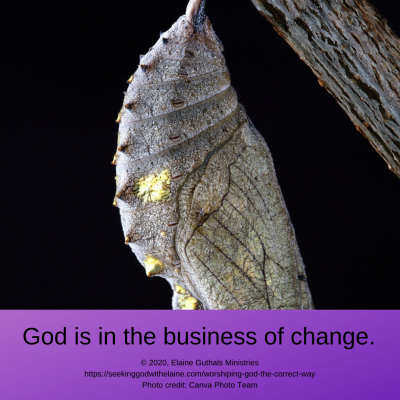
    If we don’t compare what they are saying to how we live our lives, it is just words. If we don’t change where we see we are falling short, it is just words. God is in the business of change.

    Chrysalis

    What Did Isaiah Say the Punishment for Sins Was?

    “Your land is desolate, your cities burned down; foreigners devour your fields right in front of you — a desolation, like a place demolished by foreigners. Daughter Zion is abandoned
like a shelter in a vineyard, like a shack in a cucumber field, like a besieged city. If the Lord of Armies had not left us a few survivors,
we would be like Sodom, we would resemble Gomorrah” (Isa. 1: 7-9 CSB)

    Ooo, baby. The Israelites didn’t change. They had brought God’s judgment upon themselves.

    I bet they were incensed when Isaiah compared them to Sodom and Gomorrah. God destroyed those two towns in Genesis because of their wickedness. There weren’t ten people making up the remnant (Gen. 18: 32).

    There was a big difference between the Israelites and Sodom and Gomorrah. The cities were totally destroyed. Though almost completely destroyed, the Israelites still had a remnant.

    But look at the punishment they endured.

    • The land was desolate (Isa. 1: 7).
    • The cities were destroyed (Isa. 1: 7).
    • Food was scarce (Isa. 1: 7).
    • They were abandoned (Isa. 1: 8).

    No, being God’s people did not keep them from the punishment for their sins.

    There are some people that think God will never sentence them to hell because God is a loving God. He wouldn’t have the heart to sentence them to eternal torment.

    Yes, God is love (I Jn. 4: 8). Oh, yes, He will sentence those who have not ABCDed to hell (Rev. 20: 15).

    Why Did God Reject the Israelites’ Religion?

    “Hear the word of the Lord, you rulers of Sodom! Listen to the instruction of our God, you people of Gomorrah! ‘What are all your sacrifices to me?’ asks the Lord. ‘I have had enough of burnt offerings and rams and the fat of well-fed cattle; I have no desire for the blood of bulls, lambs, or male goats. When you come to appear before me, who requires this from you — this trampling of my courts? Stop bringing useless offerings. Your incense is detestable to me. New Moons and Sabbaths, and the calling of solemn assemblies — I cannot stand iniquity with a festival. I hate your New Moons and prescribed festivals. They have become a burden to me; I am tired of putting up with them. When you spread out your hands in prayer, I will refuse to look at you; even if you offer countless prayers, I will not listen. Your hands are covered with blood” (Isa. 1: 10-15 CSB)

    Isaiah 1: 10-15, at first glance, can be a hard passage to understand. If God is the One who instituted sacrifices, why isn’t He accepting them?

    We have to remember that God rejected Cain’s sacrifice, too (Gen. 4: 5). Sacrifices have to be offered to God in the right way for the right reasons.

    Scriptures make it clear that sin is offensive to God. Sacrifices were to be offered to God to atone for our sins, not create new ones.

    We need to obey God’s Word when He gives us instructions about worship. God is not interested in religion that is for show. He wants very much to have a relationship with us.

    Reading explained this. He wrote, “It is true, St. Paul in his Epistle to the Hebrews affirms, that it was impossible that the blood of bulls and goats should purify the conscience, so as to wash away the guilt of sin, which only can be atoned for by the Lamb of God, slain from the foundation of the world. But yet they availed to the purifying of the flesh, and were accepted of God in lieu of temporal punishments.”

    Resource

    Think about it a second. God was the one who started the whole sacrifice deal. But He knew it wasn’t enough.

    God does not want our sacrifices if they are not done in the right way. It has to affect our conscience.

    God wants service, not religion. Service is an act based on belief in God that comes from a response of worship by acknowledging His power through our submission.

    Monod also brought up a point at we have discussed before. He wrote, “Your vocation is the main part of your service for Him, provided you are in the place where He would have you be.”

    Resource

    We need to be conscientious and humble in serving God. We have to put the focus on God and worship Him.

    Resource

    Making the Connections

    Monod made another good point. “The work of God is mostly hidden work, fully known to Him, known partly to those who are the immediate objects of it, scarcely known to ourselves.”

    Resource

    We get irritated when we don’t see God working in our lives. But God works inside of us, in our heart.

    We see the changes God makes in us as they transform our actions. We may or may not catch that He is changing our attitudes.

    How Do We Apply This?

    Kingsley told us what acceptable worship is. He wrote that “to adore God for His goodness, and to pray to Him to make us good, is the sum and substance of all wholesome worship.”

    We need to focus on God and truly worship Him.

    God. We humbly come before You, acknowledging You are Sovereign Lord. We want a relationship with You. We want to be like You. Amen.

    WorshipingGodTheCorrectWayPin1

    What do you think?

    Leave me a comment below (about this or anything else) or head over to my Facebook group for some interactive discussion.

    If you don’t understand something and would like further clarification, please contact me.

    If you have not signed up for the email daily or weekly providing the link to the devotions and the newsletter, do so below.

    If God has used this devotion to speak with you, consider sharing it on social media.

  • Peace Gained Through Prayer

    As we build a relationship with God through prayer, we gain God’s peace. While we commit ourselves to God, we know it is a two-way street. This daily devotional looks at the correct way to pray to God so that we grow in God’s peace.

    Nuggets

    • Prayer is the way we talk to God.
    • God does answer our prayers.
    • There are several important steps here to make sure that we are correctly praying.

    Devotions in the Peace Leads to Tranquility series

    Flowers witih title Peace Gained Through Prayer

    What we’ve discussed time and time again through this series is the fact that peace comes from God. In order to gain that peace, we have to have a solid relationship with Him.

    We grow our relationship with God by seeking Him. One of the ways we seek His in through prayer.

    Let’s Put It into Context

    We’ve talked about peace several times. Peace is an inward tranquility or composure of the mind resulting from a balanced life with spiritual order, equity, and truth.

    Glossary

    Peace isn’t just the absence of conflict. It is a positive condition.

    God wants disciples of Christ to experience peace in the midst of conflict. We can do that when we put our faith and trust in Him.

    Prayer is a two-way communication with God. We not only talk to God, but we also listen to Him.

    But how can prayer give us peace? Let’s dig in.

    Committing Ourselves to God Through Prayer

    “Commit your way to the Lord; trust in him, and he will act, making your righteousness shine like the dawn, your justice like the noonday.” (Ps. 37: 5-6 CSB)

    Prayer is the way we talk to God. Through our prayers, we commit to God how we live our lives. We submit to Him and listen to His instructions to us.

    I think sometimes we trip over the God-wants-us-to-submit part. We forget about the free will part. Free will is the ability within us to make decisions, which determine actions that produce character.

    It is our choice to give God control of our lives. It is our decision to commit to Him.

    We are to delight in that decision. Charnock defined delight as “… an affection of the mind that springs from the possession of a good which hath been ardently desired.”

    Resource

    The basis of our relationship with God must be affection at a minimum. We know His affection toward us is love. “For God so loved the world, that he gave his only Son, that whoever believes in him should not perish but have eternal life” (Jn. 3: 16 ESV).

    We use our minds to make the decision to commit to God. We have to work it out, so we are totally committed to Him. We can decide to commit to God because we see the benefits are to be greatly desired.

    Look again how God’s response is one that will be greatly desired. “making your righteousness shine like the dawn, your justice like the noonday.” (Ps. 85: 6 CSB).

    Righteousness is the result of a solid relationship with God built by a sincere life of conscientious obedience to God’s laws and commandments. That is where we are heading on the Sanctification Road.

    Sanctification is the transformation of mind, body, and soul beginning with regeneration and ending with perfected state of spiritual wholeness or completeness. Regeneration is the change in us that God brings about when we go from being spiritually dead to spiritually alive.

    I know. One churchy word leads to three others.

    Glossary

    Elaine-speak. When we ABCD, we start navigating the Sanctification Road. Our end goal is to be holy and righteous, as God is.

    The ABCDs of Salvation

    If you have not become a believer in Christ, please read through the
    Plan of Salvation and prayerfully consider what God is asking you to do.

    A – admit our sins
    B – believe His Son Jesus is our Redeemer
    C – confess God as Sovereign Lord

    D – demonstrate that commitment by making any changes needed in our lives to
    live the way in which God has called us

    The Disciple’s Job Description

    We know that is going to be a process. Sometimes, we will be cruising right along. Other times, we are going to be on the frontage road. Other times, we are flat out taking the exit.

    God is interested in our commitment. Yes, He wants the obedience, but He doesn’t want us to make that obedience a work. There is nothing we can do or not do to make us righteous.

    We have to be committed to God to trust that He will make us righteous. That brings us peace.

    When we pray to God about keeping us on the Sanctification Road, we are asking that we successfully make the end goal – Heaven. That alone should bring us peace as we contemplate the future rewards for being faithful and the rest from the struggles temptations create.

    Sky

    Prayer Is a Two-Way Street

    “Be silent before the Lord and wait expectantly for him” (Ps. 85: 7 CSB)

    We may forget that prayer is a two-way street. God does answer our prayers.

    I know. Sometimes it feels like God doesn’t give a return visit.

    God does respond to our prayers. No, I can’t say I ever heard an audible voice.

    Instead, God gives us impulses. Remember, we said that we get guidance from the Holy Spirit through impulses. Those nudges are His responses to us.

    To read a related devotion, click on the appropriate button below.

    Sometimes, God uses other people provide His words of encouragement or direction. God has used family, friends, My Ladies, Pastor Chad – even complete strangers to talk with me.

    God frequently talks with us through His Word. I know. We may not see His Word as Him speaking to us personally. Anyone could – and everyone should – read His Word.

    Look at it this way, though. God’s Word is available to many of us 24/7/365. Even if we don’t have a physical copy, we can get to it on the internet.

    Ouch, we don’t want to see trials as God talking to us, but He is. The Homilist wrote, “Every visitation has its mission. There is a purpose in every pain and an object in every trial.”

    Resource

    God does do the return visits. He may not be talking to us the way we are expecting – or saying what we want Him to be saying.

    But God does respond to our prayers. Many times, that response is to give us peace – even if the answer isn’t what we really wanted to hear.

    What Is the Right Way to Pray?

    “I listen carefully to what God the LORD is saying, for he speaks peace to his faithful people. But let them not return to their foolish ways” (Ps. 85: 8 NLT)

    It is important for disciples of Christ to communicate with God the right way. But what is the correct way to pray to God?

    Webster gave us some ideas. (Note: The headings are his words.)

    Resource

    His Disposition

    I think Webster pointed out some things that the Psalmists may have taken for granted. The Psalmists say they are going to sit tight and wait for God.

    Webster expanded on what that actually meant. He wrote, “He had sought forgiveness, consolation, revival, from the hands of God, both for himself and his people; and now he would watch, wait, attend, expect the Divine direction, and the Divine blessing.”

    There are several important steps here to make sure that we are correctly praying.

    • We have to evaluate ourselves and determine where we have sinned.
    • We have to ask God to forgive us of those sins.
    • The consolation could be the peace we receive as comfort after we have disappointed our Father.
    • We are restored to a perfect relationship with God.
    • We receive blessings, which may be where the peace comes in.

    Let’s think of it this way. Our disposition is our temperamental makeup.

    When we think of our temperament, we ask ourselves are we patient people? Well, in the instant-gratification world we live in, it is difficult to be patient.

    Webster also talked about how we should expect God to answer our prayers. He brought up a good point. We are to be people who are watching.

    We think about it being watching for Jesus to return. Webster told us we also have to watch God work.

    Glossary

    Bottom line, we have to be obedient. God told us to watch – we need to be watching for whatever He is going to do.

    His Expectation

    God is going to help us understand, so we will gain peace as He reveals Himself to us. We have all the great words, such as assurance, hope, grace, and provision, to expect God to provide us.

    Spurgeon contented that, if we are His people – His saints – we should expect God to talk with us. Since it is identified for His saints, it is connected with holiness. Saint means holy ones.

    Spurgeon also made another very interesting comment. He believed that people can only be spoken by God. He got this from the “… for he speaks peace to his faithful people …” (Ps. 85: 8 NLT) part. Spurgeon argued that any other peace is evil.

    I don’t know. That may have to go into the drafts folder.

    Resource

    PeaceGainedThroughPrayerPin

    Making the Connections

    Ouch. The Homilist was brutal. He called it like he saw it.

    “We pray to God. Do we want to hear what He has to say in reply? Most of our petitions are never thought of as soon as they are delivered. We knock at the door, but never stay to see it opened. Can we expect that God will attend to those prayers which we ourselves contemn?”

    Resource

    We expect God to be a gum ball machine. We put our quarter prayer in and want the gum ball that we have identified.

    We want our prayers answered on our terms – no deviation. Then we have the nerve to question why God doesn’t answer our prayers the way we want them answered?

    Making the Connections to Self-Discipline

    We said early on this year that, when asked what we need to have more self-discipline in, our prayer life was a frequent answer.

    How Do We Apply This?

    • We need to spend time in prayer to build the relationship.
    • We need to work on our attitude.
    • We need to work on our consistency.
    • We need to work on our praise.
    • We need to choose to submit to God.
    • We need to choose to focus on Him instead of circumstances.
    • We need to accept peace is our duty as disciples.

    God wants to give us His peace. To receive it, we have to be obedient in prayer.

    Father God. We praise Your name. You have so much love and peace that You want to give us. You ask that we be obedient, especially in prayer. Helps us to strengthen our prayer life in order to worship You as we should. Amen.

    What do you think?

    Leave me a comment below (about this or anything else) or head over to my Facebook group for some interactive discussion.

    If you don’t understand something and would like further clarification, please contact me.

    If you have not signed up for the email daily or weekly providing the link to the devotions and the newsletter, do so below.

    If God has used this devotion to speak with you, consider sharing it on social media.

  • God’s Law Creates Peace

    When we think about God’s laws and commandments, we generally don’t think about peace. We think restrictions. This devotion looks at how we can put our faith in God’s laws because they do bring God’s peace.

    Nuggets

    • The law gives us wisdom.
    • It is the battle between good and evil that takes away our peace.
    • We have to do something with it – we have to change our character so that we are more like God.
    • The greatest thing that can come out of God’s peace is the peace we receive when we are in the midst of trials.

    Devotions in the Peace Leads to Tranquility series

    Flowers with title God's Law Creates Peace

    We are just going to jump in because this got long. You may be questioning how I see God’s restrictive laws could even think about creating peace. I am going to quickly move to show you how I came to that conclusion.

    Let’s Put It into Context

    We’ve talked about peace several times. Peace is an inward tranquility or composure of the mind resulting from a balanced life with spiritual order, equity, and truth.

    Glossary

    Peace isn’t just the absence of conflict. It is a positive condition.

    God wants disciples of Christ to experience peace in the midst of conflict. We can do that when we put our faith and trust in Him.

    Peace from Loving God’s Law

    “Great peace have those who love your law …” (Ps. 119: 165 NIV)

    We are going to form our discussion around what Jesus called the second greatest commandment as our example. “And a second is like it: You shall love your neighbor as yourself’” (Mt. 22: 39 ESV).

    Jesus said that “on these two commandments depend all the Law and the Prophets” (Mt. 22: 40 ESV). That makes sense.

    • If we don’t love God, we are not going to love God first and foremost, worship anything but Him, watch how we use His name, and find a community of people who believe like we do and meet with them regularly.
    • If we don’t love people, we are going to not honor our parents, murder, steal, lie, and strongly desire what they have.

    The law gives us wisdom. Wisdom is knowledge, discernment, and good sense that leads to goodness and virtue, which can be applied to life. “Blessed is the one who finds wisdom, and the one who gets understanding” (Prov. 3: 13 ESV).

    Person watching sunrise

    Okay, let’s do some initial substituting. The law gives us knowledge and the ability to determine what is from God, which brings us standards of moral excellence that should be applied to our lives.

    Having God’s wisdom will greatly benefit us. “Then you will experience God’s peace, which exceeds anything we can understand. His peace will guard your hearts and minds as you live in Christ Jesus” (Phil. 4: 7 NLT).

    That peace will be proportional to the application of that wisdom in implementing God’s laws and commandments in our lives.

    So, let’s do the deep substitution. The loving-others law gives us knowledge of how God wants us to treat those around us and the ability to to do that, which brings changes to our character making us more like Him, so that we can appropriately act and react to situations in our lives.

    Okay, that may be a little convoluted. So, let’s break it down.

    • The loving-others law tells us how God wants us to act.
    • God gives us the ability to to do that.
    • By following His laws and commandments, we become more like Him.
    • It becomes second nature, so we act and react appropriately in situations in our lives.

    But it is all proportional based on how we are following God. If we are all in, it is total peace. It we are a just-on-Sunday disciple, we probably don’t have much peace at all.

    It is an all-in type of thing. Eldridge defined that for us. He wrote, “The law holds our entire being in its grasp — our heart, our secret acts, our words, our life, and there is no escape: nor is there any breaking of the law with impunity.”

    Resource

    Melvill also showed us what loving the law means. It is predicated on ifs. His words are in bold, except I substituted we for I.

    • If we have reached the point of loving the law means it is a process.
    • If we love God because He hates sin means we accept His authority to decide what is a sin and what isn’t.
    • If we love God because He will punish sin means we agree that we should be held accountable for our actions.
    • If we love God because He requires “holiness in the inward parts” means that we are attempting to change our character to imitate His.

    Now, Melvill said there was more to loving God’s laws, but this is a good start.

    Then — only then — do we get the good stuff. God will protect us. Sure, there will be accidents. We will get sick. But He is protecting us.

    We have the wisdom God wants us to have so that we know Him — even the things He hasn’t revealed in the Bible.

    Resource

    Peace from the Do’s and Don’ts?

    When we struggle with doing the do’s and not doing the don’ts, it is really a battle between good and evil. This battle steals our peace. Following God’s laws actually brings peace.

    The Homilist’s nailed it. The Glowing Testimony of the Good says, “Moral remorse, malign passions, dark forebodings, battling impulses, these are the source of all inner tumult; but, in the nature of the case, where the soul is in a loving ruling sympathy with God’s law, such elements of distress cannot exist.”

    Resource

    When we are actively resisting the temptation to sin, God gives a peace. Spurgeon told us what that entails.

    1. “Great restfulness of the intellect.
    2. “A pacified conscience.
    3. “Peace in heart.
    4. “Peace as to our desires.
    5. “Peace in resignation to God, acquiescence in His will, and conformity to it.
    6. “A happy confidence in God as to all things in the past, the present, and the future.”

    Resource

    Let’s talk the flip side for a second. When we know we are not following God’s laws and commandments, we don’t have peace. “For day and night your hand was heavy on me; my strength was sapped as in the heat of summer” (Ps. 32: 4 NIV).

    We pay the consequences for breaking God’s laws and commandments. One of the consequences is the loss of peace.

    Even just the turmoil from the indecision of whether we are going to follow Hod’s laws and commandments steals our peace. “… But I would not have known sin if it were not for the law …” (Rom. 7: 7 CSB).

    I hear what you are saying. “But Chick, you keep saying there is no way we are going to be able to keep all of the laws all of the time.” That is right. We can’t.

    So, what do I tell you to do when you break God’s laws and commandments? We repent. Repentance is expressing sorrow for breaking God’s laws and commandments by making the commitment to changing ourselves through obedience so that we no longer do the wrong things.

    When we repent, God will forgive us. Why? Because Jesus was the substitute for our sin. Pastor Tim said Sunday that He was penalized for us.

    Glossary

    Resource

    But the peace comes by the regeneration. Regeneration is the change in us that God brings about when we go from being spiritually dead to spiritually alive.

    Yes, we are changed from being spiritually dead to spiritually alive in an instant. Changing our character to the character of God means navigating the Sanctification Road. Sanctification is the transformation of mind, body, and soul beginning with regeneration and ending with perfected state of spiritual wholeness or completeness.

    Glossary

    What loving the law really does is takes away is our doubt. We no longer struggle with is God’s Word true or not — we know it is. We no longer have the clash of you-need-to-give-this-sin-up-BUT-I-DON’T-WANT-TO! We know the benefits when we do live like God wants us to live.

    But hey. If you want to keep beating your head against the wall to defy God, go for it. He is not going to force You to follow Him.

    But you won’t have true peace. Plus, you will pay the ultimate penalty in the end.

    Peace Because the Law Shows Us God’s Character

    “… and nothing can make them stumble” (Ps. 119: 165 NIV)

    One of the purposes of the law was to show us God’s character. We learn of His character by seeking God with all our hearts.

    Did you get the true meaning of loving the law yet? If we love something, we do something with it. If it is a person, we spend time with them. If it is an animal, we take care of it and nurture it so it can grow.

    We have to do the same thing with the law. We have to do something with it. We have to change our character so that we are more like God.

    We do that by seeking God. We spend time in His Word and really Study it. We go to Him in prayer. We meditate on what what He is telling us.

    Searching for and Seeking God

    Hearing His Word (Rom. 10: 17).
    Reading His Word (Rev. 1: 3).
    Praying to Him (Heb. 4: 16).
    Studying His Word (Ac. 17: 11).
    Meditating on His Word (Ps. 1: 1-2).
    Memorizing His Word (Ps. 119: 11).

    Let’s roost on stumbling blocks a second. A stumbling block is anything that makes someone be disobedient to God.

    Let’s think of it this way. A trial gets dropped in our lap. Doubts can be a huge stumbling block. Misunderstanding what God’s Word actually says is right up there too. Another toe-stubber is our stubbornness in giving up our pet sin.

    If we love God’s laws and commandments, we want to obey them. So when the drop occurs, we are ready for it.

    Not only are we ready for the drop, we know all the nuances associated with the law. “It means this but not that.”

    Peace While Following God’s Law

    Peace comes when we obey God’s Word. That includes obeying His moral laws.

    Spurgeon brought up a good point. He wrote, “Love lies deep, it is in the heart: it is not a thing of the surface, it is of the man’s own self.”

    Included was a list of the good things Spurgeon saw coming out of that love.

    • An intense respect for it.
    • A delight in it.
    • A heart-felt acceptance of it.
    • An appreciation for it.

    Resource

    I think the greatest thing that can come out of God’s peace is the peace we receive when we are in the midst of trials. We don’t have to be overwhelmed, scared, or dejected. We can put our faith and trust in God to protect us and provide for us.

    We have to remember that peace is a result of obedience. No obedience, no peace.

    That takes the focus off the circumstances and puts it on God. Isn’t that a great place for it to be since God is all-powerful, all-knowing, and all-present?

    To read a related devotion, click on the appropriate button below.

    GodsLawCreatesPeacePin

    Making the Connections

    No, I don’t think it is normal to love God’s laws and commandments — at least not all of them. The Holy Spirit has to help us.

    Well, doesn’t that make sense? If we can do it without God’s help, we wouldn’t need Him.

    And we definitely need God.

    God rewards those who keep His laws. Spurgeon wrote, “Great peace means great prosperity. Those who love God’s law have great blessedness in this life as well as in that which is to come. In loving the law of God we have intense enjoyment and real success in life.”

    Resource

    Making the Connections to Self-Discipline

    If loving God’s laws and commandments only comes through the work of the Holy Spirit, that means it is something in which we will have to work. That means self-discipline will have to come into play to accomplish the work.

    How Do We Apply This?

    When we love God’s law, peace is produced. We shore up that peace by doing certain acts.

    • We think deeply about what the law means and how we are to fulfill it.
    • We defend it, regardless of what we think is our ability to do so or the consequences stemming from that defense.
    • We repent when we break the laws and commandments.
    • We accept any suffering that is associated with it.
    • We stay on the Sanctification Road, because it leads to holiness and righteousness.

    Resource

    God loves us so much; He is going to provide us peace. We need to put our faith in Him.

    Father. You provide so much for us. This includes the peace that You give us. Thank You. Amen.

    What do you think?

    Leave me a comment below (about this or anything else) or head over to my Facebook group for some interactive discussion.

    If you don’t understand something and would like further clarification, please contact me.

    If you have not signed up for the email daily or weekly providing the link to the devotions and the newsletter, do so below.

    If God has used this devotion to speak with you, consider sharing it on social media.

  • What Does Delight in the Lord Mean?

    Delighting in the Lord is one of those huge religious concepts – that disciples of Christ are called to do but may not understand. So, how do we delight in Him? This daily devotional looks at how delighting in the Lord provides us the peace of God.

    Nuggets

    • We find peace by delighting in God when we depend on Him.
    • We are called to delight in the Lord, and He will give us our hearts’ desire – Himself.
    • God will always reward those that are obedient to Him.

    Devotions in the Peace Leads to Tranquility series

    Floewrs with title What Does Delight in the Lord Mean?

    I know. There are some really tough concepts to understand when we are searching for and seeking God. When we are searching for Him – and maybe aren’t familiar with these terms – it can be very confusing.

    Truthfully, even if we are seeking God – and have been around these terms (maybe even all our lives) – it can still be a bit strange.

    Let’s tackle one of those confusing topics in this devotion. We won’t really experience God’s peace until we nail delighting in the Lord.

    Let’s Put It into Context

    We’ve talked about peace several times. Peace is an inward tranquility or composure of the mind resulting from a balanced life with spiritual order, equity, and truth.

    Glossary

    Peace isn’t just the absence of conflict. It is a positive condition.

    God wants disciples of Christ to experience peace in the midst of conflict. We can do that when we put our faith and trust in Him.

    Delight, according to the Merriam-Webster Dictionary, is “a high degree of gratification or pleasure.”

    Resource

    Peace Achieved by Delighting in God

    “Then you will delight in the Almighty and lift up your face to God” (Job 22: 26 CSB)

    A part of me questions using the word delight to describe our relationship with God. When Seed wrote that “… the due regulation of our pursuits of it must always be of great moment …,” to me, it kind of makes it worldly. Spurgeon called it sunshine in the heart.

    Resource

    Nothing is always going to be of great moment. It strikes of being pollyanna-ish — or being delusional — to think it is all going to be sunshine and roses.

    It kind of makes it look like we are supposed to ignore the truth and just put on our happy face. You know, slap a grin on us and call us happy.

    But delighting in the Lord is what disciples are called to do. Maclaren wrote, “When we ‘delight’ in a thing or person, we recognise (sic) that thing or person as fitting into a cleft of our hearts, and corresponding to some need of our natures. Without delight in God there is no real religion.”

    Resource

    I think that is my problem. I am focusing on is delight as the emotion of happiness. It is supposed to go deeper.

    Norton indicated that the delight should be desire. Delight really takes it down to the dependence level.

    Resource

    Wardlaw explains what all this dependence entails.

    • Our focus is in remaining in God’s Will.
    • We can have success only when we are living in God’s Will.
    • “That it is therefore the imperative duty of intelligent creatures to own their independence, and to seek, on all occasions, the Divine countenance and blessing.”
    • God calls us to certain tasks to expand His kingdom because it will grow us as people.
    • God acknowledges our efforts to grow in His grace and knowledge and rewards us when we piously and humbly accept Him.

    Resource

    So, we find peace by delighting in God when we depend on Him. Our dependence on Him should not be contingent on the circumstances surrounding us. We are to depend — and delight — on Him at all times.

    Does Delight in the Lord Lead to Prosperity?

    “Take delight in the LORD, and he will give you your heart’s desires” (Ps. 37: 4 CSB)

    Psalms 37:4 says that, if we delight in the Lord, we will prosper. Does that mean nothing bad is going to happen to us? Are disciples of Christ ensured a prosperity gospel?

    If we delight in the Lord, does that mean we are going to automatically get all the good stuff?

    Okay, I would like a house and a million dollars in the bank. I want a job higher up the corporate ladder. I want to find my soul mate.

    What? It doesn’t work that way???? Doesn’t this verse make it a prosperity gospel? We’ve talked about that several times.

    Glossary

    Maclaren debunked that theory. He wrote, “Only do not vulgarize that great promise by making it out to mean that, if we will be good, He will give us the earthly blessings which we wish. Sometimes we shall get them, and sometimes not; but the real desire of the man who delights in God will be God Himself, and this desire is ever fulfilled.”

    Resource

    Seed said that we are not only supposed to depend on God, but we are also to be thankful. Thankfulness is a response of gratitude to an act of God. He contended that being thankful would elevate our delights from the carnal realm into the religious realm.

    Resource

    We switch realms by focusing, according to Seed, on beauty and greatness. When we focus, we can see how God has provided for us.

    Seed also included novelty in his list. He gave an example of something unique becoming common place after we have attained it.

    Resource

    I can see novelty applying to unique things. I feel it can also mean new-to-us things. That acknowledges the growth we experience.

    But just think how chaotic that would be if we got everything we wanted. If everything ran on our standards instead of God’s, chaos would reign.

    It is probably a safe assumption that we would only want the best of whatever we were desiring. Gibson reminded that God wants to give us the best – and He knows better than we do what the best is for us.

    Resource

    We are called to delight in the Lord, and He will give us our hearts’ desire – Himself.

    Hands

    Delighting in the Lord Means Rewards

    “But the humble will inherit the land and will enjoy abundant prosperity” (Ps. 37: 11 CSB)

    Don’t worry. God sets us straight in this verse.

    Delight in the Lord is hooked to obedience. We know that obeying God is rewarded.

    Prosperity is tied to humbleness. Humility is a character trait that diminishes pride and places dependence on God while holding a modest view of our importance with respect to others.

    Oh, yeah. Full circle to dependence.

    When we lead with humility, we get the prosperity. When we lead with the entitlement, we don’t.

    When we lead with the humility, we get the tranquility. The tranquility comes when we realize peace comes from within.

    Look what Maclaren had to say. He wrote, “The great reason why life is troubled lies not without but within. It is not our changing circumstances, but our unregulated desires, that rob us of peace.”

    Resource

    If we look for peace outside of ourselves, we become dependent on others and circumstances to supply our peace. What happens if they no longer can or don’t?

    God wants us to look for our peace within ourselves. Several of the versions translate this verse as “… delight themselves …” (Ps. 37: 11 ESV, NASB, NKJV, KJV).

    I see two reasons God wants us to look within ourselves. The first reason is we are taking our focus off the worldview.

    The second reason is because within is where Jesus and the Holy Spirit reside. We focus on Him instead of conflicting desires.

    When we are focused on God to provide us peace through delighting in Him, we are free from the anxiety of the future, which can cripple us. Who better to focus on than the One who knows what will occur?

    Knight brought up the fact the characteristic of meekness. He noted, “But the meek-spirited are here represented as not only possessing tranquillity or peace, but the multitude, the abundance thereof; and as being not only refreshed, but delighted therein.”

    Resource

    Melvill took another track. He wrote, “Christian meekness must chiefly result, first from a deep sense of our own unworthiness; and, secondly, an earnest love of our fellow-men. He who is humble in the meek consciousness of his own vileness as a sinner, will invariably be averse from all overbearing; and he who is zealous for the well-being of others will forbear and forgive, and keep down resentment, however injurious the conduct of others.”

    Resource

    God will always reward those that are obedient to Him.

    WhatDoesDelightInTheLordMeanPin

    Making the Connections

    Do you get the idea that we have barely scratched the surface of delighting in the Lord? Allon stated that it is one of those big religious concepts that is almost too big to comprehend and accomplish.

    Resource

    It is important that we get this concept right. We aren’t talking about delighting in the blessings God gives us. We are talking about delighting in Him.

    Remember, God doesn’t give the material possessions or worldly priorities top billing. He is most concerned about our spiritual state. Do we have His character or not?

    Sturgeon made a really good observation. Many worldview people give the argument that disciples have to give up most of the good things of life. They see this as self-denial.

    Resource

    Instead, God has promised us prosperity when we follow Him. (No, it isn’t going to be the world’s definition of prosperity.) He will prosper us through our relationships with Him. He will give us peace.

    Making the Connections to Self-Discipline

    Delighting in the Lord has to start out with knowing Him. That means searching for Him if we haven’t ABCDed. If we have, we need to continually seek Him. That takes discipline.

    How Do We Apply This?

    We have to ABCD first.

    The ABCDs of Salvation

    If you have not become a believer in Christ, please read through the
    Plan of Salvation and prayerfully consider what God is asking you to do.

    A – admit our sins
    B – believe His Son Jesus is our Redeemer
    C – confess God as Sovereign Lord

    D – demonstrate that commitment by making any changes needed in our lives to
    live the way in which God has called us

    The Disciple’s Job Description

    Next has to come imitating God. If we don’t want to even try to imitate Him, we are not going to want to delight in Him.

    Resource

    Delighting in the Lord brings us peace. Spurgeon wrote, “Practically put, this delight in the Almighty shows itself in the Christian when nothing else remains to him. If he be stripped of everything, he cries, ‘The Lord is my portion.’”

    Resource

    This means that, even in our trials, we remain peaceful because we have placed our trust in God. Our peace is in direct proportion to our trust in God.

    Norton made a good point. He wrote, “Our desire will control our thoughts, and aims, and actions.” If God is our desire, we are in control and are following Him. We make God our desire when we delight in

    • God’s Word
    • God’s purposes
    • God’s character.

    Resource

    This would be a good exercise. When we think about things in our worship that delight us, are we delighted about them for ourself or for God? Are we truly worshiping and sacrificing? Or are we going through the ritual for some other reason?

    Resource

    To me, this all boils down to the wanna-be has got to be there. We want to be like God. We want to follow His laws and commandments. We want to have His character.

    When we want that, the peace and delight will come.

    Father. You are perfect. You are holy and righteous. We delight in Your character. We delight in Your love. Help us to want to be like You. Grow us so that we learn more about You. Amen.

    What do you think?

    Leave me a comment below (about this or anything else) or head over to my Facebook group for some interactive discussion.

    If you don’t understand something and would like further clarification, please contact me.

    If you have not signed up for the email daily or weekly providing the link to the devotions and the newsletter, do so below.

    If God has used this devotion to speak with you, consider sharing it on social media.

  • Peace Starts with Getting Right with God

    Worldview people might argue that peace does not start with God. This daily devotional looks at why there is no peace with Satan but there is peace of God – even though peace is not natural for us.

    Nuggets

    • Whatever peace the worldview thinkers believe they have, it is a false peace.
    • In order to gain true peace, we have to know God as He truly is.
    • Even though peace is a gift from God, we have to work attain peace.

    Devotions in the Peace Leads to Tranquility series

    Flowers with title Peace Starts with Getting Right with God

    When I was writing the last devotion, we touched on the fact that only true peace comes to God’s people. “… the LORD blesses his people with peace” (Ps. 29: 11 CSB).

    I am sure worldview people would beg to differ. I do think that is a true statement.

    I wanted us to dig in to prove – or disprove – that statement.

    Let’s Put It into Context

    We’ve talked about peace several times. Peace is an inward tranquility or composure of the mind resulting from a balanced life with spiritual order, equity, and truth.

    Glossary

    Peace isn’t just the absence of conflict. It is a positive condition.

    God wants disciples of Christ to experience peace in the midst of conflict. We can do that when we put our faith and trust in Him.

    Why Can’t Satan Give Us Peace?

    “For the secret power of lawlessness is already at work; but the one who now holds it back will continue to do so till he is taken out of the way. And then the lawless one will be revealed, whom the Lord Jesus will overthrow with the breath of his mouth and destroy by the splendor of his coming. The coming of the lawless one will be in accordance with how Satan works. He will use all sorts of displays of power through signs and wonders that serve the lie, and all the ways that wickedness deceives those who are perishing. They perish because they refused to love the truth and so be saved” (II Thess. 2: 7-10 NIV)

    Many worldview people do not see their actions as sin. If they do, they do not feel they have suffered the consequences for those sins. Instead, they see indications that there is no judgement for their beliefs and actions.

    Satan likes it better when worldview people are caught up in sensual and temporary pleasures. In that way, God doesn’t even enter their minds. They think they are good to go.

    Boy, does Satan have them snowed!

    Whatever peace the worldview thinkers believe they have, it is a false peace. Spurgeon wrote, “When a soul is borne up upon the waters of false peace, its case is hopeless until that peace is dried up, and the soul is stranded in self-despair.”

    Resource

    Satan isn’t going to give us peace because he is the father of chaos. His goal is to divide people so that they are constantly bickering — or full out fighting.

    The goal is not unity because unity fosters peace. Satan would rather see the protests, the debates, and wars so we are too busy to look for God’s peace.

    Satan is also the father of lies. That makes him feel like he is in control of us.

    One of the biggest lies is that we are not good enough. That has a lot of subsets. We aren’t pretty/handsome enough. We aren’t smart enough. We really don’t fit in with what others think is the norm.

    Those lies are not designed to give us peace. They are designed so we are unhappy with ourselves.

    They are designed to depress us. They are designed so that we are angry at God for creating us this way — if we feel we are God’s creation, which Satan hopes we don’t. (But he has to cover his bases here.)

    Satan is going to not reveal information we need to know. Oh, yeah. That makes us feel like we are not in control.

    Satan wants to domineer us. He wants the power. It is another ploy Satan has designed to keep us off balance.

    That is the main goal. If we are off balance, Satan assumes we will not be thinking of God. If we think about Him, we might go searching for Him. The next step is finding Him. Satan does not want that to happen.

    I’ve always thought it was funny how Satan tries to mimic God. Just as God sent Jesus to this earth to save it, Satan will send the antichrist to ensure its destruction. He even pulled off some miracles (as in Pharaohs’ magicians).

    Unfortunately, Satan is just a bad knock-off brand. Following him is not going to lead us to victory and peace.

    Peace Comes from Knowing God’s Character

    “Come to terms with God and be at peace; in this way good will come to you” (Job 22: 21 CSB)

    In order to gain true peace, we have to know God as He truly is. How does God reveal Himself to us to give us His peace?

    Wagner argues that many really don’t know God. He wrote, “Many persons assume that they naturally know God; but they do not feel the necessity of going to Scripture to learn the character of God.”

    Resource

    What that means is they have a head knowledge of God but not a heart knowledge. That is more practical knowledge. They haven’t delved through Scriptures to learn Who He really is.

    If we go to Scriptures, we learn that God is love (I Jn. 4: 8). God is peace (Eph. 2: 14).

    God wants us to know and believe His true character. He wants us to see His compassion. He wants us to put our trust in Him so we can obtain salvation. He wants us to know Him as He truly is.

    Resource

    But we’ve said before that just reading the Scriptures isn’t going to give us a full picture of God’s character. He has only put so much into His Word.

    We have to know the depths of God’s character. We have to experience Him.

    God is going to reveal Himself to us as we grow in His grace and knowledge (II Pet. 3: 18). That means we have to communicate with Him.

    That also means listening to God. “Tremble and do not sin; when you are on your beds, search your hearts and be silent” (Ps. 4: 4 NIV).

    That doesn’t mean we are to bring God down to our level. We have to remember that He is Sovereign Lord; we aren’t. His ways and thoughts are higher than ours (Isa. 55: 8-9).

    Bed

    Peace Doesn’t Come Naturally

    “Therefore, since we have been justified through faith, we have peace with God through our Lord Jesus Christ” (Rom. 5: 1 NIV)

    Peace isn’t natural for us. Breathing is natural.

    Even though peace is a gift from God, we have to work attain peace. It is an attitude we must realize.

    But there is also another thing of which we have to be cognizant. As God reveals His higher ways to us, we are going to realize how much more holy God is than we are. We are going to see how lacking we are.

    Ooo, baby. That will definitely take away some of our peace. When we realize how our sin has hurt him, it will definitely make us depressed.

    That really isn’t what God is about. Yes, He wants us to see the need for salvation. Salvation is deliverance from evil and the consequences of sins to replace them with eternal life and good. Sin is actions by humans that disobey God and break one of His reasonable, holy, and righteous laws and commandments, goes against a purpose He has for us, or follows Satan’s promptings.

    But we don’t have to worry. God doesn’t see us as worthless. He sees us as redeemable.

    Person and mountains

    How do we know? “But God showed his great love for us by sending Christ to die for us while we were still sinners” (Rom. 5: 8 NLT).

    All we have to do is ABCD. We have to repent of our sins. Repentance is expressing sorrow for breaking God’s laws and commandments by making the commitment to changing ourselves through obedience so that we no longer do the wrong things.

    The ABCDs of Salvation

    If you have not become a believer in Christ, please read through the
    Plan of Salvation and prayerfully consider what God is asking you to do.

    A – admit our sins
    B – believe His Son Jesus is our Redeemer
    C – confess God as Sovereign Lord

    D – demonstrate that commitment by making any changes needed in our lives to
    live the way in which God has called us

    The Disciple’s Job Description

    The most amazing thing is we no longer have to hang our heads because we have been sinners. God wants us to lift our heads and look full on His wonderful face, as the song says.

    God wants us to get over the feelings of unworthiness and inadequacy. He wants us to feel the love and joy — and peace — that He wants to give us.

    Just because we have been sinners doesn’t mean we have to stay sinners. God wants us to give our lives to Him so He can start us on the Sanctification Road. Sanctification is the transformation of mind, body, and soul beginning with regeneration and ending with perfected state of spiritual wholeness or completeness.

    God wants to transform us into people who are holy and righteous. Holy means to be set apart, perfect, and pure. Righteous means we are free from sin because we are following God’s moral laws.

    PeaceStartsWithGettingRightWithGodPin

    Making the Connections

    Satan wants us to use the wrong definition of fear of the Lord. He wants us to have the terror part.

    Nalson made an interesting comment. He wrote, “No ideal knowledge can give us either virtue or happiness.”

    I can see that. Perfect knowledge doesn’t cut it. I think that goes back to the head knowledge to the heart knowledge.

    Peace comes from not only knowing God but also embracing Him. If we embrace Him, we will try to imitate Him. That should lessen the amount of sin in our lives. It is that sin which steals our peace.

    Atterbury told us why knowing God is so important. He wrote, “This is the only way to a perfect tranquillity (sic) and rest of mind.”

    Resource

    There is no other way. But Jesus told us that. “Jesus answered, “I am the way and the truth and the life. No one comes to the Father except through me” (Jn. 14: 6 NIV).

    Making the Connections to Self-Discipline

    Yes, you read that right. We have to work to attain peace. It is a gift, but we have to accept it. We also have to prioritize it.

    That takes work. That takes self-discipline.

    How Do We Apply This?

    What I am hearing over and over again so far is that we have to search for and seek God in order to obtain His peace. This isn’t a one-time deal. It is a heartfelt endeavor.

    Searching for and Seeking God

    Hearing His Word (Rom. 10: 17).
    Reading His Word (Rev. 1: 3).
    Praying to Him (Heb. 4: 16).
    Studying His Word (Ac. 17: 11).
    Meditating on His Word (Ps. 1: 1-2).
    Memorizing His Word (Ps. 119: 11).

    Why? Natt said that “We must seek to be at peace with Him, by laying down our rebellion, asking pardon, and imploring the renewing and sanctifying influences of His Holy Spirit.”

    Resource

    Did you see that?

    • Stop sinning
    • Ask forgiveness
    • Change our character through the influences of His Holy Spirit

    Yes, we have to change our character to reflect His character. No, we don’t have to do that by ourselves.

    Peace starts with God, not Satan. Nothing in this world can give us true peace. We have to rely on our Heavenly Father to provide it for us.

    Then we have to work at it.

    Heavenly Father. You are so generous to us. Your love for us is amazing. On top of that, You want to give us Your peace. Help us to look to You for it. May we grow in Your grace and knowledge so that we can attain this peace. Amen.

    What do you think?

    Leave me a comment below (about this or anything else) or head over to my Facebook group for some interactive discussion.

    If you don’t understand something and would like further clarification, please contact me.

    If you have not signed up for the email daily or weekly providing the link to the devotions and the newsletter, do so below.

    If God has used this devotion to speak with you, consider sharing it on social media.