Category: Faith

  • The Passing of a Patriarch: Dying in Peace

    Jacob had one more son to bless – Benjamin. This devotional reading looks at that blessing and the death of Jacob.

    Nuggets

    • Benjamin was the second son of Jacob and Rachel and Jacob’s twelfth and last son.
    • The “wolf” imagery Jacob used is seen by many older commentators as connected with passages where Isaiah, Jeremiah, and Ezekiel along with minor prophets attributed the leader of victorious battles as the Messiah.
    • When it talks about morning and evening, it is saying what we would call something as continuous.
    • By blessing Benjamin, Jacob had finished blessing – and I am sure some felt like they were cursing – his sons.
    • Jacob instructed his sons on where he was to be buried.
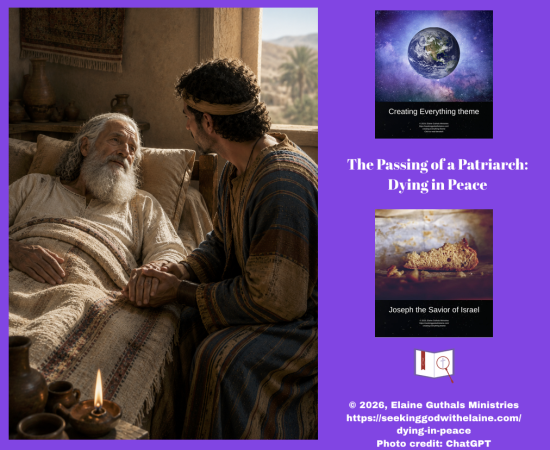
    dying-in-peace

    Jacob was coming to the end – of blessing his sons and of his life. Through the 12 chapters of Genesis that he is in, we see a transformation in His life. The man who thought he needed to deceive his father to receive the covenant blessing had learned to trust Him.

    Let’s Put It into Context

    To read devotions in the Creating Everything theme, click the button below.

    Devotions in the Joseph the Savior of Israel  series

    Benjamin

    “Benjamin is a ravenous wolf, devouring his enemies in the morning and dividing his plunder in the evening” (Gen. 49: 27 NLT)

    Benjamin was the second son of Jacob and Rachel and Jacob’s twelfth and last son.

    We have to remember family dynamics. The ages of eleven sons were within six years apart. Benjamin was born 17 years after the youngest of the 11 were born.

    That is a big gap. But that also explains why it seems like Benjamin was treated as a protected younger child – he was.

    But hmmm. Was Benjamin’s prophecy a good one or a bad one?

    This ambiguity seems strange because Jacob fawned over Benjamin. Before Benjamin was a year old, Jacob’s beloved wife and beloved son were gone – one for sure dead and one believed dead.

    A Ravenous Wolf

    The “wolf” imagery Jacob used is seen by many older commentators as connected with passages where Isaiah, Jeremiah, and Ezekiel along with minor prophets attributed the leader of victorious battles as the Messiah.

    This is logical. The territory Benjamin was allotted contained the northern approaches to Jerusalem – which was in their territory. (But that also put them between Judah’s territory and Ephraim’s territory.)

    If we go at it somewhat literally, the blessing speaks of great military success. He engages the enemy in the morning, finds victory sometime during the day, and receives the spoils of victory by the end of that day.

    It isn’t a long, drawn-out battle. It is a quick victory.

    Morning and Evening

    When it talks about morning and evening, it is saying what we would call something as continuous.

    That expands the victorious aspect to being more than a once-in-a-while victory. In Jehovah, we find unending victory.

    Bradford had another take. He noted warriors from of Benjamin probably used the trade routes within their territory as an income source. These would have been short skirmishes with the traders in the caravans they attacked.

    Resource

    Let’s look at this figuratively. When we are younger – in the morning of our lives – we can see the world around us and want to explore it. We can be tempted by the bright, shiny aspect of sin.

    Hopefully, when we get older – when we are in the evening of our lives – we turn back to Jehovah. Isn’t that what the Proverbs says? “Direct your children onto the right path, and when they are older, they will not leave it.” (Prov. 22: 6 NLT).

    As warlike as the tribe may have been at its inception, those skills were useful to the Southern Kingdom when the nation split. Judah did not have to stand alone.

    In the Exodus, Benjamin’s tribe was designated part of the West Division. In the first census, the tribe numbered 35,400 (Num. 1: 36-37). By the second census, they grew to 45,600 (Num. 26: 41).

    The tribe of Benjamin received their allotment in Joshua 18: 11-28. It may have been a small allotment, but it was strategically important. The land laid between Judah to the south and Ephraim to the north. Cities included Jerusalem, Jericho, Bethel, Gibeah, and Mizpah.

    The fighting part of the prophecy came to be (Jdgs. 19-21) – and not in a good way. The men of Gibeah committed a horrific crime. When the other tribes demanded justice, Benjamin refused.

    As result of the civil war that broke out, the tribe of Benjamin was nearly decimated. Only 600 Benjaminite men survived.

    Still, we know some of the names of people who came from the tribe of Benjamin.

    • Ehud was one of the judges.
    • Saul was the first king.
    • Jonathan was a true friend of David.
    • Mordecai and Esther – through Jehovah’s intervention – worked to preserve the nation during the time in Persia.
    • The Apostle Paul also was a member of the tribe of Benjamin.

    When the nation split, Benjamin stayed with Judah instead of going with Ephraim.  That helped strengthened the Southern Kingdom.

    In Conclusion

    “These are the twelve tribes of Israel, and this is what their father said as he told his sons good-bye. He blessed each one with an appropriate message” (Gen. 49: 28 NLT)

    By blessing Benjamin, Jacob had finished blessing – and I am sure some felt like they were cursing – his sons.

    In a way, it seemed like Benjamin’s blessing was a summation of all the blessings for all the tribes.

    I am not sure what I am thinking at the moment. This is translated appropriate. The Complete Jewish Bible translates it individual.

    I guess both are correct. Jacob was talking about each son specifically, but also about the nation of Israel as a whole.

    But how did the blessing shake out?
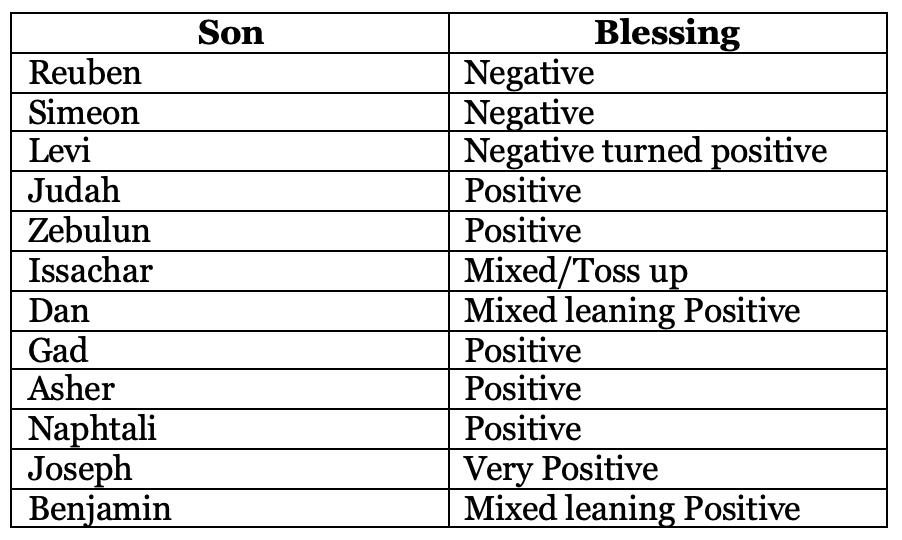
    We know the content of the blessings had to come from Jehovah. Only He can see the future.

    Did it hurt Jacob to give some of those blessings? Maybe. But he was obedient to Jehovah and gave His prophecy.

    Jacob’s Burial Instructions

    “Then Jacob instructed them, ‘Soon I will die and join my ancestors. Bury me with my father and grandfather in the cave in the field of Ephron the Hittite. This is the cave in the field of Machpelah, near Mamre in Canaan, that Abraham bought from Ephron the Hittite as a permanent burial site. There Abraham and his wife Sarah are buried. There Isaac and his wife, Rebekah, are buried. And there I buried Leah. It is the plot of land and the cave that my grandfather Abraham bought from the Hittites.’ When Jacob had finished this charge to his sons, he drew his feet into the bed, breathed his last, and joined his ancestors in death” (Gen. 49: 29-33 NLT)

    Jacob instructed his sons on where he was to be buried.

    Why did it matter where Jacob would be buried? Why not just be buried in Egypt?

    Gathered to my people and bury me with my ancestors are not exactly what it means to us. To us, it would mean stick us in the family plot.

    Though, it was spoken like an older person. “This is how you get to the cemetery. This is how you get to the plot. This is who is buried there.” The only thing he didn’t add was, “You can’t miss it.”

    Bradford believed that Jacob believed in ancestor worship. This is what other Ancient Near Eastern societies believed.

    Here is what Bradford said. He wrote, “Yet, in Israel, we DO find ancestor worship and respect for the dead and an understanding that there IS something beyond the grave, even if it is not fully evident.”

    Resource

    If you asked my opinion, I would say that it probably meant that Jacob respected the dead. He didn’t worship Abraham. He worshiped the God of Abraham and Isaac.

    That God told Abraham, “As for you, you will join your ancestors in peace and be buried at a good old age” (Gen. 15: 15 CJB).

    Jacob would have known this. Abraham would have told him that there was something after death.

    Did they have a complete understanding of the concept of Heaven? No. We know they didn’t have it in first-century Israel, either.

    But Abraham knew enough. He would be reunited with his people beyond the grave.

    Therefore, gathered to his people suggests a future reunion with the covenant family under Jehovah’s care rather than the ancestor worship practiced by many surrounding cultures.

    It is interesting. If we go back to the Hebrew, it says Jacob expired – gavaʿ (גָּוַע). This same word is used for Abraham (Gen. 25: 8), Ishmael (Gen. 25: 17), Isaac (Gen. 35: 29), and Jacob (Gen. 49: 33). We also see it translated as breathed his last.

    So, they didn’t just die – even Ishmael. They expired, died, and were gathered to their people.

    Died and gathered to his people wouldn’t be needed if expired encompassed everything. Instead, physical expiration – his life ebbing away – is separated from death and being gathered to his people.

    On the other end, gathered to his people is more than a body ceasing to function. In my opinion, it is what many of us think of as passing into the next life – eternal life.

    So, when we put what Genesis says together with other Scripture, we may possibly get a progression of what happens at death.

    1.     Expired – the end of physical life
    2.    Died – transition from death to life
    3.    Gathered – Reunion with family and friends while waiting the end of the age

    Making the Connections #1

    We would say that Jacob had a hard life.

    • Jacob got Esau’s blessing – but then he also got exile almost immediately.
    • Jacob thought he was marrying the love of his life – but he woke up with her sister.
    • He probably wanted peace – but he got family conflict not only from his wives but also from his sons.
    • He wanted to live in peace among the Canaanites – but then two of his sons killed all the men in a town.
    • He may have thought that the tunic he gave Joseph would help protect him – but it got him removed from the family for decades.
    • All he wanted to do was keep Benjamin safe – but he had to send him to Egypt because some crazy Egyptian couldn’t take his sons’ words that they weren’t spies.
    • Once Jacob came back from Haran, it looks like he just wanted to stay in Canaan – but he ended up dying in Egypt.

    How many times did Jehovah make Jacob surrender and just trust in Him and His plan and timetable?

    Somewhere along the way, that is exactly what Jacob did. He is no longer trying to manipulate circumstances to force blessings.

    We’ve heard of people’s lives flashing before their eyes. Maybe it was Jehovah showing Jacob how everything tied together.

    Maybe it was Jacob, taking stock, realizing just how much Jehovah had done for him through His faithfulness.

    Even more than that, Jacob can look at Joseph – his Joseph. The thing he wanted most of all was right before his eyes – his son was restored to him. Joseph wasn’t just the hero of his story. He was Jacob’s answer to his longest prayer.

    And look at Joseph’s faith in Jehovah – even through all the trials that Joseph had to go through.

    Because isn’t that what Jehovah basically told Abraham? “Believe in me, and I will provide for you.” Well, his actual words were, “Then the Lord said to Abram, “You can be sure that your descendants will be strangers in a foreign land, where they will be oppressed as slaves for 400 years. But I will punish the nation that enslaves them, and in the end they will come away with great wealth” (Gen. 15: 13-14 NLT).

    Jacob knew his family were strangers in a foreign land. He knew it was going to get a lot worse for them before it got better. He knew it didn’t end there.

    Jacob knew that Jehovah had everything under control. It was His plan, and He was going to work His plan.

    What a comfort to Jacob! He knew he could die in peace because he had faith in Jehovah. Jehovah had proven to be faithful.

    Making the Connections #2

    Judah’s line gets the Messiah. Joseph’s line through Ephraim gets the Gentiles. Levi gets the priests because he was restored from his sin and was obedient on Sinai.

    These three tribes shape the nation of Israel’s future.

    None of them were the firstborn.

    Making the Connections #3

    This was a shift. The covenant was going from a family to a nation. Yes, it was still Abraham’s descendants – Paul’s one seed in Galatians 3: 29.

    Yes, it was a family with many parts. But it no longer had a patriarch.

    But it is also just one seed in the who knows – probably billions – of Abraham’s descendants between Jacob and Yeshua. That seed was Yeshua.

    “God gave the promises to Abraham and his child. And notice that the Scripture doesn’t say ‘to his children,’ as if it meant many descendants. Rather, it says ‘to his child’ — and that, of course, means Christ” (Gal. 3: 16 NLT).

    With Yeshua, all humans can come to Him. No one truly seeking a relationship with Jehovah will be turned aside. “There is no longer Jew or Gentile, slave or free, male and female. For you are all one in Christ Jesus. And now that you belong to Christ, you are the true children of Abraham. You are his heirs, and God’s promise to Abraham belongs to you” (Gal. 3: 28-29 NLT).

    How Do We Apply This?

    • Learn to rule ourselves (Reuben).
    • Expect to reap what we sow if we do not repent (Simeon).
    • Expect grace and mercy when we repent of our sins (Levi).
    • Repent when we have sinned and find reward (Judah).
    • Show up when it truly matters (Zebulun).
    • Don’t become complacent or entitled when things are good (Issachar).
    • Make sure we end strong so that we don’t lose everything (Dan).
    • Stand up for what is right – even if we have to fight to do so (Gad).
    • Put our faith in the Bread and Living Water (Asher).
    • Enjoy our freedom in Jehovah and witness to others so they may enjoy the same (Naphtali).
    • Keep trusting Jehovah in the hard times (Joseph). 

    If you don’t understand something and would like further clarification, please contact me.

    If you have not signed up for the email providing the link to the devotions and the newsletter, do so below.

    If God has used this devotion to speak with you, consider sharing it on social media.
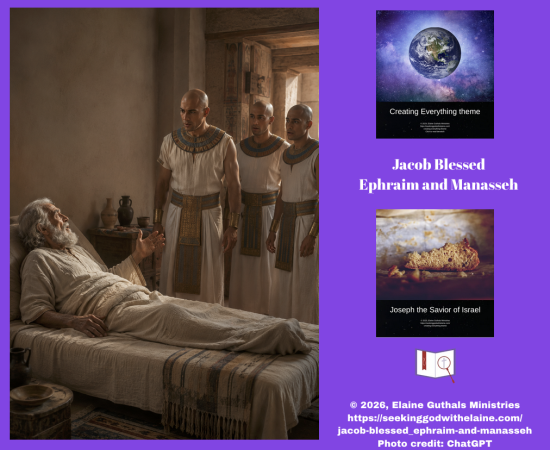
  • Jacob Blessed Ephraim and Manasseh

    Jacob had lived in Egypt 17 years, but now he was facing the end of his life. This devotional reading looks at how he blessed Joseph, Manasseh, and Ephraim.

    Nuggets

    • Jacob made a life in Egypt.
    • Joseph, Manasseh, and Ephraim went to see Jacob.
    • Jacob adopted two of Joseph’s sons.
    • Jacob was thinking about the covenant line.
    • If the grandsons were 23ish, what were they doing on his knees — what we would call sitting on his lap?
    • Jacob was following Hebrew tradition and transferring the blessing.
    • This is the final example of the pattern of Jehovah choosing the younger son.
    • Jacob looked back about his life at the end.
    jacob-blessed-ephraim-and-manasseh

    One thing that we’ve seen time after time is that birth order does not determine destiny. We’ve seen this several times in Genesis. Think Isaac, Jacob, and Judah. Maybe even Abraham himself, depending on who you read.

    With Jehovah, the younger son was the covenant son. Why? He saw the sons’ hearts.

    Let’s Put It into Context

    To read devotions in the Creating Everything theme, click the button below.

    Devotions in the Joseph the Savior of Israel  series

    Jacob Adopted Manasseh and Ephraim

    “Some time later Joseph was told, ‘Your father is ill.’ So he took his two sons Manasseh and Ephraim along with him. When Jacob was told, ‘Your son Joseph has come to you,’ Israel rallied his strength and sat up on the bed. Jacob said to Joseph, ‘God Almighty appeared to me at Luz in the land of Canaan, and there he blessed me and said to me, “I am going to make you fruitful and increase your numbers. I will make you a community of peoples, and I will give this land as an everlasting possession to your descendants after you.” Now then, your two sons born to you in Egypt before I came to you here will be reckoned as mine; Ephraim and Manasseh will be mine, just as Reuben and Simeon are mine. Any children born to you after them will be yours; in the territory they inherit they will be reckoned under the names of their brothers. As I was returning from Paddan, to my sorrow Rachel died in the land of Canaan while we were still on the way, a little distance from Ephrath. So I buried her there beside the road to Ephrath’ (that is, Bethlehem)” (Gen. 48: 1-7 NLT)

    Some Time Later

    Jacob made a life in Egypt.

    Jacob had 17 years with Joseph in Egypt. He probably thought any time given to him was an unexpected blessing.

    We have to recognize that the famine was over by this time. Since this would be around 1653 BC, the famine ended in 1665 BC.

    We are assuming that Jacob blessed Manasseh and Ephraim the same year that he died. But we know that Isaac blessed Jacob 43 years before he died.

    Jacob didn’t have 43 years.

    But we all must die, and it was Jacob’s time. More than likely, one of Jacob’s servants came to tell him. Maybe it was a sibling (we don’t know how many other daughters Jacob had than Dinah).

    He Took His Two Sons

    Joseph, Manasseh, and Ephraim went to see Jacob. Jacob roused himself enough to greet them.

    I am sure Joseph had heard all about the covenant God made with Abraham, Isaac, and Jacob. Based on the timeline we’ve been using, Isaac would have still been alive when Joseph was sold. Even though Joseph was gone by the time that Isaac died, the covenant would have been a frequent topic of conversation.

    It was important that Jacob mention it here because of what he was about to do.

    It was also important for Jacob to remind Joseph that their family wouldn’t always remain in Egypt. “Then the Lord said to Abram, ‘You can be sure that your descendants will be strangers in a foreign land, where they will be oppressed as slaves for 400 years’” (Gen. 15: 13 NLT).

    Your Two Sons Will be Mine

    Jacob adopted two of Joseph’s sons.

    Jacob started his remarks with a reminder of the covenant. He reminded Joseph and his sons that their family would become a great nation.

    I doubt that Joseph expected his father saying he was going to adopt his two sons. Manasseh and Ephraim were born before Jacob arrived in Egypt. We know Joseph had more – not because God’s Word gives us their names. Jacob said he had them (Gen. 48: 6).

    Leale offered three reasons for this.

    One reason Jacob did this was to save Manasseh and Ephraim from the pagan influences of Egypt. Remember, their mother was Egyptian.

    Think about it. Joseph was #2 in the country. He may have looked like an Egyptian, but he was a covenant son in the inside.

    Yet, Jacob knew that doing Jehovah’s work is the most important thing in life.

    The second reason was to give them a place in the covenant family. Leale wrote, “This would impart a dignity and meaning to their life, and an impulse and an elevation to all their thoughts Godward.”

    Resource

    Are we surprised that Jacob’s favorite son was left out of the inheritance? We can be if we just look at the surface.

    Jacob assured Joseph that they wouldn’t be treated as second-class sons. They would be treated exactly as Reuben and Simeon – and Joseph if he wasn’t being given this honor.

    Leale said that Ephraim got Reuben’s portion and Manasseh got Simeon’s portion. They had previously lost their inheritance.

    That brings the number of Israel’s sons to 13. In the future, Jehovah would call the tribe of Levi to be His own. “Look, I have chosen the Levites from among the Israelites to serve as substitutes for all the firstborn sons of the people of Israel. The Levites belong to me” (Num. 3: 12 NLT).

    That lowered the count to 12 tribes.

    The third reason was to specially honor Joseph. You see, Jacob was giving Joseph – through his sons – the double-portion blessing of the firstborn right. We’ll get into that in the next chapter.

    For right now, remember back to the tunic Jacob gave Joseph. Clothing was an indication of status. We asked when we were talking about Genesis 37 whether he was trying to make Joseph the firstborn then.

    Jacob could not end his reminiscing without mentioning the love of his life, Rachel. His death was probably weighing on his mind. He was probably sad because he wasn’t going to be buried by her.

    But shouldn’t we remember loved ones? Should we forget sad events in our lives? Yes and no.

    Jacob Blessed Manasseh and Ephraim

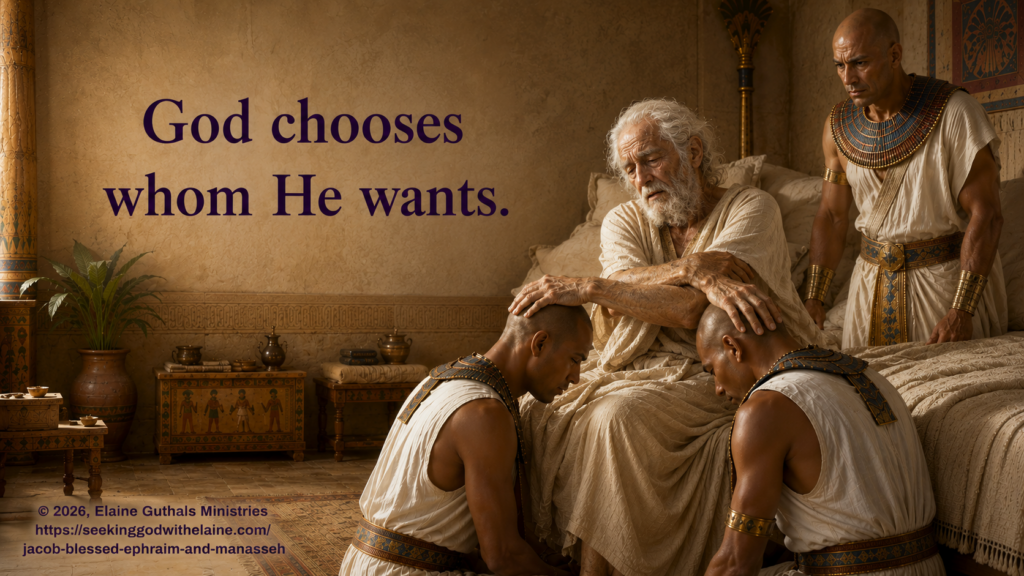
    “When Israel saw the sons of Joseph, he asked, ‘Who are these?’ ‘They are the sons God has given me here,’ Joseph said to his father. Then Israel said, ‘Bring them to me so I may bless them.’ Now Israel’s eyes were failing because of old age, and he could hardly see. So Joseph brought his sons close to him, and his father kissed them and embraced them. Israel said to Joseph, ‘I never expected to see your face again, and now God has allowed me to see your children too.’ Then Joseph removed them from Israel’s knees and bowed down with his face to the ground. And Joseph took both of them, Ephraim on his right toward Israel’s left hand and Manasseh on his left toward Israel’s right hand, and brought them close to him. But Israel reached out his right hand and put it on Ephraim’s head, though he was the younger, and crossing his arms, he put his left hand on Manasseh’s head, even though Manasseh was the firstborn. Then he blessed Joseph and said, ‘May the God before whom my fathers Abraham and Isaac walked faithfully, the God who has been my shepherd all my life to this day, the Angel who has delivered me from all harm — may he bless these boys. May they be called by my name and the names of my fathers Abraham and Isaac, and may they increase greatly on the earth’” (Gen. 48: 8-16 NLT)

    Who Are These?

    Jacob was thinking about the covenant line.

    I’m sorry. I always thought this was a little odd. Jacob adopted Ephraim and Manasseh, but he couldn’t recognize them.

    Cut him some slack, Chick. He could barely see.

    It may have been a rhetorical question. It may have been a setup for what was coming next.

    Was Jacob testing whether Joseph would acknowledge his sons came from Jehovah?

    But Jacob showed that family lineage and faith in Jehovah is help the greatest importance. In fact, the tribes of Ephraim and Manasseh would be significant in the history of Israel. Ephraim, especially, would  take prominence in the Northern Kingdom.

    If we think about it, Manasseh and Ephraim had to have been young adults at this point. Let’s do the math.

    • Joseph was 30 years old when he became Vizier (Gen. 41: 46).
    • Manasseh and Ephraim were born in the good years of the famine.
    • They were two years into the famine when Joseph revealed his true identity to his brothers (Gen. 45: 6). Joseph would have been 39, and the boys could have been as old as five years old.
    • Jacob told Pharaoh that he was 130 years old (Gen. 47: 9).
    • Jacob died at 147 after living in Egypt 17 years (Gen. 47: 28).

    Joseph’s kids were born during the seven-year period of the plenty before the Hebrews arrived. Let’s just use five years — one may have been a bit older; the other, younger.

    That puts the Jacob’s grandkids in their early 20s — maybe 23ish (4 years of bounty plus 2 years of famine plus 17 years of grandpa living close).

    Removed Them from Israel’s Knees

    If the grandsons were 23-ish, what were they doing on his knees — what we would call sitting on his lap?

    I think that is more than a figurative of speech. The key is that on the knees is often an adoption or blessing expression rather than a statement about age. “And she said, Behold my maid Bilhah, go in unto her; and she shall bear upon my knees, that I may also have children by her” (Gen. 30: 3 KJV).

    It symbolizes legal acknowledgement and adoption.

    We have to realize the adoption happened in verses 5 and 6. The blessing starting in verse 19.  The chain of events was probably

    • Jacob sat upright in bed.
    • Joseph brought Ephraim and Manasseh close to Jacob, and he embraces them.
    • The two young men kneel or bow before Jacob, possibly to greet him.
    • Joseph moved them and bows.
    • Joseph carefully positions Manasseh and Ephraim according to the firstborn protocol for the blessing.

    So, the adoption process was a separate “ceremony” than the blessing process.

    Bless These Boys

    Jacob was following Hebrew tradition and transferring the blessing.

    Jacob based his blessing on the following things:

    • Jehovah was also the God of his fathers – Abraham and Isaac.
    • Jehovah provided for him his entire life as his Shepherd.
    • Jehovah provided an angel  who delivered him from harm.

    We can see this as Jacob giving a snapshot of his life. He doesn’t go into a here-I-messed-up bent. He said that – through it all – even when I messed up, and I did – Jehovah was with me throughout my life.

    I believe that by saying “… May they be called by my name and the names of my fathers Abraham and Isaac …” (Gen. 48: 16 NLT) – that added them to the covenant line as a tribe.

    Not the Firstborn

    “When Joseph saw his father placing his right hand on Ephraim’s head he was displeased; so he took hold of his father’s hand to move it from Ephraim’s head to Manasseh’s head. Joseph said to him, ‘No, my father, this one is the firstborn; put your right hand on his head.’ But his father refused and said, ‘I know, my son, I know. He too will become a people, and he too will become great. Nevertheless, his younger brother will be greater than he, and his descendants will become a group of nations.’ He blessed them that day and said, ‘In your name will Israel pronounce this blessing: “May God make you like Ephraim and Manasseh.”’ So he put Ephraim ahead of Manasseh” (Gen. 48: 17-20 NLT)

    This is the final example of the pattern of Jehovah choosing the younger son.

    Joseph was concerned that Jacob’s right hand was on the youngest, not the oldest.

    The right hand was important. It is considered the hand of strength.

    Horton called it the hand of readiness. Being the dominant hand, people use it more than the left hand. That makes it the hand of success.

    Resource

    That may be why the blessing was bestowed through the right hand.

    But in Joseph’s eyes, Jacob had it backwards. The right hand was supposed to be on the oldest son, not the youngest.

    Think about it. He knew better than most how it can tear a family apart when a younger son is favored over an older one.

    Joseph probably didn’t want to have that happen in his family.

    We learned with Jacob’s blessing (Gen. 27: 28-29) and Esau’s blessing (Gen. 27: 39-40) how prophetic they can be. That is exactly what Jacob was doing here.

    End of Life

    “Then Israel said to Joseph, “I am about to die, but God will be with you and take you back to the land of your fathers. And to you I give one more ridge of land than to your brothers, the ridge I took from the Amorites with my sword and my bow’” (Gen. 48: 21-22 NLT)

    Jacob looked back about his life at the end.

    Jacob knew that Egypt was not where his family was going to end up. God had promised Abraham way back in Genesis 15 that His people would return to Canaan.

    Jacob knew his end was coming soon. Having — from one viewpoint — disinherited Joseph by choosing to adopt his children. Jacob included in the inheritance a ridge that he had purchased from the sons of Hamor, the father of Shechem (Gen. 33: 19).

    If we look at everything Jacob said over the chapter, Jacob was content. After 22 years of anguish, he hadn’t in his wildest dreams thought that he would see Joseph again – and here he was with children of his own!

    At the end of his life, Jacob looked back over it and knew he could die without averseness. He was satisfied.

    Making the Connections #1

    Ooo, baby. It doesn’t pay to be firstborn in this family! Ask Ishmael, Esau, and Reuben.

    It just goes to show that we aren’t entitled to anything. It isn’t based on status, ability, or even character.

    God chooses whom He wants.

    No, we aren’t talking favoritism here. “For God does not show favoritism” (Rom. 2: 11 NLT).

    God bases His choice on our level of submission and obedience. He knows our motivations.

    • Ishmael felt entitled and was wild.
    • Esau wasn’t interested in the ruling the family part, just the wealth. Plus, he had taken Canaanite wives.
    • Reuben tried to depose Jacob as family leader. It seems that all his actions — that we know of — after that were done to get back into Jacob’s good graces, not because they were what Jehovah wanted.

    I know. Why didn’t Jehovah just make Isaac, Jacob, and Judah the firstborn sons?

    I don’t know. I started to say that it may be a worldview notion, but Jehovah told the Israelites to set apart the firstborn sons for Him. “Dedicate to me every firstborn among the Israelites. The first offspring to be born, of both humans and animals, belongs to me” (Ex. 13: 2 NLT).

    Okay, Jehovah didn’t say that until He was leading the Israelites out of Egypt. But remember, God never changes His mind. He always wanted the firstborn for His.

    So, I go back to it depends on total submission and obedience. He knows who is truly His.

    What is interesting is that the text never tells us that Manasseh objected. Joseph did. Joseph was troubled when Jacob crossed his arms and attempted to correct him. But Scripture records no complaint from Manasseh himself.

    Think about that. Manasseh was probably about 25 years old. He was old enough to understand exactly what was happening. He knew the significance of the right hand. He knew his grandfather was placing Ephraim ahead of him.

    Yet the text is silent about any protest.

    Perhaps that is fitting. Manasseh had spent his entire life watching Joseph. His father’s life testified that Jehovah’s plans do not always follow human expectations. Joseph was rejected by his brothers, sold into slavery, falsely accused, imprisoned, and then elevated by Jehovah to save nations. If anyone should have understood that Jehovah’s choices are not based on human customs, it would have been Joseph’s sons.

    The conflict in Genesis 48 is not between Manasseh and Ephraim. The conflict is between Joseph’s expectations and Jehovah’s choice.

    Jacob was effectively making Joseph the firstborn. It raises the stakes of Joseph’s objection. Joseph has already received a firstborn’s blessing through divine providence, yet he still struggles when Jehovah rearranges the order one more time.

    There’s almost a quiet irony in that. The man who benefited from Jehovah’s reversal now has to learn to accept another one.

    Making the Connections #2

    We know the outcome of the story. We know Ephraim became the dominant northern tribe.

    Making the Connections #3

    Jehovah constantly does things that do not follow earthly expectations.

    Whitfield talked about our expectations and Jehovah’s expectations. He wrote, “So bent are we upon expecting God to move in our own circle, and according to our ideas of things, that it is hard to dislodge it from the mind. It is well that this law should be reversed, to show us that.”

    Resource

    We know the verses. “‘My thoughts are nothing like your thoughts,’ says the Lord. ‘And my ways are far beyond anything you could imagine. For just as the heavens are higher than the earth, so my ways are higher than your ways and my thoughts higher than your thoughts’” (Isa. 55: 8-9 NLT).

    Sometimes, it takes a lifetime to take our hands off the reigns and allow Jehovah to have His way in our lives. But we need to surrender to Jehovah.

    Making the Connections #4

    We can look at Genesis 48 as a book of transition. It takes it from the patriarchs to the nation. We see that the promise and continuity transfer from the family to the nation.

    We see the important of faith never waivers. The nation still has the covenant responsibility of remaining faithful and obedient to Jehovah.

    Making the Connections #5

    We see that Jacob had been living in Egypt for 17 years. With Joseph as #2, he would probably have seen the better side of Egypt.

    It didn’t matter. Jacob did not compromise with the world in which he lived. He kept true to Jehovah.

    How Do We Apply This?

    • Trust Jehovah’s choices even when they differ from your expectations.
    • Submit to God’s will instead of insisting on your own plans.
    • Value the heart over status.
    • Accept God’s direction even when it overturns tradition.
    • Leave a legacy of faith.
    • Recognize that Jehovah’s purposes are greater than human customs.
    • Trust God to work through circumstances you do not understand.
    • Honor God’s plan above personal preferences.
    • Bless and encourage those who come after you.
    • Remember that Jehovah sees what others cannot see.

    Father God.

    If you don’t understand something and would like further clarification, please contact me.

    If you have not signed up for the email providing the link to the devotions and the newsletter, do so below.

    If God has used this devotion to speak with you, consider sharing it on social media.
  • Joseph Had Two Dreams

    Something that may feel uncomfortable can become undeniable when God brings clarity. This devotional reading looks at how Joseph’s two dreams didn’t repeat the same message — but intensified it, revealing a future his brothers refused to accept.

    Nuggets

    • Dreams are a communication tool used by Jehovah.
    • Joseph shared his dream with his brothers, and it made the situation worse.
    • It sounds like Joseph immediately told his brothers the content of his dream.
    • The brothers weren’t going to listen to God’s soft promptings if their anger is aroused.
    • I wonder if Joseph had ever been rebuked by Jacob before.
    • Regardless of how angry Jacob was at the dream, he was more tuned in to following Jehovah’s lead.
    joseph-had-two-dreams

    There are moments when something shifts from being a feeling to being a reality we can no longer ignore. What was once sensed becomes defined, and what could be brushed aside becomes impossible to dismiss.

    Joseph’s dreams mark that kind of moment. They do not introduce something new — they bring clarity to what has already begun, and in doing so, they force a response from everyone involved.

    Let’s Put It into Context

    To read devotions in the Creating Everything theme, click the button below.

    Devotions in the Joseph the Savior of Israel  series

    The Story is Set Up

    “One night Joseph had a dream, and when he told his brothers about it, they hated him more than ever” (Gen. 37: 5 NLT) 

    A Dream

    Dreams are a communication tool used by Jehovah.

    Joseph’s dreams introduce a new layer to the narrative. The Hebrew word for dream, ḥalom (חֲלוֹם), doesn’t merely describe the run-of-the-mill sleep time fantasies.

    God used them at times to speak to people. Joseph was one person to whom God talked.

    We’ve already talked about Jehovah’s dream to Abimelech. Jacob himself had two dreams where Jehovah spoke to him.

    What made Joseph’s dreams different was they were revelations about future authority, not warning or instructions.

    Told His Brothers

    Joseph shared his dream with his brothers, and it made the situation worse.

    Why in the world would Joseph tell this dream to his brothers? What was the boy thinking?!?!?! He had to have known of their hostility from when Jacob gave him the coat.

    Well, don’t we run to share good news with friends and family?  When we get a job promotion, buy a new house, have a baby, etc., they sometimes get tired of hearing about our joy.

    But doesn’t this also verify, in a way, the immaturity that we talked about in the last devotion? He carried ḥalom — revelation — but not yet the wisdom to understand what to do with it.

    Joseph had the intimation to know of his future greatness. He just wasn’t in a position communicate that to his brothers.

    We have to remember something else from the last devotion. We talked about the brothers weren’t upset only because the coat represented Jacob’s favoritism.

    The brothers didn’t ridicule Joseph because of his appearance. It doesn’t even say they envied him.

    It said they hated him even more because of the underlying message that we miss, which will be even more obvious in the coming sections.

    Joseph’s Announcement

    “‘Listen to this dream,’ he said. ‘We were out in the field, tying up bundles of grain. Suddenly my bundle stood up, and your bundles all gathered around and bowed low before mine!’” (Gen. 37: 6-7 NLT)

    It sounds like Joseph immediately told his brothers the content of his dream.

    Jacob’s family, being shepherds, would have known about agricultural practices. Even if they didn’t grow the grain themselves, they would know how it was grown and harvested.

    What Sovereign God told Joseph was people would bow down to him. That had to have been heady information for a 17-year-old boy who was an outcast in his own family.

    This is the first dream we are told that Joseph had. It probably was.

    We discussed in the last devotion the characteristics that Joseph inherited from his ancestors. To the list of characteristics Joseph possessed, Davies added an active mind. He felt having this dream and his ability to interpret his and those of others gave even more insight to his character. He wrote, “From his aptitude in creating and divining dreams, we may infer his fondness for quiet contemplation.”

    Resource

    Davies agreed with me about Joseph seemed to be arrogant. He added self-importance.

    The Brothers’ Response

    “His brothers responded, ‘So you think you will be our king, do you? Do you actually think you will reign over us?’ And they hated him all the more because of his dreams and the way he talked about them’” (Gen. 37: 8 NLT)

    The brothers weren’t going to listen to God’s soft promptings if their anger is aroused.

    Remember ages. Joseph was born in 1709 BC. Reuben probably wasn’t born much before 1715 BC. So, if Joseph was 17, Reuben wasn’t much more than 22. The rest – except for Benjamin, who would have still been in their version of diapers – were in between those two.

    Reuben, as so young a firstborn, would probably not have been very confident. Added to that, he would have still been smarting over the failed overthrow attempt to replace Jacob as patriarch.

    The rest of the brothers felt they had justified grievances against Joseph.

    Remember what I was saying two sections back? They would think of reign over them.

    The boys, like all of us, would think in terms of what-does-this-mean-to-me. But I don’t think they would have thought he was going to be crowned king.

    They would see him being identified as firstborn. Remember, that meant family leadership as well as inheritance. That meant jumping over all of them to grab the prize.

    This dream would have strengthened their belief that this was exactly what Jacob was doing.

    The dream was clear enough to be dangerous.

    The boys, though we don’t see them with Jehovah’s character at this point, would have known enough from Isaac and Jacob to know it was Him talking. They couldn’t live in the covenant family and not know even a limited knowledge of Jehovah.

    This was obviously a divine revelation. The boys could no longer deny the meaning.

    Is that how Jehovah wants us to respond to His voice, directions, and revelation — with anger and refusal? Big emphatic NO!!!

    So, regardless of how Joseph told them about the dream, the content of the dream would have sparked their immediate anger. They weren’t going to sit quietly as they tried to figure out Jehovah’s reasoning. They would have exploded immediately.

    A revelation from Jehovah should be accepted and acted upon as told.

    If we thought the brothers were angry before, they were livid now. If the situation was filled with tension, it now exploded.

    Another Dream

    “Soon Joseph had another dream, and again he told his brothers about it. ‘Listen, I have had another dream,’ he said. ‘The sun, moon, and eleven stars bowed low before me!’” (Gen. 37: 9 NLT)

    The second dream was like the first

    Before we get into the dream itself, we need to talk about the importance of having a second dream. That meant that what is described is fixed and ordered.

    The first dream suggested elevation. The second established it.

    Jehovah had plans for Joseph – and those plans were going to come to pass.

    Many times, when we read about Joseph’s dreams, we think they are two verions of the same idea. They aren’t. The second is intensified.

    We know that shepherds, of which a Joseph was, had — at times — to protect the flock over the midnight hours. He would have done this just as the shepherds in Luke 2 were performing this duty.

    That doesn’t seem too intensified.

    The second dream shakes up the structure. It includes a cosmic shift.

    The first dream showed Joseph rising among his brothers. The second showed that his position was not temporary or situational — it was part of a larger order.

    Recognized authority is heading for a change.

    Jacob’s Response

    “This time he told the dream to his father as well as to his brothers, but his father scolded him. ‘What kind of dream is that?’ he asked. ‘Will your mother and I and your brothers actually come and bow to the ground before you?’” (Gen. 37: 10 NLT)

    I wonder if Joseph had ever been rebuked by Jacob before.

    Jacob reacted negatively to Joseph’s description of his dream. Instead of just talking about agricultural practices, it told of the family hierarchy.

    If Joseph would have humbly told Jacob — the father who loved him above all others — about his dream, maybe he wouldn’t have been rebuked.

    But let’s look at it this way. If the brothers knew about the first dream, Jacob had to have known about it also. But as he did when he first found out about Dinah’s defilement, he remained silent.

    That is, he remained silent until the second dream made it unavoidable.

    We would hope that Jacob didn’t remain silent when he agreed with Joseph being designated as firstborn but then balked when it became clear that Joseph would take Jacob’s power also. Then, Jacob screamed.

    Jacob Wondered

    “But while his brothers were jealous of Joseph, his father wondered what the dreams meant” (Gen. 37: 11 NLT)

    Regardless of how angry Jacob was at the dream, he was more tuned in to following Jehovah’s lead.

    At some point, Jacob was able to step back and start thinking about what the dream truly meant. He himself had been the recipient of dreams from Jehovah. He knew He was invested in the covenant family. He was going to take care of them.

    True Jehovah hadn’t really given them that much insight yet. But they were ready for whatever changes He brought about.

    I thought it was interesting that Jacob kept things in his mind. Mary kept things in her heart.

    Making the Connections #1

    I don’t think Joseph handled it right. The way it reads to me is he informed his family through his arrogance as well as his immaturity. Even Jacob called him on it.

    We have to watch in our interactions with others. Our goal should not be to alienate them. We should strive for unity, especially when we are witnessing to others.

    But we also have to realize that Jehovah reveals who we will become before we are – and before we think we are – ready for that revelation.

    Making the Connections #2

    Dreams from Jehovah occur when there are transition points and major shifts. We may see these as the same. In this story, we see:

    • The death of Rachel, necessitating the transition of the family power.
    • Transitioning the main character in the story from Jacob to Joseph.
    • Shifting the covenant story from the family (identified as Jacob) to the nation of Israel.

    But there is one other reason why Jehovah comes to people in dreams. It is to reveal something that is currently hidden – but it won’t remain that way much longer.

    What would be revealed we know to be a couple of road trip.

    How Do We Apply This?

    • Guard against showing favoritism in our families.
    • Remember that God is not a respecter of persons.

    Resource

    Father God, help us to hear Your voice without resistance and to respond with humility instead of pride or fear. Shape our hearts so that when You reveal truth, we are willing to receive it and walk in it. Teach us to trust that You are at work, even when we do not yet understand what You are revealing.  Amen.

    If you don’t understand something and would like further clarification, please contact me.

    If you have not signed up for the email providing the link to the devotions and the newsletter, do so below.

    If God has used this devotion to speak with you, consider sharing it on social media.
  • Jacob’s Prosperity

    Jacob was the covenant son, but he had been working as a shepherd for 14 years for the privilege of marrying two wives. This devotional reading looks at what happened at the end of those years.

    Nuggets

    • Jacob, upon the birth of a son with his beloved as his mother, decided to go back to Canaan.
    • Laban learned by experience that Jehovah blessed him because of Jacob.
    • What I had never caught before was that Laban asked Jacob, “How much do I owe you?”
    • Jacob wanted to build his house, not Laban’s.
    • It was usual for a shepherd to be paid in animals and grain in the Ancient Near East.
    • Laban tried to pull a fast one on Jacob.
    • Jacob utilized some common animal husbandry practices of the time.
    jacobs-peosperity

    Jacob had wanted to marry Rachel – and had worked for her father for seven years for that privilege. But Laban had substituted Leah as the bride. That meant Jacob had to work seven more years for Rachel.

    The agree-upon time was now up. What would Jacob do now – and more importantly, what would Laban do?

    Let’s Put It into Context

    To read devotions in the Creating Everything theme, click the button below.

    Devotions in the Jacob the Patriarch series

    Wanting to Go Home

    “Soon after Rachel had given birth to Joseph, Jacob said to Laban, ‘Please release me so I can go home to my own country. Let me take my wives and children, for I have earned them by serving you, and let me be on my way. You certainly know how hard I have worked for you.’ ‘Please listen to me,’ Laban replied. ‘I have become wealthy, for the Lord has blessed me because of you. Tell me how much I owe you. Whatever it is, I’ll pay it.’ Jacob replied, ‘You know how hard I’ve worked for you, and how your flocks and herds have grown under my care. You had little indeed before I came, but your wealth has increased enormously. The Lord has blessed you through everything I’ve done. But now, what about me? When can I start providing for my own family?’” (Gen. 30: 25-30 NLT)

    Soon after Rachel Had Given Birth to Joseph

    Jacob, upon the birth of a son with his beloved as his mother, decided to go back to Canaan.

    Jacob had had a busy seven years after his marriage. He was working for Laban doing the seven years for Rachel all the while babies were coming right and left.

    1716 BC – Jacob, 84, was tricked into marrying Leah. He agreed to work seven more years for Rachel
    ~1715 BC — Reuben born (Leah)
    ~1714 BC — Simeon born (Leah)
    ~1713 BC — Levi born (Leah)
    ~1712 BC — Judah born (Leah)
    ~1712 BC — Dan born (Bilhah)
    ~1711 BC — Naphtali born (Bilhah)
    ~1711 BC — Gad born (Zilpah)
    ~1710 BC — Asher born (Zilpah)
    ~1710 BC — Issachar born (Leah)
    ~1709 BC — Zebulun born (Leah)
    ~1709 BC – Joseph was born (Rachel)
    ~1709 BC — Jacob, 91, completed the seven years he worked for Laban for Rachel

    Based on Timeline from

    What Jacob had been waiting for was finally there. Rachel presented him with a son.

    It was time to make a change.

    Jacob wanted to go home. He may have wanted to mend fences with Isaac and Esau. He definitely would have wanted to see Rebekah.

    More likely, Jacob recognized that he had accomplished what he had set out to do — find a covenant wife. It was time to go home to the Promised Land

    For the Lord Has Blessed Me Because of You

    Laban learned by experience that Jehovah blessed him because of Jacob.

    Laban didn’t want to hear, really, that Jacob wanted to leave. He knew Jehovah had blessed him because of Jacob. The New Living Translation has a footnote that says Laban learned that by divination.

    What exactly is divination? It is the practice of trying to gain hidden knowledge — usually about the future, unseen causes, or divine favor — through supernatural means or through ritual practices.

    This was the normal way in the Ancient Near East to communicate with their gods. It was up to them to interpret the signs.

    • Irregularities of the liver of a sacrificed animal
    • Unusual animal behavior
    • Weather patterns
    • Economic shifts
    • Dreams

    When the Law was given, divination was forbidden. “For example, never sacrifice your son or daughter as a burnt offering. And do not let your people practice fortune-telling, or use sorcery, or interpret omens, or engage in witchcraft, or cast spells, or function as mediums or psychics, or call forth the spirits of the dead.” (Deut. 18: 10-11 NLT).

    Laban saw that, after Jacob arrived, his flocks increased, their fertility rose, providing him with more wealth. To him, that was omen interpretation.

    Today, we might say it was that Jacob knew better animal husbandry practices. We might call it evaluating the circumstances.

    We also know that Laban had household gods (which Rachel took in Genesis 31). In other words, even though Laban knew about Jehovah, he covered all the bases.

    • He knew the name of Jehovah.
    • He spoke the religious language.
    • But he still operated like a Mesopotamian pagan household head.

    We aren’t told that Jehovah specifically made promises to Laban, but he knew He did to his family. Lot picked it up, but he had a closer relationship with Abraham after his call.

    Tell Me How Much I Owe You

    What I had never caught before was that Laban asked Jacob, “How much do I owe you?”

    Hadn’t Jacob been working for the wives? There was no mention of wages on top of that.

    • “Since Jacob was in love with Rachel, he told her father, ‘I’ll work for you for seven years if you’ll give me Rachel, your younger daughter, as my wife’” (Gen. 29: 18 NLT).
    • ‘“But wait until the bridal week is over; then we’ll give you Rachel, too — provided you promise to work another seven years for me’” (Gen. 29: 27 NLT).

    Isn’t it un-Laban-like for him to voluntarily suggest more wages on top of that?

    But that isn’t really what Laban was saying. If we look at verse 27 in the Orthodox Jewish Bible, we see something totally different. “And Lavan said unto him, Now, if I have found chen (favor, grace) in thine eyes, tarry; for I have learned by nachash (divination) that Hashem [God] hath made a brocha upon me for thy sake” (Gen. 30: 27 OJB emphasis added).

    Laban said, “Please don’t leave. I’ll pay you to stay so the money train does leave the station.

    When Can I Start Providing for My Own Family?

    Jacob wanted to build his house, not Laban’s.

    Jacob details how Laban has benefited from their arrangement. But his family had grown.

    Jacob has 12 children — 11 sons and 1 daughter. He more than likely had other servants besides the two Laban gave his daughters (that became his concubines).

    But look what Jacob said. “The Lord has blessed you through everything I’ve done. But now, what about me? When can I start providing for my own family?’” (Gen. 30: 30 NLT).

    Isn’t this the first time since Bethel that Jacob brought Jehovah into the conversation?  Nothing was said about his asking Him who should be his wife.

    Jacob is maturing in his relationship with Jehovah.

    Securing Jacob’s Stay

    “‘What wages do you want?’ Laban asked again. Jacob replied, ‘Don’t give me anything. Just do this one thing, and I’ll continue to tend and watch over your flocks. Let me inspect your flocks today and remove all the sheep and goats that are speckled or spotted, along with all the black sheep. Give these to me as my wages. In the future, when you check on the animals you have given me as my wages, you’ll see that I have been honest. If you find in my flock any goats without speckles or spots, or any sheep that are not black, you will know that I have stolen them from you.’ ‘All right,’ Laban replied. ‘It will be as you say.’ But that very day Laban went out and removed the male goats that were streaked and spotted, all the female goats that were speckled and spotted or had white patches, and all the black sheep. He placed them in the care of his own sons, who took them a three-days’ journey from where Jacob was. Meanwhile, Jacob stayed and cared for the rest of Laban’s flock” (Gen. 30: 31-36 NLT)

    Wages

    It was usual for a shepherd to be paid in animals and grain in the Ancient Near East.

    We might scratch our heads about the wages Jacob finally requested. He asked for:

    • Speckled and spotted sheep
    • Dark sheep
    • Spotted and speckled goats

    But if we think about it, it should be logical. Those were the minority animals. Most sheep and goats would have been solid colored.

    What? You’re not going to ask your boss to pay you 75% of the profit. Jacob get a smaller percentage because he was the low-status shepherd.

    Here is the best part. Laban didn’t have to worry that Jacob was trying to deceive him. It would be obvious at first glance which sheep and goats belonged to Laban, and which sheep and goats belonged to Jacob.

    But doesn’t this also keep Laban from deceiving Jacob? The boy was a quick study.

    But That Very Day

    Laban tried to pull a fast one on Jacob.

    Laban agreed to what Jacob proposed for his wages. At first glance, it might seem that he removed what were now Jacob’s sheep and goats as a, “Hey, here you go.”

    There is some disagreement as to whether it is those animals that are now Jacob’s or just the spotted, speckled, and dark ones born after that day.

    I could see that Laban was just separating out Jacob’s — except for the but in verse 35. Laban separated those animals from the main flock by a three-day journey. Was Jacob good with that?

    Or was Laban trying to rig the system? Did he think, “If there are no spotted, speckled, and dark animals for the solid-colored animals to breed with, no more – or very few – of that type of animal would be born.”

    We do know that this wasn’t a one-time wage. It was an ongoing division of Laban’s solid-color animals from those Jacob had requested for his wages.

    Laban was trying to ensure that Jacob wouldn’t be getting many sheep and goats. There was no starter flock to build the spotted, specked, and dark flock and herd.

    Animal Husbandry Practices

    “Then Jacob took some fresh branches from poplar, almond, and plane trees and peeled off strips of bark, making white streaks on them. Then he placed these peeled branches in the watering troughs where the flocks came to drink, for that was where they mated. And when they mated in front of the white-streaked branches, they gave birth to young that were streaked, speckled, and spotted. Jacob separated those lambs from Laban’s flock. And at mating time he turned the flock to face Laban’s animals that were streaked or black. This is how he built his own flock instead of increasing Laban’s. Whenever the stronger females were ready to mate, Jacob would place the peeled branches in the watering troughs in front of them. Then they would mate in front of the branches. But he didn’t do this with the weaker ones, so the weaker lambs belonged to Laban, and the stronger ones were Jacob’s. As a result, Jacob became very wealthy, with large flocks of sheep and goats, female and male servants, and many camels and donkeys” (Gen. 30: 37-43 NLT)

    Jacob utilized some common animal husbandry practices of the time.

    This is another head-scratcher passage. We look at these verses and go, “Huh? I don’t get it.”

    Well, Jacob did. In his day there was this thing that we would call the maternal impression theory. It was a long-held belief that, if the pregnant momma – human or animal – had negative emotions, thoughts, or visual experiences, those effected the fetus negatively.

    Yes, genetics has debunked that, but don’t we still buy into that to some extent? I know when Adam was a bun in the oven, it was suggested that I listen to Mozart to help him develop.

    It could be said that Jacob’s peeled rods (white streaks on dark bark) could be seen as a speckled pattern if not a striped pattern. We may see it as a forerunner of genetic imprinting.

    This is seen ask Ancient Near East folklore. There were other interpretations of this verses, however.

    The writers of Beyond Today Bible Commentary thought this was a practice to manipulate when the animals went into heat. He wrote,

    “By peeling the fresh cut rods (verse 37), Jacob caused the sap-filled meat of the rods to be exposed, thus possibly allowing the sap of the rods to mingle with the water in the watering troughs. Perhaps he believed this additive in the water would help to bring the animals to heat.”

    The commentary also suggested that the rods might have been used to create a corralling fence. This makeshift pen would provide a place for a longer mating session.

    Resource

    This may have been an attempt at selective breeding beyond what we would normally think. Jacob’s attempts wouldn’t matter.

    Only Jehovah caused the sheep and goats to be born speckled, spotted, and dark.

    Jacob also utilized herd management techniques. He knew his animals – the strong from the weak.  It was on the strong that he used the rods.

    Making the Connections #1

    “I will bless those who bless you and curse those who treat you with contempt. All the families on earth will be blessed through you” (Gen. 12: 3 NLT)

    When we think of Jehovah’s promise to Abraham to bless all the families of earth, we may tend to think of everyone except Abraham’s extended family. They weren’t left out.

    This became evident to Laban when he looked at the increases after Jacob arrived in Paddan-aram. True, he saw sheep patterns and liver irregularities as omens – but he did see them and credited them to Jehovah.

    Making the Connections #2

    Taylor made an excellent point. We do learn a lot about ourselves when we go through life experiences. We also learn about the world that way.

    Most importantly, Jehovah uses those experiences to reveal Himself to us. Taylor said, “This testimony of experience thus grows with our growth and strengthens with our strength. It is a fortress which is utterly impregnable.”

    Resource

    Why do you think it was important that Yeshua experience what we experience? True, it wasn’t so He could grow His nature to be closer to Jehovah’s. It was to show us that we can do it.

    We just have to pay attention to make sure we are hearing His still small voice.

    Making the Connections #3

    If we look back at how Jacob worked with the flocks and herds, we can see three schools of thought operating at the same time.

    Yes, it seems like Jacob was utilizing some cultural practices of the time if the rods were being used to produce the spotted, striped, and dark animals.

    If the rods were being used to allow more time for the breeding to occur – along with ensure the strongest animals breed, that is good animal husbandry practices.

    But most of all, we know that Jacob left the outcome up to Jehovah.

    • “He said to them, ‘I have noticed that your father’s attitude toward me has changed. But the God of my father has been with me’” (Gen. 31: 5 NLT).
    • “… But God has not allowed him [Laban] to do me [Jacob] any harm” (Gen. 31: 7 NLT).
    • “In this way, God has taken your father’s animals and given them to me” (Gen. 31: 9 NLT).

    Jacob has increased in faith, hasn’t he?

    Jehovah has made us stewards of this earth. He wants us to utilized best practices in caring for the animals over which He gives us dominion.

    We have to acknowledge that all outcomes come from Him, not just from what we have done.

    How Do We Apply This?

    • Learn to trust Jehovah more than ourselves.
    • Recognize how frail our nature is.
    • Follow Jehovah’s practices rather than worldview practices.
    • Be good stewards of all He has entrusted to us.
    • Give Jeh0vah praise and glory for all the outcomes of our labors.

    Resource

    Father God. Thank You that You are in control of every aspect of our lives. Forgive us when we follow worldly practices to get the outcome we desire. We know we must be good stewards of the resources that You give us. Let us always acknowledge that You are the One Who decides the outcomes. Amen.

    If you don’t understand something and would like further clarification, please contact me.

    If you have not signed up for the email providing the link to the devotions and the newsletter, do so below.

    If God has used this devotion to speak with you, consider sharing it on social media.
  • Jacob Arrived at Paddan-aram

    Jacob had been traveling to Paddan-aram. This devotional reading looks at his arrival and his connecting with his family.

    Nuggets

    • The trip from Beersheba to Paddan-aram would have lasted weeks.
    • Jacob immediately searched for his mother’s family when he got to the well.
    • Jacob asked his new shepherd friends if they had heard of Laban.
    • Rachel came to the well with her father’s sheep.
    • Rachel went home to get Laban – just as Rebekah had done.
    jacob-arrived-at-paddan-aram

    Jacob, though 77 years old, had been living with his father. Well, that fell apart when he and his mother deceived his father.

    The main reason for the journey to his mom’s family was to find a wife. The timing of the trip was determined by Jacob’s brother wanting to kill him.

    Let’s look at Jacob getting to where he was going.

    Let’s Put It into Context

    To read devotions in the Creating Everything theme, click the button below.

    Devotions in the Jacob the Patriarch series

    Travel

    “Then Jacob hurried on, finally arriving in the land of the east” (Gen. 29: 1 NLT)

    The trip from Beersheba to Paddan-aram would have lasted weeks.

    Jacob continued on after the stop at Bethel. It says nothing about camels this time, so we have to assume he was waking.

    Since more than likely he took a trade route, such as the ancient Way of the Patriarchs, Jacob would have traveled approximately 75 miles (100-120 km) from Beersheba to Bethel. If he got to cover 12-20 miles a day, which was the average for ancient foot travelers, that is a minimum four-day trek or a maximum six-day hike.

    That was the short part of the journey. The trip from Bethel to Haran was approximately 400-450 miles.

    I am sure that there were many factors that went into determining how fast Jacob could go. He would have been going over mountains, across rivers and deserts, and through rocky wilderness according to Gray.

    Resource

    Plus, I am sure it wouldn’t be the same number of miles each day. Some days it would be 12 miles a day; some 15; some 20; and some anywhere in between.

    What would Jacob’s day look like?

    • In the early morning cool on the open road, Jacob could have gone at a good clip for 2.5- to 3-miles an hour.
    • Toward late morning when the sun started to heat up, he’d have to take a water break. But he may have to go a little longer to find a well or shade trees.
    • Late morning to early afternoon would be slower going. The overhead sun would dry out the air. That would be uncomfortable if there was little shade on long, open stretches.
    • Jacob would stop entirely during the heat of the day.
    • He’d be off again once the heat broke. As it got closer to sunset, Jacob would start looking for a campsite: a safe place near water but away from wild animals. He might build a fire and eat.

    That isn’t factoring in weather or terrain. It would seem to me that 12 to 15 miles a day would be the usual.

    If he did take an established route, Jacob may have encountered other travelers. It would have been safer that way.

    Otherwise, Jacob would have had a lot of me time. I am sure thoughts were crashing around in his head. That would have been especially true after his dream. That would have taken up a lot of think time — and hopefully prayer time.

    What we do know for sure is that Jehovah went with Jacob. He said He would, so He did.

    Leale summed up Jacob’s life to this point and explained why this journey was so important. He wrote, “All his life through Providence had guided him, but he knew it not as he ought to know. Now, even in the most ordinary and likely events of life he learns to trace the hand of Providence.”

    Resource

    Bradford’s agreed. He said that encounter with Jehovah made Jacob a changed man. He now possessed Jehovah’s peace.

    Resource

    Isn’t that what an encounter with Jehovah is supposed to do? Yes, He comes and meets us where we are.

    But the whole goal is sanctification. That is where we are changed to be as Jehovah wants us — like Him.

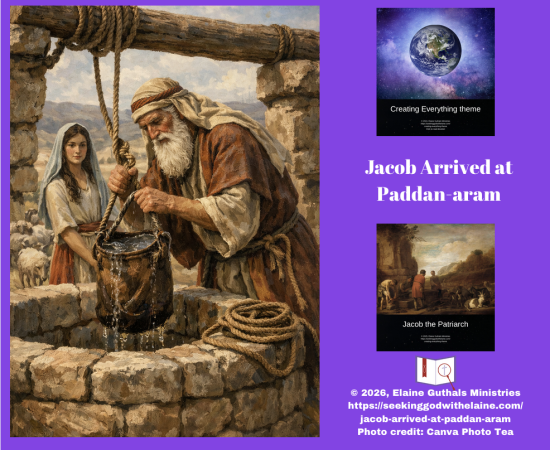
    Jacob Arrived at the Well

    “He saw a well in the distance. Three flocks of sheep and goats lay in an open field beside it, waiting to be watered. But a heavy stone covered the mouth of the well. It was the custom there to wait for all the flocks to arrive before removing the stone and watering the animals. Afterward the stone would be placed back over the mouth of the well. Jacob went over to the shepherds and asked, ‘Where are you from, my friends?’ ‘We are from Haran,’ they answered. ‘Do you know a man there named Laban, the grandson of Nahor?’ he asked. ‘Yes, we do,’ they replied. ‘Is he doing well?’ Jacob asked. ‘Yes, he’s well,’ they answered. ‘Look, here comes his daughter Rachel with the flock now.’ Jacob said, ‘Look, it’s still broad daylight — too early to round up the animals. Why don’t you water the sheep and goats so they can get back out to pasture?’ ‘We can’t water the animals until all the flocks have arrived,’ they replied. ‘Then the shepherds move the stone from the mouth of the well, and we water all the sheep and goats’” (Gen. 29: 2-8 NLT)

    Jacob immediately searched for his mother’s family when he got to the well.

    A Well in the Distance

    My first thought was, “Was this the well where Eliezer met Rebekah?”

    Jacob would have heard the story. Eliezer came to town — probably by the same route he had. Rebekah gave him and his camels a drink — which was his fleece to ensure he picked who Jehovah wanted for Isaac’s wife.

    Here came Jacob up to 100 years later.

    c. 1823–1820 BC – Abraham sent Eliezer to Paddan-Aram to find a wife for Isaac (Gen. 24)
    1820 BC – Isaac, at age 40, married Rebekah (Gen. 25: 20)
    1800 BC – Jacob and Esau were born (Gen. 25: 24-26)
    1723 BC – Jacob cheated Esau (both age 77) out of the birthright blessing given by Isaac age 137). He flees Canaan to Paran-Aman to Rebekah’s family. He agrees to work seven years to earn the right to marry Rachel (Gen. 29: 1-20)

    Based on Timeline from

    The outcome — securing a wife — was still the same. Look what else Leale said. He wrote,

    “Providence brings to this spot the very woman who is designed to be the wife of Jacob. Surely he could not fail to see that even through all the strange trials of his journey, and through the most untoward events, the will of God was being accomplished.”

    Resource

    But why were the shepherds standing around waiting for everyone to get there before uncapping the well?

    Think about what we know of wells. Abraham dug some, so they became his wells. This showed wells could be owned by individual families or landowners. Sometimes, they were commissioned by rulers or governing authorities.

    It wouldn’t have been easy to dig a well in those days. They had to have resources, significant labor, and technical skill. On top of all that was the risk involved.

    • Locating groundwater
    • Excavating deep into hard soil or rock
    • Lining the shaft with stone to prevent collapse

    Once the wells were built, they had to be maintained. Silt had to be removed. The stone lining had to be repaired. The covering stone had to be maintained.

    If the owner of the well had extensive herds, as Abraham and later Isaac did, there would be a need to maintain the rights. It would be understood that it was not a public access well.

    That is one reason the well was capped, but there are more. It protected the water from contamination by dust, debris, and animals. It prevented unauthorized use. It hinted at a system of fairness in dispensing the water and discouraged monopolization.

    So, if it wasn’t a public access well, how did the shepherds gain access to the water? That would have been through agreements, relationships, and covenants.

    Jacob would have understood this.

    What he didn’t understand was a why they didn’t go ahead and take off the stone. Talmage could see two reasons. He thought they may have been being courteous and waiting for all. He also mentioned the weight of the stone being heavy.

    Resource

    They had their reasons, and they had their system.

    Do You Know?

    Jacob asked his new shepherd friends if they had heard of Laban.

    If we go back to the Hebrew, he would have asked about Lavan ben Nachor. That may seem strange to us.

    Jacob skipped right over Bethuel, Laban’s father.

    Why ask about Nahor?

    What Jacob was doing was identifying the clan. This is addressing the family hierarchy.

    • Tribe: Terah
    • Clan: Nahor
    • Household: Bethuel
    • Man-by-man (family): Laban

    Rachel Arrived

    “Jacob was still talking with them when Rachel arrived with her father’s flock, for she was a shepherd. And because Rachel was his cousin — the daughter of Laban, his mother’s brother — and because the sheep and goats belonged to his uncle Laban, Jacob went over to the well and moved the stone from its mouth and watered his uncle’s flock. Then Jacob kissed Rachel, and he wept aloud. He explained to Rachel that he was her cousin on her father’s side — the son of her aunt Rebekah. So Rachel quickly ran and told her father, Laban” (Gen. 29: 9-12 NLT)

    Rachel came to the well with her father’s sheep.

    Jacob had an immediate encounter with Laban’s family.  Look what Hughes said. He wrote, “God’s good hand [sends] the mercy sometimes to His servants while they inquire about it.”

    Resource

    Isn’t it so like Jehovah to answer our prayer before we get finished asking it? That’s what He did with Eliezer (Gen. 24: 15).

    Ditto Jacob — even though Jacob was not in the attitude of prayer.

    Rachel was there as a shepherdess, not with a water jar like Rebekah had (Gen. 24: 15). Bradford said that it was unusual for Mesopotamian women to ten flocks and herds.

    Gray disagreed. He thought daughters of wealth pitched in to care for the flocks and herds.

    Resource

    Moses recorded that Jacob was the one to remove the cap stone from the well. That is significant.

    Beyond being a practical gesture, it could show Jacob’s willingness to engage with the community he was entering. He knew that, in order to secure a bride, he was going to have to barter something — probably work related.

    Remember, we said the betrothal process had changed. The highly structured process where someone negotiated for the groom directly with the bride’s family bride-gifts (mōhar) and secured consent was a thing of the past.

    Jacob was on his own. There would be no oaths, no immediate payment, and no public consent scenes.

    With what did Jacob have to barter? Being a shepherd.

    Back to the well.

    I always thought that Jacob took the cap stone off before he was supposed to do so. To me, Laban asking why Rachel got back early solidified that reasoning.

    But look how carefully Moses described it. “And because Rachel was his cousin — the daughter of Laban, his mother’s brother — and because the sheep and goats belonged to his uncle Laban, Jacob went over to the well and moved the stone from its mouth and watered his uncle’s flock” (Gen. 29: 10 NLT).

    Cousin — belonged to family. That gave him the justification to move the stone.

    Bradford thought Jacob had another reason for removing the stone cap. He just wanted the other herds to get gone so he could talk to his family.

    Was it a coincidence that Rachel — the mother of the Church — was a shepherdess?

    Jacob lost it. After the long hard journey and — bam! Here was the woman of his dreams.

    Don’t read anything into the kiss Jacob gave Rachel. That was the standard greeting, equivalent to our handshake.

    Leale explained these tears. Jacob was probably remembering from where he started — faithless, questioning. But he made it — and he was a better man.

    Resource

    Jacob was where he was supposed to be.

    On top of that, the approximate 500-mile journey was successfully completed. He was with family.

    Laban Arrived

    “As soon as Laban heard that his nephew Jacob had arrived, he ran out to meet him. He embraced and kissed him and brought him home. When Jacob had told him his story, Laban exclaimed, ‘You really are my own flesh and blood!’ …” (Gen. 29: 13-14 NLT)

    Rachel went home to get Laban – just as Rebekah had done.

    I wonder what Laban was thinking when he heard family had returned from Canaan. Remember last time? Bride gifts.

    We talked about how Laban saw the bride gifts before he heard the story of who the man giving them was. He probably thought Eliezer was blessed, not necessarily Abraham. Schmoozing? Probably.

    Laban probably thought — if he worked it right — he could get some of that wealth for himself.

    Who is to say that Laban might have thought — again — “How can I tap into the wealth again?”

    Once again, Laban offered hospitality to family.

    Gray thought Jacob would have announced his birthright and the covenant blessing given to him. I can see this because he knew he was to go to his mother’s family — specifically to Laban — to secure a wife.

    Resource

    I am sure that he did at some point. I don’t know if he led with that.

    But we know there was time for that.

    Making the Connections #1

    Rachel, like Rebekah, was just going about her day. True, it was herding sheep instead of household duties.

    We each are called to work. That work isn’t always the same.

    That doesn’t mean one job is more important than another. We are all equally called to perform the tasks we are given.

    Making the Connections #2

    Talmage equate the well in Jacob’s time to the well around which the Gospel gathers. Yeshua is the well of Living Water (Jn. 4: 10).

    Resource

    Ooo, baby. Do we come up with excuses as to why we can’t uncap the well and witness!

    We shouldn’t. There are so many who need to hear of Yeshua and His love. They need to get to know Him as their Savior.

    We can’t be like the Pharisees and say that the Church is just for us. Witnessing isn’t about the Church. It is about the Messiah. All need the Messiah’s saving grace.

    Talmage gave a list of what is stopping us from witnessing.

    • Pride
    • A stubborn heart

    Yeshua said, “Come unto me, all ye that labour and are heavy laden …” (Mt. 11: 28 KJV). He could have just as easily said, “Come, ye who are thirsty.”

    How Do We Apply This?

    Listen for Jehovah’s encouragement and look for His directions.
    Go where He is calling us to go.
    Observe how Jehovah orders our steps.
    See how Jehovah keeps His promises — especially when we commit to Him.

    Resources

    Father God. You call us into a covenant relationship with You. Then You bless us with the things You have promised. Thank You. Amen.

    If you don’t understand something and would like further clarification, please contact me.

    If you have not signed up for the email providing the link to the devotions and the newsletter, do so below.

    If God has used this devotion to speak with you, consider sharing it on social media.
  • Jacob’s Response to God

    After Jacob dreams of a ladder reaching to Heaven, he hers God speaking to him This devotional reading looks at his response and how his request for a promise pertains to us today.

    Nuggets

    • Jacob acknowledged Jehovah’s presence in that place.
    • Jacob went to bed fine and woke up afraid.
    • Because the God of his fathers was made his God, Jacob responded with action and commitment.
    • Jacob awoke and immediately erected a memorial.
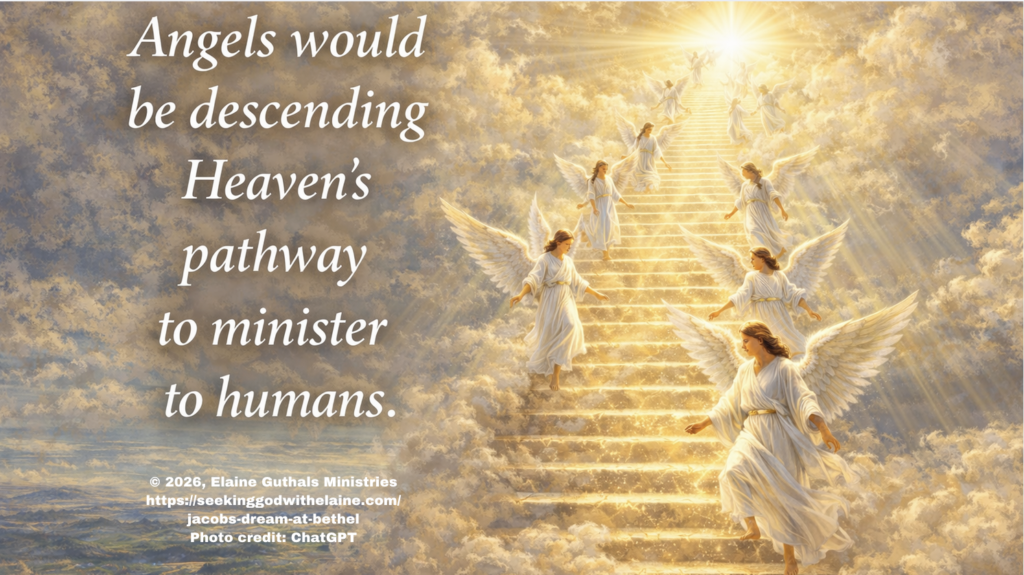
    • Jacob didn’t realize that all the earth is hallowed ground.
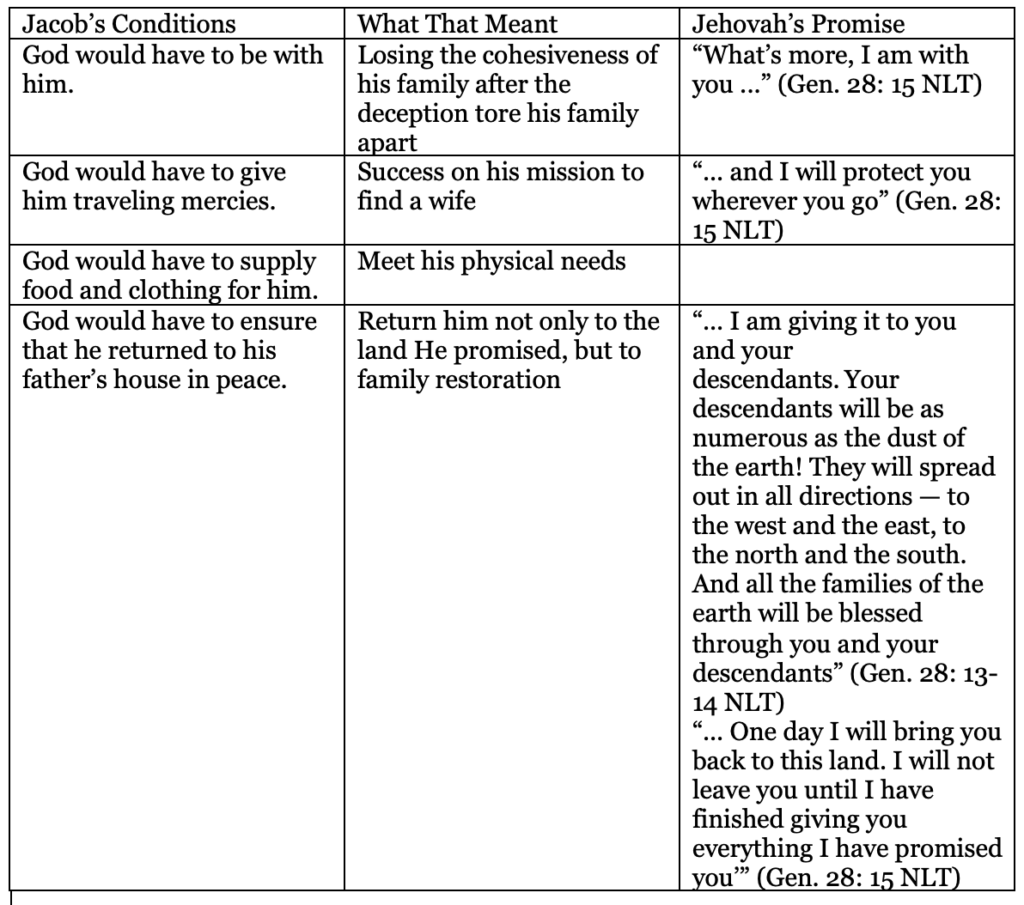
    • Jacob responded to Jehovah by making a vow.
    jacobs-response-to-god

    What can we learn from Jacob’s response to God’s presence? One of the sermons I read sort of set the foundation for this post. I agree and disagree with Maclaren’s take on that reaction.

    Maclaren’s The Heavenly Pathway and the Earthly Heart
    https://www.biblehub.com/sermons/auth/maclaren/the_heavenly_pathway_and_the_earthly_heart.htm

    But then I branched off from there.

    Let’s Put It into Context

    To read devotions in the Creating Everything theme, click the button below.

    Devotions in the Jacob the Patriarch series

    Jacob’s Response

    “Then Jacob awoke from his sleep and said, ‘Surely the Lord is in this place, and I wasn’t even aware of it!’ But he was also afraid and said, ‘What an awesome place this is! It is none other than the house of God, the very gateway to heaven!’” (Gen. 28: 16-17 NLT)

    This place

    Jacob acknowledged Jehovah’s presence in that place.

    It must have been a little startling to wake up to the realization that Sovereign God had talked to you. Jacob put that down to the place. He said it was fearsome.

    Jacob seemed to have limited understanding of God’s presence. He claimed ignorance of Jehovah being in that place, leading us to believe he bought into the localization of gods. Jacob focused on the spot rather than the spirit.

    I’m sure it would be difficult bucking that belief. It would have been a long-held belief held by many — if not most — in that society.

    But we would think that Jacob, of all people, would have learned from Abraham’s story that Jehovah isn’t tied to a specific spot. If He were, wouldn’t that spot have been Ur or Haran, not Bethel?

    Yet we are not saved because of our parents’ religion. We are only saved through a personal relationship with Jehovah. He reveals Himself to each of us individually.

    He Was Afraid

    Jacob went to bed fine and woke up afraid.

    I don’t think that Jacob was terrified by God. I believe that he meant that the place was awesome because it was the house of God. When we are told to fear God, we are to hold Him in reference, not run from Him in terror.

    That being said, I think we should approach Jehovah a little unsettled. We aren’t told Jacob was feeling remorse for his deception of Isaac, but he probably was questioning if he was worthy of a divine visit.

    We need to approach Jehovah ready to confess our sins.

    Maclaren thought that Jacob’s fear stemmed from the fact that he associated Jehovah with Isaac, not himself. Plus, there was also the localized god theory. Ancient near eastern gods didn’t follow people around.

    But think about it. To this day, we still wrestle with the concept of omnipresence. How can a God we don’t see be present with us?

    Maclaren also thought Jacob was afraid he had defiled the holy ground without even knowing. He wrote,

    “He does not draw the conclusion from the vision that all the earth is hallowed by a near God, but only that he has unwittingly stumbled on His house; and he does not learn that from every place there is an open door for the loving heart into the calm depths where God is throned, but only that here he stands at the gate of heaven.”

    Resource

    Yep. Missed it.

    Jacob reacted with fear instead of joy. He was trembling instead of leaping.

    But we have to be careful assuming that Jacob’s response equates to low religious feeling. Let’s focus on the fear a second.

    Every time — except for Abraham in Genesis 18 — humans reacted with some expression of fear when having a heavenly visit. (And an argument could be made that Abraham did know they were heavenly beings.)

    • Moses hid his face at the burning bush (Ex. 3).
    • Israel recoiled in terror at Sinai (Ex. 19–20).
    • Manoah feared for his life after realizing he has seen the Angel of the LORD (Judg. 13).
    • Isaiah cried “Woe is me!” in the temple (Isa. 6).
    • Ezekiel fell on his face (Ezek. 1).
    • Daniel was left trembling and without strength (Dan. 10).
    • Zechariah, Mary, the shepherds, Peter, and even the disciples at the Transfiguration responded with fear when confronted by divine or angelic presence.
    • John fell “as though dead” in Revelation 1.

    Bottom line, fear is the normal response, not the exception.

    We also have to talk about the correct definition of fear. Fear of the Lord means that the person reacted with reverence and awe — very acceptable and the most appropriate of reactions.

    That means Jacob’s trembling may have been exactly what he should have done. He may have had a huge realization about Who his Visitor actually was.

    Remember, we said this may have been the first encounter Jacob had with Jehovah. This might be the first moment Jacob truly grasped that the God of his fathers is not just a distant family deity, but a living, present, holy Lord.

    This visit was also making the God of his fathers his God.

    The Next Morning

    “The next morning Jacob got up very early. He took the stone he had rested his head against, and he set it upright as a memorial pillar. Then he poured olive oil over it. He named that place Bethel (which means ‘house of God’), although it was previously called Luz” (Gen. 28: 18-19 NLT)

    Because God of his fathers was made his God, Jacob responded with action and commitment.

    Whatever guilt or remorse Jacob had felt upon leaving Beersheba, he was felt reconciliation with Jehovah. How do we know?

    Reconciliation includes that the distance between God and man is lessened.

    Whatever fear Jacob felt was gone. If the ladder symbolized love, it eased his fear.

    “Such love has no fear, because perfect love expels all fear. If we are afraid, it is for fear of punishment, and this shows that we have not fully experienced his perfect love” (I Jn. 4: 18 NLT)

    Jacob’s actions proved his change of heart.

    • He set up a stone pillar.
    • He named the place Bethel (“House of God”).
    • He made a vow, essentially entering into a relationship with God.

    The Stone

    Jacob awoke and immediately erected a memorial.

    How many of us would want to have a stone for our pillow? I know for me, it would be hard to sleep because of the discomfort.

    But it has a deeper meaning. Having a stone as a pillow speaks to hardship and isolation. I’m sure Jacob was feeling just that.

    Jacob used the stone that had been his pillow as a standing stone. In the Complete Jewish Bible, stone pillar and stone monument are the same word — standing stone. I think that is another instance where modern translators used modern words for our ease.

    A standing-stone (or Matstsebah) was an ancient custom where a large stone was placed to commemorate sacred covenants or important events. They were used in the Bronze and Iron Ages (3150-586 BC).

    In our vernacular, we would say Jacob erected a memorial.

    Bradford said that it was also a type of Zevah or peace offering. It could also have been an early type of altar.

    Resource

    This memorial is something special. It is a foreshadowing of worship practices to come in Israel.

    But isn’t that what Jehovah wants? Jehovah wants us to take the hard, give it to Him, and be content in our lives for Him.

    Pouring oil on something was a common practice in God’s Word. It was also a command.

    House of God

    Jacob didn’t realize that all the earth is hallowed ground.

    When Jacob woke up and considered the dream, he recognized the sacredness of the place. He saw it as a place where Heaven and earth intersects.

    That is what House of God means. It doesn’t mean a physical building where we go to worship Jehovah.

    It means it is an access point. Jehovah broke into human space.

    This was the House of God because God was present.

    Having a loving Jehovah take up residence in our hearts would be even more foreign. Yeah, part of that is the localized god superstition.

    I think Jehovah specifically picked this place. It wasn’t just on the road to Haran.

    Bethel was a place where Abraham built an altar (Gen. 12: 8). The covenant was about continuity.

    Was that the only gate to Heaven? Maybe. But maybe not.

    What is important is that Jehovah met Jacob here, and Jacob responded by renaming the town of Luz to Bethel. He acknowledged the ordinary becomes sacred because of Sovereign God’s presence.

    Go back to verse 17 a second. “… ‘… It is none other than the house of God, the very gateway to heaven!’” (Gen. 28: 16-17 NLT)

    A gate is the point of access. “Go in through the narrow gate; for the gate that leads to destruction is wide and the road broad, and many travel it; but it is a narrow gate and a hard road that leads to life, and only a few find it” (Mt. 7: 13-14 CJB).

    The house is a permanent dwelling place.

    Jacob Made a Vow

    “Then Jacob made this vow: ‘If God will indeed be with me and protect me on this journey, and if he will provide me with food and clothing, and if I return safely to my father’s home, then the Lord will certainly be my God. And this memorial pillar I have set up will become a place for worshiping God, and I will present to God a tenth of everything he gives me’” (Gen. 28: 20-22 NLT)

    Jacob responded to Jehovah by making a vow.

    Jehovah had placed the stairway to symbolize the connection between Heaven and earth. The activity of the angels showed that Heaven is actively involved in the affairs of the earth.

    The crowning point was when Jehovah Himself spoke directly to Jacob. Even though He is Sovereign God, He initiated the encounter with Jacob.

    As a response to the dream, Jacob made a vow. Robinson talked about the reach of vows. He wrote, “The reach of these vows is universal. They cover our possessions — our ways — our hearts — our lives.”

    Resource

    Jacob promised to return to Jehovah one-tenth of all he would earn or accumulate. But he set several conditions for this to happen.

    We have to realize Jacob wasn’t saying that he didn’t accept his covenant responsibilities. Wasn’t Jacob vowing back covenant responsibilities?

    Then, and only then, would Jacob consider God his God.

    Should we bite on Jacob for that?

    But isn’t that how we approach Jehovah sometimes?  We want things to happen our way.

    Robertson take on this is one I agree with. He wrote, “A kind of bargain is struck. If religion makes me happy then I will be religious.”

    Resource

    Robertson’s take on this was that Jacob hadn’t reached the level of disinterestedness, which is a willingness to give up something for a greater good.

    But was it really selfishness?

    No, Jacob was responding back saying he agreed to every promise from Jehovah.

    Craig’s viewpoint was a little different. He thought this showed Jacob’s moderation. He only asked for the necessities of life beyond the covenant blessings.

    Resource

    Jehovah was taking Jacob where he was at to start him on his Sanctification Road to get him to where He wanted.

    We shouldn’t be upset when Jehovah’s promises come with the expectation of a vow from us. Salvation should be accompanied by the vow to live for Him.

    Making the Connections #1

    Bible Verse

    Maclaren said something interesting. The dream didn’t contain a religious vibe.

    Resource

    As we said, we aren’t told Jacob had any prior communication with Jehovah. That would mean he was just starting out on his Sanctification Road. He was at the conversion point.

    This reaffirmation of the covenant didn’t really have any calls for obedience from Jacob. But then, that was already given to Abraham.

    • Believe
    • Walk with me
    • Circumcise your boys

    A relationship with us is the most important element to Jehovah. If we prioritize that relationship, all the rest will fall into place.

    Making the Connections #2

    Think about what Jacob saw.

    • Heaven “opened”
    • A stairway/ladder connecting heaven and earth
    • Angels ascending and descending
    • God standing above it, speaking promises of presence and protection

    What does that tell us? God is not cut off from the world. There is traffic between heaven and earth, and God can draw near.

    We are called to respond.

    Making the Connections #3

    Jehovah never asked for a Temple to be built in His name. He did give instructions for a Tabernacle. It was a place where His children could come be in His presence.

    But Yeshua turned that on its ear, didn’t He? When talking to Nathaniel, “Then he said, ‘I tell you the truth, you will all see heaven open and the angels of God going up and down on the Son of Man, the one who is the stairway between heaven and earth’” (Jn. 1: 51 NLT).

    Jehovah isn’t just a Presence in a place. He is always present in a Person.

    Where Yeshua is, Heaven is active.

    Making the Connections #4

     Think about where Jacob was at on his Sanctification Road. He was probably just beginning. He wasn’t mature enough in his faith to wait on Jehovah.

    But Jacob wanted to be the covenant son. If he didn’t want a relationship with Jehovah, he wouldn’t be.

    Jehovah wasn’t ready to bring Yeshua on the scene. So, that meant Jacob received what he was meant to see in the only way possible at his point in the story.

    Making the Connections #5

    I like what Mears said. He wrote, “Gratitude should be the very first fruit of religion.”

    Resource

    Notice again what was in Jacob’s vow: spiritual blessings and basic necessities.

    But Jacob asked for less than the covenant blessings. He said nothing about descendants or land.

    Instead, Jacob recognized that all he would gain on this journey came from and through Jehovah.

    So, Jacob was starting this journey off on the right foot.

    Making the Connections #6

    How can we not trust Jehovah’s promises? He is unchangeable after He has made the promise.

    We just have to remember Romans 8: 28. “Furthermore, we know that God causes everything to work together for the good of those who love God and are called in accordance with his purpose” (Rom. 8: 28 CJB).

    Jehovah will keep the promises that promote good — sanctification — in our lives.

    Making the Connections #7

    We cannot gloss over the fact that Jehovah presented Himself to Jacob. Jacob didn’t take off one day to go find Him. He came to where Jacob was.

    Jehovah comes to us, too. We, as did Jacob, have to respond.

    Making the Connections #8

    “Then the Lord said to Abram, ‘You can be sure that your descendants will be strangers in a foreign land, where they will be oppressed as slaves for 400 years’” (Gen. 15: 13 NLT)

    Did Jacob equate this revelation with Jehovah’s prophecy? “I’ll be with your descendants when they are in a strange land.”

    This omnipresence rather than a localized god may have been an unfamiliar concept to Jacob at this point. I wonder if he thought of it when he was in the cart riding to Egypt. Did he take heart to this promise?

    Making the Connections #9

    Up until now, we haven’t heard the phrase, “And God was with him.” We’ve had some important Hall of Famers — Noah, Abraham — but they didn’t get to hear that phrase.

    Jacob asked for Jehovah’s presence for himself. Jehovah answered the request not only for him, but also for his descendants.

    • “The LORD was with Joseph, so he succeeded in everything he did as he served in the home of his Egyptian master” (Gen. 39: 2 NLT).
    • “David continued to succeed in everything he did, for the LORD was with him” (I Sam. 18: 14 NLT).
    • “Look! The virgin will conceive a child! She will give birth to a son, and they will call him Immanuel, which means ‘God is with us” (Mt. 1: 23 NLT).

    Not a bad response to prayer. That response includes us.

    “The Lord is close to all who call on him, yes, to all who call on him in truth. He grants the desires of those who fear him; he hears their cries for help and rescues them” (Ps. 145: 18-19 NLT).

    How Do We Apply This?

    • Don’t expect mere religious emotion to be enough to gain salvation.
    • Value our church privileges.
    • Vow inward transformation as well as outward worship to Jehovah.
    • Thoughtfully contribute by plan, not impulse.
    • Give cheerfully.

    Resources

    Father God. Thank You that You come to us Thank You that You stay with us. Amen.

    If you don’t understand something and would like further clarification, please contact me.

    If you have not signed up for the email providing the link to the devotions and the newsletter, do so below.

    If God has used this devotion to speak with you, consider sharing it on social media.

  • Jacob’s Dream at Bethel

    As Jacob started on his journey to Paddan-aram, he had a very important encounter. This devotional reading looks at how Jehovah, at the top of the stairway, met Jacob, at the bottom.

    Nuggets

    • While he was going to family, it is probably a safe bet that Jacob had never left Canaan before.
    • We’ve have heard this described as both Jacob’s ladder and a stairway to Heaven.
    • This is the first time we are told that Jehovah communicated with Jacob.
    • God reaffirmed with Jacob the covenant that he made with Abraham.
    jacobs-dream-at-bethel

    Jacob hadn’t gotten too terribly far on the first day of his journey to Paddan-aram. But something very important happened.

    Let’s Put It into Context

    To read devotions in the Creating Everything theme, click the button below.

    Devotions in the Jacob the Patriarch series

    Set Up Camp

    “Meanwhile, Jacob left Beersheba and traveled toward Haran. At sundown he arrived at a good place to set up camp and stopped there for the night. Jacob found a stone to rest his head against and lay down to sleep” (Gen. 28: 10-11 NLT)

    While he was going to family, it is probably a safe bet that Jacob had never left Canaan before.

    That is a little more amazing when we remember that Jacob was 77 years old.  He was just starting to assert his independence.

    Jacob had set off with his father’s blessing to find a covenant bride. Abraham was already married to Sarah when we met them. It took us several devotions to get Isaac married off.

    Now it is Jacob’s turn to go wife hunting.

    But this is much different than when Abraham sent Eliezer to get Rebekah as Isaac’s bride. As covenant bearer, Abraham assumed full responsibility for ensuring Isaac’s marriage aligned with God’s promises.

    The process was highly structured. Eliezer negotiated directly with Rebekah’s family, presented bride-gifts (mōhar), and secured consent.

    Rebekah’s voice was acknowledged, yet the decisive authority remained with the patriarchal household. The marriage was finalized before Isaac ever met his bride, emphasizing that covenant continuity — not personal choice — drove that union.

    By contrast, Isaac’s sending of Jacob occurred under duress. Esau’s marriages to Canaanite women had already demonstrated the dangers of covenantal compromise (Gen. 26:34–35). Jacob was sent away both to preserve lineage and to escape Esau’s wrath.

    Unlike Eliezer, Jacob traveled without wealth, servants, or formal authority. He had to negotiate his own marriage arrangements, offering labor in place of material bride-price (Gen. 29:18–20). The absence of formal rituals — oaths, immediate payment, or public consent scenes — left Jacob vulnerable to deception by Laban. The substitution of Leah for Rachel exposed how fragile betrothal arrangements became when authority and security were lacking.

    Theologically, the aim of betrothal remained constant: preservation of the covenant line through faithful, endogamous marriage. What changed was the human mechanism. Abraham’s confidence and resources produced order; Jacob’s exile produced disorder. Yet God remained sovereign in both settings.

    We have to remember that Jacob was essentially running for his life. Esau had promised to kill him after Isaac died (Gen. 27:  41). Jacob may have thought Esau would like to fulfill his promise sooner rather than later.

    This was, though, right after Isaac had blessed Jacob as the heir to Abraham’s covenant. Although God had told Rebekah that Jacob would be the family ruler (Gen. 25: 23), it was now official.

    Jacob didn’t know if Esau came after him when he found who he would have called the deceiver was gone. Because of that, Jacob must have been looking back at least as many times as he looked forward. His level of fear would be elevated.

    Jacob traveled until he reached the town of Luz. The interesting thing is Luz was the original name of the city. Later it was known as Bethel (Gen. 28: 19) – one of the places Abraham built an altar.

    I love Mears’ description of Jacob’s campsite. He wrote, “It was upon the barren mountainside. Tier on tier of rocks reaching to the mountain-summit were the stairs of nature’s cathedral.”

    Resource

    At Luz, God came to Jacob in a dream. 

    Don’t write the dream off as just a fantasy. We’ll find out just how real this vision was.

    Let’s just say right now that Jacob had to stop his forward motion to his destination.

    Dreamed of a Stairway to Heaven

    “As he slept, he dreamed of a stairway that reached from the earth up to heaven. And he saw the angels of God going up and down the stairway” (Gen. 28: 13 NLT)

    We’ve have heard this described as both Jacob’s ladder and a stairway to Heaven. In the Hebrew, both are correct. A sullam is a ladder or stairway.

    The stairway would have been a sight to see. We can’t gloss over the fact that traffic was heading both ways. Angels were coming and going.

    Was this stairway a one-shot deal? I don’t see how it could be.

    Jehovah wouldn’t have needed a stairway to meet with Jacob. If that is the focus of the visit — which it was — the angels didn’t have to be present. They weren’t germane to the narrative.

    Angels would be descending Heaven’s stairway to minister to humans. They care about our welfare.

    For one night, Jehovah made it visible to one man. It was important that He show Jacob how the seen and the unseen are connected.

    Roost there for a second. In one of His parables, Yeshua said that there is an impassable chasm between Heaven and he’ll (Lk. 16: 26). That cannot be said between Heaven and earth.

    We are not completely cut off from Jehovah. Reconciliation is possible.

    Beecher thought we each have our own stairway. He said, “No man can be a Christian by separating himself from his kind.” Jehovah and Yeshua will always be present. Angels will also traverse our stairway.

    Resource

    Flip the picture a second. Jacob, through Rebekah’s persuasion, took matters into his own hands and deceived Isaac to secure the covenant blessing. He didn’t wait on Jehovah.

    And here, Jehovah came to him.

    The God of Abraham and the God of Isaac

    “At the top of the stairway stood the Lord, and he said, ‘I am the Lord, the God of your grandfather Abraham, and the God of your father, Isaac …’” (Gen. 28: 13 NLT)

    This is the first time we are told that Jehovah communicated with Jacob.

    Think how comforting that would have been for Jacob. Running for his life, leaving all he had ever known — just to meet the King of the universe.

    This is especially important when we think that Jacob was probably still experiencing guilt. He had sinned against Esau and deceived Isaac. And here he was meeting the King of the universe.

    More than likely, Jacob’s ambition was wrestling with his faith. He wanted the covenant relationship with Jehovah, but what did that look like in application?

    We are never told that God appeared to Isaac as he did to Abraham (Gen. 18: 1). Still, God identified Himself as the God of Isaac.

    Think about it. We aren’t told how much time passed between “So Isaac sent Jacob away, and he went …” (Gen. 28: 5 NLT) to “Meanwhile, Jacob left Beersheba and traveled toward Haran” (Gen. 28: 10 NLT). I doubt there would be much.

    With all that Jacob had done and all the emotions he would have been feeling, the first words he heard Jehovah say was, “I am the God of your fathers.”

    No, his name wasn’t included at the moment. It would be later. But Jacob had a choice.

    Was Jacob going to follow the God of his fathers and walk with Him, or was Jacob going to try to keep on doing this his own way?

    So, Jehovah came to Jacob. Not only did He show him the connection between Heaven and earth, but He also showed him that He is ruler of all.

    But we said it once, Jacob was 77 years old at that time. And he and God hadn’t met before???

    We have to put this into societal context. The gods in the ancient Near Eastern world were considered localized gods. In other words, they stayed in their temple, city, or region, and didn’t come out.

    Here Jacob was traveling from Beersheba to Haran. If going with prevailing theory, Jehovah would stay put in Canaan.

    But Jehovah didn’t stay in Beersheba. He met Jacob in Bethel.

    Covenant Blessings Belong to You

    “…The ground you are lying on belongs to you. I am giving it to you and your descendants. Your descendants will be as numerous as the dust of the earth! They will spread out in all directions — to the west and the east, to the north and the south. And all the families of the earth will be blessed through you and your descendants. What’s more, I am with you, and I will protect you wherever you go. One day I will bring you back to this land. I will not leave you until I have finished giving you everything I have promised you’” (Gen. 28: 13-15 NLT)

    God reaffirmed with Jacob the covenant that he made with Abraham.

    Jacob would have grown up with hearing about Abraham’s covenant with Jehovah. This would be about the first opportunity He had to affirm it with him.

    What we do know was this is the first day of the journey. Jehovah didn’t take much time to reaffirm the covenant. And reaffirm it, He did.

    • Jehovah would give the land he laid on to him (Gen. 28: 13).
    • His descendants would be numberless (Gen. 28: 14).
    • All the Earth would be blessed through him and his descendants (Gen. 28: 14).

    This sounds a lot like Abraham’s covenant.

    Yes, there was a big addition. Jehovah promised Jacob His presence and protection. It was needed as, beyond Abraham’s trip to Egypt, we aren’t told that either patriarch left Canaan.

    Jehovah included that He would keep Jacob safe, wherever he went. He also told Jacob that he would return to this land at a future date. Basically, what God was saying was that he would be with Jacob always.

    This new addition is very meaningful. Jehovah has told us many times in His Word that He will never leave us.

    • “Even when I walk through the darkest valley, I will not be afraid, for you are close beside me. Your rod and your staff protect and comfort me” (Ps. 23: 4 NLT).
    • “Don’t be afraid, for I am with you. Don’t be discouraged, for I am your God. I will strengthen you and help you. I will hold you up with my victorious right hand” (Isa. 41: 10 NLT).
    • “Teach these new disciples to obey all the commands I have given you. And be sure of this: I am with you always, even to the end of the age” (Mt. 28: 20 NLT).
    • “So be strong and courageous! Do not be afraid and do not panic before them. For the Lord your God will personally go ahead of you. He will neither fail you nor abandon you” (Deut. 31: 6 NLT).
    • “I can never escape from your Spirit! I can never get away from your presence! If I go up to heaven, you are there; if I go down to the grave, you are there. If I ride the wings of the morning, if I dwell by the farthest oceans, even there your hand will guide me, and your strength will support me” (Ps. 139: 7-10 NLT).

    What we may or may not always remember is that Jehovah doesn’t put any conditions on that. He will be with us when we are walking the path with Him and when we go off trail.

    The wording was a little different on the descendants. Jacob and his descendants would expand to all four points of the compass.

    This is important as we read in other books of God’s word that this means inclusion for Gentiles. Remember in Isaac’s blessing, the different used of the word nations. It wasn’t goy — nation. It was ve-hayita likhal — assembly/peoples.

    Making the Connections #1

    Okay. People believed that gods were localized, but hadn’t Jehovah already shown them He could? Abraham was called by Him in Haran (and maybe even Ur). He brought him to Canaan. He even went with him to Egypt and Gerar.

    Wasn’t that evidence enough? Jacob would have known this.

    Jacob may have known this in his head. But I’m sure there was a lot of tradition and cultural norms that would have to be set aside to get this down to heart-level acceptance. Knowing something and putting it into practice are two different things.

    That is an important point. What happens on Abraham’s Sanctification Road sometimes has to be repeated on Jacob’s Road.

    This begins the pattern: Jehovah will go with them wherever they go. It doesn’t matter if the road leads to Haran, Egypt, Babylon, or the ends of the earth.

    Sovereign God will always be with us – even when we have our fears and doubts.

    Making the Connections #2

    We said that each of us have our own ladders. Ours are bit different than Jacob’s.

    Yeshua is our ladder. He not only gives us access to the Father, but He also expands it.

    Nose called it a living ladder. Yeshua was dead, and now He lives. Because we have accepted the gift of His salvation, we will live eternally.

    Resource

    This ladder is built with love. It is inclusive for those that accept His gift.

    Communication is key.

    Making the Connections #3

    Ooo, baby. I like what Tipple and Jenkins had to say. In Elaine-speak:

    • We can’t rely on our feelings to know if Jehovah is near.
    • Our awareness/unawareness does not negate His presence.
    • We don’t dream about spiritual things.
    • Whatever anxiety Jacob had felt during the day, it melted away as he slept.
    • We have to remove ourselves from the equation before Jehovah can come in and make things add up.
    • We have to begin to identify His presence in all things.

    Resources

    Making the Connections #4

    Robinson called Jacob the typical Jew. He was separated from Jehovah but desiring a relationship with Him.

    Resource

    Continuing, Robinson compared Jacob to the Church.

    • He was chosen in the womb.
    • His human nature struggled with grace.
    • He chose Jehovah.

    We see that when we look beyond this being just a personal experience. It is more than just a provision of care.

    This is a reaffirmation of the covenant. That covenant lasted through many generations and is still in effect today — albeit merged with Yeshua’s covenant.

    Making the Connections #5

    Yes, Jehovah is up in Heaven where we can’t see Him. Still, He reveals Himself to us — especially when we need it.

    Making the Connections #6

    I hadn’t really thought about this before.

    Jehovah had Abraham go out into the night sky to see the expanse of the covenant promises. “Then the Lord took Abram outside and said to him, ‘Look up into the sky and count the stars if you can. That’s how many descendants you will have!’” (Gen. 15: 5 NLT).

    Here, Jacob was already outside. So, Jehovah showed him the expanse of Heaven.

    It was like Jehovah was saying, “Don’t let your limited perception of space minimize what I am promising you. Not even the sky is the limit when you choose Me.”

    We talk about expanding our horizons. We have to let Jehovah expand then.

    How Do We Apply This?

    • Get the stairway of repentance, submission, and obedience.
    • Keep a good grip on the ladder.
    • Find success and security in repenting.
    • Realize the repenting does not good if we do not intend to turn away from the sin.
    • Recognize some of our covenant decision must be made in a split second’s time.
    • Use our experiences to grow in grace.
    • Recognize Jehovah is nearer to us than we realize.

    Resources

    Father God. You are with us always. You are there when we are doing routine activities, and You are their when we are journeying into the unknown. Thank You for Your care and provision. Amen.

    If you don’t understand something and would like further clarification, please contact me.

    If you have not signed up for the email providing the link to the devotions and the newsletter, do so below.

    If God has used this devotion to speak with you, consider sharing it on social media.
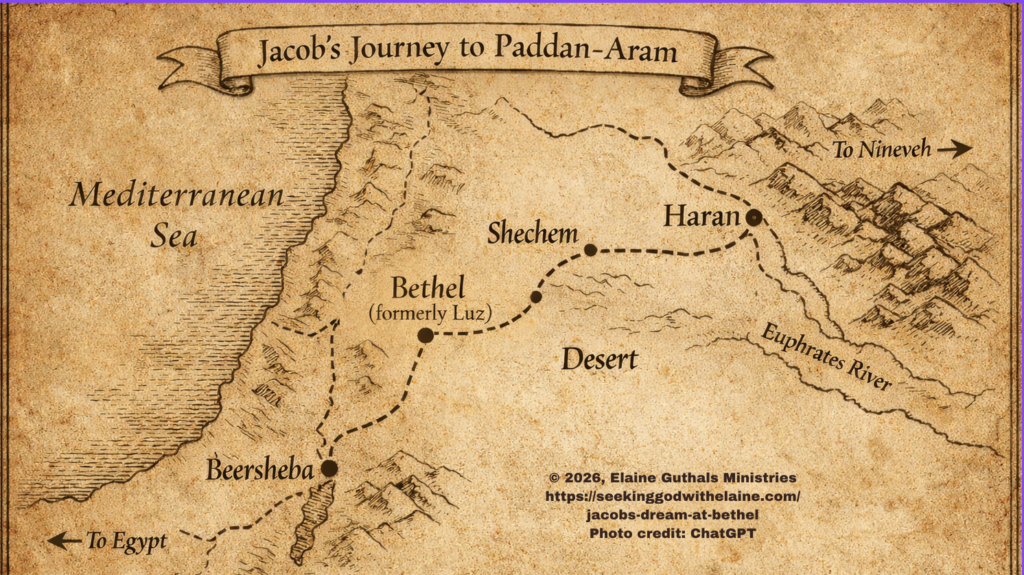
  • Isaac and Abimelech

    Like Abraham’s Abimelech, Isaac’s Abimelech came to enter into a treaty with Isaac. This devotional reading looks at their relationship after Isaac’s lie was exposed.

    Nuggets

    • Isaac obeyed Jehovah.
    • Isaac – like Abraham – was fearful for his life because of his beautiful wife.
    • Isaac’s love for Rebekah was evident.
    • There might have been a famine in the land of Canaan, but Isaac was successful in Gerar.
    • Isaac did what was good resource management by reopening the closed wells that Abraham dug and digging new ones.
    • It is significant that Jehovah appeared to Isaac on the night he arrived in Beersheba.
    • Abimelech decided, if he couldn’t defeat Isaac, he had better make friends with him.
    • Esau’s decision to take Canaanite women went against Jehovah’s commands.
    isaac-and-abimelech

    This part of the chapter will particularly show why this chapter is out of place. It smacks of déjà vu.

    Let’s Put It into Context

    To read devotions in the Creating Everything theme, click the button below.

    Devotions in the Isaac the Patriarch series

    Isaac and Abimelech

    “So Isaac stayed in Gerar. When the men who lived there asked Isaac about his wife, Rebekah, he said, ‘She is my sister.’ He was afraid to say, ‘She is my wife.’ He thought, ‘They will kill me to get her, because she is so beautiful.’ But some time later, Abimelech, king of the Philistines, looked out his window and saw Isaac caressing Rebekah. Immediately, Abimelech called for Isaac and exclaimed, ‘She is obviously your wife! Why did you say, “She is my sister”?’ ‘Because I was afraid someone would kill me to get her from me,’ Isaac replied. ‘How could you do this to us?’ Abimelech exclaimed. ‘One of my people might easily have taken your wife and slept with her, and you would have made us guilty of great sin.’ Then Abimelech issued a public proclamation: ‘Anyone who touches this man or his wife will be put to death!’” (Gen. 25: 6-11 NLT)

    Isaac Stayed in Gerar

    Isaac obeyed Jehovah.

    Jehovah told Isaac to stay put in Gerar instead of going to Egypt (Gen. 26: 2). He not only listened, but he also obeyed.

    We don’t know how long he stayed. But he did.

    Asked Isaac about his Wife

    Isaac – like Abraham – was fearful for his life because of his beautiful wife.

    Some would say that the circumstances conveyed fear. Famine. Strangers. Different customs. Lack of trust.

    Did Isaac take a page from Abraham’s playbook? He must have. He handled it the same way.

    Go to another country. Lie about your relationship with your wife so you don’t get killed.

    The thing is, Sarah was Abraham’s sister. Rebekah was Isaac’s cousin, granddaughter of Abraham’s brother Nahor.

    Leale noted that Isaac would have suffered greater guilt than Abraham. I can see that. His lie was a flat-out lie, not a deception.

    Resource

    Why do I say this chapter is out of order? If Isaac and Rebekah would have had kids already, they wouldn’t have been able to pull this off. I think this is true if the kids were toddlers, but equally true if they were teenagers.

    Abimelech Saw Isaac Caressing Rebekah

    Isaac’s love for Rebekah was evident.

    We don’t know how much time some time was. It could have been a week. It could have been an undisclosed number of months.

    Unlike Sarah, Rebekah was not taken to become a member of Abimelech’s haram. That allowed Isaac and Rebekah to remain together.

    More than that, they were doing what husbands and wives do. Isaac caressed Rebekah. They may have thought they were alone.

    They weren’t.

    Yep, Abimelech was angry. It hurts when someone lies to you.

    But, as with Abraham, when the truth was told, Isaac’s Abimelech ordered their men not to touch the women in Abraham’s family.

    Isaac’s Abimelech must have heard about what had happened to Abraham’s Abimelech. “… thou shouldest have brought asham (guilt) upon us” (Gen 26: 10 OJB).

    Jehovah stepped in and spoke to Abraham’s Abimelech.

    • “Now return the woman to her husband, and he will pray for you, for he is a prophet. Then you will live. But if you don’t return her to him, you can be sure that you and all your people will die” (Gen. 20: 7 NLT).
    • “Then Abraham prayed to God, and God healed Abimelech, his wife, and his female servants, so they could have children. For the Lord had caused all the women to be infertile because of what happened with Abraham’s wife, Sarah” (Gen. 20 17-18 NLT).

    God Blessed Isaac

    “And Isaac sowed in that land and reaped in the same year a hundredfold. The Lord blessed him, and the man became rich, and gained more and more until he became very wealthy. He had possessions of flocks and herds and many servants, so that the Philistines envied him. (Now the Philistines had stopped and filled with earth all the wells that his father’s servants had dug in the days of Abraham his father.) And Abimelech said to Isaac, ‘Go away from us, for you are much mightier than we’” (Gen. 26: 12-16 NLT)

    There might have been a famine in the land of Canaan, but Isaac was successful in Gerar.

    We may think that shepherds did not plant crops. Bradford noted that those who had flocks and herds in Isaac’s day would plant what we would call a garden to provide grain and herbs.

    Resource

    No, the nomads were not fixing to settle down. But they didn’t want them or their animals to starve.
    God blessed him with a bountiful harvest. He also gained flocks and herds. That meant he needed people to watch over the animals, so he gained servants.

    In fact, God blessed Isaac so much, the Philistines started envying him. If truth be told, they were probably fearing him as well. They more than likely saw Isaac as a threat.

    Abimelech took the easy way out. He just told Isaac to go away. He was only a visitor, wasn’t he?

    Could Isaac have refused? Probably. He probably had the strength to counter any attack that Abimelech made.

    Beginning Well Problems

    “So Isaac moved away to the Gerar Valley, where he set up their tents and settled down. He reopened the wells his father had dug, which the Philistines had filled in after Abraham’s death. Isaac also restored the names Abraham had given them. Isaac’s servants also dug in the Gerar Valley and discovered a well of fresh water. But then the shepherds from Gerar came and claimed the spring. ‘This is our water,’ they said, and they argued over it with Isaac’s herdsmen. So Isaac named the well Esek (which means ‘argument’). Isaac’s men then dug another well, but again there was a dispute over it. So Isaac named it Sitnah (which means ‘hostility’). Abandoning that one, Isaac moved on and dug another well. This time there was no dispute over it, so Isaac named the place Rehoboth (which means ‘open space’), for he said, ‘At last the Lord has created enough space for us to prosper in this land’” (Gen. 26: 17-22 NLT)

    Isaac did what was good resource management by reopening the closed wells that Abraham dug and digging new ones.

    The problem was the Philistines were still envious. Plus, isn’t it so much like today’s society: “I want something, but I don’t want to do it myself. So, I’ll wait for you to do it and take yours.”

    Their envy of Isaac probably started with their envy of Abraham. That played out in the Philistines responses to Abraham digging wells – they filled them in.

    “Then Abraham complained to Abimelech about a well that Abimelech’s servants had taken by force from Abraham’s servants” (Gen. 21: 25 NLT). Once they got possession of the wells, they closed them.

    Isaac did what was good resource management. He reopened the closed wells that Abraham dug and dug new ones.

    The problem was the Philistines were still envious. Plus, isn’t it so much like today’s society: “I want something, but I don’t want to do it myself. So, I’ll wait for you to do it and take yours.”

    God’s Word says that four wells were dug. Clark believed that Isaac moved from well to well until he reached Beersheba and enough room.

    Resource

    I always laugh at the meaning of the last name. Did Isaac name it open space with a touch of humor, or through total exasperation and relief?

    Either way, Isaac saw that his prosperity and peaceful existence came from Sovereign God.

    Another Visit from God

    “From there Isaac moved to Beersheba, where the Lord appeared to him on the night of his arrival. ‘I am the God of your father, Abraham,’ he said. ‘Do not be afraid, for I am with you and will bless you. I will multiply your descendants, and they will become a great nation. I will do this because of my promise to Abraham, my servant.’ Then Isaac built an altar there and worshiped the Lord. He set up his camp at that place, and his servants dug another well” (Gen. 26: 23-25 NLT)

    It is significant that Jehovah appeared to Isaac on the night he arrived in Beersheba.

    Remember, Isaac had left the land of Canaan because of a famine.

    Isaac’s arrival at Beersheba meant he was back on Promised Land. In fact, the city is mentioned several times in Scriptures when the writer is taking about the land that encompasses the Promised Land.

    • “Then all the Israelites were united as one man, from Dan in the north to Beersheba in the south, including those from across the Jordan in the land of Gilead. The entire community assembled in the presence of the Lord at Mizpah” (Jdg. 20: 1 NLT).
    • “And all Israel, from Dan in the north to Beersheba in the south, knew that Samuel was confirmed as a prophet of the Lord” (I Sam. 3: 20 NLT).

    It was also a previous home to Abraham. “Then they returned to the servants and traveled back to Beersheba, where Abraham continued to live” (Gen. 22: 19 NLT).

    There was no city at this time. There was just the well by which Abraham and Abimelech made their covenant. “Then he named the place Beersheba (which means ‘well of the oath’), because that was where they had sworn the oath” (Gen. 21: 31 NLT).

    The night Isaac “got home,” Sovereign God was right there. To celebrate, Isaac built an altar.

    Isaac’s Covenant with Abimelech

    “One day King Abimelech came from Gerar with his adviser, Ahuzzath, and also Phicol, his army commander. ‘Why have you come here?’ Isaac asked. ‘You obviously hate me, since you kicked me off your land.’ They replied, ‘We can plainly see that the Lord is with you. So we want to enter into a sworn treaty with you. Let’s make a covenant. Swear that you will not harm us, just as we have never troubled you. We have always treated you well, and we sent you away from us in peace. And now look how the Lord has blessed you!’ So Isaac prepared a covenant feast to celebrate the treaty, and they ate and drank together. Early the next morning, they each took a solemn oath not to interfere with each other. Then Isaac sent them home again, and they left him in peace. That very day Isaac’s servants came and told him about a new well they had dug. ‘We’ve found water!’ they exclaimed. So Isaac named the well Shibah (which means ‘oath’). And to this day the town that grew up there is called Beersheba (which means ‘well of the oath’)” (Gen. 26: 26-33 NLT)

    Abimelech decided, if he couldn’t defeat Isaac, he had better make friends with him.

    My first thought whenever I read this is, “Did Abimelech just show up on Isaac’s doorstep and want to make nice now?” It didn’t trouble him taking over wells that he hadn’t had dug????

    Isaac also seems to have questioned Abimelech’s intentions. He got his dig in before Abimelech said anything.

    Isaac’s Abimelech showed up with two people. Abraham’s Abimelech (Gen. 21: 22) showed up with one. He showed up with Phicol, so that must be a title, also, instead of a name.

    Abimelech’s response in interesting. “They replied, “We can plainly see that the Lord is with you …” (Gen. 26: 28 NLT).

    Again, I go back to Isaac’s Abimelech knowing about Abraham’s Abimelech’s conversation with Jehovah. He would have known the might of Jehovah.

    Abimelech was interested in a peace treaty. “Swear that you will not harm us …” (Gen. 26: 29 NLT). This would be a binding covenant, confirmed by an oath.

    This treaty is similar to the one Abraham and his Abimelech entered into. We might be able to say that this was a reactivation or an extension of the existing covenant.

    Why did Isaac need this peace treaty? Bradford told us that by guaranteeing the peace, Isaac was given the space to grow and prosper.

    Esau Takes Two Wives

    “At the age of forty, Esau married two Hittite wives: Judith, the daughter of Beeri, and Basemath, the daughter of Elon. But Esau’s wives made life miserable for Isaac and Rebekah” (Gen. 26: 34-35 NLT)

    Esau’s decision to take Canaanite women went against Jehovah’s commands.

    Okay, let’s do some figuring. Isaac was 40 when he got married and 60 when he became a father. The kids are now 40, so Isaac is 100.

    Abraham was 100 when Isaac was born, so he would have been 200 when Esau got married. But he died at the age of 175.

    Esau was without Abraham’s influence for 25 years. Would the outcome have been any different if Abraham was still alive?

    Do we think Esau should marry anyone he wants? Parker disagreed. He wrote, “Esau went against the law of his country and his people in marrying Canaanitish women.”

    Resource

    So, what was Esau’s punishment for breaking that law? He lost his right as firstborn.

    Was this how Jehovah planned to give Jacob birthright privileges? He should have waited 25 years.

    The sad part was “But Esau’s wives made life miserable for Isaac and Rebekah” (Gen. 26: 35 NLT)

    Making the Connections #1

    In a previous devotion, we talked about how Jehovah works through patterns. This is an example. We can see that through the several similarities in the stories.

    Making the Connections #2

    Yes, Isaac was tempted when he showed up at Gerar. But don’t forget – Jehovah sent him there.

    Fuller addressed that. He wrote, “Even the calls of necessity and duty may, if we be not on our watch, prove ensnaring; and if so, what must these situations be in which we have no call to be found?

    Resource

    Why would Jehovah send us places where He knows we will be tempted? Because He knows Romans 8: 28. “And we know that God causes everything to work together for the good of those who love God and are called according to his purpose for them” (Rom 8: 28 NLT).

    Sovereign God knows we learn best through the trials rather than the mountaintop experiences.

    Making the Connections #3

    Remember, names were important to Hebrews. Isaac’s meant laughter. That would mean he would be filled with joy and laughter.

    In spite of the lie, it seems like Isaac handled the Philistines correctly. Hughes said that he showed patience and – like Abraham – did not like confrontations.

    Resource

    Not bad.

    Making the Connections #4

    Think about it. Isaac lied.

    • “You must not testify falsely against your neighbor” (Ex. 20: 16 NLT).
    • “Do not steal. Do not deceive or cheat one another” (Lev. 19: 11 NLT).
    • “The Lord detests lying lips, but he delights in those who tell the truth” (Prov. 12: 22 NLT).
    • “I will not allow deceivers to serve in my house, and liars will not stay in my presence” (Ps. 101: 7 NLT).

    But still Jehovah came to Isaac personally. He used him for covenant purposes.

    Making the Connections #5

    I like how Clark described Isaac. He wrote,

    “I have said that he had a good father behind him, a brave heart within him, a good will to men about him; but he put the crown upon his success by owning and seeking THE FAVOUR OF GOD ABOVE HIM.”

    Resource

    It is easy to focus on how Isaac has a dysfunctional family. It is nice to be reminded there was good as well as the bad.

    How Do We Apply This?

    • Recognize that prosperity as well as poverty can be a testing.
    • Choose peace.

    Resource

    Father God. We know You are Truth. Help us to not fall into the temptation of telling lies. May we stay wholly focused on You. Amen.

    If you don’t understand something and would like further clarification, please contact me.

    If you have not signed up for the email providing the link to the devotions and the newsletter, do so below.

    If God has used this devotion to speak with you, consider sharing it on social media.
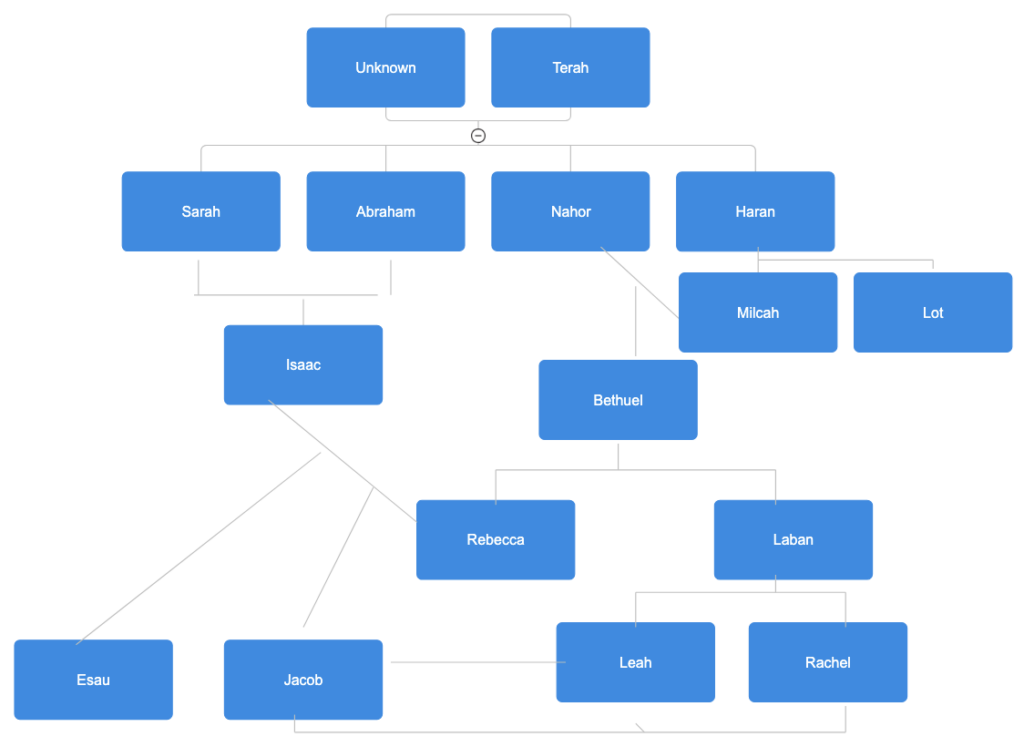
    Making the Connections

    Post

    To read a related devotion, click the button below.

    Resource

    Glossary

    How Do We Apply This?

    Post

    To read a related devotion, click the button below.

    Resource

    Glossary

    The ABCDs of Salvation

    If you have not become a believer in Christ, please read through the
    Plan of Salvation and prayerfully consider what God is asking you to do.

    A – admit our sins
    B – believe His Son Jesus is our Redeemer
    C – confess God as Sovereign Lord

    D – demonstrate that commitment by making any changes needed in our lives to live the way in which God has called us

    The Disciple’s Job Description

    Heading

    Heading

    Searching for and Seeking God

    Non-believers search for God.
    Disciples seek Him.

    Hearing His Word (Rom. 10: 17)
    Reading His Word (Rev. 1: 3)
    Praying to Him (Heb. 4: 16)
    Studying His Word (Ac. 17: 11)
    Meditating on His Word (Ps. 1: 1-2)
    Memorizing His Word (Ps. 119: 11)

    It Was Enough
    Vocalist: Elaine Guthals
    Keyboard: Chris Vieth

    Person of Interest

    Fun Fact

    Verse Commentary

    Related Links

    Artist

    Related Links

    I have created a worksheet of the questions above. Click on the button below to access it.

    Don’t know what your spiritual gifts are?

    Take this Spiritual Gifts Inventory

    The Disciple’s Job Description

    Complete Job Description

    Individual Description

    The Disciple’s Job Description

    Complete Job Description

    Individual Description

    Job Duty #4
    Proclaim the Gospel (Mark 16: 15)

    Job Duty #6
    Make Disciples (Matthew 28: 19-20)

    If you don’t understand something and would like further clarification, please contact me.

    If you have not signed up for the email providing the link to the devotions and the newsletter, do so below.

    If God has used this devotion to speak with you, consider sharing it on social media.
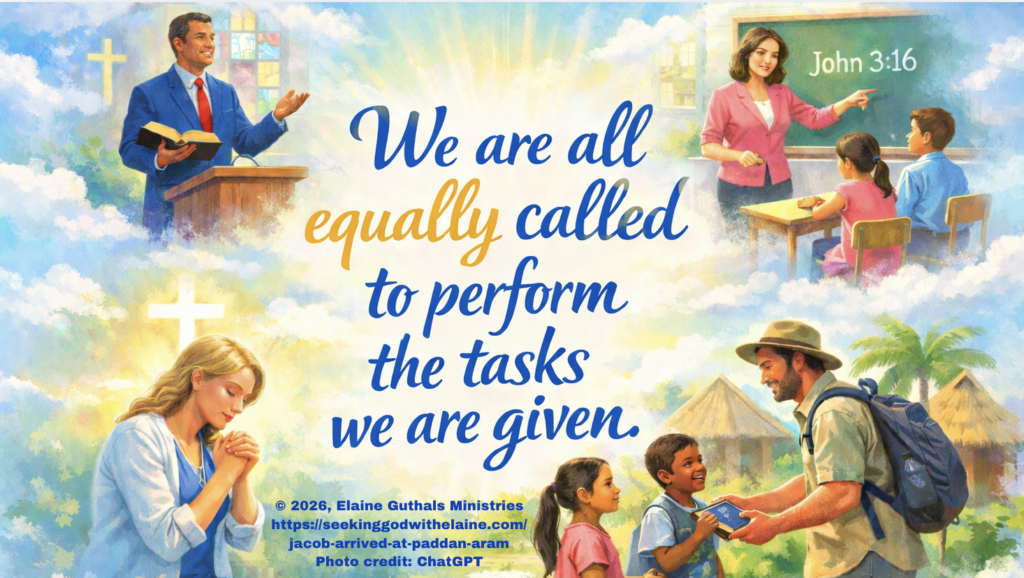
  • Isaac Moved to Gerar

    We finally have a chapter that focuses solely on Isaac. This devotional reading looks at his move to Gerar when a famine occurred.

    Nuggets

    • A severe famine in Canaan necessitated that Isaac leave to find food.
    • Abraham had lived Gerar before, but Isaac hadn’t.
    • No, this is not the same Abimelech from Abraham’s time.
    • Jehovah stopped Isaac from going to Egypt.
    • Since it was the first – and only – direct communication that we know about, God reconfirmed the covenant promises He made to Abraham.
    • Jehovah reiterated that all nations will be blessed through Isaac’s descendants.
    isaac-moved-to-gerar

    This chapter is out of place. There is no way that Isaac is going to pass off Rebekah as his sister if they have two kids — especially if they are at least 15.

    Not happening.

    But we can still learn from it even if time jumped.

    Let’s Put It into Context

    To read devotions in the Creating Everything theme, click the button below.

    Devotions in the Isaac the Patriarch series

    Another Famine

    “A severe famine now struck the land, as had happened before in Abraham’s time. So Isaac moved to Gerar, where Abimelech, king of the Philistines, lived” (Gen. 26: 1 NLT)

    A severe famine in Canaan necessitated that Isaac leave to find food.

    What? Have we gotten stuck in a time loop? Haven’t we heard this story before.

    Well, yes, we have; but no, we haven’t.

    Back in Genesis 20, Abraham moved to Gerar. We aren’t told why he moved. Being a nomad, he probably moved to find better pastureland.

    Back in Genesis 12, Abraham moved to Egypt. That one was because of a famine.

    Neither move turned out well — and for the same reason Isaac’s didn’t.

    Famine

    Let’s focus on the famine a second. Dykes had a great description of the land. He wrote, “Another characteristic which qualified Palestine to be a training ground for the Hebrews was this: that it combined to an unusual degree high agricultural fertility with exposure to sudden and severe disasters.”

    Resource

    That sounds like the possibility of a famine is very real.

    Gerar

    Abraham had lived Gerar before, but Isaac hadn’t.

    Well, maybe. Maybe not. We figured when Abraham’s fiasco happened with his Abimelech that Sarah was just about to or just had become pregnant.

    We are only told of Isaac living two places before this. He was born in Hebron. When he became an adult, he moved to Beer-lahai-roi.

    Abimelech

    No, this is not the same Abimelech from Abraham’s time.

     Same title, different person. Remember, Abimelech wasn’t only a name. It was also a title that meant my father is king. So, we take it that this Abimelech’s father the king died making him, the prince, king.

    God’s Promise to Isaac

    “The Lord appeared to Isaac and said, ‘Do not go down to Egypt, but do as I tell you. Live here as a foreigner in this land, and I will be with you and bless you. I hereby confirm that I will give all these lands to you and your descendants, just as I solemnly promised Abraham, your father. I will cause your descendants to become as numerous as the stars of the sky, and I will give them all these lands. And through your descendants all the nations of the earth will be blessed. I will do this because Abraham listened to me and obeyed all my requirements, commands, decrees, and instructions’” (Gen. 26: 2-5 NLT)

    Jehovah stopped Isaac from going to Egypt.

    It sounds like Isaac was headed to Egypt. I can see two reasons for doing that. He would have been following in Abraham’s footsteps. He may have been trying to get as far away from the famine as he could, and he knew it was a bad one. It was “… as had happened before in Abraham’s time …” (Gen. 26: 1 NLT).

    Bradford said that the route Isaac took would have been a well-established trade route connecting Canaan to Egypt. This would have taken them through Philistine land.

    Resource

    Going to Gerar would have been logical – especially if that was where a major trade route could be caught. Since it was where the king lived, it would be a safe bet that the cities had food stored there, as most of the taxes were probably paid in grain or produce.

    The Lord Appeared

    The Hebrew word used, va-yerah, is the verb translated appeared. This means it is not simply physical vision alone but an encounter with God. They interacted together.

    Resource

    Yeah, don’t we wish we had a relationship with Jehovan like that?

    God directed Isaac. This is the first — and only — time we read of God communicating directly with Isaac.

    • Isaac prayed to Jehovah for a child, and He answered his prayer – we just aren’t told this was done verbally (Gen. 25: 21).
    • When Jehovah identified two sons in Rebekah’s womb, He was talking to her, not Isaac (Gen. 25: 23).

    Jehovah instructed Isaac to live as a foreigner in the land. I take that to read, “Don’t get comfortable — this is temporary.”

    Think about that. Isaac is probably seeing the situation deteriorating in Beer-lahai-roi. If he was planning on keeping going south, it would be logical to think the famine wasn’t getting better.

    And here is Jehovah saying, “Stop forward movement. Plant yourself here.”

    Bradford was right. This was Isaac’s time of testing.

    Is Isaac going to follow Jehovah’s direction, or is he going to make the decision on his own?

    But look at the map again. It wasn’t that far away.

    Rebekah, maybe some of the livestock wranglers, and household servants were thinking Isaac had a screw loose for stopping so early.

    Isaac passed the test.

    But let’s chase a rabbit for a second. We aren’t told how old Isaac was when the trip occurred. We said it was probably pre-twins.

    If it were pre-twins, that means Abraham was still alive. If Jacob was cooking because mourning practices said Rebekah couldn’t, this was at a minimum 15 years before Abraham’s death.

    We aren’t told that Abraham moved with Isaac.

    The Covenant Renewed

    Since it was the first – and only – direct communication that we know about, God reconfirmed the covenant promises He made to Abraham.

    If the was the very first time Jehovah talked to Isaac, he may have been wondering about his role in the covenant. We know Jehovah can speak to more than one person at a time, but I doubt the covenant would have officially transferred yet.

    Even if Jehovah would have conversed with Isaac prior to this, that doesn’t mean he didn’t question Jehovah’s continued presence. We said that was what Abraham’s problem was at the beginning of Genesis 15.

    We sure do that. How many times have we asked, “Hey, God. Where are you?”

    Let’s head at this from a covenant perspective. Land had long been a part of the covenant.

    But we aren’t told that Isaac had any more land than Abraham did. We know Abraham would have had the burial cave because Rebekah arrived on the scene after Sarah’s death.

    What better time for Jehovah to appear than when Isaac was fixing to leave the Promised Land? And He stopped him from leaving it.

    Nations of the Earth Will be Blessed

    Jehovah reiterated that all nations will be blessed through Isaac’s descendants.

    Something Bradford said got me digging. He said the Hebrew actually says will bless themselves.

    Resource

    Wait! What?!?!?!

    There is no way that we can save ourselves – which is what blessed means. So, what is this talking about?

    This is like the word trust. We’ve talked before that where our versions use the word faith, the Hebrew versions use the word trust. That means belief alone isn’t what is being discussed. It is the belief that triggers an action – obedience.

    This is something similar. It does say all nations will bless themselves. What that means is that the through you makes them the standard.

    • “And through your descendants all the nations of the earth will be blessed—all because you have obeyed me” (Gen. 22: 18 NLT emphasis added).
    • “I will cause your descendants to become as numerous as the stars of the sky, and I will give them all these lands. And through your descendants all the nations of the earth will be blessed.” (Gen. 26: 4 NLT emphasis added).
    • “Your descendants will be as numerous as the dust of the earth! They will spread out in all directions — to the west and the east, to the north and the south. And all the families of the earth will be blessed through you and your descendants” (Gen. 28: 14 NLT emphasis added).

    Look what Paul said about this. We talked about how the Jews thought salvation came through Abraham instead of Yeshua. Paul said, “Nope.”

    • “The real children of Abraham, then, are those who put their faith in God” (Gal. 3: 7 NLT).
    • “So all who put their faith in Christ share the same blessing Abraham received because of his faith” (Gal. 3: 9 NLT).

    Making the Connections #1

    Abraham and Isaac have a covenant with Jehovah. Wouldn’t that mean trials like this famine wouldn’t happen?

    No, that would mean Jehovah was after a prosperity gospel.

    I have to process what Robertson said. He started by equating our lives with Canaan. Here’s what I think in Elaine-speak with Elaine-opinion mixed in.

    • We have access to the covenant promises.
    • The idea that the covenant promises creates a utopia is fabricated.
    • That begs the question as to the validity of the promises.
    • Jehovah created the expectation of happiness.
    • But happiness does not always come from utopian experiences.
    • We learn more going through trials – such as perseverance and contentment.
    • The happiness stems from what Robertson called “… the habit of soul-communion with God.”

    Resource

    Doesn’t it feel like we have famines in our lives? Don’t those trials of famines lead to blessings?

    Making the Connections #2

    Okay, the famines happened to test both men. Both started for Egypt.

    Jehovah told Isaac to stop. He let Abraham go.

    Why?

    Robertson thought this was because, though they were father and son, they had different characters and circumstances.

    Look what Robertson said – and he added Jacob into the description. He wrote,

    “It is almost certain that Abraham, being a wise man and a man of faith, was permitted by God to judge for himself, and that Isaac was required to turn back that he might learn the duty of trust; and that Jacob was commanded to go forth in order to cure his love of the world, and to teach him that life is but a pilgrimage. Hence we arrive at a doctrine: duties vary according to differences of character.”

    Resource

    Doesn’t it feel like we have famines in our lives? Don’t those trials of famines lead to blessings?

    We say that we are given differing abilities. That means we have different needs for testings.

    Making the Connections #3

    Why was Jehovah doing this? Simple.

    “I will do this because Abraham listened to me and obeyed all my requirements, commands, decrees, and instructions’” (Gen. 26: 5 NLT).

    Nope. It had nothing to do with Isaac. Instead, “Understand, therefore, that the Lord your God is indeed God. He is the faithful God who keeps his covenant for a thousand generations and lavishes his unfailing love on those who love him and obey his commands” (Deut. 7: 9 NLT emphasis added).

    How Do We Apply This?

    • Recognize that – even in times of trials – Jehovah provides comfort.
    • Recognize that duty is prescribed differently among His children.

    Resources

    Father God. Thank You that You made a way for us to be blessed through Abraham and Isaac. May we learn from their obedience to see how we are to live for You. Help us to seek the happiness only found in You. Amen.

    If you don’t understand something and would like further clarification, please contact me.

    If you have not signed up for the email providing the link to the devotions and the newsletter, do so below.

    If God has used this devotion to speak with you, consider sharing it on social media.
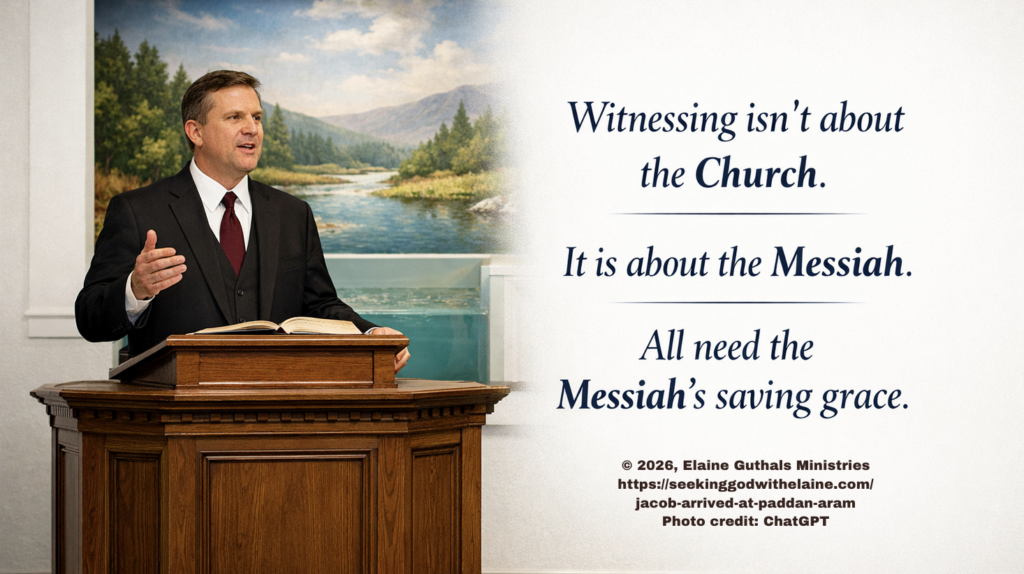
  • The Birth of Jacob and Esau

    Isaac has now become the Patriarch. This devotional reading looks at how Jehovah blessed him, including by answering his prayer for children.

    Nuggets

    • Because Isaac was the covenant son and obedient, Jehovah blessed him.
    • Based on the ages given and calculated, Abraham would have known the twins.
    • Rebekah suffered from barrenness.
    • Even before birth, the twins struggled with each other.
    • God flat out told Rebekah that her sons would be rivals.
    • Once again, Jehovah chose a younger son over the firstborn.
    • The birth occurred as Jehovah said.

    In the middle of talking about Abraham’s death and closing the book on Ishmael, we had one verse about Isaac. Since the story from Genesis 25 to 26 is about Isaac, we left that verse until now.

    What we’ve seen so far about Isaac is that he was a reflective, peaceful man. He went out into the country to meditate.

    Isaac was obedient to his father Abraham. He was obedient to his Father Jehovah when He told Abraham to sacrifice Isaac to Him. As Isaac was anywhere from 15 to 30 years old, he could have easily overpowered his 115- to 130-year-old father.

    Isaac was obedient to Jehovah.

    Let’s Put It into Context

    To read devotions in the Creating Everything theme, click the button below.

    Devotions in the Isaac the Patriarch series

    Transition from Abraham to Isaac

    “After Abraham’s death, God blessed his son Isaac, who settled near Beer-lahai-roi in the Negev” (Gen. 25: 11 NLT)

    God Blessed Isaac

    Because Isaac was the covenant son and obedient, Jehovah blessed him.

    Abraham lived 175 years. Isaac lived 180 years. Jacob lived 147 years.

    We got 15 chapters about Abraham. We got 24 chapters about Jacob.

    But we only a few snippets about Isaac.

    • Genesis 17 where he is born as the covenant child.
    • Genesis 22 where he is slated to be sacrificed – but that was about Abraham’s obedience.
    • Genesis 24 where someone else is finding a wife for him, and he showed up for the wedding — but that is mostly Abraham’s story.
    • Genesis 25 where he buried his father and continued the covenant line through the birth of his sons.
    • Genesis 26 where he had problems with people.
    • Genesis 27 where he can’t really tell his kids apart — but that is really Jacob’s story.
    • Chapter 28 where he sent Jacob off to find a wife — but that is really Jacob’s story.
    • Chapter 35 where he died.

    Yep, Isaac lived the longest, but he got the least amount written about him.

    That is backwards to the way we think, isn’t it? Isaac, as a Patriarch, was an important man. He was good — and he didn’t die young. There should have been at least ten chapters on him at a minimum, right?

    Pearse had a great way of looking at it. He wrote,

    “God is the God of Abraham. Yes, we do not wonder at that — Abraham the hero, the warrior, the father and founder of great nations — the man of such gifts and such achievements. But God is the God of Isaac, too — the God of the quiet uneventful life. The heavenly Father hath room in His heart for all His children.”

    Resource

    Pearse made the point that we need the Abraham’s as well as the Isaac’s. He called him common.

    I can see that. We need followers as well as leaders. We need the consistent worker as well as the high-profile.

    I think Jehovah would call this being sober minded. Being sober is a character trait distinguished by self-control, genuineness, and sound moral judgment.

    There are no big highs. There are no big lows. There is just consistent faith in Sovereign God.

    Beer-lahai-roi in the Negev

    Isaac lived by the well where Hagar saw Jehovah.

    The New Living Translation is missing something. “… and Isaac dwelt by the well Lahairoi” (Gen. 25: 11 NLT). The version we used didn’t mention the well.

    But we knew that because we talked about where Isaac lived after Eliezer got back from Paddam-Aram. “Meanwhile, Isaac, whose home was in the Negev, had returned from Beer-lahai-roi” (Gen. 24: 62 NLT)

    We talked then that Be’er-Lachi Roi (also called Kadesh-barnea) was where Hagar ended up by the well when she was running away from Sarah.  “… She [Hagar] said, ‘You are the God who sees me.’ She also said, ‘Have I truly seen the One who sees me? So that well was named Beer-lahai-roi (which means ‘well of the Living One who sees me’) …” (Gen. 16: 13-14 NLT).

    Possibly one of the reasons Isaac lived here and not Hebron with his father was that he also owned flocks and herds. They may have been separated for the same reason Lot separated from Abraham — there were not enough resources to handle two flocks.

    The Birth of Jacob and Esau

    “This is the account of the family of Isaac, the son of Abraham. When Isaac was forty years old, he married Rebekah, the daughter of Bethuel the Aramean from Paddan-aram and the sister of Laban the Aramean. Isaac pleaded with the Lord on behalf of his wife, because she was unable to have children …” (Gen. 25: 19-21 NLT)

    When Isaac Was Forty Years Old

    Based on the ages given and calculated, Abraham would have known the twins.

    If Isaac was 40 years old when he married Rebekah, Abraham was 140. Since Abraham died at 175, his demise had not been impending when he sent Eliezer to find Isaac a wife.

    Abraham did live to see his grandchildren. Isaac was 60 when they were born, making Abraham 160.

    She Was Unable to Have Children

    Rebekah suffered from barrenness.

    It is interesting that Rebekah was considered barren. She probably would have been about 13 when she and Isaac were married, making her probably 33 when her children were born.

    Look what Dods said. He wrote,

    “The intended mother of the promised seed was left for twenty years childless — to contend with the doubts, surmises, evil proposals, proud challengings of God, and murmurings, which must undoubtedly have arisen even in so bright and spirited a heart as Rebekah’s. It was thus she was taught the seriousness of the possession she had chosen for herself, and gradually led to the implicit faith requisite for the discharge of its responsibilities. … It is a humbling thing to stand in-some other person’s way; but if it is by no fault of ours, but in obedience to affection or conscience we are in this position, we must, in humility and patience, wait upon Providence as Rebekah did, and resist all morbid despondency.”

    Resource

    Did Rebekah have second thoughts about marrying Isaac? She had no doubts when she agreed to the marriage.

    Bradford noted that this barrenness meant no children were born, not just daughters. It seems strange that Jehovah said, “I’ll make your descendants a nation,” and Sarah, Rebekah, and Rachel dealt with the inability to produce children.

    Resource

    Still, Isaac, however, did not approach a solution the way Abraham and Sarah did. He didn’t acquire concubines.

    Isaac prayed to Jehovah. He waited on Him.

    Did Isaac remember his birth? He was an answer to prayer to a barren couple.

    But then, neither Isaac nor Rebekah were beyond childbearing age. In fact, a CrossTalk article said Rebekah was within the typical childbearing age for her time.

    Resource

    So, the issue wasn’t that Rebekah couldn’t get pregnant. She just hadn’t yet.

    Rivalry in the Womb

    “… The Lord answered Isaac’s prayer, and Rebekah became pregnant with twins. But the two children struggled with each other in her womb. So she went to ask the Lord about it. ‘Why is this happening to me?’ she asked. And the Lord told her, ‘The sons in your womb will become two nations. From the very beginning, the two nations will be rivals. One nation will be stronger than the other; and your older son will serve your younger son’” (Gen. 25: 21-23 NLT)

    Struggled with Each Other in Her Womb

    Even before birth, the twins struggled with each other.

    Esau and Jacob were a handful even before they were born. They fought each other inside the womb. This activity was definitely not normal.

    This translation sugarcoats their struggles and Rebekah’s frame of mind. “The children fought with each other inside her so much that she said, “If it’s going to be like this, why go on living?” So she went to inquire of ADONAI” (Gen. 25: 22 CJB).

    The Orthodox Jewish Bible is more descriptive in referring to what the boys were doing. “And the banim struggled jostling within her; and she said, If it be well, why am I thus? And she went to inquire of Hashem” (Gen. 25: 22 OJB).

    Hosea also described the conflict occurring in Rebekah’s body. “Even in the womb, Jacob struggled with his brother; when he became a man, he even fought with God. Yes, he wrestled with the angel and won. He wept and pleaded for a blessing from him. There at Bethel he met God face to face, and God spoke to him — the Lord God of Heaven’s Armies, the Lord is his name!” (Hos. 12: 3-5 NLT)

    Rebekah was getting despondent. If the boys didn’t get along prior to birth, how were they going to be after birth?

    Two Nations

    God flat out told Rebekah that her sons would be rivals.

    There was a good reason that the boys were struggling in their mom’s womb. That was going to be the story of their existence. In other words, don’t look for any relief any time soon.

    The two boys would be struggling for dominance for a good chunk of their lives.

    We should keep in mind as we go on with the story that God told Rebekah that Esau would serve Jacob. Bradford said something we have already noted. He wrote, “This is a theme that is ongoing in the Bible; a theme that separates what SEEMS to be from a physical-earthly sense, from what actually IS from spiritual-heavenly point of view”

    Resource

    Jehovah is once again separating His chosen people.

    Your Older Son Will Serve Your Younger Son

    Once again, Jehovah chose a younger son over the firstborn.

    At this point, some of us may begin to wonder why Jehovah even bothered with dedicating the firstborn to Himself. In the most important cases that we know of, that wasn’t the case.

    • God called Seth. He didn’t call Cain or Abel.
    • God called Abraham. He didn’t call Nahor and Haran, his older brothers.
    • God called Isaac. He did not call Ishmael, the firstborn.
    • God called Jacob. He did not call Esau, the firstborn.
    • God called Judah. He did not call Reuben, the firstborn.
    • God called Ephraim. He did not call Manasseh, the firstborn.
    • God called David. He did not call Eliab, Abinadab, Shimea, — or any of his other four brothers.

    In Esau and Jacob’s case, Esau was not even chosen to be called a Hebrew. How could that happen when they were twins?

    Easy. The distinction was made by Jehovah’s declaration based on being spiritual, not genealogy.

    So, being a Hebrew had nothing to do with physical birth. It was by declaration.

    Bradford reminded us that is what election means. It means being chosen by Jehovah by His sovereign decision.

    Resource

    But that doesn’t mean Jehovah would forget about Esau. Just as He did Ishmael, He said that Esau would be a separate nation. We know He kept His promise – Esau’s descendants are the Edomites. And just as Ishmael’s descendants, the Arabs, are in conflict with Israel, so too were the Edomites.

    Happy Birthday!

    “And when the time came to give birth, Rebekah discovered that she did indeed have twins! The first one was very red at birth and covered with thick hair like a fur coat. So they named him Esau. Then the other twin was born with his hand grasping Esau’s heel. So they named him Jacob. Isaac was sixty years old when the twins were born” (Gen. 25: 24-26 NLT)

    The birth occurred as Jehovah said.

    Back in Rebekah’s day, there were no sonograms so that science could confirm what Jehovah said. She had to wait until she gave birth.

    And, as always, things happened just as Jehovah said it would.

    The son they named Esau arrived first. I love how Bradford described him – “… loveable little fuzzball.”

    Resource

    Just because Esau wasn’t the covenant son didn’t mean he was lacking physically.

    But that also doesn’t mean Jacob didn’t do his best to be born first. Verse 26 says he came out grasping his brother’s heel.

    Isn’t Esau and Jacob’s birth a great visual of our struggle against sin?

    We tend to grasp onto sin. We don’t want to let it go – but then again, we don’t want it to get the best of us.

    Either way, we tend to hold on.

    But we know, in this instance, Jacob wanted to be the firstborn. He was trying to keep Esau back.

    Making the Connections #1

    Watt had a great observation about two principles Jehovah has— but to some it will seem like a contradiction. He wrote, “… (1) that God repeats Himself in His modes of training men; and (2) that God does not repeat Himself.”

    Resource

    Does Jehovah bless all His children? Emphatic YES! Does He bless us all in the same way? Emphatic NO!

     Our loving Heavenly Father blesses us the most by increasing our faith. He will bless each individual who genuinely seeks Him.

    Yeshua said that the Holy Spirit would be given to each of Jehovah’s children. And He does instruct us and correct us.

    But we are all on different places on our Sanctification Road. Each of our roads are made of bricks — experiences, testings — but those are different for each of us.

    Jehovah repeats Himself because it is one message. That message is that salvation can only be gained through Yeshua — and we all need it.

    Sometimes, we have to hear the same thing over and over again before we grab hold of it and make it our own. He wants to communicate with us as clearly as possible.

    We also need to hear things again for confirmation. We need that assurance. It is purposeful redundancy for our instruction.

    But Jehovah doesn’t repeat Himself. What if the only message we ever hear is salvation?

    Those who truly want salvation should be saying, “And then what?”

    Just preaching salvation and never getting to sanctification throws the new believer out into the world to stand up to Satan without giving them the tools to do so.

    Making the Connections #2

    Woolnough listed three habits Isaac possessed that we need.

    • Thought
    • Dealing with others
    • Home

    We talked a lot about Isaac’s habit of meditation. This is the process by which we take what Jehovah has revealed to us and decide how we are going to apply it to our lives.

    Woolnough explained what he meant by Isaac’s habit of dealing with others. He wrote, “But notably you feel in Isaac’s case what is that influence which leads a man to make ample and timely disposition of his secular affairs, that he may give himself more fully to better things.”

    Resource

    Home is very important to Jehovah, but we usually use a different word to describe it — families. Families within their homes have an important task assigned to them by Him.

    “And you must commit yourselves wholeheartedly to these commands that I am giving you today. Repeat them again and again to your children. Talk about them when you are at home and when you are on the road, when you are going to bed and when you are getting up. Tie them to your hands and wear them on your forehead as reminders. Write them on the doorposts of your house and on your gates” (Deut. 6: 6-9 NLT).

    Families are teach each other in Jehovah’s ways.

    Making the Connections #3

    We talked about Jehovah told Rebekah that Esau would serve Jacob. I have long baffled by the rest of the story.

    Didn’t Rebekah tell Isaac that Jacob was the covenant son? Wouldn’t that have been something that she would at least have dropped into a conversation with Isaac?

    Bradford said that if she did keep it to herself, she would have been disloyal and disrespectful. We don’t get that vibe from of their relationship.

    I could see a parent not telling a child that – especially the child not chosen. But the chosen one was Rebekah’s favorite.

    But Bradford was right. Imagine waiting until the boys were mature and telling Esau, “You’re not chosen.”

    Resource

    Part of me also says that Jehovah would not have just told Rebekah. He would also have told Isaac.

    How Do We Apply This?

    • Know that Jehovah will answer our prayers.
    • Accept Jehovah’s response to our prayer requests because they may contain temptation as well as mercy.

    Resource

    Father God. When You give us a nice, quiet life, You are with us. When You make us wait for Your timing, You are with us. When You fulfill Your promises, You are with us. In all circumstances — good or bad — You are with us. Thank You. Amen

    If you don’t understand something and would like further clarification, please contact me.

    If you have not signed up for the email providing the link to the devotions and the newsletter, do so below.

    If God has used this devotion to speak with you, consider sharing it on social media.