Blog

  • Party at Matthew’s House

    Matthew was so happy to be called as a disciple that he began witnessing to his friends. This devotional reading looks at the dinner he served at his house and how it affected Jesus’ relationship with the Pharisees.

    Nuggets

    • Matthew invited his new friends to share a meal with his old friends.
    • We’ve established why tax collectors were considered sinners.
    • In some ways, Pharisees were very flexible in their beliefs, and in some ways, they were very rigid.
    • Yeshua explained that this was His mission.
    • Yeshua answered the Pharisees by quoting Scripture, a frequent habit of His.
    • Ever since before Cain killed Abel, humans were offering sacrifices to Jehovah.
    • Some Jews thought the Messiah would come when the nation was righteous – had repented of their sins.

    Matthew may have been considered an outcast by many first-century Jews, but that didn’t mean he didn’t have friends, associates, and acquaintances. We know he did because he invited them to meet Yeshua.

    Let’s Put It into Context

    To read devotions in The Battle for the Heart theme

    Devotions in the The Early Ministry of the Messiah series

    Dinner at Matthew’s Home

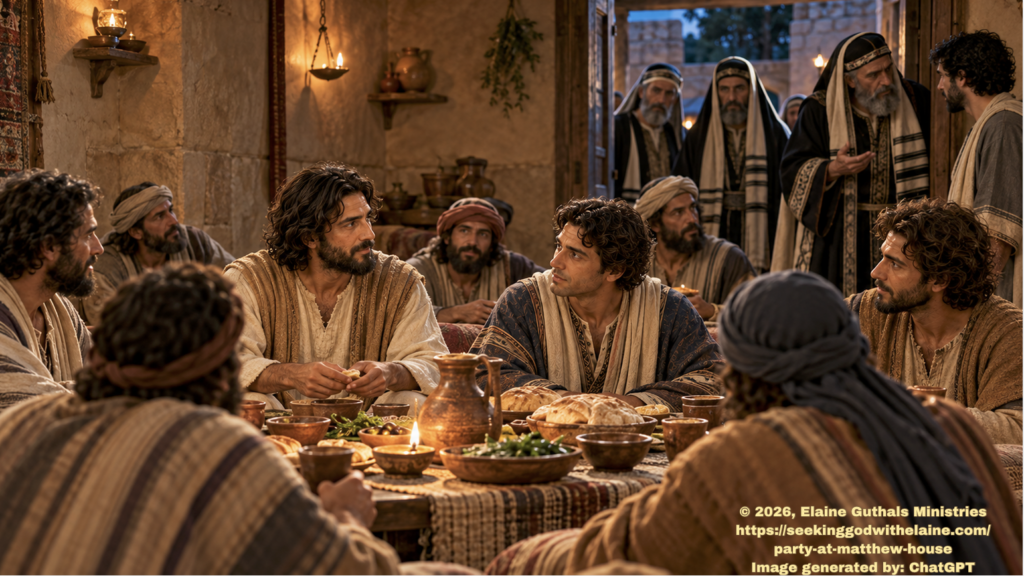
    “Later, Matthew invited Jesus and his disciples to his home as dinner guests, along with many tax collectors and other disreputable sinners. But when the Pharisees saw this, they asked his disciples, ‘Why does your teacher eat with such scum?’” (Mt. 9: 10-11 NLT)

    “Later, Levi invited Jesus and his disciples to his home as dinner guests, along with many tax collectors and other disreputable sinners. (There were many people of this kind among Jesus’ followers.) But when the teachers of religious law who were Pharisees saw him eating with tax collectors and other sinners, they asked his disciples, ‘Why does he eat with such scum?’” (Mk. 2: 15-16 NLT)

    “Later, Levi held a banquet in his home with Jesus as the guest of honor. Many of Levi’s fellow tax collectors and other guests also ate with them. But the Pharisees and their teachers of religious law complained bitterly to Jesus’ disciples, “Why do you eat and drink with such scum?” (Lk. 5: 29-30 NLT)

    Invited Jesus and His Disciples

    Matthew invited his new friends to share a meal with his old friends.

    We should have no doubt about the sincerity of Matthew’s faith.

    We need to understand the importance of sharing a meal in first-century Israel. Meals could express welcome, friendship, acceptance, and fellowship. Having a meal together was also part of establishing a covenant.

    When Matthew decided to host a dinner party at his home, he didn’t only invite Yeshua and the other disciples. He invited others. He wanted to share the Savior with others.

    Think about it. We don’t know if it was the same day as Matthew was called, later that week, or later that year.

    One of the excuses we use to not witness about Yeshua is that we don’t know enough Scripture in order to tell about Him. That shouldn’t stop us.

    Others can read Scripture for themselves. Yes, it is merely an introduction to Yeshua and Jehovah. They may need someone to interpret it for them.

    But our relationship with Jehovah doesn’t end in the pages of the Bible. It permeates our lives.

    Scripture may be the foundation or the core of our relationship with Him. But our transformation has to come from our hearts and flow out into our lives.

    It is this change in us that opens some doors for witnessing. We know what Jehovah has done in our lives.

    Along with Many Tax Collectors and Other Disreputable Sinners

    We’ve established why tax collectors were considered sinners.

    It was generally felt that they had been disloyal to Israel and Jehovah by working for the foreign oppressors and those who aligned themselves with them.

    But who were the other disreputable sinners?

    Don’t you just love it when writers don’t come out and expressly tell you what they mean with the terms they use?

    No, Matthew doesn’t tell us point blank what is meant here. We can, however, piece it together by other things said in Scripture and by the wording used here.

    The Greek word used in this passage is hamartōloi (ἁμαρτωλοί), the plural of hamartōlos. It refers to people characterized as sinners—those who sin or are regarded as sinful.

    Nope, circular definitions are not helpful at all.

    So, we have to look at how it was used back in the day. In first-century Jewish society, the word could refer to people who actually practiced wickedness. Wickedness, in biblical terms, meant something that violated God’s commandments.

    Generally, when this term is used, it encompasses several overlapping groups. While there is overlap, they were not identical.

    • Tax collectors
    • People who openly violated the Torah
    • People who didn’t live according to the Pharisees’ understanding of faithful observance
    • People regarded as religious or social outsiders

    Those who openly violated Torah were liars, oppressors, and those who were sexually immoral, to name a few. That carried a serious moral meaning.

    But it was more than merely not following what was written in Torah. The Pharisees felt those who didn’t follow their interpretation of Scripture were religiously deficient. Later, these people were described as a’aretz (עַם הָאָרֶץ), literally people of the land.

    Being considered an outsider meant those people were placed outside the religious community because of their behavior or way of life. Shepherds were one group considered outsiders. Being a broad label meant this term could communicate disapproval and distance without specifying one particular offense.

    When the Pharisees Saw This

    In some ways, Pharisees were very flexible in their beliefs; and in some ways, they were very rigid.

    Pharisees were very lenient in their interpretation of Torah. They believed the oral tradition superseded the written law.

    But most refused to change their beliefs when confronted by the Messiah.

    When the Pharisees saw the other participants in the meal, they saw a Rabbi accepting the condition of known sinners. No faithful teacher – in their mind – would cross these boundaries.

    It was obvious that Pharisees were not interested in redeeming their Jewish brothers who had become tax collectors. Then there was no way, in my opinion, they would want to see Gentiles converted to Judaism.

    Why did they feel this way?

    We tend to see this as – in their eyes – being an issue of clean/unclean. We aren’t told that in this passage, but there are other passages where we do see this issue.

    We also may think that the Pharisees operated under a belief that someone must remain in a state of spiritual purity every moment. This doesn’t say that either.

    We would say, “Good thing.” They would have become unclean because they broke one of the laws or commandments – we would call that sin. We know that, even after conversion, we continue to sin.

    So, it is good to know that perfection wasn’t required.

    One way we can read this is that the Pharisees were more interested in their own relationship with Jehovah than someone else’s. The unspoken conclusion made by the Pharisees was, “Interaction with someone who is unclean makes us unclean.”

    By Yeshua’s response, that may be getting more toward His take.

    Healthy or Sick People

    “When Jesus heard this, he said, ‘Healthy people don’t need a doctor — sick people do’ Then he added, ‘Now go and learn the meaning of this Scripture: “I want you to show mercy, not offer sacrifices.” For I have come to call not those who think they are righteous, but those who know they are sinners’” (Mt. 9: 12-13 NLT)

    “When Jesus heard this, he told them, ‘Healthy people don’t need a doctor — sick people do …’” (Mk. 2: 17 NLT)

    “Jesus answered them, ‘Healthy people don’t need a doctor — sick people do’” (Lk. 5: 31 NLT)

    Healthy People Don’t Need a Doctor

    Yeshua explained that this was His mission.

    I can see Yeshua mentally shaking His head, wondering, “Do they really think a doctor is going to stay away from a sick person because s/he is sick?”

    No, precisely because they were sick, they needed a Physician. And Yeshua is the Great Physician.

    Learn the Meaning

    Yeshua answered the Pharisees by quoting Scripture, a frequent habit of His.

    When we read the Scripture used, we might be a little taken aback. That is especially true when it says something we didn’t expect it to say.

    “I want you to show love, not offer sacrifices. I want you to know me more than I want burnt offerings” (Hos. 6: 6 NLT).

    That is no more than we usually get. But remember, they memorized everything, so they had a shorthand when referring to a passage. They only said the beginning even though they were talking about the whole passage.

    But wait a second. Should it be translated as mercy or love? Let’s check out the Hebrew Scripture.

    The terms used there are hesed (or chesed depending on the transliteration) and zevach. Hesed (חֶסֶד) is related to grace conceptually, but it should not simply be treated as another Hebrew word for grace. It emphasizes steadfast kindness, covenant loyalty, faithful love, and lovingkindness.

    These weren’t just warm, fuzzy emotions. They affected how they treated others.

    Let’s look at loyalty, kindness, and faithfulness.

    • Loyalty: A person does not abandon a relationship simply because circumstances become inconvenient.
    • Kindness: Loyalty is demonstrated through actions that benefit the other person.
    • Faithfulness: The person acts consistently with the relationship and the obligations it entails.

    Loyalty talks about commitment to others even if the cost of that commitment is high. That overlaps with steadfast kindness.

    Kindness is more than being pleasant to someone or doing them a favor. It talks about wanting better for the other person. That overlaps with our choice to be faithful.

    Faithfulness involves the responsibilities needed to protect the relationship.
    Not Offer Sacrifices

    Ever since before Cain killed Abel, humans were offering sacrifices to Jehovah.

    Zevach (זֶבַח) means sacrifice or sacrificial offering. It refers to an offering made by slaughtering an animal, often as part of worship or covenant observance. Jehovah isn’t saying that sacrifice has no purpose. He’s emphasizing that sacrificial observance must not replace the covenant loyalty and faithful love He desires from His people.

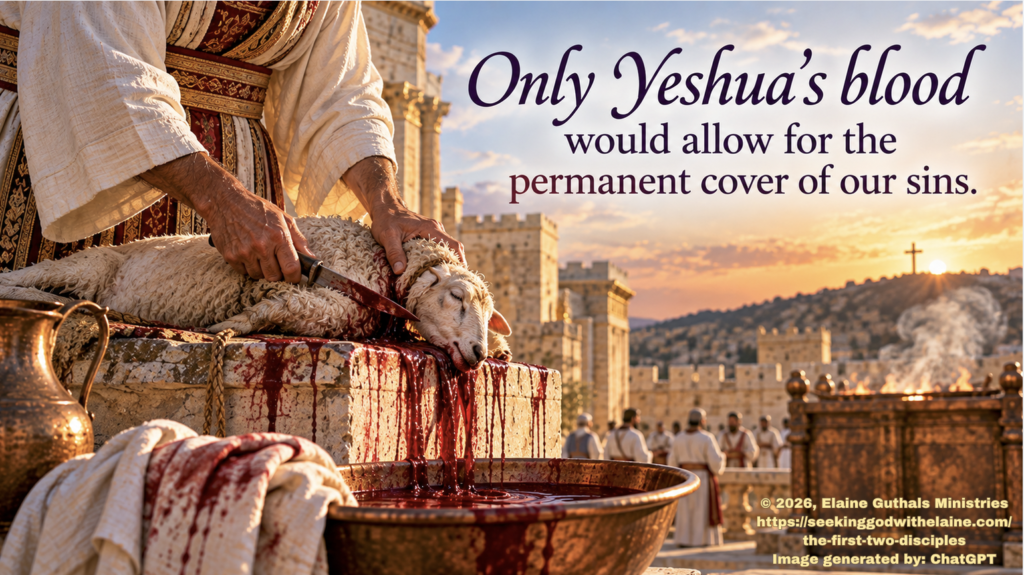
    Once humans sinned, we lost God’s presence. The blood of the sacrifices covers the sin so we can come into Jehovah’s presence again.

    We can pray, repent, and try to get ourselves back into Jehovah’s good graces. But if we don’t do it through the blood of Yeshua, we can’t come before His throne.

    We might think it strange that this passage downplayed the Old Testament provision for sacrifices. When we think of sacrifices, we may think first of burnt offerings.

    Those sacrifices were offered for a variety of important reasons. Some were for the purpose of atoning for sin. Others expressed gratitude and worship. They solidified and reinforced the covenant between Jehovah and His people. They signified obedience and commitment.

    We know now that Yeshua was saying that a relationship with Jehovah is more important than killing animals. That relationship can only happen because of Yeshua’s blood.

    Before, those sacrifices were the only way humans could interact with Sovereign God. Once sin entered into humans, we couldn’t approach Him.

    But that still didn’t diminish Jehovah’s desire to have a covenant relationship with us. He provided a way to make that relationship possible – He sent His Son to die for us.

    We know now what the Pharisees didn’t know then. In AD 70, the Temple would be destroyed. The practice of sacrifices would cease.

    Calling Sinners

    “For I have come to call not those who think they are righteous, but those who know they are sinners” (Mt. 9: 13 NLT

    “… I have come to call not those who think they are righteous, but those who know they are sinners” (Mk. 2: 17 NLT)

    “I have come to call not those who think they are righteous, but those who know they are sinners and need to repent” (Lk. 5: 32 NLT)

    Some Jews thought the Messiah would come when the nation was righteous – had repented of their sins.

    Some first-century Jews thought that the Messiah would come when the nation was obedient to Jehovah. The Qumran community particularly emphasized that strict observance of the law was essential to the Messiah’s coming and expected two messianic figures — one royal and one priestly.

    Some find being righteous a difficult concept to understand. They want to whittle it down to being right.

    The Hebrew word that we translate as righteous is tzaddik (צַדִּיק). It is another word with a circular definition, meaning righteous or a righteous person.

    The meaning that helps us is one who conforms to God’s standards. This is more than merely doing the do’s and not doing the don’ts.

    Only Jehovah can declare someone righteous. One is only righteous when the outer character matches the inner person.

    Making the Connections #1

    I can see why the Pharisees considered were religiously deficient were later called people of the land. It harkens back to the past.

    Ever since they were waiting on the bank of Jordan River to cross into the Promised Land, the Israelites were told to not associate with the citizens of the countries they were to overthrow. They were told to be separate.

    “When the Lord your God hands these nations over to you and you conquer them, you must completely destroy them. Make no treaties with them and show them no mercy. You must not intermarry with them. Do not let your daughters and sons marry their sons and daughters, for they will lead your children away from me to worship other gods. Then the anger of the Lord will burn against you, and he will quickly destroy you” (Deut. 7: 2-4 NLT).

    I can see that they would begin to see the Canaanites as the people of the land – the land that they were promised.

    This may be a connection that only I see. To me, however, I see them transferring Jehovah’s condemnation of those not His own – the people who owned the land – to those in Yeshua’s time who were not Jehovah’s people.

    Making the Connections #2

    One of Jesus’ responses to the Pharisees and Torah-teachers was that healthy people don’t need a doctor — sick people do. He was confirming that sin is a disease.

    However, we can take that too far sometimes. We tend to want to believe that we have no choice in getting sick.

    Well, technically, that is the case. “When Adam sinned, sin entered the world. Adam’s sin brought death, so death spread to everyone, for everyone sinned” (Rom. 5: 12 NLT).

    That is why Yeshua said, “There is no judgment against anyone who believes in him. But anyone who does not believe in him has already been judged for not believing in God’s one and only Son” (Jn. 3: 18 NLT).

    Believing is a choice. “But to all who believed him and accepted him, he gave the right to become children of God.  They are reborn — not with a physical birth resulting from human passion or plan, but a birth that comes from God” (Jn. 1: 12-13 NLT).

    Making the Connections #3

    Look what Yeshua didn’t say.

    • He did not say, “There is no such thing as sin.”
    • He did not say, “It does not matter how people live.”
    • And He did not say, “The Torah no longer matters.”

    In the Sermon on the Mount, Yeshua told us exactly what He came to do.

    “Don’t misunderstand why I have come. I did not come to abolish the law of Moses or the writings of the prophets. No, I came to accomplish their purpose. I tell you the truth, until heaven and earth disappear, not even the smallest detail of God’s law will disappear until its purpose is achieved. So if you ignore the least commandment and teach others to do the same, you will be called the least in the Kingdom of Heaven. But anyone who obeys God’s laws and teaches them will be called great in the Kingdom of Heaven” (Mt. 5: 17-19 NLT).

    Salvation in Yeshua doesn’t take away our need to understand and follow the Old Testament.

    Heart Check

    Think about the battle Yeshua is engaged in for your heart. Ask yourself the following questions.

    • Do I show mercy to sinners, or do I avoid them?
    • Do I help others understand Scripture, or do I judge them for not understanding?
    • Do I examine my heart, or am I satisfied with outward obedience?
    • Do I share what Yeshua has done for me, or do I hold back because I don’t know enough Scripture?

    How Do We Apply This?

    • Look beyond a person’s reputation and see someone who needs Yeshua.
    • Show hesed through kindness, loyalty, and faithfulness.
    • Examine our hearts, not just our outward behavior.
    • Share what Yeshua has done in our lives, even when we don’t have all the answers.
    • Practice mercy without dismissing sin or abandoning Jehovah’s standards.

    Father God. We see the Pharisees’ reaction to Yeshua associating with sinners. Sometimes, we see Your children associating with those we consider sinners and react the same way. Help us to look at others through Your eyes and recognize their need to have a relationship with You. Amen.

    If you don’t understand something and would like further clarification, please contact me.

    If you have not signed up for the email providing the link to the devotions, do so below.

    If God has used this devotion to speak with you, consider sharing it on social media.
  • Matthew the Publican

    If first-century Jews thought fishermen were strange disciples for the Messiah, they really wondered about His calling a tax collector to follow Him. This devotional reading looks at who Matthew was.

    Nuggets

    • Yeshua was at the Sea of Galilee outside of Capernaum.
    • The man Yeshua called to be a disciple was known by two names.
    • Tax collectors as a profession were seen as traitors and unclean.
    • Yeshua calls us to follow Him away from who we are.
    • Matthew, Mark, and Luke don’t spell out how much time transpired between the “follow Me” and the get-up-and-go.

    We are going through and looking at how Yeshua called His Apostles to be His disciples. We aren’t given this information for many of them.

    One we do know how he was called is Matthew. That may be because he was a tax collector on the job when he was called.

    Three of the four Gospels carry the description. They are mainly similar — but where there is a difference, it is a fairy big one3.

    Let’s Put It into Context

    To read devotions in The Battle for the Heart theme

    Devotions in the The Early Ministry of the Messiah series

    Finding and Calling Matthew

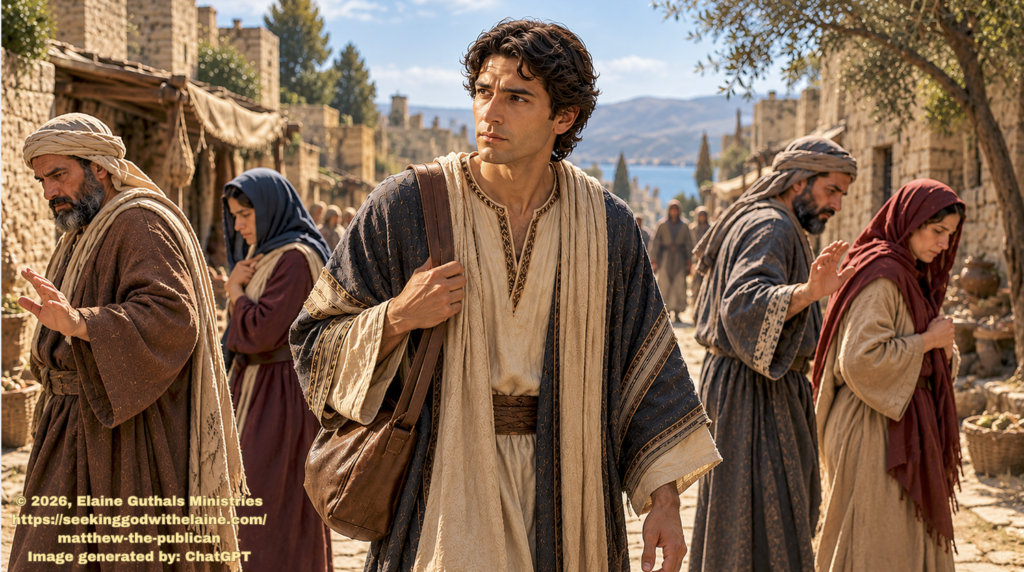
    “As Jesus was walking along, he saw a man named Matthew sitting at his tax collector’s booth. ‘Follow me and be my disciple,’ Jesus said to him. So Matthew got up and followed him” (Mt. 9: 9 NLT)

    “Then Jesus went out to the lakeshore again and taught the crowds that were coming to him. As he walked along, he saw Levi son of Alphaeus sitting at his tax collector’s booth. ‘Follow me and be my disciple,’ Jesus said to him. So Levi got up and followed him” (Mk. 2: 13-14 NLT)

    “Later, as Jesus left the town, he saw a tax collector named Levi sitting at his tax collector’s booth. ‘Follow me and be my disciple,’ Jesus said to him. So Levi got up, left everything, and followed him” (Lk. 5: 27-28 NLT)

    As Jesus Was Walking Along

    Yeshua was at the Sea of Galilee outside of Capernaum.

    If we go back in Luke a couple of verses, the last reference of location was in an unnamed surrounding village of an unnamed village. “In one of the villages …” (Lk. 5: 12 NLT).

    However, all three of the Gospel accounts place this encounter after the man being lowered through the room to be healed (Mt. 9: 1-8; Mk. 2: 1-12; Lk. 5: 17-26). Matthew said that miracle occurred soon after Yeshua had returned to “… his own town” (Mt. 9: 1 NLT).  Mark specifically said they had returned to Capernaum (Mk. 2: 1).

    We aren’t told the how or why Yeshua went from “Soon the house where he was staying …” (Mk. 2: 2 NLT) to “Later, as Jesus left the town …” (Lk. 5: 27 NLT).

    It gets a little more interesting with what Mark said. “Then Jesus went out to the lakeshore again and taught the crowds that were coming to him” (Mk. 2: 13 NLT).

    Matthew (Mattityahu)/Levi

    The man Yeshua called to be a disciple was known by two names.

    As with most of the Apostles, we really don’t know much about Matthew – even what his name really was. The Book of Matthew called him Matthew, but Mark and Luke called him Levi.

    Why the difference?

    Well, to be honest, we just don’t know because Scripture doesn’t tell us. Biblical scholars have taken a shot at addressing it.

    Maybe he was known by both the name Matthew and the name Levi. Jewish people could use more than one name in different settings.

    Maybe Levi was given the new name of Matthew. We aren’t told that Yeshua renamed Levi as He did Simon.

    But look at this. Luke and Mark call him Levi when he is at his tax collector’s booth (Lk. 5: 27; Mk. 2: 14). However, in the list of the twelve Apostles, both call him Matthew (Lk. 6: 15; Mk. 2: 18).

    Could Matthew the tax collector and Matthew the Apostle be two different men? Yes, since Mark calls the tax collector the son of Alphaeus (Levi Ben Chalfai). Neither Mark nor Luke list his father in the list of Apostles.

    They do list James in the list as the son of Alphaeus. (Does that make Matthew and James brothers? Who knows!)

    In the Orthodox Jewish Bible, both do say Levi (Mattityahu) in Mark 2: 15 and Luke 5: 27.

    Does this prove Matthew and Levi were the same men? Maybe. Maybe not.

    Sitting at His Tax Collector’s Booth

    Tax collectors as a profession were seen as traitors and unclean.

    To first-century Jews, any Jew who purchased a job as a hated the tax collector was working for the opposition. Roman citizens themselves usually didn’t serve as tax collectors. This job was outsourced to contractors who paid the empire in advance for the right to collect taxes in a given region.

    The region, however, was ruled by Herod Antipas. H could have also been collecting revenue through his own tax system. Matthew may have worked for him.

    That wouldn’t have gone over any better with Capernaum’s citizens.

    By purchasing their post, tax collectors would have been seen as collaborating with foreign domination. Don’t miss what that means.

    Matthew would have paid everyone’s taxes for them and was getting paid back as he collected the taxes from the people.

    True, that left tax collectors to charge whatever amount they wanted. I am sure some did charge an exorbitant amount.

    Their handling of the Roman coinage would have had religious implications if that made them unclean.

    All that taken together would have been seen as covenant betrayal. That was why tax collectors were often groups with sinners, prostitutes, robbers, and other morally suspect individuals. They were often excluded from participation in the synagogue life.

    In truth, we can’t say that all of them were traitors. Some may have been ethical and charged only a little over what was required by Rome.

    We might call that extra amount earning their wage for the job performed. We might call it interest on the loan.

    But it also meant that the system was structurally incentivized overcollection and abuse, contributing to widespread resentment.

    But let’s put it into context. There were land taxes, poll taxes, customs duties, fishing tariffs, and transit tolls. Remember, Capernaum was located along trade routes.

    Capernaum was located near a territorial boundary. That would accounted for the transit tolls.

    The fisherman encountered taxation different jurisdictions governing around the lake. Each jurisdiction would want to tax anything that came through.

    Follow me

    Yeshua calls us to follow Him away from who we are.

    We talked about what Yeshua is calling us to. Let’s look at what He is calling us from.

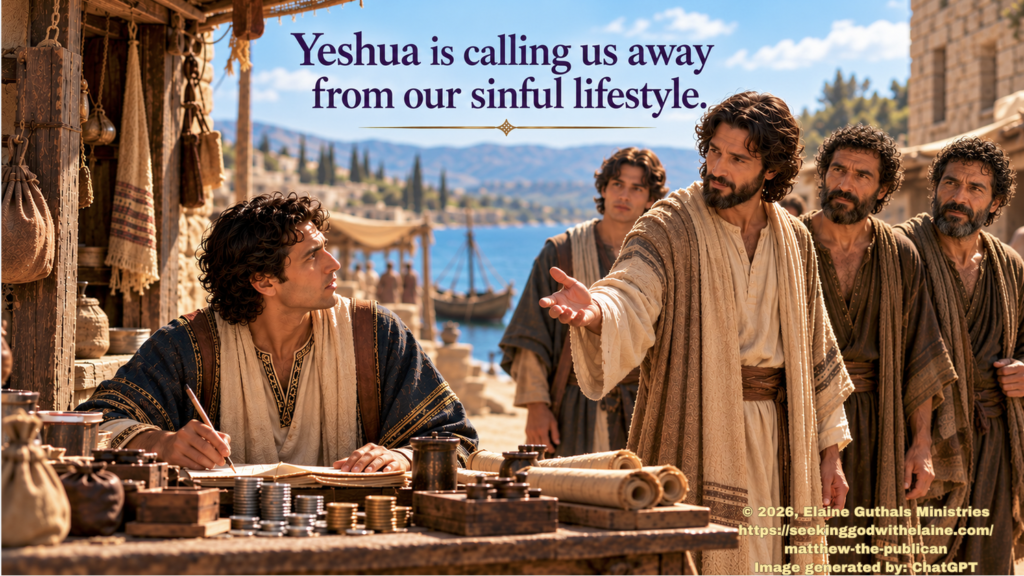
    Yeshua is calling us from our comfort zone. I know. Many of us don’t like change. But He is calling us to more than a new location. He is transforming is from the inside out.

    That means Yeshua is calling us away from our sinful lifestyle. More than just our actions has to change. Our mindset – our attitude – has to be like that of Christ’s.

    Would Matthew have chosen to follow Yeshua if he hadn’t been called? Maybe. Maybe not. He might have been very comfortable in his lifestyle before Yeshua walked by.

    But when Jehovah wants us to make changes, He does raise our level of discontentment with our lives. He makes us want something different by wanting Someone different.

    True, we probably don’t have what Matthew had to give up.

    Left Everything

    Matthew, Mark, and Luke don’t spell out how much time transpired between the “follow Me” and the get-up-and-go.

    We usually read it to be immediate. It doesn’t look like it was long. Let’s piece it together.

    All three Gospel writers told us that Matthew got up and followed Yeshua. Luke added something important: he left everything.

    None of them wrote that Matthew got up immediately. Yes, immediate obedience is important. Is that the only obedience Jehovah will accept?

    Of course not. If that were the only way Jehovah would accept our service to Him, I would think there would probably be few people serving Him.

    Think about it. Especially on the big decisions like leaving everyone we know and everything we have – wouldn’t Jehovah give us five minutes to think it through?

    Jehovah isn’t a dictator. He gives us free will to make our own decisions. Wouldn’t He give us time to make that decision?

    To me, that means timing isn’t the focus. The main focus should be on what Luke did tell us – Matthew left everything.

    Matthew’s decision – once he made it – was complete. He didn’t put limitations or restrictions on it. He left everything and went.

    What did Matthew leave when he came out of his booth when Yeshua called?

    Let’s look at the booth as a symbol of his former life. It provided a lucrative job offering financial security. As with any job, it offered an established routine.

    But Matthew gave up this material wealth for following his Savior. That meant no established routine and no creature comforts that wealth provided.

    In a split second, the transformation was made. One moment we are sinful. We genuinely call to Him to save us, and the next moment we are justified and regenerated.

    I like what Gasquoine said. He wrote, “The true servant of Christ will be willing to give up, not only of the fruits of daily work, but daily work itself for Christ.”

    Resource

    Yes, we were told that Peter, Andrew, James, and John did the same thing. “And when they had brought their boats to land, they left everything and followed him” (Lk. 5: 11 ESV emphasis added).

    Would a job fishing be on the same level as a tax collector’s job? Probably not, especially if the tax collectors did charge much over what was required by Rome.

    Making the Connections #1

    I can see why Matthew, after becoming a disciple, no longer wanted to be labeled as a publican.

    I can also see why so many would still see Matthew that way.

    Think about how the other Apostles interacted with Matthew. He had been an outcast. Probably in the beginning of his following Yeshua, that is how the other disciples still saw him.

    But Yeshua didn’t. He loved Matthew as He did the others.

    It is hard to shake labels from our past lives, isn’t it? It is also hard to give up grudges that we hold against those with shameful past lives.

    But think about how that occupation prepared Matthew to be a scribe – if the Apostle was the one to pen the Book of Matthew. He was literate. He may have had to know Greek, Latin, Hebrew, and Aramaic.

    Matthew was trained in record-keeping. He had to keep track of who paid what and how much they still owed.

    I bet there are a lot of details that Matthew would have to wade through.

    Jehovah will call the unwanted, unclean, and untrusted people to serve Him.

    Making the Connections #2

    Yeshua called Matthew while he was in his booth. He said, “Follow Me” — and nothing changed.

    Then they heard the scrape of the stool. Matthew stood up.

    There it was. Obedience.

    No miracle. No promise.

    Just trust.

    No, it wasn’t just faith — straight belief. It was the obedience that bumps it up to trust.

    Heart Check

    Think about the battle Yeshua is engaged in for your heart. Ask yourself the following questions.

    • Are we allowing the labels from our past to define us, or are we accepting the new life Yeshua offers us?
    • Are we holding on to our security and familiar routines, or are we willing to leave them behind when Yeshua calls?
    • Are we satisfied with believing Yeshua’s words, or are we demonstrating our trust through obedience?
    • Are we judging others by their past failures, or are we seeing them as people Yeshua loves and calls?
    • Are we waiting for a miracle or a promise before we obey, or are we willing to follow Yeshua simply because He has called us?

    How Do We Apply This?

    • Refuse to let the labels from our past define us
    • Trust Yeshua with our security and familiar routines
    • Demonstrate our faith through obedience
    • Release our grudges against people with shameful pasts
    • Recognize Jehovah’s call to the unwanted, unclean, and untrusted
    • Follow Yeshua without demanding a miracle or a promise first

    Father God. Thank You for calling us from a marginalized life into being accepted as Jehovah’s child. Help us to always be obedient to You. Amen.

    If you don’t understand something and would like further clarification, please contact me.

    If you have not signed up for the email providing the link to the devotions and the newsletter, do so below.

    If God has used this devotion to speak with you, consider sharing it on social media.
  • The Call through Fish

    Many of us have grown up believing the miraculous catch of fish happened when Peter, Andrew, James, and John were called to be Yeshua’s disciples. This devotional reading looks to see if that were the case.

    Nuggets

    • Yeshua would have been fulfilling His mission to bring first-century Jews to a better understanding of Jehovah.
    • Luke went on to say that Yeshua was preaching, one of the first indications that His ministry had started.
    • It looks like Yeshua just commandeered the boat.
    • The Craftsman told the fisherman how to fish.
    • Simon probably had every reason not to do what Yeshua asked, but he was obedient.
    • Through this encounter, Simon acknowledged his awareness of sin.

    Many place this miracle to have occurred at the calling of Peter, Andrew, James, and John’s to follow Yeshua. While it does have the reference of fishing for men and following Him, it doesn’t actually have Him saying, “Follow me.”

    In the last devotion, we saw the two passages in Matthew 4 and Mark 1 that – almost verbatim – issue the call.

    How do we reconcile the three passages? Let’s see what Luke has to say before we get there. Then what happens when we add John 1 into the mix????

    Let’s Put It into Context

    To read devotions in The Battle for the Heart theme

    Devotions in the The Early Ministry of the Messiah series

    Yeshua Teaching

    “One day as Jesus was preaching on the shore of the Sea of Galilee, great crowds pressed in on him to listen to the word of God. He noticed two empty boats at the water’s edge, for the fishermen had left them and were washing their nets. Stepping into one of the boats, Jesus asked Simon, its owner, to push it out into the water. So he sat in the boat and taught the crowds from there” (Lk. 5: 1-3 NLT)

    One Day as Jesus Was Preaching

    Yeshua would have been fulfilling His mission to bring first-century Jews to a better understanding of Jehovah.

    Luke began his passage by identifying Yeshua’s actions. It wasn’t that He was walking by the shore of the Sea of Galilee, which were His actions in Matthew 4: 18 and Mark 1: 16.

    It was that Yeshua had already arrived. And He was fulfilling His mission – He was preaching.

    Well, we could say Yeshua had to walk to preach. He may have been walking, the crowds gathered around, and He stopped so they could hear better.

    Yeah, that seems like a lot more detail than we usually get in any Gospel passage. Many explain that by Luke being a Greek writing to a Gentile audience. More than that, it is detail we really don’t need to focus on in the story.

    So, why discuss it now? It trips up some people when there are seemingly two differing accounts of what is purported to be the same event. We may be fine with brevity; someone else may not.

    One goal in writing these devotions is to see things as Peter, Andrew, James, and John saw it. When we do a surface read, we – from a different culture and time – may miss a lot of things. Besides, my Springfield Mom may not want to get bogged down in the minutia while my cousin Willi is looking for those details.

    Since I think this is very important, we look.

    Noticed Two Empty Boats at the Water’s Edge

    Luke went on to say that Yeshua was preaching, one of the first indications that His ministry had started.

    A great crowd had gathered around Yeshua to hear His preaching. This crowd would have consisted of fishermen. Yeshua had come to their workplace.

    It may have consisted of vendors selling fish. If that was the case, then possibly customers would have been present. It is possible that there was someone just walking along the shore.

    In any case, the crowd was pressing in on Yeshua. That not only would have made it more difficult for Him, but it also would have made it more difficult for them.

    Yeshua’s solution was to borrow one of the two empty boats right there. He probably thought that, by being in the boat, He would put a little distance between Him and the crowd so they could hear Him better.

    What exactly was Yeshua borrowing? Simon’s place of business – his workplace.

    Simon, Its Owner

    It looks like Yeshua just commandeered the boat.

    Yeshua just walked on the boat and told the owner of the boat to push off. The owner was Simon.

    Simon – and probably Andrew as they were partners – were a little distance away washing nets. This tells us the point that they were at in the day. Well, actually, night. Fishing was generally done at night as the fish were closer to the surface. It also helped that temperatures were cooler.

    Fish wasn’t the only thing that was caught in the net when it was cast. Debris – including aquatic vegetation, mud, and other material – needed to be cleaned from the nets before they could be reused. This also allowed them to be dried, checked, and repaired if needed.

    The Greek verb used is plynō (πλύνω). It means to wash or cleanse and describes the ordinary physical task of washing objects. He wasn’t talking purification or being ceremonially unclean.

    The important thing to remember is that this had to be done every time they docked from a period of fishing. It had nothing to do with whether fish were caught or not. They ended their period of work by taking care of the nets.

    Think about it. If they were net fishing, the nets wouldn’t have been as strong as the more durable nets used on the boats. They may have needed more repair.

    Either way, the fishermen would have taken care of them. Even though they were linen, they weren’t disposable, one-use nets.

    This parallels Matthew 4: 21 and Mark 1: 19. Simon and Andrew were only washing their nets. James and John had to mend their nets.

    Bottom line, fishing at night was normal. The fishermen were finishing their work.

    But we have to stop right here and address the timeline. Did Yeshua already know Simon and Andrew?

    Maybe. If John 1 happened before Luke 5, they would have spent at least some of the late afternoon/early evening hours with the Messiah. But if it had, Yeshua would have already renamed Simon to Peter.

    To me, John 1 couldn’t have happened after Luke 5. John wouldn’t have had to point Yeshua out to Andrew. They probably would have already known He was the Messiah. But Simon’s name would have been correct.

    Go Fish

    “When he had finished speaking, he said to Simon, ‘Now go out where it is deeper, and let down your nets to catch some fish.’ ‘Master,’ Simon replied, ‘we worked hard all last night and didn’t catch a thing. But if you say so, I’ll let the nets down again.’ And this time their nets were so full of fish they began to tear! A shout for help brought their partners in the other boat, and soon both boats were filled with fish and on the verge of sinking” (Lk. 5: 4-7 NLT)

    Now Go Out

    The Craftsman told the fisherman how to fish.

    When Yeshua was done preaching, He wanted the fishermen to go fishing again. Think about what might have been going through Simon’s mind.

    • We’ve been out all night.
    • We didn’t have anything to show for our labors.
    • We’ve already cleaned the nets.

    Simon was done.

    We can see Simon had every reason to feel this way. His experience wasn’t wrong. He was stating facts.

    But it was even more than that. Yeshua was asking him to do the wrong thing at the wrong time in the wrong place.

    Ooo, baby. Don’t we do that? We know so much more than our Savior and Creator knows – at least we think we do.

    We don’t.

    Yeshua shows us time and time again that we need to trust in Him and Jehovah’s plan for our lives.

    And worse luck, Yeshua told Simon to put out in deeper water. Depth or deep water.

    That is what the Greek word – bathos (βάθος) – means. Its practical application means going from control to uncertainty, from skill to trust.

    Simon had a measure of control because he had knowledge and experience of fishing. He had always picked the times he and Andrew took the boat out – and when they didn’t.

    Now, Yeshua was asking Simon to go out in the daytime when the temperature was warmer. Some of the fish could have been at the bottom of the lake instead of closer to the top.

    Simon was going from the controllable to the uncertain.

    Ooo, baby. Yeshua calls us to go from the comfy, cozy life we have in sin to follow Him into the unknown for us – but known to Him.

    Would Simon rely on his experience, or would he say Yeshua was the final authority when given a different instruction?

    But If You Say So

    Simon probably had every reason not to do what Yeshua asked, but he was obedient.

    Simon was tired. He was probably hungry. He more than likely just wanted to get home to his wife.

    But Simon was game. If the Man said so, he’d do it.

    This is the perfect picture of obedience. It goes against what we want. It doesn’t take into account what we know. What we can do or not do has no bearing on it.

    Simon’s obedience wasn’t unquestioning compliance. It was a decision.

    Obedience steps up and says, “But if You say so, I’ll do it.”

    That is one element of faith: trusting Yeshua’s word over our experience. Trusting His word, even when we think it impossible.

    Faith doesn’t require that we pretend we know nothing. It requires us to recognize that our knowledge and experience have limits.

    Trust isn’t the absence of questions or the inability to recognize difficulties. Trust is choosing how to respond when we recognize those difficulties.

    Nets Were So Full

    Simon’s obedience was immediately rewarded.

    Ooo, baby. Was Simon in for a surprise. They caught so many fish that the nets began to tear.

    Now, Simon not only had to rewash them, but he also had to mend them.

    I would guess that Simon wasn’t focusing on that.

    Yeshua provided so many fish, Simon and Andrew had to call James and John. They needed their partners to help.

    Jehovah’s blessing often exceeds individual capacity.

    But it had an element we probably think shouldn’t have been a part of the catch. The boat started to sink.

    How can something bad be a part of something good? That is what we think, don’t we? When we are doing the Lord’s work, nothing bad should happen.

    It doesn’t work that way.

    I’m a Sinful Man

    “When Simon Peter realized what had happened, he fell to his knees before Jesus and said, ‘Oh, Lord, please leave me — I’m such a sinful man.’ For he was awestruck by the number of fish they had caught, as were the others with him” (Lk. 5: 8-9 NLT)

    Through this encounter, Simon acknowledged his awareness of sin.

    Remember when we said Simon was going from the controllable to the uncertain? The uncertain became the unbelievable.

    But more than that, it became a display of Yeshua’s power and authority. It drove home the point that Simon wasn’t in control. Yeshua was.

    Simon had his eyes opened. He saw the Messiah in front of him.

    But what Simon saw was his own unworthiness. Instead of looking for salvation, Simon told the Messiah to depart from him. Why?

    We have to go back to first-century Messianic expectations. Remember John the Immerser’s message. Repent of your sins.

    Many people of the day thought they had to become righteous and then the Messiah would come. Simon acknowledged he wasn’t righteous, so he may have felt he was not worthy to be addressing the Messiah.

    Fishers of Men

    “His partners, James and John, the sons of Zebedee, were also amazed. Jesus replied to Simon, ‘Don’t be afraid! From now on you’ll be fishing for people!’ 11 And as soon as they landed, they left everything and followed Jesus” (Lk. 5: 10-11 NLT)

    The promise in Luke is the same as that in Matthew and Mark.

    Yeshua told Simon, Andrew, James, and John that they would catch men. The Greek word there is zōgreō (ζωγρέω). It means capture alive.

    Jehovah calls people after exposing their inadequacy – not before.

    The disciples’ response? They left everything and followed the Messiah.

    Reconciling These Passages with John 1: 35-42, Matthew 4: 18-22, and Mark 1: 16-20

    Reconciling These Passages with John 1: 35-42, Matthew 4: 18-22, and Mark 1: 16-20

    So, let’s look at all of this and see if we can piece it together.

    Event

    Gospel

    Supports

    Contradicts

    Yeshua walking along the shore

    Matthew 4: 18;

    Mark 1: 16

    At first glance they do contradict. Could be the walking announced His arrival at the shore, then He started preaching.

    Yeshua preaching on the shore

    Luke 5: 1

    Simon, also called Peter, and Andrew

    Matthew 4: 18

    Calling him Simon may indicate that his name hadn’t be changed yet.

    Simon and Andrew

    Mark 1: 16

    Simon

    Luke 5: 3

    Two boats belonging to Simon

    Luke 5: 3

    Neither supports nor denies this. As Simon was a fisherman, it would be expected that several of the boats could have been his. If he were partners with Zebedee, who we know had hired men, maybe Simon did, too.

    Throwing out a net

    Matthew 4: 18;

    Mark 1: 16

    These verses indicate different places Peter and Andrew were in the fishing day. Casting nets meant they were still in the act of fishing; washing nets meant they were done fishing.

    Washing their nets

    Luke 5: 2

    Push out to deeper water

    Luke 5: 4-5

    This event only appears in Luke’s Gospel.

    Enough fish came to begin to tear the nets

    Luke 5: 4-5

    The Craftsman told the fisherman how, where, and when to fish. A large catch was netted.

    Simon and Andrew call for James and John to help.

    Luke 5: 7

    This event only appears in Luke’s Gospel.

    Simon’s declaration of sin.

    Luke 5: 8-9

    This event only appears in Luke’s Gospel.

    James and John were amazed.

    Luke 5: 10

    Matthew and Mark don’t include that interpretation.

    Come, follow me

    Matthew 4: 19;

    Mark 1: 17

    Luke does not contain a call for the two disciples.

    Fish for people

    Matthew 4: 19;

    Mark 1: 17; Luke 5: 10

    All three Gospels include the same declaration.

    Simon and Andrew left their nets at once

    Matthew 4: 20;

    Mark 1: 18

    James and John a little further up shore

    Matthew 4: 21;

    Mark 1: 19

    Luke 5 doesn’t tell us James and John’s activities when they answered Simon and Andrew’s shout for help. So, he neither confirms nor denies what the other two accounts agree upon.

    Sitting in a boat with Zebedee

    Matthew 4: 21

    Repairing their nets

    Matthew 4: 21;

    Mark 1: 19

    He called them, too

    Matthew 4: 21;

    Mark 1: 19

    Luke 5: 11 should be coupled with these verses. Luke summarizes all were obedient while Matthew and Mark show how each family of brothers was obedient.

    Immediately left boat and father

    Matthew 4: 22;

    Mark 1: 20

    While Luke summarized what the four gave up, Matthew and Mark explain what they left behind. This  does not necessarily mean the accounts are different. It could be the men merely focused on different aspects of what was given up.

    They left everything

    Luke 5: 11

    Left boat with hired hands

    Mark 1: 20

    Event

    Gospel

    Supports

    Contradicts

    Two of John’s disciples spend time with Yeshua

    John 1: 35-39

    For Andrew to be introduced to Yeshua as he was in John’s account, the meeting between Yeshua and the two disciples (one of which was Andrew) had to happen before the encounter on the seashore.


    Andrew, of the two disciples, brought his brother Simon to Yeshua

    John 1: 40-43


    We may or may not be able to make our decisions on timeline because of the name Andrew’s brother is called. While he may have been Simon before the call occurred, we know that names of people and towns are given as the name most commonly recognized by the readers of the account.

    Yeshua goes to Galilee to call Philip

    John 1: 43

    If Yeshua traveled to Galilee to call Philip, that meant Andrew and Simon didn’t meet with Yeshua in Galilee in John 1. Matthew 4/Mark 1 would have occurred at a least a minimum of a couple of days earlier after the encounter with Yeshua in John 1.


    Yeshua met Simon, Andrew, James, and John on the seashore.

    Matthew 4: 18;

    Mark 1: 16

    An earlier meeting wouldn’t make a meeting at the seashore unlikely.


    Yeshua called them and/or told them they would be fishers of men.

    Matthew 4: 19;

    Mark 1: 17; Luke 5: 10

    Regardless of Yeshua actually said the words, “Come, follow me,” He did tell them what their job would become – witnessing to others. He didn’t call Simon, Andrew, and John in John 1, and James was not present there.


    Yeshua caused a miraculous catch of fish.

    Luke 5: 4-7


    I really don’t see that occurring during Simon, Andrew, James, and John’s call.

    It always amazes me that Luke was the only Gospel writer to include the miraculous catch of fish. Wouldn’t Mark, who supposedly transcribed Peter’s memories, have included it and Peter’s wonderful answer?

    That tells me the miraculous catch didn’t happen at Peter, Andrew, James, and John’s call.

    Making the Connections #1

    We could have put this miracle in the next series, The Miracles of Christ. The overflowing catch of fish was miraculous.

    But it was more than that.

    This miracle was a direct challenge to Simon. It challenged his identity, expertise, and control.

    How did Simon respond? “At Your word.”

    Making the Connections #2

    Who really was the first disciple called? I would say that the first one we are told of the calling is Philip.

    I really don’t see Luke 5 telling the same story as Matthew 4 and Mark 1. True, some elements are the same – especially all three using the fishers of men terminology.

    But there are too many other elements, in my mind, that make the miraculous catch occur at a different time.

    Making the Connections #3

    So, the question becomes what are we going to do with this? Are we going to be an ostrich and say tradition/what we’ve been taught stands? Or are we going to allow the Holy Spirit to guide us to a different interpretation?

    True, we may not have all the evidence needed to make an informed – or correct – decision. We may need to leave this in the UNR book – understanding not required.

    But it brings up a much more important point. How teachable are we? Do we make what we read fit into our understanding and beliefs, or do we let Jehovah reveal Himself to us through the Holy Spirit?

    We each have to decide that for ourselves.

    Heart Check

    Think about the battle Yeshua is engaged in for your heart. Ask yourself the following questions.

    • When Yeshua challenges what I know, do I trust my experience and understanding more than His word, or am I willing to obey even when I recognize the difficulties?
    • When I encounter something in Scripture that challenges our assumptions, do I dismiss it because it doesn’t fit what I’ve always believed, or do I examine it and allow Jehovah to teach me?
    • When we recognize my own sinfulness in the presence of Yeshua, do I draw away because we feel unworthy, or do I turn to Him in repentance?
    • When Scripture raises questions I can’t fully answer, do I pretend the difficulties don’t exist, or do I remain teachable while seeking to understand what Jehovah has revealed?

    Resource

    How Do We Apply This?

    • Trust Yeshua’s word even when our experience gives us reasons to hesitate
    • Recognize the limits of our own knowledge and expertise
    • Examine our assumptions in light of Scripture
    • Acknowledge our sinfulness and respond to Jehovah in repentance
    • Remain teachable when Scripture challenges our understanding
    • Trust Jehovah without pretending we have all the answers

    Father God. Let us be like Simon. When we stand in front of Yeshua, let us see what that encounter reveals in us. But let us not push Him – or You – away. Let us repent of our sins and respond to You. Amen.

    If you don’t understand something and would like further clarification, please contact me.

    If you have not signed up for the email providing the link to the devotions and the newsletter, do so below.

    If God has used this devotion to speak with you, consider sharing it on social media.
  • The Call by the Sea

    Yeshua called disciples individually, as he did Philip; but He also called several together. This devotional reading looks at the call of Simon, Andrew, James, and John.

    Nuggets

    • The Sea of Galilee is in northern Israel.
    • We’ve already met Simon Peter and Andrew.
    • Several tasks make up a fisherman’s work.
    • The jury is out as to whether Peter – and Andrew as his partner – were successful or not in their fishing occupation.
    • Peter and Andrew’s call to follow Yeshua demanded a very different kind of commitment from what we usually mean when we talk about following Him.
    • Yeshua gave them an idea of what they would be doing, just not a travel itinerary.
    • There were a lot of things Yeshua didn’t tell them right then – but they were immediately obedient.
    • James was the first Apostle who lost his life because of his belief in Yeshua.
    • Yeshua emphasized that we should put Him before all other relationships.
    • The Book of Mark gave us a clue as to the size of Zebedee’s fishing operation.

    I have to admit. I started arranging verses into headings. And I had to just stop.

    You know that this study started out being a chronology study. That is one reason we have been looking so closely at the next day and following day designations.

    But what happens when today’s study calls into question yesterday’s teaching? Well, not just yesterday – but lifelong!

    What if Peter, Andrew, James, and John weren’t the first four disciples called? What if the miraculous catch of fish didn’t occur when the four were called?

    I know. That is hard to wrap our heads around since some of us have been taught that our entire lives. But before you write me off as a crazy chick, let’s look at the passages.

    PROGRAMMING NOTE: This devotion ran long, so if you want all the answers to both questions I asked, you’ll have to come back for the next devotion.

    Let’s Put It into Context

    To read devotions in The Battle for the Heart theme

    Devotions in the The Early Ministry of the Messiah series

    Peter and Andrew Working

    “One day as Jesus was walking along the shore of the Sea of Galilee, he saw two brothers — Simon, also called Peter, and Andrew — throwing a net into the water, for they fished for a living” (Mt. 4: 18 NLT)

    “One day as Jesus was walking along the shore of the Sea of Galilee, he saw Simon and his brother Andrew throwing a net into the water, for they fished for a living” (Mk. 1: 16 NLT)

    One Day

    We aren’t given any clue as to the timing of this event.

    Many of us are taught that this is the first time Yeshua called disciples to follow Him. We also believe that this is very early on during His ministry.

    One problem is we don’t know when one day was. It is totally different than either the next day or the following day. It isn’t connected to another event.

    No, that doesn’t make it unimportant. It just means that we aren’t given context surrounding this event.

    That is important to our lining up events in our minds.

    The Shore of the Sea of Galilee

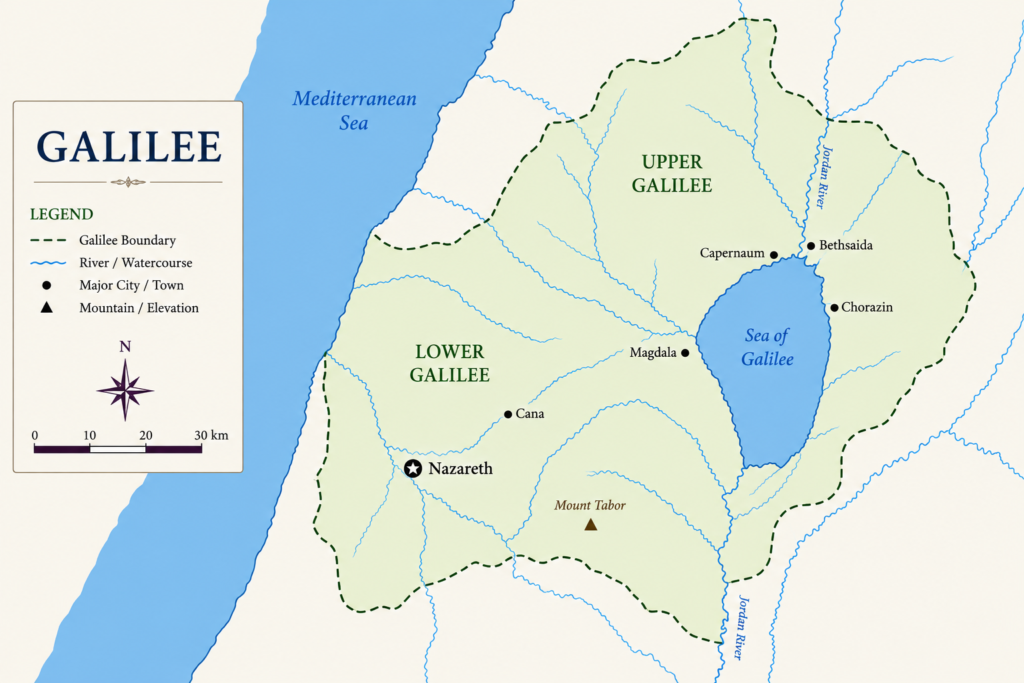
    The Sea of Galilee is in northern Israel.

    It is interesting to know that the Sea of Galilee was also known by other names. It was also called the Sea of Tiberias and the Lake of Gennesaret. In the Old Testament, it was associated with the region of Kinneret (Num 34: 11; Josh. 13: 27).

    Okay, Sea. Lake. Which is it? Well, geographically it is a freshwater lake. I wonder if it was considered a sea because the Jordan River flows into and out of it. That does make it a moving body of water.

    A medium-sized lake (13 miles long by 8 miles wide at its widest point), it is a substantial body of water. However, it wasn’t an obstacle to first-century Jews to moving around among the surrounding working settlements.

    Its size made the lake substantial enough to host a thriving commercial fishing industry. It was also large enough to accommodate a number of boats at once.

    The lake sits in a deep basin surrounded by hills. But this position also allows for dangerous storms to form. In fact, it resulted in sudden, violent storms.

    Still, to the people of the region, the Sea of Galilee represented life. It was a source of food and the backbone of their economy.

    Simon Peter and Andrew

    We’ve already met Simon Peter and Andrew.

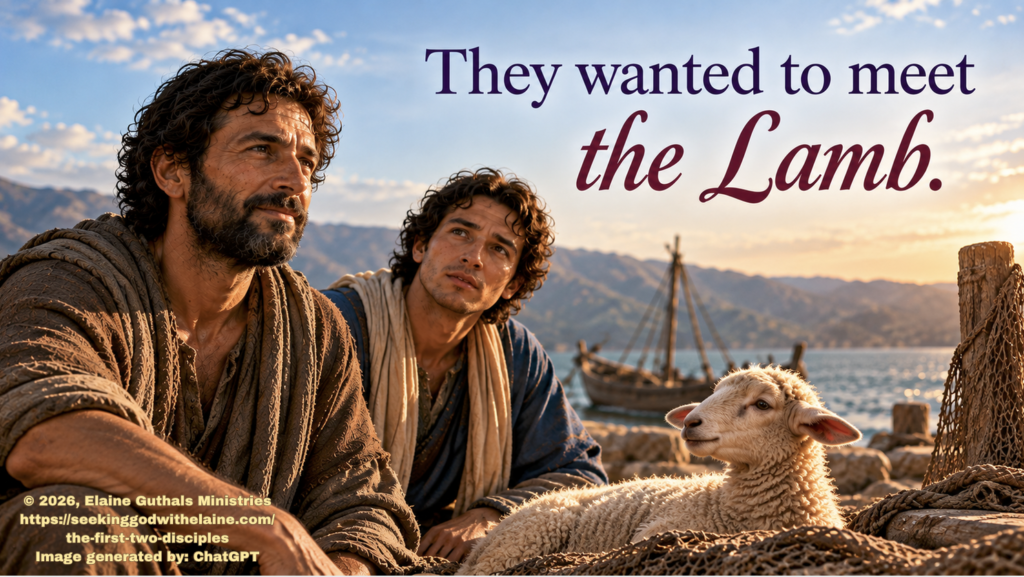
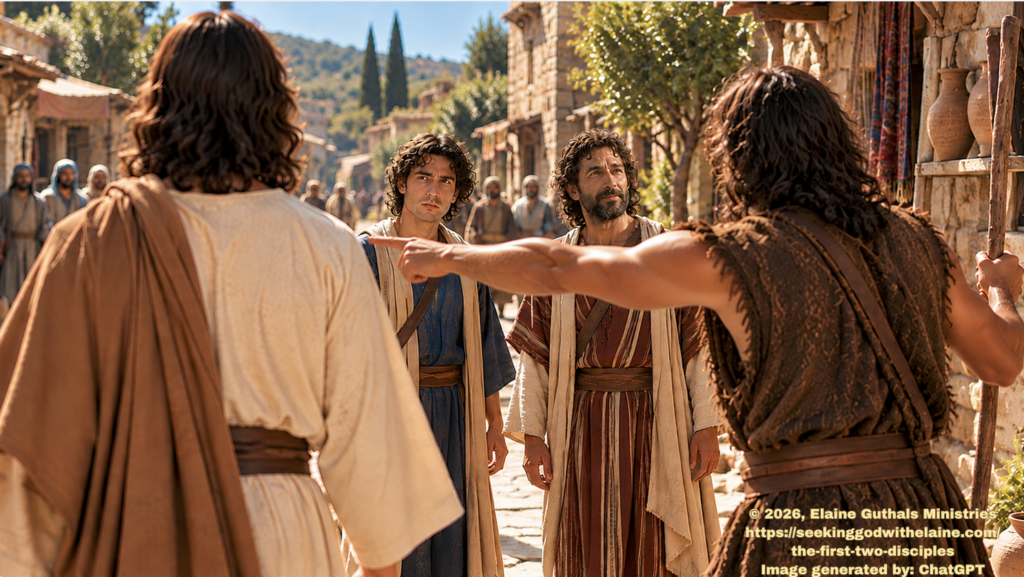
    Andrew was a disciple of John the Immerser (Jn. 1: 35-42). He and another disciple followed Yeshua after John pointed Him out to them.

    Sometime that day, Andrew brought Simon to meet Yeshua. Some Gospel writers say that was when He changed Simon’s name to Peter.

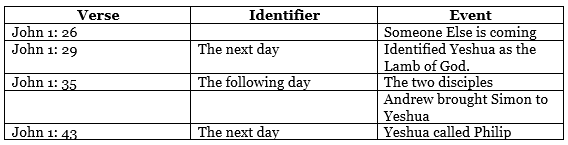
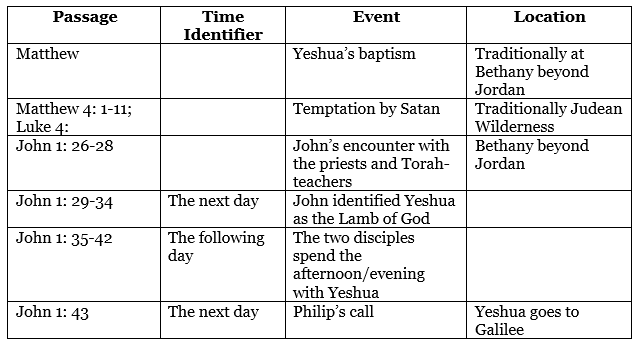
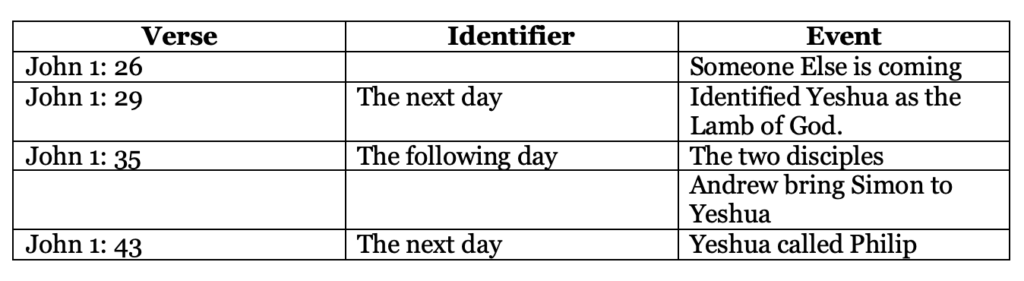
    Now, if your mind is going like mine, you are remembering the table that I included to keep our timeline straight.

    One thing we have to keep in mind is that – if we read it as written – Yeshua didn’t call either Peter or Andrew to be His disciple that day. It was only their initial encounter with the Messiah.

    Throwing a Net into the Water

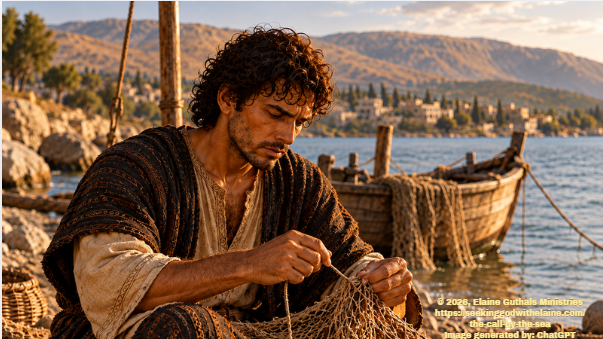
    Several tasks make up a fisherman’s work.

    Going out on the Sea and catching the fish is an important part of a fisherman’s work. That can happen either during the day or at night.

    But it isn’t the only part.

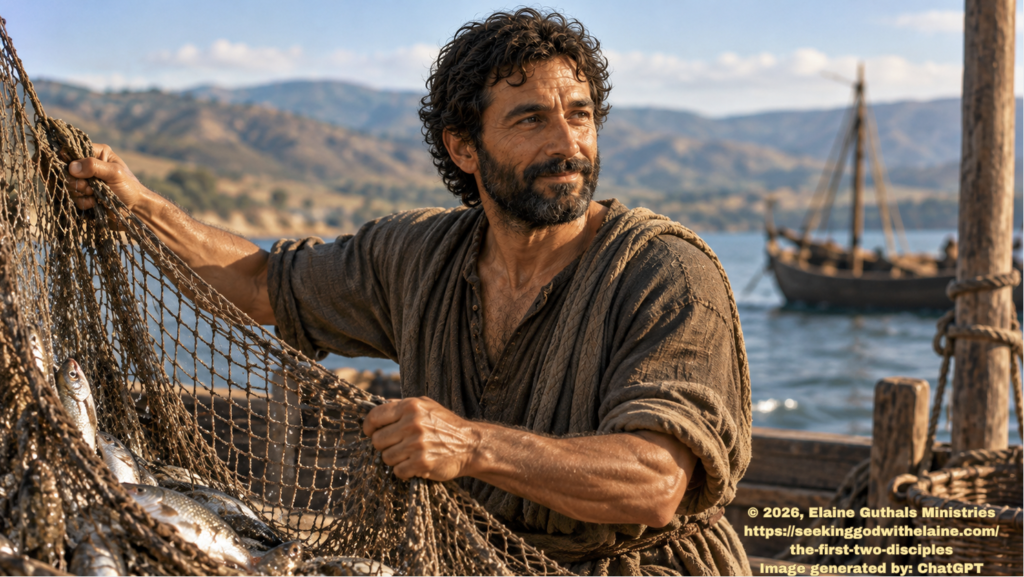
    Sometimes, the fishermen fished from the shore, called net fishing. They did this by casting their net into the water. Archaeological research supports the use of several net-fishing techniques in first-century Galilee, including cast nets and heavier nets used from boats.

    Resource

    All that fishing – hopefully netting large amounts of fish – was hard on the nets. They would have to take time to repair them. Daily maintenance included washing the nets.

    For They Fished for a Living

    The jury is out as to whether Peter – and Andrew as his partner – were successful or not in their fishing occupation.

    We don’t know how successful Peter and Andrew were at fishing. Scripture doesn’t tell us.

    Grey said that Peter is seen as having had a modest existence. This lifestyle was accompanied by Aramaic speech, little formal education, and the lack of knowledge of the Greek language. This would have made Peter a conservative Jew.

    Others, according to Grey, believe Peter prospered and was sophisticated enough to have a good grasp of Greek to write the books of Scripture attributed to him.

    Resource

    Where they came from is interesting knowledge. Where they were going is more relevant to the story.

    Peter and Andrew Called

    “Jesus called out to them, ‘Come, follow me, and I will show you how to fish for people!’  And they left their nets at once and followed him” (Mt. 4: 19-20 NLT)

    “Jesus called out to them, ‘Come, follow me, and I will show you how to fish for people!’ And they left their nets at once and followed him” (Mk. 1: 17-18 NLT)

    Come, Follow Me

    Peter and Andrew’s call to follow Yeshua demanded a very different kind of commitment from what we usually mean when we talk about following Him.

    Our mission statement is to follow Yeshua’s instructions to “… give up your own way, take up your cross daily, and follow me”’” (Lk. 9: 23 NLT). But it looks different from what Yeshua had in store for Peter and Andrew – and James, John, Philip, Nathanael, and the rest.

    • They left their nets (Mt. 4: 20; Mk. 1: 18).
    • They left family (Mk. 1: 20)
    • They left everything (Lk. 5: 11).

    Think about it. They weren’t signing up to attend church regularly (if they weren’t already doing that). They weren’t going to fit in a Bible study session after a hard day of fishing.

    They were being asked to give up their jobs – their means of making a living. We know Peter was married. Others may have been, too – they just didn’t have a mother-in-law in need of healing.

    At a minimum, some were more than likely being asked to leave parents. James and John surely weren’t the only ones there, either.

    No, this doesn’t mean they sold everything and closed up shop. This doesn’t mean they dissolved every relationship.

    I am sure they came back home at times.

    Show You How to Fish for People!

    Yeshua gave them an idea of what they would be doing, just not a travel itinerary.

    Yeshua told them that they would be interacting with others. He just didn’t say what that interaction would look like.

    Yes, it would be nice to get a data dump upon responding to Yeshua’s call. We want to know the obstacles we’ll face, have assurance the job we do will be successful, and what time frame we’re talking about.

    Yeshua didn’t give them any of that. They didn’t really know what experience they were signing up for.

    Talk about trust out of the starter’s box.

    But think about it. From the passages in Matthew and Mark, we haven’t been told they have even heard Yeshua preach. They didn’t know much – if anything – about His message.

    The Apostles didn’t know what their reward would be. Three years later when the Messiah was being crucified, they still didn’t understand everything.

    All they knew was that they were going to build a relationship with Yeshua. They were called to follow the Savior, not a movement. They weren’t signing up for a religious organization.

    They were responding to the One Who called them – the One they would come to understand more fully as they walked with Him.

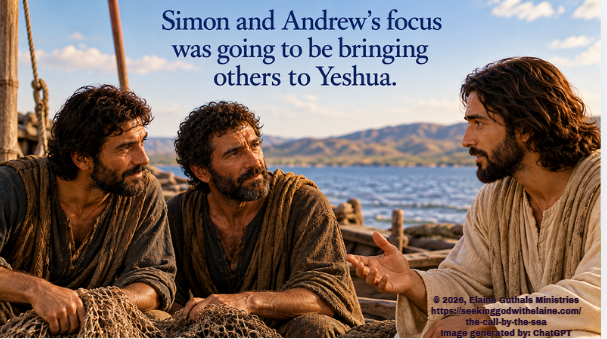
    What Simon and Andrew did know was that their focus was going to be other people. We can say now that their focus was bringing others to Yeshua.

    They Left Their Nets at Once

    There were a lot of things Yeshua didn’t tell them right then – but they were immediately obedient.

    Peter and Andrew didn’t worry about the unknown. They didn’t ask what they really knew about this Man.

    They followed their heart and followed their Savior.

    The best part is they made a split-second decision to follow their Savior for the rest of their lives. True, they didn’t understand, and they were going to fail – but they were also going to grow.

    James and John Called

    “A little farther up the shore he saw two other brothers, James and John, sitting in a boat with their father, Zebedee, repairing their nets. And he called them to come, too. They immediately followed him, leaving the boat and their father behind” (Mt. 4: 21-22 NLT)

    “A little farther up the shore Jesus saw Zebedee’s sons, James and John, in a boat repairing their nets. He called them at once, and they also followed him, leaving their father, Zebedee, in the boat with the hired men” (Mk. 1: 19-20 NLT)

    James (Ya ’acov)

    James was the first Apostle who lost his life because of his ministry.

    We know a little more about James than we know of most of the Apostles. Most of what we know about him mirrors what we know about his brother John – at least until after the crucifixion and resurrection.

    James was called to follow Jesus at the same time as John was. His father was Zebedee; and his mother was Salome, possibly the sister of Mary.

    We do know Zebedee operated a fishing business on the Sea of Galilee with his sons. It sounds extensive because they did have hired workers (Mk. 1: 20). They appear to have been partners with Simon Peter and Andrew (Lk. 5: 7).

    James was known for having a temper. Yeshua called him and John the sons of thunder. This nickname came from their reaction to the Samaritan village (Lk. 9: 51-56).

    They both seemed to develop characters more like Yeshua wanted.

    Still, he, along with Peter and John, made up Yeshua’s inner circle. They got to witness events the others didn’t, such as on the mount of transfiguration and His agony in Gethsemane.

    After the ascension, James’ mission field was Jerusalem. Tradition also associates him with Spain.

    We aren’t told how most of the Apostles died – not so with James. We are told about his death in Acts 12: 2.

    King Herod Agrippa targeted the leadership of Yeshua’s followers. He had Peter arrested and James beheaded around AD 44.

    Bradford said that Agrippa would have been looking at the situation as a political one, not a religious one. The growing number of believers would have – in his mind – posed a threat to his rule. It had grown to include zealots, who were committed to resistance to the Roman occupation and eventually became an organized movement that was more of a revolutionary group. These groups stressed covenant faithfulness.

    Resource

    Agrippa’s hope may have been to stop the growth of the early church, but it wasn’t totally successful. Tradition says that one of the Roman officers guarding James was won over by James’ defense of his faith, professed faith, and was executed beside James.

    Leaving Their Father, Zebedee

    Yeshua emphasized that we should put Him before all other relationships.

    Some might be a little disturbed by the fact that James and John left their father to follow Yeshua. We shouldn’t be.

    Yeshua has told us that we shouldn’t put our family above Him.

    • “If you want to be my disciple, you must, by comparison, hate everyone else — your father and mother, wife and children, brothers and sisters — yes, even your own life. Otherwise, you cannot be my disciple” (Lk. 14: 26 NLT).
    • “If you love your father or mother more than you love me, you are not worthy of being mine; or if you love your son or daughter more than me, you are not worthy of being mine. If you refuse to take up your cross and follow me, you are not worthy of being mine. If you cling to your life, you will lose it; but if you give up your life for me, you will find it” (Mt. 10: 37-39 NLT).
    • “And everyone who has given up houses or brothers or sisters or father or mother or children or property, for my sake, will receive a hundred times as much in return and will inherit eternal life” (Mt. 19: 29 NLT).

    Now, don’t get upset that Luke 14: 26 says that we are to hate everyone else. It just means that we are to love Yeshua more than them. That doesn’t contradict the love-one-another commandment.

    With the Hired Men

    The Book of Mark gave us a clue as to the size of Zebedee’s fishing operation.

    Mark listed that hired hands were present with James, John, and Zebedee where Matthew did not. Does that mean the passages contradict each other?

    I don’t think so. If the operation was big enough to have hired hands, I would bet some were there.

    In my way of thinking, it would seem that Matthew’s focus was not on the size of the operation. Rather, he was trying to emphasize the fact that the brothers left their father.

    Making the Connections #1

    How does the Apostles’ calling differ from ours?

    Their Circumstances

    The Continuing Principle

    They physically traveled with Yeshua from place to place.

    Discipleship means following His teachings and making them the focus of our lives.

    Some left fishing businesses and family work.

    Following Him may require an occupation change, but it may not. It does mean that we will have to change priorities to make Him #1 since He wasn’t before.

    Some left family.

    Following Him may mean we have to surrender competing loyalties.

    They learned directly from Him during His earthly ministry.

    We learn His teaching from His Word and the guidance of the Holy Spirit.

    They didn’t receive a complete itinerary at the initial call.

    We aren’t given a complete itinerary at our initial call. Even as a disciple of His, we are called to obey without knowing every detail of what lies ahead.

    Yeshua was calling them out of the familiar into a world they couldn’t yet fully comprehend. Yeah, that is hard and scary.

    Still today, we are called from the familiar into the unknown.

    We just have to trust Him.

    Making the Connections #2

    One thing that hasn’t changed since that day by the Sea of Galilee is that just knowing Yeshua doesn’t make Him our Savior.

    Peter and Andrew had spent time with Yeshua on the day that John pointed Him out. That makes them acquaintances.

    We can be acquainted with Yeshua. We have head knowledge of Him.

    Until we ask Him to be our Savior and Redeemer and commit to allow Him to win the battle for our hearts, we don’t become His disciples and gain salvation.

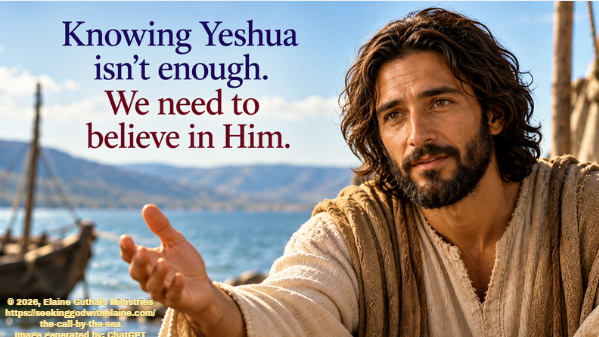
    Knowing Yeshua isn’t enough. We need to believe in Him.

    Making the Connections #3

    Yes, the Apostles ended up establishing the early Church. That isn’t what they started out to do. They were bringing people to the Messiah.

    We can get so focused on church activities, programs, and institutions that we forget the reason it exists in the first place. We are to follow Yeshua. Everything else must flower from that.

    Heart Check

    Think about the battle Yeshua is engaged in for your heart. Ask yourself the following questions.

    • Am I willing to follow Yeshua immediately, even when I don’t know what lies ahead, or do I want to know the whole plan before I commit to it?
    • Am I following the Savior, or have I become more focused on religion and everything surrounding it?

    How Do We Apply This?

    • Trust Yeshua with the unknown
    • Put the Savior before competing loyalties
    • Follow Yeshua rather than merely knowing about Him
    • Allow Yeshua to shape our lives as we grow in Him
    • Keep the Messiah at the center of everything we do

    Father God. Thank You for calling men who became strong in their faith and were obedient to Your mission of sending Your message to others. Thank You for Your children who told us about You or provided us with the resources needed to study Your Word. May we always listen to Your call. Amen.

    If you don’t understand something and would like further clarification, please contact me.

    If you have not signed up for the email providing the link to the devotions and the newsletter, do so below.

    If God has used this devotion to speak with you, consider sharing it on social media.
  • Jesus Interacted with Nathanael

    Philip brought Nathanael to Jesus, but Nathanael was a little skeptical that He was the Messiah. This devotional reading looks at how Yeshua addressed that skepticism.

    Nuggets

    • Yeshua knows us, but we have to know Him before He knows us.
    • We probably would have reacted the same way Nathanael did.
      Nathanael used two titles that some may think don’t fit together.
    • Nathanael had been taken aback when Yeshua said he could see him under a fig tree.
    • Yeshua told Nathanael what would happen in his future.

    Yeshua had gone to Galilee specifically to call Philip as a disciple. It seems immediately that Philip went to find Nathanael.

    Nathanael, however, wasn’t certain if he came to the same conclusion as Philip that Yeshua was the Messiah. However, he went with him anyway.

    How was Yeshua going to react to that skepticism?

    Let’s Put It into Context

    To read devotions in The Battle for the Heart theme

    Devotions in the The Early Ministry of the Messiah series

    Before They Even Got to Yeshua

    “As they approached, Jesus said, ‘Now here is a genuine son of Israel — a man of complete integrity.’ ‘How do you know about me?’ Nathanael asked. Jesus replied, ‘I could see you under the fig tree before Philip found you.’ Then Nathanael exclaimed, ‘Rabbi, you are the Son of God — the King of Israel!’” (Jn. 1: 47-49 NLT)

    Son of Israel

    Yeshua knows us, but we have to know Him before He knows us.

    Wait! What?? Yeshua had never met Nathanael before. Yeshua knows us as a creation of Jehovah before we come to Him for salvation.

    Because of this, Yeshua described Nathanael as a man of complete integrity. What did He mean by calling Nathanael a genuine son of Israel?

    We need to remember that Israel was more than a name for a nation. Israel was the name Jehovah gave Jacob after their encounter at Peniel (Gen. 32: 28). Jacob’s descendants became the people of Israel, the people with whom Jehovah established His covenant.

    But being descended from Israel didn’t automatically mean a person lived faithfully before Jehovah. Throughout Israel’s history, the prophets called the people to return to their covenant responsibilities. They could identify themselves as Israelites while their hearts and actions were far from what Jehovah required.

    Yeshua’s description of Nathanael goes beyond his ancestry. The New Living Translation translates the expression as a genuine son of Israel and explains it with the words a man of complete integrity. Nathanael was not merely an Israelite by birth. Yeshua recognized something about his character.

    The Greek word translated integrity in this passage is dolos (δόλος), which ordinarily means deceit, guile, or deception. John uses it here in the negative construction: there is no deceit in Nathanael. Yeshua was describing a man who was not characterized by duplicity or dishonesty.

    That doesn’t mean Nathanael was sinless. Scripture doesn’t present him as a man who had never done anything wrong. Rather, Yeshua’s words describe the kind of man he was — someone without the deceit that would make his outward profession different from his inward character.

    Think about that for a minute. We can identify ourselves as Jehovah’s children, know the Scriptures, attend worship, and speak the right words.

    But Jehovah is concerned with more than the identity we claim. He cares about the truthfulness of our hearts and the integrity of our lives.

    Nathanael had just questioned whether anything good could come from Nazareth. Now Yeshua was describing him as a man without deceit. Nathanael’s question hadn’t prevented Yeshua from recognizing his character.

    There is another thing we need to think about. “On judgment day many will say to me, ‘Lord! Lord! We prophesied in your name and cast out demons in your name and performed many miracles in your name.’ But I will reply, ‘I never knew you. Get away from me, you who break God’s laws’” (Mt. 7: 22-23 NLT).

    Us coming to Yeshua isn’t what He is looking for. We would call that having head knowledge of Him.

    Neither is Yeshua wanting us to do good deeds in His name – especially not just on our own. We can’t earn salvation.

    Salvation comes only when we spend time with Yeshua and get to know Him as our Savior and Redeemer. We have to know Him as our Savior before He knows us as His brothers and sisters.

    Do You Know Me?

    We probably would have reacted the same way Nathanael did.

    Nathanael was taken aback by Yeshua seeming to know him before they had ever met. We may have been in the same situation in our past. It gives us a start for a moment.

    Nathanael asked a reasonable question. Philip had brought Nathanael to meet Yeshua, but Nathanael had no reason to expect Yeshua to know anything about him. Yet Yeshua had already described his character before he asked Him anything.

    Yeshua answered by giving Nathanael’s fig tree location.

    Wait! What?? Yeshua didn’t tell Nathanael how He got that information. He simply told Nathanael that He had seen him under the fig tree before Philip called him – with no explanation as to how that was possible.

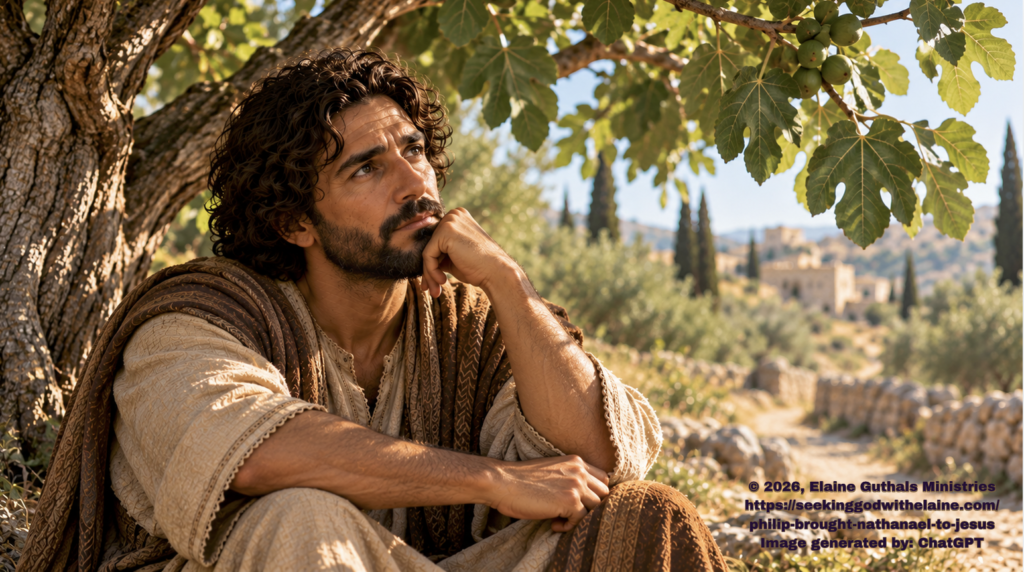
    We aren’t told what Nathanael was doing under that tree. He may have been resting, studying, praying, or doing something else entirely. What matters in this conversation is that Yeshua knew where Nathanael had been before Philip brought them together.

    That knowledge changed the conversation. Nathanael had previously questioned whether anything good could come from Nazareth. Now he was face-to-face with Someone Who showed Someone could come from an inconsequential background.

    Sometimes, an unexpected moment can make us stop and reconsider what we thought we understood. Nathanael came to meet the man Philip had described. He wasn’t prepared for the Man to reveal that He already knew something about him.

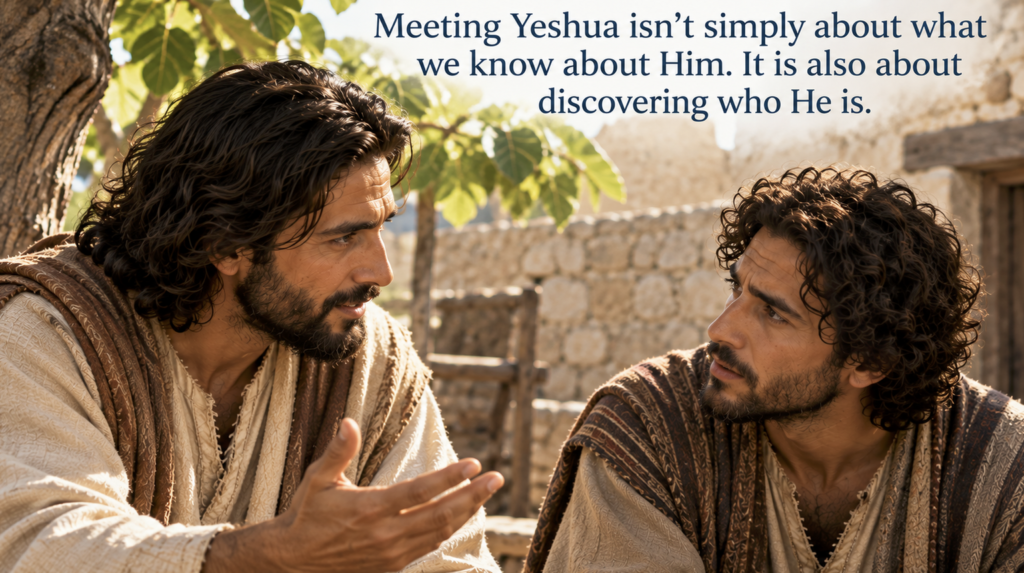
    If we have experienced a moment when someone knew something about us that we hadn’t told them, it can make us stop and wonder, too. Nathanael’s encounter reminds us that meeting Yeshua isn’t simply about what we know about Him. It is also about discovering who He is.

    Son of God and King of Israel

    Nathanael used two titles that some may think don’t fit together.

    Notice that Nathanael used the two titles the Son of God and the King of Israel together. These titles weren’t unrelated declarations. They connected Yeshua to Israel’s expectation of the King Jehovah had promised.

    Modern readers often hear the phrase Son of God exclusively through later theological categories. However, the Hebrew Scriptures had already established sonship language in Israel’s relationship with Jehovah and in the Davidic kingship. Israel itself could be called God’s son (Ex. 4: 22-23). David’s royal descendant was also described through this language.

    Psalm 2 is particularly important for understanding Nathanael’s confession. Jehovah addressed His anointed King: “… ‘The Lord said to me, “You are my son. Today I have become your Father”’” (Ps. 2 :7 NLT). This is royal enthronement language.

    This was not simply a statement about physical descent. The king is called Jehovah’s son because of his special covenant relationship with Jehovah and his appointment to rule under His authority.  It identified the king’s God-given position, authority, and responsibility.

    The psalm goes on to speak of the nations as the King’s inheritance and the ends of the earth as His possession (Ps. 2: 8). The promised King’s rule, therefore, reaches beyond Israel’s borders. He is Jehovah’s appointed ruler, whose authority ultimately extends to the nations.

    When Nathanael called Yeshua the Son of God and the King of Israel, he connected these ideas. Son of God pointed to Yeshua’s relationship with Jehovah and His place as Jehovah’s appointed King. King of Israel identified the royal and Messianic significance of that relationship. Nathanael was recognizing Yeshua as the King Israel had been promised.

    But we must be careful not to assume Nathanael understood everything his words would ultimately mean. We must distinguish between recognizing the promised King and understanding the full significance of His identity.

    Nathanael had just met Yeshua. He hadn’t yet witnessed the full course of His ministry, His death and resurrection, or His exaltation.

    Nathanael recognized something true about Yeshua’s identity, but he didn’t yet have the full revelation that would come through Yeshua’s life and the events that followed. He could recognize Yeshua as the promised Messiah without yet understanding everything Scripture would reveal about Him.

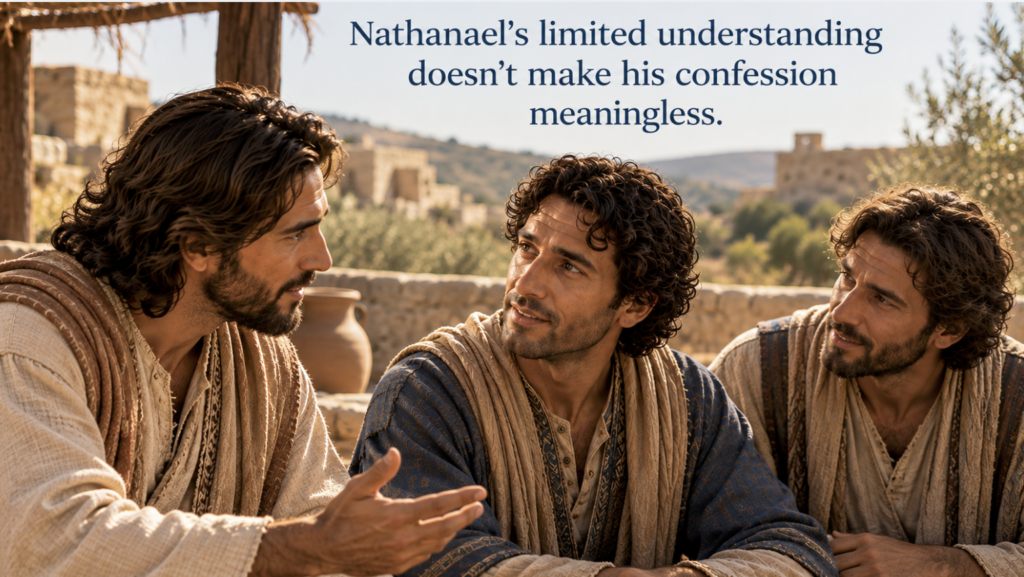
    This distinction matters. Nathanael’s limited understanding doesn’t make his confession meaningless. He correctly recognized Yeshua as God’s promised King, even though he had more to learn about the One he had just confessed.

    The New Testament will reveal that Yeshua is more than another king in David’s line. His identity as the Son of God involves divine authority and a unique relationship with the Father that cannot be reduced to royal adoption or appointment. The Gospel of John progressively reveals this greater reality.

    Nathanael’s confession is, therefore, an important beginning. He recognized the King of Israel standing before him. He had yet to discover the full significance of the Son of God.

    Questioning Understanding

    “Jesus asked him, ‘Do you believe this just because I told you I had seen you under the fig tree? You will see greater things than this.’ Then he said, ‘I tell you the truth, you will all see heaven open and the angels of God going up and down on the Son of Man, the one who is the stairway between heaven and earth’” (Jn. 1: 50-51 NLT)

    Under the Fig Tree

    Nathanael had been taken aback when Yeshua said he could see him under a fig tree.

    What matters is that Yeshua knew where Nathanael had been before the two of them met. When Yeshua told him this, Nathanael recognized that he was encountering someone who knew more about him than he could explain.


    Scripture tells us of times when Yeshua knew people’s thoughts and actions. He knew them before He came to earth, while He was here, and continues to know them after ascension.

    • Yeshua knew the Pharisee’s thoughts when He said the paralytic’s sins had been forgiven (Mt. 9: 2-4; Mk 2: 5-8; and Lk 5: 20-22).
    • He knew the religious leader’s thoughts and the purpose behind these thoughts when He healed the man with a withered hand on the Sabbath (Lk. 6: 6-8).
      ·      Yeshua knew the accusations of the crowd when He healed the demon-possessed man (Mt. 12: 25; Lk. 11: 17).
    • He knew the crowd beyond the surface when they believed He was a great miracle worker but didn’t believe in Him as the Son of God, the Messiah (Jn. 2: 23-25).
    • Yeshua knew about the woman at the well’s past (Jn. 4: 16-19, 28-29).
    • He knew when Lazarus had died (Jn. 11: 1-16).
    • Yeshua knew Judas would betray Him (Jn. 6: 64; Jn. 13: 10-11, 18—27).
    • He knew Peter would deny Him (Lk. 22: 31-34; Jn. 13: 36-38).

    Yeshua knew people’s thoughts and actions while He was on earth. That hasn’t changed since He has ascended to Heaven.

    Did you catch the significance of that? Yeshua knew Nathanael before salvation occurred. He knew what he was doing. He knew what he was thinking.

    But it doesn’t stop there.
    
We sometimes forget that Yeshua doesn’t have to be physically present with us to know what is happening in our lives. He knows our thoughts before we put them into words. He knows what we say when no one else is listening. He knows what is in our hearts, even when we have not found a way to explain it to anyone else.

    Think about that for a moment. We can be sitting alone in our homes, driving down the road, or lying awake in the middle of the night, and Yeshua is not limited by His physical absence from us. We can’t hide our thoughts from Him, and we don’t have to find the right words to make Him understand what we are experiencing. He already knows.

    That knowledge should make us pause. It reminds us that our private thoughts matter as much as our spoken words, even when we believe no one else knows about them.

    But it can also bring comfort. When we can’t explain what hurts, what worries us, or what we are struggling to understand, Yeshua knows. We are never required to make Him aware of our circumstances before He can understand them.

    Nathanael was surprised that Yeshua knew where he had been before Philip called him. We have the benefit of knowing more of Yeshua’s story than Nathanael did at that moment. We can remember that His knowledge is not confined to what He can see with human eyes or what someone tells Him. He knows us wherever we are, and He knows us as we truly are.

    Will See Heaven Open

    Yeshua told Nathanael what would happen in his future.

    Yeshua wasn’t finished revealing Himself to Nathanael. After Nathanael declared Him to be the Son of God and the King of Israel, Yeshua told him he would see greater things than these.

    John 1: 50–51 records Yeshua’s response. He promised Nathanael that he would see Heaven open and the angels of God ascending and descending on the Son of Man.

    That wording takes us back to Genesis 28: 10–17, when Jacob dreamed of a stairway connecting earth and heaven, with the angels of God ascending and descending on it. When Jacob awoke, he recognized that Jehovah was present in that place. He called it Bethel, meaning house of God.

    Now, Yeshua was telling Nathanael that he would see something greater. In Jacob’s dream, the angels ascended and descended on the stairway. In Yeshua’s words, they would ascend and descend on the Son of Man. Yeshua placed Himself at the center of this heavenly picture.

    The title Son of Man is important here. Yeshua used it repeatedly throughout His ministry. It can point to His identification with humanity, but it also recalls Daniel 7: 13–14, where one like a son of man comes with the clouds of heaven and receives authority, glory, and a kingdom that will never pass away. The title carries a significance much greater than simply calling attention to His humanity.

    Again, we shouldn’t assume Nathanael understood every layer of meaning in Yeshua’s words at that moment. He had just begun to recognize who Yeshua was.

    But the promise pointed beyond the first signs that had impressed him. Nathanael would see greater evidence of Yeshua’s identity and authority as he continued following Him.

    Yeshua had already shown Nathanael that He knew something about him before they met. Now, He promised that he would see more. His understanding of the Messiah was only beginning, and the things he would witness would continue to deepen it.

    Nathanael’s opportunity to see greater things didn’t end with Yeshua’s earthly ministry. After His resurrection, Yeshua appeared to His apostles over a period of forty days, teaching them about the Kingdom of God (Ac. 1: 3). Then, as they watched, He was taken up into Heaven (Ac. 1: 9–11).

    Think about how far Nathanael had come. Philip had brought him to meet Yeshua, and Nathanael had recognized Him as the Son of God and the King of Israel. Now he had witnessed the risen Messiah return to Heaven. The One Nathanael had only begun to understand had revealed Himself through His ministry, His death, His resurrection, and His ascension.

    Yeshua had promised Nathanael that he would see greater things. The Gospel accounts show us that following Yeshua meant witnessing events far beyond that first encounter under the fig tree. Nathanael’s understanding of the Messiah had begun with a personal meeting, but what he witnessed afterward revealed more and more of who Yeshua was.

    Our own understanding can grow in the same way. We may recognize something true about Yeshua when we first encounter Him, but we should never assume we have exhausted the depths of Who He is. As we continue learning from Scripture and watching how Jehovah’s purposes unfold through His Son, we discover more of the significance of the One we have come to follow.

    Making the Connections

    Yeshua recognized Nathanael’s doubts. He didn’t shut them down. He didn’t say “You shouldn’t be having these. How dare you doubt Me.”

    On the contrary. Even before Nathanael could express them – so we don’t really know if he was going to do so or not – Yeshua took them head on. He took the shortest path to ridding Nathanael of those doubts.

    This tells us that doubts are okay – as long as they don’t shut us down from searching for Yeshua. We can question things, but we have to do so in faith.

    Heart Check

    Think about the battle Yeshua is engaged in for your heart. Ask yourself the following questions.

    • When I have doubts about Yeshua, do I seek Him for answers, or do I allow my doubts to keep me from seeking Him?
    • Do I focus on what I already know about Yeshua, or am I willing to keep learning who He is?
    • Do I recognize that Yeshua knows me completely, or do I live as though I can keep parts of my life hidden from Him?
    • Do I depend on knowing about Yeshua, or have I come to know Him as my Savior and Redeemer?
    • When Yeshua challenges my assumptions, do I let Him change my understanding, or do I cling to what I thought I knew?

    Resource

    How Do We Apply This?

    • Bring our doubts to Yeshua.
    • Examine our hearts honestly.
    • Look beyond outward appearances.
    • Grow in our knowledge of Yeshua.
    • Welcome opportunities to learn.
    • Remember that knowing about
    • Yeshua is not the same as knowing Him as Savior and Redeemer.
       
      Father God. You know us – everything about us – what we think, feel, believe. You call us to believe in You. Help us to come to Yeshua. Strengthen our faith. Relieve our doubts. May our faith that You are Sovereign God and He is our Savior never waver. Amen.

    If you don’t understand something and would like further clarification, please contact me.

    If you have not signed up for the email providing the link to the devotions and the newsletter, do so below.

    If God has used this devotion to speak with you, consider sharing it on social media.

  • Philip Brought Nathanael to Jesus

    Andrew wasn’t the only disciple who brought someone to Jesus. This devotional reading looks at how Philip brought Nathanael to Jesus.

    Nuggets

    • Who was Nathanael?
    • Both men were steeped in Scripture.
    • Nathanael wasn’t buying what Philip was selling Him.
    • We have the responsibility to offer the invitation, but it is up to the other to accept it.

    Recently, we talked about John the Immerser pointing Yeshua out to two of his disciples. One was identified as Andrew. Most tradition identifies the other as John.

    Some, however, believe that disciple was Philip. I know, most tradition says it was John – and Scripture itself doesn’t tell us, so we don’t really know.

    It seems more likely that the other disciple was John rather than Philip. But think about it.

    If the other disciple was Philip, they were two for two. Both went to someone else and brought them to Yeshua.

    Let’s Put It into Context

    To read devotions in The Battle for the Heart theme

    Devotions in the The Early Ministry of the Messiah series

    Witnessing to a Friend

    “Philip went to look for Nathanael and told him, ‘We have found the very person Moses and the prophets wrote about! His name is Jesus, the son of Joseph from Nazareth.’ ‘Nazareth!’ exclaimed Nathanael. ‘Can anything good come from Nazareth?’ ‘Come and see for yourself,’ Philip replied” (Jn. 1: 45-46 NLT)

    Looked for Nathanael

    Who was Nathanael?

    We know surprisingly little about Nathanael from Scripture. What we do know gives us a glimpse of the man Philip went looking for.

    Nathanael appears by name in John’s Gospel, but not in the other three Gospels. He is sometimes identified as Bartholomew, one of the Twelve Apostles listed in Matthew 10:3, Mark 3:18, and Luke 6:14.

    Scripture never explicitly tells us that Nathanael and Bartholomew were the same person. This identification comes from comparing the Gospel accounts, particularly because Philip is associated with Bartholomew in the lists of the Twelve and with Nathanael in John’s account. It is a longstanding Christian tradition, but we cannot establish it with certainty they were the same person.

    John tells us that Nathanael was from Cana in Galilee (Jn. 21: 2). Yeshua describes him as a man of complete integrity (Jn. 1: 47).

    What happened to Nathanael after Yeshua’s resurrection? Scripture gives us no detailed account of his later ministry. Christian tradition, however, identifies him with Bartholomew and associates Bartholomew with missionary work in several regions, including Asia Minor, the area of present-day Turkey, as well as Armenia and India. The accounts differ, and we cannot establish a reliable itinerary for his missionary work.

    Tradition also remembers Bartholomew as a martyr in Armenia, where he was reportedly flayed alive — his skin removed. Other accounts describe his death differently, including crucifixion or beheading. The details of his death cannot be verified from Scripture, and the later traditions disagree about what happened.

    That is what we can piece together about Nathanael. We know his hometown, we have Yeshua’s testimony about his character, and we see his initial response when he encounters the Messiah. Beyond that, we must distinguish what Scripture records from what later generations have passed down.

    Moses and the Prophets

    Both men were steeped in Scripture.

    Think about what Philip was saying when he talked about Moses and the prophets. He wasn’t simply telling Nathanael that he had met an interesting man. He was connecting Yeshua with the Scriptures they had been learning since childhood.

    Moses wrote the Torah — the first five books of Scripture. These books established the foundation for understanding Jehovah’s covenant with Israel, His instructions for His people, and His promises concerning their future. The prophets continued to call Israel back to faithfulness while revealing more about Jehovah’s purposes and the One who would come.

    Philip’s statement shows that he understood Yeshua in light of those Scriptures. He wasn’t separating this new discovery from what Jehovah had already revealed. He was recognizing a connection between the promises they knew and the Man he had encountered.

    Notice, too, that Philip expected Nathanael to understand what he meant. He didn’t stop to explain who Moses was or why the prophets mattered. They shared a scriptural background that gave meaning to his words.

    This doesn’t mean we know exactly which passages Philip had in mind. John didn’t identify specific prophecies in this verse. We should not assume that Philip was referring to one particular prediction when the text doesn’t tell us which passages he meant.

    What we can see is that Philip understood the importance of reading what was happening in the present in light of what Jehovah had already revealed through Scripture.

    That is an important lesson for us, too. We shouldn’t separate our understanding of Yeshua from the Scriptures that tell us who He is. We need to read the whole story, allowing what Jehovah revealed earlier to help us understand what He reveals later.

    Can Anything Good?

    Nathanael wasn’t buying what Philip was selling Him.

    Ooo, baby! Nathanael wasn’t impressed by Philip’s announcement. Philip had just told him that they had found the One Moses and the prophets wrote about. Then he identified Yeshua as Jesus of Nazareth.

    Why would Nathanael respond that way?

    Nazareth was a small settlement in Galilee. It wasn’t Jerusalem, the center of Jewish worship, or a royal city associated with the house of David. It wasn’t a place that Scripture specifically identified as the hometown of the Messiah.

    We need to be careful here. John doesn’t tell us exactly why Nathanael asked his question. We can’t say with certainty that he was prejudiced against Nazareth or that he believed the Messiah couldn’t come from Galilee. His words may reflect a dismissive view of an insignificant village, surprise at Philip’s claim, or questions about how Yeshua could fulfill what they understood from Scripture.

    Nathanael was possibly responding to the opinion of others. When we don’t have enough information, we sometimes do let others’ opinions influence us.

    When witnessing, we do sometimes need to respond to actual or perceived issues. How we do that can help our cause – or shut it down entirely.

    Whatever prompted his response, Nathanael wasn’t ready to accept Philip’s announcement simply because Philip believed it.

    Come and See

    We have the responsibility to offer the invitation, but it is up to the other to accept it.

    Ooo, baby. Nathanael’s response could have burned Philip.

    Here Philip was, sharing his excitement with Nathanael. Both were strong in the Jewish faith. Both were longing for the Messiah.

    Philip went to Nathanael and said, “He’s here!” Nathanael’s response? “You gotta be kidding me.”

    Philip could have handled this a number of ways. He could have gotten mad that Nathanael questioned his belief. He could have argued to get his point across. He could have walked away in disgust.

    None of that happened. Instead, Philip’s response was “Come and see for yourself.”

    There is something important here for us. When someone questions what we believe, our first response doesn’t always have to be an argument. We can explain what we believe, point to Scripture, and invite that person to examine the evidence.

    Faith isn’t strengthened by pretending questions don’t exist. We can bring our questions to Scripture and seek to understand what Jehovah has revealed.

    Nathanael had a question about Nazareth. Philip invited him to meet the Man he believed was the Messiah.

    Sometimes the most helpful thing we can do is invite someone to take the next step toward discovering the truth.

    Philip invited Nathanael to encounter Yeshua rather than settle the question through an argument. He didn’t try to answer every possible objection. He encouraged Nathanael to investigate for himself.

    Isn’t that how we reach some people? Our words might have some effect.

    But they have to see for themselves. They have to work it out and figure it out.

    More importantly, we each have to personally respond to the Holy Spirit’s prompting. Philip couldn’t make the decision for Nathanael to believe in Yeshua. Our parents can’t make it for us – our spouse can’t.

    We have to come and meet Yeshua because He is our personal Savior.

    Making the Connection

    We encounter Yeshua in different ways. Let’s look at a few.

    All Scripture tells us about Philip’s call is that Yeshua went to Galilee and found him. That sounds calm – but it is very personal, too.

    Nathanael was invited to learn about Yeshua through a friend. His initial reluctance didn’t hold any animosity, but Nathanael struggled with what Philip was telling him.

    Then there was Paul. Ooo, baby. Did he have a conversion story or what?!?

    Paul actively worked against the spreading of Christianity. His actions went all the way from imprisonment to murder.

    We know Paul made murderous threats (Ac. 9:1). We know that part of the persecution he inflicted on early Christians included their punishment (Ac. 22: 4-5). He felt responsible for the deaths, calling himself the chief among sinners (I Tim. 1: 15).

    Then, one day, Yeshua – even though He was dead, resurrected, and ascended – again personally appeared to Paul. He gave him a ministry from the start.

    That ministry came to the Philippian jailer where he worked. Because Paul would be obedient even when it got personally hard and painful for him, a man and his entire household was saved because:

    • a man went to work.
    • he listened to what someone he may have looked down upon had to say.
    • he didn’t discount the impossible when it happened before his eyes.
    • he opened his heart in compassion.
    • he wanted to share this wonderful gift with those he loved most.

    We all may not have a conversion experience that had the Hollywood splash that Paul did. But our call is just as personal and just as real.

    Yeshua knows our hearts and minds. He knows what our experiences have been.

    Our call is going to be designed around us.

    Heart Check

    Think about the battle Yeshua is engaged in for your heart. Ask yourself the following questions.

    • Do I invite others to discover Yeshua, or do I expect them to accept what I say?
    • When someone questions my faith, do I respond with patience or defensiveness?
    • Do I distinguish what Scripture says from what I assume?
    • Am I willing to examine the evidence when something challenges my understanding?
    • Do I recognize that Yeshua can reach people in ways different from how He reached me?

    How Do We Apply This?

    • Invite someone to encounter Yeshua rather than trying to win an argument.
    • Listen carefully to the questions people ask about faith.
    • Use Scripture to explain what we believe.
    • Respect that each person must make a personal response to Yeshua.
    • Recognize and encourage the different ways Jehovah works in people’s lives.

    Father God. Thank You for preparing a way that our relationships with You can be restored. Help us to seek Yeshua — through Scripture and through spending time with Him and You. Amen.

    If you don’t understand something and would like further clarification, please contact me.

    If you have not signed up for the email providing the link to the devotions and the newsletter, do so below.

    If God has used this devotion to speak with you, consider sharing it on social media.

  • Who Was Philip?

    Andrew wasn’t the only disciple who brought someone to Jesus. This devotional reading looks at how Philip brought Nathaniel to Jesus and their interactions.

    Nuggets

    • The events of this day took place the day after Yeshua met with Andrew, Simon, and the other disciple.

    • Yeshua left where He was and traveled to Galilee to meet Philip.

    • Following Yeshua has to be more than just words.

    • Bethsaida was located near the northern end of the Sea of Galilee.

    • Philip shared a hometown association with Andrew and Peter, but that doesn’t fit cleanly with what we know about the brothers.

    Recently, we talked about John the Immerser pointing Yeshua out to two of his disciples. One was identified as Andrew. Most tradition identifies the other as John.

    Some, however, believe that disciple was Philip. I know, most tradition says it was John – and Scripture itself doesn’t tell us, so we don’t really know.

    But humor me.

    If the other disciple was Philip, they were two for two. Both went to someone else and brought them to Yeshua.

    Let’s Put It into Context

    To read devotions in The Battle for the Heart theme

    Devotions in the The Early Ministry of the Messiah series

    Let’s Put It into Context #2

    #dailydevotionalreading #harmonyofthegospelstudy

    The Calling of Philip

    “The next day Jesus decided to go to Galilee. He found Philip and said to him, ‘Come, follow me’” (Jn. 1: 43 NLT)

    The Next Day

    The events of this day took place the day after Yeshua met with Andrew, Simon, and the other disciple.

    We’ve been slowing down to make sure we have the time transitions correct. Even though the next/following day can be straight forward, those little nuggets are easy to overlook.

    To me, that is important. Let’s put it into context to determine why that is so.

    Andrew, Philip – if the second disciple in John 1: 35-40 was Philip – and later Simon would have just spent time with Yeshua the previous day. It could have been several hours (4 pm to sundown).

    Yet, Yeshua didn’t call any of them to follow Him during that initial meeting.

    We’ve also spent some ink trying to figure out where these events took place. Post-Yeshua’s baptism, John was baptizing people around Bethany across the Jordan (Jn. 1: 29).

    It may be safe to assume that John the Immerser stayed put for three days. Yeshua was there for at least two.

    Andrew and the other disciple were considered disciples of John – even if they were there only part of the time. We know Andrew had a day job.

    Hold that thought.

    Galilee

    Yeshua left where He was and traveled to Galilee to meet Philip.

    If we assume John the Immerser was still at Bethany beyond Jordan – as there is no indication that he moved – that means Andrew, Simon, and Philip had to come from Bethsaida and/or Capernaum to Bethany.

    John doesn’t tell us what Philip did for a living. He may have been a fisherman like Simon and Andrew, but we aren’t told that.

    I would think it was safe to assume that Yeshua, Andrew, Simon, and the other disciple were not in Galilee on the day of their meeting. Otherwise, Yeshua didn’t have to go to Galilee.

    You know, I think this is a good argument for Philip not being the other disciple.

    Yes, for this devotion, it would have been nice to have Philip as the other disciple with Andrew. We may not know his occupation but do know what Philip became after he encountered the Messiah.

    Come, Follow Me

    Following Yeshua has to be more than just words.

    Wait! What?? Yeshua found Philip and told him to follow Him. What did Philip know about Yeshua at this point?

    Since we now believe that Philip wasn’t the other of John’s disciple to spend the afternoon with Yeshua, we don’t know whether they had interacted before. Had Philip heard about Him from the Immerser? Was he just going into this blind?

    John doesn’t tell us everything that happened between them. We cannot fill in the conversation with things Scripture doesn’t give us. But we do know that Yeshua called Philip to follow Him.

    The Greek word translated follow is akoloutheō (ἀκολουθέω). It means to follow or accompany someone. In the context of discipleship, it means more than walking behind someone from one place to another. A disciple follows a teacher, learning from him and becoming his student.

    Philip was invited to become a student of Yeshua.

    Think about that for a minute. Yeshua didn’t tell Philip to go home and study for another year. He didn’t tell him to get his life straightened out first. He called him to follow.

    But that doesn’t mean Philip could just sit around listening to the lecture.

    Following Yeshua would mean learning from Him, listening to His teaching, and discovering who He was.

    Philip would have much to learn. He didn’t have all the answers yet. But he could begin by responding to the One who called him.

    We sometimes think we must understand everything before we can follow Yeshua. We want every question answered, every uncertainty removed, and every detail explained. But learning to follow a teacher means becoming his student. We learn as we walk with him.

    Then we think we are no longer the student when we gain salvation. But we have to watch.

    Salvation isn’t the finish line. It just begins the sanctification process – the second part of salvation that will take the remainder of our lives.

    We can learn about Yeshua without actually following Him. We can know the stories, recognize the names of the disciples, and even explain what the Bible teaches about the Messiah. But knowing facts about Him is not the same as becoming His genuine disciple.

    It is more than just spending time with Yeshua. We actively become involved in the relationship we are building with Him. We allow that to change us.

    When we begin to understand who Yeshua is, that knowledge should affect how we live. Following Him changes more than we know. It changes on whom we trust, whose teaching we receive, and the direction in which we walk.

    Bethsaida

    “Philip was from Bethsaida, Andrew and Peter’s hometown” (Jn. 1: 44 NLT)

    Bethsaida

    Bethsaida was located near the northern end of the Sea of Galilee.

    Bethsaida is commonly understood to mean house of fishing or house of the fisherman. Given its location, fishing would have been an important part of life in the surrounding region. People also supported themselves through farming, trade, and related work.

    Does that mean Philip was a fisherman? Not necessarily. Scripture identifies Peter and Andrew with fishing, but it never tells us what Philip did for a living. He may have worked in the fishing trade, but we cannot state that as a fact.

    Bethsaida also had an interesting political history. Herod Philip, one of the sons of Herod the Great, developed the settlement into a city and renamed it Julias in honor of Julia, a member of the Roman imperial family. This gives us a glimpse into the changing world in which Philip lived. The region was under Roman influence, and local rulers were developing their territories.

    There is some uncertainty about the exact location of biblical Bethsaida. Two archaeological sites, et-Tell and el-Araj, have been proposed, and scholars continue to debate which one corresponds to the town mentioned in the Gospels. We can identify the general region without claiming that its precise location has been settled.

    Bethsaida appears in several accounts of Yeshua’s ministry. He performed mighty works in the region, and the Gospels associate the town with the healing of a blind man and the feeding of the five thousand. Yet Yeshua also rebuked Bethsaida because the mighty works performed there had not produced the response they should have (Matthew 11:21–22).

    Think about that for a minute. Living near where Yeshua ministered didn’t automatically make someone His disciple. Witnessing His works didn’t guarantee that a person would respond to Him in faith.

    Philip’s hometown tells us something about where he came from. His response to Yeshua tells us something about the direction his life was taking.

    We may not know about Philip’s occupation before he became a disciple, but we know that he became a witness to the Messiah. His story reminds us that following Yeshua is more than knowing where He lived, knowing what He taught, or knowing the stories about Him. It means responding to Him and allowing that relationship to change the direction of our lives.

    Andrew and Peter’s Hometown

    Philip shared a hometown association with Andrew and Peter, but that doesn’t fit cleanly with what we know about the brothers.

    Peter and Andrew are associated with both the villages of Bethsaida and Capernaum (the modern site of Tel Hum). John identified Bethsaida as the city of the brothers.

    However, Gospel accounts also associate the brothers with Capernaum (Mk. 1: 21, 29-31; Mt. 8: 14). So, how do we account for both places?

    One possibility is that Bethsaida was where the brothers originated, while Capernaum was where they lived when Yeshua began His ministry. A person’s hometown and place of residence don’t always have to be the same.

    However, Scripture doesn’t tell us when or why a move from Bethsaida to Capernaum occurred. We should be careful not to turn a possible explanation into a biblical fact.

    What we can establish is that John associates Philip, Andrew, and Peter with Bethsaida, while the other Gospel accounts place the brothers in Capernaum. The accounts give us both pieces of information without explaining the circumstances that connect them.

    This also reminds us that knowing someone’s hometown doesn’t necessarily tell us everything about where that person lives or works. We have to allow each passage to tell us what it actually says, connect it with other passages, and not add details the biblical writers haven’t provided.

    Heart Check

    Think about the battle Yeshua is engaged in for your heart. Ask yourself the following questions.

    • Am I following Yeshua, or am I mainly learning facts about Him?
    • Do I believe I have to understand everything before I can respond to what Yeshua is asking of me?
    • Am I allowing my relationship with Yeshua to change how I live, whom I trust, and whose teaching I follow?
    • Do I distinguish between what Scripture actually says and what I assume or believe might have happened?
    • Am I willing to examine what I believe, even when doing so means reconsidering an assumption I’ve held for a long time?

    How Do We Apply This?

    • Follow Yeshua even when you don’t have all the answers.
    • Allow your relationship with Yeshua to change how you live.
    • Study Scripture in context rather than relying on assumptions.
    • Distinguish what Scripture says from what you think might have happened.
    • Help someone else take a step toward Yeshua.

    Father God.  Thank You that You personally call us to be Your children. May we all accept Your gift of salvation. Help us to learn to walk with You. May we keep learning until You call us home. Amen.

    If you don’t understand something and would like further clarification, please contact me.

    If you have not signed up for the email providing the link to the devotions and the newsletter, do so below.

    If God has used this devotion to speak with you, consider sharing it on social media.
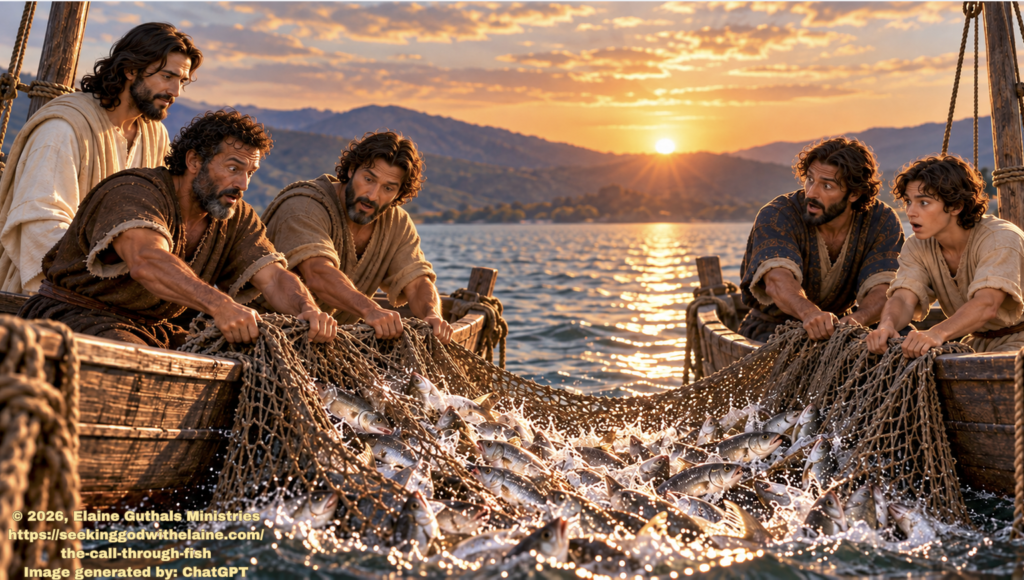
  • Andrew Brought Simon to Jesus

    It is wonderful to get to know our Savior. This devotional reading looks at what our response should be as we get to know Him more.

    Nuggets

    • Andrew wasted no time in bringing his brother to the Messiah.
    • Andrew was so sure that Yeshua was the Messiah, he wanted his brother to know that, too.
    • Simon was an interesting man.
    • His birth name was Simon, but Yeshua changed his name to Peter.

    In the last devotion, we talked about John pointing Yeshua out to two of his disciples. One was identified as Andrew. Most tradition identifies the other as John.

    Andrew had an almost immediate response to his meeting with Yeshua. Let’s dig in.

    Let’s Put It into Context

    To read devotions in The Battle for the Heart theme

    Devotions in the The Early Ministry of the Messiah series

    Andrew Witnessed

    “Andrew, Simon Peter’s brother, was one of these men who heard what John said and then followed Jesus. Andrew went to find his brother, Simon, and told him, ‘We have found the Messiah’ (which means ‘Christ’)” (Jn. 1: 40-41 NLT)

    Brought

    Andrew wasted no time in bringing his brother to the Messiah.

    John had been very precise in the chronology of the previous events. He specifically noted when events took place the following day.

    In this passage, John didn’t identify when the next day occurred until the following verse. If we are taking him at his word regarding when events occurred in the individual days, we must believe that Andrew’s bringing his brother Simon to Yeshua occurred on the same day that Andrew and the unidentified disciple spent time with Yeshua.

    This is important. Remember what verse 39 said. “… It was about four o’clock in the afternoon when they went with him to the place where he was staying, and they remained with him the rest of the day” (Jn. 1: 39 NLT).

    The Greek text says it was approximately the tenth hour. This also reflects the Jewish practice of counting daylight hours from sunrise. Therefore, when modern versions translate this as 4:00 p.m., they are correct.

    How long would the rest of the day have conceivably been? The Greek is emeinan (ἔμειναν), from menō (μένω), meaning to remain, stay, abide, continue, dwell.

    It is conceivable to think they spent the daylight hours with Yeshua.

    So, when did Andrew go get Simon? After they asked, “Where are you staying,” did Andrew go pick up Simon and meet them there? Did Yeshua, the other disciple, and Andrew talk a while, and then Andrew go get Simon?

    We can reasonably conclude that Andrew spent up to a couple of hours with Yeshua, and then he went to get his brother.

    We don’t really know for sure when it happened; but since John doesn’t switch days until after Simon gets there, we know it was on the same day that Andrew met Yeshua.

    We Have Found the Messiah

    Andrew was so sure that Yeshua was the Messiah, he wanted his brother to know that, too.

    Think about it. Many people were actively and eagerly watching for the Messiah to show up. Regardless of which Messianic expectations they believed in after He did come, they were looking for it to be soon.

    Andrew seems to be one of those who were actively watching. He was a disciple of the one who prepared the way for the Messiah.

    Once he verified that this was the Messiah, Andrew couldn’t keep the news to himself. He had to share it with Simon.

    It is part of our marching orders that we are to share our faith with others. Our love for Jehovah and Yeshua should bubble out of us and spill onto others.

    • “And then he told them, ‘Go into all the world and preach the Good News to everyone’” (Mk. 16: 15 NLT).
    • “Therefore, go and make disciples of all the nations, baptizing them in the name of the Father and the Son and the Holy Spirit. Teach these new disciples to obey all the commands I have given you. And be sure of this: I am with you always, even to the end of the age” (Mt. 28: 19-20 NLT).

    Simon Peter

    “Then Andrew brought Simon to meet Jesus. Looking intently at Simon, Jesus said, ‘Your name is Simon, son of John — but you will be called Cephas’ (which means ‘Peter’)” (Jn. 1: 42 NLT)

    “Now I say to you that you are Peter (which means ‘rock’), and upon this rock I will build my church, and all the powers of hell will not conquer it” (Mt. 16: 18 NLT)

    “Simon (whom he named Peter) … (Lk. 6: 14 NLT)

    “… Simon (whom he named Peter)” (Mk. 3: 16 NLT)

    Simon Peter [Shim’on/Kefa]

    Simon was an interesting man.

    We know many things about Peter. Part of that is because he seems to be the spokesperson of the group.

    At times, it seems like Peter had a larger-than-life personality. We get right away that Peter was loyal and sincere in his faith. He was the one who called Yeshua the Messiah when asked who they thought He was (Mt. 16: 16).

    Peter could also be impulsive and narrow minded. At times, he was inconsistent and thoughtless.

    We might have called Peter a wild card.

    Peter wasn’t afraid to ask questions when he needed clarification or wanted to gain knowledge. But that is a good thing, because he asked many of the questions that we would have.

    Peter’s faith was so strong that Jesus called him a rock (Mt. 16:18). Yet, we see in Peter a pendulum of faith. He not only was the only one to walk on the water with Yeshua (Mt. 14: 22-33), but he also denied Him three times the night of His trial (Mt. 26: 69- 75; Mk. 14: 66-72; Lk. 22: 54-62; Jn. 18: 15-18, 25-27).

    John told us that Peter and Andrew’s hometown was Bethsaida (Jn. 1: 44). However, Mark 1: 29-31 states that the healing of Peter’s mother-in-law took place in Peter and Andrew’s home in Capernaum.

    Either town was a fishing community.

    Circumstantial evidence from an archeological dig indicates that a house excavated in Capernaum belonged to Peter. BAS Staff indicated that the function of the house changed from a residential place to a communal gathering place.

    Resource

    Peter and Andrew may have grown up in Bethsaida. They may have moved to Capernaum when they were older.

    You Will Be Called

    His birth name was Simon, but Yeshua changed his name to Peter.

    All four Gospels say that Yeshua changed Simon’s name to Peter. Only John tells us when and how. It was the first time Simon met Yeshua.

    Matthew and Luke acknowledge that Simon was already Peter when Yeshua called him by the seashore.

    • “When Simon Peter realized what had happened, he fell to his knees before Jesus and said, ‘Oh, Lord, please leave me — I’m such a sinful man’” (Lk. 5: 8 NLT).
    • “One day as Jesus was walking along the shore of the Sea of Galilee, he saw two brothers — Simon, also called Peter, and Andrew — throwing a net into the water, for they fished for a living” (Mt. 4: 18 NLT).

    The interesting thing is the Gospel of Mark didn’t. “One day as Jesus was walking along the shore of the Sea of Galilee, he saw Simon and his brother Andrew throwing a net into the water, for they fished for a living” (Mk. 1: 16 NLT).

    Why is that interesting? To me it is because Mark was said to have compiled Peter’s sermons – either before or after he had died. That means – in my mind – that Peter called himself Simon there.

    Does that mean Yeshua hadn’t renamed Simon yet? Not necessarily. All the other Gospel writers pulled a Moses and used the name early church members would have been most familiar.

    Making the Connections #1

    Okay, I have to process something. It was fairly easy to keep track of the changing of the day. I am having a little trouble as to figuring out where they were.

    Where in the world are these guys?

    If we look at the passage with Andrew and Simon, it doesn’t tell us where they were at. But we get a clue in the next verse – John 1: 43. “The next day Jesus decided to go to Galilee …” (Jn. 1: 43 NLT).

    Now, let’s go backwards to the last time we had a location stamp. “This encounter took place in Bethany, an area east of the Jordan River, where John was baptizing” (Jn. 1: 28 NLT).

    The encounter being discussed was the discussion with the priests and temple assistant that John had at Bethany beyond the Jordan.

    Bethany beyond the Jordan is believed by many to be the location where John baptized Yeshua. But we have to be very careful here in John 1.

    John 1: 32-34 is a discussion of an event that happened earlier: Yeshua’s baptism. Matthew, Mark, and Luke all give us actual narrative accounts. Here, John the Immerser is only recounting what transpired when he baptized the Messiah.

    This is relevant when we add the temptation into the picture. Look at the chain of events.

    • “And a voice from heaven said, ‘This is my dearly loved Son, who brings me great joy’” (Mt. 3: 17 NLT).
    • “Then Jesus was led by the Spirit into the wilderness to be tempted there by the devil” (Mt. 4: 1 NLT).

    Tradition tells us that the wilderness Yeshua went into to be tempted was the Judean Wilderness. We don’t know for sure.

    Then after the forty days of testing, Yeshua went back to where John was.

    This is the only timeline that makes sense to me. The next day after the encounter with the priests and assistants, John makes his famous “… Look! The Lamb of God who takes away the sin of the world!” (Jn. 1: 29 NLT).

    The next day after His baptism, Yeshua would be in the wilderness, not walking by John. He especially wouldn’t be spending time with John’s two disciples the day after that.

    Another piece of evidence that this is the correct timeline is that John didn’t know who the Messiah was until He baptized Him.

    Remember John’s testimony. “‘I did not recognize him as the Messiah, but I have been baptizing with water so that he might be revealed to Israel.’” Then John testified, ‘I saw the Holy Spirit descending like a dove from heaven and resting upon him. I didn’t know he was the one, but when God sent me to baptize with water, he told me, ‘The one on whom you see the Spirit descend and rest is the one who will baptize with the Holy Spirit.’ I saw this happen to Jesus, so I testify that he is the Chosen One of God” (Jn. 1: 31-34 NLT).

    John couldn’t say, “Look!” before the baptism – which is discussed in the verses after his famous identification of the Messiah.

    Making the Connections #2

    Andrew brought Simon to Yeshua. He didn’t have to explain everything about the Messiah to his brother. He simply brought him to the One he had found.

    We know much more about Peter’s life than we know about Andrew’s. Peter’s words and actions fill the Gospel accounts.

    But we shouldn’t overlook the brother who brought him to Yeshua in the first place. Where would we be if he hadn’t?

    Andrew’s witness made a difference in Simon’s life. We may never know the full impact of our own witness, either. We aren’t responsible for making someone believe. We are responsible for pointing people toward Yeshua.

    We, too, are called to bring others to Yeshua. We should start with our family members. They mean the most to us, and we should want to share Him with them.

    Then, just as Andrew was, we may be called to bring total strangers to Yeshua. We have to be ready to do whatever He calls us to do.

    Heart Check

    Think about the battle Yeshua is engaged in for your heart. Ask yourself the following questions.

    • Am I bringing others to Yeshua or keeping Him to myself?
    • Am I willing to share what I know about Him, even when I don’t have all the answers?
    • Do I look for opportunities to share my faith, or do I wait for someone else to do it?
    • Am I more concerned about what I cannot explain or about introducing others to the One I know?

    How Do We Apply This?

    • Share what Yeshua has done in your life with those who currently don’t know Him as their Savior.
    • Look for opportunities to introduce others to Him.
      Invite others to come and see for themselves.
    • Trust Jehovah with the results of your witness.
    • Remember that your responsibility is to point people to Yeshua, not to make them believe.

    Father God. You call us to You. You call us to lead others to You. Help us boldly speak Your name to family, friends, coworkers — even strangers. Amen.

    If you don’t understand something and would like further clarification, please contact me.

    If you have not signed up for the email providing the link to the devotions and the newsletter, do so below.

    If God has used this devotion to speak with you, consider sharing it on social media.

  • The First Two Disciples

    As it was time to begin His ministry, Yeshua was beginning to gather followers. This devotional reading looks at the first two disciples who began to follow Him.

    Nuggets

    • The event that began this progression was when John was being questioned by Pharisees.
    • John’s ministry was all about others.
    • From His birth, Yeshua was identified as the Sacrifice needed to restore us from sin.
    • The two disciples immediately left John and followed Yeshua.
    • We have to seek the Savior for the right reason.
    • The disciples had to determine why they were seeking Yeshua.
    • Yeshua recognized the importance of the two disciples coming and seeing for themselves.

    Yeshua knew that the Plan of Salvation would call first century Jews – and eventually all people – to change their lifestyle to better align with what Jehovah expected. He knew that He would need students to learn about the need for restoration and to learn how to walk with Jehovah.

    Those students would then have to tell others.

    That meant Yeshua would have to choose the right men for the job. Those who followed Him were called disciples.

    Let’s Put It into Context

    To read devotions in The Battle for the Heart theme

    Devotions in the The Early Ministry of the Messiah series

    John Again Identified Yeshua

    “The following day John was again standing with two of his disciples. As Jesus walked by, John looked at him and declared, ‘Look! There is the Lamb of God!’” (Jn. 1: 35-36 NLT)

    The Following Day

    The event that began this progression was when John was being questioned by Pharisees.

    A lot of things had been happening that were identified by the following day language. It is easy to get lost in the quick day changes.

    “John told them, ‘I baptize with water, but right here in the crowd is someone you do not recognize. Though his ministry follows mine, I’m not even worthy to be his slave and untie the straps of his sandal’” (Jn. 1: 26-27 NLT).

    John Was Standing with Two Disciples

    John’s ministry was all about others.

    We have already seen where John the Immerser pointed to Yeshua as the Messiah at His baptism. Once again, John pointed to Him – this time to two of his disciples.

    The Hebrew word for disciples is talmidim – תלמידים. It means learners or students. The singular is talmid (תלמיד).

    We have to know what kind of learning is being discussed here. It isn’t a straight transfer of information. It could involve learning the teacher’s interpretation, conduct, and way of life.

    John could have said, “Hey, these are my disciples. Don’t come poaching. Go find Your own.”

    No, John knew his mission – to prepare for the Messiah.

    What would have been the point of John’s ministry to prepare for the Messiah if he didn’t want his disciples to follow the Master? The purpose of his ministry wouldn’t have been about the Messiah – it would have been about himself.

    John’s message was incomplete – until Yeshua arrived on the scene. But then his mission was completed.

    So, John encouraged his two disciples to follow the Messiah.

    There Is the Lamb of God

    From His birth, Yeshua was identified as the Sacrifice needed to restore us from sin.

    When we think of a sheep, most of us probably think about a fluffy animal that, when given a haircut, provides us with yarn to make some warm clothes. Maybe we think about some milk to drink.

    That wouldn’t have been what the first-century Jews thought. They would have thought of sacrifice in the Temple.

    They wouldn’t have connected that with the Messiah – the One Who was to save them from Roman occupation.

    Yeshua’s mission was to be a substitute for sinful humans. He came to take away the sin of the world (Jn. 1: 29).

    If He hadn’t been the Lamb Who was slain, we would forever be separated from our Creator. To some, that may be fine since that is all we have ever known.

    But come Judgment Day, that isn’t going to be fine. The consequences of that separation will be eternal – and painful.

    What Yeshua accomplished that a regular lamb couldn’t was to remove our sins. The lamb’s sacrifice would allow temporary cover for our sins.

    Only Yeshua’s blood would allow for the permanent cover of our sins.

    What can we learn from this? Two things. Sin is real, and it is seriously bad. Jehovah loves us so much that He would provide His own Sacrifice – the only Sacrifice – to eliminate its eternal consequences once and for all.

    The Disciples React

    “When John’s two disciples heard this, they followed Jesus. Jesus looked around and saw them following. ‘What do you want?’ he asked them. They replied, ‘Rabbi’ (which means ‘Teacher’), ‘where are you staying?’ ‘Come and see,’ he said. It was about four o’clock in the afternoon when they went with him to the place where he was staying, and they remained with him the rest of the day” (Jn. 1: 37-39 NLT)

    They Followed Jesus

    The two disciples immediately left John and followed Yeshua.

    Once John made his identification of Yeshua, the disciples had a choice to make. Were they going to stay with John – i.e., stay with what they had always known?

    Or were they going to pursue a relationship with Yeshua?

    No, don’t mistake this for their becoming His followers at that moment. On the other hand, don’t see this as some first-century type of stalking.

    They wanted to meet the Lamb.

    Knowing that we have the need to meet the Savior is the first step into becoming a child of Jehovah. Head knowledge of the Sacrifice has to come first.

    But it can’t stop there. Head knowledge does not make Yeshua our Savior.

    We have to build a relationship with Him.

    What Do You Seek?

    We have to seek the Savior for the right reason.

    Yeshua asked the disciples a great question. “What do you seek?”

    Ooo, baby. Yeshua is still asking us that question today. In fact, that is a foundational discipleship question.

    There are a variety of answers that we can give. Some may say they are looking for a better life.

    That may be a good answer – but it also may be a wrong answer. If we are looking for an easier life or a more prosperous life, that would be the wrong answer.

    If we are seeking Yeshua to be our Savior and Redeemer, that is the right answer. Our motivation for seeking must be to submit our lives and our will to Him.

    Where Are You Staying?

    The disciples had to determine why they were seeking Yeshua.

    I always thought the response of the two disciples to Yeshua’s question was interesting. If John had prepared them for the coming Messiah – and he did – and then he told them this was the One, wouldn’t they have come up with a better answer than “Where do You live?”

    Maybe that was a polite way of inviting themselves over. Maybe that showed they wanted a relationship with Him.

    Whatever the reason behind structuring the answer in that way, the two disciples showed respect by addressing Him as Rabbi.

    Come and See

    Yeshua recognized the importance of the two disciples coming and seeing for themselves.

    In order to ask Yeshua to be our Savior and Redeemer, we have to have knowledge of Who He is. We have to have personal experience in listening to and following Him.

    We have to seek and find Yeshua.

    Andrew

    “Andrew, Simon Peter’s brother, was one of these men who heard what John said and then followed Jesus” (Jn. 1: 40 NLT)

    While Andrew didn’t get as much ink time as his brother Simon Peter, he is also one of the most recognizable disciples.

    I have to start out with a disclaimer. We are going to start introducing the Apostles. Scripture tells us very little about them.

    Tradition tells us more, but it is only that – tradition. Some traditions may be more reliable than others.

    So, long story short, if Scripture itself doesn’t say it, it may be wrong or it may be right.

    Andrew is the first disciple we meet. Of the two disciples who followed the Lamb at John the Immerser’s direction, he is the only one explicitly named.

    But then the Apostle John, who wrote the Gospel book, identified Andrew as being Simon Peter’s brother. I wonder how often he felt he was in his brother’s shadow?

    They fished together, and they were called together (Mt. 4: 18-22). They may have even lived together (Mk. 1: 29).

    Still, it is Andrew to whom we are first introduced. By being a disciple of John’s, he showed his earnest pursuit of salvation before ever meeting the Messiah. That leads us to believe he accepted John’s message of the coming One.

    Punshon had a great observation about the disconnect between first-century Messianic expectations and the demeanor of the Lamb introduced to Andrew. He wrote,

    “He came to Jesus with an openheartedness worthy of imitation. He had his own notions, doubtless, about the grandeur of Israel’s Messiah; but was not offended when the solitary, unattended man was pointed out to him. Some, in the hasty revulsion of feeling, would have turned away in disdain. But Andrew’s faith mastered his prejudice.”

    Resource

    That tells us that Andrew didn’t just believe what everyone expected the Messiah to be. He made up his own mind, probably in large part due to what John told him – this is the Lamb of God.

    Andrew was faithful to the ministry after Yeshua’s death. According to tradition, he spread the Gospel to Asia Minor, Greece, and Scythia. It was in Patras, Greece, that, according to tradition, he was crucified on an x-shaped cross after being severely whipped by seven soldiers. It is said that two days passed before death came.

    Making the Connections #1

    The other disciple with Andrew that day wasn’t named. But that hasn’t stopped us from trying to figure out who he was.

    Most agree on two candidates. It could have been John, but it also could have been Philip.

    Most believe the disciple was probably John. He was an important disciple.

    If John did write this Gospel account, I can see why he didn’t identify himself as the disciple. He never really identified himself throughout the book – just as the beloved disciple. This, however, wasn’t verified by any other canonical writer.

    We do know that John was the son of Zebedee and the brother of the Apostle James (Mt. 4: 21). Their family operated a fishing business on the Sea of Galilee. It sounds extensive because they did have hired workers (Mk. 1: 20). They appear to have been partners with Simon Peter and Andrew (Lk. 5: 7).

    It is tradition that John’s mother Salome was the sister of Mary. If so, James and John would have been cousins of Yeshua.

    John is also memorable because he and James got nicknames. Yeshua called them the sons of thunder. This nickname came from their reaction to the Samaritan village (Lk. 9: 51-56).

    John wrote other New Testament books besides the Book of John. He may have written the Books of First John, Second John, and Third John and the Book of Revelation.

    John’s mission field was Jerusalem and Ephesus.

    Many know that John was exiled to the Island of Patmos. What some may not know is that he, according to early church tradition, was boiled in oil before he got there. When he didn’t die from that hideous torture, which was an execution method of the Roman Empire, he was banished (possibly by Domitian) to the prison on the Island of Patmos.

    John was eventually freed. He then served as Bishop of Ephesus (modern-day Turkey). He died peacefully – the only one to die of natural causes according to tradition – sometime after AD 98.

    Less is known about Philip. John 1: 44 indicates that he was from Bethsaida.

    We do know that Philip was a man who asked practical questions (Jn. 14: 8-9). He, like Andrew, was more quiet about his evangelism. Philip’s mission field became Greece, Syria, Phrygia, and Hierapolis (Asia Minor).

    Little is known about his life and death. Tradition says that he was the father of daughters. He is believed to have been martyred by either crucifixion or stoning. He is buried in Hierapolis.

    The other disciple with Andrew could have been either John or Philip. Or it could have been someone else entirely. The truth is we just aren’t told.

    Making the Connections #2

    I like what Punshon said. He wrote, “Christianity requires intelligence, reliance, not blind credulity.”

    Resource

    Anyone who believes Jehovah demands blind submission has profoundly misunderstood Who He is. He wants us to make informed, genuine decisions to deny ourselves, choose Him daily, and follow Him and His ways (Lk. 9: 23).

    Heart Check

    Think about the battle Yeshua is engaged in for your heart. Ask yourself the following questions.

    • Am I seeking Yeshua for an easier life, or am I seeking Him as our Savior and Redeemer?
    • Am I content with head knowledge about Yeshua, or am I building a relationship with Him?
    • Am I holding on to what we have always known, or am I willing to follow Yeshua where He leads?
    • Am I accepting what others tell us about Yeshua without examining it, or am I making informed, genuine decisions to follow Him?

    How Do We Apply This?

    • Recognizing our need for Yeshua as our Savior and Redeemer
    • Moving beyond head knowledge into a personal relationship with Yeshua
    • Examining our motives for seeking the Savior
    • Submitting our lives and our will to Yeshua
    • Seeking and finding Yeshua through personal experience in listening to and following Him
    • Making informed, genuine decisions to deny ourselves, choose Jehovah daily, and follow His ways

    Father God. You call us to be students of You — Your character, Your history, Your interactions with humans. You call us so that You can use us to expand Your kingdom. Most of all, You call us so You can save us from our sins. Thank You. Amen.

    If you don’t understand something and would like further clarification, please contact me.

    If you have not signed up for the email providing the link to the devotions and the newsletter, do so below.

    If God has used this devotion to speak with you, consider sharing it on social media.

  • The Ministry of Jesus Began

    Once Yeshua was baptized, it was time to start His ministry. This devotional reading looks at the first things He did.

    Nuggets

    • Once Yeshua started His ministry, there was no need for someone to prepare the way.
    • Yeshua left Galilee and traveled south to the Jordan, where John was baptizing.
    • Nazareth was the village in which Yeshua grew up.
    • Set on the northwestern shore of the Sea of Galilee, Capernaum was more than just a dot on the map and different from Nazareth.
    • Yeshuah’s move to Capernaum had prophetic significance.
    • Zebulun was the sixth and last son of Jacob and Leah (Gen. 30: 19-20) and was Jacob’s tenth son.
    • Naphtali was Jacob’s sixth son, born by Rachel’s servant girl Bilhah (Gen.30: 7-8).
    • In the Gospel of John, John portrayed Yeshua as the eternal Word, the source of life, and the true Light.
    • The difference in their messages was that John was talking about Yeshua, and Yeshua was talking about Himself.
    • In the Old Testament, the primary Hebrew concept is expressed through shuv (שׁוּב), meaning to turn, return or go back, and nacham (נָחַם), which can express regret, relenting, or a change of mind/intent.
    • More than just turning away from sin, we have to turn back to Jehovah.
    • The foundation of the Plan of Salvation is that we believe Yeshua is the Son of God and was sent to save us from our sins.
    • The Kingdom of Heaven really wasn’t a place – it was a reign.

    Yeshua chose to be obedient to Jehovah. He submitted Himself for baptism by John the Immerser.

    After a period of temptation, Yeshua was ready to begin His ministry.

    We aren’t told a lot about what that looked like. Let’s see if we can piece things together.

    To read devotions in The Battle for the Heart theme

    Devotions in the The Early Ministry of the Messiah series

    Traveling in Israel

    “When Jesus heard that John had been arrested, he left Judea and returned to Galilee” (Mt. 4: 12 NLT)

    “Later on, after John was arrested, Jesus went into Galilee, where he preached God’s Good News” (Mk. 4: 14 NLT)

     After John Was Arrested

    Once Yeshua started His ministry, there was no need for someone to prepare the way.

    I have always thought it sad how short of a time John the Immerser was able to conduct his ministry. No, we aren’t told the amount of time, but it probably would have been fairly short.

    Think about it. Yeshua began His ministry when He was around 30 years old. “Jesus was about thirty years old when he began his public ministry …” (Lk. 3: 23 NLT).

    John was six months older than Yeshua. It is logical that he started when he was around 30.

    Priests actively served from age 30 until age 50, after which their physical duties were reduced. “Then the LORD said to Moses and Aaron, ‘Record the names of the members of the clans and families of the Kohathite division of the tribe of Levi. List all the men between the ages of thirty and fifty who are eligible to serve in the Tabernacle’” (Num. 4: 1-3 NLT).

    No, John wasn’t a priest, but Jehovah works in patterns. Many things in Yeshua’s ministry were patterned after the Temple and priests.

    With John and Yeshua being so close in age and Him being 30, that would mean that John probably wasn’t that much older.

    Regardless of age, it is logical that John’s role would have to diminish after Yeshua began His ministry. There was no more reason to prepare when He started.

    I guess it is logical, too, that John had to die. People didn’t need to go to the messenger. They needed to go to the Message.

    Left Judea and Returned to Galilee

    Yeshua left Galilee and traveled south to the Jordan, where John was baptizing.

    It is fairly safe to say that John was in Judea when Yeshua came for baptism. “One day Jesus came from Nazareth in Galilee, and John baptized him in the Jordan River” (Mk. 1: 9 NLT).

    John’s ministry was associated with the Jordan Valley, particularly the wilderness region. In his Gospel, the Apostle John identified Yeshua’s baptism as occurring near Bethany beyond Jordan (Jn. 1: 28-29). Unfortunately, the exact location of where that village was is debated.

    Villages Associated with Yeshua’s Ministry

    “He went first to Nazareth, then left there and moved to Capernaum, beside the Sea of Galilee, in the region of Zebulun and Naphtali” (Mt. 4: 13 NLT

    First to Nazareth

    Nazareth was the village in which Yeshua grew up.

Nazareth was an insignificant village. Its only claim to fame was that it was where the Messiah lived during childhood and early adulthood.

    A small Galilean village in the hills of Lower Galilee, the village probably had only 200 to 400 inhabitants. It was tucked into the hills, so there was no trade route associated with it.

    Archaeology indicates a modest village that was Torah-observant but poor. Archeologists have found simple stone homes, many which are at least partly cave based.

    The village was tucked in the hills of Galilee, a rural and quiet area often overlooked. It wasn’t mentioned in the Old Testament at all.

    We get a hint of Nazareth’s reputation in John 1: 46. “‘Nazareth!’ exclaimed Nathanael. ‘Can anything good come from Nazareth?’ ‘Come and see for yourself,’ Philip replied” (Jn. 1: 46 NLT).

    The eventual return of the family to Nazareth after their sojourn in Egypt fulfilled prophecy. Joseph had another dream, telling him to go to Galilee.

    We hear little about Yeshua and His childhood. All we are told is that He grew both in wisdom and in God’s favor.

    Moved to Capernaum

    Set on the northwestern shore of the Sea of Galilee, Capernaum was more than just a dot on the map and different from Nazareth.

    Where Nazareth had been a small, rural village, Capernaum (Kfar Nahum – כְּפַר נַחוּם) was no isolated farming hamlet. Instead – while still a village – archeology had proven that it was a busy fishing and commercial community. Its location was strategically important for Yeshua’s ministry.

    In our minds, we may see the call of Peter, Andrew, James, and John taking place on an isolated spot on the shore of the Sea of Galilee. That probably wasn’t the case.

    Capernaum boasted substantial harbor installations, including a seawall and piers. The fishing industry was essential to the economy of the town.

    We should see a group of young men spending a leisurely afternoon fishing. They were working men engaged in an established commercial occupation.

    That several of His disciples came from the same town would have been helpful to Yeshua. More importantly, Yeshua Himself moved to Capernaum and made it His base of operations.

    Being a commercial hub meant that the town was located on important routes that connected Galilee with the surrounding territories. Part of this was due to the fact the village sat near a territorial boundary. That, however, meant the lake, because of its size, sat within several different jurisdictions. This meant that fisherman could be taxed when moving their catch across those boundaries.

    Probably of greatest importance was the fact that Capernaum had a substantial synagogue during first-century Israel. It was a place where Jewish communities gathered, heard Scripture read, and discussed its interpretation.

    That meant that all of Capernaum believed Yeshua was the Messiah come to save them from their sinful nature? Not really. In fact, Capernaum earned Yeshua’s condemnation before His death.

    “And you people of Capernaum, will you be honored in heaven? No, you will go down to the place of the dead. For if the miracles I did for you had been done in wicked Sodom, it would still be here today” (Mt. 11: 23 NLT).

    This solidifies the difference between head knowledge and heart knowledge. We must not only know Jesus as a first-century Jewish figure, a healer and miracle worker. But we must also know His mission and its purpose.

    That knowledge has to transform our hearts into being disciples of Yeshua. Being disciples – students – means that we are students of His Word, His life, and His promises.

    Prophecy Fulfilled

    Yeshuah’s move to Capernaum had prophetic significance.

    Matthew quoted most of Isaiah 9: 1-2 as one of the reasons for the relocation from Nazareth to Capernaum.

    “Nevertheless, that time of darkness and despair will not go on forever. The land of Zebulun and Naphtali will be humbled, but there will be a time in the future when Galilee of the Gentiles, which lies along the road that runs between the Jordan and the sea, will be filled with glory. The people who walk in darkness will see a great light.
    For those who live in a land of deep darkness, a light will shine” (Isa. 9: 1-2 NLT).

    First, Zebulun and Naphtali were sons of Jacob.

    Zebulun

    “Zebulun will settle by the seashore and will be a harbor for ships; his borders will extend to Sidon” (Gen. 49: 13 NLT)

    Zebulun was the sixth and last son of Jacob and Leah (Gen. 30: 19-20) and was Jacob’s tenth son.

    Courageous in battle, Zebulun showed up when it mattered. The tribe were willing to risk itself for Jehovah’s purposes.

    Zebulun’s future did occur as Jacob prophesied — sort of. The land allotted for the tribe in Joshua 19: 10-16 wasn’t on the coast. It was in lower Galilee.

    The territory was in a strategic position. Not only did they have the benefits of the Sea of Galilee in the region, but they also had Mediterranean trade routes. Their border was near the city of Zidon, leading to commercial relations with the Phoenicians.

    Known for its courage in battle, the tribe supported David when he became king. They also fought with Deborah and Barak (Jdgs. 5: 15).

    Naphtali

    “Naphtali is a doe set free that bears beautiful fawns” (Gen. 49: 21 NLT)

    Naphtali was Jacob’s sixth son, born by Rachel’s servant girl Bilhah (Gen.30: 7-8).

    The blessing Jacob gave him was talking about freedom and descendants who are right with Jehovah.

    Whitfield addressed this blessing this way. He wrote, “In Naphtali we have the Christian enjoying the liberty and freedom and happiness in Christ, and testifying of Christ to others.”

    Resource

    The liberty of our souls from sin is a joyous thing. Because Yeshua has paid the debt, we are no longer slaves to sin. Our chains have been broken, and we are free.

    The linkage between Zebulun and Naphtali occurred frequently. They fought alongside Deborah and Barak (Jdgs. 5: 15). Both were in Galilee.

    Because of this, the two tribes were listed when the Messiah was prophesied. “But there will be no gloom for her who was in anguish. In the former time he brought into contempt the land of Zebulun and the land of Naphtali, but in the latter time he has made glorious the way of the sea, the land beyond the Jordan, Galilee of the nations” (Isa. 9: 1 ESV).

    The first-century Jews wouldn’t have necessarily gone back to the men themselves, especially when they said that they were humbled. The Hebrew used there is hêqal (הֵקַל) from the root q-l-l (קלל). This carries the ideas of to make light, make insignificant, treat as of little account, or bring into contempt.

    The two tribes had been brought low during the Assyrian conquest of the northern territories. Naphtali especially felt the brunt of this attack.

    Tiglath-pileser III attacked during the reign of Pelah, king of Israel, the Northern Kingdom (II Kgs. 15: 29-30). Galilee and the entire territory of Naphtali were captured as well as a number of important cities. The captured Israelites were deported to Assyria.

    This humiliation had lasting consequences throughout the region. Isaiah later called the area Galilee of the nations. We’re talking the northern Galilean region here. Yes, the area where Yeshua began his ministry in Galilee, in the territory formerly held by Zebulun and Naphtali.
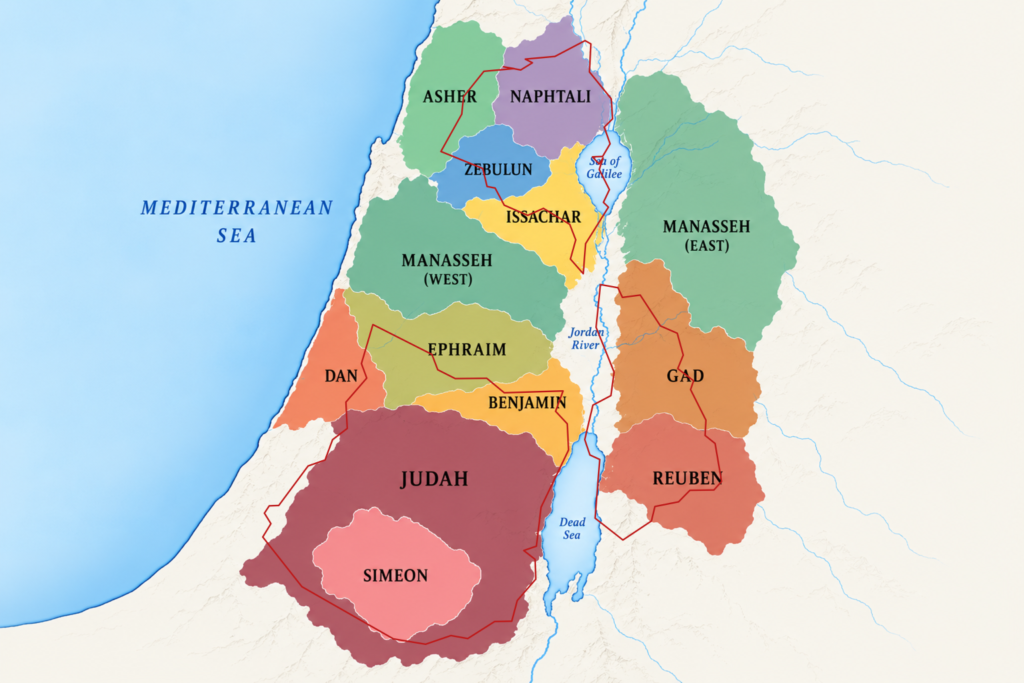
    The people in this area were close to the great international movement of people, armies, trade, and imperial power. This led them to feel the consequences of being on the front edge of Israel’s northern vulnerability.

    By the time the first century came around, the Jews probably weren’t going around saying, “I’m from the tribe of Zebulun.” Don’t get me wrong. They would have still known.

    However, the tribal territories weren’t functioning in the same way they had in Joshua’s day when the allotment was given. But the tribal names were still part of Israel’s scriptural and historical memory.

    The prophecy said that this humiliation wouldn’t last forever. It contrasted hēqal with hikbîd – הִכְבִּיד (taken from the root k-b-d – כבד). That means to make heavy, which can carry the sense of giving weight, honor, or glory.

    In other words, Galilee was going to go from humiliated to honored. This honor was going to be because of the Light.

    Light

    In the Gospel of John, John portrayed Yeshua as the eternal Word, the source of life, and the true Light.

    From the beginning, the Light is tied to creation and symbolizes life, truth, order, revelation, and Jehovah’s presence.

    In contrast, darkness symbolizes sin, death, ignorance, distortion, and separation from the life the Word gives. The Light entered the darkness, which could not overcome it.

    John the Baptist was not the Light but its witness, sent under Jehovah’s authority to prepare Israel through repentance and foster faith before the Messiah appeared. His ministry prepared people to receive the One who was coming.

    Then the Light entered the world as Yeshua — the eternal Word and giver of life at creation — taking human form within His own creation. The Light is not merely Yeshua’s teaching; it is His identity. He gives spiritual life and salvation, exposes what darkness conceals, and reveals Jehovah.

    The struggle between Light and darkness is ultimately a battle for the human heart. Darkness may cloud and distort our perception, but it cannot defeat the Light. Jehovah’s plan will prevail as He leads people from darkness into the Light of redemption and forgiveness

    Yeshua’s Message

    ““From then on Jesus began to preach, ‘Repent of your sins and turn to God, for the Kingdom of Heaven is near’” (Mt. 4: 17 NLT) “‘The time promised by God has come at last!’ he announced. ‘The Kingdom of God is near! Repent of your sins and believe the Good News!’” (Mk. 1: 15 NLT)

    The difference in their messages was that John was talking about Yeshua, and Yeshua was talking about Himself.

    Yeshua’s message was the same as John the Baptizer’s message. “In those days John the Baptist came to the Judean wilderness and began preaching. His message was, 2 ‘Repent of your sins and turn to God, for the Kingdom of Heaven is near’” (Mt. 3: 1-2 NLT).

    Repent of Your Sins

    In the Old Testament, the primary Hebrew concept is expressed through shuv (שׁוּב), meaning to turn, return or go back, and nacham (נָחַם), which can express regret, relenting, or a change of mind/intent.

    This carried into the New Testament as to change one’s mind or way of thinking.

    Remember, Israel had a covenant relationship with Jehovah. The problem Israel’s leaders encountered was they forgot that was a relationship, rather than just ritual ceremony.

    While Yeshua did come to restore Israel to covenant fulfillment, He came to individually save us from our sins.

    • “Jesus answered him, ‘I tell you the truth, unless you are born again, you cannot see the Kingdom of God’” (Jn. 3: 3 NLT).
    • “Jesus answered, ‘I assure you, no one can enter the Kingdom of God without being born of water and the Spirit’” (Jn. 3: 5 NLT).

    Turn to God

    More than just turning away from sin, we have to turn back to Jehovah.

    Choosing not to sin isn’t enough. We have to turn back to Jehovah and walk with Him.

    The goal is not to eliminate sin in our lives. It is to restore our relationships with Him.

    Through the Plan of Salvation, Yeshua is opening up the opportunity to restore that relationship. We can’t approach Jehovah unless our sins have been washed through the blood of the Lamb.

    Believe

    The foundation of the Plan of Salvation is that we believe Yeshua is the Son of God and was sent to save us from our sins.

    • “For this is how God loved the world: He gave his one and only Son, so that everyone who believes in him will not perish but have eternal life” (Jn. 3: 16 NLT).
    • “They replied, ‘Believe in the Lord Jesus and you will be saved, along with everyone in your household’” (Ac. 16: 31 NLT).
    • “If you openly declare that Jesus is Lord and believe in your heart that God raised him from the dead, you will be saved” (Rom. 10: 9 NLT).

    Believing in Yeshua has to come from our hearts, not our heads. We have to genuinely believe in Him and want all that He has to offer – that includes the responsibilities involved.

    When we believe in Yeshua, we trust Him as our Savior and Redeemer. We put our faith in Him even though we are believing something we can’t see.

    The Kingdom of Heaven

    The Kingdom of Heaven really wasn’t a place – it was a reign.

    It is about the rule of God becoming manifest.

    So, it had nothing to do with where the kingdom would be – rather it told Who was going to rule the kingdom.

    John called Israel to prepare itself as a people for the arrival of its King. Yeshua said that the Kingdom was near. To me, that makes it sound like it is close but not here yet.

    The Complete Jewish Study Bible said this is one of those three-meaning words. The Kingdom of God is near, it is present, and it’s not here yet.

    • “But since they don’t have deep roots, they don’t last long. They fall away as soon as they have problems or are persecuted for believing God’s word” (Mk. 4: 17 NLT).
    • “Realizing how much the man understood, Jesus said to him, “You are not far from the Kingdom of God.” And after that, no one dared to ask him any more questions” (Mk. 12: 34 NLT).
    • “You won’t be able to say, ‘Here it is!’ or ‘It’s over there!’ For the Kingdom of God is already among you” (Lk. 17: 21 NLT).
    • “Jesus answered, ‘My Kingdom is not an earthly kingdom. If it were, my followers would fight to keep me from being handed over to the Jewish leaders. But my Kingdom is not of this world’” (Jn. 18: 36 NLT).
    • “So when the apostles were with Jesus, they kept asking him, ‘Lord, has the time come for you to free Israel and restore our kingdom?’ He replied, ‘The Father alone has the authority to set those dates and times, and they are not for you to know’” (Ac. 1: 6-7 NLT).

    We tend to combine Kingdom of God with Heaven. Maybe. Maybe not.

    Everyone — believers and non-believers — are going to live forever. The emphasis is not on the eternal part — the quantity part. The emphasis is on the life part — the quality part.

    Where we live is going to determine how we live. Non-believers — those who do not have their names written in the Book of Life — will spend eternity in torment. “And if anyone’s name was not found written in the book of life, he was thrown into the lake of fire” (Rev. 20: 15 ESV).

    Believers will be as Jesus is and spend eternity in Paradise. “The one who conquers will have this heritage, and I will be his God and he will be my son” (Rev. 21: 7 ESV). So, eternal life is really addressing the wellbeing of our soul. Will it experience spiritual death?

    Making the Connections

    Sparrow said something interesting. He wrote, “He [Jesus] is triumphing now in every individual that is converted to God, in every increase of holiness in the Church, in every new introduction or further spread of the gospel in heathen or Mahometan lands.”

    Resource

    If Jesus isn’t triumphing now in our hearts, we have to really examine our salvation. That would put us as a goat masquerading as a sheep.

    Heart Check

    Think about the battle Yeshua is engaged in for your heart. Ask yourself the following questions.

    • Am I following Yeshua, or am I simply learning about Him?
    • Is there an area of my life where I know what God’s Word says, but I have not turned back to Him?
    • When Yeshua exposes something in my life, do I repent, or do I try to justify it?
    • Am I trusting Yeshua as my Savior and Redeemer, or am I depending on what I know about Him?
    • Is His Kingdom becoming evident in the way I live, or am I still trying to rule my own life?
    • If Jehovah changed or ended something I believe He has given me to do, would I trust Him with the outcome?
    • lAm I willing to decrease so that Yeshua can increase?

    How Do We Apply This?

    • Don’t settle for simply recognizing sin – repent and turn back to Him.
    • Make changes when Yeshua reveals something in our life that needs to change.
    • Move beyond head knowledge.
    • Live as a citizen of the Kingdom.
    • Remember that our purpose isn’t to make ourselves important.
    • Trust Jehovah with our assignment.
    • Be willing to let Jehovah change the assignment.
    • Keep our eyes on the King.

    Father God. Thank You for messengers such as John, who are faithful to point us to You. Thank You for the Message — the life, death, and resurrection of Yeshua, which allows us to restore our relationships with You. Amen.

    If you don’t understand something and would like further clarification, please contact me.

    If you have not signed up for the email daily or weekly providing the link to the devotions and the newsletter, do so below.

    If God has used this devotion to speak with you, consider sharing it on social media.