Blog

  • What Does It Mean to Deny Ourselves

    As disciples, we are called to deny ourselves. We, unfortunately, look at that more as a giving up of something rather than changing the focus of our lives. In this second devotion of four in the series, we will look at what it means to deny ourselves.

    Nuggets

    • Denying ourselves is not giving into our sinful natures.

    • Unfortunately, different followers may believe different things.

    • We have to be careful to not be stumbling blocks to others yet not enhance God’s laws and commandments like the Pharisees did.

    Devotions in the What Does It Mean? series
    Flowers with title What Does It Mean to Deny Ourselves?

    The Bible gives us a description of the guidelines we are to follow as disciples of Christ. Accomplishing those duties by applying the guidelines to today’s world, however, can at times get a little hairy. Also, people interpret those guidelines differently.

    After we have decided to believe in God (come unto Him), we are to follow God wherever He leads us. This may mean, at times, we need to deny ourselves.

    Deny Ourselves

    “Then Jesus told his disciples, ‘If anyone would come after me, let him deny himself and take up his cross and follow me'” (Mt. 16: 24 ESV)

    Denying ourselves is not giving into our sinful natures.

    What does it mean to deny ourselves? The world looks at “deny” as a conscious act of refusing something that is seen as true.

    When applied to following Jesus, “deny” takes in a different meaning. This verse talks more about disassociating ourselves from our sinful nature. It is also a disassociation from self-interest.

    Sins are actions by humans that disobey God and break one of His reasonable, holy, and righteous laws and commandments, goes against a purpose He has for us, or follows Satan’s promptings.

    • Holy means to be set apart — because of our devotion to God — to become perfect, and morally pure while possessing all virtues.
      • Perfectionmeans we reach a state of maturity because the combination of the spiritual graces form, when all are present, spiritual wholeness or completeness — holy, sanctified, and righteous.
        • Spiritual graces are worldly morals that have been submitted to God to further His kingdom instead of enhancing this world.
        • Sanctified means to be set free from sin.
      • Pure means not being sinful or having the stain of sin.
    • Righteous means we are free from sin because we are following God’s moral laws.

    Even after we ask God to be our Lord and Jesus our Redeemer, we will still be in our humanly, sinful bodies. As humans, we will always have the capacity to sin within us, even after we become believers. We will still struggle with urges and cravings that do not reflect the way God wants us to live our lives.

    We have to stand firm to not give into our sinful nature. We must make a conscience choice to look, not to ourselves, but to God to give us strength to sustain us during temptations. We must look to him to guide our steps.
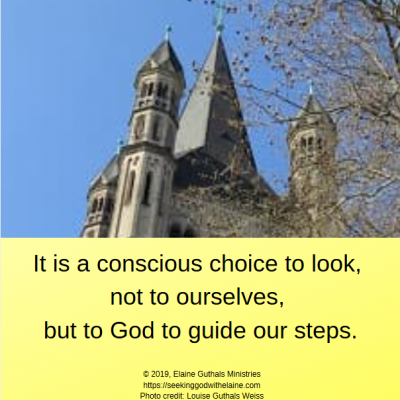
    Church

    It is also denying what we want when God is calling us to something different. We deny ourselves when we move somewhere God is calling us to when we want to stay in our hometown. He may be calling us to something new or doing our current ministry in a different place. He may be wanting us to choose Him over our extended family.

    We deny ourselves when God is calling us to switch jobs when we really like our current job and don’t want to leave. When we give up what we are familiar with to do something new, we are giving Him control of our lives.

    As humans, we might tell ourselves that we don’t want to give up performing our guilty pleasures, even though God has spelled it out in Scripture that we should. We may believe that, since there is pleasure involved, there should be no guilt associated with it.

    But God has given us boundaries within which we, as disciples, are called to live. These boundaries are established by His laws and commandments. We will not always live within those boundaries because, as humans, we are still in these sinful bodies. But we must strive to live the way He wants us to live.
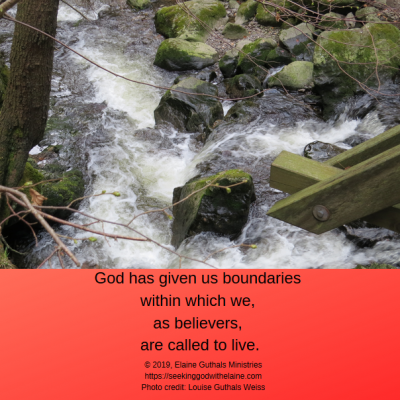
    God has given us boundaries within which we, as believers, are called to live.

    These are just some examples. [You might want to think of something more specific to make it more applicable to you.] We definitely deny our calling the shots and choose to follow God’s guidance.

    But What About Different Interpretations?

    Unfortunately, different followers may believe different things.

    What we are called to deny may mean something different to someone else. (That could be something that trips up some non-believers.) When we look to Scriptures for clarification, they may seem like they are conflicting.

    One of these conundrums is alcohol. Some can handle alcohol; some can’t. Some look at it as a beverage; some look at it as an escape.

    First Peter 4: 3 says, “For you have spent enough time in the past doing what pagans choose to do — living in debauchery, lust, drunkenness, orgies, carousing and detestable idolatry” (NIV). Early followers were admonished to not follow the lifestyle of those around them. (Hmmm. Not much has changed, has it?)

    Some followers today have the Eve Syndrome. When asked what God told her about the apple, she responded, “… ‘We may eat the fruit from the trees in the garden. But about the fruit of the tree in the middle of the garden, God said, “You must not eat it or touch it, or you will die”’” (Gen. 3: 2-3 CSB).

    That, technically, is not what God said. We, however, think no-touching will equate to no-sinning.

    To read a related devotion, click the button below.

    Some do that with alcohol. The reactions the alcohol causes inside the brain are addictive. In order to not cause those reactions, some say you shouldn’t touch it.

    But what does the Bible really say? Or is it okay in moderation?

    Ecclesiastes 9: 7 says, “Go, eat your food with gladness, and drink your wine with a joyful heart, for God has already approved what you do” (NIV). The Psalmist said “He [God] makes grass grow for the cattle, and plants for people to cultivate — bringing forth food from the earth: wine that gladdens human hearts, oil to make their faces shine, and bread that sustains their hearts” (Ps. 104: 14-15 NIV).

    So, it can be argued that it is not the alcohol, itself, that we are supposed to deny. In fact, we know Jesus did drink wine. Luke 7: 33-34 says, “For John the Baptist did not come eating bread or drinking wine, and you say, ‘He has a demon!’ The Son of Man has come eating and drinking, and you say, ‘Look, a glutton and a drunkard …’” (CSB).

    Since Jesus did not sin, drinking alcohol itself is not the sin. Maybe the sin is the use of alcohol as an escape.

    When we turn to alcohol to dull the pain instead of turning to our Heavenly Father, that is what is wrong. Maybe the sin is when the love of alcohol takes us away from our friends and family. We can definitely sin when the alcohol makes us do something that is clearly a sin, like steal or lie.

    Bottom Line

    We have to be careful to not be stumbling blocks to others yet not enhance God’s laws and commandments like the Pharisees did.

    I think the bottom line is different for different people. There are some things some may consider a sin. Others may not see it that way. We have talked before that we need to know what the Scriptures say so that we can defend what we believe.

    To read a related devotion, click the button below.

    God is also indifferent on whether some things are sin or not. He doesn’t flat out tell us if they are or aren’t.

    That is because God doesn’t give us a checklist to follow. He would rather we change our character to be like His than make it a works-based salvation.
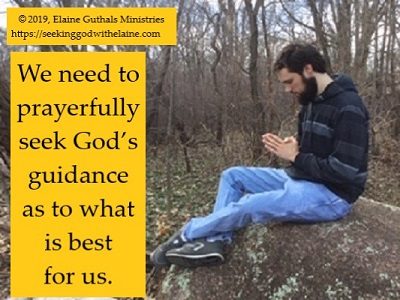
    We need to prayerfully seek God's guidance as to what is best for us.

    We need to prayerfully seek God’s guidance as to what is best for us. We have to seek how He is calling us to live. We can’t judge others if they do — or if they don’t.
    what-does-it-men-to-deny-ourselvesPin

    Making the Connections

    We’ve talked before that our goal is not to rationalize sin so it fits our way of thinking. We have to make sure we avoid sin — or confess the sins we commit.

    We do not get to judge if it is a sin or not. That is God’s call.

    To read a related devotion, click the button below.

    How Do We Apply This?

    God has a plan for each of our lives. He will talk to us individually as to what His expectations for each of us are. He may ask us to give up what we consider really nice things.

    To read a devotion in the Forsaking All for Jesus series, click the button below.

    What is most important is that we respond to what He is telling us and let Him have control. We have to do the hard things He is asking us to do.

    God knows that is hard for us. Our loving Father allows us to come to Him and confess when we slip outside of those boundaries. He loves us and will give us forgiveness when we ask. We need to show Him that we want to give Him control of our lives by doing what is asked of us.

    Gracious Heavenly Father. You love us so much. You have plans for our lives that will prosper us (Jer. 29: 11). You come to us individually to work on each of us to grow us to what You would have us be. Thank You for taking a personal interest in us. Thank You for showing us how we will be happier doing Your Will. Amen.

    What do you think?

    Leave me a comment below (about this or anything else) or head over to my Facebook group for some interactive discussion.

    If you don’t understand something and would like further clarification, please contact me.

    If you have not signed up for the email daily or weekly providing the link to the devotions and the newsletter, do so below.

    If God has used this devotion to speak with you, consider sharing it on social media.

  • What Does It Mean to Come After Him?

    As disciples, we have one job: to follow Jesus. Sometimes, performing the job duties may get a little fuzzy, but the job description is written out for us to follow. Matthew 16: 24 gives believers our job description in a nutshell. The first devotion of four in the series, we will look at what it means to come after Him.

    Nuggets

    • Plain and simple, coming after Him means salvation.
    • Repentance is a part of salvation.
    • We have to have faith that God provided the way for the relationship to be restored.
    • We have to have faith that God provided the way for the relationship to be restored.
    • Nope, we don’t truly understand why God sent His Son to die for us.

    Devotions in the What Does It Mean? series

    Flowers with title What Does It Mean to Come After Him?

    When I first wrote this series, it was a three-part series. In the coming devotions, we are going to talk about what it means to deny ourselves, take up our crosses, and follow Jesus.

    “Then Jesus told his disciples, ‘If anyone would come after me, let him deny himself and take up his cross and follow me'” (Mt. 16: 24 ESV)

    But I couldn’t sleep Saturday night — I mean, I only got an hour and a half of sleep. Adam and my Insomnia Buddy were also up, so it was more than just me. So, I was looking at my devotions.

    I realized I missed the first part of the verse: coming after Him. I knew I had to do a four-part series. What does coming after Him mean?

    It Means Salvation

    Plain and simple, it means salvation.

    Now, Paul gave us a pretty good path to follow in why we need salvation.

    Salvation is the gift of life through the deliverance from condemnation and sin to acceptance and holiness and changes us from being spiritually dead to spiritually alive.

    • Sin is not believing that Jesus is our Savior to save us from our actions by humans that disobey God and break one of His reasonable, holy, and righteous laws and commandments, goes against a purpose He has for us, or follows Satan’s promptings.
      • Holy means to be set apart — because of our devotion to God — to become perfect, and morally pure while possessing all virtues and to serve and worship God.
        • Perfection means we reach a state of maturity because the combination of the spiritual graces form, when all are present, spiritual wholeness or completeness — holy, sanctified, and righteous.
          • Spiritual graces are worldly morals that have been submitted to God to further His kingdom instead of enhancing this world.
          • Sanctified means to be set free from sin.
          • Righteous means we are free from sin because we are following God’s moral laws.
        • Pure means not being sinful or having the stain of sin. 
        • Virtues are standards of moral excellence.
    • Holiness is the transcendent excellence of His nature that includes elements of purity, dedication, and commitment that lead to being set apart.
      • Purity means possessing God’s moral character, having eliminated the stain of sin.
    • Spiritual death is the spiritual separation from God that occurred as a consequence of Adam and Eve’s original sin.
      • The spiritually alive are those who have ABCDed, so they are no longer separated from God.

    Glossary

    The ABCDs of Salvation

    If you have not become a believer in Christ, please read through the
    Plan of Salvation and prayerfully consider what God is asking you to do.

    A – admit our sins
    B – believe His Son Jesus is our Redeemer
    C – confess God as Sovereign Lord

    D – demonstrate that commitment by making any changes needed in our lives to
    live the way in which God has called us

    The Disciple’s Job Description

    It is called the Roman Road because he lays it all out in his letter to the Romans. I used it as the structure of my Plan of Salvation page. Head over there if this is foreign to you.

    Here is a quick recap to make sure we are all on the same page:

    • We are all considered sinners because the relationship with God was broken in the original sin (Rom. 3: 23).
    • The consequence of that broken relationship is death. However, God has provided, through His gift to us, a way to gain salvation (Rom. 6: 23).
    • God doesn’t wait for us to clean up our acts to offer us salvation. He did it while the relationship was broken (Rom. 5: 8).
    • We have to admit we are sinners; believe that Jesus died on the cross and rose again to save us; and confess with our mouths that we have this faith in God (Rom. 10: 9-10).
    • Everyone who does that will be saved (Rom. 10: 13).

    Salvation Is a Gift

    Let’s go back to the gift part. Ephesians 2: 8-9 says, “For by grace you have been saved through faith. And this is not your own doing; it is the gift of God, not a result of works, so that no one may boast” (ESV). Grace, faith, and works — those are churchy words.

    Grace is a free and unmerited gift of love from the Heavenly Father, given through His Son, Jesus Christ, that enables salvation and spiritual healing to believers by the work of the Holy Spirit. 

    We didn’t do anything to earn it. Earning it would be through works. We talked about works a while back. We also talked about how we can come as we are for salvation.

    To read a related devotion, click the appropriate button below.

    So, God gives us this gift. What do we have to do?

    We Have to Believe

    “… ‘Sirs, what must I do to be saved? And they said, ‘Believe in the Lord Jesus, and you will be saved, you and your household’” (Ac. 16: 30-31 ESV).

    Repentance is a part of salvation.

    Salvation is redemption and the mending of the relationship. But it is a little more than that.

    Repentance comes in there. Repentance is acknowledging our separation from God and expressing sorrow for breaking God’s laws and commandments by making the commitment to change our sinful ways to ways of righteousness through obedience.

    • Obedience means submitting ourselves to the will of God as it is presented to us and living our lives accordingly.

    Glossary

    Oh, no! Another churchy word. That means that you give up your old sinful life and live the life that God wants you to live. We’ll talk more about that in the fourth devotion on following Him. For now, let’s just say that coming after Jesus means that we follow His example and try to be more like Him.

    Even if you are a wonderful, kind, loving person, you still need to repent. The relationship with God is broken, and repentance restores that.

    To read a related devotion, click the button below.

    Where Does Faith and Trust Come In?

    “Now faith is the assurance of things hoped for, the conviction of things not seen” (Heb. 11: 1 ESV)

    We have to have faith that God provided the way for the relationship to be restored.

    Faith is a gift from God that enhances the conviction that the doctrines revealed in God’s Word are true, even if we do not understand all aspects of them, a belief which impacts our lives and distinguishes us from others. Things not seen — to me, that also means things you don’t understand. Proverbs 3: 5-6 says, “Trust in the Lord with all your heart, and do not lean on your own understanding. In all your ways acknowledge him, and he will make straight your paths.” (ESV).

    Ooo, baby. We think we know it all, don’t we? We don’t.

    In what are we putting our faith? “If you confess that Jesus is Lord and believe that God raised him from death, you will be saved. For it is by our faith that we are put right with God; it is by our confession that we are saved” (Rom. 10: 9-10 GNT).

    Why Did Jesus Sacrifice Himself?

    Nope, we don’t truly understand why God sent His Son to die for us.

    We have faith that He did and that it was enough.

    How could Jesus do that? “For God made Christ, who never sinned, to be the offering for our sin, so that we could be made right with God through Christ” (II Cor. 5: 21 NLT). God said, “Make it so,” and Jesus did.

    Believing in Jesus is the only way to gain salvation. Acts 4: 12 says, “And there is salvation in no one else, for there is no other name under heaven given among menc by which we must be saved.” (ESV). Believing in Jesus in the only way to restore the relationship.

    Jesus wants us to have this salvation. “Behold, I stand at the door and knock …” (Rev. 3: 20 ESV). He not only comes to us, but also, He pursues us.

    Making the Connections

    Our salvation means so much to God and Jesus that they completed the Plan of Salvation — at great personal cost — so that our relationship with Them could be restored.

    How Do We Apply This?

    • Admit that we are sinners;
    • Believe Jesus, who didn’t sin, died and rose again to be the sacrifice needed to restore our relationship with God;
    • Confess that we have asked God to be Lord of our lives and Jesus to be our Redeemer;
    • Change our lifestyle so that we are living the way God wants us to;
    • Follow Jesus’ example on how to live.
    We have to

    admit that we are sinners;
    believe Jesus, who didn't sin, died and rose again to be the sacrifice needed to restore our relationship with God;
    confess that we have asked God to be Lord of our lives and Jesus to be our Redeemer;
    change our lifestyle so that we are living the way God wants us to;
    and follow Jesus' example on how to live.

    We have to repent and turn away from the sinful life. We have to come after Jesus — follow His example. We have to grow to be more like Him. We do that by denying ourselves, taking up our crosses, and following Him.

    Merciful Heavenly Father. We are amazed at the great price that You and Jesus paid to restore our relationship with You. Lord, we admit the relationship was broken, causing us to sin. We believe You sent Your Son to die so that we might be reborn into Your kingdom. Lord, we will tell others of Your great love. Help us to turn away from our sinful lives and grow closer to you. Amen.

    What do you think?

    Leave me a comment below (about this or anything else) or head over to my Facebook group for some interactive discussion.

    If you don’t understand something and would like further clarification, please contact me.

    If you have not signed up for the email daily or weekly providing the link to the devotions and the newsletter, do so below.

    If God has used this devotion to speak with you, consider sharing it on social media.

  • Are Trials Always Punishment?

    Remember, if God wants you to suffer, it is better to suffer for doing good than for doing wrong!
    1 Peter 3: 17 (LB)
    Scripture: 1 Peter 4: 12-19

    A lot of times we think that, if we are forced to go through a trial, it is God punishing us. The degree of the trial determines the degree of our screw-up. This devotion discusses whether all trials are punishment.

    Flowers with title Are Trials Always Punishment?

    We don’t always care for consequences. Many times when we are experiencing trials, we think they are the consequences of a sin we have committed.

    But what if we don’t think we have sinned? What if we think we are following God’s will? And we still get decked with a trial!

    It doesn’t help when we feel like everyone is watching us, wondering why we are being punished. We think we have friends like Job had. Remember Eliphaz, Bildad and Zophar (Job 2: 11)? They were trying to get Job to admit his sin. They wouldn’t believe him when he said he had not sinned.

    Tug of War

    So, it becomes a battle in our minds. On the one hand, we think the trials are punishment for sin. On the other hand, we think God has gone back on His side of the bargain by not making our lives smooth sailing. When we become believers, isn’t He supposed to make everything wonderful for us?

    To read What Does “All Things Work Together for Good” Really Mean?, click the button below.

    Remember the song, I Never Promised You a Rose Garden? Neither did God.

    In fact, Jesus warned the disciples, that things weren’t always going to be on the easy road. “And you will be hated by all on account of My Name, but it is the one who has endured to the end who will be saved” (Mt. 10: 22 NASB). Jesus made it sound like it would get worse, not better, being a child of God.

    Statue of horse and rider

    Even though Jesus warned us, we still think our lot in life will be free of these trials because we are His children. But we forget we can be tested to prove we are His. “In this you greatly rejoice, even though now for a little while, if necessary, you have been distressed by various trials, that the proof of your faith, being more precious than gold which is perishable, even though tested by fire, may be found to result in praise and glory and honor at the revelation of Jesus Christ” (I Pet. 1: 6-7 NASB).

    Satan wants to get us back on his side of the ledger. If he thinks he can get us to renounce God, he will try everything in his arsenal to get that done. Sometimes, the trials prove to him – and us – that we truly are children of God.

    Besides, if we were just put through trials as punishment, we wouldn’t feel any sense of accomplishment. “For what credit is there if, when you sin and are harshly treated, you endure it with patience? But if when you do what is right and suffer for it you patiently endure it, this finds favor with God” (I Pet. 2: 20 NASB). Our faith is strengthened when we go through the hard times and come out closer to God.

    For what credit is there if, when you sin and are harshly treated, you endure it with patience? But if when you do what is right and suffer for it you patiently endure it, this finds favor with God (I Pet. 2: 20 NASB)

    No, we don’t like going through trials; and sometimes, we would just like to hide them from everyone else. “But if anyone suffers as a Christian, let him not feel ashamed, but in that name let him glorify God” (I Pet. 4: 16 NASB) Yes, we’re supposed to shout “hallelujah” while we are going through the trial. Won’t that help us make it through?

    Faithful Creator. Here we go again. Yet this time, it is not You punishing us. It is our faith being tested. Help us to stand firm. Help us rejoice, that we have “… been considered worthy to suffer …” (Acts 5: 41 NASB) for Your Name. Most of all, help us through so we can be a credit to You. Amen.

    What do you think? What ways can we stand firm when our faith is being tested? Leave me a comment below (about this or anything else) or head over to my Facebook group for some interactive discussion.

    If you have not signed up for the email daily or weekly providing the link to the devotions and the newsletter, do so below.

    If God has used this devotion to speak with you, consider sharing it on social media.

  • When God Doesn’t Answer on Our Time Tables

    Lord, how long will you stand there, doing nothing? Act now and rescue me, for I have but one life and these young lions are out to get it. Save me, and I will thank you publicly, before the entire congregation, before the largest crowd I can find.
    Psalm 35: 17-18 (LB)
    Scripture: Psalm 35

    We get very frustrated when God does not answer our prayers on our time tables. When that happens, we sometimes try to negotiate with Him to get the answer for which we are looking. This devotion explores how we should respond instead.

    Flowers with title When God Doesn't Answer on Our Time Tables

    I bet the Lord gets tired of hearing it – Are You blind? Can’t You see I’m in trouble? You’re supposed to be able to see everything, so why can’t You see everyone’s out to get me?

    Are You deaf, too? I’ve been praying and praying to You, and You just sit there like a bump on a log. Are You against me, too?

    Here, I’ll make You a deal. You get me out of this mess, and I’ll do this for You. Just make it snappy!!!

    What This Means

    We go along in life, forgetting about God – until trouble comes. Suddenly, we remember He is there and can help us.

    But it seems God is not accepting the charges for our collect calls. He’s letting our calls go to voice mail instead. So, we franticly keep trying to get His attention.

    Finally, when we think God just might be listening, we try to make a deal. We’ll do anything to get out of our troubles. After our troubles are over, a lot of times, we conveniently forget the promises we’ve made to Him.

    From God’s Perspective

    Go back and read the opening paragraphs again. Only this time, pretend someone is saying that to you. Can’t you feel the anger and frustration the words convey?

    Now pretend you’re someone who knows why all this is happening and what these events are leading up to. What could you say to this angry person that will deescalate the situation? How could you get the person to listen to reason?

    We put God in this position. We order Him to make it all better right now, but we are only looking for one solution — our way.

    When He doesn’t do it our way on our time table, we all but go off the deep end. We shut down even more.

    We don’t want to know why. We don’t ask for explanations. Too much time has been wasted in just getting Him to answer us. We want results – NOW.

    Wrong Focus

    Those sentences start with a lot of “we’s.” There aren’t too many “Him’s” mixed in.

    That’s our problem. We tend to exclude Him from our lives until we think we need Him. Then we wonder why He doesn’t hop to it the first time we yell.

    Stained Glass Window

    Part of the problem is we don’t fortify the relationship with God when things are going right. We think, as long as everything is going smoothly, we can handle it ourselves – you know, show our independence.

    By doing that, though, we take our eyes off God. Why should He answer our questions when we’re not maintaining eye contact with Him?

    Then, when things do go south, we pretend we are focusing on God. Instead, we are focusing on our problems, our solution — ourselves.

    We become like Peter — we sink in the water because we take our eyes off Jesus. (Mt. 14:30). We have to get our relationships with God in line. We have to put Him in control again.

    But then we forget about verse 18. “Save me, and I will thank you publicly, before the entire congregation, before the largest crowd I can find” (Ps. 35: 18 LB).

    When the road smooths out, we sometimes forget to thank Him. We think that we’ve made it through on our own power. Or we are so glad it is finally over, we just want to forget about it.

    If we’ve been dealing with something privately, we may not want to make it public knowledge. We forget that God uses our experiences to further His kingdom (Es. 4: 14).

    Building and crowd

    How Do We Apply This?

    The next time you feel God is ignoring you, breathe. Don’t fly off the handle. He isn’t ignoring you.

    We’ve talked before about how I think there are four ways God is answering our prayers. If He isn’t immediately telling us yes, we have to figure out if God is telling us no, to wait, or that He has something bigger and better in mind.

    To read Did Jesus Struggle with His Mission?, click the button below.

    Sometimes, God will explain through His Holy Spirit why He is telling us no. He doesn’t have to because He is God. When He is silent, He may think we actually know the answer because what we are asking is clearly outside His Will.

    If you think about it, wouldn’t it be counterproductive if God answered us to tell us to wait? I can see, sometimes, where He might give us a little encouragement by nudging us to keep waiting.

    But if the issue is that we have to give God control and rely on Him, isn’t waiting part of the learning process? It is all about focus, faith, and trust.

    The question then becomes, what are we going to do while we are waiting? We can take stock and see where God is trying to get us to grow. We can solidify our relationship with Him. We can dig deeper into the meaning of His Word.

    We need to keep going and focus our eyes on heaven. God will answer in His own time. Just keep looking up.

    Lord. Forgive us for trying to order You around. We get so discouraged by our trials that we all think about is ourselves. We look inward instead of upward to You. Please forgive us. Thank You, Lord, for your unconditional love. Amen.

    What do you think? Do you agree that the waiting time allows us to take stock in where we are at and where we need to be? What hinders us from doing that? Leave me a comment below (about this or anything else) or head over to my Facebook group for some interactive discussion.

    If you have not signed up for the email daily or weekly providing the link to the devotions and the newsletter, do so below.

    If God has used this devotion to speak with you, consider sharing it on social media.

  • We Have to Choose God

    O God, you have declared me perfect in your eyes; you have always cared for me in my distress; now hear me as I call again.
    Psalm 4: 1 (LB)
    Scripture: Psalm 25

    When trials come, it is easy for us to focus on the negative. We forget God has declared us perfect. We forget He is in control. This devotion reminds us that we are and He is.

    Flowes with title We Have to Choose God

    Okay, Lord. Here we go – again. It’s problem-city at my house. I’m blowing fuses right and left when only one thing is plugged in and running. I’m having relationship problems again. The job is the same ole’, same ole’. Money is really tight. The cat is being a tiger, and I’m exhausted [add any problems you are experiencing at this time].

    In other words, H-E-L-P!

    Most of these things are little things, but I know you want to be the Lord of the Little Things as well as Lord of the Big Things. I know there is nothing too little for You. You know how quickly the little things can turn into the big things.

    You want to be Lord of my whole life and being. You don’t want me to hold anything back from you. You are in control of all things – big and small.

    Woman

    Perfect in Your Eyes

    I don’t feel perfect – in Your eyes or my eyes. I feel unworthy, unimportant and unlovely. I am just going on feelings there. Sometimes, though, feelings don’t give an accurate picture of reality.

    You have deemed me worthy. You say I am important to You. You say I am lovely.

    I know I have been made in Your image (Gen. 1: 26-27). But I don’t know all that means. I am going on understanding there.

    There is no way I am going to understand everything. You are God. I can’t even begin to imagine Your ways (Isa. 55: 8-9).

    There seems to be too much negative in my life to feel like anything will feel positive again. My problems are all I see at the moment. I can’t see past the moment to visualize You or a time when things will be better.

    That is the problem. I am going on feelings and understanding. Feelings are affected by the moment. My understanding is limited. I need to go on what You have told me and done for me.

    Books

    You Have Cared for Me in My Distress

    “Turn to me and be gracious to me, For I am lonely and afflicted” (Ps. 25: 16 NASB).

    The problem is I feel so alone right now, even in a room full of people. The problems have become my focus. I can’t smile. I can’t enjoy conversations with my friends. I just need You, Father.

    Father, I know You will never leave me. You have told me that in Your Word (Deut. 31: 8).

    I may feel that everyone else has deserted me, but You will always be by my side. You surround me because You go before me and You go after me (Isa. 52: 12).

    Not only that, You have me in the palm of Your hand. “I give them eternal life, and they shall never die. No one will snatch them out of My hand” (Jn. 10: 28 GNT).

    Hear My Cry

    “But as for me, I trust in Thee, O Lord, I say, ‘Thou art my God.’ My times are in Thy hand; Deliver me from the hand of my enemies, and from those who persecute me” (Ps. 31: 14-15 NASB).

    You are in control of all things, Lord. Nothing happens without Your consent. You control everything from events to people to the future. You may not make everything happen, but nothing happens that You do not allow to happen. Please bring me through these trials.

    Sometimes, it is hard to remember that You are in control when the emotional hurricane is happening again. I have to choose to believe that. I have to choose to look at You instead of the mess things are here.

    That is what some of our trials are about, isn’t it? We have our free will that – every once in a while – You check and make sure we are choosing You above all else.

    It isn’t a slam because we have done something wrong. It is a way to make us grow closer to You. We need to grow closer to You. No matter how close we think we are, there is always room to be closer.

    “O send out Thy light and Thy truth, let them lead me; Let them bring me to Thy holy hill, and to Thy dwelling places” (Ps. 43:3 NASB).

    Lord, I choose You. I put my faith and my trust in You. I give You control of the situation and my life.

    Show me what decisions You want me to make. Lead me to the road that follows Your path for my life. Bring me back into Your sweet fellowship. Lord, You are the God Who will live forever. I want to be right there beside You.

    Loving Heavenly Father. You are the One true God. Each day that goes by is filled with movements that You control. Lord, forgive us when we feel we control our own lives. We get weighed down so often by the little things in life that we can’t function. Show us how to keep our eyes on the major things in life — the major thing — You. We patiently wait for these trials to end. Even now, we praise You for You being our haven and our anchor. Amen.

    “I said to the Lord, ‘Thou art my God; Give ear, O Lord, to the voice of my supplication’” (Ps. 140: 6 NASB).

    What do you think? Choosing to give God control seems easy. But it isn’t. What stops us from giving Him control of our lives? Leave me a comment below (about this or anything else) or head over to my Facebook group for some interactive discussion.

    If you have not signed up for the email daily or weekly providing the link to the devotions and the newsletter, do so below.

    If God has used this devotion to speak with you, consider sharing it on social media.

  • How Do We Give God Control of Our Lives?

    God is our refuge and strength, A very present help in trouble. Therefore we will not fear, Even though the earth be removed, And though the mountains be carried into the midst of the sea; Though its waters roar and be troubled, Though the mountains shake with its swelling. Selah.
    Psalms 46: 1-3 (NKJV)
    Scripture: Psalm 46

    We really can’t give God total control in our lives until we trust Him. Isn’t that what we think? But what if it needs to be the other way around? This devotion will look at how we can let God take control.

    Flowers with titel How Do We Give God Control of Our Lives?

    For a long time, I trusted God. But there was this one area where I wasn’t sure He was going to make sure everything turned out okay. It was my finances.

    Through the years, money was always tight. I was the one who paid the bills in the family, and a lot of times it was really a struggle. I would go to pay bills, and the money I had earmarked for those bills was no longer in the account.

    We were talking bankruptcy. We were talking selling the house. Bill collectors were calling, and I was pulling out my hair.

    Something happened with the finances that broke the marriage. I got fed up, and I started out on my own. Then it was Adam and I.

    Then I lost my job. Do you know how scary it is to be a single mother with no income?

    I had to give God control because there was no way I was succeeding on my own. There was no other way.

    Could Have Gone the Other Way

    Well, yeah, there was. I could have denied God and thrown in with the devil. Satan is in control of this world, so if I would have denied God, everything would have gone back to being perfect, right?

    No, it wouldn’t have. People who have not given their lives to God still experience trials. They still struggle with finances, go bankrupt, or have to sell what they own. They lose their jobs. They still get sick and die.

    So, throwing in with the devil does not put you on Easy Street. As much as I could feel the devil tempting me to denounce God, I knew that was not the answer.

    I had to cling tighter to God. I had to give God control even if I questioned my trust for Him.

    I had to say, “Okay, I thought I heard You loud and clear that I needed to be going the way I was. You have made this train jump the track, and now I have no clue as to where it is headed.

    “But You do. You know the plan all the way to the end of the line. You know what steps I should take. So, I will give You control of my life. While You are doing that, I will face my fears, and my trust in You will grow.”

    How Do We Apply This?

    How do we give God control of our lives? We make the decision to believe He loves us and will provide and protect us. Think about all of the verses that point that out:

    “My salvation and glory depend on God, my strong rock. My refuge is in God” (Ps. 62:7 HCSB).

    “The LORD is my rock, my fortress and my deliverer; my God is my rock, in whom I take refuge, my shield and the horn of my salvation, my stronghold” (Ps. 18: 2 NIV).

    Rock

    “You are my hiding place and my shield; I hope in your word” (Ps. 119: 114 ESV).

    “And my God will supply every need of yours according to his riches in glory in Christ Jesus” (Phil. 4:19 ESV).

    “Every test that you have experienced is the kind that normally comes to people. But God keeps his promise, and he will not allow you to be tested beyond your power to remain firm; at the time you are put to the test, he will give you the strength to endure it, and so provide you with a way out” (I Cor. 10: 13 GNT).

    “My flesh and my heart may fail, but God is the strength of my heart and my portion forever” (Ps. 73: 26 NIV).

    It isn’t easy giving God control when our trust isn’t up to where it should be. It’s really, really hard. It is down right scary.

    But life is filled with choices, and this is one of the most important. We choose to give God control — or choose not to give Him control. We don’t have to understand what is happening and how He will provide.

    Our faith doesn’t even have to seem to be all that great. Remember Luke 17: 6: “And the Lord said, “If you had faith like a grain of mustard seed, you could say to this mulberry tree, ‘Be uprooted and planted in the sea,’ and it would obey you” (ESV).

    But really, there aren’t degrees of faith, just as there aren’t degrees of sin. We believe in God or we don’t.

    To read Are There Good and Bad Sins, click the button below.

    So, it doesn’t really matter how strong we think our faith is. We have to work on our trust. We just have to say, “God, You are my God. You are my Protector. You’ve got this.”

    Merciful Heavenly Father. From the beginning of time, You have know all of us. You have known our faults, our failures, and our insecurities. And You love us anyway. You have a plan for each of our lives, based on our choices. Forgive us when our insecurities limit our ability to see Your awesome power. Even though they are hard, keep putting us in situations where we must rely on You. Thank You for loving us so much. Amen.

    What do you think? Does faith build trust or does trust build faith? Leave me a comment below (about this or anything else) or head over to my Facebook group for some interactive discussion.

    If you have not signed up for the email daily or weekly providing the link to the devotions and the newsletter, do so below.

    If God has used this devotion to speak with you, consider sharing it on social media.

  • How Can We Corral Our Thoughts?

    Why do believers keep on sinning? Wouldn’t it be easier if, after we become believers, we couldn’t sin anymore? But we do, and it seems like we are many times led astray by our thoughts. This daily devotional discusses the ability to keep sinning and how we can corral our thoughts.

    Flowers with title How Can I Corral My Thoughts

    It would be so much easier if sin could be taken out of the picture after we give our lives to God. Or maybe after we’ve been a believer for a certain number of years, we wouldn’t have the battles that we do.

    I used to look at the older believer and be envious. They seemed like they didn’t have these battles. I couldn’t wait until I had “arrived” at that point.

    But believers never arrive while they are on this earth. As the song says, “The Journey is Our Home.”

    Doing What We Don’t Want to Do

    “For I do not understand my own actions. For I do not do what I want, but I do the very thing I hate. Now if I do what I do not want, I agree with the law, that it is good. So now it is no longer I who do it, but sin that dwells within me. For I know that nothing good dwells in me, that is, in my flesh. For I have the desire to do what is right, but not the ability to carry it out. For I do not do the good I want, but the evil I do not want is what I keep on doing. Now if I do what I do not want, it is no longer I who do it, but sin that dwells within me” (Rom. 7: 15-20 ESV)

    Instead, the journey is filled with many trials. They are there because we are now believers. Because we know how what God’s Word says, we know what sin is.

    Sins are actions by humans that disobey God and break one of His reasonable, holy, and righteous laws and commandments, goes against a purpose He has for us, or follows Satan’s promptings.

    • Holy means to be set apart — because of our devotion to God — to become perfect, and morally pure while possessing all virtues.
      • Perfection means we reach a state of maturity because the combination of the spiritual graces form, when all are present, spiritual wholeness or completeness — holy, sanctified, and righteous.
        • Spiritual graces are worldly morals that have been submitted to God to further His kingdom instead of enhancing this world.
        • Sanctified means to be set free from sin.
      • Pure means not being sinful or having the stain of sin.
      • Virtues are standards of moral excellence.
    • Righteous means we are free from sin because we are following God’s moral laws.

    Glossary

    Before salvation, we didn’t know our actions had been wrong in the eyes of God. Our actions were natural for us. How could they be wrong? It seemed they were just our human nature.

    Salvation is the gift of life through the deliverance from condemnation and sin to acceptance and holiness and changes us from being spiritually dead to spiritually alive.

    • Holiness is the transcendent excellence of His nature that includes elements of purity, dedication, and commitment that lead to being set apart.
      • Purity means possessing God’s moral character, having eliminated the stain of sin.
    • Spiritual death is the spiritual separation from God that occurred as a consequence of Adam and Eve’s original sin.
      • The spiritually alive are those who have ABCDed, so they are no longer separated from God.

    The ABCDs of Salvation

    If you have not become a believer in Christ, please read through the
    Plan of Salvation and prayerfully consider what God is asking you to do.

    A – admit our sins
    B – believe His Son Jesus is our Redeemer
    C – confess God as Sovereign Lord

    D – demonstrate that commitment by making any changes needed in our lives to
    live the way in which God has called us

    The Disciple’s Job Description

    Glossary

    What Our Minds Have to Do with It

    Now God has revealed Himself to us. He has shown us what He considers right and wrong. We know and learn with our minds what God’s promises are – but we still have our sinful body. That becomes our continuous battle – mind v. body.

    Really, our faith is in the mind. Faith is a gift from God that enhances the conviction that the doctrines revealed in God’s Word are true, even if we do not understand all aspects of them, a belief which impacts our lives and distinguishes us from others. 

    Glossary

    We can’t see God or call Him on the telephone to talk to Him. We have to reason it out in our minds – and then just believe – that there is a Superior Being in control of the universe.

    Our sinful bodies have to be controlled by our changed minds. We have to “… be transformed by the renewing of your mind …” (Romans 12: 2 NIV). This transformation will take time.

    God saves us instantaneously, but this transformed mind does not happen instantaneously. We have to “… work out [our] own salvation with fear and trembling, for it is God who works in [us], both to will and to work for his good pleasure” (Phil. 2: 12–13 ESV).

    God allows us to understand what we need to so that we can get to the point where we step out in faith and believe.

    Our changed minds have to be controlled by God. If our human nature control us, we disobey God’s law and displease Him. We keep God out of our lives and chose a life led by our human nature.

    how-can-we-corral-our-thoughtsFB

    How Do We Apply This?

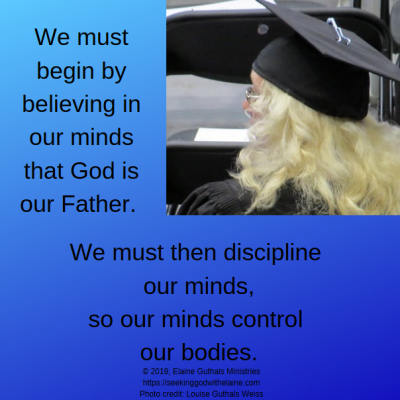
    So, we must begin by believing in our minds that God is our Father. We must then discipline our minds, so our minds control our bodies.

    We must begin by believing in our minds that God is our Father. We must then discipline our minds, so our minds control our bodies.

    Many times, though, our thoughts seem to have a mind of their own. Have you ever thought about something that you know you really shouldn’t? Of course.

    Corralling our minds is hard. It is really, really hard to stop thinking about that something (preaching to the choir here). What can we do?

    Having unwanted thoughts is human. It is not a sin to have them. That is the temptation. Temptation is a suggestion in our mind that would lead us to sin rather than following God’s Will. It is also that period of time between conception and execution of doing what is sinful.

    The sin comes into play depending what we do with the temptations. The sin could be actively thinking about them or putting the thoughts into action.

    Sometimes, we try to stop ourselves from thinking the thoughts we are having. This is called thought suppression.

    Seems impossible sometimes, doesn’t it? In fact, it seems like the more we try not to think about something, the more we end up thinking about it.

    Enter human nature — or, more specifically, Satan’s influence. Telling ourselves to not think about something can trigger us to think about it. Plus, if we are going to evaluate how successful we are in not thinking, couldn’t that trigger the thinking of the unwanted thought?

    We bite on ourselves because we can’t just manhandle the thoughts out of our brains. Sometimes, we think the only success can be cold turkey – permanently.

    We can try to corral our thoughts by setting goals. We can develop (and I have) goals in an attempt to harness our thoughts. The goal could be to decrease the behavior by a certain amount by a certain time.

    The action plan to accomplish that could spell out how we are going to change our environments to eliminate temptations. It could establish milestones so we can celebrate success of reaching certain levels.

    It could be we are going to research the topic to help develop strategies to put the brakes on our brains. Maybe at first, we have to define success as a longer time period between thoughts.

    Sometimes, we substitute something for the unwanted thoughts. Have you ever told yourself that, when the unwanted thoughts slip into the mind, you would think about God and say Bible verses instead? I have.

    The Bible does seem to promote this. “May my meditation be pleasing to him, as I rejoice in the LORD” (Ps. 104: 34 NIV). “I meditate on your precepts and consider your ways” (Ps. 119: 15 NIV). God wants us to think about His ways.

    This substitution is called a distraction strategy. It tells us we have the ability to control our environment and behavior. When we have specific replacement thoughts in mind for when the unwanted thoughts come, we help corral our minds instead of letting them wander.

    Have you seen a correlation between stressful times and the presence of unwanted thoughts? Does it seem like the stress comes and your distraction strategy flies out the window? That would mean we need to avoid stress. Yea, right.

    Struggling with unwanted thoughts and trying to suppress them can make us more anxious and depressed. That increases the stress level.

    Ooo, baby. Can we say vicious circle? Especially if we want these thoughts gone permanently and bite on ourselves for failing!

    Maybe for some thoughts, corralling them means postponing them temporarily. It might be helpful if we set aside time to consider them. If we intentionally think about them, we will be more in control.

    When it is time to think about them, we should dissect them to see what is so attractive about them, not just think them. We can then develop the action plans to address that. It might help to write it all down in a journal.

    It is really hard to corral our thoughts. In a way, we are setting ourselves up for failure. We will have to fight our human, sinful nature until the day God calls us home. God knows that.

    Still, we are called to be obedient. “But be doers of the word, and not hearers only, deceiving yourselves” (Jas. 1: 22 ESV).

    We have to follow through on how God has told us to live. God will help us. He will even help us corral our thoughts.

    Father! My Father! You have accepted us as Your children, and we affirm You as our Father. Lord, even though we are Your children, we have bodies of this world. This causes conflict in our lives. Help us to discipline our minds, Lord, that we can corral our thoughts and obey You. Strengthen us to live according to Your Laws, not according to actions this world will accept. Amen.

    What do you think? What are some of your strategies for controlling your mind? Leave me a comment below (about this or anything else) or head over to my Facebook group for some interactive discussion.

    Related Links

    Related Links

    On researching thought suppression for this devotion, I came across these two articles which I used as the foundation for my devotion.

    Stewart, I, Hooper, N., Walsh, P., O’Keefe, R., Joyce, R., McHugh, L. (2015). Transformation of thought suppression functions via same and opposite relations. Psychological Record, 65(2), 375–399. doi 10.1007/s40732-014-0113-0

    Wegner, D. M. (2011). Setting free the bears: Escape from thought suppression. American Psychologist, 66(8), 671-680. doi: 10.1037/a0024985

    What do you think?

    Leave me a comment below (about this or anything else) or head over to my Facebook group for some interactive discussion.

    If you don’t understand something and would like further clarification, please contact me.

    If you have not signed up for the email daily or weekly providing the link to the devotions and the newsletter, do so below.

    If God has used this devotion to speak with you, consider sharing it on social media.

  • Do We Get to Judge If It Is a Sin or Not?

    Why don’t you judge for yourselves what is right?
    Luke 12: 57 (NIV)
    Scripture: Exodus 20: 1-17

    All through the Bible, God has shown us how He would like us to live by giving us guidelines. In His Word, we can find the answer to any question we have. This devotion discusses how we sometimes struggle if we find conflicting verses.

    Flowers with title Do We Get to Judge If It Is a Sin or Not?

    I truly believe that we can find answers to all our questions in the Bible. No, it might not specifically speak to certain actions, but it does speak to the forces guiding those actions.

    Sometimes, though, we may feel like we get conflicting direction from the Scriptures. For example, many people question if dancing is a sin. Ecclesiastes 3: 4 says that there is “a time to weep and a time to laugh, a time to mourn and a time to dance” (NIV). Psalms 30: 11 says, “You turned my wailing into dancing” (NIV). Psalms 139: 3-4 says, “Let them praise his name with dancing and make music to him with timbrel and harp. For the LORD takes delight in his people; he crowns the humble with victory” (NIV). So, dancing can be used in worship.

    Secular dancing is often questioned because many feel it is associated with the drunkenness and wild parties that are included in Galatians 5: 19-21 with the “… other sins like these …” reference (Gal. 5: 21 NIV). Others point to I Corinthians 15: 33, which says “bad company corrupts good character” (NIV).

    However, Jesus mentioned dancing in the Parable of the Prodigal Son. “Now his older son was in the field, and as he came and drew near to the house, he heard music and dancing” (Lk. 15: 25 ESV). Do you really think Jesus Himself would have mentioned it in a story if it was a sin? Jesus cannot and would not condone a sin.

    And notice – it wasn’t depicting worship. To me, this tells us it could be the circumstances surrounding the dancing is what determines if it is a sin.

    What Does This Mean?

    In the Bible, we can find His Will for our lives by carefully studying His Word, prayerfully asking His guidance, and keeping our hearts open to hear His Will. God does, however, leave the choice to us.

    We have free will to make our own decisions. “I am giving you the choice today between God’s blessing or God’s curse!” (Deut. 11: 26 LB). Do we want to follow His Will? God isn’t a God who will force His authority over us down our throats.

    Carillon

    God gives us the choice to decide whether it will be yea or nay. He is like a parent giving a child advice. It is up to us to take His advice or leave it.

    “‘For I know the plans I have for you,’ declares the LORD, ‘plans to prosper you and not to harm you, plans to give you hope and a future’” (Jer. 29: 11 NIV). God said He had a plan for each of our lives. But that plan was built because He already knew the choices that we would make. The plan wasn’t built on predestination; it was built on our choices that served His kingdom expansion.

    How Do We Apply It?

    “And you will seek Me and find Me, when you search for Me with all your heart. ‘And I will be found by you,’ declares the Lord…” (Jer. 29: 13 NASB).

    God wants us to seek Him to help find the answers to our questions. He makes it easy for us to find Him. All we have to say is, “Hi, Lord,” and He’s there. He is willing to come halfway, but we have to take the first step.

    “Obeying these commandments is not something beyond your strength and reach; for these laws are not in the far heavens, so distant that you can’t hear and obey them, and with no one to bring them down to you; nor are they beyond the ocean, so far that no one can bring you their message; but they are very close at hand — in your hearts and on your lips — so obey them” (Deut. 30: 11-14 LB).

    God gives us encouragement to obey His Will. He wants His Will to be more than do’s and don’ts for us. He wants us to have His Will as the utmost important guide in our lives and have it shape our lives.

    Many times, we want it to be a one-size-fits-all distinction. Is it a sin or isn’t it? It doesn’t always work that way. On the big things, yes, God tells us point blank what to do and what not to do. Other times, He doesn’t. He has us decide if it is something in which we are putting Him first.

    Does that mean that — in certain circumstances — dancing can be a sin and in others it isn’t? I don’t know. Maybe. I think motivations can play a big part in whether it is a sin or not.

    What if God is calling you to witness to someone, and you run the other way and go dancing instead? Not doing what God is calling you to do would be a sin, but wouldn’t that make the dancing sinful?

    Now, one big word of caution here. Our goal is not to finagle sin so it fits our way of thinking. We have to fit our way of thinking — thus, ourselves — to make sure we avoid sin — or confess the sins we commit.

    We do not get to judge if it is a sin or not. That is God’s call.

    Our goal is not to finagle sin, so it fits our way of thinking. We do not get to judge if it is a sin or not. That is God’s call.

    “Choose to love the Lord your God and to obey him and to cling to him, for he is your life and the length of your days …” (Deut. 30: 20 LB).

    So, it all comes down to will we or won’t we? Will we come to Him for the advice? Will we acknowledge that He knows what is best for us? But most importantly, will we listen to His advice?

    Lord. You are the Supreme Ruler of the universe. You know what is best for all of us. You don’t just sit up in heaven watching us try to muddle through down here on earth. You allow us to tap into Your vast knowledge to try to decide what we should do. Lord, You know what is best for us. But Lord, You then let us decide for or against Your advice. Show us, Lord, the advantages for choosing Your ways. Lord, forgive us where we go against Your Will. Thank You for caring so much for us. Amen.

    “Show me the path where I should go, O Lord; point out the right road for me to walk. Lead me; teach me; for you are the God who gives me salvation. I have no hope except in you” (Ps. 25: 4-5 LB).

    What do you think? In what areas do we find the most gray as to whether or not it is a sin? How do you determine if it is nor not? Leave me a comment below (about this or anything else) or head over to my Facebook group for some interactive discussion.

    If you have not signed up for the email daily or weekly providing the link to the devotions and the newsletter, do so below.

    If God has used this devotion to speak with you, consider sharing it on social media.

  • How Can We Gain Wisdom?

    But if any of you lack wisdom, let him ask of God, who gives to all generously and without reproach, and it will be given to him.
    James 1: 5 (NASB)
    Scripture: 1 Kings 3: 5-14

    Many of us don’t want to appear that we are lacking in wisdom. We want, instead, to gain wisdom. This devotion looks at where wisdom comes from and how we can gain it.

    Flowers with title How Can We Gain Wisdom?

    My son had a life lesson when he was little. He was six at the time.

    Adam said something to a dear friend that offended her. He kept telling me, “Mommy, I didn’t know that they were bad words.” He truly didn’t know.

    At least that time, he admitted it. Usually, at six, he thought he knew everything – like there is no such thing as a dictionary.

    Wisdom

    Part of wisdom is having experience and knowledge. The other part is having good judgment.

    How many times do we lack wisdom and not admit it? We don’t want to look like dumb clucks.

    To us, our image of ourselves and that which others have of us is all important. We don’t want someone to get the impression that we are not smart.

    Sometimes, we don’t want them to think they know more than we do. We just don’t want to appear lacking in any way.

    So, we bluff. We fake it by putting on an air of confidence. We build up this imaginary image of ourselves and offer it as the “real” us. We have a facade that we show to the world so they will approve of us.

    Sometimes, we don’t even admit our faults and failures to God. We don’t want to appear lacking because then He may not think He can use us the way in which we want. Or we think that may make Him feel we are just too unworthy for Him to bother with.

    We’re good at feeding ourselves lines, aren’t we?

    Wisdom Comes from God

    The truth is wisdom comes from God. “For the Lord gives wisdom; from his mouth come knowledge and understanding” (Prov. 2: 6 NIV). He knows if we are wise or not.

    God wants us to ask Him for wisdom. “If any of you lacks wisdom, you should ask God, who gives generously to all without finding fault, and it will be given to you” (Jas. 1: 5 NIV). All we have to do is ask.

    Remember when Solomon asked God for wisdom (1 Kings 3: 5-9)? “So give me the wisdom I need to rule your people with justice and to know the difference between good and evil. Otherwise, how would I ever be able to rule this great people of yours?” (1 Kings 3: 9 GNT). He wanted to see things as they really were. He wanted to see God’s way – and he wanted to do it for others.

    And look, God gives it abundantly – not only wisdom, but also that for which we don’t ask. Because Solomon asked for wisdom to be the best ruler he could be for Him, God threw in all the other stuff (1 Kings 3: 10-14).

    The wonderful thing is that God does not criticize us for asking for the wisdom we lack. “The wise in heart accept commands, but a chattering fool comes to ruin” (Prov. 10: 8). A wise person seeks the One Who does know to gain that wisdom.

    The flip side is a little scary. “Do not deceive yourselves. If any of you think you are wise by the standards of this age, you should become ‘fools’ so that you may become wise” (I Cor. 3: 18 NIV). We have to make sure that the wisdom comes from Him, not from this world. We have to be wise in His ways.

    How Do We Apply This?

    What an awesome God we serve! If we commit to doing His Will, doing His work, and letting Him call the shots, He will bless us until we are overflowing.

    Sunset

    We need to look to Him for knowledge and wisdom. He wants us to depend on Him.

    How do we do that?

    • Read our Bible — There are many online Bible studies available. Some have been developed by participants in the Christian blogging group to which I belong. If you are looking for a Bible study, drop me an email. I will pass along information to you.
    • Pray to Him — We ask God through our prayers to give us the wisdom. Maybe the Bible study can be on prayer if you feel your prayer life needs a boost.
    • Find a body of like-minded believers. Let me tell you, I get so much out of the discussions my ladies and I have. I get so much from listening to Pastor’s sermons. Sometimes, it is the point of the lesson/sermon. Sometimes, it is what that lesson/sermon triggers that makes me dig deeper.
    • Find strong believer to become our mentors — I don’t think we utilize this near as much as we could. Maybe it goes back to our imaginary image that we put out there. We don’t want to get close enough to someone to show them we aren’t really who we pretend to be. We should find someone we look up to to mentor us because “… wisdom is found in those who take advice” (Prov. 13: 10 NIV).

    God doesn’t want to give us this wisdom just for ourselves. He also wants us to use the wisdom He gives us to help others. “Be wise in the way you act toward outsiders; make the most of every opportunity. Let your conversation be always full of grace, seasoned with salt, so that you may know how to answer everyone” (Col. 4: 5-6 NIV).

    Our job is to expand God’s kingdom. Maybe God has someone picked out for us to mentor. Maybe He is calling us to be teachers.

    One thing is for sure — God is calling us. He is calling us to grow closer to Him and to spread His love to others.

    All-knowing, all-seeing Father. You do know all things. We know little, even though we think we know much. Give us the wisdom that is needed to live our lives to benefit Your Kingdom. Amen.

    What do you think? What other ways can we seek God to gain wisdom? Leave me a comment below (about this or anything else) or head over to my Facebook group for some interactive discussion.

    If you have not signed up for the email daily or weekly providing the link to the devotions and the newsletter, do so below.

    If God has used this devotion to speak with you, consider sharing it on social media.

  • A Day in the Life of the Woman at the Well

    When a Samaritan woman came to draw water, Jesus said to her, “Will you give me a drink?” (His disciples had gone into the town to buy food.) The Samaritan woman said to him, “You are a Jew and I am a Samaritan woman. How can you ask me for a drink?” (For Jews do not associate with Samaritans.)
    John 4: 7 (NIV)
    Scripture: John 4: 1-42

    The story of the woman at the well is a rich story. Many times we focus on the need for us to witness to those who are different from us. This devotion looks at that from the woman’s perspective.

    Flowers with the title A Day in the Life of the Woman at the Well

    Dear Diary,

    Today started out as every other day. We are in the hot, dry season. It was very hot today.

    Each day, I dread going to the well to draw water. I would go during the cool of the day, but I fear more of the ridicule I continually suffer.

    The spiteful things that Sarah and others have said to me cut to the core. So, to escape the ridicule, I endure the heat.

    Not that I always escape the ridicule. Tamar met me on the road today as I was going to the well. She crossed to the other side of the road, turning her face so she would not have to acknowledge my presence.

    How can she – and they – judge me? I would like to see what they would do in my circumstances.

    Life as a first-century Jewish woman is hard. I won’t go into it all here. It will take too many of my precious pages.

    Then I got to the well. I am still reeling from the encounter.

    I saw a Man sitting there. Not just any man, but a Jew.

    But this Man was no ordinary Jew. He talked to me. Here was this Man – a Jew – asking for a drink from a woman – a Samaritan. Floored me.

    In my surprise, I blurted that out. “How can a Jewish man be asking a Samaritan woman for a drink?”

    He said the strangest thing. He started talking about living water — second surprising statement. I pointed out the obvious – He had no jug to draw any water from the well.

    If you knew the gift of God, and who it is who says to you, ‘Give Me a drink,’ you would have asked Him, and He would have given you living water. (John 4: 10 NKJV)

    Third surprising statement – if He gave me this water, I would never thirst again. Of course, I asked for some. What it would mean to never have to go to the well again and risk ridicule!

    He finally became socially correct – He asked me to go get my husband. Why does it always have to come back to that? How did this stranger know?

    I was so surprised I answered truthfully. Good thing. He knew about all my husbands – and that Reuben isn’t my husband.

    So, I changed the subject. Don’t we all do a good job of running and hiding at times?

    The Man was obviously a prophet, so I asked Him something theological and confrontational. (Okay, I was kind of ticked. After He brought up the husband part, I was looking for a fight.)

    He wasn’t confrontational. He talked about the future – salvation. He gave hope. He sounded like the Messiah. He said He was the Messiah!

    The men traveling with the Man came. They did not question Him as to why He was talking to me.

    I took that opportunity to go get the townspeople. Many of them believed, as I do, that the Man is the Messiah. The Savior has come!!!!!

    I talked to the Messiah today. And more amazing, He talked to me! No ridicule. If I am honest, no confrontation. (What He said was true even if I didn’t want to hear it.) Just love. No, He was no ordinary Jew.

    O Lord, the love You show to us! We don’t deserve it. Let us be like Jesus – not afraid to talk to someone different than us. Help us to not be confrontational. Help us to receive the living water and share it with all we know. Amen.

    What do you think? In today’s society with the focus on diversity, do you think it is easier  to talk to someone different than you than it used to be? Or is it harder? Leave me a comment below (about this or anything else) or head over to my Facebook group for some interactive discussion.

    If you have not signed up for the email daily or weekly providing the link to the devotions and the newsletter, do so below.

    If God has used this devotion to speak with you, consider sharing it on social media.