Blog

  • Rejection of the Vineyard Owner’s Son

    The vineyard owner wasn’t the only one the tenants rejected. They also rejected the owner’s son. This daily devotional looks at the killing of the owner’s son and the dressing down of the tenants.

    Nuggets

    • The tenants thought killing the vineyard owner’s son would mean a victory for them.
    • Though the owner’s son was rejected, He will be victorious in the end.

    Devotions in the Luke’s Diagnosis and Prescription series

    Devotions in the Parable of the Vineyard Owner series

    In the last devotion, we started looking at Jesus’ parable about the vineyard owner. His audience would have known that God was the owner.

    After the tenants injured the servants the owner sent, the owner tried a new route. Let’s see the end of the story.

    Let’s Put It into Context

    The nuggets from the previous devotion were as follows:

    • The members of the Sanhedrin and the Herodians questioned Jesus’ authority.
    • By killing the vineyard owner’s servants, the tenants were rejecting his authority.

    Killing of the Owner’s Son

    “Then the owner of the vineyard said, ‘What should I do? I will send my beloved son. Perhaps they will respect him. But when the tenant farmers saw him, they discussed it among themselves and said, “This is the heir. Let’s kill him, so that the inheritance will be ours.” So they threw him out of the vineyard and killed him. What then will the owner of the vineyard do to them? He will come and kill those farmers and give the vineyard to others.’ But when they heard this they said, ‘That must never happen!’”

    The tenants thought killing the vineyard owner’s son would mean a victory for them.

    If we would have been the vineyard owner, we would have been frustrated by then. Every servant — a.k.a. slave — was disrespected.

    What to do!? The vineyard owner brought out the big gun — his heir.

    Did the vineyard owner hesitate? Maclaren wrote, “He must have known that he was running a risk in sending his son, but he so much desires to bring the dishonest workmen back to their duty that he is willing to run it.”

    Resource

    I don’t think God hesitated. Before He even created us, He knew we were going to disobey Him. So, before we disobeyed Him, He designed the Plan of Salvation to restore our relationships to Him.

    That isn’t hesitation.

    Glossary

    Did the tenants respect the son any more than they did the servants? A big, fat NO! The tenants thought if they would kill the heir, the vineyard would be theirs.

    The tenants thought if they would kill the heir, the vineyard would be theirs.

    Seriously? They thought they could get what they want by murder?

    Not. Going. To. Happen. “… What then will the owner of the vineyard do to them? He will come and kill those farmers and give the vineyard to others … ” (Lk. 20: 15-16 CSB).

    Maclaren interpreted that the way it is written — a new set of tenants would be found for the vineyard. He wrote, “The transference of the vineyard to another set of tenants, which Christ threatened at the close of the parable, has been accomplished, and so we, by our possession of the Gospel, are entrusted with the vineyard, and are responsible for rendering the fruits of holy living and love.”

    Resource

    We know that the new set of tenants are those who have admitted that mankind was separated from God after the original sin, making us sinners; believed Jesus paid the penalty for those sins to become our Savior and Redeemer; confessed God as Sovereign God; and demonstrate that commitment by submitting to living our lives following His laws and commandments. They include Jews and Gentiles.

    The ABCDs of Salvation

    If you have not become a believer in Christ, please read through the
    Plan of Salvation and prayerfully consider what God is asking you to do.

    A – admit our sins
    B – believe His Son Jesus is our Redeemer
    C – confess God as Sovereign Lord

    D – demonstrate that commitment by making any changes needed in our lives to
    live the way in which God has called us

    The Disciple’s Job Description

    How did the members of the Sanhedrin and the Herodians respond? God forbid.

    But what were they forbidding God from doing? Probably giving the vineyards to others. They didn’t want Gentiles taking over the vineyard.

    What? They didn’t think the owner of the vineyard should protect his property? He shouldn’t expect his share of the harvest? He shouldn’t expect a specific conduct out of the tenants?

    Stated that way it really does drive home the contrast between God’s expectations and the worldview people’s conduct.

    But don’t we do that? We think God should give in to us stomping our feet and throwing our hissy fits. We think He should sit back and just accept whatever actions we give Him. We want to call the shots and be in control.

    Maybe the members of the Sanhedrin and the Herodians were thinking that they would never act in that manner. However, Clarkson’s wrote, “These Jews shrank from an action which was described to them, as a thing too base for them to commit; and yet they were in the very act of committing it.”

    Resource

    Mears made a great observation. How many books of the Bible are written by priests? None. How many by prophets? 18.

    Resource

    God didn’t leave the sharing of His word to the religious leaders. It is sad when religious leaders lead us away from God because of their desire for power.

    Most of the prophets were ordinary people.

    Jesus Calls Them Out

    “But he looked at them and said, ‘Then what is the meaning of this Scripture: The stone that the builders rejected has become the cornerstone? Everyone who falls on that stone will be broken to pieces, but on whomever it falls, it will shatter him.’ Then the scribes and the chief priests looked for a way to get their hands on him that very hour, because they knew he had told this parable against them, but they feared the people.” (Lk. 20: 17-19 CSB)

    Though the owner’s son was rejected, He will be victorious in the end.

    I like how verse 17 starts. “But he looked at them and said …” (Lk. 20: 17 CSB).

    Jesus looked them in the eye and called them on their actions. It is another question, another “Riddle me this.”

    But Jesus doesn’t let them off the hook. He didn’t back down.

    Maclaren thought it broke Jesus’ heart to have to deal with this opposition, but He dealt with it. Jesus was true to His mission.

    Resource

    The members of the Sanhedrin and the Herodians were, once again, shown that Jesus could read hearts and minds. We’ve talked about this a couple of times already in this series.

    Glossary

    Jesus was quoting Psalms 118: 22. Again, He is calling on the religious leaders for not following God’s Will.

    Clarkson brought up a whole bunch of “how could” questions. They were all different aspects of how could the religious leaders reject the Messiah?

    Resource

    Verse 18 is a doozy. “Everyone who falls on that stone will be broken to pieces, but on whomever it falls, it will shatter him” (Lk. 20: 18 CSB).

    Jesus is the cornerstone. Everything depends on Him. It branches out and revolves around Him.

    Clarkson said that we are injured whenever we are counter to Jesus. We will be judged for not following God’s laws and commandments. “And saying, ‘The time is fulfilled, and the kingdom of God is at hand; repent and believe in the gospel’” (Mk. 1: 15 ESV).

    Resource

    I read that a different way.

    • “Everyone who falls on that stone will be broken to pieces …” (Lk. 20: 18 CSB). Disciples are broken. We break when we see how much sin is in our lives. We break because we are separated from God. God cannot save us until we break.
    • “… but on whomever it falls, it will shatter him” (Lk. 20: 18 CSB). If we do not ABCD, come judgment day, we will be shattered. Jesus will fall in us and defeat sin once and for all. We will spend eternity shattered.

    We must put our faith and trust in the Son. We can’t kill our opportunity for salvation. We need to accept the Vineyard Owner’s Son and rejoice that He has come.

    I have always found it amazing that the religious leaders were afraid of the crowd. “Then the scribes and the chief priests looked for a way to get their hands on him that very hour, because they knew he had told this parable against them, but they feared the people.” (Lk. 20: 19 CSB).

    RejectionOfTheVineyardOwnersSonPin

    Making the Connections

    Clarkson pointed out that not all of our questions get answered. God, in His wisdom, may make us wait for the answer until we get to Heaven.

    There are things we just don’t need to know. If we are asking in any form of sin, God will not answer us. If we are trying to do something upside of His Will or in our own way, He will not answer us.

    Resource

    Jesus suffered the pain and humiliation of the cross for our sakes. He didn’t have to — but He did. He was the only worthy Sacrifice.

    If Jesus would have said, “No, I’m not going to do it,” we would not be saved. We would spend eternity in hell.

    But Jesus went to the cross and rose again victorious.

    We must put our faith and trust in the Son. We can’t kill our opportunity for salvation.

    How Do We Apply This?

    We have to take care. Thomson warned us “that if we cease to bring forth the fruit of holiness, the kingdom of God will also be taken from us.” We have to continue to grow in godliness.

    Resource

    • We need to be thankful that God is our father and is a forgiving Father.
    • We have to give the Lord His due.
    • We have imitate God, not Satan.
    • Jesus has to be our foundation.
    • We must make sure sin is not in our hearts.
    • We must watch and pray so that we keep in God’s Will.

    Resource

    God is very clear that He is Sovereign God. The Plan of Salvation is straightforward. The Son will be victorious in the end.

    Father God. You are Sovereign Lord. You are Creator of all. You have designed the Plan of Salvation so that we may be restored to You. This could only be done through the life and death of Your perfect Son. We admit, believe, and confess we need Jesus as our Savior and You as our Father. Amen.

    What do you think?

    Leave me a comment below (about this or anything else) or head over to my Facebook group for some interactive discussion.

    If you don’t understand something and would like further clarification, please contact me.

    If you have not signed up for the email daily or weekly providing the link to the devotions and the newsletter, do so below.

    If God has used this devotion to speak with you, consider sharing it on social media.

  • Rejection of the Vineyard Owner

    The Parable of the Vineyard Owner was one of the last parables recorded in Luke, but it is something we need to hear today. This daily devotional looks at the tenant’s treatment of the vineyard owner’s servants and how they reject His authority.

    Nuggets

    • The members of the Sanhedrin and the Herodians questioned Jesus’ authority.
    • By killing the vineyard owner’s servants, the tenants were rejecting his authority.

    Devotions in the Luke’s Diagnosis and Prescription series

    Devotions in the Parable of the Vineyard Owner series

    The Parable of the Vineyard Owner is an important one. Not only is it the second to last parable recorded in Luke, but it also has an important message for those questioning God’s authority.

    Let’s put it this way. The members of the Sanhedrin and the Herodians did not enjoy getting called on the carpet. The outcome of this teaching was they wanted to immediately arrest Jesus.

    Let’s take a look at the first part of the parable. We will finish it up in the next devotion. We’ll do the connections and application then.

    Let’s Put It into Context

    “One day as he was teaching the people in the temple and proclaiming the good news, the chief priests and the scribes, with the elders, came and said to him, ‘Tell us, by what authority are you doing these things? Who is it who gave you this authority?’ He answered them, ‘I will also ask you a question. Tell me, was the baptism of John from heaven or of human origin?’ They discussed it among themselves: ‘If we say, “From heaven,” he will say, “Why didn’t you believe him?” But if we say, “Of human origin,” all the people will stone us, because they are convinced that John was a prophet.’ So they answered that they did not know its origin. And Jesus said to them, ‘Neither will I tell you by what authority I do these things.’” (Lk. 20: 1-8 CSB)

    The members of the Sanhedrin and the Herodians questioned Jesus’ authority.

    The religious rulers really didn’t like Jesus. He threatened their status quo.

    They were expecting Jesus to give them an attaboy. Well, they were trying to follow all of God’s laws and commandments, weren’t they?

    Jesus did the exact opposite.

    Thomson stated that the Pharisees had combined forces with the Herodians to oppose Jesus. This was significant because the Pharisees hated the Herodians.

    Resource

    I love how Jesus often answered a question with a question. “If you are so smart, riddle me this.”

    Clarkson thought the Sanhedrin had a legitimate position that allowed them to ask the question. He wrote, “It was a legally constituted body, and one of its functions was to guide the people of the land by determining who was to be received as a true Teacher from God.”

    Resource

    Fun Fact

    It seems logical that the people in authority would question this person who was claiming authority where it was coming from – at least from the worldview standpoint. That falls apart when we realize the person was the Person Who has all authority (Mt. 28: 18).

    We should never question God’ authority.

    We should never question God’ authority.

    Clarkson said, as a court, they really needed to reach a verdict about John the Baptist – and before Jesus offered His opinion. What would they look like if they didn’t? A court that wouldn’t rule.

    But there was the underlying case of entrapment here. The Sanhedrin wasn’t totally concerned with the truth and righteousness of answer. They wanted a divisive answer in which they could accuse Jesus.

    Edgar reminded us how connected Jesus’ ministry was with John’s ministry. From the baptism to John corralling disciples for Him, the connection was strong. We can see that in how Jesus lovingly talks to John when he is having doubts (Mt. 11: 1-15).

    Resource

    This was a good precursor to the answer to the question asked to Jesus. Both questions had the correct answer of “God sent us.”

    The Sanhedrin became an ineffective court that had fallen away from its mission to identify messages from God. So, Jesus wouldn’t answer their question outright.

    Questioning God’s Authority

    “Now he began to tell the people this parable: ‘A man planted a vineyard, leased it to tenant farmers, and went away for a long time. At harvest time he sent a servant to the farmers so that they might give him some fruit from the vineyard. But the farmers beat him and sent him away empty-handed. He sent yet another servant, but they beat that one too, treated him shamefully, and sent him away empty-handed. And he sent yet a third, but they wounded this one too and threw him out” (Lk. 20: 9-12 CSB)

    By killing the vineyard owner’s servants, the tenants were rejecting his authority.

    Well, Jesus answered their question in parable form.

    We sometimes think of parables as being uninterpretable by non-believers. Maclaren pointed out that this wasn’t always the case. He contended that Jesus became very plain in His parables as the crucifixion drew near.

    According to Maclaren, this parable contained it all – prophecy, history, urgency, indictment, and prediction. We can say without a doubt that the prediction came true and is still in effect today.

    Resource

    Jesus told the parable of a vineyard owner. This would have been understandable to His audience. Inhabitants of the region would have been familiar with, according to Thompson, an owner leasing his vineyard to tenants.

    Resource

    Isaiah 5: 1-7 talks about God being the owner of the vineyard. “For the vineyard of the Lord of Armies is the house of Israel, and the men of Judah, the plant he delighted in. He expected justice but saw injustice; he expected righteousness
but heard cries of despair” (Isa. 5: 7 CSB). The members of the Sanhedrin would have known that.

    When Matthew told the parable in his gospel, he gave more of the details that Jesus included. “Listen to another parable: There was a landowner, who planted a vineyard, put a fence around it, dug a winepress in it, and built a watchtower. He leased it to tenant farmers and went away” (Mt. 21: 33 CSB).

    I think it is important that we have those details. It might be easy for some to say, from Luke’s version, that the owner just built it and turned it over. It looks like He doesn’t want to have anything to do with the vineyard.

    That is not the case. God didn’t create us and then leave us to our own designs. We know God walked with Adam and Eve in the garden (Gen. 3: 8). God is still a hands-on Father.

    They would also have known that the tenants were the Jews. God had given them an established vineyard. Maclaren wrote, “God had given Israel a system of revelation, law, and worship, which was competent to produce in those who received it, the fruit of obedience and thankfulness. The husbandmen are primarily the rulers, as the scribes and chief priests perceived; but the nation which endorsed, by permitting their action, is included.”

    Resource

    Because God has “… leased it to tenant farmers …” (Lk. 9: 9 CSB). Thompson pointed out that the tenants had a pretty good deal.

    Trapp had an interesting sermon title (a lot more interesting than the sermon itself, but there you go). It was entitled Abused Mercy.

    We talked in the last devotion about truth, along with faithfulness, being the avenue on which mercy is given. God’s mercy is an act of sovereign will that produces an unexpected response from God as He responds in love to our needs.

    I think it is really important that the vineyard owner sent three different servants. Three is an important number in the Scriptures. It denotes harmony.

    God didn’t give them just one chance to pay. He didn’t even give them one chance to pay and one chance to straighten up.

    God gave them multiple chances.

    God is faithful and loving. Those tenants were anything but. They were selfish, felt entitled, and downright mean.

    However, those hired hands did not take kindly the the representatives the owner sent to collect the rents. They did some nasty things to the servants. Maclaren said that each servant was treated worse than the one before him.

    Bottom line was they wanted something that was not theirs, and they didn’t want to have to work for it.

    They truly were abusing God’s mercy.

    Many worldview people think mankind has control over the earth. We don’t. God is still the owner.

    Yes, God is no longer walking with us face to face in the cool of the evening. He is allowing Satan to have free reign at the present time.

    Make no mistake. This life and its possessions are only on loan to us.

    The rent will soon become due.

    Father God. Lord, You are Sovereign God. You have all authority in Heaven and earth. Forgive us when we question Your authority and want to live our own lives. We praise You for Your love and mercy in dealing with us. Help us to submit to You, and help us to live lives according to Your Will. Amen.

    RejectionOfTheVineyardOwnerPin

    What do you think?

    Leave me a comment below (about this or anything else) or head over to my Facebook group for some interactive discussion.

    If you don’t understand something and would like further clarification, please contact me.

    If you have not signed up for the email daily or weekly providing the link to the devotions and the newsletter, do so below.

    If God has used this devotion to speak with you, consider sharing it on social media.
  • Attributes of God: True

    God having the attribute of truth provides a strong foundation for disciples’ faith. This daily devotional looks at how His true instructions lead to godliness and peace.

    Nuggets

    • God is both the true God and truth itself.
    • When God promises to do something — or not do something — He does or doesn’t.
    • Following God’s true instructions will bring us to lead godly lives.
    • The fact that God cannot lie should give us peace.

    To read devotions in the Redo for Godliness series, click the appropriate button below.

    Devotions in the Finding Our Center series

    I can see this devotion going two different ways. At this point, I have no clue which way the verses are going to take us.

    God is the One true God. He is Sovereign God, and there is no other above Him or besides Him.

    God only speaks the truth. He does not lie. We can trust Him throughout eternally because He is faithful and unchangeable.

    Both are true. Let’s see where the verses lead us.

    Let’s Put It into Context #1

    Here is a running list of what we’ve discussed previously.

    Let’s Put It into Context #2

    Jeans wrote, “Truth, in that it is in accordance with promise.” Tillotson wrote, “Of His sincerity, that He deals plainly with us and speaks what He intends, that His words are the image of His thoughts and a true representation of His mind.”

    Resource

    Truth is the thoughts and representation of His mind as well as His actions are in conformity with God’s previous vows.

    The God of Truth

    “The Rock —his work is perfect; all his ways are just. A faithful God, without bias, he is righteous and true” (Duet. 32: 4 CSB)

    God is both the true God and truth itself.

    See, Binning agreed with me! He wrote, “This name is clear — He is a God of truth; not only a true God, but Truth itself, to note His eminency in it.”

    Resource

    Both do apply.

    It does seem like we think most about God’s veracity. That is especially accurate when we couple truth with His faithfulness. God’s faithfulness is the constancy He displays in His interaction with mankind based on His character, name, and Word. Those we see as directed with us.

    I think we see God as the One true God more when we hook it onto His righteousness. God’s righteousness is the result of His being pure. God’s purity stems from the fact that He cannot sin.

    Those are more God’s character traits.

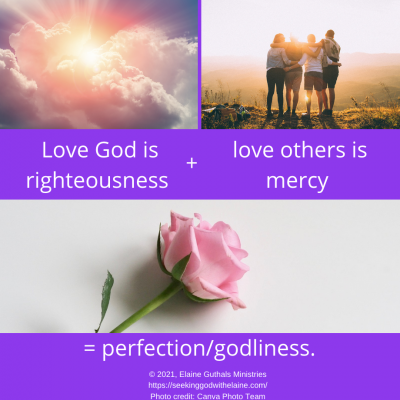
    All put together, it adds up to God’s perfection. God’s perfection refers to His unspotted performance of all the other attributes, making Him spiritually whole and complete.

    God’s Promises Result from His Mercy

    “All who invoke a blessing or take an oath will do so by the God of truth. For I will put aside my anger and forget the evil of earlier days” (Isa. 65: 16 NLT)

    When God promises to do something — or not do something — He does or doesn’t.

    Binning said that truth, along with faithfulness, is the avenue on which mercy is given. God’s mercy is an act of sovereign will that produces an unexpected response from God as He responds in love to our needs.

    Resource

    Think about it. Because God is true, He does or doesn’t do something – but sometimes in a totally different way than we anticipate.

    Mercy doesn’t just come out of His love for us. God shows us mercy because of what He says He will do — and He is true to that word.

    God shows us mercy because of what He says He will do — and He is true to that word.

    The Connection between Truth and Godliness

    “This letter is from Paul, a slave of God and an apostle of Jesus Christ. I have been sent to proclaim faith to those God has chosen and to teach them to know the truth that shows them how to live godly lives. This truth gives them confidence that they have eternal life, which God — who does not lie — promised them before the world began” (Ti. 1: 2 NLT)

    Following God’s true instructions will bring us to lead godly lives.

    There are two sections of these two verses that inform discussion in this devotion.

    • “… to teach them to know the truth that shows them how to live godly lives” (Ti. 1: 1 NLT)
    • “This truth gives them confidence that they have eternal life …” (Ti. 1: 2 NLT).

    Wow! For once, Paul was short and pithy.

    Before we start, we are going to look at the Homilist’s definition of godliness. It says that “Godliness is moral likeness to God.”

    Resource

    The whole purpose of Paul’s instruction was to show conformity with God’s previous vows to help us to redo ourselves for godliness. God receives the glory, and we receive salvation.

    South saw the tie between truth and godliness. He wrote, “One, the end of all philosophical inquiries, which is truth; the other, the design of all religious institutions, which is godliness; both united, and as it were blended together in the constitution of Christianity.”

    Resource

    The gospel is true. Taylor stated that it has to be because God, the Author, is true. Spurgeon said that God is not endangered by the susceptibilities that lead us to lie. The Homilist put it this way: “All truth is of God, natural and spiritual.”

    Resource

    The gospel truth is, first, the foundation of faith. Then, we use it to grow ourselves.

    No, it isn’t always going to be easy. However, even when we think that truth is hard, we see it as being good and lies as being bad.

    Following the gospel truth leads to godliness and eternal life. That makes it redemptive truth.

    Another thing that South said really informs our topic for this year. He wrote that the product of our declaring and entwining the gospel with our lives is the change [I would add of character] to godliness.

    What God wants us to get out of all of this, according to South, is a good life. We do this by serving Him. Taylor said we do that by surpassing human knowledge and obtaining spiritual knowledge.

    Resource

    God designed the Plan of Salvation for just that — our salvation. South reminded us that knowing God is not enough. We have to change our characters to be holy and righteous like Him.

    That is our whole goal this year! We are in a redo for godliness.

    God Is Honest and True

    “God is not a man, that he might lie, or a son of man, that he might change his mind. Does he speak and not act, or promise and not fulfill?” (Num. 23: 19 CSB)

    The fact that God cannot lie should give us peace.

    God does not lie because He is wise. This, coupled with His love and faithfulness, negate the need to lie. Spurgeon said that He would gain nothing by lying.

    Resource

    Because God is immutable, He cannot lie. For some, it can be their tendency to go from one lie to another, changing their opinions – and lies – to match the circumstance. God cannot do that.

    Attersoll took God’s immutability one step further. He said that it is irrevocable. This not only speaks to God’s inability to change, but also to the inability to recall a decision. We see that in the fact that once God said something was a sin, it is always a sin.

    Resource

    See how that does give us peace? We do not have to question whether God is telling us the truth or not – He is. We don’t have to worry about Him changing His mind – He won’t. We know without a shadow of a doubt that we can count on what God has said.

    TruePin

    Making the Connections

    Tillotson wrote that God’s truth and faithfulness in carrying out His word is the foundation for our hope and trust. We have to have that foundation in order to believe in salvation.

    Resource

    Don’t just focus on the truth of God’s love and provision for us. Binning reminds us that God has made threats against those who disobey His commands.

    Resource

    God will make good on those threats. He will even make good on the judgment of those of who have not ABCDed.

    The ABCDs of Salvation

    If you have not become a believer in Christ, please read through the
    Plan of Salvation and prayerfully consider what God is asking you to do.

    A – admit our sins
    B – believe His Son Jesus is our Redeemer
    C – confess God as Sovereign Lord

    D – demonstrate that commitment by making any changes needed in our lives to
    live the way in which God has called us

    The Disciple’s Job Description

    To read a devotion in the Hell Does Have Fury series, click on the appropriate button below.

    This devotion more than most, I have been seeing how all of the attributes of God are intricately connected. If one would get busted, they all would be.

    The other thing that I have been thinking about is the contrast between God and us. He is perfect, pure, holy, righteous, faithful, and true. We so are not.

    How Do We Apply This?

    • If God is truth, then we need to be true and honest.
    • If God is true, then we need to accept what He is telling us.
    • We need to imitate God by being true.
    • We, like God, should not lie.

    Resource

    Taylor sent up a huge flag to make sure he got our attention. He reminded us that we must take the truth that brings us to faith and grow it. If we do not mature in our faith, God will exact a heavy judgment.

    Resource

    Well, it ended up we looked at God being the God of Truth. That allows us to get a little further down the Sanctification Road on our redo for godliness.

    Father God. We thank You that we can depend on You. We can because Your words are true. Your interactions with us are true. Help us as we look to redo our characters to reflect Your godliness. Amen.

    What do you think?

    Leave me a comment below (about this or anything else) or head over to my Facebook group for some interactive discussion.

    If you don’t understand something and would like further clarification, please contact me.

    If you have not signed up for the email daily or weekly providing the link to the devotions and the newsletter, do so below.

    If God has used this devotion to speak with you, consider sharing it on social media.

  • Attributes of God: Faithful

    We talk a lot about how we are to be faithful to God, but we haven’t said a much about Him being faithful to us. Faithfulness is an attribute of God. This daily devotional looks at how God is faithful to the covenant faithful for eternity.

    Nuggets

    • God requires us to choose to live the way that honors Him.
    • We are to choose God because of Who He is, not what we gain from Him.
    • We can choose God for eternity because He is faithful to us.

    To read devotions in the Redo for Godliness series, click the appropriate button below.

    Devotions in the Finding Our Center series

    In the last devotion, we looked at righteousness. We talked about it not being what Dykes said many look at it like: “… Man’s-righteousness-by-works …”

    Resource

    Instead, Dykes told us what it really is: “… God’s-righteousness-by-faith …”

    But what about God’s faithfulness? 

    Let’s Put It into Context #1

    Here is a running list of what we’ve discussed previously.

    Let’s Put It into Context #2

    Faith is the conviction that the doctrines revealed in God’s Word are true, even if we do not understand all aspects of them, a belief which impacts our lives.

    But that is our faithfulness. What about God’s faithfulness? God’s faithfulness is the constancy He displays in His interaction with mankind based on His character, name, and Word.

    God Is Faithful to the Faithful

    “Know that the Lord your God is God, the faithful God who keeps his gracious covenant loyalty for a thousand generations with those who love him and keep his commands” (Deut. 7: 9 CSB)

    God requires us to choose to live the way that honors Him.

    Moses said that God is faithful — but there is a condition on it. We must do two things:

    • Love Him
    • Keep His laws and commandments — and anything else He tells us to do

    It isn’t enough to just know of Him. It isn’t enough to just say we love Him.

    We have to make a conscious decision to live our lives in the way He wants us to live.

    No, it is perfectly fine that God puts a condition on it. Remember, mankind is the one who destroyed the first relationship. We bit when God said not to and Satan said go ahead.

    To read a related devotion, click the button below.

    Sin came into the world because Adam and Eve disobeyed God. They made a conscious decision to take a bite out of the fruit.

    God wants to know that we’ve had a changed heart. He needs to know that we are submitting to Him.

    Anything less, we would still be saying, like Adam and Eve, that we don’t have to listen to God. We would be implying that we are — at a minimum — His equal.

    God is our Creator. He does not have to settle for anything less than our complete obedience.

    Townson also stressed the importance of the words and word choice. He wrote, “For the latter words fix and ascertain the meaning of the former, and give us to understand that he who keepeth God’s commandments is he that loveth Him.”

    Resource

    We aren’t going to keep all of God’s commandments if we don’t love Him.

    Townson also reminded us that God exhibits His grace in both what He allows and does not allow in His laws and commandments. His purposes are for our good (Rom. 8: 28).

    To me, all this says is that God wants us to genuinely choose Him and His ways. He will reward His children.

    God wants us to genuinely choose Him and His ways.

    God’s Faithfulness to His Covenant

    “All the paths of the LORD are steadfast love and faithfulness, for those who keep his covenant and his testimonies” (Ps. 25: 10 ESV)

    We are to choose God because of Who He is, not what we gain from Him.

    This verse is a lot like the other one. It also has an if…then condition. It uses different words. Since I only found one sermon on the last verse, let’s see if we can do any better on this one.

    Jeans wrote that God’s Word will be found congruent with itself and with events that transpire. We can believe what God says because it turns out that way.

    Resource

    If some people believe there is nothing in the Scriptures that pertain to them, they are wrong. The Bible tells us clearly what happens when we choose God and when we don’t.

    The Bible is the guide for our daily walk. Walking is the term used to describe how we live our lives.

    Those who have ABCDed have entered into a covenant with God. There used to be a covenant with Abraham, but Jesus’ covenant superseded that.

    Glossary

    Hodges had a good caution for us. He wrote, “The text seems, at first, to mean that the Lord is merciful and faithful to such as do His will. … It is certain, however, that they who work just to be rewarded by God will miss it altogether. The true reward is the approval of God, and they alone will gain it who think more of God than of themselves. This is the distinction made in New Testament between faith and works. … The Christian saint gives everything and asks nothing.”

    That brings up attitude again, which we haven’t talked about in a while. Lately, we’ve been calling it motivation.

    What flashed in my mind about some missing it all together was the verse in Matthew. “Not everyone who says to me, ‘Lord, Lord,’ will enter the kingdom of heaven, but only the one who does the will of my Father in heaven” (Mt. 7: 21 CSB).

    We’ve got to love God because He is God. We have to love Him for His character — His attributes — not for the rewards.

    We have to love God for His character — His attributes — not for the rewards.

    Hodges went on to say that God is going to be merciful and true regardless of our obedience or disobedience. What we gain by obedience is understanding of His ways. He wrote, “They who keep the covenant and the testimonies of God have their eyes opened to know the purpose and motive of God’s acts.”

    Resource

    I can see that. God is going to be faithful because He is unchangeable. He can’t not be. So, the difference has to be in the reward.

    God’s Faithfulness for Eternity

    “Into your hand I commit my spirit; you have redeemed me, O LORD, faithful God” (Ps. 31: 5 ESV)

    We can choose God for eternity because He is faithful to us.

    This may be a verse in Psalms, but we are more familiar with the summary of it in the gospels. These are Jesus’ last words on the cross.

    Think about that. The last thing Jesus said before He died was quoting scripture.

    All of this tells us a lot. According to Matthew 1, there were 28 generations between David and Jesus. If one generation is 35 years, 28 is 980 years.

    That is a long time to be faithful. But God is eternal, right? Less than one thousand years is a drop in the bucket.

    Jesus and David are two different people. One was sinless. The other committed murderer and adultery. God was faithful to them both.

    He will be faithful to us, too.

    Bradley had a really good sermon that I needed to hear on this day. God is faithful, even when loved ones are facing death.

    Resource

    There are only two options when we die. Are we going to spend eternity with God or with Satan? We get to choose.

    We know this because God has told us this — and He is faithful to His Word.

    God has promised us that, when we genuinely submit to Him, He will save us and bring us home to Heaven. We can rely in that.

    He loves us that much.

    FaithfulnessPin

    Making the Connections

    Because of God’s righteousness — His purity in not sinning — we can be justified. Justification is the act through the merits of Christ that makes us free from sin because we are following God’s moral laws.

    We get this justification through our faith that God will be faithful in giving it to us when we submit to Him. Tyson reminded us that this salvation is available to all who will ABCD.

    Resource

    The ABCDs of Salvation

    If you have not become a believer in Christ, please read through the
    Plan of Salvation and prayerfully consider what God is asking you to do.

    A – admit our sins
    B – believe His Son Jesus is our Redeemer
    C – confess God as Sovereign Lord

    D – demonstrate that commitment by making any changes needed in our lives to
    live the way in which God has called us

    The Disciple’s Job Description

    Jeans told us why all this is worth gaining this salvation. He wrote, “To the saved, every event, of whatsoever kind or magnitude it may be, or seem to be, is under the ordering of one sole guiding hand, and is a token of mercy and truth.”

    Resource

    Those of us who have ABCDed have our lives controlled by Someone Who loves us, treats us way better than we deserve to be treated, and never deviates from that love.

    Think about the strength that gives us! The confidence!

    What popped into my mind was God keeps His word. It is more than being unchangeable. That is He can’t do anything differently.

    To me, being faithful is God doesn’t want to do things differently. He chooses to keep His word to us.

    God loved us before the original sin. He still loves us after we sin. He chose not to judge us once and for all right then. That comes out of His faithfulness.

    Glossary

    How Do We Apply This?

    To whom will you commit your spirit — God or Satan? Will you choose Him because He is Sovereign God or because you can get good stuff in the end?

    We have to decide to follow the faithful God because of our love for Him — and then do it by obeying His laws and commandments.

    Father God. You are faithful to us when we don’t deserve it. That is because of Your love and mercy. We choose to be Your children. That means we choose to follow Your laws and commandments because it will honor You and make us more like You. Amen.

    What do you think?

    Leave me a comment below (about this or anything else) or head over to my Facebook group for some interactive discussion.

    If you don’t understand something and would like further clarification, please contact me.

    If you have not signed up for the email daily or weekly providing the link to the devotions and the newsletter, do so below.

    If God has used this devotion to speak with you, consider sharing it on social media.

  • Attributes of God: Righteousness

    We have been looking at devotions that are interconnected. We’ve looked at perfection and just. (We should include holy in that list.) This daily devotional looks at righteousness.

    Nuggets

    • God is righteous because He is pure.
    • Righteousness comes from God’s character.
    • God wants to shower his righteousness on us.
    • God’s righteousness brings us joy and increases our reverence for Him.

    To read devotions in the Redo for Godliness series, click the appropriate button below.

    Devotions in the Finding Our Center series

    For a while, I have been wondering if I am understanding righteous and righteousness correctly.

    Part of the problem is when I read about God’s righteousness. He can’t have a solid relationship with Himself.

    I am hoping to get more insight with this study. I keep telling you I do these devotions to learn myself and share them to help you learn. I don’t have all the answers.

    Join me as I try to figure it out.

    Let’s Put It into Context #1

    Here is a running list of what we’ve discussed previously.

    Let’s Put It into Context #2

    Righteous means we are free from sin because we are following God’s moral laws.

    Righteousness is the result of a solid relationship with God built by a sincere life of conscientious obedience to God’s laws and commandments.

    What Is God’s Righteousness?

    “They will give a testimony of your great goodness and will joyfully sing of your righteousness” (Ps. 145: 17 CSB)

    God is righteous because He is pure and works for us.

    Whenever I see a definition about righteous or righteousness, it invariably defines it as being right. I can see that, of course, but I also think that is simplistic.

    Part of me is shouting, “But what is right?” I don’t care for circular definitions.

    Everything is connected like Dem Bones, but there are differences. For example, the Blue Letter Bible explained that “righteousness is similar to goodness and holiness, but differs in that it requires works to establish it.”

    Resource

    We haven’t defined goodness — yet (that is a couple of devotions from now). Holiness is the transcendent excellence of His nature that includes elements of purity, dedication, and commitment that lead to being set apart. Purity means possessing God’s moral character, having eliminated the stain of sin.

    The works being discussed is the good works described in Ephesians 2: 10. Good works means that we give God our best to complete whatever tasks He assigns for us to do.

    The Blue Letter Bible implied that good works is synonymous for righteousness. I can see that as our definitions says that the righteousness comes from our obedience — doing the good works.

    But what about God’s righteousness? What are His good works?

    One of God’s good works is providing for us through the Plan of Salvation. He also provides for us through life, health, safety and a long list of other things.

    But it is more than that.

    Righteousness Comes from God Himself

    “For in it the righteousness of God is revealed from faith to faith, just as it is written: The righteous will live by faith” (Rom. 1: 17 CSB)

    Righteousness comes from God’s character.

    Righteousness stems from God Himself. Horton wrote, “The foundation and standard of all righteousness are to be found in His nature and character.”

    Resource

    If righteousness stems from His character — to me — that makes the “right” His character. His character is the holiness. He is holy because He is pure. He is pure because He doesn’t sin.

    Ooo, baby. I think this devotion is going to be one quote after another.

    Horton also said, “The gospel is not merely a display of mercy, but of righteousness. He could not bestow forgiveness on sinners in violation of righteousness.”

    God’s mercy is an act of sovereign will that produces an unexpected response from God as He responds in love to our needs. Forgiveness is, when we ask, God pardons us because we have broken His laws and commandments and restores our relationship with Him.

    We violate God’s pure character when we sin. He showed us mercy in designing the Plan of Salvation, but He won’t give us a pass on sinning. We will be held accountable for unconfessed sins.

    God’s whole purpose with the Plan of Salvation is to make us righteous again. We were before the original sin — He wants us to be again.

    Glossary

    Hmmmm. This is a new wrinkle. Moinet wrote, “The gospel is the saving power of God, because it reveals a Divine righteousness which is itself salvation.”

    Resource

    Man. I was trucking along in that sentence until is said righteousness is salvation. Let me process.

    • The Gospel is the saving power of God because it infuses a morality of purity and completeness.
    • It shows us Who God is.
    • But it is built on the revelation of what righteousness is.
    • We can’t be saved unless we understand what righteousness is.

    Okay. Elaine-speak. Righteousness is the foundation of salvation. We’ve known righteousness was an attribute of God since the Old Testament, but we can’t see how righteousness is a saving power.

    Righteousness originates with God. He shares it with us. Nothing we could do will ever earn us salvation and, therefore, righteousness.

    God will freely give us salvation when we admit that mankind was separated from God after the original sin, making us sinners; believe Jesus paid the penalty for those sins to become our Savior and Redeemer; confess God as Sovereign God; and demonstrate that commitment by submitting to living our lives following His laws and commandments.

    Short answer — God gives us salvation when we admit we sin and promise to turn away from sin. Sins are actions by humans that disobey God and break one of His reasonable, holy, and righteous laws and commandments, goes against a purpose He has for us, or follows Satan’s promptings.

    Don’t miss something else. Tyson reminded us we can’t gain righteousness just by keeping God’s laws. We’ve got to have the faith that goes with it. Faith is the conviction that the doctrines revealed in God’s Word are true, even if we do not understand all aspects of them, a belief which impacts our lives.

    In fact, it isn’t through anything we do. Spurgeon wrote, “No man can put on the robes of Christ’s righteousness till he has taken off his own. Christ will never go shares in our salvation.”

    Resource

    Tyson wrote that the righteousness of God “… is that one righteousness of Christ which He affected for us in His obedience unto death.” Again, righteousness is because of obedience.

    Resource

    But this was the ultimate obedience. It paved the way for salvation, justification, propitiation, atonement, and regeneration. If salvation is the soufflé, those are all the ingredients.

    Dykes contended that an aspect of righteousness was the acquittal of our sins by God. He can do this because of Jesus’ sacrifice.

    Resource

    Okay. I figured out why I am struggling so much with this concept. Tyson wrote, “The righteousness itself, in its true ground and nature, had not been before revealed. Indeed, till the Holy One and the Just had given exhibition of it in His own actual human history, it could not be.”

    Resource

    One of God’s attributes is that He is mysterious. We can’t fully understand because He hasn’t fully revealed everything to us.

    God Shows His Righteousness to Us

    “But the one who boasts should boast in this: that he understands and knows me — that I am the Lord, showing faithful love, justice, and righteousness on the earth, for I delight in these things. This is the Lord’s declaration” (Jer. 9: 24 CSB)

    God wants to shower his righteousness on us.

    God created us even though He knew we were going to disobey Him. He didn’t abandon us when we did. (His turning us out of Eden was not abandonment because He still had access to us.)

    It was in faithful love, justice, and righteousness that God designed the Plan of Salvation. The Homilist added mercy to that list.

    Resource

    The Homilist also noted judgment and righteousness can been seen in the results of sin. Think about the contrast there.

    Judgment occurs when we sin. Righteousness is the reward when we don’t sin. When we look — even worldview people — we can see God’s presence on the earth doing both. We see His hand working in our lives.

    The judgment and righteousness God bestows on us is not a negative. As Le Pla said, he judges and rewards through his loving kindness and justice. We talked not long ago that trials are spa days for us.

    Resource

    God loves us and wants to grow us.

    God’s Righteousness Brings Fear and Joy

    “The instruction of the Lord is perfect, renewing one’s life; the testimony of the Lord is trustworthy, making the inexperienced wise. The precepts of the Lord are right, making the heart glad; the command of the Lord is radiant, making the eyes light up. The fear of the Lord is pure, enduring forever; the ordinances of the Lord are reliable and altogether righteous” (Ps. 19: 7-9 CSB)

    God’s righteousness brings us joy and increases our reverence for Him.

    Okay. I always get tripped up when I see the word precepts. Basically, according to the Merriam-Webster Dictionary, it is a general rule that is given by a superior to a subordinate.

    Resource

    We would say that the laws and the commandments are right. Since we know that the laws and the commandments show us God’s character, we can say that His character is right.

    Verse 9 talks about fear of the Lord. We know that it means awe, reverence and love, not terror.

    Glossary

    All of this adds up to joy. Sowden said that the psalmist purposefully tied it to our feelings and interests.

    Resource

    Being right with God brings us joy. We see the perfection. We feel the trustworthiness. We see that His commands are predicated on His Love for us.

    It makes us love and revere God more.

    RighteousnessPin

    Making the Connections

    God’s righteousness is based on His purity.

    God rewards our righteousness and punishes our unrighteousness. In a way, righteousness is its own reward.

    If righteousness is the result of being free from sin and the product of a solid relationship with Him, that means we have to choose to obey His laws and commandments.

    How Do We Apply This?

    “You are righteous concerning all that has happened to us, because you have acted faithfully, while we have acted wickedly” (Neh. 9: 33 CSB)

    • God will always be righteous and act faithfully to us, even when we sin.
    • The only way we are right with God is when we do not sin or ask for His forgiveness.
    • Then, we have to do His good works.

    Now, we can’t think we can do these works without God and still end up with righteousness. We can’t. Righteousness is only in relation to God.

    The good works are our obedience to God’s laws and commandments. It isn’t the abilities or the results of our actions itself.

    Okay, righteousness is about our relationship with Him. It is about our obedience to Him. It is all about Him.

    Gracious Lord. It is difficult to understand Your righteousness. We don’t need to fully understand it. We need to obey You. We will. Amen.

    What do you think?

    Leave me a comment below (about this or anything else) or head over to my Facebook group for some interactive discussion.

    If you don’t understand something and would like further clarification, please contact me.

    If you have not signed up for the email daily or weekly providing the link to the devotions and the newsletter, do so below.

    If God has used this devotion to speak with you, consider sharing it on social media.

  • Attributes of God: Just

    God is a fair and just God. This daily devotional looks at how He treats all, including in judgment.

    Nuggets

    • God is just because He shows no favoritism.
    • When God must judge us, He is just in His judgment.
    • God’s being just stems from His mercy and compassion.
    • God’s being just does not allow Him to accept sinful behavior.

    To read devotions in the Redo for Godliness series, click the appropriate button below.

    Devotions in the Finding Our Center series

    We looked in the last devotion how God is perfect. Next, we are going to look at being just.

    Let’s Put It into Context

    Here is a running list of what we’ve discussed previously.

    Just Treatment of All

    “The Rock — his work is perfect; all his ways are just. A faithful God, without bias, he is righteous and true.” (Deut. 32: 4 CSB)

    God is just because He shows no favoritism.

    Burder contended that we learn about God’s attribute of being just by looking at His justice. He gave a quick definition of what just is: “… giving to everyone his due.”

    Resource

    How does God being just play out? Burder wrote, “God is just in punishing disobedience to His holy law.”

    Resource

    Some worldview people would take issue with that statement for several reasons.

    1. They don’t feel God is just.
    2. They don’t feel like God should be the one to judge.
    3. They don’t feel God’s laws should be laws.

    First, some worldview people don’t feel God is just because they hear Him described as a God of love and see the consequences of sin. In their minds, A does not lead to B.

    God is just even when He punishes those who break His laws and commandments. It is us that bring the punishment on ourselves, not Him. We choose to break His laws and commandments.

    Second, God has no right, according to worldview people, to be their judge. To them, regardless if He is the Creator, they want control of their own lives.

    As Creator, He does have control of everything. He has not abdicated that control to anyone. We are accountable to Him.

    Third, worldview people have issues with the laws themselves. God has declared some things are a sin, which they think should not be.

    God is sovereign God. He not only has the right to decree what the laws are, he has the right to punish disobedience of those laws. The BST & Crosswalk Staff wrote, “Likewise, although this is hard for many to accept, his sentencing of evil, unrepentant sinners to hell is also right and good.”

    Resource

    What we cannot forget, as Raikes reminded us, that God possesses the morals and attributes He is asking us to possess. That is why we are called to be imitators (Eph. 5: 1).

    Resource

    Paul told us another way that God is just. “For God does not show favoritism” (Rom. 2: 11 NIV).

    God offers salvation to all. “The Lord is not slow to fulfill his promise as some count slowness, but is patient toward you, not wishing that any should perish, but that all should reach repentance” (II Pet. 3: 9 ESV).

    We all have the same opportunity for His mercy and grace. It is our decision alone whether we are going to accept His salvation and submit to Him.

    We all have the same opportunity for His mercy and grace. It is our decision alone whether we are going to accept His salvation and submit to Him.

    Just Judgment

    “You could not possibly do such a thing: to kill the righteous with the wicked, treating the righteous and the wicked alike. You could not possibly do that! Won’t the Judge of the whole earth do what is just?” (Gen. 18: 25 CSB)

    When God must judge us, He is just in His judgment.

    God judged Sodom and Gomorrah because of its sinfulness. Before He did this, He told Abraham what He was going to do.

    Abraham had some questions for God. Well, really it was a variation of the same question. If You found righteous people there, would you destroy the good with the evil?

    Abraham knew God. He couldn’t see God punishing the faithful with the unfaithful.

    Did you see what Abraham said? “… Won’t the Judge of the whole earth do what is just?” (Gen. 18: 25 CSB).

    • Abraham did accuse God of killing the faithful with the unfaithful.
    • He didn’t say God would withhold His protection from the faithful.

    He basically said, “It isn’t going to happen.”

    And it didn’t.

    No, God didn’t save the cities. He didn’t find the number that Abraham got down to. “Then he said, ‘Let my lord not be angry, and I will speak one more time. Suppose ten are found there?’ He answered, ‘I will not destroy it on account of ten.’ (Gen. 18: 32 CSB).

    God is still just even though He destroyed the two cities for wickedness. “For you are not a God who delights in wickedness; evil may not dwell with you” (Ps. 5: 4 ESV).

    God did save Lot, his wife, and his two daughters (Gen. 19: 15). Well, he tried to save the wife, but she looked back. He tried to save the future sons-in-law, but they wouldn’t believe.

    We just said that God decrees what is right/good. Emmons wrote, “He ought therefore to feel and act according to His moral discernment of what is right in the nature of things.”

    Resource

    That makes any deviation of that decree wrong/evil. God can punish evil.

    Binning had an interesting take. He wrote, “All His ways are judgment; just and true in all His ways is the King of saints.”

    I guess I can see that. All of our deeds are written in the books discussed in Revelation. He judges whether they are good or not.

    Resource

    Fun Fact

    God’s judgment of us is based on His just disposition toward us.

    God’s judgment of us is based on His just disposition toward us.

    Being Just Because of Mercy

    “What should we say then? Is there injustice with God? Absolutely not! For he tells Moses, I will show mercy to whom I will show mercy, and I will have compassion on whom I will have compassion. So then, it does not depend on human will or effort but on God who shows mercy” (Rom. 9: 14-16 CSB)

    God’s being just stems from His mercy and compassion.

    Lyth reminded us of God’s immutability. This applies to His being just, also.

    Resource

    His fair treatment of us is not dependent on us. “So then, it does not depend on human will or effort but on God who shows mercy” (Rom. 9: 14-16 CSB).

    That God is just stems from His mercy. God’s mercy is an act of sovereign will that produces an unexpected response from God as He responds in love to our needs.

    Therefore, when God judges, His just judgment is given through mercy. Paul said that it has nothing to do with us.

    God’s being just does not allow Him to accept sinful behavior. “Although they know God’s just sentence — that those who practice such things deserve to die — they not only do them, but even applaud others who practice them” (Rom. 1: 32 CSB).

    Emmons contended that sinners consciously sin against God. They know that they are not choosing to live for God.

    Resource

    God will stay true to His character.

    God will stay true to His character.

    Making the Connections

    We are given free will. Free will is the ability within us to make decisions, which determine actions that produce character.

    It is our choice to obey God’s laws and commandments. It is arrogant of us to think we can disobey those laws and commandments and not suffer the consequences.

    God is not unjust because He passes judgment on our actions.

    JustPin

    How Do We Apply This?

    Raikes applied justice to perfection for us. He wrote, “To make this justice perfect, as all the attributes of God must be supposed to be, it will descend to every particular in our conduct; nothing will be too small to be noted; nothing can be concealed from Him; nothing will be overlooked by Him. To make it consistent with the spiritual character of His nature, and with that spiritual holiness which He requires in His people, it will extend to every thought, to every purpose, to every hidden wish of the heart, as well as to every work and to every action.”

    Resource

    Ooo, baby. How many things are we to watch?

    • Watch the small stuff.
    • Don’t try to concealed anything from Him.
    • Don’t expect a pass.
    • Watch every thought.
    • Apply it to every purpose.
    • Watch every hidden wish of the heart.
    • Apply it to every work and to every action.

    Emmons cautioned us not to love things that are displeasing to God. This willful disobedience displeased God.

    Resource

    We need to accept that God is just and realize that His ways are higher than ours (Isa. 55: 8-9). We make a conscious decision to believe in Him.

    Father God. We thank You that You are just. You do reward those who have turned their lives over to You and punish those who have not. Lord, we choose to obey You. Amen.

    What do you think?

    Leave me a comment below (about this or anything else) or head over to my Facebook group for some interactive discussion.

    If you don’t understand something and would like further clarification, please contact me.

    If you have not signed up for the email daily or weekly providing the link to the devotions and the newsletter, do so below.

    If God has used this devotion to speak with you, consider sharing it on social media.

  • Attributes of God: Perfect

    God is perfect. But what does that really mean? This daily devotional looks how God is perfect in His works, way, and attributes.

    Nuggets

    • God’s work is the actions He takes through us to accomplish His plans, which are accomplished perfectly.
    • God’s way is perfect because of His purity, an aspect of His holiness.
    • Being perfect tells us the status of the other attributes are spiritually whole and complete.

    To read devotions in the Redo for Godliness series, click the appropriate button below.

    Devotions in the Finding Our Center series

    The next four devotions (maybe five or six if I have to divide) are interconnected. When I was doing my research and it would talk about two attributes, perfection, just, righteous, faithful, and true could appear in different combinations.

    Binning said that it pleases God to have so many titles. I can see that. Being everything to every complex person means God has to be complex. Besides, we need different aspects of Him at different times.

    Resource

    So, we are going to look at these back to back and see what we are going to see.

    Let’s Put It into Context #1

    Here is a running list of what we’ve discussed previously.

    Let’s Put It into Context #2

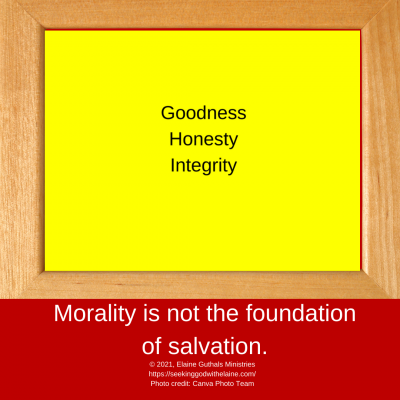
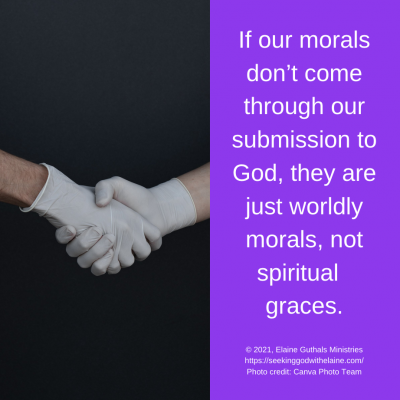
    The perfected state indicates the combination of the spiritual graces which, when all are present, form spiritual wholeness or completeness. Spiritual graces are worldly morals that have been submitted to God to further His kingdom instead of enhancing this world.

    God’s Work Is Perfect

    “The Rock — his work is perfect; all his ways are just. A faithful God, without bias, he is righteous and true.” (Deut. 32: 4 CSB)

    God’s work is the actions He takes through us to accomplish His plans, which are accomplished perfectly.

    We had a devotion not long ago (and of course, I can’t find which one) where we said God only works from a plan. He has an eternal purpose that He has mapped out. All of the work we do happens according to that plan.

    Binning pointed out that, even though things happen perfectly according to God’s plan, that does not mean we think they are perfect. We think it would be perfect when there is smooth sailing.

    God is going to use the consequences of sin — poverty, disease, death — to work out His perfect plan. He isn’t necessarily going to make us ill. He will use that illness to grow us.

    GodUsesConsequences

    We have to realize that the designation of perfect will be deferred to the end. When measured against the glory it brings Him and the eternal purpose it fulfills, it is perfect.

    Also, we tend to look at the chapter or maybe even the paragraph or word. We don’t look at the whole book, like God does.

    I remember when Mom died, I got a card that had a beautiful saying on it. Right now, we are looking at the underside of the tapestry. We just see the knots and dull outline. When we get to Heaven — and are able to see the top side — we will see the beautiful masterpiece that God has created.

    That can be applied to more than just grief. Once life is over and we see the completed us, we will see the beauty of God’s perfect work in us.

    Binning knew what he was trying to say. I think he meant that, when we focus on God, He will give us His peace — that is part of His work. In that way, we can be peaceful like Him — making the work perfect and complete. Complete equals perfect.

    Resource

    Tillotson instructed us that “… truth and faithfulness are perfections, and consequently belong to the Divine nature …” (See, I said they were interconnected.)

    Resource

    Tillotson felt it was understandable to want to be perfect like God. We don’t have His power or wisdom. We don’t have His stability. We think if we did have His attributes, we would be happy.

    Resource

    Mankind is far from perfect. We break God’s laws and commandments almost daily.

    That is called sin. Sins are actions by humans that disobey God and break one of His reasonable, holy, and righteous laws and commandments, goes against a purpose He has for us, or follows Satan’s promptings. These laws and commandments not only show us what we have done wrong, but they also show us the character of God. It is an attitude that encourages us to exercise our free will and not follow God.

    God doesn’t sin. In fact, His purity is part of His perfection.

    God’s Way Is Perfect

    “God — his way is perfect; the word of the Lord is pure. He is a shield to all who take refuge in him.” (II Sam. 22: 31 CSB)

    God’s way is perfect because of His purity, an aspect of His holiness.

    Because God is pure — free from sin, He is holy. Binning equated God’s perfection with His holiness. Holy means to be set apart, perfect, and morally pure while possessing all virtues.

    Resource

    Selby thought some may question why we say God is separated. He wrote, “He is eternally pure and perfect and separate from sinners, and does not need to draw a line between Himself and the world by a special consecration act.”

    I don’t know when Selby wrote his sermon, but he nailed one thing. When talking about how Jews immediately submitted to God, he provided a contrast by writing, “We, however, are disposed to go a little further into the subject than that, and ask, ‘Does mere power, however gigantic its scale, create obligation’?”

    Resource

    Ooo, baby. He knows us well!

    Worldview people don’t think God’s power should elicit our submission. That He is our Creator means little to them.

    But you know, God doesn’t want us to submit to him because of His power or what He has done for us.

    God wants us to submit to Him because He loves us and we love Him. He wants us to want to have the relationship with Him.

    God wants us to submit to Him because He loves us and we love Him

    We worship God by imitating Him. That means we try to be perfect.

    We are made in God’s image. That means, even though we may not currently be like Him, we can grow to have His character. We grow by the grace of God.

    We look at ourselves and think there is no way we can be perfect. Selby begged to differ. He wrote, “The very motive which determines God’s eternal and unspotted life of blessedness comes to infix itself in us. The power of God’s personal holiness, with all its magnificent achievements, lends itself to us for our perfecting.”

    Resource

    Wood assured us “that God’s way is perfectly wise and good and holy, perfectly adapted to fulfil (sic) the purposes of his love towards his children, and leads to an end that is perfectly good. That, in comparison with the way we might have preferred, it is infinitely superior.

    Resource

    God’s ways are perfect because they provide the outcome He has decreed. That doesn’t mean we are going to necessarily think they are perfect when we are going through them. We don’t see illness and death as perfect, but they grow us to be more like Him.

    God is omniscient — all-knowing. In knowing everything, He is perfect. He will use all of our circumstances, as Wood said, that “… leads to an end that is perfectly good.” He does this through His perfect goodness.

    As Wood said, Dale reminded us that the perfection comes at the end. We won’t be perfect here in this life. Perfection is being saved for Heaven.

    Resource

    We have to remember that God has plans for us (Jer. 29: 11). These plans are perfect. Scriptures call this His way. From beginning to end, His way is perfect.

    The Homilist applied this to our moral conduct. It was written, “The way which is prescribed for our moral conduct is ‘perfect.’”

    Resource

    God’s way of reconciliation is perfect. “For God so loved the world, that he gave his only Son, that whoever believes in him should not perish but have eternal life” (Jn. 3: 16 ESV).

    Miller reminded us that, because God’s ways are perfect, we will not figure them out. We are not going to totally understand how God created this universe.

    God Is Perfect

    “Be perfect, therefore, as your heavenly Father is perfect.” (Mt. 5: 48 CSB)

    Being perfect tells us the status of the other attributes are spiritually whole and complete.

    I was surprised that there were only a few sermons on Matthew 5: 48. I figured there would be bunches.

    Tuck reminded us that Christ showed us perfection. He showed us His Father.

    Resource

    Price’s sermon took a similar tract as the ones in the last section. He had a really good definition of holy. He wrote that perfectly holy “… denotes the transcendent excellence of His nature, while He is infinitely distinguished from all other beings.”

    Resource

    Hmmm. I think that applies more to holiness than it does to holy.

    We say holiness is more than a character trait; it is purity, dedication, and commitment that lead to being set apart. Let’s see if we can combine.

    Holiness is the transcendent excellence of His nature that includes elements of purity, dedication, and commitment that lead to being set apart.

    Well, it is still a work in progress.

    Price did add another aspect of God’s perfection — His wisdom. He wrote, “Wisdom implies right use of knowledge, and lies in the will as well as in the understanding He acts wisely whose will is directed by right reason.”

    Resource

    That is close to our definition of wisdom. It is an enlightened acceptance of God’s principles that leads to knowledge, discernment, and good sense that is put into practice through salvation, increasing our goodness and virtue.

    What if we are perfect when we accept His principles? Hmmm. I am going to have to think on that.

    PerfectPin

    Making the Connections

    I think perfection is a status of several elements. For example, I am a good singer. I am okay on the flute. The only time I am presentable on the piano is if I am playing just for me.

    Add those all together, I am not totally perfect.

    God is totally perfect. All of His attributes do link together. He is perfect in them all.

    Doesn’t that make it easier to submit to Him?

    How Do We Apply This?

    Fletcher gave us a good list of what being perfect in God meant. He wrote, “Christian perfection is a spiritual constellation, made up of these gracious stars — perfect repentance, perfect faith, perfect humility, perfect meekness, perfect self-denial, perfect resignation, perfect hope, perfect charity for our visible enemies as well as for our earthly relations, and, above all, perfect love for our invisible God through the explicit knowledge of our Mediator Jesus Christ. And as this last star is always accompanied by all the others, as Jupiter is by his satellites, we frequently use, as St. John, the phrase, ‘perfect love,’ instead of the word ‘perfection’; understanding by it the pure love of God shed abroad in the hearts of established believers by the Holy Ghost, which is abundantly given them under the fulness of the Christian dispensation.

    Resource

    We can strive toward that.

    • Because God is perfect, we should be thankful, submissive, and confident.
    • We should seek His wisdom.

    Resource

    We can put our faith in God because He is perfect — all the way around.

    Father God. You are perfect in all ways. We want to become more perfect in all of the ways Fletcher listed. By doing so, we become more like You. Amen.

    What do you think?

    Leave me a comment below (about this or anything else) or head over to my Facebook group for some interactive discussion.

    If you don’t understand something and would like further clarification, please contact me.

    If you have not signed up for the email daily or weekly providing the link to the devotions and the newsletter, do so below.

    If God has used this devotion to speak with you, consider sharing it on social media.

  • Why Salvation Came to a Man in a Tree

    In the last devotion, we started looking at when Zacchaeus found salvation in a sycamore tree. This daily devotional looks at evidence that salvation has come and why that was Jesus’ mission.

    Nuggets

    • Salvation elicits a positive change in us.
    • Jesus, as the Author of salvation, bestows it on us when we make a profession of faith.
    • Jesus had one overall purpose in His mission — bring salvation to the lost.

    Devotions in the Luke’s Diagnosis and Prescription series

    Devotions in the Salvation Comes to Zacchaeus series

    Jesus came to Jericho and found Zacchaeus in a tree. Instead of ignoring him, Jesus wanted to go to Zacchaeus’ home.

    We pick up the story when Zacchaeus hit the ground. Let’s dig in.

    Let’s Put It into Context

    Nuggets from the previous devotion:

    • We should be excited about seeking Jesus.
    • Christ will always meet us when we come to Him for salvation.

    Evidence of Salvation

    “But Zacchaeus stood there and said to the Lord, ‘Look, I’ll give half of my possessions to the poor, Lord. And if I have extorted anything from anyone, I’ll pay back four times as much.’” (Lk. 19: 8 CSB)

    Salvation elicits a positive change in us.

    It is easy to consider Luke 19: 8 as verification that Zacchaeus was a greedy thief. Well, he was a tax collector. Isn’t that how they are typically stereotyped?

    Person of Interest

    Boyd wanted us to expand our thinking. He questioned whether this could be a sign of Zacchaeus’ innate generosity.

    True, Zacchaeus could have made a 180° turn upon conversion. Or he may have been struggling to break out of the stereotype prior to conversion.

    Many think that the promise to rectify any instance of extortion as further proof there was extortion. I’m not sure I buy that.

    If Zacchaeus had extorted in the past, would he have said, “… And if I have extorted anything from anyone …” (Lk. 19: 8 CSB)? Wouldn’t he have known?

    Evidence that Zacchaeus had been an extortionist would have been “Since I have extorted from people.” It wouldn’t have been wishy-washy.

    Proof of Zacchaeus’ generosity is that he doubled the amount of restitution. Restitution in the repayment for injuries or wrong done.

    Zacchaeus was only required to give restitution of a fifth of the value. “The Lord said to Moses, ‘Say to the Israelites: “Any man or woman who wrongs another in any way and so is unfaithful to the Lord is guilty and must confess the sin they have committed. They must make full restitution for the wrong they have done, add a fifth of the value to it and give it all to the person they have wronged”’” (Num. 5: 5-7 NIV).

    It just seems a little odd that someone not following the law would suddenly go so far the other way.

    This says two things to me. We don’t want to be stereotypical. We want to see each person for who they are.

    We don’t want to be judgmental. It is in God’s pay grade to judge. It is in our pay grade to love.

    I think we are best served to just see Zacchaeus’ response as a sincere confession of faith. He felt the Jesus’ love and wanted to show it to others.

    God expects to see a change in us upon conversion. No, it isn’t a flip of the switch, and we magically become a totally new person who does things we never did before and don’t do things we shouldn’t now.

    The bulk of the change comes as we navigate the Sanctification Road.

    • Sanctification is the transformation of mind, body, and soul, which begins with regeneration, gradually changes our nature through the promptings of the Holy Spirit, and ends with perfected state of spiritual wholeness or completeness.
    • Regeneration is being changed from spiritually dead to spiritually alive and the internal requickening in us that God brings about through the work of the Holy Spirit to give us new character.
    • Spiritual death is the separation from God that occurred as a consequence of Adam and Eve’s original sin. The spiritually alive are those who have ABCDed, so they are no longer separated from God.
    • The perfected state indicates the combination of the spiritual graces which, when all are present, form spiritual wholeness or completeness.
    • Spiritual graces are worldly morals that have been submitted to God to further His kingdom instead of enhancing this world.

    Glossary

    The ABCDs of Salvation

    If you have not become a believer in Christ, please read through the
    Plan of Salvation and prayerfully consider what God is asking you to do.

    A – admit our sins
    B – believe His Son Jesus is our Redeemer
    C – confess God as Sovereign Lord

    D – demonstrate that commitment by making any changes needed in our lives to
    live the way in which God has called us

    The Disciple’s Job Description

    But God does expect to see some change immediately.

    • If we are stealing from others, God does expect us to stop.
    • If we are greedy, God does expect us to stop.
    • If we are judging others, God does expect us to stop.
    • If we are stereotyping others, God expects us to stop.

    We are expected to begin serving God. Service is an act based on belief in God that comes from a response of worship by acknowledging His power through our submission.

    The translations of this verse is interesting. Some translate it as will give (NLT, CSB, and HCSB), am giving (NASB), and I give (NIV, ESV, KJV, NKJV).

    Smith noted that will give shows a delay in serving God. I give, according to Smith, indicates “…that his will is his deed …”

    Resource

    Zacchaeus would have to determine the motivations behind the I am giving. If he had been giving in the past, is he now giving to further God’s kingdom. Has he kicked his worldly morals up to spiritual graces?

    Why is restitution so important? Kolloch wrote, “Restitution is a duty so indispensable, that without it there is no salvation.”

    Resource

    Restitution is important to salvation, according to Kolloch, because it shows that we are loving God and loving our neighbors. That is how we achieve perfection.

    Love God is righteousness + Love people is mercy = perfection/godliness

    Salvation Has Come

    “‘Today salvation has come to this house,’ Jesus told him, ‘because he too is a son of Abraham” (Lk. 19: 9 CSB)

    Jesus, as the Author of salvation, bestows it on us when we make a profession of faith.

    Let’s look at the last part of the verse first.

    Remember, the Pharisees thought they were good to go because they were sons of Abraham. “They answered him, ‘Abraham is our father’” (Jn. 8: 39 ESV).

    Zacchaeus had been excommunicated from the church because he was a tax collector. The Pharisees would have not considered Zacchaeus a son of Abraham anymore.

    In Jesus’ mind, Zacchaeus’ occupation did not excommunicate him from being a son of Abraham. Jesus cared about that Zacchaeus made a profession of faith.

    Jesus will give salvation to anyone who makes a genuine profession of faith. He does not marginalize us. He accepts all who are truly seeking Him.

    That brings us to the beginning of the verse.

    We need to answer the call of salvation. We need to do it today. We aren’t promised tomorrow.

    When salvation comes, today is the new beginning. We now have peace and hope.

    Glossary

    There was only one sermon that I found discussing this verse. The Congressional Pulpit contended that, sometimes, the person who has committed the most offensive sins is the first to be saved.

    There was one nugget in the sermon — that may or may not be on topic. The Congressional Pulpit wrote, “Beware of pride, self-righteousness, assumed morality, ostentation, carnal wisdom, and deep-rooted prejudice. These are the offensive things that make him pass by your door.”

    Resource

    I read these as obstacles to a genuine confession. We can be proud of our worldly wisdom, which at times, makes us show off. It can also make us think we are better than others, causing us to judge them.

    Then there is assumed morality. This doesn’t mean that we are not good enough or virtuous enough for God.

    In my opinion, this means we think that morality is the foundation of salvation. It isn’t.

    In my opinion, this means we think that morality is the foundation of salvation. It isn’t.

    Grace is the foundation of salvation. “For by grace you have been saved through faith. And this is not your own doing; it is the gift of God not a result of works, so that no one may boast” (Eph. 2: 8-9 ESV).

    It is not a result of anything we do — works. It is the result of believing in the grace of God.

    I almost changed that to believing in God, but it isn’t just that. We can believe there is a God, and not be His child because we haven’t made a profession of faith. We haven’t submitted to Him.

    Salvation is all about what God has done for us and our acceptance of His sovereignty.

    Jesus’ Mission Was All about Salvation

    “For the Son of Man has come to seek and to save the lost” (Lk. 19: 10 CSB)

    Jesus had one overall purpose in His mission — bring salvation to the lost.

    Jesus didn’t come to be a social savior. He didn’t come to tap into everyone’s feelings, so they could be comfortable with who they were.

    Jesus came to find those who were spiritually dead and save them.

    Let’s break this verse down.

    Jesus came. He had been in Heaven with God. God asked Him to be the Sacrifice, so that the penalty for our sins would be paid.

    We are told that Jesus, “who, existing in the form of God, did not consider equality with God as something to be exploited. Instead he emptied himself by assuming the form of a servant, taking on the likeness of humanity. And when he had come as a man, he humbled himself by becoming obedient to the point of death — even to death on a cross” (Phil. 2: 6-8 CSB).

    Did you catch that? “Instead he emptied himself …” (Phil. 2: 7 CSB). He voluntarily came and suffered.

    The reason Jesus came was to seek for us. He didn’t stay home and make people come to Him.

    For three years, Jesus went all around the countryside, looking for people. He found them and taught them the gospel message. “For God so loved the world, that he gave his only Son, that whoever believes in him should not perish but have eternal life (Jn. 3: 16 ESV).

    We were lost and needed to be found. Jesus had the cure for our lostness. He needed to find us.

    Morris reminded us of the lost sheep. Jesus went looking there. Also mentioned by Morris was the prodigal son.

    Resource

    To read a related devotion, click the button below.

    To read a devotion in the Parable of the Prodigal Son series, click the appropriate button below.

    Jesus seeks us to bring us back home — into the fold. He does this because we are lost.

    Worldview people may not feel that they are lost, but they are lost. Talmage gave us a list of what mankind lost after the original sin.

    According to Talmage, we lost holiness. Holiness is more than a character trait; it is purity, dedication, and commitment that lead to being set apart. Purity means possessing God’s moral character, having eliminated the stain of sin. That made us lose our happiness.

    Because we lost our holiness, we lost Heaven. No unpure thing will be allowed into Heaven. As long as we are lost, we are unpure.

    Resource

    Glossary

    Cross with words Our salvation depends on one thing -- faith in Jesus

    Making the Connections

    Restitution is important in salvation. Norton wrote, “Shame is not enough; remorse is not enough; confession is not enough; there must also be restitution.”

    Resource

    How Do We Apply This?

    • We need salvation if we haven’t ABCDed already.
      • We need to climb our trees to know Him better.
    • We need to determine if we need to make restitution to a neighbor.
      • If we do need to make restitution — whether in kind or in value — we should do it voluntarily, kindly, promptly, and completely.
      • If we cannot make restitution in kind or in value, we need to make restitution to their satisfaction.
      • We need to make restitution for sustained losses.
    • Our actions should show our love for God.

    Resource

    We all need salvation. We all need to find our tree so Jesus can meet us there.

    Father God. We need our relationship with You restored. Lord, we will find where You are calling us to in order to meet You there. We admit that we are sinners, believe Jesus is our Lord and Savior, and confess You as Sovereign God. Help us to live for You. Amen.

    What do you think?

    Leave me a comment below (about this or anything else) or head over to my Facebook group for some interactive discussion.

    If you don’t understand something and would like further clarification, please contact me.

    If you have not signed up for the email daily or weekly providing the link to the devotions and the newsletter, do so below.

    If God has used this devotion to speak with you, consider sharing it on social media.

  • Salvation Found in a Tree

    One of the popular passages in the Scriptures is that of Zacchaeus. This daily devotional looks at how both Zacchaeus and Jesus had a part in bringing salvation to Zacchaeus while in the tree.

    Nuggets

    • We should be excited about seeking Jesus.
    • Christ will always meet us when we come to Him for salvation.

    Devotions in the Luke’s Diagnosis and Prescription series

    Devotions in the Salvation Comes to Zacchaeus series

    The story of Zacchaeus is a great story. It shows that Jesus truly came to save all.

    Jesus came to save sinners, regardless of their occupation or other reason some think they should be excluded. Jesus loves all the same.

    Note: this is another instance where translators couldn’t agree on how to spell the dude’s name. When I am saying something about him, I used the spelling in the verses I used. If I am quoting someone or identifying the source material, I used their spelling.

    Two different spellings — same guy — one tree.

    Let’s Put It into Context

    We’ve looked at the story of Zacchaeus before — from his perspective. What went through his mind when He was trying to see Jesus?

    To read a related devotion, click the button below.

    Let’s look this time what others have for us to learn.

    Wanting to See Jesus

    “He entered Jericho and was passing through. There was a man named Zacchaeus who was a chief tax collector, and he was rich. He was trying to see who Jesus was, but he was not able because of the crowd, since he was a short man. So running ahead, he climbed up a sycamore tree to see Jesus, since he was about to pass that way” (Lk. 19: 1-4 CSB)

    We should be excited about seeking Jesus.

    Jesus was passing through Jericho to get to Jerusalem and the triumphant entry. This close, it might be easy for us to think Jesus would be totally focused on the crucifixion.

    Nope, not Jesus. He was going to take the time to talk to one marginalized person.

    Zacchaeus was a tax collector. He was particularly hated because he had gotten rich taxing his fellow Jews.

    Person of Interest

    Woodhouse pointed out that Zacchaeus was a chief tax collector. Being in a position of authority, he probably endured greater temptations. Kelly thought that this was an indication that he was sharp and shrewd.

    Resource

    The goal for Zacchaeus’ day was to see Jesus. Luke said that he was “… trying to see who Jesus was …” (Lk. 19: 3 CSB).

    Zacchaeus had heard about Jesus. He heard through the grape vine what Jesus was teaching. He had heard enough to know that he wanted to see Him and hear more.

    Leavitt thought it strange that Zacchaeus had never seen or heard Jesus before. With Jericho being 15 miles from Jerusalem, it does seem logical that Zacchaeus would have cut over there to check Him out.

    Resource

    It is assumed that Zacchaeus was a greedy man who loved money more than God. Many see verse 8 as his admission of overcharging when he collected taxes.

    If we add in here greed for power that could have gone along with being a chief, we do have someone that is far from God.

    Whatever we think Zacchaeus was, he knew he had to meet Jesus. He knew He needed a Savior.

    There was a problem, though. As usual, there was a crowd surrounding Jesus — and Zacchaeus was short.

    Zacchaeus didn’t give up. His curiosity wouldn’t let him. Kelly also called Zacchaeus self-reliant.

    Resource

    Croll made the comment that, to seek Christ, we need to go where He wants us to go. That is true. I think it would be better said that we have to go the way He is going.

    Resource

    In Belief in the Christ of the Cross Is Essential devotion, we said that God is adamant that we have to come to salvation His way. That is more than going where He wants us to go.

    To read a related devotion, click the button below.

    In Zacchaeus terms, that means Jesus couldn’t be on the main drag and Zacchaeus on a side street. Or while Jesus was at the sycamore tree, Zacchaeus couldn’t be playing treehouse in a sycamine tree (Lk. 17: 6 KJV — mulberry everywhere else). Close, but wouldn’t work.

    Evans brought up a good point. Zacchaeus was being very brave to do something that probably had the crowd laughing. Did they chalk it up to his being eccentric?

    How many times do we want to not be conspicuous? We don’t want to give even a hint that we are different from the crowd.

    Resource

    But we need to do what we have to in order to meet Jesus. Sometimes, seeking God takes determination.

    That was basically Kelly’s point. Zacchaeus didn’t bite on himself because he was short. He just did what he had to do.

    Resource

    Just knowing about Him isn’t enough. We have to become acquainted with Him and ask Him into our lives.

    Meeting Jesus for Salvation

    “When Jesus came to the place, he looked up and said to him, ‘Zacchaeus, hurry and come down because today it is necessary for me to stay at your house.’ So he quickly came down and welcomed him joyfully. All who saw it began to complain, ‘He’s gone to stay with a sinful man’” (Lk. 19: 5-7 CSB)

    Christ will always meet us when we come to Him for salvation.

    Kelly stressed that Jesus came, looked, and said. Yes, we do have to be coming the correct Way (Jn. 14: 6) for salvation. But Jesus comes to us, too.

    Resource

    Jesus knew Zacchaeus needed salvation. Providing salvation was His mission.

    • Salvation is the gift of life through the deliverance from evil and the consequences of sins to replace them with good and eternal life.
    • The consequences of sin are spiritual death and physical separation from God.
    • Spiritual death is the spiritual separation from God that occurred as a consequence of Adam and Eve’s original sin. The spiritually alive are those who have ABCDed, so they are no longer separated from God.
    • Eternal life is the promise of living eternally – even if we have died in this life – because we have admitted our sins, believed Jesus as Savior and Redeemer, and confessed God as Sovereign Lord.

    Glossary

    Jesus is more than happy to stop what He is doing and lead a lost soul to salvation. He wants us to find life in Him.

    How do we know that? Woodhouse said Jesus called Zacchaeus by name. Jesus knew everything about him.

    Resource

    I am sure Zacchaeus did not expect Jesus to talk with him. He probably felt even more self-conscious about climbing the tree when He did.

    It was even more unexpected that Jesus said He was going home with Zacchaeus. Luke said he welcomed Jesus joyously.

    Think of it this way. Zacchaeus was seeking Jesus. Yeah, he probably heard a little bit from his perch.

    It wouldn’t have been much.

    Now, Jesus was going home with Zacchaeus. He could ask Him as many questions as he needed answered.

    The conversation didn’t go, “I heard you had a nice house. Can I come over?” Jesus didn’t angle for an invitation. Every other version except the one I used translates it as “I must.”

    That day was the day Zacchaeus would find salvation. Not the next or the next. That day.

    So, Jesus had to see Zacchaeus that day.

    Jesus was going to take His time to answer those questions. He was going to make sure Zacchaeus knew enough to make an informed decision.

    The best part — Jesus accepts us where we are when we ask forgiveness of our sins. He doesn’t expect us to clean up our acts before we come to Him.

    To read a related devotion, click the button below.

    True, we change our character to be more like Jesus’ on the Sanctification Road after conversion. But that is what we sign up for.

    • Sanctification is the transformation of mind, body, and soul, which begins with regeneration, gradually changes our nature through the promptings of the Holy Spirit, and ends with perfected state of spiritual wholeness or completeness.
    • Regeneration is being changed from spiritually dead to spiritually alive and the internal requickening in us that God brings about through the work of the Holy Spirit to give us new character.
    • The perfected state indicates the combination of the spiritual graces which, when all are present, form spiritual wholeness or completeness.
    • Spiritual graces are worldly morals that have been submitted to God to further His kingdom instead of enhancing this world.

    Glossary

    Zacchaeus may not have expected Jesus’ command, but he quickly obeyed. He came right down the tree. Leavitt quoted Moody as saying Zacchaeus was converted “somewhere between the limb and the ground.”

    Resource

    Look at it this way. There was only the verse number in between the call and the climb — and that was put in later. So, obedience was immediate.

    Who thinks Zacchaeus was saved at the first step?

    Zacchaeus showed that he believed Jesus was his Lord and Savior. Then, he became a child of God (Jn. 1: 12).

    Glossary

    Kelly pointed out the change in circumstances for Zacchaeus. He was in a valley because he was too short to see above the crowd. Now, he was on the mountaintop because Jesus actually stopped for him.

    The reason for this change, as pointed out by Kelly, was that it made it to Zacchaeus’ conscience. Kelly wrote, “No conversion, however loudly proclaimed, will be of any lasting value unless it includes and practically displays a New Testament conscience.”

    Resource

    Our conscience is the part of our nature that impacts our moral decisions as it points us to what is right and gives us pain or pleasure depending on the choice.

    Glossary

    Ooo, baby. There always has to be some in the crowd. Luke didn’t label them as Pharisees, but it sounds like something they would say.

    Person of Interest

    The crowd probably thought they had just cause. Jesus was conversing, as Spurgeon reminded us, with an excommunicated man.

    But Jesus is the Savior of the world (Jn. 3: 16). He shows mercy, love, and grace.

    Resource

    SalvationFoundInATreePin

    Making the Connections

    Kelly brought up a good point. Was it fair that Zacchaeus had to go to such an extraordinary measure in order to meet Jesus?

    Resource

    What? You think it is always going to be easy getting to Jesus? You do remember Satan is going to try everything in his power to stop that from happening, don’t you? Boyd listed some of the obstacles that Satan puts in our way as education, occupation, or circumstances.

    Resource

    No, I don’t think it isn’t always going to be easy when we are ABCDing. But it is worth it.

    The ABCDs of Salvation

    If you have not become a believer in Christ, please read through the
    Plan of Salvation and prayerfully consider what God is asking you to do.

    A – admit our sins
    B – believe His Son Jesus is our Redeemer
    C – confess God as Sovereign Lord

    D – demonstrate that commitment by making any changes needed in our lives to
    live the way in which God has called us

    The Disciple’s Job Description

    How Do We Apply This?

    • We could use an upgrade in piety and virtue.
    • Watch who we interact with in case a Jesus comes to our house today.
    • Give up the prejudices and love like Jesus did.
    • Run to climb the tree to seek Jesus.
    • Do some spring cleaning to remove everything Jesus wouldn’t want to find in our house.

    Resource

    At my house, we have a dish towel that reads, “This house runs on coffee and Jesus.” Now, you may substitute something for coffee.

    We can’t substitute the need for Jesus to run our houses.

    Father God. It is so evident that Your priority is our salvation. Thank You. We need to be restored to You. Amen.

    What do you think?

    Leave me a comment below (about this or anything else) or head over to my Facebook group for some interactive discussion.

    If you don’t understand something and would like further clarification, please contact me.

    If you have not signed up for the email daily or weekly providing the link to the devotions and the newsletter, do so below.

    If God has used this devotion to speak with you, consider sharing it on social media.

  • Attributes of God: Holy

    In our redo for godliness, it is important that we become holy as God is. But what is holiness as an attribute? This daily devotional looks at God’s holiness as our standard.

    Nuggets

    • We see God’s holiness through His laws and worship.
    • It doesn’t work when we try to bring God down to our unholiness.
    • God desires us to have His character.

    To read devotions in the Redo for Godliness series, click the appropriate button below.

    Devotions in the Finding Our Center series

    If knowing God is how we find our center, it is important that we get a good handle on God’s holiness. But that isn’t as easy as it sounds.

    It is difficult to parse holiness out from God’s other attributes. MacArthur wrote, “Of all the attributes of God, holiness is the one that most uniquely describes Him and in reality is a summation of all His other attributes.”

    Resource

    Let’s dig in.

    Let’s Put It into Context #1

    Here is a running list of what we’ve discussed previously.

    Let’s Put It into Context #2

    Holy means to be set apart, perfect, and morally pure while possessing all virtues. Holiness is more than a character trait; it is purity, dedication, and commitment that lead to being set apart. Purity means possessing God’s moral character, having eliminated the stain of sin.

    The perfected state indicates the combination of the spiritual graces which, when all are present, form spiritual wholeness or completeness. It means we have become as Jesus is. It means we have become holy, sanctified, and righteous. Christian perfection is achieving the two greatest commandments.

    A couple of devotions ago, we said that Piper said the glory of God was demonstrated in the beauty of His holiness. Glory is worshipful praise, honor, and thanksgiving.

    Resource

    Understanding How God’s Character Is Holy

    “And one called to another: Holy, holy, holy is the Lord of Armies; his glory fills the whole earth” (Isa. 6: 3 CSB)

    We see God’s holiness through His laws and worship.

    We know the law was given to us to show us God’s character. The law shows us He is holy, just, and good. But what does that mean?

    If the laws show us holiness and the laws tell how we are expected not to sin, holiness means we are free from the stain of sin. God’s character is, therefore, pure and holy because He does not sin.

    The Essex Congregational Remembrancer wrote, “Holiness is the glory of God’s nature, and that which entitles Him to the supreme love, confidence, and worship of all His creatures.”

    Resource

    Let’s try some substitution. Being pure and set apart is the outward expression of God’s character that makes Him Sovereign God.

    Hmmm. That doesn’t really work for me. I was heading more toward holiness being the inner expression and glory being the outward expression of God’s character. I can see, though, where we are to be the outward expression of God’s holiness because we were made to worship Him.

    I see glory as the product of the adoration created when we praise God and give Him honor. There is more to His glory than that, but that is a part.

    Burder reminded us that holiness flows from God. He also wrote, “But the holiness of God is not derived; it was eternally, originally and unchangeably in Him.” See, to me, that isn’t outward expression. I see that as inward.

    Resource

    God’s holiness is most evident on the cross. It is a display of His holiness fighting against sin.

    When God created us, we were holy. We aren’t when we sin. Denham gave us several examples of judgment for sin.

    • Satan’s fall
    • The original sin
    • The flood
    • Jesus’ crucifixion

    I am trying to figure out what Denham was trying to say. In Elaine-speak, we haven’t seen everything yet in terms of God’s displeasure against sin. I can agree with that. We haven’t had judgment day yet.

    God can’t show us all of His holiness yet because this life is a trial for the next life. We aren’t in our perfected state yet. That goes along with God can’t and won’t reveal everything to us.

    Resource

    Still, God will reveal to us what we need to know about His holiness.

    God will reveal to us what we need to know about His holiness.

    God Is Holy, But Sometimes, We Don’t Want Him to Be

    “There is no one holy like the Lord. There is no one besides you! And there is no rock like our God” (I Sam. 2: 2 CSB)

    It doesn’t work when we try to bring God down to our unholiness.

    First Samuel 2: 2 is part of Hannah’s prayer when she was presenting Samuel to the Lord. Remember, we had talked about her prayer to God that she be granted a son.

    To read a related devotion, click the button below.

    Hannah expressed her belief that God is the only one free from sin. Mankind, on the other hand, is riddled with sin.

    Blaikie believed that mankind tries to transfer our failings to God. We try to bring Him down to our level instead of become holy like Him.

    Resource

    I can see that. We don’t want to have our failures pointed out. So, instead, we try to make God as unholy as we are.

    Doesn’t. Work. That. Way.

    In reality, Blaikie said we should be comforted by God’s holiness. God is in control of all the things we can’t control. Who better to be in control than someone Who is blameless?

    God is in control of all the things we can’t control.

    Our Standard of Holiness

    “for it is written, Be holy, because I am holy” (I Pet. 1: 16 CSB)

    God desires us to have His character.

    Rogers reminded us that God doesn’t have an on/off switch. He doesn’t turn His holiness on and off. Instead, Thomas told us that we are to possess all the virtues to be considered holy.

    Resources

    God doesn’t want us to be an on again/off again disciple. He wants us to be faithful to Him 24/7/365.

    Candlish gave us a great list of what being holy isn’t.

    • Innocent (as in ignorant of evil)
    • Imposed abstinence from evil
    • Extreme self-restraint, self-denial, and self-mortification.

    Resource

    God wants us to focus on the positive. “For our earthly fathers disciplined us for a few years, doing the best they knew how. But God’s discipline is always good for us, so that we might share in his holiness” (Heb. 12: 10 NLT).

    Remember, God told me, “Well, Chick, you can’t do self-discipline without Me.”

    Also, remember I thought He was going to have me work on this sin, that sin, and the other sin. Instead, He wanted me to work on maturing my faith.

    To read a related devotion, click the appropriate button below.

    God wants us to focus on Him, not ourselves. Yes, He will discipline us when needed.

    But God wants our eyes on Him. He wants us to open the eyes of our hearts so we can see His holiness and imitate Him. He wants us to get it to the heart level, as Jones said, so we can make the necessary changes. Then it broadens it into our lives.

    Resource

    I thought it was interesting that Beddome said that there was stages and degrees of holiness. I can see that. That tells me that there are stages and degrees on the Sanctification Road.

    Resource

    Selby addressed being set apart. He wrote, “A ‘holy thing’ is a thing that has been withdrawn from common uses and reserved for specific religious ends. A ‘holy man’ is one upon whom there has been laid an authoritative interdict irrevocably separating him from the pursuits of common life, and binding him to the Divine service.”

    Resource

    In order to be holy like God, we no longer put our focus on this life. Instead, we focus on serving God. His focus is always on our moral health — i.e., our spiritual condition.

    HolyPin

    Making the Connections

    Bunting said something that got me thinking. He wrote, “The great peculiarity of the government of Jehovah the Saviour in this respect is, that He requires men to be holy and not merely to be moral.”

    Resource

    That was echoed by Driver. He wrote that holiness was specifically freedom from moral imperfection. Finney called it a moral adjustment from the imperfect to the perfect.

    Resources

    God doesn’t want us to just be moral people. He wants us to be morally pure.

    In our Moralities Lead to Godliness series, we said that we have to kick the worldly morals up to spiritual graces. Spiritual graces are worldly morals that have been submitted to God to further His kingdom instead of enhancing this world.

    Devotions in the Moralities Lead to Godliness series

    NotWorldlyMoralsSpiritualGraces

    I am reading the progression to be worldly morals to spiritual graces to holiness.

    Jones cautioned us that “… Be holy, because I am holy” (I Pet. 1: 16 CSB) is to be our standard. That is another argument for kicking worldly morals up to spiritual graces.

    Resource

    How Do We Apply This?

    We benefit from God revealing His holiness to us. That also helps us to apply it to our lives.

    • It should make us more humble.
    • It should give us silence in our souls.
    • We should genuinely want to pursue holiness through the navigation of the Sanctification Road.
    • That should help others see the work of God in us.
    • We should not just not sin — we should hate sin. That is called mortify sin.
    • We want to imitate God’s holiness so we can be like Him and serve Him. This is how we please Him.
    • Duncan wrote that we gain holiness through exhortation and prayer.

    Resources

    Devotions in the Silence of the Soul series

    Glossary

    God calls us to be holy as He is. He will guide us in our learning to be so.

    Father God. We want to be like You. We want to be holy and morally pure. Help us to be so. Amen.

    What do you think?

    Leave me a comment below (about this or anything else) or head over to my Facebook group for some interactive discussion.

    If you don’t understand something and would like further clarification, please contact me.

    If you have not signed up for the email daily or weekly providing the link to the devotions and the newsletter, do so below.

    If God has used this devotion to speak with you, consider sharing it on social media.