Category: Witnessing

  • Is God Really in Control Right Now?

    With the world going crazy, it doesn’t seem like God is in control of things. If He is, why is He letting all of this happen? This devotion looks at how God is still in control, even when we feel the consequences of sin.

    Nuggets

    • God created a paradise in which man was to live, but the consequences of Adam and Eve’s sin messed that up
    • Just because we have consequences of sin doesn’t mean God isn’t in control.
    • God may sentence us to the consequences, or sometimes He just allows them as a natural course of punishment.
    • Our temples won’t be completed until we die, or until God calls everyone home.
    • Those who haven’t ABCDed will be going to hell, but it is their choice.
    • Earth is going to end, but we don’t know the when.

    Devotions in the What I Believe series

    Devotions in the God category

    Flowers with title Is God Really in Control Right Now?

    This is a scary time we’re living in right now. It is easy to think that God isn’t in control.

    He still is.

    Let’s look at a couple of points.

    Consequences of Sin Is Death

    “For the wages of sin is death, but the gift of God is eternal life in Christ Jesus our Lord” (Rom. 6: 23 CSB)

    When God created the Earth (Gen. 1: 1), there was no illness. There was no death.

    God created a paradise in which man was to live. “The Lord God planted a garden in Eden, in the east, and there he placed the man he had formed” (Gen. 2: 8 CSB).

    We don’t know how long that lasted, but in the scheme of things, it didn’t last long. Adam and Eve chose to sin. It was their choice because they could have chosen not to bite. They chose to do what God told them not to do.

    We talked before that it looks like God just accepted Adam and Eve’s decision to disobey Him and gave up. He did kick them out of the Garden (Gen. 3: 24) but not before He provided for them (Gen. 3: 21). He didn’t unleash His great wrath then (Eph. 5: 6; Rev. 14: 10-11).

    To read a related devotion, click the button below.

    God put the plan of salvation in place long before Adam and Eve sinned. So, maybe God did just accept because that was part of The Plan (Eph. 1: 4).

    God Allows Consequences

    I see you jumping up and down and screaming, “But then God created all this bad stuff that happens to us.” Let’s look at it this way.

    God’s original intent was to have us live for eternity in His fellowship and image, but the consequences of Adam and Eve’s sin messed that up. That is where the poverty, disease, death, yada, yada, yada came into the world – i.e., Satan, not God.

    We forget, though, that Paul was talking more about spiritual death than physical death. Spiritual death is the separation from God that occurred as a consequence of Adam and Eve’s original sin. Even if we do not feel that we have sinned (but we have), those who have not been given salvation are separated from God.

    To read a related devotion, click the appropriate button below.

    Romans 6: 23 is doing double duty. It is talking about physical and spiritual death. Both are the consequences of sin.

    Hear this loud and clear. Just because we have consequences of sin doesn’t mean God isn’t in control. He allows the consequences to happen – we have to have consequences of wrong actions.

    Sometimes, God may sentence us to the consequences – if we can grow through them. In my opinion, I think sometimes He just allows them as a natural course of punishment.

    Either way, disease and death wouldn’t be in the world if Adam and Eve would have told Satan, “We are not going to deny our God.” Since they didn’t, we have to deal with it.

    Virus

    We also have to remember that Satan is ruling this world right now, not God. “In their case the god of this world has blinded the minds of the unbelievers, to keep them from seeing the light of the gospel of the glory of Christ, who is the image of God” (II Cor. 4: 4 ESV). Satan is all about deceit and chaos. So, he is loving this right now — especially if God is getting blamed,

    God Doesn’t Leave

    “Then David said to his son Solomon, “Be strong and courageous, and do the work. Don’t be afraid or discouraged, for the LORD God, my God, is with you. He won’t leave you or abandon you until all the work for the service of the LORD’s house is finished” (I Chron. 28: 20 CSB)

    Sometimes when it seems like God is allowing the consequences to happen, it seems like He has abandoned us.

    Not going to happen.

    “It is the Lord who goes before you. He will be with you; he will not leave you or forsake you. Do not fear or be dismayed” (Deut. 31: 8 ESV emphasis added).
    “Be strong and courageous. Do not fear or be in dread of them, for it is the Lord your God who goes with you. He will not leave you or forsake you” (Deut. 31: 6 ESV emphasis added).
    “No man shall be able to stand before you all the days of your life. Just as I was with Moses, so I will be with you. I will not leave you or forsake you” (Josh. 1: 5 ESV emphasis added).
    “Keep your life free from love of money, and be content with what you have, for he has said, ‘I will never leave you nor forsake you.’ So we can confidently say, ‘The Lord is my helper; I will not fear; what can man do to me?’” (Heb. 13: 5-6 ESV emphasis added).

    Let’s go back to the back half of the Chronicles verse for a second. “… He won’t leave you or abandon you until all the work for the service of the LORD’s house is finished” (I Chron. 28: 20 CSB).

    David may have been talking about the physical temple. This verse is doing double duty, also.

    Remember, we are to be a living sacrifice for God (Rom. 12: 1). Peter wrote, “And you are living stones that God is building into his spiritual temple. What’s more, you are his holy priests. Through the mediation of Jesus Christ, you offer spiritual sacrifices that please God” (I Pet. 2: 5 NLT).

    The Disciple’s Job Description

    Complete Job Description

    Individual Description

    Job Duty #1
    Be a Living Sacrifice (Romans 12: 1-2)

    David may have told Solomon that God wouldn’t abandon him until the physical temple was built — God isn’t going to abandon us even then.

    Our temples won’t be completed until we die, or until God calls everyone home. Then we will be judged. It becomes sheep and goats time.

    To read a related devotion, click on the appropriate button below.

    Will Being Kind to Others Get Us into Heaven?

    If we have ABCDed, then we get to spend eternity with God. That isn’t abandoning us!

    The ABCDs of Salvation

    If you have not become a believer in Christ, please read through the
    Plan of Salvation and prayerfully consider what God is asking you to do.A – admit our sins

    B – believe His Son Jesus is our Redeemer

    C – confess God as Sovereign Lord

    If you have not become a believer in Christ, please read through the Plan of Salvation and prayerfully consider what God is asking you to do.


    D – demonstrate that commitment by making any changes needed in our lives to

    live the way in which God has called us

    The Disciple’s Job Description

    Oh, I hear your arguments that, if God condemns us to hell, He will be abandoning us. No, He won’t.

    To read devotions in the Hell Does Have Fury series, click the appropriate button below.

    Yes, those who haven’t ABCDed will be going to hell. But it is their choice — just like it was Adam and Eve’s choice to bite. They will have earned the consequences of their actions. That isn’t on God.

    This heaven and earth will pass away (Rev. 21: 1). Life as we know it will end. Eternity will start. Where are you going to be? Are you a sheep on the right or a goat on the left?

    Sheep and goat

    To read a related devotion, click the appropriate button below.

    Are We in the End Times Now?

    Jesus told us three things about the end times that are relevant to this discussion.

    “Now concerning that day and hour [when these things will happen] no one knows — neither the angels of heaven nor the Son — except the Father alone” (Mt. 24: 36 CSB).
    “This is why you are also to be ready, because the Son of Man is coming at an hour you do not expect” (Mt. 24: 44 CSB).
    “Jesus replied to them: “Watch out that no one deceives you’” (Mt. 24: 4 CSB).

    I know worldview people don’t want to hear this. They would rather accuse disciples of being the ones to spread the fear.

    I tell you this because I love you. I don’t want you to spend eternity in torment.

    This is going to happen, people. Earth is going to end — but not when all the climate change people say it is. It won’t be in a way we can say, “Oh, look how we killed the earth.”

    We don’t know the when. God will end it on His timetable in His way.

    There is only one way to escape that torment — be prepared — ABCD.

    “Jesus answered, ‘I am the way and the truth and the life. No one comes to the Father except through me’” (Jn. 14: 6 NIV emphasis added).
    “And Peter said to them, ‘Repent and be baptized every one of you in the name of Jesus Christ for the forgiveness of your sins, and you will receive the gift of the Holy Spirit’” (Ac. 2: 38 ESV emphasis added).
    “Because, if you confess with your mouth that Jesus is Lord and believe in your heart that God raised him from the dead, you will be saved” (Rom. 10: 9 ESV emphasis added).
    “Repent therefore, and turn again, that your sins may be blotted out” (Ac. 3: 19 ESV emphasis added).

    We can’t wait until Jesus returns, and then think we will accept the gift of salvation. It will be too late then. We have to prepare now.

    To read devotions in the Foundations of Salvation series, click the appropriate button below.

    Since we don’t know when the end is coming, disciples are told to watch. Jesus told us some signs for which to look.

    To read a related devotion, click the button below.

    To read devotions in the How Do We Know If We Don’t Know series, click the appropriate button below.

    When Jesus opens the seals, one consequence is going to be that “they [Death and Hades] were given authority over a fourth of the earth, to kill by the sword, by famine, by plague, and by the wild animals of the earth” (Rev. 6: 8 CSB). Are we there now? Only God knows.

    But we have to watch. He gave us the signs. If you haven’t read Revelation, here is a link in case you don’t have a Bible. If you have read it, read it again.

    You can scroll through the chapters as you read them. Read to the end. Don’t leave a chapter out and call it a mystery.

    If there is something that you don’t understand, try Biblical Illustrator on Bible Hub.

    Making the Connections

    We’ve said before that God wants us to get back to where Adam and Eve were before the original sin, which we can through grace. The only way that is going to happen is we die or be called home – and if we have asked and He has forgiven us of our sins.

    To read a related devotion, click the button below.

    Making the Connections to Self-Discipline

    We have to prepare ourselves for the Lord’s second coming. We need to make sure He finds enough in our lives to say we are a sheep.

    We are also considering what we would say if a non-believer asked us. Here is the worksheet again. What would you say?

    • What does the Scriptures say?
    • What do I believe?
    • Why do I believe the same/differently than the Scriptures?
    • What are the talking points when witnessing to a non-believer?

    Related Links

    I have created a worksheet of the questions above. Click on the button below to access it.

    How Do We Apply This?

    • Watch
    • Pray
    • Seek God
    • Grow

    Searching for and Seeking God

    Hearing His Word (Rom. 10: 17).
    Reading His Word (Rev. 1: 3).
    Praying to Him (Heb. 4: 16).
    Studying His Word (Ac. 17: 11).
    Meditating on His Word (Ps. 1: 1-2).
    Memorizing His Word (Ps. 119: 11).

    Father. These days are scary. We know, though, You are still in control. Give us Your peace. Help us to continually seek You. We know we will find You when we genuinely seek You. Amen.

    What do you think?

    Leave me a comment below (about this or anything else) or head over to my Facebook group for some interactive discussion.

    If you don’t understand something and would like further clarification, please contact me.

    If you have not signed up for the email daily or weekly providing the link to the devotions and the newsletter, do so below.

    If God has used this devotion to speak with you, consider sharing it on social media.

  • Who Is God?

    If a non-believer asked us Who God is, what would we say? This devotion is an overview of some of the characteristics of God.

    Nuggets

    • We have to believe Who God is.
    • God is in all because He created everything; therefore, He has control over all.
    • God has to be powerful to just speak and raise His arm and everything comes into being.
    • He wants to bless His disciples, and He wants worldview people to become His disciples so He can bless them.
    • Even though God loves us unconditionally, that doesn’t mean He gives us pass when we don’t follow His laws and commandments.
    Flowers with title Who Is God?

    This year, we are looking at self-discipline. We are using Vincent’s The Lesson of Ripeness sermon to look at the need to grow in our relationship with God. We morphed learning enough to be a teacher into determining some areas we need to grow so we can be mature disciples.

    We are looking into solidifying what we believe. When we witness, we need to be prepared to explain what we believe and why we believe it (rather than saying that is what we grew up believing).

    In this category, we are going to look at what we really believe about God. We could take a long time and a lot of devotions to try to explain who God is. So, this devotion is just going to skim the surface.

    As I usually do, though, I want to start this series with an overview. Then we can start looking at some questions that come up.

    Devotions in the What I Believe series

    Devotions in the God category

    Can God See Us If We Are Sinners?
    Does God Really Forgive and Forget Sin?

    Let’s Put It into Context

    “Therefore, we never stop thanking God that when you received his message from us, you didn’t think of our words as mere human ideas. You accepted what we said as the very word of God — which, of course, it is. And this word continues to work in you who believe” (I Thess. 2: 13 NLT)

    We talked in Is God Real? that the Bible doesn’t really give us evidence that God exists. It starts out, “In the beginning God created the heavens and the earth” Gen. 1: 1 NLT). We just have to take it on faith that He does exist and created the universe — including us.

    To read a related devotion, click the button below.

    Faith is the belief that the doctrines stated in God’s Word are true, even if we do not understand all aspects of them. I can see why God asks that of us.

    We have to take the focus off us and what we know and understand to put it on God We have to focus on Who He is and what He can do. His ways and thoughts are higher than our (Isa. 55: 8-9). He wants us to focus on His understanding, not ours (Prov. 3: 5-6).

    Let’s take a look at a few things.

    God Is Everlasting

    “Now to the King eternal, immortal, invisible, the only God, be honor and glory for ever and ever. Amen.” (I Tim. 1: 17 GNT)

    Thomas gave us two foundations of faith. We have to believe Who God is. God was not created. “Do you not know? Have you not heard? The LORD is the everlasting God, the Creator of the whole earth. He never becomes faint or weary; there is no limit to his understanding” (Isa. 40: 28 NLT).

    God has always been here and will always be here. He has no beginning or end. He is not going to die.

    God Is Sovereign

    “Yours, Lord, is the greatness and the power and the glory and the splendor and the majesty, for everything in the heavens and on earth belongs to you. Yours, Lord, is the kingdom, and you are exalted as head over all” (I Chron. 29: 11 CSB)

    The Holman Bible Dictionary states that “sovereignty means that God is in all and over all.” The Psalmist put it this way. “The earth and everything in it, the world and its inhabitants, belong to the LORD” (Ps. 24: 1 CSB).

    God is in all because He created everything. “For the LORD made the heavens and the earth, the sea, and everything in them in six days …” (Ex. 20: 11 CSB). The only clue about how God made things is that we are told over and over again that “Then God said” and gave instructions on what to create.

    We are also told that He stretched out His arm. “Oh, Lord God! You yourself made the heavens and earth by your great power and with your outstretched arm. Nothing is too difficult for you!” (Jer. 32: 17 CSB).

    After God spoke and raised His arm, we have no idea how His words came into being. We don’t know how long it took to come into fruition.

    All we know — all we need to know — is God spoke with raised arm, and things were created. The how isn’t as important as the Who.

    God’s creation is a testament to Him. “For ever since the world was created, people have seen the earth and sky. Through everything God made, they can clearly see his invisible qualities — his eternal power and divine nature. So they have no excuse for not knowing God” (Rom. 1: 20 NLT).

    If God created all, He has control over all. He has the say of how things are allowed to go.

    If God created all, He has control over all. He has the say of how things are allowed to go.

    God Is All-Powerful

    “How great is our Lord! His power is absolute! His understanding is beyond comprehension!” (Ps. 147: 5 NLT)

    God is all-powerful. He has to be powerful to just speak and raise His arm and everything comes into being.

    Also, God has to be powerful because He rose Jesus from the grave. “He exercised this power in Christ by raising him from the dead and seating him at his right hand in the heavens” (Eph. 1: 20 CSB).

    That power is at work in disciples. “Now to him who is able to do above and beyond all that we ask or think according to the power that works in us” (Eph. 3: 20 CSB).

    God Is Good

    “The LORD is good to everyone. He showers compassion on all his creation” (Ps. 145: 9 NLT)

    God loves us — even worldview people. He wants to bless His disciples. He wants worldview people to become His disciples so He can bless them.

    We’ve talked before about how God loves non-believers. We said that God loves all people; however, He will only reward those who have admitted their sins, believed on His Son Jesus as Redeemer, and confessed Him as Sovereign Lord.

    Just because God does love worldview people doesn’t mean He will give them a pass into heaven. Admission to heaven is not earned through good works. At the end of the age, Jesus will when judge people and distribute rewards and repayments.

    To read a related devotion, click the appropriate button below.

    God Is Holy and Righteous

    “But the LORD Almighty will be exalted by his justice, and the holy God will be proved holy by his righteous acts” (Isa. 5: 16 NIV)

    Holy means to be set apart, perfect, and pure. It speaks more to our status with God. Righteousness is the result of a solid relationship with God built by a sincere life of conscientious obedience to God’s laws and commandments. It is more the right principles under which we live.

    To read a related devotion, click the button below.

    God Is Love

    “Anyone who does not love does not know God, because God is love” (I Jn. 4: 8 ESV)

    God loves us unconditionally. No, that doesn’t mean He gives us pass when we don’t follow His laws and commandments.

    It means God loves us as a parent would. “For the LORD corrects those he loves, just as a father corrects a child in whom he delights” (Prov. 3: 12 NLT). He sends us to time out — or worse — when we need it.

    To read a related devotion, click the button below.

    How Do We Apply This?

    We said that Thomas gave us two foundations of faith. The first was we have to believe Who God is. We haven’t touched on the second one.

    The second one is we have to figure out what God is to us. He is the Giver of life whether we acknowledge that or not. But is He our Father?

    Just knowing about God isn’t enough. We have to admit our sins, believe on Jesus as Redeemer, confess God as Sovereign Lord, and demonstrate that commitment by following our job description.

    The ABCDs of Salvation

    If you have not become a believer in Christ, please read through the
    Plan of Salvation and prayerfully consider what God is asking you to do.

    A – admit our sins

    B – believe His Son Jesus is our Redeemer

    C – confess God as Sovereign Lord

    If you have not become a believer in Christ, please read through the Plan of Salvation and prayerfully consider what God is asking you to do.


    D – demonstrate that commitment by making any changes needed in our lives to

    live the way in which God has called us

    The Disciple’s Job Description

    Remember, the whole reason we are talking about this is to become mature disciples and prepare for witnessing. These are the questions we are using for this series.

    • What does the Scriptures say?
    • What do I believe?
    • Why do I believe the same/differently than the Scriptures?
    • What are the talking points when witnessing to a non-believer?

    Related Links

    I have created a worksheet of the questions above. Click on the button below to access it.

    God wants us to know Him. He wants to restore our relationships with Him. It is up to us.

    Sovereign God. You are Creator of the universe. You are all powerful, holy, and righteous. Yet You love us and have provided a way for our relationships with You to be restored. That restoration is only available to us if we admit our sins, believe that You sent Your Son Jesus to die so that His blood could pay the price for our sins, and confess You as Sovereign God. You are powerful enough to raise Him from the grave — because You love us. Lord, we submit our lives to You. Amen.

    What do you think?

    Leave me a comment below (about this or anything else) or head over to my Facebook group for some interactive discussion.

    If you don’t understand something and would like further clarification, please contact me.

    If you have not signed up for the email daily or weekly providing the link to the devotions and the newsletter, do so below.

    If God has used this devotion to speak with you, consider sharing it on social media.

  • How to Study Scriptures

    Many of us want to study the Scriptures more, but what does that entail? This devotion looks at how we can go about increase our time in God’s Word.

    Nuggets

    • We need to prepare ourselves to read the Scriptures.
    • We need to let worship shape our attitude to read the Scriptures.
    • We need to expect we will be given a personal message from God as we frequently read His Word.
    • We need to diligently study the God’s Word so that we can understand.

    Devotions in the What I Believe series

    Devotions in the The Scriptures category

    Flowers with title How to Study Scriptures

    This devotion is a continuation of the last devotion, where we looked at why to read the Scriptures. Now, we are looking at how.

    How Do We Apply This?

    “Search and read the scroll of the Lord: Not one of them will be missing, none will be lacking its mate, because he has ordered it by my mouth, and he will gather them by his Spirit” (Isa. 34: 16 CSB)

    Many times, we just dive in reading God’s word. We don’t prepare our hearts in any way. Watson gave us a list of how to do that.

    Organize our thoughts first

    We need to think about what we know about the passage of Scripture that we will be reading. That should help us pull up the knowledge blocks so that we can more easily evaluate information from the current read and retain it better.

    Clear our minds of worldly pulls

    Our lives are so hectic that it is difficult sometimes to sit down and focus. We all know we need to eliminate distractions. Maybe we can put on some tunes to help filter out background noise. If our eyes keep going elsewhere, we can use our fingers to help corral them.

    There are other things we need to take into consideration and can do when reading Scriptures.

    Worship first

    We have to approach the Scriptures after we worship. Yes, “… Joshua read aloud all the words of the law…” (Josh. 8: 34 CSB). But first, he “built an altar …” to worship God (Josh. 8: 30 CSB).

    We do this by beginning with a prayer. It is so easy to just pick up the book and read.

    Shape your attitude

    Attitude plays a major part in our devotional time. We should read the Scriptures

    • Reverently
    • Diligently
    • Humbly
    • Submissively
    • Dependently

    Read frequently

    We will get more out of our devotion time if it is not hit and miss. This is especially true if the devotions over several days are about one topic. We leave less time to forget about what we read.

    I don’t know all that I should know. You don’t know all that I should know. No one is exempt from studying the Scriptures.

    Take it seriously

    When I was younger, I really didn’t take a devotional time seriously. It looked like reading Bible stories that I had already read in Sunday School.

    We have to read Scriptures for the right reasons. We have to read it looking to grow our relationship with God and to change our character.

    Read it expectantly

    We have to expect to get something out of our reading. It goes back to attitude again, like we talked about in the last devotion.

    We won’t get anything out of reading Scriptures if we think there is nothing to get.

    Read it personally

    If you can’t tell, I like to look at old sermons and see what I can learn from them. (Remember, with these devotions, God talks to me before He talks to you.) Boardman cautioned us to see what is God telling us (not what he told someone else to tell us).

    Read carefully

    It think at times (four fingers pointing back) we do our daily devotion time to check it off the to-do list. The problem with that is it can make us skin and read quickly.

    We’ve got to make sure we allow ourselves enough time to read the passage thoroughly. Then we have to read it for understanding.

    Hunt

    A lot of times, we hope what we read is self-contained. What I mean by that is all the Bible verses are written out instead of just noted. All the examples are thoroughly described.

    For example, in the last devotion, I made a quick mention of not trying to understand what God is trying to tell us if we are reading with the there-is-no-way-a-donkey-talked attitude. Someone who hasn’t grown up in church but is searching may not get the reference to Balaam and his donkey that talked.

    So, I put the link to the previous devotion where we talked about that. But that mean clicking elsewhere and reading all or part of another devotion.

    To read a related devotion, click the button below.

    I know. It depends on how much time we schedule for our devotional time. (We do schedule, don’t we? We don’t leave it up to just fitting it in, right?)

    But we have to understand what we are reading, or we don’t grow like God wants us to. Sometimes we have to dig deeper to find the meaning.

    Boardman also gave excellent suggestions. We have to understand the Israelites to understand the Scriptures. Where did they live? How did they live? What are the principles of their poetry and prophesy?

    I can say, “yes, yes” to that. Last summer Pastor Delbert has a Sunday night series. It was part geography, part history. It really opened my eyes to meanings of several Bible passages.

    Compare

    When we read one passage of Scripture, we have to think about what other passages say. Do they say the same thing? Do they seemingly contradict? Comparatively — what do other Scriptures say?

    Watch others

    Follow the examples shown in Scriptures — especially the example of Jesus. What can we learn from Moses? Daniel? David? Jonah? Paul? Stephen?

    Look for its application

    It is so easy to read a passage and just read it. We need to read it looking for how we can apply it.

    Newberry reminds us that all Scriptures are applicable to our lives. Some passages we may read and go, “Huh?” We have to make sure we remember God isn’t always talking literally. He is wanting to build our character.

    Maybe it would be easier to apply it if we hooked it on to past knowledge and experiences first. If we think about what we already know, what this is teaching us, and the differences between the two, maybe we will get a clearer picture of what changes we need to make.

    • Look for its directions. Look for the do’s and don’t — especially the implied ones. Romans 2: 11 says, “For there is no favoritism with God.” The implied command is we are to treat everyone equally, as God does.
    • Seek to understand. I know I said it already. I will probably say it a couple of more times so we get it lodged in our brains. We cannot just read to read. This isn’t a novel. It is a textbook. How did you study in school when you read your textbooks? Did you take notes (use a journal now)? Did you have other books for reference (use a Bible dictionary or commentaries)?
    • Make inquiries. Google is good, although we always have to evaluate what we read online. If we don’t understand something, we need to get with our Pastor Chad-types.

    Then we have to figure out ways we can put into practice what we read. How does God want us to act on what we have read?

    Keep track

    Keep a list of Scriptures that talk to us. It not only gives us a list we can access when things aren’t going so well, but it can also show us how God is growing us.

    Read it orderly

    There are different ways we can read the Scriptures. We can start at Genesis and read to Revelation. Some might get bogged down in Leviticus or Numbers, though.

    We can read an Old Testament book and then a New Testament book. That might help some since the New Testament tends to be an easier read.

    One thing I am trying to do is read the Bible chronologically. It starts out in Job and goes through.

    Bottom Line, Though

    In The Reading of the Law, we are given ways to grow our relationships with God.

    • “daily reading of the Bible
    • “attendance on the public ordinances of God’s house
    • “Christian conversation
    • “giving heed to the voices of conscience and the Divine Spirit.”

    I know, I know. You all were looking for some new way to kick start devotion time.

    I get it. Zig Zeigler said something like, “You can’t expect different results by doing the same thing.” We are looking for improved devotional time.

    But we look for some gimmick to help us, some resource by someone we see as a with-it disciple.

    It really doesn’t start there.

    It starts in our hearts. It starts with our dedication. It starts with our relationships with God.

    I know I said a long time ago that I get a lot of mileage out of this graphic.

    Searching for and Seeking God

    Hearing His Word (Rom. 10: 17).
    Reading His Word (Rev. 1: 3).
    Praying to Him (Heb. 4: 16).
    Studying His Word (Ac. 17: 11).
    Meditating on His Word (Ps. 1: 1-2).
    Memorizing His Word (Ps. 119: 11).

    That is what it all boils down to for disciples. We have to hear His Word, read it, study it, meditate on it, and memorize it. All through that, we need to be in prayer, asking God to provide the meaning.

    That isn’t going to change. Props aren’t going to change our desire or our commitment to do that — not really.

    The only thing that is going to get us to where we need to be in reading the Scriptures is our firm desire to want to change to be the disciple God wants us to be.

    Father God. We want to learn of You. We want to be the children and disciples You want us to be. Help us to change our attitudes and priorities. Help us to focus on Your Scriptures and understand them. Help us to hear You telling us what we need to know. Amen.

    What do you think?

    Leave me a comment below (about this or anything else) or head over to my Facebook group for some interactive discussion.

    If you don’t understand something and would like further clarification, please contact me.

    If you have not signed up for the email daily or weekly providing the link to the devotions and the newsletter, do so below.

    If God has used this devotion to speak with you, consider sharing it on social media.
  • Why Should We Study Scriptures?

    If someone asked you why it was important to study the Scriptures, what would you say? This devotion explores several reasons why we should and the benefits we gain when we do study Scriptures.

    Nuggets

    • We have to approach reading the Scriptures with faith.
    • We can’t expect instant understanding when we read Scriptures.
    • Change has to come from our heart.
    • Hiding God’s Word in our hearts has to be pre-trial.
    • When we diligently read the Scriptures, we leave less of an opening for sin to take hold.

    Devotions in the What I Believe series

    Devotions in the The Scriptures category

    Flowers with title Why Should We Study Scriptures?

    I like it when I have a lot of research from which to write my devotions. But then again, when I have over 80 pages, it sometimes get unwieldy. It makes it very difficult to organize at times.

    So, this going to go over two devotions. I hope it flows coherently.

    Let’s Put It into Context

    It is important that we read the Scriptures. Stuart reminded us what we find in God’s Word.

    • Instruction
    • Guidance
    • Encouragement
    • Consolation
    • Delight

    Hodge also gave us a list of reasons to search the Scriptures.

    • Gain knowledge
    • For consolation
    • To become holy

    The Bible is a wonderful book that is an excellent guide to how we should live. But how should we read it?

    How We Should Approach the Scriptures

    “The instruction of the Lord is perfect, renewing one’s life; the testimony of the Lord is trustworthy, making the inexperienced wise” (Ps. 19: 7 CSB)

    We have to approach reading the Scriptures with faith. Faith is the belief that the doctrines stated in God’s Word are true, even if we do not understand all aspects of them. If we approach our reading with the there-is-no-way-a-donkey-talked attitude, we aren’t even trying to understand what God is trying to tell us.

    To read a related devotion, click the button below.

    So, we have to approach every word as being a truth from God. It can happen. It will happen.

    We have to do more than just read God’s Word. We have to think about it. We have to dig for that kernel that God is trying to apply to our lives.

    Watson wrote, “Meditation is the bellows of the affections: ‘While I was musing the fire burned’ (Psalm 39:3).” We can’t expect instant understanding when we read Scriptures. Remember, God’s ways are higher than ours (Isa. 55: 8-9).

    When we read, do we think that it is God speaking to us? Or do we just read it?

    We’ve got to check our arrogance. We can’t read His Word like we are His equals and can just pick it up with no work involved. Our devotional time should not be approached as we are checking it off of our list.

    Yes, it is all about approach. What is our attitude about His laws and commandments? Are we going to listen and obey them? Do we want Him to change us?

    How Does Scriptures Change Us?

    “I have treasured your word in my heart so that I may not sin against you” (Ps. 119: 11 CSB)

    Change has to come from our heart. We are commanded to love God with all our hearts (Deut. 6: 5).

    To read a related devotion, click the button below.

    But it is more than just the emotion of love. It is the hide-in-our-hearts type of love.

    Eyre said it this way. He wrote, “Not merely in his memory, not in the intellectual powers of the mind, but in the city and citadel, where the affections dwell, where reason governs, the home of motive, of principle, and feeling. The memory should be the storehouse of the Divine truth; it is often the very quiver of God, from which He draws His arrows of conviction, and the storehouse where He draws comfort and peace for His people. … Love needed to understand God’s Word.”

    That is what changes us. We make it a part of us.

    The Ouch Factor

    “Afterward, Joshua read aloud all the words of the law — the blessings as well as the curses — according to all that is written in the book of the law” (Josh. 8: 34 CSB)

    We have to remember it is going to hurt. I think too many people want just the prosperity gospel.

    Not going to happen. “More than that, we rejoice in our sufferings, knowing that suffering produces endurance” (Rom. 5: 3 ESV). Smooth sailing is not going to produce endurance.

    Hiding God’s Word in our hearts has to be pre-trial. If we wait for the rough times to start — i.e., when we think we need Him — it is too late.

    Remember, the God’s Word is a sword in the armor. It is our defensive weapon. Do we really want to leave home without it?

    We talked about being pruned. God’s Word does that. “You have already been pruned and purified by the message I have given you” (Jn. 15: 3 NLT).

    To read a related devotion, click the button below.

    But we don’t just hide it away and forget about it. It has a purpose. “… that I may not sin against you” (Ps. 119: 11 CSB). Remember, it is the offensive weapon. It is going to attack when sin turns the corner and gets onto our battlefield. It isn’t going to wait until sin strikes first. It is going to protect us. Haven’t we heard about angel armies?

    What is the main purpose in sanctification? Sanctification is the transformation of mind, body, and soul beginning with regeneration and ending with perfected state of spiritual wholeness or completeness.

    To read a related devotion, click the button below.

    It is to cut sin out of our hearts and lives. How do we know what sin is? We read God’s Word. It helps pinpoint the sin we have in our lives. It tells us how to avoid it.

    Don’t we see the strength that gives us? We are not alone. God is fighting for us (and we already know God has won the war).

    Breastplate

    Diligently

    “It is to remain with him, and he is to read from it all the days of his life, so that he may learn to fear the Lord his God, to observe all the words of this instruction, and to do these statutes” (Deut. 17: 19 CSB)

    Reading the Scriptures diligently unlocks the power of God for us. “Jesus replied, “Your mistake is that you don’t know the Scriptures, and you don’t know the power of God” (Mt. 22: 29 NLT).

    When we diligently read the Scriptures, we leave less of an opening for sin to take hold.

    Scriptures point to Jesus. “You search the Scriptures because you think they give you eternal life. But the Scriptures point to me!” (Jn. 5: 39 NLT).

    Reading the Scriptures show we are dependent on God. We need to depend on Him during the good times and the bad.

    Bible

    But It’s Confusing!

    We think that the Scriptures can be so hard and confusing. We have to read the Scriptures expecting that God will help us understand. “Your hands made me and formed me; give me understanding so that I can learn your commands” (Ps. 119: 73 CSB). I love how the New Living Testament translated it. “… Now give me the sense to follow your commands” (Ps. 119: 73 NLT).

    Yes, it can be confusing because God reveals the meat of His Word only to His children. “For what seems to be God’s foolishness is wiser than men’s wisdom, and what seems to be God’s weakness is stronger than men’s strength” (I Cor. 1: 25 TEV).

    To read a related devotion, click the button below.

    Keith reminded us why it is so hard to diligently study God’s Word. That goes against our human nature. Don’t we easily go into our defense mechanisms? Wouldn’t Satan kick those into high gear when we are trying to cut him out?

    A Meal of the Scriptures?

    “Your words were found, and I ate them. Your words became a delight to me and the joy of my heart, for I bear your name, Lord God of Armies” (Jer. 15: 16 CSB)

    Oh, that sounds funny. How are we going to eat words?

    What happens when we eat something? It goes from outside of us to inside of us.

    But more than that, it becomes a part of us. It molds with us. It nourishes us so that we grow and have strength.

    Angus wrote, “The believing soul turns the words into the nourishment of the spiritual life.”

    Think of it this way. How do we go from milk babies to steak adults? We have to have substantial nourishment in order for us to grow.

    To read a related devotion, click the button below.

    Yep. We have to seek until we find. God isn’t just going to roll His Will and understanding into us. We have to be at the dinner table with knife and fork is the ready position.

    Then we have to eat. Nothing is going to happen if we don’t chew. Can we equate the digesting of the food with meditating?

    But look what else is the outcome. “… Your words became a delight to me and the joy of my heart …” (Jer. 15: 16 CSB). Delight and joy when we feast on God’s Word.

    Making the Connections

    We can’t get obedience to the heart level until we get the Scriptures there. “The law of his God is in his heart; his steps do not slip” (Ps. 37: 31 ESV).

    That makes Stillingfleet’s comment understandable. He wrote, “Truth must be sought, and that with care and diligence, before we find it.”

    We can only find God’s truth when we actively look for it. In the next devotion, we are going to look at some ways to do that.

    Loving Father. You have provided so much for us because You love us. You designed the plan of salvation even before You created us (Eph. 1: 4). You knew we would need Your Word to guide us back to You. You gave, through Your Spirit, Your Word to Moses, Matthew, Peter, John, and Paul. Help us to diligently search the Scriptures to find You. Amen.

    What do you think?

    Leave me a comment below (about this or anything else) or head over to my Facebook group for some interactive discussion.

    If you don’t understand something and would like further clarification, please contact me.

    If you have not signed up for the email daily or weekly providing the link to the devotions and the newsletter, do so below.

    If God has used this devotion to speak with you, consider sharing it on social media.

  • The Scriptures Last Forever

    It is hard for us to wrap our minds around the concept of forever. God’s Word will last for eternity. This devotion looks at what it entails in believing God’s Word lasts forever.

    Nuggets

    • Scriptures, as well as faith, confidence, hope, and trust, are all about the second coming.
    • The “word of our God” has to mean more than just the Bible.
    • Jesus’ words are not going to pass away.

    Devotions in the What I Believe series

    Devotions in The Scriptures category

    Flowers with the title The Scriptures Last Forever

    We are doing double duty in the devotions in this series. We are looking at what the Bible tells us about doctrinal issues. Then we are considering how to witness to worldview people concerning those issues.

    For this devotion, we are looking at the belief that the Scriptures last forever.

    Let’s Put It into Context

    If we are to believe that the Scriptures will last forever, then we have to believe God will live forever. We will have to believe that His dwelling place will last forever.

    I know. It is hard to wrap ourselves around that at times.

    It is hard when we try to consider things based on our own understanding. Remember what we said learning is. It is taking what we already know and hooking new information to it.

    In this, we really do not have that base on which to hook.

    We have to remember that we have to “trust in the Lord with all [our hearts], and do not rely on [our] own understanding” (Prov. 3: 5 CSB).

    Scriptures Last Forever

    “Lord, your word is forever; it is firmly fixed in heaven” (Ps. 119: 89 CSB)

    That means we just have to take it on faith. Faith is the belief that the doctrines stated in God’s Word are true, even if we do not understand all aspects of them.

    Let’s look at it this way. “Now faith is confidence in what we hope for and assurance about what we do not see” (Heb. 11: 1 NIV).

    There are four words in this verse that are critical to what we believe.

    Faith

    The Holman Bible Dictionary defines faith as “trusting commitment of one person to another, particularly of a person to God. We get two things out of that: trust and commitment.

    We’ve talked about trust before. We said that trust is believing God will do what He says He will do. We can trust Him even when we are afraid because of His unfailing love. We can trust God because He is Sovereign God — our God.

    To read a related devotion, click the button below.

    We know we can trust God — and therefore the Scriptures — because the Scriptures reflect His character. “Anyone who does not love does not know God, because God is love” (I Jn. 4: 8 ESV).

    We can trust the Scriptures because of God’s power and strength. This is the Creator of the universe. This is the One who raised Jesus from the grave.

    We can trust the Scriptures because of God’s truth. “God is not a man, so he does not lie. He is not human, so he does not change his mind. Has he ever spoken and failed to act? Has he ever promised and not carried it through?” (Num. 23: 19 NLT).

    Confidence

    Confidence, according to Merriam-Webster Dictionary, is “a feeling or consciousness of one’s powers or of reliance on one’s circumstances” and “faith or belief that one will act in a right, proper, or effective way.”

    Confidence means that we put our trust into Someone because He is reliable. “Know therefore that the Lord your God is God; he is the faithful God, keeping his covenant of love to a thousand generations of those who love him and keep his commandments” (Deut. 7: 9 NIV). He has never failed us.

    He may not answer our prayers in the ways we want, but “we know that all things work together for the good of those who love God, who are called according to his purpose” (Rom. 8: 28 CSB). We know His plans for us are for our good (Jer. 29: 11).

    Hope

    We need to really look at that last verse. “‘For I know the plans I have for you,’ declares the LORD, ‘plans to prosper you and not to harm you, plans to give you hope and a future’” (Jer. 29: 11 NIV). Do you see that? Hope.

    According to the Holman Bible Dictionary, hope is the “trustful expectation, particularly with reference to the fulfillment of God’s promises.” It is back to trust, but it is more than that, in my opinion.

    Hope isn’t just a now thing. It is a transference. God helped me in my spiritual tornado, so He is going to help me the next time Satan asks for me.

    I see that as my decision to trust God. It is all about our decision, isn’t it? God gives us free will to decide whether we are going to submit to Him or not.

    We have to believe it is God protecting us in our spiritual tornadoes so we can believe that He is in control of all that comes.

    Assurance

    Assurance, as opposed to hope, comes from God.

    Oh, that is interesting. The Holman Bible Dictionary took me, when I went to assurance, to see security of the believer.

    The security of the believer is “biblical teaching that God protects believers for the completion of their salvation.”

    That is what faith, confidence, hope, and trust is all about. More, this is what the Scriptures are all about.

    “For God so loved the world that he gave his one and only Son, that whoever believes in him shall not perish but have eternal life” (Jn. 3: 16 NIV).

    God loves us so much that He didn’t want to be separated from us for eternity. He didn’t want us to face the consequences of sin throughout eternity.

    Because of this, God looked for payment for the penalty of sin. That payment had to be made with blood. But not just any blood. It had to be the blood of the Perfect sacrifice.

    That sacrifice could only be Jesus, God’s Son. Only He is perfect.

    Crosses

    Jesus was born of a virgin, making Him 100% God and 100% man. He gave His life on the cross for us so that His blood could pay the price for our sins. Because of God’s great might and power, Jesus rose from the grave, conquering death and paying the price for our sins.

    Look at the last part of Psalms 119: 89. “… it is firmly fixed in heaven” (Ps. 119: 89 CSB). It is fixed. It is settled.

    What God has said in His Scriptures will come to pass. We can take His Word to the bank. It is a done deal.

    It isn’t based on anything we did or are going to do. In fact, nothing we could do could change a thing.

    Because it isn’t about us. It is about God and what He already has done for us. What He did before this heaven and earth was even created (Eph. 1: 4).

    More than Just Scriptures

    “The grass withers, the flowers fade, but the word of our God remains forever.” (Isa. 40: 8 CSB)

    Cook made a good argument that the “word of our God” has to mean more than just the Bible. Isaiah 40: 8 has this phrase. Peter calls it the “word of the Lord.”

    Isaiah really just had a portion available to him. That portion was probably the books of the law. Really, a lot of the prophets were Isaiah’s contemporaries.

    Same with Peter. It is believed that most of the New Testament books were written between AD 44 and AD 70. Then comes John writing all of his books after AD 80.

    So, what are we looking at? How about God’s truth?

    Just because God capped the Bible at 66 books doesn’t mean He is no longer talking to us. He talked to me just today through some songs. It is my hope and prayer that God talks to you through these devotions.

    Jesus’ Words Last Forever

    “Heaven and earth will pass away, but my words will never pass away” (Lk. 21: 33 CSB)

    Heading

    Look what Greenwood wrote. He said, “The words of Jesus Christ, the words which He spoke for our direction, for our purification, for our comfort, for our redemption, have not passed, and shall not pass away.”

    Forever — Jesus is going to guide and comfort us. He is going to redeem and purify us.

    We can take that to the bank, too. Jesus’ words are not going to pass away.

    Yes, this heaven and earth is going to pass away. “Then I saw a new heaven and a new earth, for the first heaven and the first earth had passed away, and the sea was no more” (Rev. 21: 1 ESV).

    This earth ending is not going to be because of anything we do or don’t do. We don’t know when it will end.

    This world will end. Jesus said it would. It will.

    Making the Connections

    I love what the Homilist said that the purpose of the Scripture was.

    “(1) A soul-restoring work.
    “(2) A mind-enlightening work.
    “(3) A heart-gladdening work.
    “(4) A life-regulating work.
    “(5) A sin-convincing work.
    “(6) A prayer exciting work.”

    Now. Go back and read one through six again, and put the word forever at the end.

    Isn’t that comforting?

    Making the Connections to Self-Discipline

    The Bible is a vital book, but worldview people may see it as that — just a book. We have to think about how we are going to show them that this book is a guidebook for eternity.

    How Do We Apply This?

    We are thinking about how we should respond to arguments of those to whom we are witnessing. Before we can determine how to answer them, we have to make sure we know what we believe and why we believe it. These are the questions we will be using for this series.

    • What does the Scriptures say?
    • What do I believe?
    • Why do I believe the same/differently than the Scriptures?
    • What are the talking points when witnessing to a non-believer?

    The Bible is a book that will last forever. It talks about eternal issues. When we put our faith and trust in it, it gives us confidence and hope.

    Loving Heavenly Father. We thank You that You have given us a guidebook to show us how You want us to live. This is how we will live with You in heaven. We know Your Word will live forever. Help us to put our faith and trust in You so that we live by Your Word. Amen.

    Related Links

    I have created a worksheet of the questions above. Click on the button below to access it.

    What do you think?

    Leave me a comment below (about this or anything else) or head over to my Facebook group for some interactive discussion.

    If you don’t understand something and would like further clarification, please contact me.

    If you have not signed up for the email daily or weekly providing the link to the devotions and the newsletter, do so below.

    If God has used this devotion to speak with you, consider sharing it on social media.

  • Can We Change the Scriptures?

    Do we have to follow every law and commandment in the Bible? Exactly as written? This devotion looks at how we should approach God’s laws and commandments.

    Nuggets

    • Usually, when we start picking and choosing what we are going to believe or follow, we start diluting everything, making it harder to follow.
    • God has the final say, not us.
    • God gave us the laws and commandments to show us they could not save us.

    Devotions in the What I Believe series

    Flowers with title Can We Change Scriptures?

    A big part of the Scriptures is God’s laws and commandments. Most of the rest of the Bible is talking about what He was going to do and why (send a Savior to pay the price for our sins), talking about doing it, and talking about what it meant that He did it.

    Worldview people think God’s laws and commandments are outdated. People think they should be changed. They think this because they do not want to follow them the way they are written.

    It doesn’t work that way. We have free will as to whether or not we are going to follow those laws and commandments (which brings huge consequences if we choose not to follow them). But we cannot change the laws of Someone more powerful than us. Let’s look at why.

    Let’s Put It into Context

    “Now the Spirit expressly says that in latter times some will depart from the faith, giving heed to deceiving spirits and doctrines of demons, speaking lies in hypocrisy, having their own conscience seared with a hot iron” (I Tim. 4: 1-2 NKJV)

    We have talked about rewriting Scriptures before. Heresies are opinions that are different from what the church believes. Scriptures tell us that, if we try to rewrite Scriptures, we will be branded a liar.

    We also talked about what that does to our witness. Disciples are not distinguishable from the world if we are not bearing fruit and living no differently than non-believers. We are distinguishable when we follow God’s laws and commandments.

    To read a related devotion, click the button below.

    We Can’t Change Scriptures

    “Now, Israel, listen to the statutes and ordinances I am teaching you to follow, so that you may live, enter, and take possession of the land the Lord, the God of your fathers, is giving you. You must not add anything to what I command you or take anything away from it, so that you may keep the commands of the Lord your God I am giving you” (Deut. 4: 1-2 CSB)

    Not that long ago, we did a devotion on this passage in Deuteronomy. Moses told the Wilderness Wanderers that they had to pay attention to God’s laws and commandments. They were to remain faithful.

    Moses didn’t say rewrite the laws and commandments. He didn’t tell them they could pick and choose or partially keep them. He told them to keep all of God’s laws and commandments.

    To read a related devotion, click the appropriate button below.

    Let’s dig a little deeper into this passage. This time, let’s look at it through the lens of Scriptures, not obedience.

    If he would be speaking to us today, Moses would tell us to read our Bibles and attend church (“… listen to the statutes and ordinances …” [Deut. 4: 1 CSB]). Not only that, he would tell us to pay attention and do them.

    We know listening and doing are two different things.

    God is Sovereign God. Who do we think we are to change His laws and commandments?

    Usually, when we start picking and choosing what we are going to believe or follow, we start diluting everything. It makes it harder to follow.

    I remember when Mom made my wedding dress. I wanted the sleeves from my sister’s recital dress (or at least the cuffs), the bodice from a dress I had her make if I was going to need a long black dress, and the skirt from a wedding dress pattern I had. In order to get it all out together, she had to jury rig it by coming up with something on her own.

    No, it wasn’t a straightforward sew. (I am surprised she didn’t just throw up her hands and say she was done.)

    We muck things up like that when we start picking and choosing from God’s laws and commandments. Things no longer fit seamlessly because they are no longer as God intended.

    More importantly, we tell God that He is not Sovereign any more. Yep, we knock Him off of His throne — well, we try to.

    God will not be knocked off His throne because He is Sovereign regardless of what we think.

    “And I know that whatever God does is final. Nothing can be added to it or taken from it. God’s purpose is that people should fear him” (Ecc. 3: 14 NLT)

    Yes, God has the final say, not us. Can we spell s-o-v-e-r-e-i-g-n? God has the complete say.

    Look at the last part of the verse. “… God’s purpose is that people should fear him” (Ecc. 3: 14 NLT). We’ve talked about fear of the Lord several times.

    We learned in What Does Fear of the Lord Mean? that the fear of the Lord means reverence and love, not terror. We also applied it to the New Testament. In Kindness and Love as Virtues, we said that godliness in the New Testament is equivalent to the Old Testament’s the fear of the Lord.

    To read a related devotion, click the appropriate button below.

    In Finding Favor by Acknowledging God, we talked about our following God’s laws and commandments shows that we fear God. His intent is us loving Him, and we show that love by obeying Him. Obedience means we not only hear God’s Word but also follow His instructions.

    To read a related devotion, click the button below.

    When we focus on the Godview, we can utilize God’s wisdom rather than our own. Since He has made everything interconnected, things go more smoothly when we do things His way.

    God’s way is final. It does not change.

    Ooo. Look what Parr said. He wrote, “The very NATURE OF MAN is transient and imperfect, much more THE WORKS in which he is engaged. Frail are they, and fugitive, mutable and perishable, uncertain and insecure, never continuing in one stay.”

    It isn’t dependent on our insecurities. It doesn’t matter that we are temporary.

    God’s laws and commandments will remain the same forever.

    Bible

    Didn’t Jesus Do Away with the Law?

    “Don’t think that I came to abolish the Law or the Prophets. I did not come to abolish but to fulfill. 18 For truly I tell you, until heaven and earth pass away, not the smallest letter[a] or one stroke of a letter will pass away from the law until all things are accomplished” (Mt. 5: 17-18 CSB)

    After Jesus’ death and resurrection, the Jews no longer followed the ceremonial law because it was imperfect. However, they — and we — still have to follow the moral laws.

    Kemp made an excellent observation. He wrote, “If any persons declare that the moral law is altered, to be consistent, they must also suppose that the Divine nature is altered.”

    That is logical. The laws and commandments reveal His character. God cannot change (Num. 23: 19). Therefore, the laws and commandments do not — and cannot — change.

    I hadn’t really thought about this before, so let me process here.

    God the Father sent Jesus the Son to earth to fulfill the laws. But God the Father and Jesus the Son (along with the Holy Spirit) are all one.

    So, if God and Jesus are one and God cannot change, Jesus cannot change, either, because the laws reflect His character, also.

    God did not give the laws and commandments so people would be perfect in obeying them. Remember what perfect means: “reaching an ideal state of spiritual wholeness or completeness. … Through a covenant relationship with His people, and by grace, God thus offers to His people the possibility of perfection” (Holman Bible Dictionary).

    He gave us the laws and commandments to show us they could not save us. On our own, we cannot keep the laws and commandments. Therefore, we need a Savior to pay the price for our atonement.

    That Savior was — and is — Jesus.

    How Did Jesus Fulfill the Law?

    Barrett argues that Jesus fulfilled the law by completing it in His teaching, by obeying it, and dying to be the substitute.

    To read a related devotion, click the appropriate button below.

    Making the Connections

    I love finding great quotes. I know I find too many, but this one is really good.

    Barret wrote, “We do not need the light of stars when the sun has risen; but the stars are shining still.”

    Okay, let’s substitute here.

    We do not need the law when Jesus has risen; but the law is shining in effect. (I don’t know if I like effect, but I hope you get what I am trying to say.)

    The law wouldn’t — couldn’t — save us. But that wasn’t the law’s job. God never intended for the law to save us.

    Only Jesus can save us.

    The law was to show us God’s character. And it still can do that.

    Making the Connections to Self-Discipline

    We have to make sure we know what we believe — and why we believe it. This is super important when we witness to worldview people, who are going to question why we believe God’s laws and commandments must be followed.

    How Do We Apply This?

    Try asking yourself these questions.

    • What does the Scriptures say?
    • What do I believe?
    • Why do I believe the same/differently than the Scriptures?
    • What are the talking points when witnessing to a non-believer?

    God will never change – and His laws and commandments won’t either. We either have to accept His laws and commandments as He has given them to us – or prepare to accept the consequences for eternity.

    Loving Father. You are love. You have given us Your laws and commandments to show us Your character. By following Your laws and commandments, we become imitators of You. Unfortunately, while we are in these earthly bodies, we will not be able to always follow those commandments. Lord, we want to be imitators of You. We want to prepare ourselves for our lives with You for eternity.

    Related Links

    I have created a worksheet of the questions above. Click on the button below to access it.

    What do you think?

    Leave me a comment below (about this or anything else) or head over to my Facebook group for some interactive discussion.

    If you don’t understand something and would like further clarification, please contact me.

    If you have not signed up for the email daily or weekly providing the link to the devotions and the newsletter, do so below.

    If God has used this devotion to speak with you, consider sharing it on social media.

    Title

    Bible Verse

    Heading

    Post

    To read a related devotion, click the appropriate button below.

    Resource

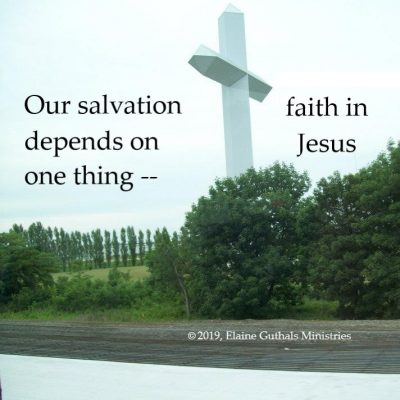
    Cross with words Our salvation depends on one thing -- faith in Jesus

    Title

    Bible Verse

    Heading

    Post

    To read a related devotion, click the button below.

    Resource

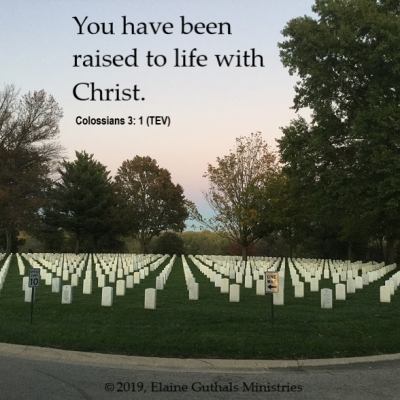
    Cemetary with Colossians 3: 1

    Title

    Bible Verse

    Heading

    Post

    To read a related devotion, click the appropriate button below.

    Resource

    Cemetary with Colossians 3: 1

    Title

    Bible Verse

    Heading

    Post

    To read a related devotion, click the button below.

    Resource

    Cross with words Our salvation depends on one thing -- faith in Jesus

    Making the Connections

    Post

    Making the Connections to Self-Discipline

    Post

    To read a related devotion, click the button below.

    Resource

    Cemetary with Colossians 3: 1

    How Do We Apply This?

    Post

    To read a related devotion, click the button below.

    The ABCDs of Salvation

    If you have not become a believer in Christ, please read through the
    Plan of Salvation and prayerfully consider what God is asking you to do.A – admit our sins

    B – believe His Son Jesus is our Redeemer

    C – confess God as Sovereign Lord

    If you have not become a believer in Christ, please read through the Plan of Salvation and prayerfully consider what God is asking you to do.


    D – demonstrate that commitment by making any changes needed in our lives to

    live the way in which God has called us

    The Disciple’s Job Description

    Searching for and Seeking God

    Hearing His Word (Rom. 10: 17).
    Reading His Word (Rev. 1: 3).
    Praying to Him (Heb. 4: 16).
    Studying His Word (Ac. 17: 11).
    Meditating on His Word (Ps. 1: 1-2).
    Memorizing His Word (Ps. 119: 11).

    To read Has God Provided Everything We Need?, click the button below.

    If you have not admitted that your relationship is not right with God,

    have not asked Jesus to be your Lord and Savior,

    and have not confessed your sins,

    please read through the Plan of Salvation and prayerfully consider what God is asking you to do.

    Related Links

    Related Links

    Related Links

    Song

    Related Links

    I have created a worksheet of the questions above. Click on the button below to access it.

    Don’t know what your spiritual gifts are?

    Take this Spiritual Gifts Inventory

    The Disciple’s Job Description

    Complete Job Description

    Individual Description

    It Was Enough
    Vocalist: Elaine Guthals
    Keyboard: Chris Vieth

    What do you think?

    Leave me a comment below (about this or anything else) or head over to my Facebook group for some interactive discussion.

    If you don’t understand something and would like further clarification, please contact me.

    If you have not signed up for the email daily or weekly providing the link to the devotions and the newsletter, do so below.

    If God has used this devotion to speak with you, consider sharing it on social media.

  • How Do We Profit from the Scriptures?

    God uses the Scriptures to show us how to be more like Him. This devotion looks at how that is profitable to us.

    Nuggets

    • God’s goal is to make us men [and women] of God.
    • The Scriptures are profitable because of dignity and authority; utility; and perfection.
    • The Bible was designed by God to be a teaching book.
    • God shows us He loves us through the Scriptures.

    What I Believe Categories

    The Scriptures
    God
    Man
    Salvation
    God’s Purpose of Grace
    The Church
    Baptism and the Lord’s Supper
    The Lord’s Day
    The Kingdom

    Last Things
    Evangelism and Missions
    Education
    Stewardship
    Cooperation
    The Christian and the Social Order
    Peace and War
    Religious Liberty
    The Family

    Flowers with title How Do We Profit from the Scriptures?

    God wants to mold our character. He wants disciples to be like Him.

    That is why God sanctifies us. Sanctification is the transformation of mind, body, and soul beginning with regeneration and ending with perfected state of spiritual wholeness or completeness.

    The goal is to take us from where we are to imitating God. God’s goal is to make us men [and women] of God.

    In order to facilitate this, God has given us the Scriptures, what we call the Bible. The Bible is a guide through our process of sanctification. It outlines our duties and responsibilities.

    Profitable

    “All Scripture is inspired by God and is profitable for teaching, for rebuking, for correcting, for training in righteousness” (II Tim. 3: 16 CSB)

    Paul wrote to Timothy that the Scriptures were profitable. The first thing that pops into our minds generally when we hear the word profitable is money. Society today has programmed us to think about money — how much we have and what it can buy us.

    That isn’t the profitable that God has in mind. Look what Caryl said. He wrote, “In the plainest text there is a world of holiness and spirituality: and if we, in prayer and dependence upon God, sit down and study it, we shall behold much more than appears to us.”

    Hall noted that the Scriptures are profitable because of dignity and authority; utility; and perfection. Let’s unpack those.

    The Scriptures are profitable because of its dignity and authority. This book was inspired by the One who Created all there is. What better instruction book do we have than a book by the One who knows how it was supposed to be?

    The Scriptures are profitable because of its utility. As we read and put the instructions into place in our lives, our lives are transformed so that we are imitators of God.

    However, this only happens when we read the Scriptures to seek God. If we are reading it as a novel or just a good book, we probably won’t use it to transform our lives.

    If we study and meditate on it, we acknowledge God’s authority and it’s ability to change us forever.

    The Scriptures are profitable because of its perfection. The Holman Bible Dictionary says perfect is “reaching an ideal state of spiritual wholeness or completeness. … Through a covenant relationship with His people, and by grace, God thus offers to His people the possibility of perfection” (Holman Bible Dictionary). That should be a huge draw for us.

    Teaching

    “He must hold firm to the trustworthy word as taught, so that he may be able to give instruction in sound doctrine and also to rebuke those who contradict it” (Ti. 1: 9 ESV)

    Scriptures teach us doctrine. According to the Holman Bible Dictionary, doctrine is “… a corporate expression of an authoritative interpretation of the faith as professed by a considerable body of church people.”

    Doctrine is the truths about the gospel. This doctrine is what is taught from one person to another, from one generation to the next.

    The Bible was designed by God to be a teaching book. It is divided into books, chapters, and verses for our ease. (No, the original did not have our system of division.)

    It teaches us the plan of salvation and the justification needed for us to believe. No, its purpose is not to tell us how the earth was created. Its purpose is to introduce us to the Creator and His plan to restore our relationship with Him. It tells us of His grace and love.

    God sees our deep need of His salvation and reveals Himself to us. Muir wrote, “It thus utterly dispels all the delusive fancies of modern rationalism, whereby man is tempted to think well of himself; and so to count that a gain to him which, if ever lie be saved, he must be content to count as loss for Christ.”

    Reproof

    “And when he comes, he will convict the world concerning sin and righteousness and judgment” (Jn. 16: 8 NLT)

    Reproof is where God points out the doctrine we believe is faulty. In other words, God convicts us when we are wrong — when we sin. Conviction is, according to the Holman Bible Dictionary, “a sense of guilt and shame leading to repentance.”

    Emphasis should be placed on the repentance. Jones noted that God addresses ignorance, wrong thoughts and beliefs, prejudice, and lack of truth.

    Correction

    “For the LORD disciplines those he loves, and he punishes each one he accepts as his child” (Heb. 12: 6 NLT)

    God shows us He loves through His Scriptures. One way He shows this is by giving us laws and commandments. Yes, He loves us by giving us boundaries.

    “You caused judgment to be heard from heaven; The earth feared and was still When God arose to judgment, To save all the humble of the earth. Selah” (Ps. 76: 8-9 ESV). God’s goal in judgment here is to correct moral decadence and corruption.

    Instruction in Righteousness

    “For the grace of God has appeared that offers salvation to all people. It teaches us to say ‘No’ to ungodliness and worldly passions, and to live self-controlled, upright and godly lives in this present age” (Ti. 2: 11-12 NIV)

    A lot of the definitions I see of righteousness just say something about living right. That is a part of it.

    I don’t think that is all of it.

    Haven’t you heard of some worldview people argue that they live a more Christian life than disciples do?

    But it isn’t about just living right. Yes, we do have to follow all of God’s laws and commandments after salvation.

    If we could do live a life doing all the do’s and not doing any of the don’ts, then Jesus would not have had to die for us. But we can’t do that. We need a Savior.

    To me, righteousness is the result of a solid relationship with God built by a sincere life of obedience to God’s laws and commandments.

    I love what Brown said about the instruction of righteousness. He wrote, “The unlearning of man’s love to sin, the undoing of his evil habits — this is correction.”

    Ooo, baby. Don’t we have to unlearn things!

    People might see this only as having to “give up” sins that they really don’t want to give up. True, we are told to turn away from our sins.

    But what we gain is so much more when we ask Jesus to be our Savor and God our Sovereign Lord. We gain a Guide through this life, forgiveness of our sins, and eternal life.

    Making the Connections

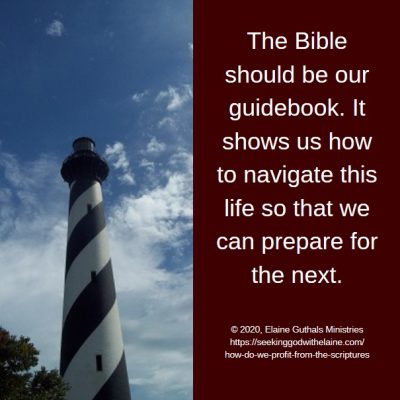
    The Bible should be our guidebook. It shows us how to navigate this life so that we can prepare for the next.

    Lighthouse

    Making the Connections to Self-Discipline

    It can be so easy to let the busyness of this life to eat up all of our time so that we neglect reading our Bible. We need to discipline ourselves so that we are consistently seeking God.

    Searching for and Seeking God

    Hearing His Word (Rom. 10: 17).
    Reading His Word (Rev. 1: 3).
    Praying to Him (Heb. 4: 16).
    Studying His Word (Ac. 17: 11).
    Meditating on His Word (Ps. 1: 1-2).
    Memorizing His Word (Ps. 119: 11).

    Loving Father. We can gain so much from reading Your Word. We can learn more about You as we read about You and as You reveal even more to us. Lord, teach us what we need to know. Correct us when we sin. Reprove us when we believe something different than Your doctrine. Always instruct us and grow us to prepare us for eternal life. Amen.

    What do you think?

    Leave me a comment below (about this or anything else) or head over to my Facebook group for some interactive discussion.

    If you don’t understand something and would like further clarification, please contact me.

    If you have not signed up for the email daily or weekly providing the link to the devotions and the newsletter, do so below.

    If God has used this devotion to speak with you, consider sharing it on social media.
  • Who Wrote the Scriptures?

    Do we know why we believe what we believe? What would we say if we were asked about the Scriptures? This devotion looks at how God inspired the writing of the Scriptures.

    Nuggets

    • The Bible doesn’t tell us everything about God and Jesus but is an introduction.
    • God put the thoughts into men’s heads about what to write.
    • If we don’t accept that God is the Author of the Scriptures, that makes them just the product of men.
    • If we accept that God is the Author of Scriptures, then we will be blessed.
    Flowers with the title Who Wrote the Scriptures?

    We’ve been looking into become mature disciples. I felt God was calling me to this when He gave me the word self-discipline for the year. (And where I go, I take you along with me!)

    When I was working on a previous devotion, I came across Vincent’s sermon entitled The Lesson of Ripeness. It talks about the need to grow in our relationship with God. (It was specifically talking about growing to become a teacher. To me, that means growing to be a mature disciple, even if we aren’t going to teach.)

    I got a list of topics to look at from there. We’ve been clicking them off at a good clip.

    I want to go to one of the bigger topics next. Vincent wrote that one of the three aspects of a matured faith was “… his [or her] own assurance of Christian truth.”

    Interesting. We just talked about truth in the last devotion. We looked at Bell’s definition. He defined truth as “universally the reality as opposed to that which is not real.” So, I interpret that to mean we have to know the truth about God.

    To read a related devotion, click the button below.

    I want to take a dual slant to it. First, I want to see what the truths are.

    I haven’t talked about it in a while, but we have discussed that we need to know why we believe what we believe. Second, I want to get us to think so we are prepared for witnessing.

    Worldview people are not going to accept that we believe something just because that was the way we were raised.

    It may be, but I feel we should be in a better position to articulate what exactly we believe and why.

    So, that is where we are going next. What is true according to Scriptures, and why do we believe it?

    Ooo, baby. What have I gotten us into?

    I started out with the faith and message from the domination to which I belong. That gave me categories.

    So, I said to myself, “Self, you have some things in the Draft folder that would fit into there.”

    I got down to the Gs.

    I am going to have to sit down and figure this out. I will probably take my sister’s advice. She once told me that I had to eat the elephant one bite at a time and shoot the alligator that was nearest to the boat.

    But being the transparent person that I am – I have no idea what I am going to do.

    I am going to start off by giving you the categories instead of giving you the list of devotions in the series. Those are going to be the elephants.

    Then I will break those into their own series – the alligators. That way I can address them whichever way is best. Plus, I can give us a break when I can.

    Otherwise, it will be the series that never ends.

    What We Believe categories

    The Scriptures
    God
    Man
    Salvation
    God’s Purpose of Grace
    The Church
    Baptism and the Lord’s Supper
    The Lord’s Day
    The Kingdom

    Last Things
    Evangelism and Missions
    Education
    Stewardship
    Cooperation
    The Christian and the Social Order
    Peace and War
    Religious Liberty
    The Family

    The Scriptures

    We are going to start out with the Scriptures. That is logical, isn’t it? Where do we get the information about what we believe? From the Scriptures mainly.

    Right now, we are going to focus on the fact that God inspired the Scriptures. If we don’t accept the Scriptures as from God, we won’t believe the rest.

    Let’s Put It into Context

    Scriptures are, according to the Holman Bible Dictionary, the “historic Judaeo-Christian name for the specific literature that the church receives as divine instruction.” We generally call it the Bible. The Holman Bible Dictionary defines Bible as “the collection of books written by various authors that possesses final authority in Christian communities.”

    Abbott gave us a good description about what the Bible is and isn’t. He cautioned us that the Bible is not a “… complete and comprehensive presentation of Divine truth. You are not to look in it for a revelation or disclosure of science of any kind, physical or metaphysical, natural or supernatural. It is not at all a scientific treatise.”

    We’ve talked about the first part. We’ve said before that the Bible doesn’t tell us everything about God and Jesus.

    What did John say? “Jesus also did many other things. If they were all written down, I suppose the whole world could not contain the books that would be written” (Jn. 21: 25 NLT).

    We’ve said before that the Bible is an introduction to God. After conversion, He reveals Himself to us more fully – and continues to reveal Himself to us as we seek Him until He calls us home. So, the Bible is where we seek God.

    Abbott made another interesting comment that I had been thinking about lately. He wrote, “Nor are you to regard the Bible as an infallible book of equal value and equal authority in all its utterances and all its parts; as a book ‘without any intermixture of error.’” He gave seven reasons why he thought this, which you can read by clicking on the link below.

    I think the Scriptures written in the Spirit language are infallible. It is when we put it into human language – and have humans responsible for editing and publishing it – there can be problems.

    For example, one thing that is in my Drafts folder is doing devotions on the verses that have been left out of the different modern translations. Yep, there are verses that have been left out for whatever reason.

    To read a related devotion, click the appropriate button below.

    God as Author

    “and you know that from infancy you have known the sacred Scriptures, which are able to give you wisdom for salvation through faith in Christ Jesus. All Scripture is inspired by God and is profitable for teaching, for rebuking, for correcting, for training in righteousness, so that the man of God may be complete, equipped for every good work” (II Tim. 3: 15-17 CSB)

    Yes, human men actually put quill to scroll (or whatever they used) to put words on the “page.” God, however, put the thoughts into their heads about what to write. That is why, Denney told us, the prophets were called the man of the Spirit or men of God.

    The writers were directed by the Holy Spirit what to write. Paul described the process. “When we tell you these things, we do not use words that come from human wisdom. Instead, we speak words given to us by the Spirit, using the Spirit’s words to explain spiritual truths” (I Cor. 2: 13 NLT).

    Yeah. That is why it is confusing to understand sometimes. It is written in human language but is a translation from spirit language. We need the Holy Spirit to interpret it for us. That could also explain the perceived contradictions.

    No, we aren’t told how the Holy Spirit communicated with the men to get the words down on the scroll. That shouldn’t be the focus. The Holy Spirit communicated with them.

    I’ve told you in previous devotions when I felt God talking to me about what I write. (No, I am not writing Scriptures. Yes, God is directing what I write.) Sometimes, it is a flash where it is like God is talking directly to me. Other times, the words just come out of my fingers.

    Either way, they come from God.

    If We Reject the Scriptures

    If we don’t accept that God is the Author of the Scriptures, that makes them just the product of men. Vail made a valid argument as why it couldn’t just have been the conception of men (or even angels). Basically, he questioned why they would lie saying time and again “thus said the Lord” and would give us all these do’s to do and don’ts to not do if it was not inspired by God.

    It seems to me that, if the Scriptures were not God inspired, it wouldn’t be the cohesive book that it is. Think about it. Moses lived a long time before Matthew, Mark, Luke, John, and Paul lived. Those were the authors who wrote the bulk of the New Testament.

    Both the Old Testament and New Testament have the same theme – Jesus is the Messiah and Savior sent to save us of our sins. Occurrences point back to things prophesied.

    If God wasn’t behind the writing of these separate letters that were compiled into one book, it wouldn’t be the cohesive book that it is.

    In my opinion, one argument against the Bible being inspired by God is that it challenges human reasoning if it was. You know, it makes it a control issue.

    If we say it was written by God – our Creator and Sovereign Lord – then it follows that we should follow it. If we deny He inspired it, we don’t have to follow it.

    If We Accept the Scriptures

    If we accept that God is the Author of Scriptures, then we “… may be complete, equipped for every good work” (II Tim. 3: 17 CSB). We will be blessed.

    Making the Connections

    When God created us, He gave us free will. That means we can choose to submit to Him – or we can choose not to submit to Him.

    Submitting to Him and believing He inspired the Scriptures (so that we have to follow them) means we are blessed.

    Not submitting to Him because we don’t want to do what He calls us to makes us cursed.

    Being cursed has a huge consequence.

    But isn’t that the major purpose of the Bible? Isn’t it to give us the information we need to make the decision whether we want to be blessed or cursed?

    I mean, God doesn’t need the Bible. He already knows His laws and commandments.

    The Bible is just for our benefit.


    Making the Connections to Self-Discipline

    Did you catch that? We are the men [and women] of God talked about in verse 17. We are only people of God after the “teaching, rebuking, correcting and training in righteousness” (II Tim. 3: 16 NIV). That means there is opportunity to use self-discipline to grow.

    God gave us a resource – in our language – so that we can seek Him. If we seek Him, we will find Him. He wants us to use this book to turn from our sinful ways and submit to Him.

    Sovereign God. We are humbled that You would design a plan of salvation so that our relationships with You could be restored. In order to facilitate that, You have given men words to placed into a book to show us Who You are and what we need to do to admit our sins, believe in Jesus as our Savior, and confess to You as Sovereign Lord. Help us to hear the spiritual language so that we can learn more of You. Amen.

    Searching for and Seeking God

    Hearing His Word (Rom. 10: 17).
    Reading His Word (Rev. 1: 3).
    Praying to Him (Heb. 4: 16).
    Studying His Word (Ac. 17: 11).
    Meditating on His Word (Ps. 1: 1-2).
    Memorizing His Word (Ps. 119: 11).

    What do you think?

    Leave me a comment below (about this or anything else) or head over to my Facebook group for some interactive discussion.

    If you don’t understand something and would like further clarification, please contact me.

    If you have not signed up for the email daily or weekly providing the link to the devotions and the newsletter, do so below.

    If God has used this devotion to speak with you, consider sharing it on social media.
  • How Does Longsuffering Help Consistency?

    Longsuffering is one of the old-time churchy words. This devotion looks at how practicing longsuffering can help disciples bring consistency into their walk.

    Nuggets

    • Longsuffering helps to control our anger and irritability.
    • Meekness and courage are elements of longsuffering.
    • We may have to accomplish our witnessing through longsuffering.

    Devotions in the Consistency Needed for Spiritual Growth series

    Flowers with the title How Does Longsuffering Help Consistency?

    Man, what is it with this series? I want consistency — I have to get there by diligence. I want dedication — I have to get there by commitment.

    Now, I want forbearance. Well, it is a fruit of the Spirit in some translations (Gal. 5: 22).

    Nada.

    So, we are getting there by way of longsuffering. The Holman Bible Dictionary went straight to patience, but I did get some verses out of the Nave’s Topical Bible.

    Let’s Put It into Context

    Diligence talks about being persistent. The Merriam-Webster Dictionary defines diligence as being a “steady, earnest, and energetic effort.”

    Longsuffering is defined by the Merriam-Webster Dictionary as “patiently enduring lasting offense or hardship.” We know that patience is a virtue and a fruit of the Spirit.

    To read a related devotion, click the button below.

    What Is Longsuffering?

    “But in all things we commend ourselves as ministers of God: in much patience, in tribulations, in needs, in distresses, in stripes, in imprisonments, in tumults, in labors, in sleeplessness, in fastings; by purity, by knowledge, by longsuffering, by kindness, by the Holy Spirit, by sincere love” (II Cor. 6: 4-6 NKJV)

    Croskery argues that longsuffering helps to control our anger and irritability. Oh, isn’t that an important tool to have when we are deal isn’t with difficult people?

    How disciples react to perceived wrongs is critical. Romans 12: 17 says, “Never pay back evil with more evil. Do things in such a way that everyone can see you are honorable” (NLT).

    Being longsuffering means we are not provoked. Rather we exercise self-restraint in difficult situations.

    Elements of Longsuffering

    Meekness is one of the elements of longsuffering. Meekness is “a personality trait of gentleness and humility, the opposite of which is pride. Meekness does not refer to weakness or passivity but to controlled power.”

    Courage is another element of longsuffering. Equated with boldness, courage is mentioned several times in the Bible. Here are two examples.

    “This is my command—be strong and courageous! Do not be afraid or discouraged. For the LORD your God is with you wherever you go” (Josh. 1: 9 NKT).

    “Be on guard. Stand firm in the faith. Be courageous. Be strong” (I Cor. 16: 13 NLT).

    Mercy and Longsuffering

    “However, for this reason I obtained mercy, that in me first Jesus Christ might show all longsuffering, as a pattern to those who are going to believe on Him for everlasting life” (I Tim. 1: 16 NKJV).

    Croskery has an interesting take on First Timothy 1: 16. He wrote, “The mercy takes the form of long-suffering; for the Lord bore long with the ways of this fierce persecutor of the saints, when he might have cut his career short in judgment.”

    Hmmm. Let me process this.

    Mercy is the unexpected way God responds in love to our needs. So, Jesus through mercy exercised self-restraint so that we would not be provoked. Okay, I can go with that.

    Suffering Through Trials

    “I, therefore, the prisoner of the Lord, beseech you to walk worthy of the calling with which you were called, with all lowliness and gentleness, with longsuffering, bearing with one another in love, endeavoring to keep the unity of the Spirit in the bond of peace” (Eph. 4: 1-3 NKJV)

    Paul went through a lot of trials while called to his ministry. We gave the long list in How Does Dedication Help Consistency?. Yep, Paul had to have dedication and longsuffering.

    Paul rocked the title of prisoner of the Lord. There were so many attitudes Paul could have justifiably taken. But he led with the mindset of prisoner.

    That title gave Paul’s readers the immediate visual of Paul’s life. They saw the lack of freedom, the hunger, the beatings, the cold …

    But then they read Paul’s words. We read about a his joy in the Lord. We see the dedication he had — even when things were very less than ideal.

    Yes, Paul had the mindset of prisoner — but not the attitude. He didn’t let the circumstances provoke him.

    That is what longsuffering is about. The rough patches in our walk come up, but we keep putting one foot in front of the other. And we navigate them patiently and watching for God in all we go through.

    Adeney called it walking worthily. We’ve already said that walking is used “… to signify a regulating and framing of the life after some certain manner, whether good or evil …” Disciples are to walk with “… purpose, strength,

    God calls us and puts us on our walk. He grows us by taking us through the trials. That is how we transform our character to be more like Him.

    We can’t forget what job duty #1 is. We are called to be living sacrifices. We are called to worship Him.

    The Disciple’s Job Description

    Complete Job Description

    Individual Description

    Job Duty #1
    Be a Living Sacrifice (Romans 12: 1-2)

    It isn’t about us and how smart and skillful we are in surviving whatever trials are thrown our way. It is about transforming us through the process of sanctification so that we may be righteous and holy.

    Sanctification is the transformation of mind, body, and soul beginning with regeneration and ending with perfected state of spiritual wholeness or completeness. Righteousness is the result of a solid relationship with God built by a sincere life of obedience to God’s laws and commandments. Holy means set apart.

    But look what else Adeney said. He wrote, “Belief and worship are not enough. The life and the whole work and daily occupation are to follow the Divine call.”

    This isn’t a Sunday, Wednesday night, and any time the doors are open kind of deal. It is a 24/7/365 type of deal.

    That is the consistency according to Adeney — making our walk fit our call. Our call is God’s Will.

    Witnessing and Longsuffering

    “Preach the word! Be ready in season and out of season. Convince, rebuke, exhort, with all longsuffering and teaching” (II Tim. 4: 2 NKJV)

    Job duty #4 is to proclaim the gospel. We — even us non-preacher types — are to spread God’s Word to advance His kingdom.

    The Disciple’s Job Description

    Complete Job Description

    Individual Description

    Job Duty #4
    Proclaim the Gospel (Mark 16: 15)

    We don’t have to make up words. It is God’s Word. Yes, we may put it in our own words, and we may interpret it by what it means to us. But it is God’s Word.

    Our job is to tell others so that they may be saved. We need to encourage them to admit their sins, believe on Jesus as the Son of God and as Redeemer, and confess God as Sovereign Lord.

    The ABCDs of Salvation

    If you have not become a believer in Christ, please read through the
    Plan of Salvation and prayerfully consider what God is asking you to do.A – admit our sins

    B – believe His Son Jesus is our Redeemer

    C – confess God as Sovereign Lord

    If you have not become a believer in Christ, please read through the Plan of Salvation and prayerfully consider what God is asking you to do.


    D – demonstrate that commitment by making any changes needed in our lives to

    live the way in which God has called us

    The Disciple’s Job Description

    Our words may be well received — they may not be. We may have to accomplish our witnessing through longsuffering. If those we are witnessing to want to get into a debate, we are not provoked.

    As Statham wrote, “Remembering that humanity is frail and fallen, the preacher must be sympathetic, as himself needing mercy.” We have to remember that there is just one sin that God will not forgive — unbelief. We have to lead with God’s mercy.

    To read a related devotion, click the button below.

    Making the Connections

    We are so programmed in today’s world to want — and expect — instant gratification. We want things fixed right now. We want our needs met right now.

    To me, that is the polar opposite of longsuffering. The main reason is because longsuffering takes the focus off of us and puts it onto God.

    To me, walking worthily and longsuffering go hand in hand. Our walk isn’t usually going to be a short sprint. It is going to be a long trek. If we don’t simmer down and focus on the long haul, we won’t get to the finish line.

    Our walk is not going to be a stroll in the meadow. It is going to have a lot of hills and valleys with some major drop offs along the way.

    Making the Connections to Self-Discipline

    “Therefore, as the elect of God, holy and beloved, put on tender mercies, kindness, humility, meekness, longsuffering” (Col. 3: 12 NKJV)

    Ooo. Look what Colossians 3: 12 says. We can put on longsuffering — just like we out on the armor of God.

    To read a related devotion in the Armor of God series, click the button below.

    How Do We Apply This?

    Byfield gave us three examples by which we could accomplish putting on longsuffering.

    “I. IN JUDGMENT; when, in doubtful cases, we suspend our opinions and censures.

    “II. IN WORDS; which consists either in not answering, or in giving soft answers.

    “III. IN DEEDS; when we render not evil for evil.”

    Oh, yeah. Not hard. (I hope you read sarcasm into that.)

    Our opinions get tabled. Our answers get tabled. Our payback gets tabled.

    Really hard for most of us.

    But isn’t that what God calls us to? His opinions – His answers – His vengeance.

    To read a related devotion, click the button below.

    Oh, yes. That is so against worldview. But it is so Godview.

    In How Does Dedication Help Consistency? we said perfection is accomplished by loving God and loving others. Longsuffering using Byfield’s suggestions goes a long way to helping that happen.

    Lord, it is so easy to follow the worldview. Help us to follow Your will. In all we do, help us to be longsuffering. May we always follow Your opinions and Your answers. May we leave the vengeance to You. Amen.

    What do you think?

    Leave me a comment below (about this or anything else) or head over to my Facebook group for some interactive discussion.

    If you don’t understand something and would like further clarification, please contact me.

    If you have not signed up for the email daily or weekly providing the link to the devotions and the newsletter, do so below.

    If God has used this devotion to speak with you, consider sharing it on social media.
  • How Are Disciples Merciful?

    Mercy has been defined by some as compassion. However, biblical mercy goes beyond that. This devotion looks at biblical mercy through the lens of growing to imitate God.

    Nuggets

    • Mercy is more than forgiveness and kindness and goes beyond sorrow at other’s suffering.
    • We have to be more concerned with other’s spiritual condition than their physical condition.
    • Mercy isn’t just following the law.
    • When we give mercy to others, we get mercy.

    Devotions in the The Beatitudes Show Us How to be Docile series

    Flowers with title How Are Disciples Merciful?

    Some people think being merciful is being kind and compassionate. However, it is more than that. Let’s take a look.

    Let’s Put It into Context

    We are talking in this series about how disciples are to be docile. Docile means easily taught. As we grow in our relationship with God, we are blessed.

    Blessedness means we have been perfected. For the disciple, perfection is holy, sanctified, and righteous.

    Holy means to be set apart, perfect, and pure. Sanctification is the process where our lives are changed, and we made holy. Righteousness is the result of a solid relationship with God. Blackall said that righteousness is “living a life in sincere and perfect obedience to all the laws of God.”

    Mercy is defined as “a personal characteristic of care for the needs of others. The biblical concept of mercy always involves help to those who are in need or distress” (Holman Bible Dictionary).

    We haven’t really had a devotion where we have focused specifically on mercy. The closest we have come is God’s Wrath and Mercy. We said that sin, which leads to wrath, is the polar opposite of the Spirit — with which we are supposed to be filled. Sovereign God gets to decide crimes and punishments. There is hope for us because God is rich in mercy (Eph. 2: 4). Mercy comes out of God’s love, which is His character (I Jn. 4: 8).

    To read a related devotion, click the button below.

    What Is a Merciful?

    “Blessed are the merciful …” (Mt. 5: 7 CSB)

    Jordan wrote that examples of mercy are the following:

    • “In the forgiveness of enemies.
    • “In various acts of kindness.
    • “In deep concern and effort for the spread of the gospel.”

    Given those examples, it may be easy for some to limit mercy to the first two — closer to the world’s definition of compassion.

    To me, the world’s definition of mercy — or rather, compassion — is “… sorrow at the suffering of a fellow-creature, rational or irrational, and, along with that sorrow, an earnest desire, if possible, to relieve it.”

    Don’t get me wrong. That is how disciples are to act.

    But it is more than just Jordan’s first two points and goes beyond Cumming’s definition.

    Disciples are not to stop at “are they suffering” as Cumming suggests. We are to transition into questioning “are they a believer.” We have to be more concerned with other’s spiritual condition than their physical condition.

    People

    Brooke made an excellent point. Mercy isn’t just following the law. “It is a temper which makes him who has it not so much sorry that he has been injured, but sorry that the injurer should have the heart to do the wrong. All memory of wrong fades from him.”

    It isn’t just about doing the do’s and not doing the don’ts. It is about changing our character to be more Christ. It is continuing to move forward on the sanctification road to reach the destination of righteousness.

    Ooo, baby. Worldview people are not going to like what Blackall had to say. He said that disciples show mercy to others “to prevent any evil or mischief which we apprehend our neighbour to be in.” To them, that would probably come across as sticking our noses into their business to force them to be like us.

    Yes, God loves us and cares for us on this earth. The life in this world will never be His priority. God’s priority will always be His kingdom and our spiritual condition.

    So, what does this tell us? It is not the random acts of kindness in and of itself. It is our character. But the character has to imitate God and want to further His kingdom.

    More Mercy

    “… for they will be shown mercy” (Mt. 5: 7 CSB)

    This is one of those instances where you get what you give. When we give mercy to others, we get mercy.

    Jordan wrote, “A merciful Providence will attend the merciful Christian.” Providence means “God’s faithful and effective care and guidance of everything which He has made toward the end which He has chosen.”

    So, let’s put the definitions together. God’s faithful and effective care and guidance will be present with those who care for the physical and spiritual needs of others.

    Most importantly, God will show us this care and guidance to us for eternity.

    Brooke cautioned us that we should not be be merciful just to reap the rewards. We need to be merciful because that is a characteristic of God.

    Making the Connections

    I think the bottom line with mercy is humility. If we don’t perform whatever act of mercy in humility, it really isn’t mercy.

    The definition just talks about others. It doesn’t talk about who we feel doing the act or what we gain from it. The focus is on others.

    We said in that disciples are humble because we know we have sinned and fall short of God’s glory (Rom. 3: 23). We need to submit to His Will.

    We need to witness so that others come to know Jesus as their personal Savior too. I’ll say it again. God’s priority will always be His kingdom and our spiritual condition. It will always be about restoring the relationship with us and growing us to where we need to be — righteous.

    Making the Connections to Self-Discipline

    Jordan made the comment that, “the more you abound in mercy, the more you are conformed to the precepts of the Scriptures.” So, what are those intended behaviors that will be rewarded with mercy?

    • “With the merciful you show yourself merciful; with the blameless man you show yourself blameless” (Ps. 18: 25 ESV).
    • “Mercy and truth have met together; Righteousness and peace have kissed” (Ps. 85: 10 NKJV).
    • “Let not mercy and truth forsake you; Bind them around your neck, Write them on the tablet of your heart, And so find favor and high esteem In the sight of God and man”(Prov. 3: 3-4 NKJV).
    • “The merciful man does himself good, But the cruel man does himself harm “ (Prov. 11: 17 NASB).
    • “He who despises his neighbor sins; But he who has mercy on the poor, happy is he. Do they not go astray who devise evil? But mercy and truth belong to those who devise good” (Prov. 14:21- 22 NKJV).
    • “He who follows righteousness and mercy Finds life, righteousness, and honor” (Prov. 21: 21 NKJV).
    • “No, O people, the LORD has told you what is good, and this is what he requires of you: to do what is right, to love mercy, and to walk humbly with your God” (Mic. 6: 8 NLT).
    • “Be merciful just as your Father is merciful” (Lk. 6: 36 GNT).
    • “Since God chose you to be the holy people he loves, you must clothe yourselves with tenderhearted mercy, kindness, humility, gentleness, and patience. Make allowance for each other’s faults, and forgive anyone who offends you. Remember, the Lord forgave you, so you must forgive others” (Col. 3: 12-13 NLT).

    Many of the translations have watered down mercy to kindness, help, or even love. They take the concept of the unexpected way God responds in love to our needs.

    Is that critical? Look how Jesus bit on the Pharisees. “Woe to you, teachers of the law and Pharisees, you hypocrites! You give a tenth of your spices — mint, dill and cumin. But you have neglected the more important matters of the law — justice, mercy and faithfulness. You should have practiced the latter, without neglecting the former” (Mt. 23: 23 NIV).

    How does that apply to self-discipline? This is how we are to grow to become more like God.

    How Do We Apply This?

    If we look at Blackall’s sermon, we can come up with this list of how we could apply this.

    • Don’t be cruel.
    • Exercise moderation.
    • Love our neighbor as ourselves.
    • Watch out for our neighbors.
    • Witness to our neighbors.
    • Be there for others when they are going through trials.
    • Be the Matthew 25: 35-36 blessed people.

    Yes, many worldview people are kind, compassionate people. God is so much more than that. He calls us to be more, too.

    Loving God. We know You are more — more loving, more compassionate, more merciful. You call us to be more, too. You call us to different from the world and more like You. Help us to build our characters to imitate You. Amen.

    What do you think?

    Leave me a comment below (about this or anything else) or head over to my Facebook group for some interactive discussion.

    If you don’t understand something and would like further clarification, please contact me.

    If you have not signed up for the email daily or weekly providing the link to the devotions and the newsletter, do so below.

    If God has used this devotion to speak with you, consider sharing it on social media.