Category: Sin

  • How Does Sober Mindedness Promote a Balanced Life?

    God calls disciples of Christ to be even keeled. That means He wants us to be sober minded. This daily devotional looks at how God wants self-control to lead to a balanced life for Him.

    Nuggets

    • We have submitted ourselves to God’s Will and should strive to do it.
    • There are many things in this world that could be indulgences to disciples of Christ.
    • God wants disciples of Christ to be self-controlled.

    Devotions in the Christian Balance series

    How Does Sober Mindedness Promote a Balanced Life?

    Flowers with title How Does Sober Mindedness Promote A Balanced Life?

    When the chaos surrounding our lives get to be too much for us, we usually start looking for balance. It is in our best interest to look to God.

    God knows what kind of lifestyle would bring us the most balance in our lives. The foundation is sober mindedness. Let’s take a look.

    Let’s Put It into Context #1

    The definition of rest as defined by the Merriam-Webster Dictionary that is appropriate for us is “peace of mind or spirit.”

    Resource

    This is about what Vincent called a ripened faith. It means the contentment and peace in our relationship with God.

    Balance is about equilibrium and stability. It is that even keel under which God wants us to operate.

    Scriptures use the word sleep to describe three different states of humans. The first kind of sleep is the physical sleep. It is my goal to get at least four hours of sleep a night, hoping I get six.

    The second kind of sleep is death. As a result of sin, our bodies deteriorate and/or stopped from living by other means.

    The third kind of sleep is the most critical. It is talking about spiritual death. Spiritual death is the separation from God that occurred as a consequence of Adam and Eve’s original sin. This death can only be stopped by ABCDing.

    Resource

    The ABCDs of Salvation

    If you have not become a believer in Christ, please read through the
    Plan of Salvation and prayerfully consider what God is asking you to do.

    A – admit our sins
    B – believe His Son Jesus is our Redeemer
    C – confess God as Sovereign Lord

    D – demonstrate that commitment by making any changes needed in our lives to
    live the way in which God has called us

    The Disciple’s Job Description

    Glossary

    Let’s Put It into Context #2

    “For you are all children of light and children of the day. We do not belong to the night or the darkness” (I Thess. 5: 5 CSB)

    Disciples of Christ are considered children of the light. That is because Jesus said, “I am the light of the world. Whoever follows me will not walk in darkness, but will have the light of life” (Jn. 8: 12 ESV).

    Hallam felt this title was given to God’s children because of how baptism was referred. He wrote, “The ancient fathers often called baptism “illumination”; because it introduced and pledged to its recipients the enlightening influences of the Holy Spirit.”

    Resource

    Children of God are also illuminated by the Holy Spirit to the character of God. We submit our wills to God, Who then uses the promptings of the Holy Spirit to open our consciences for instruction and change.

    The opposite is children of the dark. “For we do not wrestle against flesh and blood, but against the rulers, against the authorities, against the cosmic powers over this present darkness, against the spiritual forces of evil in the heavenly places” (Eph. 6: 12 ESV).

    The darkness is equated with chaos. Satan works to create chaos so that we take our eyes off God.

    Why Should Disciples of Christ Not Sleep?

    “So then, let us not sleep, like the rest, but let us stay awake and be self-controlled” (I Thess. 5: 6 CSB) 

    It is logical that sin would be called sleep. We sleep in the darkness – usually – and are called children of darkness if we have not ABCDed. These are the goats of the world.

    Glossary

    Sleep is also equated with forgetfulness. Morris wrote, “In both spiritual and natural sleep we see not only forgetfulness as to the past and insensibility as to the present, we see, also, the entire absence of apprehension as to the future.”

    Morris made all the usual comments about the complacency and terrors of sleep. Then he talked about the unwillingness of sleepers to be awakened.

    Resource

    Have we ever run into that when we were witnessing? Not every non-believer is open to the saving grace of our Father. They may not yet have accepted that they are spiritually dead.

    Binney pointed out that this is a period of inactivity. This activity is those who are children of the dark are usually not actively seeking God.

    Resource

    Disciples of Christ are admonished to stay awake. We have submitted ourselves to God’s Will and should strive to do it. The motivation for this is thankfulness all that God has done for us.

    The Preacher’s Monthly point blank told us why it is not a good idea for disciples to sleep. It was written, “While Christians sleep the enemy is busy — sinners perish — the world rushes madly to ruin!”

    Resource

    Instead, disciples of Christ should be on guard. We’ve talked about watchfulness before. Watchfulness is a continual conscious examination of ourselves and all events so that we may follow God in all things.

    Glossary

    Swinnock told us the importance of watching. He wrote, “It is the mainstay of the soul, which, if once called off, we lie open to the shot of every enemy.”

    Resource

    That shows us that the individual disciple needs to watch for his/her own spiritual health. Let’s expand that. The church also has to watch for its spiritual health. The church does not want to be caught sleeping.

    Instead of being asleep, disciples need to be awake and sober. Sober is a character trait distinguished by self-control, genuineness, and sound moral judgment. It is a calm and temperate disposition.

    Glossary

    Disciples must be diligent in seeking God. We must consistently and persistently hear His Word, read it, study it, meditate on it, and memorize it. All through that, we need to be in prayer, asking God to provide the meaning.

    Sober has that element of self-control in it. Control comes into play when we have to use our free will to make the decisions to choose what children of light should do or to do as children of darkness do.

    It does take self-control because we do have free will. Self-control is the ability to withstand temptations by managing ourselves — our emotions, thoughts, and behaviors. Free will is the ability within us to make decisions, which determine actions that produce character.

    Glossary

    How Do Indulgences Upset the Balance of Disciples of Christ?

    “For those who sleep, sleep at night, and those who get drunk, get drunk at night” (I Thess. 5: 7 CSB)

    There are many things in this world that could be indulgences to disciples of Christ. However, these indulgences tempt disciples of Christ to sin. Those indulgences can unbalance disciples’ lives.

    Patterson gave us a list of what some of these indulgences are.

    Resource

    Physically

    One of the most commonly identified indulgences in Scriptures is the excessive use of alcohol. I think we can add drug use and sex outside of marriage to that.

    Mentally

    The worldview of success these days is an indulgence. Patterson mentioned ambition. That does lead to vanity.

    Spiritually

    This one may seem strange at first glance. Patterson explained this as, “… keeping free from wild and unregulated enthusiasm in religion.”

    We need to worship God in the appropriate way. He has specific instructions as to how we are to worship Him. We just talked about the Israelites worshiped God, but He did not accept their worship.

    To read a related devotion, click the button below.

    I think this could lead to our wanting God to condone whatever we want to give Him while keeping our pet sins. It has nothing to do with submission.

    Circumstantially

    I read this to be, sometimes, we are not content in the situation in which God places us. We just had a whole series on being content where God plopped us down.

    Devotions in the Contentment Leads to Tranquility series

    Socially

    Patterson only mentioned watching the friends that we make. I believe we can expand this to our significant other and our coworkers.

    Once we start giving in to these indulgences, the balance in our lives are thrown off. They start controlling our lives rather than God.

    It is no longer a temptation. Temptation is a suggestion in our mind that would lead us to sin rather than following God’s Will. It is also that period of time between conception and execution of doing what is sinful.

    The indulgence becomes a sin, and we are sunk.

    Disciples of Christ Are Self-Controlled

    “But since we belong to the day, let us be self-controlled and put on the armor of faith and love, and a helmet of the hope of salvation” (I Thess. 5: 8 CSB)

    God wants disciples of Christ to be self-controlled. In that way, we give Him control of our lives.

    Wait! Isn’t that contradictory?

    No, I don’t think so. We exercise self-control and make the decisions God wants us to make. That gives Him control of our lives.

    Mayo gave us some good advice. He wrote that disciples “… must keep their natural desires and appetites after the things of this world within due bounds.”

    Resource

    No, it is not going to be easy. Satan is going to do everything in his power to get us to give into the temptations.

    Luckily, God has given us the armor to help protect us. We don’t have to face Satan on our own.

    To read devotions in the Armor of God series, click the appropriate button below.

    Making the Connections

    God doesn’t want disciples of Christ to go from one extreme to another. He wants us to be even keeled.

    More importantly, God wants us living for Him and imitating Him. No, that isn’t going to be a snap.

    God is very involved in our attempts to live for Him. He has given us tools to help us. He will be with us every step of the way.

    Making the Connections to Self-Discipline

    As we are talking about living for God, that will mean we need to be self-disciplined. Keeping even keeled isn’t an easy task. We are emotional.

    How Do We Apply This?

    We need to imitate God. How do we do that?

    Searching for and Seeking God

    Hearing His Word (Rom. 10: 17).
    Reading His Word (Rev. 1: 3).
    Praying to Him (Heb. 4: 16).
    Studying His Word (Ac. 17: 11).
    Meditating on His Word (Ps. 1: 1-2).
    Memorizing His Word (Ps. 119: 11).

    Loving Heavenly Father. We want to be like You. We want Your character to be our character. We want the even keeled lives to which You have called us. In all we do, we submit our lives to You. Help us be sober and controlled so that we may give You the control. Amen.

    HowDoesSoberMindednessPromoteABalancedLifePin1

    What do you think?

    Leave me a comment below (about this or anything else) or head over to my Facebook group for some interactive discussion.

    If you don’t understand something and would like further clarification, please contact me.

    If you have not signed up for the email daily or weekly providing the link to the devotions and the newsletter, do so below.

    If God has used this devotion to speak with you, consider sharing it on social media.
  • What Happens When We Repent?

    The Israelites were worshiping God, but God was not accepting their worship. God wanted to restore them to a right relationship with Him. This daily devotional looks how God wants us to repent and turn to Him.

    Nuggets

    • God is quick to point out steps in which we can correct our sins.
    • The purpose of repentance is restoration.
    • The fact that we can reason with God might be a difficult concept for some of us.
    • In order to restore our relationship, we have to obey God.

    Isaiah’s Message from Sovereign God Series

    Flowers with title What Happens When We Repent?

    We know that we are supposed to repent of our sins. Sin is actions by humans that disobey God and break one of His reasonable, holy, and righteous laws and commandments, goes against a purpose He has for us, or follows Satan’s promptings. Repentance is expressing sorrow for breaking God’s laws and commandments by making the commitment to changing ourselves through obedience so that we no longer do the wrong things.

    Glossary

    But what does all of that entail? Isaiah gives us a good roadmap on what happens when we repent.

    Called to Repentance Means Rooting Out Evil

    “Wash yourselves. Cleanse yourselves. Remove your evil deeds from my sight. Stop doing evil. Learn to do what is good. Pursue justice. Correct the oppressor. Defend the rights of the fatherless. Plead the widow’s cause” (Isa. 1: 16-17 CSB)

    God is quick to point out steps in which we can correct our sins. It isn’t because He wants to point out all of our screw ups. He wants us to deal with them so He can forgive us.

    Why is that so important? Whichcote reminds us “that sin is in itself a thing of defilement and pollution.” Our relationships with God are damaged when sins are present in our lives.

    Resource

    That is why God designed the plan of salvation. He wants us restored to Him.

    Oh, yes. It is difficult to break the habits of sinning: “Can an Ethiopian change his skin or a leopard its spots? Neither can you do good who are accustomed to doing evil” (Jer. 13: 23 NIV).

    It is difficult, but not impossible. The Homilist wrote, “Sin is no more a part of human nature than a stain is of a garment.” Sin was not part of human nature before the original sin.

    Resource

    God calls us to fix what is wrong. In fixing it, we are to change our character to be more like His.

    If we are to imitate God and exhibit His character, we cannot do this when is in our lives. Sin stops us from doing good, which is detrimental to society.

    Secker brought up an excellent point about the order of the words. He contended that the ordered showed us “… that the foundation of acting right is avoiding everything wrong.” He cited Psalm 34: 14; Psalm 37: 27; Amos 5: 15; Romans 12: 9; I Peter 3: 11 as support for this belief. He also noted that Matthew 21: 32; Mark 1: 15; Acts 20: 21; Titus 2: 12-13 also support this by putting repentance before faith and obedience.

    Resource

    If we are going to act right, the first thing we need to do is remove obstacles on the Sanctification Road. Secker reminded us that “… sin and duty are so essentially opposite, that their interests can never be reconciled.” We start there to shore up the foundation.

    Once we have that righted, we move on to how we treat others. Oh, yeah. All of us can hurt others. It generally doesn’t take all that much effort.

    But remember that God wants us to be transformed (Rom. 12: 2). Avoidance of sin can be seen as reformation. That is what we do on the Sanctification Road.

    Since the Sanctification Road is a process, that isn’t going to happen overnight — and it isn’t going to be easy. Fuller reminded us that “sin is to be overcome, not so much by maintaining a direct opposition to it, as by cultivating opposite principles.”

    Resource

    We overcome sin by changing our moral culture — our ethics. We change our character to be more like God’s.

    When we repent, God expects us to turn from our sinful ways. Saying, “Sorry, God” is no good if we don’t change our character. That is going to take work. We can’t just sit back and expect our character to be changed.

    The wonderful thing is that, as soon as we ask for forgiveness, God will forgive us. But it is immediately followed up with His directive to make ourselves clean.

    Oh, yes. God can ask us to repent. It is reasonable for God to demand we not only be contrite for sinning, but that we also cease and desist.

    Lady praying

    Called to Repentance Means Turning Around

    “‘Come, let’s settle this,’ says the Lord. ‘Though your sins are scarlet, they will be as white as snow; though they are crimson red, they will be like wool” (Isa. 1: 18 CSB)

    The purpose of repentance is restoration. It doesn’t mean we can keep on sinning.

    It doesn’t matter what sins we have committed.

    • Not the quantity
    • Not the quality

    We could be a liar. We could be a murderer. God will forgive us — if we ask and submit to Him.

    We could commit one sin a week. We could commit one hundred sins an hour. God will forgive us — if we ask and submit to Him.

    There is only one sin that God will not forgive. I believe that is unbelief. He will not forgive us for not ABCDing.

    Glossary

    Robinson explained why Isaiah talked about both scarlet and crimson. One is talking about outward appearance. The other is talking about inward effect.

    Resource

    I really got a kick out of the “come, let’s settle this.” I can see the love coming through.

    It is God’s invitation. We are the ones who disobeyed Him, but He is the one inviting us back into the fold.

    God is the Master. We are the servants. Still, He is inviting us back, not ordering us.

    We said that we weren’t going to do as He asked. He is the one who gave us a second chance. And third. And fourth. And bazillionth.

    The plan of salvation is all God’s doing. God figured it out even before we had sinned — even before He created us.

    Called to Repentance Means Reasoning with God

    The fact that we can reason with God might be a difficult concept for some of us. I don’t think it should be.

    Part of the reason it is difficult is because, as Perkins pointed out, there are two erroneous assumptions that play into it.

    We see God as more of a dictator, giving orders rather than talking it through. We think He never explains His actions because He is Sovereign Lord.

    Then again, because we see God as Sovereign Lord, we don’t see Him as wanting to mess with our measly problems. We don’t want to foist ourselves on Him.

    Perkins gives us a line of thought as to why God does reason with us.

    • God sees our whole life, not just our past and current experiences.
    • God rocks this Fatherhood gig.
    • God knows the results of sin.

    Resource

    Isn’t it great that we can talk things through with Someone as moral, holy, and wise as God? We don’t have to rely on just our own perceptions. We can go to the One Who is in charge.

    We also have to remember that we are made in God’s image. He made us with an intellect and a free will. Free will is the ability within us to make decisions, which determine actions that produce character.

    God wants us to make a conscious decision to follow Him. He knows that means we will have to reason it out so that we can fully submit to Him.

    Why are we reasoning with God? Finney said that “we are to present reasons which will sanction the exercise of mercy.”

    Resource

    We do have to watch out here. We are reasoning with God, not arguing with Him. We are not trying to justify our actions or opinions.

    We are here to confess and transform. That means renounce and turn away from sin.

    Is this so hard to understand? God wants to have a relationship with us. We don’t have relationships if we don’t communicate. Dictating is not communicating.

    We have to never forget that, yes, these were — and we are — God’s people. Yes, we can — and will — continue to sin.

    Even though God is a God of love, they continued to sin. That doesn’t mean there is something wrong with God. That means there is something wrong with mankind.

    What is worse is the Israelites thought they were religious. We talked in the last devotion about the fact that the Israelites held tightly to the ceremony of the temple even while they were worshiping idols and sacrificing their kids to other gods.

    But God is a God of love. Look what He told them to do. He accepted them back — then told them to clean up their act. Bottom line — if they repented — He would restore them.

    Oh, yes. Sin has consequences. But God provides a cure.

    Pills

    The True Way of Deliverance

    “If you are willing and obedient, you will eat the good things of the land. But if you refuse and rebel, you will be devoured by the sword.’ For the mouth of the Lord has spoken” (Isa. 1: 19-20 CSB)

    God wants us to repent. God wants our relationships with Him to be restored. In order to restore our relationship, we have to obey Him.

    “If you are willing and obedient …” Even after we become disciples of Christ, we still have our free will. Free will is the ability within us to make decisions, which determine actions that produce character.

    Henry pointed out a nuance of what Isaiah said. God isn’t calling on us to be 100% perfect in following His laws and commandments. Rather, God wants us to be willing to try (Henry’s Sincere Obedience Accepted).

    There will be judgment for those who do not ABCD. There will be repercussions for those who are not obedient.

    We know this because we have been told in the Scriptures. Spurgeon wrote, “All Scripture, being inspired of the Spirit, is spoken by the mouth of God.” If Scriptures said it will happen, it will happen.

    Resource

    Isaiah was willing to speak of it, too. He didn’t hesitate. He told it like he was told.

    WhatHappensWhenWeRepentPin

    Making the Connections

    If God has spoken it, we can take it to the bank. As Spurgeon wrote, “‘The mouth of the Lord hath spoken it,’ is the foundation of our confidence. There is forgiveness; for God has said it.”

    Resource

    All of the — the forgiveness, the actual plan of salvation itself, the reasoning — all stems from God loving us. God wants that relationship with us. He will do His part to make it happen.

    Look what Perkins had to say. He wrote, “Right in between the eternal and infinite righteousness and the sinner’s doom mercy breaks in, pardon perfect and complete.” God’s goal is to forgive us.

    Resource

    How Do We Apply This?

    We have to do our part. We have to ABCD.

    The ABCDs of Salvation

    If you have not become a believer in Christ, please read through the
    Plan of Salvation and prayerfully consider what God is asking you to do.

    A – admit our sins
    B – believe His Son Jesus is our Redeemer
    C – confess God as Sovereign Lord

    D – demonstrate that commitment by making any changes needed in our lives to
    live the way in which God has called us

    The Disciple’s Job Description

    God won’t force us to come to Him. He comes to us with the invitation.

    Once we come and receive the forgiveness, there are requirements. Melvill reminded us that the Jews were told to make themselves clean. They were told to stop sinning and start obeying. It was their decision – just as it is ours.

    Stop sinning. Start portraying God’s character. We can do it.

    Father. You are so gracious to us. You extend the invitation to restore us to a relationship with You. It isn’t based on anything we do. It is based on Your love for us. You say that it is within us to turn from our sinful ways. Lord, there are times that we just don’t see that. Help us to grow our characters to be like You. Amen.

    What do you think?

    Leave me a comment below (about this or anything else) or head over to my Facebook group for some interactive discussion.

    If you don’t understand something and would like further clarification, please contact me.

    If you have not signed up for the email daily or weekly providing the link to the devotions and the newsletter, do so below.

    If God has used this devotion to speak with you, consider sharing it on social media.
  • Worshiping God the Correct Way

    When Isaiah prophesied to the Israelites, they were worshiping God. But God was not accepting their worship because they weren’t worshiping in the right way. This daily devotional looks at why God rejected their worship and what their punishment from God was.

    Nuggets

    • Even though the Israelites were God’s chosen people, they did not have perfect characters.
    • Still, the Israelites held tightly to the ceremony of the temple.
    • The Israelites didn’t change and had brought God’s judgment upon themselves.
    • Sacrifices have to be offered to God in the right way for the right reasons.

    Isaiah’s Message from Sovereign God Series

    Flowers with title Worshiping God the Correct Way

    Yeah! My Ladies and I are getting to meet again. We combined with my Springfield Mom’s class and are meeting in a larger room so we can spread apart.

    This quarter for Sunday Morning Bible Study, we are looking at Isaiah. It is the most quoted book in the New Testament (Lifeway).

    Resource

    Lifeway’s Explore the Bible Series Fall 2020

    I can’t wait to see where this quarter takes us. Let’s set it up with Chapter 1.

    The Writer

    “The vision concerning Judah and Jerusalem that Isaiah son of Amoz saw during the reigns of Kings Uzziah, Jotham, Ahaz, and Hezekiah of Judah” (Isa. 1: 1 CSB)

    Are you like me? You think the disciples and the prophets were common, uneducated men? We know the Scriptures tell us that about the disciples.

    Isaiah purportedly had ties to the royal family, it is believed that his father Amoz was the brother of King Amaziah (Geikie).

    Resource

    The Book of Isaiah covers a really large time span. Some want to discount Isaiah as being the sole writer of the book because he describes things that happen after his death.

    Duh. That is what being a prophet is all about! Prophets were called “seers” since their perceptions were called “seeing.” The entire message was called a “vision” (Skinner). Isaiah was seeing the future because God gave him that ability.

    Resource

    There was a reason for listing all of the kings. Isaiah wanted to identify the time period in which he prophesied in order to help us identify the circumstances being addressed (Horton).

    Resource

    God’s People Are Punished for Sins

    “Listen, heavens, and pay attention, earth, for the Lord has spoken: ‘I have raised children and brought them up, but they have rebelled against me. The ox knows its owner, and the donkey its master’s feeding trough, but Israel does not know; my people do not understand’” (Isa. 1: 2-3 CSB)

    Even though the Israelites were God’s chosen people, they did not have perfect characters. The Israelites may have been going through the ritual motions, but they were not worshiping from the heart level.

    Still, a remnant of believers remained faithful. God had long kept a group of righteous people, faithful to Himself, after a judgment. “… Therefore pray for the remnant that still survives” (Isa. 37: 4 NIV).

    The main point is they were God’s people, but that didn’t save them from messing up. There was a great nugget in The Sinful Nation in the Sermons by the Monday Clubs. It said, “Our privileges cannot save us, and even our blessings may become a curse. God cannot give to us personally what we will not receive.”

    Glossary

    Resource

    We may have ABCDed and are no longer spiritually dead. That does not give license to keep on sinning. Sin is actions by humans that disobey God and break one of His reasonable, holy, and righteous laws and commandments, goes against a purpose He has for us, or follows Satan’s promptings.

    The ABCDs of Salvation

    If you have not become a believer in Christ, please read through the
    Plan of Salvation and prayerfully consider what God is asking you to do.

    A – admit our sins
    B – believe His Son Jesus is our Redeemer
    C – confess God as Sovereign Lord

    D – demonstrate that commitment by making any changes needed in our lives to
    live the way in which God has called us

    The Disciple’s Job Description

    When God calls us to salvation, He calls us to change. Salvation is deliverance from evil and the consequences of sins to replace them with eternal life and good.

    It is that replace part that on which He is focusing. We are still punished for our sins.

    What Were Israel’s Sins in Isaiah’s Day?

    “Oh sinful nation, people weighed down with iniquity, brood of evildoers, depraved children! They have abandoned the Lord; they have despised the Holy One of Israel; they have turned their backs on him. Why do you want more beatings? Why do you keep on rebelling? The whole head is hurt, and the whole heart is sick. From the sole of the foot even to the head, no spot is uninjured — wounds, welts, and festering sores not cleansed, bandaged, or soothed with oil” (Isa. 1: 4-6 CSB)

    No, the Israelites in Isaiah’s day weren’t perfect. They hadn’t stopped sinning.

    Gold and silver idols were worshiped along with the sun and moon. Altars had been built on the streets. Children were sacrificed to Moloch.

    That was some pretty big sins.

    Still, the Israelites held tightly to the ceremony of the temple. It was like they wanted their cake and eat it, too.

    The Israelites believed in God. They thought that was enough.

    They were going through the motions. They thought that was enough.

    Okay. I am going to have to process this. “There was neither perfection nor spirituality in such a ritual; yet in such a system God tried to elevate the nation to spiritual truths they could not yet apprehend. The ritual could not make morality” (Sermons by the Monday Clubs’ The Sinful Nation).

    Resource

    “There was neither perfection nor spirituality in such a ritual …”

    We know that the perfected state indicates spiritual wholeness or completeness. But what is spirituality?

    Glossary

    The definition for spirituality in the Merriam-Webster Dictionary that I liked was “sensitivity or attachment to religious values.” This talks about a perception of religious principles.

    Resource

    But perception alone doesn’t cut it. That smacks of head knowledge only.

    God wants us to get it down to the heart level. He wants His principles to be our principles.

    We have to be changed. Our human nature is sinful. We have to work on embracing God’s nature. That is what the Sanctification Road is all about.

    Glossary

    “… yet in such a system God tried to elevate the nation to spiritual truths they could not yet apprehend.”

    God wants to pull us up to His level. We constantly keep trying to yank Him down to ours.

    Oh, the sacrifices were necessary. They created the shedding of blood, which is needed to forgive sins. Without this visual, we would not get a clear picture of the remission of sins.

    The Israelites — and us — don’t totally understand why the sacrifices should appease God. At times, it can just seem a bloody waste.

    But the sacrifices alone didn’t cut it for God, either. We needed the ultimate Sacrifice. The purpose of sacrifices was to prepare us for Jesus’ sacrifice.

    “The ritual could not make morality.”

    Going and sitting in church on Sunday morning isn’t going to do much for us if all we do is listen. Pastor Chad, Pastor Tim, and Pastor John can preach bang up sermons.

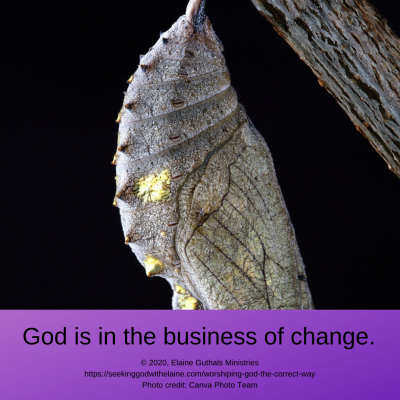
    If we don’t compare what they are saying to how we live our lives, it is just words. If we don’t change where we see we are falling short, it is just words. God is in the business of change.

    Chrysalis

    What Did Isaiah Say the Punishment for Sins Was?

    “Your land is desolate, your cities burned down; foreigners devour your fields right in front of you — a desolation, like a place demolished by foreigners. Daughter Zion is abandoned
like a shelter in a vineyard, like a shack in a cucumber field, like a besieged city. If the Lord of Armies had not left us a few survivors,
we would be like Sodom, we would resemble Gomorrah” (Isa. 1: 7-9 CSB)

    Ooo, baby. The Israelites didn’t change. They had brought God’s judgment upon themselves.

    I bet they were incensed when Isaiah compared them to Sodom and Gomorrah. God destroyed those two towns in Genesis because of their wickedness. There weren’t ten people making up the remnant (Gen. 18: 32).

    There was a big difference between the Israelites and Sodom and Gomorrah. The cities were totally destroyed. Though almost completely destroyed, the Israelites still had a remnant.

    But look at the punishment they endured.

    • The land was desolate (Isa. 1: 7).
    • The cities were destroyed (Isa. 1: 7).
    • Food was scarce (Isa. 1: 7).
    • They were abandoned (Isa. 1: 8).

    No, being God’s people did not keep them from the punishment for their sins.

    There are some people that think God will never sentence them to hell because God is a loving God. He wouldn’t have the heart to sentence them to eternal torment.

    Yes, God is love (I Jn. 4: 8). Oh, yes, He will sentence those who have not ABCDed to hell (Rev. 20: 15).

    Why Did God Reject the Israelites’ Religion?

    “Hear the word of the Lord, you rulers of Sodom! Listen to the instruction of our God, you people of Gomorrah! ‘What are all your sacrifices to me?’ asks the Lord. ‘I have had enough of burnt offerings and rams and the fat of well-fed cattle; I have no desire for the blood of bulls, lambs, or male goats. When you come to appear before me, who requires this from you — this trampling of my courts? Stop bringing useless offerings. Your incense is detestable to me. New Moons and Sabbaths, and the calling of solemn assemblies — I cannot stand iniquity with a festival. I hate your New Moons and prescribed festivals. They have become a burden to me; I am tired of putting up with them. When you spread out your hands in prayer, I will refuse to look at you; even if you offer countless prayers, I will not listen. Your hands are covered with blood” (Isa. 1: 10-15 CSB)

    Isaiah 1: 10-15, at first glance, can be a hard passage to understand. If God is the One who instituted sacrifices, why isn’t He accepting them?

    We have to remember that God rejected Cain’s sacrifice, too (Gen. 4: 5). Sacrifices have to be offered to God in the right way for the right reasons.

    Scriptures make it clear that sin is offensive to God. Sacrifices were to be offered to God to atone for our sins, not create new ones.

    We need to obey God’s Word when He gives us instructions about worship. God is not interested in religion that is for show. He wants very much to have a relationship with us.

    Reading explained this. He wrote, “It is true, St. Paul in his Epistle to the Hebrews affirms, that it was impossible that the blood of bulls and goats should purify the conscience, so as to wash away the guilt of sin, which only can be atoned for by the Lamb of God, slain from the foundation of the world. But yet they availed to the purifying of the flesh, and were accepted of God in lieu of temporal punishments.”

    Resource

    Think about it a second. God was the one who started the whole sacrifice deal. But He knew it wasn’t enough.

    God does not want our sacrifices if they are not done in the right way. It has to affect our conscience.

    God wants service, not religion. Service is an act based on belief in God that comes from a response of worship by acknowledging His power through our submission.

    Monod also brought up a point at we have discussed before. He wrote, “Your vocation is the main part of your service for Him, provided you are in the place where He would have you be.”

    Resource

    We need to be conscientious and humble in serving God. We have to put the focus on God and worship Him.

    Resource

    Making the Connections

    Monod made another good point. “The work of God is mostly hidden work, fully known to Him, known partly to those who are the immediate objects of it, scarcely known to ourselves.”

    Resource

    We get irritated when we don’t see God working in our lives. But God works inside of us, in our heart.

    We see the changes God makes in us as they transform our actions. We may or may not catch that He is changing our attitudes.

    How Do We Apply This?

    Kingsley told us what acceptable worship is. He wrote that “to adore God for His goodness, and to pray to Him to make us good, is the sum and substance of all wholesome worship.”

    We need to focus on God and truly worship Him.

    God. We humbly come before You, acknowledging You are Sovereign Lord. We want a relationship with You. We want to be like You. Amen.

    WorshipingGodTheCorrectWayPin1

    What do you think?

    Leave me a comment below (about this or anything else) or head over to my Facebook group for some interactive discussion.

    If you don’t understand something and would like further clarification, please contact me.

    If you have not signed up for the email daily or weekly providing the link to the devotions and the newsletter, do so below.

    If God has used this devotion to speak with you, consider sharing it on social media.
  • God’s Law Creates Peace

    When we think about God’s laws and commandments, we generally don’t think about peace. We think restrictions. This devotion looks at how we can put our faith in God’s laws because they do bring God’s peace.

    Nuggets

    • The law gives us wisdom.
    • It is the battle between good and evil that takes away our peace.
    • We have to do something with it – we have to change our character so that we are more like God.
    • The greatest thing that can come out of God’s peace is the peace we receive when we are in the midst of trials.

    Devotions in the Peace Leads to Tranquility series

    Flowers with title God's Law Creates Peace

    We are just going to jump in because this got long. You may be questioning how I see God’s restrictive laws could even think about creating peace. I am going to quickly move to show you how I came to that conclusion.

    Let’s Put It into Context

    We’ve talked about peace several times. Peace is an inward tranquility or composure of the mind resulting from a balanced life with spiritual order, equity, and truth.

    Glossary

    Peace isn’t just the absence of conflict. It is a positive condition.

    God wants disciples of Christ to experience peace in the midst of conflict. We can do that when we put our faith and trust in Him.

    Peace from Loving God’s Law

    “Great peace have those who love your law …” (Ps. 119: 165 NIV)

    We are going to form our discussion around what Jesus called the second greatest commandment as our example. “And a second is like it: You shall love your neighbor as yourself’” (Mt. 22: 39 ESV).

    Jesus said that “on these two commandments depend all the Law and the Prophets” (Mt. 22: 40 ESV). That makes sense.

    • If we don’t love God, we are not going to love God first and foremost, worship anything but Him, watch how we use His name, and find a community of people who believe like we do and meet with them regularly.
    • If we don’t love people, we are going to not honor our parents, murder, steal, lie, and strongly desire what they have.

    The law gives us wisdom. Wisdom is knowledge, discernment, and good sense that leads to goodness and virtue, which can be applied to life. “Blessed is the one who finds wisdom, and the one who gets understanding” (Prov. 3: 13 ESV).

    Person watching sunrise

    Okay, let’s do some initial substituting. The law gives us knowledge and the ability to determine what is from God, which brings us standards of moral excellence that should be applied to our lives.

    Having God’s wisdom will greatly benefit us. “Then you will experience God’s peace, which exceeds anything we can understand. His peace will guard your hearts and minds as you live in Christ Jesus” (Phil. 4: 7 NLT).

    That peace will be proportional to the application of that wisdom in implementing God’s laws and commandments in our lives.

    So, let’s do the deep substitution. The loving-others law gives us knowledge of how God wants us to treat those around us and the ability to to do that, which brings changes to our character making us more like Him, so that we can appropriately act and react to situations in our lives.

    Okay, that may be a little convoluted. So, let’s break it down.

    • The loving-others law tells us how God wants us to act.
    • God gives us the ability to to do that.
    • By following His laws and commandments, we become more like Him.
    • It becomes second nature, so we act and react appropriately in situations in our lives.

    But it is all proportional based on how we are following God. If we are all in, it is total peace. It we are a just-on-Sunday disciple, we probably don’t have much peace at all.

    It is an all-in type of thing. Eldridge defined that for us. He wrote, “The law holds our entire being in its grasp — our heart, our secret acts, our words, our life, and there is no escape: nor is there any breaking of the law with impunity.”

    Resource

    Melvill also showed us what loving the law means. It is predicated on ifs. His words are in bold, except I substituted we for I.

    • If we have reached the point of loving the law means it is a process.
    • If we love God because He hates sin means we accept His authority to decide what is a sin and what isn’t.
    • If we love God because He will punish sin means we agree that we should be held accountable for our actions.
    • If we love God because He requires “holiness in the inward parts” means that we are attempting to change our character to imitate His.

    Now, Melvill said there was more to loving God’s laws, but this is a good start.

    Then — only then — do we get the good stuff. God will protect us. Sure, there will be accidents. We will get sick. But He is protecting us.

    We have the wisdom God wants us to have so that we know Him — even the things He hasn’t revealed in the Bible.

    Resource

    Peace from the Do’s and Don’ts?

    When we struggle with doing the do’s and not doing the don’ts, it is really a battle between good and evil. This battle steals our peace. Following God’s laws actually brings peace.

    The Homilist’s nailed it. The Glowing Testimony of the Good says, “Moral remorse, malign passions, dark forebodings, battling impulses, these are the source of all inner tumult; but, in the nature of the case, where the soul is in a loving ruling sympathy with God’s law, such elements of distress cannot exist.”

    Resource

    When we are actively resisting the temptation to sin, God gives a peace. Spurgeon told us what that entails.

    1. “Great restfulness of the intellect.
    2. “A pacified conscience.
    3. “Peace in heart.
    4. “Peace as to our desires.
    5. “Peace in resignation to God, acquiescence in His will, and conformity to it.
    6. “A happy confidence in God as to all things in the past, the present, and the future.”

    Resource

    Let’s talk the flip side for a second. When we know we are not following God’s laws and commandments, we don’t have peace. “For day and night your hand was heavy on me; my strength was sapped as in the heat of summer” (Ps. 32: 4 NIV).

    We pay the consequences for breaking God’s laws and commandments. One of the consequences is the loss of peace.

    Even just the turmoil from the indecision of whether we are going to follow Hod’s laws and commandments steals our peace. “… But I would not have known sin if it were not for the law …” (Rom. 7: 7 CSB).

    I hear what you are saying. “But Chick, you keep saying there is no way we are going to be able to keep all of the laws all of the time.” That is right. We can’t.

    So, what do I tell you to do when you break God’s laws and commandments? We repent. Repentance is expressing sorrow for breaking God’s laws and commandments by making the commitment to changing ourselves through obedience so that we no longer do the wrong things.

    When we repent, God will forgive us. Why? Because Jesus was the substitute for our sin. Pastor Tim said Sunday that He was penalized for us.

    Glossary

    Resource

    But the peace comes by the regeneration. Regeneration is the change in us that God brings about when we go from being spiritually dead to spiritually alive.

    Yes, we are changed from being spiritually dead to spiritually alive in an instant. Changing our character to the character of God means navigating the Sanctification Road. Sanctification is the transformation of mind, body, and soul beginning with regeneration and ending with perfected state of spiritual wholeness or completeness.

    Glossary

    What loving the law really does is takes away is our doubt. We no longer struggle with is God’s Word true or not — we know it is. We no longer have the clash of you-need-to-give-this-sin-up-BUT-I-DON’T-WANT-TO! We know the benefits when we do live like God wants us to live.

    But hey. If you want to keep beating your head against the wall to defy God, go for it. He is not going to force You to follow Him.

    But you won’t have true peace. Plus, you will pay the ultimate penalty in the end.

    Peace Because the Law Shows Us God’s Character

    “… and nothing can make them stumble” (Ps. 119: 165 NIV)

    One of the purposes of the law was to show us God’s character. We learn of His character by seeking God with all our hearts.

    Did you get the true meaning of loving the law yet? If we love something, we do something with it. If it is a person, we spend time with them. If it is an animal, we take care of it and nurture it so it can grow.

    We have to do the same thing with the law. We have to do something with it. We have to change our character so that we are more like God.

    We do that by seeking God. We spend time in His Word and really Study it. We go to Him in prayer. We meditate on what what He is telling us.

    Searching for and Seeking God

    Hearing His Word (Rom. 10: 17).
    Reading His Word (Rev. 1: 3).
    Praying to Him (Heb. 4: 16).
    Studying His Word (Ac. 17: 11).
    Meditating on His Word (Ps. 1: 1-2).
    Memorizing His Word (Ps. 119: 11).

    Let’s roost on stumbling blocks a second. A stumbling block is anything that makes someone be disobedient to God.

    Let’s think of it this way. A trial gets dropped in our lap. Doubts can be a huge stumbling block. Misunderstanding what God’s Word actually says is right up there too. Another toe-stubber is our stubbornness in giving up our pet sin.

    If we love God’s laws and commandments, we want to obey them. So when the drop occurs, we are ready for it.

    Not only are we ready for the drop, we know all the nuances associated with the law. “It means this but not that.”

    Peace While Following God’s Law

    Peace comes when we obey God’s Word. That includes obeying His moral laws.

    Spurgeon brought up a good point. He wrote, “Love lies deep, it is in the heart: it is not a thing of the surface, it is of the man’s own self.”

    Included was a list of the good things Spurgeon saw coming out of that love.

    • An intense respect for it.
    • A delight in it.
    • A heart-felt acceptance of it.
    • An appreciation for it.

    Resource

    I think the greatest thing that can come out of God’s peace is the peace we receive when we are in the midst of trials. We don’t have to be overwhelmed, scared, or dejected. We can put our faith and trust in God to protect us and provide for us.

    We have to remember that peace is a result of obedience. No obedience, no peace.

    That takes the focus off the circumstances and puts it on God. Isn’t that a great place for it to be since God is all-powerful, all-knowing, and all-present?

    To read a related devotion, click on the appropriate button below.

    GodsLawCreatesPeacePin

    Making the Connections

    No, I don’t think it is normal to love God’s laws and commandments — at least not all of them. The Holy Spirit has to help us.

    Well, doesn’t that make sense? If we can do it without God’s help, we wouldn’t need Him.

    And we definitely need God.

    God rewards those who keep His laws. Spurgeon wrote, “Great peace means great prosperity. Those who love God’s law have great blessedness in this life as well as in that which is to come. In loving the law of God we have intense enjoyment and real success in life.”

    Resource

    Making the Connections to Self-Discipline

    If loving God’s laws and commandments only comes through the work of the Holy Spirit, that means it is something in which we will have to work. That means self-discipline will have to come into play to accomplish the work.

    How Do We Apply This?

    When we love God’s law, peace is produced. We shore up that peace by doing certain acts.

    • We think deeply about what the law means and how we are to fulfill it.
    • We defend it, regardless of what we think is our ability to do so or the consequences stemming from that defense.
    • We repent when we break the laws and commandments.
    • We accept any suffering that is associated with it.
    • We stay on the Sanctification Road, because it leads to holiness and righteousness.

    Resource

    God loves us so much; He is going to provide us peace. We need to put our faith in Him.

    Father. You provide so much for us. This includes the peace that You give us. Thank You. Amen.

    What do you think?

    Leave me a comment below (about this or anything else) or head over to my Facebook group for some interactive discussion.

    If you don’t understand something and would like further clarification, please contact me.

    If you have not signed up for the email daily or weekly providing the link to the devotions and the newsletter, do so below.

    If God has used this devotion to speak with you, consider sharing it on social media.
  • Comprehending Christ’s Love

    One thing some of us struggle with is God’s everlasting love. Jesus shares that same love. This daily devotional, the first in a series, looks at the breadth of God’s everlasting love and how it is shown in a covenant relationship with God.

    Nuggets

    • God loves us even after we disobeyed Him.
    • God loves us so much that He designed a plan to restore our relationship with Him.
    • God’s everlasting love means that — no matter what we do — He is going to love us.
    • Even as His love for us is going to last forever, God is going to have an agreement with us that will last forever.

    Devotions in the Comprehending Christ’s Love series

    Oh, man. I haven’t done this in a while. I grabbed something from the drafts folder to do this devotion.

    When I am researching devotions, I like to find sermons that are just outlines. The writer gives you a couple of words for direction and any number of Bible verses.

    I like to go back through and see what was being said. Then I determine if I believe the same thing. (Didn’t we have a whole series where we tried to figure out what we believed and why so we could have an intelligent answer when we witnessed?)

    I found this neat sermon by Baker entitled Comprehending Christ’s Love.

    Resource

    Oh, yeah. Sometimes that can be mind boggling. Let’s see what insight Baker gives us.

    Programming note first: The issue I am having is it is there is a lot of ground to cover. I had already planned on breaking it into a series of three devotions. This one is getting long, so I am going to have to break it. I will have to decide if we are going to start the tranquility – peace – series Monday or hold off a little until this is finished.

    We are going to hold off on the connections and the application until the next devotion. So, this is going to end kind of abruptly. Trust me, it is long enough.

    Let’s Put It into Context

    “And may you have the power to understand, as all God’s people should, how wide, how long, how high, and how deep his love is” (Eph. 3: 18 NLT)

    Baker started with Ephesians 3: 18. We looked at this verse in conjunction with other verses in a devotion entitled The Fullness of God’s Love. We said that Paul wanted to make sure that we got that this was a heart-issue, not a head-issue. We have to understand at the heart-level.

    We can’t try to understand at the head-level. We aren’t God.

    To read a related devotion, click the button below.

    In the title, Baker said he was writing about Christ’s love. In the verse, I read it to be God’s love. So, I talk about both here.

    Let’s see where Baker takes us. Note: The headings are his words, not mine.

    The Dimensions of This Love

    “I revealed myself to those who did not ask for me; I was found by those who did not seek me. To a nation that did not call on my name, I said, ‘Here am I, here am I’” (Isa. 65: 1 NIV)

    The breadth is seen in reaching out Divine mercy to sinners who are far off from God

    “Turn to me and be saved, all the ends of the earth! For I am God, and there is no other” (Isa. 45:22 ESV)

    The first mind-boggling item is how God loves us even after we disobeyed Him. As far as the Scriptures tell us, Adam and Eve had one thing they were supposed to obey – they couldn’t eat the fruit of a certain tree in the Garden.

    Man, did they blow it. They sinned. Sin is actions by humans that disobey God and break one of His laws and commandments, goes against a purpose He has for us, or follows Satan’s promptings.

    Glossary

    But God tells us to repent and be saved. Repentance is expressing sorrow for breaking God’s laws and commandments by making the commitment to changing ourselves through obedience so that we no longer do the wrong things. Salvation is deliverance from evil and the consequences of sins to replace them with eternal life and good.

    If you have not admitted that your relationship is not right with God,

    have not asked Jesus to be your Lord and Savior,

    and have not confessed your sins,

    please read through the Plan of Salvation and prayerfully consider what God is asking you to do.

    Top that off with the mind-boggling fact that God designed the plan of salvation before Adam and Eve ever sinned – before they were even created.

    Glossary

    Why? “… For I am God, and there is no other” (Isa. 45:22 ESV). That is who God is – He is just, holy, and good.

    Hull explained it this way. He wrote, “God’s justice is not merely the infliction of penalty; God’s salvation is not merely deliverance from penalty. … But justice in God is something far grander than the mere exercise of retribution; it is the love of eternal truth, purity, righteousness; and the penalties of untruth, impurity, unrighteousness, are the outflashings of that holy anger which is founded in His love of the right, the pure, and the true. In the same way, God’s salvation is more than the mere deliverance from penalty.”

    Resource

    Because of God’s plan of salvation, we are justified. Justification means the act of making something righteous before God. Jesus justifies us when we put our lives in His hand.

    But we have to turn. We have to repent and give up our love of sin – even our pet sin. We have to obey God’s laws and commandments.

    Person Kneeling at the Cross

    The length of this love reaches from eternity to eternity

    The second mind-boggling item is how deep God’s love is for us. Even though we willfully disobeyed Him, He doesn’t just turn His back on us. He still loves us.

    God loves us so much that He designed a plan to restore our relationship with Him. Why was that necessary?

    God has a low tolerance for sin. “But you are pure and cannot stand the sight of evil. Will you wink at their treachery? Should you be silent while the wicked swallow up people more righteous than they?” (Hab. 1: 13 NLT).

    “The LORD appeared to us in the past, saying: ‘I have loved you with an everlasting love; I have drawn you with unfailing kindness’” (Jer. 31: 3 NIV)

    Everlasting love is a mind-boggling concept. We just talked about the plan of salvation being designed before we were even created. That is, before we even had the opportunity to sin.

    God’s everlasting love means that — no matter what we do — He is going to love us. Yes, He will love us even if we don’t love Him.

    To read a related devotion, click the button below.

    God will forgive anything that we ask of him. He will even forgive our unbelief when we begin believing that He is the One true God.

    What He won’t forgive is our continued unbelief. He won’t forgive us when we don’t submit to him.

    Glossary

    Evans noted that God’s love is “… founded by His Will. His most wise, righteous, and holy Will.”

    Resource

    • We know God is wise. In fact, we know that He is all-knowing.
    • Churchy word alert! Righteous means we are free from sin because we are following God’s moral laws.
    • Holy means to be set apart, perfect, and pure.

    OK, let’s put that in the blender and see if we can mix it up.

    God is holy, and He expects us to be the same way. We do that by being righteous. We have His moral laws to follow, which not only show us what is right, but they also show us His character. He knows whether we follow those laws or not in our hearts.

    Ooo, baby. God is really out of our league. But He still loves us.

    Do you know what the greatest thing is? “… I have loved you …” (Jer. 31: 3 NIV).

    Oh, that is a plural you. But it is also a singular you — as in you, me, Tom, Sally, and Elaine.

    I think what trips is the most is the everlasting part. No, we don’t get the before-the-foundation-of-the-earth part. Neither do we get the for-eternity part.

    We don’t understand because we try to understand based on our past experiences. That is impossible.

    It is mind boggling that God’s loving-kindness was the force that drew us back to Him (Spurgeon). We know we would have lowered the boom on Him if He did to us what we did to Him. We would have been in divorce court.

    Resource

    We forget about God’s mercy. God’s mercy is the unexpected way God responds in love to our needs.

    The mercy is extended to us because of the love. Love is usually a drawing card. Stern, heavy-handed dictatorship isn’t.

    How are we attracted to God? Spurgeon wrote, “The loving-kindness of God as seen in the sacrifice of the Lord Jesus draws men from sin, from self, from Satan, from despair, and from the world. Next, the hope of pardon, free and full, attracts sinners to God.”

    Resource

    Think about what Jesus is saying.

    • “… I have loved you …” (Jer. 31: 3 NIV) when I helped My Father create You (Gen. 1: 26).
    • “… I have loved you …” (Jer. 31: 3 NIV) when I gave up My divinity to come to earth (Phil 2: 7).
    • “… I have loved you …” (Jer. 31: 3 NIV) even when I was beaten until I was unrecognizable (Isa. 52: 14).
    • “… I have loved you …” (Jer. 31: 3 NIV) as I hung upon the cross and My Father turned away from me (Mt. 27: 46).
    • “… I have loved you …” (Jer. 31: 3 NIV) when I rose from the grave (Mt. 28: 6-7).

    Do you know what the best part is? Jesus still loves us as He sits at right hand of God (Heb. 10: 22).

    Jesus — the most worthy — loves us — the most unworthy. Jeremiah told us that Jesus draws us to Him.

    When we couldn’t save ourselves, Jesus provided a way for our salvation. Salvation is deliverance from evil and the consequences of sins to replace them with eternal life and good.

    Church

    “I will make a permanent covenant with them: I will never turn away from doing good to them, and I will put fear of me in their hearts so they will never again turn away from me” (Jer. 32: 40 CSB).

    The Israelites were familiar with the term covenant. Today, we generally call them contracts or agreements. A covenant is an agreement between two parties.

    Glossary

    God wants to have a covenant with us. He offers us a permanent covenant when we accept it.

    Even as His love for us is going to last forever, God is going to have an agreement with us that will last forever. It is a covenant of grace. Grace is a free and unmerited gift from Heavenly Father given through His Son, Jesus Christ that enables salvation and spiritual healing to believers.

    God provides us that gift of salvation because He loves us. He gives it to us in the form of a covenant.

    Gillies helped limit a portion of the mind boggling with regards to the covenant of grace. He wrote, “Its grand end seems to be, to glorify all God’s attributes, indeed, but especially to manifest ‘the exceeding riches of His grace.’”

    Resource

    No one forced God to make this covenant with us. It was all His idea.

    Think about it this way. Adam broke the covenant God had made with Him when he rebelled in the Garden. Satan and some of his fellow angels also rebelled against God. (And it sounds like Satan was a pretty big deal in the angel ranks.)

    God devised a new covenant — the plan of salvation — where we could be restored to His favor and fellowship. The same plan is not extended to the angels-turned-demons. They are forever out of luck.

    This covenant provides everything we need to have our relationship restored. We just have to agree to the terms — ABCD.

    The ABCDs of Salvation

    If you have not become a believer in Christ, please read through the
    Plan of Salvation and prayerfully consider what God is asking you to do.

    A – admit our sins
    B – believe His Son Jesus is our Redeemer
    C – confess God as Sovereign Lord

    D – demonstrate that commitment by making any changes needed in our lives to
    live the way in which God has called us

    The Disciple’s Job Description

    This is going to be a permanent covenant. It is not going to be replaced by another one. It is not going to be modified because we can’t uphold our end — ie., because we can’t stop sinning. Jesus has already fulfilled the human side of it.

    Resource

    This is it, folks.

    It is a holy covenant. Gillies wrote, “First, it preserves unsullied, yea it peculiarly displays the righteousness and holiness of God’s character and government in at all saving sinners, only through the infinite and vicarious sufferings, death, and obedience of the God-man Mediator, in their room, and on their behalf. Secondly, it secures the personal holiness of all who are brought into the covenant.”

    Resource

    The covenant succeeds in restoring us to our relationship with God so that we can have access to His Presence. We are changed so that we may approach Him.

    See what Jeremiah 32: 40 says. God is not going to turn away from us. He isn’t — all of the sudden — going to say we are unworthy. When we genuinely ABCD and strive to live by His laws and commandments, He will never turn away from us.

    Father. We look all around us and see how much You love us. We are awed, and we are humbled. God, You are great! Amen.

    ComprehendingChristsLovePin1

    What do you think?

    Leave me a comment below (about this or anything else) or head over to my Facebook group for some interactive discussion.

    If you don’t understand something and would like further clarification, please contact me.

    If you have not signed up for the email daily or weekly providing the link to the devotions and the newsletter, do so below.

    If God has used this devotion to speak with you, consider sharing it on social media.
  • Being Content Because Our Hearts Are Right

    We alone are in charge of our contentment. That is because contentment comes from our hearts – our foundation. This daily devotional looks at the effect of others on our contentment, when discontentment reigns, and the foundation of our faith.

    Nuggets

    • We know what makes us content and what doesn’t.
    • There are several things that bring us discontentment.
    • It matters whether we are content or not.

    Devotions in the Contentment Leads to Tranquility series

    Flowers with title Being Content Because Our Hearts Are Right

    When we are content, this in our lives go much better. God wants us to get that contentment to the heart level. Let’s take a look at that.

    Let’s Put It into Context

    The Holman Bible Dictionary defines contentment as “an internal satisfaction which does not demand changes in external circumstances.”

    Resource

    Keeping Our Hearts Content

    “The heart knows its own bitterness, and no outsider shares in its joy” (Prov. 14: 10 CSB)

    We used this verse a couple of devotions ago in Spiritual Wisdom Leads Us to be Sensible People. We talked about how Spurgeon was describing someone who was self-contained – the private us.

    To read a related devotion, click the button below.

    Resource

    We were focusing on others not really knowing the real us – only what we show to others. I think that pertains here, too.

    We know that private us that Spurgeon was talking about. We know – and work toward – doing what makes us happy and keeping away from what doesn’t.

    Others may or may not know what that is. We know who we are. We may not always like ourselves, but we know our strengths and our weaknesses.

    Figures – we are with ourselves 24/7/365.

    Let’s roost on “the heart knows its own bitterness …” (Prov. 14: 10 CSB) part.

    Blair noted that there are two sources of either joy or bitterness in the heart.

    • Our own character
    • Our connections with others

    Resource

    We’ve talked a lot about how important our hearts are. We’ve talked before that we have to get things down to the heart level. Obedience has to come from the heart. That makes our character.

    To read a related devotion, click on the appropriate button below.

    Glossary

    Isn’t it sad when, instead of the happiness, we get the discontent because we bring it on ourselves? Maybe we did something stupid. Maybe we really thought it was going to bring us happiness, but it didn’t. Maybe we were feeling guilty about A, and that messed up B.

    Oh, did you catch that I said other don’t really make us content, but they are a source of our contentment or discontentment?

    When Adam is upset about something, this momma bear is not content. I can give him advise to rectify a situation. I can walk him through scenarios of how he could address something.

    In the end, Adam has to make up his own mind what to do and be okay with that. He has to choose to be content with his decisions.

    I don’t know about you, but I need my alone time. This was especially true when I had my 100 meetings a month, but it is still true.

    Quiet. Reflection. Disconnect from stress. Replenish our reserves.

    We don’t know how the Holy Spirit is convicting someone else. We only know how He is convicting us.

    Dove

    Ooo, baby. That can hurt at times!

    We all need to take a minute so we can slow down. If we continually go ninety to nothing, we generally block out the soft promptings of the Holy Spirit.

    Spurgeon gave us some great advice for those times. He wrote, “And remember that the cure for bitterness of heart is to take it to your Lord at once.”

    Resource

    When Discontent Reigns in Our Hearts

    “The disloyal one will get what his conduct deserves, and a good one, what his deeds deserve” (Prov. 14: 14 CSB)

    What causes discontentment in our hearts? How do disciples of Christ deal with discontent?

    There are several things that bring us discontentment. We can become discontent when we don’t deal with something that is bothering us. We know that, but how do we apply that to our journey on the sanctification road?

    The big thing that steals our contentment is unconfessed sin. Unconfessed sin damages our relationship with God, causing the discontent.

    Church

    Sometimes, we may not even know we have sinned. “So then, brothers and sisters, we are not obligated to the flesh to live according to the flesh, because if you live according to the flesh, you are going to die. But if by the Spirit you put to death the deeds of the body, you will live” (Rom. 8: 12-13 CSB).

    When we do know we have sinned, we can become dejected. I don’t know about you, but I really start biting on myself.

    Sometimes, I am so busy slapping myself around, I don’t realize Jesus is up there, bending down to whisper in God’s ear to advocate for me. He is there praying for me.

    You, too.

    Maybe even worse yet is when we become bitter. It is easy to become resentful when things don’t go the way we have planned. We can start blaming God.

    We have to remember that God knows exactly what is going to happen every day for the rest of our lives. He has everything planned out based on the decisions we are going to make.

    The thing is, God knows us — really knows us. “He knows us far better than we know ourselves …” (Rom. 8: 27 MSG).

    We know the verse that comes next. “That’s why we can be so sure that every detail in our lives of love for God is worked into something good” (Rom 8: 28 MSG). All things work together for good.

    Discontent comes when we don’t feel loved. Loneliness can really mess up our outlook. We don’t see what the purpose is for struggling if we have no one with which to share our lives.

    No one could love us as God loves us. He is our Creator.

    God loved us so much that He devised a way for our relationships with Him to be restored. “But God demonstrates his own love for us in this: While we were still sinners, Christ died for us” (Rom. 5: 8 NIV).

    God doesn’t want us to stay in our melancholy state. He wants us to experience His joy. He will help get us there.

    BeingContentBecauseOurHeartsAreRightPin1

    The Foundation of Contentment

    “A joyful heart makes a face cheerful, but a sad heart produces a broken spirit” (Prov. 15: 13 CSB)

    “A joyful heart is good medicine, but a broken spirit dries up the bones” (Prov. 17: 22 CSB)

    It matters whether we are content or not. Our whole outlook on life hangs in the balance. In fact, sometimes, so does our life.

    Melvill reminded us that “The connection between the mind and the body, though not to be explained, is so striking as to force itself upon the notice of the least observant.” We may think that our mind has complete control over the body, but the body will never outrank the mind.

    Resource

    Just wait until our world is rocked, and everything shuts down. We can’t focus on our work. We snap at our loved ones. Our blood pressure goes up. Our stomachs are tied up in knots.

    We know that mental attitude plays an important role when we are sick. A positive attitude is definitely needed for cancer patients. When someone gives up, the results can be devastating.

    Did you see what Solomon said? It all starts with the heart — a joyful heart. That translates to contentment.

    Melvill had a lot of great nuggets. Some of them addressed discontent.

    • “Mental disquietude tells on the health with corroding and devastating power.”
    • “A truly broken spirit is that which is bruised by a sense of sin.”

    But some of them reminded us the discontent can be fleeting.

    • “There is a power in man’s spirit to sustain his infirmity.”
    • “The truth that men have no power of renewing their nature must not be interpreted as implying that men have no power of reforming their lives.”

    Resource

    But it all comes back to our heart — our foundation. Where does Jesus live? In our hearts. Where is the Holy Spirit? In our hearts.

    Making the Connections

    Think that sounds hard? Especially given the state of the world these days????

    Belfrage told us how to accomplish contentment, he wrote, “By ‘a merry heart’ is meant a heart which has been taught by the Spirit of God to seek its happiness in Divine and heavenly objects, which is disposed to look at the bright side of things under the influence of contentment and hope.”

    Resource

    Taught by the Spirit of God. The Holy Spirit is going to teach us.

    Well, doesn’t it make sense? When our hearts are broken that is usually because we are focusing on the world, not God.

    Making the Connections to Self-Discipline

    Our hearts are our foundations. It is our responsibility to make sure the foundation remains sure. To do that, we need to search for and seek God. Discipline helps us do that.

    Searching for and Seeking God

    Hearing His Word (Rom. 10: 17).
    Reading His Word (Rev. 1: 3).
    Praying to Him (Heb. 4: 16).
    Studying His Word (Ac. 17: 11).
    Meditating on His Word (Ps. 1: 1-2).
    Memorizing His Word (Ps. 119: 11).

    How Do We Apply This?

    • Remember, God wants us to be even-keeled. He is not looking for us to go from one extreme to another. The key word here is moderation.
    • We got to work to get our contentment back when it is stolen. We have to figure out what took it and what we have to do to get it back.
    • We have to take care of our own heart. When our contentment is starting to head out the door, we have to determine what we need to do to get it to stay. We have to take care of ourselves.
    • We have to take it to God. Put it at His feet. Crawl into His palm.
    • Paul told us to be like him. He was content whatever. We need to be like Paul.
    • Contentment comes when we pass God’s love to someone else. Be a helper.
    • Remember, God has got this. Leave it in His hands.

    Resource

    I loved the nugget in the Homiletic Review. “Look at your mercies with both eyes; your troubles with only one eye.”

    Resource

    If we can get contentment down to the heart level, it makes it harder for the discontentment to take over. That is because we are rooted and grounded in God — where He wants us to be.

    Father. You want us to be totally focused on You. Unfortunately, we let the cares of this world in — and with that comes discontentment. Lord, help us to keep firmly in Your Will. That will keep us content in Your love. Amen.

    What do you think?

    Leave me a comment below (about this or anything else) or head over to my Facebook group for some interactive discussion.

    If you don’t understand something and would like further clarification, please contact me.

    If you have not signed up for the email daily or weekly providing the link to the devotions and the newsletter, do so below.

    If God has used this devotion to speak with you, consider sharing it on social media.
  • Being Content Because We Are Godly

    Many people today are searching for contentment. They do not realize that we can only find contentment when we are seeking for God with all our hearts. This daily devotional looks at godliness with contentment.

    Nuggets

    • Knowing God and being like God will be us contentment.
    • We like to think that godliness and holiness are synonymous, but sometimes, we like to think those are just a short distance from sin.
    • We won’t be content until we are under God’s standards.

    Devotions in the Contentment Leads to Tranquility series

    We all want to be content in our lives. What we sometimes don’t realize is that we can only find contentment through a relationship with God.

    Sometimes, we lose our contentment because technology just doesn’t like us sometimes. At least, I still have access to the buttons, but this will look different. Hopefully, it won’t be quirky for as long as it was last time.

    Let’s Put It into Context

    The Holman Bible Dictionary defines contentment as “an internal satisfaction which does not demand changes in external circumstances.”

    Resource

    Godliness with Contentment

    “But godliness with contentment is great gain” (I Tim. 6: 6 ESV)

    Godliness, equated with the Old Testament term fear of the Lord, is an attitude of reverence that is promoted by walking in His Spirit. What this verse is saying is an attitude of reverence with internal satisfaction is an increase in wealth.

    Champneys had an interesting definition of godliness. He thought it was frequently defined as the gospel. He wrote, “… the object of the revelation of Christ in the gospel is to show us the character of God in the person of a man, and thereby set us a pattern for us to copy — and by offering grace to all, by which they may be able to copy that pattern, to make them Godlike by making them like Christ.”

    Resource

    I can see that. The gospels are showing us what our attitude is to be — God like.

    Knowing God and being like God will be us contentment. How, you might be asking?

    Think about Who God is. He is love (I Jn. 4: 8). He promotes order and harmony. That produces contentment.

    When we add in God’s mercy, it takes that contentment up a notch. God’s mercy is the unexpected way God responds in love to our needs.

    That mercy is played out when God — the all-powerful, all-knowing, all-seeing Deity — forgives sinful you and me. It is evident in how God provides for us.

    Champneys also said that contentment is found when we truthfully rate our value compared to God’s. Sometimes, we like to think we are gods and goddesses, but we aren’t. When we get passed the feelings of entitlement, we realize the extent of His mercy and love in designing the plan of salvation for our restoration.

    If you have not admitted that your relationship is not right with God,

    have not asked Jesus to be your Lord and Savior,

    and have not confessed your sins,

    please read through the Plan of Salvation and prayerfully consider what God is asking you to do.

    Contentment is a fruit of godliness, as Champneys called it. It does have the power to bring the sinful world back into order as non-believers would want what we have.

    We are going to meander a second, but we will hook back up with contentment. I promise.

    Are Godliness and Holiness Synonymous with Sinfulness?

    “But now you must be holy in everything you do, just as God who chose you is holy. For the Scriptures say, ‘You must be holy because I am holy’” (I Pet. 1: 15-16 NLT)

    We like to think that godliness and holiness are synonymous. But sometimes, we like to think the same thing about sinfulness.

    Holiness is the state of being pure. If we look at godliness as imitating the character of God, He is pure. That also makes godliness the state of being pure.

    Godliness and holiness are synonymous.

    But it doesn’t stop there. Sometimes, we like to think those are just a short distance from sin. That way we don’t have to change much in order to get right with God.

    Wrong. Look how Tillotson explained it. He wrote, “A state of sin and holiness [and therefore godliness] are not like two ways that are just parted by a line, so as a man may step out of the one full into the other; but they are like two ways that lead to two very distant places, and consequently are at a good distance from one another; and the farther any man hath travelled in the one, the farther he is from the other; so that it requires time and pains to pass from the one to the other.”

    Resource

    Think about it. Let’s frame this through the narrow and wide gates. “Enter by the narrow gate. For the gate is wide and the way is easy that leads to destruction, and those who enter by it are many. For the gate is narrow and the way is hard that leads to life, and those who find it are few” (Mt. 7: 13-14 ESV).

    Glossary

    I think, sometimes in our minds, we think of it as a series of gates instead of just two gates. We tooling along on the sanctification road, and a temptation pops up.

    Sanctification is the transformation of mind, body, and soul beginning with regeneration and ending with perfected state of spiritual wholeness or completeness. Temptation is a suggestion in our mind that would lead us to sin rather than following God’s Will. It is also that period of time between conception and execution of doing what is sinful.

    We think that the two gates are right in front of us — side by side. We have to choose right now which gate we are going to go through — the one that continues on the sanctification road or the one that leads to the exit ramp.

    But I think we view the exit ramp as leading to the frontage road. It is going the same direction as we are going. The only difference is it is just running parallel.

    Oh, no. It makes a quick u-turn and leads us back toward the sinful life we left when we ABCDed.

    The ABCDs of Salvation

    If you have not become a believer in Christ, please read through the
    Plan of Salvation and prayerfully consider what God is asking you to do.

    A – admit our sins
    B – believe His Son Jesus is our Redeemer
    C – confess God as Sovereign Lord

    D – demonstrate that commitment by making any changes needed in our lives to
    live the way in which God has called us

    The Disciple’s Job Description

    The narrow gate is the only entrance we want. It is the only entrance that will lead to God.

    We cannot be on a parallel road and just be a good person and get to Heaven. We can’t only believe God exists.

    To read a related devotion, click the appropriate button below.

    We have to admit we are separated from God, believe that Jesus died so that separation could be rectified, confess and submit to God as Sovereign Lord, and demonstrate that commitment by leading godly, holy lives. That is the only way we will find contentment.

    Why Can’t We be Content as Sinners?

    “Actually all of us were like them and lived according to our natural desires, doing whatever suited the wishes of our own bodies and minds. In our natural condition we, like everyone else, were destined to suffer God’s anger” (Eph. 2: 3 GNT)

    It comes down to God’s standards verses Satan’s standards. Our contentment is based on which standards we follow. We won’t find contentment following Satan’s standards. We only find contentment with godliness.

    But if we are good people doing good deeds, why can’t we be content? Oh, we might be content by the world’s standards.

    We won’t be content until we are under God’s standards. If we are still sinners, we will be “… destined to suffer God’s anger” (Eph. 2: 3 GNT).

    God wants all of us to turn back and obey Him. God is a Sovereign “who wants all people to be saved and to come to a knowledge of the truth” (I Tim. 2: 4 NIV).

    We have to make a conscious decision to ABCD. If we do not, we will perish. God doesn’t want that — but will sentence us to the judgment we have earned.

    • “For the wages of sin is death, but the free gift of God is eternal life in Christ Jesus our Lord” (Rom. 6: 23 ESV).
    • “Jesus answered him, “Truly, truly, I say to you, unless one is born again he cannot see the kingdom of God” (Jn. 3: 3 ESV).
    • “The Lord is not slow to fulfill his promise as some count slowness, but is patient toward you, not wishing that any should perish, but that all should reach repentance” (II Pet. 3: 9 ESV).
    • “I saw the dead, both great and small, standing before God’s throne. And the books were opened, including the Book of Life. And the dead were judged according to what they had done, as recorded in the books. The sea gave up its dead, and death and the grave gave up their dead. And all were judged according to their deeds. Then death and the grave were thrown into the lake of fire. This lake of fire is the second death. And anyone whose name was not found recorded in the Book of Life was thrown into the lake of fire” (Rev. 20: 12-15 NLT).

    A life of sin does not lead to contentment. Worldview people may think so because they think they are calling their own shots.

    Instead, they are slaves to Satan.

    • “Jesus answered them, ‘Truly, truly, I say to you, everyone who commits sin is a slave to sin’” (Jn. 8: 34 ESV).
    • “Whoever makes a practice of sinning is of the devil, for the devil has been sinning from the beginning. The reason the Son of God appeared was to destroy the works of the devil” (I Jn. 3: 8 ESV)

    Satan is the master of chaos, not contentment. “Be sober-minded; be watchful. Your adversary the devil prowls around like a roaring lion, seeking someone to devour” (I Pet. 5: 8 ESV).

    We can only find contentment by imitating God.

    Making the Connections

    It is logical that becoming more like God would bring contentment. We are and act in the ways He wants us to, rather than following Satan’s sinful ways.

    God is love and peace. Satan is lies and chaos.

    Making the Connections to Self-Discipline

    If contentment comes by imitating God, we can only do that by knowing Who God is. We learn His character by following His laws and commandments.

    But ooo, baby. That goes against our sinful nature. We have to discipline ourselves to follow Him.

    How Do We Apply This?

    We need to grow in grace and knowledge. We that by searching for and seeking God.

    Luckily, we know that growing to be like God is a process. That process will take the rest of our lives. It is called sanctification.

    God has promised to be with us every step of the way. We can do this — with our hand firmly in His.

    Father. You have provided so much for us. Most importantly, You provide us salvation. You designed a way that our relationships with You could be mended. You ask that we change to become more like You. You even help us do that — because we would not be able to accomplish that on our own. Help us to keep our hand firmly in Yours. Correct us when we pull away toward the lure of this world. Keep bringing us back to the sanctification road so that we complete our journey at Your narrow gate. Amen.

    What do you think?

    Leave me a comment below (about this or anything else) or head over to my Facebook group for some interactive discussion.

    If you don’t understand something and would like further clarification, please contact me.

    If you have not signed up for the email daily or weekly providing the link to the devotions and the newsletter, do so below.

    If God has used this devotion to speak with you, consider sharing it on social media.

  • Being Content with What We Have

    Life is hard. Sometimes, disciples struggle with how to be content in Christ. This daily devotional looks at how disciples in Christ can be content with the life to which God has called us.

    Nuggets

    • Since we were separated from God by the original sin, we have to choose God to gain access to Him again.
    • God has commanded all disciples be content in our situations.
    • Sometimes, God calls us to remain in a bad situation.
    • Disciples of Christ are not meant to be sticks in the mud.
    Flowers with title Being Content with What We Have

    This year, we are looking at self-discipline. We are using Vincent’s The Lesson of Ripeness sermon to look at the need to grow in our relationship with God. We morphed learning enough to be a teacher into determining some areas we need to grow so we can be mature disciples.

    Vincent made a comment that really struck a chord with me. He wrote, “And time ought to have ripened faith in the sense of restfulness. We count it strange if natural manhood does not bring with it increased composure, tranquillity, balance. Shall we count it any less strange if, with the lapse of time, Christian manhood does not become better poised, more restful and quiet, less easily thrown off its balance?”

    Resource

    Now, we are going to look at tranquility.

    We are going to approach tranquility from two different ways. First, we are going to look at contentment. Then, we are going to look at peace.

    Devotions in the Contentment Leads to Tranquility series

    Let’s Put It into Context #1

    The Holman Bible Dictionary defines contentment as “an internal satisfaction which does not demand changes in external circumstances.”

    Resource

    Let’s Put It into Context #2

    Where did our contentment go? Adam and Eve had it. If we look in Genesis 2, we hear only good stuff.

    • A description of the Garden of Eden
    • Creation of Eve

    Then came Chapter 3.

    Sin stole our contentment. Dale noted that we no longer need to gauge the degree of human deprivation. Instead, we can become recipients of God’s mercy. God’s mercy is the unexpected way God responds in love to our needs.

    Resource

    Only with God can we find contentment.

    Content with Our Boundaries

    “The boundary lines have fallen for me in pleasant places; indeed, I have a beautiful inheritance” (Ps. 16: 6 CSB)

    Since we were separated from God by the original sin, we have to choose God to gain access to Him again. When we do, we can find contentment — mainly because we now have boundaries.

    Glossary

    Whoa! What? Boundaries give us contentment?!?!

    First off, we have to figure out what boundary lines is talking about. Maclaren told us that they were “… the measuring cords by which the estate was parted off and determined …” It shows us what is ours and what is off limits.

    Resource

    If we are not submitting to God, we do not follow His laws and commandments. In other words, we cross the boundaries.

    We have mentioned before that these laws and commandments show us God’s character. When we followed them and imitate God’s character, we are content.

    We find contentment because we are confident that God has forgiven us for our sins and has made us His children again. “LORD, you alone are my portion and my cup; you make my lot secure” (Ps. 16: 5 NIV).

    Glossary

    But look at that. It says, “… in pleasant places …” (Ps. 16: 6 CSB).

    The Contemporary English Version explains what it means there. “You make my life pleasant, and my future is bright” (Ps. 16: 6 CEV).

    Contentment is for life as a whole. It isn’t contingent on certain circumstances. It puts our focus on Him instead of this world.

    Above all, it is our inheritance — which also knows no bounds. But it doesn’t mean we will be the recipient of money, family heirlooms, and sentimental objects.

    Contentment is about being able to come into the presence of Sovereign God here in this life. It is about being able to spend eternity with Him.

    Lake

    Content with Our Situation

    “Let each one live his life in the situation the Lord assigned when God called him. This is what I command in all the churches” (I Cor. 7: 17 CSB)

    Paul talked about the need for us to be content in our situations. God has commanded this of all disciples.

    Paul reminded us that we aren’t in Heaven yet, so we haven’t earned our inheritance yet. There is life to experience here still, and we are expected to experience the life into which God has called us.

    Yes, God assigns us to our lot in life. God didn’t assign me to be a mathematician. He didn’t assign me to be a dancer, either.

    God assigned me to be the mother of a guy who really needed me. He assigned me to support faculty so they could teach their students. He assigned me to write words so you could get an idea of Who He is.

    I have to follow God’s plan for my life. You have to follow God’s plan for your life.

    If we don’t, we don’t find contentment. Yeah, it may be just a little off. More than likely, it will be dissatisfying.

    Lyth made a good point. He stressed it “allows of no exception unless when compliance is sinful.”

    Resource

    We have duties that God has given us to perform. We have to perform them — with only one exception. If something is going to cause us to sin, we are to not sin.

    I know. That is a little of a head scratcher, isn’t that? What gives?

    In my opinion — and I may be right, I may be wrong — God gives us duties. I don’t think He micromanages the situation. He gives us options to do what He wants us to do.

    Remember, we have said God isn’t a dictator. It is always about free will. Free will is the ability within us to make decisions, which determine actions that produce character.

    Let’s think about it this way. Worldview people are very quick to point out when disciples don’t do the do’s and do the don’ts. They think it is about execution.

    It isn’t. The do’s and don’ts are about building character. It is about making the decisions, not necessarily what decision we make.

    I think it is really about growing in grace through the situations in which He calls us.

    Lady

    Content to Remain in Bad Situations

    “Let each of you remain in the situation in which he was called” (I Cor. 7: 20 CSB)

    Sometimes, God calls us to remain in a bad situation. In those instances, we have to trust God’s provision.

    How can we remain content when God chooses not to rescue us from a bad situation?

    I’ve told you before that I am a firm believer that everything happens for a reason. That is what Solomon told us. “For everything there is a season, and a time for every matter under heaven” (Ecc. 3: 1 ESV).

    Nothing happens that God has not allowed to happen. The reason it has happened is because – in some way – it will expand His kingdom.

    It may be my reason something happens to me. It may be my sister’s, or someone at church’s – or yours.

    I may never know the reason why something happened. But someone, somewhere was brought closer to God because of what happened to me.

    God knows I like to know why something is happening. I do work better when I can make sense of things.

    Realizing that has helped me deal with several things that have happened to me. I don’t have to know. I have to trust God.

    When we trust God and put everything firmly in His hands – especially in the difficult situations – He will greatly bless us. We also grow closer to Him.

    BeingContentWithWhatWeHavePin1

    Content to Enjoy Life to the Fullest

    “Go, eat your bread with pleasure, and drink your wine with a cheerful heart, for God has already accepted your works. Let your clothes be white all the time, and never let oil be lacking on your head. Enjoy life with the wife you love all the days of your fleeting life, which has been given to you under the sun, all your fleeting days. For that is your portion in life and in your struggle under the sun” (Ecc. 9: 7-9 CSB)

    Disciples of Christ are not meant to be sticks in the mud. God wants us to enjoy our lives while we grow to be like Him.

    If we always go around stressed out, why would non-believers want to believe in God? If we are always worried about how we are going to make ends meet, how do we convince non-believers that God will provide for us?

    If non-believers think being a disciple of Christ is all about what we have to give up, why would they want that?

    Yes, these words do look like something a non-believer would say to take things to the extreme that God doesn’t want. We know God doesn’t want that.

    But we also know that God doesn’t want us to go to one extreme or the other. He wants us to maintain a sober disposition.

    To read a related devotion, click the button below.

    No, sober doesn’t mean stick in the mud, either. Sober is a character trait distinguished by self-control, genuineness, and sound moral judgment. It is a calm and temperate disposition.

    God wants us to enjoy our lives, but we need to remain in control so that we don’t sin.

    Making the Connections

    I found a really neat sermon by Statham. He gave us what God considers pleasure is not.

    • Not a belittling power
    • Not using noise to call attention to itself
    • Not limited because we can have too much of it
    • Not a selfish pleasure

    Resource

    We don’t need what the worldview thinks we need to be content. We only need God.

    Making the Connections to Self-Discipline

    It takes trust and faith to be content in difficult situations. Sometimes, it takes a change in our attitude. That definitely takes self-discipline to accomplish!

    How Do We Apply This?

    We apply this by going from a milk baby to a steak adult. We grow our faith and trust.

    To read a related devotion, click the button below.

    Once we are really depending on God, we are more content in whatever situation we find ourselves in.

    I see our becoming content with our lives as we submit more to God. As we learn to trust Him and depend on Him, we know He will take care of us.

    We don’t have to stress. We don’t have to worry.

    We have to depend on God’s provision.

    Father God. There are so many times we want to depend on ourselves. We think we know what we want and need. We think we have to provide it for ourselves. We don’t. We have to trust You. We have to depend upon Your provision because You know what is best for us. Help us to grow closer to You. Amen.

    What do you think?

    Leave me a comment below (about this or anything else) or head over to my Facebook group for some interactive discussion.

    If you don’t understand something and would like further clarification, please contact me.

    If you have not signed up for the email daily or weekly providing the link to the devotions and the newsletter, do so below.

    If God has used this devotion to speak with you, consider sharing it on social media.
  • Spiritual Wisdom Leads to Righteousness

    It is God’s goal for us to reach the end of the sanctification road and gain righteousness. In order to do that, we need wisdom to get us there. This daily devotional looks at how fearing God in our hearts and submitting to His corrections lead to righteousness.

    Nuggets

    • God is all about giving us an orderly life based on His ways.
    • We need to use reflection and evaluation to determine where our hearts are at on the sanctification road — leading us to righteousness.
    • Sometimes, on the sanctification road, God has to correct us.
    • When we are navigating the sanctification road, we are doing what God wants us to do.
    Flowers with title Spiritual Wisdom Leads to Righteousness

    Wisdom and righteousness both come from God. There is a correlation. We’ve discussed this before.

    To read a related devotion, click the button below.

    Let’s see what we can add to that.

    Let’s Put It into Context

    Wisdom is knowledge, discernment, and good sense that leads to goodness and virtue, which can be applied to life.

    So far, Solomon has told us

    • It isn’t enough to just have the wisdom — head knowledge isn’t enough.
    • We get to where God wants us to be by using wisdom to reason out what He is wanting us to understand as we seek Him.
    • The result of wisdom is a closer relationship with God (righteousness), which is to be prized above religion.
    • Our wisdom has to align with God’s if we are going to flourish in the world.
    • We are righteous because we are free from sin by following God’s moral laws.
    • God judge us daily because He hates sin, which causes all of the strife that is in the world today.
    • Sometimes, we try to equate simple with sensible, but it isn’t always.
    • God is allowing people free will at the present time, but that isn’t always going to be the case.

    To read a related devotion, click on the appropriate button below.

    Fear of the Lord Leads to Righteousness

    “The fear of the Lord is what wisdom teaches, and humility comes before honor” (Prov. 15: 33 CSB) Better a little with righteousness than great income with injustice” (Prov. 16: 8 CSB)

    If you’ve read my devotions before, you know I start out with making sure that I remember what all of the words really mean in the Scriptures. We’ve got several here that we’ve talked about and defined before.

    • The fear of the Lord means awe, reverence and love, not terror.
    • Humility is a character trait that diminishes pride and places dependence on God while holding a modest view of our importance with respect to others.
    • Honor means to esteem and respect another because of a good reputation.
    • Righteousness is the result of a solid relationship with God built by a sincere life of conscientious obedience to God’s laws and commandments. It is more the right principles under which we live.

    I know we’ve talked about justice before, but my fuzzy brain this morning isn’t pulling out the definition or if we’ve even discussed injustice. So, we are going to take a minute to look at that.

    According to the Holman Bible Dictionary, justice is “the order God seeks to reestablish in His creation where all people receive the benefits of life with Him.” Justice is the central theme in the Old Testament.

    Resource

    Ooo, baby. That is totally different than the worldview definition. The Merriam-Webster Dictionary defines justice as “the maintenance or administration of what is just especially by the impartial adjustment of conflicting claims or the assignment of merited rewards or punishments.”

    Resource

    The way I read that is God is all about giving us an orderly life based on His ways. The worldview just wants to make sure everyone gets the good things they think should be coming to them. (Face it, these days merit doesn’t mean what it used to mean.)

    What worldview people haven’t figured out yet is that God’s way is the best way. He only deals with us through love.

    Oh, yes. When God corrects us and punishes us, that is done through love. “For the LORD corrects those he loves, just as a father corrects a child in whom he delights” (Prov. 3: 12 NLT).

    So, let’s see if I can get this straight.

    • Reverencing and loving God is what knowledge, discernment, and good sense teaches, and diminished pride and dependence on God comes before esteem and respect (Prov. 15: 33).
    • It is better to have a little with a solid relationship with God than great income without the order and benefits of life with Him (Prov. 16: 8).

    God will give us that wisdom if we ask. “If any of you lacks wisdom, you should ask God, who gives generously to all without finding fault, and it will be given to you” (Jas. 1: 5 NIV).

    Muir noted that this passage is written referring to wisdom as a person. Actually, that should be Person. “God has united you with Christ Jesus. For our benefit God made him to be wisdom itself. Christ made us right with God; he made us pure and holy, and he freed us from sin” (I Cor. 1: 30 NLT).

    Resource

    We get wisdom by asking Jesus into our lives. Yes, we have to ask. God doesn’t force Himself on us.

    SpiritualWisdomLeadsToRighteousnessPin1

    Our Hearts Lead to Righteousness

    “The reflections of the heart belong to mankind, but the answer of the tongue is from the Lord” (Prov. 16: 1 CSB)

    “The Lord has prepared everything for his purpose — even the wicked for the day of disaster. Everyone with a proud heart is detestable to the Lord; be assured, he will not go unpunished” (Prov. 16: 4-5 CSB)

    “A person’s heart plans his way, but the Lord determines his steps” (Prov. 16: 9 CSB)

    Our hearts are important in our journey as a disciple of Christ. We need to use reflection and evaluation to determine where our hearts are at on the sanctification road — leading us to righteousness.

    I really liked the word reflections in verse 1. God wants us to stop and seriously consider where we are in the sanctification road. Sanctification is the transformation of mind, body, and soul beginning with regeneration and ending with perfected state of spiritual wholeness or completeness.

    Two word immediately popped into my mind when I read that. They were meditation and evaluation. We’ve talked about both before.

    Meditation, according to the Holman Bible Dictionary, is “the act of calling to mind some supposition, pondering upon it, and correlating it to one’s own life.”

    Resource

    To me, that is an awful lot like evaluation. But if we look at the Merriam-Webster Dictionary, it says evaluation is “determination of the value, nature, character, or quality of something or someone.”

    Resource

    Okay. I see. Let’s take the Honor the Sabbath Day commandment as our example. We meditate and think about what it means and how it applies to us. Then, we evaluate it to see how it adds value to our lives.

    But it has to be more than a head thing. We can think about it and think about it — and it will come to nothing.

    We have to get it down to our hearts. Yep, we’ve talked about this before.

    Glossary

    But read verse 1 again. “The reflections of the heart belong to mankind, but the answer of the tongue is from the Lord” (Prov. 16: 1 CSB).

    What does the tongue have to do with it? Wardlaw explained this verse by writing that “The meaning appears to be, that whatever thoughts and purposes are in a man’s mind — whatever sentiments it may be his intention to utter, if they are such as are likely to have any influence, or to produce effects of any consequence — they are all under supreme control.”

    Wardlaw used Balaam as an example. Remember when Balak wanted Balaam to curse the Israelites? Balaam wanted to — but God wouldn’t let him.

    To read a related devotion, click the button below.

    Resource

    God is preparing everything for His purposes. Everything happens for a reason — “For everything there is a season, and a time for every matter under heaven” (Ecc. 3: 1 ESV).

    No, God is not forcing us to do anything. We still have free will. Free will is the ability within us to make decisions, which determine actions that produce character.

    But God is all-seeing and all-knowing. He knows every decision we are ever going to make — knew this before we were even born. “Before I formed you in the womb I knew you, and before you were born I consecrated you …” (Jer. 1: 5 ESV).

    To me, that means God is stepping us along the sanctification road to righteousness. Unfortunately, we will take scenic routes and head off the exit ramp, but God will get us back on track. “Everyone with a proud heart is detestable to the Lord; be assured, he will not go unpunished” (Prov. 16: 5 CSB).

    Sparrow took that a different way, though. He believed the everything for its purpose meant “… that eventually the use and condition of every person and thing in the universe will be found to correspond with its character.”

    Resource

    In today’s vernacular, we would say that we will grow into the person we are meant to be. I see that, too.

    Do those concepts have to be mutually exclusive? I don’t think so.

    God’s Just Correction Leads to Righteousness

    “God’s verdict is on the lips of a king; his mouth should not give an unfair judgment. Honest balances and scales are the Lord’s;
all the weights in the bag are his concern” (Prov. 16: 10-11 CSB)

    Sometimes, on the sanctification road, God has to correct us. He is always just when He does that.

    This version translates it as honest balances and scales (NIV, NKJV, CSB, HSCB). Others do just (ESV, NASB, KJV). One says accurate (NLT).

    Let’s go with just for a second. If just is guided by justice, what does that make just balances and scales?

    A just balance and scale would be based on God’s desire to reestablish us in His kingdom. The kingdom of God is a spiritual kingdom that describes His sovereign reign.

    That tells me that God is going to fairly discipline us when we sin. He does this to change our character to be more like His.

    Non-believers may think that God doesn’t care about them and just ignores them. Horton told us that this is not true. He wrote, “It is a part of the Lord’s watchful activity and direct connection with all the affairs of human life that He is interested in our business and trade.”

    Resource

    Disciples can even get into that mindset. I worked in education for 34 years. That wasn’t my mission or anything — like writing these devotions.

    But it was. We have to look at it as — whatever we are doing — is ordained by God. “A person’s heart plans his way, but the Lord determines his steps” (Prov. 16: 9 CSB). God has us where we will benefit His kingdom the most.

    Person working in office

    Loyalty and Faithfulness Lead to Righteousness

    “Iniquity is atoned for by loyalty and faithfulness, and one turns from evil by the fear of the Lord. When a person’s ways please the Lord, he makes even his enemies to be at peace with him” (Prov. 16: 6-7 CSB)

    When we are navigating the sanctification road, we are doing what God wants us to do. That means we are being loyal and faithful to Him.

    We know that iniquity is another name for sin. Sin is actions by humans that disobey God and break one of His reasonable, holy, and righteous laws and commandments, goes against a purpose He has for us, or follows Satan’s promptings.

    When we ABCD, we repent. Repentance is expressing sorrow for breaking God’s laws and commandments by making the commitment to changing ourselves through obedience so that we no longer do the wrong things.

    The ABCDs of Salvation

    If you have not become a believer in Christ, please read through the
    Plan of Salvation and prayerfully consider what God is asking you to do.

    A – admit our sins
    B – believe His Son Jesus is our Redeemer
    C – confess God as Sovereign Lord

    D – demonstrate that commitment by making any changes needed in our lives to
    live the way in which God has called us

    The Disciple’s Job Description

    That means we have experienced regeneration. Regeneration is the change in us that God brings about when we go from being spiritually dead to spiritually alive. That also started us on the sanctification road.

    We stay on the sanctification road by being loyal and faithful. By following God’s laws and commandments and doing what He tells us to do, we progress to righteousness.

    Making the Connections

    The bottom line is that God will reward us when we submit to Him and follow His ways. He will correct us when we don’t.

    How Do We Apply This?

    Furse gave us a really important reminder. He wrote, “We must allow no habits of mind to grow upon us which shall unfit us for making the best opportunities of life when they come.”

    Resource

    It is our choice as to where we are going to let our mind wander. If we keep letting it wander somewhere it shouldn’t, we have formed a habit.

    We have to make sure we remain loyal and faithful. We do that by keeping our heart right. When we need corrected, we need to learn from it.

    The rewards will be phenomenal.

    Father. We want our hearts to be right with You. We want to be navigating the sanctification road so that we are gaining righteousness. Help us to live for you. Amen.

    What do you think?

    Leave me a comment below (about this or anything else) or head over to my Facebook group for some interactive discussion.

    If you don’t understand something and would like further clarification, please contact me.

    If you have not signed up for the email daily or weekly providing the link to the devotions and the newsletter, do so below.

    If God has used this devotion to speak with you, consider sharing it on social media.
  • Spiritual Wisdom Leads Us to be Sensible People

    Spiritual wisdom helps us to make the decisions that we need to make in our lives. Unfortunately, not everyone makes good decisions. This daily devotional looks at how spiritual wisdom leads us to be sensible and the consequences of not being sensible.

    Nuggets

    • Sometimes, we try to equate simple with sensible, but it isn’t always.
    • What non-believers don’t realize is that sin is what caused all of the strife that is in the world today.
    • We may think we know others, but we see only what they choose to let us see.
    • God is allowing people free will at the present time, but that isn’t always going to be the case.
    Flowers with title Spiritual Wisdom Leads Us to be Sensible People

    We have been looking at various passages in Proverbs. Solomon has been instructing his son so he could grow in knowledge about God.

    That instruction can also help us to grow. Let’s take a look about what Solomon has to tell us in Proverbs 14.

    Let’s Put It into Context

    Wisdom is knowledge, discernment, and good sense that leads to goodness and virtue, which can be applied to life.

    So far, Solomon has told us

    • It isn’t enough to just have the wisdom — head knowledge isn’t enough.
    • Our wisdom has to align with God’s if we are going to flourish in the world.
    • We are righteous because we are free from sin by following God’s moral laws.
    • Wisdom is to be prized above religion.
    • We get to where God wants us to be by using wisdom to reason out what He is wanting us to understand as we seek Him.
    • Only God gives us lasting wealth and righteousness.
    • The results of wisdom are a closer relationship with God.
    • God judge us daily because He hates sin.

    To read a related devotion, click the appropriate button below.

    The Sensible Person

    “The sensible person’s wisdom is to consider his way, but the stupidity of fools deceives them” (Prov. 14: 8 CSB)

    “The inexperienced one believes anything, but the sensible one watches his steps” (Prov. 14: 15 CSB)

    Simple. It hasn’t been simple. The world had gotten so complicated.

    Just try to get a new computer. That is anything but simple. Or a new phone. Once we are forced into the switch, we generally want to throw up our hands in defeat before it is over.

    But it feels like God has given us a do over, doesn’t it? Slow down. Reconnect with family. Reconnect with Him.

    Sometimes, we try to equate simple with sensible. It isn’t always. Sensible is having a good reasoning process. Simple is more of an innocence or modesty.

    Both of these verses talk about a sensible person. A sensible person makes their choices through wisdom or prudence.

    These Sunday Morning Bible Study devotions have been all about wisdom. It has been a while since we talked about prudence. According to the Merriam-Webster Dictionary, prudence is “the ability to govern and discipline oneself by the use of reason.”

    Resource

    So, there is a difference between wisdom and prudence. Wisdom is the ability to judge the qualities. Prudence is how we discipline ourselves to use that wisdom. It is practical judgment.

    I think that this ties back into our composure series. God doesn’t want us to hit the extremes – either good or bad. He wants us to be even keeled.

    When we are, people can recognize our consistency in character. Parker wrote, “No character is more admirable than that which is marked by simplicity and consequent trustfulness; it is only because the heart is deceitful above all things and desperately wicked, and the courses of this world are so much out of line, that simplicity is not only undervalued, but sometimes contemned.”

    Resource

    The verses bring out another important concept. We are supposed to plan our lives, not just go with the flow. “… consider his way …” (Prov. 14: 8 CSB) and  “… watches his steps” (Prov. 14: 15 CSB).

    Oh, yes. God may have – and often does – have other plans for us. But if we plan for the future, we are looking to Him for guidance as to where He is taking us.

    We know that – wherever that will be – is going to be good for His kingdom and us. “‘For I know the plans I have for you’ — this is the Lord’s declaration — ‘plans for your well-being, not for disaster, to give you a future and a hope’” (Jer. 29: 11 CSB).

    God knows we have to watch our steps. If we don’t, we give Satan a toe-hole into our lives.

    Unfortunately, Satan has convinced worldview people that simple means stupid. That is just one of the lies Satan has forced on us.

    Let’s look at it this way. Another “characteristic” of a simple person according to the worldview is that anything will be believed.

    Not true. Read those verses again. “… consider his way …” (Prov. 14: 8 CSB) and “… watches his steps” (Prov. 14: 15 CSB).

    When we consider something, we are looking at all sides before we make our decision. That isn’t blindly believing something.

    If God wanted us to blindly believe Him, why would He want us to grow in knowledge? Rather, He wants us to make a conscious decision to follow Him.

    To read a related devotion, click the button below.

    SpiritualWisdomLeadsUsToBeSensiblePeoplePin1

    People Who Don’t Have Spiritual Wisdom

    “Fools mock at making amends for sin, but goodwill is found among the upright” (Prov. 14: 9 NIV)

    “The disloyal one will get what his conduct deserves,
and a good one, what his deeds deserve” (Prov. 14: 14 CSB)

    On the flip side to those who have spiritual wisdom, we have what Solomon called the foolish and the disloyal ones. Their actions make them earn those harsh nicknames.

    Channing made an excellent point. Outside of church – and daily devotionals – how often do we hear the term sin?

    Oh, we hear someone broke the law. We hear that there are bad people.

    But Joe Cool on the street doesn’t really throw around, “I am a sinner.” That is, unless someone is joking or bragging about it.

    Wilberforce wrote that the mocking sin eases the fear of it.

    Resource

    Ooo, baby. Just wait. Channing wrote, “According to Scripture there is nothing so evil, so deformed, so ruinous, as sin.” Judgment day is coming.

    Resource

    What non-believers don’t realize is that sin is what caused all of the strife that is in the world today. One snack sent forth a ripple effect that is still being felt today.

    Think about it. Why aren’t non-believers more aware of their sinful state? Why is sin not a common word?

    Rogers believed it is because mankind wants the forbidden more than the offered. How many of us know people who want what they can’t have?

    But it is more than that. (And this isn’t a bash to disciples who aren’t witnessing.)

    Rogers explained that, too. He wrote, “Whatever weakens these restraints must, in the same proportion, occasion the increase of all ungodliness.”

    Resource

    Sin came in and weakened the restraints. It told us we could have what was forbidden (and the fruit was forbidden (Gen. 2: 17).

    And it snowballed from there. Restraints weakened. Ungodliness increased.

    Remember, it all starts out with a willful violation. It is our choice – not our parents’ choice, not society’s choice. Our choice alone.

    Each of us has to decide for ourselves if we are going to believe in and submit to God.

    Women

    Bitterness and Grief Because No Spiritual Wisdom

    “The heart knows its own bitterness, and no outsider shares in its joy” (Prov. 14: 10 CSB)

    “Even in laughter a heart may be sad, and joy may end in grief” (Prov. 10: 13 CSB)

    When we don’t have spiritual wisdom, we experience bitterness and grief. It is very easy to keep those emotions hidden deep inside of us.

    Spurgeon felt these verses were describing someone who was self-contained. We might call them introverts these days.

    To me, self-contained is a good description. It is not only within us, but it is also about us – the private us.

    Resource

    We are such individual people. Yes, there are similarities between my sister and I – but there are also differences.

    Even though we grew up together and had the same upbringing, we had different experiences. Our paths diverged once we got off the farm. We had different careers, different family lives, and different thoughts and opinions.

    We may think we know others, but we see only what they choose to let us see. We are good at hiding things, aren’t we? There is a variety of reasons that we do that – some good, some bad.

    Sometimes, when we have bitterness in our lives, we let it spew. Other times, we bury it because it is so hurtful.

    Oh, yeah. We may fake the laugh. We may plaster on a smile that means nothing.

    Doing that, we wallow in our grief and bitterness. We feel so alone.

    But we are not alone. God is always with us. He told us time and time again that He would never leave us.

    • “It is the LORD who goes before you. He will be with you; he will not leave you or forsake you. Do not fear or be dismayed” (Deut. 31: 8 ESV).
    • “Have I not commanded you? Be strong and courageous. Do not be frightened, and do not be dismayed, for the LORD Your God is with you wherever you go” (Josh. 1: 9 ESV).
    • “Fear not, for I am with you; be not dismayed, for I am your God; I will strengthen you, I will help you, I will uphold you with my righteous right hand” (Isa. 41: 10 ESV).

    How many times have we wished just one person would call us so we could talk things through? We don’t need technology. We have prayer.

    God is right there with us. He not only will never leave us, but He also knows us – and He still won’t leave us!

    Let’s look at this another way. We don’t know someone’s heart. We don’t know if they have genuinely made a profession of faith. Only God knows the condition of their heart.

    We are called to witness. God wants us to show them He can alleviate their bitterness and grief.

    Eternal Consequences of Not Being Spiritually Wise

    “The house of the wicked will be destroyed, but the tent of the upright will flourish” (Prov. 14: 11 CSB)

    “There is a way that seems right to a person, but its end is the way to death” (Prov. 14: 12 CSB)

    God is allowing people free will at the present time to make their own decisions. But the end times have been prophesied.

    God has given us all we need to believe. We just have to use our free will to make the decision to do just that. Free will is the ability within us to make decisions, which determine actions that produce character.

    Some may think that God is being weak and ineffective. That isn’t always going to be the case. One day, God will call, “Judgment day!”

    Satan and all of his followers (i.e., those who have not genuinely ABCDed), will stop laughing. They will figure out the what they thought was right was, in reality, totally wrong. Dreadfully wrong.

    All those who thought there was no God, who thought He wouldn’t judge because He is a loving God, and who thought being a good person was good enough will find out what being spiritually dead really means. Spiritual death is the separation from God that occurred as a consequence of Adam and Eve’s original sin.

    Those who have mocked sin will suffer the consequences of that decision. They will spend eternity in hell.

    To read a devotion in the Hell Does Have Fury series, click on the appropriate button below.

    Afford shed some insight on Proverbs 14: 12. He noted that it is not speaking to non-believers. Instead, Solomon is speaking to those Jesus called out in Matthew 7: 21. “Not everyone who says to me, ‘Lord, Lord,’ will enter the kingdom of heaven, but only the one who does the will of my Father in heaven” (Mt. 7: 21 CSB).

    Resource

    We have to be letting God lead our lives. We can’t be in control. We have to be totally submitted to Him.


    Making the Connections

    So, what do all of these verses tell us? Maybe simple isn’t the right word to use these days.

    Cautious may be a better one. Parker wrote, “It is that life should be spent in a temper of caution; when we seem most secure we may be most exposed to danger; not only is our enemy a roaring lion, whose voice can be heard from afar, he is also a cunning and silent serpent, drawing himself towards us without making any demonstration, and not revealing himself until he is within striking distance.”

    Resource

    But what does that mean?

    • It is when things are going smoothly, and we are secure in our relationship with God, that we can expect Satan to come tempt us. He isn’t going to come tempt us to sin if we are already sinning.
    • But don’t expect a declared war. Satan is going to try to slip up on us. If he can get us by deceit first, he will.

    When we went on the mission trip last year, we were cautioned that many of the people in the region were indifferent to religion. They really didn’t care that if there was a God or not.

    Unfortunately, I think that viewpoint is prevalent. Many will find out they were wrong.

    How Do We Apply This?

    We have to genuinely ABCD. We have to submit to God and believe on Him.

    The ABCDs of Salvation

    If you have not become a believer in Christ, please read through the
    Plan of Salvation and prayerfully consider what God is asking you to do.

    A – admit our sins
    B – believe His Son Jesus is our Redeemer
    C – confess God as Sovereign Lord

    D – demonstrate that commitment by making any changes needed in our lives to
    live the way in which God has called us

    The Disciple’s Job Description

    Sovereign God. You are all-knowing. Your wisdom is matchless. We bow in awe of You. Amen.

    What do you think?

    Leave me a comment below (about this or anything else) or head over to my Facebook group for some interactive discussion.

    If you don’t understand something and would like further clarification, please contact me.

    If you have not signed up for the email daily or weekly providing the link to the devotions and the newsletter, do so below.

    If God has used this devotion to speak with you, consider sharing it on social media.