Category: Attitude

  • Joy in God

    In closing his letter to the Philippians, Paul told them they focus on God in all circumstances. This daily devotional looks at how we can find joy in God as He supplies our needs.

    Nuggets

    • We should give glory to God because He supplies all our needs.
    • The only limit that God puts on who can be His saints is that they just have ABCDed.

    Devotions in the Joy in the Gospel series

    Paul was in prison and didn’t know the outcome of his sentencing. He was writing to his dear brothers and sisters, the Philippians. He didn’t know if these were going to be the last words he said to them.

    I am sure Paul wanted to make them count. He did.

    Philippians 4: 19 is a favorite verse to many. It shows us how our joy comes from God.

    Let’s Put It into Context

    Here is a running list of what we’ve discussed previously.

    God Provides Joy

    “And my God will supply all your needs according to his riches in glory in Christ Jesus. Now to our God and Father be glory forever and ever. Amen” (Phil. 4: 19-20 CSB)

    We should give glory to God because He supplies all our needs.

    Paul had just been telling the Philippians that they had provided him support when he needed it. At the moment, though, he had all he needed.

    Paul went on to tell them why he was full up. God was supplying everything he needed.

    Why? “And my God will supply all your needs according to his riches in glory in Christ Jesus” (Phil. 4: 19 CSB).

    All Our Needs

    Stacey reminded us of God’s promises scattered in Scripture.

    • “The lions may grow weak and hungry, but those who seek the LORD lack no good thing” (Ps. 34: 10 NIV).
    • “For the LORD God is a sun and shield; the LORD bestows favor and honor. No good thing does he withhold from those who walk uprightly” (Ps. 84: 11 ESV).

    Stacey noted that these are broad promises. They include physical as well as spiritual promises. He will supply all of our constant needs.

    But look what else Stacey said. He wrote, “We are not to make it the ground of foolish expectations. God will not do for us what we can do for ourselves, nor gratify our whims. The promise has a just and obvious limit. God will supply our need. … He does more, but does not engage to do so; and He is the final and righteous Judge of what our needs are.”

    Resource

    God expects us to pray in His Will. He isn’t looking for us to ask for wild things. He is not looking for providing us a Lamborghini and a three-story house in a gated community.

    God will provide for us, but He doesn’t want us to feel entitled. I like to say He isn’t a gum ball machine. We don’t put our prayer quarter in and get the gum ball of our dreams.

    Then God expects us to partner with Him.

    According to His Glory

    God will always be more concerned about our spiritual condition than our physical condition. He made us to worship Him.

    God priority is our spiritual condition, not our physical condition.

    Adam and Eve put a kabosh to that. The Plan of Salvation restores our relationship with God.

    Still, God’s glory is, in part, the product of the adoration created when we praise God and give Him honor.

    To read a related devotion, click the button below.

    We took the scenic route to get to glory.

    • Glorify: to make glorious by bestowing honor, praise, or admiration
    • Glorious: possessing or deserving glory
    • Glory: worshipful praise, honor, and thanksgiving

    To read a related devotion, click the button below.

    Stanley looked at it this way. Christ is a mediator for us. “Who is the one who condemns? Christ Jesus is the one who died, but even more, has been raised; he also is at the right hand of God and intercedes for us” (Rom. 8: 34 CSB).

    In Philippians 4: 13, Paul told us that we can be certain about God and His provision. We have this certainty because of Who God is.

    • God is a Spirit Who transcends time and space.
    • God is mysterious and incomprehensible.
    • God is omnipotent.
    • God is omniscient.
    • God is omnipresent means there is no place that God is not.
    • God is eternal.
    • God is self-existent.
    • God is unchangeable.
    • God is sovereign.
    • God is pure.
    • God has one indivisible Divine nature.
    • God is jealous and wrathful.
    • God is glorious.
    • God is beautiful.
    • God is perfect.
    • God is holy.
    • God is just.
    • God is righteous.
    • God is faithful.
    • God is true.
    • God is love.
    • God is grace.
    • God is mercy.
    • God is forgiving.
    • God’s Providence is caring.
    • God is good.

    In Christ Jesus

    But did you catch what it says in Psalm 84: 11? “… No good thing does he withhold from those who walk uprightly” (Ps. 84: 11 ESV).

    We have to seek the Lord. “… those who seek the LORD lack no good thing” (Ps. 34: 10 NIV).

    Searching for and Seeking God

    Hearing His Word (Rom. 10: 17).
    Reading His Word (Rev. 1: 3).
    Praying to Him (Heb. 4: 16).
    Studying His Word (Ac. 17: 11).
    Meditating on His Word (Ps. 1: 1-2).
    Memorizing His Word (Ps. 119: 11).

    God doesn’t give all the good stuff to those who don’t obey Him. Yes, God loves and takes care of all His creation. Yes, He allows good stuff to happen to them.

    The very best, however, is reserved for those who have ABCDed.

    The ABCDs of Salvation

    If you have not become a believer in Christ, please read through the
    Plan of Salvation and prayerfully consider what God is asking you to do.

    A – admit our sins
    B – believe His Son Jesus is our Redeemer
    C – confess God as Sovereign Lord

    D – demonstrate that commitment by making any changes needed in our lives to
    live the way in which God has called us

    The Disciple’s Job Description

    God does have expectations from us. He expects us to commit ourselves to Him. He expects us to follow His laws and commandments when we do.

    Isn’t it great that, even though God is the one who is supplying the needs, He uses us as an intermediary? We are the link between God and others.

    Glory to God

    Because of that, we need to give God the glory. Yes, He is Sovereign God, Creator of the universe. But He is also our Heavenly Father.

    I loved what the Homiletic Monthly said grace was. They wrote, “Grace is the love of God as displayed in Christ, whereby we receive all those unmerited favours which are included in the gospel plan of salvation.”

    Resource

    Paul’s Closing Thoughts

    “Greet every saint in Christ Jesus. The brothers who are with me send you greetings. All the saints send you greetings, especially those who belong to Caesar’s household. The grace of the Lord Jesus Christ be with your spirit” (Phil. 4: 21-23 CSB)

    The only limit that God puts on who can be His saints is that they just have ABCDed.

    Saint means holy one who has been set apart. To be a saint, we have to be in Christ. Since He is our center, we should greet everyone else who shares the center with us.

    We are more than just saints. We are brothers and sisters. All who have ABCDed are one family of God.

    Melvill described how the family worked. He wrote, “The earlier ages of the Church were marked by a spirit of love; so that Christians actually regarded themselves as all members of one family. The moment a man embraced Christianity, he was regarded as a brother by the whole Christian body: a thousand hearts at once beat kindly towards him; and multitudes, who were never likely to see him in the flesh, were instantly one with him in spirit.”

    Resource

    Paul didn’t give us an idea of who the team members were with him like he did in Romans. I think that was because the Romans letter was more of a procedural textbook than the Philippian letter was.

    The letter to the church at Philippi was a personal letter to Paul’s brothers and sisters. He was showing them his heart.

    Melvill brought up a good point. Even though disciples are considered part of the family of God, in Paul’s time, there was not much communication between churches. They were separated by distances as well as situations.

    They had one thing in common: they loved God.

    Verse 22 means more when we remember Paul is in prison in Rome. The leader of those who held him was called Caesar. That would be Nero, who doesn’t have a good reputation in his dealings with Christians.

    We may be surprised that there would be Christians in Nero’s household. We may be surprised they would have the courage to be identified as such.

    Walters said that shows God’s love and salvation is available to anyone. He wrote, “It knows nothing of the distinctions of rich and poor, noble and ignoble, learned and ignorant, bond and free. It knows them only as sinners, and offers salvation to all on equal terms. Hence in the early Churches we find slaves like Onesimus, fishermen like Peter, physicians like Luke, lawyers like Zenas, soldiers like Cornelius, and saints in Caesar’s household.”

    Resource

    God doesn’t put a limit on those to whom He gives redemption. That lets us love Him back.

    God doesn’t put a limit on those to whom He gives redemption.

    But it also tells us that God won’t limit where He will use us. We can’t think it will always be an easy mission.

    How many missionaries are working in countries where they can’t broadcast that they are missionaries? I’ve heard question how many people left behind when our troops left Afghanistan are missionaries?

    God will put us in sticky situations to preach His gospel. Sometimes, it is to test our faith. It is also to show who we are ministering to that God provides and we should have joy in all circumstances.

    Walters said it this way, “It illustrates the sovereignty of Divine grace that out of these circumstances there should arise witnesses for the gospel. It must have required great courage; but the grace that called them sustained them.”

    Resource

    Melvill was right. We can have joy in serving God in a variety of instances. The workers in Caesar’s household surely met opposition. That would have given them times of temptation to make the opposition go away.

    They still focused on God, not this world. Even though they stayed with Caesar’s household after giving their lives to God, they lived their lives in His service.

    In other words, we can have joy in God, not circumstances.

    That was really important for the Philippians to know. They would need “The grace of the Lord Jesus Christ [to] be with [their] spirit” (Phil. 4: 23 CSB). Persecution was coming. They would have to keep their eyes off their circumstances and fully trained on God.

    JoyInGodPin

    Making the Connections

    Melvill felt that some may think Paul’s usefulness to God was over when he landed in prison. That was far from the case.

    Resource

    Ephesians, Philippians, Colossians, and Philemon were written while Paul was in prison. Hmmm. Stopped his mouth, but didn’t stop his pen.

    Let’s expand that. I thought I was right where God wanted me to be, until it wasn’t. What He wanted was these devotions. Hmmm. Broadened the scope of the reach of my/His words.

    Think you are done when you retire? Think you are done when you stay home to take care of the kids? Think you are done when you contract some illness are have a disability?

    Maybe not. It is up to God.

    How Do We Apply This?

    • Grow in adversity.
    • Listen to God when He is telling us to what He is calling us.
    • Keep our eyes focused on him in all circumstances.

    Resource

    Christ’s disciples can rely on God to fulfill our needs. He will always be more concerned with our spiritual condition, but He will provide for our physical needs.

    Father God. You love us so much, even though we disobey You. Show us where we sin so that we may confess them to You. Forgive us when we focus on this world and feel You should supply our wants as well as our needs. Amen.

    What do you think?

    Leave me a comment below (about this or anything else) or head over to my Facebook group for some interactive discussion.

    If you don’t understand something and would like further clarification, please contact me.

    If you have not signed up for the email daily or weekly providing the link to the devotions and the newsletter, do so below.

    If God has used this devotion to speak with you, consider sharing it on social media.

  • Joy of Certainty

    Paul wanted the Philippians to know beyond a shadow of a doubt that they could depend on God in all circumstances. This daily devotional looks at how God strengthens us so that we can do His work.

    Nuggets

    • We can be certain that God will be with us when we are in Christ and strengthen our relationship with Him.
    • We need to acknowledge the generosity of others.
    • We need to allow them to receive their blessing.

    Devotions in the Joy in the Gospel series

    Paul knew firsthand that he could depend on God for everything. He wanted to make sure that the Philippians — and we — know it, too.

    Let’s Put It into Context

    Here is a running list of what we’ve discussed previously.

    Certain of His Control

    “I am able to do all things through him who strengthens me” (Phil. 4: 13 CSB)

    We can be certain that God will be with us when we are in Christ and strengthen our relationship with Him.

    Cadman told us what we can do when we are in Christ.

    1. “He can suffer the will of God.
    2. “He can vanquish his spiritual foes.
    3. “He can fulfil (sic) all his duties to God and man.”

    Resource

    Sometimes, we think that, if we are the Will of God, we shouldn’t have to suffer. But that is when we are going by feelings.

    What happens when we don’t feel like everything is unicorns and rainbows? We think God doesn’t want us to be at that place.

    That really isn’t the way it works. God never promised us smooth sailing. Jesus kept telling us that His disciples would be persecuted.

    But that is when we are focusing on circumstances. We need to focus on God.

    God is never going to change, even while everything is in chaos in our lives. He has promised that He will never leave us.

    GodNeverLeave1
    GodNeverLeave2

    Watkinson expanded that. He wrote, “We think our discontents are circumstantial, but really their origin is to be sought in the anarchy of the soul.”

    Resource

    Well, isn’t that like us? We think that everything has to be about us and this life. Really, God’s priority is the condition of our souls.

    God priority is our spiritual condition, not our physical condition.

    We know that Satan is a spiritual foe. He wants us to completely ignore God.

    If we have read Revelation, we know how this story is going to end. Satan will be defeated by God.

    Sometimes, we are our worst enemy. We think there is no way that God is going to fix us.

    We sell God short. We forget “…With man this is impossible, but with God all things are possible” (Mt. 19: 26 CSB).

    God is in the business of making us pure again. No, while we are in these physical bodies, we aren’t going to have 100% success on that.

    While that doesn’t give us license to sin, that gives us the certainty of God’s love for us.

    While that doesn’t give us license to sin, that gives us the certainty of God’s love for us.

    In order to fulfill our duty to God and man, we need to find peace within our hearts. God is the God of Peace (I Cor. 14: 33) and Jesus is the Prince of Peace (Isa. 9: 6).

    Watkinson noted that we humans can be so contradictory. However, “… it is the work of Christ to attune the subtle chords of our reasonable and immortal nature, and bring forth in our heart the music of heaven.”

    Resource

    This peace brings us contentment in all aspects of our lives. Jesus doesn’t do this by narrowing our horizon. He refocuses and expands it.

    I see this as Jesus working on two levels. He is refocusing our attention on eternity. By doing that, He is expanding our human nature by working on our character.

    I have to process what Watkinson said. Jesus doesn’t come in and just lay waste to everything we are and have been — even though that has been sinful and it probably would be easier if He did.

    Did Paul forget everything he had learned at Gamaliel’s feet? No, he contrasted that with what he learned at Jesus’ feet. Then, he used it to draw his countrymen to Christ.

    But it wouldn’t be easier because we would feel incapacitated and miserable. We wouldn’t be able to move forward because we would be mourning the past.

    Instead, Jesus leaves us to be us. Our personality is intact. We still possess all the knowledge we had. We still have our goals and aspirations.

    What Jesus does is start us on the Sanctification Road. He shows us how we can depend on Him and find our satisfaction in Him.

    Well, it is important, you know. What happens in this life is going to impact our life throughout eternity.

    If we don’t praise and worship God now, are we going to want to in the next life?

    Eternity is not going to be an extension of this life — even the good parts. it’s is going to be all spiritual.

    Let’s look at the “… strengthens me” (Phil. 4: 13 CSB) part for a second. We don’t like to think we are weak, do we?

    We are programmed by the worldview that we need to be strong and depend only on ourselves. We see weakness as a fault.

    God doesn’t.

    • “But he said to me, ‘My grace is sufficient for you, for my power is made perfect in weakness.” Therefore I will boast all the more gladly of my weaknesses, so that the power of Christ may rest upon me’” (II Cor. 12: 9 ESV).
    • Likewise the Spirit helps us in our weakness. For we do not know what to pray for as we ought, but the Spirit himself intercedes for us with groanings too deep for words” (Rom. 8: 26 ESV).

    God made us to be dependent on Him. “For in him we live and move and have our being …” (Ac. 17: 28 NIV). Have our being means we exist. We were born for this.

    Forsyth reminded us Paul was in prison. His Joy definitely did not depend on the situation in which he found himself.

    Resource

    Acknowledgment of Partnership

    “Still, you did well by partnering with me in my hardship. And you Philippians know that in the early days of the gospel, when I left Macedonia, no church shared with me in the matter of giving and receiving except you alone. For even in Thessalonica you sent gifts for my need several times” (Phil. 4: 14-16 CSB)

    We need to acknowledge the generosity of others.

    There was only one sermon for these verses. It was entitled Liberality to the Minister by Lyth.

    We’ve talked about liberality before. Liberality means generosity

    Resource

    To read a related devotion, click the button below.

    We honor God by using what He has given us to expand His kingdom. It is about generously giving God our best to serve others. 

    We have to purposefully use what has been given to us to show others how God provides. God will reward those who are generous, including a good conscience and the gratitude of those served.

    Again, Paul acknowledged the partnership he has with the Philippians. He made sure they knew how much their contributions meant to him.

    God wants us to support those He has called to preach. It may mean money. At times, it will mean keeping the unity. It definitely means praying for them.

    Full Up

    “Not that I seek the gift, but I seek the profit that is increasing to your account. But I have received everything in full, and I have an abundance. I am fully supplied, having received from Epaphroditus what you provided — a fragrant offering, an acceptable sacrifice, pleasing to God” (Phil. 4: 17-18 CSB)

    We need to allow others to receive their blessing.

    Paul wanted the Philippians to understand that he was not a money-grabbing televangelist. He didn’t ask for money.

    Not only was Paul thankful the Philippians has shared with him, but God was also pleased. God would reward them for their generosity.

    Paul wanted to assure the Philippians that he was good for now. He had everything he needed.

    We do have a duty to give back to God. He has provided us with sufficient amount to meet our needs. He expects us to acknowledge that and give some back.

    I know. There are times we feel that God isn’t providing enough. It is those times that we have to look and see how we are using the money He has given us.

    Are we buying into the worldview and looking to our own needs and wants? Are we looking to expand His kingdom with what He has made is stewards over?

    Evans reminds us that we are called to support other disciples first. This is polar opposite of the worldview thinking we are to support everyone.

    Resource

    JoyOfCertaintyPin

    Making the Connections

    I basically always have two series of devotions going at the same time. These are the Sunday Morning Bible Study lessons my Ladies and I look at each week.

    (Don’t worry. I go more in-depth here. We only have an hour to talk.)

    The other series I have going right now is the Redo for Godliness series that we have been looking at all year.

    It always amazes me when they intersect. God is truly in control when one series informs the other.

    Vaughan has a great sermon about fruit. Since we are doing the Fruit of the Spirit from the Inside Out series right now, it is perfect timeline.

    Resource

    • “Produce fruit in keeping with repentance. And do not begin to say to yourselves, ‘We have Abraham as our father.’ For I tell you that out of these stones God can raise up children for Abraham” (Lk. 3: 8 NIV).
    • Thus you will recognize them by their fruits” (Mt. 7: 20 ESV)
    • “Therefore I tell you that the kingdom of God will be taken away from you and given to a people who will produce its fruit” (Mt. 21: 43 NIV).
    • “He cuts off every branch in me that bears no fruit, while every branch that does bear fruit he prunes so that it will be even more fruitful” (Jn. 15: 2 NIV).

    Vaughan reiterates that we aren’t supposed to only hear God’s Word. We aren’t supposed to only make a profession of faith and keep it to ourselves.

    We have to produce fruit. We have to lead others to Christ.

    This was what Paul wanted for the Philippians.

    How Do We Apply This?

    • Be certain that God is working in our lives.
    • Be certain that He will never leave us.
    • Be certain to bear fruit.

    Bottom line is we have to do God’s work.

    Father God. We praise You for allowing us to do Your work. Help us to support others and allow them to support us. Amen.

    What do you think?

    Leave me a comment below (about this or anything else) or head over to my Facebook group for some interactive discussion.

    If you don’t understand something and would like further clarification, please contact me.

    If you have not signed up for the email daily or weekly providing the link to the devotions and the newsletter, do so below.

    If God has used this devotion to speak with you, consider sharing it on social media.

  • Joy and Contentment

    Paul made the connection between joy and contentment. This daily devotional looks at that connection and how the choices we make affect that.

    Nuggets

    • Paul was one to show genuine gratitude.
    • Paul’s joy was not found in worldly circumstances, so he could be content in all circumstances.
    • Adapting to circumstances knowing God is in control brings contentment.

    Devotions in the Joy in the Gospel series

    Paul knew that where there is joy in the Lord, there is contentment. He wanted the Philippians to experience this.

    Let’s Put It into Context #1

    Here is a running list of what we’ve discussed previously.

    Let’s Put It into Context #2

    Joy, given to us by the Holy Spirit, is an outward expression of an inward feeling of thanksgiving and the consciousness of God’s infinite goodness that enlivens and comforts us.

    Contentment is being satisfied regardless of the circumstances of our lives.

    Devotions in the Contentment Leads to Tranquility series

    A Deserved Thank You

    “I rejoiced in the Lord greatly because once again you renewed your care for me. You were, in fact, concerned about me but lacked the opportunity to show it” (Phil. 4: 10 CSB)

    Paul was one to show genuine gratitude.

    When we were doing Romans Part II, we looked at Paul’s team. He may have been the one hefting the pen and standing up giving the sermon, but he had a group that was helping him and supporting him.

    To read a related devotion, click the button below.

    Paul considered the Philippians part of the team. In fact, they were partners (Phil. 1: 5).

    God doesn’t want us to do everything alone. Yes, He does give us individual tasks to do.

    But God has made us a community so that we can work together. This allows us to work to our talents that He has given us. We can encourage each other.

    Paul considered what they did a gift. We say sometimes that it isn’t the gift but the thought behind it. Lyth said that he acknowledged the motivation behind the gift — the Spirit.

    Resource

    Let’s look at the verse this way.

    “I rejoiced in the Lord greatly …” (Phil. 4: 10 CSB)

    Paul saw this as a gift from the Lord. God used to the Philippians to provide for Him.

    I think so many times we are so used to doing for ourselves that, when someone tries to do something for us, we don’t see it as God providing for us. We don’t see His hand in it.

    Mom took it another way. After she got her cancer, she said that it was hard letting other people do something for her. However, if she didn’t, they wouldn’t get their blessing.

    The moral of this story is we have to see how God is using the situation. We have to follow His cues in letting it play out. Then we let our gratitude be front and center.

    “… because once again you renewed your care for me …” (Phil. 4: 10 CSB)

    Paul used this moment to thank them for the past support. A one-time gift is great. Multiple gifts are greater.

    But Paul also made it personal here. The Philippians were supporting God’s work, but they were also supporting Paul.

    It does make supporting God’s work easier when we agree with and like the messenger, doesn’t it? Sometimes, we could be called to support God’s work even if we don’t.

    The important words are God’s work.

    “… You were, in fact, concerned about me but lacked the opportunity to show it” (Phil. 4: 10 CSB)

    It seems Paul did a little backpedal here. It sounds like there had been a break in the support.

    I read this as Paul was reassuring the Philippians that the break was okay. He knew they had kept praying for him — they were partners.

    There was something that prevented them from sending support. Vaughan said that Paul didn’t want the Philippians to feel there was any reproach in his statements.

    Resource

    The inward support was there even if the outward verification wasn’t.

    This goes back to opportunity. We just talked about opportunity as being the set amount of time in which we can attend to the spiritual needs of others.

    To read a related devotion, click the button below.

    Really, that applies to us, also. When God calls, we have to answer. That is our opportunity.

    Being a disciple is all about caring for others. It isn’t about Jesus being a social savior. It is about Him being a spiritual Savior.

    JesusSpiritualSavior

    When we do the work God has for us, He will abundantly supply our needs.

    Contentment in All Things

    “I don’t say this out of need, for I have learned to be content in whatever circumstances I find myself.” (Phil. 4: 11: CSB)

    Paul’s joy was not found in worldly circumstances, so he could be content in all circumstances.

    Paul also didn’t want to let the Philippians think that he had been sorely lacking their support when they took the break. He was content with whatever situation in which God put him.

    When Saul became Paul, he may know have had this contentment. Elsewhere, Paul told us he was covetous. Covetousness is an inordinate greed for wealth and possessions.

    Paul said this was something he learned. “… I have learned to be content in whatever circumstances I find myself.” (Phil. 4: 11: CSB).

    Where did Paul learn it? Cooper wrote, “Paul learned it at the feet of Jesus, in the school of Christian experience, where we may learn it too.

    Resource

    Think about it. Paul had been in some pretty rough circumstances. Second Corinthians 11: 24-27 gives a good rundown of everything Paul faced.

    Watkinson said that this did not mean that we should expect to be homeless or hungry for being a disciple of Christ’s. It didn’t mean we shouldn’t work to improve our situation.

    Resource

    It meant we are not supposed to rail against God when we find ourselves in challenging circumstances. We are to be content.

    DontRailAgainstGod

    Beecher explained it this way. He wrote, “He had learned to be content because he carried about with him that which made any circumstances blessed.”

    Resource

    We shouldn’t let the challenging circumstances of our lives steal the joy. If we don’t have the joy, our salvation is suspect.

    To read a related devotion, click the button below.

    Look what else Paul said. “… in whatever circumstances I find myself.” (Phil. 4: 11: CSB).

    Beecher said that what Paul was really saying was in all circumstances. He was content even if he bounced back and forth between the two extremes of good and bad circumstances.

    Paul could do that because he was focused on God and His plan for his life. He was also focused on the prize of the next life.

    It is easier to focus on God because, being a disciple, we don’t have some of the worldly pulls that make us lose our contentment. Cooper gave us a list.

    • Pride
    • Self-centeredness
    • Covetousness

    We know that God is the God of the impossible (Mt. 19: 26). Being content, Spencer said, doesn’t hold that up as our goal.

    Resource

    On the other hand, we aren’t to be anxious about our lives. Paul had just told the Philippians “Do not be anxious about anything …” (Phil. 4: 6 NIV). Instead, we are to cast “… all your cares on him …” (I Pet. 5: 7 CSB).

    Neither are we to feel ambivalent about things. If we are, we won’t feel the desire to witness to help people escape the sin of this world.

    Spencer said that Paul addressed his trials with the attitude “Thy will be done.” When we do that, we show that our hope is in God.

    Related Links

    Hillary Scott

    Barrow said that our contentment shows that God is in control. We know everything is happening because He allows it.

    Anderson made a great comment. He said that we aren’t  supposed to be content with our spiritual condition. This contentment should be with our worldly portion.

    Resource

    There is always room for improvement in our relationship with God. We always sin — yes, even disciples (I Jn. 1: 8).

    Adapting to Circumstances

    “I know how to make do with little, and I know how to make do with a lot. In any and all circumstances I have learned the secret of being content — whether well fed or hungry, whether in abundance or in need” (Phil. 4: 12 CSB)

    Adapting to circumstances knowing God is in control brings contentment.

    Lyth read this as we should expect changes on our lives. I get that. We are on a transformation on the Sanctification Road. He said we need to adapt as we are instructed by the Holy Spirit.

    Resource

    Sanctification is the process in which the transformation occurs.

    Brooks said Paul had double knowledge. Think about it a second. Let’s apply this to money.

    Resource

    Paul knew how to be rich as well as how to be poor.

    Paul knew how to keep grounded when all this money started flying into his bank account. He didn’t get a big head. He didn’t turn snobbish to those he felt were beneath him. He didn’t expected the churches to be on a set schedule giving him donations.

    But Paul also knew how to keep grounded when he was poor. He knew how to work when the churches didn’t send him money. He knew how to stretch things. He knew how to do without.

    Paul was grounded in God.

    Once again, Paul said it was something he had to learn. He didn’t learn that in Pharisee school.

    Paul learned that as he lived II Corinthians 11: 24-27. We would call it the school of hard knocks.

    We also have the school of Christ. Remember Cooper talked about learning at the feet of Jesus?

    Cadman said we can learn to weather the changes in our lives. We learn humility — and usually have that lesson repeated several times. We learn how to focus on Heaven during this lifetime.

    Resource

    JoyAndContentmentPin

    Making the Connections

    A joy of faith is based on Christ. Much of our joy comes from our salvation. Our joy should mirror the quality of God’s.

    We choose to be content. We choose whether we will be satisfied or dissatisfied.

    When we allow the joy to show through, we have contentment.

    How Do We Apply This?

    • Live as closely as we can to God so that we have reason to be content.
    • Being focused on God has a learning curve.
    • Walk in the Spirit.
    • Know God has a plan for our lives, and He will work the plan.
    • Know God loves us. Know Jesus loves us.
    • Follow what Spencer said Paul’s game plan was: work, plan, and pray.
    • Not give voice to our displeasure with our lives.
    • Shout our pleasure with how God deals with our lives.
    • Meet our needs through ways of which God approves.
    • Not be content with our spiritual condition.

    To read a related devotion, click the button below.

    Resource

    Father God. We look to You for joy. When we actively seek Your joy, we will find contentment. Help us to focus on You. Amen.

    The ABCDs of Salvation

    If you have not become a believer in Christ, please read through the
    Plan of Salvation and prayerfully consider what God is asking you to do.

    A – admit our sins
    B – believe His Son Jesus is our Redeemer
    C – confess God as Sovereign Lord

    D – demonstrate that commitment by making any changes needed in our lives to
    live the way in which God has called us

    The Disciple’s Job Description

    What do you think?

    Leave me a comment below (about this or anything else) or head over to my Facebook group for some interactive discussion.

    If you don’t understand something and would like further clarification, please contact me.

    If you have not signed up for the email daily or weekly providing the link to the devotions and the newsletter, do so below.

    If God has used this devotion to speak with you, consider sharing it on social media.

  • Joy of Moral Excellence

    When we talk of moral excellence, we are talking of God’s character. This daily devotional looks at the joy we receive in imitating His character.

    Nuggets

    • We find joy in having the character of God.
    • God knew we needed role models, so He provided Jesus and Paul.

    Devotions in the Joy in the Gospel series

    Disciples of Christ are called to navigate the Sanctification Road so that their character changes to be that of God’s. Paul talked to the Philippians about this.

    Let’s Put It into Context

    Here is a running list of what we’ve discussed previously.

    Moralities in the Gospel

    “Finally brothers and sisters, whatever is true, whatever is honorable, whatever is just, whatever is pure, whatever is lovely, whatever is commendable — if there is any moral excellence and if there is anything praiseworthy — dwell on these things” (Phil. 4: 8 CSB)

    We find joy in having the character of God.

    We used this verse earlier this year as the basis of our moralities. By the end of the series, we decided that we have to kick the earthly morals up to spiritual graces. Later, we added that is what leads to holiness.

    If our morals don't come through submission to God, they are just worldly morals, not spiritual graces. But then we have to grow the spiritual graces to holiness.

    To read a devotion in the Moralities Lead to Godliness series, click on the button below.

    Verse Commentary

    This is a great verse. It reminds us of the different elements that make up our character.

    • We have to have God’s truth in us.
    • We have to be people of integrity.
    • We can’t still be slaves of sin.
    • Our behavior has to be praiseworthy.

    Our gaining spiritual perfection comes down to moral excellence. Our character has to be right — it has to be like God’s character.

    GodsCharacter

    Oh, yeah. That is going to be a battle to change us to imitate God.

    Not only are we fighting our own sinful nature, but we are also fighting Satan.

    Well, God is fighting for us.

    But that doesn’t mean we don’t have to put on the armor. We still do.

    To read devotions in the Armor of God series, click the appropriate button below.

    Satan isn’t going to let us sit on the sidelines. He is going to try to get us in the thick of battle whenever he can.

    God doesn’t want to in the thick of the battle, but He wants us to be doing more than just sitting on the sidelines. He wants us cheering Him on through our prayers.

    Paul had spent the last chapter or so showing us how we couldn’t rely on what we consider our good works. Now, he is showing us that we must live godly lives.

    Pope said that God wants us to think about perfection. But it goes beyond just thinking about it.

    We have to strongly appreciate and rightly determine, as Pope said, “… the place morality holds in the gospel.”

    Resource

    Hmmm. I wonder if worldview people would read that as the place morality holds and stop there. That would be another way for them to cut God out of the equation.

    We just talked about God hears our prayers when we are living godly lives. Pope contended that was also how we received all of God’s grace.

    We just used this verse when we were discussing how we could have good thoughts. Paul believed whole heartedly that we can train our minds to change from focusing on sinful thoughts to focusing on God.

    To read a related devotion, click the button below.

    Paul called the thought process renewing our minds. We can’t gain perfection unless we think about gaining it.

    The Disciple’s Job Description

    Complete Job Description

    Individual Description

    Job Duty #1
    Be a Living Sacrifice (Romans 12: 1-2)

    Thinking about it is meditating on it. It isn’t going to just happen to us.

    We must pursue sanctification. That makes it a conscious choice that we have to think about and make a decision.

    Renewing our minds brings with it a variety of obligations. It doesn’t end when the Spirit of God show us what God teaches. We have to apply that teaching to our lives.

    We can’t just think perfection is a goal with a single action plan. It is too complex to just say we are working on being perfect.

    We have to have God sanctify our thoughts, our speech, our feelings, our priorities … all the different elements that keep us from being perfect. Isn’t that a comforting thought? We’ll do it right when we make the right choices.

    What we don’t want to miss in this long sentence is the last part — “… dwell on these things” (Phil. 4: 8 CSB). We don’t get to pick and choose.

    No, Paul didn’t say dwell on all these things. He didn’t think he had to with the Philippians. They knew what he meant.

    Paul also recognized the enormity of what he was telling the Philippians to do. We could study God’s truth daily and just barely scratch the surface.

    Same with the pure. Same with the lovely. Same with the moral excellence.

    Paul knew he was giving them a lifetime assignment.

    When Pope wrote about “… intent contemplation of perfection …”, he was probably talking about our endurance “… which feeds the soul’s regenerate longing to attain it.”

    What flew around in my mind was intentionality. We have to choose to put in the work to go gain perfection. We have to choose to look at each separately as well as being a whole.

    We have to look at them as the means to gain holiness and righteousness. We can’t say, “Well, this is another one of God’s laws and commandments.

    No. This end goal is attainment of moral perfection.

    Let’s put it this way. We are to meditate on gaining spiritual perfection. We are to think about all the elements.

    But we can’t stop there. We have to put them into practice. We have to get them out of head knowledge and into heart knowledge.

    That is how we change our characters.

    Pope wanted to make one thing clear. Our obtaining perfection was not a gift from God, like grace and faith are. He said it more of a seal that rewards our efforts.

    That reminded me of the seal that Paul talks about in Ephesians.

    • “In him you also were sealed with the promised Holy Spirit when you heard the word of truth, the gospel of your salvation, and when you believed” (Eph. 1: 13 CSB).
    • “And don’t grieve God’s Holy Spirit. You were sealed by him for the day of redemption” (Eph. 4: 30 CSB).

    Glossary

    I read that as God gives us His stamp of approval when we are successfully navigating the Sanctification Road to gain His perfection.

    This is how we work out our salvation. We navigate the Sanctification Road to gain His perfection. We live our lives by these standards.

    But let’s look at it this way. Paul uses words like whatsoever and if anything. He wasn’t placing limits. Stewart said he wasn’t making distinctions among the elements. He saw them linked together.

    Resource

    Stewart made a great point. Our goal is not just to have an absence of evil. It is to have the presence of God.

    Our goal is not just to have an absence of evil. It is to have the presence of God.

    That is why just being a good person doesn’t cut it. We may not be a murderer, but do we love God? We may be members of all the Save the Kids, Save the Animals, Save the Planet organizations we can fit in, but are we doing that in God’s Name?

    The most important element is God.

    We don’t get salvation just so we have fire insurance. If our objective isn’t sanctification, we’ll still be introduced to the fire.

    • “Not everyone who says to me, ‘Lord, Lord,’ will enter the kingdom of heaven, but the one who does the will of my Father who is in heave” (Mt. 7: 21 ESV).
    • “Anyone whose name was not found written in the book of life was thrown into the lake of fire” (Rev. 20: 15 NIV).

    We must make sure our relationship is right with God.

    Joy of Imitating an Appropriate Role Model

    “Do what you have learned and received and heard from me, and seen in me, and the God of peace will be with you” (Phil. 4: 9 CSB)

    God knew we needed role models, so He provided Jesus and Paul.

    For some, God’s standards may be something new. They may not understand what is being asked of them.

    God knows some of us learn better by seeing than reading. We have to be shown how things play out in real life.

    Jesus not only came to earth to be the sacrifice for our sins, but He also came to show us how to live according to God’s Will. He showed us what God was expecting and what was acceptable.

    Paul was also a good role model. Lyth said from him we learned “… faith, zeal, self-consecration, [and] purity.”

    Resource

    Others can be good role models, too. We just have to pick them wisely.

    JoyOfMoralEscellencePin

    Making the Connections

    In verse eight, Paul gave a good snapshot of the character of God. Isn’t that great?

    This is a good start to knowing the character of God. He will reveal more of Himself to us as we seek to know Him better.

    How Do We Apply This?

    • Seek God to know His character
    • Exhibit the character of God in our lives.

    Searching for and Seeking God

    Hearing His Word (Rom. 10: 17).
    Reading His Word (Rev. 1: 3).
    Praying to Him (Heb. 4: 16).
    Studying His Word (Ac. 17: 11).
    Meditating on His Word (Ps. 1: 1-2).
    Memorizing His Word (Ps. 119: 11).

    It is imperative that we change to have God’s character. That is how we gain perfection.

    Father God. You are perfect. We want to be. Help up to gain Your character. Amen.

    What do you think?

    Leave me a comment below (about this or anything else) or head over to my Facebook group for some interactive discussion.

    If you don’t understand something and would like further clarification, please contact me.

    If you have not signed up for the email daily or weekly providing the link to the devotions and the newsletter, do so below.

    If God has used this devotion to speak with you, consider sharing it on social media.

  • Joy in Standing Firm Together

    It is easier to stand firm in trials when your family encourages you. In this daily devotional how Paul encouraged the Philippians to stand firm in times of anxiety and peace.

    Nuggets

    • God built His community to be a family.
    • God knew the family would have disagreements.
    • We find joy in God.
    • We can find joy in God regardless of the circumstances.

    Devotions in the Joy in the Gospel series

    Paul had a special relationship with the Philippians. He knew how strong their faith was.

    However, Paul also knew that they needed encouragement. Let’s take a look.

    Let’s Put It into Context #1

    Here is a running list of what we’ve discussed previously.

    Joy in being a Family

    “So then, my dearly loved and longed for brothers and sisters, my joy and crown, in this manner stand firm in the Lord, dear friends” (Phil. 4: 1 CSB)

    God built His community to be a family.

    At times, it is easy to see where Paul got caught up in his writing and just gushed. Those times often came out as a prayer.

    This time the gush came out as a lot of words describing the Philippians.

    Brothers and Sisters

    The first description described the Philippians as much loved brothers and sisters. He could call them brothers and sisters because they were children of God.

    Glossary

    This classification as family stresses that they should be unified. This isn’t a case of the siblings could bicker among themselves but stand firm against an outside attack. Disciples have to stay strong all the way around.

    It does show our sincerity. God does call us, as Lyth said to “… delight in each other’s company, … rejoice in each other’s happiness, [and] … promote each other’s welfare.”

    Don’t think we can do this? Remember, we are new creations. “Therefore, if anyone is in Christ, he is a new creation. The old has passed away; behold, the new has come” (II Cor. 5: 17 ESV).

    Glossary

    Our old selfish, contrary nature should be gone. Our new compassionate, unified nature should be at the forefront.

    It all has to be based on love. If we are unified, but don’t really love, our motivations become suspect. If it isn’t based on love, our commitment may not be there.

    My Joy and Crown

    Paul was the consummate preacher and took very seriously leading people to Christ and helping them change their lives so that they could follow God in their walk.

    Paul took pride in the Philippians — but the right way. He was proud of their growth on the Sanctification Road. Quick wrote that Paul considered the Philippians the “… ‘joy’ of his soul travail and the ‘crow’ of his labour.”

    Resource

    I don’t think Paul was necessarily saying we should be proud of the work that we do. I think what he is saying is we should be proud that God uses that work to expand His kingdom.

    Stand Firm in the Lord

    I loved what Quick said about steadfastness. He wrote, “To do the right thing is good, but to stand fast in it is better.” Stand firm means no wavering.

    Resource

    We can say we aren’t going to do that sin and are going to do the opposite. We may accomplish standing firm on the good days.

    But what about the bad days? The days when Satan is throwing everything he has at us to try to get us to take the exit off the Sanctification Road?

    That is when we stand firm. Buddicom said we stand firm in faith, hope, holiness, and blessedness.

    The flip side is despairing. When we don’t stand firm, then we slide back toward Satan.

    We can only stand firm in God’s grace.

    What happens when we stand fast? “For now we live, if you are standing fast in the Lord” (I Thess. 3: 8 ESV).

    Our foundation is God’s truth. Our salvation has to be based on Jesus’ Sacrifice so that we can be forgiven of our sins.

    A strong foundation must also have a component of our knowledge of His laws and commandments. We can’t be strong unless we know what is expected of us.

    But knowing isn’t always doing. That is especially true when we are under attack by Satan.

    Our strength has to be exhibited by our daily choices to follow God’s Will. We have to be totally in Christ or in the Lord.

    Glossary

    We know this one faith is important. This one faith is only obtained through Jesus.

    To read a related devotion, click the button below.

    The church as a unit has to stand firm. We’ve already talked about the fact that persecution is coming. We must not compromise God’s laws and commandments.

    Joy in Settling Disputes

    “I urge Euodia and I urge Syntyche to agree in the Lord. Yes, I also ask you, true partner, to help these women who have contended for the gospel at my side, along with Clement and the rest of my coworkers whose names are in the book of life” (Phil. 4: 2-3 CSB)

    God knew the family would have disagreements.

    Apparently, Euodia and Syntyche weren’t agreeing on something — we don’t know what because a compassionate Paul didn’t tell us. Whatever it was got so bad that news reached Paul all the way in Rome.

    Paul urged both of them toward agreement separately. He didn’t tell Euodia to give up her opinion. But neither did he tell Syntyche to give up her’s. He didn’t call them out together.

    We said before that Paul didn’t expect everyone to have the same opinion. He knew that wasn’t going to happen. Here, he didn’t take sides.

    What Paul was probably saying was love each other through the disagreement. Disagree the right way — respectfully. Quick said Paul was talking more disposition here — more about character.

    Why is it so important? Quick wrote, “The world waits to believe until the disciples of Jesus are one. How long shall we keep them waiting?”

    Resource

    Ooo, baby. Overlay that with our society today. It is all about letting everyone believe what they want to believe. Do what they want to do.

    No wonder people aren’t filling up the pews in churches!

    But that also stresses a very important point. Disciples have to work together — regardless of our opinions.

    Don’t let the fact that they disagreed in verse 2 make you miss their commendation in verse 3. “Yes, I also ask you, true partner, to help these women who have contended for the gospel at my side …” (Phil. 4: 3 CSB).

    Paul said they worked at his side. He didn’t push them away because they were women. He commended their service.

    Quick thought Paul was calling Clement out, too. I don’t know. It is kind of a poorly constructed sentence if it is.

    In my book, the “… Clement and the rest of my coworkers whose names are in the book of life” (Phil. 4: 3 CSB) modifies “… contended for the gospel at my side …” (Phil. 4: 3 CSB).

    The important part is that the Philippians were serving the Lord. They were working to expand God’s kingdom.

    We aren’t told what their work entailed. It was, however, accepted as God’s work.

    Vaughan told us what some acceptable work is. He wrote, “There is nothing too small to be reckoned, too secular to be consecrated when it has to do with Christ’s Church, whether instruction of the young in Sunday or night school, visiting the sick, joining the choir, or placing the worshippers in order and quietness, or bringing the Church by decorations into unison with the joys of Christmas, Easter, etc. All are not bidden to rush into one kind of service, but each is asked to do what is most suitable to his gifts heartily as unto Christ.”

    Resource

    We are expected to work — each of us. God wants us to do the job for which He has equipped us.

    God wants us to do the job for which He has equipped us.


    Anyway, it doesn’t appear that Paul was concerned with their spiritual condition. What I see this saying is that the grace of love is important.

    The work did not put their names in the book of life. Neither did their character. Their names got written in the book of life because they ABCDed.

    The ABCDs of Salvation

    If you have not become a believer in Christ, please read through the
    Plan of Salvation and prayerfully consider what God is asking you to do.

    A – admit our sins
    B – believe His Son Jesus is our Redeemer
    C – confess God as Sovereign Lord

    D – demonstrate that commitment by making any changes needed in our lives to
    live the way in which God has called us

    The Disciple’s Job Description

    Joy in the Lord

    “Rejoice in the Lord always. I will say it again: Rejoice! Let your graciousness be known to everyone. The Lord is near” (Phil. 4: 4-5 CSB)

    We find joy in God.

    Rejoice in the Lord

    Paul couldn’t get by saying rejoice once. He had to say it a second time for good measure.

    Cheerfulness is that important of a duty.

    But do you know any disciples that think being sober means being a sourpuss? Do you know any worldview people who think we should be?

    Glossary

    We are to be joyful. It shows us how happy we are that God saved us and is providing for us.

    How do we get this joy? Goadby wrote, “Christ has brought the materials out of which gladness is made — new and happier thoughts, power, purposes, hopes.” We can find everything we want in Jesus.

    Resource

    We should make a habit out of being cheerful. We need to keep our hearts and minds focused on God.

    Verse Commentary

    The Lord is Near

    This verse sometimes gets lost between the more familiar “Rejoice …” (Phil. 4: 4 CSB) and the “Don’t worry about anything …” (Phil. 4: 6 CSB) verses.

    That is sad because it has a very important nugget. “… The Lord is near” (Phil. 4: 5 CSB).

    Not we are near to Him. God is near to us.

    We know God is in us. “Jesus answered him, ‘If anyone loves me, he will keep my word, and my Father will love him, and we will come to him and make our home with him’” (Jn. 14: 23 ESV).

    We will come. Make our home with him. Jesus and God will both live within us — as well as the Holy Spirit.

    Man, you would think there wouldn’t be enough room for Satan to get a toehold in.

    We know that God will never leave us.

    GodNeverLeave1
    GodNeverLeave2

    Joy in Worry and Peace

    “Don’t worry about anything, but in everything, through prayer and petition with thanksgiving, present your requests to God. And the peace of God, which surpasses all understanding, will guard your hearts and minds in Christ Jesus” (Phil. 4: 6-7 CSB)

    Hmmm. I don’t know how moderation in the King James Bible can be translated as graciousness in the Christian Standard Bible. Or gentleness, for that matter, in most of the other translations. English Standard Version translates it as reasonableness.

    That really takes it a lot of different ways. The moderation, to me, is tied to the sober and even-keeled way that God wants us to operate. It is the not-going-to-extreme manner.

    The moderation is the standard. The graciousness, gentleness, and reasonableness limits what we are to moderate.

    I could see someone read that the new way and think they could take God out of it entirely.

    Well, isn’t that the reason for the change? Worldview people want to take our submissiveness to God out of the equation.

    Can’t happen.

    We need to keep our eyes on God and off the world.

    We need to keep our eyes on God and off the world.

    We can find joy in God regardless of the circumstances.

    Why do we worry so much? The Bible says, “don’t worry about anything …” (Phil. 4: 6 CSB). Nothing. Zippo. Zilch.

    It doesn’t say worry about this little thing but not that. It says N-O-T-H-I-N-G.

    So, what are we supposed to do? It says, “… but in everything, through prayer and petition with thanksgiving, present your requests to God” (Phil. 4: 6 CSB). We have God on which to lean.

    It means we don’t have to worry.

    Goadby wrote, “Let prayer be your antidote to worry.” That means show gratitude. Our prayers won’t be successful without it.

    Resource

    Did you catch that? Paul said antidote. It is a cure.

    It isn’t a prevention.

    Paul wasn’t being delusional. He knew we are going to be anxious.

    Paul was telling us to put it in the right priority. We are supposed to put God first. That means even before our worries.

    We’ve got to trust in the Sovereign God. He created everything. He has a plan for everything. He is working it out for good (Rom. 8: 28).

    When we submit to God, all our anxiety can be turned to peace — God’s peace. It is a peace we can’t even begin to fathom.

    God wants to be our God of the little things as well as God of the big things. He wants to be our God of the past, present, and future.

    There is nothing that we can’t take to God. We can pour out our hearts to Him.

    We have to remember. Just because the words come out of our mouths or hearts, God isn’t going to say, “Oh, yes, dear. Anything you want.”

    God is Sovereign God. He is in control. It is His call, not ours.

    We become less anxious through prayer, petition, and thanksgiving.

    • Prayer — communicate with God.
    • Petition — ask Him. Don’t think He is just going to give it to You.
    • Thanksgiving — praise Him regardless of the outcome.

    Ooo, baby. Look what Rainsford said. He wrote, “THE PRECIOUS PROMISE, which is conditional on the keeping of the commands.”

    You mean God won’t hear our prayers if we aren’t following Him?

    • “If my people, which are called by my name, shall humble themselves, and pray, and seek my face, and turn from their wicked ways; then will I hear from heaven, and will forgive their sin, and will heal their land” (II Chron. 7: 14 KJV).
    • “Beloved, if our hearts do not condemn us, we have confidence before God, and whatever we ask we receive from him, because we keep his commandments and do what pleases him” (I Jn. 3: 21-22 ESV).

    Get the idea? There are a lot of ifs in there. Also, some flat-out, plain speaking.

    There is a big condition on the peace. Rainsford wrote, “It can only be enjoyed by faith, and it must be maintained by a consistent walk.”

    Resource

    We must walk in the Spirit.

    Verse Commentary

    To read a related devotion, click the button below.

    JoyInStandingFirmTogetherPin

    Making the Connections

    Because we are citizens of Heaven, we must stand firm. Spurgeon wrote, “Jesus is coming not as judge or destroyer, but as Saviour. Now if we look for Him we must stand fast. There must be no going into sin, no forsaking the fellowship of the Church, leaving the truth, playing fast and loose with godliness, running with the hare and hunting with the hounds.”

    Resource

    Ooo, baby. We give up meeting with our brothers and sisters.

    We just had a discussion at Prayer Breakfast that streaming our services is wonderful — until we realize we give up the fellowship that way.

    Notice, Spurgeon didn’t say don’t give up hearing the Word of God preached. He didn’t say don’t give up the discipleship training.

    Paul said don’t give up the connection with other people in the church.

    Don’t give up the connection with other people in the church.

    How Do We Apply This?

    • Stand firm.
    • Build a good foundation by seeking God.

    Searching for and Seeking God

    Hearing His Word (Rom. 10: 17).
    Reading His Word (Rev. 1: 3).
    Praying to Him (Heb. 4: 16).
    Studying His Word (Ac. 17: 11).
    Meditating on His Word (Ps. 1: 1-2).
    Memorizing His Word (Ps. 119: 11).

    Father God. We rejoice in You. We place our lives in Your hand. Amen.

    What do you think?

    Leave me a comment below (about this or anything else) or head over to my Facebook group for some interactive discussion.

    If you don’t understand something and would like further clarification, please contact me.

    If you have not signed up for the email daily or weekly providing the link to the devotions and the newsletter, do so below.

    If God has used this devotion to speak with you, consider sharing it on social media.

  • Joy in being Mature in the Faith

    Disciples are striving to have mature thinking in this life. This daily devotional looks at God’s way of thinking and the results of following it — or not.

    Nuggets

    • All believers are to possess God’s way of thinking.
    • Those who do not possess God’s way of thinking — even believers — face destruction.
    • Those who do possess God’s way of thinking are citizens of Heaven.

    Devotions in the Joy in the Gospel series

    If our goal is to gain perfection in the next life, we must grow to possess mature thinking in this life. To do that, we have to follow God’s way of thinking.

    However, not all — even believers — follow God’s way of thinking. Paul wanted to warn the Philippians so they would not be tempted to follow their lead.

    Let’s Put It into Context

    Here is a running list of what we’ve discussed previously.

    Possessing Mature Thinking

    “Therefore, let all of us who are mature think this way. And if you think differently about anything, God will reveal this also to you. In any case, we should live up to whatever truth we have attained. Join in imitating me, brothers and sisters, and pay careful attention to those who live according to the example you have in us” (Phil. 3: 15-17 CSB)

    All believers are to possess God’s way of thinking.

    We’ve been talking about moral perfection for months. However, Maclaren said that is not what we are talking about here. He contended it was a physical growth.

    Maybe. I doubt I could find which devotion, but we just talked about it was better to be saved when we are young. That isn’t to say we can’t be saved later, but there are advantages to being saved when we are young.

    Sill, Paul was all about growing in the grace and knowledge of God. Not only his own growth, but he was also concerned with the growth of others. “Therefore, let all of us who are mature think this way …” (Phil. 3: 15 CSB).

    Pope interpreted the mature as to mean all those who have nearly completed their lives. He wrote, “Those are perfect who have already finished their course as far as it leads through carnal ordinances, and from them to Christ the end of the law. They have this preparatory or first perfection, in that they have put away childish things (1 Corinthians 13:11), became spiritual (1 Corinthians 2:6), and are so far made perfect in grace.”


    Resource

    Paul used other words to describe maturity: adult and strong. However, Pope went on to say that it “… has no more reference to moral perfection than ‘saints’ has to sanctity.

    Does that sound like Pope is talking out of both sides of his mouth?

    I hooked that to what we talked about in the Making the Connections section of the last devotion. Watkinson told us that sin is not the opposite of being perfect. Rather, it is in disagreement with perfection.

    Resource

    What I am getting here is that, though we are mature, adults, or strong in our faith, the stain of the sin is still there. It will still be there while we are imperfect disciples.

    Maclaren said it this way. He wrote, “‘Not as though I were already perfect,’ [Phil. 3: 12] etc., shows us that true Christian perfection has in it a constant consciousness of imperfection.”

    Resource

    We know we won’t be perfect in this lifetime. God will make us perfect when He calls us home.

    If we could be perfected in this lifetimes, you would think we wouldn’t need the “… And if you think differently about anything, God will reveal this also to you” (Phil. 3: 15 CSB). This is, basically, what Jesus said. “If anyone’s will is to do God’s will, he will know whether the teaching is from God or whether I am speaking on my own authority” (Jn. 7: 17 ESV).

    We have God’s Word. If we are buried in His Word as we should be, we will know God’s doctrine. The Holy Spirit prompts us to understand what we read and to reveal even more of what we need to know.

    We will know when false teachers try to sell us a bill of goods. We will know when our way of thinking is off.

    Our goal is to live up to that doctrine God has revealed to us. This can’t be hit and miss. We have to persevere.

    God calls us to walk in the Spirit daily. We aren’t to turn left or right (Isa. 30: 21). Let’s apply left and right as we think of them today.

    To read a related devotion, click the button below.

    In today’s world, the left wants to be seen as inclusionists. They interpret the second greatest commandment as allowing people to have their own beliefs.

    Glossary

    Unfortunately, in the process, they want to rewrite Scriptures. They want to be able to say what is a sin and what isn’t.

    Whichcote reminded us that won’t fly. God is definite about His laws and commandments.

    Resource

    The right, though, suffers from the Eve Syndrome. They see a law and commandment and take it to the extreme. God told Adam and Eve not to eat of the fruit. Eve interpreted that as don’t touch.

    God doesn’t want us to be extremists. He wants us to follow His path.

    God doesn’t want us to be extremists. He wants us to follow His path.

    What Paul is saying is the Philippians should imitate him because he is imitating Christ (I Cor. 11: 1). He also acknowledges there are others that they could imitate.

    God does give us godly men and women from whom we can learn much. Through them we see God’s laws and commandments in practice.

    That goes back to the community that God wants us to build. He wants family, fellowship, and unity. It would be logical that it would include role models.

    It is all predicated on love. Lyth reminded us that Paul even loved those who differed from him. He wanted them to know the truth.

    Resource

    Paul knew it was hard to not sin. We are changing who we’ve come to be through training and experience into what God expects us to be. Add to that our sinful nature as a foundation, and it may seem downright impossible.

    It may be a slow growth on the Sanctification Road, but it will be a complete change eventually.

    It may be a slow growth on the Sanctification Road, but it will be a complete change eventually.

    What Happens When We Don’t?

    “For I have often told you, and now say again with tears, that many live as enemies of the cross of Christ. Their end is destruction; their god is their stomach; their glory is in their shame; and they are focused on earthly things” (Phil. 3: 18-19 CSB)

    Those who do not possess God’s way of thinking — even believers — face destruction.

    Paul was well aware if the fact that not all make a sincere profession to accept Jesus as their Savior and submit to God as Sovereign Lord. He knew what awaited them.

    • “Claiming to be wise, they became fools, and exchanged the glory of the immortal God for images resembling mortal man and birds and animals and creeping things” (Rom. 1: 22-23 ESV).
    • “For it is written, ‘I will destroy the wisdom of the wise, and the discernment of the discerning I will thwart’” (I Cor. 1: 19 ESV).

    When we compare this with what Paul had just been talking about — what we have to gain in Christ — it is a stark contrast. Lyth reminded us that their character and spirit were wrong.

    Resource

    Paul, as the consummate minister, did not want any under his charge to get deceived by these people. So, he didn’t sugarcoat it. He called it like he saw it.

    Still, Paul was a compassionate man. The knowledge that those who haven’t ABCDed set their own destruction moved him to tears. Spurgeon said he cried for their guilt, their actions, and their doom.

    The ABCDs of Salvation

    If you have not become a believer in Christ, please read through the
    Plan of Salvation and prayerfully consider what God is asking you to do.

    A – admit our sins
    B – believe His Son Jesus is our Redeemer
    C – confess God as Sovereign Lord

    D – demonstrate that commitment by making any changes needed in our lives to
    live the way in which God has called us

    The Disciple’s Job Description

    Paul saw people who had made a profession of faith but did not repent of their sinful ways. Repentance is acknowledging our separation from God and expressing sorrow for breaking God’s laws and commandments by making the commitment to changing ourselves through obedience so that we no longer do the wrong things.

    Since they didn’t set their affections on things above, they were still coveting earthly things. We’ve talked before about how we are to set our affections on things above. We are not supposed to focus on earthly things.

    To read a related devotion, click the button below.

    These people were still mired in their sins. Paul didn’t want the Philippians to be deceived. Spurgeon wrote, “It is honourable to be defeated by enemies, but disgraceful to be betrayed by friends.”

    Resource

    “… their god is their stomach …” (Phil. 3: 18-19 CSB) is an interesting phrase. Pope noted, “Many of the Gentile moralists had used these very words to condemn Epicureanism. ‘The worship of the belly’ had become a current phrase (1 Romans 16:18; 1 Corinthians 15:22).

    Resource

    Paul knew how easy it was to fall back into and be tempted by worldview ways.

    Citizens of Heaven

    “Our citizenship is in heaven, and we eagerly wait for a Savior from there, the Lord Jesus Christ. He will transform the body of our humble condition into the likeness of his glorious body, by the power that enables him to subject everything to himself” (Phil. 3: 20-21 CSB)

    Those who do possess God’s way of thinking are citizens of Heaven.

    Paul had ended Chapter 1 by calling us citizens of Heaven. Mackennal noted that “citizenship” is a good interpretation of the common definition of political standing and privilege given by a government to its inhabitants.

    Resource

    Those who do possess God’s way of thinking are citizens of Heaven

    The head of the Country of Heaven is Jesus. We are to be loyal to our country.

    However, with the Country of Heaven, we will be transformed into the likeness of Jesus.

    Can’t we see now why Paul was moved to tears because some who proclaimed they were believers were not loyal or reverent to God? When people proclaim to be believers and do not live that way, their witness dissuades non-believers from believing.

    Because we are citizens of God’s kingdom, that gives us hope.

    Glossary

    Remember, Paul is in prison in Rome. The only reason he made it to Rome was because he told his captors in Caesarea that he was a Roman citizen. Being a citizen of Rome meant protection and special treatment.

    That would have been fresh on the minds of the Philippians. Now, Paul is saying that he is a citizen of Heaven. How much more that means than being a citizen of Rome.

    JoyInBeingMatureInFaithPin

    Making the Connections

    Maclaren gave us a really good nugget. He wrote, “The main thing about a character is not the degree to which it has attained completeness in its ideal, but what that ideal is. The distance a man has walked is of less consequence than the direction in which his face is turned. Men are to be ranged according to their aims rather than their achievements. The visionary who attempts something high and accomplishes little is often a nobler man than he who aims at marks on the low levels and hits them.”

    Resource

    We’ve talked before that it is direction, not distance, that God is goal for us. He wants us to shooting for being like Him. He knows we aren’t going to totally succeed in these bodies.

    We can be a good person. We can be a murder. Both are equally welcome to ABCD.

    What is important is that we ask Jesus to be our Savior and Lord and that we submit our lives to God. We can’t do one without the other.

    What is important is that we ask Jesus to be our Savior and Lord and that we submit our lives to God. We can’t do one without the other.

    How Do We Apply This?

    • Possess God’s truth.
    • Be humble and sober.
    • Submit to God.
    • Love the truth.
    • Bag our willfulness.
    • Acknowledge that we still have this sinful nature within us.
    • Don’t condone sin, but don’t act as if sins can’t be forgiven (Gal. 6: 1).
    • Seek God so that we may know right from wrong, good from evil.
    • Use our loyalty to God to help us resist temptation.

    Resource

    God is Sovereign God. He is in control. His way of thinking is best.

    If we choose not to think His way, that is our choice. We should not, then, influence disciples to share our way of thinking. We also need to be prepared to suffer the consequences.

    God will be glorified in the end.

    Father God. Your way of thinking is higher than ours. We want to grow in it until we are mature thinkers. We want that to lead to Your perfection. Lord, we want to glorify You now and for eternity. Amen.

    What do you think?

    Leave me a comment below (about this or anything else) or head over to my Facebook group for some interactive discussion.

    If you don’t understand something and would like further clarification, please contact me.

    If you have not signed up for the email daily or weekly providing the link to the devotions and the newsletter, do so below.

    If God has used this devotion to speak with you, consider sharing it on social media.

  • Joy in Perfection

    Our goal is to navigate the Sanctification Road so that we can become perfected. This daily devotional looks at how Paul admitted to the Philippians that he wasn’t perfect.

    Nuggets

    • Paul may not have been perfect, but he was working toward it.
    • We should only go forward on the Sanctification Road.
    • Paul wanted us to get one thing if nothing else — we have to pursue God even after conversion.

    Devotions in the Joy in the Gospel series

    Paul admitted to the Philippians that he wasn’t perfect. If he wasn’t, how can we be?

    Let’s Put It into Context

    Here is a running list of what we’ve discussed previously.

    Admission

    “Not that I have already reached the goal or am already perfect, but I make every effort to take hold of it because I also have been taken hold of by Christ Jesus” (Phil. 3: 12 CSB)

    Paul may not have been perfect, but he was working toward it.

    I forget when it was that we figured out perfection was about being and not doing. That is logical because doing would be earning our way into Heaven.

    God says salvation can’t be earned by anything we do. “For by grace you have been saved through faith. And this is not your own doing; it is the gift of God, not a result of works, so that no one may boast” (Eph. 2: 8-9 ESV).

    I keep thinking, though, how do we know we’re good enough? That we’ve changed our character enough?

    I know we aren’t going to reach perfection here on earth. So, Paul was correct in saying, “Not that I have already reached the goal or am already perfect …” (Phil. 3: 12 CSB).

    But how close are we to get in this life?

    Watkinson didn’t help. He said that we can’t stick a definition on moral perfection. (Yes, Dictionary Chick is stressing on that.)

    Resource

    I also know that God does not require that we be successful by our own definitions. That would probably smack of a lot of worldview definitions.

    Beecher helped. He noted that this is not a standard that can be measured.

    Resource

    What God wants is for us to keep going higher and higher on the Sanctification Road. God is looking for our attitude. Are we submissive to Him? Are we even trying to follow Him?

    Maybe Woolsey was on to something. He wrote, “The Christian’s feeling is even more painful, when he measures what he has done with what he might or ought to have done.”

    Resource

    Maybe Paul was evaluating his life because he was thinking that was the end. He saw all his should of, would of, could ofs.

    But are those our plans or God’s plans? Yeah, sin makes us do some stupid things. Sins are actions by humans that disobey God and break one of His reasonable, holy, and righteous laws and commandments, goes against a purpose He has for us, or follows Satan’s promptings.

    My take on what Woolsey said is we grow as we go along. What satisfied us when we were milk babies does not satisfy us now that we are steak adults.

    In other words, we are seeing it through a different lens than we did. We may not see the purpose God had. Remember, His ways are higher and may not be understood (Isa. 55: 8-9).

    In plain English, we can’t define moral perfection because His way is higher, but we shouldn’t stress on that.

    We’ve got to forgive ourselves of past sin. God has. We’ve got to follow His promptings. That is enough.

    We’ve got to forgive ourselves of past sin. God has. We’ve got to follow His promptings. That is enough.

    Maybe Paul was just in one of his bouts of depression. We think depression is a sin.

    I think God wants us to be at least a little depressed that we have broken His laws and commandments. He doesn’t want us to feel cavalier about it.

    But we do have to get over it. Woolsey wrote, “There is such a thing as disturbing the balance between the two parts of repentance, sorrow for sin and active obedience.”

    Resource

    Forgiven sins can’t wreck today’s ministry. Depression over them eats at our foundation. Our foundation has to be peace, love, and mercy.

    That depression may begin affecting our character. We can’t let that happen.

    Woolsey said that there was a progression we go through.

    • Sorrow
    • Pass
    • Obedience

    My first thought was that was a short list of the five levels of grief. But there is an interesting difference.

    Pass, to me, is acceptance. So, two of the three levels are us giving God control.

    But that isn’t entirely correct, is it? Even in the sorrow we must give God control.

    Even in the sorrow we must give God control.

    Instead, Beecher said that we should determine what we think God is looking at as the ideal character and work toward it.

    Now, my ideal character may be different from your ideal character. Beecher warned us there are many kinds.

    At first, I read that and thought, “But there is just one God. We are supposed to imitate all of Him.”

    But then, I see that, too. We are called to be different because God gives us different gifts. He gives us different experiences.

    Some of us may be strong in faith while others are weak. We just discussed this when we were going through Romans Part II.

    To read a related devotion, click the button below.

    We must remember that our future relationship with God isn’t dependent on where we’ve been. We’ve said that God is sanctifying us so that we become as He is.

    We have to remember that God is working with what we are, but that He is trying to get us all to the same place — pure like Him.

    But we must remember God comes to us as we are. We could be a murderer or a liar. He still loves us.

    God doesn’t want us to stay there. He wants us to become as He is

    Make Be holy, because I am holy (I Pet. 1: 16 CSB) our standard.

    How We Head toward Perfection

    “Brothers and sisters, I do not consider myself to have taken hold of it. But one thing I do: Forgetting what is behind and reaching forward to what is ahead” (Phil. 3: 13 CSB)

    We should only go forward on the Sanctification Road.

    God only wants us to remember so that we can see from where He has brought us. He wants us to see success as becoming more like Him.

    I would say God wants us to watch and pray more than He wants us to remember.

    WatchAndPrayNotRemember

    The past is over and done with. There is nothing — except repent — that we can do about that. Repentance is acknowledging our separation from God and expressing sorrow for breaking God’s laws and commandments by making the commitment to changing ourselves through obedience so that we no longer do the wrong things.

    We need to be focused on Jesus’ second coming and eternity. He is coming soon. We need to be ready.

    Look what Paul said that he did. “… But one thing I do: Forgetting what is behind and reaching forward to what is ahead” (Phil. 3: 13 CSB).

    Watkinson posited that Paul meant he gave up old habits. He let go of what he thought were his failures. He looked to God to be a success.

    Resource

    When we think about this, we generally think God is wanting us to forget about those attractive sins and those friends who encouraged us to commit them.

    We usually don’t think about that it is our having to give up past good works. Insley included that in the list of things to forget.

    Resource

    We need to do what God calls us to do in His name. That does not always include what the worldview puts great stake in.

    Sanctification is based on our growth in our relationship with God. Alexander argued that it, also, is not measurable.

    I know we’ve talked about sanctification being a continuum. We would think that could be measurable.

    We also wondered if the rings are more a daily exercise. We need to concentrate on doing the daily. That will dictate where it falls on the continuum.

    Sanctification

    The most important aspect is the growth. If we are not growing, we are telling God that we are not interested in becoming like Him.

    The growth only comes by God’s power. There is no checklist we can mark off to make sure we are progressing as required. There is nothing we can do.

    It is all God. He does it all for His glory.

    Alexander said God is creating new desires, dispositions, and affections in us. We have to aim for perfection.

    Pursuing God

    “I pursue as my goal the prize promised by God’s heavenly call in Christ Jesus” (Phil. 3: 14 CSB)

    Paul wanted us to get one thing if nothing else — we have to pursue God even after conversion.

    We have to laser into that. We can’t have divided goals.

    Wadsworth put it this way. He wrote, “So is it ever: singleness of aim, oneness of effort — the gathering of thought, feeling, heart, soul, life into one intense absorbing passion — is the secret of all greatness.”

    Resource

    God and His sanctification of us has to be our priority.

    God and His sanctification of us has to be our priority.

    Reading all of this, I keep thinking about how many times we think we are in a rut. We think nothing changes.

    Hood argued that is because we keep coming back to where we started. “The sun rises and the sun sets, then hurries around to rise again” (Ecc. 1: 5 NLT).

    Resource

    This world is going to bog us down. We have to keep the forward progress happening in our souls.

    It isn’t physical onward movement. It is changing our character to be like God’s.

    Maclaren argued we will still be learning of God as we spend eternity with Him. I can see that.

    Resource

    Only then will be be like God. We will be spiritual beings instead of sinful beings.

    We will be able to understand more. We will see firsthand what God means and wants.

    JoyInPerfectionPin

    Making the Connections

    My Ladies and I call Paul the Energizer Bunny for God. We see him doing all this ministry for God.

    It is easy to think Paul was perfect. He wasn’t.

    But Paul definitely couldn’t show his insecurities to the Corinthians and probably not to the Galatians.

    Paul could get really real to the Philippians. They had a special relationship. He could be himself.

    That is good for us. What would we think if we were feeling all these feelings, but we didn’t think Paul had?

    We would be biting on ourselves up one side and down the other. We would consider ourselves worthless to God.

    But even the consummate preacher of the New Testament felt what we were feeling. God used him and blessed him.

    He can do the same for us.

    You can probably tell that I liked Woolsey’s sermon. He said something that is really appropriate to our Redo for Godliness series. He wrote, “Forget the past and believe that it is possible for you to grow faster in goodness in one year than you have grown in ten; and that there are resources inconceivably great within your reach.”

    Resource

    God is the One Who is redoing us. We aren’t.

    We think that means God has the resources to do this that we don’t have. I think it is something else.

    God has the power to sanctify us.

    God has the power to sanctify us.

    I have to try to figure out what Watkinson said. He wrote, “That which is not perfect is imperfect; but sin is not imperfection; it is contradiction. The contradictory element was destroyed, but imperfection remained, the normal elements of his nature had not attained their fulness and strength and beauty.”

    • We like to think things are opposites.
    • Sin is not the opposite of being perfect.
    • It is in disagreement with perfection.
    • When we come into agreement with God, the stain of the sin is still there.
    • It will be there until we are changed at the resurrection of the church.

    Resource

    How Do We Apply This?

    Sanctification isn’t something we can do on our own. We have to let God in His power sanctify us.

    That doesn’t mean we don’t have a part. We have to pray that God change us so that we are more like Him.

    Lyth said it is our duty to grow our faith. Part of that is denying our current desires, dispositions, and affections.

    Resource

    We need to put God totally in control.

    Father God. Our joy comes from the fact that You are sanctifying us. You are changing us to be like You. May we always follow Your promptings. Amen.

    What do you think?

    Leave me a comment below (about this or anything else) or head over to my Facebook group for some interactive discussion.

    If you don’t understand something and would like further clarification, please contact me.

    If you have not signed up for the email daily or weekly providing the link to the devotions and the newsletter, do so below.

    If God has used this devotion to speak with you, consider sharing it on social media.
  • Joy in Having Goals

    We will suffer in this lifetime, and it will still end in death. This daily devotional looks at the resurrection that will occur and the outcome for those who know Jesus as our personal Savior and those who don’t.

    Nuggets

    • Paul found joy in the fact that suffering in this life was rewarded when we are resurrected into the next life for those who know Jesus.
    • We can be certain that we all will be resurrected — where we will spend eternity depends on whether we have ABCDed or not.

    Devotions in the Joy in the Gospel series

    Even though Paul suffered greatly in this lifetime, he knew we would be resurrected after death. He knew because He put his faith and trust in Jesus as his personal Savior, he would be rewarded for his obedience.

    Let’s Put It into Context

    Here is a running list of what we’ve discussed previously.

    Joy in Goals

    “My goal is to know him and the power of his resurrection and the fellowship of his sufferings, being conformed to his death” (Phil. 3: 10 CSB)

    Paul found joy in the fact that suffering in this life was rewarded when we are resurrected into the next life for those who know Jesus.

    Paul’s goal is to know Jesus??? Doesn’t he know Him already?????

    Well, we are never going to fully understand Jesus or God. “‘My thoughts are nothing like your thoughts,’ says the Lord. ‘And my ways are far beyond anything you could imagine. For just as the heavens are higher than the earth, so my ways are higher than your ways and my thoughts higher than your thoughts’” (Isa. 55: 8-9 NLT).

    We’re not divine. So, there is always something to learn about Those Who are.

    Herbert put it this way. He wrote, “See, then, His chief disciple, after years of contemplation, imitation, and adoration, confessing that the great object of God, manifest in the flesh, seems greater than ever, so that at the last he offers the prayer suitable to a novice.”

    Resource

    Sherman lists four of the seven wishes Paul details here in the Book of Philippians.

    Knowledge of Christ

    Paul wanted to grow in his knowledge of Christ. He knew that God reveals more about Himself and His plan for us as we navigate the Sanctification Road.

    • Sanctification is the transformation of mind, body, and soul, which begins with regeneration, gradually changes our nature and morals through the promptings of the Holy Spirit, and ends with perfected state of spiritual wholeness or completeness.
    • Regeneration is being changed from spiritually dead to spiritually alive and the internal requickening in us that God brings about through the work of the Holy Spirit to give us new character.
    • Spiritual death is the separation from God that occurred as a consequence of Adam and Eve’s original sin. The spiritually alive are those who have ABCDed, so they are no longer separated from God.
      • The perfected state indicates the combination of the spiritual graces which, when all are present, form spiritual wholeness or completeness.
      • Spiritual graces are worldly morals that have been submitted to God to further His kingdom instead of enhancing this world.

    The ABCDs of Salvation

    If you have not become a believer in Christ, please read through the
    Plan of Salvation and prayerfully consider what God is asking you to do.

    A – admit our sins
    B – believe His Son Jesus is our Redeemer
    C – confess God as Sovereign Lord

    D – demonstrate that commitment by making any changes needed in our lives to
    live the way in which God has called us

    The Disciple’s Job Description

    Glossary

    Sherman also detailed this as to know Christ experimentally. I saw that listed in a couple of sermons in the last devotion.

    Redford explained it was experimental because it “… is unintelligible to carnal men.” Sin has given mankind a different nature and heart from Christ. We have to be sanctified to obtain His.

    Resource

    Well, but different verses say we can experiment with salvation. Manton wrote, “Sight is the knowledge of faith, taste that of experience (1 Peter 2:3; Psalm 34:8).”

    Resource

    • “if indeed you have tasted that the Lord is good” (I Pet. 2: 3 ESV).
    • Taste and see that the LORD is good. Oh, the joys of those who take refuge in him!” (Ps. 34: 8 NLT).

    
Knowledge of Christ is superlative because it brings far more and a clearer understanding of things than anything else. That makes it the supreme knowledge.

    Knowledge of being Conformed to Christ’s Death

    Sherman argued that knowing the power of the resurrection makes it a heart-level knowledge. He wrote, “It is one thing to have knowledge, and another to have it vitally and brought into action. Christ’s resurrection has a vast power.”

    Resource

    We know this power in our justification, sanctification, edification, and glorification.

    • Justification is the act through the merits of Christ that makes us free from sin because we are following God’s moral laws.
    • Edification is the instruction we receive from the Holy Spirit to change our morals to spiritual graces.
    • Glorification is to change us to possess the attributes of God.

    To read devotions in related series, click on the appropriate button below.

    We receive justification when we profess our faith in Jesus. Faith is the conviction that the doctrines revealed in God’s Word are true, even if we do not understand all aspects of them, a belief which impacts our lives.

    What faith isn’t is an entitlement. Faith is a privilege.

    We will be glorified when we are resurrected from the dead. We have been changed from being spiritually dead to spiritually alive with salvation.

    • Salvation is the gift of life through the deliverance from condemnation and sin to acceptance and holiness and changes us from being spiritually dead to spiritually alive.
    • Sins are actions by humans that disobey God and break one of His reasonable, holy, and righteous laws and commandments, goes against a purpose He has for us, or follows Satan’s promptings.
    • Holiness is the transcendent excellence of His nature that includes elements of purity, dedication, and commitment that lead to being set apart. Purity means possessing God’s moral character, having eliminated the stain of sin.

    Glossary

    That will be complete when we are changed from these physical bodies to spiritual bodies.

    While our salvation needed the blood of Jesus spilled (therefore, fulfilled by the cross), Jesus’ sacrifice would have meant nothing without the resurrection. That truly showed that He had obtained God’s approval.

    Paul was a huge proponent of the fact we need to grow in knowledge. “Now these are the gifts Christ gave to the church: the apostles, the prophets, the evangelists, and the pastors and teachers. Their responsibility is to equip God’s people to do his work and build up the church, the body of Christ. This will continue until we all come to such unity in our faith and knowledge of God’s Son that we will be mature in the Lord, measuring up to the full and complete standard of Christ” (Eph. 4: 11-13 NLT). He knew we wouldn’t go from milk babies to steak adults if we didn’t grow in knowledge.

    Herbert made a great point. Remember, Paul was in prison and potentially facing death. He had been through the wringer and back, which caused him frequent bouts of depression. Paul was resigned to — even longing for — his death.

    All Paul had to do was look up and see the resurrection of His Savior to be comforted about death. He was saying, “I want that, too. I want changed.”

    Knowledge of Christ’s Sufferings

    When we read “… fellowship of his sufferings …” (Phil. 3: 10 CSB), we think that we have to withstand suffering, also. Well, we do have to endure suffering in His name, but that isn’t all this means.

    We get to reap the benefits of Jesus’ suffering.

    Because He hung on the cross, we get to build a relationship with Jesus.

    Herbert reminded us that suffering is just a stage we go through, as is death. The final stage is glorification by Christ.

    Knowledge of Christ’s Glorification

    Sherman argued that, at Christ’s death, we see His most defining moment. Through it, we see

    • His patience during suffering
    • His faith
    • His compassion
    • His tenderness

    Attaining Resurrection

    “assuming that I will somehow reach the resurrection from among the dead” (Phil. 3: 11 CSB)

    We can be certain that we all will be resurrected — where we will spend eternity depends on whether we have ABCDed or not.

    Whoa! What?

    Paul had doubts about being resurrected by God after death????

    Well, remember a couple of devotions ago, Paul was speaking of privileges and commandments. Resurrection is a privilege.

    Paul did not feel entitled to be resurrected after death. There was nothing he did — and he did a lot — to earn him resurrection.

    Our resurrection, along with everything else, is a gift from God.

    Our resurrection, along with everything else, is a gift from God.

    Manton argued, though, that Paul was not wishy-washy about death. “For we know that if our earthly tent we live in is destroyed, we have a building from God, an eternal dwelling in the heavens, not made with hands” (II Cor. 5: 1 CSB).

    Resource

    Can’t get much more definitive than that.

    It is going to take full submission through a variety of means (Phil. 3: 10) to become glorified. But we know the Sanctification Road isn’t going to be easy. It is going to be hilly, bumpy, and curvy.

    Sanctification is a major component of our redo for godliness. However, it is not consistent. It has its hills and valleys.

    I know, I know. Everyone is going to get resurrected in the end to face judgment. Hamilton reminded us that judgment immediately follows the resurrection. This will be the separation of the sheep from the goats.

    Resource

    To read a related devotion, click the appropriate button below.

    Glossary

    But children of God — of which Paul was one — are going to be raised to be glorified, not condemned. The condemned are going down — literally — into a lake of fire.

    “Then death and the grave were thrown into the lake of fire. This lake of fire is the second death. And anyone whose name was not found recorded in the Book of Life was thrown into the lake of fire” (Rev. 20: 14-15 NLT).

    Glossary

    To read a devotion in the Hell Does Have Fury series, click on the appropriate button below.

    Jesus talked about this. He began by answering a question about marriage, but ended up explaining resurrection.

    “Jesus replied, ‘Marriage is for people here on earth. But in the age to come, those worthy of being raised from the dead will neither marry nor be given in marriage. And they will never die again. In this respect they will be like angels. They are children of God and children of the resurrection’” (Lk. 20: 34-36 NLT).

    What Paul was saying is that all of the suffering is going to be worth it in the end. We will be perfected and glorified, which is going to be beyond any expectation. So, we should be content in navigating the Sanctification Road.

    Devotions in the Contentment Leads to Tranquility series

    Another bonus is that sin is going to end. That will mean the consequences of sin will also end — no more poverty, disease, and death.

    JoyInHavingGoalsPin

    Making the Connections

    If the Sanctification Road is going to be hilly, bumpy, and curvy, then we have to be diligent.

    To read a related devotion, click the button below.

    To read a devotion in the Consistency Needed for Spiritual Growth series, click the appropriate button below.

    We have to be sure we are following God’s laws and commandments when He comes.

    How Do We Apply This?

    • Submit to God regardless of the trials we are called to endure.
    • Focus on the resurrection, not this life.
    • Strengthen our spiritual graces, especially faith, hope, and love.

    Resource

    Our resurrection to a glorified state depends upon our knowing Jesus as our Savior and Lord in this lifetime. We need to submit to Him.

    Father God. You designed the Plan of Salvation so that we may be reunited with You. When we are, You will reward us throughout eternity for submitting to You. Lord, help us as we encounter the suffering in this lifetime, so that we can faithfully complete it to grow in Your grace and knowledge. We look forward to spending eternity with You. Amen.

    What do you think?

    Leave me a comment below (about this or anything else) or head over to my Facebook group for some interactive discussion.

    If you don’t understand something and would like further clarification, please contact me.

    If you have not signed up for the email daily or weekly providing the link to the devotions and the newsletter, do so below.

    If God has used this devotion to speak with you, consider sharing it on social media.
  • Joy in Knowing Jesus

    Knowing Jesus at the heart level brings us many gains. This daily devotional looks at how we gain living for Christ in this life and the next.

    Nuggets

    • Knowing Jesus as our Savior and Lord means we can put our trust in Him.
    • Living for Jesus through faith brings righteousness.

    Devotions in the Joy in the Gospel series

    A favorite topic of Paul’s is how we gain in Christ. I guess he knew we would have to hear it several different times in several different ways before it would start sinking in.

    Let’s see what track Paul took this time with the Philippians.

    Let’s Put It into Context #1

    Here is a running list of what we’ve discussed previously.

    Let’s Put It into Context #2

    “But everything that was a gain to me, I have considered to be a loss because of Christ” (Phil. 3: 7 CSB)

    We’ve talked before about Paul’s belief that to “…  to live is Christ and to die is gain” (Phil. 1: 21 CSB). We interpreted that as, regardless of the circumstances, Paul was devoted to the Christ of the gospel which he preached.

    Paul was following what Jesus taught. “For whoever wants to save his life will lose it, but whoever loses his life because of me will save it” (Lk. 9: 24 CSB). He knew Jesus was Lord of the living and the dead. “… that he might be Lord over both the dead and the living” (Rom. 14: 9 CSB).

    Paul was giving up or surrendering control of his life. That meant whenever God chose to end Paul’s physical life, he was good with that. In all aspects of his life, Christ was the priority.

    Paul did not hold anything back to keep control of it himself. Plus, what he did give God control over, He gave him complete control.

    Let’s do some substitutions to see if we can make it a little more understandable what Jesus was getting at. For whoever wants to save his/her worldview life will lose his/her eternal life, but whoever loses his/her worldview life because of me will save his/her eternal life.

    We have to remember that God is in for the long haul. He is preparing us for eternity.

    But what are we losing? We are losing the love of this world. We are giving up the things of this world — the possessions, the priorities, and the principles that the worldview prizes.

    We benefit because we become new creations. When we choose to lose our worldview life, we gain spiritual life. We are no longer spiritually dead.

    God wants this to be our attitude. Put Him squarely in control and praise Him no matter the circumstances.

    Disciples are called to give up thinking about ourselves. We are to think about others.

    God and Jesus’ priority has always been and will always be our spiritual condition. So, when we think about Paul saying, “For to me to live is Christ, and to die is gain” (Phil. 1: 21 KJV), he is talking about giving up our worldview life and gaining godliness in this life and eternal life when we die.

    Let’s Put It into Context #3

    Knowledge is more than cognitive understanding. It is the comprehension of what has been communicated by the Holy Spirit regarding the qualities associated with the object bringing faith, love, and obedience. We comprehend who Jesus really is and the meaning of His role in our salvation.

    Hodge noted we should look at our intelligence through the elements of thought, feelings, and free will. These as separate elements, but they are not independent.

    Resource

    Watson reminded us that knowledge brings with it a certainty about truth. We know Christ through prophecy, miracles, and experience.

    Resource

    To me, this means knowledge leads us to believe without any doubt.

    The Value of Knowing Jesus

    “More than that, I also consider everything to be a loss in view of the surpassing value of knowing Christ Jesus my Lord. Because of him I have suffered the loss of all things and consider them as dung, so that I may gain Christ ” (Phil. 3: 8 CSB)

    Knowing Jesus as our Savior and Lord means we can put our trust in Him.

    If we ask others what they would consider gains and losses, they would say that money and prestige is a gain. Losses would be illness, sorrow, and disappointments.

    We have to remember that Paul was a full-fledged Jew. He had just told the Philippians “If anyone else thinks he has grounds for confidence in the flesh, I have more: circumcised the eighth day; of the nation of Israel, of the tribe of Benjamin, a Hebrew born of Hebrews; regarding the law, a Pharisee; regarding zeal, persecuting the church; regarding the righteousness that is in the law, blameless” (Phil. 3: 4-6 CSB).

    All of that, Paul counts as loss. He freely put less priority on that to gain what Christ would give him. He gave up the religion for the relationship.

    Vaughan saw it an issue of that in which we put our trust. Trust is assurance that the promises of God are true.

    Glossary

    If we put our trust in the temporary things of this world, we will lose everything. If we put our trust in Christ, we will gain our soul — and everything.

    I think too many think coming to Christ means all gain and no loss. That won’t fly.

    Disciples see what we gain another way. We look at what we are gaining eternally. Vaughan characterized that as being “… better to have a good conscience than a bad one, to be moral than immoral.”

    Resource

    But then, we do gain here in this lifetime. We gain knowledge and wisdom.

    It isn’t just any knowledge, though. It is knowledge about the Son of God.

    Without this knowledge, we will not find salvation. Without knowledge, our hearts aren’t engaged. We know we have to get our knowledge from the head level to the heart level.

    Vaughan asked some good questions. He wrote, “What of your own are you discarding in order to rest in Christ alone? Where are your transfers from one side of your reckoning to the other because of Christ?”

    Resource

    God asks us to discard the sin in our lives.

    No, don’t read that as we can keep the sin if we decide not to discard it. That is a non-negotiable.

    What is our decision is whether we are going to submit our lives to God. God doesn’t force us to worship Him.

    WhatWeChoose

    But once we choose God as our Father, once we ask Jesus to be our Lord and Savior, we have to be all in. We can’t pick and choose what we are going to believe and what we aren’t. It is God’s way or the highway.

    That is why Jesus told us to count the cost before choosing to become His disciple. “For which of you, desiring to build a tower, does not first sit down and count the cost, whether he has enough to complete it?” (Lk. 14: 28 ESV).

    God has written it all down for us what He expects. He wants us to make a conscious, informed decision.

    Too many just count the cost of this world. They see what sins they have to give up, and don’t like the cost.

    Too many don’t take into account what happens after this life. They either don’t think hell is real, or they don’t think God will send them there.

    It is, and He will.

    Those of us who truly prize Jesus as our Savior and Lord have nothing to worry about. That means we need to keep doubts out of our minds. Doubts eat at our faith.

    Boston said that we have to know Christ, not just have an opinion about Him. Opinions may contain doubts.

    Resource

    What Paul was saying here is that everything pales when compared to the knowledge of Jesus as our Lord and Savior.

    What does it really mean to gain Christ?

    • We gain Him as our Savior.
    • We gain Him as our Friend.
    • We get to enjoy the benefits of knowing Him.

    Boston warned us that we will have a battle on our hands. That is why God has provided us armor.

    Resource

    To read devotions in the Armor of God series, click the appropriate button below.

    But Boston took that one step farther. He said that we have to be content on the battle.

    Devotions in the Contentment Leads to Tranquility series

    I know. We say that is against our nature.

    The Value of being in Christ

    “and be found in him, not having a righteousness of my own from the law, but one that is through faith in Christ — the righteousness from God based on faith” (Phil. 3: 9 CSB)

    Living for Jesus through faith brings righteousness.

    We’ve talked several times about what it means to be in Christ. In Christ means those who have admitted our sins, believed in Jesus as our Savior and Redeemer, and confessed God as Sovereign God.

    Glossary

    Boston expanded that definition. He said that being in Christ means being united with Him through faith, walking in the Spirit with Him, and living for Him.

    To read a related devotion, click the appropriate button below.

    When we are a disciple of Christ, we bury ourselves in the gospel, which is the biography of Jesus. It tells about Who He is, what He has done, and what He will do.

    Boston reminded us that, when we are searching for and seeking God, Satan will be working overtime to tempt us.

    We find protection in Christ. We get to hide in the palm of God’s hand. Boston wrote, “Over trouble He will lift up our head; and when death comes it shall be without its sting.”

    Resource

    Living in Christ means abiding in Him. That means we persist and endure through all this life has to offer. Yes, it means we are abiding in Him for our lifetime.

    Why are we in Christ? We are there because God has a purpose for us.

    This stresses that we are justified through Jesus. Justification is the act through the merits of Christ that makes us free from sin because we are following God’s moral laws.

    We have to be careful that we don’t tell Jesus what those sins are and what they aren’t. We need to go to Him as we are and accept all God says are our sins.

    Too many times we think we are righteous in our own right. Righteous means we are free from sin because we are following God’s moral laws. Manton said that when we have self righteousness, we try to compete with Christ.

    Oh, yes, we think we are righteous because we don’t consider some things sin. We also see our works as giving us righteousness. They don’t.

    Manton had an interesting definition of God’s righteousness. He wrote, “The righteousness of God is His gracious method of pardoning penitent believers in the gospel, and accepting them to life in Christ.”

    Resource

    God gives us the gift of righteousness only when we show our faith in Him through accepting His gift of salvation.

    God gives us the gift of righteousness only when we show our faith in Him through accepting His gift of salvation.

    Let’s say it a different way. We are in Christ only when we have accepted God’s gift of salvation. We receive righteousness only when we are in Christ.

    JoyInKnowingJesusPin

    Making the Connections

    The bottom line with Paul — and with God — is that we gain Christ. Our spiritual condition is always the #1 priority with God.

    God priority is our spiritual condition, not our physical condition.

    God will always grant us salvation when we truly repent of our sins. “God is faithful, who has called you into fellowship with his Son, Jesus Christ our Lord” (I Cor. 1: 9 NIV).

    We aren’t going to get to rewrite Scriptures. We don’t get to call what is or isn’t a sin.

    We get to obey. We have to have faith.

    How Do We Apply This?

    • Lose our expectations of what we should give up to establish and gain from a relationship with God.
    • Live a life in which we are set apart for Christ.
    • Vaughan said that we should “Renew that act of self-dedication at not very long intervals.”
    • Show that we gain with Christ by living a life of ministry.
    • Show to others that we gain with Christ by living a life of ministry.
    • Know Christ.
    • Grow in Grace and knowledge (I Pet. 3: 18) by seeking Him.
    • Humble ourselves because of knowledge.
    • Comport ourselves with dignity because we are found in Christ.
    • Don’t discount sin — or God’s forgiveness
    • Don’t compare anything to Jesus

    Searching for and Seeking God

    Hearing His Word (Rom. 10: 17).
    Reading His Word (Rev. 1: 3).
    Praying to Him (Heb. 4: 16).
    Studying His Word (Ac. 17: 11).
    Meditating on His Word (Ps. 1: 1-2).
    Memorizing His Word (Ps. 119: 11).

    Resource

    Doing things God’s way brings us great gains — much more than we lose. That is true not only in this life, but also in the next.

    Father God. We are so focused on this life and what we want to get out of us. Forgive us. Help us to keep our focus on You. May we always walk in the Spirit so that we may be in Christ. Amen.

    What do you think?

    Leave me a comment below (about this or anything else) or head over to my Facebook group for some interactive discussion.

    If you don’t understand something and would like further clarification, please contact me.

    If you have not signed up for the email daily or weekly providing the link to the devotions and the newsletter, do so below.

    If God has used this devotion to speak with you, consider sharing it on social media.
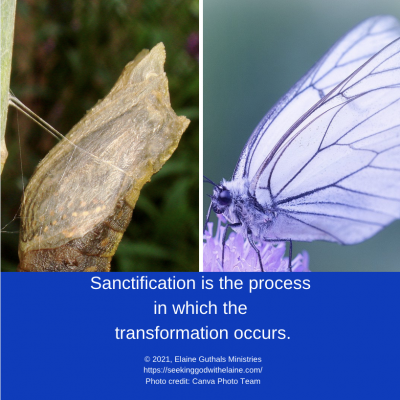
  • Focusing Completely on God

    We’ve been looking at focusing our thoughts. This daily devotional looks at how focusing thoughts is just one type of focus we need.

    Nuggets

    • We have to follow God by focusing on His Word when He calls us to salvation.
    • Sin is considered a disease, so ABCDing heals our hearts from that disease.
    • We have to focus our eyes and ears on God along with our hearts and minds in order to direct where our feet go.

    To read devotions in the Redo for Godliness series, click the appropriate button below.

    Devotions in the How Do We Live Godly Lives? series

    Our last devotion in the How Do We Live Godly Lives? series, to me, ties everything we’ve been talking about together. We’ve been talking about our thoughts.

    But don’t use our minds alone. We use our hearts — in fact, all of us.

    Let’s take a look.

    “A fourth sort of directions is concerning good motions; whether they spring naturally from a gracious principle, or are peculiarly breathed in by the Spirit. There are ordinary bubblings of grace in a renewed mind, as there are of sins in an unregenerate heart; for grace is as active a principle as any, because it is a participation of the Divine nature. But there are other thoughts darted in beyond the ordinary strain of thinking, which, like the beams of the sun, evidence both themselves and their original. And as concerning these motions joined together, take these directions in short” (Charnock, The Sinfulness and Cure of Thoughts)

    Let’s Put It into Context

    We’ve been looking at Charnock’s sermon entitled The Sinfulness and Cure of Thoughts to show us how to cleanse, a.k.a. sanctify, our thought processes. Charnock has taught us

    • that we cleanse our thoughts when we return to having a strong relationship with God. We can do that by studying the Scriptures, meditating on God, contemplating on His creation, and praising Him.
    • that we focus our thoughts by being humble instead of prideful, following God instead of the worldview, working instead of being idle, and laboring for Him.
    • that we overcome our evil thoughts by burying ourselves in Scripture, relying on His omniscience and judgment, guarding our hearts and lips, evaluating ourselves, and recognizing evil thoughts, especially hating sin and resisting Satan. We do this by watching and praying.
    • that we focus our thoughts on good morals and keeping God’s laws and commandments; and we rejoice, pray, and be thankful.

    Resource

    Glossary

    Here is a running list of what we’ve discussed previously.

    Focusing on God

    “My son, pay attention to my words; listen closely to my sayings. Don’t lose sight of them; keep them within your heart” (Prov. 4: 20-21 CSB)

    “Refer them, if possible, to assist your morning meditation; that, like little brooks arising from several springs, they may meet in one channel, and compose a more useful stream” (Charnock, The Sinfulness and Cure of Thoughts)

    We have to follow God by focusing on His Word when He calls us to salvation.

    Scriptures provide us with God’s Word. We can imagine that they are God talking directly to us.

    Because He is. “All Scripture is breathed out by God and profitable for teaching, for reproof, for correction, and for training in righteousness” (II Tim. 3: 16 ESV).

    Yes, it may have been Paul, Moses, and all the others who hefted the pens. They only wrote what God directed them to write.

    That is one reason we need to pay attention to them. Sovereign God has decreed them.

    We also need to pay attention to them because, one day, we will be judged by those words. God has told us point blank how we will be judged.

    Being judged by the do’s and don’ts is secondary. The only question that has bearing on how we spend eternity will be have we ABCDed or not.

    The ABCDs of Salvation

    If you have not become a believer in Christ, please read through the
    Plan of Salvation and prayerfully consider what God is asking you to do.

    A – admit our sins
    B – believe His Son Jesus is our Redeemer
    C – confess God as Sovereign Lord

    D – demonstrate that commitment by making any changes needed in our lives to
    live the way in which God has called us

    The Disciple’s Job Description

    Solomon said that we need to pay attention. That means, first, they have to get our attention.

    Lawson noted that “the motives that call for our attention are exceedingly powerful.” Why wouldn’t they be powerful? The Heavenly Father is speaking to us.

    Resource

    What God is calling us to is salvation. He is calling us to change our characters to be like Him.

    To read a related devotion, click the button below.

    Focusing Our Hearts on God

    “For they are life to those who find them, and health to one’s whole body. Guard your heart above all else, for it is the source of life” (Prov. 4: 22-23 CSB).

    Sin is considered a disease, so ABCDing heals our hearts from that disease.

    God can and will heal us from our sins. But that is only the start.

    Once we are converted, we begin to navigate the Sanctification Road. That is how we change our character to imitate God’s.

    One thing we have to do while we are being sanctified is to guard our hearts. That is going to take patience and diligence.

    We’ve established the connection between our hearts and our thoughts/minds. The Christian Age expanded on that. They wrote, “The intellect is controlled by the heart more than the heart by the intellect. Men do not follow their thinkings, but their feelings, yet there are teachers proclaiming a religion of pure intellect, excluding the passions or feelings of the soul.”

    Resource

    God isn’t intending that we lose ourselves. Submitting to His Will does not make us less us.

    Our character comes from our hearts. But that creates a dilemma.

    “The heart is more deceitful than anything else, and incurable — who can understand it?” (Jer. 17: 9 CSB).

    If our nature is God’s nature, then we must diligently watch that we do not slip back into our old nature.

    But that also means that we also have to keep watch over our thoughts. Seed wrote, “The soul is ever busy and at work. There is no pause, no suspension of thought, at least while we are awake.”

    Resource

    Evil thoughts are going to pop up in our minds. Satan is going to try to get us to take an exit off the Sanctification Road.

    God doesn’t hold the temptations against us. He does if we cave into the temptation and commit the sin.

    God doesn’t hold the temptations against us. He does if we cave into the temptation and commit the sin.

    Distractions are just are frequent and are as difficult to corral as our thoughts. They are not considered sins while we strive to lessen their hold over us.

    Scriptures have several things to say about fixing — or setting — our minds on things above.

    • “Therefore, holy brothers and sisters, who share in the heavenly calling, fix your thoughts on Jesus, whom we acknowledge as our apostle and high priest” (Heb. 3: 1 NIV).
    • “Set your minds on things above, not on earthly things” (Col. 3: 2 CSB).

    To read a related devotion, click the button below.

    We can control our minds. Sharp wrote, “We have liberty of thinking, and may choose our own thoughts. It is in our power to determine what suggestions we will fix our minds upon.”

    Resource

    We can choose what our thoughts focus on, or that on which we refuse to dwell. It is up to us.

    God will help us.

    Sharp said it comes down to our morality.

    Focusing Everything on God

    “Don’t let your mouth speak dishonestly, and don’t let your lips talk deviously. Let your eyes look forward; fix your gaze straight ahead. Carefully consider the path for your feet, and all your ways will be established. Don’t turn to the right or to the left; keep your feet away from evil” (Prov. 4: 24-27 CSB)

    We have to focus our eyes and ears on God along with our hearts and minds in order to direct where our feet go.

    Well, we’ve talked about hearts and minds. Now, let’s talk about our mouths, eyes, and feet. Thomas even added ears into the mix.

    I liked the adjectives that Thomas put with ears and eyes. What he said we needed was an attentive ear and a steadfast eye/look.

    Resource

    To me, it combines all of these together. Speech is important but can be impacted by what we see or hear. What we see is important, but maybe we’ve heard or seen something that is contradicted that. It is easy to go down a wrong path.

    When we think about it, we must use all these parts together to function. We can use our eyes to see, but we need our minds to interpret what we are seeing and what that means to us. We aren’t going anywhere without our feet taking us.

    God calls us to submit our whole lives to Him. Not just our mouths and speech. Not just our minds and thoughts.

    God calls us to submit our whole lives to Him.

    God wants all of us to be changed to be like Him.

    Thomas also pointed out that we have a straightforward purpose. This “… grand purpose on which the eye of the soul shall be always fixed” is all about God.

    Resource

    We have to approach that purpose with persistent thoughtfulness. Thomas said we are to cut out impulse, prejudice, and tradition.

    Thomas’ point was we need to keep on a straight path to God. That means getting our character right.

    I think sometimes we make it harder than it is. Wardlaw wrote, “What is in these terms specially indicated is simplicity of principle and aim; singleness of motive; an upright, unswerving regard to duty. The path of duty is one. It is narrow and straight.”

    Resource

    Our focus has to be solely on God. Roberts reminded us that we need to have the faith of a child. Faith is the conviction that the doctrines revealed in God’s Word are true, even if we do not understand all aspects of them, a belief which impacts our lives.

    Resource

    focusing-completely-on-godPin

    Making the Connections

    Sharp reiterated that “no man is drawn to commit sin by any state or condition that God hath put him into, nor by any temptation, either outward or inward, that is presented to him. Our sin begins when we yield to the temptation. The sin becomes great as it grows into action.”

    Resource

    How Do We Apply This?

    • Use our thinking to meditate on God’s word and apply it to our own lives so we can choose Him in all we do.
    • Follow all God’s laws and commandments completely.
    • Diligently pursue holiness.
    • Watch our thoughts after trials and in the passion of anger.
    • Avoid situations, books, and music that tempt us.
    • Choose God’s way.
    • Avoid idleness and watch the company we keep.
    • Cut evil thoughts off early.
    • Meditate and pray.
    • Be discreet.
    • Seek God

    Resource

    Focusing our thoughts is an important component in focusing ourselves on God. Focusing our hearts, eyes, ears, feet – all of us – on God is important in our sanctification process.

    Father God. We want to focus on You. We want to learn to imitate You through the sanctification process. Amen.

    What do you think?

    Leave me a comment below (about this or anything else) or head over to my Facebook group for some interactive discussion.

    If you don’t understand something and would like further clarification, please contact me.

    If you have not signed up for the email daily or weekly providing the link to the devotions and the newsletter, do so below.

    If God has used this devotion to speak with you, consider sharing it on social media.