Author: admin

  • Before and After Spiritual Worship

    Spiritual worship isn’t a one-and-done event. This devotional reading looks at how we must prepare for spiritual worship and how we must respond to spiritual worship.

    Nuggets

    • We prepare our hearts for worship by seeking Him.
    • Spiritual worship shows us where our hearts and thoughts fail God.
    • Spiritual worship starts with our purity.

    We have finally reached the end of our discussion on spiritual worship. We’ve taken our time stepping through Charlock’s sermon entitle Spiritual Worship.

    In his conclusion, Charnock told us that we should examine our hearts before and after worship.

    Let’s Put It into Context

    To read devotions in the Habitual Holiness of Heart and Life theme, click the button below.

    Here is a running list of nuggets for the theme.

    Devotions in the Finding Jesus through Spiritual Worship study

    Here is a running list of nuggets for the study.

    The foundation of this series is Menander and Charnock’s Spiritual Worship.

    Resource

    The blue headings are Charnock’s words.

    Before Worship

    “My heart has heard you say, ‘Come and talk with me.’ And my heart responds, ‘LORD, I am coming’” (Ps. 27: 8 NLT)

    How are our hearts prepared to worship? Do we quicken our spirits? (Psalm 27:8.) Are our hearts fixed?

    We prepare our hearts for worship by seeking Him.

    I don’t know how many times in my life that I showed up to worship unprepared. I know I am not the only one.

    But what does it mean to be prepared?

    We have to seek God before we can worship Him.

    I love how the English Standard Version translates the verse. “You have said, “Seek my face.” My heart says to you, “Your face, LORD, do I seek.”

    We know all about seeking God. We’ve used this so many times, we have a graphic for it.

    Searching for and Seeking God

    Hearing His Word (Rom. 10: 17)
    Reading His Word (Rev. 1: 3)
    Praying to Him (Heb. 4: 16)
    Studying His Word (Ac. 17: 11)
    Meditating on His Word (Ps. 1: 1-2)
    Memorizing His Word (Ps. 119: 11)

    Brown pointed out the echo. God says, “Seek;” we say, “Seek.”

    Resource

    God mercifully calls us to salvation. Salvation is the gift of life through the deliverance from condemnation and sin to acceptance and holiness and changes us from being spiritually dead to spiritually alive.

    • Sin is not believing that Jesus is our Savior to save us from our actions by humans that disobey God and break one of His reasonable, holy, and righteous laws and commandments, goes against a purpose He has for us, or follows Satan’s promptings.
      ◦ Holy means to be set apart — because of our devotion to God — to become perfect, and morally pure while possessing all virtues and to serve and worship God.
      • Perfection means we reach a state of maturity because the combination of the spiritual graces form, when all are present, spiritual wholeness or completeness — holy, sanctified, and righteous.
        • Spiritual graces are worldly morals that have been submitted to God to further His kingdom instead of enhancing this world.
        • Sanctified means to be set free from sin.
        • Righteous means we are free from sin because we are following God’s moral laws.
      • Pure means not being sinful or having the stain of sin. 
      • Virtues are standards of moral excellence.
    • Holiness is the transcendent excellence of His nature that includes elements of purity, dedication, and commitment that lead to being set apart.
      • Purity means possessing God’s moral character, having eliminated the stain of sin.
    • Spiritual death is the spiritual separation from God that occurred as a consequence of Adam and Eve’s original sin.
      • The spiritually alive are those who have ABCDed, so they are no longer separated from God.

    The ABCDs of Salvation

    If you have not become a believer in Christ, please read through the
    Plan of Salvation and prayerfully consider what God is asking you to do.

    A – admit our sins
    B – believe His Son Jesus is our Redeemer
    C – confess God as Sovereign Lord

    D – demonstrate that commitment by making any changes needed in our lives to live the way in which God has called us

    The Disciple’s Job Description

    Glossary

    God calls us because salvation only comes from Him through Jesus, but we have to search for Him. In this search, He provides us the answers. We search for God the same way that we seek Him.

    We don’t know how God will call us. It could be through God’s Word, His Church, or His Spirit. However He chooses, He speaks to our souls.

    When God calls, we need to promptly answer. We need to do as He asks.

    That is the obedience for which God is looking. We don’t ask questions. We don’t doubt.

    We make a conscious decision to do what God says.

    We were created to worship God. So, it is our duty to believe in Him.

    But again, God allows us to choose. He gave us free will to do so. Free will is the ability within us to make decisions, which determine actions that produce character.

    Our focus must be on God so that we can hear this echo. Notice how short God’s part is. “Seek my face” (Ps. 27: 8 KJV) and “Come and talk with me.” (Ps. 27: 8 NLT).

    We get that focus by reading God’s Word, praying to Him – seeking Him.

    When we do all that, God through His grace will meet us as we worship Him.

    The echo must come from our hearts. Genuine spiritual worship comes from the heart.

    Thomson discussed length, also. He wrote, “Plainly faith does not require the complete revelation of the Bible to warrant and sustain its exercise. In general, it is not a long passage, but a short) sentence, like the point of an arrow striking the mark, or the edge of a sword cutting through and through by a single blow, that does it.”

    Resource

    How many times do we think we can’t witness because we don’t know God’s Word from cover to cover? We think our faith is too small. 


    hhis a gift from God and a work of the Spirit that enhances the conviction that the doctrines revealed in God’s Word are true, even if we do not understand all aspects of them, a belief which impacts our lives and distinguishes us from others.

    Glossary

    God is looking for a simple response. It is a practical and personal response.

    After Worship

    “As they listen, their secret thoughts will be exposed, and they will fall to their knees and worship God, declaring, ‘God is truly here among you’” (I Cor. 14: 25 NLT)

    How do we find our hearts after worship? How as to inward strength, humility, delight?

    Spiritual worship shows us where our hearts and thoughts fail God.

    We know that our hearts are wicked. “The human heart is the most deceitful of all things, and desperately wicked. Who really knows how bad it is?” (Jer. 17: 9 NLT).

    Worship is part of our sanctification process.

    How can we say that? Bull told us.

    • “He has no true knowledge of himself as a sinner.”
    • “Sin unknowingly committed as well as those willingly forgotten lie buried deep in the memory till the hour of revival.”
    • “Ignorant as we are of the depths of our own nature there is a limited but sufficient knowledge that we may obtain of ourselves.”

    Resource

    We don’t have a correct handle on sin. We aren’t going to understand and correct the things we need to until we worship God.

    I know. Some of us would rather our weaknesses and lack of knowledge and understanding not be the topic of discussion.

    That doesn’t help us. Only God cutting out any sin in our hearts and thoughts can bring us rest.

    So, worship is where we interact with God so that He can correct us. After worship, it is our duty to determine how God wants us to change.

    What? Are we saying worship isn’t so we are comforted? Isn’t it where we get the warm fuzzies?

    Comfort, yes. Warm fuzzies, no.

    God doesn’t validate us as who we are. He corrects us so that we can become like Him.

    As He shows us how to grow, God comforts us. He is with us and love us through our sanctification process.

    Who Can Worship?

    “Who may climb the mountain of the LORD? Who may stand in his holy place? Only those whose hands and hearts are pure, who do not worship idols and never tell lies” (Ps. 24: 3-4 NLT)

    For comfort. For exhortation.

    Spiritual worship starts with our purity.

    We question who can come to God. God wants all to be saved.

    • “The Lord is not slow to fulfill his promise as some count slowness, but is patient toward you, not wishing that any should perish, but that all should reach repentance” (II Pet. 3: 9 ESV).
    • “For I have no pleasure in the death of anyone, declares the Lord God; so turn, and live” (Ezek. 18: 32 ESV).
    • “For God so loved the world, that he gave his only Son, that whoever believes in him should not perish but have eternal life” (Jn. 3: 16 ESV).

    But when we see the answer — “Only those whose hands and hearts are pure, who do not worship idols and never tell lies” (Ps. 24: 4 NLT) — we wonder if anyone could ever fulfill that requirement. We may feel hopeless.

    Stuart explains the purity part. He said it means “Not only outward morality, but inward purity. His walk, his work, and his conversation must all be absolutely pure; he must be able to bridle his tongue, as well as keep his heart pure.”

    Resource

    Purity — being sinless — has to be complete. Our inward transformation must be seen in our outward walk. Our outward transformation must be because of an inward transformation.

    Every aspect of our lives must be pure. Our walk is how we live our lives, specifically our habitual state of mind, behavior, and manners. Works is generally considered as being the good things we do for others. When our lives and our actions are pure, so is what we talk about.

    Likewise, our worship must be pure. We must only worship God.

    It is only through our fellowship with God that we can attempt to be pure. Our attempts on our own will fail.

    The requirement of purity may seem to be an impossible one to attain. It is true we won’t obtain it in this life.

    We will become pure — perfect — when God calls His children home. This is the gift God will give us for submitting to Him.

    We will become pure — perfect — when God calls His children home.

    We can take comfort in the fact that God knows we will not be able to be totally pure in this lifetime. We must want to be pure and must be navigating the Sanctification Road so that we are getting closer to being pure.

    That should be a big motivator to worship God.

    before-and-after-spiritual-worshipFB

    Making the Connections #1

    Too many times, mankind fights God when He calls us to salvation.

    This resistance can run the gamut. It can go from flat out refusal on one end to lip service on the other end.

    God doesn’t want either of those responses. God wants our salvation to be genuine. He wants us to accept His gift.

    Making the Connections #2

    This series hasn’t been only about what spiritual worship is. It has also been about finding Jesus in our worship.

    But what does that mean?

    In the feeding the 5,000 episode of The Chosen, Jonathan Roumie as Jesus said that they were missing the need of repentance and righteousness. I think that is still true today.

    Repentance is acknowledging our separation from God and expressing sorrow for breaking God’s laws and commandments by making the commitment to change our sinful ways to ways of righteousness through obedience.

    • Obedience means submitting ourselves to the will of God as it is presented to us and living our lives accordingly.

    Righteousness is the indwelling goodness that is the result of a solid relationship with God built by a sincere life of conscientious obedience to God’s laws and commandments and from which all virtues flow.

    Glossary

    Worship means nothing if we haven’t genuinely ask Jesus to be our Savior and Redeemer and submit our will to God’s.

    How Do We Apply This?

    • Answer God promptly and genuinely.
    • Search for God to believe in Him and seek Him to grow closer to Him.
    • Acknowledge God’s sovereignty.
      Obey God.

    Resource

    Father God. Thank You for allowing us to worship You. Lord, we want to worship You in spirit and in truth. Grow us to worship You in purity, Amen.

    What do you think?

    Leave me a comment below (about this or anything else) or head over to my Facebook group for some interactive discussion.

    If you don’t understand something and would like further clarification, please contact me.

    If you have not signed up for the email providing the link to the devotions and the newsletter, do so below.

    If God has used this devotion to speak with you, consider sharing it on social media.
  • Spiritual Graces in Spiritual Worship

    Spiritual graces must be present for perfection. This devotional reading looks at how these spiritual graces are present in worship.

    Nuggets

    • Our spiritual graces show how we use or morals to worship God.
    • We must diligently worship the right way.

    As we look at completing our discussion of Menander and Charnock’s sermon Spiritual Worship, Charnock outlined how we make use of all we have considered. The last devotion looked at how we use the information we have gleaned.

    Resource

    Charnock has a second subpoint under his first point that we didn’t’ address in the last devotion. It has to do with diligence, which is a spiritual grace.

    The second point is examination.  It mainly talks about the before and after aspects of worship.

    But it also talks about spiritual graces.

    So, we are going to rearrange Charnock’s points. We’ll look at spiritual graces today and end our look at Charnock’s sermon in the next devotion with an overview of worship. We’ll end the study with the determination of how we find Jesus in our worship in the devotion after that.

    So, now that we have the game plan, let’s dig into spiritual graces.

    Let’s Put It into Context

    To read devotions in the Habitual Holiness of Heart and Life theme, click the button below.

    Here is a running list of nuggets for the theme.

    Devotions in the Finding Jesus through Spiritual Worship study

    Here is a running list of nuggets for the study.

    The foundation of this series is Menander and Charnock’s Spiritual Worship.

    Resource

    The blue headings are Charnock’s words.

    Spiritual Graces in Worship

    “And now, dear brothers and sisters, one final thing. Fix your thoughts on what is true, and honorable, and right, and pure, and lovely, and admirable. Think about things that are excellent and worthy of praise” (Phil. 4: 8 NLT)

    How do we act our graces in worship?

    Our spiritual graces show how we use or morals to worship God.

    Charnock didn’t give us a verse to support his question. But being good disciples, we should know what God wants.

    We’ve talked before about what spiritual graces are. I know this isn’t an exhaustive list, but we talked about having honesty, fairness, inner peace, forgiving, and purity while being diligent, sober, and hopeful.

    To read a devotion in the Morality Leads to Godliness series, click on the button below.

    I think I would add humility, obedience, patience, love, and detachment from the world.

    We see how that list forms our character, but what do they have to do with worship?

    Our worship must be true, honest worship of Sovereign God. Our focus must not be elsewhere. We worship God because we love Him.

    We must worship God because we believe He is Sovereign God. Worshiping Him because of Who He is must be the foundation. We would humbly worship Him.

    Worshiping God brings us inner peace. Part of this is because God is forgiving.

    We have to worship God in purity. If purity means without sin, our worship has to be true worship God’s way. We would be obedient in our worship.

    If sober means self-control, genuineness, and sound moral judgment as evidenced by a calm and temperate disposition, sober worship would follow those lines. I would say it would be respectful and consistent.

    Our worship of God brings us hope. True worship will be rewarded with eternal life.

    Diligence in Outward Worship

    “Write this letter to the angel of the church in Sardis. This is the message from the one who has the sevenfold Spirit of God and the seven stars: ‘I know all the things you do, and that you have a reputation for being alive — but you are dead’” (Rev. 3: 1 NLT)

    Diligence in outward worship is not to be rested in (Revelation 3:1).

    We must diligently worship the right way.

    Sardis was one of the churches that received a letter from Jesus in Revelation. That isn’t necessarily a good thing.

    On the surface, others could see that they loved God. They stood up to persecution. They had the works and the programs going that a church of God should have.

    The problem Jesus had with them was they were fake. They looked like they were doing what they were supposed to be doing.

    The operative word is looked. They really weren’t.

    We don’t know what the actual problem was. It could be they were Matthew 7: 21 people, formalists, or nominalists. It could be they had compromised with the world. It could be they were holding onto sin. It could be they tried for salvation without sanctification.

    • A formalist is a person who gives the appearance of being a disciple but, in reality, isn’t.
    • Nominal disciples are those boasting they love God without even trying to imitate Him — those who dig on religion and its rituals without having a change in heart.
    • Salvation is the gift of life through the deliverance from condemnation and sin to acceptance and holiness and changes us from being spiritually dead to spiritually alive.
      • Sin is not believing that Jesus is our Savior to save us from our actions by humans that disobey God and break one of His reasonable, holy, and righteous laws and commandments, goes against a purpose He has for us, or follows Satan’s promptings.
        • Holy means to be set apart — because of our devotion to God — to become perfect, and morally pure while possessing all virtues and to serve and worship God.
          • Perfection means we reach a state of maturity because the combination of the spiritual graces form, when all are present, spiritual wholeness or completeness — holy, sanctified, and righteous.
            • Spiritual graces are worldly morals that have been submitted to God to further His kingdom instead of enhancing this world.
            • Sanctified means to be set free from sin.
            • Righteous means we are free from sin because we are following God’s moral laws.
          • Pure means not being sinful or having the stain of sin. 
          • Virtues are standards of moral excellence.
      • Holiness is the transcendent excellence of His nature that includes elements of purity, dedication, and commitment that lead to being set apart.
        • Purity means possessing God’s moral character, having eliminated the stain of sin.
      • Spiritual death is the spiritual separation from God that occurred as a consequence of Adam and Eve’s original sin.
        • The spiritually alive are those who have ABCDed, so they are no longer separated from God.
    • Sanctification  is the transformational process of the mind, body, and soul, which begins with regeneration; gradually changes our nature and morals through the promptings of the Holy Spirit; and ends with perfected state of spiritual wholeness or completeness.
      • Regeneration is being changed from spiritually dead to spiritually alive and the internal new birth and requickening that God brings about through the work of the Holy Spirit to give us new character.

    Glossary

    The ABCDs of Salvation

    If you have not become a believer in Christ, please read through the
    Plan of Salvation and prayerfully consider what God is asking you to do.

    A – admit our sins
    B – believe His Son Jesus is our Redeemer
    C – confess God as Sovereign Lord

    D – demonstrate that commitment by making any changes needed in our lives to live the way in which God has called us

    The Disciple’s Job Description

    Mackennel thought they weren’t being diligent in their service of God. They didn’t follow through on their work for God. Their works weren’t complete.

    Oh, they were doing some work, but the work didn’t really honor God. “Wake up! Strengthen what little remains, for even what is left is almost dead. I find that your actions do not meet the requirements of my God” (Rev. 3: 2 NLT).

    All we know was that, regardless how the outside looked, Jesus saw their hearts, and they weren’t right.

    We know that diligence is important. It has several related words – consistency, perseverance, endurance, and discipline.

    Mackennel made a sad observation. He wrote, “The call to repentance, too, lacks something which we are accustomed to find in God’s appeals to His people: ‘Become watchful, and stablish the things,’ etc. There is no hint that what has perished may be restored.”

    Resource

    It doesn’t say watch. It says wake up.

    The one has us looking for the threat without. The one here has us looking for the threat within.

    We like the think that God is always near calling on us. We picture Jesus always knocking on our door. (Rev. 3: 20).

    Does God resign Himself that we aren’t going to repent and back off? He was still pleading with the church, but half-heartedly.

    Were some of the people of Sardis so mired in the sin that they couldn’t repent?

    But what does this say about Sardis’ worship? It would be easy to think that their motivation is wrong.

    Spiritual worship is about how God has called us to worship. It isn’t about us worshiping any way we desire.

    We must follow God’s leading and worship Him His way.

    We must follow God’s leading and worship Him His way.

    This is evidence that we can’t just be a good person. Rogers put it this way. He wrote, “Where the life of godliness fails, it were vain to look for its fruits.”

    Resource

    Being a disciple isn’t just in name only. We have to love God to be a disciple.

    When our worship is wrong, we lead others to worship wrong. We are to lead them to God, not away.

    We can’t be disciples in name only. We must be totally committed to God.

    spiritual-graces-in-spiritual-worshipFB

    Making the Connections

    Rogers talked about the slide the church at Sardis experienced. It had been a growing church. They were doing things the right way.

    The church had experienced a gradual decline, according to Rogers. It was so gradual that they didn’t realize it.

    That is how Satan gets a toe into our churches. He sneaks in. Then he takes over.

    Don’t think that, just because we have experienced salvation, that this doesn’t happen. This halos when there is salvation without sanctification.

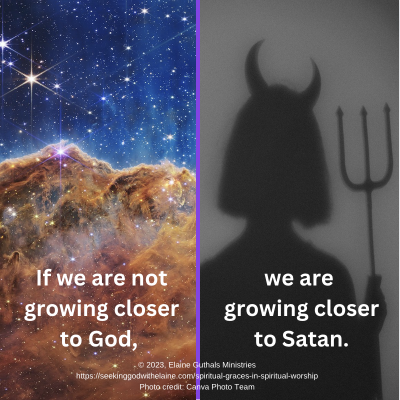
    If we are not growing closer to God, we are growing closer to Satan.

    If we are not growing closer to God, we are growing closer to Satan.

    We know we can’t earn salvation, but works play a part in sanctification. This shows us it really isn’t about our actions. Our motivation is as important as what we are trying to accomplish.

    What we are trying to accomplish must be kingdom related, not world elevation.

    Rogers tells us why that is so important. He wrote, “This [having a reputation of being alive but being dead] is displeasing to Christ, because of its gross inconsistency, because of the false aspect which it gives to His kingdom before the world, and because of the [dishonor] which it casts upon the office of the Spirit of God.”

    Resource

    Our worship must honor God, or it isn’t worship.

    How Do We Apply This?

    • Let Jesus see, when He looks at our hearts, that they are right.
    • Stick to what God has called us to do.
    • Learn what we are doing wrong and correct it.
    • Learn what we can and should be doing and do it.
    • Be committed to Christ.
    • Seek God to access the means of revival.

    Resource

    Father God. We praise You as the holy, righteous Sovereign God. Lord, we worship You with our lives. Amen.

    What do you think?

    Leave me a comment below (about this or anything else) or head over to my Facebook group for some interactive discussion.

    If you don’t understand something and would like further clarification, please contact me.

    If you have not signed up for the email providing the link to the devotions and the newsletter, do so below.

    If God has used this devotion to speak with you, consider sharing it on social media.
  • Promise of a Lifetime

    Today is a music day. To read and hear the song, click here.

    Today was a kind of off day. I am going to blame it on the heat. It was 104 degree when Pastor Steve headed to work this afternoon.

    The move is all completed except for getting the boxes unpacked here. We’ve definitely gotten a smaller place.

    So, I am going to do a music day today. This is the song I am going to sing Sunday at our 5th Sunday All Music Service. I hope I can keep the words in mind!

    I think this will speak to several members who are going through a rough patch. I hope it gives you hope.

    Promise of a Lifetime
    Vocalist: Elaine Guthals
    Keyboard: Louise Guthals Weiss

    promise-of-a-lifetime-5FB

    What do you think?

    Leave me a comment below (about this or anything else) or head over to my Facebook group for some interactive discussion.

    If you don’t understand something and would like further clarification, please contact me.

    If you have not signed up for the email daily or weekly providing the link to the devotions and the newsletter, do so below.

    If God has used this devotion to speak with you, consider sharing it on social media.
  • If Spiritual Worship be Required

    Spiritual worship is very important. This devotional reading looks at how we use the information we gain to worship God.

    Nuggets

    • It is our duty, obligation, and privilege to worship God.
    • When we do not worship God – when we don’t even acknowledge Him – our sinful nature reigns unchallenged.
    • When we don’t use our knowledge to worship God, we live far away from Him.

    We’ve been studying about spiritual worship. To do this, we’ve been looking at Menander and Charnock’s sermon Spiritual Worship.

    Resource

    We are about to the end. In this last section of the sermon, Charnock begins his discussion of how we make use of this.

    Charnock’s first point was that we use what we have learned for information. How do we use what we have learned to worship God?

    How sad their state who, so far from giving it, render no worship at all.

    We were created to worship God, so when we don’t worship Him, we go against our purpose. That makes a sad state of affairs.

    Let’s Put It into Context

    To read devotions in the Habitual Holiness of Heart and Life theme, click the button below.

    Here is a running list of nuggets for the theme.

    Devotions in the Finding Jesus through Spiritual Worship study

    Here is a running list of nuggets for the study.

    The foundation of this series is Menander and Charnock’s Spiritual Worship.

    Resource

    The blue headings are Charnock’s words.

    Worship because of Creation

    “Worship the LORD with gladness. Come before him, singing with joy. Acknowledge that the LORD is God! He made us, and we are his. We are his people, the sheep of his pasture.” (Ps. 100: 2-3 NLT)

    Worship is founded on creation (Psalm 100:2, 3), and man in no state can be exempted.

    It is our duty, obligation, and privilege to worship God.

    Because God is Sovereign God, He is worthy of our praise. Because He is our Creator, it is our duty to worship Him.

    The obligation comes when we must worship God with our hearts, not just our lips. We must submit totally to Him — and be sincere.

    Smith put it this way. He wrote, “Our outward worship must be verified and substantiated by inward truth; and this can only be done as we serve God in spirit, principle, life, action, and thus with the whole man show forth His praise.

    Resource

    Our worship must flow from our love of God. “For when we place our faith in Christ Jesus, there is no benefit in being circumcised or being uncircumcised. What is important is faith expressing itself in love” (Gal. 5: 6 NLT).

    People get wonky on the submission part. We shouldn’t.

    When God asks us to submit, He is asking us to follow His laws and commandments. All are ones we can keep.

    No, we sin and break God’s laws at times. However, we can choose to obey them and be successful.

    The psalmist said that we should worship the Lord with gladness. We shouldn’t consider submission a hard yolk. “For my yoke is easy, and my burden is light” (Mt. 11: 30 ESV).

    It is our privilege to worship God because He has redeemed us. He demands, as Smith said, that we worship Him in righteousness and love. Righteousness is the indwelling goodness that is the result of a solid relationship with God built by a sincere life of conscientious obedience to God’s laws and commandments and from which all virtues flow. God’s righteousness is the result of His being pure, how He pardons those who genuinely repent through the gospel. God’s purity stems from the fact that He cannot sin.

    We worship God for Who He is and what He has done for us.

    Worship because of Protection

    “Hear the word of the LORD, O people of Israel! The LORD has brought charges against you, saying: ‘There is no faithfulness, no kindness, no knowledge of God in your land. You make vows and break them; you kill and steal and commit adultery. There is violence everywhere — one murder after another” (Hos. 4: 1-2 NLT)

    Where there is no acknowledgment of God, the gate is open for all sin (Hosea 4:1, 2; Genesis 4:16).

    When we do not worship God – when we don’t even acknowledge Him – our sinful nature reigns unchallenged.

    By nature, we have sinful natures. These became part of us when Adam and Eve originally sinned.

    God charges us with our sins. He cannot associate with sinful creatures.

    These sins undermine our worship.

    We think, after conversion, that we can’t sin. We also think that God has forgiven us of all our sins, so everything is okay.

    We forget about the sanctification process. Sanctification is the transformational process of the mind, body, and soul, which begins with regeneration; gradually changes our nature and morals through the promptings of the Holy Spirit; and ends with perfected state of spiritual wholeness or completeness.

    • Regeneration is being changed from spiritually dead to spiritually alive and the internal new birth and requickening that God brings about through the work of the Holy Spirit to give us new character.
      • Spiritual death is the separation from God that occurred as a consequence of Adam and Eve’s original sin.
        • The spiritually alive are those who have ABCDed, so they are no longer separated from God.
    • Perfection means we reach a state of maturity because the combination of the spiritual graces form, when all are present, spiritual wholeness or completeness — holy, sanctified, and righteous.
      • Spiritual graces are worldly morals that have been submitted to God to further His kingdom instead of enhancing this world.
      • Sanctified means to be set free from sin.
      • Righteous means we are free from sin because we are following God’s moral laws.

    The ABCDs of Salvation

    If you have not become a believer in Christ, please read through the
    Plan of Salvation and prayerfully consider what God is asking you to do.

    A – admit our sins
    B – believe His Son Jesus is our Redeemer
    C – confess God as Sovereign Lord

    D – demonstrate that commitment by making any changes needed in our lives to live the way in which God has called us

    The Disciple’s Job Description

    Glossary

    God has forgiven us of our sins, but He does not exempt us from our cleansing.

    Instead, we are to look to God’s Word for truth. Burroughs shows us how. He wrote, “The knowledge that any truth is the Word of the Lord is a special means to prepare the heart to receive it with reverence and all due respect, even though it be hard and grievous to flesh and blood.”

    Resource

    We prepare our hearts for worship when we read God’s Word. We focus on God when we listen to Him. That helps us focus on Him.

    Worship because of Proximity

    “So Cain left the LORD’s presence and settled in the land of Nod, east of Eden” (Gen. 4: 16 NLT)

    When we don’t use our knowledge to worship God, we live far away from Him.

    Charnock’s next example drew from the story of Cain and Abel. Cain, the son of Adam and Eve, killed his brother Abel because God accepted Abel’s sacrifice but not his.

    No, nothing much has changed. We kill for what seems like inconsequential reasons.

    But if we look at it through God’s lens, we see that Cain’s worship was off. We don’t know exactly why his offering was unacceptable to God.

    We just know that it was.

    We can’t offer worship to God that is not acceptable to Him. We just talked about this in the last devotion.

    God tells us in His Word what is acceptable worship. We have to be knowledgeable about what is and isn’t acceptable.

    Exell reminded us that Cain lived a life after this sin. He had a wife to help him. He associated with other people.

    Resource

    But Cain was cut off from God. That is the worst punishment that there is.

    We want to stay close to God so that we can worship Him as we grow in our faith.

    if-spiritual-worship-be-requiredFB

    Making the Connections

    “I know all the things you do, that you are neither hot nor cold. I wish that you were one or the other!” (Rev. 3: 15 NLT)

    Where there is no acknowledgment of God, the gate is open for all sin (Hosea 4:1, 2; Genesis 4:16).

    Worship to a false God, or in a false way, is better than none at all.

    Charnock said something that echoed what Jesus said. He wants us to be either hot or cold toward Him.

    I know. That seems kind of funny at first glance. Of course, Jesus wants us to decide to follow Him.

    Regardless of what we decide, though, Jesus wants us to do just that – decide. He wants us to make up our minds regarding Him.

    Until we decide and confess that we believe Jesus is our Savior and Redeemer, He can’t be. We won’t gain salvation until we ask Him to save us.

    This is a yes or no question. Either we believe and submit, or we don’t.

    Being lukewarm opens us up to being Matthew 7: 21 people.

    Making the Connections

    Humphrey gave us the reason why we are to want to worship God. He wrote, “Because the service itself is holy, ennobling, and in its very nature joy-inspiring. To be in harmony with God, to be engaged in His service, seeking to raise men out of the ignorance, guilt, and misery of sin — how blessed is such service.”

    Resource

    Worshiping God makes us joyful!

    How Do We Apply This?

    • Be humble and teachable.
    • Resist the pull of the world.
    • Become as a child.
    • Look forward to 24/7/365/eternity worship in Heaven.

    Resource

    Father God. We worship You. Thank You for providing us with knowledge so that we can learn how You want us to worship You. Amen.

    What do you think?

    Leave me a comment below (about this or anything else) or head over to my Facebook group for some interactive discussion.

    If you don’t understand something and would like further clarification, please contact me.

    If you have not signed up for the email providing the link to the devotions and the newsletter, do so below.

    If God has used this devotion to speak with you, consider sharing it on social media.
  • God’s End in Sanctification

    In the last devotion, we discussed that God redeemed us so that we may worship Him. This devotional reading looks at how sanctification refines us after redemption.

    Nuggets

    • We must go through a refining process in order to worship God.
    • God will only accept genuine spiritual worship.

    We can only worship God after we have been redeemed. But that isn’t the end.

    We must be sanctified so that we are like God. That enhances our worship.

    Let’s Put It into Context

    To read devotions in the Habitual Holiness of Heart and Life theme, click the button below.

    Here is a running list of nuggets for the theme.

    Devotions in the Finding Jesus through Spiritual Worship study

    Here is a running list of nuggets for the study.

    The foundation of this series is Menander and Charnock’s Spiritual Worship.

    Resource

    The wording in blue is Charnock’s words.

    What Is Sanctification

    “He will sit like a refiner of silver, burning away the dross. He will purify the Levites, refining them like gold and silver, so that they may once again offer acceptable sacrifices to the LORD” (Mal. 3: 3 NLT)

    To have this worship is God’s end in redemption and sanctification.

    We must go through a refining process in order to worship God.

    The refining process is used to explain the sanctification process. There are similarities.

    Gold and silver, two precious metals, are both refined. When they are, they are used as a standard of value.

    Refining is important in the sanctification process. Sanctification  is the transformational process of the mind, body, and soul, which begins with regeneration; gradually changes our nature and morals through the promptings of the Holy Spirit; and ends with perfected state of spiritual wholeness or completeness.

    • Regeneration is being changed from spiritually dead to spiritually alive and the internal new birth and requickening that God brings about through the work of the Holy Spirit to give us new character.
      • Spiritual death is the separation from God that occurred as a consequence of Adam and Eve’s original sin.
        • The spiritually alive are those who have ABCDed, so they are no longer separated from God.
    • Perfection means we reach a state of maturity because the combination of the spiritual graces form, when all are present, spiritual wholeness or completeness — holy, sanctified, and righteous.
      • Spiritual graces are worldly morals that have been submitted to God to further His kingdom instead of enhancing this world.
      • Sanctified means to be set free from sin.
      • Righteous means we are free from sin because we are following God’s moral laws.

    The ABCDs of Salvation

    If you have not become a believer in Christ, please read through the
    Plan of Salvation and prayerfully consider what God is asking you to do.

    A – admit our sins
    B – believe His Son Jesus is our Redeemer
    C – confess God as Sovereign Lord

    D – demonstrate that commitment by making any changes needed in our lives to live the way in which God has called us

    The Disciple’s Job Description

    Glossary

    Goadby explained the reason why. He wrote “There is proof of the need of purification in the superstitious clinging to that which is old, merely because it is old; the vain reverence for a dead past. A painful evidence of corruption is seen in imperfect obedience to the truth.”

    Resource

    That statement has a lot of great points in it. The first one is that there is verification for the requirement of our refining.

    It is easy for some to say we don’t need to be sanctified. We don’t think we need to change.

    That goes along with the second part. Changing is all about switching from the old to the new. We are changing to meet the new standard — God’s standard.

    It isn’t a flip-the-switch deal. It takes time and incremental steps.

    Refinement and sanctification are processes. Certain tests need to be run to make sure the process is going well. God wants us to evaluate where we are at on the Sanctification Road.

    The goal of both processes is to remove the impurities and make us/the metals pure. Mankind has a sinful nature that needs to be removed so that we can associate with God once more.

    Why are we in need of sanctification? We need it just as much now as people in Malachi’s day needed it.

    Also, we still need it for the same reasons. Smyth explained those reasons. He wrote, “A proud and self-righteous pharisaism had supplanted all true spirituality of worship, and attention even to the outward forms of piety had become little better than a name.”

    Resource

    Mankind is proud. We are proud of our abilities and our accomplishments.

    Unfortunately, that can tend to make us become self-righteous. We feel we are always right.

    But it doesn’t stop there. We think others must think the same way we do.

    This was the same thing the Pharisees did. They rewrote God’s Word by adding a lot of laws that God didn’t say or even intend.

    However impure mankind is, God is always looking to refine us. That can only start when we accept His offer of salvation.

    Salvation is the gift of life through the deliverance from condemnation and sin to acceptance and holiness and changes us from being spiritually dead to spiritually alive.

    • Sin is not believing that Jesus is our Savior to save us from our actions by humans that disobey God and break one of His reasonable, holy, and righteous laws and commandments, goes against a purpose He has for us, or follows Satan’s promptings.
      • Holy means to be set apart — because of our devotion to God — to become perfect, and morally pure while possessing all virtues and to serve and worship God.
    • Holiness is the transcendent excellence of His nature that includes elements of purity, dedication, and commitment that lead to being set apart.
      • Purity means possessing God’s moral character, having eliminated the stain of sin.

    Glossary

    The bottom line is we need refining because we have sinned. God offers us salvation and a process through which we can be refined.

    Acceptable Worship

    “And you are living stones that God is building into his spiritual temple. What’s more, you are his holy priests. Through the mediation of Jesus Christ, you offer spiritual sacrifices that please God” (I Pet. 2: 5 NLT)

    Other worship cannot be acceptable, God being a Spirit

    God will only accept genuine spiritual worship.

    The Israelites and Jews put great store in their temple, especially Solomon’s temple. Skinner said that even Paul held it in high esteem. He wrote, “In his Epistle to the Ephesiansb Paul seizes hold of the idea [that its association interpenetrated their religious life and [colored] their teaching,] to illustrate the stability, the growth, and the grandeur of the Church.”

    Resource

    Peter, too, would have felt the same way. We’ve talked before that Jesus and the apostles were good Jewish men. (Yes, I even count Matthew in there even though he was a tax collector.)

    In this passage, Peter tells us that we disciples are the living stones. We are that of what the Church is made.

    Some might not want to be compared to the stones. In that day, they probably would have been uncut, making them all different shapes and sizes.

    We think of rocks being strong and durable. However, being out in the elements, they may have been discolored. There was a good chance they got muddy.

    Sounds like us, doesn’t it? We can quickly point out all of our imperfections and flaws.

    But Jesus comes to us as we are. He sees the worthiness and beauty in us.

    Fortunately, Jesus doesn’t leave us as we are. Once we ask Him to be our Savior and Redeemer, we start on the Sanctification Road.

    We know it is God sanctifying us. The world may like to think it is us following all of the self-help books, but we know that we could never become as God is on our own.

    When the stones are put together, such as the living stones united to form the Church, we see beauty and function. We see disciples imitating the character of God. We see the Church completing the Great Commission while following the greatest commandments.

    Are the stones all going to be the same size? Probably not. Are they going to be exactly alike? Again, probably not.

    My uncle got some stone from my grandfather and used it to build his house. They were probably the same stone because he got it from the same place, but they weren’t the same size.

    Mom and Dad retired to town and lived in a brick house. The bricks on the rows were staggered. That meant on some of the rows, the bricks had to be cut in half.

    The stones and the bricks had to be glued together by mortar. That had to fill the holes. (Even if they had been the same size, mortar would have been used.)

    Disciples won’t be at the same place on the Sanctification Road. Even those of the same age and same background won’t.

    Our faith is individual. It is between God and us where we are at and how He is going to get us where we are going.

    We have to individually and collectively worship God. It was His plan all along that we were made to worship Him.

    We may not know or understand the totality of God’s plan for us, but we are to worship Him. Even through the trials, we are to worship Him anyway.

    I love how Thomas put it. Regardless of the distance, regardless of the circumstances, regardless of the religious systems, regardless of our mental state, we must worship God anyway.

    Thomas had a great conclusion to his sermon. He wrote, “There is more of God to be seen in the true Church than anywhere else under heaven. In nature you see His handicraft, in saints you see His soul.”

    Resource

    We are to reflect God. Because of that, it should be our desire to worship Him.

    gods-end-in-sanctificationFB

    Making the Connections

    Findlay made a great observation. Peter expected all believers to be members of a church. Even if the stone is on the church grounds, it can’t be part of the temple building if it isn’t mortared in.

    Resource

    Too many believers think they can worship at home and not be associated with a church. This viewpoint seemed to be validated during the COVID shutdowns.

    That is not what God expects of us.

    How Do We Apply This?

    • Understand as living stones we have a position in the Church, but we have to understand our position and importance.
    • God chooses what that position and importance will be, so we have to submit to His Will.
    • Be a member of God’s Church.

    Resources

    Father God. Lord, we want to become like You. Sanctify us so that we may worship You in spirit and truth. Amen.

    What do you think?

    Leave me a comment below (about this or anything else) or head over to my Facebook group for some interactive discussion.

    If you don’t understand something and would like further clarification, please contact me.

    If you have not signed up for the email providing the link to the devotions and the newsletter, do so below.

    If God has used this devotion to speak with you, consider sharing it on social media.

  • Redemption in Spiritual Worship

    God knew there would be no spiritual worship after the original sin if He did not provide a way for mankind to be restored to Him. This devotional reading looks at how worship verifies our redemption.

    Nuggets

    • Jesus suffered in order to provide mankind redemption.
    • Jesus could provide redemption for us because He never sinned.
    • Jesus suffered physical death, but the spirit is more important than the physical body.

    Mankind was created to worship Him, weren’t we?

    In order to get us to where we could worship Him, God designed the Plan of Salvation. His Plan provided for our redemption.

    Let’s Put It into Context

    To read devotions in the Habitual Holiness of Heart and Life theme, click the button below.

    Here is a running list of nuggets for the theme.

    Devotions in the Finding Jesus through Spiritual Worship study

    Here is a running list of nuggets for the study.

    The foundation of this series is Menander and Charnock’s Spiritual Worship.

    Resource

    The wording in blue is Charnock’s words.

    God’s End in Redemption

    “Christ suffered for our sins once for all time. He never sinned, but he died for sinners to bring you safely home to God. He suffered physical death, but he was raised to life in the Spirit.” (I Pet. 3: 18 NLT)

    To have this worship is God’s end in redemption and sanctification.

    Jesus suffered in order to provide mankind redemption.

    Mankind was created to worship God. Unfortunately, we disobeyed God’s one instruction.

    We lost the most important thing we had — a relationship with God.

    There was only one way that relationship could be restored. The penalty for sins had to be paid.

    There was only One Person Who was able to pay the price. That is God’s Son, Jesus. Only He could make atonement for them.

    Only the shedding of Jesus’ blood would pay the penalty. “For God in all his fullness was pleased to live in Christ, and through him God reconciled everything to himself. He made peace with everything in heaven and on earth by means of Christ’s blood on the cross” (Col. 1: 19-20 NLT).

    So, the cause of Jesus’ suffering was our sins.

    We can’t think that, because Jesus was 100% God, He didn’t suffer. He was also 100% man.

    He did suffer.

    Jesus knew exactly what He was getting into when He was arrested. Crucifixion was a common punishment for the day.

    That didn’t stop Jesus. He voluntarily died on the cross.

    Why did God go through all of this? Wilson told us why. He wrote that our being brought to God “Implies [our] being brought into a state of reconciliation and [favor] with God.

    Resource

    God chose to offer us the Plan of Salvation. It is up to us to accept it.

    Salvation is the gift of life through the deliverance from condemnation and sin to acceptance and holiness and changes us from being spiritually dead to spiritually alive.

    • Sin is not believing that Jesus is our Savior to save us from our actions by humans that disobey God and break one of His reasonable, holy, and righteous laws and commandments, goes against a purpose He has for us, or follows Satan’s promptings.
      • Holiness is the transcendent excellence of His nature that includes elements of purity, dedication, and commitment that lead to being set apart.
        • Purity means possessing God’s moral character, having eliminated the stain of sin.
      • Spiritual death is the spiritual separation from God that occurred as a consequence of Adam and Eve’s original sin.
        • The spiritually alive are those who have ABCDed, so they are no longer separated from God.

    The ABCDs of Salvation

    If you have not become a believer in Christ, please read through the
    Plan of Salvation and prayerfully consider what God is asking you to do.

    A – admit our sins
    B – believe His Son Jesus is our Redeemer
    C – confess God as Sovereign Lord

    D – demonstrate that commitment by making any changes needed in our lives to live the way in which God has called us

    The Disciple’s Job Description

    Glossary

    Now think about it. Many in Jesus’ day thought suffering was the result of sin. Jesus’ suffering clearly shows us that is not the case.

    It is only through Jesus’ suffering and atonement that we gain access to God. We are forgiven of our sins, making us holy and righteous. We can only have communion with God when we are pure as He is.

    Holy means to be set apart — because of our devotion to God — to become perfect, and morally pure while possessing all virtues and to serve and worship God.

    • Perfection means we reach a state of maturity because the combination of the spiritual graces form, when all are present, spiritual wholeness or completeness — holy, sanctified, and righteous.
      • Spiritual graces are worldly morals that have been submitted to God to further His kingdom instead of enhancing this world.
      • Sanctified means to be set free from sin.
      • Righteous means we are free from sin because we are following God’s moral laws.
    • Pure means not being sinful or having the stain of sin. 
    • Virtues are standards of moral excellence.

    Glossary

    The great thing is Jesus had to suffer only once. True, it has been said that Jesus suffered from the cradle to the grave.

    But Jesus died only once to provide us salvation. We may continue to sin after conversion, but that doesn’t mean Jesus had to die again.

    Jesus died once so that everyone had the opportunity to be redeemed.

    McKay reminded us that God’s original creation of mankind did not have suffering as a purpose. Suffering was a result of the original sin.

    Resource

    It was always in the Plan that the Messiah would suffer.

    What did Jesus teach us by His suffering? It shows that we do not have be afraid of suffering.

    The pain will hurt. It may be deadly.

    We need to focus on the purpose. Jesus’ purpose of withstanding the suffering was to provide us salvation. Our purpose of withstanding the suffering is to become like Him.

    Jesus’ purpose of withstanding the suffering was to provide us salvation. Our purpose of withstanding the suffering is to become like Him.

    We think that suffering is bad. There is good that comes out of the pain.

    We learn much as we go through suffering. New ways are seen, and thought processes are changed.

    Conquering these sufferings are beneficial. We find out what we can withstand and celebrate our victories.

    But we have to watch how we approach these sufferings. Yes, we withstand — but only when we depend on God.

    Our sufferings aren’t about us and how strong we are. They are about how dependent we are on God.

    God’s End in Power

    “… He never sinned, but he died for sinners to bring you safely home to God …” (I Pet. 3: 18 NLT)

    Jesus could provide redemption for us because He never sinned.

    Why was Jesus the only One Who could pay the penalty for our sins? He was the only One Who hasn’t sinned. He was the only just Person.

    Everyone else has chosen to disobey God. Jesus was the only One totally obedient.

    If it were anyone else, we would say that it isn’t fair He was being punished for something He didn’t do. That isn’t justice in our minds.

    Well, let me take that back. Too many people think they are entitled to sin. They quibble with what is and isn’t a sin.

    Only God can say what is or isn’t a sin. Everyone has sinned (Rom. 3: 23).

    Thomas made a very good point. Yes, Jesus suffered. Yes, Jesus was innocent and still suffered greatly.

    Jesus was still victorious.

    Resource

    We can’t lose sight of the fact Jesus was suffering for us.

    And not just for us, but for us who are sinners. “But God showed his great love for us by sending Christ to die for us while we were still sinners” (Rom. 5: 8 NLT).

    Jesus was just; we aren’t. He died for us anyway.

    This shows us how much Jesus loves us.

    Think about us being unjust. It doesn’t make any qualifications.

    Murderers. Liars. Adulterers. The proud. All are equally unjust.

    It is our job as disciples to reach those who haven’t heard of Jesus’ love and sacrifice.

    God’s End in Spiritual Worship

    “… He suffered physical death, but he was raised to life in the Spirit.” (I Pet. 3: 18 NLT)

    Jesus suffered physical death, but the spirit is more important than the physical body.

    Yes, Jesus suffered a painful, humiliating death. But He was resurrected.

    Look at what Leighton said. He wrote, “Under this second phrase, His human nature and His Divine nature and power are distinguished. But the ‘Spirit’ here opposed to the ‘flesh,’ or body, is certainly of a higher nature and power than the human soul, which cannot of itself return to re-inhabit and quicken the body.

    Resource

    Jesus could not raise Himself from the grave. Only God could do that.

    God could have designed the Plan of Salvation to be fulfilled in some other way than death. He could have saved Jesus from death.

    But that was the Plan.

    Leighton proposed that Jesus’ death had to be violent to show it as a form of punishment. He had to be condemned to death for crimes – especially crimes He did not make.

    Our sufferings are not more extraordinary than Jesus’. He still suffered even though He was God.

    But what does all of this have to do with spiritual worship? We will not want to worship God until we are redeemed.

    We show we are redeemed because of our spiritual worship.

    redemption-in-spiritual-worshipFB

    Making the Connections #1

    Redemption is all about God’s forgiveness. Forgiveness is, when we ask, the act of God pardoning us because we have shown repentance for breaking His laws and commandments, which allows us to become holy as He is.

    • Repentance is acknowledging our separation from God and expressing sorrow for breaking God’s laws and commandments by making the commitment to changing ourselves through obedience so that we no longer do the wrong things.

    Glossary

    We have to watch how we define forgiveness, though. It can’t by the world’s definition.

    Look how Wilson described it. He wrote,

    “Some people think it is enough to ask pardon. Others think the way of pardon is to be sorry for their sins. Others think the way of pardon is trying to be as good as they can — saying their prayers, and striving to do what is right. Now the gospel way of pardon, though it might be said to include all these, is yet different from them all. It is very simple.”

    Resource

    This is a peak into the next devotion. Forgiveness leads to redemption, but sanctification must be associated.

    Making the Connections #2

    We said that the purpose of redemption is so that our relationship with God can be restored. Thomas said that we are restored in thought will, resemblance, and fellowship.

    Resource

    That is a comprehensive list.

    That tells me we have to be totally committed to God.

    How Do We Apply This?

    • Show our love for Christ at the heart level.
    • Hate sin.
    • Seek God.
    • Do everything in Jesus’ name.
    • Repent of our sins and ask forgiveness.

    Searching for and Seeking God

    Hearing His Word (Rom. 10: 17)
    Reading His Word (Rev. 1: 3)
    Praying to Him (Heb. 4: 16)
    Studying His Word (Ac. 17: 11)
    Meditating on His Word (Ps. 1: 1-2)
    Memorizing His Word (Ps. 119: 11)

    Resources

    Father God. Thank You for redeeming us. We want our relationships with You to be restored. When they are, we will worship You without ceasing. Amen.

    What do you think?

    Leave me a comment below (about this or anything else) or head over to my Facebook group for some interactive discussion.

    If you don’t understand something and would like further clarification, please contact me.

    If you have not signed up for the email providing the link to the devotions and the newsletter, do so below.

    If God has used this devotion to speak with you, consider sharing it on social media.

  • God’s Approach to Man in Worship

    The wonderful thing about Sovereign God is He doesn’t keep Himself totally separated from us. This devotional reading looks at how God approaches us and keep us in His presence.

    Nuggets

    • God has no problem coming to us.
    • We must prepare to be in His presence for all eternity.

    What a wonderful God we serve! He is Sovereign God, yet He wants to have a genuine relationship with us.

    To do that, God approaches us. He sanctifies us to be in His presence.

    Let’s Put It into Context

    To read devotions in the Habitual Holiness of Heart and Life theme, click the button below.

    Here is a running list of nuggets for the theme.

    Devotions in the Finding Jesus through Spiritual Worship study

    Here is a running list of nuggets for the study.

    The foundation of this series is Menander and Charnock’s Spiritual Worship.

    Resource

    The words in blue are Charnock’s words.

    God Approaches Us

    “Then the LORD told Moses, “Go down and prepare the people for my arrival. Consecrate them today and tomorrow, and have them wash their clothing. Be sure they are ready on the third day, for on that day the LORD will come down on Mount Sinai as all the people watch” (Ex. 19: 1-11 NLT)

    There is in worship an approach of God to man.

    God has no problem coming to us.

    We might think that Sovereign God wouldn’t want to have anything to do with lowly mankind. We would be wrong.

    God has always come down to us. He was face to face with Adam and Eve in the Garden of Eden. He was in the cloud by day and the pillar of fire by night, leading the Wilderness Wanderers to the Promised Land.

    Most importantly, God came down in the form of Jesus. He willingly came down, died, and rose again so that the penalty for our sins could be paid.

    I love what Hughes said. He wrote, “The true Mediator is as ready to sanctify His people as God would have Him.”

    Resource

    We know God wants all to be saved. “The Lord is not slow to fulfill his promise as some count slowness, but is patient toward you, not wishing that any should perish, but that all should reach repentance” (II Pet. 3: 9 ESV).

    Salvation is the gift of life through the deliverance from condemnation and sin to acceptance and holiness and changes us from being spiritually dead to spiritually alive.

    • Sin is not believing that Jesus is our Savior to save us from our actions by humans that disobey God and break one of His reasonable, holy, and righteous laws and commandments, goes against a purpose He has for us, or follows Satan’s promptings.
      • Holy means to be set apart — because of our devotion to God — to become perfect, and morally pure while possessing all virtues and to serve and worship God.
        • Perfection means we reach a state of maturity because the combination of the spiritual graces form, when all are present, spiritual wholeness or completeness — holy, sanctified, and righteous.
          • Spiritual graces are worldly morals that have been submitted to God to further His kingdom instead of enhancing this world.
          • Sanctified means to be set free from sin.
          • Righteous means we are free from sin because we are following God’s moral laws.
        • Pure means not being sinful or having the stain of sin. 
        • Virtues are standards of moral excellence.
    • Holiness is the transcendent excellence of His nature that includes elements of purity, dedication, and commitment that lead to being set apart.
      • Purity means possessing God’s moral character, having eliminated the stain of sin.
    • Spiritual death is the spiritual separation from God that occurred as a consequence of Adam and Eve’s original sin.
      • The spiritually alive are those who have ABCDed, so they are no longer separated from God.

    Repentance is acknowledging our separation from God and expressing sorrow for breaking God’s laws and commandments by making the commitment to change our sinful ways to ways of righteousness through obedience.

    • Obedience means submitting ourselves to the will of God as it is presented to us and living our lives accordingly.

    Glossary

    But Hughes wasn’t talking salvation. Salvation isn’t the end.

    Hughes was talking sanctification. It is the restoration process.

    Sanctification is the transformational process of the mind, body, and soul, which begins with regeneration; gradually changes our nature and morals through the promptings of the Holy Spirit; and ends with perfected state of spiritual wholeness or completeness.

    • Regeneration is being changed from spiritually dead to spiritually alive and the internal new birth and requickening that God brings about through the work of the Holy Spirit to give us new character.

    Glossary

    When we navigate the Sanctification Road, we follow Jesus’ command that we become sanctified.  “So Moses went down to the people. He consecrated them for worship, and they washed their clothes” (Ex. 19: 14 NLT).

    Consecration is the process of being set apart. We are to be set apart for worship.

    Breay explained how that works. He wrote,

    “God gets at the mind through the senses; and He doubtless intended to instruct the people by this act that their minds should be purified, and their hearts prepared for His service. And to us it points out the necessity of our hearts being cleansed from sin, from the defilement and the love of it, before we can serve the Lord acceptably; it teaches us also that we must not rush heedlessly into the presence of God, even in private prayer. This becoming reverence for the presence of the Divine Majesty will likewise show itself in our [demeanor] in the house of God.”

    Resource

    God makes His presence known not just by dropping thoughts into our minds. He uses all our senses to get our attention and get us in gear.

    From the get-go, a response is required. Our first response is to accept the gift of salvation.

    • “God saved you by his grace when you believed. And you can’t take credit for this; it is a gift from God. Salvation is not a reward for the good things we have done, so none of us can boast about it” (Eph. 2: 8-9 NLT).
    • “If you openly declare that Jesus is Lord and believe in your heart that God raised him from the dead, you will be saved. For it is by believing in your heart that you are made right with God, and it is by openly declaring your faith that you are saved” (Rom. 10: 9-10 NLT).

    After we have gained salvation, our response is to serve God and others.

    We have to prepare for worship. If God Himself is approaching us, we have to know we are in the best possible place to welcome Him.

    • We have to repent of our sins.
    • We need to be focused on Him.
    • We should be excited to be spending time with Him.
    • It is important that we are navigating the Sanctification Road.

    Why is it important that we are being sanctified? It is because, by being sanctified, we are becoming holy and righteous.

    We only gain access to God after we have sincerely repented. God can’t let us into His throne room until we are set to leave our sins behind.

    Dale believed we need an intense passion for holiness in order to live in God’s eternal kingdom.

    Resource

    We have to have made a sincere profession of faith. That is shown by a genuine desire and intentional submission to God’s plan for our lives.

    God will be with us every step of our journey.

    God Is Present

    “The distance around the entire city will be 6 miles. And from that day the name of the city will be ‘The LORD Is There’” (Ezek. 48: 35 NLT)

    Ought not our spirits to be prepared to receive Him?

    We must prepare to be in His presence for all eternity.

    We talked a little bit about preparation in the last section. The verse in Ezekiel takes it to the next level.

    This is the last verse describing Ezekiel’s vision of what New Jerusalem looks like. The main attraction is that God is present.

    Piggybacking on the last section, Aitken reiterated that preparation centers around renewing our hearts.

    Renewing our hearts is another way to describe sanctification. Mankind was one way in the Garden of Eden. Sin happened, and we changed.

    We need to change back so that our character will be more like God’s.

    If we aren’t in the process of sanctification, God is not with us. Aitken addressed that. He wrote, “Again and again, throughout the Word of God, we have it directly asserted, or incidentally implied, that God dwells, by His Holy Spirit, in the hearts of true believers, and that He dwells in them to form within them the New Adam, to develop the nature and spirit of Christ.”

    Resource

    That really speaks to those who think they can make a profession of faith so that they have fire insurance, but not do anything about it. We must change our character to God’s.

    If we don’t renew our hearts, we are not sanctified. If we are not sanctified, we are not holy. If we are not holy, we will not be admitted to eternal life with God.

    We will spend eternity in hell.

    To read a devotion in the Hell Does Have Fury series, click on the button below.

    Newton told us why God’s presence is so important.

    • It is an unveiled presence.
    • It is a transformed presence.
    • It is a satisfying presence.
    • It is a progressive presence.
    • It is an eternal presence.

    Resource

    If we look at God’s presence in these terms, we see His presence is a blessing. He is with those who are faithful to Him.

    gods-approach-to-man-in-worshipFB

    Making the Connections #1

    I have to chase a rabbit for a second. Spurgeon said something that took me on a scenic root. He wrote, “What a glorious state this world was in at the very first, in the age of Paradise, for the Lord was there! ‘The Lord God walked in the garden in the cool of the day,’ and communed with man; and man, being innocent, held high converse with his condescending Maker. The topstone of the bliss of Paradise was this all-comprehending privilege — ‘The Lord is there.’”

    Resource

    Spurgeon talked about the age of Paradise. He was talking about the Garden of Eden.

    Jesus told the repentant thief on the cross that he would be with Him today in Paradise. Not Heaven, Paradise.

    Read Spurgeon’s last sentence again. “The topstone of the bliss of Paradise was this all-comprehending privilege — ‘The Lord is there.’”

    Paradise is Paradise because God is there. Heaven is Paradise because God is there.

    Bottom line is don’t get hung up whether it is Heaven or Paradise. The most important thing is God is there.

    Making the Connections #2

    Read what Aitken said about how it is when God is not present. It’s long, but he nailed it when he wrote,

    “The man of the world awakes in the morning with no sense of the presence of his God: he may hurry through some form of devotion, but the Lord is not there. The world rushes in with all its thronging cares and busy excitements, and the battle of the day is fought, but the Lord is not there; and when he lays his head on his pillow at night, while he forms his schemes for the future, or congratulates himself on the past, it still remains true the Lord is not there. Years roll on, and the life without God draws towards its close; human nature loses its charms, the affections become [paralyzed], the genial enthusiasm of youth is a dream of the past, the barren routine of habit has [fossilized] all the higher faculties of the soul; but while the transient loveliness of humanity fades away, the sad truth still remains, ‘the Lord is not there.’ When the last scene comes, there may be weeping friends around the bedside of the dying sinner, and some may speak oft the kindliness of his disposition, and some may tell how he ever did his duty to wife, and child, and friend; but the curtain falls upon the last scene in the sad drama of a wasted life, inscribed with the melancholy sentence, ‘The Lord is not there!’ Follow his receding form, if your inward sight can penetrate so far into the dreary regions of eternal hopelessness, and as you gaze with horror into the blank solitude into which he plunges, can you not catch that distant cry, of agony which wanders like an everlasting echo through the deep night of hell, ‘The Lord is not here!’ ‘The Lord is not here!’”

    Resource

    That is so sad. The despair people will feel when they realize they were wrong when they said there is no God or He doesn’t matter.

    God is real. He does matter. His Word tells us exactly what He expects from us —submission and obedience.

    Is that where you are at?

    How Do We Apply This?

    The ABCDs of Salvation

    If you have not become a believer in Christ, please read through the
    Plan of Salvation and prayerfully consider what God is asking you to do.

    A – admit our sins
    B – believe His Son Jesus is our Redeemer
    C – confess God as Sovereign Lord

    D – demonstrate that commitment by making any changes needed in our lives to live the way in which God has called us

    The Disciple’s Job Description

    Searching for and Seeking God

    Hearing His Word (Rom. 10: 17)
    Reading His Word (Rev. 1: 3)
    Praying to Him (Heb. 4: 16)
    Studying His Word (Ac. 17: 11)
    Meditating on His Word (Ps. 1: 1-2)
    Memorizing His Word (Ps. 119: 11)

    Father God. You are an awesome God! Thank You for allowing us into Your presence. Thank You for changing us so that we can. Help us as we navigate the Sanctification Road, so that we may spend eternity with You. Amen.

    What do you think?

    Leave me a comment below (about this or anything else) or head over to my Facebook group for some interactive discussion.

    If you don’t understand something and would like further clarification, please contact me.

    If you have not signed up for the email providing the link to the devotions and the newsletter, do so below.

    If God has used this devotion to speak with you, consider sharing it on social media.

  • When We Don’t Use Our Gifts in Spiritual Worship

    We worship God by using the gifts He gave us to glorify Him. This devotional reading looks at when we refuse to use our gifts to serve God and give Him, instead, lip service.

    Nuggets

    • If we don’t use the talents and gifts God has given us, we sin and do not worship Him.
    • True spiritual worship means we are not formalists or nominalists.

    It is our duty to worship God. There are times, though, when we slip up.

    We withhold using our spiritual gifts. We give lip service instead.

    Not good.

    Let’s Put It into Context

    To read devotions in the Habitual Holiness of Heart and Life theme, click the button below.

    Here is a running list of nuggets for the theme.

    Devotions in the Finding Jesus through Spiritual Worship study

    Here is a running list of nuggets for the study.

    The foundation of this series is Menander and Charnock’s Spiritual Worship.

    Resource

    Charnock’s words are in blue.

    Our Purpose

    “God has given each of you a gift from his great variety of spiritual gifts. Use them well to serve one another” (I Pet. 4: 10 NLT)

    To withhold our spiritual faculties is to deny them the end and use for which they were given.

    If we don’t use the talents and gifts God has given us, we sin and do not worship Him.

    God has given each of us talents and abilities through His grace. He doesn’t give us these just so we have them.

    We are to use these gifts to worship Him. If we don’t use them to His glory, we sin.

    God does not give each of us every gift. Also, while God can give several disciples the same gift, He gives them to us at differing levels.

    • “The seed that fell on good soil represents those who truly hear and understand God’s word and produce a harvest of thirty, sixty, or even a hundred times as much as had been planted!” (Mt. 13: 23 NLT).
    • “He gave five bags of silver to one, two bags of silver to another, and one bag of silver to the last — dividing it in proportion to their abilities. He then left on his trip” (Mt. 25: 15 NLT).

    Why is it so important for disciples to use their gifts? A sermon in the Homiletic Quarterly gave the following explanation: “A ministry without ministerial gifts is a machine incapable of moving, even if the power were there.”

    Resource

    The focus is wrong, rendering the gifts ineffective. We have a responsibility to use our God-given gifts correctly.

    The Bishop of Lichfield talked about this. He said mankind are moral beings, which enlightens, instructs, counsels, and exhorts. He wrote, “I have dwelt upon these points because it seems to me that in these days there is a tendency to lay the foundations of moral conduct and of the religious life rather in the emotions and affections than in the demands of conscience and the obedience of the will. By such methods the sense of responsibility is inevitably weakened, and our duties, both mortal and religious, become only a higher kind of self-gratification.”

    Resource

    It isn’t about being a moral person and self-gratification. It is about submitting our Will to God, obeying Him, and serving one another. It is about doing God’s good rather than the world’s evil.

    Good, in the biblical sense, is the workings of God within His people through His holy, pure, and righteous behavior.

    • Holy means to be set apart — because of our devotion to God — to become perfect, and morally pure while possessing all virtues.
      • Perfection means we reach a state of maturity because the combination of the spiritual graces form, when all are present, spiritual wholeness or completeness — holy, sanctified, and righteous.
        • Spiritual graces are worldly morals that have been submitted to God to further His kingdom instead of enhancing this world.
        • Sanctified means to be set free from sin.
        • Righteous means we are free from sin because we are following God’s moral laws.
      • Pure means not being sinful or having the stain of sin. 
      • Virtues are standards of moral excellence.

    Evil is equated with sin because it is that which goes against God and His purposes.

    • Sin is not believing that Jesus is our Savior to save us from our actions by humans that disobey God and break one of His reasonable, holy, and righteous laws and commandments, goes against a purpose He has for us, or follows Satan’s promptings.

    Glossary

    In other words, we worship God by using our gifts to serve other disciples. Remember, James was talking to the church who — along with the Jews —had been dispersed across several nations. He isn’t talking about serving non-believers.

    That being said, we do use our gifts to serve non-believers. We use them God’s way, not the world’s way, to witness to them.

    We are stewards of the gifts God gives us, not owners. A steward is a person in a subordinate position to God who has been given the responsibility to manage a skill or possession for the purpose of expanding His kingdom.

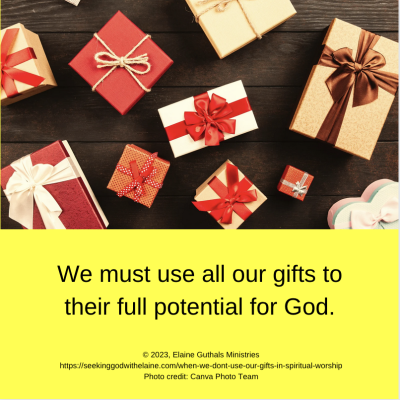
    We must use all our gifts to their full potential for God.

    We must use all our gifts to their full potential for God.

    We have a tendency to downplay these gifts — if not deny them altogether.  God doesn’t want that. That doesn’t grow His kingdom.

    Luckily with practice, we get better using these gifts. We need to use these gifts within the church to serve other disciples.

    We can’t lose sight of the true purpose of the gifts. Yes, they are to be used to serve others. But their true purpose is to help sanctify us.

    Our purpose is to worship God.

    Our Engagement

    “These people honor me with their lips, but their hearts are far from me” (Mt. 15: 8 NLT)

    Without the engagement of our spirits, no act is an act of worship. The posture of the body is best to testify to the affection of the mind.

    True spiritual worship means we are not formalists or nominalists.

    Our worship of God must be true worship. It can’t be lip service.

    We’ve talked before about how God does not accept lip service. In other words, we can’t be formalists or nominal disciples.

    • A formalist is a person who gives the appearance of being a disciple but, in reality, isn’t.
    • Nominal disciples are those boasting they love God without even trying to imitate Him — those who dig on religion and its rituals without having a change in heart.

    I can see a lot of overlap in these. To me, the term formalist is the overarching title. The term nominal disciple is the description of who formalists are.

    Another term to describe them is they are self-righteous. They feel like they are morally superior.

    This kind of goes along with the last section. Spiritual worship is more than just doing the actions of being a good person.

    We have to be fully engaged to be a disciple of Christ.

    It is believing that we are in need of a Savior because we have sinned, that we can’t save ourselves, Jesus is the only one Who can save us, and we have to acknowledge God as Sovereign Lord.

    I like how Zollikofer put it. We have to have “… confession of the mouth and confession of the life …”

    Resource

    That reinforces that we can’t just have head knowledge. We have to have heart-knowledge.

    Charnock put it this way. He wrote, “God asks for the heart in worship, and commands outward ceremonies, as subservient to inward worship, and goads and spears unto it.”

    Resource

    Our belief in God has to make a difference in our lives. It has to change who we are, what we do, and why we do it.

    In another sermon, Zollikofer gave a list of what worship doesn’t mean.

    • It doesn’t mean a strong devotion induced by knowledge.
    • It doesn’t mean a checklist of religious ceremonies.
    • It doesn’t mean abstinence of the don’ts.

    Resource

    Sanctity is all about the change to become like God because we have submitted our lives to Him.

    Sanctity is all about the change to become like God because we have submitted our lives to Him.

    Spiritual worship is about getting the focus right and getting the outcome right.  The focus has to be about God. The outcome is about the inward transformation that manifests itself in the outward walk.

    It has to have a substance to it.

    when-we-dont-use-our-gifts-in-spiritual-worshipFB

    Making the Connections #1

    These two points were hooked together with the two points in the last devotion, entitled God’s Nature and Our Nature. We have already mentioned it, but we have to make the connection.

    We are given gifts to be used to navigate the Sanctification Road. Sanctification is the transformational process of the mind, body, and soul, which begins with regeneration; gradually changes our nature and morals through the promptings of the Holy Spirit; and ends with perfected state of spiritual wholeness or completeness.

    • Regeneration is being changed from spiritually dead to spiritually alive and the internal new birth and requickening that God brings about through the work of the Holy Spirit to give us new character.
      • Spiritual death is the separation from God that occurred as a consequence of Adam and Eve’s original sin.
        • The spiritually alive are those who have ABCDed, so they are no longer separated from God.

    The ABCDs of Salvation

    If you have not become a believer in Christ, please read through the
    Plan of Salvation and prayerfully consider what God is asking you to do.

    A – admit our sins
    B – believe His Son Jesus is our Redeemer
    C – confess God as Sovereign Lord

    D – demonstrate that commitment by making any changes needed in our lives to live the way in which God has called us

    The Disciple’s Job Description

    Glossary

    The gifts are worthless is we do not use them to imitate God. We must become as He is.

    Making the Connections #2

    We need to look at the context of the Matthew 15: 8 verse. Jesus was talking to Pharisees here. They had made up all these different commandments and were trying to pass them off as God’s commandments.

    We can apply this two ways in today’s world.

    The first was is today’s Pharisees can be disciples. When God is indifferent about something, but we believe it, we can add commandments of our own. We are trying to get others to believe as we do.

    That is wrong. “Accept other believers who are weak in faith, and don’t argue with them about what they think is right or wrong” (Rom. 14: 1 NLT).

    Yes, they may be wrong — but we may be wrong. Either way, it is wrong to rewrite God’s Word to our way of thinking.

    The second way to look at this is today’s Pharisees can be non-believers. Let me explain that.

    No, worldview people haven’t made a profession of faith. But they can be as exacting as the Pharisee’s as to how disciples should believe and act.

    And that is based on their beliefs, not God’s.

    Rogers talked about three commandments of men.

    • The same as God’s.
    • The opposite of God’s or impede His laws and commandments.
    • Indifferent of what God has or hasn’t commanded.

    Resource

    We have to be careful that we worship God’s way.

    How Do We Apply This?

    • Be sincere and honest.
    • Seek God.
    • Have the right motivations.
    • Repent.
    • Don’t get caught up in the ritual and miss the meaning.
    • Rely on God’s power.
    • Meditate in Him.
    • Avoid temptations that will take our focus off God.
    • Prepare before we act.
    • Be dedicated to our service for God.
    • Remember the consequences of being formalists and nominal disciples.
    • Make God the true object of our worship.
    • Worship God His way.
    • Worship Him completely.
    • Utilize all the spiritual graces in our worship.
    • Worship God in Jesus’ name.

    Searching for and Seeking God

    Hearing His Word (Rom. 10: 17)
    Reading His Word (Rev. 1: 3)
    Praying to Him (Heb. 4: 16)
    Studying His Word (Ac. 17: 11)
    Meditating on His Word (Ps. 1: 1-2)
    Memorizing His Word (Ps. 119: 11)

    Resource

    Father God. We want our worship of You to be genuine and sincere. We don’t want to give You lip service. We want to use the gifts You have given us to expand Your kingdom. Amen.

    What do you think?

    Leave me a comment below (about this or anything else) or head over to my Facebook group for some interactive discussion.

    If you don’t understand something and would like further clarification, please contact me.

    If you have not signed up for the email providing the link to the devotions and the newsletter, do so below.

    If God has used this devotion to speak with you, consider sharing it on social media.

  • God’s Nature and Our Nature

    Our spiritual worship depends on how aligned God’s nature and our nature are. This devotional reading looks at becoming holy as He is through wisdom and understanding.

    Nuggets

    • Our spiritual worship must stem from our quest for godly wisdom and understanding.
    • Our spiritual worship must stem from Who God is and His difference from us.

    Here we go again. Charnock has given us some points in his sermon that he did not give supporting verses.

    So, we have to wing it to determine what Charnock was trying to say. I am going to have to divide this into this devotion and the next one.

    Let’s Put It into Context

    To read devotions in the Habitual Holiness of Heart and Life theme, click the button below.

    Here is a running list of nuggets for the theme.

    Devotions in the Finding Jesus through Spiritual Worship study

    Here is a running list of nuggets for the study.

    The foundation of this series is Menander and Charnock’s Spiritual Worship.

    Resource

    Charnock’s words are in blue.

    Understanding God

    We cannot else act towards God according to the nature of rational creatures.

    “Tune your ears to wisdom, and concentrate on understanding. Cry out for insight and ask for understanding. Search for them as you would for silver; seek them like hidden treasures. Then you will understand what it means to fear the Lord, and you will gain knowledge of God.” (Prov. 2: 2-5 NLT)

    Our spiritual worship must stem from our quest for godly wisdom and understanding.

    First off, we have to determine what else means. That is going to take a second because else can either mean besides or instead.

    • We cannot besides act towards God according to the nature of rational creatures.
    • We cannot instead act towards God according to the nature of rational creatures.

    Okay. I guess we have to figure out what nature of rational creatures means before that. I would guess that is discussing our human nature.

    Let’s look at the second one first. We cannot continue to act in our human nature towards God.

    God wants all to accept the gift of salvation. Salvation is the gift of life through the deliverance from condemnation and sin to acceptance and holiness and changes us from being spiritually dead to spiritually alive.

    • Sin is not believing that Jesus is our Savior to save us from our actions by humans that disobey God and break one of His reasonable, holy, and righteous laws and commandments, goes against a purpose He has for us, or follows Satan’s promptings.
      • Holy means to be set apart — because of our devotion to God — to become perfect, and morally pure while possessing all virtues and to serve and worship God.
        • Perfection means we reach a state of maturity because the combination of the spiritual graces form, when all are present, spiritual wholeness or completeness — holy, sanctified, and righteous.
          • Spiritual graces are worldly morals that have been submitted to God to further His kingdom instead of enhancing this world.
          • Sanctified means to be set free from sin.
          • Righteous means we are free from sin because we are following God’s moral laws.
        • Pure means not being sinful or having the stain of sin. 
        • Virtues are standards of moral excellence.
    • Holiness is the transcendent excellence of His nature that includes elements of purity, dedication, and commitment that lead to being set apart.
      • Purity means possessing God’s moral character, having eliminated the stain of sin.
    • Spiritual death is the spiritual separation from God that occurred as a consequence of Adam and Eve’s original sin.
      • The spiritually alive are those who have ABCDed, so they are no longer separated from God.

    The ABCDs of Salvation

    If you have not become a believer in Christ, please read through the
    Plan of Salvation and prayerfully consider what God is asking you to do.

    A – admit our sins
    B – believe His Son Jesus is our Redeemer
    C – confess God as Sovereign Lord

    D – demonstrate that commitment by making any changes needed in our lives to live the way in which God has called us

    The Disciple’s Job Description

    Glossary

    In order to accept the Plan of Salvation, we need to repent. Repentance is acknowledging our separation from God and expressing sorrow for breaking God’s laws and commandments by making the commitment to change our sinful ways to ways of righteousness through obedience.

    • Obedience means submitting ourselves to the will of God as it is presented to us and living our lives accordingly.

    Glossary

    Back to our bullet points. We know that it is a true statement that we have no access to God when our sinful natures reign in our lives. We will not act differently toward Him until we submit our lives to Him.

    “ If you openly declare that Jesus is Lord and believe in your heart that God raised him from the dead, you will be saved. For it is by believing in your heart that you are made right with God, and it is by openly declaring your faith that you are saved” (Rom. 10: 9-10 NLT).

    If we look at acting in line with our human nature in addition to acting with our spiritual nature, we can see how that is applied. God doesn’t want us to be ruled by two masters. “No one can serve two masters. For you will hate one and love the other; you will be devoted to one and despise the other. You cannot serve God and be enslaved to money” (Mt. 6: 24 NLT).

    Either way we take the bullet points is correct. So, how do we get to salvation.

    Solomon told us that we get to wisdom by fearing the Lord.

    Wisdom is an enlightened acceptance of God’s principles, gained through knowledge, fear, discernment, and good sense, that is put into practice through salvation, increasing our goodness and virtue.

    • Discernment means we can evaluate the situation and recognize right from wrong. 
    • The fear of the Lord means awe, reverence and love, not terror.

    Goodwin put it this way. He wrote, “He who would know God aright must love Wisdom and humbly and vigorously seek after her.” God’s wisdom is different from the world’s wisdom.

    Resource

    In other words, only those who fear God are truly wise. Taylor gave us the steps to gain wisdom.

    • Have a teachable heart.
    • Concentrate on understanding what is revealed to us.
    • Pray to God.
    • Seek God.

    Resource

    To read a related devotion, click the button below.

    Spiritual worship is when we cry out for this knowledge and understanding. We are looking for knowledge and understanding that only God can supply.

    Our Natures

    “For the Scriptures say, ‘You must be holy because I am holy’” (I Pet. 1: 16 NLT)

    Spiritual worship is due to God because of His nature, and from us because of ours.

    Our spiritual worship must stem from Who God is and His difference from us.

    Let’s go back to talking about how our nature is different from God’s. God is holy — we aren’t.

    Candlish had an interesting sermon. He noted some things God’s holiness couldn’t be if His holiness is different than ours. It can’t be

    • Innocence
    • Ignorance of wrong.
    • Absence (or abstinence) of wrong.
    • Several self’s — self-restraint, self-denial, and self-mortification.

    Resource

    Look at that list. The last three are negatives. That isn’t what being a disciple is about.

    Being a disciple focuses on the positive — having a relationship with God, become more like Him, and the presence of grace.

    Another positive is that holiness is about imitation. We have to imitate God’s moral attributes by imitating Jesus.

    Clarke put it this way. He wrote, “If true religion consists in the imitation of God, and all imitation of God is of necessity confined to His moral perfections only, then it hence evidently follows that moral virtue is the chief end of religion, and that to place the main stress of religion in anything else besides true virtue is superstition.”

    Resource

    This positive holiness has to get down to the heart level. It has to permeate our lives.

    We just have to make sure it is God’s moral attributes and spiritual graces that we are imitating and not the world’s morals. We also have to make sure that we have all of God’s spiritual graces. That is the only way we attain perfection.

    gods-nature-and-our-natureFB

    Making the Connections

    Worship must be totally focused on God. We can’t compromise God’s laws and commandments.

    That means our goal is to become righteous and holy. We can do that only when we become as God is.

    We do that by looking for God’s wisdom and understanding. We have to submit our own to Him.

    How Do We Apply This?

    • ABCD
    • Imitate Jesus, Who imitated God.

    Father God. You are holy and righteous. We are not. We want to imitate You, so that we gain Your moral character. Amen.

    What do you think?

    Leave me a comment below (about this or anything else) or head over to my Facebook group for some interactive discussion.

    If you don’t understand something and would like further clarification, please contact me.

    If you have not signed up for the email providing the link to the devotions and the newsletter, do so below.

    If God has used this devotion to speak with you, consider sharing it on social media.

  • A Twist on Best Spiritual Worship

    God provides for us, causing us to worship Him. This devotional reading looks at how animals give us their best and how God gives His best through the Plan of Salvation and the promise of eternal life.

    Nuggets

    • Animals provide for mankind.
    • God provides His best for mankind by offering us the Plan of Salvation.
    • God provides His best for mankind by offering us eternity.

    I don’t know about this devotion. Charnock didn’t give us verses to clue us in to what he was thinking.

    And what Charnock gave us is out there in first read.

    I was considering skipping it, but we’ll see where it takes us.

    Let’s Put It into Context

    To read devotions in the Habitual Holiness of Heart and Life theme, click the button below.

    Here is a running list of nuggets for the theme.

    Devotions in the Finding Jesus through Spiritual Worship study

    Here is a running list of nuggets for the study.

    The foundation of this series is Menander and Charnock’s Spiritual Worship.

    Resource

    The headings on the first two sections are Charnock’s words.

    All Creatures Serve Man

    “All the animals of the earth, all the birds of the sky, all the small animals that scurry along the ground, and all the fish in the sea will look on you with fear and terror. I have placed them in your power. I have given them to you for food, just as I have given you grain and vegetables” (Gen. 9: 2-3 NLT)

    Animals provide for mankind.

    Well, the heading is almost Charnock’s words. He actually wrote, “All creatures serve man, by the Providential order, with their best.”

    Resource

    From the start, mankind was to have supremacy over the animals. “Then God said, ‘Let us make human beings in our image, to be like us. They will reign over the fish in the sea, the birds in the sky, the livestock, all the wild animals on the earth, and the small animals that scurry along the ground’” (Gen. 1: 26 NLT).

    We know the animals didn’t necessarily fear Adam. “So the Lord God formed from the ground all the wild animals and all the birds of the sky. He brought them to the man to see what he would call them, and the man chose a name for each one” (Gen. 2: 19 NLT).

    At least, they didn’t fear Adam on the day he named them. I guess an argument could be made as to whether each and every animal came to Adam. Was Adam naming the species dog, or was he naming them Rover, Spot, and Puddles?

    We don’t want to put too much emphasis on our domination over the animals, but we do need to keep it in perspective. “You have given him dominion over the works of your hands; you have put all things under his feet, all sheep and oxen, and also the beasts of the field, the birds of the heavens, and the fish of the sea, whatever passes along the paths of the seas. O Lord, our Lord, how majestic is your name in all the earth!” (Ps. 8: 6-9 ESV).

    Mankind has been given authority over animals. That doesn’t mean we can be cruel to them.

    It means mankind is higher on the pyramid than animals.

    When we read the verses in Genesis 9, we know God gave the animals to Noah and his family to eat. He was providing for mankind’s continued presence on earth.

    Leale made an interesting observation. He gave the following list of what else it did.

    1. “Raises the relation between the sexes above all degrading associations.
    2. “Tends to promote the stability of society.
    3. “Promotes the tender charities of life.”

    Resource

    Part of me says, “Now, how did he get that out of the verse?” Oh, we get #2. That tries in with providing mankind’s continued presence on earth.

    #1 and #3 look like they are a stretch.

    But remember, we are talking about best here. There is no qualification made on animals of the earth. It does say all.

    So, there is no distinction between gender.

    Hopefully, that will promote the charity between mankind and animals.

    God Has Served Man with His Best

    “‘For I know the plans I have for you,’ says the Lord. ‘They are plans for good and not for disaster, to give you a future and a hope’” (Jer. 29: 11 NLT)

    God provides His best for mankind by offering us the Plan of Salvation.

    It kind of threw me at first to read that God served man with His best. We usually think about God giving us what is good, but not best.

    Think about it, though. Mather reminded us all that God has done for us. He wrote,

    “Try to think of the future of God’s lost children in the light of what He has done for them. If we consider it in the light of the Incarnation of the Son, His heavenly teaching, His mighty works, and His voluntary sufferings, we shall never despair. Think further of what God is doing through His Spirit; for He is through His Spirit enlightening men’s minds, leading them to the truth, convincing them of sin, and purifying the nature and perfecting the character of believers.”

    Resource

    The best God could give us was the birth, death, and resurrection of His Son. By no other way could we gain salvation.

    “For Jesus is the one referred to in the Scriptures, where it says, ‘The stone that you builders rejected has now become the cornerstone.’ There is salvation in no one else! God has given no other name under heaven by which we must be saved” (Ac. 4: 11-12 NLT).

    Salvation is the gift of life through the deliverance from condemnation and sin to acceptance and holiness and changes us from being spiritually dead to spiritually alive.

    • Sin is not believing that Jesus is our Savior to save us from our actions by humans that disobey God and break one of His reasonable, holy, and righteous laws and commandments, goes against a purpose He has for us, or follows Satan’s promptings.
      • Holy means to be set apart — because of our devotion to God — to become perfect, and morally pure while possessing all virtues and to serve and worship God.
        • Perfection means we reach a state of maturity because the combination of the spiritual graces form, when all are present, spiritual wholeness or completeness — holy, sanctified, and righteous.
          • Spiritual graces are worldly morals that have been submitted to God to further His kingdom instead of enhancing this world.
          • Sanctified means to be set free from sin.
          • Righteous means we are free from sin because we are following God’s moral laws.
        • Pure means not being sinful or having the stain of sin. 
        • Virtues are standards of moral excellence.
    • Holiness is the transcendent excellence of His nature that includes elements of purity, dedication, and commitment that lead to being set apart.
      • Purity means possessing God’s moral character, having eliminated the stain of sin.
    • Spiritual death is the spiritual separation from God that occurred as a consequence of Adam and Eve’s original sin.
      • The spiritually alive are those who have ABCDed, so they are no longer separated from God.

    The ABCDs of Salvation

    If you have not become a believer in Christ, please read through the
    Plan of Salvation and prayerfully consider what God is asking you to do.

    A – admit our sins
    B – believe His Son Jesus is our Redeemer
    C – confess God as Sovereign Lord

    D – demonstrate that commitment by making any changes needed in our lives to live the way in which God has called us

    The Disciple’s Job Description

    Glossary

    God could have given us nothing better than the Plan of Salvation. It restores our relationship with Him as it pays the penalty for our sins.

    God Will Serve Man with His Best

    “And we know that God causes everything to work together for the good of those who love God and are called according to his purpose for them” (Rom. 8: 28 NLT)

    God provides His best for mankind by offering us eternity.

    Mather also reminded us that God is training us. He is giving us good right now, so that we can get to the best later.

    What God is doing is sanctifying us so that we are holy as He is. Sanctification is the transformational process of the mind, body, and soul, which begins with regeneration; gradually changes our nature and morals through the promptings of the Holy Spirit; and ends with perfected state of spiritual wholeness or completeness.

    • Regeneration is being changed from spiritually dead to spiritually alive and the internal new birth and requickening that God brings about through the work of the Holy Spirit to give us new character.

    Glossary

    That is definitely God’s best. It leads to perfection. There is nothing better than that.

    James put it this way. He wrote,

    “The ‘good’ here spoken of does not apply to our health, ease, or fortune, but to our eternal interest. Who does not see that afflictions have a beneficial tendency? They bring us to reflection; they quicken prayer; they wean us from the world, etc. But even spiritual good is not the highest reference. ‘Good’ looks to heaven and points to eternity (2 Corinthians 4:17).”

    Resource

    I love how James connected Romans 8: 28 with Jeremiah 29: 11. All the different things that happen to us are not isolated events. They are connected to navigate God’s plan from inception to completion.

    DifferentThingsConnected

    Making the Connections #1

    God is giving His best. We have to put our confidence in that promise.

    I like how James explained it. He wrote, “‘We know.’ It is not a mere conjecture; an opinion; it is a declaration of absolute certainty. We have the promise of a God that cannot lie; and we have the power of a God who can do all things that He wills to accomplish His promise.”

    Resource

    We have to put our faith, trust, and hope in God.

    Faith is a gift from God and a work of the Spirit that enhances the conviction that the doctrines revealed in God’s Word are true, even if we do not understand all aspects of them, a belief which impacts our lives and distinguishes us from others.
    Trust is assurance that the promises of God are true.
    Hope is the expectation, also called a living hope, based on the confidence that, because of our relationship with God, our names will be found in the book of life.

    Glossary

    We have to believe God when He is saying things to us. Are we going to listen to Him and be His children?

    Making the Connections #2

    What does this have to do with spiritual worship? I think a lot.

    We aren’t going to worship Someone in Whom we have no faith, trust, or hope. God’s provision for us proves He is worthy of all three.

    a-twist-on-best-spiritual-worshipFB

    How Do We Apply This?

    • ABCD
    • Increase our faith, trust, and hope.

    Father God. We praise Your name. Help us to increase our faith, trust, and hope as we navigate the Secretarial route. Amen.

    What do you think?

    Leave me a comment below (about this or anything else) or head over to my Facebook group for some interactive discussion.

    If you don’t understand something and would like further clarification, please contact me.

    If you have not signed up for the email providing the link to the devotions and the newsletter, do so below.

    If God has used this devotion to speak with you, consider sharing it on social media.