Author: admin

  • Attributes of God: A Spirit

    At time, it can be difficult for us to understand God as a Spirit. This daily devotional looks at what that means, how we worship Him, and how that meshes being made in His image.

    Nuggets

    • God is a spirit.
    • Because God is invisible, we worship Him in Spirit and truth.
    • Being made in His image means we have the character of God.

    To read devotions in the Redo for Godliness series, click the appropriate button below.

    Devotions in the Finding Our Center series

    One of the big differences between us and God is that He is a Spirit and we are not. We definitely are not invisible!

    It is difficult at times to wrap our heads around that. We really start to scratch our heads when we remember we are made in His image.

    Let’s look at what all that means.

    Let’s Put It into Context #1

    Here is a running list of what we’ve discussed previously.

    Let’s Put It into Context #2

    We tried to define spirit before when we talked about the spirit world. We didn’t get very far. Here are the nuggets we dug out then.

    • God and Satan exist in the spirit world.
    • Jesus told us evil spirits interact with us without our knowledge; they sow havoc, and will be judged in the end.
    • Satan’s whole purpose in interacting with us is to get us to sin against God.
    • Satan is going to attack us where we are vulnerable.

    To read a related devotion, click the button below.

    The best thing we came up with to describe spirits was a verse in Ephesians. “For our struggle is not against flesh and blood, but against the rulers, against the authorities, against the cosmic powers of this darkness, against evil, spiritual forces in the heavens” (Eph. 6: 12 CSB).

    Yep, that mainly described Satan, but we can modify it to describe God. He is not flesh and blood. He is the ruler and authority. He is the cosmic power of light. He is good.

    God Is a Spirit

    “For God is Spirit, so those who worship him must worship in spirit and in truth” (Jn. 4: 24 NLT)

    God is a spirit.

    I think we get that – but don’t really know what that fully means. Still, God is an entity, and we have a little trouble sometimes reconciling that.

    The Homilist argued “that He [God] has a ‘presence,’ a personal existence: that He is as distinct from the universe as the musician from his music, as the painter from his pictures, as the soul from the body.”

    Resource

    It is just a different presence than ours. Charnock felt that God’s being a spirit showed His excellence.

    Resource

    Isn’t it logical that God would be something different than we are? I mean, He is perfect; we are far from it.

    If we think about it, Charnock and Watson were right. Because He is a Spirit, God could be

    • Creator
    • “… the LORD alone” (Deut. 6: 4 NLT).
    • Eternal
    • Self-sufficient
    • Unchangeable
    • Omnipresent
    • Perfect

    Yeah, we’ve talked about all of those already in this series.

    Stanley made an interesting comment. He noted that God’s spirituality removes barriers to our worship. Even though we use physical attributes like rock and fortresses to describe Who He is, when we spiritually worship God, we gain a deeper meaning.

    Resource

    What it all boils down to is, right now, we have no context to determine what God as a Spirit is. But really, that isn’t where God wants us to focus our thoughts.

    DeterminingWhatGodIs

    Being A Spirit Makes God Invisible

    “Now to the King eternal, immortal, invisible, the only God, be honor and glory forever and ever. Amen” (I Tim. 1: 17 CSB)

    Because God is invisible, we worship Him in Spirit and truth.

    Burns wrote that “God is a great and glorious Spirit, and therefore we must worship Him in the spirit of reverence and fear.”

    Resource

    We know that the fear mentioned here is equated to godliness in the New Testament. Godliness is reverence in thought, feeling, and conduct that is promoted by walking in His Spirit and obeying God’s laws and commandments and produces a moral likeness of God. 

    Let’s connect some dots. Walking in the Spirit and obeying God’s laws and commandments changes our character to be like His. In that way we worship Him because we are focusing on the being, not the doing.

    Yes, we end up doing, but not because we want to fix this world. It is not even because we have a heart for people.

    It is because we have a heart for God. We love as He loves.

    Since He is a Spirit, one way we worship God by praying to Him. Prayer is a two-way communication with God.

    Some may think that it would be harder worshiping God because He is a Spirit. Burns thought the opposite. He thought we have a confidence because of His mercy.

    Duryea made the comment that we can only know God as a Spirit by His actions through another human. That is a perfect explanation as to why Jesus had to come as a man. We had to have experiences with Him.

    Resource

    God may be invisible. However, He is “He is a pure Intelligence, circumscribed by no form, bounded by no space, and to be communicated with only through the Spirit which Himself imparts.”

    How awesome is our God!

    Resource

    How Does God Being a Spirit Mesh with Our Being Made in His Image?

    “Put on your new nature, created to be like God — truly righteous and holy” (Eph. 4: 24 NLT)

    Being made in His image means we have the character of God.

    Upon conversion, we are given a new nature to replace our sinful nature.

    Mankind is made in the image of God – but that doesn’t mean physical image. Charnock wrote, “Man is not the image of God according to his external form, but in the spiritual faculties ….”

    Resource

    I know. We try to picture a lot of things in our minds. We run conversations we plan to have to rehearse them. We have telephone conversations with someone we’ve never met and try to picture them.

    What really throws some is when we talk about the eyes, hand, and face of God. We hook these physical attributes to Him to help wrap our heads around Who He is.

    That is a good and a bad practice. We have to determine Who we believe Him to be and what that means to us personally.

    We just have to watch that we don’t “… make for yourself an idol of any kind or an image of anything in the heavens or on the earth or in the sea” (Ex. 20: 4 NLT).

    We can make images in our minds of what we think God could look like. When we do that, though, we may be limiting Him to what our wee little minds can design.

    We probably do not come close to giving Him all the glory that He has. Glory expresses the splendor representing the attributes of God resulting from the authority of God.

    It is especially easy to do that when Scriptures give God physical characteristics. Charnock addressed that when he wrote, “His [God’s] wisdom is called His eye; His efficiency, His hand and arm; by His face, we understand the manifestation of His favour; by His mouth, the revelation of His will; by His heart, the sincerity of His affections, etc.”

    Resource

    Guyse reminded us that God lives and acts. Watson contended that, because God is a Spirit, He can act ceaselessly. We have to sleep. God doesn’t.

    Resource

    We have to acknowledge that God is pure and perfect. We have to submit to Him as Sovereign God.

    We have to communicate with Him in spiritual form. For us right now, this means by “the Spirit renew[ing] your thoughts and attitudes” (Eph. 4: 23 NLT).

    Summers had an interesting discussion. He talked about how the spiritual – the mind – is valued over the physical, even nature. The physical and nature are seen as imperfect.

    The nugget I got out of Summers’ sermon was “The spirituality of the Divine essence is the foundation of an intimate union between God and His intelligent creation, and should encourage our approach to Him.”

    Resource

    We shouldn’t be put off that we can’t see Him. Instead, that is the basis of worship.

    ASpiritPin

    Making the Connections

    But then how are we going to see God in heaven? Hopkins basically said that we don’t understand everything, and we may never.

    Resource

    We can turn to Paul to see his take. “For now we see in a mirror dimly, but then face to face. Now I know in part; then I shall know fully, even as I have been fully known” (I Cor. 13: 12 ESV).

    We don’t know what face to face will entail. All we know is that we will “… be like him, because we shall see him as he is” (I Jn 3: 2 ESV).

    Whatever happens when we die, I think there is a simple explanation. At death, the eyes of our hearts will be opened, and we will see God and Jesus as They are – whatever that entails.

    At death, the eyes of our hearts will be opened, and we will see God and Jesus as They are – whatever that entails.

    How Do We Apply This?

    If we are to imitate God, how can we incorporate Charnock’s list into our lives?

    • We can look at situations and respond through His wisdom.
    • Jesus said that the harvest is plentiful (Lk. 10: 2), so we have to be efficient in carrying out our ministries.
    • We can show His face to others. Our face may be the only way they see His face.
    • We have to be God’s mouthpiece to reveal His Will. Yes, we have to build relationships and talk to people. We can’t just show them God through our lives.
    • We can be His heart in this world. We can love as He loves.

    Ooo, ooo, ooo. Go back to what we said about communicating with Him by letting “the Spirit renew your thoughts and attitudes” (Eph. 4: 23 NLT). Thoughts, attitude – that is right there beside character.

    • Renew our attitudes
    • Redo our character

    In order to do that, we need to “… cleanse ourselves from every defilement of body and spirit, bringing holiness to completion in the fear of God” (II Cor. 7: 1 ESV).

    So, how do we worship God in Spirit and in truth (Jn. 4: 24)? Watson gave us a list.

    • We obey His laws and commandments because that is His Truth.
    • That is hooked with piety. Piety is defined as the persistent application of moral virtues to our lives because of our supreme love for God.
    • We submit to Him.
    • We approach Him in faith and trust.

    Resource

    God may be different from us right now. One day, we will be as He is. We need to worship Him now in preparation for eternity.

    Father God. We love You. We don’t totally understand what it means that You are a Spirit. That shouldn’t be our focus. Our focus should be imitating You. Help us to change our character so that we are like You. Amen.

    What do you think?

    Leave me a comment below (about this or anything else) or head over to my Facebook group for some interactive discussion.

    If you don’t understand something and would like further clarification, please contact me.

    If you have not signed up for the email daily or weekly providing the link to the devotions and the newsletter, do so below.

    If God has used this devotion to speak with you, consider sharing it on social media.

  • Attributes of God: Omnipresent 

    God watches over His entire creation. This daily devotional looks at how God is always present with us.

    Nuggets

    • There is no place that God is not.
    • God is all-encompassing.
    • God is our guardian and keeper.

    To read devotions in the Redo for Godliness series, click the appropriate button below.

    Devotions in the Finding Our Center series

    We have talked about how God is all-powerful and all-knowing. The last all-encompassing word to look at is that God is all-present.

    Let’s Put It into Context #1

    Here is a running list of what we’ve discussed previously.

    Let’s Put It into Context #2

    We’ve looked at God being omnipresence before. We said that omnipresent means God is everywhere.

    Looking at different verses, we came up with these nuggets.

    • God is everywhere.
    • God through His Holy Spirit lives within us; therefore, we can’t hide from Him.
    • God especially comes to us to encourage us when we are down and to heal us.
    • God is present because He wants a relationship with us.

    To read a related devotion, click the button below.

    Let’s look at some other verses that show God’s omnipresent.

    God Is Everywhere at All Time

    “Where can I go to escape your Spirit? Where can I flee from your presence? If I go up to heaven, you are there; if I make my bed in Sheol, you are there. If I fly on the wings of the dawn and settle down on the western horizon, even there your hand will lead me; your right hand will hold on to me” (Ps. 139: 7-10 CSB)

    There is no place that God is not.

    One thing we have trouble wrapping our heads around is that God can be all places at all times. That is because we have physical bodies.

    I like what Hopkins said. He wrote, “God is in the meanest cottage as well as in the stateliest palace; for God is everywhere present and sees all things.”

    Resource

    The verses in Psalms confirm that God is everywhere.

    But it isn’t like our being. God doesn’t have a physical body like ours. He is a spirit. (Okay, we should have looked at that before this. Sorry.)

    When it talks about God coming down from heaven (Gen. 18: 21), I think it is talking about a figurative movement rather than a literal movement. I think there are times, that wording is chosen so that we can understand – at least in a limited way. Revelation is a good example of that.

    Wait a second! Does that mean God is places where we as disciples wouldn’t be caught dead in?

    Hopkins said yes. He wrote, “God doth not think it any disparagement to Him, nor think it unworthy of Him, to know and make all these which we call vile and filthy places; why, then, should we think it unworthy of Him to be present there?”

    Resource

    Some of us may not know what Sheol is. Mackennal told us it is another name for hell.

    Resource

    Hmmmm. God is in hell???? I, personally, think that the reference does not refer to God’s location. I think it has more to do with it is God’s decision when we die.

    I look at it more as God is working in us rather than he is in a physical location. I know I’m probably a broken record, but I think it’s all about character.

    God Is Bigger than Heaven or Earth

    “But will God indeed live on earth? Even heaven, the highest heaven, cannot contain you, much less this temple I have built” (I Kgs. 8: 27 CSB)

    God is all-encompassing.

    I kind of scratched my head about this verse. I found one good sermon by Clarke, though.

    Resource

    Well, after we figure it out. In Elaine-speak:

    • If God is going to be perfect, He has to be omnipresent.
    • God has to exist through all time and space.
    • This enhances Him being perfect.
    • If He is perfect, He should be eternal.
    • If God is not omnipresent and eternal, then His perfection and His power will be limited.

    If God is not omnipresent and eternal, then His perfection and His power will be limited.

    • It can feel like, if God is not there, He has never existed.
    • God has to be present to act.
    • He has to be present to create and to sustain the creation.
    • His wisdom must be present.

    Wow! We hit like everything in that list. Omnipotent. Omniscient. Omnipresent. Perfect. Eternal. We can’t dissect this and just take out the liver to study. Everything is connected.

    Hopkins felt that this verse indicated that God is “… infinitely existent also without the world, and beyond all things but Himself …”

    Resource

    “This is what the LORD says: ‘Heaven is my throne, and the earth is my footstool. Where is the house you will build for me? Where will my resting place be? Has not my hand made all these things, and so they came into being?’ declares the LORD. ‘These are the ones I look on with favor: those who are humble and contrite in spirit, and who tremble at my word’” (Isa. 66: 1-2 NIV).

    Clarke argued that God’s omnipresence differentiated Him from the false idols. An idol is an object of worship in any form that takes from God the worship that is His due.

    Resource

    Being omnipresent, according to Clarke, means God power is limitless. Because of this, God should be worshiped.

    God Watches Us

    “For the eyes of the Lord roam throughout the earth to show himself strong for those who are wholeheartedly devoted to him. You have been foolish in this matter. Therefore, you will have wars from now on” (II Chron. 16: 9 CSB)

    God is our guardian and keeper.

    We can’t be thinking that God literally has His eyes in us. This is figurative for His knowledge and providence of His people.

    God does watch over us through His tenderness and mercy. He does this to protect us from Satan and help us.

    God clearly looks at us directly. In that way, He can provide what we need.

    OmnipresentPin

    Making the Connections

    Greenhough reminded us what God’s omnipresence really means. If God is everywhere at all times, then so is His love, mercy, forgiveness, and provision is here, too.

    Resource

    We need to grab onto that fact and feel it down in our hearts. No matter how our days are going or the trajectory of our lives, God is providing for us and watching over us.

    Most importantly, God is growing us. He is helping us in our redo.

    How Do We Apply This?

    Our goal this year is a redo for godliness. Greenhough gave us some advice. He wrote, “If a man aspires after goodness, he will wish to be always near the one Source of goodness. If he is making a brave fight against his sins, he will always want to feel the mighty hand upon him from which alone comes victory; and if he is worn and worried with the dark problems and mysteries of life, nothing will satisfy him but the thought that Divine light and wisdom are moving and working in all that darkness.”

    Resource

    What all that means is, if we are sincere in our redo for godliness, we should want to be near to God. The more godly we become, the more we can feel — “see” — God’s presence.

    I think sometimes we feel that quest for godliness has to be deep theological growth. I don’t know.

    Peabody talked about an Old Testament simple faith — an undoubting faith.

    Resource

    If perfection isn’t what we do or don’t do, but is about being — really — that is simple. What do we believe? How deep is it? Does it guide our actions?

    Parker encouraged us to make religious attachments. The way I read it is that it is okay to have our passion for serving God. Teaching is my passion — you through reading these devotions, my Ladies in my Sunday morning Bible study class.

    Resource

    God watches over us and provides for us.

    Father God. You see all that happens. You know what we need and when we need it. You provide all that we need. Amen.

    What do you think?

    Leave me a comment below (about this or anything else) or head over to my Facebook group for some interactive discussion.

    If you don’t understand something and would like further clarification, please contact me.

    If you have not signed up for the email daily or weekly providing the link to the devotions and the newsletter, do so below.

    If God has used this devotion to speak with you, consider sharing it on social media.

  • Attributes of God: Omniscient and All-Knowing

    God is both omnipotent and omniscient. This daily devotional looks at how power and wisdom must go hand in hand as characteristics of God.

    Nuggets

    • God will never once say, “Ooo, baby. I did not see that coming.”
    • God’s wisdom is sufficient that it puts Him in control.
    • We cannot hide our thoughts from God.
    • We will have to accept we won’t understand everything about God and work to understand what He reveals.

    To read devotions in the Redo for Godliness series, click the appropriate button below.

    Devotions in the Finding Our Center series

    Disciples find much comfort in knowing that God is omniscient. When we realize that nothing can happen to us that God does not know about, we acknowledge His power.

    Let’s Put It into Context #1

    Here is a running list of what we’ve discussed previously.

    Let’s Put It into Context #2

    We’ve looked at God being omniscient before. We said that omniscience means God is all-knowing.

    Looking at different verses, we came up with these nuggets.

    • It didn’t just take God’s power to create the universe; it also took His understanding and wisdom.
    • God knows everything about us.
    • God has all this wisdom — and He shares it with us.

    Let’s look at some other verses that show God’s omniscience.

    To read a related devotion, click the button below.

    Things Happen According to Plan

    “Remember what happened long ago, for I am God, and there is no other;
I am God, and no one is like me. I declare the end from the beginning,
and from long ago what is not yet done, saying: my plan will take place, and I will do all my will” (Isa. 46: 9-10 CSB)

    God will never once say, “Ooo, baby. I did not see that coming.”

    Burner stated that God always knew His purpose. He defined God’s purpose as this: “God’s foreknowledge of everything that is to come to pass, together with the operation of His influence upon that foreknowledge, in connection with those things.”

    Resource

    To me, that says God had, has, and will always have the knowledge, wisdom, and control of His creation because His plan was always in place. He knows from beginning to end. He understands all. His Will will be accomplished.

    We’ve said before that God knew before the foundation of the world that man would disobey Him, and Jesus would be our Savior and Redeemer. God always knew the exact moment that Adam and Eve would commit the original sin. Why did it fulfill His purpose for mankind to sin?

    Glossary

    Burner said that God not only knew all along that mankind would sin, but He also knew the provision He would make. Therefore, it was not His purpose that we sin.

    God allowed us to function as He created us — utilizing our free will. Free will is the ability within us to make decisions, which determine actions that produce character.

    We’ve talked a couple of times about we are all made in God’s image. Children of God enjoy benefits that those who have not ABCDed do not.

    Burner wrote, “When God created man, He gave him powers and faculties which He intended to commit to his trust, and which He aid (sic) commit to his trust. He foresaw what use he would make of them, and how far he would abuse them; but He did not destroy them, in order that they might not be abused. There is an entire freedom in the operation of our faculties, so far as our own consciousness is concerned …”

    Yes, God knew that mankind would abuse the powers and faculties He gave us — but He made us anyway.

    Free will brings with it the responsibility for our choices. It isn’t God’s fault that we do or do not choose salvation. His purpose only comes into play for the reward or punishment of our choices.

    Look at that last part of verse 10. “… my plan will take place, and I will do all my will” (Isa. 46: 9-10 CSB). God’s plan — His purposes — are in place, and they will take place.

    Remember, we said God is unchangeable. God is not going to start us down the Sanctification Road, and suddenly take an off-ramp.

    God is not going to start us down the Sanctification Road, and suddenly take an off-ramp.

    God Is Wise

    “to the only wise God, through Jesus Christ — to him be the glory forever! Amen” (Rom. 16: 27 CSB)

    God’s wisdom is sufficient that it puts Him in control.

    God doesn’t have a mentor. He doesn’t need to run things by anyone before He makes a decision. He knows what He is going to do – even if it is foreign to everyone else — and He does it. He can solve any problem we get ourselves into.

    Charnock contended that a component of wisdom is “acting for a right end.” To me, that is logical. If we are all-knowing — which God is — it is logical that the endgame is something positive.

    Resource

    This pursuit of the endgame would take into consideration all circumstances leading up to completion.

    Wisdom is part of God’s essence. God alone is wise as He does not have to acquire wisdom.

    Charnock contended that God would not be perfect if He was not wise. The perfected state indicates the combination of the graces which, when all are present, form spiritual wholeness or completeness.

    God’s wisdom can be seen throughout creation. His governance of man and nature show His greatness.

    Most importantly for us, we see God’s wisdom in His dealings with fallen mankind. He not only brings glory to Himself, but He also brings redemption and goodness to mankind.

    not only brings glory to Himself, but He also brings redemption and goodness to mankind.

    God Knows Our Thoughts

    “Then the Spirit of the Lord came on me, and he told me, ‘You are to say, “This is what the Lord says: That is what you are thinking, house of Israel; and I know the thoughts that arise in your mind”’” (Ezek. 11: 5 CSB)

    We cannot hide our thoughts from God.

    In our recent Sunday morning Bible study devotions, we’ve discussed how Jesus could read the minds of the Pharisees and the crowd. He inherited that from His Father.

    Glossary

    Kent called this “the union of omniscience with sympathy.” Ooo, baby. Think of all the different aspects of sympathy.

    Resource

    God can give us

    • Consolation
    • Comfort
    • Support
    • Encouragement
    • Compassion
    • Concern
    • Kindness
    • Tenderness

    God can give us what we need when we need it because He knows.

    Let’s hook that with a passage in Hebrews. “For the word of God is living and effective and sharper than any double-edged sword, penetrating as far as the separation of soul and spirit, joints and marrow. It is able to judge the thoughts and intentions of the heart. No creature is hidden from him, but all things are naked and exposed to the eyes of him to whom we must give an account” (Heb. 4: 12-113 CSB).

    Even when we try to hide things in our hearts – we don’t speak of it, we don’t even acknowledge it – God knows.

    No, he is not being a nosy God. He is being a loving, merciful Heavenly Father. He is most interested in how He can use our daily lives to sanctify us.

    Glossary

    We can’t keep things secret from God. Eventually He will judge those secrets. As He made the laws, He alone is able to judge us for our disobedience.

    Benson wrote that no “… other has power to assemble the living and the dead; wisdom, to know all the individuals and their actions, words, thoughts, etc.; holiness to hate sin; justice to pass an equitable sentence.”

    Resource

    Spurgeon argued that God judges us every day. He defined judging as “… all that concerns the proceedings of trial and award.” The evidence he provides is the fact that our deeds are being recorded.

    Resource

    Fun Fact

    In order to judge, God has to know. As “the eyes of the LORD are in every place, keeping watch on the evil and the good” (Prov. 15: 3 ESV), God knows what is happening.

    We Are to Understand What He Reveals

    “Oh, the depth of the riches and the wisdom and the knowledge of God!
How unsearchable his judgments and untraceable his ways! For who has known the mind of the Lord? Or who has been his counselor?” (Rom. 11: 33-34 CSB)

    We will have to accept we won’t understand everything about God and work to understand what He reveals.

    Oh, I know. It is hard to understand God’s ways sometimes. We are flat out told that. “‘For my thoughts are not your thoughts, and your ways are not my ways.’ This is the Lord’s declaration. ‘For as heaven is higher than earth, so my ways are higher than your ways, and my thoughts than your thoughts’” (Isa. 55: 8-9 CSB).

    Lyth said that was okay. He wrote that God

    • Knows what He is doing
    • Doesn’t need any advice

    Resource

    We don’t have to know.

    But we think we do, don’t we? Isn’t that what the original sin was about? “And the Lord God commanded the man, ‘You are free to eat from any tree of the garden, but you must not eat from the tree of the knowledge of good and evil, for on the day you eat from it, you will certainly die’” (Gen. 2: 16-17 CSB).

    That was Satan’s argument with Eve — you eat this fruit, and you will know as much as God. “In fact, God knows that when you eat it your eyes will be opened and you will be like God, knowing good and evil” (Gen. 3: 5 CSB).

    Well, Satan was right that mankind then knew what good and evil were. Satan was wrong. We had already been like God. (No, we hadn’t been gods. We were His character then.)

    Instead of trying to understand everything, we need to work to fully understand what God reveals to us. He does want to tell us about Himself.

    OmniscienceAndAllKnowingPin

    Making the Connections

    Burner made a wonderful statement that explains Matthew 7: 21. “Not everyone who calls out to me, ‘Lord! Lord!’ will enter the Kingdom of Heaven. Only those who actually do the will of my Father in heaven will enter” (Mt. 7: 21 NLT).

    Burner wrote, “Reject and neglect the ‘great salvation,’ and you cannot be saved: such is the announced purpose of God. Accept that salvation, and ‘he that believeth shall be saved’: such is also the announced purpose of God.”

    Resource

    Don’t neglect our relationship with God.

    James made an interesting statement. He wrote, “Note the sense in which the term ‘repentance’ is in Scripture applied to God. Divine repentance conveys no notion of regret or dissatisfaction with His past procedure, but it is expressive of God’s determination to act in a different manner than before towards those who by their change of conduct have rendered necessary a different mode of procedure in the just administration of God’s moral government.”

    Resource

    It isn’t that God had to repent about anything. He is perfect — He knows no sin.

    I can see that God has no regret. He is all-knowing, so He got it right the first time. Even when we mess up, God has it right because that is what we need in order to grow closer to Him.

    I guess God does make a u-turn in His conduct toward us. When we are just made in His image, we have no access to Him. He does allow some of His blessing to fall on us then.

    But when we ABCD, it is like the barn door is thrown open. God can lavish all sorts of love and blessings upon us.

    How Do We Apply This?

    We ABCD.

    The ABCDs of Salvation

    If you have not become a believer in Christ, please read through the
    Plan of Salvation and prayerfully consider what God is asking you to do.

    A – admit our sins
    B – believe His Son Jesus is our Redeemer
    C – confess God as Sovereign Lord

    D – demonstrate that commitment by making any changes needed in our lives to
    live the way in which God has called us

    The Disciple’s Job Description

    We seek God and are content with what He reveals to us. We accept that we don’t need to know everything.

    Searching for and Seeking God

    Hearing His Word (Rom. 10: 17).
    Reading His Word (Rev. 1: 3).
    Praying to Him (Heb. 4: 16).
    Studying His Word (Ac. 17: 11).
    Meditating on His Word (Ps. 1: 1-2).
    Memorizing His Word (Ps. 119: 11).

    Father God. You are all-knowing. You know our deepest thoughts — and You love us anyway! Help us to turn to You. Amen.

    What do you think?

    Leave me a comment below (about this or anything else) or head over to my Facebook group for some interactive discussion.

    If you don’t understand something and would like further clarification, please contact me.

    If you have not signed up for the email daily or weekly providing the link to the devotions and the newsletter, do so below.

    If God has used this devotion to speak with you, consider sharing it on social media.

    Devotions in the Putting the Great Commandments into Practice series

  • Practicing Love

    If the greatest commandments tell us what love is, the Parable of the Good Samaritan shows us how to practice love. This daily devotional looks at how this parable shows disciples of Christ not how to do but to be.

    Nuggets

    • Jesus made the point that religion by itself was not that for which God is looking.
    • Jesus drove home the point that disciples must be compassionate to all.
    • Hearing and knowing what God expects us to do isn’t enough — we have to do it.

    Devotions in the Luke’s Diagnosis and Prescription series

    Devotions in the Putting the Great Commandments into Practice series

    Jesus was being questioned by a lawyer. Now, the lawyer had an ulterior motive for asking what he did how he did.

    The lawyer really wasn’t interested in finding how to obtain eternal life. If anything, he wanted Jesus to tell him that he was good to go.

    The real intent behind the question was to trip Jesus up. He wanted Jesus to answer in a way that he and the Pharisees would have evidence to convict Jesus.

    After telling the lawyer to follow the two greatest commandments, the lawyer asked for clarification as to who his neighbor was.

    To answer, Jesus told the Parable of the Good Samaritan. A parable is a story that Jesus told using everyday examples to illustrate spiritual concepts.

    Let’s Put It into Context #1

    In previous devotions, we had the following nuggets:

    • Questions may appear to be designed to show our genuine love of God, but we aren’t always honest with Him or ourselves.
    • Jesus wants us to verbalize where we are at in our faith.
    • Loving God and others lead to eternal life.
    • We can have the right answer, but not answer the question correctly.
    • We can’t justify our sin to or deflect it from God.

    Let’s Put It into Context #2

    We’ve looked at this parable previously. It was in a series where we were looking at when people had to get out of their comfort zones to made a choice to follow Jesus. Even though the Good Samaritan had to have gone out of his comfort zone, he helped the victim where the religious leaders did not.

    To read a related devotion, click the button below.

    Setting Up the Parable of the Good Samaritan

    “Jesus took up the question and said, ‘A man was going down from Jerusalem to Jericho and fell into the hands of robbers. They stripped him, beat him up, and fled, leaving him half dead. A priest happened to be going down that road. When he saw him, he passed by on the other side. In the same way, a Levite, when he arrived at the place and saw him, passed by on the other side’” (Lk. 10: 30-32 CSB)

    Jesus made the point that religion by itself was not that for which God is looking.

    Jesus told the Parable of the Good Samaritan in order to show the lawyer two things. Yes, He was showing him the definition of neighbor. But He was also showing him how the question itself was off.

    To do this, Jesus showed us a snapshot of where our relationship with God should be and where, many times, it isn’t. He used a lot of imagery to accomplish this.

    Let’s take a quick look of what the imagery was. Keach helped us out here.

    Resource

    We first meet the victim. He was traveling on the road that runs from Jerusalem to Jericho. He represents mankind after Adam and Eve’s original sin.

    Glossary

    Grout brought up an interesting point. The victim didn’t do anything wrong. He had a perfectly legitimate reason for being on that road that day. He wasn’t doing anything hinky to put himself in harm’s way.

    Grout wrote, “There is poverty and pain and sorrow, for which the sufferer is not, at least directly, responsible. It must, however, be owned that the chief woes of the world come of sin. There are no thieves and robbers so cruel as worldliness and wrong. doing, irreligion and vice.”

    Resource

    The thieves didn’t actually attack the man in the narrative of the parable, but we see the aftermath of their attack. “… fell into the hands of robbers …” (Lk. 10: 30 CSB) means the victim became embroiled in sin.

    That the thieves are not actually shown may also be symbolic. So many times, sin sneaks up on us. We may think we are on the right road and everything is hunky dorey.

    Then, bam! We get slammed by Satan tempting us.

    We probably see the fact that the victim was stripped of his clothing as a form of humiliation or more goods for the robbers to sell. Keach equated this with mankind being stripped of righteousness before being cast out of the Garden of Eden. We just talked about Sovereign God being clothed by His moral character.

    To read a related devotion, click the button below.

    Sin beats us up and leaves us for dead. Because Adam and Eve sinned, we are separated from God, leaving us spiritually dead.

    Keach felt that the priest and the Levite were symbolic for the law/priesthood and the sacrifices. The law cannot save us. Even religious ceremony cannot save us.

    It is very easy for us to bite on the priest and the Levite because they did not help the victim. Elmslie puts a different take on it. He noted that, “Their sin was not in not doing something, but in being heartless.”

    Resource

    That ties in with what we said in the Redo for Godliness series. Perfection isn’t about doing or not doing — it is about being.

    Perfection is about being. It is about obtaining the character of God.

    God may not have put it in my plan to do some thing, so my not doing it is not a sin. It will always be a sin if I am not growing and changing my character to be like his.

    I don’t know about you, but this totally flips the way I read this parable. We like to have visible things so that we can check our progress to fulfilling our call.

    God does not prioritize our physical acts. He requires that our physical acts be an extension of Him living in us.

    Elmslie had a good what if discussion as to the priest’s and Levite’s reaction if they had been called on their cold heartedness. They would have been clueless in Jericho.

    Resource

    They might have been on autopilot. They were going home from work and just wanted to get there. Maybe they were rushing to make it home before dark.

    It would have been interesting if they didn’t help the victim because that would have made them unclean. How many times do we use religious excuses to justify moral failures?

    Glossary

    Really, Jesus saw only one reason why these men did not stop to help the victim. They did not exhibit God’s character. Jesus was more concerned about their spiritual condition than any worldly reasoning for them not to stop.

    God does not prioritize our physical acts. He requires that our physical acts be an extension of Him living in us.

    Getting to the Point of the Good Samaritan Parable

    “But a Samaritan on his journey came up to him, and when he saw the man, he had compassion. He went over to him and bandaged his wounds, pouring on olive oil and wine. Then he put him on his own animal, brought him to an inn, and took care of him. The next day he took out two denarii, gave them to the innkeeper, and said, ‘Take care of him. When I come back I’ll reimburse you for whatever extra you spend’” (Lk. 10: 33-35 CSB)

    Jesus drove home the point that disciples must be compassionate to all.

    Enter the Good Samaritan. Most of the Jews in the audience listening to Jesus’ parable would not have seen this twist coming.

    There was no love lost between Jews and Samaritans. Not only were the Samaritans from a different country, but they were also from a different religion.

    Elmslie thought that the Good Samaritan may have been a businessman in Jesus’ parable. If so, he may have lost a business opportunity by taking the time getting help for the victim.

    Resource

    No, helping others can be inconvenient. Meats wrote, “There is no goodness without a self-denial which runs right against self-convenience.”

    Resource

    We may be asked to experience new things. We may be led to feel different feelings.

    Being kind to a fellowman cost the Good Samaritan. A denarii was about a day’s wage for an average worker in Jesus’ day. So, at a minimum, the Good Samaritan was out two day’s wages.

    What is obvious from the parable is the Good Samaritan saw a human being in need and saw that he could help him. Nothing else mattered.

    In other words, the Good Samaritan did not ask if this Jew was his neighbor.

    Keach felt the question was not asked because Jesus was the Good Samaritan. Jesus came to earth to bind up the wounds caused by sin.

    Resource

    Burns shows us what we can learn from the Good Samaritan.

    • A major component of our religion must be mercy and compassion.
    • Religious people are deluding themselves if they are not truly following God.
    • We need to imitate Jesus.

    Resource

    Putting the Point of the Good Samaritan into Practice

    “‘Which of these three do you think proved to be a neighbor to the man who fell into the hands of the robbers?’ ‘The one who showed mercy to him,’ he said. Then Jesus told him, ‘Go and do the same’” (Lk. 10: 36-37 CSB)

    Hearing and knowing what God expects us to do isn’t

    Ooo, baby. Think about what the lawyer was feeling then. He started out wanting to pick a fight. Now he had to give the correct answer — an answer that was totally opposite to his way of thinking.

    How many times have we passed by on the other side of the road, rather than stop and help? How many times have we let it go to voicemail instead of answering? How many times have we cut someone short because we just didn’t want to be the Good Samaritan?

    Then think of it this way. Dods wrote, “The need is often greatest where least is asked.”

    Resource

    Here we are actively resisting to see a need that is hidden. It is a wonder we see anything at all.

    I love what Elmslie wrote. What was Jesus’ instructions to the lawyer? Go back and keep reading the law?

    No. “… Go and do the same’” (Lk. 10: 36-37 CSB). Elmslie wrote, “Christ had made that man understand that what he wanted was the real love of the real, living, loving God, and the real, common human love to his fellow-men.”

    PracticingLovePin

    Making the Connections

    The greatest commandments show that God is not interested in a checklist of what we do or don’t do. There is only one item on God’s checklist: that we imitate Him.

    GodsChecklist

    Flint build his sermon around an interesting premise. He felt that Jesus was trying to show the lawyer that he could not really love according to the depth, breath, and comprehensiveness of the law.

    Resource

    That really shoots a hole in the theory that God’s laws can save us. But wasn’t that the purpose of the laws all along? God provided the law to show us what sin is and to show us that we can’t save ourselves.

    The law always pointed to Jesus as our Savior.

    It is really interesting to contrast the lawyer with the Samaritan. The lawyer probably had much going for himself. He was probably respected. But, to Jesus, he was dead inside.

    The Samaritan would have been loathed. The Jews would not have conversed with him, let alone accepted him. Jesus told the lawyer to be like the Samaritan.

    Have you ever had a worldview person tell you that they rejected God because they wanted to make their own choices? Keach blew that out of the water by writing that sin and evil are “… soul-thieves, and seek to rob us of our choice and chiefest treasure.”

    Resource

    We asked how many times do we use religious excuses to justify moral failures? We have to discuss the flip side. How many times do worldview people think we are using religious excuses to justify what they consider moral failures?

    Whatever we do or don’t do has to be what God is asking us to do or don’t do. We aren’t looking for the worldview stamp of approval. We are looking for God’s.

    How Do We Apply This?

    We have to remain in the world until God calls us home. That means we will have to remain vigilant in watching for Satan masquerading as a thief.

    Meats gave us a good reminder on how to apply this. He wrote, “We do not become good by doing such acts as these, but such acts as these declare our nature. We observe yet further, this goodness wins the respect of the world.”

    Resource

    Salvation is not earned by our good acts. Our good acts solidify our salvation.

    Jesus was making it clear that He was Savior to all people, regardless of nationality. All need Jesus as their Savior.

    We need to

    • Seek God so that we can answer our own questions.
    • Put what we read in Scriptures into practice. Love God’s way.
    • Strengthen the relationship and give up reliance on religion.
    • Lead with tenderness and compassion.
    • Don’t wait for someone to tell us about the need — go and find it.
    • Build the relationship so we can identify with those in need.
    • Minister to the weak.

    Father God. You have told us how You want us to live. You have given examples as to how that can play out. Help us to crow into who You want us to be. Amen.

    What do you think?

    Leave me a comment below (about this or anything else) or head over to my Facebook group for some interactive discussion.

    If you don’t understand something and would like further clarification, please contact me.

    If you have not signed up for the email daily or weekly providing the link to the devotions and the newsletter, do so below.

    If God has used this devotion to speak with you, consider sharing it on social media.

  • Learning about Love

    The greatest commandments tell us what we need to do to gain eternal life — love. This daily devotional looks at the questions asked and the responses given.

    Nuggets

    • Questions may appear to be designed to show our genuine love of God, but we aren’t always honest with Him or ourselves.
    • Jesus wants us to verbalize where we are at in our faith.
    • Loving God and others lead to eternal life.
    • We can have the right answer, but not answer the question correctly.
    • We can’t justify our sin to or deflect it from God.

    Devotions in the Luke’s Diagnosis and Prescription series

    Devotions in the Putting the Great Commandments into Practice series

    One of the bad things about doing devotions on the Sunday Morning Bible Study passages is we have looked at lots of them before. For example, we had a whole devotion on the Greatest Commandments and another on the Good Samaritan.

    But a great thing about doing devotions on the Sunday Morning Bible Study passages is we get to look at them in a different way. Here, we previously didn’t look at everything together. Now we get a chance to do that. Plus, we can pull in nuggets from other times we mentioned them.

    The problem is that it won’t fit into one devotion. So, we are going to look at them back-to-back.

    Let’s Put It into Context #1

    In previous devotions, we said that Christian perfection is achieved when we follow the two greatest commandments. We also tied them to churchy words.

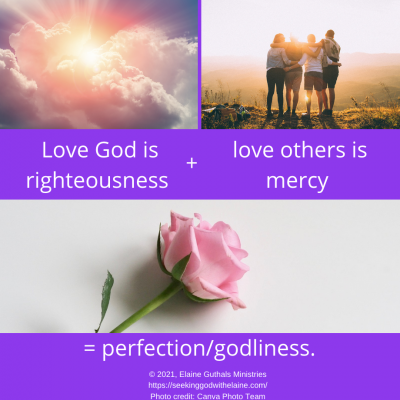
    Love God is righteousness + Love people is mercy = perfection/godliness
    • Righteousness is the result of a solid relationship with God built by a sincere life of conscientious obedience to God’s laws and commandments.
    • God’s mercy is the unexpected way God responds in love to our needs. Disciples’ mercy is a characteristic of compassion for the needs of others, especially those who are in distress.
    • Godliness, equated with the Old Testament term fear of the Lord, is reverence in thought, feeling, and conduct that is promoted by walking in His Spirit and obeying God’s laws and commandments and produces a moral likeness of God. 

    Let’s Put It into Context #2

    Jesus hooked two passages together to form the basis of His greatest commandments.

    • “Love the LORD your God with all your heart, with all your soul, and with all your strength” (Deut. 6: 5 CSB).
    • “Do not take revenge or bear a grudge against members of your community, but love your neighbor as yourself; I am the LORD” (Lev. 19: 18 CSB).

    Verse Commentary

    The Question Is Asked

    “Then an expert in the law stood up to test him, saying, ‘Teacher, what must I do to inherit eternal life?’”  (Lk. 10: 25 CSB)

    Questions may appear to be designed to show our genuine love of God, but we aren’t always honest with Him or ourselves.

    Some may say we really shouldn’t bite on the lawyer too much. Don’t we frequently do what he did?

    Just bottom line it for us. We don’t want to read how you got there or what it really means.

    We only have about two minutes at the screaming outside to devote to God, so do cliff notes. Don’t expand.

    What we really want is a checklist. Isn’t that what we want from the laws Moses gave to the Israelites? That way we have firm evidence that we are doing what we are supposed to be doing.

    But look how Elmslie talked about it. He discussed external ramifications of the lawyer’s question.

    Resource

    Ooo, baby. Think about that to mean we just want the superficial external results. We don’t want the cost of eternal life being heart level.

    We would think — on the surface — this question should be very appropriate. We should want to know what we need to do to spend eternity with God.

    It keeps running through my mind that we said in a previous devotion (which, of course, I can’t find) that this lawyer may have been a scribe. They were the experts in the law. Parker said this would have been an educated man of good standing.

    Resource

    But scribes and Pharisees were on a totally different page from a totally different book than Jesus. They wanted their ceremony and fulfillment of the do’s and don’ts to earn them eternal life.

    Luke said that the lawyer was trying to tempt Jesus. (In my most sarcastic voice ever) “Oh, no. Not a lawyer/scribe/compatriot of a Pharisee. They never had it out for Jesus.” Wink*wink

    But look at it this way. If the lawyers then were anything like they are today, asking questions is the name of their game. They are trying to get information out of the person they are cross-examining.

    Not only that, but the lawyers are trying to trip the person up so that they can further their position. In other words, they are trying to win the war of words.

    This one seems to be trying to help his own cause.

    We Have to Evaluate the Law Ourselves

    “‘What is written in the law?’ he asked him. ‘How do you read it?’” (Lk. 10: 26 CSB)

    Jesus wants us to verbalize where we are at in our faith.

    We can see the lawyer trying to further his cause in tempting Jesus. But Jesus flipped it. He immediately asked him a question.

    In a way, Jesus was trying to start where the man was. Elmslie wrote, “He must bring out the man’s own notions, and then, when He has got them, it may be possible to show him how threadbare, how poverty-stricken, how wrong they are.”

    Resource

    Then Jesus dug in a little deeper. “How do you interpret it?”

    We each have our own understanding of what the law says. It can say something different to us based on our values and our experiences.

    What we have to keep in mind is that we have interpretations. Jesus has fact.

    Eternal Life Is Based on Perfection

    “He answered, ‘Love the Lord your God with all your heart, with all your soul, with all your strength, and with all your mind,’ and ‘your neighbor as yourself’” (Lk. 10: 27 CSB)

    Loving God and others lead to eternal life.

    Did you catch what this answer is? It is the Shema. This is what Moses gave the Israelites in his goodbye speech.

    Remember, Love God Is Righteousness + Love Others Is Mercy = Perfection/Godliness

    This tells us that we need to totally submit to God. He is looking for our whole being to be focused on Him.

    Oh, hold the phones! You mean they had the answer to the question for years and years and years???????

    Jesus had cautioned them to “don’t misunderstand why I have come. I did not come to abolish the law of Moses or the writings of the prophets. No, I came to accomplish their purpose” (Mt. 5: 17 NLT).

    Oh, back up! The lawyer knew the answer before he asked the question!

    Faith has a foundation, in part, of the law. The law tells us what sin is. It also tells us that we can’t save ourselves. The law leads us to Jesus as our Savior.

    Burner expanded that. He reminds us that we put our faith into practice through the law.

    Resource

    Let’s break down what loving God and others means.

    • We love God by showing that we want to please Him.
    • We love God by enjoying being in His presence.
    • The and and must makes all the list required actions.
    • We need to love God with our nature, thoughts, reasoning, arguments, and power.
    • Loving our neighbor talks more of morals than affection.
    • Loving others should have the same emphasis as loving God — and loving God should have the same emphasis as loving others.
    • Carpenter contended that “… the power to love man always grows in proportion to the love that you have to give.”

    Resource

    Does Obedience Lead to Eternal Life?

    “‘You’ve answered correctly,’ he told him. ‘Do this and you will live’” (Lk. 10: 28 CSB)

    We can have the right answer, but not answer the question correctly.

    If we would have been Jesus, we would have said, “Right in part. Way wrong in another part. It has to get to heart level.”

    I don’t think we would have been able to leave it as, “That is correct, so go do it.”

    Maybe we can look at it this way. The lawyer had the knowledge but not the wisdom. He had the rote memorization but not the enlightened acceptance of God’s principles that leads to knowledge, discernment, and good sense that is put into practice through salvation, increasing our goodness and virtue.

    When Jesus told the lawyer, “do this,” he was basically telling him that there is only one action you can do to gain eternal life. It is ABCDing.

    The ABCDs of Salvation

    If you have not become a believer in Christ, please read through the
    Plan of Salvation and prayerfully consider what God is asking you to do.

    A – admit our sins
    B – believe His Son Jesus is our Redeemer
    C – confess God as Sovereign Lord

    D – demonstrate that commitment by making any changes needed in our lives to
    live the way in which God has called us

    The Disciple’s Job Description

     Jesus was not telling him that he could earn salvation. There would be no way for him to gain it by merit.

    The lawyer had to come into God’s presence through love and a belief that Jesus was the Messiah. We have to do it God’s way.

    Elmslie brought up a very good point. Never once in this passage did Jesus mention the word obey. That is where the lawyer was heading. “I do this, and You acknowledge my reward now.”

    Resource

    Emmons begged to differ. He thought it was obvious where the obedience came in: “… Do this and you will live’” (Lk. 10: 28 CSB). We are to obey what God has required of us.

    Resource

    What is required, according to Jesus, is love. His way. Not the religious way or the worldview way. Not the way that supports the lawyer’s views. God’s way.

    We have big flashing lights around the do this. Eternal life comes from loving God that shows itself in loving others. We can’t skip a step and think we’ll get eternal life.

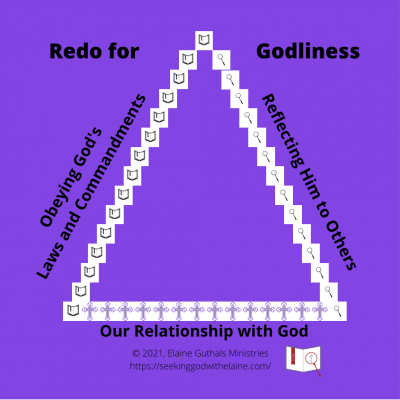
    We have to read the law through the lens of a redo for godliness. It has to change us to be more like God.

    The Correct Answer, But

    “But wanting to justify himself, he asked Jesus, ‘And who is my neighbor?’” (Lk. 10: 29 CSB)

    We can’t justify our sin to or deflect it from God.

    The lawyer must have gotten the difference. He immediately “… [wanted] to justify himself …” (Lk. 10: 29 CSB). It sounds like he started squirming.

    Flint contended that part of the reason the lawyer was squirming was that he, in his heart, really didn’t feel he could be saved in God’s way. Since he thought loving God was hopeless, his question focused on loving others.

    Resource

    But was the lawyer looking for the letter of the law and not the spirit of the law? We have to remember there would have been so many people the lawyer would have written off as not being his neighbor. That makes the parable that much more impactful.

    Parker contended that we should always know who are neighbors are in our hearts. If the lawyer thought Jesus was going to give him a, “good job!” – even though he didn’t know who his neighbor was was, he needed to think again.

    We are not going to listen to Jesus if we are focused on our point of view. Remember, we have to deny ourselves.

    To read a related devotion, click the button below.

    LearningAboutLovePin

    Making the Connections

    Thomson brought up a great point that intersects with our Redo for Godliness series. We’ve said that the definition for godliness had been equated with the Old Testament term fear of the Lord. Now it is considered reverence in thought, feeling, and conduct that is promoted by walking in His Spirit and obeying God’s laws and commandments and produces a moral likeness of God.

    Resource

    But in the Old Testament, fear could mean terror sometimes. They weren’t feeling the love. They felt the fright.

    That didn’t mesh with the love in Deuteronomy and Leviticus. The lawyer probably had an attitude adjustment to perform.

    Jesus made sure He answered the correct question. Parker reminded us that “God has never left the greatest questions of the human heart unanswered.”

    Resource

    We have to make sure we ask the right questions in the right way for the right reasons.

    How Do We Apply This?

    • We have to read Scriptures so that we can determine how we interpret it. God is going to start there with us, also. With us, however, if we don’t read His Word, we are not seeking Him. We can’t love Him with our whole being and not seek Him.
    • God isn’t looking for us to be distracted. He wants our total commitment.
    • “Love does no wrong to a neighbor. Love, therefore, is the fulfillment of the law” (Rom. 13: 10 CSB). We do not harm them in any way. We speak well of them.
    • Honor God through faithfulness and obedience.
    • Love in the right spirit.
    • Grow love by performing the associated tasks.
    • Imitate God’s love.

    Resource

    We have to put our emphasis on loving the way God does. In the next devotion we will talk about putting that into practice.

    Father God. You are love. We want to be love. Teach us to love Your way so that we can share it with others. Amen.

    What do you think?

    Leave me a comment below (about this or anything else) or head over to my Facebook group for some interactive discussion.

    If you don’t understand something and would like further clarification, please contact me.

    If you have not signed up for the email daily or weekly providing the link to the devotions and the newsletter, do so below.

    If God has used this devotion to speak with you, consider sharing it on social media.

  • Attributes of God: Omnipotent and Powerful 

    Sovereign God is a powerful God. This daily devotional looks at what that power means and how God uses it.

    Nuggets

    • God’s omnipotence is shown in His ability to create things.
    • God is able to do everything with ease.
    • Even though God’s power earned Him the other name of Lord Almighty, He is also our Father.
    • God’s power is never ending and goes beyond what we can imagine.

    To read devotions in the Redo for Godliness series, click the appropriate button below.

    Devotions in the Finding Our Center series

    It is logical to think that a Sovereign God is also powerful. The churchy word for it is omnipotent.

    Let’s Put It into Context #1

    Here is a running list of what we’ve discussed previously.

    Let’s Put It into Context #2

    We’ve looked at God being omnipotent before. We said that omnipotent means God is all-powerful.

    Looking at mostly different verses, we came up with these nuggets.

    • God created everything we see — and a lot of things we don’t see.
    • He interconnects things and causes events to produce the outcomes needed to grow our characters.
    • God is eternal and consistent.
    • We have a tendency to limit God to what we know or think — or, especially, want, but His ways are so. much higher than ours.

    Let’s look some other verses that show God’s omnipotence.

    Omnipotent God Created the Universe

    “The heavens were made by the word of the Lord, and all the stars, by the breath of his mouth” (Ps. 33: 6 CSB)

    God’s omnipotence is shown in His ability to create things.

    The creation story is often used to show God’s omnipotence. Well, isn’t it a good example?

    No, we don’t know the whole story. We don’t know if things popped up fully made, floated into existence over a period of time, or some combination thereof.

    What we do know is that God spoke all the “let there be” statements — and it was. We also know that He raised His right arm. “My hand laid the foundation of the earth, and my right hand spread out the heavens; when I call to them, they stand forth together” (Isa. 48: 13 ESV).

    That is all the how we need to know — God commanded, and it happened. That tells us God is powerful.

    The Positively Driven Christian website added to our understanding of the definition of omnipotent. They said that omnipotent is “having unlimited power with the ability to do anything.”

    Resource

    We have other examples of God’s power.

    GodsPowerVerses

    No, God does not have to obey the laws of nature. God made the laws of nature, so He can supersede them when He so chooses.

    Think about it. He is One powerful God. However, He does not limit Himself to working in nature.

    God works through every detail of our lives. I know I always say God is more interested in our spiritual condition than our physical condition.

    That doesn’t mean God isn’t interested — and involved — in our physical condition. He is. Our spiritual condition has priority.

    Dykes warned us about going to the extremes when we consider God and nature. Nature is not a manifestation of God. But neither is it devoid of God. The creation must have the hand of the Creator in it.

    Because of God’s Will, the universe was created. If God had the power but not the Will, nothing would have been made.

    God wanted mankind created. He wanted a beautiful world for us to live in — He originally made a paradise.

    Ooo, baby. Dykes thought that mankind mucked it up. He wrote, “The sense of Nature’s unity grew feeble. Men came to see not so much one God speaking through all His creatures, as rather a separate morsel of divinity inherent in each separate creature.”

    Resource

    Okay, let’s unpack that. There are some that cannot see God as the overall Creator of the universe. But I think there is an even deeper application of that.

    Instead of being united in God’s kingdom, many are more interested in what God has to give us individually. We think He is God of our career choice, soulmate, and bank account first and foremost.

    That isn’t God’s priority. His priority is expanding His kingdom — welcoming us back into the fold to be His children. Yes, He is always about salvation first.

    Unfortunately, I wonder how many times the what-is-in-it-for-me attitude has led to the I-don’t-need-God attitude. When that is superimposed over I-can-do-it-myself mantra, we’ve slipped into Satan’s control.

    Omnipotent God Can Do the Impossible

    “For nothing will be impossible with God” (Lk. 1: 37 CSB)

    “And he said, ‘Abba, Father! All things are possible for you. Take this cup away from me. Nevertheless, not what I will, but what you will’” (Mk. 14: 36 CSB)

    “Jesus looked at them and said, ‘With man this is impossible, but with God all things are possible’” (Mt. 19: 26 CSB)

    God is able to do everything with ease.

    Okay. I have read these verses all my life. I always read them to mean that God could do anything.

    When I looked at a Bible Study Tools article, I read, “God is able and powerful to do anything he wills without any effort on his part.”

    Resource

    Instead

    Nothing is easy or hard for God. The Blue Letter Bible took that a step further and said things are either done or not done with God.

    Resource

    That takes it out of whether God can do it. It firmly puts it into it is God’s choice on what to do.

    God’s love for us and His character of goodness is driving that car. “And we know that in all things God works for the good of those who love him, who have been called according to his purpose” (Rom. 8: 28 NIV).

    The things that God allows happen to us — even the bad things — are going to have a good purpose. That purpose is going to be His purpose, not our own.

    The things that God allows happen to us — even the bad things — are going to have a good purpose.

    When we think of something being difficult, we think that there would be a possibility that God would not complete His purpose. We know that isn’t going to happen. “I am sure of this, that he who started a good work in you will carry it on to completion until the day of Christ Jesus” (Phil. 1: 6 CSB).

    Speare took the discussions step further than that. He wrote, “God’s will and plans are objective realities; they have definite and all-important direction and demands.”

    Resource

    A couple devotions back we said that God does not change. Neither His character changes, nor does He change His mind. What He plans for us will come to fruition.

    That makes them reality.

    Omnipotent God Is Almighty

    “And I will be a Father to you, and you will be sons and daughters to me,
says the Lord Almighty” (II Cor. 6: 18 CSB)

    Even though God’s power earned Him the other name of Lord Almighty, He is also our Father.

    Another way that God’s power is acknowledged is by calling Him the Lord Almighty. Then we hook that with His promise that He is our Father. If He said He will be our Father, He will be if we ABCD.

    The ABCDs of Salvation

    If you have not become a believer in Christ, please read through the
    Plan of Salvation and prayerfully consider what God is asking you to do.

    A – admit our sins
    B – believe His Son Jesus is our Redeemer
    C – confess God as Sovereign Lord

    D – demonstrate that commitment by making any changes needed in our lives to
    live the way in which God has called us

    The Disciple’s Job Description

    Glossary

    Think about it. The powerful God is our Father. He is our Provider and Protector. God is love, merciful, and just.

    And He is ours when we submit to Him.

    I was asked earlier this week how I could say that God is an omnipotent God but that he allowed us free will. Free will is the ability within us to make decisions, which determine actions that produce character.

    My response was, basically, that the two terms are not mutually exclusive. God is powerful, but He is not a dictator. He allows us to make our own decisions. We will have to pay the consequences of those decisions, but He doesn’t force Himself on us.

    Omnipotent God’s Power Goes Above and Beyond

    “Now to him who is able to do above and beyond all that we ask or think according to the power that works in us” (Eph. 3: 20)

    God’s power is never ending and goes beyond what we can imagine.

    What God does or doesn’t do isn’t tied to what we ask or think. God is going to follow His plan for us.

    But look at the end of the verse. His power is in us. His power that raised Jesus and others from the dead, that split the Red Sea and the Jordon River, that stopped the sun from making its trek to night — that power is in His children. It is in us.

    24/7/365.

    We have to remember that God won’t do anything that is not in His nature. He will remain pure.

    We’ve used this verse a couple of times recently to make points. The first what’s when we said that grace isn’t just a good will gesture from God. It is His actions — actions fueled by His power.

    The last time was when we were talking about God being self-sufficient. We said that God is self-sufficient and meets our needs according to His riches and power.

    To read a related devotion, click on the appropriate button below.

    God is powerful and can and will provide for us whether we ask Him to or not. He will provide in the way that is best for us.

    OmnipotentAndPowerfulPin

    Making the Connections

    Woolsey contended that we cannot separate God’s power from His wisdom. If we did, there would be no stability.

    Resource

    Ferguson reminded us that God does have the power to create. He wrote, “He alone has that mysterious energy which called everything we see out of nothing.”

    Resource

    We just have to look at the human body to see God’s wisdom on display. It is up to us to acknowledge that wisdom.

    Power alone may not provide the best answer to a situation. Wisdom alone may not get the job done.

    We need God to work in our lives through His power and in His wisdom.

    Ferguson added that God utilizes His power and wisdom through His goodness. This encompasses His mercy, compassion, and love.

    Okay. We are going to chase a rabbit for a second. My Insomnia Buddy and I just had a discussion on how we should look at ourselves the way God looks at us. God is more interested in our relationship than our do’s and don’ts.

    Then Lauren Daigle’s new song came on the radio. This is how our Father loves us. He will love us when we don’t love ourselves. Someone may need to hear this today.

    Song

    Lauren Daigle

    The Lord God Almighty will hold onto His children.

    How Do We Apply This?

    Lamson suggested that we can tap into God’s power when we are tempted. God doesn’t leave us alone to wrestle with temptation.

    Resource

    In fact, we can tap into God’s power whenever we need Him. He wants us to depend on Him.

    Loving Father. You are all-powerful. You can create, and You can destroy. Whatever You choose to do will be in like with Your character, so we know that it will be done though love and goodness. Help us to put our faith and trust in You. Amen.

    What do you think?

    Leave me a comment below (about this or anything else) or head over to my Facebook group for some interactive discussion.

    If you don’t understand something and would like further clarification, please contact me.

    If you have not signed up for the email daily or weekly providing the link to the devotions and the newsletter, do so below.

    If God has used this devotion to speak with you, consider sharing it on social media.

  • Attributes of God: Sovereignty

    What does sovereignty really mean when we apply it to God? This daily devotional looks at how we can identify Sovereign God.

    Nuggets

    • Sovereign God is clothed by His moral character.
    • Sovereign God is known for His love for us.
    • Sovereign God loves us so much that He has specific plans for our lives.
    • Because God is Sovereign God, we should praise and worship Him.

    To read devotions in the Redo for Godliness series, click the appropriate button below.

    Devotions in the Finding Our Center series

    I don’t know about you, but growing up, I struggled with what sovereign really means. Yeah, we generally think about sovereign being the king.

    But I think, with God, it is more than that. To me, sovereign has come to mean that God is the supreme Ruler of all things.

    If we are going to find our center — find out Who God really is — we have to know Him as Sovereign God. Let’s see what we can find out from the verses in Scripture.

    Let’s Put It into Context

    Here is a running list of what we’ve discussed previously.

    Identified as Sovereign by Garments

    “The Lord is king! He is robed in majesty. Indeed, the Lord is robed in majesty and armed with strength. The world stands firm and cannot be shaken” (Ps. 93: 1 NLT)

    Sovereign God is clothed by His moral character.

    There is a saying that clothes make the man (and woman!). God’s clothes are definitely an extension of Who He is. The Homilist wrote that “… His clothing is of no material fabric. His moral character is His garment, and that character is transcendently grand — ‘glorious in holiness.’” Keen said He is clothed in His attributes.

    Resource

    God is Sovereign because of His purity. Purity means God is without the stain of sin.

    God’s character is pure. Keen wrote, “Holy in character (ver. 5) knowing nothing of prejudice, partiality, connivance at wrongdoing: hence, righteous in administration, consistent, and beautiful in all.”

    Resource

    Strength is part of God’s nature. He has to be in order to control the universe.

    Charnock noted that there is a difference between God’s power and His authority. God has the strength and the power to do all the things He is doing.

    Resource

    God has the authority to do what He does. Burder reminded us that sovereignty means supreme power, giving God the right to control things. And God is definitely in control of the universe. He created it, and He hasn’t put its control in our hands.

    Resource

    Identifying Sovereign God by His Love

    “For his unfailing love for us is powerful; the Lord’s faithfulness endures forever. Praise the Lord!” (Ps. 117: 2 NLT)

    Sovereign God is known for His love for us.

    Over all of God’s power, over His strength and holiness is His love. God loves us.

    Dickson talked to us about praising God. He wrote, “In God’s worship it is not always necessary to be long; few words sometimes say what is sufficient, as this short psalm giveth us to understand.”

    Resource

    Not we don’t have to pray in the King James Version style. We don’t have to have enough words to rival Tolstoy’s War and Peace.

    Our prayers have to be genuine worship. They have to be relationship building.

    One day, everyone is going to fall down and worship God. “So that at the name of Jesus every knee should bow, in heaven and on earth and under the earth, and every tongue confess that Jesus Christ is Lord, to the glory of God the Father” (Phil. 2: 10-11 ESV). All will recognize that He is Sovereign God.

    But it is going to be too late for some. They won’t be ushered into Heaven because they did not make that confession while they had time.

    Identified as Sovereign by His Plans

    “Only I can tell you the future before it even happens. Everything I plan will come to pass, for I do whatever I wish” (Isa. 46: 10 NLT)

    Sovereign God loves us so much that He has specific plans for our lives.

    Have you ever thought about how much God works? He is a hands-on God. He didn’t make us and ride off into the sunset. He is involved in each of our lives.

    God not only made us, He has plans for us. “‘For I know the plans I have for you’ — this is the Lord’s declaration—‘plans for your well-being, not for disaster, to give you a future and a Hope’” (Jer. 29: 11 CSB).

    I never noticed this before. The King James Version says His plans are for peace. All except the New International Version and the New American Standard Bible translate it as some sort of welfare. Those two translate it as prosper.

    No, no, no. It isn’t a prosperity gospel. It isn’t about what we can gain.

    It is about our spiritual condition and our character. Woolsey wrote, “… the moral in God’s sight must have a far higher value than the physical; righteousness is the stability of His throne; it were better for heaven and earth to pass away than that He should favour or sanction one jot of injustice.”

    Resource

    Did you catch that? It is the Lord’s declaration. He not only knows what is on my plan, but He also is in constant communication with me about it.

    Oh, yeah. Sometimes, I have my headphones on and can’t hear. Maybe I am rewatching Ragnarok. Or maybe I am listening to the tunes on The Message on SiriusXM.

    Hmmm. We can miss God because we are focused on some other God thing? Ouch!

    What is a worse ouch is when we miss God because we are doing something we have convinced ourself is a God thing — but it isn’t!

    Oh, we should pay attention to God. He knows all that has happened in the past, all that is happening now, and all that will happen in the future.

    Sovereign God has all the information we wish we had, and He is willing to help us make our decisions.

    No, He doesn’t make our decisions for us. Yes, it says, “… for I do whatever I wish” (Isa. 46: 10 NLT).

    What does God wish? “This is good, and pleases God our Savior, who wants all people to be saved and to come to a knowledge of the truth” (I Tim. 2: 3-4 NIV).

    He wishes that we accept His gift of salvation.

    Identifying Sovereign God through Praise

    “Let all that I am praise the LORD; with my whole heart, I will praise his holy name” (Ps. 103: 19 NLT)

    Because God is Sovereign God, we should praise and worship Him.

    God is Sovereign over all the universe.

    I loved the Homilist’s definition of piety. They wrote, “Piety is supreme love to God; and hence its supreme desire is that all should love and praise Him.”

    Resource

    Charnock made an interesting comment. He said that making laws was the first initiative undertaken by sovereign rulers. God had to develop the standards by which we would be ruled. He couldn’t leave us to govern ourselves.

    Resource

    Let’s talk about God’s laws for a second. After Jesus completed the Plan of Salvation, the civil laws and ceremonial laws were fulfilled. We no longer have to take people out and kill them when they break God’s laws. Neither do we have to kill all the animals.

    God as Sovereign God can choose to invoke laws and to repeal them. We don’t. We are to obey.

    But that also means that God has the authority to punish those who break His laws and commandments. We know that a final judgment day is coming.

    To read a related devotion, click the button below.

    SovereigntyPin

    Making the Connections

    That is an interesting concept that God’s morality is His clothing. We choose what clothes we put on or take off. That makes who we are visible to others.

    God has all of the requirements to make Him Sovereign. Keen wrote, “… ‘thy testimonies are very sure,’ in rewarding obedience, in punishing transgression — they are just, perfect, good, can never fail.”

    Resource

    Whoever is in control should be characterized as just, perfect, good, and can never fail.

    That let’s us humans out. We definitely aren’t.

    How Do We Apply This?

    Keen said, “We must first know Him as Saviour before we can obey Him as Sovereign.” Yes, it always begins and ends with God’s concern for our spiritual condition.

    Until that is rectified, and we are once again His children, nothing else is of importance. Keen wrote, “Life has no intelligible meaning, there is no satisfactory explanation of anything apart from the belief.”

    Resource

    Father God. You are Sovereign God. You rule all with love. You are clothed with majesty and glory. Lord, we prayer that we are imitating Your moral character. Amen.

    What do you think?

    Leave me a comment below (about this or anything else) or head over to my Facebook group for some interactive discussion.

    If you don’t understand something and would like further clarification, please contact me.

    If you have not signed up for the email daily or weekly providing the link to the devotions and the newsletter, do so below.

    If God has used this devotion to speak with you, consider sharing it on social media.

  • March 2021 Newsletter

    Since I started Seeking God with Elaine, I had been planning on doing a newsletter. Yeah, it’s taken me a while to see what I was going to do.

    I don’t want to waste your time, but I want to do something that will help all of us.

    Doing the summaries at the end of last year, I got the idea for what we could do. If we do the monthly summaries as we go, maybe the end summaries will be more meaningful.

    Since we have three sides to our triangle, that is how we are going to sort our nuggets each month.

    Let’s Put It into Context

    Godliness, equated with the Old Testament term fear of the Lord, is an attitude of reverence that is promoted by walking in His Spirit and obeying God’s laws and commandments and produces a moral likeness of God.

    Godliness has a dual form as it should be both an inwardly and outwardly expression. Said another way, reverence should be all-encompassing: inward and outward.

    The inward expression of godliness is communion with God. Prayer is a two-way communication with God. Even if we are praying with our mouths, we are praying with our hearts. Our inward expression of godliness also manifests itself in confession, praise, and worship. We have to pursue godliness because of an internal stimulus.

    The outward expression implies a love for God’s laws and commandments. It manifests itself in our acts of service for God. Service is an act based on belief in God that comes from a response of worship by acknowledging His power through our submission. This is how the inward expression manifests itself in our lives.

    To read a related devotion, click the button below.

    Ungodliness is denial of God and refusal of following His laws and commandments, instead living a life engaged in sinfulness.

    To read a related devotion, click the button below.

    Main Nugget

    God is going for a total redo (Diligence Is a Work in Progress).

    RedoForGodliness

    Our Relationship with God

    • If we are banking on being a good person without submitting our lives to God for admission to heaven, we will be in for a huge let down. God only gives eternal life to those who have submitted their lives to Him (The Morality of Being Lovely).
    • We have to remember that we cannot earn our way into Heaven. The focus has to be on Him, not our actions (The Morality of Being Lovely).
    • Do you get that our character being lovely is tied to our worship of sovereign God? That is why we are to worship regularly, praise him continuously, and live joyfully because of all he is doing for us – even in the rough spots (The Morality of Being Lovely).
    • We have to remember that our relationship with God is an inward thing that presents itself outwardly. Don’t read that to mean our actions aren’t important. They are. Sanctification uses our actions to change our character to be like God’s (The Morality of Good Report).
    • The outward walk without the inward faith means nothing to God (How Do Morals Improve Our Discipleship?)
    • God will use His grace to guide us to where He wants us to be. He will use our Sanctification Roads to grow us to be more like Him (How Do Morals Improve Our Discipleship?)
    • It is a two-step process in attesting to the quality of God’s moral code. We need to affirm that God’s law is pure. We need to confess we are far from pure (Improving Our Discipleship through Glorifying God).
    • Our entire life should be focused on glorifying God through living morally. The bottom line is our motivation. Are we choosing to follow God or not? (Improving Our Discipleship through Glorifying God).
    • We go from a worldview focus of doing good to doing good to expand God’s kingdom (How Do Morals Refine Us?).
    • If our morals don’t come through our submission to God, they are just worldly morals, not Christian graces (How Do Morals Improve our Discipleship?).
    • Disciples are to honor God’s name by acknowledging His nature (Morality to Honor God).
    • If we submit to God, we want to imitate Him. If we imitate His character, we live moral lives. If we live moral lives, God will provide us peace and safety (Peace and Safety Are the Rewards of Morality).
    • We’ve got to come to God with a true confession of faith. If we say the doctrines revealed in God’s Word are true, we have to say all sin is wrong, and we want nothing to do with it. Just as we can’t pick and choose what is and isn’t a sin, once we decide to accept the gift of salvation, we can’t pick and choose when we are going to repent (What Do Morality, Grace, and Regeneration Have in Common?)
    • We can’t be a regenerated new creation when we are hanging on to old sin (What Do Morality, Grace, and Regeneration Have in Common?)
    • Repentance can’t be a single act. There is so much sin in us — and the continued opportunity to sin — that it is going to take a while for us to cut it out of our lives (What Do Morality, Grace, and Regeneration Have in Common?)
    • God calls us to salvation by His grace but bestows the full measure of His grace only on His children (What Do Morality, Grace, and Regeneration Have in Common?)
    • Jesus taught that it isn’t enough just to believe. We have to show our faith by our good works. We have to put feet to our faith (The Commandment of Morality).
    • Disciples must show good moral character in order to show worldview people their faith. It shows the depth and the genuineness of our faith (The Commandment of Morality).
    • Another way to look at it is that the it is the test of our faith (The Commandment of Morality).
    • While there is no connection between salvation and good works, there is between faith and completing whatever tasks He assigns for us to do (The Commandment of Morality).

    Glossary

    The outward walk without the inward faith means nothing to God.

    Obeying God’s Laws and Commandments

    • If our temperamental makeup is to reflect God, it should not be a cruel disposition or even a weak one. We should reflect His love and concern for the spiritual condition of others (The Morality of Being Lovely).
    • God wants us to live our lives obeying Him and following His lead (The Morality of Being Lovely).
    • We are to conduct ourselves honorably. We are to be in the world. We are to have contact with non-believers. We are to be consistent in our behavior. What Peter is really getting at here is that we have to remain pure in heart regardless of our location and company at the time (The Morality of Good Report).
    • The progress is to be applied over all of our nature. God isn’t interested in fixing only one or two aspects of our character (Diligence Is a Work in Progress).
    • Sometimes, we may not fully understand what “… forgetting what is behind …” entails (Phil. 3: 1 CSB). Oh, we understand we are to forget and quit the past sins — which may mean changing our circle of friends. We have to forget the past good works. When we performed that good work, we were not doing it to glorify God. Our goal was not to expand His kingdom. Our goal was probably tied up with trying to make something better in this world. It has nothing to do with our spiritual condition (Diligently Forgetting Sin and Focusing on Godliness).
    • For Paul, he boiled it down to one thing: he was aiming for perfection, knowing he wouldn’t achieve it here. What Paul was aiming for was the mark, not the prize. We are not supposed to be aiming for blessedness or perfection. We are to aim for what gets us there — changing our character to be like God’s. Our attainment of God’s character is also the prize. We aren’t going to be totally successful in the change until we get to Heaven (Diligently Forgetting Sin and Focusing on Godliness).
    • The aim or prize is all about what our character is and Who it looks like. Gaining Heaven is secondary. Being with and like God is primary (Diligently Forgetting Sin and Focusing on Godliness).
    • We tend to think of perfection as doing all the do’s and not doing all the don’ts. That isn’t going to happen — even after we become disciples. Perfection is about being. It is about obtaining the character of God. No, that doesn’t give us license to go out and sin. It gives us the assurance that God will continue to forgive us when we ask as we work through our salvation on the Sanctification Road (Diligently Forgetting Sin and Focusing on Godliness).
    • There are so many times in life where we beg God for a redo. We messed up, and we want a second, third, fourth chance with God. God gives us that chance. Every single moment of our lives can be a redo. We are given the opportunity. We just have to grab it and do it right (Diligently Forgetting Sin and Focusing on Godliness).
    • God isn’t just going to give us perfection without us ABCDing and redoing our character (Diligently Forgetting Sin and Focusing on Godliness).
    • We kick ourselves for not having God’s character. But we never give ourselves credit for being dissatisfied with who we are (Diligently Forgetting Sin and Focusing on Godliness).
    • We should never be satisfied. Our growing process must be a life-long process. We never arrive while here on earth. We shouldn’t become complacent with where we are on the Sanctification Road. We can also do better at imitating God (Diligently Forgetting Sin and Focusing on Godliness).
    • We think of God revealing His grace on the cross. We even go back further than that. We think of God’s infinite grace through which He devised the Plan of Salvation that made Jesus our Redeemer in order to forgive us of our sins. Occasionally, we might even acknowledge the grace God shows us as we are navigating the Sanctification Road. We need that gift to keep forgiving us as we still break God’s laws and commandments as we learn to be like Him. But how many times does it sink in that God isn’t done giving us his grace yet? There is still grace to come. God will really show us His grace when Jesus comes back (The Morality of Being Hopeful).
    • Faith includes a self-reflection piece so we can decide what we truly believe. Hope takes that look outside of us and focuses on what God will do for us (The Morality of Being Hopeful).
    • We don’t get to choose the goodness and pass on the righteousness part. If we do, we are passing on the God part (How Do Morals Improve Our Discipleship?)
    • Morality is a system of conduct where we determine right from wrong. Isn’t that what the Sanctification Road is teaching us — right from wrong? Good from evil? (How Do Morals Improve Our Discipleship?)
    • We glorify God by the good works performed through His righteousness in us. Our being and doing should be to glorify God (Improving Our Discipleship through Glorifying God).
    • Our faith has to be whole. Everything we believe and do — from the largest thing to the smallest — must be governed by our faith (Honoring God with Our Lives).
    • We can’t be begrudgingly obedient to God and think we are honoring Him. We have to be completely submitted to Him to cheerfully do His Will (Honoring God with Our Lives).
    • We do have much to add to the narrative of the gospel. No, we are not changing the gospel. We are adding to the reports of how that plays out in our lives today (Honoring God with Our Lives).
    • Inner beauty is tied up with our spiritual graces/enhanced morals. Those are leading us to be godly — holy and righteous. This inner beauty is much more important to God than outward beauty (Honoring God with Our Lives).
    • Moral superiority is more powerful than physical superiority (Peace and Safety Are the Rewards of Morality).
    • We have to put ourselves into position to hear God’s Word. We have to work at it so we can understand who God is and what He has done for us. We have to live the way He wants us to live. We have to live moral lives (Peace and Safety Are the Rewards of Morality).
    • If we think that the moral laws are the least of His commandments, we have to realize God does not (The Commandment of Morality).
    • The greatest commandments have no more authority than the least commandments. The least commandments offend God just as much as the greatest commandments (The Commandment of Morality).
    • God is less interested in what we do than who we are. We can’t earn our way to salvation. It is based on changing ourselves to be more like him — changing who we are (The Commandment of Morality).

    Glossary

    Perfection is about being. It is about obtaining the character of God.

    Reflecting Him to Others

    • Our inner character is shown through the decisions we make. Possibly one of the best ways to show that is in how we treat others. How we treat others either makes the situation peaceful or causes strife (The Morality of Being Lovely).
    • Paul talked about becoming all things to all men (I Cor. 19-23). We do need to do that to a point. However, we cannot change our beliefs — and commit sins — to fit in with others (The Morality of Good Report).
    • God calls us to live our lives as a witness — and to use our words to tell about Him. But He doesn’t take away our free will (The Morality of Good Report).
    • We have to make daily choices to follow God. Unfortunately, sometimes we make the wrong choices. God will forgive us when we ask (The Morality of Good Report).
    • What helps us believe in God? It isn’t a case of seeing is believing in the usual sense of the word. Instead, we have to see with the eyes of our hearts. A person who is attached to the worldview would have a hard time embracing the Godview. Faith calls us to turn away from worldview standards and submit to God’s laws and commandments. In order to believe, we have to have some knowledge. No, we won’t understand it all. If we did, it wouldn’t be faith driving our acceptance of God (The Morality of Diligence).
    • Our conversion is the only evidence that God wants a relationship with us. Well, think about it. We have to do a 180 degree change — in our allegiance if not in our actions. That is a big change. On top of that, we do nothing to foster the change — except seek God. Only God has the power to cause the change (Diligence Is a Work in Progress).
    • The challenge we face is that these changes are not always visible. Worse than that, they have been likened to the tide — they come and go. This retrograde movement — when we do see it — is why worldview people think disciples are hypocrites (Diligence Is a Work in Progress).
    • God wants us to use our conversation to tell others about Him, promote unity, and knit the family together (Diligently Forgetting Sin and Focusing on Godliness).
    • Unlike the worldly hope, disciples can truly believe that the object of our hope is permanent. It will last throughout eternity (The Morality of Being Hopeful).
    • God does expect our relationships with Him to be visible to others. They have to be able to see what we believe. But that stems from the inside and touches on the how aspect (How Do Morals Improve Our Discipleship?)
      • For I was hungry for the Word of God and you introduced me to it and helped me understand.
      • I was thirsty, and you took me to the well of Living Water and gave me drink. 
      • I was a stranger searching for God, and you welcomed me and guided me to find Him.
      • I was naked, and you clothed me. “I rejoice greatly in the LORD, I exult in my God; for he has clothed me with the garments of salvation and wrapped me in a robe of righteousness …” (Isa. 61: 10 CSB).
      • I was sick because sin is an illness, and you visited me with the cure.
      • I was in prison because all sinners are prisoners to sin, and you came to tell me how to break out (Improving Our Discipleship through Right and Wrong).
    • God’s priority is our spiritual condition, not our physical condition. He wants us to witness to others to expand His kingdom (Improving Our Discipleship through Right and Wrong).
    • We have to approach worldview people with love but realistically. We can’t approach them in ways that accentuates the divide, but we cannot tolerate sin (Improving Our Discipleship through Right and Wrong).
    • Worldview people just see the ceremony of religion rather than the relationship for which God is actually striving. They see morality as a man-to-man exercise, not as man-to-God (Improving Our Discipleship through Glorifying God).
    • Our refusing to make the right choices can lead others to believe God is weak (Morality to Honor God).
    • We are to be ambassadors for the gospel by showing others to see their needs for it (Honoring God with Our Lives).
    • We are known as children of God by our good works. We have to be showing God’s character in our performance. That means our morals have to be at the forefront (The Commandment of Morality).
    ChangingCharacterSignOfSalvation

    To read devotions in the Redo for Godliness series, click the appropriate button below.

  • Attributes of God: Unified and One

    We are told in Scriptures that God is One God and that He is unified. This daily devotional looks at what One God means in terms of God’s Sovereignty and Fatherhood.

    Nuggets

    • Worshiping God moved the Israelites from polytheism to monotheism.
    • Sovereign God is interested in a relationship with us because He is Father of all.
    • Our Sovereign God is unique in His forgiveness and His works.

    To read devotions in the Redo for Godliness series, click the appropriate button below.

    Devotions in the Finding Our Center series

    When I googled attributes of God and saw simplicity, oneness, and unity, I thought, okay. Where is this heading? I figured out the monotheistic route pretty quickly. That is what the oneness meant.

    The simplicity is telling us God is consistent. He isn’t divided in any way.

    Let’s dig in and see what the verses tell us.

    Let’s Put It into Context

    Here is a running list of what we’ve discussed previously.

    God Alone Is Sovereign

    “Listen, Israel: The LORD our God, the LORD is one” (Deut. 6: 4 CSB)

    Worshiping God moved the Israelites from polytheism to monotheism.

    Scriptures are very clear that there is only one God. The beginning of the Shema gives that as a foundation. Other verses clarify and expand that truth.

    • “Thus says the LORD, the King of Israel and his Redeemer, the LORD of hosts: ‘I am the first and I am the last; besides me there is no god” (Isa. 44: 6 ESV).
    • “Jesus answered, “The most important is Listen, Israel! The Lord our God, the Lord is one” (Mk. 12: 29 CSB).
    • “And the scribe said to him, ‘You are right, Teacher. You have truly said that he is one, and there is no other besides him’” (Mk. 12: 32 ESV).
    • “There is none holy like the LORD: for there is none besides you; there is no rock like our God” (I Sam. 2: 2 ESV).
    • “For who is God, but the LORD? And who is a rock, except our God?” (ps. 18: 31 ESV).
    • “remember the former things of old; for I am God, and there is no other; I am God, and there is none like me” (Isa. 46: 9 ESV).
    • “Therefore, as to the eating of food offered to idols, we know that ‘an idol has no real existence,’ and that ‘there is no God but one’. For although there may be so-called gods in heaven or on earth — as indeed there are many ‘gods’ and many ‘lords’ — yet for us there is one God, the Father, from whom are all things and for whom we exist, and one Lord, Jesus Christ, through whom are all things and through whom we exist” (I Cor. 8: 4-6 ESV).
    • “‘To whom will you compare me, or who is my equal?’ asks the Holy One” (Isa. 40: 25 CSB).
    • “This is why you are great, Lord God. There is no one like you, and there is no God ” (II Sam. 7: 22 CSB).

    There are arguments as to why there can be only One. Boston argued that there can only be one infinite, omnipotent being that gives life to others. Griffin acknowledged that this means God has no rival or equal.

    Resource

    There are also arguments that having One is beneficial to mankind. Chapman wrote that monotheism “… satisfies his intellectual, his moral, his emotional, his spiritual being.” He expanded his discussion on how monotheism impacts morality to say that only a true picture of God can be seen if there is only one God.

    Resource

    Having one God brings continuity to our relationships with Him. We know we are interacting with the same God each time, and as He is unchanging, we closely know Him. We don’t have to divide our affections and service among several gods.

    Moses put some verbal flashing arrows to show that the Israelites needed to pay attention to what he was fixing to say. “Listen, Israel …” (Deut. 6: 4 CSB).

    We’ve talked before about how we can hear but have the information go in one ear and out the other. We really need to listen.

    To read a related devotion, click the button below.

    What Moses was saying here was that the Israelites needed to listen to what God was saying. We shouldn’t listen thinking we know what He is going to say. We should listen to determine how He wants us to grow in His grace and our faith.

    I hear the worldview people saying, “Prove it.” Adam tackled that subject. He argued that proof is all around us in creation.

    Adam also noted that no proof has been given that there is more than one god. He contended that, if there were more than one god doing the creating, it wouldn’t work. Both would not be termed the Highest or the Most Excellent.

    Resource

    Macmillan cautioned us about making decisions regarding God based on our limited perceptions. He noted that we may not have all of the pieces of the puzzle needed to come to a definitive answer. He does point out how interconnect nature is.

    Hodges reminded us that religion began worshiping many gods. It grew into the worship of One God. This was partly through divine revelation and partly through education.

    Resource

    Well, remember Genesis 1: 26 says, ‘Then God said, “Let us make man in our image, after our likeness …’” (Gen. 1: 26 NLT). Us is plural.

    I didn’t find any prior reference to One God before Deuteronomy 6: 4. I know some may consider Genesis 1: 26 as a reference to the Trinity (which we will talk about in another devotion).

    Then we add the first commandment into the mix. “You must not have any other god but me” (Ex. 20: 3 NLT). That points to the existence of other gods — unless we look at those gods being of our own making.

    It would have been a hard fought lesson to get the Israelites to believe only in One God. But they had to grow to know Him. And news flash — we are still growing in knowledge today. There will always be more to learn.

    Sovereign God Is Also Our Father

    “one God and Father of all, who is above all and through all and in all” (Eph. 4: 6 CSB)

    Sovereign God is interested in a relationship with us because He is Father of all.

    God has set up our relationships with Him as parental in nature. “For you did not receive the spirit of slavery to fall back into fear, but you have received the Spirit of adoption as sons, by whom we cry, ‘Abba! Father!’” (Rom. 8: 15 ESV). This extends to all of His children.

    Resource

    Yes, it reads that God is Father of those who are just His creation. Even if they don’t acknowledge Him, God has authority and provides care for them.

    But God has a special place for those who are His children. They have ABCDed and accepted Him. Because of that, He has adopted them.

    • “But to all who did receive him, who believed in his name, he gave the right to become children of God” (Jn. 1: 12 ESV).
    • “And because you are sons, God has sent the Spirit of his Son into our hearts, crying, ‘Abba! Father!’” (Gal. 4: 6 ESV).

    Glossary

    The way I read Graham’s take on Sovereign and Father is it is almost like a continuum. Vaughan equated that with degrees of Fatherhood. The majesty and splendor that is on the Ruler’s side, and love and tenderness is on the Father’s side. Power is offset by love and grace.

    Resource

    But it isn’t so much a continuum. God does fall at one point one day and on the other side the next. God is at all points at all time.

    Our Sovereign Father Is Like None Other

    “Lord, there is no one like you among the gods, and there are no works like yours” (Ps. 86: 8 CSB)

    Our Sovereign God is unique in His forgiveness and His works.

    No, there is no one like God. He created mankind, knowing we would disobey. The Plan of Salvation was always Plan A.

    God’s forgiveness is unique. He forgives all sins when we truly repent — except for the unpardonable sin (which I think is unbelief).

    Forgiveness is, when we ask, God pardons us because we have broken His laws and commandments and restores our relationship with Him. Repentance is acknowledging our separation from God and expressing sorrow for breaking God’s laws and commandments by making the commitment to changing ourselves through obedience so that we no longer do the wrong things.

    Glossary

    The amazing thing is that God will continue to forgive us when we sincerely repent. “Then Peter came to him and asked, ‘Lord, how often should I forgive someone who sins against me? Seven times?’ ‘No, not seven times,’ Jesus replied, ‘but seventy times seven!’”

    No, Jesus wasn’t saying forgive someone 490 times. Instead, He foreshadowed Buzz Lightyear and meant, “To infinity and beyond!”

    That is how forgiving God is when genuinely repent and turn from the sin. He will forgive us when we are striving to be godly.

    How Does Trinity and Oneness Mesh?

    I am just going to say one thing about the Trinity and unity. We are going to talk about the Trinity in another devotion, but I don’t want it to be the elephant in the room in this one.

    Dykes said that the Trinity assumes unity. He wrote, “The Trinity of our faith means a distinction of persons within one common indivisible Divine nature.” Dykes said that one common nature is their moral character.

    Resource

    UnifiedAndOnePin

    Making the Connections

    Dykes wrote, “The unity of God is the only religious basis for a moral law of perfect and unwavering righteousness.

    Resource

    I take that to mean, like Chapman, the moral law can only be given by God, Who is not divided in thought. This moral character can only come out of spiritual wholeness or completeness and a solid relationship of conscientious obedience.

    I loved how Adam described God. He wrote that He is “… self-existent, all-wise, and independent …” God is all.

    Resource

    How Do We Apply This?

    God’s oneness is about his moral character. Our redo for godliness should focus on redoing the moral character.

    Beyond that, we need to praise and worship God. He is worthy of all we can give Him.

    Loving Heavenly Father. You are complete. You are powerful. You are loving. Help us to imitate your moral character so that, when You call us home, You will see mini You. Amen.

    What do you think?

    Leave me a comment below (about this or anything else) or head over to my Facebook group for some interactive discussion.

    If you don’t understand something and would like further clarification, please contact me.

    If you have not signed up for the email daily or weekly providing the link to the devotions and the newsletter, do so below.

    If God has used this devotion to speak with you, consider sharing it on social media.

  • Losing or Saving Our Lives

    We all have a choice to make. The consequences will be either to save or lose our lives. This daily devotional looks at what it takes to secure our souls.

    Nuggets

    • Where we put our priorities is whether we save or lose our lives.
    • Gaining the world’s pleasures and benefits pale to losing our souls.
    • We cannot reject Who Jesus is, His authority, and the salvation that He offers.

    Devotions in the Luke’s Diagnosis and Prescription series

    In the other devotions in this series, we talked about how we should answer the question of who we say Jesus is and how we should deny ourselves, take up our crosses, and follow Him. How we respond depends on whether we lose or save our lives.

    Let’s Put It into Context

    Let’s review the nuggets from the other devotions.

    • We each have to find the answer to the question, who do you say Jesus is?
    • Jesus didn’t want the disciples to tell others that He was the Messiah because the Plan of Salvation wasn’t complete.
    • When we first choose the accept the Plan of Salvation, there are some things we need to give up in order to follow God’s Will.
    • Taking up our cross will be a daily activity for the long haul.
    • Following Jesus means that we submit to imitating Him.

    What Do We Really Want?

    “For whoever wants to save his life will lose it, but whoever loses his life because of me will save it” (Lk. 9: 24 CSB)

    Where we put our priorities is whether we save or lose our lives.

    Oh, man. Of course, we want to save our lives. Why was Jesus talking about losing?

    Higgins defined lose for us. He wrote that lose “… is to be understood in the sense of parting with, giving up, surrendering; and when the act is done it is to be treated as something entirely gone, completely lost.”

    Resource

    The difference with this loss is it is our choice. We are giving it up.

    It is not being stripped from us. It is what we say we want.

    How in the world are we going to convince the worldview people we witness to that they will benefit from Who Jesus is?

    No, God is not going to compromise. He is not going to make it easier so He can convince you to submit to Him.

    Let’s do some substitutions to see if we can make it a little more understandable what Jesus was getting at. For whoever wants to save his/her worldview life will lose his/her eternal life, but whoever loses his/her worldview life because of me will save his/her eternal life.

    We have to remember that God is in for the long haul. He is preparing us for eternity.

    But what are we losing? We are losing the love of this world. We are giving up the things of this world — the possessions, the priorities, and the principles that the worldview prizes.

    We benefit because we become new creations. When we choose to lose our worldview life, we gain spiritual life. We are no longer spiritually dead.

    Spiritual death is the separation from God that occurred as a consequence of Adam and Eve’s original sin. The spiritually alive are those who have ABCDed, so they are no longer separated from God.

    The ABCDs of Salvation

    If you have not become a believer in Christ, please read through the
    Plan of Salvation and prayerfully consider what God is asking you to do.

    A – admit our sins
    B – believe His Son Jesus is our Redeemer
    C – confess God as Sovereign Lord

    D – demonstrate that commitment by making any changes needed in our lives to
    live the way in which God has called us

    The Disciple’s Job Description

    Glossary

    Hitchcock talked about “… the higher self treading down and treading out the lower self.” That is what happens when we navigate the Sanctification Road and work out our salvation.

    Sanctification is the transformation of mind, body, and soul, which begins with regeneration, gradually changes our nature through the promptings of the Holy Spirit, and ends with perfected state of spiritual wholeness or completeness. Regeneration is the change in us that God brings about when we go from being spiritually dead to spiritually alive.

    Resource

    Glossary

    Herferd reminded us that gaining/losing our life also means something else. Disciples are called to give up thinking about ourselves. We are to think about others.

    Resource

    I think many worldview people would read that to mean Jesus was talking about being a Social Savior there. That wasn’t the case.

    Pastor Tim touched on this concept this morning. He said that the central ministry of the church is not to minister to the poor and needy. The church’s priority is preaching salvation to a lost and dying world.

    Resource

    God and Jesus’ priority has always been and will always be our spiritual condition. So when we think about Paul saying, “For to me to live is Christ, and to die is gain” (Phil. 1: 21 KJV), he is talking about giving up our worldview life and gaining godliness in this life and eternal life when we die.

    Securing Our Souls

    “For what does it benefit someone if he gains the whole world, and yet loses or forfeits himself?” (Lk. 9: 25 CSB)

    Gaining the world’s pleasures and benefits pall to losing our souls.

    Okay, most of the versions translate this verse in Luke basically this way. What keeps running through my head is how Mark says it. “And what do you benefit if you gain the whole world but lose your own soul?” (Mk. 8: 36 NLT).

    The soul is the fundamental presence of a human being. Luke 23: 46 reinforces the fact that the soul does not end at death. Our souls are eternal, which means we need to focus on our eternal life.

    The verses in Luke and Mark makes it clear that souls can be lost and saved.

    • “For the Son of Man came to seek and to save the lost” (Lk. 19: 10 ESV).
    • “Then he brought them out and asked, ‘Sirs, what must I do to be saved?’ They replied, ‘Believe in the Lord Jesus and you will be saved, along with everyone in your household’” (Ac. 16: 30-31 NLT).

    Hood reminded us that our souls can suffer. This is one reason why Tourbe said that we need “to take care of our salvation at all times, and give it our own personal attention.”

    Resource

    Let’s continue our substitutions. For whoever wants to save his/her worldview life will lose his/her eternal life, but whoever loses his/her worldview life because of me will save his/her eternal life. For what does it benefit someone if s/he gains the worldview life, and yet loses or forfeits eternal life?

    Don’t Be Ashamed of Christ

    “For whoever is ashamed of me and my words, the Son of Man will be ashamed of him when he comes in his glory and that of the Father and the holy angels. Truly I tell you, there are some standing here who will not taste death until they see the kingdom of God” (Lk. 9: 26-27 CSB)

    We cannot reject Who Jesus is, His authority, and the salvation that He offers.

    How are we ashamed of Christ?

    • Sorry that there is only one way to the Father (Jn. 14: 6).
    • Guilty that it is hard to follow God’s laws and commandments.
    • Regretful that those who have not ABCDed won’t be given a pass into Heaven.
    • Apologetic that God has declared that certain things are sin.
    • Embarrassed that God has high standards.
    • Uncomfortable when we have to stand up for our beliefs.
    • Distressed when we have to witness.

    Bottom line is we are rejecting Who Jesus is, His authority, and the salvation that He offers us when we feel these things. Salvation is deliverance from evil and the consequences of sins to replace them with good and eternal life.

    This plays out so that we compromise with the worldview and try to straddle the gap between the worldview and Godview.

    But God is an all-or-nothing kind of God. For whoever wants to save his/her worldview life will lose his/her eternal life, but whoever loses his/her worldview life because of me will save his/her eternal life. For what does it benefit someone if he gains the worldview life, and yet loses or forfeits eternal life? If we prioritize the worldview life, He will be ashamed of us.

    Liddon felt that our failures could be categorized in three categories.

    • Disobedience
    • False profession of faith
    • Failure to confess the faith we have

    Resource

    How Are Our Souls Saved?

    Repentance is acknowledging our separation from God and expressing sorrow for breaking God‘s laws and commandments by making the commitment to changing ourselves through obedience so that we no longer do the wrong things. We need to repent of the sins we’ve committed by doing something that is wrong or not don’t something that is right. Sins our actions by humans that disobey God and break one of his reasonable, holy, and righteous laws and commandments, goes against a purpose he has for us, or follows Satan‘s promptings.

    God designed a Plan of Salvation so that we could be delivered from the consequences of sin. The consequences of sin are spiritual death and separation from God.

    This was accomplished through His grace. Grace is a free and unmerited gift from the Heavenly Father given through His Son, Jesus Christ that enables salvation and spiritual healing to believers by the work of the Holy Spirit. Because of God’s infinite grace, Jesus our Redeemer in order to forgive us of our sins.

    Redemption is where something is used in exchange for something else to gain or regain something. Jesus is our Redeemer because He was born of a virgin, making Him 100% God and 100% man; gave His life on the cross for us so that His blood could pay the price for our sins; and because of God’s great might and power, rose from the grave, conquering death and paying the price for our sins. 

    We access this grace through faith. Faith is the conviction that the doctrines revealed in God’s Word are true, even if we do not understand all aspects of them, a belief which impacts our lives. Because we have faith and believe, we gain the forgiveness of our sins.  Forgiveness is, when we ask, God pardons us because we have broken His laws and commandments.

    We accept the pardon by letting go of the guilt and remorse that we feel because we have done something wrong. It is a conscious decision to accept His forgiveness. We also commit to changing ourselves so that we no longer do the wrong things.

    By doing this we gain eternal life in heaven. Heaven is the opposite of hell. It is a perfect existence.

    LosingOrSavingOurSoulsPin

    Making the Connections

    Ooo, baby. Look what else Higgins said. He wrote, “No man is forced into a sinful life, nor is any man compelled to become a Christian; in both cases the will of the actor is left free and unfettered, hence his responsibility.”

    Resource

    How many times do we want to say that it isn’t our fault? We think about having the free will to choose Jesus as our Savior.

    The flip side of that is, when we don’t choose Him, we are choosing a sinful life.

    How Do We Apply This?

    Our goal shouldn’t be to acquire worldly things.

    • “But seek first the kingdom of God and his righteousness, and all these things will be provided for you” (Mt. 6: 33 CSB).
    • We have to be ready to give up things of this world if required to do so by God.

    Hitchcock challenged us to look at unhappiness in our lives as our only partially denying ourselves in taking up our crosses for Christ.

    Resource

    We said in Peace and Safety Are the Rewards for Morality that God is an if…then God.

    • If we lose our worldview life, He will give us eternal life.
    • If we prioritize the worldview life, then He will be ashamed of us.

    It is our choice.

    Father God. You are omnipotent, but You are not a dictator. You give us free will to make the decision to submit to You. If we choose not to submit or become ashamed of that decision, You will be ashamed of us and address us accordingly. Lord, we choose You. Amen.

    What do you think?

    Leave me a comment below (about this or anything else) or head over to my Facebook group for some interactive discussion.

    If you don’t understand something and would like further clarification, please contact me.

    If you have not signed up for the email daily or weekly providing the link to the devotions and the newsletter, do so below.

    If God has used this devotion to speak with you, consider sharing it on social media.