Author: admin

  • Direction, not Distance

    Disciples know that they will continue sinning. This daily devotional looks at whether God looks at the distance we are from perfection, or what direction in which we are heading.

    Nuggets

    • We have to make sure we have a position on the Sanctification Road and determine where that position is.
    • God wants us to continually choose Him, even when we are feeling guilty for sinning against Him.
    • God wants us to have our noses pointed in His direction, not at someone else.

    This is a devotion I threw into the drafts folder. When I was doing some other devotion, the sermon by Everard hit me. It was entitled The Right Platform.

    The statement that got the gears spinning was when Everard wrote, “You must take your right position if you wish to journey in a right direction.”

    Resource

    Position. Journey. Direction.

    So, the position is important. But is its proximity to the end of the journey more important, or is it the journey itself?

    Programming notes: This was too long to do in one devotion. We will wait for the connections and application for the next devotion.

    Everard said some more things that can help us through the journey of this devotion. What he said is in red.

    Let’s Put It into Context

    “The righteousness of God is through faith in Jesus Christ to all who believe, since there is no distinction” (Rom. 3: 22 CSB)

    The verse that this originated from is Romans 3: 22. We were looking at it in our pursuit for a redo for godliness.

    Godliness, equated with the Old Testament term fear of the Lord, is an attitude of reverence that is promoted by walking in His Spirit and obeying God’s laws and commandments and produces a moral likeness of God.

    A Right Position Leads to a Right Direction

    “You must take your right position if you wish to journey in a right direction. At a great railway junction the main thing is to get on to the right platform for the station you want to reach. So with all who wish to reach heaven. But what is that platform? That of self-condemnation. It is the laying aside of every self-righteous, self-excusing plea, and taking the place of a sinner in God’s sight” (Everard, The Right Platform).

    We have to make sure we have a position on the Sanctification Road and determine where that position is.

    We can look at position to mean a couple of different things. First, we can look at it as whether we are on the Sanctification Road or not. Are we following a worldview or a Godview?

    McGillivray described a worldview position perfectly. He wrote,

    “Ask that man of the world what is the foundation of his hope for eternity, and his answer is, that he has never yet been guilty of open, flagrant transgression. Ask that sensualist, and his answer is that he trusts his charitable deeds will atone for these infirmities. The professor of religion answers that he does his best, that he is sincere, and that he trusts God will take the will for the deed. But ye who would be justified by your obedience to the law, have ye really considered what the law requires? It demands perfect obedience, and condemns the least transgression.”

    Resource

    The position that we must take is different from the worldview position. We have to take the position that the only way to salvation is believing in and living as did the Christ of the cross.

    To read a related devotion, click the button below.

    That is the first part of salvation.

    • Salvation is the gift of life through the deliverance from condemnation and sin to acceptance and holiness and changes us from being spiritually dead to spiritually alive.
    • Sins are actions by humans that disobey God and break one of His reasonable, holy, and righteous laws and commandments, goes against a purpose He has for us, or follows Satan’s promptings.
    • Holiness is the transcendent excellence of His nature that includes elements of purity, dedication, and commitment that lead to being set apart. Purity means possessing God’s moral character, having eliminated the stain of sin.
    • Spiritual death is the spiritual separation from God that occurred as a consequence of Adam and Eve’s original sin. The spiritually alive are those who have ABCDed, so they are no longer separated from God.

    The ABCDs of Salvation

    If you have not become a believer in Christ, please read through the
    Plan of Salvation and prayerfully consider what God is asking you to do.

    A – admit our sins
    B – believe His Son Jesus is our Redeemer
    C – confess God as Sovereign Lord

    D – demonstrate that commitment by making any changes needed in our lives to
    live the way in which God has called us

    The Disciple’s Job Description

    Glossary

    Second, we can look at position as the spot that determines where we are at on the Sanctification Road.

    • Sanctification is the transformation of mind, body, and soul, which begins with regeneration, gradually changes our nature through the promptings of the Holy Spirit, and ends with perfected state of spiritual wholeness or completeness.
    • Regeneration is being changed from spiritually dead to spiritually alive and the internal requickening in us that God brings about through the work of the Holy Spirit to give us new character.
    • The perfected state indicates the combination of the spiritual graces which, when all are present, form spiritual wholeness or completeness.
    • Spiritual graces are worldly morals that have been submitted to God to further His kingdom instead of enhancing this world.

    Glossary

    Maclaren contended that the most important thing to God is not our exact location but in which way our nose is headed. He wrote, “Oh, dear friends! it is not a question of degree, but of direction; not how far the ship has gone on her voyage, but how she heads.”

    Resource

    Isn’t that comforting? Disciples know that — even though we don’t want to — we are still going to sin.

    We also know the Sanctification Road is going to be hard to navigate. What it is doing is changing us from our sinful nature to having God’s character. That is not easy!

    Sanctification is a major component of our redo for godliness. However, it is not consistent. It has its hills and valleys.

    Sometimes, what is being changed is deep-seated identities. If it was just surface differences, it might be less of a choice to consciously follow God.

    God wants us to consciously choose to follow Him. He wants it to impact our very beings and our lives. He wants us to keep choosing Him when we fail at living for Him.

    According to Haldane, one thing the worldview people may not understand is that they, too, are obligated to obey their Creator. God is Sovereign God to all — whether we acknowledge Him or not.

    Resource

    We need to ABCD so that we can start our journey on the Sanctification Road. If we don’t, we will pay the consequences.

    Responsibility and Guilt Impacts Direction and Distance

    “There is a wide difference between one and another as to the measure of responsibility and the amount of guilt.” (Everard, The Right Platform)

    God wants us to continually choose Him, even when we are feeling guilty for sinning against Him.

    We tell ourselves that we fall short of God’s perfection so many times in this life. We tell ourselves that God couldn’t love us because we are not a mirror image of Him.

    Maclaren addressed that. He wrote, “God does not love men because of what they are, therefore He does not cease to love them because of what they are. His love to the sons of men is not drawn out by their goodness, their morality, their obedience, but it wells up from the depths of His own heart, because ‘it is His nature and property,’ and if I may so say, He cannot help loving. You do not need to pump up that great affection by any machinery of obedience and of merits; it rises like the water in an Artesian well, of its own impulse, with ebullient power from the central heat, and spreads its great streams everywhere. And therefore, though our sin may awfully disturb our relations with God, and may hurt and harm us in a hundred ways, there is one thing it cannot do, it cannot stop Him from loving us.”

    Resource

    We can’t earn God’s love through obedience. We can’t even earn His love by imitating Him. He is going to love us no matter what.

    But we have to realize that our disobedience is going to effect our relationships with Him. We’ll have lost opportunities to spend time with our loving Father. We will earn the consequences of our actions.

    The end of the Sanctification Road is righteousness and perfection. We’ve been saying that righteousness is the result of a solid relationship with God built by a sincere life of conscientious obedience to God’s laws and commandments.

    Adeney took a different perspective. He wrote, “The righteousness of the gospel is indwelling goodness out of which all virtues flow.”

    Resource

    The Sanctification Road is all about changing our character to be more like God’s. Sometimes, we will have success; sometimes, we won’t. Instead of feeling guilty, we need to keep our focus on God.

    Following the Direction of Others

    “Do not try to lull conscience to sleep by imagining yourself no worse than others. One sin is enough to prove you guilty, how much more thousands?” (Everard, The Right Platform).

    God wants us to have our noses pointed in His direction, not at someone else.

    Ooo, baby. We love to compare ourselves with others. That is a quick way for Satan to get us to sin.

    Irwin gave a pretty good description of how we see others. He wrote, “You will meet some who will tell you that all men are equally bad, or that one man is as good as another. You will meet some who will sneer at the idea of virtue, or unselfishness, or honesty being found in any one. They will tell you that no such thing exists. They will tell you that selfishness is the ruling principle of human nature, and that, if men or women are honest, or virtuous, or charitable, it is because it is their interest to be so.”

    Resource

    God doesn’t want us to be comparing ourselves to others. He wants us to compare ourselves to Him. It is His character that He wants us to imitate, not the character of someone of the world.

    Father God. We don’t want to continue to sin. However, we are still in these human bodies, so we will. We want to be the mirror image of You. We know that will happen when we reach Heaven. Help us to always navigate the Sanctification Road so that our noses are headed in Your direction. Forgive us when we get turned around. Amen.

    DirectionNotDistancePin

    What do you think?

    Leave me a comment below (about this or anything else) or head over to my Facebook group for some interactive discussion.

    If you don’t understand something and would like further clarification, please contact me.

    If you have not signed up for the email daily or weekly providing the link to the devotions and the newsletter, do so below.

    If God has used this devotion to speak with you, consider sharing it on social media.

  • A Hymn about Wisdom

    Job’s response to the third round of discussions included a discussion on wisdom. This daily devotional looks at the importance of knowing God.

    Nuggets

    • To be a disciple we must look for wisdom.
    • Wisdom can only be obtained through knowing God.
    • God is all-knowing; therefore, we should reverence Him.

    Devotions in the Job: The Ultimate Test of Character series

    We are in round three of the friends’ discussions with Job. We can tell they are frustrated because they throw out all sorts of false accusations.

    Eliphaz accused him of abusing others, especially widows and orphans. Bildad accused him of being a total degenerate.

    This round was different. Zophar did not join in the accusation-fest.

    This poem comes after Job’s response. Well, it may be part of it. Bible scholars are divided about if it is or not.

    Let’s go through it and see what it tells us.

    Let’s Put It into Context

    Here is a running list of what we’ve discussed previously.

    The Need for Wisdom

    “But where can wisdom be found, and where is understanding located? No one can know its value, since it cannot be found in the land of the living. The ocean depths say, ‘It’s not in me,’ while the sea declares, ‘I don’t have it.’ Gold cannot be exchanged for it, and silver cannot be weighed out for its price. Wisdom cannot be valued in the gold of Ophir, in precious onyx or lapis lazuli. Gold and glass do not compare with it, and articles of fine gold cannot be exchanged for it. Coral and quartz are not worth mentioning. The price of wisdom is beyond pearls. Topaz from Cush cannot compare with it, and it cannot be valued in pure gold” (Job 28: 12-19 CSB)

    To be a disciple we must look for wisdom.

    Bevan reminded us that it is the combination of a moral quality and a spiritual quality that makes us disciples. That is why we can’t be a disciple just by being a good person.

    Resource

    The Homilist noted that this chapter is about man’s power and weakness. We have the “… power to supply the material necessities of his nature, and his weakness to supply his mental cravings.”

    It is hard to remove moral intellectual difficulties. The Homilist said that it really isn’t something on which we can read self-help books.

    The persistent application of moral virtues to our lives because of our supreme love for God gives an answer to the removing our intellectual difficulties. In order to do that, we have to understand wisdom.

    Wisdom is an enlightened acceptance of God’s principles that leads to knowledge, discernment, and good sense that is put into practice through salvation, increasing our goodness and virtue.

    Stanley said that wisdom is the quest for knowledge. It is the desire to know.

    Resource

    We have to put this into perspective. This isn’t the quest to determine how God made the world or some other burning question we want answered. It is the quest to determine Who God is and how we can imitate Him.

    But we’ve said over and over that it isn’t head knowledge. It has to be heart knowledge. Stanley said we have to actively use what we know to distinguish between good and evil.

    • Good, in the biblical sense, is the workings of God within His people.
    • Evil is equated with sin because it is that which goes against God and His purposes.

    There is one thing we have to keep in mind, though. Stanley wrote, “No doubt wisdom is not in itself goodness.”

    Resource

    Wisdom helps us start with faith and continue in obedience.

    Bevan made an interesting statement. He wrote, “The relation of man to God includes the deep enigmas of sin and evil, the large speculation of freedom, necessity, responsibility, and law.”

    Resource

    Wisdom helps us start with faith and continue in obedience.

    We get the sin versus evil. It is the freedom, necessity, responsibility, and law that can get us.

    Sometimes, we don’t understand how freedom and responsibility mesh. We think freedom means we can do anything we want to do. Responsibility doesn’t always fit into that, because we see responsibility limiting our freedom.

    The same can be said for freedom and law. Law limits freedom even moreso, we think.

    We feel like necessity is limiting, also. Having to do something takes our freedom of choice away.

    We like to think we are really powerful. A relationship with God shows how limited our power is — and how powerful He is.

    Finding Wisdom

    “Where then does wisdom come from, and where is understanding located? It is hidden from the eyes of every living thing and concealed from the birds of the sky. Abaddon and Death say,
‘We have heard news of it with our ears’” (Job 28: 20-22 CSB)

    Wisdom can only be obtained through knowing God.

    Vaughan made the comment that science stands in the way of reconciling with God. He said that this was so — “… even more than the dogmatism of theology.”

    Resource

    Science keeps the focus on whether we can figure out what really happened or how it is. I don’t think it is trying to figure out how God did it. I think science is trying to prove that He didn’t.

    Why do I think this? I agree with Vaughan. He wrote, “The moment you come with your dogmas to measure and explain everything, that moment the mystery, the vastness, the grandeur, begin to vanish.”

    Resource

    We have to realize that worldly knowledge without spiritual knowledge is worthless. Cadman wrote, “Science may give knowledge, but cannot attain wisdom.”

    Resource

    It isn’t about what we know. It is about our knowing God. Only spiritual knowledge will help us in the end.

    It isn’t about what we know. It is about our knowing God.

    God’s Wisdom Requires Reverence

    “But God understands the way to wisdom, and he knows its location. For he looks to the ends of the earth and sees everything under the heavens. When God fixed the weight of the wind and distributed the water by measure, when he established a limit for the rain and a path for the lightning, he considered wisdom and evaluated it; he established it and examined it. He said to mankind, ‘The fear of the Lord — that is wisdom. And to turn from evil is understanding’” (Job 28: 23-28 CSB)

    God is all-knowing; therefore, we should reverence Him.

    One of God’s attributes is that He is omniscient. God’s wisdom is sufficient that it puts Him in control. He will never once say, “Ooo, baby. I did not see that coming.”

    To read a related devotion, click the button below.

    Understanding

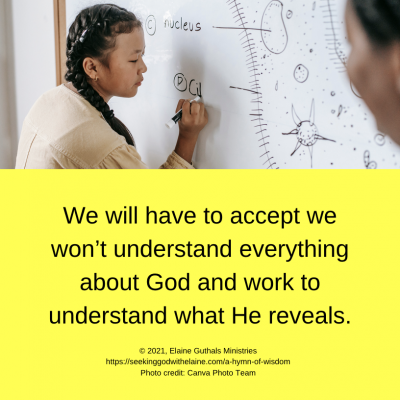
    We will have to accept we won’t understand everything about God and work to understand what He reveals.

    Then we get to fear of the Lord. We’ve talked about that many times. In fact, that is the topic for our discussion for this year.

    Godliness, equated with the Old Testament term fear of the Lord, is reverence in thought, feeling, and conduct that is promoted by walking in His Spirit and obeying God’s laws and commandments and produces a moral likeness of God. 

    Tillotson noted fear of the Lord was one of the catch-all phrases used in Scriptures. He wrote, “To fear the Lord’ and to ‘depart from evil’ are phrases which the Scripture useth in a very great latitude to express to us the sum of religion and the whole of our duty.”

    Resource

    Why is fear of the Lord important? “The fear of the LORD is the beginning of wisdom; all who follow his precepts have good understanding. To him belongs eternal praise” (Ps. 111: 10 NIV).

    Shiels noted that, to properly fear Him, we had to properly know Him. We have to know the attributes He possesses.

    To read a devotion in the Finding Our Center

    According to Shiels, fearing God means we don’t want to disobey Him. It makes us want to know everything about Him.

    The Homiletic Magazine told us how fearing the Lord brings happiness.

    • It removes moral impediments to our happiness.
    • Restoration to purity brings happiness.
    • It infuses sober habits.
    • It provides comfort in trials.

    Resource

    AHymnAboutWisdomPin

    Making the Connections

    Pratt noted that, “to fear the Lord is wisdom; to depart from evil is ‘understanding.’” That makes sense to me.

    We have to understand enough to make the choice to turn to God. We aren’t going to know everything. To show God reverence is to acknowledge that He does know everything.

    Resource

    How Do We Apply This?

    • No matter what, trust in God.
    • Recognize that we will understand everything in eternity.
    • Get rid of the sinful feelings.
    • Follow God’s laws and commandments.
    • Be humble.

    Resource

    Father God. Lord, we want to know You. Give us the wisdom we need to understand what we need to in order to submit to You. Amen.

    What do you think?

    Leave me a comment below (about this or anything else) or head over to my Facebook group for some interactive discussion.

    If you don’t understand something and would like further clarification, please contact me.

    If you have not signed up for the email daily or weekly providing the link to the devotions and the newsletter, do so below.

    If God has used this devotion to speak with you, consider sharing it on social media.
  • Submitting to Christ

    We are called to move from the dark to the light. This daily devotional looks at how we submit our character to be like Jesus’.

    Nuggets

    • We need to choose God’s light over the darkness of sin.
    • We need to put on the character of Jesus.

    To read devotions in the Redo for Godliness series, click the appropriate button below.

    Devotions in the Transformed to Perfection series

    In the last devotion, we started talking about the dark as we discussed waking up. We must be actively pursuing our relationships with God.

    In this devotion, we wake up to the light. The Light is Jesus.

    We are transforming to be like Jesus.

    Let’s Put It into Context

    Here is a running list of what we’ve discussed previously.

    Moving from Dark to Light

    “The night is nearly over, and the day is near; so let us discard the deeds of darkness and put on the armor of light” (Rom. 13: 12 CSB)

    We need to choose God’s light over the darkness of sin.

    Darkness can be misleading. It may distort our vision. Dreams which occur in the night may be fantasy.

    We have to move from the darkness to the light. We have to give up sins we have committed and live as God calls us to live.

    God causes us to mourn because of our sins. We realize we are separated from Him because of Adam and Eve’s sin and our own. We realize that we need a change.

    That change brings forgiveness, reconciliation, righteousness, and adoption — and a whole lot more.

    • Forgiveness is, when we ask, God pardons us because we have shown repentance for breaking His laws and commandments.
    • Righteousness is the result of a solid relationship with God built by a sincere life of conscientious obedience to God’s laws and commandments.
    • Adoption is the gift of acceptance into God’s family when Jesus redeems us and changed to be spiritually alive like God.

    Parsons contended that our whole goal on the Sanctification Road is to achieve holiness. This shows our faith is sincere. It changes us so that we will have the nature needed to become citizens of Heaven.

    But it isn’t salvation singular. “… because now our salvation is nearer than when we first believed” (Rom. 13: 13 CSB). We have to be concerned about the salvation of others.

    Faith brings repentance. Repentance is acknowledging our separation from God and expressing sorrow for breaking God’s laws and commandments by making the commitment to changing ourselves through obedience so that we no longer do the wrong things.

    We are called to cast out the darkness and enter the light. We are called to repent of our sins and turn to God.

    It is appropriate that the illustration be that of light and dark. We sleep in the dark. Followers of Satan are in the dark.

    When we repent, we become children of light. Heaven will be light. The Essex Congregational Remembracer noted that all of the doctrines in Scriptures lead to Heaven.

    Resource

    To read a related devotion, click the button below.

    Paul implied that, since the wake-up time is near, we have to be active in transforming ourselves into God’s character. Belfrage explained that as “the distance between faith and complete salvation has been in some instances short. Quickly has the perfection of glory followed the formation of grace, but in other cases there are many years betwixt them. It belongs to Him to regulate this who is the Author and the Finisher of faith.”

    Resource

    Elaine-speak. We don’t know how long our lives will be. We can die after a long illness, or we can be killed instantly in an accident. God gets to choose how long it will be.

    We have to be ready to meet God. We have to be the best us that He has made and transformed.

    Parsons believed that we do this by evaluating our existence. He contended that we have the moral responsibility to examine the past, present, and the future. In fact, he said that this shows we are made in God’s image.

    Glossary

    We start by examining our faith. Faith is the conviction that the doctrines revealed in God’s Word are true, even if we do not understand all aspects of them, a belief which impacts our lives.

    Parsons had a great description of faith. He wrote, “Faith did not arise from the spontaneous influence of your own mind, or from the influence of others. It was the work of God wrought upon you by the ministry of His gospel, the private admonition of a friend, the perusal of His Word, or by affliction. But, whatever the instrumentality, faith is the gift of God.”

    Resource

    Faith doesn’t just pop up one day. It is nothing we do or what anyone else around us does for us. It is all God, calling us to salvation.

    In Romans, the armor is described as armor of light. In Ephesians, it was just described as armor. I think it is the same.

    To read devotions in the Armor of God series, click the appropriate button below.

    Trench said something that got me thinking. He called this time – between Jesus’ coming and His second coming – as the dawn.

    Resource

    I can see that. Dawn is when it is still dark, but the dark is being eliminated by the light. It isn’t daybreak – yet – but the light and dark are coexisting for the moment.

    Really, that is what is happening now. Sin is still in this world, but the light arrived when Jesus came. Disciples are becoming stronger as they navigate the Sanctification Road.

    Putting on Jesus

    “Let us walk with decency, as in the daytime: not in carousing and drunkenness; not in sexual impurity and promiscuity; not in quarreling and jealousy. But put on the Lord Jesus Christ, and make no provision for the flesh to gratify its desires” (Rom. 13: 13-14 CSB)

    We need to put on the character of Jesus.

    Paul used the concept of putting on Jesus several times. “Therefore, if anyone is in Christ, he is a new creation; the old has passed away, and see, the new has come!” (II Cor. 5: 17 CSB). We’ve talked before that we are to become new creations.

    Glossary

    We are to put off our old selves and put on the new. That includes character, habits, thoughts, and opinions.

    Spurgeon talked that this was a covering for nakedness. That nakedness is our sin. Benson came the other way to say we lacked righteousness and salvation.

    Resource

    I’m reading this, and I am thinking of the robe of righteousness. “I will greatly rejoice in the Lord; my soul shall exult in my God, for he has clothed me with the garments of salvation; he has covered me with the robe of righteousness, as a bridegroom decks himself like a priest with a beautiful headdress, and as a bride adorns herself with her jewels” (Isa. 61: 10 ESV emphasis added).

    To me, that fulfills Spurgeon’s clothing for dignity, defensive armor, and all-around clothing.

    Binney thought that I was wrong. He argued that being clothed by righteousness means that our sins are just hidden from God. He posits that this is talking sanctification.

    We are to walk consistently as Jesus would. Walking is the term used to describe how we live our lives. Beveridge wrote that we are to walk soberly, righteously, and godly.

    Resource

    Glossary

    What Paul is saying is that we have to participate in working out our salvation. We can’t  go on autopilot on the Sanctification Road.

    Hall reminded us that “it is not enough to believe.” Head knowledge isn’t enough. Lip service isn’t enough.

    Resource

    We have to confess with our mouths that Jesus Christ is our Savior and Redeemer and God is Sovereign God. We have to live like we believe that.

    That means we have to study the Scriptures so that we know the doctrines. Hall wrote, “All the doctrines of Christianity are intended to expel our native corruption, and raise us nearer to the character and will of God.”

    Resource

    By imitating Christ, we glorify Him. If He has said something is a sin, we agree that it a sin.

    Farrar said that putting on Christ – imitating Him and having Him cleanse us from our sins – is the only way we can stand before God clean.

    Resource

    Yes, there are times that we don’t feel we are worthy. But we are when we put the robe of righteousness on.

    Benson said that we not only put on righteousness, but we also put on wisdom.

    Resource

    Binney made an interesting comment. He said that “… to have Him on is to succeed in the attempt.”

    Resource

    Attempting isn’t good enough. We have to succeed. If we don’t have Jesus on, we haven’t succeeded.

    I know what you are thinking. That is a very obvious statement.

    But think of it this way. “Not everyone who says to me, ‘Lord, Lord,’ will enter the kingdom of heaven, but only the one who does the will of my Father in heaven” (Mt. 7: 21 CSB).

    We think we have succeeded when we ask Jesus to be our Lord and Savior. But it is more than that. To succeed, we have to put Him on — imitate Him — change our character to be like Him.

    Binney described it this way. He wrote that we have to get down to “… the culture of a deep internal sympathy with His Spirit which manifested itself in words and deeds.”

    Resource

    If we don’t have Jesus on, we haven’t succeeded. It would force Him to say we don’t get to enter Heaven.

    My take of how Thomas summed it up is this. Jesus’ character is the garment for our souls.

    Resource

    Sometimes, we have to personate it, as Bartol said. We may not feel like that is totally us at first because we are looking at the difficulties.

    But as we play the part again and again, it becomes us as we put on the meaning and feeling of the character.

    Resource

    SubmittingToChristPin

    Making the Connections

    We can’t think that we will get Christ to come down to our level. Binney wrote, “Christ is not to be put on over the natural man, but the natural man becoming spiritual, a visible Christ comes out as an emanation from within …”

    Resource

    Jesus pulls us up to His level. His level is different than ours.

    Well, Jesus is God — we aren’t. That means there are going to be some things that we can’t imitate. Binney reminded us that we can’t perform miracles.

    How Do We Apply This?

    • Imitate Jesus. There is no way that we can be too much like Him.
    • Sincerely want to be like Jesus.
    • Conduct a study of Jesus — His character, what He taught, what is required, etc.
    • Study God’s Word period.
    • Prepare in private for a public performance.
    • Be committed to succeed.
    • Listen to the Holy Spirit.
    • Don’t give up if you don’t succeed. Ask for forgiveness and take another run at it.
    • Live Jesus’ example, not our interpretation of it.

    Resource

    Submitting to Christ is an important component of our sanctification. We will be blessed when we reach perfection. It brings peace and comfort.

    Father God. We choose to put on the character of Jesus. Help us to be more like Him. Amen.

    What do you think?

    Leave me a comment below (about this or anything else) or head over to my Facebook group for some interactive discussion.

    If you don’t understand something and would like further clarification, please contact me.

    If you have not signed up for the email daily or weekly providing the link to the devotions and the newsletter, do so below.

    If God has used this devotion to speak with you, consider sharing it on social media.
  • Submitting to Wakefulness

    God wants us to have success in navigating the Sanctification Road. This daily devotion looks at what Paul’s terminology of waking has to do with our salvation.

    Nuggets

    • Salvation leads to the Sanctification Road, which leads to Heaven.
    • We must be actively pursuing our relationships with God.
    • Today is the day to accept and work on our salvation.

    To read devotions in the Redo for Godliness series, click the appropriate button below.

    Devotions in the Transformed to Perfection series

    Wow! Romans 13: 11 is a packed verse. I was going to finish out the chapter in this devotion, but I won’t get that far.

    I think I need to start at the end of the verse and mix it up. Let’s dig in.

    Let’s Put It into Context

    Here is a running list of what we’ve discussed previously.

    Salvation Is Near

    “Besides this, since you know the time, it is already the hour for you to wake up from sleep, because now our salvation is nearer than when we first believed” (Rom. 13: 11 CSB)

    Salvation leads to the Sanctification Road, which leads to Heaven.

    When I first read this, my mind went to the fact that judgment day is coming. All non-believers have a limited amount of time to hear the gospel message and believe.

    Belfrage took it another way, one that speaks directly to our transformation on the Sanctification Road. We can’t say, “We’ve got our salvation. We’re done.”

    • Sanctification is the transformation of mind, body, and soul, which begins with regeneration, gradually changes our nature through the promptings of the Holy Spirit, and ends with perfected state of spiritual wholeness or completeness.
    • Regeneration is being changed from spiritually dead to spiritually alive and the internal requickening in us that God brings about through the work of the Holy Spirit to give us new character.
    • The perfected state indicates the combination of the spiritual graces which, when all are present, form spiritual wholeness or completeness.
    • Spiritual graces are worldly morals that have been submitted to God to further His kingdom instead of enhancing this world.

    Glossary

    We’ve talked before about salvation being one of those three-part words. We were saved the instant that God forgave our sins (salvation past).

    But that didn’t mean salvation was over. Our job description says we need to work out our salvation. We do that as we navigate the Sanctification Road (salvation present).

    • Salvation is the gift of life through the deliverance from condemnation and sin to acceptance and holiness and changes us from being spiritually dead to spiritually alive.
    • Sins are actions by humans that disobey God and break one of His reasonable, holy, and righteous laws and commandments, goes against a purpose He has for us, or follows Satan’s promptings.
    • Holiness is the transcendent excellence of His nature that includes elements of purity, dedication, and commitment that lead to being set apart. Purity means possessing God’s moral character, having eliminated the stain of sin.
    • Spiritual death is the spiritual separation from God that occurred as a consequence of Adam and Eve’s original sin. The spiritually alive are those who have ABCDed, so they are no longer separated from God.

    The Disciple’s Job Description

    Complete Job Description

    Individual Description

    Job Duty #2
    Work Out Our Salvation (Philippians 2: 12)

    To read a related devotion, click the button below.

    The ABCDs of Salvation

    If you have not become a believer in Christ, please read through the
    Plan of Salvation and prayerfully consider what God is asking you to do.

    A – admit our sins
    B – believe His Son Jesus is our Redeemer
    C – confess God as Sovereign Lord

    D – demonstrate that commitment by making any changes needed in our lives to
    live the way in which God has called us

    The Disciple’s Job Description

    Glossary

    Yes, we don’t reach the end of the Sanctification Road until we are made perfect. That isn’t going to happen until we reach heaven (salvation future).

    I love what Thomas said. He said that salvation is a process that leads to perfection.

    Resource

    Okay, so the process is working out our salvation on the Sanctification Road. Perfection happens in Heaven.

    Sanctification is the process in which the transformation occurs.

    Belfrage stated that we need to exhibit a “… spirit of active goodness, by a reference to many of its precepts, and by detailing the strenuous efforts of its genuine disciples to go on to perfection.”

    Resource

    Three words jump out at me there: active, many, and strenuous. Precepts are talking about the laws and commandments.

    Our salvation requires action on our part. Yes, there are many laws and commandments, but keeping them ensures we are changed to imitate God’s character. It will take strenuous effort to make the transformation.

    Spurgeon argued that this verse is talking about salvation future. This verse is all about eternal glory. The journey to get there started when we believed.

    Resource

    I think it is about both. You can’t have the eternal glory without the salvation. We get the eternal glory when we agree to salvation. They are inseparable.

    Salvation is nearer than we believe. I think that means judgement day is nearer than we think.

    But I also think that means our perfection is nearer than we think. We see ourselves through our failures and sins. We don’t see ourselves as God does.

    God sees our potential. He sees us how we will be in Heaven.

    McMichael listed four responsibilities disciples have. They are

    • “Our relation to God.
    • “Knowledge of salvation.
    • “Duties in our sphere of life.
    • “Influence we exert.”

    Resource

    We are responsible for ensuring our relationship with God is active and growing.

    We are responsible for ensuring our relationship with God is active and growing.

    Who Needs to Wake Up?

    “… it is already the hour for you to wake up from sleep …” (Rom. 13: 11 CSB)

    We must be actively pursuing our relationships with God.

    Parsons was under the impression that sleep referred to non-believers. They are ignorant or forgetful of spiritual things and their true character as made in God’s image. Indifference feeds that condition.

    Resource

    Parry disagreed in calling sleepers non-believers. He said only believers could sleep. Non-believers are dead.

    Resource

    Melvill thought Paul was speaking to active Christians, not non-believers. We could say this was a rally cry for them to change their ways.

    Well, Beeby did say that formalism is a type of delusion. A formalist is a person who gives the appearance of being a disciple, but in reality, isn’t.

    Resource

    We are deluding ourselves when we think that we can earn our way into salvation. We can’t just follow the rituals and give lip service to our relationship with God.

    We are also deluding ourselves if we are banking on our self-righteousness to save us. It won’t. Only Jesus will.

    What Melvill thought Paul was cautioning disciples about was we have to grow as we navigate the Sanctification Road. He wrote, “Spiritual slumber is not necessarily the folding up of every power and faculty, but the not developing them in the necessary degree.”

    Resource

    Melvill thought Paul was telling his readers that the end of the Sanctification Road is near — and you aren’t at the end. There was much more work to be done before perfection could be achieved.

    It could also be describing backsliders. Backsliding is when those who have made a profession of faith return to their sinful lives.

    Parsons equated it to those who have lost their first love. The pull of this world was too much for them.

    To read a related devotion, click on the appropriate button below.

    We know Paul did not shy away from telling people they were missing the boat. He was all about getting believers and non-believers alike into a right relationship with God. He could do that in different levels of strictness.

    Hammond noted that sleep can be caused by a false understanding of atonement and salvation. We aren’t going to understand everything, but what we do understand has to be accurate.

    Resource

    Hammond attributed this to moral weakness or a sinful habit. He stressed our need for self-control.

    When Is It Time?

    “Besides this, since you know the time, it is already the hour for you to wake up from sleep …” (Rom. 13: 11 CSB)

    Today is the day to accept and work on our salvation.

    It could be that Paul said it is nearer than we think is because some believe that Heaven begins here on earth. I know we talked about that once. I doubt I will be able to find which devotion that is in.

    Spurgeon said that true godliness makes us evaluate ourselves — puts the focus, in a sense, on us. It makes us determine if we are accomplishing our duties or not.

    But that looking at ourselves shows us our responsibilities to others. Paul had just been telling us about our duty to love others. We are to be our brother’s keeper.

    Spurgeon made a good point. He wrote, “Paul does not say, ‘If you do not wake you will be lost.’ He speaks in a gospel tone, ‘Now is your salvation nearer than when you believed.’

    Resource

    When we are asleep, it includes an element of unconsciousness. Parry said that sleeping disciples aren’t doing anything religious.

    Resource

    We say that time heals all wounds, but it does not destroy sin. As McMichael said, it doesn’t even take away the guilt. Only God can do that.

    Disciples are called to knowledge. Yes, we are on a lower pay grade than God is, so we won’t know everything.

    But we will be given wisdom. Wisdom is an enlightened acceptance of God’s principles that leads to knowledge, discernment, and good sense that is put into practice through salvation, increasing our goodness and virtue.

    We are to know in order to turn away from the night and enter the day. We are to awake and head toward the day.

    But that means we are to act.

    SubmittingToWakefulnessPin

    Making the Connections

    It is imperative that disciples be active — but not just working out our own salvation. Parsons wrote, “The wakefulness and diligence here summoned has respect not only to our own salvation, but also to the salvation of others. This must be, that the whole of Christian character may be developed, and that the whole of Christian duty may be performed.

    Resource

    We have to be actively pursuing our job description. We are called to preach and make disciples.

    The Disciple’s Job Description

    Complete Job Description

    Individual Description

    Job Duty #4
    Proclaim the Gospel (Mark 16: 15)

    Job Duty #6
    Make Disciples (Matthew 28: 19-20)

    For some, that is a big submission to Christ. We just don’t feel qualified to be labeled a preacher.

    Remember, in Ephesians, Paul combined preacher and teacher. We are all teachers in some form or another, so that makes us preachers.

    Melvill gave us some great words of encouragement. He wrote, “The only Scriptural certainty that a man will be saved is the certainty that he will struggle. Struggling is incipient salvation. It is an intenser struggle which marks a fuller possession. If, then, a man would show that his salvation is nearer, he must also show that he is more wakeful, more in earnest.”

    Resource

    The strong disciple is going to struggle greatly. It’s okay.

    The struggle is going to be worth it. As we grow through the struggles, we gain holiness. We need that holiness for entrance to Heaven.

    How Do We Apply This?

    • Don’t become careless in our walk with God.
    • Constantly work on the transformation to the character of God.
    • Meditate on Him.
    • Don’t sleep spiritually.
    • Show our gratitude to God.
    • Consider what carelessness and inactivity does to our witness.
    • Live so that death is not an urgent situation.
    • Actively prepare for Heaven.

    Resource

    Transforming to perfection is not an easy road. We make it easier by submitting to God.

    Father God. We submit to You, meaning we pledge to keep Your laws and commandments. Grow us as we navigate the Sanctification Road, so that we can be made perfect when You call us home. Amen.

    What do you think?

    Leave me a comment below (about this or anything else) or head over to my Facebook group for some interactive discussion.

    If you don’t understand something and would like further clarification, please contact me.

    If you have not signed up for the email daily or weekly providing the link to the devotions and the newsletter, do so below.

    If God has used this devotion to speak with you, consider sharing it on social media.
  • Submitting to Love

    Submitting to God should be made easy by love. This daily devotion looks at how, by loving others, we fulfill God’s laws and commandments.

    Nuggets

    • God calls us to submit our finances to Him and depend on Him.
    • Love is a debt we will always owe.
    • Love fulfills all the other commandments.

    To read devotions in the Redo for Godliness series, click the appropriate button below.

    Devotions in the Transformed to Perfection series

    In our transformation to perfection, we need to submit to God. To achieve perfection, we need to love.

    Paul talks about this in Romans 13. Let’s take a look.

    Let’s Put It into Context

    Here is a running list of what we’ve discussed previously.

    Submitting Our Finances to God

    “Do not owe anyone anything …” (Rom. 13: 8 CSB)

    God calls us to submit our finances to Him and depend on Him.

    The beginning of this verse has had differing interpretations. Chalmers said some interpret that as pay your debts while others interpret it as don’t get in debt at all.

    I can see don’t get into debt. If we are spending more than we are making, then we could be submitting to this world instead of God. Charters said it also shows our selfishness.

    For many people — me included — there are times that we have to go into debt. There is no way around it.

    God wants us to be good managers of our resources. So, I can also see the pay your bills on time.

    I think it all comes down to living as God wants us to live. We have to submit to Him.

    In my opinion, submitting means committing to live a sin-free life. That includes our finances.

    We want to focus on God, not on the world. We don’t want to submit to the worldview.

    One way we submit to the worldview is when we try to keep up with our neighbors. They get a new car – we get a new car. They remodel their house — we remodel our house. It feeds our pride.

    Why is this so important? Lyth wrote, “[Being in debt] robs the debtor of his independence, and not unfrequently (sic) of his moral principle.”

    Resource

    That could be read as our morals go out the door the more we get into debt. I can see where that could be an issue for some.

    As we get deeper and deeper in debt, we could feel that we are just buried in it. The desperation can lead us to make questionable choices.

    Charters gave us three words to help us when we do get into debt.

    • Diligence.
    • Frugality.
    • Exactness.

    Resource

    What Charters meant when he said exactness was do a budget. He also suggested punctuality was another way to be exact.

    Submitting to Loving One Another

    “Do not owe anyone anything, except to love one another, for the one who loves another has fulfilled the law” (Rom. 13: 8 CSB)

    Love is a debt we will always owe.

    But if we hook the second phrase onto the first, it changes the meaning all together. “Do not owe anyone anything, except to love one another …” (Rom. 13: 8 CSB).

    Lyth contended that we have to be honest with others. But love, he said, was even more than that.

    Resource

    Jesus said loving others was the second greatest commandment. Then He said, “All the Law and the Prophets hang on these two commandments” (Mt. 22: 40 NIV).

    Hambleton reminded us that we “… owe duties to every one, and these you are to fulfil. In every relationship of life you have dues to render, and all your various duties to man result from your supreme duty to God.” Loving others is the second greatest commandment because love should be universal and impartial.

    Resource

    Jesus has paid our debts to God. Therefore, we are to be spreading God’s love to others.

    We are never going to complete the commandment to love others. Regardless of our age and occupation, we will always be called on to go ye into whatever world God directs and tell of Him.

    Krotel took a scenic route. The way I read it is he didn’t limit this to disciples. He said everyone should love one another — even in the relationships we did not choose to enter into.

    As God is our Creator, all have a relationship with Him. We just need that relationship restored.

    Krotel explained, “In the preceding verses Paul speaks of the relation of the subject to the ruler; the citizen to the state. Our birth introduces us to the rights of citizenship, but we are born to duties just as much as to rights; and as long as we remain under the protection of the State, we are bound to render to Caesar the things that are Caesar’s, just as we are bound to render unto God the things that are God’s; and that, as Paul informs us, ‘for conscience’ sake.’ The debts we owe the State are just as binding as any debts we voluntarily contract. And these dues (ver. 7) lead Paul to speak of that greatest debt, loving one another.”

    Resource

    All are to love all.

    Submitting to the Commandments

    “The commandments, Do not commit adultery; do not murder; do not steal; do not covet; and any other commandment, are summed up by this commandment: Love your neighbor as yourself. Love does no wrong to a neighbor. Love, therefore, is the fulfillment of the law” (Rom. 13: 9-10 CSB)

    Love fulfills all the other commandments.

    That doesn’t mean that I show my love for people by working in a homeless shelter or serving on a soup line — so I don’t have to “… Go ye into all the world, and preach the gospel to every creature” (Mk. 16: 15 KJV).

    It means that, if love is the foundation of our actions, we will choose God’s way to fulfill the laws.

    Perfection is about being. It is about obtaining the character of God.

    It is more than just doing the acts of love. It is to have God’s character of love. It is about imitating God by being like Him.

    Lyth stated that we have to fulfill the law by both the letter and the spirit of it. Emmons said that both the spirit and the letter of the law is fulfilled because it comes out of a pure heart.

    Resource

    Jesus was asked to define who our neighbor was. Through the Parable of the Good Samaritan, He said anyone and everyone.

    To read a related devotion, click on the appropriate button below.

    Butler extended what is meant by loving our neighbor. He said it wasn’t just benevolence — compassion or goodwill. It was also “… seeking the good of others …”

    Way back at the beginning of the year we said that the two greatest commandments added together to form perfection. Butler said that the “… noblest form [of loving our neighbor] is the perfection of God.

    Resource

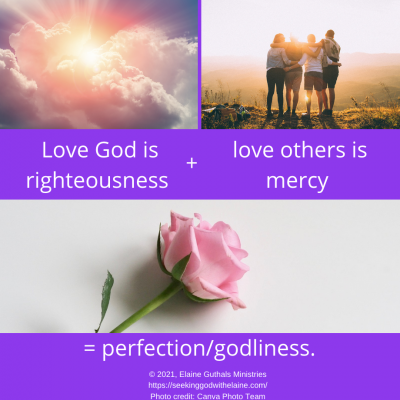
    Love God is righteousness + Love people is mercy = perfection/godliness

    Emmons wrote “If the moral perfection of man consists in conformity to the moral perfection of God, and the moral perfection of God consists in love, then love must be the fulfilling of the law.”

    Resource

    Emmons wrote “If the moral perfection of man consists in conformity to the moral perfection of God, and the moral perfection of God consists in love, then love must be the fulfilling of the law.”

    Resource

    Butter also explained what the as ourselves meant. He wrote, “That it is to bear a certain proportion to our love for ourselves. What this proportion is to be is not easily decided, for affection is not easily measured; but as to actions, the expression of affection, the more others occupy our thoughts the better, provided we neglect not ourselves.”

    Resource

    God is really wanting us to have an active love, not a passive one. Lyth said we do this by seeking the good of others in deed, word, and thought.

    I can see why love has to be active. Mellor said that it is the means of expression or the center of the law. The center has to be shown.

    Resource

    Lyth was right in saying that we need to take every opportunity to love others, which talks to consistency. It must be a sincere love, done to the best of our abilities.

    Resource

    We must make a conscious effort to love others.

    SubmittingToLovePin

    Making the Connections

    Okay, so the way I read what Krotel was saying was that love one another was a commandment all of God’s creations must follow — whether we are children of God or just made in His image.

    Glossary

    God expects us to live in an orderly, peaceful manner. He does want us to benefit from knowing Him.

    How Do We Apply This?

    • Don’t spend money we don’t have.
    • Don’t buy what we don’t need.
    • Don’t borrow money that we have no conceivable way to pay back.
    • Obey God.
    • Love all without qualification.

    Resource

    We are to submit to God through love. In doing so, we fulfill the laws and commandments.

    Father God. We love You. We want to show that love to others by sharing Your gospel message with them. Help us to be strong and secure in You. Amen.

    What do you think?

    Leave me a comment below (about this or anything else) or head over to my Facebook group for some interactive discussion.

    If you don’t understand something and would like further clarification, please contact me.

    If you have not signed up for the email daily or weekly providing the link to the devotions and the newsletter, do so below.

    If God has used this devotion to speak with you, consider sharing it on social media.
  • Submitting to Authority

    In order to transform from worldview people to being like God, we need to learn to submit. This daily devotional looks at our submitting to secular authority.

    Nuggets

    • God has a purpose for secular governments, so we should honor our leaders.
    • Disciples should not fear government leaders if they are following God’s laws and commandments.
    • Disciples are to pay the taxes they owe in order to support the government.

    To read devotions in the Redo for Godliness series, click the appropriate button below.

    Devotions in the Transformed to Perfection series

    Paul told his readers in several places that we should submit to governmental authority. “Remind them to be submissive to rulers and authorities, to be obedient, to be ready for every good work” (Ti. 3: 1 ESV).

    This admonition also occurred in Romans. It is in Romans Part II, the part where we are transforming to be like God.

    In a way, that seems strange. God is telling us to submit to someone else???? That seems a little out of character.

    The Homiletic Monthly contended that our transformation to perfection needs to be connected to our obedience to the government. Let’s dig into what Paul said.

    Let’s Put It into Context

    Here is a running list of what we’ve discussed previously.

    Following Our Secular Leaders

    “Let everyone submit to the governing authorities, since there is no authority except from God, and the authorities that exist are instituted by God. So then, the one who resists the authority is opposing God’s command, and those who oppose it will bring judgment on themselves” (Rom. 13: 1-2 CSB)

    God has a purpose for secular governments, so we should honor our leaders.

    Every nation has its rulers. In the Scriptures, according to Beveridge, those rulers had specific purposes.

    • To ensure that God is worshiped properly.
    • To maintain peace.
    • To impose judgment.

    Resource

    Paul said this is a directive to everyone. He doesn’t say only submit to good leaders. He doesn’t qualify that we have to believe what the leader’s agenda is in order to submit. He doesn’t limit it by ethnicity, race, or religious affiliation.

    In other words, God doesn’t give His people — or any of His creation — a pass from submitting to leaders.

    Glossary

    Lyth did make the statement that this “requires submission in all matters not affecting conscience.” Our submission to God supersedes our submission to leaders only when they are breaking God’s laws and commandments.

    Resource

    What, though, are we submitting to authority? The Homiletic Monthly said that it was our intellect, not a degraded submission.

    This is combining society with the national government. Tyson wrote that this organization helps us from threats from without our community and punishment for those who do wrong from within.

    Resource

    What I think Paul is saying here is the omnipotent God gave the leaders the power to rule. If He didn’t allow them to rule, He wouldn’t have given them the power.

    But Lyth and Sandys put a qualification on it. They said that it must be legitimate authority. That legitimacy has nothing to do with our agreement or disagreement with the leaders.

    Resource

    Whether the government is legitimate or not, the leaders are subject to God.

    It is easy to think that government rule is secular. Still, the Homiletic Monthly wrote, “While we approve not the perversions of depraved legislators — their intemperance, Sabbath desecration, profanity, luxury and ambition — we can, notwithstanding, hold ourselves in dignified yielding to normal law.”

    Resource

    We should respect our leaders. “Honor everyone. Love the brotherhood. Fear God. Honor the emperor” (II Pet. 2: 17 ESV).

    We shouldn’t talk bad about our leaders. “Even in your thoughts, do not curse the king, nor in your bedroom curse the rich, for a bird of the air will carry your voice, or some winged creature tell the matter” (Ecc. 10: 20 ESV).

    I think that there is a reason God wanted leaders to govern. God is not a God of chaos but of order. He wanted us to be organized.

    That thought makes what the Homiletic Monthly said make sense. They felt the application of this discussion is not submission to the secular government. It is all about submission to God.

    God wants to order and organize our lives so that we have the peace needed to worship Him. If we don’t have the peace governments are to provide for us, we won’t have the comfort to worship. That gives governments a divine purpose.

    God wants to order and organize our lives so that we have the peace needed to worship Him.

    Thomas said the leaders have a divine appointment — or they are ordained. Since God has given the heads of state the authority to rule over others, disciples should pray for them.

    Resource

    We have to obey God rather than man when there is conflict. When the rules mesh, we are to follow man’s rules.

    Resource

    Rogers made it clear that God is not advocating or approving a single type of government. He is saying that government should be formed for the good of the people.

    Resource

    We have to remember that this world is temporary, making secular governments temporary. We need to look to God’s government, which will be eternal.

    Doing What Is Right

    “For rulers are not a terror to good conduct, but to bad. Do you want to be unafraid of the one in authority? Do what is good, and you will have its approval. For it is God’s servant for your good. But if you do wrong, be afraid, because it does not carry the sword for no reason. For it is God’s servant, an avenger that brings wrath on the one who does wrong. Therefore, you must submit, not only because of wrath but also because of your conscience.  And for this reason you pay taxes, since the authorities are God’s servants, continually attending to these tasks” (Rom. 13: 3-6 CSB)

    Disciples should not fear government leaders if they are following God’s laws and commandments.

    Yes, wrongdoers should be punished. Disciples are called to be rightdoers. We should not fear punishment.

    But that flips the submitting to authority from submitting to something we don’t want to submitting to what is right. We should have no problem with that.

    Since it is submission to what is right, Thomas said that “‘the new commandment’ is the law of humanity; nothing can justify its violation.” God’s laws should not be broken for any reason.

    Resource

    One thing we have to remember, as Hoadley pointed out, is that being the leader — be it governor or King — does not elevate them above others to the point of servitude.

    Resource

    I think we can take this back to Paul’s discussion about the many parts of the body. All are needed for the body to work to its potential.To read a related devotion, click on the button below.

    To read a related devotion, click the button below.

    Paul said it again. “Therefore, you must submit …” (Rom. 13: 5 CSB). He does not leave any wiggle room. We must submit.

    What Paul is teaching us is obedience. That is an important response to God’s laws and commandments. We are called to do the do’s and not do the don’ts.

    If we can’t obey man’s laws, how are we going to obey God’s?

    The leaders have a responsibility here, too. They have to follow God’s Will.

    If they do not, we are to follow God.

    Sandys brought up the time of the judges. Those were dark times. Still, he argued that it would have been worse if there had been no leadership.

    Probably, our gut reaction to a leader we are questioning as “God’s minister” is to want to overthrow them or get them out of office. Maurice gave us a scenario of why we should rely on God’s judgment. He wrote,

    • “Nero’s will might be devilish; every power which he wielded was Divine. He had been appointed to rule the world which he tormented by Him who loved that world.”
    • “The effect of regarding Nero as a minister of God was, no doubt, to make them patient under his government, and afraid to engage in any mad schemes for subverting it. But this faith gave strength to their cries that the earth might be delivered from all her oppressors, assured them that those cries would not be in vain, and made them welcome their own sufferings as steps towards the redemption.”

    Resource

    So, they had a very bad leader, but they grew in their faith because of him. “And we know that in all things God works for the good of those who love him, who have been called according to his purpose” (Rom. 8: 28 NIV).

    All things — even what we consider the bad things.

    And we know that in all things God works for the good of those who love him, who have been called according to his purpose” (Rom. 8: 28 NIV).

    Paying Our Taxes

    “Pay your obligations to everyone: taxes to those you owe taxes, tolls to those you owe tolls, respect to those you owe respect, and honor to those you owe honor” (Rom. 13: 7 CSB)

    Disciples are to pay the taxes they owe in order to support the government.

    Governments cost money. They get that by taxing the citizens. Paul said we should pay our taxes.

    Jesus paid His taxes (Mt. 17: 24-27). Okay, most of us won’t find a fish with our tax money in it like He did. But, focus, He paid what He owed to the government.

    Sandys reminded us that “here, then, is forbidden everything that is disrespectful either in manner or language.” Even if we disagree with the politics of the leaders, God forbids us to scornful and contemptuous toward them.

    Resource

    Bottom line. We owe our leaders respect and honor. No qualifications.

    SubmittingToAuthorityPin

    Making the Connections

    Dalrymple argues that nations, as well as people, have a mission from God. I think Hall gave us what that mission is. Hall wrote, “Religion was designed to train us for heaven, not by unfitting us for the duties of earth, but by enabling us to perform them rightly. Religion would be an injury to the world if it withdrew the best men from it. True piety is nurtured and developed, not by avoiding any portion of our duties as men, but by diligently performing them.”

    Resource

    By performing our job within society, we are preparing ourselves for life in God’s kingdom.

    Kaye reminded us why we have societies. They are to benefit all of us. We find these benefits through mutual patience.

    Because of this, Kaye cautioned us that “our dislikes, then, should not prevent us from rendering due reverence to official dignity, as well as to rank, talent, and all true worth.” Governments have their mission and their purpose. We should respect our leaders.

    Resource

    We are to respect our leaders.

    How Do We Apply This?

    • Evaluate the government to determine if it is promoting good or evil. Good, in the biblical sense, is the workings of God within His people. Evil is equated with sin because it is that which goes against God and His purposes.
    • Remember that no government is infallible.
    • Have a concern for the public interest.
    • Have our worldly morals kicked up to social graces to support that public interest.
    • Promote peace and justice
    • Live a righteous example.

    Resource

    God has provided a framework through which we can find comfort. We should praise Him for this.

    Father God. We submit to those here on earth that You have placed in positions of authority. In doing so, we submit to Your Will. Help us to grow closer to You. Amen.

    What do you think?

    Leave me a comment below (about this or anything else) or head over to my Facebook group for some interactive discussion.

    If you don’t understand something and would like further clarification, please contact me.

    If you have not signed up for the email daily or weekly providing the link to the devotions and the newsletter, do so below.

    If God has used this devotion to speak with you, consider sharing it on social media.

  • Are Disciples to Ignore Sin Because of Love?

    If disciples are commanded to love others, does that mean we should ignore their sin? Isn’t that what Peter and James say? This daily devotional looks at what they were saying when talking about covering sins.

    Nuggets

    • When Peter told us to love one another, he was talking to and about disciples.
    • God’s love covers our sins when a backsliding disciple is returned to the fold.

    The worldview says disciples are to tolerate sin to show love to others. The second greatest commandment directs us to love others. Does that mean we should allow them to go on sinning?

    Glossary

    Doesn’t I Peter: 4: 8 and James 5: 19-20 back up that assertion? Peter is quoting the last part of Proverbs 10: 12. “Hatred stirs up conflicts, but love covers all offenses” (Prov. 10: 12 CSB).

    So, this isn’t just a command that Peter got from Jesus. It is a Old Testament God command.

    Let’s dig in and see what we can find out.

    Love Helps Us not to Sin

    “Above all, maintain constant love for one another, since love covers a multitude of sins” (I Pet. 4: 8 CSB)

    When Peter told us to love one another, he was talking to and about disciples.

    • “Peter, an apostle of Jesus Christ: To those chosen, living as exiles dispersed abroad in Pontus, Galatia, Cappadocia, Asia, and Bithynia, chosen according to the foreknowledge of God the Father, through the sanctifying work of the Spirit, to be obedient and to be sprinkled with the blood of Jesus Christ. May grace and peace be multiplied to you” (I Pet. 1: 1-2 CSB emphasis added).
    • “Finally, all of you be like-minded and sympathetic, love one another, and be compassionate and humble, not paying back evil for evil or insult for insult but, on the contrary, giving a blessing, since you were called for this, so that you may inherit a blessing” (I Pet. 3: 8-9 CSB emphasis added).

    This isn’t talking about how we deal with worldview people. It is talking about how we deal with other disciples.

    Vaughan reminded us that this verse doesn’t say we use love to cover someone else’s sins. The love covers our sins. Sins are actions by humans that disobey God and break one of His reasonable, holy, and righteous laws and commandments, goes against a purpose He has for us, or follows Satan’s promptings.

    Glossary

    To use this verse as saying anyone should get a free pass to sin is misunderstanding it. It is all about how disciples respond when others sin against us.

    Ainger reminded us that loving God isn’t just about head knowledge and love. It is about submitting to giving up our love for sin and choosing to navigate the Sanctification Road so that we can be more like Him.

    Resource

    • Sanctification is the transformation of mind, body, and soul, which begins with regeneration, gradually changes our nature through the promptings of the Holy Spirit, and ends with perfected state of spiritual wholeness or completeness.
    • Regeneration is being changed from spiritually dead to spiritually alive and the internal requickening in us that God brings about through the work of the Holy Spirit to give us new character.
    • Spiritual death is the spiritual separation from God that occurred as a consequence of Adam and Eve’s original sin. The spiritually alive are those who have ABCDed, so they are no longer separated from God.
    • The perfected state indicates the combination of the spiritual graces which, when all are present, form spiritual wholeness or completeness.
    • Spiritual graces are worldly morals that have been submitted to God to further His kingdom instead of enhancing this world.

    The ABCDs of Salvation

    If you have not become a believer in Christ, please read through the
    Plan of Salvation and prayerfully consider what God is asking you to do.

    A – admit our sins
    B – believe His Son Jesus is our Redeemer
    C – confess God as Sovereign Lord

    D – demonstrate that commitment by making any changes needed in our lives to
    live the way in which God has called us

    The Disciple’s Job Description

    Glossary

    Love is a distinguishing mark of our being disciples. “By this all people will know that you are my disciples, if you have love for one another” (Jn. 13: 35 ESV).

    Ainger called love “… a disposition of the mind …” It does have to be part of our character.

    We just have to remember that the love comes from God, not our desire to do right in the world.

    Ainger described it this way. He wrote, “When the favour of God, the present blessings of this life, and the eternal joys of another, are promised to charity, it is not such and such special acts of benevolence which shall be so signally rewarded; but it is the earnest inclination to benefit our fellow creatures, and the continual and diligent habit of doing good which are of such high price before God.”

    That is telling me that it is not the specific acts of love that are considered love. It is the character of love. It is being, not doing.

    Perfection is about being. It is about obtaining the character of God.

    So, how are we supposed to “cover” someone else’s sin? Vaughan wrote that we “… love, by silence and by veiling, hides from man; and by prayer and by converting, hides from God.” That means, when others sin, we are not to judge them for it. We are not to play judge, jury, and executioner.

    Resource

    The reason sometimes used to explain about covered sins is that Christ’s righteousness covers our unrighteousness. It does — when we repent of our sins.

    If we don’t repent, it doesn’t.

    We have to remember what repentance is. Repentance is acknowledging our separation from God and expressing sorrow for breaking God’s laws and commandments by making the commitment to changing ourselves through obedience so that we no longer do the wrong things.

    • Realizing it is a sin.
    • Asking for forgiveness.
    • Stopping the commitment of the sin.

    Is this really what the worldview person is asking, or are they just trying to get a pass so they can keep on sinning and shut disciples down?

    Back to “… love covers a multitude of sins” (I Pet. 4: 8 CSB). The only way Jesus covers our sins is when He applies His righteousness to them. The only way He does that is for us to ask for salvation.

    • Salvation is the gift of life through the deliverance from evil and the consequences of sins to replace them with good and eternal life.
    • The consequences of sin are spiritual death and physical separation from God.
    • Eternal life is the promise of living eternally – even if we have died in this life – because we have admitted our sins, believed Jesus as Savior and Redeemer, and confessed God as Sovereign Lord.

    Glossary

    Ainger thought the sins that will be covered are not those we commit against others that love covers. We aren’t perfect yet, so we don’t have the grace that would stop us from committing those sins.

    Ainger wrote, “It is equally certain that charity towards men cannot atone for our sins against God; for though the love of our neighbour be a characteristic badge of our Christian profession, though it is vain to pretend our love towards our Heavenly Father, whilst we hate our fellow creatures; though the second commandment necessarily springs from the first, and is like unto it in its nature, still it cannot be made in any degree to supersede it. It can only mean, therefore, that charity will cover, or conceal, and forgive the sins which they commit against us.”

    It isn’t talking about our actions toward other disciples. It is talking about how we respond to their actions against us.

    We are to love and forgive them.

    Go back to Proverbs. That verse is talking something totally different. It is contrasting hatred and love.

    What I read that to be saying is hatred causes more sins to occur. Love forgives, so it disparages the anger, eliminating the opportunities to sin.

    This is very applicable to the context that I Peter 4: 8 is in. He is telling them to maintain love for one another in the end times.

    Peter is telling the church to be strong.

    Our Sins Are Covered by His Love

    “My brothers, if anyone among you wanders from the truth and someone brings him back, let him know that whoever brings back a sinner from his wandering will save his soul from death and will cover a multitude of sins” (Jas. 5: 19-20 ESV)

    God’s love covers our sins when a backsliding disciple is returned to the fold.

    James also talked about covering sins. It is in the context of heresy. Heresies are the belief in something — opinions or feelings — that are different from what the church believes or the opposite of the truth.

    Again, James was talking to disciples, not worldview people. “My brothers, if anyone among you wanders from the truth and someone brings him back …” (Jas. 5: 19 ESV emphasis added).

    James was talking about disciples who did not follow God’s laws and commandments. In fact, they paid no attention to the gospel.

    Parker made an interesting statement. He wrote, “Men may think falsely, and live virtuously; or they may live immorally, and think correctly. The one class are intellectual sinners: the other moral transgressors.”

    Resource

    If we try to be good people but miss the fact of God, that should be met with love. The other is a conscious decision to live opposite to what God wants.

    True, both will be judged on judgment day to be a goat on the left because they have not consciously chosen to be a sheep on the right. An indecision is a decision against God.

    Glossary

    But remember, we are talking backsliders here, not someone who has never made a profession of faith.

    Barfield gave us reasons that disciples backslide.

    • “A false estimate of the requirements of discipleship.
    • “A false estimate of one’s own strength.
    • “Intellectual pride.
    • “Neglect of the means of grace.”

    Resource

    We are to help fellow disciples come back into the fold. Yes, we are our brother’s keeper.

    There are several ways, according to McGatrie, to help a backsliding disciple to come back to God. We are to encourage them. We can use our influence and example to show them the way. We always should pray for them.

    Resource

    McEwen cautioned that we need to follow God’s plan for our lives. It is in following that plan that we will be happiest.

    In the last part of the verse, James talks about saving his soul from death. McEwen contended that James was talking about the “for the wages of sin is death …” (Rom. 6: 23 ESV) verse.

    We could probably see the judgment as fitting the crime when we consider that the sinner committed a multitude of sins. But we are to respond in love.

    Resource

    AreDisciplesToIgnoreSinBecauseOfLovePin

    Making the Connections

    Sometimes, it is really hard to convince people that something is a sin. McEwen noted that it is hard to convince some on a heart level all of the sins that they have committed. He wrote,

    “Sometimes slowly, but sometimes in a moment, it dawns upon him that every page and every line of the [book] of his life must be read aloud. And then, dear friends, when that truth gets hold of us, when we see what a shabby, shameful, damning story it would be, how we should be stung with shame and filled with remorse as one secret sin after another was disclosed, how absolutely helpless we should be to justify ourselves — then we feel how blessed a thing it is to have all ‘hidden,’ all that multitude hidden through God’s great mercy and the merits of our Saviour.”

    Resource

    “We are, therefore, never nearer to Christ than when we are making ourselves, in any way we can, the coverers of sin.”

    Resource

    God wants His people to be loving and forgiving. He wants them to be unified.

    How Do We Apply This?

    We need to ask God to forgive us of our sins and repent of them.

    So, how do we cover someone else’s sins?

    • Don’t be a gossip. It isn’t our story to tell.
    • Don’t cut someone else down to build ourselves up.
    • Build others up by focusing on their good qualities.
    • Look for extenuating circumstances when a sin has been identified.
    • Imitate God by forgiving others.
    • Don’t give sin an opportunity.
    • If you can’t just forget it, correct others with love.
    • Help others to come back to God by reminding them of God’s truth.
    • Help others come back to God through our influence and example.

    Resource

    There is only one way in coming to God to have Him forgive us of our sins. That process begins with us admitting our sins. If we don’t do that, Jesus will not use His blood to cover our sins.

    We have to genuinely ABCD.

    Father God. We admit our sins. We believe in Jesus as our Savior. We confess that You are Sovereign God. Help us to demonstrate this as we interact with other disciples. Amen.

    What do you think?

    Leave me a comment below (about this or anything else) or head over to my Facebook group for some interactive discussion.

    If you don’t understand something and would like further clarification, please contact me.

    If you have not signed up for the email daily or weekly providing the link to the devotions and the newsletter, do so below.

    If God has used this devotion to speak with you, consider sharing it on social media.

  • The Difficult Last Days

    Paul gave Timothy some advice about the last days. This daily devotional looks at the difficulties that will be prevalent in those days and how disciples should watch for and avoid those sins.

    Nuggets

    • Disciples are to read Scriptures and apply them to our lives.
    • We shouldn’t love ourselves more than we love God.
    • The items listed in verses 3 and 4 do not reflect God’s character.

    We’ve started looking at Romans 12-16 to look at how we transform our lives to be more like God. We just finished Romans 12.

    We are going to take a break before we start Romans 13. I went back to the drafts folder and pulled out a devotion I had passed up before.

    I think it is very important that we be reminded this world is going to end. God gave us several signs to give us a heads up that we are sliding into the end.

    True, there are some from every generation who see the signs within their own generation — and the world keeps spinning. I think that is just their sensitivity and watchfulness to God’s Word.

    Let’s see what we come up with.

    The End Is Coming

    “But understand this, that in the last days there will come times of difficulty” (II Tim. 3: 1 ESV)

    Disciples are to read Scriptures and apply them to our lives.

    We need to watch for signs of the end times. Also known as perilous times, Boston said that they are “times wherein it will be hard for people to keep their feet, to know how to carry themselves, to keep out of danger, and keep a good conscience.”

    Resource

    God wants us to read and apply Scriptures so that we can escape the dangers in which Satan is trying to trap us.

    We definitely do not want to be secure in what God hates. Owen wrote, “Our great wisdom then will be to eye the displeasure of God in perilous seasons, since there is a judicial hand of God in them: and we see in ourselves reason enough why they should come.”

    Resource

    We can’t give lip service to being a disciple. Salvation isn’t to be an outward change. It is to be an inward one.

    Screen Shot 2021-05-13 at 9.37.42 PM

    “Now the Holy Spirit tells us clearly that in the last times some will turn away from the true faith; they will follow deceptive spirits and teachings that come from demons” (I Tim. 4: 1 NLT).

    Unfortunately, some disciples are going to turn away from God. They are going to follow the worldview.

    Once we become disciples, we are to turn away from our sins. Sins are actions by humans that disobey God and break one of His reasonable, holy, and righteous laws and commandments, goes against a purpose He has for us, or follows Satan’s promptings.

    Unfortunately, there are some who don’t. They are just giving lip service to the gospel.

    Paul warned Timothy of people who will forsake the truth. “For the time will come when people will not tolerate sound doctrine, but according to their own desires, will multiply teachers for themselves because they have an itch to hear what they want to hear” (II Tim. 4: 3 CSB).

    We are just as susceptible as Adam and Eve were when they fell into Satan’s temptation. We succumb to His lies, too.

    We “… will not tolerate sound doctrine …” (II Tim. 4: 3 CSB). We won’t follow God’s laws and commandments.

    Instead, we try to rewrite them. We just want “… to hear what [we] want to hear” (II Tim. 4: 3 CSB). We want God’s laws to lead to what we want them to be and do.

    They lead to God — Who He is and what He wants us to be.

    We are to be different than the world.

    • “He gave his life to free us from every kind of sin, to cleanse us, and to make us his very own people, totally committed to doing good deeds” (Ti. 2: 14 NLT).
    • “If you were of the world, the world would love you as its own; but because you are not of the world, but I chose you out of the world, therefore the world hates you” (Jn. 15: 19 ESV).
    • “But you are a chosen race, a royal priesthood, a holy nation, a people for his possession, so that you may proclaim the praises of the one who called you out of darkness into his marvelous light” (I Pet. 2: 9 CSB).

    Jesus came to cleanse us from our sins and make us a priesthood. Sin has no place in that.

    Owen made an interesting comment. We keep thinking that the end times will be the last of this earth as we know it. But it is more than that.

    Owen said it was the last days of the gospel. Think about it.

    The gospel is the good news of Jesus’ birth, death, and resurrection. It tells us about the Man “… who takes away the sin of the world!” (Jn. 1: 29 ESV).

    The gospel gives us the opportunity to believe this. By ABCDing, our relationships with God are restored.

    One day, that will end. God will cut off our opportunities to turn to Him. We will have to live throughout eternity based on the choice we made.

    God won’t end all this and then say, “Okay. Who believes in Me now?” and allow that answer to change. The decisions we made in this life will remain.

    Lovers of Ourselves

    “For people will be lovers of self, lovers of money, proud, arrogant, abusive, disobedient to their parents, ungrateful, unholy” (II Tim. 3: 2 ESV)

    We shouldn’t love ourselves more than we love God.

    Oh, we can have some self-love. Waterland thought that was an indication of our happiness.

    When does this self-love slip into sin? We do that when we want control of our lives so that we always get the good things.

    Waterland had some interesting things about fairness. He said that we should not desire everything because it looks fair.

    The self-love should not escalate into pride. That is another name for self-flattery.

    The self-love can be so strong within us that we start boasting about all of our good points. Then we start boasting of our possessions.

    But this self-love and self-flattery turns into self-interest. We forget about God and come to depend on ourselves.

    Resource

    The self-interest can turn into covetousness. Covetousness is an inordinate greed for wealth and possessions.

    When we covet something, we take our focus off God and put it on ourselves.
    It is a form of selfishness.

    Bottom line is we can’t give God lip service. We can’t say that we want to give Him glory, and then don’t follow Him.

    We can’t blaspheme God. Blasphemy is not only cursing God but also cursing the name of God.

    To me, it all ties together. When we think more of ourselves — proud, arrogant, abusive, ungrateful — we blaspheme God. We tell him through our actions if not our words that He isn’t our Creator and all-powerful Sovereign God.

    Disciples are called to follow God. We aren’t looking for everything to be the same for everyone. We are looking for God’s plan to be fulfilled.

    Without Character

    “heartless, unappeasable, slanderous, without self-control, brutal, not loving good, treacherous, reckless, swollen with conceit, lovers of pleasure rather than lovers of God” (II Tim. 3: 3-4 ESV)

    The items listed in verses 3 and 4 do not reflect God’s character.

    God calls us to be sober. Sober is a character trait distinguished by self-control, genuineness, and sound moral judgment. It is a calm and temperate disposition.

    The distinguished by self-control cancels out the reckless and without self-control. The genuineness cancels the heartless, swollen with conceit, and treacherous. The sound moral judgment cancels out unappeasable, slanderous, and brutal.

    The lovers of pleasure focus more on this world than the next. Payson said lovers of pleasure partake in that which is forbidden to them.

    Resource

    Raleigh described the moral effects of being lovers of pleasure. He wrote, “Gluttony, drunkenness, licentiousness, not only eclipse the mental lights, and scorch the moral sensibilities of the soul, but they hasten the body to dissolution; they dig many a dishonoured grave. But apart from these physical consequences, and even in those cases where they do not follow, the moral effects of the love of pleasure are very sad.”

    Resource

    Paul is not saying that God doesn’t want us to have any pleasure. He is talking about worldliness.

    Most think worldliness is the pursuit of something material or an activity. Hall said worldliness was an internal state of the soul.

    Resource

    Paul is saying we are not to make pleasure a priority over God. God is to be priority #1.

    Priority

    Making the Connections

    “When the seventh angel blows his trumpet, God’s mysterious plan will be fulfilled. It will happen just as he announced it to his servants the prophets” (Rev. 10: 7 NLT).

    God rewards us when — even in the worst times — we follow Him.

    One day, this world will be over. It won’t be because of sword, plague, famine, persecution, according to Hall. Those are the results of sin.

    Resource

    God will end things. His plan will be fulfilled. Eternity will be ready to start.

    In what shape will our relationships with God be?

    TheDifficultLastDaysPin

    How Do We Apply This?

    • Pay attention to the perils of this world.
    • Use God’s Word to interpret what is happening.
    • Focus on God, not the world.
    • Pray for grace.
    • Mourn our sins and sinful nature.
    • Watch.
    • Look to God for our happiness, as it only comes from Him.
    • Don’t compare ourselves to others.
    • Sincerely humble ourselves before Him.
    • Submit all of us to His plan.
    • Grow in faith, hope, patience, and consistency.
    • Be morally upright.

    Resource

    God calls us to follow Him, not the world. We need to recognize the sins that could lead us away from Him in the last days.

    Father God. We place You as the priority in our lives. We look to You every day — but especially in the last days. Thank You for being our Father. Amen

    What do you think?

    Leave me a comment below (about this or anything else) or head over to my Facebook group for some interactive discussion.

    If you don’t understand something and would like further clarification, please contact me.

    If you have not signed up for the email daily or weekly providing the link to the devotions and the newsletter, do so below.

    If God has used this devotion to speak with you, consider sharing it on social media.

  • What a Beautiful Name

    Life happened today. It just seemed to spin out of control. So, I am going to do a music day.

    There is one line in this song that gets me every time. “You didn’t want heaven without us, so Jesus, You brought heaven down.”

    We should have been separated from God forever. But Jesus couldn’t stand the idea of us not being in heaven with Him.

    So, Jesus died on the cross to pay the penalty for our sins. What a wonderful Savior we have!

    What a Beautiful Name
    Vocalist: Elaine Guthals
    Keyboard: Chris Vieth

    WhatABeautifulNamePin

    What do you think?

    Leave me a comment below (about this or anything else) or head over to my Facebook group for some interactive discussion.

    If you don’t understand something and would like further clarification, please contact me.

    If you have not signed up for the email daily or weekly providing the link to the devotions and the newsletter, do so below.

    If God has used this devotion to speak with you, consider sharing it on social media.
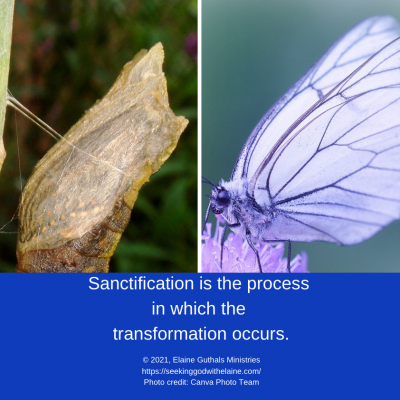
  • The Root Builds Character

    When everything seems like they are going against us, we need to go to the root in order to grow. This daily devotional looks at how we should deal with the conflict caused by the trials.

    Nuggets

    • There are times when we need to get to total despair so that God can step in and save us.
    • Job made a bold statement that he knew who his Redeemer was.
    • We must believe in God’s root to escape judgment and sword.

    Devotions in the Job: The Ultimate Test of Character series

    Job’s friends just kept after him. They were convinced that Job had done something wrong — was doing something wrong. That caused conflict between the four friends.

    But Job wasn’t really in conflict with the others. Let’s dig in.

    Let’s Put It into Context #1

    Here is a running list of what we’ve discussed previously.

    To read a related devotion, click the button below.

    Let’s Put It into Context #2

    “Parts of his skin are eaten away; death’s firstborn consumes his limbs. He is ripped from the security of his tent and marched away to the king of terrors. Nothing he owned remains in his tent. Burning sulfur is scattered over his home. His roots below dry up, and his branches above wither away. All memory of him perishes from the earth; he has no name anywhere. He is driven from light to darkness and chased from the inhabited world. He has no children or descendants among his people, no survivor where he used to live. Those in the west are appalled at his fate, while those in the east tremble in horror. Indeed, such is the dwelling of the unjust man, and this is the place of the one who does not know God” (Job 18: 13-21 CSB)

    In Job 19, Job is responding to Bildad’s speech. Bildad gets some of it right, but he got the main point wrong.

    Job Identifies the Conflict

    “All of my best friends despise me, and those I love have turned against me. My skin and my flesh cling to my bones; I have escaped with only the skin of my teeth. Have mercy on me, my friends, have mercy, for God’s hand has struck me. Why do you persecute me as God does? Will you never get enough of my flesh?” (Job 19: 19-22 CSB)

    There are times when we need to get to total despair so that God can step in and save us.

    At this point in Job’s story, he feels like he has been beat up by all sides.

    • His wife was biting on him.
    • His three best friends were biting on him.
    • He was mourning the deaths of his children.
    • His health had taken a hit.
    • He was to the point he wanted to die.
    • Talmage said that he would have been in bankruptcy.

    Resource

    Job got to the point where he thought his trials were never going to end. We have to get that way, too, sometimes.

    It is only when we stop relying on ourselves and totally looking toward God that He can step in and save the day. We have to take the focus off of us and our problems and look to Him. We have to worship Him even when we are ready to throw in the towel.

    One of the things that is really weighing on Job, I think, is that he and his friends seem to be at opposite ends of the faith continuum. They more than anyone — as his best friends — should know what Job believed.

    The friends kept giving evidence that they didn’t get Job.

    Job Stated What the Root Is

    “I wish that my words were written down, that they were recorded on a scroll or were inscribed in stone forever by an iron stylus and lead! But I know that my Redeemer lives, and at the end he will stand on the dust. Even after my skin has been destroyed, yet I will see God in my flesh. I will see him myself; my eyes will look at him, and not as a stranger. My heart longs within me” (Job 19: 23-27 CSB)

    Job made a bold statement that he knew who his Redeemer was.

    Some think Job is talking solely of physical recovery. If Job was talking about physical recovery, I don’t think he would have said, “… I know that my Redeemer lives …” (Job 19: 25 CSB). He is expressing faith in a living Being.

    I love Job’s strong conviction. “… yet I will see God in my flesh” (Job 19: 26 CSB). I don’t think this means Job felt he was going to succumb to his illness.

    Coming described both meanings of the word redeemer. He wrote, “It means the avenger of blood, and it means the kinsman.”

    Resource

    We know the concept of the kinsman redeemer from the Book of Ruth. Boas was a kinsman redeemer.

    The rest of Scriptures talk about Jesus being our Redeemer. He shed His blood on the cross so that we could be restored to relationships with God.

    Remember, Zophar accused Job of hypocrisy — that his words were not backed up by his actions. Zophar thought this because he understood trials just to be punishment. Bildad thought the same way.

    To read a related devotion, click the button below.

    Glover said that Job’s goal was to clear his character. “I will see him myself; my eyes will look at him, and not as a stranger. My heart longs within me” (Job 19: 23-27 CSB).

    Job knew that He would not receive acceptance from the Father until he had His character. The trio was trying to tell him that he didn’t have it.

    Job’s words are strong statements of faith. Faith is the conviction that the doctrines revealed in God’s Word are true, even if we do not understand all aspects of them, a belief which impacts our lives.

    It was a personal relationship that Job had with God. “… I know that my Redeemer lives …” (Job 19: 25 CSB).

    Job may have been longing for death, but he knew death was not the end. “… at the end he will stand on the dust. Even after my skin has been destroyed …” (Job 19: 25-26 CSB).”

    We know without a shadow of a doubt that Job believed what he was saying. There was no hypocrisy here.

    God will reward those who are not only doing His Will but also seeking Him. “I will see him myself; my eyes will look at him, and not as a stranger. My heart longs within me” (Job 19: 27 CSB).

    Job Talks about Differing Roots

    “If you say, ‘How will we pursue him, since the root of the problem lies with him?’ then be afraid of the sword, because wrath brings punishment by the sword, so that you may know there is a judgment” (Job 19: 28-29 CSB)

    We must believe in God’s root to escape judgment and sword.

    Blackburn stated, “A root may be employed for any principle from which effects proceed.” Spurgeon identified the principle in this way: “This is the root of the matter, to believe in the incarnate God, to accept His headship, to claim His kinship, and to rely upon His redemption.

    Resource

    This is an important concept because Job is responding to Bildad’s accusation that, because he is going through all of the trials, Job has lost his root. That would have made Job a hypocrite.

    Evans contended that it is difficult for us to tolerate someone who does not share the same principles that we do — in the same way that we do. He wrote, to some, “According to their notions, you cannot be too intolerant, so long as you are orthodox; nor too illiberal, so long as you are correct; nor too uncharitable, so long as you are on the right side; which singularly enough, usually happens to be the strong side. Intolerance, in their eyes, is nothing but consistency.”

    Resource

    I think what Evans was trying to say is that we all see God differently. Bottom line is that, in order to become children of God, we have to

    • admit that mankind was separated from God after the original sin, making us sinners;
    • believe Jesus paid the penalty for those sins to become our Savior and Redeemer;
    • confess God as Sovereign God; and
    • demonstrate that commitment by submitting to living our lives following His laws and commandments.

    Glossary

    If we can agree on the bottom line (which Spurgeon called essential doctrines), the others are subsequent to that.

    Let’s take a run at it this way. As Blackburn said, faith is the root. Faith has many doctrines. Spurgeon explained, “But we are ever ready to confess that there are many doctrines which, though exceedingly precious, are not so essential but that a person may be in a state of grace and yet not receive them. A man with weak eyesight and imperfect vision may be able to enter into the kingdom of heaven; indeed, it is better to enter there having but one eye, than, having two eyes and being orthodox in doctrine, to be cast into hell fire. But there are some distinct truths of revelation that are essential.”

    Resource

    We don’t have to believe every non-essential doctrine in the same exact ways. We do have to believe the essential doctrines in the same way.

    This brings up a good point. We have faith. Some days, it may be stronger than other days. That is okay as long as we still have faith. We don’t want to lose the root.

    TheRootBuildsCharacterPin

    Making the Connections

    We are talking character this series (and this year). What do we have to learn from this passage?

    We have to be moved by Job’s plight. We shouldn’t see the pain of others and not feel anything.

    We should love the sufferer as the three friends loved Job. We should not judge as they did.

    We have to always remember that God corrects those He loves. “For the LORD disciplines those he loves, and he punishes each one he accepts as his child” (Heb. 12: 6 NLT).

    Resource

    We just have to realize that God’s correction isn’t always directed toward things we can see. God is correcting sin. Sins are actions by humans that disobey God and break one of His reasonable, holy, and righteous laws and commandments, goes against a purpose He has for us, or follows Satan’s promptings.

    That has to be our focus. We aren’t supporting others just so they feel better. We are preaching the gospel and making disciples of them.

    The Disciple’s Job Description

    Complete Job Description

    Individual Description

    Job Duty #4
    Proclaim the Gospel (Mark 16: 15)

    Job Duty #6
    Make Disciples (Matthew 28: 19-20)

    My Ladies and I talked last Sunday how Job even knew about God. If Job was not part of the Jewish nation, how did Job not only hear of God but decide to believe in Him?

    Job may not have gotten everything down pat, but he knew enough. Clifford wrote, “It goes without saying that Job’s most far-reaching and comprehensive declaration falls unspeakably short of that abolition of death, and bringing of life and immortality to light, accomplished by the Gospel of Christ; but what it lacks in fulness and breadth, it gains in the burning intensity and glow out of which it springs, and the sublime motives which urge and impel him, not only to speak, but also to covet a monumental and immortal pulpit for his words. His sayings form a window through which we look into his soul; a lit lamp by whose clear ray we see the workings of his mind, and enter into partnership, not only with his ideas, but with himself, as those ideas are born in his soul, and take their place in his life.”

    Resource

    We have to believe enough to ABCD.

    The ABCDs of Salvation

    If you have not become a believer in Christ, please read through the
    Plan of Salvation and prayerfully consider what God is asking you to do.

    A – admit our sins
    B – believe His Son Jesus is our Redeemer
    C – confess God as Sovereign Lord

    D – demonstrate that commitment by making any changes needed in our lives to
    live the way in which God has called us

    The Disciple’s Job Description

    How Do We Apply This?

    We must believe as Job did. Glover outlined that as believing

    • God is our deliverer.
    • God will bestow His mercies on us.
    • We will maintain our character after death.
    • We will see God.

    Resource

    We need to

    • Be better than Job’s friends. Enfield wrote, “These so-called friends, however, turned a deaf ear to his entreaties, and under the cloak of friendship continued to wound him by the most ungenerous and inhuman treatment.”
    • Be like Job in relation to his friends. Clifford called them victims. Job saw them as people to whom he should witness.

    Resource

    We need to watch how we interact with people when conflicts arise. We need to keep our focus on God and witness to them.

    Father God. Thank You that You sent Your Son to be our Redeemer. Let us have the confidence that Job did. Amen.

    What do you think?

    Leave me a comment below (about this or anything else) or head over to my Facebook group for some interactive discussion.

    If you don’t understand something and would like further clarification, please contact me.

    If you have not signed up for the email daily or weekly providing the link to the devotions and the newsletter, do so below.

    If God has used this devotion to speak with you, consider sharing it on social media.