Blog

  • Transformed to Good

    In Romans 12, Paul tells us that God wants us to transform into living sacrifices. This daily devotional looks at how we do that by transforming from evil to good through our interactions with others.

    Nuggets

    • Transforming from evil to good means we love each other, not seek vengeance.
    • Transforming from evil to good means our goal is to live peacefully with others.
    • Transforming from evil to good means we become more like God.

    To read devotions in the Redo for Godliness series, click the appropriate button below.

    Devotions in the Transformed to Perfection series

    Romans 12 is about what happens next after salvation. It is all about transforming ourselves from the sinner we were to the disciple we are supposed to be.

    In Scripture terms, that means we go from being evil to being good. When we are good, we are like God.

    Paul is still kind of giving bullet points, but it is a little more fleshed out. To me, it leads to the point – transforming from evil to good.

    Let’s Put It into Context #1

    Here is a running list of what we’ve discussed previously.

    Let’s Put It into Context #2

    • Good, in the biblical sense, is the workings of God within His people.
    • Evil is equated with sin because it is that which goes against God and His purposes.

    When Evil Happens to Us

    “Do not repay anyone evil for evil. Give careful thought to do what is honorable in everyone’s eyes” (Rom. 12: 17 CSB)

    Transforming from evil to good means we love each other, not seek vengeance.

    This verse is really a great Reverse Golden Rule. The Golden Rule says, “Just as you want others to do for you, do the same for them” (Lk. 6: 31 CSB).

    So, instead of “Do unto others as you would have them to do you,” it is “don’t do unto other as they do to you.” Our reactions are not based on their actions.

    Beveridge gave us a bunch of verses that addresses that.

    • “But I say, love your enemies! Pray for those who persecute you!” (Mt. 5: 44 NLT).
    • “This means one must not transgress against and take advantage of a brother or sister in this manner, because the Lord is an avenger of all these offenses, as we also previously told and warned you” (I Thess. 4: 6 CSB).
    • “They must not slander anyone and must avoid quarreling. Instead, they should be gentle and show true humility to everyone” (Ti. 3: 2 NLT).

    According to Beveridge, we also have a duty toward them.

    • “First of all, then, I urge that petitions, prayers, intercessions, and thanksgivings be made for everyone” (I Tim. 2: 1 CSB).
    • “Rejoice with those who rejoice; weep with those who weep” (Rom. 12: 15: CSB)
    • “Therefore, as we have opportunity, let us work for the good of all, especially for those who belong to the household of faith” Gal. 6: 10 CSB).

    Resource

    Lyth was right that, when we retaliate, we take our focus off God and try to do it all ourselves. He also said that retaliation is harmful to our moral development.

    Resource

    We really have to think about how other’s see us. This is important because this is our witness. We are witnessing to others without saying a word.

    Read the last part of the verse again. “… Give careful thought to do what is honorable in everyone’s eyes” (Rom. 12: 17 CSB).

    It doesn’t say be honest. It says what everyone thinks is honorable.

    I can get that. But I also have problems with that.

    I see it like Paul thought. “To the weak I became weak, to win the weak. I have become all things to all people so that by all possible means I might save some” (I Cor. 9: 22 NIV).

    We just have to be careful that we do not compromise God’s laws and commandments to placate worldview people. We have to use God’s definition of love instead of the worldview’s definition of tolerant love.

    A Peaceful Existence

    “If possible, as far as it depends on you, live at peace with everyone” (Rom. 12: 18 CSB)

    Transforming from evil to good means our goal is to live peacefully with others.

    Lyth noted we should maintain an upright, meek, and peaceable spirit. Meekness is a personality trait exhibiting a mild or moderate disposition that places dependence on God.

    That isn’t going to happen all the time. Satan is going to try to stir up trouble.

    Others can be difficult, even contentious. Lyth said that we cannot sacrifice our conscience to promote a false peace.

    Resource

    When Satan stirs up trouble, we have to leave everything in God’s hands. We have to let Him address the situation. We have to respond in the ways God would want us to respond.

    Lyth told us why it is important that we react to our enemies with kindness. He wrote, “You will thus achieve a noble conquest over evil in yourself, and subdue enmity by love.”

    Resource

    When we find ourselves in these situations, we need to exercise patience and wisdom. We can’t appease the worldview people.

    Evans gave us what our goal should be. He wrote, “… we should have a hearty love and value for peace as far as it may be obtained.

    Resource

    Evans admitted that we will not always reach this goal. Still, we are to “turn away from evil and do what is good; seek peace and pursue it” (Ps. 34: 14 CSB).

    Sometimes, life gets in the way. Sometimes, we can’t put the priority on peace. We can’t sacrifice our spiritual graces and holiness to promote peace.

    Evans gave us advice on how to live peacefully with those who are not God’s children. He wrote, “Setting aside the consideration of their religion or their virtuous character, we are obliged by the dictates of nature, and of Christianity too, to study peace with them as our fellow-creatures …”

    • “Give no offense to Jews or to Greeks or to the church of God” (I Cor. 0: 32 ESV).
    • “Know this, my beloved brothers: let every person be quick to hear, slow to speak, slow to anger” (Jas. 1: 19 ESV).

    One thing we have to watch is how we interpret the “if possible …” (Rom. 12: 18 CSB). We can’t use the if possible as an excuse. That doesn’t give us a pass to sin.

    Transforming from Evil to Good

    “Friends, do not avenge yourselves; instead, leave room for God’s wrath, because it is written, Vengeance belongs to me; I will repay, says the Lord. But If your enemy is hungry, feed him. If he is thirsty, give him something to drink. For in so doing you will be heaping fiery coals on his head. Do not be conquered by evil, but conquer evil with good” (Rom. 12: 19-21 CSB)

    Transforming from evil to good means we become more like God.

    Okay. Remember, we were just talking about living in peace with everyone. But there was a qualification of if possible.

    So, if it is not possible, vengeance is not ours. It can’t be.

    “The second [commandment] is, Love your neighbor as yourself. There is no other command greater than these.” (Mk. 12: 31 CSB).

    Love and vengeance are opposites. If we give in to the desire to seek vengeance, we are breaking the law of love.

    But it is more than that. “But I say to you, Love your enemies and pray for those who persecute you” (Mt. 5: 44 ESV).

    But it is even more than that. Look at verse 20. “But If your enemy is hungry, feed him. If he is thirsty, give him something to drink. For in so doing you will be heaping fiery coals on his head” (Rom. 12: 20 CSB).

    We can’t give lip service and say we love our enemies. We have to show it.

    Grant took it another way. He asked some really pointed questions.

    • What if we are wrong about something?
    • Are we trying to get revenge for something that was unintentional?
    • Are we trying to get revenge for something we actually started?
    • Are we starting a new offense?

    The answers to the questions, though, aren’t really important in the grand scheme of things. Grant wrote, “God alone is qualified to apportion the measure of retribution, because He alone has a full and exact view of the injury.”

    Resource

    Wrong or right, intentional or unintentional, we started or they started, new or old — vengeance isn’t on our pay grade. It is on God’s.

    We need to choose what is right and good in order to combat evil.

    • That means not repaying evil with evil.
    • It doesn’t even mean repaying good with good.
    • It definitely doesn’t mean repaying good with evil.
    • It means repaying evil with good.

    Resource

    Clark talked about sacrificing our passions. Remember we started this series talking about being living sacrifices.

    What Clark was talking about was giving up the evil and replacing it with good.

    Resource

    We need to figure out what we are going to do with good and evil. They are both here in this world. Thomas said “that the way to overcome evil is by the force of good.”

    Resource

    I love the last verse, “Do not be conquered by evil, but conquer evil with good” (Rom. 12: 21 CSB).

    We know that — in the end — evil will be conquered by good. That can happen now, too.

    TransformedToGoodPin

    Making the Connections

    When we are in the middle of a trial, we don’t want to sin by kicking back at God for giving us the trial. We grow as the trials teach us Who God is and what we have to change to be like Him. Beveridge wrote, “It is one of the noblest virtues of a Christian to live above injuries.”

    Resource

    Beecher said something else that got me thinking. He wrote, “Those who are called to teach unwelcome truths must make up their minds not to live peaceably. No man can preach the truth faithfully without offending men. Our Master could not do it. The apostles could not.”

    Resource

    So, applying this to me, if I am teaching the truth faithfully, I will offend some people.

    I have to. God’s ways make worldview people anything from uncomfortable to angry.

    But that turns around a worldview person’s statement that disciples need to keep peace with them by leaving them to do whatever they want.

    • Worldview people want to maintain their peace.
    • The gospel will destroy their worldly peace.
    • So, they tell us to not witness to them.
    • Godly peace is much better than worldly peace.

    How Do We Apply This?

    • Live in peace.
    • Don’t offend others.
    • Don’t take offense.
    • Control our tongues.
    • Watch our body language.
    • Look on the positive side.
    • Control our pride, selfishness, anger, hatred, and jealousy.
    • Sometimes, we may have to give up something that is rightfully ours to keep the peace.
    • Watch when we try to joke that we don’t make it offensive.
    • Don’t be a bully.
    • Don’t only find fault in others.
    • Lovingly tell others the hard truths.
    • Overcome evil with kindness.

    Resource

    It all boils down to the fact that we should try to do that which is good. We follow God’s ways. We are obedient to Him.

    We transform to be like Him.

    Father God. We do want to transform ourselves to be living sacrifices for You. While we are doing that on the Sanctification Road, You are perfecting us. Lord, we want to be like You. We want Your moral character. Help us to overcome evil so that we can be like You. Amen.

    The ABCDs of Salvation

    If you have not become a believer in Christ, please read through the
    Plan of Salvation and prayerfully consider what God is asking you to do.

    A – admit our sins
    B – believe His Son Jesus is our Redeemer
    C – confess God as Sovereign Lord

    D – demonstrate that commitment by making any changes needed in our lives to
    live the way in which God has called us

    The Disciple’s Job Description

    What do you think?

    Leave me a comment below (about this or anything else) or head over to my Facebook group for some interactive discussion.

    If you don’t understand something and would like further clarification, please contact me.

    If you have not signed up for the email daily or weekly providing the link to the devotions and the newsletter, do so below.

    If God has used this devotion to speak with you, consider sharing it on social media.

  • Transformed to Harmony

    God wants His children to be unified. This daily devotional looks at how disciples of Christ should love others, which shows itself in our humility.

    Nuggets

    • Disciples are to love one another, especially our brothers and sisters in Christ, so that we can support them when in their needs.
    • We are to rejoice with others in their joy and encourage them in their hardships.
    • Living in harmony with others allows for God’s love to shine through.

    To read devotions in the Redo for Godliness series, click the appropriate button below.

    Devotions in the Transformed to Perfection series

    Disciples should live in harmony with others. Spurgeon gave how we do that an interesting name. He wrote, “Those who are one in the higher life should show their holy unity by true fellow-feeling.”

    Resource

    I love that. Let’s dig in and see how we accomplish that.

    Let’s Put It into Context

    Here is a running list of what we’ve discussed previously.

    Bottom Line Is to Love Others

    “Share with the saints in their needs; pursue hospitality. Bless those who persecute you; bless and do not curse” (Rom. 12: 13-14 CSB)

    Disciples are to love one another, especially our brothers and sisters in Christ, so that we can support them when in their needs.

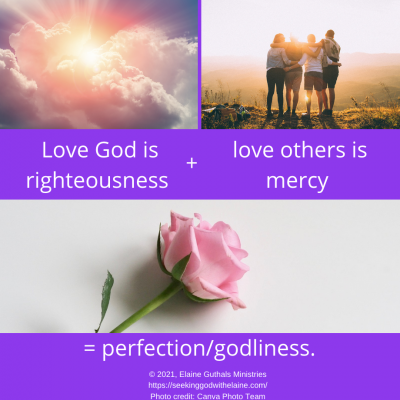
    I looked at the sermons under this verse, and I wondered how it was mainly talking about us completing the second commandment. When we add it to the first greatest commandment — loving God — disciples gain perfection.

    Glossary

    Love God is righteousness + Love people is mercy = perfection/godliness

    For disciples, our love for each other promotes the unity needed to complete our mission. “Complete my joy by being of the same mind, having the same love, being in full accord and of one mind” (Phil. 2: 2 ESV).

    Love Others

    “By this all people will know that you are my disciples, if you have love for one another” (Jn. 13: 35 ESV)

    Let’s look at Spurgeon’s term fellow-feeling. It gives us insight on how we are to love others.

    Fellow — The definition talks about being on an even plane. “For God does not show favoritism” (Rom. 2: 11 NIV). Dale put it this way: “All men are dear to the heart of God, and therefore they must be dear to us.”

    Resource

    Feeling — We have to get the emotions involved. It means that we have a sympathetic spirit.

    The emotions help us build the relationship with God. They also help us to become invested in the lives of those to whom we are witnessing.

    Love Our Enemies

    “But I say to you, Love your enemies and pray for those who persecute you” (Mt. 5: 44 ESV)

    Wait! What?

    Aren’t we supposed to condemn the bad guys? Surely, not love them!

    It is really hard to love those that are persecuting us. We like to think of persecute as oppressions and abuse — something that we did not do anything to warrant this type of action.

    But persecution is also punishment. We did something to cause this to happen to us.

    Tyson reminded that — sometimes — the persecutor is addressing what s/he feels is a wrong. However, it is up to God to judge our enemies, not us.

    It is our job to try to win them to God. We are to model God’s patience to them.

    God may have a very specific job for them to do. Look at Paul. He had been persecuting the church until God showed him how to use his character and drive to further His kingdom.

    How are they so helpful to God’s kingdom? Tyson wrote, “But the man who persecutes earnestly, feels strongly, and thinks vigorously; and when his violence has somewhat abated his wrath, and he begins to feel in what an unpleasant business he is engaged, he is almost sure to think of some other aspects of the question. The truth may then begin to scintillate within his soul, growing brighter as he pursues the meditation, till, by the grace of the Spirit of truth, his heart relents, his conscience begins its work of self-accusation, and he is won.”

    Resource

    Solomon reminded us that trying to persecute our enemies on our own will lead to harm. We’ve got to follow God’s Will, not our own.

    How do we bless our enemies? Solomon gave us a list.

    • Show appropriate pity.
    • Patiently deal with them.
    • Pray for them.
    • Pardon them — a.k.a. forgive them.
    • At times, support them in some financial way.

    Resource

    God wants us to be unified with others.

    Feeling the Feelings with Others

    “Rejoice with those who rejoice; weep with those who weep” (Rom. 12: 15 CSB).

    We are to rejoice with others in their joy and encourage them in their hardships.

    We can’t just think of ourselves and our own situations. It isn’t about our happiness and misery.

    We need to support and encourage others. In this way, we show them God.

    Abercrombie lists some things in which we can rejoice with others. He wrote, “Every conversion, every time of hallowed fellowship, every act of kindness, all tidings of good being done in any part of the world, fill his heart with joy.”

    Resource

    When we meet others where they are at and address what they are at the time, we build connections. These connections are built into relationships so that we can witness the love of God to others.

    The sympathetic spirit really comes into play here. Dale put it this way. He wrote, “We owe sympathy to other men because it is an effective means of contributing to their moral perfection, and because by withholding it we inflict on them grave moral inquiry.”

    Resource

    The great news is Dale told us sympathy can be developed. We have to be intentional in developing sympathy. Yes, that will take effort.

    Hughes noted, “All done to the distressed under its influence is done by love, hence it is both pleasurable and lasting.” The love means there is no discrimination because of race, ethnicity, or socioeconomic status.

    Resource

    We have to make it about other people so that we build opportunities to witness to them.

    Love Builds Harmony

    “Live in harmony with one another. Do not be proud; instead, associate with the humble. Do not be wise in your own estimation” (Rom. 12: 16 CSB) 

    Living in harmony with others allows for God’s love to shine through.

    One of the major themes in the Book of Ephesians is unity of the believers. That unity encompasses a lot of elements.

    “Therefore I, the prisoner in the Lord, urge you to walk worthy of the calling you have received, with all humility and gentleness, with patience, bearing with one another in love, making every effort to keep the unity of the Spirit through the bond of peace. There is one body and one Spirit — just as you were called to one hope at your calling — one Lord, one faith, one baptism, one God and Father of all, who is above all and through all and in all” (Eph. 4: 1-6 CSB).

    Having pride isn’t the way to go. God calls us to be humble.

    My Ladies and I talked today about pride wanting us to understand everything so that we can say we don’t need God since we have figured it out. That isn’t what God wants.

    God wants us to be humble and submissive to Him. The submissive part means that we don’t sin and give Him the glory He deserves.

    One thing Paul is saying here is we can’t think more highly of ourselves than we are. We have to acknowledge that, without a relationship with God, we are nothing.

    Lyth told us that this high opinion of ourselves presents itself in our opinions, judgment, and plans.

    Resource

    TransformedToHarmonyPin

    Making the Connections

    It is easy to love people when they are lovable — i.e. fit into our expectations and beliefs. Talmage wrote, “When our guests are cheery, and fascinating, and elegant, it is very easy to entertain them; but when we find in them that which is antagonistic to our taste and sentiment, it is a positive triumph when we can be ‘given to hospitality.’”

    Resource

    We need to love them anyway.

    How Do We Apply This?

    • Watch our reactions to those who believe differently than we do. God does not call us to judge them.
    • We should not attempt to control their feelings and actions, therefore, diminishing their joy.
    • See things from their angle.
    • Promote the joy of others by doing all within our means through our words and actions.
    • Make it part of our mission to help the needy and improve the distress of others.
    • Do the work God wants us to do, not what we want to do.
    • Treat all others the same.
    • Diligently seek God.
    • Study examples of faithful men and women.
    • Follow the promptings of the Holy Spirit.
    • Live in unity with others.

    Searching for and Seeking God

    Hearing His Word (Rom. 10: 17).
    Reading His Word (Rev. 1: 3).
    Praying to Him (Heb. 4: 16).
    Studying His Word (Ac. 17: 11).
    Meditating on His Word (Ps. 1: 1-2).
    Memorizing His Word (Ps. 119: 11).

    Resource

    We’ve gotten all the way through the devotion and haven’t really talked about how we are transformed to do that. I think the transformation comes in because the love and harmony we are talking about isn’t the worldly love and harmony.

    We are loving others in the name of the Heavenly Father. We are humble because we know we are nothing without God.

    This shifted focus is where the transformation comes in. But we want to shift to put God as our priority.

    Father God. We want to be like You. As You are love, we want to love others – even our enemies. Help us to be transformed to be like You. Amen.

    The ABCDs of Salvation

    If you have not become a believer in Christ, please read through the
    Plan of Salvation and prayerfully consider what God is asking you to do.

    A – admit our sins
    B – believe His Son Jesus is our Redeemer
    C – confess God as Sovereign Lord

    D – demonstrate that commitment by making any changes needed in our lives to
    live the way in which God has called us

    The Disciple’s Job Description

    What do you think?

    Leave me a comment below (about this or anything else) or head over to my Facebook group for some interactive discussion.

    If you don’t understand something and would like further clarification, please contact me.

    If you have not signed up for the email daily or weekly providing the link to the devotions and the newsletter, do so below.

    If God has used this devotion to speak with you, consider sharing it on social media.
  • Transformed through Trials

    Each of us grows through trials on the Sanctification Road. This daily devotional looks at the joy we have through hope, even in the hardest trials, by remaining in communication with God.

    Nuggets

    • Even in the trials, we can have joy because we have hope.
    • This joyous hope has an element of patience in all circumstances.
    • We should always pray to our Heavenly Father — especially when we are going through trials.

    To read devotions in the Redo for Godliness series, click the appropriate button below.

    Devotions in the Transformed to Perfection series

    This is Paul’s bullet point section of Romans 12. He just highlighted diligence and passion in service. Next, he highlighted hope, patience, and persistence.

    Let’s Put It into Context

    Here is a running list of what we’ve discussed previously.

    Joy Because We Have Hope

    “Rejoice in hope …” (Rom. 12: 12 CSB)

    Even in the trials, we can have joy because we have hope.

    The source of our joy is hope. Hope is a future expectation, called a living hope, based on the confidence that our names will be found in the book of life.

    Thomas called hope an “… instinct of the soul.” He contended that we gain hope when we make progress on the Sanctification Road. When we succeed in growing closer to being the disciples God calls us to be — even though the sanctification steps have included difficult trials — we use that as a springboard for future success.

    Resource

    When we hope, we are believing not only can something good happen, but it can also happen to us. We don’t try to make excuses that we aren’t worthy enough. We are worthy because we have accepted Jesus’ blood as a cover for our sins.

    Thomas said that this hope has to engage all of our being. Well, think about it.

    What if we hope there is a Heaven — but don’t think down in our hearts that there is one? That really isn’t hope — hope that brings us joy.

    Hope can only really come from moral goodness. That moral goodness comes from God.

    Why can we have hope in salvation?

    • Salvation is the gift of life through the deliverance from evil and the consequences of sins to replace them with good and eternal life.
    • The consequences of sin are spiritual death and physical separation from God.
    • Spiritual death is the spiritual separation from God that occurred as a consequence of Adam and Eve’s original sin. The spiritually alive are those who have ABCDed, so they are no longer separated from God.
    • Eternal life is the promise of living eternally – even if we have died in this life – because we have admitted our sins, believed Jesus as Savior and Redeemer, and confessed God as Sovereign Lord.

    The ABCDs of Salvation

    If you have not become a believer in Christ, please read through the
    Plan of Salvation and prayerfully consider what God is asking you to do.

    A – admit our sins
    B – believe His Son Jesus is our Redeemer
    C – confess God as Sovereign Lord

    D – demonstrate that commitment by making any changes needed in our lives to
    live the way in which God has called us

    The Disciple’s Job Description

    Glossary

    We can have hope in salvation because God not only provided the means for it, but He also made it so we could access it. God designed the Plan of Salvation so that Jesus’ death could pay the penalty for our sins.

    God brings this salvation to us by the Holy Spirit. He prompts us as we navigate the trials of life to show us God’s love.

    If we don’t accept God’s gift of salvation, we cannot have true hope and joy. Worldly hope and joy will prove to be fleeting. We must look to God as He is its source.

    If we don’t accept God’s gift of salvation, we cannot have true hope and joy.

    How to Get Through Trials

    “… be patient in affliction …” (Rom. 12: 12 CSB)

    This joyous hope has an element of patience in all circumstances.

    When trials are surrounding us, this hope helps us to not give up. It gives us patience to keep our eyes focused on God through it all.

    We show that focus by continuing to praise God — even in the worst of times.

    • “Why, my soul, are you so dejected? Why are you in such turmoil? Put your hope in God, for I will still praise him, my Savior and my God” (Ps. 42: 5 CSB)
    • “Be thankful in all circumstances, for this is God’s will for you who belong to Christ Jesus” (I Thess. 5: 18 NLT).

    I hear you. “But Chick, these trials are hard.” Yes, they are.

    Satan didn’t develop a brand new trial just for you. “Stand firm against him, and be strong in your faith. Remember that your family of believers all over the world is going through the same kind of suffering you are” (I Pet. 5: 9 NLT).

    Everyone. All over the world.

    No, this may not be talking about the minutiae of the trials. We are all individual people with unique experiences.

    But bottom line, each trial is asking the same questions. Are we going to remain strong in our faith, or are we going to deny God? Are we going to live by God’s laws and commandments or break them?

    Beveridge wrote, “By patience we change them [trials] into mercies as in Job, Joseph, David.” God has a plan and a purpose for these trials. This is how we grow on the Sanctification Road.

    Resource

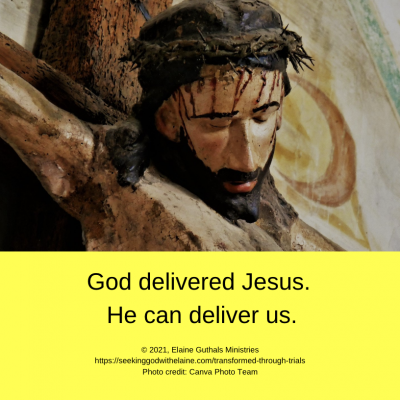
    We can take heart, even in the hardest of trials. Whatever we suffer, Jesus suffered more.

    God delivered Jesus. He can deliver us.

    God delivered Jesus. He can deliver us.

    Keeping in Constant Touch with God

    “… be persistent in prayer” (Rom. 12: 12 CSB)

    We should always pray to our Heavenly Father — especially when we are going through trials.

    Prayer is a two-way communication with God in which we pour out our soul to Him. We can do this by saying the words out loud or in our hearts.

    Sometimes, I think that we feel like prayer is just a commandment that we can’t keep. We have to switch our mindset. Jortin wrote, “The Scriptures urge a constant and careful performance, then, not only as a duty, but a privilege.”

    Resource

    If it is a privilege, we need to be all in when we pray. Spurgeon wrote, “We must go with our whole soul to God or He will not accept us. We are to pray as if all depended upon our praying.”

    Resource

    Is that a new concept for us? God doesn’t have to accept our prayers. I think we sometimes keep the focus on He is a loving and forgiving God, so that we gloss over what isn’t right about our prayers.

    That means we can’t approach God with an attitude of entitlement. He doesn’t have to answer prayers that really aren’t prayers at all.

    If we go with the attitude of entitlement, it really isn’t a two-way communication with God. It is us demanding what we want regardless.

    When we pray to the Sovereign God, we must pray in meekness, worship, and submission.

    • “Abraham answered and said, ‘Behold, I have undertaken to speak to the Lord, I who am but dust and ashes’” (Gen. 18: 27 ESV).
    • “I prayed, “O my God, I am utterly ashamed; I blush to lift up my face to you. For our sins are piled higher than our heads, and our guilt has reached to the heavens” (Ezra 9: 6 NLT).

    Beveridge and Jortin gave us a list of what we should pray for in the right way.

    • Our lives for eternity.
    • What is good. Good, in the biblical sense, is the workings of God within His people.
    • Our faith to grow.
    • Growth in the spiritual graces.
    • The ability to recognize sin in our lives and deliverance from it.
    • Forgiveness from sin.
    • God’s constant renewal and sanctification
    • Direction for our daily lives.

    Praying with persistence means we aren’t done when we’ve finished the prayer. “But let him ask in faith, with no doubting, for the one who doubts is like a wave of the sea that is driven and tossed by the wind” (Jas. 1: 6 ESV). We need to meditate and do what God calls us to do to accomplish it.

    Still, Jortin called it an effort. I can see where it is hard. Satan is working on us to make sure we fail.

    I see it as the effort means that we make a conscious choice. We have to do something. That something is to always choose God.

    Howat gave a good description of what “pray without ceasing” (I Thess. 5: 17 ESV) means. He said that it isn’t talking about thinking or speaking a prayer. He contends that “… there are prayers that are not spoken or even thought of.”

    Howat argued that this means that our hearts should be right with God. It is the desire to do God’s Will at all times.

    Resource

    That makes sense. While we are in these physical bodies, we are not going to be able to “sin no more.” God isn’t going to judge us on something that there is no way for us to have success.

    We can put wanting to be like Him as our priority.

    We’ve said it isn’t about us doing. It is about us being.

    Perfection is about being. It is about obtaining the character of God.

    It is about our desire to be like God. It is our desire to grow.

    “Pray in the Spirit at all times and on every occasion. Stay alert and be persistent in your prayers for all believers everywhere” (Eph. 6: 18 NLT). Jarvis said we make praying a habit.

    I loved Jarvie’s phrase “The habitual maintenance of a prayerful spirit.” If it is a habit, it does take maintenance. We have to take advantage of the opportunities for prayer and make more opportunities.

    Resource

    Prayer gives us strength. We get that by ensuring our prayers have the components of faith, trust, hope, and love, according to Martin.

    Resource

    TransformedThroughTrialsPin

    Making the Connections

    We are going to have trials. But we can have hope as we go through them.

    • “Then why should we, mere humans, complain when we are punished for our sins?” (Lam. 3: 39 NLT).
    • “What has happened to us is a result of our evil deeds and our great guilt, and yet, our God, you have punished us less than our sins deserved and have given us a remnant like this” (Ezra 9: 13 NIV).

    God is punishing us for our wrongdoings, but He could have punished us so much more. His showing us mercy gives us hope.

    How Do We Apply This?

    • Practice patience.
    • Have a prayerful mindset. Jortin wrote, “We are taught that God is worshipped by the mind and thoughts, and not by external observances.”
    • Don’t miss an opportunity to pray.
    • Don’t give up when we don’t feel our prayers are being answered. (If God is saying no, give that up.)
    • Pray daily.
    • Focus on heavenly thoughts.
    • Worship God 24/7/365.
    • Pray both in private and in public. Neither should be skipped.

    Resource

    We should always expect an answer to our prayer. God can give us that for which we ask.

    Resource

    But that does not mean we will always get the answer we expect. Prayer isn’t a gum ball machine. We don’t put in the quarter and get the gum ball we want every time.

    We would generally not want trials to occur. We may question if that is really the way we grow on the Sanctification Road.

    It is.

    While we are going through the trials, we can have joy and hope. Communicating with God through prayer brings us that.

    Father God. We know that we will have trials. Lord, help us to strengthen our faith, trust, hope, and love. Increasing our hope in You increases our joy. Help us to remain in constant communication with You. Amen.

    What do you think?

    Leave me a comment below (about this or anything else) or head over to my Facebook group for some interactive discussion.

    If you don’t understand something and would like further clarification, please contact me.

    If you have not signed up for the email daily or weekly providing the link to the devotions and the newsletter, do so below.

    If God has used this devotion to speak with you, consider sharing it on social media.
  • It Was Enough

    I am going to have a song day today.

    I have spent a significant amount of time in a moving vehicle today.  But that meant that I spent a lot of time with family — both real and adopted.

    I really love the song It Was Enough. God tells us that He knows we are broken — because He made us that way.  

    God told me tonight that, even though I am worn out, He can use me.

    It Was Enough
    Vocalist: Elaine Guthals
    Keyboard: Chris Vieth

    ItWasEnoughPin

    What do you think?

    Leave me a comment below (about this or anything else) or head over to my Facebook group for some interactive discussion.

    If you don’t understand something and would like further clarification, please contact me.

    If you have not signed up for the email daily or weekly providing the link to the devotions and the newsletter, do so below.

    If God has used this devotion to speak with you, consider sharing it on social media.

  • The Hope of Life

    Job, in his response to his friend, got into a deep discussion of life after death. This daily devotional looks at where we go when we die and in what condition.

    Nuggets

    • After death, our souls will continue to live.
    • Scriptures really don’t tell us what happens between death and resurrection.
    • We are going to live for eternity.

    Devotions in the Job: The Ultimate Test of Character series

    Is there life after death? Or are we just worm food? Those are hard questions for some.

    They can be hard questions for disciples right after a loved one dies. Satan is trying to slip in all these doubts.

    Munger wrote, “It is a strange fact that the human mind has always held to the immortality of the soul, and yet has always doubted it; always believing, but always haunted by doubt.”

    Resource

    Satan wants us to question — and ultimately deny — God.

    God promises us that there is life after death. Let’s see how Job processed his thoughts about this.

    Let’s Put It into Context

    Here is a running list of what we’ve discussed previously.

    Where Do We Go When We Die?

    “There is hope for a tree: If it is cut down, it will sprout again, and its shoots will not die. If its roots grow old in the ground and its stump starts to die in the soil, the scent of water makes it thrive and produce twigs like a sapling. But a person dies and fades away; he breathes his last — where is he?” (Job 14: 7-10 CSB)

    After death, our souls will continue to live.

    I have several house plants. They are on a strict ice cube diet so that I don’t overwater them.

    Adam got a type of begonia from the church when his dad died. I at first thought it was fake. Then, it took a while to get the ice cube ratio right. Then I had to cut it back.

    Yep, I killed it. Sorta.

    The top part was dead. The roots were still alive. At least, I hoped. I kept watering as if they were.

    We now have a good start to a “new” plant because the roots sprouted again.

    But what about humans? We don’t have roots. What happens when we die?

    When our heart stops beating, our bodies are still here. Is that it? Nothing?

    Watt gave us a list of why we could believe death is not the end.

    • Force or energy never ends.
    • This life is not complete.
    • “The best affections which distinguish this life speak of continuance beyond this present state.”
    • Judgment still has to occur.

    Resource

    Windle was correct when he said our actions do not always reflect our belief that all men die. That means us, too, so we need to act like death is coming.

    It is easy for some to believe, after someone else is gone, that they were never here. But we know life is valuable to God.

    We must remember that Jesus conquered death. Windle wrote, “It is of the greatest importance for us all to know that through the infinite merits of our gracious Redeemer the power of death has been broken and subdued, and the sting of death which is sin has been extracted, and thus may death become not an enemy but a welcome friend to introduce us to new, to holy, to immortal life.”

    Resource

    Scriptures tells us. “One day the poor man died and was carried away by the angels to Abraham’s side. The rich man also died and was buried” (Lk. 16: 22 CSB). They died, and they went places based on their relationships with God.

    I know. An argument can be made that saying Lazarus went to be with Abraham tells us nothing. Abraham was a human just like us, so where did he go? We kind of have to piece it together.

    • “And being in torment in Hades, he [the rich guy] looked up and saw Abraham a long way off, with Lazarus at his side” (Lk. 16: 23 CSB).
    • “For then the dust will return to the earth, and the spirit will return to God who gave it” (Ecc. 12: 7 NLT).
    • “Then we who are still alive, who are left, will be caught up together with them in the clouds to meet the Lord in the air, and so we will always be with the Lord” (I Thess. 4: 17 CSB).

    So, the rich man was alive in hell/Hades and saw Lazarus and Abraham alive in the place beyond the great divide. That place was where God is. God is in Heaven.

    When we die, the angels take those who have believed to Heaven. We will live with God for eternity.

    Those who don’t believe will spend eternity in hell.

    What is being taken is our soul. Our soul is our spiritual part that is immortal. Vaughan said that because the soul is eternal, it continues to think and feel.

    The Sleep Component of Eternity

    “As water disappears from a lake and a river becomes parched and dry, so people lie down never to rise again. They will not wake up until the heavens are no more; they will not stir from their sleep” (Job 14: 11-12 CSB)

    Scriptures really don’t tell us what happens between death and resurrection.

    There are a lot of questions about what happens after death. Do we go straight to Heaven? Is there some sort of purgatory? Are we in a sort of sleep until the resurrection?

    Hallam felt Scriptures didn’t really give us a clear description of what was going to happen between death and the resurrection. He felt that, “At death we enter upon a disembodied state of being, a state of life purely spiritual and immaterial.”

    Resource

    The theory that Hallam championed was that we will be “sleeping” between death and resurrection.

    Cole argued that, while death looks like sleep, the soul is incapable of sleep. The way I read it is he thought the soul would be conscious.

    Resource

    No, we aren’t really sure what we will be changed to, but we do know it will be something spiritual.

    Woods told us not to worry about that. He wrote, “It is not so much ‘where,’ as ‘what’; for the ‘what’ determines the ‘where.’ We are ourselves determining the ‘what,’ in our acceptance or rejection of Christ.”

    Resource

    Eyre said something similar. He wrote, “Death brings a change of condition, never a change of character. Though death is a change of condition, it is not a change of companionship.”

    Resource

    Whatever character we possess when we die is what we will have throughout eternity. That character must be like God’s, or we haven’t demonstrated our desire to imitate Him.

    We have to be fit for God’s companionship at the point of death. The “… changed in a twinkling of an eye …” (I Thess. 15: 52 NIV) doesn’t mean our character and destiny will be changed after death.

    Our eternity is set at death.

    Do We Come Back to Life after Death?

    “If only you would hide me in Sheol and conceal me until your anger passes. If only you would appoint a time for me and then remember me. When a person dies, will he come back to life? If so, I would wait all the days of my struggle until my relief comes” (Job 14: 13-14 CSB)

    We are going to live for eternity.

    Job knew that God was in control. He has a plan and has an appointed time for everything.

    Hancock was cute. He said that the “When a person dies, will he come back to life? …” (Job 14: 14 CSB) question was just a form of Shakespeare’s Hamlet’s question of “To be or not to be?”

    Resource

    But don’t we all ask that at some point or another? Sometimes, several points. Sometimes, with a variety of emotions backing it.

    Hancock posited that there are three answers to the will-we-come-back-to-life question.

    The ‘No’ Answer

    Atheists probably hope this is the answer. If no one comes back to life after death — or transition from one status to the other — there won’t be any judgment.

    This life wouldn’t be the preparation for that life if everything ends at death. If that is the case, salvation would be a lie. Character wouldn’t be important.

    The Homiletic Monthly felt this choice was chosen because they are waiting for proof. They are wanting science to figure out all the answers to the questions — so they have proof that all of this was the work done by someone or something other than a Sovereign God.

    Resource

    There is another no answer. No, this world is not going to survive, and cows aren’t going to bring it down. No, our lives aren’t going to just go on for eternity as they are.

    The ‘Doesn’t Matter” Answer

    Secularists probably hope this is the answer. I guess they think it is going to be okay in the end.

    They see God — if they see Him at all — as a loving God Who will never send anyone to hell. They don’t get it that we send ourselves.

    They are in for a rude awakening.

    The ‘Yes’ Answer

    Disciples know this is the answer to the question. We are going to live for eternity. God is going to judge us on the answer to one question: Have we ABCDed or not?

    The ABCDs of Salvation

    If you have not become a believer in Christ, please read through the
    Plan of Salvation and prayerfully consider what God is asking you to do.

    A – admit our sins
    B – believe His Son Jesus is our Redeemer
    C – confess God as Sovereign Lord

    D – demonstrate that commitment by making any changes needed in our lives to
    live the way in which God has called us

    The Disciple’s Job Description

    Our answer to that determines our new residence — Heaven or hell.

    Character matters. Our purity matters.

    It leads to perfection.

    Cushman felt judgment — true judgment — cannot occur in this life. He wrote, “Vice is seldom punished as it deserves, and rarer still does virtue meet its due reward. If death is an eternal sleep, and man’s life ends with the tomb, how shall we reconcile his present condition with the justice of God?”

    Resource

    Pierson argued that our souls long for immortality. Jesus clearly said there would be a resurrection. “At the resurrection people will neither marry nor be given in marriage; they will be like the angels in heaven” (Mt. 22: 30 NIV).

    Resource

    Think about it. There has to be something more than this. Our rewards aren’t up to the level of heavenly rewards. Not all non-believers have received a judgment that is commensurate with their crimes.

    There has to be something more.

    Besides. Scriptures tell us that the worldview isn’t the same as the Godview. If the rewards and judgment occurred only here, it would be based on the worldview. As much as some would love for that to happen, it isn’t going to.

    TheHopeOfLifePin

    Making the Connections

    Pierson noted that “He [Jesus] teaches that souls in heaven live under new and unearthly conditions; and so God is the God of the living, not the dead.”

    Resource

    This doesn’t mean we are going to be under different laws and commandments than we are now. Those show us God’s character. God doesn’t change.

    Oh, we probably will do things differently than we do now. We will do them as God intended in the Garden of Eden.

    Cushman reminded us that God always has a purpose in everything He does. We have to determine His purposes.

    Resource

    How Do We Apply This?

    • Be humble.
    • Know the importance of time.
    • Vaughan wrote, “Learn the nature of sin, the infinite evil, and the awful consequences of it.”
    • Remember, God will judge in the end.

    Resource

    We just have to read the Scriptures to get the answer to Job’s questions. Yes, there is life after death. We want to make sure we are on God’s side of the equation rather than Satan’s.

    Father God. You have made us in Your image. Because of that, we will live forever. Where we live depends on our relationships with You. Bring us closer to You and being like You. Amen.

    What do you think?

    Leave me a comment below (about this or anything else) or head over to my Facebook group for some interactive discussion.

    If you don’t understand something and would like further clarification, please contact me.

    If you have not signed up for the email daily or weekly providing the link to the devotions and the newsletter, do so below.

    If God has used this devotion to speak with you, consider sharing it on social media.
  • The Meaning of Life

    After Job lost so much, his three friends tried to help him mend the errors of his way. This daily devotional looks at Job’s description of the meaning of life.

    Nuggets

    • In the whole scheme of things, this life is short.
    • This life does have its purpose — to bring us back to God.
    • While mankind cannot change his/her spiritual condition, God can.

    Devotions in the Job: The Ultimate Test of Character series

    Some people would love for us to be immortal. They would love for this life to last for eternity.

    Well, this life isn’t going to last. But we are.

    We were made in the image of God, Who is eternal. We are, too.

    Glossary

    The question becomes, where will we spend eternity? There are two choices — Heaven and hell. (Yes, they are both very real.)

    Job struggled with the concept of eternal life. Let’s take a look.

    Let’s Put It into Context #1

    Here is a running list of what we’ve discussed previously.

    Let’s Put It into Context #2

    We skipped a lot of chapters from the last Sunday Morning Bible Study devotion to this one. Satan went back to God and ask for a second testing. This one was where Satan infected Job with boils.

    Job had three “friends” who came to comfort him. They were Eliphaz the Temanite, Bildad the Shuhite, and Zophar the Naamathite.

    We like to bite on the trio, but Bradley warned us to take care doing that. He wrote, “Is it not rather true that their words, taken by themselves, are far more devout, far more fit for the lips of pious, we may even say, of Christian men, than those of Job?”

    Resource

    Bradley argues that the trio are like many disciples. They believe in God and were trying to make sense of God’s ways. What they said was, in many ways, true.

    • God is powerful and righteous.
    • God is forgiving.

    We are skipping what they actually had to say. The passage today is part of Job’s response to Zophar’s first speech. The Homilist gave us the bullet points of what he said were Job’s sins.

    • Job, you are talking too much (verse 2).
    • You are lying (verse 3).
    • You are mocking others (verse 3).
    • You are being a hypocrite (verse 4).

    But look what Zophar got right.

    • “But if only God would speak and open his lips against you! He would show you the secrets of wisdom, for true wisdom has two sides. Know then that God has chosen to overlook some of your iniquity” (Job 11: 5-6 CSB).
    • “As for you, if you redirect your heart and spread out your hands to him in prayer — if there is iniquity in your hand, remove it, and don’t allow injustice to dwell in your tents — then you will hold your head high, free from fault. You will be firmly established and unafraid” (Job 11: 13-15 CSB).


    Resource

    Our Days Are Short and Troubled

    “Anyone born of woman is short of days and full of trouble. He blossoms like a flower, then withers; he flees like a shadow and does not last” (Job 14: 1-2 CSB)

    In the whole scheme of things, this life is short.

    The saying is true that we are all born to die. But that is just talking about physical death.

    We aren’t guaranteed any number of years in this life. Some live only hours. Some live to be 100+ years old. The rest fall somewhere in between.

    We look at the life spans pre-flood and are sometimes envious. We wonder, with all of our advances in science, why we can’t relive those glory days.

    We can apply it to our spiritual condition. Yes, we were all spiritually dead when we were born. But we don’t have to stay that way.

    Not only is life short, it is difficult. We run into all varieties of trials. Those breed sorrow and distress.

    Trials help us grow, but they also help us to long for something better. That better is restoring our relationships with God.

    Taylor made an interesting statement. He said, “Trouble may, sometimes, be the consequence of virtue.” Virtues are standards of moral excellence.

    When the trials start going, some have the tendency to ignore their virtues — their character — in an attempt to just get the misery to stop. What we don’t always realize is that the trials are God’s way of building our character to be like His.

    This life is short and difficult, but we cling to it.

    But let’s put this into perspective. 100 years more or less versus eternity. Our lifetimes are not a drop in the bucket to what is going to be.

    If life is the bloom, it is gone in nothing flat compared to eternity.

    Goldie interpreted Job 14: 2 to mean that we progress through the developmental stages quickly. It shows how frail our lives really are.

    Resource

    We build our hopes that this life will get better — and be enough. As Zollikofer said, we tie our joy to fleeting things.

    Resource

    Part of the problem is misplaced focus. We see eternity as an aspect of this life. We don’t see this life is just a slice of eternity.

    Part of the problem is limited understanding. We’ve talked before that we have no concept of eternity. We have no frame of reference to which to tie it to in order to facilitate understanding.

    To read a related devotion, click the button below.

    The Purpose of Life

    “Do you really take notice of one like this? Will you bring me into judgment against you?” (Job 14: 3 CSB)

    This life does have its purpose — to bring us back to God.

    We may think that mankind should be too inconsequential for God to bother with. God never once thought that.

    God created us knowing we would sin and gave us this life so that we could choose to obey Him. We do this by ABCDing.

    Glossary

    The ABCDs of Salvation

    If you have not become a believer in Christ, please read through the
    Plan of Salvation and prayerfully consider what God is asking you to do.

    A – admit our sins
    B – believe His Son Jesus is our Redeemer
    C – confess God as Sovereign Lord

    D – demonstrate that commitment by making any changes needed in our lives to
    live the way in which God has called us

    The Disciple’s Job Description

    Between conversion and end of life, we are busy. Taylor wrote, “The business of life is to work out our salvation; and the days are few in which provision must he made for eternity. … We must use all diligence to make our ‘calling and election sure.’”

    Resource

    Glossary

    Edwards reminded us of a couple of things. God is the One who decided the length of our lives. This physical life is cut short because of sin.

    We Can’t Make Ourselves Pure

    “Who can produce something pure from what is impure? No one! Since a person’s days are determined and the number of his months depends on you, and since you have set limits he cannot pass, look away from him and let him rest so that he can enjoy his day like a hired worker” (Job 14: 4-6 CSB)

    While mankind cannot change his/her spiritual condition, God can.

    Pure means not being sinful or having the stain of sin. Because we are descendants of Adam, we are not pure when we are born. We are born with a sinful nature — and we do sin.

    There is nothing that we can do to atone for our sins. We can’t be a good enough person to make up for them.

    We have to be purified in order to restore our relationships with God. Only ABCDing can make us pure. We are only freed from our sins by the blood of Jesus.

    Taylor gave us a good reminder. Those who accept Christ as their Savior as a child has an easier time on the Sanctification Road than those who crept Him as an adult. Working out our salvation is harder when we have formed bad habits over a lifetime.

    Glossary

    TheMeaningOfLifePin

    Making the Connections

    Taylor made an interesting comment. He wrote, “Many human troubles are such as God has given man the power of alleviating.”

    Resource

    Read that again. God has given us the power of reducing many of the trials.

    Say WHAT?

    I don’t read that as we are so powerful that we can just eliminate the trials. I read that as — through God’s power — through His Presence and protection — we can withstand the trial, therefore lessening it.

    Shiels talked a lot about our being reminded almost daily of our pending deaths. He felt that there are many reminders given so we don’t forget that we need to ensure our relationships with God are as they should be.

    Resource

    How Do We Apply This?

    • We must always do good — God’s way.
    • Don’t complain that life is short. We shouldn’t long for this broken world more than we do for the beautiful, eternal home.
    • We are called to be sober — to be even keeled. This applies to our desires and pursuits.
    • Look forward to our heavenly home and eternity spent with God.
    • Persist so we can be pure.
    • Keep away from the world.
    • Be ready, because today may be our last.

    Resource

    Goldie told us how to prepare for the next life as well are preparing for the end of this one. He wrote, “We should prepare for the close of life by the exercise of faith, love, and obedience to our Saviour; by the regular discharge of all the duties of piety; by the sincere and unremitting practice of every Christian grace; and by having our conversation at all times becoming the Gospel.”

    Resource

    We have no control over this life. But we can put our faith and trust in the God who does.

    Father God. Life is short. This world is temporary. We put our faith and trust in You. Show us Your Will. Amen.

    What do you think?

    Leave me a comment below (about this or anything else) or head over to my Facebook group for some interactive discussion.

    If you don’t understand something and would like further clarification, please contact me.

    If you have not signed up for the email daily or weekly providing the link to the devotions and the newsletter, do so below.

    If God has used this devotion to speak with you, consider sharing it on social media.
  • Transformed by Persistence

    God calls us to be totally committed to Him. This daily devotional looks at how to respond to transforming our character to serve Him.

    Nuggets

    • In our passionate service for God, we need to exercise perseverance.
    • In our passionate service for God, we need to keep the intensity up for the work God has called us to do.
    • In our passionate service for God, we need to be completely committed to doing the work to which He has called us.

    To read devotions in the Redo for Godliness series, click the appropriate button below.

    Devotions in the Transformed to Perfection series

    When we commit our lives to God, He wants it to be a total commitment. He wants our intensity and passion to complete the service to which He calls us.

    Let’s Put It into Context #1

    Here is a running list of what we’ve discussed previously.

    Let’s Put It into Context #2

    We’ve talked before about the topic of persistence/diligence a couple of times. Diligence is a consistent, persistent effort.

    Devotions in the Moralities Lead to Godliness series

    Devotions in the Consistency Needed for Spiritual Growth series

    Transformed by Passion and Persistence

    “Do not lack diligence in zeal …” (Rom. 12: 11 CSB)

    In our passionate service for God, we need to exercise perseverance.

    In what should we be diligent? Bird identified that as “… everything which occupies our attention, but more particularly our temporal pursuits.

    Resource

    Personally, I don’t think it is more particularly applied to our temporal pursuits. God wants us focused on Him, not this life.

    We have to watch what our end goal is. Our goal shouldn’t be salvation. Our goal should be to become holy.

    Let me explain it this way. I graduated from my six-month secretarial program after I graduated from high school and went into the work force.

    After a year or so, I decided I wanted to go back to school to get my music degree. I was a success. I got my degree.

    I really haven’t done anything with it — job wise — because my end goal wasn’t to get a job. It was to get the degree.

    Our end goal shouldn’t be get obtain salvation/education. It should be to live for God/become holy/get a job.

    Tyson said that we become holy by displaying the spiritual graces in our lives. We talked recently where the worldly morals have to be kicked up to social graces that leads to holiness.

    If our morals don't come through submission to God, they are just worldly morals, not spiritual graces. But then we have to grow the spiritual graces to holiness.

    Devotions in the Moralities Lead to Godliness series

    Resource

    Building character takes a lot of work. Storrs noted that, while we perform the acts of integrity, our hearts are being changed to have integrity.

    Resource

    We should persevere to gain holiness. Garbett wrote, “It can only have its spring in a total change of heart and life, wrought in us by the mighty Spirit of God — in the gift of a new nature with its own spiritual senses and experiences.”

    Resource

    Moore reminded us that God expects us to be industrious. Melvill pointed out that Adam had a job to do before he was ejected from the Garden of Eden.

    Resource

    God has a plan for each of our lives, and we all have work to do to expand His kingdom.

    Morris had an interesting comment on that. He wrote, “God’s appointment does not interfere with our free agency, or release us from responsibility.”

    Resource

    Free agency goes by the name of free will in these devotions. Free will is the ability within us to make decisions, which determine actions that produce character.

    God has a plan for our lives, which includes how He wants us to serve Him. It is up to us to accept or reject that plan. If we reject it, there will be consequences because we have sinned.

    • Sins are actions by humans that disobey God and break one of His reasonable, holy, and righteous laws and commandments, goes against a purpose He has for us, or follows Satan’s promptings.
    • Holy means to be set apart, perfect, and morally pure while possessing all virtues.
    • Righteous means we are free from sin because we are following God’s moral laws.

    Morris also said that our secular work is subordinate to our work for God. We can’t let it take our focus off God. We can’t put Him on the shelf while we go about our daily lives.

    Why? Morris wrote, “A mind thus kept spiritual will be able to make some use of work for the purposes of the soul.” God is more concerned about the condition of our souls than our worldly pursuits.

    Resource

    Caird said what was important was how we perform worldly activities with a spiritual motive. Our morality is shown in our motives, not our actions.

    Our morality is shown in our motives, not our actions.

    Don’t get me wrong. There can be diligence for worldly pursuits. Tyson said it could come from pride, ambition, and selfishness. One name given it is climbing the corporate ladder.

    I like how Caird put it. He wrote, “Religion is a science and an art, a system of doctrines to be believed and a system of duties to be done.”

    Resource

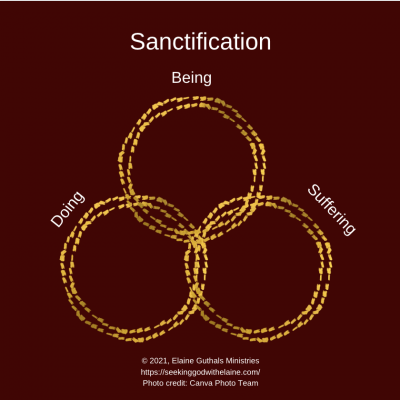
    We don’t have to do anything for salvation except accept the gift. However, sanctification has aspects of being, doing, and suffering. The being is believing in the doctrines.

    Sanctification

    Transformed by Our Fervorous Response

    “… be fervent in the Spirit …” (Rom. 12: 11 CBS)

    In our passionate service for God, we need to keep the intensity up for the work God has called us to do.

    The zeal indicates a fervorous response to the work God calls us to do. We would call it enthusiasm, but I am not sure if that really conveys all we want to say.

    Our joy from being transformed as well as the the evidence of these changes must bubble out from us. Others have to see the changes that are occurring in us.

    The fervor manifests itself into a light that emanates from us. “In the same way, let your light shine before others, so that they may see your good works and give glory to your Father in heaven” (Mt. 5: 16 CSB).

    Fervor and zeal indicate an intensity. We have to be all in for God.

    • “Whatever your hands find to do, do with all your strength, because there is no work, planning, knowledge, or wisdom in Sheol where you are going” (Ecc. 9: 10 CSB).
    • “We must do the works of him who sent me while it is day. Night is coming when no one can work” (Jn. 9: 4 CSB).

    Why is it important that we be fervorous in spirit? Milligan said fervorous is the opposite of lukewarm.

    We don’t want to be lukewarm like the church at Laodicea. “I know all the things you do, that you are neither hot nor cold. I wish that you were one or the other! But since you are like lukewarm water, neither hot nor cold, I will spit you out of my mouth!” (Rev. 3: 15-16 NLT).

    How are we lukewarm? We say we are a disciple but try to rewrite the Scriptures to placate worldview people. We are a back row Baptist [or whatever your denomination is].

    I thought it was interesting that Logan said that a fervent piety “… is not so much a single virtue, as a constellation of virtues. Here reverence, gratitude, faith, hope, love, concentre their rays, and shine with united glory.”

    Piety is defined as the persistent application of moral virtues to our lives because of our supreme love for God. God wants us to completely submit to Him. That means all of the virtues that we possess must be up to His level.  

    Transformed by Service

    “…  serve the Lord” (Rom. 12: 11 CSB)

    In our passionate service for God, we need to be completely committed to doing the work to which He has called us.

    Okay, how did I do the Disciple’s Job Description, and not have serving the Lord as a job duty? Hmmm.

    Lyth said that serving the Lord meant that we are completely committed to His laws and commandments. It is our intent that He be glorified.

    Resource

    Sturgeon gave us essentials of serving God. We have to work in the service project that God has designated. We can’t go off and do our own thing, and expect God to sanction our work.

    Resource

    We not only have to not serve where God hasn’t called us, but we also have to serve God where He does call us. Yes, it might not be where or doing what we had in our plan, but God’s plan is best.

    TransformedToPersistencePin

    Making the Connections

    Did you see what Milligan said? He wrote, “Religion is not a matter of easy acquirement.”

    Resource

    Wait! What?

    Religion — a.k.a. our relationship with God — is a gift that we can either accept or reject. What is hard about that?

    Well, for some people, it can be a hard decision.

    Milligan also said that serving God has its difficulties as well. He described it as a pitched battle with the enemy between us and our reward.

    • Jeremiah 17: 9 says our hearts are deceitful.
    • We’ve got our human nature to fight.
    • Once we become children of God, we can expect the persecution.

    Oh, yeah. I see difficult now.

    It is difficult, but not impossible. Logan said that “piety is the foundation of virtue and morality.” We get there by the transformation of sanctification.

    Resource

    Our persistent application of moral virtues to our lives is the foundation of virtue and morality. Hmmmm. Kind of sounds like a circular definition, doesn’t it?

    But then again, I see it. The application of His moral virtues is the foundation of making our virtues and morality what He wants them to be.

    How Do We Apply This?

    • Pick the right objects to pursue — things God has in our plans.
    • When we do have to pursue worldly things in order to live, make sure God is always our #1 priority.
    • Ensure that our actions are motivated by spiritual graces and motives.
    • Watch our thoughts as they motivate our actions, also.
    • Surrender ourselves to God.
    • Find examples of saints in the Scriptures and in your world to see their fervor.
    • Wait in the Holy Spirit to call us to our mission field.
    • We each can serve God, even if we just pray and support those who are doing the actual work.

    Resource

    We have to remember that it isn’t the number of mountaintop encounters we experiences. It isn’t even about our weekly worship in His house.

    It is about diligently living for God each day.

    Father God. You call us to follow You 24/7/365. You don’t want us to follow You part of the time — only on the weekends — only when we are out. You call us to always —enthusiastically — serve You. Help us to do so. Help us to change our characters to be more like You. Amen.

    What do you think?

    Leave me a comment below (about this or anything else) or head over to my Facebook group for some interactive discussion.

    If you don’t understand something and would like further clarification, please contact me.

    If you have not signed up for the email daily or weekly providing the link to the devotions and the newsletter, do so below.

    If God has used this devotion to speak with you, consider sharing it on social media.
  • Transformed to Love

    God is love, and we are to be, also. This daily devotion looks at how Paul tells us to do that.

    Nuggets

    • Love is to be genuine.
    • Love is expressed by hating evil.
    • Love is expressed by doing that which is good
    • Love is expressed by considering others family.
    • Love is expressed by holding others in high esteem.

    To read devotions in the Redo for Godliness series, click the appropriate button below.

    Devotions in the Transformed to Perfection series

    Paul had been talking about unity in the last couple of verses. He goes on to tell us how that unity is formed – through love.

    Let’s Put It into Context #1

    Here is a running list of what we’ve discussed previously.

    Let’s Put It into Context #2

    • Good, in the biblical sense, is the workings of God within His people.
    • Evil is equated with sin because it is that which goes against God and His purposes.

    Loving the Right Way

    “Let love be without hypocrisy …” (Rom. 12: 9 CSB)

    Love is to be genuine.

    What Paul is saying here is his readers should stop play acting at being loving. Instead, Lyth said our interactions with other should be full of honesty, purity, and kindness.

    Resource

    Love has to be displayed in our actions. If our words of love differ from our actions, then our words are only manipulation.

    Disciples, on the other hand, are to be known for their love. “By this all people will know that you are my disciples, if you have love for one another” (Jn. 13: 35 ESV).

    I don’t think this is just talking actions, though. I think this gets down to motive. Why are we loving?

    Do we have ulterior motives? Are we trying to manipulate the situation through the pretense of love?

    The duality of personalities is not that for what God is looking. He is not looking for us to portray ourselves as someone we are not.

    It is no fun to realize a relationship was based on a delusion. It is bad enough when that happens with an acquaintance. When the person plays at being loving — and then we find out they really don’t — it is devastating.

    I keep thinking it is bad enough when someone portrays that a relationship that is — at a minimum — a good relationship, and it isn’t. But when the deception actually masks hatred for the other, it is really sad.

    But there is a continuum between the love and hate. Beecher gave examples of spouses placating the other by actions where they really didn’t feel the emotion they were portraying. For example, one spouse could perform acts of affection while still feeling anger.

    Resource

    We are commanded to love one another. “Owe no one anything, except to love each other, for the one who loves another has fulfilled the law. For the commandments, ‘You shall not commit adultery, You shall not murder, You shall not steal, You shall not covet,” and any other commandment, are summed up in this word: “You shall love your neighbor as yourself’” (Rom. 13: 8-9 ESV).

    Yes, that summary is the second greatest commandment.

    Glossary

    This is particularly true in our relationship with God. He doesn’t want us playing at godliness. He wants us to be godly.

    Those disciples who do not have a genuine relationship with God will find themselves outside Heaven. “Not everyone who says to me, ‘Lord, Lord,’ will enter the kingdom of heaven, but only the one who does the will of my Father in heaven” (Mt. 7: 21 CSB).

    Girdlestone listed some ways in which we show our love to God. He wrote, “By prayers, praises, honouring God’s Word and day and ordinances.”

    Resource

    These have to get to the heart level. God will not accept just an outward conversion. He is expecting our character to be changed.

    Love as Opposed to Evil

    “… Detest evil …” (Rom. 12: 9 CSB)

    Love is expressed by hating evil.

    I think we’ve done ourselves a disservice by translating the word as hate. To me, that could be considered a surface dislike.

    It is our human nature to want to take the “badness” out of sin. We want to, instead, see what sins we can get away with. We want to see how close we can get without sinning.

    Doesn’t. Work. That. Way.

    Gairdlestone said it this way. He wrote, “Questions often arise as to whether it is fitting for a Christian to partake of this amusement, to engage in that employment, or to enter into the other company. In such discussions many argue as if it were desirable to take all the liberty they can. And frequently they act on the presumption that what is easy to argue is safe also to do. But how different would be their conclusion if they would but bear this text in mind!”

    Resource

    God wants us to do a complete 180 degree turn from hate. Love is the direct opposite.

    If we abhor evil, we are disgusted with it. We not only feel a distaste toward the evil, but we are also revolted by it.

    Being revolted by sin does not mesh with the worldview’s definition of tolerance in love. We need to follow God’s definition.

    Family Churchman gave us a good list of sins also on a continuum.

    • “Trivial sins as well as great.
    • “Secret as well as public.
    • “Personal as well as social.
    • “In thought as well as in act.”

    Resource

    Bell made a great observation. He wrote, “It is the peculiarity of Christianity that while it aims to exclude all sin from the heart, it does not dismember the soul by excluding from it any faculty that is natural to it. Of these hatred is one — one terribly liable to abuse, but rightly used a potent instrument in the suppression of evil.”

    Resource

    I know, right? If God doesn’t want us to sin, why didn’t He take out our ability to sin?

    Well, God didn’t remove our ability to sin so we would continue to exercise our free will. Free will is the ability within us to make decisions, which determine actions that produce character.

    God isn’t a dictator. He will allow us to continue choosing Him.

    We have to remember that God has already conquered sin. “Whoever makes a practice of sinning is of the devil, for the devil has been sinning from the beginning. The reason the Son of God appeared was to destroy the works of the devil.” (I Jn. 3: 8 ESV).

    God has conquered sin and is teaching how to do the same. Bell said that is what sanctification is — separation from evil — in all areas.

    Sanctification is separation from evil.

    Trench reminded us that sin has a burden associated with it. Back when we were talking about the Beatitudes, we said that, when we sin, we should mourn that we have broken God’s laws and commandments. We should be sad that we were not obedient as God expects — that we keep sinning.

    Resource

    To read a related devotion, click the button below.

    The burden is so great that we cry out in pain because we were disobedient to God. That is, to me, what abhorring evil means.

    We are also to be burdened with the sins of others. We are given our marching orders to help them see the need to confess their sins.

    OurCommission

    The Disciple’s Job Description

    Complete Job Description

    We have to make sure we are doing the hate right. It says hate sin. It does not say hate the sinner.

    It is imperative that we hate sin. We won’t be pure until we do.

    Good as Opposed to Evil

    “… cling to what is good” (Rom. 12: 9 CSB)

    Love is expressed by doing that which is good.

    When we cut something out of our lives, it is important to have something ready to fill that space. We should replace the evil with good.

    It is important to remember that, just as evil means sin, good means purity.

    Girdlestone told exactly what good is. He wrote, “Whatsoever our Lord has revealed to be believed, commanded to be done, given to be obtained on earth, or promised to be enjoyed in heaven, this is that which is good; this is that which we should so love as to cleave to it with the most fond and persevering affection.”

    Resource

    What we have to always consider is that it is easy to do good for a while. God is calling us to good for eternity.

    A big part of goodness is sincerity. Yep, no duplicity here.

    We need to bag the love with pretense. How should we love God, then?

    “And one of them, a lawyer, asked him a question to test him. ‘Teacher, which is the great commandment in the Law?’ And he said to him, ‘You shall love the Lord your God with all your heart and with all your soul and with all your mind. This is the great and first commandment. And a second is like it: You shall love your neighbor as yourself’” (Mt. 22: 35-39 ESV).

    We have to love God with every fiber of our being. Brady wrote that we are to love ourselves and our neighbors in the same way.

    Resource

    Paul told us to cling to the good. That means, according to Beveridge, we need to approve of and desire good.

    Resource

    We are told to always be good. But that is logical. If good means doing God’s Will, then that means we are to live our lives following His laws and commandments.

    The Intensity of the Love

    “… Love one another deeply as brothers and sisters …” (Rom. 12: 10 CSB)

    Love is expressed by considering others family.

    What Paul is talking about here is a mutual love. It comes from our piety. Piety is defined as the persistent application of moral virtues to our lives because of our
    supreme love for God.

    Yes, our love stems from God. It doesn’t come from us. It definitely doesn’t come from this world.

    Love comes from God. Hargreaves put it this way. He wrote, “All men ought to love each other as men because brethren by Adam. The world is one common family, split up by sin, but to be united again by Christian love.” There are two big takeaways in that.

    Resource

    The first take away is we are all the same. Regardless of our race and ethnicity, we are all children of Adam. We are one big family.

    But that is part of the problem. Adam and Eve brought sin into the world. That split the family in two.

    Sin split the family into two. We are now sinners and former sinners.

    There is hope. We can all be reunited when the sinners ABCD.

    The ABCDs of Salvation

    If you have not become a believer in Christ, please read through the
    Plan of Salvation and prayerfully consider what God is asking you to do.

    A – admit our sins
    B – believe His Son Jesus is our Redeemer
    C – confess God as Sovereign Lord

    D – demonstrate that commitment by making any changes needed in our lives to
    live the way in which God has called us

    The Disciple’s Job Description

    Yes, God wants us to love all. That is because we are showing all that He loves them.

    LoveOneAnother

    How Love Is Shown

    “… Take the lead in honoring one another” (Rom. 12: 10 CSB)

    Love is expressed by holding others in high esteem.

    Hargreaves noted we should try to outdo each other in giving honor. If we honor another before us, it cuts down on our unkind speech.

    Unfortunately, too many times we are too caught up in getting the honor. Instead, we need to cultivate our humility.

    Resource

    Instead of finding fault with others, we should find what is right and acknowledge that.

    TransformedToLovePin

    Making the Connections

    This is important, guys. Don’t miss this.

    “If we love our brothers and sisters who are believers, it proves that we have passed from death to life. But a person who has no love is still dead” (I Jn. 3: 14 NLT).

    An exhibit of our conversion is our love.

    But look who it says are the objects of our love — fellow disciples. Not sinners. Believers.

    How Do We Apply This?

    • Desist if we have even the slightest suspicion that some conduct could be a sin.
    • Don’t try to compromise with sin. We can’t control it.
    • Bag resentment to others.
    • Work on our humility.
    • Be kind and courteous to others.
    • By being patient with and forgiving to others.
    • Pray for others.

    Resource

    God calls us too imitate Him. If He is love, that means we need to love, too.

    Father God. You have shown us love in so many ways. Help us to show that love to others. Amen.

    If you don’t understand something and would like further clarification, please contact me.

    If you have not signed up for the email daily or weekly providing the link to the devotions and the newsletter, do so below.

    If God has used this devotion to speak with you, consider sharing it on social media.

  • Thoughts on God’s Word

    God has given us a resource to learn about Him and His salvation. This daily devotional looks at a variety of aspects what God’s Words means.

    Nuggets

    • God’s Word, while it shows us what sin is, does not lead to sin.
    • God’s Word — a.k.a. His laws and commandments — cannot be added to, deleted, or changed in any way.
    • God’s Word is applicable to all and in all situations.
    • God’s Word tells us everything we need to know.
    • God’s Word gives us God’s #1 priority — to bring us salvation.

    I am going to do something different for this devotion. I am having a fuzzy-in-the-brain day.

    I am going to take one of my draft files and, instead of try to make Point A lead into Point B, I am just going to write my thoughts. Hopefully, they won’t seem too disjointed.

    God’s Word Is Pure

    “The words of the Lord are pure words, like silver refined in an earthen furnace, purified seven times” (Ps. 12: 6 CSB)

    God’s Word, while it shows us what sin is, does not lead to sin.

    Dale felt that mankind would never be able to doubt the purity of God’s Word. Salvation is the result of faith.

    • Faith is the conviction that the doctrines revealed in God’s Word are true, even if we do not understand all aspects of them, a belief which impacts our lives.
    • Salvation is the gift of life through the deliverance from evil and the consequences of sins to replace them with good and eternal life.
    • The consequences of sin are spiritual death and physical separation from God.
    • Spiritual death is the spiritual separation from God that occurred as a consequence of Adam and Eve’s original sin. The spiritually alive are those who have ABCDed, so they are no longer separated from God.
    • Eternal life is the promise of living eternally – even if we have died in this life – because we have admitted our sins, believed Jesus as Savior and Redeemer, and confessed God as Sovereign Lord.

    Once we have been converted, then we encounter the difficulties and sacrifices. We already have the salvation, so that is where the doubt begins.

    Resource

    We can’t pick and choose which parts of Scripture we think are pure and which are not. All of God’s Word is pure. Wood wrote, “The statement applies to every word of God – his declarations, revelations, precepts, promises, and threatenings.”

    Resource

    We have to remember what the definition of pure is. Pure means not being sinful or having the stain of sin.

    Because the Holy Spirit guided the men to write the Scriptures, it has a high authority. He did not shy away from portraying mankind as we are —immoral and sinful.

    True disciples who study the Scriptures practice the spiritual graces.

    Scriptures have been verified by Josephus and others.

    Resource

    The truth is tested by the evil in the world. The contradictions of non-believers and false professors has been shown to be wrong.

    Some have interpreted Scriptures for their own ill gain.

    Resource

    Worldview people think that Scriptures haven’t been tried and proven. They are wrong. “Your word is completely pure, and your servant loves it” (Ps. 119: 140 CSB)

    Every time there was prophecy given, God’s Word is tried and proven. When the prophecy is fulfilled, it is proven.

    Resource

    God’s Word Is Unchangeable

    “The law of the Lord is perfect, reviving the soul; the testimony of the Lord is sure, making wise the simple” (Ps. 19: 7 ESV)

    God’s Word — a.k.a. His laws and commandments — cannot be added to, deleted, or changed in any way.

    When we think of something being refined, we think it is us. Dale interpreted this as pointing to the unchanging and absolute nature of God’s Word. The best part is that Scriptures tell us about God Himself.

    Resource

    Instead of doubting, we can be thankful that we can trust God’s Word to be true and unchangeable. This gives disciples a freedom from insecurity.

    Resource

    Some worldview people think that Scriptures need to evolve. What they are really saying is that they want it changed so that some things that God has identified as sin are no longer categorized that way.

    Hoge wrote, “The system of doctrine and duty which the Bible contains is a fixed final system, not a progressive one, and one introductory to a higher, and the Bible will never become obsolete, and will never be supplemented by any other revelation. … A time, it is said, must come when the theological will be too narrow in its range for the demands of the race, and too dogmatic in its tone for the more liberal, general, comprehensive religion of the future.”

    Resource

    We know this is true because Jesus said it was true. “For truly I tell you, until heaven and earth disappear, not the smallest letter, not the least stroke of a pen, will by any means disappear from the Law until everything is accomplished” (Mt. 5: 18 NIV).

    What God has declared a sin is always going to stay a sin. Sins are actions by humans that disobey God and break one of His reasonable, holy, and righteous laws and commandments, goes against a purpose He has for us, or follows Satan’s promptings.

    It isn’t going to evolve and change.

    Glossary

    The goal of the God’s laws and commandments is not to make this life easier, as Hoge said. It is to show us God’s character.

    God Himself is unchanging. Therefore, His laws and commandments aren’t going to change.

    God’s Word Is Universal

    God’s Word is applicable to all and in all situations.

    Hoge wrote, “While the Bible is fixed and will never be supplemented, the principles contained in it are admissible of universal and of endless application, and for that reason the Bible will never need to be supplemented.”

    Resource

    We can look at this two ways.

    • “The Lord is not slow to fulfill his promise as some count slowness, but is patient toward you, not wishing that any should perish, but that all should reach repentance” (II Pet. 3: 9 ESV).
    • “For God does not show favoritism” (Rom. 2: 11 NIV).

    Salvation is available to all who will accept God’s gift. He shows no favorites by saying denying anyone because of age, gender, race, ethnicity — any reason.

    Some worldview people may think God does show favoritism to His people. They feel that they should be given all blessings because they are created by God.

    Doesn’t work that way. God has reserved some blessings for those who are His children.

    We are only God’s children when we admit we are separated from God because we are sinners, believe Jesus came as our Savior and a redeemer to pay the price for those sons, confess God as our Sovereign God, and demonstrate our commitment by submitting to Him.

    Glossary

    If you have not admitted that your relationship is not right with God,

    have not asked Jesus to be your Lord and Savior,

    and have not confessed your sins,

    please read through the Plan of Salvation and prayerfully consider what God is asking you to do.

    We make the choice to follow God or not. So, we decide whether we will get the blessings or not.

    God’s Word Is Instructional

    God’s Word tells us everything we need to know.

    When instructing the writers of the books of the Bible what to write, the Holy Spirit did not give them a complete roadmap of how and why God did what He did. God wasn’t interested in our knowing the minutiae.

    Instead, it shows us Who God is. It shows us how to be like Him. Wilson wrote, “It contains all our duty and all our consolation; all that is necessary to make us happy and holy.”

    Resource

    Yes, everything is in the Bible. That is because the laws and commandments aren’t a checklist. It is a character list.

    If our character is right, we can make decisions based on our character.

    God’s Word Brings Salvation

    God’s Word gives us God’s #1 priority — to bring us salvation.

    The purpose of Scriptures is to present the Plan of Salvation. Forrest wrote, “Its study will confer as much credit on our intellect as on our piety.” Its practical wisdom shows us the path to eternal life.

    Resource

    God’s Word speaks to our hearts and, through the Holy Spirit, convicts us to turn away from our sin and turn to God. It shows us what sin is and how to live a life imitating God.

    There is only one way to salvation. That is through believing in Jesus Christ as our Savior and Redeemer.

    To read a related devotion, click the button below.

    The invitation to salvation is in the pages of God’s Word. These days, anyone with access to the internet has access to God’s Word.

    We gain many things reading God’s Word. Sturgeon wrote that we gain relief, pardon, rest, security, strength, holiness, and harmony because it bring access to God.

    Resource

    What did we just say in What Affections Are We Talking About? The Bible will never be a dead book in a library cemetery. It will be a living, breathing document that prophecies the future — until that prophecy is fulfilled.

    To read a related devotion, click the button below.

    Dale wrote that it is our duty to obey God’s laws and commandments. Though doing that we receive grace. For by grace you have been saved through faith. And this is not your own doing; it is the gift of God” (Eph. 2: 8 ESV).

    Resource

    ThoughtsOnGodsWordPin

    How Do We Apply This?

    How do we apply this? We read our Bibles, meditate on it and pray about it.

    Searching for and Seeking God

    Hearing His Word (Rom. 10: 17).
    Reading His Word (Rev. 1: 3).
    Praying to Him (Heb. 4: 16).
    Studying His Word (Ac. 17: 11).
    Meditating on His Word (Ps. 1: 1-2).
    Memorizing His Word (Ps. 119: 11).

    God wants us to accept His salvation. He wants us to believe His Word and live by the laws and commandments within its pages.

    Father God. Thank You giving your Word to men who could write it down for all to read. Use the words we read to change our hearts and minds to be more like You. Amen.

    What do you think?

    Leave me a comment below (about this or anything else) or head over to my Facebook group for some interactive discussion.

    If you don’t understand something and would like further clarification, please contact me.

    If you have not signed up for the email daily or weekly providing the link to the devotions and the newsletter, do so below.

    If God has used this devotion to speak with you, consider sharing it on social media.

  • The Ultimate Test of Character

    Job had a really bad day one day because Satan wanted to tempt him to sin. This daily devotional looks at why God may have approved of the testing and what Job’s response was.

    Nuggets

    • Satan wanted Job to sin by serving God for self-interest.
    • Satan set the stage — what he hoped — for Job to sin.
    • Job did the exact opposite of what Satan wanted him to do.

    I’ve known for a while that my Ladies and I would be studying Job after we finished with Luke. I’ve been looking forward to diving in and looking at Job’s obedience.

    I guess it really hadn’t bubbled up yet how this is going to tie into our Redo for Godliness series. It is.

    Beard wrote, “The Book of Job asks, in every variety of form, this question, Is there any connection to be traced between a man’s character and his earthly fate?”

    Resource

    Well, duh. Let’s dig in.

    The Test Approved

    “Then the Lord said to Satan, ‘Have you considered my servant Job? No one else on earth is like him, a man of perfect integrity, who fears God and turns away from evil.’ Satan answered the Lord, ‘Does Job fear God for nothing? Haven’t you placed a hedge around him, his household, and everything he owns? You have blessed the work of his hands, and his possessions have increased in the land. But stretch out your hand and strike everything he owns, and he will surely curse you to your face’” (Job 1: 8-11 CSB).

    Satan wanted Job to sin by serving God for self-interest.

    I think we sometimes forget that God was bragging on Job. Would Satan have ignored Job if God hadn’t thrown him in his face? Probably not.

    Ker said the whole point of God’s bragging was to show Satan there is goodness in mankind. I doubt that He was showing him that mankind could just be a good person. I think He was stressing that good, in the biblical sense, means God is working within His people.

    Resource

    Davies took it a step further. He thought God was actually issuing a challenge to Satan.

    Resource

    That opens up an interesting track. God set up the testing of Job.

    We know God doesn’t tempt us. He does not want us to fail. Instead, He tests us — so we can succeed.

    To read a related devotion, click the button below.

    Satan’s response was that Job had an ulterior motive for serving God. Shore identified it as Satan thought that Job was selfish. Satan thought Job wouldn’t serve God if he wasn’t rewarded.

    If we thought the sole purpose of salvation was fire insurance, the answer to Satan’s question would be no. It is more than that.

    Satan’s question also totally ignores the fact that the Plan of Salvation was built on love. How could it not be?

    If you have not admitted that your relationship is not right with God,

    have not asked Jesus to be your Lord and Savior,

    and have not confessed your sins,

    please read through the Plan of Salvation and prayerfully consider what God is asking you to do.

    God elected that mankind would receive the free and unmerited gift of grace after we had disobeyed Him. This enabled Him to offer the Plan of Salvation to us.

    God wanted to offer the salvation to us through love because He wants to get back to having a hands-on relationship with all of His creation.

    Satan missed that.

    If the answer to Satan’s question was no — Job feared God for no reason — it would’ve proven Satan’s point. That presents itself in the belief that the purpose of salvation is our individual condition.

    Well, salvation is an individual state. No one can make the decision for us. Our salvation is only for us, not for our family and friends.

    Shore wrote, “To represent the hope of reward or fear of pain as the continually abiding and sole motive of the Christian life all through, is to ignore nine-tenths of the exhortations of the New Testament — is utterly to misrepresent and pervert the teaching of our Lord — is to deny the truth of countless Christian lives which we have read of or have seen.”

    Resource

    Salvation has several purposes. It is to save us from our sins. Gabriel told Joseph that Mary would “… bear a son, and you shall call his name Jesus, for he will save his people from their sins” (Mt. 1: 21 ESV).

    We are instructed to hate sin. “Let love be genuine. Abhor what is evil; hold fast to what is good” (Rom. 12: 9 ESV). Shore said that our spiritual life doesn’t begin until we hate sin.

    It may start out that we are only looking to Jesus to save us from the bad. The Sanctification Road quickly changes that. We are all called to then witness to others (Mk. 16: 15; Mt. 28: 19-20).

    One reason Satan thought as he did, according to Noble, was that he frequently underestimated mankind. But look at it this way. Satan looks at us as he is — not as we are. He wants us to be like him, so he sees us flawed.

    Resource

    God, also, wants us to be like Him. But He sees us perfected.

    Satan took several swings at Job. When he couldn’t take away Job’s character, he tried calling him a hypocrite. He attacked Job’s motivation when that didn’t work.

    Resource

    Beard had a really interesting take on Satan’s question. He interpreted it to mean, “Can we serve God without loving Him?”

    Resource

    We could also swing that around to ask, “Can we be a good person and not love God, and still be righteous? Can we perform works in self-interest and have them credited to a righteousness account?”

    We tend to think that Satan is going after Job. But really, Satan is going after God, too.

    Bradley contended that, if disciples are only in it for what we gain, God’s attribute of love is stripped away. “For God so loved the world that he gave his one and only Son, that whoever believes in him shall not perish but have eternal life” (Jn. 3: 16 NIV) would no longer be fact. They would be just words.

    Resource

    We could also turn this around, as Davies did, and ask, “Is Job going to fear for a free gift?” Hey, good stuff for nothing. Satan wants to take the focus off of what it really is.

    It isn’t about the good things we get. It is about being saved from our sins and being made spiritually alive.

    What just popped into my head was a picture of Satan standing before God, stamping his feet, and yelling, “It’s not fair!” Satan basically is accusing God of not leveling the playing field.

    But we have to keep in mind that Job is a child of God. He doesn’t belong to Satan. God said He would protect His own, and He does.

    Glossary

    What are these hedges Satan talked about? It could be anything from good parents to good teachers to good friends. It could be the discipline we need to keep navigating the Sanctification Road.

    Satan wants us to see the hedge as a limitation, not as protection. We need protection from Satan.

    But the decision is ours. Are we going to follow God or Satan?

    Bottom line — Satan is accusing Job of performing things through self-interest.

    Satan said all God had to do was raise His hand and Will it — and all the good stuff would be gone. To me, that is an equivalent of a snap of the fingers.

    The prediction was that, so too would Job’s devotion to God be gone.

    Caryl made an interesting comment. He wrote, “Satan can only guess at the hearts of men.”

    Resource

    Satan isn’t omniscient like God is. He doesn’t know everything.

    Sometimes, we think Satan is on par with God, don’t we? Isn’t it great news that he isn’t?

    So, the purpose of the testing that is going to come in the succeeding chapters is to determine if Job is sincere. Did he make a genuine profession of faith?

    A Really Bad Fifteen Minutes

    “‘Very well,’ the Lord told Satan, ‘everything he owns is in your power. However, do not lay a hand on Job himself.’ So Satan left the Lord’s presence. One day when Job’s sons and daughters were eating and drinking wine in their oldest brother’s house, a messenger came to Job and reported: ‘While the oxen were plowing and the donkeys grazing nearby, the Sabeans swooped down and took them away. They struck down the servants with the sword, and I alone have escaped to tell you!’ He was still speaking when another messenger came and reported: ‘God’s fire fell from heaven. It burned the sheep and the servants and devoured them, and I alone have escaped to tell you!’ That messenger was still speaking when yet another came and reported: ‘The Chaldeans formed three bands, made a raid on the camels, and took them away. They struck down the servants with the sword, and I alone have escaped to tell you!’ He was still speaking when another messenger came and reported: ‘Your sons and daughters were eating and drinking wine in their oldest brother’s house. Suddenly a powerful wind swept in from the desert and struck the four corners of the house. It collapsed on the young people so that they died, and I alone have escaped to tell you!’” (Job 1: 12-19 CSB)

    Satan set the stage — what he hoped — for Job to sin.

    I love how God did not allow Satan to back Him into a corner. Satan said, “You can take everything from Job.” God said, “No, you do it.”

    Why did God allow Satan to tempt Job? Ker wrote, “One object of the Book of Job is to prove that there is something genuine in man, especially when the grace of God has entered his heart.”

    Resource

    I read that as God wanted to show that He could make a difference in our lives. We’ve said that perfection isn’t about doing; it is about being.

    Perfection is about being. It is about obtaining the character of God.

    It also isn’t about having things. It is about having God’s character.

    The Homilist brought up a good point. There is no way we are going to totally renounce this world. We still live herein these sinful bodies.

    Resource

    Besides, that isn’t what God asks of us. He instructed us to put Him first. He is our #1 priority.

    Devotions in the On Things Above series

    Verse 13 says “One day …” (Job 1: 13 CSB). We don’t know if it was the next day, the next week, or a couple of years down the road.

    I am thinking it was sooner rather than later. Satan wasn’t going to sit on the opportunity to make Job sin.

    Being limited to affecting only Job’s circumstances also meant Satan loaded up the hurt. One messenger was barely finished giving his doom and gloom message, and the next one was riding up to give his. The Homilist felt Satan was trying to shock Job’s moral nature to get him to sin.

    Doesn’t Satan still do that? We say, “When it rains, it pours.”

    I read this, and I think, “How cruel Satan is!” How can people actually think they are better off not following God and following Satan?

    God is love. Satan is hate.

    It reads in verse 16 that God was blamed for the fire from Heaven. I guess I can see that. We tend to think God is in control there.

    The Homilist noted, however, that God gave Satan the ability to control elements of nature. This not only took out the sheep and servants, but it also leveled the house Job’s kids were in at the time.

    Resource

    I can see that, too. God told Satan he had to do it. But isn’t it like Satan to work things out so God gets blamed?

    When we look at these tests, we see Satan is tempting Job by the circumstances within which he finds himself. That is a favorite temptation of Satan’s isn’t it?

    But God doesn’t want us to look at the circumstances. He wants us to look at Him — and give thanks. “In every thing give thanks: for this is the will of God in Christ Jesus concerning you” (I Thess. 5: 18 KJV).

    Ooo, baby. That can be hard! Thank God when we lose our job. Thank Him when we lose a loved one.

    Yes, there are things — even in the most trying and frightening circumstances — for which we can praise God.

    God never leaves us. He provides what we need. He is in control.

    GodNeverLeavesUsVerses

    Take a look at the order of the messages. Caryl thought there was a specific reason they were in this order. Yes, Job was probably upset with the loss of oxen, donkeys, sheep, servants, and camels.

    Resource

    But if Satan would have started with the loss of the kids, the other losses wouldn’t have been as important to him. This way, Satan kicked Job when he was down.

    Meade pointed out that all of the losses were caused by natural causes. (Back in that day it was probably natural for nations to come in and pillage from other nations.)

    Resource

    Oh, yeah. Satan knows how to chip away at our faith.

    Worship — Regardless of Circumstances

    “Then Job stood up, tore his robe, and shaved his head. He fell to the ground and worshiped, saying: Naked I came from my mother’s womb, and naked I will leave this life. The Lord gives, and the Lord takes away. Blessed be the name of the Lord. Throughout all this Job did not sin or blame God for anything” (Job 1: 20-22 CSB)

    Job did the exact opposite of what Satan wanted him to do.

    The best laid plans of mice and men — and Satan. Satan wanted Job to curse God.

    Instead, Job worshiped. Worship is our personal or corporate response of admiration (confession, thanksgiving, praise, etc.) based on our attitude to God’s presence and our imitation of His character.

    This proves that Satan doesn’t know us. I bet he was not only stomping his foot but also throwing things, having a major meltdown.

    True, Job tore his robe and shaved his head first. These were acts of mourning. We might say that was the beginning of him processing the situation.

    But Job moved quickly to worshiping God.

    All during the trials, we need to be doing both of the P words — praying and praising. We have to use the trials to draw us closer to God.

    I think verse 21 is real telling. Job had everything in the right perspective and in the right priority.

    Yes, I am sure Job was grieving deeply over the deaths of his children. That is expected. Jesus mourned over the death of Lazarus — and He knew he wasn’t going to be dead much longer!

    That was Job’s way of saying everything he had was from God and under the control of God. God could do what He would because God was Job’s priority.

    Spurgeon interpreted what Job said as, though he may have lost much, he had more than when he was born. But even what he had remaining would not go with him into the next life.

    Resource

    Job realized whatever happened to him was because God allowed it. Satan is not more powerful than Him. He can’t do something to us that God does not approve.

    We can’t expect God to just give us the good stuff and not let anything bad happen. God is all-knowing, so He knows what is best for us. Yeah, and sometimes the best hurts big time.

    Through all that Satan there at Job, Job did it right. He didn’t sin. He worshiped.

    TheUltimateTestOfCharacterPin

    Making the Connections

    Maybe salvation does start out with a selfish tint on it. It doesn’t stay that way.

    As we grow to know God, we delight in spending time with Him. Sanctification changes us to be more like Him.

    Sanctification is the process in which the transformation occurs.

    Ker made an excellent point. Even after mankind sinned, we are still made in God’s image. God does have to demolish the house to remodel us into what we are to be.

    Resource

    Okay, for some of us God does have to strip us down to the bones of our being. But what God is building back up is our character — to be like His.

    We just wish these gut-wrenching trials didn’t have to be a part of it. Cannon made the comment that, “next to the ‘man of sorrows,’ Job was perhaps the most afflicted of the servants of God.”

    We tend to ignore the benefits of trials. Yes, they can be punishment when we disobey God. But they can also show the genuineness of our faith. It can also help root out any sin we still have in our lives. We just have to realize that is just part of the Sanctification Road.

    It does help us to follow the Holy Spirit.

    Resource

    In a way, we should be thankful that God does correct us. “For the Lord disciplines the one he loves, and chastises every son whom he receives” (Heb. 12: 16 ESV).

    But look what Wilson said. He wrote, “The best of men are often exercised with the sorest troubles. Job was a perfect and upright man, fearing God and eschewing evil. Those who are nearest God’s heart may smart most under His rod.”

    Resource

    That definitely does not mesh with our view! Bad stuff is punishment, not reward for being close to God!!!!!!

    That just goes back to the belief that, if we aren’t children of God, Satan already has us. He doesn’t have to work for us.

    How Do We Apply This?

    The Homilist said that “there is a constant warfare going on between these in the universe, in the world, in the soul.”

    Resource

    We have to be prepared for that warfare. We do that by seeking God. We also have to put on God’s armor.

    Searching for and Seeking God

    Hearing His Word (Rom. 10: 17).
    Reading His Word (Rev. 1: 3).
    Praying to Him (Heb. 4: 16).
    Studying His Word (Ac. 17: 11).
    Meditating on His Word (Ps. 1: 1-2).
    Memorizing His Word (Ps. 119: 11).

    To read devotions in the Armor of God series, click the appropriate button below.

    • Remember, God has a purpose in everything He does.
    • Watch when things are on an even keel. Wilson said we should anticipate changes.
    • Watch for deliverance when the trials are in full fury.
    • Always look to God for Him carrying us.
    • Always stay humble.
    • Be careful that we don’t blame God.
    • Mourn the death of our loved ones, but use it to grow closer to God.
    • Watch when trials come because that is when it is easiest to sin.

    Resource

    Satan pulled out all the stops but didn’t get Job to sin. But this was just the start. Satan wasn’t through with Job yet.

    Father God. May we have the obedience of Job. Help us to withstand Satan’s temptations when he throws everything he has at us. Amen.

    What do you think?

    Leave me a comment below (about this or anything else) or head over to my Facebook group for some interactive discussion.

    If you don’t understand something and would like further clarification, please contact me.

    If you have not signed up for the email daily or weekly providing the link to the devotions and the newsletter, do so below.

    If God has used this devotion to speak with you, consider sharing it on social media.