Category: Sin

  • The Nations of the Promised Land

    Abram was promised land that belonged to other people at that time. This devotional reading looks at who those nations/people groups were.
    the-nations-of-the-promised-land

    We talked about how the covenant promised hinged on Abram having a son. Once he did, the promised blessings of the covenant was phenomenal.

    Those promises centered around the land that the nation would occupy. There is just one little problem.

    The land was already occupied — and by family. Let’s take a look at who these occupiers were.

    Let’s Put It into Context

    To read devotions in the Creating Everything theme, click the button below.

    Devotions in the Abraham the Patriarch series

    The Covenant Signed

    “So the Lord made a covenant with Abram that day and said, ‘I have given this land to your descendants, all the way from the border of Egypt to the great Euphrates River” (Gen. 15: 18 NLT)

    In God’s mind, the covenant is a done deal.

    God came to Abram because he was struggling to wait. He couldn’t see how he was going to get to point B from where he was at point A.

    God said, “Don’t worry. I’ve got this. In my mind, it has already been given to you.”

    Why? God doesn’t change. He had given Abram a pledge. That pledge was in stone.

    We have to look at the Hebrew here because something is lost in translation. “On that day Hashem cut a brit (covenant) with Avram, saying, Unto thy zera have I given ha’aretz hazot, from the Wadi of Mitzrayim unto the great river, the river Euphrates:” (Gen. 15: 18 OJB emphasis added).

    The Hebrew word for cut is karat. What did Abram do to most of the animals? He cut them in half. That allowed the parties to pass through them, showing agreement and acceptance of the covenant.

    But it is more than that. If the covenant was broken – one party did not do what was required – the other party could cut him in two!

    So, God cut a covenant with Abram. 

    The covenant was kept for many years. Then, Israel broke it – and was cut into two nations.

    The Canaanite Nations

    “the land now occupied by the Kenites, Kenizzites, Kadmonites, Hittites, Perizzites, Rephaites, Amorites, Canaanites, Girgashites, and Jebusites” (Gen. 15: 19-21 NLT)

    Ownership of land was very important.

    God was very specific in His description of the land He was giving Abram.  Boundary lines were identified by shared borders with other countries and rivers. On top of that, in the next three verses, God lists the current occupants of the land.

    The land wasn’t given to the Israelites because they were such a great nation with such wonderful people. He gave it to them because of the covenant made with Abraham, Isaac, and Jacob. Even when their descendants were filled with wickedness, the covenant was not broken.

    Well, this list of countries has some thrown in that aren’t usually in a list like this..

    Kenites

    The Kenites lived in the region of Midian. Midian was a son of Abraham by Keturah (Gen. 25: 2). Later, they also lived in Palestine.

    If they are identical to the Midianites, this may be prophecy. It is difficult to be the descendant of Abraham’s son Midian if Abram is still childless. Also, it could have been a name change.

    A nomadic people, one of their descendants was Jethro the Kenite priest (also known as Reuel the Midianite), the father-in-law of Moses (Ex. 18: 1).  It was Jethro’s suggestion to have Moses appoint a hierarchy system through which disputes that could not be handled within the hierarchy could then be funneled to Moses (Ex. 18: 13-26).

    In my mind, it is logical that the Kenites would identical to the Midianites. Surely, there was some cultural connection if not being the ancestors of the Midianites.

    Some also think that the was a connection to Cain. This, however, is not found in God’s Word. It is unlikely as Cain’s descendants would have been wiped out by the flood. If there were any who chose to follow the God of Adam, Eve, and Abel, they would have been on the ark.

    The Kenite tribe assimilated into Israelite society, while continuing to live a nomadic lifestyle. They cohabited especially with the tribe of Judah (Jdgs. 1: 16) and, to a lesser extent, with Naphtali and Simeon, even intermarrying with them. They settled near Jericho before they moved south to the Negev (Jdgs. 1: 16; I Sam 27: 10).

    One such marriage was Jael, the wife of Heber the Kenite. She slayed the Canaanite general Sisera in the Book of Judges by driving a tent peg through his temple (Jdgs. 4: 11, 17-23).

    The Kenites were known to influence the Israelites’ religious practices, as they were known to worship Yahweh. Some feel they were instrumental in developing monotheism in with the Israelites.

    I can see this as Moses would have been influenced greatly by Jethro, whom he lived with 40 years after he had escaped Egypt (Ex. 2: 15; Ac. 7: 30). The again, I can’t.

    Prior to going to Egypt, we are not told that the Patriarchs had difficulty with worshiping false gods. It was only after their time in Egypt did they do so. I think it may be more accurate to say that the Kenites helped them return to monotheism.

    They were also skilled metalworkers and shepherds. Being metalworkers would tie them to Cain’s line (Gen. 4: 22).

    The Kenites were mentioned in account of King Saul and King David. Saul warned the Kenites of the impending destruction of the Amalekites (I Sam. 15: 3-23). David also fought the Amalekites, sharing the spoils with the Kenites (I Sam. 30: 26-31).

    The Rekabites/Rechabites were descended from the Kenites (I Chron. 2: 55).

    Records are found of the Kenites until the time of the Assyrian captivity, which had been foretold in prophecy.

    Since Joshua battled seven nations to win back the Promised Land, it is easy to think those listed in Genesis 15 had some connection to those seven nations. That is not always the case.

    Kenizzites

    Since Joshua battled seven nations to win back the Promised Land, it is easy to think those listed in Genesis 15 had some connection to those seven nations. That is not always the case.

    The Kenizzites were a non-Canaanite people. Still, God told Abram that their land was included.

    The tribe may have originated from the Edomite sheik Kenaz, possibly the grandson of Esau (Gen. 36: 11). This would make the inclusion in the list prophecy. Theen again, some reject this as prophecy of an independent people group.

    It is believed that the origin of the tribe were some other nomadic or hunter group living in parts of Arabia. This would be around the southern borders of Canaan. Other feel it is closer to the Negev, placing it in Judah’s territory.

    By the time the Israelites returned from Egypt, this group had been assimilated into another Canaanite group (Josh. 3: 10) Then, some think this integration came before or during the exodus from Egypt (Ex. 12: 37-38).

    The most notable Kenizzite was Caleb, one of the two loyal spies (Num. 13: 16). Caleb was the son of Jephunnah the Kenizzite (Num. 32: 12; Josh. 14: 6). (This group did not descend from Caleb’s grandfather Kenaz.)

    This seems to contradict Numbers 13: 6, as Caleb was listed as the spy representing the tribe of Judah. If the Kenizzites came from descendants of Esau, they would have to be grafted into the Israelite society, possibly into the tribe of Judah – making Caleb the first gentile that we know of to have been assimilated into God’s family.

    Another possibility is that Kenaz was a descendant of Dinah. He also could have descended from Othniel, the first judge of Israel and nephew of Caleb (Jdgs. 1: 13). This would make Kenaz Caleb’s younger brother.

    But then again, Caleb had a grandson named Kenaz (I Chron. 4: 15).

    Kadmonites

     Kadmonites were descendants of Shem that lived near the area of Mesopotamia. They have been described as the easterners because their land was in the north-east part of Palestine, east of the Jordan. It is possible that the term the easterners applied to a group of people, just as the Canaanites applied to the seven nations, not just the nation of Canaan.

    It was to this land that Abraham sent his sons by Keturah (Gen. 25: 6).

    Genesis 15: 19 is the only place is where the nomadic Kadmonites are mentioned. This is a list of nations whose lands would be transferred to Israel.

    The usual lists contain God’s instructs who the Israelites were to conquer in the Promised Land. Those lists contain a limited number. “When the Lord your God brings you into the land you are about to enter and occupy, he will clear away many nations ahead of you: the Hittites, Girgashites, Amorites, Canaanites, Perizzites, Hivites, and Jebusites. These seven nations are greater and more numerous than you” (Deut. 7: 1 NLT). Some resources I read felt it was understood that we should read the names of those nations in every list.

    It sounds like the reasons only those are listed is because they were more numerous than the Israelites. That infers that the Kenites, Kenizzites, and Kadmonites were smaller nations than Israel.

    If so, they would be on the list that God told Israel not to make treaties with them. Even though descendants of Shem would be fighting descendants of Shem, that would have made them ones that would not have treaties.

    I’m sure that those not listed in the usual list of seven nations followed the plan that God had for them. We didn’t need to know anything else about them.

    Hittites

    Well, whether they were well known or little know depends on who is writing the artidle.

    Little is known about the Hittites, also known as Hethites. That was used as evidence that the Bible was not accurate (even though they were mentioned more than 50 times). However, archaeologists have since discovered proof that they were a mighty nation in the 15th and 16th centuries, the size of their empire rivaling that of the Roman Empire.

    Much is known about the Hittites because their empire equaled that of Egypt’s.

    The Hittites were descendants of Canaan, the grandson of Noah (Gen. 10: 15). Their territory was (currently) part of northern Syria and eastern Turkey.

    • “Canaan fathered Sidon his firstborn and Heth” (Gen. 10: 15 ESV).“Canaan’s oldest son was Sidon, the ancestor of the Sidonians. Canaan was also the ancestor of the Hittites” (Gen. 10: 15 NLT).
    • “from the Negev wilderness in the south to the Lebanon mountains in the north, from the Euphrates River in the east to the Mediterranean Sea in the west, including all the land of the Hittites” (Josh. 1: 4 NLT emphasis added).

    During Abraham’s lifetime, the Hittites settled in the Hill Country around Hebron. It is from the Hittites that Abraham brough the cave that became his burial place (Gen. 23: 3).

    They were a race of giants, which were feared by others. One of David’s mighty men, Uriah, was a Hittite (II Sam. 11: 3). Two of Easau’s wives were Hittite women.

    The Hittites were one of the seven enemies of the Israelites in the Promised Land. They were punished for their pagan worship (Ex. 23: 28-33). However, Joshua did not annihilate them as God directed (Josh. 3: 10).

    Eventually, the Hittites were assimilated into surrounding cultures.

    Perizzites

    The Perizzites were an undisciplined group of people. They lived in rural villages in the fertile open country south and southwest of Mt. Carmel.

    While the Perizzites were not listed in Genesis 10, this was part of the land that caused the dispute between Abram and Lot (Gen. 13: 7). When God commissioned Moses from the burning bush, He include the Perizzite nation when identifying the land of milk and honey. Later, these were one of the lands surveilled by the ten spies in Numbers 13.

    Jacob mentioned the Perizzites after Simeon and Levi killed Hamor the Hivite’s son Shechem for raping Dinah (Gen. 34: 30 NLT). As they known for their military capabilities, it makes sense the brothers would want the men disabled before attacking them.

    Though the Perizzites were one of the nations that Israel was to destroy to obtain the Promised Land, they did not succeed. Instead, Perizzites lived among them (Jdgs. 3: 5).

    This land would eventually be assigned to Ephraim, Manasseh, and Judah (Josh. 17: 15). However, the people of the nation were not completely driven out. They lived among the Israelites as slave laborers (I Kgs. 9: 20-21).

    Rephaites

    I think this is more a people group than a nation. Rephaites were consistently described as having greater-than-average height. In fact, Rephaim can be translated as giant. Because of their size and great numbers, they were considered mighty warriors, even demigods.

    It is from them the Anakim, which were also known as Rephaites, may have descended. Note: Giants were known by several names in the land of Canaan: Rephaim, Zuzim (the Ammonite name), Emim (the Moabite name), and Anakim (the Canaanite name).

    The Rephaim existed before Abraham’s time. In fact, King Kedorlaomer and his allies defeated the Rephaites at Ashteroth-karnaim before defeating the kings of Sodom, Gomorrah, Admah, Zeboiim, and Bela and capturing (Gen. 14: 5-12). This would place them in the Bashan region.

    They still occupied the land of Canaan, Bashan, and Moab when the Israelites came to secure the Promised Land after the exodus from Egypt. 

    Moses defeated King Og of Bashan, one of the last of the Rephaim, before they got to the Promised Land (Josh. 12: 4 NLT). Still, there were some left in King David’s time. One included one of Goliath’s brothers.

    Amorites

    From the last devotion, we put off discussing the Amorites. “After four generations your descendants will return here to this land, for the sins of the Amorites do not yet warrant their destruction” (Gen. 15: 16 NLT).

    Why was the Amorites singled out?

    In all my research about these nations/people groups/whatever they were, the only one that I can remember being identified as powerful is the Amorites. This designation came about because the Amorites were fierce warriors. They were also described as barbaric.

    They were also one of the original occupants of the land. Their name is translated as highlanders or hillmen.

    The Amorite territory extended from the Arnon River to Mount Hermon. This included some of the Hill Country and the Jordan River. This is the modern-day Israel, Palestine, Lebanon, and parts of Jordan and Syria.

    Then again, the term Amorites may refer to a group of nations. This sounds logical as some of the others in the list are considered branches of the Amorites. At times, it is used interchangeably with Canaanites.

    Also a descendant of Ham’s son Canaan, the Amorites would have been a formidable foe to the Israelites. They were thought to be a nomadic people. It is interesting to note that one of Abram’s allies when rescuing Lot was Mamre the Amorite (Gen. 14: 13).

    One of the Amorite kings defeated was King Og.

    Under King Solomon, the Amorites also were forced into labor to build Solomon’s many projects. (I Kgs. 9: 20-21). They had made peace by the time of Samuel (I Sam. 7: 14).

    Canaanites

    We have to be careful to realize who the word Canaanites mean. It could mean the descendants of Ham’s son, Canaan. Or it could also be used to refer to the seven nations of the region as a group. Those seven nations are the Canaanites, Hittites, Hivites, Perizzites, Girgashites, Amorites, and Jebusites.

    The Canaanites were known as being motivated by greed and lust. Their goal was acquire worldly wealth, shown by their advanced trade networks. These trade routes were developed because Canaan was located in the center of the ancient world. But it also led to military units traversing the territory, also.

    But where does God want to be? His Tabernacles was always in the middle of camp. Here, His people could be in the center from which His Word was disseminated.

    The region was unpredictable. It had both fertile land and unpredictable weather.

    Hebron is in the land of the Canaanites. It was associated with the Cave of Machpelah near Mamre, where Abraham (Gen. 25: 9), Sarah (Gen. 23: 19), Isaac (Gen. 35: 29), Rebecca (Gen. 49: 31), Jacob (Gen. 50: 13), and Leah (Gen. 49: 31) were buried. A wall was built around the cave by Herod the Great.

    Canaan is listed as one of the seven enemy nations of Israel occupying the Promised Land. They were not destroyed as directed by God, instead lived among the Israelites (Jdgs. 3: 5).

    The town of Hebron, one of the oldest continuously inhabited cities in the world, was given to the Levitical clan of Kohath and was a City of Refuge. The fields and surrounding villages were given to Caleb (Josh. 21: 3-12; I Chron. 6: 54-56).

    David was anointed at Hebron and used this as his capital for seven years (II Sam. 2: 1-3). “So there at Hebron, King David made a covenant before the Lord with all the elders of Israel. And they anointed him king of Israel” (II Sam. 5: 3 NLT).

    Later, Absalom revolted against King David here (II Sam. 15: 7-10).

    Hebron fell within the kingdom of Judah.

    Edomites controlled the land after the Babylonian captivity. It was ruled by Muslim dynasties from the 6th century. Currently, it is ruled by the Palestinians as part of the West Bank.

     Girgashites

    The Girgashites were descendants of Canaan, the grandson of Noah (Gen. 10: 16). It is believed they were a branch of the Hivites.

    Since the Girgashites are listed among the seven Canaanite nation, we can consider them to be bigger than the Israelites. (Considering it is estimated that 1 to 2 million Israelites came out of Egypt, that is more 7 to 14 million people in the seven nations.)

    However, not much is known about the Girgashite nation — either from a biblical perspective or an historical/archaeological perspective. This leads us to believe that they were less prominent than the other groups.

    We are not even told for sure where they are located. It may have been in the hill country of Canaan, near to the Sea of Galilee. “So they arrived in the region of the Gerasenes, across the lake from Galilee” (Lk. 8: 26 NLT).  It is kind of hard to say because they are not credited as inhabiting any major cities.

    According to the Midrash, a collection of rabbinical interpretations of the Torah, the Girgashites quickly and voluntarily got out of Dodge when they heard the Israelites were coming. They supposedly went to Africa – where Ham was supposed to go in the first place.

    In other words, that may or may not be true. If Joshua defeated the southern, northern, and central kingdoms, it may be assumed he got the Girgashites somewhere in there.

    But as with the other nations, the Girgashite nation wasn’t completely defeated. Ezra 9-10 and Nehemiah 13: 23-27 discuss the intermarriages between the Girgashites and the Israelites.

    Jebusites

    A descendant of Ham’s son Canaan, the Jebusites were a branch of the Amorites. They were located in the Hill Country (Num. 13: 29). Jebus/Salem/Jerusalem (Gen 14: 18-20) is one of their major cities.

    Despite being defeated a couple of times by Joshua (Josh. 10: 5; Josh. 11: 3), they remained in the hill country for a long time. Jerusalem came to be an Israelite city when King David conquered it in 1003 BC (II Sam. 5: 6-10). This was a fete because the area around Jerusalem was thought to be impenetrable. It was from the Jebusites that he bought the land for the Temple (II Sam. 24: 18-25).

    Eventually, Solomon forced the Jebusites into building his many projects. This also led to them living among the Israelites for many years (I Kgs. 9: 20-21).

    The Jebusites, too, showed how God did not want them to live among the Israelites if they were going to keep their wicked ways. The intermarriage of the Jebusites and Israelites, led them away from God.

    Making the Connections

    I had never thought about Caleb being a Gentile who had been grafted into the family of God. I mean, this was one of only two spies who came back revved to go into the Promised Land and take their inheritance.

    This was the man that asked for Hebron as his inheritance (Josh. 14: 13-14). He was the one who would be getting Abraham’s tomb in Mamre as his land.

    Would the Israelites do that? Or was it just when they became the Jews that they got snobbish and considered Gentiles second-class citizens?

    But this drives home the fact – once again – that God wanted the Gentiles to come worship Him. The Gospel was always meant to be given to the Gentiles.

    Remember, Abram was told that all nations in the world would be blessed because of Him (Gen. 12: 3).

    God doesn’t seem them as Jew or Gentile. “There is no longer Jew or Gentile, slave or free, male and female. For you are all one in Christ Jesus” (Gal. 3: 28 NLT).

    True, we many not know much about these nations. We do know the outcome. “When you crossed the Jordan River and came to Jericho, the men of Jericho fought against you, as did the Amorites, the Perizzites, the Canaanites, the Hittites, the Girgashites, the Hivites, and the Jebusites. But I gave you victory over them” (Josh. 24: 11 NLT).

    God kept His promise to Abram. He was faithful.

    I am sure probably some people in today’s society would be asking if total defeat was necessary — even if it went with the concept of a loving God. The answer would be an emphatic yes!

    “When the Lord your God hands these nations over to you and you conquer them, you must completely destroy them. Make no treaties with them and show them no mercy. You must not intermarry with them. Do not let your daughters and sons marry their sons and daughters, for they will lead your children away from me to worship other gods. Then the anger of the Lord will burn against you, and he will quickly destroy you” (Deut. 7: 2-4 NLT).

    Thee seven nations were bad news for the Israelites because they would lead them away from God. God gave them the choice — and the chances — to turn from their wicked ways and worship Him.

    What were their sins?

    • They sacrificed children (Deut. 12: 31).
    • They worshiped Ashearah poles (Deut. 12: 3).
    • They practiced sorts of forms of magic and witchcraft (Deut. 18: 9-12).
    • They worshiped false gods (Josh. 24: 15).

    In other words, they worshiped Satan instead of God.

    How Do We Apply This?

    • Repent of our sins and follow God.

    Father God. There is so much that we don’t know about these nations/people groups. What we do now is they sinned against You and were defeated. Help us to learn from their bad example and do the opposite. Amen.

    What do you think?

    Leave me a comment below (about this or anything else) or head over to my Facebook group for some interactive discussion.

    If you don’t understand something and would like further clarification, please contact me.

    If you have not signed up for the email providing the link to the devotions and the newsletter, do so below.

    If God has used this devotion to speak with you, consider sharing it on social media.
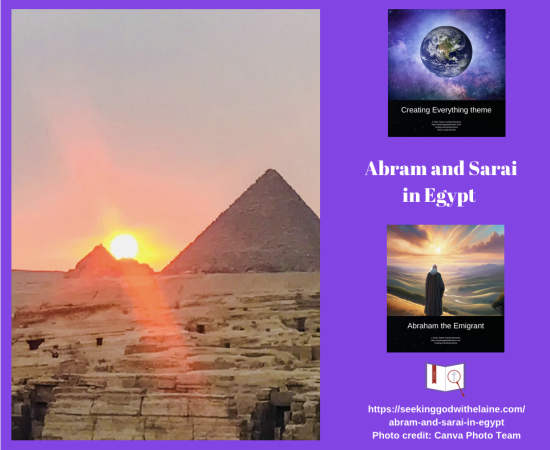
  •  Abram and Sarai in Egypt

    Abram and Sarai headed to Egypt when a famine hit Canaan. This devotion looks at the success or failure of Abram’s deception.

    Nuggets

    • Sometimes, what we are afraid of becomes a self-fulfilling prophecy.
    • God didn’t like how things were going down and stepped in.
    abram-and-sarai-in-egypt

    In the last devotion, we left Abram’s family on the way to Egypt. They left Canaan because of a famine.

    Abram had a strange request of Sarai. He wanted her to tell the Egyptians that she was his sister, not his wife.

    Well, Sarai technically was his sister. But that was a lie and a deception because she was his wife.

    I am not sure that Abram thought through the practice of passing Sarai off as his sister.

    Let’s Put It into Context

    To read devotions in the Creating Everything theme, click the button below.

    Devotions in the Abraham the Emigrant series

    Arrival in Egypt

    And sure enough, Abram arrived in Egypt, everyone noticed Sarai’s beauty. When the palace officials saw her, they sang her praises to Pharaoh, their king, and Sarai was taken into his palace. Then Pharaoh gave Abram many gifts because of her — sheep, goats, cattle, male and female donkeys, male and female servants, and camels” (Gen. 12: 14-16 NLT)

    Sometimes, what we are afraid of becomes a self-fulfilling prophecy.

    It turned out that there was reason for Abram to be fearful. “… Sarai was taken into his palace” (Gen. 12: 15 NLT) seems like an innocuous statement, but it really means she was kidnapped.

    But Abram set Sarai up for the kidnapping. He lied. He didn’t have faith that God would protect him.

    Remember, Abram didn’t tell a total lie. Sarai was his stepsister.

    What Abram did was mislead everyone.

    Think of the position Abram put Sarai in. When they took her into the palace, was she just supposed to sit back and let whatever happened to her happen?

    Pharoah married Sarai. Was she supposed to commit adultery because her husband sanctioned it?

    Sarai sure got the raw end of the deal.

    But Sarai did agree to go along with the lie and followed through. Maybe she didn’t think she had any choice; but in the end, she chose to go along with the ruse.

    Did Abram get a conscience once they were separated? Was he remorseful for the situation that he put Sarai in?

    Consequences of the Kidnapping

    “But the Lord sent terrible plagues upon Pharaoh and his household because of Sarai, Abram’s wife. So Pharaoh summoned Abram and accused him sharply. ‘What have you done to me?’ he demanded. ‘Why didn’t you tell me she was your wife? Why did you say, “She is my sister,” and allow me to take her as my wife? Now then, here is your wife. Take her and get out of here?’ Pharaoh ordered some of his men to escort them, and he sent Abram out of the country, along with his wife and all his possessions” (Gen. 12: 17-20 NLT)

    God didn’t like how things were going down and stepped in.

    When we tell a lie, we tell ourselves that no one will know. Well, maybe no human will know.

    God always knows. God is all-seeing and all-present.

    He knows.

    God stepped in the situation to put things back to right.

    Yes, Abram had sinned. He didn’t trust God.

    That didn’t stop God.

    Remember when God came to Adam and Eve in the Garden of Eden after they had sinned? “When the cool evening breezes were blowing, the man and his wife heard the Lord God walking about in the garden …” (Gen. 3: 8 NLT).

    God came to Adam and Eve. He stepped in for Abram.

    We aren’t told how Pharaoh figured out that it was because he was messing with Abram’s wife. Yeah, this may be Moses picking and choosing what to tell of the story.  What is important to know is God instigated the tell-all, and Abram’s secret was made known.

    The Pharaoh found out that God is all-powerful. Pharaoh may have thought he was, but he was no match for God.

    If Moses did write this chronologically, the trip to Egypt would have happened somewhere between 1885 and 1880 BC, according to the Old Testament Timeline. Jacob’s family emigrated to Egypt in 1680 BC.

    Resource

    We aren’t told here what the plagues were and how many (since it is plural). I doubt that they were to the level of the plagues Moses saw God do.

    This time God didn’t send a Moses-type to warn the Pharaoh the plagues were coming. We aren’t told how Pharaoh figured out that it was because he was messing with Abram’s wife.

    Yeah, this may be Moses picking and choosing what to tell of the story.  What is important to know is God instigated the tell-all, and Abram’s secret was made known.

    Think about Abram. Yes, he was concerned for his life. Instead, his integrity took a hit. He probably would have used the word dishonored instead of integrity.

    What the Egyptians saw was Abram was not, in God’s terms, pure and righteous. They probably would have just said he was a liar and untrustworthy.

    Did you see the Egyptians’ response? They were quick to point out that Abram caused the problem by not telling them Sarai was his wife.

    And they would be right. But … “When the palace officials saw her, they sang her praises to Pharaoh, their king, and Sarai was taken into his palace” (Gen. 12: 15 NLT).

    Yes, Abram told a lie. That lie did not force them to take Sarai into the palace. That was their choice alone.

    This is just another example of deflection of sin. Pharaoh said, “I did it, but it isn’t my fault.”

    But the Egyptians were done with Abram. In fact, he and his family were escorted out of the country of Egypt. “Pharaoh ordered some of his men to escort them, and he sent Abram out of the country, along with his wife and all his possessions” (Gen. 12: 20 NLT).

    Making the Connections #1

    Part of us wants to say that we shouldn’t bite too hard on Abram. His fears came to fruition.

    But this was an intentional sin. If we were to look at the Book of Leviticus, all the sacrifices there were for unintentional sin. The purpose of the first three offerings is to restore our relationship with God. Period. It isn’t until those have been offered and accepted that God would even consider forgiving us of our sins.

    Not until Jesus came was there a sacrifice that even touched intentional sins. That is why we say that the law – and the sacrifices – cannot save us. We must be saved through the blood of Jesus.

    Bottom line is that Abram should have trusted God. We can’t let our fears run roughshod over us.

    Because of this lie, Abram and Sarai had to leave Egypt. We don’t know how long they had been there. We don’t know whether they smoothed over their relationship with the Pharaoh.

    Making the Connections #2

    This whole incident came to be because Sarai was a beautiful woman. We don’t know exactly how old she was. Since the biblestudy.org website says that the events of Genesis 14 probably took place around 1880 to 1875, Sarah was probably 65-70 tops.

    Resource

    Sarah may have been an ageless beauty. Beauty may have been in the eye of the beholder.

    We do know Satan is going to try every trick in his arsenal to get us to turn a blind eye toward God. He is going to find the shiniest, most beautiful thing to tempt us. We can’t let him succeed in getting us to cave.

    Making the Connections #3

    I feel like I have to bring it up again. Abram – a righteous, blameless man – sinned even though He loved God.

    Making the Connections #4

    Yeah, we may say Abram only lied, but it was more than that. Abram wrecked his witness with the Egyptians.

    It was even more than that. The Homilist wrote in Abram in Egypt that “… THE DIVINE IS THE ONLY STANDARD WHICH DETERMINES THE VALUE OF LIFE.”

    Resource

    Disciples have to live by God’s standard – His laws and commandments – His Will.

    We are nothing without God. Our very existence depends on Him.

    The laws and commandments show us the moral character by which we are to live. He gives us strength to live as He wants.

    Let’s think this through. We don’t know if Abram was called when he was still living in Ur. All we know is that he was when he was in Haran.

    Abram left Haran in 1885 BC. This is between 1885 and 1880. Let’s cut it in half and say this is 1882.

    Abram has only been a disciple for around three years. He is still a milk baby (Heb. 5: 13).

    Satan would have really been working on Abram. He would have been throwing doubts and temptations at him right and left.

    Abram probably didn’t have any idea what spiritual warfare was. If he did know spiritual warfare was going on, that it was an internal battle may have been outside his understanding.

    Truth be known, it is outside of our understanding sometimes.

    Think of it this way. Just like us, Abram would have hit potholes on his Sanctification Road. We just don’t get them written up in Scriptures.

    The way Dods said it was this way. He wrote,

    “It would seem that as yet he [Abram] had no very clear idea of God’s holiness. He had the idea of God which Mohammedans entertain, and past which they seem unable to get. He conceived of God as the Supreme Ruler; he had a firm belief in the unity of God and probably a hatred of idolatry and a profound contempt for idolaters. He believed that this Supreme God could always and easily accomplish His will, and that the voice that inwardly guided him was the voice of God. His own character had not yet been deepened and dignified by prolonged intercourse with God and by close observation of His actual ways; and so as yet he knows little of what constitutes the true glory of God. What he so painfully learned we must all learn, that God does not need lying for the attainment of His ends, and that double-dealing is always short-sighted and the proper precursor of shame.”

    Resource

    Since we’ve started talking about Abram, we’ve said that he had the faith and obedience – to what God had revealed to him. God doesn’t give us a data dump upon conversion. He continued to reveal Himself to Abram throughout his life.

    We also have to remember Abram didn’t have an Old Testament book which he could read by firelight. He didn’t have the internet to search when he had questions and wanted to learn.

    When do we learn best? When we mess up.

    Making the Connections #5

    Dod’s made an interesting comment. He wrote,

    “A weaker man would have shrunk from going into Egypt, and would have preferred to see his flocks dwindle rather than to take so venturesome a step. No such hesitations could trammel Abram’s movements. He felt himself equal to all occasions.”

    Resource

    We bite on Abram because he lied. But he went.

    Abram could have stayed – and lost his flocks — maybe his, Sarai’s, and Lot’s lives. But he knew that God was Sovereign God. He knew God could and would take care of him.

    So, what happened? Abram didn’t know that lying was a sin?

    Or was Abram trying to help God out?

    Ooo, baby. Don’t we do that? When God doesn’t do something on our time table, He doesn’t do it the way we expect, or – worse – He tell us no, we get upset!

    We take things into our own hands. Wrong move.

    Making the Connections #6

    Another thing Dods talked about was what Abram learned in this trial. Abram’s happiness wasn’t in his hands.

    Abram’s happiness was in God’s hands.

    We just have to surrender.

    Making the Connections #7

    The Pulpit Analyst had a great comment in their Abram in Egypt sermon. It said,

    “‘O that he had died when he built the altar!’ we may be inclined to exclaim. Have there not been times in our own history when we have uttered the same exclamation? Had we been caught up into heaven in some ecstatic mood of devotion, we should have been saved from this sin and from that. Why were we spared, when God must have foreseen that our very next act was to be one of [dishonor]? Spared to sin!”

    Resource

    • We think failing the testings and trials will make us lose our salvation.
    • We think the best thing to happen would be no testings and trials.
    • We see Heaven as get-out-of-jail-for-free card.

    We shouldn’t be looking for fire insurance – even looking for fire assurance.

    Testings and trials are used to grow us. God wants us to be faithful to Him. He is more interested in how we grow closer to Him because of the testings and trials.

    How Do We Apply This?

    • Depend on God’s faithfulness and sufficiency.
    • Tell the truth, the whole truth, and nothing but the truth.
    • Trust God in the big things as well as the little things.
    • Trust God when we don’t see how it will go.
    • Understand that God will protect His children.

    Resources

    Father God. Forgive us when we don’t put our full trust in You. Show us again how You are always with us and keep Your promises. Help us grow through the testings and trials. Amen.

    What do you think?

    Leave me a comment below (about this or anything else) or head over to my Facebook group for some interactive discussion.

    If you don’t understand something and would like further clarification, please contact me.

    If you have not signed up for the email providing the link to the devotions and the newsletter, do so below.

    If God has used this devotion to speak with you, consider sharing it on social media.
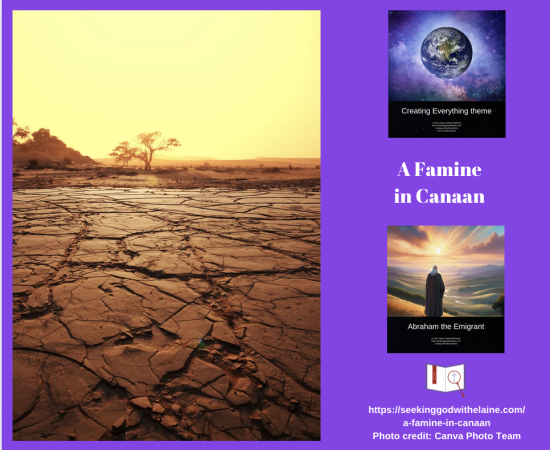
  • A Famine in Canaan

    We don’t know how long Abram was in Canaan before his next separation and testing took place. This devotional reading looks at Abram, Sarai, and Lot’s trip to Egypt and the lie that got them in trouble.

    Nuggets

    • Even when we are where God calls us to be, testings and trials arise.
    • Abram chose to move his family to Egypt because of the famine.
    • As obedient as Abram had been, he succumbed to the temptation of sin by not believing God could handle what his new circumstances were.
    a-famine-in-canaan

    Abram’s family was really a dysfunctional family.

    Abram was in a pickle. He didn’t feel that he could provide for his family and flocks during the famine where they were at, but this doesn’t say God told him to go to Egypt.

    Then again, it doesn’t say God didn’t tell him to stay.

    Ooo, baby. We have to stay obedient to God regardless of the circumstances. We need to trust Him through it all.

    Let’s Put It into Context

    To read devotions in the Creating Everything theme, click the button below.

    Devotions in the Abraham the Emigrant series

    Leaving Home Again

    “At that time a severe famine struck the land of Canaan, forcing Abram to go down to Egypt, where he lived as a foreigner” (Gen. 12: 10 NLT)

    Famine

    Even when we are where God calls us to be, testings and trials arise.

    In the last devotion, we talked about the unpredictability of the region. It had both fertile land and unpredictable weather.

    The unpredictable weather reared its ugly head as a famine. We don’t know how long Abram and Sarai had been in the region, but they were on the move again.

    This was the first of two famines Abram would encounter. The other we will discuss when we get to Genesis 20.

    We’re getting a little ahead of ourselves, but Abram did come back to the Promised Land (even though they weren’t calling it that yet).

    Back to this famine.

    Think of it. We are going to face natural setbacks. We have to have faith.

    The famine must have been really bad for Abram to even consider moving. It must have been widespread for him to consider moving to another country. Candlish said that he was starved out.

    Resource

    Meyer tried to give us an idea of what Abram’s situation was. He wrote.

    “A stranger in a strange land; surrounded by suspicious and hostile peoples; weighted with the responsibility of vast flocks and herds — it was no trivial matter to stand face to face with the sudden devastation of famine. Did it prove that he had made a mistake in coming to Canaan?”

    Resource

    Oh, yeah. Abram probably had some of the doubts we have, too. We get really good at questioning God after the fact when things don’t turn out the way we think they should.

    That has the potential of making us take our focus off God. Makes it a good test, doesn’t it? Can we focus on God over and above the chaos?

    Pearse argued that we are selfish when we think testing and trials – even from natural causes – happen. How are we going to endure if these don’t occur to challenge us? “But the one who endures to the end will be saved” (Mt. 24: 13 NLT).

    Resource

    The onset of these trials doesn’t mean that God has forsaken us. It means He is sanctifying us.

    Ooo, baby. Leale had a good question. How do our current testings and trials make us look at our past ones? He fears we may exaggerate estimations of what we have gone through before.

    Resource

    We say we take what we have learned from past experiences, evaluate what we are going through now, and grow. But if our perception of the past is flawed, the growth is flawed, isn’t it?

    I can just see Satan using that to ensure that we are thinking we’re good to go — but we aren’t.

    Egypt

    Abram chose to move his family to Egypt because of the famine.

    There is one tidbit on which this section that is glaringly silent. Did God tell Abram to go to Egypt? Maybe. Maybe not.

    Did Abram have any business being in Egypt? Not if God didn’t tell him to go.

    Something just occurred to me. We don’t see Abram calling on the name of the Lord here.

    We know that happened. “… At that time people first began to worship the Lord by name” (Gen. 4: 26 NLT).

    Maybe that was part of the problem.

    We aren’t told how long Abram and Sarai stayed in Egypt, but we are given only one chapter of their story there – and it isn’t a flattering one.

    That may tell us they weren’t supposed to go.

    But isn’t that how it goes? One sin leads to another.

    Since it said Abram lived as a foreigner in Egypt, I would think he took his whole household. Jacob did when he moved to Egypt in that famine.

    • “So Jacob set out for Egypt with all his possessions …” (Gen. 46: 1 NLT).
    • “So Jacob left Beersheba, and his sons took him to Egypt. They carried him and their little ones and their wives in the wagons Pharaoh had provided for them. They also took all their livestock and all the personal belongings they had acquired in the land of Canaan. So Jacob and his entire family went to Egypt — sons and grandsons, daughters and granddaughters — all his descendants” (Gen. 46: 5-7 NLT).

    Abram probably didn’t know how long the famine was going to last. He didn’t have a Joseph-type down in Egypt prophesying there was even going to be a famine.

    Pearse had a great observation. There was one thing that Abram did leave behind – his altar.

    Resource

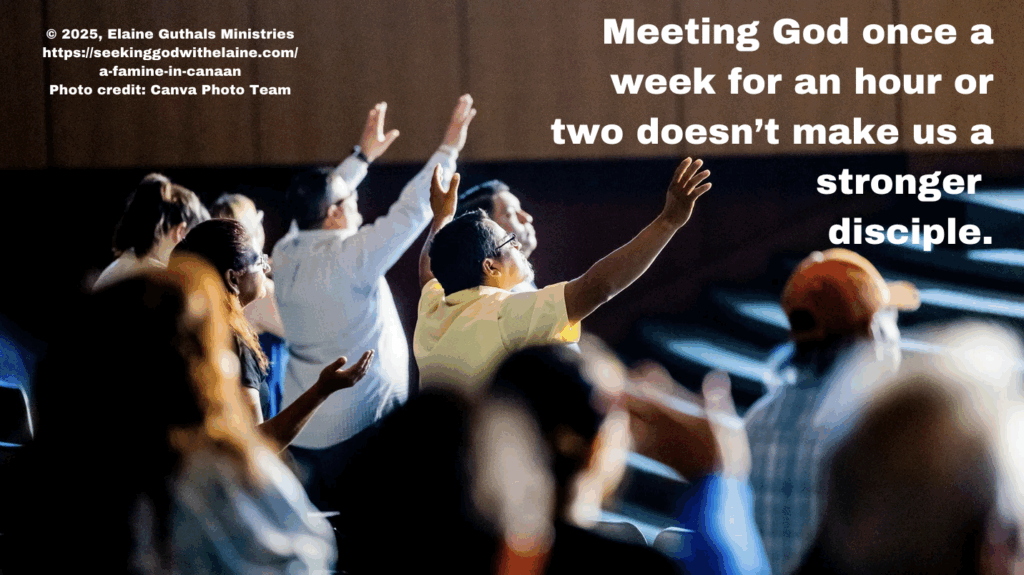
    We lose a lot when we don’t consistently meet with God in His house. But we lose even more if we do not have a strong daily devotional time. Meeting God once a week for an hour or two doesn’t make us a stronger disciple.

    I did come across an interesting statement. In a sermon by The Congregational Pulpit, it was written that Egypt was, as in Joseph’s time, the granary of the world.

    Resource

    We may question why God sent a famine that would lead to another road trip. It was another testing of his obedience.

    It was a little more than that, I think. “Then the Lord appeared to Abram and said, ‘I will give this land to your descendants’ …” (Gen. 12: 7 NLT).

    Abram wasn’t given the land in Canaan. He wasn’t even given possession of any of it until later in life.

    That may have caused Abram to still have the urge to wander. If he doesn’t own the land, how can he put down roots?

    But surely, Abram considered God’s provision getting him from Ur to Shechem. Whether obedient or not, Abram and Sarai headed down to Egypt.

    The Lie

    As he was approaching the border of Egypt, he said to his wife, Sarai, ‘Look, you are a very beautiful woman. When the Egyptians see you, they will say, “This is his wife. Let’s kill him; then we can have her!” So please tell them you are my sister. Then they will spare my life and treat me well because of their interest in you’” (Gen. 12: 11-13 NLT)

    As obedient as Abram had been, he succumbed to the temptation of sin by not believing God could handle what his new circumstances were.

    Abram thought he would run into trouble in Egypt. He was concerned for his life. He thought the men of Egypt would kill him to take Sarai ig he told them he was her husband..

    Moses doesn’t tell us how much of a struggle Abram had making this decision. We have no way of knowing if Abram immediately thought God wouldn’t be able to take care of them or if he had to talk himself into it.

    Abram decided to tell, and Sarai agreed to go along with, a lie. He forfeited truth for safety.

    True, Sarai was Abram’s sister. But she was more – she was his wife. “And yet indeed she is my sister; she is the daughter of my father, but not the daughter of my mother; and she became my wife” (Gen. 20: 12 NLT).

    Isn’t it easier to live the lie when it has an element of truth? But it is still a lie in God’s eyes.

    Our affection for others can cause fear to enter into our hearts. Yes, we are to love our family.

    But Abram wasn’t really worried about Sarai in this instance. He was worried for himself! He was asking Sarai to lie for him for his benefit.

    Faith opposes false practicality. We can’t conceal the truth because a lie would be easier or more rewarding.

    God’s Word talks a lot about lying. It is always the same outcome – don’t.

    • “You must not testify falsely against your neighbor” (Ex. 20: 16 NLT).
    • “The Lord detests lying lips, but he delights in those who tell the truth” (Prov. 12: 22 NLT).
    • “So stop telling lies. Let us tell our neighbors the truth, for we are all parts of the same body” (Eph. 4: 25 NLT).
    • “Don’t lie to each other, for you have stripped off your old sinful nature and all its wicked deeds” (Col. 3: 9 NLT)
    • “For you are the children of your father the devil, and you love to do the evil things he does …” (Jn. 8: 44 NLT).
    • “A false witness will not go unpunished, nor will a liar escape” (Prov. 19: 5 NLT).

    Pearse had an interesting take. Instead of not trusting God, he thought it was more like Abram didn’t like confrontation. He was a peaceful man.

    Resource

    Yeah, that goes down better. Abram was so steadfast up until now. He obeyed when he was going even though he didn’t know where.

    How could Abram not trust God now?

    Don’t we hate it when Hall of Famers disobey God? If they mess up, how will we not?

    But Abram — like us — probably thought this was a small thing. It was just a lie. We don’t like to bother God with the small things.

    Why is God so concerned about the small things? “Trust in the LORD with all your heart; do not depend on your own understanding. Seek his will in all you do, and he will show you which path to take” (Prov. 3: 5-6 NLT).

    God says, “Nothing you go through is a small thing to me. You must decide in every situation whether nor not you are going to trust me and obey me.”

    God knows we are not going to be 100% fruit-of-the-Spirit perfect. He knows He will forgive us when we ask.

    Making the Connections #1

    Maybe God did want Abram and Sarai to go to Egypt. Gibson thought so.

    We know God separated Abram from “…  your country and your kindred and your father’s house …” (Gen. 12: 1 NLT). Isn’t this just another separation?

    God was training Abram by a sequence of separations. We say it was to increase Abram’s faith.

    Look what Gibson said. He wrote, “We are accustomed to consider faith as the key to Abraham’s life. Certainly it is; but did not his faith manifest itself in just this, that he was willing to separate himself from all for the Lord’s sake?”

    Resource

    How was Abram separated?

    • Left his country and kin (Gen. 11: 31).
    • Father died (Gen. 11: 32).
    • Left Haran (Gen. 12: 1)
    • Left Canaan for Egypt (Gen. 12: 10).
    • Left Egypt (Gen. 12:  20).
    • Separated from Lot (Gen. 13: 13).
    • Separated from Ishmael (Gen. 21:  14).
    • Almost separated from Isaac (Gen. 22: 10).
    • Sarah died (Gen. 23:  1-2).
    • Separated from worldly possessions (Gen. 25: 5).
    • Died (Gen. 25:  7-8).

    Abram was willing to obey God’s commands regardless of what he had to surrender.

    Making the Connections #2

    Gibson took it a step farther.

    We’ve been talking about separation since Cain and Abel — maybe even since Adam and Eve and the Garden.

    Abram’s covenant is based on separation and grace. But now we add in restriction. This is where we really hone in on the fact that Abram’s line is the chosen line.

    Gibson said that God’s mercy had been offered and rejected three times. I would say those times are the following.

    • In the Garden.
    • During the building of the ark.
    • At the construction of the Tower of Babel.

    It would be easy to say — especially at the flood but here also — God was choosing to bless only one family. But God’s Word quickly debunks that.

    • “For this is how God loved the world: He gave his one and only Son, so that everyone who believes in him will not perish but have eternal life” (Jn. 3: 16 NLT).
    • “But God showed his great love for us by sending Christ to die for us while we were still sinners” (Rom. 5: 8 NLT).

    Even God’s covenant with Abram says it is for all. “… All the families on earth will be blessed through you” (Gen. 12: 3 NLT).

    God is right there to hear the sinner’s sincere prayer of repentance and submission.

    How did Gibson describe it? He wrote, “‘The sons of the stranger’ have simply to leave their country and their family, and come and join themselves to the family of Abraham, and to the nation of the Jew, and they are made welcome.”

    Resource

    • We have to turn our back on sin.
    • We have to choose to align ourselves with the Church.
    • We have to follow God’s laws and commandments.

    Pastor Steve and I question often how much of the Jewishness has been stripped from how we worship. We know there is evidence that it has been.

    So, it begs the question: are we really worshiping God or following oral traditions of our denominations, just as the Pharisees did?

    Take heart at what Leale said. He wrote, “When a man has the habitual intention of pleasing God, and when his faith is real and heart sincere, the lapses of his infirmity are graciously pardoned. God makes for him a way of escape, and grant the comfort of fresh blessings and an improved faith.”

    Resource

    Real faith + sincere heart = forgiveness, pardon, and increased faith.

    Making the Connections #3

    Have you ever thought of the irony that Abram and Jacob spent time in Egypt?

    A couple of chapters down the road, Abram will be told that his descendants will go to a foreign land, but he was not told which. “Then the Lord said to Abram, “You can be sure that your descendants will be strangers in a foreign land, where they will be oppressed as slaves for 400 years” (Gen. 15: 13 NLT).

    But what would Abram have seen in Egypt then? Stanley helped paint a picture. He wrote.

    “Egypt was to Abraham — to the Jewish people — to the whole course of the Old Testament, what the world, with all its interests, and pursuits, and enjoyments, is to us. It was the parent of civilization, of art, of learning, of royal power, of vast armies.”

    Resource

    The Hebrews learned many things when they sojourned in Egypt. True, it didn’t end well for Abram’s immediate descendants. Plus, future relations weren’t good for the two nations.

    Abram saw Egypt. Jacob saw it. Joseph saw it. Jesus saw it.

    What was Stanley’s moral of the story? Disciples can utilize the world and its enjoyments to help us develop and to glorify God for its beauty and usefulness.

    Making the Connections #4

    It has always amazed me that Abram would stoop to saying that Sarai was his sister, and not his wife. It has always flabbergasted me that she went along with the lie.

    How does one demean their life partner like that?

    Maybe I don’t understand the culture of that time. Maybe I don’t fully grasp the barbarisms of people then.

    Maybe love between husband and wife meant something totally different to Abram and Sarai. But I don’t think so.

    Sarai was Abram’s only wife. Yes, he took Hagar as his concubine, but not as his wife.

    But this is not the way God wanted families to work. He wants us to be proud of our family members and present a united front.

    We don’t do this when we lie about our relationships.

    How Do We Apply This?

    Don’t rely on our own understanding.
    Remember that God works everything for His good (Rom. 8: 28)
    Watch so that we don’t fall to our pride and arrogance.
    Expect trials in our walk with God.
    Be honest in our dealings with others, not deceptive.
    Recognize that our relationship with God is built on our moral character.

    Resources

    Father God. Thank You for the trials of life that bring us closer to You. Help us use them to grow stronger in our faith. Amen.

    What do you think?

    Leave me a comment below (about this or anything else) or head over to my Facebook group for some interactive discussion.

    If you don’t understand something and would like further clarification, please contact me.

    If you have not signed up for the email providing the link to the devotions and the newsletter, do so below.

    If God has used this devotion to speak with you, consider sharing it on social media.
  • God Scattered the People

    After the people on the plain of Shinar started building a great tower, God stopped their progress. This devotional reading looks at how God confused their language to stop the completion of the Tower of Babel.

    Nuggets

    • It is interesting that Moses wrote that God came down.
    • God didn’t want humans who did not believe in Him to grow unchecked.
    • God confused the languages so that people had to congregate together and move apart.
    • God may have separated humans, but He did not plan to leave us that way.
    god-scattered-the-people

    In the last devotion, we started talking about the construction of the Tower of Babel. It was built in the area that Nimrod, one of the grandsons of Ham, populated.

    As I wrote the last devotion, I wrote it believing Nimrod had a hand in building it. That may or may not be the case. His name is not mentioned in Genesis 11.

    Nimrod is described to be almost larger than life. He is described as an oppressor. For that reason, I can see him leading the charge to build something to turn the people away from God.

    God, though, had other ideas.

    Let’s Put It into Context

    To read devotions in the Creating Everything theme, click the button below.

    Devotions in the Creation’s Do-Over series

    God Came Down

    “But the Lord came down to look at the city and the tower the people were building” (Gen. 11: 5 NLT)

    It is interesting that Moses wrote that God came down.

    God knows and sees all that we do. He sees the good and the bad.

    So, God saw Nimrod and his crew doing bad. He let it go on until it was His time to shut it down.

    Let’s see what it says in the Hebrew. “And Hashem [God] came down to see the Ir [city] and the Migdal [tower], which Bnei HaAdam [the Adams or humans] built” (Gen. 11: 5 OJB).

    Yeah, it says came down, too.

    No, we don’t know what form He took. We have to assume that it was different than Him looking down.

    Parker helped us understand. He wrote, “Almighty God Himself came down to see what the children of men were doing, and when He comes down (a phrase which is used to accommodate Himself to our methods of expression).”

    Resource

    God coming down is just a way for us to say it in human-speak so we can understand.

    We know that God has come down from Heaven other times. We know He will in the end.

    • “After his baptism, as Jesus came up out of the water, the heavens were opened and he saw the Spirit of God descending like a dove and settling on him” (Mt. 3: 16 NLT).
    • “For I [Jesus] have come down from heaven to do the will of God who sent me, not to do my own will” (Jn. 6: 38 NLT).
    • “For the Lord himself will come down from heaven with a commanding shout, with the voice of the archangel, and with the trumpet call of God. First, the believers who have died will rise from their graves” (I Thess. 4: 16 NLT).
    • “And I saw the holy city, the new Jerusalem, coming down from God out of heaven like a bride beautifully dressed for her husband” (Rev. 21: 2 NLT).

    I like what Hughes said. He wrote, “God is below when men think He hath forsaken the earth, and is near to visit the wickedness of man.”

    Resource

    God is near us when we think He has left us. He is near even when we sin.

    We turn away from God. Then He turns away from us.

    “So God abandoned them to do whatever shameful things their hearts desired. As a result, they did vile and degrading things with each other’s bodies. They traded the truth about God for a lie. So they worshiped and served the things God created instead of the Creator himself, who is worthy of eternal praise! Amen. That is why God abandoned them to their shameful desires. Even the women turned against the natural way to have sex and instead indulged in sex with each other” (Rom. 1: 24-26 NLT).

    In other words, we bring it on ourselves.

    Nothing Will be Impossible

    “‘Look!’ he said. ‘The people are united, and they all speak the same language. After this, nothing they set out to do will be impossible for them!’” (Gen. 11: 6 NLT)

    God didn’t want humans who did not believe in Him to grow unchecked.

    We know nothing is impossible for God. It is interesting that He is not the subject of verse 6.

    Humans are. “‘Look!’ he said. ‘The people are united, and they all speak the same language. After this, nothing they set out to do will be impossible for them!’” (Gen. 11: 6 NLT).

    No, we are not equal to God. But remember, we are made in His image.

    What does that mean?

    • All mankind have a spirit that we get when we are given breath.
    • We all have an intelligence – we are curious and have abilities to reason.
    • We all have the free will to make choices for ourselves.
    • We all have moral character.
    • We all have consciences.
    • God has given us authority over animals but not over the earth.
    • All of mankind is going to live for eternity.
    • Mankind is creative, even though some may discount or diminish their talent.
    • Mankind are creatures who feel, especially love.

    God is Sovereign God. We are not gods.

    There are differences between worldview people and disciples.

    • Disciples also have the Holy Spirit that lives within us.
    • Our godliness accelerates our intelligence.
    • Worldview people may be good people, but disciples will one day be perfected.
    • Disciples have the Holy Spirit to guide us and remind us what is holy and righteous.
    • God has given us authority over animals but not over the earth.
    • Worldview people who are spiritually dead will live in hell; disciples who are spiritually alive will live in heaven.
    • The worldview definition of love is not as pure as God’s definition of love.

    God made us to have abilities. He didn’t want to limit them. He wanted us to be the best for Him.

    But He didn’t want a Satan Junior. Satan wanted to depose God. It sounded like these just wanted to be their own god.

    Scattered and Stopped

    “Come, let’s go down and confuse the people with different languages. Then they won’t be able to understand each other.’ In that way, the Lord scattered them all over the world, and they stopped building the city” (Gen. 11: 7-8 NLT)

    God confused the languages so that people had to congregate together and move apart.

    Why did God stop the building of the city and scatter the people? There are several answers, I believe.

    God want to prevent a universal monarchy.

    I think we have to go back to the story of King Saul to help see the reason for that. Samuel the Prophet was old, and the leaders of Israel were worried about their future.

    “Finally, all the elders of Israel met at Ramah to discuss the matter with Samuel. ‘Look,’ they told him, ‘you are now old, and your sons are not like you. Give us a king to judge us like all the other nations have’” (I Sam. 8: 4-5 NLT).

    God didn’t really say it was wrong to have a monarchy. He said their reasons for wanting one was wrong.

    “‘Do everything they say to you,’ the Lord replied, ‘for they are rejecting me, not you. They don’t want me to be their king any longer’” (I Sam. 8: 7 NLT).

    That being said, Fuller’s answer was interesting. He wrote,

    “With respect to the world, if the whole earth had continued under one government, that government would, of course, considering what human nature is, have been exceedingly despotic and oppressive. The division of the world into independent nations has also been a great check on persecution, and so has operated in a way of mercy towards the Church. If the whole world had been under one government, and that government inimical to the gospel, there had been no place of refuge left upon the earth for the faithful.”

    Resource

    Ooo, baby. One world, one people would be tyrannical and cruel with persecution for dissension. That means a world led by sin will be chaotic.

    Aren’t we heading that way? Isn’t that what the Antichrist will bring?

    Worldview people are deluding themselves if they think one world, one people will be a better world.

    God knew we can lead others astray with our plans.

    Parker was right when he said that, while Satan gives us sinful plans, skills, and insight, God does give us wonderful plans, skills, and insight. It is up to us to determine if God is getting the glory or if it is leading us away from Him.

    Resource

    That tells us that ambition itself isn’t necessarily wrong. It is the intent and focus of that ambition that leads to sin.

    Parker also said that we have to work under the human limitations that God has given us. If we think we are learning and doing because of our own understanding and skills, that is sin.

    Resource

    We will never grow beyond how God has created us. We have to make sure the focus is on Him, not us.

    Babel

    “That is why the city was called Babel, because that is where the Lord confused the people with different languages. In this way he scattered them all over the world” (Gen. 11: 9 NLT)

    God may have separated humans, but He did not plan to leave us that way.

    Babel is one of those functional translations. It sounds like the Hebrew word for confusion.

    That is the opposite of God. God is a God of peace.

    • “For God is not a God of disorder but of peace, as in all the meetings of God’s holy people” (I Cor. 14: 33 NLT).
    • “Now may the Lord of peace himself give you his peace at all times and in every situation. The Lord be with you all” (II Thess. 3: 16 NLT).
    • “And now may God, who gives us his peace, be with you all. Amen” (Rom. 15: 33 NLT).
    • “Don’t worry about anything; instead, pray about everything. Tell God what you need, and thank him for all he has done. Then you will experience God’s peace, which exceeds anything we can understand. His peace will guard your hearts and minds as you live in Christ Jesus” (Phil. 4: 6-7 NLT).
    • “Therefore, since we have been made right in God’s sight by faith, we have peace with God because of what Jesus Christ our Lord has done for us” (Rom. 5: 1 NLT).
    • “You will keep in perfect peace all who trust in you, all whose thoughts are fixed on you!” (Isa. 26: 3 NLT).
    • “Dear brothers and sisters, I close my letter with these last words: Be joyful. Grow to maturity. Encourage each other. Live in harmony and peace. Then the God of love and peace will be with you” (II Cor. 13: 11 NLT).

    If we look at all the different languages, there does seem to be some rhyme and reason.

    Adamson put it this way. He wrote,

    “The confusion of tongues was not at random. It was a systematic distribution of languages for the purpose of a systematic distribution of man in emigration. The dispersion was orderly, the difference of tongue corresponding to the differences of race. By these were the Gentiles divided in their lands, everyone after his tongue, after their families in their nations.”

    Resource

    Think back to Genesis 10. We took each of Noah’s sons separately. We got the lists of clans.

    When discussing Ham, Moses dropped in information about nations. Some of these are going to give the Israelites grief for generations to come.

    We know the Israelites come from Shem’s line. It is interesting that we aren’t told the nations descending from Japheth.

    Paget said scattering humans was the best thing God could have done to nip evil in the bud. But He didn’t stop there.

    Resource

    God devised the Plan of Salvation. He wanted us back.

    Not only did God plan to unify His children, but He also planned to restore us to Him.

    Making the Connections #1

    Ouch. It can hurt to hear it, but Hughes had it right. He wrote, “Wicked ones are much encouraging one another to evil.”

    Resource

    What Hughes doesn’t say is that disciples are often accused of being less encouraging to those these see as sinners coming to join them.

    We’ve all read the stories and even memes about how the prostitute, drug addict, homosexual, adulterer [fill in whatever sinner] has been shunned the first time they showed up in our churches. I am sure that does happen in some churches.

    We think what we label as worst of the worst sinners need to repent of their sins before they darken the church’s doors. They need to change before they come into God’s house.

    Jesus finds us where we are — in whatever sin we are committing, a minor sin or the worst sin — and loves us and calls us to redemption.

    Then, we are to repent and turn from sin. Then, we are to grow closer to being what God wants us to be.

    We have to remember what Jesus said. “When Jesus heard this, he told them, ‘Healthy people don’t need a doctor — sick people do. I have come to call not those who think they are righteous, but those who know they are sinners’” (Mk. 2: 17 NLT).

    Look what that says. “… ‘I have come to call not those who think they are righteous, but those who know they are sinners’” (Mk. 2: 17 NLT).

    Who think they are righteous. No, Jesus didn’t say they were righteous. He said they think they are — indicating He didn’t think so.

    But then, Jesus knew no one was righteous. “For everyone has sinned; we all fall short of God’s glorious standard” (Rom. 3: 23 NLT).

    Making the Connections #2

    Emmons brought up a really good point. Just who was getting dispersed?

    Was it just the tower workers? Was it all of Ham’s descendants? Was it every human?

    Well, no. It couldn’t be everyone because some had to stay in the area.

    Emmons said God’s Word tells us. He wrote,

    “But how came Nimrod the son of Ham, and his posterity, at Babylon, where Babel was built? This portion of the earth was allotted to Shem; and Nimrod with all the posterity of Ham was appointed to go to Africa. What right, then, had Nimrod, or any of the sons of Ham, to take possession of the plains of Babylon? Undoubtedly they had no right at all.”

    Resource

    Ouch. Nimrod wasn’t supposed to be there in the first place. Since he was a great warrior, do I sense hostile takeover?

    Emmons thought it was Ham’s descendants, especially Nimrod’s clan, who came to Babylon in the first place instead of Africa and waged war against Shem’s descendants to occupy it. He believed others (sounds like Japheth’s descendants) stayed around Mount Ararat.

    So, even before their building project, they were disobeying God.

    That puts a whole new twist on things. Talk about sin upon sin.

    1.     They didn’t go where they were told to go.
    2.    They fought — and probably killed — their own cousins.
    3.    They tried to build a tower to stake claim to the land and defy God.

    Not a smart move.

    Emmons called Nimrod’s people knowledgeable in arts and sciences. That, too, is what God wanted spread over the earth.

    Unfortunately, they also spread idolatry. Too bad it is easier to spread that than God’s truth.

    Isn’t it still that way today?

    Making the Connections #3

    Parker asked a good question. Why didn’t God just burn the city down? Maybe send a sickness through the group.

    Resource

    Instead, God makes it so they all can’t talk to each other.

    Did this happen overnight? Or were they on the job and suddenly lose the ability to communicate? How did they find each other to group together?

    The writer of Hebrews had it right. “It is a terrible thing to fall into the hands of the living God” (Heb. 10: 31 NLT).

    Well, it is when we are disobeying. When we are obedient, it is great.

    No, God isn’t always going to do what we think. He has a lot of things in His toolbox that we would never consider.

    But we should know that God corrects us in the way we need to bring us back to Him.

    How Do We Apply This?

    • Don’t be led into sin by others.
    • Don’t believe that sinful practices will bring for godly ends.
    • Realize that sin will not be impeded by struggles.
    • Recognize common practices that can be used to call us deeper into sin.
    • Don’t patronize sinful establishments.
    • Depend on God.
    • Don’t be proud or ambitious.
    • Don’t rely on ourselves.
    • Always trust in God.
    • Don’t disobey God.
    • Recognize how easily and quickly God can and will punish us.
    • Spread God’s truth, not idolatry.

    Resource

    Father God. Thank You for correcting us when we sin against You. Thank You for loving us enough to want us to follow You. Forgive us when we put too much value on something besides You. Draw us back into Your Will. Amen.

    What do you think?

    Leave me a comment below (about this or anything else) or head over to my Facebook group for some interactive discussion.

    If you don’t understand something and would like further clarification, please contact me.

    If you have not signed up for the email providing the link to the devotions and the newsletter, do so below.

    If God has used this devotion to speak with you, consider sharing it on social media.

  • One Sin Leads to Another — Again

    We’ve already talked about how Cain’s first sin of an unacceptable offering that led the way to his second sin of murder. In this devotional reading, we look at how Noah’s sin set the stage for Ham’s sin.

    Nuggets

    • Temptation is not the sin — the sin is what we do with it.
    • We will be given blessings for walking with God and curses for sinning against Him.
    • Noah passed after a long, eventful life as a saint.
    one-sin-leads-to-another-again

    Noah, the saint, had sinned. He had overindulged in his harvest of grapes and had gotten drunk.

    To make matters worse, his son Ham saw him drunk. How did he handle the situation?

    Let’s Put It into Context

    To read devotions in the Creating Everything theme, click the button below.

    Devotions in the Creation’s Do-Over series

    Ham’s Sin

    “Ham, the father of Canaan, saw that his father was naked and went outside and told his brothers. Then Shem and Japheth took a robe, held it over their shoulders, and backed into the tent to cover their father. As they did this, they looked the other way so they would not see him naked” (Gen. 9: 22-23 NLT)

    Temptation is not the sin — the sin is what we do with it.

    Okay. What gives?

    We talked about how Shem and Japheth were righteous. They followed God.

    Ham maybe did, too. This may be his one big sin, just as Noah’s drunkenness seems like it was his one big sin.

    But for sake of discussion, let’s say Ham was a bad apple in the bunch. The question of whether it was nature or nurture doesn’t seem to apply.

    Yes, the triplets would have been brought up the same way. They would have been introduced to God together. They had just experienced the flood and their salvation from it together, so they had shared life experiences.

    Their nurture was the same. But then so was their nature.

    All three, while made in the image of God, had a sinful nature. All three could have committed the sin Ham did.

    Ham was the only one to choose to sin.

    Hughes reminded us that, when you have children that are righteous, it showcases their sibling’s impiety. Just like the Big, Bad Wolf telling Little Red Riding Hood, “The better to see you with.”

    Resource

    So, what was Ham’s sin? I don’t think it was the seeing part. It was the telling part.

    We’ve talked before about how the temptations themselves aren’t the sin. Thoughts creep into our mind (because Satan puts them there). If they come in unbidden, that isn’t the problem.

    The issue was what we do with them. Ham ran to his brothers and told them what he saw. In other words, he gossiped.

    Yeah, gossip can seem so harmless – but it really isn’t. We may not know what we are talking about; therefore, all we are doing is spreading lies.

    We may have misinterpreted something. Or we may just be speculating.

    Several verses describe gossip as idle talk.

    • “A troublemaker plants seeds of strife; gossip separates the best of friends” (Prov. 16: 28 NLT).
    • “A gossip goes around telling secrets, so don’t hang around with chatterers” (Prov. 20: 19 NLT).
    • “Rumors are dainty morsels that sink deep into one’s heart” (Prov. 18: 8 NLT).

    The big thing, as I see it, is that it is that we break the second greatest commandment. “The second is equally important: ‘Love your neighbor as yourself’” (Mk. 12: 31 NLT).

    We may or may not be thinking of what we are doing to others. We could be ruining their reputations. We could adversely affecting how the ones we are talking to view and interact with them.

    It isn’t as small a thing as we might think. In fact, gossip is listed as a sin worthy of death.

    • “Their lives became full of every kind of wickedness, sin, greed, hate, envy, murder, quarreling, deception, malicious behavior, and gossip. They are backstabbers, haters of God, insolent, proud, and boastful. They invent new ways of sinning, and they disobey their parents” (Rom. 1: 29 NLT).
    • “For from the heart come evil thoughts, murder, adultery, all sexual immorality, theft, lying, and slander” (Mt. 15: 19 NLT).

    What I am reading this to say is gossip comes from our wicked hearts. “The human heart is the most deceitful of all things, and desperately wicked. Who really knows how bad it is?” (Jer. 17: 9 NLT).

    What makes us so eager to jump into gossiping about someone else? Dods said that it was the fact that sin is a disease. We like seeing someone else — especially someone we see as more righteous than us — take a big fall.

    We think, better them than us, right? Or worse, serves them right. Or maybe, at least we aren’t the only one still sinning.

    Blessing and Cursing the Triplets

    “When Noah woke up from his stupor, he learned what Ham, his youngest son, had done. Then he cursed Canaan, the son of Ham: ‘May Canaan be cursed! May he be the lowest of servants to his relatives.’ Then Noah said, ‘May the Lord, the God of Shem, be blessed, and may Canaan be his servant! May God expand the territory of Japheth! May Japheth share the prosperity of Shem, and may Canaan be his servant’” (Gen. 9: 24-27 NLT)

    We will be given blessings for walking with God and curses for sinning against Him.

    It is easy to read this passage of verses as Noah’s last Will and Testament. It was standard operating procedure for fathers to do this.

    We may especially think this because of the next section. We will be discussing Noah’s death.

    But we can’t gloss over the fact that this occurred right after Noah woke up. “When Noah awoke from his wine and knew what his youngest son had done to him” (Gen. 9: 24 NLT).

    There are times God waits to curse us, let alone punish us. Sometimes, He jumps in.

    God’s Words does give predictions as well as prophecies. Murphy called this instance a prediction.

    Resource

    Smith and Leale talked about what each of the blessings and curse meant.

    “The blessing of Shem was RELIGIOUS PRIVILEGE.”
    “The blessing of Japheth was ENLARGEMENT.”

    Resources

    The curse of Ham – actually Canaan – was servitude.

    This falls in line with what we already talked about. The holy line would come down through Shem. Japheth would play a significant part in the repopulation of earth.

    Would Noah see Shem’s line as leading to the Messiah? To the church?

    Probably. Jesus was prophesied in Genesis 3: 15. If Noah was looking for a Savior, somewhere down the line, his descendants got off track. Bradford believed that he even knew the Messiah would come as a baby.

    Resource

    Japheth’s blessing seems to have a backhanded curse in it. Noah said that he would “… dwell in the tents of Shem …” (Gen. 9: 27 NLT). That seems like, though he will be blessed, he won’t have a land of his own.

    Wilberforce saw this as Japheth’s moral character being weaker than Shem’s but possessing the activity and vigor needed to repopulate the earth. Another explanation brought up by Wilberforce was that this may be referring to Japheth’s rest in later years when his activity of enlargement would be completed.

    Resource

    But the power of evil is strong. The curse Noah put on Ham was not a self-fulfilling prophecy. It was a prophecy none the less.

    We can’t forget that these predictions were based on a single incident. However, Noah would have known his children. He could see what they where they were heading.

    We also have to make sure we don’t gloss over the fact that Noah was cursing Canaan, Ham’s son, instead of Ham himself. Was he delaying the dispensation of the curse because this was only one unusual instance of his character, his usual character, or his son’s upcoming character?

    Whatever, Fuller said that fulfillment of the prediction took a while. He wrote,

    “So far as the curse had reference to the other descendants of Ham, it was a long time, as I have said, ere it came upon them. In the early ages of the world they flourished. They were the first who set up for empire; and so far from being subject to the descendants of Shem or Japheth, the latter were often invaded and driven into corners by them. It was Nimrod, a descendant of Ham, who founded the imperial city of Babylon; and Mizraim, another of his descendants, who first established the kingdom of Egypt. These, it is well known, were for many ages two of the greatest empires in the world. About the time of the Captivity, however, God began to cut short their power.”

    Resource

    Yeah, Ham – and especially Canaan – would have seen this as punishment.  Even if they turned back to walk with God, they would still know that their descendants would feel the bite of the curse.

    Let’s look at this from probably what is God’s perspective. Yes, Noah sinned first. If he hadn’t, there would have been no nakedness to see. There wouldn’t be fuel for the gossip machine.

    God knows that, once sin enters into the family, it will stay for generations. (But He also knows He rewards obedience for a thousand generations.)

    • “The Lord passed in front of Moses, calling out, ‘Yahweh! The Lord! The God of compassion and mercy! I am slow to anger and filled with unfailing love and faithfulness. I lavish unfailing love to a thousand generations. I forgive iniquity, rebellion, and sin. But I do not excuse the guilty. I lay the sins of the parents upon their children and grandchildren; the entire family is affected — even children in the third and fourth generations” (Ex. 34: 6-7 NLT).
    • “But I lavish unfailing love for a thousand generations on those who love me and obey my commands” (Ex. 20: 6 NLT).

    Ham modeled his behavior for his son Canaan. Canaan then passed that viewpoint down the line to his descendants.

    Unfortunately, it was not a Godview.

    Think about this. Shem’s line — leading to the Church and the Messiah — would have remained focused on God. They would have been blessed.

    Ham’s focused on Satan. Satan’s followers will always be servants to God’s true followers.

    Noah’s Death

    “After the flood Noah lived 350 years. All the days of Noah were 950 years, and he died” (Gen. 9: 28-29 NLT)

    Noah passed after a long, eventful life as a saint.

    We talked about how Genesis 6: 3 gives a time limit to humankind’s days. “Then the Lord said, ‘My Spirit will not put up with humans for such a long time, for they are only mortal flesh. In the future, their normal lifespan will be no more than 120 years’” (Gen. 6: 3 NLT).

    There is some debate as to whether that meant 120 days until the flood or lifespans were going to be really shorter. These verses promote the flood deadline being the correct answer.

    But it could be, being the righteous man that he was, earned Noah the privilege of living longer. Or maybe God phased that in.

    We’re back to the short summary of a life. The only difference between here and the ones in Genesis 5 is there is no mention of other sons and daughters given to Mr. and Mrs. Noah.

    Whatever the case, Noah’s obedience was rewarded with him going to meet God. God accepted his worship, forgave him if his sins, and used him in witnessing to others.

    What better summary would we want for our lives?

    Making the Connections #1

    When Pastor Steve and I were listening to Bradford’s lessons in Leviticus through the Torah Class, it flitted through my mind that the national as a whole was punished at times.

    Resource

    Since Christ, we know salvation is an individual choice.

    But aren’t nations punished even today? Fuller helped me understand this. It is talking about different judgments. He wrote,

    “In the last judgment, ‘everyone shall give an account of himself to God, and be judged according to the deeds done in the body’ [Rom. 14: 12]: but while we are in this world we stand in various relations, in which it is impossible that we should be dealt with merely as individuals. God deals with families and nations as such; and in the course of His providence visits them with good and evil, not according to the conduct of individuals, but as far as conduct is concerned, that of the general body. To insist that we should in all cases be treated as individuals, is to renounce the social character.”

    Resource

    We know what happened to Ham and Canaan’s descendants. They were punished as a nation.

    “Then the LORD said to Moses, ‘Give the following instructions to the people of Israel. I am the LORD your God. So do not act like the people in Egypt, where you used to live, or like the people of Canaan, where I am taking you. You must not imitate their way of life’” (Lev. 18: 1-3 NLT).

    But we have to realize that the predictions for Shem and Japheth were also for their descendants, not just them. Like I said, though, what they modeled was passed down throughout their line.

    Making the Connections #2

    Hollis reminded us that we are never going to be sin-free. Age doesn’t give us a pass. Character really doesn’t, either.

    Resource

    Ooo, baby. That bites, doesn’t it. We keep saying the Sanctification Road is changing our character to be more like Him.

    Wouldn’t that save us from sin? Well, no. Remember, sinful nature?

    Being pastor, deacon, Bible study teacher, praise team member, part-time attender – they still sin.

    Making the Connections #3

    Okay. I have to process what Hughes wrote.

    • When a church divides — either in times of blessing or strife — it is God Who is dividing it.
    • That doesn’t mean that they will physically split or, even if they don’t, settle their differences.
    • We access the blessings prophecy through prayer.
    • Only God Himself can heal the divisions of the church by enlarging their hearts.
    • It is in God’s plan to heal the division of Jew and Gentile.

    Resource

    All the way from Cain and Abel, God chose to separate those who follow him from those who do not. Still, He calls all to salvation.

     It is up to us to accept the gift.

    How Do We Apply This?

    • Be a good role model for our descendants.
    • Live our lives — whether short or long — walking with God.

    Father God. We are tempted by Satan. May we always stand firm so that we do not sin. Help us not to gossip about others. Amen.

    What do you think?

    Leave me a comment below (about this or anything else) or head over to my Facebook group for some interactive discussion.

    If you don’t understand something and would like further clarification, please contact me.

    If you have not signed up for the email providing the link to the devotions and the newsletter, do so below.

    If God has used this devotion to speak with you, consider sharing it on social media.
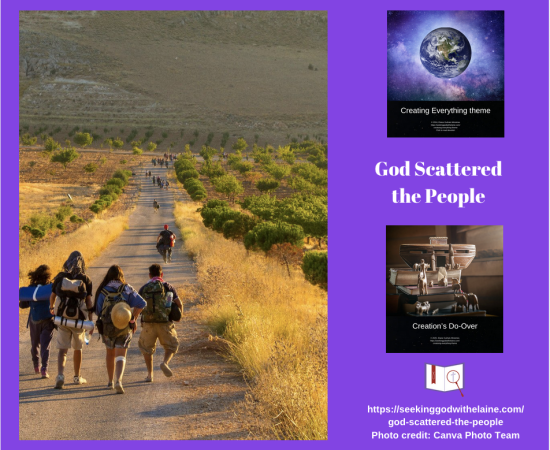
  • Noah Regrouped after the Flood

    The world was now pure and new after the flood, inhabited by righteous people. This devotional reading looks at Noah and his descendants – and how sin reentered the world.

    Nuggets

    • Because of the faithfulness of Noah’s family, the earth was repopulated by their descendants.
    • Even the most righteous human can — and all except Jesus — will sin.
    noah-regrouped-after-the-flood

    I bet Noah and his family felt really relieved to be off the ark. They had spent a whole year being cooped up with the animals.

    Think of how encouraged they may have felt getting started with their new normal. Everything was new and fresh.

    It wouldn’t stay that way for long.

    Let’s Put It into Context

    To read devotions in the Creating Everything theme, click the button below.

    Devotions in the Creation’s Do-Over series

    Noah’s Descendants

    “The sons of Noah who came out of the boat with their father were Shem, Ham, and Japheth. (Ham is the father of Canaan.) From these three sons of Noah came all the people who now populate the earth” (Gen. 9: 18-19 NLT)

    Because of the faithfulness of Noah’s family, the earth was repopulated by their descendants.

    We talked about before whether Noah’s sons and all their wives were righteous, along with Noah. I tend to believe they were.

    So, that means that the flood wiped out all sin on the earth, right? Wrong.

    Water doesn’t change our spiritual nature. (Nope, baptism doesn’t save is because it has nothing to do with blood.)

    Sin was very much still alive and well.

    True, they had gotten the promise that there would never be a flood bringing total destruction again. That was what the covenant was all about.

    Melvill brought up a good point. He wrote,

    “… if this earth were to be again and again the theatre of the same provocations and the same vengeance, it would be hard to say why God spared a remnant, or why He allowed the rebellious race to be continued and multiplied. Yet, however natural it might have been for Noah and his sons to calculate on a moral improvement in the species, it is certain that after the flood, men were just the same fallen creatures that they had been before the flood.”

    Resource

    Why destroy everything if You were not going to destroy the root problem? Why give the promise there would be no more earth-destroying flood?

    Think about it. God told us why He was sending the flood.

    • “The Lord observed the extent of human wickedness on the earth, and he saw that everything they thought or imagined was consistently and totally evil” (Gen. 6: 5 NLT).
    • “So God said to Noah, ‘I have decided to destroy all living creatures, for they have filled the earth with violence. Yes, I will wipe them all out along with the earth!’” (Gen. 6: 13 NLT).
    1. They were wicked.
    2. Their minds and hearts were corrupt.
    3. They were evil.
    4. They were violent.

    Maybe these eight people were righteous, but their descendants would not always remain so.

    So, why promise no more earth-destroying floods? We’ve talked before about how God works through patterns. Why not continue that here?

    It is partly because God promised never to destroy the earth again because of humans. “And when the Lord smelled the pleasing aroma, the Lord said in his heart, ‘I will never again curse the ground because of man, for the intention of man’s heart is evil from his youth. Neither will I ever again strike down every living creature as I have done’” (Gen. 8: 21 NLT).

    It may have been also because humans hadn’t changed. God punishes us for wickedness, and then we go right back to that wickedness. Sending a flood didn’t work to eliminate sin.

    God didn’t want to get on that circular pattern.

    No, God couldn’t have done things differently at that point. Time hadn’t been fulfilled to send Jesus as their Savior. He was the only way back to a good relationship with God.

    The holy line would come down through Shem. The name signifies the name — in other words, the name of God.

    Leale and Hollis didn’t necessarily think that made Shem the new firstborn because Cain and Abel were dead. Leale wrote, “Shem is mentioned first because religion is the chief glory of man, the only source of his true greatness, and the only worthy end of his life.” Shem’s faith developed quicker than the others’ did.

    It was Leale’s belief that Japheth also played a significant part in the repopulation of earth. He wrote, “It is represented by Japheth, which signifies ‘enlargement.’ There was in him an energy by which he could overcome obstacles and expand his empire over the world. This spirit of work and enterprise has given birth to civilization.”

    Resources

    Then here came Ham. He knew right from wrong, but we’ll see in the next devotion that he had a little problem with that.

    We not only have to know God, but we must also serve Him. We not only have to know Jesus, but we must also ask Him to be our Lord and Savior.

    Knowledge isn’t enough. It must lead to faith and obedience.

    Noah’s Occupation and Sin

    “After the flood, Noah began to cultivate the ground, and he planted a vineyard. One day he drank some wine he had made, and he became drunk and lay naked inside his tent” (Gen. 9: 20-21 NLT)

    Even the most righteous human can — and all except Jesus — will sin.

    We only get Noah’s occupation after the flood. He planted a vineyard.

    Before the flood, we were not told Noah’s occupation. We are after the flood. God’s Word says Noah had a vineyard.

    The article I read from Genesis for Ordinary People said that Noah was part of the Neolithic agricultural revolution, dated to have occurred from 10,000 BCE to 4,500 BCE. This is where people went from hunter-gatherers to farmers.

    Resource

    At first, I don’t know if I totally agreed with that. God didn’t give humans the permission to eat animals until after the flood, which is estimated to have occurred ant time between 2518 and 3298 — before the agricultural revolution.

    But if eating animals was part of their wickedness before the flood, I can see the hunter part.

    This revolution is important because it allowed people to settle and grow their families. 

    But then, Cain raised crops. “When it was time for the harvest, Cain presented some of his crops as a gift to the Lord” (Gen. 4: 3 NLT). That doesn’t sound like he was a gatherer.

    If we go back to the Hebrew, though, that isn’t what it says. “And in ketz yamim [end of days aka harvest] it came to pass, that Kayin [Cain] brought of the p’ri haadamah a minchah [fruit of the ground, produce of the land] unto Hashem [God]” (Gen. 4: 3 OJB)

    That would have made Cain a gatherer. It wouldn’t have been his crops that he got “By the sweat of your brow …” (Gen. 3: 19 NLT).

    That puts a whole new twist on why Cain’s offering wasn’t accepted. He didn’t bring the fruit of his labor.

    Back to Noah. Let’s recap his accomplishments.

    • “But Noah found favor with the Lord. This is the account of Noah and his family. Noah was a righteous man, the only blameless person living on earth at the time, and he walked in close fellowship with God” (Gen. 6: 8-9 NLT emphasis added).
    • “When everything was ready, the Lord said to Noah, ‘Go into the boat with all your family, for among all the people of the earth, I can see that you alone are righteous” (Gen. 7: 1 NLT emphasis added).

    Noah was a true disciple, but even he sinned.

    We tend to think that those walking with God won’t sin. Wrong. They are still in physical bodies with the sinful nature still intact.

    Paul warned us about this. “If you think you are standing strong, be careful not to fall” (I Cor. 10: 12 NLT).

    Doesn’t it comfort us that the Hall of Famers could still sin and be forgiven by God? God still used them even when they were flawed by sin.

    Satan sabotages us enough with thinking we have sinned too badly that God would never forgive us. He would be wrong.

    God had no problem with Noah becoming a grape farmer. He had no problem with him becoming a wine maker — and He even had no problem with him sampling his product.

    • “You cause grass to grow for the livestock and plants for people to use. You allow them to produce food from the earth — wine to make them glad, olive oil to soothe their skin, and bread to give them strength” (Ps. 104: 14-15 NLT).
    • “When you arrive, you may use the money to buy any kind of food you want — cattle, sheep, goats, wine, or other alcoholic drink. Then feast there in the presence of the Lord your God and celebrate with your household” (Deut. 14: 26 NLT).
    • “And Melchizedek, the king of Salem and a priest of God Most High, brought Abram some bread and wine” (Gen. 14: 18-20).

    Not only did Jesus talk about wine in the Parable of the Prodigal Son, but He also said He sampled the drink. “For John didn’t spend his time eating and drinking, and you say, ‘He’s possessed by a demon.’ The Son of Man, on the other hand, feasts and drinks, and you say, ‘He’s a glutton and a drunkard, and a friend of tax collectors and other sinners!’ But wisdom is shown to be right by its results” (Mt. 11: 18-19 NLT).

    We are told in several verses that drunkenness is a sin.

    • “Don’t be drunk with wine, because that will ruin your life. Instead, be filled with the Holy Spirit, singing psalms and hymns and spiritual songs among yourselves, and making music to the Lord in your hearts” (Eph. 5: 18-19 NLT).
    • “I meant that you are not to associate with anyone who claims to be a believer yet indulges in sexual sin, or is greedy, or worships idols, or is abusive, or is a drunkard, or cheats people. Don’t even eat with such people” (I Cor. 5: 11 NLT).
    • “He must not be a heavy drinker or be violent. He must be gentle, not quarrelsome, and not love money” (I Tim. 3: 3 NLT).
    • “In the same way, deacons must be well respected and have integrity. They must not be heavy drinkers or dishonest with money” (1 Tim. 3: 8 NLT).

    Fuller said something interest as to why drunkenness is a sin. He wrote,

    “Drunkenness is a sin which involves in it the breach of the whole law, which requires love to God, our [neighbors] and ourselves. The first as abusing His mercies; the second as depriving those who are in want of them of necessary support, as well as setting an ill example; and the last as depriving ourselves of reason, self-government, and common decency. It also commonly leads on to other evils. It has been said, and justly, that the name of this sin is Gad — a troop cometh!

    Resource

    I looked at the end of that quote and thought I made a typo. But since I cut and pasted it, that wasn’t the case.

    Fuller was making a reference to what Jacob’s son’s name meant. “And Leah said, A troop cometh: and she called his name Gad” (Gen. 30: 11 NLT).

    Back to drunkenness.

    Oh, I got the lose self-control part. That means God isn’t in control of us.

    • “Don’t be drunk with wine, because that will ruin your life …” (Eph. 5: 18-19 NLT).
    • “For you are all children of the light and of the day; we don’t belong to darkness and night. So be on your guard, not asleep like the others. Stay alert and be clearheaded” (I Thess. 5: 6-7 NLT).

    I even got the setting a bad example part. I know — at times — getting drunk means our trust in God has slipped.

    I just never hooked it to the greatest commandments. “‘And you must love the Lord your God with all your heart, all your soul, all your mind, and all your strength.’ The second is equally important: ‘Love your neighbor as yourself.’ No other commandment is greater than these” (Mk. 12: 30-31 NLT).

    The point is — post flood — sin was still in the world.

    Dods questioned whether this was one of the first inward temptations Noah had experienced. I don’t see how that could be. Satan isn’t going to pass on tempting a righteous man — some think the only righteous man.

    Resource

    No one is immune to sin, even the most righteous person. Even when we are actively working as God calls us, we will still be tempted.

    Was it Noah’s intention to get drunk? Maybe. Maybe not. Did he know of the effects of drinking too much? Maybe. Maybe not as it might have been the first time wine was ever made.

    But just as the serpent in the Garden of Eden was cursed for being used by Satan, Noah had to suffer the consequences of his actions whether the drunkenness was intentional or not.

    Making the Connections #1

    Leale thought we should review our walk with God as a system of thought. I can see that.

    Resource

    We have to know God as well as ourselves and things. If we don’t really know God, we aren’t worshiping Him. That makes it just a religion, not a relationship.

    But then, we also have to know ourselves. I haven’t said it in a while, but we need to constantly evaluate our lives to find the sin within us. That means constantly evaluating where we are at on the Sanctification Road.

    Things is kind of a generic word. But since it is such a broad concept of what we have to know, we can’t really narrow the focus.

    Plus, if there is a line between acceptable and being a sin (such as the line between drinking and drunkenness), we have to take that into consideration, also.

    This knowledge is important because we have to bring it into our lives. We have to make God the focus.  That is the only remedy that we can have for sin.

    Making the Connections #2

    Leale gave us a hint about how we are supposed to evaluate our lives. He wrote,

    “The knowledge of spiritual truth must be expressed in duty, or man can have no religion. Doctrines are only valuable as they teach us how to live. Activity without contemplation has many evils, but united with it is the perfection of spiritual life. True thoughts of God and ourselves must be manifested in that energy by which we contend with evil, and perform our duty.”

    Resource

    Doctrine is a set of beliefs – in this case, God’s tenets. Knowledge of them alone is not good enough. We need to bring them into our hearts and have them change our lives.

    If God’s doctrines don’t bringing us closer to Him, they are of no value to us.

    We have to contemplate what we are doing and why we are doing it. God’s Word calls it meditation.

    • “Study this Book of Instruction continually. Meditate on it day and night so you will be sure to obey everything written in it. Only then will you prosper and succeed in all you do” (Josh. 1: 8 NLT).
    • “But they delight in the law of the Lord, meditating on it day and night” (Ps. 1: 2 NLT).
    • “I will study your commandments and reflect on your ways” (Ps. 119: 15 NLT).
    • “Help me understand the meaning of your commandments, and I will meditate on your wonderful deeds” (Ps. 119: 27 NLT).
    • “I remember the days of old. I ponder all your great works and think about what you have done” (Ps. 143: 5 NLT).

    Did you catch that? Meditation = perfection. Yeah, it’s important.

    How Do We Apply This?

    • Make sure we are following God’s laws, not our rewrite of them.
    • Always be in control of ourselves.

    Father God. We are so sorry we let sin into the world. Thank You that You show us that even a righteous man like Noah sinned. May we always ask forgiveness when we sin. Thank You that Your forgiveness when we sin shows us how much You love us. Amen.

    What do you think?

    Leave me a comment below (about this or anything else) or head over to my Facebook group for some interactive discussion.

    If you don’t understand something and would like further clarification, please contact me.

    If you have not signed up for the email providing the link to the devotions and the newsletter, do so below.

    If God has used this devotion to speak with you, consider sharing it on social media.
  • And the Floods Came Up

    The occupants of the ark could only listen as the rain came down. This devotional reading looks at what happened when the rain came and what happened when the water started to subside.

    Nuggets

    • Everything that breathed died.
    • I don’t think God forgot about Noah and the other occupants.
    • God didn’t immediately dry out the land.
    and-the-floods-came-up

    The beginning voyage of the ark had to have been interesting. The occupants of the ark probably had a lot of questions about how this would go down.

    But we aren’t really told anything about life on the journey. We are told about the water.

    Let’s Put It into Context

    To read devotions in the Creating Everything theme, click the button below.

    Devotions in the Creation’s Do-Over series

    The Floodwaters Rose

    “For forty days the floodwaters grew deeper, covering the ground and lifting the boat high above the earth. As the waters rose higher and higher above the ground, the boat floated safely on the surface. Finally, the water covered even the highest mountains on the earth, rising more than twenty-two feet above the highest peaks. All the living things on earth died — birds, domestic animals, wild animals, small animals that scurry along the ground, and all the people. Everything that breathed and lived on dry land died.  God wiped out every living thing on the earth — people, livestock, small animals that scurry along the ground, and the birds of the sky. All were destroyed. The only people who survived were Noah and those with him in the boat.  And the floodwaters covered the earth for 150 days” (Gen. 7: 17-24 NLT)

    Everything that breathed died.

    It seems strange that the animals also had to die because of man’s wickedness. Geikie argued that even the fish died. I don’t think so.

    There has been some disagreement as to be the extent of the flood. “God wiped out every living thing on the earth — people, livestock, small animals that scurry along the ground, and the birds of the sky. All were destroyed. The only people who survived were Noah and those with him in the boat. And the floodwaters covered the earth for 150 days” (Gen. 7: 23-24 NLT).

    What is the definition of all? Was it every square inch of the planet Earth, or just the areas known at that time?

    Geikie argued that it was a local flood. He wrote, “There could certainly be no apparent reason for submerging the vast proportion of the world which was then uninhabited, or of raising the waters above the tops of mountains to which no living creature could approach.”

    Resource

    Yeah, the water would have added a lot of weight. It probably would have affected the plant. It may even have affected the heavenly motions.

    Still, there is physical evidence in many places that support a wide-spread flood. Location of fossils and the volume in some cases point to something happening. A wide distribution of sedimentary layers also back this up, especially when coupled with erosion patterns.

    I don’t agree that we can discount the occurrence of the flood because oceans impeded animals getting to the ark. Our seven continents once made up one continent, called Pangaea.

    There was no ocean to traverse at that time. We don’t know how spread out the population became.

    We don’t have to worry about the debate as to whether this was a local or global flood. Location isn’t the focus here.

    Results are.

    • “And all flesh died that moved on the earth…” (Gen. 7: 21 ESV). 
    • “Everything on the dry land in whose nostrils was the breath of life died” (Gen. 7: 22 ESV).
    • “… every living thing that was on the face of the ground, man and animals and creeping things and birds of the heavens …” (Gen. 7: 23 ESV).

    It didn’t matter their address. They died. The land and air animals couldn’t have survived under water for 150 days.

    Because of that, I think Geikie was wrong. Fish didn’t die.

    Calendar study. The preflood Hebrew calendar was a lunar calendar. Each of the 12 unnamed months would have had 30 days. That means a year would have been 360 days, not 365.

    God judged His creation and sentenced them to death for their transgressions.

    Only Noah, his family, and the animals with them survived because they were obedient and entered the ark.

    The Flood Subsides

    “But God remembered Noah and all the beasts and all the livestock that were with him in the ark. …”  (Gen. 8: 1 NLT).

    I don’t think God forgot about Noah and the other occupants.

    In order to remember someone, you need to forget them first. It is a human cognitive process.

    When we forget, it means we can’t recall something. Remembering is a process of retrieving and retaining what we’ve forgotten.

    In other words, it is a brain function. God doesn’t have a human brain.

    The way God’s Word describes Him is that He is a Spirit. “For God is Spirit, so those who worship him must worship in spirit and in truth” (Jn. 4: 24 NLT).

    Spirt. No body. No human processes, like forgetting and remembering. God is invisible and omnipresent.

    • “Christ is the visible image of the invisible God. He existed before anything was created and is supreme over all creation” (Col. 1: 15 NLT).
    • “All honor and glory to God forever and ever! He is the eternal King, the unseen one who never dies; he alone is God. Amen” (I Tim. 1: 17 NLT).

    Yes, Jesus came down and He was 100% human while He was 100% God.

    • “So the Word became human and made his home among us. He was full of unfailing love and faithfulness. And we have seen his glory, the glory of the Father’s one and only Son” (Jn. 1: 14 NLT).
    • “Instead, he gave up his divine privileges; he took the humble position of a slave and was born as a human being. When he appeared in human form” (Phil. 2: 7 NLT).
    • “For in Christ lives all the fullness of God in a human body” (Col. 2: 9 NLT).

    God never was — and never will be — human. “God is not a man, so he does not lie. He is not human, so he does not change his mind …” (Num. 23: 19 NLT).

    But to help us “understand” God, we give Him human characteristics.

    • “Listen! The Lord’s arm is not too weak to save you, nor is his ear too deaf to hear you call” (Isa. 59: 1 NLT).
    • “The eyes of the Lord search the whole earth in order to strengthen those whose hearts are fully committed to him. What a fool you have been! From now on you will be at war” (II Chron. 16: 9 NLT).
    • “The eternal God is your refuge, and his everlasting arms are under you. He drives out the enemy before you; he cries out, ‘Destroy them!” (Duet. 33: 27 NLT).

    Still, God is a living Being. “Today you will know that the living God is among you …” (Josh. 3: 10 NLT).

    The Waters Subsided

    “… and the waters subsided. The fountains of the deep and the windows of the heavens were closed, the rain from the heavens was restrained, and the waters receded from the earth continually. At the end of 150 days the waters had abated, and in the seventh month, on the seventeenth day of the month, the ark came to rest on the mountains of Ararat. And the waters continued to abate until the tenth month; in the tenth month, on the first day of the month, the tops of the mountains were seen” (Gen. 8: 1-5 NLT).

    God didn’t immediately dry out the land.

    As I am writing this, the news is all about the devastating flooding in Texas on Independence Day. The water came down rapidly, and the Guadalupe River has in one day — in some cases —already returned to its banks.

    The flood in Noah’s time was much more substantial. The flood even covered the mountaintops. There was more water to get rid of.

    Verse two added a new nugget. “The fountains of the deep and the windows of the heavens were closed, the rain from the heavens was restrained” (Gen. 8: 2 NLT).

    The underground waters that are discussed in Genesis 7: 11 are descriptively called the fountains of the deep here in Genesis 8: 2.

    I can just see that. We turn on some fountains, and our whole faces are going to get wet when we try to get a drink.

    Mountains of Ararat

    The ark had floated on the water for 150 days. Vaughan reminded us that Noah wasn’t steering the ark. He wrote, “There was an arm unseen directing it, there was strength unseen supporting it, and love unseen that was wafting it.”

    Resource

    God guided the ark. He had it land on Mount Ararat.

    Think about it. God had a remnant. It was only eight people – six more than the first two He started out with.

    But God had who He needed.

    Noah’s time in the ark was fixing to be over. The ground was beginning to dry out as the flood water receded.Verse two added a new nugget. “The fountains of the deep and the windows of the heavens were closed, the rain from the heavens was restrained” (Gen. 8: 2 NLT).

    The underground waters that are discussed in Genesis 7: 11 are descriptively called the fountains of the deep here in Genesis 8: 2.

    I can just see that. We turn on some fountains, and our whole faces are going to get wet when we try to get a drink.

    Making the Connections #1

    Griffin is way off. He called Noah a prisoner within the ark, especially because he had no communication with God.

    Resource

    Oh, no. Noah was not a prisoner. Yes, he couldn’t go out of the ark. He had to ride the waves for many days.

    But Noah was anything but a prisoner. He was free from the consequences – in his day – of sin.

    Ohhh, no. God did not shut the door and leave them there by themselves. Just because there is no documented record of those conversations, He didn’t leave them alone.

    God never leaves His children alone.

    Making the Connections #2

    Since God is a Spirit — therefore, invisible — so we have to worship Him in spirit and in truth. “For God is Spirit, so those who worship him must worship in spirit and in truth” (Jn. 4: 24 NLT).

    We can’t worship God face to face. We have to worship Him with our hearts and minds.

    How do we worship God in truth? We worship God as in revealed in His Word, not through tradition and rituals. “We’ve always done it that way” many not be God’s way.

    Making the Connections #3

    Vaughan talked about what it may have been like – and what it was like getting off the boat. He wrote, “It is natural to imagine, that this last seven months must have seemed to pass more slowly than all the time while they were lying on the waves. If the troubled time of life brings its trials, so also does its calms.”

    Resource

    It must have been a long 150 days – and they weren’t out of the boat yet. They probably had a routine. It probably focused on eating, sleeping, and animal care.

    But tough times come to an end. God leads us through them to where He wants us to end up.

    I doubt that Noah complained about the water voyage. No, it wasn’t his way.

    When we walk with God, we learn to be content whatever the situations around us.

    How Do We Apply This?

    • Take heed to listen to God’s warnings.
    • Understand that God will be patient for only so long.
    • Make sure you are on the right side of God.

    Resource

    Father God. You promised us that trials and persecution would come our way. At times, we feel like we are floating on our own arks, being tossed around by the waves of the rising trials. Thank You for never leaving us.

    What do you think?

    Leave me a comment below (about this or anything else) or head over to my Facebook group for some interactive discussion.

    If you don’t understand something and would like further clarification, please contact me.

    If you have not signed up for the email providing the link to the devotions and the newsletter, do so below.

    If God has used this devotion to speak with you, consider sharing it on social media.

  • The Rains Came Down

    Once Noah, his family, and the animals were in the ark, the rain could commence. This devotional reading looks at where the water came from and God’s control of every aspect of the judgment.

    Nuggets

    • As Creator of the universe, God retained control of the earth, opening the buried reservoirs.
    • Even if it had never rained before, it rained now.
    • It came to a day when God was done with evil.
    • God provided salvation for those who followed His Will.
    the-rains-came-down

    The flood began in 1656. We don’t know when the original sin occurred, but we figure that it was before Seth was born in 130.

    In those 1526 years that sin went unchecked, it got really bad. “The Lord observed the extent of human wickedness on the earth, and he saw that everything they thought or imagined was consistently and totally evil” (Gen. 6: 5 NLT).

    Nope, didn’t say anything about what they did, but we know what they did was violent (Gen. 6: 11).

    This wickedness was a moral wickedness. That means they didn’t have God’s character.

    Finally, God had enough. He started the creation do-over.

    Let’s Put It into Context

    To read devotions in the Creating Everything theme, click the button below.

    Devotions in the Creation’s Do-Over series

    From Where the Water Came

    “After seven days, the waters of the flood came and covered the earth. When Noah was 600 years old, on the seventeenth day of the second month, all the underground waters erupted from the earth, and the rain fell in mighty torrents from the sky. The rain continued to fall for forty days and forty nights” (Gen. 7: 10-12 NLT).

    All the Underground Waters Erupted

    As Creator of the universe, God retained control of the earth, opening the buried reservoirs.

    When we studied Genesis 1 and 2, we saw that God created the universe by speaking it into existence and raising His outstretched arm (Jer. 32: 17).

    It should not surprise us that God’s created world follows His and Jesus’ voices. “Jesus came and told his disciples, ‘I have been given all authority in heaven and on earth’” (MT. 28: 18 NLT).

    When did/does the earth obey Them?

    • “Pay attention to this, Job. Stop and consider the wonderful miracles of God! Do you know how God controls the storm and causes the lightning to flash from his clouds? Do you understand how he moves the clouds with wonderful perfection and skill? When you are sweltering in your clothes and the south wind dies down and everything is still, he makes the skies reflect the heat like a bronze mirror. Can you do that?” (Job 37: 14-18 NLT).
    • “When he speaks in the thunder, the heavens roar with rain. He causes the clouds to rise over the earth. He sends the lightning with the rain and releases the wind from his storehouses” (Jer. 10: 13 NLT).
    • “He calmed the storm to a whisper and stilled the waves.” (Ps. 107: 29 NLT).
    • “The Lord does whatever pleases him throughout all heaven and earth, and on the seas and in their depths. He causes the clouds to rise over the whole earth. He sends the lightning with the rain and releases the wind from his storehouses” (Ps. 135: 6-7 NLT).
    • “He covers the heavens with clouds, provides rain for the earth, and makes the grass grow in mountain pastures” (Ps. 147: 8 NLT).
    • “He sends his orders to the world — how swiftly his word flies! He sends the snow like white wool; he scatters frost upon the ground like ashes. He hurls the hail like stones. Who can stand against his freezing cold? Then, at his command, it all melts. He sends his winds, and the ice thaws” (Ps. 147: 15-18 NLT).
    • “As evening came, Jesus said to his disciples, ‘Let’s cross to the other side of the lake.’ So they took Jesus in the boat and started out, leaving the crowds behind (although other boats followed). But soon a fierce storm came up. High waves were breaking into the boat, and it began to fill with water. Jesus was sleeping at the back of the boat with his head on a cushion. The disciples woke him up, shouting, ‘Teacher, don’t you care that we’re going to drown?’ When Jesus woke up, he rebuked the wind and said to the waves, ‘Silence! Be still!’ Suddenly the wind stopped, and there was a great calm” (Mk. 4: 35-39 NLT).

    The universe still remembers God’s voice and still obeys its Maker.

    Rain Fell

    Even if it had never rained before, it rained now.

    If it hadn’t rained before, I wonder what the wicked thought when the sky went dark and the clouds turned black. They probably would have been uneasy.

    Down came the rain. Moses got descriptive here. He said that the rain came down in torrents.

    With the underground waters bursting forth from the earth and the rain coming down from the sky, it must have been terrifying for the wicked people seeing it coming.

    Gilfillan talked about the destruction to the earth. He wrote,

    “Rivers rush down in fury, overflowing their banks, sweeping away the crops, undermining the rocks, tearing up the woods, and rising above the lesser hills, till they meet with the streams which have swollen aloft from [neighboring] valleys, and embrace in foam and wild commotion on the summit. Oceans are stirred up from their depths, and distant seas on the top of aerial mountains, each bringing the ruin of whole lands for a dowry.”

    Resource

    That discusses the impact on the earth. It doesn’t say anything about what happened to the inhabitants.

    We aren’t told if the rain started during the day or during the evening. If it had been during the night, that would have been extremely scary.

    But I don’t see that God would have blindsided them at night. They would know what hit them.

    Whatever time the flood started, the wicked were going along with business as usual. They would have been practicing whatever evil things that earned them the judgment up until the water arrived.

    That Very Day

    “That very day Noah had gone into the boat with his wife and his sons — Shem, Ham, and Japheth — and their wives” (Gen. 7: 13 NLT).

    It came to a day when God was done with evil.

    Yes, evil existed for more than 1526 years. God gave them time and opportunity to repent, but it was only getting worse.

    The wicked heard the words that Noah and Methuselah spoke. They saw the ark taking shape before their eyes. They saw animals — maybe some they had never seen before — that were normally enemies lining up together to go inside a wooden structure and take a ride.

    They couldn’t say God didn’t warn them. They couldn’t say He didn’t give them a chance to repent.

    They didn’t want to repent. They wanted to keep doing what they were doing and not suffer any consequences.

    Until that very day occurred. Then there was no where to run to and nowhere to hide.

    God is going to do what He says He will do. He keeps His promises and doesn’t change His mind.

    The Lord Closed the Door

    “… Then the Lord closed the door behind them” (Gen. 7: 10-13, 16 NLT).

    God provided salvation for those who followed His Will.

    When God shut the door of the ark, He was showing that that part of the plan was completed. It was another way of saying God will finish what He starts.

    • “And on the seventh day God finished his work that he had done, and he rested on the seventh day from all his work that he had done” (Gen. 2: 2 NLT).
    • “Jesus said to them, ‘My food is to do the will of him who sent me and to accomplish his work’” (Jn. 4: 34 NLT).
    • “When Jesus had received the sour wine, he said, ‘It is finished,’ and he bowed his head and gave up his spirit” (Jn. 19: 30 NLT).
    • “And I am sure of this, that he who began a good work in you will bring it to completion at the day of Jesus Christ” (Phil. 1: 6 NLT).

    But then, I think it was more than that. “When everything was ready, the Lord said to Noah, ‘Go into the boat with all your family, for among all the people of the earth, I can see that you alone are righteous” (Gen. 7: 1 NLT).

    In a way, God asked Noah and his family into His house. He was already there when He invited them to enter.

    Countless thousands — maybe a million — died. But God kept those who believed in Him and lived for Him safe. “For he will conceal me there when troubles come; he will hide me in his sanctuary. He will place me out of reach on a high rock” (Ps. 27: 5 NLT).

    We’ve seen time and time again that Noah was obedient (Gen. 6: 8, 22; Gen. 7: 5). God rewarded that by saving his life.

    Griffin said something interesting. He wrote, “The Lord shut him in, so that he might not perpetrate any rash act. Had he possessed the power of opening the door, he might have jeopardized the safety of the whole family by bringing down the vengeance of God.”

    Resource

    We think that our decision to obey God sets off permanent rewards. Well, yes it can, but we have to be obedient every day. “And he said to all, ‘If anyone would come after me, let him deny himself and take up his cross daily and follow me’” (Lk. 9: 23 NLT).

    Gaining salvation doesn’t take away our free will. Because we have to take up our cross daily, that means we have daily choices. Do we choose God, or do we choose Satan?

    Did God shutting the door of the ark take away Noah’s free will?

    We’ve said that Noah probably had family in the flood waters. He may even have had sons and daughters.

    Would their screams have provided the temptation needed to open the door?

    When we think the wicked were the ones that Noah preached to and prayed for to turn their lives to God, we could see there was undoubtedly a conflict within him.

    Personally, I don’t think God was cutting off Noah’s free will. I think He was doing everything He could to keep His promise to keep Noah and his family – His creation – safe.

    Spurgeon thought maybe the door was too big for Noah to close himself. I can see that.

    Resource

    Did God close the door slowly or slam it shut? I can see an argument for both ways. It would just depend on when He made the “I’m done” decision.

    Only God knew when everything that had to be done was completed.

    Making the Connections #1

    There are, in non-Biblical accounts, differing accounts of the flood.

    One is from ancient Chaldea (yeah, that is Abraham’s birthplace). It is estimated that it was written 2,000-2,500 years prior to the birth of Christ. The narrative is given through the perspective of who is thought to be Nimrod, a descendant of Noah.

    The ancient Chaldean account was summarized as follows.

    “We sum up the results of this discovery in the words of Mr. Smith: “Not to pursue this parallel further, it will be perceived that when the Chaldean account is compared with the Biblical narrative, in their main features the two stories fairly agree; as to the wickedness of the antediluvian world, the Divine anger and command to build the ark, its stocking with birds and beasts, the coming of the deluge, the rain and storm, the ark resting on a mountain, trial being made by birds sent out to see if the waters had subsided, and the building of an altar after the flood.”

    Resource

    The differences between the two accounts had to do with specific details. The number of individuals who entered the ark, how long they had to stay there, and where they ended up is different. The birds being sent out was also different.

    An eastern Indian tradition spoke of a visitation that warned of a deluge to begin in seven days. All creatures – except those to be saved in a vessel – would be destroyed.

    There were more occupants of the hurriedly constructed ark. A longer time in the vessel was reported.

    Resource

    In the Greek account of the flood, Juniper decided to flood the earth. Deucalion and his wife Pyrrha alone were saved. No animals were saved with them, but animals were created post flood by the gods.

    In an expanded account, Deucalion brought his wives – plural – along with his children onto the chest he built. He didn’t know about the animals coming along with him until they showed up.

    Resource

    To me, it isn’t a concern that there are various versions of the story. The others weren’t divinely inspired.

    I can also see where the accounts were rewritten to change the location and culture to their own. We write God’s Word to fit our desire of how it should read.

    But God knows what happened. What isn’t all that important.

    The Who is.

    Making the Connections #2

    The sad part is that the wicked died, but that wasn’t the end of wickedness. Evil is right here with us today.

    Jesus talked about the condition of the world then and how it would repeat itself. “And the Good News about the Kingdom will be preached throughout the whole world, so that all nations[c] will hear it; and then the end will come” (Mt. 24: 14 NLT).

    Every generation since Jesus uttered those words that they thought they were living in the end of the age. Many probably said the same thing, “How can it get any worse than this?”

    Well, it keeps getting worse.

    Some day soon, the Day of the Lord will occur. Once again, it will be that day.

    I used to think this was the scariest verse in God’s Word. “And if anyone’s name was not found written in the book of life, he was thrown into the lake of fire” (Rev. 20: 15 NLT).

    Not anymore. These verses fill me with dread and sadness.

    “Not everyone who says to me, ‘Lord, Lord,’ will enter the kingdom of heaven, but the one who does the will of my Father who is in heaven. On that day many will say to me, ‘Lord, Lord, did we not prophesy in your name, and cast out demons in your name, and do many mighty works in your name?’ And then will I declare to them, ‘I never knew you; depart from me, you workers of lawlessness” (Mt. 7: 21-23 NLT).

    People even today are thinking they are doing God’s work. But they are compromising with the worldview.

    Can they be saved? Yes, if they repent and walk obediently with God.

    But we have to be careful because Paul warned us about them. “But I will continue doing what I have always done. This will undercut those who are looking for an opportunity to boast that their work is just like ours. These people are false apostles. They are deceitful workers who disguise themselves as apostles of Christ. But I am not surprised! Even Satan disguises himself as an angel of light. So it is no wonder that his servants also disguise themselves as servants of righteousness. In the end they will get the punishment their wicked deeds deserve” (II Cor. 11: 12-15 NLT).

    Making the Connections #3

    Noah had to wait for 120 years for God’s promised reward to be given to him – salvation in the ark. True, he had a lot of work to do before he could cash in the promise.

    But really, Noah really had to wait 600 years to be rewarded for his choice to walk with God.

    How Do We Apply This?

    The ABCDs of Salvation

    If you have not become a believer in Christ, please read through the
    Plan of Salvation and prayerfully consider what God is asking you to do.

    A – admit our sins
    B – believe His Son Jesus is our Redeemer
    C – confess God as Sovereign Lord

    D – demonstrate that commitment by making any changes needed in our lives to live the way in which God has called us

    The Disciple’s Job Description

    • Don’t ignore God’s predicted judgment.
    • Fear God’s wrath.
    • Don’t be fooled by worldview security.

    Resource

    Father God. Your Word says You correct those You love. We know You love all humans, even those who are not Your children. Part of Your love is judging those who break Your laws. Help us to be obedient to You. Amen.

    What do you think?

    Leave me a comment below (about this or anything else) or head over to my Facebook group for some interactive discussion.

    If you don’t understand something and would like further clarification, please contact me.

    If you have not signed up for the email providing the link to the devotions and the newsletter, do so below.

    If God has used this devotion to speak with you, consider sharing it on social media.
  • Corruption and Punishment

    The world that God created had been corrupted by sin. This devotional reading looks at how God decided He was going to punish the evil people and fix the corruption.

    Nuggets

    • The vast majority of the population on earth were filled with corruption that led to violence.
    • God will allow this corruption and violence in His world only so long before He will mete out punishment.
    corruption-and-punishment

    Moses was ping ponging here. He wrote four verses about how evil the world was. Then he wrote three verses about four of the eight people that were ark riders.

    Now, Moses was back on the evil in the world. But he was setting the stage for God’s action on the disobedience.

    Let’s Put It into Context

    To read devotions in the Creating Everything theme, click the button below.

    Devotions in the Creation’s Do-Over series

    Violence on the Earth

    “Now God saw that the earth had become corrupt and was filled with violence. God observed all this corruption in the world, for everyone on earth was corrupt” (Gen. 6: 11-12 NLT)

    The vast majority of the population on earth were filled with corruption that led to violence.

    There is one thing the New Living Translation doesn’t say. “Now the earth was corrupt in God’s sight, and the earth was filled with violence” (Gen. 6: 11 ESV emphasis added).

    God always sees what is happening — good or evil. He knew corrupt humans had turned against a true relationship with Him.

    But look at it another way. The way God sees it, anyone who breaks His laws and commandments is corrupt.

    Fuller said that this is a result of the marriages between sons of God and daughters of men (Gen. 6: 2). Satan’s influence corrupts humans.

    Resource

    In other words, compromising with the worldview corrupts disciples — which leads to the Church having corruption in it. We are still there today — maybe even worse than the Days of Noah.

    The perversion of God’s creation led to violence.

    Violence is an overarching terms for a lot of different acts. Smith gave us the list of oppression, tyranny, persecution of good men, injustice, and cruelty to expand on what those acts look like.

    Resource

    Worldview people want the power to keep doing whatever they want to do. Some try to repress any opposition to their way of thinking.

    They do this through mistreating those who think opposite of them. They do this through unfair treatment and being downright mean at times.

    Think how Noah would have been treated. He would have been laughed at, in the least. He probably was mocked and belittled.

    These are the actions people take. From where do they come?

    Some comes from selfishness. Those worldview people want what they want, and they don’t want anyone, especially God, to tell them what they can or can’t have and do.

    Maclaren expanded on that. He wrote, “When the bonds which knit society to God are relaxed, selfishness soon becomes furious, and forcibly seizes what it lusts after, regardless of others’ rights.”

    Resource

    The polar opposite of this corruption and violence is walking with God. The absence of God in our lives allows this corruption to enter us.

    Punishment for the Earth

    “So God said to Noah, ‘I have decided to destroy all living creatures, for they have filled the earth with violence. Yes, I will wipe them all out along with the earth!’” (Gen. 6: 13 NLT)

    God will allow this corruption and violence in His world only so long before He will mete out punishment.

    Ooo, baby. I bet Noah heard those words from God and went, “Wait! What????” Then he shook in his sandals.

    Maclaren explained what this sentence teaches us. He wrote, “A very profound truth, not only of the certain Divine retribution, but of the indissoluble connection of sin with destruction.”

    Resource

    God will pass judgment on our sin. It is in retribution for our disobedience. The ultimate judgment on sin is death and utter destruction.

    Yes, beginning at Adam and Eve’s disobedience in the Garden of Eden, death has always been a result of sin. Before Adam and Eve bit, there was no death.

    True, Adam’s physical death took 930 years to happen. God had already said that was going to change to 120 years (Gen. 6: 3).

    Spiritual death had already occurred. Faith and obedience reversed that.

    But we’ve already said that the corrupt world was not interested in following God. They wanted to continue on as they had been doing.

    God said, “No. I’m done.”

    What does the verse say? “Seek the Lord while you can find him. Call on him now while he is near” (Isa. 55: 6 NLT emphasis added).

    Look at this verse in Isaiah. “But the godless are like thorns to be thrown away, for they tear the hand that touches them. One must use iron tools to chop them down; they will be totally consumed by fire” (II Sam. 23: 6-7 NLT).

    Just as they did, we bring this punishment on ourselves.

    Time is going to run out. God isn’t always going to be near. Don’t be caught in an unsaved condition.

    But why did God punish all creation for the sins of humans? Kalisch reminded us that earth was what humans inhabited. He called it a witness, saying it wasn’t passive.

    Resource

    Earth is tied to humankind. It provided the building blocks for man. “Then the Lord God formed the man from the dust of the ground. He breathed the breath of life into the man’s nostrils, and the man became a living person” (Gen. 2: 7 NLT).

    But we have to remember that it was tied to humankind in the original sin. “And to the man he said, ‘Since you listened to your wife and ate from the tree whose fruit I commanded you not to eat, the ground is cursed because of you. All your life you will struggle to scratch a living from it. It will grow thorns and thistles for you, though you will eat of its grains’” (Gen. 3: 17-18 NLT).

    In other words, when humankind is punished for sin, the earth is, too.

    Making the Connections #1

    I love what Maclaren said. He wrote, “Sin is death in the making; death is sin finished.”

    Resource

    In the next couple of devotions, we are going to be talking about the fulfillment of a promise. God promised that, as soon as Noah was done building the ark, He would destroy the earth by flooding it. Everyone who and every animal that was not on the ark was going to die.

    That death was the result of sin.

    Punishment may be delayed (death in the making); but at some point, judgment will be passed. The sentence would be death (sin finished).

    God has promised never to destroy the world by a flood. But He has also promised to destroy this world. “And I saw a great white throne and the one sitting on it. The earth and sky fled from his presence, but they found no place to hide” (Rev. 20: 11 NLT).

    Right now, we are in the death-in-the-making stage. Soon, we are going to be in the sin-finished stage. The earth and sky will be destroyed.

    Those who have compromised with the worldview or flat out rejected God will be judged and sentenced to their punishment. “And anyone whose name was not found recorded in the Book of Life was thrown into the lake of fire” (Rev. 20: 15 NLT).

    Ooo, baby. This is a big threat (but it really is a promise). It is going to happen.

    At the same time, there is a promise of deliverance. Those who walk with God in faith and obedience will be delivered from this sentence. Anyone who has made a genuine profession of faith and lived for God will not face this punishment. They will be rewarded with eternal life.

    God has made a way to escape. It is called the Plan of Salvation.

    Making the Connections #2

    Let’s go back to what Kalisch was saying. He wrote,

    “The earth is, in the Bible, not considered as a mere passive object; it is the habitation of man; it beholds his deeds of virtue and of baseness; it is, therefore, like the eternal heavens, invoked as a witness in solemn exhortations; it cries up to heaven if it is soiled with blood; it ‘vomits out’ the wicked inhabitants.”

    Resource

    The blood cried up to God. That is what Abel’s did. “But the Lord said, ‘What have you done? Listen! Your brother’s blood cries out to me from the ground!’” (Gen. 4: 10 NLT).

    Do we think Abel’s was the only blood to do that? With the world so corrupt and violent as it was, it probably had a countless number of God’s children’s blood crying up to Him.

    I wonder if this is just martyrs or those killed. Or does all of His children’s blood call go up to Him upon our death?

    I know that the omnipotent God knows exactly when we are going to die. But I wonder if He waits to get the call of the blood before He sends the angels to pick us up.

    I can see our blood crying out to the Father to bring us home.

    How Do We Apply This?

    The ABCDs of Salvation

    If you have not become a believer in Christ, please read through the
    Plan of Salvation and prayerfully consider what God is asking you to do.

    A – admit our sins
    B – believe His Son Jesus is our Redeemer
    C – confess God as Sovereign Lord

    D – demonstrate that commitment by making any changes needed in our lives to live the way in which God has called us

    The Disciple’s Job Description

    Father God. The only way to counteract our sinful nature is to believe in and confess to You. Lord, help us to walk with You. Amen.

    What do you think?

    Leave me a comment below (about this or anything else) or head over to my Facebook group for some interactive discussion.

    If you don’t understand something and would like further clarification, please contact me.

    If you have not signed up for the email providing the link to the devotions and the newsletter, do so below.

    If God has used this devotion to speak with you, consider sharing it on social media.

  • Corruption Spread on Earth

    After discussing Cain and Seth’s lines separately, it is time to combine the discussion. This devotional reading begins to set up the state of the earth pre-flood.

    Nuggets

    • God sees everything, so He saw how sinful mankind had become.
    • The people in the days of Noah had made the choice and continued to choose wickedness — so they would suffer the consequences.
    corruption-spread-on-earth

    In discussing the righteousness of Seth’s line and the wickedness of Cain’s line, we really don’t get an idea of how many people that represented.

    We did discuss that, leaving Enoch out of the mix, the men lived 895 to 969 years. That would have left ample time to have many sons and daughters, especially if some were multiple births.

    Unfortunately, the world became really corrupted after the original sin.

    Let’s Put It into Context

    To read devotions in the Creating Everything theme, click the button below.

    Devotions in the Creation’s Do-Over series

    Increasing Corruption

    “The Lord observed the extent of human wickedness on the earth, and he saw that everything they thought or imagined was consistently and totally evil” (Gen. 6: 5 NLT )

    God sees everything, so He saw how sinful mankind had become.

    God may no longer have “physically” revealed Himself to humans pre-flood, but He saw them. That is part of His divine nature.

    How humankind had fallen since their days in the Garden of Eden! “When I look at the night sky and see the work of your fingers — the moon and the stars you set in place — what are mere mortals that you should think about them, human beings that you should care for them? Yet you made them only a little lower than God and crowned them with glory and honor” (Ps. 8: 3-5 NLT).

    The wickedness would have probably started out as neglecting the Sabbath and public worship. We remember in Genesis 4: 26, Seth and Enosh started worshiping God.

    I doubt that Seth and Enosh’s worship service looked anything at all like ours do. What theirs looked like is something that has to go into the UNR book – understanding not required.

    We said previously that the line of Seth chose righteousness while the line of Cain chose worldly things. Three of Cain’s descendants are credited with inventions. The only mention of Seth’s descendants other than numbers was Enoch’s walking with God.

    Cain’s descendants chose ambition while Seth’s descendants chose righteousness.

    But some of Seth’s descendants would have turned away from God, also. Had to have, but we’ll get into that in a couple of chapter

    Since Cain separated from God, he would not have been worshiping God. That allowed their rapid descent into wickedness.

    Sin had branched out from just disobeying God. Now it included, according to Gray, pride, sensuality, and idolatry.

    Resource

    Boston told us what happened. He wrote,

    “The will, that commanding faculty, which at first was faithful and ruled with God, is now turned traitor and rules with and for the devil. God planted it in man ‘wholly a right seed,’ but now it is ‘turned into the degenerate plant of a strange vine.’”

    Resource

    Wickedness was widespread on the earth. This was everyone – what would later be known as Jew and Gentile.

    Yep. Everyone has a sinful heart. “For from the heart come evil thoughts, murder, adultery, all sexual immorality, theft, lying, and slander” (Mt. 15: 19 NLT).

    Several passages in God’s Word address our sinful nature.

    • “As the Scriptures say, ‘No one is righteous — not even one. No one is truly wise; no one is seeking God. All have turned away; all have become useless. No one does good, not a single one’” (Rom. 3: 10-12 NLT).
    • “Only fools say in their hearts, ‘There is no God.’ They are corrupt, and their actions are evil; not one of them does good! God looks down from heaven on the entire human race; he looks to see if anyone is truly wise, if anyone seeks God. But no, all have turned away; all have become corrupt. No one does good, not a single one!” (Ps. 53: 1-3 NLT).
    • “Sin whispers to the wicked, deep within their hearts. They have no fear of God at all. In their blind conceit, they cannot see how wicked they really are” (Ps. 36: 1-2 NLT).
    • “Their feet run to do evil, and they rush to commit murder. They think only about sinning. Misery and destruction always follow them. They don’t know where to find peace or what it means to be just and good. They have mapped out crooked roads, and no one who follows them knows a moment’s peace” (Isa. 59: 7-8 NLT).

    Make no mistake about it. Sin only comes from one place – Satan.

    God didn’t like what He saw on the earth. Verse 6 says that “… It broke his heart” (Gen. 6: 6 NLT) that He had made humankind in the first place.

    People were living corrupt lives. They were not following God’s laws and commandments.

    Remember, Cain — the cursed son of Adam and Eve — built the first city. “… Then Cain founded a city, which he named Enoch, after his son” (Gen. 4: 17 NLT)Cities can be a breeding place for certain ideas to flourish. Good can flourish in some places; evil can flourish in others.

    We can look at this as a worldview society promotes the spread of evil. At a minimum, that society allows the evil to take hold. At maximum, that hold is encouraged and even fostered.

    Fuller argued that it was just a product of population expansion. Maybe.

    Resource

    How many times have we rationalized sin by saying it was the norm? “Everyone” was doing it.

    That isn’t right, though. Even if the majority of people commit the sin, that doesn’t make it any less a sin.

    We each make our own choice whether to follow God or follow Satan. If we aren’t doing it God’s way, we have chosen and are following Satan.

    God knew before the foundation of the world that mankind would sin. He created us anyway.

    But being godly is an individual choice that starts with the heart. Wickedness is an individual thing — our own choice. We can’t blame our ungodliness on society.

    Gray noted that, if it starts at the heart, it must be the whole package. He wrote, “the heart includes ‘conscience and consciousness, will and desire, intellect and emotion, understanding and affection.’”

    Resource

    So, when God says He want our hearts, He means all of us.

    Too often, pride and anger take up so much room in our hearts that there is no room for God.

    Instead of those emotions, we should focus on gratitude for all that God has done for us. We should humbly fear God. Remember, fear of the Lord is reverencing Him.

    The people in the days of Noah were not trying to please God and simply failing. They had chosen not to please Him.

    I Will Wipe this Race from the Earth

    “So the Lord was sorry he had ever made them and put them on the earth. It broke his heart. And the Lord said, ‘I will wipe this human race I have created from the face of the earth. Yes, and I will destroy every living thing — all the people, the large animals, the small animals that scurry along the ground, and even the birds of the sky. I am sorry I ever made them’” (Gen. 6: 6-7 NLT)

    The people in the days of Noah had made the choice and continued to choose wickedness — so they would suffer the consequences.

    Can God feel human emotion, or is this just us humanizing Him? No, He can’t so, we are.

    Then why does God’s Word say He gets angry, feels joy, and feels sorrow? Well, if those were His emotions, then God would change.

    God never changes.

    • “I am the Lord, and I do not change. That is why you descendants of Jacob are not already destroyed” (Mal. 3: 6 NLT).
    • “Jesus Christ is the same yesterday, today, and forever” (Heb. 13: 8 NLT).
    • “The grass withers and the flowers fade, but the word of our God stands forever” (Isa. 40: 8 NLT).
    • “God is not a man, so he does not lie. He is not human, so he does not change his mind. Has he ever spoken and failed to act? Has he ever promised and not carried it through?” (Num. 23: 19 NLT).
    • “Whatever is good and perfect is a gift coming down to us from God our Father, who created all the lights in the heavens. He never changes or casts a shifting shadow” (Jas. 1: 17 NLT).
    • “Your eternal word, O LORD, stands firm in heaven” (Ps. 119: 89 NLT).
    • “But you are always the same; you will live forever” (Ps. 102: 27 NLT).

    Not changing is just part of God’s nature.

    When we talked about the attributes of God, we said He has attributes of wrath, jealousy, immutability, love, grace, and mercy. I can see anger, joy, and sorrow being expressions of those attributes.

    We don’t want to humanize God. He is Sovereign Lord — divine, not human. He doesn’t have human emotions.

    God is not our favorite uncle. He does not look at things our way.

    “‘My thoughts are nothing like your thoughts,’ says the Lord. ‘And my ways are far beyond anything you could imagine. For just as the heavens are higher than the earth, so my ways are higher than your ways and my thoughts higher than your thoughts” (Isa. 55: 8-9 NLT).

    But what do we do when we bring God down to our level? We start to think humans are gods.

    That is logical. We need to worship something. If it isn’t God, it is other humans or even ourselves.

    Bottom line, when we do this, we are minimizing sin. We replace God’s laws and commandments with human standards.

    Did God know He would do a complete redo before the foundation of the world? Did He know how much it would grieve Him?

    Yes, and yes.

    God made us anyway. But then He was fixing to do something about it.

    Making the Connections

    Let’s go back to the heart being evil. Simeon addressed this. He wrote,

    “Every species of wickedness was committed in the most shameless manner. But more particularly, “the hearts” of men were evil; “the thoughts” of their hearts were evil; “the imaginations” of the thoughts were evil, and this too without exception, without mixture, without intermission; for every imagination was evil, and “only” evil, and that continually.”

    Resource

    Repeatedly Filed to Reach the Mark

    Since we have sin in us, we are not righteous. “But no, all have turned away; all have become corrupt. No one does good, not a single one!” (Ps. 14: 3 NLT).

    Even disciples continue to sin after conversion. “If we claim we have no sin, we are only fooling ourselves and not living in the truth. But if we confess our sins to him, he is faithful and just to forgive us our sins and to cleanse us from all wickedness. If we claim we have not sinned, we are calling God a liar and showing that his word has no place in our heart” (I Jn. 1: 8-10 NLT).

    That means we repeatedly sin.

    Wait! What???? How does that mesh with I John 3: 6?

    “Anyone who continues to live in him will not sin. But anyone who keeps on sinning does not know him or understand who he is” (I Jn. 3: 6 NLT).

    It comes down to whether the sin was intentional or unintentional. We have to stifle the desire of sin.

    • “So watch yourselves! If another believer sins, rebuke that person; then if there is repentance, forgive. Even if that person wrongs you seven times a day and each time turns again and asks forgiveness, you must forgive” (Lk. 17: 3-4 NLT).
    • “Sin is no longer your master, for you no longer live under the requirements of the law. Instead, you live under the freedom of God’s grace” (Rom. 6: 14 NLT).
    • “Dear friends, if we deliberately continue sinning after we have received knowledge of the truth, there is no longer any sacrifice that will cover these sins” (Heb. 10: 26 NLT).

    Every Part Permeated with Sin

    It is hard cutting out the desire to sin. Sin is in every part of us.

    • “So letting your sinful nature control your mind leads to death. But letting the Spirit control your mind leads to life and peace. For the sinful nature is always hostile to God. It never did obey God’s laws, and it never will. That’s why those who are still under the control of their sinful nature can never please Gody” (Rom. 8: 6-8 NLT).
    • “But I say, anyone who even looks at a woman with lust has already committed adultery it’s her in his heart” (Mt. 5: 28 NLT).
    • “A grip goes around telling secrets, so don’t hang around with chatterers” (Prov. 20: 19 NLT).
    • “There are six things the LORD hates — no, seven things he detests: haughty eyes, a lying tongue, hands that kill the innocent, a heart that plots evil, feet that race to do wrong, a false witness who pours out lies, a person who sows discord in a family” (Prov. 6: 16-19 NLT).
    • “You must not testify falsely against your neighbor” (Ex. 20: 16 NLT).”
    • “And I tell you this, you must give an account on judgment day for every idle word you speak” (Mt. 12: 36 NLT).
    • “Gentle words are a tree of life; a deceitful tongue crushes the spirit” (Prov. 15: 4 NLT).
    • “Too much talk leads to sin.  Be sensible and keep your mouth shut” (Prov. 10: 19 NLT).
    • “A truly wise person uses few words; a person with understanding is even-tempered” (Prov. 17: 27 NLT).
    • “And among all the parts of the body, the tongue is a flame of fire. It is a whole world of wickedness, corrupting your entire body. It can set your whole life on fire, for it is set on fire by hell itself” (Jas. 3: 6 NLT).
    • “You brood of snakes! How could evil men like you speak what is good and right? For whatever is in your heart determines what you say” (Mt. 12: 34 NLT).
    • “The tongue can bring death or life; those who love to talk will reap the consequences” (Prov. 18: 21 NLT).

    How do we combat that?

    “We destroy every proud obstacle that keeps people from knowing God. We capture their rebellious thoughts and teach them to obey Christ” (II Cor. 10: 5 NLT).

    Sin Produces Devastating Results

    We don’t want the consequences of sin.

    • “For the wages of sin is death, but the free gift of God is eternal life in Christ Jesus our Lord” (Rom. 6: 23 NLT).
    • “Don’t be misled — you cannot mock the justice of God. You will always harvest what you plant. Those who live only to satisfy their own sinful nature will harvest decay and death from that sinful nature. But those who live to please the Spirit will harvest everlasting life from the Spirit” (Gal. 6: 7-8 NLT).
    • “It’s your sins that have cut you off from God Because of your sins, he has turned away and will not listen anymore” (Isa. 59: 2 NLT).
    • “For God did not spare even the angels who sinned. He threw them into hell, in gloomy pits of darkness, where they are being held until the day of judgment. And God did not spare the ancient world—except for Noah and the seven others in his family. Noah warned the world of God’s righteous judgment. So God protected Noah when he destroyed the world of ungodly people with a vast flood. Later, God condemned the cities of Sodom and Gomorrah and turned them into heaps of ashes. He made them an example of what will happen to ungodly people. But God also rescued Lot out of Sodom because he was a righteous man who was sick of the shameful immorality of the wicked people around him. Yes, Lot was a righteous man who was tormented in his soul by the wickedness he saw and heard day after day. So you see, the Lord knows how to rescue godly people from their trials, even while keeping the wicked under punishment until the day of final judgment. He is especially hard on those who follow their own twisted sexual desire, and who despise authority” (II Pet. 2: 4-10 NLT).

    God’s Law Convicts Man of Sin

    Yes, we still have God’s laws and commandments. They have nothing to do about salvation.

    • “For by works of the law no human being will be justified in his sight, since through the law comes knowledge of sin” (Rom. 3: 20 NLT).
    • “Let me put it another way. The law was our guardian until Christ came; it protected us until we could be made right with God through faith” (Gal. 3: 24 NLT).
    • “The law of Moses was unable to save us because of the weakness of our sinful nature. So God did what the law could not do. He sent his own Son in a body like the bodies we sinners have. And in that body God declared an end to sin’s control over us by giving his Son as a sacrifice for our sins” (Rom. 8: 3 NLT).

    This solidifies the fact that we cannot gain salvation by being a good person and doing the do’s and not doing the don’ts. We only gain salvation through admitting we are sinners, believing in Jesus as our Savior and Redeemer, confessing God as Sovereign Lord, and demonstrating our commitment to God by being submitting and obedient to Him.

    How Do We Apply This?

    • Live a life of purity.
    • Watch with who we align ourselves.
    • Pay attention to the convictions of the Holy Spirit.
    • Humbly, show our gratitude and reverence to God.

    Resources

    Father God. You have told us exactly how we are to live our live. We are to walk with You, not as the corrupt world walks. Help us to do that. Amen.

    What do you think?

    Leave me a comment below (about this or anything else) or head over to my Facebook group for some interactive discussion.

    If you don’t understand something and would like further clarification, please contact me.

    If you have not signed up for the email providing the link to the devotions and the newsletter, do so below.

    If God has used this devotion to speak with you, consider sharing it on social media.