Category: Lifestyle

  • Special Announcement

    Hey, it’s Elaine. Yeah, this devotion look a lot different than normal.

    I just wanted to let you know that, today, Adam and I have both tested positive for COVID. Pastor Steve will get a positive test result soon.

    Pastor Steve and Adam are basically on the mend. I haven’t shook it yet.

    So, it is probably going to make the devotions for the next couple of days different, too. I know I have been doing some shorter ones lately — when I haven’t done music days. They will probably be shorter like that.

    I may just post what I have, or I may skip a day. Stay tuned.

    God is on the throne. He has already defeated Satan. His name will be praised.

    What do you think?

    Leave me a comment below (about this or anything else) or head over to my Facebook group for some interactive discussion.

    If you don’t understand something and would like further clarification, please contact me.

    If you have not signed up for the email daily or weekly providing the link to the devotions and the newsletter, do so below.

    If God has used this devotion to speak with you, consider sharing it on social media.

  • Using the Scriptures to Build Hope

    In our redo for godliness, we have a wonderful resource to help us on the Sanctification Road – the Scriptures. This daily devotional looks at how Scriptures not only give us instruction but also patience, hope, and encouragement.

    Nuggets

    • Scriptures help us transform to His godliness.

    To read devotions in the Redo for Godliness series, click the appropriate button below.

    Devotions in the Transformed to Perfection series

    God knew what He was doing when He gave us the Scriptures. Have you ever thought He has always found a way for His Will to be made known?

    Centuries ago — and I am sure in some cultures today — the oral stories of history were very important. It was the way they remembered and taught. It was how their culture was solidified.

    Then God ramped it up and made books. Then He ramped it up and made the internet.

    God is going to get His Word out to those who need it. We all need it.


    Let’s Put It into Context

    Here is a running list of what we’ve discussed previously.

    Using Scripture to Build Hope

    “For whatever was written in the past was written for our instruction, so that we may have hope through endurance and through the encouragement from the Scriptures” (Rom. 15: 4 CSB)

    Scriptures help us transform to His godliness.

    Remember, Paul was talking to believers here. He was talking to people who still needed instruction, still needed words of encouragement, still needed hope and endurance.

    I like what Moore said. He wrote, “God will have His name hallowed, for it is holy; but His Word He seems to make holier still — ‘Thou hast magnified Thy Word above all Thy name.’ We are to receive it, not as the word of man, but as it is in truth, the Word of God.

    Resource

    Moore was quoting Psalm 132: 2: “I will worship toward thy holy temple, and praise thy name for thy lovingkindness and for thy truth: for thou hast magnified thy word above all thy name” (KJV).

    Yep, David said, but he wasn’t expecting exclusive. We have to worship and praise God, too.

    Robertson reminded us that some of the blessings and punishments are made specifically to individuals. Abraham was the only father of the Jewish nation. David was the only one who was promised his line would live forever.

    Resource

    But we also know the Scriptures are also a one-size-fits-all deal.

    • “For all have sinned and fall short of the glory of God” (Rom. 3: 23 CSB).
    • “No temptation has come upon you except what is common to humanity. But God is faithful; he will not allow you to be tempted beyond what you are able, but with the temptation he will also provide the way out so that you may be able to bear it” (I Cor. 10: 13 CSB).
    • “But God demonstrates his own love for us in this: While we were still sinners, Christ died for us” (Rom. 5: 8 NIV)
    • “For God so loved the world, that he gave his only Son, that whoever believes in him should not perish but have eternal life” (Jn. 3: 16 ESV).

    Scriptures are for all of us.

    We all need hope. This passage is talking to disciples — those who already have the hope.

    I have to process what Maclaren said. He wrote, “The written word is conceived for the source of patient endurance which acts as well as suffers. This grace Scripture works in us through the encouragement which it ministers in manifold ways, and the result of both is hope. So, you see, our sorrows and difficulties are not connected with, nor do they issue in, bright hopefulness, except by reason of this connecting link.”

    Resource

    Elaine-speak.

    • We aren’t going to get what we need out of the Scriptures in a single read. We will need to revisit the same passages multiple times until we glean all God has to tell us.
    • One reason for the rereads is to build patience.
    • Another is to build endurance. We don’t want to give up half way through.
    • The hope is a product of the grace and encouragement. Think — if grace is the mom and encouragement is the dad, what a kid that would be!
    • It really isn’t our sorrows and difficulties that connect to our hopefulness.

    Let’s say that again. Our trials do not connect to our hope.

    We have the hope regardless. We have God’s glorious hope for an eternal life when we are His disciples. Period.

    Maclaren took that a step further. As long as our soul is going to be around, this hope is going to be in it.

    Resource

    Our soul is our spiritual part that is immortal. Because the soul is eternal, it continues to think and feel. That means it is going to hope until that hope is fulfilled in eternity.

    What we are looking for is the perfect holiness. That will come at the end of our sanctification.

    Making the Connections

    UsingScripturesToBuildHopePin

    Vernon is right. We are so much more happier when we have patience, comfort, and hope. We find them by reading God’s Word.

    Resource

    How Do We Apply This?

    Macafee gave us some really good ideas on how to do that.

    • Don’t let ourselves become distracted when reading.
    • Read it as if it was God speaking directly to us.
    • Don’t just do a quick read. Dig in. Meditate.
    • This doesn’t mean we have to read hours at a time. I would shoot for a chapter or two.
    • Macafee said we should read Scriptures “frequently, regularly, and diligently …”
    • We have to read them in submission.
    • Macafee said read them with “… a love of truth …”
    • Decide that we are going to believe what Scriptures say and are going to obey God’s laws and commandments.

    We have the Scriptures for one reason: finding God. When we find God, we find eternal life.

    Macafee wrote, “The hope of eternal life, [is] founded on true faith as a solid foundation. Knowledge, consolation, and hope constitute the things for which we should look.”

    Resource

    How do we get knowledge? We do that by seeking God

    Searching for and Seeking God

    Hearing His Word (Rom. 10: 17).
    Reading His Word (Rev. 1: 3).
    Praying to Him (Heb. 4: 16).
    Studying His Word (Ac. 17: 11).
    Meditating on His Word (Ps. 1: 1-2).
    Memorizing His Word (Ps. 119: 11).

    That knowledge will give us comfort and ease the pain cause by our sin as our lives are fixed by God’s healing Hand. We know that hope is a future expectation, called a living hope, based on the confidence that our names will be found in the book of life.

    Beeby said that “as the Bible is the best book of private devotions, [we should] use it as such.”

    Resource

    Who better to learn about God from that God Himself?

    Father God. We want to learn of You. We want to know everything You want us to know about You. We know we won’t know everything. Help us to understand what we need to know. Amen.

    What do you think?

    Leave me a comment below (about this or anything else) or head over to my Facebook group for some interactive discussion.

    If you don’t understand something and would like further clarification, please contact me.

    If you have not signed up for the email daily or weekly providing the link to the devotions and the newsletter, do so below.

    If God has used this devotion to speak with you, consider sharing it on social media.

  • Who Do We Please?

    Paul, in Romans 15, instructed us to please others rather than ourselves. This daily devotional looks at what he meant by this and how Jesus was our example in doing this.

    Nuggets

    • The strong disciple is not to please themselves.
    • We are to teach others about God’s love for us.
    • We are to imitate Jesus as He submitted to God rather than pleased Himself.

    To read devotions in the Redo for Godliness series, click the appropriate button below.

    Devotions in the Transformed to Perfection series

    Paul wasn’t finished yet talking about strong disciples helping weaker disciples. He continued his instructions into Romans 15. Let’s take a look.

    Let’s Put It into Context #1

    Here is a running list of what we’ve discussed previously.

    Do We Please Ourselves?

    “Now we who are strong have an obligation to bear the weaknesses of those without strength, and not to please ourselves” (Rom. 15: 1 CSB)

    The strong disciple is not to please themselves.

    God created us to be sociable. Satan wants to tear us apart.

    Satan is doing a bang-up job.

    But God wants more than us having one big party down here. Thomas wrote, “This would be a poor world if we were not to lend a helping hand one to another; the strong man is to bear the infirmities of the weak.”

    Resource

    Remember, Paul wrote a letter. It didn’t have chapters or verses. This discussion about strong/weak disciples would have flowed out of the previous discussion.

    The message didn’t change. The strong need to help the weak by being a good example to them. Don’t just bite on them. Show them better. Help them to be better.

    Paul told us we have to make a conscious decision to give up what pleases us and please others.

    Lyth gave us a really good list of how we please ourselves. We set great store in our views, plans, and words — basically everything we do.

    Resource

    How does this shake out? We tear others down as we build ourselves up.

    That is not what God wants. He wants us to build others up.

    Raleigh brought up a great point here. Paul was only talking to the strong.

    Resource

    Paul didn’t say a word to the weak. He didn’t say sign up for strength training. He didn’t call them second-class citizens.

    Newton felt this pleasing ourselves is caused by selfishness. He noted, “When we commit sin in most other ways we only break one of God’s commandments at a time. But when we give way to selfishness we break six of God’s commandments all at once.”

    Resource

    What? You don’t believe that?

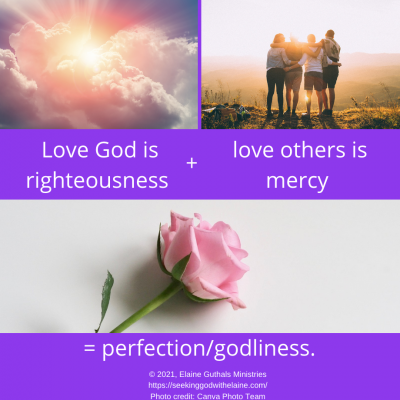
    Think about it. What does the second greatest commandment say? A second is equally important: ‘Love your neighbor as yourself’” (Mt. 22: 39 NLT).

    Love God is righteousness + Love people is mercy = perfection/godliness

    But look at the next verse. “The entire law and all the demands of the prophets are based on these two commandments” (Mt. 22: 40 NLT).

    If we don’t love our neighbors, we haven’t met the foundation of entire law and all the demands of the prophets. It is that important.

    Others above self. That’s the ticket.

    How Do We Please Others?

    “Each one of us is to please his neighbor for his good, to build him up” (Rom. 15: 2 CSB)

    We are to teach others about God’s love for us.

    Every Tom. Every Sally. Every Elaine. No one is exempt from pleasing the neighbor.

    Wesley reminded that neighbor meant everyone else. No one is exempt here, either.

    Thomas brought up how diverse we are. These days the emphasis is on race and ethnicity. Thomas talked about “… character, appearance, and position.”

    Resource

    No one is given a pass.

    But remember, we are not talking rich/poor. We are talking strong/weak in the faith.

    This isn’t a mutual pleasing fest, either. The strong are commanded to build up the weak here — teach the one who is weaker in the faith.

    Think back to what we we talked about in Chapter 14.

    • Lead with love
    • Don’t judge

    Here, we are adding tolerate another disciple’s weaknesses, encourage them, and seek their strengths.

    Brewster cautioned us that pleasing our neighbor for his good is not supposed to be the grounds for our behavior. Our goal is to please God.

    Resource

    Who Did Jesus Please?

    “For even Christ did not please himself. On the contrary, as it is written, The insults of those who insult you have fallen on me” (Rom. 15: 3 CSB) 

    We are to imitate Jesus as He submitted to God rather than pleased Himself.

    Sorry. I have to say it.

    Hodge summed up Christianity. He wrote, “The sum of Christian wisdom is to be Christlike.”

    Resource

    How was Christ? Jesus submitted to God. “When he has done this, then the Son himself will be made subject to him who put everything under him, so that God may be all in all” (I Cor. 15: 28 NIV).

    Hodge noted we want to avoid giving pain. Instead, we want to help heal what we can.

    In case you are wondering, the Scripture quote is from Psalm 69: 9.

    WhoDoWePleasePin

    Making the Connections

    Brewster reminded us what the goal of the gospel is. He wrote, “The great aim of the gospel is to raise our views and desires above this life, and furnish us with pure and powerful principles in the direction of our words and actions, far above the will of fallen man. But while it invites us to lay up our treasure in heaven, it instructs us in everything that may best contribute to bless the life of man on earth.”

    Resource

    This life is secondary. God and our spiritual condition and life are primarily. So, when we say we are to please our neighbor, that doesn’t mean we are letting them remain in sin.

    We are teaching them to live for God. If we are trying to redo for godliness, we need to redo our character. Burn’s list is a good list.

    • Jesus as the foundation
    • Faith, hope, love, and commitment as sound materials
    • Grace and utility in the structure
    • Perfection at the finish

    Resource

    How Do We Apply This?

    • We can give advice when appropriate.
    • We can share financial resources when needed.
    • We should always be encouraging.
    • We should help others when needed.
    • We need to build up our love.
    • We need to increase in God’s wisdom.
    • We should become more unselfish.

    Resource

    In a way, this passage is just more of the same. It is talking unity and God’s superiority. That is something we need to hear many times, so we can praise Him.

    Father God. You are Sovereign God. You call us to be unified. You call the strong to minister to the weak. Help us to lovingly teach them Your ways. Help the weak to grow closer to You. Amen.

    What do you think?

    Leave me a comment below (about this or anything else) or head over to my Facebook group for some interactive discussion.

    If you don’t understand something and would like further clarification, please contact me.

    If you have not signed up for the email daily or weekly providing the link to the devotions and the newsletter, do so below.

    If God has used this devotion to speak with you, consider sharing it on social media.

  • We Interrupt This Program

    Hey, guys. I am going to break into our regularly scheduled devotion and just talk to you today.

    I had some tests run Friday, and they determined I am having seizures in my brain. I don’t know what all this entails yet — except I can’t drive for six months!!!!!

    I just wanted to tell you all so that, if some day you don’t get a devotion, you’ll know why.

    I may have to change some things in order to take better care of myself. I may start doing shorter devotions. I may have more music days. I may go to a five-day schedule instead of a seven-day schedule.

    Or do a combination thereof.

    Pray for me as I do all that has to be done. Pray for my doctor so that diagnoses and treatment are correct. Pray for Adam as he takes care of me and goes to get his driver’s license. Pray for all those whom I will have to ask for help.

    Bottom line is God has this. Wherever He decides I am going to end up with this, the beginning, middle, and end is with Him.

    I talked with Pastor Chris this morning. He reminded me of the verse that says “As the mountains surround Jerusalem, so the LORD surrounds his people both now and forevermore” (Ps. 125: 2 NIV). He has me and Adam surrounded.

    God has this. This has always been in His plan for me. We’ll work the plan together.

    Okay, you do get a song today. Master, the Tempest Is Raging works.

    Master, the Tempest Is Raging
    Vocalist: Elaine Guthals
    Keyboard: Louise Guthals Weiss

    WeInterruptThisProgramPin

    What do you think?

    Leave me a comment below (about this or anything else) or head over to my Facebook group for some interactive discussion.

    If you don’t understand something and would like further clarification, please contact me.

    If you have not signed up for the email daily or weekly providing the link to the devotions and the newsletter, do so below.

    If God has used this devotion to speak with you, consider sharing it on social media.
  • Why and How Are We to Live Godly Lives?

    What is the payoff for living godly lives, and how do we get there? This daily devotional looks at things we can do while we are waiting for Jesus to return to take us home.

    Nuggets

    • If we know the end of this Heaven and earth is coming, we want to live godly lives to prepare us for eternity.
    • We need to be godly because God will not change His laws and commandments and expectations for us.
    • We have to be ready for the day of the Lord by ABCDing.
    • We have to live godly lives until the day of the Lord arrives.

    Devotions in the Review 101: Godliness series

    Being human, we ask ourselves what is in it for us when we live godly lives. That is an easy question to answer.

    How do we live godly lives? That takes a little more to answer it.

    Let’s Put It into Context #1

    Godliness, equated with the Old Testament term fear of the Lord, is reverence in thought, feeling, and conduct that is promoted by walking in His Spirit and obeying God’s laws and commandments and produces a moral likeness of God. The fear of the Lord means awe, reverence and love, not terror.

    Let’s Put It into Context #2

    “But the day of the Lord will come like a thief, and then the heavens will pass away with a roar, and the heavenly bodies will be burned up and dissolved, and the earth and the works that are done on it will be exposed” (II Pet. 3: 10 ESV)

    I don’t want to chase a rabbit. (New year’s resolution? Don’t worry. It won’t last.).

    But I need to explain what all is being dissolved in verse 11. Then we can get to the good stuff.

    Verse 11 refers back to what Peter had discussed in previous verses. It is commonly referred to as the day of the Lord.

    The day of the Lord is when we will be called home. Yep, we are talking end times here.

    • Christ’s reign will have been completed.
    • God’s mercy for sinners will end.
    • Jesus will come again.
    • All that God said would happen will come true.
    • We are going to get to see God for Who He is.
    • God’s glory, power, and wrath will clearly be on display.
    • We will see God really is in control.
    • We will be judged according to our sheep and goat nature.

    Resource

    Glossary

    This Heaven and earth is going to pass away. This verse says it will burn and dissolve. However that takes place, all of the sin of this world will be exposed.

    Until that time, we have to put the correct emphasis on the earth, then. It is a temporary thing.

    Are you still tripping over the fact that this world is going to go away? It is doctrine.

    TheEarthWillPassAway

    The earth will pass away. We won’t. Spaulding wrote, “Dissolution is not annihilation, it is simply transformation.”

    Resource

    If we don’t put our emphasis on the temporary earth, we need to put it on what is eternal. We have to put our emphasis on being godly when Jesus returns.

    Being Godly Because the End Is Coming

    “Since all these things are thus to be dissolved, what sort of people ought you to be in lives of holiness and godliness” (II Pet. 3: 11 ESV)

    If we know the end of this Heaven and earth is coming, we want to live godly lives to prepare us for eternity. Peter is contrasting “… lives of holiness and godliness” (II Pet. 3: 11 ESV) with the “… the works that are done on … ” the earth (II Pet. 3: 10 ESV).

    I know. We think the works that are done on the earth are pretty special. We consider ourselves knowledgeable and caring.

    We don’t hold a candle to God. “For as the heavens are higher than the earth, so are my ways higher than your ways and my thoughts than your thoughts.” (Isa. 55: 9 ESV).

    Let’s look at the arguments posed here for godly living. Spalding gave us several.

    • The day of the Lord is a direct result of man’s sins.
    • Man will be restored to the relationship God intended when the day of the Lord occurs.

    The thing is — we know the end is coming. We just don’t know when. “But the day of the Lord will come like a thief …” (II Pet. 3: 10 ESV).

    We aren’t going to get any more warning than the end time signs.

    To read a related devotion, click the appropriate button below.

    To read devotions in the How Do We Know If We Don’t Know series, click the appropriate button below.

    If we don’t know when Jesus is coming back, that means we have to prepare like it could be today — this minute. “Be watchful, stand firm in the faith, act like men, be strong” (I Cor. 16: 13 ESV).

    What does standing firm in our faith mean? “Only let your manner of life be worthy of the gospel of Christ, so that whether I come and see you or am absent, I may hear of you that you are standing firm in one spirit, with one mind striving side by side for the faith of the gospel” (Phil. 1: 27 ESV).

    We need to live like the gospel tells us to live. We need to live godly lives.

    LiveLikeGospelTells

    Being Godly Because God Never Changes

    “For I the Lord do not change; therefore you, O children of Jacob, are not consumed” (Mal. 3: 6 ESV)

    We need to be godly because God will not change His laws and commandments and expectations for us.

    Melvill pointed out something that is easy to overlook. In essence, we’ve been talking about the changes we will encounter with this earth passing away.

    Resource

    God will never change. “God is not man, that he should lie, or a son of man, that he should change his mind. Has he said, and will he not do it? Or has he spoken, and will he not fulfill it?” (Num. 23: 19 ESV).

    Things are really going to happen just as God says they are. He doesn’t lie. He is not going to reconsider. He isn’t going to be talked out of it.

    Living Godly Lives Start with ABCD

    “Repent therefore, and turn again, that your sins may be blotted out” (Ac. 3: 19 ESV).

    So, we have to be ready for the day of the Lord by ABCDing.

    How do you do that? Let’s start with repent.

    Repentance is acknowledging our separation from God and expressing sorrow for breaking God‘s laws and commandments by making the commitment to changing ourselves through obedience so that we no longer do the wrong things. We need to repent of the sins we’ve committed by doing something that is wrong or not don’t something that is right. Sins our actions by humans that disobey God and break one of his reasonable, holy, and righteous laws and commandments, goes against a purpose he has for us, or follows Satan‘s promptings.

    God designed a Plan of Salvation so that we could be delivered from the consequences of sin. The consequences of sin are spiritual death and separation from God.

    This was accomplished through His grace. Grace is a free and unmerited gift from the Heavenly Father given through His Son, Jesus Christ that enables salvation and spiritual healing to believers by the work of the Holy Spirit. Because of God’s infinite grace, Jesus our Redeemer in order to forgive us of our sins.

    Redemption is where something is used in exchange for something else to gain or regain something. Jesus is our Redeemer because He was born of a virgin, making Him 100% God and 100% man; gave His life on the cross for us so that His blood could pay the price for our sins; and because of God’s great might and power, rose from the grave, conquering death and paying the price for our sins. 

    We access this grace through faith. Faith is the conviction that the doctrines revealed in God’s Word are true, even if we do not understand all aspects of them, a belief which impacts our lives. Because we have faith and believe, we gain the forgiveness of our sins. Forgiveness is, when we ask, God pardons us because we have broken His laws and commandments.

    We accept the pardon by letting go of the guilt and remorse that we feel because we have done something wrong. It is a conscious decision to accept His forgiveness. We also commit to changing ourselves so that we no longer do the wrong things.

    By doing this we gain eternal life in heaven. Heaven is the opposite of hell. It is a perfect existence.

    The ABCDs of Salvation

    If you have not become a believer in Christ, please read through the
    Plan of Salvation and prayerfully consider what God is asking you to do.

    A – admit our sins
    B – believe His Son Jesus is our Redeemer
    C – confess God as Sovereign Lord

    D – demonstrate that commitment by making any changes needed in our lives to
    live the way in which God has called us

    The Disciple’s Job Description

    What Type of Person Should We Be?

    “Do not be conformed to this world, but be transformed by the renewal of your mind, that by testing you may discern what is the will of God, what is good and acceptable and perfect” (Rom. 12: 2 ESV)

    We have to live godly lives until the day of the Lord arrives. What does that mean?

    • We use our intelligence to discern what God wants us to know and good from evil.
    • We are to love as God loves.
    • We are to preach His gospel and make disciples.
    • We are to do whatever God asks us to do.
    • We need to grow in faith and grace.
    • We need to repent of the sins we continue to commit and omit and broken-hearted because we still commit the sins.
    • We need to watch and waiting expectantly for Jesus’ coming.
    • We must be sincere and diligent in living for God.
    • We are to be patient.
    • We need to live lives full of charity

    To read a related devotion, click on the appropriate button below.

    Devotions in the How to Discern the Voice of God series

    Devotions in the Consistency Needed for Spiritual Growth series

    Devotions in the What Is Charity? series

    WhyAndHowAreWeToLiveGodlyLivesPin

    Making the Connections

    I think the bottom line is we need to want it. We need to want godly lives.

    It is going to be hard. Satan is going to throw everything he has at us to try to derail us off the narrow path.

    Glossary

    Wilson told us how we should do this. He wrote, “Christians should live and walk as on the borders of eternity, dying daily.”

    Resource

    Remember when I said if we don’t know when Jesus is coming back, that means we have to prepare like it could be today — this minute.

    This is what Wilson is talking about. Start each day thinking today is going to be the day.

    Vaughan took that a step further. He said we should hasten the day. “In every age Christians are to be praying and labouring for the extension of the gospel over the whole earth.”

    Resource

    I know what you are thinking. How can we do that?

    We do that by spreading and praying for the spread of the gospel. “And this gospel of the kingdom will be proclaimed throughout the whole world as a testimony to all nations, and then the end will come” (Mt. 24: 14 ESV).

    How Do We Apply This?

    Well, we already gave a list of what we are to be doing. Now we have to do it.

    Gracious Heavenly Father. We want to start living as if You are coming today. We want You to find us watching. We want to be living as we should. Help us to live godly lives. Amen.

    What do you think?

    Leave me a comment below (about this or anything else) or head over to my Facebook group for some interactive discussion.

    If you don’t understand something and would like further clarification, please contact me.

    If you have not signed up for the email daily or weekly providing the link to the devotions and the newsletter, do so below.

    If God has used this devotion to speak with you, consider sharing it on social media.

  • Growing in Godliness

    Our goal on the Sanctification Road should be to grow in godliness. This daily devotional looks at how we can train ourselves to grown in godliness and faith.

    Nuggets

    • We want to grow in godliness because God and His Word are real.
    • Growing in godliness means becoming more virtuous.
    • Growing in godliness means we are growing in faith.
    • As we grow, we learn the value of godliness and we gain value in God’s eyes.

    Devotions in the Review 101: Godliness series

    Even though we may feel we have a long way to go on the Sanctification Road, we can take comfort in the fact that we can grow closer to being godly.

    Yes, we can grow to be more God-like. Let’s check it out.

    Let’s Put It into Context

    Godliness, equated with the Old Testament term fear of the Lord, is an attitude of reverence that is promoted by walking in His Spirit. The fear of the Lord means awe, reverence and love, not terror.

    Beecher extended that definition. He said that godliness means “… having a wise view of all the laws of our being and condition, and living in conformity to them.”

    Resource

    Godliness Is a Matter of Training

    “Have nothing to do with irreverent, silly myths. Rather train yourself for godliness” (I Tim. 4: 7 ESV)

    We want to grow in godliness because God and His Word are real.

    Nothing in Scriptures is fiction. The multiple authors did not make up some interesting story to manipulate us.

    God is real. He created the universe. He created mankind.

    All of this was done because God loves us. When we think about I Corinthians 13, we think that is how our marriages should be run.

    Have we ever looked at that as that describes Who God is?

    “Love is patient and kind; love does not envy or boast; it is not arrogant 5 or rude. It does not insist on its own way; it is not irritable or resentful; 6 it does not rejoice at wrongdoing, but rejoices with the truth. 7 Love bears all things, believes all things, hopes all things, endures all things. 8 Love never ends” (I Cor. 13: 4-8 ESV).

    Yep, the only place that breaks down is in verse 5. “… It does not insist on its own way …” (I Cor. 13: 5 ESV).

    God can insist that we do things His way. He is all-powerful, all-knowing, and all-present.

    To read a related devotion, click on the appropriate button below.

    But look what it says. We get to “… train yourself for godliness” (I Tim. 4: 7 ESV).

    Yes, we can change. Yes, it is going to take work.

    Also, it will be a process. Essex Congregational Remembrancer wrote, “This duty includes a strict and impartial inquiry into our own hearts, as to what may be therein likely to prevent our advancement in godliness.”

    Resource

    When we train, that means we have to be committed to the process. We can’t just work on obtaining God’s character once a week.

    It has to become a habit. It has to be engrained in us.

    That also means that we have to look deep inside us. We aren’t talking about a surface change. We are taking about one at the heart level.

    This is also where the watching comes into play. Watchfulness is a continual conscious examination of ourselves and all events so that we may follow God in all things.

    Glossary

    But we have to go through this training. This is the only way we become godly.

    Growing in Godliness

    “For this very reason, make every effort to supplement your faith with goodness, goodness with knowledge, knowledge with self-control, self-control with endurance, endurance with godliness, godliness with brotherly affection, and brotherly affection with love” (I Pet. 1: 5-7 CSB)

    Growing in godliness means becoming more virtuous.

    Ooo, baby. Do these verses sound familiar?

    These are the verses that we used when we talked about the virtues that disciples should possess. We said it was a continuum that culminated in godliness, kindness, and love.

    Devotions in the Christian Virtues series

    These verses are also truly appropriate. They show that we do grow our character.

    We said in Faith as a Virtue that these were not all the virtues on the sit that I found. Sometime this year, we will look at some more of them.

    God will show us where we need to grow to be like Him. However, He wants us to make sure we are always looking for those growth areas.

    So, how do we get to godliness? Perfection, right?

    Well, no. The perfected state indicates the combination of the graces which, when all are present, form spiritual wholeness or completeness. It means we have become as Jesus is. — holy, sanctified, and righteous. That will only happen in Heaven.

    Glossary

    Emmons said we need to be intentional. Do we see a pattern here?

    • Word for 2019: Intentional
    • Word for 2020: Self-discipline
    • Word for 2021: Godliness

    Resource

    It is more than just striving for godliness, though. We have to get it to heart level. We have to make sure our work in finding out what godliness is makes us more like God. We can’t just have head knowledge.

    Gaining the character of God begins with our choice. Yeah, it is going to take work. But if we are diligent, our character does become like His.

    But it has to be more than a new years’ resolution that we forget before we get out of January. It can’t be something we give up in July because it takes so much work. It isn’t one that we will be able to accomplish by December so we will never have to work at it again.

    This is going to be a life-long process. Yeah, we are talking sanctification here.

    ChoiceLifeLongProcess

    Sanctification is the transformation of mind, body, and soul, which begins with regeneration, gradually changes our nature through the promptings of the Holy Spirit, and ends with perfected state of spiritual wholeness or completeness. Regeneration is the change in us that God brings about when we go from being spiritually dead to spiritually alive.

    Glossary

    Champney gave us a real big caution. We can’t let the evaluation process lead to pride or conceit. Instead, the process needs to humble us.

    Resource

    Growing in Faith

    “For everyone who has been born of God overcomes the world. And this is the victory that has overcome the world — our faith” (I Jn. 5: 4 ESV)

    Growing in godliness means we are growing in faith.

    If we really get down to the meat and potatoes of it, when we are growing in godliness, we are really growing in faith. We are strengthening our belief in God.

    Blencowe put it this way. He wrote godliness is “… a real belief in God, the Father, the Son, and the Holy Ghost; our Maker, our Redeemer, and our Sanctifier. It is believing in Him, as He is made known to us in the Bible, in the gospel of Jesus Christ.”

    Resource

    Isn’t that what it is all about? It isn’t that we do the does and don’t do the don’ts. It is our belief in what God has done for us.

    Yes, obedience to God’s laws and commandments is a huge way that we show that belief. Obedience alone is not going to get our ticket to Heaven punched.

    Instead, we have to have faith. We have to be growing in that faith.

    What Do We Gain as We Grow?

    As we grow in godliness, we gain many valuable things and gain in value in God’s eyes.

    We gain temporal blessings when we grow in godliness. We know that “every good gift and every perfect gift is from above, coming down from the Father of lights, with whom there is no variation or shadow due to change” (Jas. 1: 17 ESV).

    We gain a good reputation. Griffith was correct when he wrote that “the discipline of godliness does make a man better inwardly.”

    Resource

    But it also manifests itself into what what the world sees. Our inward godliness informs our actions.

    We’ve talked about how godliness is the parent of contentment. That is because we gain peace as we are living as a God wants us to live. This comes because we start believing that we have been forgiven.

    GrowingInGodlinessPin

    Making the Connections

    Stevens had a great take on our pursuit of godliness. He wrote, “No aim can so call out all the powers of the human mind, and soul, as the aim after God-likeness. For what is godliness? Is it not God-likeness? a seeking to be like God? Yet the question at once arises, How can man be like God? God is infinite, man is finite. Yet with all this disparity, the Bible exhorts us to set the Lord always before us, and to grow up into His likeness.”

    Resource

    That’s right. How are we going to accomplish the impossible?

    Let’s face it. To most of us, it seems like becoming godly isn’t going to happen.

    But Scriptures say, “… With man this is impossible, but with God all things are possible” (Mt. 19: 26 ESV).

    No, we will never be creators, all-knowing and all-seeing.

    But we can imitate God’s moral characteristics. That means we can be holy.

    How Do We Apply This?

    First off, we have to be children of God’s to have a shot at being godly. Boston wrote, “That professor or minister that is not godly can never exercise himself to godliness. It is impossible to act without a principle of acting, and exercise doth naturally require a power of it. He can never exercise himself to running, that wants feet to run with; or to wrestling, who wants arms; nor the ungodly exercise themselves to godliness; on the contrary, ‘an heart they have exercised with covetous practices.’” Just being a good person will never make us godly.

    Resource

    To read a related devotion, click the button below.

    Let’s look at it this way. One of the files in my drafts folder for this year is on the topic of sin being a disease.

    We need a healthy, viable relationship with God.

    The Essex Congregational Remembrancer gave us some really good advice. They wrote, “It is of importance to consider that unless we exercise ourselves unto godliness, so far from making further advances in the Divine life, we shall go backward, not forward.”

    Resource

    We have to grow in our relationships with God. We’ve got to become more like Him.

    Yes, there are days we will go backwards. We always have to try to move forward.

    Gracious Heavenly Father. It brings us great joy to think that we can grow to be like You. Yes, we know from the world’s viewpoint we have a long way to go. You, however, do not look at what we do or do not do. You look at our hearts — our love for You. Help us to grow our faith in You. Amen.

    What do you think?

    Leave me a comment below (about this or anything else) or head over to my Facebook group for some interactive discussion.

    If you don’t understand something and would like further clarification, please contact me.

    If you have not signed up for the email daily or weekly providing the link to the devotions and the newsletter, do so below.

    If God has used this devotion to speak with you, consider sharing it on social media.

  • Sanctification: Transforming Man’s Character

    The last daily devotional looked at churchy words that could only be accomplished by Jesus. We accomplish the churchy word sanctification – but only with divine intervention. This daily devotional reviews what sanctification is and how we navigate the Sanctification Road.

    Devotions in the Self-Discipline Review series

    All year, we’ve been looking at self-discipline. We looked at self-discipline as the operational plan for self-control because it talked about improvement.

    We are reviewing everything and hopefully putting all of the building blocks together. What I am doing is going through all of the devotions for the year and pulling out the nuggets.

    I am formatting this as a glossary page. If I already have one, I will combine them later.

    Sin has to be completely eradicated by breaking its hold on us. That takes time — the rest of our lifetimes, in fact. That is one of the reasons we go through sanctification.

    What Is Sanctification?

    Sanctification is the transformation of mind, body, and soul, which begins with regeneration, gradually changes our nature through the promptings of the Holy Spirit, and ends with perfected state of spiritual wholeness or completeness.

    • Sanctification is the process of building the relationship with God that leads to righteousness (What Is the Relationship between Righteousness and Sanctification?).

    • We are changed from being spiritually dead to spiritually alive in an instant. Changing our character to the character of God means navigating the Sanctification Road (God’s Laws Creates Peace).

    • Sanctification depends on us seeking God. As it is a process, we have to seek God to grow in grace and knowledge (What Is the Relationship between Righteousness and Sanctification?).

    • It isn’t just about doing the do’s and not doing the don’ts. It is about changing our character to be more Christ. It is continuing to move forward on the Sanctification Road to reach the destination of righteousness (How Are Disciples Merciful?).

    • We have to become godly through the process of sanctification (Godliness as a Virtue).

    • Sanctification should be a complete deal. It should be mind, body, and soul. We are to submit to God’s loving kindness with all of our being (How Are Disciples Pure in Heart?).

    • Sanctification is a life-time process. It isn’t something that can be rushed. God’s ways are occasionally polar opposite to the world’s ways (Learning about Jesus from the Holy Spirit).

    What Sanctification Isn’t

    • We are not going to grow in grace and knowledge — we won’t progress through sanctification — if we don’t work at seeking God (What Is Diligence?).

    • Sanctification does not give us license to sin. It calls us to the opposite — a life separated from sin. Sanctification is the process making that so (What Is the Relationship between Righteousness and Sanctification?).

    • God isn’t selling fire insurance. We can’t admit our sins, believe He is our Savior and Redeemer, and confess God as our Sovereign Lord – and drop it. God wants to see evidence that we have chosen Him. That evidence is our obedience. We have to live like we were converted. We have to undergo the sanctification. We have to submit (The Nominal Disciple).

    • It isn’t about us and how smart and skillful we are in surviving whatever trials are thrown our way. It is about transforming us through the process of sanctification so that we may be righteous and holy (How Does Longsuffering Help Consistency?).

    Sanctification Is a Process

    • We are on our way to being made holy, sanctified, and righteous when we realize how much we need God. Our most important need from Him is for gift of salvation. We ABCD (Does God Help Those Who Help Themselves?).

    • Submitting to God means imitating Him. The whole purpose of our learning is so that we progress on the Sanctification Road and become more like Jesus. We have to follow the promptings of the Holy Spirit as He teaches us about Jesus. Then, we will get our well-done-good-and-faithful-servant (Mt. 25: 21) at the appropriate times (What Is Election?; Learning to be a New Creation).

    • There is whole continuum between salvation and us being like Him. It is called sanctification (Aren’t We All Children of God?).

    • Sanctification begins as the result of being set apart. It is the process of becoming rooted and grounded (What Is the Relationship between Righteousness and Sanctification?).

    • Being holy is unique to God. Being holy produces the righteousness. It takes a process — sanctification — to get there. We progress in the process by obedience. That is doing the do’s and not doing the don’ts (How Do Disciples Crave Righteousness; Faith as a Virtue).

    • A poor in spirit person is one who sees that there is still a lot of the sanctification process ahead. This disciple knows that we will always fall short while we are here in these earthly bodies (Are Disciples to be Docile?).

    • Sanctification is learning — acquiring wisdom — so that we can grow in grace and knowledge. It happens at conversion, but it is also a growing process. One of the things the Holy Spirit will help us with is increasing our knowledge. This is a normal step in the sanctification process (Who Is the Holy Spirit?).

    • On our Sanctification Road, self-control plays a big part in securing our successes along the way. We will not continue to progress toward righteousness if we allow our human passions to rule our lives (Temperance as a Virtue).

    • Sanctification is a process; it isn’t an immediate transfusion of virtue. So, it isn’t the good coming in and rooting out all the evil (Who Can Learn God’s Truth?).

    • Since the Sanctification Road is a process, that isn’t going to happen overnight — and it isn’t going to be easy. Our human nature is going to kick and scream. Thank goodness we have God’s power in our side! (What Happens When We Repent?; What Is the Relationship between Righteousness and Obedience?).

    • Sanctification is a road. The road to sanctification is hilly and curvy. It won’t be smooth sailing. It has a beginning and an end (Who Can Learn God’s Truth?; How Are We to be Inclusive in Our Worship?).

    Screen Shot 2020-11-22 at 10.38.48 PM
    • Putting on the new self is a lifetime process. We don’t get the new self immediately. We only get it at the end of the Sanctification Road (Learning to be a New Creation).

    • God’s bringing in the righteousness is kind of like a graduation for us. We have completed — and succeeded on — the Sanctification Road. It is now time to enter heaven (What Is the Tribulation?).

    • God is patient with us — He is longsuffering. He patient is about our sanctification process. God takes His time to test and realign us with His standards. He takes His time making us holy — our lifetime (How Does Circumspection Help Consistency?).

    • Whether godliness is the end of the progression or love is, the focus has to be our growing to be more like God. We want the sanctification, so we get to righteousness (Kindness and Love as Virtues).

    Sanctification Means Changing Our Character

    • Sanctification separates us from our old lives and builds a new life in Christ. This is done by the work of the Holy Spirit’s promptings (How Are Disciples Pure in Heart?).

    • When we are redeemed from lawlessness and cleansed, we take on God’s nature. We receive a new character upon conversion. Then we also build our character to be more like God’s when we navigate the Sanctification Road. There is a lot of work left to do to get us totally like Him — and it won’t be complete until we finish the Sanctification Road when we see Him face to face (Jesus as a Teacher; How Are We Made New Creations?).

    • God wants to mold our character. He wants disciples to be like Him. We have to grow in grace and knowledge through sanctification until we have His character (How Do We Profit from Scriptures?; Disciples’ Duty to the Poor).

    • The Bible tells us what our character should be like to grow us into steak adults. But isn’t that what the road to sanctification is? We’ve given it several “names”: grow from milk babies to steak adults, work out our salvation, and become sanctified so we grow to become holy and righteous. Really, aren’t they all the same thing? We want to grow to be like God (How Are We to be Inclusive in Our Worship?).

    • We have to live like we were converted. We have to do the progression. We have to undergo the sanctification (Godliness as a Virtue).

    • When we purposefully focus on doing His Will, we become holy like Him. We build our character as we mature our faith. This happens through sanctification, with the end goal righteousness (What Does Charity Mean?).

    • Don’t worry if we are not where we want to be on the sanctification scale. God is working with us. Sanctification is training us to be righteous. This is imperative as we train for our eternal lives (What Is the Relationship between Righteousness and Sanctification?).

    Divine Help with Sanctification

    • Jesus may have done the heavy lifting in the Plan of Salvation by being the One to die on the cross, but the Holy Spirit is in it for the long haul. The Spirit is the One who convicts us and leads us down the road of sanctification (Who Is the Holy Spirit?).

    • The Holy Spirit has to testify that He is working in our lives and that we are following Him. He has to verify that, when we are being sanctified, there is evidence of the Holy Spirit working within our lives (What Is the Relationship Between Righteousness and Sanctification?).

    • Sanctification is the evidence of our conversion. It shows that the Holy Spirit is living within us. It is an indication that we have been reconciled with God (What Is the Relationship between Righteousness and Sanctification?).

    • Sanctification is all about God disciplining us until we are righteous (What Is the Relationship between Righteousness and Sanctification?).

    • God’s comfort is not is that it is just straight comfort. God has a one-track mind on this — He is sanctifying us (How Can We Find Comfort in Troubling Times?).

    • The Bible is a guide through our process of sanctification. It outlines our duties and responsibilities (How Do We Profit from the Scriptures?).

    • Jesus brought life — eternal life. We have to get our focus off this world and put it onto the new heaven and earth. That means we have to be working the process of sanctification so that we are becoming holy and righteous (Is Peace an Attitude?).

    • God wants us sanctified, holy, and righteous (How Does Circumspection Help Consistency?).

    • Once God knows us as His children, we can become like Jesus through sanctification. That is what God has predestined (How Does Predestination Fit In?).

    • God is a hands-on God. He doesn’t want us to make a profession of faith and never contact Him again. He wants us to be firmly on the Sanctification Road (Old Testament Reasons for Judgment).

    • God will completely fill and overflow us by making godly, holy, and righteous. He is going to sanctify us (Rewards for Focusing on God).

    • Jesus knew we could only take so much at once. He was well aware that sanctification is a process (Learning about Jesus from the Holy Spirit).

    Navigating the Sanctification Road the Right Way

    • We were saved the instant that God forgave our sins. But that didn’t mean salvation was over. Our job description says we need to work out our salvation. We do that as we navigate the sanctification road (Love and Obedience: The Last Two Steps in Salvation).

    • We have to be genuine when we ABCD. We have to truly submit to God. We have to obey His laws and commandments. Yes, that is going to go against our human nature. That is part of the reason we go through the process of sanctification. God will help us as we show Him that we will submit to Him (The Nominal Disciple).

    • Only disciples are going to be willing to navigate down Sanctification Road. Worldview people are going to steer way clear of that route (How Does Predestination Fit In?).

    • God wants us to decide that we want to make decisions pleasing to Him. Those decisions trigger actions that change our character to be more like His. That is what sanctification is all about (Honoring the Lord through Worship).

    • There are several things for which we are instructed to watch. We have to watch out for Satan tempting us. We have to watch to make sure we are on the right Sanctification Road. We have to watch for Jesus’ return. Since we don’t know the date and time of Jesus’ return, what is important is the Sanctification Road and watching for Jesus’ return (What Is Evangelism?; What Is the Tribulation?).

    • When we pray to God about keeping us on the Sanctification Road, we are asking that we successfully make the end goal – Heaven. That alone should bring us peace as we contemplate the future rewards for being faithful and the rest from the struggles temptations create (Peace Gained through Prayer).

    • By navigating the hills and valleys of the Sanctification Road, we use God’s standards to evaluate our actions. Doing so will help keep this world in our rearview mirror (What Does Sanctification Have to Do with Purity?).

    • As we navigate the Sanctification Road, we should learn two things to purify us. First, God will be watching us, so we must walk carefully to do His Will. Second, we must work to know what His Will is (What Is Honor to a Disciple of Christ?).

    • But as we navigate Sanctification Road, it should be easier to keep the laws and commandments. Why? Our character is growing more like God’s (Who Can Learn God’s Truth?).

    SanctificationTransformingMansCharacterPin1

    God. Grow us to be like You. Sanctify us so we have Your character. Amen.

    What do you think?

    Leave me a comment below (about this or anything else) or head over to my Facebook group for some interactive discussion.

    If you don’t understand something and would like further clarification, please contact me.

    If you have not signed up for the email daily or weekly providing the link to the devotions and the newsletter, do so below.

    If God has used this devotion to speak with you, consider sharing it on social media.

  • Isaiah’s Message on Living for God

    Isaiah, all those thousands of years ago, gave us advise on how to live for God. This daily devotional looks at how God wants us to completely submit to Him and not hold back.

    Nuggets

    •  God was telling Isaiah here to not hold back.
    • Self-denial is a large component of fasting, but I think we do a disservice when we strictly focus on that, though.
    • God will lead us through this life – if we let Him.

    Devotions in the Isaiah’s Message from Sovereign God series

    When I was pulling everything to start writing this devotion, I thought it was kind of ironic. Some of the verses (that we don’t get to) talk about how God expects us to honor the Sabbath.

    I just got a text saying our church is online only for the next two weeks. Hmmm. Another lesson my Ladies are going to miss.

    But when I got looking into this a little closer, Isaiah was really giving us a roadmap on how to live our lives. Let’s check it out.

    Don’t Hold Back

    “‘Cry out loudly, don’t hold back! Raise your voice like a ram’s horn. Tell my people their transgression and the house of Jacob their sins. They seek me day after day and delight to know my ways, like a nation that does what is right and does not abandon the justice of their God. They ask me for righteous judgments; they delight in the nearness of God.’ ‘Why have we fasted, but you have not seen? We have denied ourselves, but you haven’t noticed!’ ‘Look, you do as you please on the day of your fast, and oppress all your workers. You fast with contention and strife to strike viciously with your fist. You cannot fast as you do today, hoping to make your voice heard on high. Will the fast I choose be like this: A day for a person to deny himself, to bow his head like a reed, and to spread out sackcloth and ashes? Will you call this a fast and a day acceptable to the Lord?’” (Isa. 58: 1-5 CSB)

    Ooo, baby. Do you know anyone who doesn’t like to cry in public? Maybe they don’t show much emotion at all. God didn’t want that here.

    God was telling Isaiah here to not hold back. Let the Israelites see his emotion. Alexander wrote that, by doing that, Isaiah would show the importance of the message.

    Resource

    Why would God be wanting Isaiah to be forceful in his message? Well, he does have to convince the hardheaded — and hard hearted — Israelites.

    We have to be seen as a true believer when we witness. This is especially true when we are giving a message that is going to take faith, not sight, to believe. We can’t appear to have any doubts.

    Henry put it this way. He wrote that must “not spare them, nor touch them with his reproofs as if he were afraid of hurting them, but search the wound to the bottom; lay it bare to the bone; not spare himself, or his own pains, but cry as loud as he can.”

    Resource

    Elaine-speak. Those to whom we are witnessing may not like to hear that their actions are considered sin. They may think that they are a good enough person to get a pass.

    Disciples can’t shrink from telling them like it is. They have to admit that they are separated from God, believe that the only way that can be rectified is ask Jesus to be their Savior and Lord, confess God as their Sovereign Lord, and demonstrate that decision by submitting to God’s authority.

    No, we can’t be timid about telling that message. There are real consequences for those who do not ABCD.

    The ABCDs of Salvation

    If you have not become a believer in Christ, please read through the
    Plan of Salvation and prayerfully consider what God is asking you to do.

    A – admit our sins
    B – believe His Son Jesus is our Redeemer
    C – confess God as Sovereign Lord

    D – demonstrate that commitment by making any changes needed in our lives to
    live the way in which God has called us

    The Disciple’s Job Description

    What got me here was that it could look on the surface that the Israelites were doing it right.

    • “They seek me day after day and delight to know my ways …” (Isa. 58: 2 CSB)
    • “… They ask me for righteous judgments; they delight in the nearness of God” (Isa. 58: 2 CSB)
    • “Why have we fasted, but you have not seen? We have denied ourselves, but you haven’t noticed!” (Isa. 58: 3 CSB)

    We may think we are doing worship right, but we might not be. Jesus said, “Not everyone who calls out to me, ‘Lord! Lord!’ will enter the Kingdom of Heaven. Only those who actually do the will of my Father in heaven will enter” (Mt. 7: 21 NLT).

    No, we can’t just do it, we have to do it right. God has expectations and requirements.

    Let’s look at it this way. Verse 1 was Isaiah talking; verse 2 was the Israelites talking. We would call it talking back. They were sticking up for themselves saying they didn’t do anything wrong.

    Oh, yeah. That is so us.

    Henry called it hypocritical religion. Oh, yes. They are presenting a godly front.

    But it is just a smokescreen. “You fast with contention and strife to strike viciously with your fist …” (Isa. 58: 4 CSB). Henry wrote that it really wasn’t a cover for their sin. Instead, it was an aggravation of it.

    Resource

    Moore did a good job of explaining what the disconnect is here. We want to know the minimum we have to do to be saved. God, on the other hand, wants us to be totally like Him.

    Resource

    Let’s flip it to what Isaiah is really saying — that is hinted at in Matthew 7: 21. How religious can we be and still be lost?

    Henry brought up a good point — however, it might not be as relevant in today’s world. Why do people play at religion? They make it seem like they are following God, but they really aren’t.

    Henry said it stemmed from “… a secret pride at being numbered among the people of God — an indefinite notion of outward prosperity as usually following on a bold religious profession.” Hmmm.

    Resource

    Well, yes. People buy into the prosperity gospel. That is a thing. I am not real sure the pride is the motivation these days.

    But if people are pretending to be a disciple, why aren’t they the real thing?

    Part of the problem is some don’t truly seek God. We don’t read Scriptures as we should. We don’t pray as we should. We don’t ask God to guide us in our decision-making processes.

    We want whatever we are willing to give to be good enough. We want our actions to bring on God’s favor — regardless if they meet His expectations or not.

    A lot of times, though, God asks us to do something really, really hard — something we really don’t want to do. For us, that is a deal breaker. We may still go through the motions, but our relationships are damaged because we won’t submit.

    Hmmm. So, we are not only supposed to not hold back in our witnessing, but we are not supposed to hold back in our relationships, too.

    It isn’t about works. It isn’t about what we do or don’t do.

    It is about how much we have submitted to God.

    The Importance of Self-Denial

    “Isn’t this the fast I choose: To break the chains of wickedness, to untie the ropes of the yoke, to set the oppressed free, and to tear off every yoke? Is it not to share your bread with the hungry, to bring the poor and homeless into your house, to clothe the naked when you see him, and not to ignore your own flesh and blood? Then your light will appear like the dawn, and your recovery will come quickly. Your righteousness will go before you, and the Lord’s glory will be your rear guard. At that time, when you call, the Lord will answer; when you cry out, he will say, ‘Here I am.’ If you get rid of the yoke among you, the finger-pointing and malicious speaking, and if you offer yourself to the hungry, and satisfy the afflicted one, then your light will shine in the darkness, and your night will be like noonday” (Isa. 58: 6-10 CSB)


    Isaiah started talking about fasting in the previous verses, but I saved our discussion of it for here. Fasting is more than just giving up eating food. It is doing so in order to seek God more deeply.

    To read a related devotion, click the button below.

    Fasting is a way to humble ourselves. It is a way to cleanse ourselves so that we will more accurately be a temple for God.

    Talbot noted that there are no hard rules about fasting detailed in the laws and commandments. We are given no guidelines as to whether the abstinence from food is total or the duration. He wrote, “We are not to look upon fasting in itself as a thing that recommends us to God. But there are good ends for which fasting is appointed, and which are promoted by it, that make it acceptable to God.”

    Three reasons were given for fasting.

    • Conquering sin
    • Preparing ourselves for prayer
    • Expressing our repentance

    Resource

    Alexander brought up a very good point. He reminded us that Isaiah really wasn’t talking just food here. What Isaiah was really talking about was “… acts of conscientious self denial …”

    Resource

    I can see where fasting should be expanded to more than food. Alexander is right. Food may be my issue, but not yours. You may need to consciously give up something else.

    God is wanting us to submit to Him. That means self-denial.

    Yes, self-denial is a large component of fasting. I think we do a disservice when we strictly focus on that, though.

    I think the emphasis should be more on living for God. God has asked us to become more like Him. He will tell us what changes need to be made.

    Let’s look at verse 7 again. “Is it not to share your bread with the hungry, to bring the poor and homeless into your house, to clothe the naked when you see him, and not to ignore your own flesh and blood?” (Isa. 58: 7 CSB).

    The self-denial isn’t just so we can save money on the food bill (or whatever bill we are denying ourselves). Isaiah said whatever we were giving up should be given to someone in need.

    Ooo, baby. Did anyone else’s mind go to the sheep and the goats? “For I was hungry and you gave me something to eat; I was thirsty and you gave me something to drink; I was a stranger and you took me in; I was naked and you clothed me; I was sick and you took care of me; I was in prison and you visited me” (Mt. 25: 35-36 CSB).

    Isaiah just missed the drink and prison.

    What this is all about is the second greatest commandment. “The second is like it: Love your neighbor as yourself” (Mt. 22: 39 CSB).

    Verses 9 and 10 may be a little confusing. “At that time, when you call, the Lord will answer; when you cry out, he will say, ‘Here I am.’ If you get rid of the yoke among you, the finger-pointing and malicious speaking, and if you offer yourself to the hungry, and satisfy the afflicted one, then your light will shine in the darkness, and your night will be like noonday” (Isa. 58: 9-10 CSB).

    Henry interpreted this to mean that those denying themselves of what God asks and showing charity to others will be rewarded.

    Resource

    Verse 8 talks about a healthy church. We can see a church is healthy because it is meeting and performing God’s work.

    Williams also told us the flip side – unhealthy characteristics that we can see.

    • To focused on the ceremonial, religious aspects rather than the relationship with God.
    • Not teaching the Scriptures.
    • Finding fault instead of being loving.

    Resource

    We want to be healthy disciples attending a healthy church.

    Do you want to know what the best part of these verses are? God responds. When we follow His calling and deny ourselves what He wants us to, He rewards us.

    God rewards us with His presence. He protects us.

    How Does God Reward Us for Living Like Him?

    “The Lord will always lead you, satisfy you in a parched land, and strengthen your bones. You will be like a watered garden and like a spring whose water never runs dry. Some of you will rebuild the ancient ruins; you will restore the foundations laid long ago; you will be called the repairer of broken walls, the restorer of streets where people live” (Isa. 58: 11-12 CSB)

    God will lead us through this life – if we let Him. We can’t go thinking we can do this on our own. We’ve talked before how we should let the Holy Spirit lead.

    To read a related devotion, click on the appropriate button below.

    Letting God lead brings us satisfaction and strength. That means we can meet whatever comes our way.

    IsaiahsMessageOnLivingForGodPin

    Making the Connections

    God calls us to repentance and salvation. He calls us to a better life.

    Yes, that life means there will be self-denial. But overall, the benefits far outweigh the detriments.

    God does expect things from us. He expects our consistent worship. He expects us to reveal Him to others. Our reward is delighting in Him.

    How Do We Apply This?

    Henry explained four forms of gospel service. They are:

    • Daily prayer
    • “A love for the preached Word
    • “An open profession of Christ, and
    • “An apparent earnestness in inquiring after the ways and will of God.”

    Resource

    Think about it. Without a genuine profession of faith, the rest would be a moot point. Others must see that profession. We show the profession is genuine by communicating with God and listening for Him to communicate with us.

    Our profession of faith in Christ is to change our character to be more like God’s. We do that through living His way.

    God. We want to be like You. Help us to change our character and show others You in us. Amen.

    What do you think?

    Leave me a comment below (about this or anything else) or head over to my Facebook group for some interactive discussion.

    If you don’t understand something and would like further clarification, please contact me.

    If you have not signed up for the email daily or weekly providing the link to the devotions and the newsletter, do so below.

    If God has used this devotion to speak with you, consider sharing it on social media.

  • What Does Our Conscience Have to Do with the Spirit World?

    Our conscience governs our actions. Since the Holy Spirit guides our actions, it is thought that the Holy Spirit is our conscience. This daily devotional looks at the tie between our consciences and the spirit world.

    Nuggets

    • Without our consciences, we would not know how to govern our actions.
    • Thomas called the conscience our connection to the spirit world.
    • Meyer took Thomas’ contention that the conscience could be nourished and expanded on that.
    • Wetherspoon contended that our conscience makes sin horrifying to all.
    • If we add an element of self-evaluation into the mix, doesn’t that mean we can overthrow our conscience and do whatever we want?

    Devotions in the The Unseen Spirit World series

    Vincent gave a list of things of which Heaven values: “… love and faith and purity and truth and good conscience …” We haven’t really dug into conscience. Let’s do that now.

    Resource

    You may be wondering how conscience ties in with the spirit world. It does when we remember that it is believed that the Holy Spirit is our conscience.

    Let’s Put It into Context

    The Holman Bible Dictionary didn’t have spiritual world and couldn’t give us a definition of spirit. The best they did was to say was “the kinship of spirit, breath, and wind is a helpful clue in beginning to understand spirit.”

    Resource

    Hmmm. Three invisible things.

    What Is Our Conscience?

    Our conscience is the part of our nature that points us to what is right and gives us pain or pleasure when we choose wrong. Thomas described the conscience as “… the ‘inner man.’” It is the what makes us us. Without it, we would not know how to govern our actions.

    Resource

    Thomas reminded us that a conscience is not a one-size-fits-all deal. In fact, he contended that there are three levels of conscience:

    • The sleeping conscience
    • The alarmed conscience
    • The peaceful conscience

    Disciples are at the third level. From that definition, it is easy to see why we think of the Holy Spirit as our conscience.

    How Does Our Conscience Connect to the Spirit World?

    “But we have renounced disgraceful, underhanded ways. We refuse to practice cunning or to tamper with God’s word, but by the open statement of the truth we would commend ourselves to everyone’s conscience in the sight of God” (II Cor. 4: 2 ESV)

    Thomas called the conscience our connection to the spirit world. He contended that it is through our conscience that we know God.

    We are to connect God with the conscience through “… the open statement of the truth …” (II Cor. 4: 2 ESV). This truth is for everyone, not a select few.

    Think back to the levels. God’s truth is what takes us from sleeping and alarmed to peaceful.

    Why does this make our consciences be at peace with God?

    • God is in control.
    • God promises His peace.
    • God knows what was, what is, and what is coming.
    • God knows how we should act.

    Thomas felt that it is God’s mercy that tips the conscience from alarmed to peaceful. God’s mercy is the unexpected way God responds in love to our needs.

    We can go from alarmed to peaceful because of the nourishing aspect of our consciences. God’s truth as well as our consciences teach us right from wrong.

    Resource

    How Does Our Conscience Connect to the Spirit World?

    Meyer took Thomas’ contention that the conscience could be nourished and expanded on that. He showed how we can grow our conscience in grace and knowledge.

    When witnessing, Meyer advised us to aim for the conscience. That makes sense.

    The conscience is where we know right from wrong — obedience from sin. As we navigate the Sanctification Road, we are to work out our salvation and grow from milk babies to steak adults.

    Our consciences grow as we experience situations in which we must decide what is right and what is wrong. We are regenerated and sanctified when we utilize those experiences to grow our character to be like God’s.

    Regeneration is the change in us that God brings about through the work of the Holy Spirit when we go from being spiritually dead to spiritually alive. Spiritual death is the separation from God that occurred as a consequence of Adam and Eve’s original sin. The spiritually alive are those who have ABCDed, so they are no longer separated from God.

    Sanctification is the transformation of mind, body, and soul, which begins with regeneration, gradually changes our nature through the promptings of the Holy Spirit, and ends with perfected state of spiritual wholeness or completeness.

    Glossary

    God put our consciences in us. He has a conscience, and we are made in His image.

    To read a related devotion, click the button below.

    We talked about our conscience being the tie between our moral character and our feee will.

    • Our moral character tells us what is right and what is wrong.
    • Our free will gives us the opportunity to make the choice.
    • Our conscience prompts us to make the right choice.

    Resource

    Why Do We Choose to Do What Is Wrong?

    “Each one betrays his friend; no one tells the truth. They have taught their tongues to speak lies; they wear themselves out doing wrong” (Jer. 9: 5 CSB)

    So, if our conscience comes from God and is poking at us to do His right instead of His wrong, how do we choose to do what is wrong? Wouldn’t that mean we would want to choose God?

    Wetherspoon contended that our conscience makes sin horrifying to all. Our conscience is programmed by God to disapprove of wrong choices.

    Hmmm. I wonder if Wetherspoon read about Thomas’ sleeping conscience. I would categorize it as turned off at the moment.

    We aren’t going to get much direction either way out of a turned-off conscience.

    Wetherspoon did write about the power of the conscience. He wrote, “Conscience can condemn us without witnesses; and the arm of that executioner cannot be stopped. And if we consider, that neither the attendance of friends, nor the enjoyment of all outward pleasures, can comfort those whose conscience is once awakened, and begins to accuse them, we cannot but conclude, that vice is to be pitied as well as shunned; and that this alone makes it more uneasy than virtue, which sweetens the greatest misfortunes.”

    Resource

    A component of this power is self-reflection. Self-evaluation can be either good for us, or it can trip us up.

    I loved how Witherspoon put it. He wrote, “The greatest punishment that a wicked man can suffer in this world, is to be obliged to converse with himself.”

    We don’t like to call ourselves on the carpet for our actions. It is difficult to peel back the layers and see the contributing factors.

    The thing is, we do have this conscience programmed by God. However, it is in this sinful body. Our sinful nature is going to battle our conscience every chance it gets.

    Can We Overthrow Our Conscience?

    If we add an element of self-evaluation into the mix, doesn’t that mean we can overthrow our conscience and do whatever we want?

    Perks believed that the conscience could not be overruled. He wrote, “It may be resisted, but it cannot be dethroned; it may be seared, but it cannot be destroyed.”

    Resource

    • Following our imaginations may not focus us.
    • Reason may fall anywhere on the continuum from too skeptical to too sophisticated.
    • Passion may swamp us.

    Our consciences have to appeal to God’s truth. Perks wrote, “… there is not a law, precept, prohibition, or warning of the Word of God to which the conscience will not instantly respond.”

    Our sinful nature tries to break that connection. I think that battle is best described as the alarmed level. Every decision to follow our consciences is a decision against what our sinful nature would have us do.

    That brings up a whole slew of factors. We will have to deal with the guilt and uncertainty.

    WhatDoesOurConscienceHaveToDoWithTheSpiritWorldPin

    Making the Connections

    I still think that the Holy Spirit is more than just our conscience. Yes, He is there to remind us what is holy and righteous.

    But the Holy Spirit has other job duties assigned.

    • The Holy Spirit will serve as an advocate for us with the Father (Jn. 14: 16).
    • The Spirit will teach us what we don’t know and will remind us what we do know (Jn. 14: 26).
    • When we pray in the Spirit (Jude 1: 20-21), He helps us pray when we cannot (Rom. 8: 26).
    • The Holy Spirit helps us to speak when we are being persecuted for our faith (Mk. 13: 11) just as He carried the prophets in proclaiming God’s message (II Pet. 1: 21).
    • The Holy Spirit is a witness to us about what God has done (Ac. 5: 32) and testifies about Him (Jn. 15: 26).
    • We will have help in following God’s laws and commandments (Ezek. 36: 27).
    • We are saved by “… renewal by the Holy Spirit (Ti. 3: 5 NIV).
    • Circumcision of the heart is accomplished by the Holy Spirit using the atoning blood of Jesus.
    • God teaches us His Will through the Holy Spirit.
    • God uses the Holy Spirit to impart His wisdom.

    Glossary

    We do have to build our characters in the ways God wants. That is a decision we need to make at conversion and grow into along the walk. We grow through the efforts of the Holy Spirit.

    That is the effect that Tristram was talking about: “By the effect of the Spirit on the Christian life.” Salvation has to make a difference in our lives.

    Resource

    Making the Connections to Self-Discipline

    Self-discipline will play a vital role in our responses to our consciences. If we are going to respond in character with God, we have to know that character and have changed ourselves to be imitating it.

    How Do We Apply This?

    We keep saying that we have to change our characters to be like God’s. We aren’t to be satisfied with a head knowledge.

    We have to go for the heart knowledge. Knowing God has to fundamentally change us.

    In order to do that, we have to continually and deeply seek God. It will take hearing His Word, reading it, studying it, meditating on it, and memorizing it. All through that, we need to be in prayer, asking God to provide the meaning.

    Searching for and Seeking God

    Hearing His Word (Rom. 10: 17).
    Reading His Word (Rev. 1: 3).
    Praying to Him (Heb. 4: 16).
    Studying His Word (Ac. 17: 11).
    Meditating on His Word (Ps. 1: 1-2).
    Memorizing His Word (Ps. 119: 11).

    Does the Holy Spirit work through our consciences to guide us where God wants us to be? Yes.

    Is that all the Holy Spirit is? No. The Holy Spirit, with the wide variety of responsibilities, is an important connection to the spirit world.

    Father God. You created us so that we could worship You. You designed us with helps, such as our consciences, so that we could do that. You have given us the Holy Spirit as a Guide to encourage us and correct us. Help us to grow in grace and knowledge of You, so that we may change to be like You. Amen.

    What do you think?

    Leave me a comment below (about this or anything else) or head over to my Facebook group for some interactive discussion.

    If you don’t understand something and would like further clarification, please contact me.

    If you have not signed up for the email daily or weekly providing the link to the devotions and the newsletter, do so below.

    If God has used this devotion to speak with you, consider sharing it on social media.

  • Applying the Spiritual World to Everyday Life

    Those who are born again are assured that they will overcome the world. This victory is secured by faith. This daily devotional will look at how disciples of Christ can overcome the world through faith.

    Nuggets

    • The concept of being born again has tripped up a lot of people over the centuries.
    • Step one of being assured victory in overcoming the world is mind over matter.
    • Step two of being assured victory in overcoming the world can be a deal breaker for some, but we have to submit to God.
    • Overcoming the world is necessitated by the fact that Satan is currently ruling this world in opposition to God.
    • We are assured victory in Christ.

    Devotions in the The Unseen Spirit World series

    Vincent stressed that disciples of Christ are to apply what we discern of the spirit world to our everyday lives. He wrote, “It is one thing to assent to the truth that ‘the things which are not seen are eternal’; it is another thing to apprehend that truth, and to take it into life as a working principle; to realise that the things on which heaven stamps a value — love and faith and purity and truth and good conscience — are the paramount things, and to make everything give way to these. That kind of spiritual seeing has a teaching power.” Let’s see how to do that.

    Resource

    Let’s Put It into Context

    The Holman Bible Dictionary didn’t have spiritual world and couldn’t give us a definition of spirit. The best they did was to say was “the kinship of spirit, breath, and wind is a helpful clue in beginning to understand spirit.”

    Resource

    Hmmm. Three invisible things.

    How Are Disciples to Overcome This World?

    “For everyone who has been born of God overcomes the world. And this is the victory that has overcome the world — our faith” (I Jn. 5: 4 ESV)

    The concept of being born again has tripped up a lot of people over the centuries. Let’s see if we can figure it out.

    Nicodemus has trouble with the concept. “Nicodemus said to him, ‘How can a man be born when he is old? Can he enter a second time into his mother’s womb and be born?’” (Jn. 3: 4 ESV).

    Braithwaite explained it for us. He wrote, “To be born of God is to have a supernatural principle of spiritual life implanted by God in the soul.”

    Resource

    We are born again when we ABCD and become disciples of Christ. We change our character to imitate His.

    The ABCDs of Salvation

    If you have not become a believer in Christ, please read through the
    Plan of Salvation and prayerfully consider what God is asking you to do.

    A – admit our sins
    B – believe His Son Jesus is our Redeemer
    C – confess God as Sovereign Lord

    D – demonstrate that commitment by making any changes needed in our lives to
    live the way in which God has called us

    The Disciple’s Job Description

    But I am sitting here, wondering how being born again is different than regeneration. Braithwaite described being born again as the following:

    • A principle of grace.
    • Something that is infused instead of acquired.
    • Due to the power of God.
    • An inward change.
    • The birth of all of our graces.

    Is maybe being born again the what and regeneration the how? Or is it like sanctification: navigating the Sanctification Road, working out our salvation, and growing from milk babies to steak adults? They are all three basically describing the same thing.

    At times, it seems like we are never going to be able to have God’s character. Our sinful nature can be so opposite to what God calls us to be. Even if we don’t feel that far away, there are always those certain aspects which we struggle with doing it God’s way.

    Our sinful nature can be so opposite to what God calls us to be.

    How Are We Assured a Victory in Overcoming the World?

    First John 5: 4 tells us that we are assured victory in overcoming the world. I see you shaking your heads and asking how that could be.

    A lot of this has to do with our minds. We’ve said before that faith is all in our minds. Getting our minds in line is a two-step process.

    First, we have to get our minds under control. Second, we have to turn it all over to God.

    Mind over Matter

    Step one of being assured victory in overcoming the world is hard. It is mind over matter, but it seems like our minds have minds of their own.

    We have to corral our minds enough so that we can change our character to remember God’s — loving, pure, and just. We occupy our minds with Jesus — what He did for us, and what He calls us to do for Him.

    Mind to God

    Step two of being assured victory in overcoming the world can be a deal breaker for some, but it is extremely important. We have to submit to God. He is the One in control, calling the shots — not us.

    That means we have to have, as the Homilist wrote, “the devotion of the intellect to the study of God; of the heart to the love of God; of the conscience to the will of God.

    Resource

    How Do We Overcome the World?

    Overcoming the world seems like a straightforward statement. The overcoming is necessitated by the fact that Satan is currently ruling this world in opposition to God.

    How are disciples called to overcome this world? The Homilist told us that it means disciples “… conquers errors, lusts; he overcomes bad habits and reforms corrupt institutions.” We diligently work to persevere through trials and temptations in order to become more like God.

    Resource

    Oh, yeah. That is not easy at all.

    It is a good thing that God has equipped us for this spiritual warfare. Not only that, He does the fighting for us.

    To read a devotion in the Armor of God series, click on the appropriate button below.

    Liddon told us what exactly what world was being discussed. He wrote, “… the world means human life and society, so far as it is alienated from God, through being centred (sic) on material objects and aims, and thus opposed to God’s Spirit and His kingdom.” It is the opposite of God’s world.

    • Spirit of the world as opposed to the Spirit of God.
    • Things of this world as opposed to things of God.
    • Sorrow of the world as opposed to godly sorrow that leads to repentance.
    • Creature as opposed to the Creator.
    • The temporary as opposed to the eternal.
    • The dead as opposed to the living.
    • What is sinful as opposed to what is holy.

    Resource

    Robertson expanded that definition to add that the world is childish and sensual in nature. Society within the world is prone to violence, idolatry, and the love of money.

    Resource

    Morgan gives us a two-step process to overcome the world.

      1. Regeneration
        a. Enlightened
        b. Quickened
        c. Purified
      2. Faith

    Resource

    Regeneration is the change in us that God brings about through the work of the Holy Spirit when we go from being spiritually dead to spiritually alive. Spiritual death is the separation from God that occurred as a consequence of Adam and Eve’s original sin. The spiritually alive are those who have ABCDed, so they are no longer separated from God.

    Remember, regeneration is a process that happens instantaneously at conversion. But it is the reason why we are navigating the Sanctification Road — so that we are changed to be like God. That process won’t be finalized until we reach Heaven.

    The only way this transformation works is if the Holy Spirit shows us what needs to be changed, gives us the desire for the change, and helps us accomplish the achievement of purity. Purity means we are without the stain of sin.

    This is all contingent on faith. Faith is the conviction that the doctrines revealed in God’s Word are true, even if we do not understand all aspects of them, a belief which impacts our lives.

    What we get out of it is grace. Grace is a free and unmerited gift from Heavenly Father given through His Son, Jesus Christ that enables salvation and spiritual healing to believers by the work of the Holy Spirit. Regeneration allows grace to have a place in our lives.

    Blencowe told us how we overcome the world.

    • We believe Jesus has the power to redeem us from the evil world.
    • In coming to live and die for us to pay the price for our sins, Jesus conquered the world for us.
    • We are to imitate Christ, including renouncing the world.

    Resource

    Overcoming the world will put us in direct opposition to it. That is because we do not follow its customs.

    The victory is secured by our faith. A strong faith helps us overcome the temptations and persecution this world throws at us.

    The victory is secured by our faith. A strong faith helps us overcome the temptations and persecution this world throws at us.

    Celebrating Faith’s Victory

    We are assured victory in Christ. In Him, we will overcome the world.

    When we are genuinely born again, we are assured victory over sin. I know. As we still sin after conversion, we are probably scratching our heads on that one.

    But think about it. What happens at conversion.

    • We are no longer separated from God.
    • Our sins are forgiven.
    • We are given eternal life.

    Sin no longer has a claim on us. Isn’t that victory over sin?

    I know. We think of victory in this lifetime. Yes, God gives us that. He helps us release the grip of sin on us.

    But this world isn’t God’s priority. His priority is preparing us for Heaven. His priority is our spiritual condition.

    We claim victory because this world’s influence has decreased. We no longer love it or fear it’s ruler.

    Our faith is strong because it is rooted and grounded in the Savior. Though it is rooted on the unseen, we see the Savior with the eyes of our hearts.

    Glossary

    To read a related devotion, click the button below.

    Let’s bring this full circle. Who has faith’s victory? Those born of God. Those who have ABCDed and submitted their lives to Him.

    ABCD = victory. No ABCD = no victory.

    ApplyingTheSpiritWorldToEverydayLifePin

    Making the Connections

    Overcome in victory — that sounds military, doesn’t it? When we overcome the physical world, no one dies. Our sin, habits, and opinions do.

    Eventually, Jesus will return as the victorious King. At that time, judgment will be meted out, and those who have not put their faith and trust in Him will continue and spiritual death.

    A couple of the sermons noted that faith, in and of itself, was a victory. We have won the battle against our sinful nature. We have succeeded in changing our character to be more like God’s.

    Several of the sermons reminded us about the first time Jesus told his disciples that he would overcome the world. It was during the Last Supper (Jn. 16: 33).

    Oh, yeah. If we picked up the narrative in verse 33 and read to chapter 19, we would be laughing at Jesus’ use of the word overcome. The events described in these chapters do not show Jesus winning. They show Jesus losing big-time.

    But, we know the rest of the story. We know how Jesus rose from the dead and ascended to Heaven to sit on the right hand side of His Father. We know that all authority has been given to Him (Mt. 8: 18).

    So, yes. Jesus was about to overcome this physical world. He was about to come our Savior and Redeemer.

    Making the Connections to Self-Discipline

    Controlling our minds and submitting our lives to God are difficult things to do. Both will more than likely stretch our self-discipline to the limits.

    How Do We Apply This?

    • We have to acknowledge and broadcast to all who will listen how God has brought us through trials and temptations. This is our testimony for Him. We can’t pretend we were someone other than who we were. That doesn’t give God credit for how He has changed us.
    • We need to break the hold of this world and focus on God’s spirit world.
    • We have to obey God’s laws and commandments.
    • We let God fill us with His peace and joy.

    The Homilist wrote that “The grand difference between a man Divinely born and others is this, that he conquers the world whilst others are conquered by it.”

    Resource

    When we submit to God, we will find victory. If we do not, we won’t. It is as simple as that.

    Father God. We submit our lives to You. We no longer want to be separated from You, even when that separation is caused by us turning away from You. Lead us back to where You want us to be. Help us to always follow Your laws and commandments and confess when we break them. May we always acknowledge how You have changed us for the better as You work to cut the sin out of our lives. Amen.

    What do you think?

    Leave me a comment below (about this or anything else) or head over to my Facebook group for some interactive discussion.

    If you don’t understand something and would like further clarification, please contact me.

    If you have not signed up for the email daily or weekly providing the link to the devotions and the newsletter, do so below.

    If God has used this devotion to speak with you, consider sharing it on social media.