Category: Dependence

  • Abram and the Kings

    The celebrating starts after the battle is won. This devotional reading looks at how Abram celebrated with two kings.

    Nuggets

    • The King of Sodom was a worldview king.
    • Melchizedek was a king but also a High Priest – just like Jesus.
    • We not only receive blessings from God, but we also bless Him.
    • Abram’s disinterestedness and independence led to him not taking any of the recovered goods.

    abram-and-the-kings

    It’s time to celebrate the victory of Abram defeating the four kings. How does he do that?

    Let’s Put It into Context

    To read devotions in the Creating Everything theme, click the button below.

    Devotions in the Abraham the Emigrant series

    Abram, the King of Sodom, and the King of Salem

    “After Abram returned from his victory over Kedorlaomer and all his allies, the king of Sodom went out to meet him in the valley of Shaveh (that is, the King’s Valley). And Melchizedek, the king of Salem and a priest of God Most High, brought Abram some bread and wine” (Gen. 14: 17-18 NLT)

    Abram met with two diverse kings after returning.

    King of Sodom

    The King of Sodom was a worldview king.

    Hmmmm. Genesis 14: 17 is like a throwaway sentence.

    How does it move Abram’s narrative forward? Well, it doesn’t – hence throwaway sentence. (We’ll have to wait a while to get the rest of the story.)

    What can we gain from it by itself? Two things.

    The New Living Translation sugarcoats the battle. It says victory. The Complete Jewish Bible says slaughter.

    Our worshiper was a really good warrior.

    The King of Sodom came to Abram, not the other way around. Sounds like Abram thought this was just a duty call.

    The Valley of Shaveh may be the Kidron Valley, according to the Digital Bible. This is important because of its link to Jerusalem (ancient Salem). Then again, it may be the intersection of the Kidron Valley and the Valley of Hinnon.

    Resource

    Josephus, as reported by the Encyclopedia of The Bible, gave more insight to its location. He said it was the Valley of Hinnon, which was ¼ mile from Salem/Jerusalem

    Resource

    Anyway, it sounds like a meeting place of king.

    That is fitting since Abram met the King of Sodom and the King of Salem, who was also a High Priest.

    Here, it doesn’t sound like Abram gave the King of Sodom any great reverence. He did for the High Priest and King.

    Yeah, probably ungodly verses godly had something to do with it.

    King of Salem

    Melchizedek was a king but also a High Priest – just like Jesus.

    Wait! What????

    “… and a priest of God Most High …” (Gen. 14: 18 NLT). Where did he come from?

    Genesis 14: 18 details a visit from Melchizedek. Let’s look at these verses in the 

    Hebrew to make sure we aren’t missing something.

    “And the Melech [king, angel] Sodom went out to meet him after his return from the defeat of Kedorlaomer, and of the. melachim [kings, angels] that were with him, at the Valley of Shaveh, which is the Valley of the King. And Malki-Tzedek Melech Shalem brought forth lechem [bread of life] and yayin [wine] and he was the kohen [High Priest] of El Elyon [God Most High]” (Gen. 14: 17-18 OJB).

    The first thing I found interesting is that Melech is translated both king and angel. It reminds me of when we were studying the letters in Revelation. There was some debate as to whether the letters to the churches were to the angel or the Pastor Steve-type.

    The other thing I found interesting is the bread of life and wine Melchizedek gave Abram.

    Abram took a minute to worship God with Melchizedek.

    This is probably the reason Melchizedek got a better reception from Abram than the King of Sodom did. Taylor thought so. He wrote,

    “When Melchizedek came forth to meet him, Abraham did not treat him with coldness, because he happened at the moment to be in company with the King of Sodom. On the contrary, he showed him special honour, was not ashamed to receive his benediction, and gave him, without asking anyone’s leave, a tithe of the spoils. Now there was true courage!”

    Resource

    Digital Bible said this was important. This set the pattern for future blessings.

    Resource

    Also, for the first time, we learn about tithing. Abram gave Melchizedek a tenth of the spoils.

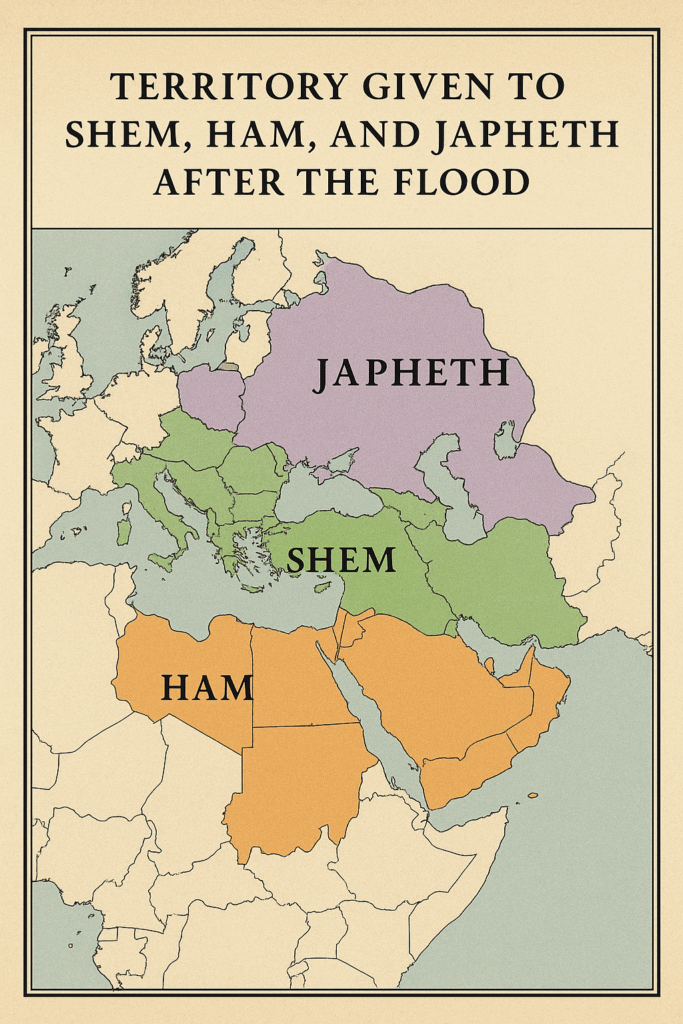
    Jerdan thought Melchizedek was a descendant of Ham. No, I don’t see that. Why would the High Priest be a descendant of the cursed son?

    Resource

    I know. Sons are not their fathers, just as Ham wasn’t Noah. Melchizedek may have been more like Noah than he was like Ham.

    But this is a High Priest – the very first mentioned in Scriptures. I don’t see him as a descendant of anyone but Shem.

    Stafford said that some people think this is Shem himself, with Melchizedek being a title. Well, it could have been. He lived from 2411 to 1811 BC. (Remember, this somewhere between 1880 and 1875 BC.).

    Resources

    But the Stafford didn’t buy that. Why wouldn’t Moses call Shem Shem since he already had. He didn’t think Shem would be living in that area without previous conversations.

    If Melchizedek was Shem, we would know his father and mother (though not her name). We know he died (Gen. 11: 11).

    But Messiah came from Shem’s line.  Plus, that was close to if not Shem’s territory.
    Some say it was Jesus. Well, He is King and High Priest. Those are the elements of the Lord’s Supper. And bread of life???? Plus, titles of King of Righteousness and King of Peace?????????

    There are some verses to back that up.

    Resource

    •  “The LORD has taken an oath and will not break his vow: ‘You are a priest forever in the order of Melchizedek’” (Ps. 110: 4 NLT emphasis added).
    • “Jesus has already gone in there for us. He has become our eternal High Priest in the order of Melchizedek” (Heb. 6: 20 NLT emphasis).
    • “Accept their gifts, and make a crown from the silver and gold. Then put the crown on the head of Jeshuad son of Jehozadak, the high priest. Tell him, ‘This is what the LORD of Heaven’s Armies says: Here is the man called the Branch. He will branch out from where he is and build the Temple of the LORD. Yes, he will build the Temple of the LORD. Then he will receive royal honor and will rule as king from his throne. He will also serve as priest from his throne, and there will be perfect harmony between his two roles’” (Zech. 6: 11-13 NLT emphasis added).
    • “This Melchizedek was king of the city of Salem and also a priest of God Most High. When Abraham was returning home after winning a great battle against the kings, Melchizedek met him and blessed him. Then Abraham took a tenth of all he had captured in battle and gave it to Melchizedek. The name Melchizedek means ‘king of justice,’ and king of Salem means ‘king of peace.’ There is no record of his father or mother or any of his ancestors—no beginning or end to his life. He remains a priest forever, resembling the Son of God” (Heb. 7: 1-3 NLT emphasis added).

    I can go with the first two bullet points. I can see the third bullet at Jesus referred to Himself as the Temple.

    I don’t know about the last bullet point. There are a lot of people in God’s Word that we aren’t given birth, death, or parents – not even lineage. 

    That is what it basically says in Hebrew. But it has a lot of capitalization, parentheses, and quotes that confused me. 

    I just have problems with Jesus being in human form before it was time to be Messiah. Did He come down and not sin? Or did He sin as Melchizedek? 

    Even if He was Melchizedek – if He sinned – wouldn’t that disqualify Jesus as Messiah?

    The Congregational Pulpit thought Melchizedek was a foreshadowing of Christ. I can go with that. Joseph also was.

    Was this Shem? Was this Jesus? Was this a model for Jesus?

    Who knows for sure?

    God does. We should put this in the UNR book — understanding not required.

    What we do see here is Abram has communion with another saint.

    Look at this. The priest came after the war was won. He didn’t come in condemnation. He came with food — whether it be a practical meal for physical refreshment or a spiritual foreshadowing of the Lord’s Supper.

    Melchizedek Blesses Abram

    “Melchizedek blessed Abram with this blessing: ‘Blessed be Abram by God Most High, Creator of heaven and earth. And blessed be God Most High, who has defeated your enemies for you.’ Then Abram gave Melchizedek a tenth of all the goods he had recovered” (Gen. 14: 19-20) NLT)

    We not only receive blessings from God, but we also bless Him.

    The job of the priest is to bless others. Melchizedek performed this task.

    Melchizedek also knew that Abram was a blessing to God. We are to bless God with our faith, obedience, and worship.

    We know, there were no Levitical priest at this time. Abram didn’t have a son, let alone a great grandson.

    Leale argued Melchizedek was a more superior priest when put alongside the priesthood of Aaron. He said this was an evident in time, dignity, and duration.

    Resource

    Meyer agreed, saying this priesthood was instituted by God, not by human birth. It was a royal, eternal priesthood.

    Resource

    Abram saw Melchizedek someone to whom he was inferior. He acted in what he considered an appropriate way.

    King of Sodom’s Reward for Abram

    “The king of Sodom said to Abram, ‘Give back my people who were captured. But you may keep for yourself all the goods you have recovered.’ Abram replied to the king of Sodom, ‘I solemnly swear to the Lord, God Most High, Creator of heaven and earth, that I will not take so much as a single thread or sandal thong from what belongs to you. Otherwise you might say, ‘I am the one who made Abram rich.’ I will accept only what my young warriors have already eaten, and I request that you give a fair share of the goods to my allies — Aner, Eshcol, and Mamre’” (Gen. 14: 21-24 NLT)

    Abram’s disinterestedness and independence led to him not taking any of the recovered goods.

    Abram accomplished his goal of rescuing Lot. He didn’t care about the rest. It wasn’t his before. He had no desire for it after he gave the 10 percent to God.

    Jerdan said that Abram had done his duty. He didn’t feel he should be paid for doing what was expected from him.

    Resource

    We also say Abram took none of the spoils from defeating Kedorlaomer and company from the King of Sodom. It seemed like he really didn’t want to have anything to do with him.

    • “Walk with the wise and become wise; associate with fools and get in trouble” (Prov. 13: 20 NLT).
    • “Don’t be fooled by those who say such things, for ‘bad company corrupts good character’” (I Cor. 15: 33 NLT).

    Abram certainly didn’t want to gain from people who had lost because of war. But then was it the King of Sodom’s stuff get give away anyway?

    But there is a part I don’t remember ever thinking about.

    Bible Hub got me thinking about Abram as victor. In Abraham’s Actions, it said,

    “Abraham conquers him in battle; so Canaan became the conqueror’s by conquest; he became the heir of Canaan. The history holds forth this mystery: that all Christians, the children of Abraham, are by their new birth born heirs of heaven, the celestial Canaan; they should therefore be valiant for it (Jeremiah 9:3).” (emphasis added)

    Resource

    Country A invades Country B. At least back then, Country B now belonged to Country A.

    Elam, Babylonia, Ellasar, and Goiim invaded Sodom, Gomorrah, Adman, Zeboiim, and Zoar. Abram defeated Elam, Babylonia, Ellasar, and Goiim. Abram then owned Canaan.

    Abram didn’t take the country, did he? Why? Wouldn’t that have legitimized the promise God gave Abram?

    But then the land wouldn’t be a gift from God. It would have been something Abram earned. It would have been from man – specifically the Sodomites.

    Some may say that Abram should have taken it. Maybe then Sodom and Gomorrah wouldn’t have been destroyed (Gen. 19).

    If Abram would have demanded the land, then the covenant would have been broken.

    It seems like Mamre, Eshcol and Aner did go with Abram (Gen. 14: 13). It wasn’t Abram’s decision if they should give up their fair share of the spoils.

    Abram also accepted what his soldiers had used as rations. That is logical. They got your stuff back – this is their payment.

    Making the Connections #1

    There is a huge contrast between Kedorlaomer and Abram. Kedorlaomer probably did all his fighting with the motivation of greed, covetousness, and pride.

    Abram on the other hand, went into this fight because of love. He loved his nephew, and he didn’t like to see how he and other innocent people were taken hostage.

    So, Abram did something about it.

    Making the Connections #2

    We talked about, in the Genesis 14: 14-16 discussion, how God expects us to defend ourselves and our loved ones but also to submit to earthly authority.

    Spurgeon talked about another kind of warfare that disciples are engaged in — spiritual warfare. This is inward and outward warfare.

    There many be times in our own spiritual warfare that it looks like the odds were about those at which Abram was looking. One man with 318 fighting men plus however many Mamre, Eshcol and Aner brought along with them. They were fighting against four kings who were great sovereigns in their own rights and however many fighting men they had.

    Abram had to go into this in faith. I like what Spurgeon said. He wrote, “Faith was Abram’s continual comfort.”

    Resource

    We are called to stand firm during spiritual warfare. Paul told us about the spiritual armor. We are to put it on.

    Spurgeon pointed out Abram’s actions that we should emulate.

    • Use discretion in choosing how and when to attack.
    • Attack at the correct time.
    • ·Keep going until victory is won.

    One thing we don’t think about that Spurgeon brought up is seizing Jesus during the fighting. Think Shadrach, Meshach, and Abednego (Dan. 3: 16-28).

    We are not alone in our spiritual warfare. We may not see Him waking in the fire with us — He is there.
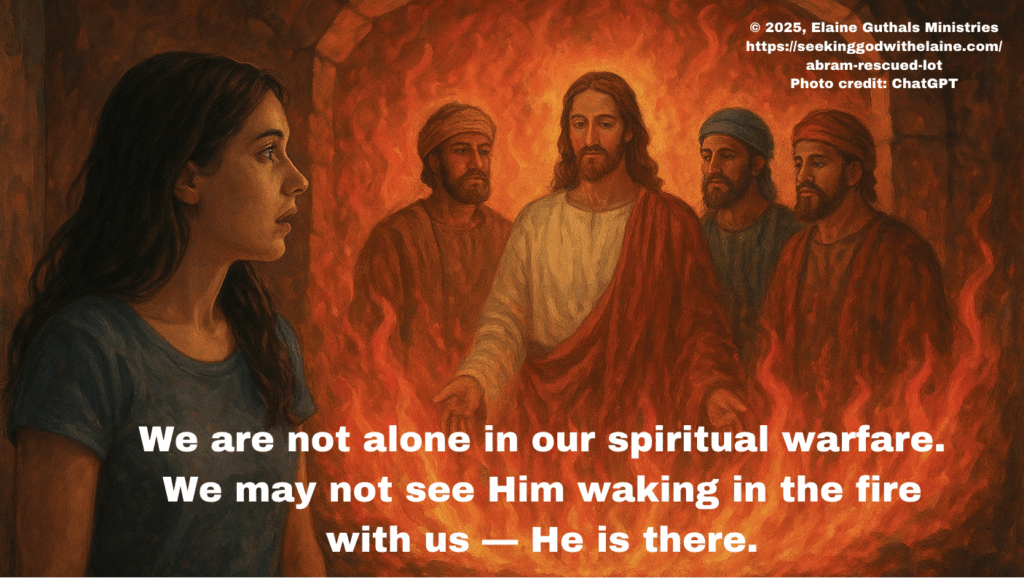
    Spurgeon made another interesting observation. Melchizedek may have shown up to refocus Abram to God. The victory must have brought with it a big rush.

    It worked. Abram tithed.

    Making the Connections #3

    Fuller reminded me that Melchizedek could have been a descendant of Ham. Yes, he was the cursed son.

    Resource

    But God is about forgiveness. Melchizedek didn’t have the door shut on his faith because of his ancestor.

    All can come to Christ. “There is no longer Jew or Gentile, slave or free, male and female. For you are all one in Christ Jesus” (Gal. 3: 28 NLT).

    There are no barriers in coming to Christ.

    How Do We Apply This?

    • Don’t skip our worship of God just because there is an ungodly person in the room.
    • Fight our foes.
    • Use discretion in choosing how and when to attack.
    • Attack at the correct time.
    • Keep going until victory is won.
    • Act in humility.
    • Act in thankfulness.
    • Be steadfast.

    Resources

    Prayer

    What do you think?

    Leave me a comment below (about this or anything else) or head over to my Facebook group for some interactive discussion.

    If you don’t understand something and would like further clarification, please contact me.

    If you have not signed up for the email providing the link to the devotions and the newsletter, do so below.

    If God has used this devotion to speak with you, consider sharing it on social media.

  • Preparing to Meet God

    Is preparation really that important? This devotional looks at the different ways in which we prepare to meet God.

    Nuggets

    • Paul said everyone is going to have to give an account of every thought, word, and deed that we have had while here in this life.
    • We have to be prepared to be sentenced if we do not have the Child of Christmas as our Savior.
    • We have to prepare to meet God at any time.
      Choosing Jesus as our Savior and Redeemer and living that out means we will be rewarded with glory, honor, and eternal life.

    Devotions in Silencing Our Hearts at Christmastime series

    For the last six devotions, we been looking at being prepared for the birth of the Child of Christmas. But let’s get real for a second.

    How important is it to be prepared?

    In one word, very. Let’s look at how in the last devotion of the series.

    Let’s Put It into Context

    Here is a running list of nuggets for the series.

    Burton’s Preparation for Judgment is the foundation for this devotion.

    Resource

    Preparing for Judgment Day

    “For we must all appear before the judgment seat of Christ, so that each one may receive what is due for what he has done in the body, whether good or evil” (II Cor. 5: 10 ESV)

    Paul said everyone is going to have to give an account of every thought, word, and deed that we have had while here in this life.

    Scary, isn’t it? We think that, as disciples, we get to opt out of that.

    Instead, Burton said we should use that to prepare. He wrote, “The very idea of standing before the judgment-seat of Christ should so overpower the mind with its awfulness that every moment should be busily employed in preparing for that hour.”

    Resource

    The only way we can be prepared for Judgment Day is by making the Child of Christmas our Savior and Redeemer.

    First, we have to believe that God is real and admit disobeyed Him. The churchy word for this is we have to repent. Repentance is acknowledging our separation from God and expressing sorrow for breaking God’s laws and commandments by making the commitment to change our sinful ways to ways of righteousness through obedience.

    • Sin is not believing that Jesus is our Savior to save us from our actions by humans that disobey God and break one of His reasonable, holy, and righteous laws and commandments, goes against a purpose He has for us, or follows Satan’s promptings.
      • Holy means to be set apart — because of our devotion to God — to become perfect, and morally pure while possessing all virtues.
        • Perfection means we reach a state of maturity because the combination of the spiritual graces form, when all are present, spiritual wholeness or completeness — holy, sanctified, and righteous.
          • Spiritual graces are worldly morals that have been submitted to God to further His kingdom instead of enhancing this world.
          • Sanctified means to be set free from sin.
        • Pure means not being sinful or having the stain of sin. 
        • Virtues are standards of moral excellence.
      • Righteous means we are free from sin because we are following God’s moral laws.
    • Obedience means submitting ourselves to the will of God as it is presented to us and living our lives accordingly.

    Glossary

    Second, we have to believe Jesus is not only His Son but also our salvation. Salvation is the gift of life through the deliverance from condemnation and sin to acceptance and holiness and changes us from being spiritually dead to spiritually alive.

    • Holiness is the transcendent excellence of His nature that includes elements of purity, dedication, and commitment that lead to being set apart.
      • Purity means possessing God’s moral character, having eliminated the stain of sin.
    • Spiritual death is the spiritual separation from God that occurred as a consequence of Adam and Eve’s original sin.
      • The spiritually alive are those who have ABCDed, so they are no longer separated from God.

    The ABCDs of Salvation

    If you have not become a believer in Christ, please read through the
    Plan of Salvation and prayerfully consider what God is asking you to do.

    A – admit our sins
    B – believe His Son Jesus is our Redeemer
    C – confess God as Sovereign Lord

    D – demonstrate that commitment by making any changes needed in our lives to live the way in which God has called us

    The Disciple’s Job Description

    Glossary

    Third, we have confess that God is Sovereign God.

    Finally, we have to live as He calls us to live — which is to become as He is. The churchy word for that is we have to be sanctified. Sanctification is the transformation of mind, body, and soul, which begins with regeneration; gradually changes our nature and morals through the promptings of the Holy Spirit; and ends with perfected state of spiritual wholeness or completeness.

    • Regeneration is being changed from spiritually dead to spiritually alive and the internal new birth and requickening that God brings about through the work of the Holy Spirit to give us new character.

    Glossary

    Once we have accepted God’s gift of salvation, we do not have to fear judgment. We are His children. Our punishment has been removed.

    Worldview people might believe that God was trying to frighten us or strong arm us into following Him. Parker said that was far from the case. Instead, this shows His love for us.

    Resource

    Glossary

    If God didn’t love us, He would just punish us without warning. Allowing us to prepare and change shows He wants us to love Him in return. His mercy is His love.

    Worse, worldview people may think that, just because they don’t believe in God, they won’t be judged by Him. Solomon disabused us of that notion. He wrote, “Men can refuse to pray; refuse to repent and reform their ways; refuse to make confession of Christ: but there is one thing they cannot refuse to do, — they cannot refuse to meet God. The call of death all must hear and obey.”

    Resource

    Everyone will be judged on whether they are blessed or cursed. Blessedness means we have been perfected. God put a curse on us as a consequence of Adam and Eve’s original sin, making the terms sin and curse interchangeable.

    Preparing for the Sentencing

    “Then he will say to those on his left, ‘Depart from me, you cursed, into the eternal fire prepared for the devil and his angels’” (Mt. 25: 41 ESV)

    We have to be prepared to be sentenced if we do not have the Child of Christmas as our Savior.

    I almost entitled this as Preparing for the Judgment. Why is this a separate heading?

    If we choose to make the Child of Christmas our Savior and Redeemer, everything will be fine. If we don’t, not so much.

    This isn’t going to be a 25-year sentence. We aren’t going to get off for good behavior.

    This is a lifetime sentence — an eternal lifetime sentence.

    We have two choices — follow Jesus or deny Jesus. We have to say yes to following Jesus and living it out, or we say no to Him.

    God isn’t going to change the verdict. Not on Judgment Day. Not a million years later.

    Our sentence is our sentence for eternity.

    Linden brought up an important point. We have a sense of justice. We want things to be right and those punished who do wrong.

    Resource

    Worldview people just don’t think they are wrong because they cannot see God as being right.

    He is.

    Preparing Now

    “The years of our life are seventy, or even by reason of strength eighty; yet their span is but toil and trouble; they are soon gone, and we fly away” (Ps. 90: 10 ESV)

    We have to prepare to meet God at any time.

    The thing is, we don’t know how long we will live. The average life span in the US is 77 years.

    But that isn’t guaranteed. Facebook is filled with “armies” of people praying for children with cancer and other terminal diseases.

    We aren’t guaranteed tomorrow. We can be killed in a car accident. We can be shot and killed in a robbery attempt. We can choke on a piece of meat.

    Only God knows how long we have.

    So, when God calls us to salvation, we want to decide now. We don’t want to wait until tomorrow. We don’t even want to wait until this afternoon — or in five minutes.

    We want to give our lives to God now. We have to consciously decide to follow Him.

    Preparing for Our Reward

    “He will give eternal life to those who keep on doing good, seeking after the glory and honor and immortality that God offers” (Rom. 2: 7 NLT)

    Choosing Jesus as our Savior and Redeemer and living that out means we will be rewarded with glory, honor, and eternal life.

    Why? Because we are doing good. No, not good by the worldview. It isn’t random acts of kindness and other charity acts.

    Robinson told us exactly what it is.

    • “He has told you, O man, what is good; and what does the Lord require of you but to do justice, and to love kindness, and to walk humbly with your God? (Mic. 6: 8 ESV).
    • “Whatever you do, work heartily, as for the Lord and not for men” (Col. 3: 23 ESV).
    • “Do not be slothful in zeal, be fervent in spirit, serve the Lord” (Rom. 12: 11 ESV).
    • “And he said to him, “You shall love the Lord your God with all your heart and with all your soul and with all your mind. This is the great and first commandment. And a second is like it: You shall love your neighbor as yourself” (Mt. 22: 37-39 ESV).
    • “For to this you have been called, because Christ also suffered for you, leaving you an example, so that you might follow in his steps. He committed no sin, neither was deceit found in his mouth. When he was reviled, he did not revile in return; when he suffered, he did not threaten, but continued entrusting himself to him who judges justly” (I Pet. 2: 21-23 ESV).

    What do we learn from these verses? It is loving the Lord and others and living the way He calls us to live.

    preparing-to-meet-godFB

    Making the Connections #1

    So, have you figured out how we prepare to meet God? Burns told us exactly how to prepare.

    • Repentance
    • Faith
    • Regeneration
    • Good works in the Holy Spirit

    Resource

    Of course, preparation is going to be about our spiritual condition.

    Making the Connections #2

    Brooks hooked this to Christmas. He wrote, “These words contain the two elements of all advent thoughts, the promise of a coming, and the exhortation to prepare for that coming.”

    Resource

    The Messiah had been promised years before. Israel watched for His coming.

    Jesus is coming back again some day. We have to be prepared.

    Making the Connections #3

    We can’t physically see God right now. One day we will.

    Think about that day. Some will be excited. Some will be surprised. Some will be scared out of their gourd.

    What we feel in that day will be determined by how prepared we are to experience it.

    How Do We Apply This?

    • Evaluate ourselves to determine the status of our relationships with God.
    • Search for Him if we do not have a relationship with Him.
    • Constantly seek Him if we do.
    • Show God gratitude.
    • Worship God for His character.
    • Work out our salvation by getting the character of God.
    • Have our faith impact our hearts and actions.
    • Follow how God’s Word tells us to prepare.
    • Start preparing right now.
    • Be genuine in our preparations.
    • Don’t put it off.
    • Don’t prepare in ways God does not call us.

    Resource

    Father God. We want to be prepared to meet You this minute. We want to be more prepared as our lives continue. We ask that the Child of Christmas be our Savior and Redeemer. Amen.

    What do you think?

    Leave me a comment below (about this or anything else) or head over to my Facebook group for some interactive discussion.

    If you don’t understand something and would like further clarification, please contact me.

    If you have not signed up for the email daily or weekly providing the link to the devotions and the newsletter, do so below.

    If God has used this devotion to speak with you, consider sharing it on social media.

  • Preparing by Setting Our Affections

    Our calendars – and our minds – seem to get overloaded at Christmastime. This devotional looks at how we should prepare to celebrate Christ’s birth by setting our affections on heavenly things, not earthly things.

    Nuggets

    • We need to be prepared for accepting God’s principles.
    • We prepare by focusing on God.
    • We prepare by putting lesser importance on things of the earth.
    • We prepare by making sure our focus is on heavenly things.

    Devotions in Silencing Our Hearts at Christmastime series

    Let’s switch gears a little with this devotion. We have been talking about silencing our hearts in preparation for celebrating Jesus’ birth.

    But what is that really about?

    Let’s Put It into Context

    Here is a running list of nuggets for the series.

    Preparation by Setting Our Affections

    “Since, then, you have been raised with Christ, set your hearts on things above, where Christ is, seated at the right hand of God” (Col. 3: 1 ESV)

    We need to be prepared for accepting God’s principles.

    We said this series was about preparing ourselves for the Child of Christmas’ birth. It all boils down to our setting our affections on heavenly things.

    Bridge said that affections are “the motions of the reasonable soul.” Foster stressed the connection between the soul and the object(s) to which the affection is focused.

    Resource

    Wait! Shouldn’t that say emotions? Our feelings of fondness?

    I don’t think so.

    We shouldn’t base our submission to God on our feelings. It shouldn’t just be a reaction.

    Our affections are based on the progress of our enlightened acceptance of God’s principles, gained through knowledge, fear, discernment, and good sense, that impacts our spiritual part that is immortal.

    • Discernment means we can evaluate the situation and recognize right from wrong.

    Let’s process that. If we base our relationships with God on how we are feeling at the moment and what the circumstances currently are, they won’t be consistent. We are focusing on this world and what is happening to us now.

    We are given salvation because we choose to admit that mankind was separated from God after the original sin, making us sinners; believe Jesus paid the penalty for those sins to become our Savior and Redeemer; confess God as Sovereign God; and demonstrate that commitment by submitting to living our lives following His laws and commandments. We trust in God through all situations in our lives — the good and the bad.

    That means — regardless of what is happening this day — we are committed to God. We choose to do God’s right instead of Satan’s evil.

    Preparation by Focusing on God

    “Set your minds on things above, not on earthly things” (Col. 3: 2 NIV)

    We prepare by focusing on God.

    Don’t misread what set our minds on earthly things to mean. Bridge helped us with that.

    He wrote, “What, may we not at all affect the things of earth? Yes, ye may desire them, and grieve at the loss of them, and both desire and grief are affections.”

    Resource

    I know I desired a husband — and God sent me Pastor Steve. I really grieved when Mom and Dad died.

    Yes, those are more emotions. But is that only what they are?

    Ephesians 5: 25 tells “Husbands, [to] love your wives, as Christ loved the church and gave himself up for her” (ESV). That was right after Paul told wives to “… submit to your own husbands, as to the Lord” (Eph. 5: 22 ESV).

    Notice Paul isn’t saying anything about dictatorship here. He is saying that the focus needs to be on God and mimic His relationships with us as we interact with others.

    The focus is on our spiritual condition.

    Give Up Earthly Things

    “You used to walk in these ways, in the life you once lived” (Col. 3: 7 NIV)

    We prepare by putting lesser importance on things of the earth.

    Yes, family is important — biological and those we make.

    But God is more important. We have to focus on the spiritual and eternal.

    If we focus on things of this world, we are focusing on the temporary. This world will end one day. “Then I saw a great white throne and him who was seated on it. The earth and the heavens fled from his presence, and there was no place for them” (Rev. 20: 11 NIV).

    Anderson explained it this way. He wrote, “Earthly things are only at best a temporary convenience; but without the heavenly a man perishes for ever. Let, then, the most depressing view of life be taken, it is soon over, and then the Christian is for ever with the Lord.”

    Resource

    Think about, too, the downside of the worldview. Think about suspect business practices.

    Yes, we may gain from climbing the corporate ladder in the backs of others — but they don’t. When we lie and cheat to get ahead, we really aren’t.

    Worldly approval will not sustain us. Oh, it may be enough for awhile, but we end up wanting more and more.

    What the world has to offer will not satisfy us.

    Only God can.

    Be Citizens of Heaven

    “Their destiny is destruction, their god is their stomach, and their glory is in their shame. Their mind is set on earthly things. But our citizenship is in heaven. And we eagerly await a Savior from there, the Lord Jesus Christ, who, by the power that enables him to bring everything under his control, will transform our lowly bodies so that they will be like his glorious body” (Phil. 3: 19-21 NIV)

    We prepare by making sure our focus is on heavenly things.

    I love what Bishop Lightfoot said. He wrote, “You must not only seek heaven; you must also think heaven.”

    Resource

    Yes, here at Seeking God with Elaine we are about seeking. But it is more than that, isn’t it?

    • We can go hear the Pastor Steve-types preach, but if his words only impact us for that hour, we haven’t grown any.
    • If we think only of what we are going to get out of being a disciple — status, an easy road, healing [add your own perk in here], we miss the boat.

    We have to really seek God.

    Searching for and Seeking God

    Hearing His Word (Rom. 10: 17)
    Reading His Word (Rev. 1: 3)
    Praying to Him (Heb. 4: 16)
    Studying His Word (Ac. 17: 11)
    Meditating on His Word (Ps. 1: 1-2)
    Memorizing His Word (Ps. 119: 11)

    If we do not study God’s Word, we really don’t know what it says. If we don’t meditate on it, we don’t apply it to our lives.

    We have to prepare our hearts for what God is saying to us. We can only do that when we are focusing on Him.

    preparing-by-setting-our-affectionsFB

    Making the Connections #1

    It really important at Christmastime that we focus on God and not on the worldly distractions the season brings. We have to set our hearts and minds on things above.

    What better time to think about all God has done to design the Plan of Salvation for our forgiveness?

    True, that means we have to slow down. We have to take our focus off the lights, the parties, and the gifts – and put it on the most important Gift of all – the Child of Christmas.

    Making the Connections #2

    I think it would be — I don’t want to say hard — messy if God tried to dictate to us how we are to set our affections.

    No, I know God is in control of everything. He can do anything and everything. God has given us laws and commandments to follow.

    But if God said do it my way or else you immediately die, we couldn’t do it.

    It would be messy because, even though we are made in God’s image, we are also made in Adam’s image. We have a sinful nature within us.

    Glossary

    I’m just saying if God would have said, “Chop, chop – do it my way,” it would have been messier yet.

    Making the Connections #3

    Many worldview people thing disciples give up so much to follow Jesus. Anderson told us that is wrong thinking. He wrote, “So if a man choose the earthly he can gain none of the heavenly; whereas if he choose the heavenly, besides securing it, he gains the best of the earthly.”

    Resource

    We don’t lose by following Jesus. We gain.

    Oh, no. The worldview would say we lose because we submit to God. They think that makes Him a dictator and we are just blind little sheep following with no freedom.

    That is far from the truth. “Then you will know the truth, and the truth will set you free” (Jn. 8: 32 NIV).

    How Do We Apply This?

    • Dislike what we have previously liked that doesn’t follow God’s Will.
    • Receive God’s Word with joy.
    • Hunger and thirst for God.
    • Focus our minds on God.
    • Seek God.
    • Examine our priorities to see if they are in temporal concerns or eternal concerns.
    • Gain joy in thinking about eternal things.
    • Sacrifice for eternal concerns instead of temporal concerns.
    • Evaluate our daily actions to make sure the temporal concerns are not interfering with the spiritual concerns.
    • Grow to want spiritual things more and more.

    Resource

    Father God. We don’t want to focus on Satan and this world. We want to focus on You. You created us. You have designed the Plan of Salvation so that our sins will be forgiven. Lord, You ways are different than the ways of mankind. Help us to eliminate our earthly desires and focus solely on You. Amen.

    What do you think?

    Leave me a comment below (about this or anything else) or head over to my Facebook group for some interactive discussion.

    If you don’t understand something and would like further clarification, please contact me.

    If you have not signed up for the email daily or weekly providing the link to the devotions and the newsletter, do so below.

    If God has used this devotion to speak with you, consider sharing it on social media.

  • Silence in Worshiping God

    It seems funny to say we need to be silent in worshiping God. This devotional looks at what constitutes being silent.

    Nuggets

    • We worship God silently by focusing our worship on Him and not on ourselves.
    • We silence the ceremony and tradition of religion by focusing our worship on our relationships with Him.
    • We silence our need to be filled during worship to truly worship God.

    Devotions in Silencing Our Hearts at Christmastime series

    One of the sermons I put in the drafts folder for the Silence of the Soul series was Duche’s God in His Temple. He had a great quote. He wrote,

    “Wait and watch in awful stillness; impose silence on the clamorous calls of every earthborn passion and appetite; stand in meek ness and humility, with thine inward eye turned towards these first emanations of Divine light, and thou shalt soon perceive “the day dawn, and the day-star arise upon thy soul.” By this awful silence, and waiting upon the Lord in His temple, we place ourselves, as it were, upon hallowed ground; and if I may borrow an image from ancient superstition, a magic circle of heavenly light and lustre is drawn round us, — nor will the dark malicious enchanter, who only rules in earth and hell, dare to approach its radiant limits.”

    Resource

    Let’s see how we can apply that to Christmastime.

    Let’s Put It into Context

    Here is a running list of nuggets for the series.

    Silencing Our Focus

    “There will be silence before You, and praise in Zion, God, And the vow will be fulfilled for You” (Ps. 65: 1 NASB)

    We worship God silently by focusing our worship on Him and not on ourselves.

    It seems like a contradiction to say we must be silent before God yet praise Him. Praise is our response to God, but it usually involves music.

    We really can’t praise Him if we don’t silence self. We have to take the focus off ourselves and put it on Him.

    We have to look for God’s presence. How many times do we go to church and say He wasn’t there that day? It isn’t because He wasn’t there.

    It is because we weren’t there — spiritually. We expect Him to initiate the contact. Instead, He waits for us.

    I like how Stalker interpreted the first part of Psalm 65: 1. He wrote, “The opening words, ‘Praise is silent for Thee, O God, in Zion,’ describe the hush of a multitude just ready to burst forth in song. The air is full of an intention which has not yet expressed itself, but it will utter its thought immediately, because the nation has assembled to perform the vows made during the drought, when dearth was feared.”

    Resource

    I love a couple of things Stalker brought out.

    • Worship was fixing to start.
    • The intent to worship was there from before the beginning.
    • Worship was going to be immediate.
    • The congregation was united.
    • They were fulfilling their promise.

    Being a musician, I’ve heard so many times that the song service has to get the congregation into the mindset of worship.

    No. The praise team shouldn’t have to talk us into worship. They can’t change our intent.

    We have to go into the service with the intention of worshiping the One true God.

    Am I going to take my focus off of me because someone is singing at me?

    God doesn’t want us to slide into worship. We shouldn’t need to use the song service as our coffee to get us awake enough to worship.

    Worship has to be immediate. Foster reminded us that our worship starts inward with reverence, submission, and humility. Then it flows to the outward. We worship the right way at the right time in the right place.

    Resource

    Spurgeon talked about what is acceptable for worshiping God. The altar for our sacrifices, according to Maclaren, is the gospel. “We have an altar from which those who worship at the tabernacle do not have a right to eat” (Heb 13: 10 CSB).

    Resource

    That makes Jesus our altar.

    Our worship should focus on praising God. We are to be living sacrifices to Him. The living part tells us that it is continual.

    The Disciple’s Job Description

    Complete Job Description

    Individual Description

    Job Duty #1
    Be a Living Sacrifice (Romans 12: 1-2)

    We should expect to worship God. He is Sovereign God and deserves our praises and worship.

    Silencing Our Religion

    “God is spirit, and those who worship him must worship in spirit and truth” (Jn. 4: 24 ESV)

    We silence the ceremony and tradition of religion by focusing our worship on our relationships with Him.

    I found this quote for the last verse, but it fit so much with what I want to talk about here. So, I kept it for now.

    The Homilist told us how we are to silence our worship in order to worship God in Spirit. He wrote, “‘Praise waiteth for Thee, O God, in Zion.’ Are we to understand ‘waiteth,’ in the sense of silence? Then the essence of worship is silent — it is in the profoundest thoughts, the deepest feelings, the strongest aspirations, which are independent of language or sound. The deepest things of the soul are unutterable.”

    Resource

    Thoughts, feelings, aspirations. Independent of language or sound (which actions produce).

    To me, that reads we have to get worship to the heart level. When we do, we silence the questions and doubts. We silence any fear.

    We rest quietly in the palm of God’s hand.

    We’ve said it time and time again, we have to be sincere in our worship. We have to genuinely submit our lives to Him.

    It isn’t even about who worships what way. It is are we worshiping God’s way?

    That means we have to seek God. That is how we build the relationship.

    Searching for and Seeking God

    Hearing His Word (Rom. 10: 17).
    Reading His Word (Rev. 1: 3).
    Praying to Him (Heb. 4: 16).
    Studying His Word (Ac. 17: 11).
    Meditating on His Word (Ps. 1: 1-2).
    Memorizing His Word (Ps. 119: 11).

    Wow! Robertson didn’t pull any punches when he was talking about worship. Elaine-speak on what he said.

    • Worship is not about what we proclaim.
    • We have no choice but to worship.

    Resource

    God expects us to worship by following His laws and commandments through our thoughts, feelings, and aspirations. He wants us to humbly love Him.

    We have to focus on God and not let any distractions ruin our worship. We have to silence everything that is not of God. Only that way can we worship God in spirit through our minds.

    Silence Ourselves for True Worship

    “Oh come, let us worship and bow down; let us kneel before the Lord, our Maker!” (Ps. 95: 6 ESV)We silence our need to be filled during worship to truly worship God.

    I think we go about worship all wrong. Oh, we may say we want to “spend time” with God.

    But we have the wrong goal for spending that time with Him.

    We want to be filled with the Holy Spirit. We want to be comforted and energized.

    But most of all, we want courage and strength for the next week. We want help facing what we are facing.

    We don’t take the time to truly worship God.

    Stratham explained what we do this way. He wrote, “Whatever other ends are secured by sanctuary service, — the education of thought, the quickening of sensibility, and the deepening of religious trust, — this is one main end, the worship of God.”

    Resource

    We have to worship God because He is Sovereign God. Not because we want something from Him. Not because we have to fulfill our duty.

    We have to praise God because we love Who He is.

    silence-in-worshiping-godFB

    Making the Connections

    So to me, silence is focus. We have to take the focus off us and what we want. We have to put it on God and worship Him for Who He is.

    How Do We Apply This?

    • Worship God’s way.
    • Accept the privilege of worshiping God.
    • Prepare our hearts and minds for worship.
    • Be consistent in worship.
    • Reflect and pray after worship.
    • Worship to grow our spiritual life.
    • The closer we draw to God in worship, our prayers become more contemplative.
    • Keep our worship in harmony with our lives.

    Resource

    Father God. Worship is to honor You. It is not to fix us or grow us. It is to give You the glory that You deserve. Forgive us when we do not silence self. This keeps us from truly worshiping You. Show us how You would have us worship. Amen.

    What do you think?

    Leave me a comment below (about this or anything else) or head over to my Facebook group for some interactive discussion.

    If you don’t understand something and would like further clarification, please contact me.

    If you have not signed up for the email daily or weekly providing the link to the devotions and the newsletter, do so below.

    If God has used this devotion to speak with you, consider sharing it on social media.

  • Peace in the Silence of Trust

    We will never be able to understand all of the ways of God. This devotional looks at how He asks us to commit ourselves to trust Him, even when we don’t understand and are in anything but silent circumstances.

    Nuggets

    • Trusting in Him means we focus on the Who instead of the what.
    • Trusting in Him entails a commitment to live for Him.

    Devotions in Silencing Our Hearts at Christmastime series

    We said in the last devotion that Mary and Joseph just had to trust God that He would do what He said He would. Faith came later.

    Does that mean trust is no longer needed now that we do have faith? No.

    Let’s dig a little deeper into trust.

    Let’s Put It into Context

    Here is a running list of nuggets for the series.

    What Is Trust?

    “Trust in the Lord with all your heart, and do not lean on your own understanding” (Prov. 3: 5 ESV)

    Trusting in Him means we focus on the Who instead of the what.

    God wants us to trust Him. Trust is assurance that His promises are true.

    The trust part is how we get to faith. It is how we reason it out.

    Yes, some of it has to be our seeing exactly how things are. We have to understand to some extent.

    We have to work out why we believe what we believe. Some day, we may be called upon to defend our beliefs.

    But Dennen made a great observation. He wrote, “The question is, not whether we shall use reason, but what are its limits? Shall we accept only what we can understand and explain, and refuse all which does not quadrate with our reason? … Much that is beyond reason does not contradict reason.”

    Resource

    Too many worldview people think they have to understand everything. They have to know the who, what, where, why, and when.

    No, we just have to know the Who.

    We are never going to understand everything. “For my thoughts are not your thoughts, neither are your ways my ways, declares the Lord. For as the heavens are higher than the earth, so are my ways higher than your ways and my thoughts than your thoughts” (Isa. 55: 8-9 ESV).

    How are they not God’s ways?

    • God is all-knowing. We aren’t.
    • God is eternal. Yes, we will live eternally with Him, but we weren’t there at the creation of time.
    • God is all-seeing. We aren’t.
    • God is all powerful. We aren’t.

    Baker gave us a good explanation of what it means — practically — to trust God. It means we willingly follow His counsel in our lives.

    As being all-knowing, God is able to advise us in actions to take and in what to believe. Since His advise is best all the way around, we should look to Him in all things.

    Resource

    But Solomon put a caveat on this verse. “Trust in the Lord with all your heart …” (Prov. 3: 5 ESV).

    We can’t give God half our hearts. We can’t believe in Him partially but follow the worldview for the rest.

    God has to be all in our hearts. He doesn’t want our allegiance divided between Him and the world.

    If we lean on our own understanding, we are looking at things through a worldview lens. That makes it through an evil, sinful view.

    There has to be a balance. Yes, we make plans using our own understanding.

    However, we first use discernment to find God’s Will. Discernment means we can evaluate the situation and recognize right from wrong. 

    To read a related devotion, click the button below.

    We don’t want to leave God out of the equation. We don’t want to shut Him down because we think our ways are so much better.

    We want to fully trust in God.

    Obtaining Trust

    “Commit your way to the Lord; trust in him, and he will act” (Ps. 37: 5 ESV)

    Trusting in Him entails a commitment to live for Him.

    How do we obtain this trust? It is a commitment.

    What is that to which we are committing? Taylor told us.

    • Repentance
    • Obedience
    • Confession

    Resource

    Repentance is acknowledging our separation from God and expressing sorrow for breaking God’s laws and commandments by making the commitment to change our sinful ways to ways of righteousness through obedience.

    • Sin is not believing that Jesus is our Savior to save us from our actions by humans that disobey God and break one of His reasonable, holy, and righteous laws and commandments, goes against a purpose He has for us, or follows Satan’s promptings.
      • Holy means to be set apart — because of our devotion to God — to become perfect, and morally pure while possessing all virtues.
        • Perfection means we reach a state of maturity because the combination of the spiritual graces form, when all are present, spiritual wholeness or completeness — holy, sanctified, and righteous.
          • Spiritual graces are worldly morals that have been submitted to God to further His kingdom instead of enhancing this world.
          • Sanctified means to be set free from sin.
        • Pure means not being sinful or having the stain of sin. 
        • Virtues are standards of moral excellence.
      • Righteous means we are free from sin because we are following God’s moral laws.

    Obedience means submitting ourselves to the will of God as it is presented to us and living our lives accordingly.
    Confession is a declaration that we have sin in our lives and are a repentant sinner, a conscious request for forgiveness of that sin, and the commitment of faith that God, as Sovereign Lord, can and will forgive those sins.

    Glossary

    Littleton looked at our commitment this way. He wrote, “He persuades us, in such instances [of the flourishing condition of the wicked to the great prejudice and hazard of God’s people], to confidence in God and patience in well-doing; and discovers the estate of pious and ungodly men to be as different, not only in the world to come, but through God’s just judgment many times even in this life, as their principles and practices have been.”

    Resource

    I know. Let’s try Elaine-speak on that.

    • The Psalmist shows us that we can commit ourselves to God because He will be faithful. Even when the worldview seems like it is winning and disciples are being persecuted, we can have confidence in God.
    • We need to have patience and keep on doing what is right in God’s eyes.
    • Yes, that will accentuate our differences with the worldview people. We don’t have to wait for eternity to see those differences — or for the ungodly to experience God’s judgment.

    Bottom line, we can commit to doing what is right in God’s eyes because He is faithful to keep us, even when it puts us at odds with this world.

    Littleton added a fourth bullet to Taylor’s list of that to which we are committing. He added walking in the Spirit.

    We commit to God because we know we can rely on His wisdom and goodness to provide the knowledge we need to live our lives serving Him.

    peace-in-the-silence-of-trustFB

    Making the Connections

    So, back to faith and trust. Slade said something very profound. He wrote, “[Faith] produces not only a leaning upon Divine grace on particular occasions of meditation or devotion, but an unfailing regard to God’s providential wisdom and goodness and government in daily life. God is in everything, above all, through all, in all. To those who wholly trust in God, not leaning to their own understanding, but ready in all things to obey His will and Word, the Lord will be a perpetual guide.”

    Resource

    Faith is the energy with trust as the fuel.

    How Do We Apply This?

    It is easy to say that this is the Christmas season. Of course, we will have more trust in God because we will be celebrating the reason why we can have faith.

    But it isn’t always that way, is it? We have a family funeral on the schedule. Events — whether scheduled or unscheduled — can add deadlines that we weren’t anticipating a month or so ago.

    That doesn’t even get into the financing of the season.

    We need to trust God’s promises. He won’t leave us but will provide for our needs. He may even use this time to grow our trust — and our faith.

    • Use faith to increase our understanding of truth.
    • Don’t be skeptical about what God can and did do.
    • Trust in God’s guidance.
    • Follow God’s advice.
    • Don’t depend on the world.
    • Seek God daily.
    • Use trust as the fuel for our prayers as well as for faith.
    • Be repentant.
    • Be obedient.
    • Confess to God.
    • Walk in the Spirit.

    Resource

    Father God. You have asked us to trust You. There is no one more trustworthy than You. Lord, we commit our lives to You. Amen.

    What do you think?

    Leave me a comment below (about this or anything else) or head over to my Facebook group for some interactive discussion.

    If you don’t understand something and would like further clarification, please contact me.

    If you have not signed up for the email daily or weekly providing the link to the devotions and the newsletter, do so below.

    If God has used this devotion to speak with you, consider sharing it on social media.

  • Peace in the Silence of Our Faith

    As a fruit of the Spirit, peace is a product of our faith. This devotional looks at how peace silences our hearts because of our faith and trust.

    Nuggets

    • We keep our hearts silenced in peace by keeping our minds trusting God.
    • Confidence in God’s power brings us peace to silence our hearts.
    • Because the Child of Christmas has given us peace — whether we are awake or asleep — we can feel safe.

    Devotions in Silencing Our Hearts at Christmastime series

    We all want peace – especially during the chaos of Christmastime. We wonder why we can’t have it during the time when we celebrate the birth of the Prince of Peace.

    When I did the Silence of the Soul series, I put one sentence back in my drafts folder. It was from Guinness’ Peace for the Careworn. He wrote, “Not the power of his own faith, as some would think at first sight; not the power of his own effort, struggling to obtain confidence, as some would suppose; but the power of God.”

    Resource

    What can we learn about silencing our hearts to obtain this peace?  

    Let’s Put It into Context

    Here is a running list of nuggets for the series.

    Silence in Peace

    “You keep him in perfect peace whose mind is stayed on you, because he trusts in” (Isa. 26: 3 ESV)

    We keep our hearts silenced in peace by keeping our minds trusting God.

    We know that peace comes from God. Peace is a fruit of righteousness, manifested in an inward tranquility resulting from a balanced life with spiritual order, equity, and truth that implies cooperation, humility, integrity, communication, and cohesiveness.

    Read that last part again. Peace comes from spiritual order, equity, and truth.

    Spiritual order comes from trusting God. Trust is assurance that the promises of God are true. We know without a shadow of a doubt that the Child of Christmas is the Son of God.

    Farrar reminded us that this trust is revealed to us in Jesus. Everything we know about God is revealed to us by God, especially through Jesus. Peace is only revealed through Jesus.

    Resource

    Too many times, we think that peace is the absence of chaos. It isn’t. It is the tranquility during the chaos.

    It is putting our faith and trust in God instead of relying on ourselves. Faith is a gift from God and a work of the Spirit that enhances the conviction that the doctrines revealed in God’s Word are true, even if we do not understand all aspects of them, a belief which impacts our lives and distinguishes us from others.

    Glossary

    We go for the inward peace instead of the outward success or prosperity.

    I like it when Maclaren said that trust is the nature of faith. We are assured that the promise that Jesus is our Savior is true. Without that belief, we have no faith.

    Resource

    We can trust God in any circumstance when we have faith in Him. If we lose the trust, we lose the peace. That reminds us that trust isn’t a one-and-done deal.

    Maclaren helped me figure out why I keep thinking faith and trust are synonymous. It is because the Old Testament is based on trust. The New Testament is based on faith.

    They are synonymous — in a way.

    For those in the Old Testament, the trust was their faith. They weren’t told anything about being pure. They had to believe the promise.

    That doesn’t mean we can still trust that the Messiah will come for the first time. He already did. If we don’t accept Jesus as our Savior, we will be judged on Judgment Day.

    Righteousness must be present, or there can be no peace. Righteousness is the indwelling goodness that is the result of a solid relationship with God built by a sincere life of conscientious obedience to God’s laws and commandments and from which all virtues flow.

    So, peace comes from God’s truth. The Child of Christmas came to bear witness to the Father and shed His blood for us.

    Faith and trust — and therefore, peace — is all about the state of our minds. What is the state of our mind? Our attitude.

    We have to hold fast to our faith. We have to cling to God in an attitude of confidence.

    We have peace when we rely on our salvation. We trust God, giving us peace.

    The thing is, when we get the inner peace, God gives us outward peace, too. It is one way that God rewards us.

    Power in Confidence

    “I have said these things to you, that in me you may have peace. In the world you will have tribulation. But take heart; I have overcome the world” (Jn. 16: 33 ESV)

    Confidence in God’s power brings us peace to silence our hearts.

    Faith in Jesus brings us many things. It allows us to communicate with Him in times of trials. We can commune with the One Who knows the past, present, and future.

    That alone should bring us great joy. But there is more.

    The world gives us tribulation — pain, sickness, death. It is only in Christ that we find peace.

    The Child of Christmas has overcome any and all tribulation that we could face. That brings us peace and victory.

    It isn’t just contentment/peace. It is spiritual peace.

    I like the New Living Translation of this verse. “I am leaving you with a gift — peace of mind and heart. And the peace I give is a gift the world cannot give. So don’t be troubled or afraid” (Jn. 14: 27 NLT).

    • I am leaving — present tense, so it is a gift that does not end.
    • Peace of mind and heart — spiritual peace that affects our attitude.

    Clapperton reminded us that it is a fruit of the Spirit. That makes it not only a gift of salvation, but also a reward for sanctification.

    Resource

    To read a related devotion, click the button below.

    It is a fruit of the Spirit that translates as a rest of the soul when we are working out our salvation to find tranquility with God, ourselves, and others.

    Why is peace so important? Vaughan said it is because it is the root of holiness. He wrote, “To believe that you are pardoned, to carry a conscience at ease, to take the unruffled reflection of Christ, even as Christ did of the Father, that is the atmosphere of a daily religious life, and that is the secret of every good thing.

    Holiness is the transcendent excellence of His nature that includes elements of purity, dedication, and commitment that lead to our being set apart through consecration to mold to God’s Will.

    • Purity means possessing God’s moral character, having eliminated the stain of sin.

    Resource

    We take heart and find contentment in knowing that Christ has vanquished our spiritual foes. Our foes are the world, self, and sin.

    Take heart is sometimes translated as be of good cheer. That is telling us to be joyful even in the trials.

    The Christ of Christmas brings us peace to silence our hearts because He has overcome this world and all it would throw at us.

    Peace in Death

    “In peace I will both lie down and sleep; for you alone, O Lord, make me dwell in safety” (Ps. 4: 8 ESV)

    Because the Child of Christmas has given us peace — whether we are awake or asleep — we can feel safe.

    What better way of silencing our hearts than feeling safe and loved? Disciples are both.

    Oh, yes. We still get sick. Still feel pain. Still die.

    But we are safe in the palm of God’s hand. “See, I have engraved you on the palms of my hands” (Isa. 49: 16 NIV).

    We have found God’s favor when we have submitted our lives to Him. We can rest in His promises.

    It is our goal to have God’s favor until we die — “… lie down and sleep …” (Ps. 4: 8 ESV). That means we have been navigating the Sanctification Road to become more like Him.

    Look at it this way. The verse says we are to lie down.

    Compare it with what John wrote. “By this we know love, that he laid down his life for us, and we ought to lay down our lives for the brothers” (I Jn. 3: 16 ESV).

    Jesus faithfully laid down His life for God’s plan. We are called to do the same thing.

    No, laying down our lives won’t fulfill the Plan of Salvation. It will fulfill God’s plan for our lives.

    peace-in-the-silence-of-our-faithFB

    Making the Connections #1

    Don’t miss the flip side. We’ve shown that we can only have peace when we are in Jesus.

    That means worldview people don’t have real peace. No, that isn’t me saying that – it is God.

    Farrar put it this way. He wrote, “The existence or the absence of peace in our hearts is no slight indication of our true condition, for, as peace must exist with the righteous even in the midst of adversity, it cannot exist in the hearts of the wicked, however smiling, however prosperous their lot. “There is no peace, saith my God, to the wicked.’”

    Resource

    Worldview people have a false peace. It is a peace concocted by Satan. Satan blinds us to being satisfied without God.

    We can only have peace when we are released from the death of sin.

    Making the Connections #2

    Jesus never promised His disciples a rose garden. He promised persecution.

    Isn’t it the worldview way to misrepresent something? Once we finally get “caught,” the truth starts coming out.

    We wonder why we were ever enticed to think whatever was wonderful.

    That is the difference between Jesus and Satan. Satan offers the wide, beautiful way. Jesus calls us to the narrow gate.

    Glossary

    How Do We Apply This?

    • Keep our attitude focused on God.
    • Put our confidence in God’s wisdom and power.
    • Trust in God’s promises.
    • Hold fast in faith and trust.
    • Delight when we encounter tribulations that will grow our faith.
    • Study Christ’s words.
    • Remember Jesus has overcome our enemies so that is with whom we are dealing.
    • Decide to be peaceful.
    • Confess Christ to gain peace.
    • Be still to hear His small voice.
    • Be courageous — be conquerors.
    • Work our job description so we are transformed from this world.

    Resource

    Father God. We praise You for the promises You have given us. Your peace is reviving because we have access to it by our faith in Jesus. Thank You, Lord, for salvation. Amen.

    What do you think?

    Leave me a comment below (about this or anything else) or head over to my Facebook group for some interactive discussion.

    If you don’t understand something and would like further clarification, please contact me.

    If you have not signed up for the email daily or weekly providing the link to the devotions and the newsletter, do so below.

    If God has used this devotion to speak with you, consider sharing it on social media.

  • Silencing Our Hearts When God Fights for Us

    God’s priority is our spiritual condition. This devotional looks at how God fights to restore our relationships with Him.

    Nuggets

    • Our identity has always been tied to God.
    • Chaos ensues when we do not choose to follow God’s Will.
    • We’ve spent centuries being disobedient, yet God fought for us by designing the Plan of Salvation.

    Devotions in Silencing Our Hearts at Christmastime series

    When I was doing the Silence of the Soul series, I found this sermon with a neat title. It was Johnson’s The Lost and Sought-For Soul.

    Think about it. Since sin entered into mankind, we are polar opposite from God — yet He is actively looking for us.

    We just have to silence our hearts and let Him in.

    That can be hard to do any time – but especially at Christmastime. Plus, that means we have to make a huge turnaround. Let’s see what we can find to help us do that.

    Let’s Put It into Context

    Here is a running list of nuggets for the series.

    The foundation of this devotion is built on Johnson’s The Lost and Sought-For Soul.

    Resource

    God’s Creation

    “For you formed my inward parts; you knitted me together in my mother’s womb. I praise you, for I am fearfully and wonderfully made. Wonderful are your works; my soul knows it very well” (Ps. 139: 13-14 ESV)

    Our identity has always been tied to God.

    God is the One Who created us. He guided our formation within our mother’s womb.

    Well, God actually knew about us long before that. Johnson discussed that. He wrote, “In truth, the whole creation existed in His mind in archetype millions of years before it took its present form. ‘In Thy book,’ metaphorically, God is represented as having written a ‘book’; it is the book of an architect, full of plans. There are the plans of worlds and systems that have all been and are no more. The plans of all that now exist, and the plans of all that are yet to appear.”

    Resource

    God is orderly. He works off plans, so He knows what has come before, what is happening now, and what will come in the future.

    Because God made us in His image, we possess many of His attributes — just not on His level. We do, however, possess different levels than worldview people.

    Glossary

    Because He created us and is in control of everything, we should strive to live the lives God wants for us. Why?

    See what verse 14 says? “I praise you, for I am fearfully and wonderfully made …” (Ps. 139: 14 ESV).

    Fearfully here doesn’t mean terrifyingly made. The fear of the Lord means awe, reverence and love, not terror.

    We praise God because we were made to worship Him.

    Wandering from God

    “There is a way that seems right to a man, but its end is the way to death” (Prov. 14: 12 ESV)

    Chaos ensues when we do not choose to follow God’s Will.

    Unfortunately, many times we choose not to follow God.

    That is what it boils down to — it is a choice. We choose to accept Jesus as our Savior and Redeemer and live like it — or we don’t.

    Do or don’t — that is the only two choices. No qualifiers. No time limitations.

    Do or don’t.

    No, it doesn’t make Him a bad God giving us the choice. Lord put it this way. He wrote, “He is our Maker, He has blessed us with existence, and it will not be His fault if that blessing be turned into a curse.”

    Resource

    Blessedness means we have been perfected. God put a curse on us as a consequence of Adam and Eve’s original sin, making the terms sin and curse interchangeable.

    • Perfection means we reach a state of maturity because the combination of the spiritual graces form, when all are present, spiritual wholeness or completeness — holy, sanctified, and righteous.
      • Spiritual graces are worldly morals that have been submitted to God to further His kingdom instead of enhancing this world.
      • Holy means to be set apart — because of our devotion to God — to become perfect, and morally pure while possessing all virtues.
        • Pure means not being sinful or having the stain of sin. 
      • Sanctified means to be set free from sin.
        • Sin is not believing that Jesus is our Savior to save us from our actions by humans that disobey God and break one of His reasonable, holy, and righteous laws and commandments, goes against a purpose He has for us, or follows Satan’s promptings.
      • Righteous means we are free from sin because we are following God’s moral laws.
      • Virtues are standards of moral excellence.

    Glossary

    God is not a dictator, so He allows us free will to choose between the do and don’t. Free will is the ability within us to make decisions, which determine actions that produce character.

    We have to study God’s Word and see what He has done for us. Until we know His character, we won’t have the information we need on which to base or decision.

    Yes, God allows us to choose, but He holds us accountable when we choose something not in His Will, especially if it is a sin.

    So, what does our disobedience to God look like in today’s world? Paul nailed it. “For the time is coming when people will not endure sound teaching, but having itching ears they will accumulate for themselves teachers to suit their own passions, and will turn away from listening to the truth and wander off into myths” (II Tim. 4: 3-4 ESV).

    • We don’t listen to God’s truth.
    • We accumulate worldly possessions and put more importance on them than knowing and serving God.
    • We compromise with,  at best — go all in, at worst — with the worldview.

    Fighting for Us

    “For the Son of Man came to seek and to save the lost” (Lk. 19: 10 ESV)

    We’ve spent centuries being disobedient, yet God fought for us by designing the Plan of Salvation.

    God could have left us kicked out of the Garden of Eden. But even before He cursed mankind, He had the Plan of Salvation in place.

    Paul told us that. “For he chose us in him before the creation of the world to be holy and blameless in his sight …” (Eph. 1: 4 ESV).

    Glossary

    God chose us in him. That him is Jesus. He sent Jesus to earth to seek and save the lost.

    Why? Love.

    God loves us so much that He doesn’t want us to stay disconnected to Him. He wants us to be in a committed relationship with Him.

    For centuries, God worked before He could put His Plan into motion. Now, He fights for us to accept His gift.

    silencing-our-hearts-when-god-fights-for-usFB

    Making the Connections

    But what does this have with silencing our hearts?

    Go back to Paul’s verse in II Timothy. Satan has flooded this world with chaos. It is very easy to focus on the noise and the worldview.

    Instead, we need to focus on God and His truth.

    Johnson summed it up perfectly. He wrote, “One is seeking us; One wills that we should be saved and come to the knowledge of the truth. His kindly light has not yet, and will not, we trust, ever desert us.”

    Resource

    God seeks us so we can go from disobedience to obedience. He wants us to recognize Him as Sovereign God.

    How Do We Apply This?

    The ABCDs of Salvation

    If you have not become a believer in Christ, please read through the
    Plan of Salvation and prayerfully consider what God is asking you to do.

    A – admit our sins
    B – believe His Son Jesus is our Redeemer
    C – confess God as Sovereign Lord

    D – demonstrate that commitment by making any changes needed in our lives to live the way in which God has called us

    The Disciple’s Job Description

    Searching for and Seeking God

    Hearing His Word (Rom. 10: 17).
    Reading His Word (Rev. 1: 3).
    Praying to Him (Heb. 4: 16).
    Studying His Word (Ac. 17: 11).
    Meditating on His Word (Ps. 1: 1-2).
    Memorizing His Word (Ps. 119: 11).

    Father God. You have fought for mankind for centuries so that we could have our relationships with You restored. We thank You for not giving up on us and deserting us. Help us to silence our hearts so that we can hear Your still, small voice calling us to You. Amen.

    What do you think?

    Leave me a comment below (about this or anything else) or head over to my Facebook group for some interactive discussion.

    If you don’t understand something and would like further clarification, please contact me.

    If you have not signed up for the email daily or weekly providing the link to the devotions and the newsletter, do so below.

    If God has used this devotion to speak with you, consider sharing it on social media.

  • How Does God Take Interest in Us?

    Advent is a time of preparation. This devotion looks at silencing our hearts at Christmas to prepare for celebration of Jesus’ birth.

    Nuggets

    • We prepare for a God Who knows us, even if we are not His children.
    • We prepare for being in a position for God to meet our needs.
    • God will forgive us when we grieve over the condition of our relationships with Him.
    • God wants everyone to accept salvation.

    Devotions in Silencing Our Hearts at Christmastime series

    Christmas is usually a really hectic time. We normally have very busy lives. Add all of the holiday events into the mix, and we get overloaded pretty quickly.

    A couple of years ago, I did a series on Silence of the Soul. I had put some things back into the draft folder that I didn’t get to at the time.

    I want to dig those out right now and look at them through the lens of Christmas. We are in the advent season right now.

    What is advent? It is all about arrival.

    What do we do when we are expecting someone? I know there is a whole lot of cleaning going on at my place. There is usually a lot of cooking, too.

    So, in other words, don’t drop in on me unexpectedly. I need time to prepare for your arrival.

    Let’s use this time of advent to prepare our hearts for the celebration of Christ’s arrival. We’re going to start out looking at why God takes interest in us, using Clarkson’s sermon to look at several verses.

    If God didn’t have any regard for us, He wouldn’t have sent Jesus to be our Savior and Redeemer. Because He did, we need to prepare our hearts for Jesus’ arrival.

    Let’s Put It into Context

    Here is a running list of nuggets for the series.

    I used Clarkson’s The Goodness of God to Man as the foundation of this devotion.

    Resource

    God Regards Us

    “The LORD looks down from heaven; he sees all the children of man; from where he sits enthroned he looks out on all the inhabitants of the earth” (Ps. 33: 13-14 ESV)

    We prepare for a God Who knows us, even if we are not His children.

    God created us to worship Him. Mankind chose to disobey Him, thereby ending our relationships with God.

    That doesn’t mean that God could no longer see us. He can.

    That doesn’t mean God just sees those who have submitted their lives to Him and have become His children. He can see everyone — “… he sees all the children of man” (Ps. 33: 13 ESV).

    We have to go back to verse 12 to see why God is looking down upon us. “Blessed is the nation whose God is the LORD, the people whom he has chosen as his heritage!” (Ps. 33: 12 ESV).

    God created us, so God wants to bless us. That doesn’t mean He just wants us to be happy or privileged.

    There is a religious definition of the word. Blessedness means we have been perfected.

    • Perfection means we reach a state of maturity because the combination of the spiritual graces form, when all are present, spiritual wholeness or completeness — holy, sanctified, and righteous.
      • Spiritual graces are worldly morals that have been submitted to God to further His kingdom instead of enhancing this world.
    • Holy means to be set apart — because of our devotion to God — to become perfect, and morally pure while possessing all virtues.
      • Pure means not being sinful or having the stain of sin. 
    • Sanctified means to be set free from sin.
      • Sin is not believing that Jesus is our Savior to save us from our actions by humans that disobey God and break one of His reasonable, holy, and righteous laws and commandments, goes against a purpose He has for us, or follows Satan’s promptings.
    • Righteous means we are free from sin because we are following God’s moral laws.
    • Virtues are standards of moral excellence.

    Glossary

    Yes, God looks down on everyone, but God only blesses those who have submitted their lives to Him.

    The beginning of submitting our lives to God is believing Jesus is our Savior and Redeemer. If we don’t believe that, we aren’t blessed.

    We can only be blessed when we silence our hearts and believe in the Child of Christmas. We have to prepare our hearts to believe in Him.

    God Meets Our Wants

    “He fulfills the desire of those who fear him; he also hears their cry and saves them” (Ps. 145: 19 ESV)

    We prepare for being in a position for God to meet our needs.

    Disciples are called to be dependent on God. Without God, we are nothing.

    In this verse, there is another caveat.  “He fulfills the desire of those who fear him …” (Ps. 145: 19 ESV). As with the last verse, God only fulfills the desire for those who truly submit to Him.

    No, fear doesn’t mean we are terrified of Him. The fear of the Lord means awe, reverence and love, not terror. In other words, it means our attitude is correct.

    This correct attitude fixes our relationship with God. “… he also hears their cry and saves them” (Ps. 145: 19 ESV).

    What worldview people don’t always understand is that, once we are children of God, what we desire is what He desires. We aren’t living for our own selfish plan.

    Our goal is to become like God. When we are imitating God and serving him, we gain His character.

    Brigstocke told the benefits of curing the disease of sin. He wrote, “Thus he rises from the bed of sickness a wiser and better man; he has more sympathy in his heart[;] for others, and more gratitude towards the Great Giver and Disposer of all things.”

    Resource

    Instead of the gratitude toward our Creator, though, worldview people despise their Heavenly Father. They think only of their desires.

    That lack of fear and reverence do nothing to heal our relationships with Sovereign God. In fact, we remain in our sin.

    Instead, we need to prepare for the Child of Christmas by adjusting our attitude to that of reverence and gratitude.

    God Pities Our Grief

    “The LORD is merciful and gracious, slow to anger and abounding in steadfast love” (Ps. 103: 8 ESV)

    God will forgive us when we grieve over the condition of our relationships with Him.

    Why would God send us a Savior when we have disobeyed Him? He pities our grief.

    When we are truly sorry for being disobedient to Him, God will forgive us. That is His character.

    God is loving, forgiving, merciful, gracious, and compassionate. Because of that, He wants His relationships with us back on good footings.

    Spenser felt David believed that God specifically wanted to be known as a merciful God. He had a great definition of mercy. He wrote, “Mercy is the intervention of gratuitous goodness. It is benevolence, bending in pity and compassion over the very creature, whose guiltiness has deserved the everlasting abandonment of Heaven.”

    Resource

    Others told us about their take on God’s mercy.

    • It is pity in His heart toward us.
    • Mercy is often clarified by another word – great mercy, tender mercy, loving mercy, abundant mercy, and everlasting mercy.

    Resource

    How does being in Christ silence our hearts? When we are children of God, we see His presence in our lives. This gives us renewed hearts.

    Too many times we let that peace be stolen by thinking we’ve done something so terrible that God won’t be merciful. That isn’t the case. Our guilt doesn’t limit God’s mercy.

    There is only one thing that we can do that God cannot forgive. He won’t forgive us if we don’t submit our lives to Him.

    Spencer said it this way. He wrote, “There is no crime so odious, no circumstances of sinning amidst light and warnings, and the strivings of the resisted Spirit, so aggravating as not to be pardonable, when the sinner sincerely turns to Jesus Christ.”

    Resource

    We rarely can think of mercy without thinking of grace. Grace is where He provided more than we deserved. Mercy is where He didn’t judge us to the extent He could have.

    Because God is gracious, He is slow to anger. He is very patient with us.

    God is the way He is because of another attribute – goodness. “Surely goodness and mercy shall follow me all the days of my life, and I shall dwell in the house of the Lord forever” (Ps. 23: 6 ESV).

    God Loves Us

    “The Lord is not slow to fulfill his promise as some count slowness, but is patient toward you, not wishing that any should perish, but that all should reach repentance” (II Pet. 3: 9 ESV)

    God wants everyone to accept salvation.

    God has promised that Judgment Day will come. We will be punished for any sins of which we have not repented.

    But God is taking His time fulfilling that promise. He wants everyone to get to the point where they truly repent of their sins.

    We have to prepare for Judgment Day. We have to ensure that we have sincerely asked Jesus to be our Savior and Redeemer.

    Conybeare and Marshall gave us reasons why God is holding off Judgment Day.

    • God doesn’t want to punish the good while He is punishing the bad.
    • God can use delaying the punishment of some to influence others.
    • Punishment will come on God’s definition of a day, not ours.
    • The delay does not change any part of eternity.
    • He wants to allow us time to repent.

    Resource

    God never intended this world to be permanent. He knew even before He created us that we would disobey, and this world would end.

    But don’t be deluded into thinking that God won’t ever issue a Judgment Day. He will hold us accountable for not choosing Jesus as our Savior and Redeemer.

    God’s priority is our spiritual condition. His desire is that all come to repentance.

    God doesn’t want anyone to perish. What is perish? “They will suffer the punishment of eternal destruction, away from the presence of the Lord and from the glory of his might” (II Thess. 1: 9 ESV).

    how-does-god-take-interest-in-usFB

    Making the Connections

    We can silence our hearts because God is true to His promises. God has everything worked out. He designed the Plan of Salvation and sent Jesus to be the Child of Christmas.

    It is up to us to silence our hearts and accept Him.

    How Do We Apply This?

    • Call on God to save us.
    • Give Him the honor and reverence He is due.
    • Love and praise Him.

    Resource

    The ABCDs of Salvation

    If you have not become a believer in Christ, please read through the
    Plan of Salvation and prayerfully consider what God is asking you to do.

    A – admit our sins
    B – believe His Son Jesus is our Redeemer
    C – confess God as Sovereign Lord

    D – demonstrate that commitment by making any changes needed in our lives to live the way in which God has called us

    The Disciple’s Job Description

    Father God. We are humbled that You designed the Plan of Salvation to save us. Help us to turn away from the call of the world and the hustle of the season to focus on Your Gift – Your precious Son Jesus. We ask Him to be our Savior and Redeemer. Amen.

    What do you think?

    Leave me a comment below (about this or anything else) or head over to my Facebook group for some interactive discussion.

    If you don’t understand something and would like further clarification, please contact me.

    If you have not signed up for the email daily or weekly providing the link to the devotions and the newsletter, do so below.

    If God has used this devotion to speak with you, consider sharing it on social media.

  • Even If

    Today is a music day.

    This is one of those days that I would have paid good money to stay in bed this morning. And then the day fell apart from there.

    It was nothing too major on my end. No energy. Dealing with a tire that has been flat for way too long. Dealing with God-what-do-you-have-in-store-for-us questions.

    Then I got the call that my sister thought she was heading into the living room and took a header down the stairs instead. She is spending some time in the hospital, so we would appreciate all of your prayers.

    God was very good today. I saw Him moving several times today. Things are going to be okay.

    But even if they don’t turn out how I totally expect them to, it is well. He has this. 

    Even If
    Vocalist: Elaine Guthals
    Keyboard: Louise Guthals Weiss

    even-if-FB

    What do you think?

    Leave me a comment below (about this or anything else) or head over to my Facebook group for some interactive discussion.

    If you don’t understand something and would like further clarification, please contact me.

    If you have not signed up for the email daily or weekly providing the link to the devotions and the newsletter, do so below.

    If God has used this devotion to speak with you, consider sharing it on social media.

  • Unity, not Dissension

    Disciples are to be unified under Christ. This daily devotional looks at how God unifies believers while Satan attempts to sow chaos.

    Nuggets

    • Baptism unifies all believers to Christ.
    • God promotes unity while Satan sows dissension.

    Devotions in the Never Alone: The Holy Spirit in Our Lives series

    God isn’t calling disciples to be divided. He wants us to be unified.

    But it is more than just agreement on worldview issues. God wants us to be unified in Jesus.

    Let’s Put It into Context #1

    Here is a running list of nuggets for the series.

    Let’s Put It into Context #2

    Spiritual gifts are skills and abilities given to us by God through the Holy Spirit so that we can serve Him.

    There are several lists identifying spiritual gifts. They are found in Romans 12: 6-8, 1 Corinthians 12: 8-10 and 28-30, Ephesians 4: 11, and 1 Peter 4: 11.

    Of course, they are not all the same. Here is a compilation of the lists.

    • Faith
    • Apostle
    • Prophecy
    • Pastor/preaching/speaker
    • Evangelist
    • Teaching
    • Miracles
    • Healer
    • Tongues and interpretation of tongues
    • Serving
    • Encouragement
    • Giving
    • Leadership/administration
    • Mercy
    • Word of wisdom
    • Word of knowledge
    • Distinguishing between spirits

    Baptized into Unity

    “For in one Spirit we were all baptized into one body — Jews or Greeks, slaves or free — and all were made to drink of one Spirit” (I Cor. 12: 13 ESV)

    Baptism unifies all believers to Christ.

    Let’s start at the last half of the verse. Only by growing to have God’s character is have we “… made to drink of one Spirit” (I Cor. 12: 13 ESV).

    Salvation and baptism must start us on the Sanctification Road. If we don’t unite with Christ and show how His redemption has really completed our repentance, we don’t show evidence of our salvation.

    Salvation is the gift of life through the deliverance from condemnation and sin to acceptance and holiness and changes us from being spiritually dead to spiritually alive.

    • Sin is not believing that Jesus is our Savior to save us from our actions by humans that disobey God and break one of His reasonable, holy, and righteous laws and commandments, goes against a purpose He has for us, or follows Satan’s promptings.
      • Holy means to be set apart — because of our devotion to God — to become perfect, and morally pure while possessing all virtues.
        • Perfection means we reach a state of maturity because the combination of the spiritual graces form, when all are present, spiritual wholeness or completeness — holy, sanctified, and righteous.
          • Spiritual graces are worldly morals that have been submitted to God to further His kingdom instead of enhancing this world.
          • Sanctified means to be set free from sin.
          • Righteous means we are free from sin because we are following God’s moral laws.
        • Pure means not being sinful or having the stain of sin. 
        • Virtues are standards of moral excellence.
    • Holiness is the transcendent excellence of His nature that includes elements of purity, dedication, and commitment that lead to being set apart.
      • Purity means possessing God’s moral character, having eliminated the stain of sin.
    • Spiritual death is the spiritual separation from God that occurred as a consequence of Adam and Eve’s original sin.
      • The spiritually alive are those who have ABCDed, so they are no longer separated from God.

    Baptism is the symbol of our conversion experience, providing the physical evidence that we have died and been buried to sin and have risen in a new spiritual life with Jesus.
    Sanctification is the transformation of mind, body, and soul, which begins with regeneration; gradually changes our nature and morals through the promptings of the Holy Spirit; and ends with perfected state of spiritual wholeness or completeness.

    • Regeneration is being changed from spiritually dead to spiritually alive and the internal new birth and requickening that God brings about through the work of the Holy Spirit to give us new character.

    The ABCDs of Salvation

    If you have not become a believer in Christ, please read through the
    Plan of Salvation and prayerfully consider what God is asking you to do.

    A – admit our sins
    B – believe His Son Jesus is our Redeemer
    C – confess God as Sovereign Lord

    D – demonstrate that commitment by making any changes needed in our lives to
    live the way in which God has called us

    The Disciple’s Job Description

    Glossary

    Salvation draws us into unity with Christ. We are told that He dwells within us and that we are in Him.

    • “To them God chose to make known how great among the Gentiles are the riches of the glory of this mystery, which is Christ in you, the hope of glory” (Col. 1: 27 ESV).
    • “And because of him you are in Christ Jesus, who became to us wisdom from God, righteousness and sanctification and redemption” (I Cor. 1: 30 ESV).

    That encompasses two different aspects. It means that – even though Jesus is a Spirit – He will provide for us. Our part is to have faith in Him.

    Faith is a gift from God that enhances the conviction that the doctrines revealed in God’s Word are true, even if we do not understand all aspects of them, a belief which impacts our lives and distinguishes us from others.

    Glossary

    We need to seek this oneness with Christ. That is how we navigate the Sanctification Road. That is how we validate our salvation.

    For me, one of the key concepts in the verse is “… into one body …” (I Cor. 12: 13 ESV). We can’t think that this just means everyone in the church should get along.

    What it tells me is that this follows the two greatest commandments. We are to put God first and mankind second.

    Glossary

    Fenner read this to mean that we are to have a common life with other disciples. We can read this in a couple of ways.

    Resource

    We have a common life because all disciples are to embody God’s character. Non-believers are to know we are disciples because we have a character different than theirs.

    All are to follow the same laws and commandments. We can’t compromise with the worldview to make ourselves appear more like them.

    Why does the Spirit tie all of us together? Only disciples have access to God. Non-believers only gain access to Him when they profess their faith in Jesus Christ.

    We are tied together because of the same Spirit is in all disciples. That makes us of one heart.

    We are tied together because of the same Spirit is in all disciples. That makes us of one heart.

    Unity under God or Dissension under Satan

    “For the body does not consist of one member but of many” (I Cor. 12: 14 ESV)

    God promotes unity while Satan sows dissension.

    Diversity among members is a favorite subject of Paul’s.

    • “For as in one body we have many members, and the members do not all have the same function” (Rom. 12: 4 ESV).
    • “Rather, speaking the truth in love, we are to grow up in every way into him who is the head, into Christ, from whom the whole body, joined and held together by every joint with which it is equipped, when each part is working properly, makes the body grow so that it builds itself up in love” (Eph. 4: 15-16 ESV).

    Murray argued that it is just the way God takes us through the stages of development. He makes a good point that we each have different wants.

    I also read that to mean we have are looking to a relationship for different reasons. Some see salvation as an opportunity to worship the One true God. Others see it as fire insurance or a way to get the good blessings out of Him. I am sure there are a slew of reasons in between those two.

    Murray made an interesting statement. He wrote, “There is no other way by which society can be held together save by the principle of mutual benevolence, ministering to mutual dependence. The strong must bear the infirmities of the weak, or the universal order of creation would become chaotic and destructive. For the universe is peopled with weakness.”

    Resource

    Satan wants to delude us into thinking that belief in God tears us apart. It doesn’t.

    Satan tears society apart. He thrives in chaos. He sows dissension.

    God wants unity.

    unity-not-dissensionFB

    Making the Connections

    Stennett discussed some issues that we raised in the last devotion. He reminded us that mankind is given different intellectual capacities and natural tempers. He wrote, “There are, in the language of Scripture, babes, young men, and fathers in Christ; some weak, and others strong in faith.”

    Resource

    What Stennett stressed was that these are not ways that God tests us. Instead, he argues that we may be given different dispensations, forms, and means of religion.

    But we can’t read into that the idea that religion itself is diverse. Over and over again Paul tells us that “there is one body and one Spirit — just as you were called to the one hope that belongs to your call — one Lord, one faith, one baptism, one God and Father of all, who is over all and through all and in all” (Eph. 4: 4-6 ESV).

    We have to let God work in someone else’s life the way He chooses to work. We may all get to the same end of the Sanctification Road – we just go on different narrow paths to get there.

    How Do We Apply This?

    • Seek God, especially by reading and hearing His Word.
    • Grow in faith of Christ.
    • Humble ourselves before God.
    • Faithfully navigate the Sanctification Road.
    • Allow others to navigate their Sanctification Road in the way in which God calls them.
    • Embrace our calling to be a holy priesthood.
    • Be different than the world – don’t compromise with the worldview.

    Searching for and Seeking God

    Hearing His Word (Rom. 10: 17).
    Reading His Word (Rev. 1: 3).
    Praying to Him (Heb. 4: 16).
    Studying His Word (Ac. 17: 11).
    Meditating on His Word (Ps. 1: 1-2).
    Memorizing His Word (Ps. 119: 11).

    Resource

    Father God. We long for unity with You and other disciples. We don’t want to fall into Satan’s chaos. Help us to navigate the Sanctification Road as we should and allow others to navigate theirs. Amen.

    What do you think?

    Leave me a comment below (about this or anything else) or head over to my Facebook group for some interactive discussion.

    If you don’t understand something and would like further clarification, please contact me.

    If you have not signed up for the email daily or weekly providing the link to the devotions and the newsletter, do so below.

    If God has used this devotion to speak with you, consider sharing it on social media.