Author: admin

  • Joy of Adversity

    We will all have adversity, even ministers. This daily devotional looks at how Paul assured the Philippians his imprisonment was not a setback to spreading the gospel.

    Nuggets

    • We are to use our experiences to witness to and encourage others.
    • We are all ministers for Christ.
    • We are to accept other ministers if they are preaching about the true gospel, regardless of the difference they have to us.

    Devotions in the Joy in the Gospel series

    Paul probably wasn’t sure what the Philippians had heard about his imprisonment. He wanted to assure them that, though he was facing adversity, he was fine. The passage also shows us what ministry means.

    Let’s Put It into Context #1

    Here is a running list of what we’ve discussed previously.

    Let’s Put It into Context #2

    Okay. I learned something here. In the first devotion in the Joy in the Gospel series, all the research I did said that we don’t know in which town Paul was imprisoned.

    Here, it says Paul was imprisoned in Rome.

    • He was arrested, released, and then arrested again.Paul was arrested and imprisoned in Caesarea from 57-59 AD.
    • He informs them that he is a Roman citizen (Ac. 25: 11).
    • Paul is placed under house arrest in Rome from 60-62 AD.
    • He was released in 62 AD either because he was acquitted, his accusers didn’t show to plead their case, or the time limitation was reached.
    • We don’t know what happened between 62-64 AD.
    • Paul is arrested in 64 or 65 AD because of trumped up charges championed by Nero.
    • He was beheaded in 64 or 65 AD.

    Resource

    Paul Kept Preaching

    “Now I want you to know, brothers and sisters, that what has happened to me has actually advanced the gospel, so that it has become known throughout the whole imperial guard, and to everyone else, that my imprisonment is because I am in Christ. Most of the brothers have gained confidence in the Lord from my imprisonment and dare even more to speak the word fearlessly” (Phil. 1: 12-14 CSB)

    We are to use our experiences to witness to and encourage others.

    Paul was in prison. He didn’t want his special friends to be overly concerned about that.

    Paul wasn’t. He found the joy in his situation.

    God doesn’t promise that we will have a stress-free, trial-free life. This is equally true if we are ministers of the gospel.

    Oh, yeah. Paul would have rather not been there, but he knew we would be persecuted for being believers of Christ. “In fact, all who want to live a godly life in Christ Jesus will be persecuted” (II Tim. 3: 12 CSB).

    So, buckle up, buttercup. Adversity is coming. Strong or weak, Ballard said it is our “duty, desire, and privilege” to withstand adversity.

    Resource

    I know — interesting three words.

    • Duty: “If you were of the world, the world would love you as its own. However, because you are not of the world, but I have chosen you out of it, the world hates you.  Remember the word I spoke to you: ‘A servant is not greater than his master.’ If they persecuted me, they will also persecute you. If they kept my word, they will also keep yours” (Jn. 15: 19-20 CSB).
    • Desire: “‘Blessed are those who are persecuted because of righteousness,
for the kingdom of heaven is theirs.’ You are blessed when they insult you and persecute you and falsely say every kind of evil against you because of me.  Be glad and rejoice, because your reward is great in heaven. For that is how they persecuted the prophets who were before you” (Mt. 5: 10-12 CSB).
    • Privilege: “For it has been granted to you on behalf of Christ not only to believe in him, but also to suffer for him” (Phil. 1: 29 NIV).

    Because we are disciples of Christ, we will be persecuted. There is no way around it.

    Paul saw this as another opportunity for the church to grow together. Shared concern helps her to band together.

    Not only that, church members could be encouraged as they saw how Paul responded to his persecution. It was a great how-to sermon without saying a word.

    Paul Taught Us How to be a Minister

    We are all ministers for Christ.

    How we handle the adversity can be our witness. Paul witnessed to his guards as well as visitors he had. He witnessed to the city — both Jew and Gentile — showing them his zeal and calmness.

    Go back to the guards for a second. It is probably a safe bet that they saw a variety of hardened criminals.

    It probably didn’t take them long to determine Paul was not one of those. Lightfoot reminded us Paul’s living arrangements showed he was not considered a dangerous criminal.

    • Paul was not charged with a crime that had him being thrown into the darkest dungeon.
    • His rank and reputation did play into his sentencing.
    • Even those sending him to Rome acknowledged that Paul was not guilty of the crimes with which he was charged.

    Resource

    What the guards saw was — even in chains — Paul was thoroughly devoted to God and His church.

    What the guards saw was — even in chains — Paul was thoroughly devoted to God and His church.

    So, in a nutshell, Paul was saying that adversity cannot stop the spread of God’s kingdom. Paul may have been bound, but the gospel wasn’t.

    In fact, adversity strengthens God’s disciples/ministers and helps us to grow. We all have a part to play in the gospel’s spread.

    Pastor Joey said something that really resonated with me. He said, “The ministry does does not make the minister. The minister makes the ministry. We can be a minister anywhere. We can have a ministry anywhere.”

    The point was we’re to serve as if we’re in ministry.

    Resource

    What the church has to realize is that we are not only disciples of Christ, but we are also ministers of Christ, regardless of our occupation.

    AllMinisters

    To read a related devotion, click the button below.

    Interacting with Other Ministers

    “To be sure, some preach Christ out of envy and rivalry, but others out of good will. These preach out of love, knowing that I am appointed for the defense of the gospel; the others proclaim Christ out of selfish ambition, not sincerely, thinking that they will cause me trouble in my imprisonment. What does it matter? Only that in every way, whether from false motives or true, Christ is proclaimed, and in this I rejoice. Yes, and I will continue to rejoice” (Phil. 1: 15-18 CSB)

    We are to accept other ministers if they are preaching about the true gospel, regardless of the difference they have to us.

    Paul listed a number of motives that disciples can have in proclaiming the gospel. However, these motives are still used today.

    • They think they can do a better job than someone else.
    • They preach out of love — for Jesus and for their audience.
    • They think about what they will get out of it.

    Paul said that we need to take a step back. The gospel is about Jesus, not us. It is about His message, not that we are proclaiming it.

    Lyth said the motive for serving God may not affect the complexion of the service, but it will affect the accomplishment of it.

    Resource

    Ballard said it best in the title of his sermon. It comes down to The Real and Counterfeit in the Christian Ministry.

    Resource

    The problem is the counterfeit minister doesn’t minister through Christ’s Spirit. What ministers need to be doing is trying to spread the gospel message to save a lost and dying world.

    NeedToBeDoing

    Yes, we each need to grow in our relationships with God. We are important, too.

    But we need to be looking for those we can lead to Christ.

    Did we expect Paul to say that God will still use the ministers with the wrong motives? He basically said that, even if they are preaching for the wrong reasons, they are still speaking the name of Jesus.

    We know God uses even non-believers to do His work. He used Cyrus and Nebuchadnezzar. He used Judas and Pontius Pilate.

    Paul could have been remembering the verses that say

    “For as the rain and the snow come down from heaven and do not return there but water the earth, making it bring forth and sprout, giving seed to the sower and bread to the eater, so shall my word be that goes out from my mouth; it shall not return to me empty, but it shall accomplish that which I purpose, and shall succeed in the thing for which I sent it” (Isa. 55: 10-11 ESV).

    God’s word does not return void. His work will be done.

    Beecher said that verses 15-18 came from Paul seeing his replacement on the mission field being men with questionable motives.

    Resource

    Oh, we would have originally thought that would have burned Paul. He put all this time and effort — and pain — into building the church.

    And his replacements are substandard.

    No, that isn’t what Paul said. He said rejoice in their work. Realize their motive, but rejoice in their work.

    It wasn’t the gospel they were getting wrong, so they weren’t false teachers. Their preaching was right.

    Something was wrong with their reasons for preaching.

    So, how do we apply that. We move on or out of a job. In comes our replacement.

    Do we tear them down because they aren’t doing it the way we did? Are we wishing them to fail?

    We shouldn’t. We should wish them success, even if we don’t agree with their motives.

    Collyer equated this to the different denominations. My Ladies and I were sort of talking in our Sunday morning Bible study about this when we talked about the first part of the chapter.

    Resource

    If the other religions are preaching the essential doctrines, we should be good with it. We don’t have to agree on all of the interpretations.

    What are these essential doctrines?

    • Jesus is the Messiah come to pay the penalty for our sins.
    • He came to call all people to salvation.
    • He could do this because He was sinless and divine.
    • We have to believe in Him and repent of our sins.
    • He called us to follow God’s laws and commandments as described in the Scriptures.

    We have to be unified with those who truly believe that Jesus is their Savior and Lord.

    Ooo, baby. I like Beecher’s definition of toleration. He wrote, “Toleration is not an enforced forbearance with men who teach error. … Nor is it a recognition of the right of men to freedom of thought and experience, which is only part of it. … It is a generous confidence in the vitality of truth and its ultimate victory, born of hope, nursed by courage, adopted by love.”

    Resource

    Let’s apply this. We say that worldview people say disciples have to show love to others by tolerating their sin.

    This says no. Tolerance is not a leniency for those who are doing evil. Evil is equated with sin because it is that which goes against God and His purposes.

    What tolerance is, is a generous belief in the strength of the gospel and its ultimate victory over evil. This is both of hope and love. Hope is the expectation, also called a living hope, based on the confidence that, because of our relationship with God, our names will be found in the book of life.

    Oh, yeah. It will take courage. Remember, we are talking adversity. It is going to be a rough road.

    But we are also talking about joy. The road will be rough but not impossible. We know our purpose is to praise God.

    JoyOfAdversityPin

    Making the Connections

    Something Johnstone wrote really hit me. He wrote, “The discoverer of a remedy is bound by humanity to make the remedy known: so surely should he who knows of the Divine physician. In heathen countries evangelism is the immediate fruit of conversion …”

    Resource

    At conversion, most of us want to tell the whole world what we have found. The joy just bubbles up inside us and spills over.

    But worldview people don’t always want to hear it. They push back.

    So, some disciples take another route. Johnstone finished that last sentence by saying, “… but also many professing Christians never speak a word for Christ.”

    I know I swung that way for many years. Oh, it was never “… never spoke a word …” It was more like rarely spoke a word, or spoke only when it came up in a situation.

    It was more witnessing by my life as I went.

    It was never voluntarily go to Rome — or wherever.

    How Do We Apply This?

    • Remain confident in Jesus regardless of our circumstances.
    • Depend on the church to help us through.
    • Remain devoted to the work God calls us to do.
    • All consider ourselves disciples/ministers of Christ.
    • Remember that, whatever happens to us, God is in control.
    • Find courage and boldness in the adversity, knowing God will expand His kingdom through our work for Him.
    • Love God and others so that our motives are correct.

    Resource

    We are all ministers of God. We should encourage this who are truly preaching about Jesus and His gospel.

    Father God. You have called each of us to serve You as ministers of Your Word. We are to serve You even though we will run into adversity. Help us to show others Your great love. Amen.

    What do you think?

    Leave me a comment below (about this or anything else) or head over to my Facebook group for some interactive discussion.

    If you don’t understand something and would like further clarification, please contact me.

    If you have not signed up for the email daily or weekly providing the link to the devotions and the newsletter, do so below.

    If God has used this devotion to speak with you, consider sharing it on social media.
  • Evaluating Our Evil Thoughts

    As disciples, we don’t want to have evil thoughts in our lives. This daily devotional looks at how we evaluate ourselves to focus, not on our evil thoughts, but on God and His standards for our lives.

    Nuggets

    • God tells us several times in His Word to evaluate ourselves based on His standards.
    • It is important that we do not lose the initial joy of our conversion.
    • Meditating is when we evaluate our lives by thinking things through.
    • We use our evaluation to educate our thoughts to increase our worship and use our worship to educate our thoughts..

    To read devotions in the Redo for Godliness series, click the appropriate button below.

    Devotions in the How Do We Live Godly Lives? series

    Charnock moved on in his sermon to give us some practical applications on how to order our evil thoughts.

    “The third sort of directions are for the ordering of evil thoughts, when they do intrude … Examine them. Look often into your heart to see what it is doing; and what thoughts you find dabbling in it call to an account; inquire what business they have, what their errand and design is, whence they come, and whither they tend” (Charnock, The Sinfulness and Cure of Thoughts)

    I don’t know if it is a side effect of the medicine, or if it is a front that is going through. For the past two days, I have felt dizzy.

    So, what I am going to do for this post is see what we’ve said before. We’ve talked about evaluating ourselves a lot. Let’s see if we can combine some of it into one post and look at it through the lens of  evaluating our thoughts.

    Let’s Put It into Context #1

    We’ve been looking at Charnock’s sermon entitled The Sinfulness and Cure of Thoughts to show us how to cleanse, a.k.a. sanctify, our thought processes. Charnock has taught us 

    • that we cleanse our thoughts when we return to having a strong relationship with God. We can do that by studying the Scriptures, meditating on God, contemplating on His creation, and praising Him.
    • that we focus our thoughts by being humble instead of prideful, following God instead of the worldview, working instead of being idle, and laboring for Him.
    • that we overcome our evil thoughts by burying ourselves in Scripture,  relying on His omniscience and judgment, and guarding our hearts and lips.

    Resource

    Glossary

    Here is a running list of what we’ve discussed previously.

    We Are to Evaluate Ourselves

    “Let each person examine his own work, and then he can take pride in himself alone, and not compare himself with someone else” (Gal. 6: 4 CSB)

    God tells us several times in His Word to evaluate ourselves based on His standards.

    First, we need to make sure we know the goal we are trying to reach.

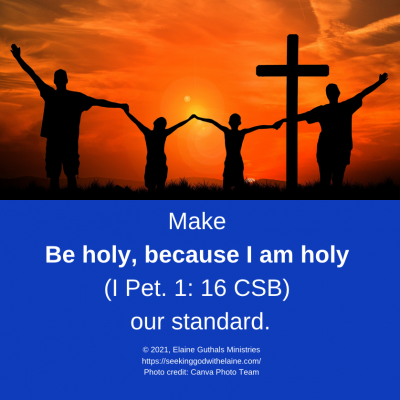
    Make Be holy, because I am holy (I Pet. 1: 16 CSB) our standard.

    God tells us several times in His Word to evaluate ourselves based on His standards.

    First, we need to make sure we know the goal we are trying to reach.

    How do we get there? We have to figure out where we are at and what we need to to do to get to where God wants us to be.

    • Is our faith as deep as it could be?
    • If not, in what areas are we lacking?
    • What is God calling us to do to address that?
    • To where is He calling us?

    Related Links

    I have created a worksheet of the questions above. Click on the button below to access it.

    To read a related devotion, click the button below.

    We Are not to Lose Our First Love

    “But I have this against you: You have abandoned the love you had at first” (Rev. 2: 4 CSB)

    It is important that we do not lose the initial joy of our conversion.

    We don’t want to go backwards. We don’t want to lose our first love.

    Let’s work this through. Jesus said we are to come as little children. “‘Truly I tell you,’ he said, ‘unless you turn and become like little children, you will never enter the kingdom of Heaven’” (Mt. 18: 3 CSB).

    We know the joy that the have with something new. It is the spiritual love we shouldn’t lose.

    Hull made an excellent point. “The loss of the first freshness of spiritual emotion is not necessarily a decline of spiritual love. The early excitement is not strength — true strength comes when it passes into action.” This seems to be where the Ephesians were.

    Resource

    In a way that seems contradictory, doesn’t it? If the spiritual emotion is going down, doesn’t that mean the spiritual love is too?

    I don’t think so. It is hard to keep something bright and shiny new. As we get farther and farther away from conversion, we become more familiar with the concept of being saved. It is more who we are rather than who we’ve become.

    So, the emotion can go down or stay the same. But the love is supposed to go up.

    We are supposed to go from milk babies to steak adults. We are supposed to grow in grace and knowledge. That means we are to grow in love.

    We also call that navigating the Sanctification Road. We know we need to grow so that we will be imitating God.

    • Sanctification is the transformation of mind, body, and soul, which begins with regeneration, gradually changes our nature through the promptings of the Holy Spirit, and ends with perfected state of spiritual wholeness or completeness.
    • Regeneration is being changed from spiritually dead to spiritually alive and the internal requickening in us that God brings about through the work of the Holy Spirit to give us new character.
    • Spiritual death is the separation from God that occurred as a consequence of Adam and Eve’s original sin. The spiritually alive are those who have ABCDed, so they are no longer separated from God.
    • The perfected state indicates the combination of the spiritual graces which, when all are present, form spiritual wholeness or completeness.
    • Spiritual graces are worldly morals that have been submitted to God to further His kingdom instead of enhancing this world.

    The ABCDs of Salvation

    If you have not become a believer in Christ, please read through the
    Plan of Salvation and prayerfully consider what God is asking you to do.

    A – admit our sins
    B – believe His Son Jesus is our Redeemer
    C – confess God as Sovereign Lord

    D – demonstrate that commitment by making any changes needed in our lives to
    live the way in which God has called us

    The Disciple’s Job Description

    Glossary

    To read a devotion in the First Love series, click on the button below.

    Related Links

    I have created a worksheet of the questions above. Click on the button below to access it.

    To read a related devotion, click on the appropriate button below.

    We Are to Evaluate Ourselves by Meditating on Him

    “Be angry, and do not sin; ponder in your own hearts on your beds, and be silent. Selah” (Ps. 4: 4 ESV)

    Meditating is when we evaluate our lives by thinking things through.

    Really, when we are meditating, we are seeking God. But it is also more than that.

    It is applying what we are hearing and reading. We do this by what Hickman called “… exercise and application of the mind.” That can only happen through our thought processes.

    Resource

    We will only grow when we think it through. If our faith is described as beliefs, a.k.a. the assent of the mind, it will only grow through exercises of the mind.

    To read a related devotion, click the button below.

    We should evaluate every part of ourselves. Our guide should be the Scriptures. It shouldn’t be what I say or what someone else says. It should be what God says.

    Oh, what I or someone else says can be used to jumpstart your thinking. But the standard is set by God. We should use what He says to evaluate things.

    To read a related devotion, click the button below.

    We Are to Use Our Evaluation to Increase Worship

    “For the Spirit God gave us does not make us timid, but gives us power, love and self-discipline” (II Tim. 1: 7 NIV)

    We use our evaluation to educate our thoughts to increase our worship and use our worship to educate our thoughts.

    Where is all this evaluating going? What are our end goals?

    Yes, we are trying to further ourselves along the Sanctification Road if it is a continuum. We want the outcome to be we have God’s character in us.

    I think God’s end goal is to have us worship Him. We have to have His character so we can enter Heaven, but once we are there, we will worship Him for eternity.

    Right now, we can use the worship to educate our thoughts.

    Statham wrote, “The instincts of a fervent Christian man will resent all that is showy and formal, and will rejoice in all that lifts his heart and his thoughts into communion with the living God.” It’s that last part that hooked me.

    Resource

    Worshiping God puts us in communion with Him. When we are talking with Him and listening to Him, that focuses our thoughts on the promptings of the Holy Spirit.

    Talking to God and listening to Him is a form of worship.

    Statham called meditation the preparation for prayer. How many times do we just start praying with no forethought?

    If we look at it as meditation is where we evaluate our lives, meditation informs our prayer, and prayer informs our life. We see God’s hand controlling our lives. This is what He wants.

    I don’t think it is just because God wants to control us. It is more that we are putting God as our priority. We are giving Him the controls.

    To read a related devotion, click the button below.

    EvaluatingOurEvilThoughtsPin

    Making the Connections

    Okay. I didn’t know what to expect when I started writing this. I’m not sure I expected that.

    But I see a progression. It has to be.

    This is important because God doesn’t want us to stay as we are at conversion. He wants us to grow in knowledge and grace.

    When we evaluate ourselves, we focus our thoughts on God. It will help us corral the evil thoughts with which Satan tries to trip us up.

    How Do We Apply This?

    We have to find ways to evaluate ourselves. We have to take a realistic look at our lives against God’s standard.

    That means we have to know what God’s standard is. We have to read about it. We have to meditate on it. We have to live it.

    Father God. We want to live up to Your standard. We know that we have to give up worldview standards in order to do that. Help us to become more like You. Amen.

    Searching for and Seeking God

    Hearing His Word (Rom. 10: 17).
    Reading His Word (Rev. 1: 3).
    Praying to Him (Heb. 4: 16).
    Studying His Word (Ac. 17: 11).
    Meditating on His Word (Ps. 1: 1-2).
    Memorizing His Word (Ps. 119: 11).

    What do you think?

    Leave me a comment below (about this or anything else) or head over to my Facebook group for some interactive discussion.

    If you don’t understand something and would like further clarification, please contact me.

    If you have not signed up for the email daily or weekly providing the link to the devotions and the newsletter, do so below.

    If God has used this devotion to speak with you, consider sharing it on social media.
  • Buckling Down Our Hearts and Lips

    Haven’t we had something pop out of our mouths at times? This daily devotional looks at how we should guard our hearts and tongues.

    Nuggets

    • Our hearts are the root, so we must guard them, also.
    • There are many ways in which our lips can get us in trouble.

    To read devotions in the Redo for Godliness series, click the appropriate button below.

    Devotions in the How Do We Live Godly Lives? series

    It is very easy for us to have things comes flying out of our mouths. God calls His disciples to do better.

    We have to be on guard. This includes our hearts and our lips.

    “Keep a constant watch over your hearts. David desires God to ‘set a watch before the door of his lips’ (Psalm 141:3): much more should we desire that God would keep the door of our hearts” (Charnock, The Sinfulness and Cure of Thoughts)

    Let’s Put It into Context #1

    We’ve been looking at Charnock’s sermon entitled The Sinfulness and Cure of Thoughts to show us how to cleanse, a.k.a. sanctify, our thought processes. Charnock has taught us 

    • that we cleanse our thoughts when we return to having a strong relationship with God. We can do that by studying the Scriptures, meditating on God, contemplating on His creation, and praising Him.
    • that we focus our thoughts by being humble instead of prideful, following God instead of the worldview, working instead of being idle, and laboring for Him.
    • that we overcome our evil thoughts by burying ourselves in Scripture and relying on His omniscience and judgment.

    Resource

    Glossary

    Here is a running list of what we’ve discussed previously.

    Set a Guard over Our Hearts

    “LORD, set up a guard for my mouth; keep watch at the door of my lips” (Ps. 141: 3 CSB)

    Our hearts are the root, so we must guard them, also.

    It kind of threw me a second that Charnock started with guarding our hearts when the verse he chose was all about guarding our lips. But then I think I figured out what he was getting at.

    The Homilist helped. They wrote, “He prays against wrong in practice.”

    Resource

    Our character is really at our heart level. If that is wrong, the lips are probably going to shoot out something that is wrong.

    We can’t practice in our hearts what is wrong. We can take that a couple of ways.

    Wrong actions cannot be applied or done in a situation. We have to guard against choosing to do what God doesn’t want us to do.

    But we also can’t make them our custom. They can’t become standard operating procedure.

    Like the Homilist said, we need to stay away from worldly pursuits of what is wrong. One way we do that is by watching the company that we keep.

    To read a related devotion, click the button below.

    Set a Guard over Our Lips

    “LORD, set up a guard for my mouth …” (Ps. 141: 3 CSB)

    There are many ways in which our lips can get us in trouble.

    Who out there has had the wrong words just shoot out of your mouth at some point or another? Like everyone.

    The old saying “sticks and stones may break my bones, but words will never harm me” isn’t really true. Words can do a lot of damage.

    How important is the tongue? James answered that question. “And the tongue is a fire, a world of unrighteousness. The tongue is set among our members, staining the whole body, setting on fire the entire course of life, and set on fire by hell” (Jas. 3: 6 ESV).

    We can make a lot of mischief with our tongues. Gisborn gave us a long list.

    • Foolish talking
    • Impatience and discontent
    • Contentious
    • Pride and vanity
    • Censoriousness
    • Meddling
    • Deceit
    • Violations of modesty
    • Profanity

    Resource

    Foolish talking

    “Obscene and foolish talking or crude joking are not suitable, but rather giving thanks” (Eph. 5: 4 CSB)

    Whoa! Gisborne didn’t hold anything back. He wrote, “Some persons are so indisposed to sobriety of thought, and have so long accustomed themselves to regard seriousness as bordering upon stupidity or gloom, that the gravest concerns lose in their conversation every symptom of importance. The wisest reflections are encountered with unmeaning laughter; and conclusions of the highest moment are repelled by a paltry effort at a jest.”

    Resource

    I know. Let’s break that down so we can make it more understandable.

    Disciples are called to be sober. Sober is a character trait distinguished by self-control, genuineness, and sound moral judgment.

    That would make “indisposed to sobriety of thought” to be someone who couldn’t control their thoughts or their tongue. They not only can’t control them, they hit the extremes.

    One reason they are all over the board is they “… have so long accustomed themselves to regard seriousness as bordering upon stupidity or gloom ..,” They don’t want to be serious.

    Now, if you have been reading my devotions for a while, you know I lead with humor. However, we have to temper that with seriousness. That doesn’t make us stupid or give us a gloom and doom attitude.

    It means we are grounded in reality. God doesn’t want us to be the party animals or the class clown. He doesn’t want us to focus on the frivolous.

    God’s doesn’t want us to discount what others say just because we think they are too deep. He doesn’t want us to write them off through humor.

    God wants us to have a realistic viewpoint. He knows we have to truthfully evaluate our lives so that we can determine where we are at on the Sanctification Road and where He is calling us to make the necessary changes in our characters.

    God knows we have to truthfully evaluate our lives so that we can determine where we are at on the Sanctification Road and where He is calling us to make the necessary changes in our characters.

    Impatience and Discontent

    If we take the frivolousness up a step, we could become impatient and discontent with our lives. That is directly opposite of how calls us to be.

    We talked about the benefits of waiting on God in The Silence of Waiting on God. We said that God wants us to wait silently on Him, not compare ourselves to worldview people who are considered successful.

    To read a related devotion, click the button below.

    But that doesn’t mean we aren’t doing anything. We are trusting God. Resting and waiting are actions because they are conscious decisions.

    Instead of waiting on God, though, we sometimes rail on God. Oh, yeah. When God isn’t working on our timetable, out of our lips and minds come all sorts of words cutting Him down.

    We blow right through God’s call to be content with our lives. Contentment is being satisfied regardless of the circumstances of our lives.

    Devotions in the Contentment Leads to Tranquility series

    God wants us to wait on His provision. He will give us what is best for us.

    Contentious

    This kind of goes along with being content. I see this as the next step.

    We aren’t content with our lives, and we let everyone know about it.

    But it doesn’t stop there. Gisborne wrote, “If anger in its lowest degree overtake you, beware of transgression. Sin after sin is the usual consequence of anger; and among the first sins which arise from anger are sins of the tongue.”

    Gisborne also connected this with our hearts, He wrote, “The irritated mind unburdens itself in passionate language. When the heart glows with resentment, heat and vehemence of language betray the inward flame.”

    Resource

    Oh, yeah. Discontentment breed contentiousness. We let ’er rip when we resent and envy that we are not where we want to be.

    All the hatred comes spewing out.

    Pride

    The flip side is when we are content. Instead of it coming out as satisfaction and tranquility, it comes out as pride. Pride is a unrealistic high opinion of oneself that is based on faulty self-esteem.

    We don’t get that it is not a true picture. Maybe, we so want it to be true that we lie to ourselves.

    God doesn’t want us lying to ourselves or to anyone else. “The LORD detests lying lips, but he delights in people who are trustworthy” (Prov. 12: 22 NIV).

    I just said it. God wants us to make a fair and true assessment of ourselves. If we don’t, we may not get all of the sin cut out of our lives.

    Censoriousness

    What is bad is when our own pride affects how we view others. Censoriousness means being critical of others. Our pride is often built on tearing others down.

    Gisborne described it this way. He wrote “Solicitous in every circumstance of life to magnify himself, he speaks contemptuously and degradingly of others; and the more contemptuously and degradingly in proportion as he apprehends that they may be advantageously compared with him, or may stand in the way of his enterprises and projects.”

    Resource

    I don’t know if that is better or worse than when we are censorious without realizing it. We know we can be careless in our conduct with others. It may be a byproduct of selfishness, or it may just be our self-centeredness.

    When we do act purposefully, we can be censorious through anger, spite, or envy. That is totally opposite as to how God wants us to interact with others.

    The second greatest commandment is that we are to love others. “The second is, Love your neighbor as yourself …” (Mk. 12: 31 CSB).

    Glossary

    Love God is righteousness + Love people is mercy = perfection/godliness

    Meddling

    “Let none of you suffer as a murderer, a thief, an evildoer, or a meddler” (I Pet. 4: 15 CSB)

    At times, we really do have unconscious unguarded tongues. We end up sticking our noses into other people’s lives.

    We may tell ourselves we are trying to help them. But we don’t.

    • “A gossip betrays a confidence, but a trustworthy person keeps a secret” (Prov. 11: 13 NIV).
    • “Whoever conceals an offense promotes love, but whoever gossips about it separates friends” (Prov. 17: 9 CSB).
    • “Without wood, fire goes out; without a gossip, conflict dies down” (Prov. 26: 20 CSB).
    • “Make it your goal to live a quiet life, minding your own business and working with your hands, just as we instructed you before” (I Thess. 4: 11 NLT).

    Meddling is a significant sin. It could really wreck our witness.

    Deceit

    “Do not go about spreading slander among your people; do not jeopardize your neighbor’s life; I am the LORD” (Lev. 19: 16 CSB)

    Gisborne perfectly described what happens when we lie. He wrote, “The liar destroys the foundation of all confidence, whether in the public dealings of men one with another, or in the retirement of domestic life.”

    A step up from that is slander. He called it a more refined way to lie.

    Gisborne saw it this way, contending that slander fuels much sin. That sin will be punished on judgment day. “But the cowards, faithless, detestable, murderers, sexually immoral, sorcerers, idolaters, and all liars —their share will be in the lake that burns with fire and sulfur, which is the second death” (Rev. 21: 8 CSB).

    Violations of modesty

    “But now is the time to get rid of anger, rage, malicious behavior, slander, and dirty language” (Col. 3: 8 NLT)

    But God wants us to cut all of that out of our lives. Gisborne wrote, “There is no sin which is more odious in its nature, more expressive of a depraved and polluted heart.”

    Resource

    God doesn’t want us to have even the stain of sin. He wants us to be pure.

    Profanity

    Gisborne told us exactly what was included in the term profanity. He wrote, “This sin comprehends every irreverent expression concerning the Deity, His titles, His attributes, His providence, His revelation, His judgments.”

    Resource

    Profanity focuses on our being irreverent to God.

    BucklingDownOurHeartsAndLipsPin

    Making the Connections

    I can see where the heart is tied to the lips here. The heart is the core of us. It is tied to our character.

    The lips are our expression of that character. What we say doesn’t make us who we are. It shows others who we are.

    How Do We Apply This?

    We need to keep Hawk Nelson’s song in mind. Words can go either way. They can build someone up or tear someone down. We want to build them up.

    Related Links

    Hawk Nelson

    Father God. We want our hearts after Your own heart and our character to be imitating You. Help us to guard them for Your service. Amen.

    What do you think?

    Leave me a comment below (about this or anything else) or head over to my Facebook group for some interactive discussion.

    If you don’t understand something and would like further clarification, please contact me.

    If you have not signed up for the email daily or weekly providing the link to the devotions and the newsletter, do so below.

    If God has used this devotion to speak with you, consider sharing it on social media.

  • September 2021 Newsletter

    I, for one, feel like we’ve covered a lot of ground this month. We looked at Romans Part 2 before we started going through the How Do We Live Godly Lives series.

    We got a lot of nuggets out of it.

    Main Nuggets

    • Our character finds its home in our heart. Our thoughts are the index of character (Controlling Our Thoughts through Meditation).
    • If we have our yapper going, we may or may not have our heart involved. We’ve got to get it down to the heart level for it to make an impact on our character (Why Should We Listen When Worshiping?).
    • Sanctified ability is an interesting term. Ability is the capacity to do something. We either have the proficiency or the potential to accomplish the goal. Our redo for godliness is all about how God is sanctifying us. God is the one who is redoing us. So, we might not have the ability right now, but God is working on us to get us to have that ability. We don’t have to be perfect right now. God is in the business of making us perfect. We are a work in progress (We Are All Ministers).
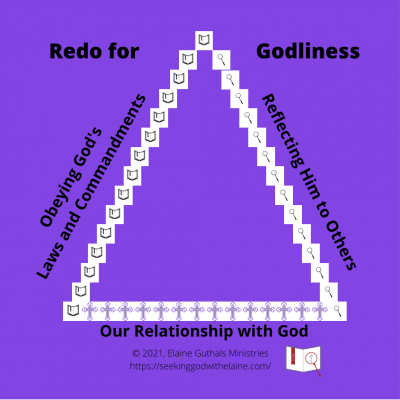
    RedoForGodliness

    Our Relationship with God

    • We tend to think we are the reason for the gospel. We think we are the purpose or the motivation behind the Plan of Salvation. God designed the Plan of Salvation because He wants back what Satan took away from Him. He wants us back so we can worship Him again in spirit and in truth. Some may think I am nitpicking there, but I don’t think so. God is the focus. He always is the focus (The Focus of the Ministry).

    • Can’t you hear it? [Insert whiny voice] “But I don’t understand, and it’s supposed to be all about me!” The me part is faith. The me part is submitting. In a nutshell, submitting means committing to live a sin-free life (The Focus of the Ministry).

    • There is only one road to God — through Jesus (How a Minister Says Goodbye).

    • The focus of the ministry is the Plan of Salvation that God designed and carried out through Jesus’ sacrifice (The Focus of the Ministry).

    • God isn’t in the business of proving Himself to us. We have to have faith and believe (Paul’s Travel Plans).

    • God frees us, changes us, revives us, and remakes us. But it starts with the idea of Him (Focusing Our Thoughts Off of the World).

    • God will call us to salvation when we are searching for Him and more willing to accept His gift of salvation (What Is Life About?).

    • God doesn’t want us to go through the motions. God isn’t interested in us buying into the ceremony of religion. He doesn’t want us going through the motions. It isn’t about checking things off our list. We’ve got to grow our relationships with God. This is all about becoming more like Him (What Is Our Life About?; Joining the Living).

    • God calls us to salvation for differing lengths (Focusing Our Labor on God).

    • God’s salvation is offered to all regardless of what we have done (Focusing Our Labor on God).

    • Salvation is the same for all who ABCD. We all are changed from being spiritually dead to spiritually alive. We all are given access to Sovereign God. We all are given eternal life (Focusing Our Labor on God).

    The ABCDs of Salvation

    If you have not become a believer in Christ, please read through the
    Plan of Salvation and prayerfully consider what God is asking you to do.

    A – admit our sins
    B – believe His Son Jesus is our Redeemer
    C – confess God as Sovereign Lord

    D – demonstrate that commitment by making any changes needed in our lives to
    live the way in which God has called us

    The Disciple’s Job Description

    • What salvation entails was determined by God. He figured out what we would have to do to gain it. We have to believe that Jesus died for our sins. Then, God calls us to salvation. He calls each and every one of us. Some, He may call when we are young. Others He will call when we are older. God alone knows when He will call us home. It may be when our life here is over. It may be when all life here is over. But it is all God’s Plan (Focusing Our Labor on God).

    • The grace of our Lord Jesus Christ is a special thing. It doesn’t come on its own. It comes with Jesus. It comes with Jesus’ love, mercy, pardon, and peace (How a Minister Says Goodbye).

    • We all need grace. It is offered to all. It is our decision whether we will accept it or not (How a Minister Says Goodbye).

    • Spiritual knowledge and wisdom comes from God. We get it through the Holy Spirit. God will reveal Himself to us. He doesn’t do this all at once (We Are All Ministers).

    • Through our obedience in faith in Jesus Christ, God strengthens us and provides His wisdom (How a Minister Says Goodbye).

    • We gain everything by knowing — and believing — who Jesus is. Knowing isn’t enough. We have to make a conscious decision to believe He is our Savior and has secured the forgiveness for our sins by His death and resurrection (The Focus of the Ministry).

    • We have to love the True God. We can’t say we love God because He gives a pass to sinners (How Do We Overcome the Original Corruption of Bad Thoughts?).

    • God’s wisdom is available to all. No one is excluded. Rich or poor. Old or young. Gender doesn’t exclude us. What we’ve done doesn’t exclude us (Why Should We Listen When Leading?).

    • We have to become children of God to fully praise Him and know His blessings. He won’t bless us if we are not following His laws and commandments (Controlling Our Though through Contemplation and Praise).

    • We must be open to where God will grow us. He has a plan for our lives. He has a job for us to do (We Are All Ministers).

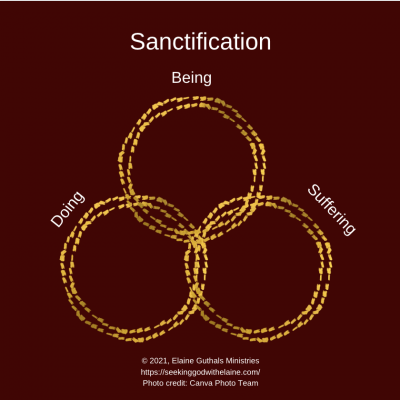
    • Aren’t we always trying to build and grow? Haven’t we said that is what the Sanctification Road is about? What if it isn’t a continuum leading us to be closer to God? What if it is the circles of being, doing, and suffering, and we being the circle again each day? When the circles interlock like the picture shows, the doing and the suffering does kick us up to the being. The being invites Satan to tempt us, kicking us down to the suffering. The doing is probably something different than we would think. It isn’t works based — although we have to show through our actions that we are disciples of Christ. The doing, in my opinion, is us showing we have made the choice to join the living. We have to show we are doing for the right reason — because we are honoring Sovereign God (Joining the Living).

    Sanctification

    Glossary

    Obeying God’s Laws and Commandments

    • God isn’t always going to ask us to do the easy stuff. Sometimes, He is going to ask us to do the hard (A Ministry of Love).

    • God uses each of us — man, woman, young, old — to further His kingdom. We shouldn’t stand in His way (A Ministry of Love).

    • Some people choose to pervert God’s doctrines. They want to compromise with the worldview. They deceive with their words and actions to cover impure motives. God will not lower his standards. His laws and commandments will remain firm (Watch for A Ministry in Conflict).

    • We settle for an inferior religion instead of going for a true relationship with Sovereign God and our Blessed Redeemer. Yeah, yeah. Part of it is because our wee human minds just can’t fathom the greatness of what is available to us. Part of it is because we just like our sinful nature. We don’t want to give it up. So we compromise worldview with Godview (How a Minister Says Goodbye).

    • God will be victorious over Satan. He is the One Who will crush Satan, not us. His victory is assured (A Team Approach to Ministry).

    • The Holy Spirit assists us in overcoming the temptations of this life. The Holy Spirit is more powerful than Satan, meaning we can conquer Satan. We can conquer our thoughts because the Holy Spirit that lives within us (Focusing Our Thoughts Off of the World).

    • First John 4: 4-5 say nothing about Satan being weak. It definitely doesn’t say he isn’t a threat. What it says is God and the Holy Spirit are greater than Satan. It doesn’t matter how formidable Satan is. He isn’t more powerful than Omnipotent God (Focusing Our Thoughts Off of the World).

    • But isn’t it a comfort to know that, when Satan tempts us, God only allows that to go on for only a little while. Then God shuts that down, too (A Team Approach to Ministry).

    • We aren’t doubting God. We are doubting ourselves. But that means we are doubting God, because that means we don’t think He is powerful enough to do what He says He can do (A Team Approach to Ministry).

    • God has the power to establish us because He can and will strengthen us (How a Minister Says Goodbye).

    • It is clear that, in order to know God, we have to search for Him and seek Him. It can’t be a halfhearted encounter. We must delve into the Scriptures to find the many facets of the Sovereign God. We do that not only by hearing and reading His Word, but by studying it, meditating on it, and memorizing it. We must bathe all of that with prayer (How Do We Overcome the Original Corruption of Bad Thoughts?).

    • Meditation puts us in the presence of the Sovereign God and our Redeeming Savior. Our meditation and conversations with God spill over into our conversations with others (Controlling Our Thoughts through Meditation).

    • We can control our thoughts when we take it outside of ourselves. Meditation is attentive thought. We must focus our thoughts away from worldly things and put it solely on God (Controlling Our Though through Contemplation and Praise; Controlling Our Thoughts through Meditation).

    • Contemplating the beauty and majesty of our world can calm our thoughts and give us peace (Controlling Our Though through Contemplation and Praise).

    • When we contemplate how trustworthy God is, we can control our thoughts and be content (Controlling Our Though through Contemplation and Praise).

    • Praising God helps us to control our thoughts (Controlling Our Though through Contemplation and Praise).

    • When we are gung-ho for God, work isn’t work. It is a joy — it is praise. We feel Him there every step of the way. When God isn’t there because we have turned away, it is a struggle. It is work. There is no joy (Controlling Our Though through Contemplation and Praise).

    • God calls us to work to provide for ourselves (Focusing Our Energies on God).

    • God calls us to work to know Him (Focusing Our Energies on God).

    • God wants to be the priority in our lives with us being humble (Guarding Our Hearts from Prideful Thoughts).

    • Jesus chose us; we have to choose Him (Focusing Our Thoughts Off of the World).

    • After we have ABCDed, God abides within us through His Word (Focusing Our Thoughts Off of the World).

    • Scriptures are just an introduction to God and His wonders. We get the concept of Who God is from Scriptures. We don’t get a full picture. He waits until we are His children to really start revealing Himself to us. Even more awaits for when we meet Him face to face (Focusing Our Thoughts Off of the World; How a Minister Says Goodbye).

    • We don’t have a visual of God. We just know Him in our hearts and minds (Focusing Our Thoughts Off of the World).

    • Focusing on God helps us to look past the world and to repent from our sins (Focusing Our Thoughts on God).

    • Jesus mingled with people, yet He was distanced from them in character (Focusing Our Thoughts on God).

    • When we stop listening to God, we start being irreverent and insincere when — if — we worship Him (Why Should We Listen When Worshiping?).

    • God doesn’t want us to make promises to Him that we aren’t going to keep (Why Should We Listen When Worshiping?).

    • We gain balance by gaining knowledge of God (Where Is the Balance?).

    • God works in our lives to give us balance. He controls what happens (Where Is the Balance?).

    • We can only obtain the balance by faith. We can’t get there by our feelings (Where Is the Balance?).

    • We want to base everything on what we see and know. That isn’t going to fly. God is a spirit. He lives in a spiritual world. We will be going to a spiritual world one day (Facing Death).

    • All sin, regardless of what we consider its severity, is a rejection of God. Even though the outcome — rejection of God — is the same, the nature of the person committing the sin is different. Sinners will be judged and condemned to an eternity in hell if they do not ABCD (Joining the Living).

    • We must make a choice to fully change our character to be more like His. We can’t ABCD, and then not start on the Sanctification Road (Joining the Living).

    • We don’t know that we are spiritually dead until we realize we need Jesus as our Savior (Joining the Living).

    • God is only asking us to do what is the very best for us. He isn’t being some meany. He is loving us (Living the Life).

    • We owe all to God — our life and our health — as He created us and provides for us. If we think about all of that, we can see that God didn’t create us and leave us to fend for ourselves. He is a hands-on God (What Is Life About?).

    • What the Parable of the Vineyard Workers tells us is that the doing isn’t the main ingredient here. Yes, some of them performed their ministry for a long time. Not all of them did. So, quantity wasn’t what was rewarded. It was quality. Those who were late to the labor gave God their all (Focusing Our Labor on God).

    Glossary

    We can only find our balance by finding it in a right relationship with God.

    Obeying God’s Laws and Commandments

    • Did you see the diversity in the list in Romans 16? Some were men; some, women. Some were Jews; some, Gentiles. Some were old; some, young. What did they all have in common? They were doing God’s work. Yes, even the women. They were doing what God wanted them to do. They were listening and obeying (A Ministry of Love).
    • We are ministers for Jesus and God, so we should not boast of ourselves. It isn’t our goal to have world-wide fame. Our goal is to be different from the world (Jn. 15: 19 ESV) (The Focus of the Ministry; We Are All Ministers).
    • We are going to have our detractors, the ingratitude. But if we are doing God’s work, we will find the love (A Ministry of Love).
    • We can’t say, “Oh, we like where murder is a sin, but we don’t like where homosexuality is, too.” We don’t get to pick and choose what is a sin or what isn’t. We don’t get to choose what we will follow or what we won’t (The Focus of the Ministry).
    • We have to be very careful we don’t fall for false doctrines. To ensure this, we have to know what God’s Word says. That means reading, hearing, and studying His Word. Yes, seeking God (Watch for A Ministry in Conflict).
    • Obedience, wisdom, and purity will help us remain strong (Watch for A Ministry in Conflict).
    • When we are growing closer to God, Satan will be trying even harder to try to get us to sin. So, the more obedient we are, the more of God’s grace to which we have access. More obedient. More grace. More temptation. We need the wisdom to discern how to not give into the temptation and stay pure (Watch for A Ministry in Conflict).
    • Any place we let Satan get a toehold, he latches on and runs with the opportunity. The best way he can do that is to get us to think we are unworthy (A Team Approach to Ministry).
    • We get that steadfastness by holding onto the gospel and onto what Jesus has done for us. It is nothing that we have done or that we can do that keeps us safe from Satan and his grasp. It is only Jesus (How a Minister Says Goodbye).
    • We have to follow God’s plan even if it contradicts our plans (Paul’s Travel Plans).
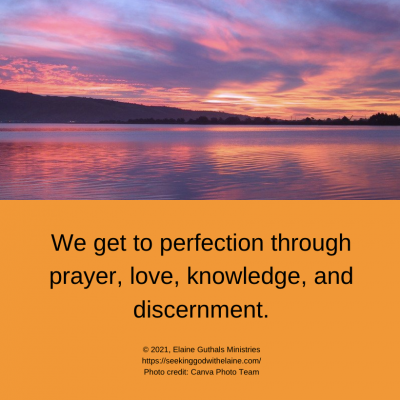
    • We are doing the redo for godliness so that we can improve. That improvement equates to successfully completing the Sanctification Road. Our goal is to be “… pure and blameless for the day of Christ” (Phil. 1: 10 ESV). That will lead to perfection. We get there through prayer, love, knowledge, and discernment (How Do We Overcome the Original Corruption of Bad Thoughts?).
    • Studying the Scriptures cleanses the bad thoughts. We cleanse our thoughts when return to having a strong relationship with God (How Do We Overcome the Original Corruption of Bad Thoughts?).
    • Our thoughts play a role in salvation as our faith begins in our mind. That is where it starts before we get it to the heart level. They also play a role in returning us to our first love. Unfortunately, many times we lose our first love through thoughtlessness (How Do We Overcome the Original Corruption of Bad Thoughts?).
    • But these thoughts also help us, don’t they? They are how we evaluate ourselves. If our thoughts are wandering all over kingdom come, it is harder to corral them to take an in-depth assessment of how things really are. We either don’t start or give up before we get ours reconciled with God (How Do We Overcome the Original Corruption of Bad Thoughts?).
    • What is meditate? It is to think about it, reflect on it, deliberate and engage in it (How Do We Overcome the Original Corruption of Bad Thoughts?).
    • Meditating on God helps us in the sanctification process. Our journey on the Sanctification Road includes sanctification of our thoughts. That means that we can learn to control them (Controlling Our Thoughts through Meditation).
    • Meditating stabilizes our hearts and minds and calms us as we think about the love of God (Controlling Our Thoughts through Meditation).
    • Our thoughts are a good indicator of who we are (Controlling Our Thoughts through Meditation).
    • Have you ever considered that sin generally comes from our thoughts? Even when it has a visual or auditory component, we have to consider whether we will give into the temptation (Controlling Our Thoughts through Meditation).
    • We control our actions. We express ourselves through our actions. Our thoughts show our purpose. We can control our thoughts and feelings through meditating on God (Controlling Our Thoughts through Meditation).
    • Humility helps keep prideful thoughts at bay (Guarding Our Hearts from Prideful Thoughts).
    • We not only are faulty in how we see ourselves, but we also do not see the standard of character correctly (Guarding Our Hearts from Prideful Thoughts).
    • When Satan pops an evil thought in our hearts, it is our choice whether we are going to cultivate and water it so it can grow or cut pull it out by the roots. If our will is right with God, the latter is going to happen. If not, break out the watering can (Guarding Our Hearts from Prideful Thoughts).
    • Our thoughts reflect our character. True, a lot of our thoughts amount to nothing — they are just a waste of time and focus. The issue is “For as he thinketh in his heart, so is he …” (Prov. 23: 7 KJV). Our thoughts become who we are (Guarding Our Hearts from Prideful Thoughts).
    • Pride generally tries to justify the sin (Guarding Our Hearts from Prideful Thoughts).
    • We have to be sanctified up to His character. Mankind’s character is not enough. What the worldview sees as good enough isn’t because the worldview character does not have God in it (Focusing Our Thoughts on God).
    • If we are not seeking God, there is no way He can sanctify us. We are definitely not working at our salvation (Focusing Our Energies on God).
    • If we are taking the easy way out with the least amount of work possible, we won’t find God (Focusing Our Energies on God).
    • We know that we can find that which our soul hungers for, but we must yearn to know God. That is, we must want it badly. The only way to do that is to be diligent in seeking God (Focusing Our Energies on God).
    • We can’t be idle and quit examining where we are in our journey and what we need to do to become more in line with what God wants (Focusing Our Energies on God).
    • It is our responsibility and obligation to be happy and content in life — regardless of the circumstances (Where Is the Balance?).
    • Our lives become unbalanced when we become too righteous. We generally think of someone too righteous as someone who is an over-the-top religious person (How Does being Righteous Affect Balance?).
    • We try to do our own self-help program. But remember God said we can’t do it without Him (How Does being Righteous Affect Balance?).
    • It isn’t about our personal righteousness. It is about God’s righteousness, which we reflect (How Does being Righteous Affect Balance?).
    • We even get out of balance when we evaluate ourselves. We bite on ourselves too much for the sins we commit. We keep biting on ourselves for sins God on which has already forgiven us (How Does being Righteous Affect Balance?).
    • We are sweating the small stuff. We need to quickly respond to God’s call and totally choose to follow His ways on the meaty matters of life (How Does being Righteous Affect Balance?).
    • Unfortunately, runaway righteousness gives itself away when it strives for standards of a character that is unattainable. The problem is when we try for something even more than what God is asking. I read it to mean we are trying to make us more godlike than God (How Does being Righteous Affect Balance?).
    • Even though we are sinful in nature, God calls us to be perfect as He is (How Does being Righteous Affect Balance?).
    • We ABCD. We think we are going to keep God’s laws and commandments perfectly, and — oops, we don’t (How Does being Righteous Affect Balance?)
    • It is our duty to be perfect, but there is struggle in life as we try to be (How Does being Righteous Affect Balance?).
    • We shouldn’t be overly concerned about what others think. We have to realize that worldview people are judging us on worldview standards, not God’s. We shouldn’t be concerned with worldview standards. We need to be concerned with what God thinks of us (How Does being Righteous Affect Balance?).
    • We are safe because we are in God’s hands. There is no better place to be (Facing Death).
    • We are to enjoy life. We are to find the joy that God gives (Living the Life).
    • If God gives us this joy, peace, and hope, He isn’t going to want us to be blowing it with our pouty faces on — or worse. He wants us to exude a happiness of knowing Him (Living the Life).
    • We are to enjoy a life free from sin (Living the Life).
    • We strive to be the disciples God calls us to be. When we fail, we ask for forgiveness (Living the Life).
    • The first thing we have to do is work out our own salvation. Next, God wants us to tell others about His love to expand His kingdom. He called us to do His work as we go (Living the Life).
    • When we are younger, asking Jesus to be our Savior helps build our character. The younger we are, the easier it is to form good habits. If the governing principle is at the center of character, we have to make a choice as to whether it will be good or evil. That choice will form our character (What Is Life About?).
    • We know that the words that will do the most good to change us to be like God will be those that hurt the most (What Is Our Life About?).
    • We need to be buried in God’s Word so that we may be close to His altar. Our lives are about praising Him and telling others (What Is Our Life About?).
    • Our purpose is to have a relationship with God. It is about being right with God. It is about following God’s laws and commandments. It is about worshiping Him (What Is Our Life About?).
    • Notice, when it says greatest commandment, commandment isn’t plural. Salvation is not contingent on “… ‘You shall love your neighbor as yourself’” There is no other commandment greater than these.’” (Mk. 12: 30 ESV). Notice that it is plural when it says we are to obey all statutes. We can’t pick and choose in which laws and commandments we don’t believe. It is all or nothing (What Is Our Life About?).
    • We can’t, though, just look at the two greatest commandments, say we keep them, and break all the others. Breaking any of the other laws and commandments breaks the greatest commandment (What Is Our Life About?).
    • We need to meditate on everything we think, do, say, or feel — everything. Our whole lives have to be given over to God (What Is Our Life About?).
    • It seems like, in many instances, we leave the bulk of the work to only a few workers. We can’t do that. We need to step up and do our share (Focusing Our Labor on God).
    • What is sad is when we don’t feel qualified in doing what God is calling us to do and we use it and other reasons to not follow through (Focusing Our Labor on God).
    • We’ve got to do the work when God calls. God may give us a limited opportunity to complete it. We know Satan is going to do everything in his power to stop God’s work from going forward (Focusing Our Labor on God).

    Glossary

    We get to perfection through prayer, love, knowledge, and discernment.

    Reflecting Him to Others

    • God calls a team to do His work (A Team Approach to Ministry).
    • We are to share our knowledge with others (We Are All Ministers).
    • Paul told us two chores we are to do as disciples. We are to be filled with the knowledge ourselves. We are to help others grow and knowledge (We Are All Ministers).
    • We need wisdom and humility to discharge these functions. Our primary duty is the salvation of the lost so that God will be glorified (We Are All Ministers).
    • We aren’t saved just for ourselves. We are saved so that we can further God’s kingdom. The end result is to bring Him glory and honor (We Are All Ministers).
    • We are to be a minister to the unbelieving (We Are All Ministers).
    • Minister can range from someone discharging the religious or civil duties as assigned to the person who accomplishes acts of kindness (We Are All Ministers).
    • Paul knew it wasn’t about him being a great evangelist or missionary. He knew it wasn’t about him meeting the needs of others. It was about telling others that God had sent His Son to die on a cross so that His blood might be shed to pay the price to redeem us from our sins (The Focus of the Ministry).
    • Sometimes, unity takes work (Paul’s Travel Plans).
    • God wants us to be unified in His name (Paul’s Travel Plans).
    • God will abundantly bless those unified in His Son’s name (Paul’s Travel Plans).
    • We should pray for the ministry of others (Paul’s Travel Plans).
    • Disciples are to watch to ensure divisions are not created within the body of Christ (Watch for A Ministry in Conflict).
    • God wants us to be unified. He does not want us to look for things that divide us (Watch for A Ministry in Conflict).
    • Sometimes things happen in the moment. It could go from anywhere on a continuum of breathe-and-overlook-the-offense to blow-the-offense-out-of-proportion to anywhere in between. God wants us to live together in harmony. That means He wants us to work through it to reach a peaceful conclusion (Watch for A Ministry in Conflict).
    • Satan wants the church to fail. He would love most of all for it to implode from the inside. If he could get us to rip ourselves apart, he would really feel like he has won a great battle (Watch for A Ministry in Conflict).
    • Worldview standards feed the chaos of the world because they are divisive. It is real easy to become arrogant and prideful when we buy into the worldview (Guarding Our Hearts from Prideful Thoughts).
    • Pride means that the picture that we have of ourselves is fault. It also usually means that the picture we have of others is also faulty. This stops us from fulfilling the second greatest commandment: love others (Guarding Our Hearts from Prideful Thoughts).
    • Many worldview people think that goodness alone is sufficient. It isn’t. Goodness comes from God’s doctrines (Focusing Our Thoughts Off of the World).
    • The worldview does limit the objects of our thoughts. It does try to keep the focus on us (Focusing Our Thoughts Off of the World).
    • Satan will do everything in his power to keep our thoughts off God. We have to choose to think about God (Focusing Our Thoughts Off of the World).
    • Being of the world is not a good thing. Jesus said we would die in our sins if we were (Focusing Our Thoughts on God).
    • Wisdom also gives us an intellectual life. But we have to remember that this isn’t wisdom according to the world. We can’t try to use knowledge to make it our god. We can’t look for an explanation that will replace God as Sovereign God (Where Is the Balance?).
    • Worldview people think our witnessing to them is overly much. They think we should keep our relationship with God to ourselves. What they don’t want to acknowledge is that witnessing is part of our job description (How Does being Righteous Affect Balance?).
    • In this life, it does seem like the children of God are treated in the same was as worldview people. It brings up a good question. Why are we trying to be morally correct if it doesn’t make any difference? Two good reasons are the law doesn’t change based on our moral character and that means there is more after this (Facing Death).
    • The cry these days is that everything has to be more equally distributed. That may have been how God originally planned it, but Satan nixed that. In other words, that will never happen on this earth (Facing Death).
    • Disciples look at things differently than worldview people do. They see trials as judgment. We see it as a Father correcting His children. They see the wealth and prosperity they have earned through their own merits. We see gifts from our loving Heavenly Father. We see what we gain from trials, not what they cost us (Facing Death).
    • We think of God’s work as the missionaries, preachers — some full-time job. But what did Jesus say when He talked about separating the sheep and the goats? “For I was hungry and you gave me food, I was thirsty and you gave me drink, I was a stranger and you welcomed me, I was naked and you clothed me, I was sick and you visited me, I was in prison and you came to me” (Mt. 25: 35-36 ESV). Those don’t have to be full-time jobs. They don’t even have to be an everyday occurrence. The point is, when God puts someone in our path, we respond in His way in His name. We do it sincerely and promptly (Living the Life).
    • We don’t know how long we will have the opportunity to serve. The opportunity may be available for a limited time. We may be facing death before we know it. God wants us to act when He calls (Living the Life).
    If we are taking the easy way out with the least amount of work possible, we won’t find God.

    To read devotions in the Redo for Godliness series, click the appropriate button below.

    September2021NewsletterPin
  • Our Conscience and God’s Omniscience and Judgment

    Our consciences should be used to help us order the evil thoughts that will surely pop into our minds. This daily devotional begins to look at how we can direct our thoughts by realizing God is omniscient and will judge us in the end.

    Nuggets

    • Our conscience governs our thoughts and could be good or evil.
    • God sees everything, even our thoughts.
    • When we choose the evil, God will judge us.

    To read devotions in the Redo for Godliness series, click the appropriate button below.

    Devotions in the How Do We Live Godly Lives? series

    We are talking about how to awe our hearts in this grouping of Charnock’s sermon. We should be in awe because God is omniscient. That will really become evident on judgment day,

    “Awe your hearts with the thoughts of God’s omniscience, especially the discovery of it at the last judgment” (Charnock, The Sinfulness and Cure of Thoughts)

    Let’s Put It into Context #1

    We’ve been looking at Charnock’s sermon entitled The Sinfulness and Cure of Thoughts to show us how to cleanse, a.k.a. sanctify, our thought processes. Charnock has taught us 

    • that we cleanse our thoughts when we return to having a strong relationship with God. We can do that by studying the Scriptures, meditating on God, contemplating on His creation, and praising Him.
    • that we focus our thoughts by being humble instead of prideful, following God instead of the worldview, working instead of being idle, and laboring for Him.
    • that we overcome our evil thoughts by burying ourselves in Scripture.

    Resource

    Glossary

    Here is a running list of what we’ve discussed previously.

    Let’s Put It into Context #2

    I know, we’ve talked about God’s omniscience before. Omniscience means God is all-knowing. We can’t hide anything from God.

    To read a related devotion, click on the appropriate button below.

    Relying on Our Conscience

    “for whenever our heart condemns us, God is greater than our heart, and he knows everything” (I Jn. 3: 20 ESV)

    Our conscience governs our thoughts and could be good or evil.

    My bad. I picked a verse that was the latter part of a sentence. In fact, it was the last point in John’s train of thought.

    John was talking about loving one another. He said, however, that we can’t know true love unless we know Jesus.

    “By this we know love, that he laid down his life for us, and we ought to lay down our lives for the brothers. But if anyone has the world’s goods and sees his brother in need, yet closes his heart against him, how does God’s love abide in him? Little children, let us not love in word or talk but in deed and in truth. By this we shall know that we are of the truth and reassure our heart before him; for whenever our heart condemns us, God is greater than our heart, and he knows everything” (I Jn. 3: 16-20 ESV).

    I know. It is talking about our heart, but the heart and conscience are connected, aren’t they? What this is saying is the heart condemns the thoughts.

    Clarke explained it this way. He wrote, “For, whatever a man’s own eyes plainly see, he cannot doubt but a person of better eyes must see the same more perfectly. And whatever a man free from passion and wilfulness (sic), upon calm consideration, clearly discerns with his own mind, he is very sure the Infinite and All-knowing Mind cannot but discern still more clearly and distinctly” (emphasis added).

    Resource

    This is what John was saying here. Our hearts — and our thoughts — condemn us when we choose evil. It is the same judgment that God makes.

    Peters, Clarke, Natt hooked it to our conscience. Our conscience is the part of our nature that impacts our moral decisions as it points us to what is right and gives us pain or pleasure depending on the choice. This generally happens through our hearts and our minds working in tandem.

    Resource

    Before we go any farther, we have to acknowledge what we are choosing between. Our choices are good and evil.

    • Good, in the biblical sense, is the workings of God within His people.
    • Evil is equated with sin because it is that which goes against God and His purposes.

    When we evaluate the choice and work it out in our minds, we will recognize right from wrong. Oh, yes. God can recognize it higher, further, faster.

    We can and do ignore our consciences. We can even so ignore what our conscience has told us in the past that we silence our conscience. “They have become callous and have given themselves up to sensuality, greedy to practice every kind of impurity” (Eph. 4: 19 ESV).

    Natt argued that those who don’t have a good conscience know it. How could they not know it when their consciences are condemning them? The flip side of that is a good conscience doesn’t condemn us.

    Clarke contended that our conscience is part of God’s judgment. He said Scriptures present evidence of this belief.

    That is the first time I’ve heard the conscience described as a judgment. Usually, it is considered a guide to help us make the right decision.

    But I can see that if we look at it through the lens that our conscience really works on us after we make the wrong decision, it is a judgment. Our conscience can bite on us when we choose evil over good.

    Why is it so important that we have a good conscience? Natt wrote,

    “Who, then, we at length inquire, are those persons who may conclude that they are in a right state, from the circumstance of their conscience not condemning them? The persons who can form this conclusion are those who have acquired, among other things, a correct knowledge of what is essential to the Christian character. And having obtained this knowledge of the Christian character, they search deeply into their own. His repentance, and faith, and love, and obedience, though not perfect, are yet genuine.”

    Resource

    A good conscience is important to a good character. Our character is our thoughts, feelings, and actions all added together.

    Our thoughts are important to our character.

    Our thoughts are important to our character.

    Relying on God’s Omniscience

    God sees everything, even our thoughts.

    How can God know everything, especially what is in our minds? “Nothing in all creation is hidden from God. Everything is naked and exposed before his eyes, and he is the one to whom we are accountable” (Heb. 4: 13 CSB).

    God created us to be like Him.

    Glossary

    God provides for us because He knows what we need. South wrote, “… His providence sufficiently declares His omniscience; if He manages, rules, and governs all things, yea sin itself, it clearly follows that He has full cognisance (sic) of those things, since all these acts presuppose knowledge.” This makes it certain that God knows what we need and provides it.

    Resource

    God sees what we think we have hidden. He knows our thoughts even though they are inside of us. He knows our actions that we thought no one saw.

    I have to think about this. South said that God knows all things because He knows the possibilities because He sees His own perfection and He sees His perfection in us. Even more, God knows what will actually happen.

    Relying on God’s Judgment

    “And I will strike her children dead. And all the churches will know that I am he who searches mind and heart, and I will give to each of you according to your works” (Rev. 2: 23 ESV)

    When we choose the evil, God will judge us.

    Ludlow made a great observation. He reminded us that we don’t always see what we do as sin because we routinely do it. But God sees every sin we commit.

    Isn’t it easy just to consider what is happening now? We forget about the past, so we don’t remember past sins. Ludlow saw this as a problem because only “… God sees us altogether in our general character, the drift and meaning of our lives.”

    Resource

    Ooo, baby. Character, drift, and meaning.

    We build our character with the building blocks of thoughts, actions, and feelings. But I read this to be saying it is easy to forget about what made us us.

    When we add this to we don’t always see sin as sin, it really makes it a scary thought. How are we ever going to be perfect and forego judgment?

    The answer is that God looks at our hearts. “… For the Lord sees not as man sees: man looks on the outward appearance, but the Lord looks on the heart” (I Sam. 16: 7 ESV).

    I read this to mean that God is looking to make sure we are sincere and genuine. He knows we aren’t going to be perfect until we get out of these sinful bodies. But how hard are we trying? Are we even wanting to be moving in the right direction?

    We can’t say, “Oh, God is love, so He will give us a pass.” He didn’t give Moses a pass and let Him into the Promised Land. Our sins are punished.

    But God sent His Son to die for us so that we can have our sins forgiven — when we repent. Repentance is acknowledging our separation from God and expressing sorrow for breaking God’s laws and commandments by making the commitment to changing ourselves through obedience so that we no longer do the wrong things.

    A major way we show that we have sincerely repented is turning away from our sins. We try to stop doing them.

    God will give us time to repent. “I gave her time to repent …” (Rev. 2: 21 ESV).

    But the time God allots for that repentance is limited. “Since his days are determined, and the number of his months is with you, and you have appointed his limits that he cannot pass” (Job 14: 5 ESV).

    No, God doesn’t want us to miss this opportunity. He will work on us to get us to be what we need. “Every branch in me that does not bear fruit he takes away, and every branch that does bear fruit he prunes, that it may bear more fruit” (Jn. 15: 2 ESV).

    We will only be successful with God’s pruning. We can’t remake ourselves.

    OurConscienceAndGodsOmniscienceAndJudgmentPin

    Making the Connections

    Our goal is to corral our thoughts. We want full perfection.

    The Homilist had an interesting tidbit. In their sermon Christian Excellence, they wrote, “Christian excellence is an attainment in contradistinction to a native growth. It does not spring up in the soul as an indigenous germ. It is a seed that has been taken in and cultivated.”

    Resource

    Whoa! They said what we just said. It isn’t natural growth. Worldview people are wrong if they think they can get there without God.

    They also said what I’ve been saying all along. We get there through sanctification.

    The Homilist also said we have to cultivate the seed. That means we have to seek God.

    Searching for and Seeking God

    Hearing His Word (Rom. 10: 17).
    Reading His Word (Rev. 1: 3).
    Praying to Him (Heb. 4: 16).
    Studying His Word (Ac. 17: 11).
    Meditating on His Word (Ps. 1: 1-2).
    Memorizing His Word (Ps. 119: 11).

    What John went on to say was that we have to hold fast. “Only hold fast what you have until I come” (Rev. 2: 25 ESV).

    Stratton told us what we already have.

    • Mercy
    • Grace
    • Sanctifying power
    • Freedom and comfort
    • God’s love

    Resource

    What more do we need?

    How Do We Apply This?

    • We need to be totally sure that we want to and will submit our lives to God when we ABCD. God doesn’t accept our confession unless it is totally sincere.
    • If we are wavering, we need to just think about His omniscience.
    • Matthew 5: 48 says we are to be perfect as God is, meaning we have to imitate Him.
    • We need to hold fast to what we do have.

    Resource

    The ABCDs of Salvation

    If you have not become a believer in Christ, please read through the
    Plan of Salvation and prayerfully consider what God is asking you to do.

    A – admit our sins
    B – believe His Son Jesus is our Redeemer
    C – confess God as Sovereign Lord

    D – demonstrate that commitment by making any changes needed in our lives to
    live the way in which God has called us

    The Disciple’s Job Description

    Father God. We want our consciences to show us Your good. Help us to follow them. Amen.

    What do you think?

    Leave me a comment below (about this or anything else) or head over to my Facebook group for some interactive discussion.

    If you don’t understand something and would like further clarification, please contact me.

    If you have not signed up for the email daily or weekly providing the link to the devotions and the newsletter, do so below.

    If God has used this devotion to speak with you, consider sharing it on social media.

  • Ordering Our Evil Thoughts through Scriptures

    As much as we try to prevent evil thoughts, they do show up in our minds. This daily devotional begins to look at how we can direct our thoughts.

    Nuggets

    • Scriptures are a book that we read that can change us.
    • Jesus is the focus of Scriptures.
    • The Word of God is — and will be — used to judge us.

    To read devotions in the Redo for Godliness series, click the appropriate button below.

    Devotions in the How Do We Live Godly Lives? series

    Our last grouping that we talked about from Charnock’s sermon dealt with preventing bad thoughts. This section looks at ordering our evil thoughts.

    “Awe your hearts with the thoughts of God’s omniscience, especially the discovery of it at the last judgment” (Charnock, The Sinfulness and Cure of Thoughts)

    Charnock began by talking about using Scriptures to help us. Spurgeon wrote that Scriptures are alive and active.

    Resource

    Wait! What? How can a book be alive and active? How do we awe our hearts with it?

    Let’s Put It into Context #1

    We’ve been looking at Charnock’s sermon entitled The Sinfulness and Cure of Thoughts to show us how to cleanse, a.k.a. sanctify, our thought processes. Charnock has taught us 

    • that we cleanse our thoughts when we return to having a strong relationship with God. We can do that by studying the Scriptures, meditating on God, contemplating on His creation, and praising Him.
    • that we focus our thoughts by being humble instead of prideful, following God instead of the worldview, working instead of being idle, and laboring for Him.

    Resource

    Glossary

    Here is a running list of what we’ve discussed previously.

    Let’s Put It into Context #2

    When we are in awe of something, we respect it. We reverently approach it with fear and wonder. We can approach Scriptures this way.

    Scriptures as a Book

    “For the word of God is living and effective and sharper than any double-edged sword, penetrating as far as the separation of soul and spirit, joints and marrow. It is able to judge the thoughts and intentions of the heart” (Heb. 4: 12 CSB)

    Scriptures are a book that we read that can change us.

    One way we look at it is the Word of God is the Scriptures. When we are not following what it says, it does feel like a two-edged sword is cutting us.

    Well, it is. It is convicting us of sin and trying to cut it out of us. Sins are actions by humans that disobey God and break one of His reasonable, holy, and righteous laws and commandments, goes against a purpose He has for us, or follows Satan’s promptings.

    Thompson clarified that the edges have different purposes. One side is to correct and convert. The other side is to condemn and destroy.

    Resource

    I can see that. Scriptures call us and lead us to salvation. Those that don’t ABCD will be judged by these Scriptures in the end.

    • Salvation is the gift of life through the deliverance from condemnation and sin to acceptance and holiness and changes us from being spiritually dead to spiritually alive.
    • Holiness is the transcendent excellence of His nature that includes elements of purity, dedication, and commitment that lead to being set apart. Purity means possessing God’s moral character, having eliminated the stain of sin.
    • Spiritual death is the spiritual separation from God that occurred as a consequence of Adam and Eve’s original sin. The spiritually alive are those who have ABCDed, so they are no longer separated from God.

    The ABCDs of Salvation

    If you have not become a believer in Christ, please read through the
    Plan of Salvation and prayerfully consider what God is asking you to do.

    A – admit our sins
    B – believe His Son Jesus is our Redeemer
    C – confess God as Sovereign Lord

    D – demonstrate that commitment by making any changes needed in our lives to
    live the way in which God has called us

    The Disciple’s Job Description

    Judgment Day Focus

    Glossary

    When we make a profession of faith, we are converted. Faith is the conviction that the doctrines revealed in God’s Word are true, even if we do not understand all aspects of them, a belief which impacts our lives.

    But how can Scriptures be living? Spurgeon wrote, “Take up any other book except the Bible, and there may be a measure of power in it, but there is not that indescribable vitality in it which breathes, and speaks, and pleads, and conquers in the case of this sacred volume.”

    Resource

    Scriptures speak to us in different ways. I may interpret a passage one way, and you interpret it totally differently. But then again, during one reading I may interpret it one way, but at another time get something totally different out of it.

    Scriptures get to the heart of us — or actually, the soul of us. It gets all the way down to the inner us.

    In the process of salvation, Scriptures change us from just having our sinful nature to having a spiritual nature — when we ABCD. It changes us from being spiritually dead to spiritually alive.

    Thompson said that Scriptures also get down to our moral nature. We want our character to be changed to that of God’s. We also know that the morals of the worldview aren’t going to cut it.

    Glossary

    If our morals don't come through submission to God, they are just worldly morals, not spiritual graces. But then we have to grow the spiritual graces to holiness.

    Reading the Scriptures affects our conscience. Our conscience is the part of our nature that impacts our moral decisions as it points us to what is right and gives us pain or pleasure depending on the choice.

    Scriptures change our character. That isn’t only for a minute. It is for our lifetime. Scriptures come alive in us.

    We are blessed with increased knowledge when we read Scriptures. This brings with it understanding.

    Jesus as the Scriptures

    Jesus is the focus of Scriptures.

    The other way to look at it is that the Word of God is Jesus. He is what it is all about.

    The Old Testament predicts Him. The New Testament describes Him and what that means to us.

    Slade explained it this way. He wrote, “The Word of God may here mean the gospel revelation in all its fulness, especially as contrasted with that under the law; the grace and truth which came by Jesus Christ.”

    Resource

    Take Jesus out of the equation, and we don’t have a gospel story. Jesus is the story.

    Also, the message comes from a living God. Vaughan described it this way. He wrote, “that it is God speaking in His Son, God speaking, and God bidding man to make reply.”

    Resource

    God wants to show us who we really are — created by Him in His image. He wants to restore the relationship with us.

    We are expected to believe in the message and submit our lives to God.

    Glossary

    Judging the Thoughts and Heart

    “… It is able to judge the thoughts and intentions of the heart” (Heb. 4: 12 CSB)

    The Word of God is — and will be — used to judge us.

    But what does all this have to do with our thoughts? Slade gave us the answer. He wrote,

    “The Word and its accompanying grace, with its doctrines, and promise, and ordinances, with the manifold ministrations of the Spirit, brings the mind altogether into a new condition. And by the hearing of the Word, and the deep study of the Word, and by the willing and faithful acceptance of all that it reveals, this life of God in the soul is maintained; renewed as it languishes from its corrupt communication with earth, and daily carried on to further advancement and strength.”

    Resource

    Wow! Those two sentences are packed.

    • The Word shows us God’s grace.
    • The Word details God’s doctrine.
    • God’s promises are listed in God’s Word.
    • Our responsibilities are given in the Word.
    • The Holy Spirit lives within us to guide our sanctification.
    • But we have to hear it and study it.

    Reading the Scriptures brings us many things.

    • We get a changed mind. Our love of sin is changed to loving God.
    • Our soul is maintained. We get God’s help and guidance through this life and receive eternal life for the next.
    • Our soul is regenerated. Regeneration is being changed from spiritually dead to spiritually alive and the internal requickening in us that God brings about through the work of the Holy Spirit to give us new character.
    • We get further advancement and strength. We not only get strength from God, but we also get rest.

    If we do not follow God’s laws and commandments, we will be held accountable for our actions.

    Saphir explained how all this works. He wrote,

    “It [God’s Word] leads you into the lower Christian life (John 3:30); it discerns the thoughts and intents of the heart, the hidden self-complacency, the hidden ambition and self-will; it enters into the very joints and marrow, the energies and sentiments, the motives and springs of our actions, the true character of our rejoicing and mourning, our elevations and depressions; and then you say with the apostle: I have no confidence in the flesh, in my old nature, in me, body, soul, and spirit, as I am of Adam. I dare not trust the sweetest frame. I cannot call my ‘holy things’ holy, for they are full of sin.”

    Resource

    God judges us so that we can cut out the sin in our lives.

    OrderingOurEvilThoughtsThroughScripturesPin

    Making the Connections

    We are not going to prevent all evil thoughts. So, we have to know how to deal with them when we get them.

    How Do We Apply This?

    • Respect God’s Word
    • Use it to remake and renew us.
    • Find strength in the Word.
    • Use it to attack our evil thoughts.
    • Use Scriptures to up our worldly morals to spiritual graces.
    • Prepare to be held accountable for when we do not follow God’s Word.

    Resource

    Father God. It would be our preference to not get evil thoughts at all. We know, however, that Satan will use our thoughts to try to pull us away from You. Help us to use Your Word to withstand that onslaught. Amen.

    What do you think?

    Leave me a comment below (about this or anything else) or head over to my Facebook group for some interactive discussion.

    If you don’t understand something and would like further clarification, please contact me.

    If you have not signed up for the email daily or weekly providing the link to the devotions and the newsletter, do so below.

    If God has used this devotion to speak with you, consider sharing it on social media.
  • Joy in Relationships

    In Paul’s prayer in Philippians 1, he showed how much he valued his relationship with the Philippians. This daily devotional looks at how prayer grows not only our relationship with God but also with others.

    Nuggets

    • God wants us to have loving relationships with other disciples.
    • We are to celebrate the growth of others in their relationships with God.

    Devotions in the Joy in the Gospel series

    Paul had a solid relationship with the Philippians. Because of that, he constantly prayed for them. Let’s look what he told them.

    Let’s Put It into Context

    Here is a running list of what we’ve discussed previously.

    Joy in a Special Relationship

    “Indeed, it is right for me to think this way about all of you, because I have you in my heart, and you are all partners with me in grace, both in my imprisonment and in the defense and confirmation of the gospel. For God is my witness, how deeply I miss all of you with the affection of Christ Jesus” (Phil. 1: 7-8 CSB)

    God wants us to have loving relationships with other disciples.

    Raleigh felt it was kind of funny that Paul would say that he has the Philippians in his heart. But it really isn’t. We say others have a place in our hearts.

    More importantly, Paul had Jesus in his heart. Jesus was all about loving others.

    Paul didn’t want them to think he was just saying it, so he made it into an oath — “For God is my witness …” (Phil. 1: 8 CSB). We just talked about oaths.

    Glossary

    Paul had another reason to put it as an oath. Raleigh wrote, “And apart from the apostle’s anxiety to be believed, there was a naturalness in his using it which would not belong to any other. He was often alone, separated from his converts, but he carried them about with him in his heart.”

    Resource

    The Weekly Pulpit thought it could have been an outward expression of an inward feeling. Who better to determine if that is what Paul really felt than God?

    Resource

    Paul was in prison. Yet, Paul not only didn’t forget about them, but he saw them as partners.

    But Paul didn’t know what the outcome of his incarceration would be. If this was going to be the end of Paul, he didn’t want the Philippians to have any doubt about his feelings for them.

    Remember, Paul prayed for them daily. They were always on his heart and mind.

    We talked in the last devotion about how confident Paul was in the Philippians’ faith. He knew this because they were a part of his ministry.

    It may have been Paul that racked up the miles and hefted the pen, but he was not the Lone Ranger in his ministry. There were many that supported him.

    The Philippians showed that by sending Epaphroditus to assist him. They may have even sent money with him. They prayed for him, also.

    What Paul would have seen as more important than that, the Philippians took his teachings and lived them out in their daily lives. They embraced God and lived to strengthen their relationships with Him.

    The Philippians didn’t just love Paul as a person. They loved Jesus enough to follow Paul’s teachings.

    If they were partners with him in grace, then they are growing in righteousness. Righteousness is the indwelling goodness that is the result of a solid relationship with God built by a sincere life of conscientious obedience to God’s laws and commandments and from which all virtues flow.

    Chrysostom saw “… both in my imprisonment and in the defense and confirmation of the gospel” (Phil. 1: 7 CSB) as a confirmation and a defense.

    Resource

    God wants us to build relationships with other disciples. He wants us to have unity and work together to further His kingdom.

    Joy in Growing Closer to God

    “And I pray this: that your love will keep on growing in knowledge and every kind of discernment, so that you may approve the things that are superior and may be pure and blameless in the day of Christ, filled with the fruit of righteousness that comes through Jesus Christ to the glory and praise of God” (Phil. 1: 9-11 CSB)

    We are to celebrate the growth of others in their relationships with God.

    If they were partners with God in grace, then we are growing in righteousness. The fruits of righteousness are the rewards given at perfection for doing God’s will and growing closer to Him. The rewards are eternal life, peace, access to Him, and hope.

    Glossary

    Yes, they are given at perfection. No, we don’t have to wait until we get to Heaven to get smaller versions of this. We can have this now.

    Think how much that will change our lives when we live them in peace and hope because we have access to God now with the promise of living with Him for eternity.

    How do we do that? Raleigh wrote, “Men living the Christian life by distinct intent and aim achieve the noblest thing in actual result.”

    Resource

    It is contingent on the phrase “… that your love will keep on growing …” (Phil. 1: 9 CSB). No, not by doing the Matthew 25: 35-36.

    We must be “… growing in knowledge and every kind of discernment” (Phil. 1: 9 CSB). Discernment means we can evaluate the situation and recognize right from wrong. 

    To read a related devotion, click the button below.

    We get the righteousness through Jesus. It comes when we are united in prayer.

    The result is the fruit. Pope wrote, “The fruit or produce of the new method of making us right in Christ is the entire compass of godliness in all its tempers and acts.”

    Resource

    To me, that reads the fruit of righteousness is godliness.

    Yes, we need to grow in our love for each other. But that won’t mean a thing if we don’t grow our love for God and Jesus.

    Together those are to the Greatest Commandments.

    Glossary

    Love God is righteousness + Love people is mercy = perfection/godliness

    Goadby gave us some other insight about why Paul was confident in the Philippians’ faith. They had been tested and proven faithful. God is also faithful to us.

    Resource

    Goadby took the fruits of righteousness another way. He reminded us those rewards are based on our love, knowledge, and spiritual graces.

    If our morals don't come through submission to God, they are just worldly morals, not spiritual graces. But then we have to grow the spiritual graces to holiness.

    Paul told the Thessalonians that we are to increase in our love for each other. “And may the Lord cause you to increase and overflow with love for one another and for everyone, just as we do for you” (I Thess. 3: 22 CSB).

    Lawson noted that the increased love for others only comes through increased knowledge of God. He went on to say that increased knowledge and judgment improved our character.

    Resource

    Our prayers for other disciples need to be growing, also.

    Think about it this way. Airay said the Philippians showed a lot of love, but Paul prayed that they might have the capacity to love even more.

    This happens by continual prayer. We ask for more grace and strength to withstand temptation.

    The Sanctification Road is all about growing. We are not supposed to stand still in it. Worse yet, we are not supposed to not start it.

    The whole purpose of the Sanctification Road is to get us to grow more like God. We are to imitate Jesus. If we are imitating Jesus, we are imitating God. That is the goal.

    Sanctification is a process. It doesn’t occur overnight. It isn’t automatic at salvation.

    It is our choice. We have to choose to seek God so that we can choose to become like Him.

    Searching for and Seeking God

    Hearing His Word (Rom. 10: 17).
    Reading His Word (Rev. 1: 3).
    Praying to Him (Heb. 4: 16).
    Studying His Word (Ac. 17: 11).
    Meditating on His Word (Ps. 1: 1-2).
    Memorizing His Word (Ps. 119: 11).

    We have to make sure we don’t backslide. Backsliding is when those who have made a profession of faith return to their sinful lives.

    We also don’t want to take fits and starts. We want our journey to be constant.

    Why is this important. Airay wrote, “… not to go forward is to go backward, and not to increase in the graces of God’s Spirit is to decrease (Revelation 3:16).”

    Resource

    We know if we learn a skill and then no use it, we lose at least some of it. We may even lose all of it.

    This also falls in line with not to choose God is to choose Satan. We want to choose God.

    Airay also noted that some pretend to be growing in knowledge of God. They may fool us, but they are not going to fool God.

    The best way to gain knowledge is by reading and hearing God’s Word. But we shouldn’t stop there. We should study and meditate on it.

    Until we apply God’s Word to our own lives, it really means nothing to us. We need it to evaluate where we are on the Sanctification Road. We also need it when we have to make a judgment on temptation.

    What else do we have to discern?

    • If they are false teachers
    • If the doctrine they are teaching is true if they are true teachers

    We are to abound in doing good things. This is how we please and glorify God.

    Okay. I have to work through something Hutchinson said. He wrote, “Love may set on foot many schemes of usefulness, and yet the issue may be failure, because the abounding love has not been in knowledge and discernment. It can never be right to cultivate one central grace to the neglect of the others.”

    Resource

    • We can love at different levels of intensity.
    • We may love deeply, but we may be loving wrong.
    • We have to love in knowledge and discernment.

    I say many times that we have to be genuine or sincere about our relationship with God. Hutchinson told us that means we have to be “… spotless, pure, clear.” Spotless and pure mean that we are sin-free. I would say that he meant clear to mean the same thing.

    Resource

    Martin said that the primary way to show that we love someone is to pray for them. He contended that if we don’t have love in our hearts, our profession isn’t sincere.

    Resource

    Pope talked knowledge being about arranging truth. I can see that.

    Let’s say we have a building block that God will always be calling us to salvation. But then we get a new building block when we look at verse and it says that we are to accept him while He is near.

    Whoa! Which is it?

    We determine what we are going to do with these two building blocks. Are we going to throw the new building block away because it totally goes against what we already know? Or are we going to search the Scriptures to see what insight they give us.

    What are we going to do after we have studied the Scriptures? Are we going to accept one stance and not the other, or are we going to try and somehow combine the two if possible? How are we going to go about changing our belief if we accept the new one?

    Judgment is determining how we will use the knowledge we have in a given situation to determine our response. This response is how we build our character.

    I have to try to figure out what Pope said. God created the ability to go from being unclean to being clean. He didn’t make this automatic and salvation. He tied it to our consecration through sanctification. In order to do this, we need to constantly be watching.

    Resource

    JoyInRelationshipsPin

    Making the Connections

    Paul’s telling the Philippians that they remained in his heart teaches us a very important lesson. We are supposed to crave the fellowship of other disciples.

    God wants us to build community. Paul told us that in Ephesians.

    To read a related devotion, click the button below.

    Our responsibility is finding where God wants us to be. That doesn’t mean we sit back and wait for Him to plop us down in a church.

    If we don’t have a church family, we need to make the rounds until we know where God is wanting us to go.

    We need to find our Philippians.

    Arnot brought up an interesting point. If God says we are to have no other gods before Him, how can we justify this brotherly love?

    Resource

    If this life is a learning experience leading up to the next life, then we have to learn how to love. If we don’t have someone down here to love, we can’t do that.

    God gives us these relationships for a variety of reasons. He knows we need the fellowship, encouragement, advice, and correction that others give us. He knows how detrimental being alone can be.

    It is also a test for us. Can we still give God #1 priority when we have someone down here to love? Or do we forget about Him when we think our needs are being met?

    How Do We Apply This?

    • We need to find a church family that we can grow a relationship like Paul had with the Philippians.
    • We should strive to grow through prayer.

    Resource

    Prayer is a significant way to increase our relationship with God and others. Consistent prayer helps us on our Sanctification Road.

    Father God. We pray that our relationships with You and with others grow until we have secured the fruit of righteousness. We long for the day we see You when eternity starts. Amen.

    What do you think?

    Leave me a comment below (about this or anything else) or head over to my Facebook group for some interactive discussion.

    If you don’t understand something and would like further clarification, please contact me.

    If you have not signed up for the email daily or weekly providing the link to the devotions and the newsletter, do so below.

    If God has used this devotion to speak with you, consider sharing it on social media.
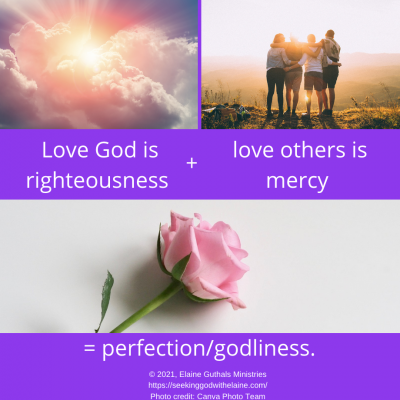
  • Joy of Good Works

    Being confident in our salvation gives us joy. This daily devotional looks at how sanctification prepares us for perfection, the greatest joy of all.

    Nuggets

    • Paul was confident of the Philippians’ spiritual condition, which gave him joy.
    • The work God starts in us is salvation.
    • Sanctification won’t be complete until we get to Heaven.

    Devotions in the Joy in the Gospel series

    We like to think that God has started a good work in us. But many times, we misunderstand what that good work is.

    It is not a worldview good work. It is a spiritual good work.

    Let’s take a look.

    Let’s Put It into Context #1

    Here is a running list of what we’ve discussed previously.

    Let’s Put It into Context #2

    We’ve looked at Philippians 1: 6 several times. The good work God has started in us is our salvation. He is sanctifying us to be like Him.

    Verse Commentary

    Joy of Confidence

    “I am sure of this, that he who started a good work in you will carry it on to completion until the day of Christ Jesus” (Phil. 1: 6 CSB)

    Paul was confident of the Philippians’ spiritual condition, which gave him joy.

    Why did Paul have this confidence in the Philippians? He knows their character. Our character is our thoughts, feelings, and actions all added together.

    Martin reminded us that character is not based on our religion. He wrote, “It [character] does not rest on the Church. Not because Church polity is all right, because you are thoroughly orthodox, nor because your modes of worship are just what they ought to be. The foundation of his confidence was God in Christ.” It is based on our relationship with God.

    Resource

    What we may consider as nothing special is something special to God. What keeps going through my head is the line in a sing. “If just a cup of water You place within my hand, then just a cup of water is all that You demand.”

    Related Links

    Larry Ford

    Whether we are a success or not is not the point. The point is that we are doing what God asks. We are obedient to Him.

    Paul was confident that the Philippians were strong in their faith. Still, he said he prayed daily for them. The strong and the faithful are who Satan targets. He doesn’t need to target the weak and faithless.

    Martin also reminded us of something important. Paul knew he could just be an encourager to the Philippians. The Philippians had to make their own decisions.

    This Momma Bear wants to make sure Buddy Bear keeps on his Sanctification Road. But I can’t. I can disciple him, encourage him, and point out when things go wrong.

    But it is Buddy Bear’s decision — just as it was the Philippians’ decision.

    Joy in Good Works

    “… that he who started a good work in you …” (Phil. 1: 6 CSB)

    The work God starts in us is salvation.

    How can we tell God is doing the good work in us? We have to love God and Jesus. This starts out with ABCDing, but includes navigating the Sanctification Road.

    • Sanctification is the transformation of mind, body, and soul, which begins with regeneration, gradually changes our nature through the promptings of the Holy Spirit, and ends with perfected state of spiritual wholeness or completeness.
    • Regeneration is being changed from spiritually dead to spiritually alive and the internal requickening in us that God brings about through the work of the Holy Spirit to give us new character.
    • Spiritual death is the separation from God that occurred as a consequence of Adam and Eve’s original sin. The spiritually alive are those who have ABCDed, so they are no longer separated from God.
    • The perfected state indicates the combination of the spiritual graces which, when all are present, form spiritual wholeness or completeness.
    • Spiritual graces are worldly morals that have been submitted to God to further His kingdom instead of enhancing this world.

    The ABCDs of Salvation

    If you have not become a believer in Christ, please read through the
    Plan of Salvation and prayerfully consider what God is asking you to do.

    A – admit our sins
    B – believe His Son Jesus is our Redeemer
    C – confess God as Sovereign Lord

    D – demonstrate that commitment by making any changes needed in our lives to
    live the way in which God has called us

    The Disciple’s Job Description

    Glossary

    We can’t just make a profession of faith and think that is good enough. Faith is the conviction that the doctrines revealed in God’s Word are true, even if we do not understand all aspects of them, a belief which impacts our lives.

    Our marching orders are to imitate Jesus. We learn how to do that on the Sanctification Road.

    Sanctification is a process — a long, bumpy process. Foot wrote, “It is the gradual transformation of the renovated but imperfect heart continued until this corruptible shall put on incorruption.”

    Resource

    Sanctification is the process in which the transformation occurs.
    Sanctification is a major component of our redo for godliness. However, it is not consistent. It has its hills and valleys.

    That means we are going to have to persevere.

    But that is okay. We talked once about perseverance leading to consistency.

    To read a related devotion, click the button below.

    We can’t sanctify ourselves. Only the Holy Spirit can. It is Him working in us that changes us to be more like God.

    Sanctification begins with regeneration. That happens at salvation. God flips a switch — however He does it — to change us from being spiritual dead to spiritually alive.

    Unfortunately, it doesn’t change everything. We are still in these physical bodies that can still sin. That is where sanctification comes in. We are in the process of being changed to be like God. That is only completed in the day of the Lord — when we get our new bodies.

    Foot said that sanctification was also needed to purge our consciences to have it follow God’s laws and commandments more. He also said that “it brings to light the lines of the Divine image already engraven on the heart.”

    The goal is to get obedience closer to the standard of holiness.

    • Holiness is the transcendent excellence of His nature that includes elements of purity, dedication, and commitment that lead to being set apart.
    • Purity means possessing God’s moral character, having eliminated the stain of sin.

    What does this do for us? Foot said that the spiritual graces are strengthened.

    If our morals don't come through submission to God, they are just worldly morals, not spiritual graces. But then we have to grow the spiritual graces to holiness.

    Sanctification is something we have to seek. I really hadn’t thought of it that way, but it is right. We have to choose to complete the Sanctification Road.

    Now, don’t think we can self-help and do these things on our own. Only God can sanctify us. Only He can make the changes needed to change us so that we can imitate Him.

    Our marching orders also tell us to love others as ourselves. Combined with loving God, these are the great commandments. They lead to perfection.

    Glossary

    Love God is righteousness + Love people is mercy = perfection/godliness

    We have to watch that we don’t compromise with the worldview on this. Their definition of love is that we have to let them continue living in their sins.

    The bottom line is we have to submit to God through trust, obedience, and goodness. It is all about our spiritual condition.

    • Submitting to God is actions by humans that obey God and keep His reasonable, holy, and righteous laws and commandments, follow His purpose for us, and do not follow Satan’s promptings. Submitting means committing to live a sin-free life.
    • Trust is assurance that the promises of God are true. It is that bone-deep knowledge that God is going to do what He says.
    • Obedience means to hear, conform to, and carry out the instructions that God gives us.
    • Goodness is imitating God’s holy, pure, and righteous behavior.

    I think we also have to pull in good works here. Good works are personal acts of obedience where we give God our best to complete whatever tasks He assigns for us to do. We think of good works as activities we do.

    If we haven’t done the work in His name, do you think God is really going to reward it?

    If we haven’t done the work in His name, do you think God is really going to reward it?

    Joy in Completion

    “… will carry it on to completion until the day of Christ Jesus” (Phil. 1: 6 CSB)

    Sanctification won’t be complete until we get to Heaven.

    It is important that we do the work God’s way. Our work will be tried by fire in the day of the Lord. The day of the Lord is when we will be called home to Heaven.

    Why is it considered the day of Christ or the day of the Lord and not God’s? Jesus is the One Who suffered and died for our sins. Because of that, we will finally get to see Him in His glory.

    Jesus will finally get to fully establish His government. “For to us a child is born, to us a son is given; and the government shall be upon his shoulder, and his name shall be called Wonderful Counselor, Mighty God, Everlasting Father, Prince of Peace” (Isa. 9: 6 ESV).

    One of the last things Jesus said before He ascended was that God had given Him all authority. “Jesus came and told his disciples, “I have been given all authority in heaven and on earth” (Mt. 28: 18 NLT).

    We also know that Jesus is the One Who will determine the answer to the question whether we have ABCDed. “But when the Son of Man comes in his glory, and all the angels with him, then he will sit upon his glorious throne. All the nations will be gathered in his presence, and he will separate the people as a shepherd separates the sheep from the goats” (Mt. 25: 31-32 NLT).

    Glossary

    Jesus won’t be separating them because of what they did or didn’t do.

    • “Then the King will say to those on his right, ‘Come, you who are blessed by my Father, inherit the Kingdom prepared for you from the creation of the world’” Mt. 25: 34 NLT emphasis added).
      “Then the King will turn to those on the left and say, ‘Away with you, you cursed ones, into the eternal fire prepared for the devil and his demons’” (Mt. 25: 41 NLT emphasis added).

    Have you ever asked yourself what would happen if you didn’t get far enough along on the Sanctification Road? What if you were saved, were navigating, but just didn’t get far enough?

    Not going to happen. God finishes what He starts.

    I remember one of my ladies and I having a discussion on end of life/end of all life. I know we want to give everyone the opportunity to ABCD, but I’m looking forward to the day that Jesus comes.

    I’ll see Mom and Dad again. Buddy Bear will be whole. Illness will be over.

    But better yet, I will get to kneel at the feet of my Savior. I will get to praise Sovereign God.

    I am looking forward to that day.

    JoyOfGoodWorksPin

    Making the Connections

    Spurgeon called our lives as disciples a succession of miracles. It is by God’s miracle that we can obtain salvation.

    Resource

    So many times during this life, Satan throws things at us that should sink us. Only by the grace of God do with withstand him.

    That is why we should picture ourselves as a traveler on the Sanctification Road. We only get to our destination through God’s provision and mercy.

    • God’s Providence is His care of us because of His loving nature to provide.
    • God’s mercy is an act of sovereign will that produces an unexpected and undeserved response from God as He responds in love to our needs.

    How Do We Apply This?

    • We need to consider what memories we are leaving behind.
    • Are the memories we are leaving pointing to God?
    • Even is we are confident in another’s faith, we should still pray for them.

    Resource

    We talked in the last devotion that this was Paul’s prayer for the Philippians. Lyth noted that Paul gave us a useful framework for our prayers.

    • Thanksgiving
    • Petition
    • Faith
    • Love
    • Intercession
    • Holy purpose
    • Praise

    Resource

    It is a little different order than I am used to. I can see its value.

    God is working within us. He is working for our good — our spiritual good. That deserves our praise.

    Father God. We thank You that You have called us to You. We praise You that You are working within us to make us more like You. Help us to turn away from the worldview and focus solely on You. Amen.

    What do you think?

    Leave me a comment below (about this or anything else) or head over to my Facebook group for some interactive discussion.

    If you don’t understand something and would like further clarification, please contact me.

    If you have not signed up for the email daily or weekly providing the link to the devotions and the newsletter, do so below.

    If God has used this devotion to speak with you, consider sharing it on social media.

  • Joy in Prayer

    Paul started his letter to the Philippians with a prayer. This daily devotional discusses how prayer brings joy.

    Nuggets

    • Paul, in part, gave his standard salutation, but in part, didn’t.
    • Paul remembers to pray for the church, bringing him joy.
    • We can be joyful regardless of circumstances.

    Devotions in the Joy in the Gospel series

    It is a new quarter in our Sunday Morning Bible Study. My Ladies and I enjoyed Ecclesiastes, but we are looking forward to Philippians, Colossians, and Philemon.

    The first six lesson are in Philippians, talking about joy. The last seven lessons in Colossians and Philemon focus on the gospel. We are to find joy in the gospel.

    We start out with a doozy. Too often, we don’t find the joy in prayer. In fact, we frequently say our prayer life needs work.

    Let’s see what we can pick up here to help us. Paul has to set the stage first.

    Let’s Put It into Context

    Here is a running list of what we’ve discussed previously.

    Paul Said Hello

    “Paul and Timothy, servants of Christ Jesus: To all the saints in Christ Jesus who are in Philippi, including the overseers and deacons. Grace to you and peace from God our Father and the Lord Jesus Christ” (Phil 1: 1-2 CSB)

    Paul, in part, gave his standard salutation, but in part, didn’t.

    Some may say that Paul had a storied life before his conversion. He studied under the great teacher Gamaliel and thrived. In fact, Jenkins said he soon had no equal.

    Resource

    It is probably safe to say that Paul was proud of his accomplishments when he was known as Saul. We do know that he wasn’t content with what he had, though, because he admitted his covetousness.

    Glossary

    After his conversion, Paul switched that intensity of purpose from persecuting the church to championing it. Because of his life as Saul, Paul saw himself as the chief sinner.

    We might look at Paul’s former life as qualifying him for the chief sinner position. But look at it this way. It also trained him for his job as missionary extraordinaire.

    Paul included Timothy in the salutation. No, that doesn’t mean Timothy helped Paul write the letter. It was all Paul’s.

    Timothy was well known to the Philippians. He had served the church at least twice already.

    Paul frequently called himself a servant or a slave of Jesus. The world says that is a demeaning title. They couldn’t be farther from the truth.

    Sovereign God allows us to take a part in His work and be useful. We can do that only through Jesus and His sacrifice for us.

    What Paul didn’t say was that he was an apostle of Christ. To me, that says he did not have to defend his position.

    Pope noted the familiarity with which Paul wrote. The Philippian disciples probably knew him well enough that they didn’t question his position.

    Resource

    Paul frequently addressed his letters to the Saints. Saint means holy ones. We have been set apart. He was referring to the church members or those who have been consecrated.

    Consecration is the process of being set apart from the world by God’s grace so that we may serve Him. Consecrated is the result of being set apart.

    Parker made an interesting statement. He wrote, “Saints take precedence of bishops and deacons forasmuch as character is immortal, while office is but temporary.”

    Resource

    Wow! That isn’t exactly how we see it, is it? We think bishops and deacons are at least a step or two above us because they have positions of authority in the church.

    But those positions won’t be needed in Heaven. We will all be on the same level.

    Now we see why we are focusing on character this year!

    We can only be “… saints in Christ Jesus …” (Phil. 1: 1 CSB). If we aren’t in Christ, we aren’t set apart.

    Glossary

    Notice, Paul didn’t put any qualifier on saints. He was talking to everyone.

    Philippi was in what is modern day Greece. It was on a major east-west highway.

    Paul founded the church on his second missionary journey. It started in Lydia’s home.

    Goadby reminded us that Paul had known the Philippians for ten years. This was a strong relationship.

    Resource

    Most of the greetings at the beginning of Paul’s letters talked of his desire of grace and peace for them.

    • Grace is a free and unmerited gift from Heavenly Father given through His Son, Jesus Christ that enables salvation and spiritual healing to believers by the work of the Holy Spirit. God’s grace is the product of the joy of a life with God and His purity.
    • Peace is a fruit of righteousness manifested in an inward tranquility resulting from a balanced life with spiritual order, equity, and truth that implies cooperation, humility, integrity, communication, and cohesiveness.

    Johnstone wrote that God’s grace is transforming as we navigate the Sanctification Road.

    • Sanctification is the transformation of mind, body, and soul, which begins with regeneration, gradually changes our nature through the promptings of the Holy Spirit, and ends with perfected state of spiritual wholeness or completeness.
    • Regeneration is being changed from spiritually dead to spiritually alive and the internal requickening in us that God brings about through the work of the Holy Spirit to give us new character.
    • Spiritual death is the separation from God that occurred as a consequence of Adam and Eve’s original sin. The spiritually alive are those who have ABCDed, so they are no longer separated from God.
    • The perfected state indicates the combination of the spiritual graces which, when all are present, form spiritual wholeness or completeness.
    • Spiritual graces are worldly morals that have been submitted to God to further His kingdom instead of enhancing this world.

    The ABCDs of Salvation

    If you have not become a believer in Christ, please read through the
    Plan of Salvation and prayerfully consider what God is asking you to do.

    A – admit our sins
    B – believe His Son Jesus is our Redeemer
    C – confess God as Sovereign Lord

    D – demonstrate that commitment by making any changes needed in our lives to
    live the way in which God has called us

    The Disciple’s Job Description

    Glossary

    We know that God is the God of peace and Jesus is the Prince of peace. That is comforting for disciples while we live in a world full of chaos.

    Most of the greetings at the beginning of Paul’s letters utilized the dual greeting of “… God our Father and the Lord Jesus Christ” (Phil. 1: 2 CSB).

    Remembering Brings Joy

    “I give thanks to my God for every remembrance of you, always praying with joy for all of you in my every prayer, because of your partnership in the gospel from the first day until now” (Phil. 1: 3- 5 CSB)

    Paul remembers to pray for the church, bringing him joy.

    Paul, as usual, started out thanking God for the things that the Philippians had done right. Johnstone noted that “prayer offered with thankfulness will be distinguished by gladness.”

    Resource

    First, Paul assured the Philippians that he remembered them frequently in prayer. Then, he went on to qualify it from there. He remembered them with joy.

    God wants us to remember. He wants us to think back on what it was like before we submitted our lives to Him. He wants us to remember how He has provided for us.

    Glossary

    Another thing God wants us to remember is each other. It strengthens our unity when we pray for each other.

    God wants these memories to bring us joy. Parker said remembering each other enlarges our hearts.

    Resource

    Memories also serve to influence the future. They not only show what needs to be changed in the present, but they also show what worked and what didn’t. That impacts the decisions we make in the future.

    Ballard said that the memories also should help us in evaluating our moral worth. When we are evaluating where we are on the Sanctification Road, these memories serve to help us find where we are and what we need to do to get where God is leading us.

    Resource

    What Paul was implying is, if he can remember the help the Philippian church has given him and their unbroken friendship and support, God will remember also. God will reward them for that help.

    Paul points out that he was talking about “… my God …” (Phil. 1: 3 CSB). He not only was distinguishing his teaching from that of others — which theirs might be false teaching — but he was also showing that, with God, a personal relationship is required.

    This was also Paul’s acknowledgment of all that God has done for him. God redeemed him. God gave him a purpose in life. Whenever the world persecuted him, Paul knew God was right there.

    It is more than that, though. Paul knew that “… my God …” (Phil. 1: 3 CSB) was their God.

    The whole purpose of Paul’s ministry was to share the love of God with as many people as would listen. We know that Paul initially went where no missionary had gone before. “My aim is to preach the gospel where Christ has not been named …” (Rom. 15: 20 CSB).

    But Paul didn’t just ride of into the sunset and drop them. He discipled them through his letters. He made sure that “… my God …” (Phil. 1: 3 CSB) was their God.

    It is the mission of the church to expand God’s kingdom. Johnstone said that we have to do that through fellowship and peace.

    This is enhanced by something Ballard said. He called the relationship Paul had with God a reciprocal community. The feelings were mutual.wa

    Resource

    The love and sympathy were mutual. God blessed Paul to the amount of effort Paul put in to the ministry.

    Ooo, baby. Don’t we sometimes think it is an one-way relationship? We want the blessings without putting in the time.

    We think that reading our Bible takes too long. Plus, we say we don’t have the time or the resources to put in to understand it.

    Many times, we can barely get it read. Then if we do understand it, that leaves a minute of the time we’ve allotted to try to figure out how we are going to apply it to our lives.

    No, no, no, no, no. That isn’t what God wants. He wants us to put Him as our priority.

    Here Is Where the Joy Comes In

    “always praying with joy for all of you in my every prayer” (Phil. 1: 4 CSB)

    We can be joyful regardless of circumstances.

    Paul was always praying for them with joy. So, he was always joyful.

    Ballard said that the joy came from being in communion with God, not from our circumstances. It isn’t contingent on what was happening in Paul’s life or even that for which what he was praying.

    The joy came from God. It was extended by prayer for others.

    JoyInPrayerPin

    Making the Connections

    Parker made a great point. We know Paul as the Energizer Bunny for God. We don’t know about many individuals from the Philippian church, but we do know about them collectively.

    Resource

    God was still able to use them as a whole to expand His kingdom. We need to be used by God, too.

    Yes, that means collectively as a church. That also means individually as a disciple.

    How Do We Apply This?

    • We need to consider what memories we are leaving behind.
    • Are the memories we are leaving pointing to God?
    • After God has pardoned our sin, we need to let it go. We shouldn’t keep biting on ourselves.
    • In the Weekly Pulpit’s sermon Fellowship and Progress, it said that we should live to serve God as much as — if not more — than we do for self improvement.
    • All of our being and all of our lives need to be submitted to God for His use.

    Resources

    Joy comes to us through prayer. Communion with God brings joy as does being concerned about others.

    Father God. Thank You for letting us come to You in prayer. Help us to intercede for others. Thank You for the joy this brings. Amen.

    What do you think?

    Leave me a comment below (about this or anything else) or head over to my Facebook group for some interactive discussion.

    If you don’t understand something and would like further clarification, please contact me.

    If you have not signed up for the email daily or weekly providing the link to the devotions and the newsletter, do so below.

    If God has used this devotion to speak with you, consider sharing it on social media.

  • Focusing Our Labor on God

    Jesus told the Parable of the Vineyard Workers, which seems to condone idleness. This daily devotion looks at what the parable is really talking about.

    Nuggets

    • God calls us to salvation for differing lengths.
    • God’s salvation is offered to all regardless of what we have done.

    To read devotions in the Redo for Godliness series, click the appropriate button below.

    To read devotions in the How Can We Live Godly Lives? series, click the button below.

    In the last devotion, we started talking about how God does not want us to be idle. Jesus told a Parable of the Vineyard Workers that seems to contradict that.

    If we don’t have the confidence in what Scriptures say, we won’t be able to focus on God. So, even though it isn’t about thoughts, let’s take a look.

    “Avoid idleness. Serious callings do naturally compose men’s spirits, but too much recreation makes them blaze out in vanity. Idle souls as well as idle spirits will be ranging” (Charnock, The Sinfulness and Cure of Thoughts)

    Let’s Put It into Context #1

    We’ve been looking at Charnock’s sermon entitled The Sinfulness and Cure of Thoughts to show us how to cleanse, a.k.a. sanctify, our thought processes. Charnock has taught us 

    • that we cleanse our thoughts when we return to having a strong relationship with God. We can do that by studying the Scriptures, meditating on God, contemplating on His creation, and praising Him.
    • that we focus our thoughts by being humble instead of prideful, following God instead of the worldview, and working instead of being idle.

    Resource

    Glossary

    Here is a running list of what we’ve discussed previously.

    Let’s Put It into Context #2

    Bible Verse

    Idleness is the sin of wanting to obtain a reward without working for that reward.

    Workers of Different Longevity

    “For the kingdom of heaven is like a landowner who went out early in the morning to hire workers for his vineyard. After agreeing with the workers on one denarius, he sent them into his vineyard for the day. When he went out about nine in the morning, he saw others standing in the marketplace doing nothing. He said to them, ‘You also go into my vineyard, and I’ll give you whatever is right.’ So off they went. About noon and about three, he went out again and did the same thing. Then about five he went and found others standing around and said to them, ‘Why have you been standing here all day doing nothing?’ ‘Because no one hired us,’ they said to him. ‘You also go into my vineyard,’ he told them” (Mt. 20: 1-7 CSB)

    God calls us to salvation for differing lengths.

    It is easy to look at this parable as a story about idleness in our careers. The vineyard workers don’t find work until the end of the day.

    But it isn’t about that at all. We’ll get to that.

    First, we have to remember the workers who weren’t hired still showed up at the interview. They didn’t just sign up for unemployment and not try to get work.

    The workers weren’t idle by choice. True, we don’t know why they weren’t hired, but they had waited, as Gray said, as was the custom when they weren’t hired right off.

    Resource

    Jesus’ purpose for telling this parable was to apply it to our spiritual growth. It is all about spiritual idleness. Tucker reminded us that spiritual idleness is detrimental to us and others.

    Resource

    It seems like, in many instances, we leave the bulk of the work to only a few workers. We can’t do that. We need to step up and do our share.

    Sometimes, that may mean not waiting for the Nominating Committee to come to us. We may have to go to them.

    I know. How many times do we feel that we are not qualified to do something God is calling us to do? Well, that just means we have to put in the work to get qualified.

    What is sad is when we don’t feel qualified in doing what God is calling us to do and we use it and other reasons to not follow through. Let’s say God is calling us to be a missionary. Instead of us going, we throw financial support to an already established missionary.

    Yay for the other missionary, but God isn’t going to accept the substitute. We have chosen to not follow His Will.

    We’ve got to do the work when God calls. God may give us a limited opportunity to complete it. We know Satan is going to do everything in his power to stop God’s work from going forward.

    We don’t want to miss out on our blessing. God will help us when we are faithful. He will give us the strength and wisdom we need to complete the task.

    Atherton detailed what this wisdom is. We learn about ourselves. More importantly, we learn about God.

    Resource

    Okay. I have to do an Elaine-speak on something else Atherton wrote.

    • Some people don’t work because they don’t have a job.
    • Some have a job, but don’t like their employer, their job, or their wages.
    • Some say they can’t work for some reason.
    • Some are looking for work but can’t get hired.
    • Some don’t want to give up our old way of life.

    God is not calling us to what Guthrie called busy idleness. We can do a lot of things that amount to nothing.

    Resource

    I wondered, when I read this, if our attempts to serve Him when He really didn’t call us to do that would fall under here. What God calls us to do in His service will be pleasant and profitable.

    God Rewards Those He Calls

    “When evening came, the owner of the vineyard told his foreman, ‘Call the workers and give them their pay, starting with the last and ending with the first.’ When those who were hired about five came, they each received one denarius. So when the first ones came, they assumed they would get more, but they also received a denarius each. When they received it, they began to complain to the landowner: ‘These last men put in one hour, and you made them equal to us who bore the burden of the day’s work and the burning heat.’ He replied to one of them, ‘Friend, I’m doing you no wrong. Didn’t you agree with me on a denarius? Take what’s yours and go. I want to give this last man the same as I gave you. Don’t I have the right to do what I want with what is mine? Are you jealous because I’m generous?’ ‘So the last will be first, and the first last.’” (Mt. 20: 1-16: CSB)

    God’s salvation is offered to all regardless of what we have done.

    This set of verses inform the usual interpretation of this parable. How long we have had salvation is not as important as that we are saved. Only children of God will be rewarded.

    • Salvation is the gift of life through the deliverance from condemnation and sin to acceptance and holiness and changes us from being spiritually dead to spiritually alive.
    • Sins are actions by humans that disobey God and break one of His reasonable, holy, and righteous laws and commandments, goes against a purpose He has for us, or follows Satan’s promptings.
    • Holiness is the transcendent excellence of His nature that includes elements of purity, dedication, and commitment that lead to being set apart. Purity means possessing God’s moral character, having eliminated the stain of sin.
    • Spiritual death is the spiritual separation from God that occurred as a consequence of Adam and Eve’s original sin. The spiritually alive are those who have ABCDed, so they are no longer separated from God.//////

    The ABCDs of Salvation

    If you have not become a believer in Christ, please read through the
    Plan of Salvation and prayerfully consider what God is asking you to do.

    A – admit our sins
    B – believe His Son Jesus is our Redeemer
    C – confess God as Sovereign Lord

    D – demonstrate that commitment by making any changes needed in our lives to
    live the way in which God has called us

    The Disciple’s Job Description

    Glossary

    Salvation is the same for all who ABCD. We all are changed from being spiritually dead to spiritually alive. We all are given access to Sovereign God. We all are given eternal life.

    Why? We are given these rewards because God shows us mercy. God’s mercy is an act of sovereign will that produces an unexpected and undeserved response from God as He responds in love to our needs.

    God is the One who designed the Plan of Salvation. He decided what would satisfy Him to pay the price for our disobedience.

    What salvation entails was determined by God. He figured out what we would have to do to gain it. We have to believe that Jesus died for our sins.

    Then, God calls us to salvation. He calls each and every one of us. Some, He may call when we are young. Others He will call when we are older.

    God alone knows when He will call us home. It may be when our life here is over. It may be when all life here is over.

    But it is all God’s Plan.

    Taylor was right when he said that no employer would give what equates to a part-time employee the salary equaling that of a full-time employee. But God is not just any employer. He gave what He promised.

    We have to remember a very important passage. “‘For my thoughts are not your thoughts, and your ways are not my ways.’ This is the Lord’s declaration. ‘For as heaven is higher than earth, so my ways are higher than your ways, and my thoughts than your thoughts’” (Isa. 55: 8-9 CSB).

    What this tells us is that the doing isn’t the main ingredient here. Yes, some of them performed their ministry for a long time. Not all of them did.

    So, quantity wasn’t what was rewarded. It was quality.

    Those who were late to the labor gave God their all. It was like Taylor’s sermon title said. The worth of work is determined by the spirituality of its motive.

    Resource

    They served God fully.

    Perfection is about being. It is about obtaining the character of God.

    It wasn’t about the doing. It was about the being. That is what perfection is about.

    Of course, those that worked all day grumbled. “We were the ones who worked all day in the hot sun. Why didn’t we get more than those who put in such little work?”

    Ooo, baby! Can’t we disciples grumble when we think someone is getting too much — or not enough! Taylor equated the day-long workers with the older brother in the Parable of the Prodigal Son.

    To read a related devotion, click the button below.

    We have to watch when we start grumbling. Taylor wrote, “Work in this spirit, however great it may seem, is small in the sight of God. The ‘perfect’ and the ‘chosen’ labour for love.”

    Resource

    We shouldn’t be a disciple for what we get out of it — or what we get out of. We should be a disciple because we love God.

    We shouldn’t be a disciple for what we get out of it — or what we get out of. We should be a disciple because we love God.

    But look at it this way. After the question of “Why have you stood out here more almost 12 hours?” nothing more was said about the men being idle.

    Jesus did not condone the full-time laborer’s envy. Their complaining did not get them what they wanted.

    I always got where the all-day group were paid the agreed upon amount (Mt. 20: 14). What I missed was this was the negotiated amount. “After agreeing with the workers on one denarius …” (Mt. 20: 2 CSB).

    Ooo, baby. Apply that to today. Some want to rewrite Scriptures. They want to bargain to have things their way.

    They will always be dissatisfied.

    Huntingdon made another good point. He wrote, “Christ nowhere offers us heaven as a price for good behaviour, as foolish parents, or rather wicked parents, lure their children to obey with sweetmeats and toys.”

    Resource

    Only true children of God are rewarded. “But to all who did receive him, he gave them the right to be children of God, to those who believe in his name” (Jn. 1: 12 CSB).

    That means it takes faith. Faith is the conviction that the doctrines revealed in God’s Word are true, even if we do not understand all aspects of them, a belief which impacts our lives.

    FocusinOnLaborOnGodPin

    Making the Connections

    Huntington summed it up nicely.

    “The early and late workers have alike the promised penny, the common and open privilege of the gospel and Church. But have you turned the Christianity of condition and privilege into the personal Christianity of choice and character? The length of time you have been in the Church is now of little consequence; all that is over. Are you Christ’s men? What are your feelings toward the brother-souls that live and work near you? The parable strikes a blow at the notion that any works of ours are profitable, to trod, or even to our salvation. The quality, not the performance, is the accepted thing, the heart of faith and love, not any self-complacent operations.”

    Resource

    • It isn’t about longevity.
    • It isn’t about earning our way to Heaven.
    • It is about genuine salvation.
    • It is about character.
    • It is about the second greatest commandment.

    Glossary

    How Do We Apply This?

    • Believe God will follow through as He promised.
    • Love others instead of envy their blessings.
    • Don’t compare ourselves with other disciples.
    • Complete the work assigned to us.

    Resource

    We are called to work for God. Idleness is detrimental to all.

    Father God. We hear Your call to do Your Will. We choose to do it Your way. Amen.

    What do you think?

    Leave me a comment below (about this or anything else) or head over to my Facebook group for some interactive discussion.

    If you don’t understand something and would like further clarification, please contact me.

    If you have not signed up for the email daily or weekly providing the link to the devotions and the newsletter, do so below.

    If God has used this devotion to speak with you, consider sharing it on social media.