Author: admin

  • Faith and Fear

    God calls us to have faith, but what happens when fear gets in the way? Pastor Steve looks at our weakness and strength in faith.

    Devotions in the Pastor Steve Sermon Series 

    Pastor Steve is filling in for me today. He gave me whatever ailment he has had for the past two weeks.

    Come read what Pastor Steve says about whether we can have faith and fear and the same time.

    Can We Have Both Faith and Fear?

    I have been thinking a lot about faith and fear lately. Particularly fear. I know it may sound odd for a pastor to admit this, but I struggle with fear a lot. I always have. 

    Ever since I was very little, I can remember being afraid of just about everything. I have gone through most of my life feeling it. 

    Oh, I’ve been able to function reasonably well despite it, but I have regrettably made a lot of decisions in my life, because I was afraid. I have allowed it to control my life in ways that most people cannot even imagine. 

    I think people struggle with fear more than we want to admit, especially if we are Christians.

    You see, the Bible tells us in II Timothy 1: 7 “for God gave us a spirit not of fear but of power and love and self-control” (ESV). The obvious question here is, if God hasn’t given us a spirit of fear, then from where does it come? 

    Satan is the obvious answer. So as a Christian dealing with fear, to admit that you do can be tantamount to admitting you are someone who doesn’t have faith… you’re not able to really be a Christian, because you cannot withstand the onslaughts of the devil.

    While this is often how I have felt throughout my life, there is something to the fact that I’ve experienced this my whole life.

    Now, well into my mid-life years and having been a pastor off and on for years, I’ve come to realize that the devil will not try to trip you up with things to which you are not susceptible.  No, he’s going to hit you where you are weak, because that’s where he can do the most damage!

    Why would he do that?  Well, if he can keep you “ducking and covering” from your weaknesses, he can keep you from serving God in the way that God wants you to.

    When we have our mind focused on when we are going to get hit with something next, we sure aren’t keeping our mind focused on Jesus and what He has for us.

    I’ve often questioned my faith because of dealing with fear so much, because “good Christians” are people of faith and living in fear is not living in faith.

    My self-loathing about all that came to a halt one day, however, when I found what the Apostle Paul wrote:  He said, “For the sake of Christ, then, I am content with weaknesses, insults, hardships, persecutions, and calamities. For when I am weak, then I am strong” (II Cor. 12: 10 ESV).

    I read that another time or two, and I thought to myself, “But Paul, you were the Christian’s Christian!  No one was more in touch with God’s call on your life than you!  You dealt weaknesses?  Really?”

    What stuck out at me the most here, is him saying “For the sake of Christ …”  He was content with dealing with all those things, weaknesses among them, for the sake of Christ!
    The fact of the matter is, we are ALL dealing with something that keeps coming back to trip us up.

    Whether it is fear, anger, lust, or any number of other sins, we are often constantly fighting against them.  It’s part of living in this sin-fallen body and sin-fallen world.

    Now, lest I be misunderstood, I’m not saying that we should just ignore these things and not worry about having to deal with them.  What I am saying is, we must cast our cares upon God.

    As the Apostle Peter wrote, “casting all your anxieties on him, because he cares for you”  (I Pet. 5: 7 ESV). I love how the English Standard Versiom translates this verse, because anxieties are very descriptive of what I have dealt with. 

    We must understand that there will be certain things we will have to deal with our entire lives, so we must get into the habit of casting those anxieties, cares, etc. on God.  It’s the only way we can manage. 

    I like the image of “casting” those things we are dealing with too, because casting is throwing.  And in my opinion, we need to chuck those things as far away from us as we can. The reason being, they are likely going to be coming back.

    When we deal with things like this repetitively, it’s very easy to give into hopelessness and any thing else that will keep us down and out. We aren’t able to function because we think we are not worthy of the Lord because we are dealing with things that seemingly are not of faith.
    I get that.

    Most of my church background in my younger adult years was from a place that seemed to operate in an atmosphere of “super-faith” and if you weren’t flexing your faith-muscles, then there was something wrong with you.

    I am a strong believer in faith, and the Bible tells us that without faith it is impossible to please God.  What I question is, how much faith does it take to be pleasing to God? 

    Not that I’m looking to find the line of where the barely acceptable minimum is and that’s my goal.  No, what I’m saying is, if you are struggling with things that are a stumbling block, but you get up and go to work, take care of your kids, and meet your other responsibilities, is that not walking in faith?  When you’d rather just quit, but you go on; is that not faith?

    The Bible says, “For by the grace given to me I say to everyone among you not to think of himself more highly than he ought to think, but to think with sober judgment, each according to the measure of faith that God has assigned”  (Rom. 12: 3 ESV).

    For those who have the Super-Faith muscle that you take great pride in, that’s great, but let’s think about that a little more closely. God has given each of a measure of faith.

    Jesus also said, “And the Lord said, ‘If you had faith like a grain of mustard seed, you could say to this mulberry tree, “Be uprooted and planted in the sea,” and it would obey you’” (Lk. 17: 6 ESV).

    We’ve all heard the sermon about this verse, and we’ve all seen how small a mustard seed is.  We’ve all heard it taught about what great things a little faith can do. 

    Have you ever heard it taught in the context that if you’re feeling afraid and not sure if you should step out or not, but if you do anyway with just a little bit of faith, God will do great things in you too?  I know I sure haven’t.

    I know there are many places in the Gospels where Jesus chastised the disciples for having little faith. My question is, was that little faith smaller than a mustard seed of faith or was it because He was trying to get the disciples to be able to see His greatness and be willing to follow Him?

    I am aware of those who would say you should have more faith than that. That’s quite probably true, but what about those who don’t have it right now?  Are they left to feel small, insignificant and like less of a Christian because they don’t fit your Pharisaical idea of what faith is? 

    Or do we love them right where they are and walk beside them until they can get to where God needs them to be?

    As someone who has always struggled with fear, but still have managed to follow God’s will for my life, I will gladly, and willingly, turn back to my brothers and sisters in Christ and help them along the path to unbending faith.  I will not think less of them for being right where they are in Christ.

    Father, help us to not be afraid of being afraid.  Help us to work through what we are feeling and know that you love us right where we are, but love us too much let us stay that way. Amen.

    faith-and-fearFB

    What do you think?

    Leave me a comment below (about this or anything else) or head over to my Facebook group for some interactive discussion.

    If you don’t understand something and would like further clarification, please contact me.

    If you have not signed up for the email daily or weekly providing the link to the devotions and the newsletter, do so below.

    If God has used this devotion to speak with you, consider sharing it on social media.

  • The Power of God’s Kindness

    God has an infinite amount of kindness. This daily devotional looks at how that kindness manifested itself in Jesus’ sacrifice.

    Nuggets

    • Jesus came to live on this earth for the sole purpose of paying the penalty of our sins to save us from eternal damnation only after we were recipients of God’s kindness.
    • Jesus saved us so that we could change from the sinful nature in which we were living to a spiritually clean nature like God’s.

    To read devotions in the At the Heart Level theme, click the button below.

    Devotions in the Confessing Christ series

    To me, there is somewhat of a distinction between believers and non-believers. But then again, there isn’t in some things.

    When we ask Jesus to be our Lord and Savior, we become God’s children. While we are all creations of God, it is not until we submit to His Will that we become His children.

    Glossary

    God rewards more those who obey, but He also loves non-believers. He shows this through His kindness to all.

    Lance explained how this kindness is shown for all mankind. He said that it is shown through “… the incarnation of Christ, His life and miracles and mercies and divinest teaching; in His sacrificial death upon the cross, His resurrection and ascension …”

    Resource

    Let’s take a look.

    Let’s Put It into Context #1

    Here is a running list of nuggets for the series.

    Let’s Put It into Context #2

    Confessing Christ is when we agree with the promise that Jesus is the Son of God, come to earth, to be the Savior of the world – just as He stated.

    The Incarnation and Life of Christ

    “But when the goodness and loving kindness of God our Savior appeared” (Ti. 3: 4 ESV)

    Jesus came to live on this earth for the sole purpose of paying the penalty of our sins to save us from eternal damnation only after we were recipients of God’s kindness.

    God knew before we were even created that we would disobey Him. Because of this, He designed the Plan of Salvation to restore our relationships with Him.

    The Plan was designed around one specific aspect: a sacrifice was needed. Enter Jesus.

    Jesus came to earth and became disinterested. The disinterested means Jesus was willing to give up the trappings of His Deity.

    Paul explained it this way. “Instead, he gave up his divine privileges; he took the humble position of a slave and was born as a human being …” (Phil. 2: 7 NLT).

    Pusey listed the attributes that Jesus gave up. The three he picked out were

    • Eternal and Infinite
    • Self-Sufficient/Self-Existent
    • Wisdom

    Resource

    That didn’t make Jesus less divine. He was still in the image of God. He still had the nature of God.

    What Jesus did was take on the form of mankind. He paid the price for our sins that we would never be able to pay.

    The Sacrifice and Accomplishment of His Ministry

    “he saved us, not because of works done by us in righteousness, but according to his own mercy, by the washing of regeneration and renewal of the Holy Spirit, whom he poured out on us richly through Jesus Christ our Savior, so that being justified by his grace we might become heirs according to the hope of eternal life” (Ti. 3: 5-7 ESV)

    Jesus saved us so that we could change from the sinful nature in which we were living to a spiritually clean nature like God’s

    He saved us. Jesus provided salvation for us.

    Salvation is the gift of life through the deliverance from condemnation and sin to acceptance and holiness and changes us from being spiritually dead to spiritually alive.

    • Sins are actions by humans that disobey God and break one of His reasonable, holy, and righteous laws and commandments, goes against a purpose He has for us, or follows Satan’s promptings.
      • Holy means to be set apart — because of our devotion to God — to become perfect, and morally pure while possessing all virtues.
        • Perfection means we reach a state of maturity because the combination of the spiritual graces form, when all are present, spiritual wholeness or completeness — holy, sanctified, and righteous.
          • Spiritual graces are worldly morals that have been submitted to God to further His kingdom instead of enhancing this world.
          • Sanctified means to be set free from sin.
        • Pure means not being sinful or having the stain of sin. 
        • Virtues are standards of moral excellence.
      • Righteous means we are free from sin because we are following God’s moral laws.
    • Holiness is the transcendent excellence of His nature that includes elements of purity, dedication, and commitment that lead to being set apart.
      • Purity means possessing God’s moral character, having eliminated the stain of sin.
    • Spiritual death is the spiritual separation from God that occurred as a consequence of Adam and Eve’s original sin.
      • The spiritually alive are those who have ABCDed, so they are no longer separated from God.

    Glossary

    We are not saved because of anything we do or don’t do. We cannot earn salvation. That’s what the “… not because of works done by us in righteousness …” (Ti. 3: 5 ESV) means.

    Works of righteousness are the evidence of salvation.

    WorksOfRighteousness

    The only way we were saved is Jesus came to earth, died, and rose again. We are saved “… by the washing of regeneration and renewal of the Holy Spirit” (Ti. 3: 5 ESV).

    I like how Dykes described conversion. He wrote that it is “… a complete revolution in every department of [our lives].” It is “… the starting point for a changed life.”

    We become new creations! That is what the regeneration is. Regeneration is being changed from spiritually dead to spiritually alive and the internal new birth and requickening that God brings about through the work of the Holy Spirit.

    Resource

    Glossary

    Our guilt is removed by the washing of regeneration.

    Salvation is completed through God’s mercy and grace. God’s mercy is an act of sovereign will that produces an unexpected and undeserved response from God as He responds in love to our needs. Grace is a free and unmerited gift of love from the Heavenly Father, given through His Son, Jesus Christ, that enables salvation and spiritual healing to believers by the work of the Holy Spirit.

    Wagstaff equated mercy with kindness. I see that.

    Resource

    It is through God’s infinite kindness that He sent His Son to be our Savior.

    Making the Connections

    the-power-of-gods-kindnessFB

    Lance wrote, “we have that manifestation of the kindness of God which is intended and calculated to lift us up out of our sins, and to bring us into His own most holy fellowship.”

    Resource

    That power is what rose Jesus from the grave. It is through that act that our sins — when we ask — are forgiven.

    How Do We Apply This?

    The ABCDs of Salvation

    If you have not become a believer in Christ, please read through the
    Plan of Salvation and prayerfully consider what God is asking you to do.

    A – admit our sins
    B – believe His Son Jesus is our Redeemer
    C – confess God as Sovereign Lord

    D – demonstrate that commitment by making any changes needed in our lives to
    live the way in which God has called us

    The Disciple’s Job Description

    Father God. Thank You that You are so powerful that You rose Jesus from the grave. It is through His death on the cross that the penalty for our sins was paid. We admit that we are sinners and separated from you. We believe Jesus is the only way that separation can be fixed. We confess that You are Sovereign God. Amen.

    What do you think?

    Leave me a comment below (about this or anything else) or head over to my Facebook group for some interactive discussion.

    If you don’t understand something and would like further clarification, please contact me.

    If you have not signed up for the email daily or weekly providing the link to the devotions and the newsletter, do so below.

    If God has used this devotion to speak with you, consider sharing it on social media.

  • Confessing the Work of Christ: Redemption, Forgiveness, and Grace

    Jesus came to earth to work out the plan for our salvation. This daily devotional look how redemption, forgiveness, and grace work together.

    Nuggets

    • We confess Jesus as our Savior and Redeemer.
    • Redemption and forgiveness all stem from God’s grace.
    • God’s grace allows us access to His throne room.

    To read devotions in the At the Heart Level theme, click the button below.

    Devotions in the Confessing Christ series

    Let’s Put It into Context #1

    Here is a running list of nuggets for the series.

    Let’s Put It into Context #2

    Confessing Christ is when we agree with the promise that Jesus is the Son of God, come to earth, to be the Savior of the world – just as He stated.

    Christ’s Work

    “In him we have redemption through his blood, the forgiveness of our trespasses, according to the riches of his grace” (Eph. 1: 7 CSB)

    We confess Jesus as our Savior and Redeemer.

    Have you ever noticed that the law does not really give us a way to make things right? Yes, it addresses consequences of our actions, but it does not address our spiritual condition.

    Only Jesus blood could pay the penalty for our sins. We could not do that on our own because of our sinful nature. Jesus had a human nature but did not sin.

    While redemption is offered to all, only if you will accept it. We accept it when we repent and believe.

    We only get redemption when we confess Jesus as our Savior and Redeemer. Did you catch that? As our Redeemer, not just the Redeemer.

    Redemption and forgiveness all stem from God’s grace.

    A part of the redemption is forgiveness for our sins. God pardons us to restore a relationship with Him. As He is the one Who was sinned against, it is His call as to how those sins can be forgiven.

    Sins are actions by humans that disobey God and break one of His reasonable, holy, and righteous laws and commandments, goes against a purpose He has for us, or follows Satan’s promptings.

    • Holy means to be set apart — because of our devotion to God — to become perfect, and morally pure while possessing all virtues.
      • Perfection means we reach a state of maturity because the combination of the spiritual graces form, when all are present, spiritual wholeness or completeness — holy, sanctified, and righteous.
        • Spiritual graces are worldly morals that have been submitted to God to further His kingdom instead of enhancing this world.
        • Sanctified means to be set free from sin.
      • Pure means not being sinful or having the stain of sin. 
      • Virtues are standards of moral excellence.
    • Righteous means we are free from sin because we are following God’s moral laws.

    Redemption is where God bestows His gift of grace on us in order to deliver us from sin.
    Repentance is acknowledging our separation from God and expressing sorrow for breaking God’s laws and commandments by making the commitment to change our sinful ways to ways of righteousness through obedience.

    • Obedience means submitting ourselves to the will of God as it is presented to us and living our lives accordingly.

    Forgiveness is, when we ask, the act of God pardoning us because we have shown repentance for breaking His laws and commandments, which allows us to become holy as He is.

    • Repentance is acknowledging our separation from God and expressing sorrow for breaking God’s laws and commandments by making the commitment to changing ourselves through obedience so that we no longer do the wrong things.

    Grace is a free and unmerited gift of love from the Heavenly Father, given through His Son, Jesus Christ, that enables salvation and spiritual healing to believers by the work of the Holy Spirit.

    Glossary

    Redemption and forgiveness may seem to some the-chicken-and-the-egg deal. Which comes first?

    The Essex Remembrancer believed that it is redemption. It is where the bonds of sin are broken to bring us deliverance.

    That makes sense to me. What the Essex Remembrancer said about sin is true — it just doesn’t address which came first.

    They said that forgiveness is complete and free. But that really doesn’t tell us why they think redemption comes first.

    Resource

    In my opinion, I think redemption comes first because the forgiveness is not an option until the bondage of sin is broken.

    Remember, we said redemption is a gift of God’s grace. We have to accept that gift. Once we have, we can receive forgiveness.

    God can’t forgive us until we have repented and gained redemption.

    God can’t forgive us until we have repented and gained redemption.

    Ooo, baby. We don’t expect forgiveness in our hearts, do we? The worldview — and Satan — has us so programmed that there is no good in us that God can work with to fix us. But then again, they say, if we do turn to God, that He can’t keep us fixed because we continue to sin.

    Spurgeon accused many of being nominal disciples. Nominal disciples are those boasting they loved God without even trying to imitate Him — those who dig on religion and its rituals without having a change in heart.

    Resource

    That is a big reason we are looking to get things to the heart level this year. The status of our heart depends on whether we have asked God to forgive us and have submitted our lives to Him.

    Submitting to God is actions by humans that obey God and keep His reasonable, holy, and righteous laws and commandments, follow His purpose for us, and do not follow Satan’s promptings.

    We have to ask forgiveness rather than think we have no need to ask. Then, we have to believe that Jesus can and will forgive us — even on our bad sins.

    Why does God forgive us? He loves us. He will forgive us when we sincerely admit, believe, confess, and demonstrate.

    The good thing is God will forgive us for every sin we sincerely confess. It may take some a lifetime to get to that confession, but God will still forgive us.

    When we receive redemption through forgiveness, this occurs through God’s grace.

    God’s grace allows us access to His throne room.

    Because of God’s grace, we gain peace.

    confessing-the-work-of-christ-redemption-forgiveness-and-graceFB

    Making the Connections

    Think of it this way. From what is Jesus redeeming us? Darkness, pain, slavery, chaos.

    To what is Jesus redeeming us? Light, joy, freedom, order.

    Some people think it isn’t worth it since we have to “give up our freedom” when we submit to God. That is the furthest from the truth.

    When we follow God’s laws and commandments, we gain peace and contentment. That is worth it.

    Burnet had an interesting sermon. He said that some feel that atonement happened because of the wrath of God.

    Resource

    Atonement is the repayment for a wrong by the shedding of Jesus’ blood. God’s wrath is the anger He expresses when we break His laws and commandments.

    It is their belief that the atonement appeases God’s wrath. God can get that angry.

    But then, God’s wrath is just punishment. We do earn it when we disobey God.

    Jesus died for all people. He didn’t exclude anyone.

    We exclude ourselves by choosing not to follow Christ.

    We exclude ourselves by choosing not to follow Christ.

    What atonement is not is to allow us not to follow God’s laws and commandments. Jesus Himself told I, “Don’t think that I came to abolish the Law or the Prophets. I did not come to abolish but to fulfill. For truly I tell you, until heaven and earth pass away, not the smallest letter or one stroke of a letter will pass away from the law until all things are accomplished” (Mt. 5: 17-18 CSB).

    Neither did Jesus come to compromise with the worldview to lessen the laws and commandments. He expects all laws and commandments, even moral law to be obeyed.

    How Do We Apply This?

    The ABCDs of Salvation

    If you have not become a believer in Christ, please read through the
    Plan of Salvation and prayerfully consider what God is asking you to do.

    A – admit our sins
    B – believe His Son Jesus is our Redeemer
    C – confess God as Sovereign Lord

    D – demonstrate that commitment by making any changes needed in our lives to
    live the way in which God has called us

    The Disciple’s Job Description

    Father God. We are humbled by the fact that Jesus worked for us. He gave His life so that we might be redeemed. Lord, forgive us our sins. Help us to grow in Your grace and knowledge. Amen.

    What do you think?

    Leave me a comment below (about this or anything else) or head over to my Facebook group for some interactive discussion.

    If you don’t understand something and would like further clarification, please contact me.

    If you have not signed up for the email daily or weekly providing the link to the devotions and the newsletter, do so below.

    If God has used this devotion to speak with you, consider sharing it on social media.

  • Confessing Christ Himself

    It is obvious to disciples what is meant by confessing Christ Himself. However, it may not be as obvious to those to whom we are witnessing. This daily devotional looks at how we confess our belief in Jesus, how we gain salvation, and how salvation gains us access to the Father.

    Nuggets

    • We have to confess our belief in Jesus through our words and actions.
    • We only gain salvation through Jesus.
    • We must confess Jesus as the only way we gain access to the Father.

    To read devotions in the At the Heart Level theme, click the button below.

    Devotions in the Confessing Christ series

    In the last devotion, we started looking at Van Doren’s sermon on Confessing Christ. We need to look at aspects of witnessing because, many times, that is out of our comfort zone.

    Resource

    We’re looking at the verses associated with this sermon to try to get a handle on what is really meant by the term confessing Christ.

    Let’s keep going. What are we confessing? We are confessing Christ Himself.

    Let’s Put It into Context #1

    Here is a running list of nuggets for the series.

    Let’s Put It into Context #2

    Confessing Christ is when we agree with the promise that Jesus is the Son of God, come to earth, to be the Savior of the world – just as He stated.

    Confessing Jesus as the Way

    “Jesus told him, ‘I am the way, the truth, and the life. No one comes to the Father except through me’” (Jn. 14: 6 CSB)

    We have to confess our belief in Jesus through our words and actions.

    We just looked at John 14: 6 in the Sunday Morning Bible Study series. We looked at what the way, truth, and life meant.

    To read a related devotion, click the button below.

    Here is what we came up with for nuggets doing that devotion:

    • Being brought into God’s presence can only happen if Jesus introduces us.
    • The gospel is all about Who Jesus is and what He did for us.
    • Jesus not only leads us to a richer life in this world, but He also provides us with eternal life.
    • The goal is to get into the presence of the Father.

    We learned what it is we are confessing. Now we just have to do it.

    We confess Jesus is Lord by our mouths. We can’t keep it silent to ourselves.

    I used this verse in a devotion when I first started writing devotions 40 years ago. But thinking about it from this angle throws it on its ear.

    “What I tell you in the dark, say in the light, and what you hear whispered, proclaim on the housetops” (Mt. 10: 27 ESV).

    Being in sin is equated with being in the dark. “They are darkened in their understanding, alienated from the life of God because of the ignorance that is in them, due to their hardness of heart” (Eph. 4: 18 ESV).

    When we believe in Jesus, we come into the light.

    • “Again Jesus spoke to them, saying, ‘I am the light of the world. Whoever follows me will not walk in darkness, but will have the light of life’” (Jn. 8: 12 ESV).
    • “For you were once darkness, but now you are light in the Lord. Walk as children of light — for the fruit of the light consists of all goodness, righteousness, and truth — testing what is pleasing to the Lord” (Eph. 5: 8-10 ESV).

    When we experience conversion, we can’t help but shout about our Lord. Conversion is the product of repentance, when we turn away from our sins and return to God, that secures salvation.

    We have to confess Who Jesus is. He is mediator, advocate, intercessor, physician, elder brother, forerunner, king, master, head, high priest, captain, and bridegroom.

    To read a related devotion, click the appropriate button below.

    We confess Jesus is Lord by our lives. Kempis quoted St. Augustine by saying, “… I am He, to whom you go; I am He, by whom you go …”

    Resource

    Our commitment to imitate Jesus dictates our steps. We choose to walk with God. Walking with God means we are humble, reverent, teachable servants of God. 

    Our commitment to imitate Jesus dictates our steps.

    We confess Jesus for Who He is. We don’t compromise with the worldview to sugarcoat what Jesus’ message is. We confess it with our mouths and live it daily in exactly the way God wants us to do.

    Confessing Jesus as the Only Way

    “I am the door. If anyone enters by me, he will be saved and will go in and out and find pasture” (Jn. 10: 9 ESV)

    We only gain salvation through Jesus.

    Sheep are said to be dumb animals. It is difficult to herd them, but they follow only the voice of their shepherd.

    I’ve heard that said for years.

    Then I look at social media, and there are all of these videos of the border collies really working the flock. The dog works one side, then he works the other. He lays down and observes the flock to see where he needs to get them into line next.

    Isn’t that how Satan works us? He chips off from this angle, then that angle. He watches us to see where we are vulnerable.

    Jesus is the only way we are saved. He is the only way that we grow in faith and knowledge.

    The part of the verse that concerns me is the “… he will be saved and will go in and out and find pasture” (Jn. 10: 9 ESV) part. What does that really mean?

    Corder reminded us that sheep go in and out of the fold. It is the shelter — but it doesn’t provide all of their needs. If they want to eat, they need to go to the pasture restaurant.

    Resource

    What Jesus is saying here is He is not only the Shepherd, but He is also the door. We can navigate between protection and abundance as needed.

    When we go in the door, we have access to the Father. Jesus is a good doorman.

    Only those whom Jesus knows can get through the door — only His sheep. That means those who are imitating Him through faith.

    We can go in and out because salvation provides freedom for us. God is not a dictator Who forcibly keeps us in check.

    No, we do not have the license to continue to sin. We do, however, have freedom from sin.

    “For you were called to freedom, brothers. Only do not use your freedom as an opportunity for the flesh, but through love serve one another” (Gal. 5: 13 ESV).

    So, what does all this have to do with confessing?

    We have to confess that Jesus is the only way we can gain access to God. We have to imitate Him through faith.

    Confessing for Access

    “For through him we both have access in one Spirit to the Father” (Eph. 2: 18 ESV)

    We must confess Jesus as the only way we gain access to the Father.

    That is the end goal of salvation — to be allowed to communicate with God the Father. It is the abolishment of the separation from God that mankind has experienced from the Garden of Eden.

    Where Adam’s sin caused the separation for mankind as a whole, salvation individually restores us to a relationship with God. We can’t experience salvation because someone else has a relationship with God.

    Where Adam’s sin caused the separation for mankind as a whole, salvation individually restores us to a relationship with God.

    We have to consciously decide for ourselves to submit to God by believing in Jesus as our Savior.

    What we have to remember is that we have access to God to worship Him. That is our main duty in our job description — to be a living sacrifice for Him

    The Disciple’s Job Description

    Complete Job Description

    Individual Description

    Job Duty #1
    Be a Living Sacrifice (Romans 12: 1-2)

    Rogers reminded us the meaning of this access. We only gain access to God when we have reconciliation and peace. Our sins have been forgiven, so we can come into His presence once again.

    Resource

    That is the most wonderful gift we can ever receive!

    confessing-christ-himselfFB

    Making the Connections

    How do we access the Father? We do that through prayer. Prayer is a two-way communication with God in which we pour out our soul to Him.

    What does this access mean? “So, then, you are no longer foreigners and strangers, but fellow citizens with the saints, and members of God’s household” (Eph. 2: 19 CSB).

    We are children of God.

    Glossary

    How Do We Apply This?

    • Live our lives as children of God
    • Anticipate persecution because we are different than the world.
    • Watch for Jesus’ return

    Resource

    Father God. We worship You. Thank You for forgiving us of our sins so that we may come to You in prayer. We know this access is only gained through belief in Jesus as our Savior. We confess Him as our Savior and Redeemer. Amen.

    What do you think?

    Leave me a comment below (about this or anything else) or head over to my Facebook group for some interactive discussion.

    If you don’t understand something and would like further clarification, please contact me.

    If you have not signed up for the email daily or weekly providing the link to the devotions and the newsletter, do so below.

    If God has used this devotion to speak with you, consider sharing it on social media.

  • A Hearty Reception of Christ

    How we receive Christ into our lives is important. This daily devotional looks at how we confess Jesus as Savior and God.

    Nuggets

    • When we confess Christ, we need to sincerely welcome Him.
    • Thomas reviewed the evidence of Jesus’ resurrection and confessed Him as Lord and God.
    • We confess Christ because we love Him even though we don’t see Him.

    To read devotions in the At the Heart Level theme, click the button below.

    Devotions in the Confessing Christ series

    I found this sermon when I was doing another devotion. It really caught my eye.

    Resource

    We talked today in our Sunday Morning Bible Study time that Jesus is always telling us the same thing: go. We have to tell others – even if that means getting out of our comfort zone.

    Another thing we talked about was how difficult it is for most of us to witness. We are so inexperienced that we are afraid to witness because they may ask something we aren’t prepared to answer.

    I thought it might help us to look what it means to confess Christ. There are a lot of verses associated with this sermon.

    So, let’s go.

    Let’s Put It into Context #1

    Here is a running list of nuggets for the series.

    Let’s Put It into Context #2

    “If you confess with your mouth, ‘Jesus is Lord,’ and believe in your heart that God raised him from the dead, you will be saved” (Rom. 10: 9 CSB)

    What is God really asking us to do? We call it confessing Christ. Hodge gave us three definitions.

    • Agree with others.
    • Promise
    • Affirm that a person or thing is as stated.

    We are confessing that Jesus is the Son of God, come to earth, to be the Savior of the world.

    Resource

    Welcoming Christ

    “Now when Jesus returned, the crowd welcomed him, for they were all waiting for him” (Lk. 8: 40 ESV)

    When we confess Christ, we need to sincerely welcome Him.

    Jesus and His disciples had sailed to the country of Gerasenes. This is where the demon went into the pigs. The townspeople asked Jesus to leave.

    Where Jesus is returning to in this verse is Capernaum. In today’s vernacular, we would say that was Jesus’ headquarters.

    The people of Capernaum sincerely welcomed Him. They were looking out the windows, waiting for Him to come back.

    When we sincerely confess our belief in Jesus with our mouths, He is overjoyed to come to us.

    Spurgeon told us some ways that we have to meet Christ.

    • Be punctual in meeting Him.
    • Plan to meet Him.
    • Anticipate prayers will be answered.
    • Pay attention so we will hear His answers.
    • Obey Him.

    Resource

    A big component of this is waiting. We have to wait on the Lord to be called to salvation. We have to wait until He reveals Himself to us. He will show us where we need to confess.

    Acknowledging Christ

    “Then he said to Thomas, ‘Put your finger here, and see my hands; and put out your hand, and place it in my side. Do not disbelieve, but believe.’ Thomas answered him, ‘My Lord and my God!’” (Jn. 20: 27-28 ESV)

    Thomas reviewed the evidence of Jesus’ resurrection and confessed Him as Lord and God.

    Thomas was lucky. He got to see Jesus in the flesh. He had his doubts addressed by the Source.

    Why did Thomas say “… ‘My Lord and my God!’” (Jn. 20: 28 ESV)? It had to be of faith because Jesus didn’t bite on him at all.

    Since this was the first time that Thomas saw Jesus, there had to be the wonder, awe, and delight that the other disciples had already experienced.

    Were all of Thomas’ doubts eliminated? They were. He went from doubt to confidence.

    Spurgeon reminded us that we can have a Thomas in the congregation now. He said that these disciples are “…  slow, suspicious, critical, full of doubts, yet true-hearted.”

    Resource

    Jesus doesn’t want us to be doubters such as Thomas was. He was us to experience the peace and joy of believing in Him.

    Believing Christ

    “Though you have not seen him, you love him. Though you do not now see him, you believe in him and rejoice with joy that is inexpressible and filled with glory, obtaining the outcome of your faith, the salvation of your souls” (I Pet. 1: 8-9 ESV)

    We confess Christ because we love Him even though we don’t see Him.

    A problem I see with worldview people is they think they have to see everything before they can believe Jesus is Lord. They have to understand everything before they can give Him control of their lives.

    They don’t. That isn’t what faith is about.

    Faith is a gift from God that enhances the conviction that the doctrines revealed in God’s Word are true, even if we do not understand all aspects of them, a belief which impacts our lives and distinguishes us from others.

    Glossary

    We believe a lot of things that we haven’t seen. We have never seen the wind. We see the different things that the wind blows – the tree limbs, the water, the garbage cans that are left out …

    I’ve never seen Mount Everest. I’ve never been to Madrid.

    I still believe they are real.

    We believe in many things that we haven’t seen! We can’t say we don’t believe in Jesus just because we can’t see Him.

    We talk a lot about having a sincere faith. To me, that means we are attempting to live our lives to truthfully and correctly follow God’s laws and commandments.

    It isn’t about just coming forward for salvation. It is about making a habitual change in our lives to have the character of God.

    It all boils down to whether we love Jesus. No, not if we love others, but if we love Jesus.

    “And you shall love the Lord your God with all your heart and with all your soul and with all your mind and with all your strength” (Mk. 12: 30 ESV).

    This love for Christ has to be a constant love. It is going to have to last throughout eternity.

    a-hearty-reception-of-christFB

    Making the Connections

    What is the loving Christ not? We can’t just love Christ when it is convenient for us. For some of us that will be when the good times are occurring. For others, it will be when the trials feel like they are here to stay.

    It all comes back down to a sincere, genuine relationship with Jesus. That means doing things His way.

    How Do We Apply This?

    The ABCDs of Salvation

    If you have not become a believer in Christ, please read through the
    Plan of Salvation and prayerfully consider what God is asking you to do.

    A – admit our sins
    B – believe His Son Jesus is our Redeemer
    C – confess God as Sovereign Lord

    D – demonstrate that commitment by making any changes needed in our lives to
    live the way in which God has called us

    The Disciple’s Job Description

    Searching for and Seeking God

    Hearing His Word (Rom. 10: 17).
    Reading His Word (Rev. 1: 3).
    Praying to Him (Heb. 4: 16).
    Studying His Word (Ac. 17: 11).
    Meditating on His Word (Ps. 1: 1-2).
    Memorizing His Word (Ps. 119: 11).

    We have to make this relationship sincere.

    Father God. We confess Jesus as our Lord and Savior. We acknowledge that Him is God. We commit to growing in grace and knowledge to grow our relationship in Him. Amen.

    What do you think?

    Leave me a comment below (about this or anything else) or head over to my Facebook group for some interactive discussion.

    If you don’t understand something and would like further clarification, please contact me.

    If you have not signed up for the email daily or weekly providing the link to the devotions and the newsletter, do so below.

    If God has used this devotion to speak with you, consider sharing it on social media.

  • Jesus Was Bruised for Us

    Jesus is risen! He is risen, indeed! But not until He was bruised. This daily devotional looks at what Jesus endured because of His love for us.

    As we celebrate Easter today, I think about what Jesus endured on the cross. Pastor Steve and I have been watching some of the movies made about the crucifixion.

    We watched The Passion of Christ and The Greatest Story Ever Told. We also watched Barabas, a fictionalized story about the man who was saved so that Jesus could die.

    This isn’t the first time I have seen The Passion of the Christ. It is hard to watch. I am not going to lie. I was hiding behind my hair, covering my eyes with it.

    It is so graphic that it is easy to believe that was exactly what Jesus endured even before He was nailed on the cross.

    That just blows my mind. Jesus had to have known from before we were created that it would come down to that.

    Jesus was going to have to redeem us the most painful, humiliating way.

    And He said yes.

    Jesus willingly suffered because He loves us and wants us back into the fold.

    Belief in Jesus and His death, burial, and resurrection is the only way we will gain salvation.

    So, take a good look at Jesus. Behold the Man.

    jesus-was-bruised-for-usFB

    What do you think?

    Leave me a comment below (about this or anything else) or head over to my Facebook group for some interactive discussion.

    If you don’t understand something and would like further clarification, please contact me.

    If you have not signed up for the email daily or weekly providing the link to the devotions and the newsletter, do so below.

    If God has used this devotion to speak with you, consider sharing it on social media.

  • Life Renewed

    Jesus completed the Plan of Salvation. This daily devotional looks at how the women learned that Jesus was alive.

    Nuggets

    • Though Jesus told His followers that He would rise from the dead, they really didn’t comprehend that – but were obedient to Him still.
    • The angel provided evidence of Jesus’ resurrection – and then called for a response.
    • Jesus revealed Himself to the women.

    Devotions in the Living Life Connected to Christ series

    Jesus hung on the cross and died. But that isn’t where the story ended.

    Let’s see what happened next.

    Let’s Put It into Context

    Here is a running list of nuggets for the series.

    Continued Obedience

    “Now after the Sabbath, toward the dawn of the first day of the week, Mary Magdalene and the other Mary went to see the tomb. And behold, there was a great earthquake, for an angel of the Lord descended from heaven and came and rolled back the stone and sat on it. His appearance was like lightning, and his clothing white as snow. And for fear of him the guards trembled and became like dead men. But the angel said to the women, ‘Do not be afraid, for I know that you seek Jesus who was crucified’” (Mt. 28: 1-5 ESV)

    Though Jesus told His followers that He would rise from the dead, they really didn’t comprehend that – but were obedient to Him still.

    It is easy for us, now, to read this passage and wonder what the big deal was. We are not living in the terror that the apostles were at the time. They were in fear for their lives.

    All who followed Jesus were in hiding. If the Jews were so concerned about the disciples stealing Jesus’ body, we can bet they were looking for anyone they could find.

    They probably weren’t hiding in one spot, since there were so many of them. It is believed that the apostles, at least, were hiding in the upper room where they celebrated the Passover meal and ate the Lord’s Supper.

    Think about it. The last three days would have been exhausting and terrifying. On top of that, there would have been excruciating pain at the loss of their Leader.

    All Jesus’ followers would have been hurting.

    We didn’t feel the earthquake that Hacker likened to a trumpet that heralded victory. The earth shaking was probably disconcerting after the darkness of Good Friday.

    Resource

    We didn’t see the angels that were waiting outside the tomb. (If angels show up one day where we are, we will be scared too.)

    God Himself was ensuring that Jesus’ closest friends, especially, were being comforted. Because of this, He sent His special messengers to assure them that everything Jesus said would happen actually did.

    Jesus had told them that He would rise again on the third day. From the women going to the tomb, we see they did not believe that – yet.

    Also, from what Mary said in John 20: 11-15, she didn’t get it in one.

    So, God sent His messenger to shake them up as well as comfort them. They needed to get with the plan.

    We celebrate the memory of Christ’s resurrection on Sunday. We also acknowledge His work in redeeming us. Redemption is where God bestows His gift of grace on us in order to deliver us from sin.

    We have to remember that the guards were as dead men – they didn’t die. They just had the wadding scared out of them.

    Personal opinion – they needed to be incapacitated so they didn’t see what was happening when Jesus was coming back to life. That is something we have to take on faith, not something that has been handed down generation to generation.

    Instead, we focus on the women. They were devoted to ministering to their Lord, even in His death.

    They thought there would be an obstacle in the stone that closed the grave, but they went anyway. They were probably afraid of the guards. These weren’t temple guards. They were Roman guards who were probably going to be executed because they did not perform their duty.

    What the guards did perform was eyewitnesses to the fact that Jesus was most definitely dead.

    That was replaced by fear of the angels – then joy.

    Life Restored

    “He is not here, for he has risen, as he said. Come, see the place where he lay. Then go quickly and tell his disciples that he has risen from the dead, and behold, he is going before you to Galilee; there you will see him. See, I have told you.’” (Mt. 28: 6-7 ESV)

    The angel provided evidence of Jesus’ resurrection – and then called for a response.

    It wasn’t enough that the angels told the women that Jesus had risen. They needed to be shown.

    They saw with their own eyes that Jesus was not in the tomb. Later they saw Him face to face.

    Jesus had risen from the dead – just as He said He would.

    Did the angels have to remind them of Jesus’ words? Probably. They had been on such a roller coaster of emotions already.

    This was probably difficult for their hearts to take. In the matter of hours, they had gone from bone-crushing defeat to breath-taking victory.

    The angel told the women not to dilly-dally around. They were to immediately return to the apostles and tell them the good news.

    Ward reminded us of something that I think we tend to gloss over. He wrote, “The resurrection furnishes the only positive proof of our immortality.”

    Resource

    If Jesus hadn’t have risen from the dead, all the talk of resurrection could have been just words. Instead, they are the foundation of the gospel.

    Oh, the Jewish leaders were going to try to squelch that talk. They didn’t succeed.

    Jesus had accomplished everything He set out to do and said He would do.

    We need to take note that Jesus didn’t censure the apostles for not making the trip to the tomb. He didn’t say one negative thing about the guys.

    Jesus wanted to make sure they went to Galilee.

    An Unexpected Visitor

    “So they departed quickly from the tomb with fear and great joy, and ran to tell his disciples. And behold, Jesus met them and said, “Greetings!” And they came up and took hold of his feet and worshiped him. Then Jesus said to them, “Do not be afraid; go and tell my brothers to go to Galilee, and there they will see me’” (Mt. 28: 8-10 ESV)

    Jesus revealed Himself to the women.

    The women did what the angels told them to do. They went back and told the other followers.

    Their fear had turned to great joy.

    It really turned to joy when they saw the resurrected Jesus. There was no room for doubt now.

    Because of the joy, the women worshiped Jesus.

    Jesus didn’t stop their worship, but He did interrupt it. There was work to be done.

    The women had to return to the apostles and tell them the good news. They had to be given their travel itinerary.

    They were going to Galilee.

    Matthew is the only gospel to tell us of the appointment to meet Jesus. What came out of that appointment was the Great Commission.

    life-renewedFB

    Making the Connections

    Hacket gave us six reasons why the earthquake occurred. One and two tie together.

    Resource

    There is a great struggle between good and evil. This was portrayed by Jesus’ struggle with death.

    We think that was a struggle. Just wait until Jesus comes back.

    That is going to be a monumental struggle.

    But seeking Jesus isn’t really a struggle. God calls us to salvation. We know, when we seek Jesus, we will find Him (Mt. 7: 7).

    How Do We Apply This?

    Searching for and Seeking God

    Hearing His Word (Rom. 10: 17).
    Reading His Word (Rev. 1: 3).
    Praying to Him (Heb. 4: 16).
    Studying His Word (Ac. 17: 11).
    Meditating on His Word (Ps. 1: 1-2).
    Memorizing His Word (Ps. 119: 11).

    • Hold to the fact that Jesus’ resurrection completed the Plan of Salvation and secured our redemption.
    • Do all for Christ through love.
    • Personally minister to others.
    • Don’t worry about our death.

    Resources

    Father God. We worship You. We worship Your risen Son. Thank You for showing Your power and Your love on that first Easter morning. Amen.

    What do you think?

    Leave me a comment below (about this or anything else) or head over to my Facebook group for some interactive discussion.

    If you don’t understand something and would like further clarification, please contact me.

    If you have not signed up for the email daily or weekly providing the link to the devotions and the newsletter, do so below.

    If God has used this devotion to speak with you, consider sharing it on social media.

  • A Life of Victory

    Jesus was victorious in completing His mission. This daily devotional looks at how He wanted the apostles to believe, even though He knew that His friends would leave Him alone.

    Nuggets

    • It always comes down to a moment when we make the decision to believe or not.
    • The time had come to put their faith to the test.
    • Jesus overcame the world by completing His mission.

    Devotions in the Living Life Connected to Christ series

    The Upper Room discourse ended with a bold statement of victory. It is one of the most loved ones in the Scriptures.

    Let’s look at the two leading up to it before we jump in the discussion of it.

    Let’s Put It into Context

    Here is a running list of nuggets for the series.

    A Decision Is Required

    “Jesus answered them, ‘Do you now believe?’” (Jn. 16: 31 ESV)

    It always comes down to a moment when we make the decision to believe or not.

    Jesus point blank asked the apostles, “Have you made the decision to believe?”

    A few years back, I went through an evangelistic training. Their main thing was don’t ask the person you are witnessing to whether they are a believer or not.

    I thought, “What?” The reasoning was we don’t want to put them on the spot.

    Jesus is going to put them on the spot. He demands that we make a conscious decision whether we are going to believe Him or not.

    It is going to come down to a point-blank question.

    We’ve got to answer with genuine faith. “And without faith it is impossible to please him, for whoever would draw near to God must believe that he exists and that he rewards those who seek him” (Heb. 11: 6 ESV).

    A Time of Testing

    “Behold, the hour is coming, indeed it has come, when you will be scattered, each to his own home, and will leave me alone. Yet I am not alone, for the Father is with me” (Jn. 16: 32 ESV)

    The time had come to put their faith to the test.

    Jesus had warned the apostles about some of what was coming. Here was another warning.

    It was time.

    Jesus had already singled out Judas as His betrayer. He told Peter that he was going to deny Him.

    Now, Jesus was saying that everyone was going to run away.

    It kind of sounds like Jesus was accusing them (if that can happen prior to the offense). But then He downplays it.

    You will all leave, but don’t worry. Dad will still be there.

    Bersier felt that every disciple will eventually get lonely. The message of Christ that we share will be misunderstood and rejected — possibly even more times than not.

    Resource

    We, too, won’t be alone. We will be with the Father.

    Think of it this way. Jesus was able to accomplish His mission here on earth because He still had communion with the Father.

    We also have that open communication with the Father. It is called prayer.

    When we think about it, Jesus was always a people person. Yes, He took His time off to pray to Dad, but He spent a lot of time with people.

    Now, here Jesus is saying He will be alone to fact the biggest challenge of His life.

    And He is okay with that.

    But take that a step further. When He was on the cross, Jesus said that His Father had forsaken Him.

    A Time for Victory

    “I have said these things to you, that in me you may have peace. In the world you will have tribulation. But take heart; I have overcome the world” (Jn. 16: 33 ESV)

    Jesus overcame the world by completing His mission.

    We talked about Jesus telling the apostles what was going to happen before it happened. God usually doesn’t do that for us.

    This time, it did.

    Usually, we think the forewarning happens so that the apostles would realize that Jesus was really God. He had to have some inside track to know what was going to happen before it happened.

    “For whenever our heart condemns us, God is greater than our heart, and he knows everything” (I Jn. 3: 20 ESV).

    God not only knows everything, but He also knows everything about us. “For I know the plans I have for you, declares the Lord, plans for welfare and not for evil, to give you a future and a hope” (Jer. 29: 11 ESV).

    That should give us peace. Peace is a fruit of righteousness manifested in an inward tranquility resulting from a balanced life with spiritual order, equity, and truth that implies cooperation, humility, integrity, communication, and cohesiveness; and is a fruit of the Spirit that translates rest into tranquility with God, ourselves, and others.

    Vaughan expanded on that.

    • Peace comes from being forgiven.
    • It stems from our love of God.
    • We can choose to make peace a habit of mind. A habit of mind is a disposition utilized by an intelligent person when solving problems through draw on preexisting skills and previous experience to gain insight into the problem.
    • This decreases our anxiety.

    These bullet points led Vaughan to say that “peace is the root of all holiness.”

    Holiness is the transcendent excellence of His nature that includes elements of purity, dedication, and commitment that lead to our being set apart through consecration to mold to God’s Will.

    • Purity means possessing God’s moral character, having eliminated the stain of sin.
      We want to become holy like God.

    Resource

    Cemetary with Colossians 3: 1

    Peace – spiritual peace – only comes from God. We can’t underestimate the relief of being forgiven and knowing we have the One in control fighting on our side.

    We can be joyful even when we are going through tribulations. There are several tribulations: standard human tribulations, Satan tempting us to turn back to him, and flat-out persecution.

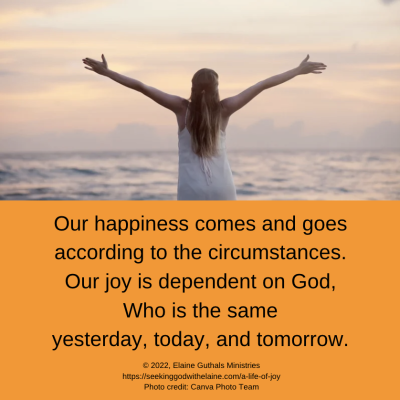
    But our joy is centered in God, not our circumstances.

    After God gave me the devotion of Quit Playing Church, I have been giving a lot of thought to where are we in our confidence of salvation. Do we really know we are saved? Or are we going to be one of the ones Jesus says, “Elaine, right? I know your name, but I really don’t know you” (Mt. 7: 21).

    I know the status of my heart and salvation. Do you?

    If we don’t, that takes the peace away.

    Why? The flip side of the verse says no Jesus, no peace. To me that means, if we don’t have Sovereign God — our Creator and One Who controls everything — on which to focus, we don’t have peace.

    That means we focus on the turmoil of the trials. When we are thinking more about the worries of this world, we aren’t thinking about the peace God has to offer us.

    The world is used to identify any who has not been regenerated — in other words, has not ABCDed.

    • Regeneration is being changed from spiritually dead to spiritually alive and the internal new birth and requickening that God brings about through the work of the Holy Spirit.
      • Spiritual death is the separation from God that occurred as a consequence of Adam and Eve’s original sin.
        • The spiritually alive are those who have ABCDed, so they are no longer separated from God.

    The ABCDs of Salvation

    If you have not become a believer in Christ, please read through the
    Plan of Salvation and prayerfully consider what God is asking you to do.

    A – admit our sins
    B – believe His Son Jesus is our Redeemer
    C – confess God as Sovereign Lord

    D – demonstrate that commitment by making any changes needed in our lives to
    live the way in which God has called us

    The Disciple’s Job Description

    Glossary

    Spurgeon expanded on the definition of world. He wrote that it included “certain customs, fashions, maxims, forces, principles, desires, [and] governments.”

    Resource

    We may think we find peace in this world without God — but we don’t. Worldly peace is just a physical peace.

    We’ve talked before about how we are in two different worlds — the spiritual world and the physical world. We are to in the world but not of the world.

    Being residents of two worlds can really raise issues. The in is polar opposite of the of.

    Yes, we want the world to become more Christian. As we come closer to judgment day, that isn’t going to happen.

    That is when we have to take heart. “… I [Jesus] have overcome the world” (Jn. 16: 33 ESV).

    Maclaren told us why it is so important that Jesus overcame the world. He wrote, “It may aid us somewhat to more strenuous fighting if we know that a Brother has fought and conquered. But the victory of Christ is of extremely little practical use to me, if all the use is to show me how to fight. You must go deeper than that. ‘I have overcome the world,’ and ‘I will come and put My overcoming Spirit into your weakness, and be in you the conquering and omnipotent power.’”

    Resource

    Jesus is coming to us to put the conquering power of God into our hearts!

    Cemetary with Colossians 3: 1

    I think many times we just think Jesus overcame the world by His resurrection. No, that isn’t right.

    Jesus lived in this world and didn’t sin. He was the only One to overcome the temptation to sin.

    On the cross, Jesus overcame sin because His blood was used to defeat sin. His blood paid the penalty for our sins, not His, because … reread the last paragraph.

    Jesus had the trifecta of overcoming this world.

    Jesus overcame the world by

    • how He lived His life.
    • completing His mission, which was to unselfishly lay down His life for mankind.
    • the power of His truth.
    • His holiness.
    • His infinite love.

    Those are all attributes of God.

    Resources

    To read a devotion in the Finding Our Center series click, on the button below.

    a-life-of-victoryFB

    Making the Connections

    Jesus was victorious because of His love for us. His mission was to overcome sin for us. And He did.

    How Do We Apply This?

    • Every step we take toward God is that much closer to peace. Remember, we take one step toward Him, and He runs ten steps in our direction.
    • Genuinely put our faith and trust in Christ.
    • Be strong in the Lord.
    • Don’t let the world draw us away from God.
    • We only share in Christ’s victory when we are in Christ.

    Resources

    Father God. Thank You that Jesus completed His mission to be our Savior. We want to be in the world but not of the world. Amen.

    What do you think?

    Leave me a comment below (about this or anything else) or head over to my Facebook group for some interactive discussion.

    If you don’t understand something and would like further clarification, please contact me.

    If you have not signed up for the email daily or weekly providing the link to the devotions and the newsletter, do so below.

    If God has used this devotion to speak with you, consider sharing it on social media.

  • A Life of Returning

    At the end of the Upper Room discourse, Jesus told the apostles that He was returning to His Father. This daily devotional looks at Jesus telling the apostolic their Father’s love.

    Nuggets

    • Jesus loves us enough to intercede for us, but we have access to God Himself.
    • The most important part of the mission for Jesus was that it began and ended with the Father.
    • Jesus didn’t want His apostles to miss this.

    Devotions in the Living Life Connected to Christ series

    Jesus was winding down what He wanted to tell His apostles. He still had the prayer to say.

    But Jesus had a couple of more things to say that the apostles needed to hear.

    Let’s Put It into Context

    Here is a running list of nuggets for the series.

    Do We Really Need an Intercessor?

    “In that day you will ask in my name, and I do not say to you that I will ask the Father on your behalf; for the Father himself loves you, because you have loved me and have believed that I came from God” (Jn. 16: 26-27 ESV)

    Jesus loves us enough to intercede for us, but we have access to God Himself.

    I am having a little trouble with this verse. It seems — to me — that it is contradicting another verse.

    “Who is to condemn? Christ Jesus is the one who died — more than that, who was raised — who is at the right hand of God, who indeed is interceding for us” (Rom. 8: 34: ESV).

    So, I am going to have to see what others say about this.

    Jackson interpreted the meaning of the verse in John for us. He wrote, “Christ does not decline to pray for us. He only makes known God’s willingness to hear us directly. But all the while we know He ever liveth to make intercession for US.”

    Resource

    What that tells me is Jesus doesn’t have to intercede for us. He wants to do so.

    We can to go God directly.

    But isn’t it great to know that Someone is in our corner fighting for us?

    This was different from the way the Jews did sacrifices. Only the High Priest could go one day a year into the Holy of Holies.

    Jesus being the Sacrifice for our sins changed all of that.

    When we have God in our hearts, we don’t need priests interceding for us. “Jesus answered him, ‘If anyone loves me, he will keep my word, and my Father will love him, and we will come to him and make our home with him’” (Jn. 14: 23 ESV).

    When we have God in our hearts, we don’t need priests interceding for us.

    We don’t want to put space between us and God. That is especially true when that space is other people. We want to listen to God, not them.

    God doesn’t want to be off on His throne in Heaven, not having direct contact with us. He wants to be a hands-on God.

    Why does God want contact with us? “For God so loved the world, that he gave his only Son, that whoever believes in him should not perish but have eternal life” (Jn. 3: 16 ESV).

    Wait! What? That verse said God loved us before He sent Jesus to die for us and clean us up?

    Yep. “But God showed his great love for us by sending Christ to die for us while we were still sinners” (Rom. 5: 8 NLT).

    God loves us just the way we are — even in our most sinful state.

    But God doesn’t want us to stay that way. He does not give us a pass for our sins even though He still loves us.

    We must change to have the character of God.

    Jesus’ Round Trip

    “I came from the Father and have come into the world, and now I am leaving the world and going to the Father” (Jn. 16: 28 ESV)

    The most important part of the mission for Jesus was that it began and ended with the Father.

    Jesus knew His mission was important. He was coming to take away the sins of the world for those who would repent.

    Repentance is acknowledging our separation from God and expressing sorrow for breaking God’s laws and commandments by making the commitment to change our sinful ways to ways of righteousness through obedience.

    • Obedience means submitting ourselves to the will of God as it is presented to us and living our lives accordingly.

    Glossary

    In His mind, Jesus knew that coming to earth by the command of His Father was really important. It ranks right up there with returning to the Father.

    But it isn’t just that Jesus was going back. It was that He was going back having completed His mission.

    Jesus didn’t give up halfway through. He didn’t summon the legion of angels to come get Him out of this.

    Jesus finished His mission. He died and rose again.

    Listen to what Maclaren said. He wrote, “Jesus Christ willed to be born, and to plant a new beginning of holy life in the very heart of humanity which henceforth should work as leaven. Unless we preserve this clear in our minds and hearts, the power to sway our affections is struck away from Christ. Unless He voluntarily took upon Himself the nature which He meant to redeem, why should I be thankful to Him for what He did?”

    Resource

    • Jesus chose the life He had here on earth.
    • We have to get this acknowledgment down to the heart level.
    • We can only be thankful about what He did when we realize it was totally His choice.

    But think about it this way. Going back to God has significant meaning. Jesus will return again to pick up His church. That is going to be a glorious day!

    Jesus is hanging out until He can come get us.

    Jesus’ Plain Teaching

    “His disciples said, ‘Ah, now you are speaking plainly and not using figurative speech! Now we know that you know all things and do not need anyone to question you; this is why we believe that you came from God’” (Jn. 16: 29-30 ESV)

    Jesus didn’t want His apostles to miss this.

    It seems like through all of Jesus’ ministry, He was accused of being hard to understand. But then, Jesus purposely told parables.

    “Then the disciples came and said to him, ‘Why do you speak to them in parables?’ And he answered them, ‘To you it has been given to know the secrets of the kingdom of heaven, but to them it has not been given. For to the one who has, more will be given, and he will have an abundance, but from the one who has not, even what he has will be taken away. This is why I speak to them in parables, because seeing they do not see, and hearing they do not hear, nor do they understand’” (Mt. 13: 10-13 ESV).

    But really. During the whole Upper Room Discourse that we have been looking at, Jesus has been pretty much laying it out.

    What made the words difficult for the apostles to understand was they weren’t the ones they thought they were going to hear. They thought they would hear a war cry.

    Instead, through most of the verses we have already talked about, Jesus was comforting the apostles.

    a-life-of-returingFB

    Making the Connections

    It was really important that the apostles get what Jesus was saying. In a couple of hours, Jesus would be dead.

    They wouldn’t have Jesus to tell them what to do.

    The apostles had to be in a position that they were be starting to get it before the night is over.

    How Do We Apply This?

    • Celebrate Christmas and Easter.
    • Bury ourselves in God’s Word.
    • Study on what Jesus says.

    Resource

    Father God. It amazes us that You sent Jesus as the Savior of the world. Help us to search for and seek You. May we always look to You for guidance. Amen.

    What do you think?

    Leave me a comment below (about this or anything else) or head over to my Facebook group for some interactive discussion.

    If you don’t understand something and would like further clarification, please contact me.

    If you have not signed up for the email daily or weekly providing the link to the devotions and the newsletter, do so below.

    If God has used this devotion to speak with you, consider sharing it on social media.

  • A Life of Joy

    Jesus knows our thoughts. This daily devotional looks at how Jesus knew to comfort the apostles by knowing what they were afraid to ask so that they could experience joy.

    Nuggets

    • We cannot hide our thoughts from Jesus.
    • Jesus knew that the disciples would mourn His death, but that mourning would turn into joy.
    • Happiness is from circumstances, but joy is a choice for God.

    Devotions in the Living Life Connected to Christ series

    The wedding is over! Everything went well. Our family and friends said they laughed, they cried, and they saw the love Pastor Steve and I have for each other.

    It was a good day.

    Now – hopefully – I can concentrate on getting all my devotions out right the first time. (I could have sworn that I had links in every one of the emails the first time. Apparently not.)

    As we are coming up on Easter, I normally do an Easter series. I think this year, I am just going to concentrate on the verses we have for the Sunday Morning Bible Study.

    As we look at last week’s lesson, we will finish up the Upper Room Discourse. The Easter Sunday lesson comes from Matthew and sees the women at the tomb.

    So, let’s dig in with the victory we have in Jesus’ sacrifice.

    Let’s Put It into Context

    Here is a running list of nuggets for the series.

    Jesus Knows Our Thoughts

    “Jesus knew that they wanted to ask him, so he said to them, ‘Is this what you are asking yourselves, what I meant by saying, “A little while and you will not see me, and again a little while and you will see me”?’” (Jn. 16: 19 ESV)

    We cannot hide our thoughts from Jesus.

    We’ve talked about this before. Jesus knows what is going on in our minds.

    Glossary

    We may think it is a dumb question. Jesus said, “No, ask it anyway.”

    The only way we grow is to ask so that we are given the knowledge we need.

    But think about Jesus in the Upper Room. He knew Judas’ thoughts. He knew Peter’s thoughts.

    In the Garden of Gethsemane, Jesus knew every thought the apostles had. He knew which one was complaining about being cold. He knew which one was hating sleeping on the ground again.

    Jesus knew which apostles were thinking of God and which ones weren’t. He knew if James and John had given up their quest to be the greatest.

    Jesus knew they wanted to ask but didn’t want to be the one to ask.

    Jesus Transforms Us

    “Truly, truly, I say to you, you will weep and lament, but the world will rejoice. You will be sorrowful, but your sorrow will turn into joy” (Jn. 16: 20 ESV)

    Jesus knew that the disciples would mourn His death, but that mourning would turn into joy.

    For three years, the apostles had traveled around with Jesus. We have already talked about how Jesus has said that their relationship had turned from students to friends.

    That means that Jesus had taken a special place in their hearts and lives. His death was going to feel like their hearts were pulled out of their chests and set on fire.

    Jesus was no longer going to be physically present with them. That was going to take a lot of getting used to.

    If that wasn’t bad enough, they had to witness Jesus painful and humiliating death. They knew the significance of a death on the cross. They also knew that Jesus didn’t deserve it.

    But that isn’t all, either. True, they were misguided in thinking this, but they thought Jesus would usher in an earthly kingdom. They thought He would overthrow the Roman Empire.

    To read a related devotion, click the button below.

    How do we feel when something we are really looking forward to doesn’t live up to expectations? All our hopes and dreams are generally crushed.

    We always say misery loves company. Jesus immediately followed up the prediction of misery with that of joy. “… I will turn their mourning into joy; I will comfort them, and give them gladness for sorrow” (Jer. 31: 13 ESV).

    What was going to make it worse was that the world was going to be rejoicing. The world is used to identify any who has not been regenerated — in other words, has not ABCDed.

    • Regeneration is being changed from spiritually dead to spiritually alive and the internal new birth and requickening that God brings about through the work of the Holy Spirit.
      • Spiritual death is the separation from God that occurred as a consequence of Adam and Eve’s original sin.
        • The spiritually alive are those who have ABCDed, so they are no longer separated from God.

    The ABCDs of Salvation

    If you have not become a believer in Christ, please read through the
    Plan of Salvation and prayerfully consider what God is asking you to do.

    A – admit our sins
    B – believe His Son Jesus is our Redeemer
    C – confess God as Sovereign Lord

    D – demonstrate that commitment by making any changes needed in our lives to
    live the way in which God has called us

    The Disciple’s Job Description

    Glossary

    Just think how you would feel if your best friend was publicly executed because of the wishes of the crowd. What if the crowd was partying in the streets while you mourned?

    Throw another wrinkle into it. What if you were the cause of your friend’s death?

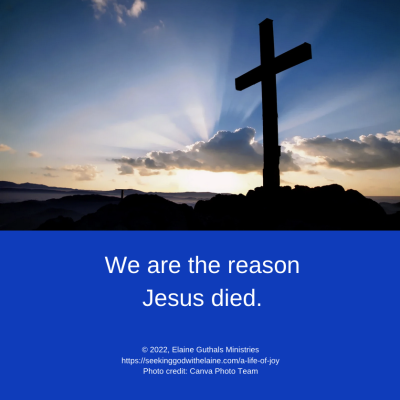
    We are the reason Jesus died. He died to pay the price of your sin, and my sin, and everyone’s sin.

    Because we all do sin.

    We are the reason Jesus died.

    The mourning of the apostles would turn into joy because Jesus would return. They had just gone over the I’m-going-away-I’m-coming-back bit. “A little while, and you will see me no longer; and again a little while, and you will see me” (Jn. 16: 16 ESV).

    After the heartache of Jesus’ death, He told them that their friendship would be restored, and they would see Him conquer death.

    All of the pain and humiliation of the cross would be gone.

    No, they still didn’t understand at this point. Who would?

    I mean, regeneration is a hard idea to grasp.

    We know from the rest of Scriptures that the apostles figured it out. The church grew because of their efforts to spread the gospel.

    Spurgeon said something interesting. He said that it wasn’t a trade of sorrow for joy. It was a transformation.

    Resource

    Ooo, baby. Isn’t that what happens to us when we accept Jesus as our Lord and Savior? We are transformed.

    The Disciple’s Job Description

    Complete Job Description

    Transformation, like salvation, is a three-step process. That is because sanctification is a process.

    Salvation is the gift of life through the deliverance from condemnation and sin to acceptance and holiness and changes us from being spiritually dead to spiritually alive.

    • Sins are actions by humans that disobey God and break one of His reasonable, holy, and righteous laws and commandments, goes against a purpose He has for us, or follows Satan’s promptings.
      • Holy means to be set apart — because of our devotion to God — to become perfect, and morally pure while possessing all virtues.
        • Perfection means we reach a state of maturity because the combination of the spiritual graces form, when all are present, spiritual wholeness or completeness — holy, sanctified, and righteous.
          • Spiritual graces are worldly morals that have been submitted to God to further His kingdom instead of enhancing this world.
          • Sanctified means to be set free from sin.
          • Righteous means we are free from sin because we are following God’s moral laws.
        • Pure means not being sinful or having the stain of sin. 
        • Virtues are standards of moral excellence.
      • Holiness is the transcendent excellence of His nature that includes elements of purity, dedication, and commitment that lead to being set apart.
        • Purity means possessing God’s moral character, having eliminated the stain of sin.

    Sanctification is the transformation of mind, body, and soul, which begins with regeneration; gradually changes our nature and morals through the promptings of the Holy Spirit; and ends with perfected state of spiritual wholeness or completeness.

    Maclaren called it a blending or a becoming. In a way, I like the word blended as an illustration of how we are transformed. It is a gradual process.

    Resources

    But in a way, I don’t like blended. It isn’t that the two natures — spiritual nature and sinful nature — combine into a new nature.

    God cuts out our sinful nature and transforms us to have a spiritual nature.

    I think becoming is a much better word choice. It is a reversal.

    That brings up a good point. Our sorrow will turn to joy — but that doesn’t mean that we will never have sorrow again.

    We will.

    But our sorrow will still be transformed to joy as we become closer to God.

    Jesus Transforms Us

    “When a woman is giving birth, she has sorrow because her hour has come, but when she has delivered the baby, she no longer remembers the anguish, for joy that a human being has been born into the world. So also you have sorrow now, but I will see you again, and your hearts will rejoice, and no one will take your joy from you” (Jn. 16: 20-22 ESV)

    Happiness is from circumstances, but joy is a choice for God.

    We can either choose to be sorrowful. Or we can choose to be joyful.

    It depends on the status of our hearts. When we are secure in our relationships with God, we know that He has us in the palm of our hands.

    Verse 22 takes up the sorrow — joy discussion again. Jesus told His apostles that He would see them again.

    Jesus did see them for a short time after the resurrection. He then ascended to Heaven.

    We know Jesus lives in our hearts (Eph. 3: 17) and watches over us from Heaven (Rom. 8: 34).

    We also know that one day we will see Jesus. He will be returning on a cloud to get us.

    We will live with Jesus for eternity if the status of our hearts are where they should be. Nothing — or no one — will take our salvation away from us when our hearts are right.

    Verse 22 also says that no one will take our joy away from us. “… no one will take your joy from you” (Jn. 16: 22 ESV).

    Our happiness comes and goes according to the circumstances. Our joy is dependent on God, Who is the same yesterday, today, and tomorrow.

    Our happiness comes and goes according to the circumstances. Our joy is dependent on God, Who is the same yesterday, today, and tomorrow.

    Our joy is dependent on our faith. Faith is a gift from God that enhances the conviction that the doctrines revealed in God’s Word are true, even if we do not understand all aspects of them, a belief which impacts our lives and distinguishes us from others.

    Glossary

    a-life-of-joyFB

    Making the Connections

    Spurgeon made a very interesting observation. He wrote, “It is most instructive that the apostles do not speak of the death of our Lord with any kind of regret. The Gospels mention their distress during their actual occurrence, but after the Resurrection, and Pentecost, we hear of no such grief; on the contrary, there are many expressions which treat of the Crucifixion in the spirit of exalting joy.”

    Resource

    Think about how many trials we go through that, even though when we are looking back on them to see how much we have grown, we are still sorry that they happened. We don’t want the bad stuff to happen — even if it ends up being something good.

    Sometimes, the bad stuff does have to happen. We grow the most through those times.

    How Do We Apply This?

    • To keep the joy, we need to keep God’s laws and commandments.
    • We lose the joy; God does not take it away from us.

    Resource

    Father God. Thank You for the joy that You give us. We can only experience this joy when we submit our hearts and lives to Jesus as our Savior and Redeemer. It is in His precious name we pray, Amen.

    What do you think?

    Leave me a comment below (about this or anything else) or head over to my Facebook group for some interactive discussion.

    If you don’t understand something and would like further clarification, please contact me.

    If you have not signed up for the email daily or weekly providing the link to the devotions and the newsletter, do so below.

    If God has used this devotion to speak with you, consider sharing it on social media.