Author: admin

  • The Marriage of Isaac and Rebekah

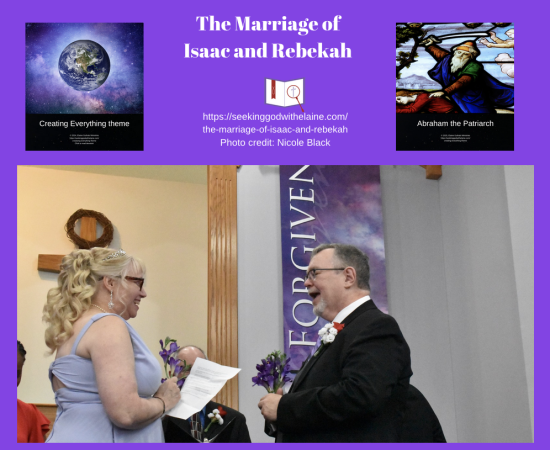
    As the caravan returned to Canaan, Isaac and Rebekah met for the first time. This devotional reading looks at the true success of the mission Abraham gave Eliezer.

    Nuggets

    • Isaac must have been visiting Abraham.
    • We are told that Isaac was out walking and meditating.
    • Then off in the distance, a caravan appeared.
    • Rebekah got her first look at her soon-to-be husband.
    • We are also told that Isaac loved Rebekah deeply.
    the-marriage-of-isaac-and-rebekah

    Abraham had sent Eliezer to Paddan-Aram on a specific mission – get Isaac a wife from his family. Eliezer got there and had a successful mission. Rebekah came back with him.

    But was the mission a success? Getting Rebekah to come back was only the beginning. What would Isaac think? What would she think when she met Isaac?

    Let’s Put It into Context

    To read devotions in the Creating Everything theme, click the button below.

    Devotions in the Abraham the Patriarch series

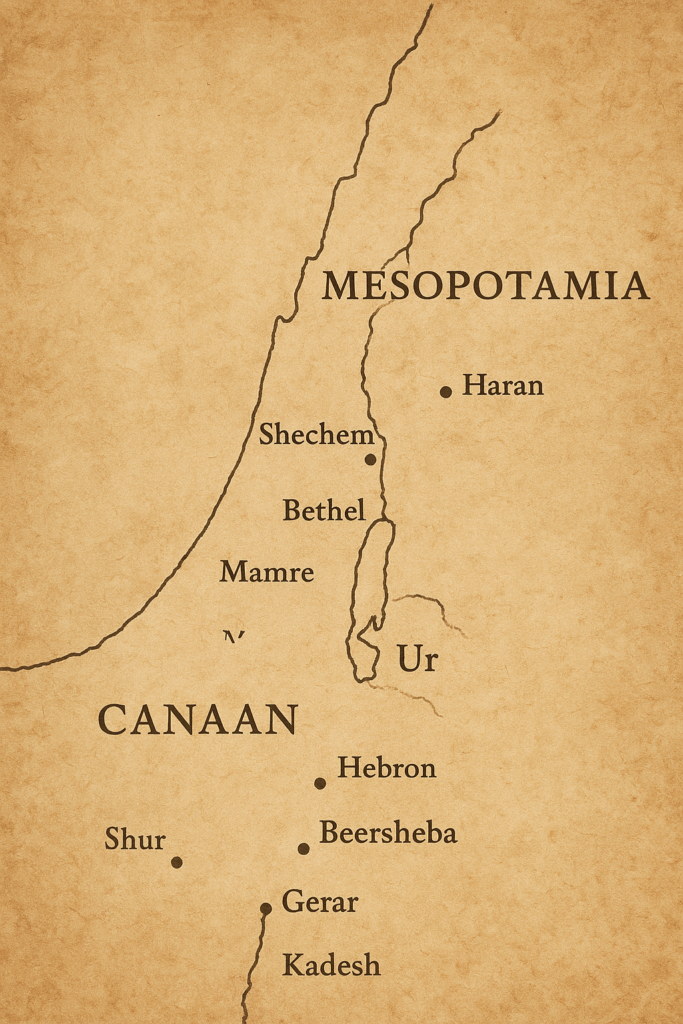
    Where Isaac Lived

    “Meanwhile, Isaac, whose home was in the Negev, had returned from Beer-lahai-roi” (Gen. 24: 62 NLT)

    Isaac must have been visiting Abraham.

    Isaac lived in the Negev, where Beer-lahai-roi was located. Since Moses said he returned from there, we can assume that here was Hebron, where Abraham lived.

    The Negev was a triangular shaped region in the southern part of Israel. Its boundaries are the Sinai Peninsula on the west and the Jordan River on the east. The northern boundary is harder to define.

    Be’er-Lahai Roi was the well by which Hagar’s journey ended.

    Isaac Took a Walk

    “One evening as he was walking and meditating in the fields, he looked up and saw the camels coming” (Gen. 24: 63 NLT)

    Walking and Meditating

    We are told that Isaac was out walking and meditating.

    Isaac went out to a spot where he could be by himself. Gray said he was walking in the open country. Pearse called it a field.

    Resources

    Since Isaac was walking, he was doing this during leisure time. He wasn’t working.

    Moses said this occurred in the evening. I can see that. That time makes it a good time to review the day and get Sovereign God’s insight as to the condition of our hearts.

    Isaac was alone with his thoughts. Being alone to meditate is very important. The leisure times gives us the opportunity for meditation while the solitude helps to keep our focus on our Father God.

    Life is rough. Sometimes, we need to get off by ourselves and think things through.

    That is what meditating is. It is think through what Jehovah has said in His Word and what he has revealed to us through the Holy Spirit. We determine what is in our hearts.

    Leckie had a wonderful insight on meditation. He said that meditations stem from who we are. By definition, it gets our thoughts down to our core — our center. In Elaine-speak, that means it is the way to get it to the heart level. That means we should not fear losing ourselves in meditation. In fact, losing ourselves makes it better.

    Look how Leckie described the process. He wrote,

    “It is letting the mind seethe and work and play about a subject, guided by conscience or emotion or desire or strong resolution, till it gets impressed with the subject, till the sap and taste of it flow into the soul. Nothing, however great, is yours till you get the substance of it into you by meditation. It remains entirely outside of you.”

    Resources

    That makes sense to me. We can only find Jehovah when we spend time with just the two of us. We have to work out what He is telling us — work out our salvation (Phil. 2: 12-13).

    Meditation promotes faith, godliness, and holiness. Manton called it a duty and exercise of our relationship with Jehovah. It gives us a better understanding of what the Holy Spirit is revealing to us.

    Resource

    I know. Solitude is hard to find. Leisure time can get spent in other ways.

    We have to make sure we focus on spiritual matters. We need to do this to ensure that we have a sincere, true relationship with Jehovah.

    Hopefully, Isaac was meditating on spiritual matters. He more than likely knew about the mission to get him a wife. He may have been praying about that.

    Isaac may also have been mourning his mother. We are told that he was still struggling three years later, and Rebekah comforted him.

    Saw the Camels Coming

    Then off in the distance, a caravan appeared.

    We aren’t told if Isaac was in Hebron when the caravan left. Still, he probably would have recognized it when it returned.

    Rebekah’s Reaction

    “When Rebekah looked up and saw Isaac, she quickly dismounted from her camel. ‘Who is that man walking through the fields to meet us?’ she asked the servant. And he replied, ‘It is my master.’ So Rebekah covered her face with her veil. Then the servant told Isaac everything he had done” (Gen. 24: 62-66 NLT)

    Rebekah got her first look at her soon-to-be husband.

    Bradford didn’t know where the veil came from. He said, contrary to popular thinking, Mesopotamian women — and Hebrew woman in particular— did not cover their faces in the presence of men.

    However, Bradford went on to say that veils were part of the betrothal and wedding procedures. The veil was put on some amount of time before the wedding and removed after the vows were complete.

    Resource

    Well, Rebekah was going to be married to Isaac. She might have been considering that period the betrothal.

    Isaac and Rebekah Marry

    And Isaac brought Rebekah into his mother Sarah’s tent, and she became his wife. He loved her deeply, and she was a special comfort to him after the death of his mother (Gen. 24: 62-67 NLT)

    We are also told that Isaac loved Rebekah deeply.

    We aren’t told whether Isaac took another wife. He probably didn’t, but then, we are only told what is critical to God’s story of the Gospel.

    What we are told is Isaac took Rebekah into Sarah’s tent. Part of me wondered if that was because Rebekah would be the matriarch of the family.

    Was it just a logistical point? Abraham had his tent. Sarah had her tent. Isaac had his tent.

    Where was Rebekah going to go? Sarah’s tent was vacant.

    No, Bibleverseexplained.com indicated that it was more than that. It says, “The act of bringing Rebekah into his mother Sarah’s tent symbolizes the continuation of the family legacy and the fulfillment of God’s promise to Abraham regarding the future of his descendants.”

    Resource

    From start to finish, this story has been about obedience, promise, love, and provision. Abraham, Isaac, and Eliezer provided the obedience. God provided promise, love, and provision.

    Making the Connections #1

    Leckie said something I like. He wrote, “The meditation of a devout spirit on almost anything will soon run into prayer. … The Hebrew word here rendered ‘meditate’ means also to pray.”

    Resource

    Let’s look at some verses.

    • “But they delight in the law of the Lord, meditating on it day and night” (Ps. 1: 2 NLT).
    • “Study this Book of Instruction continually. Meditate on it day and night so you will be sure to obey everything written in it. Only then will you prosper and succeed in all you do” (Josh. 1:8 NLT).
    • “Oh, how I love your instructions! I think about them all day long” (Ps. 119: 97 NLT).
    • “I will study your commandments and reflect on your ways” (Ps. 119: 15 NLT).
    • “I remember the days of old. I ponder all your great works and think about what you have done” (Ps. 143: 5 NLT).
    • “They are constantly in my thoughts. I cannot stop thinking about your mighty works” (Ps. 77: 12 NLT).

    Let’s look at some verses on prayer.

    • “Always be joyful. Never stop praying. Be thankful in all circumstances, for this is God’s will for you who belong to Christ Jesus” (I Thess. 5: 16-18 NLT).
    • “Rejoice in our confident hope. Be patient in trouble, and keep on praying” (Rom. 12: 12 NLT).
    • “You can pray for anything, and if you have faith, you will receive it” (Mt. 21: 22 NLT).
    • “Don’t worry about anything; instead, pray about everything. Tell God what you need, and thank him for all he has done. Then you will experience God’s peace, which exceeds anything we can understand. His peace will guard your hearts and minds as you live in Christ Jesus” (Phil. 4: 6-7 NLT).

    Think about it. What does that tell us?

    • We are to never stop thinking about Jehovah’s commandments/instructions (Ps. 1: 2) — and never stop praying (I Thess. 5: 17).
    • We are to think in order to assure obedience (Josh. 1: 8), and pray to assure obedience in times of trouble (Rom. 12: 12 NLT).
    • We must think about what we study (Ps. 119: 15), and pray that the study increases our faith (Mt. 21: 22).
    • We are to think about what Jehovah has done for us and others (Ps. 143: 5); so that when circumstances bring anxiety, we will continue to pray to our Father God (Phil. 4: 6-7, I Thess. 5: 17, Rom. 12: 12).

    When we meditate, we end up knowing we need to pray to Jehovah for His control of our lives.

    Making the Connections #2

    I liked what Manton’s said. The purpose of meditation should be to revere Jehovah, not to gain knowledge.

    Resource

    The only thing we should be trying to do when we meditate is to grow our faith, not solve all the mysteries of God’s Word.

    Meditation should grow our sincerity.

    Our motivation should play an important role in how we meditate. The why should always be to strengthen our relationship with Sovereign God.

    Making the Connections #3

    We get a lot of information about Abraham and how he basically did thing right. Then we get even more about Jacob — and how he did things wrong.

    In between these Hall of Famers is Isaac. We don’t get much about him. What we do focuses a lot on wells.

    But this is a great picture of Isaac. He is walking with His Sovereign God.

    How comforting is that!

    Making the Connections #4

    I love, love, love what Dods had to say. He wrote, “God may keep us longer waiting than the world does, but He gives us never the wrong thing.”

    Resource

    We generally say that Jehovah is never early or late but right on time. We need to amend that.

    Jehovah is never early or late but right on time with just the right thing. To put it into action format is to say wait for Jehovah to supply the right thing at the right time.

    Making the Connections #5

    Part of us may look at Isaac and Rebekah as ask, “How in the world did they fit together?”

    Dods explained. He wrote,

    “One cannot read of her lively, bustling, almost forward, but obliging and generous conduct at the well, nor of her prompt, impulsive departure to an unknown land, without seeing, as no doubt Eliezer very quickly saw, that this was exactly the woman for Isaac. In this eager, ardent, active, enterprising spirit, his own retiring and contemplative, if not sombre disposition, found its appropriate relief and stimulus. Hers was a spirit which might indeed, with so mild a lord, take more of the management of affairs than was befitting; and when the wear and tear of life had tamed down the girlish vivacity with which she spoke to Eliezer at the well, and leapt from the camel to meet her lord, her active-mindedness does appear in the disagreeable shape of the clever scheming of the mother of a family. In her sons you see her qualities exaggerated: from her, Esau derived his activity and open-handedness; and in Jacob, you find that her self-reliant and unscrupulous management has become a self-asserting craft which leads him into much trouble, if it also sometimes gets him out of difficulties. But such as Rebekah was, she was quite the woman to attract Isaac and supplement his character.”

    Resource

    We may look at their family of four and say it is a dysfunctional family — and it is for all the reasons Dods listed. But Rebekah was the right wife for Isaac.

    How Do We Apply This?

    • Pray in everything.
    • Listen to Jehovah’s direction — even if we have to wait.
    • Praise Sovereign God.
    • Apply that on which we meditate.
    • Meditate so that we can retain what we hear.
    • Wait for Jehovah to supply the right thing at the right time.

    Resources

    Father God. Thank You for showing us the reward for obedience. Thank You for showing us how You love us and provide what You promise. Amen.

    If you don’t understand something and would like further clarification, please contact me.

    If you have not signed up for the email providing the link to the devotions and the newsletter, do so below.

    If God has used this devotion to speak with you, consider sharing it on social media.
  • The Marriage Treaty between Isaac and Rebekah

    Jehovah had answered Eliezer’s prayer to show His choice for Isaac’s wife. This devotional reading looks at the negotiation process for securing Rebekah’s hand in marriage.

    Nuggets

    • Even with the successful mission he had so far, Eliezer didn’t want to socialize until the mission was completed.
    • Laban and Bethuel — as well as Rebekah — chose to follow Jehovah’s direction.
    • When his mission was completed, Eliezer wanted to immediately go home.
    • Where Laban and Bethuel hadn’t asked Rebekah if she would agree to marry Isaac, they did ask her when she was prepared to leave right away — another sign of maturity.
    the-marriage-treaty-between-isaac-and-rebekah

    Eliezer had done everything right in carrying out his mission. He had asked Jehovah to show him who He wanted to be Isaac’s wife.

    But Eliezer’s mission wasn’t a success yet. The marriage treaty wasn’t official. He had to talk to the future bride’s family.

    Let’s Put It into Context

    To read devotions in the Creating Everything theme, click the button below.

    Devotions in the Abraham the Patriarch series

    The Marriage Treaty

    “So the man went home with Laban, and Laban unloaded the camels, gave him straw for their bedding, fed them, and provided water for the man and the camel drivers to wash their feet. Then food was served. But Abraham’s servant said, ‘I don’t want to eat until I have told you why I have come.’ ‘All right,’ Laban said, ‘tell us.’ ‘I am Abraham’s servant,’ he explained. ‘And the Lord has greatly blessed my master; he has become a wealthy man. The Lord has given him flocks of sheep and goats, herds of cattle, a fortune in silver and gold, and many male and female servants and camels and donkeys. When Sarah, my master’s wife, was very old, she gave birth to my master’s son, and my master has given him everything he owns. And my master made me take an oath. He said, “Do not allow my son to marry one of these local Canaanite women. Go instead to my father’s house, to my relatives, and find a wife there for my son.” But I said to my master, “What if I can’t find a young woman who is willing to go back with me?” He responded, “The Lord, in whose presence I have lived, will send his angel with you and will make your mission successful. Yes, you must find a wife for my son from among my relatives, from my father’s family. Then you will have fulfilled your obligation. But if you go to my relatives and they refuse to let her go with you, you will be free from my oath.” So today when I came to the spring, I prayed this prayer: “O Lord, God of my master, Abraham, please give me success on this mission.  See, I am standing here beside this spring. This is my request. When a young woman comes to draw water, I will say to her, ‘Please give me a little drink of water from your jug. If she says, ‘Yes, have a drink, and I will draw water for your camels, too,” let her be the one you have selected to be the wife of my master’s son.’” Before I had finished praying in my heart, I saw Rebekah coming out with her water jug on her shoulder. She went down to the spring and drew water. So I said to her, ‘Please give me a drink.’  She quickly lowered her jug from her shoulder and said, ‘Yes, have a drink, and I will water your camels, too!’ So I drank, and then she watered the camels. Then I asked, ‘Whose daughter are you?’ She replied, ‘I am the daughter of Bethuel, and my grandparents are Nahor and Milcah.’ So I put the ring on her nose, and the bracelets on her wrists. Then I bowed low and worshiped the Lord. I praised the Lord, the God of my master, Abraham, because he had led me straight to my master’s niece to be his son’s wife.  So tell me — will you or won’t you show unfailing love and faithfulness to my master? Please tell me yes or no, and then I’ll know what to do next.’ Then Laban and Bethuel replied, ‘The Lord has obviously brought you here, so there is nothing we can say.  Here is Rebekah; take her and go. Yes, let her be the wife of your master’s son, as the Lord has directed.’ When Abraham’s servant heard their answer, he bowed down to the ground and worshiped the Lord. Then he brought out silver and gold jewelry and clothing and presented them to Rebekah. He also gave expensive presents to her brother and mother.  Then they ate their meal, and the servant and the men with him stayed there overnight …” (Gen. 24: 32-54 NLT)

    Why I Have Come

    Even with the successful mission he had so far, Eliezer didn’t want to socialize until the mission was completed.

    Eliezer went to stay with Abraham’s family. Laban did everything a hospitable host would do, including preparing a meal and providing water to wash his feet.

    But Eliezer didn’t want the focus taken off the mission. It was a mission from Jehovah, and he didn’t want to mess around.

    We, like Eliezer, have to be a trusted servant of Jehovah, giving faithful service. We have to see Him controlling our lives — guiding us to acknowledge Him. “In all your ways acknowledge him, and he will make straight your paths” (Prob. 3: 6 NLT).

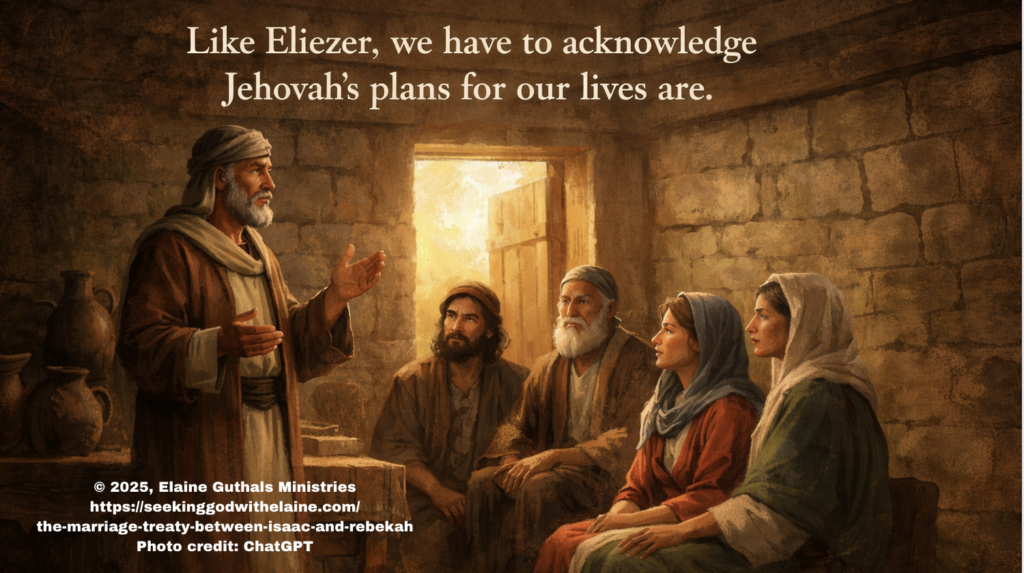
    Like Eliezer, we have to acknowledge Jehovah’s plans for our lives are bigger than us.

    I like how Leale put it. He wrote, “It is the mark of a pious mind when we esteem the commandments of God more than our necessary food.”

    Resource

    Besides, Eliezer needed to know if the mission would be a success. Even though Jehovah had gotten him to the right house, no commitments had been made yet.

    We know Abraham had gotten at least one update on his family (Gen. 22 20-26). It would be easy to assume that he had sent back updates.

    In case Abraham hadn’t, or the messenger didn’t get it delivered, Eliezer started from the beginning. They would have known that Abraham, Sarah, and Lot set out on their journey because of Sovereign God’s calling. They may or may not have known the blessings they received for the obedience.

    Eliezer stressed the fact that all the blessings had come from Sovereign God — position, wealth, and a son. This son was going to inherit everything.

    Rebekah’s parents would have needed to know that, when their daughter went hundred of miles away, she would have a husband who could take care of her.

    While he was doing this, Eliezer was showing that his interactions with Rebekah had been appropriate.

    Then Eliezer gave Laban and Bethuel (see, he’s alive — but maybe feeble) a basically verbatim account of the mission’s plan and execution. I believe that he wanted Rebekah’s family to know that this was a God-ordained mission.

    Barnes had an interesting addition to the Bethuel/Laban conundrum. He wrote, “Bethuel now appears as a concurring party. Laban, as the full brother of Rebekah, has a voice in the disposal of her hand; but the father only has the power to ratify the contract.” The contract would have to be ratified. Candlish called it a treaty rather than a contract.

    Resource

    While Eliezer was not only showing Abraham’s — as well as Isaac’s — ability to provide for a wife, but he was also showing how Jehovah’s plan had been fulfilled up to this point. He was showing that Sovereign God was in control and rewarded obedience.

    Eliezer showed that Jehovah was now calling Rebekah to be a member of the covenant. All that God had promised Abraham would be fulfilled through her.

    The Lord Has Obviously Brought You Here

    Laban and Bethuel chose to follow Jehovah’s direction.

    Moses didn’t straight out say that Bethuel’s family followed Jehovah. We assume he did, or Rebekah wouldn’t have been chosen by Jehovah to be Isaac’s bride.

    Laban did do one “praise God.” But that might have been lip service.

    What we know they did do was, upon hearing this was Jehovah’s plan, was to say, “Do that then.” They didn’t try to negotiate. They accepted.

    No Delay

    “… But early the next morning, Abraham’s servant said, ‘Send me back to my master.’ ‘But we want Rebekah to stay with us at least ten days,’ her brother and mother said. ‘Then she can go.’ But he said, ‘Don’t delay me. The Lord has made my mission successful; now send me back so I can return to my master.’ ‘Well,’ they said, ‘we’ll call Rebekah and ask her what she thinks.’  So they called Rebekah. ‘Are you willing to go with this man?’ they asked her. And she replied, ‘Yes, I will go.’ So they said good-bye to Rebekah and sent her away with Abraham’s servant and his men. The woman who had been Rebekah’s childhood nurse went along with her.  They gave her this blessing as she parted: ‘Our sister, may you become the mother of many millions! May your descendants be strong and conquer the cities of their enemies.’ Then Rebekah and her servant girls mounted the camels and followed the man. So Abraham’s servant took Rebekah and went on his way” (Gen. 24: 54-61 NLT).

    Send Me Back

    When his mission was completed, Eliezer wanted to immediately go home.

    Eliezer didn’t want any grass to grow under his feet. The next morning, he was up and raring to make the return journey.

    I can see Laban and Rebekah’s mom — especially mom — wanting to spend ten days with her before sending her off. What is ten days, anyway?

    Just think how jarring it would be to wake up one day with a single daughter with no prospect in sight (at least not that we are told) and wake up the next day to her leaving your life probably to never be seen again.

    Gray also noted this verified Rebekah’s character. Also, it may have spoken to her value in the household.

    Resource

    Oh, I can see mom wanting more time. (It is interesting dad didn’t say one way or the other.) It is hard to let go of close relationships.

    Of course, Laban probably thought he might get some more wealth out of Eliezer. But then Laban was probably following along with how Spurgeon said Satan works — delaying instead of opposing the Gospel.

    Resource

    Satan wants us to put off making a decision to believe in the Savior until it is too late for us. But then we lose out on an eternity with Jehovah.

    No, Eliezer wasn’t being thoughtless. He was doing more than thinking of his long journey and the provisions he had. He was thinking to get back to Abraham to relieve his anxiety and, possibly, before something happened to him.

    More than that, Eliezer was thinking of Jehovah’s mission. He didn’t want the lay to keep him from fully completing his mission.

    I know, he had the girl. Why couldn’t they take ten more days before they left?

    Why would Eliezer drag it out when Jehovah had answered his prayer even before he finished talking? Why would he take more time when He worked everything out right away?

    Ask Rebekah

    Where Laban and Bethuel hadn’t asked Rebekah if she would agree to marry Isaac, they did ask her when she was prepared to leave right away — another sign of maturity.

    In their defense, arranged marriages of that time probably frequently did occur without the bride’s wishes being considered. But Rebekah was ready.

    Gray looked at it this way. Rebekah had been a faithful daughter. She was ready to be a faithful wife.

    Resource

    Rebekah may have been stepping out into the unknown, but it was only partially unknown. She would have known about Abraham, even if she had never heard Isaac’s name before.

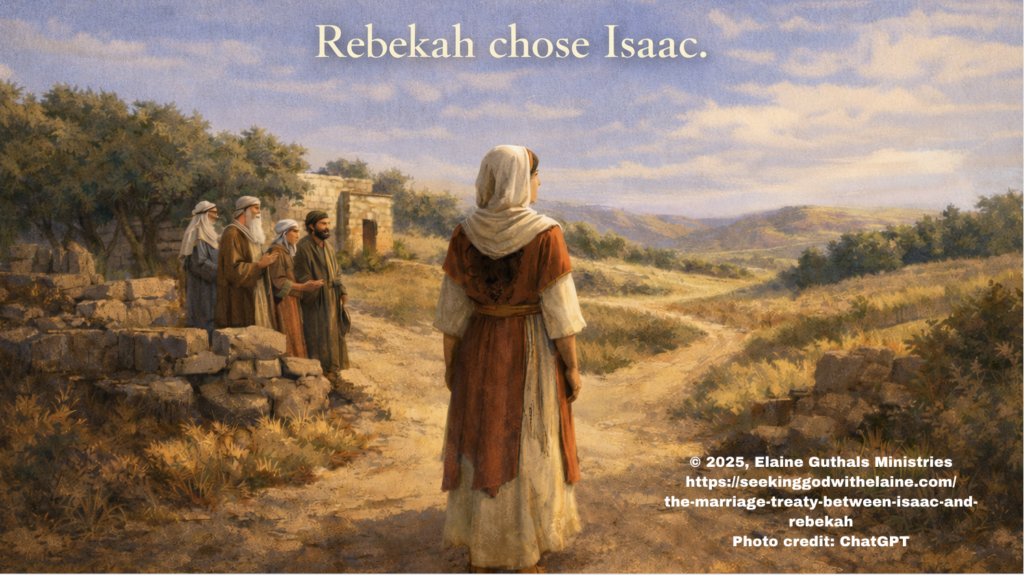
    Rebekah chose Isaac.

    That was what Eliezer wanted to hear. He immediately worshiped Sovereign God.

    Also making the journey was Rebekah’s childhood nurse, whom we later learn is named Deborah (Gen. 35: 8). This was probably her wet nurse when she was an infant and toddler. In later years, she would have become Rebekah’s loyal personal attendant and confidant.

    More, though, than just Rebekah and Deborah made the trip. Verse 61 says servants — plural.

    Bradford was surprised at the blessing pronounced over Rebekah. It held more prophecy than what her family was probably aware.

    The wording is interesting to me. “They gave her this blessing as she parted: ‘Our sister, may you become the mother of many millions! May your descendants be strong and conquer the cities of their enemies” (Gen. 24: 60 NLT).

    They called Rebekah sister because, even though she be miles away, she would be close in their hearts. She would always be their near kinsman.

    Making the Connections #1

    Let’s take a look at Eliezer a second. Birch called him an excellent servant.

    Let’s get a little backstory. In Exodus 21, it says that Hebrew slaves could only serve their masters for six years. They were to be set free during the seventh year.

    If a slave didn’t want to be freed — because of love for his master or the family that the master gave him — they pierced his ear. “If he does this [tells his master he doesn’t want to go free], his master must present him before God. Then his master must take him to the door or doorpost and publicly pierce his ear with an awl. After that, the slave will serve his master for life” (Ex. 21: 6 NLT).

    This was a voluntary choice to go through the public ceremony. The piercing represents a permanent bond. It was submission on the slave’s part.

    Had Eliezer gone through this ceremony? We don’t know.

    Birch applied this to some of our current ordinances. Partakers of the Lord’s supper and those seeking baptism are not saved by these outward ceremonies. We only gain salvation when we truly have an inward transformation.

    “O my son, give me your heart. May your eyes take delight in following my ways” (Prov. 23: 26 NLT).

    Birch described it this way. He wrote, “The Christian is a servant of the Lord, and, as such, gives up himself, body, spirit, and soul, to do the will of his Heavenly Father. He is a consecrated vessel filled with the Spirit of the Almighty.”

    Resource

    Yes, we are servants of Jehovah. He is our Master. We are followers.

    Making the Connections #2

    Gray noted the frankness and the piety with which Eliezer and Rebekah’s family interacted. Both sides showed a respect for Jehovah.

    Resource

    Jehovah would have been very happy with this interaction.

    Making the Connections #3

    Davison made a great point that some who feel women are trashed in God’s Word seem to miss. He wrote,

    “The importance of strong-minded, strong-hearted, pious mothers in the kingdom of God. The great men of the Bible were all endowed with the greatness of their mothers. They owed to them what was best and brightest in their heart and lives. It was through them they achieved their successes.

    Resource

    No, Jehovah doesn’t expect women to be submissive to the point they have no choice or freedom on their own.

    Making the Connections #4

    Leckie said something I like. He wrote, “The meditation of a devout spirit on almost anything will soon run into prayer. … The Hebrew word here rendered ‘meditate’ means also to pray.”

    Resource

    Let’s look at some verses.

    • “But they delight in the law of the Lord, meditating on it day and night” (Ps. 1: 2 NLT).
    • “Study this Book of Instruction continually. Meditate on it day and night so you will be sure to obey everything written in it. Only then will you prosper and succeed in all you do” (Josh. 1:8 NLT).
    • “Oh, how I love your instructions! I think about them all day long” (Ps. 119: 97 NLT).
    • “I will study your commandments and reflect on your ways” (Ps. 119: 15 NLT).
    • “I remember the days of old. I ponder all your great works and think about what you have done” (Ps. 143: 5 NLT).
    • “They are constantly in my thoughts. I cannot stop thinking about your mighty works” (Ps. 77: 12 NLT).

    Let’s look at some verses on prayer.

    • “Always be joyful. Never stop praying. Be thankful in all circumstances, for this is God’s will for you who belong to Christ Jesus” (I Thess. 5: 16-18 NLT).
    • “Rejoice in our confident hope. Be patient in trouble, and keep on praying” (Rom. 12: 12 NLT).
    • “You can pray for anything, and if you have faith, you will receive it” (Mt. 21: 22 NLT).
    • “Don’t worry about anything; instead, pray about everything. Tell God what you need, and thank him for all he has done. Then you will experience God’s peace, which exceeds anything we can understand. His peace will guard your hearts and minds as you live in Christ Jesus” (Phil. 4: 6-7 NLT).

    Think about it. What does that tell us?

    • We are to never stop thinking about Jehovah’s commandments/instructions (Ps. 1: 2) — and never stop praying (I Thess. 5: 17).
    • We are to think in order to assure obedience (Josh. 1: 8), and pray to assure obedience in times of trouble (Rom. 12: 12 NLT).
    • We must think about what we study (Ps. 119: 15), and pray that the study increases our faith (Mt. 21: 22).
    • We are to think about what Jehovah has done for us and others (Ps. 143: 5); so that when circumstances bring anxiety, we will continue to pray to our Father God (Phil. 4: 6-7, I Thess. 5: 17, Rom. 12: 12).

    When we meditate, we end up knowing we need to pray to Jehovah for His control of our lives.

    How Do We Apply This?

    • Pray in everything.
    • Listen to Jehovah’s direction — even if we have to wait.
    • Praise Sovereign God.

    Resource

    Father God. We know that You are in control of everything. You allow us to make our own decisions – but You already know what those decisions will be. Thank You for rewarding us when we choose to follow You. Amen.

    If you don’t understand something and would like further clarification, please contact me.

    If you have not signed up for the email providing the link to the devotions and the newsletter, do so below.

    If God has used this devotion to speak with you, consider sharing it on social media.
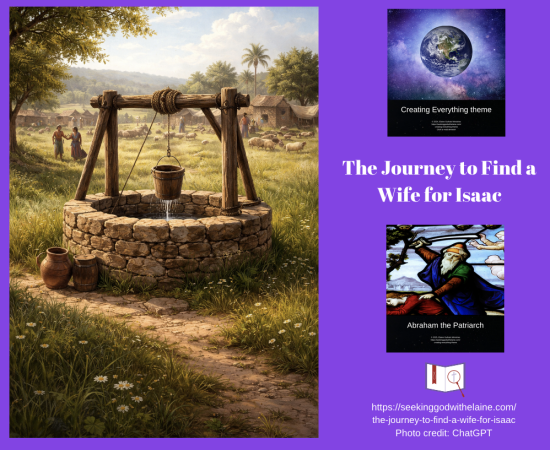
  • The Journey to Find a Wife for Isaac

    Abraham had asked his trusted servant Eliezer to take a journey to find a wife for his son. This devotional reading looks at that journey and what he finds when he gets where he is going.

    Nuggets

    • Eliezer agreed to carry out the mission Abraham gave him.
    • Eliezer prayed a sincere, humble prayer for a sign showing the success of his mission — a success that only Jehovah could give.
    • Eliezer asked that Jehovah show to him who the wife for Isaac was in a specific way.
    • Eliezer’s prayer was answered in the way he asked even before he finished praying because
    • God was directing the events.   
    • Eliezer started passing out the gifts right away. He rewarded Rebekah for her kindness.
    • Eliezer started passing out the gifts right away.
    • Rebekah told her family of the encounter at the well.
    • It seemed like Laban was performing the duties of the firstborn son.
    the-journey-to-find-a-wife-for-isaac

    Abraham had grown old, and his mind turned to grandchildren. But before he could get grandchildren, Isaac had to find a wife.

    To find that wife, Abraham asked his trusted servant to go back to his family and find a wife.

    Let’s Put It into Context #1

    To read devotions in the Creating Everything theme, click the button below.

    Devotions in the Abraham the Patriarch series

    Let’s Put It into Context #2

    Let’s get timing established again.

    1890 BC — Terah, Abram, Sarai, and Lot moved from Ur to Haran (Gen. 11: 31)
    1885 BC — Abram called at age 75 (Gen. 12: 1-3)
    1823 BC – Sarah died (Gen. 23: 1)
    c. 1823–1820 BC – Abraham sends Eliezer to Paddan-Aram to find a wife for Isaac (Gen. 24)
    1820 BC – Isaac, at age 40, marries Rebekah (Gen. 25: 20)

    Based on Timeline from

    Good to Go

    “So the servant took an oath by putting his hand under the thigh of his master, Abraham. He swore to follow Abraham’s instructions. Then he loaded ten of Abraham’s camels with all kinds of expensive gifts from his master, and he traveled to distant Aram-naharaim. There he went to the town where Abraham’s brother Nahor had settled. He made the camels kneel beside a well just outside the town. It was evening, and the women were coming out to draw water” (Gen. 24: 9-11 NLT)

    Eliezer agreed to carry out the mission Abraham gave him.

    Moses didn’t say Eliezer set off immediately, but it sounds like they started preparing right away. It would take time to get the provisions for that kind of trip in those days. It does sound like he set off at the first possible opportunity.

    Gray reminded us that Eliezer did not go alone. No, he probably couldn’t wrangle ten camels on his own.

    Security personnel would also have been needed. The camels were carrying a lot of expensive gifts. Someone might have thought they could take those off Eliezer’s hands.

    Resource

    We have to remember it would have been a long journey. They would be crossing land owned by warlike tribes.

    So, Eliezer got to where he was going. Got Questions said it was a trip of some 450 miles.

    Resource

    When Sovereign God gives us a mission, that is how we are to approach it. We have to see it is from Him.

    We can question but not in doubt or disobedience. We have to obey immediately.

    We can and are supposed to depend on Jehovah. There are times we have to understand that He has given us others as a means to dispense that provision.

    Carrying Out the Mission

    “‘O Lord, God of my master, Abraham,’ he prayed. ‘Please give me success today, and show unfailing love to my master, Abraham. See, I am standing here beside this spring, and the young women of the town are coming out to draw water. This is my request. I will ask one of them, “Please give me a drink from your jug.” If she says, “Yes, have a drink, and I will water your camels, too!” — let her be the one you have selected as Isaac’s wife. This is how I will know that you have shown unfailing love to my master’” (Gen. 24: 12-14 NLT).

    O Lord, God of My Master, Abraham

    Eliezer prayed a sincere, humble prayer for a sign showing the success of his mission — a success that only Jehovah could give.

    I don’t see Eliezer’s choice of words “‘O Lord, God of my master, Abraham,’…” (Gen. 24: 12 NLT) as indication that Eliezer didn’t have his own belief.

    Eliezer had been circumcised; but unless he had circumcision of the heart, that didn’t mean anything. Still, he believed enough that he prayed for the success of his mission.

    But let’s look at this in the Hebrew. “… Hashem Elohei adoni Avraham …” (Gen. 24: 12 OJB).

    Hashem means The Name, Elohim refers to God, and Adonai translates to Lord. Yeah. Eliezer called on the Name of the Lord.

    The whole purpose of the mission was to advance Jehvoah’s covenant with Abraham. God made the covenant with Abraham, not Eliezer. He was just reminding Sovereign God of that promise – not that He needed the reminder.

    Eliezer was removing himself from the equation. He was a humble man of integrity who wanted his mission to succeed.

    To me, it shows Eliezer had faith and was a man of integrity. He not only prayed for the success of his mission, but he also prayed that it would come to fruition quickly.

    The Complete Jewish Bible backs that up with better wording. “He said, ‘Adonai, God of my master Avraham, please let me succeed today; and show your grace to my master Avraham’” (Gen. 24: 12 CJB emphasis added).

    Today. Right now.

    No, the man who used to be Abraham’s heir didn’t try to drag things out. He wanted success soon.

    Was Eliezer putting limits on Sovereign God? No. He was plugging into His mercies and grace for that day.

    Give Me a Drink

    Eliezer asked that Jehovah show to him who the wife for Isaac was in a specific way.

    No, Sovereign God didn’t mind the fleece that Eliezer threw out. It wasn’t like Gideon’s fleece, that convinced him He really was talking to him (Jdg. 6: 36-40).

    Bradford thought this showed that Eliezer was worrying. I don’t think so – at least not anything overly unusual.

    Resource

    Eliezer wasn’t doubting that Jehovah could and would do what He said. He was counting on Him to give him direction.

    This was more of a you-show-me-whom-You-have-picked deal. Eliezer didn’t want any mistake on his part. To him, this was too important a decision to be made on his own.

    Wasn’t that the whole purpose of the prayer? “I don’t know these people. You do. Not only that, but You already know whom You have picked out. Just clue me in.”

    It was even more than that. It was, “I only see the outside. You see the heart” — the most important quality Isaac’s bride can have.

    When God sends us out on a mission, He has already prepared the field. He goes before us, with us, and behind us.

    It isn’t us working. It is God working through us.

    I can see where Eliezer might have been feeling the weight of his responsibilities. If he could have chosen any woman from Paddan-Aram, that would have been one thing. He specifically had to go back to Abraham’s family and get a niece.

    Remember the correspondence Abraham got at the end of Genesis 22? That would have helped Eliezer’s mission. He at least knew some of the players.

    The prayer Eliezer prayed was genuine and sincere. He wanted the best wife for Isaac — and he wanted Jehovah to pick her.

    Yes, Sovereign God was answering Abraham’s prayers, but Eliezer was the one saying these words. He had to have faith to remove the obstacles of sin his prayer life.

    Establishing Contact

    “Before he had finished praying, he saw a young woman named Rebekah coming out with her water jug on her shoulder. She was the daughter of Bethuel, who was the son of Abraham’s brother Nahor and his wife, Milcah. Rebekah was very beautiful and old enough to be married, but she was still a virgin. She went down to the spring, filled her jug, and came up again. Running over to her, the servant said, ‘Please give me a little drink of water from your jug.’ ‘Yes, my lord,’ she answered, ‘have a drink.’ And she quickly lowered her jug from her shoulder and gave him a drink. When she had given him a drink, she said, ‘I’ll draw water for your camels, too, until they have had enough to drink.’  So she quickly emptied her jug into the watering trough and ran back to the well to draw water for all his camels. The servant watched her in silence, wondering whether or not the Lord had given him success in his mission” (Gen. 24: 15-21 NLT)

    Eliezer’s prayer was answered in the way he asked even before he finished praying because God was directing the events.   

    Enter Rebekah. Her name is interesting, Davison said that it means winning in character and fast in friendship.

    Resource

    Look at Davison’s list of Rebekah’s character traits.

    • Religious
    • Calm
    • Self-controlled
    • Courteous
    • Modest
    • Obliging
    • Strong
    • Decisive

    That is a good list to have.

    On that day at the well, Rebekah was just going about her day. She would have gone to the well as part of her household duties.

    According to CrossTalk, she was probably in her mid-teens, the normal age for a girl to marry in that society.

    To me, this is logical. If betrothal occurred when the woman was as young as three, a younger person would not have been going to the well or asked to make her own decisions.

    Resource

    Besides, nothing was ever said about a betrothal.

    Bradford explained why it was smart for Eliezer to go to the well. He wrote,

    “And, here we see something we’ll encounter often in the Bible: a woman, or women, coming to the well to fetch water. This is not a romantic notion or some literary device; women of the Middle East in that era stayed separate from men for the most part. There were certain times of the day when it was understood that women would go to the water well, or to a spring or a river, to draw water…..a standard task for women…..and usually men would not be around. This was all about traditional modesty. And, in particular this applied to unmarried girls and young women. Therefore, often when we get a narrative about a male Bible character encountering a woman at the well or spring, there is this sense of surprise…..the girl is startled….at the site or voice of a man.”

    Resource

    In other words, if you wanted to find a girl, go the well.

    But remember, not just any girl would do. And Jehovah answered Eliezer’s prayer even before he was done praying it.

    Let’s take a look at the family chart again.

    Look what Eliezer did. “Running over to her …” (Gen. 24: 17 NLT). I thought Jewish men didn’t run.

    Eliezer was smart. If he asked for a drink for only himself, the lady he asked might just get a drink for him.

    But if she got water for his camels without being asked, it showed her industry, kindness, compassion, and hospitality — along with it being a clear sign that this lady was the one.

    Rebekah got enough water for the camels until they had satisfied their thirst.

    So, Eliezer thought his mission was complete? No.

    Rebekah getting the water for his camels was the satisfaction of his prayer. Abraham, though, has another requirement for Isaac’s wife. She had to be from his clan.

    Eliezer watched Rebekah, not forging on ahead but waiting on Jehovah.

    Making Himself Known

    “Then at last, when the camels had finished drinking, he took out a gold ring for her nose and two large gold bracelets for her wrists.  ‘Whose daughter are you?’ he asked. ‘And please tell me, would your father have any room to put us up for the night?’ ‘I am the daughter of Bethuel,’ she replied. ‘My grandparents are Nahor and Milcah. Yes, we have plenty of straw and feed for the camels, and we have room for guests.’ The man bowed low and worshiped the Lord. ‘Praise the Lord, the God of my master, Abraham,’ he said. ‘The Lord has shown unfailing love and faithfulness to my master, for he has led me straight to my master’s relatives’” (Gen. 24: 22-27 NLT)

    Eliezer started passing out the gifts right away.

    Remember, Eliezer brought camels bearing gifts. “Then he loaded ten of Abraham’s camels with all kinds of expensive gifts from his master …” (Gen. 24: 10 NLT). He rewarded Rebekah for her kindness.

    This was a normal custom in that period, according to Malisch. He wrote a lengthy description on what was in the camel’s load. He wrote,

    “Golden trinkets were abundantly used among most of the Asiatic nations from early times; and those which Abraham’s servant offered to Rebekah (ver. 22) belong to the most common ornaments. The nose-ring, chiefly, though not exclusively, worn by men, and applied by American tribes also, is inserted in the cartilage of the nose, either in the middle or in one side; it is often of considerable size, reaches generally beneath the mouth, and not always contributes to enhance the beauty of the face.”

    Resource

    The sermon went on to describe other trinkets worn by men. Yeah, I thought they would be do for Rebekah, too.

    The gifts Eliezer gave to Rebekah was a symbol of commitment. I don’t know how many girls Rebekah knew that were chosen from marriage about five minutes after they met the guy negotiating the deal. She probably needed – maybe consciously, maybe unconsciously – to have some reassurance this guy was trustworthy.

    These gifts would have been expected. They constituted a dowry, which was custom in those days. These gifts would have shown Rebekah what kind of family she would be marrying into.

    All in all, these gifts would have been the invitation to welcome Rebekah into the family.

    Eliezer found out that the second requirement was met. Rebekah was a part of Abraham’s family.

    Hospitality kicked in then. Eliezer may have been asking about lodging for the evening, but he also knew he had to talk to her father.

    Eliezer gave praise where praise was due. Jehovah took him straight to Abraham’s family.

    Success of the Mission

    “The young woman ran home to tell her family everything that had happened. Now Rebekah had a brother named Laban, who ran out to meet the man at the spring. He had seen the nose-ring and the bracelets on his sister’s wrists, and had heard Rebekah tell what the man had said. So he rushed out to the spring, where the man was still standing beside his camels. Laban said to him, ‘Come and stay with us, you who are blessed by the Lord! Why are you standing here outside the town when I have a room all ready for you and a place prepared for the camels?’” (Gen. 24: 28-31 NLT).

    Ran Home

    Rebekah told her family of the encounter at the well.

    Another indication of Rebekah’s age is in Genesis 24: 28 in the Hebrew. “And the na’arah [a girl from infancy to adolescence] ran, and told them of her bais em these things” (Gen. 24: 28 OJB emphasis added).

    Gray wondered whether Rebekah was late getting home. Were they concerned?

    Resource

    Then Rebekah got home, showing presents. What did they think then?

    Brother Named Laban

    It seemed like Laban was performing the duties of the firstborn son.

    Why did Laban go to greet Eliezer? He was Rebekah’s brother, not father.

    I had assumed that Bethuel was dead, and Laban was the firstborn.

    Bradford observed that Laban served as if he were the guardian responsible for overseeing the unmarried women of the clan.

    Also, Bradford noted how much of a big deal meeting a stranger was at that time. If he had known Eliezer before, many years had passed since they had seen each other — over 60 years. Both looked much differently now.

    Resource

    Is it significant that Moses or the writer of Genesis said that Laban saw the gifts before he heard the story of who the man was? Maybe. We’ll find out what kind of a man he became in a few chapters.

    For now, we’ll just say that Laban thought Eliezer was blessed, not necessarily Abraham. Schmoozing? Probably.

    Laban probably thought — if he worked it right — he could get some of that wealth for himself.

    I thought Laban’s greeting was interesting. “Laban said to him, ‘Come and stay with us, you who are blessed by the Lord! …’” (Gen. 24: 31 NLT). In the Hebrew it was Baruch Hashem. That means bless the Lord or praise the Lord.

    At least Laban knew of Jehovah. I am sure Laban grew up with stories about how great grandpa took off, and great-uncle was called.

    Making the Connections #1

    One thing that runs through this chapter is the prayerful way in which a wife for Isaac was chosen.

    The only stipulation Abraham put on the choosing process was that it had to be someone from his family. He didn’t say, “Jehovah told me who exactly it is going to be.”

    Eliezer prayed, “Jehovah, You choose. Let me know by water from the well.” (Well, we do know we are to go to the well for living water.)

    We’ll find out that Isaac prayed as he walked and meditated (Gen. 24: 55). “I don’t know where they are in the process. So, I don’t know when I am going to get to meet her. But I know You are in control and working it out.”

    Bottom line is Isaac got what he wanted because he loved Rebekah deeply (Gen. 24: 67).

    Making the Connections #2

    Eliezer knew this was not some small piece of Isaac’s life — even though Jehovah wants to be God of the small things. He knew that this was the continuation of Abraham’s line — all the way down to the Messiah.

    That was a huge thing. Thankfully, He is God of the big things, too.

    How Do We Apply This?

    • Always go to Sovereign God in prayer in all things.
    • Don’t limit Jehovah.
    • Wait on Him.
    • Communicate with Jehovah through grace.
    • Remember He may answer prayers immediately or He may wait.

    Resource

    Father God. You have the perfect spouse for us. Please let our husbands be as prayerful as Isaac. Let our wives be as obedient to You as Rachel. Bless our unions as You did theirs. Amen.

    If you don’t understand something and would like further clarification, please contact me.

    If you have not signed up for the email providing the link to the devotions and the newsletter, do so below.

    If God has used this devotion to speak with you, consider sharing it on social media.
  • A Wife for Isaac

    Abraham was getting on in years, and Isaac had yet to marry. This devotional reading looks at the mission Abraham devised for his servant to find a wife for Isaac.

    Nuggets

    • We aren’t told how old Abraham was, but we can pretty much figure it out.
    • Abraham sent his trusted servant to find a wife for Isaac.
    • Abraham and Eliezer both knew the importance of a continuation of the covenant and showed their support by making an oath.
    • The choice of Isaac’s wife was important for covenant purposes.
    • So, Abraham sent Eliezer back to his family.
    • Eliezer wanted to know what would happen if his mission failed and Abraham wasn’t around to give instructions.
    a-wife-for-isaac

    Jehovah promised Abraham that he would have many descendants. Problem is, Isaac is pushing 40; and he not only doesn’t have children, but he also doesn’t have a wife.

    Abraham was fixing to change that.

    Let’s Put It into Context

    To read devotions in the Creating Everything theme, click the button below.

    Devotions in the Abraham the Patriarch series

    The Charge

    Abraham was now a very old man, and the Lord had blessed him in every way” (Gen. 24: 1 NLT).

    We aren’t told how old Abraham was, but we can pretty much figure it out.

    We are told how old Isaac was when he married (Gen. 25: 20 NLT). That means Isaac married in 1820 BC. Since we don’t know how long before the marriage the arranging took place, that is the high side.

    Abraham would have been 140 years old when Isaac got married.

    To round this out, we know Sarah was already dead. “And Isaac brought Rebekah into his mother Sarah’s tent, and she became his wife. He loved her deeply, and she was a special comfort to him after the death of his mother” (Gen. 24: 67 NLT).

    If Sarah was 10 years younger than Abraham – and she was 127 when she died – Abraham would have been 137. That would put the date 1823 BC when Sarah died.

    That would have put this discussion where Abraham was between 137 and 140.

    Yes, that would make Abraham old. However, he lived another 35 years after that.

    God had blessed Abraham in everything. That was because he had believed and been obedient. He had become a righteous man (Gen. 15: 6).

    Now it was time for Abraham to take action for the next phase of the covenant.

    The Mission

    “One day Abraham said to his oldest servant, the man in charge of his household, ‘Take an oath by putting your hand under my thigh. Swear by the Lord, the God of heaven and earth, that you will not allow my son to marry one of these local Canaanite women” (Gen. 24: 2-3 NLT).

    One Day

    Abraham sent his trusted servant to find a wife for Isaac.

    Was Abraham taking things into his own hands again in trying to find Isaac a wife? I don’t think so.

    Jehovah doesn’t want us to just sit around waiting for Him to take care of us. Hughes said it in this way. He wrote, “After praying to God, there must be acting by man to find God’s answer.”

    Resource

    We have our duties to perform for His purposes.

    We just have to make sure we are listening to Jehovah’s voice. That is what Abraham – and Isaac – were doing: trusting in God.

    So, if Isaac was pushing 40, why was Abraham the one arranging his marriage? Well, that was the custom in Abraham’s society.

    Marriages were commonly arranged, according to CrossTalk. It says, “In ancient Israelite society, marriage was often arranged and served various purposes, including the consolidation of family alliances, economic stability, and the continuation of lineage.”

    Resource

    Abraham and Isaac both knew that it would be Jehovah providing the wife. Leale gave us three reasons for this faith in Him.

    • Sovereign God’s previous provision
    • Sovereign God’s control over all aspects of our lives
    • Sovereign God’s plan for our lives

    Resource

    They had seen Jehovah follow through on His promises before. Both men also knew that they must follow Sovereign God in all things – especially those covenant related.

    His Oldest Servant

    Abraham asked his trusted servant to accomplish the mission.

    Here, we aren’t given the name of the servant. But we are given enough to give his name a good guess.

    “And Avraham said unto his eved zekan of his bais, hamoshel (that ruled) over all that he had …” (Gen. 24: 2 OJB).

    We’ve talked about eved and zekan before. Let’s start with eved.

    We looked at the explanation of slavery according to biblical law from The Jewish Virtual Library. It says, “The Hebrew term for slave, ‘eved (pl. ‘avadim), is a direct derivation from the verb ʿbd, ‘to work’; thus, the ‘slave’ is only a worker or servant.”

    Resource

    We talked about zekan back when all the men in Sodom was surrounding Lot’s house. They were described as “… surrounded the bais [house], from na’ar [boy] to zeken [beard] …” (Gen. 19: 4 OJB).

    In Judaism, beards represented maturity. This is not only in wisdom but also in spirituality. It denoted age.

    Let’s see who that would be. “And Avram said, Adonoi Hashem, what wilt Thou give me, since I go childless, and the Ben Meshek of my Bais [son of possession, steward of my house] is this Eliezer of Dameshek (Damascus)?” (Gen. 15: 2 OJB).

    The servant entrusted with the mission is probably Eliezer, the one who would have inherited if Abraham didn’t have an heir. He would have been Abraham’s oldest servant.

    Ooo, baby. That took gumption for Abraham to ask Eliezer to find a wife for Isaac when he had already lost the wealth that would have come to him when Isaac was born!

    Eliezer, though, had long proven his trustworthiness. He wouldn’t be in the position he was if he hadn’t. He certainly wouldn’t have been given this important mission.

    Take an Oath

    Abraham and Eliezer both knew the importance of a continuation of the covenant and showed their support by making an oath.

    Abraham asked Eliezer to swear an oath, which was allowed in Judaism. Now, the way he swore sounds kind of yuck to us, but it is logical when we put it in Jewish culture.

    Both men would have been circumcised on the same day. “On that very day Abraham took his son, Ishmael, and every male in his household, including those born there and those he had bought. Then he circumcised them, cutting off their foreskins, just as God had told him” (Gen. 17: 23 NLT).

    We know Eliezer was already in Abraham’s household. That was how he was going to be heir (Gen. 15: 2). He would have been circumcised under the every male in his household provision.

    Both were compliant with the covenant of God.

    Eliezer putting a hand under Abraham’s thigh would have been putting it close to the circumcised part. It is like our putting our hand over our heart to show our sincerity of our promise.

    Fun fact. There is only one other time in God’s Word that this type of gesture is added to an oath. That is when Jacob was asking Joseph to swear that he would be buried in the same tomb as Abraham, Sarah, Isaac, Rebecca, and Leah (Gen. 47: 29 NLT).

    Back to Abraham and Eliezer.

    Abraham was asking Eliezer to perform a mission to keep his end of the covenant – have descendants.

    Maybe that was Abraham’s way of saying, “You have been a faithful servant lo these many years, and you would have been a worthy heir. But God had different plans. We both want to be obedient to God.”

    Think about this. Abraham was giving Eliezer permission to choose Isaac’s bride.

    True, it probably was because he was sending him on a long journey that he didn’t feel he could make himself. Otherwise, I think he would have gone himself.

    But Abraham also didn’t know how long this journey would take or if it would be successful. He was giving Eliezer this mission until it had a successful ending – even if Abraham was no longer alive.

    So, Abraham sent his most trust servant – with very specific instructions.

    You Will not Allow My Son to Marry a Canaanite Woman

    The choice of Isaac’s wife was important for covenant purposes.

    Abraham knew God didn’t want Isaac to take a wife from the local women. There was a couple of considerations for this.

    Abraham knew of their idol worship. Their lifestyle was full of sin and depravity.

    There was no way that Abraham wanted a woman of Canaanite religions raising the covenant sons.

    Does that make a contradiction to what we saw in Genesis 23? I think not.

    Remember, we have to be in the world but not of the world. In means it is okay to buy a field for burial, but not of, which means compromising with their belief system and taking their daughters in marriage. Compromise has to happen a lot in a marriage.

    Jehovah expressed this sentiment in a later book. “You must not intermarry with them. Do not let your daughters and sons marry their sons and daughters, for they will lead your children away from me to worship other gods. Then the anger of the Lord will burn against you, and he will quickly destroy you” (Deut. 7: 3-4 NLT).

    If Jehovah wants the eventual overthrow of idolatry, He would not allow it in His covenant line. Plus, He would not dilute the purity in that way.

    Another consideration was that Abraham had been promised the land of Canaan for his descendants. He knew Jehovah was not going to have him make alliances with the current occupants to get it.

    What that meant was the land would be taken from the current inhabitants. Abraham just didn’t know when or how. But he probably knew that they would have a hard-fought battle at the least or the Canaanites destroyed at the worst.

    But what would it have done to Isaac’s marriage – and his safety – when ownership was switched if he had married a Canaanite woman? That wouldn’t have been a happy household.

    Go Instead to My Homeland, to My Relatives

    “Go instead to my homeland, to my relatives, and find a wife there for my son Isaac” (Gen. 24: 4 NLT).

    So, Abraham sent Eliezer back to his family.

    Okay. I have to work through some things that are still a bit mushy in my mind.

    We know Terah, Abraham and Nahor were living in Ur. We know they worshiped false gods.

    “Joshua said to the people, “This is what the Lord, the God of Israel, says: Long ago your ancestors, including Terah, the father of Abraham and Nahor, lived beyond the Euphrates River, and they worshiped other gods. But I took your ancestor Abraham from the land beyond the Euphrates and led him into the land of Canaan. I gave him many descendants through his son Isaac” (Josh. 24: 2-3 NLT emphasis added).

    Genesis 11: 31 says only part of the family came with Terah. “One day Terah took his son Abram, his daughter-in-law Sarai (his son Abram’s wife), and his grandson Lot (his son Haran’s child) and moved away from Ur of the Chaldeans. He was headed for the land of Canaan, but they stopped at Haran and settled there” (Gen. 11: 31 NLT).

    Even though they are not listed, many, such as the Biblestudy.org’s Old Testament Timeline we have been using, believe that Nahor and Milcah should have been included in the list.

    Resource

    Maybe. Maybe not.

    I can see Moses not including them in the list as — at that point — they weren’t main players in the story. Moses only put what was absolutely necessary.

    But a lot of things in God’s Word have to be taken literally. Maybe Nahor came later.

    It would be logical to believe that, if Nahor and Milcah didn’t go in 1890, they came sometime before Terah’s death in 1885. Nahor, as some believe he was the oldest son, would have become the patriarch upon his death.

    When Abraham received an update from Milcah in Genesis 22: 20-26, Moses did not include where they were living. So, either Abraham already knew where that was, or it wasn’t an item Moses included.

    Whatever, Abraham knew where to send Eliezer then. More importantly, he knew that they believed in Jehovah as Sovereign God.

    Marrying within the clan was acceptable in those day, even encouraged. Remember, Abraham had married his sister, Sarah (Gen. 20: 12). It provided economic stability.

    Family is an ongoing theme within God’s Word.

    What If?

    “The servant asked, ‘But what if I can’t find a young woman who is willing to travel so far from home? Should I then take Isaac there to live among your relatives in the land you came from?’ ‘No!’ Abraham responded. ‘Be careful never to take my son there. For the Lord, the God of heaven, who took me from my father’s house and my native land, solemnly promised to give this land to my descendants. He will send his angel ahead of you, and he will see to it that you find a wife there for my son. If she is unwilling to come back with you, then you are free from this oath of mine. But under no circumstances are you to take my son there’” (Gen. 24: 5-8 NLT)

    Eliezer wanted to know what would happen if his mission failed and Abraham wasn’t around to give instructions.

    In Eliezer’s mind, even being family didn’t necessarily guarantee the success of the mission. He wanted to make sure he knew what to do if it was a failure.

    Oaths were taken very seriously in Abraham’s culture as they were binding and sacred. It showed the importance of the integrity to fulfill one’s promise.

    Eliezer didn’t want to make a promise that he couldn’t keep.

    Therefore, it was a big deal to be released from the oath. In effect, it was saying Eliezer had faithfully tried to comply with the oath and was innocent of not breaking the oath.

    Remember, Eliezer was swearing to the oath before Sovereign God. He wanted to be right before Him.

    Abraham was thinking of the covenant when he answered Eliezer. Don’t take Isaac back on any condition.

    No, it wasn’t that Abraham doubted that God wouldn’t hold up his end of the bargain. It is just that – other than Sarah’s burial place – we aren’t told he had acquired any more land. He would have felt his status in the region as tenuous at best.

    Making the Connections #1

    Abraham did exactly right. He did not compromise with the pagans surrounding him. He held out for another believer for Isaac’s wife.

    That is Jehovah’s preference. He does not want us united with a non-believer.

    • “Do not be unequally yoked with unbelievers. For what partnership has righteousness with lawlessness? Or what fellowship has light with darkness?” (II Cor. 6: 14 NLT).
    • “Judah has been faithless, and abomination has been committed in Israel and in Jerusalem. For Judah has profaned the sanctuary of the Lord, which he loves, and has married the daughter of a foreign god” (Mal. 2: 11 NLT).

    But then there are some verses that discuss being married to a non-believer.

    • “In the same way, you wives must accept the authority of your husbands. Then, even if some refuse to obey the Good News, your godly lives will speak to them without any words. They will be won over by observing your pure and reverent lives.” (I Pet. 3: 1-2 NLT).
    • “Live wisely among those who are not believers, and make the most of every opportunity” (Col. 4: 5 NLT).

    Are these contradictory? I don’t think so.

    But this is the covenant line. It had to be made up of not only believers but also righteous believers.

    Making the Connections #2

    Bradford made a great observation. We don’t hear Abraham say another thing.

    Resource

    The very last words we hear from Abraham are “… But under no circumstances are you to take my son there” (Gen. 24: 8 NLT).

    Oh, yes. Abraham wasn’t struck mute for 35 years. His words just weren’t recorded.

    What would you have wanted Abraham to say? Rebecca was a good choice???? Jacob was clearly the better choice than Esau for continuation of the covenant??????

    No, it was time to pass the covenant on to Isaac – even though he had 35 good years to go.

    Remember, this isn’t about Abraham. It is about Sovereign God, Creator and Ruler of the universe.

    But let’s go at it another way. What are Abraham’s first recorded spoken words?

    “As he was approaching the border of Egypt, Abram said to his wife, Sarai, ‘Look, you are a very beautiful woman. When the Egyptians see you, they will say, ‘This is his wife. Let’s kill him; then we can have her!’ So please tell them you are my sister. Then they will spare my life and treat me well because of their interest in you’” (Gen. 12: 11-13 NLT).

    Ouch. Abraham’s first recorded words were a lie and a deception.

    But the last recorded words showed how much Abraham’s faith had grown.

    It doesn’t matter where we start. It is where we end that matters. We have to end with Jehovah’s character.

    Making the Connections #3

    How much would Eliezer have known about Abraham’s covenant with Sovereign God? I’d say probably all there was to know. If he didn’t know before, he did now.

    Did Eliezer leave Ur with Abraham? I’d say that was a distinct possibility.

    I’d say when the caravan pulled out of Haran — or even Ur — Eliezer had been Abraham’s heir for a while. As much as we think Abraham didn’t like confrontation, even considering he was a servant, I think they would have had this discussion when Isaac was born.

    How could Eliezer run Abraham’s house if Abraham was keeping this big secret from him?

    So, I agree with Fuller. Eliezer knew about the covenant and it’s promises.

    Resource

    I see it as a component of that trust.

    How Do We Apply This?

    • Be a faithful servant to Jehovah.
    • Rely on Sovereign God in all things.
    • Praise God when our missions are successful.
    • Approach Jehovah as a God in covenant.
    • Kindness can be no more than giving someone water.

    Resources

    Father God. You have plans for us, and You share those plans with us. At times, You will do everything needed. Other times, You expect us to do our part. Help us know when You expect what. Amen.

    If you don’t understand something and would like further clarification, please contact me.

    If you have not signed up for the email providing the link to the devotions and the newsletter, do so below.

    If God has used this devotion to speak with you, consider sharing it on social media.
  • Negotiating for a Burial Plot

    Sarah had died, and Abraham was negotiating with the Hittites for a burial plot. This devotional reading looks at those negotiations and their outcome.

    Nuggets

    • Abraham approached the Hittite elders to purchase a burial plot.
    • Abraham showed honor to the Hittites.
    • Abraham approached the Hittite elders to purchase a burial plot.
    • Abraham wanted to buy the field, which included a cave, from Ephron.
    • Abraham bought the field from Ephron for 10 pounds of silver.
    • Abraham had a permanent burial place.
    negotiating-for-a-burial-plot

    After Sarah’s death and Abraham’s initial grief, he began negotiating for a burial plot. He found what he wanted and began negotiations with the Hittites of Hebron.

    Let’s Put It into Context

    To read devotions in the Creating Everything theme, click the button below.

    Devotions in the Abraham the Patriarch series

    Beginning to Secure a Burial Place

    “Then, leaving her body, he said to the Hittite elders, ‘Here I am, a stranger and a foreigner among you. Please sell me a piece of land so I can give my wife a proper burial.’ The Hittites replied to Abraham, ‘Listen, my lord, you are an honored prince among us. Choose the finest of our tombs and bury her there. No one here will refuse to help you in this way’” (Gen. 23: 3-6 NLT)

    Abraham approached the Hittite elders to purchase a burial plot.

    This was a rather significant experience. It is the first time in God’s Word that we are told of a person’s burial after death. Always before, we are just told of the persons death.

    It was custom in Abraham’s time not to go directly to the person owning the land desired for a burial place. Instead, the transaction should begin with the elders of the city.

    Dykes did say Moses left out one little tidbit. Abraham made “… his repeated prostrations with his face to the ground …”

    Resource

    The exchange looks like it is a polite conversation. Parker thought they were treating Abraham with pity and helpfulness. Robertson noted, though, the Hittites didn’t really mean what they were saying.

    Resource

    Look at their response to Abraham’s request for land. “Listen, my lord, you are an honored prince among us. Choose the finest of our tombs and bury her there. No one here will refuse to help you in this way” (Gen. 23: 6 NLT).

    They had no more intention to just give Abraham the ground than Abraham had in taking it as a gift.

    Zeroing in on What Abraham Wanted

    “Then Abraham bowed low before the Hittites and said, ‘Since you are willing to help me in this way, be so kind as to ask Ephron son of Zohar to let me buy his cave at Machpelah, down at the end of his field. I will pay the full price in the presence of witnesses, so I will have a permanent burial place for my family.’ Ephron was sitting there among the others, and he answered Abraham as the others listened, speaking publicly before all the Hittite elders of the town. ‘No, my lord,’ he said to Abraham, ‘please listen to me. I will give you the field and the cave. Here in the presence of my people, I give it to you. Go and bury your dead’” (Gen. 23: 7-11 NLT)

    Abraham Bowed Low

    Abraham showed honor to the Hittites.

    We have to look at this in the Hebrew to get the real meaning. “And Avraham stood up, and bowed himself to the am ha’aretz, [the land] even to the bnei Chet [sons of Heth, Hitttes]” (Gen. 23: 7 OJB).

    Abraham’s actions — standing, then bowing — might seem odd, but the Hittites recognized these gestures as respectful, legally proper, and humble for a foreigner.

    We understand the bowing is respectful. The standing and bowing formalized the exchange.

    Remember, the Hittites called Abraham an honored prince (Gen. 23: 6). And here he was on the ground. That was his humility.

    Let Me Buy the Cave at Machpelah

    Abraham wanted to buy the field, which included a cave, from Ephron.

    It was the custom in Abraham’s time for prominent people to bury their dead in caves. Burial in a cave kept the body from animals and possible grave robbers.

    A multi-layered cave, as this one was, allowed family members to be buried together. This helped promote the concept of family continuity in death. That was why it was said people were gathered to their ancestors upon burial. That secured honor for their lineage.

    The Hebrew had a little phrase added to verse 8. “And he spoke to them, saying, If it be your nefesh (will) that I should bury my dead out of my sight; hear me, and intercede for me to Ephron ben Tzochar” (Gen. 23: 8 OJB emphasis added).

    Yes, getting buried in a cave would be out of my sight. But think about it.

    Sarah was this beautiful woman. She was taken in Egypt and by Abimelech because of this beauty.

    This probably refers back to verse 2. Abraham mourned and wept for her.

    Abraham was experiencing immense grief. He felt the need to proceed with the burial process because he could no longer bear to look upon his beautiful wife in this condition.

    Verse 10 in the New Living Translation doesn’t really give us a complete picture. “And Ephron dwelt among the bnei Chet: and Ephron the Chitti answered Avraham in the hearing of the bnei Chet [sons of Heth, Hitttes], even of all that went in at the sha’ar [gate, entrance] of his city, saying” (Gen. 23: 10 NLT).

    We talked about the importance of the gate or entrance to the city when the angels found Lot at the gate of Sodom. Gates were the place townspeople gathered to govern the city or conduct their business.

    This further emphasized this was a legal transaction.

    The Financial Aspect of the Deal

    “Abraham again bowed low before the citizens of the land, and he replied to Ephron as everyone listened. ‘No, listen to me. I will buy it from you. Let me pay the full price for the field so I can bury my dead there.’ Ephron answered Abraham, ‘My lord, please listen to me. The land is worth 400 pieces of silver, but what is that between friends? Go ahead and bury your dead.’” (Gen. 23: 12-15 NLT)

    Abraham bought the field from Ephron for 10 pounds of silver.

    When they got down to discussing price — which they were going to get to all along — there was a lot of listening going on.

    Abraham bought the sadeh. This meant he bought the cultivated land, open country, pasture, or even the habitat of the wild animals.

    Taylor reported that an earliest currency was cattle. At some point, silver was also used.

    Resource

    What we see here is Abraham willing to pay the full price. He does not give into the temptation to lower the price, even when Ephron gives him the opportunity.

    Abraham transacted the business deal in a professional manner. He was courteous and respectful, and comported himself with integrity.

    Closing the Deal

    “So Abraham agreed to Ephron’s price and paid the amount he had suggested — 400 pieces of silver, weighed according to the market standard. The Hittite elders witnessed the transaction. So Abraham bought the plot of land belonging to Ephron at Machpelah, near Mamre. This included the field itself, the cave that was in it, and all the surrounding trees. It was transferred to Abraham as his permanent possession in the presence of the Hittite elders at the city gate. Then Abraham buried his wife, Sarah, there in Canaan, in the cave of Machpelah, near Mamre (also called Hebron). So the field and the cave were transferred from the Hittites to Abraham for use as a permanent burial place” (Gen. 23: 16-20 NLT)

    Abraham had a permanent burial place.

    Abraham succeeded in purchasing his first and only land in the promised Land. But it was not for his enjoyment. It was not an investment to make him more money.

    It was a place for eternal rest of his physical body. Ness noted that a burial place was a sign of obvious and lasting possession.

    Resource

    This is even more significant when we tied this to Abraham’s covenant with God and the promise of his eternal possession of the land.

    Making the Connections #1

    “Abraham never wavered in believing God’s promise. In fact, his faith grew stronger, and in this he brought glory to God. He was fully convinced that God is able to do whatever he promises. And because of Abraham’s faith, God counted him as righteous” (Rom. 4: 20-22 NLT)Bible Verse

    Did Abraham believe in eternal life? Paul thought so.

    But we do have to make the connections. “Abraham never wavered in believing God’s promise …” (Rom. 4: 20 NLT).

    What was Jehovah’s promise? “I am giving all this land, as far as you can see, to you and your descendants as a permanent possession” (Gen. 13: 15 NLT).

    This said that Jehovah was giving the land to Abraham – all that he could see. No, he didn’t own it in his lifetime.

    So, Abraham knew there had to be more than this lifetime. “I will confirm my covenant with you and your descendants after you, from generation to generation. This is the everlasting covenant: I will always be your God and the God of your descendants after you” (Gen. 17: 7 NLT emphasis added).

    What Abraham believed was that the covenant promised a lasting legacy. Did he have to understand what lasting entailed?

    No. Remember, Abraham was a believer of the God of the seen and unseen.

    What we do know is that Abraham was an example of faith. He was described as a righteous man.

    Making the Connections #2

    Smith is one who believes believers go to Paradise on the way to Heaven. He wrote, “‘Paradise’ is the peaceful resting-place of those who ‘sleep in Jesus.’ Heaven is the final [fullness] of joy.

    Resource

    Paradise is where Jesus told the thief He could take him that day. “And Jesus replied, ‘I assure you, today you will be with me in paradise’” (Lk. 23: 43 NLT).

    But look at it in Hebrew. “And Rebbe [Rabbi], Melech HaMoshiach [King Messiah] said to him, Omein, I say to you, hayom (today) with me you will be in Gan Eden” (Lk. 23: 43 NLT).

    Paradise is the description of the Garden of Eden. In fact, Jewish tradition holds that the cave at Machpelah is a gateway to the Garden of Eden.

    Making the Connections #3

    Let’s have Dykes give us a quick run-through of the negotiation process 9which I’ve numbered) to make sure we saw it all. He wrote,

    “[1] Abraham’s respectful attitude, [2] his repeated prostrations with his face to the ground, [3] the polite hospitality of the townsmen, [4] the difficulty in coming to a bargain, [5] the offer of Ephron to waive the question of price, [6] his indirect mention of the four hundred shekels, [7] the conclusion of the sale at the city gate in the place of concourse, [8] the weighing of uncoined rings or ingots of silver which served for a medium of exchange, and [9] the copious phraseology as of a legal document, by which, before witnesses, the cave, with the field, the fence around it, and the trees on it, were all conveyed in perpetuity to their new owner — these particulars correspond, we are assured by Dr. Thomson, a competent witness, to what may be seen at this day in Eastern bargain-making.

    Resource

    Isn’t that such a worldview way to do things? Blow smoke to make it look like you are giving the land to Abraham for free, but – sorry, not sorry – I told you the price I want for it.

    In other words, their words mean nothing. They are hollow. The words may sound polite, but – to me – it is not polite to lie. It is not polite to make yourself look like a kind, caring person when you aren’t.

    Making the Connections #4

    Parker was right. He wrote, “In the grave, there is no repentance; the deadman cannot obliterate the past.”

    Resource

    There is no option to make a final decision. Our loved ones cannot press out of the consequences of the decisions we did make.

    Once we are dead, judgment is executed.

    That means we should decide today whether we are going to obey or disobey Jehovah. Our eternity rests on that decision.

    We don’t want to spend more time on the temporary location of our bodies and less time on the location in which we will spend eternity.

    Making the Connections #5

    A Herodian structure was built at the side of the cave in 20 BC. It is revered by Jews, Christians, and Muslims alike.

    Making the Connections #6

    It was appropriate for Abraham to buy the field and cave. This would probably be the same reason it was appropriate that Abraham didn’t keep any of the spoils from defeating King Chedorkiamer.

    That way it could not be said that the Hittites — just as the King of Sodom — provided the land instead of Jehovah — and made him rich instead of Sovereign God.

    How Do We Apply This?

    • Understand that we can suffer even when doing Jehovah’s Will.
    • Be prepared for when our time ends.

    Resource

    Father God. Help us to be in the world but not of it. Help us to see when other are not totally truthful with us. Amen.

    If you don’t understand something and would like further clarification, please contact me.

    If you have not signed up for the email providing the link to the devotions and the newsletter, do so below.

    If God has used this devotion to speak with you, consider sharing it on social media.

  • Abraham’s Family Relationships

    The rest of Genesis 22 and all of Genesis 23 focus on Abraham’s family relationships. This devotional reading looks at a letter from Nahor’s family and the death of Sarah.

    Nuggets

    • Abraham got an update from his family.
    • Abraham was separated from his wife of many years.
    • Sarah died near Hebron.
    • Since Jehovah called Abraham to move to Canaan, He had not given him land to call his own.
    abrahams-family-relationship

    God has put us in family units. The remainder of our time studying Abraham is going to focus on his relationships with that family.

    We have a few verses at the end of Genesis 22 to look at. This is going to be an unexpected correspondence from family he left in Ur.

    Genesis 23 is a sad chapter. It focuses on the death of Sarah.

    Programming note: I was hoping this would make one devotion, but it ran long. We are going to begin talking about her death but leave the purchase of the burial ground for the next devotion. We’ll leave the connections and applications until then also.

    Let’s Put It into Context

    To read devotions in the Creating Everything theme, click the button below.

    Devotions in the Abraham the Patriarch series

    An Update on Terah’s Family

    “Soon after this, Abraham heard that Milcah, his brother Nahor’s wife, had borne Nahor eight sons. The oldest was named Uz, the next oldest was Buz, followed by Kemuel (the ancestor of the Arameans), Kesed, Hazo, Pildash, Jidlaph, and Bethuel. (Bethuel became the father of Rebekah.) In addition to these eight sons from Milcah, Nahor had four other children from his concubine Reumah. Their names were Tebah, Gaham, Tahash, and Maacah” (Gen. 22: 20-24 NLT)

    Abraham got an update from his family.

    Abraham then got an update from his family. Remember, Terah was the father of Abram, Nahor, and Haran (Gen. 11: 27). Nahor had married Milcah, the daughter of Haran (Gen. 11: 29).

    Most societies in today’s world have passed laws that make an uncle marrying his niece illegal. That was not the case in Abraham’s day.

    The Bible Hub gives us a little insight as to what it was okay in Abraham’s age but is usually illegal now. It says,

    “In the cultural context of the ancient Near East, Milcah’s marriage to Nahor and her role as a mother would have been seen as vital for the continuation of family lines and the inheritance of property and blessings. Her account reflects the importance of kinship and familial loyalty, themes that are prevalent throughout the biblical narrative.”

    Resource

    Think about it. Terah was the father of Abraham, Sarah, Nahor, and Haran. Since Milcah was Haran’s daughter, Nahor kept it in the family also.

    Nahor and Milcah had raised a large family. The most important to Abraham’s future was Bethuel. Bethuel would become the father of Rebecca, Isaac’s future wife, and Laban, Jacob’s father-in-law.

    Okay. We need a visual.

    That is several diagonal lines that aren’t usually there.

    Way back in Genesis 12, we talked about whether Terah or Abraham was called. If Terah was not, he was chosen to have the chosen family to descend from him.

    This is going to be important to keep this in mind for the next couple of chapters.

    Let’s connect all of this. In Chapter 24, Abraham looked for a wife for Isaac. Would he thought to look at his family for a wife for his son? Probably.

    But Abraham may or may not have had contact with them since he moved out of Ur. If he didn’t, this brought it back to his mind.

    Truthfully, I am sure that Jehovah put it in his mind.

    The Death of Sarah

    “When Sarah was 127 years old, she died at Kiriath-arba (now called Hebron) in the land of Canaan. There Abraham mourned and wept for her” (Gen. 23: 1-2 NLT)

    Sarah Died

    Abraham was separated from his wife of many years.

    To me, Sarah is portrayed in Scriptures as a difficult woman. She devised a plan to hurry Jehovah along in His promise and then didn’t like how it turned out. She could be seen as being mean to Hagar and Ishmael — even though they brought some of that upon themselves.

    The thing is, Abraham loved her. He didn’t take another wife while she was alive. (Remember, Hagar wasn’t described as an isha [wife] but a shifchah [female slave of the lowers rank]).

    Yeah, Abraham did try to pass Sarah off as just his sister – which she was. But he had to have loved her when he could have taken another wife when it was evident she was barren.

    Dykes noted that, because the duties of being a shepherd were straightforward, it would of left Abraham and Sarah plenty of time to interact. It allowed them at establish and grow their life together.

    Although Dykes did make an interesting observation. Sarah was Abraham’s last link to Ur. She wasn’t just his wife, she was the last family member (sister) — person altogether — to have seen the complete transformation from idol worshiper to child of Jehovah.

    Resource

    They had a long life, full together; and in the end, he mourned for her.

    It may have thrown Abraham for a loop. Sarah was ten years younger than him. Yet she died first.

    If we go back to the Hebrew, it says something interesting. “And Sarah was an hundred and seven and twenty shanah old: these were the shnei chayyai [two lives] Sarah” (Gen. 23: 1 OJB).

    What does two lives mean? There are a couple of ways this is interpreted.

    The first way is that Sarah had a full significant life. In other words, it was a she-had-a-good-life statement.

    The other way to interpret it is that there were two distinct phases in Sarah’s life. It is easy to see the dividing line.

    She was born Sarai and lived most of her life as that person. In fact, she lived 89 years under this name. She went from a child to an adult, from being single to being a wife.

    The second phase, she became Sarah — a mother with a spiritual transformation. She was a princess who became princess, mother of nations.

    But this is something Jehovah’s children would understand.

    • “This means that anyone who belongs to Christ has become a new person. The old life is gone; a new life has begun!” (II Cor. 5: 17 NLT).
    • “It doesn’t matter whether we have been circumcised or not. What counts is whether we have been transformed into a new creation” (Gal. 6: 15 NLT).
    • “For you have been born again, but not to a life that will quickly end. Your new life will last forever because it comes from the eternal, living word of God” (1 Pet. 1: 23 NLT).
    • “Jesus replied, “I tell you the truth, unless you are born again, you cannot see the Kingdom of God’” (Jn. 3: 3 NLT).

    We call it changing from a physical life to eternal life.

    Robinson had an insight into Abraham’s grief. He wrote, “Had he not had to arouse himself and procure a grave for Sarah, he would have brooded over his grief.

    Resource

    Oh, yeah. The busyness of the funeral and the first couple of weeks help focus us and get us through. Then about week 3, it hits us. They are gone and not coming back.

    But then Robertson also wondered if Abraham’s tears indicated he felt some remorse. He may have been thinking back to his deception in Egypt and to Abimelech.

    Resource

    It is correct, though, when Robertson says, Abraham treated Sarah with mostly tenderness, concession, and dignity.

    Sarah lived 127 years. She was 65 when Abraham received the call to go to Canaan. She stayed with him up until now.

    This had to have been one of the biggest separations Jehovah required of Abraham. We have talked about how He had a lifetime of these separations. Abraham’s Sanctification Road being built on bricks formed by separations.

    • Left his country and kin (Gen. 11: 31)
    • Father died (Gen. 11: 32)
    • Left Haran (Gen. 12: 1)
    • Left Canaan for Egypt (Gen. 12: 10)
    • Left Egypt (Gen. 12:  20)
    • Separated from Lot (Gen. 13: 13)
    • Separated from Ishmael (Gen. 21:  14)
    • Almost separated from Isaac (Gen. 22: 10)
    • Separated from Sarah (Gen. 23: 1-2)
    • Separated from worldly possessions (Gen. 25: 5)
    • Separated from life (Gen. 25:  7-8)

    Abraham had already experienced the death of a loved one. His brother Haran died before they left Ur. His father Terah died in Haran.

    But this was Abraham’s mate – the mother of the covenant son.

    Kiriath-arba (now called Hebron)

    Sarah died near Hebron.

    Wait! What????

    When did they move from Mamre? And why does verse 17 say they were near Mamre?

    Well, Mamre was both a town and an oak grove. “The Lord appeared again to Abraham near the oak grove belonging to Mamre. One day Abraham was sitting at the entrance to his tent during the hottest part of the day” (Gen. 18: 1 NLT).

    The oak groves and the altar Abraham built eventually became identified with Hebron.

    The city of Hebron was in the vicinity of the oak grove of Mamre. Remember, Mamre was one of the allies who helped rescue Lot and the owner of the oak grove.

    “But one of Lot’s men escaped and reported everything to Abram the Hebrew, who was living near the oak grove belonging to Mamre the Amorite. Mamre and his relatives, Eshcol and Aner, were Abram’s allies” (Gen. 14: 13 NLT).

    Beginning to Secure a Burial Place

    “Then, leaving her body, he said to the Hittite elders, ‘Here I am, a stranger and a foreigner among you. Please sell me a piece of land so I can give my wife a proper burial.’ The Hittites replied to Abraham, ‘Listen, my lord, you are an honored prince among us. Choose the finest of our tombs and bury her there. No one here will refuse to help you in this way’” (Gen. 23: 3-6 NLT)

    A Stranger and Foreigner

    Since Jehovah called Abraham to move to Canaan, He had not given him land to call his own.

    Abraham and Sarah had basically been nomads up to that point. Yes, Jehovah had promised that He would give the land to his descendants.

    Jehovah just hadn’t given Abraham any of it yet.

    Because of this, Abraham knew that he was a stranger in the land. “And even when he reached the land God promised him, he lived there by faith — for he was like a foreigner, living in tents …” (Heb. 11: 9 NLT emphasis added).

    This is the Old Testament way of also saying we are in the world but not of the world. Look how Breed described Abraham’s relationship with those around him. He wrote,

    “We shall attempt the task of [analyzing] the relations which Abraham sustained to his heathen [neighbors]. We perceive at once that they were those of entire friendliness, but of absolute separation. We shall follow, therefore, this simple division of the subject of this chapter.”

    Resource

    Friendly but separate. The lifestyle of those around him would have been repugnant and offensive to Abraham. He did not condone their cruel, covetous, and licentious lifestyle.

    Breed gave us a list of how Abraham was separate.

    • Food
    • Dwelling in a tent
    • His covenant relations with Jehovah.
    • His slow acquisition of his wealth.
    • His display of power when needed (rescuing Lot).

    We also read of the term sojourner in God’s Word. That highlights our temporary status here in this life. Abraham was experiencing that first-hand here.

    Abraham went to negotiate the purchase of land of which he could use as a burial ground. This is the only land that Abraham would ever own.

    In a way, that is sad. He was promised all this land for his descendants. None of it was given to him until he needed a burial plot.

    But it allowed Abraham to keep his focus on Jehovah.

    Hittites (Khitti)

    Hebron was populated by the Hittites.

    One nation living in Canaan during Abraham’s time was the Hittites. Little is known about the Hittites, also known as Hethites. They were a mighty nation in the 15th and 16th centuries, the size of their empire rivaling that of the Roman Empire.

    The Hittites were descendants of Canaan, the grandson of Noah (Gen. 10: 15). Their territory was (currently) part of northern Syria and eastern Turkey.

    • “Canaan fathered Sidon his firstborn and Heth” (Gen. 10: 15 ESV).
    • “Canaan’s oldest son was Sidon, the ancestor of the Sidonians. Canaan was also the ancestor of the Hittites” (Gen. 10: 15 NLT).

    During Abraham’s lifetime, the Hittites settled in the Hill Country around Hebron.

    Father God. You have put us in families to love us and support us. We grieve when we lose a loved one to death. Help us keep our eyes on You, as Abraham did, when our hearts are breaking. Amen

    If you don’t understand something and would like further clarification, please contact me.

    If you have not signed up for the email providing the link to the devotions and the newsletter, do so below.

    If God has used this devotion to speak with you, consider sharing it on social media.

  • Understanding Why Abraham Was Tested

    Jehovah always rewards faith and obedience. This devotional reading looks at what that meant for Abraham when he passed his test – and what it can mean for us.

    understanding-why-abraham-was-tested

    Jehovah had given Abrahan a horrendous test to grow his faith. He and Isaac, the beloved son Jehovah had asked him to sacrifice, had returned home together.

    Abraham passed the test with flying colors. What can we learn from that?

    Let’s Put It into Context

    To read devotions in the Creating Everything theme, click the button below.

    Devotions in the Abraham the Patriarch series

    Making the Connections #1

    So, was Abraham’s aborted sacrifice of Isaac a farce? No!

    The purpose of the testing was to test Abraham’s heart. He nailed it.

    What lessons did Abraham learn?

    • Everyone belongs to Jehovah.
    • Regardless of what we are asked to do by Jehovah, we need to obey.
    • The only important factor in our obedience should be that He asked it of us.
    • The blessings are more abundant when the testing is more painful.
    • Jehovah requires us to walk by faith, not sight – even in the difficult.

    Resources

    Those are important aspects to remember when we start a period of testing. We – whether we are His child or His creation – belong to Him – lock, stock, and barrel. He can do with us as He wishes.

    Making the Connections #2

    I like Clark’s description of why this story is so important to all of us — especially considering the ewww factor. He wrote,

    “All the elements of piety were in this act. The voice of the Lord heard and obeyed is essential to religion. The unshaken conviction that all He requires is best, though one lose thereby all but Himself, is the substance of religion. Abraham heard and did and trusted. Thus he became our worthy example.”

    Resource

    Our faith is nothing if we do not trust Jehovah — especially if we don’t understand. If we do not obey Him in everything, we don’t have faith and trust.

    If we understood everything, we may think we don’t need Him.

    We need Jehovah to forgive us for our sins. We all sin, and no one can save themselves.

    We’re going to have testings and trials that run up against our traditions and prejudices. We are going to have common ideas about Who Jehovah is and what He really means and wants.

    Abraham showed us what it means to truly put Jehovah first.

    Making the Connections #3

    “And we know that God causes everything to work together for the good of those who love God and are called according to his purpose for them” (Rom. 8: 28 NLT)

    We would say this was the most horrible thing Jehovah could have asked of Abraham. We would be wrong.

    Everything Jehovah does in our lives is done because it is a learning process for us. We come to know Him better. We grow more dependent on Him. We see His true nature.

    The trial is worth that. God is developing our spiritual condition, not just giving us a head full of knowledge.

    Are we going to make mistakes? Oh, yeah.

    Look what Atwood said about Abraham’s testing. He wrote, “Humanly judging, the command to sacrifice Isaac was the end of Abraham’s hopes; in fact, it was the beginning of his prosperity.”

    Resource

    If Abraham would have not even considered sacrificing Isaac, I think he would have lost everything associated with his faith. Since he followed His directions, he gained everything.

    Not bad for a couple of days’ journey and total obedience.

    Making the Connections #4

    I absolutely love the way Jarman described the why of testings. He wrote,

    “His object is to open out to your own eye the book of your heart, to display before you the letters which He Himself has already seen, and to pour such a light upon them that their true meaning and character may be understood by you.”

    Resource

    Yeah, it’s a little different than Paul’s opening the eyes of our heart (Eph. 1: 18) – but it isn’t. “having the eyes of your hearts enlightened, that you may know what is the hope to which he has called you, what are the riches of his glorious inheritance in the saints” (Eph. 1: 18 ESV).

    Opening the eyes of our heart is a metaphorical way of saying we need to open our hearts to God’s power and love. It means we have to look for it. We have t be open to receiving it.

    I would say that Jarman meant the book of your heart to be the condition of our heart. It is where we are at on our faith journey – what we believe, what we’ve experienced, and what God has already revealed to us.

    We talked about Abbadie believing that we have secrets in our hearts. They are not secret from Jehovah.

    Resource

    And they won’t stay secret. “But don’t be afraid of those who threaten you. For the time is coming when everything that is covered will be revealed, and all that is secret will be made known to all. What I tell you now in the darkness, shout abroad when daybreak comes. What I whisper in your ear, shout from the housetops for all to hear!” (Mt. 10: 26-27 NLT).

    Opening the eyes of our hearts – understanding or head knowledge – is meaningless if we don’t open the book of our hearts and get that head knowledge down to the heart level.

    We don’t want the testing to have been in vain.

    Just for giggles, let’s look at Paul’s verse in the Hebrew.

    “It is my tefillah [prayer] that the eynayim [eyes meaning perception, insight, or understanding – spiritual awareness] of your levavot [hearts] may be enlightened so that you may have da’as [knowledge, understanding] of what is the tikvah [hope] of His kri’ah [to tear or rend such as your garments] (his summons from Shomayim [heavens]), what is the osher (wealth) of the kavod [honor, respect] of His nachalah (allotted inheritance [portion, heritage]) in the Kadoshim [holy ones, saints]” (Eph. 1: 18 OJB).

    That is like it is translated into English except for the rend your garments part.

    The most familiar verse about rending something is in Joel. “Rend your heart and not your garments. Return to the LORD your God, for he is gracious and compassionate, slow to anger and abounding in love, and he relents from sending calamity” (Joel 2: 13 NIV).

    Jews rend their garments as a sign of mourning upon hearing of a loved one’s death or during the funeral. This is a clean tear – on the left side for a parent or on the right side for other family members. It can be worn for the whole time of shiva.

    The verse in Joel talks about true sorrow for sin and genuine repentance of the heart. More importantly, it is talking true change.

    We won’t change if we don’t see the need for change in our hearts.

    Making the Connections #5

    Jarman reminded us that testings come to highlight a weakness or an area in us that is not being used (like some talent). He likened testing to a gym.

    I can see that. Jehovah wants us used to our fullest potential. The whole purpose is to grow that which is not into something that is.

    That is going to take work. It will take dedication and consistency. It may take planning.

    Making the Connections #6

    Okay. Can you tell I liked Jarman’s sermon?

    Jarman added to the discussion of why do we have trials. He wrote, “So long as self-denials and sacrifices are indefinitely shadowed in the dim future, so long as they are problematical, who so ready as these pseudo-Abrahams to meet them!

    Resource

    We can be procrastinators. If we think something isn’t going to happen for a long time – take retirement, for example – we see no problem in putting off planning and saving until we have more disposable income to earmark for that.

    But then it can sneak up on us. We never have that disposable income because we live paycheck to paycheck. Life goes more quickly than we hope. Our job situation changes too many times to allow us to do that.

    What do the pseudo-Abrahams do? Well, I think they give lip service. “Oh, I am going to look into starting a 401-K in a couple of months.” But never get around to it.

    How do we do that with our faith? “Oh, I want to read the Bible through.” But we never go onto the internet to look up a reading plan. We never do more than say the words.

    There are three great elements in that sentence. Warning, this is going to be chasing a rabbit.

    • Self-denials. We can convince ourselves something isn’t a sin — and it is. We can convince ourselves we didn’t do something to the extent that would make it a sin — and we did. Rationalizing sin never works. When it comes to a trial, we can deny there is a reason that we need that scrutiny — and we do because we are not following Jehovah in the way and to the extent He desires. This can be our way of putting things off until the future.
    • Sacrifices. Jehovah will accept any kind of worship, correct? No. He is very specific as to how to worship Him and what a sacrifice entails. In a way, the Eve Syndrome included a sacrifice. The law said don’t eat. Eve’s sacrifice – at least in her mind – was don’t touch. She upped the restriction to help keep her from eating — and it didn’t work. Falling into the Eve Syndrome where we add restrictions on to Jehovah’s law allows Satan to use that against us.
    • Pseudo-Abrahams. We may like to think we have the faith of Abraham; but if we don’t if we don’t take care of our relationship with Jehovah today. We have to grow steadily, not in a cram course right before we think we will need a stronger faith.

    Since Jehovah gave Abraham the promise 25 years before He fulfilled it, isn’t it logical that He would put off a trial that long? No. What if we died the next day?

    True, I don’t think having unforgiven sin in our lives is going to necessarily keep us out of Heaven, unless that unforgiving sin means we haven’t truly given our lives to Yeshua as our Savior.

    One thing Jarman was saying is we can’t give Jehovah lip service as to how we would be obedient in a testing. He puts us through the testing to see what we actually will do.

    Making the Connections #7

    I still don’t think Jehovah was trying to make sure Abraham loved Him more than Isaac. I think it was about how much was Abraham willing to give up.

    We know Abraham sacrificed animals. He loved Jehovah more than his worldly possessions. It wasn’t that he just gave up what he could easily spare.

    But then we know — at least from how Moses structured the story — Abraham was willing to give up a close relationship with Lot. Family, but not the covenant son.

    Abraham was also willing to give up living with Ishmael. Again, not the covenant son.

    It wasn’t necessarily about Isaac. Was Abraham willing to give up the blessings Jehovah promised to show his love for Jehovah for Himself?

    It reminds me of Yeshua and all the miracles he did — and His frustration at the people’s focusing on the physical healing rather than the spiritual healing. “Jesus asked, ‘Will you never believe in me unless you see miraculous signs and wonders?’” (Jn. 4: 48 NLT).

    Jehovah expects our faith and obedience in Him, not just our love for what He does for us.

    Making the Connections #8

    If Jehovah would have made Abraham follow through and sacrifice Isaac, what would have happened to his marriage? Would Sarah have understood the reason for it, or would she have tried to stop the sacrifice if she had known beforehand? Would she have ever forgiven him?

    Would Sarah have had Abraham recall Ishmael — after it was her demand to send him and Hagar away?

    Thankfully, we’ll never know.

    Abraham wouldn’t have had to just worry about Sarah if he returned without Isaac. He would have had to worry about the Canaanites.

    How can this man who, to some, would have appeared “better than us” doing exactly what they did? So much for being set apart.

    Talk about a witness killer.

    Making the Connections #9

    We like to think that blessing means joy or rewards. Murphy told us what it really means. He wrote, “Blessing is like mercy in this: that it sums up in one word the whole salvation of which the Bible is the gospel.”

    Resource

    Blessing is all about salvation. That is why the Beatitudes are all about salvation.

    Making the Connections #10

    Because of Jehovah asking Abraham to sacrifice his son, Isaac has long been compared to Yeshua. There are similarities.

    • Both have a miraculous birth, which was foretold prior to their mother becoming pregnant. Isaac was born to a mother past the childbearing age. Yeshua’s mother was betrothed but not married — therefore, a virgin — at the time of His conception.
    • This foretelling of their births included the names they were to be given. Isaac means laughter. Yeshua means to deliver, save, or rescue.
    • The foretelling also indicated when they would be born. In Genesis 18: 10, Abraham was told that Sarah would give birth the next year. The promises of a Messiah is first given in Genesis 3: 15. An angel brought the news to Mary in Luke 1: 31.
    • All the parents viewed the births with great joy. Both could be considered an only child, the covenant child, and well-loved.
    • Their fathers — Abraham and Jehovah — were both asked to intentionally sacrifice their sons.
    • Both sons agreed to be sacrificed, making them both self-sacrifices. In other words, they put Jehovah’s Will above their desires.
    • Isaac was to be the sacrificial lamb. Yeshua was the Pascal Lamb.
    • Jehovah provided the sacrifice both times.
    • Mount Moriah was the spot of sacrifice for both.
    • Both bore the wood on which they were to be sacrificed.
    • Through Isaac, Abraham would be the father of many nations. Through Yeshua, Jehovah would be the Father of all believers who have surrendered their life to Yeshua.

    Resources

    If Isaac would have been sacrificed, Yeshua would not have been born. Only through Yeshua can we gain salvation from our sins.

    There were differences

    • A substitute was given for Isaac. There was no substitute for Yeshua. The Plan of Salvation rested solely on Him.
    • Abraham only needed to offer Isaac as the sacrifice. Jehovah had to watch His Son be killed for our benefit.

    Abbadie had an interesting difference. He wrote,

    “In the sacrifice of Isaac, the fire, the knife, the sacrificer, are visible, but the victim does not at first appear; in the sacrifice of Jesus Christ, the victim appears first, but the knife, which is the sword of divine justice, and the fire, which consists in the [ardor] of his wrath and judgments, are invisible, are only seen by the eyes of faith.”

    Resource

    Remember, Jehovah is the God of the seen and unseen. The physical, outward isn’t as important to Him as the spiritual, inward is.

    How Do We Apply This?

    • Understand our personal triggers and temptations.
    • Establish boundaries to kept us out of sinful situations.
    • Keep our minds occupied with spiritual things.
    • Watch what we put into our bodies and minds (media, conversations, etc.).
    • Hate sin.
    • Find a community of like-minded believers to support us.
    • Conquer fear by choosing Jehovah’s way.
    • Focus on our transformation through kindness, gentleness, and self-sacrifice.
    • Devote ourselves to the service of Jehovah.
    • Be confident that Jehovah will do what He says.
    • Meditate on the fact that Jehovah provided the sacrifice for Himself.
    • Don’t just profess faith — be obedient.

    Resources

    Father God. Thank You that You come to us where we are. Thank You that You don’t leave us there – You grow us to be more like You. Help us navigate through the times of testing. Amen.

    If you don’t understand something and would like further clarification, please contact me.

    If you have not signed up for the email providing the link to the devotions and the newsletter, do so below.

    If God has used this devotion to speak with you, consider sharing it on social media.
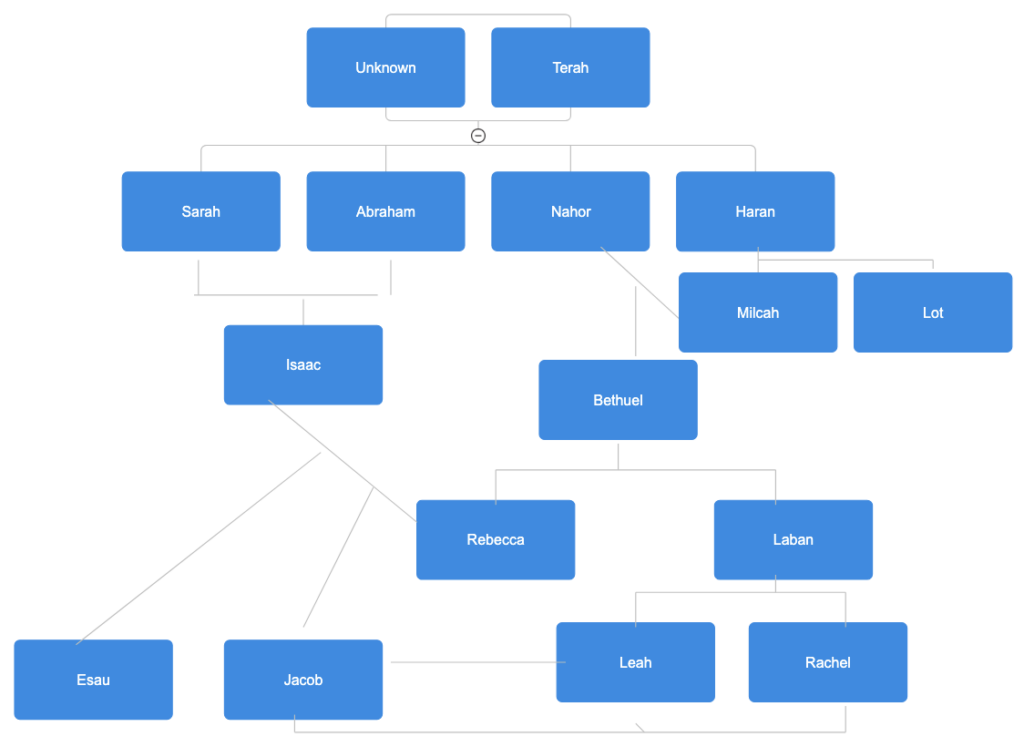
  • Abraham’s Test Explained

    When Abraham was given the command to sacrifice Isaac, he was just told where to do it. This devotional reading looks at the why – after he had successfully completed the mission.

    Nuggets

    • Because Abraham showed his obedience to do whatever Jehovah asked of him, Jehovah did not require the sacrifice of Isaac.
    • The purpose of the test was to determine if Abraham feared Jehovah.
    • Abraham’s prediction that Jehovah would provide a lamb for sacrifice was correct.
    • The angel of the Lord spoke to Abraham and stopped the sacrifice.
    • Jehovah swore by Himself as that would be a binding oath.
    • Jehovah repeated and clarified some of the covenant blessings.
    • Abraham. Isaac, and the servants (and the donkey) returned home.
    abrahams-test-explained

    Jehovah always rewards faith and obedience. When Abraham passed his test, he was rewarded.

    Jehovah always rewards faith and obedience. We, like Abraham, have to walk toward trials with an attitude of worship.

    Let’s see how that turned out for Abraham.

    Programming note: This devotion ran long, so I cut it in half. Check back next time to get the connections and the application.

    Let’s Put It into Context

    To read devotions in the Creating Everything theme, click the button below.

    Devotions in the Abraham the Patriarch series

     Isaac Saved

    “At that moment the angel of the Lord called to him from heaven, ‘Abraham! Abraham!’ ‘Yes,’ Abraham replied. ‘Here I am!’ ‘Don’t lay a hand on the boy!’ the angel said. ‘Do not hurt him in any way, for now I know that you truly fear God. You have not withheld from me even your son, your only son’” (Gen. 22: 11-12 NLT)

    Don’t Lay a Hand on the Boy

    Because Abraham showed his obedience to do whatever Jehovah asked of him, Jehovah did not require the sacrifice of Isaac.

    Abraham got the order for the sacrifice and left the next morning to the mountain to which God led him. He never wavered.

    Abraham built the altar and placed Isaac upon it. Hie lifted his hand with the knife in it to kill his beloved son.

    Abbadie nailed Abraham’s dilemma. He wrote,

    “Two Abrahams combated one against the other; but divine and heavenly principles raise him far above those which are carnal and [terrestrial]. Grace triumphs over nature. Abraham makes a double sacrifice to God; an exterior sacrifice upon the mountain, and an interior sacrifice in the secret of his soul. In the one he takes his son and binds him; in the other he immolates to God the sentiments of his soul.”

    Resource

    • The issue wasn’t that Abraham’s two natures battled within him for supremacy. That battle is going to go on inside everyone.
    • Godly principles are higher than secular.
    • Grace rewards obedience – this time for true total submission to His Will.

    The angel of the Lord (Malach Hashem) took then to be the time to step in. He said, “Wait a minute. That really isn’t what Jehovah wants.”

    Isaac was obedient to his father Abraham and his Father Jehovah. When he found out who the sacrifice was going to be, He could have rebelled against his father.

    It wouldn’t have taken much. Remember, if Isaac was 15 to 30 years old, that made this 1845 to 1830. Abraham was anywhere from 115 to 130 years old.

    I’m sure Abraham had some strength left, but he may not have been a match against a young man.

    Isaac’s obedience as well as Abraham’s obedience was rewarded. Isaac got to keep his life.

    I Know that You Truly Fear God

    The purpose of the test was to determine if Abraham feared Jehovah.

    The fear of the Lord means is an Old Testament term. We are used to hearing it said as godliness.

    No, fear doesn’t mean terror. It means aw and reverence.

    How do we show that?

    • We respect Jehovah’s authority and holiness.
    • We recognize His power and justice in the world.
    • We approach Him in humility and submission to His will and commandments.
    • We live lives of moral and ethical behavior.
    • We build a relationship with Jehovah because we love and trust Him.
    • “Fear of the LORD is the foundation of wisdom. Knowledge of the Holy One results in good judgment” (Prov. 9: 10 NLT).

    I have to think about what Maclaren said. He wrote, “Not meaning that he learned the heart by the conduct, but that on occasion of the conduct He breathes into the obedient heart that calm consciousness of its service as recognized and accepted by Him, which is the highest reward that his friend can know.”

    Resource

    What we do doesn’t necessarily show what is in our hearts. Why? “The human heart is the most deceitful of all things, and desperately wicked. Who really knows how bad it is?” (Jer. 17: 9 NLT).

    That is why being a good person means nothing to Jehovah.

    Look again at what Maclaren said. In Elaine-speak — when we obey, Jehovah grants a peaceful assurance that our service is known and accepted by Him.

    This was the greatest reward for His friend Abraham. It is also our reward when we obey.

    Because Abraham obeyed and because the test found his heart to be right, he was rewarded with a more profound understanding of Jehovah’s teachings.

    Sacrifice Provided

    “Then Abraham looked up and saw a ram caught by its horns in a thicket. So he took the ram and sacrificed it as a burnt offering in place of his son. Abraham named the place Yahweh-Yireh (which means ‘the Lord will provide’). To this day, people still use that name as a proverb: ‘On the mountain of the Lord it will be provided’” (Gen. 22: 13-14 NLT)

    Abraham’s prediction that Jehovah would provide a lamb for sacrifice was correct.

    Remember, after they left the servants, Abraham told Isaac that Jehovah would provide the sacrifice (Gen. 22: 8). He had been confident that — no matter how Jehovah pulled it off — He would get it done.

    Look what Spurgeon said about this. He wrote, “True faith not only speaks the language of prophecy, but, when she sees her prophecy fulfilled, faith is always delighted to raise memorials to the God of truth.”

    Resource

    Abraham’s prediction that Jehovah would provide a lamb for sacrifice was correct.

    Jehovah is always going to provide what we need. That is a fact. It includes what we need for the body as well as spiritual needs.

    • Manna
    • Clothes
    • Protection in danger.
    • Relief in trouble.

    Jehovah will provide for our spiritual needs.

    • Counsel.
    • Instructions.
    • Strength.
    • A plan for our lives.
    • Love
    • Forgiveness
    • Salvation
    • Peace
    • Protection is temptation.

    At first I wondered about adding both counsel and instructions. But we need both.

    Instructions are the do’s and don’ts of God’s Word. Counsel is the Holy Spirit nudging us when we get in situations where we have to make schoice.

    What Jehovah provides isn’t going to be in opposition to His law and commandments. He is never going to do something halfway or leave it undone.

    Jehovah is going to do it right the first time — at the right time.

    We sometimes question how Abraham couldn’t see the ram stuck in the bushes until he was told it was the sacrifice. Well, God may have made it appear then.

     Or He clouded Abraham and Isaac’s eyes. We know God can do that.

    • “But God kept them from recognizing him” (Lk. 24: 16 NLT).
    • “And Elisha prayed, ‘Open his eyes, Lord, so that he may see.’ Then the Lord opened the servant’s eyes, and he looked and saw the hills full of horses and chariots of fire all around Elisha” (Lk. 24: 31 NLT).

    Rees reminded us that Jehovah provided much more than a ram. He provided the faith to ace the testing. I’d say He provided the grace to handle it as he did.

    Resource

    We know that Jehovah will wisely provide for us. Since He knows yesterday, today, and tomorrow, He knows much better than we do what we need.

    We also know that Jehovah is faithful to us. “God will make this happen, for he who calls you is faithful” (I Thess. 5: 24 NLT).

    We should be thankful when Jehovah does provide for us. He is revealing Himself to us. We should also be thankful when He removes the pain of the testing by offering the sacrifice Himself.

    Swearing by Himself

    “Then the angel of the Lord called again to Abraham from heaven. ‘This is what the Lord says: Because you have obeyed me and have not withheld even your son, your only son, I swear by my own name that I will certainly bless you. I will multiply your descendants beyond number, like the stars in the sky and the sand on the seashore. Your descendants will conquer the cities of their enemies. And through your descendants all the nations of the earth will be blessed — all because you have obeyed me’” (Gen. 22: 15-18 NLT)

    By Myself

    Jehovah swore by Himself as that would be a binding oath.

    The angel was the one talking, but he was probably saying God’s words verbatim. These were important words.

    Jehovah had given Abraham a lot of promises in their covenant. This was the first time He swore on Himself.

    Let’s look at this two ways. Jehovah swore by His name and He swore by Himself.

    Jehovah swore by His name. This made the promise absolute and unchangeable. He was basing it on the fact there is no higher authority to which to appeal.

    By swearing by His name, Jehovah was swearing on Himself. He did this to show Abraham could have unwavering confidence in what He promised. But what does that mean?

    • He swore on His character.
    • He swore on His power.
    • He swore on His tenderness.
    • He swore on His sympathy.
    • He swore on His authority.

    Resource

    That shows how important the promise was. It was so absolute that He would keep the promise that He could only use His name as the guarantee.

    Well, God is Truth. There is no power higher than Him.

    God didn’t need to swear anything because He cannot lie, and He cannot change His mind.

    The gut-wrenching testing becomes a spiritual treasure.

    Blessings in the Obedience

    Jehovah repeated and clarified some of the covenant blessings.

    Because Abraham was obedient, God would bless him. His descendants would rival the number of stars in the sky — an uncountable number.

    God didn’t say that all people on earth would be counted among that number. He did say that all nations would be blessed because of his obedience.

    Murphy offered a great reminder. All were going to be blessed through Abraham — even though he wasn’t the father of mankind. We know Adam was. Really, Noah was, too.

    This was more than a familial tie. But Murphy argued that he would have ties to all families.

    Resource

    We know that blessing came through Yeshua.

    Heading Home

    “Then they returned to the servants and traveled back to Beersheba, where Abraham continued to live” (Gen. 22: 19 NLT)

    Abraham. Isaac, and the servants (and the donkey) returned home.

    Abraham was able to return home knowing he had the approval of his Sovereign God. Isaac was able to return home. The servants were probably none the wiser.

    Edwards noted that Abraham’s faith matured on Mount Moriah. Hmmm.

    Well, I was thinking we didn’t mature until the end of our lives. So, let’s go to our edited timeline.

    1960 BC — Abram was born (Gen. 25: 7)
    1890 BC — Terah, Abram, Sarai, and Lot moved from Ur to Haran (Gen. 11: 31)
    1885 BC — Abram called at age 75 (Gen. 12: 1-3)
    c. 1880 – 1875 BC — Abram defeated King Chedorkiamer to rescue Lot (Gen. 14)
    1874 BC — Ishmael was born (Gen. 16: 15)
    1875 BC — God promised an 85-year-old Abram that he will have a son (Gen. 15)
    1861 BC — God reestablished His covenant with Abram; and Abraham, Ishmael, and males were circumcised (Gen. 17)
    1861 BC — Sodom and Gomorrah were destroyed one year before the birth of Isaac (Gen. 18 – 19).
    1860 BC — Isaac was born (Gen. 21: 2)
    c. 1858 BC — Isaac was weaned (Gen. 21: 8)
    c. 1845 – 1830 BC — God tested Abraham, at the age of 115- 130, by commanding he sacrifice his only son Isaac (Gen. 22).
    1785 BC — Abraham died at the age of 175 (Gen. 25: 7 – 8).

    Based From

    Ummm. Abraham lived up to 60 years after the test. That is a long time to still be human.

    Just because we don’t hear a lot about Abraham’s day-to-day life doesn’t mean he got everything right every time.

    Edwards said something interesting. He wrote, “Circumcision of the heart, in the spirit, and not of the letter, was the expression of the deep truth that man is to reflect the Divine love by self-sacrifice.”

    Resource

    • Circumcision of the heart is where God changes our hearts.·
    • In the spirit would be the intended purpose, fairness, and underlying principles.
    • Of the letter means literally.

    Yes, we want circumcision of the heart. That is what sanctifies us.

    But we have to watch when we try to put things into a spirit/letter perspective. We want to make sure we follow the divine, not worldview, interpretation.

    In other words, we cannot rewrite God’s Word because the literal doesn’t mesh with the worldview. The worldview is always wrong when it is opposite to the divine.

    We might think spirit means Holy Spirit, but it doesn’t. The purpose, fairness, and principles need to be Jehovah’s, not the worldview’s.

    Father God. Thank You for examples of those who obey Your commands. It helps us see that we can obey when we someone who was given a horrible task to complete – and was rewarded for following You. Help us to do the same. Amen.

    If you don’t understand something and would like further clarification, please contact me.

    If you have not signed up for the email providing the link to the devotions and the newsletter, do so below.

    If God has used this devotion to speak with you, consider sharing it on social media.

  • Abraham Completed Jehovah’s Test

    Abraham and Isaac arrived at Moriah to worship Jehovah through sacrificing Isaac. This devotional reading look at whether Abraham could come through on the testing or not.

    Nuggets

    • Abraham and Isaac made it to where they could see the mountain in the distance.
    • Abraham and Isaac journey on without the servants.
    • Abraham and Isaac carried what they needed to make the sacrifice.
    • The first thing that Abraham did when they arrived at the place for the sacrifice was to build an altar.
    abraham-completed-jehovahs-test

    Abraham and Isaac arrived at Moriah to worship Jehovah through sacrificing Isaac. That was the gut-wrenching test Jehovah was putting Abraham through.

    Let see if Abraham passed or failed.

    Let’s Put It into Context

    To read devotions in the Creating Everything theme, click the button below.

    Devotions in the Abraham the Patriarch series

    Journey to the Mountain

    “On the third day of their journey, Abraham looked up and saw the place in the distance. ‘Stay here with the donkey,’ Abraham told the servants. ‘The boy and I will travel a little farther. We will worship there, and then we will come right back’” (Gen. 22: 4-5 NLT)

    On the Third Day

    Abraham and Isaac made it to where they could see the mountain in the distance.

    We have to clear up something. The New Living Translation says, “On the third day of their journey, Abraham looked up and saw the place in the distance” (Gen. 22: 4 NLT).

    If we go back to the Hebrew, it says, “Then on Yom HaShlishi Avraham lifted up his eyes, and saw the place afar off. [1C 15:3]” (Gen. 22: 7 OJB).

    Yom HaShlishi does mean the third day. But it means the third day of the week — our Tuesday – not the number of days in the journey.

    Only Shabbat is the only day of the week given a name. Sunday is the first day, Monday is the second day, and Tuesday is the third day.

    In other words, we don’t know how long the journey took.

    All we know is that Abraham took the journey to worship Jehovah. “… We will worship there, and then we will come right back” (Gen. 22: 5 NLT).

    Stay Here with the Donkey

    Abraham and Isaac journey on without the servants.

    Abraham asked his servants to stay back, partially because he didn’t want them to try and stop him. He probably didn’t want any of the three to know yet who the sacrifice was going to be.

    But I can also see this as being a very private act of worship for Jehovah’s glory. It was a between Abraham and his God.

    I think another reason is that Abraham wanted that time alone with Isaac.

    Lannon talked about this was the only time in which we read Abraham traveled with servants. Maybe, but it wasn’t the only time he traveled with servants.

    When he went to Egypt and Gerar, Abraham moved his whole household with him – flocks and all. That includes servants. They didn’t need to be singled out.

    Let’s look at the Hebrew for a second on verse 5. “And Avraham said unto his servants, Abide ye here with the donkey; and I and the young man will go over there and nishtachaveh (we will worship) and we will come back again to you” (Gen. 22: 5 OJB emphasis added).

    Hmmm. Young man or boy? Kennedy thought Isaac was a man. Lannon said that Isaac could have been up to 30 years old based on the word Na’ar used (1830 BC). Gray thought he was 25 (1835 BC). The Old Testament Timeline we’ve been using says it was 1845 BC, making him 15.

    Resources

    A teenager isn’t necessarily a young man but a youth. To me that is more a young adult.

    I don’t know. Fifteen seems too young to me and thirty too old to me.

    Abraham was convinced that it would turn out okay. “… We will worship there, and then we will come right back’” (Gen. 22: 4-5 NLT).

    Heading toward the Altar

    “So Abraham placed the wood for the burnt offering on Isaac’s shoulders, while he himself carried the fire and the knife. As the two of them walked on together, Isaac turned to Abraham and said, ‘Father?’ ‘Yes, my son?’ Abraham replied. ‘We have the fire and the wood,’ the boy said, ‘but where is the sheep for the burnt offering?’ ‘God will provide a sheep for the burnt offering, my son,’ Abraham answered. And they both walked on together” (Gen. 22: 6-8 NLT)

    Abraham and Isaac carried what they needed to make the sacrifice.

    The servants weren’t the only thing left behind. The donkey was, too. Abraham and Isaac went on alone.

    Isaac carried the wood, and Abraham carried the fire and knife. But that made something very obvious to Isaac.

    Where was the animal to be sacrificed?

    Did Abraham not answer Isaac’s question fully because he didn’t want to scare the boy? Or was he wanting to help grow Isaac’s faith? Probably a bit of both.

    Because of Abraham’s strong faith, he knew that God would provide a sacrifice, or His promise would be null and void.

    What has always amazed me is how calm on the outside Abraham was. His thoughts had to be racing because Satan had to be working on him.

    What would have been our first response? Far too many, I am afraid, would have been railing against Jehovah. We would scream at Him for breaking His covenant promises. We would be furious for the anguish the testing was causing.

    Our response would be wrong.

    Remember, this was “Some time later …” (Gen. 22: 1 NLT) after Abraham had sent Ishmael away. Talk about insult to injury.

    Not one time did Abraham so much as even murmur against Jehovah. He always said, “Sir, yes Sir.”

    How was Abraham able to keep his conduct in line? Fuller told us how. He wrote, “We have here a surprising instance of the efficacy of Divine grace, in rendering every power, passion, and thought of the mind subordinate to the will of God.”

    Resource

    Abraham’s obedience — and his faith — never wavered because of grace.

    The Sacrifice of Isaac

    “When they arrived at the place where God had told him to go, Abraham built an altar and arranged the wood on it. Then he tied his son, Isaac, and laid him on the altar on top of the wood. And Abraham picked up the knife to kill his son as a sacrifice” (Gen. 22: 9-10 NLT)

    Built an Altar

    The first thing that Abraham did when they arrived at the place for the sacrifice was to build an altar.

    Building altars was Abraham’s way to worship God. It wasn’t something novel for God to ask Abraham to make a sacrifice. In fact, Abraham had sacrificed enough that Isaac knew something was missing.

    It was a novel experience that God asked Abraham to sacrifice Isaac, the son for whom he had waited so long.

    Abraham was sure that God, Who had required the ultimate sacrifice, would provide it.

    Picked Up the Knife

    Obedience isn’t complete without an inward transformation.

    I bet there were tears running down his face as he bound Isaac. He had to be feeling a variety of thoughts.

    The faith shown was that Abraham believed — even if he had to go through with the sacrifice — Jehovah was Sovereign God above all. The covenant promise would be kept in some way.

    Abraham didn’t have to understand how that would play out. He just had to believe it would.

    But Abraham also had to be willing to go the entire way if it didn’t play out the way he thought it should.

    Robertson made a great point. We like to think that Abraham knew, even if he had to go through with the sacrifice, Jehovah would raise his Isaac back to life and return him to his loving father.

    Wrong. Robertson said, “If you make a sacrifice, expecting that God will return you your Isaac, that is a sham sacrifice, not a real one. Therefore, if you make sacrifices, let them be real.”

    Resource

    If we worship Jehovah with an expectation of some blessing, it really isn’t the kind of worship He requires.

    It isn’t we worship because of. It is we worship because.

    If we worship because of receiving something in return, that isn’t true worship. We must worship Jehovah because He is Sovereign God.

    Some of us are probably asking why Jehovah had to let it go this far. That is easy.

    It didn’t mean anything until Abraham showed Jehovah that he would go all the way. Saying he would and not meaning anything proved nothing. It was just a lie.

    Abraham had to pick up the knife. He more than likely had to lift it over his head.

    I loved how Maclaren explained that. He wrote, “The outward deed is only the coarse medium through which it is made visible for men. God looks on purpose as performance.”

    Resource

    Performance equals action. But not just any action — it has to be what Jehovah requires and performed through faith.

    If we are good at the second greatest commandment — loving others as ourselves (Mk. 12: 31) — but do not surrender ourselves to the first greatest commandment — love God with heart, soul, mind, and strength (Mk. 12: 30) — we haven’t performed either to Jehovah’s satisfaction.

    Kill His Son for a Sacrifice

    The purpose of the burnt offering was not to wipe clean the person’s sin but is a gift of ransom to alter Jehovah’s attuned toward that person.

    We don’t know what Abraham’s understanding of the coming Messiah was. This is a perfect example of what was coming.

    Bradford explained how. He wrote,

    “The elements are that Isaac was to be killed and burned up on an altar. And, we can see from the story that this also was not about some sin or another that either Isaac or Abraham had committed. So what was it about? As a burnt offering, an ‘olah, it was about total surrender and obedience to God on the part of the worshipper…..Abraham. It also demonstrated the principle of substitution when Isaac was replaced by a Ram that had been caught by his horns in some nearby thorn bushes. And the sacrifice displayed the idea of ransom…… that Isaac was to be a price paid, voluntarily, in order that mankind could be at peace with God.”

    Resource

    When Jehovah gave the Levitical Sacrificial System to Moses, he would have understood the concepts behind it better because of this sacrifice. We better understand the concept of Yeshua being the sacrifice because of the substitution of the ram for Isaac.

    Making the Connections #1

    When we started talking about Abraham in Genesis 12, we talked about how Abraham’s Sanctification Road being built on bricks formed by separations.

    • Left his country and kin (Gen. 11: 31).
    • Father died (Gen. 11: 32).
    • Left Haran (Gen. 12: 1)
    • Left Canaan for Egypt (Gen. 12: 10).
    • Left Egypt (Gen. 12:  20).
    • Separated from Lot (Gen. 13: 13).
    • Separated from Ishmael (Gen. 21:  14).
    • Almost separated from Isaac (Gen. 22: 10).
    • Separated from Sarah (Gen. 23:  1-2).
    • Separated from worldly possessions (Gen. 25: 5).
    • Separated from life (Gen. 25:  7-8).

    Because Abraham was marked for a great purpose, he needed to be separated from worldly things.  That usually means being separated from some people in our past.

    Making the Connections #2

    Many of us probably have thought, “Oh, no. I couldn’t do that.” Maybe. Maybe not.

    Taylor had an interesting take. He wrote,

    “The significance of the transaction is rooted in the fact that Abraham was not a mere private individual, but in a very special sense a representative man. … I would say that the whole story was meant to reveal the universal law to this effect, that what is born of God must be consecrated to God; that the children of promise are at the same time the children of consecration, and so there is no more difficulty in the command to sacrifice Isaac than there is in the injunction to cast out Ishmael.”

    Resource

    But look what Taylor was saying.

    • What is Jehovah’s is Jehovah’s — He can do what He wants with it.
    • This is even true with what He has promised. It isn’t that He changed His mind. It is about Him giving us what we need to know when we need to know it.
    • We aren’t told that Abraham ever saw Ishmael again. Sending him away would have been sending him to his death even if it wasn’t physical. He may have just been dead to Abraham.

    Making the Connections #3

    Taylor made a great observation. He wrote, “Tribulation by itself will not improve our characters.”

    Resource

    The point isn’t that we go through the hard times. The point is we go through it depending on Jehovah.

    Just like Abraham, we don’t need to know the end plan — or even the end destination.

    We only need to have a heart-knowledge of the Sovereign God calling us to walk with Him through the testing.

    Making the Connections #4

    Yeah, this was a really hard testing. One thing we tend to forget is that Abraham had a lot on the line – either way he went.

    Through it all, Jehovah was right there. Like we said, He wasn’t going for the sin in Abraham’s life. He was going for the faith.

    Of course, Jehovah is going to watch over us and help us with this trial.

    Making the Connections #5

    Okay. My mind is a little mushy tonight. I have to process Rowsell’s statement. He wrote, “In every age and in every station faith is expressed in simple dutifulness, and this faith of Abraham is, indeed, of the mind of Christ.”

    Resource

    In Elaine-speak, wherever we are at on our Sanctification Road, we just have to obey. Abraham’s faith allowed him to be willing to do the hard thing, what he deep down really didn’t want to do.

    But Abraham did it anyway.

    How Do We Apply This?

    • Walk with Sovereign God.
    • Do everything that He asks of us the way He asks of us and the first time He asks.

    Father God. Thank You for the example of Abraham completing the hard thing You asked him to do. Help us to obey You perfectly the first time. Amen.

    If you don’t understand something and would like further clarification, please contact me.

    If you have not signed up for the email providing the link to the devotions and the newsletter, do so below.

    If God has used this devotion to speak with you, consider sharing it on social media.

  • Abraham’s Faith Tested

    Jehovah chose to test Abraham to see how strong his faith was. This devotional reading looks at what that horrible test was.

    Nuggets

    • Jehovah came to Abraham just as He usually did.
    • When Jehovah said, “Hey, Abraham!”, I bet Abraham was excited to talk to his Friend again.
    • Once again, God sent Abraham off without giving him a specific destination.
    abrahams-faith-tested

    Abraham had grown in faith because the promised son had arrived. The belief that Jehovah would provide him and Sarah a son through which that great nation and many nations would come had been rewarded.

    Beyond a shadow of a doubt, Abraham knew God would keep their covenant.

    In the 25+ years since Jehovah called Abraham, Abraham had learned much — surrender and self-denial.

    But just when things were going so well, BAM! God called a – no, not a pop quiz. It was more in line with a pop final exam.

    Let’s Put It into Context

    To read devotions in the Creating Everything theme, click the button below.

    Devotions in the Abraham the Patriarch series

    Abraham’s Faith Tested

    “Some time later, God tested Abraham’s faith. ‘Abraham!’ God called. ‘Yes,’ he replied. ‘Here I am’” (Gen. 22: 1 NLT)

    Jehovah Tested Abraham

    Jehovah came to Abraham just as He usually did.

    Jehovah came to Abraham. It wasn’t a personal visit like Genesis 18. It wasn’t a dream, as He came to Abimelech (Gen. 21).
    
This sounded like it was how Jehovah usually came to Abraham. It was a voice in his spirit.

    Abraham was not told that this was a test. He had no clue what was happening.

    Most of all, Abraham didn’t know why it was happening.

    Make no mistake. Sovereign God does not have to explain Himself to the likes of us.

    Get one thing straight. Jehovah tested Abraham. He did not tempt him to sin.

    Jehovah does test us to get us to prove our faith.

    • “No one undergoing a trial should say, ‘I am being tempted by God,’ since God is not tempted by evil, and he himself doesn’t tempt anyone” (Jas. 1: 13 CSB).
    • “Fire tests the purity of silver and gold, but the LORD tests the heart” (Prov. 17: 3 NLT).

    God was not looking for the evil in Abraham — unless it is to eliminate it from his life. He was looking for the good.

    Do we understand the purpose here? Jehovah knew Abraham had faith. He was trying to figure out how strong that faith was.

    Those who have the strong faith are willing to obey understands Jehovah’s commands better, according to Emmons.

    Resource

    Just as an aside, this is the last texting of Abraham that we know of. Sarah died in the next chapter (which while some consider a trial isn’t a testing). Chapter 24 was securing a wife for Isaac. Abraham died in Genesis 25.

    We should expect testing — and trials — also. “These trials will show that your faith is genuine. It is being tested as fire tests and purifies gold — though your faith is far more precious than mere gold. So when your faith remains strong through many trials, it will bring you much praise and glory and honor on the day when Jesus Christ is revealed to the whole world” (I Pet. 1: 7 NLT).

    When we take/took tests in school, wasn’t it partly so we knew what we didn’t know? Yes, teachers want to know what we know, but the flip side is we find out what we don’t know. That way we can work on filling those holes in our knowledge.

    We do wellness checks so we can determine that physically we are well. We are also to do periodic checks on our faith.

    “Examine yourselves to see if your faith is genuine. Test yourselves. Surely you know that Jesus Christ is among you; if not, you have failed the test of genuine faith” (NLT). We have to judge ourselves by God’s standards.

    • Is our faith as deep as it could be?
    • If not, in what areas are we lacking?
    • What is God calling us to do to address that?
    • To where is He calling us?

    Here I Am

    When Jehovah said, “Hey, Abraham!”, I bet Abraham was excited to talk to his Friend again.

    “… ‘Here I am’” (Gen. 22: 1 NLT) implies both obedience on Abraham’s part and provision on Jehovah’s part. Abraham knew He could depend on Jehovah to carry him through whatever of which He was asking him.

    Jehovah came with, as Emmons said, the most extraordinary command that we find in God’s Word. But Abraham didn’t know that yet.

    Resource

    Abraham’s response showed that he was ready to obey Jehovah in whatever was asked of him.

    Your Only Son

    ‘Take your son, your only son — yes, Isaac, whom you love so much — and go to the land of Moriah. Go and sacrifice him as a burnt offering on one of the mountains, which I will show you’” (Gen. 22: 2 NLT)

    The testing Jehovah gives us usually uses that which we love most and highly value.

    Jehovah came with, as Emmons said, the most extraordinary command that we find in God’s Word. Abraham was to take his beloved son Isaac, the covenant child, and sacrifice him on an altar to worship Sovereign God.

    Resource

    Talk about having the rug pulled out from under his feet. Abraham would not have seen this one coming.

    Ooo, baby. Don’t we get all hot and bothered when we believe Jehovah promised something one way; and all the sudden, He does just the exact opposite? Don’t we forget that He knows best?

    Abraham would have never thought Jehovah would ask him to sacrifice his son. The whole covenant was contingent on Isaac’s birth and having kids of his own.

    Abraham would have been shocked down to the bottom of his sandals.

    What Abraham was told was that he was to not only kill Isaac but also burn him on an altar. It wasn’t a stick and done. It was a slay, dismember, and burn process.

    This command seems so out of character for Jehovah to ask that. Because child sacrifice was common in many countries at the time – even Abraham’s – He has several times specifically stated that children were not to be sacrificed.

    • “Do not permit any of your children to be offered as a sacrifice to Molech, for you must not bring shame on the name of your God. I am the Lord” (Lev. 18: 21 NLT).
    • “You must not worship the Lord your God the way the other nations worship their gods, for they perform for their gods every detestable act that the Lord hates. They even burn their sons and daughters as sacrifices to their gods” )Deut. 12: 31 NLT).
    • “They have built pagan shrines at Topheth, the garbage dump in the valley of Ben-Hinnom, and there they burn their sons and daughters in the fire. I have never commanded such a horrible deed; it never even crossed my mind to command such a thing!” (Jer. 7: 31 NLT).

    What happened to “thou shalt not kill” period?

    Could a father legally do this? Well, back in Abraham’s day, yes. The father had complete rule over his son.

    Rowsell made a good point. Abraham would have seen a lot of child sacrifices back in Ur. I bet it broke his heart every time he saw a parent kill his child when that was what he himself wanted the most.

    Resource

    Emmons thought Abraham was only asked to offer Isaac as a sacrifice, not kill him. Robertson agreed as, in the end, the sacrifice was not demanded.

    Resource

    That isn’t what this version says. Go and sacrifice him as a burnt offering on one of the mountains, which I will show you’” (Gen. 22: 2 NLT).

    So, let’s go back to the Hebrew. “… offer him there for a burnt offering upon one of the mountains …’” (Gen. 22: 2 OJB).

    Not sacrifice. Offer.

    But if we look at how to perform a burnt offering, we see the sacrifice is killed first.

    • “Lay your hand on the animal’s head, and the Lord will accept its death in your place to purify you, making you right with him. Then slaughter the young bull in the Lord’s presence, and Aaron’s sons, the priests, will present the animal’s blood by splattering it against all sides of the altar that stands at the entrance to the Tabernacle” (Lev. 2: 4-5 NLT).
    • “The sons of Aaron the priest will build a wood fire on the altar” (Lev. 2: 7 NLT).
    • “… Then the priest will burn the entire sacrifice on the altar as a burnt offering. It is a special gift, a pleasing aroma to the Lord” (Gen. 2: 9 NLT).

    Before it was offered to God, the sacrifice was killed.

    Can we start a sacrifice and pull out before the smoke starts? Is it really a sacrifice then? Is it even an offering? No.

    Robertson argued that Jehovah did not and could not command that which was wrong. Therefore, He must have mean offer, not sacrifice.

    What I kind of do agree with is what Emmons said. Jehovah can require one time that which He has forbidden another. Otherwise, how can He test us?

    What better way of showing us what He doesn’t want by asking for it and stopping it?

    Kennedy was right. Jehovah wasn’t asking Abraham to love Isaac any less.

    Resource

    Abraham didn’t ask Jehovah to repeat the command or clarify it. He didn’t even demand evidence that it was coming from Him. He didn’t rail about not being left with a way to shimmy out of it.

    Abraham straight up obeyed. As Ness said, it was a man performing in obedience the command given to him by the Lawgiver.

    Resource

    Don’t we try to shimmy out of sacrifices? Oh, I don’t sing well, I’ll just leave that to the Praise Team.

    Don’t we try to cut corners in worship? I don’t like reading the Bible, and I especially don’t like doing it every day. So, I’ll just worship on Sunday.

    Don’t we just plain do it our way instead of His way?

    Let’s look at this another way. Jehovah told Abraham to take his son — the one he loved — and sacrifice him. Now, last chapter we were told that Abraham was told by Him to send Ishmael away. Even though Jehovah had made it clear that he wasn’t the covenant son, Abraham might have kept in the back of his mind that Ishmael was a spare in care something happened to Isaac.

    Why would God ask Abraham to sacrifice the son that he waited for so long? Just because of that?

    Think about it. Abraham didn’t have a bunch of sons. He had two.

    I don’t think Jehovah was saying Abraham loved Isaac more than Him. Although, Tipple thought Abraham had done just that.

    Resource

    If Jehovah was doing this as punishment for the sin of putting something before Him (Ex. 20: 3), it wouldn’t be a testing. If Abraham had put Isaac before Jehovah, I would think that would have created a much bigger response than testing. God may even could have gone through with the sacrifice.

    Yes, it is sometimes easy to put something before Jehovah. We can’t put things – even family – above Sovereign God.

    Do we put more faith in the blessing than the God Who gave us the blessing? In other words, would Abram make Isaac his idol?

    What is our Isaac? What replaces Sovereign God as what/who we worship? What would we do if/when we are asked to lay down our Isaac? Would we still worship and be obedient to God as Abraham was?

    But we have to understand Jehovah can ask of us anything He wants. It is not our place to question. It is our place to obey.

    Why would Jehovah make Abraham go through all of this? He was giving a representation of Him and Yeshua.

    The First Step of Obedience

    “The next morning Abraham got up early. He saddled his donkey and took two of his servants with him, along with his son, Isaac. Then he chopped wood for a fire for a burnt offering and set out for the place God had told him about” (Gen. 22: 3 NLT)

    Once again, God sent Abraham off without giving him a specific destination.

    All Jehovah had given Abraham was the area but not the specific mountain. That didn’t slow Abraham down.

    Even though Jehovah asked what at first hearing Abraham would have recoiled from, he immediately made plans to fulfill the request.

    We aren’t told the time-of-day God gave the order. Abraham left early the next morning. He left at the first possible time.

    We aren’t told what he told Sarah — if anything. I don’t see him going to her and saying, “God told me to go make a sacrifice — and that sacrifice is Isaac. See you when I get back.”

    Abraham obviously didn’t tell Isaac.

    Gray thought Abraham didn’t tell anyone anything except they were going to worship. I go with that.

    Resource

    Whatever Abraham was feeling, he started the next morning. This is the best indication of his faith.

    We’ve talked about Abraham being disinterested before when he and Lot separated. Disinterestedness means a willingness to give up something for a greater good.

    This is the type of faith and obedience Abraham showed. He was willing to give up his beloved son’s life for whatever greater good Jehovah was working.

    It was smart to take wood with him because wood could be scarce around there.

    Tipple thought Abraham took a couple of days to stew about it, but he was wrong. “The next morning Abraham got up early …” (Gen. 22: 3 NLT emphasis added).

    Resource

    Part of me can see why Tipple thinks that. I’m sure it wasn’t like throwing a couple of clothes in the suitcase and going.

    But still with each step he took, Abraham’s mind was probably racing, and his heart was trying to sink.

    With all that, it doesn’t sound like Abraham let Isaac see his despair. He let him see his unwavering faith in a Sovereign God. He knew Jehovah would make clear to him exactly what He wanted him to do – without breaking the covenant they had together.

    Not once in the journey did he turn around or even get lost on purpose. Think about the self-control that took.

    Making the Connections #1

    How many times have we said that the bricks in our Sanctification Road are built through testing and trials? The process through which we become like Jehovah is sanctification.

    The trials come through pain and cost. Why do we think testing should be much easier?

    Jehovah gives these testing and trials to build His character.

    Look what Rowsell said. He wrote, “Each part of his character, like every part of his [armor], is put to the proof; and it is the proof that tests, after all, the strength both of resistance and [defense] and attack.”

    Resource

    It is going to take a long time to make the transformation. It will take the rest of our lives, in fact.

    Making the Connections #2

    Rowsell made another excellent point. Jehovah did not speak to Abraham in an audible voice. He talked with him in his soul.

    Resource

    I can see that. But I also know through personal experience that there are times it can seem like it is an audible voice when Jehovah speaks to us.

    Making the Connections #3

    You know, we think most about Abraham’s relationship with Isaac. Our hearts break for the dilemma in which Abraham found himself.

    Hughes discussed the possible effect that it had on Abraham’s relationship with Jehovah. He wrote, “It was a trial that put the severest possible strain upon him in the tenderest relations of his spiritual life.”

    Resource

    Did Abraham think following Jehovah for 25+ years were all for nothing? Did he think his life meant nothing?

    Satan may have stuck the thoughts in Abraham’s mind, but Abraham never once faltered. He set his course for Moriah and trusted His God to work it out.

    Abraham had faith in the God of the unseen, the unreasonable, and the unthinkable.

    Making the Connections #4

    Maclaren had an interesting take on the purpose of the testing. He asked, what if the purpose of the testing was to determine Abraham’s readiness to obey – even to something so huge and so out of left field as sacrificing his son?

    Resource

    That makes the most sense to me. No, Jehovah wasn’t really asking for Abraham to do it. He was asking if he was ready to do what He asked no matter what.

    How Do We Apply This?

    • Accept that our faith will be tested.
    • Put Jehovah first in all things, even family.
    • Understand that faith gives us strength.
    • Realize that confirmation of our faith will only be given through testing.
    • Discipline our faith to believe Jehovah has control of the unseen.
    • Be willing to lose ourselves to find ourselves in God.
    • Realize that we will never graduate from testings.
    • Sacrifice our will to Jehovah.
    • Let Jehovah determine the sacrifice, not us.

    Resources

    Father God. We know that testing is a part of our walk with You. We know that You will ask hard things of us. Help us to obey as Abraham did, and may our faith grow to the strength he had. Amen.

    If you don’t understand something and would like further clarification, please contact me.

    If you have not signed up for the email providing the link to the devotions and the newsletter, do so below.

    If God has used this devotion to speak with you, consider sharing it on social media.