Author: admin

  • How God Rules Evil

    We know God rules good now, and we know God will rule evil eventually. This daily devotional looks at how God rules evil now, too.

    Nuggets

    • God is at the top of the hierarchy and demands loyalty.
    • When witnessing, disciples need to present the gospel in the manner that leads to identification and acceptance.
    • Worldview people use their rage and vanity as common ties to oppose God.
    • God designed the Plan of Salvation, which utilized a violent death to atone for our sins.

    I am going to pull something out of the drafts folder for this devotion. I have a doctor’s appointment tomorrow where I get the results of the MRI, so I plan on doing a music day then. I didn’t want to start something big and interrupt it.

    Depending on the news, I may do another music day or the next installment in the Sunday Morning Bible Study series. Then we’ll get back to the Transforming for Perfection series.

    For this devotion, we are looking at a piece of Clarkson’s sermon entitled The Lord Rules Over All. The section that caught my eye was how God even now rules evil. Clarkson wrote:

    “He rules and orders not only that which is good, but that which is evil and sinful (Psalm118:12; Acts 14:19).(1) He limits and bounds it, so that it proceeds not so far as Satan and the depraved will of man would have if.(2) He overrules it to good ends, and disposes it to excellent purposes (Acts 4:27, 28; Acts 2:23).”

    Resource

    As with all devotions that are a foray into what someone else meant, it may be easily discernible, or it may not be. They are interesting verses. I am not sure I would have chosen all of them, but ….

    Let’s dig in and see what the verses tell us. I am just going to do bullets here.

    God Rules Good and Evil

    “They surrounded me like bees; they were extinguished like a fire among thorns; in the name of the Lord I destroyed them” (Ps. 118: 12 CSB)

    God is at the top of the hierarchy and demands loyalty.

    • Bees generally just swarm when they feel threatened.
    • Bees are skillful in making their homes.
    • Bees are industrious, having a hierarchical structure to facilitate the work.

    Resource

    • Even though there was a hierarchy, there was a loyalty to the queen bee.
    • Here is an attachment to the hive.

    Resource

    We Need to Believe in the Gospel

    “In Iconium they entered the Jewish synagogue, as usual, and spoke in such a way that a great number of both Jews and Greeks believed” (Ac. 14: 1 CSB)

    When witnessing, disciples need to present the gospel in the manner that leads to identification and acceptance.

    • Iconium was a major city in Asia Minor close to Ephesus, Tarsus, and Antioch.

    Resource

    • Thomas wrote, “The preaching that ends in enlightened practical faith is that which Christ ordained, and what the world wants.”

    Resource

    • The missionaries were coming from a difficult reception in Antioch. Instead of throwing in the towel, they expanded their mission. Hazard wrote, “Though they had turned to the Gentiles, they had not turned away from the Jews.”
    • The Word was presented in a way that people from diverse backgrounds could all identify their need for the Savior.

    Resource

    • The gospel is designed to place faith and repentance in mankind.

    Resource

    • We need to taylor the presentation of the gospel to where it will produce the most results. Hanna wrote, “He evidently did not disregard the character of his audience, the kind of evidence he should produce, and the manner of expressing his thoughts, any more than he showed carelessness as to his subject, which was always ‘Christ, and Him crucified.’ Increase depends more upon the good seed and soil, and warm rains and sunshine, than upon the sower, yet the skilful (sic) sower is the successful husbandman. So in the economy of grace the teacher and his methods have a prominent place in the production of results. To the teacher the responsibility of speaking rightly is as great as the responsibility of trusting supremely.”

    Resource

    Worldview People Band Together Against God

    “For, in fact, in this city both Herod and Pontius Pilate, with the Gentiles and the people of Israel, assembled together against your holy servant Jesus, whom you anointed, to do whatever your hand and your will had predestined to take place” (Ac. 4: 27-28 CSB)

    Worldview people use their rage and vanity as common ties to oppose God.

    • Thomas described rage and vanity as emotions exhibited by enemies of Christ.
    • It is not uncommon for enemies of Christ to band together.

    Resource

    • While Herod and Pilate worked against Jesus, Denton reminded us that, “in their blindness and sinfulness they did just so much and no more than God had determined to be done.”
    • Salvation comes to us because of God’s mercy.

    Resource

    God’s Plan of Salvation

    “Though he was delivered up according to God’s determined plan and foreknowledge, you used lawless people to nail him to a cross and kill him” (Ac. 2: 23 CSB)

    God designed the Plan of Salvation, which utilized a violent death to atone for our sins.

    • Jesus voluntarily went along with the Plan of Salvation because He knew that was the only way in which our sins would have atonement.
    • In order for His sacrifice to be acceptable to God, Flavel said that Jesus’ life must be violently taken from Him.
    • This type of death fulfilled the requirement of being lifted up to an altar.

    Resource

    • South wrote, “To restore life is only the prerogative of Him who gives it. Physic may repair in piece of nature, but not create it. Neither is it in the power of a spirit or demon to inspire a new life; for it is a creation, and to create is the incommunicable prerogative of a power infinite and unlimited.”
    • Only God could raise Jesus from the dead.
    • South wrote, “The hypostatical union of Christ’s human nature to His Divine rendered a perpetual duration under death absolutely impossible. For how could that which was united to the great source and principle of life be finally prevailed over by death, and pass into an estate of perpetual darkness and oblivion?” I take that to mean that, because of Jesus’ 100% divine nature, He would not have been able to stay dead.
    • Part of Jesus’ divine nature is that He does not change. He is eternal.

    Resource

    • Gladden contended the victory over the grave was a moral victory as love conquered death.
    • Gladden wrote, “The expectation of future existence in the abstract may be more or less shadowy; but the expectation that virtuous life will continue rests on the very foundation of our moral nature.”

    Resource

    HowGodRulesEvilPin

    Making the Connections

    God rules both the good and evil because He is at the top of the hierarchy and demands loyalty. He demands this loyalty because of all of His attributes: eternal, unchanging, yada, yada, yada. He deserves to be on top.

    To read a devotion in the Finding Our Center series, click on the button below

    Worldview people use their rage and vanity as common ties to oppose God. They would love to oppose God and win. They aren’t going to in the end.

    God does limit them now, because like we said, He is in control now. That makes Satan livid!

    When God calls us to salvation, He gives us the faith to believe in Him. It is a moral victory over sin.

    How Do We Apply This?

    When witnessing, disciples need to present the gospel in the manner that leads to identification and acceptance. We have to take into consideration their backgrounds and what their needs are.

    God is Sovereign God. He was yesterday. He is today. He will be tomorrow.

    Father God. Lord, You rule over good and evil. We put our faith and trust in You. Amen.

    What do you think?

    Leave me a comment below (about this or anything else) or head over to my Facebook group for some interactive discussion.

    If you don’t understand something and would like further clarification, please contact me.

    If you have not signed up for the email daily or weekly providing the link to the devotions and the newsletter, do so below.

    If God has used this devotion to speak with you, consider sharing it on social media.

  • What’s the Use?

    Solomon asked some hard questions about the meaning and purpose of life. This daily devotional looks at his belief that everything was futile.

    Nuggets

    • Solomon, for all his wisdom, determined that everything was futile.
    • We need to find God’s purpose for our lives.
    • Being a disciple does not allow us freedom to sin.

    Devotions in The Meaning of Life series

    What’s the Use?
    What Time Is It?
    Why Listen?
    Where Is the Balance?
    Facing Death
    What Is Life About?

    Let’s Put It into Context

    “The fear of the Lord is the beginning of knowledge; fools despise wisdom and discipline” (Prov. 1: 7 CSB)

    “For in much wisdom is much vexation, and he who increases knowledge increases sorrow” (Ecc. 1: 18 CSB)

    What happened! King Solomon, David’s son, wrote both Proverbs and Ecclesiastes. He’s done a complete 180 degree turn in the time between.

    This is the guy who asked God for wisdom. “So give your servant a discerning heart to govern your people and to distinguish between right and wrong. For who is able to govern this great people of yours?” (I Kgs. 3: 9 NIV).

    We get that 180-degree switch within Ecclesiastes itself! Talk about confusing.

    Gibbon argued that this is a debate between two different people — or at least warring factions within one person! He contended it was one side writing for the first four chapters and another beginning in Chapter five.

    Resource

    Forsyth took it another way. Elaine-speak. We are not going to be up on the mountain-top 24/7/365/our whole life. There are going to be some valleys. Proverbs is the mountain top. Ecclesiastes is the valley.

    Resource

    Everything Is Futile

    “I, the Teacher, have been king over Israel in Jerusalem. I applied my mind to examine and explore through wisdom all that is done under heaven. God has given people this miserable task to keep them occupied. I have seen all the things that are done under the sun and have found everything to be futile, a pursuit of the wind. What is crooked cannot be straightened; what is lacking cannot be counted” (Ecc. 1: 12-15 CSB)

    Solomon, for all his wisdom, determined that everything was futile.

    Ecclesiastes 1 is a depressing chapter. Solomon got it right saying life on earth was temporary, but he looked in all the wrong places for the meaning of life.

    The Sunday Morning Bible Study series skips a lot of Solomon’s searches. We basically get a summary statement.

    Wardlaw brought up a good point, though. To gain knowledge, we have to work for it. We must find it first. Then we must read or listen to it or access it in whatever for it is in.

    Resource

    That is just the start. Next comes the evaluation. We must determine how it informs our current knowledge. Or does it challenge our current beliefs?

    Finally, we must decide how the new knowledge will impact our future.

    No, it usually is not an easy, quick process.

    That can derail the process. We like quick. This is a world of instant gratification.

    The not easy part is what drags it out sometimes. When that cuts into areas we would rather not look at, it is easier to stop the process than put in the work to gain the knowledge and wisdom.

    Another reason the pursuit for wisdom and knowledge has fallen apart is because of the vanity associated with it. Maude described it as, “‘All is vanity;’ that is, all things are so in themselves, when not used aright, when not employed to God’s glory, or to the benefit of those around us, or in reference to our future and everlasting welfare.” The vanity leads to emptiness.

    Resource

    Wardlaw also said this process butt heads with our pride. Pride is a unrealistic high opinion of oneself.

    Jordan brought up selfishness. That is also another quick way so derail the process.

    Resource

    I can see that. Why have knowledge if we are just going to use it for ourselves? We need to use it for others.

    I keep reading this over and over and shaking my head. “… God has given people this miserable task to keep them occupied” (Ecc. 1: 13 CSB).

    Inside me is screaming, “NO!!!!!”

    God isn’t wanting to keep us occupied. He is wanting us to keep being sanctified.

    • Sanctification is the transformation of mind, body, and soul, which begins with regeneration, gradually changes our nature through the promptings of the Holy Spirit, and ends with perfected state of spiritual wholeness or completeness.
    • Regeneration is being changed from spiritually dead to spiritually alive and the internal requickening in us that God brings about through the work of the Holy Spirit to give us new character.
    • Spiritual death is the separation from God that occurred as a consequence of Adam and Eve’s original sin. The spiritually alive are those who have ABCDed, so they are no longer separated from God.
    • The perfected state indicates the combination of the spiritual graces which, when all are present, form spiritual wholeness or completeness.
    • Spiritual graces are worldly morals that have been submitted to God to further His kingdom instead of enhancing this world.

    The ABCDs of Salvation

    If you have not become a believer in Christ, please read through the
    Plan of Salvation and prayerfully consider what God is asking you to do.

    A – admit our sins
    B – believe His Son Jesus is our Redeemer
    C – confess God as Sovereign Lord

    D – demonstrate that commitment by making any changes needed in our lives to
    live the way in which God has called us

    The Disciple’s Job Description

    Glossary

    Did Solomon not get any of it? Was his wisdom just surface wisdom? Just worldly wisdom?

    Solomon said something interesting right before this passage. “There is no remembrance of those who came before; and of those who will come after
there will also be no remembrance by those who follow them” (Ecc. 1: 11 CSB).

    We know that isn’t true. Solomon — and us — remembered, David. We remember Moses and Abraham. We remember Adam.

    We remember Ezekiel and Jeremiah. We remember Peter and Paul.

    Most importantly, we remember Jesus. We remember and we imitate Him.

    We must remember that the crookedness comes from our sinful nature. That comes from being made in Adam’s image as well as God’s image.

    To read a related devotion, click the button below.

    I read what Newton wrote about this and agreed with the first thing and thought ooo, baby about the second thing. He wrote, “But when our hearts are made straight, how are we to keep them straight? Two things are necessary for this: — we must get Jesus to help us, and we must help ourselves.”

    Resource

    Because of Jesus, our crooked ways can be made straight. He is the only way. “Jesus told him, “I am the way, the truth, and the life. No one comes to the Father except through me” (Jn. 14: 6 CSB).

    There is only one way we can help ourselves. God calls us to salvation.

    • Salvation is the gift of life through the deliverance from condemnation and sin to acceptance and holiness and changes us from being spiritually dead to spiritually alive.
    • Sins are actions by humans that disobey God and break one of His reasonable, holy, and righteous laws and commandments, goes against a purpose He has for us, or follows Satan’s promptings.
    • Holiness is the transcendent excellence of His nature that includes elements of purity, dedication, and commitment that lead to being set apart. Purity means possessing God’s moral character, having eliminated the stain of sin.

    Glossary

    We must accept the gift. God does not force Himself on us. We can accept or deny His gift of salvation.

    Accepting gives us an eternity of joy, peace, and hope with God. Denying gives us an eternity of pain in hell.


    To read a devotion in the Hell Does Have Fury series, click on the appropriate button below.

    Is It Worth It?

    “I hated all my work that I labored at under the sun because I must leave it to the one who comes after me. And who knows whether he will be wise or a fool? Yet he will take over all my work that I labored at skillfully under the sun. This too is futile. So I began to give myself over to despair concerning all my work that I had labored at under the sun. When there is a person whose work was done with wisdom, knowledge, and skill, and he must give his portion to a person who has not worked for it, this too is futile and a great wrong” (Ecc. 2: 18-21 CSB)

    We need to find God’s purpose for our lives.

    The question Solomon was really asking here was: is life really worth living? I am probably going to blow my self-imposed quote limit, but I think we need to hear their words, not mine.

    • James wrote, “Our pessimistic views concerning life are largely the result of our mistaken ideas of happiness. We are apt to imagine that health, leisure, and a splendid income are absolutely necessary to our happiness; and when there is a prospect of losing these permanently, life is no longer desirable.”
    • Crawford wrote, “Christianity nowhere teaches that pleasure, or even happiness, is the end or object of life. On the contrary, our religion teaches that progress through suffering is the real end and object of our life.”
    • Saurin wrote, “We are sometimes disgusted with the world through an excess of fondness for the world, and hate life through an over-valuation of it. Man enters the world as an enchanted place.”

    Resource

    Saurin reminded us that Solomon had all the toys that should have made him happy. If he didn’t have it in his possession, he could have run out and gotten it. Things won’t make us happy.

    Ooo, ooo, ooo. Have you ever wondered what I mean when I say that being a disciple doesn’t give us a license to sin? Selby explained what I mean.

    Selby wrote, “Solomon’s life was complete from the naturalistic standpoint. He sought pleasure with a zest we should condemn as licence nowadays, but which the spirit of those times was accustomed to count lawful, at least for kings. And more than that, he gave himself to great and imposing enterprises, diligently seeking the welfare of his people as well as his own personal and family aggrandizement. And yet work upon an unspiritual plane of ideas could not altogether satisfy him. He had an unhappy forecast of pending changes, for Rehoboam was not an ideal youth.”

    Resource

    So, what is this really saying?

    • Solomon had it all.
    • So, he thought he could do whatever he wanted — and he did it.
    • He sought pleasure with a zest regardless whether it was what God wanted him to do or not.
    • He may have been diligently seeking the welfare of his people as well as his own personal and family aggrandizement, but it wasn’t for God’s glory.

    What Do We Get?

    “For what does a person get with all his work and all his efforts that he labors at under the sun? For all his days are filled with grief, and his occupation is sorrowful; even at night, his mind does not rest. This too is futile. There is nothing better for a person than to eat, drink, and enjoy his work. I have seen that even this is from God’s hand, because who can eat and who can enjoy life apart from him? For to the person who is pleasing in his sight, he gives wisdom, knowledge, and joy; but to the sinner he gives the task of gathering and accumulating in order to give to the one who is pleasing in God’s sight. This too is futile and a pursuit of the wind” (Ecc. 2: 22-26 CSB)

    Being a disciple does not allow us freedom to sin.

    Finlaysen warned us to not equate these words with “Let’s eat and drink for tomorrow we’ll die.” He contended Solomon wasn’t talking self-indulgence.

    Finlaysen argued that this was just a simple way of life. Verse 22 asks what do disciples get with all this work?

    We get sanctification. We get a closer relationship with God. Our character is changed to imitate His.

    Look what Finlaysen said. He wrote, “Amidst the many anomalies of life, Ecclesiastes clings to the assurance that there is a moral government of God in this world. There are indeed perplexing problems in relation to this moral government, which he felt he could not solve, and which led him to look forward to a world beyond death where the dealings of God with men would be completed and vindicated. But still, looking at the broad facts of human life, and excluding cases apparently exceptional and perplexing, he saw that God does make a distinction, even here and now, between the ‘sinner’ and the ‘man who pleaseth Him.’ The virtuous and godly man has an advantage, even in this world, over the wicked. He receives from God a ‘wisdom and knowledge’ which are associated with ‘joy.’”

    Resource

    We’ve just gotten off of a bunch of devotions talking about joy, peace, and hope. We get there by following God and living in harmony with His children.

    WhatsTheUsePin

    Making the Connections

    Conner made an interesting observation. He wrote, “Joy comes after, not before, wisdom and knowledge …”

    Resource

    That puts the progression wisdom, knowledge, joy, peace, and hope.

    How Do We Apply This?

    • We can’t focus on getting the best this life has to offer. We have to focus on our relationships with God.
    • We must focus on the future — the future with God.
    • Find the purpose God has for our lives.

    Resource

    Father God. We know we can question You when we question in faith. You have a purpose for our lives, and You want us to find our purpose in You. We look to You to find it. Amen.

    What do you think?

    Leave me a comment below (about this or anything else) or head over to my Facebook group for some interactive discussion.

    If you don’t understand something and would like further clarification, please contact me.

    If you have not signed up for the email daily or weekly providing the link to the devotions and the newsletter, do so below.

    If God has used this devotion to speak with you, consider sharing it on social media.

  • A Prayer of Hope

    Paul continued his theme of hope by breaking into prayer. This daily devotional looks at the connection among faith, joy, peace, and hope.

    Nuggets

    • True joy and peace are blessings of believing in Sovereign God.
    • God is the author of abundant hope.
    • Joy, peace, and hope can only come from God.

    To read devotions in the Redo for Godliness series, click the appropriate button below.

    Devotions in the Transformed to Perfection series

    Paul was all about glorifying and worshiping God. He could break into a prayer at a moment’s notice.

    That is what Paul did here. It had a lot of the elements that he had been talking about it the previous verses.

    “May the God of endurance and encouragement grant you to live in such harmony with one another, in accord with Christ Jesus, that together you may with one voice glorify the God and Father of our Lord Jesus Christ” (Rom. 15: 5-6 ESV).

    Let’s see what Paul had to add here about hope.

    Let’s Put It into Context

    Here is a running list of what we’ve discussed previously.

    The God of Hope

    “Now may the God of hope fill you with all joy and peace as you believe so that you may overflow with hope by the power of the Holy Spirit” (Rom. 15: 13 CSB)

    True joy and peace are blessings of believing in Sovereign God.

    Paul has been telling us for several verses now about joy, peace, and hope. Lyth called this the privileges of believing. That puts a little different spin on them.

    Resource

    Blessings are, according to the Merriam-Webster Dictionary, “a thing conducive to happiness or welfare.” Privileges, on the other hand, are “a right or immunity granted as a peculiar benefit, advantage, or favor.”

    Resources

    Because we have the hope, joy, and peace, we have freedom from the stain of sin.

    The good news, as Spurgeon points out, is that hope, joy, and peace can be attained. There is one way to do that — prayer.

    Resource

    Spurgeon said that means we can bag the doubt. We can throttle straight through the comfort to the joy.

    That We May Abound

    “Now may the God of hope fill you with all joy and peace as you believe so that you may overflow …” (Rom. 15: 13 CSB)

    God is the author of abundant hope.

    Paul isn’t praying for just a little bit of joy and peace for a little bit of time. He is wanting a flood of every kind of peace and joy all the time.

    I just absolutely loved how Spurgeon equated peace and joy. He wrote, “Peace is joy resting, and joy is peace dancing.

    Resource

    Isn’t that a wonderful visual!

    Spurgeon went on to say the hope comes out of the joy. Now, we just talked a couple of devotions back where joy came before peace. So, the progression is joy, peace, and hope.

    To read a related devotion, click the button below.

    I had put hope before peace based on what Spurgeon said. Pope, however, said that peace releases hope.

    Resource

    Jowett had a good sermon on how these blessings are communicated. It is through faith. Faith is the conviction that the doctrines revealed in God’s Word are true, even if we do not understand all aspects of them, a belief which impacts our lives. Only faith brings us to salvation.

    • Salvation is the gift of life through the deliverance from condemnation and sin to acceptance and holiness and changes us from being spiritually dead to spiritually alive.
    • Sins are actions by humans that disobey God and break one of His reasonable, holy, and righteous laws and commandments, goes against a purpose He has for us, or follows Satan’s promptings.
    • Holiness is the transcendent excellence of His nature that includes elements of purity, dedication, and commitment that lead to being set apart. Purity means possessing God’s moral character, having eliminated the stain of sin.

    Resource

    Glossary

    The Power of the Holy Spirit

    “… so that you may overflow with hope by the power of the Holy Spirit” (Rom. 15: 13 CSB)

    Joy, peace, and hope can only come from God.

    From where is the joy, peace, and hope coming? It is all God. It is done by His power through His Hope.

    Go all the way back to verse 4. “For whatever was written in former days was written for our instruction, that through endurance and through the encouragement of the Scriptures we might have hope” (Rom. 15: 4 ESV).

    God gives us hope when we read His Word. Yeah, sometimes it comes through the patience and endurance — not an immediate gift — but He gives it to us.

    Think of it this way. Reading God’s Word is one of the ways we seek Him. Seeking Him is one of the things we do on the Sanctification Road. That is a progress — we are in it for the long hall — the bumpy long hall.

    Searching for and Seeking God

    Hearing His Word (Rom. 10: 17).
    Reading His Word (Rev. 1: 3).
    Praying to Him (Heb. 4: 16).
    Studying His Word (Ac. 17: 11).
    Meditating on His Word (Ps. 1: 1-2).
    Memorizing His Word (Ps. 119: 11).

    • Sanctification is the transformation of mind, body, and soul, which begins with regeneration, gradually changes our nature through the promptings of the Holy Spirit, and ends with perfected state of spiritual wholeness or completeness.
    • Regeneration is being changed from spiritually dead to spiritually alive and the internal requickening in us that God brings about through the work of the Holy Spirit to give us new character.
    • Spiritual death is the separation from God that occurred as a consequence of Adam and Eve’s original sin. The spiritually alive are those who have ABCDed, so they are no longer separated from God.
    • The perfected state indicates the combination of the spiritual graces which, when all are present, form spiritual wholeness or completeness.
    • Spiritual graces are worldly morals that have been submitted to God to further His kingdom instead of enhancing this world.

    The ABCDs of Salvation

    If you have not become a believer in Christ, please read through the
    Plan of Salvation and prayerfully consider what God is asking you to do.

    A – admit our sins
    B – believe His Son Jesus is our Redeemer
    C – confess God as Sovereign Lord

    D – demonstrate that commitment by making any changes needed in our lives to
    live the way in which God has called us

    The Disciple’s Job Description

    Glossary

    Sanctification is the process in which the transformation occurs.
    Sanctification is a major component of our redo for godliness. However, it is not consistent. It has its hills and valleys.

    It is part of the Holy Spirit trying to transform the inward us. He is working on our hearts.

    Pope also told us about the part we play. He wrote, “Faith is the root of hope; the peace and joy which are the fruits of faith are the nourishment of hope; and the abundance of hope is made the perfection of the Christian life as a state of probation.”

    Resource

    Worldview people think they can get hope, joy, and peace on their own. They can’t.

    Spurgeon explained what they actually get. He wrote, “Peace without God is stupefaction, joy madness, and hope presumption.”

    Resource

    I thought stupefaction was an interesting word to describe peace. I used the define function on Word and got a synonym of numbness.

    I can relate to that. This medicine I am on is causing a lot of numbness, especially in the bottom of my foot.

    The best way I can describe it is — remember stirrup pants? They are the kind that have that strip of fabric that go under the foot — like you are putting your foot in a stirrup of a saddle for a horse.

    Well, you are an 11- or 12- year old kid who has outgrown your very favorite pair of stirrup pants. You can’t stand it, so you wear them anyway.

    The pants are just too short, so it cuts off circulation to your foot. Your heel goes numb.

    That’s what I am feeling — without the stirrup pants — and I am way past being 12.

    Anyway. Sometimes, it is just a (sing songy) “Na-na-na-na this isn’t right” feeling. Sometimes, it is tingly.

    It hasn’t really hurt, but I wonder if it might in the future. It hasn’t messed up walking, but this is my foot we are talking about, and I don’t know how long I will be on this medicine.

    But it isn’t fun. I wouldn’t characterize it as a nice feeling.

    I definitely wouldn’t say it is peaceful.

    Perfection is about being. It is about obtaining the character of God.

    We can’t have the hope, joy, and peace without God because we can’t be that without God. Those are part of perfection, and perfection is about being. Being is about God.

    Thomas prompted us to remember that Paul previously characterized God as the God of patience and the God of peace. Here, He is the God of Hope.

    We’ve said that hope is a future expectation, called a living hope, based on the confidence that our names will be found in the book of life. But it is more than that.

    Thomas equated hope to a relationship with God. He wrote, “Hope is the expectation of the desirable — God — His favour, society, friendship.”

    Resource

    It really isn’t just future. It is present, too. So, let’s try this again.

    Hope is the expectation, also called a living hope, based on the confidence that, because of our relationship with God, our names will be found in the book of life.

    Making the Connections

    Hanson said that Paul was reminding the Romans not to forget about God’s grace. This is all possible because of God’s grace. Grace is a free and unmerited gift from Heavenly Father given through His Son, Jesus Christ that enables salvation and spiritual healing to believers by the work of the Holy Spirit.

    Resource

    APrayerOfHopePin

    How Do We Apply This?

    McChesney brought up an interesting point. Some worldview people might think that disciples’ hope is a selfish emotion. He said no.

    We are reflecting Jesus with this hope. He had a large heart. We cannot be selfish when we truly imitate Him.

    Resource

    Maybe some of problem is worldview people just don’t understand because they don’t know God. If they knew God, they would know about His joy, peace, and hope. To do that, they need to ABCD.

    Father God. We all need to ABCD. We need Your joy, peace, and hope. We need You as our Father. Amen.

    What do you think?

    Leave me a comment below (about this or anything else) or head over to my Facebook group for some interactive discussion.

    If you don’t understand something and would like further clarification, please contact me.

    If you have not signed up for the email daily or weekly providing the link to the devotions and the newsletter, do so below.

    If God has used this devotion to speak with you, consider sharing it on social media.

  • Glorifying God Together

    Paul continues his theme of glorying God and unity. This daily devotional looks at building community to promote unity, especially between especially between Jews and Gentiles.

    Nuggets

    • Our greeting must encompass Jesus’ love for all in order to build community.
    • Because Jesus completed the Plan of Salvation, He fulfilled God’s promises of Savior and Redeemer.
    • Scriptures tell us that it was always God’s intent that the Gentiles be offered salvation.

    To read devotions in the Redo for Godliness series, click the appropriate button below.

    Devotions in the Transformed to Perfection series

    Yes, Paul was still focusing on unity and glorifying God. To him, these were both big topics. Important topics.

    If something is important, we talk about it, right? And Paul talks – well, writes.

    Let’s Put It into Context #1

    Here is a running list of what we’ve discussed previously.

    Let’s Put It into Context #2

    “Now may the God who gives endurance and encouragement grant you to live in harmony with one another, according to Christ Jesus so that you may glorify the God and Father of our Lord Jesus Christ with one mind and one voice” (Rom. 15: 5-6 CSB).

    Paul started verse 7 off with a therefore, so let’s look at what he was looking back on out of the way. He had just said that we may glorify God in unity because God gives us patience and encouragement when we imitate Jesus.

    We glorify God when we use what we learn from seeking Him to change our words and actions in order to obey and praise Him. It isn’t about us. It is about God and reflecting Him — scattering His light.

    If it isn’t about us, it isn’t about how far we are away from Him. It is whether our noses are in the right direction. God wants us to continually choose Him, even when we are feeling guilty for sinning against Him.

    God’s children are to worship Him by living united in believing in Him and raising their voices in worship.

    It’s All in a Greeting

    “Therefore welcome one another, just as Christ also welcomed you, to the glory of God” (Rom. 15: 7 CBS)

    Our greeting must encompass Jesus’ love for all in order to build community.

    I think a good way for us to look at how we can receive others is to look at how Christ received those closest to Him. That would be the Twelve.

    Jesus picked twelve Pharisees — the cream of the crop of religious leaders, right? They knew the law and commandments and were established in the hierarchy of the temple.

    Wrong.

    Most of the disciples were fishermen. All of them were uneducated.

    But it goes deeper than that. Jesus takes us as we are. The only thing we have to do is recognize we want/need to change from our sinful ways.

    Sins are actions by humans that disobey God and break one of His reasonable, holy, and righteous laws and commandments, goes against a purpose He has for us, or follows Satan’s promptings.

    Glossary

    We get to come to Jesus just as when are. It is after salvation that we start navigating the Sanctification Road.

    • Salvation is the gift of life through the deliverance from condemnation and sin to acceptance and holiness and changes us from being spiritually dead to spiritually alive.
    • Holiness is the transcendent excellence of His nature that includes elements of purity, dedication, and commitment that lead to being set apart. Purity means possessing God’s moral character, having eliminated the stain of sin.
    • Spiritual death is the spiritual separation from God that occurred as a consequence of Adam and Eve’s original sin. The spiritually alive are those who have ABCDed, so they are no longer separated from God.

    Glossary

    • Sanctification is the transformation of mind, body, and soul, which begins with regeneration, gradually changes our nature through the promptings of the Holy Spirit, and ends with perfected state of spiritual wholeness or completeness.
    • Regeneration is being changed from spiritually dead to spiritually alive and the internal requickening in us that God brings about through the work of the Holy Spirit to give us new character.
    • The perfected state indicates the combination of the spiritual graces which, when all are present, form spiritual wholeness or completeness.
    • Spiritual graces are worldly morals that have been submitted to God to further His kingdom instead of enhancing this world.

    The ABCDs of Salvation

    If you have not become a believer in Christ, please read through the
    Plan of Salvation and prayerfully consider what God is asking you to do.

    A – admit our sins
    B – believe His Son Jesus is our Redeemer
    C – confess God as Sovereign Lord

    D – demonstrate that commitment by making any changes needed in our lives to
    live the way in which God has called us

    The Disciple’s Job Description

    Glossary

    Jesus welcomed us, and we should welcome others. This should be done “… as heirs together of the grace of God.”

    Resource

    Lyth made a great point. Our condition aside, we should welcome each other freely. We also have to receive each other sincerely. It is a two-way street.

    Why is it so important that we have this unity? Watts wrote, “It gives courage to every Christian to profess and practise (sic) his religion when many persons are engaged by mutual agreement in the same profession and practice.”

    Resource

    In verse 7, we were just talking about how God encourages us. Usually, we don’t want to be alone. We really don’t want to be the only one who is doing something.

    That is why we have the saying, “strength in numbers.” There is truth in that.

    We have talked before that is was always God’s plan for us to build a community. He doesn’t want us to be alone, and He doesn’t want us to work alone.

    Glossary

    I am lucky. I have always been free to openly worship God as I please. God, Himself, has told us that will not always be the case.

    We know the church will be persecuted in the end times. “Then they will hand you over to be persecuted, and they will kill you. You will be hated by all nations because of my name.” (Mt. 24: 9 CSB). We will be able to encourage each other.

    It is a great witness to be a group and be in agreement. Our divisiveness is the biggest rip in our witness today.

    We need to do a better job imitating Jesus.

    Jesus Fulfilled God’s Promises

    “For I say that Christ became a servant of the circumcised on behalf of God’s truth, to confirm the promises to the fathers, and so that Gentiles may glorify God for his mercy …” (Rom. 15: 8-9a CSB)

    Because Jesus completed the Plan of Salvation, He fulfilled God’s promises of Savior and Redeemer.

    We have to remember that in, of, and around it — Jesus was a Jew. He followed the law. He observed the Passover.

    Glossary

    Not that long ago in the scheme of things we had a discussion of why the disciples had marching orders to start in Jerusalem. We didn’t talk about why Jesus came to the Jews first.

    To read a related devotion, click the button below.

    Jesus made no bones about coming first for the Jews. “He replied, ‘I was sent only to the lost sheep of the house of Israel’” (Mt. 15: 24 CSB).

    God had long called the Israelites His people. All the way back too Abraham, He had made a covenant that He would be with them, and He would provide. God kept His promises.

    Glossary

    Just because Jesus came to the Jews first, He didn’t stop there. He did come for the Gentiles. The Gentiles are everyone else.

    Jesus came to save the whole world. “For God so loved the world, that he gave his only Son, that whoever believes in him should not perish but have eternal life” (Jn. 3: 16 ESV).

    In the last couple of devotions, we’ve been talking love, joy, hope, and peace. That is for all of us.

    But it isn’t so everyone has a good life. It isn’t so we get good stuff.

    It is so we all glorify God. What did verse 6 say? “so that you may glorify the God and Father of our Lord Jesus Christ with one mind and one voice” (Rom. 15: 6 CSB).

    What did Paul say in the last chapter? “for it is written, ‘As I live, says the Lord, every knee shall bow to me, and every tongue shall confess to God’” (Rom. 14: 11 ESV).

    We may think Paul rambles and talks around things. He does tie everything all together.

    God does this all because of His mercy. God’s mercy is an act of sovereign will that produces an unexpected and undeserved response from God as He responds in love to our needs.

    Glossary

    Unexpected and undeserved. We are not entitled to it. We cannot earn it.

    It is God’s choice because of His love for us.

    As It Is Written

    “… As it is written, Therefore I will praise you among the Gentiles, and I will sing praise to your name. Again it says, Rejoice, you Gentiles, with his people! And again, Praise the Lord, all you Gentiles; let all the peoples praise him! And again, Isaiah says, The root of Jesse will appear, the one who rises to rule the Gentiles; the Gentiles will hope in him” (Rom. 15: 9b-12 CSB)

    Scriptures tell us that it was always God’s intent that the Gentiles be offered salvation.

    • “Therefore I will give thanks to you among the nations, LORD; I will sing praises about your name” (Ps. 18: 49 CSB).
    • “Rejoice, you nations, concerning his people, for he will avenge the blood of his servants. He will take vengeance on his adversaries; he will purify his land and his people” (Deut. 32:43 CSB).
    • “Praise the LORD, all nations! Glorify him, all peoples!” (Ps. 117: 1 CSB).
    • “On that day the root of Jesse will stand as a banner for the peoples. The nations will look to him for guidance, and his resting place will be glorious” (Isa. 11: 10 CSB).

    As you can see, God always intended salvation to come to the Gentiles. Martin believed, basically, that God was utilizing the start-small theory. Unfortunately, the Israelites didn’t want to share.

    Gods wants all believers unified. Martin said that “all the earth is hallowed ground.”

    Resource

    Hall reminded us that the Messiah has been given authority over all the earth. “And Jesus came and said to them, ‘All authority in heaven and on earth has been given to me’” (Mt. 28: 18 ESV).

    God loves us all and offers salvation to all of us.

    GlorifyingGodTogetherPin

    Making the Connections

    Watts said something that I thought, “Oh, I don’t know about that.” But then I thought, “Well, maybe.”

    So, I threw it down here so I could keep going up there and not get bogged down.

    Watts wrote, “In order to keep the Church pure from sin and scandal, they should separate themselves from those that walk disorderly, who are guilty of gross and known sins.” Let’s look at some of the verse he cites before we react one way or the other.

    Resource

    • “Let no one deceive you in any way. For that day will not come, unless the rebellion comes first, and the man of lawlessness is revealed, the son of destruction, who opposes and exalts himself against every so-called god or object of worship, so that he takes his seat in the temple of God, proclaiming himself to be God. Do you not remember that when I was still with you I told you these things? And you know what is restraining him now so that he may be revealed in his time” (II Thess. 2: 3-6 ESV).
    • “When you are assembled in the name of the Lord Jesus and my spirit is present, with the power of our Lord Jesus, you are to deliver this man to Satan for the destruction of the flesh, so that his spirit may be saved in the day of the Lord” (I Cor. 5: 4-5 ESV).
    • “Cleanse out the old leaven that you may be a new lump, as you really are unleavened. For Christ, our Passover lamb, has been sacrificed. Let us therefore celebrate the festival, not with the old leaven, the leaven of malice and evil, but with the unleavened bread of sincerity and truth” (I Cor. 5: 7-8 ESV).
    • “But now I am writing to you not to associate with anyone who bears the name of brother if he is guilty of sexual immorality or greed, or is an idolater, reviler, drunkard, or swindler—not even to eat with such a one” (I Cor. 5: 11 ESV).
    • “God judges those outside. ‘Purge the evil person from among you’” (I Cor. 5: 13 ESV).

    How does this fit with the unity Paul has been stressing?

    I can see why God does not want us associating with blatant sinners. They will corrupt us until we are participating in the sins they are committing. We have talked before about watching the company we keep.

    To read a related devotion, click the button below.

    We do have to witness to sinners, so we can’t stay away from them totally. I think this is an admonition to not condone their actions by compromising with the worldview.

    How Do We Apply This?

    We all need salvation. In order to get that, we need to search for God.

    Searching for and Seeking God

    Hearing His Word (Rom. 10: 17).
    Reading His Word (Rev. 1: 3).
    Praying to Him (Heb. 4: 16).
    Studying His Word (Ac. 17: 11).
    Meditating on His Word (Ps. 1: 1-2).
    Memorizing His Word (Ps. 119: 11).

    Father God. You call us to salvation. You call us to be unified. That unity is to be found in You. We are to be in agreement in Your character, and Your laws and commandments, and in Your work. Help us to be unified so that Your work can be accomplished and that souls can be saved. Amen.

    What do you think?

    Leave me a comment below (about this or anything else) or head over to my Facebook group for some interactive discussion.

    If you don’t understand something and would like further clarification, please contact me.

    If you have not signed up for the email daily or weekly providing the link to the devotions and the newsletter, do so below.

    If God has used this devotion to speak with you, consider sharing it on social media.
  • Glorifying God through Patience, Endurance, and Unity

    When we are navigating the Sanctification a road, we are patiently changing our characters to be more like God’s. This daily devotional looks at patiently bringing into clearer focus being holy, pure, and righteous to be unified to glorify God.

    Nuggets

    • Endurance and encouragement can only come from God when we live our lives imitating Jesus and loving one another.
    • We have one job as a unified body — glorify God.

    To read devotions in the Redo for Godliness series, click the appropriate button below.

    Devotions in the Transformed to Perfection series

    Okay. Back on track.

    Paul was still talking about unity. He was looking at it now, though, through the lens of patience and endurance.

    Let’s Put It into Context #1

    Here is a running list of what we’ve discussed previously.

    Bringing It into Focus

    “Now may the God who gives endurance and encouragement grant you to live in harmony with one another, according to Christ Jesus” (Rom. 15: 5 CSB)

    Endurance and encouragement can only come from God when we live our lives imitating Jesus and loving one another.

    Thomas made an interesting statement. He wrote, “Where there is nothing to try the temper there can be no patience.”

    Resource

    I know that is kind of a duh statement, but think about it. (At least I admit it!)

    Little kids aren’t usually born with a whole lot of patience. When they are hungry, they let you know it — usually loudly — and consistently if you ignore them.

    When they start interacting with other kids, sharing becomes an issues. True, a lot of that is possessiveness, but some of that is patience at waiting our turn.

    The point is, we have to learn patience. It has to come from somewhere.

    It comes from God.

    Thomas got it right when he said patience was a feeling. To me, that is what we feel for others.

    Endurance is a synonym for patience, but I think it is more than that. To me, it is the ability to stick with something. Paul-speak is to stay with the course.

    We need the ability to suffer without getting upset to be able to stick with the course until the end.

    I must be in the minority, though. All the sermons I am reading are sticking with patience.

    Ooo, baby. Kollock called the nature of patience “… a modification of the Divine goodness. While goodness respects all creatures, patience has as its object only the sinner.”

    Resource

    Brain blip. I have to work through that one.

    God’s goodness is His holy, pure, and righteous behavior.

    • Holy means to be set apart, perfect, and morally pure while possessing all virtues.
    • Pure means not being sinful or having the stain of sin.
    • Righteous means we are free from sin because we are following God’s moral laws.

    Kollock said that patience is a clarifying of holy, pure, and righteous. I see it as a bringing it into clearer focus.

    PatienceClarify

    Don’t for one second think modification means chucking God’s goodness so we can compromise with the worldview. Compromising God’s goodness would mean compromising God’s holiness, purity, and righteousness — meaning we would have the stain of sin because we would not be following God’s moral laws.

    Can’t do that.

    Paul said the patience came from knowledge. We jump to us knowing more about God.

    We gloss over the fact that God knows every one of our sins. Because of Jesus and the fact that we have accepted Him as our Savior and Redeemer, He forgives us of those sins.

    • Sins are actions by humans that disobey God and break one of His reasonable, holy, and righteous laws and commandments, goes against a purpose He has for us, or follows Satan’s promptings.
    • Forgiveness is, when we ask, God pardons us because we have shown repentance for breaking His laws and commandments.

    God can do that because He has the covenant with Jesus — forever.

    Glossary

    The end game for all of this is still unity. That isn’t going to change because we are to be like minded with Jesus. Jesus isn’t going to change because He has God’s character.

    Yep, it snakes its way back to character. Imitating Jesus means we have His character. It takes patience and endurance to build it because that is what we are doing on the Sanctification Road.

    • Sanctification is the transformation of mind, body, and soul, which begins with regeneration, gradually changes our nature through the promptings of the Holy Spirit, and ends with perfected state of spiritual wholeness or completeness.
    • Regeneration is being changed from spiritually dead to spiritually alive and the internal requickening in us that God brings about through the work of the Holy Spirit to give us new character.
    • Spiritual death is the separation from God that occurred as a consequence of Adam and Eve’s original sin. The spiritually alive are those who have ABCDed, so they are no longer separated from God.
    • The perfected state indicates the combination of the spiritual graces which, when all are present, form spiritual wholeness or completeness.
    • Spiritual graces are worldly morals that have been submitted to God to further His kingdom instead of enhancing this world.

    The ABCDs of Salvation

    If you have not become a believer in Christ, please read through the
    Plan of Salvation and prayerfully consider what God is asking you to do.

    A – admit our sins
    B – believe His Son Jesus is our Redeemer
    C – confess God as Sovereign Lord

    D – demonstrate that commitment by making any changes needed in our lives to
    live the way in which God has called us

    The Disciple’s Job Description

    Glossary

    That is what the transformation is about.

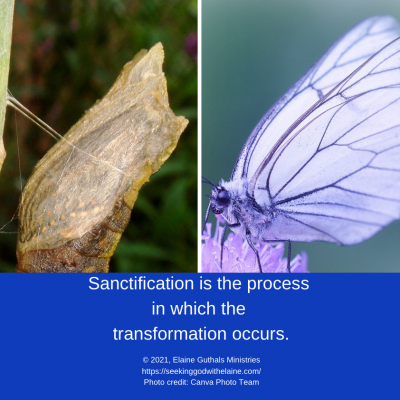
    Sanctification is the process in which the transformation occurs.

    Glorifying God as a Unified Body

    “so that you may glorify the God and Father of our Lord Jesus Christ with one mind and one voice” (Rom. 15: 6 CSB).

    We have one job as a unified body — glorify God.

    Time out! How do we glorify God? We glorify God when we use what we learn from seeking Him to change our words and actions in order to obey and praise Him.

    Salter noted that it might seem like a tall order for us to accomplish. He wrote, “But the perfect Christian may be compared to a perfect mirror, which, though dark and opaque of itself, being placed before the sun reflects his whole image, and may be said to increase his glory by increasing and scattering his light.”

    Resource

    It isn’t about us. It is about God and reflecting Him — scattering His light.

    If it isn’t about us, it isn’t about how far we are away from Him. We just talked about that not long ago. It isn’t how far — it is whether our nose is in the right direction.


    To read a related devotion, click on the appropriate button below.

    We said that God wants us to continually choose Him, even when we are feeling guilty for sinning against Him.

    Let’s go back a second to scattering light. This doesn’t mean running in terror. This means bursting forth in shining glory.

    How many verses now have we been talking unity? God’s children are to worship Him by living united in believing in Him and raising their voices in worship.

    God’s children are to worship Him by living united in believing in Him and raising their voices in worship.

    Making the Connections

    What flitted through my mind when we were going through this was direction, not distance, was another way of looking at the weak/strong issue. Think about the devotions we just had on this.

    • People are very important to God. Whether they are a strong disciple or a weak disciple today isn’t how He sees them. He sees them as perfected (How to Promote Peace).
    • Yes, we may be weak, but we are as God made us. Yes, we may we strong, but we may be fall into temptation and lose our way (How to Promote Peace).
    • It is our duty as a disciple to help our fellow disciples in their walks and not cause them to stumble (Living in Faith and Love).
    • The strong need to help the weak by being a good example to them. Don’t just bite on them. Show them better. Help them to be better (Who Do We Please?).
    • Paul told us we have to make a conscious decision to give up what pleases us and please others (Who Do We Please?).
    • Paul was only talking to the strong. He didn’t say a word to the weak. He didn’t say sign up for strength training. He didn’t call them second-class citizens (Who Do We Please?).
    • Every Tom. Every Sally. Every Elaine. No one is exempt from pleasing the neighbor. Neighbor meant everyone else. No one is exempt here, either. No one is given a pass (Who Do We Please?).
    • The strong are commanded to build up the weak here — teach the one who is weaker in the faith (Who Do We Please?).
    • Think back to what we we talked about in Chapter 14. Lead with love. Don’t judge. Here, we are adding tolerate another disciple’s weaknesses, encourage them, and seek their strengths (Who Do We Please?).

    To read a related devotion, click the button below.

    We like to pat ourselves on the back and say we are doing so much better in our walk than Tom, Sally, or Elaine. We can’t compare. It isn’t right to judge.

    God just wants us to be where we are supposed to be, doing what we are supposed to be doing, learning what we are supposed to be learning. He wants us to be navigating the Sanctification Road on His plan, not our own.

    How Do We Apply This?

    The best thing to do is to seek God. It always comes back to that.

    But then, isn’t that everything? Praying? Reading His Word? Studying it? Really applying it to our lives.

    Searching for and Seeking God

    Searching for and Seeking God

    Hearing His Word (Rom. 10: 17).
    Reading His Word (Rev. 1: 3).
    Praying to Him (Heb. 4: 16).
    Studying His Word (Ac. 17: 11).
    Meditating on His Word (Ps. 1: 1-2).
    Memorizing His Word (Ps. 119: 11).

    God wants us to succeed.

    Father God. You are patient with us. You encourage us. You want us to succeed. You call us to be patient and endure. You call us to unity and to encourage each other. You call us to glorify You. We praise Your name, Father. Amen.

    GlorifyingGodThroughPatienceEnduranceAndUnityPin

    What do you think?

    Leave me a comment below (about this or anything else) or head over to my Facebook group for some interactive discussion.

    If you don’t understand something and would like further clarification, please contact me.

    If you have not signed up for the email daily or weekly providing the link to the devotions and the newsletter, do so below.

    If God has used this devotion to speak with you, consider sharing it on social media.

  • Is Depression a Lack of Faith?

    Depression is prevalent in our world today. Some say that believers should not be depressed as it shows a lack of faith in God. This devotion looks at depression and one instance of how God has dealt with it when Elijah had it.

    Once a long time ago, I had a conversation with someone who gave me some veiled information about things that were happening at my work. The conversation ended with the statement, “This is depressing you. You need to go get medicated” – or something to that effect.

    The person who was giving me the information really didn’t have a clue about what was happening at my work. So, I went to the person who did — my supervisor. I could talk to her about anything.

    I’ll never forget what my supervisor told me. “You aren’t depressed. You have to work really hard to be depressed.”

    I get that. I remember when I said I was going to get a divorce, a friend was so surprised. Even though I had said time and time again what was wrong with my marriage, the friend only saw my joy. I thought, of course, my joy comes from the Lord, not my husband or my marriage.

    Depression comes from this world. So, I thought I would do a little research into what depression is and what the Bible says about depression.

    #dailydevotional #disciplesofchrist #depression

    What Is Depression?

    Depression is feelings of severe despondency and dejection. If you look at the symptoms, this can manifest itself in a number of ways.

    Most of us recognize the hopelessness and helplessness associated with depression. Guilt and low-self esteem are also easily recognizable. This often leads to tears and affects our relationships with others.

    We probably have all been depressed to some extent. There are many things that can trigger it. But are believers depressed because it is just a broken relationship with God?

    Is It Just a Broken Relationship with God?

    My BFF has taught me well – I googled it. The first resource I pulled up said the depression was an indication that my relationship with God was dysfunctional.

    Some argue our relationship has broken down because we the joy in all circumstances is gone. You know, “Be thankful in all circumstances, for this is God’s will for you who belong to Christ Jesus” (I Thess. 5: 18 NLT).

    I can see that, but I don’t think it is that cut and dry. Immediately, Elijah pops up into my mind. Do you remember Elijah’s bout with depression in I King’s 19?

    What? You’ve never thought of it that way? You just thought he was running for Elijah was running for his life.

    Well, yes, he was.

    Elijah was a major prophet. Jezabel threatened to kill Elijah after he had killed her prophets, so he ran away. He was really discouraged, thinking he was the only person alive who was still faithful to God.

    But Elijah was really depressed, too.

    Look at God’s Response

    So, God got really mad and ripped Elijah a new one for having a broken relationship with Him? Quite the opposite.

    You know God was watching over Elijah. You can bet that His heart was breaking because Elijah was so discouraged. Don’t we feel for others who are struggling? Wouldn’t our loving Heavenly Father feel even more?

    God stepped up to comfort Elijah. “Then he [Elijah] lay down under the bush and fell asleep. All at once an angel touched him and said, ‘Get up and eat’” (I Kgs. 19: 5 NIV). The angel was sent by God to take care of Elijah.

    Now, we are talking basic human needs here – food, drink, and sleep. “He looked around, and there by his head was some bread baked over hot coals, and a jar of water …” (I Kgs. 19: 6 NIV). Obviously, Elijah hadn’t baked – he was asleep. God saw Elijah had a need and met it. God knew Elijah needed food to keep up his strength.

    But we are also talking provision here. God came to Elijah. He saw that His prophet was struggling, and He didn’t wait for the prayers to start rising. God came looking for Elijah.

    Elijah laid down again (I Kgs. 19: 6). I bet the angel wasn’t far away. I bet he was standing guard.

    Verse seven says, “And the angel of the LORD came again a second time …” (I Kgs. 19: 7 ESV). God was taking good care of Elijah.

    IsDepressionALackOfFaithPin

    Making the Connections

    God isn’t going to throw us out when we get depressed — broken relationship or not. “It is the LORD who goes before you. He will be with you; he will not leave you or forsake you. Do not fear or be dismayed” (Deut. 31: 8 ESV). His leaving us is one thing we never have to be worried about.

    God sees us and hears us. “The eyes of the Lord are on the righteous, and his ears are attentive to their cry” (Ps. 34: 15 NIV). If He isn’t going to leave us, He isn’t going to tune us out, either. If He knew He wasn’t going to respond to our cry, He wouldn’t hear us.

    Our troubles have a sunset. “When the righteous cry for help, the LORD hears and delivers them out of all their troubles” (Ps 24: 17 ESV). Who are the righteous? We are if we are trying to follow Jesus’ example.

    To read a related devotion, click the button below.

    Sometimes, God does answer us immediately. Sometimes, He lets us work through things. “I waited and waited and waited for God. At last he looked; finally he listened. He lifted me out of the ditch, pulled me from deep mud. He stood me up on a solid rock to make sure I wouldn’t slip. He taught me how to sing the latest God-song, a praise-song to our God …” (Ps. 40: 1-3 MSG). Look, how He takes care of us!

    How Do We Apply This?

    Some equate worrying and depression with lack of faith in God. To me, that is a one-size-fits-all answer that may not always fit. I may be having lack of faith about me rather than lack of faith about God.

    My having total belief in myself to do whatever God calls me to right off the bat might make me really, really proud. I could think that it was me doing this rather than God equipping me to do this. In reality, it isn’t about me; it is Him working through me.

    Total, instantaneous acceptance doesn’t allow us to process. I am a processor. I know I will never totally understand what God has in mind (really, thinking I am a techie!), but God knows I work better when I have some idea the why, where, and how of things.

    To read a related devotion, click the button below.

    I don’t think God wants us to blindly follow Him. If He wanted that, He wouldn’t have given us free will. Free will is the ability within us to make decisions, which determine actions that produce character. There would be no choice in the matter.

    But God did give us free will, so we do have to make a choice. If we did do a blind leap of faith, how would that impact our witness? If we couldn’t give a clear, well-thought-out response to why we put our faith in God, why would others want what we have?

    But I also get it. “Why am I so sad? Why am I so troubled? I will put my hope in God, and once again I will praise him, my savior and my God” (Ps. 42: 11 GNT).

    I don’t think the issue is that we get depressed. I think that is just one of the consequences of the original sin. It is one way that Satan uses to break our relationship with God.

    Glossary

    I think our depression could also be a consequence of spiritual warfare. I know when I had my spiritual tornado, I was depressed. I knew Satan was fighting for me, but I was rock solid in my faith that God would prevail and provide.

    I think God is more interested in what we do when we start getting down. Do we think He can handle whatever is depressing us? Do we even look to Him, or do we try to fix it on our own? He knows we are going to wonder about the how and the why.

    We just have to have complete faith in The Who. We just have to say that God has this. When timing is right, He will have everything fall into place so it will be fixed. We just have to keep putting our trust in Him.

    Father God. Thank You for coming to us and taking care of us as you did Elijah. You do know Satan uses our questioning as a tool to tear us apart. Lord, feed us. Let us rest in You. We know that You will never leave us. Strengthen our relationships with You. Amen.

    What do you think?

    Leave me a comment below (about this or anything else) or head over to my Facebook group for some interactive discussion.

    If you don’t understand something and would like further clarification, please contact me.

    If you have not signed up for the email daily or weekly providing the link to the devotions and the newsletter, do so below.

    If God has used this devotion to speak with you, consider sharing it on social media.
  • Using the Scriptures to Build Hope

    In our redo for godliness, we have a wonderful resource to help us on the Sanctification Road – the Scriptures. This daily devotional looks at how Scriptures not only give us instruction but also patience, hope, and encouragement.

    Nuggets

    • Scriptures help us transform to His godliness.

    To read devotions in the Redo for Godliness series, click the appropriate button below.

    Devotions in the Transformed to Perfection series

    God knew what He was doing when He gave us the Scriptures. Have you ever thought He has always found a way for His Will to be made known?

    Centuries ago — and I am sure in some cultures today — the oral stories of history were very important. It was the way they remembered and taught. It was how their culture was solidified.

    Then God ramped it up and made books. Then He ramped it up and made the internet.

    God is going to get His Word out to those who need it. We all need it.


    Let’s Put It into Context

    Here is a running list of what we’ve discussed previously.

    Using Scripture to Build Hope

    “For whatever was written in the past was written for our instruction, so that we may have hope through endurance and through the encouragement from the Scriptures” (Rom. 15: 4 CSB)

    Scriptures help us transform to His godliness.

    Remember, Paul was talking to believers here. He was talking to people who still needed instruction, still needed words of encouragement, still needed hope and endurance.

    I like what Moore said. He wrote, “God will have His name hallowed, for it is holy; but His Word He seems to make holier still — ‘Thou hast magnified Thy Word above all Thy name.’ We are to receive it, not as the word of man, but as it is in truth, the Word of God.

    Resource

    Moore was quoting Psalm 132: 2: “I will worship toward thy holy temple, and praise thy name for thy lovingkindness and for thy truth: for thou hast magnified thy word above all thy name” (KJV).

    Yep, David said, but he wasn’t expecting exclusive. We have to worship and praise God, too.

    Robertson reminded us that some of the blessings and punishments are made specifically to individuals. Abraham was the only father of the Jewish nation. David was the only one who was promised his line would live forever.

    Resource

    But we also know the Scriptures are also a one-size-fits-all deal.

    • “For all have sinned and fall short of the glory of God” (Rom. 3: 23 CSB).
    • “No temptation has come upon you except what is common to humanity. But God is faithful; he will not allow you to be tempted beyond what you are able, but with the temptation he will also provide the way out so that you may be able to bear it” (I Cor. 10: 13 CSB).
    • “But God demonstrates his own love for us in this: While we were still sinners, Christ died for us” (Rom. 5: 8 NIV)
    • “For God so loved the world, that he gave his only Son, that whoever believes in him should not perish but have eternal life” (Jn. 3: 16 ESV).

    Scriptures are for all of us.

    We all need hope. This passage is talking to disciples — those who already have the hope.

    I have to process what Maclaren said. He wrote, “The written word is conceived for the source of patient endurance which acts as well as suffers. This grace Scripture works in us through the encouragement which it ministers in manifold ways, and the result of both is hope. So, you see, our sorrows and difficulties are not connected with, nor do they issue in, bright hopefulness, except by reason of this connecting link.”

    Resource

    Elaine-speak.

    • We aren’t going to get what we need out of the Scriptures in a single read. We will need to revisit the same passages multiple times until we glean all God has to tell us.
    • One reason for the rereads is to build patience.
    • Another is to build endurance. We don’t want to give up half way through.
    • The hope is a product of the grace and encouragement. Think — if grace is the mom and encouragement is the dad, what a kid that would be!
    • It really isn’t our sorrows and difficulties that connect to our hopefulness.

    Let’s say that again. Our trials do not connect to our hope.

    We have the hope regardless. We have God’s glorious hope for an eternal life when we are His disciples. Period.

    Maclaren took that a step further. As long as our soul is going to be around, this hope is going to be in it.

    Resource

    Our soul is our spiritual part that is immortal. Because the soul is eternal, it continues to think and feel. That means it is going to hope until that hope is fulfilled in eternity.

    What we are looking for is the perfect holiness. That will come at the end of our sanctification.

    Making the Connections

    UsingScripturesToBuildHopePin

    Vernon is right. We are so much more happier when we have patience, comfort, and hope. We find them by reading God’s Word.

    Resource

    How Do We Apply This?

    Macafee gave us some really good ideas on how to do that.

    • Don’t let ourselves become distracted when reading.
    • Read it as if it was God speaking directly to us.
    • Don’t just do a quick read. Dig in. Meditate.
    • This doesn’t mean we have to read hours at a time. I would shoot for a chapter or two.
    • Macafee said we should read Scriptures “frequently, regularly, and diligently …”
    • We have to read them in submission.
    • Macafee said read them with “… a love of truth …”
    • Decide that we are going to believe what Scriptures say and are going to obey God’s laws and commandments.

    We have the Scriptures for one reason: finding God. When we find God, we find eternal life.

    Macafee wrote, “The hope of eternal life, [is] founded on true faith as a solid foundation. Knowledge, consolation, and hope constitute the things for which we should look.”

    Resource

    How do we get knowledge? We do that by seeking God

    Searching for and Seeking God

    Hearing His Word (Rom. 10: 17).
    Reading His Word (Rev. 1: 3).
    Praying to Him (Heb. 4: 16).
    Studying His Word (Ac. 17: 11).
    Meditating on His Word (Ps. 1: 1-2).
    Memorizing His Word (Ps. 119: 11).

    That knowledge will give us comfort and ease the pain cause by our sin as our lives are fixed by God’s healing Hand. We know that hope is a future expectation, called a living hope, based on the confidence that our names will be found in the book of life.

    Beeby said that “as the Bible is the best book of private devotions, [we should] use it as such.”

    Resource

    Who better to learn about God from that God Himself?

    Father God. We want to learn of You. We want to know everything You want us to know about You. We know we won’t know everything. Help us to understand what we need to know. Amen.

    What do you think?

    Leave me a comment below (about this or anything else) or head over to my Facebook group for some interactive discussion.

    If you don’t understand something and would like further clarification, please contact me.

    If you have not signed up for the email daily or weekly providing the link to the devotions and the newsletter, do so below.

    If God has used this devotion to speak with you, consider sharing it on social media.

  • Who Do We Please?

    Paul, in Romans 15, instructed us to please others rather than ourselves. This daily devotional looks at what he meant by this and how Jesus was our example in doing this.

    Nuggets

    • The strong disciple is not to please themselves.
    • We are to teach others about God’s love for us.
    • We are to imitate Jesus as He submitted to God rather than pleased Himself.

    To read devotions in the Redo for Godliness series, click the appropriate button below.

    Devotions in the Transformed to Perfection series

    Paul wasn’t finished yet talking about strong disciples helping weaker disciples. He continued his instructions into Romans 15. Let’s take a look.

    Let’s Put It into Context #1

    Here is a running list of what we’ve discussed previously.

    Do We Please Ourselves?

    “Now we who are strong have an obligation to bear the weaknesses of those without strength, and not to please ourselves” (Rom. 15: 1 CSB)

    The strong disciple is not to please themselves.

    God created us to be sociable. Satan wants to tear us apart.

    Satan is doing a bang-up job.

    But God wants more than us having one big party down here. Thomas wrote, “This would be a poor world if we were not to lend a helping hand one to another; the strong man is to bear the infirmities of the weak.”

    Resource

    Remember, Paul wrote a letter. It didn’t have chapters or verses. This discussion about strong/weak disciples would have flowed out of the previous discussion.

    The message didn’t change. The strong need to help the weak by being a good example to them. Don’t just bite on them. Show them better. Help them to be better.

    Paul told us we have to make a conscious decision to give up what pleases us and please others.

    Lyth gave us a really good list of how we please ourselves. We set great store in our views, plans, and words — basically everything we do.

    Resource

    How does this shake out? We tear others down as we build ourselves up.

    That is not what God wants. He wants us to build others up.

    Raleigh brought up a great point here. Paul was only talking to the strong.

    Resource

    Paul didn’t say a word to the weak. He didn’t say sign up for strength training. He didn’t call them second-class citizens.

    Newton felt this pleasing ourselves is caused by selfishness. He noted, “When we commit sin in most other ways we only break one of God’s commandments at a time. But when we give way to selfishness we break six of God’s commandments all at once.”

    Resource

    What? You don’t believe that?

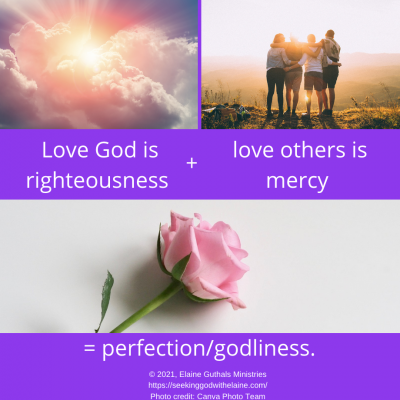
    Think about it. What does the second greatest commandment say? A second is equally important: ‘Love your neighbor as yourself’” (Mt. 22: 39 NLT).

    Love God is righteousness + Love people is mercy = perfection/godliness

    But look at the next verse. “The entire law and all the demands of the prophets are based on these two commandments” (Mt. 22: 40 NLT).

    If we don’t love our neighbors, we haven’t met the foundation of entire law and all the demands of the prophets. It is that important.

    Others above self. That’s the ticket.

    How Do We Please Others?

    “Each one of us is to please his neighbor for his good, to build him up” (Rom. 15: 2 CSB)

    We are to teach others about God’s love for us.

    Every Tom. Every Sally. Every Elaine. No one is exempt from pleasing the neighbor.

    Wesley reminded that neighbor meant everyone else. No one is exempt here, either.

    Thomas brought up how diverse we are. These days the emphasis is on race and ethnicity. Thomas talked about “… character, appearance, and position.”

    Resource

    No one is given a pass.

    But remember, we are not talking rich/poor. We are talking strong/weak in the faith.

    This isn’t a mutual pleasing fest, either. The strong are commanded to build up the weak here — teach the one who is weaker in the faith.

    Think back to what we we talked about in Chapter 14.

    • Lead with love
    • Don’t judge

    Here, we are adding tolerate another disciple’s weaknesses, encourage them, and seek their strengths.

    Brewster cautioned us that pleasing our neighbor for his good is not supposed to be the grounds for our behavior. Our goal is to please God.

    Resource

    Who Did Jesus Please?

    “For even Christ did not please himself. On the contrary, as it is written, The insults of those who insult you have fallen on me” (Rom. 15: 3 CSB) 

    We are to imitate Jesus as He submitted to God rather than pleased Himself.

    Sorry. I have to say it.

    Hodge summed up Christianity. He wrote, “The sum of Christian wisdom is to be Christlike.”

    Resource

    How was Christ? Jesus submitted to God. “When he has done this, then the Son himself will be made subject to him who put everything under him, so that God may be all in all” (I Cor. 15: 28 NIV).

    Hodge noted we want to avoid giving pain. Instead, we want to help heal what we can.

    In case you are wondering, the Scripture quote is from Psalm 69: 9.

    WhoDoWePleasePin

    Making the Connections

    Brewster reminded us what the goal of the gospel is. He wrote, “The great aim of the gospel is to raise our views and desires above this life, and furnish us with pure and powerful principles in the direction of our words and actions, far above the will of fallen man. But while it invites us to lay up our treasure in heaven, it instructs us in everything that may best contribute to bless the life of man on earth.”

    Resource

    This life is secondary. God and our spiritual condition and life are primarily. So, when we say we are to please our neighbor, that doesn’t mean we are letting them remain in sin.

    We are teaching them to live for God. If we are trying to redo for godliness, we need to redo our character. Burn’s list is a good list.

    • Jesus as the foundation
    • Faith, hope, love, and commitment as sound materials
    • Grace and utility in the structure
    • Perfection at the finish

    Resource

    How Do We Apply This?

    • We can give advice when appropriate.
    • We can share financial resources when needed.
    • We should always be encouraging.
    • We should help others when needed.
    • We need to build up our love.
    • We need to increase in God’s wisdom.
    • We should become more unselfish.

    Resource

    In a way, this passage is just more of the same. It is talking unity and God’s superiority. That is something we need to hear many times, so we can praise Him.

    Father God. You are Sovereign God. You call us to be unified. You call the strong to minister to the weak. Help us to lovingly teach them Your ways. Help the weak to grow closer to You. Amen.

    What do you think?

    Leave me a comment below (about this or anything else) or head over to my Facebook group for some interactive discussion.

    If you don’t understand something and would like further clarification, please contact me.

    If you have not signed up for the email daily or weekly providing the link to the devotions and the newsletter, do so below.

    If God has used this devotion to speak with you, consider sharing it on social media.

  • God’s Restitution of Job and His Friends

    God not only restored Job, but He also restored Job’s three friends. This daily devotional looks at how God recognizes offerings and intercessory prayer and restores us.

    Nuggets

    • When we sin, we need to confess them and repent.
    • God restored twice as much as Job previously had.

    Devotions in the Job: The Ultimate Test of Character series

    After all this time, Job’s troubles were coming to an end. That is because God was ending the period of testing.

    In doing so, God had some things to say to Job’s three friends. He also had some follow-up for Job.

    Let’s Put It into Context

    Here is a running list of what we’ve discussed previously.

    God Recognized Offerings and Intercessory Prayer

    “After the Lord had finished speaking to Job, he said to Eliphaz the Temanite, ‘I am angry with you and your two friends, for you have not spoken the truth about me, as my servant Job has. Now take seven bulls and seven rams, go to my servant Job, and offer a burnt offering for yourselves. Then my servant Job will pray for you. I will surely accept his prayer and not deal with you as your folly deserves. For you have not spoken the truth about me, as my servant Job has.’ Then Eliphaz the Temanite, Bildad the Shuhite, and Zophar the Naamathite went and did as the Lord had told them, and the Lord accepted Job’s prayer” (Job 42: 7-9 CSB)

    When we sin, we need to confess them and repent.

    Oops. God wasn’t finished with the three friends.

    We have to realize a couple of things. The three friends did not set out to speak maliciously to Job. They set out to truly when Job back to repentance.

    They honestly thought they were following the path that God wants us to follow. (Bradley compared them to religious professors.)

    Resource

    They were wrong.

    Woodrow explained why they were wrong. He wrote, “They had ascribed a mechanical severity to His administration of human affairs. In addition to that they had shown an acrimonious spirit in their denunciation of Job.” Dickinson said they missed the whole principle of righteousness because they were so focused on their way of thinking on specific doctrines.

    Resource

    The three friends missed God’s mercy and forgiveness. God’s mercy is an act of sovereign will that produces an unexpected and undeserved response from God as He responds in love to our needs. God’s forgiveness is His ability to pardon us even though we have disobeyed Him by breaking His laws and commandments.

    To read a related devotion, click the button below.

    In the end, they had sinned against God. They had spoken for God things that He wasn’t saying.

    They needed to repent. God spoke directly to Eliphaz.

    God was very specific about the offering they were supposed to give. He is like that. He is very specific about the worship we are to give Him.
    Did you catch that God told Eliphaz that Job was still His servant? Through all of this, Job was still His.

    Did you also catch that God would only accept the three friends’ sacrifice if Job prayed that He would? Two things struck me here.

    The first thing took me back to Job 1. Job was acting as priest when offering sacrifices for his kids. Now, he is acting as priests for his friends.

    That means, even though Job had sinned against God, he was forgiven and reinstated. That is how forgiving He is.

    The second thing is that God mended the relationships of the four friends. We just spent two whole mini-series in the Transformed to Perfection series talking about unity of the disciples. God wants us to live together in harmony.

    I wonder how many of us would have swallowed and gone back to the guy we had reamed and asked him to pray for us? Talk about humiliation.

    The passage doesn’t say anything about them sputtering. It said they immediately obeyed.

    Biggs took this another way. He saw the intercessory prayer a non-negotiable part of Job’s reconciliation. He wrote, “God made an act of piety on the part of Job the condition of his restoration to his lost possessions and dignities.”

    Resource

    Job had to forgive his friends for biting on him. God didn’t let Job off the hook, either.

    Dickinson was right. He wrote, “There had been wrong on both sides.” We can’t forget there had also been right on both sides.

    Resource

    God knew Job needed to take the focus off himself. The intercessory prayer would help put it on others.

    Some would say there was no clear-cut winner. But then, there was no clear-cut loser, either, if you look at it that way. But that isn’t the way to look at it.

    Let’s look at it God’s way. The four came together in His name, and peace was restored. They all won big time.

    God Restored Job

    “After Job had prayed for his friends, the Lord restored his fortunes and doubled his previous possessions. All his brothers, sisters, and former acquaintances came to him and dined with him in his house. They sympathized with him and comforted him concerning all the adversity the Lord had brought on him. Each one gave him a piece of silver and a gold earring” (Job 42: 10-11 CSB)

    God restored twice as much as Job previously had.

    We have to remember, when Job 1 started, Job was a wealthy guy. He had oxen, donkeys, sheep, servants, and camels to lose.

    God restored a double portion of Job’s previous possessions. Even though an argument could be made that Job failed the test — or at least didn’t totally pass — God rewarded him.

    Does this mean God will always restore a double portion? No.

    It is His choice. Spurgeon reminded us that “we are not all like Job, but we all have Job’s God.”

    Resource

    What God will restore is our joy.

    Am I the only one who did a double take at verse 11? Where did brothers and sisters come from? It took 42 chapters for them to show up?

    I would not have made it through my divorce if it would not have been for my sister. The first person I called when I got the seizure diagnoses was her.

    Where were they for Job in all of his trials? It hurts my heart that they abandoned him in what had to be the worst time in all of his life.

    I thought it was interesting that Spurgeon likened Job’s experience to a captivity. He wrote, “Captivity is bondage of mind, the iron entering into the soul.”

    Resource

    We think of it as bondage or servitude. However, it was also a restraint — it stopped Job from moving forward.

    It had so permeated his mind that Job was focused on what he lost and the reason why he lost it. He was concentrating on defending himself to his wonderful friends.

    The focus definitely was not on growing his relationship with God.

    But all testings come to a close. Hopefully, we have remained faithful to God. If we haven’t — as Job didn’t because he ended up railing on God — we have to repent.

    God will forgive us when we genuinely repent.

    GodsRestitutionOfJobAndHisFriendsPin

    Making the Connections #1

    We can’t and shouldn’t downplay the need for intercession prayer. Intercessory prayer is when we pray on behalf of others. 

    God wants His children to be unified. He wants us to be a part of each other’s lives. The Homilist called it in “whom we feel a vital interest.”

    Resource

    It like the vital part. It is essential — indispensable. We can’t do without them.

    Making the Connections #2

    Satan thought Job was in it just for the blessings. He was wrong.

    Has Satan ever told us the same thing? Spurgeon thought so. He wrote, “Sometimes he tells the righteous that there is no reward for their holiness, and then they say, ‘Surely, I have cleansed my heart in vain and washed my hands in innocency’; or else he tells them that they only obey the Lord because they have a selfish eye to the reward.”

    Resource

    Sneaky, isn’t he?

    God allowed Satan to test Job so Satan would see that he was wrong about Job. God allowed Satan to test us so Satan would see what he was wrong about us. Spurgeon said that Satan gets to see God’s grace first-hand.

    How Do We Apply This?

    • Keep our eyes on God when the prosperity turns to trials.
    • Even in our trials, we need to be concerned about others.

    Trials are hard, especially when they hit us out of left field, like they did Job. We must keep our eyes fixed on God.

    Father God. You love us enough to test us. Lord, we think that doesn’t follow, but it does. You love us enough to prove that we do love You — and to show us where we need to work on cutting out the sin in our lives. Help us to keep our eyes fixed totally on You. Amen.

    What do you think?

    Leave me a comment below (about this or anything else) or head over to my Facebook group for some interactive discussion.

    If you don’t understand something and would like further clarification, please contact me.

    If you have not signed up for the email daily or weekly providing the link to the devotions and the newsletter, do so below.

    If God has used this devotion to speak with you, consider sharing it on social media.

  • Repentance and Restoration

    When God and Job were talking, Job acknowledged several things. This daily devotional looks at how Job acknowledged God’s greatness, his ignorance, and his humility.

    Nuggets

    • Job acknowledged God’s superiority and greatness, including His plans for us.
    • Job acknowledged that we don’t know as much as we think we do.
    • Job acknowledged his need to repent.

    Devotions in the Job: The Ultimate Test of Character series

    When we last left Job, he and God were having a discussion. In this devotion, we are going to finish looking at their discussion.

    Let’s Put It into Context #1

    Here is a running list of what we’ve discussed previously.

    Acknowledging God’s Greatness

    “Then Job replied to the Lord: I know that you can do anything and no plan of yours can be thwarted” (Job 42: 1-2 CSB)

    Job acknowledged God’s superiority and greatness, including His plans for us.

    Job did some things right when he addressed God. We talked before about the first thing out of God’s mouth when He started the one-on-one that Job requested was questions about where-were-you-in-creation?

    Job learned his lesson. He acknowledged God’s greatness. Woodrow did say that he did do this all along. He wrote, “Throughout his speeches Job had frequently asserted the majesty of God. But now he has a new view of it, which turns awe into reverence and fear into adoration.”

    Resource

    Think of what God showed Job.

    • Majesty
    • Glory
    • Wisdom
    • Holiness

    Job didn’t see it from a human perspective. He saw it from the perspective Hod showed Him.

    Wow!

    Maybe Job didn’t consider God had a plan for His life before. Now, he knew God did.

    God has a plan for all our lives, and He will work His plan.

    This whole section on God’s response to Job shows us the power and glory of God. The Christian Observer wrote that it shows us His attribute of perfection.

    Resource

    That produces strong case for our repentance. Repentance is acknowledging our separation from God and expressing sorrow for breaking God’s laws and commandments by making the commitment to changing ourselves through obedience so that we no longer do the wrong things.

    Acknowledging His Ignorance

    “You asked, ‘Who is this who conceals my counsel with ignorance?’ Surely I spoke about things I did not understand, things too wondrous for me to know. You said, ‘Listen now, and I will speak. When I question you, you will inform me’” (Job 42: 3-4 CSB)

    Job acknowledged that we don’t know as much as we think we do.

    Job admitted that he didn’t know everything in the past. He may have thought he did, but he realized he didn’t.

    Burrell contended that Job and his friends were working on two false assumptions. The first was that we could know all there is to know about God. The second was that we did.

    Resource

    We can go two ways when we find out we don’t know as much as we think we do. We can react badly. Or we can open up and learn.

    Orr brought up a good point. We don’t know where God had gotten his knowledge of God previously.

    Think about it. Sitting in the pew learning about God is great. Hearing He is going to be with us during the trials sounds like it is going to be fantastic.

    Having God in the car when we almost get in an accident is better. God providing the money when we don’t know where it is coming from is priceless. Holding on to God’s hand when we feel like our health is slipping out the door is comforting.

    That, my friend, is knowing God. We don’t know God until we go through the trials.

    Acknowledging His Humility before God

    “I had heard reports about you, but now my eyes have seen you. Therefore, I reject my words and am sorry for them; I am dust and ashes” (Job 42: 5-6 CSB)

    Job acknowledged his need to repent.

    Think back to when this all started. For the first 31 chapters, all Job wanted was for others to realize that he hadn’t sinned. He wanted justification. Woodrow said that Job wanted to lay the responsibility at God’s feet and blame “… the strangeness and the mystery of His ways.”

    Resource

    Ooo, baby. Don’t we do that? “Well, I don’t know why I am having seizure. I am sure it is all part of His plan. He must have a reason, though it is beyond me. He works in mysterious ways. Maybe I will find out. Maybe I won’t. It is all on Him.”

    Remember when Job was a broken record when the friends were biting on him? Basically, all Job was saying was, “I don’t know why. I want to know why.”

    After Chapter 31, Job started to condemn himself.

    Job realized he had sinned. Orr wrote, “He had, further, confessed his sinfulness in the sight of God; for, though he vindicated his character against the unjust suspicions of his fellow creatures, he knew that his righteousness extended not to his Creator.”

    Resource

    Job realized that he was biting on God for the trials. He was holding God responsible for the bad stuff and was impatient with Him to get it over!

    God never told Job the why part. And Job was OK with that. He had grown in his trials.

    Burrell said that Job got a side benefit of a new state of heart. He said that “Job goes beyond humility to repentance.”

    Resource

    Orr made a great comment. He said, at the end of everything, Job wouldn’t have changed anything.

    Resource

    Every trial that God has us go through is going to do its job. That job is to bring us closer to God — give us a clearer understanding of Who He is.

    When we are humbled, God can show us our sin. Even when we think we haven’t sinned, we usually have.

    Yeah, that is hard being shown where we have broken God’s laws and commandments. But we need to know, so we can repent. Repentance is acknowledging our separation from God and expressing sorrow for breaking God’s laws and commandments by making the commitment to changing ourselves through obedience so that we no longer do the wrong things.

    I love this quote. Vaughan wrote, “But repentance is not the necessity of some; it is the necessity of all. Repentance is not an act, but a state; not a feeling, but a disposition; not a thought, but a mind. Repentance is too real a grace to live in the ideal.”

    Resource

    I think, sometimes, we think repentance is a once-and-done act. Well, the act itself is.

    What it brings isn’t. I think the best I can describe it is a condition, but I am not sure I really like that.

    RepentanceAndRestorationPin

    Making the Connections

    God wanted an inward change. True, God renewed Job’s joy. He was also able to be of service to his friends.

    More importantly, Job received greater knowledge of God, an increased relationship with Him, and a greater understanding of himself. We all need this to grow in our relationships with God.

    Taylor pointed out that this was typical of all Old Testament individuals. Had to be. It is in the nature of the way God revealed Himself to the Israelites.

    Resource

    Jesus didn’t come until the New Testament. God could give the promise of a Savior, but He couldn’t say a Savior had appeared until Jesus was born. Then, it switched to a He-was-here belief.

    But look at it this way. Our faith was going from a there-is-a-God to I-need-to-live-for-and-obey-God. It was heading to being built on inward character.

    Burrell argued that, after the trials, Job had a greater appreciation of God. He wrote, “Every revelation of God to our hearts has for its contents, above the fact of God’s existence, the facts of His character. God is never shown to us except with His attributes. This new knowledge came to Job because he suffered.”

    Resource

    The big why? God is merciful. God’s mercy is an act of sovereign will that produces an unexpected and undeserved response from God as He responds in love to our needs.

    To read a related devotion, click the button below.

    God loves us so much He forgives us for disobeying Him when we genuinely repent. That includes turning away from our sin.

    How Do We Apply This?

    Dickinson wrote, “The primary object of the Book of Job is to prove and illustrate the glory and force of a pure, unselfish religion. Job was reconciled to his sufferings, not by argument, but by a direct revelation of the character of God.”

    Resource

    Job started out blameless. He ended up complaining against God. Dickinson said he was somewhat vindictive.

    • As we seek God, prepare to be humbled and become conscience of our sin.
    • We need to understand God’s purity, holiness, justice, goodness, truth, power, wisdom, and love from His perspective. Girdlestone said we really don’t have a clue.

    Resource

    We must put our faith and trust in God regardless of what comes — prosperity or trials. We must be content with wherever our Sanctification Road takes us.

    We do that by submitting. We give everything over to God and say it is His to orchestrate. Then we praise Him for whatever He brings our way.

    Father God. You are great! You are knowledgeable, and we are not. We humbly come to You, repenting of our sins and asking Your forgiveness. Amen.

    What do you think?

    Leave me a comment below (about this or anything else) or head over to my Facebook group for some interactive discussion.

    If you don’t understand something and would like further clarification, please contact me.

    If you have not signed up for the email daily or weekly providing the link to the devotions and the newsletter, do so below.

    If God has used this devotion to speak with you, consider sharing it on social media.