When Nicodemus visited Jesus, the discussion was deep. This devotion reading looks at how Jesus laid out salvation, regeneration, and the Kingdom of God for a questioning Pharisee.
Nuggets
- We know that Pharisees were religious leaders, but we may get tripped up on who all the groups of religious leaders were.
- By coming at night, Nicodemus was being secretive in his search for truth.
- Regardless of how miraculous Yeshua’s signs were many hadn’t believed, including the Pharisees.
- Yeshua didn’t acknowledge Nicodemus’ greeting but jumped right in, turning the conversation to what He wanted to discuss.
- Nicodemus had difficulty understanding being born again, but it is the foundation for salvation.
- Yeshua also changed Nicodemus’ estimation of the Kingdom of God.
- Yeshua changed Nicodemus’ focus from physical to spiritual.
According to John, early in His ministry, Yeshua met with a Pharisee named Nicodemus. This conversation is important for several reasons.
In it, we get a wonderful introduction to why Yeshua came. John records a discussion with a prominent Pharisee that focuses on the divine aspect of Yeshua’s nature.
Robbins also believed this conversation was important. He thought it set the stage for all that came after.
Resource
So, what happened during the conversation?
Let’s Put It into Context
To read devotions in The Battle for the Heart theme
Devotions in the The Early Ministry of the Messiah series
A Night Visit
“There was a man named Nicodemus, a Jewish religious leader who was a Pharisee. After dark one evening, he came to speak with Jesus. ‘Rabbi,’ he said, ‘we all know that God has sent you to teach us. Your miraculous signs are evidence that God is with you’” (Jn. 3: 1-2 NLT)
A Jewish Religious Leader
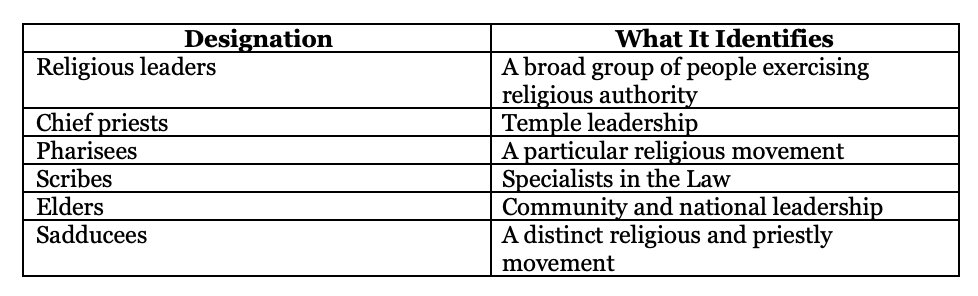
We know that Pharisees were religious leaders, but we may get tripped up on who all the groups of religious leaders were.
John told us that Nicodemus was a Pharisee. That meant he belonged to a religious movement that emphasized Torah observation, purity, interpretation, and traditions concerning how Jehovah’s instructions should be lived.
However, there were other groups that were considered religious leaders. One group was the chief priests. Our thoughts automatically go to the high priest. Included in this group were the leading members of the priestly families.
Much of the Temple’s leadership and influence came from prominent families/households. That made the high priesthood a hereditary position. It was normally passed within a particular high-priestly family.
High priest appointments had been particularly contentious. Even before the Roman occupation, political disruption in the high priest selection was common.
Elders were respected community leaders who often participated in local and national decision-making.
Scribes were specialists who interpreted, taught, and preserved the Law. They, too, could belong to different religious affiliations.
The Sadducees were a priestly and aristocratic movement associated particularly with the Temple establishment. Many were known to collaborate with the Roman authorities.
Nicodemus is a great example for us. He can be associated with a specific group – one that we characterize a certain way – and act in a different way than we would expect.
That reminds us that these groups didn’t contain automatics. A Pharisee didn’t automatically hold an official leadership position. The Sadducees didn’t automatically agree with each other.
What we should take away from this introduction was that Nicodemus enjoyed high standing in the community and was knowledgeable of Jewish law. Not only that, but Yeshua also described him as a teacher (Jn. 3: 10).We also learn he was a member of the Sanhedrin (Jn. 3: 1 OJB).
Many of those of his ilk in his day knew what they expected of the Messiah – and Yeshua wasn’t starting out fulfilling those expectations.
One Evening
By coming at night, Nicodemus was being secretive in his search for truth.
We aren’t sure why Nicodemus came at night. His caution had a reason. It is widely accepted that he didn’t want to be seen meeting with Yeshua.
We don’t know if Nicodemus was ashamed of being seen with Yeshua. Being a recognized teacher and leader, he may have felt he didn’t need to learn from the Rabbi. But then he maybe did considering what he said.
Nicodemus may have come at night because he doubted Yeshua was the Messiah. But if that was what most of the Pharisees and religious leaders thought, why would he have to hide his coming to interrogate Him?
It would seem more logical to me that Nicodemus was beginning to believe differently than the other Pharisees and leaders. We’ll see that he addressed Him honorably.
Nicodemus was drawn to Yeshua. That is the way the Holy Spirit works to get us to where we can hear about salvation.
God Has Sent You to Teach Us
Nicodemus described Yeshua as a Teacher Whom Jehovah was with.
Nicodemus began by calling Yeshua Rabbi. Rabbi (רַבִּי) means my master or my teacher. This was a first-century title of respect for a teacher of Torah.
This title showed the authority the Teacher carried. It showed recognition of the Teacher’s ability to interpret and explain Torah.
But more than that, the word established a relationship. To be a Teacher, the person had to have students. These students accompanied the Teacher, observing how He lived as they listened to His instructions.
There was no organized order of Rabbis – as there were priests and Pharisees. In the first century, it wasn’t used to identify the later ordination structure.
Obviously, Yeshua knew that He was addressing a prominent teacher of Israel. That is what He calls him in John 3: 10. It is from this verse some have interpreted that to mean chief teacher or teacher of teachers.
What has always made me question Nicodemus’ intent was when he said that “…. we all know that God has sent you to teach us …” (Jn. 3: 2 NLT).
Did Nicodemus earnestly believe that Yeshua came from Jehovah, or was he saying that incredulously, sarcastically, or in frustration – or a mixture of all three?
I’m not sure we really can tell here. We do know the rest of the story – we know Nicodemus’ belief at the end of the Gospels.
Miraculous Signs
Regardless of how miraculous Yeshua’s signs were many hadn’t believed, including the Pharisees.
This conversation more than likely occurred while Yeshua was in Jerusalem for Passover. We know He performed many miraculous signs at that time. “Because of the miraculous signs Jesus did in Jerusalem at the Passover celebration, many began to trust in him” (Jn. 2: 23 NLT).
Most Pharisees, however, didn’t believe these signs. Neither did they believe that He was the Messiah.
Because the Pharisees were focusing only on the physical aspect of the miraculous signs, they were missing the main point of Yeshua’s message. The Kingdom of God was at hand.
Yeshua Set Nicodemus Straight
“Jesus replied, ‘I tell you the truth, unless you are born again, you cannot see the Kingdom of God.’ ‘What do you mean?’ exclaimed Nicodemus. ‘How can an old man go back into his mother’s womb and be born again?’ Jesus replied, ‘I assure you, no one can enter the Kingdom of God without being born of water and the Spirit. Humans can reproduce only human life, but the Holy Spirit gives birth to spiritual life. So don’t be surprised when I say, “You must be born again.” The wind blows wherever it wants. Just as you can hear the wind but can’t tell where it comes from or where it is going, so you can’t explain how people are born of the Spirit’” (Jn. 3: 3-8 NLT)
Jesus Replied
Yeshua didn’t acknowledge Nicodemus’ greeting but jumped right in, turning the conversation to what He wanted to discuss.
I have always had to laugh at this passage. Nicodemus was trying to be respectful, but Yeshua didn’t even acknowledge his greeting. He didn’t return any pleasantries to him.
Yeshua just started in with what He came to say. Because of Nicodemus’ knowledge of Torah, Yeshua could go more in-depth with His explanation. He does seem to lay it out for Nicodemus as He does for no one else.
But then, Yeshua knew this was important. This was a course correction on Nicodemus’ interpretation of doctrine.
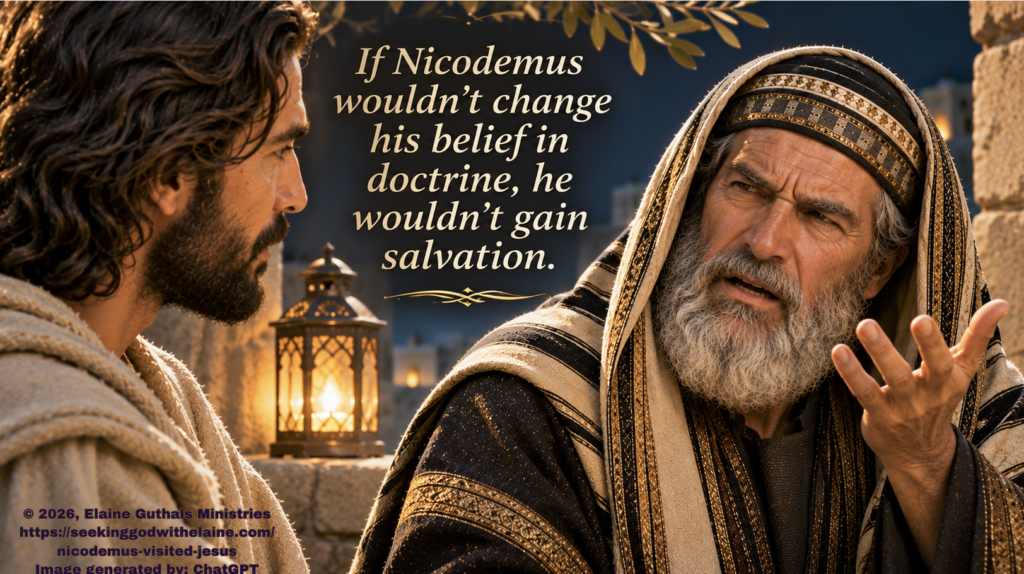
If Nicodemus wouldn’t change his belief in doctrine, he wouldn’t gain salvation.
Unless You Are Born Again
Nicodemus had difficulty understanding being born again, but it is the foundation for salvation.
We shouldn’t bite on Nicodemus, though, for not understanding. The biggest problem contributing to that was that he was thinking physical. He had no clue about spiritual.
Denham tried to explain what he felt Nicodemus’ understanding about birth would have been. He wrote, “In Jewish culture, a Jew could be born again in four ways: at their Bar Mitzvah; in Marriage; in becoming a Rabbi and finally in becoming a Chief Rabbi. Nicodemus had run out of options at his age!”
Resource
But what was Yeshua getting at? It reads much cleaner in The Complete Jewish Study Bible. “‘Yes, indeed,’ Yeshua answered him, ‘I tell you that, unless a person is born again from above, he cannot see the kingdom of God’” (Jn 3: 3 CJSB).
With Yeshua, it is always about the battle for our hearts first. Our spiritual condition is priority. It is a necessity for salvation.
Genuine salvation brings a changed heart. But this wasn’t a concept needed only for Gentiles searching for Jehovah.
Jehovah’s own covenant people had to be spiritually reborn to recognize their own Messiah. Let’s take a look at Scripture that Nicodemus would have known.
- “The Lord your God will change your heart and the hearts of all your descendants, so that you will love him with all your heart and soul and so you may live!” (Deut. 30: 6 NLT).
- “And I will give them singleness of heart and put a new spirit within them. I will take away their stony, stubborn heart and give them a tender, responsive heart, so they will obey my decrees and regulations. Then they will truly be my people, and I will be their God” (Ezek. 11: 19-20 NLT).
- “Then I will sprinkle clean water on you, and you will be clean. Your filth will be washed away, and you will no longer worship idols. And I will give you a new heart, and I will put a new spirit in you. I will take out your stony, stubborn heart and give you a tender, responsive heart. And I will put my Spirit in you so that you will follow my decrees and be careful to obey my regulations” (Ezek. 36: 25-27 NLT).
- “‘The day is coming,’ says the Lord, ‘when I will make a new covenant with the people of Israel and Judah. This covenant will not be like the one I made with their ancestors when I took them by the hand and brought them out of the land of Egypt. They broke that covenant, though I loved them as a husband loves his wife,’ says the Lord. ‘But this is the new covenant I will make with the people of Israel after those days,’ says the Lord. ‘I will put my instructions deep within them, and I will write them on their hearts. I will be their God, and they will be my people. And they will not need to teach their neighbors, nor will they need to teach their relatives, saying, “You should know the Lord.” For everyone, from the least to the greatest, will know me already,’ says the Lord. ‘And I will forgive their wickedness, and I will never again remember their sins’” (Jer. 31: 31-34 NLT).
If we look at these verses through the lens of being born again, we find being born again means:
- A changed heart
- A love for Jehovah
- A focus on Jehovah
- A new spirit
- A responsive heart
- Obedience to Jehovah
- An eternal relationship with Jehovah, where no unbelief remains.
This is why we say that Yeshua is in a battle for our hearts. One of the things that salvation does is it provides us with a new heart – one that is focused on Him and Jehovah.
We can’t earn that new heart on our own. Only Jehovah can change the stony heart to one that is tender and responsive.
Kingdom of God
Yeshua also changed Nicodemus’ estimation of the Kingdom of God.
Nicodemus knew what Yeshua was talking about when He mentioned the Kingdom of Jehovah – well sorta. He knew that Jehovah was King. Nicodemus knew that as Jehovah reigned – malkhut (מַלְכוּת) – over Israel. It can also refer to kingship or kingdom.
Probably somewhere along the line, malkhut was translated as having dominion over. Scripture repeatedly tells us that One Who rules or has dominion over Israel is Jehovah.
Robertson explained what the Kingdom of God was. He wrote, “The Jewish kingdom was a theocracy: a kingdom in which God’s power was manifest by miracles, and in which His laws were promulgated.”
Resource
Many first-century Jews understood that to mean the following:
- God would reign over the nations.
- Israel would be restored from foreign occupation.
- A Davidic ruler would once again sit on the throne.
- Jehovah would overthrow oppressive kingdoms.
As there was no one interpretation that was believed by all first-century Jews, different groups believed different things regarding the promises of a kingdom. While many if not most first-century Jews believed that Messiah would overthrow the Roman Empire, some things about Messiah they got right – some things they got wrong.
One of Jesus’ major missions was to proclaim the kingdom of God. “Now after John was arrested, Jesus came into Galilee, proclaiming the gospel of God, and saying, ‘The time is fulfilled, and the kingdom of God is at hand; repent and believe in the gospel’” (Mk. 1: 14-15 ESV).
John the Immerser and Yeshua both gave this as their central message. Both called for repentance, trust and a reorientation toward God’s reign.
The way I read it was that first-century Jews were waiting for Messiah to split open the sky and come into view on a cloud. They weren’t wrong to think this way. They got this from Scripture.
However, that isn’t how Yeshua ushered in the Kingdom of Jehovah. He was born and placed in a manger. He grew up in an obscure village. He was baptized but made no bold proclamation that He was the Messiah.
Yeshua verified that the Kingdom of God was at hand by casting out demons. He also healed many people – the blind, the deaf, the mute, the lame, and others of diseases and wounds – signs prophesied by Isaiah.
Yeshua corrected the assumption that there would be visible evidence of the Kingdom. He instead said that the Kingdom would be within them. (In some instances, it is translated among you.)
Yeshua wasn’t saying there wouldn’t be a Kingdom of God. He was saying there would be – it just wouldn’t look like they expected.
Born of Water and the Spirit
Yeshua changed Nicodemus’ focus from physical to spiritual.
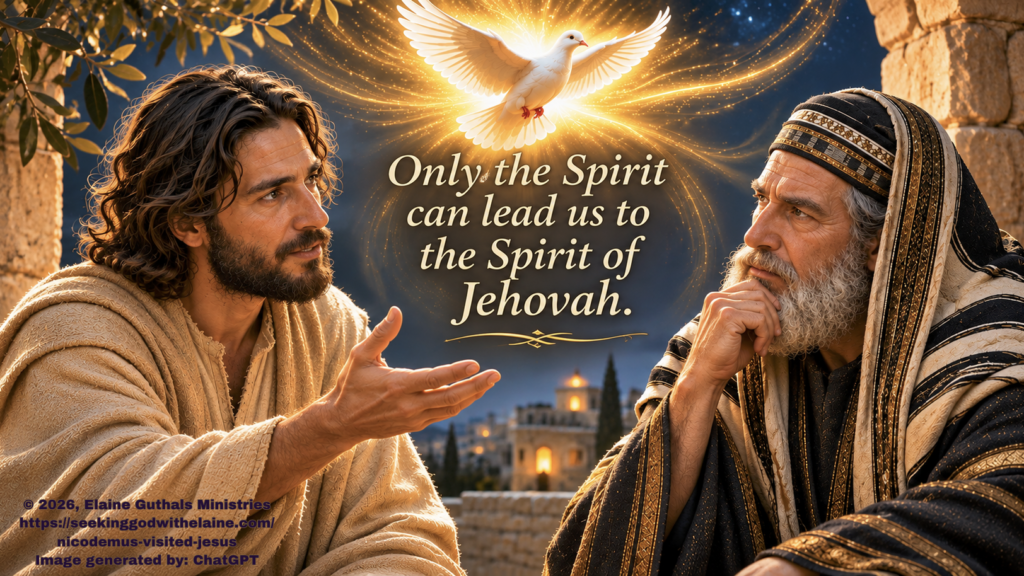
John 3: 5-6 reiterate that we cannot have salvation without the Holy Spirit. Only the Spirit can lead us to the Spirit of Jehovah.
We must be reborn through water and spirit.
Henry addressed this. He wrote, “It is a great change made in the heart of a sinner, by the power of the Holy Spirit. It means that something is done in us, and for us, which we cannot do for ourselves. … Not that all those, and those only, that are baptized, are saved; but without that new birth which is wrought by the Spirit, and signified by baptism, none shall be subjects of the kingdom of heaven. The same word signifies both the wind and the Spirit.”
Resource
Yeshua picked up the thread that Jehovah had been pulling all the time. The new covenant brought a new heart. It wasn’t about political domination. It was about restoration from sin.
Making the Connections #1
The Hebrew concept of berith (בְּרִית) — covenant — is more than just a legal contract. In the Ancient Near Eastern world, covenant created binding relational realities involving loyalty, inheritance, obligation, protection, representation, and family structure.
Biblical covenant language, therefore, transcends modern contractual thinking. Instead, Jehovah’s covenants establish an ordered relationship under the authority of the covenant maker.
More than likely, many first-century Jews knew about the covenants with Jehovah. Their culture was steeped in covenant identity. Covenant identity is the identity Jehovah gives, defines, sustains, and governs through a covenant relationship with Himself.
That is why many missed that there would be a new covenant. Messiah was coming to fulfill the Abrahamic and Davidic covenants. But Yeshua was bringing a new covenant of His own.
But that might have been one reason Nicodemus had so much difficulty understanding being born again. He worked under the covenant identity that – as a descendant of Abraham – he needed nothing more.
Nicodemus totally missed that there would be a new covenant – a covenant of the heart. It wasn’t founded on being a child of Abraham. It was based on being a child of God.
Making the Connections #2
Think about it. Nicodemus was a covenant insider. He was a prominent teacher within Israel. He was a Pharisee, a Sanhedrist, and a Rabbi. It wouldn’t surprise me – but this is only my opinion – that he spent some time as a scribe. He took his religion seriously.
But Nicodemus was seriously confused. His Torah was the same first five books of our Old Testament. He had the same content in his Tanak that we have in our Old Testament – just arranged differently.
And Nicodemus hadn’t made the connections. He didn’t understand what Jehovah was expecting of him.
Making the Connections #3
Yeshua made it a point to remind Nicodemus that he doesn’t have to know everything. We don’t need to have a God-level knowledge in order to believe. There is no way we are going to have that, seeing as we are not divine.
Faith beyond our understanding is what Jehovah wants. We need to rely on Him, not ourselves.
But Nicodemus seemed to be missing what Abraham got. You don’t have to understand. You have to believe anyway. You just have to obey.
Think about it. Abraham was confronted with Jehovah’s testing to sacrifice his son to Him. He didn’t understand, but he got up the next morning and headed to the mountain.
Nicodemus didn’t understand that being a descendant of Abraham wasn’t what was required in Yeshua’s covenant. He didn’t know how water and Spirit was going to work.
Yeshua was asking Nicodemus to believe that, in Jehovah, all things are possible. It would work.
Making the Connections #4
It was Watchman Nee who explained the importance of this new life. He wrote, “Receiving God’s life in new birth is the starting point of a Christian walk, the minimum for a believer.”
Resource
Regeneration into a new creation is the outcome of salvation and sanctification. Jehovah meets us where we are and regenerates us when we recognize our need for Him, are truly sorry for our disobedience, and humbly search for His deliverance. He then changes us through sanctification to be the sons and daughters he wants.
Heart Check
Think about the battle Yeshua is engaged in for your heart. Ask yourself the following questions.
- Am I relying on what I know about Jehovah, or am I allowing Him to change my heart?
- Do I expect Jehovah to work according to my understanding, or am I willing to trust Him when I cannot explain what He is doing?
- Am I looking for the outward signs of God’s Kingdom, or am I recognizing His work in my heart and life?
- Am I relying on my heritage, religious standing, and knowledge, or am I relying on the new life Jehovah provides through His Spirit?
- Am I trying to make myself spiritually acceptable to Jehovah, or am I allowing Him to regenerate and sanctify me?
How Do We Apply This?
- Recognize that religious knowledge alone does not bring salvation.
- Acknowledge our need for a new heart and a new spirit.
- Trust the work of the Holy Spirit to lead us to salvation through Yeshua.
- Believe Jehovah even when we cannot fully understand His ways.
- Look beyond outward expectations to recognize the work of Jehovah’s Kingdom.
- Remember that salvation is Jehovah’s work, not something we can accomplish ourselves.
- Allow Jehovah to continue transforming us through sanctification.
Father God. You allow us to come searching for You – even if we come hesitantly or secretly. You meet us where we are and reveal Yourself to us. Help us to be open to the convicting work of the Holy Spirit. Amen.
If you don’t understand something and would like further clarification, please contact me.
If you have not signed up for the email providing the link to the devotions and the newsletter, do so below.
If God has used this devotion to speak with you, consider sharing it on social media.