In the last devotion, Joseph was beginning to comfort the two other prisoners, each who had had a dream. This devotional reading looks at the interpretation of those dreams.
Nuggets
- The dream that the cupbearer described was one full of life, growth, and restoration.
- Joseph interpreted the dream to mean the cupbearer would be restored by the Pharaoh in three days’ time.
- Joseph just asked one thing for interpreting the dream.
- Joseph remained faithful to Jehovah by honestly telling the baker the interpretation of his dream regardless of its unfavorable conclusion.
- In the Ancient Near East, dream interpretation had one major litmus test.
- Divine timing often includes delays that feel like neglect.

When we left Joseph at the end of the last devotion, he was getting ready to interpret the two royal officials; dreams.
Yeah, this was something. Jehovah was revealing truth to Egyptians – through a Hebrew prisoner.
Let's Put It into Context
To read devotions in the Creating Everything theme, click the button below.
Devotions in the Joseph the Savior of Israel series
The Cupbearer’s Dream
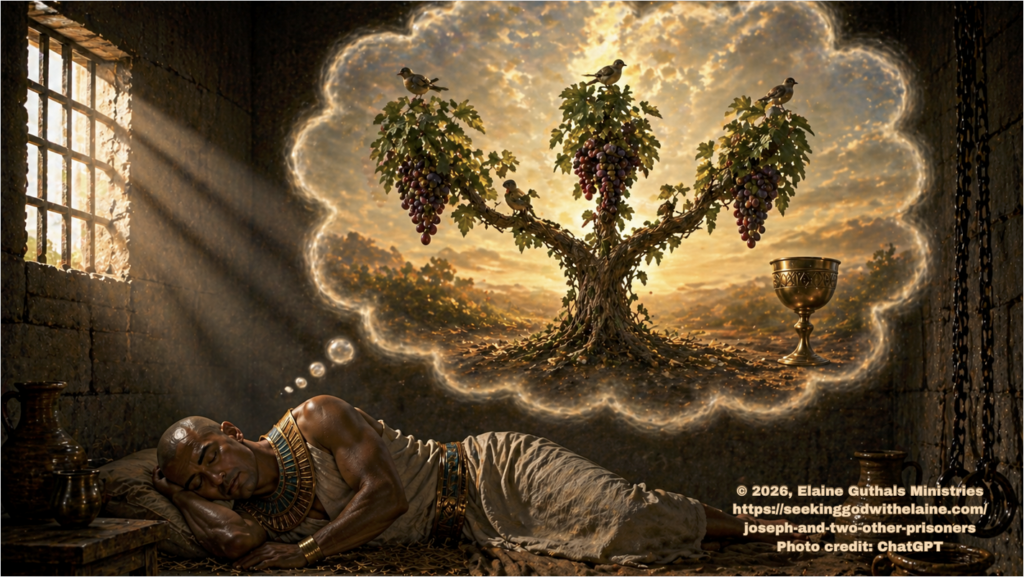
“So the chief cup-bearer told Joseph his dream first. ‘In my dream,’ he said, ‘I saw a grapevine in front of me. The vine had three branches that began to bud and blossom, and soon it produced clusters of ripe grapes. I was holding Pharaoh’s wine cup in my hand, so I took a cluster of grapes and squeezed the juice into the cup. Then I placed the cup in Pharaoh’s hand.’ ‘This is what the dream means,’ Joseph said. ‘The three branches represent three days. Within three days Pharaoh will lift you up and restore you to your position as his chief cup-bearer. And please remember me and do me a favor when things go well for you. Mention me to Pharaoh, so he might let me out of this place. For I was kidnapped from my homeland, the land of the Hebrews, and now I’m here in prison, but I did nothing to deserve it’” (Gen. 40: 9-15 NLT)
In My Dream
The dream that the cupbearer described was one full of life, growth, and restoration.
The vivid image the cupbearer described was a growing branch that represented the growth process of a grapevine. It would bud, bloom, and produce grapes. Remove any one of those steps, and the grape would not be produced.
The culmination of the dream was the cupbearer placing the wine from the grapes in his dream in Pharaoh’s hand.
This Is What the Dream Means
Joseph interpreted the dream to mean the cupbearer would be restored by the Pharaoh in three days’ time.
We’ve talked before where some of the three-day references are really talking about the third day of the week. It isn’t here.
The Hebrew phrase used here is bəʿôd šəlōšet yāmîm (בְּעוֹד שְׁלֹשֶׁת יָמִים). It means in yet three days or within three days. This is a count down method (like, “there are three days until Christmas).
While Joseph didn’t utilize the established Ancient Near East symbol system to determine patterns and cultural symbolism, that doesn’t mean he didn’t have to engage the imagery. He told the cupbearer what those images meant.
- The vine symbolized life and productivity.
- Three branches symbolized three-days’ time.
- Serving Pharaoh symbolized his restoration.
So, was Joseph saying one thing and doing another? No, he wasn’t.
The difference was Who was the source behind the dream and the interpretation. That is Jehovah.
But look at it a little closer. Whatever Jehovah ordains – whether trial or restoration – He uses it for our sanctification.
That means the most important thing is how Jehovah is glorified.
The cupbearer got good news from his dream. In three days, he would be restored to his position beside the Pharaoh.
And Please Remember
Joseph just asked one thing for interpreting the dream.
This was the only time recorded that Joseph expressed his own suffering. He told the cupbearer that he was kidnapped from his country and was imprisoned unjustly.
Wait! What????
Joseph was sold by his brothers, not kidnapped. Why wouldn’t he say that?
What Joseph told the cupbearer was a summary of what really happened. The Hebrew expression gunnōv gunnavtî (גֻּנֹּב גֻּנַּבְתִּי) conveys the act of being stolen.
Well, Joseph’s life as he knew it was stolen away.
Joseph didn’t get into the loss of identity. He just presented himself as one wrongly removed.
If we look at it in today’s terminology, we would say that he was taken against his will, trafficked, and placed into circumstances that he didn’t choose. But Joseph didn’t want to get into all of that.
So, Joseph left it as he had been treated unjustly and didn’t belong in prison.
And, really, that was all the cupbearer needed to know. The cupbearer had been a royal official, but it would not have been his decision to free Joseph. Joseph was not making an emotional appeal, but a measured request within his situation.
It was, also, probably the right tone to take. Joseph wasn’t giving an emotional account. He was just stating the facts.
Just as Joseph said that Jehovah would be the One to give him the interpretation of the dream, he is anchoring his identity in Him, not in his experiences.

Jehovah governs both what is hidden and what is revealed. Truth belongs to Him—not only in its meaning, but also in its timing and its measure.
This passage brings up an important theological lesson. We are to depend on Jehovah. We must put our trust in Him to provide for us.
Sometimes, that provision will come because of some action we have taken. Jehovah will use human means to bring the restoration to fruition.
The Baker’s Dream
“When the chief baker saw that Joseph had given the first dream such a positive interpretation, he said to Joseph, ‘I had a dream, too. In my dream there were three baskets of white pastries stacked on my head. The top basket contained all kinds of pastries for Pharaoh, but the birds came and ate them from the basket on my head.’ ‘This is what the dream means,’ Joseph told him. ‘The three baskets also represent three days. Three days from now Pharaoh will lift you up and impale your body on a pole. Then birds will come and peck away at your flesh” (Gen. 40: 16-19 NLT)
I Had a Dream, Too
Joseph remained faithful to Jehovah by honestly telling the baker the interpretation of his dream regardless of its unfavorable conclusion.
The baker’s dream was similar. It also used symbolism.
- The three baskets symbolized three-days’ time.
- The food symbolized provision.
- The birds eating symbolized loss and judgment.
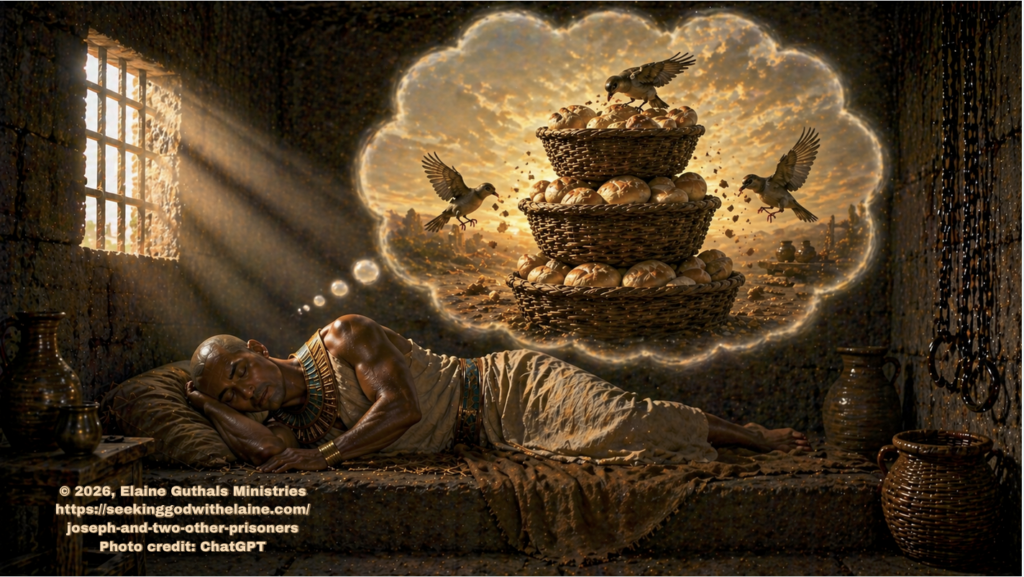
The baker probably thought that it would have a similar outcomes. He shouldn’t have assumed
The dream didn’t have as good of an outcome. Pharaoh was going to lift up the baker’s head from him.
Joseph’s interpretation did not contain the good news that the cupbearer’s dream did. He told the baker that, in three days, he would be executed.
That’s the thing. Jehovah doesn’t base His plans on our expectations.
We know Jehovah has plans for us. We also know that He uses those experiences to sanctify us. “And we know that God causes everything to work together for the good of those who love God and are called according to his purpose for them” (Rom. 8: 28 NLT).
Regardless of what Jehovah brings our way, He will use that as bricks for our Sanctification Road.
The Dreams Fulfilled
“Pharaoh’s birthday came three days later, and he prepared a banquet for all his officials and staff. He summoned his chief cup-bearer and chief baker to join the other officials. He then restored the chief cup-bearer to his former position, so he could again hand Pharaoh his cup. But Pharaoh impaled the chief baker, just as Joseph had predicted when he interpreted his dream” (Gen. 40: 20-22 NLT)
In the Ancient Near East, dream interpretation had one major litmus test.
Did the interpretation come true? The answer is yes.
- Both interpretations happened exactly as Joseph said they would.
- The timeline of three days was accurate.
- The differing outcomes occurred exactly as Joseph said they would.
Now, think back to the last devotion. We said that dreams were usually interpreted by priests, magicians, and trained diviners. Joseph was none of those things.
And Joseph got it right. It was shown to be a revelation from Jehovah.
Everything happened as Joseph had interpreted. The baker died, but the cupbearer was restored. Unfortunately, he didn’t remember Joseph as requested.
Birthday celebrations were common in the Ancient Near East during that time. One usual occurrence was the rulers using these celebrations to issue rulings or pardons.
The Hebrew used here is bayyōm haššəlîšî (בַּיּוֹם הַשְּׁלִישִׁי). It means on the third day.
Yes, the Hebrew is different than what was in Genesis 40: 13 and 19. This is not a different timeframe, but the fulfillment point of the countdown previously given.
So, the alarm went off and Christmas has arrived – actually a birthday in this case.
Forgotten Again
“Pharaoh’s chief cup-bearer, however, forgot all about Joseph, never giving him another thought” (Gen. 40: 23 NLT)
Divine timing often includes delays that feel like neglect.
Everything happened as Joseph had interpreted. The baker died, but the cupbearer was restored. He was faithful to Jehovah and compassionate to others.
Unfortunately, the cupbearer didn’t remember Joseph as requested.
How many times are we guilty of the same thing? We get so caught up in our own world that we forget — or don’t see — someone else. Jehovah doesn’t want that. He wants disciples to encourage one another.
Making the Connections
In this passage, Joseph interpreted two dreams – but there were two people. The impact of the interpretation focused just on those two people.
But it was setting up the interpretation of two dreams for one person – one very influential person.
Let’s compare the Ancient Near East practices and Joseph’s way to interpret dreams.
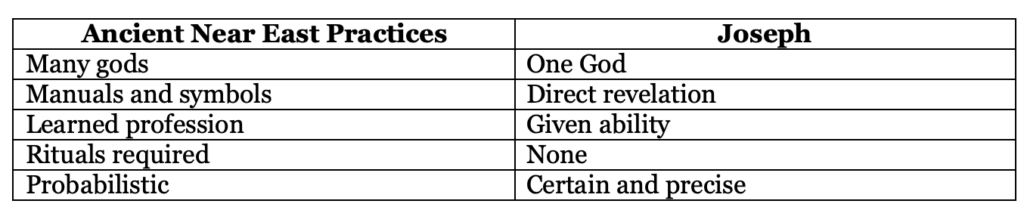
What he was doing here was redefining dream interpretation. It wasn’t about divination – it was about revelation.
It didn’t follow the normal system for dream interpretations. It was built on a relationship with Jehovah.
It had nothing to do with Joseph and his skill. It had everything to do with depending on Jehovah and His plan.
We look at this now because Genesis 40 is setting up Genesis 41. It was really important that Jehovah be shown as not only responsible for the dreams but also responsible for the situations within the dreams.
Joseph’s interpretation was not the result of skill, system, or experience. It was the result of revelation. The timing, the outcomes, and the fulfillment all belonged to Jehovah. What appeared to be two isolated dreams were actually part of a larger movement that Joseph himself could not yet see. This passage reminds us that Jehovah is not only revealing meaning — He is orchestrating events. And both unfold according to His timing, not ours.
How Do We Apply This?
- Be attentive to others as Joseph was.
- Recognize the limits of our control.
- Wait for Jehovah to reveal meaning.
- Trust Jehovah’s timing – even when it doesn’t align with our expectations.
- Submit to Jehovah’s use of every circumstance for sanctification.
Father God. You still come to us today. Reveal Your Will to us. Help us to obey.
If you don’t understand something and would like further clarification, please contact me.
If you have not signed up for the email providing the link to the devotions and the newsletter, do so below.
If God has used this devotion to speak with you, consider sharing it on social media.