Blog

  • The Nominal Disciple

    Can we be disciples in name only? This devotion looks at the passage where Paul was biting on the Jews for being nominal disciples.

    Nuggets

    • Paul was biting on the Jews for boasting they loved God without even trying to imitate Him.
    • Religion and its rituals are not what God wants; God is looking for a change in heart.
    • God wants to see evidence that we have chosen Him.
    • If we say we are disciples of God, we have to live obediently and not have double standards.
    • Circumcision of the heart is accomplished by the Holy Spirit using the atoning blood of Jesus.
    Flowers with title The Nominal Disciple

    The Jews were very proud of their Jewishness. They loved being the chosen ones. Horton wrote that they felt it was a high honor.

    But how many times have we shook our heads at the Jews? They were not exactly poster children for obedience. Remember, obedience means to hear and carry out the instructions that God gives us.

    Instead, they were nominal disciples. What can we learn from them?

    The Boast

    “Now if you call yourself a Jew, and rely on the law, and boast in God, and know his will, and approve the things that are superior, being instructed from the law, and if you are convinced that you are a guide for the blind, a light to those in darkness, an instructor of the ignorant, a teacher of the immature, having the embodiment of knowledge and truth in the law” (Rom. 2: 17-20 CSB)

    Part of the reason was they nominal disciples was because they were very boastful. Another part was they thought that being God’s chosen people gave them a pass where they didn’t have to obey God’s laws and commandments. (Did they think they were for the other nations???)

    So, what Paul was biting on them for boasting they loved God without even trying to imitate Him. “Now if you call yourself a Jew …” (Rom. 2: 17 CSB). He was telling them that isn’t going to fly.

    The Jews were especially proud of being circumcised. It was the seal of the covenant. The problem was, as Tyson put it, “the seal is not the treasure sealed.” The seal itself isn’t important; it is the treasure inside.

    Religion and its rituals are not what God wants. God didn’t want the circumcision without the holiness. He doesn’t want baptism without the holiness. There is no purity in the artificial or that which is designed to impress the worldview people.

    Human nature is not clean. Our hearts will always be wicked (sinful) because of our human nature (Jer. 17: 9) – unless we ask God to purify us. Only God can remove the sin in our lives.

    To read a related devotion, click the button below.

    Paul gave several and additions in these verses.

    • “and rely on the law” (Rom. 2: 17 CSB)
    • “and boast in God” (Rom. 2: 17 CSB)
    • “and know his will” (Rom. 2: 18 CSB)
    • “and approve the things that are superior, being instructed from the law” (Rom. 2: 18 CSB)
    • “and if you are convinced that you are a guide for the blind” (Rom. 2: 19 CSB)
    • “[and] a light to those in darkness” (Rom. 2: 19 CSB)
    • “[and] an instructor of the ignorant” (Rom. 2: 20 CSB)
    • “[and] a teacher of the immature, having the embodiment of knowledge and truth in the law” (Rom. 2: 19-20 CSB)

    What Paul was trying to get across was that circumcision is surface. God is looking for obedience, submission, and service. God is looking for a change in heart.

    I know. I know. Back to the heart. We’ve talked about our hearts before. We talked about the greatest commandment before in How Do We Love God?. Depending on which book you read, it is love the Lord with all your heart, soul, strength, and mind.

    We’ve talked in Peace, Mercy, and Love about God’s peace, mercy and love is at our center. Our center is considered our hearts. That is our foundation.

    Also, we’ve talked in The Fullness of God’s Love about how Jesus is the Word (Jn. 1: 1) that we are to hide in our hearts (Ps. 119: 11). Jesus is a major part of that foundation.

    In Have We Lost Our First Love?, we talked about how we have to open our hearts to allow Jesus to take full residence within them. We lose our first love when we either don’t allow Him full control or we kick Him out after a while.

    Obedience has to come from the heart. In Getting Obedience to the Heart Level, we said God’s Word is supposed to be a part of us. His laws and commandments are supposed to affect our character or our core – our heart level. If we are to engrave God’s laws and commandments on our hearts, we internalize them, and they change us.

    In How Are Disciples Pure in Heart?, we said God wants us to get back to where Adam and Eve were before the original sin, which we can get there through grace. Nothing we can do or give up will purify us. Only God can remove our sins — when we ask and repent of our sins. If we don’t have the pure heart — or at least are not working toward it — we don’t see God.

    To read a related devotion, click the appropriate button below.

    Let’s go back to the Jews thinking they got a pass. We’ve talked a couple of times that God isn’t selling fire insurance. We can’t admit our sins, believe He is our Savior and Redeemer, and confess God as our Sovereign Lord – and drop it. God wants to see evidence that we have chosen Him.

    That evidence is our obedience. We have to live like we were converted. We have to do the progression. We have to undergo the sanctification. We have to submit.

    To read a related devotion, click the appropriate button below.

    Paul wanted to make sure they knew that their heritage and outward seals weren’t enough.

    Double Standards

    “you then, who teach another, don’t you teach yourself? You who preach, “You must not steal” — do you steal? You who say, “You must not commit adultery” — do you commit adultery? You who detest idols, do you rob their temples? You who boast in the law, do you dishonor God by breaking the law? For, as it is written: The name of God is blasphemed among the Gentiles because of you” (Rom. 2: 21-24 CSB)

    Ooo, baby. Paul was really getting after the Jews now. He was calling them on double standards.

    You preach something, but you go ahead and do it.

    Don’t we just hate double standards? Don’t we hate it when someone tells us not to do something but then goes ahead and does it themselves?

    This passage is interesting if we hook it with James. “Not many should become teachers, my brothers, because you know that we will receive a stricter judgment” (Jas. 3: 1 CSB). Paul is saying that teachers with double standards are going to get a really strict judgment.

    What I get from this is that we have to be consistent. If we say we are disciples of God, we have to live obediently and not have double standards.

    We just finished a series on being consistent. We said that we have to be diligent in following God’s Word.

    Devotions in the Consistency Needed for Spiritual Growth series

    I also get from this that we are to use our experiences when we witness. Robinson wrote, “That truth is most effective which, having proved itself forceful in reaching our own consciences, goes from its success there upon the intrenchments of another.” Translation – If I say this is something that happened to me or helped me in my walk as a disciple (it’s proved itself), you would be more open to trying it for yourself.

    Heart Matter

    “Circumcision benefits you if you observe the law, but if you are a lawbreaker, your circumcision has become uncircumcision. So if an uncircumcised man keeps the law’s requirements, will not his uncircumcision be counted as circumcision? A man who is physically uncircumcised, but who keeps the law, will judge you who are a lawbreaker in spite of having the letter of the law and circumcision. For a person is not a Jew who is one outwardly, and true circumcision is not something visible in the flesh. On the contrary, a person is a Jew who is one inwardly, and circumcision is of the heart—by the Spirit, not the letter. That person’s praise is not from people but from God” (Rom. 2: 25-29 CSB)

    We’ve talked before about circumcision of the heart. Circumcision of the heart is where God changes our hearts. Unlike covenant circumcision, which was the physical sign the Israelites agreed with the covenant, this is where God wants us to cut out the old sin and replace it with His love and grace. He doesn’t want it to just be a ritual or symbolic. God wants the change to be real, personal, and genuine.

    Our hearts will always be wicked (sinful) because of our human nature (Jer. 17: 9). That doesn’t mean we get a pass because of that. We will still have to pay the consequences of our sins.

    Worldview followers do not have a circumcised heart, which could be interpreted as heartless. That, too, is understandable when they refuse to acknowledge God as Sovereign Lord.

    To read a related devotion, click the appropriate button below.

    Circumcision of the heart is accomplished by the Holy Spirit using the atoning blood of Jesus. We don’t do it on our own. I would say this is part of the sanctification process. Sanctification is the transformation of mind, body, and soul beginning with regeneration and ending with perfected state of spiritual wholeness or completeness.

    But it is really interesting to me what Paul is saying here.

    We benefit when we obey the law, whether we are circumcised or not.
    If we disobey the law, we can lose what we have.

    We can’t take this to mean that worldview people who have not ABCDed will get a pass. They have to be blessed to get a pass according to Matthew 25: 34. We are only blessed when we ABCD.

    The ABCDs of Salvation

    If you have not become a believer in Christ, please read through the
    Plan of Salvation and prayerfully consider what God is asking you to do.A – admit our sins

    B – believe His Son Jesus is our Redeemer

    C – confess God as Sovereign Lord

    If you have not become a believer in Christ, please read through the Plan of Salvation and prayerfully consider what God is asking you to do.


    D – demonstrate that commitment by making any changes needed in our lives to

    live the way in which God has called us

    The Disciple’s Job Description

    Making the Connections

    Haven’t we heard of worldview people questioning whether disciples are Christians? Their lifestyles do not provide enough evidence to convict them. We should shake our heads at ourselves, too.

    Remember, God doesn’t want this to just be an outward religion. He wants it to be an inward transformation.

    The problem is we are self-willed creatures, according to Horton. Instead, we need to submit to God. We need to practice self-denial, patience, and perseverance.

    To read a related devotion, click the appropriate button below.

    How Do We Apply This?

    What I get from this passage is that we have to be genuine when we ABCD. We have to truly submit to God. We have to obey His laws and commandments.

    Yes, that is going to go against our human nature. That is part of the reason we go through the process of sanctification. God will help us as we show Him that we will submit to Him.

    Father God. Circumcise our heart. We want to live for You. Amen.

    What do you think?

    Leave me a comment below (about this or anything else) or head over to my Facebook group for some interactive discussion.

    If you don’t understand something and would like further clarification, please contact me.

    If you have not signed up for the email daily or weekly providing the link to the devotions and the newsletter, do so below.

    If God has used this devotion to speak with you, consider sharing it on social media.

  • How to Study Scriptures

    Many of us want to study the Scriptures more, but what does that entail? This devotion looks at how we can go about increase our time in God’s Word.

    Nuggets

    • We need to prepare ourselves to read the Scriptures.
    • We need to let worship shape our attitude to read the Scriptures.
    • We need to expect we will be given a personal message from God as we frequently read His Word.
    • We need to diligently study the God’s Word so that we can understand.

    Devotions in the What I Believe series

    Devotions in the The Scriptures category

    Flowers with title How to Study Scriptures

    This devotion is a continuation of the last devotion, where we looked at why to read the Scriptures. Now, we are looking at how.

    How Do We Apply This?

    “Search and read the scroll of the Lord: Not one of them will be missing, none will be lacking its mate, because he has ordered it by my mouth, and he will gather them by his Spirit” (Isa. 34: 16 CSB)

    Many times, we just dive in reading God’s word. We don’t prepare our hearts in any way. Watson gave us a list of how to do that.

    Organize our thoughts first

    We need to think about what we know about the passage of Scripture that we will be reading. That should help us pull up the knowledge blocks so that we can more easily evaluate information from the current read and retain it better.

    Clear our minds of worldly pulls

    Our lives are so hectic that it is difficult sometimes to sit down and focus. We all know we need to eliminate distractions. Maybe we can put on some tunes to help filter out background noise. If our eyes keep going elsewhere, we can use our fingers to help corral them.

    There are other things we need to take into consideration and can do when reading Scriptures.

    Worship first

    We have to approach the Scriptures after we worship. Yes, “… Joshua read aloud all the words of the law…” (Josh. 8: 34 CSB). But first, he “built an altar …” to worship God (Josh. 8: 30 CSB).

    We do this by beginning with a prayer. It is so easy to just pick up the book and read.

    Shape your attitude

    Attitude plays a major part in our devotional time. We should read the Scriptures

    • Reverently
    • Diligently
    • Humbly
    • Submissively
    • Dependently

    Read frequently

    We will get more out of our devotion time if it is not hit and miss. This is especially true if the devotions over several days are about one topic. We leave less time to forget about what we read.

    I don’t know all that I should know. You don’t know all that I should know. No one is exempt from studying the Scriptures.

    Take it seriously

    When I was younger, I really didn’t take a devotional time seriously. It looked like reading Bible stories that I had already read in Sunday School.

    We have to read Scriptures for the right reasons. We have to read it looking to grow our relationship with God and to change our character.

    Read it expectantly

    We have to expect to get something out of our reading. It goes back to attitude again, like we talked about in the last devotion.

    We won’t get anything out of reading Scriptures if we think there is nothing to get.

    Read it personally

    If you can’t tell, I like to look at old sermons and see what I can learn from them. (Remember, with these devotions, God talks to me before He talks to you.) Boardman cautioned us to see what is God telling us (not what he told someone else to tell us).

    Read carefully

    It think at times (four fingers pointing back) we do our daily devotion time to check it off the to-do list. The problem with that is it can make us skin and read quickly.

    We’ve got to make sure we allow ourselves enough time to read the passage thoroughly. Then we have to read it for understanding.

    Hunt

    A lot of times, we hope what we read is self-contained. What I mean by that is all the Bible verses are written out instead of just noted. All the examples are thoroughly described.

    For example, in the last devotion, I made a quick mention of not trying to understand what God is trying to tell us if we are reading with the there-is-no-way-a-donkey-talked attitude. Someone who hasn’t grown up in church but is searching may not get the reference to Balaam and his donkey that talked.

    So, I put the link to the previous devotion where we talked about that. But that mean clicking elsewhere and reading all or part of another devotion.

    To read a related devotion, click the button below.

    I know. It depends on how much time we schedule for our devotional time. (We do schedule, don’t we? We don’t leave it up to just fitting it in, right?)

    But we have to understand what we are reading, or we don’t grow like God wants us to. Sometimes we have to dig deeper to find the meaning.

    Boardman also gave excellent suggestions. We have to understand the Israelites to understand the Scriptures. Where did they live? How did they live? What are the principles of their poetry and prophesy?

    I can say, “yes, yes” to that. Last summer Pastor Delbert has a Sunday night series. It was part geography, part history. It really opened my eyes to meanings of several Bible passages.

    Compare

    When we read one passage of Scripture, we have to think about what other passages say. Do they say the same thing? Do they seemingly contradict? Comparatively — what do other Scriptures say?

    Watch others

    Follow the examples shown in Scriptures — especially the example of Jesus. What can we learn from Moses? Daniel? David? Jonah? Paul? Stephen?

    Look for its application

    It is so easy to read a passage and just read it. We need to read it looking for how we can apply it.

    Newberry reminds us that all Scriptures are applicable to our lives. Some passages we may read and go, “Huh?” We have to make sure we remember God isn’t always talking literally. He is wanting to build our character.

    Maybe it would be easier to apply it if we hooked it on to past knowledge and experiences first. If we think about what we already know, what this is teaching us, and the differences between the two, maybe we will get a clearer picture of what changes we need to make.

    • Look for its directions. Look for the do’s and don’t — especially the implied ones. Romans 2: 11 says, “For there is no favoritism with God.” The implied command is we are to treat everyone equally, as God does.
    • Seek to understand. I know I said it already. I will probably say it a couple of more times so we get it lodged in our brains. We cannot just read to read. This isn’t a novel. It is a textbook. How did you study in school when you read your textbooks? Did you take notes (use a journal now)? Did you have other books for reference (use a Bible dictionary or commentaries)?
    • Make inquiries. Google is good, although we always have to evaluate what we read online. If we don’t understand something, we need to get with our Pastor Chad-types.

    Then we have to figure out ways we can put into practice what we read. How does God want us to act on what we have read?

    Keep track

    Keep a list of Scriptures that talk to us. It not only gives us a list we can access when things aren’t going so well, but it can also show us how God is growing us.

    Read it orderly

    There are different ways we can read the Scriptures. We can start at Genesis and read to Revelation. Some might get bogged down in Leviticus or Numbers, though.

    We can read an Old Testament book and then a New Testament book. That might help some since the New Testament tends to be an easier read.

    One thing I am trying to do is read the Bible chronologically. It starts out in Job and goes through.

    Bottom Line, Though

    In The Reading of the Law, we are given ways to grow our relationships with God.

    • “daily reading of the Bible
    • “attendance on the public ordinances of God’s house
    • “Christian conversation
    • “giving heed to the voices of conscience and the Divine Spirit.”

    I know, I know. You all were looking for some new way to kick start devotion time.

    I get it. Zig Zeigler said something like, “You can’t expect different results by doing the same thing.” We are looking for improved devotional time.

    But we look for some gimmick to help us, some resource by someone we see as a with-it disciple.

    It really doesn’t start there.

    It starts in our hearts. It starts with our dedication. It starts with our relationships with God.

    I know I said a long time ago that I get a lot of mileage out of this graphic.

    Searching for and Seeking God

    Hearing His Word (Rom. 10: 17).
    Reading His Word (Rev. 1: 3).
    Praying to Him (Heb. 4: 16).
    Studying His Word (Ac. 17: 11).
    Meditating on His Word (Ps. 1: 1-2).
    Memorizing His Word (Ps. 119: 11).

    That is what it all boils down to for disciples. We have to hear His Word, read it, study it, meditate on it, and memorize it. All through that, we need to be in prayer, asking God to provide the meaning.

    That isn’t going to change. Props aren’t going to change our desire or our commitment to do that — not really.

    The only thing that is going to get us to where we need to be in reading the Scriptures is our firm desire to want to change to be the disciple God wants us to be.

    Father God. We want to learn of You. We want to be the children and disciples You want us to be. Help us to change our attitudes and priorities. Help us to focus on Your Scriptures and understand them. Help us to hear You telling us what we need to know. Amen.

    What do you think?

    Leave me a comment below (about this or anything else) or head over to my Facebook group for some interactive discussion.

    If you don’t understand something and would like further clarification, please contact me.

    If you have not signed up for the email daily or weekly providing the link to the devotions and the newsletter, do so below.

    If God has used this devotion to speak with you, consider sharing it on social media.

  • Why Should We Study Scriptures?

    If someone asked you why it was important to study the Scriptures, what would you say? This devotion explores several reasons why we should and the benefits we gain when we do study Scriptures.

    Nuggets

    • We have to approach reading the Scriptures with faith.
    • We can’t expect instant understanding when we read Scriptures.
    • Change has to come from our heart.
    • Hiding God’s Word in our hearts has to be pre-trial.
    • When we diligently read the Scriptures, we leave less of an opening for sin to take hold.

    Devotions in the What I Believe series

    Devotions in the The Scriptures category

    Flowers with title Why Should We Study Scriptures?

    I like it when I have a lot of research from which to write my devotions. But then again, when I have over 80 pages, it sometimes get unwieldy. It makes it very difficult to organize at times.

    So, this going to go over two devotions. I hope it flows coherently.

    Let’s Put It into Context

    It is important that we read the Scriptures. Stuart reminded us what we find in God’s Word.

    • Instruction
    • Guidance
    • Encouragement
    • Consolation
    • Delight

    Hodge also gave us a list of reasons to search the Scriptures.

    • Gain knowledge
    • For consolation
    • To become holy

    The Bible is a wonderful book that is an excellent guide to how we should live. But how should we read it?

    How We Should Approach the Scriptures

    “The instruction of the Lord is perfect, renewing one’s life; the testimony of the Lord is trustworthy, making the inexperienced wise” (Ps. 19: 7 CSB)

    We have to approach reading the Scriptures with faith. Faith is the belief that the doctrines stated in God’s Word are true, even if we do not understand all aspects of them. If we approach our reading with the there-is-no-way-a-donkey-talked attitude, we aren’t even trying to understand what God is trying to tell us.

    To read a related devotion, click the button below.

    So, we have to approach every word as being a truth from God. It can happen. It will happen.

    We have to do more than just read God’s Word. We have to think about it. We have to dig for that kernel that God is trying to apply to our lives.

    Watson wrote, “Meditation is the bellows of the affections: ‘While I was musing the fire burned’ (Psalm 39:3).” We can’t expect instant understanding when we read Scriptures. Remember, God’s ways are higher than ours (Isa. 55: 8-9).

    When we read, do we think that it is God speaking to us? Or do we just read it?

    We’ve got to check our arrogance. We can’t read His Word like we are His equals and can just pick it up with no work involved. Our devotional time should not be approached as we are checking it off of our list.

    Yes, it is all about approach. What is our attitude about His laws and commandments? Are we going to listen and obey them? Do we want Him to change us?

    How Does Scriptures Change Us?

    “I have treasured your word in my heart so that I may not sin against you” (Ps. 119: 11 CSB)

    Change has to come from our heart. We are commanded to love God with all our hearts (Deut. 6: 5).

    To read a related devotion, click the button below.

    But it is more than just the emotion of love. It is the hide-in-our-hearts type of love.

    Eyre said it this way. He wrote, “Not merely in his memory, not in the intellectual powers of the mind, but in the city and citadel, where the affections dwell, where reason governs, the home of motive, of principle, and feeling. The memory should be the storehouse of the Divine truth; it is often the very quiver of God, from which He draws His arrows of conviction, and the storehouse where He draws comfort and peace for His people. … Love needed to understand God’s Word.”

    That is what changes us. We make it a part of us.

    The Ouch Factor

    “Afterward, Joshua read aloud all the words of the law — the blessings as well as the curses — according to all that is written in the book of the law” (Josh. 8: 34 CSB)

    We have to remember it is going to hurt. I think too many people want just the prosperity gospel.

    Not going to happen. “More than that, we rejoice in our sufferings, knowing that suffering produces endurance” (Rom. 5: 3 ESV). Smooth sailing is not going to produce endurance.

    Hiding God’s Word in our hearts has to be pre-trial. If we wait for the rough times to start — i.e., when we think we need Him — it is too late.

    Remember, the God’s Word is a sword in the armor. It is our defensive weapon. Do we really want to leave home without it?

    We talked about being pruned. God’s Word does that. “You have already been pruned and purified by the message I have given you” (Jn. 15: 3 NLT).

    To read a related devotion, click the button below.

    But we don’t just hide it away and forget about it. It has a purpose. “… that I may not sin against you” (Ps. 119: 11 CSB). Remember, it is the offensive weapon. It is going to attack when sin turns the corner and gets onto our battlefield. It isn’t going to wait until sin strikes first. It is going to protect us. Haven’t we heard about angel armies?

    What is the main purpose in sanctification? Sanctification is the transformation of mind, body, and soul beginning with regeneration and ending with perfected state of spiritual wholeness or completeness.

    To read a related devotion, click the button below.

    It is to cut sin out of our hearts and lives. How do we know what sin is? We read God’s Word. It helps pinpoint the sin we have in our lives. It tells us how to avoid it.

    Don’t we see the strength that gives us? We are not alone. God is fighting for us (and we already know God has won the war).

    Breastplate

    Diligently

    “It is to remain with him, and he is to read from it all the days of his life, so that he may learn to fear the Lord his God, to observe all the words of this instruction, and to do these statutes” (Deut. 17: 19 CSB)

    Reading the Scriptures diligently unlocks the power of God for us. “Jesus replied, “Your mistake is that you don’t know the Scriptures, and you don’t know the power of God” (Mt. 22: 29 NLT).

    When we diligently read the Scriptures, we leave less of an opening for sin to take hold.

    Scriptures point to Jesus. “You search the Scriptures because you think they give you eternal life. But the Scriptures point to me!” (Jn. 5: 39 NLT).

    Reading the Scriptures show we are dependent on God. We need to depend on Him during the good times and the bad.

    Bible

    But It’s Confusing!

    We think that the Scriptures can be so hard and confusing. We have to read the Scriptures expecting that God will help us understand. “Your hands made me and formed me; give me understanding so that I can learn your commands” (Ps. 119: 73 CSB). I love how the New Living Testament translated it. “… Now give me the sense to follow your commands” (Ps. 119: 73 NLT).

    Yes, it can be confusing because God reveals the meat of His Word only to His children. “For what seems to be God’s foolishness is wiser than men’s wisdom, and what seems to be God’s weakness is stronger than men’s strength” (I Cor. 1: 25 TEV).

    To read a related devotion, click the button below.

    Keith reminded us why it is so hard to diligently study God’s Word. That goes against our human nature. Don’t we easily go into our defense mechanisms? Wouldn’t Satan kick those into high gear when we are trying to cut him out?

    A Meal of the Scriptures?

    “Your words were found, and I ate them. Your words became a delight to me and the joy of my heart, for I bear your name, Lord God of Armies” (Jer. 15: 16 CSB)

    Oh, that sounds funny. How are we going to eat words?

    What happens when we eat something? It goes from outside of us to inside of us.

    But more than that, it becomes a part of us. It molds with us. It nourishes us so that we grow and have strength.

    Angus wrote, “The believing soul turns the words into the nourishment of the spiritual life.”

    Think of it this way. How do we go from milk babies to steak adults? We have to have substantial nourishment in order for us to grow.

    To read a related devotion, click the button below.

    Yep. We have to seek until we find. God isn’t just going to roll His Will and understanding into us. We have to be at the dinner table with knife and fork is the ready position.

    Then we have to eat. Nothing is going to happen if we don’t chew. Can we equate the digesting of the food with meditating?

    But look what else is the outcome. “… Your words became a delight to me and the joy of my heart …” (Jer. 15: 16 CSB). Delight and joy when we feast on God’s Word.

    Making the Connections

    We can’t get obedience to the heart level until we get the Scriptures there. “The law of his God is in his heart; his steps do not slip” (Ps. 37: 31 ESV).

    That makes Stillingfleet’s comment understandable. He wrote, “Truth must be sought, and that with care and diligence, before we find it.”

    We can only find God’s truth when we actively look for it. In the next devotion, we are going to look at some ways to do that.

    Loving Father. You have provided so much for us because You love us. You designed the plan of salvation even before You created us (Eph. 1: 4). You knew we would need Your Word to guide us back to You. You gave, through Your Spirit, Your Word to Moses, Matthew, Peter, John, and Paul. Help us to diligently search the Scriptures to find You. Amen.

    What do you think?

    Leave me a comment below (about this or anything else) or head over to my Facebook group for some interactive discussion.

    If you don’t understand something and would like further clarification, please contact me.

    If you have not signed up for the email daily or weekly providing the link to the devotions and the newsletter, do so below.

    If God has used this devotion to speak with you, consider sharing it on social media.

  • The Scriptures Last Forever

    It is hard for us to wrap our minds around the concept of forever. God’s Word will last for eternity. This devotion looks at what it entails in believing God’s Word lasts forever.

    Nuggets

    • Scriptures, as well as faith, confidence, hope, and trust, are all about the second coming.
    • The “word of our God” has to mean more than just the Bible.
    • Jesus’ words are not going to pass away.

    Devotions in the What I Believe series

    Devotions in The Scriptures category

    Flowers with the title The Scriptures Last Forever

    We are doing double duty in the devotions in this series. We are looking at what the Bible tells us about doctrinal issues. Then we are considering how to witness to worldview people concerning those issues.

    For this devotion, we are looking at the belief that the Scriptures last forever.

    Let’s Put It into Context

    If we are to believe that the Scriptures will last forever, then we have to believe God will live forever. We will have to believe that His dwelling place will last forever.

    I know. It is hard to wrap ourselves around that at times.

    It is hard when we try to consider things based on our own understanding. Remember what we said learning is. It is taking what we already know and hooking new information to it.

    In this, we really do not have that base on which to hook.

    We have to remember that we have to “trust in the Lord with all [our hearts], and do not rely on [our] own understanding” (Prov. 3: 5 CSB).

    Scriptures Last Forever

    “Lord, your word is forever; it is firmly fixed in heaven” (Ps. 119: 89 CSB)

    That means we just have to take it on faith. Faith is the belief that the doctrines stated in God’s Word are true, even if we do not understand all aspects of them.

    Let’s look at it this way. “Now faith is confidence in what we hope for and assurance about what we do not see” (Heb. 11: 1 NIV).

    There are four words in this verse that are critical to what we believe.

    Faith

    The Holman Bible Dictionary defines faith as “trusting commitment of one person to another, particularly of a person to God. We get two things out of that: trust and commitment.

    We’ve talked about trust before. We said that trust is believing God will do what He says He will do. We can trust Him even when we are afraid because of His unfailing love. We can trust God because He is Sovereign God — our God.

    To read a related devotion, click the button below.

    We know we can trust God — and therefore the Scriptures — because the Scriptures reflect His character. “Anyone who does not love does not know God, because God is love” (I Jn. 4: 8 ESV).

    We can trust the Scriptures because of God’s power and strength. This is the Creator of the universe. This is the One who raised Jesus from the grave.

    We can trust the Scriptures because of God’s truth. “God is not a man, so he does not lie. He is not human, so he does not change his mind. Has he ever spoken and failed to act? Has he ever promised and not carried it through?” (Num. 23: 19 NLT).

    Confidence

    Confidence, according to Merriam-Webster Dictionary, is “a feeling or consciousness of one’s powers or of reliance on one’s circumstances” and “faith or belief that one will act in a right, proper, or effective way.”

    Confidence means that we put our trust into Someone because He is reliable. “Know therefore that the Lord your God is God; he is the faithful God, keeping his covenant of love to a thousand generations of those who love him and keep his commandments” (Deut. 7: 9 NIV). He has never failed us.

    He may not answer our prayers in the ways we want, but “we know that all things work together for the good of those who love God, who are called according to his purpose” (Rom. 8: 28 CSB). We know His plans for us are for our good (Jer. 29: 11).

    Hope

    We need to really look at that last verse. “‘For I know the plans I have for you,’ declares the LORD, ‘plans to prosper you and not to harm you, plans to give you hope and a future’” (Jer. 29: 11 NIV). Do you see that? Hope.

    According to the Holman Bible Dictionary, hope is the “trustful expectation, particularly with reference to the fulfillment of God’s promises.” It is back to trust, but it is more than that, in my opinion.

    Hope isn’t just a now thing. It is a transference. God helped me in my spiritual tornado, so He is going to help me the next time Satan asks for me.

    I see that as my decision to trust God. It is all about our decision, isn’t it? God gives us free will to decide whether we are going to submit to Him or not.

    We have to believe it is God protecting us in our spiritual tornadoes so we can believe that He is in control of all that comes.

    Assurance

    Assurance, as opposed to hope, comes from God.

    Oh, that is interesting. The Holman Bible Dictionary took me, when I went to assurance, to see security of the believer.

    The security of the believer is “biblical teaching that God protects believers for the completion of their salvation.”

    That is what faith, confidence, hope, and trust is all about. More, this is what the Scriptures are all about.

    “For God so loved the world that he gave his one and only Son, that whoever believes in him shall not perish but have eternal life” (Jn. 3: 16 NIV).

    God loves us so much that He didn’t want to be separated from us for eternity. He didn’t want us to face the consequences of sin throughout eternity.

    Because of this, God looked for payment for the penalty of sin. That payment had to be made with blood. But not just any blood. It had to be the blood of the Perfect sacrifice.

    That sacrifice could only be Jesus, God’s Son. Only He is perfect.

    Crosses

    Jesus was born of a virgin, making Him 100% God and 100% man. He gave His life on the cross for us so that His blood could pay the price for our sins. Because of God’s great might and power, Jesus rose from the grave, conquering death and paying the price for our sins.

    Look at the last part of Psalms 119: 89. “… it is firmly fixed in heaven” (Ps. 119: 89 CSB). It is fixed. It is settled.

    What God has said in His Scriptures will come to pass. We can take His Word to the bank. It is a done deal.

    It isn’t based on anything we did or are going to do. In fact, nothing we could do could change a thing.

    Because it isn’t about us. It is about God and what He already has done for us. What He did before this heaven and earth was even created (Eph. 1: 4).

    More than Just Scriptures

    “The grass withers, the flowers fade, but the word of our God remains forever.” (Isa. 40: 8 CSB)

    Cook made a good argument that the “word of our God” has to mean more than just the Bible. Isaiah 40: 8 has this phrase. Peter calls it the “word of the Lord.”

    Isaiah really just had a portion available to him. That portion was probably the books of the law. Really, a lot of the prophets were Isaiah’s contemporaries.

    Same with Peter. It is believed that most of the New Testament books were written between AD 44 and AD 70. Then comes John writing all of his books after AD 80.

    So, what are we looking at? How about God’s truth?

    Just because God capped the Bible at 66 books doesn’t mean He is no longer talking to us. He talked to me just today through some songs. It is my hope and prayer that God talks to you through these devotions.

    Jesus’ Words Last Forever

    “Heaven and earth will pass away, but my words will never pass away” (Lk. 21: 33 CSB)

    Heading

    Look what Greenwood wrote. He said, “The words of Jesus Christ, the words which He spoke for our direction, for our purification, for our comfort, for our redemption, have not passed, and shall not pass away.”

    Forever — Jesus is going to guide and comfort us. He is going to redeem and purify us.

    We can take that to the bank, too. Jesus’ words are not going to pass away.

    Yes, this heaven and earth is going to pass away. “Then I saw a new heaven and a new earth, for the first heaven and the first earth had passed away, and the sea was no more” (Rev. 21: 1 ESV).

    This earth ending is not going to be because of anything we do or don’t do. We don’t know when it will end.

    This world will end. Jesus said it would. It will.

    Making the Connections

    I love what the Homilist said that the purpose of the Scripture was.

    “(1) A soul-restoring work.
    “(2) A mind-enlightening work.
    “(3) A heart-gladdening work.
    “(4) A life-regulating work.
    “(5) A sin-convincing work.
    “(6) A prayer exciting work.”

    Now. Go back and read one through six again, and put the word forever at the end.

    Isn’t that comforting?

    Making the Connections to Self-Discipline

    The Bible is a vital book, but worldview people may see it as that — just a book. We have to think about how we are going to show them that this book is a guidebook for eternity.

    How Do We Apply This?

    We are thinking about how we should respond to arguments of those to whom we are witnessing. Before we can determine how to answer them, we have to make sure we know what we believe and why we believe it. These are the questions we will be using for this series.

    • What does the Scriptures say?
    • What do I believe?
    • Why do I believe the same/differently than the Scriptures?
    • What are the talking points when witnessing to a non-believer?

    The Bible is a book that will last forever. It talks about eternal issues. When we put our faith and trust in it, it gives us confidence and hope.

    Loving Heavenly Father. We thank You that You have given us a guidebook to show us how You want us to live. This is how we will live with You in heaven. We know Your Word will live forever. Help us to put our faith and trust in You so that we live by Your Word. Amen.

    Related Links

    I have created a worksheet of the questions above. Click on the button below to access it.

    What do you think?

    Leave me a comment below (about this or anything else) or head over to my Facebook group for some interactive discussion.

    If you don’t understand something and would like further clarification, please contact me.

    If you have not signed up for the email daily or weekly providing the link to the devotions and the newsletter, do so below.

    If God has used this devotion to speak with you, consider sharing it on social media.

  • Can We Change the Scriptures?

    Do we have to follow every law and commandment in the Bible? Exactly as written? This devotion looks at how we should approach God’s laws and commandments.

    Nuggets

    • Usually, when we start picking and choosing what we are going to believe or follow, we start diluting everything, making it harder to follow.
    • God has the final say, not us.
    • God gave us the laws and commandments to show us they could not save us.

    Devotions in the What I Believe series

    Flowers with title Can We Change Scriptures?

    A big part of the Scriptures is God’s laws and commandments. Most of the rest of the Bible is talking about what He was going to do and why (send a Savior to pay the price for our sins), talking about doing it, and talking about what it meant that He did it.

    Worldview people think God’s laws and commandments are outdated. People think they should be changed. They think this because they do not want to follow them the way they are written.

    It doesn’t work that way. We have free will as to whether or not we are going to follow those laws and commandments (which brings huge consequences if we choose not to follow them). But we cannot change the laws of Someone more powerful than us. Let’s look at why.

    Let’s Put It into Context

    “Now the Spirit expressly says that in latter times some will depart from the faith, giving heed to deceiving spirits and doctrines of demons, speaking lies in hypocrisy, having their own conscience seared with a hot iron” (I Tim. 4: 1-2 NKJV)

    We have talked about rewriting Scriptures before. Heresies are opinions that are different from what the church believes. Scriptures tell us that, if we try to rewrite Scriptures, we will be branded a liar.

    We also talked about what that does to our witness. Disciples are not distinguishable from the world if we are not bearing fruit and living no differently than non-believers. We are distinguishable when we follow God’s laws and commandments.

    To read a related devotion, click the button below.

    We Can’t Change Scriptures

    “Now, Israel, listen to the statutes and ordinances I am teaching you to follow, so that you may live, enter, and take possession of the land the Lord, the God of your fathers, is giving you. You must not add anything to what I command you or take anything away from it, so that you may keep the commands of the Lord your God I am giving you” (Deut. 4: 1-2 CSB)

    Not that long ago, we did a devotion on this passage in Deuteronomy. Moses told the Wilderness Wanderers that they had to pay attention to God’s laws and commandments. They were to remain faithful.

    Moses didn’t say rewrite the laws and commandments. He didn’t tell them they could pick and choose or partially keep them. He told them to keep all of God’s laws and commandments.

    To read a related devotion, click the appropriate button below.

    Let’s dig a little deeper into this passage. This time, let’s look at it through the lens of Scriptures, not obedience.

    If he would be speaking to us today, Moses would tell us to read our Bibles and attend church (“… listen to the statutes and ordinances …” [Deut. 4: 1 CSB]). Not only that, he would tell us to pay attention and do them.

    We know listening and doing are two different things.

    God is Sovereign God. Who do we think we are to change His laws and commandments?

    Usually, when we start picking and choosing what we are going to believe or follow, we start diluting everything. It makes it harder to follow.

    I remember when Mom made my wedding dress. I wanted the sleeves from my sister’s recital dress (or at least the cuffs), the bodice from a dress I had her make if I was going to need a long black dress, and the skirt from a wedding dress pattern I had. In order to get it all out together, she had to jury rig it by coming up with something on her own.

    No, it wasn’t a straightforward sew. (I am surprised she didn’t just throw up her hands and say she was done.)

    We muck things up like that when we start picking and choosing from God’s laws and commandments. Things no longer fit seamlessly because they are no longer as God intended.

    More importantly, we tell God that He is not Sovereign any more. Yep, we knock Him off of His throne — well, we try to.

    God will not be knocked off His throne because He is Sovereign regardless of what we think.

    “And I know that whatever God does is final. Nothing can be added to it or taken from it. God’s purpose is that people should fear him” (Ecc. 3: 14 NLT)

    Yes, God has the final say, not us. Can we spell s-o-v-e-r-e-i-g-n? God has the complete say.

    Look at the last part of the verse. “… God’s purpose is that people should fear him” (Ecc. 3: 14 NLT). We’ve talked about fear of the Lord several times.

    We learned in What Does Fear of the Lord Mean? that the fear of the Lord means reverence and love, not terror. We also applied it to the New Testament. In Kindness and Love as Virtues, we said that godliness in the New Testament is equivalent to the Old Testament’s the fear of the Lord.

    To read a related devotion, click the appropriate button below.

    In Finding Favor by Acknowledging God, we talked about our following God’s laws and commandments shows that we fear God. His intent is us loving Him, and we show that love by obeying Him. Obedience means we not only hear God’s Word but also follow His instructions.

    To read a related devotion, click the button below.

    When we focus on the Godview, we can utilize God’s wisdom rather than our own. Since He has made everything interconnected, things go more smoothly when we do things His way.

    God’s way is final. It does not change.

    Ooo. Look what Parr said. He wrote, “The very NATURE OF MAN is transient and imperfect, much more THE WORKS in which he is engaged. Frail are they, and fugitive, mutable and perishable, uncertain and insecure, never continuing in one stay.”

    It isn’t dependent on our insecurities. It doesn’t matter that we are temporary.

    God’s laws and commandments will remain the same forever.

    Bible

    Didn’t Jesus Do Away with the Law?

    “Don’t think that I came to abolish the Law or the Prophets. I did not come to abolish but to fulfill. 18 For truly I tell you, until heaven and earth pass away, not the smallest letter[a] or one stroke of a letter will pass away from the law until all things are accomplished” (Mt. 5: 17-18 CSB)

    After Jesus’ death and resurrection, the Jews no longer followed the ceremonial law because it was imperfect. However, they — and we — still have to follow the moral laws.

    Kemp made an excellent observation. He wrote, “If any persons declare that the moral law is altered, to be consistent, they must also suppose that the Divine nature is altered.”

    That is logical. The laws and commandments reveal His character. God cannot change (Num. 23: 19). Therefore, the laws and commandments do not — and cannot — change.

    I hadn’t really thought about this before, so let me process here.

    God the Father sent Jesus the Son to earth to fulfill the laws. But God the Father and Jesus the Son (along with the Holy Spirit) are all one.

    So, if God and Jesus are one and God cannot change, Jesus cannot change, either, because the laws reflect His character, also.

    God did not give the laws and commandments so people would be perfect in obeying them. Remember what perfect means: “reaching an ideal state of spiritual wholeness or completeness. … Through a covenant relationship with His people, and by grace, God thus offers to His people the possibility of perfection” (Holman Bible Dictionary).

    He gave us the laws and commandments to show us they could not save us. On our own, we cannot keep the laws and commandments. Therefore, we need a Savior to pay the price for our atonement.

    That Savior was — and is — Jesus.

    How Did Jesus Fulfill the Law?

    Barrett argues that Jesus fulfilled the law by completing it in His teaching, by obeying it, and dying to be the substitute.

    To read a related devotion, click the appropriate button below.

    Making the Connections

    I love finding great quotes. I know I find too many, but this one is really good.

    Barret wrote, “We do not need the light of stars when the sun has risen; but the stars are shining still.”

    Okay, let’s substitute here.

    We do not need the law when Jesus has risen; but the law is shining in effect. (I don’t know if I like effect, but I hope you get what I am trying to say.)

    The law wouldn’t — couldn’t — save us. But that wasn’t the law’s job. God never intended for the law to save us.

    Only Jesus can save us.

    The law was to show us God’s character. And it still can do that.

    Making the Connections to Self-Discipline

    We have to make sure we know what we believe — and why we believe it. This is super important when we witness to worldview people, who are going to question why we believe God’s laws and commandments must be followed.

    How Do We Apply This?

    Try asking yourself these questions.

    • What does the Scriptures say?
    • What do I believe?
    • Why do I believe the same/differently than the Scriptures?
    • What are the talking points when witnessing to a non-believer?

    God will never change – and His laws and commandments won’t either. We either have to accept His laws and commandments as He has given them to us – or prepare to accept the consequences for eternity.

    Loving Father. You are love. You have given us Your laws and commandments to show us Your character. By following Your laws and commandments, we become imitators of You. Unfortunately, while we are in these earthly bodies, we will not be able to always follow those commandments. Lord, we want to be imitators of You. We want to prepare ourselves for our lives with You for eternity.

    Related Links

    I have created a worksheet of the questions above. Click on the button below to access it.

    What do you think?

    Leave me a comment below (about this or anything else) or head over to my Facebook group for some interactive discussion.

    If you don’t understand something and would like further clarification, please contact me.

    If you have not signed up for the email daily or weekly providing the link to the devotions and the newsletter, do so below.

    If God has used this devotion to speak with you, consider sharing it on social media.

    Title

    Bible Verse

    Heading

    Post

    To read a related devotion, click the appropriate button below.

    Resource

    Cross with words Our salvation depends on one thing -- faith in Jesus

    Title

    Bible Verse

    Heading

    Post

    To read a related devotion, click the button below.

    Resource

    Cemetary with Colossians 3: 1

    Title

    Bible Verse

    Heading

    Post

    To read a related devotion, click the appropriate button below.

    Resource

    Cemetary with Colossians 3: 1

    Title

    Bible Verse

    Heading

    Post

    To read a related devotion, click the button below.

    Resource

    Cross with words Our salvation depends on one thing -- faith in Jesus

    Making the Connections

    Post

    Making the Connections to Self-Discipline

    Post

    To read a related devotion, click the button below.

    Resource

    Cemetary with Colossians 3: 1

    How Do We Apply This?

    Post

    To read a related devotion, click the button below.

    The ABCDs of Salvation

    If you have not become a believer in Christ, please read through the
    Plan of Salvation and prayerfully consider what God is asking you to do.A – admit our sins

    B – believe His Son Jesus is our Redeemer

    C – confess God as Sovereign Lord

    If you have not become a believer in Christ, please read through the Plan of Salvation and prayerfully consider what God is asking you to do.


    D – demonstrate that commitment by making any changes needed in our lives to

    live the way in which God has called us

    The Disciple’s Job Description

    Searching for and Seeking God

    Hearing His Word (Rom. 10: 17).
    Reading His Word (Rev. 1: 3).
    Praying to Him (Heb. 4: 16).
    Studying His Word (Ac. 17: 11).
    Meditating on His Word (Ps. 1: 1-2).
    Memorizing His Word (Ps. 119: 11).

    To read Has God Provided Everything We Need?, click the button below.

    If you have not admitted that your relationship is not right with God,

    have not asked Jesus to be your Lord and Savior,

    and have not confessed your sins,

    please read through the Plan of Salvation and prayerfully consider what God is asking you to do.

    Related Links

    Related Links

    Related Links

    Song

    Related Links

    I have created a worksheet of the questions above. Click on the button below to access it.

    Don’t know what your spiritual gifts are?

    Take this Spiritual Gifts Inventory

    The Disciple’s Job Description

    Complete Job Description

    Individual Description

    It Was Enough
    Vocalist: Elaine Guthals
    Keyboard: Chris Vieth

    What do you think?

    Leave me a comment below (about this or anything else) or head over to my Facebook group for some interactive discussion.

    If you don’t understand something and would like further clarification, please contact me.

    If you have not signed up for the email daily or weekly providing the link to the devotions and the newsletter, do so below.

    If God has used this devotion to speak with you, consider sharing it on social media.
  • How Do We Profit from the Scriptures?

    God uses the Scriptures to show us how to be more like Him. This devotion looks at how that is profitable to us.

    Nuggets

    • God’s goal is to make us men [and women] of God.
    • The Scriptures are profitable because of dignity and authority; utility; and perfection.
    • The Bible was designed by God to be a teaching book.
    • God shows us He loves us through the Scriptures.

    What I Believe Categories

    The Scriptures
    God
    Man
    Salvation
    God’s Purpose of Grace
    The Church
    Baptism and the Lord’s Supper
    The Lord’s Day
    The Kingdom

    Last Things
    Evangelism and Missions
    Education
    Stewardship
    Cooperation
    The Christian and the Social Order
    Peace and War
    Religious Liberty
    The Family

    Flowers with title How Do We Profit from the Scriptures?

    God wants to mold our character. He wants disciples to be like Him.

    That is why God sanctifies us. Sanctification is the transformation of mind, body, and soul beginning with regeneration and ending with perfected state of spiritual wholeness or completeness.

    The goal is to take us from where we are to imitating God. God’s goal is to make us men [and women] of God.

    In order to facilitate this, God has given us the Scriptures, what we call the Bible. The Bible is a guide through our process of sanctification. It outlines our duties and responsibilities.

    Profitable

    “All Scripture is inspired by God and is profitable for teaching, for rebuking, for correcting, for training in righteousness” (II Tim. 3: 16 CSB)

    Paul wrote to Timothy that the Scriptures were profitable. The first thing that pops into our minds generally when we hear the word profitable is money. Society today has programmed us to think about money — how much we have and what it can buy us.

    That isn’t the profitable that God has in mind. Look what Caryl said. He wrote, “In the plainest text there is a world of holiness and spirituality: and if we, in prayer and dependence upon God, sit down and study it, we shall behold much more than appears to us.”

    Hall noted that the Scriptures are profitable because of dignity and authority; utility; and perfection. Let’s unpack those.

    The Scriptures are profitable because of its dignity and authority. This book was inspired by the One who Created all there is. What better instruction book do we have than a book by the One who knows how it was supposed to be?

    The Scriptures are profitable because of its utility. As we read and put the instructions into place in our lives, our lives are transformed so that we are imitators of God.

    However, this only happens when we read the Scriptures to seek God. If we are reading it as a novel or just a good book, we probably won’t use it to transform our lives.

    If we study and meditate on it, we acknowledge God’s authority and it’s ability to change us forever.

    The Scriptures are profitable because of its perfection. The Holman Bible Dictionary says perfect is “reaching an ideal state of spiritual wholeness or completeness. … Through a covenant relationship with His people, and by grace, God thus offers to His people the possibility of perfection” (Holman Bible Dictionary). That should be a huge draw for us.

    Teaching

    “He must hold firm to the trustworthy word as taught, so that he may be able to give instruction in sound doctrine and also to rebuke those who contradict it” (Ti. 1: 9 ESV)

    Scriptures teach us doctrine. According to the Holman Bible Dictionary, doctrine is “… a corporate expression of an authoritative interpretation of the faith as professed by a considerable body of church people.”

    Doctrine is the truths about the gospel. This doctrine is what is taught from one person to another, from one generation to the next.

    The Bible was designed by God to be a teaching book. It is divided into books, chapters, and verses for our ease. (No, the original did not have our system of division.)

    It teaches us the plan of salvation and the justification needed for us to believe. No, its purpose is not to tell us how the earth was created. Its purpose is to introduce us to the Creator and His plan to restore our relationship with Him. It tells us of His grace and love.

    God sees our deep need of His salvation and reveals Himself to us. Muir wrote, “It thus utterly dispels all the delusive fancies of modern rationalism, whereby man is tempted to think well of himself; and so to count that a gain to him which, if ever lie be saved, he must be content to count as loss for Christ.”

    Reproof

    “And when he comes, he will convict the world concerning sin and righteousness and judgment” (Jn. 16: 8 NLT)

    Reproof is where God points out the doctrine we believe is faulty. In other words, God convicts us when we are wrong — when we sin. Conviction is, according to the Holman Bible Dictionary, “a sense of guilt and shame leading to repentance.”

    Emphasis should be placed on the repentance. Jones noted that God addresses ignorance, wrong thoughts and beliefs, prejudice, and lack of truth.

    Correction

    “For the LORD disciplines those he loves, and he punishes each one he accepts as his child” (Heb. 12: 6 NLT)

    God shows us He loves through His Scriptures. One way He shows this is by giving us laws and commandments. Yes, He loves us by giving us boundaries.

    “You caused judgment to be heard from heaven; The earth feared and was still When God arose to judgment, To save all the humble of the earth. Selah” (Ps. 76: 8-9 ESV). God’s goal in judgment here is to correct moral decadence and corruption.

    Instruction in Righteousness

    “For the grace of God has appeared that offers salvation to all people. It teaches us to say ‘No’ to ungodliness and worldly passions, and to live self-controlled, upright and godly lives in this present age” (Ti. 2: 11-12 NIV)

    A lot of the definitions I see of righteousness just say something about living right. That is a part of it.

    I don’t think that is all of it.

    Haven’t you heard of some worldview people argue that they live a more Christian life than disciples do?

    But it isn’t about just living right. Yes, we do have to follow all of God’s laws and commandments after salvation.

    If we could do live a life doing all the do’s and not doing any of the don’ts, then Jesus would not have had to die for us. But we can’t do that. We need a Savior.

    To me, righteousness is the result of a solid relationship with God built by a sincere life of obedience to God’s laws and commandments.

    I love what Brown said about the instruction of righteousness. He wrote, “The unlearning of man’s love to sin, the undoing of his evil habits — this is correction.”

    Ooo, baby. Don’t we have to unlearn things!

    People might see this only as having to “give up” sins that they really don’t want to give up. True, we are told to turn away from our sins.

    But what we gain is so much more when we ask Jesus to be our Savor and God our Sovereign Lord. We gain a Guide through this life, forgiveness of our sins, and eternal life.

    Making the Connections

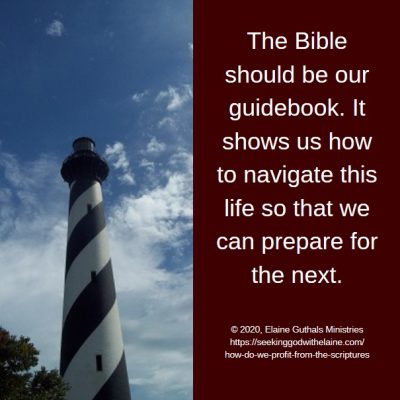
    The Bible should be our guidebook. It shows us how to navigate this life so that we can prepare for the next.

    Lighthouse

    Making the Connections to Self-Discipline

    It can be so easy to let the busyness of this life to eat up all of our time so that we neglect reading our Bible. We need to discipline ourselves so that we are consistently seeking God.

    Searching for and Seeking God

    Hearing His Word (Rom. 10: 17).
    Reading His Word (Rev. 1: 3).
    Praying to Him (Heb. 4: 16).
    Studying His Word (Ac. 17: 11).
    Meditating on His Word (Ps. 1: 1-2).
    Memorizing His Word (Ps. 119: 11).

    Loving Father. We can gain so much from reading Your Word. We can learn more about You as we read about You and as You reveal even more to us. Lord, teach us what we need to know. Correct us when we sin. Reprove us when we believe something different than Your doctrine. Always instruct us and grow us to prepare us for eternal life. Amen.

    What do you think?

    Leave me a comment below (about this or anything else) or head over to my Facebook group for some interactive discussion.

    If you don’t understand something and would like further clarification, please contact me.

    If you have not signed up for the email daily or weekly providing the link to the devotions and the newsletter, do so below.

    If God has used this devotion to speak with you, consider sharing it on social media.
  • Who Wrote the Scriptures?

    Do we know why we believe what we believe? What would we say if we were asked about the Scriptures? This devotion looks at how God inspired the writing of the Scriptures.

    Nuggets

    • The Bible doesn’t tell us everything about God and Jesus but is an introduction.
    • God put the thoughts into men’s heads about what to write.
    • If we don’t accept that God is the Author of the Scriptures, that makes them just the product of men.
    • If we accept that God is the Author of Scriptures, then we will be blessed.
    Flowers with the title Who Wrote the Scriptures?

    We’ve been looking into become mature disciples. I felt God was calling me to this when He gave me the word self-discipline for the year. (And where I go, I take you along with me!)

    When I was working on a previous devotion, I came across Vincent’s sermon entitled The Lesson of Ripeness. It talks about the need to grow in our relationship with God. (It was specifically talking about growing to become a teacher. To me, that means growing to be a mature disciple, even if we aren’t going to teach.)

    I got a list of topics to look at from there. We’ve been clicking them off at a good clip.

    I want to go to one of the bigger topics next. Vincent wrote that one of the three aspects of a matured faith was “… his [or her] own assurance of Christian truth.”

    Interesting. We just talked about truth in the last devotion. We looked at Bell’s definition. He defined truth as “universally the reality as opposed to that which is not real.” So, I interpret that to mean we have to know the truth about God.

    To read a related devotion, click the button below.

    I want to take a dual slant to it. First, I want to see what the truths are.

    I haven’t talked about it in a while, but we have discussed that we need to know why we believe what we believe. Second, I want to get us to think so we are prepared for witnessing.

    Worldview people are not going to accept that we believe something just because that was the way we were raised.

    It may be, but I feel we should be in a better position to articulate what exactly we believe and why.

    So, that is where we are going next. What is true according to Scriptures, and why do we believe it?

    Ooo, baby. What have I gotten us into?

    I started out with the faith and message from the domination to which I belong. That gave me categories.

    So, I said to myself, “Self, you have some things in the Draft folder that would fit into there.”

    I got down to the Gs.

    I am going to have to sit down and figure this out. I will probably take my sister’s advice. She once told me that I had to eat the elephant one bite at a time and shoot the alligator that was nearest to the boat.

    But being the transparent person that I am – I have no idea what I am going to do.

    I am going to start off by giving you the categories instead of giving you the list of devotions in the series. Those are going to be the elephants.

    Then I will break those into their own series – the alligators. That way I can address them whichever way is best. Plus, I can give us a break when I can.

    Otherwise, it will be the series that never ends.

    What We Believe categories

    The Scriptures
    God
    Man
    Salvation
    God’s Purpose of Grace
    The Church
    Baptism and the Lord’s Supper
    The Lord’s Day
    The Kingdom

    Last Things
    Evangelism and Missions
    Education
    Stewardship
    Cooperation
    The Christian and the Social Order
    Peace and War
    Religious Liberty
    The Family

    The Scriptures

    We are going to start out with the Scriptures. That is logical, isn’t it? Where do we get the information about what we believe? From the Scriptures mainly.

    Right now, we are going to focus on the fact that God inspired the Scriptures. If we don’t accept the Scriptures as from God, we won’t believe the rest.

    Let’s Put It into Context

    Scriptures are, according to the Holman Bible Dictionary, the “historic Judaeo-Christian name for the specific literature that the church receives as divine instruction.” We generally call it the Bible. The Holman Bible Dictionary defines Bible as “the collection of books written by various authors that possesses final authority in Christian communities.”

    Abbott gave us a good description about what the Bible is and isn’t. He cautioned us that the Bible is not a “… complete and comprehensive presentation of Divine truth. You are not to look in it for a revelation or disclosure of science of any kind, physical or metaphysical, natural or supernatural. It is not at all a scientific treatise.”

    We’ve talked about the first part. We’ve said before that the Bible doesn’t tell us everything about God and Jesus.

    What did John say? “Jesus also did many other things. If they were all written down, I suppose the whole world could not contain the books that would be written” (Jn. 21: 25 NLT).

    We’ve said before that the Bible is an introduction to God. After conversion, He reveals Himself to us more fully – and continues to reveal Himself to us as we seek Him until He calls us home. So, the Bible is where we seek God.

    Abbott made another interesting comment that I had been thinking about lately. He wrote, “Nor are you to regard the Bible as an infallible book of equal value and equal authority in all its utterances and all its parts; as a book ‘without any intermixture of error.’” He gave seven reasons why he thought this, which you can read by clicking on the link below.

    I think the Scriptures written in the Spirit language are infallible. It is when we put it into human language – and have humans responsible for editing and publishing it – there can be problems.

    For example, one thing that is in my Drafts folder is doing devotions on the verses that have been left out of the different modern translations. Yep, there are verses that have been left out for whatever reason.

    To read a related devotion, click the appropriate button below.

    God as Author

    “and you know that from infancy you have known the sacred Scriptures, which are able to give you wisdom for salvation through faith in Christ Jesus. All Scripture is inspired by God and is profitable for teaching, for rebuking, for correcting, for training in righteousness, so that the man of God may be complete, equipped for every good work” (II Tim. 3: 15-17 CSB)

    Yes, human men actually put quill to scroll (or whatever they used) to put words on the “page.” God, however, put the thoughts into their heads about what to write. That is why, Denney told us, the prophets were called the man of the Spirit or men of God.

    The writers were directed by the Holy Spirit what to write. Paul described the process. “When we tell you these things, we do not use words that come from human wisdom. Instead, we speak words given to us by the Spirit, using the Spirit’s words to explain spiritual truths” (I Cor. 2: 13 NLT).

    Yeah. That is why it is confusing to understand sometimes. It is written in human language but is a translation from spirit language. We need the Holy Spirit to interpret it for us. That could also explain the perceived contradictions.

    No, we aren’t told how the Holy Spirit communicated with the men to get the words down on the scroll. That shouldn’t be the focus. The Holy Spirit communicated with them.

    I’ve told you in previous devotions when I felt God talking to me about what I write. (No, I am not writing Scriptures. Yes, God is directing what I write.) Sometimes, it is a flash where it is like God is talking directly to me. Other times, the words just come out of my fingers.

    Either way, they come from God.

    If We Reject the Scriptures

    If we don’t accept that God is the Author of the Scriptures, that makes them just the product of men. Vail made a valid argument as why it couldn’t just have been the conception of men (or even angels). Basically, he questioned why they would lie saying time and again “thus said the Lord” and would give us all these do’s to do and don’ts to not do if it was not inspired by God.

    It seems to me that, if the Scriptures were not God inspired, it wouldn’t be the cohesive book that it is. Think about it. Moses lived a long time before Matthew, Mark, Luke, John, and Paul lived. Those were the authors who wrote the bulk of the New Testament.

    Both the Old Testament and New Testament have the same theme – Jesus is the Messiah and Savior sent to save us of our sins. Occurrences point back to things prophesied.

    If God wasn’t behind the writing of these separate letters that were compiled into one book, it wouldn’t be the cohesive book that it is.

    In my opinion, one argument against the Bible being inspired by God is that it challenges human reasoning if it was. You know, it makes it a control issue.

    If we say it was written by God – our Creator and Sovereign Lord – then it follows that we should follow it. If we deny He inspired it, we don’t have to follow it.

    If We Accept the Scriptures

    If we accept that God is the Author of Scriptures, then we “… may be complete, equipped for every good work” (II Tim. 3: 17 CSB). We will be blessed.

    Making the Connections

    When God created us, He gave us free will. That means we can choose to submit to Him – or we can choose not to submit to Him.

    Submitting to Him and believing He inspired the Scriptures (so that we have to follow them) means we are blessed.

    Not submitting to Him because we don’t want to do what He calls us to makes us cursed.

    Being cursed has a huge consequence.

    But isn’t that the major purpose of the Bible? Isn’t it to give us the information we need to make the decision whether we want to be blessed or cursed?

    I mean, God doesn’t need the Bible. He already knows His laws and commandments.

    The Bible is just for our benefit.


    Making the Connections to Self-Discipline

    Did you catch that? We are the men [and women] of God talked about in verse 17. We are only people of God after the “teaching, rebuking, correcting and training in righteousness” (II Tim. 3: 16 NIV). That means there is opportunity to use self-discipline to grow.

    God gave us a resource – in our language – so that we can seek Him. If we seek Him, we will find Him. He wants us to use this book to turn from our sinful ways and submit to Him.

    Sovereign God. We are humbled that You would design a plan of salvation so that our relationships with You could be restored. In order to facilitate that, You have given men words to placed into a book to show us Who You are and what we need to do to admit our sins, believe in Jesus as our Savior, and confess to You as Sovereign Lord. Help us to hear the spiritual language so that we can learn more of You. Amen.

    Searching for and Seeking God

    Hearing His Word (Rom. 10: 17).
    Reading His Word (Rev. 1: 3).
    Praying to Him (Heb. 4: 16).
    Studying His Word (Ac. 17: 11).
    Meditating on His Word (Ps. 1: 1-2).
    Memorizing His Word (Ps. 119: 11).

    What do you think?

    Leave me a comment below (about this or anything else) or head over to my Facebook group for some interactive discussion.

    If you don’t understand something and would like further clarification, please contact me.

    If you have not signed up for the email daily or weekly providing the link to the devotions and the newsletter, do so below.

    If God has used this devotion to speak with you, consider sharing it on social media.
  • Can We Really Identify God’s Wrath?

    How can we see God’s wrath when we can’t see God? People who suppress the truth about God draw His wrath. This devotion looks at how God’s wrath is revealed against all sin.

    Nuggets

    • Even though we cannot see God, we know when He is angry at our sinfulness.
    • God’s anger is used to help get us back on His track.
    • People suppress the truth by denying God, refusing to acknowledge He is their Creator, and refusing to acknowledge Him as Sovereign Lord.
    Flowers with title Can We Really Identify God's Wrath?

    Wrath, as defined by Holman Bible Dictionary, is “the emotional response to perceived wrong and injustice, often translated ‘anger,’ ‘indignation,’ ‘vexation,’ and ‘irritation.’”

    In God’s Wrath and Mercy, we said that sin, which leads to wrath, is the polar opposite of the Spirit — with which we are supposed to be filled. Sovereign God gets to decide crimes and punishments. There is hope for us because God is rich in mercy (Eph. 2: 4). Mercy comes out of God’s love, which is His character (I Jn. 4: 8).

    To read a related devotion, click the button below.

    God’s Wrath Revealed

    “For God’s wrath is revealed from heaven …” (Rom. 1: 18 CSB)

    Even though we cannot see God, we know when He is angry at our sinfulness. We know that “the eyes of the Lord are everywhere, observing the wicked and the good” (Prob. 15: 3 CSB).

    Also, we know God is a just God. “But the Lord sits enthroned forever; he has established his throne for judgment. And he judges the world with righteousness;
    he executes judgment on the nations with fairness” (Ps. 9: 7-8 CSB).

    God doesn’t lead with passion. “I am not angry. If only there were briers and thorns confronting me! I would march against them in battle; I would set them all on fire” (Isa. 27: 4 NIV).

    Rather, according to Jay, God’s wrath comes out of His nature. It comes from the need to maintain order. If His laws and commandments are broken, consequences must occur.

    The Scriptures have many examples of God’s wrath correcting mankind.

    • God drove Adam and Eve out of the Garden (Gen. 3: 24).
    • The Wilderness Wanderers complained about conditions, and God sent serpents among them to kill them (Num. 21: 6).
    • The Babylonian captivity occurred because of Israel’s unfaithfulness (I Chron. 9: 1).

    Do I need to go on? I could. You get the point.

    God is very fluent in modes of punishment. He doesn’t always immediately default to our death.

    Oh, yeah. Worldview people argue that, if God is love, there would be no consequences.

    Seriously? We really think we would want to submit to a God Who didn’t care what we did? That is just a smokescreen.

    God makes His wrath known. Lyth wrote that God also reveals His anger to us in our conscience, through His Word, and through His care and guidance.

    Thomas reminded us how we can get at times when we get angry. Ooo, baby. It just consumes us sometimes, doesn’t it?

    Luckily, God isn’t that way. God is not vicious and spiteful. God is love (I Jn. 4: 8) and peace (Phil. 4: 7).

    Some worldview people like to think that God is not judging us now and won’t until the end times — if then. We talked about this before. Do not take that to mean God will not judge. He will — if not today, He will in the end.

    To read a related devotion, click the appropriate button below.

    Against All Sin

    “For God’s wrath is revealed from heaven against all godlessness and unrighteousness …” (Rom. 1: 18 CSB)

    It is easy for us to quickly get offended by someone who has angered us. We can be very good at holding grudges.

    Not so with God.

    God’s anger is used to help get us back on His track. He uses it to correct us and as a warning to other sinners. Its purpose is to mold us into being more like Him.

    Go back to verse 18. “For God’s wrath is revealed from heaven against all godlessness and unrighteousness of people who by their unrighteousness suppress the truth” (Rom. 1: 18 CSB). God doesn’t let some sin slide. His wrath is against all sin.

    What is the difference between ungodliness and unrighteousness? We talked about godliness and righteousness in Kindness and Love as Virtues.

    Godliness in the New Testament is equivalent to the Old Testament’s the fear of the Lord, which means reverence and love (What Does Fear of the Lord Mean?). Righteousness is the result of a solid relationship with God built by a sincere life of obedience to God’s laws and commandments (How Do Disciples Crave Righteousness?). Righteousness is the thought or behavior. Godliness is the cause of the thought or behavior.

    So, the godless are those who do not love and reverence God. The unrighteous are those who break His laws and commandments.

    Against Those Who Suppress the Truth

    “For God’s wrath is revealed from heaven against all godlessness and unrighteousness of people who by their unrighteousness suppress the truth” (Rom. 1: 18 CSB)

    Bell defined truth as “… universally the reality as opposed to that which is not real.” He also noted “that sin extinguishes the love and desire for the truth.”

    Oh, yes. There are those who “… suppress the truth” (Rom. 1: 18 CSB). They do that by denying God. They refuse to acknowledge He is their Creator. Worse, they refuse to acknowledge Him as Sovereign Lord.

    Wardlaw argued that people were suppressing the truth by keeping the truth to themselves and refused to live their lives according to that truth.

    Isn’t that sad? They know the truth, but purposefully do not submit to our Sovereign God. Instead, they will endure the torment of hell for eternity.

    To read a devotion in the Hell Does Have Fury series, click on the appropriate button below.

    Some may question how God’s truth can be suppressed. If He is an all-powerful God, how could this happen?

    It happens because God allows it. Boston wrote “… that one cannot hold it prisoner but in unrighteousness, or in rebellion against the God of truth.”

    Making the Connections

    It might be easy for some to say, “Oh, but they just didn’t know.” Doesn’t work that way. Horton reminded us that, “once in Judaism, and since in Christianity, God has maintained a testimony for Himself.”

    We either choose for God or for Satan. We are going to — at some point — want to seek God. Unfortunately, some may not recognize it at as seeking God.

    We are going to think there is something more than this. We are going to recognize the brokenness in this world.

    We are going to have to make a conscious choice.

    Let’s face it. We deserve God’s wrath. We were the ones who are disobedient. Obedience means we not only hear God’s Word but also follow His instructions.

    We have definitely been disobedient.

    How Do We Apply This?

    God created us. He has provided laws and commandments that show us right from wrong. Tyson stated that we owe Him “… perpetual allegiance and service.” It is our moral obligation to submit to God as our Creator and Sovereign Lord.

    We need to search for God if He is not currently our Sovereign Lord. We need to seek to grow closer to Him if He is.

    Searching for and Seeking God

    Hearing His Word (Rom. 10: 17).
    Reading His Word (Rev. 1: 3).
    Praying to Him (Heb. 4: 16).
    Studying His Word (Ac. 17: 11).
    Meditating on His Word (Ps. 1: 1-2).
    Memorizing His Word (Ps. 119: 11).

    God is a loving, forgiving God. He will forgive us when we sincerely admit our sins, believe in Jesus as Savior and Redeemer, and confess Him as Sovereign God.

    The ABCDs of Salvation

    If you have not become a believer in Christ, please read through the
    Plan of Salvation and prayerfully consider what God is asking you to do.A – admit our sins

    B – believe His Son Jesus is our Redeemer

    C – confess God as Sovereign Lord

    If you have not become a believer in Christ, please read through the Plan of Salvation and prayerfully consider what God is asking you to do.


    D – demonstrate that commitment by making any changes needed in our lives to

    live the way in which God has called us

    The Disciple’s Job Description

    If you have not ABCD, please prayerfully consider making today the day.

    Father God. You are Creator. You are all-powerful. The only way Your truth can be suppressed is because You allow it – just as You allowed Adam and Eve to choose to not obey You. Lord, one day Your wrath will be unleashed as You judge all mankind. Lord, we pray for those who are suppressing Your truth and who refuse to acknowledge You as Sovereign Lord. Put disciples in their paths to lead them to You. Amen.

    What do you think?

    Leave me a comment below (about this or anything else) or head over to my Facebook group for some interactive discussion.

    If you don’t understand something and would like further clarification, please contact me.

    If you have not signed up for the email daily or weekly providing the link to the devotions and the newsletter, do so below.

    If God has used this devotion to speak with you, consider sharing it on social media.
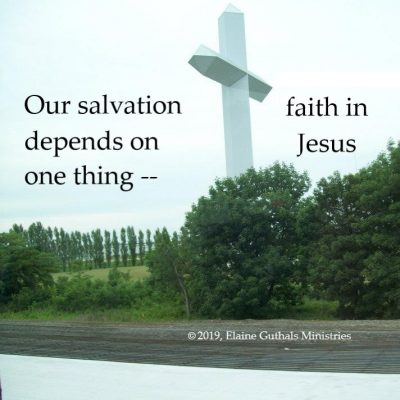
  • How Does Circumspection Help Consistency?

    Do we have to do self-reflection? Don’t we get to bury our sins deep down? This devotion looks at how that circumspection not only strengthens our relationships with God, but also how it helps our consistency and self-control.

    Nuggets

    • It is only when we stop and take a good look at things, make all the connections, and evaluate our actions and opinions against what God says in His Word do we get an accurate picture of where we are in our spiritual walk.
    • We learn so much through experiences, but it isn’t until the reflection piece where we apply what we have experienced and learned.
    • God puts so much store in us that He sent His Son to live in us.
    • Reflection is thinking about it – stopping long enough to really take stock.

    Devotions in the Consistency Needed for Spiritual Growth series

    Flowers with the title How Does Circumspection Help Consistency?

    Self-evaluation. Self-reflection. Self-examination.

    Figuring out why we did what we did. Figuring out what we should have done.

    I bet Satan doesn’t want us to do that. He wants us to think that whatever we feel like doing in the moment is perfectly fine with no consequences.

    There is a problem with that. We are prone to sin — yes, even disciples. “The sinful nature wants to do evil, which is just the opposite of what the Spirit wants. And the Spirit gives us desires that are the opposite of what the sinful nature desires. These two forces are constantly fighting each other, so you are not free to carry out your good intentions” (Gal. 5: 17 NLT).

    Even after conversion, we have a sinful nature. We will until we are changed (I Cor. 15: 52).

    God wants us to pay attention to what is happening in and around us. He wants us to focus on Him and His ways. Let’s look into circumspection.

    Let’s Put It into Context

    Diligence talks about being persistent. The Merriam-Webster Dictionary defines diligence as being a “steady, earnest, and energetic effort.”

    According to the Merriam-Webster Dictionary, circumspect means “careful to consider all circumstances and possible consequences.” I’ve said several times that I believe God wants us to make a conscious, informed decision of whether we are going to submit to Him or not. This continues after conversion as we use past experiences to inform future decisions.

    The modern word is reflection. The Merriam-Webster Dictionary defines that as “a thought, idea, or opinion formed or a remark made as a result of meditation.”

    I am going to use the words interchangeably.

    Benefits of Reflection

    “Examine yourselves, to see whether you are in the faith. Test yourselves. Or do you not realize this about yourselves, that Jesus Christ is in you? —unless indeed you fail to meet the test!” (II Cor. 13: 5 ESV)

    Circumspection is important. When we are barreling through life, sometimes it is hard to see everything situations are supposed to teach us.

    It is only when we stop and take a good look at things, make all the connections, and evaluate our actions and opinions against what God says in His Word do we get an accurate picture of where we are in our spiritual walk.

    If we stop and think, maybe we can get to where we see how God sees us. Then we can work on seeing ourselves that way.

    Tillotson reminded us that, when we do the survey of our lives, we should focus on the good and the bad. He called it thinking on our ways. Remember, Daille defined the way of man as “… the fashion and method of life which each man follows.” Walking is used “… to signify a regulating and framing of the life after some certain manner, whether good or evil …” We would say this was how we lived our lives.

    Hewlett reminded us that it is in the trials — not the smooth sailing — where “… the mind improves in wisdom or in virtue …” It is then that we see things as they really are.

    Remembering Experiences

    “You have made your people see hard things; you have given us wine to drink that made us stagger” (Ps. 60: 3 ESV)

    Hewlett wrote, “The great source of all human knowledge is experience and that experience which teaches us practical wisdom, and informs us of the many evils that constantly wait on life, is acquired chiefly by observation and reflection.” We have to pay attention to what is happening to us and make all of the connections.

    We learn so much through experiences, but it isn’t until the reflection piece where we apply what we have experienced and learned. We make plans based on the adjustments those experiences caused.

    The reflection helps us retain things better. (Why do you think teachers love reflection assignments so much?)

    No, not all of our experiences are rainbows and unicorns. Beecher cautioned us that we shouldn’t wallow in our cares and sorrows. Instead, we should use our experiences to grow in grace and knowledge (II Pet. 3: 18).

    What happens to our cares? “Give all your worries and cares to God, for he cares about you” (I Pet. 5: 7 NLT).

    Soul Searching

    “He restores my soul. He leads me in paths of righteousness for his name’s sake” (Ps. 23: 3 ESV)

    What we are really shooting for is soul searching to get to soul keeping. The soul keeping is something I got from a sermon from The Weekly Pulpit.

    The sermon reminded us that we are living, breathing people. But we are more than that.

    “You have been set apart as holy to the LORD your God, and he has chosen you from all the nations of the earth to be his own special treasure” (Deut. 14: 2 NLT).

    We are God’s treasure.

    And there is more.

    “We now have this light shining in our hearts, but we ourselves are like fragile clay jars containing this great treasure. This makes it clear that our great power is from God, not from ourselves” (II Cor. 4: 7 NLT).

    God puts so much store in us that He sent His Son to live in us.

    We need to keep consistent in God’s laws and commandments so we can be an appropriate dwelling place for Jesus. We do that by soul keeping.

    God has entrusted not only these jars of clay but also souls. The soul is, according to the Holman Bible Dictionary, “the vital existence of a human being.”

    We are keeping something very valuable. Isn’t it logical that God would want us to do spot checks periodically to make sure everything is in tip top shape?

    Reflection Is Thinking

    “I thought about my ways and turned my steps back to your decrees” (Ps. 119: 59 CSB)

    I love those first two words. “I thought …” (Ps. 119: 59 CSB). That is what reflection is — thinking about it. Stopping long enough to really take stock.

    Part of the problem is, though, when we think about it, we see God as righteous and holy — and we aren’t. I am not going to be while I am here on this earth.

    But look at all these verses.

    “But God shows his love for us in that while we were still sinners, Christ died for us” (Rom. 5: 8 ESV).

    “I have been crucified with Christ. It is no longer I who live, but Christ who lives in me. And the life I now live in the flesh I live by faith in the Son of God, who loved me and gave himself for me” (Gal. 2: 20 ESV).

    “For God so loved the world, that he gave his only Son, that whoever believes in him should not perish but have eternal life” (Jn. 3: 16 ESV).

    “For our sake he made him to be sin who knew no sin, so that in him we might become the righteousness of God” (II Cor. 5: 21 ESV).

    “Therefore, if anyone is in Christ, he is a new creation. The old has passed away; behold, the new has come” (II Cor. 5: 17 ESV).

    I could go on, but we get the picture.

    We come up with all these I-didn’t-do-the-do’s-and-I-did-the-don’ts. The only reason God wants us to come up with those is to address them and cut the sin out.

    God isn’t going to turn His back on us.

    Tree blosoms

    Making the Connections

    We should evaluate ourselves based on God’s standards. The results of circumspection should be our living more in line with how God calls us to live. It should be a more consistent walk with Him.

    Bellett wrote, “If we are accountable to Him for our doings, it would be but reasonable now to sit in judgment on ourselves.”

    Isn’t that what we should do? Shouldn’t we seek to identify the sin in our lives so that we can get rid of it?

    Making the Connections to Self-Discipline

    Look what Thompson said. He wrote, “But in order to gain self-control we must study ourselves, especially as to our weak points of character, and aim to conquer specific modes or habits of evil to which we are prone.” Reflection is part of the process of self-discipline.

    Tillotson also made an interesting observation. God is patient with us — He is longsuffering. What is He patient about? Our sanctification process.

    God takes His time to test and realign us with His standards. He takes His time making us holy — our lifetime.

    How Do We Apply This?

    Hewlett gave us a good plan.

    • Take time to reflect on our disappointments.
    • Reflect on our sorrows.

    Yes, think about the things we don’t want to think about. It may be something in the past, or it may be something in the present.

    I am sure that, if we reflect so we can grow closer to God, He is going to meet us there. That is exactly what He wants — us sanctified, holy, and righteous.

    Father. Too many times, we want to bury our sins. We don’t want to look at our faults and weaknesses. Help us to take an honest look at the sin in our lives. Forgive us of our sins. Help us to cut it out of our lives so that we are more like you. Amen.

    What do you think?

    Leave me a comment below (about this or anything else) or head over to my Facebook group for some interactive discussion.

    If you don’t understand something and would like further clarification, please contact me.

    If you have not signed up for the email daily or weekly providing the link to the devotions and the newsletter, do so below.

    If God has used this devotion to speak with you, consider sharing it on social media.
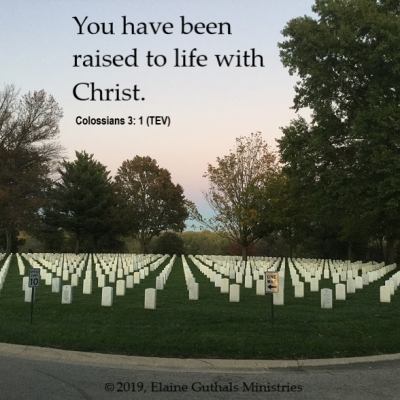
  • How Does Longsuffering Help Consistency?

    Longsuffering is one of the old-time churchy words. This devotion looks at how practicing longsuffering can help disciples bring consistency into their walk.

    Nuggets

    • Longsuffering helps to control our anger and irritability.
    • Meekness and courage are elements of longsuffering.
    • We may have to accomplish our witnessing through longsuffering.

    Devotions in the Consistency Needed for Spiritual Growth series

    Flowers with the title How Does Longsuffering Help Consistency?

    Man, what is it with this series? I want consistency — I have to get there by diligence. I want dedication — I have to get there by commitment.

    Now, I want forbearance. Well, it is a fruit of the Spirit in some translations (Gal. 5: 22).

    Nada.

    So, we are getting there by way of longsuffering. The Holman Bible Dictionary went straight to patience, but I did get some verses out of the Nave’s Topical Bible.

    Let’s Put It into Context

    Diligence talks about being persistent. The Merriam-Webster Dictionary defines diligence as being a “steady, earnest, and energetic effort.”

    Longsuffering is defined by the Merriam-Webster Dictionary as “patiently enduring lasting offense or hardship.” We know that patience is a virtue and a fruit of the Spirit.

    To read a related devotion, click the button below.

    What Is Longsuffering?

    “But in all things we commend ourselves as ministers of God: in much patience, in tribulations, in needs, in distresses, in stripes, in imprisonments, in tumults, in labors, in sleeplessness, in fastings; by purity, by knowledge, by longsuffering, by kindness, by the Holy Spirit, by sincere love” (II Cor. 6: 4-6 NKJV)

    Croskery argues that longsuffering helps to control our anger and irritability. Oh, isn’t that an important tool to have when we are deal isn’t with difficult people?

    How disciples react to perceived wrongs is critical. Romans 12: 17 says, “Never pay back evil with more evil. Do things in such a way that everyone can see you are honorable” (NLT).

    Being longsuffering means we are not provoked. Rather we exercise self-restraint in difficult situations.

    Elements of Longsuffering

    Meekness is one of the elements of longsuffering. Meekness is “a personality trait of gentleness and humility, the opposite of which is pride. Meekness does not refer to weakness or passivity but to controlled power.”

    Courage is another element of longsuffering. Equated with boldness, courage is mentioned several times in the Bible. Here are two examples.

    “This is my command—be strong and courageous! Do not be afraid or discouraged. For the LORD your God is with you wherever you go” (Josh. 1: 9 NKT).

    “Be on guard. Stand firm in the faith. Be courageous. Be strong” (I Cor. 16: 13 NLT).

    Mercy and Longsuffering

    “However, for this reason I obtained mercy, that in me first Jesus Christ might show all longsuffering, as a pattern to those who are going to believe on Him for everlasting life” (I Tim. 1: 16 NKJV).

    Croskery has an interesting take on First Timothy 1: 16. He wrote, “The mercy takes the form of long-suffering; for the Lord bore long with the ways of this fierce persecutor of the saints, when he might have cut his career short in judgment.”

    Hmmm. Let me process this.

    Mercy is the unexpected way God responds in love to our needs. So, Jesus through mercy exercised self-restraint so that we would not be provoked. Okay, I can go with that.

    Suffering Through Trials

    “I, therefore, the prisoner of the Lord, beseech you to walk worthy of the calling with which you were called, with all lowliness and gentleness, with longsuffering, bearing with one another in love, endeavoring to keep the unity of the Spirit in the bond of peace” (Eph. 4: 1-3 NKJV)

    Paul went through a lot of trials while called to his ministry. We gave the long list in How Does Dedication Help Consistency?. Yep, Paul had to have dedication and longsuffering.

    Paul rocked the title of prisoner of the Lord. There were so many attitudes Paul could have justifiably taken. But he led with the mindset of prisoner.

    That title gave Paul’s readers the immediate visual of Paul’s life. They saw the lack of freedom, the hunger, the beatings, the cold …

    But then they read Paul’s words. We read about a his joy in the Lord. We see the dedication he had — even when things were very less than ideal.

    Yes, Paul had the mindset of prisoner — but not the attitude. He didn’t let the circumstances provoke him.

    That is what longsuffering is about. The rough patches in our walk come up, but we keep putting one foot in front of the other. And we navigate them patiently and watching for God in all we go through.

    Adeney called it walking worthily. We’ve already said that walking is used “… to signify a regulating and framing of the life after some certain manner, whether good or evil …” Disciples are to walk with “… purpose, strength,

    God calls us and puts us on our walk. He grows us by taking us through the trials. That is how we transform our character to be more like Him.

    We can’t forget what job duty #1 is. We are called to be living sacrifices. We are called to worship Him.

    The Disciple’s Job Description

    Complete Job Description

    Individual Description

    Job Duty #1
    Be a Living Sacrifice (Romans 12: 1-2)

    It isn’t about us and how smart and skillful we are in surviving whatever trials are thrown our way. It is about transforming us through the process of sanctification so that we may be righteous and holy.

    Sanctification is the transformation of mind, body, and soul beginning with regeneration and ending with perfected state of spiritual wholeness or completeness. Righteousness is the result of a solid relationship with God built by a sincere life of obedience to God’s laws and commandments. Holy means set apart.

    But look what else Adeney said. He wrote, “Belief and worship are not enough. The life and the whole work and daily occupation are to follow the Divine call.”

    This isn’t a Sunday, Wednesday night, and any time the doors are open kind of deal. It is a 24/7/365 type of deal.

    That is the consistency according to Adeney — making our walk fit our call. Our call is God’s Will.

    Witnessing and Longsuffering

    “Preach the word! Be ready in season and out of season. Convince, rebuke, exhort, with all longsuffering and teaching” (II Tim. 4: 2 NKJV)

    Job duty #4 is to proclaim the gospel. We — even us non-preacher types — are to spread God’s Word to advance His kingdom.

    The Disciple’s Job Description

    Complete Job Description

    Individual Description

    Job Duty #4
    Proclaim the Gospel (Mark 16: 15)

    We don’t have to make up words. It is God’s Word. Yes, we may put it in our own words, and we may interpret it by what it means to us. But it is God’s Word.

    Our job is to tell others so that they may be saved. We need to encourage them to admit their sins, believe on Jesus as the Son of God and as Redeemer, and confess God as Sovereign Lord.

    The ABCDs of Salvation

    If you have not become a believer in Christ, please read through the
    Plan of Salvation and prayerfully consider what God is asking you to do.A – admit our sins

    B – believe His Son Jesus is our Redeemer

    C – confess God as Sovereign Lord

    If you have not become a believer in Christ, please read through the Plan of Salvation and prayerfully consider what God is asking you to do.


    D – demonstrate that commitment by making any changes needed in our lives to

    live the way in which God has called us

    The Disciple’s Job Description

    Our words may be well received — they may not be. We may have to accomplish our witnessing through longsuffering. If those we are witnessing to want to get into a debate, we are not provoked.

    As Statham wrote, “Remembering that humanity is frail and fallen, the preacher must be sympathetic, as himself needing mercy.” We have to remember that there is just one sin that God will not forgive — unbelief. We have to lead with God’s mercy.

    To read a related devotion, click the button below.

    Making the Connections

    We are so programmed in today’s world to want — and expect — instant gratification. We want things fixed right now. We want our needs met right now.

    To me, that is the polar opposite of longsuffering. The main reason is because longsuffering takes the focus off of us and puts it onto God.

    To me, walking worthily and longsuffering go hand in hand. Our walk isn’t usually going to be a short sprint. It is going to be a long trek. If we don’t simmer down and focus on the long haul, we won’t get to the finish line.

    Our walk is not going to be a stroll in the meadow. It is going to have a lot of hills and valleys with some major drop offs along the way.

    Making the Connections to Self-Discipline

    “Therefore, as the elect of God, holy and beloved, put on tender mercies, kindness, humility, meekness, longsuffering” (Col. 3: 12 NKJV)

    Ooo. Look what Colossians 3: 12 says. We can put on longsuffering — just like we out on the armor of God.

    To read a related devotion in the Armor of God series, click the button below.

    How Do We Apply This?

    Byfield gave us three examples by which we could accomplish putting on longsuffering.

    “I. IN JUDGMENT; when, in doubtful cases, we suspend our opinions and censures.

    “II. IN WORDS; which consists either in not answering, or in giving soft answers.

    “III. IN DEEDS; when we render not evil for evil.”

    Oh, yeah. Not hard. (I hope you read sarcasm into that.)

    Our opinions get tabled. Our answers get tabled. Our payback gets tabled.

    Really hard for most of us.

    But isn’t that what God calls us to? His opinions – His answers – His vengeance.

    To read a related devotion, click the button below.

    Oh, yes. That is so against worldview. But it is so Godview.

    In How Does Dedication Help Consistency? we said perfection is accomplished by loving God and loving others. Longsuffering using Byfield’s suggestions goes a long way to helping that happen.

    Lord, it is so easy to follow the worldview. Help us to follow Your will. In all we do, help us to be longsuffering. May we always follow Your opinions and Your answers. May we leave the vengeance to You. Amen.

    What do you think?

    Leave me a comment below (about this or anything else) or head over to my Facebook group for some interactive discussion.

    If you don’t understand something and would like further clarification, please contact me.

    If you have not signed up for the email daily or weekly providing the link to the devotions and the newsletter, do so below.

    If God has used this devotion to speak with you, consider sharing it on social media.