Category: Love

  • Why We Should Know God’s Reckless Love

    Today is a music day.
    Today has been an off day for me. I woke up not feeling well.

    When I finally stopped coughing, my get up and go had got up and went, and I didn’t have the get up and go to get up and go after it.

    So, I didn’t get done any of the writing I needed to do.

    But I know that even on worse days than this, I have a loving Heavenly Father Who loves me even more than I can imagine.

    It isn’t about feeling that love. It is about knowing it is there.

    Feelings can be so fickle. They can be dependent on our circumstances — if we get up on the right side or wrong side of bed or if we don’t get up at all.

    But Jehovah isn’t interested in  physical, worldly feelings. He is interested in the spiritual, heart-level knowledge that His grace is sufficient for us. 

    How do we get to that? Walking with Him through the good times and the bad. Relying on Him when we now there is nothing we can do.

    Knowing that we can always trust in His promises — a big one being that He will never leave us.

    This is one of the first songs I recorded to post, and it has been a while since I have heard it. I hope that it reminds you that, no matter what our feelings are, Jehovah will always kick down whatever He needs to in order to get to us.

    Reckless Love
    Vocalist: Elaine Guthals
    Keyboard: Chris Vieth

    If you have not signed up for the email daily or weekly providing the link to the devotions and the newsletter, do so below.

    If God has used this devotion to speak with you, consider sharing it on social media.

  • A Unique Love

    No one loves us as God does. This devotional reading looks at how God’s love is different from worldly love.

    Nuggets

    • God’s love is unconditional.
    • God’s love is meaningful.
    • Jesus’ love is unselfish and unstinting.
    • Jesus’ love is functional.
    • Our love with Jesus has to grow us and branch out to our relationship with others.
    a-unique-love

    We have to remember the love being discussed here is not a worldly love. It is a spiritual love.
     
    That alone would make it unique. But there is more.

    Let’s Put It into Context

    To read devotions in the On the Day of the Lord theme, click the button below.

    Devotions in the Getting Started in Revelation study

    The foundation of this series is Witherspoon’s sermon The Love of Christ in Redemption.

    Resource

    Related Links

    We the People

    A Unique Love

    “As the Father has loved me, so have I loved you. Abide in my love” (Jn. 15: 9 ESV)

    God’s love is unconditional.

    We are used to love coming and going. We tend to love only when certain conditions are met.

    God isn’t like that. God loves us unconditionally.

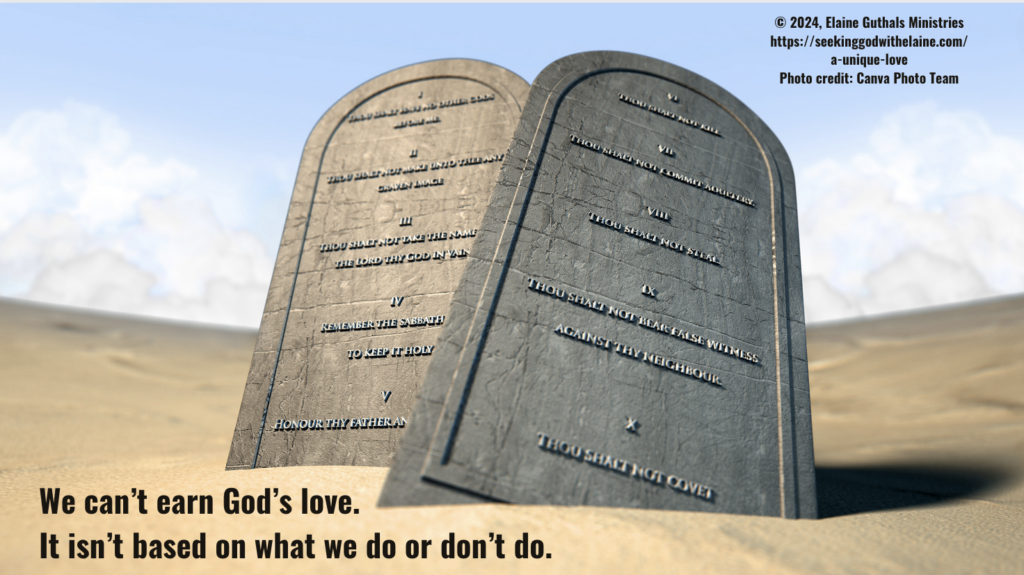
    We can’t earn God’s love. It isn’t based on what we do or don’t do.

    No, being a good person isn’t going to make God love us more. But then neither is keeping all His laws and commandments.  
     
    God’s love for us is sacrificial. It is the crux of His Plan of Salvation. It is the foundation of the gospel, the law, and the prophets.
     
    Just as God showed His love for us by giving up His Son, Jesus showed His love for us by dying for us.
     
    Jesus told us to continue in His love. We are to imitate Jesus. He imitates God. That means He imitates God’s love for Him.
     
    We should, too.
     
    Once we see how great a love God and Jesus have for us, we should joyfully believe it is so.
     
    Witherspoon said that we should be obedient because of God’s redeeming love. That is a fantastic motivation.
     
    But Thomas took that a step farther. He said that love is sustained by obedience. “If you keep my commandments, you will abide in my love, just as I have kept my Father’s commandments and abide in his love” (Jn. 15: 10 ESV).

    Resource

    That should make us want to give love in return to Them.

    No, John 15: 10 does not make God’s love conditional. “If you keep my commandments, you will abide in my love …” (Jn. 15: 10 ESV).

    It doesn’t say anything about God’s love for us. It says we will persist, endure and abide.

    That’s the hard part, isn’t it – abiding in Jesus’ love? There are so many motivations for us to love Him.

    • We want fire insurance, but we’ll go on living as we always have lived.
    • We want to cover all bases so that — surely — one way will get us into Heaven..
    • We think it is a prosperity gospel.
    • We want to follow God because of His benevolence but not because of His Sovereignty.
    • We like the idea that there is someone in control, but we don’t like giving control to that person.
    • There are probably as many motivations as there are people.

    Maclaren said that we should be the object of God’s love. Sometimes, it is difficult to be the object of anyone’s love. He explained it this way:

    “What is meant is not our continuance in the attitude of love to Him, but rather our continuance in the atmosphere of His love to us. But then, whosoever thus abides in Christ’s love to Him will echo it back again in an equally continuous love to Him.”

    Resource

    What does Maclaren mean by atmosphere? We live in the environment of God’s love. We let it surround us.
     
    We may not be feeling it at any given time. Or we may have a different opinion as to how that plays out in a relationship.
     
    We have to realize that spiritual love is unique in that we are expected to embrace all the different things that encompasses. It is infinite, unchangeable, and everlasting.

    An Expressive Love

    “Already you are clean because of the word that I have spoken to you” (Jn. 15: 3 ESV)

    God’s love is meaningful.
     
    This is an interesting verse. But I think we need the context here.
     
    Jesus was celebrating His last Passover with His disciples. He was telling them He was the true vine.
     
    But it was more than that. “Every branch in me that does not bear fruit he takes away, and every branch that does bear fruit he prunes, that it may bear more fruit” (Jn. 15: 2 ESV).
     
    As disciples, we need to bear fruit. So many times, we just see that as witnessing, but that isn’t what Paul said. “But the fruit of the Spirit is love, joy, peace, patience, kindness, goodness, faithfulness, gentleness, self-control; against such things there is no law” (Gal. 5: 22-23 ESV).
     
    Yes, witnessing is a part of sanctification. It isn’t a part of salvation.
     
    We are to work out our salvation to become more like God.
     
    Then Jesus told the Apostles they are already clean. Why? “… because of the word …” (Jn. 15: 3 ESV).
     
    The disciples were clean because they believed in Jesus’ message.
     
    That belief is to change us to bring meaning to our lives.

    A Generous and Disinterested Love

    “And walk in love, as Christ loved us and gave himself up for us, a fragrant offering and sacrifice to God” (Eph. 5: 2 ESV)

    Jesus’ love is unselfish and unstinting.
     
    Usually, we wouldn’t say being disinterested is a good thing. We think it to mean that we don’t care enough.
     
    Well, sort of, but no.
     
    We can say that Jesus wasn’t interested in the trappings of His Deity. His priority was not His glory.
     
    Instead, our redemption was Jesus’ priority. He had an unselfish love for us.
     
    Jesus gave up everything to accomplish the Plan of Salvation. “who, existing in the form of God, did not consider equality with God as something to be exploited. Instead he emptied himself by assuming the form of a servant, taking on the likeness of humanity. And when he had come as a man, he humbled himself by becoming obedient to the point of death — even to death on a cross” (Phil. 2: 6-8 CSB).
     
    Oh, don’t get me wrong. Jesus was still God. He was still divine.
     
    I think the New Living Translation explains it the best. “Instead, he gave up his divine privileges; he took the humble position of a slave and was born as a human being. When he appeared in human form” (Phil. 2: 7 NLT).
     
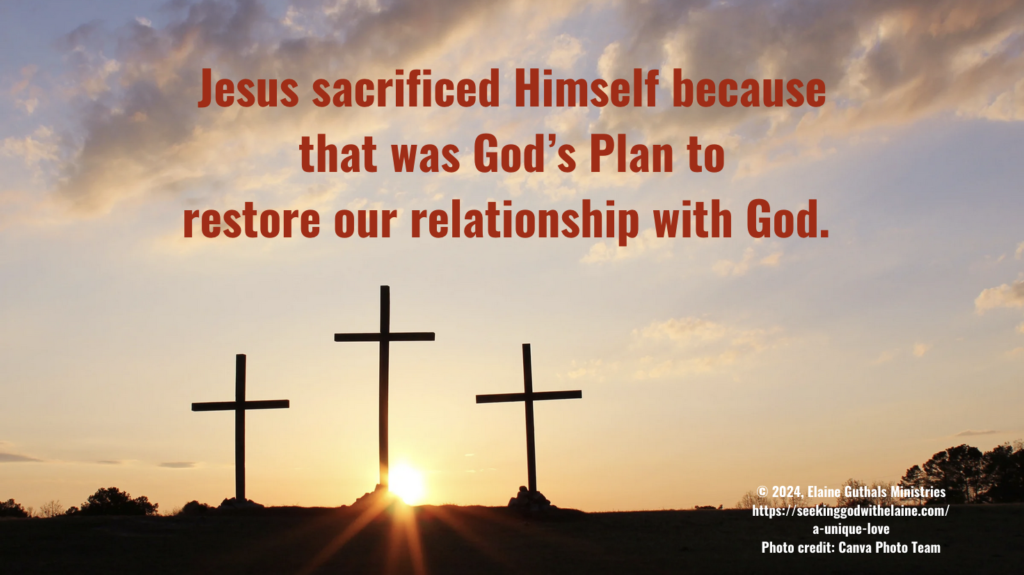
    Jesus sacrificed Himself because that was God’s Plan to restore our relationship with God. He gave Himself for us.

    There was nothing we could do to restore our relationship with God – except accept His love. Jesus loved us even though He would never receive anything from us.

    It is in that love which we are supposed to walk. Walking is the term used to describe how we live our lives, specifically our habitual state of mind, behavior, and manners.

    Let’s look at some verses that talk about Jesus offering Himself for us.

    • “He has no need, like those high priests, to offer sacrifices daily, first for his own sins and then for those of the people, since he did this once for all when he offered up himself” (Heb. 7: 27 ESV).
    • “how much more will the blood of Christ, who through the eternal Spirit offered himself without blemish to God, purify our conscience from dead works to serve the living God” (Heb. 9: 14 ESV).
    • “so Christ, having been offered once to bear the sins of many, will appear a second time, not to deal with sin but to save those who are eagerly waiting for him” (Heb. 9: 28 ESV).
    • “Cleanse out the old leaven that you may be a new lump, as you really are unleavened. For Christ, our Passover lamb, has been sacrificed” (I Cor. 5: 7. ESV).
    • “for then he would have had to suffer repeatedly since the foundation of the world. But as it is, he has appeared once for all at the end of the ages to put away sin by the sacrifice of himself” (Heb. 9: 26 ESV).
    • “So Jesus also suffered outside the gate in order to sanctify the people through his own blood” (Heb. 13: 12 ESV).
    • “But we see him who for a little while was made lower than the angels, namely Jesus, crowned with glory and honor because of the suffering of death, so that by the grace of God he might taste death for everyone. For it was fitting that he, for whom and by whom all things exist, in bringing many sons to glory, should make the founder of their salvation perfect through suffering” (Heb. 2: 9-10 ESV).

    This offering was voluntary. God didn’t force Jesus to do this. God asked, and Jesus agreed.

    Yes, the object of God’s love is sinners.

    The intensity of Jesus’ love is immense. It is unmatched.  

    A Most Fruitful, Active, and Beneficent Love

    “A new commandment I give to you, that you love one another: just as I have loved you, you also are to love one another” (Jn. 13: 34 ESV)

    Jesus’ love is functional.

    Yes, Jesus wants us to believe in Him as God’s Son, but that has to have some impact on us. It has to be more than a thought in our heads.

    Belief in Jesus has to change our lives.

    Our love has to be built on our relationship with Christ. It has to be vital. It has to be applied.
     
    Our love with Jesus has to grow us and branch out to our relationship with others.
     
    Jesus didn’t just preach at people. He ministered to them.
     
    We are called to do the same.
     
    Being fruitful is what we were talking about before. We can’t just be a good person and not have God’s love change us.
     
    But then again, we can’t be changed and not share that with others.
     
    Both must flow out of our relationship with God.
     
    Jesus’ love in us has to be shown in our consideration of the needs of others.

    Making the Connections

    Maclaren showed us the connection among love, obedience, and joy.

    Resource

    We must abide in love. This is our duty. Because we remain in God, we are blessed.
     
    We’ve already said that love is sustained through obedience. If we are not going to obey His commandments, how can we say that we love God?
     
    That obedience brings us joy. It also brings us peace.

    How Do We Apply This?

    • Remain in God’s love.
    • Keep God’s laws and commandments.
    • Firmly believe in Christ.
    • Apply Jesus’ love to our lives.
    • Recognize Jesus’ sacrifice and be willing to sacrifice ourselves.
    • Make sure our sacrifices are perfect for God.
    • Exhibit Jesus’ righteousness, not our own.
    • Don’t refuse God.
    • Sympathize with God.
    • Show our love for Jesus to others.

    Resources

    What do you think?

    Leave me a comment below (about this or anything else) or head over to my Facebook group for some interactive discussion.

    If you don’t understand something and would like further clarification, please contact me.

    If you have not signed up for the email providing the link to the devotions and the newsletter, do so below.

    If God has used this devotion to speak with you, consider sharing it on social media.
  • A Forgiving Love

    It is easier to love someone who is good to us and thinks as we do. This devotional reading looks at how God loves us even when we are estranged from Him.

    Nuggets

    • God loves us enough to forgive us of our sins.
    • God loved us while we were not reconciled to Him.
    a-forgiving-love

    An Unsolicited Love ran long, so I had to divide and rearrange it. I kept the connections and application sections for here.

    So, if you haven’t read the first devotion, you might not recognize all the things in those two sections.

    Let’s jump back in.

    Let’s Put It into Context

    To read devotions in the On the Day of the Lord theme, click the button below.

    Devotions in the Getting Started in Revelation study

    The foundation of this series is Witherspoon’s sermon The Love of Christ in Redemption.

    Resource

    Related Links

    We the People

    A Forgiving God

    God loves us enough to forgive us of our sins.
     
    God is Sovereign God. He could have presented Himself to us as a tyrant, a dictator. He could show us His power and His majesty.
     
    Instead, God shows us His sympathetic side. He wants us to be a family, so He shows Himself as our Heavenly Father.
     
    How do we know God’s presence? We have to put Him to the spiritual test. The Christian Weekly said that test is love in our hearts.

    Resource

    Our Response to God’s Love

    Only God’s love is the source of our redemption.  It is only through faith that we accept God’s love.
     
    It is through faith that we have a relationship with God. He is our Father, and we are His children.
     
    But what is knowing God by His love all about, and how do we do that?
     
    We have to use two of our senses to know God is near us.
     
    Since God is a spirit, we can’t see Him; but we can see Him with the eyes of our heart (Eph. 1: 18). Open the eyes of our heart is a metaphorical way of saying we have to look at things through faith and trust in God. We have to open ourselves up to God’s power and love. Even though we don’t fully understand something, we have to trust God that His way leads to truth.
     
    In other words, we can’t test our knowledge by worldly standards. We have to employ criteria that leads us to holy outcomes, not just intellectual knowledge.

    We hear God by reading and listening to His Word.
     
    We aren’t reading God’s Word to find knowledge. We are reading it to find God.
     
    We aren’t reading God’s Word to find how to be a good person. We are reading it to find spiritual graces because, when we do, we find God.
     
    God sent His Son Jesus because He loves us. For what purpose did He send Jesus? It was to shed His blood for our redemption.
     
    This was the only way in which we could live through Him (I Jn. 4: 9 ESV). We’re talking spiritual life here.
     
    Salvation from our sins only comes through Jesus dying on the cross to shed His blood, raising to life again, and ascending to Heaven to live for eternity.
     
    We’re taking our study of the Book of Revelation as literally as possible. We have to take our look at love the same way. We can’t rewrite it, qualify it, or over-blow it.
     
    We want to be holy. Holiness is a product of love. In fact, “Anyone who does not love does not know God …” (I Jn. 4: 8 ESV).
     
    We show our love to God by following His laws and commandments.
     
    One big component of love is sensitivity. It increases our capacity to feel.
     
    That makes us able to feel things more deeply. However, it can be a bad scene when that love gets rocked.
     
    There is something in which we can take comfort. “And we know that for those who love God all things work together for good, for those who are called according to his purpose” (Rom. 8: 28 ESV).
     
    We must reflect God’s love – just as we must reflect His other attributes.
     
    God started it. He devised the Plan of Salvation before we were even created. He didn’t wait for us to sin.
     
    We say God never changes – but His love does deepen, according to Vaughan.

    Resource

    Think how deep God’s love is already! It was deep enough to sacrifice His own Son for our sakes.
     
    Have you ever pictured Jesus on the cross? He must have been calm.
     
    Ooo, baby. Jesus was hurting, but He didn’t cry out. He didn’t rail against the unfairness of it all.
     
    Jesus hung on the cross and died for our sins because of His love for us.
     
    This is showing us again that God’s love is steadfast.

    Loving His Enemies

    “For if while we were enemies we were reconciled to God by the death of his Son, much more, now that we are reconciled, shall we be saved by his life” (Rom. 5: 10 ESV)

    God loved us while we were not reconciled to Him.

    The purpose of the Plan of Salvation is to reconcile us — as we are — to God so we may have eternal life.

    God’s Word is abundantly clear that God hates sin. 

    • “There are six things that the Lord hates, seven that are an abomination to him: haughty eyes, a lying tongue, and hands that shed innocent blood, a heart that devises wicked plans, feet that make haste to run to evil, a false witness who breathes out lies, and one who sows discord among brothers” (Prov. 6: 16-19 ESV).
    • “The Lord tests the righteous, but his soul hates the wicked and the one who loves violence” (Ps. 11: 5 ESV).
    • “But your iniquities have made a separation between you and your God, and your sins have hidden his face from you so that he does not hear” (Isa. 59: 2 ESV).

    The nature of sin is interesting. Yes, we can see it from a national – even a global – perspective.

    Yet, sin is very personal. Each of us chooses to sin.

    There is peer pressure. It is hard to go against the crowd.

    Still, we choose whether to say yes or no to sin. No one else makes that choice for us.

    Gifford told us how God can love sinful man. He wrote, “But God loves everything that He has made. He cannot love man as a sinner, but He loves him as man, even when he is a sinner.”

    Resource

    That being said, sinners are enemies of God. Sin has taken us that far down.
     
    I am sure there are those who would refute that position. Just because they don’t believe that not to be true doesn’t make it untrue.
     
    It is as simple as are you for Him or against Him? There is no middle ground now, and there will be no middle ground on the Day of the Lord.
     
    Thomas gave us ways we can determine if we are friend or foe.

    • Do we habitually break His laws and commandments?
    • Do we habitually disregard and snub His disciples?
    • Do we associate with known sinners?

    Resource

    Think about it this way. God provided reconciliation for His enemies because He wasn’t – and isn’t – our enemy.

    Reconciliation is available to all who ABCD. That reconciliation only comes through Jesus Christ.  “And there is salvation in no one else, for there is no other name under heaven given among men by which we must be saved” (Ac. 4: 12 ESV).

    The ABCDs of Salvation

    If you have not become a believer in Christ, please read through the
    Plan of Salvation and prayerfully consider what God is asking you to do.

    A – admit our sins
    B – believe His Son Jesus is our Redeemer
    C – confess God as Sovereign Lord

    D – demonstrate that commitment by making any changes needed in our lives to live the way in which God has called us

    The Disciple’s Job Description

    This is all God’s doing. “All this is from God, who through Christ reconciled us to himself and gave us the ministry of reconciliation; that is, in Christ God was reconciling[c] the world to himself, not counting their trespasses against them, and entrusting to us the message of reconciliation” (II Cor. 5: 18-19 ESV).

    Restoration takes the inner spiritual chaos caused by sin and makes us a new creation. “I have been crucified with Christ. It is no longer I who live, but Christ who lives in me. And the life I now live in the flesh I live by faith in the Son of God, who loved me and gave himself for me” (Gal. 2: 20 ESV).

    Yes, we are changed at the moment of conversion. But we have to continue to work out our salvation through sanctification.

    What does all this show us? God’s love, grace, and mercy.

    It is mind boggling. Jesus – holy and righteous where we aren’t – freely gave His life to save us – who are so not worthy of His sacrifice.

    Jesus has accomplished the most difficult part.

    Making the Connections #1

    We can be sure that eternal life has been secured because of our belief in the life, death, and resurrection of Jesus. It is all because of love.
     
    God loves us enough to have sent Jesus to die for our sins. Jesus loves us enough to have laid down His life for us.
     
    We have to love them enough to submit our lives to Them.

    Making the Connections #2

    Brown told us what all this shows us.

    • Sin really corrupts us.
    • God loves us anyway.
    • Reconciliation only comes through the substitution of perfect Jesus for imperfect us.

    Resource

    Because of Jesus’ great sacrifice for us, we should not only give up the practice of sin, but we should also give up the love of sin.

    How Do We Apply This?

    • Witness to those who are not saved of God’s love for them, warning them of the consequences of not receiving salvation.
    • Submit to God’s Will born out of His love.
    • Show our gratitude for His love.
    • Imitate God’s love.
    • Love God and pattern our love after His.
    • Comply with God’s laws and commandments.
    • Respond with joy and thanksgiving to God’s love.
    • Don’t be deluded by self-righteousness.
    • Love one another.
    • Walk with God daily.
    • Pray continually.
    • Work out our salvation.
    • Be sanctified so we can become holy.
    • Use this life as preparation for the next.

    Resources

    Father God. You didn’t have to forgive us after the original sin. But You forgave us even before that sin was committed. Thank You for Your unconditional love toward us. Amen.

    What do you think?

    Leave me a comment below (about this or anything else) or head over to my Facebook group for some interactive discussion.

    If you don’t understand something and would like further clarification, please contact me.

    If you have not signed up for the email providing the link to the devotions and the newsletter, do so below.

    If God has used this devotion to speak with you, consider sharing it on social media.
  • An Unsolicited Love

    We don’t have to go knocking on God’s door to beg Him to love us. This devotional reading looks at how God loves us first.

    Nuggets

    • We can know God by His love.
    • God expresses His love through His actions toward us.
    an-unsolicited-love

    We call it religion. Religion is worship of a higher power.
     
    Here at Seeking God with Elaine, we know that is really about is being a relationship. The foundation of that relationship is love. It’s goal is love.
     
    That love is unsolicited love. Program note: this went long, so I had to break it into two devotions. I’m keeping the connections and application to the next devotion.
     
    Let’s look to see how God gives us unsolicited love.

    Let’s Put It into Context

    To read devotions in the On the Day of the Lord theme, click the button below.

    Devotions in the Getting Started in Revelation study

    The foundation of this series is Witherspoon’s sermon The Love of Christ in Redemption.

    Resource

    Related Links

    We the People

    God Loved Us First

    “Anyone who does not love does not know God, because God is love. In this the love of God was made manifest among us, that God sent his only Son into the world, so that we might live through him. In this is love, not that we have loved God but that he loved us and sent his Son to be the propitiation for our sins” (I Jn. 4: 8-10 ESV)

    We can know God by His love.

    God loved us before we were created. Nothing in this world could match it.

    God could see that all mankind had sinned. The Jews were not exempted here. In fact, the world was so entrenched in sin that it did not know its Savior when He came – even the Jews.

    What does John mean by his statement that “Anyone who does not love does not know God …” (I Jn. 4: 8 ESV)?

    No, not everyone loves. We know, know of, or have heard of people who seem to hate everyone. Sometimes, their explanations for their reason to hate appears to be valid. Sometimes, they are just valid in their own delusional world.

    God isn’t about hate. He wants us to love each other. “If anyone says, ‘I love God,’ and hates his brother, he is a liar; for he who does not love his brother whom he has seen cannot love God whom he has not seen” (I Jn, 4: 20 ESV).

    The thing is, is that God is love. “So we have come to know and to believe the love that God has for us. God is love, and whoever abides in love abides in God, and God abides in him” (I Jn. 4: 16 ESV).

    When we long for love, we find love — God.

    Do we really want a love that can be determined solely through logic?
     
    There is so much about God that is hard for us to understand. He is Omnipotent and Omniscient. He is self-existent and immortal. He is righteous and holy.
     
    But what do all those things mean practically?
     
    When we think of God as love, we can understand. It takes it out of our imagination and consciousness and puts it into us.
     
    Look what Mant said. He wrote, “He [John] does not say that God is benevolent, or kind, or merciful, or compassionate, or affectionate: he does not say that God is a Being of infinite goodness, or mercy, or loving kindness: but, as if he intended to magnify above measure this most adorable of the Divine attributes, he pronounces Him to be the quality in the abstract, and thus, as it were, identifies the Godhead with love.

    Resource

    If God was only benevolent — well-meaning and kind — would we really understand the reason for Him sending His Son to die? That Sacrifice would seem over the top.
     
    The same can be said for merciful and compassionate. Those seem too small a characteristic for such a painful, humiliating death.
     
    We are not going to fully understand Who God is. We can only understand the small portion of Himself that He has revealed to us.
     
    We can’t run this through the world’s definition of love. Love does not have tolerance and indulgence as components.
     
    Some might ask if it is really love for God to create us only to banish us because we disobeyed Him. Doesn’t that show true love?
     
    Would we rather mankind never have been created? Would we rather God not give us the chance to make our own decisions? Would we rather Gd never gave us a second chance?
     
    Vaughan argued that mankind is better because of our fall from grace. No fall, no Jesus.

    Resource

    So many see the pain and suffering occurring in the world and think it is all God’s fault. It isn’t.

    God did not create a world where poverty, hatred, disease, and death was a part. That is all man’s doing. Those are the results of the original sin.

    Let’s look at it this way. Tom and Sally have a baby named Elaine. Elaine crawls up the oven door handles to pull a pan of boiling water off onto herself.

    It isn’t Tom and Sally’s fault for having a baby. It is Elaine’s fault because she wasn’t supposed to touch what was on the hot stove.

    We have to remember that all the trials we suffer in this world are growing us to be more like God. It is training us for the world that is described in the Book of Revelation.

    All things flow out of God’s love.

    God gives His salvation freely to everyone. “The Lord is not slow to fulfill his promise as some count slowness, but is patient toward you, not wishing that any should perish, but that all should reach repentance” (II Pet. 3: 9 ESV).

    God loved us first. He didn’t expect us to clean up our acts and then come to Him for salvation. God calls us to salvation – then to holiness.

    • “Who saved us and called us to a holy calling, not because of our works but because of his own purpose and grace, which he gave us in Christ Jesus before the ages began” (II Tim. 1: 9 ESV).
    • “But God shows his love for us in that while we were still sinners, Christ died for us” (Rom. 5: 8 ESV).
    • “but as he who called you is holy, you also be holy in all your conduct, since it is written, ‘You shall be holy, for I am holy’” (I Pet. 1: 15-16 ESV).
       
      Even if we are unaware that God loves us, He does. He loves non-believers as well as believers.
       
      God’s love is not like our love. Our love is a feeling or emotion that we have. God’s love is an elemental part of His being.
       
      God’s love – like His other attributes – are immortal and self-existent.

    How God’s Love Is Shown

    “but God shows his love for us in that while we were still sinners, Christ died for us” (Rom. 5: 8 ESV)

    God expresses His love through His actions toward us.

    One thing I hadn’t thought about before is, while God’s love is everlasting, it is shown through things that are not. It is shown through circumstances, some which may last only a short amount of time.

    We know that God gave His laws and commandments to the Wilderness Wanderers. We also know they – and us – could/can never keep them perfectly.

    No, God didn’t give the laws and commandments to Moses so everyone could fail. He gave them so we could see that we need a Savior.

    When God designed the Plan of Salvation and Jesus accomplished it, They knew more people than not wouldn’t accept. Jesus even said that. “Enter by the narrow gate. For the gate is wide and the way is easy that leads to destruction, and those who enter by it are many. For the gate is narrow and the way is hard that leads to life, and those who find it are few” (Mt. 7: 13-14 ESV).

    In Elaine-speak. God didn’t say, “Hey! The majority of mankind didn’t like it that Adam and Eve sinned. So, I am going to fix a way for them to come back to Me.”

    No, He said, “Most of mankind wants to sin. But I know some of them want to follow Me, so I will provide a way that they can.”

    Jesus was sent by God because of love of mankind. This wasn’t only for the ones He knew would accept His gift. It was for all, even if they wouldn’t accept.

    God did not make non-believers not accept His gift. He is sad when we do not.

    Jesus didn’t come to us as the messenger. He was the promised message. His sole purpose of coming was to deliver us from the punishment our sins.

    • “who gave himself as a ransom for all, which is the testimony given at the proper time” (I Tim. 2: 6 ESV).
    • “Yet it was the will of the LORD to crush him; he has put him to grief; when his soul makes an offering for guilt, he shall see his offspring; he shall prolong his days; the will of the LORD shall prosper in his hand” (Isa. 53: 10 ESV).
    • “whom God put forward as a propitiation by his blood, to be received by faith. This was to show God’s righteousness, because in his divine forbearance he had passed over former sins” (Rom. 3: 25 ESV)
    • “For the life of the flesh is in the blood, and I have given it for you on the altar to make atonement for your souls, for it is the blood that makes atonement by the life” (Lev. 17: 11 ESV).

    Jesus is the propitiation – the substitute – that is offered to avoid God’s wrath.
     
    We were flawed. We were made in Adam’s image, so we could not be the substitute for ourselves.
     
    Only Jesus could be the substitute. “For our sake he made him to be sin who knew no sin, so that in him we might become the righteousness of God” (II Cor. 5: 21 EV).
     
    God’s love is “So we have come to know and to believe the love that God has for us. God is love, and whoever abides in love abides in God, and God abides in him. By this is love perfected with us, so that we may have confidence for the day of judgment, because as he is so also are we in this world” (I Jn. 4: 16-17 ESV).
     
    Love is perfected in us through sanctification. We are made new creations. “I have been crucified with Christ. It is no longer I who live, but Christ who lives in me. And the life I now live in the flesh I live by faith in the Son of God, who loved me and gave himself for me” (Gal. 2: 20 ESV).
     
    This perfected love is shown through our love to others.
     
    God’s love does not make this a prosperity gospel. His love is not necessarily shown through the best cars, the biggest houses, and a serene life.
     
    How do we become a child of God? “Jesus answered him, ‘Truly, truly, I say to you, unless one is born again he cannot see the kingdom of God’” (Jn. 3: 3 ESV).
     
    Gibbon explained what born again really means. He wrote, “To become truly a son he must be born again — must of his own choice accept as his father the parent Providence gave him, and must by his own love and conduct make the house in which Providence placed him a home.”

    Resource

    We have to choose to accept God as our Heavenly Father. We have to choose to love and obey Him by following His laws and commandments.

    What is born again in our soul. That is the part of us that is immortal.
     
    Our souls are also programmed to seek God. We want our soul to be like God.
     
    Christ’s life, death, and resurrection are a result of God’s love, not just His act. God made a conscious decision to send Jesus for our redemption. Jesus came because He was sent – and because He was willing to be the Sacrifice.
     
    Since God’s love is for all, His salvation is for all.
     
    If love wasn’t the foundation, would we be able to believe it? I don’t think so. Salvation isn’t salvation without love.
     
    What Father would send His Son to die a horrible death if that death did not serve a purpose, a purpose based on love?

    Father God. We are humbled that You love us so much. To send Your Son to die for us after we disobeyed You shows this love to its fullest. Thank You, Lord, for salvation. Amen.

    What do you think?

    Leave me a comment below (about this or anything else) or head over to my Facebook group for some interactive discussion.

    If you don’t understand something and would like further clarification, please contact me.

    If you have not signed up for the email providing the link to the devotions and the newsletter, do so below.

    If God has used this devotion to speak with you, consider sharing it on social media.

  • An Everlasting Love

    We’ve been looking at what God’s immense love does. This devotional reading begins looking at characteristics of God’s love.

    Nuggets

    • Jesus has an everlasting love for us that has no beginning, lasts for eternity, and remains faithful regardless of our actions.
    • Jesus has an everlasting love for us that never changes as He leads us through trials.
    • Jesus has a compassionate love so that He will never leave us even when He turns away.
    an-everlasting-love

    We’ve been chasing a rabbit because we can’t talk about God’s judgment of the world until we understand the love that He has for it.
     
    We’ve talked about the outcomes of God’s love for us — the Plan of Salvation. Now, we are going to talk about the characteristics of His love.

    Let’s start by looking at God’s everlasting love.

    Let’s Put It into Context

    To read devotions in the On the Day of the Lord theme, click the button below.

    Devotions in the Getting Started in Revelation study

    The foundation of this series is Witherspoon’s sermon The Love of Christ in Redemption.

    Resource

    Related Links

    We the People

    A Faithful Love

    “the LORD appeared to him from far away. I have loved you with an everlasting love; therefore I have continued my faithfulness to you” (Jer. 31: 3 ESV)

    Jesus has an everlasting love for us that has no beginning, lasts for eternity, and remains faithful regardless of our actions.

    Jeremiah was a prophet that warned the Israelites that they would be taken into captivity by the Babylonians. For all his dire warnings, he did end up with a measure of assurance. “… I have loved you with an everlasting love; therefore I have continued my faithfulness to you” (Jer. 31: 3 ESV).

    John was a faithful Jewish man. He would have connected Jesus’ love with Jeremiah’s truth.

    Because of that, John would have known the definition of everlasting love. Davies told us what it is. He wrote everlasting love is “… love without beginning, love without change, and love without end.”

    Resource

    We can’t talk about Jesus’ love for us without talking about God’s love for us. They worked in tandem on the Plan of Salvation. Where One designed the Plan, the Other implemented it.

    This love is personal. God calls each and every one of us to salvation. We aren’t saved because of the family we are in or the church that we attend.

    We gain salvation by personally accepting Jesus as our Savior and God as Sovereign Lord.

    We know Their love for us is everlasting because they are eternal. “He is without father or mother or genealogy, having neither beginning of days nor end of life, but resembling the Son of God he continues a priest forever” (Heb. 7: 3 ESV).

    It isn’t based on us. “For one will scarcely die for a righteous person—though perhaps for a good person one would dare even to die — but God shows his love for us in that while we were still sinners, Christ died for us” (Rom. 5: 7-8 ESV).

    God saw a mankind who would always be disobedient to Him and designed the Plan of Salvation anyway. It was based on His everlasting love for us.

    What? You don’t think Jesus could love us because it has been too much time between now and then?

    John’s audience wasn’t other Apostles or even disciples that were from his generation. He was, in essence, talking about everyone who came after him.

    Look at John’s response to Jesus’ love. John is the self-described Apostle whom Jesus loved (Jn. 13: 12). What he told his audience here is that, even though they never met Jesus personally, He loved them just as much as He loved John.

    Jesus not only tells us in words He loves us. His actions also backed them up. “… To him who loves us and has freed us from our sins by his blood” (Rev. 1: 5 ESV).

    But didn’t we see that played out in Israel’s history? God didn’t just cut them off in their unbelief and disobedience the first time that occurred.

    Time and time again, they would disobey God. He would punish them but take them back when they repented of their sins. “… I have loved you with an everlasting love; therefore I have continued my faithfulness to you” (Jer. 31: 3 ESV).

    It is a wonder that God loves us at all, let alone with an everlasting love – with a faithful love.

    Love is the fuel that runs God’s car of forgiveness, mercy, and grace. That is because God is love (I Jn. 4: 8).

    God does love us regardless of our actions, but He does require us to accept the Plan of Salvation to gain eternal life. We willingly submit to God because He loves us. It is our choice.
     
    True, part of the reason for God’s love is that He is our Creator. We usually have a special, unbreakable bond for our children – regardless of how they turn out.
     
    What is expected of us? A simple, child-like faith. We open the eyes of our hearts to see God as He truly is.
     
    We show our love for God by examining ourselves, identifying our sins, confessing them, and repenting by turning away from them.
     
    How empowering it is to know God loves us that much! How assuring.

    A Steadfast Love

    “But the steadfast love of the LORD is from everlasting to everlasting on those who fear him, and his righteousness to children’s children” (Ps. 103: 17 ESV)

    Jesus has an everlasting love for us that never changes as He leads us through trials.

    Some might take offense at the way mankind is described in God’s Word. We are called weak. It is said our lives are fleeting.

    • “I am speaking in human terms, because of your natural limitations. For just as you once presented your members as slaves to impurity and to lawlessness leading to more lawlessness, so now present your members as slaves to righteousness leading to sanctification” (Rom. 6: 19 ESV).
    • “Man is like a breath; his days are like a passing shadow” (Ps. 144: 4 ESV).

    These verses give us the idea that we are like ships, tossed around in the raging sea. Any minute we are going to be dashed onto the rocks and torn apart. And there is nothing we can do about it.

    Why would God want to have anything to do with us?

    But that isn’t the only way in which we are described.

    • “Because you are precious in my eyes, and honored, and I love you, I give men in return for you, peoples in exchange for your life” (Isa. 43: 4 ESV).
    • “See what kind of love the Father has given to us, that we should be called children of God; and so we are. The reason why the world does not know us is that it did not know him” (I Jn. 3: 1 ESV).

    God isn’t like us. He is steadfast and sure. He is strong where we are weak.

    • “The steadfast love of the Lord never ceases; his mercies never come to an end; they are new every morning; great is your faithfulness” (Lam. 3: 22-23 ESV).
    • “Oh give thanks to the Lord, for he is good; for his steadfast love endures forever! Let Israel say, ‘His steadfast love endures forever.’ Let the house of Aaron say, ‘His steadfast love endures forever.’ Let those who fear the Lord say, ‘His steadfast love endures forever’” (Ps. 118: 1-4 ESV).

    Isn’t that what it is all about? “… his steadfast love endures forever!” (Ps. 118: 1 ESV).

    We are called to endure through the trials that test us. Through them, we become steadfast.  “Blessed is the man who remains steadfast under trial, for when he has stood the test he will receive the crown of life, which God has promised to those who love him” (Jas. 1: 12 ESV).

    Our faith grows in two ways through these trials. We endure trials that bring us to a deeper understanding of the life of which He offers us.

    That understanding grows our confidence in God. We see Him for Who He is – One Who’s love never changes.

    We know we can endure because God is steadfast. He never leaves us.

    • “It is the Lord who goes before you. He will be with you; he will not leave you or forsake you. Do not fear or be dismayed” (Deut. 31: 8 ESV)
    • “Keep your life free from love of money, and be content with what you have, for he has said, ‘I will never leave you nor forsake you’” (Heb. 13: 5 ESV). 

    God is steadfast in His mercy.

    A Compassionate Love

    “‘For a brief moment I deserted you, but with great compassion I will gather you. In overflowing anger for a moment I hid my face from you, but with everlasting love I will have compassion on you,’ says the LORD, your Redeemer” (Isa. 54: 7-8 ESV)

    Jesus has a compassionate love so that He will never leave us even when He turns away.

    The Israelites had been disobedient— again. They had turned into the problem child.

    Wait! What?

    What happened to God will never leave us?

    • “It is the Lord who goes before you. He will be with you; he will not leave you or forsake you. Do not fear or be dismayed” (Deut. 31: 8 ESV).
    • “Keep your life free from love of money, and be content with what you have, for he has said, “I will never leave you nor forsake you” (Heb. 13: 5 ESV).

    I get it that “… a brief moment ….” (Isa. 54: 7 ESV) was temporary. Trapp equated it to an eclipse.

    Resource

    That is some sort of comfort.

    True, our definition of brief may not be God’s definition. We’ve already talked about how soon is relevant. We know that “… the time is near” (Rev. 1: 3 ESV) didn’t happen soon in our definition.

    We can’t necessarily substitute little for brief either. Little things also hurt big time.

    But what happened to never?

    It is God talking in Isaiah 54. All trials and punishment come because He allows them — if not brings it on Himself.

    Is there some difference in deserted and leave?

    Well, according to the definitions and synonyms, when we desert something, it can be temporary. When we leave, it is more permanent. Maybe.

    Personally, I think God will not leave His children, even when we are sinning. He has sealed us. “And do not grieve the Holy Spirit of God, by whom you were sealed for the day of redemption” (Eph. 1: 13 ESV).

    Let’s look at this a different way. Is there a reason why God would leave us?

    Many would point to the verse in Habakkuk to say God would have to depart from us when we sin. “You who are of purer eyes than to see evil and cannot look at wrong, why do you idly look at traitors and remain silent when the wicked swallows up the man more righteous than he?” (Hab. 1: 13 ESV emphasis added).

    This verse is used to show that God cannot look at evil, but that isn’t exactly what it says. “You who … cannot look at wrong, why do you idly look at traitors …” (Hab. 1: 13 ESV).

    It is almost like it is saying it is against His nature to look at sin, but it isn’t against His character.

    Griffin helped explain this. He wrote, “God’s forsaking His people cannot be at all in sovereignty, but must always be in justice; the very next verse tells us, in fact, that it was ‘in wrath’ — that it was on account of sin.”

    Resource

    God isn’t giving up His authority over us. But He is exercising justice over us when He turns away in wrath.
     
    God is still there. We just don’t have access to Him.
     
    It isn’t God just turning away from us. We drive Him away because of our sin. It is because of our moral deterioration that God must limit access.
     
    Maybe we are tripping too much over the looking part. Maybe it was more of a question of, “Why are You not punishing the wicked and making the righteous prosper?”
     
    Hmmm. People are still asking that question today.
     
    Bottom line, it is more a question of toleration.
     
    Oh, isn’t that rich? The worldview people today think love is all about toleration. They equate toleration with approval.
     
    But to some, toleration means that they are able to commit whatever sin they choose.
     
    God is tolerating sin right now. He isn’t playing dictator and making us quit. He hasn’t proclaimed today is the Day of the Lord. He is allowing worldview people to have their way.
     
    That shows what a compassionate God He is.
     
    But it isn’t going to last. The Day of the Lord will come.
     
    Let’s put the Habakkuk verse into context. Habakkuk was asking God why He was going to let the Israelites be taken captive to people who were worse.
     
    There are consequences and results of sin. Even disciples won’t always be exempt from them.
     
    But over, around, and above all is God’s compassionate love for us. Look at what else Isaiah said.
     
    “This is like the days of Noah to me: as I swore that the waters of Noah should no more go over the earth, so I have sworn that I will not be angry with you, and will not rebuke you. For the mountains may depart and the hills be removed, but my steadfast love shall not depart from you, and my covenant of peace shall not be removed,’ says the Lord, who has compassion on you” (Isa. 54: 9-10 ESV).
     
    Because of His steadfast love for us, God has compassion on us. He is faithful to us — even when we are not faithful to Him. That is because His everlasting love isn’t contingent on our actions.

    Making the Connections

    Yes, one day the Day of the Lord will come. We will be reunited with God and be better off than we were in the Garden of Eden.
     
    We will know firsthand God’s forgiveness. All the sins of our past will be totally washed clean as we are given new eternal bodies.

    How Do We Apply This?

    • Bubble forth with praise because of Jesus’ everlasting love for us.
    • Seek His love, not the applause of men.
    • Examine ourselves, identify our sins, confess them, and repent by turning away from them.
    • Exhibit a simple, child-like faith.

    Resource

    Father God. You have proven that Your love for us is not dependent on our actions by creating us even though You knew we would disobey You. You continue to be faithful to us when we continue to be unfaithful to You. Forgive us. Help us to love You more.

    What do you think?

    Leave me a comment below (about this or anything else) or head over to my Facebook group for some interactive discussion.

    If you don’t understand something and would like further clarification, please contact me.

    If you have not signed up for the email providing the link to the devotions and the newsletter, do so below.

    If God has used this devotion to speak with you, consider sharing it on social media.

  • God’s Love through the Mystery Plan

    God never wanted sin to enter our world, but He knew it would. This devotional reading looks at the goal of the Plan of Salvation.

    Nuggets

    • God adopts people who ABCD into His family.
    • God gives us grace to perform the tasks to which He has called us.
    • We are called to be ministers for Christ.
    • Unsearchable riches does not mean this is a prosperity gospel.
    • The Plan of Salvation is finished but not totally completed.
    • The Church is the body of believers in Christ.
    • It was always God’s plan to reveal Himself to mankind.
    • God will reveal His Plan of Salvation to the angels.
    • The goal of the Plan of Salvation has always been to restore our relationships with God to ensure we gain eternal life.
    gods-love-through-the-mystery-plan

    We can have trouble understanding God. Sometimes, it is because we have something so ingrained in us that it is hard to give up that tradition or belief.
     
    The Jews were like that. They had been identified as God’s chosen people for over a thousand years. They felt they had exclusive right to this title.
     
    God, though Paul, was telling them differently. Gentiles were free to come to the table if they were willing to believe in Jesus and submit to God.
     
    “This mystery is that the Gentiles are fellow heirs, members of the same body, and partakers of the promise in Christ Jesus through the gospel” (Eph. 3: 6 ESV).
     
    Paul called it a mystery. Let’s see if we can break it down.

    Let’s Put It into Context

    To read devotions in the On the Day of the Lord theme, click the button below.

    Devotions in the The Love of Christ in Redemption series

    The foundation of this series is Witherspoon’s sermon The Love of Christ in Redemption.

    Resource

    Related Links

    We the People

    The Unsearchable Riches of Christ

    “To me, though I am the very least of all the saints, this grace was given, to preach to the Gentiles the unsearchable riches of Christ” (Eph. 3: 8 ESV)

    God adopts people who ABCD into His family.
     
    In the Old Testament, the Israelites were called God’s people. They thought it was because they were from the nation of Israel. They thought they had exclusive rights to God.
     
    They didn’t. We are called children of God.

    The Very Least of All the Saints

    We have to talk about who saints are before we can figure out what being the least of them means. Saint means holy one who has been set apart.

    Glossary

    After we have given our hearts and lives to Jesus, we become saints. It is a designation to separate us from those in the world.

    At times, we may feel Paul was the most arrogant man to ever live. Then we read the verses where he put himself into perspective.

    • “For I am the least of the apostles, unworthy to be called an apostle, because I persecuted the church of God” (I Cor. 15: 9 ESV).
    • “To me, though I am the very least of all the saints …” (Eph. 3: 8 ESV).
    • “The saying is trustworthy and deserving of full acceptance, that Christ Jesus came into the world to save sinners, of whom I am the foremost” (I Tim. 1: 15 ESV).

    Paul knew what he had done in the past. Knowing him, he remembered every Christian that he had tried to arrest and/or have killed.

    While Paul was very confident in himself, he was very humble. God expects us to be humble.

    • “Humble yourselves before the Lord, and he will exalt you” (Jas. 4: 10 ESV).
    • “Put on then, as God’s chosen ones, holy and beloved, compassionate hearts, kindness, humility, meekness, and patience” (Col. 3: 12 ESV)

    Patterson cautioned us to not think that Paul was advocating we should be weak of character or poor ministers. We have to be counted among the righteous, not the unrighteous.

    Resource

    We are saints because God has changed us to be so.

    Grace Was Given

    God gives us grace to perform the tasks to which He has called us.

    There are so many times that we feel inadequate to do what God has called us to do. (Case in point, me studying Revelation!).

    God loves us so much that, when He calls us to do something, He doesn’t just throw us out there. He will equip us with all that we need to accomplish His purpose.

    “Now may the God of peace who brought again from the dead our Lord Jesus … equip you with everything good that you may do his will, working in us that which is pleasing in his sight, through Jesus Christ, to whom be glory forever and ever. Amen” (Heb. 13: 20-21 ESV).

    We can gloss over the fact that there are times when God calls the most unqualified servants to showcase Him rather than our skills. God uses us — and doesn’t misuse us — to show what He can do.

    To complete the missions He gives us, God must equip us through His grace. 

    To Preach to the Gentiles

    We are called to be ministers for Christ.

    It is in our marching orders. We are to tell about God’s saving grace.

    • “And he said to them, ‘Go into all the world and proclaim the gospel to the whole creation’” (Mk. 16: 15 ESV).
    • “Go therefore and make disciples of all nations, baptizing them in the name of the Father and of the Son and of the Holy Spirit, teaching them to observe all that I have commanded you. And behold, I am with you always, to the end of the age” (Mt. 28: 19-20 ESV).

    Paul’s ministry was to preach the gospel of Jesus Christ. Specifically, He was sent to the gentiles — a mission he totally understood. “But the Lord said to him [Ananias], “Go, for he is a chosen instrument of mine to carry my name before the Gentiles and kings and the children of Israel” (Ac. 9: 15 ESV).

    While the Jews never caught this, it does have a foundation in God’s Word.

    • “Behold, my covenant is with you, and you shall be the father of a multitude of nations” (Gen. 17: 4 ESV).
    • “And I have other sheep that are not of this fold. I must bring them also, and they will listen to my voice. So there will be one flock, one shepherd” (Jn. 10: 16 ESV).

    I can see why God chose Paul. While Paul benefited from studying under one of the great teachers of his time, Gamaliel, he had the intellect with which to put it to great use.

    Let’s face it. There is a lot to learn about God — some of which would seem dry to others.

    Paul saw the loving Man in Scripture. To him, God was a living Being, not just words on a scroll.

    Most of all, Paul was willing to change his mind about Who God is. He didn’t say, “This is what I have been taught, and this is what I know, so anything different is wrong.” He allowed himself to grow and follow the God he said he was.

    Paul felt that it was a privilege and an honor to spread the gospel of Christ. 

    The Unsearchable Riches of Christ

    Unsearchable riches does not mean this is a prosperity gospel.

    We can’t understand unsearchable until we understand what the riches of Christ means.

    Ryle helped us understand the unsearchable part. He wrote, “That miraculous union of perfect man and perfect God in our Lord Jesus Christ is a great mystery, no doubt, which we have no line to fathom.”

    Resource

    • How can we understand Jesus’ birth, death, and resurrection?
    • How can we understand that He is the Lamb of God, the Bread of Life, the Fountain of Living Waters, the Light of the World — and all the rest — at the same time and to everyone exactly what we need at the time?

    But aren’t we supposed to search. We are directed to seek God.

    • “But seek first the kingdom of God and his righteousness, and all these things will be added to you” (Mt. 6: 33 ESV). 
    • “You will seek me and find me, when you seek me with all your heart” (Jer. 29: 13).

    Patterson, Tucker, Benson, and Stratton listed elements that make up what the riches are.

    • Divinely supreme
    • Excellent
    • Perfect
    • The atoning sacrifice
    • Both on the cross and on the throne
    • Ascended from the heavens
    • Everlasting
    • Powerful
    • Comprehensive
    • Infinite love
    • Unwearied patience
    • Wisdom
    • Knowledge

    Resource

    These riches can only be explained through Jesus’ authority. “And Jesus came and said to them, ‘All authority in heaven and on earth has been given to me’” (Mt. 28: 18 ESV).

    God needs to have an element of the unsearchable. He needs to be more than we can understand so we don’t think we have figured Him out — and therefore, put us on equal footing with Him.

    It is unsearchable because it radiates a feel of abundance. A more biblical way of saying this is it denotes fullness.

    Christ is complete. We need nothing more than Him.

    The Hidden Mystery

    “and to bring to light for everyone what is the plan of the mystery hidden for ages in God, who created all things” (Eph. 3: 9 ESV)

    The Plan of Salvation is finished but not totally completed.

    As Paul said, our ministry is to bring to light the gospel message, which is the Plan of Salvation. Jesus is our Savior and Lord, the only way the penalty for our sins could be paid.

    The Plan of Salvation is a mystery but not.


    When we look at the Old Testament, Jesus’ name is never mentioned even once. However, Jesus is throughout the Old Testament. “When your days are fulfilled and you lie down with your fathers, I will raise up your offspring after you, who shall come from your body, and I will establish his kingdom. He shall build a house for my name, and I will establish the throne of his kingdom forever” (2 Sam 7: 12-13 ESV).

    It was kind of like He was hiding in plain sight.

    That being said, the Israelites and the Jews didn’t know about Jesus. It wasn’t even that He wasn’t mentioned by name.

    All they knew was a Messiah was coming, and they were going to be freed. They missed that He wasn’t going to be a social savior. He was going to be a spiritual Savior.

    God made the Plan of Salvation a little confusing on purpose. “But God chose what is foolish in the world to shame the wise; God chose what is weak in the world to shame the strong” (I Cor. 1: 27 ESV).

    Why would God do that? He didn’t want us making our decision to follow Him based on our intellect.

    God wants us to take it on faith. “Now faith is the assurance of things hoped for, the conviction of things not seen” (Heb. 11: 1 ESV).

    We know that God’s Word is just an introduction to Who He is. We learn more by God’s revealing to us what He wants us to know.

    God will reveal to us what to say to others.

    But the mystery is still going on today. Jesus may have said “… ‘It is finished’ …” (Jn. 19: 30 ESV), He was only talking the Plan of Salvation. Full restoration has yet to come.

    God will not be satisfied until all His children are home. Only then will the “… craving of infinite love …:, as Pulsford said, be complete.

    Resource

    God wants to have us with Him for eternity.

    Manifold Wisdom

    “so that through the church the manifold wisdom of God might now be made known to the rulers and authorities in the heavenly places. This was according to the eternal purpose that he has realized in Christ Jesus our Lord” (Eph. 3: 10-11 ESV)

    The Church is the body of believers in Christ.

    The Church

    Emmons described how Paul used the term church. He wrote, “Paul sometimes uses this appellation to denote a single society of Christians; but he more commonly uses the term to denote the whole number of the elect, or all who shall finally be sanctified and saved.”

    Resource

    In today’s vernacular, we would say that there is a local church and a universal Church.

    The local congregations are formed so that believers have a place to go to learn and be supported as we navigate the Sanctification Road.

    Unfortunately, the local church is fractured. Globally, there are, according to the Orange County Register, more than 45,000 denominations that follow Christ. Two hundred of those are located within the United States.

    It was always in the plan to create the Church – a body of believers with Jesus as the Head. “And he put all things under his feet and gave him as head over all things to the church” (Eph. 1: 22 ESV).

    We know this happened before the foundation of the world.

    God chose us before the world was created.  

    • “He was foreknown before the foundation of the world but was made manifest in the last times for the sake of you” (I Pet. 1: 20 ESV)
    • “And all who dwell on earth will worship it, everyone whose name has not been written before the foundation of the world in the book of life of the Lamb who was slain” (Rev. 13: 8 ESV).

    Manifold Wisdom of God 

    It was always God’s plan to reveal Himself to mankind. By redeeming us, God could show us that He is perfect.

    God can only reveal things to us as we become more like Him. That is where sanctification comes into play.

    What is God showing us? His diverse wisdom.

    Spurgeon described this as being the work of the Holy Spirit and Jesus. He reminded us of the diverse ways mankind is called to the same salvation.

    God, in His infinite wisdom, has a plan for this world to have everything work together to sustain it.

    Now be Known to the Rulers and Authorities in the Heavenly Places

    God will reveal His Plan of Salvation to the angels.

    Who are the rulers and authorities in heavenly places? That would be the angels.

    Spurgeon explained what is meant here. He wrote, “They are appointed to exercise some sort of power over various parts of God’s creation, hence they are called ‘principalities and powers.’ They are never represented as indifferent spectators of anything which our mortal race can do or suffer, but their sympathy with men is constant.”

    Resource

    The angels don’t need the Plan of Salvation. They remain faithful to God.
     
    Satan and his demons won’t be offered salvation. They made their choice; now, they have to live with it.
     
    But think how much the angels are losing out by not being grown as we are. God proves to us that He will never leave us. He shows us His everlasting love time and time again.
     
    Think of how much angels are learning by witnessing God’s interaction with us. They are seeing His love and forgiveness played out daily. Even seeing the way in which we change by navigating the Sanctification Road should be illuminating to the angels. They see His wisdom as it is revealed to us.

    The Eternal Purpose

    I wonder if the angels are looking forward to the day that they get to greet us as we enter Heaven. Really, that is what the Plan of Salvation is all about.
     
    Yes, it is about preparing us now for our heavenly home.
     
    But that is all it is about in this world. God’s priority is our spiritual condition, not our physical life in this world. He provides what we need to prepare us for who we will be.
     
    One day, those of us who have truly submitted our lives to God will be traversing the golden streets with the angels, on our way to the worship service honoring God the Father and God the Son.

    How Do We Apply This?

    • Access the valuable unsearchable riches of Christ, which are abundant and readily available.
    • Remember we are forever in Christ’s debt.
    • Contrast Christ’s unsearchable riches with our sinfulness.
    • Interpret what God’s Word is telling us and make it our own.
    • Don’t worry about naysayers.

    Resource

    Father God. We are humbled by Your immense love for us. Even though we disobeyed You, You chose to restore our relationships with You. The Plan of Salvation is all Your design. Thank You. Amen.

    What do you think?

    Leave me a comment below (about this or anything else) or head over to my Facebook group for some interactive discussion.

    If you don’t understand something and would like further clarification, please contact me.

    If you have not signed up for the email providing the link to the devotions and the newsletter, do so below.

    If God has used this devotion to speak with you, consider sharing it on social media.

  • A Free and Unmerited Love

    It is easy to question what mankind is when we compare us to God. This devotional reading looks at how flawed mankind can be noticed by Sovereign God – by His love.

    Nuggets

    • Mankind is weak and sinful.
    • God love us regardless of our flaws.
    • We are wonderfully made because we are made in God’s image.
    a-free-and-unmerited-love

    When God created us, we were made in His image. But mankind messed that up.
     
    God provided a way to correct that through a free and unmerited love.

    Let’s Put It into Context

    To read devotions in the On the Day of the Lord theme, click the button below.

    Devotions in the Getting Started in Revelation study

    The foundation of this series is Witherspoon’s sermon The Love of Christ in Redemption.

    Resource

    Related Links

    We the People

    What Is Man?

    “What is man, that you make so much of him, and that you set your heart on him” (Job 7: 17 ESV)

    Mankind is weak and sinful.

    Job asked an interesting question. What is man? God’s Word tells us.

    • “then the Lord God formed the man of dust from the ground and breathed into his nostrils the breath of life, and the man became a living creature” (Gen. 2: 7 ESV).
    • “But we have this treasure in jars of clay, to show that the surpassing power belongs to God and not to us” (II Cor. 4: 7 ESV). 

    It is a good thing that this body is so fleeting. It would be one thing if we were still in our Garden-of-Eden mode.

    When we were made in God’s image, we were not sinful. Because death had not been introduced, we were not mortal.

    Unfortunately, mankind chose to disobey God. That is why we are called a fallen creature. 

    • “For all have sinned and fall short of the glory of God” (Rom. 3: 23 ESV).
    • “Therefore, just as sin came into the world through one man, and death through sin, and so death spread to all men because all sinned” (Rom. 5: 12 ESV).
    • “If we say we have no sin, we deceive ourselves, and the truth is not in us” (I Jn. 1: 8 ESV).
    • “For the desires of the flesh are against the Spirit, and the desires of the Spirit are against the flesh, for these are opposed to each other, to keep you from doing the things you want to do” (Gal. 5: 17 ESV).

    All of that, and God “… make[s] so much of him [mankind] …” (Job 7: 17 ESV). That is why we question, as the psalmist did in Psalm 8, why we were made “… a little lower than the heavenly beings …” (Ps. 8: 5 ESV).

    There are times in which we feel so insignificant — so unworthy.

    There are angels. They haven’t sinned. They do everything God requires – and do it right the first time. They live in Heaven with God.

    There is nature itself. It is so varied. We have majestic mountains and forests. Then we have oceans and deserts. There are sunrises and sunsets.

    Everything is beautiful.

    There is God Himself. He is the Creator of the universe. He created the angels, mountains, forests, oceans, deserts, sunrises, sunsets – and us.

    Then, take flawed us. We put ourselves at the end of that list — if we even make the cut at all.

    Well, we look at all this and feel so insignificant. We seem so sinful.

    So, why did God give us free will to screw that up?

    God wants us to choose Him.

    One thing is for certain, mankind doesn’t like being forced into something. God knows that.

    Besides, God would rather reward obedience gained through freedom than be a dictator and receive forced, false worship.

    We think mankind has to be of some consequence, or God would not be mindful of us. But we think of our skills or knowledge — our achievements and power.

    Instead, God is magnified in our weakness.

    • “I am speaking in human terms, because of your natural limitations. For just as you once presented your members as slaves to impurity and to lawlessness leading to more lawlessness, so now present your members as slaves to righteousness leading to sanctification” (Rom. 6: 19 ESV).
    • “Man is like a breath; his days are like a passing shadow” (Ps. 144: 4 ESV).

    Then, we can be riddled with guilt. Why would God want to consider us when we haven’t asked forgiveness for disobeying Him.

    Why Is God Mindful of Us?

    “what is man that you are mindful of him, and the son of man that you care for him?” (Ps. 8: 4 ESV)

    God love us regardless of our flaws.

    At first glance, the way the psalm is written can make some read it as man is too small for God to consider.

    Instead, it is the exact opposite, isn’t it?  The psalmist is showing how great mankind is because God sees us as having unspeakable worth.

    The Homilist gave a good rundown of why God is mindful of us. It said, “Man is an immortal intelligence, and therefore great. He does not mean that man is insignificant in comparison with the heavens. The heavens are incapable of studying their Maker; man can. The heavens have no power of self-modification — they cannot move slower or faster, grow brighter or dimmer, of their own accord; man can. The heavens will not continue their identity forever.”

    Resource

    Bottom line is God chose us. He chose us because of His love and grace. He showed us this through the Plan of Salvation — His plan of redemption for us.

    God isn’t going to overlook us. He is mindful of us! Not only that, but He also pays special attention to us.

    It is not only that God created us and didn’t leave us alone. God considers us.

    Even Job knew that God wasn’t a far-off God. In all of his trials, Job was able to pour his heart out to his Father.

    We know God cannot forget us. “Can a woman forget her nursing child, that she should have no compassion on the son of her womb? Even these may forget, yet I will not forget you. Behold, I have engraved you on the palms of my hands; your walls are continually before me” (Isa. 49: 15-16 ESV).

    God is a hands-on God. He wants to be involved in the big things happening in our lives as well as the little ones.

    We have to realize that, to God, religion is all about not only restoring our relationship with Him but also strengthening it.

    David did get it right, though. We have to reach out to God in humility.

    Glossary

    We shouldn’t think that we are equal to God. If we think we don’t need God, we are wrong.

    We can’t think only of the here and now. We have to consider the future.

    Remember, we are chasing a rabbit while we are study the Book of Revelation. On the Day of the Lord, we will be perfected. Our sinful bodies will be a thing of the past.

    I like what Thompson said. He wrote, “The contemplation of our weakness and our littleness, the frailty of the perishing body, the instability of the mental powers, the fewness of our passing years, the shortcomings of our best [endeavors], the insufficiency of what we accomplish compared with what we purpose and desire, — all this might well suggest to us a philosophy of despair. But the thought of our high origin and our glorious destiny awakens and fosters in us the religion of hope.”

    Resource

    But you know, Thompson described how we are now: weak, mortal, unstable. Instead, God sees us covered with the blood of Jesus. He sees us how we will be.

    So, we are a little less than the angels.

    Well, we were made in God’s image. We have His attributes.

    To read a devotion in the Finding Our Center series, click on the button below.

    God always does things for a reason. Being mindful of mankind shows His goodness, grace, and love.

    God made us in His image so that we can and will worship Him. We depend on God for everything — for life.

    A benefit of the relationship with God is that He allows us to come to Him and ask for our needs.

    • “Ask, and it will be given to you; seek, and you will find; knock, and it will be opened to you. For everyone who asks receives, and the one who seeks finds, and to the one who knocks it will be opened” (Mt. 7: 7-8 ESV).
    • “If you abide in me, and my words abide in you, ask whatever you wish, and it will be done for you” (Jn. 15: 7 ESV).

    God has the power to give us what we ask and so much more when we ask in faith. It is all predicated by our redemption.

    Fearfully and Wonderfully Made

    “I praise you because I am fearfully and wonderfully made; your works are wonderful, I know that full well” (Ps. 139: 14 ESV)

    We are wonderfully made because we are made in God’s image.

    Let’s take a run at this another way – my take, not Witherspoon’s. The Homiletic Review reminded us that we are fearfully and wonderfully made. Take a look at the categories they brought up.

    Resource

    Fine Animal Organism

    I know. This is an interesting heading, but all of these are the Homiletic Review’s words.

    We would say we aren’t animals. We aren’t wild and mean.

    But we are animals. We are mammals.

    Hill told us how we are separated from animals. He wrote, “The interval between the highest brute intelligence and the rational soul of the lowest man is so wide and impassable a gulf that all but the most extreme and immoderate theorists find need to suppose the intervention of a sublime life-giving power that transcended all previously existing natures in bestowing upon man a rational soul.”

    Resource

    We have an intelligence that allows us to make choices. We can reason things out in a logical process.

    Intellectual Being

    God made us as intellectual beings. He did not make us dumber than a box of rocks. “And it is my prayer that your love may abound more and more, with knowledge and all discernment, so that you may approve what is excellent, and so be pure and blameless for the day of Christ, filled with the fruit of righteousness that comes through Jesus Christ, to the glory and praise of God” (Phil. 1: 9-11 ESV).
     
    Still, we are not as smart as God. “For my thoughts are not your thoughts, neither are your ways my ways, declares the LORD. For as the heavens are higher than the earth, so are my ways higher than your ways and my thoughts than your thoughts” (Isa. 55: 8-9 ESV).

    Spiritual Being

    We are who and what we are because we are made in God’s image. We have — to a lesser extent — most of the attributes of God.

    • “Then God said, ‘Let us make man in our image, after our likeness. And let them have dominion over the fish of the sea and over the birds of the heavens and over the livestock and over all the earth and over every creeping thing that creeps on the earth.’ So God created man in his own image, in the image of God he created him; male and female he created them” (Gen. 1: 26-27 ESV).
    • “And have put on the new self, which is being renewed in knowledge after the image of its creator” (Col. 3: 10 ESV). 
    • “He is the image of the invisible God, the firstborn of all creation” (Col. 1: 15 ESV).

    We have this spiritual nature because we have a soul. Harrison wrote, “It is the soul that makes man the most precious being in this lower world.”

    Resource

    It is the job of the Holy Spirit to help us understand what it means to be a spiritual being. He shows us what a perfect disciple looks like.

    Immortal Being

    Some may mistakenly think only disciples live for eternity. That isn’t true.
     
    All mankind is going to live for eternity. Disciples will do so in Heaven. Non-believers will do so in hell.
     
    We are immortal just as God is.

    Responsible Being

    It is easy to think that disciples will get out of giving our own accounting for ourselves because we are covered by Jesus’ blood. Yes, there will be the separation of the sheep and the goats.

    Glossary

    I don’t think that gets us out of having the book of our life opened.

    • “So then each of us will give an account of himself to God” (Rom. 14: 12 ESV).
    • “I tell you, on the day of judgment people will give account for every careless word they speak, for by your words you will be justified, and by your words you will be condemned” (Mt. 12: 36-37 ESV).
    • “For we must all appear before the judgment seat of Christ, so that each one may receive what is due for what he has done in the body, whether good or evil” (II Cor. 5: 10 ESV).

    We are responsible for our actions. We will be held accountable for our choices.

    Making the Connections

    It is to our detriment that we think God can’t or won’t be mindful of us. All of us at some point think that there is no way God can care for us.
     
    We would be wrong.
     
    That way of thinking hinders our salvation. It not only keeps us from searching for God in the first place, but it also undermines the surety of our salvation.
     
    God loves us. Immensely.

    • “For God so loved the world, that he gave his only Son, that whoever believes in him should not perish but have eternal life” (Jn. 3: 16 ESV).
    • “but God shows his love for us in that while we were still sinners, Christ died for us” (Rom. 5: 8 ESV).

    How Do We Apply This?

    • Be consoled that God is mindful of us.
    • Pray continually.
    • Have hope for the future.
    • Read God’s Word.
    • Remember God provides for us.

    Resource

    Father God. Mankind became sinful when we chose to disobey You. Yet, You see us not as we are. You see us as we should be and as we will be. Thank You for loving us so much that You don’t see our sins when they are covered by the blood of Jesus. Amen.

    What do you think?

    Leave me a comment below (about this or anything else) or head over to my Facebook group for some interactive discussion.

    If you don’t understand something and would like further clarification, please contact me.

    If you have not signed up for the email providing the link to the devotions and the newsletter, do so below.

    If God has used this devotion to speak with you, consider sharing it on social media.

  • God’s Love Chooses Us

    God’s love is the foundation of the Plan of Salvation, without which we would not be living with God throughout eternity. This devotional reading looks at election, predestination, adoption, and regeneration.

    Nuggets

    • Election is all about God choosing mankind.
    • Disciples are preordained to become the image of Jesus.
    • Disciples are preordained to become members of God’s family.
    • God’s Will is that we be regenerated.
    gods-love-chooses-us

    This is going to be the first rabbit that we chase this year. We can’t go any further talking about God’s judgment of the world until we understand the love that He has for it.

    We can’t talk about Jesus’ love for us without talking about God’s love for us. They worked in tandem on the Plan of Salvation. Where One designed the Plan, the Other implemented it.

    Our jumping off place is Revelation 1: 5. “… To him who loves us and has freed us from our sins by his blood” (Rev. 1: 5 ESV).

    We’re using Witherspoon’s sermon The Love of Christ in Redemption as the foundation for this series of the same name. Usually, when I am looking at someone else’s sermon, I start at the beginning and then plow through it until the end.

    That wasn’t working this time.

    What I am going to do is cover all of Witherspoon’s points — just not in the order he presented them. Hopefully, that will make more sense to me — and you.

    Let’s Put It into Context

    To read devotions in the On the Day of the Lord theme, click the button below.

    Devotions in the Getting Started in Revelation study

    The foundation of this series is Witherspoon’s sermon The Love of Christ in Redemption.

    Resource

    Related Links

    We the People

    Election

    “even as he chose us in him before the foundation of the world, that we should be holy and blameless before him. In love he predestined us for adoption to himself as sons through Jesus Christ, according to the purpose of his will” (Eph. 1: 4-5 ESV)

    Election is all about God choosing mankind.

    It is mind boggling to think that Sovereign God has elected us. That means He has chosen us.

    No one forced God into it. He exercised His free will and totally chose us.

    Election is God’s plan to bring salvation to His creation, a gift of His grace because of His mercy.

    God chose mankind to whom to offer salvation. He didn’t offer it to Satan and the rest of the angels that rebelled against Him.

    This choosing has nothing to do with our character or our actions. Alves agreed. He wrote, “This fact cannot be accounted for by any reference to individual or personal distinctions of character or worthiness.”

    Resource

    In fact, it is just the opposite.

    God chose us before the world was created. “He was foreknown before the foundation of the world but was made manifest in the last times for the sake of you” (I Pet. 1: 20 ESV)

    Before anything was even made, God knew we would disobey Him. That is why He designed the Plan of Salvation before He created anything else.

    Everything was put in place for salvation before it was needed.

    Notice the words that aren’t mentioned in these verses. Repentance isn’t there. We don’t have to clean ourselves up before we can approach God.

    But then, neither is faith mentioned. It isn’t about what we do or don’t do. It isn’t about having a mustard seed faith or a redwood faith.

    This is where grace comes in.

    Glossary

    God chose mankind to be the Church. When we choose Him back, we become God’s elect.

    Unfortunately, not everyone chooses Him. Those that don’t are not the Church or the elect.

    God wants us to be holy like Him. “As obedient children, do not be conformed to the passions of your former ignorance, but as he who called you is holy, you also be holy in all your conduct, since it is written, ‘You shall be holy, for I am holy’” (I Pet. 1: 14-16 ESV).

    It should be our prayer and our aim that we not only are sorry for our sinful ways, but that we also turn from them. We want to stop doing them and succeed in not doing them.

    We know the blameless part is a goal that we won’t fully realize until we get to Heaven. While we are on this earth, we will remain sinful.

    We will be God’s for eternity when we choose to become His children

    Predestination

    “he predestined us …” (Eph. 1: 5 ESV)

    Disciples are preordained to become the image of Jesus.

    Given Salvation without Choosing It

    Many think that predestination means that we are given salvation without choosing it and without repenting. I don’t think so. “They are darkened in their understanding, alienated from the life of God because of the ignorance that is in them, due to their hardness of heart” (Eph. 4: 18 ESV).
     
    We know God is not a dictator. We know that He has given us free will to make our own decisions. “Behold, I [Jesus] stand at the door and knock. If anyone hears my voice and opens the door, I will come in to him and eat with him, and he with me” (Rev. 3: 20 ESV).
     
    God is not going to shove salvation down our throats.

    Choosing Some and not Others

    “For those whom he foreknew he also predestined to be conformed to the image of his Son, in order that he might be the firstborn among many brothers” (Rom. 8: 29 ESV).

    Some – and they would be wrong – could read Romans 8: 29 to mean there are some God foreknew and predestined and some He did not choose.

    God foreknew everyone. He is the One Who created them. Besides, He is omniscient. “Before I formed you in the womb I knew you, and before you were born I consecrated you; I appointed you a prophet to the nations” (Jer. 1: 5 ESV).

    God’s knowing what will happen doesn’t mean He makes it happen. Remember, free will.

    Mankind refused God’s offer. Still, God will keep offering until He is done.

    That blows predestination out of the water.

    What It Really Means

    But God’s Word does talk about predestination. So, what is it talking about?

    When God told Jeremiah in Jeremiah 1: 5 that He had chosen him before he was even conceived, it was as a prophet. Jesus said something similar to the Apostles. “You did not choose me, but I chose you and appointed you that you should go and bear fruit and that your fruit should abide, so that whatever you ask the Father in my name, he may give it to you” (Jn. 15: 16 ESV).

    They were chosen to be ministers, not God’s children.

    I think we are focusing way too much on the who and not enough on the what.

    We have been condemned. As soon as the original sin was committed, mankind became condemned.

    Mankind is chosen by grace to receive the offer of salvation.

    We are predestined to reap the benefits of a decision for salvation. Faith, according to Boston, is a consequence of election. That is what Acts 13: 48 was talking about.

    Resource

    We can’t negate the fact that those who do not choose salvation have already judged themselves. God isn’t sending anyone to hell. We send ourselves.

    Salvation is based on a change of heart. We have to change from our sinful selves to imitating God. That change can only come from God Himself. “And I will give you a new heart, and a new spirit I will put within you. And I will remove the heart of stone from your flesh and give you a heart of flesh” (Ezek. 36: 26 ESV).
     
    I think the predestination part is to what we are changed. “For those whom he foreknew he also predestined to be conformed to the image of his Son …” (Rom. 8: 29 ESV).
     
    It is predestined that we are to become like Jesus is. Think about it.
     
    That will happen. “Beloved, we are God’s children now, and what we will be has not yet appeared; but we know that when he appears we shall be like him, because we shall see him as he is (I Jn. 3: 2 ESV).
     
    When we say we become as God is, we are saying that we inherit His divine nature. God has predestined us to be sanctified.
     
    We only become this when we accept salvation through Jesus.

    Adoption

    “… In love he predestined us for adoption to himself as sons through Jesus Christ …” (Eph. 1: 4-5 ESV)

    Disciples are preordained to become members of God’s family.

    Ooo, baby. God chose us to become family to Him.

    We are preordained to become as Jesus is because we become part of God’s family upon salvation.

    How can we find fault with being adopted by God into His family? Adoption leads to inheritance.

    Spurgeon had it right. He wrote, “The saints of God all confess that they are the last persons they should ever have dreamed He would have chosen.”

    Resource

    Oh, yes. We can say that God scraped the bottom of the barrel when He found us.

    God adopted us anyway. This is another place where the all – as in He wants all to be saved – comes into play.

    God will adopt us regardless of our character when we ABCD. He will adopt us regardless of our actions and behavior. God allows us salvation even when we are riddled with sin.

    When we are adopted as God’s children, we become His treasure. “For you are a people holy to the Lord your God. The Lord your God has chosen you to be a people for his treasured possession, out of all the peoples who are on the face of the earth” (Deut. 7: 6 ESV).

    Good things happen when we are adopted into the family of God. Satan loses his hold on us. We are stamped and sealed as God’s own.

    Our character is changed along with our name. God provides the Holy Spirit to instruct and guide us.

    We are chosen to be holy. Lathrop explained what holiness is. He wrote, “Holiness consists in the conformity of the soul to the Divine nature and will, and is opposed to all moral evil.”

    Resource

    We become holy when we replicate God’s nature.

    God has adopted us unto Himself. We can’t make ourselves His children. “But to all who did receive him, who believed in his name, he gave the right to become children of God” (Jn. 1: 12 ESV emphasis added).

    This is a permanent adoption. That is where the inheritance part comes into play.

    Regeneration

    “… according to the purpose of his will” (Eph. 1: 5 ESV)

    God’s Will is that we be regenerated and sanctified until we are perfected.

    The purpose of God’s Will is to gain our salvation. It pleased God that Jesus completed the Plan of Salvation. The whole purpose of the Plan was to restore our relationship with Him.

    The same Sovereign God that raised Jesus from the dead can raise us from our spiritual death. That is called regeneration.

    Glossary

    Once we give our lives to God, we begin navigating the Sanctification Road. The purpose of sanctification is to change us to become more like God. Our relationships are restored because of God’s transforming power.

    We are taking off our sinful nature and putting on holiness. You know, out with the old creation, in with the new (II Cor. 5: 17). We obtain this new creation by “… hunger[ing] and thrust[ing] after righteousness …” (Mt. 5: 6 ESV).

    Yeah, we usually hear it termed renewing our minds. Renewing our minds – in fact, all our inner selves – means changing ourselves to be more like God.

    Sanctification is all about renovating our minds. We are changing our will, attitudes, mindset, soul, and spirit to be like Christ. We still need God’s transforming power.

    It is logical that it is described as changing our minds. Our minds – along with our hearts – are the core of us.

    We are dedicating our intellect to God. We are changing the aim of our lives to whatever is in His plan for us. We are softening our spirits to submit to Him.

    So much of our walk with Christ happens in our minds. Faith is in our minds. Discernment is in our minds. Meditation is in our minds.

    When we think about it, attitude is just our state of mind.

    There is no way we are going to be able to renew our own minds on our own. God accomplishes this through the work of the Holy Spirit.

    Why does God want us back after we have been disobedient to Him? “to the praise of his glorious grace, with which he has blessed us in the Beloved” (Eph. 1: 6 ESV).

    Everything God does is for His glory. It is because of His goodness that He passes His blessings onto us. It is only when we find happiness in Him that we obtain those blessings.

    Look what Bayne had to say about God’s glory. He wrote, “The attributes of God are His essential glory. This should make us [endeavor] to know the properties of God, and view as far as we may the reflection which we have in His word and works of such infinite glory.”

    Resource

    God’s attributes – His love, mercy, grace, faithfulness, purity and all the rest – should not only make us want to know Him better but to also become more like Him.

    To read a devotion in the Finding Our Center series, click on the button below.

    Why does God do all this? He does it because of His grace.

    God gives us more than we deserve. Because of His love and through His grace, God gives us salvation to cover our sins so that we can have eternal life starting today.

    This is a free gift. God is waiting for us to accept it.

    Making the Connections #1

    We put up the barriers. God doesn’t.

    God has specifically said salvation is available to all. “For God so loved the world, that he gave his only Son, that whoever believes in him should not perish but have eternal life” (Jn. 3: 16 ESV).

    We choose to not believe God. It is that unbelief that causes us to perish.

    Burder put it this way. He wrote,

    “Throughout the Bible, the perdition of the soul is ascribed, not to God’s decree, but to man’s transgression. No human being will be condemned at the last day, on the ground of not being included in the election of grace.

    Resource

    We perish because we refuse to admit we sin, believe Jesus died to pay the penalty for those sins, and confess God as Sovereign Lord.

    Making the Connections #2

    Just because we have been adopted into God’s family doesn’t mean we won’t be held accountable.
     
    Nor does that mean we get to grow up and move out into a home of our own.

    How Do We Apply This?

    • Praise God for the gift of salvation.
    • Show others God in us.
    • Live out our testimony.
    • Place our hope in God for all eternity.

    Resource

    Father God. Thank You for loving us so much that You have designed a way in which we can be a part of Your family. We see that shining through the ages to put Your judgment into perspective. Amen.

    What do you think?

    Leave me a comment below (about this or anything else) or head over to my Facebook group for some interactive discussion.

    If you don’t understand something and would like further clarification, please contact me.

    If you have not signed up for the email providing the link to the devotions and the newsletter, do so below.

    If God has used this devotion to speak with you, consider sharing it on social media.

  • You Say

    Today is a music day. To read and hear the song, click here.

    Hey, guys. I had to be a sibling today.

    My lovely sister got out of the hospital today. (Thank you for all your prayers.)  I have been chauffeur and nurse today.

    So, I am going to do another music day today.

    We are loved. Nothing more. Nothing less.

    Sovereign God wants us to be His children.

    You Say
    Vocalist: Elaine Guthals
    Keyboard: Louise Guthals Weiss

    What do you think?

    Leave me a comment below (about this or anything else) or head over to my Facebook group for some interactive discussion.

    If you don’t understand something and would like further clarification, please contact me.

    If you have not signed up for the email daily or weekly providing the link to the devotions and the newsletter, do so below.

    If God has used this devotion to speak with you, consider sharing it on social media.

  • Reckless Love

    Today is a music day.

    It has been a long difficult week. My energy level has basically tanked.

    I got written today what I wanted to get written, but what I scheduled for tomorrow isn’t going to be enough. So, I am going to try to put them together.

    But that is a tomorrow project. For today, we’re going to do a music day.

    Here is Restless Love. It tells us of the lengths God will go through to show His love for us.

    Reckless Love
    Vocalist: Elaine Guthals
    Keyboard: Chris Vieth

    reckless-love.4FB

    What do you think?

    Leave me a comment below (about this or anything else) or head over to my Facebook group for some interactive discussion.

    If you don’t understand something and would like further clarification, please contact me.

    If you have not signed up for the email daily or weekly providing the link to the devotions and the newsletter, do so below.

    If God has used this devotion to speak with you, consider sharing it on social media.