John taught large audiences in the wilderness. This devotional reading looks at how he responded to some of their questions.
Nuggets
- John the Immerser’s testimony was clear.
- The Jews were looking for a King Messiah (Melech HaMoshiach – מֶלֶךְ הַמָּשִׁיחַ), but not the Messiah that came.
- Some in John’s audience thought he was the prophet Elijah come back from the dead.
- John was questioned whether he was the prophet they were to expect.
- The last thing we should do is read this to mean, “What should we do to be saved?”
- We see from these verses that a diverse population came to listen to John.
John interacted with his audience. He wanted to ensure that they understood his message.
Let's Put It into Context
To read devotions in The Battle for the Heart theme
Devotions in the The Ministry of John the Baptist series
Identify Yourself
“This was John’s testimony when the Jewish leaders sent priests and Temple assistants from Jerusalem to ask John, ‘Who are you?’ He came right out and said, ‘I am not the Messiah.’ ‘Well then, who are you?’ they asked. ‘Are you Elijah?’ ‘No,’ he replied. ‘Are you the Prophet we are expecting?’ ‘No.’” (Jn. 1: 19-21 NLT)
John’s Testimony
John the Immerser’s testimony was clear.
The Greek word used for testimony is martyria. Along with testimony, it also means record or witness — as used in John 1: 7-8.
But the Greek loses the Hebrew flavoring. The Hebrew word is edut (דוּת), meaning testimony, witness, or evidence.
Think about it. The Ark of the Covenant was frequently called the Testimony. It held the tables containing the Ten Commandments – the ten words – that were a fundamental part of the covenant.
And here was John, standing on the banks of the Jordan River. John was not only the witness who testified to what Jehovah was about to do; his coming, his message, and his ministry were themselves evidence that the Kingdom of Heaven had drawn near.
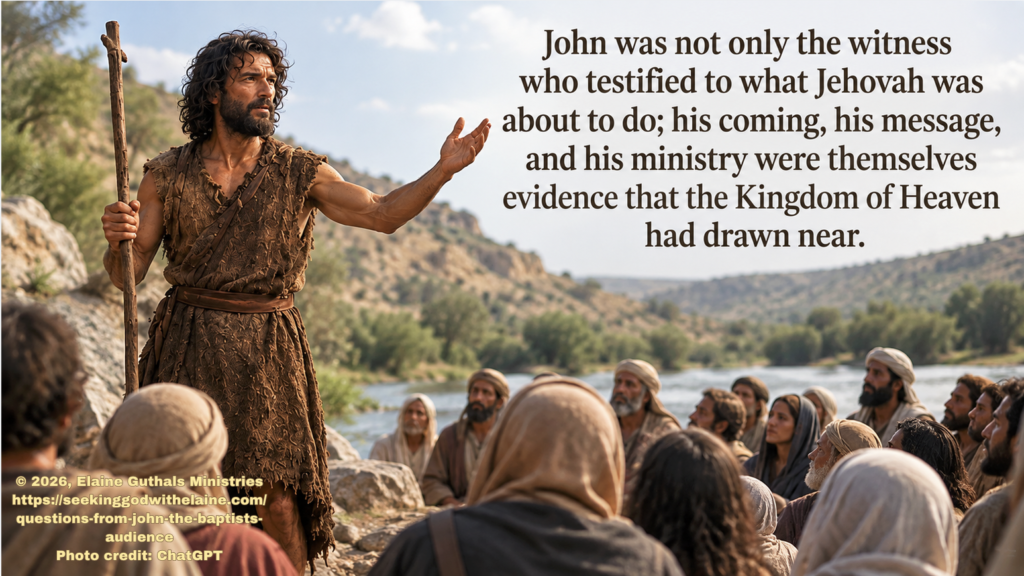
We know that – by John’s words – he was the bridge between Jehovah’s promise and His fulfillment of that promise.
- Repent: “Repent of your sins and turn to God, for the Kingdom of Heaven is near …” (Mt. 3: 2 NLT).
- Baptism: “I baptize with water those who repent of their sins and turn to God” (Mt. 3: 11 NLT).
- Coming Messiah: “… But someone is coming soon who is greater than I am—so much greater that I’m not worthy even to be his slave and carry his sandals. He will baptize you with the Holy Spirit and with fire” (Mt. 3: 11 NLT).
- Moral living: “… turn to God …” (Mt. 3: 2 NLT).
- Preparation: “… for the Kingdom of Heaven is near” (Mt. 3: 2 NLT).
- Humility: “He must become greater and greater, and I must become less and less” (Jn. 3: 30 NLT).
Who Are You?
The Jews were looking for a King Messiah (Melech HaMoshiach – מֶלֶךְ הַמָּשִׁיחַ), but not the Messiah that came.
We have to think about the particulars surrounding John’s ministry. He was the first prophet in 400 years to have a message to give to the nation of Israel. This covenant silence had lasted 400 years.
It was the message for which many had been waiting and watching. They had been waiting for thousands of years.
So, it doesn’t mean we should bite on first-century Jews for wanting to make John the Messiah. They had been waiting so long for Messiah to come, and John was telling them it wasn’t him.
John had the message right. “… ‘Look! The Lamb of God who takes away the sin of the world!’” (Jn. 1: 29 NLT).
The message John was giving them was the next best thing. “I’m not the Messiah, but He is here now.
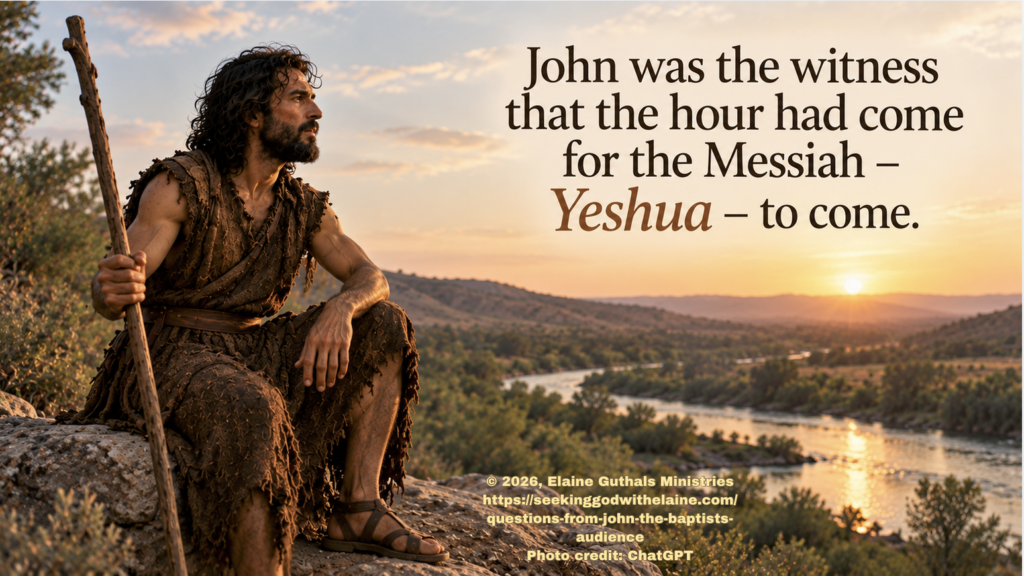
John was the witness that the hour had come for the Messiah – Yeshua – to come.
Are You Elijah?
Some in John’s audience thought he was the prophet Elijah come back from the dead.
We know in the Old Testament that some people were resurrected from the dead. Elijah did it himself (I Kgs. 17: 17-24). But this is talking about reincarnation.
The Jews of John’s day had good reason to ask the question. It was talked about in the Old Testament, what they knew of as the Tanakh.
- “‘Look! I am sending my messenger, and he will prepare the way before me. Then the Lord you are seeking will suddenly come to his Temple. The messenger of the covenant, whom you look for so eagerly, is surely coming,’ says the Lord of Heaven’s Armies” (Mal. 3: 1 NLT).
- “Look, I am sending you the prophet Elijah before the great and dreadful day of the Lord arrives. His preaching will turn the hearts of fathers to their children, and the hearts of children to their fathers. Otherwise I will come and strike the land with a curse” (Mal. 4: 5-6 NLT).
Well, they got it right, and they got it wrong.
First-century Jews wouldn’t have believed in reincarnation (but then, the Sadducees didn’t believe in resurrection, either). Besides, like Enoch, Elijah didn’t die (II Kgs. 2: 11).
They could have been expecting the real Elijah to come back in bodily form from Heaven. John said that wasn’t so.
I can see why they thought John was Elijah. Their messages were pretty much the same: repent and turn back to Jehovah.
The two men wore similar attire (II Kgs. 1: 8; Mt. 3: 4). They carried out their mission in the wilderness (Mt. 3: 1).
What John had done was to come in the spirit of Elijah. “He will be a man with the spirit and power of Elijah. He will prepare the people for the coming of the Lord. He will turn the hearts of the fathers to their children, and he will cause those who are rebellious to accept the wisdom of the godly” (Lk. 1: 17 NLT emphasis added).
I know. That isn’t exactly what Jesus said.
- “And from the time John the Baptist began preaching until now, the Kingdom of Heaven has been forcefully advancing, and violent people are attacking it. For before John came, all the prophets and the law of Moses looked forward to this present time. And if you are willing to accept what I say, he is Elijah, the one the prophets said would come” (Mt. 11: 12-14 NLT).
- “‘But I tell you, Elijah has already come, but he wasn’t recognized, and they chose to abuse him. And in the same way they will also make the Son of Man suffer.’ Then the disciples realized he was talking about John the Baptist” (Mt. 17: 12-13 NLT).
No, Yeshua did not lie. John was a type of Elijah; however, the audience probably wouldn’t have accepted a no, but because that wasn’t the answer they wanted.
Besides, Elijah came on the Mount of Transfiguration (Mt. 17: 1-3). But most people — not even all of the Apostles — knew that.
Are You the Prophet
John was questioned whether he was the prophet they were to expect.
Wait! What?? There was someone else besides Elijah that they were expecting????
Remember, the first-century Jews knew their Torah. They knew what Moses had said.
“Moses continued, ‘The Lord your God will raise up for you a prophet like me from among your fellow Israelites. You must listen to him’” (Deut. 18: 15 NLT).
No, Moses didn’t name names – worse luck. He just said someone is going to come.
The only clue Moses did give was it was going to be someone like him.
First-century Jews were expecting the Prophet Moses had said Jehovah would raise up — the prophet like Moses. And the New Testament identifies that expectation as ultimately fulfilled in Yeshua.
“When the people saw him do this miraculous sign, they exclaimed, ‘Surely, he is the Prophet we have been expecting’” (Jn. 6: 14 NLT).
“Then times of refreshment will come from the presence of the Lord, and he will again send you Jesus, your appointed Messiah. For he must remain in heaven until the time for the final restoration of all things, as God promised long ago through his holy prophets. Moses said, ‘The Lord your God will raise up for you a Prophet like me from among your own people. Listen carefully to everything he tells you.’ Then Moses said, ‘Anyone who will not listen to that Prophet will be completely cut off from God’s people” (Ac. 3: 20-23 NLT).
In other words, they weren’t looking for some random prophet. They were asking about a specific prophet that Scripture told them to expect.
They knew their prophecies. They didn’t know what the fulfillment was going to look like.
Direction to the Crowds
“The crowds asked, ‘What should we do?’ John replied, ‘If you have two shirts, give one to the poor. If you have food, share it with those who are hungry.’ Even corrupt tax collectors came to be baptized and asked, ‘Teacher, what should we do?’ He replied, ‘Collect no more taxes than the government requires.’ ‘What should we do?’ asked some soldiers. John replied, ‘Don’t extort money or make false accusations. And be content with your pay’” (Lk. 3: 10-14 NLT)
What Should We Do?
The last thing we should do is read this to mean, “What should we do to be saved?”
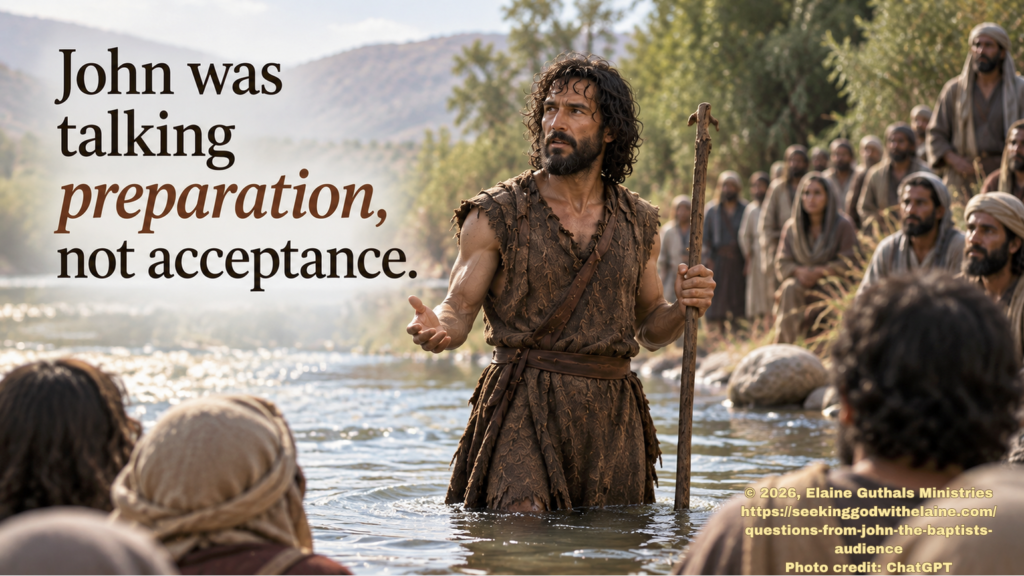
John didn’t go there. He was talking covenant faithfulness, not salvation. John was talking preparation, not acceptance.
If You Have
We see from these verses that a diverse population came to listen to John.
At first, Luke just mentioned people. Then, he mentioned groups.
Luke didn’t identify his audience as Jew or Gentile. Instead, he talked about groups: specifically, tax collectors and soldiers.
So, who exactly was Luke showing us came to John?
If these soldiers were Roman soldiers, that would mean Gentiles were among John’s audience. That is possible.
John wouldn’t have been in a building. Anyone walking along could have stopped to listen.
We can’t, though, just assume these soldiers were Roman, not Jewish.
Wait! What??? There were Jewish soldiers who jumped ship and went to Rome???
Well, maybe.
Let’s think this through. Luke used the word strateuomenoi (στρατευόμενοι). It simply means serving as soldiers or military personnel.
It doesn’t give any indication of nationality.
Rome controlled Israel. Would there still be Jewish soldiers? Would Rome have dismantled the army, or would they have merged them with their army?
We know from historical sources that Herod the Great had Jewish soldiers in his army. He was appointed king by Rome. What kind of soldiers were serving under Herod Antipas, and could they have been Jewish?
We also have to remember where John was. He was in territory ruled by Herod Antipas.
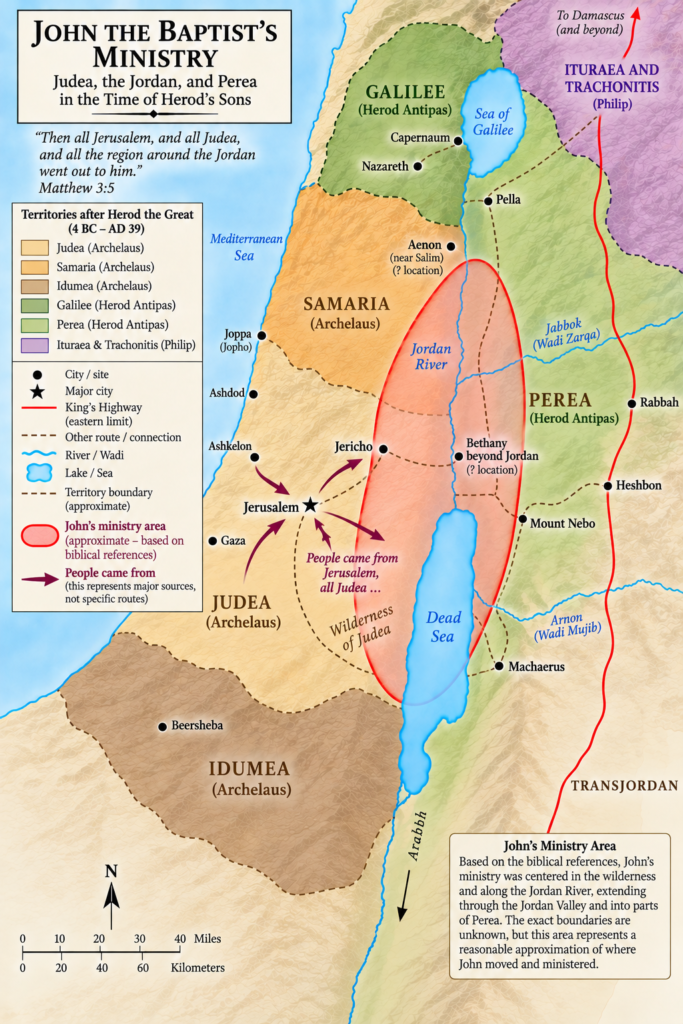
Let’s just stop there a second. First-century Jews hated the tax collectors because they considered them traitors.
How much more would they consider those who could be fighting to free them from opposition but were working for the opposition?
In truth, we can’t say that all of them were traitors. Some were probably serving because they were forced to do so.
There were Jews who accommodated Rome, Jews who worked within Herodian administration, Jews who opposed Rome, and Jews whose position was somewhere in between.
Still, they more than likely would have seen soldiers working for other military units as against Jewish independence.
Jump to Luke 3: 15 a second. “Everyone was expecting the Messiah to come soon, and they were eager to know whether John might be the Messiah” (Lk 3: 15 NLT). Roman soldiers wouldn’t have been expecting a Jewish Messiah – if that verse is talking about this group of people. We see from these verses that a diverse population came to listen to John.
It seems like Luke hasn’t combined sermons. He went on saying, “John answered their questions by saying …” (Lk. 3: 16 NLT).
But that is talking about them asking about John being the Messiah. Luke doesn’t go into that as John did. Matthew and Mark just noted that John prepared the way for Yeshua.
So, the question becomes: is Luke talking about one sermon or is he using his typical form of narrative summary?
Does it really matter? We need to focus on the passage and see what we can learn from it.
Luke gave us three groups of people: ordinary people, tax collectors, and soldiers.
- John told the crowd that they were to share.
- He told the tax collectors not to exploit their authority to take more than that to which they were entitled.
- He told the soldiers not to use their physical power to shake down – diaseiō (διασείω) – someone to frighten them into paying money.
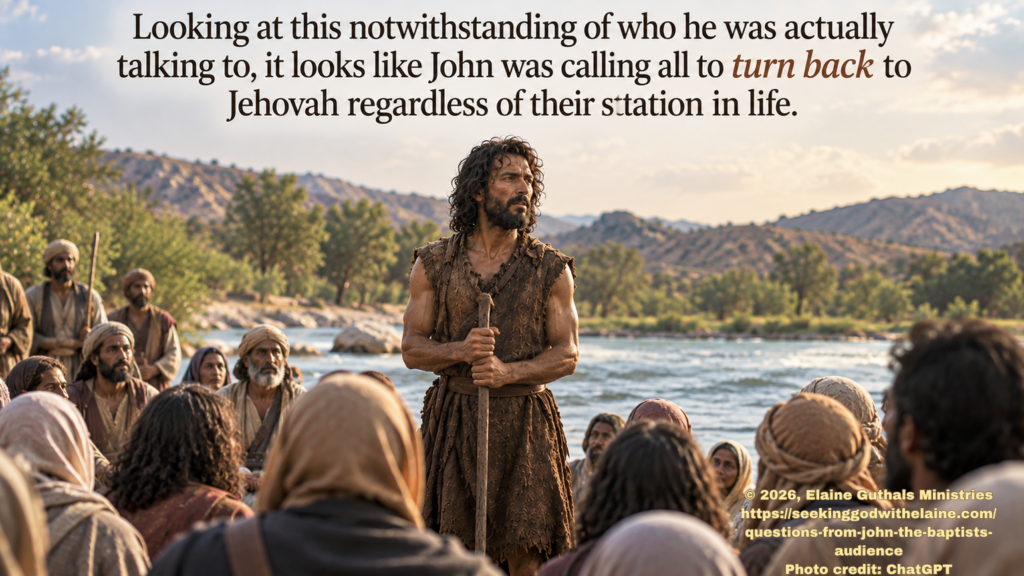
Looking at this notwithstanding of who he was actually talking to, it looks like John was calling all to turn back to Jehovah regardless of their station in life.
Making the Connections #1
There is another connection between John and Elijah. Both were preparing the way for someone greater than themselves.
We get that with John and Yeshua. We forget about that with Elijah and Elisha.
The significance of Elisha asking for and receiving doesn’t always sink in. “When they came to the other side, Elijah said to Elisha, ‘Tell me what I can do for you before I am taken away.’ And Elisha replied, ‘Please let me inherit a double share of your spirit and become your successor’” (II Kgs. 2: 9 NLT).
Elisha was talking about spirit and power, just like was said about John in Luke 1: 17. It was talking about spiritual authority and power to continue Jehovah’s work.
But John is Elijah, and Yeshua is Elisha when talking about typology/spirit and ministry, not literal identity. “He must become greater and greater, and I must become less and less” (Jn. 3: 30 NLT).
Making the Connections #2
Moses said that the prophet would be like him. So, how alike were Moses and Yeshua?
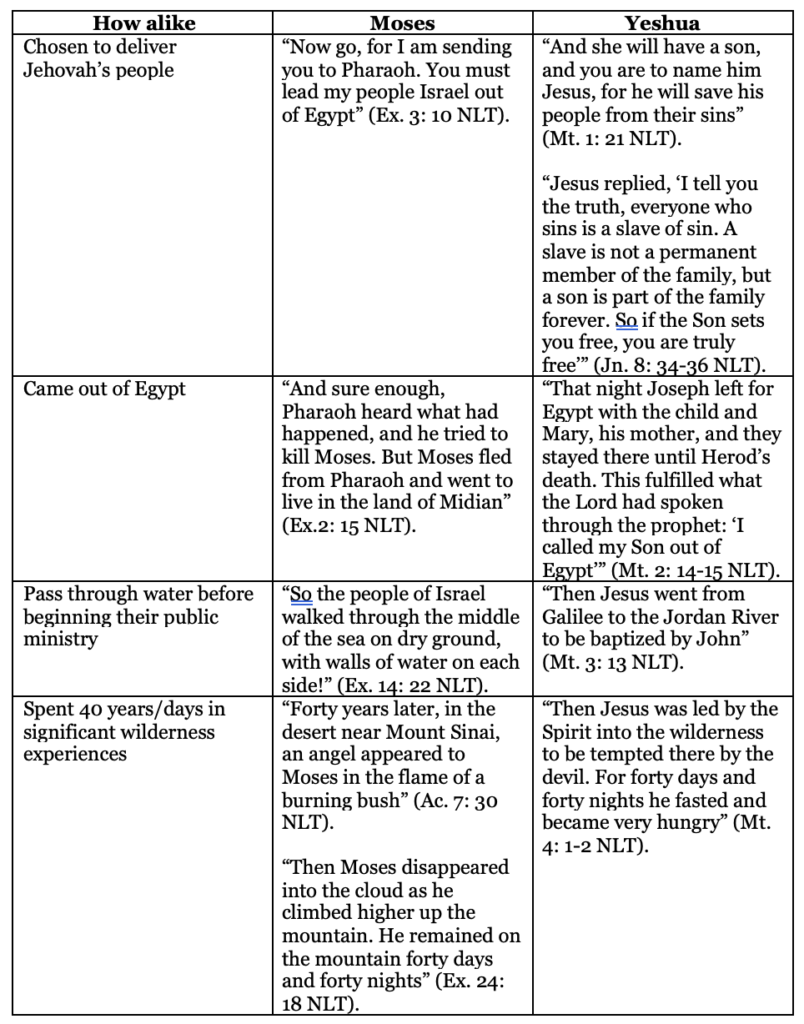
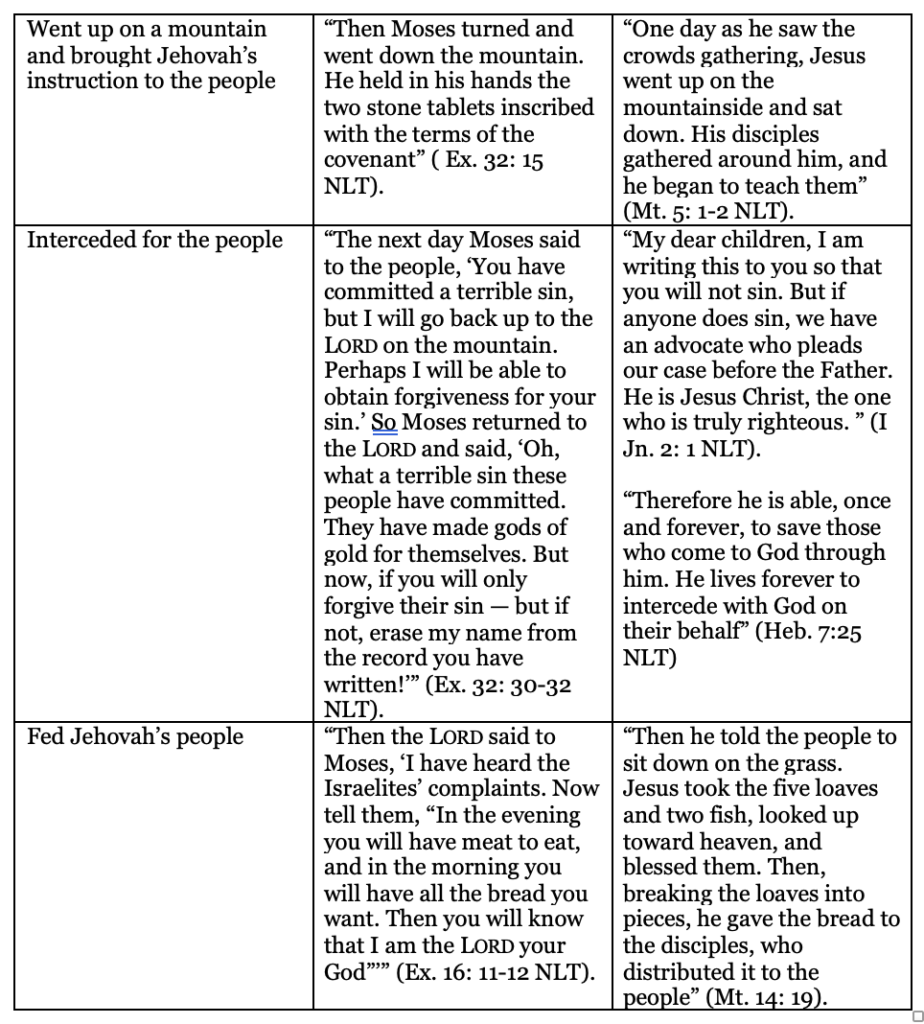
Moses gave Israel bread from heaven – Yeshua identifies Himself as the true bread from heaven (Jn. 6: 32–35).
Moses mediated the covenant at Sinai – Yeshua establishes the new covenant (Lk. 22: 20).
Moses brought God’s instruction to Israel – Yeshua is God’s Word made flesh (Jn. 1: 1–14).
Moses led Israel toward the Promised Land – Yeshua leads His people into the Kingdom of God.
John’s audience wasn’t foolish for asking about “the Prophet.” They were reading their Scriptures and looking for the person Moses had said was coming. Their problem wasn’t that they were looking for fulfillment. Their problem was that they had not yet recognized what fulfillment would look like.
Heart Check
Think about the battle Yeshua is engaged in for your heart. Ask yourself the following questions.
- Am I willing to let Jehovah show me what His promises actually look like, even when the fulfillment does not look the way I expected?
- When Jehovah is doing something in my life, am I looking for Him—or am I looking for Him to do it my way?
- If John were speaking directly to me today, what would repentance look like in my particular station in life?
How Do We Apply This?
- Know what Scripture says, but don’t decide in advance what fulfillment must look like.
- Don’t become so focused on identifying the messenger that you miss the One being announced.
- Repentance should change how we live, not merely what we believe.
- Use whatever authority or position Jehovah has given you to serve rather than exploit others.
- Ask what faithfulness looks like in the place where Jehovah has put you.
- Be willing to become smaller when Yeshua must become greater.
Father God. Thank You for showing us how John responded to his audience. Help us to evaluate ourselves so that we can respond in the way he instructed. Amen.
If you don’t understand something and would like further clarification, please contact me.
If you have not signed up for the email providing the link to the devotions and the newsletter, do so below.
If God has used this devotion to speak with you, consider sharing it on social media.