Blog

  • Revisiting the Covenant God Made with Abram

    For the last recorded time, God approaches Abram about the covenant He established with him back in Genesis 12. This devotional reading looks at the responsibilities given to Abram.

    Nuggets

    • Abram’s covenant responsibility was to walk with God
    • Abram was 99 years old when God came to Abram the final recorded time regarding the covenant.
    • Abram knew that God was all-sufficient and almighty.
    • For the first time, God told Abram what his responsibilities were in fulfilling the covenant.
    • Abram was again promised a son to provide him with descendants.
    • Abram’s name was changed to Abraham.
    revisiting-the-covenant-god-made-with-abram

    After 14 years, God again approaches Abram about the covenant that He made with him 24 years before. It was time to set the stage for the beginning promise to be fulfilled.

    Let’s see how God handled it.

    Let’s Put It into Context

    To read devotions in the Creating Everything theme, click the button below.

    Devotions in the Abraham the Patriarch series

    Let’s Put It into Context #2

    It was with Abram the covenant that made the Israelites God’s people was established. We may think it is three different covenants, but it really is all part of one.

    • Covenant established (Gen. 12: 1-3)
    • Blessings of the covenant (Gen. 12: 7; Gen.13: 14-17)
    • Sign of the covenant (Gen. 15: 1-21)
    • Acceptance of the responsibilities of the covenant 17: 1-27)
    • Promise of the covenant (Gen. 18: 9-15)

    Covenants are agreements, contracts, or promises between two parties to perform the responsibilities listed in the covenant. When parties had unequal footing, the one in the king position would outline the protection offered through the agreement, and the subjects would pledge their loyalty to the king.

    There were several elements in covenants. Many included a time of fellowship centered around a meal.

    Others included shedding of blood, usually an animal given as a sacrifice. A sacrifice was especially appropriate as a penance when one of the parties was offended. It was to precede a reconciliation.

    There would be provisions for rewards and punishments when the agreement was kept or broken. These blessings and cursings show that God will bless obedience and punish disobedience.

    God’s Covenant with Abram

    “When Abram was ninety-nine years old, the Lord appeared to him and said, ‘I am El-Shaddai — “God Almighty.” Serve me faithfully and live a blameless life’” (Gen. 17: 1 NLT)

    Abram’s covenant responsibility was to walk with God.

    Ninety-Nine

    Abram was 99 years old when God came to Abram the final time regarding the covenant.

    1960 BC — Abram born (Gen. 25: 7)
    1890 BC — Terah, Abram, Sarai, and Lot move from Ur to Haran (Gen. 11: 31)
    1885 BC — Abram called at age 75 (Gen. 12: 1-3)
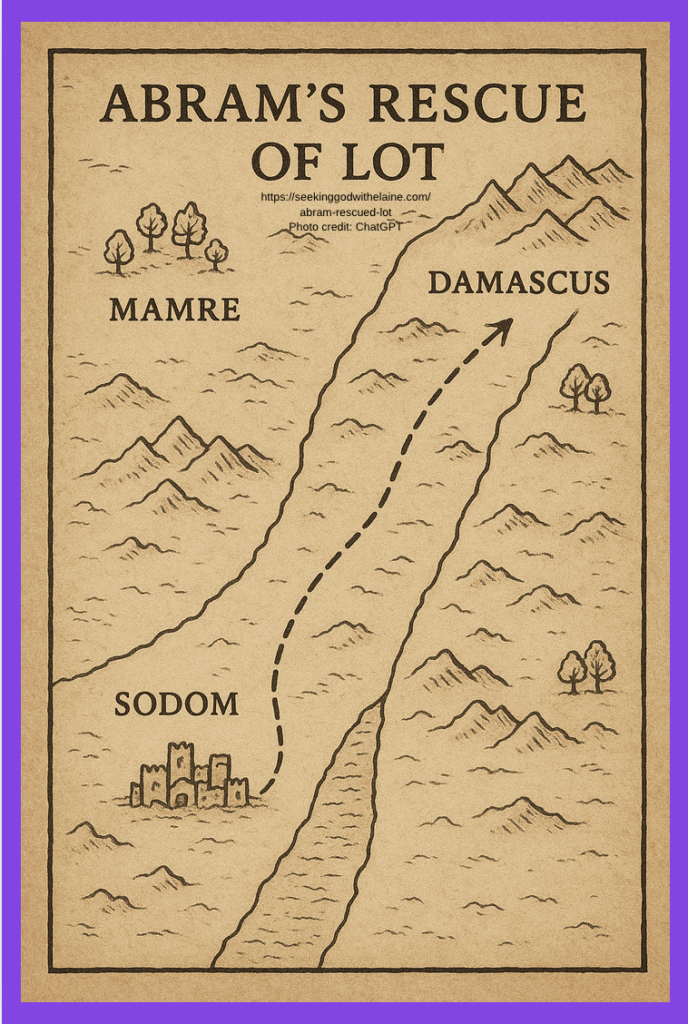
    c. 1880 – 1875 BC — Abram defeats King Chedorkiamer to rescue Lot (Gen. 14)
    1875 BC — God promises an 85-year-old Abram that he will have a son (Gen. 15)
    1876 BC — Ishmael born (Gen. 16: 15)
    1861 BC — God reestablished His covenant with Abram (Gen 17)
1861 BC — Sodom and Gomorrah are destroyed one year before the birth of Isaac (Genesis 18 – 19).
    1860 BC — Isaac born (Genesis 35: 28).

    Resource

    All we are told here is Abram is 99. But if Isaac was born when he was 100, it had to have been some time in the year before Isaac was born and before Sodom and Gomorrah were destroyed.

    I Am

    Abram knew that God was all-sufficient and almighty.

    Why did Abram know this? He had the faith to believe.

    Spurgeon said that is what a strong faith does. It believes that God is the secret of our strength.

    Resource

    In knowing God as the almighty God, we see His glory.

    Serve Me Faithfully and Live Blamelessly

    For the first time, God told Abram what his responsibilities were in fulfilling the covenant.

    I love how the Complete Jewish Bible put it. “… Walk in my presence and be pure-hearted” (Gen. 17: 1 CJB).

    Isn’t that what we are to do on the Sanctification Road? We are to walk with God.

    We know from Enoch (Gen. 5: 21-24) that God wants us to walk with Him. There are several things that we do in order to make that a reality.

    • Love God
    • Reconcile with God
    • Please and obey God
    • Constantly walk with God
    • Spend Time with God in Meditation, Prayer, and Praise
    • Have a Pleasing Testimony
    • Walk in Truth, Justice, and Love
    • Put into practice in our everyday lives

    Abram’s whole walk was to be patterned after God’s command, not just certain instances of his life. He would have had another great example.

    Noah was also called blameless. “… Noah was a righteous man, the only blameless person living on earth at the time, and he walked in close fellowship with God” (Gen. 6: 9) NLT).

    As a descendant of Noah, Abram would have heard all about his ancestor. Shem would have ensured that those coming after him would remember how God wanted them to live their lives.

    Our salvation has to be based on how we live our lives to be in a relationship with God. God can only make a covenant with us and multiply us when we are blameless — without sin.
    We become blameless when we accept God’s Plan of Salvation – our sins are forgiven. We aren’t a true disciple if we don’t walk in righteousness before God.

    What God is looking for is that connection with our minds. We are to have the mind of Christ — display the same attitude in which He had.

    We show this in our service to God. Inward religion shows itself in outward religion. The two cannot be separated.

    We have to show with our actions what our motivations are.

    Benson told us how to do this. He wrote, “Think, act, speak, under a sense of God’s omnipresence.”

    Resource

    The Hebrew word tamin used would have been familiar to Abram. It means morally pure. “And when Avram was ninety and nine shanah, Hashem appeared to Avram, and said unto him, I am El Shaddai; walk before Me, and be thou tamim (blameless)” (Gen. 17: 1 OJB).

    Translators do us a disservice when they translate the word as perfect. Candlish tried to help us grasp what was meant. He wrote,

    “Now, this word ‘perfect,’ or ‘upright,’ when applied to man, in the Bible, is not absolute, but relative. It relates, for the most part, not to the whole character of a man, but to some one particular feature of his character, some individual grace or virtue specified, in respect of which he is said to be complete or entire, consistent and sincere.”

    Resource

    I’ve heard perfect been said to mean mature. I could see that as consistent or sincere.

    How do we apply that to walking with God? We realize His presence and providence as we feel His watch care over us.

    We know we aren’t going to be perfect in being sinless. We do have to serve God wholeheartedly. We have to be habitual and consistent so that our attitude of surrender to God can be nurtured.

    Above all, our submission to God must be sincere.

    Countless Descendants

    “I will make a covenant with you, by which I will guarantee to give you countless descendants.’ At this, Abram fell face down on the ground …” (Gen. 17: 2-3 NLT)

    Abram was again promised a son to provide him with descendants.

    When God came to Abram the last time to talk covenant with him, He had to give him a bolstering session. Abram was fearful and despondent.

    It had the intended effect on Abram. “And Abram believed the Lord, and the Lord counted him as righteous because of his faith” (Gen. 15: 8 NLT).

    We might could say that Abram was different from others. Who else would answer a call to an unseen God to go to an unknown place?

    The thing is we all need to have a faith like Abram’s. That is the way in which we will be blessed through the covenant.

    This had to happen before the rest of what God was going to talk to Abram about this time could be brought up.

    Look at all the “I will” combinations in this passage.

    • “I will make a covenant with you, by which I will guarantee to give you countless descendants” (Gen. 17: 2 NLT).
    • “This is my covenant with you: I will make you the father of a multitude of nations!” (Gen. 17: 4 NLT).
    • “I will make you extremely fruitful. Your descendants will become many nations, and kings will be among them! I will confirm my covenant with you and your descendants after you, from generation to generation. This is the everlasting covenant: I will always be your God and the God of your descendants after you. And I will give the entire land of Canaan, where you now live as a foreigner, to you and your descendants …” (Gen. 17: 6-8 NLT).

    Seven “I will” statements in eight verses. God was committed to this covenant. We know He followed through on His part!

    We also need to react as Abram did. We need to fall on our face before God. Yeah, this may me literally down on the ground. It definitely means figuratively.

    Father of Many Nations

    “… Then God said to him, ‘This is my covenant with you: I will make you the father of a multitude of nations! … I will make you extremely fruitful. Your descendants will become many nations, and kings will be among them!’” (Gen. 17: 3-4, 6 NLT)

    Abraham would be the father of many nations and faiths.

    It is interesting what Genesis 17: 4 says in the Orthodox Jewish Bible. “As for Me, hinei, My brit (covenant) is with thee, and thou shalt be an Av of many Goyim [see 18:18] [Gentiles]” (Gen. 17: 4 OJB).

    We just talked about the translation for the word hinei. It has a deeper meaning than behold or here I am. The word delivered a much deeper commitment — a total commitment— to fulfilling this covenant.

    That brought with it another aspect. Readiness must be maintained. That could only be achieved by keeping our hearts open to God’s call.

    Maybe I am just being picky, but it seems like the New Living Translation has rewritten verse 5 “…. I will make you the father of a multitude of nations!” (Gen. 17: 5 NLT).

    Look what the Hebrew says. “… Av hamon Goyim (Father of a multitude of Goyim) have I made thee. [T.N. Ga 3:29 says “And if you belong to Moshiach [Messiah] (YESHAYAH 53:10), then you are of the ZERAH [shining, brightness, dawning] of Avraham Avinu, [our father] you are yoreshim (heirs) according to the havtachah (promise).]” (Gen. 17: 5 OJB).

    Hmmm. In Elaine-speak, it looks like the rabbis added a gloss, notes put in the margins by translators that eventually made their way into our translations. But this one was spot on.

    Name Change (Avraham)

    “What’s more, I am changing your name. It will no longer be Abram. Instead, you will be called Abraham, for you will be the father of many nations” (Gen. 17: 5 NLT)

    Abram’s name was changed to Abraham.

    Abram only had one son — and one he was told isn’t the right one — yet God said he was changing his name because he was going to be “… the father of many nations” (Gen. 17: 5 NLT).

    It may seem like a small thing, but in reality, it wasn’t. Abram’s name change showed the changes that would be coming in his life.

    Both Abram and Abraham showcase aspects of fatherhood. Abram means exalted father. Abraham, on the other hand, means father of many nations.

    Funny. That is what verse 5 says. “What’s more, I am changing your name. It will no longer be Abram. Instead, you will be called Abraham, for you will be the father of many nations” (Gen. 17: 5 NLT emphasis added).

    We also know that Abraham is the patriarch of Judaism, Christianity, and Islam. That would probably make the name change based on a change of character also. Abraham would now be father of the faithful, also.

    The name change came as part of God’s covenant with Abram. It shows how the covenant was going to expand as it was carried out.

    Spurgeon thought it was a little more than that. He wrote – talking about consecration –

    “… they who are consecrated to God are regarded as new men. The new manhood is indicated by the change of name — he is called no longer Abram, but Abraham, and his wife no longer Sarai, but Sarah. Ye are new creatures in Christ Jesus.”

    Resource

    Abram believed that, through his descendants, humans would be reconciled to God. He may not have known that Jesus was the One to do it, but he knew the Messiah would be His descendant. “And I will make thee exceeding fruitful, and I will make Goyim of thee, and Melechim [kings] shall come out of thee” (Gen. 17: 6 OJB).

    Making the Connections #1

    Walking with God is all about being in His presence. This consciousness takes place in our minds.

    No, it doesn’t take over our minds so that they can’t function on other things. Our minds still operate on physical things.

    Goulburn liked it to being a speaker in front of an audience. We focus on what we are saying, but we also know the audience is watching us.

    Resource

    To me, that is a great analogy. God is the One to Whom we want to focus our actions on.

    Making the Connections #2

    “… Walk in my presence and be pure-hearted” (Gen. 17: 1 CJB)

    “… Serve me faithfully and live a blameless life” (Gen. 17: 1 NLT)

    Is it just me, or do those two translations seem 180 degrees apart?

    Walk in my presence does and doesn’t have anything to do with serving God. Yes, we serve Him by our actions, but that makes salvation more about what we do rather than what God does for us.

    Serve me faithfully is important because we have to be consistent in doing what God asks. But salvation doesn’t come by works. It comes by faith and obedience.

    If we think a blameless life means perfect, we are in for a colossal letdown. We aren’t going to be sinless in these bodies.

    Leale had an interesting take on being perfect. In Elaine-speak, he said that completeness of our spiritual character means that we have reverence for all of God’s laws and commandments.

    Resource

    But we can be pure-hearted. That means we have a single-minded focus on God and freedom from deceit, hypocrisy, and selfish motives.

    Making the Connections #3

    I like what Spurgeon said. He wrote, “Inward tribulations are frequently more severe than temporal trials; the man of God knows this full well.”

    Resource

    Spiritual trials verses physical trials.

    Oh, yeah. We think physical trials are hard. They definitely are painful sometimes.

    Spiritual trials can be difficult – very difficult.  There is a lot more at stake.

    Spiritual trials have much more significant consequences.

    Making the Connections #4

    What do we do when we walk before God?

    • Follow God in our thoughts, actions, and speech.
    • Be sincere in our walk with God.
    • Be holy.
    • Be happy.
    • Gain knowledge about God.
    • Put all our concerns in God’s hand.
    • Be truthful with God.
    • Have unwavering faith.
    • Live in God’s presence.
    • Experience the dignity of a spiritual life.
    • Feel God’s love.

    Resources

    How Do We Apply This?

    • Realize God’s presence.
    • Walk with Him consistently and sincerely.

    Resource

    Father God.Thank You for being our Father with a life-long covenant. Help us to not grow weary while we wait for Your time. We pledge to walk with You daily. Amen.

    What do you think?

    Leave me a comment below (about this or anything else) or head over to my Facebook group for some interactive discussion.

    If you don’t understand something and would like further clarification, please contact me.

    If you have not signed up for the email providing the link to the devotions and the newsletter, do so below.

    If God has used this devotion to speak with you, consider sharing it on social media.
  • God Saw and Blessed Hagar

    Hagar was on the run from Sarai’s harsh treatment. This devotional reading looks at how God revealed Himself to her to comfort and redirect her.

    Nuggets

    • God saw Hagar’s distress and blessed her.
    • God wanted Hagar to go back to her station and rank.
    • Okay, we may look at this and say it wasn’t a very good promise from the Israelite’s viewpoint, but it was for Hagar and her son.
    • Hagar, a Gentile, responded to Abram’s God.
    • Hagar returned to Mamre to have her son.
    god-saw-and-blessed-hagar

    Sarai had come up with a plan to “help” God fulfill His promise of her having a son. He was taking too long by her estimation, so she came up with a way to get a kid.

    Hagar, the slave, would be a surrogate. But things went downhill after they implemented Sarai’s plan.

    Sarai started treating Hagar harshly, so the slave girl ran away. (We know where Ishmael got his wildness from!).

    Let’s go on with the story

    Let’s Put It into Context

    To read devotions in the Creating Everything theme, click the button below.

    Devotions in the Abraham the Patriarch series

    Promised Blessings

    “The angel of the Lord found Hagar beside a spring of water in the wilderness, along the road to Shur. The angel said to her, ‘Hagar, Sarai’s servant, where have you come from, and where are you going?’ ‘I’m running away from my mistress, Sarai,’ she replied. The angel of the Lord said to her, ‘Return to your mistress, and submit to her authority.’  Then he added, ‘I will give you more descendants than you can count.”  And the angel also said, “You are now pregnant and will give birth to a son. You are to name him Ishmael (which means ‘God hears’), for the Lord has heard your cry of distress. This son of yours will be a wild man, as untamed as a wild donkey! He will raise his fist against everyone, and everyone will be against him. Yes, he will live in open hostility against all his relatives’” (Gen. 16: 7-12 NLT)

    God saw Hagar’s distress and blessed her.

    The Angel of the Lord Found Hagar

    Hagar jumped ship before the baby was born. She wasn’t going to put up with Sarai’s abuse.

    No, it doesn’t say Sarai kicked Hagar out, just that she treated her harshly. That may have been the ulterior motive, but it was Hagar’s decision to leave on the day she did.

    God had other plans.

    In this translation, it says God sent an angel to comfort her. This is the first time God sent a messenger on His behalf.

    If we go back to the Hebrew, the way I read it is it says God came Himself. “And the Malach Hashem [the Lord is, was, and always will be King] found her by a spring of mayim [water] in the midbar [wilderness], near the spring on the road to Shur” (Gen. 16: 7 OJB).

    Yes, Hagar was an Egyptian and, therefore, a Gentile. God still came to her to provide for and comfort her.

    It would be logical to think — at a minimum — she knew about Abram’s God. She probably became Sarai’s servant when they were in Egypt. “Then Pharaoh gave Abram many gifts because of her — sheep, goats, cattle, male and female donkeys, male and female servants, and camels” (Gen. 12: 14-16 NLT emphasis added).

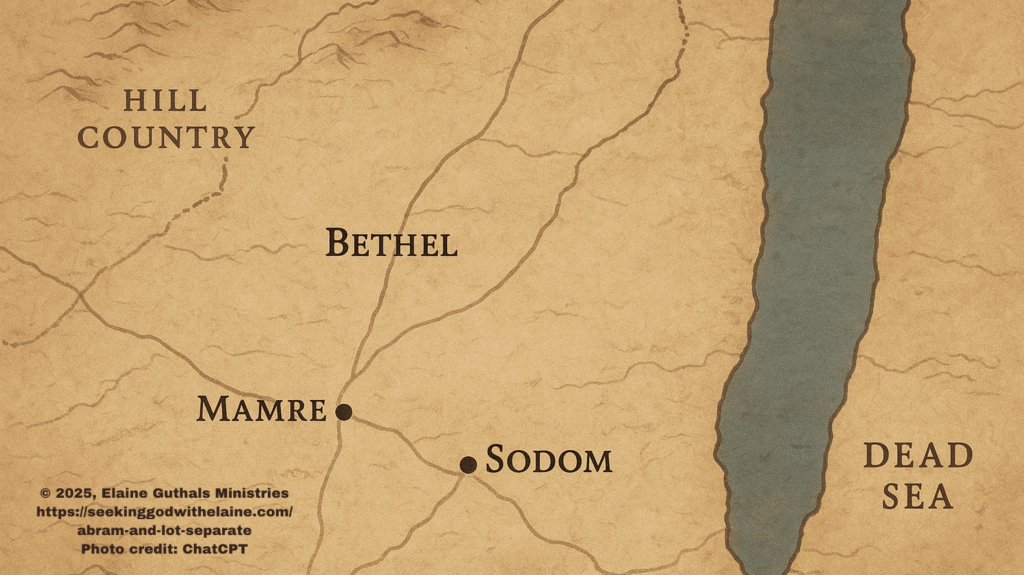
    We figured that Abram and Sarai went to Egypt between 1885 and 1880. We split the difference and called the year 1882. This would have been 1875 to early 1874.

    That means Hagar would have been with Abram and Sarai for five to ten years. No, in the big scheme of things, that wouldn’t be a long time. It may have felt like it, though.

    Still, an observant slave would have had some kind of clue as to the God of her master and mistress.

    Yes, God did call Hagar Sarai’s slave-girl. He didn’t elevate Hagar’s status, either. “And he said, Hagar, Sarai’s shifchah, from where camest thou? And where wilt thou go? And she said, I flee from the face of my gevirah [female head of the household] Sarai” (Gen. 16: 8 OJB emphasis added).

    Fuller thought the angel did this to make forbid any marriage that may have taken place. That would be logical as God would want to preserve the sanctity of marriage.

    Resource

    Gladden asked a great question. If the angel knew Hagar’s name, don’t you think he would know where she was going – especially if it was God Himself.

    Resource

    Doesn’t God many times ask us questions to which He knows the answer? He wants us to articulate it. He doesn’t just step in and save the day. He doesn’t force Himself on us.

    Dykes said something interesting – and true. He said Hagar was probably telling herself it was time to return. The Holy Spirit does have a way of working on us to nudge us in the right direction.

    Resource

    God was gracious to her. No, He didn’t elevate her, but He didn’t start accusing her, either. God came to her with pity.

    This might have been brought on by the desperation she felt. God was going to throw her a lifeline.

    Notice Hagar didn’t answer the angel’s second question. She either didn’t know where she was going or didn’t want to say. She may not have thought it was an option to return, even if the Holy Spirit was prompting her.

    God had plans for who Hagar’s baby would be. One of those plans was to be raised by Abram.

    God knew He wasn’t going to make Hagar’s son the firstborn even though he was born first. (God has a way of usually doing that.) That privilege was saved for Sarai’s firstborn.

    But that didn’t mean God left Hagar high and dry. He came to comfort her.

    Return and Submit

    God wanted Hagar to go back to her station and rank.

    We have to remember that Hagar was an escaped slave. As much as we may want to cheer for her freedom, she legally was in the wrong.

    Still, God came and found Hagar.

    God really didn’t cut Hagar any slack. Some would think she was entitled to a pass because of the harsh treatment of Sarai against her.

    Nope, God had specific directions for slaves to follow.

    • “You who are slaves must submit to your masters with all respect. Do what they tell you — not only if they are kind and reasonable, but even if they are cruel” (I Pet. 2: 18 NLT).
    • “Everyone must submit to governing authorities. For all authority comes from God, and those in positions of authority have been placed there by God” (Rom. 13: 1 NLT).
    • “Slaves must always obey their masters and do their best to please them. They must not talk back” (Ti. 2: 9 NLT).
    • “Slaves, obey your earthly masters with deep respect and fear. Serve them sincerely as you would serve Christ” (Eph. 6: 5 NLT).
    • “Slaves, obey your earthly masters in everything you do. Try to please them all the time, not just when they are watching you. Serve them sincerely because of your reverent fear of the Lord” (Col. 3: 22 NLT).

    I know. We generally hate the word submit. God doesn’t.

    God expects submission from all of us.

    unknown.png

    If we can’t obey our earthly leaders, how are we going to obey God, Whom we can’t see and Who has much more authority over us?

    We are to perform our duties. Hagar’s duty as a slave in that culture was to submit to her master and mistress.

    We talked a little about what Dykes said in the last devotion. Here is a more complete quote of what he wrote.

    “The other [peculiarities of society in Abram’s day] was the complete surrender of a serf’s legal and social rights into the hand of his master, which in the East characterized domestic servitude. Every home slave stood at the disposal of his lord for whatever service the lord might require. His very children were not his own, but his master’s.”

    Resource

    It was Hagar’s duty to go back. Yes, that grates on our sensibilities in today’s society, but we cannot judge ancient society. We have to learn from it.

    Most of all, we need to see what God says about it. He worked Hagar’s plan out just as He did Abram’s and Sarai’s.

    The difference here is that Hagar got a definite push. Thankfully, she followed God’s directions.

    Remember what God told Abram? “I will bless those who bless you and curse those who treat you with contempt …” (Gen. 12: 3 NLT).

    What Hagar’s descendants forgot was something else God said. “… Whoever blesses Israel will be blessed, And whoever curses Israel will be cursed” (Num. 24: 9).

    God’s Promise

    Okay, we may look at this and say it wasn’t a very good promise from the Israelite’s viewpoint, but it was for Hagar and her son.

    Regardless of her status in life, God had plans for Hagar and her son. He laid out who he would become.

    Because of this, Hagar knew that God saw her and had showed mercy to her. Think about it.

    • Hagar was upset and probably angry. She had been forced out of, if not what she considered her home, the place she was living. She was forced out of her job. At least where she was, food, clothing, and shelter would have been provided to her.
    • No where does it say where her intended destination was. It says she ran away and was found at a well.
    • Hagar had to be feeling all kinds of emotions — anger, hurt, despair, loneliness, unworthiness.

    Hagar must have been wandering how things worked out the way it did. But in a way, didn’t she bring it on herself.

    No, Hagar probably didn’t have any say in the matter about becoming Abram’s secondary wife. She did have a say about the contempt and disrespect she felt for Sarai.

    Circumstances do not condone our disobedience. We have to remain faithful regardless of the situation.

    unknown_1.png

    Hagar’s offspring are now called Arabs. Ishmael with the interesting personality description would be a ruler. They have been at odds with the Israelites since Day 1.

    God could have removed the conflict. He didn’t.

    But we’ll talk about them later.

    For now, let’s just say that God gave Hagar a promise that was not dependent on any contingencies. Aldis reminded us that was the way it was going to be. He wrote that it was “A bare announcement of what would be the physical, moral, and social condition of the person or persons to whom the passage refers.”

    Resource

    The description of Ishmael – and therefore, his descendants – is interesting. “This son of yours will be a wild man, as untamed as a wild donkey! He will raise his fist against everyone, and everyone will be against him. Yes, he will live in open hostility against all his relatives” (Gen. 16: 12 NLT).

    Ishmael would be a free man, but he would have a hostile disposition. But is that what it really says?

    Let’s look at this in the Hebrew. “And he will be a pere adam [wild man]; his yad [hand] will be against kol [all], and kol yad against him; and he shall dwell in the presence of all his brethren” (Gen. 16: 12 OJB).

    • Nothing is said about a donkey.
    • It doesn’t reiterate the part about open hostility.
    • Instead, it says they will live in proximity to each other.

    God wants us to be a family, but He knows there will be black sheep within the family. We’ve got to love them and help draw them back to Him.

    God could have made it so Sarai didn’t get the wild hair to give Hagar to Abram in the first place. He didn’t.

    God does not remove our trials and tribulations. He guides us through them.

    The God Who Sees

    “Thereafter, Hagar used another name to refer to the Lord, who had spoken to her. She said, ‘You are the God who sees me.’ She also said, ‘Have I truly seen the One who sees me?’ So that well was named Beer-lahai-roi (which means ‘well of the Living One who sees me’). It can still be found between Kadesh and Bered” (Gen. 16: 13-14 NLT)

    Hagar, a Gentile, responded to Abram’s God.

    I have always wondered what Hagar was feeling at this point. God had found her in her wandering and spoke to her.

    If she had known anything about Abram’s God, she would have known he had never seen Him. He was always up in Heaven.

    But here God was — on earth — talking to Hagar — a Gentile.

    Well, God is all-seeing. “The Lord is watching everywhere, keeping his eye on both the evil and the good” (Prov. 15: 3 NLT).

    Not only does God see us, but He also sees the real us. He knows our thoughts and motives. He knows what our actions will be before we do them.

    Most of all, God sees our response to Him. Are we His child or just one of His creation? Does our faith produce obedience and fruit, or do we even believe He is God?

    God knows where we have been without asking. He knows where we are going, even if we don’t. He knows if we are walking on the Sanctification Road.

    God sees the good, bad, and the ugly in us — and loves us anyway.

    Denham reminded us that God is no spectator. He is a hands-on Father.

    Resource

    Because God came to Hagar and ministered to her in her time of need, she obeyed Him and returned to Mamre.

    I like what Redford said. He wrote, “The faith which initiates practical obedience is a progressive blessedness.”

    Resource

    Faith that provides obedience leads to ongoing blessings. Remember, blessings are in the obedience, which is the product of faith.

    Hagar responded to God. In the same way, we are to respond to Him.

    How many times so we ask why God has come to us? We may think we are irredeemable. We may not feel like we are a normal disciple He would choose.

    But choose us He does. If He had His way, all would choose Him.

    The Firstborn but not the Chosen One

    “So Hagar gave Abram a son, and Abram named him Ishmael. Abram was eighty-six years old when Ishmael was born” (Gen. 16: 15-16 NLT)

    Hagar returned to Mamre to have her son.

    Remember, Hagar was Egyptian. We are not told how much she believed in Abram’s God before this encounter.

    What we do know is that Hagar listened. She went back and had her baby.

    We question why God didn’t make Isaac the firstborn if so much was put on being firstborn. This has to go in the UNR book — understanding not required.

    Making the Connections #1

    Why was Sarai’s plan and Abram’s acceptance of her plan so detrimental to ancient marriage? Dykes told us. He wrote,

    “For a mistress, therefore, to seek by means of a female slave and favourite attendant what Providence had denied to herself, was regarded under such a state of feeling as neither immoral nor revolting. It was not even held to be any real departure from the law of monogamy, or any infraction of conjugal fidelity. There is no doubt, however, that it did involve a certain lowering of the original conception of marriage. It paved the way for concubinage of a less excusable description. And in the majority of cases, as in the present instance, it could scarcely fail to turn out ill.”

    Resource

    This is the first of Shem’s line to even have some semblance of going outside of their wedding vows. As with other sins, this snowballed.

    Making the Connections #2

    Murphy gave us a quick Angels 101 class.

    • They are spiritual beings as God is. “Therefore, angels are only servants — spirits sent to care for people who will inherit salvation” (Heb. 1: 14 NLT).
    • They are moral, intelligent, and strong.
    • They carry out God’s commands through the abilities God gave them. “Praise the LORD, you angels, you mighty ones who carry out his plans, listening for each of his commands” (Ps. 103: 20 NLT).
    • They are ageless and eternal.
    • They worship God. “And all the angels were standing around the throne and around the elders and the four living beings. And they fell before the throne with their faces to the ground and worshiped God” (Rev. 7: 11 NLT).
    • They minister to believers. “Therefore, angels are only servants—spirits sent to care for people who will inherit salvation” (Heb. 1: 14 NLT).

    Resource

    Making the Connections #3

    This is a great reminder of just how loving God is. Hagar wasn’t a Hebrew — she was a Gentile Egyptian. She wasn’t sinless — God reminded her that she walked away from her duty.

    Yet, there God was, hearing her affliction and coming to her.

    This is becoming SOP — God comes to us. He comes to us because He sees us. He know exactly what we have done and what we are going through.

    I like what Leale said. He wrote, “God not only sees us, but sees through us, and knows us altogether.”

    Resource

    God can see and see through worldview people. It isn’t just His children in which He can do that. He can do it in all His creation. 

    Making the Connections #4

    We aren’t told about Hagar’s reception from Sarai on her return. We don’t know if she continued to treat her harshly or not.

    We do know that Hagar and Ishmael stayed with Abram and Sarai for over a decade. We know God did eventually tell Abram to cut them loose.

    Making the Connections #5

    How many times would we rather God not see us? We want to hide our sins from Him, but we can’t. He sees us.
     
    But look at it this way. When we, too, were in sin and running away from Him, God came to us and called us to salvation.

    Yes, we continue to sin, but we need to continue to repent.

    How Do We Apply This?

    • Don’t blame those we see as responsible for the problem for our response to the problem.
    • Remain meekly submissive to God and His promises.
    • Remember that God see our misery and distress.
    • Know that God hears our prayers.
    • Guard against the sins of distrust and presumption.
    • Be grateful that God is patient, tender, and compassionate toward us.
    • Strive to be honest and sincere.
    • Never forget that God sees us 24/7/365/eternity.
    • Worship God with all our hearts.
    • Don’t think we have to understand and comprehend God.
    • Truly worship God.

    Resources

    Father God. It was in Your plan that Abram have a son by Hagar. It is Your plan that Ishmael and his descendants would be at odds with Isaac and his descendants. We praise You that You brought that plan to fruition. Amen.

    What do you think?

    Leave me a comment below (about this or anything else) or head over to my Facebook group for some interactive discussion.

    If you don’t understand something and would like further clarification, please contact me.

    If you have not signed up for the email providing the link to the devotions and the newsletter, do so below.

    If God has used this devotion to speak with you, consider sharing it on social media.

  • The Worldview Way to Deal

    We can approach waiting on God’s promises in two ways: wait for Him or deal with it in a human way. This devotional reading look at how Sarai and Abram dealt with waiting for their promised son.

    Nuggets

    • Sarai tried to take matters into her own hands to get Abram an heir, but it only shows how dysfunctional Abram’s family is.
    • Sarai had a slave named Hagar.
    • A slave in that culture could be used as a surrogate mother, but that isn’t what God wanted.
    • In the Hebrew, Hagar was given the title isha (wife), not philegesh (concubine).
    • Sarai’s plan came to fruition – and it didn’t work out the way she wanted.
    • After she became pregnant, Hagar held Sarai in contempt.
    • Sarai blamed Abram, even though it had been her plan.
    • We don’t read that status elevation happened in Abram’s eyes, either.
    • When Sarai treated Hagar harshly, Hagar ran away.
    the-worldview-way-to-deal

    A couple of devotions back, we said that Sarai and Lot both gave Abram troubles. We’ve seen how Lot did.

    Now, it is Sarai’s turn. It wasn’t because of her beauty.

    Sarai knew about God’s promise, but she wanted to help it along.

    Let’s Put It into Context #1

    To read devotions in the Creating Everything theme, click the button below.

    Devotions in the Abraham the Patriarch series

    Let’s Put It into Context #2

    All of Genesis 15 was God reassuring Abram that he would get a son. Remember our timeline.

    • 1960 BC — Abram born (Gen. 25: 7)
    • 1890 BC — Terah, Abram, Sarai, and Lot move from Ur to Haran (Gen. 11: 31)
    • 1885 BC — Abram called at age 75 (Gen. 12: 1-3)
    • c. 1880 – 1875 BC — Abram defeats King Chedorkiamer to rescue Lot (Gen. 14)
    • 1875 BC — God promises an 85-year-old Abram that he will have a son (Gen. 15)
    • 1876 BC — Ishmael born

    Resource

    If Abram had been in Canaan ten years (Gen. 16: 3), Chapter 16 had to happen fairly soon after the events of Genesis 15.

    Isn’t that so like God. He gives us a mountaintop experience to immediately throw us into a testing.

    Sarai and Hagar

    “Now Sarai, Abram’s wife, had not been able to bear children for him. But she had an Egyptian servant named Hagar. So Sarai said to Abram, ‘The Lord has prevented me from having children. Go and sleep with my servant. Perhaps I can have children through her.’ And Abram agreed with Sarai’s proposal. So Sarai, Abram’s wife, took Hagar the Egyptian servant and gave her to Abram as a wife. (This happened ten years after Abram had settled in the land of Canaan.)” (Gen. 16: 1-3 NLT) 

    Sarai tried to take matters into her own hands to get Abram an heir, but it only shows how dysfunctional Abram’s family is.

    Sarai Was Barren

    It was very important for women to bear children in those days.

    It would have been difficult for Abram because it was his legacy. It would be an embarrassment that Sarai was barren.

    Remember what God said in the last chapter. “Then the Lord said to him, ‘No, your servant will not be your heir, for you will have a son of your own who will be your heir’” (Gen. 15: 4 NLT).

    They were going to have a baby — together. It was a promise from the Sovereign God.

    But seriously! They were 85 and 75 respectively. It was impossible, right?

    Two things. They were looking at the promise from their perspective. They thought they needed to understand before it could happen. They were wrong on both counts.

    Added to that, they were unwilling to wait on God for His time.

    Hagar the Slave

    Sarai had a slave named Hagar.

    First off, let’s establish Hagar’s status in this verse. “Now Sarai Avram’s isha bore him no children; and she had a shifchah [female slave of the lowers rank], an Egyptian, whose shem was Hagar” (Gen. 16: 1 OJB).

    Don’t let our modern translations fool you. Hagar was a slave, not a bondservant.

    In fact, Hagar performed menial duties. She wasn’t a slave that was a leader of the household like Joseph was. He was a mefake’ach or overseer.

    It sounds like Hagar was a slave with one of the lowest ranks.

    We aren’t really told much about Hagar. She was Egyptian.

    Sarai’s Plan

    A slave in that culture could be used as a surrogate mother, but that isn’t what God wanted.

    Sarai couldn’t see how God was going to keep His promise that she would have a biological son. So, she took matters into her own hands.

    We tend to look at things around us and try to figure out what can help us to get the promise fulfilled. This especially happens when we can’t see how the promise can be fulfilled.

    Sarai did just that. Her slave would serve as a surrogate so that Abram and Sarai would have a child.

    Surrogacy was a common practice. In fact, there were even laws regulating the practice.

    In today’s society, Abram would have donated sperm, and Sarai would have donated eggs. Hagar would just have a gestational surrogacy.

    That wasn’t what happened here, but it was even more than a traditional surrogacy. This wasn’t a clinical fertilization.

    Abram “… went in unto Hagar …” (Gen. 16: 4 OJB).

    Dykes instructed us as to how the practice originated. He felt that the inhabitants of the earth at that time were compelled to replenish the population of the earth. Maybe, maybe not as the earth with right back to its lawless state.

    The other reason given by Dykes was the culture of servitude. He wrote,

    “The other [peculiarities of society in Abram’s day] was the complete surrender of a serf’s legal and social rights into the hand of his master, which in the East characterized domestic servitude. Every home slave stood at the disposal of his lord for whatever service the lord might require.”

    Resource

    In other words, messing with the slave girl wouldn’t be looked upon as broken marriage vows.

    So, what is really at stake here? Leale had an interesting statement. He wrote, “Religion hereby degenerates into fanaticism.”

    Resource

    Think about it. We know it solely isn’t about religion — the worship aspect. It is about building a relationship with Sovereign God.

    We haven’t any clue where Sarai is at on the Sanctification Road. In fact, we don’t know if she has even jumped on it.

    We are only told about Abram’s faith and obedience.

    Did Sarai have as strong a faith as Abram did? Or did she just say, “I’ll believe that when I see it!”

    We can see that Sarai was all in on the plan of her having a child. It probably was natural instinct to do all in her power to get the baby she had probably wanted for years.

    The problem was that her desire for a child overshadowed the fact that it was going to be God Who gave it to her. She probably had a little fear in the back of her mind as as to whether or not God could do as He promised.

    But what if Sarai’s faith was as strong as Abram’s? Maybe Sarai fell into the trap we all do at some point or another — we try to make it a works-based salvation, not a faith-based salvation.

    None of our fleshly works can justify us with Jehovah God.

    Besides, did Sarai really think this plan was going to be the answer? Doesn’t “two is company, three is a crowd” apply to marriage?

    God is One to keep clean blood lines.

    • Abram and Sarai were both children of Terah (Gen. 20: 12).
    • Judah and Tamar, a descendant of Shem (Gen. 38: 18).
    • Joseph and Mary were both descendants of King David (Mt. 1: 6; Lk. 3: 31).

    God was going to have the line to the Messiah go through Sarai, not an Egyptian slave. (True, Jesus’ ancestors did have Gentiles in it, but not in this case.)

    Dykes brought up an interesting argument. Sarai sacrificed the sanctity of her marriage in an unselfish act to, in her mind, make sure that a son could be born. (Note, Dykes thinks marriage to Hagar was not considered by either Abram or Sarai.)

    Resource

    From a worldview perspective, that is admirable. But it wasn’t what God had in mind.

    Regardless, Sarai’s faith here was bruised at best. So, she thought she would hurry things along by instituting her own plan.

    Wife or Still a Slave?

    In the Hebrew, Hagar was given the title isha (wife), not philegesh (concubine).

    Let’s look at what Sarai actually said. “And Sarai Avram’s isha took Hagar her shifchah the Egyptian, after Avram had dwelt ten years in Eretz Kena’an, and gave her to her husband Avram to be his isha” (Gen. 16: 2 OJB emphasis added).

    Looks the same status to me. Yes, Sarai would have had a little more prestige being the first wife, but Hagar was a wife. Concubine would have been philegesh, or a secondary wife with lower legal and social status.

    In a couple of verses, we have another Hebrew word used. “And Sarai said unto Avram, My wrong be upon thee; I have given my shifchah [female slave of the lowers rank] unto thy kheyk [closest intimacy]; and when she saw that she had conceived, I was despised in her eyes; Hashem judge between me and thee” (Gen. 16: 5 OJB emphasis added).

    Well, I don’t know if we can interpret anything from that. Abram and Hagar were having a close, intimate relationship even if feelings and emotion weren’t involved.

    But this seems to go against what Dykes said about society wouldn’t have seen as Abram as breaking his marriage vows by messing with Hagar. I tend to go with that, as I’ll support in the next section.

    Sarai’s Plan Implemented

     “So Abram had sexual relations with Hagar, and she became pregnant. But when Hagar knew she was pregnant, she began to treat her mistress, Sarai, with contempt. Then Sarai said to Abram, ‘This is all your fault! I put my servant into your arms, but now that she’s pregnant she treats me with contempt. The Lord will show who’s wrong — you or me!’ Abram replied, ‘Look, she is your servant, so deal with her as you see fit.’ Then Sarai treated Hagar so harshly that she finally ran away” (Gen. 16: 4-6 NLT)

    Sarai’s plan came to fruition – and it didn’t work out the way she wanted.

    The Result of Hagar’s Pregnancy

    After she became pregnant, Hagar held Sarai in contempt.

    What was Abram thinking? How did he even think that was going to turn out well?

    Most importantly, why did Abram think God would sanction this?

    If Abram’s God was not Sarai’s God, why did he go along with the plan? Why was he letting a non-believer — if that was what she was — call the shots on implementing the promise to him?

    Part of the problem was Hagar’s actions. It says that “… when she saw that she had conceived, she looked with contempt on her mistress” (Gen. 15: 4 ESV). Maybe Hagar thought she was going to be elevated from concubine to wife when she produced an heir.

    Sarai’s Response

    Sarai blamed Abram, even though it had been her plan.

    Part of the problem could have been Sarai. She could no longer in her mind say she wasn’t the problem that she and Abram didn’t have kids.

    Instead of taking responsibility for her actions, Sarai tried to shift the blame onto Abram. It hadn’t been his idea. It was hers.

    But then, if Sarah gave Hagar to Abram as his isha, she shouldn’t have switched back to shifchah. “And Sarai said unto Avram, My wrong be upon thee; I have given my shifchah unto thy kheyk …” (Gen. 16: 5 OJB emphasis added).

    Sarai may have been a little mad that her plan blew up in her face.

    But then, how many times do we complain about the bad things that happen because of our great plans? We try anything to excuse ourselves of the fault associated with our actions.

    Abram’s Response

    We don’t read that status elevation happened in Abram’s eyes, either.

    Back to the Hebrew.

    I doubt someone Abram considered his wife would have been treated as a servant. “But Avram said unto Sarai, Hinei, thy shifchah [female slave of the lowest rank] is in thy hand; do to her as it pleaseth thee. And when Sarai dealt harshly with her, she fled from her face” (Gen. 16: 6 OJB). That shows how little Abram thought of Hagar.

    Both still considered Hagar the shifchah, not isha. 

    I tried to look up hinei but didn’t really get anywhere on it. I did find another place in God’s Word where it is used.

    “And he laid it upon my mouth, and said, Hinei, this hath touched thy lips; and thine avon (iniquity) is taken away, and kapporah is made for the purging of thy chattat (sin). Also I heard the voice of Adonoi, saying, Whom shall I send, and who will go for Us? Then said I, Hineini; send me” (Isa. 6: 7-8 OJB).

    In both instances, it translated in some form of look or see. I could see Abram saying, “Look. Keep me out of the middle.” I can hear the seraphim saying, “Pay attention, Isaiah.”

    The interesting one is in Isaiah 6: 8. The Hineini is usually translated as here. But if we add a little jumping up and down while waving his arms, I can see Isaiah saying, “Hey, look. I’m right here. Don’t look any farther.”

    I wonder if this goes back to the kind of man Abram was. Remember when they went to Egypt, Abram’s deception may have been borne of his dislike of confrontation. He was, in essence, a peaceful man.

    Hagar’s Response

    When Sarai treated Hagar harshly, Hagar ran away.

    But Hagar didn’t understand the function of a surrogate. “… she looked on me with contempt …’” (Gen. 16: 5 NLT). The son was now Sarai’s, not hers.

    It seems to me that Hagar thought she was better than her mistress. It probably stemmed from the fact that Hagar could provide what Sarai couldn’t – a child.

    Yep, pride stepped in. Insolence was given a breeding ground to flourish.

    Because Sarai was probably mad on a couple of fronts, she mistreated Hagar. She was taking her frustration and hurt out on the person she put in the middle in the first place.

    I get it that Hagar may have thought she was going to get to be an isha, but she was still a shifchah in everyone’s eyes but her own. She was asked to do one thing – which would have, in her mind, elevated her son to firstborn status and set him for life.

    Hagar’s response was to run away. That wasn’t what God wanted.

    We might judge the situation based on culture today. We shouldn’t. Rather, we should put it into context of the culture of that time in that place.

    To me, probably both women were at fault. Sarai should have trusted in God and not taken things into her own hands. Hagar should have realized what was expected of her because Sarai’s status wasn’t going to change, especially in Abram’s eyes. But then Abram has his share of the blame if he still treated her as a servant instead of a wife.

    Making the Connections #1

    I have to take a deeper look at what Spurgeon said. He wrote,

    “When the soul is graciously enabled to perceive its complete justification by faith, then it more distinctly discerns its calling. Now, the believer perceives his privileged separation, and discerns why he was convinced of sin, why he was led away from self-righteousness and the pleasures of this world, to live the life of faith; now he sees his high calling and the prize of it, and from the one blessing of justification he argues the blessedness of all the inheritance to which he is called.”

    Resource

    • Seeing our complete justification. If we don’t fully believe that Jesus has justified us by Hs death and resurrection and our accept of the Plan of Salvation, we’ve missed Jesus’ mission.
    • We more clearly see the purpose of salvation. We are are convicted of our sin.
    • We turn from thinking we are righteous in our own right to knowing we are only righteous and following worldview pleasures to living a life of faith.
    • Because Abram kept faith, we all are blessed through One of his descendants — Jesus.

    Making the Connections #2

    We have to get over thinking that God’s promises are going to be fulfilled almost instantaneously. There are going to be what we see as hindrances and delays.

    We have to leave it to God to do what He is planning.

    Making the Connections #3 

    We tend to think of God’s promises as a reward. “You are My child, so I am going to give you this wonderful thing because you’ve been such a good boy/ girl.”

    What if we flip that around and look at it as a testing? Testings aren’t given  just to evaluate our faith, but it is also used to grow it.

    We might think we are a strong disciple, but even we can be tested — and fail the test. “If you think you are standing strong, be careful not to fall” (I Cor. 10: 12 NLT).

    It might be easy to say this was Sarai’s testing, as she came up with the plan. However, God can and does use others to test us — Abram included.

    Because really, Abram failed the test, too. Yes, it was Sarai’s plan, but it was Abram’s son that was born nine months later.

    Yes, Abram had been doing things right. He was walking with God. He believed. God called him righteous (Gen. 15: 6).

    Ooo, baby! Can things change in an instance!!!!

    This is what we are told to remain strong. “But the one who endures to the end will be saved” (Mt. 24: 13 NLT).

    How Do We Apply This?

    • Focus on the promise God gives us, even if it seems impossible, rather than how it will come to pass.
    • Resist any temptation to help a Father out to get the promise fulfilled.
    • Realize our flesh is going to promote that we act instead of wait.
    • Resist temptation.

    Resource

    Father God. So many times, we get impatient waiting on Your promises. Forgive us. We would be much better waiting for Your time. Amen.

    What do you think?

    Leave me a comment below (about this or anything else) or head over to my Facebook group for some interactive discussion.

    If you don’t understand something and would like further clarification, please contact me.

    If you have not signed up for the email providing the link to the devotions and the newsletter, do so below.

    If God has used this devotion to speak with you, consider sharing it on social media.

  • The Nations of the Promised Land

    Abram was promised land that belonged to other people at that time. This devotional reading looks at who those nations/people groups were.

    the-nations-of-the-promised-land

    We talked about how the covenant promised hinged on Abram having a son. Once he did, the promised blessings of the covenant was phenomenal.

    Those promises centered around the land that the nation would occupy. There is just one little problem.

    The land was already occupied — and by family. Let’s take a look at who these occupiers were.

    Let’s Put It into Context

    To read devotions in the Creating Everything theme, click the button below.

    Devotions in the Abraham the Patriarch series

    The Covenant Signed

    “So the Lord made a covenant with Abram that day and said, ‘I have given this land to your descendants, all the way from the border of Egypt to the great Euphrates River” (Gen. 15: 18 NLT)

    In God’s mind, the covenant is a done deal.

    God came to Abram because he was struggling to wait. He couldn’t see how he was going to get to point B from where he was at point A.

    God said, “Don’t worry. I’ve got this. In my mind, it has already been given to you.”

    Why? God doesn’t change. He had given Abram a pledge. That pledge was in stone.

    We have to look at the Hebrew here because something is lost in translation. “On that day Hashem cut a brit (covenant) with Avram, saying, Unto thy zera have I given ha’aretz hazot, from the Wadi of Mitzrayim unto the great river, the river Euphrates:” (Gen. 15: 18 OJB emphasis added).

    The Hebrew word for cut is karat. What did Abram do to most of the animals? He cut them in half. That allowed the parties to pass through them, showing agreement and acceptance of the covenant.

    But it is more than that. If the covenant was broken – one party did not do what was required – the other party could cut him in two!

    So, God cut a covenant with Abram. 

    The covenant was kept for many years. Then, Israel broke it – and was cut into two nations.

    The Canaanite Nations

    “the land now occupied by the Kenites, Kenizzites, Kadmonites, Hittites, Perizzites, Rephaites, Amorites, Canaanites, Girgashites, and Jebusites” (Gen. 15: 19-21 NLT)

    Ownership of land was very important.

    God was very specific in His description of the land He was giving Abram.  Boundary lines were identified by shared borders with other countries and rivers. On top of that, in the next three verses, God lists the current occupants of the land.

    The land wasn’t given to the Israelites because they were such a great nation with such wonderful people. He gave it to them because of the covenant made with Abraham, Isaac, and Jacob. Even when their descendants were filled with wickedness, the covenant was not broken.

    Well, this list of countries has some thrown in that aren’t usually in a list like this..

    Kenites

    The Kenites lived in the region of Midian. Midian was a son of Abraham by Keturah (Gen. 25: 2). Later, they also lived in Palestine.

    If they are identical to the Midianites, this may be prophecy. It is difficult to be the descendant of Abraham’s son Midian if Abram is still childless. Also, it could have been a name change.

    A nomadic people, one of their descendants was Jethro the Kenite priest (also known as Reuel the Midianite), the father-in-law of Moses (Ex. 18: 1).  It was Jethro’s suggestion to have Moses appoint a hierarchy system through which disputes that could not be handled within the hierarchy could then be funneled to Moses (Ex. 18: 13-26).

    In my mind, it is logical that the Kenites would identical to the Midianites. Surely, there was some cultural connection if not being the ancestors of the Midianites.

    Some also think that the was a connection to Cain. This, however, is not found in God’s Word. It is unlikely as Cain’s descendants would have been wiped out by the flood. If there were any who chose to follow the God of Adam, Eve, and Abel, they would have been on the ark.

    The Kenite tribe assimilated into Israelite society, while continuing to live a nomadic lifestyle. They cohabited especially with the tribe of Judah (Jdgs. 1: 16) and, to a lesser extent, with Naphtali and Simeon, even intermarrying with them. They settled near Jericho before they moved south to the Negev (Jdgs. 1: 16; I Sam 27: 10).

    One such marriage was Jael, the wife of Heber the Kenite. She slayed the Canaanite general Sisera in the Book of Judges by driving a tent peg through his temple (Jdgs. 4: 11, 17-23).

    The Kenites were known to influence the Israelites’ religious practices, as they were known to worship Yahweh. Some feel they were instrumental in developing monotheism in with the Israelites.

    I can see this as Moses would have been influenced greatly by Jethro, whom he lived with 40 years after he had escaped Egypt (Ex. 2: 15; Ac. 7: 30). The again, I can’t.

    Prior to going to Egypt, we are not told that the Patriarchs had difficulty with worshiping false gods. It was only after their time in Egypt did they do so. I think it may be more accurate to say that the Kenites helped them return to monotheism.

    They were also skilled metalworkers and shepherds. Being metalworkers would tie them to Cain’s line (Gen. 4: 22).

    The Kenites were mentioned in account of King Saul and King David. Saul warned the Kenites of the impending destruction of the Amalekites (I Sam. 15: 3-23). David also fought the Amalekites, sharing the spoils with the Kenites (I Sam. 30: 26-31).

    The Rekabites/Rechabites were descended from the Kenites (I Chron. 2: 55).

    Records are found of the Kenites until the time of the Assyrian captivity, which had been foretold in prophecy.

    Since Joshua battled seven nations to win back the Promised Land, it is easy to think those listed in Genesis 15 had some connection to those seven nations. That is not always the case.

    Kenizzites

    Since Joshua battled seven nations to win back the Promised Land, it is easy to think those listed in Genesis 15 had some connection to those seven nations. That is not always the case.

    The Kenizzites were a non-Canaanite people. Still, God told Abram that their land was included.

    The tribe may have originated from the Edomite sheik Kenaz, possibly the grandson of Esau (Gen. 36: 11). This would make the inclusion in the list prophecy. Theen again, some reject this as prophecy of an independent people group.

    It is believed that the origin of the tribe were some other nomadic or hunter group living in parts of Arabia. This would be around the southern borders of Canaan. Other feel it is closer to the Negev, placing it in Judah’s territory.

    By the time the Israelites returned from Egypt, this group had been assimilated into another Canaanite group (Josh. 3: 10) Then, some think this integration came before or during the exodus from Egypt (Ex. 12: 37-38).

    The most notable Kenizzite was Caleb, one of the two loyal spies (Num. 13: 16). Caleb was the son of Jephunnah the Kenizzite (Num. 32: 12; Josh. 14: 6). (This group did not descend from Caleb’s grandfather Kenaz.)

    This seems to contradict Numbers 13: 6, as Caleb was listed as the spy representing the tribe of Judah. If the Kenizzites came from descendants of Esau, they would have to be grafted into the Israelite society, possibly into the tribe of Judah – making Caleb the first gentile that we know of to have been assimilated into God’s family.

    Another possibility is that Kenaz was a descendant of Dinah. He also could have descended from Othniel, the first judge of Israel and nephew of Caleb (Jdgs. 1: 13). This would make Kenaz Caleb’s younger brother.

    But then again, Caleb had a grandson named Kenaz (I Chron. 4: 15).

    Kadmonites

     Kadmonites were descendants of Shem that lived near the area of Mesopotamia. They have been described as the easterners because their land was in the north-east part of Palestine, east of the Jordan. It is possible that the term the easterners applied to a group of people, just as the Canaanites applied to the seven nations, not just the nation of Canaan.

    It was to this land that Abraham sent his sons by Keturah (Gen. 25: 6).

    Genesis 15: 19 is the only place is where the nomadic Kadmonites are mentioned. This is a list of nations whose lands would be transferred to Israel.

    The usual lists contain God’s instructs who the Israelites were to conquer in the Promised Land. Those lists contain a limited number. “When the Lord your God brings you into the land you are about to enter and occupy, he will clear away many nations ahead of you: the Hittites, Girgashites, Amorites, Canaanites, Perizzites, Hivites, and Jebusites. These seven nations are greater and more numerous than you” (Deut. 7: 1 NLT). Some resources I read felt it was understood that we should read the names of those nations in every list.

    It sounds like the reasons only those are listed is because they were more numerous than the Israelites. That infers that the Kenites, Kenizzites, and Kadmonites were smaller nations than Israel.

    If so, they would be on the list that God told Israel not to make treaties with them. Even though descendants of Shem would be fighting descendants of Shem, that would have made them ones that would not have treaties.

    I’m sure that those not listed in the usual list of seven nations followed the plan that God had for them. We didn’t need to know anything else about them.

    Hittites

    Well, whether they were well known or little know depends on who is writing the artidle.

    Little is known about the Hittites, also known as Hethites. That was used as evidence that the Bible was not accurate (even though they were mentioned more than 50 times). However, archaeologists have since discovered proof that they were a mighty nation in the 15th and 16th centuries, the size of their empire rivaling that of the Roman Empire.

    Much is known about the Hittites because their empire equaled that of Egypt’s.

    The Hittites were descendants of Canaan, the grandson of Noah (Gen. 10: 15). Their territory was (currently) part of northern Syria and eastern Turkey.

    • “Canaan fathered Sidon his firstborn and Heth” (Gen. 10: 15 ESV).“Canaan’s oldest son was Sidon, the ancestor of the Sidonians. Canaan was also the ancestor of the Hittites” (Gen. 10: 15 NLT).
    • “from the Negev wilderness in the south to the Lebanon mountains in the north, from the Euphrates River in the east to the Mediterranean Sea in the west, including all the land of the Hittites” (Josh. 1: 4 NLT emphasis added).

    During Abraham’s lifetime, the Hittites settled in the Hill Country around Hebron. It is from the Hittites that Abraham brough the cave that became his burial place (Gen. 23: 3).

    They were a race of giants, which were feared by others. One of David’s mighty men, Uriah, was a Hittite (II Sam. 11: 3). Two of Easau’s wives were Hittite women.

    The Hittites were one of the seven enemies of the Israelites in the Promised Land. They were punished for their pagan worship (Ex. 23: 28-33). However, Joshua did not annihilate them as God directed (Josh. 3: 10).

    Eventually, the Hittites were assimilated into surrounding cultures.

    Perizzites

    The Perizzites were an undisciplined group of people. They lived in rural villages in the fertile open country south and southwest of Mt. Carmel.

    While the Perizzites were not listed in Genesis 10, this was part of the land that caused the dispute between Abram and Lot (Gen. 13: 7). When God commissioned Moses from the burning bush, He include the Perizzite nation when identifying the land of milk and honey. Later, these were one of the lands surveilled by the ten spies in Numbers 13.

    Jacob mentioned the Perizzites after Simeon and Levi killed Hamor the Hivite’s son Shechem for raping Dinah (Gen. 34: 30 NLT). As they known for their military capabilities, it makes sense the brothers would want the men disabled before attacking them.

    Though the Perizzites were one of the nations that Israel was to destroy to obtain the Promised Land, they did not succeed. Instead, Perizzites lived among them (Jdgs. 3: 5).

    This land would eventually be assigned to Ephraim, Manasseh, and Judah (Josh. 17: 15). However, the people of the nation were not completely driven out. They lived among the Israelites as slave laborers (I Kgs. 9: 20-21).

    Rephaites

    I think this is more a people group than a nation. Rephaites were consistently described as having greater-than-average height. In fact, Rephaim can be translated as giant. Because of their size and great numbers, they were considered mighty warriors, even demigods.

    It is from them the Anakim, which were also known as Rephaites, may have descended. Note: Giants were known by several names in the land of Canaan: Rephaim, Zuzim (the Ammonite name), Emim (the Moabite name), and Anakim (the Canaanite name).

    The Rephaim existed before Abraham’s time. In fact, King Kedorlaomer and his allies defeated the Rephaites at Ashteroth-karnaim before defeating the kings of Sodom, Gomorrah, Admah, Zeboiim, and Bela and capturing (Gen. 14: 5-12). This would place them in the Bashan region.

    They still occupied the land of Canaan, Bashan, and Moab when the Israelites came to secure the Promised Land after the exodus from Egypt. 

    Moses defeated King Og of Bashan, one of the last of the Rephaim, before they got to the Promised Land (Josh. 12: 4 NLT). Still, there were some left in King David’s time. One included one of Goliath’s brothers.

    Amorites

    From the last devotion, we put off discussing the Amorites. “After four generations your descendants will return here to this land, for the sins of the Amorites do not yet warrant their destruction” (Gen. 15: 16 NLT).

    Why was the Amorites singled out?

    In all my research about these nations/people groups/whatever they were, the only one that I can remember being identified as powerful is the Amorites. This designation came about because the Amorites were fierce warriors. They were also described as barbaric.

    They were also one of the original occupants of the land. Their name is translated as highlanders or hillmen.

    The Amorite territory extended from the Arnon River to Mount Hermon. This included some of the Hill Country and the Jordan River. This is the modern-day Israel, Palestine, Lebanon, and parts of Jordan and Syria.

    Then again, the term Amorites may refer to a group of nations. This sounds logical as some of the others in the list are considered branches of the Amorites. At times, it is used interchangeably with Canaanites.

    Also a descendant of Ham’s son Canaan, the Amorites would have been a formidable foe to the Israelites. They were thought to be a nomadic people. It is interesting to note that one of Abram’s allies when rescuing Lot was Mamre the Amorite (Gen. 14: 13).

    One of the Amorite kings defeated was King Og.

    Under King Solomon, the Amorites also were forced into labor to build Solomon’s many projects. (I Kgs. 9: 20-21). They had made peace by the time of Samuel (I Sam. 7: 14).

    Canaanites

    We have to be careful to realize who the word Canaanites mean. It could mean the descendants of Ham’s son, Canaan. Or it could also be used to refer to the seven nations of the region as a group. Those seven nations are the Canaanites, Hittites, Hivites, Perizzites, Girgashites, Amorites, and Jebusites.

    The Canaanites were known as being motivated by greed and lust. Their goal was acquire worldly wealth, shown by their advanced trade networks. These trade routes were developed because Canaan was located in the center of the ancient world. But it also led to military units traversing the territory, also.

    But where does God want to be? His Tabernacles was always in the middle of camp. Here, His people could be in the center from which His Word was disseminated.

    The region was unpredictable. It had both fertile land and unpredictable weather.

    Hebron is in the land of the Canaanites. It was associated with the Cave of Machpelah near Mamre, where Abraham (Gen. 25: 9), Sarah (Gen. 23: 19), Isaac (Gen. 35: 29), Rebecca (Gen. 49: 31), Jacob (Gen. 50: 13), and Leah (Gen. 49: 31) were buried. A wall was built around the cave by Herod the Great.

    Canaan is listed as one of the seven enemy nations of Israel occupying the Promised Land. They were not destroyed as directed by God, instead lived among the Israelites (Jdgs. 3: 5).

    The town of Hebron, one of the oldest continuously inhabited cities in the world, was given to the Levitical clan of Kohath and was a City of Refuge. The fields and surrounding villages were given to Caleb (Josh. 21: 3-12; I Chron. 6: 54-56).

    David was anointed at Hebron and used this as his capital for seven years (II Sam. 2: 1-3). “So there at Hebron, King David made a covenant before the Lord with all the elders of Israel. And they anointed him king of Israel” (II Sam. 5: 3 NLT).

    Later, Absalom revolted against King David here (II Sam. 15: 7-10).

    Hebron fell within the kingdom of Judah.

    Edomites controlled the land after the Babylonian captivity. It was ruled by Muslim dynasties from the 6th century. Currently, it is ruled by the Palestinians as part of the West Bank.

     Girgashites

    The Girgashites were descendants of Canaan, the grandson of Noah (Gen. 10: 16). It is believed they were a branch of the Hivites.

    Since the Girgashites are listed among the seven Canaanite nation, we can consider them to be bigger than the Israelites. (Considering it is estimated that 1 to 2 million Israelites came out of Egypt, that is more 7 to 14 million people in the seven nations.)

    However, not much is known about the Girgashite nation — either from a biblical perspective or an historical/archaeological perspective. This leads us to believe that they were less prominent than the other groups.

    We are not even told for sure where they are located. It may have been in the hill country of Canaan, near to the Sea of Galilee. “So they arrived in the region of the Gerasenes, across the lake from Galilee” (Lk. 8: 26 NLT).  It is kind of hard to say because they are not credited as inhabiting any major cities.

    According to the Midrash, a collection of rabbinical interpretations of the Torah, the Girgashites quickly and voluntarily got out of Dodge when they heard the Israelites were coming. They supposedly went to Africa – where Ham was supposed to go in the first place.

    In other words, that may or may not be true. If Joshua defeated the southern, northern, and central kingdoms, it may be assumed he got the Girgashites somewhere in there.

    But as with the other nations, the Girgashite nation wasn’t completely defeated. Ezra 9-10 and Nehemiah 13: 23-27 discuss the intermarriages between the Girgashites and the Israelites.

    Jebusites

    A descendant of Ham’s son Canaan, the Jebusites were a branch of the Amorites. They were located in the Hill Country (Num. 13: 29). Jebus/Salem/Jerusalem (Gen 14: 18-20) is one of their major cities.

    Despite being defeated a couple of times by Joshua (Josh. 10: 5; Josh. 11: 3), they remained in the hill country for a long time. Jerusalem came to be an Israelite city when King David conquered it in 1003 BC (II Sam. 5: 6-10). This was a fete because the area around Jerusalem was thought to be impenetrable. It was from the Jebusites that he bought the land for the Temple (II Sam. 24: 18-25).

    Eventually, Solomon forced the Jebusites into building his many projects. This also led to them living among the Israelites for many years (I Kgs. 9: 20-21).

    The Jebusites, too, showed how God did not want them to live among the Israelites if they were going to keep their wicked ways. The intermarriage of the Jebusites and Israelites, led them away from God.

    Making the Connections

    I had never thought about Caleb being a Gentile who had been grafted into the family of God. I mean, this was one of only two spies who came back revved to go into the Promised Land and take their inheritance.

    This was the man that asked for Hebron as his inheritance (Josh. 14: 13-14). He was the one who would be getting Abraham’s tomb in Mamre as his land.

    Would the Israelites do that? Or was it just when they became the Jews that they got snobbish and considered Gentiles second-class citizens?

    But this drives home the fact – once again – that God wanted the Gentiles to come worship Him. The Gospel was always meant to be given to the Gentiles.

    Remember, Abram was told that all nations in the world would be blessed because of Him (Gen. 12: 3).

    God doesn’t seem them as Jew or Gentile. “There is no longer Jew or Gentile, slave or free, male and female. For you are all one in Christ Jesus” (Gal. 3: 28 NLT).

    True, we many not know much about these nations. We do know the outcome. “When you crossed the Jordan River and came to Jericho, the men of Jericho fought against you, as did the Amorites, the Perizzites, the Canaanites, the Hittites, the Girgashites, the Hivites, and the Jebusites. But I gave you victory over them” (Josh. 24: 11 NLT).

    God kept His promise to Abram. He was faithful.

    I am sure probably some people in today’s society would be asking if total defeat was necessary — even if it went with the concept of a loving God. The answer would be an emphatic yes!

    “When the Lord your God hands these nations over to you and you conquer them, you must completely destroy them. Make no treaties with them and show them no mercy. You must not intermarry with them. Do not let your daughters and sons marry their sons and daughters, for they will lead your children away from me to worship other gods. Then the anger of the Lord will burn against you, and he will quickly destroy you” (Deut. 7: 2-4 NLT).

    Thee seven nations were bad news for the Israelites because they would lead them away from God. God gave them the choice — and the chances — to turn from their wicked ways and worship Him.

    What were their sins?

    • They sacrificed children (Deut. 12: 31).
    • They worshiped Ashearah poles (Deut. 12: 3).
    • They practiced sorts of forms of magic and witchcraft (Deut. 18: 9-12).
    • They worshiped false gods (Josh. 24: 15).

    In other words, they worshiped Satan instead of God.

    How Do We Apply This?

    • Repent of our sins and follow God.

    Father God. There is so much that we don’t know about these nations/people groups. What we do now is they sinned against You and were defeated. Help us to learn from their bad example and do the opposite. Amen.

    What do you think?

    Leave me a comment below (about this or anything else) or head over to my Facebook group for some interactive discussion.

    If you don’t understand something and would like further clarification, please contact me.

    If you have not signed up for the email providing the link to the devotions and the newsletter, do so below.

    If God has used this devotion to speak with you, consider sharing it on social media.

  • The Sign of Abram’s Covenant

    One aspect of a covenant was a sign, a tangible symbol to show the validity of the covenant. This devotional reading looks at how God proved through prophecy that Abram would have a son.

    Nuggets

    • God wants us to remember how He has kept His promises in the past so we don’t give up waiting in the present.
    • We would think that Abram would have been assured by God’s words, but he was still doubting.
    • God told Abram to bring a sacrifice.
    • God is love and wrath.
    • God gave Abram a glimpse of what was in store for his descendants.
    • Abram was told the good and the bad.
    • Regardless what the distant future would bring, God assured Abram his peace would be with Him.
    • Everything happens in God’s time.
    • The firepot and torch moving through the sacrifice indicated that God had accepted it.
    the-sign-of-abrams-covenant

    For the last several verses, God had been reassuring Abram that the promises associated with the covenant He made with him would come to pass. Abram had waited a long time without reaping the most important thing in his mind: a son.

    God used the sign of the covenant to reassure Abram that the promise would occur.

    Let’s Put It into Context

    To read devotions in the Creating Everything theme, click the button below.

    Devotions in the Abraham the Patriarch series

    Assembling the Sacrifice

    “Then the Lord told him, ‘I am the Lord who brought you out of Ur of the Chaldeans to give you this land as your possession.’ But Abram replied, ‘O Sovereign Lord, how can I be sure that I will actually possess it?’ The Lord told him, ‘Bring me a three-year-old heifer, a three-year-old female goat, a three-year-old ram, a turtledove, and a young pigeon.’  So Abram presented all these to him and killed them. Then he cut each animal down the middle and laid the halves side by side; he did not, however, cut the birds in half.  Some vultures swooped down to eat the carcasses, but Abram chased them away” (Gen. 15: 7-11 NLT)

    Then the Lord Told Him

    God wants us to remember how He has kept His promises in the past so we don’t give up waiting in the present.

    Abram may have just had his first salvation experience – we aren’t told if he had previously believed. 

    So, I am thinking he hadn’t. If he did, this was just a reaffirmation.

    The first thing God told Abram was to remember. Remember a past mountain-top experience. More than that, remember your obedience.

    God had asked Abram to do something hard – and Abram aced it.

    Abram was not only watching for God’s response, but he also was guarding the sacrifice. He was showing his dedication.

    Ooo, baby. Isn’t that what we have to do. We have to watch for God in order not to miss His still, small voice. We have to guard our hearts so that we don’t slip away from Him.

    Think about it. This is the third time that God told Abram He was going to give him land. He is going to tell him one more time.

    How many times does God have to tell Abram before he starts believing?

    How many times does God have to tell us something before we start believing?

    How Can I be Sure that It Will Actually Possess It?

    We would think that Abram would have been assured by God’s words, but he was still doubting.

    All Abram wanted was a sign, verification that the plan was still moving forward. God gave it to him.

    We can’t bite on Abram for still questioning (God didn’t). If we look at everything, he had very little evidence that God was real, was Who He said He was, and would do what He said.

    When we start to doubt, we have to figure out what we are doubting.

    • Are we doubting Who God is?
    • Are we doubting He can and will do what He said?
    • Are we doubting He can and will do what He said for us?

    If we do the first two, we are doubting God. If we do the last, we are doubting us.

    If it is the last, that isn’t good.

    The Sacrifice

    God told Abram to bring a sacrifice.

    Abram went and got the animals. Then he waited. But he was watching as he waited.

    In other words, Abram was expectant. He knew God was going to continue the conversation – when He was ready. He was going to continue the assurance.

    The significance of all the animals has always been a puzzle to me. But try this.

    “Because you have broken the terms of our covenant, I will cut you apart just as you cut apart the calf when you walked between its halves to solemnize your vows. Yes, I will cut you apart, whether you are officials of Judah or Jerusalem, court officials, priests, or common people — for you have broken your oath. I will give you to your enemies, and they will kill you. Your bodies will be food for the vultures and wild animals” (Jer. 34: 18-20 NLT).

    Ooo, baby. The way that started, my tummy sunk. I’m going, “Wait, wait, wait!!! I always thought this was God reassuring Abram.

    Then I got to the last part of verse 18. “… as you cut apart the calf when you walked between its halves to solemnize your vows” (Jer. 34: 18 NLT).

    Picture me wiping my brow. Abram was okay.

    This was just part of the covenant.

    Divine Presence

    “As the sun was going down, Abram fell into a deep sleep, and a terrifying darkness came down over him. Then the Lord said to Abram, ‘You can be sure that your descendants will be strangers in a foreign land, where they will be oppressed as slaves for 400 years. But I will punish the nation that enslaves them, and in the end they will come away with great wealth. (As for you, you will die in peace and be buried at a ripe old age.) After four generations your descendants will return here to this land, for the sins of the Amorites do not yet warrant their destruction” (Gen. 15: 12-16 NLT)

    A Deep Sleep and a Terrifying Darkness

    God is love and wrath.

    We know sometimes death and sleep are used interchangeably. I don’t think Abram died here.

    But it is interesting that Abram fell into a terrifying darkness. Darkness is usually associated with sin, not a sacrifice to God.

    Gray labeled this in a way as being overwhelming but also a good contrast. He wrote, “The hour, the work the circumstances, filled him with awe. He expected he hardly knew what. The profound darkness would make the light that appeared more visible.”

    Resource

    God will use everything to His benefit. “And we know that God causes everything to work together for the good of those who love God and are called according to his purpose for them” (Rom. 8: 28 NLT).

    Think about it this way. The darkness was a demonstration of God’s awful majesty. God is love and wrath.

    Resource

    We usually think of God’s majesty as being beautiful. His Shekinah – His glory – is described as amazing.

    But what God has to tell Abram is probably going to be hard to hear. Wouldn’t Abram be confused if God shows up all rainbows and unicorns and tells him about hardship and slavery?

    True, the end would work out. But the road to get there was going to be challenging.

    Then the Lord Said to Abram

    God gave Abram a glimpse of what was in store for his descendants.

    Abram just had stood up and said he believed God. God comes back with a prophecy.

    God showed to Abram the outcome of his waiting. Yes, it was just mere words, but Abram got to “see” what his faith would bring.

    We can’t for a minute forget that, at this point, Isaac was just a hopeful memory.

    Smith said something I have to figure out. He wrote, “God allows Abram to see a symbol of the Divine Presence.”

    Resource

    I know. There are times when I wish the author would have elaborated a little more instead of only making a statement and moving on or out.

    Strangers in a Foreign Land

    Abram was told the good and the bad.

    God didn’t hold back.

    • You’re going to have a son because a daughter wouldn’t pass on the line in that culture.
    • You’re going to have descendants – plural.
    • They are going to become slaves.
    • I’ll bring them home.
    • I’ll give them the land I promised you.
    • The land isn’t ready to be given to you yet.

    You Will Die in Peace

    Regardless what the distant future would bring, God assured Abram his peace would be with Him.

    I can just hear God saying, “Yeah, all this bad stuff is going to happen to your descendants, but it will be after you are gone. You won’t have to see it firsthand.”

    Welcome to life. Sometimes, you win some; sometimes, you lose some. Sometimes, you don’t have any control; sometimes, everything is smooth sailing.

    But all through whatever was going to happen – to Abram, to his descendants – God was going to be there with them.

    Go back to Abram being in a deep sleep. I think there is something we tend to gloss over. Yeah, Abram is out of it.

    God didn’t send this to Abram in a dream. He didn’t make him see his great-great-great grandkids as slaves.

    All that Abram is getting is words – and that was probably bad enough. But these words will ultimately become the Word.

    Gray reminded us that God is giving this to Abram personally. He isn’t reading this in some book thousands of years after-the-fact. He is hearing it real time.

    Resource

    Yes, what God said was hard to hear – more road trips, forced service. Contrast that with divine deliverance, wealth, occupying the land.

    Sins of the Amorites

    Everything happens in God’s time.

    Sometimes, it takes years for God’s promises to come into fruition. Abraham wouldn’t be alive to see this.

    It has nothing to do with Abram’s faith or lack of faith. It had to do with the Amorites. (We’re going to talk about who they were in the next devotion.)

    God is patient. He will wait until sinners have reached the line in the sand He has.

    This is God’s mercy. What they deserve, He has put on hold.

    But that will stop one day. God will bring forth the sentence He has passed on them.

    Payson explained what that isn’t. He wrote,

    “… when we say, God waits until sinners have filled up a certain measure of iniquity before He destroys them, we do not mean that He waits upon all, till they have filled up the same measure. In other words, we do not mean that all sinners are equal in sinfulness and guilt at the hour of their death.”

    Resource

    Just like each disciple is on our own Sanctification Road, non-believers have their own highway to hell. While all non-believers will end up at the same place, they each have their own time and way to get there.

    How does God know non-believers are filled up? He knows their feelings, thoughts, words, and actions, according to Payson.

    Well, yeah. What we believe comes out through our feelings, thoughts, words, and actions.

    Firepot and Torch

    “After the sun went down and darkness fell, Abram saw a smoking firepot and a flaming torch pass between the halves of the carcasses” (Gen. 15: 17 NLT)

    The firepot and torch moving through the sacrifice indicated that God had accepted it

    As usual, we don’t know how much time passed between when God finished talking with Abram and when the firepot and torch appeared. It doesn’t matter.

    Abram stayed in watch mode.

    Hastings identified the smoking pot as a furnace. He saw this as a purification process. We know God is in the process of purifying us from our sin.

    Hastings and Gray’s Watching and Visions

    https://www.biblehub.com/sermons/auth/hastings/watching_and_visions.htm

    If this was Abram’s conversion experience, this might be a visual example of how God moves through us to purify us. It is nice to know that – however He does it – God does purify us.

    Whitefield got a little more specific. The pieces of the animals are Jesus’ cut body. The smoking furnace are the trials we go through to sanctify us. The light are God’s presence and joy.

    Resource

    As the covenant says to pass through the cut pieces, that means we are hidden in Jesus’ wounds.

    Hastings reminded us that the lamp not only provides divine light but also guidance.

    Think about it. We know Jesus is described as being the Light.

    • “Then God said, ‘Let there be light,’ and there was light” (Gen. 1: 3 NLT).
    • “Jesus spoke to the people once more and said, ‘I am the light of the world. If you follow me, you won’t have to walk in darkness, because you will have the light that leads to life’” (Jn. 8: 12 NLT).
    • “The light shines in the darkness, and the darkness can never extinguish it” (Jn. 1: 5 NLT).
    • “Your word [Jesus] is a lamp to guide my feet and a light for my path” (Ps. 119: 105 NLT).
    • “But while I am in the world, I am the light of the world” (Jn. 9: 5 NLT).
    • “A psalm of David. The Lord is my light and my salvation – so why should I be afraid? The Lord is my fortress, protecting me from danger, so why should I tremble?” (Ps. 27: 1 NLT).

    Yeah, God was showing all of this to reassure him that He will keep His promises. But He is also saying, “You aren’t going to be alone because My Lamp – My only Son – is going to be the lamp to guide you.”

    Jesus Himself talked about this. “Your father Abraham rejoiced as he looked forward to my coming. He saw it and was glad” (Jn. 8: 56 NLT).

    Remember, a couple of sections back, we talked about Smith saying something was a symbol of the Divine Presence. Gray answered that.

    Resource

    The lamp symbolized God’s Shekinah – the glory of the divine presence.

    We are told we are to reflect Jesus’ light. “You are the light of the world—like a city on a hilltop that cannot be hidden. No one lights a lamp and then puts it under a basket. Instead, a lamp is placed on a stand, where it gives light to everyone in the house. In the same way, let your good deeds shine out for all to see, so that everyone will praise your heavenly Father” (Mt. 5: 14-16 NLT).

    Making the Connections

    How do we look at ourselves? It is in the moment.

    Maybe we will think about one or two things of the past. Maybe.

    We don’t get the chance Abram had. The writer of Hebrews, which may have been Paul, gave a summary of Abram’s life.

    “For example, there was God’s promise to Abraham. Since there was no one greater to swear by, God took an oath in his own name, saying: ‘I will certainly bless you, and I will multiply your descendants beyond number.’ Then Abraham waited patiently, and he received what God had promised. Now when people take an oath, they call on someone greater than themselves to hold them to it. And without any question that oath is binding. God also bound himself with an oath, so that those who received the promise could be perfectly sure that he would never change his mind” (Heb. 6 13-17 NLT).

    What can we gain from that? Bad days, addressed the correct way, are okay. God can use the, too, to grow us.

    We have to. Make sure we keep God on His Sovereign throne.

    God knows that Tom is going to have to believe God with little evidence. He knows Sally is never going to believe in Him. He knows Elaine has to process for a couple of minutes and then say, “Whatever You want, God.”

    How Do We Apply This?

    • Believe in God’s promises.
    • Obey God.

    Father God. Your promises are gold. What You promise, You will do — no matter how long it takes. Help us wait and obey. Amen.

    What do you think?

    Leave me a comment below (about this or anything else) or head over to my Facebook group for some interactive discussion.

    If you don’t understand something and would like further clarification, please contact me.

    If you have not signed up for the email providing the link to the devotions and the newsletter, do so below.

    If God has used this devotion to speak with you, consider sharing it on social media.

  • When Waiting Goes on too Long

     It is easy for us to get tired waiting for God. This devotional reading looks at how Abram began to question God’s promises because they hinged on one thing — the son he didn’t yet have.

    Nuggets

    • God knew that Abram was right – all the promised blessing hinged on Abram having a son.
    • Abram didn’t have any children yet, but God said he would have as many descendants as the stars.
    when-waiting-goes-on-too-long

    We get that Abram was faithful. He was obedient.

    But every once in a while, Abram would start to doubt. He would start to question.

    God, You promised. So, what are you waiting for?

    God is okay with that — provided the faith and the obedience doesn’t stop.

    Let’s Put It into Context

    To read devotions in the Creating Everything theme, click the button below.

    Devotions in the Abraham the Patriarch series

    Promise of a Son

    “Then the Lord said to him, ‘No, your servant will not be your heir, for you will have a son of your own who will be your heir’” (Gen. 15: 4 NLT)

    God knew that Abram was right – all the promised blessing hinged on Abram having a son.

    Remember back to Abram’s call in Genesis 12. All Abram was asked to do was move. God promised blessings if he obeyed.

    • I will make you a nation (Gen. 12: 2).
    • I will bless you (Gen. 12: 2).
    • I will make your name great (Gen. 12: 2).
    • I will bless those who bless you, curse those who curse you (Gen. 12: 3).
    • All will be blessed through you (Gen. 12: 3).

    Before, God promised blessings. What God had offered Abram now was Himself. 

    God really didn’t elaborate on make a nation as Abram having kids — or specifically kid singular. But Abram was saying, “What good would any other blessing be if I don’t have a son?”

    Abram only wanted to know. It wasn’t that he didn’t believe. He only needed a little reassurance.

    We have to watch as we question God. Mary questioned Him, and it was fine. Zechariah questioned Him, and he was punished.

    God answered Abram’s whine. He said, “Have faith. You are going to have a son.”

    I like what Davis said. He wrote, “The blessing faith asks for and receives today is the type of a richer one tomorrow. To Abram, childless, wandering in a strange land, the highest imagined good was a son and a home. These God promised.”

    Resource

    Davis showed how important what God was promising to Abram was. God was just asking Abram to wait for His timing, not Abram’s.

    We want things when we want them. We are not good at waiting.

    No, we don’t know why God asked Abram to wait for a son. But we do know one thing. “And we know that God causes everything to work together for the good of those who love God and are called according to his purpose for them” (Rom. 8: 28 NLT).

    God had his reasons. Maybe Abram knew them. Maybe he didn’t.

    We aren’t always told why. We are told to obey anyway. Abram did.

    Light and Life

    “Then the Lord took Abram outside and said to him, ‘Look up into the sky and count the stars if you can. That’s how many descendants you will have!’ And Abram believed the Lord, and the Lord counted him as righteous because of his faith” (Gen. 15: 5-6 NLT)

    Abram didn’t have any children yet, but God said he would have as many descendants as the stars.

    Think about it. Here was this possibly despondent man. It definitely sounds like he was frustrated.

    God told him, “You may not hear pitter patter of little steps right now, but eventually you are going to have as many descendants as there are stars in the sky.”

    Magee pointed out the connection of verses 5 and 6. They talk of life and light.

    We can usually see both of those in verse 5. Sky is the light. Descendants are life.

    But verse 5 tells us to look up to the Light — Jesus. Verse 6 says that faith means life.

    But let’s look into this more deeply. “And he believed the Lord, and he counted it to him as righteousness” (Gen. 15: 6 ESV).

    This showed Abram’s salvation experience. Yes, he not only obeyed, but he also believed.

    Oh, Abram may have had a salvation experience before this. Probably did and it wasn’t recorded by Moses. We aren’t told until now.

    (This is really important for when we get to the next discussion of the covenant in Genesis 17.)

    What is salvation? “God saved you by his grace when you believed. And you can’t take credit for this; it is a gift from God. Salvation is not a reward for the good things we have done, so none of us can boast about it” (Eph. 2: 8-9 NLT).

    What does believe mean? I have to check out Parker’s definition. He wrote,

    “‘Believed’ means supported, sustained, strengthened; Abram nourished and nurtured himself in God; Abram hid his life and his future in this promise, as a child might hide or nestle in a mother’s breast. That is faith.”

    Resource

    Sustained and fed by God. How are we fed by God? We seek Him.

    Searching for and Seeking God

    Non-believers search for God.
    Disciples seek Him.

    Hearing His Word (Rom. 10: 17)
    Reading His Word (Rev. 1: 3)
    Praying to Him (Heb. 4: 16)
    Studying His Word (Ac. 17: 11)
    Meditating on His Word (Ps. 1: 1-2)
    Memorizing His Word (Ps. 119: 11)

    Believing is having faith. That faith is in God — in Himself as well as His Plan of Salvation.

    God called, Abram believed — even the impossible — and he walked with God and obeyed.

    God said, “This is what I am going to do.” Abram said, “I believe You. You are going to do it some time in the future. I’m good with that.”

    God called Abram righteous. He wasn’t righteous until God called him so.

    If there was no faith — even if there was obedience — there would be no righteousness. Obedience is a product of faith, not the cause or a substitute.

    Righteousness isn’t based on works. It is based on an entire surrender to God. It comes through mercy and grace.

    Counted is an interesting word. Until righteousness was counted, Abram wasn’t regarded as righteous. He didn’t possess that quality.

    No, we are not righteous on our own.

    God accepted Abram for righteousness.

    Magee told us why faith is counted as righteousness. He wrote,

    “Because, as all sin lies folded in one thought of distrust, so in one thought of trust lies all possible righteousness — its patience, its hope, its heroism, its endurance, its saintliness; and therefore He who sees the end from the beginning reckons it as righteousness.”

    Resource

    We can’t do anything about our sin. Only Jesus’ blood can.

    Making the Connections #1

    I love what Magee said. He wrote, “His faith was no intellectual assent to a demonstrated proposition; it was the trust of the heart in the voice of God. It was the belief, not that solves difficulties, but that rises above them.”

    Resource

    It didn’t have anything to do with our intellect. Yes, we may have to do a little processing, but no, we don’t have to understand.

    Abram got that.

    Making the Connections #2 

    In the last devotion, we talked about Abram being the first to have the full religious equipment. This included a relationship, worship, duty, principle, and faith.

    But how did this compare to Noah?

    Each were called righteous – Noah in Genesis 6: 9, and Abram in Genesis 15: 6.

    Noah was obedient. He built the ark.

    Abram, on the other hand, was credited with faith and obedience. He was said to have believed.

    Nowhere in the flood story did it say Noah believed. It was stressed several times that he was obedient.

    While we see both as models as faith, Noah’s faith was based on survival. Abram had a deeper relationship with God.

    That is what God is all about – building a relationship with us.

    Can we be like Noah and just have the obedience? No.

    Can we be like Abram and have the faith but maybe not so much the obedience? No.

    Obedience is the product of faith.

    Making the Connections #3

    I have to think about what Murphy said. He wrote,

    “That in him which is counted for righteousness is faith in Jehovah promising mercy. In the absence of righteousness this is the only thing in the sinner that can be counted for righteousness.”

    Resource

    Faith must be a component of righteousness. The foundation of faith is belief – but it has to be more than mere belief.

    We can believe in God and not obey Him. Even the demons believe in God (Jas. 2: 19). They definitely don’t obey Him!

    We have to add trust to the mix. We have to have enough faith to obey His laws and commandments. We don’t do that for gain. We obey because of our deep relationship with God.

    Obeying doesn’t make us righteous. But it allows us to be counted for righteousness –accepted by God for righteousness.

    Making the Connections #4

    Have you ever wondered if the Old Testament Hall of Famers were really saved since they came before Jesus finished the Plan of Salvation? Wonder no more!

    Fuller explained it. He wrote,

    “To establish the doctrine of justification by the righteousness of Christ, it is not necessary to maintain that the faith of Abram means Christ in whom he believed. … The truth appears to be this: It is faith, or believing, that is counted for righteousness; not, however, as a righteous act, or on account of any inherent virtue contained in it, but in respect of Christ, on whose righteousness it terminates

    Resource

    Duh! “… Believe in God; believe also in me” (Jn. 14: 1 ESV).

    Truly believing in God was always enough for them when it produced faith and obedience.

    • Abram had to believe in order to leave Ur, but this wasn’t to be the model of justification. Only those instances in which there was direct regard for the person of the Messiah were considered relevant.
    • Their faith had to point to Christ – and Abram’s did as Christ was his descendant.
    • Because of this, God could enter into a covenant agreement with Abram.
    • Yes, Jesus saves us, but it is through our faith that He can. Healing cannot occur without faith.

    How Do We Apply This?

    • Have belief, faith, trust, and obedience.
    • Patiently wait.


    Father God. Everything works in the fullness of Your time. Forgive us when we wish You would follow our tine. Come to us when we doubt — but may our faith and obedience always remain solid. Amen.

    What do you think?

    Leave me a comment below (about this or anything else) or head over to my Facebook group for some interactive discussion.

    If you don’t understand something and would like further clarification, please contact me.

    If you have not signed up for the email providing the link to the devotions and the newsletter, do so below.

    If God has used this devotion to speak with you, consider sharing it on social media.
  • God Came to Abram

    After Abram rescued Lot, God came to him to continue to outline His covenant with him. This devotional reading looks at God’s patience with Abram’s struggling to believe His promises.

    Nuggets

    • In the sign of the covenant with Abram, God promised him protection and reward — including a son.
    • We don’t want to whine to God.
    god-came-to-abram

     God interacts with us in steps. He gave Abram the covenant by its elements. It was a progression.

    There are times, though, when we look at the promise and look at our situation and say, “How in the world is A going to get to B?”

    Let’s Put It into Context #1

    To read devotions in the Creating Everything theme, click the button below.

    Devotions in the Abraham the Patriarch series

    Let’s Put It into Context #2

    It was with Abram the covenant that made the Israelites God’s people was established. We may think it is three different covenants, but it really is all part of one.

    • Covenant established (Gen. 12: 1-3)
    • Blessings of the covenant (Gen. 12: 7; Gen. 13: 14-17)
    • Sign of the covenant (Gen. 15: 1-21)
    • Acceptance of the responsibilities of the covenant Gen. 1: 17: 1-27)
    • Promise of the covenant (Gen. 18: 9-15).

    Covenants are agreements, contracts, or promises between two parties to perform the responsibilities listed in the covenant. The parties can either have equal standing or be unequal parties, such as kings and subjects. When parties had unequal footing, the one in the king position would outline the protection offered through the agreement, and the subjects would pledge their loyalty to the king.

    God always initiated and designed the covenants made between He and humans. This is important because it solidifies our position as recipient, not contributor. We are to accept what God offers. Covenants from beginning to end are about God.

    While we do have free will to accept salvation and enter into a covenant with God, it is an all-inclusive covenant. Those who do not obey His covenant will be punished.

    A bond would be formed to mutually benefit both parties. Acceptance of the responsibilities of the covenant is shown by giving an oath.

    There were several elements in covenants. Many included a time of fellowship centered around a meal.

    Others included shedding of blood, usually an animal given as a sacrifice. A sacrifice was especially appropriate as a penance when one of the parties was offended. It was to precede a reconciliation.

    There would be provisions for rewards and punishments when the agreement was kept or broken. These blessings and cursings show that God will bless obedience and punish disobedience.

    Let’s Put It into Context #3

    “Some time later …” (Gen. 15: 1 NLT)

    Moses wasn’t good about putting things on a timeline. Someone has gone back and tried.

    I think it just helps trying to put things into perspective. Here is what we know so far and the next entry on the timeline.

    • 1960 BC — Abram born (Gen. 25: 7)
    • 1890 BC — Terah, Abram, Sarai, and Lot move from Ur to Haran (Gen. 11: 31)
    • 1885 BC — Abram called at age 75 (Gen. 12: 1-3)
    • c. 1880 – 1875 BC — Abram defeats King Chedorkiamer to rescue Lot (Gen. 14)
    • 1875 BC — God promises an 85-year-old Abram that he will have a son (Gen. 15)

    Resource

    Depending on when the events of Genesis 14 happened, this could be right after Abram rescued Lot. I can see the importance of God reaffirming His covenant with Abram at that time.

    God Comes to Abram

    “Some time later, the LORD spoke to Abram in a vision and said to him, ‘Do not be afraid, Abram, for I will protect you, and your reward will be great’” (Gen. 15: 1 NLT)

    In the sign of the covenant with Abram, God promised him protection and reward.

    Abram and God had a relationship going. This is the fourth time we have see that God appeared to Abram.

    • Abram’s call (Gen. 12: 1-3)
    • God giving Abram land (Gen. 12: 7)
    • God’s clarification of the land He was giving him (Gen. 13: 14)

    For 10 years, Abram has been walking with God, following His commandments. Sometimes, he did a good job. Sometimes, he didn’t.

    God never gave up on Abram. He knew Abram would become Abraham, the father of Israel.

    On this day, God came to Abram. He had a revelation for him. (Yeah, God still reveals Himself to us.)

    God told Abram not to fear. What did Abram have to fear?

    • Famine, which had occurred and may again (Gen. 13)
    • War, which already had occurred once and probably would again (Gen. 14).
    • Persecution, considering he was surrounded by idol worshipers.
    • Pain, because it is customary to humans.

    Abram already knew God would protect Him. He showed him that in Egypt (Gen. 13).

    I hadn’t thought about this. Where we at when Genesis 14 ended?

    Abram had just had a great victory over the King of Elam and his cronies. Even though he was a descendant of Shem as Abram was, that doesn’t mean he couldn’t have come back and tried Round 2.

    We don’t know how long “Some time later …” (Gen. 15: 1 NLT) was. Maybe, that is why God used shield as protection.

    Personally, I don’t think God would have waited too long — but his clock and calendar are different than ours.

    So, yeah — afraid. Maclaren thought Abram had grown despondent.

    Resource

    But here God came with assurance. Remember, He had come to Abram with reassurance after he and Lot had separated. That was how God sanctified Abram — through separations.

    God had also stepped in when Abram had deceived the Pharaoh about Sarai being his sister and not his wife.

    Remember, God had come to Adam and Eve in the Garden of Eden after the original sin. He knew they had sinned, and He came anyway.

    God knew we were going to sin, and He created us anyway.

    How many times will God come for us? How many times will we make Him?

    God promised Abram to protect and reward/fulfillment of desires him, which Munger said are the two things we need in this world. But is that really what the Hebrew says?

    Resource

    After Abram had not accepted the spoils of the war, this would have been affirming. But is that really what the Hebrew says?

    “After these things the Devar Hashem came unto Avram in a vision, saying, Fear not, Avram; I am thy mogen, [shield, buckler, protector, defense] and thy exceeding great sachar (reward)” (Gen. 15: 1 OJB).

    God said, “I am they shield and reward.” Not that “… your reward will be great” (Gen. 15: 1 NLT).

    Will we have great rewards? Definitely.

    A relationship with God is the greatest reward we can have.

    It isn’t that we will live eternally in Heaven. It is that we will live eternally with God.

    If you can’t stand to live with God now, you aren’t going to Heaven. If you can’t stand to do His laws and commandments by His interpretation, you aren’t going to Heaven.

    Because God Himself is our reward, we have a surety of Him being our shield. He will keep us safe. King said He would defend us by his providence and grace.

    King also said, “God is the portion of His people. He gives them Himself.” What did he mean by that?”

    Resource

    God is our portion means He is the definitive source of our happiness, fulfillment, and inheritance. In all things, we can be content in Him.

    Does that mean we won’t die? Won’t have accidents? Won’t have periods of  trials?

    No. But God will be right there with us.

    Our joy and happiness — in fact, life current and eternal  — is only through Him.

    “… If God is for us, who can ever be against us?” (Rom. 8: 31 NLT).

    If God is for us, what do we have to fear?

    Oh, yes. Satan is a big thing — but God is bigger. Others and what they can do to us  — but God is bigger.

    I know. Some of the trials we are called to endure are huge and very hurtful.

    As I write this, my heart breaks for the trial Erika Kirk is going through right now. To lose her husband. To have her husband’s assassination shown on many videos. To have two small children who will never have memories of their loving father.

    But they will have videos of their dad standing up for his faith — which is why he was murdered.

    • “So God created human beings in his own image. In the image of God he created them; male and female he created them” (Gen. 1: 27 NLT).
    • “Do not practice homosexuality, having sex with another man as with a woman. It is a detestable sin” (Lev. 18: 22 NLT).
    • “Look out for the dogs, look out for the evildoers, look out for those who mutilate the flesh” Phil. 3: 2 ESV).
    • “A woman must not put on men’s clothing, and a man must not wear women’s clothing. Anyone who does this is detestable in the sight of the Lord your God” (Deut. 22: 5 NLT).
    • Jesus said, “Don’t misunderstand why I have come. I did not come to abolish the law of Moses or the writings of the prophets. No, I came to accomplish their purpose. I tell you the truth, until heaven and earth disappear, not even the smallest detail of God’s law will disappear until its purpose is achieved” (Mt. 5: 17-18 NLT).

    God doesn’t want us to be afraid to stand up for our belief in Him.

    What Good Are All Your Blessings?

    “But Abram replied, ‘O Sovereign Lord, what good are all your blessings when I don’t even have a son? Since you’ve given me no children, Eliezer of Damascus, a servant in my household, will inherit all my wealth. You have given me no descendants of my own, so one of my servants will be my heir’” (Gen. 15: 2-3 NLT)

    We don’t want to whine to God.

    Importantly, God had promised Abram a son. He was just taking a while to fulfill that promise.

    God was looking into the future when He came to Abram to repeat the promise of the covenant. Abram was looking into the future, too, but he wasn’t seeing what God was seeing. He didn’t see how he was going to get there.

    What Abram was seeing was that he was old and Sarai was old. That left a servant for his heir – not exactly what God was promising.

    I like how Parker put it. He wrote, “God had given Abram everything but a child, and therefore it seemed to him that all this flow of God’s love was running into a pool where it could only stand still.”

    Resource

    Oh yeah. This was probably building up for a while. Ten years is a long time to wait.

    Abram wasn’t just saying, “I don’t have a son.” He was saying, “I can’t take my eyes off of today’s problems, so they are blocking the view of tomorrow.”

    Don’t we get tunnel vision in times like that, too? We focus on problems, not promises.

    The thing is we have to watch how we approach God. We don’t want to whine. We definitely don’t want to doubt.

    We need to remember that we can be rock solid when we are standing on God’s promises. If He has promised it, He will see it through to completion.

    It had to take faith — even more faith than Abram realized.

    The problem is that the promise was going to take years to come to fruition. Abram had to wait a long time.

    Abram wasn’t doubting. He was just impatient.

    Notice, God wasn’t slapping Abram down for questioning. He wasn’t upset at Abram because he was going through a hard time.

    Just the opposite. “I am your shied and your reward because you belong to Me. You are mine.”

    It doesn’t matter if our trials come through nature or Satan himself – even if we bring them on ourselves — God is right there with us.

    Making the Connections #1

    Ooo, baby. The first recording of Abram carrying on a conversation with God — and Abram whines. He isn’t happy with how God is dealing with him.

    Taking his life in his hands, isn’t Abram?

    Maclaren thought it wasn’t distrust that made Abram ask his question. He thought he was looking for the assurance God was giving Him. Maybe there was a little hope that God was saying nine months from then would be the day.

    Resource

    God knows unbelief from something else. We aren’t going to fool Him.

    And remember, God is fine with steps. He allows processing in faith.

    Even when we question, we have to be content where we are. If we aren’t content with what He has given us, why should He give us something “bigger” and “better”?

    We shouldn’t rail against God about Him working on His time schedule instead of ours. He has a plan for each of our lives, and if we are kicking and screaming on what is happening in our plan, how does that tell Him we think His plan is best?

    My spiritual tornado went a long way in showing me how to be content where I was. It was easy when I had been where I thought I was supposed to be. I had to prove that I could be content when things were no longer smooth, familiar, and comfortable.

    Making the Connections #2

    Munger had a great discussion of what it means to walk with God and how Abram did that. He wrote,

    “Abram is the first man who had a full religious equipment. He had open relations to God; he had gained the secret of worship; he had a clear sense of duty, and a governing principle, namely, faith or trust in God.”

    Resource

    •  Relationship
    • Worship
    • Duty
    • Principle
    • Faith

    That is a good list. What are God’s principles? His laws and commandments that we are to keep and not rewrite.

    Making the Connections #3

    Do we think that, just because God made a covenant with Abram, it should be easy? It doesn’t work that way.

    Do we think that, just because God made a covenant with Noah not to flood the entire world again, it should be easy? There is still flooding. People still drown in the flooding – even young kids.

    At the moment God came to Abram, it sounds like he was thinking it was hard to keep his end of the covenant. God came to him anyway.

    We keep saying that God is the God of the big things and the small things. God is also the God of the good times and the bad times.

    God is in every aspect of our lives. He is all-seeing and all-knowing.

    Making the Connections #4

    Watson talked about why nothing, but God, can be our reward.

    • The shiny things of sin may look pretty but end up being a lie.
    • “Whom have I in heaven but you? I desire you more than anything on earth” (Ps. 73: 25 NLT).

    How Do We Apply This?

    • Build God an altar.
    • Praise Him.
    • Hold tight to God.
    • Be grateful for His protection.
    • Don’t fear our surrounding enemies.
    • Don’t fear threatening dangers.
    • Don’t fear trials in which we must go through.
    • Don’t fear to sacrifice possessions and desires in God’s name.
    • Be confident in God.

    Resource

    Father God. Let our faith be so that You come to us as You did Abram. Let our focus to be fully on You and Your Will, not this world. Amen.

    If you don’t understand something and would like further clarification, please contact me.

    If you have not signed up for the email providing the link to the devotions and the newsletter, do so below.

    If God has used this devotion to speak with you, consider sharing it on social media.

  • Abraham the Emigrant Part 2

    abraham-the-emigrant-part-2

    Famine

    Canaan was an unpredictable region. It had both fertile land and unpredictable weather.

    The unpredictable weather reared its ugly head as a famine. We don’t know how long Abram and Sarai had been in the region, but they were on the move again.

    We may question why God sent a famine that would lead to another road trip. It was another testing of his obedience. It was a little more than that, I think. 

    Abram didn’t feel that he could provide for his family and flocks during the famine where they were at. The famine must have been really bad for Abram to even consider moving. 

    As obedient as Abram had been, he succumbed to the temptation of sin by not believing God could handle what his new circumstances were.

    The onset of these trials doesn’t mean that God has forsaken us. It means He is sanctifying us.

    Whether obedient or not, Abram and Sarai headed down to Egypt. If Moses did write this chronologically, the trip to Egypt would have happened somewhere between 1885 and 1880 BC, according to the Old Testament Timeline. 

    Egypt

    There is one tidbit on which this section that is glaringly silent. Did God tell Abram to go to Egypt? Maybe. Maybe not.

    Did Abram have any business being in Egypt? Not if God didn’t tell him to go.

    Yeah, we may say Abram only lied, but it was more than that. Abram wrecked his witness with the Egyptians.

    Abram has only been a disciple for around three years. He is still a milk baby (Heb. 5: 13).

    Satan would have really been working on Abram. He would have been throwing doubts and temptations at him right and left.

    Abram probably didn’t have any idea what spiritual warfare was. If he did know spiritual warfare was going on, that it was an internal battle may have been outside his understanding.

    Truth be known, it is outside of our understanding sometimes.

    We bite on Abram because he lied. But he went.

    Abram could have stayed – and lost his flocks. But he knew that God was Sovereign God. He knew God could and would take care of him.

    So, what happened? Abram didn’t know that lying was a sin? Or was Abram trying to help God out?

    We have to stay obedient to God regardless of the circumstances. We need to trust Him through it all.

    We don’t see Abram calling on the name of the Lord here. Maybe that was part of the problem.

    We aren’t told how long Abram and Sarai stayed in Egypt, but we are given only one chapter of their story there – and it isn’t a flattering one. That may tell us they weren’t supposed to go.

    But isn’t that how it goes? One sin leads to another.

    Abram left his altar behind. We lose a lot when we don’t consistently meet with God in His house. But we lose even more if we do not have a strong daily devotional time. 

    Abram thought he would run into trouble in Egypt. He was concerned for his life. He thought the men of Egypt would kill him to take Sarai if he told them he was her husband.

    Moses doesn’t tell us how much of a struggle Abram had making this decision. We have no way of knowing if Abram immediately thought God wouldn’t be able to take care of them or if he had to talk himself into it.

    Part of us wants to say that we shouldn’t bite too hard on Abram. His fears came to fruition.

    But this was an intentional sin.

    Abram decided to tell, and Sarai agreed to go along with, a lie. He forfeited truth for safety.

    Sarai technically was his sister. But that was a lie and a deception because she was his wife. 

    Faith opposes false practicality. We can’t conceal the truth because a lie would be easier or more rewarding.

    Abram may have told the Pharaoh Sarai was his sister because he didn’t want a confrontation. Abram was a peaceable man with a big heart.

    Think of the position Abram put Sarai in. When they took her into the palace, was she just supposed to sit back and let whatever happened to her happen? Was she supposed to commit adultery because her husband sanctioned it? Sarai sure got the raw end of the deal.

    But Sarai did agree to go along with the lie and followed through. Maybe she didn’t think she had any choice; but in the end, she chose to go along with the ruse.

    God didn’t like how things were going down and stepped in.

    We aren’t told how Pharaoh figured out that it was because he was messing with Abram’s wife. Yeah, this may be Moses picking and choosing what to tell of the story.  What is important to know is God instigated the tell-all, and Abram’s secret was made known.

    The Pharaoh found out that God is all-powerful. Pharaoh may have thought he was, but he was no match for God.

    Think about Abram. Yes, he was concerned for his life. Instead, his integrity took a hit. He probably would have used the word dishonored instead of integrity.

    What the Egyptians saw was Abram was not, in God’s terms, pure and righteous. They probably would have just said he was a liar and untrustworthy.

    The Egyptians’ response were quick to point out that Abram caused the problem by not telling them Sarai was his wife. And they would be right. But that lie did not force them to take Sarai into the palace. That was their choice alone.

    The Egyptians were done with Abram. In fact, he and his family were being escorted out of the country of Egypt.

    If Moses was writing this record right before the Israelites made the exodus from Egypt, wouldn’t that have given the Israelites a boost before the start of their journey?

    Abram saw Egypt. Jacob saw it. Joseph saw it. Jesus saw it.

    Abram was heading home after a failure. Not just heading home, but Abram was heading home forgiven and favored.

    Abram couldn’t have lived in Canaan more than a couple of years before he headed for Egypt. Was he returning because of his love for the land? Was Abram going back just because it was promised to him? 

    I don’t think God was upset that Abram was heading there “… by stages …” (Gen. 13: 3 NLT). Our sanctification happens in stages. Through his camel steps, Abram was showing Sarai, Lot, and anyone in the caravan what true repentance was. 

    Abram turned away from his lie and deception and went back to God. He was in a better place spiritually.

    God made Abraham prosper. No, that didn’t make it a prosperity gospel. It made it an obedience gospel. 

    When we sin, God calls us back to where we were with Him.

    Abram knew a response that God wanted was worship. He was constantly building altars. He was heading back to the altar he built at Bethel. Abram was heading back to God.

    Lot

    Terah’s either youngest or possibly middle son Haran, though his wife was not listed, had a son named Lot. Unfortunately, Haran died before the family left Ur. 

    Lot didn’t find his way back to God because he hadn’t been with God previously. When we’ve talked about the altars that Abram built, Lot wasn’t mentioned.

    Really, we have just heard Lot’s name mentioned a couple of times in conjunction with the trip to Canaan.

    Moses didn’t give us any clue as to how old Lot was. At first glance, we may say Terah had been raising Lot after Haran died. But Moses said Terah took Abram and Sarai, who were 70 and 60 respectively, in the same breath as he said Terah took Lot.

    We know Lot had two daughters who were betrothed. They had fiancés but not husbands yet. That may put them around 13.

    It is easy to think that these two girls are Lot and Mrs. Lot’s only children. However, I don’t see the angels asking about other sons and daughters if they knew he didn’t have any. If they didn’t know beforehand, I am sure God would have given them a manifest when He gave them this assignment. “Go get these specific people out.”

    Wait a second. Doesn’t that mean Mrs. Lot had to come from Ur with them???? So, why isn’t Mrs. Lot on the manifest? She does play a very brief but significant role in the future.

    Lot had become a wealthy man in his own right. His problem, as we will see, is that he was self-seeking.

    Maybe Lot had started out from Ur following God’s call. Like salvation, our initial acceptance of God at conversion is only the beginning. We must then walk with God daily as we are sanctified.

    The wealth and opulence of Egypt may have had an impact on Lot. Being dazzled by the country may have turned him away from God if he had called upon God previously.

    Regardless of Lot’s relationship with Abram and God, the herdsmen were fighting. True, the herdsmen could be seen as doing their jobs — providing for and protecting their herd. They were surely frustrated that there was not enough resources for both. Neither Abram nor Lot owned the land.  The Canaanites and Perizzites did.

    We may judge Lot here, but by the time he left Sodom, he was a righteous man. He was sick of the culture in which he lived. Abram’s nephew, though he ends up a righteous man, is an ineffective disciple.

    It sounds like Lot started good, got lost it in the middle, but came back to God before the end.

    Lot didn’t go directly to Sodom. He didn’t instantaneously choose evil. He inched toward it.

    Doing for ourselves brings us way worse results than doing it God’s way. He chooses who He will bless and what gifts they will receive.

    Abram and Lot

    Abram and Lot both being wealthy caused problems.

    Their herdsmen were quarreling. Lot and Abram were probably being drawn in by degrees. However far it had progressed, the dispute doesn’t seem to have alienated Abram and Lot. 

    Abram didn’t want to conflict to escalate to include him and Lot. They did come to a solution between themselves.

    What Abraham didn’t have to do was give Lot the first choice on the land. He was the elder, not Lot. Not only that, he also was now the head of the family. He probably had the bigger herd than Lot.

    Abram may have believed that God would bless him either way he went. So, he let Lot choose because, to him, it didn’t matter.

    Abram showed us that pulling rank is not always the answer. Neither is always being right.

    So, Abram’s gentle, generous answer was, “Lot, you mean more to me than having the best land. I want to see you settled, happy, and thriving. Where do you want to live?”

    Abram showed us that God meant all to him. God meant more to him than his worldly interests.

    Abram imitated the graciousness of God. What Abram was doing was extending to Lot the type of grace that God extended to him. 

    It is easy to say that, regardless of where Abram ended up, God would bless him. And maybe Lot thought that in part, too.

    And yes, God will bless us in not-so-good circumstances when we are being obedient to Him. It wasn’t — and shouldn’t be — a test for Him to do that.

    Lot chose wrong. Genesis 13 was a defining moment in Lot’s life. His choice here set in motion the rest of his story.

    Many of us wonder how Lot could have been so insensitive to his Uncle Abram. Abram was being generous while Lot was being selfish.

    It is easy for us to say that Lot chose to live among the idolators. But there were isolators all around Abram. 

    Lot wanted to see a path that led to material wealth. He wanted to be able to make his own decisions without censure from anyone — human or divine.

    Our choices may seem inconsequential at the time. They do lead to the next decision — if not in relation to it, at least in mindset used to make the decision.

    Lot went south, and Abram was in the north at Bethel.

    Many would say that Abram got the short end of the stick. I’ve always thought that the land that Lot left for Abram was more desert. Abram would obviously have a harder time making a living on the land that Lot left for him.

    Lot chose the fertile ground compared to the Garden of Eden to live among the idolators – and lost everything.

    Abram took what was left – regardless of how good or bad the land was – went with God and gained everything.

    Abram made his home in Mamre in Hebron.

    Mamre was a small village 22 Roman miles (a shade over 20 miles) from Jerusalem. It was where Isaac was born and where, later, Abraham, Sarah, Isaac, Rebekka, Jacob, and Leah were buried.

    God gave Abram the promise of the land. The only land Abram owned was the cave in which he buried Sarah (Gen. 23: 17-20) – and where he, Isaac, Rebekka, Jacob, and Leah were buried.

    Abram walked with God in faith and obedience. Sure, he still sinned.

    Rescue

    Kedorlaomer (Cherdorlaomer) was King of Elam, a descendant of Shem. The Cities of the Plains had been under the rule of Kedorlaomer (Cherdorlaomer), King of Elam for 12 years.

    A close ally would have been the king of Goiim or Goyim. That is the word used for Gentiles. Japheth, Seth’s brother, was the forefather of the Gentiles.

    In the 13th year, five kings, most descendants of Canaan, rebelled against Kedorlaomer.

    Lot wanted wealth and possessions, but here he was a captive stripped of his possessions

    Uncle Abram went to the rescue. 

    It is interesting that Moses listed three allies. It is nice to know Abram had allies in the area.
    Lot may have been out of sight, but he was not out of Abram’s mind and heart. 
    Abram and Lot had parted ways because of a conflict. We think they parted on decent terms, but there may have been some residual resentment.

    That didn’t stop Abram. He didn’t let past history affect his desire to rescue Lot. He and his 318 fighting men took off to rescue Lot.

    Abram didn’t need the numbers. He had God fighting with Him and for Him. 

    Kedorlaomer was the ruling power in those parts at the time. Abram as a private citizen had no right to wage war against a king.

    Up to this point, we haven’t seen Abram as a warrior. We’ve seen him as a worshiper. But in that era, Abram had to have been at least a fighter. 

    Walking with God does not mean Abram was turned into a doormat. He wasn’t a conscientious objector.

    Abram did become a general in this instance. The New Living Translation sugarcoats the battle. It says victory. The Complete Jewish Bible says slaughter. He knew enough about fighting to see the benefit of a nighttime offensive.

    This tells me that, even though it sounds like they picked up and went after Lot without much notice, they were ready. They already had the training. They may have had a generic contingency plan for being attacked, defending themselves, etc.

    Abram and his soldiers were ready.

    But I wonder if Abram knew they were family. That is a kicker, isn’t it? Abram was going to save family from family.

    Celebration

    Abram met with two diverse kings after returning. The King of Sodom was a worldview king.

    The King of Sodom came to Abram, not the other way around. Sounds like Abram thought this was just a duty call. It doesn’t sound like Abram gave the King of Sodom any great reverence. 

    Abram did give reverence to Melchizedek because he was a High Priest and King. Yeah, probably ungodly verses godly had something to do with it.

    Abram took a minute to worship God with Melchizedek.

    Also, for the first time, we learn about tithing. Abram gave Melchizedek a tenth of the spoils.

    Some say Melchizedek was Shem. Some say he was Jesus. I just have problems with Jesus being in human form before it was time to be Messiah. Did He come down and not sin? Or did He sin as Melchizedek?  Even if He was Melchizedek – if He sinned – wouldn’t that disqualify Jesus as Messiah?

    The job of the priest is to bless others. Melchizedek performed this task. 

    Melchizedek also knew that Abram was a blessing to God. We are to bless God with our faith, obedience, and worship.

    Abram’s disinterestedness and independence led to him not taking any of the recovered goods.

    Abram accomplished his goal of rescuing Lot. He didn’t care about the rest. It wasn’t his before. He had no desire for it after he gave the 10 percent to God.

    Abram certainly didn’t want to gain from people who had lost because of war. But then was it the King of Sodom’s stuff get give away anyway?

    Elam, Babylonia, Ellasar, and Goiim invaded Sodom, Gomorrah, Adman, Zeboiim, and Zoar. Abram defeated Elam, Babylonia, Ellasar, and Goiim. Abram then owned Canaan.

    Abram didn’t take the country. Wouldn’t that have legitimized the promise God gave Abram?

    But then the land wouldn’t be a gift from God. It would have been something Abram earned. It would have been from man – specifically the Sodomites.

    Some may say that Abram should have taken it. Maybe then Sodom and Gomorrah wouldn’t have been destroyed (Gen. 19). 

    If Abram would have demanded the land, then the covenant would have been broken.

    creating-everything-theme

    To read devotions in the Creating Everything theme, click the button below.

    Devotions in the Abraham the Emigrant series

  • Abraham the Emigrant Part 1

    how-do-we-love-godFB

    Shem’s line is the one who led to the Messiah. On its way there, we come to Abraham.

    God was in the habit of picking one man to do His Will: Adam, Noah, Abraham, Joseph, Moses, and Jesus. We’ve been calling it separating. 

    How was Abram separated?

    • Separated from  country and kin (Gen. 11: 31).
    • Separated from father (Gen. 11: 32).
    • Left the city of Haran (Gen. 12: 1).
    • Left Canaan for Egypt (Gen. 12: 10).
    • Left Egypt (Gen. 12:  20).
    • Separated from Lot (Gen. 13: 13).
    • Separated from Ishmael (Gen. 21:  14).
    • Almost separated from Isaac (Gen. 22: 10).
    • Separated from Sarah (Gen. 23:  1-2).
    • Separated from worldly possessions (Gen. 25: 5).
    • Separated from life (Gen. 25:  7-8).

    Terah

    We set up the story of Abraham by learning about his father and his early life.

    Terah lived in Ur of the Chaldeans. He was reported to have not only worshiped idols, but he also sold idols, sometimes enlisting Abram as a salesman.

    Some think Terah began in Haran and, at some point, moved to Ur Kasdim and – five years prior – moved back. That could be the explanation for being called from his country.

    Abram

    We may or may not be familiar with who Abram was under that name, which means “father is exalted.” We probably know what God changed His name to — Abraham. That means “father of a multitude.”

    From the list of names of Terah’s sons, it looks like Abram was the firstborn. Some say that is correct. Some say that isn’t correct. Once again, God may have called the son who was not the firstborn in the family.

    Because of his faith, Abraham became the first Hebrew patriarch. That is why he is called “father of the Jews.” Hebrew means to cross over. More literally, it means from the other side of the river. Abram had to cross over from the other side of the Euphrates River to enter Canaan.

    The Call

    We credit Abram for leaving Ur and going to some unknown land. If Abram left Ur in 1890 BC at the age of 70, they would have had to get there within the year if Terah lived five years in Haron before he died and Abram was called to move in 1885 BC at 75 years old. 

    But we read in the last part of Genesis 11 that Terah, Abram’s father, left Ur to go to Canaan. Did God call Terah to go to Canaan? We aren’t told that. If Genesis 31: 53 is correct, He was worshiping Jehovah but apparently not with full obedience.

    Maybe the reason Canaan is in Chapter 11 is that Moses knew where they were going, and he put it in where they didn’t know that yet. We know he did put current – to him – names of town so that readers would know where he was talking about.

    If God did call Terah before or after he and Abram converted to worshiping God, he disobeyed because they stopped for some unknown reason at Haran. 

    It doesn’t seem that God held the stop against Abram. If Abram’s call had been made but he stopped because Terah had gone as far as he could, God knew Abram would keep going. Maybe Genesis 12: 1-3 is that restart. 

    If Terah was called and he disobeyed by stopping in Haran, he wasn’t rewarded. That is a significant contrast to Abram’s obedience. Procrastination v. complete, immediate obedience.

    Whether or not Terah was the one originally called, he did leave his home to follow God’s call to Abram. 

    Whether Abram was called from Ur or Haran – or both – he was being called from the fallen people. He was coming from the Land of Nod – anywhere where the Garden of Eden wasn’t – to where God wanted hm to be.

    But even from the move from Ur, Abram had to have faith. Abram moved from Ur to Haran to Canaan because the Sovereign God – the God of Shem – told him to go. Whatever he knew in Ur was enough to get him going – and he grew from there.

    God worked out His plan for Abram’s life. Whatever part God had planned for Terah to play, he got Abram to Canaan, so He could make and fulfill His promises.

    Whoever was called, it was a family move – grandpa, uncle, and nephew. God does work through families. We’ll see that especially in this family.    

    Yes, it is speculating, but both ways teaches us good lessons. It is the difference between obedience and disobedience. We know the man who would become Abraham was obedient. 

    Here is what I think.

    • Terah was not called.
    • Terah may have been prompted to go to Canaan, but he probably didn’t know it. Moses probably put that in after-the-fact.
    • Terah stopping may have been the plan.
    • Abram was called when he was in Haren.
    • Abram immediately left when he was called and didn’t stop until he got to Canaan.

    Why did God choose Abraham? We don’t know. God called Abram to follow Him into the unknown.

    Abram was being called to start moving again. This was the first time that terminology was used. It wasn’t persecution, famine, poverty, or wanderlust that got Abram moving. It was a call.

    So, Terah may have set up a household in Haran from which Abram left. He had to if Abram was to leave some – and possibly never see them again – since everyone else who came from Ur left with Abram.

    Another possible explanation is that God included both trips – the trip from Ur to Haran and the trip from Haran to Canaan. That would have been logical for two reasons.

    The first reason is God often does things in steps. First God separated Abram from his homeland of Canaan and any relatives that remained there. Then He separated him from his father.

    The second reason is God would have included it to recognize Abram’s obedience. 

    Ur to Haran was an unsuccessful journey because the destination was Canaan. Haran to Canaan was the successful journey.

    Do you think Abram should have just gone ahead and left after Terah died? But Abram didn’t just go. Just as Noah who waited until he was told to get on and off the ark, Abram was following God’s directions every step of the way.

    Abram was making this journey on faith. He had to put his faith and trust solely in God.

    God didn’t entice Abram to leave because He was offering this spectacular living place. The place could have been a desert for all Abram knew.

    Yes, the “… Leave your native country, your relatives, and your father’s family …” (Gen. 12: 1 NLT) part meant Abram gave up a lot. God promised him a lot in return.

    The most important thing Abram gained was that his descendant – Jesus – became the Savior for all, not just the Hebrews/Israelites/Jews. That is what everyone from Adam on down needed/needs. 

    Abram immediately set out as God instructed him for a new home.

    We know of Abram’s obedience because of the outward things he did. He left. He built an altar. He made the public profession of faith.

    God’s Covenant with Abram

    Abram’s covenant is based on separation and grace. But even God’s covenant with Abram says it is for all. 

    Real faith + sincere heart = forgiveness, pardon, and increased faith.

    It was with Abram the covenant that made the Israelites God’s people was established. We may think it is three different covenants, but it really is all part of one.

    • Covenant established (Gen. 12: 1-3)
    • Blessings of the covenant (Gen. 12: 7; Gen.13: 14-17)
    • Sign of the covenant (Gen. 15: 1-21)
    • Acceptance of the responsibilities of the covenant 17: 1-27)
    • Promise of the covenant (Gen. 18: 9-15).

    God gave Abram five promises.

    • I will make you a nation (Gen. 12: 2).
    • I will bless you (Gen. 12: 2).
    • I will make your name great (Gen. 12: 2).
    • I will bless those who bless you, curse those who curse you (Gen. 12: 3).
    • All will be blessed through you (Gen. 12: 3).

    Abram was going to be blessed by his descendants forming a nation as well as blessing others. The Jews put a lot of stock in being descendants of Abraham and being a great nation. The Jews thought salvation came through Abraham.  That made them very proud of their identify.

    God promised to bless everyone through Abram. Yes, he was going to have enough descendants to become a nation. But even people not his descendants were going to be blessed – even Ham’s descendants including Nimrod’s. 

    God gave the land to Abraham and his descendants — but Abram didn’t have either promise yet. He struggled with the promise of descendants for the next four chapters or so. Giving Abram the land meant nothing if he didn’t have descendants.

    When God initially called Abram, He didn’t say anything about land. Genesis 12: 7 was the first time the promise of land was involved. God gave the land of Canaan to Abram as a permanent possession.

    Palestine was described as a land of milk and honey, so, it would be a wonderful piece of land, right?

    Once Abram and Lot separated, God came to Abram. He clarified what land He was giving to Abram and his descendants.

    God probably blew Abram’s mind. It wasn’t, “Oh, I’ll give you and the son I am going to give you a couple of acres.”

    It was, “Do a 360o turn. Everything you can see is yours.”

    Bethel, where Abram lived, was in the land that – in the future – would be given to the tribe of Benjamin. That was considered the middle of the Promised Land.

    So, yes, Abram could see all of the Promised Land from where he was standing.

    God was already setting up His eventual blessing of the nation of Israel. He doesn’t wait until the last minute to implement His plan.

    God knew that the only land Abram was going to own in his lifetime was where he was going to be buried. But He had something bigger in mind.

    God knew that, even though Abram would have a dysfunctional family, he was a family man. So, God made sure Abram saw the land that would be given to his descendants. “It’s not yours but look at it.”

    This road trip would have made it more tangible for Abram. He could see the land on which he was walking.

    Abram didn’t stay put at Shechem. He moved to Mamre.

    When God says, “Go,” we have to go.

    Our goal must be set on obeying God. That means we have to distance ourselves from engaging in current, worldly events.

    Arrival in Canaan

    The distance our small party had to travel was a couple of hundred miles — first from Ur to Haran, then another couple of hundred miles from Haran to Canaan.

    They slept in tents. That means Abram went from being a ruler in Ur with the living arrangements for someone in that status to nomad in a tent.

    As much as the Canaanites warred with the Israelites, it is hard to remember that they were distant cousins. Abram was a descendant of Shem’s. The Canaanites were descendants of Ham.

    Yeah, both of them were sons of Noah. Their kids looked at themselves as anything but distant cousins.

    This is also the land of the wicked in which God dropped Abram to be a missionary.

    Ham’s descendant: “Why did you move here?”

    Abram: “God told me to.”

    Altars

    Throughout Abram’s lifetime, he built altars to memorialize the mercies of God.

    Abram built an altar to exclusively honor God. He wanted to show his thankfulness for the promise of provision. 

    Just to keep it straight in my mind, we know of four altars Abram/Abraham built.

    • Shechem: Abram built his first altar upon entering the land of Canaan (Gen. 12: 7).
    • Bethel: He constructed an altar between Bethel and Ai as a place of worship (Ge. 13: 3).
    • Hebron: Abram built an altar in the region of Mamre, near Hebron (Gen. 13: 18).
    • Mount Moriah: Abraham prepared an altar for the sacrifice of Isaac, demonstrating his faith (Gen 22: 9).

    Yes, Abram kept building altars because they were in different places. He wanted something where he was.

    More importantly, Abram kept building altars because He kept worshiping God whatever the circumstance.

    But Abram was taking a chance, wasn’t he? The Canaanites could have disagreed strenuously – and probably painfully for Abram. Abram built them anyway.

    Abram now knew what dependance on God really was. It wasn’t slavery. It wasn’t subjugation. It was a relationship with the all-knowing, all-powerful Sovereign God. It was being the recipient of His mercy.

    creating-everything-theme

    To read devotions in the Creating Everything theme, click the button below.

    Devotions in the Abram the Emigrant series

  • Abram and the Kings

    The celebrating starts after the battle is won. This devotional reading looks at how Abram celebrated with two kings.

    Nuggets

    • The King of Sodom was a worldview king.
    • Melchizedek was a king but also a High Priest – just like Jesus.
    • We not only receive blessings from God, but we also bless Him.
    • Abram’s disinterestedness and independence led to him not taking any of the recovered goods.
    abram-and-the-kings

    It’s time to celebrate the victory of Abram defeating the four kings. How does he do that?

    Let’s Put It into Context

    To read devotions in the Creating Everything theme, click the button below.

    Devotions in the Abraham the Emigrant series

    Abram, the King of Sodom, and the King of Salem

    “After Abram returned from his victory over Kedorlaomer and all his allies, the king of Sodom went out to meet him in the valley of Shaveh (that is, the King’s Valley). And Melchizedek, the king of Salem and a priest of God Most High, brought Abram some bread and wine” (Gen. 14: 17-18 NLT)

    Abram met with two diverse kings after returning.

    King of Sodom

    The King of Sodom was a worldview king.

    Hmmmm. Genesis 14: 17 is like a throwaway sentence.

    How does it move Abram’s narrative forward? Well, it doesn’t – hence throwaway sentence. (We’ll have to wait a while to get the rest of the story.)

    What can we gain from it by itself? Two things.

    The New Living Translation sugarcoats the battle. It says victory. The Complete Jewish Bible says slaughter.

    Our worshiper was a really good warrior.

    The King of Sodom came to Abram, not the other way around. Sounds like Abram thought this was just a duty call.

    The Valley of Shaveh may be the Kidron Valley, according to the Digital Bible. This is important because of its link to Jerusalem (ancient Salem). Then again, it may be the intersection of the Kidron Valley and the Valley of Hinnon.

    Resource

    Josephus, as reported by the Encyclopedia of The Bible, gave more insight to its location. He said it was the Valley of Hinnon, which was ¼ mile from Salem/Jerusalem

    Resource

    Anyway, it sounds like a meeting place of king.

    That is fitting since Abram met the King of Sodom and the King of Salem, who was also a High Priest.

    Here, it doesn’t sound like Abram gave the King of Sodom any great reverence. He did for the High Priest and King.

    Yeah, probably ungodly verses godly had something to do with it.

    King of Salem

    Melchizedek was a king but also a High Priest – just like Jesus.

    Wait! What????

    “… and a priest of God Most High …” (Gen. 14: 18 NLT). Where did he come from?

    Genesis 14: 18 details a visit from Melchizedek. Let’s look at these verses in the 

    Hebrew to make sure we aren’t missing something.

    “And the Melech [king, angel] Sodom went out to meet him after his return from the defeat of Kedorlaomer, and of the. melachim [kings, angels] that were with him, at the Valley of Shaveh, which is the Valley of the King. And Malki-Tzedek Melech Shalem brought forth lechem [bread of life] and yayin [wine] and he was the kohen [High Priest] of El Elyon [God Most High]” (Gen. 14: 17-18 OJB).

    The first thing I found interesting is that Melech is translated both king and angel. It reminds me of when we were studying the letters in Revelation. There was some debate as to whether the letters to the churches were to the angel or the Pastor Steve-type.

    The other thing I found interesting is the bread of life and wine Melchizedek gave Abram.

    Abram took a minute to worship God with Melchizedek.

    This is probably the reason Melchizedek got a better reception from Abram than the King of Sodom did. Taylor thought so. He wrote,

    “When Melchizedek came forth to meet him, Abraham did not treat him with coldness, because he happened at the moment to be in company with the King of Sodom. On the contrary, he showed him special honour, was not ashamed to receive his benediction, and gave him, without asking anyone’s leave, a tithe of the spoils. Now there was true courage!”

    Resource

    Digital Bible said this was important. This set the pattern for future blessings.

    Resource

    Also, for the first time, we learn about tithing. Abram gave Melchizedek a tenth of the spoils.

    Jerdan thought Melchizedek was a descendant of Ham. No, I don’t see that. Why would the High Priest be a descendant of the cursed son?

    Resource

    I know. Sons are not their fathers, just as Ham wasn’t Noah. Melchizedek may have been more like Noah than he was like Ham.

    But this is a High Priest – the very first mentioned in Scriptures. I don’t see him as a descendant of anyone but Shem.

    Stafford said that some people think this is Shem himself, with Melchizedek being a title. Well, it could have been. He lived from 2411 to 1811 BC. (Remember, this somewhere between 1880 and 1875 BC.).

    Resources

    But the Stafford didn’t buy that. Why wouldn’t Moses call Shem Shem since he already had. He didn’t think Shem would be living in that area without previous conversations.

    If Melchizedek was Shem, we would know his father and mother (though not her name). We know he died (Gen. 11: 11).

    But Messiah came from Shem’s line.  Plus, that was close to if not Shem’s territory.

    Some say it was Jesus. Well, He is King and High Priest. Those are the elements of the Lord’s Supper. And bread of life???? Plus, titles of King of Righteousness and King of Peace?????????

    There are some verses to back that up.

    Resource

    •  “The LORD has taken an oath and will not break his vow: ‘You are a priest forever in the order of Melchizedek’” (Ps. 110: 4 NLT emphasis added).
    • “Jesus has already gone in there for us. He has become our eternal High Priest in the order of Melchizedek” (Heb. 6: 20 NLT emphasis).
    • “Accept their gifts, and make a crown from the silver and gold. Then put the crown on the head of Jeshuad son of Jehozadak, the high priest. Tell him, ‘This is what the LORD of Heaven’s Armies says: Here is the man called the Branch. He will branch out from where he is and build the Temple of the LORD. Yes, he will build the Temple of the LORD. Then he will receive royal honor and will rule as king from his throne. He will also serve as priest from his throne, and there will be perfect harmony between his two roles’” (Zech. 6: 11-13 NLT emphasis added).
    • “This Melchizedek was king of the city of Salem and also a priest of God Most High. When Abraham was returning home after winning a great battle against the kings, Melchizedek met him and blessed him. Then Abraham took a tenth of all he had captured in battle and gave it to Melchizedek. The name Melchizedek means ‘king of justice,’ and king of Salem means ‘king of peace.’ There is no record of his father or mother or any of his ancestors—no beginning or end to his life. He remains a priest forever, resembling the Son of God” (Heb. 7: 1-3 NLT emphasis added).

    I can go with the first two bullet points. I can see the third bullet at Jesus referred to Himself as the Temple.

    I don’t know about the last bullet point. There are a lot of people in God’s Word that we aren’t given birth, death, or parents – not even lineage. 

    That is what it basically says in Hebrew. But it has a lot of capitalization, parentheses, and quotes that confused me. 

    I just have problems with Jesus being in human form before it was time to be Messiah. Did He come down and not sin? Or did He sin as Melchizedek? 

    Even if He was Melchizedek – if He sinned – wouldn’t that disqualify Jesus as Messiah?

    The Congregational Pulpit thought Melchizedek was a foreshadowing of Christ. I can go with that. Joseph also was.

    Was this Shem? Was this Jesus? Was this a model for Jesus?

    Who knows for sure?

    God does. We should put this in the UNR book — understanding not required.

    What we do see here is Abram has communion with another saint.

    Look at this. The priest came after the war was won. He didn’t come in condemnation. He came with food — whether it be a practical meal for physical refreshment or a spiritual foreshadowing of the Lord’s Supper.

    Melchizedek Blesses Abram

    “Melchizedek blessed Abram with this blessing: ‘Blessed be Abram by God Most High, Creator of heaven and earth. And blessed be God Most High, who has defeated your enemies for you.’ Then Abram gave Melchizedek a tenth of all the goods he had recovered” (Gen. 14: 19-20) NLT)

    We not only receive blessings from God, but we also bless Him.

    The job of the priest is to bless others. Melchizedek performed this task.

    Melchizedek also knew that Abram was a blessing to God. We are to bless God with our faith, obedience, and worship.

    We know, there were no Levitical priest at this time. Abram didn’t have a son, let alone a great grandson.

    Leale argued Melchizedek was a more superior priest when put alongside the priesthood of Aaron. He said this was an evident in time, dignity, and duration.

    Resource

    Meyer agreed, saying this priesthood was instituted by God, not by human birth. It was a royal, eternal priesthood.

    Resource

    Abram saw Melchizedek someone to whom he was inferior. He acted in what he considered an appropriate way.

    King of Sodom’s Reward for Abram

    “The king of Sodom said to Abram, ‘Give back my people who were captured. But you may keep for yourself all the goods you have recovered.’ Abram replied to the king of Sodom, ‘I solemnly swear to the Lord, God Most High, Creator of heaven and earth, that I will not take so much as a single thread or sandal thong from what belongs to you. Otherwise you might say, ‘I am the one who made Abram rich.’ I will accept only what my young warriors have already eaten, and I request that you give a fair share of the goods to my allies — Aner, Eshcol, and Mamre’” (Gen. 14: 21-24 NLT)

    Abram’s disinterestedness and independence led to him not taking any of the recovered goods.

    Abram accomplished his goal of rescuing Lot. He didn’t care about the rest. It wasn’t his before. He had no desire for it after he gave the 10 percent to God.

    Jerdan said that Abram had done his duty. He didn’t feel he should be paid for doing what was expected from him.

    Resource

    We also say Abram took none of the spoils from defeating Kedorlaomer and company from the King of Sodom. It seemed like he really didn’t want to have anything to do with him.

    • “Walk with the wise and become wise; associate with fools and get in trouble” (Prov. 13: 20 NLT).
    • “Don’t be fooled by those who say such things, for ‘bad company corrupts good character’” (I Cor. 15: 33 NLT).

    Abram certainly didn’t want to gain from people who had lost because of war. But then was it the King of Sodom’s stuff get give away anyway?

    But there is a part I don’t remember ever thinking about.

    Bible Hub got me thinking about Abram as victor. In Abraham’s Actions, it said,

    “Abraham conquers him in battle; so Canaan became the conqueror’s by conquest; he became the heir of Canaan. The history holds forth this mystery: that all Christians, the children of Abraham, are by their new birth born heirs of heaven, the celestial Canaan; they should therefore be valiant for it (Jeremiah 9:3).” (emphasis added)

    Resource

    Country A invades Country B. At least back then, Country B now belonged to Country A.

    Elam, Babylonia, Ellasar, and Goiim invaded Sodom, Gomorrah, Adman, Zeboiim, and Zoar. Abram defeated Elam, Babylonia, Ellasar, and Goiim. Abram then owned Canaan.

    Abram didn’t take the country, did he? Why? Wouldn’t that have legitimized the promise God gave Abram?

    But then the land wouldn’t be a gift from God. It would have been something Abram earned. It would have been from man – specifically the Sodomites.

    Some may say that Abram should have taken it. Maybe then Sodom and Gomorrah wouldn’t have been destroyed (Gen. 19).

    If Abram would have demanded the land, then the covenant would have been broken.

    It seems like Mamre, Eshcol and Aner did go with Abram (Gen. 14: 13). It wasn’t Abram’s decision if they should give up their fair share of the spoils.

    Abram also accepted what his soldiers had used as rations. That is logical. They got your stuff back – this is their payment.

    Making the Connections #1

    There is a huge contrast between Kedorlaomer and Abram. Kedorlaomer probably did all his fighting with the motivation of greed, covetousness, and pride.

    Abram on the other hand, went into this fight because of love. He loved his nephew, and he didn’t like to see how he and other innocent people were taken hostage.

    So, Abram did something about it.

    Making the Connections #2

    We talked about, in the Genesis 14: 14-16 discussion, how God expects us to defend ourselves and our loved ones but also to submit to earthly authority.

    Spurgeon talked about another kind of warfare that disciples are engaged in — spiritual warfare. This is inward and outward warfare.

    There many be times in our own spiritual warfare that it looks like the odds were about those at which Abram was looking. One man with 318 fighting men plus however many Mamre, Eshcol and Aner brought along with them. They were fighting against four kings who were great sovereigns in their own rights and however many fighting men they had.

    Abram had to go into this in faith. I like what Spurgeon said. He wrote, “Faith was Abram’s continual comfort.”

    Resource

    We are called to stand firm during spiritual warfare. Paul told us about the spiritual armor. We are to put it on.

    Spurgeon pointed out Abram’s actions that we should emulate.

    • Use discretion in choosing how and when to attack.
    • Attack at the correct time.
    • ·Keep going until victory is won.

    One thing we don’t think about that Spurgeon brought up is seizing Jesus during the fighting. Think Shadrach, Meshach, and Abednego (Dan. 3: 16-28).

    We are not alone in our spiritual warfare. We may not see Him waking in the fire with us — He is there.

    Spurgeon made another interesting observation. Melchizedek may have shown up to refocus Abram to God. The victory must have brought with it a big rush.

    It worked. Abram tithed.

    Making the Connections #3

    Fuller reminded me that Melchizedek could have been a descendant of Ham. Yes, he was the cursed son.

    Resource

    But God is about forgiveness. Melchizedek didn’t have the door shut on his faith because of his ancestor.

    All can come to Christ. “There is no longer Jew or Gentile, slave or free, male and female. For you are all one in Christ Jesus” (Gal. 3: 28 NLT).

    There are no barriers in coming to Christ.

    How Do We Apply This?

    • Don’t skip our worship of God just because there is an ungodly person in the room.
    • Fight our foes.
    • Use discretion in choosing how and when to attack.
    • Attack at the correct time.
    • Keep going until victory is won.
    • Act in humility.
    • Act in thankfulness.
    • Be steadfast.

    Resources

    Prayer

    What do you think?

    Leave me a comment below (about this or anything else) or head over to my Facebook group for some interactive discussion.

    If you don’t understand something and would like further clarification, please contact me.

    If you have not signed up for the email providing the link to the devotions and the newsletter, do so below.

    If God has used this devotion to speak with you, consider sharing it on social media.