The Destruction of Sodom and Gomorrah
Lot
We know that Lot was the son of Haran, who had died back in Ur (Gen. 11: 27-28). Lot went with Terah when he left Ur (Gen. 11: 31).
Moses didn’t give us any clue as to how old Lot was. He was able to sit at the gate of Sodom, which usually was a position held by elders of the community. He also have virgin daughters who were betrothed, making them around 13.
Maybe Lot had started out from Ur following God’s call. Our initial acceptance of God at conversion is only the beginning. We must then walk with God daily as we are sanctified.
Lot may have been impacted by the wealth and opulence of Egypt. That may have turned him away from God if he had called upon God previously.
It may have been Abram’s religion and only rubbed off on Lot because of association with Abram, not with God.
Heavenly Visitors
One of the visitors was initially identified. It was God that appeared as a man. Never in a million years would we even think we would entertain angels, let alone God Himself.
God visits His children. It can be in human form, and it can be we don’t recognize Him.

We have to meet God in a quiet place.
The Hebrew word used in Genesis 18: 1 was terebinth. The tree described was part of the pistacia tree family, not an oak. It was known for its resilience and medicinal properties, probably using the resin.
Here were these three “men” standing near the grove. God was inviting Abraham into the shade with Him.
A grove of trees would be a wonderful place to meet with God.
God frequently reminds us in His Word to be watchful.
It was the heat of the day. Instead of seeking relief inside the tent, Abraham was sitting at the entrance.
But Abraham did more than just sit there. He looked up and saw the visitors.
We can’t focus on our earthly interests. We have to pray to Him and set our minds on things above (Col. 3: 1).
We, like Abraham, have to get out of our tent and go toward the Heavenly Father.
Meeting with God
I have heard that Jewish men never ran. That was what made the father in the Prodigal Son parable so interesting (Lk. 15: 20).
But here, Abraham ran to meet God, showing how deep his faith was. He recognized Him right off.
Our faith should be deep enough that we recognize God right off if He pops up before us. We need to want to get into His close presence as soon as we can get there.
When we are running toward God, we are proactively looking to Him for His help in our spiritual matters. It is an act of submission and obedience. It shows our commitment to Him.
One of the ways we search for and seek God is to meditate on our walk with God (Ps. 1: 1-2). This is where we think about what we have heard and read and apply it to our lives. This is where we just enjoy God’s presence.
We must worship God, listen and talk to Him, and love Him. We have to make Him a large part of our lives.
We have to abide with Him.
Normal Hospitality Practices
When family, friends, neighbors, and travelers came to visit, it was their duty to show hospitality to them. There weren’t any inns around. Even if the visitor came from across town, their feet would have been dirty in their sandals.
It was up to Abraham to be the host. There were several things that a good host would do in that culture. Doing these actions for people – whether they knew them or not – showed kindness, generosity, and reverence for God.
Also, a host may provide shelter for the night. Like I said, no inns.
Yeah, Abraham treated them as he would other travelers. He may not have (but probably did) pulled out the fatted calf for others, but the rest was standard operating procedure.
Look how quickly the meal was put together. But look at verse 8. Abraham didn’t even eat with them!
It doesn’t say that Abraham went on about his business and let them eat by themselves. It says he was taking the role of a servant, standing ready to refill drink glasses and get Them whatever They would ask.
The New Living Translation says, “… let me prepare some food …” (Gen. 18: 5 NLT). The Orthodox Jewish Bible says, “And I will bring a morsel of bread …” (Gen. 18: 5 OJB).
Some food is more in line with what Abraham spread before his Visitors than just a morsel of bread. From the list of food in verses 6-8, Abraham had a feast prepared.
I never caught before that Abraham gave Sarah instructions for the meal. Then, he started the servant on preparing the calf. But he put it all together himself.
It is interesting that, when Abraham gave Sarah the menu, he asked for cakes, not bread (Gen. 18: 6).
God and the angels ate the meal Abraham prepared. While He conversed with Abraham, God also spoke to and heard him.
Hiding in the Tent
In Abraham’s time, Sarah would have been expected to welcome and serve guests. So, why was she eavesdropping in the tent?
God is all knowing and all-seeing. But He isn’t a dictator. He asks us to join in the conversation. He allows us to truly converse with Him.
This shows that God was approaching Abraham as a friend. He didn’t have to stop there that day. He didn’t have to answer the questions Abraham asked when He was leaving.
God came to visit His friend — just as He is our friend.

God knew Sarah better than she knew Him. He knew she was going to doubt His promise. He knew her faith was weaker.
God used Sarah anyway.
A Timeline to Fulfill the Promise
This isn’t the first time God told Abraham that Sarah was going to give him a son (Gen. 15: 4 NLT). This was the first time God out it on the calendar.
Why does God tell us when some things are going to happen and other times not? Either way, He is testing our faith.
Why does God tell us that He will answer our prayers in some impossible way? So that, when it happens in just that way, we can say that it was only God Who did it and did it the way He promised.
When God doesn’t tell us how or when He will answer our prayers, He is expecting us to see His hand in it when it does happen.
At first, we think we can’t come down hard on Sarah for laughing. That was Abraham’s response, too (Gen. 17: 17).
Yes, Abraham laughed because he knew it was impossible, so he offered Ishmael as a second choice. I don’t think that Abraham thought the rest of the covenant couldn’t happen.
Well, yes, we can. Abraham believed when he was called on it. Sarah not only laughed, but she also denied that she laughed.
I think God expects us to question Him a little — through faith — when He promises to do the impossible. If we didn’t, we may be telling Him that we thought it was possible naturally.
How can we be worshiping the God of the Impossible if we just go, “Oh, okay,” when he says he is going to have old people become parents, or a virgin become a mother — or untested people like us — regardless of our age — do whatever He is calling us to do?
We have to acknowledge that something is happening only because God is powerful enough to make it happen. “I have no idea how You are going to pull this off, but then, You know a lot more than I do and can do anything You want.”
In essence, Sarah was calling God a liar because He was speaking the truth. God knows what is on our minds, so we can’t hide anything from Him.
Maybe worse yet, Sarah may not have thought the promise would really come to fruition. Then, here sits God says, “Hey, it’s now on the calendar. There is no way out.”
Aren’t there times that we think the promise we asked for is nice and shiny – until it is on the calendar? We are forced to think about all the diapers we will have to change, runny noses we will have to wipe, terrible two tantrums to teenage rebellion that the only way we are going to get through is to just deal.
Cue incredulity. All the sudden it doesn’t look so shiny. How can we do a 180o and still save face?
That may have been a part of Sarah’s response.
Aren’t there times when we want some kind of confirmation that God is going to keep His promise regardless of how long it is taking and how impossible it is? Oh, yeah.
I think what this probably tells us is that Sarah’s faith wasn’t as rock solid as Abraham’s, but that doesn’t mean she didn’t have faith.
Abraham’s response was worship. Sarah’s was a sin.
Sarah may have thought she was being sensible in not betting the bank on an impossible promise. God doesn’t want to hear that. He wants obedient acceptance.
This is another instance of one sin leading to another. We have to be careful.
Leaving the Hospitality
Abraham walked with them a bit when they started on their way, allowing God to tell Abraham His plans.
It looks like God was debating with Himself on whether or not He should say anything to Abraham. No, God isn’t undecided.
I think God was just allowing us to know why He was starting this conversation.
Sometimes, God shares His plans with us, though not always.
Sovereign God has plans for each of us (Jer. 29: 11). But God does not always tell us everything (Deut. 29: 29).
Don’t read over this. Abraham had never asked God why He was there. He wasn’t trying to get a glimpse into God’s secret plans.
True, God had already given Abraham the timeline for his plan. The promised son would come in a year.
No, I don’t think Abraham didn’t ask because he didn’t care. I think that he knew God would tell him if it was his business to know.
We have this same access. We call it seeking God.
We access God through worshiping Him. If we can’t worship Him, are we really truly seeking Him?
It isn’t about religion. It is about relationship. We have to communicate to have a relationship.
God chose to reveal the plan to Abraham because He did honor him. He didn’t have to revel His plan to Abraham but chose to.
Everything God has put in His Word is there for a reason – the good, the bad, and the ugly.

Inclusion doesn’t mean God is approving of the actions. In fact, it is probably the opposite. God can also just be showing us the condition of mankind.
Another head-scratching verse is when God said He was “… going down to see if their actions are as wicked as I have heard. If not, I want to know” (Gen. 18: 21 NLT). God is all-seeing. He knows.
I read this to say that God was giving them a chance to repent.
Aren’t we like that? We want to know how far we can go before we can’t get away with it anymore.
We shade it to make it look like we are trying to stay obedient. Really, we just want to know how much sin we can keep.
God knew Abraham. It isn’t about having head-knowledge about Him. God knew Abraham’s heart and that His belief and love of God was at the heart-level.
God knew Abraham would witness to his descendants. Bedtime stories, celebrations, everyday conversations – this was how he would command/direct his descendants about Who God is and what He wants from us.
What Abraham was to pass on to his family was the things that qualified him for being the father of nations.

Sodom and Gomorrah’s Judgment
Sodom and Gomorrah were wonderful cities. Its position on the Babylon to Egypt trade route made Sodom prosperous.
The problem, though, was humans. Sin had become rampant again, possibly from the abundance of idleness.
Jehovah said that He had heard an outcry. We know that God can hear us from Heaven. But from whom did the outcry originate?
No, it wasn’t from Abraham, lamenting that humans had become as sinful as they had been before the flood. We really haven’t been told to this point that he was concerned whether others believed or not.
Jehovah had personal knowledge that there was evil in Sodom and Gomorrah.
Sin was rampant and horrific in Sodom and Gomorrah.
We’ll find out one of the sins of the cities was sexual immorality. We can deduct from the fact that there was not ten righteous men in the cities that there were thousands that cursed Jehovah. There was probably a big dose of pride.
Some may think that Jehovah really doesn’t know what was happening in Sodom and Gomorrah. Nothing is further from the truth. Jehovah wasn’t going there to make an initial evaluation. He is going to make a final evaluation.
The purpose was to pull out the righteous.
Jehovah wants us to evaluate our lives. First, we do it to determine if we need salvation. Then, we continue to evaluate ourselves to ensure we are navigating the Sanctification Road. We identify the areas Jehovah is working in our lives to make us more like Him.
In other words, this evaluation gives us a clear view of our sins.
The Angels Take Their Places
Do we think it is strange that Jehovah came this far but didn’t go any farther? Especially since He said that He wanted to know in verse 21.
At times, Jehovah does things Himself. He shut door of ark (Gen. 7: 16). He was in the burning bush to commission Moses (Ex. 3: 4).
At other times, Jehovah sends His messenger.
We don’t know that Jehovah didn’t go with the two angels. No, He wasn’t visible, but that doesn’t mean He wasn’t there.
But look at the two angels. They calmly left the dinner with their Master and friend and walked to Sodom and Gomorrah to carry out their assignment.
Yes, they were going to mete out vengeance. But they didn’t go to the cities with anger or even fanfare.
Abraham’s Response to the Plan
Abraham knew God. He knew that God would not execute the righteous with the unrighteous, but he had to ask.
In fact, this question probably just came flying out of Abraham’s mouth before the brain engaged. We can see why.
Abraham knew Jehovah as a merciful God. He wanted others to know Him as he did.
Abraham now knew Jehovah’s judgment of those who habitually sinned and chose to turn away from Him.
Disciples are called to look different than worldview people. We aren’t supposed to have the same values and social norms they have.
Why would we expect the same severe judgment?
We know that Jehovah does not always save His children from trials and persecution. Disciples are not exempt from suffering the results of sin.
However, we are not given the judgment of the unrighteousness.
Jehovah will not judge the righteous with the unrighteous. Otherwise, why would we choose to submit to Him?
We become righteous only through a greater connection with God. Our concern for other’s salvation comes out of that connection.
It was that connection that created the surety that God would not destroy the righteous along with the wicked that fostered Abraham’s boldness. He knew God as a Father, not just as Judge.
God is righteous, so that He can do no wrong. If He can’t do wrong, He won’t approve of us doing wrong.
Abraham interceded with Jehovah in confidence and doubt.
We may wonder that Abraham had the audacity to question Jehovah. But Abraham knew He could confidently approach his Friend. He didn’t approach God as an equal friend. He knew he was dealing with Sovereign God. That what the secret decrees is about (Deut. 29: 29 NLT).
Let’s look at how Abraham approached Jehovah.
- Boldly with reverence.
- Humbly (verse 27)
- Acknowledging God’s sovereignty and character.
- Just between the two of them.
- Persistently
Why did Abraham approached God this way?
- He understand God’s moral government of the world.
- He understand God’s patience.
- He acknowledge our position as subordinate.
- He acknowledge God’s right to determine what is a sin and when and how to judge disobedience.
Not only was Abraham confident in his relationship with Jehovah, but he also knew Jehovah’s character – and this plan, to Abraham, was out of character.
We look at the condition of Sodom and Gomorrah – and the world today – and question why a righteous Sovereign God allows the lawlessness to go on so long.
But the doubt also came in, I think, as to how far Abraham wanted to push it.
Abraham could intercede because he was a righteous man. Only those God considers holy can find the power in prayer.
But Abraham was only a righteous man because he knew he was still a sinful man. He was far from perfect – but he was forgiven.

If we really look at the questions, we see that it is really just the same question. How many righteous people must You find before You don’t destroy the cities?
What we can see as the number dwindles is that Jehovah was averse to punish the wicked of Sodom and Gomorrah. We can tell because as long as Abraham asked, He answered with they would be saved.
Jehovah would have much rather they would believe in Him (Gen. 18: 21). He is always open to people repenting from their sins and turning back to Him.
But as he got going in the prayer, Abraham asked for more and more. Saving thousands for the sake of 50 is one thing. Saving thousands for the sake of ten is something entirely different. Yeah, that would make him doubt if he should push that far.
Yet, we’ll find out that, though God didn’t save the cities, He saved three people and tried to save the fourth.
We think Jehovah is the God of big things, but not the little things. But then, we think He will be offended when we ask for the big things.
I wonder how this conversation strengthened Abraham’s faith. He had to have been comforted that his relationship with Jehovah was at a level where he could ask these questions.
It probably strengthened Abraham’s resolve to remain obedient to Jehovah.
The Visitors Arrived in Sodom
Sodom, as it held the first position in the list of the Cities of the Plains, was the major city of the region. While we don’t know the city’s exact location, it is believed that Sodom was at the southern end of the Dead Sea.
The northeastern gate is thought to have been the main entrance to the city. Usually when we hear about the entrance or the gate to a city, we think about it as the place townspeople gathered to govern the city or conduct their business there.
The angels were satisfied to complete the mission knowing they would have few that they would be leading out of the cities before its destruction.
How many times do we feel the success of our ministry means we have led many souls to Christ?
But look at it this way. How many souls are saved if they don’t have personal engagement with a disciple?
This one-at-a-time method that Yeshua employs is time consuming and fraught with risks. We are probably going to have a lot more rejections than acceptances.
Our marching orders are that we are called to spread the message. Acceptance or rejection comes from the work of the Holy Spirit.
We can’t forget the fact that the angel’s warning went up the evening before the destruction was set at dawn. They had one night to process their final warning and make their choice to obey or disobey Jehovah.
The two angels tasked with checking out Sodom and Gomorrah would have been looking for Abraham’s beloved nephew, Lot. They found him right away as they entered the city of Sodom.
Since it was evening, Lot may have just been sitting at the gate to enjoy the evening. He may have been looking for strangers to whom he could offer hospitality.
Gate police would have been a good indication that Lot was sick about the state of Sodom. It would have been a way for Lot to put actions to his feelings (II Pet. 2: 8).
We don’t know for sure why Lot was at the gate. All we know is that he was there.
The thing is, if Lot started out with Abraham’s faith in God, he lost some of it along the way. He was tied into the society in Sodom and Gomorrah – and enjoyed it (Gen. 19: 16).
Lot did show hospitality to the angels. Yes, selfish Lot opened his home to strangers. Because he knew the wickedness of the city, he knew the visitors shouldn’t spend the night in the square.
No, Lot probably didn’t see them as angels first off. He just saw them as vulnerable men. His actions should be seen as protection for the defenseless.
Twice that day, the angels ate because they were in human form. When we read verse 3 in the Hebrew, we learn matzot is unleavened bread. We know the importance of unleavened bread from the Passover Sadar meal (Ex. 12: 18-20).
It wasn’t only about the Israelites not having time to have the bread made with yeast rise – although that is a big part. It was also about yeast being a symbol of sin.
Having the unleavened bread served two purposes. It was a symbol of holy living. It also separated the Israelites from those around them.
Surrounded
Poor Lot. He was only trying to provide hospitality for two strangers. He never thought a consequence of that would be every single man from Sodom showing up at his doorstep and surrounding his house.
That supports Jehovah’s decision to destroy the cities. But don’t miss the fact that God gave every man there the final opportunity to repent.
Where the New Living Translation says young and old, the Orthodox Jewish Bible says boy and beard. More than just an appearance thing, beards represented maturity in Jewish culture. This is not only in wisdom but also in spirituality. The beard expressed – hopefully – a sincere walk with God.
The men of Sodom came to Lot’s house interrogate the two visitors at best and rape them at worst. But I think it is safe to go with the sexual definition (Jude 1: 7; Ezek. 16: 49-50).
Jehovah will hear the cry of the oppressed. He will see the injustice and lack of compassion. He will not put up with sin.
Just as Jehovah had judged His children in Genesis 11 for building the tower of Babel, He judged the people of the Plains.
Lot tried his best to deescalate the situation. He went out to talk with the men and try to reason with them.
It is interesting that Lot even called them brothers. Remember, in actuality they were cousins.
In today’s society, we question Lot’s decision to offer his two daughters in exchange for protection for two visitors. Talk about a moral dilemma! Must protection for visitors be at the detriment of the family?
The crowd was wanting homosexuality. Lot was offering fornication. Both are sins (Lev. 18: 22; Mt. 15: 19). God doesn’t want us to combat the commission of one sin with another.
Still, I can’t see how Jehovah could condone either choice. In the end, the angels provided the protection before it got to that point.
Lot needed to let Jehovah do His work and not try to take it over or do it on his own.
The men of Sodom didn’t even acknowledge Lot’s offer of his daughters, instead focused on their original intent to rape the visitors.
The men of Sodom considered Lot a second-class citizen, one they didn’t have to listen to or respect. As a foreigner in the city, Lot wasn’t “one of them.”
Wouldn’t they have been incensed at Lot not approving of their lifestyle? Here was this immigrant, telling them how to act or not act. This sojourner was condemning their behavior.
Lot probably appeared to them to be judge, jury, and executioner.
Our takeaway here is that Lot was not liked because he examined the people and found their actions sinful, and they felt his condemnation.
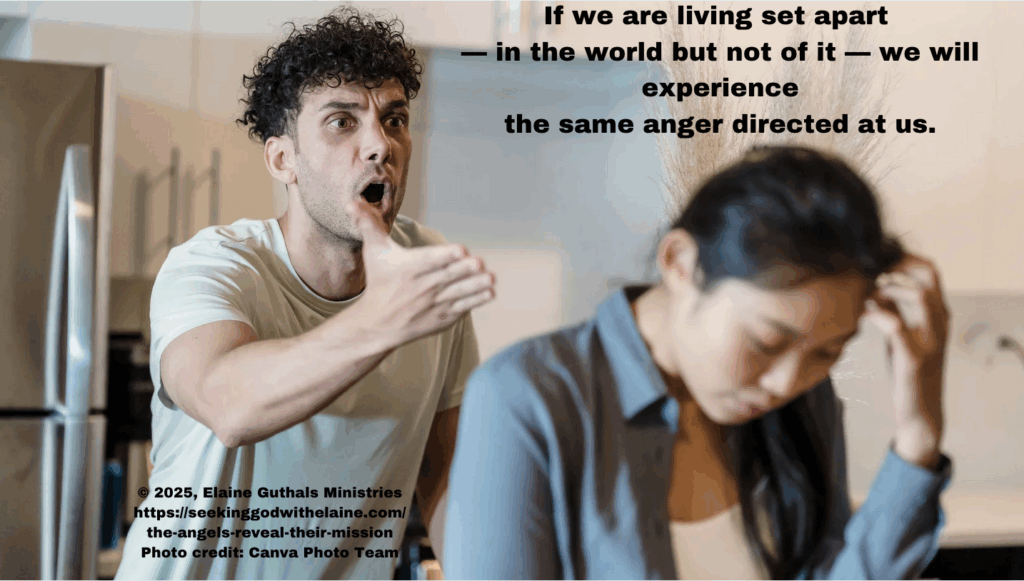
Instead of offering hospitality, the townsmen offered hostility. Worse than that, they were talking violence. They were talking about assaulting Lot.
The anger stemming from Lot’s judgmental ways helped fuel the townsmen to attempt to break down Lot’s door and forcibly remove the visitors.
With his selfishness and greed, Lot was probably seen as a hypocrite. But still, Lot had the courage to stand up to the crowd.
All of this for strangers.
The angels let the argument go on for a while. Remember, one of their missions was to find out what was actually going on in the region (Gen. 18: 21).
They found out. When the visitors had enough, they took over the situation. Their power showed Lot that they really were angels, not human men. The men of Sodom were physically blinded, but they were also mentally blinded.
You would have thought the townsmen would have known something was up when every one of them was blinded. But it sounds like they were slow on the uptake.
The New Living Translation said the men of Sodom just gave up. The Orthodox Jewish Bible says that they grew weary and stopped (Gen. 19: 11).
To me, that is a big difference. Yeah, we could say that they gave up after a while. But we could also think they gave up after five minutes.
The Orthodox Jewish Bible gave us the why the men gave up. They tried their best to get the job done – even blinded – but they couldn’t make it.
Isn’t it sad that they were so rooted in their sin that, even though they got a preliminary judgment of blindness, they refused to repent and turn away from their sin? They had to keep banging and banging on sin’s door.
The Mission Revealed to Lot
We can’t gloss over the fact that Lot probably didn’t know the visitors were from Jehovah until verse 13. That is the first time they told him about their mission. They were there because Jehovah wanted His messengers to have first-hand knowledge of the extent of the wickedness.
Jehovah carefully evaluates our relationship with Him before He enacts judgment upon us. I think He looks at our motivations, the situation, the choices available to us, and our ultimate decision. I would think He takes into consideration what type and degree of punishment we need to get us back on track with Him.

Lot was supposed to be in the city of Sodom but not of it, but he really wasn’t.
When Lot went down to Egypt with Abraham, he may have been dazzled by the splendor of Egypt. That may have conditioned Lot to want sinful things.
Lot lost all his possessions back in Genesis 14 when he was taken captive. Now, he was losing them again.
Disciples are to understand that this life is temporary. We must focus on preparing for eternal life.

We have to wonder if Abraham stopped at ten righteous people when he was questioning Jehovah because there were supposed to be ten people in Lot’s household that believed in Him.
It is interesting what the angels asked who Lot went to save (Gen. 19: 14). That tells me Lot didn’t have sons. I don’t think Moses would have told us the fiancés refused to come and not say sons did, too.
When Lot told the men his daughters were betrothed to that the city was going to be destroyed, they thought Lot was pulling their legs. They couldn’t see Jehovah destroying one city, let alone all the Cities of the Plains.
That tells us Lot hadn’t been telling them much about his relationship with Jehovah. He had been planning on yoking his daughters with non-believers.
Because he hadn’t shown himself set apart from the townspeople, Lot’s warning was dismissed by the two men.
We can’t ignore or tolerate sin.
I would use the same reasoning to think Lot and Mrs. Lot only had two daughters. Lot’s daughters’ fiancés would have been his sons-in-law eventually (Gen. 19: 14).

Lot’s voice may not have been heard in the outcry. But he made a silent cry (II Pet. 2: 7-8).
The angels were trying to push Lot along for good reason. If Lot and family didn’t leave the city, they would be swept away in the sin of the city.
Yes, the cities were going to be destroyed. That was for one reason, and one reason only. Sin.
Lot, Mrs. Lot, and the two daughters had a decision to make. Were they going to obey Jehovah or disobey Him?
If they obeyed, they would live. If they disobeyed, they would die.
Was this just a physical death or a spiritual death also? Well, that would be up to Jehovah, wouldn’t it?
Lot was dragging his feet at the last minute. As Lot did, we can get immune to sin because we are in the world. We focus on worldly attractions and domestic ties instead of focusing on God.
Knowing Lot, he didn’t seem to be a courageous man. He already wasn’t liked as He was thought of as a second-class citizen.
This – in Lot’s mind – may exacerbate the situation. When Lot’s God destroyed the cities, how would those remaining alive (such as in Mamre, Beer-sheba, etc.) look at Lot being the sole survivor with his daughters?
So, the angels grabbed everyone’s hands and pulled them along. “If you are not going to move, I am going to move you.”
Truth be told, many disciples today would lose the in-the-world-but-not-of-it test. Layer on top of that our track record at being obedient. We lose the race time and again.
That’s true for a lot of spiritual things. The things we have to be talked into are putting bricks on our Sanctification Road
The pull of the world can be great, and we can have trouble enduring. We focus too much on worldly things — especially leisure time — and give into temptation.
The wonder is that God will give us warning about impending judgment. So will He give warning to us.

Now, don’t be biting on the angels, thinking they should have been more polite. What were they supposed to say? “Oh, Lot. We know this has been your home for several years, but we really want you to think about leaving. I know that will be hard, but you need to think about what is the best for you.”
They dealt with Lot’s inability to just make a quick cut with the worldview, but they needed to get the job done. And right then, the job was rescuing Lot.
God will always rescue His children, even if it is against our will. He wants us to choose Him, not the world.
I can see why the angels told the family not to look back. Jehovah wanted them to make a clean break from the world. They had to show discipline and self-control.
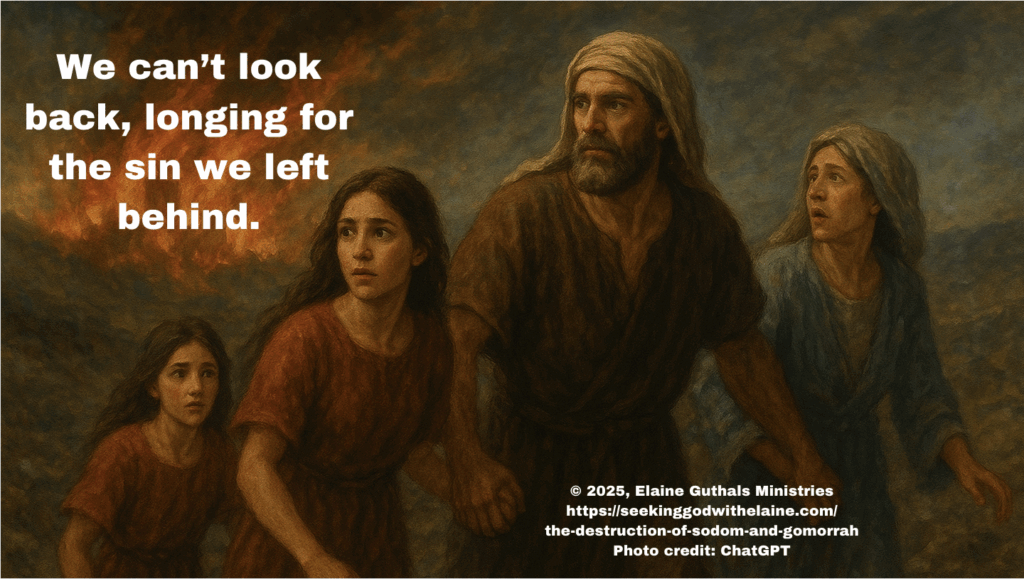
Oh, the escape would have been rough on the family. Each step would probably have been agonizing. Not just because of the terrain, but they had to have been feeling great sorrow and loss.
If they listened to the angels, they would have accepted the urgency with which they had to get out of Sodom.
The angels who rescued Lot and his family told them where they should go next. Lot was told to start over again in the mountains.
God doesn’t want us to keep our pet sin. He wants us to repent of all sin.

If God wants to be the God of the little things as well as God of the big things, He is going to be concerned about little sins — especially little, pet sins.
Part of the reason little sins are so harmful is they are, in actuality, indulgences. We don’t necessarily need them — but we sure do want them. We may even think we are entitled to them.
Lot asked to go to the small town of Zoar instead of the mountains. He had the nerve to say, “No, I don’t want to go there. Can we go here instead?”
Seriously???? They just saved their lives. And he don’t want to do what they were told????????
Did Lot think God couldn’t protect them in the mountains? Or was he just being selfish?
It is so interesting that Lot didn’t want to move to the mountains. He would rather move to a small town.
Wouldn’t the destruction of the large cities give Lot pause when thinking about why it happened? Wouldn’t he have seen the connection to sin?
What Zoar had going for it was that it was small. It was probably a half-day’s journey from Sodom.
But later, Lot and his daughters finally do make it to the mountains (Gen. 19: 30).
At this point, Lot still didn’t want to give up the sinful atmosphere of a city.
Still, God saved Lot, even as imperfect as he was.
Jehovah did not start the destruction of Sodom and Gomorrah until after Lot and His family had arrived where they were going.
We can’t be pulled by the lure of this world. We have to keep our focus on God.

To read devotions in the Creating Everything theme, click the button below.
Devotions in the Abraham the Patriarch series