Jesus was divine, but He was also human. This devotional reading looks at how His ancestry fulfilled covenant promises.
Nuggets
- Since Matthew’s Gospel is the first book of the New Testament, his wording presents a bridge between the two testaments.
- Being placed at the beginning of Matthew’s gospel shows the importance of Yeshua being shown as a descendant of both Abraham and David.
- There are four women – other than Yeshua’s mother – identified in the lineage.
- Matthew would have probably used Joseph’s lineage because he would have been, by Jewish tradition, the legal father of Yeshua.
- Taken all together, Matthew’s genealogy shows the fulfillment of the covenants with Abraham (Gen. 12, 15, and 17) and David (II Sam. 7).
- Luke’s genealogy indicated that Yeshua was the Savior of the world.
One of the first questions first-century Jews would have asked about anyone claiming to be the Messiah was, “Is He descended from David?” Both Mary and Joseph were descendants of David.
This was essential to fulfill God’s promise through the prophet Jeremiah: “‘For the time is coming,’ says the Lord, ‘when I will raise up a righteous descendant from King David’s line. He will be a King who rules with wisdom. He will do what is just and right throughout the land. And this will be his name: “The Lord Is Our Righteousness.” In that day Judah will be saved, and Israel will live in safety” (Jer. 23: 5-6 NLT).
Let's Put It into Context
To read devotions in The Battle for the Heart theme
Devotions in the Preparing for the Christ Child series
The Reason for the Genealogy
Since Matthew’s Gospel is the first book of the New Testament, his wording presents a bridge between the two testaments.
Even though today’s society doesn’t always put as much emphasis on family lines, first-century Jews did. It may be safe to say that Israelites in the Old Testament — stressed even more the importance of family even over character at times.
Genealogy is translated from the Hebrew word sēfer tôlədôt (סֵפֶר תּוֹלְדֹת). These genealogies tie Yeshua to Old Testament passages.
- “And through your [Abraham’s] descendants all the nations of the earth will be blessed — all because you have obeyed me” (Gen. 22: 18 NLT).
- “I see him [Jehovah], but not here and now. I perceive him, but far in the distant future. A star will rise from Jacob; a scepter will emerge from Israel. It will crush the heads of Moab’s people, cracking the skulls of the people of Sheth” (Num. 24: 17 NLT).
- “The scepter will not depart from Judah, nor the ruler’s staff from his descendants, until the coming of the one to whom it belongs, the one whom all nations will honor” (Gen. 49: 10 NLT).
- “Out of the stump of David’s family will grow a shoot — yes, a new Branch bearing fruit from the old root” (Isa. 11: 1 NLT).
- “For when you [David] die and are buried with your ancestors, I will raise up one of your descendants, your own offspring, and I will make his kingdom strong. He is the one who will build a house — a temple — for my name. And I will secure his royal throne forever” (II Sam. 7: 12-13 NLT).
Matthew was giving evidence that Yeshua was a descendant of King David and Father Abraham.
The Genealogy of Yeshua through Joseph
“This is a record of the ancestors of Jesus the Messiah, a descendant of David and of Abraham: Abraham was the father of Isaac. Isaac was the father of Jacob. Jacob was the father of Judah and his brothers. Judah was the father of Perez and Zerah (whose mother was Tamar). Perez was the father of Hezron. Hezron was the father of Ram. Ram was the father of Amminadab. Amminadab was the father of Nahshon. Nahshon was the father of Salmon. Salmon was the father of Boaz (whose mother was Rahab). Boaz was the father of Obed (whose mother was Ruth). Obed was the father of Jesse. Jesse was the father of King David. David was the father of Solomon (whose mother was Bathsheba, the widow of Uriah). Solomon was the father of Rehoboam. Rehoboam was the father of Abijah. Abijah was the father of Asa. Asa was the father of Jehoshaphat. Jehoshaphat was the father of Jehoram. Jehoram was the father of Uzziah. Uzziah was the father of Jotham. Jotham was the father of Ahaz. Ahaz was the father of Hezekiah. Hezekiah was the father of Manasseh. Manasseh was the father of Amon. Amon was the father of Josiah. Josiah was the father of Jehoiachin and his brothers (born at the time of the exile to Babylon). After the Babylonian exile: Jehoiachin was the father of Shealtiel. Shealtiel was the father of Zerubbabel. Zerubbabel was the father of Abiud. Abiud was the father of Eliakim. Eliakim was the father of Azor. Azor was the father of Zadok. Zadok was the father of Akim. Akim was the father of Eliud. Eliud was the father of Eleazar. Eleazar was the father of Matthan. Matthan was the father of Jacob. Jacob was the father of Joseph, the husband of Mary. Mary gave birth to Jesus, who is called the Messiah. All those listed above include fourteen generations from Abraham to David, fourteen from David to the Babylonian exile, and fourteen from the Babylonian exile to the Messiah” (Mt. 1: 1-17 NLT)
A Descendant of David and of Abraham
Being placed at the beginning of Matthew’s gospel shows the importance of Yeshua being shown as a descendant of both Abraham and David.
Matthew’s genealogy is interesting. The structure was built around the number seven. That signifies completion.
Matthew is not saying God’s work of redemption was complete at Jesus’ birth. It isn’t about completion of the Plan of Salvation.
It is the completion of waiting for salvation.
Three groups of 14 give structure to Matthew’s list. This meant he used the sabbatical system.
Williams helped us understand that concept. He wrote,
“The sabbatical meaning in the Bible is deeply connected to rest, trust in God, and letting go of control. It is not just about taking a break from work, but about entering a season where people, land, and even creation itself are allowed to rest under God’s care.”
Resource
Aren’t those all tied up in salvation – what we gain when Yeshua wins the battle for our hearts? Matthew was announcing that the long waiting for salvation was over.
More importantly, Matthew was signaling a new creation. That is exactly what happens when Yeshua wins the battle of the heart. We become a new creation.
The structure is meaningful. Matthew started with Abraham because that was where the covenant identity started.
Even though the firstborn sons were dedicated to Jehovah (Ex. 13: 1-2), Judah, Jacob, Isaac, and probably even Abraham himself were not the firstborn son of the family.
Firstborn sons were to be consecrated to Jehovah.
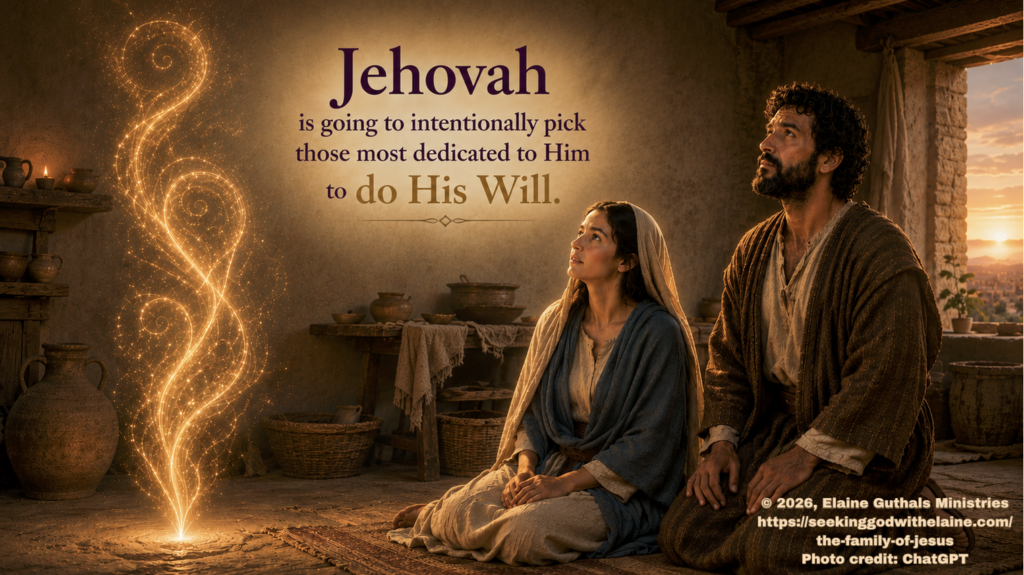
But that didn’t necessarily indicate who would serve Jehovah. Anyone could choose to serve Him. Jehovah is going to intentionally pick those most dedicated to Him to do His Will.
The middle section of the sabbatical system is important because it shows Yeshua’s right to the throne of David. This fulfilled a covenant promise.
The time between David and the exile shows the history of Israel. They were the chosen people who constantly chose not to follow Jehovah.
Because of that, Israel’s punishment included the loss of the land and Temple. Also lost was David’s throne.
Zerubbabel
This loss of the throne became painfully evident after the exile. This is probably when many of the Israelites began asking, “Did Jehovah’s promises fail?”
It became even more evident when David’s descendant Zerubbabel helped lead the first wave of exiles back to Israel and played a major role in rebuilding the Second Temple. Here was a descendant of the David and a leader in Israel – yet he never was anointed king.
Zerubbabel remained faithful to Jehovah, but David’s throne still stood empty. The uncertainty only deepened Israel’s longing for the promised Messiah.
Yeshua’s Grandmothers
There are four women identified in the lineage.
- Tamar
- Rahab
- Ruth
- Bathsheba
Tamar was the wife of two of Judah’s sons, both who died. When Judah did not arrange the marriage to another of his sons, Tamar dressed as a prostitute, became pregnant by Judah, and had twin boys (Gen. 38).
Rahab was a Canaanite prostitute. She sheltered the Israelite spies when they reconned Jericho. Because she protected them, she and her family were protected in the fall of Jericho (Josh. 2).
Ruth was a Moabite woman who married an Israelite displaced by a famine. After her husband died and the famine ended, she remained faithful to her widowed mother-in-law when Naomi wanted to return to Israel (Ruth 1-4).
The New Living Translation did something differently. The last woman isn’t usually named except through context. “… David was the father of Solomon by the wife of Uriah” (Mt. 1: 6 ESV).
If we know who Solomon’s mother was, why didn’t Matthew just name her as Bathsheba?
By naming Uriah – Bathsheba’s first husband – first-century Jews were reminded of David’s greatest sin. It included adultery, murder, and abuse of power.
But it also included a psalm of repentance. We see this in Psalm 51.
Writing the lineage this way highlighted not only Uriah’s innocence but also Bathsheba’s. The story highlights Jehovah’s grace over failure.
Doesn’t that bring up a good point? The royal line also needed salvation and grace.
These women are included even though they are Gentiles. Moreover, they are all associated with scandal.
We see one important thread in their stories: they were given Jehovah’s unexpected grace. Jehovah’s redemptive plan advances not because of human perfection, but because of His covenant faithfulness.
Joseph, the husband of Mary
Matthew would have probably used Joseph’s lineage because he would have been, by Jewish tradition, the legal father of Yeshua.
No, we don’t know how many people knew the real story of the conception. We are never told if they were allowed to broadcast it, or whether they had to keep it quiet for security purposes.
Joseph was a righteous descendant of David who legally became Yeshua’s earthly father. Although Matthew introduces him only briefly here, his character will become central after the angel appears to him in a dream.
But Matthew was careful in his wording. He never said that Joseph was the father of Yeshua. He just acknowledged him as the husband of the mother of Yeshua.
All Those Listed Above
Taken all together, Matthew’s genealogy shows the fulfillment of the covenants with Abraham (Gen. 12, 15, and 17) and David (II Sam. 7).
Yeshua not only has a right to the throne of David, but He also fulfills the promise of blessing to the nations. Israel’s King and covenant fulfillment was coming to the earth.
The Genealogy of Yeshua through Mary
“Jesus was about thirty years old when he began his public ministry. Jesus was known as the son of Joseph. Joseph was the son of Heli. Heli was the son of Matthat. Matthat was the son of Levi. Levi was the son of Melki. Melki was the son of Jannai. Jannai was the son of Joseph. Joseph was the son of Mattathias. Mattathias was the son of Amos. Amos was the son of Nahum. Nahum was the son of Esli. Esli was the son of Naggai. Naggai was the son of Maath. Maath was the son of Mattathias. Mattathias was the son of Semein. Semein was the son of Josech. Josech was the son of Joda. Joda was the son of Joanan. Joanan was the son of Rhesa. Rhesa was the son of Zerubbabel. Zerubbabel was the son of Shealtiel. Shealtiel was the son of Neri. Neri was the son of Melki. Melki was the son of Addi. Addi was the son of Cosam. Cosam was the son of Elmadam. Elmadam was the son of Er. Er was the son of Joshua. Joshua was the son of Eliezer. Eliezer was the son of Jorim. Jorim was the son of Matthat. Matthat was the son of Levi. Levi was the son of Simeon. Simeon was the son of Judah. Judah was the son of Joseph. Joseph was the son of Jonam. Jonam was the son of Eliakim. Eliakim was the son of Melea. Melea was the son of Menna. Menna was the son of Mattatha. Mattatha was the son of Nathan. Nathan was the son of David. David was the son of Jesse. Jesse was the son of Obed. Obed was the son of Boaz. Boaz was the son of Salmon. Salmon was the son of Nahshon. Nahshon was the son of Amminadab. Amminadab was the son of Admin. Admin was the son of Arni. Arni was the son of Hezron. Hezron was the son of Perez. Perez was the son of Judah. Judah was the son of Jacob. Jacob was the son of Isaac. Isaac was the son of Abraham. Abraham was the son of Terah. Terah was the son of Nahor. Nahor was the son of Serug. Serug was the son of Reu. Reu was the son of Peleg. Peleg was the son of Eber. Eber was the son of Shelah. Shelah was the son of Cainan. Cainan was the son of Arphaxad. Arphaxad was the son of Shem. Shem was the son of Noah. Noah was the son of Lamech. Lamech was the son of Methuselah. Methuselah was the son of Enoch. Enoch was the son of Jared. Jared was the son of Mahalalel. Mahalalel was the son of Kenan. Kenan was the son of Enosh. Enosh was the son of Seth. Seth was the son of Adam. Adam was the son of God” (Lk. 3: 23-38 NLT)
Luke’s genealogy indicated that Yeshua was the Savior of the world.
Luke also included in his book a genealogy list. But when we look at it, it is different than Matthew’s list.
Right off, we can see the names are different. Matthew’s list says that Joseph’s father’s name is Jacob (Mt. 1: 16). Luke’s list says that Joseph’s father’s name is Heli (Lk. 3: 23).
What gives?
The explanation is simple. Matthew’s list shows Joseph’s lineage. Luke’s list shows Mary’s lineage.
That is understandable, too. It is believed that Matthew was writing to Jewish readers. They would have expected the father’s lineage – even though Joseph wasn’t Yeshua’s biological father. He was His legal father.
Luke, presumably writing to Greeks, used Mary’s lineage. She was Yeshua’s biological mother. Her father was Heli.
There is another difference in the genealogy lists. Matthew’s list started with Abraham and ended with Yeshua.
Luke’s genealogy started with Yeshua and ended with God. It showed that He was the Savior of all.
That makes sense to me. Yeshua came to address the sin issue that happened in the Garden of Eden with Adam and Eve. That was long before Jehovah made the covenant with Abraham and established the nation of Israel.
One thing that we tend to forget is that Yeshua and John the Immerser were cousins. That would mean Yeshua was also descended from Levi, the line of priests.
Making the Connections #1
“... Two years after the great flood, when Shem was 100 years old, he became the father of Arphaxad. After the birth of Arphaxad, Shem lived another 500 years and had other sons and daughters. When Arphaxad was 35 years old, he became the father of Shelah. After the birth of Shelah, Arphaxad lived another 403 years and had other sons and daughters. When Shelah was 30 years old, he became the father of Eber” (Gen. 11: 10-14 NLT)
“... Eber was the son of Shelah. Shelah was the son of Cainan. Cainan was the son of Arphaxad. Arphaxad was the son of Shem ...” (Lk. 3: 35-36)
In Genesis, Cainan was skipped, making Arphaxad the grandfather of Shelah, not the father as indicated in Luke.
But then, it really doesn’t say Shelah was Arphaxad’s son, just his descendant. A grandson would be his descendant.
Not only that, but there are also different spellings – depending on the translation used – for the names given for his father: Arphaxad or Arpachshad.
Making the Connections #2
We understand that the Israelites, later the Jews, put great store in their lineage. That is why there are so many genealogy lists in the Old Testament.
What can we learn from them?
Between the two lists, they show the humanity and divinity of Yeshua. It shows He is both Jew and Gentile. We see that He is mortal and immortal.
We see Yeshua’s imperfect human nature with His perfect divine nature. (That doesn’t mean that He sinned. It means that He had the human nature, so He could have.)
While He may have royal blood flowing through His veins, Yeshua was also intimately knowledgeable of poverty.
Making the Connections #3
Since there is an emphasis on genealogy lists, does that mean we need to know our ancestry in order to gain salvation?
No, these two lists are the only genealogy lists in the New Testament.
- “Don’t let them waste their time in endless discussion of myths and spiritual pedigrees. These things only lead to meaningless speculations, which don’t help people live a life of faith in God” (I Tim. 1: 4 NLT).
- “Do not get involved in foolish discussions about spiritual pedigrees or in quarrels and fights about obedience to Jewish laws. These things are useless and a waste of time” (Ti. 3: 9 NLT).
Paul was stressing that it doesn’t matter who our parents are – either believer or non-believer. Anyone can come to Yeshua for salvation.
Our ancestry cannot save us. Our faith in Yeshua can.
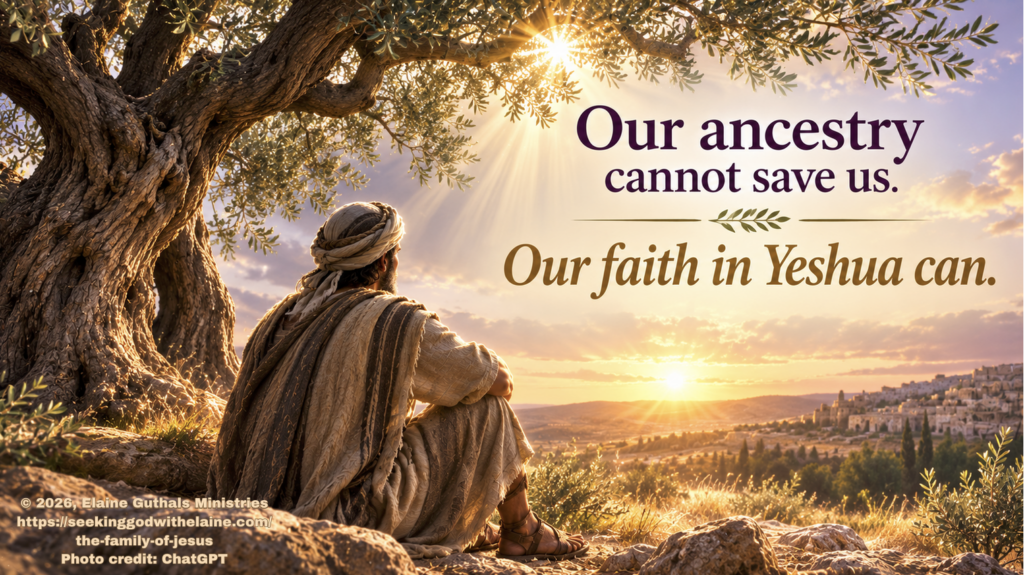
It also shows us that we need to focus on the present and the future, not the past. Our past sins are forgiven when we ask Jehovah for forgiveness. Obtaining that forgiveness and walking with Him daily takes precedence over the past.
Making the Connections #4
To understand the greatly anticipated first-century Messiah, we have to understand their expectation was profoundly covenantal and corporate. The people were waiting for Jehovah to act on behalf of the nation of Israel.
They had the covenant promises. However, covenant promises were not merely about personal spirituality. They addressed national destiny, covenant inheritance, land promise, temple hope, political liberation, and divine justice.
So, what were they expecting?
By the first century, Israel’s Messianic hopes had intensified dramatically. They weren’t however, waiting for a rabbi to die at the hands of Rome.
They were very exact in their expectations for the Messiah. We have to realize that they got most of these expectations directly from Scripture.
They expected the Messiah – Mashiach (מָשִׁיחַ) meaning anointed one – to embody covenant fulfillment itself.
More than anything, first-century Jews wanted the Messiah to be a conquering Messiah. They wanted Him to show up and kick Rome out of their country – the Promised Land.
The covenant promised land, which equated to independence from Gentile domination. The Messiah was expected to remedy that.
When first-century Jews thought of redemption, they thought Ga’al (גָּאַל). This meant to redeem, to reclaim, or to act as a kinsmen-redeemer.
This redemption was not limited to spiritual forgiveness. It involved restoration of inheritance, protection of covenant family, and liberation from oppression.
In the United States, we look at things through the lens of separation of church and state. Originally set up as the state has no jurisdiction within the church, many worldview people have flipped that to mean the church has no jurisdiction outside its walls.
A major part of Messianic expectation in first-century Israel was built on the belief that politics and theology were never fully separated. This belief was fostered by the fact that Israel was a covenant nation under divine kingship, not merely a religious community. Use of the same Hebrew term – Shuv (שׁוּב) – to refer to political restoration as well as covenantal restoration advanced this dual restoration.
First-century Jews believed the coming Messiah would overthrow pagan domination and restore righteous rule. That would make the Kingdom of God visible, politically and nationally.
All of the political and national hopes of a conquering king centered around the judgment of Israel’s oppressors. Scripture repeatedly declared that Jehovah would eventually judge those nations that had humiliated Israel – Babylon, Assyria, Edom, and later pagan oppressors.
Restoration theology dominated Jewish Messianic expectation. The prophets promised
- a future regathering of Israel
- renewal of covenant blessings
- restoration of the land
- purification from sin
- renewed obedience to Jehovah
This theology was tied to the belief that exile never ended.
Heart Check
Think about the battle Yeshua is engaged in for your heart. Ask yourself the following questions.
- Have I ever placed more confidence in my family background, church heritage, or good works than in my personal faith in Yeshua?
- Am I trusting God’s covenant faithfulness, even when His promises seem delayed like they did to Israel between the exile and the coming of the Messiah?
- Like Tamar, Rahab, Ruth, Bathsheba, and even David, do I believe Jehovah’s grace is greater than my past failures?
- Is my identity rooted more in whose I am than in who I come from?
How Do We Apply This?
- Thank Jehovah for faithfully keeping every covenant promise that led to the coming of Yeshua.
- If you’ve been relying on your religious background or family heritage, reaffirm that your hope for salvation rests in Yeshua alone.
- Evaluate where you’ve doubted God’s timing, and surrender it to Him
- Trust Him to keep His promises — even when fulfillment takes more time than we think it should.
Father God. Thank You for putting us in families that lead us to You. Thank You that this applies to our ancestors and to those who have become family to us. Help us to continue shepherding our descendants to You. Amen.
If you don’t understand something and would like further clarification, please contact me.
If you have not signed up for the email providing the link to the devotions and the newsletter, do so below.
If God has used this devotion to speak with you, consider sharing it on social media.