Jacob was blessing his sons before his death. This devotional reading looks at the blessing that he gave to Joseph.
Nuggets
- Joseph was Jacob’s eleventh son, the firstborn by his beloved wife Rachel (Gen. 30: 23-24).
- Joseph carried the covenant preservation and fruitfulness.
- Fruitfulness in Joseph’s blessing was symbolized as a tree.
- We are to remain faithful by living our lives with Christ, the living water.
- A fruitful tree grow so vigorously that its branches extend beyond the wall.
- The archery theme talked of Joseph’s suffering and opposition.
- Just as Joseph was victorious over his trials, we can be victorious over ours with Jehovah’s provision.
- Sovereign God is our Father when we submit to His Will for our lives.
- Jacob used imagery that he and Joseph were both familiar with – shepherds – to describe Jehovah.
- The imagery of Jehovah as a rock shows He is solid, stable, and strong.
- Joseph’s legacy would be blessing and fruitfulness.
- Though Joseph’s separation from his family was a tragedy, that separation may have helped Joseph become the man Jehovah wanted.
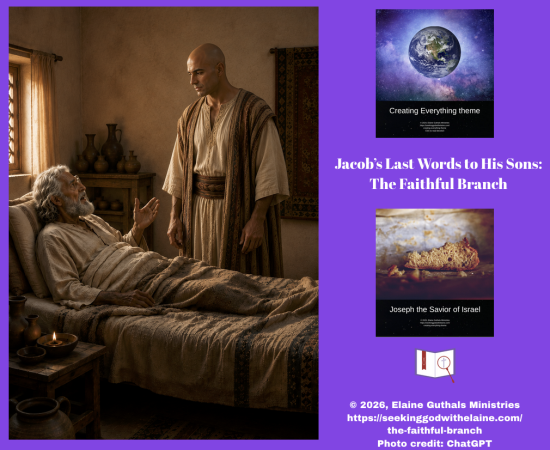
In the last devotion, we looked at the sons whose descendants would break apart the nation of Israel and form most of the Northern Kingdom. Jacob didn’t have much to say to them.
The first four brothers — Reuben, Simeon, Levi, and Judah — got a lot from Jacob. Some was good. Some was not so good.
Then there was Joseph. I wonder if Jacob had been silently waiting for this moment to come.
From the moment Joseph was born, Jacob’s heart was attached to him. Not always wisely — the coat proved that.
But the affection was real. Jacob saw:
- Rachel’s firstborn
- The son he though was dead twenty-plus years ago
- The son whose bloodstained coat shattered his heart
- The son he never stopped mourning
- The son Jehovah gave back
And look at this man — his Joseph — standing by his bedside
- Alive
- Godly
- Reconciled
- Faithful
- Fruitful
- Successful
- Preserving the family
- Walking with Jehovah
In a sense, Jacob finally gets to say publicly everything he had always wanted to say.
That’s why the tone of this blessing feels different. Joseph got the overflowing fatherly blessing.
Joseph had become the man Jacob had hoped he would become. Jacob acknowledged that Joseph’s strength came from God.
Jacob wasn’t merely predicting the future of the tribe. He was blessing the son whose life had become one of the greatest evidences of Jehovah’s providence that Jacob had ever seen.
Let's Put It into Context
To read devotions in the Creating Everything theme, click the button below.
Devotions in the Joseph the Savior of Israel series
Joseph
Joseph was Jacob’s eleventh son, the firstborn by his beloved wife Rachel (Gen. 30: 23-24).
His name meaning add, the double-portion of the firstborn’s inheritance was given to Joseph. Jacob went about it an interesting way.
Years before, the brothers would have been jealous if Jacob had just given Joseph all that wealth. So, Jacob split it between Joseph’s two sons.
It is interesting that, though Jacob adopted Manasseh and Ephraim and told him they would be treated as equal sons, they are not mentioned here. Their futures are, essentially, Joseph’s legacy.
I wonder if Jacob was thinking that was an attempt to make up for the years he lost with Joseph. By making Joseph’s sons born in Egypt before he got there, Jacob was making it as if he were getting back a part of what he lost those 22 years.
Fruitful
“Joseph is the foal of a wild donkey, the foal of a wild donkey at a spring — one of the wild donkeys on the ridge” (Gen. 49: 22 NLT)
Joseph carried the covenant preservation and fruitfulness.
The Hebrew is difficult, and some translations render the image as a vigorous wild donkey. Most translations, however, understand Jacob to be describing Joseph as a fruitful tree or vine nourished by a spring.
“Joseph is a fruitful bough, a fruitful bough by a spring; his branches run over the wall” (Gen. 49: 22 ESV).
That translation seems to be more in line with the following verses. It is talking about growth and abundance.
A Fruitful Bough
Fruitfulness in Joseph’s blessing was symbolized as a tree.
Joseph showed us that character is built through obedience and the desire for God’s glory. Moreover, it is based on union with Yeshua.
This obedience must bear fruit. We sometimes have a skewed idea of what bearing fruit actually means.
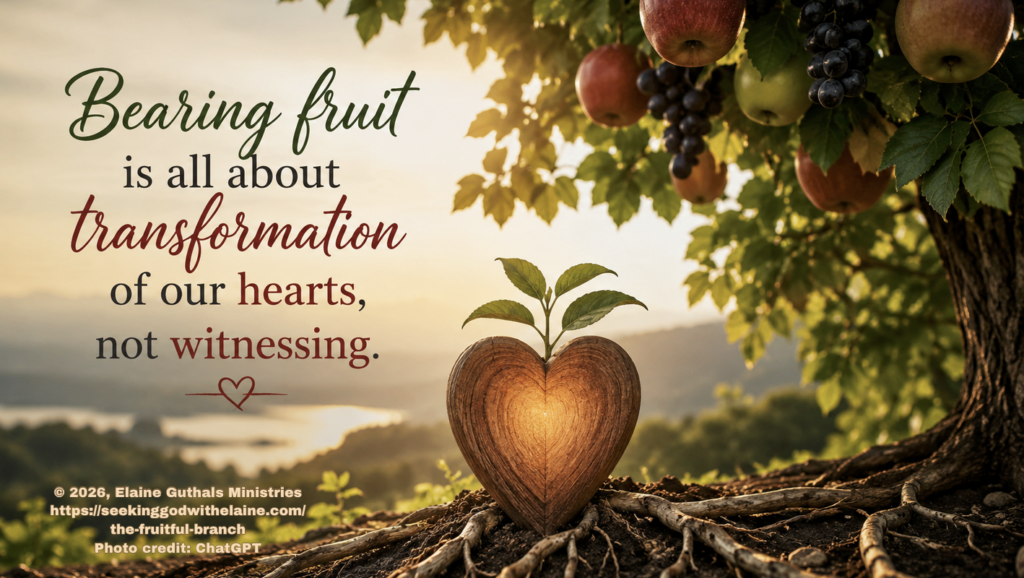
Bearing fruit is all about transformation of our hearts, not witnessing.
To grow something the environment must be right. The right environment for spiritual growth is seeking Jehovah, trusting Him, and abiding in Him. “I said, ‘Plant the good seeds of righteousness, and you will harvest a crop of love. Plow up the hard ground of your hearts, for now is the time to seek the Lord, that he may come and shower righteousness upon you’” (Hos. 10: 12 NLT).
The evidence that Christ is in us is the fruit of the Spirit, the fruit of righteousness, and the fruit of good works.
- “Yes, I am the vine; you are the branches. Those who remain in me, and I in them, will produce much fruit. For apart from me you can do nothing” (Jn. 15: 5 NLT).
- “But the Holy Spirit produces this kind of fruit in our lives: love, joy, peace, patience, kindness, goodness, faithfulness, gentleness, and self-control. There is no law against these things!” (Gal. 5: 22-23 NLT).
- “May you always be filled with the fruit of your salvation — the righteous character produced in your life by Jesus Christ — for this will bring much glory and praise to God.
- “Then the way you live will always honor and please the Lord, and your lives will produce every kind of good fruit. All the while, you will grow as you learn to know God better and better” (Col. 1: 10 NLT).
We have to make the distinction. This is talking good works – good instead of evil. This isn’t talking social works. Fruit is different than works.
We can only be fruitful when we have a union with Christ and a relationship with Jehovah.
Burton said that we don’t want to be united with Yeshua but be dead in our hearts, or united with Yeshua in our hearts but be fruitless – not be righteous.
Resource
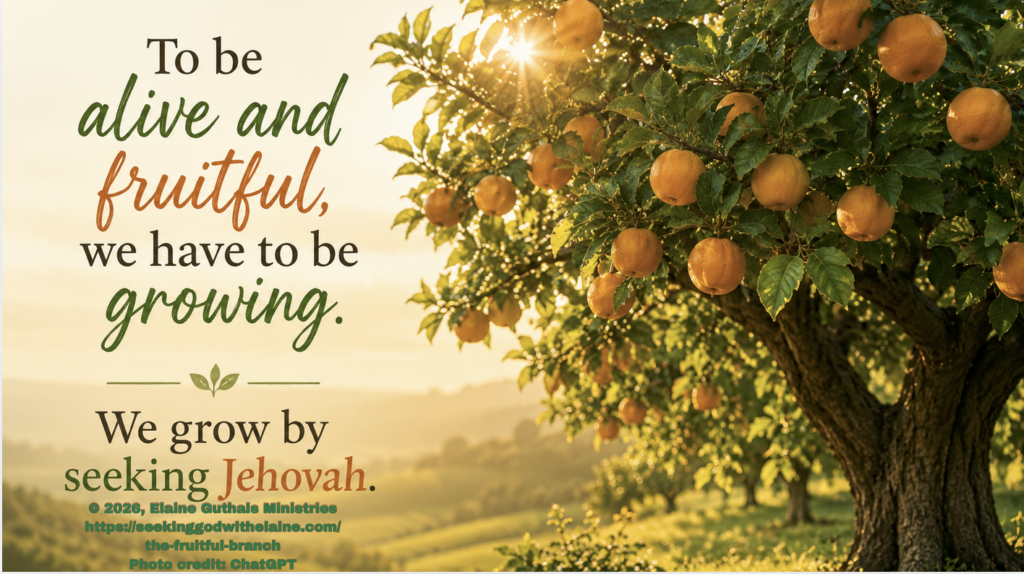
To be alive and fruitful, we have to be growing. We grow by seeking Jehovah.
By a Spring
We are to remain faithful by living our lives with Christ, the living water.
Yes, Joseph had some awful things happen to him. That didn’t change how he lived his life. He remained faithful to Jehovah.
Why?
Whitfield told us how. He wrote, “The roots of the tree draw forth the waters from the well, and send them up into all its branches.”
Resource
We can’t see the roots because they are buried under the ground. We can’t see Jehovah and Yeshua because they are in Heaven. We can’t see the Holy Spirit because He is in our hearts.
While Joseph was in Potiphar’s house when he should have still been in Hebron, while he was in prison when he hadn’t done anything wrong, what kept him faithful?
The spring.
When Scripture talks about living water, it is talking about the Holy Spirit. He gives us spiritual refreshment – which helps us grow – and eternal life. This living water comes from Yeshua and is given to those who believe in Him.
The water alone is still water. The tree can only survive by obtaining the water. It must permeate the whole tree in order for the tree to live.
Over the Wall
A fruitful tree grow so vigorously that its branches extend beyond the wall.
When I was a young girl, I loved my Aunt Irene’s philodendron. One day when Uncle Harry was coming on his tractor to help us bale hay, he had a start for another plant to give me. It was two little leaves in a cat planter.
I had that plant for 30 years. It grew and grew and grew. It had long outgrown the cat planter. Eventually, it outgrew the planter I had it in and I didn’t get it replanted soon enough.
The planter couldn’t contain the philodendron. Neither could Joseph’s blessing be contained.
Think about Joseph’s life.
- Jehovah had plans for Joseph that reached far beyond Hebron.
- Cannan couldn’t even contain him.
- Where Joseph was supposed to be was in Egypt, but he influenced many lives outside of Egypt and Canaan because he saved them from starvation.
- Joseph even impacted people beyond his generation.
Talk about Joseph’s branches going over the wall!
Suffering
“Archers attacked him savagely; they shot at him and harassed him” (Gen. 49: 23 NLT)
The archery theme talked of Joseph’s suffering and opposition.
Jacob addressed Joseph’s background.
- He endured the shot – the envy, hatred, and persecution – from his brothers.
- He endured the shot from Mrs. Potiphar when she accused him of trying to molest her.
- He endured the shot from the cupbearer who forgot about him for two years.
- He endured the shots that tempted to turn his back on Jehovah and assimilate into Egyptian culture.
- He endured the shots of loneliness when he must have often felt he was neglected and the ingratitude of others.
No, they weren’t real arrows. They were relational arrows.
Sometimes, that is even worse.
We, too, come under fiery arrows. “In addition to all of these, hold up the shield of faith to stop the fiery arrows of the devil” (Eph. 6: 16 NLT).
Obedient
“But his bow remained taut, and his arms were strengthened by the hands of the Mighty One of Jacob, by the Shepherd, the Rock of Israel” (Gen. 49: 24 NLT)
His Bow Remained Taunt
Just as Joseph was victorious over his trials, we can be victorious over ours with Jehovah’s provision.
Yes, that was a lot of arrows shot at Joseph. He endured the barrage for a long time.
Joseph remained faithful. He didn’t rail at Jehovah for allowing this to happen to him. He didn’t refuse to do His Will. He didn’t become bitter.
Joseph stayed faithful to the God of Abraham, Isaac, and Jacob.
Victory is based on our moral character. Moral character is the inward formation of the heart that consistently produces choices and actions aligned with what is right by Jehovah’s standards, regardless of circumstances, visibility, or cost.
God of Your Father
Sovereign God is our Father when we submit to His Will for our lives.
There is some discussion regarding whether this verse is addressed to Joseph himself or to the future of the nation. It is significant for the future of the nation — in fact, for all the biblical narrative. It talks about divine providence and family legacy.
I can see things both ways. This was Jacob’s Joseph. He was saying all that he had wanted to for years — and thought he wouldn’t get the chance.
But Jacob was talking to a significant portion of the future Israel. These verses are too important to not to address it to them.
Jehovah is omnipotent, so He has the ability to provide the blessings.
We receive many blessings that support our spiritual and material needs. We see this by by the use of the phrases Heaven above and the deep that lies below.
The phrase the breasts and of the womb is the promise of growth and sustenance in fertility and family through nurturing.
What Jacob was saying was Jehovah will be our helper. He is also our source of strength.
Think of the depth of these blessings. They are all linked with our identity and purpose.
How do we access these blessings? We seek Jehovah’s divine assistance. When we give our lives to Him, He will bless us plentifully.
This brings us to the point of whether we are focused on the spiritual or the material. It is our choice, one that these verses encourage us to make the right choice.
Regardless of the choice we make, we will be judged on that choice. Choosing to walk with Jehovah brings the blessings. Choosing to rely on ourselves denies us access to those blessings.
By the Shepherd
Jacob used imagery that he and Joseph were both familiar with – shepherds – to describe Jehovah.
What do shepherds do?
- Shepherds spent many sleepless nights protecting their sheep.
- They were alert in keeping watch over the sheep.
- They endured all the environmental issues thrown at them.
- They defend the sheep from all predators.
This is a beautiful picture of how Jehovah watches over us. He is there to protect us and sustain us as we grow closer to Him.
Long before David said, “The Lord is my shepherd; I have all that I need” (Ps. 23: 1 NLT), Jacob said it. Long before Yeshua said, “I am the good shepherd. The good shepherd sacrifices his life for the sheep” (Jn 10: 11 NLT), Jacob acknowledged His role.
- Rock of Israel
- The imagery of Jehovah as a rock shows He is solid, stable, and strong.
- Canaan was a very rocky country. Some of the rocks formed caves, such as the one David hid in (I Sam. 24).
- Ancient Near Easterners used these rocks as building materials. They were used to build temples, walls, homes, tombs, roads, and aqueducts.
They were well acquainted with the stone’s strength and stability. They could see these traits in Jehovah.
- “The Lord is my rock, my fortress, and my savior; my God is my rock, in whom I find protection. He is my shield, the power that saves me, and my place of safety” (Ps. 18: 2 NLT).
- “All of them ate the same spiritual food, and all of them drank the same spiritual water. For they drank from the spiritual rock that traveled with them, and that rock was Christ” (I Cor. 10: 3-4 NLT).
- “Anyone who listens to my teaching and follows it is wise, like a person who builds a house on solid rock. Though the rain comes in torrents and the floodwaters rise and the winds beat against that house, it won’t collapse because it is built on bedrock” (Mt. 7: 24-25 NLT).
We have nothing to fear when we put our trust in Jehovah. He is strong and stable.
Joseph’s Legacy
“May the God of your father help you; may the Almighty bless you with the blessings of the heavens above, and blessings of the watery depths below, and blessings of the breasts and womb” (Gen. 49: 25 NLT)
Joseph’s legacy would be blessing and fruitfulness.
In the Exodus, Ephraim’s tribe and Manasseh’s tribe was designated part of the West Division.
Ephraim’s Tribe
The tribe of Ephraim and the half tribe of Manasseh received their allotments in Joshua 16-17. They numbered 40,500 in the first census (Num. 1: 19) and had fallen to 32,500 in the second census (Num. 26: 37).
The tribe of Ephraim became a leader of Israel. When the nation broke into two kingdoms, the Northern Kingdom was frequently called Ephraim.
When Paul speaks of the Gentile nation, referring to Ephraim, he uses prophetic language that tell of a people who are far off and are waiting to be brought back into the people of Jehovah.
Half of the tribe of Manasseh remained on the east side of the Jordan (Josh. 13: 8-32). Again, the half tribe of Manasseh received their allotments in Joshua 16-17.
During the first census, they numbered 32,200 (Num. 1: 20). By the second census, they had grown to 52,700 (Num. 26: 37).
The tribe of Ephraim and the half tribe of Manasseh received their allotments in Joshua 16-17. They numbered 40,500 in the first census (Num. 1: 19) and had fallen to 32,500 in the second census (Num. 26: 37).
The tribe of Ephraim became a leader of Israel. When the nation broke into two kingdoms, the Northern Kingdom was frequently called Ephraim.
When Paul speaks of the Gentile nation, referring to Ephraim, he uses prophetic language that tell of a people who are far off and are waiting to be brought back into the people of Jehovah.
Manasseh’s Tribe
Half of the tribe of Manasseh remained on the east side of the Jordan (Josh. 13: 8-32). Again, the half tribe of Manasseh received their allotments in Joshua 16-17.
During the first census, they numbered 32,200 (Num. 1: 20). By the second census, they had grown to 52,700 (Num. 26: 37).
Abundant Blessings
“May my fatherly blessings on you surpass the blessings of my ancestors, reaching to the heights of the eternal hills. May these blessings rest on the head of Joseph, who is a prince among his brothers” (Gen. 49: 26 NLT)
Though Joseph’s separation from his family was a tragedy, that separation may have helped Joseph become the man Jehovah wanted.
Remember, I said I thought Joseph had an arrogance about him when he was younger. We might could see this come through his tattling on his half-brothers (Gen. 37: 2).
We also said that, in his time at Potiphar’s house and in the prison, Jacob was learning knowledge and skills that he would need in his job as Vizier. He may not have been able to learn these in Hebron.
The son Jacob thought he had lost forever was standing before him, faithful to Jehovah and fruitful in His service.
Father God. Thank You for showing us how to endure our trials. Thank You for showing us how You reward that endurance. Strengthen us to be obedient to You. Amen.
Searching for and Seeking God
Non-believers search for God.
Disciples seek Him.
Hearing His Word (Rom. 10: 17)
Reading His Word (Rev. 1: 3)
Praying to Him (Heb. 4: 16)
Studying His Word (Ac. 17: 11)
Meditating on His Word (Ps. 1: 1-2)
Memorizing His Word (Ps. 119: 11)
If you don’t understand something and would like further clarification, please contact me.
If you have not signed up for the email providing the link to the devotions and the newsletter, do so below.
If God has used this devotion to speak with you, consider sharing it on social media.