Joseph’s brothers – minus one – who had left Canaan for Egypt were returning. This devotional reading looks at their trip and their return home.
Nuggets
- Joseph showed mercy to his brothers in giving back to them what was tied to their sin against him.
- The brothers found the money Joseph had asked his servants to put into one of the sacks of grain.
- The brothers came home and told Jacob the truth.
- After the brothers returned home, they found the money used to pay for the grain in all the other sacks.
- Jacob reacted with an emotional response.
- Reuben made a foolish offer that would not have accomplished anything.
- Jacob refused to allow Benjamin to journey to Egypt.

Jacob was concerned that the family would starve to death in the famine. He sent ten of his sons to Egypt to buy grain.
Now they were coming home. But there was only nine of them returning.
What was the welcome home going to look like?
Let's Put It into Context
To read devotions in the Creating Everything theme, click the button below.
Devotions in the Joseph the Savior of Israel series
Joseph Gave Back
“Joseph then ordered his servants to fill the men’s sacks with grain, but he also gave secret instructions to return each brother’s payment at the top of his sack. He also gave them supplies for their journey home” (Gen. 42: 25 NLT)
Joseph showed mercy to his brothers in giving back to them what was tied to their sin against him.
The brothers had come to buy grain. Joseph made sure they got that grain, but he also made sure they got their money back.
Think about it. They had sold him for 20 pieces of silver – the price of a young slave. Joseph returned their money – keseph (כֶּסֶף) – silver.
We’ve talked several times about Jehovah mirroring things in the restoration to what occurred during the sin. This is just another example of Him doing that.
But Joseph went beyond that. He provided provisions for their journey home.
A Startling Discovery
“So the brothers loaded their donkeys with the grain and headed for home. But when they stopped for the night and one of them opened his sack to get grain for his donkey, he found his money in the top of his sack. ‘Look!’ he exclaimed to his brothers. ‘My money has been returned; it’s here in my sack!’ Then their hearts sank. Trembling, they said to each other, ‘What has God done to us?’” (Gen. 42: 25-28 NLT)
The brothers found the money Joseph had asked his servants to put into one of the sacks of grain.
I always thought it was interesting that the brothers thought God was doing something to them. We’ve been talking about the brothers since Genesis 30, and this is the first time any of them – other than Joseph – said anything about Jehovah.
But that meant they were now interpreting things spiritually. Why all of the sudden?
Think about it. We aren’t told that they had any guilty feelings over the years between the sale and reunion. They could have buried their sin for 13 years – and probably did.
But all of a sudden, during their audience with Joseph, their conscience began to trouble them. They began to feel guilty about their actions.
They were able to leave Egypt – when for a while they didn’t know if that was ever going to happen or not. They got one day’s ride out, and they find this — money in a sack.
The Hebrew words used are wayyetse libbam (וַיֵּצֵא לִבָּם) – their heart went out. Their courage flew out the door or their inner strength drained away. We would probably say their hearts sank.
Joseph hadn’t exactly been nice to them. These bold, hard men were probably terrified of him.
Bourdillon made an interesting point. He said their fear was probably of their own thoughts and their secret sin. He wrote, “Nothing makes men so fearful as an evil conscience.”
Resource
And now the money was back In a sack? Ooo, baby, I bet they trembled and shook with fear – wayyeḥerdû (וַיֶּחֶרְדוּ).
The brothers were spiritually unraveling.
They were only one day out of Egypt, so why didn’t they go back? If they truly were upright men, wouldn’t they immediately try to make it right?
What we don’t see here is anyone giving words of comfort. They all know that would have just made the situation worse rather than better.
Confession
“When the brothers came to their father, Jacob, in the land of Canaan, they told him everything that had happened to them. ‘The man who is governor of the land spoke very harshly to us,’ they told him. ‘He accused us of being spies scouting the land. But we said, ‘We are honest men, not spies. We are twelve brothers, sons of one father. One brother is no longer with us, and the youngest is at home with our father in the land of Canaan.’ ‘Then the man who is governor of the land told us, ‘This is how I will find out if you are honest men. Leave one of your brothers here with me, and take grain for your starving families and go on home. But you must bring your youngest brother back to me. Then I will know you are honest men and not spies. Then I will give you back your brother, and you may trade freely in the land’” (Gen. 42: 29-34 NLT)
The brothers came home and told Jacob the truth.
Knowing who the brothers had been, we may have expected them to lie to Joseph when they arrived home. They may have made up a story about why Simeon wasn’t with them. They may have not even mentioned the silver. Jacob didn’t need to know about the man who interrogated them when they bought the grain.
But they came home and told Jacob the truth. The governor spoke harshly to them, detained Simeon, and demanded Benjamin when they returned.
Right now, the brothers were fearful and suspicious. They feel the loss.
If they had thought they had buried the past, it has come back — because it is Jehovah’s appointed time to deal with the sin.
Another Starting Discovery
“As they emptied out their sacks, there in each man’s sack was the bag of money he had paid for the grain! The brothers and their father were terrified when they saw the bags of money” (Gen. 42: 35 NLT)
After the brothers returned home, they found the money used to pay for the grain in all the other sacks.
Apparently the brothers hadn’t emptied all the sacks. Each had money in them.
After how Joseph had treated them, I bet they were afraid. Whatever they had felt in Egypt and when they found the first sack of money just mushroomed.
They had been accused of being spies, and now it looked like they were thieves.
The same men who deceived Jacob with Joseph’s tunic now feared accusations themselves.
But doesn’t that happen often throughout Scripture? Unrepented sin produces inner instability.
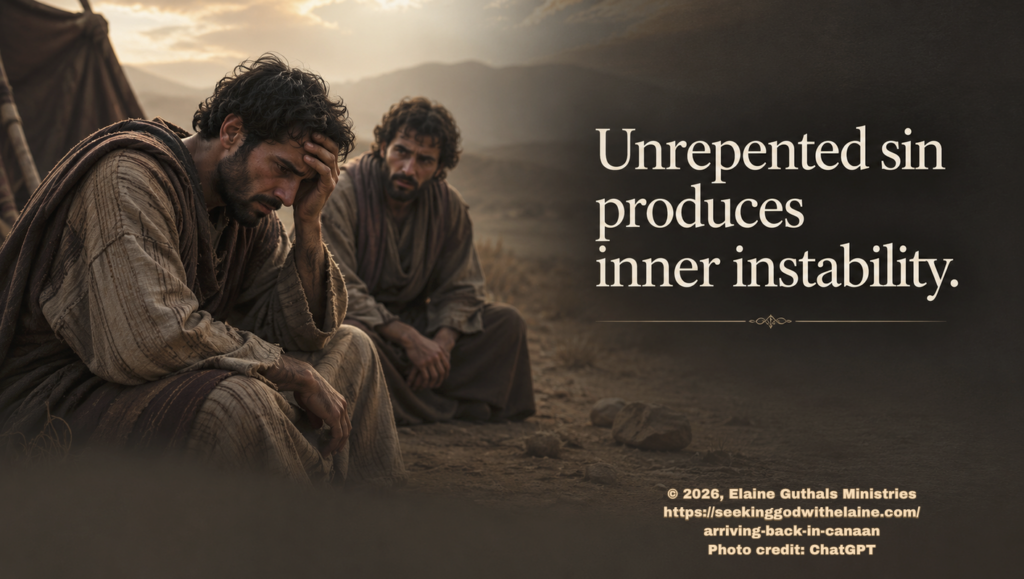
Then they get home and there is the money. If they were perplexed when they found the money in one sack, they are probably really afraid now.
Surely, they were wondering what all this meant. Jehovah would have been okay with that. He wants us to see Him working in our lives.
The Hurt Talking
“Jacob exclaimed, ‘You are robbing me of my children! Joseph is gone! Simeon is gone! And now you want to take Benjamin, too. Everything is going against me!’” (Gen. 42: 36 NLT)
Jacob reacted with an emotional response.
Jacob had sent the brothers to Egypt to buy grain – a quick trip to buy food. This trip was anything but that.
The trip that was to be the salvation of the family brought more sorrow upon Jacob. Joseph was gone. Simeon was gone. The brothers said they had to take Benjamin next time.
Jacob’s fear exploded. Let’s look at the Hebrew first to get an exact idea of what Jacob was feeling.
You have bereaved me (ʾōṯî shikkaltem — אֹתִי שִׁכַּלְתֶּם) of my children! Joseph is absent (ʾênennû — אֵינֶנּוּ)! Simeon is absent (ʾênennû — אֵינֶנּוּ)! And now you want to take Benjamin, too. All of them (kullānâ – כֻלָּנָה) have come (hāyû – הָיוּ) against me (ʿālai – עָלַי)!’
Jacob was feeling stripped and deprived of his sons. He believes his accumulated loses are more than he can emotionally survive.
I am sure Jacob went into father mode and wondered if the Egyptian leader would require Benjamin to remain with him when he found out about the “theft.”
Now, don’t think this is way out in left field. This happened to the Egyptians by the end of the famine. “So Joseph bought all the land of Egypt for Pharaoh. All the Egyptians sold him their fields because the famine was so severe, and soon all the land belonged to Pharaoh. As for the people, he made them all slaves, from one end of Egypt to the other” (Gen. 47: 20-21 NLT).
This sounds dire for the Egyptian people The New Living Translation does have a footnote on that. It says that the Hebrew reads “he moved them all into the towns.
The important thing to notice here is Jacob’s despondency. He is focusing on the fear, not faith.
Let’s do a little history lesson on Jacob.
Remember when Jacob was at Bethel the first time. He was running from Esau, heading to Haran to find a wife. When Jehovah appeared to Jacob through the image of a ladder and angels ascending and descending, Jacob said that he would follow Jehovah.
But Jacob made it conditional. “Then Jacob made this vow: ‘If God will indeed be with me and protect me on this journey, and if he will provide me with food and clothing, and if I return safely to my father’s home, then the Lord will certainly be my God’” (Gen. 28: 20-21 NLT).
Basically, Jacob said that “If Jehovah will take care of me, I’ll make Him my God.” How selfish!
- That was pre-Laban and Leah’s deception.
- That was pre-employment issues with Laban.
- That was pre-stolen household idols.
- That was pre-running away from Laban.
- That was pre-defilement of Dinah.
- That was pre-massacre of the men of Shechem.
- That was pre-Rachel’s death.
- That was pre-disappearance of Joseph.
Jacob had based his worship of Jehovah on the condition that He provide a wonderful life for him. Instead, Jehovah broke him.
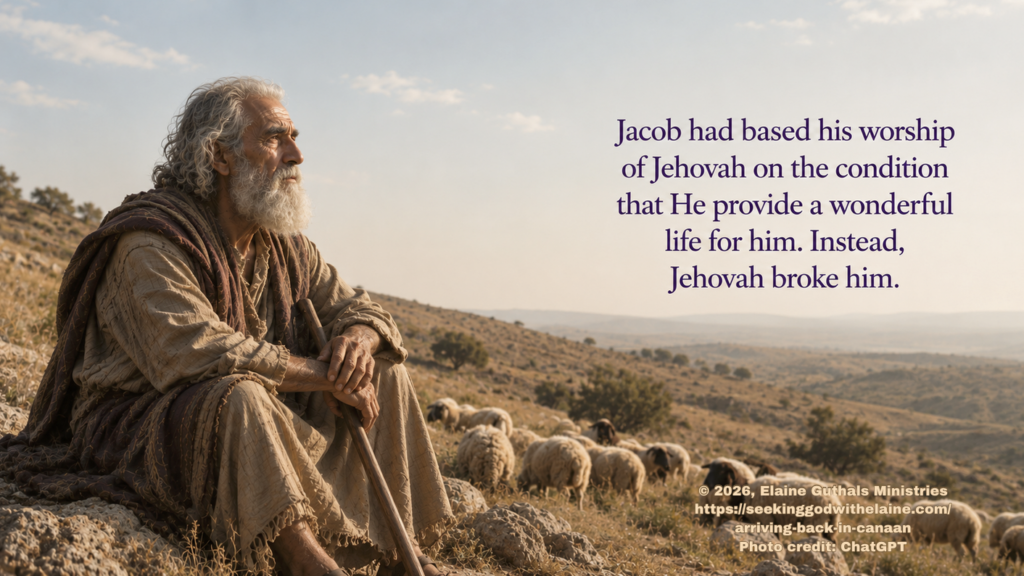
Here, Jacob doesn’t even mention Jehovah. It is like he doesn’t remember all that He has done for him since Bethel.
Robertson cautioned us not to follow Jacob’s example in this. He wrote, “He who lives in this world for his own personal enjoyment, without God and His Christ, will by degrees find, like Jacob, that he has no rock to rest his soul upon, but that he must go down in sorrow to the grave.”
Resource
We should live our lives for Jehovah’s glory and honor, not our own personal gain.
But we are seeing this knowing the outcome. We know that Jehovah is working behind the scenes — as He has been all along.
“… Everything is going against me!’” (Gen. 42: 36 NLT) is really “Jehovah is making everything right.”
The problem is that Jacob is focusing on the pain and can’t see the redemption. Have we ever done that?
Jacob can’t see that Jehovah is working on him while he is walking his Sanctification Road.
I wonder, though, if Jacob distrusted his sons enough to wonder if they had stolen the money. That would have been a sad state of affairs.
The Foolish Offer
“Then Reuben said to his father, ‘You may kill my two sons if I don’t bring Benjamin back to you. I’ll be responsible for him, and I promise to bring him back’” (Gen. 42: 37 NLT)
Reuben made a foolish offer that would not have accomplished anything.
At this point, we have to ask, “What in the world was that man thinking?” Reuben really offered his kids to Jacob for him to kill them???? Really???????
The only thing that makes sense to me is that Reuben was trying — again — to win back his firstborn status. He thought if he offered his two sons, it would make him worthy.
All this offer shows is that Reuben still lacks wisdom and leadership stability. He is spiritually empty.
The Refusal
“But Jacob replied, ‘My son will not go down with you. His brother Joseph is dead, and he is all I have left. If anything should happen to him on your journey, you would send this grieving, white-haired man to his grave” (Gen. 42: 38 NLT)
Jacob refused to allow Benjamin to journey to Egypt.
Jacob digs in his heels. He wasn’t going to lose Benjamin after he lost Joseph.
No, Jacob has ten other sons standing right there in front of him. Didn’t he see them? Maybe. Maybe not.
But Jacob’s favoritism is still blatantly obvious.
Making the Connections #1
How has this chapter moved the story along?
There has been a mini reunion even if they didn’t know it yet. But things are still unresolved.
- Simeon remained imprisoned.
- The famine continued.
- The brothers remained fearful.
- Jacob remained broken.
- Benjamin remained protected.
From the human perspective, things have gone downhill. But we need to look at things from Jehovah’s perspective — He is working for restoration.
Jehovah works in our lives and doesn’t always tell us the game plan. We don’t know the end result any more than we know how we are going to get there.
Sometimes, our road to reconciliation with Jehovah is as long as it was for Joseph’s brothers. But He works for the same outcome — to turn concealed sin into a transformed heart.
Making the Connections #2
Newman reminded us that we shouldn’t be surprised when trials come our way. Affliction, hardship, and distress are all part of our walk with Jehovah. That is verified in Romans 8:28.
Resource
“And we know that God causes everything to work together for the good of those who love God and are called according to his purpose for them” (Rom. 8: 28 NLT).
Making the Connections #3
Rudder talked about our passing judgment on Jehovah when He sends times of trials to convict us. Isn’t that the truth?
Resource
Especially true when we don’t see Him convicting of us sin, we see no purpose in the trials Jehovah sends our way. We expect, as Jacob did, that our walk with Him should be a smooth easy journey.
Our Sanctification Roads are anything but smooth. It is those trials that root out the sin in our lives that put the bricks in our Road. It is that Road that leads us to Jehovah.
We shouldn’t judge Jehovah for the trials. We should thank Him.

Jehovah is building our faith and transforming us to have His character.
How Do We Apply This?
- Submit to God’s Will, specially when He is convicting us to identify unconfessed sin.
- Utilize prayer to sustain us on the difficult sections of our Sanctification Road.
- Trust Jehovah’s providence even when circumstances seem to be against you.
Father God. So many times, we think situations are going to occur one way, and they happen a totally different way. Help us to trust You in those circumstances. May our prayer life keep us connected to You as we navigate our Sanctification Road. Amen.
If you don’t understand something and would like further clarification, please contact me.
If you have not signed up for the email providing the link to the devotions and the newsletter, do so below.
If God has used this devotion to speak with you, consider sharing it on social media.